
10 Most Common Workplace Injuries —
and How to Recover Faster
Workplace injuries can happen in any environment, from offices and factories to hospitals and construction sites. While some injuries may seem minor at first, ignoring them can lead to long-term complications and prolonged recovery Understanding the most common types of workplace injuries and the best recovery strategies can help you get back on your feet faster
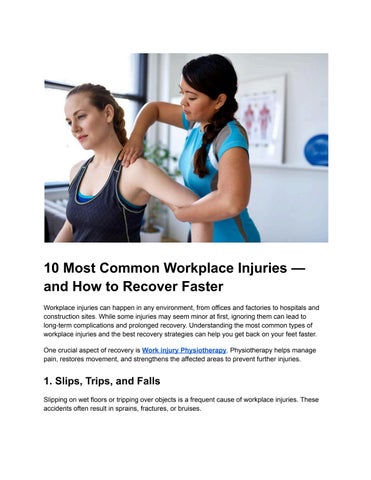
One crucial aspect of recovery is Work injury Physiotherapy. Physiotherapy helps manage pain, restores movement, and strengthens the affected areas to prevent further injuries
1. Slips, Trips, and Falls
Slipping on wet floors or tripping over objects is a frequent cause of workplace injuries. These accidents often result in sprains, fractures, or bruises
Recovery tip: Apply ice to reduce swelling, rest the injured area, and consult a physiotherapist for exercises that improve balance and mobility. Work injury Physiotherapy can help speed up recovery
2. Back Injuries
Lifting heavy objects incorrectly or prolonged poor posture can cause back strains and herniated discs
Recovery tip: Gentle stretching, proper lifting techniques, and targeted physiotherapy sessions can relieve pain and prevent recurring issues
3. Repetitive Strain Injuries (RSI)
RSI often affects employees who perform repetitive tasks, like typing or assembly line work, leading to tendonitis or carpal tunnel syndrome
Recovery tip: Ergonomic adjustments, regular breaks, and physiotherapy exercises focused on flexibility and strengthening can reduce symptoms
4. Cuts and Lacerations
Sharp tools, machinery, or broken glass can cause cuts and lacerations in workplaces.
Recovery tip: Clean wounds immediately, follow proper bandaging procedures, and seek physiotherapy if scar tissue affects movement
5. Fractures
Falling objects or accidents involving heavy machinery can result in broken bones
Recovery tip: Follow medical advice for immobilization, and use physiotherapy to restore strength, range of motion, and function after healing
6. Burns
Contact with hot surfaces, chemicals, or fire can cause burns of varying severity.
Recovery tip: Immediate cooling of the burn, medical attention, and physiotherapy can help prevent stiffness and improve recovery of the affected area
7. Eye Injuries
Workplaces that involve chemicals, welding, or flying debris can lead to eye injuries
Recovery tip: Use protective eyewear, follow first-aid procedures, and consult specialists for physiotherapy interventions that support visual recovery when necessary.
8. Sprains and Strains
Overstretching or sudden movements can injure muscles and ligaments, commonly in wrists, ankles, or knees.
Recovery tip: Rest, ice, compression, and elevation (RICE) are first steps Work injury
Physiotherapy helps regain strength and prevent chronic pain.
9. Head Injuries
Head trauma can occur due to falls, collisions, or falling objects
Recovery tip: Seek immediate medical evaluation. Post-injury, physiotherapy can aid in balance, coordination, and cognitive rehabilitation if needed
10. Shoulder Injuries
Repetitive lifting, pushing, or overhead movements can injure the shoulder.
Recovery tip: Rest and avoid aggravating activities Work injury Physiotherapy provides exercises that restore mobility and strengthen the shoulder.
Why Choose Work Injury Physiotherapy?
Physiotherapy not only treats pain but also helps prevent future injuries Techniques like targeted exercises, manual therapy, and ergonomic guidance are essential for a safe and effective recovery. If you experience any workplace injury, early intervention with Work injury Physiotherapy can make all the difference in returning to work safely and confidently