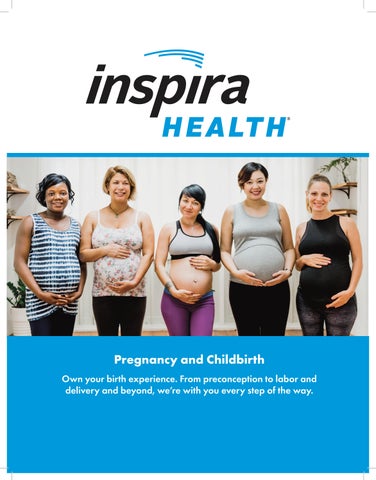
Pregnancy and Childbirth Own your birth experience. From preconception to labor and delivery and beyond, we’re with you every step of the way.
Table of Contents What Tests to Expect While Expecting..................... 2 What Medications Are Safe to Take During Pregnancy?..................................................... 5 Nutrition During Pregnancy....................................... 6 Traveling During Pregnancy....................................... 7 Environmental Hazards.............................................. 7 Exercise in Pregnancy................................................ 8 Nausea and Vomiting During Pregnancy................. 9 Fetal Movement Count .............................................. 10 Growing Together: 6 – 9 Weeks.............................. 11 10 – 13 Weeks .......................................................... 12 14 – 16 Weeks........................................................... 12 18 – 20 Weeks........................................................... 13 24 Weeks ................................................................... 14 26 Weeks.................................................................... 15 28 Weeks ................................................................... 16 30 Weeks.................................................................... 16 32 Weeks.................................................................... 17 34 Weeks.................................................................... 18 36 Weeks ................................................................... 19 38 – 40 Weeks.......................................................... 19 Perinatal Mental Health Care.................................... 20 Midwifery.................................................................... 20 Doula Information....................................................... 20 TeamBirth..................................................................... 20 Specialized Infant Care............................................. 20 Education and Facility Tours...................................... 20
Hospital Bag Checklist............................................... 21 Applying for WIC....................................................... 21
Embarking on the journey to parenthood is an extraordinary experience. Inspira’s dedicated OB/ GYNs and Certified Nurse Midwives are here to support you and your growing family with compassion and comprehensive, personalized care based on your needs and preferences. Our Approach to Pregnancy and Childbirth At Inspira, we understand that pregnancy and childbirth are profoundly personal experiences—which is why our approach revolves around empowering expectant parents with personalized care, comprehensive education and unwavering support.
Please call the office right away if you: • Are unable to keep down any fluids for more than 6 hours • Are feeling cramps that are more intense than a menstrual cramp that don’t resolve within an hour • Have any signs or symptoms of a urinary tract infection (UTI), such as pain, burning with urination, a constant urge to urinate or trouble urinating • Have a fever over 100 degrees Fahrenheit • Experience any bleeding or fluid leakage from the vagina • Have a headache unrelieved by Tylenol • Experience decreased fetal movement after 20 weeks gestation Minor discomforts in pregnancy are common. If you are experiencing any of the symptoms listed above or other symptoms that concern you, please call the office day or night.
Questions? Contact: 1-888-31- BIRTH | 1
What Tests to Expect While Expecting First Trimester Prenatal labs: • Blood type and Rh factor: A birthing parent with Rh-negative blood type and an Rh-positive partner may develop antibodies that could harm the baby. If you are Rh-negative, you will be given a Rhogam shot at 28 weeks. If the baby is Rh-positive, they may be given a shot after birth • Complete blood count (CBC): A test that checks levels of certain cells in your blood • Hepatitis B: The birthing parent may pass hepatitis B to their baby if the infection is active. We recommend that all babies receive the first of three vaccinations on the day of discharge • Human immunodeficiency virus (HIV): A sexually transmitted virus that may not have symptoms and can progress to AIDS. If you have HIV, you can be treated to help prevent passing the infection to your baby • Rubella: Also known as German measles, this infection can be passed to your baby, causing birth defects. If the rubella test result is negative, you will be given a vaccine after the birth. If you’re immune, there is no risk to the baby • Syphilis (RPR): A sexually transmitted infection that may cause stillbirth or birth defects and illnesses, and is treated with antibiotics • Hemoglobin electrophoresis: A blood test that measures the hemoglobin, a type of protein, in your red blood cells. It’s sometimes called “hemoglobin evaluation” or “sickle cell screen” • Hepatitis C: If you have an active hepatitis C infection, there is a risk of transmission to your baby at childbirth. Early detection and treatment can help prevent complications
2 | Questions? Contact: 1-888-31- BIRTH
• Hemoglobin A1C (HbA1c): A blood test that measures glucose levels in your blood and is used to diagnose gestational diabetes. Monitoring HbA1c helps ensure a healthy pregnancy and delivery • Varicella (chickenpox): If you contract chickenpox during pregnancy, there are significant risks to you and your baby. This test determines your immunity to the virus. If you are not immune, you may be advised to receive the vaccination after giving birth Urine testing (urinalysis and/or urine culture): This test checks for signs of infection in the bladder or kidneys. Treating infections early can help reduce the risk of complications such as kidney infection or preterm birth. Urine drug screening (if indicated): A urine drug screen may be included as part of prenatal care when clinically appropriate. Screening decisions are based on medical history, patient conversation, and provider judgment. When performed, consent is obtained prior to testing. Pap test: If you are due, this test involves a swab of your cervix to screen for precancerous or cancerous conditions. Gonorrhea and chlamydia: Both of these sexually transmitted infections may pass to your baby at birth, and may have no symptoms. They can be detected with a cervical swab or a urine sample and treated with antibiotics. Carrier screening: Testing can be performed on both parents via blood work and can detect certain genetic disorders. These tests can be done at any point in the pregnancy or even before you conceive. Genetic counseling is often helpful if both parents are carriers. It is a personal decision whether to have this testing completed. Your personal or family history will determine which screening tests your doctor will recommend. This could include: • Cystic fibrosis (CF): A progressive genetic disease that causes persistent lung infections and limits breathing capacity over time • Spinal muscular atrophy (SMA): A disease characterized by the degeneration of the spinal cord motor neurons that will eventually lead to overall muscle and skeletal weakness • Fragile X syndrome: A disease that manifests as intellectual disability with symptoms ranging from severe developmental and cognitive delays to borderline learning disabilities • Tay-Sachs: A very severe neurological disease that often leads to death in infancy or early childhood as a result of the accumulation of certain proteins in the central nervous system • Noninvasive prenatal testing (NIPT): A DNA test on maternal blood to screen pregnancies for the most common fetal chromosome anomalies, including trisomy 21 (Down syndrome), trisomy 18 (Edwards syndrome) and trisomy 13 (Patau syndrome) Continued on page 4
Questions? Contact: 1-888-31- BIRTH | 3
Second Trimester • Maternal serum alpha-fetoprotein (MSAFP): A single marker screening test performed on a maternal serum sample collected in the second trimester between 15.0 and 23.6 weeks. The results provide a risk assessment for fetal open neural tube defects • One-hour glucose: A screening test for gestational diabetes done between weeks 26 and 28, or sooner if medically indicated. If your blood sugar is high, you will have a three-hour glucose tolerance test • CBC
Third Trimester • Group B streptococcus (GBS): GBS is one of the many bacteria that live in the body. It usually does not cause serious illness, but it can pass to your baby during labor. Screening takes place between 36 and 38 weeks. In this test, a swab is used to take a sample from the vagina and rectum. Those who test positive will be treated with antibiotics during labor • Gonorrhea and chlamydia screening: This test may be repeated if there are ongoing risk factors to help ensure both parent and baby remain healthy • HIV • CBC • RPR
Please AVOID the following medications during your pregnancy: • Ibuprofen (Advil, Motrin, Nuprin) • Dextromethorphan (anything labeled DM in cold medications) • Medicated nasal drops (such as Afrin) • Naproxen (Aleve, Naprosyn) • Pseudoephedrine (Sudafed) • Megadoses of the following vitamins: A, C, D and zinc • Strong hair chemicals (perms, hair dyes). You may have highlights done after the first trimester Please note: No drug can be considered 100 percent safe to use during pregnancy. If you have any questions about a medication you want to take, please consult your health care provider before taking it.
4 | Questions? Contact: 1-888-31- BIRTH
What Medications Are Safe to Take During Pregnancy? Condition
Safe Medication to Take During Pregnancy
Nausea, vomiting and morning sickness Try toast or crackers before getting out of bed to settle your stomach. Flat ginger ale or ginger ale capsules may also be used. Try to avoid greasy and spicy foods. If you are unable to keep fluids down, have excessive thirst or decreased urination, please contact your care provider.
• Vitamin B6 100mg, 1 tab daily • Unisom 12.5mg every 6 hours, or Unisom 25mg every 8 hours • Sea bands • Dramamine
Common cold or flu If you experience a fever greater than 101 degrees, cough, discolored sputum, shortness of breath, difficulty catching your breath or changes in fetal movement, please contact your care provider.
• Tylenol (Acetaminophen) • Warm salt water gargle • Inhaling steam • Throat lozenges or cough drops • REGULAR Robitussin or Triaminic
Heartburn Avoid lying down immediately after eating. If your heartburn is accompanied by upper abdominal pain, high blood pressure, swelling, blurred vision and headaches, it may be a sign of pregnancy complication and you should contact your care provider.
• Tums • Maalox • Zantac 75 • Pepcid • Prilosec
Constipation Increase your fluid intake and try to eat a high fiber diet. You can also try adding fruits, veggies or bran cereals into your daily diet.
• Colace 100 mg by mouth, twice a day • Citrucil • Milk of Magnesia • Metamucil
Diarrhea
• Kaopectate • Imodium
Yeast infection
• Monistat • Terazol *We recommend inserting the applicator halfway.
Skin rashes
• Hydrocortisone cream or ointment • Caladryl lotion or cream • Benadryl cream • Aveeno oatmeal bath
Minor cuts and scrapes
• Bacitracin • Neosporin
Hemorrhoids
• Preparation H • Tucks • Witch hazel
Headache
• Tylenol 1000mg every 6 hours • B2 400mg daily • Magnesium 400mg daily
Allergies
• Benadryl • Claritin • Zyrtec Questions? Contact: 1-888-31- BIRTH | 5
Nutrition During Pregnancy If you are unsure about how to eat a balanced diet, visit choosemyplate.gov to learn more about the right food choices for you. • Choose foods that are high in folic acid, calcium, vitamin D and iron. Try to get 27 mg of iron, 1,000 mg of calcium, 600 international units (IU) of vitamin D and 400 micrograms (mcg) of folic acid daily. Taking your prenatal vitamins daily will help ensure you get the proper amounts • Talk to your provider about the correct amount of weight you should gain during your pregnancy • Limit your caffeine intake to 200 mg, or one 12oz cup of coffee, daily • Many kinds of fish contain omega-3 fatty acids that are important for your baby’s brain development. Some fish may contain higher levels of mercury, which has been linked to congenital disabilities. To help limit your mercury exposure, choose shellfish like shrimp or crab, salmon, catfish, pollock, freshwater trout, tilapia or cod. Limit white albacore
tuna to 6 oz per week. If in doubt, look up the fish before eating to check whether it’s safe to eat during pregnancy • Listeriosis is a foodborne illness caused by bacteria. Pregnant women are 13 times more likely to get listeriosis than the general population. It can cause mild flu-like symptoms, but it may cause no symptoms at all. Listeriosis can cause miscarriage, stillbirth and premature delivery. All meat and fish must be cooked through before consumption. Avoid contaminating your food by washing your hands frequently when cooking and keeping surfaces and utensils clean. Only drink pasteurized milk. Avoid lunchmeat unless you cook it thoroughly first. Refrigerate all smoked seafood, pate and meat spreads • Wash all fresh produce before consuming to prevent foodborne illnesses Resource: Oregon Health and Science University
My Pregnancy Plate
Choose 2 to 3 servings of nonfat or 1% milk or yogurt (cow, soy or almond). A serving is 8 oz. Choose yogurt with less than 15 g of sugar per serving. Drink mainly water, decaf tea or decaf coffee and avoid sugary beverages.
Choose large portions of a variety of non-starchy vegetables, such as leafy greens, broccoli, carrots, peppers or cabbage.
Choose small amounts of healthy oils (olive and canola) for cooking or to flavor foods. Nuts, seeds and avocados contain healthy fats.
Protein Non-starchy vegetables
Choose a variety of whole fruits. Limit juice and dried fruits. Fruit is great for snacks and dessert, too.
Aim for at least 30 minutes of walking or another physical activity each day.
6 | Questions? Contact: 1-888-31- BIRTH
Whole grains, legumes and starchy vegetables
Choose protein sources such as poultry, beans, nuts, low-mercury seafood, eggs, tofu or low-fat cheese. Limit red meat and avoid cold cuts and other processed meats.
Choose whole grains, such as whole wheat bread or pasta, brown rice, quinoa or oats and other healthy starches like beans, lentils, sweet potatoes or acorn squash. Limit white bread, white rice and fried potatoes.
Traveling During Pregnancy • Avoid traveling toward the end of your pregnancy. Consult your provider before trips • If you are in a plane or a car for an extended period, get up and walk around every hour. If that is impossible, do seated leg exercises to keep your leg circulation going and reduce the risk of blood clots • Stay well hydrated • Wear compression stockings while traveling to improve circulation, reduce swelling, and prevent blood clots
Environmental Hazards • Cigarette smoke: Avoid secondhand smoke. If you are trying to quit smoking, please ask for additional information from your care team to assist you • Pesticides: Please avoid all pesticides and bug sprays. Try to avoid areas recently sprayed for 24 hours. Ensure no food, dishes, towels or eating utensils are contaminated in the area where pesticides are used. Wash all fresh fruits and vegetables before eating them, even if they look clean • Beauty products: Chemicals used in nail salons and hairdressing salons can be very dangerous. Please avoid them during your pregnancy. If you can’t avoid them, make sure there is an open window or ventilation for fresh air. Avoid perms and hair dyes. Highlights are fine after the first trimester of your pregnancy • Lead: Lead can be damaging to your baby’s nervous system. Lead has been banned from household products since 1978, but lead paint and lead pipes can often be found in homes built before 1978. Be cautious of chipping or peeling paint. If someone is sanding paint off a surface and it is airborne, please get out of the house until it’s cleaned up. Other sources of lead include drinking water from old pipes, lead crystal glassware, some ceramic dishes and arts-and-crafts materials. Avoid oil-based paints, ceramic glazes and stained-glass supplies • Water: Never use tap water unless you know it is safe. Stick to bottled water if you are unsure. If you are drinking tap water at home, let it run for 30-60 seconds before drinking • Toxic cleaners: Avoid any cleaners labeled toxic. Stick to “green” cleaners or vinegar and water
Questions? Contact: 1-888-31- BIRTH | 7
Exercise in Pregnancy Most exercise is safe for pregnant people. Daily exercise can help you and your baby be healthier. It can help you feel better and reduce back pain, constipation and fatigue. Exercise can also help you sleep better and improve your mood. Exercise helps your body prepare for labor. It can also lower the chance of having postpartum depression. You should try to do moderate exercise for at least 30 minutes daily or 10 minutes three times a day, most days of the week. If you were on an exercise routine before your pregnancy, you can most likely continue the same physical activities. Just remember: • Now is not the time to improve your performance • Don’t lift over 25 lbs • Avoid strenuous and rough exercises that may cause injury to you or your baby • Be sure to stretch your muscles and warm up before exercise • Take time to cool down after each exercise • Your balance is changing as your baby grows, so always make sure you are not in danger of falling • Avoid lying flat on your back. Put a towel or pillow under one hip to shift your position slightly off your back • Drink plenty of water before, during and after each workout • Listen to your body. If you feel like you should stop, don’t force yourself to keep going Safe exercises include: • Walking
• Riding a stationary bike
• Running
• Yoga
• Dancing
• Pilates
• Swimming
• Low-impact aerobics
• Water workouts
• Strength training
As always, consult your provider before beginning any exercise routine. This is especially important if you are experiencing any complications during your pregnancy. 8 | Questions? Contact: 1-888-31- BIRTH
Nausea and Vomiting During Pregnancy Experiencing nausea and vomiting during pregnancy is called morning sickness. It is very common and can happen at any time of the day. It often occurs during the first trimester of pregnancy. If you were in good health before pregnancy, your baby will not be affected by morning sickness.
If you have morning sickness: • Rest or nap often
• Drink liquids between meals, but not during meals
• Eat small meals often to avoid an empty stomach. Keep toast, saltine crackers, pretzels or dry cereal by your bedside. It may help to eat before you get out of bed in the morning
• Avoid greasy or spicy foods
• Take sips of clear fluids, such as clear soft drinks, apple juice, tea or broth when vomiting occurs. As nausea passes, increase your fluid intake to ½ cup (120 milliliters) every hour
• Keep notes of when vomiting occurs and anything that makes it worse, such as certain foods, odors, activities or stress. Share this information with your doctor
Call your doctor right away if you: • Cannot keep liquids or food down for 24 hours
• Experience weight loss of more than 5-10 pounds
• Have stomach pain, fever, dizziness, severe weakness or feel faint
• Have very dark yellow urine or not urinating for long periods
These are signs that your body does not have enough fluid. If left untreated, this can be harmful for both you and your baby. An IV with fluids and nutrients may be appropriate. Your provider may also order over-the-counter or prescription medications. If you experience nausea, the following treatment options can be administered at home: • For mild nausea without vomiting, take 25 mg of vitamin B6 (pyridoxine) three times a day • For moderate nausea with mild vomiting, or if no relief from vitamin B6 alone, add 12.5 mg of Unisom (doxylamine) at bedtime
• If no relief after 4-5 days, try 25 mg of Unisom at bedtime, and 12.5 mg in the morning and midafternoon, along with vitamin B6 three times a day • You may also increase vitamin B6 to 50 mg at bedtime with 25 mg of Unisom in the morning and midafternoon, if needed
Unisom can cause drowsiness. Start with a bedtime dose for 4-5 days first to decrease drowsiness, then add as needed and as tolerated in the morning and afternoon. A bedtime dose helps with morning nausea, a morning dose helps with afternoon nausea and an afternoon dose helps with evening nausea. Adjust times for your needs. Other over-the-counter treatments for nausea include: • Ginger capsules, 250 mg, up to four times a day • Ginger tea, 8 oz, up to four times a day
• Acupressure wrist bands, like Sea Bands, available at local pharmacies
Questions? Contact: 1-888-31- BIRTH | 9
Fetal Movement Count An active baby is usually a healthy baby. For the majority of your pregnancy, you will feel your baby stretch, kick, roll and turn every day. Some babies are more active than others. All babies have periods of sleep during which they are less active. You will get to know your baby’s movement pattern and when your baby is most active. You should feel your baby’s movements throughout the day, each day from 28 weeks of pregnancy until the baby is born. How do I count my baby’s movements? 1. Get into a comfortable position, lying on your side or sitting. Place one or both of your hands on your abdomen
3. Write down the date and the time that you start counting on the fetal movement chart
2. Count each time you feel your baby move. If you feel many movements all at once, count each movement that you feel
5. Stop counting when you have counted six movements
4. Make a mark on the chart each time your baby moves 6. Write down the time you stopped counting
Count your baby’s movements once a day. You should feel ten or more movements in two hours. If you count fewer than ten movements in two hours, call your provider, go to the hospital or birthing unit immediately.
10 | Questions? Contact: 1-888-31- BIRTH
Growing Together: 6 – 9 Weeks This period of pregnancy marks the beginning of a very busy stage of development. From now on, your baby will be growing quickly. Body parts that formed in the first few weeks, such as the heart and brain, will become more complex and specialized. • All major body organs and systems are beginning to form • The early stages of the placenta are visible and functional. The placenta connects your baby to your uterus so they can receive nutrients from your body and excrete waste through your urine • Eyelids form and grow, but they are sealed shut. The ears, teeth and palate are also forming • Ankles and wrists form, and fingers and toes develop • The fetus’s skin is paper-thin, and the veins are easy to see • By the end of the second month, your baby will be about 1 inch long and weigh less than ounce Changes in you: You are in the middle of your first trimester. This is a time when many people complain of pregnancy aches and pains. • You may feel sick to your stomach. This feeling may be worse in the morning • You may also need to urinate more often than usual because your growing uterus is pressing on your bladder • You may feel more tired than usual and need to rest more as your body adjusts to being pregnant • Your breasts may still be sore. They may grow large enough to need bigger bras with better support. The area around your nipples may darken • Your waistline may be expanding, and your regular clothes may feel tight Things you can do: • Begin prenatal care and schedule your visits with your health care provider • Take your prenatal vitamins. Be sure they have at least 800 mcg of folic acid • Drink at least 6 to 8 glasses of water, juice or milk every day Share your ideas and worries about being pregnant with your partner or those close to you. Many parents-to-be are worried about being parents.
Questions? Contact: 1-888-31- BIRTH | 11
10 – 13 Weeks This is the last month of your first trimester. A lot of growth is taking place every day. By the end of this month, all of your baby’s vital organs and nervous system will be fully formed and working. The main things that will happen in the next six months are that the organs will mature and grow larger and stronger. • Fingers and toes are separated, and the fetus will have soft nails • Your baby is busy kicking and stretching, but it is still too early for you to feel it • Their mouth has 20 buds that will become baby teeth • They are beginning to grow some peach-fuzz hair on their body • Their heart beats quickly, at about 120 to 160 beats per minute Changes in you: Your uterus is now the size of a grapefruit, and there is a bump in the lower part of your belly. You will be able to hear your baby’s heartbeat for the first time at your upcoming prenatal visit. • By week 10, you may find yourself riding pregnancy’s emotional roller coaster. You might feel moody one day and joyful the next, due to hormonal changes • You may find yourself choosing loose fitting clothing • You may have gained 2 to 4 pounds and are feeling hungrier • Constipation can be a problem for some Things you can do: • Ask about any changes in your body that concern you • Take good care of your body and mind
• Allow yourself and your partner time to adjust to the many feelings about this pregnancy
14 – 16 Weeks Though you may not feel it, your baby is moving around a lot. By now, they can grasp, squint, frown and grimace. They may also be able to suck their thumb. • Your baby’s eyebrows and eyelashes are forming, and little hairs sprout on the top of their head
• Their legs are growing longer than their arms. All of their limbs and joints can move
• You may start to notice hiccups, which feel like short, rhythmic movements Changes in you: Most pregnant people start to feel much better during their second trimester. • For many, the side effects of earlier months, like having to urinate often, feeling very tired and sick to your stomach, will lessen or go away • You may feel a burst of energy. Don’t be surprised if people say you look radiant • Your breasts are larger and may be starting to make colostrum, sometimes called “first milk,” even though birth is still months away. Your breasts make colostrum during pregnancy and for the first few days after you give birth 12 | Questions? Contact: 1-888-31- BIRTH
18 – 20 Weeks You are almost halfway there. Your baby is becoming more active, turning from side to side and sometimes head over heels. Finally, you may start to feel your baby move. At first, it may be just a flutter, but it slowly gets stronger. • If you have an ultrasound at this point, you might be able to tell your baby’s sex, as their genitals will be fully formed. You might also see your baby kick, flex, reach, roll or even suck their thumb • Their chest moves up and down like they are breathing, but they are taking in amniotic fluid, not air • A protective substance called myelin slowly begins to form around the spinal cord • A thick, whitish substance called vernix begins to coat your baby’s skin. This is a natural moisturizer that protects the skin in a liquid environment • They are beginning to have regular sleep and wake periods • Sensory development is active at the 20th week. This means taste, smell, hearing, sight and touch are developing in special areas in the brain Changes in you: • The top of your uterus is now near your belly button • Your baby’s kicking and movement may disturb your sleep, and your growing belly may make it hard for you to get comfortable • You may notice your heart is beating faster. This is because you have a lot more blood flowing in your system Things you can do: • Sign up for classes to prepare you for childbirth. Now is the time to register so you can complete them by 36 weeks • Buy some maternity clothes, new or secondhand
Questions? Contact: 1-888-31- BIRTH | 13
24 Weeks Your baby’s growth is now focused on getting ready to live outside the womb. If your baby were to be born now, they would have a good chance of survival. About 85 percent of babies born at 24 weeks survive with proper care. Even though your baby is growing, their body is still very lean, and their skin is wrinkled and red. Their skin looks this way because they do not yet have much body fat, and because their blood vessels are so close to the surface. • The skin on your baby’s hands and feet has gotten thicker. There are ridges on their palms and soles that form fingerprints and footprints. They can curl her hands into little fists • They can hear well and make out your voice, even if they cannot understand the words. They can also hear your heart beating and your stomach rumbling • Their lungs are developing to prepare for breathing and are filled with amniotic fluid. Even though the chest muscles make breathing movements, your baby cannot yet draw air into their lungs—they still receive oxygen through the placenta • A fine, downy hair called lanugo grows all over their body. Most of it will be gone by the time they reach full term • Your baby swallows amniotic fluid, helping them prepare for sucking and using their digestive system • Their eyes are fairly well developed now, but they are still closed • Their eyebrows and fingernails are growing • They can cry, but if they were born now, their cries would be weak and shallow Changes in you: Now that you are in your sixth month, your weight will increase by about 1 pound a week. Each woman’s body is different, and you may gain more or less weight each week. Remember, your baby needs you to eat nutritious foods so they can keep growing. • You may see stretch marks on your belly. It is true that stretch marks never fully go away, but they will become less visible after your baby is born • Your body starts to produce a hormone called relaxin. This helps your pelvic joint relax and open up. It will help your hips spread to prepare for childbirth. After childbirth, your hips will go back to their normal size • You may feel your baby kicking strongly now. As they get bigger, you will notice their movements more and more • Your back may hurt. To help with this, wear low-heeled shoes, flats or good walking shoes, and avoid standing for long periods Now is a good time to begin practicing relaxation. Try to make time for it every day. There is no better way to prepare for labor than learning how to help your body relax.
14 | Questions? Contact: 1-888-31- BIRTH
26 Weeks Your baby can now hear sounds like music and your voice through the uterine wall. You may notice that they move if there is a loud or sharp noise. • Their eyes are fully developed and can open and close. If you place a flashlight on your belly, they may respond with a startle or turn their head either toward or away from the light • Your baby’s first bowel movement, called meconium, starts to fill the intestines • They have very little body fat and still look skinny, red and wrinkled. Without fat, your baby will have a hard time controlling body temperature outside of the womb Changes in you: • Your uterus is expanding in your abdominal cavity as your baby and placenta grow, and the amniotic fluid increases. The top of your uterus is close to your waist • You may have back pain because your center of gravity has shifted forward • You may also find that your fingers, wrists and hands ache. This is because many tissues in your wrist are swollen, and this may cause numbness or burning pain that will return to normal after you give birth • This is the period of the greatest weight gain. Keep eating nutritious meals and remember to drink plenty of water Things you can do: • Massage can help relax your muscles and relieve back strain • Some people find relief from back pain by wearing a sling that supports the uterus. You can do “pelvic rocking,” an exercise to help ease back pain, while you are sitting, standing or lying down • Loved ones can help ease the strain on your back by standing behind you and placing their interlaced hands beneath your belly
Questions? Contact: 1-888-31- BIRTH | 15
28 Weeks Your baby looks about the same, with a little more hair, but they are growing very fast and developing steadily. But they are not mature enough to live outside of your womb without medical help. They do not yet have enough fat under their skin to keep them warm, their defenses against infection are not developed and they do not have enough moisture in their lungs to breathe deeply. • The grooves on their brain’s surface start to appear, and more brain tissue develops • Senses and reflexes are more developed
• Their eyes open and close, they sleep and wake at regular intervals and they may suck their finger or thumb
Changes in you: As your uterus expands toward your rib cage, it takes up more space in your abdomen. This pushes other organs aside and can cause some new discomfort. • You may feel short of breath because your uterus is starting to press on your diaphragm • You may have to urinate often because of pressure on your bladder and because it has less space and cannot get as full as usual
• Many people have unusual dreams during pregnancy. This is a normal reaction of your unconscious mind as it sorts out thoughts, fears and worries. Talk with your health care provider if your dreams or thoughts worry you
30 Weeks During the third trimester, how much a baby grows depends on their heredity, sex, health and nutrition. A 30-week baby could weigh as much as 1 to 1½ pounds more or less than another baby of the same age. Both are considered normal weights. • Even though there is less room to move around, your baby can still move and flex their limbs. Soon, as they get bigger, they will need to get into the fetal position
• Your baby’s kidneys are working well now. They are producing about half a liter of urine (about 17 fluid ounces) a day. This urine passes into the amniotic fluid
• They may seem more active at some times of the day than others. Every day, pay attention to your baby’s movement. You should feel about 10 movements in a two-hour period. These movements may be kicks, squirms, pokes or wiggles
• Your baby’s body is growing faster than their head. But inside the skull, their brain is forming rapidly. Parts of their brain are becoming more distinct, and each part has a different function. Over time, connections within their brain will become more complex
• Your baby needs the most nutrients during the third trimester. You will need to eat a diet rich in protein, vitamin C, folic acid, iron and calcium Changes in you: • Many people are now having Braxton Hicks contractions. These help the uterus prepare for labor. They are usually painless tightenings, and they come and go. Some contractions are normal, but if you have six or more in one hour, call your health care provider • You may notice some swelling in your feet, ankles and hands by the end of the day. Rest with your feet up to help with this 16 | Questions? Contact: 1-888-31- BIRTH
• You may experience constipation, difficulty sleeping, hemorrhoids, leg cramps, varicose veins or other discomforts. These symptoms are normal in pregnancy, but they can be irritating. Talk with your health care provider about how to address any discomfort
32 Weeks Your baby looks more like a newborn now. Their arms, legs and body are filling out. They are finally in proportion to the size of their head. • Your baby has enough body fat under their skin to make their skin look smooth and healthy • Small nipple buds appear on their chest • Nails have grown on the tips of their fingers • Their lungs are still not mature, but they have better control of breathing. They can also suck and swallow. Many babies spend a lot of time sucking their thumbs at this age • Your baby’s vision is blurred right now, but they can sense light and dark. By the time they are full-term, they will be able to see shapes and bright colors • Your baby hears you and your working body. They can hear your stomach rumble and your heartbeat. They also hear voices and sounds outside your body • They have many taste buds on their tongue. Many of these will disappear before birth. They can easily tell the difference between sweet and sour now Changes in you: • You may feel your bond with your baby growing stronger every day, but it’s also normal if that connection develops more naturally • With their brain and hearing more developed, your baby can communicate with you • Kicks are much stronger now, and you may feel them under your ribcage. Sitting or lying in one position for very long may be uncomfortable • Other discomforts, such as constipation, sweating, difficulty breathing and an increased need to urinate, are all reminders that your baby is growing • Heartburn is common. These symptoms often go away in the last couple of weeks of pregnancy, when the baby moves down into the birth position. In the meantime, try these tips to reduce heartburn: • • • •
Consider eating small meals more often instead of three large meals Avoid eating less than two hours before bedtime Prop up in bed instead of lying flat Avoid foods that cause a burning sensation
Questions? Contact: 1-888-31- BIRTH | 17
34 Weeks Your baby’s reflexes, built-in behaviors that help them adjust to life outside the womb, are now more advanced. Some of these are the startle reflex, grasping reflex, rooting and sucking reflexes, which help your baby eat, and many others. • Until your baby is born, their food comes through the umbilical cord. They will practice sucking in the womb, so they will be able to do it right after birth • If your baby is born prematurely, their sucking and swallowing reflexes may be weak • The bones in your baby’s head are soft and flexible to make it easier for them to fit through the birth canal • In male fetuses, the testicles begin moving from the abdomen through the groin toward the scrotum • In female fetuses, the clitoris is easy to see because it is not yet covered by the small labia. That takes place in the last few weeks before birth Changes in you: • You may feel more tired these days. Backache may be a problem. Much of this is caused by strain on the ligaments that hold up your uterus • If you are a first-time parent, your baby may start getting into the birth position this week. This means your baby’s head will move into your pelvis and start to press on your cervix. This can cause pressure and discomfort in your lower body. Those who have given birth before can expect this to happen just before labor • Your feet and ankles may swell a lot, especially in the afternoon and evening, and in warm weather. It is important to drink lots of fluids • If your hands or face suddenly feel swollen and puffy, call your health care provider • This is a good time to think about a birth plan. Make sure your provider knows your choices for labor and birth
18 | Questions? Contact: 1-888-31- BIRTH
36 Weeks Your baby now looks even more like a little person. The added weight makes their arms and legs look chubby. Their skin looks healthier and smoother because body fat has filled in the wrinkles. • Your baby still has vernix, but the lanugo is almost gone. They may still have some on their back and upper shoulders
• You may notice your baby’s movements slowing down as they curl into position and have less space in the womb
• Some babies have a head full of hair, while others have only a few wisps. Thick hair at birth does not always mean thick hair later on
• Your partner and family can easily see your baby’s movements on the outside when they move a leg or an elbow
Changes in you: • You may be uncomfortable at this point in your pregnancy. Walking distances can be difficult, and pressure on your diaphragm can make breathing difficult
• As the day goes on, your ankles may become swollen. Wear comfortable shoes you can slip into without using your hands. Bending down to tie or buckle shoes can be difficult
• Your lower pelvic area may feel heavy as your baby gains weight and begins settling down in your pelvis
• Practice contractions are getting stronger. These are normal and will continue until your body goes into labor
Things you can do: • This can be a very emotional time. You may be wondering: What will labor be like? Will I be a good parent? How will I know what to do? What will life with a baby be like? • Take time with your partner to talk about your concerns. If this is your first baby, this is new for both of you • There is a lot of support available for you and your partner after your baby is born. Take some time now to think about who can help you and how they might be helpful to you, and write it down so you don’t forget
38 – 40 Weeks Your baby is maturing and growing. Soon, they will be too big to grow inside of you. Your baby’s head is now cradled in your pelvic cavity and is protected by your pelvic bones. This position gives them some much-needed space for their growing legs and buttocks. Changes in you: You are ready to deliver your baby. Hormones are moving through your body. • You may be having contractions on and off, sometimes regularly. You may notice that your vaginal secretions are increasing. This is normal • The restless nights and many trips to the bathroom will soon be over. Just think—soon you will be able to turn over in bed and sleep on your stomach • Your uterus can stretch up to 60 times its normal size during pregnancy. It should return to the size of a pear within about 6 weeks of giving birth Questions? Contact: 1-888-31- BIRTH | 19
Perinatal Mental Health Care Perinatal mental health care focuses on emotional and psychological well-being during pregnancy and the months surrounding it. This care addresses how hormonal, physical and life changes can affect mood, anxiety levels and overall mental health, helping expectant parents navigate the unique challenges of this period. Inspira’s perinatal mental health program provides compassionate, evidence-based support for individuals experiencing depression, anxiety or trauma-related concerns during pregnancy or following a pregnancy loss. Our therapists and psychiatric providers, trained and certified by Postpartum Support International (PSI), understand the complexity of these experiences and create personalized plans to promote healing, balance and connection. Scan the QR code for more information.
Midwifery Certified nurse-midwives are trained health care professionals with expertise in gynecology and obstetrics, offering comprehensive care that encompasses not only pregnancy and childbirth but also your overall health and emotional well-being. For those navigating pregnancy, our certified nurse midwives can support you through every step of the childbirth process. As long as your pregnancy remains low-risk, your midwife can continue to see you through delivery, offering guidance, reassurance and compassionate care.
Doula Information At Inspira, we embrace a holistic approach and welcome doulas to provide additional support and comfort throughout labor and delivery, ensuring your experience is as positive and empowering as possible.
TeamBirth Everyone deserves a safe, empowering birthing experience. Inspira Health has launched TeamBirth to enhance communication and teamwork, providing patients with the best possible experience. The TeamBirth 20 | Questions? Contact: 1-888-31- BIRTH
model allows you, your support people, nurses, midwives and physicians to participate as equal voices in your care throughout your labor and delivery. This evidence-based process helps close communication gaps while ensuring the patient has a voice in their care.
Specialized Infant Care Families count the days waiting for their baby to arrive, but what if that day comes too soon? For parents of infants who need special care when they are born, there’s advanced care available here in your community. At Inspira Medical Centers Mullica Hill and Vineland, specially trained nurses and Nemours Children’s Health neonatologists deliver around-the-clock care to our most delicate infants. Our state-of-the-art Deborah F. Sager Level III Neonatal Intensive Care Unit (NICU) in Vineland and our Level 2 ICN/Special Care Nursery NICU in Mullica Hill, offer immediate, high-quality neonatal care for low birth-weight and critically ill infants. Additionally, the Neonatal Intermediate Care Unit in Mullica Hill, a Level 2 ICN/Special Care Nursery, offers immediate, high-quality neonatal care close to home. At the Deborah F. Sager Level III NICU in Vineland, the AngelEye Health Camera System, a secure live-stream video, lets families see their child 24/7 on any device and receive real-time updates from the care team. The bedside AngelEye Camera System captures every moment, helping parents stay connected to their NICU baby from anywhere, allowing them to return to work, care for other children, and share this experience with family.
Education and Facility Tours Embarking on the journey of pregnancy and parenthood can be both exhilarating and overwhelming. At Inspira, we understand the range of emotions and questions that may arise during this transformative time. Rest assured, our classes and support groups are here to support your well-being and bring you peace of mind. Our dedicated team is committed to providing you with the knowledge, resources and encouragement you need to navigate the challenges and joys of pregnancy and early parenthood. Scan the QR code for a list of current classes and tours.
Hospital Bag Checklist Basics
Toiletries
All the Extras
a ID/wallet a Insurance card (if you have one) a Birth plan Clothes
a Toothbrush/toothpaste a Face wash/face wipes a Skincare products a Deodorant a Shampoo (dry or regular shampoo) a Hair ties a Body wash a Lip balm a Lotion a Angled peri bottle a Glasses/contacts a Accessories for glasses and contacts
a Nipple balm or silverettes a White noise machine a Nightlight a Pillow a Personal fan a Bath towel a Extra-long phone charging cord a Portable Bluetooth speaker a Reusable water bottle a Gum/hard candy/electrolyte drinks
a Nursing bras a Maternity underwear a PJs and robe a Slip-on shoes a Cozy socks or slippers a Comfy going home outfit
For Your Support Team a Toiletries a Snacks a Reusable water bottle
a PJs and extra clothes a Laptop or tablet a Pillow and blanket or a light sleeping bag
For Baby a Car seat a Bottles (if using) a Going home outfit a Pediatrician info
Applying for WIC New Jersey WIC Services are available to low-income families as well as families experiencing unemployment, military deployment and interim family financial hardships. How to apply for and receive WIC benefits and services: You may apply for New Jersey WIC by contacting your local WIC agency or clinic office to schedule an appointment. Who is eligible to apply for and receive WIC benefits? • Pregnant people • People who have delivered a child within the last six months • Breastfeeding individuals who have delivered a child within the last year • Infants and children under 5 years old
To be eligible, people in these categories must: • Have a medical condition or limited access to nutrition that places their health at risk • Live in New Jersey and provide proof of residency • Meet income guidelines What to bring to a WIC appointment: When you visit your local WIC agency or clinic for the appointment you’ve scheduled, please ensure that all family members, including children, are present.
You will also need to bring the following materials: • Proof of identity • Proof of pregnancy • Proof of income • Proof of residency • Your health care referral form (if completed by your doctor or other health care provider) • Your child’s Universal Child Health Record (UHCR) • Your child’s vaccination records
*More information is available at: https://www.fns.usda.gov/wic WIC: USDA’s Special Supplemental Nutrition Program for Women, Infants, and Children | Food and Nutrition Service Questions? Contact: 1-888-31- BIRTH | 21
July 2026
InspiraHealth.org