By Sam D. Hayes
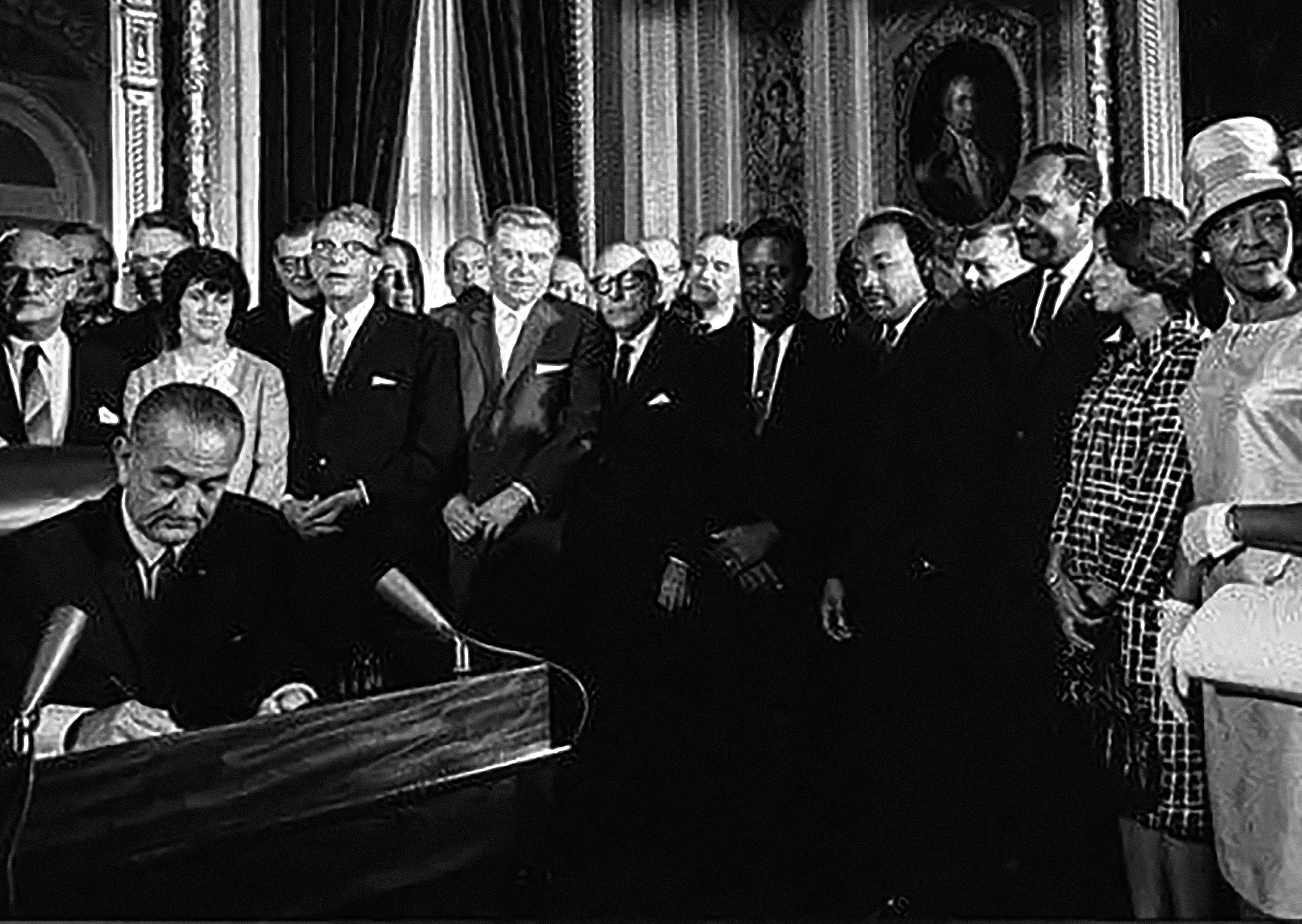
In a major ruling that would permit weakening the voting power of minorities in the United States, the Supreme Court on April 29, 2026, struck down a Black-majority district in Louisiana’s congressional map as “an unconstitutional gerrymander” and altered the court’s interpretation of the Voting Rights Act.
In a 6-3 decision, the court’s conservative majority argued that Louisiana had violated the law by drawing a second Black-majority district. Justice Samuel Alito wrote that the court was upholding a key part of the Voting Rights Act known as Section 2, which prohibits “voting practices or procedures that discriminate on the basis of race, color, or membership in one of the language minority groups identified” in the act.
But the conservative justices also devised a new interpretation for its application based on historical developments. By doing that, the court majority made it more difficult for plaintiffs to challenge redistricting plans under the act.
In a dissent, Justice Elena Kagan called the decision the “latest chapter in the majority’s now-completed demolition of the Voting Rights Act.” Kagan, joined by the other two liberal justices, argued that the decision will make it effectively impossible to use race in redistricting – as has been done historically under the
Voting Rights Act – and more difficult to prove discrimination under the act. She wrote, “The court’s decision will set back the foundational right Congress granted of racial equality in electoral opportunity.”
I’m a scholar of national political institutions, election law and democratic representation. The timing of the case carries major implications for the 2026 midterm elections.
The decision, by weakening the Voting Rights Act, could make it easier for states to draw partisan gerrymanders of their congressional districts that reduce the power of minorities.
Long legal battle
The central question in the case was to what extent race can, or must, be used when congressional districts are redrawn.
Plaintiffs challenged whether the longstanding interpretation of Section 2 of the Voting Rights Act, which requires protection of minority voting power in redistricting, violates the equal protection clause of the U.S. Constitution, which guarantees that individuals should be treated the same by the law.
In short, the plaintiffs argued that the state of Louisiana’s use of race to make a second Black-majority district was forbidden by the U.S. Constitution. From my perspective as a scholar of U.S. federal courts and electoral systems, this case represent the collision of decades of Supreme Court decisions on race, redistricting and the Voting Rights Act.
To understand the stakes of the current case, it’s important to know what the Voting Rights Act does. Initially passed in 1965, the act helped end decades of racially
discriminatory voting laws by providing federal enforcement of voting rights.
Section 2 of the Voting Rights Act forbids discrimination by states in relation to voting rights and has been used for decades to challenge redistricting plans.
Callais had its roots in the redistricting of Louisiana’s congressional districts following the 2020 Census. States are required to redraw districts each decade based on new population data. Louisiana lawmakers redrew the state’s six congressional districts without major changes in 2022.
Soon after the state redistricted, a group of Black voters challenged the map in federal court as a violation of the Voting Rights Act. The plaintiffs argued that the new map was discriminatory because the voting power of Black citizens in the state was being illegally diluted. The state’s population was 31% Black, but only one of the six districts featured a majority-Black population.
Federal courts in 2022 sided with the plaintiffs’ claim that the plan did violate the Voting Rights Act and ordered the state legislature to redraw the congressional plan with a second Black-majority district.
The judges relied on an interpretation of Section 2 of the Voting Rights Act from a 1986 Supreme Court decision in the case known as Thornburg v. Gingles. Under this interpretation, Section 2’s nondiscrimination requirement means that congressional districts must be drawn in a way that allows large, politically cohesive and compact racial minorities to be able to elect representatives of their choice.
In 2023, the Supreme Court upheld a lower court’s interpretation of Section 2 of the Voting Rights Act in a similar racial gerrymandering case in Alabama.
Louisiana lawmakers redraw districts
Following the court order, the Louisiana state legislature passed Senate Bill 8 in January 2024, redrawing the congressional map and creating two districts where Black voters composed a substantial portion of the electorate in compliance with the Gingles ruling. This map was used in the 2024 congressional election and both Black-majority districts elected Democrats, while the other four districts elected Republicans. These new congressional districts from Senate Bill 8 were challenged by a group of white voters in 2024 in a set of cases that became Louisiana v. Callais. The plaintiffs argued that the Louisiana legislature’s drawing of districts based on race in Senate Bill 8 was in violation of the 14th Amendment’s equal protection clause, which requires equal treatment of individuals by the government, and the 15th Amendment, which forbids denying the right to vote based on race.
Essentially, the plaintiffs claimed that the courts’ interpretation of Section 2 of the Voting Rights Act was unconstitutional and that the use of race to create a majority-minority district is itself discriminatory. Similar arguments about the 14th Amendment’s equal protection clause were also the basis of the Supreme Court’s recent decisions striking down race-based affirmative action in
college admissions.
In 2024, a three-judge district court sided with the white plaintiffs in Louisiana v. Callais, with a 2-1 decision.
The Black plaintiffs from the original case and the state of Louisiana appealed the case to the Supreme Court. The court originally heard the case at the end of the 2024-2025 term before ordering the case reargued for 2025-2026.
Major implications
The court’s opinion reinterprets key precedent on the Voting Rights Act and the application of Section 2 to redistricting. It carries major consequences for the federal courts, gerrymandering and the voting rights of individuals.
For 39 years, Section 2 of the Voting Rights Act has required redistricting institutions to consider racial and ethnic minority representation when devising congressional districts. Majority-minority districting is required when a state has large, compact and cohesive minority communities. Historically, some states have redistricted minority communities in ways that dilute their voting power, such as “cracking” a community into multiple districts where they compose a small percentage of the electorate.
Section 2 also provided voters and residents with a legal tool that has been used to challenge districts as discriminatory. Many voters and groups have used Section 2 successfully to challenge redistricting plans.
Section 2 has been the main legal tool for challenging racial discrimination in redis-
tricting for the past decade. In 2013, the Supreme Court effectively ended the other major component of the Voting Rights Act, the preclearance provision, which required certain states to have changes to their elections laws approved by the federal government, including redistricting.
In this case the court did not fully overrule the previous interpretation of Section 2, but it has altered its application. The effect is that it limits the legality of using race in redistricting and the most common way to challenge discriminatory redistricting.
Additionally, because of the strong relationship between many minority communities and the Democratic party, the court’s decision has major implications for partisan control of the House of Representatives. By changing the interpretation of Section 2, Republicans could use the ruling to redraw congressional districts across the country to benefit their party. Politico reported that Democrats could lose as many as 19 House seats if the Supreme Court sided with the lower court. This case builds directly on a recent case also authored by Alito. In 2024, the court overruled a lower court’s finding of racial vote dilution in South Carolina.
Disclosure statement
Sam D. Hayes does not work for, consult, own shares in or receive funding from any company or organisation that would benefit from this article, and has disclosed no relevant affiliations beyond their academic appointment.



















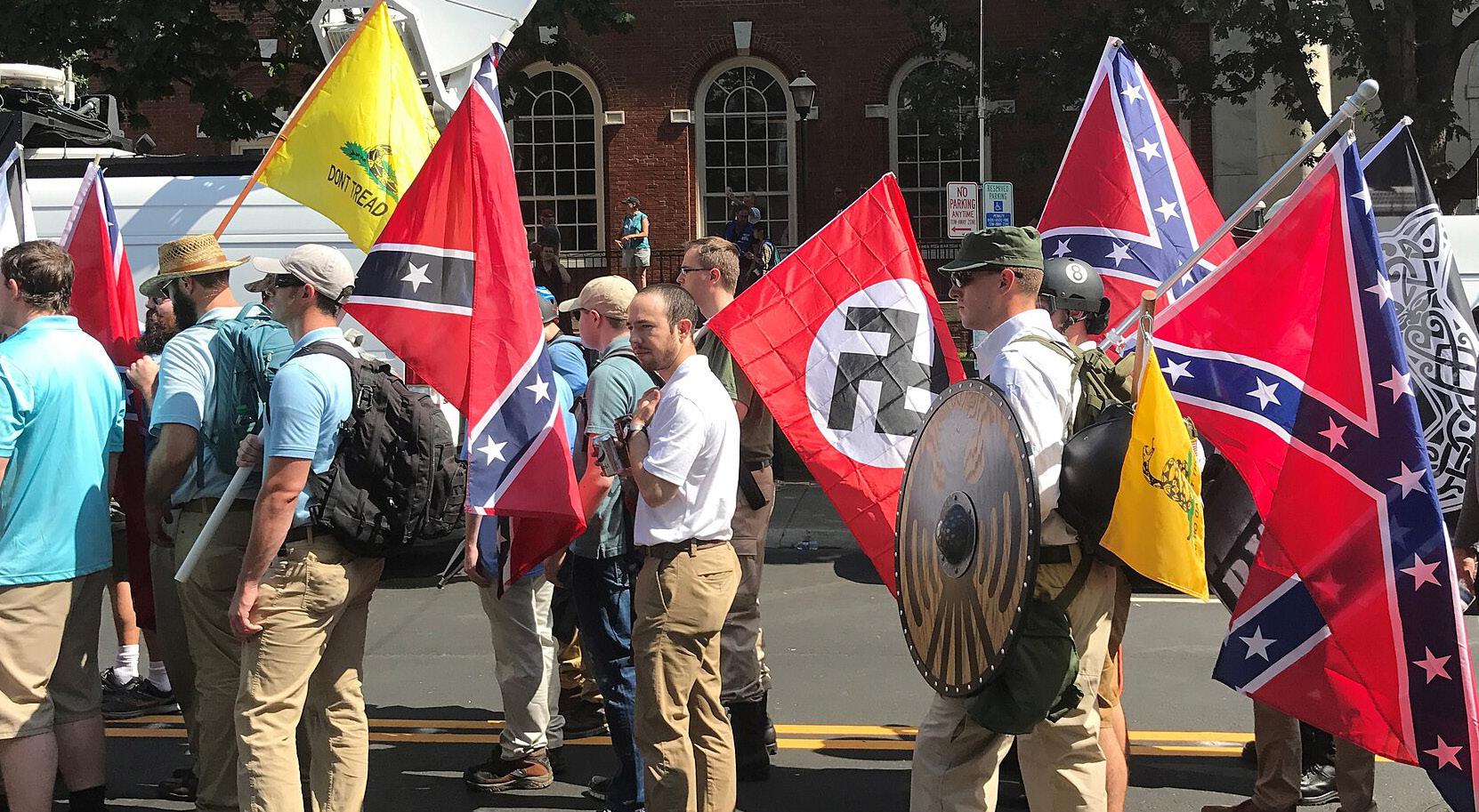
On April 21, 2026, a federal grand jury in the Middle District of Alabama returned an eleven-count indictment against the Southern Poverty Law Center: six counts of wire fraud, four counts of false statements to a federally insured bank, and one count of conspiracy to commit money laundering. The charges were announced at a Justice Department news conference, with Acting Attorney General Todd
Blanche at the lectern and FBI Director Kash Patel standing behind him.
The theory is this: that the SPLC defrauded its donors and lied to its banks by quietly using donor money to pay confidential informants who had infiltrated the Ku Klux Klan, the Aryan Nation, the National Alliance, and other white-supremacist organizations. The government says more than three million dollars moved between 2014 and 2023 through accounts opened in the names of fictitious entities — “Fox Photography,” “Rare Books Warehouse,” “Center Investigative Agency” — to disguise where donor money was actually going.
Read the indictment carefully and a strange thing

in a single raid on April 28. These are not separate stories. They have been told as separate stories. They are not.
comes into view. It is fourteen pages long. It tells you who paid whom, how the bank accounts were structured, which informants were on the SPLC payroll. It does not tell you what the SPLC did with the information those informants produced. That omission is the whole story.
What the indictment does not say The Southern Poverty Law Center began paying informants inside violent white-supremacist organizations in the 1980s, in the shadow of a Civil Rights Movement that had seen church bombings, state-sponsored violence, and the murders of activists go unanswered. The program was secret because
the work was dangerous. The informants told the SPLC what those groups were planning. The SPLC, in turn, told the FBI. That last sentence is the one the indictment does not contain. It is in the SPLC’s court filings now. On April 28, lawyers for the organization filed two motions — one seeking grand jury transcripts, the other asking the court to address what the SPLC describes as false and prejudicial public statements by senior administration officials. Inside those filings: that the FBI knew. That ahead of the Unite the Right rally in Charlottesville in August 2017, the SPLC delivered to the FBI’s Mobile, Alabama, field office — the very office leading the investigation in this case — a forty-five-page Event Alert drawn from informant sources. It named individuals
Inver Grove Heights school board withdraws offer to Dr. Tyrone Brookins — first Black superintendent-elect in district history turned away twenty days after selection
By Al McFarlane, Editor
The offer is gone. On April 29, 2026 — twenty days after it voted 4-3 to extend an offer of employment to Dr. Tyrone Brookins, and on the same day Insight News submitted a formal press inquiry to the district — the ISD 199 School Board convened a special meeting and voted unanimously to withdraw that offer and discontinue the superintendent search entirely. Dr. Tyrone Brookins, a 29-year educator, assistant superintendent at South Wash-

ington County Schools, and the first African American ever selected for the superintendent's position in Inver Grove Heights
The demons were too strong: Shreveport, Iyanla Vanzant, and what we already knew
The Southern Poverty Law Center indictment, and the forty-year story the Justice Department left out A father killed eight children. He had told his mother he was having dark thoughts. The community had warning. The systems had warning. And still.
Shamar Elkins called his mother on April 5. He told his stepfather he was having dark thoughts. He said, before he ended the call abruptly, "Some people don't come back from their demons."
Two weeks later, on the morning of April 19, he carried out an execution-style killing of eight children at two homes in the Cedar Grove neighborhood of Shreveport, Louisiana. Seven of the children

were his own. One was a relative. They were three to eleven years old. Five girls. Three boys. Some were asleep when he entered the house. One was found dead on the roof, having tried to escape. Another child, a 13-year-old, jumped from the roof and survived. Elkins shot his wife in the face. He shot his ex-wife. He shot ten people in all. Police killed him after a chase into Bossier Parish. Iyanla Vanzant came
on Roland Martin Unfiltered to speak about it. She did what she has done for forty years. She named what she saw. She refused the comforting frame. She said, in her way, what we already knew. "When people are not in their right mind, you cannot expect them to be in their right mind."
The warning
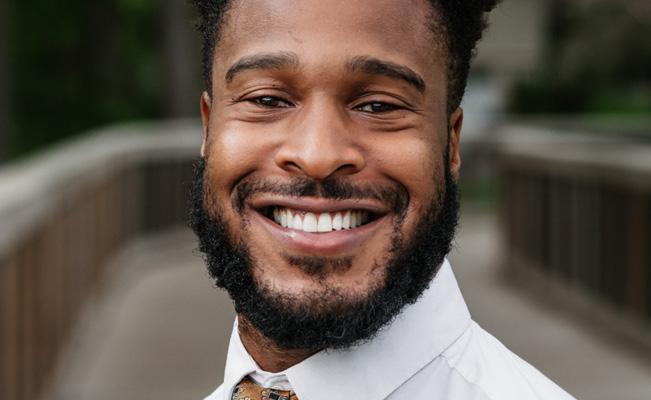
Schools history, will not be taking that job. The district will instead seek an interim superintendent for the 2026-2027 school year, beginning July 1, when retiring Superintendent Dave Bernhardson departs. The search — which drew 24 applicants, produced six semi-finalists and three finalists, included open public interviews and community stakeholder
There is real fraud in Minnesota. That is the first thing to say, because nothing else useful can be said until it has been said. The Feeding Our Future case is a real case. People have been convicted. Children’s nutrition money was diverted on a scale that ought to outrage anyone who has ever stood in a school cafeteria line. The state’s own monitoring failed. Whistleblowers were ignored. Aimee Bock, the head of the nonprofit at the center of it, is now in the Sherburne County jail, where she belongs. That is the first thing. The second thing is harder, and it is the reason this article exists. Of the ninety eight defendants the Department of Justice has now charged in Minnesota fraud related cases, eighty five are of Somali descent. The federal effort that began as a welfare fraud investigation has become, in the past four months, something else — a sprawling enforcement campaign that has put the Governor of Minnesota, the Attorney General of Minnesota, the Mayor of Minneapolis, and the Mayor of St. Paul under federal subpoena, sent thousands of immigration officers into the Twin Cities, killed a Minneapolis mother in the street, and pulled in twenty more Minneapolis businesses
The timeline On January 7 of this year, an Immigration and Customs Enforcement officer named Jonathan Ross shot and killed Renee Nicole Good, a thirty seven year old American citizen and mother of three, on a Minneapolis street. She had been moving her vehicle, which had been blocking the street where ICE was operating. Video of the encounter shows the Honda Pilot turning slowly away from the officer when he fired. The administration says the shooting was self defense. Her family’s attorneys have said she was a peaceful community member who did not engage in harmful conduct toward the agents. In the days that followed, Attorney General Keith Ellison sued the Trump administration over the immigration enforcement campaign. Mayor Jacob Frey condemned the federal deployment, which by then had grown to roughly three thousand ICE and Border Patrol personnel — nearly five times the size of the Minneapolis Police Department. Governor Tim Walz called the federal opera-
Twenty days. Three votes. One answer: what Inver Grove Heights just told us about itself
Twenty days. Three votes. One answer. That is what Inver Grove Heights, Minnesota gave us in the spring of 2026. And the answer — taken together, held in sequence, read as a single statement rather than three separate administrative acts by two distinct governmental bodies — tells us something about this community that its official records do not say and may never say.
On April 9, the Inver Grove Heights School Board voted 4-3 to select Dr. Tyrone Brookins — an African American educator with 29 years of experience, a doctoral dissertation centered on the achievement of urban Black students, and the distinction of being the first person of his background ever chosen to lead ISD 199 — as the district's next superintendent. On April 27, the Inver Grove Heights City Council voted 3-2 to restore the 1983 Minnesota state flag to all city-owned buildings — a flag whose central image shows a Native American man on horseback receding into the distance as a white farmer settles the land behind him. And on April 29, the same school board that had selected Dr. Brookins voted unanimously to withdraw that offer and discontinue the search.
Two separate governing bodies. Three votes. Twenty days. One community.

The question is no longer whether these events are connected. The question is what, taken together, they mean — and whether Inver Grove Heights, and Minnesota, are prepared to look at that meaning directly.
A community is not a city council. A community is not a school board. A community is all of it — the decisions and the contradictions, the intentions and the effects, held together in one place. Inver Grove Heights has now given us three decisions. They belong together.
The flag: what was restored, and why it matters Begin with the flag, because the flag is where the community's instincts first surfaced publicly.
The 1983 Minnesota state flag — which flew as the state's official symbol for four decades before the Legislature's 2024 redesign — features an image drawn from the state seal: a white farmer plowing land in the foreground, a Native American man on horseback in the midground, riding away toward a setting sun on the horizon. The composition is not ambiguous. It does not merely depict history. It depicts a particular interpretation of history — one in which Indigenous displacement is rendered as natural progression, as the inevitable prelude to the settler's arrival and the land's cultivation. The State Emblems
By Haley Taylor Schlitz, Esq.
April 29 is not just a date on the calendar in my family.
It is the day my mother lost her father.
It is the day my grandfather, Dwight Taylor, was murdered during the Rodney King Civil Unrest. His case remains unsolved. Long after the helicopters left the sky, long after the fires were extinguished, long after the country moved on to the next headline, my family was left with a grief that never received the dignity of an answer.
So when the Supreme Court released its decision weakening the Voting Rights Act on April 29, the date carried a weight I could not ignore.
I know these are not the same wound. One is a personal loss that shaped my family. The other is a legal decision that will shape the future of voting rights and political power in this country. But for me, they now live on the same calendar. And sometimes history speaks not only through comparison, but through convergence.
April 29, 1992, is remembered by the nation as the day Los Angeles erupted after four police officers were acquitted in the beating of Rodney King. The video had been seen across America. The brutality was not hidden. The violence was not theoretical. Still, the legal system told Black America that what it had witnessed with its own eyes was not enough.
That is part of why the unrest became more than a reaction to one verdict. It was the explosion of a deeper truth: people can only be told for so long that their pain is invisible, their evidence is insufficient, and their lives are less worthy of protection before the wound becomes national.
But my family does not remember that day only through history books or documentaries.
My family remembers a father who did not come home.
My mother, Dr. Myiesha Taylor, was a high school senior, getting ready to graduate, when her father was killed. She was standing at the edge of adulthood, preparing for one of the first major milestones of her life, when grief entered the story. She still went on to become a physician. She became the kind of woman who turned pain into purpose, and loss into a life of service. But achievement does not erase grief. It does not answer the unanswered. It does not replace a father.
I was not alive in 1992. But I was born into its consequences.
That is what people sometimes misunderstand about history. You do not have to witness a wound to inherit it. You can inherit the empty chair. You can inherit the story your mother carries. You can inherit the silence where accountability should have been. You can inherit a name, a loss, and a question that never stops asking itself: What would justice have looked like if the system had cared enough to find it?
That is why April 29 has always meant something different to me. It is a day that reminds me that law is not abstract for
Black families. Law is not only courtrooms, opinions, statutes, and doctrine. Law is whether someone is protected. Whether a family receives answers. Whether power is held accountable. Whether harm is named honestly. Whether the systems that claim authority over our lives also accept responsibility for our pain.
On April 29, 2026, the Supreme Court gave Black America another reason to think about the distance between law and justice.
In Louisiana v. Callais, the Court weakened one of the most important protections in the Voting Rights Act. The decision did not erase Section 2 from the law books. It did not formally declare that the country no longer needs one of the great civil rights laws born from struggle and sacrifice. It did something more careful, and in some ways more dangerous. It changed what voters must prove before the law will protect them.
For many people, that may sound technical. For Black communities, it is not.
The Voting Rights Act was born because America’s constitutional promises were not enforcing themselves. Black people had the right to vote on paper long before that right was protected in practice. The country had language about equality while Black voters faced poll taxes, literacy tests, intimidation, violence, and districting schemes designed to weaken their political power.
The country did not lack promises. It lacked enforcement.
That is why Section 2 mattered. It recognized that voting discrimination does not always look like someone being turned away from the polls. Sometimes it looks like a map.
Sometimes a community is divided, submerged, or packed so precisely that its ballots are counted while its collective power disappears.
Now the Court has made that kind of harm harder to challenge. It has moved the law toward requiring stronger proof of intentional discrimination, even when discrimination today often hides in data, political explanations, and district lines. It has made it easier for those in power to say, “This was about party, not race,” even in places where race and party are deeply intertwined.
That matters because Black Americans know what it means to be told that what we see, feel, and live through is not enough.
That was one of the lessons of April 29, 1992. The world saw Rodney King beaten. Yet the law still failed to meet the moral clarity of the moment.
My family learned another lesson that day. When Black life is taken, answers are not guaranteed. When harm comes to our families, accountability may not arrive. When the news cycle moves on, grief remains.
The Supreme Court decision is not the same as my grandfather’s murder. I want to be clear about that. But both force me to sit with a painful truth: Black Americans are too often asked to trust systems that have not always protected us, believed us, answered us, or honored the full weight of our citizenship. And yet, we keep building.
My mother built a life of service. She became a doctor. She raised children who understand that pain can be carried without being surrendered to. She taught me that grief and

purpose can live in the same body. She taught me that remembrance is not weakness. It is responsibility.
That is what I feel on this April 29. I feel the grief of a granddaughter who knows there is a part of my family story that still has no answer. I feel the anger of a young Black woman watching the law narrow protections that generations fought to secure. I feel the concern of an attorney who understands that rights surviving on paper are not the same as rights protected in life.
But I also feel the responsibility to remember clearly.
America often wants to move quickly from rupture to reconciliation. It wants the lesson without the accountability, the anniversary without the repair, the language of progress without the burden of enforcement. It wants to commemorate the civil rights movement while weakening the laws that movement made possible. It wants to honor Black resilience without asking why Black people are required to be so resilient in the first place.
So
But they live on the same calendar.
And for me, that is enough to know that remembering is not passive. It is an act of resistance.

contact/contact sport, it requires a knowledge of defense, physical confidence, strength, mental and physical courage. One of the lessons learned: this is life, and it has its adversity and challenges, but by facing them at a younger age made them less challenging as a grown man.
Over the past few years, I have had the good pleasure of getting to know Anthony Walsh as an author and part of the literary scene through the Minnesota Black Authors Expo and the We Are Wordsmiths community events here in the Twin Cities. His positive energy is highly infectious, as is his passion for the things he cares about. On a personal note, at 31, he is the father of a baby daughter, a hockey coach, a lawyer, a native of south Minneapolis and Edina, and he cares deeply about the partner he is co-parenting with. His care about reading, books, and bringing youth together is only enhanced by these facets of his life. But that’s not all—he is also running for a position as a Hennepin County commissioner for District 3. District 3 includes all of St. Louis Park, Southwest Minneapolis, and parts of South, Uptown, and downtown Minneapolis. His first book was inspired by events and a crossroads in his life: the pandemic, George Floyd’s murder, law school, his found biological family, and a Sankofa moment. These questions came up for him: a) how do I best change the community I came from and help heal what happened to it b) how can I help bring people back together and find common ground? His solution was by sharing his story, which became the children’s book Hockey is for Everybody.
He speaks of his challenges in life as one of the very few Black players in hockey, especially when he was younger. Since it is a highly physical
I asked him about the life experiences and the skill sets he would bring to the table as a county commissioner: “Being a father opened my eyes in ways I couldn’t have imagined. It’s the full step through the door of connection to the next life, school, and making other people’s lives better.”
Other facets of his skill sets as a lawyer and one who is involved in the community would include promoting the county’s Youth Activities Grants Program, the Homebuyer Assistance Program, the Childcare Assistance Program, and the internship opportunities the county has for youth.
His advocacy and commitment to service is demonstrated in his vision for One Hennepin: “to end the division and bring unity back to the community through sports bringing families of different backgrounds with their children together, playing together, learning skills and having a shared value system.” This vision includes strong, healthy couples putting down roots in the county that become multigenerational.
As an author myself, I asked Walsh about the connection between this gift and the position he seeks. “Politicians are storytellers, and they need to be able to write stories. I can take a story and write it down from Point A to Point B, since a vision is a story personified.” In his story, he can clarify something so that anyone can read it, and find that shared value we can fall back on, dispel myths, take different pieces of a story, and weave it together. “Who can do that better than an author?”
As a children’s author, and someone who cares about the welfare and better-
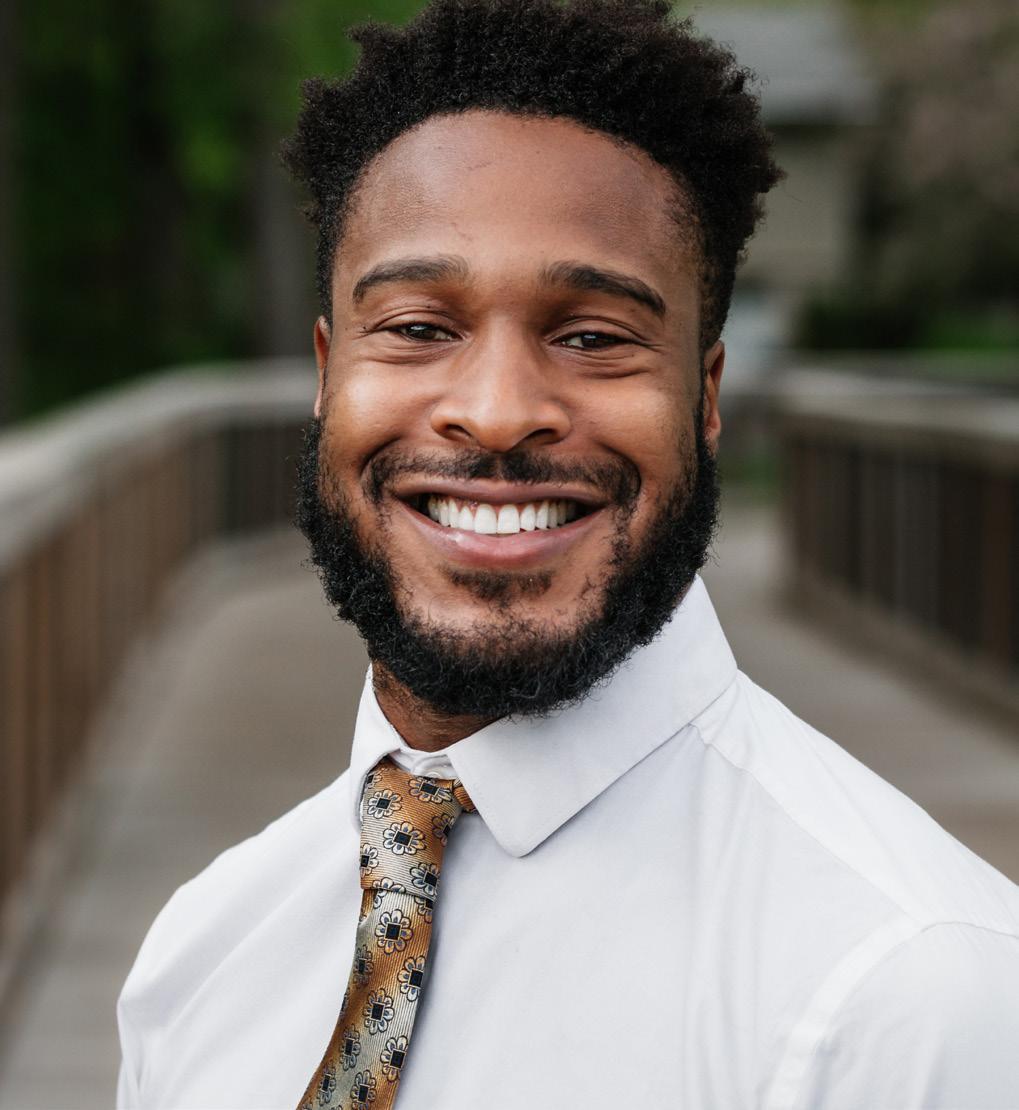
ment of children, I concluded my interview with the following question: when children see you, who do they see? “They see someone that is interested in themselves,” Walsh replied. “That they can have a small idea that can turn into something big,

Thank you, Anthony, for sharing your
someone who has the belief of a child and the imagination. They see an adult who respects them as children, who gets them, who has fun. Someone who cares about them, but is not too serious about them. I always get something from their reactions, and they know it’s OK to be a kid.”
for the community and the county. If you’d like to learn more about the candidate’s vision for the county, visit votewalsh.com.




Lt. Governor Peggy Flanagan brought national attention to Minnesota’s U.S. Senate primary last night, headlining a "Fighting Oligarchy" tour rally in Rochester alongside Senator Bernie Sanders. The event drew over 1,300 Minnesotans and featured remarks from key progressive leaders, including Minnesota Attorney General Keith Ellison and U.S. Senator Tina Smith, who have both endorsed Flanagan's bid for the Senate.
Flanagan framed the contest as a stark choice between a movement fueled by the people and her primary opponent, Congresswoman Angie Craig, whose campaign is "backed by corporate and special interests". She reiterated her commitment to rejecting corporate PAC money, sharply contrasting her approach with Craig's "reliance on outside spending and support from powerful industries".
From 3
expected to attend, included photographs and criminal histories, and identified, for some of them, their weapons of choice. Heather Heyer was killed at that rally. The information had been delivered to the Bureau before she died.
“The information that the SPLC shared with the FBI over the last 40 years saved lives.”
— Bryan Fair, interim president and CEO, Southern Poverty Law Center
A view from inside the Department Andrew Weissmann is not a partisan witness. He served as chief of the Justice Depart-
From 3
sessions, and was conducted by the Minnesota School Boards Association Executive Search Service — has been declared null and void. "Based on the narrow margin, the school board decided it was not a strong consensus among school board members regarding this decision. The school board determined that the superintendent's role is too important for the district to move forward without broad board support and confidence in both the process and the outcome." — ISD 199 official statement, April 29, 2026
What the district said — and what it did not say The district's official explanation, posted to its superinten-
Vanzant
From 3
taking her children, he told her: "I'll kill you, my kids and myself." That is on the record. A relative said it. The pattern was named three years before he carried it out. In February 2026, Elkins attempted suicide. He went to a Veterans Affairs hospital for a mental health evaluation. He stayed for a week and a half. He was released. He had served in the Louisiana Army National Guard from 2013 to 2020 — seven years — as a signal support specialist and fire support specialist. The system that trained him to use weapons had also, by the end, identified him as someone in mental health crisis. The system released him.
Two months after his release, he called his mother. He used the word demons. He said some people don't come back from them. Two weeks after that call, he killed eight children.
The Lt. Governor warned that corporate-backed organizations are already spending millions in the race, pointing to powerful forces—including Big Oil, Big Pharma, crypto, and corporate agriculture—that are aligning behind her opponent.
Flanagan connected corporate influence directly to the everyday economic struggles of Minnesotans, citing rising costs, wealth inequality, and aggressive immigration enforcement as consequences of decisions made by Washington politicians out of touch with working families. Specifically, she drew a direct contrast with Craig’s vote for the Laken Riley Act, emphasizing that it gave ICE "unprecedented power".
She passionately outlined a progressive policy agenda centered on affordability and economic fairness, which
ment’s Fraud Section from 2015 through 2019 — the same section that would, in the ordinary course, have brought a case like this. He has read the SPLC indictment, and has written publicly that it does not meet the standards he and his colleagues used day in, day out. Under the Justice Manual, prosecutors are not supposed to seek an indictment unless the evidence will probably prove the case beyond a reasonable doubt. Weissmann’s reading is that the SPLC indictment carries none of the indicia of such review.
Retired federal Judge Nancy Gertner has put it more bluntly. She told CNN it is “preposterous” for the government to argue that any donor to the SPLC — an organization that has spent decades publicly proclaiming its mission of dismantling extremist groups —
dent search webpage on April 29, states that the April 9 vote was 4-3 — and that "based on the narrow margin," the board determined it lacked sufficient consensus to proceed.
The statement does not name the dissenting members. It does not explain what changed between April 9 and April 29. It does not say whether community pressure, correspondence, or external events influenced the reconsideration.
It does not mention the April 27 city council vote to restore the 1983 Minnesota state flag. It does not mention race. It says: narrow margin.
Insight News submitted a formal press inquiry to ISD 199 District Office Coordinator Tracy Lautt on April 29, the same day as the special meeting, asking four specific questions: whether the April 9 vote remained in effect, whether a formal contract had been offered or executed, whether any
Right? The signs were not subtle. The signs were not coded. The signs were spoken aloud, in plain American English, to family members, to medical professionals, to the people who loved him. And still.
Vanzant's diagnosis
Iyanla Vanzant has been writing about Black men's interior lives for thirty years. Her 1996 book The Spirit of a Man drew on Yoruba and Ifa tradition to argue that Black men in America carry a spiritual wound that cannot be healed by the political or therapeutic frameworks the dominant culture offers. She wrote then that she had received a vision that led her to write and speak to and for Black men. Reverend Jesse Jackson called the book a lantern Black men could use to find their way out of the darkness of life in America.
Three decades later, on Roland Martin Unfiltered, she returned to that wound — but now in the language of her newest work, Spiritual Hygiene, the book she wrote out of the grief of losing her own daughter Nisa. The argument across both books is one argument. The interior life of a Black man is sacred ground, and sacred ground that is not tended becomes haunted ground. What does not get cleaned, accumulates. What accumulates, festers. What festers, eventually speaks.
And the system
could have been deceived about what their money was for. The Intercept surveyed twenty verified SPLC donors. Not one reported feeling defrauded.
The pattern, and the present This is not a lone case. On September 25, 2025, the same Department indicted former FBI Director James Comey on charges career prosecutors had previously declined to bring. On October 9, it indicted New York Attorney General Letitia James on charges of bank fraud and false statements to a financial institution, arising from a Norfolk home purchase. On November 17, in the Comey case, Magistrate Judge William Fitzpatrick wrote that the record showed “a disturbing pattern of profound investigative missteps.” On November 24, U.S. District Judge Cameron Mc-
formal challenge to the appointment had been raised, and when contract ratification was scheduled. As of publication, the district has not responded.
What a 4-3 vote means — and doesn't mean
A 4-3 vote is a majority. In democratic governance — including school board governance — a majority vote is how decisions are made. The board voted on April 9. Four members supported Dr. Brookins. Three did not. The offer was extended, contingent on contract negotiation, as standard practice requires.
The board now says it determined the superintendent's role is "too important" to proceed without "broad board support." That standard was not articulated before the April 9 vote. It was not a threshold in the MSBA search process. It emerged after the vote had been cast, after the offer had been made, after the communi-
Six weeks before Shamar Elkins killed eight children, the Shreveport City Council voted to withdraw from a partnership with the Caddo Parish Sheriff's Office to operate a domestic violence resource center at a new police substation. Six weeks. Read that again.
Shreveport City Councilman Grayson Boucher said there is "a true epidemic of domestic violence" across Shreveport. The numbers back him. More than thirty percent of murders in the city of 180,000 are labeled domestic in nature. The city, knowing this, voted in March to step back from the partnership that would have given that epidemic a coordinated response. The mayor's office said it was working on a comprehensive domestic violence center. The Sunday before Elkins's wife and ex-wife were both supposed to appear in court Monday to address their separations from him, eight children were dead.
Governor Jeff Landry said something that is worth quoting because it is rare for a governor to say it plainly: "It wasn't a fit of rage when he snapped once. It was systematic."
Systematic. The kill-
Gowan Currie dismissed both indictments, finding the United States Attorney who signed them, Lindsey Halligan, had been unlawfully appointed. In December, federal grand juries in Norfolk and Alexandria each declined to re-indict Ms. James. The mortgage-fraud investigation into Senator Adam Schiff has stalled.
In each case, the same pattern. A figure or organization the President has publicly named as an enemy is investigated for fraud. Career prosecutors raise objections, or decline. Political appointees override them. The case is announced at a press conference. And then, in court, where the rules are different, it begins to come apart.
Why this matters here
The Southern Poverty Law Center is in Montgomery, Alabama.
ty had been told that Dr. Tyrone Brookins would be their next superintendent. A 4-3 majority is still a majority. The board did not change the rule before the vote. It changed the rule after — after the offer had been made to a Black man who accepted it in good faith.
The timeline that cannot be ignored Insight News is not in the business of assertion without evidence. We do not claim the April 27 flag vote caused the April 29 reversal. But we present the facts in their sequence.
April 9: ISD 199 votes 4-3 to select Dr. Tyrone Brookins — a Black educator — as superintendent.
April 27: The Inver Grove Heights City Council votes 3-2 to restore the 1983 Minnesota state flag — depicting a Native American man
ing was systematic. The killer was, by every available account, a person whose own collapse was systematic. And the response to him — by family, by the V.A., by the city — was, in its absence, also systematic. "It was systematic. — Gov. Jeff Landry"
What we already knew
Here is the part nobody wants to write.
Black men in this country are dying inside in numbers we have not begun to count. They are dying inside while still working, still parenting, still showing up. They are dying inside while wearing the uniform of the National Guard, while attending church, while celebrating New Year's Eve in Facebook videos with their wives and children. The death is interior first. The bodies come later, sometimes their own, sometimes — as in Shreveport — the bodies of the people they were supposed to protect.
Iyanla Vanzant has been telling us this. Na'im Akbar told us this. Wade Nobles told us this. The Yoruba elders told us this before any of them. The wound is real. The wound is intergenerational. The wound is not a metaphor. The wound, untended, kills.
Its work has reached every state, including this one. Insight News has cited SPLC tracking on hate groups for years. When the federal government argues that a civil‑rights organization defrauded its donors by paying people to monitor the Klan, that argument does not stay in Alabama. It tells every Black church, every nonprofit, every newsroom in our community that the work of documenting hate may itself be reframed as fraud.
Insight News has reported in recent months on parallel patterns closer to home: federal subpoenas served in January on Governor Tim Walz, Attorney General Keith Ellison, and Mayors Jacob Frey and Kaohly Her; the President’s public naming of Walz, Ellison, and Representative Ilhan Omar as “complicit” in fraud he has not proven they touched; the April 28 federal raids on more than twenty Minneapolis businesses. We return to those in our companion piece. The SPLC case is the lens. It tells us what shape the argument takes when fraud becomes the frame.
riding away from a white settler — to all city-owned buildings. Nearly two hours of public comment.
April 29: The ISD 199 School Board votes unanimously to withdraw the offer to Dr. Brookins. The search is discontinued. The reason given: narrow margin.
Twenty days. Three events. One community. The district's statement connects none of them. Journalism must.
What this cost Dr. Brookins Dr. Tyrone Brookins is a person. A husband and father of four sons. A 29-year educator who accepted an offer in good faith and who, presumably, had begun the quiet work of preparing for a new chapter. Twenty days later, the offer was gone. The district's statement does not thank him. It does not acknowledge the disruption to his career or his life. It says
Spiritual hygiene —
Vanzant's word for it — is the daily discipline of asking yourself what you are feeling, and listening to the answer without editing it. It sounds simple. It is not simple. It is the hardest work a man can do. And we have built a culture, inside and outside the Black community, that makes the work nearly impossible. The man who says he is having dark thoughts is the man we tell to be strong. The man who says the demons are too strong is the man we tell to pull himself together. The man who attempts suicide in February is the man we discharge from the V.A. in February. And then April comes.
What now
This is not an argument that Shamar Elkins was a victim. He killed eight children. He shot two women. He chose. The moral weight of that choice is his alone, and it is total. This is an argument that the conditions that produced him are not mysterious. They are documented. The threat in 2023. The suicide attempt in February. The phone call on April 5. The withdrawal from the domestic violence partnership in March. None of
“When we began working with informants,” SPLC interim CEO Bryan Fair said, “we were living in the shadow of the height of the Civil Rights Movement.” That shadow has not lifted. It is the country we still live in. It is the country in which a Justice Department is now arguing that the work itself was the crime. Disclosure statement Insight News uses AI-assisted tools in some editorial production. Read our AI Policy & Transparency Statement at www.insightnews.com/ site/ai_policy.html.
the role was too important — a formulation that, whether intentionally or not, implies the problem was the selection, not the reversal.
Insight News will continue to seek direct comment from Dr. Brookins, on-record statements from individual board members, and the minutes of the April 29 special meeting when they are published. We will ask whether the flag vote generated any correspondence directed at the school board. And we will ask why four board members who voted for Dr. Brookins on April 9 joined the three who opposed him to unanimously take that offer back. Disclosure statement Insight News uses AI-assisted tools in some editorial production. Read our AI Policy & Transparency Statement at www.insightnews.com/ site/ai_policy.html.
these facts are hidden. None of them required investigation. They were, in real time, on the record, and the record was not read.
Vanzant's question — the one she has been asking for thirty years — is whether the Black community, and the institutions that surround it, will read the record. Will pay attention to the man who says the demons are too strong. Will treat his interior life as sacred ground that requires tending. Will refuse, as she refuses, the comforting frame that says: he just snapped.
He did not just snap. The governor of Louisiana said so. The record says so. Iyanla Vanzant said so on Roland Martin's program. The children are buried this week. Jayla Elkins, three. Shayla
Disclosure statement Insight News uses AI-assisted tools in some editorial production. Read our AI Policy & Transparency Statement at www.insightnews.com/ site/ai_policy.html.
Every ranking of America's "best places to live" puts Minnesota and the Twin Cities at or near the top. Parse those rankings by race and the same state and metro fall to the bottom on quality-of-life measures for Black people — what some have called the Two Minnesotas
Six years after the murder of George Floyd, the disparities that brought Minnesota into a national reckoning have not closed. In several measures — homeownership, household wealth — they have widened. The 2026 legislative session is an opportunity to act on what we already know
The United Black Legislative Agenda is a community-authored response, in collaboration with those most impacted. Working in formal coalition, the authors of this agenda are positioned to steward resources, innovate, upend traditional systems, and bring the voices of community front and center
This is not a wish list. It is a blueprint, and the time is now
1
That Minnesota's Governor meets with representatives of Minnesota Black communities
2
3
5
E D U C AT I O N
Invest now so Black students are educated at the same level as their peers.
In Minnesota, reading and math test scores for Black students remain well below state averages. Minnesota has ranked among the worst states for on-time Black graduation and college readiness. Black students who reach college disproportionately begin in remedial courses. The achievement gap is a policy outcome — and policy can change it.
7 P O L I C Y
Invest now in policy coherence that reflects the will of the people.
households.
Invest now in the health and well-being of the Black community
The Black community continues to face escalating social, economic, and health crises — heart disease, stroke, substance-related deaths, cancer, and infant mortality among them. These outcomes interfere with longevity, deepen poverty, and demand legislative response equal to their scale.
Each member of the Legislature, regardless of political affiliation, sets public policy Those policies should reflect the will of the people. Where conflicting interests have disenfranchised the Black community, there is need for coherence — for policies that reflect the lived needs of the community, advanced by those elected to represent it. The United Black Legislative Agenda is the community's articulation of those needs in 2026.
tion a campaign of “retribution and revenge.”
On January 20, the day Acting Attorney General Pam Bondi arrived in Minnesota for a personal visit, federal grand jury subpoenas were served on the offices of Walz, Ellison, Frey, St. Paul Mayor Kaohly Her, and the counties of Ramsey and Hennepin. The legal theory was that state and local officials may have conspired to impede federal officers in the discharge of their duties. The factual basis the government has offered, in public, has been the public statements of those officials objecting to the immigration crackdown. Hours before the subpoenas went out, the President posted on Truth Social calling for Walz and Representative Ilhan Omar to be investigated.
“Donald Trump is coming after the people of Minnesota and I’m standing in his way.”
— Keith Ellison, Minnesota Attorney General, January 20, 2026
The pivot On March 4, Walz and Ellison testified before the House Oversight Committee, which had
assembled a report titled “The Cost of Doing Nothing” and accused both of having known about Feeding Our Future fraud earlier than they admitted. The hearing was, in the words of the trade press, low on new facts and high on political theater. Republican members banged on tables. One asked the Governor of Minnesota, repeatedly, “Are you the Governor of Minnesota or not?” Walz pivoted in his opening statement to the immigration deployment, calling it the actual crisis facing his state. Ellison concluded the hearing by saying that protecting the public dollar required bipartisan cooperation, and that Operation Metro Surge had “dealt a severe blow” to fraud enforcement in Minnesota by burning the trust the state had built with immigrant communities the prosecutors needed as witnesses.
Two weeks later, the Trump administration announced it was withholding more than two hundred and fifty million dollars in Medicaid funds from Minnesota, citing fraud. On April 28, federal agents raided more than twenty Minneapolis businesses. The same day, the President again named Walz, Ellison, and Omar as “complicit” in fraud he has not, on the public record, proven they touched.
The number that
Redesign Commission, which reviewed 2,128 public submissions, was created by the Minnesota Legislature precisely to address that imagery. It was a deliberate, state-sanctioned act of democratic correction. The new flag flew officially for the first time in May 2024.
Inver Grove Heights is not the only Minnesota city to push back. It joins Champlin, Detroit Lakes, Elk River, North Branch, Plainview, Pine Island, Wadena, Zumbrota, and roughly a dozen others that have voted to fly the 1983 flag. The legal architecture permits it: Minnesota law does not require any city to fly a state flag and allows municipalities to choose which version to display.
Mayor Brenda Dietrich, who supported the restoration, said residents felt that "a meaningful connection has been lost" with the new design. That sentiment is real. Nostalgia is real. The feeling that something familiar has been taken without sufficient consent is real.
But meaningful connection to what, exactly? To a flag that depicts a Native man riding away? The connection that was lost was a connection to a particular image of Minnesota — one that centered European settlement and rendered Indigenous presence as something already passing, already beside the point. Restoring that image is not a neutral act of tradition. It is a political choice about whose history gets honored on public buildings.
The vote was 3-2. The meeting ran nearly two hours, with dozens of residents testifying on both sides. That two-hour community activation — the passion it revealed, the divisions it surfaced — did not dissipate when the gavel came down. Two days later, another governing body in the same community made its own decision.
The man: who Dr. Tyrone Brookins is, and what his selection meant The story of Dr. Tyrone Brookins begins in Dallas.
A young man sits on a student school board, watching the adults make decisions about children like him. He notices something. The person running the district — the person at the top — looks like him. That image lodges somewhere deep. It becomes direction.
That young man is Dr. Tyrone Brookins. He went on to earn a degree in secondary education, return to Dallas as a middle school mathematics teacher, and then come to Minnesota, where at just 26 years old he became principal and mathematics teacher at Higher Ground Academy, a charter school he helped establish — one of the young-
should make us careful Eighty five of ninety eight federal fraud defendants in Minnesota are of Somali descent. That figure was confirmed by the Department of Justice on January 7, the same day Renee Good was killed. The number is being used, on the political right, as evidence of a particular community’s character. It is not that. It is evidence of a particular prosecutor’s case selection. Federal prosecutors choose what to charge. They prioritize what to investigate. They decide whose bank accounts to subpoena and whose nonprofit boards to depose. The fact that eighty five of ninety eight Minnesota fraud defendants are Somali American does not mean that the universe of fraud in Minnesota is eighty seven percent Somali American. It means that the universe of fraud the Justice Department chose to charge in Minnesota is. Those are different statements.
Insight News has covered fraud in Minnesota nonprofits across decades and across communities, and the demographic concentration of charges in this case is a fact that demands explanation, not a fact that explains itself.
This is the place where reporting on welfare fraud becomes reporting on a wider story. Because if a federal investigation in 2026 is producing charging patterns that look
est principals in the state at the time. He completed the Principal Licensure program at Saint Mary's University and earned his doctorate at the University of Minnesota Twin Cities in Educational Policy and Administration.
His doctoral dissertation: Perceived Influences of Relationships between District and School Level Administrators on the Achievement of Urban Black Students.
That title is not an abstraction. It is a research commitment rooted in lived observation — the kind of question you spend a career asking when you have watched Black children underserved by systems that were not designed with them in mind. It is the intellectual project of a man who noticed, early, that representation at the top of an institution changes what that institution believes about the children it serves.
For the past several years, Brookins has served as Assistant Superintendent at South Washington County Schools, overseeing 16 elementary schools in one of the metro's larger suburban districts. His approach was hands-on: using his calendar and an accountability partner to ensure regular school site visits, getting into classrooms, testing whether district priorities were actually visible in instruction — not merely declared in mission statements.
He is a husband and father of four sons. He brings 29 years to this work. He is, by any honest accounting, exactly the kind of leader a district should want: experienced, grounded in equity research, formed in suburban and urban contexts, and committed to the children most consistently failed by American schools.
On April 9, the ISD 199 School Board — after a months-long, publicly transparent search that drew 24 applicants, produced six semi-finalists and three finalists, included open public interviews and community stakeholder sessions, and was guided by the Minnesota School Boards Association Executive Search Service — voted 4-3 to select Dr. Brookins as the district's next superintendent.
That selection said something. It said: this community, through its elected school board, is willing to extend institutional trust and leadership authority to a Black man whose life's work centers Black children. It said: we believe ISD 199's schools will be better led by someone who has spent 29 years asking what schools owe the children they most consistently fail.
That was the statement of April 9. It lasted twenty days.
Dr. Brookins's dissertation asked what it takes for Black children to succeed inside school systems. He was selected to lead one. The question was whether the community around
like a particular community is being singled out, and if that same federal investigation is being used as the political cover for an immigration crackdown that has killed an American citizen and put the state’s elected leadership under criminal subpoena, then the question stops being whether fraud happened. The question becomes what the prosecution is for.
What the playbook looks like The Minnesota subpoenas issued on January 20 rest on a federal conspiracy statute that has rarely been used to charge state officials for the public statements they made in opposition to federal policy. The Southern Poverty Law Center indictment returned on April 21 rests on a fraud theory that, as discussed in our companion piece in this edition, the FBI itself contradicts. The dismissed indictments of former FBI Director James Comey and New York Attorney General Letitia James rest on charges that career prosecutors had previously declined to bring, that political appointees pushed through over their objections, and that a federal judge subsequently threw out for what she described as a “disturbing pattern of profound investigative missteps.”
There is a shape to all of this. The shape is a Department of Justice that names a
target, builds a fraud case, and announces it at a press conference — and a court system that then takes the case apart in public. Minnesota is inside that shape. The fact that real fraud happened here, and that real defendants are being properly convicted, does not move Minnesota outside it. It only complicates the telling. Black led Minnesota organizations are right to be wary. Somali American Minnesota organizations are right to be wary. Black churches and immigrant serving nonprofits and Black owned newsrooms in this state are right to be wary. The frame is being built. The frame is fraud. And the frame is being applied selectively to the people the administration has already named as enemies.
“Operation Metro Surge did nothing to address fraud in our state. It decimated our economy, it hurt and scarred our people, and it dealt a severe blow to fraud enforcement efforts in Minnesota.”
— Keith Ellison, Minnesota Attorney General, House Oversight testimony, March 4, 2026
What we owe our readers
Insight News will continue to report fraud where we find it, regardless of who is charged or what community they come from. We have done that since 1976 and we will keep doing


that school system was ready for the answer.
The withdrawal: what the board did, and what it did not explain At a special meeting on April 29 — two days after the flag vote, and on the same day Insight News submitted a formal press inquiry to the district — the ISD 199 School Board voted unanimously to withdraw its offer to Dr. Brookins and discontinue the superintendent search entirely.
The board's official statement offered this explanation: "On April 9, the school board voted 4-3 to extend an offer of employment to Dr. Brookins for the position of superintendent, contingent upon reaching a mutually agreeable employment contract. Based on the narrow margin, the school board decided it was not a strong consensus among school board members regarding this decision. The school board determined that the superintendent's role is too important for the district to move forward without broad board support and confidence in both the process and the outcome."
The official reason is margin. It is worth pausing on that. A 4-3 vote is a majority. It is how democratic governance works, including school board governance. The standard of "broad consensus" was not stated before the April 9 vote. It was not a requirement in the MSBA search process. It was articulated after a Black man had accepted an offer in good faith — and after the community had spent two hours at a city council meeting debating whether an image of racial erasure should fly on public buildings.
The board's statement
does not name the dissenting members. It does not explain what changed in the twenty days between selection and reversal. It does not say whether community pressure, constituent correspondence, or external events influenced the reconsideration. It does not mention the flag vote. It does not mention race.
It says: narrow margin.
And here is what makes that explanation insufficient as a full accounting: the withdrawal vote was unanimous. The four board members who selected Dr. Brookins on April 9 joined the three who had opposed him to take the offer back on April 29. Something shifted in those twenty days. The official record does not say what.
The board voted 4-3 to select him. Then voted unanimously to take it back. What changed in twenty days? The district's statement does not say. The flag went up two days before the offer came down. The official record connects nothing. The timeline connects everything.
The fault line: whose presence does Inver Grove Heights affirm?
Insight News does not assert a causal connection that the public record has not established. We are not saying the flag vote caused the withdrawal. These are legally distinct bodies with different memberships, different mandates, and different electorates.
What we are saying is this: the sequence is the story. And any honest accounting of what happened in Inver Grove Heights in April 2026 must present that sequence — and must ask the questions the
that. The standard for accountability journalism does not change because the political environment around it has become hostile. If anything, it tightens. The bar gets higher, not lower. We will also continue to report what is happening to the people of this state at the hands of a Justice Department that has, in the four months since January, subpoenaed our Governor, subpoenaed our Attorney General, subpoenaed two of our mayors, killed an American citizen on a Minneapolis street, raided more than twenty businesses in a single morning, withheld a quarter billion dollars in Medicaid funds, and named our public officials — by name, on social media — as criminals before any indictment has been returned. There is a word for this and the word is intimidation. The intimidation is meant to work on the officials. It is also meant to work on us. It will not. We are still here. The Conversation continues Tuesdays at one o’clock on KFAI 90.3 FM. Insight News continues every week. The work continues.
Disclosure statement Insight News uses AI-assisted tools in some editorial production. Read our AI Policy & Transparency Statement at www.insightnews.com/ site/ai_policy.html.
name it or not
The children of Inver Grove Heights Schools are watching. They may not have words yet for what they are seeing. But they are seeing it.
A man who looks like some of them — a man who spent 29 years asking what schools owe children who look like them — was chosen to lead their school. He accepted. He began, presumably, the quiet work of preparation. And then, twenty days later, the board that chose him unanimously took the offer back.
district's statement does not answer.
Underneath all three decisions — the flag vote, the Brookins selection, the Brookins withdrawal — runs the same fault line. It is the fault line that has defined American public life since long before 2020, and that shows no sign of closing: whose presence, whose history, and whose future does a community affirm in its public institutions?
The 1983 flag vote said: we affirm the image of a Minnesota in which Indigenous people recede into the distance. The Brookins withdrawal said: we will not, after all, extend this particular institutional trust to this particular Black man at this particular moment. Whether those two answers came from the same impulse, the same people, or the same political atmosphere is the question the official record leaves open — and the question journalism exists to pursue.
Inver Grove Heights is a Dakota County suburb of roughly 36,000 people, predominantly white, with a school district of approximately 3,400 students. It is not where you would ordinarily look for the frontline of Minnesota's racial reckoning. And yet here it is.
The same community that said, in effect, we want the old image back, also said, briefly: we want this man to lead our schools. And then unsaid it.
That reversal — the selection and its withdrawal, the forward reach and its retraction — is more revealing than either act alone. Communities rarely get to see their contradictions this clearly, this close together, this documented.
The children: what they are seeing, whether we
A flag now hangs on the public buildings of their city. That flag shows a Native man riding away from a white farmer. The flag was changed, deliberately, through a democratic process, to remove that image. The city voted to bring it back. These are not abstract policy questions to a child who lives inside them. They are lessons in belonging. They are lessons in whose presence is welcomed in the institutions designed to serve them — and whose is not. They are lessons in what happens when a community reaches toward equity and then pulls its hand back.
The district's motto, stated on its own website: Inspire. Innovate. Excel. A community commitment.
Inver Grove Heights will need to reckon, in the weeks and months ahead, with what that commitment means in practice — for all of its children, not only some of them. What Insight News will continue to do This is not the end of this story. It is the beginning of the accounting.
Insight News submitted a formal press inquiry to ISD 199 on April 29. We have received no response. We will seek the minutes of the April 29 special meeting when they are published. We will seek on-record statements from every member of the ISD 199 School Board — including those who voted for Dr. Brookins on April 9 and for the withdrawal on April 29. We will seek direct comment from Dr. Brookins. We will ask whether the flag vote generated any correspondence directed at school board members. We will ask whether the standard of "broad consensus" has ever been applied to reverse a majority vote on any other matter in ISD 199 history. And we will keep asking the question the community's official record refuses to answer: Was the narrow margin the real reason? Or is it the reason that could be stated publicly?
The flag goes up. The superintendent goes away. The children remain.
Disclosure statement
Insight News uses AI-assisted tools in some editorial production. Read our AI Policy & Transparency Statement at www.insightnews.com/ site/ai_policy.html.
Frey’s 3rd and 4th vetoes of 2026 strike Care Over Criminalization and Pause Evictions; Charter Commission power-grab draws warning; Law Enforcement Concealment ordinance hearing set May 13
Happy May Day. That was Council Member Robin Wonsley’s opening note in her May 1 Ward 2 newsletter — a salute to working-class people and a declaration of solidarity on International Workers Day. Then came the harder news.
Mayor Jacob Frey vetoed both major council actions from the previous week: Care Over Criminalization, which passed 7–6, and the 45-day Pause Evictions, Save Lives extension, which passed 8–5. The twin vetoes were Frey’s third and fourth of 2026 — after a veto of the first eviction extension in March and a separate veto tied to the Barnette reappointment dispute.
“Deflection and avoidance are not policy actions and do not meet this moment.”
— Council Member Robin Wonsley
Care Over Criminalization aligned city law with the 2023 bipartisan state law that
removed the criminal penalty for possession of drug paraphernalia. Wonsley argued the city’s current ordinance undermines criminal justice reform by creating pretexts to further criminalize people suffering from substance use disorder — and, critically, prevents public health workers from deploying harm reduction tools that reduce exposure to HIV and hepatitis C. Rather than follow public health professionals and the Hennepin County Attorney’s Office, she wrote, Frey “chose to uplift fear mongering propaganda over evidence-based public health strategies.”
On Pause Evictions, the data is contested. Wonsley and housing advocates at HOMELine point to a 60 percent spike in Minneapolis eviction filings in March 2026 compared to March 2025. The mayor’s office disputes this framing, noting that March 2025 numbers were already depressed due
to a 30-day pre-eviction notice ordinance that took effect that month — making it an imperfect baseline. Quarterly eviction filing rates, Frey’s office argues, were 1.35% in Q1 2025 and 1.45% in Q1 2026. Wonsley’s position: with no alternative plan in Frey’s veto letter, “deflection and avoidance are not policy actions and do not meet this moment.”
CHARTER COMMISSION: A WARNING ABOUT CHECKS AND BALANCES
Wonsley is raising an alarm about a proposal from the Minneapolis Charter Commission — an unelected body — to eliminate the council’s confirmation requirement for mayoral department-head appointments. A public hearing is scheduled for Wednesday, May 6, 4 PM, Room 350, Public Service Center, 250 S 4th St. Any resident may speak for two minutes. Wonsley described
confirmation votes as “an important way for the legislative body to support a functioning executive branch that reflects resident priorities,” and called the commission’s persistent focus on limiting council authority “troubling” — especially given that more democratic reforms, such as resident ballot initiatives available in Saint Paul, remain unaddressed.
LAW ENFORCEMENT FACE COVERINGS: PUBLIC HEARING MAY 13
Council Members Chavez, Chowdhury, and Chughtai are authoring an ordinance that would require any law enforcement body partnering with MPD to have a policy banning face coverings that conceal identity. The Public Health, Safety & Equity Committee voted unanimously to set a public hearing for Wednesday, May 13 at 1:30 PM, City Hall Room 350. Written testimony: Coun-
Vetaw honors North Minneapolis public health hero Gaebriel Lyrek; tie drive delivers 200-plus donations to job seekers
NorthPoint Community Health Specialist recognized for seven-plus years of harm reduction work; Boys & Girls Club fundraiser draws Ward 4 presence
Council Member LaTrisha Vetaw attended the Boys & Girls Club Annual Fundraiser at TCF Bank Stadium this week, calling it “a powerful reminder of how important it is to invest in our young people.” The Boys & Girls Club, she wrote, is “a cornerstone in our community” providing safe spaces, mentorship, and real opportunity for youth across North Minneapolis.
GAEBRIEL LYREK: A PUBLIC HEALTH HERO ON THE NORTH SIDE
At the Minneapolis Health Department’s annual Local Public Health Heroes Award Ceremony on April 29, Vetaw presented the Substance Use and Opioid Response award to Gaebriel Lyrek, Community Health Specialist at NorthPoint Health and Wellness Center. Vetaw cited a record spanning more than seven years on the North Side:
Co-founded the North Minneapolis Harm Reduction Coalition, bringing together 12 organizations Personally revived 29 individuals experiencing opioid overdoses
• Helped bring one of the city’s most-used Narcan vending machines to North Minneapolis
• Launched the Emergency Narcan Sticker project, now active in 27 local
Shaffer: Safety and economic vitality, side by side in a busy week for Ward 7
Inspector Novak retires after 34 years; Faith Randal wins Civilian of Year; $269,580 to 9 Ward 7 orgs; Minneapolis Democracy Center design
Council Member Elizabeth Shaffer’s May 1 newsletter covered a week where public safety and economic revitalization ran in parallel — each demanding full attention at once.
FIFTH PRECINCT TRANSITIONS
Fifth Precinct Inspector James Novak retired on Wednesday after 34 years with MPD. Shaffer credited him as essential to understanding and navigating public safety across Ward 7, particularly in Uptown: “Smart, responsive, and good-humored, Inspector Novak modeled the sort of effective, unselfish leadership we all aspire to.” He was honored with a proclamation signed by Mayor Frey and presented by Council Member Palmisano, with other council members in attendance.
The very next day, Crime Prevention Specialist
Faith Randal received the department’s Civilian of the Year Award at the MPD awards ceremony at St. Mary’s Greek Orthodox Church. In under two years with MPD, Randal has implemented the Uptown trespass initiative, conducted crime prevention assessments for businesses and residences across the ward’s 20 neighborhoods, and become a community fixture. A second Crime Prevention Specialist position for the Fifth Precinct is in the hiring process.
MULTI-JURISDICTIONAL UPTOWN SAFETY COORDINATION
Shaffer held her second monthly multi-jurisdictional meeting at the Fifth Precinct focused on Uptown safety, producing a preview of the Uptown Safety Ambassadors program launch-
ing in November — eight ambassadors dedicated to Uptown, following a successful pilot on East Franklin and East Lake Street. The session also reviewed a successful services pilot at Walker Library, where open houses held Thursdays in April connected residents with community resources. Shaffer also met with Ward 7’s CCPO representative, Chris Baker, to explore how to improve the flow of community feedback on police conduct to council members and police leadership.
On the legislative votes: Shaffer supported Mayor Frey’s vetoes of both Care Over Criminalization and the 45-day eviction extension. “The November election shifted the balance of power,” she wrote, “and it’s time for the council to work with the mayor to get things
Stevenson: Moturi-Lussier audit reveals systems that failed a Ward 8 neighbor and an Indigenous woman — ‘they deserve justice’
Council Member Soren Stevenson opened his April 27 Ward 8 newsletter with a belated Earth Day note — then turned to the Moturi-Lussier audit, the most significant MPD accountability proceeding the Minneapolis City Council had engaged in recent years. Davis Moturi is a Black man and a Ward 8 neighbor. His household called 911 thirty-eight times between October 2023 and October 2024, reporting threats and racial harassment from a neighbor. Nine days after Moturi called 911 to report his neighbor leaning from a window and aiming a firearm at him, Moturi was shot in the neck. He survived. His neighbor, John Sawchak, was later charged with second-degree attempted murder and first-degree assault; courts have thus far found him incompetent to stand trial. Allison Lussier was a 47-year-old Indigenous woman who called 911 at least nine times to report domestic abuse by her partner. She was found dead in her North Loop apartment in February 2024, one week after her final 911 call. Her death was ruled undeter-
mined. No charges have been filed as of April 2026. The City Auditor’s after-action report — a 121page document compiled from 49,000 pages of records and
cilComment@minneapolismn. gov, subject line “Comment on Law Enforcement Concealment of Identity Ordinance.”
ALSO IN WARD 2 THIS WEEK
The city’s $7 million Small Business Resiliency Fund delivered more than $100,000 to Ward 2 organizations in the first grant cycle: East Bank Neighborhood Partnership (Wards 2 and 3, $29,000), Redesign Inc. (Wards 2 and 6, $38,000), and Seward Civic & Commerce Association (Wards 2 and 6, $33,500).
The Zero Waste
Funding Mechanism presentation went before the council, recommending organized commercial collection with franchise fees to fund waste reduction work — including progress toward closing the North Minneapolis HERC incinerator. The Transportation Action Plan midpoint review was also presented; Wonsley flagged sidewalk
businesses
• Developed the “SCARE” quick-reference Narcan instruction card, now being adopted across agencies Expanded culturally specific services, growing participation to a majority non-white community base Vetaw called Lyrek’s work “innovative, it’s compassionate, and it saves lives.”
Other 2026 citywide Public Health Heroes: Birth Justice Collaborative (Healthy Start), Portland House (Resilient Public Health Infrastructure), Miguel Fiol (Health Equity),
done for Minneapolis.”
$269,580 FOR WARD 7 BUSINESS RECOVERY
Nine Ward 7 organizations received a combined $269,580 in the city’s first $1 million business district recovery grant cycle. Recipients include neighborhood associations for Bryn Mawr, East Isles, Lowry Hill, and Stevens Square, and supported events include the Uptown and Stevens Square farmers markets, Holidays on Hennepin, Dinner DuNord, and the Aquatennial. Shaffer also met separately with Uptown Farmers Market leadership on plans to make Uptown a true Thursday destination this season.
DOWNTOWN REAL ESTATE AND DEMOCRACY CENTER
Shaffer met with Building Owners and Management Association members at the newly renovated U.S. Bancorp lobby, 800 Nicollet Mall, to discuss downtown commercial challenges: regulatory barriers to outdoor seating and street-level activation, safety, filling vacancies, and declining property values.
Akhmiri Sekhr-Ra / Camila Valenzuela-Panza / Sierra Leone’ Williams (Healthy Living and Food Systems), Healthy Roots Institute (Safe Places), and Sabathani Community Center (Sustainability and Healthy Homes).
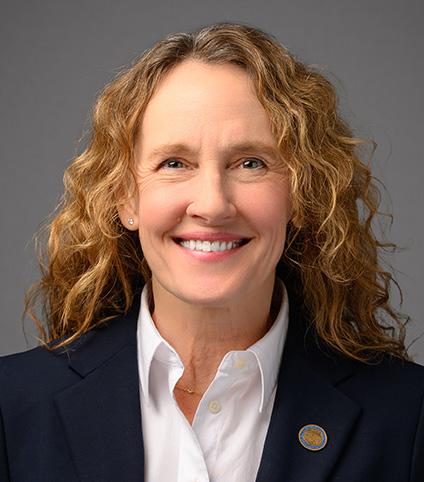
She also attended the ribbon cutting for Goosehead Insurance’s new office at 100 South Fifth Street — an out-of-state company, she noted, choosing Minneapolis because they believe it is a market where they can attract top young talent. The city unveiled updated design images and video for the Minneapolis Democracy Center — planned redevelopment of the gutted former Third Precinct building on Lake Street. Final design is expected in June, construction bidding in June–July, and groundbreaking in early fall. Shaffer also visited MPS Superintendent Dr. Lisa Sayles-Adams at the Davis
being accepted. Disclosure statement Insight News uses AI-assisted tools in some editorial production. Read our AI Policy & Transparency Statement at www.insightnews.com/ site/ai_policy.html.
Center, sharing concerns about school boundary decisions’ impact on Ward 7 families, floating the idea of expanding MPS’s downtown presence, and recognizing Ward 7 schools’ work during Operation Metro Surge.
WARD 7 UPCOMING Berger Fountain fundraiser: Thursday, May 7, 6–9 PM, Roxy’s Cabaret, 1333 Nicollet Mall MNDOT landscaping along Hennepin/Lyndale interchange: mid-May through end of June • Doors Open Minneapolis: May 9–10, 10 AM–5 PM — first public look at renovated council chambers • Lowry Hill Neighborhood Association board meeting: Tuesday, May 5, 6:30–8 PM, Kenwood Rec Center Kenwood Neighborhood Organization annual meeting: Monday, May 4, 6–7:30 PM, Kenwood Rec Center
Whiting invites Ward 11 to spring town hall; Trellis selected for New Nicollet; George Floyd Square construction starts June
Council Member Jamison Whiting opened his May 1 newsletter with an invitation: the Ward 11
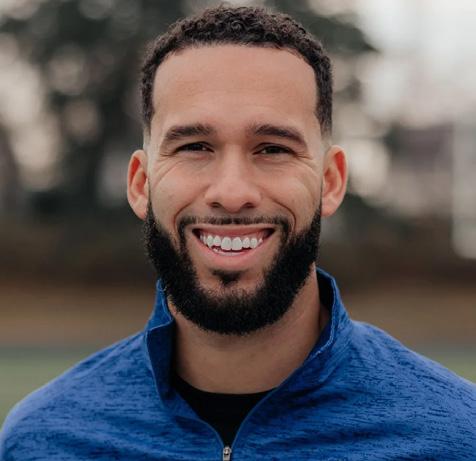
What does it mean when a council member's office copier breaks down in the middle of a busy week? According to Council President Rebecca Noecker, it means things are working the way they should.
The "broken copier" has become Noecker's shorthand for a truth her constituents rarely see: the real work of city governance is administrative, behind-the-scenes, and built on sustained collaboration with neighbors — not headlines.
“The real work of serving our constituents takes place behind the scenes, and it’s much more mundane.” — Council President Rebecca Noecker
On the West Side, Southport residents are organizing on a cluster of interconnected concerns: industrial pollution, truck and rail congestion, pedestrian access, and evacuation routes. Their organizing is producing the kind of constituent pressure that shapes council priorities.
The Downtown Action Series reached its sixth meeting on Thursday, April 23, at Union Depot, 4:30–6 PM. The series is building a sus-
tained civic conversation about downtown Saint Paul’s future. On Tuesday, April 28, Noecker co-hosted an April Community Conversation with Ward 3 Council Member Saura Jost, 4–5 PM at Gloria Dei Lutheran Church, 700 Snelling Ave S. The Ward 2 Annual Meeting is set for Thursday, May 14, 5:30–7 PM, at Neighborhood House at Wellstone Center, Room 272. The meeting will use a table format designed for two-way dialogue.
METRO J LINE: CONFIRMED FOR WEST 7TH
The Metropolitan Council has confirmed West 7th Street as the corridor for the METRO J Line. The full reconstruction project includes safer crossings, wider sidewalks, more trees, and comprehensive infrastructure upgrades — a generational investment in one of Saint Paul’s most traveled corridors.
On April 15, the council adopted Resolution 26-534, launching a zoning code study to update business sign regulations. The effort is a partnership with the Department of Safety and Inspections, Planning and Economic Development, Saint Paul Area Chamber, Downtown Alliance, and Business Review Council. PARENTS AND SCHOOLS
Council unanimously passes Chapter 44A, strengthening
Bowie, Noecker, Jost, Coleman, Kim, Yang, Johnson — every council member on the record after Operation Metro Surge
On April 22, 2026, the Saint Paul City Council voted 7–0 to adopt ORD 26-19, adding Chapter 44A to the city’s Administrative Code. The vote came in direct response to Operation Metro Surge — a federal immigration enforcement action that rattled communities across the region — and builds on the city’s 2004 Separation Ordinance. Chapter 44A codifies that city resources are not to be used for federal immigration purposes. It establishes internal documentation requirements, public reporting options, and regular updates to city leadership. The ordinance was drafted by Ward 4 Council Member Molly Coleman in close consul-
tation with the Saint Paul Police Department, Fire Department, Parks and Recreation, Libraries, the City Attorney’s Office, and the Mayor’s Office.
Every member of the council went on record. Their statements, in ward order:
WARD 1 — ANIKA BOWIE
Leadership means learning in real time and responding with action. Operation Metro Surge exposed where clarity and training are needed. The city owes its residents readiness — not reactivity. Every employee, including police, must be trained, aligned, and accountable.
WARD 2 — REBECCA
NOECKER
The ordinance ensures that the city’s values are reflected in how the city operates every day. Noecker described her long commitment to clear separation between local services and federal immigration enforcement. Every employee must know their role; every resident must have confidence the city is on their side.
WARD 3 — SAURA JOST
Strengthening the Separation Ordinance has been demanded loudly and clearly since November. Clarity and guidelines are basic good governance. Jost credited Coleman’s drafting work and the collaborative process that produced the ordi-
The Saint Paul Parent Solidarity Network is recruiting volunteers at Humboldt High School, Focus Beyond, Journeys, and



nance.
WARD 4 — MOLLY COLEMAN
The years 2025 and 2026 tested this ordinance in ways unimaginable when it was first written in 2004. The commitment to immigrant neighbors — and to true public safety — must continue. City staff need training. Public accountability mechanisms are now in place.
WARD 5 — HWA JEONG KIM
Proud to support in direct response to what residents expe-
rienced. Chapter 44A will not undo harm already done — but it will make the city harder to exploit, workers better supported, and residents more informed.
WARD 6 — NELSIE YANG, VICE PRESIDENT
What residents experienced during Operation Metro Surge was unlawful and unjust. Consistent training and reporting are essential. The expectation is clear: city employees and city resources will not carry out
federal immigration operations. Saint Paul remains a welcoming city to all.
WARD 7 — CHENIQUA JOHNSON, HRA CHAIR Neighbors deserve a city that is clear, consistent, and grounded in trust. Thoughtful training and transparency are non-negotiable. The ordinance respects the expertise of city departments and takes a practical step — keeping the focus on community, safety, and service.
ADDITIONAL EVENTS
Brooklyn Park Bike Month Celebration: Saturday, May 16, 11 AM–2 PM, River Park. Free safety
nection June 6: Family Ties Finale — The Eco-System
SUMMER PROGRAMMING
FAMILY TIES PROGRAM
Running every Saturday from 11:30 AM to 2:30 PM through May 23 at Zanewood, Family
Zanewood Recreation Center, 7150 Zane Ave N, officially reopened on Thursday, April 23, with a grand opening celebration that brought together elected officials, youth, and community members for a ribbon-cutting, facility tours, and the Annual Cops and Teens Basketball Tournament starting at 5 PM — complete with raffles, a shooting contest, games, and a live DJ. The centerpiece of the renovation is “The Wood,” a new teen center housed inside the facility that gives Brooklyn Park’s young people a dedicated space of their own.
Ties offers workshops on parenting, mother-daughter and mother-son connection, and family systems — with lunch and children’s activities provided at no cost. The series concludes with Family Ties Finale on Saturday, June 6. Workshop schedule: May 9: Mother-Daughter Connection • May 23: Mother-Son Con-
Rec on the Go (June 15–Aug 6) brings free summer recreation directly to apartments and parks for K–5 youth, with free meals and snacks for all youth 18 and under. Locations include La Quinta Hotel, Park Haven, Autumn Ridge, Decatur Landings, Trinity Gardens Park, Central Park, River Park, Edinbrook
Park, Brookdale Park, Monroe, and Hamilton. Summer Fusion at Zanewood (June 15–Aug 7, weekdays 9 AM–3 PM) is open to K–5 youth at $100 for residents and $120 for non-residents. Fee assistance is available, reducing costs by up to 75% based on income and household size, with additional support for families experiencing homelessness. Maximum assistance is $400 per person per year.

By Insight News Team
On

These
Warren McLean, NEON's point of contact for this initiative, framed the opening not just as a ribbon-cutting but as a community affirmation. "What began as a bold, community-driven vision is now a tangible resource," he wrote in the invitation to community leaders and partners. "This project reflects what's possible when community needs lead the process and partners align around equity, opportunity, and shared investment in the
By Robert I. Harris Assistant Professor of Economics,
As an
economist, I am often asked about what contributes to gas prices and what different policies can do to affect them.
The price of a retail gallon of gas is the sum of four things: the cost of crude oil, re-
fining, distribution and marketing, and taxes.
In nationwide figures from January 2026, crude oil accounted for about 51% of the pump price, refining roughly 20%, distribution and marketing about 11% and taxes about 18%. That mix shifts with conditions: When crude oil prices spike, that can drive more than 60% of the price; when the price drops, taxes and logistics are larger shares of the cost.

Crude oil is the biggest ingredient Because the price of crude oil is the largest element, most of the price at the pump is derived from the global oil market. Usually, big swings in crude prices come mainly from shifts in global demand and expectations – not from supply disruptions, according to widely cited research in 2009 by the economist Lutz Kilian.
But what is happening in early 2026 with the war


Refining, regulations and the California puzzle Refining turns crude into gasoline at industrial scale. The U.S. doesn’t have a single gasoline market, though. Roughly a quarter of U.S. gasoline is a cleaner-burning blend of petroleum-derived chemicals called “reformulated gasoline,” which is required in urban areas across 17 states and the District of Columbia to reduce smog. California uses an even stricter formulation that
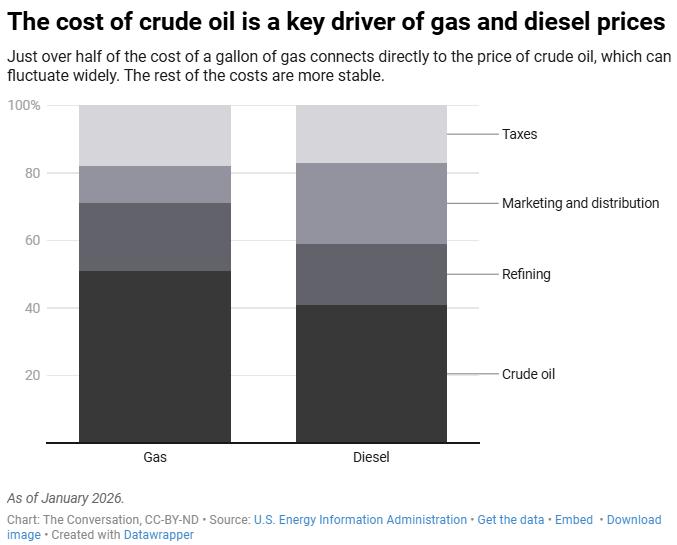
in Iran is one of the exceptions: a classic supply shock. Severe disruptions to shipping through the Strait of Hormuz and attacks on Middle East oil infrastructure have taken millions of barrels a day off the global market. Most drivers generally can’t quickly reduce how much they drive or how much gas they use when prices rise, so gasoline demand doesn’t change much in the short run. That means a jump in crude costs tends to result in people paying more rather than driving less.
few out-of-state refineries make. California is also geographically isolated: No pipelines bring gasoline in from other U.S. refining regions. California’s gasoline prices have long run above the national average, explained in part
the key factors are station rent and labor, the cost to buy gasoline in bulk to be able to sell it, credit card fees of as much as 6 to 10 cents a gallon at current prices, and franchise fees paid to the national brand, such as Sunoco or ExxonMobil, for permission to put their branding on the gas station. Most gas station operators net only a few cents per gallon on fuel itself – which is why many gas stations are really convenience stores with pumps out front. Borenstein and some of his collaborators have also documented that retail gas prices rise quickly when wholesale costs climb but fall slowly
when wholesale costs drop. The question of gas tax holidays The federal government charges a tax on fuel, of 18.4 cents a gallon for gasoline and 24.3 cents a gallon for diesel. States charge their own taxes, ranging from 70.9 cents a gallon for gas in California to 8.95 cents in Alaska. When gas prices rise, many politicians start talking about temporarily suspending their state’s gas tax. That does reduce prices, but not as much as politicians – or consumers –might hope. Research on past gas tax holidays has found that consumers get about 79% of the reduction in gas taxes. That means oil companies and fuel retailers keep about one-fifth of the tax cut for themselves rather
tablish contact
75 hours of body camera footage, presented April 22 to the joint council-Audit Committee session — documented systemic failures. As summarized by Stevenson and confirmed by the public report: MPD officers did not consistently review case history and suspect information before arriving on calls
The Police Chief and the Hennepin County Attorney did not communicate for months, despite the county attorney’s attempts to rees-
• Messaging from MPD leadership was premature, underinformed, and at times inaccurate Incidents were not consistently assigned to investigators or escalated to leadership Officers did not create proper documentation of interactions
Officers did not consistently report bias or weapons in police reports
• MPD’s system requires manual flagging of repeat calls rather than automatic tracking of repeat incidents
• “Blue Cards” left with victims carried outdated contact information and
Floyd Square in June 2026, with substantial completion projected for 2027. Community gathering space will remain available during construction, with locations shifting as work proceeds. The project team is working with artists and community members to preserve, document, and reinstall memorials and artworks. The People’s Way development applications remain under review by the Mayor and City Council.
than passing that savings to the public. Gas tax holidays also reduce funding for what the taxes are designed to pay for, typically roads and bridges. That pushes road and bridge upkeep costs onto future drivers and general taxpayers. There is an additional problem, too: Taxes on gasoline are supposed to charge drivers for some of the costs their driving imposes on everyone else –carbon emissions, local air pollution, congestion and crashes. But Borenstein has found that U.S. fuel tax levels are already far below the true cost to society. Removing the tax on drivers effectively raises the costs for everyone else.
The Jones Act: A small number that adds up
resources “The families and loved ones of Davis Moturi and Allison Lussier deserve more than an investigation or report. They deserve justice.” — Council Member Soren Stevenson Stevenson committed to overseeing implementation of the audit’s 37 findings and recommendations, and to ensuring accountability measures are in place if they are not met.
ALIVENESS PROJECT AND HIV WORK
Stevenson and his team toured the Aliveness Project, a Ward 8-based organization doing HIV support, prevention, and organizing. Their Thrive health clinic and pharmacy, food shelf, and
$323 MILLION CONSTRUCTION SEASON
Minneapolis launched its 2026 construction season on April 15 with $323.1 million in planned infrastructure improvements across 37 projects citywide. The season includes six miles of street resurfacing, eight miles of street reconstruction, three
The 1920 Jones Act is a federal law that requires cargo moving between U.S. ports to travel on vessels built and registered in the U.S., owned by U.S. citizens, and crewed primarily by U.S. citizens and permanent residents. Of the world’s 7,500 oil tankers, only 54 meet this requirement. Only 43 of these can transport refined fuels such as gasoline. So, despite significant refining capacity on the Gulf Coast, some U.S. gasoline is exported overseas even as the Northeast imports fuel, in part reflecting the relatively high cost of moving fuel between U.S. ports. Economists Ryan Kellogg and Rich Sweeney estimate that the law raises East Coast gasoline prices by about a penny and a half per gallon on average, costing drivers rough-
community kitchen are active on the South Side. Dining Out For Life on April 30 directed a portion of proceeds from participating restaurants to support the Aliveness Project’s work. Volunteer opportunities remain open at aliveness.org/volunteer.
GEORGE FLOYD
The city held two informational sessions in April on the upcoming construction around George Floyd Square. Stevenson’s office has received no updates on the People’s Way development plan and is awaiting the Mayor’s decision. He pledged to engage actively with whatever outcome the Mayor announces.
Greenway bridge restorations, 1,827 lead water service line replacements, and five miles of water main rehabilitation. Highway 280 northbound lanes closed April 13; southbound lanes fully closed April 29. Reopening is expected before the State Fair in late August.
ly $770 million a year. In light of the war’s effect on gas prices, the Trump administration has temporarily suspended the Jones Act requirements – an action more commonly taken when hurricanes knock out Gulf Coast refineries and pipeline networks.
What moves the number
The result of all these factors is that the price that drivers see at the pump mostly reflects the global price of crude, plus a stack of domestic costs, only some of which are inefficient. Tax holidays give a partial, short-lived rebate. Jones Act waivers trim pennies, though permanent repeal may cause more fundamental changes, such as reduced rail and truck transport of all goods, which could lower costs, emissions and infrastructure damage associated with cargo transportation. Harmonizing fuel blends across states and seasons may lower prices somewhat, but likely at the expense of increased emissions. Ultimately, the best protection against oil price shocks is a more efficient gas-burning vehicle, or one that doesn’t burn gasoline at all. In the meantime, the best I can offer as an economist is clarity about what that $4.30 actually buys.