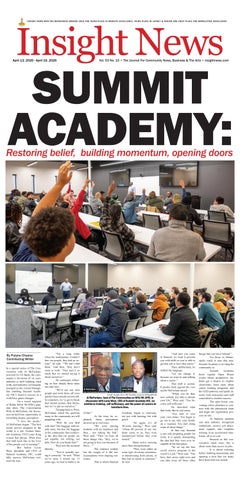

SUMMIT ACADEMY:
Restoring belief, building momentum, opening doors

By Pulane Choane Contributing Writer
In a special series of The Conversation with Al McFarlane, powered by US Bank, the community’s elevation of its commitment to skill building, hard work, and narrative sovereignty emerged as the crucial throughline enabling Summit Academy OIC's massive success as a workforce game-changer.
On a recent segment of Radio KFAI 90.3FM’s popular show The Conversation With Al McFarlane, the discussion turned from opportunity to something deeper, perception.
“I love the motto,” Al McFarlane began. “The best social service program in the world is a job. Former Summit Academy CEO Louis King coined that phrase. What does that truth look like in the lives of the people you’re training?”
But before Leroy West, president and CEO of Summit Academy OIC, could fully answer, McFarlane widened the lens.
“For a long while when the marketplace wouldn’t hire our people, they had an excuse,” he said. “‘We can’t find them.’ And then, ‘they don’t want to work.’ They said it so much that we started saying it about ourselves.”
He continued, reflecting on how deeply those ideas can take root.
“We’d see our own people and write them off even quicker than outside society did. So somehow, we’ve got to break that mental picture, that limitation we’ve put on ourselves.” Turning back to West, McFarlane asked the question many in the community are still grappling with.
“How do you deal with that? The baggage individuals carry, but also the baggage in the community that reinforces the idea that our people are not capable, not willing, not able. How do you break that?” West met the moment directly.
“And now you come to Summit, we want to provide you with skills so you’re able to get that job or have that career.”
Then, deliberately, he shifted the language.
“Let me change it, because we want to start talking about a career.”
That shift is central.
It pushes back against the very myths McFarlane raised.
“When you do that, now nobody [is] able to dictate your life,” West said. “You become self-sufficient.”
He described what that looks like in real terms.
events where
“We were placing students with an employer and then… not hitting the ball,” West said. “Then we hear all these things like, ‘Hey, we’re not going to hire you because of those…’”
The sentence trailed, but the weight of it did not. Assumptions were shaping outcomes.
“You’re actually saying it correctly,” he said. “What we’ve seen, I would say 15 years ago, we had to battle a lot of that.” At the time, he explained, those perceptions showed up in real ways.
That is where Summit
Academy began to intervene, not just with training, but with proof.
“So again, it’s all 20-week training,” West said.
“About 80 percent of our students come to us, they were unemployed before they even started.”
Many arrive carrying more than unemployment.
“They were either on some type of county assistance, or transitioning from prison, or they had to report to someone,” he said.
“You start to own your own home. You begin to go out to eat, take your family on a vacation. You start doing some of those things.”
In that way, Summit is not only preparing people for work. It is quietly dismantling the idea that they were ever incapable in the first place.
“So we say the best social service program in the world is a job,” West said. “You have that career right now and you take away all those other things that you leave
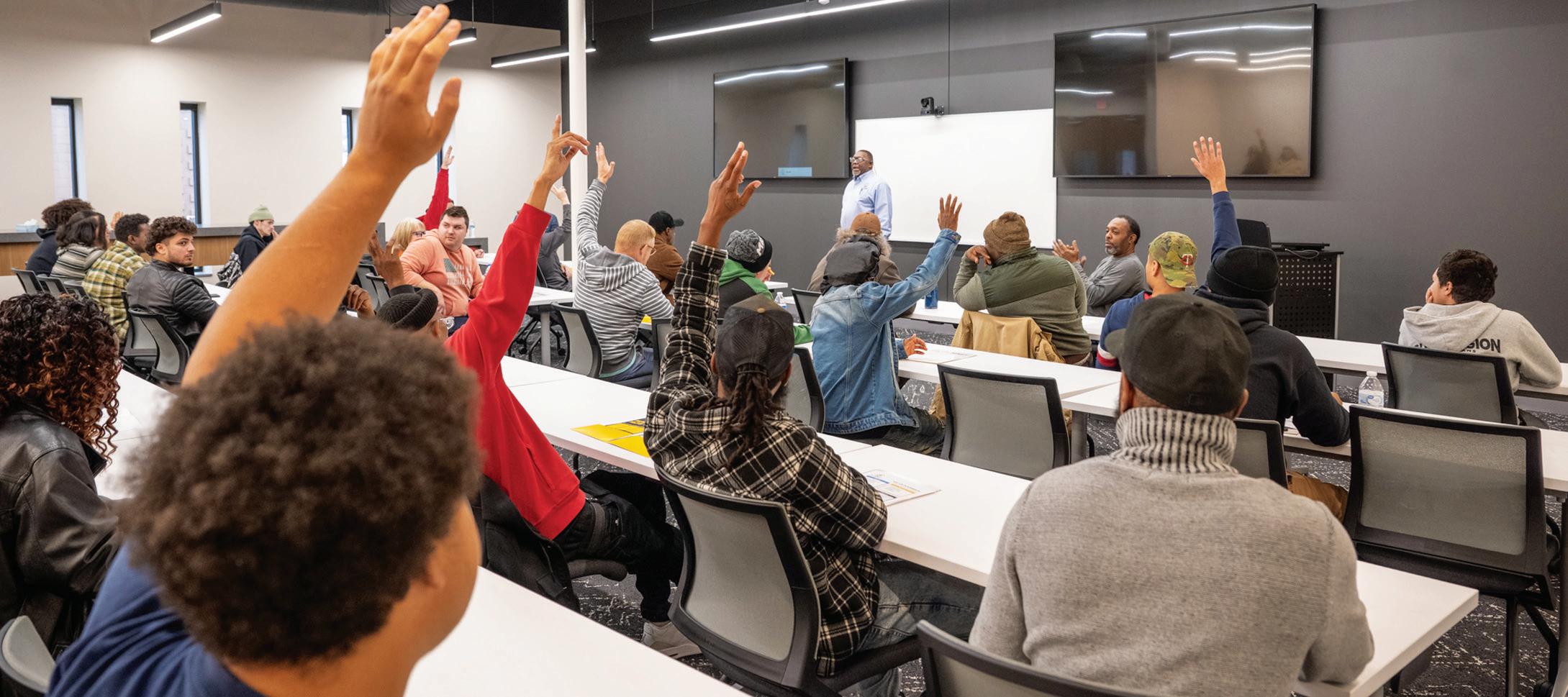
dents get a chance to explore classrooms, learn more about career training programs and the GED pathway and speak directly with instructors and staff committed to student success. The open house convenings allow attendees to connect with the admissions team and begin the registration process on site. At Summit, students can earn industry recognized credentials, receive job placement support, and complete training in an accelerated timeframe, all at no cost. Because as this conversation made clear, this is about more than access to jobs. It is about restoring belief, building momentum, and opening a door that too many have been told was closed.
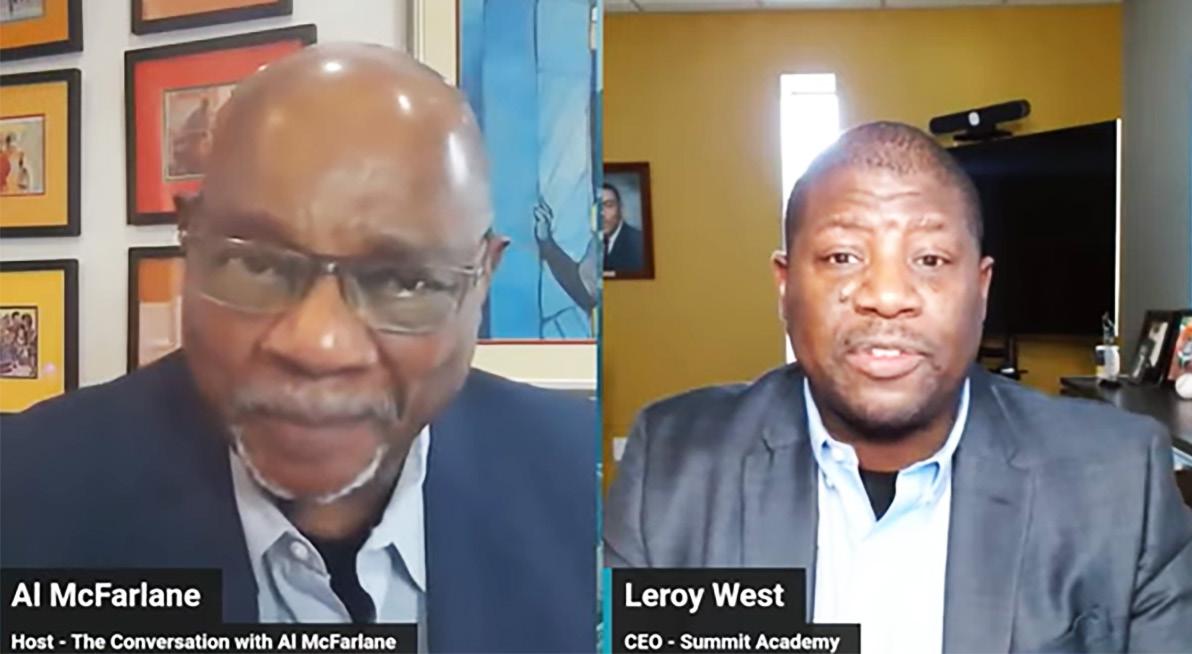
Credit: Insight News MN YouTube
Al McFarlane, host of The Conversation on KFAI 90.3FM, in discussion with Leroy West, CEO of Summit Academy OIC, on workforce training, self sufficiency, and the power of careers to transform lives.















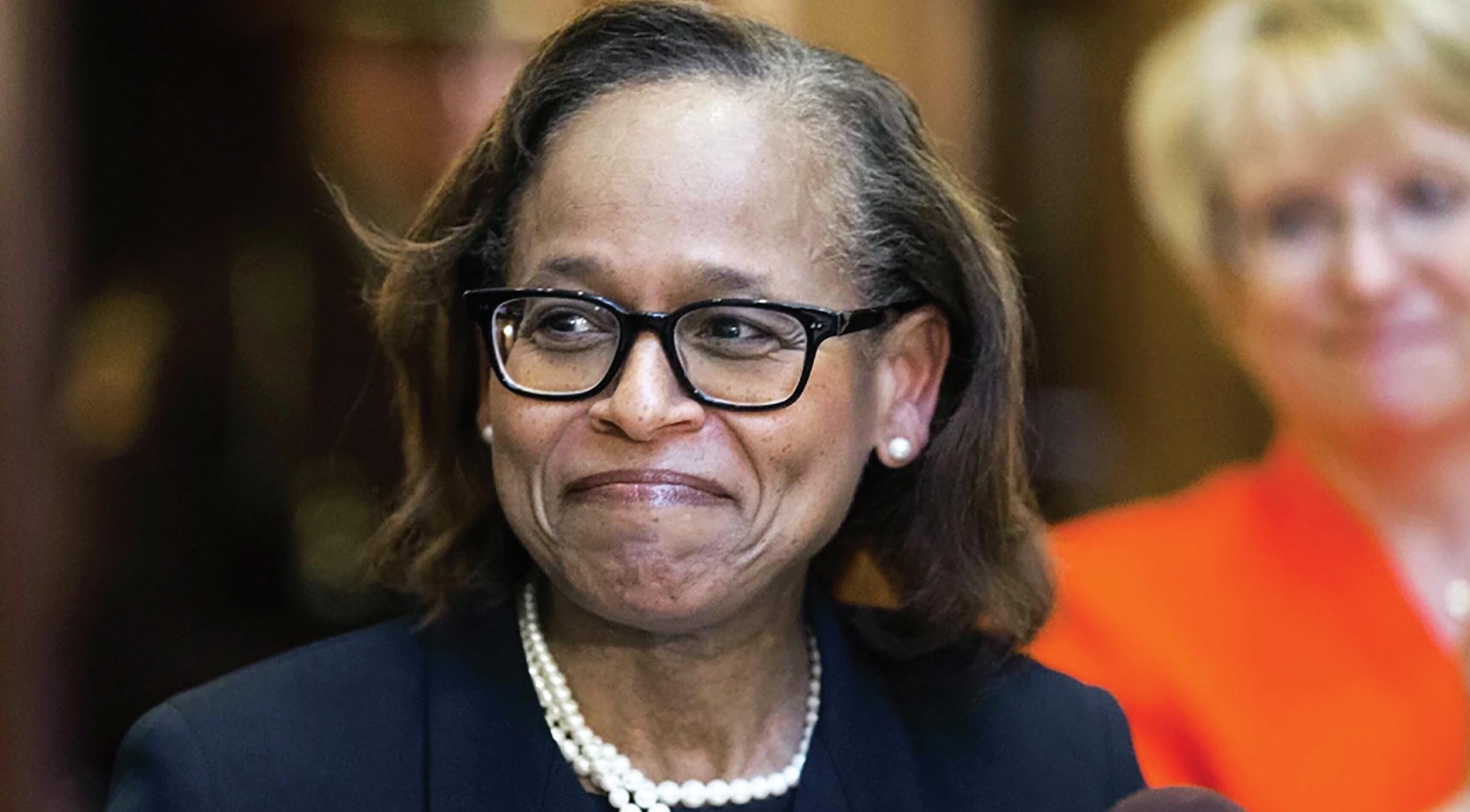
The weight of a first: Chief Justice Natalie Hudson leaves the Minnesota Supreme Court
A forty-year legal career culminates in history — and now, a transition that will shape Minnesota's highest court for a
By Al McFarlane
color had ever held. And she said it not as apology, not as lament, but as a statement of fact — the kind
of clarity that comes from a life lived in the law. On Monday, April 6, 2026, Chief Justice Natalie E. Hudson of the Minnesota Supreme Court announced her retirement, effective September 30, 2026. That's how close it is.
Forty-four years of legal service — staff attorney, city attorney, appellate judge, associate justice, and finally, chief justice — compressed now into a moment of departure. The clock ran. The institution endured. And the woman who led it leaves on her own terms, before the mandato-
Pakistan brokered a two-week truce that averted a major escalation, but the two sides already disagree on its terms, and the hardest questions remain unanswered
On the evening of April 7, roughly 90 minutes before a deadline President Donald Trump had set for Iran to reopen the Strait of Hormuz, the United States and Iran accepted a two-week ceasefire. Trump had spent that morning warning that without a deal, the country would face total destruction. Instead, both sides agreed to stop shooting.
The agreement was brokered by Pakistani Prime Minister Shehbaz Sharif and Field Marshal Asim Munir. Under its terms, both sides halted military operations. Iran committed to allowing safe passage of marine traffic through the strait, a waterway that carries about 20 percent of the world's oil and liquefied natural gas, according to CBS News. The
ry retirement age of 70 catches her in January of 2027.
A first that was also a foundation The numbers tell part of the story. Thirteen years on the Minnesota Court of Appeals. Eight years as an associate justice on the Supreme Court. Then, appointed by Governor Tim Walz in October of 2023, the elevation to Chief Justice — the third woman and the first person of color ever to hold that seat. First. That word does a lot of heavy lifting in Min-
nesota. It announces arrival. It marks the distance that had to be traveled. It carries the names of all those who came before and could not — would not — be allowed through the door. Chief Justice Hudson did not become a symbol by accident. She built a career, brick by brick, case by case, and arrived at the top of the judicial branch as the logical conclusion of a life's work.
"To serve in this role has been a profound honor, and I am thankful for the trust that was placed in me." — Chief Justice Natalie E. Hudson Her legal career began at the University of Min-

United States and Israel, in turn, agreed to suspend bombing campaigns against Iranian targets. Trump announced the deal on his Truth Social platform, saying U.S. military
Minneapolis, Minnesota March 2026 - St. Peter’s AME Church, Minneapolis, MN has recently been selected as one of 33 historically Black Churches across the United States to receive a grant by the African American Cultural Heritage Fund’s Preserving Black Churches program. Specifically, the grant awarded to St. Peter’s AME is for $100,000, funds to be used for Phase One of a multi-year planning and construction project.
This particular funding program has been established to ensure that selected

sacred spaces, such as historic Black churches, continue to serve their communities by acting as places of worship, safe havens, and sanctuaries for social change. Thanks to the generous support of the Lilly Endowment Inc., this year’s total investment of $8.5 million will help safeguard these churches and ensure their legacy endures for generations.
“The St. Peter’s AME Church congregation and friends are delighted to receive this grant that will allow us to pursue this much needed multiyear planning and construction

initiative for our historic church building,” said Rev Dr. Tracey Gibson, Senior Pastor. St. Peter’s African Methodist Episcopal Church

was founded in south Minneapolis in 1880. The new church

Some words do not fade after you read them. They stay where they landed. They echo because they are beautiful. They echo because they are true. They echo because they name a sorrow so precisely that all you can do is sit with it.
And then there are the words that echo because they are monstrous.
“The death of two Minnesota residents, that’s the cost of it.”
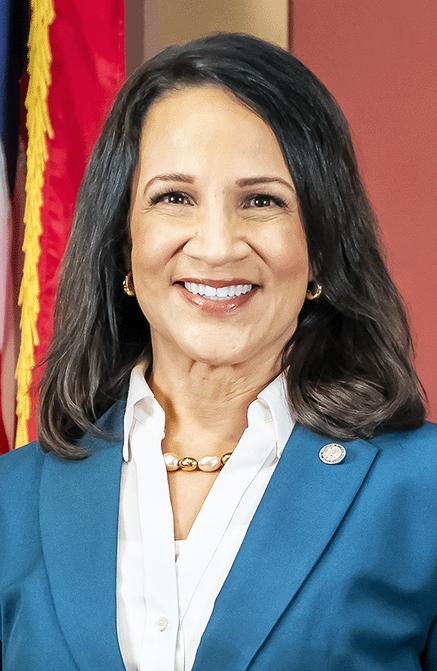
A sentence like that does not merely enter the public record. It stains it. In eleven words, Minnesota House Speaker Lisa Demuth told Minnesotans something no title can hide and no later explanation can undo. She told us what kind of suffering she is willing to absorb into politics. She told us what kind of loss she believes can be accounted for, justified, and moved past. So as Maya Angelou taught us, "when someone shows you who they are, believe them the first time." Lisa Demuth showed us.
What makes the quote so horrifying is its clarity. There is no hidden meaning to rescue, no context generous enough to soften it. The words are plain.
So is what they reveal, a leader more committed to defending a political outcome than grieving its human cost.
And that matters because Demuth is not an anonymous voice in the political crowd. She is the Speaker of the Minnesota House. Hers is one of the highest offices in this state. The title carries a duty larger than party. It asks for judgment. It asks for steadiness. It asks for some evidence that the people of Minnesota are more than pieces to be moved
around inside a political argument. Yet when two Minnesotans were murdered, Demuth did not begin with mourning. She began with a ledger. That is what should disturb us most. Not simply that the words were cold, though they were. Not simply that they were cruel, though they were that too. It is that they revealed a moral order in which human loss can be repositioned as an acceptable political expense. Not a rupture. Not a shame. Not a call to humility. A cost. That is not leadership. That is exposure. The Star Tribune’s reporting makes the quote even harder to excuse. Operation Metro Surge was described as the largest immigration enforcement action in U.S. history. Two Minneapolis residents, Renee Good and Alex Pretti, were murdered during the upheaval surrounding it. About 3,800 people were arrested during the operation. And Demuth’s response was not to question the human toll, but to blame local leaders and describe those murders as “the cost of it.” This was not a clumsy phrase. It was a revealing one. Demuth did not sound chastened by tragedy. She
Political and community leaders are being called upon to speak out — clearly, forcefully, and without equivocation — against the latest use of social media by President Donald Trump to target the Somali American community with racist and misleading imagery.

The Minnesota chapter of the Council on American-Islamic Relations (CAIRMN) issued a formal statement Monday, April 6, condemning a post in which Trump shared video footage of Somali American families at the Mall of America. The images — showing women in hijab, children, and families going about their day in one of the state's most frequented public spaces — were paired with ominous music and, according to CAIR-MN, with harmful and unsupported claims. CAIR-MN Executive Director Jaylani Hussein said the video deliberately misframes ordinary life as something threatening.

“What the video shows is ordinary life. Families shopping. Women in hijab walking with their children. People moving through one of the most visited public spaces in our state. Setting those images to dark music and pairing them with harmful and unsupported claims is not commentary. It is an attempt to make ordinary
Credit: Renee Jones Schneider / AP file
Chief Justice Natalie E. Hudson
Minnesota House Speaker Lisa Demuth
Insight News Team
By Insight News Team
Editor
Columnist
By Haley Taylor Schlitz, Esq.
Frederick Douglass understood something fundamental: identity is not granted by paperwork. It is asserted through presence, voice and
He claimed authorship over his own life in a nation structured to deny it. Today, we are debating whether documentation should determine access to democracy.
By Dr. Julianne Malveaux
Frederick Douglass did not know the day he was born. Like many enslaved people, he was denied even the dignity of documentation. Birth dates were approximations. Family lines were severed. Identity existed in property ledgers, not in public record.
His mother, Harriet Bailey, called him her “little Valentine,” and Douglass later chose February 14 as his birthday — an act of self-definition in a country that refused to define him as fully human. That act matters.
Douglass understood something fundamental: identity is not granted by paperwork. It is asserted through presence, voice and participation. He claimed authorship over his own life in a nation structured to deny it.
Today, we are debating whether documentation should determine access to democracy.
The SAVE Act would require documentary proof of citizenship to register to vote in federal elections. Passports. Birth certificates. Paper trails. Supporters frame it as administrative protection. But the history of American democracy teaches us that administrative
mechanisms are rarely neutral.
Paperwork has always been political.
After Reconstruction, when Black political participation expanded, new rules narrowed the electorate. Literacy tests. Poll taxes. Grandfather clauses. Each was presented as procedural. Each functioned as a barrier. The methods change. The objective — control over who counts — does not.
Documentation requirements would fall hardest on those least likely to have ready access to formal records:
seniors born at home in the Jim Crow South, low-income Americans without passports, married

women whose legal names no longer match their birth certificates. Even producing paperwork can become a test of belonging.
Documented cases of noncitizen voting are exceedingly rare. The question is not fraud prevention; it is access. Reconstruction was not only about emancipation. It was about participation. Black men voted. Black officials were elected. Black institutions were built. And when those gains
threatened entrenched power, backlash followed.
In 1898, in Wilmington, North Carolina, a legitimately elected multiracial government was overthrown. Black political power was dismantled. The ballot was replaced by the bullet. It was not disorder; it was organized suppression. The lesson is sobering. When participation expands, resistance emerges. Today’s debates un-
From Reconstruction to the SAVE Act Mayor Mamdani case study
Today, across the United States of America, in some of the largest urban cities, Black Americans are having renewed nightmares about being taken for granted, ignored, and being erased in history and in the public square.
Ethnic cleansing is an insidious form of systematic racism. In response to the increasing “Browning of America,” concerns are raised about the unfulfillment of prior commitments intended to ensure racial equality in municipal politics, economics, and urban revitalization.
New York City is the nation’s largest city. The presence and contributions of Af-
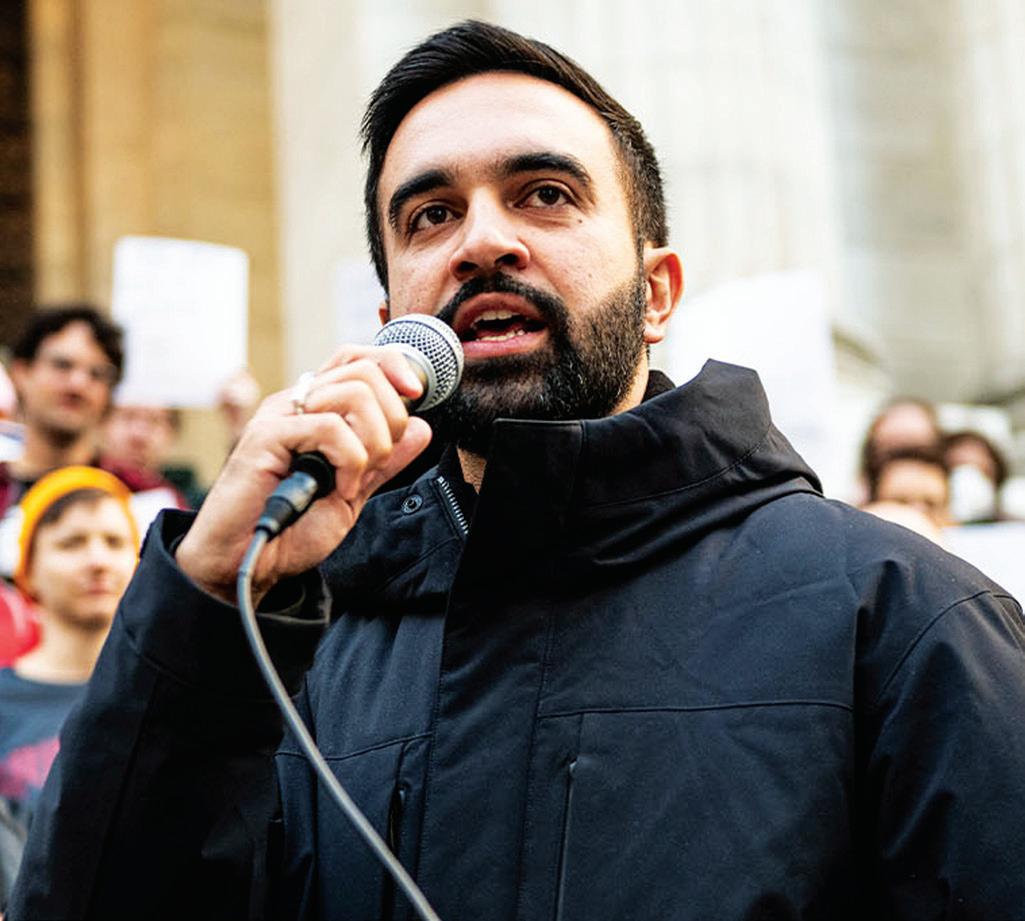
rican Americans to the city’s centuries-long development and evolution are rarely highlighted or saluted. The election of Zohran Mamdani would not have been possible without the huge turnout of African American and Latino voters. Yet the interests of Black America in the nation’s largest metropolis appear to be triaged routinely by the Mamdani Administration. We are the Black Press of America. For the past 199 years, since the first publication of Freedom’s Journal in New York City in 1827, we have had to call out those who pretended to be our political allies. Accountability by those we help to elect is a fair and just
demand.
Voters of color – both Black and Latino New Yorkers – backed Andrew Cuomo heavily in the primary, but then ultimately decided to give Zohran Mamdani a chance: overcoming their skepticism on housing, transit, and public safety, and reportedly moved by his affordability agenda. This trust, on the part of Black voters in particular, may have been misplaced. Why? Several troubling early signs that the new mayor is disregarding New Yorkers of color and treating them like Ralph Ellison’s iconic Invisible Man.
Thus far Mayor Mamdani has appointed no Black deputy mayors. This is a glaring signal to Black voters who voted for Mamdani on the promise of racial equity in the city’s administration. Does Mamdani value our insights, lived experiences, or our voices in crafting critical policies in City Hall?
Mamdani was forced to apologize to Black New
11 Words
From 3
sounded reconciled to it. Our community understands the danger of that kind of language.
Yorkers for overlooking the historical contributions of enslaved and indigenous people to building the city when he talked about a city “built by immigrants” in his inauguration speech. The Mamdani administration is holding a series of “Rental Ripoff” hearings,




Watching Speaker Demuth speak this way stirred something deeper in me than disagreement. It stirred recognition. There is a particular sadness in watching someone who stands near the doorway of Blackness use her voice to usher in what should be unthinkable. Our history has always included people willing to trade memory for proximity, truth for access, and community for ambition. That is part of what makes this moment so painful. The wound is not only in the cruelty of the words themselves, but in the fact that they were spoken by someone who should understand, at least in part, the long American history of whose lives get discounted first.
For a Gen Z Black woman, that recognition is not abstract. It is one of the bitter lessons of this era, that some people will use even the faintest proximity to our story not to honor it, but to help sanitize the very forces that have so often dehumanized us. There is a special kind of heartbreak in watching someone who could have chosen witness instead choose justification. In watching someone who could have stood nearer to truth instead be-
come a vehicle for its distortion. And this is what makes the moment feel bigger than one quote, even as the quote itself is enough. In the same week Minnesota read Lisa Demuth words of two murdered Minnesotans as “the cost of it,” we also watched Nick Cannon recycle revisionist talking points about the political parties and praise Trump, while Chilli from TLC faced backlash over Trump-related donations and social media activity she later tried to explain away. These are not identical situations, and they should not be flattened into one another. But together they point to a pattern that deserves naming. Too often, familiar Black faces are used to soften what is still cruelty at its core. The platform changes. The ambition changes. The performance changes. But the function is old. Someone stands near our history while helping power betray it. As someone who once taught fifth-grade U.S. history, I think often about how children first meet the contradiction at the center of this country. They are taught our soaring promises first, liberty, equality, justice. They are taught the language of aspiration. But if they keep studying, they discover another archive too, a darker one. It is the archive of rationalization, the record of those moments when people with power asked the country to accept the unacceptable, to excuse cruelty because it was useful, to stop asking moral questions because
fold in legislative chambers rather than in armed mobs. But the question remains: who has the
spearheaded by Cea Weaver, the director of his Office to Protect Tenants, who called homeownership a form of white supremacy. The mayor is reaching out to help private landlords rather than prioritizing fixing public housing (NYCHA), which has a dismal track record of poor conditions (no heat, year-plus waits for repairs, rampant pests and mold).
politics had already made its peace with the answer.
Demuth’s quote belongs in that darker archive. American history is filled with leaders who found polished language for moral failure. They called bondage order. They called exclusion custom. They called delay patience. They called injustice realism. They wrapped harm in tidy phrases and asked the public to mistake calm delivery for moral seriousness. But history has a way of stripping those phrases bare. It shows us, over time, that what sounded practical was often just inhumane. What sounded measured was often just indifferent. What sounded like strength was often just a disciplined form of cruelty.
That is why words matter so much.
Public language is never only language. It teaches people what can be normalized. It teaches communities whose pain counts and whose pain can be absorbed. It teaches a state whether the people in power see human beings or merely consequences. And when the Speaker of the House can speak of two murders as “the cost of it,” she is not merely describing a situation. She is teaching the public how she believes suffering should be understood. Minnesota should reject that lesson.
Two Minnesota residents are not “the cost of it.” They were people. Their lives were not expendable. Their
90 percent of the more than 511,000 NYCHA residents are Black and Latino, which is part of a larger trend in which 95 percent of Black households in New
deaths are not a line item to be entered on the expense side of somebody else’s politics. Any leader who speaks of them that way has told us something important, and damning, about what she values most.
Moral leadership would have sounded different. Moral leadership would have begun with the dead. It would have paused long enough to acknowledge that no political objective, no enforcement strategy, no partisan reflex can make such a loss acceptable. Moral leadership would have recognized that even in disagreement, even amid conflict, even amid debates over immigration, protest, and public order, the language of public office must still bow before the sanctity of human life.
That is not what Minnesotans received.
What we received instead was a sentence so stripped of tenderness, so emptied of reverence, that it should follow Lisa Demuth for a very long time. Not because anyone enjoys outrage. Not because public shaming is a civic virtue. But because the people of this state should remember what was revealed when the moment called for conscience.
Some words do not fade after you read them. They stay where they landed. These should. Because a sentence like that does not simply describe a leader. It reveals one.
By Dr. Benjamin F. Chavis Jr., CEO NNPA
Dr. Julianne Malveaux is a DC-based economist and author.
Mayor of New York City Zohran Mamdani
Black Gen Z is not giving up on love. We are giving up on confusion.
By Haley Taylor Schlitz, Esq.
There is a particular kind of exhaustion that does not come from heartbreak alone.
It comes from ambiguity. From half-answers dressed up as emotional maturity. From the slow fatigue of trying to decipher whether affection is real, whether consistency means anything, whether honesty will arrive before disappointment does.
Many Black young adults know that exhaustion well.
We know what it feels like to live in a culture that offers endless access but very little clarity, where people can speak the language of vulnerability without ever offering the substance of it, where digital closeness can create the illusion of intimacy while leaving the spirit untouched. We came of age in a world of soft launches, disappearing messages, carefully curated affection, and relationships that too often feel named only after they have already caused harm.
So when people say Gen Z has become cynical about love, I think they are misreading what is actually happening.
What looks like cynicism is often discernment.
That is what came to mind as I read BLK’s new State of Black Singles Report. Beneath the headlines and percentages was something more telling than a trend piece about modern dating. I saw the outline of a generation trying, with great intention, not to lose itself inside confusion.
That matters. For years, my generation has been narrated as if

we are unserious about commitment, too online to build anything lasting, too detached to believe in partnership, too wounded by the architecture of modern dating to imagine a future beyond it. Depending on who is talking, we are either mocked for being too casual or pitied for being too alone. But the truth emerging from Black singles tells a different story.
It is not the story of a generation abandoning love. It is the story of a generation trying to restore meaning to it.
One of the most striking findings in the report is that 70% of respondents view hidden emotional intimacy as cheating. I kept returning to that number because it says far more than whether people still believe in monogamy. It says Black singles are insisting that betrayal does not have to be physical to be real.
That may sound obvious, but in this cultural moment, it is not.
We are living in an era that constantly pressures people to minimize what wounds them. Do not be too sensitive. Do not ask too soon. Do not define things too early. Do not expect
too much. Do not call it betrayal unless there is proof everyone agrees counts. We are taught, over and over, to treat confusion as sophistication, as if emotional ambiguity is somehow more evolved than simple honesty.
But ambiguity is not always wisdom. Sometimes it is only avoidance with better branding.
And Black Gen Z, from what I see around me and from what this report reflects, is growing weary of pretending otherwise.
We are living in a culture that has made detachment look aspirational. Keep your options open. Keep your feelings guarded. Keep your intentions vague. Keep the app. Keep the roster. Keep enough distance that you can always deny what something meant after someone else has already paid the emotional price.
Then, when the person who has been left to decipher all of that asks for clarity, clarity itself is treated like an unreasonable demand.
That is why this conversation is bigger than dating. It is about standards. It is about self-respect
It is about a generation that has watched institutions fail, relationships perform themselves in public, and intimacy flatten into content, and has decided that confusion should not be the entry fee for connection.
In that context, it does not surprise me that so many Gen Z respondents report being celibate or not sexually active right now while also remaining open to marriage and family. Some will hear contradiction in that. I hear coherence.
I hear a generation saying that access is not the same thing as closeness. That attraction is not the same thing as trust. That being wanted is not the same thing as being valued. That wanting love does not require anyone to accept emotional instability as the price of admission.
That is not regression. That is recognition.
Black Gen Z has come of age under conditions that force early pattern recognition. We have watched people perform intimacy online before they ever practice it in private. We have seen romance turned into branding, affection turned into optics, and relationship
BLK state of Black singles
What best describes what you want right now?
Marriage-minded:
30.5%
• Dating with intention:
25.9%
Serious relationship:
18.6%
• Casual dating: 14.1%
• Something physical-only: 7.3%
Not dating right now:
3.5%
Key Takeaway: A commanding 75.0% of users are actively seeking an intentional, serious, or marriage-minded connection. Analysis: This data completely dismantles the mainstream narrative that modern dating apps are mere hookup facilitators. Black singles in the US are actively rebelling against the "situationship" epidemic that has dominated the last decade of dating culture. By being unapologetically upfront about their desire for long-term partnerships, they are reclaiming their time and emotional bandwidth. The casual era is effectively over; purpose-driven dating has taken its place, and users are ruthlessly filtering out anyone who lacks the emotional maturity to state their end goals.
Why are you currently using BLK?
• Looking for a serious relationship: 45.7%
Dating with intention:
34.6%
Healed & ready again:
28.7%
• Meet someone who shares culture/values:
27.1%
Curious: 25.0%
• Casual: 19.2%
• Moved to a new city: 17.3%
Tired of mainstream apps: 10.3%
Community/connections: 10.1%
Just out of a relationship:
9.8%
• Friends recommended: 9.0%
Key Takeaway:
Over 45% are on the app specifically to find a serious relationship, and 27.1% explicitly seek shared cultural values.
Analysis: Mainstream dating apps often leave Black singles dealing with the exhaustion of the "white gaze," forcing them to navigate microaggressions, fetishization, or simply the burden of constantly explaining their lived experiences. Users are migrating to BLK not just for geographic proximity, but for profound cultural shorthand. The platform functions as a curated sanctuary where singles can bypass the friction of cultural translation and immediately connect over shared references, values, and inherent mutual understanding.
What's your biggest frustration with dating apps?
People aren't serious: 44.4%
• Catfishing/scams/lying: 19.8%
Ghosting/flaking: 14.6%
Low quality matches: 8.7%
• Same profiles/small pool: 4.9%
Burnout: 4.1%
Superficial: 3.5%
Key Takeaway: Nearly half (44.4%) name "people who aren't serious" as their primary frustration. Analysis: The highly publicized concept of "app fatigue" is largely misunderstood. The exhaustion isn't with the technology, the swiping mechanism, or the interfaces; it is entirely rooted in misaligned intentions.
Singles are deeply frustrated by the gamification of dating, where casual players treat the matching process like a dopamine slot machine rather than a tool for human connection. There is zero tolerance for time-wasters, highlighting a massive market gap for platforms that actively filter for high intent and emotional readiness.
How often are you actively using dating apps right now?
• Daily: 42.2% A few times a week: 32.8% Rarely: 12.8%
• About once a week: 9.7%
Not using apps: 2.5%
Key Takeaway:
Exactly 75.0% of users are highly active, checking apps daily or a few times a week. Analysis: This reveals a fascinating paradox in modern dating: high frustration combined with incredibly high engagement. Singles are logging on consistently, proving that despite their grievances with "unserious" users, their fundamental desire to find a lasting connection remains fiercely resilient. They haven't given up on the pursuit of love; rather, they are treating the search with disciplined consistency, actively hunting for the right match and willing to sift through the noise to find it.
Where have your strongest connections usually started?
• Dating apps: 31.8%
• Friends/mutuals: 25.9%
Social media/DMs: 11.3%
Events/nightlife: 10.4%
• Work/school: 10.3%
• Hobbies: 6.9%
Faith/community space: 3.4%
Key Takeaway:
Dating apps (31.8%) have officially surpassed real-world avenues like mutual friends (25.9%) and events/nightlife (10.4%) as the primary starting point for strong connections.
Analysis: The societal stigma of the "digital meet-cute" has been entirely eradicated. Furthermore, the decline of traditional "third spaces" has cemented the algorithm as the modern matchmaker. Curated profiles are now viewed as a safer, more efficient vetting tool than a random encounter at a bar, allowing singles to screen for dealbreakers, politics, and lifestyle compatibility long before they ever agree to share a physical space.
Are you comfortable making the first move?
• Yes: 88.2% No: 11.8%
Key Takeaway: An overwhelming 88.2% of respondents are comfortable initiating contact. Analysis: This data point signals the death of outdated, passive courtship rules. It reflects a highly confident, self-actualized dating pool that refuses to wait around to be "chosen." Driven in part by modern female empowerment and shifting gender dynamics, Black singles are recognizing that securing a highly intentional, premium partnership requires proactive effort. If they see a connection that aligns with their standards, they are shooting their shot with zero hesitation.
Which relationship style fits you best right now?
• Monogamous: 57.5%
• "Don't label it" / go with the flow: 31.6% Still figuring it out: 18.3%
young adults know how fragile that performance can be. We know student debt is real. Rent is real. Economic uncertainty is real. The pressure to look established before your life has had the chance to settle is real. So it makes sense to me that many Black singles are not simply looking for a finished product. They are looking for integrity. For steadiness. For evidence that someone can tell the truth about where they are and where they hope to go. That is a more mature vision of love than people often give our generation credit for.
language used to obscure rather than reveal. We have also watched therapeutic language become its own kind of camouflage, used not always for healing but sometimes for evasion, a softer way to remain unavailable while still sounding selfaware.
So yes, some of us are moving slower. Some of us are opting out. Some of us are asking harder questions earlier. Some of us are no longer impressed by charm that cannot survive accountability.
That does not mean we have given up on love. It means we are less willing to romanticize confusion.
I was also struck by the report’s suggestion that Black singles are extending grace around finances while still valuing ambition, character, and effort. That, too, feels honest to the world many young Black adults actually inhabit. Social media often tries to reduce dating to financial theater, as if partnership is a test of presentation, as if whoever appears the most polished has somehow proven the most worthy.
But many Black
• Open relationship: 17.0%
Polyamorous: 10.2%
Non-monogamous with clear rules: 8.5%
Key Takeaway:
While monogamy leads at 57.5%, nearly 36% are actively exploring some form of ethical non-monogamy (Open, Poly, or ENM).
Analysis: While traditional monogamy remains the cultural baseline, there is a powerful and growing undercurrent of singles actively rejecting default societal structures. Historically, the Black community has leaned heavily traditional regarding relationship structures, making this pivot toward Ethical Non-Monogamy (ENM) a radical reimagining of boundaries. Singles are prioritizing radical transparency, bespoke communication, and explicit consent over the rigid, often uncommunicated expectations of traditional monogamy.
When do you consider it 'exclusive'?
• Only after making it official: 35.0% After a few weeks of consistency: 21.1%
Only after an explicit conversation: 19.9%
• After 1-2 great dates: 10.9%
Exclusivity isn't important to me: 5.9%
Key Takeaway:
Nearly 55% of singles require an explicit conversation or an official title to consider a relationship exclusive.
Analysis: The era of assumed exclusivity is a relic of the past. Having been burned by the ambiguity and gaslighting inherent to "situationships," modern daters have adopted direct communication as a survival mechanism. Boundaries, titles, and expectations must be vocalized out loud. For today's
And maybe that is what stayed with me most as I sat with this report. Beneath all the familiar buzzwords, dating apps, situationships, hookup culture, soft launches, what I heard was not unseriousness. I heard seriousness of a different kind. Seriousness about boundaries. Seriousness about emotional honesty. Seriousness about not calling something whole when it is only convenient. Seriousness about refusing to confuse proximity with devotion.
What older generations may be tempted to call caution may actually be wisdom that arrived early.
We inherited a world noisy with access and thin on trust. So of course many of us are asking better questions. Of course many of us are taking our time. Of course many of us are no longer willing to call half-love by a prettier name just because everyone else learned to live with it.
Black Gen Z is not giving up on romance. We are giving up on confusion.
And perhaps that is not a sign that love means less to us. Perhaps it is proof that, even now, we believe it should mean more.
singles, if exclusivity is not explicitly spoken and mutually agreed upon, it simply does not exist. This is the ultimate defense mechanism to protect their peace and emotional investments.
What counts as cheating to you?
Physical intimacy: 85.7%
• Sexting: 70.2%
Emotional intimacy: 70.0%
Sending/receiving explicit photos: 68.1%
• Meeting up one-on-one: 63.0%
Hiding communication: 60.6%
Flirting: 57.5%
• Keeping dating apps active: 52.3% Paying for sexual content: 38.6% Watching porn: 10.1%
Key Takeaway: 70.0% view emotional intimacy as cheating, and over half (52.3%) believe simply keeping a dating app active post-exclusivity is an act of betrayal.
Analysis: Infidelity has been thoroughly and irreversibly redefined for the digital age. A person's digital footprint is now viewed as an extension of their romantic energy. Digital loyalty is a foundational pillar of trust; therefore, the mental energy spent engaging with an app interface, scrolling through alternate options, or nurturing a hidden emotional bond in the DMs is viewed as deeply disrespectful. To modern singles, a straying thumb is just as damaging as a straying physical touch.
How big of a role does social media play in your dating life?
• Minimal - check profiles but prefer real life:
Columnist
Books, Arts & Culture
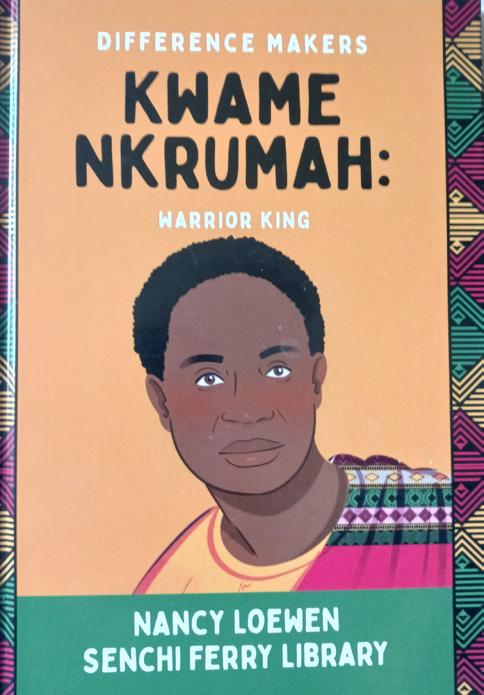
Kwame Nkrumah: Warrior King
By W.D. Foster-Graham Book Review Editor
By Nancy Loewen
When I think of the African continent, I think of the rich, diverse cultures and royalty that existed there—before the European colonialists showed up and changed the landscape for their own purposes, both politically and economically.
By the mid-20th
century, coun-
tries in Africa were fed up with colonial rule, and they were demanding independence. One of the first was Ghana, in the form of Kwame Nkrumah. His story is the topic of Nancy Loewen’s children’s book in the Difference Makers series, Kwame Nkrumah: Warrior King. Born in 1909, Nkrumah came from a big family, and though she didn’t have a formal education, his mother insisted that he attend school. Reluctant at first, he learned to love it, and his thirst for knowledge carried over into his adult life. He attended and graduated from the Government Training College in Accra. Nkrumah made the life-changing decision to attend Lincoln University in Penn-
sylvania, which was the first HBCU to grant college degrees. As a scholar, he earned degrees in sociology, economics, and theology, going on to receive master’s degrees in education and philosophy from the University of Pennsylvania. His time in America inspired him to bring unity to the African countries, and that meant freedom and equality. When he left America in 1945, in his words, “You have opened my eyes to the true meaning of liberty. I shall never rest until I have carried your message to Africa.”
When Nkrumah returned to the Gold Coast in 1947, little had changed for the continent. Only the nations of Liberia and Ethiopia were independent, and his country was
under British rule. He hit the ground running: he started the Accra Evening News, formed the Convention People’s Party, staged a boycott of British goods, and staged protests and worker’s strikes. By 1952, Nkrumah became his country’s prime minister. On March 7, 1957, independence was secured, and the Gold Coast officially became Ghana. The occasion was attended by Rev. Dr. Martin Luther King, Jr.
As the newly elected president of the Republic of Ghana, Nkrumah implemented many projects in the country to benefit his people, including the Akosombo Dam. However, he tried to do it too fast, and the country suffered. Forcibly removed from office and exiled,
he died in 1972. Nkrumah’s legacy and his efforts proved to be a powerful legacy as one by one, other countries on the African continent claimed their inde-
pendence. I like the following quote from him: “Freedom is not something that one people can bestow on another as a gift. They claim it as their own and none can keep it from them.” This book also teaches the importance of being a lifelong learner.
To Reyhana Ismail, I give you a hat tip for your beautiful illustrations.
Kwame Nkrumah: Warrior King is available through Amazon, Barnes & Noble, and the Planting People Growing Justice website (www. ppgjli.org).
Thank you, Nancy, for bringing us another Difference Maker!
What gig workers and employees who get tips need to know about the new no‑tax‑on‑tips tax break
By Annette Nellen Professor of Tax and Accounting, San José State University
About 1 in 10 American workers are earning a living as a gig worker. That means they find their customers through Lyft, DoorDash, TaskRabbit and other digital platforms, or do another form of what the IRS and others call “on-demand work.”
As a certified public accountant, attorney and tax professor, I study how new tax rules affect businesses and individuals, as well as the complexities that narrowly tailored tax breaks that apply to only certain groups of taxpayers bring about.
Singles
From 5
44.1% Moderate - flirt online/ date offline: 22.7%
• Huge - DMs are basical-
ly a dating app: 18.3%
None: 14.9%
Key Takeaway:
41.0% use social media moderately or heavily as a secondary dating tool.
Analysis: Platforms like Instagram and TikTok are no longer just content feeds; they function as parallel dating ecosystems and curated romantic portfolios. The DMs serve as an active, 24/7 vetting ground and VIP lounge. Because the lines between "networking," "friendship," and "flirting" are completely blurred on these platforms, partners are forced to be hyper-vigilant about digital boundaries, explaining why online behaviors trigger such intense debates about exclusivity and loyalty.
When is it okay to post someone you're dating?
• Only when it's serious:
35.7% Never - prefer privacy:
27.4%
• Once we're exclusive:
22.0%
• Immediately: 8.4%
After a few dates: 6.6%
Key Takeaway:
Over 63% will wait until a relationship is highly serious before posting a partner, or will absolutely never post them online.
Analysis: In an era defined by rampant oversharing and performative social media, privacy has evolved
The big tax reform package that President Donald Trump signed into law in July 2025 included two changes that affect many gig workers. One is a new tax break on money that workers earn through tips, whether they are self-employed or work as an employee. The other is a change to the rules guiding the information that gig workers and the IRS must receive about how much workers earn from platforms like Uber.
Maximum deduction is $25,000 Trump promised a new tax deduction for tips during his 2024 presidential campaign. Former Vice President Kamala Harris, his opponent, echoed that pledge, but she paired it with
into the ultimate luxury. Black singles are acutely aware of the "evil eye" concept that broadcasting your happiness invites unsolicited opinions, jealousy, and sabotage from the peanut gallery of followers. By keeping a relationship offline and reserving the "soft launch" for only the most secure partnerships, they are protecting the foundation of their intimacy from public consumption and scrutiny.
What's your expectation for financial stability in a partner?
Money doesn't matter if the connection is real:
30.4%
Working toward it is fine: 28.4%
• Must be financially stable: 26.6%
Prefer equal earning potential: 11.2%
• Prefer partner earns more: 3.4%
Key Takeaway:
Almost 59% prioritize genuine connection, character, and shared ambition over a partner's current financial stability.
Analysis: This is perhaps the most disruptive data point in the entire report, as it directly debunks the hyper-transactional dating advice that dominates internet culture. The reality on the ground shows that the community is exercising profound "economic grace." Recognizing the harsh economic realities of the current climate, singles are proving that a willingness to build together outranks a fully-realized bank balance.
On a first date, what feels most fair?
Depends on the date and
a pledge to double the federal minimum wage to US$15 an hour.
This new deduction allows up to $25,000 in tip income to be subtracted from a worker’s taxable income during the 2025, 2026, 2027 and 2028 tax years. The new tax break can provide significant savings for some employees and self-employed people.
The savings will vary widely depending on income
For example, a tipped worker in the 24% tax bracket eligible for the maximum $25,000 tip deduction would save $6,000 on their yearly tax bill. People who earn less and are in a lower tax bracket, and who earn less in tips than the maximum de-
budget: 36.4%
Whoever asked should pay: 30.7%
I pay my part always: 17.5%
• Split the bill: 11.6%
The other person should pay: 3.7%
Key Takeaway:
Over 67% believe dating economics should be flexible based on the context of the date and individual budgets, or rest on whoever asked.
Analysis: The endless internet debate over "who pays" is being settled with pragmatism rather than rigid, traditional gender roles. Singles are adopting a highly context-driven approach to early dating economics. Factoring in inflation, the cost of living, and who initiated the outing, daters are moving toward an equitable model. They are evaluating effort and thoughtfulness over outdated patriarchal expectations of footing the bill unconditionally.
When do you feel comfortable having sex with someone?
After a few dates: 31.9%
First date/night: 25.5%
Within the first week: 13.7%
• After commitment/relationship label: 13.0%
After exclusivity: 12.9%
Only after marriage: 3.1%
Key Takeaway: 57.4% are comfortable engaging in physical intimacy relatively early (from the first date to a few dates in).
Analysis: This data illustrates a healthy destigmatization of pleasure within the dating process. Modern singles are successfully balancing extreme intentionality

and
duction allowed, would not save as much. An example of that would be a tipped worker in a 12% tax bracket who earns $7,000 through tips. They would save only $840 on their taxes after deducting their tip income. But this is a savings other workers who earn the same amount of income – but without any of it in tips – will not receive. The new tax break is computed and reported on
with sex-positivity. Physical chemistry is no longer viewed as a prize to be withheld until formal commitment is reached; rather, it is an empowered approach where physical pleasure is evaluated as a core pillar alongside emotional and intellectual compatibility.
How important is oral sex in a new relationship?
• Extremely important: 28.5%
• Somewhat important: 26.4%
• Very important: 22.2% Not important at all: 15.4%
Slightly important: 7.6%
Key Takeaway:
Over 77% of respondents consider this at least somewhat important in a new relationship.
Analysis: This highlights a massive, liberating cultural shift toward open communication regarding bedroom boundaries and desires. The historical taboos surrounding specific physical acts are fading. For modern daters, reciprocity and an enthusiasm for mutual pleasure are now baseline requirements. Being able to safely and openly vocalize physical needs is seen as a direct indicator of a partner's overall communication skills and emotional intelligence.
What describes your current sex life? (Filtered by Gen Z)
• Celibate: 29.8%
• Not sexually active, but open: 27.3%
• Sexually active occasionally: 15.9%
• Sexually active rarely: 14.7%
a new federal form, Schedule 1-A, Additional Deductions. House Republicans estimate that this tax break will, on average, save tipped workers $1,300 a year.
Rules and regulations
As with all tax breaks, there are lots of rules in place that can determine if someone is eligible for a deduction, and if so, how big. Only restaurant servers, barbers, house cleaners,
• Sexually active regularly: 12.3%
Key Takeaway: 57.1% of Gen Z respondents are currently not sexually active.
Analysis: Gen Z is orchestrating a fascinating "Quiet Quitting" movement against the hyper-sexualized hookup culture championed by previous generations. Hyper-aware of their mental health, this generation views casual, unattached sex as a massive drain on their emotional bandwidth. Temporary celibacy acts as a stringent filtration system to guard their peace until someone proves worthy of the investment.
How do you feel about marriage for yourself? (Filtered by Gen Z)
Open to marriage: 44.2%
Definitely want marriage: 38.5% Not sure: 13.0%
• Don't want marriage: 4.3%
Key Takeaway:
Over 82% of US Gen Z desires or is open to marriage. Analysis: Here lies the true "Gen Z Paradox." While they present as the most cautious and sexually inactive demographic, their long-game is undeniably traditional. They aren't rejecting the institution of marriage; they are rejecting the toxic pathways that lead to it. They want lifelong commitment, but they are absolutely unyielding in their demand that it be built on a foundation of extreme intentionality.
How do you feel about having children? (Filtered by Gen Z)
Definitely want kids:
ible
44.4%
• Open to kids: 35.0%
• Not sure: 12.3%
• Don't want kids: 8.3%
Key Takeaway: Nearly 80% of Gen Z want or are open to having children. Analysis: Expanding on the Gen Z Paradox, this demographic is deeply focused on the concept of intentional parenting. They desire traditional family structures, but they refuse to rush the timeline. By preserving their peace today, they are ensuring they only build a family with a partner who possesses the emotional maturity necessary to raise a healthy next generation.
Would you consider raising a child outside of a two-parent home?
Yes - open to it: 42.8% Not preferred, but possible: 21.9%
• No - want a two-parent home: 21.9%
• Maybe - depends on finances/support: 13.4%
Key Takeaway: Over 78% show some level of openness or adaptability to raising a child outside a traditional two-parent dynamic.
Analysis: This underscores the enduring power of the "it takes a village" mentality, recognizing that a thriving environment for a child is defined by love, stability, and a strong support network. It is a profound recognition that successful child-rearing is not strictly confined to a nuclear structure, showcasing incredible resilience and a lack of judgment regarding what constitutes a healthy family unit.
and
Kwame Nkrumah Book Cover
Community
Don't prune your oaks this spring — lives are at stake
Minnesota DNR renews urgent warning: oak wilt season runs April through July, and one cut can cost a tree its life
By
There is a disease moving through Minnesota’s oak trees. It does not announce itself. It does not negotiate. It moves through root systems, through the beetles that carry it on their legs, and — critically — through the wounds left by a pruning saw applied at the wrong time of year. The Minnesota Department of Natural Resources is issuing its annual warning: do not prune oak trees between April 1 and July 31. Oak wilt is a fungal disease — Bretziella fagacearum — and it is among the most destructive tree diseases in the Upper Midwest. Red oaks are especially vulnerable. Once infected, a red oak can be dead within weeks. White oaks move more slowly toward death, but they move there all the same. The disease spreads underground through interconnected root systems, jumping from tree to tree across a yard, a block, a neighborhood. The connection between pruning and infection is direct. Fresh wounds on oak trees during spring and summer emit chemical signals — the scent of freshly cut wood — that attract sap beetles. Those beetles may already be carrying fungal spores from an infected tree nearby. They land. They feed. The disease enters. That is how it works. That is how a healthy tree becomes a dying tree because of a decision made on a Saturday afternoon with a handsaw.

The DNR’s guidance is simple and absolute: if you must prune an oak, do it between August and March. If you prune during the high-risk window — April through July — paint or seal the wound immediately with a commercial wound sealant or latex paint. The window for negligence is narrow.
“Once infected, a red oak can be dead within weeks. There is no cure. Prevention is the only strategy that works.”
The consequences are not. For communities in North Minneapolis and across the metro where tree canopy is already under pressure — from development, from storm damage, from decades of uneven urban forestry investment — the loss of a mature oak is not merely an aesthetic matter. Trees are infrastructure. They are cooling. They are air quality. They are property value and neighborhood identity and the memory of who planted what and when and why.
The DNR reports that oak wilt has been confirmed across much of Minnesota and continues to spread. There is no cure once a tree is infected. Removal and proper disposal of infected wood are the only
tools available after the fact. Prevention is the only strategy that works.
Check your yard. Check your neighbor’s yard. If you hire a tree service, ask them directly: do you know about oak wilt? Do you seal wounds during pruning season? If they hesitate, find someone else. This is not a small thing. Acknowledge the gift. Redemption is at hand. “Once infected, a red oak can be
within weeks. There is no cure. Prevention is the only strategy that works.” SOURCES Minnesota Department of Natural Resources, Oak Wilt Program, 2026. DNR Forest Health Unit, spring pruning advisory, April 2026. Insight News staff reporting. Disclosure statement Insight News uses AI-assisted tools in some editorial production. Read our AI Policy & Transparency Statement at www.insightnews.com/ site/ai_policy.html.
Minnesota maps its tree canopy — and the gaps tell the story
A new DNR online tool gives communities the data to see their urban forest — and to fight for it
“When
you can show on a map that one neighborhood has 35 percent canopy and the next has 8 percent — that is a policy argument. That is an equity argument.”
You already know which neighborhoods have trees and which ones don’t. You know it by how hot the sidewalk gets in July. You know it by whether children play in shade or in sun. You know it by the difference between a walk down Hennepin Avenue and a walk down blocks in North Minneapolis where the canopy never recovered from Dutch elm disease, from the highway cuts, from the decades when tree planting was not a priority here the way it was somewhere else. Now, for the first time, Minnesota has a tool that shows it. The Minnesota Department of Natural Resources has launched what it calls the first-of-its-kind statewide online tree canopy mapping tool — an interactive platform that allows anyone with an internet connection to examine tree cover data at the neighborhood level, city by city, block by block across the state.
3
nesota Law School, where she earned her law degree in 1982, having completed her undergraduate work at Arizona State University in 1979. From those origins, she moved through Southern Minnesota Regional Legal Services — the frontline of justice for those who could not otherwise afford it. Then private practice at Robins, Kaplan, Miller and Ciresi. Then the Minnesota Attorney General's office, where she worked primarily in the Criminal Appellate Division. Then Hamline University School of Law, where she served as assistant dean. Then the St. Paul City Attorney's office. Each posting was a different angle of vision on the same truth: the law either serves people or it does not. Hudson's
Somali life look suspicious.”
— Jaylani Hussein, Executive Director, CAIR-MN
CAIR-MN described the Trump post not as an isolated moment of rhetoric, but as part of a long and troubling pattern of racist and dehumanizing messaging targeting Somali Americans and Muslims broadly. The organization warned that this kind of messaging carries real-world consequences.
The tool draws on aerial imagery and land cover analysis to calculate canopy coverage as a percentage of land area. Users can zoom into their own neighborhood, compare coverage across communities, and download data for planning and advocacy purposes. It is free. It is public. It is the kind of resource that turns what people have always known anecdotally into something that can be brought into a city council chamber, a grant application, a
career was an argument — made through presence, through service, through relentless institutional engagement — that it must serve all people.
The court she led When Governor Walz elevated her in 2023, taking over the seat vacated by retiring Chief Justice Lorie Gildea, Hudson inherited a court already shaped by progressive appointments — all seven of its justices having been named by Democratic governors. The question was never whether she belonged there. The question was what she would build.
She built access. Her tenure's defining theme — make the courts reachable — expressed itself in specific, concrete initiatives. The oneCourtMN Hearings Initiative Policy expanded remote hearings statewide, reducing the geographic and economic burden on Minnesotans who
“When public figures use their platforms to spread hate and misinformation, it puts real people at risk,” Hussein said. “Political and community leaders must speak out clearly and unequivocally against this kind of racism and bigotry.” Minnesota is home to one of the largest Somali populations in the United States. CAIR-MN noted that past instances of anti-Somali rhetoric have historically been followed by measurable increases in harassment, threats, and bias incidents directed at Muslim and immigrant communities across
community development plan. The implications for North Minneapolis and communities like it are significant. Environmental researchers and urban planners have long documented the correlation between low tree canopy and higher summer temperatures — the urban heat island effect. Neighborhoods with less canopy also tend to have lower incomes, higher rates of asthma and respiratory illness, and less political leverage to demand green infrastructure investment.
A map that names those disparities is a map that can be used.
“Trees are not decoration,” said one urban forestry advocate familiar with the tool’s development. “They are public health infrastructure. When you can show on a map that one neighborhood has 35 percent canopy coverage and the next one has 8 percent, that is a policy argument. That is an equity argument.”
The DNR developed
could not easily appear in person. The AI Response Committee opened the institution to the questions that technology is now forcing on every sector — including, acutely, journalism. She also launched the Mental Health Justice Initiative, pressing the court system to grapple honestly with the population it sees most: those whose unmet mental health needs have become legal problems.
None of this was accidental. Access was the word she chose from the beginning. When she was appointed, she named it as a central goal: to increase public trust and confidence in the judicial system through better accessibility. She meant it. The record proves it.
On the record: A dissent worth knowing Among the most significant moments in Chief Justice Hudson's tenure was not a ruling from the majority — it was a dissent. In
the state.
A pattern, not an incident
This condemnation follows previous CAIR-MN statements against racially charged attacks by Trump on the Somali American community — including remarks made during his most recent State of the Union address. Each time, CAIR-MN has urged elected officials and civic leaders to respond with equal clarity. The organization also took aim at federal legislation introduced by Congressman Pete Stauber, formally titled the “Stop Fraud by Strength-
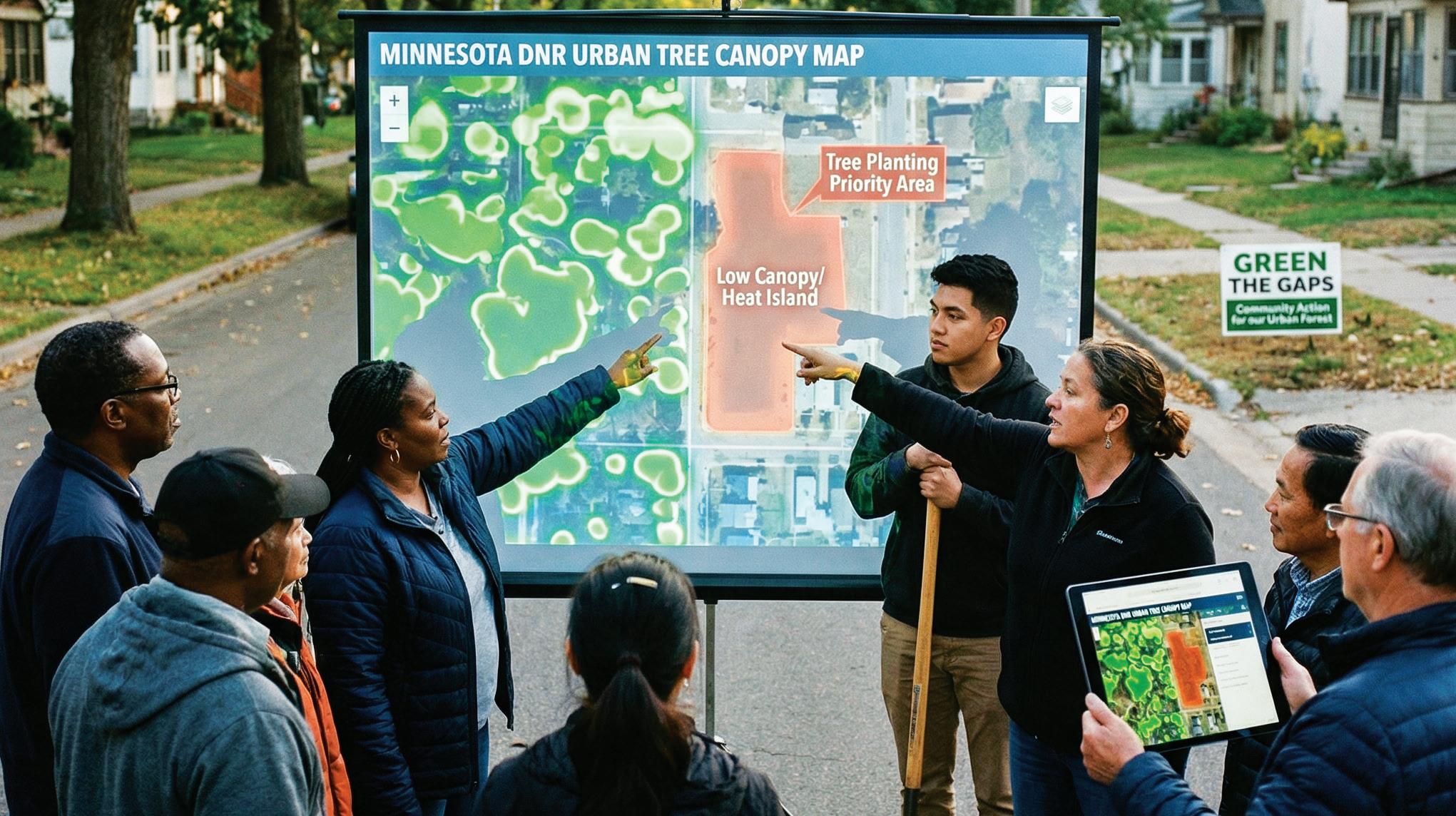
the tool in partnership with state and local agencies and with input from municipalities across Minnesota. Officials note that the canopy data will be updated regularly, allowing communities to track whether tree planting investments are translating into actual coverage gains over time — or whether attrition from disease, storm damage, and development is outpacing new growth.
For Insight News readers, the message is this: the tool exists. Use it. Find
Cruz-Guzman v. State of Minnesota, the long-running school desegregation case, Hudson parted from the court's majority with words that deserve to be read carefully. She argued that requiring parents to prove that racial segregation causes academic disparities amounted to a demand that history be denied. Her words were direct: closing our eyes to what history and modern reality have demonstrated to be true — that where racially segregated neighborhoods exist, racialized disparities in academic outcomes follow — is not judicial neutrality. It is a choice. It is a choice about whose experience counts as evidence. That dissent belongs in the record of this moment. It is the voice of a jurist who understood that the highest obligation of the court is not procedural tidiness — it is justice.
"Chief Justice Hud-
ening Oversight and More Accountability for Lying and Illegal Activity (Stop Fraud by SOMALIA) Act.” CAIR-MN condemned the bill’s naming and framing as discriminatory and deeply irresponsible, arguing that it collectively assigns blame to an entire community based on nationality rather than individual conduct. The legislation was introduced to strengthen penalties for childcare providers who commit fraud, with the bill’s sponsors citing alleged fraud “primarily perpetrated by Somali fraudsters” in Minnesota.
your neighborhood on the map.
Know your number. Then ask your city council member, your park board representative, your neighborhood association: what is the plan to close the gap? The data is now available. The question is whether the will to act on it will follow.
Acknowledge the gift. Redemption is at hand.
“When you can show on a map that one neighborhood has 35 percent canopy and the next has 8 percent — that is a policy argument. That is an eq-
son stands among the giants of Minnesota history." — Gov. Tim Walz
What comes next
Her retirement, announced April 6, sets in motion a significant appointment process. Governor Walz, who himself exits in 2027, will name a successor. His office has indicated that details are forthcoming. Already, the analysis has begun — three of the seven justices on the court are Walz appointees; he elevated Hudson herself. The question of who replaces her is a political and jurisprudential question of the first order.
uity argument.”
SOURCES Minnesota Department of Natural Resources, Tree Canopy Mapping Tool launch, 2026. DNR Urban and Community Forestry Program. Insight News staff reporting. Disclosure statement Insight News uses AI-assisted tools in some editorial production. Read our AI Policy & Transparency Statement at www.insightnews.com/ site/ai_policy.html.
Acknowledge the gift. Redemption is at hand.
SOURCES Minnesota Supreme Court official announcement, April 6, 2026 · MPR News · CBS News Minnesota · Fox 9 Minneapolis · Minnesota Reformer · InForum (Forum News Service) Disclosure statement Insight News uses AI-assisted tools in some editorial production. Read our AI Policy & Transparency Statement at www.insightnews.com/ site/ai_policy.html.
For the communities that Insight News serves — the communities that have watched this court, watched this state, watched these appointments with the knowledge that representation is never incidental — the question carries particular weight. Who will carry the mantle? Who will hold the door that Hudson opened? That answer is still ahead. What is settled, as of this April morning, is the size of what Chief Justice Natalie E. Hudson accomplished. She entered a 44-year legal career with no guarantee that it ended here. She made it end here. That is not a small thing. That is the whole thing.
Its proposed measures include mandatory permanent debarment from all federally funded childcare assistance programs and immigration consequences — including deportability — for non-U.S. citizens involved in fraud or terrorism-related offenses.
About CAIR-MN The Minnesota chapter of the Council on American-Islamic Relations is the state’s leading Muslim civil rights and advocacy organization. CAIR-MN is dedicated to enhancing understanding of Islam, protecting civil liberties, empowering American Muslims, and building coalitions that promote justice and mutual understanding. Media contacts: Suleiman Adan, Deputy Executive Director — sadan@cair.com, 612-408-7183. Jaylani Hussein, Executive Director — jhussein@cair.com, 612-406-0070. Disclosure statement Insight News uses AI-assisted tools in some edi-
Insight News Staff
By Insight News Staff
Hormuz closure threatens the global food supply
Why grocery price hikes are coming
By Aya S. Chacar Professor of International Business, Florida International University
The global energy crisis caused by the closure of the Strait of Hormuz is only the beginning of the economic cost of the war with Iran.
I study how institutions affect businesses and supply chains, and I expect food prices to rise next, with high prices lasting even after whatever point hostilities end.
Along with about 20% of the world’s crude oil trade and a similar share of the world’s liquefied natural gas shipments, shipping traffic through the strait also carries roughly a third of internationally traded fertilizer, which is key to bountiful crops around the world.
Modern agriculture depends on precise timing of delivering nutrients to plants. When fertilizer arrives late or becomes too expensive to buy in sufficient quantities, farmers are left to either reduce the amount they use, plant fewer crops or switch to crops that need less fertilizer. Each option reduces overall productivity, cutting supplies of basic foods, feed for livestock and key ingredients used in a wide range of food products.
Ultimately, with corn prices rising, summer barbecues may taste a bit different or cost more. Corn on the cob may not be cheap, nor will corn-fed beef. In addition, many store-bought condiments, soft drinks and oth-
er food products are made with high-fructose corn syrup and will also cost more.
3 main crops, 3 nutrients needed Three staple crops – corn, wheat and rice – supply more than half of the world’s dietary calories.
To maximize production, those crops need three main nutrients: nitrogen, phosphate and potassium. Nitrogen helps plants grow. Phosphorus helps transport energy within plant cells and is critical for early root growth and the formation of seeds and fruit. Potassium helps plants conserve water and boosts protein content.
The closure of the Strait of Hormuz has reduced the supply and increased the cost of all three.
Natural gas, which determines 70% to 90% of the cost of producing nitrogen fertilizer, has seen a 20% drop in production due to the war and price increases up to 70%. To preserve its own supplies, Russia has suspended exports of ammonium nitrate, another nitrogen source for fertilizer.
In a similar effort, China, the world’s largest phosphate producer, has blocked phosphate exports, removing 25% of the global supply.
Potash, the potassium-rich component of fertilizers, has also been in short supply in recent years, in part because of economic sanctions on Belarus and Russia, which are major potash producers.
As a consequence, fertilizer prices have risen globally. In the U.S., some fertilizers rose more than 40% in just one
all of their tip income.
Another restriction that some tip earners may soon face is that they can’t earn tips in what Congress calls a “specified service trade or business,” such as performing arts or a business where the reputation or skill of the owner is a significant aspect of the business.
For example, a self-employed pianist who gets tips when they play at a bar still has to pay tax on their tips as was required for everyone prior to 2025 – no tip deduction.
The IRS plans to issue more details on this restriction in 2026, but in the meantime, it can be ignored for 2025, and that hypothetical pianist can deduct the tips they earned in 2025 up to $25,000.
Here are three more caveats: Only workers who have Social Security numbers can deduct tips from their taxable income. Married workers must file as married filing jointly, rather than separately.
tail in the records the platform company keeps in the worker’s online account.
Gig workers who find customers through online platforms usually receive a Form 1099-K from those companies, which shows the total amount charged to all customers – including tips – before the platform company’s fee is subtracted. For 2025, employers and platforms that issue 1099 forms to gig workers do not have to separately show the tip income on the 1099 forms. But they will need to do so in 2026, 2027 and 2028. An exception to the new rule
Self-employed workers need to be aware of a restriction on the new no-tax-on-tips rule: You can’t deduct so much in tips from your taxable income that it results in a loss for your business. Many self-employed people do earn enough income to get the $25,000 maximum tip deduction, assuming they have at least $25,000 of qualified tip income. But others with high expenses relative to what they earn may not be able to deduct
month after the war’s start in late February 2026.
Affecting farmers first Cereal plants absorb the vast majority of their nitrogen needs during their early growth. Applying fertilizer later in the growth cycle is less effective.
Reducing nitrogen application by 10% to 15%, or delaying application by two to four weeks, can reduce corn yields by 10% to 25%.
Producing less corn and wheat reduces not only food available for humans but also food for livestock. Increased fertilizer costs and reduced grain supplies increase the price of raising livestock, making meat and animal products more expensive.
When feed costs become unsustainable, farmers may be forced to kill or sell off the breeding cows and sows that represent the future of the food supply. In the U.S., a combination of persistent drought and high costs in 2022 forced producers to kill 13.3% of the national beef cow herd, the highest proportion ever. As a result, the U.S. beef cattle inventory shrank to its lowest level since 1962, a problem that restricts beef supplies for years. Ultimately, the costs are passed to consumers. In 2012, when a historic Midwest drought slashed corn yields by 13%, it triggered a surge in feed prices, and U.S. poultry prices rose 20%.
More money can’t fix this problem In mid-March 2026, the U.S. fertilizer supply was around
example, workers making at least $600 through a platform in Maryland and Virginia must be issued a 1099-K.
Uber, Lyft and other platforms can voluntarily issue a Form 1099-K that has a total of the income the worker earned that’s below the filing threshold. Because a tip income deduction is only allowed if the tips are reported on a 1099 form, it is likely that platform companies will issue the forms to all gig workers who found work through them so the workers can claim the tip deduction.
What’s staying the same To be sure, some things have not changed for gig workers. Because they are self-employed, they can deduct what they spend on their businesses, such as software subscriptions and travel, to lower their taxable income – reducing what they spend on taxes.
Finally, single people with incomes over $150,000 and married couples earning more than $300,000 will see their tip income deduction phase down.
New reporting thresholds Gig workers are also affected by another change in the tax and spending package of 2025.
As noted earlier, Form 1099-K is the typical reporting form gig workers receive from platforms that handle the collection of payments from customers and transfer the worker’s share to them. As of 2025, the gig work company only needs to issue the form to the worker and to the IRS if they processed payments for the worker that exceeded $20,000 and involved more than 200 transactions.
Before 2025, these companies, as well as payment systems like Venmo and PayPal, were required to issue the 1099-K form if over $600 of payments were processed for the sale of goods and services, regardless of how many transactions occurred.
A few states set the thresholds for issuing a 1099K form below what the federal government mandates. For
75% of normal levels. That’s right at the beginning of the time when Corn Belt farmers typically prepare their soil for planting, including the first applications of fertilizer. Subsequent fertilizer applications typically come from mid-April to early May and between late May and mid-June. Farmers who fear not being able to optimize their corn yields may decide to plant less corn or switch crops and plant soybeans, which need less fertilizer. Either would reduce the corn supply. Government loan guarantees and aid packages may help farmers cover higher costs, but they cannot address timing if enough fertilizer simply isn’t available when it is needed.
Hitting home
American consumers aren’t facing the gas and food shortages or power outages other countries are seeing from the war, but they will be hit in the pocketbook. U.S. prices for gas and jet fuel are already climbing. The effects on the food supply take longer to appear, but they are coming.
Even when crops are bountiful in the U.S., consumers are not immune to global economic forces. A smaller 2026 crop, with rising demand for livestock feed in some of the most populous countries, including China and India, will put pressure on global corn prices, affecting everyone regardless of their nationality.
In March 2026, the U.S. Department of Agriculture used data from before the Iran war to project a 3.1% average increase for all food prices.
The question for consumers is how much of the rise

in corn prices will be passed to the consumer, and how fast.
USDA research shows that the speed and extent of changes in food prices vary widely by food category and the level of processing involved in making the food. Other factors also play a role, such as inventory levels, perishability and market competition. When farm prices change, wholesale prices usually adjust within the first month, but retail prices often take longer – sometimes two to four months.
Corn tortillas and other relatively lightly processed corn foods are more likely to show price responses within a few months after corn prices increase. Adjustments to cereals or poultry prices will take a little longer. Changes in the cost of livestock products such as beef will take longer, because there are more steps between the purchase of feed corn and the sale of the meat to consumers.
Other indirect costs, related to the cost of fuel and packaging, tend to hit later. Producers often absorb the price increases in the short term, but some increases are already in the works. For instance, transport companies are adding fuel surcharges on freight shipments.
Food price hikes hit low-income households harder than high-income households, because people with lower incomes spend larger shares of their money on food and housing. For these households, even relatively affordable proteins, such as chicken, may become harder to
But unlike employees who pay income taxes throughout the year through payments their employers withhold from every paycheck to cover their federal income, Social Security and Medicare taxes, self-employed Americans must compute and make quarterly estimated tax payments.
Also, self-employed workers can still claim a deduction for the miles they drive for work, which rose from 70 cents per mile in 2025 to 72.5 cents in 2026. Additional tax deductions for the self-employed include any insurance needed to cover their business, and some retirement plan options.
Many gig workers will find that their state income tax bills mostly stay the same. That’s because some states, such as California and Massachusetts, don’t allow the deduction of income from tips on state income tax returns. Like most tax breaks, the new deduction for tips can be more complicated than you might expect, particularly for self-employed people. But the IRS does offer some resources that can help gig workers, and others eligible to claim it, compute what they can or can’t deduct from their taxable income – at least until tax rules change again.

Delaying kindergarten may have limited benefit
Students who started kindergarten a year later than their peers had measurable advantages in reading and math.
Compared to the average academic growth of kindergartners, the academic advantage of “redshirted” children represented 20 percent to 30 percent of an academic year of learning.
By Christina A. Samuels, The Hechinger Report
This story was produced by The Hechinger Report, a nonprofit, nonpartisan news outlet focused on education.
When my son was about to turn 5, I was faced with a decision that may be familiar to parents of children whose birthdays are close to kindergarten enrollment cutoff dates.
In my local school district, children must be 5 years old on or ahead of Sept. 1 before they enroll in kindergarten. With a late September birthday, my son was only a few weeks too young to make that cutoff. A friend of mine whose child had a similarly timed birthday was trying for early enrollment. Should I, too?
Ultimately, I decided against it, swallowing thousands of dollars for another year of preschool tuition. Instead of starting kindergarten just a few weeks short of 5, my son started when he was just a few weeks away from turning 6. And while I was not “redshirting” — intentionally holding my child
back for a year when he would have otherwise been allowed to enroll — the supposed benefits of redshirting were part of my thinking. Of course, I thought, boys need more time to mature, and starting school on the older end of his cohort would be a clear win.
But are those perceived benefits of redshirting — a term borrowed from athletics and sports eligibility rules — really true? A new study suggests that whatever academic boost children may experience when they are the oldest in their kindergarten class fades by the time they reach third grade.
“For the average kid, they’re not going to get that much of an advantage,” said Megan Kuhfeld, the director of growth modeling and data analytics at NWEA, an assessment and research organization behind the Measures of Academic Progress, or MAP, tests used by tens of thousands of schools across the country.
For this analysis, NWEA studied the 3 million students who took the kindergarten through second grade MAP Growth assessment between 2017 and 2025. Re-
searchers also followed a cohort of students who started kindergarten in the 2021-22 school year to see what their test results looked like when they were in third grade, compared to when they entered school.
Students who started kindergarten a year later than their peers had measurable advantages in reading and math. Compared to the average academic growth of kindergartners, the academic advantage of “redshirted” children represented 20 percent to 30 percent of an academic year of learning.
That advantage didn’t last long, however. By the time students entered third grade, children who had been held back a year were indistinguishable from their peers academically.
The NWEA study didn’t dig into the factors behind these findings, but Kuhfeld has some theories. First, there might be some benefit to children of having older peers in the classroom to serve as academic and behavior role models. In other words, children like my son, who started school as an older 5-year-old, could be a positive influence on children who
About 80% of breast

turned 5 shortly before the cutoff for kindergarten enrollment. Children who are already much older than their grade-level peers have no model to emulate.
The benefits of starting school late may also disappear because children who enter school already knowing the kindergarten curriculum may get bored, Kuhfeld said. Classrooms aren’t necessarily set up to push along children who are already meeting academic standards; instead, the teacher is likely to be focused on children who need more help.
Among the more surprising results of the study for me was that redshirting is relatively uncommon. For each of the years studied, about 5 percent of kindergartners started school a year after official
eligibility. That peaked at 6.4 percent in fall 2021. The children most likely to be held back a year are white students and boys; redshirting was also more common in low-poverty and rural schools.
Considering how rare the phenomenon is, it sure is talked about a lot. Kuhfeld said that may be because people are more aware of, and worried about, the higher academic demands of kindergarten. Also, Kuhfeld said, the idea of holding children back gained more attention after a prominent author, Richard Reeves, wrote a 2022 article recommending that all boys be redshirted to give them an extra year for their brains to mature. (Rise Together, a fund established by Reeves, is one of The Hechinger Report’s many
cancer biopsies
New imaging tool promises clearer diagnoses and fewer biopsies

By Quing Zhu
Ultrasound is widely used in breast cancer diagnosis. While it can effectively show that a lump is filled with fluid – indicating it is unlikely to be cancer – it cannot reliably determine whether a solid mass is benign or cancerous. This often leads doctors to order breast biopsies to confirm the presence of cancer.
However, most breast biopsies do not detect cancer. In the U.S., more than 1 million breast biopsies are performed each year, and about 80% of them are benign. Unnecessary biopsies are linked to potential harms, including increased anxiety, complications from the procedure and medical costs. Despite advances in breast imaging, breast biopsy remains the only definitive method to determine whether a suspicious lump is cancerous.
My work as an engineer focuses on improving imaging technology to detect and diagnose cancer. Breast cancer grows when the tumors form new blood vessels and consume more oxygen. This makes examining blood vessels and oxygen levels potential biomarkers that could improve breast cancer diagnosis.
Diffuse optical tomography, or DOT, is an imaging technology that uses near-infrared light to measure total blood hemoglobin concen-
donors.)
Kuhfeld said that the study focused solely on academics, not behavioral outcomes or other factors, so parents should make decisions that work for their individual children. But there are social implications of being older than your grade-level peers, she noted. Parents of kindergartners might not be thinking about this when their children are young, but what does it mean to be the first of your friends to go through puberty, or one of the oldest high school seniors?
“It’s worth considering there are trade-offs,” Kuhfeld said. “It’s often painted in conversation as, ‘Of course you would do this,’” she added. “There’s actually a lot of nuance here.”
turn out benign
believe these improvements can collectively have a meaningful and far-reaching effect on patient care and the broader health care system.
tration and oxygen levels – key indicators of tumor activity –in the breast lump. It does not require patients to be injected with contrast dyes to make the image clearer.
My team and I found that combining ultrasound with DOT can improve the accuracy of breast cancer diagnoses and reduce unnecessary breast biopsies. The ultrasound provides information about the structure of a breast lump, while DOT provides information about its function, and this data together can improve breast cancer diagnosis.
Improving breast ultrasounds with DOT
In our study, we imaged 226 patients recommended for routine breast biopsy using our new hand-held imaging technology, which combines ultrasound with diffuse optical tomography. These patients had either breast cancer or benign lumps, and their final diagnosis was confirmed with a biopsy.
Radiologists initially evaluated each patient using standard imaging methods, such as ultrasound and mammography. They then reviewed additional information from DOT images. Importantly, the radiologists and engineers were blinded to the biopsy results when determining diagnoses.
We observed significant biological differences between cancerous and benign lumps. Cancerous lesions had significantly higher levels of hemoglobin and lower levels of oxygen than noncancerous tissue. More aggressive cancers
showed even higher hemoglobin concentrations and lower oxygen levels than less aggressive tumors.
When radiologists were able to review DOT measurements, biopsies of benign lumps decreased by approximately 25%. The false-negative rate was 1.8%, which aligns with medical guidelines that recommend monitoring rather than an immediate biopsy.
Future of breast cancer screening and diagnosis
Breast cancer is the most commonly diagnosed cancer in women worldwide. There were approximately 2.3 million new cases and 670,000 deaths reported in 2022. If these rates continue, researchers project around 1.1 million breast cancer-related deaths will occur in 2050.
More accurate, noninvasive diagnostic tools can not only reduce unnecessary biopsies but also lead to more precise and efficient diagnoses. Beyond ultrasound, researchers have also explored combining other imaging techniques with DOT, including X-ray mammography, 3D mammography and MRI. However, DOT systems combined with mammography and MRI are more difficult for routine use in the clinic compared to ultrasound. My team is working to further refine our technology, including incorporating AI tools to help process imaging data.
Minimizing avoidable procedures can help preserve a patient’s quality of life and reduce health care costs. I


Disclosure statement
Quing Zhu receives funding from the National Cancer Institute for this work
Professor of Engineering, Washington University in St. Louis
RATE INCREASE NOTICE
NOTICE OF PUBLIC HEARINGS FOR XCEL ENERGY MINNESOTA CUSTOMERS
Xcel Energy asked the Minnesota Public Utilities Commission (MPUC) to approve an increase in natural gas rates beginning Jan. 1, 2026. The requested increase is approximately 8.2% or $63.4 million. On average, the proposed final rate change would increase the monthly bill for a typical residential natural gas customer by 8.7% or $7.11.
The MPUC may either approve, deny, or modify the requested changes, including approving a lesser or greater increase than was requested for any customer class or classes of service.
The MPUC will likely make its decision on our rate request in the fourth quarter of 2026. If final rates are lower than interim (temporary) rates, we will refund customers the difference with interest. If final rates are higher than interim rates, we will not charge customers the difference. If you move before a refund is issued and we cannot find you, your refund may be treated as abandoned property and sent to the Minnesota Department of Commerce, Unclaimed Property Unit. You can check for unclaimed property at www.missingmoney.com. To make sure we can send you any refund owed, please provide a forwarding address when you stop service.
Public Hearings
Administrative Law Judge Kimberly Middendorf will hold six in-person public hearings and two virtual public hearings so that customers have an opportunity to comment on our request. Any Xcel Energy customer or other person may attend or provide comments at the hearings. You are invited to comment on the adequacy and quality of Xcel Energy’s service, the level of rates, or other related matters. You do not need to be represented by an attorney. The hearings will begin at their scheduled time and adjourn after everyone present has had an opportunity to comment or ask questions.
PUBLIC
Monday, April 27, 2026 1:30 p.m.
Washington County Heritage Center 1862 Greeley St. S. Stillwater, MN 55082
Tuesday, April 28, 2026 1:30 p.m. Virtual WebEx (see access details below)
Tuesday, April 28, 2026 6:30 p.m.
Wednesday, April 29, 2026 1:30 p.m.
Monday, May 4, 2026 6:30 p.m.
Tuesday, May 5, 2026 1:30 p.m.
Wyoming Area Library 26855 Forest Blvd. Wyoming, MN 55092
Great River Regional Library Bremer Room 104 404 W St. Germain St. St. Cloud, MN 56301
Winona State University Kryzsko Commons Purple Rooms 247 - 249 500 Huff St. Winona, MN 55987
Ramsey County Library Community Program Room 2180 Hamline Ave. N. Roseville, MN 55113
Tuesday, May 5, 2026 6:30 p.m. Virtual WebEx (see access details below)
Wednesday, May 6, 2026 6:00 p.m.
Virtual Public Hearings
Robert Trail Library Robert Trail Large Meeting Room 14395 S. Robert Trail Rosemount, MN 55068
Bad weather? Find out if a hearing is canceled — call (toll free) 855-731-6208 or 651-201-2213 or visit mn.gov/puc
Public hearings have been scheduled as follows to be held via video conference. April 28, 2026, at 1:30 p.m. and May 5, 2026, at 6:30 p.m.
Attend by Internet Connection (Audio and Video)
To join the virtual hearing using a computer, tablet, or smart phone, where you will have audio and video capability, go to: https://minnesota.webex.com. In the gray box where it says, “Enter Meeting Information” type the Event Number below for the public hearing date you are attending:
April 28, 2026 1:30 p.m.
Event Number: 2490 656 2535
Event Password, if needed: XCEL28
Directions for Appearing via WebEx.
May 5, 2026 6:30 p.m.
Event Number: 2489 688 6927
Event Password, if needed: XCEL55
• Log on 5 to 15 minutes before the hearing begins. You will be asked to join the hearing through a WebEx application or through a plug-in for your web browser.
Enter the Event Number shown in the box above.
Next, you will be asked to enter your name, your email address, and an event password (if required). After entering this information, click “Join Now” and you will be granted access to the virtual hearing.
When you enter the hearing, your microphone will be muted. If you would like to ask a question or make a comment during the meeting, use the chat function to send a message to the meeting moderator, who will place you in the queue to comment. When it is your turn to comment, your name will be called and your line will be unmuted. You will then be able to ask questions or make a comment.
To Attend by Telephone (Audio Only)
If you do not have access to a computer, tablet, or smart phone, or if you would prefer to attend the hearing via audio only, you may join using any type of telephone. You do not need internet access to call into the hearing; however, you will only be able to hear (not see) the speakers. You will still be able to comment and ask questions.
Use the information in the box below to dial into the hearing. You will be asked to enter the access code for the hearing, as set forth below:
April 28, 2026 1:30 p.m.
Phone: 1-855-282-6330
Access Code: 2490 656 2535 Event password: 923528 from phones
Public Hearing and Process Information
Administrative Law Judge Kimberly Middendorf will preside over the public hearings and will provide the Commission with findings of fact, conclusions of law, and recommendations after the conclusion of the evidentiary hearing.The purpose of the public hearings is to receive public input on the proposed rate increase. At the public hearings, interested persons have the opportunity to: (1) ask questions of the utility and agency staff; and (2) offer verbal and written comments on the merits of the proposed rate increase. Members of the public may participate without needing to intervene as a party. Representation by legal counsel is permitted but not required.
Please note that the public hearings will end when all attendees have had the opportunity to comment and all other business has been concluded. You are encouraged to join the meeting at the scheduled start time to be placed in the queue to comment. Commenters will be called in the order they enter the queue. Please arrive at the beginning of the hearing to ensure you will have time to comment.Written comments may be submitted during the comment period before and after the public hearings. Follow the instructions below to provide written comment. Please contact Christine Pham at 651-201-2249 or christine.pham@state.mn.us if you have questions on how to participate or have trouble accessing the public hearing using telephone or internet.
WRITTEN COMMENTS TO THE MINNESOTA PUBLIC UTILITIES COMMISSION
You can still submit comments even if you do not attend a public hearing.
Comment Period
Comments will be accepted through May 19, 2026.
Comments must be received by 4:30 p.m. on the close date.
Comments received after the comment period closes may not be considered for the record.
How to Submit a Written Comment
Written comments can be submitted via: (1) the Commission’s website; (2) electronic mail; (3) U.S. Mail; or (4) fax. To learn how to submit a comment in any of these ways, please visit mn.gov/puc, select “Get Involved” from the dropdown menu on the top of the page, then select “Public Comments and How to Participate.” This will take you to the Public Comment page where you will find a list of ways to comment. Be sure to reference MPUC Docket No. 25356 in the subject line of your comment.If you do not have access to the internet, you may send or deliver your comment to: Minnesota Public Utilities Commission 121 7th Place East, Ste. 350 St. Paul, MN 55101
Important: Comments can be reviewed by the public on the MPUC’s website, except in limited circumstances consistent with the Minnesota Government Data Practices Act. The MPUC does not edit or delete personally identifying information from comments received.
EVIDENTIARY HEARINGS
Formal evidentiary hearings on Xcel Energy’s proposal will be held on May 11 – 12, 2026, starting at 9:30 a.m. each day. The evidentiary hearings will be held at the Public Utilities Commission, 350 Metro Square Building, 121 Seventh Place East, St. Paul, Minnesota. Individuals who cannot attend in person may attend via via WebEx, a video conferencing platform. Members of the public who wish to attend the hearing through WebEx may request an electronic invitation by contacting MPUC staff Christine Pham at 651-201-2249 or christine.pham@state.mn.us
The purpose of the evidentiary hearing is to allow Xcel Energy, the Minnesota Department of Commerce — Division of Energy Resources, the Minnesota Office of Attorney General — Residential Utilities Division, and parties who have formally joined the contested case, to present testimony and to cross-examine each other’s witnesses on the proposed rate increase.
TO LEARN MORE
Xcel Energy’s current and proposed rate schedules are available at:
Xcel Energy 414 Nicollet Mall
Minneapolis MN 55401
Phone 612-330-5500
Web: xcelenergy.com/company/rates_and_regulations/filings
Minnesota Department of Commerce 85 7th Place East, Suite 500 St. Paul, MN 55101
Phone: 651-539-1534
Web: https://efiling.web.commerce.state.mn.us. Under “eDockets” select “Search Documents” insert “25-356” in the Docket #s field, select Search, and the list of documents will appear on the next page.
If you have questions about the MPUC’s review process or need assistance in submitting comments, contact the Commission’s Consumer Affairs Office at:
Minnesota Public Utilities Commission 121 7th Place East, Suite 350 St. Paul, MN 55101
Phone: 651-296-0406 or 800-657-3782
Email: consumer.puc@state.mn.us
Anyone with hearing or speech disabilities may call through their preferred Telecommunications Relay.
Please contact the MPUC staff Christine Pham at 651-201-2249 or christine.pham@state.mn.us as soon as possible if you need an interpreter or accommodation to attend a public hearing.
PROPOSED RATES
May 5, 2026 6:30 p.m.
Phone: 1-855-282-6330
Access Code: 2489 688 6927 Event password: 923555 from phones
If you would like to ask a question or make a comment during the hearing, press *3 on your telephone. You will then be placed into the queue to comment. When it is your turn to speak, the last few digits of your telephone number will be announced by the moderator and your line will be unmuted, allowing you to be heard.

Uber bets $1.25 billion on a robotaxi future, and gig drivers may pay the price
A deal with electric vehicle maker Rivian shows Uber moving beyond its platform role and forcing a reckoning over what happens to the workers who currently drive for it
By Syed Fahad Fayyaz Contributing Writer
Eight years ago, a self-driving Uber test vehicle struck and killed a pedestrian in Tempe, Arizona. The company suspended testing, eventually sold its self-driving unit to Aurora Innovation in December 2020, and spent the next several years insisting it was a marketplace, a neutral platform connecting riders with cars, not a fleet operator building robots. That argument ended on March 19.
Uber Technologies announced a deal to invest up to $1.25 billion in electric vehicle maker Rivian Automotive, with plans to deploy as many as 50,000 fully autonomous robotaxis across 25 cities in the United States, Canada, and Europe by the end of 2031. The first 10,000 autonomous versions of Rivian's upcoming R2 SUV are planned for San Francisco and Miami in 2028. Uber, or its fleet partners, will have the option to purchase up to 40,000 more beginning in 2030. The entire fleet will run exclusively through the Uber app.
Uber has now made its position clear: it intends to be the operator of autonomous vehicles at scale, not just the distributor of them. What the company has not addressed publicly is what happens to the people who currently drive for it when the cars no longer need them.
For the roughly 850,000 people who drive for Uber in the United States, a workforce that is disproportionately Black, Latino, and immigrant, rideshare driving is not a side hustle. It is a primary source of income. In cities like Minneapolis and St. Paul, it is one of the few flexible, accessible pathways to economic stability available to workers who face barriers to traditional employment.
The deal and what it actually means
The financial structure of the Uber-Rivian agreement is milestone-driven. An initial $300 million investment follows regulatory approval, with the remaining $950 million tied to undisclosed autonomous driving performance benchmarks through 2031. Uber is also investing a separate $100 million to build fast-charging hubs for autonomous vehicle depots in San Francisco, Los Angeles, and Dallas, the maintenance and operations infrastructure that any large robotaxi fleet requires.
Rivian's side of the deal centers on its RAP1 autonomy platform, a proprietary system the company unveiled at its first Autonomy and AI Day in December 2025. The platform includes 11 cameras, five radars,
From 3
Abbas Araghchi confirmed Tehran's acceptance separately, saying Iranian armed forces would cease defensive operations as long as attacks against the country stopped, according to NPR.
The truce brought a measure of relief to a world that had been bracing for something far worse. But even in its earliest hours, the ceasefire exposed deep disagreements between the parties over what, exactly, they had agreed to.
How the deal came together Pakistan's role in the agreement caught many by surprise. Sharif had been carrying proposals between Washington and Tehran for days as the deadline approached. Trump extended his original timeline by 20 hours on April 6, telling Axios the two countries were in deep negotiations.
By the evening of April 7, Sharif presented a framework both sides could accept. He announced the result on social media, writing that
one LiDAR sensor, and two inhouse RAP1 inference chips — linked via Rivian's proprietary RivLink interconnect — delivering what Rivian describes as 1,600 trillion operations per second of AI compute performance. The company's CEO, RJ Scaringe, has made autonomous driving his stated top R&D priority. Speaking at SXSW 2026 the same week the Uber deal was announced, he said: "Our path to get to hands-off, eyesoff in 2027 is something we're spending more money on than anything else."
In exchange for guaranteed off-take from Uber's ride-hailing network, Rivian has agreed to keep its robotaxi fleet exclusively on the Uber platform and to accelerate its autonomous program at a pace that has already cost the company its 2027 profitability target. In a regulatory filing shortly after the deal was announced, Rivian disclosed it no longer expects to reach adjusted EBITDA profitability in 2027, citing increased R&D spending tied to the partnership.
Rivian produced 42,284 total vehicles in 2025 and posted a net loss of $3.6 billion. Its R2 consumer vehicle entered manufacturing validation builds in January 2026, with consumer deliveries targeting spring of that year, produced at its Normal, Illinois plant. A second factory in Georgia, originally planned as an additional production facility, had its construction paused in March 2024 as Rivian redirected resources to the Illinois expansion; site development in Georgia was expected to resume in 2026, with production there targeting 2028. The company has never deployed a commercial Level 4 autonomous system. What Uber is buying, in other words, is not a proven product. It is a bet.
Uber's strategy: bet on every horse
The Rivian deal follows a now-familiar Uber playbook. In July 2025, Uber announced a $300 million investment in Lucid Motors as part of a three-way arrangement with autonomous vehicle technology company Nuro, designed to deploy 20,000 autonomous Lucid Gravity SUVs exclusively on Uber's platform. That deal used an identical financial structure: the same initial $300 million investment, the same Delaware subsidiary (SMB Holding Corporation), the same 30-day VWAP pricing mechanism. The first commercial Lucid-NuroUber robotaxis are expected to begin service in San Francisco later this year.
On March 11, just eight days before the Rivian announcement, Amazon's autonomous vehicle subsidiary Zoox announced its first
both parties had displayed remarkable wisdom, and invited delegations from both countries to Islamabad for further negotiations. Vice President JD Vance was expected to lead the U.S. delegation, according to Axios.
The deal represented a sharp reversal from the tone of the preceding hours. Earlier that day, Trump had posted online that if no agreement materialized, the consequences would be devastating. He had previously threatened to destroy every bridge and power plant in Iran.
Legal experts said those threats, if carried out, would constitute war crimes. Kenneth Roth, former executive director of Human Rights Watch, told NBC News that Trump was threatening collective punishment against Iranian civilians, a violation of the Fourth Geneva Convention. Making threats intended to terrorize a civilian population, Roth added, is itself potentially a war crime under international humanitarian law.
In Iran, state media broadcast footage of citizens forming human chains around power plants in the southwestern Fars province, preparing for
third-party platform partnership with Uber, planning to deploy purpose-built robotaxis in Las Vegas and Los Angeles.
Uber now has partnerships with more than 25 autonomous vehicle companies globally, spanning Waymo, Zoox, Lucid, Nuro, Rivian, Avride, Waabi, May Mobility, Momenta, Volkswagen, Mobileye, WeRide, and others. The company has also expanded its partnership with Nvidia and plans to work directly with the chipmaker on autonomous vehicle programs beginning in 2027. The logic is straightforward: by spreading investment across every major autonomous vehicle developer, Uber ensures that no single company can lock it out of the market by dominating any one city or technology stack.
There is another dimension to this approach. By partnering with every major autonomous vehicle developer while controlling the consumer-facing app, Uber positions itself as the dominant platform in the robotaxi economy regardless of which underlying technology wins. The vehicles become interchangeable. The app does not.
That creates a real problem for Rivian. By agreeing to deploy its fleet exclusively on Uber's platform, the company surrenders direct access to riders, control over pricing, and the data generated by every trip. Riders will never know whether they are in a Rivian or a Lucid. They will only know they ordered an Uber. As analysts at Motley Fool observed after the deal was announced, the partnership gives Rivian's robotaxis access to a massive network that Rivian would not have to build on its own. But it also means Rivian risks becoming a supplier, a manufacturer of sophisticated vehicles that another company brands, prices, and owns the customer relationship for.
Waymo, which leads United States robotaxi operations with more than 400,000 weekly rides and is expanding to Tokyo and London in 2026, has taken a different approach.
Despite partnering with Uber to deploy vehicles on Uber's platform in Austin and Atlanta, Waymo operates its own standalone app and has worked to maintain its consumer brand. The tension between those two postures is growing.
A reality gap inside the headline numbers
The deal's headline figures deserve scrutiny. The $1.25 billion is not guaranteed. It arrives in tranches tied to autonomous milestones that neither company has publicly disclosed. Uber and Rivian describe them only as "certain autonomous performance benchmarks by specific dates through 2031." The
strikes they believed were imminent.
Two sides, two versions of the deal
The ink was barely dry before the warring parties started telling different stories about the scope of the truce. Pakistan's prime minister said the ceasefire applied everywhere, including Lebanon, where Israeli forces had been fighting Hezbollah. Israeli Prime Minister Benjamin Netanyahu's office pushed back, saying Israel supported the pause on strikes against Iran but that the agreement did not cover Lebanon, according to NPR. Iran's Supreme National Security Council framed the deal as a win, claiming that nearly all of the country's war objectives had been achieved. The council said the two-week window could be extended by mutual agreement, but added a warning: any deviation would be met with full force. The question of uranium enrichment, one of the hardest issues in the broader conflict, was not addressed in the ceasefire terms. Iran's 10-point proposal reportedly includes demands for the lifting of all

"up to" language covers both the investment and the vehicle purchase, meaning none of the larger numbers are firm commitments.
BNP Paribas Equity Research analyst James Picariello called the deal a vote of confidence in Rivian's autonomous capabilities and said it supports the company's decision to develop autonomy in-house.
EMJ Capital founder Eric Jackson offered a different read. In Jackson's view, Uber holds options while Rivian goes all-in. Rivian is increasing its spending and delaying profitability. Uber has relatively little to lose if the milestones are not met. The execution risk on Rivian's side is significant. The company must simultaneously ramp consumer R2 production (manufacturing validation builds only began in January 2026, with consumer deliveries targeting this spring), develop a robotaxi-grade autonomous system it has never commercially deployed, and absorb the R&D cost acceleration that has already blown its 2027 financial targets. The industry's history is not encouraging. Uber itself missed multiple robotaxi targets before abandoning autonomous development following the 2018 Tempe crash. Tesla has repeatedly pushed back timelines for its Cybercab. Cruise, once considered a serious Waymo rival, halted its robotaxi service in 2023 after a pedestrian was dragged by one of its vehicles in San Francisco. Bold deployment schedules have a poor track record in this industry.
The workforce question no one is answering Buried inside the deal's financial architecture is a question that directly affects hundreds of thousands of workers: what happens to Uber drivers?
A March 2026 study from the University of San Diego's Urban Economics Institute estimated that mass adoption of autonomous vehicles could eliminate a substantial portion of the approximately 4.4 million professional driving jobs in the United States, including taxi drivers, rideshare drivers, and delivery personnel. Earlier research published in Transport Policy by George Washington University researchers found that a shift from traditional taxi
sanctions, withdrawal of U.S. combat forces from regional bases, compensation in the form of reparations, and Iran's right to continue enrichment, according to NPR. How far the United States is willing to go on any of those points remains unclear.
Markets reacted before the diplomats could explain Global financial markets moved fast. U.S. crude oil prices dropped more than 16 percent to below $95 per barrel, falling from intraday highs above $117, according to NBC News. Axios reported it was the largest single-day decline in oil prices since the 1991 Gulf War. S&P 500 futures climbed more than 2.5 percent. Dow futures surged roughly 1,000 points. Nasdaq 100 futures jumped nearly 3 percent. The national average gasoline price stood at $4.14 per gallon at the time the truce was announced, according to AAA. GasBuddy analyst Patrick De Haan projected it could fall below $4 within weeks if the ceasefire holds. But he also noted that the deal had not actually clarified what would change about passage through the strait. Art Hogan, chief market strate-
services to robotaxi services could cut the total number of frontline jobs by between 57 and 76 percent.
Early data from driver analytics firm Gridwise shows that in cities where autonomous vehicles already operate, including San Francisco, Austin, and Los Angeles, rideshare driver earnings have slipped even as national averages held steady. The effect is localized for now, proportional to the small size of current autonomous fleets.
But it offers a preview of what scaled deployment could mean.
The demographic picture makes this an economic and social equity issue as much as a financial one. Black and African American workers make up roughly 18 percent of the United States rideshare driver pool, a share higher than their proportion of the general workforce. A 2017 analysis by Global Policy Solutions, drawing on Census Bureau data, found that Black workers and other workers of color are overrepresented in driving occupations broadly, including rideshare, meaning they face disproportionate exposure to a rapid transition to autonomous vehicles.
In the Twin Cities, rideshare driving has become a primary income source for East African immigrants, many of them Somali and Ethiopian, as well as Black residents of north Minneapolis and neighborhoods including Frogtown and the Rondo corridor in St. Paul. These are communities that have historically faced barriers to traditional employment. For many of these workers, driving for Uber is not a gig. It is how they pay rent.
Uber has said little publicly about how it plans to support drivers through an autonomous transition. The company's investor communications frame robotaxi deployment as a cost efficiency and margin improvement story. The human cost does not appear in the financial filings.
Washington and the regulation question
The regulatory environment is shifting in ways that could speed up the transition. Congress is currently considering the SELF DRIVE Act of 2026, introduced in January by Representatives Bob Latta and Debbie Dingell. The bipartisan bill
gist at B. Riley Financial, told CNN the market's message was simple: investors want the strait reopened and the fighting over.
What brought us here
The war started on February 28, when the United States and Israel launched airstrikes that killed Iranian Supreme Leader Ali Khamenei along with several other senior officials. Iran retaliated with missiles and drones aimed at Israel, U.S. bases, and allied nations across the region, and closed the Strait of Hormuz, triggering the largest disruption to global oil markets in decades.
Since then, the conflict has inflicted heavy damage on both sides. U.S. officials said American forces severely damaged Iran's naval capabilities, particularly in the Gulf of Oman, according to reporting compiled by multiple news outlets. Iran's strikes damaged civilian infrastructure across the region, and the closure of the strait sent energy prices to levels not seen in years. A strike hit an elementary school early in the war, killing about 170 children, according to CBS News. Iranian officials said Sharif University of Technology, a major univer-
would establish the first federal regulatory framework dedicated to autonomous vehicles and would preempt the existing patchwork of state and local regulations, which have varied widely on permitting requirements, safety standards, and operational restrictions.
The House Energy and Commerce Committee advanced the bill on a 12-to-11 vote in February 2026. In its current form, the legislation would require the National Highway Traffic Safety Administration to establish federal safety standards for autonomous vehicles and would override state-level restrictions on deployment. Consumer Reports has warned that the bill's safety case requirements use language too imprecise to meet the objective standards federal motor vehicle safety rules require, and that it would allow manufacturers to self-certify safety claims without independent verification.
For states like Minnesota, which have maintained their own frameworks for testing and operating autonomous vehicles, federal preemption would mean giving up regulatory control to Washington at the moment the technology is moving fastest.
The Uber-Rivian partnership will have its first real test this year, when the Lucid-Nuro-Uber commercial service is expected to launch in San Francisco. That will be Uber's first attempt to operate an autonomous fleet it owns or facilitates rather than simply distributes through its marketplace, a distinction with significant operational and legal implications. If an autonomous Lucid causes an accident, Uber is no longer a neutral platform. It is an operator. By late 2026, San Francisco could have as many as four competing robotaxi services: Waymo, Zoox, Tesla's Cybercab (if production proceeds on schedule), and the Lucid-Nuro-Uber service. The Rivian deployment would add a fifth beginning in 2028. That density of competing services in a single city will generate real-world data on rider behavior, safety performance, and whether any of these business models can actually turn a profit.
The Rivian deal, like most announcements in the autonomous vehicle industry, rests on assumptions about technology timelines, regulatory approvals, factory construction, and market conditions that have not been tested. The direction of travel, though, is not in question. Uber has decided that the future of its business is not people driving cars for a living. That decision, made in a boardroom in San Francisco, will reach Minneapolis eventually. Disclosure statement Insight News uses AI-assisted tools in some editorial production. Read our AI Policy & Transparency Statement at www.insightnews.com/ site/ai_policy.html.
sity in Tehran, was bombed in the days before the ceasefire. Health care facilities across the country have also been heavily damaged.
For families across the country, the economic weight of this conflict has been felt at the gas pump, the grocery store, and in shipping costs that have climbed steadily since March. A gallon of diesel stood at $5.64 at the time of the ceasefire, approaching the all-time record of $5.81 set in 2022, according to AAA data cited by Axios. If the truce holds long enough for tanker traffic through the Strait of Hormuz to resume at normal levels, some of that pressure should ease. If it does not, or if talks collapse and hostilities resume, the burden on working families and small businesses will only deepen. The ceasefire bought time. Two weeks of it. The question now is whether two weeks is enough to settle disputes that have been building for decades. Disclosure statement Insight News uses AI-assisted tools in some editorial production. Read our AI Policy & Transparency Statement at www.insightnews.com/ site/ai_policy.html.