The machinery of erasure: How fiscal language does what racial language no longer can
The assault on Black political and economic gains in Minnesota is not being conducted through overtly racial language. It is being conducted through the vocabulary of fiscal responsibility, fraud prevention, and competitive accountability — language that sounds neutral but functions to dismantle the structural tools that Black communities need to close the gaps that structural racism created.
By Al McFarlane
The Fraud Narrative as Structural Tool
One of the most effective mechanisms for delegitimizing equity programs without using racial language is the fraud narrative. In Minnesota, this narrative gained enormous traction through the Feeding Our Future scandal — a legitimate case of fraud in a COVID-era child nutrition program. The scandal was real. The extension of fraud suspicion to all programs serving POCI communities has been politically constructed. Consider the contrast.
The state’s own Legislative Auditor found that $93 million in ethanol subsidies had been paid to profitable companies with no meaningful economic justification. The response was a quiet policy recommendation. When the PROMISE Act began distributing funds through community partner organizations, congressional hearings on fraud were convened. The House workforce committee proposed
On January 21, 2025, President Donald Trump signed Executive Order 14173, titled “Ending Illegal Discrimination and Restoring Merit-Based Opportunity.” The order did not mention Black Americans by name. It did not say “we are ending programs that benefit Black communities.” It said that certain practices involving “diversity, equity, and inclusion” constituted “illegal discrimination” and should be terminated. The language was neutral. The effect was not. Within months, federal agencies had terminated grants to organizations serving communities of color, threatened to withhold Title I education funding from states that maintained equity programs, and signaled that programs explicitly designed to address racial inequality would face federal legal challenge. Minnesota’s DFL leadership pushed back harder than most states. Attorney General Keith Ellison secured a settlement in February 2026 that preserves $530 million in K–12 education funding for Minnesota while DEI programs continue. These are significant victories. But the federal threat has changed the political atmosphere in ways that make it easier to attack equity programs from the inside — to use state budget language to accomplish what federal legal pressure could not accomplish directly.
eliminating direct appropriations in favor of competitive grants, with legislators explicitly invoking fraud concerns. Advocates testifying in defense of direct appropriations noted that the proposed shift would disadvantage exactly the community-based organizations the program was designed to empower.
“These organizations — often led by Black, Indigenous, and People of Color — have been vital partners in addressing systemic inequities, building trust with underserved populations and delivering culturally responsive services that government institutions alone cannot replicate.”
— Minnesota House POCI Caucus, official statement on HF 2497, February 2023 legislative testimony on direct appropriations to community-based organizations
The pattern is consistent. When white-majority industries receive named, targeted state support, the structural mechanism of direct appropriation is treated as obviously appropriate and never seriously challenged. When BIPOC-led community organizations receive the same structural treatment, the fraud concern is activated, the mechanism is challenged, and the proposed solution systematically favors organizations with more institutional capacity and fewer community roots.
The “Competitive Grants” Trap Organizations that win competitive government grants tend to have large professional grant-writing departments, established relationships with government program officers, substantial operating budgets to cover proposal development costs, sophisticated financial reporting systems, and legal and compliance capacity to navigate complex requirements. Research by the National Council of Nonprofits and the Nonprofit Finance Fund has documented this pattern repeatedly: competitive grant processes structurally favor organizations with greater administrative capacity — capacity built, in many cases, through decades of preferential access to the very government funding streams now being held up as the neutral standard. Community-based BIPOC organizations — the organizations that MEDA, NDC, and the Minnesota Initiative Foundations represent and serve — typically have less of all of these things, precisely because they have been historically excluded from the funding streams that build institutional capacity. Requiring them to compete in an open grant process against larger, better-resourced organizations is not a neutral accountability measure. It is a structural disadvantage laundered through procedural language.
The Cannabis Equity Stumble: A Case Study Minnesota’s 2023 cannabis legalization law reserved specific license categories for social equity applicants — people with prior cannabis convictions, people from communities disproportionately impacted by cannabis prohibition. The Office of Cannabis Management was required to conduct a Social Equity Lottery before the general licensing round, giving equity applicants an early-mover advantage in securing investments and real estate. A Ramsey County District Court judge stayed the lottery on November 25, 2024 — one day before it was scheduled to occur — following a challenge by applicants who alleged they had been wrongly denied participation. Rather than wait for the legal question to resolve, the OCM canceled the preapproval lottery entirely in December 2024 and announced it would proceed with a combined general licensing cycle. On April 4, 2025, Ramsey County District Court Judge Stephen Smith ruled that OCM had broken the law by canceling the lottery, finding the agency’s action contrary to explicit legislative intent and harmful to the 648 preapproved applicants who had invested time and capital in anticipation of an early-mover advantage. The early-mover advantage the Legislature designed — the window that would have allowed equity entrepreneurs to secure real estate and financing ahead of well-capitalized general applicants — was gone regardless of what came after.
The lesson is not that cannabis equity is impossible. It is that equity programs require not just legislative commitment but institutional follow-through — and that when institutional follow-through fails for equity programs, the political response is to question the equity framework itself, rather than the institution that failed to implement it faithfully.
The 2026 Budget as Inflection Point
The Walz 2026 supplemental budget contains meaningful equity-adjacent investments: an expanded Child Tax Credit, $34 million in first-time homebuyer assistance, housing support, and Operation Metro Surge recovery funds. These are real. But the same budget proposes to prohibit legislatively named grants, contains no new PROMISE Act appropriations, includes $71 million in disability grant cuts that will disproportionately impact communities of color, and frames its accountability measures in ways that target the structural delivery mechanisms POCI communities depend on. The good and the harmful are braided together — which is precisely how the machinery of erasure operates most effectively.
Disclosure statement Insight News uses AI-assisted tools in some editorial production. Read our AI Policy & Transparency Statement at www.insightnews.com/ site/ai_policy.html.
Credit: Wikipedia
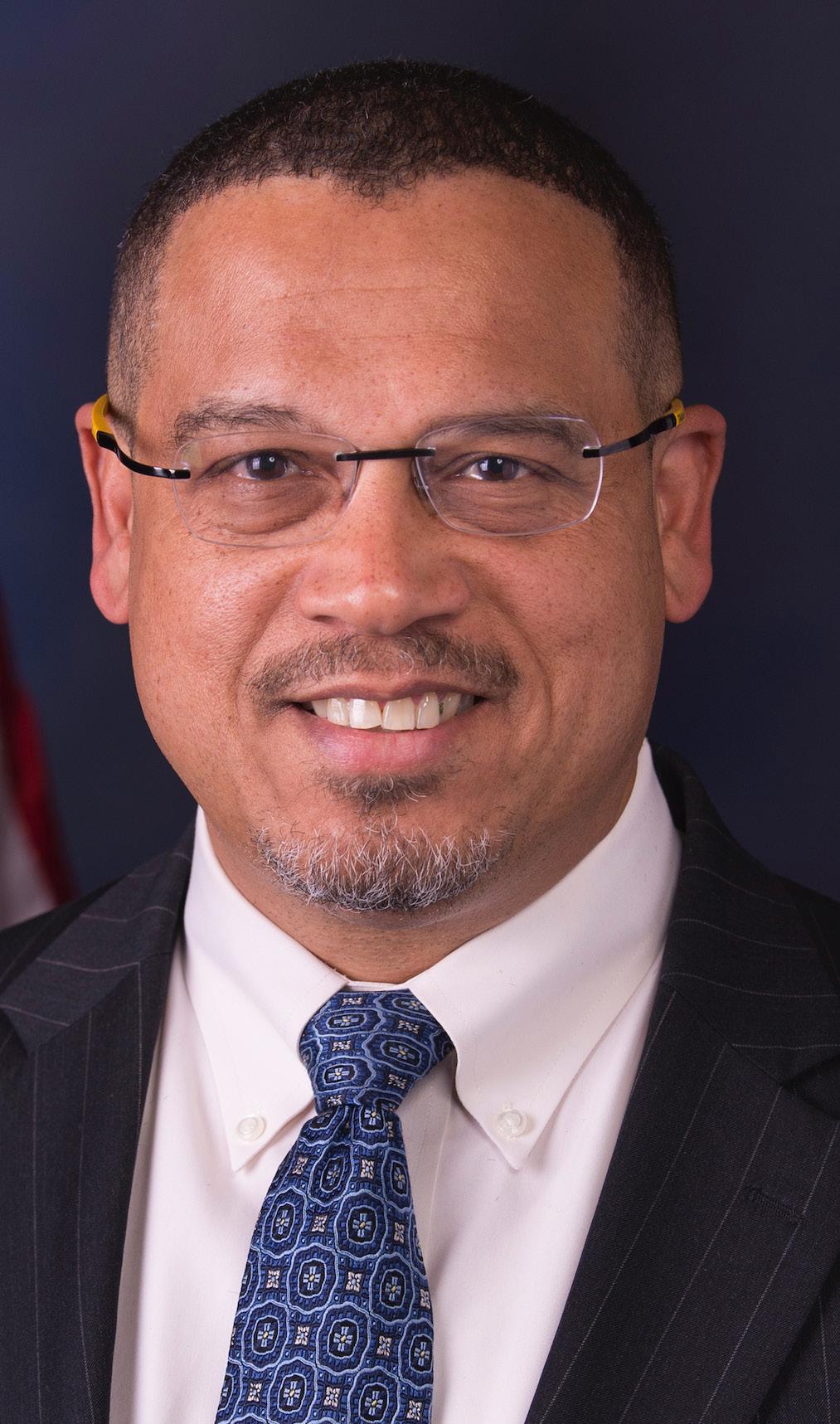
President Donald Trump and Minnesota Attorney General Keith Ellison
Editor
This is not a story that ends in defeat. Black Minnesotans have built more political infrastructure in the past decade than in the previous century. The question is whether that infrastructure will be consolidated, deepened, and made durable enough to outlast the current backlash — and whether the broader Minnesota public can be made to understand that Black economic power is not a threat to the state’s prosperity but the foundation of it.
Editor
By Al McFarlane
Let us begin with the economic argument, because it is the argument that reaches beyond the POCI community and into the broader Minnesota public that will ultimately decide whether equity programs survive the current political environment. The economic case for Black prosperity in Minnesota is not a social justice argument dressed in economic language. It is a straightforward productivity and growth argument rooted in the most basic principles of resource allocation. Minnesota’s labor market is tight. Its population is aging. Its rural communities are hollowing out. Its economy depends increasingly on a knowledge-sector workforce that is disproportionately young, diverse, and concentrated in the Twin Cities metro. The demographic future of Minnesota is POCI — census trends are unambiguous about this. And yet the state currently achieves its above-average economic outcomes almost entirely through the productivity of its white population, while leaving the economic potential of its Black, Indigenous, and immigrant communities dramatically underdeveloped.
The Strategy: Five Pillars of Durable Power
PILLAR ONE: ELECTORAL POWER AT EVERY LEVEL, EVERY CYCLE A single legislative seat in a competitive suburban district — in Brooklyn Park, Woodbury, Inver Grove Heights, or White Bear Lake — determines whether the POCI Caucus functions as a governing bloc or a dissenting voice. Black electoral organizing needs to invest in those districts, not just in the safe urban seats that already return POCI legislators. Rep. Frazier’s decision to run for Hennepin County Attorney is exactly the right strategic instinct — building power in prosecutorial, county board, and regional planning offices that control resources and policies independent of the legislative calendar.
The vulnerability exposed by the “named grants” ban proposal is that too much of the economic infrastructure serving POCI communities is dependent on state appropriation for its survival. The strategic imperative is to build POCI-controlled economic institutions that can survive budget cycles — institutions capitalized once through public investment and then sustained through revolving loan fund repayments, fee income, philanthropic partnerships, and institutional self-sufficiency. MEDA’s revolving loan structure is exactly right: PROMISE Act funds invested in small business loans generate repayments that can be reinvested indefinitely. The strategic goal is to capitalize MEDA and similar CDFIs to a scale — $200 million, $500 million, eventually $1 billion — where the loss of any single state appropriation is an inconvenience rather than an existential crisis.
PILLAR THREE: LOCAL GOVERNMENT AS EQUITY BULWARK
When state politics are hostile and federal policy is actively destructive, local government becomes the most important arena for equity policy. St. Paul’s Office of Financial Empowerment has already demonstrated what this looks like: the CollegeBound program gives every baby born in the city a college savings account. The People’s Prosperity Pilot provides guaranteed monthly
income to selected families.
These are city-controlled programs that no state legislature can eliminate. Participatory budgeting — allowing residents to directly decide how a portion of the public budget is spent — is one of the most powerful tools available. Evaluations by the Participatory Budgeting Project document consistent outcomes where the model has been adopted: increased civic participation among historically underrepresented communities, capital investment in neighborhoods long excluded from discretionary city spending, and stronger resident ownership of public infrastructure. These results are documented and replicable.
PILLAR FOUR: NARRATIVE COUNTEROFFENSIVE — RECLAIM THE LANGUAGE
Every time the “named grants” ban is invoked, the response should be: what about the Taconite Economic Development Fund? Every time “competitive grants” are proposed as a replacement for direct appropriations, the response should be: when did the Farm Advocate Program compete against other programs for its appropriation? Every time fraud concerns are cited to justify restructuring POCI equity programs, the response should be: what criminal investigation followed the legislative auditor’s finding that $93 million was paid to profitable ethanol companies?
PILLAR FIVE:
CROSS-COMMUNITY CO-
ALITION — THE “WHOLE STATE” ARGUMENT
The final strategic pillar is the most important and the most underutilized: building the cross-community coalition that frames Black economic prosperity as a win for the entire state. Minnesota’s labor market needs the workers that a well-educated, well-employed, home-owning Black middle class would produce. Minnesota’s tax base needs the revenues that a thriving Black business sector would generate. Minnesota’s rural communities need the economic activity that a more geographically distributed POCI workforce would create. These are not arguments for charity. They are arguments for enlightened self-interest.
The 2026 Session and What Comes After
The May 18 constitutional deadline for the 2026 legislative session is an immediate pressure point. The POCI Caucus, community organizations, and their allies need to focus specifically on three things between now and then: defending the named delivery mechanism of the PROMISE Act against the “named grants” ban; securing additional PROMISE Act capitalization, particularly for revolving loan funds that can survive future budget cycles; and blocking cuts to DEED programs that administer equity lending. These are winnable fights in a 50-50 legislature if the political pressure is applied correctly — if enough DFL members understand the stakes and Republican members in competitive districts understand the political cost of opposing programs with documented community benefit.
WHAT THIS SERIES HAS DOCUMENTED
1. Minnesota has a century-long history of named, targeted, legislatively mandated economic relief for white-majority industries, applied without fraud
scrutiny or competitive grants.
2. The same structural tools applied to POCI communities are now being subjected to fraud investigations, competitive grant proposals, and structural elimination — treatment that has never been applied to equivalent industry programs.
3. The language of fiscal responsibility and competitive accountability is functioning as a mechanism to dismantle equity infrastructure without using racial language.
4. Black Minnesotans have built more political infrastructure in the past decade than in the previous century. Whether that infrastructure is made durable will determine the outcome.
5. The economic case is clear: Minnesota’s prosperity depends on closing the racial gaps that have suppressed the productivity of a significant fraction of its population. When Black Minnesotans win economically, Minnesota wins.
This is not, finally, a story about victimhood or despair. It is a story about power — who has it, how it was built, how it is being contested, and what it will take to keep it and expand it. Black Minnesotans have demonstrated in the past decade that they can build political power sufficient to produce transformative legislation. The current moment requires them to demonstrate something harder and more durable: the ability to defend those gains under sustained attack, to build economic institutions that outlast political cycles, and to make the case to the broader Minnesota public that Black prosperity is not a special interest but a common one. That is the fight. And it is winnable.
Disclosure statement Insight News uses AI-assisted tools in some editorial production. Read our AI Policy & Transparency Statement at www.insightnews.com/ site/ai_policy.html.
RATE INCREASE NOTICE
NOTICE OF PUBLIC HEARINGS FOR XCEL ENERGY MINNESOTA CUSTOMERS
Xcel Energy asked the Minnesota Public Utilities Commission (MPUC) to approve an increase in natural gas rates beginning Jan. 1, 2026. The requested increase is approximately 8.2% or $63.4 million. On average, the proposed final rate change would increase the monthly bill for a typical residential natural gas customer by 8.7% or $7.11.
The MPUC may either approve, deny, or modify the requested changes, including approving a lesser or greater increase than was requested for any customer class or classes of service.
The MPUC will likely make its decision on our rate request in the fourth quarter of 2026. If final rates are lower than interim (temporary) rates, we will refund customers the difference with interest. If final rates are higher than interim rates, we will not charge customers the difference.
If you move before a refund is issued and we cannot find you, your refund may be treated as abandoned property and sent to the Minnesota Department of Commerce, Unclaimed Property Unit. You can check for unclaimed property at www.missingmoney.com. To make sure we can send you any refund owed, please provide a forwarding address when you stop service.
Public Hearings
Administrative Law Judge Kimberly Middendorf will hold six in-person public hearings and two virtual public hearings so that customers have an opportunity to comment on our request. Any Xcel Energy customer or other person may attend or provide comments at the hearings. You are invited to comment on the adequacy and quality of Xcel Energy’s service, the level of rates, or other related matters. You do not need to be represented by an attorney. The hearings will begin at their scheduled time and adjourn after everyone present has had an opportunity to comment or ask questions.
PUBLIC HEARING SCHEDULE
Monday, April 27, 2026 1:30 p.m.
Washington County Heritage Center 1862 Greeley St. S. Stillwater, MN 55082
Tuesday, April 28, 2026 1:30 p.m. Virtual WebEx (see access details below)
Tuesday, April 28, 2026 6:30 p.m.
Wednesday, April 29, 2026 1:30 p.m.
Monday, May 4, 2026 6:30 p.m.
Tuesday, May 5, 2026 1:30 p.m.
Wyoming Area Library 26855 Forest Blvd. Wyoming, MN 55092
Great River Regional Library Bremer Room 104 404 W St. Germain St. St. Cloud, MN 56301
Winona State University Kryzsko Commons Purple Rooms 247 - 249 500 Huff St. Winona, MN 55987
Ramsey County Library Community Program Room 2180 Hamline Ave. N. Roseville, MN 55113
Tuesday, May 5, 2026 6:30 p.m. Virtual WebEx (see access details below)
Wednesday, May 6, 2026 6:00 p.m.
Virtual Public Hearings
Robert Trail Library Robert Trail Large Meeting Room 14395 S. Robert Trail Rosemount, MN 55068
Bad weather? Find out if a hearing is canceled — call (toll free) 855-731-6208 or 651-201-2213 or visit mn.gov/puc
Public hearings have been scheduled as follows to be held via video conference. April 28, 2026, at 1:30 p.m. and May 5, 2026, at 6:30 p.m.
Attend by Internet Connection (Audio and Video)
To join the virtual hearing using a computer, tablet, or smart phone, where you will have audio and video capability, go to: https://minnesota.webex.com. In the gray box where it says, “Enter Meeting Information” type the Event Number below for the public hearing date you are attending:
April 28, 2026 1:30 p.m.
Event Number: 2490 656 2535
Event Password, if needed: XCEL28
Directions for Appearing via WebEx.
May 5, 2026 6:30 p.m.
Event Number: 2489 688 6927
Event Password, if needed: XCEL55
Log on 5 to 15 minutes before the hearing begins. You will be asked to join the hearing through a WebEx application or through a plug-in for your web browser.
• Enter the Event Number shown in the box above.
Next, you will be asked to enter your name, your email address, and an event password (if required). After entering this information, click “Join Now” and you will be granted access to the virtual hearing.
• When you enter the hearing, your microphone will be muted. If you would like to ask a question or make a comment during the meeting, use the chat function to send a message to the meeting moderator, who will place you in the queue to comment. When it is your turn to comment, your name will be called and your line will be unmuted. You will then be able to ask questions or make a comment.
To Attend by Telephone (Audio Only)
If you do not have access to a computer, tablet, or smart phone, or if you would prefer to attend the hearing via audio only, you may join using any type of telephone. You do not need internet access to call into the hearing; however, you will only be able to hear (not see) the speakers. You will still be able to comment and ask questions.
Use the information in the box below to dial into the hearing. You will be asked to enter the access code for the hearing, as set forth below:
Administrative Law Judge Kimberly Middendorf will preside over the public hearings and will provide the Commission with findings of fact, conclusions of law, and recommendations after the conclusion of the evidentiary hearing.The purpose of the public hearings is to receive public input on the proposed rate increase. At the public hearings, interested persons have the opportunity to: (1) ask questions of the utility and agency staff; and (2) offer verbal and written comments on the merits of the proposed rate increase. Members of the public may participate without needing to intervene as a party. Representation by legal counsel is permitted but not required.
Please note that the public hearings will end when all attendees have had the opportunity to comment and all other business has been concluded. You are encouraged to join the meeting at the scheduled start time to be placed in the queue to comment. Commenters will be called in the order they enter the queue. Please arrive at the beginning of the hearing to ensure you will have time to comment.Written comments may be submitted during the comment period before and after the public hearings. Follow the instructions below to provide written comment. Please contact Christine Pham at 651-201-2249 or christine.pham@state.mn.us if you have questions on how to participate or have trouble accessing the public hearing using telephone or internet.
WRITTEN COMMENTS TO THE MINNESOTA PUBLIC UTILITIES COMMISSION
You can still submit comments even if you do not attend a public hearing.
Comment Period
Comments will be accepted through May 19, 2026.
Comments must be received by 4:30 p.m. on the close date.
• Comments received after the comment period closes may not be considered for the record.
How to Submit a Written Comment
Written comments can be submitted via: (1) the Commission’s website; (2) electronic mail; (3) U.S. Mail; or (4) fax. To learn how to submit a comment in any of these ways, please visit mn.gov/puc, select “Get Involved” from the dropdown menu on the top of the page, then select “Public Comments and How to Participate.” This will take you to the Public Comment page where you will find a list of ways to comment. Be sure to reference MPUC Docket No. 25356 in the subject line of your comment.If you do not have access to the internet, you may send or deliver your comment to: Minnesota Public Utilities Commission 121 7th Place East, Ste. 350 St. Paul, MN 55101
Important: Comments can be reviewed by the public on the MPUC’s website, except in limited circumstances consistent with the Minnesota Government Data Practices Act. The MPUC does not edit or delete personally identifying information from comments received.
EVIDENTIARY HEARINGS
Formal evidentiary hearings on Xcel Energy’s proposal will be held on May 11 – 12, 2026 starting at 9:30 a.m. each day. The evidentiary hearings will be held at the Public Utilities Commission, 350 Metro Square Building, 121 Seventh Place East, St. Paul, Minnesota. Individuals who cannot attend in person may attend via via WebEx, a video conferencing platform. Members of the public who wish to attend the hearing through WebEx may request an electronic invitation by contacting MPUC staff Christine Pham at 651-201-2249 or christine.pham@state.mn.us
The purpose of the evidentiary hearing is to allow Xcel Energy, the Minnesota Department of Commerce — Division of Energy Resources, the Minnesota Office of Attorney General — Residential Utilities Division, and parties who have formally joined the contested case, to present testimony and to cross-examine each other’s witnesses on the proposed rate increase.
TO LEARN MORE
Xcel Energy’s current and proposed rate schedules are available at:
Minnesota Department of Commerce 85 7th Place East, Suite 500 St. Paul, MN 55101
Phone: 651-539-1534
Web: https://efiling.web.commerce.state.mn.us. Under “eDockets” select “Search Documents” insert “25-356” in the Docket #s field, select Search, and the list of documents will appear on the next page.
If you have questions about the MPUC’s review process or need assistance in submitting comments, contact the Commission’s Consumer Affairs Office at:
Minnesota Public Utilities Commission 121 7th Place East, Suite 350 St. Paul, MN 55101
Phone: 651-296-0406 or 800-657-3782
Email: consumer.puc@state.mn.us
Anyone with hearing or speech disabilities may call through their preferred Telecommunications Relay.
Please contact the MPUC staff Christine Pham at 651-201-2249 or christine.pham@state.mn.us as soon as possible if you need an interpreter or accommodation to attend a public hearing.
If you would like to ask a question or make a comment during the hearing, press *3 on your telephone. You will then be placed into the queue to comment. When it is your turn to speak, the last few digits of your telephone number will be announced by the moderator and your line will be unmuted, allowing you to be heard.
Transportation classes bill estimates do not include the cost of gas
Regime change and the roots of U.S. hostility with Iran
In 1953, the United States and other Western forces collaborated to overthrow the democratically elected prime minister, Mohammad Mosaddegh, of Iran. The stated rationale for pursuing regime change was based on the Cold War logic that Mosaddegh was aligning with an evil communist sphere of influence anchored by the former Union of Soviet Socialist Republics (USSR/Russia).
Those who are serious in their study of history are clear that the Cold War was a propaganda campaign to position communism and socialism as a “boogeyman” in order to justify Americans’ desire for geopolitical domination of the world. Additionally, Mosaddegh’s policy of nationalizing the oil wealth of the country was disruptive to Western oil companies that wanted unfettered access to Iran’s oil reserves. After the overthrow of Mosaddegh, the United States installed the Shah of Iran to lead the country, which was a brutal, autocratic regime that lasted for a couple of decades. The 1979 revolution in Iran that resulted in the overthrow of the Shah and the taking of American hostages is often narrated as an act of anti-American aggression instead of a response to
the U.S. imposition of a brutal regime on the people of Iran. In other words, the 1979 Iranian revolution and the anti-American sentiments expressed over the years by Iranian leadership is a response to U.S. imperialist aggression toward the sovereignty of the Iranian people and the larger Muslim world.
U.S. Secretary of State Marco Rubio gave a speech a few weeks ago in Munich, Germany, which provides a clear underlying logic for U.S. military strikes against Iran. He said:
“…For five centuries, before the end of the Second World War, the West had been expanding – its missionaries, its
pilgrims, its soldiers, its explorers pouring out from its shores to cross oceans, settle new continents, build vast empires extending out across the globe,” Rubio said. “But in 1945, for the first time since the age of Columbus, it was contracting. Europe was in ruins. Half of it lived behind an Iron Curtain and the rest looked like it would soon follow. The great Western empires had entered into terminal decline, accelerated by godless communist revolutions and by anti-colonial uprisings that would transform the world and drape the red hammer and sickle across vast swaths of the map in the years to come … .” The luxuries and
quality of life that Western civilization enjoys are based on the colonial relationship it has with the so-called Third World, which is largely non-White and poor. People who are self-respecting will rise up to challenge the social order that causes its own degradation. Additionally, in a November 1979 interview with journalist Mike Wallace, the Ayatollah Khomeini (leader of Iran) committed to (and delivered on this commitment) releasing Black and women hostages. His rationale for releasing Black hostages was that we are an oppressed group in America and not responsible for the aggression toward their
people. This is a recognition of the global system of domination that bolsters White political and economic domination of the world. It is also important to acknowledge the role that Israel has played in encouraging U.S. military aggression toward Iran. Israel considers itself to be a cultural descendant of Western civilization. The state of Israel serves as a proxy for maintaining U.S. geopolitical domination of the muslim world and the Palestinian people have been casualties of U.S. maintenance and support of the settler colonial project of the state of Israel. Israel has been urging the U.S. to take a more aggressive
stance toward Iran to advance its own military domination of the region. The current administration’s capitulation to Israeli political leadership’s urging to enact regime change in Iran is a further acknowledgement of how important Israel is as an instrument of American imperialism. This current military strikes against Iran by the Trump administration is another example of the White nationalist political agenda of the Republican Party. What must be acknowledged is that the military-industrial complex that funds both political parties must be directly confronted and ultimately dismantled. America currently
Drivers struck and killed 3,024 people walking during the first half of 2025, an average of 16 per day, according to a new data analysis from the Gover-
nors Highway Safety Association(GHSA). That is an 11% decline from the same period the year before – the largest drop since GHSA began tracking pedestrian fatalities 15 years ago. While this recent safety momentum is positive, pedestrian deaths remain above the 2019 level, the last year before a steep rise in dangerous driving behaviors and traffic deaths caused by the pandemic.
An in-depth examination of original data GHSA collected from State Highway Safety Offices (SHSOs) across the country found that:
• The 10.9% drop in pedestrian deaths from 2024 to 2025 (January-June) is the largest decrease since GHSA began publishing these reports 15 years ago. This translates into 371 fewer pedestrian deaths than in the same period the prior year. However, this is still 2.5% higher than pre-pandemic levels (2,951 in January-June 2019). The pedestrian fatality rate measured per 100,000 population fell to 0.90 in 2025 – the lowest mark since 2020. Measured by vehicle miles traveled (VMT), there were 1.86 fatalities per billion VMT, the lowest since 2019.
• In addition to the lasting emotional trauma caused by a pedestrian being killed, there is a high financial cost to each death.
The total financial cost of all 3,024 fatalities from January through June 2025 combines to exceed $40 billion.
Pedestrian fatalities increased in 24 states, decreased in 23 states and D.C, and remained the same in three states for January-June from 2024 to 2025. Decreases in states including Alabama, California (-32%), Maryland, New Mexico, and New York drove the nationwide count down from 2024, even though there were the same number of states (plus
D.C.) that posted an increase and a decrease.
“Each pedestrian death is so much more than just a number,” said GHSA Chief Executive Officer Jonathan Adkins. “Each one is a family member, friend, or neighbor that no one will be able to hug, see, or share time with ever again. While we are pleased with the progress shown in the data, the only acceptable number of traffic deaths is zero.”
“Access to timely, high-quality data is essential to understanding and helping prevent roadway fatalities,” said Anderson Abernathy, President & COO of Michelin Mobility Intelligence. “We are encouraged by the progress reflected in this report, but the data also reinforces the need for continued collaboration across public and private sectors to improve safety for all road users, especially pedestrians. At Michelin, we believe that integrating advanced analytics with cross-sector collaboration can help identify risk patterns earlier and enable more targeted interventions. Turning insight into impact is essential to the USDOT’s Safe System Approach designed to enhance safety for all road users.”
How to Improve Pedestrian Safety and Save Lives Methods to improve pedestrian safety include minimizing pedestrians’ exposure to vehicles (particularly on highspeed roadways), prioritizing visibility between drivers and pedestrians, managing speed and enforcing speed limits, us-
ing new technology and data to identify and address challenges, promoting safe road use through education and enforcement, and improving post-crash care. Using both traditional crash databases and innovative new data sources to learn from fatalities and injuries can also inform safety plans, countermeasures, and policy.
GHSA’s report provides a first look at the pedestrian fatality trends well before the National Highway Traffic Safety Administration’s (NHTSA) Fatality Analysis Reporting System (FARS) data are available. It presents individual data for all states as well as projected pedestrian fatality rates per population— at both state and national levels — and per vehicle miles traveled at the national level.
Later
At Minneapolis City Hall
Ward 10 braces for a major construction year as four projects reshape Whittier and surrounding corridors
Council Member Aisha Chughtai's spring update details simultaneous road, bridge, and infrastructure work spanning Pillsbury, Franklin, Lyndale, and Whittier Northeast — with community input still open on the Lyndale redesign
Ward 10 residents should plan for a construction-heavy spring and summer. Council Member
Aisha Chughtai's latest newsletter maps out four overlapping infrastructure projects that will reshape key corridors across the Whittier neighborhood and surrounding areas, with work already underway on at least two fronts.
"While we welcome positive changes to the ward," Chughtai wrote, "it is crucial that residents' voices and concerns are heard during the process." That framing — construction as community process, not just city logistics — runs through all four project updates.
Pillsbury Ave S bridge over Midtown Greenway
The Pillsbury Avenue South Bridge over the Midtown Greenway entered active construction the week of April 6, with substantial completion expected by December 2026. The project team is conducting pre-construction condition surveys of adjacent properties and has set up vibration monitoring — a level of resident outreach that signals the scope and complexity of the work.
Updates will flow through a GovDelivery newsletter, advance signage, and direct stakeholder communications. Residents with questions can reach Construction Engineer Oscar Weber at 612-673-3884 or Project Engineer Petru Vizoli at 612-673-2368.
Whittier Northeast resurfacing and ADA
upgrades
The northeast quadrant of the Whittier neighborhood is slated for street resurfacing as part of the city's ongoing Public Works improvement program. The work includes new asphalt layering and curb-and-gutter replacements on select streets, along with ADA pedestrian ramp upgrades. Letters went out to affected residents in midMarch. A virtual community meeting was held March 31 to field questions and concerns.
Franklin Avenue reconstruction — Hennepin County
One of the most visible projects is the Hennepin County-led Franklin Avenue Reconstruc-
tion, which began March 16 and is expected to run through November 2026. The project has closed Franklin Avenue between Lyndale and LaSalle/ Blaisdell and from 1st to Chicago Avenue, with one lane of eastbound traffic remaining open for local access. This year's scope covers Lyndale to LaSalle and 1st Avenue to Chicago. A second phase — LaSalle to 1st Avenue — is slated for 2027. Residents and businesses with questions
can contact Hennepin County Project Manager Jay Hill at jay. hill@hennepin.us or 612-8429469.
Lyndale Avenue — a redesign after community pushback
The Lyndale Avenue Reconstruction carries perhaps the most notable backstory. After significant community opposition to the original design, Hennepin County went back to the drawing board. A revised design is now out for public comment, and the interactive comment map remains open through April 24. "After so many community members expressed their concerns with the first proposed design, Hennepin County has taken that feedback and gone back to the drawing board."
Chughtai's framing of the Lyndale situation is worth noting for what it represents: resident advocacy that visibly changed a county infrastructure plan. That outcome stands as a practical demonstration of why ward-level civic engagement matters — and why the council member is encouraging constituents to weigh in on all four projects before designs are locked in. Disclosure statement Insight News uses AI-assisted tools in some editorial production. Read our AI Policy & Transparency Statement at www.insightnews.com/ site/ai_policy.html.
Minneapolis Ward 11 mobilizes relief, resources amid city's federal immigration
Council Member Whiting's April report details $9 million in business and rental aid, Somali TPS pause, and neighborhood services for Ward 11 residents
Minneapolis City Council
Member Jamison Whiting opened his April Ward 11 newsletter with the kind of frank acknowledgment that residents have come to expect — civic urgency wrapped in a bit of dry Midwest humor. "Welcome to April in Minneapolis," he wrote, "the only time of year where you need a winter coat, an umbrella, and sunscreen just to walk the dog."
Behind the lightness is a ledger of serious work. As the Council enters what Whiting describes as the final "Super COW" — Committee of the Whole — phase of the legislative cycle, Ward 11's representative is keeping constituents informed on two fronts that strike close to home: the economic and human fallout from Operation Metro Surge, the federal immigration enforcement action that rocked Minneapolis earlier this year, and the ongoing delivery of core city services.
$9 million deployed for businesses and renters
The headline numbers are significant. The City Council has moved to deploy approximately $9 million in relief tar-
geting the communities hardest hit by Operation Metro Surge — $7 million to small businesses and nearly $2 million in direct rental assistance, with the latter matched by philanthropist John Wilson and the Wilson Foundation to produce close to $6 million in total renter relief.
Whiting's newsletter highlights the Wilson Foundation's commitment as a model of responsive philanthropy. "Since the beginning of Operation Metro Surge, John has spent his time seeking out mutual aid groups who are doing the onthe-ground work connecting resources with residents," Whiting wrote, praising the foundation's millions in matched donations.
"For many families, the difference between stability and eviction comes down to whether they can keep up with rent."
The $7 million Small Business Resiliency Fund, approved by Mayor Jacob Frey and the City Council and outlined by the Community Planning and Economic Development department on March 24, is structured to move quickly. Divided into categories cover-
ing direct financial relief and activation and marketing support, the fund targets license fee relief, cultural market grants, and events designed to bring customers back to commercial corridors battered by the Surge. City estimates put the total business loss from the enforcement operation at $81 million in lost revenue.
Somali TPS pause brings temporary relief — and ongoing uncertainty
Whiting also flagged the federal court order temporarily pausing the termination of Somali Temporary Protected Status, preserving immigration status and work authorization for TPS holders while litigation continues. Whiting directed constituents to the City’s Know Your Rights and Resources page for free legal assistance referrals. For full coverage of the TPS ruling and immigration scam warnings, see Insight News’ report on Council President Elliott Payne’s Ward 1 update.
"Somali TPS remains in effect, pending further court action."
Infrastructure, recog-
nition, and neighborhood services
Beyond the crisis response, Whiting's report touches on a range of city activity. Public Works Director Tim Sexton was unanimously elected to the board of the National Association of City Transportation Officials (NACTO), recognizing the department's work on infrastructure, drinking water, and transportation safety. The city's
traffic safety camera pilot — launched last October at five locations — has already produced a more than 50 percent reduction in speeding violations. Additional cameras, including red light enforcement, are expected as early as this spring.
Minneapolis also earned Bloomberg Philanthropies' "What Works Cities" Silver Certification for its data governance and resident en-
crisis
gagement practices, and surpassed $1 billion in permitted construction value for the 15th consecutive year in 2025 — totaling $1.07 billion. The Spring Manor project, the largest public housing redevelopment in
and
15
under
The City Trees
celebrating
and
Minneapolis 311, marking its own 20-year anniversary, continues to connect residents to non-emergency city services by phone, web, text, and mobile app — operating Monday through Friday, 7 a.m. to 7 p.m. Ward 11 residents with questions about council activity can reach Whiting's office at ward11@minneapolismn.gov or 612-673-2211. Scorecards from each council meeting, including how Whiting voted and why, are posted on the Ward 11 city webpage. Disclosure statement Insight News uses AI-assisted tools in some editorial production. Read our AI Policy & Transparency Statement at www.insightnews.com/ site/ai_policy.html.
Ward 7 community presses for renter protections as council prepares final push on police precinct, drug policy, and leadership votes
Council Member Elizabeth Shaffer recaps a March renters' rights event that drew a legal win for one Loring Park building, while the city's final 'Super COW' cycle brings consequential votes on the Third Precinct, decriminalization, and top city appointments
Ward 7 Council Member Elizabeth Shaffer opened her April newsletter with a principle that doubles as a challenge: authentic public service, she wrote, must stay connected to the community it serves. For Shaffer, that connection runs through monthly Community Conversations events — and the most recent one produced a concrete result before the follow-up newsletter even went out.
Renters organize, and a building wins in court
The March Community Conversations event focused on renters' rights and resources. City staff walked attendees through how to report and follow up on maintenance issues, how the city's inspection and violation process works, and how to navigate specific housing problems. The president of a Ward 7 tenants union also spoke about organiz-
ing strategy, and Shaffer's senior aide, Marty Carlson, provided legal aid referrals.
Among those in attendance was the president of the Brentwood tenants' union — whose building had been without heat during the winter of 2025. That resident shared news at the event that the building had just won a legal case the prior Monday, secured through Minnesota Legal Aid.
"Affordable, well-maintained housing is important to any city. We need to protect the rights of renters, while also working with management to support a financial model that allows them to reinvest in their property."
Shaffer's framing is deliberate on this point. Rather than positioning renters and landlords as adversaries, she calls for working both sides of the equation — protecting
tenant rights while creating conditions where property owners can maintain and reinvest. That balance reflects the political terrain in a ward that contains a wide range of housing types and tenures.
The Brentwood case is available at mylegalaid.org for residents seeking information on similar situations. Shaffer noted the recording of the full Community Conversations event is also available on the Ward 7 YouTube channel.
Super COW: consequential votes ahead On the legislative front, Ward 7 is heading into the final compressed council cycle of the Operation Metro Surge response period — what council members call the Super COW, or Committee of the Whole. Shaffer's update flags a dense agenda for the week of April 7, with the
actual Council vote following on Thursday. Among the most notable items: a bid acceptance on a long-awaited replacement for the Minneapolis Police Department's Third Precinct, which was destroyed during the civil unrest following George Floyd's murder in 2020. Six years later, the precinct replacement moves toward resolution.
Also on the agenda: a proposal to decriminalize the possession and public use of drug paraphernalia — a significant harm reduction policy shift — alongside nine public hearing items including reappointment votes for the city's chief operating officer, city attorney, and community safety commissioner. The council returns to its standard committee schedule April 13. "There are no fewer than nine public hearing items
on the Super COW agenda for Tuesday — including the proposed reappointment of the city's chief operating officer, the city attorney, and the community safety commissioner."
Loring Park infrastructure season On the neighborhood level, Shaffer flagged summer road resurfacing coming to Loring Park, with a
Council Member Jamison Whiting
Council Member Elizabeth Shaffer
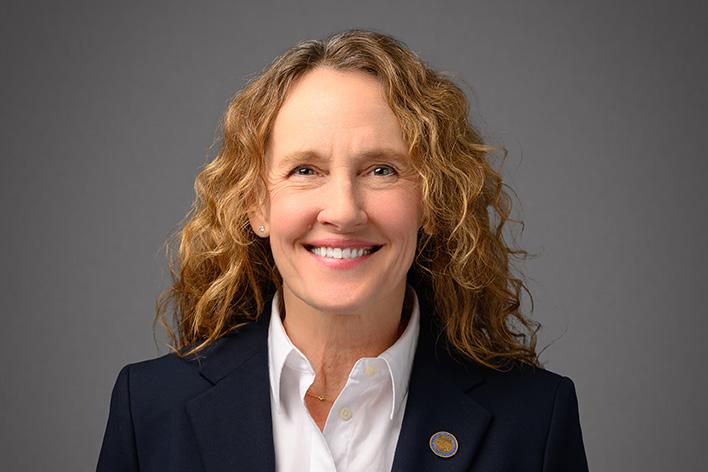
Council Member Aisha Chughtai
North Minneapolis stands to gain $38M safety training center and walk-up mobile medical care
Ward 4 Council Member LaTrisha Vetaw spotlights two major Northside investments — a proposed public safety campus and a mobile health unit bringing opioid and primary care services to Colonial Market
North Minneapolis has long carried an outsized burden when it comes to public safety and healthcare access. Two announcements from Ward 4 Council Member LaTrisha Vetaw signal that city government is making concrete investments to close those gaps — one a $38 million training and wellness facility for first responders, the other a mobile medical unit rolling directly into the neighborhood.
A safety campus built for the next generation of public service
The City of Minneapolis is moving forward with a proposal to build a Community Safety Training and Wellness Center at 146 W. 60th St. in the Windom neighborhood. The $38 million facility — funded through a combination of the City's capital budget and a state funding
request — would consolidate training and wellness operations currently scattered across multiple aging sites.
If approved, the center would serve six city departments under one roof: 911, Behavioral Crisis Response, Emergency Management, Fire, Neighborhood Safety, and Police. The breadth of that list reflects a philosophy of cross-departmental coordination that city leaders have emphasized since the pressures of Operation Metro Surge exposed the limits of siloed emergency response.
"Having everyone at the same table ensures a timely and coordinated response."
Planned features include state-of-the-art adult learning classrooms, fitness facilities, wellness and mental health support spaces — including family support rooms and employee assistance offic-
es — large-scale training areas for incident management, and an indoor shooting range that would relocate the MPD range from the 4th Precinct. The City is currently in the site purchase phase.
Council Member
Vetaw's newsletter frames the project in the context of lessons learned: the city activated its Emergency Operations Center throughout Operation Metro Surge, pulling staff from their regular duties into a unified crisis response. Director Rachel Sayre, who led that effort, described the center as the focal point for coordinating resources and community support. The proposed training facility would institutionalize that kind of integrated readiness.
Mobile medical care comes to Lowry and Penn On a more immediate front,
Ward 4 residents at Colonial Market on Lowry and Penn Avenue North got access to walk-up medical care this spring through the Minneapolis Mobile Medical Unit. No appointment, no long wait — just professional medical staff on site, Saturday afternoons from 11 a.m. to 3 p.m.
The mobile unit's focus goes well beyond basic checkups. Its core mission centers on reducing opioid overdose deaths, expanding access to medications for opioid use disorder, increasing access to treatment, and promoting longterm recovery. On the Northside — where opioid mortality has hit with particular force — that mission carries direct urgency.
"Access to healthcare should never be out of reach — and on the Northside, we're bringing care directly into the community."
Vetaw credited Colonial Market as a community partner making the effort possible, reflecting a model of neighborhood-anchored care delivery that bypasses traditional barriers of transportation, scheduling, and insurance. The mobile unit also appears at community events and health fairs across the city.
Northside voices sought for boards and commissions Vetaw's newsletter also called on Ward 4 residents to apply for open seats on city boards and commissions before the March 31 application deadline, specif-
Moral metrics: Are corporate algorithms becoming our new moral authorities?
By Beth DuFault
Assistant Professor of Marketing, University of Portland
You check your credit score before applying for an apartment. Your fitness watch tells you whether you slept well enough. A workplace dashboard measures your productivity. Parents can buy devices that track their baby’s breathing and heart rate while they sleep.
Increasingly, numbers tell us how we are doing.
These systems promise something appealing: clear feedback about whether we are behaving well. They appear objective, neutral and data-driven. But they also signal a deeper cultural shift, as algorithms define what counts as virtuous behavior.
In other words, we are living in a world where metrics are being translated into moral judgments. As a researcher who has long studied how markets and technologies shape moral responsibility, I’ve seen how these metrics quietly reshape how people understand themselves and how other people judge them.
Defining the good life For generations, religious congregations structured everyday life for many people, offering templates for identity and for what a “worthy” life should look like.
As societies grow more diverse, however, and as fewer people affiliate with formal religious groups, faiths’ moral influence on society is waning. With their authority no longer taken for granted, some religious groups market themselves almost like brands: lifestyle choices that one can choose to follow or ignore. People start to assemble their own sense of right or wrong from a patchwork of sources – and increasingly, that involves for-profit scores, rankings and dashboards.
Credit scoring offers a clear example of how this works. A credit score seems like an objective measure of financial worthiness.
But the actions required to optimize a score define what worthy financial behavior looks like in U.S. society today. It’s not just about paying bills on time. Achieving an optimum credit score most often involves having at least one credit card; keeping a low debt-to-credit ratio, which might involve requesting credit limit increases instead of paying down debt; not canceling any credit cards so that average account length is maximized; and having the “right” credit mix, which often includes a consumer loan. Today, a consumer with no credit cards – something that at one time might have seemed financially virtuous – doesn’t
develop the kind of “file” that is readily rewarded with a high score, and they might not be able to obtain credit to buy a house or a car. In our work on consumer credit scoring, consumer culture researcher John Schouten and I found that people often incorporate their credit scores into their sense of identity and narrative about their life, interpreting scores as reflections of their character and morality.
A high score feels like a sign of virtue. A low score can trigger feelings of shame or failure and a determination to be better.
One consumer described discovering her credit score for the first time as finding out what kind of person she actually was. Another, working to rebuild his score after a medical debt caused a cascade of defaults, related that he checked it every morning, to see if he was someone people could trust again.
Moral mirrors Credit scoring is only one example. Health apps convert exercise, sleep and heart rate into performance indicators. Workplace platforms turn everyday tasks into dashboards, rankings and streaks. Reputation systems rate drivers, sellers and freelancers, often with a single number that stands in for trustworthiness.
Even parenting, one of the most emotional human roles, is touched by this logic. Wearable infant monitors translate babies’ breathing, oxygen levels and sleep patterns into charts, alerts and “insights.” These technologies are marketed as tools for reassurance, but in a 2026 paper, my co-authors and I found that these tools also nudge expectations.
Parents describe feeling that if a device exists that can watch a baby’s breathing all night, then a truly responsible caregiver must use it. “All the parents in our social group have one breathing monitor or another,” one dad said. “My boss has one. If I could prevent
something horrible by spending a little money and watching the monitors, and I didn’t, what kind of parent would I be?”
The emotional weight of that shift is striking. One mother said that she felt guilty on the nights she forgot to charge the device – not because anything had gone wrong, but because she had failed to be watchful in the way the market now defines good parenting. Another said simply, “If something happened and I didn’t have it on, I don’t know how I could live with myself.” The monitor had become less a tool than a test. Measurement can be genuinely useful. When scores appear precise and impersonal, they can feel more solid than the messy, subjective judgments we make in everyday life. But as historian Jerry Muller lays out in “The Tyranny of Metrics,” scoring systems subtly embed assumptions about what responsible behavior looks like, then reflect those assumptions back to us as if they were simple facts. A high credit score begins to look like proof of moral worthiness. A steady stream of productive hours on a work dashboard looks like evidence of commitment.
As these metrics spread, they start to stitch together a new, data-driven sense of what it means to be a good person. This shows up in ordinary decisions: choosing a loan because it will help your score; taking your phone on a run so it “counts” toward your fitness goals; waking in the night to check a baby only because the app suggests you should. The line between caring for others and optimizing for a number becomes easy to blur.
Into the void
For centuries, religious traditions, philosophers and moral communities have wrestled with what it means to live a good and virtuous life. Algorithmic scoring systems do not claim to answer those questions, but as traditional forms of moral
authority weaken among many Americans, I would argue that algorithmic systems are moving into the void.
They do not claim to answer questions about the soul, but they do offer something that can feel almost as reassuring: clear indicators of whether you’re on the right track. A high score, a green check mark, a completed streak – these are small, everyday reassurances that we are, in some sense, measuring up.
The deeper question is how comfortable society is letting these systems become our go-to mirrors for moral self-assessment. Instinctive-
ly looking to a number to tell whether someone is doing well as a borrower, worker, patient or parent risks forgetting that numbers can only capture a thin slice of what it means to be a good human being.
Disclosure statement
Beth DuFault does not work for, consult, own shares in or receive funding from any company or organization that would benefit from this article, and has disclosed no relevant affiliations beyond their academic appointment.
Many of these scoring systems are built by for-profit companies with a specific interest in the outcome. They are not designed simply to measure behavior; they are designed to shape it, nudging consumers to continuously improve their scores in ways that make them more valuable, more legible and more profitable to the companies doing the measuring. The goal is not necessarily for you to flourish; it’s for your behavior to benefit corporations. The next time you check your rating or a ranking and feel a small surge of pride or unease, it may be worth pausing to ask: Whose idea of “good” am I seeing reflected there, and is it really the one I want to live by?
Council Member LaTrisha Vetaw
Anthony Edwards is having the best season of his career, but it doesn't count
The league's 65-game rule will lock the Timberwolves star out of MVP, All-NBA, and every postseason award despite a year that ranks among the best in franchise history
By Insight News Team
Anthony Edwards has spent the 2025-26 season doing everything you would want a franchise player to do. He is scoring at the highest rate of his career. He is shooting better from the field and from three than he ever has. He won the All-Star MVP. He dropped a career-high 55 points on Victor Wembanyama's San Antonio Spurs in January. And when the NBA announces its end-of-season awards, his name will not appear on any ballot.
The reason is arithmetic. The league's 65-game threshold, introduced in 202324, requires players to appear in at least 65 games to qualify for individual postseason honors. Edwards, through a combination of a hamstring issue, knee inflammation, and an illness, will finish the regular season at no more than 64 qualifying games, according to Fadeaway World and Yahoo Sports. He is one game short. The best season of his career, in the eyes of the league's awards apparatus, does not exist.
Through 59 games, Edwards is averaging 29.3 points per game, per Heavy Sports and Hoops Rumors, third in the NBA behind Luka Doncic at 33.5 and Shai Gilgeous-Alexander at 31.8. He is shooting 49.3 percent from the field and 40.4 percent from three, both career highs, according to Na-
tional Today. His 62.1 percent true shooting percentage, per CraftedNBA, and top-15 rankings in PER, Box Plus/Minus, and VORP, per CBS Sports, mark him as one of the most impactful players in the league. On February 15, he scored 32 points in 26 minutes to win the Kobe Bryant All-Star MVP Award, collecting 10 of 14 votes, according to Newsweek and Yahoo Sports.
How three minutes and a stomach bug sealed it The path to ineligibility is almost absurd. In the third game of the season against Indiana, Edwards played just three minutes before leaving with hamstring tightness, per Yardbarker. Under the rule, players must log at least 15 minutes in all 65 qualifying games. That three-minute appearance does not count, according to Front Office Sports.
Then on March 17, an MRI revealed right knee inflammation, sidelining him for six straight games, per the Star Tribune. He returned March 30 against Dallas, scoring 17 points in a blowout. He came off the bench because, as he candidly told reporters, "I was taking a sh*t" at tipoff, according to CBS News. Coach Chris Finch: "Nature calls." But when Edwards
was ruled out again April 2 against Detroit, primarily due to illness, according to ESPN, the math became terminal. Jon Krawczynski of The Athletic confirmed it: Edwards can no longer qualify for postseason awards, per Heavy Sports. The Star Tribune's Chris Hine noted Edwards has never been a load-management player, making the penalty feel especially arbitrary.
A league-wide problem with real money attached Edwards is not alone. Doncic, the league's leading scorer, will also finish at 64 games after a hamstring injury on April 2, per ClutchPoints. Cade Cunningham missed time with a collapsed lung. LeBron James, Giannis Antetokounmpo, and Stephen Curry are all ineligible, according to Fadeaway World. The NBPA called the rule "an arbitrary and overly rigid quota" that "must be abolished or reformed," per Front Office Sports.
The financial stakes are concrete. Edwards was All-NBA Second Team in both 2023-24 and 2024-25, per Hoops Rumors. A third selection would have locked in supermax eligibility for the contract extension he can sign in 2027, according to CBS Sports. He already holds a five-year, $244.6 million extension signed in July 2023, per Yardbarker, but the supermax tier, worth tens of millions more, now requires him to earn the honor again next season. Finch proposed a middle ground: "If you're wor-
thy of the award and you haven't played 65 games, you should still get the award, but maybe you don't get the trigger to the money that goes with the award," per ClutchPoints. Commissioner Adam Silver was unmoved: "I'm not ready to say it's not working. It is working," he said, according to the Star Tribune.
Minnesota sits at 4631 and holds the sixth seed in the West, per ClutchPoints and StatMuse. The team went 4-1 during Edwards' absence, including a road win at Boston, their first there in 21 years. Jaden McDaniels is week-toweek with a knee injury, per Pro Football Network. Julius Randle has been the durable second option at 21.1 points across 77 games, per Basketball-Reference.com, though his defensive effort has drawn public criticism from Finch. If Edwards and McDaniels are healthy for the playoffs, the Wolves have the talent to make noise. But Edwards will enter the postseason without any individual recognition for what he did to get there. The 65-game rule was designed to reward availability. Instead, in a season ravaged by injuries, it is erasing excellence. Edwards is 24. He just had the best year of his career in a Timberwolves uniform. The league's rulebook says none of it happened.
Disclosure statement Insight News uses AI-assisted tools in some editorial production. Read our AI Policy & Transparency Statement at www.insightnews.com/ site/ai_policy.html.
The nonprofit status of NCAA athletic departments is starting to raise questions
By Andrew Urbaczewski Professor of Business Information
and
Analytics, University of Denver
With all the talk of busted brackets, game-winning shots, point spreads and Cinderellas, it was easy to miss the eye-popping offer University of Michigan star forward Yaxel Lendeborg claimed to have received during the first weekend of March Madness.
Lendeborg told The Associated Press that the University of Kentucky had dangled between US$7 million and $9 million to entice him to transfer there in 2025.
Though University of Kentucky head coach Mark Pope called it “100% false” in a subsequent interview, the numbers being thrown around show just how big a business college sports have become. CBS and Turner are paying the NCAA about $1.1 billion annually through 2032 to air March Madness games. Recent court decisions, settlements and NCAA policy changes have opened the door for top college athletes like Lendeborg to earn millions of dollars.
Yet athletic departments are still operating as tax-exempt nonprofits, even as a growing chorus of voices, from academia to politics, is wondering whether this designation should be reevaluated.
of their scholarships. Perhaps they do. But the idea that athletic departments and their associated fundraising arms should be classified as tax-exempt nonprofits promoting education and amateur sports strains credulity. In November 2025, U.S. Sen. Maria Cantwell submitted a letter to the chief of staff for the U.S. Congress Joint Committee on Taxation.
“Given the evolving market dynamics of college sports,” she wrote, “legitimate questions have been raised about whether it is time to rethink the tax-exempt regime under which college sports currently operates.”
According to the IRS, nonprofits can receive this tax-exempt status if they advance the following missions: “religious, educational, charitable, scientific, literary, testing for public safety, fostering national or international amateur sports competition (as long as it doesn’t provide athletic facilities or equipment), or the prevention of cruelty to children or animals.”
This designation means that universities will reinvest any leftover funds after expenses – they don’t use the word “profit” – into programs that advance the university’s mission. These include facilities, research, academic departments and scholarships. Donors to a university are able to receive tax deductions for their support. They can usually direct their donations toward funding a specific mission – perhaps in memory of a favorite professor, supporting cancer research or to support extracurricular activities such as sports.
In March 2025, for example, philanthropists Maurice and Carolyn Cunniffe gave $100 million to Fordham University to support STEM education, and in December 2025, Acrisure CEO Greg Williams and his wife, Dawn, gave $401 million to Michigan State Uni-
The nonprofit mission Most private universities operate as 501(c)(3) organizations under the tax code. This IRS designation means it is a nonprofit that serves a public or charitable mission. These nonprofits don’t have to pay federal taxes and can receive tax-deductible donations. Because public universities are already government entities, they don’t need to apply for 501(c)(3) status. However, their affiliated fundraising arms – including those supporting athletics – are set up as separate nonprofit foundations and typically need to apply for and receive that designation.
versity, designating over 70% of their historic donation to Michigan State athletics.
A windfall for some college athletes I want to return to one phrase from the IRS’ requirements for being designated as a tax-exempt nonprofit: “fostering national or international amateur sports competition.”
In 2026, there’s very little about college basketball and football – and, increasingly, sports such as golf and ice hockey – that could be considered “amateur,” which technically means that athletes are not paid salaries or wages for playing and do not compete as their primary profession.
In recent years, the NCAA has allowed athletes to earn money through endorsements and sponsorships. Meanwhile, the recently approved settlement in House v. NCAA allows schools to share roughly 20% to 22% of its revenue from licensing, media rights and ticket sales directly with athletes, further complicating the traditional definition of amateurism.
The compensation college athletes can receive happens on top of a five-year scholarship that covers the full cost of attendance for some athletes. At the University of Denver, where I teach, five years of attendance
is valued at over $435,000. Schools argue that athletics are part of their educational mission, with revenue from football and basketball funding sports that make far less money, such as swimming and gymnastics.
But it’s gotten to the point where playing certain college sports can be as lucrative – if not more so – than being a professional athlete.
Chicago Bears quarterback Caleb Williams reportedly had to take a pay cut as a rookie after leaving the University of Southern California.
Former Notre Dame women’s basketball standout Olivia Miles passed up likely being the second pick in the WNBA draft and instead transferred to Texas Christian University, where, according to a recent ESPN E60 report, she is earning over 10 times what she would have been paid in the WNBA, through a mix of sponsorships and direct payments.
Eligibility extensions
Some college athletes, such as quarterback Diego Pavia, who most recently played for Vanderbilt University, have sued the NCAA to extend their eligibility beyond the current limit of four seasons and five calendar years.
It isn’t unheard of for a player to get seventh, eighth and ninth years of eligibility.
Meanwhile, student athletes are routinely playing for two, three or four different schools during their collegiate years. The so-called “transfer portal” – a period when college athletes make it known that they are willing to switch schools –operates like a free agent market in pro sports leagues.
This is a far cry from college sports in the 1970s and ’80s, when student athletes were expected to earn their degrees in four years. Until 1968 – and 1972 for football and basketball – freshmen weren’t even allowed to play at the varsity level. The thinking went that they needed a year of adjustment to get a handle on their coursework.
For some of today’s college athletes, school isn’t in the picture. Before the 2026 College Football Playoff national championship, a reporter asked University of Miami quarterback Carson Beck, a transfer from Georgia, whether he had to worry about class that week.
His response?
“No class. I graduated two years ago.”
A business separate from the university?
This isn’t to say college athletes definitely don’t deserve to be compensated beyond the value
At this point, college sports strike me as a business only loosely tied to the university. Education scholar John R. Thelin has pointed out how athletics can function like a separate corporation, tied to the university only through scholarships, logo licensing and marketing. So what might happen if athletic departments lost their tax-exempt, charitable status? For one, the government would treat them as businesses, and businesses pay taxes. And their donors and boosters would no longer be eligible to receive tax deductions for gifting money to a program, just like a regular customer at a restaurant doesn’t receive a tax break for regularly dining there.
This isn’t unheard of: Some universities already have taxable, for-profit arms, whether it’s in real estate development, hospitality or startup incubators.
To some donors, their love for their alma mater may outweigh any tax benefit. But others may find themselves more willing to fund other causes – in
Insight 2 Health
Stimulating the vagus nerve could fight memory loss
New research points to a promising weapon against Alzheimer's and age-related cognitive decline
By Elizabeth Riley Lecturer in Psychology, Cornell University
Most people think of Alzheimer’s disease as an illness of aging. But in fact, the brain changes that characterize it begin much earlier – sometime around the third decade of life.
In the earliest of these changes, a tangled version of a protein called tau starts building up in a tiny region deep in the brain involved in sleep, attention and alertness, called the locus coeruleus. Tau later spreads to the rest of the brain.
Developing tau tangles doesn’t mean a person has Alzheimer’s disease – in fact, it happens to nearly everyone to varying degrees. But because these changes start in the locus coeruleus, some brain researchers – myself included – see this area as a canary in the coal mine for developing Alzheimer’s disease.
We are exploring whether stopping or slowing down tau tangles in this brain region, or otherwise maintaining its health, may be a way to interrupt how the disease ultimately unfolds and to prevent other aspects of cognitive aging.
Emerging research from my lab and others is investigating the idea that a therapy called vagus nerve stimulation,
which is already widely used for other health conditions, could be one way of keeping the locus coeruleus functioning properly The locus coeruleus and Alzheimer’s disease The locus coeruleus sits in the brain stem, the lowest part of the brain. Its name, “blue spot,” comes from a pigment called neuromelanin that its cells produce.
The locus coeruleus plays a crucial role in multiple aspects of basic human functioning. It makes virtually all of the brain’s norepinephrine, a chemical critical for sleep, alertness, focus, learning and even immune function. And it receives inputs from nerves originating throughout the brain and body – including from the vagus nerve, which carries information to and from the heart, lungs and other organs.
My research explores this brain region’s structure, how nerve cells pass messages within it and how it connects with other brain regions. I also investigate how those features change throughout life and affect thinking and memory.
Studies suggest that starting in middle age, nerve cells in the locus coeruleus may get damaged by tau buildup, and that damage may correlate with declines in memory. Tau buildup, cell death and loss of function in the locus coeruleus precedes and predicts Alzheimer’s diagnosis and symptoms.
This has led researchers to hypothesize that keeping the locus coeruleus healthy could be a way to protect the rest of the brain, too.
Vagus nerve stimulation and brain health
The vagus nerve carries information between the brain and organs in the chest and abdomen, such as the heart and intestines, helping the brain monitor and regulate many of the body’s essential organs. It is responsible for sending rest and digest messages throughout the brain and body, stimulating digestion and promoting cellular repair.
In the 1980s and 1990s, researchers discovered that stimulating the vagus nerve can help ease epilepsy. They also found that doing so often also had other benefits, such as improving mood and thinking. Today, vagus nerve stimulation is approved by the Food and Drug Administration not just for treating epilepsy, but also for migraine and depression, as well as to aid with stroke rehabilitation.
Vagus nerve stimulation for epilepsy and depression generally involves implanting an electrical stimulator in the left side of a patient’s chest, where the vagus nerve passes. Noninvasive devices for treating headaches deliver gentle pulses of electricity to certain places on the neck or ear where
the vagus nerve is very close to the surface of the skin.
Even before the discovery of locus coeruleus’s link to Alzheimer’s disease, researchers hypothesized that vagus nerve stimulation might help mood and thinking in people with the condition. That’s because vagus nerve stimulation might work in part by raising brain levels of norepinephrine – and people with Alzheimer’s have too little norepinephrine in their brains.
Keeping the pace
Neuroscientists still don’t know exactly how or why vagus nerve stimulation might be beneficial for the brain, but one leading theory is that it helps regulate the activity of nerve cells in the locus coeruleus, enabling it to function properly. Too much locus coeruleus activity could potentially make people too alert, causing them to feel stressed or even panicked. In fact, a hyperactive locus coeruleus fuels some
symptoms of post-traumatic stress disorder. Conversely, too little could cause depression or memory problems.
Some forms of vagus nerve stimulation neither turn up nor turn down locus coeruleus activity. Instead, they seem to affect the timing and pace of firing in its neurons. Other forms of vagus nerve stimulation seem to increase norepinephrine in the brains of rats, and researchers hypothesize that this may also be how vagus nerve stimulation treats epilepsy.
These different findings have led researchers to suggest that vagus nerve stimulation could act as an effective regulator for the locus coeruleus, enabling it to establish just the right level of activity for optimal functioning.
Can vagus nerve stimulation counter memory loss?
Intriguing hints are emerging that vagus nerve stimulation may help the aging brain.
A handful of studies
have found that vagus nerve stimulation can prevent memory from worsening, or even improve it, in people with mild cognitive impairment or in the early stages of Alzheimer’s disease. One trial of 52 people ages 55 to 75 who were diagnosed with mild cognitive impairment reported meaningful improvements in memory and overall cognition after getting vagus nerve stimulation for an hour per day, five days a week for about six months.
Research in healthy adults around age 60 – and in healthy adults age 18 to 25 – has even reported improvements in different aspects of memory after just one session of vagus nerve stimulation.
This work is still very preliminary, but it offers hope for a new way of keeping some of the distressing symptoms of Alzheimer’s disease and aging at bay.
Disclosure statement Elizabeth Riley receives funding from the National Institute on Aging.
Nature is good for you, and now 38,000 people prove it
By Stylianos Syropoulos
Assistant Professor of Psychology, Arizona State University
Christina Jinhee Capozzoli PhD Student in Sustainability, Arizona State University
Lea Barbett Researcher in Community Psychology, FernUniversität in Hagen
When life feels overwhelming, many people instinctively turn to nature. A walk in a park. Sitting by the ocean. Watching a sunset. Is this just a pleasant feeling, or is there something deeper at work?
A multitude of studies have linked spending time in nature with different aspects of mental health and wellness. For example, immersing oneself in outdoor natural spaces seems to lift depression and influence brain activity patterns. The effect may be especially relevant in children. But most research on this question has looked at people living in so-called WEIRD societies – Western, educated, industrialized, rich and democratic. As environmental
psychologists based in the U.S. and in Germany, we were part of a team of more than 100 researchers who set out to examine this phenomenon on a global scale and determine how consistent it is around the world.
Across countries as diverse as Brazil, Japan, Nigeria, Germany and Indonesia, we saw a clear pattern: People who felt more connected to nature also reported higher well-being.
Worldwide oneness with nature
Researchers who study people’s relationship with the natural world often use the term “nature connectedness.” This phrase doesn’t simply mean going hiking or visiting a park. Nature connectedness refers to the extent to which people see nature as part of who they are –whether they feel an emotional bond with the natural world and experience a sense of oneness with it.
Someone who has a high degree of nature connectedness might agree with statements like, “My relationship to nature is an important part of who I am.” It reflects identity and meaning, not just exposure.
We drew on data collected between 2020 and 2022 from more than 38,000 participants through a large international collaboration that was established to gauge how people responded to the COVID-19 pandemic. Participants came
from 75 countries and were on average in their teens, 20s or 30s. They completed questionnaires that explored the link between people’s bond with nature and several aspects of well-being.
The questionnaires probed people’s sense of purpose in life; their feelings of hope, life satisfaction and optimism; their sense of resilience and their ability to cope with stress they felt; as well as whether they practice mindfulness as they go through their everyday life.
Across this large international sample, we found that people who felt more connected to nature consistently reported higher levels of well-being and mindfulness. This was true not just for feeling satisfied with life but also for deeper aspects of flourishing, such as having a sense of direction and meaning. And these associations held even when accounting for age and gender.
Does national context matter?
We also explored whether specific characteristics of a country strengthen the benefits of feeling connected with nature.
For example, we looked at things such as how well countries take care of their air, and water systems and ecosystems, as well as whether citizens have equal access to education, democratic participation, and other key social and financial resources, and
whether cultures tend to prioritize collective well-being over individual priorities. There were some differences, but the main takeaway was pretty clear: A connection with nature and well-being shows up across a wide range of economic, cultural and environmental contexts.
In other words, the psychological benefits of feeling connected to nature do not appear to be limited to wealthy Western nations or specific cultural worldviews.
Why might connection matter?
One reason why feeling a connection with nature may be linked to well-being is that nature connectedness fosters mindfulness – the ability to be present and attentive.
In our data, people who had a stronger sense of nature connectedness tended to have a higher degree of mindfulness, which is itself strongly linked to mental health.
Another possibility is that bonding with nature may
also make people more resilient. People who feel connected to something larger than themselves may find it easier to cope with stress and uncertainty. A sense of belonging – even to the natural world – can provide psychological grounding in a world characterized by stressors. There may also be a feedback loop: Feeling better may encourage people to engage more deeply with nature, strengthening the bond over time.
Implications for policy and everyday life
These findings matter beyond academic debates. Around the world, policymakers are increasingly recognizing the links between human health and environmental sustainability. International agreements such as the Convention on Biological Diversity, a landmark treaty signed by 196 countries in 1992, emphasize the importance of restoring humanity’s relationship with nature. These policy actions seek to protect Earth’s ecosys-
tems, but our results suggest they may also benefit people’s psychological well-being. Similarly, designing cities with accessible green spaces, incorporating nature-based experiences into schools and supporting community engagement with local environments may do more than beautify neighborhoods – they may also help people flourish.
Across cultures, languages and economic systems, feeling connected to the natural world is consistently linked to living a more hopeful, purposeful and resilient life. At a time when mental health challenges are rising globally, reconnecting with nature is not a luxury but a fundamental – and widely shared – human need. Disclosure statement The authors do not work for, consult, own shares in or receive funding from any company or organization that would benefit from this article, and have disclosed no relevant affiliations beyond their academic appointment.
By Peter Gunderman Assistant Clinical Professor of Radiology and Imaging Sciences, Indiana University
early changes in the liver. None of this requires an extra scan, radiation or appointment. The information is already there.
This is the idea behind opportunistic screening: using imaging ordered for one purpose to identify other health risks at the same time.
Coronary artery calcium
Coronary artery calcium, or CAC, is probably the best demonstration of what opportunistic screening can accomplish. When calcium builds up in the walls of the coronary arteries, it reflects underlying atherosclerosis, the disease process behind most heart attacks. CAC scoring is one of the strongest predictors of future heart attacks, and it adds predictive information beyond what traditional risk calculators provide.
Dedicated cardiac CT scans can measure this calcium precisely. So can a standard lung cancer screening CT, if someone takes the time to look. Studies have found that calcium measurements from lung screening CTs agree closely with those from dedicated cardiac scans, meaning the information is there even when the scan was not designed for cardiac evaluation.
That overlap matters because roughly 19 million noncardiac chest CTs are performed each year in the United States. Every one of those scans passes through the heart. The presence of calcium is visible in the images – yet studies find that when CAC is present, radiologists report it in fewer than half of cases.
The connection runs in both directions. In research my team conducted at Indiana University studying nearly 15,000 patients undergoing dedicated cardiac calcium scans, roughly 1 in 4 were potentially eligible for lung cancer screening, yet fewer than 11% had
ever been screened. Patients at risk for heart disease and those at risk for lung cancer overlap substantially, and right now, medicine is not doing enough for either group.
The scale of this missed opportunity becomes clearer when you look at the National Lung Screening Trial, a study that established low-dose CT as an effective lung cancer screening tool. Among participants in that trial, the most common cause of death was not lung cancer. It was cardiovascular disease. More people died of heart attacks than of the cancer the trial was designed to detect.
When high-risk patients are already getting these scans, the question of whether doctors should be doing more with the data becomes hard to ignore.
Other findings worth looking for
Coronary calcium is the proof of concept, but it is not the only finding hiding in these images. CT scans can measure muscle loss – a condition called sarcopenia – and patients with low muscle mass consistently face higher rates of postoperative complications and death compared with those with normal muscle mass. Bone density from CT predicts fractures related to osteoporosis, and liver fat visible on CT can flag early metabolic disease before a patient has any symptoms. Each of these findings is present in scans already being done, at essentially no added cost.
The point is not to turn every radiology report into a comprehensive evaluation of a patient’s health. It is to capture measurable findings that point toward something treatable, and to make sure that information actually reaches someone who can act on it.
Getting there is diffi-
cult. CT protocols vary across institutions, and measurement accuracy depends on how a scan was acquired. Radiology reports are often written in plain prose rather than structured data fields, which is hard to analyze systematically. And extracting data is only half the problem. Using that data in a way that actually changes care requires coordination across radiology, cardiology and primary care that most health systems have not yet built. Artificial intelligence is beginning to help. Automated tools can now measure bone density, muscle mass, body fat and coronary calcium from routine scans with reasonable accuracy. A study published in March 2026 found that AI analysis of routine mammograms can identify calcium deposits in breast arteries that predict heart attacks and strokes in women.
As these tools become more integrated into everyday radiology practice, a scan that answers the question it was asked and also catches something else worth knowing becomes less of an aspiration and more of a realistic near-term goal.
What you can do now
There are practical steps that patients can take while health
Correction:
systems catch up to advances in medical imaging.
If you are undergoing imaging for any reason, it is worth asking your doctor whether the scan showed anything else relevant to your overall health. That question does not always get a full answer, but asking opens a door that otherwise stays closed.
If you are between 50 and 80 with a significant smoking history, you may already qualify for annual lung cancer screening with low-dose CT. Only about 1 in 5 eligible patients are currently being screened. If you have not discussed it with your doctor, bring it up. Cancers found early are far more likely to be cured, and there is good evidence that the same scan can uncover cardiovascular risk that’s worth knowing about.
The mechanic who changes your oil and mentions that your brake pads are worn is not overstepping. He is doing what an attentive, skilled person in his position should do. Opportunistic screening asks whether radiology can be that kind of attentive – not just occasionally and by chance, but routinely and at scale. The data is already there. The only thing missing is the will to use it. Disclosure statement Peter Gunderman does not work for, consult, own shares in or receive funding from any company or organization that would benefit from this article, and has disclosed no relevant affiliations beyond their academic appointment.
In an article by Al McFarlane entitled “Senate panel table $100M business relief bill days before deadline.” in Insight’s March 30, 2026 edition and published online at insightnews. com, Insight reported that the bill would die if it was not sent forward by Committee, by a March 27th deadline That deadline would apply to policy bills. This was a budget bill, and therefore faces the April 17th deadline for budget bills.
Qatar's damaged gas infrastructure could mean higher costs for years
Global energy markets brace for a prolonged impact as repairs lag behind demand
By Adi Imsirovic Lecturer in Energy Systems, University of Oxford
On March 19, Ras Laffan, the largest liquified natural gas (LNG) terminal in the world, supplying one-fifth of the world’s super-chilled fuel, was hit by Iranian missiles and drones. The Qatari terminal suffered substantial damage in the strikes – fires were raging across the gas-to-liquids facility within the complex, which covers 295 square kilometres – the size of a large city.
Investments worth tens if not hundreds of millions of dollars disappeared into thin air. Damage was estimated to be so extensive that QatarEnergy’s CEO, Saad Sherida al-Kaabi, said the company may have to declare a “force majeure” (non-fulfilment of orders due to circumstances outside their control) on long-term contracts. He said this could affect LNG supplies to Italy, Belgium, Korea and China “for up to five years”.
Similar to oil, gas exports from the Persian Gulf supplied about 20% of world demand. But gas (mostly methane) is a very different fuel from crude oil. To move it in liquified form, methane must be chilled to below -162°C.
But at these temperatures steel becomes brittle and shatters. So storing and transporting LNG in ships is expensive and very energy-intensive. Liquefaction and transportation
of methane can easily consume 15% of the initial natural gas extracted.
It also means that the infrastructure that enables a highly flammable and explosive fuel to be handled at these extreme conditions has to be complex and consequently very expensive. Ras Laffan, for example, was built over decades and in several phases, costing tens of billions of dollars.
No quick fix
Interestingly, Qatar’s North Field and Iran’s South Pars gas field are part of the same massive geological structure, separated only by a maritime border
in the Persian Gulf. Together, they form the world’s largest natural gas field.
So, Iran and Qatar are essentially exploiting the same gas reservoir the same way two people would use straws to drink from the same bottle. The US president, Donald Trump, now appears to have retreated from his threats to blow up “the entirety” of the Iranian gas field – but this geological fact had always made his comments quite ridiculous.
While Qatar exports most of its production, Iran uses the bulk of its gas domestically (although some exports go via pipeline to Turkey and Iraq).
But the damage to the
complex has been done, and it affects some 17% of the country’s LNG infrastructure. Repairing it will take a long time, precisely because of the complexity of LNG projects. The plant must be warmed up slowly before repairs and cooled down slowly after. Rapid temperature changes can cause pipes to bend or even snap. And parts of the plant are bulky and hard to transport. The main heat exchangers can be more than 50 metres long, and compressors, turbines and liquefaction trains can easily weigh 5,000 metric tonnes. Storage tanks must be built of special alloys with double walls and customised insulation.
In other words, gas is very different to oil. Recent events have shown just how vulnerable the LNG supplies from the Gulf region are. They are going to affect Asia most, as about three-quarters of Qatar’s LNG ends up there – particularly China, India, Taiwan, South Korea and Pakistan, as well as others.
Most of the rest ends up in Europe – Italy, Belgium, Poland and a small amount to the UK (the UK imported only about 1% of its supply from Qatar last year). The majority of the UK’s imports come from its own UK production in the North Sea and imports from Norway and the US.
However, LNG is a part of the global energy market and the shortfall in production will result in higher prices globally. Gas will end up with the highest bidder, while some nations will probably go back to using coal. This may especially be the case with India, Pakistan, Bangladesh and a few other Asian countries that are very sensitive to high fuel prices. Some European countries may even see coal as a cheaper option. Following the events in the Gulf, this “spark spread” (the profit margin from gas-fired electricity generation) has fallen, narrowing the gap in Europe with the “dark spread” (profit from generating power using coal). The benchmark for European gas prices, the Dutch Title Transfer Facility, has more than doubled since mid-January. Coal prices have picked up due to higher demand, but not as much. Unlike oil, the LNG shortage has turned from a logistical problem – the closure of the strait of Hormuz – into a structural one. The damage to the Qatari
Tariff ruling settles one question, leaves companies stuck on refunds
Companies
still face an uphill battle clawing back what they're owed
By Peter R. Crabb Professor of Finance and Economics, Northwest Nazarene University; Institute for Humane Studies
Alison Graham Larson Assistant Professor of Criminal Justice, Northwest Nazarene University
U.S. companies stung by President Donald Trump’s emergency tariffs had hoped for relief when the U.S. Supreme Court ruled in February 2026 in their favor. But settling on a remedy – namely, rebate checks from the government – may be an even bigger headache. Fresh wrinkles are prompting businesses to take different routes as they try to recoup money, with many opting to sue to improve their odds. These lawsuits are also underscoring the complex ways that tariffs worked their way through corporate accounting. In some cases, their cost was a clear line item; in others, the impact was muddier – say, through changed supply lines or selective increases in retail pricing. And some have backed off from a legal fight altogether and sold their refund rights to investment firms, often at a deep discount, figuring that getting something is better than risk getting nothing. These technicalities didn’t seem to concern most members of the high court. In fact, only one Justice, Brett Kavanaugh, raised the question of the decision’s practical complications in his dissent. But his warning of “substantial” repercussions now looks more prescient by the day.
“The United States may be required to refund billions of dollars to importers who have paid the … tariffs, even though some importers may have already passed down
costs to consumers or others,” he wrote. “As was acknowledged at oral argument, the refund process is likely to be a ‘mess.’” We are professors of finance and law who have been following these cases closely.
To begin untangling the “mess” this ruling created, it’s helpful to focus on the different ways companies processed these tariffs – and why this means that a quick and clean remedy is unlikely.
To refund or not to refund In its 6-3 decision, the high court concluded that a broad category of Trump’s tariffs imposed under the International Emergency Economic Powers Act exceeded the president’s legal authority. Many companies that had sued for relief in the form of rebate checks cheered the ruling.
Judge Richard Eaton at the Court of International Trade, tasked with overseeing the refund distribution, then ordered the Trump administration to immediately start the process by asking Customs and Border Protection to recalculate its revenues without the tariffs to determine the rebate total – a
tally that the agency estimates at about US$166 billion. But no one is sure how long it will take or whether it will work. And that uncertainty is sparking a fresh round of litigation.
Consider the different approaches taken by two businesses that paid the tariffs: logistics giant FedEx and the retail chain Costco. Costco filed suit against the Trump administration before the Supreme Court decision, while FedEx was among the many businesses that sued after the ruling.
Fedex, which saw some of its cross-border business plummet by 25% to 35%, collected tariffs from both U.S. companies importing goods and from U.S. customers ordering from abroad. In this function as broker, it was able to separate out the tariffs as a line item. That means it can more easily calculate what it would pay back to its customers. If Fedex gets the rebates, it has said it will refund all clients who bore the cost. The accounting for Costco, by contrast, is less straightforward. It paid the duties but reallocated much of the cost internally. For some goods, it shuffled its extensive global
supply chains to mitigate the tariffs’ bite or covered the cost by selectively hiking prices on items where demand would be less affected. It has not made as explicit a commitment of repaying its customers, although it has said it will try to honor it. In both cases, executive pledges of refunds weren’t enough to prevent class action lawsuits by skeptical consumers since the Supreme Court’s decision, arguing they needed a more ironclad guarantee.
Avoiding
the fight
Other companies, meanwhile, are waiving a legal fight altogether and selling their refund rights to investment firms, often at only a fraction of what they had paid in levies, in the expectation that full repayment is unlikely. These companies typically are too small to finance a legal battle but big enough to have sufficient money at stake for Wall Street to take interest. For example, Atlanta-based Kids2, which sources almost all of its toy and infant products in China, sold its rights before the high court’s ruling for about a quarter of what it paid out in the
emergency tariffs. Legal complications aside, logistical snags are also emerging. In response to Eaton’s order, Customs and Border Protection chief Brandon Lord stated in a filing on March 6, 2026, that the government was “not able to comply” due to the “unprecedented volume of refunds” overwhelming the agency’s technology. It’s working on an online system to “streamline and consolidate refunds and interest payments,” to be operational in 45 days of that filing, he wrote. In response, Eaton paused his order requiring immediate refunds, but he has demanded regular updates on CBP’s progress. On March 19, Lord reported that the four components of the new online system were between 45% and 80% functional.
New tariffs may loom
While some companies may get relief for levies they already paid, there’s the risk Trump could still make good on his threat to use other federal statutes to impose tariffs. Those laws aren’t an easy workaround
for the administration, but they still provide some options for Trump to apply tariffs on imports, including those that had been affected under the emergency levies.
Further uncertainty, in short, is likely.
As the stock market volatility in 2025 after Trump’s “Liberation Day” announcement showed, this uncertainty can be costly. And the Supreme Court’s decision hasn’t allayed those fears. Companies have delayed investment, stockpiled inventory and diverted resources into compliance and legal review since the tariff wars kicked off. Such actions can tie up capital that could otherwise fund new employment, higher wages or product innovation.
Trump’s trade policy is, in fact, underscoring the basic economic lesson that tariffs don’t eliminate trade but simply make it more expensive, research shows. Businesses have to decide to either pass these import taxes along to consumers via higher prices or absorb higher input costs themselves. Trump’s experiment is no different. According to fresh research from the New York Federal Reserve, as the average tariff rate jumped from 2.6% to 13% from January through November 2025, almost 90% of the burden hit consumers and businesses. That’s why tariffs are a rare point of consensus among economists: They harm economic growth and are more costly today than ever before, given how interconnected global supply chains have become. And as the aftermath of the Supreme Court’s ruling shows, undoing their effect is a lot messier than tariff boosters would admit. Disclosure statement The authors do not work for, consult, own shares in or receive funding from any company or organization that would benefit from this article, and have disclosed no relevant affiliations beyond their academic appointment.
Credit: PaPicasso/Shutterstock
Qatar’s Ras Laffan “energy city” was hit by Iranian strikes
Middle East war made the case for renewables. The reality is more complicated
A country-by-country look reveals the messy truth behind the clean energy push
By Ezgi Canpolat
Visiting Postdoctoral Scholar, Center for Middle Eastern Studies, Harvard University
The oil-dependent world is in crisis. Ship traffic in the Strait of Hormuz – through which more than a quarter of global seaborne oil trade and a fifth of the world’s liquefied natural gas flow – is at a virtual standstill. Oil prices have climbed, briefly topping US$119 a barrel.
The largest release of oil from countries’ strategic reserves in history is under way, in an effort to ease prices. But even so, billions of people are dealing with surging energy prices and spiking food and fertilizer costs. Governments are scrambling for alternatives, too. To reduce energy demand, Sri Lanka has declared every Wednesday a holiday for public officials, Myanmar is limiting private vehicle use to every other day, and Bangladeshi colleges have canceled classes.
Leaders of South Korea and the European Com-
mission have used the current energy crisis to call for accelerating the shift away from fossil fuels and toward homegrown renewable sources. U.N. Secretary-General António Guterres put it plainly in a March 10, 2026, social media post: “There are no price spikes for sunlight and no embargoes on the wind.”
I grew up in a coal-mining town in Turkey. I now study energy transitions across the Middle East and North Africa in a research project I co-lead at Harvard University. I have seen that a country’s desire to increase renewable energy is not the same as a plan to do so.
The very region embroiled in this war reveals that there is not a linear shift from fossil fuels to renewable sources. Rather, there are distinct trajectories, driven by energy dependence, fiscal pressures, governance and stability. Disruption at the Strait of Hormuz does not mean the same thing in Riyadh, Saudi Arabia, as it does in Ankara, Turkey, or Baghdad, Iraq.
The petrostates hedging both sides
For Saudi Arabia, the United Arab Emirates and Qatar, this crisis is a warning dressed as a windfall.
Oil prices have surged, which in theory means higher revenues. But the very infrastructure that produces and delivers that wealth is under direct attack. Iran has targeted oil refineries and shipment centers across the Gulf. The Strait of Hormuz closure is simultaneously choking off their ability to get product to market, exposing how vulnerable the infrastructure of fossil fuel wealth can be.
All three countries have also committed to boosting renewable energy production.
In Saudi Arabia, for example, the government aims for renewable energy sources to account for 50% of electricity generation by 2030, up from just 3% at the end of 2023. Saudi Arabia’s biggest group of clean energy companies has pledged to spend $17 billion on solar and wind –across all their projects, spread out over several years.
But those efforts sit alongside vastly larger investments in fossil fuel production. In 2025 alone, the country’s nationally owned oil company,
Saudi Aramco, spent $52.2 billion building new oil and gas infrastructure.
This is not a contradiction. It is a strategy built on the assumption that the world will keep buying fossil fuels for decades to come. The current crisis reinforces that assumption, but it also exposes its vulnerability: As war drives up oil prices, every oil-importing country is feeling the cost of continuing oil dependence. And every stranded export proves the energy transition can’t wait.
Price shock and necessity
Energy-importing countries such as Jordan, Morocco and Turkey are investing in renewable energy for a different reason: Fossil fuel dependence is bankrupting them.
Turkey imports over 70% of its fossil fuels, including virtually all of its natural gas, 17% of which comes from Iran. Natural gas accounts for less than a fifth of electricity generation, but it is the backbone of the country’s heating and industrial sectors and a major concern if supply falters. Turkey’s energy import bill is climbing at a time when the economy is already under strain from rising
borrowing costs and weakening currency value.
Jordan, which historically has imported over 90% of its energy, faces similar pressure.
But these countries would be in far worse positions had they not already been investing in alternatives.
More than half of Turkey’s installed electricity capacity now comes from renewable energy sources. Morocco built one of the world’s largest concentrated solar facilities, and renewable sources now supply 25% of the country’s electricity.
Similarly, Jordan has gone from virtually no renewable electricity to renewable sources providing more than a quarter of its power in roughly a decade.
The current war has vindicated their investments in renewable energy – though the vindication has limits. The same crisis that proves the value of renewable energy investment also raises inflation, tightens credit and strains the very public finances these countries need to keep building.
Every kilowatt-hour generated by a Turkish wind turbine or a Moroccan solar panel is one that does not depend on a tanker passing through the Strait of Hormuz. But the financial pressure means building the next renewable generating project just got harder.
Crisis upon crisis
Then there are countries where this war lands on top of existing emergencies. Iraq, the second-largest oil producer in the region and in the Organization of the Petroleum Exporting Countries, depends on Iranian gas imports to generate much of its electricity – a supply line now directly threatened by the war. Oil exports through the southern port of Basra, on the Persian Gulf, fund roughly 90% of Iraq’s government revenue. If those revenues are disrupted, the government may be unable to function. Iraq already suffers chron-
ic electricity shortages and has virtually no renewable energy capacity to fall back on.
In Yemen, Libya and Syria, energy infrastructure has been damaged or destroyed by years of conflict. These countries import fuel at global prices to run generators and keep hospitals lit. Every dollar added to the price of oil makes that harder. For them, this war is not pointing out reasons to shift to renewable sources: It is threatening energy access itself.
An international challenge In November 2026, the U.N.’s annual climate summit comes to the region at the center of this crisis, with Turkey as host. The war in the Middle East has made a powerful case for the economic, political and humanitarian benefits of transitioning from fossil fuels to renewable energy sources. But it has also exposed something the global conversation consistently misses: Different countries are heading in different directions, based on their own circumstances, many of which predate this war.
Understanding those paths matters because it reveals what countries’ promises cannot: where the real barriers are, where the incentives already exist, and where support would make a difference – before the next disruption hits. In my view, this war has helped win the argument about whether to shift to renewable energy, but it has also highlighted a harder question: What does it actually take to build those sources, country by country?
Disclosure statement Ezgi Canpolat received funding from The Salata Institute for Climate and Sustainability at Harvard University for the research referenced in this article. The findings, interpretations, and conclusions expressed herein are entirely those of the author and should not be attributed to any institution with which the author is or has been affiliated.
Artemis II sends first woman, first Black astronaut beyond Earth orbit
By Syed Fahad Fayyaz Contributing Writer
The last time human beings left the neighborhood of Earth, Richard Nixon was in the White House, the Vietnam War was still grinding on, and a gallon of gasoline cost 36 cents. On December 14, 1972, Apollo 17 commander Gene Cernan climbed back into his lunar module, and the footprints he left in the dust of the Taurus-Littrow valley became the last that any person would press into the surface of another world for more than 50 years.
In the decades that followed, NASA accomplished extraordinary things in low Earth orbit. The Space Shuttle flew 135 missions. The International Space Station became a permanent human outpost circling the planet at 250 miles up. But nobody went farther. The Moon, visible on any clear night from any backyard on Earth, remained untouched.
There was another dimension to that silence. Between 1968 and 1972, twenty-four human beings traveled to the vicinity of the Moon. Twelve walked on its surface. Every single one of them was a white American man. The astronaut corps that flew Apollo was drawn almost entirely from the military test pilot pipeline, which was itself racially segregated throughout the mid-twentieth century. The day before Apollo 11 launched in July 1969, the Reverend Ralph David Abernathy led roughly 500 protesters to the gates of Kennedy Space Center, bringing mules and wooden wagons to symbolize poverty while a Saturn V rocket gleamed on the launch pad behind them.
The same day Neil Armstrong walked on the Moon, an estimated 50,000 people, most of them African American, gathered in Harlem for a soul music festival headlined by Stevie Wonder instead of watching the broadcast.
Gil Scott-Heron captured the anger in his 1970 spoken-word piece "Whitey on the Moon," connecting the billions spent on Apollo to the medical debt, rent hikes, and crumbling infrastructure in Black neighborhoods. For millions of people, the Moon landing was someone else’s triumph. That chapter of American history closed without resolution. And then, for 53 years, nobody went back.
Liftoff from Pad 39B
On the evening of Tuesday, April 1, 2026, at 6:35 p.m. Eastern Time, a 322-foot-tall Space Launch System rocket roared off Launch Pad 39B at Kennedy Space Center in Florida and sent four human beings toward the Moon. Eight point eight million pounds of thrust shook the ground across Brevard County. The crew had named their Orion spacecraft "Integrity." Commander Reid Wiseman radioed from orbit: "We go for all of humanity." The countdown was not without anxious moments. At T-minus 52 minutes, a battery sensor on the Launch Abort System flagged a higher-than-expected temperature reading. Engineers determined it was a faulty sensor, not an actual battery problem. Separately, a brief communication dropout with the rocket’s flight termination system had to be resolved before the terminal count could proceed. Memories of hydrogen leaks during earlier countdown tests lingered in the minds of the launch team. But the loading of more than 700,000 gallons of super-cooled liquid hydrogen and liquid oxygen went smoothly, and the rocket left the pad on its first attempt, near the very start of a two-hour launch window.
It was, by any measure, a shockingly clean launch
day. Pilot Victor Glover said from orbit the next morning that even the crew was surprised. "We like to say that we’re prepared without having an expectation," he told reporters during a live downlink, "but, in the back of your mind, you kind of hope you launch."
Ten days, 685,000 miles Artemis II is not a lunar landing. It is a flight test: a 10-day, roughly 685,000-mile round trip designed to prove that the Orion spacecraft and its European-built service module can keep a human crew alive and functioning in the punishing environment of deep space. The mission follows a free-return trajectory, a figure-eight path that uses the gravitational pull of both Earth and the Moon to sling the spacecraft around the lunar far side and back home. If the engine fails at any point after the critical translunar injection burn, the laws of orbital mechanics will carry the crew back to Earth automatically. It is a safety feature baked into the physics of the flight.
On the mission’s second day, Orion’s main engine fired for five minutes and 50 seconds, accelerating the spacecraft to escape velocity and committing the crew to the Moon. NASA’s acting associate administrator called the burn "flawless." A first planned trajectory correction was canceled because Orion’s navigation was already precise enough to make it unnecessary.
As of Flight Day 4, the crew was more than halfway to the Moon and preparing for the mission’s most dramatic phase: a swing around the lunar far side on Monday, April 6. For roughly 30 to 50 minutes during that flyby, the physical mass of the Moon will block all radio contact between the astronauts and Earth. They will pass approximately 4,000 to 6,500 miles above the lunar surface and have about six hours to photograph craters, ancient lava flows, and features of the South Pole region that could inform future landing site selections.
They will attempt to recreate the famous "Earthrise" photograph first captured by Apollo 8 in 1968. Near the end of the observation window, they may witness a solar eclipse lasting nearly an hour.
At the mission’s peak distance, the four astronauts will be roughly 252,000 miles from home, surpassing the record set by the Apollo 13 crew in April 1970 by about 3,300 miles.
The return journey will include a radiation shelter construction exercise, manual piloting drills, and the donning of compression garments to limit dizziness when gravity re-
turns.
On the final day, Orion will separate from its service module, slam into the atmosphere at approximately 25,000 miles per hour, endure heat shield temperatures approaching 3,000 degrees Fahrenheit, and descend under parachutes to a Pacific Ocean splashdown off San Diego.
The crew of Integrity The four people aboard Orion were chosen to fly a machine that hasn't carried humans in more than half a century. But the significance of who they are has overshadowed even the engineering.
Commander Reid Wiseman, 50, is a retired Navy test pilot from Baltimore who flew F-14 Tomcats over the Middle East and spent 165 days aboard the International Space Station in 2014. He served as Chief of the Astronaut Office through the pandemic years before stepping down to return to active flight status. He is the first commander of a lunar mission since Gene Cernan climbed back into his capsule in December 1972.
Wiseman is also a widower. His wife Carroll, a neonatal intensive care nurse, died of cancer in 2020, one month after his mother died of Alzheimer's. He is raising their two teenage daughters alone.
NASA's official biography notes that he considers his years as a single parent "his greatest challenge and the most rewarding phase of his life." He has been direct with his girls about what this flight could cost them. He showed them where the will is, where the trust documents are, what happens if he doesn't come back. They initially had, in his words, "zero interest" in him flying again. He told them: "Of all the people on planet Earth right now, there are four people that are in a position to go fly around the Moon. I cannot say no to that opportunity."
Mission Specialist
Christina Koch, 47, is a former electrical engineer from North Carolina and the first woman to travel beyond low Earth orbit. She holds the record for the longest single spaceflight by a woman: 328 continuous days aboard the International Space Station. She performed the first all-female spacewalks in 2019 alongside Jessica Meir. Before NASA selected her, Koch spent a year at the Amundsen-Scott South Pole Station, where temperatures plunged to minus 111 degrees Fahrenheit. She has served as a firefighter, an ocean search-and-rescue team member, and the station chief of a NOAA atmospheric observatory in American Samoa.
Koch has resisted framing her milestone as a personal triumph. "This comes down to not being any single individual's accomplishments," she told Space.com. "The accomplishment that we can celebrate together is that we got here. Decades ago, we made the right decisions so that our astronaut corps brings diverse backgrounds together to solve the hardest problems." When a blinking fault light on Orion's toilet needed troubleshooting on the first day of flight, she offered a lighter take during the crew's first interview from space: "I'm proud to call myself the space plumber."
Mission Specialist Jeremy Hansen, 50, grew up on a farm near Ailsa Craig in southwestern Ontario. He is the first Canadian and the first non-American to venture beyond low Earth orbit. Only U.S. citizens had traveled to the vicinity of the Moon, and that was between 1968 and 1972. Canada is now the second nation in history to send one of its own to deep space. Hansen joined the Royal Canadian Air Cadets at 12, earned his glider wings at 16, got his private pilot's license at 17.
As a Colonel in the Royal Canadian Air Force, he flew CF-18 fighter jets and served in NORAD Arctic operations. He lived underground for six days in a European Space Agency cave-training exercise and spent a week on the ocean floor in the Aquarius underwater habitat. In 2017, he became the first non-American ever entrusted with leading a NASA astronaut candidate training class. Artemis II is his first spaceflight.
He traces the whole trajectory of his life back to that Ontario farm: "I wanted to go there. I changed my tree house into a spaceship with, like, dials and controls, and I was exploring space in my imagination."
Chris Hadfield, Canada's most celebrated astronaut and Hansen's mentor, put it simply: "Jeremy has been getting ready for this flight since he was five years old."
"One of the things I love to reflect on about the mission is what it represents and says about Canada, to be the second country in the world to send a human into deep space," Hansen has said. "And this is not a gift, but something we earned over decades."
The first Black astronaut beyond Earth's orbit Victor Jerome Glover Jr., 49, is a Navy Captain from Pomona, California, and the pilot of the Artemis II mission. As of this writing, he is roughly 200,000 miles from home and closing in on the Moon. He is the first African American and
our own nation."
Ed Dwight and the long arc from 1961 Glover's story cannot be separated from the man who came before him. In 1961, at the direction of President John F. Kennedy, Ed Dwight became the first Black astronaut candidate in the United States. He completed the training. He was blocked from the Astronaut Corps by the racial politics of the era's aerospace establishment. He left the Air Force in 1966 and became a sculptor. He waited decades. In 2024, at age 90, Dwight finally reached space on a Blue Origin suborbital flight. Glover was on that same flight. Now 92, Dwight has spoken about Glover with deep emotion: "I have a personal attachment and affiliation with Victor, because I met him when he was 15 years old, and we had a program where we were trying to encourage young Black candidates to go to pilot training and to get into flying. And never in a thousand years did I ever think that Victor would take it to heart and take it to the Moon."
the first person of color of any background to travel beyond the thin ribbon of near-Earth space. That fact carries generations of weight behind it.
Glover's grandfather served in the Air Force during the Korean War but was told he could not fly because of the color of his skin. "I live in the America that sent me to space," Glover told Space.com last year, "and told my grandfather he couldn't fly during the Korean conflict when he was enlisted. We live in a very complicated country."
In November 2020, he piloted SpaceX Crew-1 to the International Space Station, becoming the first Black astronaut to complete a long-duration stay aboard the orbital complex. He spent 168 days up there and performed four spacewalks. But that was still low Earth orbit. Still only 250 miles up. Every Monday morning, on his drive to work at Johnson Space Center in Houston, Glover listens to Gil Scott-Heron's "Whitey on the Moon." He revealed that detail at the National Space Symposium in Colorado Springs in April 2023, just two weeks after being named to the Artemis II crew. He doesn't listen out of bitterness. He listens as a discipline of empathy. "That song reminds me that, at that time, that community, which is very similar to the community I grew up in, they didn't feel heard," he told the audience. "It's a reminder to me that there are more perspectives and more stories out there than you'll hear from the people cheering for NASA on a regular basis. But those people, we work for them, too."
"I see you, I am you" Glover has never treated his platform as something separate from the country's unfinished reckoning with race. In June 2020, as protests over the murder of George Floyd swept through Minneapolis and across the country, he posted on social media: "My heart is low, my head is level, and my faith is high. So much to process, if you're struggling, that's OK.
I see you, I am you. Let's dialogue. Let's think. Let's Work."
When someone told him to "just stick to space," he pushed back: "Actually no. Remember who is doing space. People are. As we address extreme weather and pandemic disease, we will understand and overcome racism and bigotry so we can safely and together do space."
Before this mission, he told reporters: "I pray that God will bless this mission. But I also pray that we can continue to serve as a source of inspiration, for cooperation and peace, not just between nations but in
From Bluford to Glover: the long road to deep space NASA’s Astronaut Class of 1978, known as the "Thirty-Five New Guys," included the first three Black astronauts in the program’s history: Guion Bluford, Ronald McNair, and Frederick Gregory. Bluford became the first Black American in space in 1983 aboard the Space Shuttle Challenger. McNair was killed in the Challenger disaster three years later. Gregory became the first Black man to pilot and then command a Shuttle mission. Mae Jemison became the first Black woman in space in 1992. Charles Bolden, a former Shuttle commander, went on to serve as the first Black NASA Administrator under President Obama. Bernard Harris became the first Black man to walk in space in 1995. Those were all milestones in low Earth orbit, no more than 250 miles above the surface. In the entire 65-year history of American human spaceflight, only fourteen Black astronauts have ever reached space at all. None had gone farther than the orbital neighborhood of the International Space Station. Glover’s flight does not erase the history that came before it, but it does rewrite what comes next.
First words from deep space On April 2, during the crew’s first live interview from the Orion spacecraft, Commander Wiseman described the view: "There was a moment about an hour ago where Mission Control reoriented our spacecraft as the sun was setting behind the Earth. And I don’t know what we all expected to see at that moment, but you could see the entire globe, from pole to pole. You could see Africa, Europe, and if you looked really close, you could see the northern lights. It was the most spectacular moment, and it paused all four of us in our tracks." Glover, looking back at Earth from roughly 100,000 miles out, told the audience: "Trust us, you look amazing, you look beautiful. You also look like one thing. Homo sapiens is all of us, no matter where you’re from or what you look like. We’re all one people." He added: "We call amazing things that humans do ‘moonshots’ for a reason, because this brought us together and showed us what we can do when we not just put our differences aside, when we bring our differences together and use all the strengths to accomplish something great."
Artemis II is the second of at least five planned Artemis missions. The uncrewed
Credit: NASA/Bill Ingalls
Main image: NASA's Space Launch System rocket carries the Artemis II crew into space from Launch Complex 39B at Kennedy Space Center in Florida on Wednesday, April 1, 2026. Bottom: From left: Reid Wiseman, Victor Glover, Jeremy Hansen and Christina Koch.
Technology
China let Meta buy Manus; it kept the people who built it
a $2 billion
By Syed Fahad Fayyaz Contributing Writer
Late last year, Meta Platforms announced what its executives framed as a decisive move in the global race for artificial intelligence. The company had acquired Manus, a Singapore-based startup that had built a general-purpose AI agent capable of writing code, conducting market research, managing files, and completing dozens of other complex tasks with minimal human direction. The price was over $2 billion. The deal, Meta said, would anchor a new division it called Superintelligence Labs.
Three months later, the two men who built Manus cannot leave China.
On March 25, the Financial Times and Reuters reported that Xiao Hong, the company's chief executive, and Ji Yichao, its chief scientist, had been barred from traveling internationally following a meeting with China's National Development and Reform Commission in Beijing. Both men can move within the country but cannot cross its borders. The restrictions were imposed after Chinese officials questioned them about how Manus restructured itself before the Meta transaction, and whether that process violated laws governing technology exports and outbound investment.
The move marked a significant escalation. What had begun in January as a formal regulatory review by China's Ministry of Commerce had become, in the span of weeks, a direct personal restriction on the company's founders.
For the governments, companies, investors, and engineers watching from both sides of the Pacific, the message was hard to miss: Beijing is prepared to use exit bans as a tool to enforce its claim over technology that was built on Chinese soil, even after a deal has closed and an entire team has moved to another country.
A startup built in China, sold in Singapore Manus began as a product of a Beijing company called Butterfly Effect Technology, which was founded in 2022 and also operated a product called Monica.im. Over the following three years, Butterfly Effect built what it described as a general-purpose AI agent that could act on a user's behalf across a wide range of tasks.
The company claimed its system outperformed OpenAI's Deep Research agent on certain benchmarks. By the time it launched publicly in early 2025, it had attracted attention from major technology companies, including Microsoft, which began testing Manus in Windows 11 PCs in October of that year.
Manus reported that it reached $100 million in annualized recurring revenue within eight months of launch, with a revenue run rate that subsequently exceeded $125 million.
In April 2025, the company raised a $75 million Series B round led by U.S. venture firm Benchmark. It was also backed
by Tencent and HongShan Capital Group, formerly known as Sequoia's China operation.
But the company's Chinese roots were a problem. American lawmakers had been pushing to restrict U.S. investors from funding Chinese AI companies, and Benchmark's participation drew scrutiny from members of Congress. Manus and its parent company responded by doing what a growing number of Chinese tech founders had tried to do: they relocated.
Through the middle of 2025, Manus closed its Wuhan and Beijing offices, deleted its Chinese social media accounts, let go of Chinese employees outside the core team, and moved that team to Singapore.
The company reincorporated there, replacing Chinese investors with foreign capital and restructuring its ownership so that, on paper, there were no continuing Chinese ownership interests. When Meta approached the company about an acquisition, Manus could present itself as a Singapore business. The deal was announced on December 29, 2025.
'Singapore washing' and the limits of corporate restructuring
In the months before and after the acquisition, the strategy Manus employed acquired a name in technology and legal circles: Singapore washing. The term describes the practice of Chinese founders building a product and a team in China, then reincorporating in Singapore to gain access to Western capital and to reduce the political and regulatory friction that comes with Chinese ownership.
Singapore has long served as a regional hub for multinational companies, and its legal and financial infrastructure makes it a credible home for technology businesses. For Chinese founders trying to raise money from U.S. investors or sell to U.S. acquirers, a Singapore incorporation offered distance from Beijing's regulatory reach, at least in theory.
Matthias Hendrichs, a Singapore-based adviser to global AI firms, told CNBC that simple reincorporation is not sufficient. According to Hendrichs, the full team needs to relocate, the customer base
must be transitioned, and early Chinese investors typically need to exit their positions before the restructuring is credible. Yuan Cao, a Beijing-based lawyer at the Yingke law firm, told CNBC that where a company builds its product matters more than where its holding company is registered. In cases like Manus, Cao said, developing technology in China before transferring assets to an offshore entity through restructuring is a red flag for regulators.
Beijing's current position appears to reflect exactly that view. Chinese authorities are examining whether Manus transferred its core AI intellectual property out of China without the government approvals required under the country's Regulations on Technology Import and Export Administration. The investigation also covers potential violations of cross-border currency flow rules, tax accounting requirements, and overseas investment reporting obligations, according to reporting by financial news outlet Caixin and others.
Xin Sun, a senior lecturer in Chinese and East Asian business at King's College London, told Fortune that Singapore washing is only effective for companies that fully cut off their operational ties to China. Manus, Sun said, relocated everything to Singapore in anticipation that its future market would be outside China. Whether that relocation was thorough enough to satisfy Chinese regulators is now the central question of the investigation.
A timeline of escalation China's scrutiny of the Manus deal unfolded in stages. When Meta announced the acquisition in late December 2025, the Chinese government initially said nothing. That silence ended on January 8, 2026, when the Ministry of Commerce issued a statement saying the deal would need to comply with Chinese laws on export controls, technology transfer, and outbound investment. The ministry's statement was careful in its phrasing, reflecting what analysts at Geopolitechs described as a difficult balancing act between discouraging foreign acquisition of Chinese AI technology on one hand, and not frightening away domestic founders and talent on the other.
By January, the most likely outcome appeared to be a slow regulatory process that might delay integration but would not necessarily block the transaction. Meta had already begun folding Manus into its Superintelligence Labs division, with more than 100 Manus employees moving into Meta's Singapore office in early March 2026. A Meta spokesperson told Reuters in an emailed statement that the transaction complied fully with applicable law and that the company anticipated an appropriate resolution to the inquiry.
The March meeting with the NDRC changed the situation. Following that questioning session, Xiao and Ji were told they could not leave China. The restrictions transformed the case from an administrative review into something more personal and more direct. With the co-founders physically separated from Meta's global operations, integration of the company's leadership is effectively stalled.
One source told the Financial Times that while extreme penalties for these specific violations are rare, an extreme outcome could involve trying to unwind the entire deal. The same source described such a scenario as messy given how far integration has already progressed.
A precedent-setting case in a fractured tech world
Legal analysts and investors are treating the Manus case as something more than a dispute between two companies. They see it as a test of how far China is willing to go in policing the movement of AI technology and the people who build it.
Wayne Shiong, managing partner of Argo Venture Partners, a Silicon Valley-based seed investor in AI, told CNBC that the path Manus took is one that people will not go down anymore. The exit bans have injected a new set of risks into a model that had become relatively common among Chinese founders trying to attract Western investment.
The Manus case has precedent in other cross-border technology disputes. Qualcomm's attempt to acquire NXP Semiconductors collapsed in 2018 after Beijing withheld regulatory approval. Intel's acqui-
sition of Tower Semiconductor failed for similar reasons. In each of those cases, the obstacle was geopolitical friction rather than antitrust concern. What the Manus situation adds is the use of exit restrictions targeting individual executives, a more personal form of pressure that raises questions about travel risk for any Chinese founder or engineer involved in a foreign deal.
The broader context is a U.S.-China technology rivalry that has grown sharper over the past several years. The United States has used export controls to limit China's access to advanced semiconductor chips, which are essential for training and running large AI models. Beijing has responded with its own restrictions, increased domestic subsidies for semiconductor production, and, as the Manus case illustrates, a more aggressive posture toward the outflow of AI talent and intellectual property.
According to analysts at the Center for Strategic and International Studies, the area where the United States holds its most significant advantage over China in AI is computing power. On other dimensions of the competitive landscape, including data, talent, algorithms, and energy, the gap is narrower. The Manus situation reflects Beijing's awareness that talent mobility is one of the vectors through which it could lose ground.
What the case means for engineers and founders
For the generation of Chinese engineers driving innovation in AI, the Manus case has arrived as an uncomfortable signal. A cohort of founders and technologists who had grown accustomed to moving between ecosystems, raising money from U.S. investors, and pursuing acquisitions by Western companies now faces a more constrained landscape.
Shenzhen-based investors and founders told CNBC that the case has produced confusion and concern in Chinese technology circles. Some legal advisers are already counseling clients that the Singapore washing model carries risks that were not fully apparent before. Others are exploring alternative paths, including partnerships with Middle Eastern sovereign
wealth funds or regional investors less exposed to U.S.-China political friction.
The personal dimension of the exit bans also raises questions that go beyond corporate strategy. Xiao Hong and Ji Yichao are individuals caught between two governments asserting competing claims over what they built. Their situation illustrates the human cost of a technology rivalry that has increasingly been prosecuted not just through tariffs and export regulations, but through restrictions on where people can go and what they can do.
Civil rights organizations and digital equity advocates have long argued that the governance of AI needs to include communities that are affected by the technology, not just the corporations and governments that control it. The Manus case adds another layer to that argument. As the most consequential AI deals are now shaped by the priorities of rival states, the question of who speaks for the public interest becomes more complicated and more important.
What comes next The outcome of China's review of the Meta-Manus deal remains uncertain. Beijing has not publicly stated what resolution it is seeking. Meta has said it expects an appropriate resolution without specifying what that would look like. The investigation could result in fines, required modifications to how the deal operates, forced disclosure of intellectual property, or, in the most extreme scenario, an order to unwind the transaction. What is already clear is that the case has changed the calculations for Chinese AI founders, U.S. technology companies pursuing acquisitions in the sector, and investors on both sides. Singapore, which had positioned itself as a neutral hub for global AI businesses, now faces questions about whether its neutrality can be sustained in a world where the United States and China each claim jurisdiction over technology developed within their influence.
For Meta, the outcome matters beyond the balance sheet of a single acquisition. The company has committed over $115 billion in AI infrastructure spending in 2026. Its ability to execute that strategy depends, in part, on its capacity to attract and integrate talent from around the world. A prolonged standoff with Beijing, or a forced unwinding of a completed deal, would test that capacity in ways the company had not anticipated when it announced the Manus transaction three months ago.
Whether Xiao Hong and Ji Yichao will eventually be permitted to leave China and resume their work is a question only Beijing can answer. But the answer, when it comes, will carry consequences well beyond the two of them.
Disclosure statement Insight News uses AI-assisted tools in some editorial production. Read our AI Policy & Transparency Statement at www.insightnews.com/ site/ai_policy.html.
Books, Arts & Culture
Outlander comes to life at Minneapolis' historic State Theatre this fall
The beloved Scottish saga hits the big screen — with a live orchestra — for one night only
For fans of kilts, time travel, and tearful Highland farewells, October just got a lot more interesting.
Hennepin Arts has announced that Outlander in Concert: Echoes Through the Highlands will bring the beloved STARZ series to the State Theatre, 805 Hennepin Ave. in Minneapolis, on Thursday, Oct. 22, 2026, at 7:30 p.m.
The touring concert experience, presented by GEA Live and Sony Pictures Television, pairs sweeping cinematic visuals from all eight seasons of Outlander with live performances of the show's iconic Celtic score — composed by Emmy Award-winning Bear McCreary and played by a live ensemble featuring bagpipes, fiddles and the hurdy-gurdy. Tickets are available to the general public, at the State Theatre Box Office and online at HennepinArts.org.
The show arrives in Minneapolis as part of a global tour spanning more than 75 cities across the United States and Europe. The tour kicks off Sept. 26 in Brooklyn, N.Y., following a sold-out world premiere in Scotland on May 30. Concert-goers from 40 countries are expected to travel to Scotland for that opening night — a testament to how deeply the series has connected with audiences worldwide.
Executive producer and showrunner Matthew B. Roberts worked closely with McCreary to assemble a curated set list drawn from across the series, including footage from the eighth and final season currently airing. The production promises what organizers are calling a cinematic live event that is both immersive and unforgettable.
McCreary's Outlander score has earned a remark-
able following in its own right. Across seven soundtracks, the franchise has generated 500 million streams in 236 territories, with its signature theme, "The Skye Boat Song," surpassing 49 million plays. The Outlander soundtrack is the best-selling title in Sony Pictures Television's entire catalog.
The series itself, based on Diana Gabaldon's internationally bestselling novels — all nine of which have appeared on the New York Times bestseller list — stars Caitríona Balfe and Sam Heughan as the time-crossed Claire and Jamie Fraser.
The State Theatre is one of three historic venues managed by Hennepin Arts along Hennepin Avenue in downtown Minneapolis, alongside the Orpheum and Pantages theatres. Hennepin Arts is a nonprofit organization whose
tural and
Minnesota.
Bethune Park blooms: Minneapolis Arbor Day celebration comes to Near North
Community festival brings tree planting, bucket truck rides, and neighborhood pride to 10th Avenue on April 24
This spring, the Near North and Heritage Park neighborhoods get their turn in the canopy.
The 2026 Minneapolis Arbor Day Celebration lands at Bethune Park, 1304 N. 10th Ave., on Friday, April 24, from 4 to 8 p.m. — and the Minneapolis Park and Recreation Board (MPRB) Forestry Department is bringing the full experience to the community's doorstep.
Rotating to a different park each year, the celebration is one of the city's most hands-on environmental events, blending environmental education, neighborhood connection, and sheer fun. This year, approximately 60 trees will be planted throughout the park during the event — and residents of all ages are invited to get their hands in the soil.
MPRB Forestry staff will lead tree planting excursions throughout the evening.
An information table near the entrance will help visitors sign up when they arrive. For those who want to look up — not just dig down — harnessed tree climbing will be available under professional supervision, along with forestry equipment exploration and rides in an MPRB bucket truck.
The celebration will also include a ribbon cutting to mark Bethune Park's newly completed ball field and other park improvements, giving the neighborhood an additional reason to gather and celebrate what's been invested here.
Families can explore a nature play area built from repurposed tree limbs, tackle tree-sized lawn games including chess, checkers, mancala, and kubb, and stop by the "Ask an Arborist" advice booth for personalized tree care guidance. MPRB Environmental Education staff will run treethemed activities throughout the evening, and environmental and neighborhood organizations will have information and interactive tables on-site.
Hungry? Local food trucks — including KCM Eggrolls, Cafe Cairo, and Olivera's Authentic Mexican Food — will be on hand. Attendees can also take home a free tree seedling, courtesy of Bartlett Tree Experts.
Runners won't want to miss the annual Arbor Day 5K Fun Run and Kids Sapling Dash, hosted by the Brewery Running
Community School during the event. Organizers encourage attendees to walk, bike, or take transit when possible. For more information, visit the Minneapolis Park and Recreation Board at minneapolisparks.org or call 612-2306400.
Minnesota Orchestra swings into Jazz Age for annual Symphony Ball gala
May 2 event at Orchestra Hall and Hilton Minneapolis brings jazz royalty to life with Music Director Thomas Søndergård, vocalist Janai Brugger, and trumpeter Charles Lazarus
ed by Music Director Thomas Søndergård and hosted by Regina Marie Williams, spotlights the towering legacy of Duke Ellington and Billy Strayhorn. Trumpeter Charles Lazarus will swing through Ellington's It Don't Mean a Thing, while celebrated soprano Janai Brugger performs Strayhorn's Three Songs for Soprano and Orchestra. The complete program will be announced from the stage. The full evening begins at 5 p.m. at the Hilton Minneapolis — directly across Marquette Avenue from Orchestra Hall — with a cocktail reception, seated dinner and silent and live auctions. At 9 p.m., the Minnesota Orchestra takes the stage at Orchestra Hall's Lindahl Auditorium, followed by an after-party featuring a speakeasy with live music by David Singley, whiskey tastings from O'Shaughnessy Distilling Co. and Keeper's Heart Whiskey, a glitter bar, fashion illustrations by local artists, and dancing until midnight to the sounds of JazzMN.
Founded in 1903, the Grammy Award-winning Minnesota Orchestra reaches more than 2.5 million people annually through concerts, recordings, television, radio, and digital platforms. Orchestra Hall, home to the ensemble in the heart of downtown Minneapolis, welcomes 30,000 students annually for school field trips. Tickets for Symphony Ball 2026 are available at minnesotaorchestra.org/symphonyball or by calling 612-371-7149. The presenting sponsor of Symphony Ball 2026 is Huntington Bank.
“As our country celebrates its 250th anniversary, what could be more fitting than a joyous celebration with a uniquely American art form — jazz.” — Symphony Ball Chairs Walter Tambor and Barry Berg
For those who want to join the celebration without the full dinner experience, Partier tickets are available at $99, granting access starting at 8:30 p.m. — including the full orchestra performance and the after-party. Dinner tickets begin at $1,250 and include all Partier activities plus the reception, dinner, and auctions. Since 1956, the Symphony Ball has raised millions of dollars in support of the Orchestra's musicians, education programs and community engagement work. This year's event continues that tradition, with proceeds supporting the artistic excellence and award-winning programs that have made the Minnesota Orchestra a cornerstone of Twin Cities cultural life.
2026’s historic snow drought brings worries about water, wildfires and the future in the West
By Alejandro N. Flores Professor of Geoscience, Boise State University
Across much of the Western United States, winter 2026 was the year the snow never came.
Many ski resorts got by with snowmaking but shut down their winter operations early. Fire officials and water supply managers are worried about summer.
Where I live in Boise, Idaho, temperatures hit the low 80s Fahrenheit (high-20s Celsius) in mid-March. The same heat dome sent temperatures soaring to 105 F (40 C) in Phoenix.
Ordinarily, water managers and hydrologists like me who study the Western U.S. expect the mountain snowpacks to be at their fullest around April 1. Snowpacks are natural reservoirs of water that farms and communities depend on through the hot, dry summer. Their snow water equivalent, meaning the amount of liquid water in the snowpack, is seen as a bellwether for water supplies.
But the 2026 water year has been anything but ordinary. In fact, its snow drought has few historical analogs.
Data from the U.S. Department of Agriculture’s Natural Resources Conservation Service shows that out of approximately 70 river basins across the Western U.S., only five are at or above the 19912020 median snow water equivalent for this time of year. Most of those are clustered around the Yellowstone region of western Wyoming and eastern Idaho. By contrast, 11 basins have less than 25% of the 19912020 median, and more than half are below 50%. The headwaters of critically important rivers, including the Colorado, the Columbia and the Missouri, are peppered with basins that are far below historical averages.
Other important measures of snow water storage and ecosystem health, including which areas have snow cover in
the Western U.S and how long it’s been there, also point toward snow reserves that are far below recent years.
How did we get here?
Just because the Western U.S. is in a snow drought doesn’t mean it isn’t getting precipitation.
Temperatures have been high enough since the start of the water year in October that a lot of what normally would have fallen as snow fell as rain instead.
The West experienced a very warm December at all but the highest elevations, but strong storms also drenched large parts of the region. Washington state was swamped with rain that triggered flooding and melted the existing snowpack.
Temperatures in January were less extreme but still warmer than historical averages. However, precipitation in January was far below the 19912020 average throughout much of the region. February brought precipitation conditions closer to historical averages, but temperatures were much warmer than normal.
The Western U.S., therefore, got a triple whammy: Two of the three critical snow-accumulation months were too warm, and the third was too dry.
Water worries ahead So what does this mean for water supplies and river flows?
A recent assessment of drought conditions from NOAA’s National Integrated Drought Information System suggests 2026 will be a tight year for water supplies.
Water managers in Wyoming and Washington are already signaling that some water rights holders – cities, irrigation districts, individual farms and industries can take limited amounts of water from rivers, canals and aquifers – can expect to receive less than their full allotment of water in 2026. It’s not unreasonable to expect other states to soon follow suit.
Throughout the Western U.S., water rights are administered according to the Doctrine of Prior Appropriation – those who hold the oldest legitimate claims to water from a river, reservoir or aquifer are
entitled to receive their allotments first.
Junior water rights holders who may be at risk of receiving less than their full allotment of water likely have difficult decisions ahead related to the planting and management of
their crops. The challenges are compounded by the likelihood of increases in fertilizer and transportation costs associated with the ongoing war in Iran. In the Colorado River Basin, the U.S. Bureau of Reclamation’s most probable forecast indicates water levels in Lake Powell falling below the minimum power pool elevation in December 2026. That’s bad
news for power supplies, because below that level, the Glen Canyon Dam can’t produce hydroelectric power. The dam contributes power for millions of customers across seven states.
What the snow drought means for fire season
Another big concern is whether the historic snow drought is setting up the West for a bad
fire season. That’s still an open question. Rain has meant moisture is available now for plants to grow, but the lack of snowpack that normally keeps meltwater flowing through summer raises concerns about whether those plants will dry out, leaving them ready to burn.
Fire is a historically important feature of the forest and rangeland ecosystems of the West, and these ecosystems are to some degree adapted to large swings in conditions from year to year and season to season. Because precipitation across much of the West is close to historical averages, there is snow in some of the highest-elevation mountains. And at lower elevations, some of the precipitation that fell as rain likely remains in the soils.
Weather conditions in the late spring and summer – how much rain falls and how hot and dry conditions become – will play critical roles in determining the shape forests and rangelands will be in for fire season.
What this winter suggests about the future
The record-low snowpack may be a harbinger of what a warmer future will look like in the region. Many researchers have investigated how climate change will influence snowpacks and water supply throughout the Western U.S., but questions and critical challenges remain.
Among them: In years like this, with near-normal precipitation but low snowpack, are there difficult-to-observe stores of water in the deeper subsurface that can help buffer against loss of snow for periods of time? That’s one of several questions my colleagues and I have been working on.
This year’s snow drought presents a timely, albeit high-stakes, stress test for the West. Everyone will be watching.
Disclosure statement Alejandro N. Flores receives funding from the National Science Foundation, the US Bureau of Reclamation, and the USDA Agricultural Research Service.
Prince George’s County is planting an additional 2,147 native trees and more than 3,000 native perennials, shrubs, and smaller trees through the end of May as part of its Urban Tree Planting Program, a major investment in environmental justice, climate resilience, and community beautification. Plantings are underway within public rights-ofway and community spaces in the City of District Heights, the Town of Capitol Heights, the Town of Bladensburg, and additional homeowners association and church properties that will be announced in the coming weeks. Trees have been delivered, ground preparation is in progress, and understory plantings will follow installation, weather permitting.
California’s public health programs could lose billions of dollars due to recent federal budget cuts, state health officials told lawmakers during a joint committee hearing on March 10. The hearing, held at the State Capitol, focused on the impacts of reductions to programs such as Medi-Cal, the Affordable Care Act, and Covered California. Officials said regulatory changes and funding
The initiative is supported by the Chesapeake Bay Trust Urban Tree Grant Program, a state-funded grant administered through the Chesapeake Bay Trust and Maryland Department of Natural Resources along with matching funds included in the Department of the Environment’s budget appropriation.
rollbacks could reduce the quality and availability of health coverage for many Californians.
“The rollback of federal policies risks reversing hard-won progress,” said
Assemblymember Mia Bonta (D-Oakland).
“For many Californians, accessibility and affordability were already in question,” Bonta continued. “More than half of Californians are worried about out-of-pocket expenses, long-term care and monthly premiums, concerns that now surpass anxiety about housing, groceries, transportation and utilities.”
“This investment reflects our commitment to environmental justice and climate resilience,” said County Executive Aisha Braveboy. “For decades, some of our communities have experienced the impacts of historic inequities — including lower tree canopy coverage, higher heat exposure, and greater flood risk. Planting more than 2,100 street-sized native trees is about restoring balance, improving public health, and ensuring every neighborhood benefits from a greener future.”
The Prince George’s County Urban Tree Planting Program supports Maryland’s Tree Solutions Now Act of 2021, which calls for the plant-
Assemblymember Cecilia Aguiar-Curry (D-Winters) expressed frustration over the potential impact on vulnerable populations.
“When I see some of the people who come into our offices, our elderly, our disabled, primary care doctors, we’re all very, very concerned,” she said. “This is not affordable. It’s not taking care of our most vulnerable. I’m just very frustrated.”
Dawn Joyce presented research showing that Medi-Cal alone faces $30 billion in annual cuts. California’s Health and Human Services Agency
ing of five million native trees statewide by 2031 as part of Maryland’s broader strategy to address the ongoing impacts of climate change. In Prince George’s County, planting locations are determined using the Chesapeake Bay Trust’s equity-based mapping requirements, alignment with MDEnviroScreen data, and the Department of the Environment’s Tree Equity Mapping Tool. These tools help identify communities with low existing tree canopy, high concentrations of impervious surfaces, and increased vulnerability to urban heat island impacts and stormwater runoff.
“This program is a powerful example of climate
estimate that federal reductions could result in 2 million residents losing Medi-Cal coverage, costing the state between $2.3 billion and $5.1 billion each year. In fiscal year 202425, the federal government paid for 62% of Medi-Cal’s budget, with 22% from the California general fund and 16% from other state and local sources.
“There’s just a broader effort currently to dismantle, remove federal funding that we’ve relied on, and it will lead to vast coverage losses,” Joyce testified. Sen. Lola Smallwood-Cuevas (D-Los Angeles)
action in practice,” said Dr. Sam Moki, Director of the Department of the Environment. “By prioritizing historically underserved communities, we are addressing long-standing inequities while building long-term resilience. Trees function as natural infrastructure — reducing heat, absorbing stormwater, improving air quality, and strengthening neighborhood well-being.”
The Prince George’s County Urban Tree Planting Program as supported by DoE, reflects our County’s continued commitment to advancing environmental equity, strengthening climate resilience, and investing in healthier, more vibrant communities.
For more information about Prince George’s County’s environmental programs, visit environment.mypgc.us.
In addition to expanding canopy coverage, the inclusion of more than 3,000 native understory plantings will enhance biodiversity, support soil health, and improve the long-term sustainability of these sites. County staff and project consultants are documenting the installation process, including before-and-after photography, and will coordinate with participating municipalities and community leaders to highlight local perspectives as plantings are completed.
also highlighted the human impact of the cuts on social media, writing on Facebook: “Most Medi-Cal recipients already work. More than 1 million Black Californians rely on Medi-Cal and could lose cover-
The majority of river basins in the Western U.S. were at less than 50% of their 1991-2020 median snow water equivalent on March 23, 2026.
By Bo Tofu, California Black Media | L.A. Focus
By Prince George’s County Department of the Environment | The Washington Informer
Cuba: No negotiation with US on the president or political system
By New York Carib News
The government of Cuba has firmly rejected any suggestion that its political leadership or governing system could be subject to negotiation in ongoing discussions with the United States, as tensions between the two nations intensify.
Deputy Foreign Minister Carlos Fernandez de Cossio delivered the government’s position unequivocally during a press conference on Friday, stating, “I can categorically confirm that the political system of Cuba is not up for negotiation, and of course neither the president nor the position of any official in Cuba is subject to negotiation with the United States.”
His remarks follow reports that the administration of U.S. President Donald J. Trump was exploring proposals that could involve removing Cuban President Miguel DíazCanel as part of a broader diplomatic arrangement.
The developments
While Havana confirmed last week that talks with Washington are underway, Cuban President Miguel Díaz-Canel has struck an increasingly defiant tone. Addressing a group of international activists delivering humanitarian aid, he warned of potential escalation, stating, “we’re not just crossing our arms… there could be aggression against Cuba.”
come amid a deepening economic crisis in Cuba, exacerbated by U.S. restrictions on oil supplies that have triggered widespread energy shortages
and hardship across the island. Despite these pressures, Cuban officials have maintained that sovereignty remains non-negotiable.
Cameras have quietly appeared in thousands of US cities – now, their integration with AI is sounding alarms
By Jess Reia Assistant Professor of Data Science, University of Virginia
For decades, cars dictated urban planning in the United States.
Few could have predicted that they would one day also double as nodes for surveillance.
In thousands of towns and cities across the U.S., automatic license plate readers have been installed at major intersections, bridges and highway offramps.
These camera-based systems capture the license plate data of passing vehicles, along with images of the vehicle and time stamps. More recently, these systems are using artificial intelligence to create a vast, searchable database that can be integrated with other law enforcement data repositories.
As a scholar of technology policy and data governance, I see the expansion of automatic license plate readers as a source of deep concern. It’s happening as government authorities are seeking ways to target immigrant and transgender communities, are already using AI to monitor protests, and are considering deploying AI systems for mass surveillance.
Eyes on the road
Using cameras to track license plates dates to the 1970s, when the U.K. was embroiled in a long-simmering conflict with the Irish Republican Army.
The Met, London’s police force, developed a system that used closed-circuit television cameras to monitor
and record the license plates of vehicles entering and exiting major roads.
The system and its successors were seen as useful crime fighting tools. Over the next two decades, they expanded to other cities in the U.K. and around the world. In 1998, U.S. Customs and Border Protection implemented this technology. By the 21st century, it had started appearing in cities across the U.S.
There are different ways for a jurisdiction to implement these systems, but local governments usually sign contracts with private companies that provide the hardware and service.
These companies often entice authorities with free trials of surveillance equipment and promises of free access to their data in ways that bypass local oversight laws.
AI thrown into the mix Recently, AI has been incorporated into these camera systems, significantly increasing their reach.
The vehicle information that’s captured is typically stored in the cloud, creating a massive web of data repositories. If a camera collects information from a suspect’s car or truck – say, one also listed in the National Crime Information Center – AI can flag it and send an instant alert to local law enforcement.
In fact, that’s a selling point of Flock Safety, one of the biggest providers of automatic license plate readers. The company uses infrared cameras to capture images of vehicles. AI then analyzes the data to identify subjects and quickly alert local authorities.
2022 and validated the rocket and spacecraft over 25 days. Artemis III, targeted for mid-2027 or later, aims to land astronauts on the lunar surface for the first time since 1972, with the explicit goal of including the first
From 15
the amount out of concern about giving a single plaintiff too large a lump sum at once.
A week of reckoning for Meta
The Los Angeles verdict landed just one day after a separate jury in Santa Fe, New Mexico, ordered Meta to pay $375 million in civil penalties. In that case, brought by New Mexico Attorney General Raúl Torrez, jurors found that Meta had violated state consumer protection laws by misleading users about the safety of Facebook, Instagram, and WhatsApp while failing to protect children from sexual predators on its platforms. Torrez called the result a "historic victory" and said his office would seek court-ordered changes to Meta's products in a second phase of the trial scheduled for May. Taken together, the back-to-back losses represent the most significant legal setback the social media industry has faced since its rise to dominance over the past two decades. Legal analysts have compared the moment to the tobacco litigation of the 1990s, when a series of jury verdicts eventually forced cigarette companies to pay billions and fundamentally change how they marketed their products.
On the surface, automatic license plate readers seem like a logical way to fight crime. More information about the whereabouts of suspects can potentially help law enforcement. And why worry about cameras if you’re following the law?
A spokesperson for Flock told The Conversation that their technology has helped reduce crime, including violent crime, in cities that use their cameras, such as San Francisco and Oakland.
But there are few peer-reviewed studies on their effectiveness. Those that exist find little evidence that they’ve led to reductions in violent crime rates, though they seem to be helpful in solving some crimes, like car thefts.
Furthermore, installation and maintenance are costly.
For example, Johnson City, Tennessee, signed a 10-year, US$8 million contract with Flock in 2025. Richmond, Virginia, paid over $1 million to the company between October 2024 and November 2025 and recently extended its contract, despite opposition from some residents.
Erosion of civil liberties in plain sight
The technology seems to highlight the pitfalls of what scholars call “technosolutionism,” the belief that complex issues like crime, poverty and climate change can be solved by technology.
Even more disquieting, to me, is the fact that these camera systems have created a mass location tracking infrastructure knitted together by artificial intelligence.
The U.S. doesn’t have a federal law like the European
woman and the first person of color to walk on the Moon. The program has also catalyzed the Artemis Accords, now signed by 60 nations, establishing principles for peaceful exploration. For now, four astro-
Both companies plan to appeal Meta said in a statement that it respectfully disagrees with the verdict and will appeal. The company maintained that teen mental health "is profoundly complex and cannot be linked to a single app." A Google spokesperson called the verdict a mischaracterization of YouTube, describing it as "a responsibly built streaming platform, not a social media site." Google also confirmed it would seek an appeal. Throughout the trial, lawyers for Meta had argued that Kaley's mental health struggles were rooted in a turbulent home life that predated her social media use. But the plaintiffs did not need to prove that social
group of international activists delivering humanitarian aid, he warned of potential escalation, stating, “We’re not just crossing our arms… there could be aggression against Cuba.”
He reinforced that stance in a separate message, declaring, “Any external aggressor will face an impenetrable resistance.”
Media reports in the United States have suggested that Washington is considering a deal that could ease trade restrictions while facilitating political change in Havana. However, Cuban officials have dismissed such proposals as interference in domestic affairs.
While Havana con-
firmed last week that talks with Washington are underway, DíazCanel has struck an increasingly defiant tone. Addressing a
Historically, Cuban leadership has maintained that dialogue with the United States is only acceptable under conditions of equality and mutual respect. That position has remained consistent even as eco-
nomic pressures mount and international aid efforts expand to support the island’s struggling population.
De Cossio acknowledged that there are areas of mutual interest between the two countries, including trade and longstanding financial claims. However, he declined to provide specifics about the timing or structure of current discussions.
The standoff underscores a broader geopolitical tension, as both nations navigate a complex mix of diplomacy, economic pressure, and ideological differences. With Cuba facing one of its most severe crises in decades, the outcome of these talks could have far-reaching implications—not only for bilateral relations but for stability across the wider Caribbean region.
Union’s General Data Protection Regulation that meaningfully limits the collection, retention, sale or sharing of location and mobility data.
As a result, data gathered through surveillance infrastructure in the U.S. can circulate with limited transparency or accountability.
License plate readers can easily be accessed or repurposed beyond their original goals of managing traffic, meting out fines or catching fugitives. All it takes is a shift in enforcement priorities – or a new definition of what counts as a crime – for the original purpose of these cameras to recede from view.
Civil liberties groups and digital rights organizations have been sounding the alarm about these cameras for over a decade.
In 2013, the American Civil Liberties Union published a report titled “You are Being Tracked: How License Plate Readers Are Being Used To Record Americans’ Movements.”
And the Electronic Frontier Foundation has decried them as “street-level surveillance.”
A counter-camera movement emerges
The promise of these cameras was simple: more data, less crime. But what followed
nauts are coasting through the void between Earth and the Moon inside a capsule roughly the size of a large van.
NASA’s science chief, Nicky Fox, framed the moment in generational terms:
media caused Kaley's problems. Under California law, they only had to show it was a "substantial factor" in her harm. The Los Angeles case is a bellwether, meaning it was selected to test legal theories that will shape the outcome of a much larger pool of litigation. According to court records, roughly 1,600 individual plaintiffs have filed similar claims in California alone, and more than 10,000 individual cases and nearly 800 school district lawsuits are pending nationwide. A separate federal trial consolidated in Oakland is scheduled to begin in June. The ripple effects are already being felt at the state level. Minnesota lawmakers are currently considering
has been murkier: more data, and a significant expansion of power over the public.
Without robust legal safeguards, this data can possibly be used to target political opposition, facilitate discriminatory policing or chill constitutionally protected activities.
This has already happened during the current administration’s aggressive deportation efforts. Automatic license plate reader databases were shared with federal immigration agencies to monitor immigrant communities. Recently, Customs and Border Protection was granted access to over 80,000 Flock cameras, which have also been used to surveil protests.
Then there’s reproductive health care. After the Supreme Court overturned Roe v. Wade in 2022, there were fears that people traveling across state lines to get an abortion could potentially be identified through automatic license plate reader databases. In Texas, authorities accessed Flock’s surveillance data as part of an abortion investigation in 2025.
Flock told NPR in February 2026 that cities control how this information is shared: “Each Flock customer has sole authority over if, when, and with whom information is shared.” The company noted that it has made efforts to “strengthen sharing controls, oversight and audit capabilities
"There are a lot of people who don’t remember Apollo. There are generations who weren’t alive when Apollo launched. This is their Apollo." Disclosure statement
a bill authored by Sen. Alice Mann of Edina that would ban cellphones and smartwatches during school hours for K-8 students and during class time for high schoolers, starting in the 2026-27 school year. The proposal draws on findings from the Minnesota Department of Education's 2025 student survey, which for the first time asked students about social media use. Nearly 38 percent of surveyed eighth graders said they felt they were spending too much time on social media, and more than 31 percent reported difficulty completing homework and other responsibilities because of it.
For the families and parents who filled the courtroom in Los Angeles, the ver-
within the system.” But NPR also reported that many city officials around the U.S. didn’t realize how widely the data was being shared. In response, some states have sought to regulate the technology.
Washington state lawmakers are deliberating the Driver Privacy Act. The legislation would prohibit agencies from using the surveillance technology for immigration investigations and enforcement, and from collecting data around certain health care facilities. Protests would also be shielded from surveillance. Meanwhile, grassroots initiatives such as DeFlock have also emerged. DeFlock’s online platform documents the spread of automatic license plate reader networks in order to help communities resist their deployment. The movement frames these systems not merely as traffic technologies, but also as linchpins of an expanding government data dragnet – one that demands stronger democratic oversight and community consent.
Disclosure statement Jess Reia receives funding from the Carnegie Corporation of New York. They are affiliated with the UVA Digital Technology for Democracy Lab.
Insight News uses AI-assisted tools in some editorial production. Read our AI Policy & Transparency Statement at www.insightnews.com/ site/ai_policy.html.
dict was less about the money and more about validation. Colorado mother Lori Schott, who lost her 18-year-old daughter Annalee to suicide after social media worsened the teenager's depression, said she was shaking when the verdict was read. She told reporters it was a day she never thought would come. Plaintiff attorney Mark Lanier called the decision "bigger than one case" and framed it as a message from a jury to an entire industry that accountability has arrived. Disclosure statement Insight News uses AI-assisted tools in some editorial production. Read our AI Policy & Transparency Statement at www.insightnews.com/ site/ai_policy.html.
Cuba’s president, Miguel Diaz-Canel, said Havana seeks "a civilized relationship despite ideological differences."