



Editor
By Al McFarlane
A $100 million relief package for Minnesota businesses devastated by federal immigration enforcement operations faced procedural milestones Monday that included a sharp debate over who gets the money, how it gets delivered, and whether the state should study the damage before acting on it.
The question of whether to allocate $250,000 to study the impact of the ICE actions in Minnesota, may have been the death knell for the hopes of entrepreneurs and agencies for whom the legislative relief would have been a lifeline.
The Senate Jobs and Economic Development Committee heard Senate File 4535, the Minnesota Business Recovery Loan Program, authored by Senate President Bobby Joe Champion (DFL-Minneapolis) — then passed a contested amendment and tabled the bill with the suggestion it could face a later vote on whether to advance to the Finance Committee.
Senator Champion said, however, the bill would not again be brought before the committee for approval. The 5-4 vote on both the amendment and the motion to lay over signals a closely divided committee and a bill whose path to the floor remains uncertain.
Sen. Zaynab Mohamed (DFL-District 63) — the committee's vice chair, led the hearing's most pointed line of internal questioning.
The bill: $100 million to channel capital through CDFIs SF 4535 proposed a $100.25 million one-time appropriation from the Minnesota Forward Fund — $100 million for direct business relief and $250,000 originally set aside for a comprehensive statewide economic impact study. The money would flow through Community Development Financial Institutions (CDFIs) and nonprofit lenders as grants or loans to provide working capital for businesses experiencing economic harm from immigration enforcement activities, particularly Operation Metro Surge, which began in December 2025. The funding is structured in two geographic streams:
$82 million to certified CDFIs serving the seven-county metropolitan area • $18 million to the Minnesota Initiative Foundation
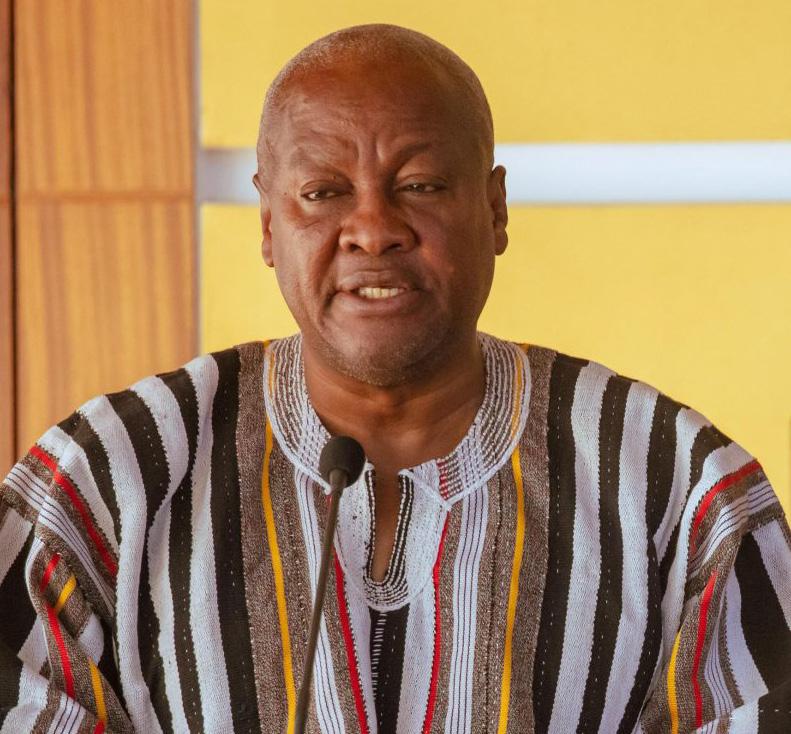
“There is no such thing as a slave.”
—
President John Dramani Mahama
network for Greater Minnesota Under the bill, CDFIs could draw from the pool and receive 100% reimbursement for qualifying loans made to eligible businesses — a structure designed to enable rapid, decentralized deployment through lenders that already have relationships in affected communities. Loan eligibility requires businesses to demonstrate a revenue loss greater than 30% compared to the same period in the prior year, with losses attributable to staffing shortages, reduced customer access, or other stability factors tied to federal enforcement activity. Businesses must have a permanent physical location in Minnesota and be owned by a permanent resident. Loans carry zero interest with potential for 100% principal forgiveness after five years. Loan tiers are determined by business size:



















By
It was June 16, 2020. The city of Minneapolis was still burning — not from riots, but from grief. Three weeks had passed since the murder of George Floyd two miles away on Chicago Avenue, and the question echoing through every government briefing room, every community meeting, every barbershop on the North Side was the same:
What are you going to do for us?
Into that moment
stepped Al Bangoura, Superin-
tendent of the Minneapolis Park and Recreation Board, speaking before Governor Tim Walz's regular COVID-19 briefing update. His ask was specific: state bonding dollars for North Commons Park, the 55-year-old recreation center at 1801 James Avenue North that had served as the beating heart of the North Side for generations. His argument was larger.
North Side kids, Bangoura told the Governor, deserved to play in facilities as good as the suburbs. That had never been guaranteed before. It was time for the state to guarantee it now.
A neighborhood built on promises unkept North Commons Park has stood at the corner of 18th and James since 1907, when the North Side Commercial Club sug-
gested the name. For more than a century it has been the place where North Side families come to cool off in the summer, where coaches become surrogate fathers to teenagers adrift, where seniors find the same benches they've been sitting on for fifty years.
The community it serves is one of Minneapolis's most historically disinvested. North Minneapolis has carried the scars of redlining, urban renewal, highway construction, and decades of municipal neglect — a pattern that research from the University of Minnesota's Center for Urban and Regional Affairs has documented in detail, describing how the neighborhood was systematically hollowed out as investment followed white families to the suburbs after World War II.
The park's own infrastructure told the same story.
The recreation center, built in 1971, held a gym barely large enough for a regulation basketball court. The water park was aging. The facilities served more than 32,000 residents a year — including one of the highest concentrations of young people anywhere in the state — with a building that hadn't seen serious capital investment in decades.
"The master plan for North Commons is specifically targeted to benefit youth of the north side, an area with economic challenges and a high population of people of color. Improvements at North Commons will specifically help address racial disparities in health outcomes for youth."
— Minneapolis Park and Recreation Board capital
What would it look like if healing extended beyond the doctor's office? For the African American Leadership Forum, that is not a rhetorical question. It is a design brief.
ALF is building what it calls Black Wellness Pathways — a community-rooted framework for health equity that refuses to center the story of Black illness, and instead draws on the knowledge, wisdom, and talent already present in Minnesota's Black communities. At the heart of that work sits a new kind of leadership role — and the woman filling it has spent more than two decades making the case that medicine's deepest problems are not clinical. They are ethical, structural, and historical.
An ethicist, sociologist, institutional leader, entrepreneur, and scholar, Dr. Nneka Sederstrom steps into her role as AALF's Afrofuturist-in-Residence.
Afrofuturism, as a cultural and intellectual tradition, holds that Black communities are not merely inheritors of systemic inequity but active


architects of the futures they deserve. Applied to public health, it asks: what does care look like when it is designed by and for Black people, in full, drawing on the full depth of what Black communities know and hold?
For Dr. Sederstrom, this is not an abstract provocation. It is the logical extension of a career spent refusing to accept that the problems of medicine are too embedded to change. Her future ambitions include developing a scalable healthcare model that rebuilds trust between patients and providers nationwide — a blueprint for restoring faith in medical institutions while ensuring equita-
ble access to care.
Her talks challenge the status quo and leave listeners with one clear call to action: "Know a little better, so you can do a little better."
At AALF, that call is becoming a framework — and the framework is becoming infrastructure.
Nneka Sederstrom thought of becoming a doctor at a young age, but she ultimately took a different path and shifted her focus after being introduced to clinical ethics, a field that more closely aligned with how she wanted to help others. Treating symptoms was not enough. She sought to address
the human questions underpinning medical decisions.
That pivot set the course for one of the most distinctive careers in American healthcare ethics.
Originally from Florence, Alabama, Dr. Sederstrom received her BA in Philosophy from George Washington University in 2001, began her career as a volunteer at the Center for Ethics at MedStar Washington Hospital Center that same summer, and went on to earn her MA in Philosophy in 2003. Her doctoral studies at Howard University focused on Medical Sociology and Race, Class, and Gender Inequalities — a grounding that fused the rigors of clinical ethics with the analytical tools of social science. She also holds a Master of Public Health in Global Health Management from George Washington University. She is a history maker: earlier in her career, she became the youngest director and
New bus lines, and water grants across Twin Cities region
The Metropolitan Council is moving on several fronts affecting communities across the seven-county Twin Cities metro, from leadership changes at Metro Transit Police to new investments in water conservation and public transit expansion.
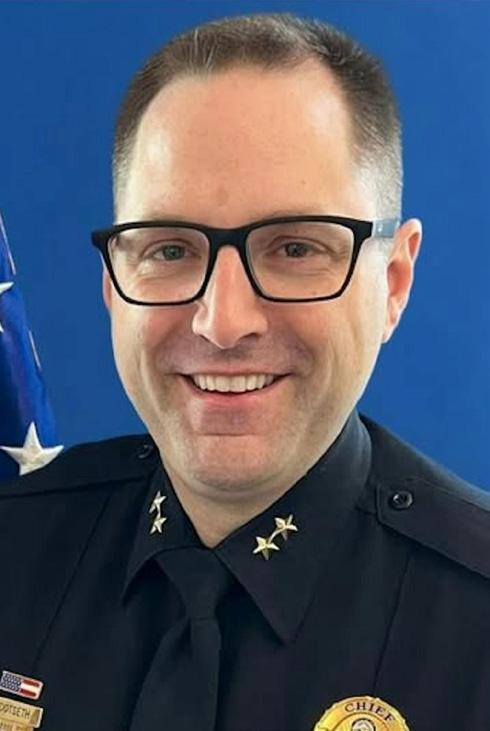
Following a national search, the Met Council has appointed Joe Dotseth as permanent chief of the Metro Transit Police Department. Dotseth had been serving in an interim capacity since fall 2024. The appointment signals a commitment to stability within the department as transit safety remains a priority for riders across the region. According to new data released by the department, serious crimes such as assault on the METRO Green Line corridor declined 14 percent from 2024 to 2025 — continuing a two-year downward
and
Operation Metro Surge didn’t hit Minnesota evenly — it targeted immigrant communities of color. Now a $100 million state loan bill is their best hope for recovery, if lawmakers will let it move.
SAINT PAUL — The businesses that line Lake Street in Minneapolis, the Hmong-owned shops along University Avenue in St. Paul, the Somali grocery stores and Latino restaurants and East African-owned services scattered across the Twin Cities metro — these were not incidental casualties of Operation Metro Surge. They were its ground zero. When roughly 3,000 federal immigration agents flooded Minnesota starting in December 2025, the communities that bore the brunt were overwhelmingly communities of color. Immigrant employees stopped coming to work. Immigrant customers stopped leav-
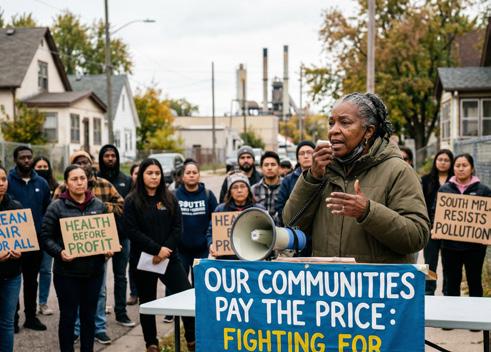
hood economic life went still. On Lake Street alone, losses hit an estimated $46 million between December 2025 and January 2026. At least half of immigrant-owned businesses temporarily closed. The total damage
From best SUVs to nonstick pans, the independent testing giant says its 2026 findings give shoppers a rare edge in a cluttered marketplace
Consumer Reports is doubling down on its core mission this season, publishing a sweeping new set of ratings across product categories that span the garage, the living room, and the kitchen — and the results offer some clear winners for shoppers who know where to look.

The nonprofit’s latest SUV rankings, built on a composite score blending road-test performance, owner satisfaction, predicted reliability, and safety data, now includes a curated list of ten models the organization says represent the best available options for buyers right now. The rankings reflect Consumer Reports’ long-standing methodology of combining its own engineering tests with real-world data gathered from


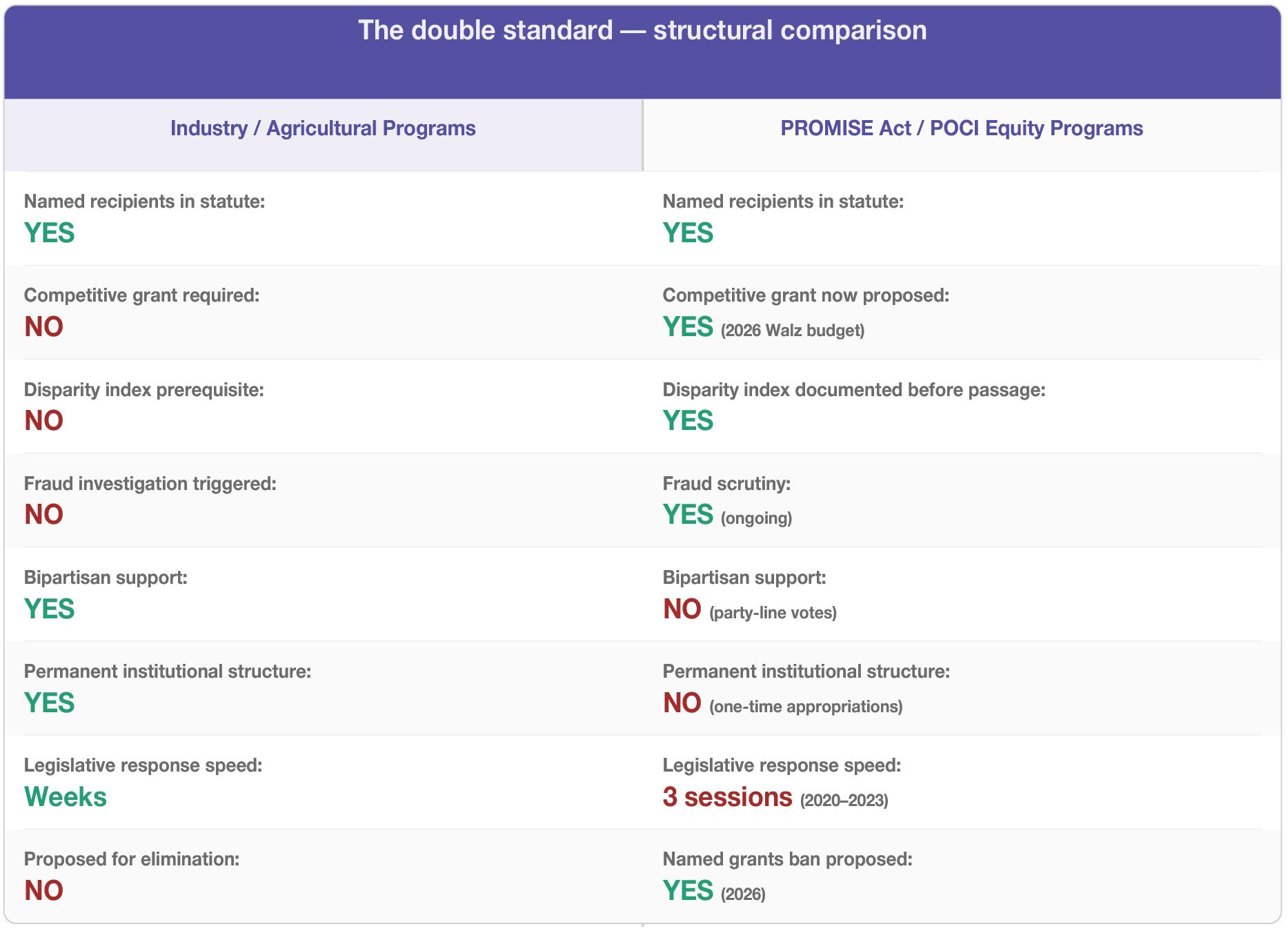
For a century, the Minnesota Legislature delivered named, targeted, legislatively mandated economic relief to white-majority industries with no fraud scrutiny, no competitive grant requirements, and no disparity index prerequisites. The documentation is extensive. The double standard is now explicit policy.
The year was 1983. Minnesota’s farm economy was collapsing. Land values had peaked and crashed, interest rates had spiked, export markets had dried up, and thousands of farm families were facing foreclosure on operations that had been in their families for generations. The response from the Minnesota Legislature was immediate, specific, and structurally durable. Legislators passed an emergency moratorium on farm foreclosures. They created the Farm Advocate Program — a named, state-funded institution that dispatched 35 trained advocates to assist 550 farm families in its first six weeks, providing free financial counseling, legal assistance, and emotional support. No competitive grant process. No fraud investigation. No disparity index requirement. The legislature simply identified a community in crisis, named the institutions that would deliver relief, and appropriated the money.
That model — immediate response, named delivery institutions, durable appropriation, no additional bureaucratic hurdles — has governed Minnesota’s approach to industry and community crisis relief for more than a century. It is the model used for drought relief, for ethanol subsidies, for Iron Range mining unemployment extensions, for nursing home stabilization, for COVID small business aid. It is, in short, the model that built the economic infrastructure of white Minnesota. It is also, in the 2026 legislative session, the model that the Walz administration is proposing to ban — specifically for POCI communities.
The ethanol case: $93 million to profitable companies, no fraud referral
The most damning single data point in Minnesota’s history of racially disparate economic policy is not a discriminatory law. It is an auditor’s report. In 2009, the Minnesota Office of the Legislative Auditor completed a comprehensive review of the state’s ethanol producer payment program. The auditor’s finding was unambiguous: over the five-year period under review, the state had paid $93 million in subsidies to ethanol companies that earned $619 million in profits during that same period. The auditor concluded that “maintaining these payments may have little effect on future ethanol production” and recommended phase-out. What happened next is the story. There was no con-
gressional fraud hearing. There was no proposal to restructure how the ethanol industry received state support, requiring it to compete in an open grant process against other biofuel producers. There was no proposal to ban “legislatively named” ethanol payment recipients. The agriculture commissioner wrote a letter disagreeing with the recommendation. The program was quietly wound down by 2012, its goals having been achieved: Minnesota had built a billion-gallon-per-year ethanol industry from scratch using state capital. No one went to prison. No one faced a fraud investigation. No one proposed eliminating the Taconite Economic Development Fund or the Farm Advocate Program. Now compare that treatment to the PROMISE Act. Passed in 2023 after three
legislative sessions — having been introduced in 2020 in the immediate aftermath of George Floyd’s murder and failing twice before finally becoming law — the PROMISE Act directs $103 million through named partner organizations to small businesses in communities documented to have been harmed by “structural racial discrimination, civil unrest, lack of access to capital.” The program uses named delivery partners. It does not require a competitive grant process. It was designed explicitly to mirror the structure of every successful industry relief program in Minnesota history.
The Iron Range: “For Generations, We Have Done This” In 2016, the Legislature approved a 26-week unemploy-
“The producer payment program paid $93 million to companies earning $619 million in profits. Maintaining these payments may have little effect on future ethanol production.”
— Minnesota Office of the Legislative Auditor, 2009
ment benefit extension for laidoff Iron Range miners at a cost of $29 million, with a provision that the extension would not be factored into future unemployment insurance tax rates for the mining companies. In 2023, the Legislature fast-tracked a $10.27 million unemployment extension for Northshore Mining workers, passing it 56–10 in the Senate. In 2025, after Cleveland-Cliffs announced layoffs at Minorca Mine and Hibbing Taconite affecting nearly 600 workers, a bill titled the “Minnesota Miners Relief Act” was introduced within days.
“For generations.”
That phrase is the tell. It describes not just the Iron Range but the entire history of targeted state economic support for white-majority industries. The question that Black Minnesotans must ask — loudly and publicly and without apology — is why that same logic does not extend to communities harmed by a century of deliberate exclusion from those same programs.
The named grants prohibition: policy as weapon
The Walz 2026 supplemental budget’s proposal to prohibit “legislatively named grants” has been presented in the lan-
guage of accountability and anti-fraud. It is worth examining what it would actually do. The PROMISE Act works precisely because it names MEDA, NDC, and the Initiative Foundations as the delivery partners — organizations chosen because they have deep trust relationships with the communities they serve, established lending infrastructure, cultural competency, and the operational capacity to get money to small business owners historically excluded from both commercial credit and government grant programs.
The Taconite Economic Development Fund is a legislatively named fund delivering per-ton tax rebates to specific, named mining companies under Minnesota Statutes Section 298.227. No one is proposing to ban it. The Farm Advocate Program is a named program. No one is proposing to ban it. The Iron Range Resources and Rehabilitation Board is a named institution. No one is proposing to ban it. The proposal to ban legislatively named grants applies, in practice, only to programs that have POCI communities as their primary beneficiaries. That is not accountability. That is policy as a weapon.
to Minneapolis was pegged at more than $203 million. Across the Twin Cities metro, an independent economic analysis estimated $106 million in lost wages — borne most heavily by low-wage workers of color who could least afford it.
SF 4535, introduced March 16 by Sen. Bobby Joe Champion, is an attempt by the Minnesota Legislature to match the scale of that harm. The bill would establish a $100 million Minnesota Business Recovery Loan Program through DEED, targeting businesses that can document substantial revenue loss tied to the surge. A companion House bill, HF 4477, was introduced a day later.
A crisis with a color
The demographics of the damage are not incidental — they are the story. Operation Metro Surge was directed at immigrant
communities, and Minnesota’s immigrant communities are overwhelmingly communities of color: Somali, Hmong, Latino, East African, Karen, Vietnamese, and more. The businesses that lost 30%, 40%, 50% of their revenue overnight were not random. They were the enterprises built by families who came to Minnesota seeking stability and found themselves the targets of a federal enforcement campaign.
Henry Garnica, who owns CentroMex in East St. Paul, described what that looked like from inside his store: sales collapsed, hours were slashed, operations restructured around fear. “This proposed forgivable loan package would give businesses like mine breathing room,” he said. “For some of us, it could mean the difference between surviving and closing for good.”
The Lake Street Council estimated that at least half of immigrant-owned businesses along that corridor temporarily shuttered. The Lao
“For some of us, it could mean the difference between surviving and closing for good.”
East St. Paul
— Henry Garnica, owner, CentroMex,
Enrichment and Development Center’s own small business survey found businesses overwhelmed — after opening a recovery grant fund, they received 364 applications with collective needs totaling $4.48 million. That was before the state had committed a dollar.
Parallel but inadequate responses
Gov. Tim Walz moved first,
announcing $10 million in state forgivable loans in February — amounts ranging from $2,500 to $25,000, eligible for 50% forgiveness after a year. He acknowledged plainly that the figure was “a very small piece” of what full recovery requires. DEED Commissioner Matt Varilek put it more starkly: many Minnesota businesses, “especially small businesses, are facing economic hardships
that may prove insurmountable for some.”
Local governments have filled some of the gap.
The Minneapolis City Council voted unanimously to direct $7 million to a Small Business Resiliency Fund. The Minneapolis Foundation stood up a $4 million Economic Response Fund. Hennepin County opened its own recovery fund. But none of these amounts approach the scale of documented loss, and none reach businesses beyond their jurisdictions.
SF 4535’s $100 million statewide program would be the first response commensurate with the damage — and the first to explicitly recognize that what happened to these communities was a policy choice that demands a policy answer.
The political obstacle
The bill’s path is obstructed by the Minnesota House, where an even DFL-Republican split has given GOP leadership effective veto power over anything that
could be read as a rebuke of the Trump administration’s immigration enforcement. Republican leaders have said directly they will not support specific relief tied to Operation Metro Surge. That position asks communities of color — which did not choose to be targeted, which did not create the economic disruption, and which are now fighting for survival — to absorb losses that arose from a federal policy decision, without the state remedy that a $100 million loan program would provide.
The Legislature returns from Easter/Passover recess on April 7 with a May 18 deadline to complete its work. Whether SF 4535 moves — and whether the communities that need it most see relief before more businesses close for good — will define whether Minnesota’s commitment to its most diverse communities is more than ceremonial.
Beyond the disparity narrative:
Anthony Taylor’s response to two recent Insight News articles arrived with the kind of intellectual honesty that good journalism is supposed to invite. He is not disputing that Black Minnesotans face real structural disadvantages. He is asking whether the framework we most often use to describe those disadvantages is the right one — and whether it is actually pointing us toward power, or away from it.
Who is Anthony Taylor?
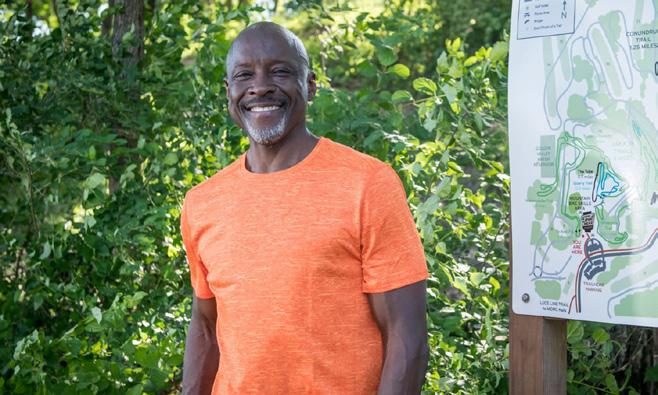
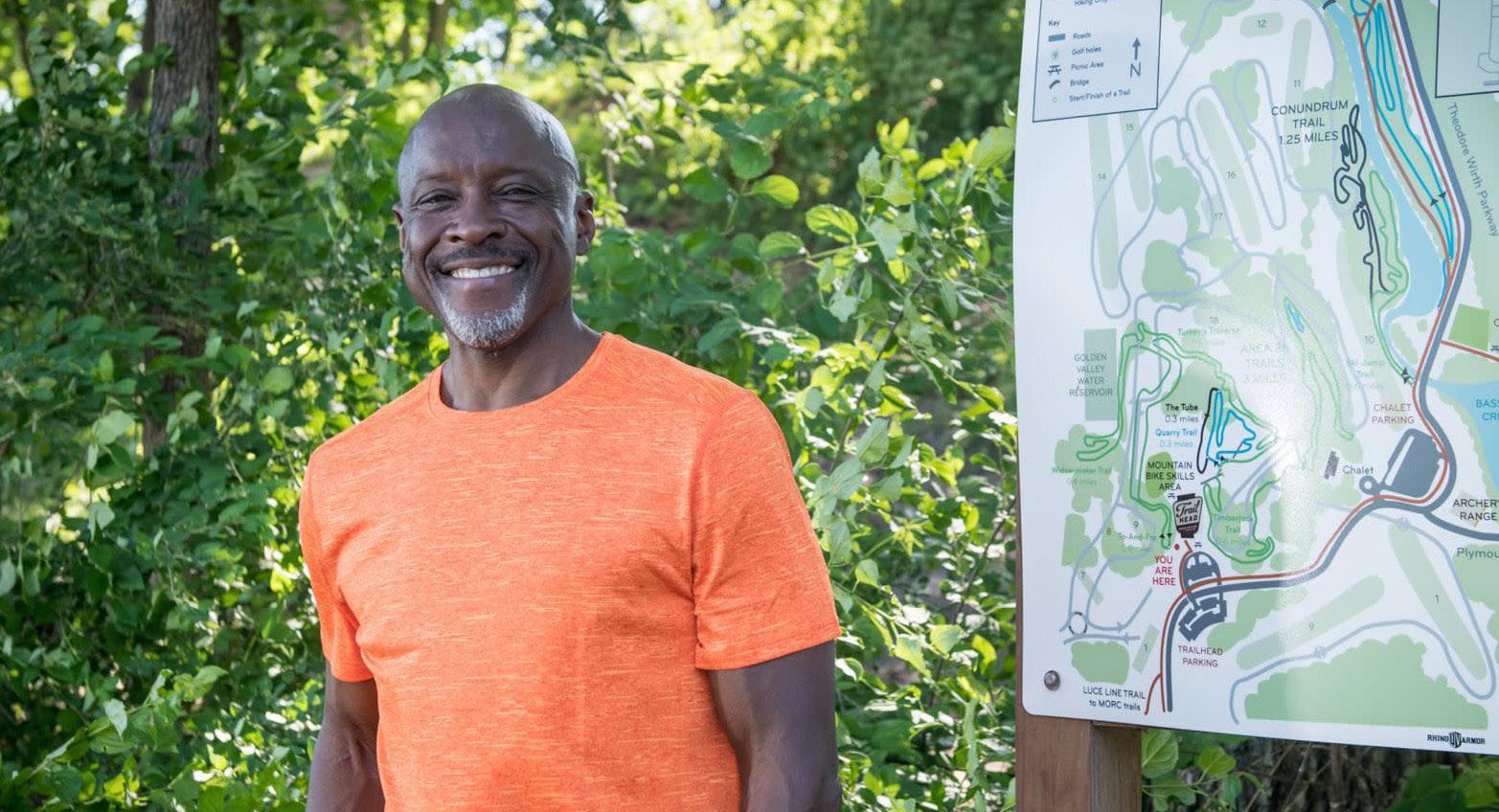
Anthony Taylor is one of Minneapolis’ most distinctive civic voices — a serial entrepreneur, community developer, and outdoor equity advocate whose career has moved between the for-profit and nonprofit worlds in ways that make his critique of that divide unusually credible.
A chemical engineering graduate who earned two executive MBAs, Taylor built early-career experience at Life Time Fitness and Aveda before founding his own ventures, including Spa One and Simply Organic Beauty. He went on to lead outdoor equity work at the Loppet Foundation, serve as president of equity outdoors for the YMCA of the North, and most recently launch RiverNorth Development Partners, a social impact development group working to build a business district in North Minneapolis anchored by equity-driven employers committed to skilled jobs for marginalized residents.
Taylor is perhaps best known publicly as the co-founder of the Major Taylor Bicycling Club of Minnesota, founded in 1999, and the creator of Melanin in Motion, a program that draws Minnesotans of color into outdoor sports through bike rides, snowboarding, and
trail activities. He has served on the Equity Advisory Board of the League of American Bicyclists, the board of the National Brotherhood of Skiers, and as a Minneapolis Parks and Open Space Commissioner. In 2023, he received the Reuel Harmon Award from the Parks & Trails Council of Minnesota.
What makes Taylor’s voice particularly valuable in this conversation is that he occupies precisely the intersection his feedback addresses: a leader who has worked in and around both the nonprofit sector and private enterprise, who has built community institutions from scratch, and who has spent decades watching talented Black Minnesotans cycle through the Twin Cities without putting down permanent roots. His observations are not theoretical. They are the product of watching the system from the inside.
His concerns break into four interlocking arguments, each grounded in observable data and each more uncomfortable than the last.
1. The numbers are smaller than the narrative suggests When Insight News — and most of Minnesota’s civic establishment — discusses historical Black life in this state, the frame is often one of a substantial community systematically excluded from the postwar prosperity that surrounded it. That is true. But Anthony is pointing at something the data confirms: the historical Black community in Minnesota was genuinely small.
In 1990, people of color represented just 6 percent of the state’s total population. The Black share was a fraction of that — likely 2 to 3 percent through most of the twentieth
century. Minnesota’s Black population reached 7 percent of the state only with the 2020 Census, driven primarily by African immigration that accelerated sharply in the 1990s and 2000s.
This is not an argument that historical harms were minor. Redlining, restrictive covenants, the destruction of the Rondo neighborhood by Interstate 94, exclusion from the GI Bill and FHA mortgage programs — these were real and their per-capita effects on intergenerational wealth were severe. But the scale of a small population’s historical dispossession is different from the scale of dispossession in Chicago, Detroit, or the Mississippi Delta. A narrative built for those larger contexts may not map cleanly onto Minnesota’s specific history.
The deeper complexity Taylor is circling: more than half of Black Minnesotans today have roots in Africa, not the American South. A community that is majority immigrant in origin has a different relationship to American structural racism than one whose history runs directly through slavery, Jim Crow, and the Great Migration. The disparity narrative is at its most powerful when describing that second lineage. It is less settled when describing a Somali family that arrived in 1998 or an Ethiopian entrepreneur who came in 2005.
“The disparity narrative is at its most powerful when describing one lineage. It is less settled when describing a Somali family that arrived in 1998 or an Ethiopian entrepreneur who came in 2005.”
2. We are losing the people we cannot afford to lose
The most recent comprehensive analysis available — a University of Minnesota study by economist Myles Shaver, corroborated by the Bush Foundation and Greater MSP’s BE MSP initiative — found that the Twin Cities ranks first among the 25 largest U.S. metro areas in overall professional talent retention, but fourteenth for retention of professionals of color. That gap — between a metro that is exceptional at keeping white professionals and mediocre at keeping everyone else — is one of the most damning data points in Minnesota’s economic literature. No subsequent research has reversed that finding; reporting as recent as early 2026 confirms the pattern holds.
Research by the Bush Foundation and Greater MSP found that professionals of color are 77 percent more likely
than their white counterparts to leave Minnesota, citing as their primary reason not wages, not weather, but the lack of cultural connectivity and relevance.
Recent reporting from the Minnesota Spokesman-Recorder found young Black Minnesotans choosing Atlanta, Houston, and Washington not because those cities lack problems but because they offer the cultural infrastructure, professional networks, and creative economies that Minnesota has not built.
Taylor’s framing is strategic rather than sympathetic: if the people with capital, credentials, networks, and civic energy leave permanently, what remains? The answer, historically, is a community defined increasingly by those with the fewest resources and the least ability to choose — people who are not failing but are operating with constrained options in systems that were not designed for them. That concentration of need, in turn, generates a disparity narrative, which attracts nonprofit and government intervention, which further concentrates leadership in sectors that do not generate wealth, which makes the community even less able to retain the next generation of earners. The cycle is self-reinforcing. It does not reflect a failure of character or ambition. It reflects the predictable outcome of resource scarcity compounded across generations. This is not the same as blaming those who leave. It is a systems analysis of what cumulative out-migration produces over decades.
3. The nonprofit sector has become a leadership trap Minnesota has one of the largest nonprofit sectors in the country relative to its population, employing nearly 15 percent of the workforce. In the Twin Cities, that sector is not peripheral — it is a central node of civic power. Foundations like McKnight, Bush, and Otto Bremer deploy hundreds of millions of dollars annually. Anchor nonprofits shape public policy, workforce development, housing, and health. A significant share of Black civic leadership in this state is concentrated within this sector — and that concentration carries real influence. Taylor’s challenge is not to dismiss that




influence, but to ask what it ultimately costs and what it cannot reach.
The political science literature has a name for a related dynamic: the Hollow Prize. Even where Black leaders gain genuine executive authority within nonprofits, they often operate inside organizations that were designed for and remain structurally controlled by white institutional power — whether those are nonprofit boards, philanthropic foundations, or legacy civic organizations. The title is real. The relationships and advocacy capacity are real. But the structural constraints are also real: resources remain scarce, mission is defined by others, and the leader is celebrated for the symbolism of their presence while navigating the daily weight of their position. Influence, in this context, is real but bounded — and its bounds are rarely visible from the outside.
National research on nonprofit leadership reinforces this: leaders of color in the sector report higher rates of frustration and burnout than their white counterparts at equivalent levels, face more scrutiny before hire, and are more likely to lead under-resourced “identity-based” organizations than well-capitalized mainstream ones. The sector’s diversity numbers have not meaningfully budged in fifteen years despite constant investment in leadership training — because, as researchers at the Building Movement Project concluded, the problem is not the readiness of leaders of color but the hiring practices of the boards that choose not to promote them.
Taylor’s more pointed observation is about opportunity cost. A generation of talented Black Minnesotans channeled into nonprofit executive roles is a generation not building private-sector equity, not accumulating assets that can be passed down, not developing the business and investment networks through which durable political influence actually flows.
“A generation of talented Black Minnesotans channeled into nonprofit executive roles is a generation not building private-sector equity, not developing the networks through which durable political influence actually flows.”
4. Political power is geography, and we don’t control any This is Taylor’s sharpest observation, and the one most directly confirmed by current events. Black Minnesotans are geographically concentrated in Minneapolis and St. Paul, primarily in north Minneapolis and the East Side. That concentration has produced genuine legislative power: a caucus of People of Color and Indigenous legislators that functioned as a governing bloc during the 2023–2024 DFL supermajority, producing the PROMISE Act, the African American Family Preservation Act, cannabis equity provisions, and $103 million in small business capital for communities harmed by structural discrimination and civil unrest. But that window has closed. The 2024 election produced a split legislature. Rep. Cedrick Frazier — perhaps the most consequential Black leg-
islator in Minnesota’s modern history — is leaving the House to run for Hennepin County Attorney. Insight News’ own recent analysis found that 22 Minnesota cities and counties received an average score of 29 out of 100 on the state’s inaugural Racial Equity Dividends Index. Not a passing grade. Geographic concentration in a few legislative districts is not the same as controlling institutions, county-level government, suburban seats, economic corridors, or the land and property that underlies all of it. The redistricting process has repeatedly diluted the political power of communities of color. Advocates fighting for more representative maps have seen courts defer to the status quo, citing a philosophy of minimal change that, by design, advantages whoever drew the previous decade’s lines. Taylor’s point is that electoral wins within a constrained geography are necessary but not sufficient. Political power at scale requires owning the places and institutions through which community life flows — and that ownership is inseparable from economic power, which brings us back to his argument about talent retention and for-profit sector development.
The question Taylor is really asking Taken together, these four observations amount to a coherent challenge to the dominant framework: Is the disparity narrative — as currently deployed in Minnesota civic life — a map for building Black power, or is it a narrative that centers documented harm in ways that attract government and philanthropic intervention while leaving the deeper questions of economic sovereignty, talent retention, and institutional control largely unaddressed?
This is not a comfortable question. It does not align neatly with progressive or conservative politics. It echoes strands of Black nationalist economics, the self-reliance tradition running from Booker T. Washington through Robert Woodson, and the community wealth-building frameworks now being developed by economists like Darrick Hamilton and William Darity. But it also sits uncomfortably alongside their research, which demonstrates rigorously that individual behavior change cannot close structural wealth gaps — that the problem requires systemic remedy, not just entrepreneurial hustle.
The tension Taylor is holding is real and productive: the structural causes of Black economic disadvantage in Minnesota are documented and demand structural remedy. And waiting exclusively for that remedy — while the talent leaves, while nonprofit leadership absorbs the most ambitious people, while geographic concentration limits political scale — is itself a strategic choice with compounding costs. Insight News is well-positioned to host this conversation. Not because there are easy answers, but because the questions Taylor is raising are exactly the ones a Black-owned newspaper in Minnesota is obligated to ask out loud.



















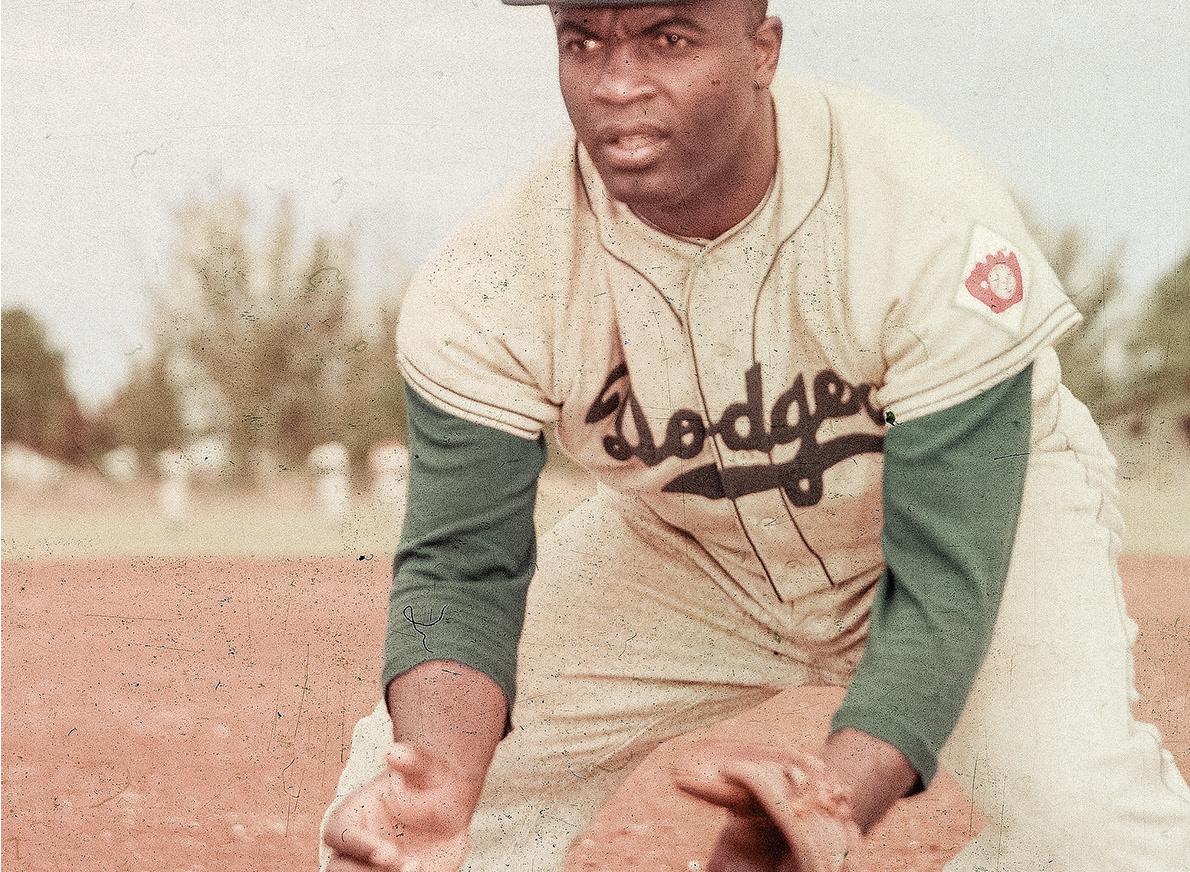



The moment that changed everything: June 16, 2020
When Bangoura took the microphone at Governor Walz's June 16th briefing, the political context could not have been more charged. The city was navigating simultaneous crises: a pandemic that had shut down recreation centers and youth programs across the park system, an economic recession, and an uprising over racial injustice that had placed Minneapolis at the center of the nation's reckoning with structural racism.
Bangoura spoke beginning at the 47:57 mark of the briefing. His message was direct: the 2020 Bonding Bill represented a once-in-a-generation opportunity to do something concrete for a community that had been promised investment and delivered disappointment. North Commons, he argued, was not a luxury — it was infrastructure. It was public health. It was violence prevention. It was equity made physical.
Governor Walz returned to North Commons in his closing remarks at 49:10, reinforcing the park's case to legislators watching across the state.
The Governor's public embrace of the project carried weight in St. Paul, where bonding priorities are negotiated in smokefilled rooms far from North Minneapolis.
"We opened up 13 recreation centers exclusively to provide school age childcare, which is so important. Obviously, I think our RecPlus program is phenomenal, but our staff really provide a place where they get snacks and lunch and love and friendship and activities. And that's what we do."
— Superintendent Al Bangoura, Minneapolis Parks Foundation interview, 2020
The strategy worked.
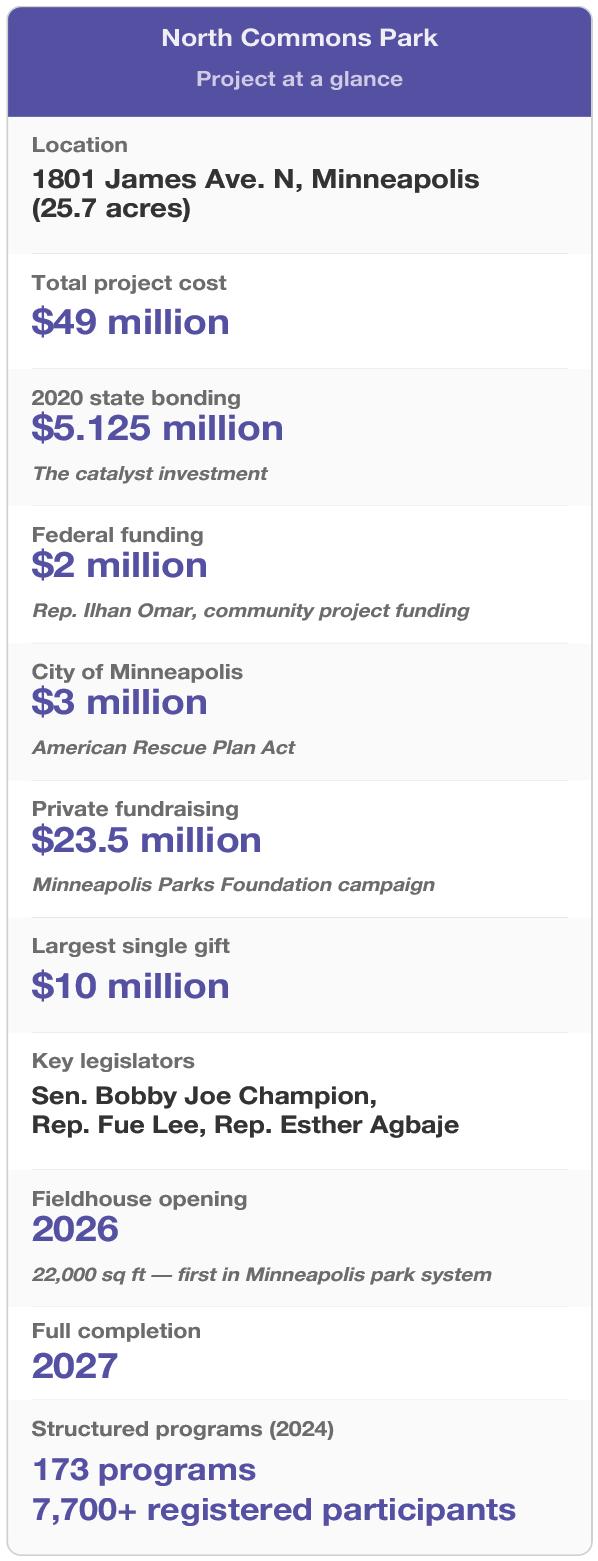
The state awarded the Minneapolis Park and Recreation Board $5.125 million in bonding in 2020 — the seed capital that would eventually grow into the largest neighborhood park investment in Minneapolis history. It was, as Bangoura later described it, a down payment on a promise.
Five years of fight: budget battles, scaling back, and a breakthrough The path from $5.125 million to groundbreaking was not a straight line.
With the initial bond-
ing secured, the Park Board launched community engagement in 2021, inviting Northsiders to imagine what their park could become. The vision that emerged was expansive: a regional youth recreation hub that could host tournaments and attract suburban teams to come north, rather than the other way around. A new recreation center. A rebuilt water park with slides. An indoor fieldhouse — the first in the Minneapolis park system — for basketball, volleyball, fitness and community events.
The price tag grew with the ambition. Initial estimates of $20 million climbed to $35 million and then to $49 million as construction costs surged and the community pushed for more. The Park Board ranked North Commons as its number-one state bonding priority for multiple consecutive legislative sessions. And then, in 2023, the Legislature delivered a painful blow: despite a historic state surplus and a year of record spending, North Commons received nothing.
State Sen. Bobby Joe Champion — who grew up in north Minneapolis and had helped secure the 2020 bonding — declined to sponsor additional funds that year, telling the Star Tribune that legislators expected park officials to settle on a preferred concept before committing more public dollars. "You can't just say you will build it and they will come," Champion said.
"For far too long, north Minneapolis has been forgotten by the state of Minnesota. But not no more."
— State Rep. Fue Lee (DFL), groundbreaking ceremony, July 2025
The Park Board scaled back. In October 2023, commissioners approved a $35 million concept — still the largest neighborhood park project in city history, but a compromise between community ambition and fiscal reality. "This is a significant moment in the history of our park system," Bangoura said at the time. "We're just excited to get moving on this project, put that shovel in the ground, cut that ribbon and really do an amazing thing for this community."
The $20 million gap left by the state's absence was filled by a remarkable convergence of public and private support. The city of Minneapolis committed $3 million in American Rescue Plan Act dollars.
U.S. Rep. Ilhan Omar secured $2 million in federal community project funding. And the Minneapolis Parks Foundation launched a capital campaign
ways for children of color, and launched initiatives to improve clinical outcomes through advanced screening protocols.
with a goal to raise $23.5 million (increased from the original $20 million goal), anchored by a $10 million donation — the largest single gift in the Foundation's history.
Breaking ground:
July 29, 2025
On a warm Tuesday morning in late July 2025, community members, elected officials, and parks staff gathered outside the North Commons recreation center for a groundbreaking ceremony that many had waited years — some, decades — to see.
"North Commons Park holds meaning and memories for generations of people," Bangoura told the crowd. "Today we celebrate years of work with the community to create an exciting vision that builds on the park's history to better serve future generations." He described what the new building would offer: five times more indoor athletic space than the current facility. A fieldhouse unlike anything else in the park system. A rebuilt water park where children could learn to swim — a matter of life and death, he noted, in a city where not every child gets that opportunity.
"Imagine the young people that will be in this space," Bangoura said. "And the adults doing whatever they can do — and not having to go somewhere else in the suburbs to experience that. They're going to be right here in our community."
Champion, now Senate President, reflected on what the park had meant to his own childhood: "It was important to me in my upbringing. So now I want to make sure that it becomes important for other young people and families." Rep. Fue Lee, who represents the district, was more blunt about what the investment signified: "For far too long, north Minneapolis has been forgotten by the state of Minnesota. But not no more."
Rep. Ilhan Omar told the gathering that the renovation would allow North Commons to serve even more people. "Imagine the kind of programming an expanded North Commons can offer," she said. "The potential is limitless." Omar submitted a recognition of the groundbreaking to the Congressional Record — a gesture she said would preserve the moment "in the Library of Congress for generations to come."
Jocelyn Hale, Interim Executive Director of the Minneapolis Parks Foundation, put it simply: "This is more than a park project. It's an investment
in equity, community, and the future of North Minneapolis."
What gets built — and when The $49 million project will transform North Commons into what park officials describe as a Northside hub for arts, recreation, athletics and community life. When complete, expected in 2027, it will include: A new 22,000-squarefoot indoor fieldhouse — the first in the Minneapolis park system — with multiple courts, fitness rooms, an indoor track, and flexible event space for concerts, sports tournaments, science fairs and community gatherings. A fully rebuilt water park. A renovated and expanded community center for multigenerational use. Expanded outdoor gathering spaces.
The new fieldhouse and associated amenities are scheduled to open in late-2026 or early-2027. The renovated community center and water park are expected to follow in summer 2027. The community center will remain open through 2025 and into 2026 before closing for its own renovation.
As of March 2026, construction is approximately 35 percent complete. In 2024, the park ran 173 structured programs for more than 7,700 registered participants, along with hundreds more drop-in visitors — numbers that the expanded facility is designed to multiply.
"North Commons Park holds meaning and memories for generations of people. Today we celebrate years of work with the community to create an exciting vision that builds on the park's history to better serve future generations."
— Superintendent Al Bangoura, groundbreaking ceremony, July 2025
The arc from 2020 to today What Bangoura and Walz set in motion in June 2020 was more than a bonding request. It was a public declaration that North Minneapolis deserved what every suburban community takes for granted: a place for its children to play, compete, grow, and belong — without having to leave their own neighborhood to find it. The road from that briefing to the groundbreaking was longer and harder than anyone hoped. There were funding shortfalls, scaled-back ambitions, legislative disappointments and community debates about size, scope and who the park was really for. There were voices, like 25-year-old La'Taijah Powell at a 2023 community meeting, asking why so much
energy was going into future buildings when kids needed programming support right now.
Those tensions were never fully resolved — they rarely are in community development. But the construction underway at North Commons represents something rare in the history of North Minneapolis: a promise made by a superintendent at a governor's briefing, in the middle of a pandemic and an uprising, that the state actually kept.
"Funding for a transformational project like the North Commons Park effort takes significant leadership from both private philanthropists as well as public officials," Bangoura said. "We are working
with our elected officials as well as the Minneapolis Parks Foundation to raise the capital and programming dollars needed for this amazing public resource." For five generations, North Commons has been a gathering place, a cultural anchor, and a refuge. The question of 2020 — what are you going to do for us? — has now been answered in steel and concrete, in public dollars and private philanthropy, in a groundbreaking ceremony that drew members of Congress and senators who once played on these very courts. Construction continues through 2027. The park remains open.
the only Black person to lead a clinical ethics department. That department was the Center for Ethics at MedStar Washington Hospital Center in Washington, D.C., where she also led the Spiritual Care Department and founded and served as Executive Director of the Journal of Hospital Ethics.
The arc of Dr. Sederstrom's career traces a deliberate movement outward — from individual patient cases, to department leadership, to institutional transformation, to community-scale redesign.
She left MedStar in 2016 to join Children's Minnesota as Director of the Clinical Ethics Department, a role she held for nearly five years before joining the executive leadership team at Hennepin Healthcare System as Chief Health Equity Officer.
At Hennepin Healthcare — Minnesota's only safety-net hospital — she transformed her department into a dynamic team of over 150 professionals. She spearheaded programs building career path-
From 3
She also created the Talent Garden, a program that introduces youth from underrepresented populations to healthcare careers, and co-created Hennepin Healthcare's Compass program, which educates employees on systemic racism in medicine.
A central theme across every role has been dignity as infrastructure — not aspiration. Every initiative she leads ties to the goal of ensuring patients and their families feel respected, valued, and understood. It is a mission rooted in her belief that dignity should never be optional.
Dr. Sederstrom's intellectual output matches the scale of her institutional work. She has delivered more than 75 national and international presentations and authored over 40 peer-reviewed articles on clinical ethics, end-of-life care, and racial disparities in health. Her scholarly work has been cited more than a thousand times across the academic literature on health equity and clinical ethics.
Her published scholarship takes on questions that
the medical establishment has historically avoided. In peer-reviewed work co-authored with bioethicist Jada Wiggleton-Little, she argued that the crisis standards of care adopted by states during the COVID-19 pandemic were structurally racist — that a colorblind approach to "most lives saved" rendered whiteness invisible as a norm while compounding the documented burdens of Blackness in a medical system built around that norm. That argument — that neutrality in medicine is not neutral — runs through everything Dr. Sederstrom does. It is the thread connecting the philosopher who started her career asking human questions about medical decisions to the executive who now reshapes institutions from the inside. She holds fellowships in the American College of Chest Physicians and the American College of Critical Care Medicine, and has been honored as a Distinguished Educator and a Richard S. Irwin Master Lecturer. She is also an affiliate faculty member at the University of Minnesota Center for Bioethics.
Beyond her institutional roles, Dr. Sederstrom co-founded UzObi, Inc., a
enue in Minneapolis.
new lines — to be designated the
health technology company built around a conviction that patients' voices and values should be the axis around which all medical decision-making turns. UzObi provides ethically guided, values-based healthcare decision-making tools to patients through their providers, insurers, and hospital systems. Its Medical Blueprint framework ensures that a patient's voice remains at the forefront — particularly at the end of life, where decisions are most consequential and patient agency most easily overridden. Her participation in the Northwestern Mutual Black Founder Accelerator reflects the scope of her ambition: she is not only working within systems but building new ones alongside them. The Black Wellness Pathways concept, as articulated by AALF CEO Dara Beevas, rests on a deliberate inversion of conventional public health framing. Rather than mapping Black health through the lens of what is missing — the access gaps, the outcome differentials, the structural deficits — the framework asks what Black Minnesotans already possess and how those assets can be amplified, formalized, and made sustainable.
shape
Three pillars drive that work.
Community knowledge and wisdom. AALF's Design Sessions bring together community members and design specialists to co-create the policies and programs that a new health system would require. Participants shape outcomes rather than ratify them. The organization's Action Center extends that participation, giving Minnesotans a channel to share their own wellness stories, endorse the Black Agenda for Change, and advocate for policy transformation across the state.
Afrofuturist leadership. Dr. Sederstrom's residency is the connective tissue between the organization's vision and its capacity to operationalize that vision — to move from aspiration toward systems that function differently at scale.
Invested Black talent.
AALF is directing resources toward ensuring that Minnesota's wellness assets are accessible to all while simultaneously building a pipeline of innovative community health practices developed by Black practitioners and community members. The Healers' Circle, a tiered community of supporters, formalizes that community of care and creates accountability through
annual recognition and regular program updates.
For a community that has long been the subject of health equity reports rather than their authors, AALF's framework represents a meaningful shift in posture. North Minneapolis carries a disproportionate share of Minnesota's documented health inequities. It also carries generations of knowledge, networks of mutual care, and a cultural vitality that formal health systems rarely know how to count. The Black Wellness Pathways approach treats those intangible assets as infrastructure. Dr. Sederstrom's appointment as Afrofuturist-in-Residence — grounded in decades of scholarship, institutional leadership, and community-centered innovation — is a signal that AALF intends to meet that challenge with full intellectual and strategic force.
The future of wellness in North Minneapolis is being designed, right now, by the people who live here. And for the first time, the organization anchoring that work has someone in residence whose entire career has been preparation for exactly this moment.
and trail naming In a move being watched by equity advocates across the region, the Native-led nonprofit Wakan Tipi Awanyankapi is leading a collaboration with the Met Council, the Minneapolis Park Board, and the City of Saint Paul to develop a toolkit for how regional park agencies approach the naming and renaming of parks and trails. The effort centers the perspectives of American Indian elders and community members — voices historically excluded from such decisions. State of the Region set for May 21 in Burnsville Met Council Chair Robin Hutcheson will host the rescheduled 2026 State of the Region event on Thursday, May 21, in Burnsville. The program will feature a conversation with Burnsville Mayor Elizabeth Kautz on regional resilience, along with panel discussions focused on clean water and local comprehensive planning. Registration is open at metrocouncil.org. Wellness From 3

With 67 Democrats and 67 Republicans sharing the Minnesota House floor, the South Metro lawmaker is pressing a multi-front agenda — from road improvements and anti-fraud reform to kindergarten readiness and foster child equity.
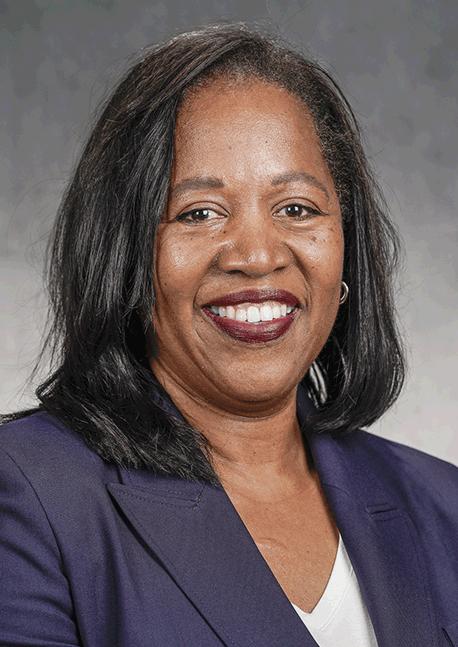
Minnesota State Representative Mary Frances Clardy, a Democrat representing District 53A
— encompassing Inver Grove Heights, West Saint Paul, Mendota Heights, Lilydale, and Sunfish Lake — is approaching the midpoint of the 2026 legislative session with a roster of bills targeting housing, child welfare, transportation safety, and early education.
Among the session's earliest bipartisan victories, Clardy helped pass legislation directing $9 million to Minnesota's supportive housing providers, organizations that absorbed financial pressure following reductions in federal funding. The measure required broad Republican support to advance in a chamber split precisely down party lines.
"With 67 Democrats and 67 Republicans in the House, all bills that advance to a full House vote must have bipartisan backing," Clardy noted in a communication to constituents, underscoring the chamber's unusually constrained legislative dynamics this session.
"Housing and the
lack thereof impacts our children's ability to grow, learn, and thrive."
— Rep. Mary Frances Clardy, District 53A Clardy, a retired elementary school teacher, framed the housing investment in personal terms. She cited Minnesota's uninsured rate climbing to a six-year high, average gas prices rising more than 80 cents within a single month, and an estimated $160 billion in federal tariffs affecting Minnesota residents as compounding pressures demanding state-level intervention.
Road work long in the making On the infrastructure front, Clardy announced that construction improvements to a one-mile stretch of 117th Street in Inver Grove Heights are expected to begin soon — the realization of legislation she authored in 2023. The project aims to bolster east-west connectivity in the corridor while adding pedestrian and bicycle infrastructure tying into the Mississippi River Trail.
The project has been
years in the planning. Its eventual groundbreaking represents one of the more concrete deliverables Clardy can point to from her tenure, bridging mobility needs with recreational access in one of the district's key thoroughfares.
Anti-fraud negotiations continue
One of the session's more contentious ongoing negotiations involves a statewide anti-fraud legislative package. The House, Senate, and Governor's office have each released separate proposals, with broad agreement that fraud impacting vulnerable Minnesotans is unacceptable — but diverging philosophies on how aggressively to penalize offenders versus invest in prevention.
A state Office of Inspector General has emerged as a shared priority across all three branches of the process, though differences persist over whether the legislation should emphasize deterrence or punishment. The legislative deadline to reconcile competing proposals and pass a unified bill is May 18.
Legislation Rep. Clardy is authoring — 2026 session
Foster Youth Enrichment Access — Ensures foster parents have tools to secure before- and after-school program slots for children in their care, addressing disproportionate exclusion from limited-enrollment programs.
Kindergarten Readiness Assessments — Establishes early education entry evaluations to identify learning gaps before children enter the classroom, enabling targeted early intervention.
Bicycle Traffic Signal Safety — Requires cyclists to stop at solid yellow traffic signals before entering intersections or crosswalks; inspired by a near-fatal collision involving a child-carrying bicycle trailer in the district.
Focus on children and early learning
Two of Clardy's authored bills this session address Minnesota's youngest residents. One targets access disparities in school enrichment programming for foster children — a population that, according to Clardy, is disproportionately shut out of before- and after-school slots due to limited availability. Her bill would equip foster parents with proactive tools to compete for enrollment.
A companion measure would institute kindergarten readiness assessments as children enter early education programs, creating a standardized mechanism to flag developmental gaps before formal schooling begins. Clardy has framed early intervention as a cost-effective strategy for longterm academic success.
Bicycle safety measure advances
A third bill authored by Clardy received its first hearing in the House Transportation Committee this session. The legislation would require bicyclists to come to a full stop at solid yellow traffic signals prior to entering an intersection or crosswalk — a narrowly targeted rule change
House DFL author faces Republican opposition on multiple fronts, but scores victory on domestic violence gun restrictions
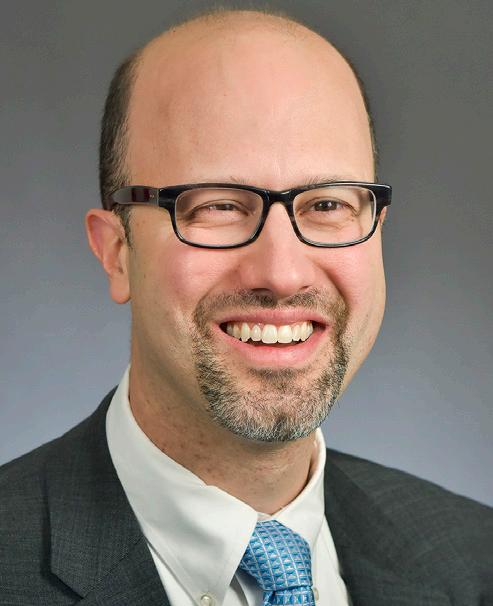
ST. PAUL — As the Minnesota Legislature reached an interim deadline and paused for a break week, state Rep. Dave Pinto (DFL–St. Paul) reported a mix of hard-fought progress and continued Republican roadblocks on issues ranging from gun safety to immigration rights to household affordability. Pinto, who represents House District 64B and cochairs the Workforce, Labor & Economic Development Finance & Policy Committee, outlined the session's developments in a constituent update — with the promise of more direct conversation to come.
Town hall set for April 1 Pinto, alongside Senate Majority Leader Erin Murphy and Rep. Meg Luger-Nikolai, will host a District 64 Town Hall on Wednesday, April 1, from 6:00 to 7:30 p.m. The event is free and open to all district residents. Constituents are encouraged to RSVP; the location will be provided before the event.
Ghost guns and gun violence legislation
Among the session's most contentious battles has been Pinto's push to restore Minnesota's ban on so-called "ghost guns" — untraceable firearms that can be 3D-printed and assembled from parts purchased online, bypassing background checks and serial number requirements. The ban had been fully in place until a court ruling last August struck it down.
Working in partnership with Attorney General Keith Ellison, Pinto authored legislation to reinstate the prohibition. The House Public Safety Committee heard the bill — but Republicans voted to block it. A separate bill authored by Pinto to restore a ban on "binary triggers," devices that dramatically increase a weapon's rate of fire, was similarly blocked.
Bills to join other states in banning assault weapons and high-capacity magazines were heard in committee and brought to the House floor,
where they were again defeated along party lines.
"These guns are untraceable because they lack serial numbers and can sidestep background checks." — Rep. Dave Pinto
One area where Pinto found bipartisan support: the Public Safety Committee approved a set of recommendations from a task force Pinto authored years ago examining how to keep guns out of the hands of domestic abusers. Among the approved proposals was a bill clarifying the state's ban on gun possession for individuals convicted of domestic violence — a measure that builds on Pinto's background as a former prosecutor.
Responding to Operation Metro Surge
House DFL members, including Pinto, have introduced multiple bills in response to federal immigration enforcement operations — referred to by the Trump administration as Operation Metro Surge — that have targeted
"Through firsthand accounts, the council will ensure that the experiences of the people of Minnesota are preserved and heard."
— Rep. Dave Pinto
communities across Minnesota. Pinto has authored or supported legislation to limit circumstances under which law enforcement officers can wear masks during operations, to refocus local and state law enforcement on public safety rather than immigration enforcement, and to bar ICE agents from accessing public schools. All of these measures have been blocked by Republican votes, including during last week's House floor session. Still, Pinto pointed to an important executive action: Governor Tim Walz signed an executive order creating the Council on Recording the Truth of Operation Metro Surge and Operation PARRIS. The council is tasked
with gathering firsthand testimony and data to document the impact of the enforcement operations, make policy recommendations, and support long-term state recovery. Pinto was present for the signing.
"Through firsthand accounts, the council will ensure that the experiences of the people of Minnesota are preserved and heard," Pinto noted, encouraging Minnesotans with backgrounds in immigration, civil rights, education, and law enforcement to apply for council positions through the Minnesota Secretary of State's office.
Immigration rights resources
Pinto also directed constituents to two newly available resources. LawHelpMN has published an immigration legal help guide covering individual rights and links to legal assistance. The Ramsey County Attorney's Office has similarly produced a guide on rights when encountering immigration enforcement, including how to report violations by federal officers.
Affordability and economic security
Pinto and his House DFL colleagues have formally launched
with a local origin.
Clardy has cited a near-fatal collision in her district involving a bicycle trailer carrying children as the impetus for the proposal, positioning it as a straightforward safety measure in keeping with broader traffic law standards.
Child Tax Credit outreach Clardy is also amplifying awareness of Minnesota's Child Tax Credit ahead of the 2025 tax filing deadline, noting that the credit is not applied automatically. As of early 2026, more than 154,000 Minnesota tax returns had claimed the credit, benefiting upwards of 318,000 children statewide. The average credit is approximately $2,669 per qualifying family, and state projections suggest the program could reduce child poverty in Minnesota by as much as onethird.
Clardy has encouraged constituents to verify their eligibility, particularly as federal safety net programs face reductions that she argues shift financial responsibility onto state budgets and individual households.
Rep. Mary Frances Clardy · District 53A · rep.mary. frances.clardy@house.mn.gov · 651-296-3533 · Session ends May 18, 2026
what they describe as an affordability agenda, targeting several pressure points facing Minnesota families. The agenda includes efforts to hold insurance companies and pharmaceutical corporations accountable, expand mental health services, and move toward universal health coverage. Early childhood care and learning — a legislative priority for Pinto over many years — is also central to the package, along with measures to increase the supply of affordable housing, address rising grocery costs, lower energy bills, and protect consumers broadly. Pinto also flagged ongoing Republican attempts to dismantle the Paid Family & Medical Leave program, which launched January 1 of this year. A bill heard in committee this week would exempt employees of small businesses from the program. Pinto opposed the measure.
DFL lawmaker calls out GOP inaction on gun violence, Operation Metro Surge fallout, and school safety as first committee deadline passes
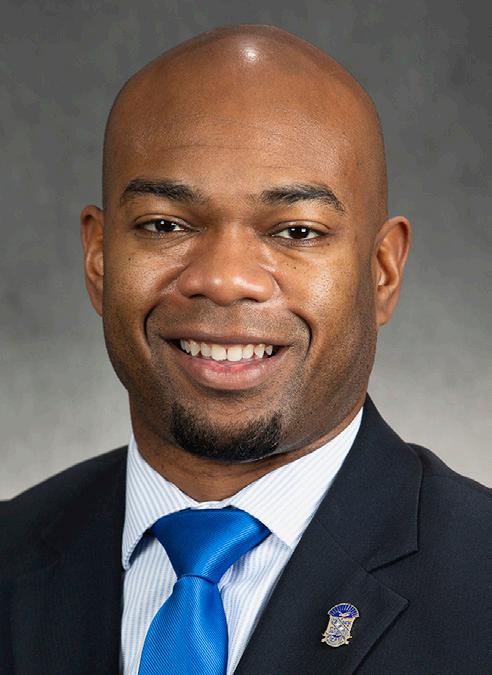
ST. PAUL — The Minnesota Legislature hit the halfway mark of the 2026 session this week as the first committee deadline passed, but for Rep. Cedrick Frazier (DFL-New Hope), the milestone brought more frustration than celebration. In his March 27 legislative newsletter, Frazier delivered a sharp assessment of Republican inaction on a range of issues — from the economic and human fallout of federal immigration enforcement operations to gun violence legislation that failed on the House floor.
Cesar Chavez Day repeal: A stand for survivors
violent political retribution of the Trump administration."
"We need to believe victims and survivors — no person or legacy is above accountability. I stand in solidarity with Dolores Huerta and all victims and survivors of sexual abuse."
The repeal, he said, is "an important step toward healing and justice."
Operation Metro Surge: Economic devastation, GOP silence Frazier returned repeatedly to the ongoing economic disruption caused by Operation Metro Surge and Operation PARRIS — federal immigration enforcement actions he described as an "occupation" of Minnesota. The City of Minneapolis has separately estimated that those operations cost local restaurants and small businesses $81 million in lost revenue, prompting
One of the week's more notable floor votes came early: the House unanimously repealed Cesar Chavez Day in Minnesota. Frazier credited leaders of the Latine POCI Caucus for driving the effort and framed the repeal in terms of survivor justice.
the City Council to approve a $7 million Small Business Resiliency Fund. Frazier argued that regardless of where Minnesotans stand on immigration policy, the economic harm is undeniable — and Republicans have refused to engage. "Republicans continue to keep their heads in the sand, refusing to face the reality we are living in," he wrote, adding that DFL members pleaded on the House floor for even one Republican to "abandon their partisan priorities and put Minnesotans first."
He also cited the human toll directly: the deaths of Renee Nicole Good, a Minneapolis motorist shot by an ICE agent in January, and Alex Pretti, a VA intensive care nurse killed by CBP officers later that month, along with thousands of injuries — all of which he attributed to what he called "the
ICE in schools: Education justice under attack As a self-described "devoted education justice advocate," Frazier said one of the most alarming dimensions of the federal operations was the targeting of Minnesota schools. He described ICE agents abducting parents at school bus stops, pepper-spraying teachers, and making violent arrests of minors — from elementary schools through college campuses. "Minnesotans are demanding accountability, yet Republicans choose the gun lobby over protecting children," he wrote.
Gun violence legislation: Personal pain, partisan wall DFL members also introduced legislation this week to ban high-capacity magazines and assault weapons. Frazier spoke on the House floor drawing on his own biography — growing
up on Chicago's South Side and losing his closest high school friend, Rashawn, to gun violence.
"Like many who have lost a loved one, I have turned my pain into purpose. One of the reasons I fight so hard for gun violence prevention is to ensure no one else has to experience the agony of losing someone they love."
The legislation failed. Republicans voted against every measure. Even the testimony of the parents of Harper Moyski — the 10-year-old killed in the August 2025 mass shooting at Annunciation Catholic Church — who came to the Capitol to share their story, did not move Republicans to act, Frazier said. "I wish I could have been proven wrong," he wrote. Earlier this year, Frazier published a column in the Star Tribune calling on lawmakers from both parties to prioritize responsibility over ideology in addressing gun violence. Looking ahead Despite the defeats this week, Frazier closed on a note of determination.
With 35 bills authored and more than 100 constituent meetings, District 34B lawmaker Xp Lee is bringing Brooklyn Park, Champlin, and Coon Rapids voices directly into the 2026 session
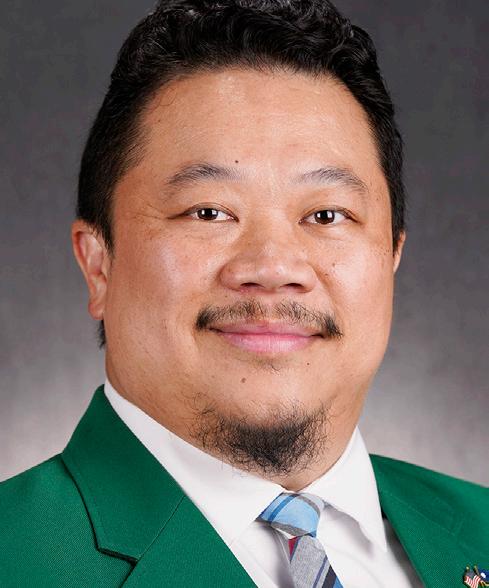
ST. PAUL — Halfway through the 2026 Minnesota legislative session, State Representative Xp Lee is moving at a pace that reflects both the urgency of the moment and the depth of his community ties. Lee, who represents District 34B — serving Brooklyn Park, Champlin, and Coon Rapids — has authored 35 pieces of legislation and logged more than 100 individual constituent meetings since the session opened. He describes that workload not as a burden but as the job's most meaningful dimension.
"My favorite part of serving in this body is meeting with you all and turning your stories into legislation," Lee wrote in a recent update to his district. That framing — constituent experiences as the raw material of policy — shapes how Lee approaches the floor, committee rooms, and the steady stream of neighbors who make their way to the Capitol.
"My favorite part of serving in this body is meeting with you all and turning your stories into legislation."
— Rep. Xp Lee
Rising uninsured rates demand action
One of the most pressing issues Lee is tracking is a newly released report showing that Minnesota's uninsured rate is climbing rapidly. The increase, he says, is a direct consequence of federal health care cuts colliding with an ongoing affordability crisis — a combination that threatens both individual Minnesotans and the financial stability of the health care system itself.
Lee pointed to Hennepin Healthcare — HCMC — as a window into the future if the trend is not reversed. Fewer insured patients means fewer people seeking preventive or timely care, which in turn pushes emergency and uncompensated costs onto safety-net institutions already operating under pressure. His legislative agenda includes measures aimed at holding the line on coverage access even as federal support contracts.
Child Tax Credit: don't leave money on the table Lee is also raising awareness about a financial lifeline that too many eligible families are missing. Minnesota's Child Tax Credit — one of the most impactful anti-poverty tools the DFL majority has defended — is not automatically applied to tax returns. Families must actively claim it. The numbers so far this filing season are encour-
aging: more than 154,000 tax returns have claimed the credit, benefiting more than 318,000 children statewide. The average credit is $2,669 per family. Analysts estimate the credit could reduce child poverty in Minnesota by as much as onethird — a dramatic result from a single policy tool. Lee is urging constituents still working on their 2025 returns to check their eligibility before the deadline. More than 318,000 Minnesota children have benefited from the Child Tax Credit so far this filing season — but families must claim it actively.
Honoring a solar champion Lee also cast a vote he called an honor: supporting legislation that renames the Community Solar Garden Program after Speaker Emerita Melissa Hortman. The bill passed the Minnesota House unanimously, recognizing Hortman's foundational role in building the state's clean
energy economy.
The community solar program Lee helped honor allows Minnesotans who cannot install rooftop panels — renters, residents of multi-family buildings, and others with limited options — to subscribe to shares of offsite solar arrays and receive credits on their utility bills. The renamed Melissa Hortman Community Solar Garden Program will carry that legacy forward.
Affordability as the session's central challenge Across all of his legislative work, Lee frames the session's central challenge as affordability. DFL members have rolled out a package of priorities aimed at reducing costs for Minnesotans in five core areas: health care, child care, housing, groceries, and energy. Lee sees these not as abstract policy categories but as the lived pressures his constituents in Brooklyn Park, Champlin, and Coon Rapids describe in those 100-plus meetings.
"In Minnesota, people should be able to afford a good life," Lee told constituents. "But too many Minnesotans are struggling just to get by." He noted that tariff-driven price increases and economic uncertainty have compounded local affordability pressures in ways that demand a legislative response. As session deadlines approach for moving legislation forward, Lee says he remains focused on the work — and on keeping the lines of communication open. Constituents can reach his office at rep.xp.lee@ house.mn.gov or by phone at 651-297-1927.
Sen. Sandy Pappas advances bills protecting taxpayers and empowering local governments as session midpoint arrives
ST. PAUL — The Minnesota Legislature passed the first committee deadline of the 2026 session this week, a procedural milestone that determines which policy bills have received enough positive hearings in both chambers to remain viable this year. For Sen. Sandy Pappas (DFL-St. Paul), midpoint arrived with two of her bills advancing and a larger Senate DFL agenda focused on protecting taxpayers from fraud and giving local governments new authority to secure public spaces.
Fraud crackdown: 'Any fraud against our state is unacceptable'
"Fraud
Prevention measures include increased audits and unannounced site visits, stronger standards for providers receiving public funds, and improved transparency in how the state tracks spending. On the accountability side, the package would establish a new crime of theft of public funds, permanently ban convicted fraudsters from state contracts, and expand fraud reporting through a Bureau of Criminal Apprehension tip line.
The package also creates a Consumer Financial Protection Bureau to combat scams that disproportionately harm seniors, people with disabilities, and families relying on care — and includes protections for whistleblowers who come forward with information about misuse of public money. "Fraud takes resources away from people who need them most and undermines trust." — Senate DFL statement on the anti-fraud package IT investment is also part of the picture. Lawmakers
The Senate DFL has made a sweeping anti-fraud package a centerpiece of the session, responding to high-profile cases in recent years that exposed vulnerabilities in how public dollars flow to service providers. The legislation targets four areas: stopping fraud before it starts, protecting Minnesotans who are harmed by it, holding fraudsters accountable, and modernizing the state systems that allow fraud to go undetected.
say fraud schemes have evolved faster than the state's tracking systems, and the package calls for urgent technology upgrades at county agencies and stronger coordination across state departments to detect suspicious activity earlier.
Pappas bills: Local authority and violence research
Two bills authored by Sen. Pappas cleared committee and are moving forward. The first, SF 2320, would allow local governments to prohibit or restrict possession of dangerous weapons, ammunition, or explosives in government-owned or leased buildings and on their land — something current state law does not permit. The measure passed both the Judiciary & Public Safety Committee and the State & Local Government Committee.
The second, SF 1580, would increase funding for the Violence Prevention Project Research Center at Hamline University, which produces nonpartisan research on gun violence to inform state policy decisions. That bill also advanced through
takes resources away from people who need them most and undermines trust."
— Senate DFL
committee.
"Together, these measures advance my commitment to reducing gun violence through both evidence-based research and empowering local communities to keep public spaces safe," Pappas said of the two bills.
Recording the truth of federal immigration enforcement
Gov. Tim Walz announced this session the creation of a Governor's Council to document the impact of Operation Metro Surge and Operation PARRIS — federal immigration enforcement operations that resulted in detentions, injuries, and deaths among Minnesotans. The council, which will include up to 15 members, will gather testimony, data, and firsthand accounts to build a public record and make recommendations to prevent future harm.
The council will part-
State legislation to fund local news internships could be a lifeline — but advocates say communities of color need more than a seat at the table
A bill heard Thursday in the Minnesota House Workforce, Labor, and Economic Development Finance and Policy Committee drew rare bipartisan praise — and reignited a deeper conversation about who gets to tell the story of Minnesota.
HF4072, sponsored by Rep. Julie Greene (DFL-Edina), would appropriate $500,000 from the state’s Workforce Development Fund in Fiscal Year 2027 to support paid internships at newspapers, television and radio stations, and digital outlets across Minnesota. The bill is modeled on the Minnesota News Media Institute’s internship program, which has placed roughly 1,000 young journalists since 2005. Supporters framed the legislation as an economic workforce issue — akin to state-backed pipelines in health care and agriculture. But for the Twin Cities’ robust ecosystem of ethnic and community media, the stakes are more existential.
By Graham Johnson
A landscape of determination and scarcity Minnesota is home to one of the most diverse ethnic media environments in the country. The Twin Cities hosts outlets serving the African American, Somali, Hmong, Latino, East African, Korean American, Filipino American, Vietnamese American, and other communities — a testament to the state’s status as a refugee resettlement hub and a destination for generations of immigrants. The Minneapolis Spokesman-Recorder, the state’s oldest Black-owned newspaper and one of the longest-standing family-owned papers in the country, anchors an African American press tradition that includes Insight News. Mshale, Minnesota’s longest-running newspaper for African immigrants, operates on a hybrid print-digital model. Somali-language radio stations reach the majority of an estimated 40,000 Somali speakers in the metro. Twin Cities Hmong Television, known as 3HBC,
has served the Hmong community since 2005. Yet these outlets share a common challenge: a persistent, structural resource gap that limits their ability to hire, retain, and develop professional staff. A March 2026 report on Minnesota’s ethnic media landscape described outlets that operate largely as volunteer units, where critical information sometimes takes an extra day or two to reach audiences — not from lack of commitment, but from lack of capacity.
What HF4072 could and couldn’t — do for ethnic outlets As written, HF4072 broadly defines eligible outlets to include newspapers, television stations, radio stations, and digital media — language that, on its face, includes ethnic and community-focused outlets. That inclusivity is meaningful but not guaranteed.
The bill would be administered through the Minnesota News Media Institute,
which has deep relationships with the state’s mainstream newspaper industry. Advocates for ethnic media have historically noted that such institutional pipelines tend to route talent toward dominant outlets, leaving community-based newsrooms — which often pay less, lack formal HR infrastructure, and operate outside traditional industry associations — sidelined from workforce development investments.
Separately, the Minnesota Humanities Center announced a Legacy Amendment-funded grant opportunity in early 2026 allowing ethnic media organizations to apply for up to $75,000 to create video content in languages other than English — a recognition of the specific needs of multilingual outlets. But that program and HF4072 are parallel tracks, not a coordinated strategy.
For HF4072 to truly strengthen media owned by and serving communities of color, advocates say the implementation details matter enormous-
ner with The Advocates for Human Rights to collect stories and hold public meetings. It has no law enforcement role and will not interfere with ongoing investigations. Minnesotans interested in serving on the council can apply through the Office of the Secretary of State.
The Senate DFL is separately pushing legislation aimed at protecting Minnesotans from what it describes as civil rights violations by federal immigration agents, including proposals to shield schools, hospitals, and courthouses from unauthorized raids, allow Minnesotans to sue in state court for federal rights violations, and require that law enforcement render aid to people they injure once any threat has been neutralized.
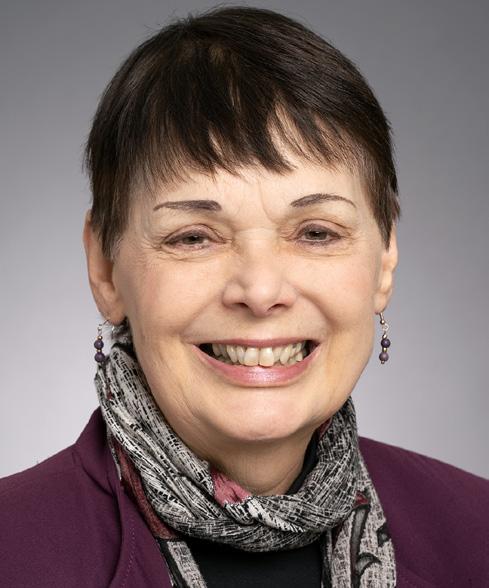
District news: West St. Paul development, animal welfare, conservation In district work, Pappas met with West Saint Paul officials about 150 Thompson Park, a new municipal development that will bring a community gathering space to the heart of the city. She also heard concerns from the Animal Humane Society regarding animal welfare at circuses operating in Saint Paul, and met with Conservation Grazing and Habitat Investment advocates about connecting state wildlife initiatives with the agriculture community. Labor and workforce discussions included meetings with AFSCME, which is pressing for budget protections amid federal funding cuts, and MAPE, which is advocating for a bonding bill to meet institutional and infrastructure needs, as well as policies supporting healthcare, retirement, and paid leave for public employees. Pappas also spoke at Muslim Women's Day at the Capitol with RISE Minnesota, which advocates for free speech protections, the STAR Act, and the Equal Rights Amendment.
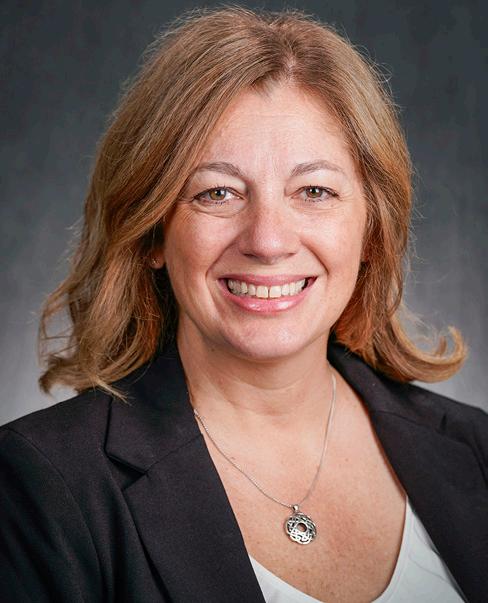
ly: whether ethnic outlets are specifically recruited as intern hosts, whether stipend levels reflect the economic realities of under-resourced newsrooms, and whether emerging multilingual journalists — who represent the demographic future of Minnesota — are centered in outreach.
Democracy — and language — in the balance
The city of Proctor’s council resolution supporting HF4072 warned that the decline of local journalism is not merely a business problem but a democracy problem — threatening informed citizenship and transparent governance. That framing resonates beyond outstate
“Our media may not be right there, ‘hot off the press.’ But it will be information we are able to gather within a day or two.”
— Yengyee Lor, host
Minnesota. For Minnesota’s nearly 500,000 foreign-born residents, ethnic media is often the primary conduit for information about local government, public health, schools, and civic life — in the language in which people think, dream, and make decisions. When those outlets lack trained staff, the democratic gap is not hypothetical. It is immediate.
HF4072 was laid over Thursday for possible inclusion in a larger budget measure. Whether it advances — and whether it does so with the equity provisions necessary to reach ethnic newsrooms — will signal whether Minnesota’s celebrated diversity is reflected not just in its communities, but in who gets to cover them.
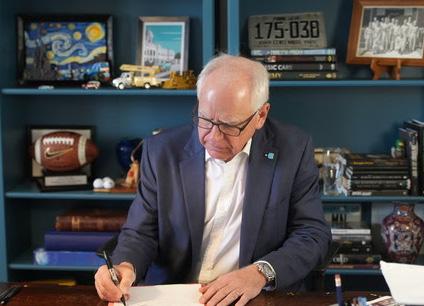
Bipartisan legislation addresses school bus safety, small business stability, housing support — and eliminates Cesar Chavez Day
ST. PAUL, MN — Governor
"These bills show what's possible when we set party aside and focus on solving problems together."
— Gov. Tim Walz
lems for Minnesota businesses in the growing cannabis market. The extension is designed as a bridge while the state builds up its own testing infrastructure.
Housing support
HF 3425 directs $9 million from the state's Strengthen Supportive Housing Program to recipients of the federal Continuum of Care Program, which funds permanent supportive housing across Minnesota. Walz's office described the measure as budget-neutral, drawing from an existing appropriation approved by the Legislature in 2023 rather than new spending.
some legislators sought to undo.
In conjunction with the repeal, Governor Walz declared March 31 as Farmworkers Day, framing the change as a reorientation toward broader recognition of agricultural workers rather than a rejection of the labor movement's legacy.
"We will continue to celebrate the farm labor movement and the many people throughout history who have contributed to the improvement of farm working conditions," Walz said. "I applaud the legislature for taking this swift action."
"These bills show what's possible when we set party aside and focus on solving problems together."
"These first bills set the tone for the session — making kids' mornings safer and allowing small businesses a little more stability," Walz said at the signing ceremony.
Tim Walz signed four bipartisan bills into law on Thursday, marking the first bill signings of the 2026 legislative session. The legislation spans a range of issues — from school bus safety and cannabis product testing to housing support and the elimination of an official state holiday honoring a farmworker rights icon. All four measures passed with broad bipartisan support in both chambers of the Minnesota Legislature.
School bus safety SF 3623 tightens school bus safety rules statewide, requiring drivers to stop at least 20 feet from any school bus displaying flashing red lights. The law also clarifies that drivers must remain stopped until the bus is no longer signaling — a gap in prior statute that had created ambiguity about when motorists could proceed. The bill passed
unanimously in both the House and Senate.
Cannabis testing flexibility for small businesses HF 3615 extends a provision allowing lower-potency hemp edible products to be tested at qualified out-of-state laboratories. The measure, which runs through May 31, 2027, addresses limited in-state testing capacity that has created backlogs and product availability prob-
Cesar Chavez Day eliminated; Farmworkers Day declared The most politically charged signing of the day was HF 4541, which repeals the state statute establishing Cesar Chavez Day in Minnesota. Chavez, the late co-founder of the United Farm Workers union, had been recognized with a Minnesota state holiday — a distinction that
The declaration drew immediate attention, as Cesar Chavez Day had been a symbolic milestone for Latino communities and labor advocates in Minnesota. The move came amid broader national debates about recognition of Hispanic heritage and the ongoing political targeting of diversity, equity, and inclusion programs at the federal level.
By Graham Johnson
A 2024 survey of K-12 teachers found they have higher levels of burnout compared to other working adults.
In Minnesota, about a third of teachers leave the profession within the first five years.
“I can remember professors telling our class that 30-50% of us would not reach that five-year mark. That was 30 years ago,” Rep. Josiah Hill (DFL-Stillwater) said.
A 2025 law provides $26 million this biennium “to support the development and implementation of the MTSS framework and the Collaborative Minnesota Partnerships to Advance Student Success (COMPASS) school improvement model.” Sponsored by Hill,
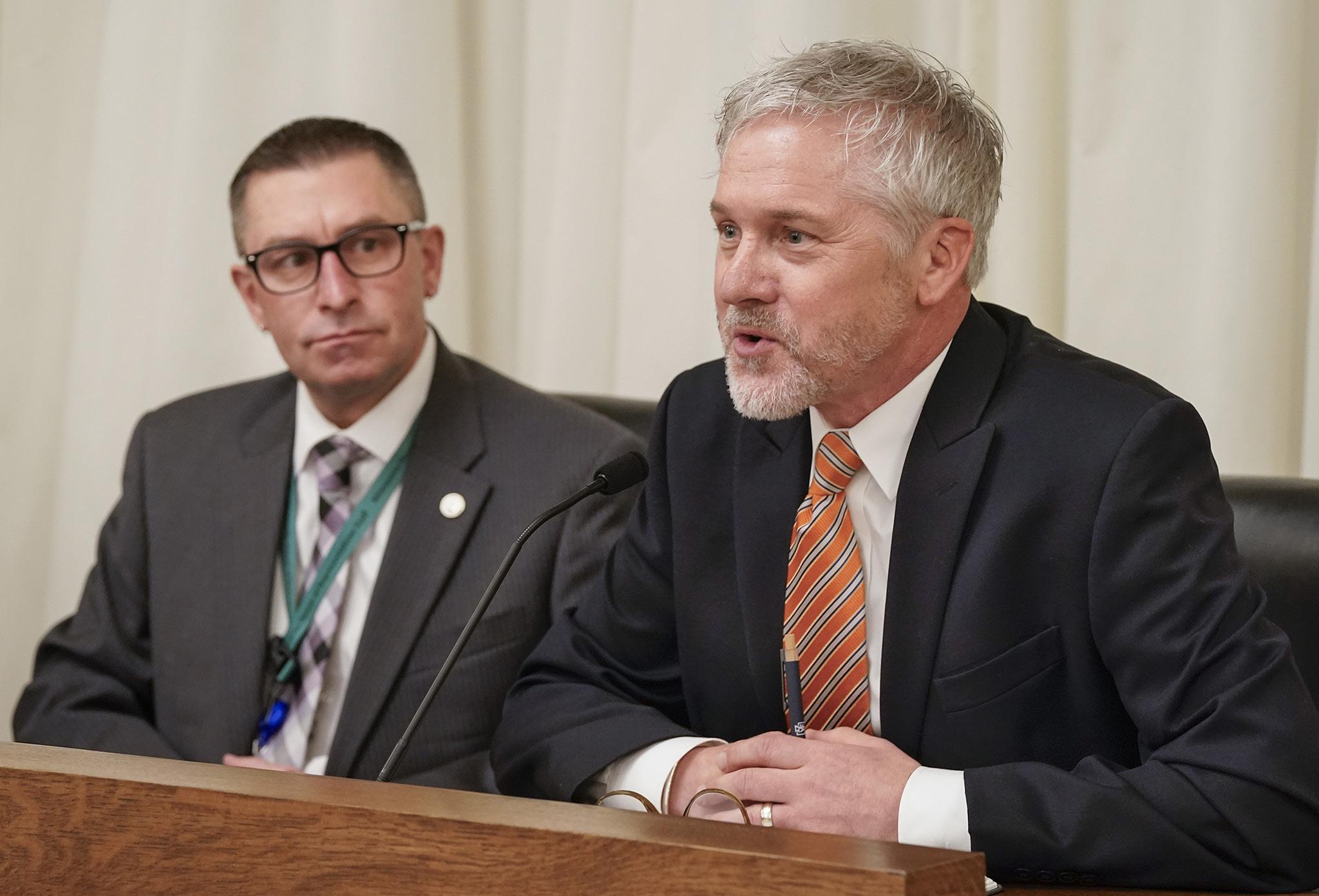
HF3930 would allocate $2 million more in Fiscal Year 2027
“to expand capacity at the Department of Education and the Minnesota service cooperatives for sustainable systems that strengthen teacher retention, workplace satisfaction, and educator well-being.”
This would be done by contracting with an entity to look at things like why burnout happens and how to raise educator voices in decision-making and resource allocation.
“Retention of those who get started in teaching is what this bill is all about,” Hill said.
The House Education Finance Committee laid the bill over Thursday for possible omnibus bill inclusion.
While the reasons teachers leave are diverse, many stem from the difficulty of working in schools rather than issues of low pay.
“Our members told us loud and clear that it was lack of workplace support, no supports for student mental health and demanding workloads that were leading them to leaving the profession,” said Justin Killian, education issues specialist at Education Minnesota. To retain teachers, schools should be focusing on the workplace factors of schools, like communication with administration and getting educators involved in decision making, said Nathan Eklund, founder and CEO of Vital Network.
Rep. Duane Quam (R-Byron) believes the focus should be on schools that are succeeding.
“There are some school districts that actually teachers are moving to after they’ve been teaching for a while, and frankly, we should start focusing on [them].”
By Graham Johnson
School was incredibly difficult for Kimberly Zitek.
“My dyslexia was never identified, and like many dyslexic students, I learned ways to hide my struggles and fell through the cracks of the school system,” she told the House Education Policy Committee Wednesday.
But when her daughter showed signs of dyslexia, and her struggles at school were dismissed, Zitek realized training on identifying and supporting students with dyslexia was still not widely available.
“Schools are now required to screen students for heuristics of dyslexia, but many educators are not trained on how to recognize these signs of what to do next, so families are left without answers, and students are left without support they need,” said Zitek, who serves on the board of directors at Decoding Dyslexia Minnesota.
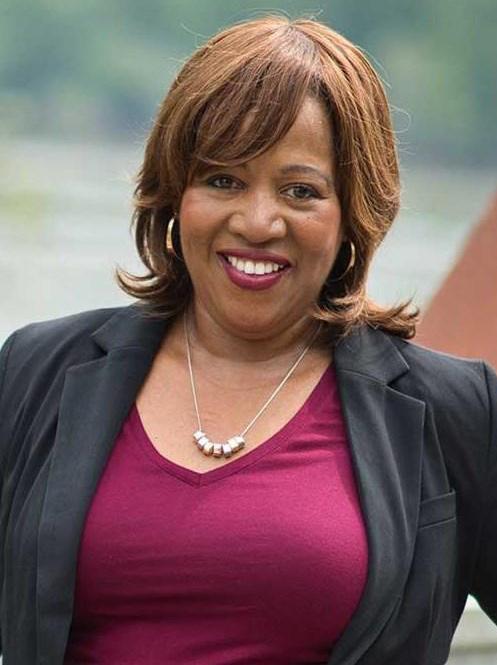
Rep. Mary Frances Clardy
Rep. Mary Frances Clardy (DFL-Inver Grove Heights) sponsors HF60 that, as amended, would mandate a two-hour dyslexia training for teachers holding Tier 1-4 licenses when renewing licenses. It was laid over for possible omnibus bill inclusion.
The bill would mandate the Department of Education to review dyslexia trainings and post at least three on its website that teachers could complete for free to meet the new requirement.
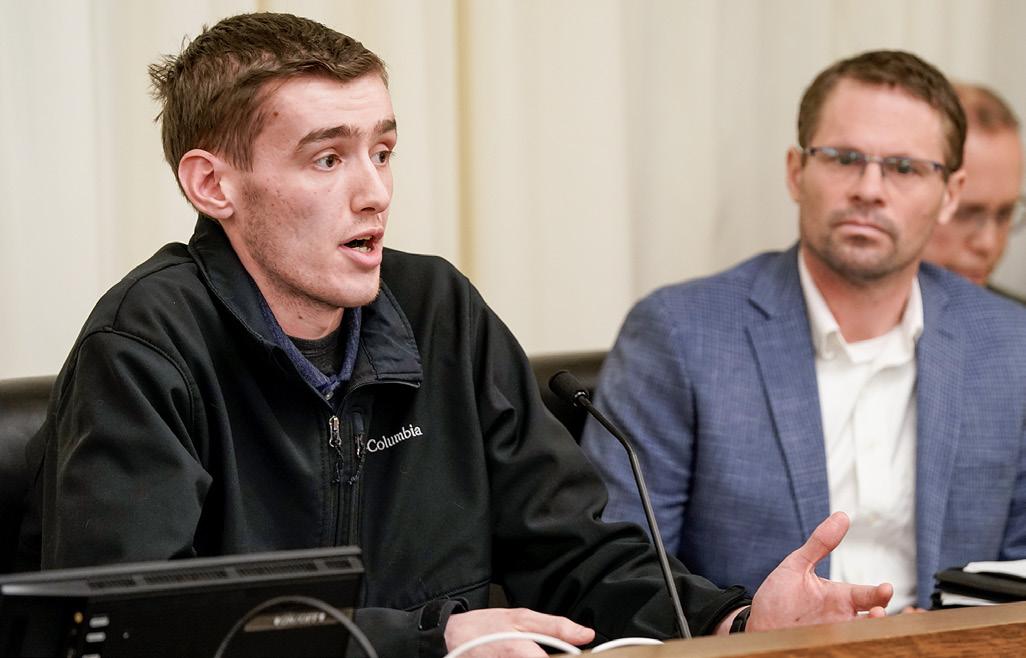
Sarah Bernhardt, a school psychologist with Groves Learning Organization, wrote in support of the bill.
“When dyslexia is not recognized by educators, the cost to students extends well beyond reading performance. The effects are often emotional, behavioral, and cumulative. Children with dyslexia may experience anxiety, embarrassment, frustration, and a growing sense of failure when their struggles are misunderstood.”
Even after identifi-
cation, dyslexia-specific support for students is crucial, said Sara Floerke, a private reading interventionist. “Identification without corresponding educator training leaves a gap in the classroom. I see it every day.” The rising number of mandated teacher training hours worries Rep. Heather Keeler (DFL-Moorhead).
“I really get worried about how much training we keep putting on teachers and just saying, ‘It’s just two hours.’ It’s not.”
Ward 1's Elliott Payne breaks from majority on Community Safety Training and Wellness Center vote, calls for community-centered investments as federal immigration pressure continues
Minneapolis City Council
President Elliott Payne cast a dissenting vote this week on a proposal to acquire property in the Windom neighborhood for a new Community Safety Training and Wellness Center — a $38 million project that would include a shooting range and police training facility — signaling a sharp break with much of the council majority and the Frey administration.
The matter was referred back to staff on a 7-6 vote. Payne said he opposed the referral because he wanted to vote the project down outright, not send it back for further consideration. "Now, the project can be brought back again for consideration by the administration at any time," Payne wrote to Ward 1 constituents following the meeting.
"When many Coun-
cil Members have had to plea with the administration to take real, financial action to support our communities in the wake of Operation Metro Surge, it is unjustifiable to me to then move forward on purchasing a building for a $38 million project for a shooting range and training facility without any assurances for funding help from the state." — Council President Elliott Payne Payne said his office has received hundreds of constituent messages opposing the facility and urging investments in infrastructure that improve livability and safety. "My intent has always been and will continue to be a focus on investing in projects that benefit the daily lives of residents and working people in our city," he said, "with this project not meeting that standard." The vote comes at a
moment of significant financial strain on Minneapolis communities following Operation Metro Surge, the federal immigration enforcement campaign earlier this year that city officials say cost Minneapolis businesses an estimated $81 million in lost revenue. Critics of the training center argue that the city's resources are urgently needed elsewhere — in direct community relief, not new facilities for law enforcement infrastructure.
Somali TPS: a temporary reprieve
In news of particular importance to Minneapolis's large Somali diaspora community, a federal court has temporarily paused the scheduled termination of Somali Temporary Protected Status (TPS), which had been set to end March 17. Under the court order, individuals with
TPS or pending TPS applications retain all their rights and protections while the legal proceedings continue.
TPS termination would have stripped thousands of Somali residents of their immigration status and work authorization, and exposed many to deportation. The court's intervention provides breathing room — but advocates and immigration attorneys stress that the pause is temporary and the legal situation remains fluid.
Payne's office is directing constituents to the City's Know Your Rights and Resources page for links to free legal help, and urging those with TPS to consult an immigration attorney to explore their options, including asylum, and to stay current with active litigation.
Beware of immigration scams
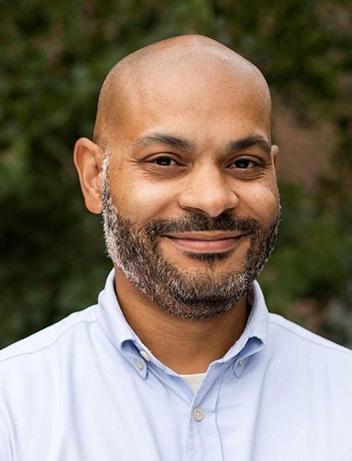
With legal uncertainty driving anxiety in immigrant communities, scammers are exploiting the moment. Payne's update includes a warning about fraudulent actors posing as legal representatives and targeting people seeking immigration help. Red flags include promises to speed up cases, requests for payment by gift card or wire transfer, and pressure to sign blank forms or hand over original documents.
Residents are urged to verify that anyone offering legal immigration assistance is a licensed attorney or a Department of Justice-accredited
City's Small Business Resiliency Fund targets recovery from Operation Metro Surge fallout
The Minneapolis City Council has approved a $7 million Small Business Resiliency Fund designed to help local businesses recover from the economic fallout of Operation Metro Surge, a federal immigration enforcement action earlier this year that city officials say cost Minneap-
olis businesses an estimated $81 million in lost revenue. The fund, approved by Mayor Jacob Frey and the City Council last month, was detailed publicly by the Community Planning and Economic Development (CPED) department on Tuesday, March 24.
City planners designed it with speed and accessibility in mind — getting dollars out quickly and without excessive bureaucratic hurdles.
“The Surge cost Minneapolis businesses $81 million in lost revenue as many temporarily closed to avoid further
impact.”
The $7 million is divided into two broad categories. The first is direct financial relief — providing license fee relief for affected businesses. The second is activation and marketing support, which includes funding for events and activations in commercial corridors and cultural market grants, all aimed at drawing customers back and stabilizing business communities hard-hit by the enforcement
sweep.
CPED staff emphasized that the fund was structured to reach businesses quickly. The department's approach reflects an acknowledgment that small business owners — many of them immigrants or serving immigrant communities — need practical, accessible support rather than complex application processes. The resiliency fund represents one of the city's most
direct responses to date to the economic ripple effects of federal enforcement actions in the Twin Cities. Community advocates have argued that Operation Metro Surge did not simply affect undocumented residents but disrupted entire neighborhood economies, particularly in areas with large Somali, Latino, and immigrant business communities.
A federal court order has temporarily halted the termination of Temporary Protected Status (TPS) for Somali nationals, offering a reprieve for thousands of Somali residents in Minnesota who faced the prospect of losing their legal immigration status, work authorization, and protection from deportation. The TPS designation for Somalia had been set to expire on March 17. Under the court order, individuals who hold TPS or have pending TPS applications retain all their legal rights and protections while the pause is in effect. Somali TPS now remains valid pending further court action.
“According to the court order, people with TPS or pending TPS applications keep all their rights and protections during the pause.” The City of Minneapolis's Office of Immigrant and Refugee Affairs (OIRA) is directing community members to minneapolismn.gov/OIRA for details and updates as the legal situation continues to evolve.
What affected community members should do Despite the temporary reprieve,
Non-emergency helpline has grown from call center to multi-channel civic hub since its 2006 launch
Minneapolis 311 — the city's one-stop, non-emergency helpline for residents — is celebrating two decades of connecting communities to city government. Since its launch in 2006, the service has helped residents report issues, ask questions, and navigate city programs without tying up emergency lines.
What began as a telephone call center has expanded substantially. Residents can now reach 311 by phone, web, email, text, or mobile app. The ser-
City's Vision Zero pilot shows 58% drop in extreme speeding; more cameras planned for spring
Traffic safety cameras installed in Minneapolis as part of the city's Vision Zero initiative recorded a dramatic drop in speeding during the first months of operation, with the number
of people exceeding speed limits by more than 20 mph falling 58 percent between October and December 2025. The pilot program launched October 1, 2025 with
five cameras focused on vehicle speed. The December 2025 report showed more than 13,000 fewer instances of speeding across all camera locations compared to October, with sig-
legal advocates and city officials are urging Somali TPS holders not to wait. Immigration attorneys recommend that individuals use this window to consult with a licensed attorney or Department of Justice accredited representative to assess their specific situations, stay informed about ongoing litigation, and explore other legal options — including asylum — that may provide longer-term protection. The City is also warning the community about immi-
vice operates Monday through Friday, 7 a.m. to 7 p.m., with trained staff available to assist with a wide range of non-emergency city needs. “For two decades, Minneapolis 311 has helped residents get the information and support they need from city government.”
gration scams that frequently target people seeking legal help during periods of uncertainty. Only licensed attorneys or DOJ-accredited representatives should be trusted with immigration matters. In the United States, notaries are not attorneys and cannot legally provide immigration advice or file paperwork.
Red flags for immigration scams include promises to speed up a case, demands for payment by gift card, wire transfer, or cash, pressure to
To mark the anniversary, Mayor Jacob Frey declared March 11, 2026 — 3/11 — National 311 Day in Minneapolis. City leaders used the occasion to remind more residents, particularly in communities that may be less familiar with city systems, to use 311 rather than 911 for non-emergency matters.
sign blank or incomplete forms, and unsolicited outreach via social media.
Resources Free legal aid resources are available on the City of Minneapolis website. Community members can also look up attorneys on the Minnesota State Bar Association website or verify representatives through the Department of Justice list. Scams can be reported to the Minnesota Attorney General's Office at 651-296-3353.
For communities of color and immigrant communities, 311 represents a lower-barrier point of access to city services — a line where language assistance is available and residents can connect without the higher-stakes concerns associated with emergency contacts. City communications materials for 311 are available in English, Spanish, Somali, and Hmong.
more than half in first months
nificant reductions recorded at every site. The city says the results demonstrate that the cameras are changing driver behavior, not simply generating citations.
“Speeding went down by more than 50% in the first two months.” The cameras are part of Minneapolis's Vision Zero commitment — a citywide goal of eliminating traffic deaths and serious injuries. The public health framing of the initiative is notable: traffic violence falls disproportionately on pedestrians, cyclists, children, and low-income residents who rely on walking and transit, making speed enforcement a matter of community safety equity.
The city expects to add more speed cameras and introduce red light cameras as early as this spring. New camera locations will be drawn from 11 high-priority sites identified in a 2025 analysis. Residents will receive advance public notice, including signage at future camera locations, before any new cameras go active.
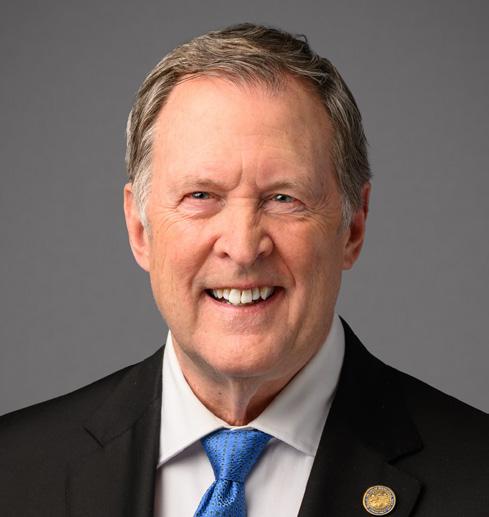
While the Minneapolis City Council made front-page headlines last week for debating foreign policy and European financial institutions rather than the daily realities facing city residents, Ward 7 Council Member Elizabeth Shaffer was doing something different: convening a multi-agency task force in Uptown and challenging her colleagues to return to their core responsibilities.
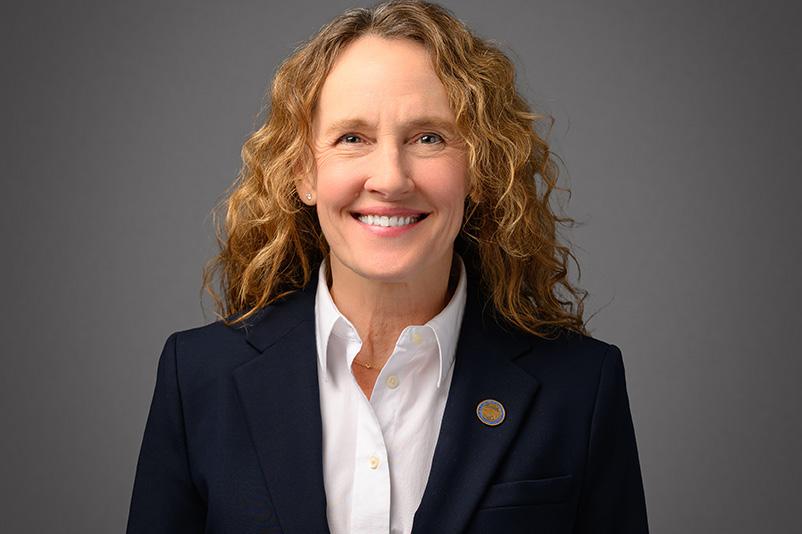
economic vitality, basic livability — are treated as boring afterthoughts."
A coalition takes shape in Uptown
— offering MPD, Park Police, and Metro Transit officers a visible, centralized presence. The Fifth Precinct has also launched directed patrols, with two additional officers logging roughly five hours daily across the Uptown and Stevens Square/Nicollet Avenue corridors.
Monthly meetings, long-term commitment
"When we pass resolutions about matters entirely outside our authority, we don't amplify our voice — we dilute it."
The council did take up substantive matters during the same session, including approving $2.8 million in emergency rental assistance, debating the potential acquisition of a south Minneapolis site for
The contrast was striking. In the council chamber Thursday, members traded sharp words over resolutions about Cuba and the U.S. Department of Homeland Security — matters outside the city's governing authority. Meanwhile, Shaffer had spent the earlier part of the week at the Fifth Precinct, bringing together leaders from the Minneapolis Police Department, Hennepin County, Metro Transit, the Minneapolis Department of Health, and city planning staff to develop a coordinated strategy for Uptown's ongoing struggles with unsheltered homelessness, open-air drug activity, and public safety. Calling out the dysfunction At Thursday's council session, Shaffer did not stay silent about what she witnessed. She reminded her colleagues — and anyone watching — what the job actually is: enacting city ordinances, setting policy direction, managing public finances, and engaging residents in decision-making.
a first-responder training and wellness facility, and sustaining Mayor Jacob Frey's veto of a proposal to extend pre-eviction notice requirements from 30 to 60 days. But those consequential decisions were overshadowed in press coverage by the spectacle on the dais. For Shaffer, the episode was not new — it reflected a pattern she heard about consistently during her last campaign. "Residents across Ward 7 are tired of a city council that performs for an imagined global audience," she said, "while the pressing, day-to-day concerns of actual Minneapolitans — public safety, affordability,
The more consequential action this week may have unfolded not on the council floor, but at the community meeting Shaffer convened Wednesday, March 25, at the Fifth Precinct. The gathering brought together an unusually broad coalition: MPD leadership, Park Police, Metro Transit police and community affairs staff, Hennepin County's opioid response team, the Minneapolis Department of Health, the Community Prosecutor's office, Hennepin County Library security, and representatives from the Mayor's office and the city's Community Planning and Economic Development department. The conversation surfaced work already underway. MPD has deepened its coordination with Walker Library staff, leading to the apprehension of an individual with an outstanding murder warrant. Law enforcement now has access to space in the Rainbow building at the heart of Uptown
"We can't simply arrest our way out of this problem. Pairing social services with effective law enforcement combines compassion with respect for the rights of the general public."
On the public health front, Commissioner Chaplin of Hennepin County announced that the Mobile Medical Unit will begin periodic deployments to Uptown starting as early as April. The unit is also seeking authorization to carry Brixadi, a medication-assisted treatment designed to ease fentanyl withdrawal and reduce cravings — a critical step toward connecting street-level users with a pathway toward sobriety.
The assembled group agreed to meet monthly, with the understanding that additional partners — including probation officers — will be incorporated as the work develops. Shaffer framed the coalition not as a study group, but as the beginning of genuine, coordinated action.
"With all of us coming together," she said, "the renaissance of Uptown isn't something that will happen 'someday' — it begins now."
Faith Randall, the Fifth Precinct's Crime Prevention Specialist, has been working with businesses and the Community Prosecutor on enforcing trespassing notices — a legal tool that can geographically restrict individuals who come to Uptown to cause harm, while maintaining that the neighborhood remains open and welcoming to all who come in good faith.
For Twin Cities communities that have watched Uptown's commercial and social fabric fray over recent years, the message carries weight. The question, as always, is whether the momentum from a single meeting can translate into sustained, measurable change — and whether City Hall, in its totality, can stay focused long enough to find out. Shaffer
Minneapolis City Council Member Robin Wonsley of Ward 2 capped a consequential week at City Hall with a sweeping legislative update covering graduate worker rights, international policy, public safety spending, and resistance to what critics are calling 'Cop City.' While several items in her March 27 report touch on the broader citywide responses to Operation Metro Surge, Wonsley's agenda this week stood out for its reach into labor policy, global solidarity, and a pointed challenge to Mayor Jacob Frey's public safety capital priorities.
Standing with graduate workers at the U of M Wonsley authored a City Council resolution urging the University of Minnesota to comply with state law and recognize Graduate Fellows and Trainees as full members of the Graduate Labor Union bargaining unit — a fight that pits the state's flagship public university against its own graduate workforce.
The Graduate Labor Union – United Electrical Local 1105, known as GLU-UE, was born from a 2023 organizing drive in which a supermajority of 2,800 graduate workers signed union cards within four weeks. A 97% vote in April 2023 ratified the union. But a 2024 state legislative expansion of the definition of 'public employee' — which was intended to bring Graduate Fellows and Trainees into the bargaining unit — has been resisted by the University administration, which has denied those workers union representation.
Wonsley noted that Graduate Fellows and Trainees do the same work as other graduate workers but lack paid leave, earned sick and safe time, protection from harassment or overwork, or union representa-

tion. 'It's incredibly disappointing to see the U spend taxpayer money trying to union bust grad students instead of complying with the new PELRA policy,' she wrote. The resolution, which calls on the University to follow the clear language of state law, passed the Council 10-2. Council Members Rainville and Shaffer cast the only dissenting votes.
Graduate Fellows and Trainees do the same work as other graduate workers but are left without paid leave, earned sick and safe time, or union representation.
Resolution calls for normalized relations with Cuba In response to resident requests, Wonsley authored a Council resolution opposing the Trump administration's foreign policy toward Cuba and urging a path toward normalized relations. The resolution passed 7-6, with Council Members Rainville, Vetaw, Warren, Shaffer, Whiting, and Palmisano in opposition.
Wonsley framed the
action within the Council's long history of weighing in on international affairs that directly affect Minneapolis residents — a practice dating back to 2007 resolutions urging an end to combat operations in Iraq, continuing through immigration enforcement condemnations in 2017 and a Ukraine solidarity resolution in 2022. Two prior Council resolutions specifically addressed U.S.-Cuba relations: one in 2018 calling for a cooperative bilateral relationship, and a 2021 resolution authored by her predecessor, Council Member Gordon, promoting medical and scientific collaboration with Cuba.
'The Trump administration's economic and foreign policy actions are contributing to starvation and dire humanitarian conditions for our Cuban neighbors,' Wonsley wrote. 'This resolution is a simple way to express solidarity with people who are living in terrible conditions because of the US government.' She noted that Minneapolis's multiracial character and history of international engagement make such resolutions an appropriate use of the Council's legislative voice, with official positions transmitted to federal legislators.
Minneapolis residents take ICE resistance to Europe
Wonsley also authored a resolution supporting a delegation of Minneapolis residents traveling to Europe to advocate for financial institutions there to divest from corporations that enable U.S. Immigration and Customs Enforcement. The resolution passed 9-4, with Council Members Rainville, Vetaw, Warren, and Shaffer in opposition.
The delegation is organized in partnership with a Europe-based human rights advocacy organization that brings
of concern for working families.
people harmed by financial institutions' decisions directly to corporate decision-makers. Wonsley specifically named Palantir Technologies as a corporation that has played a major role in providing tools to the federal government that residents say have enabled human rights violations.
'We no longer have a functional federal government that adheres to rules of law or is interested in regulating corporations who profit from human rights violations,' Wonsley wrote. 'This means we must find allies and partnerships elsewhere to hold these corporations accountable.' She cited historical precedent for international divestment as a tool against what she called 'fascist governments,' and praised the residents' initiative as a strategic extension of the local anti-ICE resistance that drew national attention.
Minneapolis residents' resistance against ICE inspired the nation. Now some are continuing that work through international divestment organizing.
'Cop City' purchase referred back — but not rejected One of the sharpest debates of the week involved Mayor Frey's proposed 'community safety training and wellness center' — a facility critics have branded 'Cop City' — projected to cost nearly $40 million. This week, the Council was asked to approve a $6 million purchase agreement for a warehouse in Ward 11 and to authorize reallocating $6 million in bond dollars away from traffic calming, ADA sidewalk accessibility, and animal shelter improvements. The Council voted 7-6 to refer both items back to staff rather than vote them up or down — a procedural move
that removes the items from immediate Council consideration but leaves the door open for the Frey administration to reintroduce them. The administration has confirmed its intent to do so. Wonsley voted against the referral, along with Council Members Stevenson, Chavez, Chughtai, Chowdhury, and President Payne — indicating those members were prepared to vote the items down outright.
Wonsley was pointed in her criticism: 'The City prioritizing resources and time to purchase new land rather than focusing on the specific training requirements that MPD currently is out of compliance with is poor governance.' She noted that the most recent settlement agreement compliance report cites executive leadership failures as the primary cause of stalled progress, and argued that the administration has yet to outline a plan for implementing the Safe and Thriving Communities Plan. Hundreds of residents contacted the Council in opposition to the project. Ward 2 community calendar Wonsley also highlighted sever-
CPED portal. "The fund was deliberately designed to get money out to businesses quickly and without too many hurdles."
Community safety center proposal sent back for revision
The City Council also received an early-stage report on a proposed Community Safety Training and Wellness Center — a facility that would consolidate training and wellness operations for all city public safety departments under one roof.
The move is part of
the city's obligations under a settlement agreement with the Minnesota Department of Human Rights. Currently, the Minneapolis Police Department uses an aging and undersized former elementary school building at 42nd and Dupont Avenue North for training, along with several other scattered facilities across the city. The new consolidated center would replace all of them.
The Council voted to refer the proposal back to staff for further refinement before any action is taken. No site or cost figures have been finalized.
Commercial property decline shifts tax burden Rainville also flagged the 2026 Assessment Report as a matter
The report documents a continued decline in commercial property values across Minneapolis — a trend that, under the property tax system, transfers a larger share of the overall tax burden onto residential property owners and renters.
The council member did not offer a legislative remedy in this week's update, but flagged the report as an emerging equity issue worth tracking.
Board and commission seats open through March 31 Ward 3 residents have until Tuesday, March 31, to apply for seats on several city boards and commissions. Open positions include the Bicycle Advisory Committee, Minneapolis Advi-
sory Committee on Aging, Minneapolis Advisory Committee on Housing, the Minneapolis Advisory Committee on People with Disabilities, the Safe and Thriving Communities Work Group, Community Commission on Police Oversight, and the Minneapolis Arts Commission. Applications can be submitted through the city's online portal. Rainville encouraged residents to apply, framing board service as a direct channel to influence city policy. Residents can contact Ward 3 staff at ward3@minneapolismn.gov or by calling 612673-2203. Issues should first be reported to 311 to establish a record before reaching out to council staff.

tallized a substantive disagreement among committee members.
Senator Susan Pha (DFL – District 38), argued for retaining the study, pointing out that existing analyses of the crisis are incomplete and geographically limited: the Minneapolis city study is bounded by city limits; the Explore Minnesota analysis covers only the hospitality sector; the Hmong Chamber of Commerce study covers only its member businesses. A statewide analysis, she argued, is essential to understanding the full magnitude of the damage, informing multiyear recovery efforts, and helping nonprofits build the evidentiary case needed to apply for additional grants. The $250,000 price tag, she noted, was set after consultation with DEED and comparable analysis providers.
Opponents of the study argued the money was more urgently needed in the hands of businesses right now, and that sufficient documentation of harm already exists to justify immediate action. The amendment passed 5-4, stripping the study and adding the funds to the direct relief total.
The debate: geographic equity and CDFI reach
The hearing's sharpest exchange came not from the Republican side of the dais but from within the DFL caucus itself. Sen. Zaynab Mohamed (DFL-District 63), the committee's own vice chair, raised pointed questions about whether the bill's CDFI-based delivery structure would actually reach the communities most devastated by Operation Metro Surge.
Mohamed questioned why the bill did not allocate funds geographically — as the PROMISE Act had done for areas impacted by the 2020 civil unrest uprising — and expressed concern that communities bearing the heaviest burden of the enforcement surge, including Cedar Riverside and Karmel Mall, have limited established relationships with CDFIs and were not adequately consulted in the bill's design. She noted that security guards are now stationed outside businesses in those communities, and restaurants are operating with reduced menus.
The exchange was significant precisely because of who was asking: a DFL vice chair publicly pressing a DFL committee chair on whether his own bill is structured to reach the most vulnerable communities. It was not partisan friction but an intra-caucus disagreement about geographic reach — the tension between speed of deployment (favoring existing CDFI relationships) and equity of access (favoring explicit geographic targeting for underserved communities that lack those relationships).
Mohamed indicated she would introduce a separate amendment focused on Lake Street businesses at Wednesday's hearing — an amendment she did not formally offer Monday due to time constraints.
Champion defended the CDFI delivery mechanism. CDFIs, he argued, can respond wherever they have reach and are not constrained by the geographic designations that limited the PROMISE Act. He specifically cited the Lake Street Council's partnership with LISC (a major national CDFI) and the African Development Corporation as examples of CDFIs already embedded in the communities Sen. Mohamed described. The structure's 100% reimbursement provision, he argued, creates a strong incentive for CDFIs to extend their reach into underserved areas. Champion also emphasized that a cross-section of stakeholders — not just large organizations with professional lobbyists — was consulted in the bill's design.
Testimony: business owners describe a landscape of fear and loss
Williametta Kennedy — business owner
Williametta Kennedy gave the committee its most granular portrait of individual business damage. She reported a 50% loss in customers following ICE visits to her business in December, a $20,000 decline in quarterly revenue, and the added financial burden of having to retain legal representation to navigate the enforcement environment. Her testimony illustrated the cascading costs that go beyond lost sales: legal fees, staffing uncertainty, and the reputational damage of customers who simply stop coming and don't come back.
crossing, while others chose death over enslavement.
believed they could own them as personal property — “not if you acknowledge an individual’s humanity; not if you respect an individual’s basic right to dignity.”
He argued that the foundation of the trade was a “racial hierarchy” designed to strip Africans of their humanity — a legacy that continues to fuel global inequalities today. The horror in detail Mahama did not permit the assembled diplomats the comfort of abstraction. He painted a harrowing picture of the transatlantic slave trade, describing how enslaved Africans were stripped of dignity and identity from capture on the continent to their eventual sale in foreign lands. He recounted how victims were held naked in dungeons, chained and forced onto ships where they endured the brutal Middle Passage under inhumane conditions — with estimates indicating that between 10 and 15 percent perished during the
Julian Ocampo — Los Ocampo
Mexican Restaurants
Julian Ocampo, owner of Los Ocampo Mexican Restaurants, described a family business that saw dramatic sales drops and significant employee losses as workers stayed home out of fear during Operation Metro Surge. The business has taken on significant debt just to remain open — debt now compounding in an environment where revenue recovery is slow and uncertain. Ocampo's testimony underscored the particular cruelty of the current moment: businesses that survived COVID, survived 2020, and were finally stabilizing now face another shock with depleted financial reserves.
Jani Sieber — Brooklyn Center, 16-year business owner
Jani Sieber, a 16-year business owner from Brooklyn Center, described enforcement activity creating persistent difficulty retaining employees and serving her community. Her long tenure in business gave her testimony particular weight — this is not a marginal operator but an established neighborhood institution, and even established institutions are struggling.
Mayor Nadia Mohamed — City of St. Louis Park (public witness) St. Louis Park Mayor Nadia Mohamed testified as a municipal witness — distinct from Sen. Zaynab Mohamed, who sat on the committee itself. Mayor Nadia Mohamed represented a suburb where immigrant entrepreneurship has taken hold along local commercial corridors, and where the same fear-driven customer retreat visible on Lake Street and in Cedar Riverside is playing out several miles from the metro's most concentrated enforcement activity. Her message: the economic chill from Operation Metro Surge does not respect city boundaries, and suburban communities need the bill's reach to extend beyond Minneapolis.
Russ Adams — Lake Street Council
Russ Adams, manager of Corridor Recovery Initiatives at the Lake Street Council, provided the committee with its deepest historical context. Lake Street businesses, he said, are already weakened by a sequence of compounding injuries: more than $250 million in civil un-
people of African descent from exercising their rights.
He cited the sheer scale of the crime in geographic terms: roughly six million enslaved Africans were trafficked to Brazil; nearly two million to Jamaica; about 500,000 to America; and over 450,000 to Barbados — an island only 34 kilometres long.
The vote — and the world’s response Applause erupted in the UN General Assembly hall as member states adopted the resolution. It received 123 votes in favour. Three countries — Argentina, Israel, and the United States — voted against, and 52 abstained.
The United States described the resolution as problematic, citing concerns about the identification of intended beneficiaries of reparatory justice, while still acknowledging the historical injustices involved.
UN Secretary-General António Guterres called for confronting slavery’s lasting legacies of inequality and racism, urging the removal of persistent barriers preventing

rest damage from 2020, disruptive road construction on Lake Street, Hennepin, and Lindell Avenue, the impact of tariffs on supply costs, and now the Operation Metro Surge economic chill. Each shock has left businesses with less financial cushion to absorb the next one. Adams was direct about the structure of relief: grants and forgivable loans are what these businesses need, not additional conventional debt. Businesses that have already borrowed to survive cannot service more debt on top of a 30–50% revenue loss. The bill's zero-interest, forgiveness-eligible structure, he argued, is the only form of capital that won't itself become a burden.
David Campana — Minnesota Council on Latino Affairs
David Campana of the Minnesota Council on Latino Affairs put numbers on the scale of the Latino business community at stake: more than 1,700 Latino-owned businesses in Minnesota support 17,000 jobs. Those businesses are reporting sales declines of 40 to 90% — not because of their own operational failures but because both workers and customers are staying home out of fear of enforcement activity. The range — from 40% to 90% — signals that some businesses are not merely struggling; some are functionally dark.
Linda Sloan — Council for Minnesotans of African Heritage (virtual)
Linda Sloan, testifying virtually, urged support for the bill while noting that the Council for Minnesotans of African Heritage would prefer grants over loans where possible — though she acknowledged that a combination of grants and loans, structured with forgiveness potential, would be beneficial. Her testimony reflected the community's lived experience of accumulating debt during crises and finding that recovery programs that look like relief can, over time, become their own financial burden.
Scott Marquardt — Southwest Initiative Foundation Scott Marquardt, president of the Southwest Initiative Foundation, argued for the bill's statewide dimension — ensuring the $18 million channeled through the Initiative Foundation network reaches rural Minnesota communities
where immigrant entrepreneurs have become anchors of local commerce. The SBA's March 1 rule change barring permanent residents from federal small business loans, he noted, has simultaneously removed the federal alternative.
The Republican counterpoint Sen. Pratt offered the sharpest partisan skepticism of the hearing, raising a pointed comparison: the state has not commissioned a comprehensive economic impact study of the damage caused by pandemic-era loan fraud cases — which he characterized as more significant than the Metro Surge economic impact. The observation reflected a Republican framing of the bill as selective in its sympathies, though it did not produce a formal amendment or alter the committee's trajectory.
Context: a crisis layered on crisis
The hearing's testimony repeatedly returned to the compound nature of the current damage.
For businesses along Lake Street and other Twin Cities corridors, Operation Metro Surge is not the first shock but the latest in a sequence:
• 2020 civil unrest caused more than $250 million in property damage, with about half of destroyed properties still not fully redeveloped
Road construction on major commercial corridors has disrupted access and customer traffic for years
Tariffs have increased supply costs across retail and food service
COVID-19 depleted cash reserves and drove debt accumulation
• Operation Metro Surge arrived when those reserves were at historic lows
The result, multiple testifiers argued, is that businesses which would have survived any one of these shocks in isolation are now facing simultaneous pressure on every front — with no federal safety net for their owners under the new SBA rules, and a national CDFI infrastructure that is itself under threat.
The Minnesota CDFI Coalition estimates that with $700 million in outstanding loans across the state's community lending network, a 20% delinquency rate would produce a $140 million shock to those portfolios — impairing CDFIs'
ability to make new loans precisely when demand is highest.
What follows
The bill could return (though Champion said he would not put the bill forward again) to a subsequent meeting of the Jobs and Economic Development Committee on with several open questions:
1. Sen. Zaynab Mohamed's amendment targeting Lake Street businesses specifically could be formally introduced and debated
2. Sen. Champion has indicated openness to modifying the $250,000 study cost if evidence supports a lower figure before the Finance Committee
3. The committee could vote on whether to advance the bill to the Finance Committee
The stakes are high.
The Legislature's first committee deadline is 5:00 p.m. on April 17. If the bill does not clear the Jobs and Economic Development Committee by that deadline, it effectively dies as a standalone measure and would need to be revived as language within an omnibus jobs bill. The bill's House companion, HF 4477, provides a legislative backstop, but the Senate's path is the more developed of the two.
Broader legislative significance
At $100 million, SF 4535 would be one of the largest state economic interventions for immigrant and minority businesses in Minnesota history. Its zero-interest, forgivable structure represents a deliberate policy choice: that the appropriate response to a federal-policy-induced economic shock is not additional debt burden but accessible capital that rewards businesses for surviving and staying in their communities. The 5-4 committee votes Monday suggest that while DFL leadership has the votes to move the bill, there is no margin for defection — and that the geographic equity concerns raised by Sen. Zaynab Mohamed could either strengthen the bill through amendment or complicate its path to the floor. Her willingness as vice chair to publicly challenge the bill's design signals that a follow-up hearing may be as contentious as Monday's.
“This is the beginning”
After the vote, Mahama was measured in his triumph. He described the outcome as a significant milestone but cautioned that it marked only the start of a broader struggle, saying: “This is not the end. This is the beginning. What we’ve achieved today creates a platform for the struggle for reparative justice.”
“The world is watching, and the era of reparatory justice has officially begun.”
He characterized the resolution not merely as an act of commemoration, but as a necessary step toward healing the wounds of “racialized chattel enslavement,” concluding:
Is the transcript available?
Yes — the full text of President Mahama’s speech is publicly available. Diplomatic Times Online has published the complete text of his address to the General Assembly, in which he spoke on behalf of the African group regarding the draft resolution. It can be read at diplomatictimesonline.com. Ghana Broadcasting Corporation (GBC Ghana Online) also carries his earlier eight-page address from March 24 at gbcghanaonline.com.




An estimated eight to nine million people rallied across all 50 states on Saturday in the third nationwide 'No Kings' day of action, with St. Paul hosting the flagship event in a reckoning tied to the killings of Renee Good and Alex Pretti during Operation Metro Surge

ST. PAUL, Minn. — In what organizers and crowd analysts are calling the largest single-day protest in American history, an estimated eight to nine million people took to the streets across all 50 states on Saturday, March 28, for the third nationwide "No Kings" day of action. The demonstrations were fueled by outrage over the Trump administration's immigration enforcement tactics, the ongoing U.S. military campaign in Iran and deepening concerns about what participants described as a slide toward authoritarianism.
The flagship event in St. Paul drew an estimated 100,000 people to the Minnesota State Capitol, according to the Minnesota State Patrol, making it by far the largest single gathering of the day. The Twin Cities were chosen as the epicenter for the demonstration following the fallout from Operation Metro Surge, the federal immigration crackdown that sent more than 3,000 armed agents into Minneapolis and St. Paul beginning in December 2025 and resulted in the fatal shootings of two U.S. citizens by federal officers. Nationwide, more than 3,300 events were held in cities and towns stretching from New York to rural Idaho.
Organizers estimated that nearly 350,000 marched through all five boroughs of New York City, where the NYPD reported zero protest-related arrests. An estimated 200,000 gathered in Chicago. In Washington, D.C., thousands marched from Arlington, Virginia, across Memorial Bridge to the National Mall. In San Diego, police estimated 40,000 in attendance, while Seattle organizers put their crowd at up to 100,000.
Minnesota: ground zero for a national movement Minnesota's role as the anchor of the March 28 protests is inseparable from the events that unfolded there during the winter. Operation Metro Surge, which the Department of Homeland Security described as the largest immigration enforcement operation ever carried out, deployed thousands of ICE and Customs and Border Protection agents to the Twin Cities starting in early December 2025. The operation was launched with stated goals of targeting fraud in government programs associated with
members of the Somali American community.
But the operation quickly drew fierce criticism for its tactics. Reports from local law enforcement, civil liberties organizations and news outlets documented warrantless arrests, racial profiling, and aggressive clashes between federal agents and residents. Brooklyn Park Police Chief Mark Bruley publicly stated that the operation had caused "civil rights violations in our streets" and alleged that multiple off-duty officers had been racially profiled by federal agents. Hennepin County Sheriff Dawanna Witt called the actions of federal agents "not just only wrong, but illegal."
On January 7, ICE agent Jonathan Ross shot and killed Renee Nicole Good, a 37-year-old mother of three, while she sat in her car in Minneapolis. Bystander video of the shooting sparked immediate outrage. Good's killing was the ninth time since September 2025 that ICE agents had fired on people across five states and Washington, D.C., according to reports.
On January 24, the crisis deepened when two Customs and Border Protection officers shot and killed Alex Jeffrey Pretti, a 37-year-old intensive care nurse at the Minneapolis VA Medical Center. Pretti had been filming law enforcement agents and directing traffic near the intersection of 26th Street and Nicollet Avenue in the Whittier neighborhood. Bystander video, verified by Reuters, the BBC, The Wall Street Journal and the Associated Press, appeared to show Pretti being pepper-sprayed, wrestled to the ground and shot by agents. Use-of-force experts who reviewed the footage said it undermined federal authorities' claim that the shooting was defensive.
The killings of Good and Pretti set off a chain of events that would reshape the national political landscape.
On January 23, a general strike took place in Minneapolis in response to the ICE surge, endorsed by a coalition of Minnesota labor unions. According to reporting by Britannica, it was described as perhaps the first general strike in the United States since the passage of
the Taft-Hartley Act in 1947. A larger national strike followed on January 30, with organizers claiming around 50,000 people joined the demonstration in Minneapolis alone.
Springsteen, Sanders and Omar rally the Capitol crowd Saturday's flagship event at the State Capitol was part rally, part concert and part memorial. Three marches launched at noon from different locations across St. Paul, all converging on the Capitol grounds for a 2 p.m. rally. Live music, including performances by folk legend Joan Baez and singer Maggie Rogers performing Bob Dylan's "The Times They Are A-Changin'," set the tone before the featured speakers took the stage. Rock icon Bruce Springsteen, who released the protest song "Streets of Minneapolis" in January in response to Operation Metro Surge, performed the song to the assembled crowd. He called Minnesota "an inspiration to the entire country" and referenced the killings of Good and Pretti directly. Becca Good, the wife of Renee Good, delivered a statement through actress Jane Fonda. Sen. Bernie Sanders of Vermont drew on the language of the nation's founding in his remarks, telling the crowd that the Founding Fathers in 1789 declared to the world that "in this new nation of America, we don't want kings." He warned of what he called "an unprecedented and dangerous moment in American history" and praised Minnesotans for their resistance to Operation Metro Surge. Sanders also addressed wealth inequality and the war in Iran, counting estimated casualties among Americans, Iranians, Israelis and Lebanese.
Rep. Ilhan Omar told the crowd she came to the United States as a refugee at age 12 and said America had been "a beacon of hope, a place where freedom was not just a word, but it was a promise." She called Operation Metro Surge "just the tip of the iceberg" and said the country is "witnessing a fullscale assault on our rights, our institutions, and the rule of law."
Gov. Tim Walz, dressed in flannel on a blustery day, praised Minnesotans for their response to the federal immigration operation and
specifically highlighted his commitment to supporting the state's immigrant communities, including the Somali community. Minnesota Attorney General Keith Ellison also addressed the crowd.
The No Kings protests carry particular significance for Black communities and communities of color in the Twin Cities and nationally. Operation Metro Surge heavily targeted Somali and Southeast Asian refugee communities, according to the Immigrant Legal Resource Center. The ACLU filed a class-action lawsuit alleging that ICE and CBP adopted unlawful policies authorizing stops based on race or ethnicity and arrests without probable cause. A federal court found the ACLU had made a clear showing that those unconstitutional policies existed.
According to an analysis published by the Brookings Institution, while the operation was ostensibly launched to address fraud in government programs involving a narrow segment of the Somali community, of the thousands arrested, only 23 were Somali, and none were connected to fraud cases. The people detained included restaurant workers, hotel employees and cashiers. According to the analysis, the common factor was not criminal history but rather race and perceived ethnicity.
President Trump had previously called people from Somalia "garbage" and told them to "go back to where they came from." The ACLU's lawsuit detailed how federal agents used those statements as effective marching orders, indiscriminately detaining people they perceived to be Somali or Latino, including U.S. citizens. In one documented case, a Somali American U.S. citizen was placed in a headlock by agents and dragged into an unmarked vehicle while telling them he was a citizen. An agent responded, "That don't matter."
Minneapolis, the epicenter of the 2020 uprising following the murder of George Floyd, found itself once again at the center of a national reckoning over racial justice. The fatal shootings of Good and Pretti oc-
Sharpton, Attorney General Letitia James and Public Advocate Jumaane Williams participated in the march from Columbus Circle through Times Square to Herald Square. In Boston, organizers estimated more than 100,000 gathered at Boston Common.
Clashes and arrests in Los Angeles and Portland While the vast majority of demonstrations were peaceful, tensions escalated after the main rallies ended in Los Angeles and Portland.
curred mere blocks from where Floyd was killed by a Minneapolis police officer. Brookings noted that Black-owned employer firms in the city have increased by over 200 percent since 2017, a rise significantly influenced by immigrant populations, and that the crackdown threatened to undermine the economic and social gains made by those communities. Minneapolis singer Larry Long took the stage at the Capitol rally and praised community members for their endurance during Operation Metro Surge, singling out neighbors for "bringing food to families that are sheltered, driving children to school, getting them home safely and protecting them with whistles and observances."
Protests span red and blue America
One of the most striking features of Saturday's demonstrations was their geographic breadth. Organizers said two-thirds of the RSVPs for the protests came from outside major urban centers, including in conservative-leaning states like Idaho, Wyoming, Montana, Utah, South Dakota and Louisiana. Nearly half of all events took place in Republican-held or battleground areas, a 40 percent increase from the movement's first day of action in June 2025. Some of the most farflung demonstrations took place in communities like Kotzebue, Alaska, and Driggs, Idaho, a town of fewer than 2,000 people in a state Trump carried with 66 percent of the vote in 2024. In Salt Lake City, about 8,000 people protested in one of 18 rallies that took place across Utah. In Clarkesville, Georgia, and Fort Myers, Florida, including people dressed as characters from Margaret Atwood's "The Handmaid's Tale," crowds gathered to register their dissent.
In New Jersey, Gov. Mikie Sherrill spoke in Princeton beside a monument commemorating George Washington's 1777 victory against the armies of King George III. In Pittsburgh, an estimated 15,000 to 20,000 people marched downtown. Texas alone had more than 100 scheduled events, as did Florida and Ohio.
In New York City, actor Robert De Niro, the Rev. Al
In downtown Los Angeles, tens of thousands marched peacefully from Gloria Molina Grand Park, near City Hall, through the afternoon. But by evening, a smaller group of demonstrators gathered outside the Metropolitan Detention Center on Alameda Street, a common site for anti-immigration protests. According to the LAPD, some demonstrators attempted to tear down a chainlink fence and threw concrete blocks, bottles and other objects over the barrier. Federal authorities deployed tear gas and a dispersal order was issued around 5:30 p.m. The LAPD declared a tactical alert for the city. The Department of Homeland Security said approximately 1,000 people surrounded the Roybal Federal Building, and that two federal officers received medical treatment after being struck by debris. U.S. Attorney Bill Essayli posted on social media that federal agents had "started arresting those who assaulted our personnel." As of Sunday morning, the LAPD confirmed nine juveniles were arrested and cited for failure to disperse, and nearly six dozen people total were taken into custody. All juveniles were released to their parents. In Portland, the Portland Police Bureau announced three arrests after demonstrations outside the city's ICE facility escalated in the evening. In Denver, Colorado State Police confirmed at least nine arrests.
Origins and evolution of the No Kings movement
The No Kings movement traces its roots to June 14, 2025, when the first coordinated day of action was timed to coincide with the U.S. Army's 250th Anniversary Parade and President Trump's birthday. The 50501 Movement, a national organizing network whose name stands for "50 states, 50 protests, one movement," developed the No Kings theme, and the progressive nonprofit Indivisible coordinated logistics alongside a coalition of more than 200 organizations, including the ACLU, the AFL-CIO, MoveOn, the American Federation of Teachers and Planned Parenthood. Organizers estimated that approximately five million people participated in the June day of action. A second wave on October 18 drew an estimated seven million across roughly 2,700 events. In both cases, organizers adopted the rhetoric of the American Revolution, framing their opposition to the Trump administration's expansion of executive power as a continuation of the founders' rejection of monarchy. The third iteration on March 28 was the largest yet, drawing an estimated eight to nine million participants to more than 3,300 events. The escalation reflected the deepening grievances of the movement. In addition to the original concerns about immigration enforcement and executive overreach, the protests now encompassed opposition to the U.S. military campaign in Iran, dubbed Operation Epic Fury, which began roughly a month earlier and which Trump said was aimed at eliminating Iran's ballistic mis-
By Kyle B. Enfield Associate Professor of Medicine, University of Virginia
A variant of COVID-19 called BA.3.2, which has circulated under the radar since late 2024, is now spreading quickly across the United States.
As a pulmonary and critical care doctor, I see many patients who are at high risk for severe COVID-19 due to chronic lung disease, as well as patients living with long COVID. All of them ask me how worried they should be about new variants of the virus.
There’s no sign so far that BA.3.2, nicknamed Cicada, is any more dangerous or causes more severe disease than the variants that were circulating in the winter of 2025-26. But because it’s significantly different from them, the current COVID-19 vaccine may not be as effective against it.
Where did the BA.3.2 variant come from?
BA.3.2 is descended from the omicron variant, which emerged in late 2021.
Compared to the current predominant strains of SARS-CoV-2, the virus that causes COVID-19, BA.3.2 carries 70 to 75 genetic changes in its spike protein, the part of the virus that helps it get into cells. The spike protein is also the part of the virus that vaccines rely on to coax people’s immune systems into recognizing the virus.
Researchers first identified BA.3.2 in November 2024 in Africa. It started its global trek in 2025 and had made it to 23 countries as of February 2026.
The first U.S. case was detected in a traveler coming into the U.S. in June 2025. Since then, it has been detected in patients and the wastewater systems of 29 states.
Wastewater monitoring is one of the best early methods of detecting strain shift, though the number of states submitting wastewater data to the CDC has declined since around 2022, after the height of the pandemic.
What makes BA.3.2 variant different?
All viruses change over time –and the type of virus that causes COVID-19 does so especially quickly. Every time the virus copies itself inside a cell, its genetic material mutates. Most of these changes disappear, but occasionally one gives the virus an advantage over other variants, allowing that version to spread.
These changes make it harder for the immune system to recognize the virus. Think of it like showing up to your 25th high school reunion and seeing people who have put on weight, dyed their hair and started wearing tinted contacts. You will recognize them, but it might take longer. Had you seen them every month or so for those 25 years, you would recognize them right away.
Similarly, changes to a virus’ genetic material also affect how well vaccines work. Vaccines prime people’s immune systems by reminding them of what the virus looks like. Scientists design vaccines based on the most common ver-
sions of a virus circulating at a given time. Current COVID-19 vaccines are made to protect against strains from the JN.1 lineage of the virus, which have been the most common strains in the U.S. since January 2024. However, BA.3.2 is the new kid in the block − it’s almost a complete stranger to residents of the U.S. It is different enough from the JN.1 strains that the vaccine may not do as good a job of priming the immune system against it, allowing it to evade detection. This doesn’t mean you shouldn’t get a vaccine – a large body of evidence shows that they reduce hospitalizations and deaths from COVID-19.
But a poorly matched vaccine simply won’t recognize the new variant as quickly, which means it takes longer for the immune system to mount its defense.
What dangers does the BA.3.2 variant pose?
Because people’s immune systems aren’t as good at detecting BA.3.2, this variant may infect people more widely, potentially
leading to a spike in COVID-19 cases.
But even though BA.3.2 is spreading quickly, there’s no indication that it’s any more dangerous or that it causes more severe disease than the COVID-19 variants that have circulated widely over the past few years.
However, especially given that current vaccines may not be as effective against it, protection remains important. That’s particularly true for people with chronic health conditions, who can experience severe illness from a COVID-19 infection.
And while the number of people who develop long COVID has declined as the virus has changed since early in the pandemic, it still occurs in about 3 in 100 cases.
Protecting yourself and your community
People can take these commonsense steps to avoid getting or spreading COVID-19:
• First, wash your hands after using the bathroom, before preparing food or eating, and after being in contact with a sick person.
Hand-washing decreases the chance of a respiratory
infection by 16% to 21%.
Second, if you feel unwell, stay home – not just to take care of yourself, but to prevent spreading disease. You may be hesitant to miss work or school, but the person sitting next to you might have a condition, such as cancer or chronic lung disease, that puts them at risk for severe infection, or they might live with someone who does.
Third, get outside. Reducing your time in crowded environments reduces your chance of exposure.
• Finally, if you have concerns about your risk of developing a severe infection due to your own health conditions, talk to a trusted clinician who can offer advice that’s specific to your circumstances.
Disclosure statement
Kyle B. Enfield does not work for, consult, own shares in or receive
sile arsenal and preventing the country from acquiring nuclear weapons.
Administration response
The White House dismissed the protests. Spokesperson Abigail Jackson called them "Trump Derangement Therapy Sessions" and described the organizing coalition as a product of "leftist funding networks" with little genuine public support.
Minnesota Republicans echoed that criticism. State party chair Alex Prechash called Saturday's event "pure political theater" and "a distraction from
a failed DFL record." Rep. Tim Burchett of Tennessee called out what he described as the irony of the protests, arguing that Democrats had forced President Biden off the ticket in 2024 and replaced him with Vice President Kamala Harris without a primary election.
Robert Weissman, co-president of Public Citizen, addressed the St. Paul crowd and countered those characterizations. He told demonstrators that they had shown the country "that the opposite of authoritarianism is not just justice and democracy, and freedom, it's also solidarity and community, and love, and neighbors, and persistence."
Legal battles continue
The protests unfolded against the backdrop of an escalating legal confrontation between Minnesota officials and the Trump administration. On March 24, the state of Minnesota, Hennepin County and the Minnesota Bureau of Criminal Apprehension filed a federal lawsuit against the Department of Justice and the Department of Homeland Security, alleging that the agencies were withholding evidence needed to investigate the shootings of Good, Pretti and a third person, Julio Cesar Sosa-Celis, who was wounded by a federal agent. Hennepin County Attorney Mary Moriarty said her office has opened criminal investigations into 14 additional cases of potentially unlawful conduct by
federal agents during Operation Metro Surge.
Federal prosecutors had earlier dropped all charges against Sosa-Celis and another man after authorities opened a criminal investigation into whether two immigration officers lied under oath about the shooting. Border Czar Tom Homan announced in February that Operation Metro Surge would be wound down, but hundreds of agents remained in Minnesota, and community members reported that enforcement activity continued, particularly in rural areas.
What comes next For organizers, Saturday's historic turnout represented both
vindication and a challenge. Leah Greenberg, co-executive director of the Indivisible Project, described the geographic diversity of the protests as the "defining story" of the day. Indivisible announced plans for a mass call on the following Tuesday to discuss converting protest energy into sustained strategic action. Several speakers at the St. Paul rally emphasized the importance of the 2026 midterm elections as a mechanism for translating dissent into political change. Sanders reminded attendees of the upcoming vote and urged them not to allow the country to "descend into authoritarianism or oligarchy." One protester in New York, identified as Darius Palmer, put it
more bluntly: "At the end of the day, we can protest as much as we want, but until we go to that ballot box that second Tuesday after the first Monday of November every two years, nothing is going to change."
Niizhoode DeNasha, an Iraq War veteran who attended the St. Paul rally, said he came to "stand up for the Constitution." He told reporters he enlisted 20 years ago and described rights being trampled. Bob Meis, a 68-year-old retired lawyer who recently moved to Minneapolis, grew emotional speaking about his grandson, a Marine who may be deployed to the Iran conflict. "It helps knowing how many people are here," he said. "I wish there was more we could do."