It’s a pleasure to introduce our 2025/26 quality account. We’re proud to have achieved key milestones, including the launch of our quality and safety framework and quality statement:
“Building quality and safety capacity, capability, leadership, and infrastructure at Everyturn to be best-in-class at learning, growing, and delivering high quality-care to people of all ages”.
This has been another year of transformation and progress at Evertyurn.
We’ve reviewed and strengthened our governance structures and took a fresh look at how our board is run this year. As a result, we simplified our committees and made it clearer how information and assurance flow up to the board.
We also reviewed our risk management policy, including our risk appetites, leading to development of our first board assurance framework. The launch of our first quality and safety framework in April 2025 (including development of our quality statement) came with eight quality objectives, which our operational and central teams have been leading on.
We have made great strides in Everyturn’s major digital project, which saw the launch of our two new clinical management systems covering our NHS Talking Therapies, community, crisis, and residential services.
The learning organisation project has also been successful in the development of our service user engagement framework, as well as adopting QSIR as our preferred quality improvement framework.
Heather Benjamin (she/her) Chair of Trustees
Adam Crampsie (he/him) Chief Executive
These are only a few examples of our quality achievements which reflect the dedication, compassion, and expertise in driving the quality agenda at Everyturn. We’ll continue into 2026 with new and exciting pieces of work.
We can confirm that, to the best of our knowledge, the information in this account is accurate.
Commissioner statement
from
NHS North East and North Cumbria Integrated Care Board
NHS North East and North Cumbria Integrated Care Board (NENC ICB) is committed to commissioning high quality services from Everyturn Mental health. NENC ICB is responsible for ensuring that the healthcare needs of patients that they represent are safe, effective and that the experiences of patients are reflected and acted upon. The ICB welcomes the opportunity to review and provide comment on this 2025/26 Quality Account.
Overview
The ICB would like to thank Everyturn Mental Health for the openness and transparency reflected in this year ' s Quality Account.The ICB would like to commend all staff for their commitment and dedication demonstrated throughout these challenging times and for striving to ensure that patient care continues to be delivered to a high standard.
Achievements
The ICB would like to congratulate Everyturn Mental Health and its staff on the achievements made during this period. The ICB recognises the attainments detailed within the Quality Account, which include:
Improvements to the Ulysses system, reviewing the risk management policy, refreshing key performance indicators in relation to quality and safety, and also the newly appointed Health and Safety Manager.
Continuation of a positive incident reporting culture on the Ulysses system and identification of trends, themes and learning from complaints and feedback.
Creating a robust process for managing patient safety incidents by enhancing quality of reporting to better review outcomes, themes and effectiveness.
Ensuring that service users and their families are involved in the Patient Safety Incident Review Framework (PSIRF) process with outcomes and actions.
Introduction of three new roles (Clinical Director, Information Governance Manager, and Risk and Assurance Manager) to give further oversight of clinical quality and governance.
The introduction of the organisation-wide service user engagement framework to develop improvements and be more consistent across the organisation following a 'You Said, We Did' approach.
Mobilisation of the safe haven for Children and Young People who are experiencing poor mental health, delivering an early intervention community group in Wallsend, and relocation of the Children and Young People team to newly renovated premises.
Achieving an 'Exceeded Standards' rating for the NHS Data Security and Protection toolkit.
Investing in systems for secure transfers of videos and CCTV footage to support subject access requests, the Police, Coroner enquiries and court orders.
Further enhancing health and safety across the organisation by introducing a fire safety policy, improving evacuation plans, renewed fire marshal training and implementation of a new health and safety risk register. Introducing a new partnership with North Tees and Hartlepool NHS Foundation Trust to embed stronger foundations for organisational-wide quality improvement. Implementation of the first quality and safety framework to monitor quality assurance, quality planning, quality improvement and quality control.
Continuation of reporting infection, prevention and control (IPC) incidents and appropriate escalation where required. It is positive to note that audits continue to be carried out on a monthly basis and shared quarterly with IPC Lead to ensure compliance.
Achieving overall 'Good' ratings for Pinetree Lodge, Alderwood, Briarwood, Jubilee Mews and Coalway Lane following a CQC inspection between October 2025 and February 2026.
Supporting the transition of patients being discharged back home via the 12-week Complex Transition Support Service (CTSS) and providing crisis beds at Coalway Lane to support patients and prevent admissions to hospital.
Enrolling students onto recovery colleges which provides courses and drop-in sessions at a group-based level to give support and build friendships for those who require additional support for their mental health and wellbeing. Enrolling seven new Speaking Up Champions which has enabled proactiveness to look out for themes and trends via staff feedback and listening sessions. Receiving positive experiences, feedback and stories for those the organisation support and their colleagues via surveys, networks and forums.
Future priorities
The ICB is fully supportive of the identified Quality Priorities for 2026/27. The ICB welcomes the priorities of:
Priority 1 – Improving safety and embedding shared learning. Improving incident management processes to ensure learning is captured, shared, and used to minimise harm to both service users and staff. Introducing a quality improvement approach to drive continuous improvement across services. Updating and strengthening organisational risk register to enhance overall risk management arrangements.
Priority 2 – Effective, accountable and engaged leadership. Continuing to develop governance arrangements to support more effective communication and the sharing of information through a review of our committees and forums.Use listening events, speaking up mechanisms, and staff engagement opportunities to identify key themes and trends that can improve the experiences of service users and staff. Strengthening policy management systems and processes through the introduction of an enhanced digital platform.
Priority 3 – Greater clinical effectiveness. Developing a Safe Practice Strategy to provide a clear, structured approach for improving care quality and outcomes. Creating a clinical community to support clinicians through collaboration, shared learning, and professional guidance. Improving access to a digital data platform to enable innovation, research, and technology-enabled care.
Priority 4 – Positive experiences. Introducing a digital platform to enhance collecting and monitoring feedback, including compliments and complaints, strengthening overall oversight. Roll out Service User Engagement Framework to ensure service users’ voices are fully embedded in decision-making. Deliver robust data via the Outcomes Project to improve experiences and outcomes for people affected by health inequalities across all operational services.
Priority 5 – Children and Young People's Services.Working in partnership with young people and key stakeholders to regularly review and improve processes, strengthening impact and ensuring consistently positive experiences. Introducing a new electronic care record system to reduce administrative time and enhance continuity across the support provided. Assess the impact of Children and Young People's Services on the wider health and social care system through the project outcomes workstream.
The ICB can confirm that to the best of their ab information provided within the annual Quality accurate and fair reflection performance for 20 clearly presented in the required format, conta that accurately represents their quality profile for the forthcoming year.
NENC ICB remain committed to working in part Everyturn Mental Health to assure the quality o services in 2026/27.
Yours sincerely,
Kate O'Brien Director of Nursing
All Age Continuing Care, Mental Health, Learnin Autism and Neurodiversity NHS North East and Integrated Care Board
About Everyturn
Everyturn is a proud charity partner to the NHS, with 40 years’ experience of supporting people with complex mental health needs. We're here so no one has to struggle alone.
Our mission is to provide high-quality, integrated mental health and wellbeing services across the country, predominantly on behalf of the NHS and local authorities.
Our services include a wide range of community teams supporting primary care and secondary care, including crisis support, 24/7 specialist nursing units for people with serious functional mental health needs or complex dementia, clinical case management to help people transition from hospital into the community, services for children and young people, and NHS Talking Therapies.
As a charity, we continuously invest in our frontline services to make them as effective as possible. We're committed to delivering high-quality care to support the needs of our local population and our partners. Underpinning everything we do are our organisational values of innovation, compassion, accountability, respect, and excellence.
Priority 1: Improving safety
Delivering care in a way that reduces the risk of things going wrong.
The rollout of the Patient Safety Incident Response Framework (PSIRF) has modernised how we learn from incidents, shifting the organisation toward compassionate, system-focused investigations.
Key developments this year included:
We’ve improved our incident management system, Ulysses, through review and development of categories such as racial discrimination and sexual harassment incidents, which are supporting more meaningful learning and greater transparency.
We’ve purchased a safeguarding module on Ulysses to improve access to information.
We’ve thoroughly reviewed our risk management policy including refresh of our risk appetites and improved our processes.
We focused on improving access to data, especially through Ulysses, as well as refreshing quality and safety key performance indicators in our organisational balanced scorecards.
This year also saw the positive impact of our first Health and Safety Manager, who created a health and safety improvement plan (aligned with ISO 450001 accreditation), strengthened fire and workplace safety governance, refreshed our health and safety policy, and improved compliance monitoring. This has all created safer environments for colleagues and the people we support.
The next steps for 2026/27:
We’ll implement the safeguarding module on Ulysses to improve data and access to information.
We’ll launch and implement our quality and safety dashboard to improve access to data and oversight of quality and safety key performance indicators.
We’ll refresh our incident management policy and Patient Safety Incident Response Framework Plans, in line with NHS standards, to improve learning from incidents and events.
We’ll improve oversight and management of audits, actions, and monitor improvements through Ulysses.
Priority 2: Effective, accountable, and engaged leadership
Accountable and compassionate with shared vision, values, and learning
Key developments this year included:
We improved our speaking up processess, including developing seven Speaking Up Champions, who raise awareness among colleagues about the importance of speaking up. We’ve also welcomed one of our trustees as our Speaking Up Lead on the board. We gathered improvement themes and trends through listening sessions and speaking up feedback, as well as through our quality service reviews. These are shared through the organisational development forum, quality and safety forum, and the board’s people, wellbeing, and remuneration committee (PWRC).
We reviewed our risk management policy and processes, including improving our risk escalation process, updating our risk appetite, and developing our board assurance framework (BAF). Risks are overseen by the finance, audit and risk committee (FARC) on behalf of the board. The framework sets out how risks are identified, assessed, treated, and monitored across Everyturn. Through the BAF, we assure the board that our controls are effective.
We reviewed board committee structure with revised terms of reference for the four board subcommittees (FARC, quality and governance, PWRC, and the Everyturn Services board) to reduce duplication, improve the flow of information, and provide assurance to the board.
We also developed four decision-making forums as operational arms to improve oversight and scrutiny of performance. These are attended by members of our executive and strategic leadership teams. The forums are:
Strategy & transformation
Quality & safety
Organisational development
Performance & delivery
The next steps for 2026/27:
We’ll continue improving our speaking up processes. We’ll refresh our organisational risk register to strengthen our risk management processes. We’ll improve our policy management systems and processes through a digital platform.
Priority 3: Greater clinical effectiveness
Giving the right care, at the right time, in the right place
Organisation wide quality governance structures, including regular clinical risk panels, safeguarding governance, quarterly quality and performance meetings and national clinical audit cycles led by senior clinical leaders to inform continuous service improvement. Created robust processes for reviewing patient safety incidents, to ensure lessons learnt and improvement actions are monitored through Clinical Governance structures.
Ensuring all clinical policies, SOPs, and organisational guidelines are aligned with national standards, including statutory safeguarding updates, CQC and NICE guidance, and the evolving requirements in Working Together to Safeguard Children 2026.
Significant digital and interoperability work to ensure care is consistent, safe, and clinically effective, including integration of clinical systems with NHS partners through the implementation of RiO and PCMIS, for shared care records, safer information transfer, consistency of documentation, and joined‑up patient care pathways.
We are enhancing data quality and reporting, enabling better monitoring of outcomes, risk themes, safeguarding activity, and service effectiveness across all localities using Tableau and Ulysses more effectively.
We have embedded equality, anti‑racist, and culturally competent practice within clinical policy and training, in line with national requirements around disproportionality and inclusive safeguarding.
In 2026/27, we will create Everyturn's clinical strategy:
We will develop our Safe Practice Strategy as a structured approach to improve care quality and outcomes.
We will create a clinical community as a support, guidance and learning environment for our clinicians. We will create a data digital platform for innovation, research, and technology enabled care.
Priority 4: Positive experiences
The people we support and their carers inform all of our work.
Key developments this year included:
We introduced our first organisation‑wide service user engagement framework, which sets clear standards for co-production, participation, and feedback loops. Our learning organisation workstream ensures that insights gathered from engagement activity translate into real improvement actions, closing the “you said, we did” loop more consistently across services. We’ve committed to ensuring that the voices of the people we support, their carers and their families shape every aspect of our work. We developed a comprehensive suite of experience based KPIs that were co-designed with people we support, carers, and frontline teams to ensure they measure what truly matters, ensuring that lived experience consistently informs service improvement and operational decision‑making. We ensure people we support and their families are involved in incident responses in line with PSIRF and decisions on outcomes and improvement initiatives.
We’ve enhanced our internal reporting systems to capture and respond to racial and sexual harassment incidents, improving colleague experience, psychological safety, and equity within our workforce.
We’ve included someone with lived experience as part of every board meeting agenda.
The next steps for 2026/27:
We’ll review our processes for capturing and monitoring feedback, including compliments and complaints, to increase oversight.
We’ll implement our service user engagement framework to ensure their voice is embedded and at the heart of decisions and improvements.
Priority 5: Children and young people’s services
We will better understand and enhance delivery of services to children and young people (CYP).
Key developments this year included:
Working with young people, colleagues, commissioners, and local stakeholders to expand our reach through newlycommissioned services. This includes mobilising the North East’s first mental health safe haven for children and young people, which we’re delivering in partnership with Children North East. The safe haven is an alternative to statutory crisis services in Newcastle and Gateshead for young people aged 13-17, who are experiencing distress or poor mental health.
We’ve also been commissioned to deliver the Wallsend Youth Hub, an early intervention community group with the offer of 1:1 support for young people who are at risk of being isolated or developing mental ill-health.
We improved our quality governance and operating processes for our existing CYP services, including developing revised standard operating procedures for our counselling services. We successfully relocated our CYP team to newly-renovated premises, which were co-designed with children and young people and contribute to Everyturn’s sustainability strategic objectives.
The next steps for 2026/27:
We’ll mobilise our newly-commissioned CYP services. We’ll work closely with young people and key partners to monitor and review our processes, to grow our impact and give positive experiences.
We’ll launch our new electronic care record to save administration time and improve continuity of the
Clinical and quality governance
Our governance structure
Everyturn is governed by our board of trustees, whose members have a wide range of experience and diverse backgrounds. They meet formally bi-monthly.
Our governance structure is aligned with the Charity Governance Code.
In March 2025, the board agreed to a new governance structure of three subcommittees, along with a board of Everyturn Services Ltd, each with a refreshed membership and terms of reference.
Our new subcommittees are:
Finance, audit & risk committee
People, wellbeing & remuneration committee
Quality & governance committee
Everyturn Services board
Following the review of our governance structures to improve board assurance and flow of information, we also created four new forums: performance and delivery, organisational development, strategy and transformation, and quality and safety. These forums are attended by members of our executive and strategic leadership teams, to give operational oversight of key performance indictors and reduce duplication across the organisation.
Improving our quality systems
This year we’ve significantly improved our incident management platform, Ulysses, by launching new features and improving accessibility.
Since we introduced a subject access request module, we’ve now implemented an action tracking module, which makes it easier to monitor and manage governance actions in detail, with quarterly reporting to Everyturn’s quality and governance committee.
We have also improved our risk management systems and reveiwed all risk registers.
Clinical and governance leadership
We grew our clinical and governance leadership by establishing three new roles: Clinical Director, Information Governance Manager, and Risk & Assurance Manager. These roles give us even more oversight of clinical standards, information governance, risk, and overall quality.
Embedding our quality and safety framework
Through our framework, we’ve introduced a learning-focused approach to patient safety incidents to encourage openness, compassion, and continuous improvement.
Other achievements
We improved how we identify, understand, and act on risks and learning.
We strengthened risk oversight; improved our governance meetings and reports; and combined information from incidents, complaints, audits and feedback so we can take action sooner and more effectively.
We achieved an “Exceeded Standards” rating in the NHS Data Security and Protection Toolkit.
We introduced safe staffing guidance to support our colleagues’ wellbeing and make sure the people we support receive high-quality care.
Freedom to Speak Up (FTSU) activity has continued during 2025/26, delivered through embedded governance arrangements rather than a standalone programme. The focus has been on case management, governance oversight, and engagement with Speaking Up Champions.
Key activity
Quarterly FTSU reporting, led by the FTSU Guardian, has continued as part of quality and safety reporting. Reports cover the number of concerns raised, key themes and trends, and case progression and outcomes.
Governance oversight has been maintained through quarterly Guardian and Trustee discussions and established People, wellbeing & remuneration governance routes.
The FTSU Champion network remains active, with continued engagement, meetings, recruitment, and ongoing training, although this has not been delivered as a single annual campaign.
Next steps for 2026/27
Following national changes and the planned closure of the National Guardian’s Office in June 2026, we remain committed to maintaining effective speaking up arrangements by:
• Promoting a positive and psychologically safe culture, supported by appropriate oversight to ensure concerns are addressed and assurance provided.
• Ensuring colleague voice informs learning and improvement, supporting an inclusive and open organisational culture.
• Maintaining a visible and trusted Freedom to Speak Up function, ensuring consistent access to support and escalation.
Clinical audits
Our audits make sure we’re providing high standards of care and also help us to make improvements. Audits that continued throughout 2025/26 are:
Supervision: To make sure colleagues are getting the right support.
Clinical case notes: These monthly audits review the accuracy and compliance of our records.
Medication: All our specialist nursing services had a full audit in 2025 to make sure medicines are given safely, accurately, and effectively. Each service also completes its own audits regularly.
Infection prevention and control: These take place monthly and annually.
Local clinical audits: Addressing service-specific issues and helping us target challenges or gaps.
Outcome example
From January-June 2025,there were 46 medication errors reported.Afterthe roll-out of our medication audits,incidents decreased by 28% by December 2025.
Learning
from incidents and Duty of Candour
Over 2,400 incidents were reported on Ulysses for 2025/26, which is consistent with the number of reports we received in 2024/25 and continues to reflect a positive reporting culture.
Our services continue to report all incidents, and near misses. All incidents are monitored daily by the quality and safety team, who notify the relevant managers to investigate and find areas of improvement. Where we find trends or themes, we make a proportionate response in line with PSIRF standards.
The majority of reported incidents fortunately cause no or low harm. If any cause moderate harm or above, they trigger our duty of candour processes. We apologise to people affected by these incidents and we involve them in our response and improvement initiatives.
Our quality and safety team produces learning bulletins and newsletters to cascade learnings and findings to all services and colleagues, along with organising ad hoc training.
An example this year was bespoke PSIRF and Patient Safety Incident Investigation training for 30 of our service managers and clinical leads in November 2025. Through this training, we updated our senior colleagues’ knowledge and gave them the tools and support to use when incidents happen in their services.
Quality service reviews
Our quality and safety team performs quality service reviews (QSRs) to review service processes, observe colleagues’ interactions with people they support, monitor training compliance, and gain feedback from colleagues and people in their care.
During 2025, we reviewed and updated this process to incorporate patient safety, health and safety, risk assurance, and information governance as a collaborative approach. A scoring system was also introduced aligned to the CQC scoring, where each service is scored and given a rating.
The quality and safety team completed 10 reviews this year, with two more in progress. After each service visit, actions and recommendations are assigned to managers and monitored through our Ulysses system.
The team revisits each service to review any outstanding actions and improvements made, such as improved processes and increase in engaging activities for residents of our specialist nursing services.
Our QSRs will continue throughout 2026/27 and will include reviews for community services and children and young people’s services.
Learning from complaints and feedback
In 2025/26 there were 183 complaints reported on Ulysses, across different services of the organisation. This is more than in 2024/25, reflecting Everyturn’s increased number of services. The majority of complaints received are for our NHS Talking Therapies services.
Complaints allow us to review processes, update policies, and learn from people’s experiences, so we welcome the opportunity to improve our services.
Complaints are made via email direct to the relevant services, or directly to the quality and safety team. Complaints are largely responded to at a service level by managers, but if a complaint is complex or vexatious, the quality and safety team gives support.
Where applicable, improvements are made in the relevant service(s) and learnings are shared.
Every six months we audit our processes to make sure our services are aligned to NHS complaints standards.
Compliments
Our services received compliments in thank-you cards, verbal thanks, and through Patient Experience Questionnaires (PEQs). We’re currently reviewing the process of monitoring compliments, to ensure they’re captured and recorded accurately.
Thank you for everything. You have been beyond brilliant. I just wanted to say a massive thank you. You have been wonderful, supportive, professional and very on board with my concerns regarding my employment. Thank heavens for NHS Talking Therapies.
Information governance
In 2025/26, we improved our management of information requests, including subject access requests, police and coroner enquiries, court orders, and CCTV‑related disclosures.
We’ve significantly invested in systems that support the secure transfer of CCTV footage and video recordings, to make sure our handling of all information access requests is fully compliant with data protection legislation. Our processes are now more consistent, transparent, and efficient, which has improved our reporting and auditing across Everyturn.
We’re also developing a comprehensive information asset register and a record of processing activities. These tools will give us more visibility of our data assets and make sure we continue to meet regulatory and security requirements. Collectively, these improvements will strengthen our operational resilience and information governance maturity.
As a result of the improvements we’ve made to our systems, alongside data‑handling training, structured service visits, and rigorous internal data audits, our data breach reports have decreased by 30%. We’re pleased that this reflects our commitment to protecting sensitive information and maintaining a secure, well‑governed digital environment.
We continue to complete the NHS Data Security and Protection Toolkit each year, consistently achieving a ‘Standard Met’ in our submissions.
Health and safety
This year we made significant progress in developing a more proactive safety culture.This included an organisation-wide health and safety (H&S) gap analysis.The findings were presented to the executive team and improvement actions logged.This work helped to assess our current position, prioritise key development areas,and build a foundation for long-term safety improvement.
Key improvements
Policies and compliance:
Finalised core H&S policies. Introduced a fire safety policy,improved our evacuation plans,and refreshed fire marshal training. Strengthened emergency preparedness and compliance across services.
Our new H&S risk register supports structured monitoring. Improved communication and documentation to support a stronger safety culture.
Building a culture ofsafety
We focused on embedding continuous improvement by standardising templates; encouraging proactive risk identification; and strengthening governance through regular forums,committees,and structured reviews.
Challenges navigated
As Everyturn grew and evolved this year,challenges included balancing relationship-building with analytical work during the early phase ofthe H&S gap analysis and improvement plan,managing statutory compliance where external support was inconsistent,ensuring earlier H&S involvement in projects,and supporting a growing organisation across a wider geographical footprint.
Next steps
We’ll focus on embedding measurable improvements through clear key performance indicators,integrating H&S even further into daily operations,improving collaboration across teams,and continuing to recognise and celebrate our progress.
Project Learning Organisation
Last year, we committed to becoming a stronger learning organisation through three key projects. Each was designed to improve how we learn, involve people, and tackle inequalities. This year, those ambitions have translated into meaningful action and early impact.
All three projects have been integrated into our ways of working and will be monitored and reported on through our governance arrangements.
Project Unity
This project focuses on implementing the Patient and Carers
Race & Equalities Framework (PCREF). It was designed to ensure equitable access and outcomes for everyone we support, from all ethnic backgrounds.
We promoted and embedded anti-racism and cultural competency across our services. Colleagues took part in cultural awareness and anti-racism training, and we introduced practical tools such as interpreter tags, phonetic spelling, and quiet rooms. This year, our colleague diversity data completion rose from 25% to 44%, which also helps us to identify and address workplace inequities.
Our new data visualisation dashboards, along with our community champions and advisory board, are helping us to focus on equity, experience, and outcomes.
Project Voice
To help us embed people’s experiences in everything we do, we introduced our engagement and involvement framework, alongside new key performance indicators and improved feedback systems.
Talking to our colleagues helped us understand what’s working well and what isn’t. It also showed us we need to hear from a wider mix of perspectives and to create more inclusive ways of involving people. We’ll continue to implement the engagement and involvement framework in 2026/27.
Quality Improvement
To create a better learning environment and improve outcomes, we evaluated several improvement frameworks and chose QSIR (Quality, service improvement and redesign), the NHS-developed model that we felt best aligned to our services. Working closely with our advisory group, we addressed early challenges and codesigned our approach.
We now have a full roll-out plan, including colleague training in partnership with North Tees and Hartlepool NHS Foundation Trust. This project is laying strong foundations for organisationwide improvement.
Our quality and safety framework
Implementing our quality and safety framework
In 2025, we developed Everyturn’s first quality and safety framework, to provide a risk based structure to manage quality across the organisation. This year we monitored the success of our implementation of the framework and report it to the executive management team and also to the quality governance committee each quarter.
The framework is built on four key pillars:
Quality assurance
Ensure we have the right assurance processes in place to identify and mitigate risks in a timely way
We’ll develop robust risk management processes to improve risk escalation and oversight
We’ll develop our quality systems and processes,aligned with national standards,to improve access to data and information to colleagues
Quality improvement
Ensure we continue to improve our standards as a growing organisation
We’ll embed clear clinical effectiveness arrangements and policies to set Everyturn’s standards for best practice
We’ll develop a quality strategy to continuously improve our services
Quality planning
Ensure we have the right foundation for quality
We’ll promote a‘just and learning culture’that’s safe, compassionate,connected,and co-produced with colleagues and the people we support
We’ll develop training to improve communication and the skills of our people,to support our ambition as a growing organisation
Quality control
Ensure we hold ourselves accountable to deliver outstanding care every time
We’ll review our quality governance framework to improve oversight,monitoring,and accountability
We’ll continue our journey to excellence,continuously improving our standards to include external regulators
Infection prevention and control
All infection prevention and control (IPC) incidents are reported in Ulysses, our incident management system, and overseen by our IPC Lead. Our IPC Lead gives support and guidance and makes sure our processes are followed and aligned with NHS standards.
In 2025/26 there were five reported IPC incidents, which included a needlestick injury, exposure to blood spillages, an influenza outbreak, and a tuberculosis risk.
Where applicable, we reported these to the UK Health Security Agency and collaborated with specialist community nurses to make sure processes were followed correctly and strengthen existing relationships. Each service managed its incidents correctly to mitigate risks and protect colleagues and people we support.
Everyone involved showed commitment to maintaining the highest standards of infection prevention and control.
Audits
Each specialist nursing service completes monthly audits for its environment, personal protection equipment, hand hygiene, and mattress and commode checks. These are shared quarterly with our IPC Lead and shared at IPC meetings to monitor compliance. We also run annual audits as part of our quality service reviews, which will be completed by June 2026.
IPC forums
These take place quarterly and are attended by all registered, community, and children and young people services. In these forums, we share incidents and learnings from the previous quarter, along with guidance and support.
We also monitor audit and training compliance at these forums, and we share any concerns with heads of services. Overall, our services are fully compliant with audits and embrace their recommeded improvements.
Training
Everyturn’s training compliance is currently 98% and this is monitored quarterly by each service manager and the IPC Lead.
The IPC Lead is currently taking a course delivered by the Royal College of Nursing, which will increase the knowledge and can be shared across the organisation, aligning with NHS standards.
Care Quality Commission
The Care Quality Commission (CQC) regulates health and social care services in England. Everyturn is registered with the CQC to provide nursing care at:
Pinetree Lodge
Alderwood
Briarwood
Jubilee Mews
Coalway Lane
Between October 2025 - February 2026, the CQC ran a full inspection of all our registered services. They all achieved overall ‘Good’ ratings, with several ‘Outstanding’ ratings across a variety of domains.
Our next steps include a focus on the small number of areas recommended for improvement, as part of our ‘Good to Outstanding’ programme of activity.
CQC inspection report description of Everyturn’s learning culture
Coalway Lane
Jubilee Mews Briarwood Alderwood Pinetree Lodge
Goals of our 24-hour specialist residential nursing services
One of the key measures of success of our specialist services is avoiding unnecessary admissions to acute hospitals, or enabling people to move out of hospital.
We work with people who have complex organic and functional mental health needs, often with related behaviours that other people might find challenging.
We work with people to achieve their goals, improve their wellbeing, and increase or maintain their independence. Our aim is to help people to move back to living in their communities, or a less intensive care environment.
We measure key milestones using recognised evidence-based tools and our support needs assessment (SNA). The SNA combines multiple tools, simplifying our referral and admission process. It’s a dynamic assessment tool that allows us to gather data previously collected by three separate assessments.
The SNA improves a resident’s journey from referral to discharge, and speeds up the admission process. Our residents and, where appropriate, their families have full involvement in the process.
We continue to support the person for 12 weeks afterthey’re discharged from hospital,to make sure any issues are quickly identified and resolved,and they have the right support.We are currently supporting 23 people post-transition.
This year we have significantly increased the number of people we are working with,receiving 105 new referrals and discharging 53 people after facilitating theirtransitions,identifying and resolving barriers to discharge and supporting post-transition to avoid readmission.
Community behaviour support service (CBSS)
CBSS is a community-based team in Gateshead, working alongside our specialist nursing service colleagues and in partnership with people living with dementia and their families and loved ones. See page 41 for Gerry and Joan’s story of being supported by the team.
Through this service, we offer up to 12 weeks of support, advice, and information to help with dementia to stay in their own home or familiar care setting. We create a personcentred support strategy plan for each person referred to our service. This year, we’ve developed and refined our referral and engagement systems to enable the team to complete every initial assessment within three working days of receiving a referral. This allows us to begin our engagement and support as quickly as possible.
CBSS received 266 referrals this year, which is over 25% more than in 2024/25.
Our consistent support and person-centred strategies meant that 98% of people referred to our service this year were able to enjoy and appreciate a significantly longer period in the place they are most comfortable, relaxed, and happy: the place they call home.
Crisis Beds at Coalway Lane
The crisis beds we provide are commissioned for people who need short-term intensive support during a difficult time in their lives.
This year we have helped prevent over 30 admissions to hospital by facilitating admissions to our crisis beds and nursing support.
This crisis support is provided through a close working partnership with Cumbria, Northumberland, Tyne and Wear NHS Trust
98% of people we supported through our Community Challenging Behaviour Service were able to stay longer in the place they call home
Outcomes of community and crisis services
Together in a Crisis (TIAC) and Distress Brief Intervention (DBI) services
In 2025/26 Everyturn crisis provision continued to support the community and worked in partnership with clinical services, emergency services and the third sector, to provide the highest standards of support to people experiencing a mental health crisis.
Our referrals
TIAC and DBI performed well in 2025/26. Our services in NENC ICB received 3,658 referrals and made over 24,500 contacts with people experiencing a mental health crisis.
100% of our referrals were triaged and assessed within 24 hours of referral, and 71% of people began support within five working days. Our referral to treatment data shows a strong and steady position with performance comparable to 24/25.
Of those who completed 12 weeks of crisis support with us, 90% reported a significant improvement in their mental health.
100% of people accessing support stayed the same or improved in their wellbeing.
It’s important to us that our services provide high-quality care and are inclusive. Our data tells us that people aged 35-44 were most likely to access our services in 2025/26. This year we’ve supported people aged 18 to over 80. This year, more women (49.8%) than men (48%) accessed our crisis services, which is statistically significant in comparison to 2024/25.
Mental health first response service
We launched this service in May 2024, in partnership with Tees, Esk & Wear Valley NHS Trust.
Our mental health advisors answer 111 option 2 calls from people in North Yorkshire, York, and Selby. The team screens calls to understand each person’s levels of risk and what support they might need, including emotional support, grounding, de-escalation, signposting, or onward referral.
Between April 2025-March 2026, the service:
Received 30,311 calls and answered 23,728 of them, which is an answer rate of 78.28% (against a KPI target of 97%)
Answered calls in under 94 seconds on average (against a KPI target of under 20 seconds)
Referred an average of 26.5% of callers to the NHS Crisis Team (outperforming a KPI target of 35%)
While the service performed below some of the KPI standards, the national data shows that no 111 Option 2 Providers are currently meeting or exceeding the full national KPI set.
We're proud that our performance put Everyturn in the top 10 (of 40) providers for almost all performance metrics 8 out of the 12 months of 2025/26.
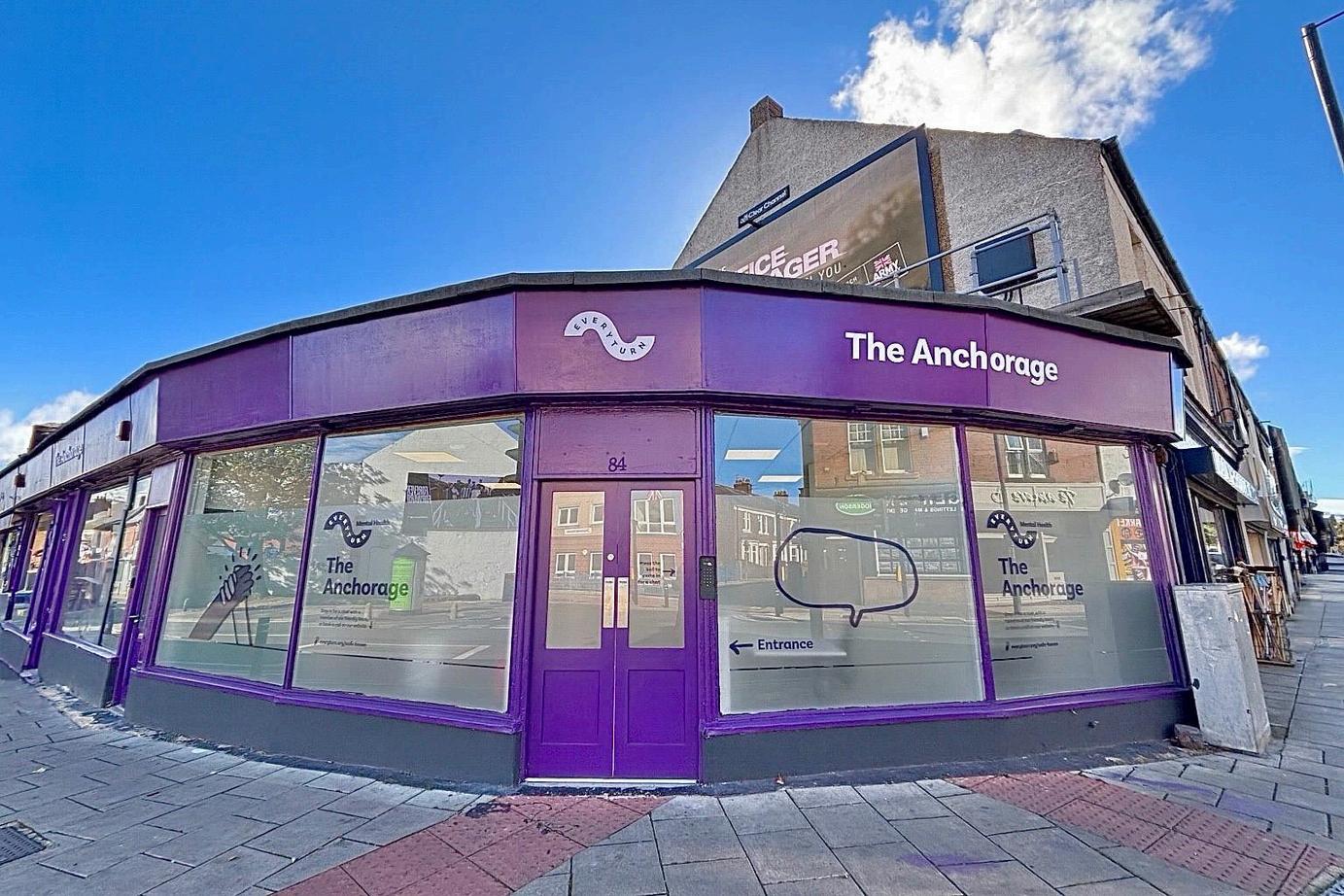
The Anchorage,our safe haven in North Tyneside
Community mental health 1:1 services
We deliver our specialist non-clinical mental health services because we know that life can be really hard for people, and we want to make sure they don’t have to go through those tough times alone.
We understand the pressures that statutory services are under, so we work in partnership with specialist teams, acute hospitals, and GPs to get people the right treatment at the right time.
Our community services continue to support people with a wide range of complex mental health needs. Our services have remained diverse to meet those needs, including:
Delivering community mental health support services.
Annual health check support for people with serious mental illness.
Social prescribing and mental health support in primary care.
Recovery colleges
Northumberland Recovery College and Kind Mind Community in South Tyneside have 1,123 students enrolled.
Our colleges provide a range of accessible, group-based support and activities that improve mental health and wellbeing. These include courses on confidence and resilience, physical fitness groups, and singing groups - among many others.
Our colleges provided 1,975 sessions, courses, and drop-ins, providing social connections, support, and friendships. By providing sessions focused on mental health and wellbeing, people are able to stay well for longer and have less need for clinical support or hospital re-admission.
Each person who joins a recovery college completes a Short Warwick-Edinburgh Mental Wellbeing Scale (SWEMWBS), a mental wellbeing scoring tool, at the end of their journey with us.
VCSE
We’re proud to continue to lead Northumberland’s VCSE Mental Health Alliance. The Alliance is a strong, community-based partnership of 54 partners and a wider network of 114 voluntary, community, and social enterprise organisations. It provides a direct link between community mental health transformation and the community.
Our strong governance framework allows the Alliance to allocate funds to community mental health projects.
To date, Alliance small grants have funded 31 projects across Northumberland, supporting clinical provision by providing wraparound care for people with complex mental health conditions.
By harnessing the knowledge and skills of the local community providers through contracts and grants, the Alliance funds support to help people with complex mental health issues in Northumberland to live fulfilling lives.
This year, the Alliance has developed its brand and social media presence enabling increased connection and information sharing between partners, insightful friends, and Northumberland communities.
Experiences of the people we support
Adult nursing services - Mark’s story
Mark is in his fifties and has struggled with anxiety and depression for much of his life. He had several years of feeling stable, having what he described as a ‘normal life’ with his wife and children. But around a year ago, his anxiety increased and his low moods became more frequent.
Mark had help from his GP, talking therapies, and helplines, but it felt like nothing was working. He also started to feel that his antidepressants were no longer helping, so he stopped taking them.
As Mark’s depression deepened, relationships in his family became strained, and he turned to alcohol and drugs to cope. After an argument at home, he was asked to leave. Mark was feeling overwhelmed, so he went out with friends, used substances, and later attempted to end his life. Thankfully, Mark was found and taken to A&E, before being referred to crisis services.
As Mark’s support network felt broken, and he was having ongoing suicidal thoughts, he needed a space to recover - so he was offered a place at Coalway Lane, one of Everyturn’s specialist nursing services.
During his three-week stay, our team gave Mark consistent emotional support, monitored his risk closely, and helped him to re‑start his medication. He learned coping strategies, including how to safely use medication. Our team worked to build trust with Mark, something he’d struggled with before.
When Mark arrived, he felt hopeless. By the time he left, he was motivated, thinking about work, and ready to return home.
Recently, Mark visited Coalway Lane to thank the team, sharing that he’d fully recovered, returned to work, and even earned a promotion. His gratitude was a powerful reminder that the right support at the right moment can transform a life.
Dementia services - Joan and Gerry’s story
Joan and Gerry have been married for many years. Gerry is a retired military officer, with a 30-year career he’s proud of.
Joan has a sharp wit and is devoted to Gerry.
Things were going smoothly in their lives together, until a year ago when Joan began to feel a little bit ‘foggy’ and mixed up.
Gerry and Joan’s sons all live abroad and Joan mentioned to them on the phone how ‘off’ she was feeling. She told them she’d started to write everything down: ‘Can you believe it, your mother needing a note pad?’
Joan has since been diagnosed with dementia, and has started being supported by our community behaviour support service (CBSS). Our team visits people diagnosed with dementia, and their loved ones or carers, to help improve and maintain their quality of life.
Last year, Gerry was diagnosed with incurable cancer and he’s since decided against having any more treatment.
‘I feel rubbish enough!’, he reminds our CBSS team every time they visit, laughing and joking about it to them.
Since Gerry’s diagnosis, Joan has stepped up to care for him. Alongside managing her own dementia diagnosis, Joan makes sure Gerry is cared for and gets out for his fresh air each day.
Our CBSS team has been able to support Joan to find a ‘lovely little local group I can go and have a whine to’. Joan really enjoys meeting with the group and finds it relieves her feelings of frustration.
Although, in Joan’s words, she and Gerry are navigating the ‘horrible stuff’ in their lives, they feel it’s more manageable with the support they have from the ‘two lovely girls’ from our CBSS team. They appreciate having people to check in with them to ‘see how we are and have a nice chat’.
Our team is proud to have supported Joan and Gerry in their own home. They’ve worked with their family to create a support plan that’s centred around what Joan and Gerry need and want.
Feedback from our Community Services service users
Primary Care Network (South Tyneside)
"You are not judgmental, you are easy to talk to"
"You've been such a big help, its never been like this with other mental health people, talking to you makes me feel lighter"
Moving Forward Service
"I am genuinely feeling more hopeful after our conversation, it’s been enlightening. When I’m in a supportive environment like you’ve given me it enables me to have a more positive perspective."
"I definitely feel you have helped me, I like to start something with you then I have the motivation to carry on – thank you so much. I really appreciate your straight forward approach."
NewcastleWellbeing Support Service
"I've felt really supported with things that I haven't been able to speak to anyone else about - I've known you were there."
"It is you that helped me to believe in myself and look at myself with more kindness."
Children and young people’s counselling - Lex's story
Lex is 19 years old and identifies as gender fluid. They live with their parents and have a diagnosis of autism.
When Lex came to our counselling service for young people, they were anxious and stressed and had been struggling to sleep. They told us that they’d been sexually assaulted by their partner, which they’d reported to the police and were waiting for the outcome.
Lex had dropped out of college and was struggling with their relationships at home and with friends. They were also having suicidal thoughts and had turned to using drugs to help them sleep.
Lex’s counsellor asked what changes Lex was hoping to see, and Lex was able to set their own goals. Together, Lex and their counsellor explored what they’d need to change or let go of in order to achieve these goals. Lex found psychoeducation helped them to understand themselves.
During their therapy, Lex started to put boundaries in place to manage unhealthy relationships. This helped them feel safer and reduce their use of drugs.
They enjoyed working in a creative way in counselling, including guided imagery and art. They attended 10 sessions before they felt they’d achieved their goals.
As a result of their therapy, Lex became able to self-regulate. They went back to volunteering in the arts sector, successfully completing two projects before joining a college course linked to the arts. Lex also started a new relationship that they felt secure in, and made a new group of friends.
The counselling helped Lex to set boundaries and identify triggers from their past. While they’d begun therapy with no view of what their future could look like, by the time they ended they’d made huge progress in starting their college course and volunteering regularly.
Our colleagues and their wellbeing
Investing in wellbeing
Our colleagues work in emotionally,intellectually,and physically demanding roles,often alongside wider pressures such as rising living costs.All this means it’s more important than everthat we invest in wellbeing,development,and support.
This year we launched a new Wellbeing Hub on our intranet, bringing all wellbeing support into one accessible place, including:
Leave entitlements and volunteering opportunities.
Access to our wellbeing provider,Smart Clinic.
Financial wellbeing support,including salary draw down via the Stream app.
Manager guidance and pension advice.
Tailored support for parents and neurodivergent colleagues.
In January 2025,we moved to a new wellbeing provider, introducing Smart Clinic Enhanced+ in response to colleagues requesting more mental health support and improved self‑service access.
Since the launch,Smart Clinic has been very positively received, with our colleagues giving it an average satisfaction score of 4.69 out of 5.
Learning and development
We’ve also significantly expanded our learning and development offer,with colleagues completing 25,800 learning hours this year across 500+ courses on topics including clinical excellence,inclusive practice,leadership and management, wellbeing and resilience,and safeguarding and safety.
By investing in career development,16 colleagues started new apprenticeships this year,among our 29 active apprenticeship programmes across the organisation.
We continued our leadership development programme and launched the first Future Leaders series with 15 participants - 12 of whom were subsequently promoted to new roles.Through our focus on internal progression,4.5% of our colleagues were promoted or moved into new internal roles this year.
Listening to ourcolleagues
We engaged with our colleagues through a rolling programme of 30 listening sessions,led by our executive team and trustees.These sessions were safe spaces to share experiences,raise concerns,and guide improvement.
We continued to engage colleagues through networks and forums including LGBTQIA+,menopause,neurodiversity,and our workplace experience group,alongside introducing racial equality listening circles in partnership with Business in the Community.
47.3% of our colleagues responded to our experience and wellbeing survey.The responses showed strong foundations in meaning,inclusion,psychological safety,and work–life balance,while also highlighting areas such as anxiety and overwhelm where we need to give more support.
Living ourvalues
We celebrated colleagues’contributions through recognition programmes,leading to 269 nominations for our bi-monthly Values Awards and 157 nominations forthe annual Everyturn Awards,held in June 2025.
Photos from our 2025 Everyturn Awards
Our quality priorities for 2026/27
To allow us to achieve ourquality and safety outcomes by 2027,these are our2026/27 priorities:
Delivering care in a way that reduces the risk of things going wrong.
We will continue to build on our safety culture by: We will strengthen our incident management system to ensure learning is identified and shared to reduce harm to service users and staff. We will implement a Quality Improvement methodology to further improve our services. We will refresh our organisational risk register to strengthen our risk management processes.
Priority 2: Effective, accountable and engaged leadership
Accountable and compassionate with shared vision, values and learning.
We’ll do this by:
We will further strengthen our governance arrangements and strengthen flow of information through review of our committees and forums. We will use our listening sessions, speaking up processes and staff get togethers to identify themes and trends to improve the experiences of our staff and service users. We will further improve our Policy management systems and processes through a digital platform.
Priority 3: Greater clinical effectiveness
Giving the right care, at the right time, in the right place.
We will develop this by creating Everyturn's clinical strategy:
We will develop our Safe Practice Strategy as a structured approach to improve care quality and outcomes. We will create a clinical community as a support, guidance and learning environment for our clinicians. We will create a data digital platform to improve access to data for innovation, research, and technology‑enabled care.
Priority 4: Positive experiences
The people we support and their carers inform all of our work.
We’ll do this by:
We will use a digital platform to improve processes for capturing and monitoring feedback including compliments and complaints to improve oversight. We will implement our Service User Engagement Framework to ensure their voice is embedded and at the heart of decision making. The Outcomes Project, currently one of our strategic activities, will produce tangible data and action plans to address experience and outcomes for those with health inequalities across all operational services.
Priority 5: Children and young people’s services
We enhance delivery within our expanding children and young people services.
We’ll do this by:
We will work closely with young people and key partners to continually monitor and review our processes, to grow our impact and give positive experiences. We will launch our new electronic care record to save administration time and improve continuity of the support we offer. We will evaluate the impact our CYP services have on the wider. health and social care system through the project outcomes workstream.
Everyturn Mental Health is the trading name of Everyturn a registered charity (charity number 519332) and a company limited by guarantee registered in England and Wales (company number 02073465) and Everyturn Services Ltd, company registered in England & Wales (company number 4391008).