
PiC
Elisabet Krisnanda Arneti
Gracia Tiffany Gow
Keisya Shafwa Raisa
Laurence Emerson Mulia

Elisabet Krisnanda Arneti
Gracia Tiffany Gow
Keisya Shafwa Raisa
Laurence Emerson Mulia
Written by Karina Sekar Utami
As a country with a democratic and presidential system of government, Indonesia employs a general election system to determine its head of state and legislative members as stated in Article 22E section (2) of the Constitution. The drafting of laws related to election must be carried out with great care and thoroughness to ensure the realization of free and fair elections. Consequently, in recent years, public discourse has been increasingly focused on the Election Law Revision, which sparked different views and opinions among society.

This situation arose since the implementation of the Law No. 7 of 2017 (Election Law) in 2019, which appeared to be ineffective because it required more time to elect the president and legislative candidates, complicated logistical preparations such as the preparation of forms and ballots, and also lacked transparency in the vote-counting process. In addition, there are several points that remain crucial and necessitate revision, namely the electoral system, accessibility, voter registration, public participation, and political party registration.
Election Law Revision has become a widely debated topic because it introduces several critical issues aimed at improving the quality of democracy and electoral integrity in Indonesia. These include the open-list proportional representation system, the elimination of the presidential nomination threshold, the re-evaluation of the parliamentary threshold, the vote-to-seat conversion mechanism, and the separation of schedules between general elections and regional elections. Furthermore, these crucial issues must be carefully assessed and continuously monitored to prevent electoral fraud, misuse of the law, thereby ensuring the legitimacy of elections that are fair and democratic.
If the Election Law Revision is enacted before the next general election, which is in 2029, several consequences may arise. These includes a shift to closed-list proportional electoral system, which could potentially reduce vote-buying practices. Moreover, the elimination or modification of the parliamentary threshold may lead to a greater number of political parties or small coalitions nominating their own candidates, and lastly some changes to the schedules of the national regional election may significantly impact the quality of the electoral process. As citizens of a democratic country, it is crucial to remain vigilant and proactive in overseeing the Revision of the Election Law to ensure that any amendments genuinely reflect the voice of the people and are coherently formulated.
SOURCES:
TESTIMONY: “WORDS FROM BEM FH UI ABOUT “REVISION OF THE ELECTION LAW, TIME FOR A COMPREHENSIVE EVALUATION?”
Written by Cleodisha Naura A.S.
What is your opinion, as the Head of BEM FH UI 2025, regarding the urgency of revising the Election Law?
According to Abang Fawwaz Farhan, the Head of BEM FH UI 2025, the urgency is clear more than 155 revisions have been annulled by the Constitutional Court, proving the necessity for urgent discussion. Regarding which points need revision:
First, The electoral system: openor closed list? Whether we will maintain the open-list proportional system or move towards a closed-list system. Overtime, The Constitutional Court leans more towards open-list systems, affirming it to be the most democratic, yet left room for future evaluation and must clearly be stated in the law.
Second, Election scheduling: simultaneous or separate? Many voices from the General Elections Commission (KPU) and electoral pillars prefer separating them, which must be included into the codification of the Election Law.
Third, Recruitment of election organizers Currently, recruitment is delegated to regional authorities, causing cases where organizers are appointed just weeks ormonths before the presidential election. It would be better for this to be regulated nationally.
Other concerns such as:
Inclusivity in elections, particularly concerning persons with disabilities and Indonesian citizens abroad.
Electoral threshold, especially re-evaluation on the 4% parliamentary threshold based on Constitutional Court Decision No. 116/PUU-XXI/2023.
In your opinion, who will be most affected if this revision is passed without thorough evaluation?
According to Abang Fawwaz, the first and most affected party will be Indonesian citizens as the voters in 2029. The second being those running for office legislative candidates, presidential candidates, and regional head candidates. Lastly, the political parties themselves, as they must strategize and calculate vote shares, especially when deciding who is first or second on their candidate list.

M. Fawwaz Farhan Head of BEM FH UI 2025
TESTIMONY: “WORDS FROM BEM FH UI ABOUT “REVISION OF THE ELECTION LAW, TIME FOR A COMPREHENSIVE EVALUATION?”
Written by Cleodisha Naura A.S.
Does BEM FH UI see the urgency to actively respond to this issue? If so, in what form?
BEM FH UI clearly sees this as an urgent matter. We believe codifying the Election and Regional Election Laws into a unified regime is crucial and urges for the revision process to start early to ensure meaningful public participation. Concretely, on June 13, 2025, BEM FH UI organized a public discussion on elections, focusing on representation of marginalized groups, especially women exploring how women can participate in Indonesia’s political processes. BEM FH UI is committed to advocating for the rights of marginalized communities, including persons with disabilities, both as voters and candidates.
What role does BEM FH UI expect students to play in addressing the issue of revising the Election Law?
BEM FH UI hopes students will engage in deliberative discussions, producing critical ideas. For example: “Which electoral method suits Indonesia best? Open-list, closed-list, or mixed proportional?” Such discussions can be presented through seminars, infographics, or other public formats. These contributions can be considered during public hearings (RDPU) as part of public dissemination. Abang Fawwaz also hopes for early awareness among students regarding the urgency of this revision. Even though 2029 seems distant, discussion must start now to ensure meaningful students’ participation in the revision of the Election Law.
Mention and explain one critique from BEM FH UI of the open-list proportional system in elections!
One criticism of the current open-list proportional system is that, although it is more democratic, connecting voters with their candidates also opens the door to money politics. Voters may choose candidates who are wealthy, campaign aggressively, or are popular without truly understanding the candidate’s substance. Creating a populist dynamic, where the rich win. Another downside is wasted votes due to the electoral threshold. Even if a candidate receives many votes, if their party fails to meet the threshold, their votes may be discarded. Thus, while open-list has advantages, it also presents serious challenges just like the closed-list system, each has its pros and cons.
Written by Olivia Mecca Efendi Putri
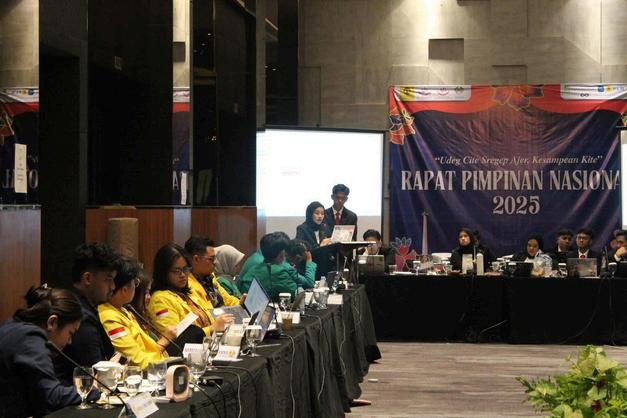
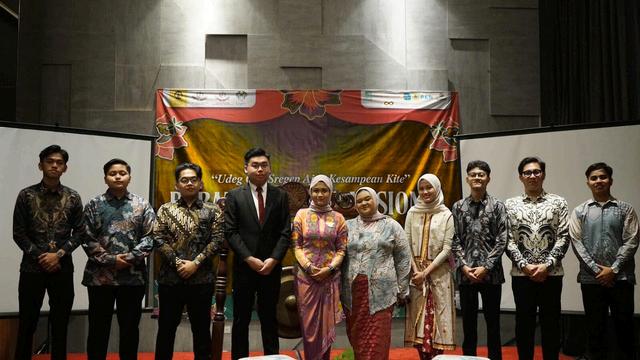
Rapat Pimpinan Nasional 2025 (RAPIMNAS 2025) is one of the national events of ALSA Indonesia, with ALSA LC UI as the host of this year ’ s event following the election of Pinki Kasturi from Universitas Indonesia as the President of ALSA Indonesia 2025-2026. The event aimed to serve as a platform for aspirations for each Local Chapter and to provide insight about the National Board and various Local Chapters.
RAPIMNAS 2025 was held on May 16th–18th, 2025 at Akmani Hotel, Central Jakarta, bearing the theme that was stemmed from the Betawinese language, “Udeg Cite Sregep Ajer, Kesampean Kite,” reflecting the spirit of relentless effort and unwavering determination. It emphasizes the power of pursuing our dreams together, driven by perseverance and teamwork. With every step forward, we move closer to realizing our shared goals.
Participants who attended RAPIMNAS 2025 were representatives from the International Board, National Board, Local Boards from each of the 15 Local Chapters in ALSA Indonesia, as well as 1 observer from Universitas Lampung. The agenda of this event consisted of the inauguration of the National Board, discussing the work programs of ALSA Indonesia, as well as bidding and progress reports of the national events. Parades have become this year ’ s new signature agendas to appreciate the presence of the delegates and celebrate their cultures.
This work program is one of many exciting events in ALSA. Make sure you don’t miss out on upcoming events by staying tuned to ALSA LC UI’s social media!
Written by Verda Maritza Bustomi
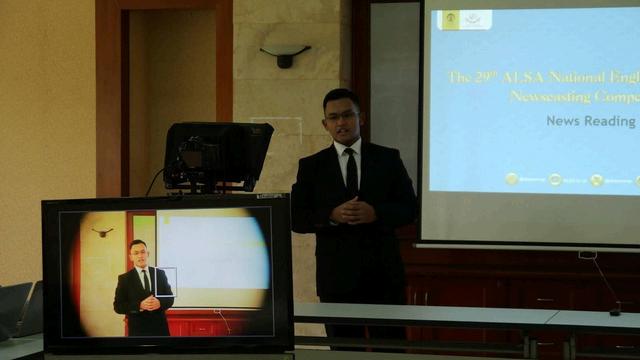
ALSA National English Competition or ALSA E-Comp is back this year as the biggest English competitions in Indonesia. The theme of “Protecting Biodiversity” and the tagline of “Embrace Humanity, Protect Biodiversity,” not only focusing on the English skills, but also the message on the importance of maintaining biodiversity which is the basis of a healthy ecosystem.
There were eight branches of competition, namely Debate, E-MUN, Speech, Storytelling, Newscasting, Spelling bee, Paper Presentation, and Short Story Writing. One of the highlights this year came from the EMUN branch, which used a new format with the Dewan Perwakilan Rakyat (DPR) system. Participants represented political parties and simulated a board discussion on the issue of land acquisition from indigenous communities in Kalimantan due to the Ibu Kota Nusantara (IKN) infrastructure development project. This experiment was a way to broaden participants' horizons, especially about political dynamics and legislation.
In general, the enthusiasm of this year ' s participants was extraordinary. Many came from various high schools and universities, with the Debate and Speech Competitions being the most popular. One of the most memorable moments of the event came from the Storytelling Competition, where participants managed to bring various characters to life very impressively.
The Opening Ceremony held in the evening was also an unforgettable moment with beautiful auditorium decorations and traditional dance performances from the Komunitas Tari FISIP (KTF) Universitas Indonesia. This builds a warm and energetic atmosphere. Marking the start of months of hard work for the organizing committees.
According to Abang Fadhil Hakim, the Project Officer, the biggest challenge of this year ' s event was maintaining the motivation and enthusiasm throughout the event. However, there were also many important lessons learned, especially about patience and the importance of fast and effective communication. Hopefully, next year ' s ALSA E-Comp can continue to grow, reach more participants, and remain a safe and inspiring space for young students to develop and excel.
Written by Ayeesha Soraya Karima
Finals are over, hours spent studying and understanding legal substances have passed! But let’s be honest, studying always feels a little better with the right music. So, we ’ ve gathered some playlist recommendations from our fellow FH UI students to accompany your next study session.
“Honestly my preferences change from time to time, but currently, my favorite songs are “Who’s Holding Donna Now?” by DeBarge and “Rainy Days” and “You” by Karimata, as both artists remind me of my dad. I love the nostalgic feeling of “Who’s Holding Donna Now?” and the soothing jazz arrangement of “Rainy Days” and “You”, especially the emotionally rich bridge that feels heartfelt and uplifting.
Meanwhile, the best “study” music depends on the type of task and what helps you focus. Slow genres like classical or instrumental jazz can be played while doing a deep reading or writing. I prefer lofi hip-hop or chillhop that provides a study rhythm that helps to focus for memorization or repetitive tasks. Moreover, I find music like heavy metal and hardcore EDM less suitable for studying, because that can distract me in study sessions due to their intense sounds and fast tempo. I prefer music that helps me to focus instead of pulling my attention away, though I know everyone ’ s preferences can be different.”

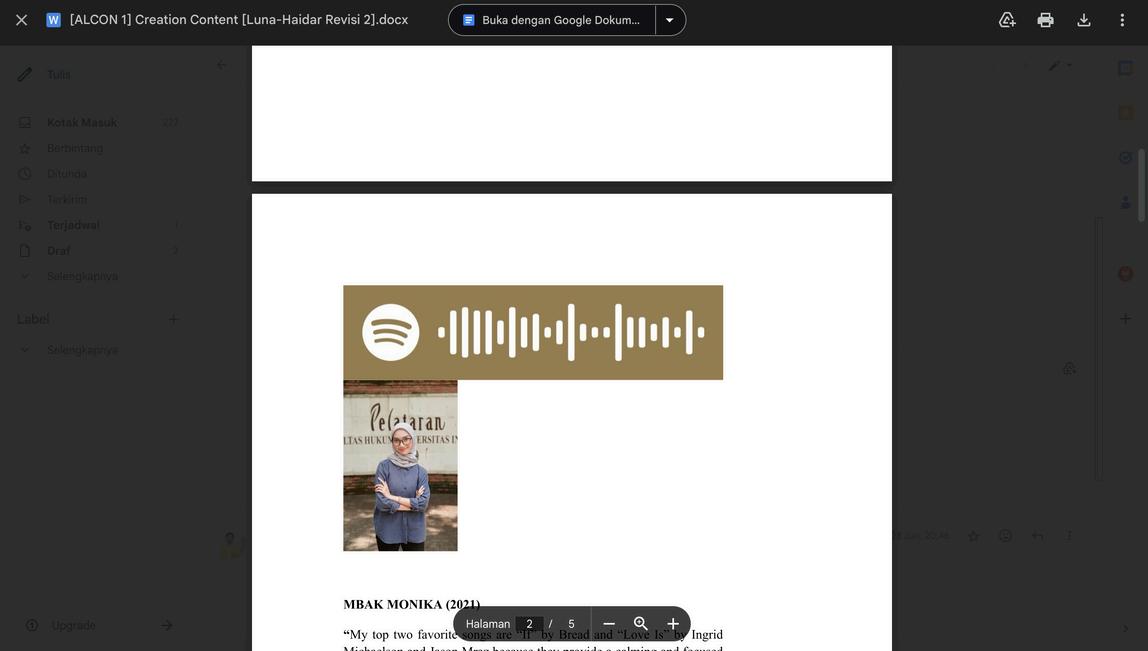
Written by Ayeesha Soraya Karima
“My top two favorite songs are “If” by Bread and “Love Is” by Ingrid Michaelson and Jason Mraz because they create a calming and focused atmosphere, even during stressful days. “If” feels like a quiet, soothing conversation that keeps me concentrated, while “Love Is” offers a warm, soulful hug that helps me stay relaxed whenever life gets tough. For me, the best genres for studying are soft pop, soul, and mellow jazz, emotional yet calming. These help soothe my mind without distracting me, and make me feel less anxious while working on heavy academic related stuff, especially those related to legal reading and writing. In my opinion, EDM, rock, and power ballads are unsuitable for studying because of their strong vocals and intense beats. Instead of focusing, I ended up mentally performing in the concert to listen to that genre. ”


MBAK MONIKA (2021)
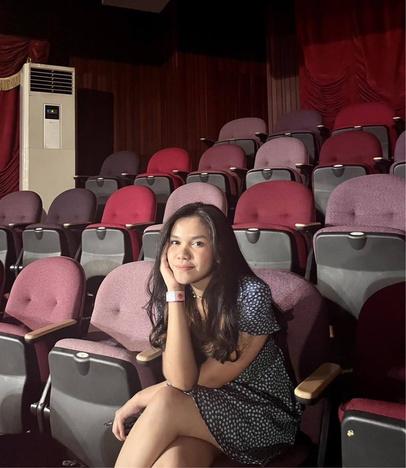

MBAK WENING (2023)
“Overall I don't have a favorite on this playlist. When studying, I prefer R&B pop and instrumental music (at least for me personally). They have a smooth and relaxing vibe that helps me stay focused without feeling stressed. The rhythm is serene, and if the lyrics aren’t too distracting, it creates a nice background ambiance that keeps me in the zone. In my opinion, sad songs with emotional lyrics are not suitable for studying. I usually enjoy the genre, but when the lyrics are too melancholic, they can really distract me from what I’m studying. That makes it hard to concentrate and stay productive!”
Written by Meisya Indah Fahira

The much-anticipated orientation program of the Law Faculty of Universitas Indonesia (FH UI), Penerimaan Mahasiswa Baru Fakultas Hukum Universitas Indonesia 2025 (PMB FH UI 2025) is coming soon. This year ’ s theme, “Atlantis Odyssey,” invites freshmen to dive into a journey of discovery in the world of legal education. The tagline “Dive into Knowledge, Explore Your Potential,” aims to help freshmen uncover their unique strengths while embracing the values of Dharma (responsibility and growth) and Karuna (compassion and empathy), in line with the spirit of IKM FH UI.
What’s different this year is the deeper focus on internal campus life. Beyond introducing academic culture, it also highlights the people who bring FH UI to life, from lecturers and student leaders, to staff and campus caretakers. This approach encourages a sense of belonging and gratitude early on, fostering meaningful connections between students and the broader FH UI community.
The Project Officer, Abang Adhyaksa Aditya, hopes that through this program, new students will gain fresh perspectives, grow closer to one another, and develop a strong sense of social responsibility. As their first bridge into university life, PMB FH UI 2025 is set to be a transformative experience that marks the beginning of their journey not only as law students, but as future contributors to society.
Accordingto BEM FH UI 2025,Who will be most affected if the Election Law is changed without a thorough assessment?
A. Constitutional Court members
B. The electorate participatingin the election in 2029
C. The Commission for General Elections (KPU)
D. International election observers
Whatisthemainobjectiveofthe playlistsuggestionsthatthe studentshaveshared?
A.Tohelpstudentsunwindand concentratewhiletheyarestudying.
B.Toamuseduringfreetime.
C.Tosupportmusiciansfrom Indonesia.
What does the tagline PMB FH UI 2025 “Dive into Knowledge, Explore Your Potential” aim to achieve?
A. To motivate students to concentrate only on their academic achievement
B. To advertise for worldwide legal internships
C. To encourage students to compete with one another while embracing progress and empathy
D. To assist freshman in discovering their strengths
7WhatisthemainobjectiontoLawNo. of2017concerningIndonesianAelections?
.ItpermitsoverzealouspoliticalBengagement.
p.Itresultsininefficienciesin Croceduresandlogistics.
v.Itmakestheprocessofcounting Doteseasier..Closed-listproportional representationissupported.
.ThecelebrationofBetawineseculinaryculture 1 2 3 4 5 6
D.TobereadyforFHUIkaraoke competitions.
WhatwasThe29thALSANational
EnglishCompetition’scentraltheme?
A.ProtectingBiodiversity
B.EmbracingDiversityviaDiscussion
C.UnifyingLanguage
D.EmpoweringandLeadingYouth

RWhatisthemeaningbehindthethemeof KAPIMNAS2025,“UdegCiteSregepAjer, AesampeanKite”?
.TheimportanceofpoliticalBparticipationinelections .Thepowerofpursuingdreams ttogetherthroughperseveranceand Ceamwork
.ThesignificanceofmaintainingDnationallegaltraditions