


Linde Advanced Material Technologies has shaped the additive manufacturing landscape with consistent commitment and expertise.
As a global leader and pioneer in gas-atomized metal powder innovation, we deliver more than just materials, we deliver confidence. Industry leaders in aerospace, medical, energy, and industrial sectors rely on our TRUFORM™ metal
powders for their most critical applications, knowing every batch is engineered to meet the highest specifications.
When your projects demand uncompromising performance and proven reliability, partner with the experts who have set the standard for quality and consistency. Choose Linde AMT—the trusted name in additive manufacturing materials.
PUBLISHER & CONTACTS
Inovar Communications Ltd
11 Park Plaza
Battlefield Enterprise Park
Shrewsbury SY1 3AF
United Kingdom
Tel: +44 (0)1743 469909 www.metal-am.com
Managing Director & Editor
Nick Williams, nick@inovar-communications.com
Group News Editor & Director
Paul Whittaker, paul@inovar-communications.com
Advertising Sales Director
Jon Craxford
Tel: +44 (0)207 1939 749 jon@inovar-communications.com
News Editor
Amelia Gregory, amelia@inovar-communications.com
Charlie Hopson-VandenBos, charlie@inovar-communications.com
Features Editor
Emma Lawn, emma@inovar-communications.com
Technical Consultant
Dr Martin McMahon
Marketing Lead
Mulltisa Moung, mulltisa@inovar-communications.com
Production Manager
Hugo Ribeiro, hugo@inovar-communications.com
Operations & Partnerships Manager
Merryl Le Roux, merryl@inovar-communications.com
Office & Accounts Manager
Jo Sheffield, jo@inovar-communications.com
SUBSCRIPTIONS
Metal Additive Manufacturing is published on a quarterly basis as either a free digital publication or via a paid print subscription. The annual print subscription charge for four issues is £175.00 including shipping. Rates in € and US$ are available on application.
ACCURACY OF CONTENTS
Whilst every effort has been made to ensure the accuracy of the information in this publication, the publisher accepts no responsibility for errors or omissions or for any consequences arising there from. Inovar Communications Ltd cannot be held responsible for views or claims expressed by contributors or advertisers, which are not necessarily those of the publisher.
ADVERTISEMENTS
Although all advertising material is expected to conform to ethical standards, inclusion in this publication does not constitute a guarantee or endorsement of the quality or value of products or of the claims made by its manufacturer.
REPRODUCTION, STORAGE AND USAGE
Single photocopies of articles may be made for personal use in accordance with national copyright laws. All rights reserved. Except as outlined above, no part of this publication may be reproduced, modified or extracted in any form or by any means without prior permission of the publisher and copyright owner.
DESIGN AND PRODUCTION
Inovar Communications Ltd
ISSN: 2057-3014 ( PRINT )
ISSN: 2055-7183 ( ONLINE )
www.metal-am.com
© 2026 Inovar Communications Ltd


As the lead news stories in this issue of Metal AM magazine highlight, recent major investments in manufacturing capacity are reinforcing the critical importance of metal Additive Manufacturing to aerospace and defence.
Beehive Industries’ $50 million order for thirty EOS M 400-4 ONYX machines and Divergent Technologies’ new contract manufacturing facility and Monolith One platform reflect the expanding role of metal AM where performance requirements are high, supply chains are constrained and production speed is critical.
However, while defence may be attracting the headlines, it is far from the only sector driving industrial adoption. This issue examines applications in maritime, offshore energy and subsea engineering, where long lead times, ageing assets, obsolete tooling, geographically dispersed operations and the need to support low-volume, safety-critical components align closely with metal AM’s strengths.
DEEP Manufacturing applies large-format wire-arc Directed Energy Deposition to pressure-rated subsea structures and other marine components where scale, certification and material performance are central. Pelagus, meanwhile, combines digital inventory, qualified manufacturing networks and traceability to enable on-demand production of legacy spare parts for maritime OEMs.
Together, these companies show that metal AM’s next phase will not be defined only by defence programmes or headline capital investment. Increasingly, it is also being shaped by industries applying the technology to persistent manufacturing and supply chain challenges.
Nick Williams Managing Director

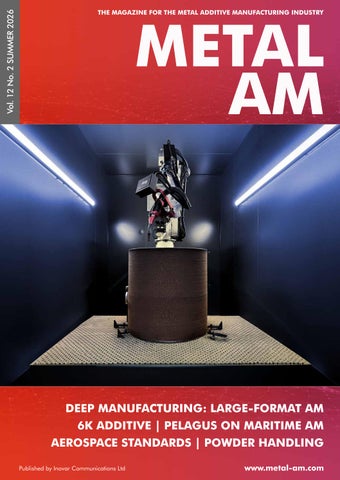
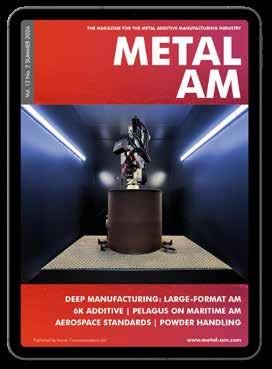
Cover image
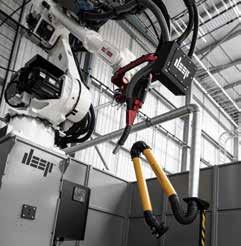
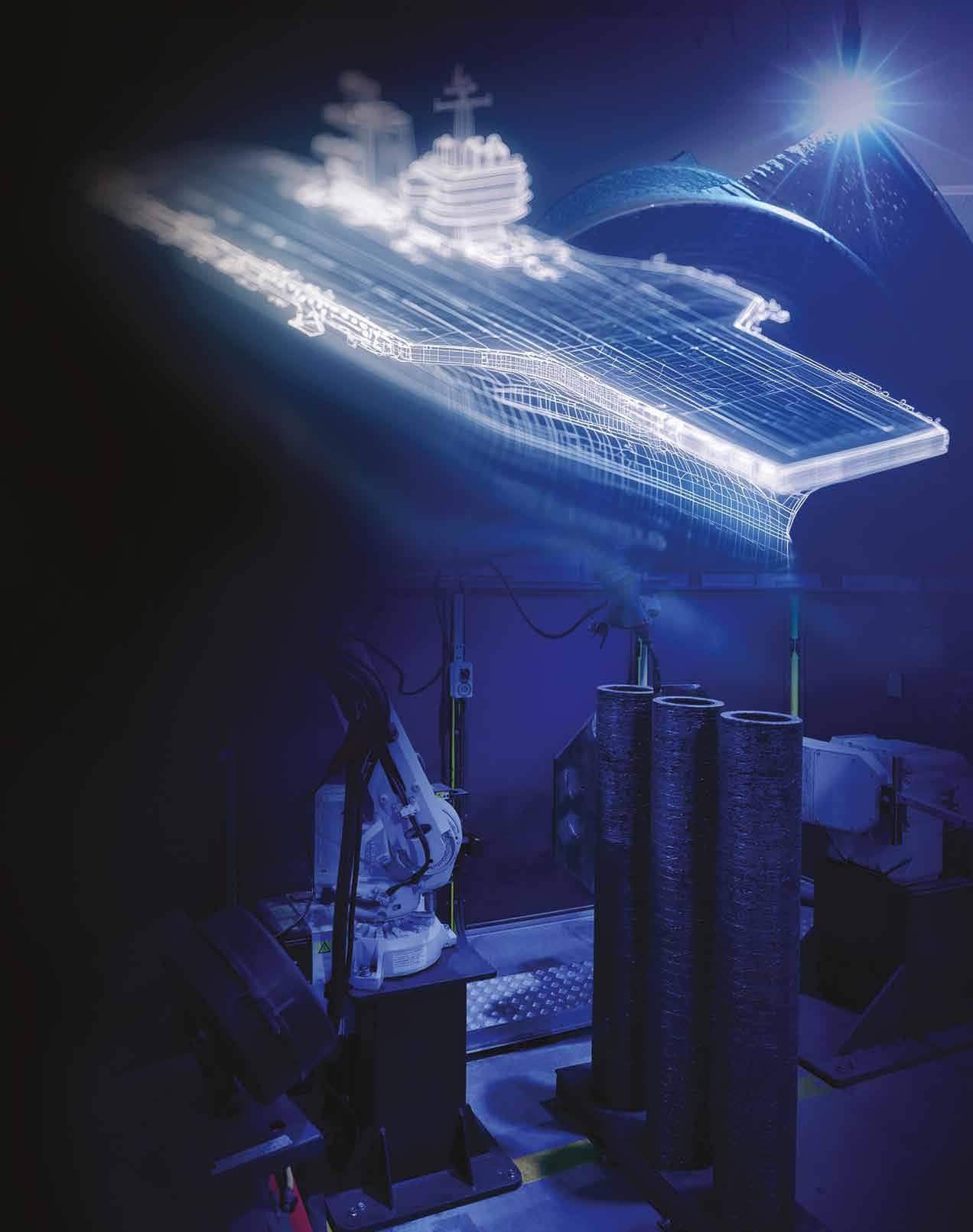
A robotic wire-arc DED system at DEEP Manufacturing’s Avonmouth facility, where the company is scaling large-format metal AM for subsea and industrial applications (Courtesy DEEP Manufacturing)
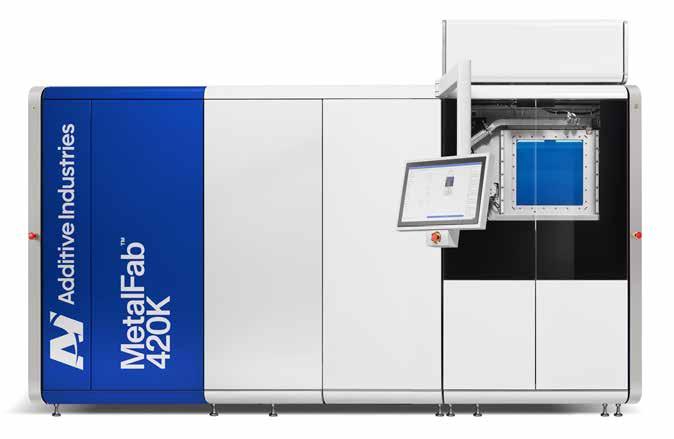

4 x 1kW full field lasers
Optimised gas flow for increased productivity & quality
Variable beam diameter on demand
Automated & in-process calibration
Modular & automated architecture

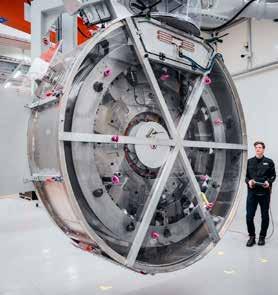
101 From requirement to reality: How DEEP Manufacturing is scaling large-format metal AM
DEEP Manufacturing is not a conventional metal Additive Manufacturing company. Established to support the wider DEEP Group’s ambition of enabling longduration human habitation beneath the sea, the privately backed organisation is part of a programme supported by more than $230 million in publicly reported investment across the UK and US.
Metal AM’s Martin McMahon, Emma Lawn and Nick Williams visited DEEP Manufacturing’s Avonmouth facility and spoke with COO Louise Slade about how an ambitious subsea habitat programme created one of the largest wire arc DED operations. >>>
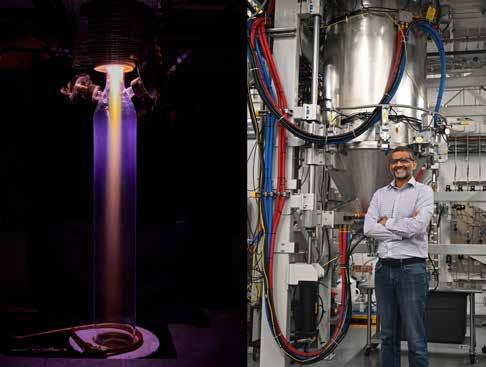
121 From titanium scrap to AM powder: Inside 6K Additive’s UniMelt expansion
As aerospace, defence and energy manufacturers look more closely at where critical metal powders come from, recycled feedstocks are moving from sustainability story to strategic supply chain issue.
6K Additive is addressing that shift by combining recycled metal inputs with UniMelt microwave plasma technology to produce titanium-, nickel- and refractorymetal powders for Additive Manufacturing and advanced industrial applications.
Following a visit to Burgettstown, Pennsylvania, Bernard North examines the technology, qualification activity and expansion strategy behind the company’s growth. >>>
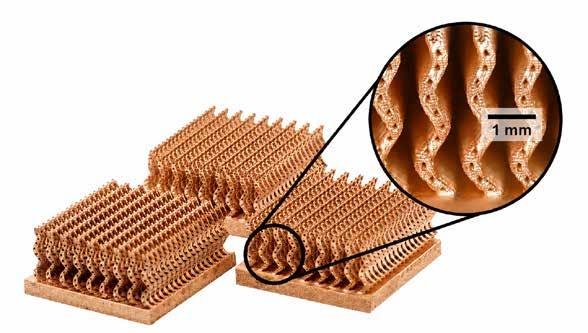
One of AM’s most demanding copper alloys—produced with unsurpassed cradle-to-gate traceability. Engineered for qualification without disruption: every raw material, melt parameter and atomization condition is controlled and documented under an AS9100-certified system. Delivering predictable performance helping you avoid delays, requalification or surprises—across critical, high-performance applications.
Explore how traceability keeps your qualification moving—without disruption.
135 Scaling metal AM for maritime spare parts: From legacy portfolios to on-demand supply
Metal Additive Manufacturing is increasingly capable of producing qualified end-use parts, but for maritime OEMs the greater challenge is delivering those parts consistently, securely and at scale. For operators supporting long-lived vessels and offshore assets, legacy spare parts present a persistent service and inventory challenge.
Håkon Ellekjær, CEO, and Scott Harding, VP Engineering, of Pelagus, a joint venture between Wilhelmsen and thyssenkrupp, examine how digital inventory, traceability and qualified manufacturing networks are enabling controlled, on-demand production. >>>
147 Building trust in flight-critical metal AM: Inside the SAE AMS AM standards committee
Standards rarely attract the attention given to new Additive Manufacturing machines, materials or applications, but in aerospace AM they are essential to progress.
Reporting from the SAE AMS AM Metals Sub-Committee’s spring meeting at GKN Aerospace in Trollhättan, Sweden, Chair Dr Tyler LeBrun offers an inside view of the consensus work shaping flight-critical metal AM, from machine qualification and process control to in-situ monitoring, powder management, Nadcap accreditation and future inclusion in MMPDS. >>>

Metal AM magazine is the only publication exclusively dedicated to covering the world of metal Additive Manufacturing. Our mission is simple: to be the leading source of knowledge for industry professionals while actively championing the adoption of metal AM technology globally.
Advertising with Metal AM is more than exposure; it is a strategic partnership that elevates your brand’s visibility and authority within the complex and multifaceted metal AM industry. Together, we can shape the conversation and accelerate the global adoption of metal Additive Manufacturing.
Discover our 2026 advertising & webinar opportunities > jon@inovar-communications.com
40,000+ metal AM professionals can’t be wrong Follow Metal Additive Manufacturing magazine on LinkedIn
Not when you have the right expertise behind you. With the right knowledge, it becomes a controlled, reliable, and repeatable process. At DSH Technologies, we turn process complexity into production capability.
Reduce Scrap Rate & Variability
Improve Yield & Consistency
Emergency Troubleshooting
Toll Debinding & Sintering

STOP GUESSING, START IMPROVING WITH DSH TECHNOLOGIES.

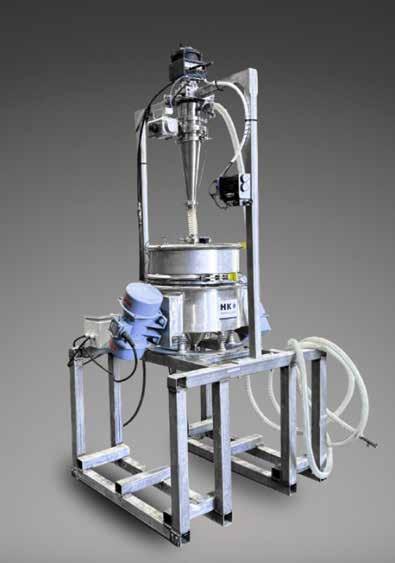
161 Incodema3D boosts metal AM productivity with HK Technologies’ VacuSift powder handling system
As Incodema3D scaled its EOS metal AM fleet to support aerospace, defence and energy production, manual powder recovery and sieving became a constraint on machine utilisation, material yield and operator efficiency.
Working with HK Technologies, the New York State manufacturer implemented the VacuSift Powder Conveying and Sifting System to automate powder recovery, screening and transfer.
In this article, HK Technologies describes how the implementation improved machine turnover, powder reclamation and workflow repeatability in high-volume metal AM production. >>>
171 Advertisers’ index & buyers’ guide
Our advertisers’ index serves as a convenient guide to suppliers of AM machines, materials, part manufacturing services, software and associated production equipment.
In the digital edition of Metal AM magazine, available at www. metal-am.com, simply click on a company name to view its advert, or on the weblink to go directly to its website >>>

The Metal Additive Manufacturing newsletter is sent to key metal AM industry professionals worldwide, twice a week. Register today to ensure you benefit from reading the latest industry news and advances in metal AM.
Newsletter subscribers also benefit from a free digital subscription to Metal AM magazine. As soon as each new issue is available we’ll send you an email containing a direct link to your free digital copy.
https://bit.ly/4eU06oj
Where metal additive manufacturing becomes industrial reality.
From precision prototyping to fully automated mass production.
ATLIX LPBF systems deliver a complete range of solutions designed to scale industrial manufacturing with unmatched reliability, repeatability, and efficiency.
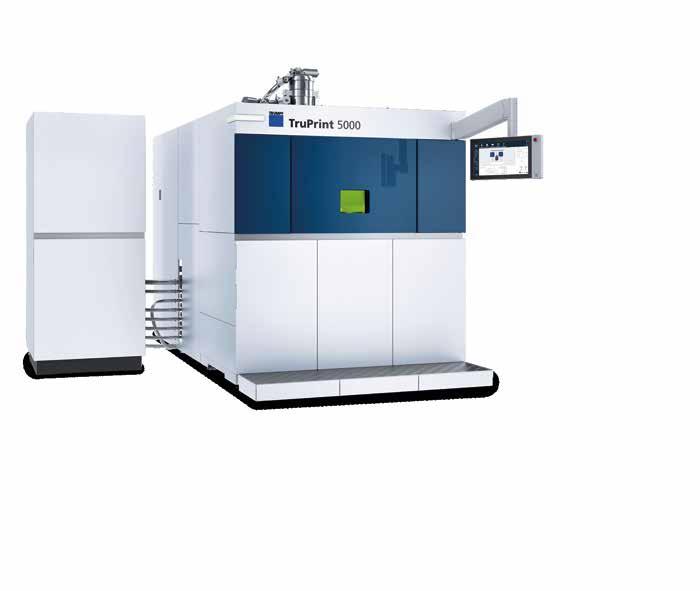
TruPrint 5000
Cost-effective automated production.
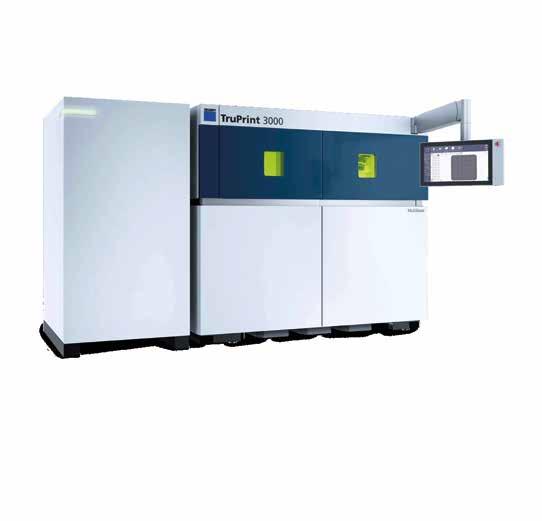
TruPrint 3000
Industrial production. Maximum versatility.
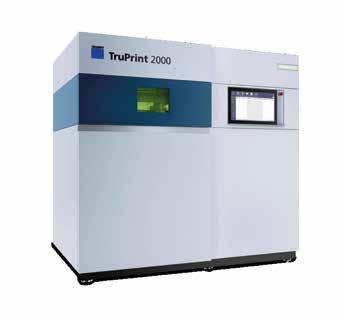
TruPrint 2000
High-quality medium parts.
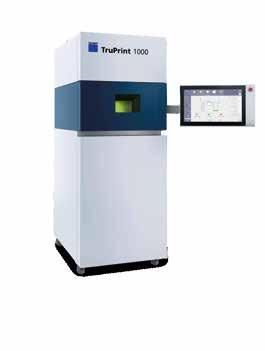
TruPrint 1000 Compact and precise.
atlix.com
sales@atlix.com
To submit news please contact Paul Whittaker, Group News Editor: paul@inovar-communications.com
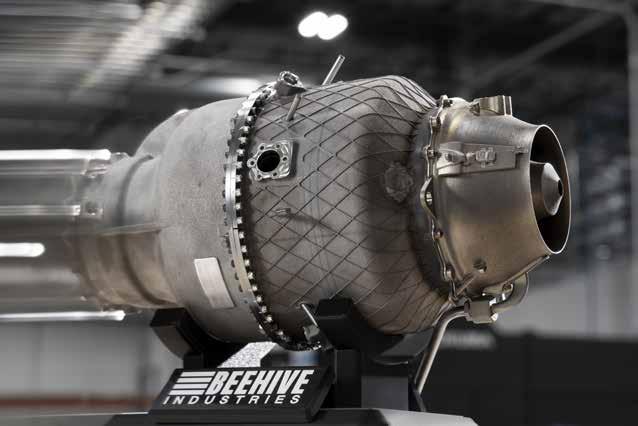
Beehive Industries, based in Denver, Colorado, USA, has announced a $50 million order for thirty EOS M4 ONYX Laser Beam Powder Bed Fusion (PBF-LB) Additive Manufacturing machines. The machines are expected to be delivered over the next twelve months to its facilities in Knoxville, Tennessee, and Centennial, Colorado. The investment will increase Beehive’s installed base to fifty EOS metal AM machines and support production of its flagship Frenzy 8 engine line.
“Beehive is experiencing unprecedented demand for our Frenzy 8 engines driven by major defense programs and the urgent need for affordable, high-rate production of uncrewed systems,” said Darius Ehteshami, COO and CFO of Beehive Industries. “Our expanded collaboration with EOS and this substantial investment in best-inclass 3D printers will significantly increase our production capacity while reinforcing our commitment to delivering scalable, American-made propulsion solutions that strengthen warfighter capabilities.”
Beehive Industries’ investments follow a series of major milestones, including successful high-altitude testing of the Frenzy 8 engine, flight readiness validation, and a recent $29.7 million US Air Force contract supporting vehicle integration, flight testing, and qualification of the propulsion platform. Beehive’s engines are specifically designed for swarm-class drones and other next-generation uncrewed aerial systems, enabling low-cost, highvolume production critical to evolving defence strategies.
“Choosing to expand our fleet with these 30 EOS M4 ONYX systems was a strategic decision driven by EOS’s willingness to truly partner with us. Throughout this process, the EOS team leaned in, worked creatively, and demonstrated a deep commitment to our long-term growth,” stated Jonaaron Jones, Beehive’s President of Additive Parts Sales. “We value this kind of collaborative, forward-thinking partnership, and it sets a high bar for our equipment suppliers as we continue to scale and meet our production goals.”
The EOS M4 ONYX features a six-laser architecture, an expanded build volume, and advanced process monitoring capabilities. The platform also includes EOS’ latest RFS Pro advanced powder filtration system, and is engineered
specifically for demanding industries, including aerospace, defence, energy, and aviation manufacturing. Beehive will also leverage EOS’ software to support real-time process monitoring, production data tracking, and quality management, helping improve repeatability and traceability across AM operations.
“Beehive Industries’ unprecedented investment demonstrates how additive manufacturing has become a foundational production technology for the next generation of advanced propulsion systems,” added Marie Niehaus-Langer, CEO of EOS. “The success of the Frenzy engine program highlights what is possible when innovative design and industrialised Additive Manufacturing come together. We are proud to support Beehive as they expand production capacity and accelerate the delivery of high-performance technologies to customers around the world.”
www.beehive-industries.com www.eos.info
Divergent Technologies, based in Torrance, California, USA, has announced the development of its Monolith One Laser Beam Powder Bed Fusion (PBF-LB) Additive Manufacturing machine. The company also announced plans to expand its manufacturing operations, with a new 40,000 m 2 facility in Long Beach, California.
The Monolith One has been designed for continuous, highthroughput production and is compatible with a range of standard engineering alloys, including aluminium, nickel-based alloys, steels and titanium. It has twelve 2 kW lasers and features a build volume of 700 × 700 × 835 mm. The machine has an integrated powder recovery and recirculation system, and its build plates incorporate heating and novel cooling controls capable of reaching 200°C.
The company stated that the Monolith One will not be commercially available for sale or licensing, but has been developed
specifically for integration into the company’s Divergent Adaptive Production System (DAPS).
DAPS is used to manufacture mission-critical metal and multimaterial structures for aerospace, defence and automotive applications. Its current customers include Lockheed Martin, RTX, General Atomics, CoAspire, Saab, Triumph Group, Bugatti and McLaren.
Integrating the Monolith One into DAPS is expected to provide greater process control and production efficiency, while supporting a domestic US supply chain, the company added.
“The Monolith One is the first metal 3D printer designed ground-up for scaled production of critical hardware,” stated Lukas Czinger, CEO and Co-Founder of Divergent. “Importantly, its design encompasses the years of operational insights we have earned delivering production structures to the defence and commercial sectors.”
The new machine is the result of twenty-eight months of in-house
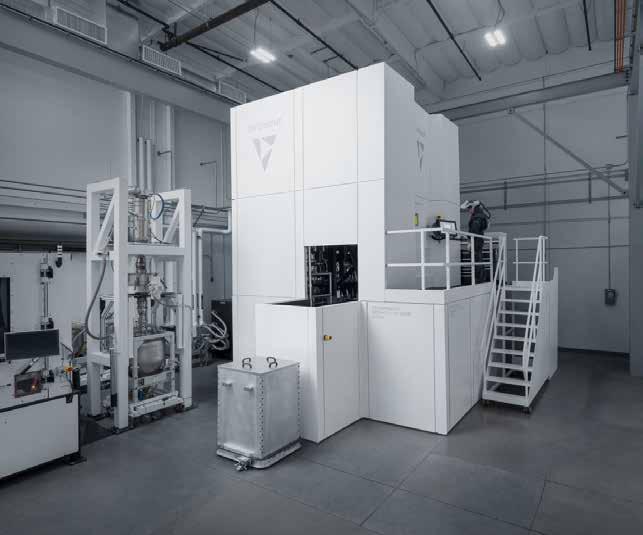

Divergent announced plans to expand its manufacturing operations, with a new 40,000 m 2 facility in Long Beach (Courtesy Divergent Technologies)
development led by Brian Erhartic, Chief Technology Officer. “Every feature of Monolith One was engineered to maximise reliability, scalability and control,” added Erhartic. “By starting from a clean sheet, our team has built an Additive Manufacturing solution that expands the overall performance envelope of DAPS.”
Expanding manufacturing capacity in Long Beach
Alongside the machine launch, Divergent announced plans for its second facility. The site will house sixty-four metal Additive Manufacturing machines, scheduled for installation over the next twenty-four months.
The new facility will provide capacity to produce tens of thousands of munition airframes or hundreds of thousands of critical components annually.
At full capacity, Divergent stated its new Long Beach manufacturing campus will support approximately 1,000 direct jobs and create thousands of additional indirect jobs through construction, local suppliers, and supporting businesses.
Founded in 2014, Divergent has expanded alongside Southern California’s advanced manufacturing and aerospace sectors. With the addition of the Long Beach facility, the company’s manufacturing footprint will exceed 51,000 m 2
Divergent has raised more than $1 billion since its founding, including a $290 million Series E funding round led by Rochefort Asset Management in 2025, which valued the company at $2.3 billion.
www.divergent3d.com
Biocompatible. Lightweight. High strength.
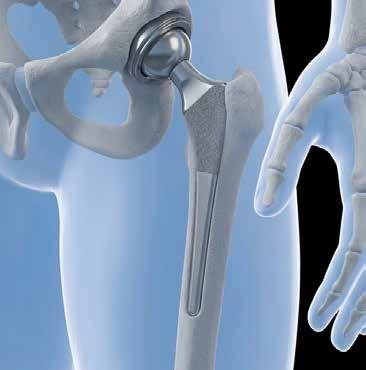
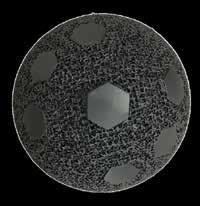
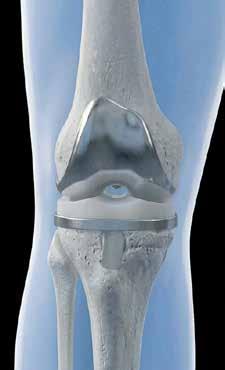
Additive Manufacturing is a well-established technology for tailor-made medical applications. MetcoMed builds on Oerlikon Metco’s long-standing materials expertise, offering two powders engineered for the demanding requirements of medical implants.
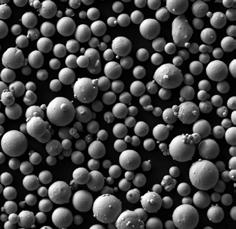
MetcoMed Ti-64 G23-C is a biocompatible titanium powder designed for medical applications, offering high load-bearing capacity, good ductility, excellent biocompatibility, and corrosion resistance.
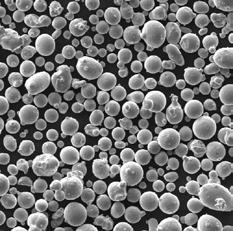
MetcoMed CoCr F75-A is a cobalt-chromium alloy for orthopedic and dental implants, combining high hardness with excellent wear and corrosion resistance, as well as antibacterial properties and support for cell adhesion and reduced inflammation.
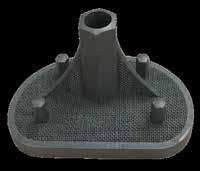

Titomic Limited, headquartered in Melbourne, Australia, has received a purchase order valued at €1.02 million (AU$ 1.71 million) from Royal NLR (Koninklijk Nederlands Lucht- en Ruimtevaartcentrum), the Netherlands’ national aerospace research centre. The order is for Titomic Cold Spray equipment with low-, medium- and high-pressure capabilities, supporting aerospace and defence research, sustainment, repair, coating, and Additive Manufacturing application development in the Netherlands.
Bert Thuis, Vice-President Aerospace Vehicles of NLR, stated, “NLR sees strong potential for
Titomic Kinetic Fusion technology in aerospace and defence applications, particularly in repair, coating and Additive Manufacturing. The addition of this capability will broaden our Cold Spray research and application development activities, and we look forward to working with Titomic in Heerenveen to advance these efforts in the Netherlands.”
Jim Simpson, CEO and Managing Director of Titomic, added, “We are proud to support NLR, one of the Netherlands’ premier aerospace research organisations, with Titomic Cold Spray capability. This order is an important validation of our technology for aerospace and
TDK Corporation, headquartered in Tokyo, Japan, has entered into an agreement to acquire Fabric8Labs, based in San Diego, California, USA, for up to $400 million. Upon closing, Fabric8Labs will become a wholly owned subsidiary of TDK.
Fabric8Labs uses its proprietary electrochemical Additive Manufacturing (ECAM) technology to produce metal components for a range of sectors, including data centres, aerospace, electronics and photonics.
“Joining TDK Group will give us the resources to scale our technology globally and to supply our current and future Tier 1 customers with the solutions they need with confidence in our ability to scale while we remain focused on our core mission,” stated Jeff Herman, CEO of Fabric8Labs.
The acquisition is reported to represent a key part of TDK’s strategic investment programme and aligns with its current medium-term
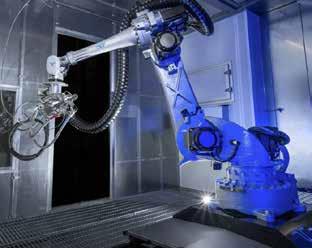
The order is believed to include a TKF 1000 Cold Spray Additive Manufacturing machine above (Courtesy Titomic)
defence applications, including repair, sustainment, anti-corrosion and Additive Manufacturing, and further strengthens Titomic’s strategic position in the Netherlands and broader European market.” www.titomic.com www.nlr.org
plan, which aims to accelerate its data centre initiatives. The move will enable TDK to expand its offering with an integrated solution incorporating mission-critical technologies, including thermal management components for data centre cooling systems. The company expects this to facilitate rapid business scale-up within a few years.
Furthermore, by exploring applications for TDK’s passive components, the company aims to ensure that data centres can manage the escalating data volumes and massive energy consumption needed to enable the social transformation driven by AI.
Noboru Saito, President & CEO, TDK Corporation, added, “This acquisition marks a pivotal step in accelerating TDK’s value creation. By harmonising our technologies with Fabric8Labs’ innovative capabilities, we will be uniquely positioned to provide customers with innovative thermal management systems, high-efficiency power components, and advanced packaging techniques that define the next generation of data centre performance.”
www.fabric8labs.com
Swedish global investment firm Mimir, headquartered in Stockholm, has signed an agreement to acquire Sandvik’s Osprey metal powder business. Osprey offers a wide range of metal powders used in Additive Manufacturing (AM), Metal Injection Moulding (MIM), Hot Isostatic Pressing (HIP) and Cold Spray technologies.
With more than fifty years of experience in metal powder atomisation, Osprey offers the broadest product range in the market, with a catalogue of more than 2,000 alloy variations and over 400 different metal powders available at any one time. According to Mimir, the
acquisition is expected to establish Osprey as a standalone global platform in gas-atomised metal powders, supplying growing end-use markets including defence, space, medical technology and energy.
”Osprey is precisely the kind of company we look for,” stated Joakim Notö, Managing Partner at Mimir. “It combines deep materials science, a world-class alloy library and decades-long customer relationships in markets with strong underlying growth. That combination creates barriers to entry that are very hard to build and even harder to copy – and that is where we see the potential to accelerate value creation.”

Swedish steel company SSAB has announced plans to expand its steel powder production facility in Oxelösund, Sweden. This move is expected to enable production of metal powders, specifically for Additive Manufacturing, at a commercial scale. The company anticipates the expansion will strengthen its position in the advanced materials sector and allow it to meet growing demand for high-performance metal powders suitable for AM.
“By increasing SSAB’s manufacturing capabilities, we are strength -
ening our offering in steel powder for Additive Manufacturing and making the technology more accessible to our customers,” stated Jesper Vang, Head of Powder Technology at SSAB.
“We see growing demand for our powder products, which combine high performance with a lower climate impact throughout the value chain.”
SSAB has developed its own high-strength steel powders optimised for Additive Manufacturing, based on fifty years of experience in high-performance steel products. This enables advanced designs with
Mimir confirmed that it intends to intensify Osprey’s investment in product development, new alloys and international market expansion – with particular focus on Additive Manufacturing and other advanced manufacturing processes where demand is growing fastest.
Commenting on the news, Stefan Widing, President and CEO of Sandvik, added, “This divestment is intended to better position the Additive Manufacturing business for its next growth phase, and we believe the new owner will provide the platform and dedicated focus needed to further develop the business towards its full potential.”
In connection with the transaction, Mats Gunnarsson, founder of MonteCap, will join Osprey as Chairman of the Board.
”Osprey has an unusually strong foundation to build on,” added Gunnarsson. “As an independent company, the business can direct its full focus towards customers, technology development and the segments where growth is strongest. I look forward to working with management and Mimir to step up the company’s next phase.”
The transaction is expected to close in the third quarter of 2026, subject to customary regulatory approvals.
www.home.sandvik www.mimirinvest.com
low weight and high strength. In some applications, steel powder can replace aluminium as a lightweight material. The powders can also be used without subsequent heat treatment, reducing risk, lead times, and costs.
The facility is being expanded in cooperation with SMS group, Mönchengladbach, Germany, whose technology meets SSAB’s requirements for manufacturing equipment. Construction is planned to start this year, with powder production starting in the first quarter of 2028. The facility is expected to have a capacity of 350 tonnes per year and employ approximately twenty people at full production. www.ssab.com
Unleash new manufacturing capabilities with AML3D’s ARCEMY® Systems.
Purpose-built for mission-critical environments, ARCEMY® delivers Wire Additive Manufacturing (WAM®) solutions to rapidly produce certified, large-scale metal components on-demand. From sovereign defense readiness to energy infrastructure resilience, ARCEMY® Systems enable:
• Agile, scalable production of complex metal parts;
• On-site manufacturing readiness;
• Reduced lead times, lower carbon emissions, and enhanced performance.
Build parts bigger, stronger, faster, greener with AML3D’s ARCEMY® Wire Additive Manufacturing Systems.
Discover how ARCEMY® empowers manufacturing supply chains. Visit aml3d.com/arcemy-build-the-future



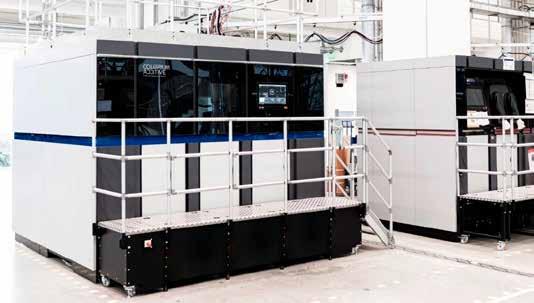
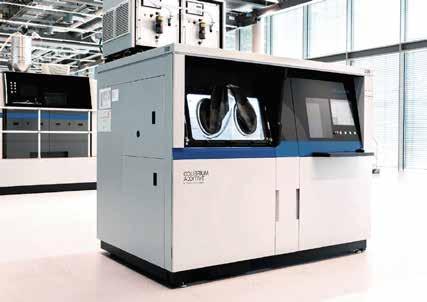
Colibrium Additive, a GE Aerospace company, has been awarded a $31 million contract by the United States Naval Air Systems Command (NAVAIR) in support of its Additive Manufacturing Capability initiative. The programme aims to enable faster testing, qualification and certification of metal additively manufactured parts, and to improve US Navy operational readiness.
“Colibrium Additive is proud to extend its support of NAVAIR with proven metal additive technology and deep application expertise,” stated Lars Bruns, executive technology leader at Colibrium Additive. “By combining certified hardware with licenced process data and hands-on training, we are helping accelerate the Navy’s ability to produce repeatable, airworthy components at scale and reduce supply chain risk for critical aviation parts.”
Under the agreement, Colibrium Additive will deliver six metal alloy Material Process Combinations (MPCs), comprising detailed physical and mechanical property data for each alloy. The company will also optimise process parameters, consolidate material and process specifications, and establish design allowables based on the tested properties.
The scope includes expansion of existing AlSi7Mg and IN718 material datasets, alongside the addition of 17-4PH and 7050-RAM2. These will complement the current portfolio, which includes 316L, CoCr and Ti6Al4V.
A dedicated thin-wall fatigue characterisation programme is also planned to validate the performance and fatigue life of thin-wall geometries. This is intended to support the qualification and certification of additively manufactured structures for aerospace applications.
Norsk Titanium, headquartered in Hønefoss, Norway, has entered into a production contract with American aerospace and defence company Northrop Grumman. The deal will see Norsk additively manufacture undisclosed aircraft components for Northrop Grumman and marks the first production award following a
To meet NAVAIR development timelines, Colibrium Additive will supply three M Line metal Additive Manufacturing and one M2 Series 5 machine to support MPC development. The agreement also includes a comprehensive AddWorks services package, comprising licenced material data, manufacturing process instructions, and selected specifications to support the Additive Manufacturing of NAVAIR components. A training programme is included to enable repeatable production of airworthy parts.
These combined efforts are expected to reduce lead times for critical components, improve fleet sustainment, and enhance overall naval aviation readiness.
The programme also includes a structured training plan for personnel across manufacturing, quality, design and materials functions, as well as machine operators, with the aim of establishing long-term in-house capability. www.colibriumadditive.com
multi-year qualification and specification process to validate Norsk Titanium’s Additive Manufacturing technology and its readiness for serial aerospace production.
The move establishes Norsk as a supplier of critical structural components, which the company expects to support future opportunities across
multiple aerospace platforms and applications.
“This milestone reflects the strength of our longstanding collaboration with Northrop Grumman and the proven performance of our technology in demanding aerospace environments,” stated Fabrizio Ponte, CEO of Norsk Titanium. “We see this as the beginning of a broader production footprint across additional programmes and parts.”
www.norsktitanium.com
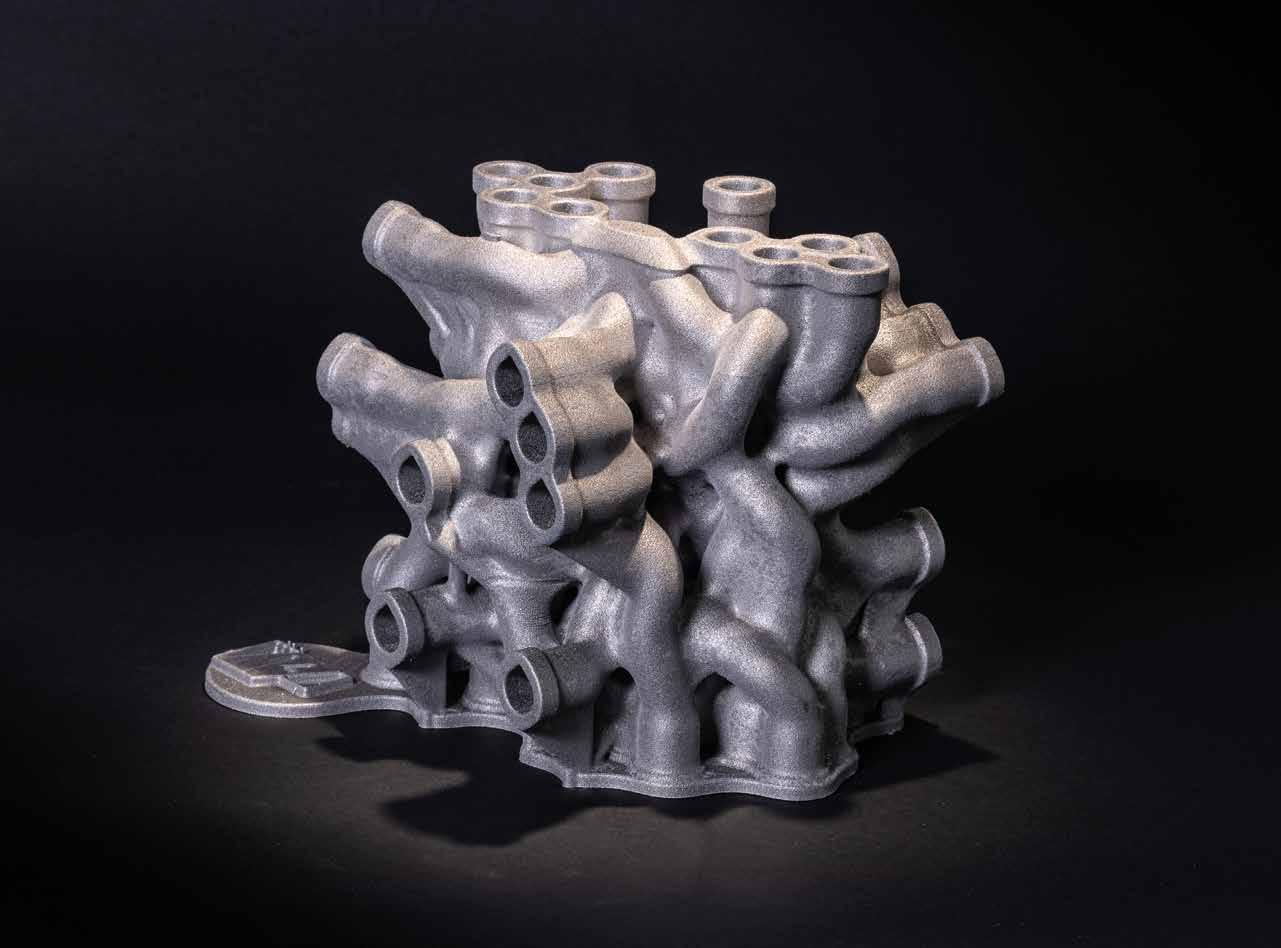
When the design pushes limits, the material has to keep up.
Höganäs metal powders for Additive Manufacturing are engineered to do exactly that, enabling cost-efficient production of high-performance components with more intricate shapes than conventional manufacturing would allow. The result? Consistency in printed material properties, improved rate of successful prints, reduced printer downtime and lower cost per part. It all starts with what's inside, The Material
Velo3D, Fremont, California, USA, has been awarded a $9.8 million, five-year Indefinite Delivery/ Indefinite Quantity (IDIQ) contract by the US Defense Logistics Agency (DLA) to support its Joint Additive Manufacturing Acceptability (JAMA) Pilot Parts Program. The initiative aims to accelerate the adoption of Additive Manufacturing components across US Department of Defense sustainment operations.
The contract establishes a procurement pathway enabling the DLA to source qualified Additive
Manufacturing components to support readiness requirements across the US Army, Navy, Air Force, Marine Corps and Space Force.
Under the award, Velo3D will deploy its Laser Beam Powder Bed Fusion (PBF-LB) Additive Manufacturing capability and Rapid Production Solution (RPS) framework to manufacture complex metal components that typically experience long lead times, limited manufacturing sources or constrained domestic supply.
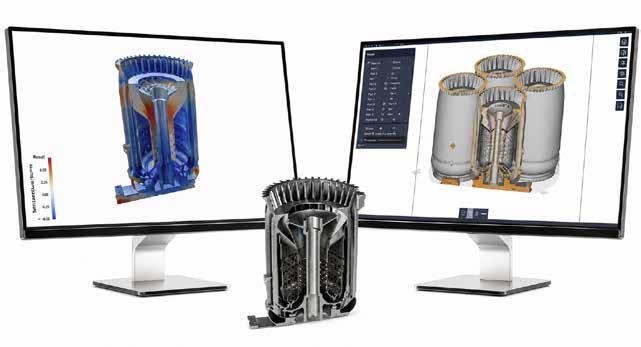
Velo3D has been awarded a $9.8 million, five-year contract by the US Defense Logistics Agency to manufacture complex metal components (Courtesy Velo3D)
GKN Powder Metallurgy, a subsidiary of Dauch Corporation, is expanding its US-based Binder Jetting capacity with the addition of HP’s Metal Jet technology at its Auburn Hills, Michigan, site.
“After building strong serial production capability in Europe, bringing MBJ [Binder Jetting] closer to our US customers is a natural next step,” stated Uemit Aydin, GKN Additive’s Senior Director, Global Business Development and Commercial, on
LinkedIn. “With established serial production exceeding 500,000 metal additive parts per year, this investment strengthens our global footprint and supports growing demand across automotive, thermal management, defense, and industrial applications.”
According to Aydin, the company has advanced the use of pure copper with the HP Metal Jet and is unlocking high - performance applications where conductivity and metallurgical integrity are required.
“Additive Manufacturing provides the Department of Defense with a tool to improve supply chain responsiveness and reduce sustainment risk,” stated Dr Arun Jeldi, Chief Executive Officer of Velo3D. “Through this contract, Velo3D’s world-class technology is supporting the DLA’s efforts to expand qualified Additive Manufacturing capacity and transition advanced manufacturing technologies into operational sustainment environments.”
The JAMA Pilot Parts Program aims to establish repeatable technical qualification and procurement pathways for Additive Manufacturing spare and replacement parts. The initiative forms part of wider Department of Defense efforts to strengthen supply chain resilience, address obsolescence in legacy systems, and enable faster delivery of critical components. Defence logistics leaders have identified Additive Manufacturing as an enabler for distributed manufacturing, reduced inventory dependence, and improved readiness across geographically dispersed forces.
Velo3D’s Rapid Production Solution integrates Additive Manufacturing systems, application engineering expertise, and distributed production capacity to support requirements from initial part qualification through to serial production and surge demand. www.velo3d.com
This copper-focused collaboration was first reported at Formnext 2025, where the companies announced plans to expand production of advanced copper components for cloud computing, electrification, and thermal management. By pairing HP’s AM machines with GKN’s material and production capabilities in the US and Europe, the companies expect to drive measurable efficiency gains and operational savings at end-user data centres, projected in the millions over the next five years. www.gknpm.com www.hp.com
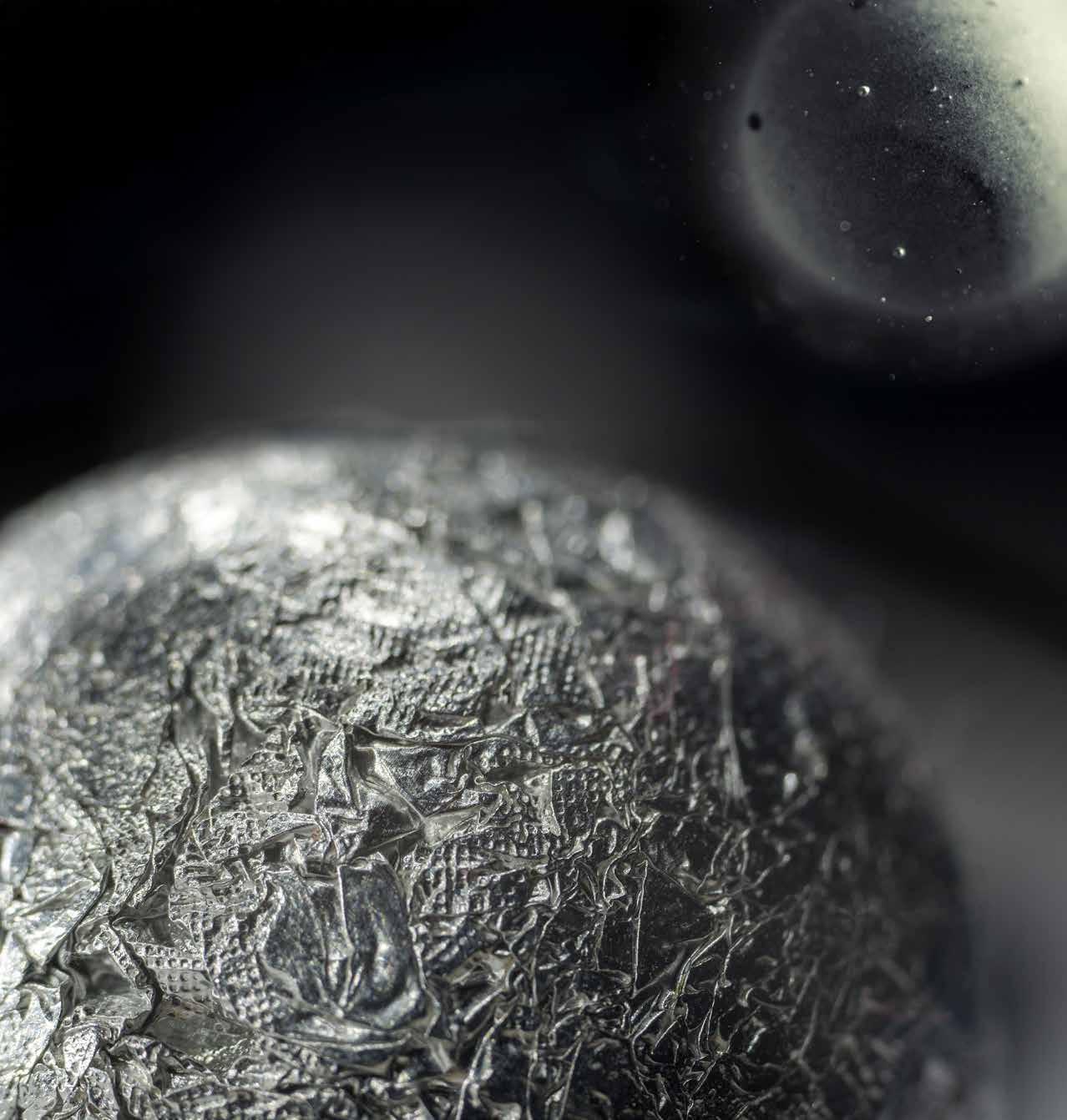
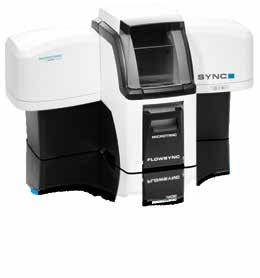
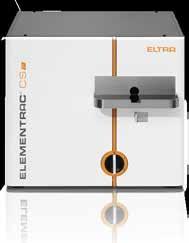
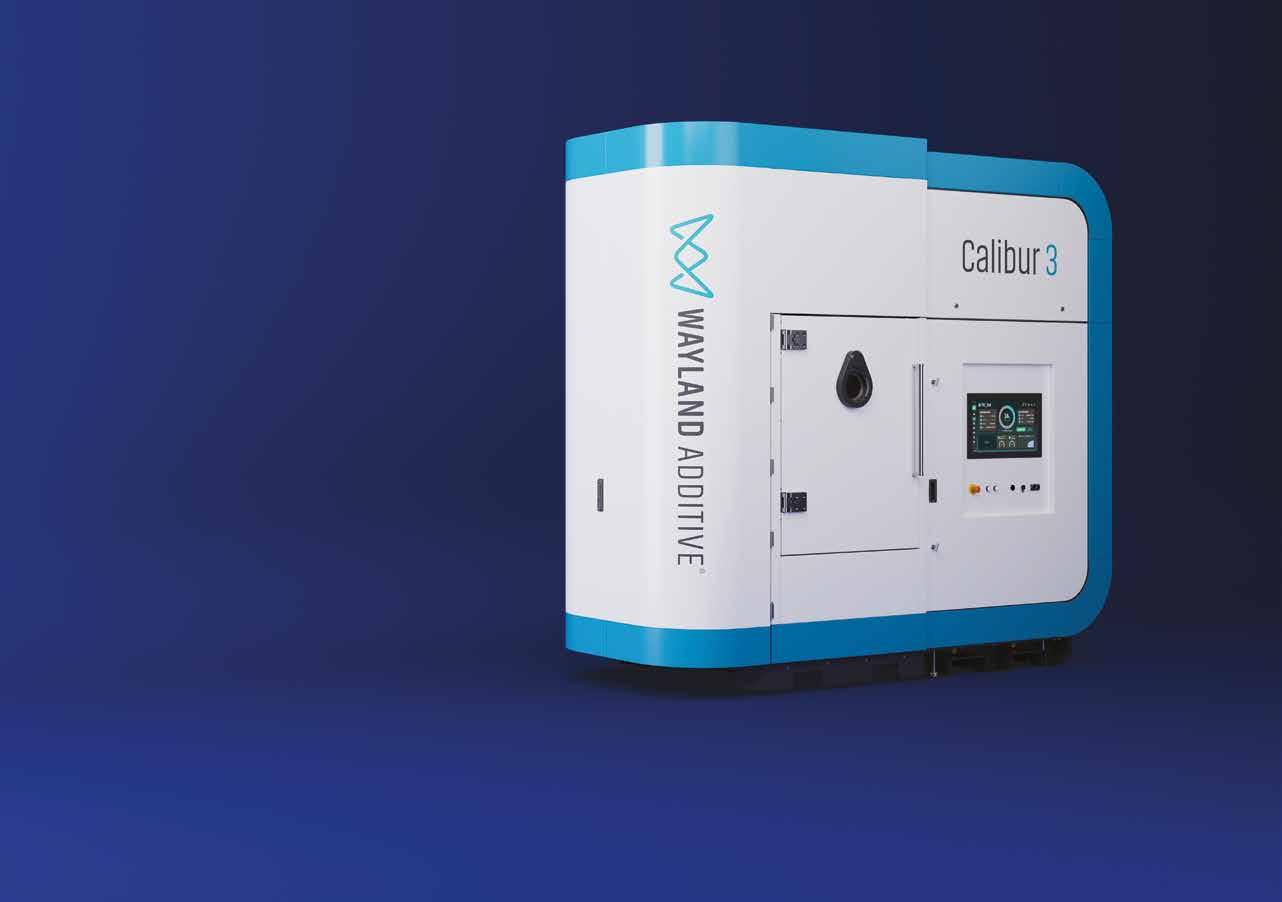
IperionX, headquartered in Charlotte, North Carolina, USA, reports that it is now using a Wayland Additive Calibur3 Electron Beam Powder Bed Fusion (PBF-EB) machine for work being conducted for the US Department of Defense. IperionX’s development and production of titanium components is centred at its 6,500 m 2 titanium manufacturing campus in Halifax County, Virginia.
Wayland’s PBF-EB machine uses a technology the company calls the NeuBeam process, which stabilises electron beam melting by neutralising charge build-up in the powder bed, enabling more consistent energy input
and better process control. Operating under vacuum, this supports highertemperature builds and larger layer thicknesses for faster production, while also reducing oxidation to produce cleaner parts. The approach is also said to expand the range of processable materials, particularly high-performance alloys, and to improve powder-handling efficiency, as there is no need to sinter the surrounding unused powder, making powder removal and reuse easier.
In addition to the Wayland machine, IperionX operates three Laser Beam Powder Bed Fusion (PBF-LB) machines, including one from EOS
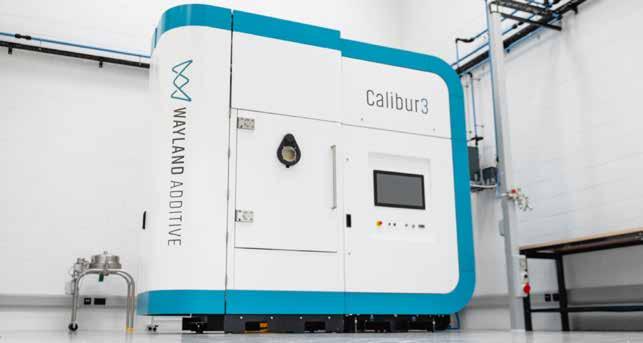
IperionX is using Wayland Additive’s Calibur3 for Additive Manufacturing components for the US Department of Defense (Courtesy Wayland Additive)
APWorks GmbH, based in Taufkirchen, Germany, announced that it has added an FS350M-4 Laser Beam Powder Bed Fusion (PBF-LB) Additive Manufacturing machine from Farsoon Technologies, headquartered in Changsha, China. This acquisition is the fifth AM machine installed at APWorks, and is the second from Farsoon alongside the larger FS422M-4-H.
The FS350M-4 is equipped with advanced multi-laser scanning
strategies and calibration algorithms, reportedly enabling optimal build efficiency and uniform part performance throughout the build area. It also features an efficient inert gas system, with a purge process that takes eleven minutes. During the manufacturing process, the machine consumes around 3-5 l/min of inert gas, reported to be significantly lower than the industry average.
APWorks CEO Sebastian Lepa stated that the company plans to use
and two from SLM Solutions. It also operates two Binder Jetting (BJT) machines from Desktop Metal.
In the company’s March 2026 quarterly report, IperionX also confirmed the US Government-supported 1,400 tpa titanium expansion programme continued to progress, including the full obligation of the $47.1 million Industrial Base Analysis and Sustainment (IBAS) award to build a fully integrated, domestic titanium ‘mineral-to-metal’ supply chain.
It was stated that strong US Government support continues, including around 290 metric tonnes of titanium scrap transferred to IperionX at no cost (equivalent to around 1.5 years of titanium feedstock). An SBIR Phase III Indefinite Delivery, Indefinite Quantity (IDIQ) contract, with additional task orders, is also progressing.
The SBIR Phase III IDIQ contract provides a contracting pathway for project-specific task orders for low-cost domestic titanium for defence applications in the United States, up to a maximum ceiling of $99 million. To date, one task order of $1.3 million has been issued under the IDIQ contract to support pressing production equipment. IperionX is in negotiations regarding a potential second, larger task order, expected to span across advanced manufacturing, R&D, scale-up activities and defence industrial base production requirements.
www.iperionx.com www.waylandadditive.com
the FS350M-4 machine to develop beam shaping tailored to Scalmalloy. Scalmalloy is a scandium-modified aluminium-magnesium (AlMgSc) alloy, reportedly the strongest Al alloy suitable for Additive Manufacturing. The use of stronger alloys enables cost and weight savings in AM production. Optimising of beam profiles is expected to further lower production costs for users.
“It is a great milestone for the serial production of Scalmalloy parts,” stated Oliver Huizhi Li, Managing Director, Farsoon Europe.
www.apworks.de www.farsoon.com
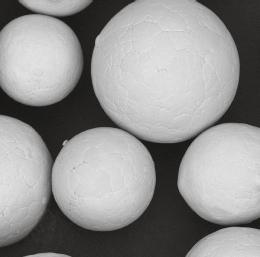
Metal powders designed for mission-critical, high-temperature applications.
HEADQUARTERS
130 Innovation Drive SW McDonald, TN 37353
Explore Amaero’s innovative, high-performance materials, specifically engineered to meet the demanding needs of industries such as Defense, Space, Aerospace, Oil & Gas, Industrial, Heavy Industry, Medical, and Energy.
Partner with us to harness cutting-edge solutions for your most challenging applications.
REGISTRATIONS AND CERTIFICATIONS PM-HIP (Powder MetallurgyHot Isostatic Pressing)


Near-net-shape components with reduced lead times, ideal for high-mix, low-volume demand.
Kittyhawk Inc has placed an order for a new Hot Isostatic Pressing (HIP) vessel for installation at its Garden Grove, California, USA, facility. The investment is intended to support growing demand for HIP services from the commercial aerospace, space and defence sectors, as well as other industries.
The additional capacity is expected to help address increasing production requirements, complex supply chain demands and shortened delivery schedules.
“Kittyhawk has always been focused on delivering quality, reliability and responsive service
to our customers,” stated Brandon Creason, Chief Executive Officer of Kittyhawk. “This new vessel is another step in our ongoing investment in long-term growth. As demand continues to increase, we want to make sure our customers have access to the HIP services they need when they need them.”
The new vessel, measuring 1.17 × 2.54 m, will increase the company’s processing capacity for a range of component sizes and is expected to improve throughput at the Garden Grove site. Kittyhawk states that the expansion will help reduce production bottlenecks, improve
Materialise, headquartered in Leuven, Belgium, announced that it has invested in Replasia, a Belgian medtech start-up developing personalised, additively manufactured solutions and anatomical analysis software for hip preservation.
Materialise stated that this investment reflects its belief that personalised treatments can play an important role in improving clinical outcomes and that hip preservation is becoming an increasingly important aspect of orthopaedic care.
Replasia’s flagship product, the 3D Shelf Implant, is a patientspecific implant manufactured using Additive Manufacturing and positioned outside the joint capsule. Designed to preserve future treatment options, the implant offers an alternative treatment approach for selected patients with certain forms of hip dysplasia. Unlike joint replacement procedures, the technology aims to preserve the native joint while reducing the need for more invasive surgical interventions and lengthy rehabilitation.
In August 2025, Replasia initiated a first-in-human clinical investigation in the Netherlands. The study is evaluating the 3D Shelf Implant as a less invasive alternative to established surgical procedures for adult hip dysplasia and represents an important milestone in the clinical validation of the technology.
Alongside its implant technology, Replasia has developed HipStudio, a commercially available service that provides surgeons with patientspecific anatomical measurements to support treatment planning for hip preservation procedures. The software is intended to improve understanding of individual anatomy and biomechanics, helping surgeons make more informed treatment decisions.
As part of the collaboration, Replasia will have access to Materialise’s expertise in personalised medical solutions, digital planning software and commercialisation pathways.
Materialise noted that Replasia’s portfolio complements its own existing personalised orthopaedic offering, including patient-specific
turnaround times and provide greater scheduling flexibility for customers operating in regulated industries.
Founded in 1981, Kittyhawk provides HIP services to customers in the aerospace, defence, automotive, oil and gas, and medical sectors. The company operates in accordance with AS9100 and Nadcap requirements, complies with International Traffic in Arms Regulations (ITAR) and Export Administration Regulations (EAR), and holds a Class 07 Federal Firearms License (FFL).
The investment forms part of the company’s ongoing expansion strategy as it seeks to increase HIP capacity and support future customer requirements.
www.kittyhawkinc.com
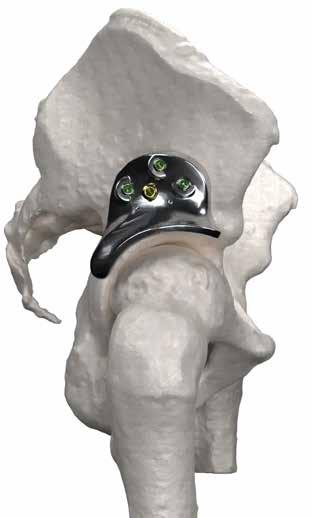
Replasia’s portfolio complements Materialise’s existing personalised orthopaedic offering (Courtesy Materialise)
acetabular implants developed to address complex revision cases. Both companies share a focus on improving biomechanical reconstruction and fixation to support long-term patient outcomes.
www.replasia.com
www.materialise.com
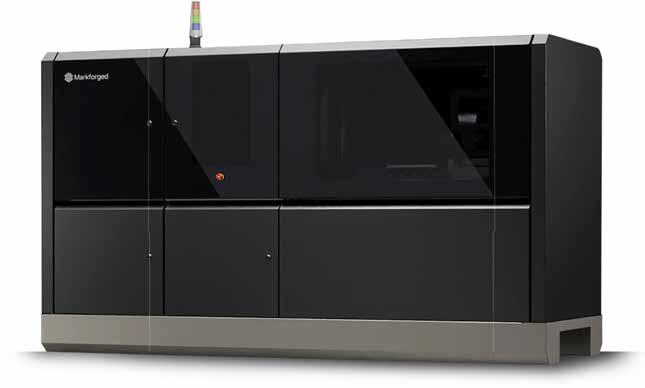
Nano Dimension, headquartered in Waltham, Massachusetts, USA, has entered into a definitive agreement to sell Markforged, Inc, a wholly owned subsidiary also based in Waltham, to Stratasys of Minnetonka, Minnesota, in an all-cash transaction valued at $42.5 million. Nano Dimension said it will, however, retain the Markforged metal Binder Jetting product line.
In a further announcement, the company reported it had entered into a non-binding term sheet for a proposed business combination with Infinite Epigenetics valued at $890 million. If completed, the combined company is expected to operate under the Infinite Epigenetics name and continue trading on the Nasdaq Capital Market under the proposed ticker symbol IEAI.
Stratasys to acquire Markforged
The transaction was reported to represent a further step in Nano Dimension’s three-phase strategic plan. Phase 1 of the plan focuses on operational efficiencies and reducing cash burn through cost management initiatives. Phase 2 centres on monetising selected product lines to strengthen the company’s balance sheet, whilst Phase 3 involves
evaluating strategic alternatives to maximise shareholder value.
According to Nano Dimension, the sale of Markforged forms part of Phase 2 of the strategy, and is expected to reduce annualised cash burn by approximately $15 million through direct and indirect operating cost savings, including certain costs not solely attributable to Markforged.
David Stehlin, Chief Executive Officer of Nano Dimension, stated, “We are pleased to have reached an agreement with Stratasys that we believe positions Markforged for continued growth and success under its ownership. This transaction represents a deliberate step in advancing Nano Dimension’s three-phase strategic plan and accelerating Phase 3 execution.”
“We have made meaningful progress across Phase 1 and Phase 2, including cost reductions, operational streamlining and multiple product line monetisation actions. As Phase 3 continues to accelerate, we have recently advanced discussions with a focused set of strategic opportunities and potential partners aimed at maximising long-term shareholder value,” he added.
The transaction is expected to close during the second half of 2026, subject to customary closing conditions and regulatory approvals.
Infinite Epigenetics is a healthcare diagnostics company developing an artificial intelligence (AI)-based platform focused on epigenetic analysis. The proposed transaction would combine Nano’s public market platform and cash resources with Infinite Epigenetics’ biological data and AI technologies.
Infinite Epigenetics was co-founded by Dr Matthew Dawson, Dr Michael Mallin and entrepreneur Brad Keywell, an early investor and board member of Tempus AI. Infinite Epigenetics combines the activities of TruDiagnostic, a CLIA-certified laboratory established in 2019, and Tally Health, a consumer-focused longevity and preventative healthcare business founded in 2021.
“Infinite Epigenetics represented the most attractive opportunity for us to enhance shareholder value,” said Stehlin. “Together with our financial advisor, Houlihan Lokey, we conducted a thorough review of approximately twenty potential opportunities across multiple sectors over many months.”
Nano Dimension believes Infinite Epigenetics has the potential to establish a significant position in the healthcare AI sector through its combination of biological data, diagnostics and machine learning technologies.
Under the proposed terms, Nano Dimension would acquire 100% of Infinite Epigenetics through a merger, consolidation or another mutually agreed transaction structure. At the time of writing, no assurance was provided that a definitive agreement will be reached or that the proposed transaction will ultimately be completed.
www.infiniteepigenetics.com www.stratasys.com www.markforged.com www.nano-di.com
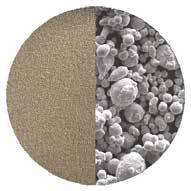
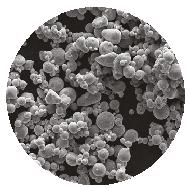
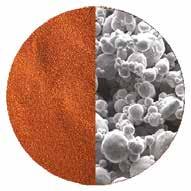

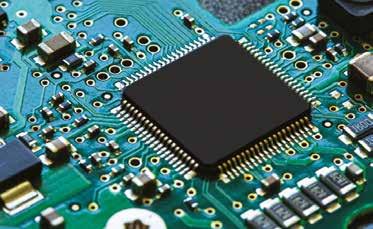
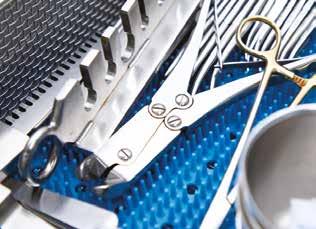
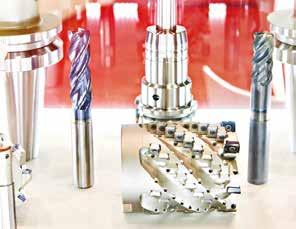


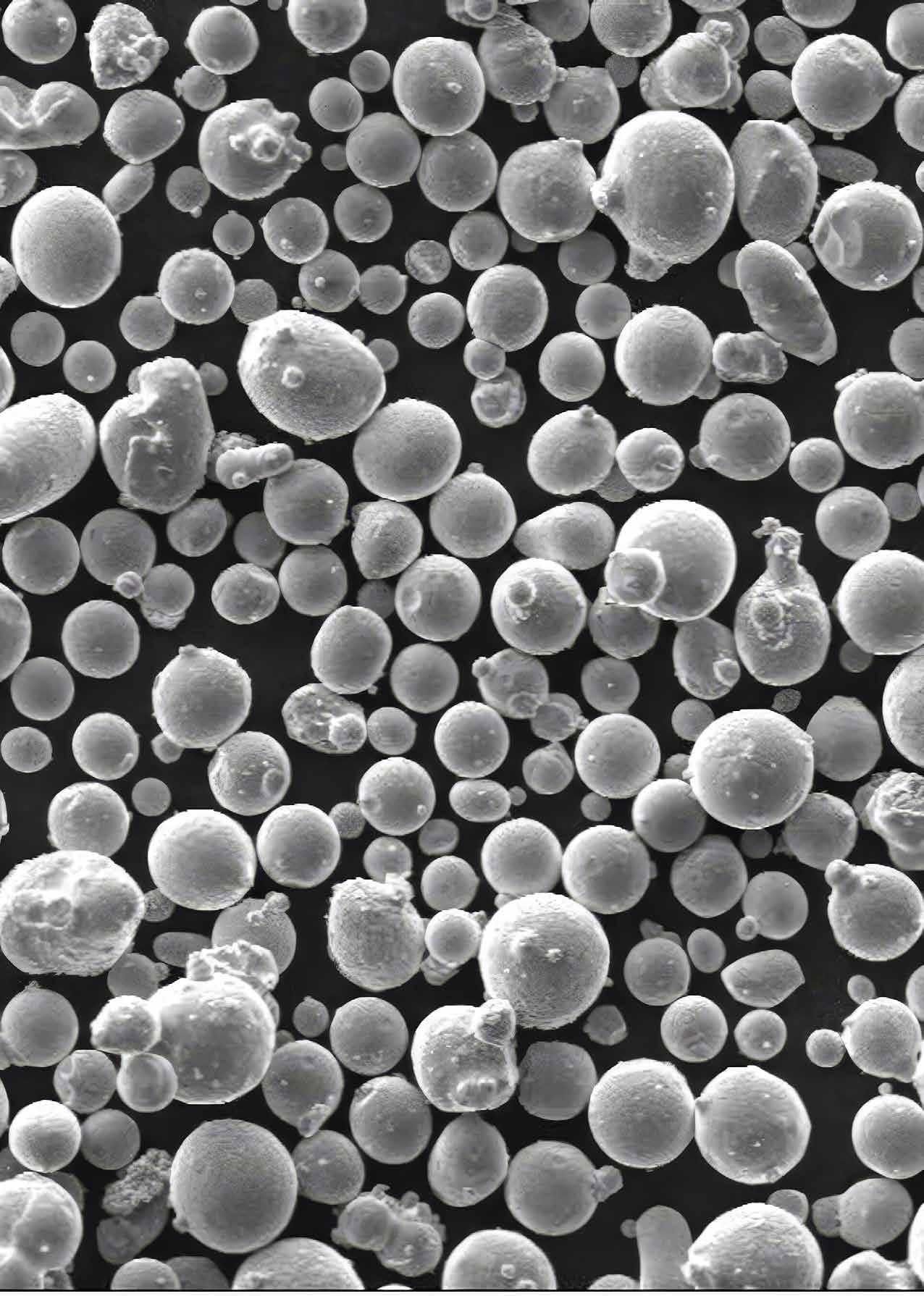
With partner Novamet, Ultra Fine’s high quality powders can be further enhanced through coating or other post-atomization treatments.
With partner Novamet, Ultra Fine’s high quality powders can be further enhanced through coating or other post-atomization treatments.
With partner Novamet, Ultra Fine’s high quality powders can be further enhanced through coating or other post-atomization treatments.
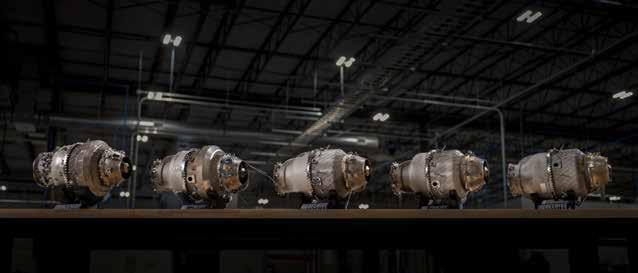
Beehive Industries, based in Denver, Colorado, USA, has announced it has been awarded a $29.7 million contract from the US Air Force to complete vehicle integration, flight testing and qualification of its additively manufactured 200 lbf (890 N) Frenzy 8 engine. The work is intended to support operational readiness and the scaling of additively manufactured propulsion systems.
The award also includes funding to advance the company’s additively manufactured 100 lbf (445 N) Frenzy 6 engine, beginning with manufacture of a First Engine to Test (FETT), with options for further testing, integration and flight demonstration. Managed through the System of
Systems Consortium (SOSSEC), the award supports a Small Expendable Turbine (SET) – Family of Affordable Mass Munitions (FAMM) prototyping programme led by the Air Force Life Cycle Management Center (AFLCMC). The SET programme forms part of the US Air Force’s strategy to develop and qualify lower-cost jet engines for uncrewed aerial and standoff applications, with Additive Manufacturing enabling rapid production and simplified supply chains.
FAMM is a FY2026-focused, Pentagon-wide initiative aimed at shifting from high-cost, low-volume systems to higher-volume, lowercost alternatives, where additively manufactured propulsion is expected to play a key role.
Isostatic Toll Services (ITS) has opened a new Hot Isostatic Pressing (HIP) facility in Mount Vernon, Ohio, USA, expanding the company’s HIP processing capacity in North America.
The new facility, ITS-Ohio, complements the company’s existing operations in Bilbao, Spain, and Mississippi, USA. According to ITS, the additional capacity will provide customers with greater scheduling flexibility, reduced lead times and improved supply chain resilience.
All ITS facilities operate under NADCAP accreditation and AS9100D
certification, providing HIP processing services for aerospace and other high-performance applications. The Ohio facility includes largeformat, high-pressure HIP systems capable of processing components up to 1,118 mm in diameter and 2,540 mm in height at pressures of up to 172 MPa.
The HIP systems were supplied by American Isostatic Presses (AIP), Columbus, Ohio.
Tyler Persaud, General Manager of ITS-Ohio, stated, “Our investment in Ohio reflects our commitment to
Beehive Industries uses Additive Manufacturing to produce its Frenzy engine series, which is designed for use in mass-produced munitions and swarm-class drones. The company states that its approach enables the rapid manufacture of complex propulsion components with reduced supply chain requirements.
“Beehive is honoured to partner with the US Air Force in redefining the speed of defence,” stated Gordie Follin, Chief Product Officer at Beehive Industries. “By harnessing Additive Manufacturing to collapse complex supply chains into scalable, additively manufactured propulsion, we are providing the ‘affordable mass’ essential to modern deterrence.”
The latest contract builds on work completed over the past year, including ground and high-altitude testing of the Frenzy 8 engine, alongside efforts to demonstrate production scalability. During this period, Beehive also launched a ‘Pathfinder’ programme intended to validate production scalability, which it reports supports its plans for volume engine production.
By progressing testing milestones alongside increased production capability, the company is working to transition from development to production readiness.
www.beehive-industries.com
supporting customers with certified capacity, responsive service and direct technical engagement. The addition of ITS-Ohio strengthens our global network and positions us to meet growing demand across aerospace, metal Additive Manufacturing and advanced industrial markets.”
Beyond official accreditation, the facility has also received approvals from customers like Rolls-Royce. The company stated that these approvals enable the facility to support both qualification programmes and production requirements.
The facility is now accepting new customer programmes and qualification enquiries. www.isostatictollservices.com

Xi’an Bright Laser Technologies (BLT), based in Xi’an, China, has reported that its Laser Beam Powder Bed Fusion (PBF-LB) Additive Manufacturing has supported the development and validation of a new family of high-strength aluminium alloys developed by Chinese materials company AccMaterial and researchers at Shanghai Jiao Tong University.
The research, published in Nature Communications, is said to address a longstanding challenge in the development of aluminium alloys for Additive Manufacturing: achieving high processability, strength and ductility simultaneously. Using a design strategy based on a Ductile-Transformable Eutectic Nano-Skeleton (DT-ENS) formed through non-equilibrium solidification, the team developed the RAE600 and RAE700 alloy grades.
BLT’s BLT-S210 and BLT-S450 PBF-LB Additive Manufacturing machines were used throughout the engineering validation phase of the project, supporting process development, microstructural optimisation
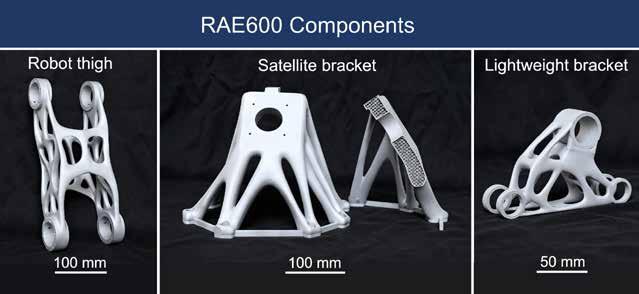
and component-scale verification of the company’s RAE-series Al-Erbased alloys.
AccMaterial reported that the alloys achieved porosity levels below 0.05% under PBF-LB processing conditions while delivering yield strengths of 648–707 MPa, ultimate tensile strengths of 656–714 MPa and elongation values of 7.0–10.3%.
The researchers attribute this combination of strength and ductility to the formation of an Al 3(Er,Mg) eutectic nano-skeleton. During deformation, the structure reportedly accommodates plastic deformation through nanotwinning and the formation of 9R-type long-period stacking structures, contributing to improved mechanical performance.
During engineering verification, the BLT-S210 was used for process development and parameter
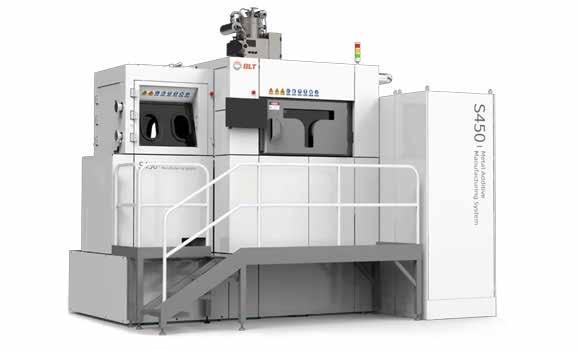
optimisation owing to its process repeatability and parameter control capabilities. According to the team, this enabled rapid identification of suitable alloy compositions and processing parameters for microstructural studies.
The larger-format BLT-S450 was used to assess the manufacturability of larger components. Its multi-laser architecture was used to evaluate density and property consistency in larger parts, supporting the transition of the material towards engineering applications.
The RAE materials have reportedly been validated in a range of demonstration components, including robotic leg structures, satellite brackets and lightweight topology-optimised components.
AccMaterial states that it has established an engineering materials ecosystem around the RAE alloy family, covering powder production, process development, heat treatment and component validation. The company also reported that intellectual property relating to the technology has been filed in Europe, the USA, Japan, Russia and other regions.
BLT stated that it will continue developing Additive Manufacturing equipment technologies and collaborating with research organisations and industrial users to support the transfer of new materials from laboratory research to industrialscale production. www.xa-blt.com en.sjtu.edu.cn

















AML3D Limited, headquartered in Edinburgh, Australia, has secured an order to supply non-safety-critical replacement components for US Navy submarines, through a contract with BlueForge Alliance, a US-based non-profit supporting the US Navy’s Submarine Industrial Base.
The contract, valued at approximately AU$2.61 million (US$1.84 million), will be paid in stages, including upfront and milestone-based payments. The project follows successful hydrostatic testing of AML3D’s additively manufactured components by the US Navy. Production is expected to commence in the fourth quarter of the current financial year and run for approximately ten months.
“Signing this order is a significant milestone for AML3D. It shows our advanced manufacturing technology
is key to solving a wide range of critical supply chain challenges for the US Navy’s submarine programme,” stated Sean Ebert, AML3D CEO.
AML3D will manufacture five replacement components that are no longer available from the original manufacturer, using its ARCEMY Additive Manufacturing technology. The parts will be produced in Nickel Aluminium Bronze (NAB), a material already qualified to meet US Navy standards.
According to AML3D, the contract highlights its capability to address supply chain challenges within the US Navy’s maritime industrial base. The company’s wire arc Additive Manufacturing process is used to produce complex metal components with reduced lead times compared to conventional manufacturing methods.
The company added that its US expansion strategy continues to gain momentum, with defence-related contracts now exceeding AU$30 million in total value.
“AML3D’s advanced industrial 3D metal printing technology is increasingly being embedded in the US Navy’s Maritime Industrial Base,” Ebert continued. “This contract allows us to continue to build and deepen our long-term, strategic partnership with the US Navy and supports our investment to double capacity at our US Technology Center in Ohio.”
“Our US Scale-up strategy continues to deliver significant growth and value to AML3D and its shareholders. While the latter strategy is being successfully delivered, we at the same time continue to progress our plans to enter into the UK market and other globally significant markets across Europe,” he concluded.
www.aml3d.com
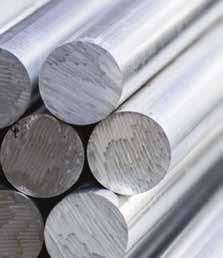
Elmet Technologies, a subsidiary of Elmet Group, based in Lewiston, Maine, USA, has secured strategic funding of $4.3 million in support of a government contract award to develop and advance domestic manufacturing capabilities for molybdenum-based products and refractory metal components, utilised in critical defence programmes.
The contract award is expected to enhance Elmet Technologies’ capacity and capabilities in Additive Manufacturing, machining, production automation, material feeding, post-processing equipment, and additional finishing and inspection systems.
In addition, the contract aims to bolster domestic manufacturing readiness, redundancy, and expansion and meet the projected long-term demand for refractory
metal components, specifically molybdenum-based products used in modern defence interceptor programmes.
“This award directly supports our mission of securing the critical materials and components supply chain in the US,” said Derek Fox, President of Elmet Technologies.
“We expect that it will enable us to expand capacity and deploy advanced manufacturing technologies in support of our nation’s critical defence initiatives, several of which depend on molybdenum-based components as a foundation. Elmet is honoured to serve as a provider within that foundation.”
The contract will fund targeted investments across Elmet Technologies’ manufacturing operations with the objective of accelerating production throughput and improving
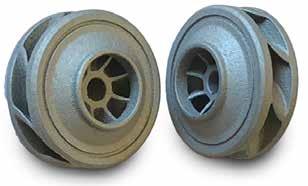
Elmet Technologies specialises in premium molybdenum and molybdenum alloy powders for Powder Metallurgy and Additive Manufacturing applications (Courtesy Elmet Technologies)
precision component performance in mission-critical interceptor systems and US defence platforms.
This initiative aligns with Elmet Technologies’ long-standing goal of strengthening US domestic manufacturing capabilities and supporting the United States’ needs in critical materials and components, as well as fortifying the defence industrial base and national security.
www.elmettechnologies.com
• Wide range: Ferritic, martensitic, austenitic, duplex and super duplex stainless steels.
• Tailored solutions: Chemical analysis tailored to customer requirements.
• Safer and easier handling: Reduced handling risks compared with powder, while lowering time, cost, effort and contamination risk.
• Efficiency: 100% material recovery, with less waste and lower maintenance than powder feedstock systems.
• Solutions include: CHROMECORE M 410Ni-Mo-G, TUBE S 316L-G and TUBE S 22 3L-G.
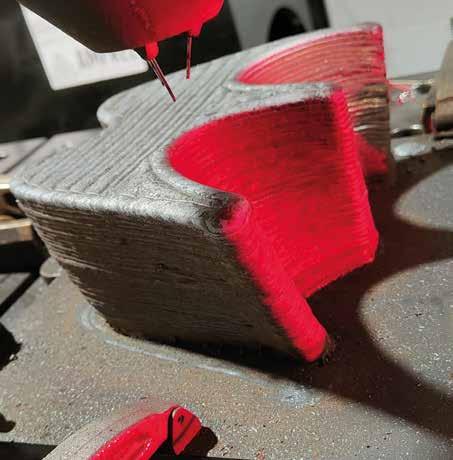

Incodema3D, based in Freeville, New York, USA, has announced plans to significantly expand its metal Additive Manufacturing capacity with orders for a further fourteen Laser Beam Powder Bed Fusion (PBF-LB) AM machines from EOS. Once installed, it will increase Incodema3D’s fleet to more than fifty EOS metal AM machines.
The first order consists of four EOS M 400-4 and one EOS M4 ONYX, with a second order announced for a further four EOS M4 ONYX, two EOS M 400-4 and three EOS M 300-4 machines.
“Through 2030, we project continued high growth, and our business requires us to expand our existing facilities, add a new facility, and significantly increase our hiring – all challenges we are tackling right now,” stated Sean Whittaker, founder
and CEO of Incodema3D. “With a sense of urgency to support national priorities, we truly feel that we are setting the bar for contracted metal AM production and have created well-oiled processes to produce everything from ten mission-critical parts for a defence customer to 10,000 parts for an energy company.”
The announcement follows news earlier this year that AFM Capital had acquired a majority stake in the company. According to Incodema3D, its growth plans are expected to increase manufacturing capacity threefold by 2030 and will include a second manufacturing facility, details of which are yet to be announced.
Since purchasing its first EOS machine in 2012, Incodema3D has focused exclusively on EOS metal AM technology at its 5,575 m² (60,000 ft²) facility in New York. The company
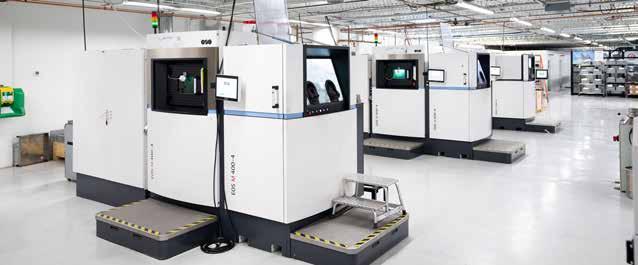
Incodema3D has ordered a further fourteen PBF-LB metal Additive Manufacturing machines from EOS (Courtesy Incodema3D)
HP Additive Manufacturing and AMES, Barcelona, Spain, have announced that they have strengthened their collaboration following a recent visit to the AMES’ facilities, where both parties reviewed their joint business roadmap and ongoing development activities.
The visit comes as AMES, a specialist in Powder Metallurgy components, has invested in a new batch sintering furnace designed
specifically for Binder Jetting (BJT) Additive Manufacturing parts. The addition is expected to expand the company’s production capacity and support further adoption of HP’s Metal Jet technology.
With the new furnace in place, AMES aims to increase throughput of metal Additive Manufacturing components and support serial production applications. The company is positioning itself as a contract manufacturer for HP
has also invested in post-processing and finishing technologies to support the production of additively manufactured metal components.
“We are constantly introducing process improvements and efficiencies through automation wherever possible to achieve quality and throughput,” said Matt Lewis, Incodema3D vice president of programs. “By integrating design for Additive Manufacturing, industrialscale 3D printing, post-processing, precision machining, inspection, and fulfilment under one roof, we can move complex metal parts into production with speed, consistency, and confidence. This end-to-end approach allows us to support demanding production programs while reducing lead times, improving part performance, and simplifying the supply chain.”
Glynn Fletcher, president of EOS North America, added, “Incodema3D’s continued growth is a strong reflection of both their technical leadership and unerring vision for AM on an industrial scale. Our enduring collaboration with Sean [Whittaker] and his extraordinary team is a privilege. The trust they have placed in EOS for more than a decade is something that we are very proud of.”
The investment is expected to support Incodema3D’s expansion across defence, energy and other industrial markets as it continues to scale production of metal Additive Manufacturing components. www.incodema3d.com
Metal Jet technology within the region.
“With this added capacity, AMES and HP are pushing forward scalable Additive Manufacturing, delivering production-ready parts, and enabling new industrial applications across multiple sectors,” stated Alejandra de la Hija, Applications Engineer – 3D Metal Printing, HP.
The partnership between HP and AMES is also expected to explore new applications enabled by BJT Additive Manufacturing, particularly where high-volume production is required. www.ames-sintering.com www.hp.com


3D Lab, Warsaw, Poland, has secured a new Polish patent for its ultrasonic atomisation technology, developed in collaboration with Arcway.
The patented solution – ‘A coil and a two-coil arrangement for heating an atomization platform for ultrasonic atomization of metals in a metal powder making device, and an ultrasonic method of atomizing metals’ – enables the production of high-quality spherical metal powders for applications including metal Additive Manufacturing, industrial engineering, dental components and jewellery.
With this latest award, the company’s ATO technology is now protected by six patents across key global markets, including Europe, the USA, China, India and South Korea.
Access to consistent, high-quality feedstock remains a key requirement
for both Powder Metallurgy and metal Additive Manufacturing. According to the company, its ultrasonic atomisation approach addresses this challenge by enabling localised, on-demand powder production, thereby reducing reliance on global supply chains whilst supporting more flexible and decentralised manufacturing models.
3D Lab stated that expanding patent protection is central to its strategy, aimed at increasing accessibility and accelerating the adoption of advanced metal powder production technologies worldwide.
“What excites us most is that ATO technology is pushing the boundaries of materials research. We enable laboratories and scientists to easily experiment on small batches – across both reactive and non-reactive metals – which was often difficult,

3D Lab has secured a new Polish patent for its ultrasonic atomisation technology, developed in collaboration with Arcway (Courtesy ATO)
costly, or simply inaccessible before. This opens entirely new research pathways and significantly accelerates the development of new materials and applications. We see ATO as a technology that can meaningfully contribute to the next breakthroughs in science and materials engineering,” stated Jakub Rozpendowski, CEO, Arcway. www.metalatomizer.com www.arcway.am

EOS GmbH, headquartered in Krailling, Germany, has acquired 100% of metal powder producer Metalpine GmbH, based in Graz, Austria. EOS has been a shareholder in the company for several years.
The acquisition will strengthen EOS’ strategic focus on materials, particularly in response to the growing demand for titanium Additive Manufacturing. The integration of Metalpine’s capabilities is intended to enable EOS to expand access to titanium powders produced through Metalpine’s patented wire-based gas atomisation process, noted for its consistency and performance in demanding industrial applications.
“For many years, Metalpine has been a strong and innovative partner to EOS,” stated Joachim Zettler, CTO of EOS. “By integrating Metalpine into EOS, we are taking the next logical step in our collaboration, strengthening our metal materials supply and accelerating innovation, particularly in titanium, where we see significant and sustained market demand.”
For customers, the acquisition is intended to strengthen EOS’ ability to deliver tightly integrated materials, parameters and process expertise. This may help manufacturers achieve faster qualification, improved process stability, and support the scaling of AM for serial production. Industries and applications reliant on titanium, including aerospace, medical, and high - performance industrial applications, will gain greater access to high - quality powders engineered for serial AM environments.
Metalpine will continue to operate as an independent company within EOS, maintaining its established brand, organisational structure, and business operations. The company
will continue to serve its global customer base, including partners across the AM ecosystem, with its metal powders.
“During the past few years, we have built a rock-solid foundation with EOS,” said Gerald Pöllmann, CEO of Metalpine. “Becoming part of EOS is a natural progression of this partnership, enabling us to further develop our technologies and scale
our capabilities while continuing to reliably serve customers worldwide.”
Dr Martin Dopler, CTO and Head of R&D at Metalpine, added, “Our patented process stands for exceptional powder quality and consistency. As part of EOS, we will further advance material innovation and support the growing requirements of industrial Additive Manufacturing, while continuing to provide our products to a broad market.”
www.eos.info
www.metalpine.at
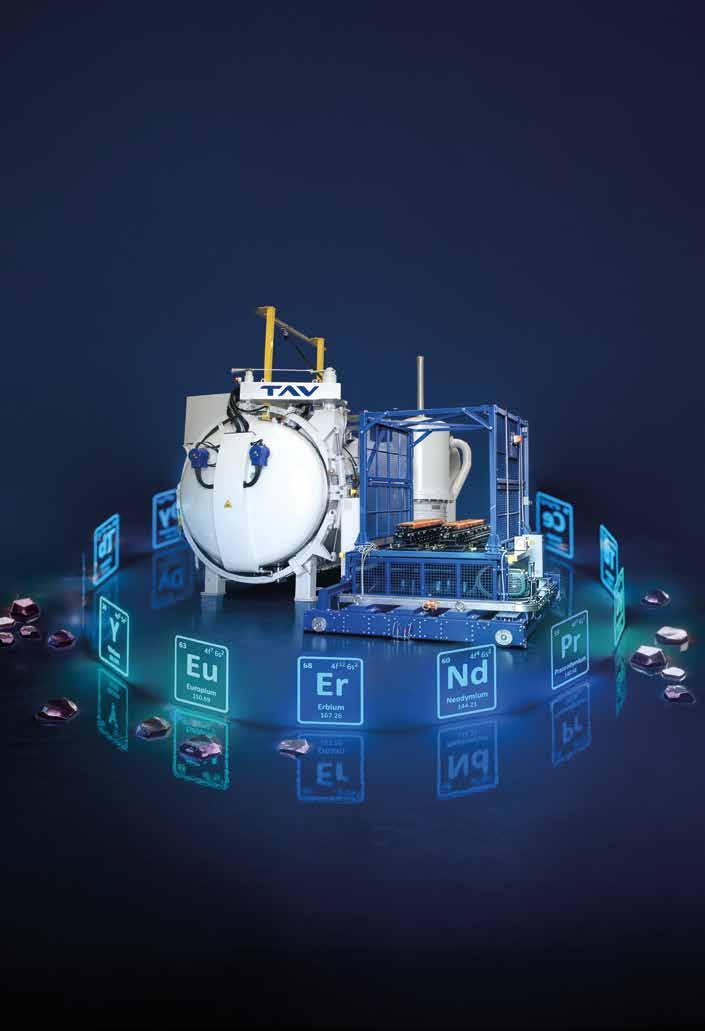


GE Aerospace has announced plans to invest more than €110 million across its European manufacturing sites in 2026, aiming to accelerate Additive Manufacturing, expand production capacity, and strengthen delivery performance. The company also intends to hire more than 1,000 employees across Europe this year.
“This significant investment reflects our long-term commitment to the European aerospace industry, a crucial market for many of our key customers,” stated Riccardo Procacci, President and CEO, Propulsion & Additive Technologies at GE Aerospace. “By expanding advanced manufacturing and testing capabilities across Europe, we are better positioned to meet growing customer demand while supporting the communities and economies where we operate.”
A substantial portion of the investment will be allocated to new engine test cells, advanced machining equipment, expansion of Additive Manufacturing capacity, and upgrades to buildings and infrastructure. These
developments will support a range of commercial narrow- and widebody engine programmes, as well as military fighter jet and helicopter engines.
The following investments will be made across five European countries:
• Italy: €77 million
Advanced manufacturing and testing capabilities for multiple commercial and defence engine programmes, including new and upgraded test cells, advanced machining equipment, Additive Manufacturing expansion, and building improvements across multiple sites
• Poland: €15 million
Advanced grinding and machining equipment, extensive welding and inspection tooling, and building improvements across multiple sites
• Czech Republic: €8 million
Precision machining and grinding systems, quality inspection technology, assembly tooling, and building improvements
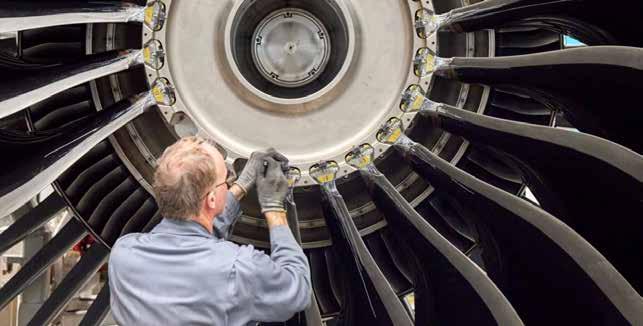
A substantial portion of the investment will be allocated to new engine test cells, advanced machining equipment, expansion of Additive Manufacturing capacity, and upgrades to infrastructure (Courtesy GE Aerospace)


• United Kingdom: €10 million
Upgrades to test and manufacturing equipment, expansion of electronics and component manufacturing capabilities, and modernisation of building and infrastructure across multiple sites
• Romania: €3 million
Multiple metal-cutting machines, tooling and fixtures, as well as building upgrades.
In addition, GE Aerospace plans to invest approximately €40 million in its European maintenance, repair and overhaul (MRO) and component repair facilities. This forms part of a previously announced global $1 billion investment in MRO facilities, first disclosed in 2024.
Alongside its manufacturing investments, the company is addressing the skills shortage in high-technology industries by expanding its workforce development initiatives across Europe. This includes recruiting new talent and supporting training programmes through grants to vocational schools in the UK and Italy, expected to reach more than 800 students in 2026. GE Aerospace is also expanding its Next Engineers programme in Warsaw, Poland, which is expected to reach more than 4,000 students.
“Our commitment extends beyond facilities and equipment; it is equally focused on our people. In an evolving industry, investing in skills, training, and talent pipelines across Europe is not just a tactical necessity but a strategic imperative,” stated Christian Meisner, Chief Human Resources Officer at GE Aerospace. “We are dedicated to ensuring that the European aerospace sector has the skilled workforce required to innovate, grow, and deliver exceptional value to our customers for decades to come.”
www.geaerospace.com



Valimet, Inc, headquartered in Stockton, California, USA, has been awarded an SBIR Phase II contract for the project: ‘Scandium-Aluminium Alloy 3D-Printed Parts: Developing & Validating a Domestic Value Chain.’ Valimet leads the atomisation of Scandium-Aluminium alloy powders, while collaborating with a group of specialised partners across the entire value chain.
“We are immensely grateful to the Defense Logistics Agency for the trust placed in our capabilities and in our commitment to deliver with our partners Scandium-Aluminium components to US end users,” the company shared.
Valimet participated in the 2026 AMUG Conference, which took place from March 15-19, 2026, in Reno, Nevada, USA, including a panel discussion titled ‘A Fully-Domestic Supply Chain for Scandium Aluminum
Alloys: From Mining to Printing’ in which representatives from different steps of the value chain of components manufacturing contributed.
The company also hosted an open house, where Lynden Polonsky of Sunrise Energy Metals and Jose Alberto Muñiz Lerma of Equispheres Inc joined the discussion.
Scandium offers high weldability, printability, grain control, strength, corrosion resistance and a 5% lower density, compared to the direct reference, the 7000 series Aluminium Alloys. While not a fit for every application, as remarked by the audience, the company stated that it is still an enabler of high performance.
Valimet outlined the development of a US domestic supply chain as a key takeaway from the event, stating on LinkedIn, “US parts designers have been self-censoring about the
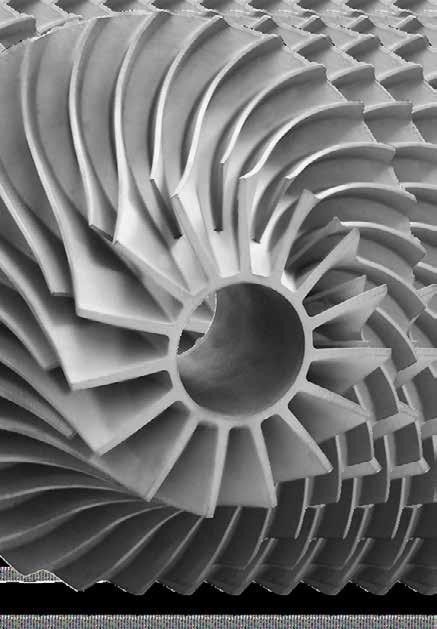
selection of Scandium-Aluminium alloys. Their fear of depending solely on Russian and Chinese Scandium is now misplaced: a domestic supply chain is now live, with one active mine in Quebec, Canada and several projects in US and Australia.”
The company also stated that it is bringing atomisation of Scalmalloy to industrial scale, supported by a Phase II SBIR contract from the Defense Logistics Agency.
Another key takeaway was that there can be savings in terms of Total Cost of Ownership, as AM and heat treatment can be reduced for Scalmalloy.
It was also stated that Steve Fournier reportedly advocated for a “coalition of the willing” in order to spread the resource requirements and squeeze the timeline of reaching a point of qualification for determining allowables and specifications. Valimet stated that both it and MIMO Technik intend to “work to identify and gather ‘the willing’.” www.valimet.com
Sipra, d.o.o., headquartered in Maribor, Slovenia, has established Gekonn, its new brand for metal Additive Manufacturing machines aimed at toolmaking, medical and industrial applications. Based on its established dentistry AM offering, Dentas, the new range is said to meet the needs of those requiring process stability, repeatability and low operating costs.
Sipra is positioning the Gekonn range towards users who require high-quality individual parts and agility when transitioning from prototype to serial production. Typical applications include internally cooled tools, functional metal inserts, customised industrial components, and complex geometries that are inefficient to manufacture by conventional methods. Sipra sees Gekonn as an industrial platform for repeatable serial production, rather than as a laboratory-based machine.
Sipra’s development centres on Laser Beam Powder Bed Fusion (PBF-LB) AM technology, designed to ensure precise control of critical parameters, stable conditions in the working chamber, consistent metal powder handling, and standardised workflows. Particular attention is reported to have been paid to ensuring controlled atmospheric stability, chamber cleanliness, and reliable management of all process stages – from pre-processing and building to cooling and powder handling.
A closed-loop protective gas supply has been developed that reduces gas consumption and stabilises the entire process. A multi-stage filtration system is intended to ensure a clean working chamber atmosphere, contributing to long-term repeatability and reducing frequent consumable replacements. The company also reported a material reuse rate of over 99%, directly cutting powder costs and waste.
To meet the needs of regulated industries requiring traceability, Gekonn also enables users to trace the powder batch to the final product, along with all relevant process logs. The machine generates consistent job reports, including build configuration, key parameters, gas data logs, warnings, filtration status, and batch IDs (as required by EN ISO 13485:2016). This data can be used directly in internal quality management systems without requiring additional manual entry or paperwork. This is intended to support faster internal validation, easier audits, and transparent customer communication.
Designed for standardised implementation, Gekonn provides clearly defined user roles, work protocols, documented settings, and process qualification support. This includes parameter validation, control samples, and defined maintenance routines, which the company states significantly reduce the time required to deliver results that are suitable for industrial applications.
www.sipra.eu www.gekonn.com



Bright Laser Technologies Co, Ltd (BLT), China, has highlighted its use of metal Additive Manufacturing to support the development of the hinge system in OPPO’s latest foldable smartphone, the Find N6, enabling a design that aims to minimise screen creasing.
Following earlier work on the OPPO Find N5, BLT was again chosen to collaborate on the Find N6, launched globally on March 17, 2026. The collaboration was conducted within OPPO’s Tianqiong Partners industrial alliance, which brings together suppliers and research organisations to address technical challenges in foldable devices.
The crease in foldable smartphones remains a key technical challenge, affecting display flatness, hinge durability and user experience. Addressing this requires advances
in both engineering design and manufacturing capability.
At the centre of the hinge mechanism, the wing plates on both sides carry most of the folding stress. Conventionally, these components are manufactured as assemblies of up to thirteen machined parts. BLT applied Additive Manufacturing to consolidate these into a single titanium structure, reducing part count and enabling a lighter design.
The additively manufactured wing plate incorporates complex lattice structures and geometry that would be difficult to achieve using conventional CNC machining. This approach also simplifies assembly and supports more efficient production.

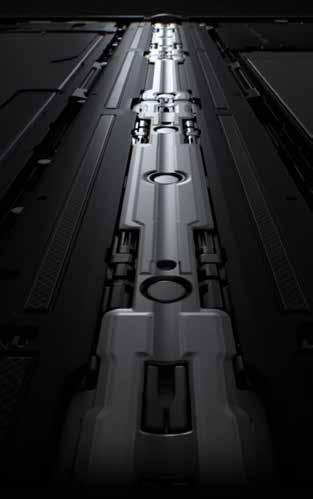
AM is used to consolidate the wing plates and hinge into a single titanium structure (Courtesy OPPO)
“The supporting surface flatness of the OPPO Find N6 wing plate has improved by 50% compared to last year,” stated Vincent Yang, General Manager at Bright Laser Technologies (Shenzhen). “Achieving this level of precision once seemed extremely difficult – even unattainable – but through continuous iteration and rigorous testing, our team was able to meet and even exceed expectations.”
The Find N6 reportedly passed 600,000 folding cycles, certified by TÜV Rheinland, indicating improved durability, enabled in part by the redesigned hinge system.
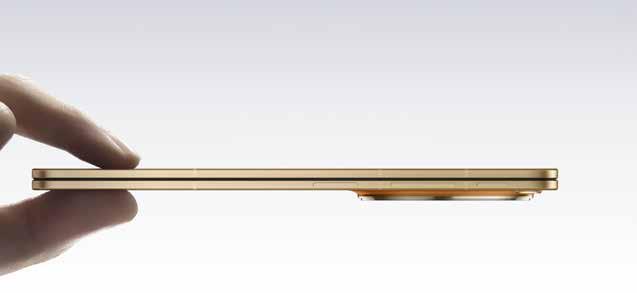
OPPO Vice President and President of Hardware Engineering, Liu Chang, added, “Achieving a crease-free and durable foldable display depends not only on advanced technologies such as the next-generation titanium Tianqiong hinge and Tianqiong memory glass, but also on the collective efforts of the engineers within the Tianqiong Partners ecosystem. The Find N6 represents a significant step forward in foldable display technology, as well as a meaningful improvement in user experience.”
www.xa-blt.com www.oppo.com
SOFTWARE TO SIMULATE AND CALCULATE DEPOWDERING
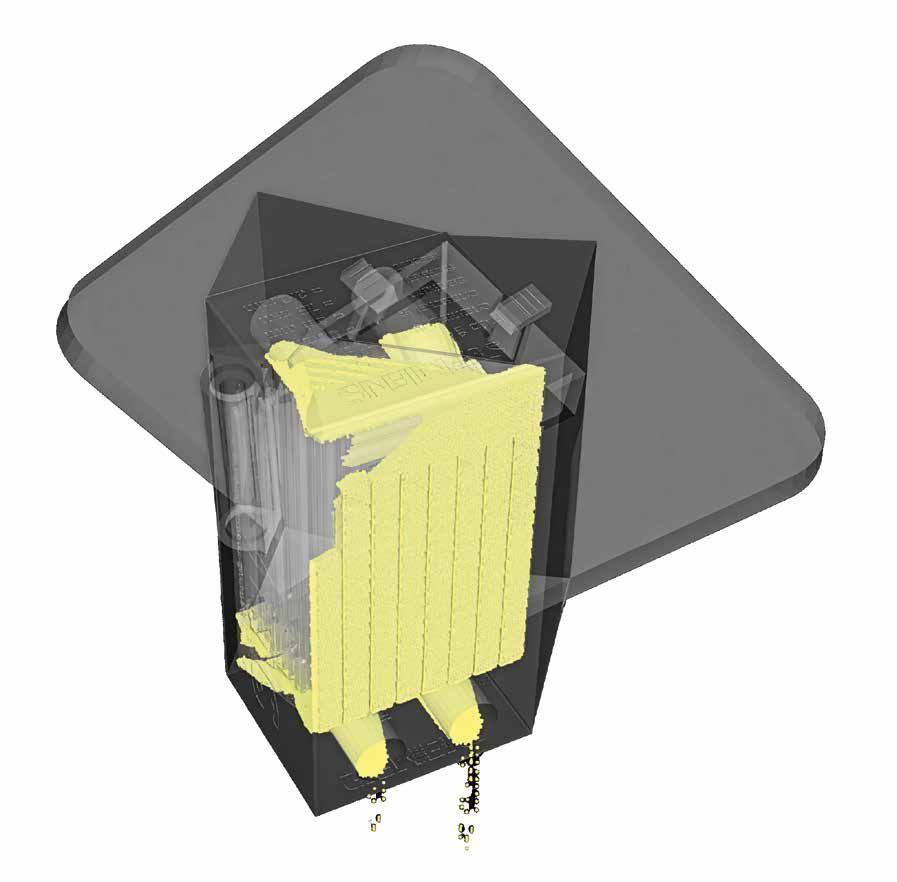
20X HIGHER SIMULATION RESOLUTION FOR EVEN THE MOST COMPLEX PARTS
CROSSSECTIONAL VIEWS OF THE PART IN ALL PLANES (X, Y, Z)
EXACT DEPOWDERING TIME PREDICTION
ENABLES PRECISE POSTPROCESSING PLANNING
Mastrex, based in Mount Laurel, New Jersey, USA, has launched the MX300, a Laser Beam Powder Bed Fusion (PBF-LB) metal Additive Manufacturing machine designed to meet the needs of both prototyping and full-scale metal part production.
“Launching the MX300 is an important milestone for Mastrex, as we continue our mission to enable the current and next generation with technologies that are robust, reliable, and accessible,” stated co-founder, Ilay Fridland. “Combined with our
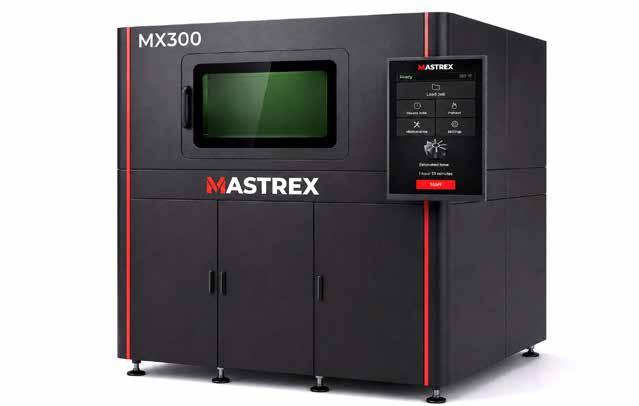
The MX300 metal Additive Manufacturing machine combines a 300 x 300 x 350 mm build volume with dual 500W lasers (Courtesy Mastrex)
Welding Alloys, based in Rotherham, UK, has reported strengthening its position in metal Additive Manufacturing through its supply of consumables to Chorley-based 3DGBIRE, supporting wire-based Directed Energy Deposition (DED) Additive Manufacturing. The company provides laser cladding wires to 3DGBIRE for use in metal AM and repair applications. According to Welding Alloys, these materials support consistent build quality and are used to improve component performance and service life.
Welding Alloys states that its consumables are supported by global production and distribution, enabling availability for customers and partners. The company notes that this supports ongoing operations at 3DGBIRE and allows projects to
proceed without material supply interruptions.
Welding Alloys also acts as an official materials partner to Meltio. Through this role, its consumables are used within Meltio-based Additive Manufacturing machines, including those operated by 3DGBIRE.
“Working with Stewart and the team at Welding Alloys has allowed us and our customers to maximise the Meltio technology by further reducing costs while increasing part quality thanks to their wires, which has led customers to make savings of 80–90% over traditional methods,” stated Adam Nichols, Account Manager and Meltio Commercial Lead at 3DGBIRE. “Meltio can produce parts in up to four different metals; the wide range of wires offered by Welding Alloys has unlocked many applications.”
legacy in laser excellence, the MX300 is the pinnacle of precision and performance.”
Priced at $185,000, the MX300 combines a 300 x 300 x 350 mm build volume with dual 500W lasers, and is compatible with titanium, stainless steel, aluminium, cobalt-chrome, Inconel and more. The MX300 is said to be suitable for both detailed geometries and larger industrial applications, while maintaining dimensional accuracy and repeatability. It is engineered for manufacturers, machine shops, and those exploring new applications in aerospace, defence, and medical markets.
An early adopter of the MX300 is Solomon MFG. “Adding metal 3D printing to our machine shop has always been a priority, but it’s been cost-prohibitive,” added Solomon MFG’s CEO, Eli Solomon. “With the accessibility of the MX300, we are immediately adding capability for our current customers and uncovering new opportunities. It’s a distinct competitive advantage.”
www.mastrex.com
Powlesland of Welding Alloys (left) and Adam Nichols of 3DGBIRE, in front of a Meltio AM machine (Courtesy Welding Alloys)
Stewart Powlesland, Technical Sales Engineer at Welding Alloys, added, “Our focus is not only on delivering high-performance consumables, but also on ensuring our customers and partners can access them quickly and reliably. Supporting companies like 3DGBIRE demonstrates how our materials can enable efficient, scalable Additive Manufacturing in real-world applications.”
www.welding-alloys.com www.3dgbire.com
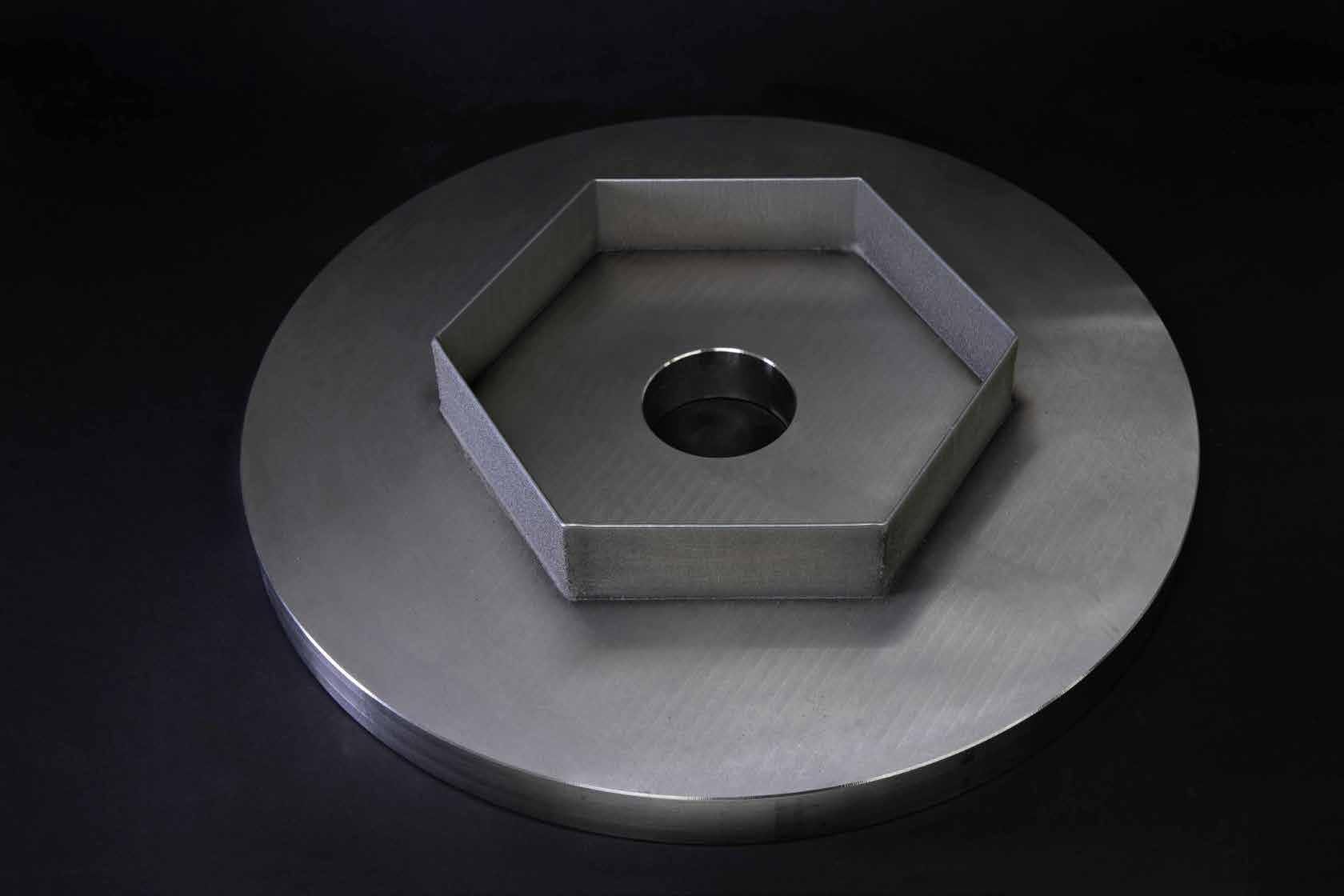
At Etxetar, we bridge the gap between laboratory-scale research and real industrial deployment Our exper se in material behaviour and process parameter development enables robust, repeatable, and high-qual depos on solu ons tailored to demanding applica ons.
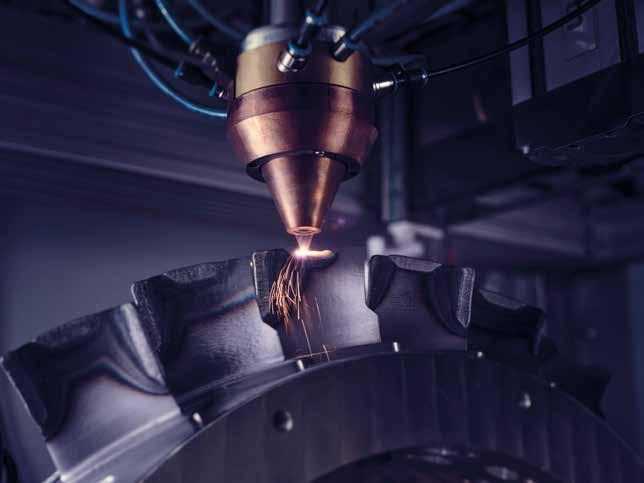
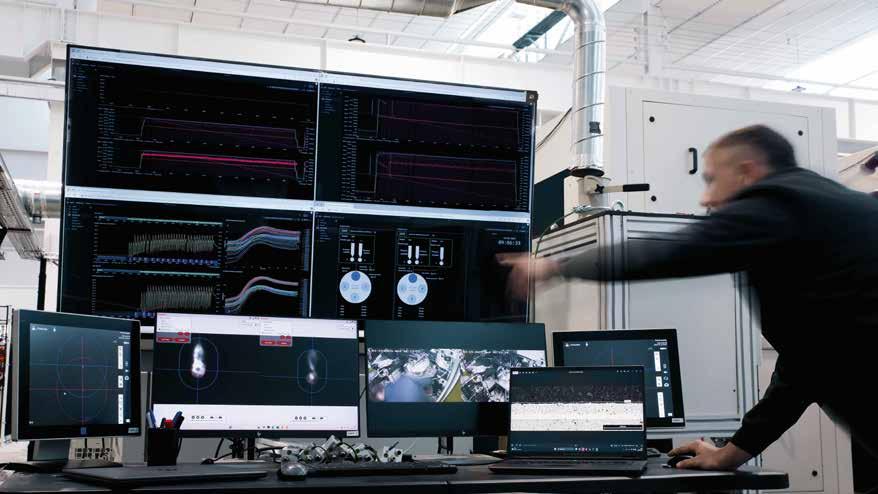
Etxetar's monitoring technologies transform process data into ac onable insights that guarantee depos on qual and produc on reliabil . By combining material exper se with real- me process supervision, we translate complex material science into a robust LP-DED industrial solu on that delivers superior proper es and e ciency for demanding applica ons

Lockheed Martin, headquartered in Bethesda, Maryland, USA, has highlighted its investment and collaboration with Divergent Technologies, based in Torrance, California, USA, as an example of how it is working with emerging technology companies to accelerate speed, scale and mission impact.
In 2024, Lockheed Martin invested $25 million in Divergent, supporting efforts to explore applications across multiple mission areas, including advanced munitions and a vehicle concept developed with Lockheed Martin Skunk Works called the Replicator.
Strengthening the defence industrial base, and increasing the speed at which it can deliver, has become a central focus across government and industry. According to Lockheed Martin, the collaboration reflects this priority: accelerating how quickly
advanced capabilities can move from design to production.
By pairing aeronautical expertise with Divergent Technologies’ Divergent Adaptive Production System (DAPS), the team demonstrated the potential of a digital design-to-production model. By using digital engineering and Additive Manufacturing to rapidly iterate designs and produce hardware prototypes, the team took a 2.75 m wingspan Unmanned Aircraft System, or drone, from concept to first article in less than one year.
Divergent’s Additive Manufacturing model also introduces the potential for more flexible production by reducing reliance on traditional supply chains and enabling faster response to changing operational needs. Across Lockheed Martin, teams are assessing where these approaches could have the greatest impact, from munitions components
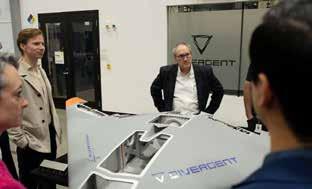
Members of Lockheed Martin’s leadership team discuss the Replicator during a recent visit (Courtesy Lockheed Martin)
to aerospace and rotorcraft applications.
Lockheed Martin’s approach goes beyond exploring new technology. It focuses on helping promising solutions transition to production at scale. The company stated that while efforts like Replicator-related concepts remain in early stages, they are helping inform how future systems could be developed and scaled to meet evolving mission demands.
www.lockheedmartin.com www.divergent3d.com
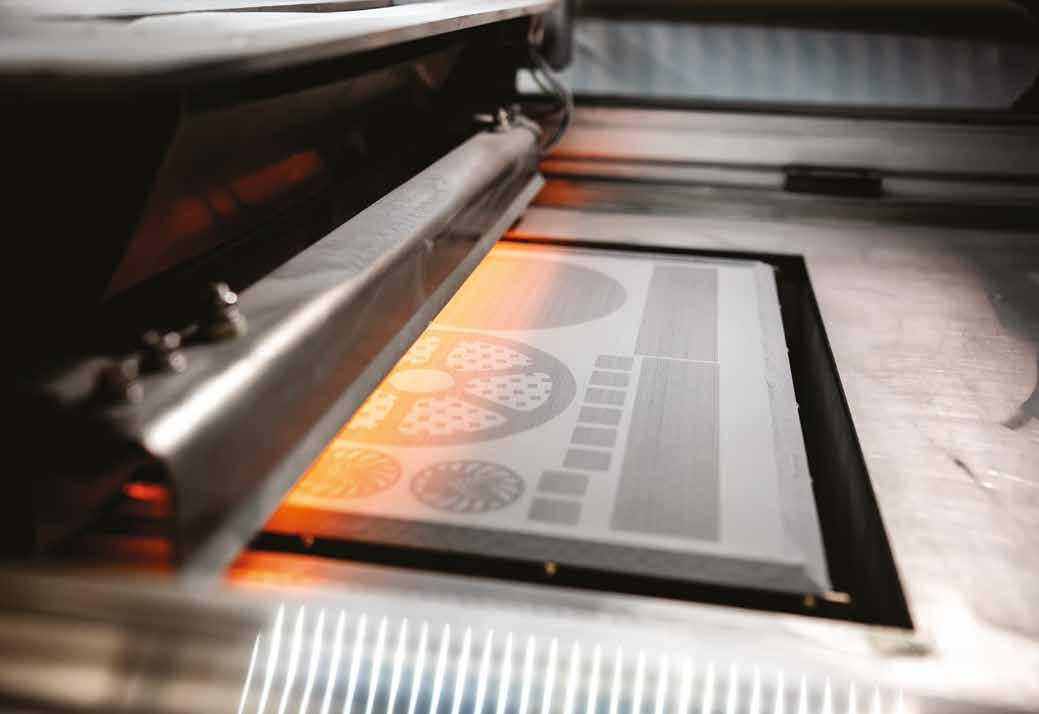
Velo3D, Fremont, California, USA, and Aurelia Technologies, Katy, Texas, have announced a strategic partnership focused on the use of Additive Manufacturing in next-generation gas turbine systems.
Under the agreement, Aurelia will evaluate the use of metal Additive Manufacturing to simplify turbine designs, reduce part counts and improve component robustness in high-temperature operating environments. The company stated that the technology could enable the consolidation of multi-part assemblies into fewer integrated components, reducing the number of fasteners and joints while simplifying manufacturing and maintenance requirements.
“Additive Manufacturing allows us to simplify designs, reduce failure points and move faster while staying grounded in proven turbomachinery
fundamentals and materials science,” stated Karol Hricisak, PE, Director of Technology at Aurelia Technologies.
The collaboration will initially focus on component feasibility studies, material and process development, and qualification activities using Velo3D’s Sapphire XC metal Additive Manufacturing machine. The companies stated that early work will assess opportunities to improve component performance, manufacturability and lead times across selected turbine components and alloy systems.
Aurelia also intends to use Additive Manufacturing to support its supply chain strategy by reducing dependence on long-lead-time forgings, tooling-intensive manufacturing processes and large inventory commitments. The company stated that the approach could improve responsiveness to design changes
Velo3D and Aurelia Technologies will explore the use of Additive Manufacturing in next-generation gas turbine systems (Courtesy Aurelia Technologies)
and customer demand while reducing working-capital requirements.
“Advanced energy systems are pushing the limits of traditional manufacturing,” stated Michelle Sidwell, Chief Revenue Officer at Velo3D. “Aurelia is taking an engineeringdriven approach by designing with Additive Manufacturing in mind from the beginning, which is where the greatest impact can be realised.”
www.velo3d.com
www.aureliatechnology.com
Looking for more than just standard solutions?
Using our high-resolution additive micro manufacturing technology, we are able to produce ultra-fine structures and complex geometries at micron detail.
In addition to our established primary materials - stainless steel, titanium, inconel and copperwe also process specialty materials upon request, tailored to your specific application.
Even more demanding materials can be successfully processed on our system.
These include:

Together with you, we evaluate technical feasibility, advise on the optimal material selection, and support the development of these and new materials for your application when required.
And the next material is already on the horizon: Aluminum – coming soon.

Farsoon Europe GmbH, based in Sindelfingen, Germany, has extended its collaboration with Tekna Holding ASA, headquartered in Sherbrooke, Quebec, Canada, to support the industrialisation of coarse Ti-6Al-4V powders in Laser Beam Powder Bed Fusion (PBF-LB) Additive Manufacturing. The development addresses market demand for increased productivity, improved powder handling, safety and reduced cost per part.
Farsoon’s open-platform approach enables users to extend process parameters beyond conventional limits. By combining coarse powder with thicker layer deposition, the companies report that build times can be reduced while maintaining process stability.
Tekna’s plasma atomisation technology enables the production of both coarse and fine powder fractions from the same source. This allows users to qualify multiple process strategies more efficiently, reducing material
approval requirements and lowering overall industrialisation costs.
Fine powders typically used in PBF-LB Additive Manufacturing, however, are often classified as flammable and can require complex safety measures which increases operational costs.
Tekna’s coarse Ti64 powder (TEKMAT Ti64-90/45) is said to offer lower oxygen sensitivity, enabling safer handling, recycling, storage and transport. This supports industrial-scale deployment by reducing both risk and cost throughout the powder lifecycle.
Testing on the FS273M-2 and FS721M-H-8-CAMS systems at a 90 μm layer thickness has shown that, despite the increased layer thickness, as-built Ti-6Al-4V mechanical properties remain aligned with standard PBF-LB benchmarks. These include yield strength of ≥ 850 MPa and ultimate tensile strength of ≥ 900 MPa.
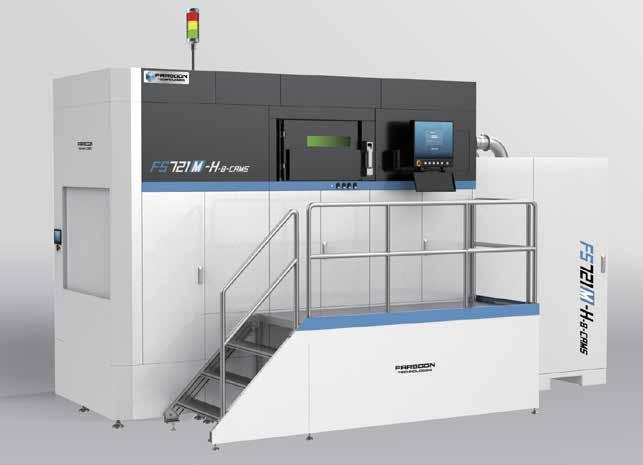
To highlight the compatibility between Tekna’s plasma-atomised powders and Farsoon’s open platform technology, titanium components were successfully produced using Tekna’s TEKMAT Ti64-53/20-G23 powder on the Farsoon FS721M-H-8-CAMS AM machine (Courtesy Farsoon Technologies)
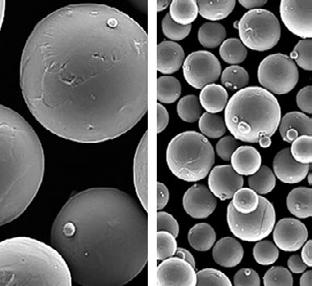
Farsoon and Tekna have extended their collaboration to support the industrialisation of coarse Ti-6Al-4V powders in Additive Manufacturing (Courtesy Tekna)
Compared to a typical 60 μm layer thickness, the theoretical build rate increases by more than 20%, contributing to higher machine productivity and lower manufacturing costs.
Shaped-beam technology for increased throughput
Farsoon is further developing its process capability through shaped beam technology, moving beyond conventional Gaussian beam exposure. Shaped beams enable larger and adjustable spot sizes, customised energy distribution and improved melt pool stability at increased layer thicknesses.
This approach is reported to support the reliable processing of coarse powders and enables a significant increase in productivity. By combining thicker layers with shaped beam exposure, the theoretical build rate per laser can increase by more than 80% compared to processing at 90 μm with a Gaussian beam.
The company states that shaped beam technology is a key enabler for series and mass production, supporting the transition of PBF-LB from prototype-focused applications to economically viable serial production. www.tekna.com www.farsoon.com
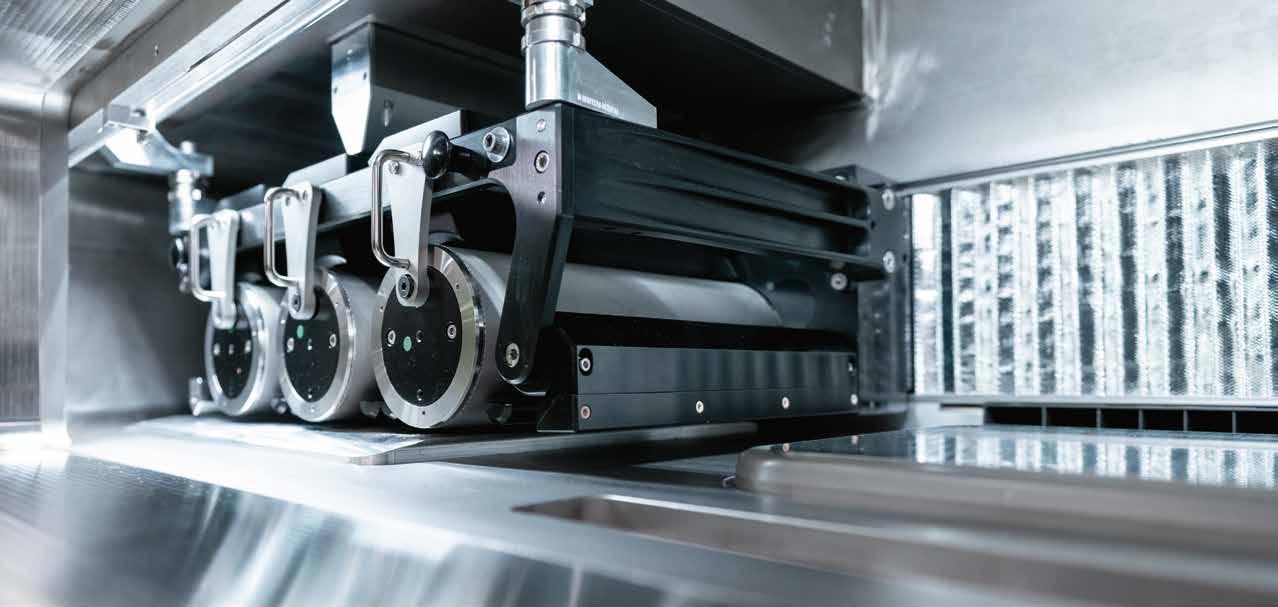
With the introduction of the new OmniFamily, Schaeffler Special Machinery is fundamentally redefining additive manufacturing. At the core of these advanced systems lies the innovative key technology Selective Powder Deposition (SPD), which forms the foundation for two distinct machine platforms:
OmniFusion 3D
• A multi-material additive manufacturing system based on the LPBF process, designed for high-performance and demanding applications.
OmniForm 3D
• A new AM platform that enables cost-efficient entry into multi-material production through subsequent conventional sintering processes.
Selective Powder Deposition: one technology – multiple possibilities
At the heart of both OmniFusion and OmniForm 3D lies the Recoater system, built on the patented Selective Powder Deposition (SPD) technology. This technology enables the precise and selective placement of multiple powder materials within a single powder layer, allowing the production of true multi-material components with tailored properties, whether metallic, ceramic, or hybrid combinations. As a result, material usage and production costs are reduced, while the functional performance and quality of the components are significantly enhanced.
Schaeffler Special Machinery: Partner for Industrial Excellence
Schaeffler Special Machinery leverages decades of mechanical engineering expertise to develop innovative manufacturing technologies. As a Partner for Industrial Excellence, the company is recognized worldwide for its quality, precision, and comprehensive production solution expertise.
Eplus3D, headquartered in Hangzhou, China, has reported that its metal Additive Manufacturing technology is being used by Hankook Precision Works, headquartered in Daejeon, South Korea, to produce tyre sipe moulds. Hankook recently added a second Eplus3D EP-M300 Additive Manufacturing machine at its China subsidiary to further increase production of the sipe moulds.
Metal AM offers increased design freedom and the ability to produce integrated structures in a single build, making it well-suited to tyre sipe moulds, which often feature sub-millimetre details and complex geometries that are difficult to achieve using conventional processes.
As demand for tyre sipe moulds increased, Hankook turned to metal Additive Manufacturing, with the first
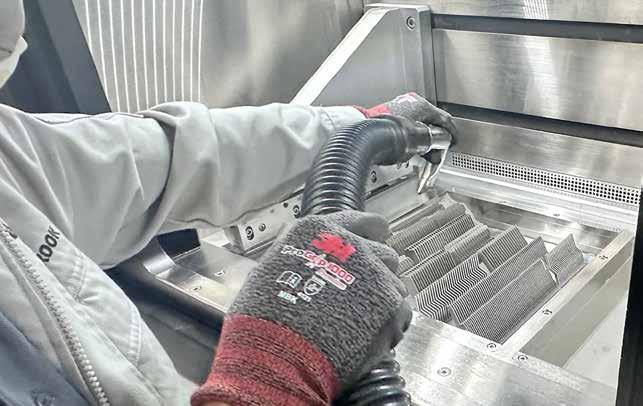
Post-processing the additively manufactured sipe mould components at Hankook (Courtesy Eplus3D)
OWL GmbH, based in Aachen, Germany, reports it has invested in a second Hot Isostatic Press (HIP) from Engineered Pressure Systems International NV (EPSI), Temse, Belgium, to expand capacity and support continued business growth.
The new HIP will have a working diameter of 500 mm and a working height of 1,500 mm. The maximum temperature will be 1,350°C with a maximum pressure of 140 MPa.
“Hot Isostatic Pressing is a manufacturing process that
eliminates the porosity in metals and increases the density of many materials,” explained Daniel Guizard, OWL Managing Director. “This improves the material’s mechanical properties (fatigue strength, ductility, impact resistance) and machinability – in other words, the component’s reliability is significantly enhanced by the HIP process.”
When components are treated with the HIP process, internal cavities and micro-porosities are eliminated through a combination of plastic deformation, flow, and diffusion bonding of the material by
machine installed at the company’s China facility in September 2025. Initial builds were reported to have demonstrated external quality and mechanical properties comparable to those of traditional technologies.
With application and process support from Eplus3D, the machine was subsequently introduced into serial production, with operators adapting to the machine within a short timeframe. The technology is now used to produce tyre sipe components, with approximately 100,000 parts manufactured to date, demonstrating consistent quality and repeatable output.
A second EP-M300 Additive Manufacturing machine was installed in February 2026, supporting expansion across multiple facilities and enabling greater production capacity while maintaining process consistency.
Eplus3D also supported application development through the testing of customer-specific components and optimisation of process parameters prior to installation. The use of validated parameters enabled Hankook to reduce the need for further iteration, enabling a more efficient transition from evaluation to stable production.
www.hankook-precisionworks.com www.eplus3d.com
simultaneously applying heat and pressure.
“The HIP process is used to significantly improve the technical properties of, for example, cast products, additively manufactured products, tools, motorsport components, and aerospace components,” added Guizard.
The second HIP system is expected to reduce turnaround times and support OWL’s ambitions to achieve NADCAP qualification for aerospace applications. Currently, the company is ISO 9001 and EN/ AS 9100 certified.
The new HIP system is scheduled to reach the start of production by the end of 2027. www.owl-am.com
Gekonn, the metal Additive Manufacturing machine brand developed by Sipra, based in Maribor, Slovenia, aims to address a challenge familiar to many manufacturers transitioning from successful prototype production to stable, repeatable industrial manufacturing.
Rather than focusing solely on machine specifications, Gekonn emphasises process control, powder handling and engineering support, together with integration into industrial production environments, as key factors in achieving reliable metal AM production.
The company’s portfolio currently consists of three Laser Beam Powder Bed Fusion (PBF-LB) machines. The LMP 100v3 is aimed
at research and development, tooling and low-volume production, while the LMP 200 targets small-batch industrial manufacturing. The LMP 300 is designed for serial production and larger industrial components, providing users with a route from application development to highervolume manufacturing.
While producing an individual component is often achievable, maintaining consistent quality across multiple builds requires control of factors such as porosity, residual stress, oxidation, thermal gradients and microstructural development.
To address these challenges, Gekonn’s AM machines incorporate controlled processing environments, closed-loop powder handling and
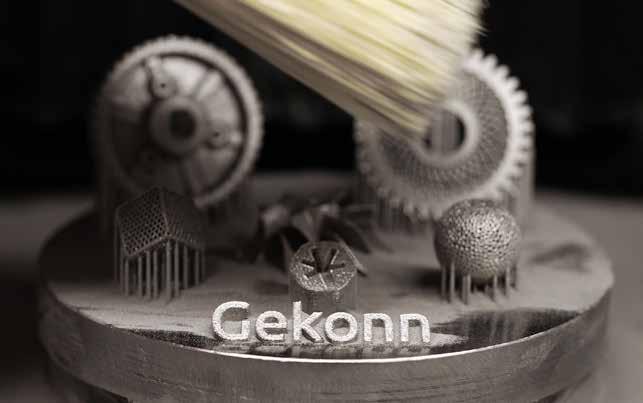
process monitoring capabilities intended to support both quality assurance and operator safety, particularly when processing reactive materials such as titanium and aluminium alloys.
The company also highlights the importance of open machine architecture. During material qualification and application development, engineers frequently need access to process parameters such as laser power, scanning speed, hatch spacing, layer thickness and scan strategies in order to optimise density, surface quality and mechanical properties.
Scan strategy management is a particular focus, as laser path selection can influence heat distribution, grain growth and residual stress development within components. Similarly, process optimisation can reduce the need for support structures, helping manufacturers minimise material consumption and post-processing requirements.
As manufacturers increasingly seek to move metal AM beyond prototyping and into serial production, Gekonn is positioning its technology as part of a broader engineering approach that combines machine hardware with installation, training, maintenance, process qualification and technical support.
For industrial users, the company argues that long-term success in metal AM depends not only on the laser system itself, but also on the control and understanding of the manufacturing process surrounding the part.
www.gekonn.com


BUILD VOLUMES: 800 × 800 mm² or larger
Z-AXIS: 1600 mm or larger
Scalability redefined with AMCM AirSword™
Effortlessly adaptable for large-scale additive manufacturing. Experience reliable performance and uniform gas coverage –every layer, every time.
Precision meets productivity
Unlock superior accuracy and speed with our nextlevel light engine, featuring advanced beam shaping technology.












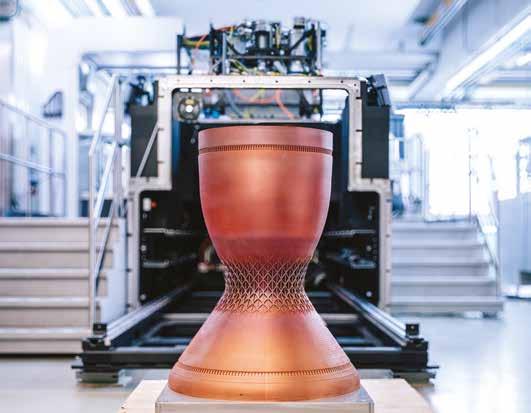
Discover AMCM: your gateway to advanced printing





Metal Powder Works Limited (MPW), headquartered in Pittsburgh, Pennsylvania, USA, has received a purchase order under the UK’s Ministry of Defence Project TAMPA for the supply of a titanium component manufactured via the company’s in-house powder production and Additive Manufacturing capabilities. Project TAMPA is designed to accelerate Additive Manufacturing adoption across the defence supply chain. The purchase order will see MPW collaborate with UK-based parts manufacturer Additive Manufacturing Solutions (AMS) to support part production using Laser Beam Powder Bed Fusion (PBF-LB) technology.
Project TAMPA was commissioned in 2021 by the UK’s Chief of Defence
Logistics and Support and has since become the central evidence base for the UK MOD’s approach to AM. The programme’s findings directly informed the UK’s first Defence Advanced Manufacturing Strategy, published by the MOD in March 2025. The strategy sets out the MOD’s vision for a global “hub and spoke” network of certified AM production capabilities, both within the UK and across allied nations. This distributed supply model is intended to address supply chain challenges including parts obsolescence, long lead times and reduced platform availability. These issues affect a defence inventory that exceeds 1.3 million items.
MPW’s selection as a supplier under Project TAMPA positions the company as a US-based production
node within the MOD’s emerging global defence AM supply network. This is consistent with the UK MOD’s strategic emphasis on dispersed, certified production capabilities across allied nations and reflects MPW’s capability to engineer proprietary powder production through its Direct Powder solution, states the company.
The contract, while not material in value in the context of the company’s current operations, represents MPW’s first engagement with a NATO defence programme and opens a significant new addressable market for the company’s Direct Powder titanium and specialty alloy capabilities. The MOD’s strategy encourages industry to invest further in AM adoption and signals a sustained, long-term commitment to growing the defence Additive Manufacturing supply base.
www.additive-manufacturing.co.uk www.metalpowderworks.com
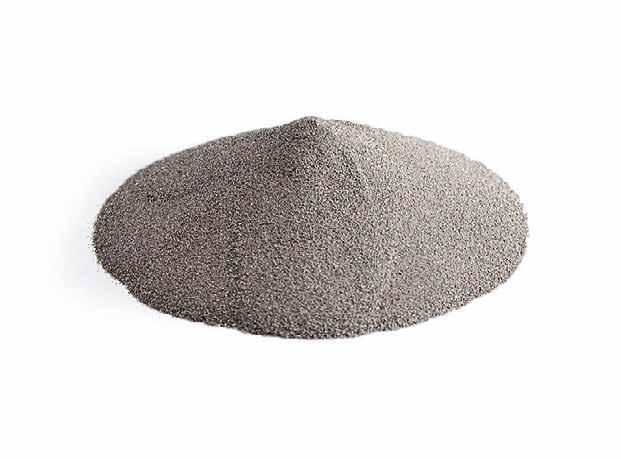
Nikon AM Synergy Inc, the engineering and manufacturing services division of Nikon Advanced Manufacturing based in Long Beach, California, USA, has been awarded a contract under the Defense Logistics Agency’s JAMA IV IDIQ Pilot Parts Program. The award enables Nikon AM Synergy to support a pilot initiative focused on producing critical parts using Additive Manufacturing technologies.
“Nikon AM continues to build upon and accelerate our holistic approach to deliver vital advanced manufacturing and sustainment capabilities that are crucial to the United States and allied partners at speed,” stated Dr Behrang Poorganji, Vice President of Technology at Nikon AM. “We are very proud to support the DLA by enabling agile, on-demand production
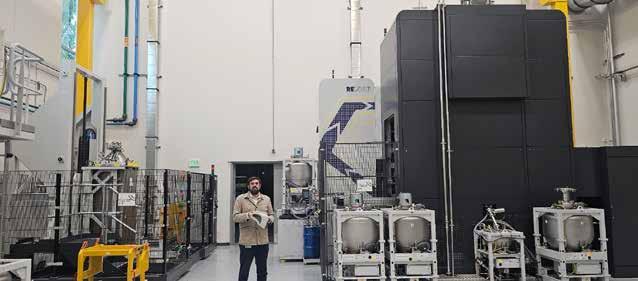
The programme will be conducted at the Nikon AM Technology Center in Long Beach, California, USA (Courtesy Nikon Advanced Manufacturing)
of critical components and strengthening supply chain resilience for mission-ready operations.”
The work will be conducted at the Nikon AM Technology Center in Long Beach where the team supports urgent requirements across naval, defence, aviation, and space sectors. The pilot is designed to help the DLA establish scalable AM processes and a reliable support base, with the broader goal of strengthening supply chain
resilience and sustaining warfighter readiness.
Deborah Lombardi, Sr Contracting Officer, shared, “The DLA will utilise Nikon AM to conduct a part(s) production pilot, using Additive Manufacturing (AM) to establish the necessary processes and AM support base for the DLA towards our mission to drive and sustain warfighter readiness.”
www.nikon.com www.dla.mil
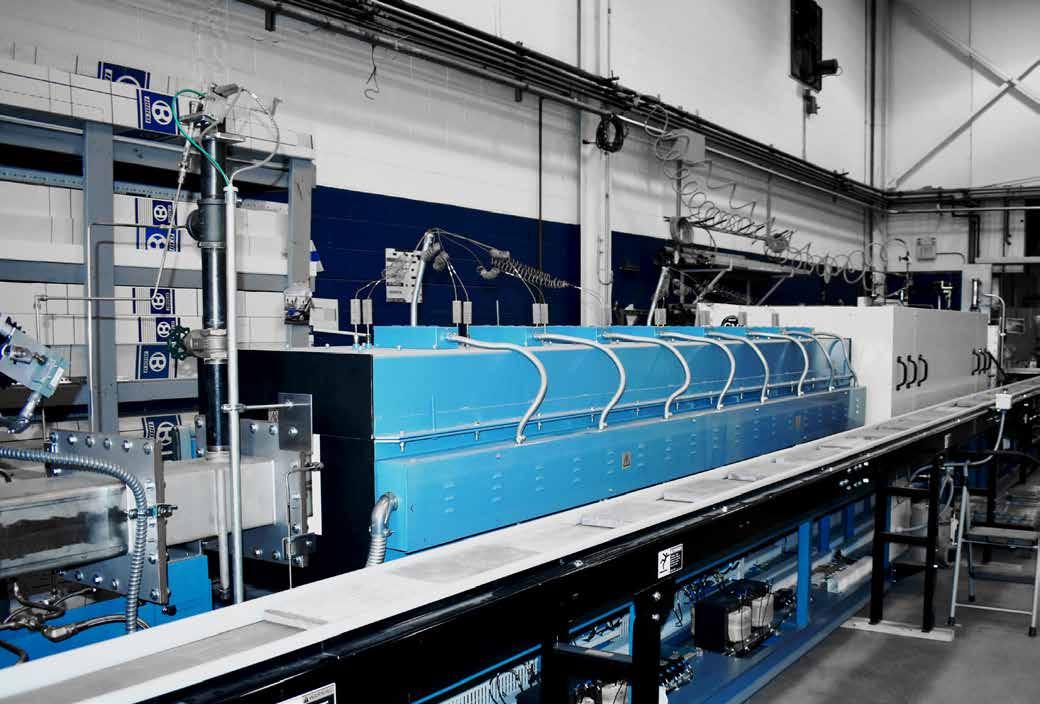

New research into the crystallisation process of additively manufactured Finemet alloys could offer a promising roadmap toward optimising the production of soft-magnetic components produced via metallic glasses. The research was carried out by IMDEA Materials’ Sustainable Metallurgy research group led by Prof Teresa Pérez Prado, with additional contributions from Dr Biaobiao Yang and Dr Marcos Rodríguez Sánchez, in collaboration with colleagues from Saarland University, Rey Juan Carlos University and the Technical University of Berlin.
Metallic glasses, also known as amorphous metals, are valued for their mechanical strength, corrosion resistance and magnetic performance. Among them, Finemet alloys are particularly attractive for energy-related applications such as transformers, inductors and electric motors. However, their wider adoption has been limited by the difficulty of manufacturing bulk components with complex geometries while preserving their desirable amorphous or nanocrystalline structure.
Additive Manufacturing, and in particular Laser Beam Powder Bed Fusion (PBF-LB), offers a promising alternative in this regard to more traditional techniques. However, the extreme thermal conditions inherent to the PBF-LB process can induce crystallisation of Finemet’s iron-silicon (Fe-Si) microstructure.
This, in turn, plays a key role in the final component’s properties.
The size, distribution and type of crystalline phases ultimately determine the material’s magnetic efficiency, electrical resistivity and mechanical behaviour. As such, a finely tuned nanocrystalline structure is crucial to enhancing the soft metal performance and enabling improved efficiency.
“Understanding these crystallisation mechanisms is crucial to the stability and performance of metallic glasses, and thus to expand their practical applications and integrate them into complex, high-performance systems,” explained IMDEA Materials’ Saumya Sadanand, the publication’s lead author.
The recent work, published in Additive Manufacturing and carried
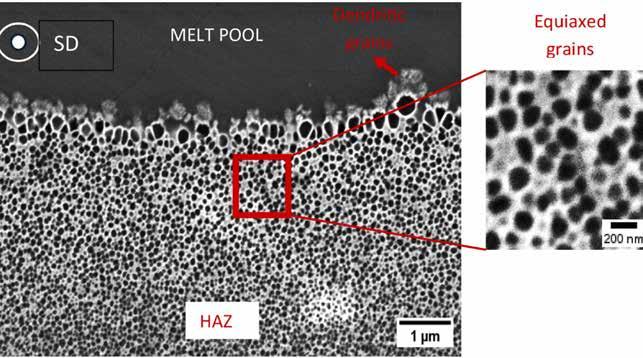
SEM micrograph illustrating at different magnifications the crystalline region surrounding the single-track melt pool that was melted over an amorphous Finemet substrate. Crystallites are preferentially etched, and they thus appear as dark regions (Courtesy Science Direct )
out as part of the Horizon Europe AM2SoftMag project, demonstrates how, by employing a double scanning strategy and varying the scan speed during the build process, researchers were able to tailor thermal conditions during the AM process. They were also able to analyse their effect on the resulting microstructure.
The crystallites formed during this process were revealed to be significantly larger and more heterogeneous than those obtained through conventional routes such as the annealing of melt-spun ribbons. The variation in their size, from a few tens to several hundred nanometres, was attributed to the highly localised and fluctuating thermal conditions inherent to the AM process.
Crystallisation during the PBF-LB process was demonstrated to take place either during rapid solidification of the melt pool under certain cooling conditions, or in the heat-affected zone (HAZ) during subsequent laser passes.
“What this work shows is that to manufacture a nanocrystallineamorphous composite with a complex geometry using LPBF, and which is suitable to be used as a passive motor component, the selection of parameters should aim to lower cooling rates,” said Sadanand. “This serves to increase the nucleation rate, suppressing the formation of large grains and limiting the formation of nanocrystals to the HAZ.”
In addition, researchers identified the formation of a smaller population of dendritic crystals during solidification at the boundaries of the melt pool, with their size decreasing as cooling rates increase.
“Overall, these findings highlight the strong influence of thermal gradients and cooling dynamics on nucleation and growth mechanisms,” Sadanand concluded.
The full paper is available to read at Science Direct. www.sciencedirect.com www.materials.imdea.org
The Dragonfly 3D World 2027 release is almost here.
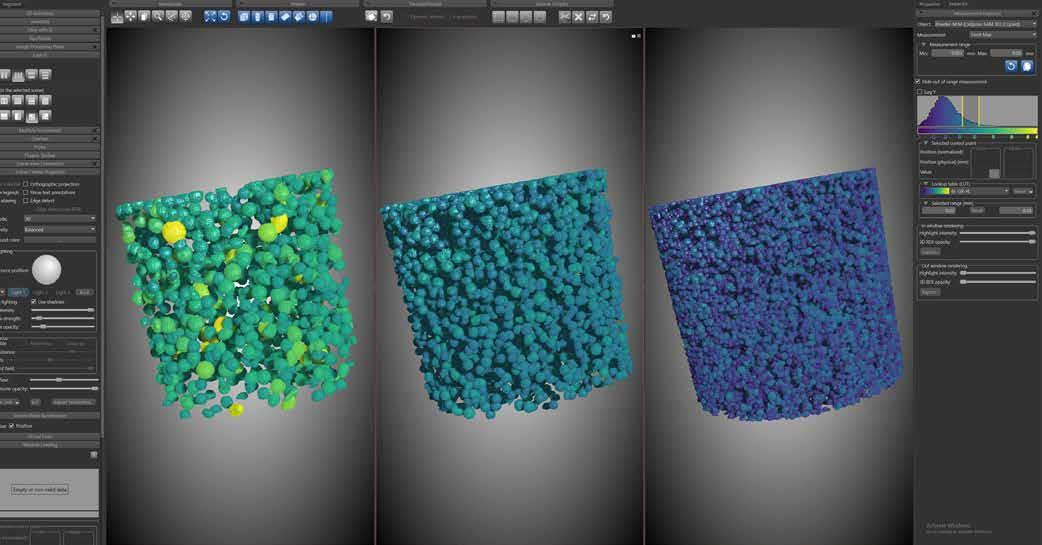
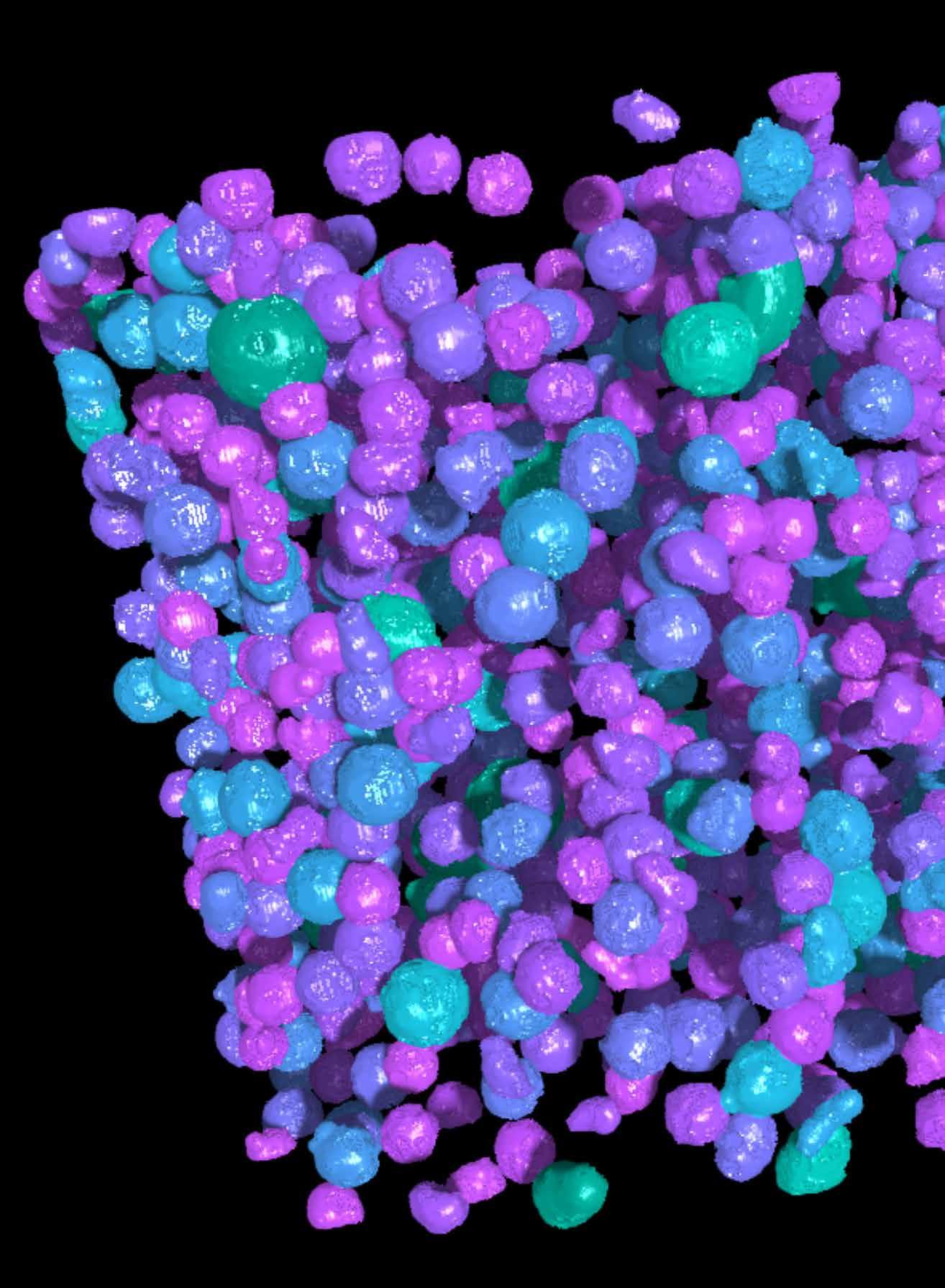
Dragonfly 3D World already equips additive manufacturing professionals with powerful tools for visualization, segmentation, and defect analysis, and this August it’s set to get even better. From subvoxel multi-mesh calculations to customizable reporting features and the rapid alignment of CT data to CAD files, our upcoming release unlocks precise measurements and intuitive features that bring the development and quality control of additively manufactured parts to the next level. Experience the difference this August with a free 30-day trial.
America Makes, Youngstown, Ohio, USA, and the National Center for Defense Manufacturing and Machining (NCDMM) have announced two new project calls worth a combined $25.6 million: Maturation Initiative for Additive Metals Interchangeability (MIAMI) and INtegrated System for In-situ Testing & Evaluation (INSITE). Both projects are funded through the Office of the Under Secretary of Defense, Acquisition and Sustainment, Industrial Base Analysis and Sustainment (IBAS) Program, with INSITE also receiving funding from the Office of the Under Secretary of Defense, Manufacturing Technology Office (OSD ManTech).
MIAMI
Maturation Initiative for Additive Metals Interchangeability (MIAMI) is worth $12.4 million.
This call aims to validate that metal Additive Manufacturing materials can reliably replace traditional alloys in Department of Defense weapon system components. Project teams will select candidate parts, define performance requirements, and generate shared, validated data demonstrating that the AM material meets or exceeds the critical properties of the legacy alloys it is intended to substitute. The goal is to enable broad, cross-platform use of AM materials, reduce redundant testing, and accelerate qualification so AM solutions can be adopted quickly and confidently across the defence industrial base. Three awards are anticipated.
“Advancing material interchangeability through Additive Manufacturing is a strategic step toward strengthening the nation’s defence posture,” stated John Martin, AM Research Director at America Makes. “This effort delivers the analytical rigour and validated data needed to accelerate trusted AM adoption, directly supporting the Department of War’s priorities for a more resilient and responsive industrial base.”
Proposed efforts are expected to deliver actionable insights that reduce technical and industrial risk, support practical pathways to transition, and provide shared value to both the DoD and the organic industrial base.
The second project call, INtegrated System for In-situ Testing & Evaluation (INSITE) is worth $13.2 million. One award is anticipated.
The objective is to establish an integrated AM quality - assurance system that unifies in - situ monitoring and post- build inspection to strengthen defect detection, advance DoD priorities for more reliable AM qualification, and deliver production - ready capabilities that enhance efficiency, readiness, and competitiveness across the US supply base.
This combined in-situ and postbuild non-destructive evaluation (NDE) approach aims to improve inspection of some of AM’s most challenging parts, including large components, dense materials, and complex geometries that are difficult to assess using traditional methods. By combining real-time monitoring during production with accelerated post-build inspection and expert oversight, the approach seeks to strengthen quality assurance, support certification, and expand manufacturing capabilities for critical components.
Rather than advancing individual sensing or NDE technologies in isolation, the project is focused on demonstrating an integrated quality assurance system that unifies in-situ monitoring and post-build inspection.
“This project brings together advanced analytics, in - situ monitoring, and next- generation NDE into a unified strategy that strengthens our industrial base and accelerates the deployment of reliable AM capabilities across defence applications.”
www.americamakes.us
AM 4 AM, based in Foetz, Luxembourg, and Additive Manufacturing Solutions Ltd (AMS), located in Burscough, UK, have announced a collaboration focused on the development and industrialisation of HiperAL through AMS’ production capabilities. HiperAL is a zirconium derivative of a 7000 series aluminium powder produced by AM 4 AM’s patented cold plasma treatment.
According to the companies, the programme will follow an engineering-led approach to developing HiperAL for demanding applications, with material, process and application requirements considered throughout development.
Under the agreement, AMS will serve as the exclusive UK partner for HiperAL part production. This arrangement is intended to provide a route to industrial adoption while maintaining consistency in the material’s introduction to the market.
“This partnership is about doing things properly. HiperAL has clear potential, but unlocking that requires the right combination of material development and production capability,” explained Maxime Delmee, Chief Executive Officer of AM 4 AM. “Working with AMS allows us to take a structured approach and build something that is technically sound and applicable in real use.”
It was added that the immediate goal is to establish a solid foundation for HiperAL, with both companies aligned on a practical, engineering-driven path going forward.
www.am-4-am.com
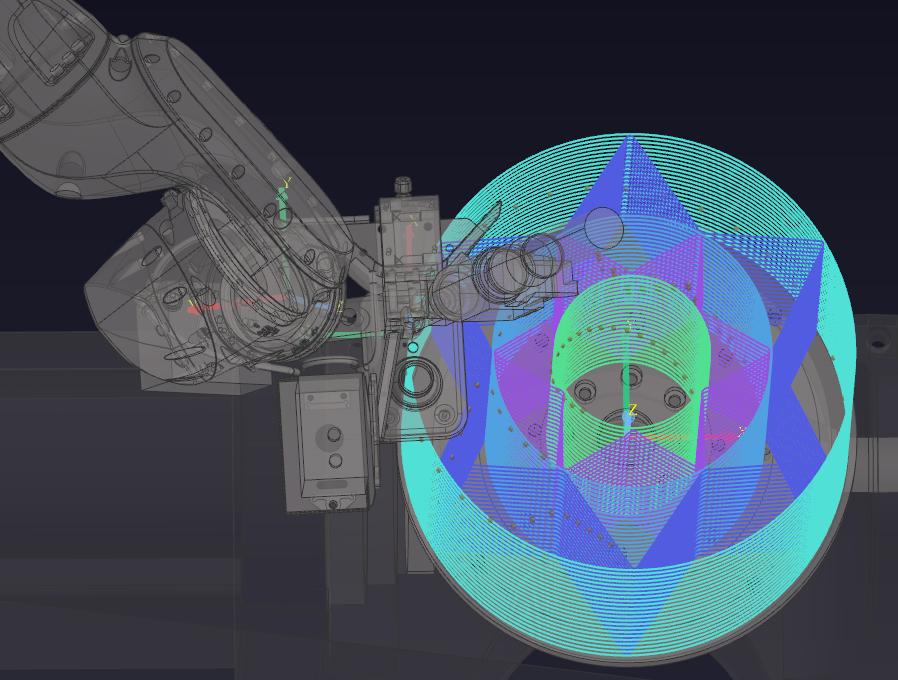
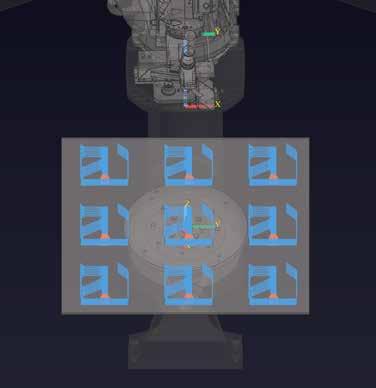



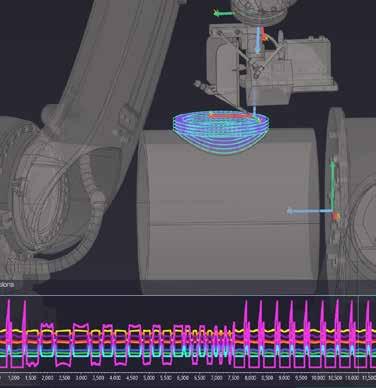
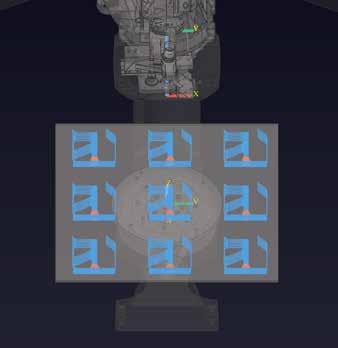

Advantages of Tungsten 3D Printing:
6kW Electron Beam – High Power and Speed
Maintains Preheated powder bed up to 1600ºC
Greater than 99% density achievable Multiple Build Volume Sizes available No oxygen content increase in Reused Powder
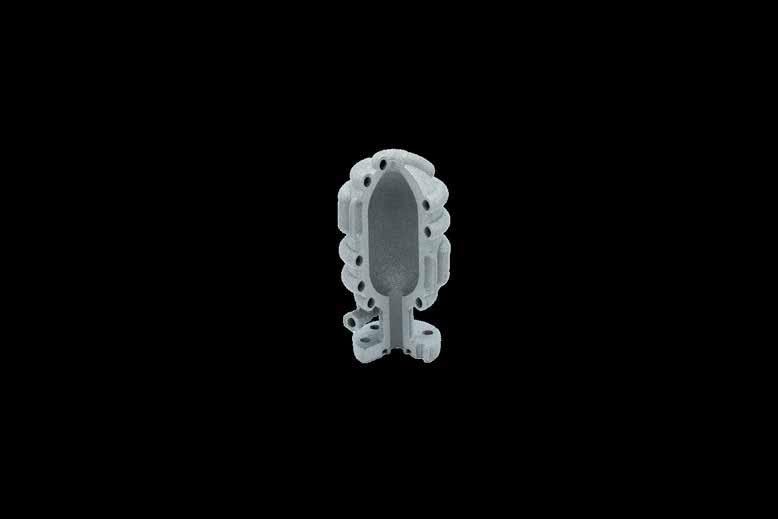
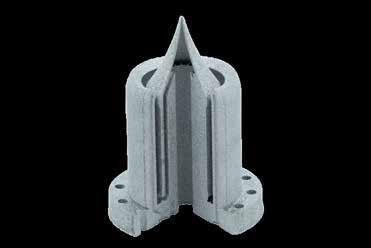
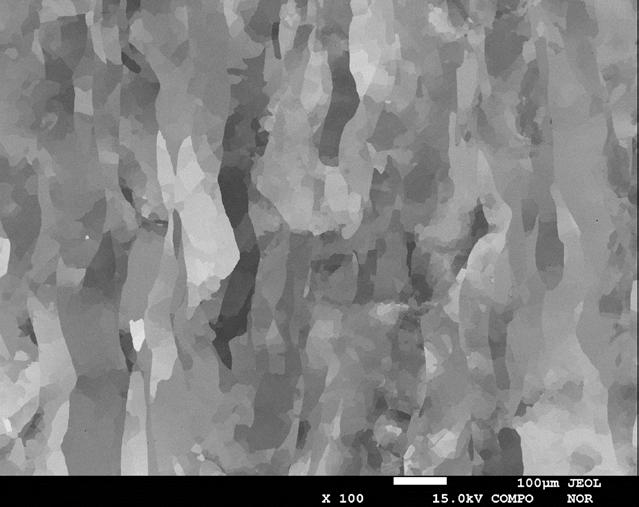
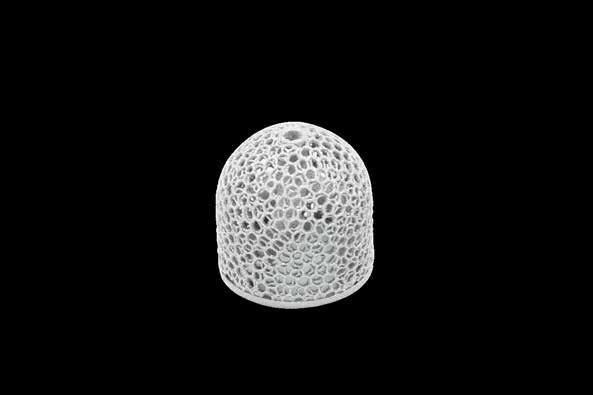
Upcoming Events:
PRICIM 12
Booth No. 10
August 9-13, 2026
Gold Coast, Australia

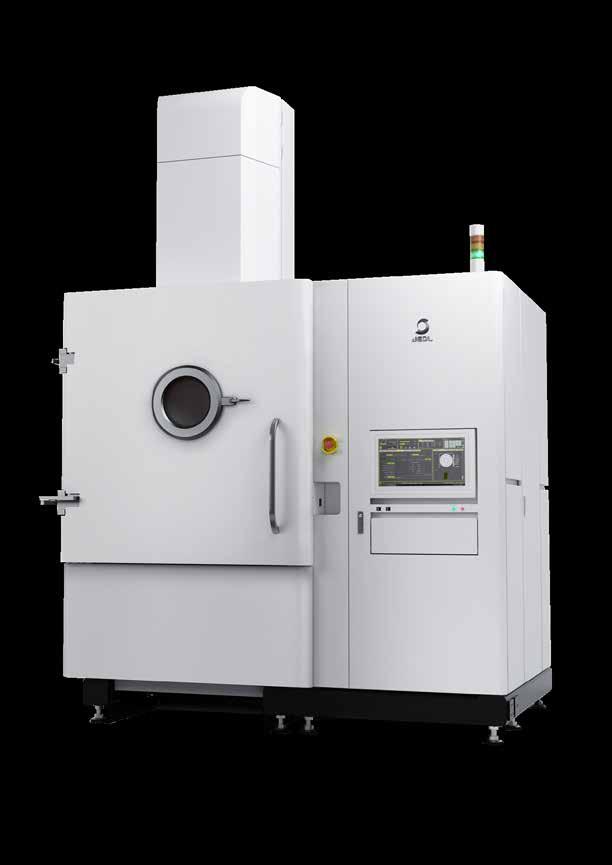
ONS 2026
Booth No. 3200
August 24-27, 2026
Stavanger, Norway
MSV 2026
Booth No. 15
October 6-9, 2026
Brno, Czech
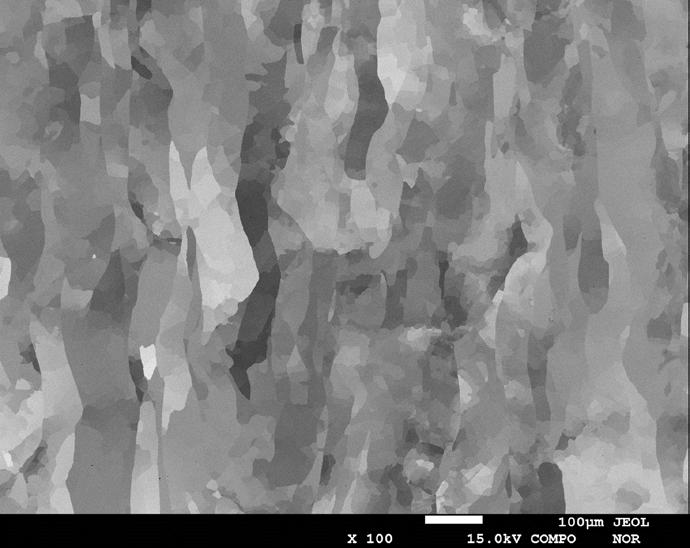
Elmet Technologies, headquartered in Lewiston, Maine, USA, has been granted US Patent No. 12,571,080 – Fabrication of Metallic Parts by Additive Manufacturing. The patent strengthens the company’s intellectual property portfolio in powders and processing technologies for both Additive Manufacturing and Powder Metallurgy applications.
The powders are produced using spray drying and optional plasma densification, resulting in highly flowable, densified composite particles. These characteristics are said to support reliable processing in Binder Jetting (BJT), as well as other powder-based Additive Manufacturing and Powder Metallurgy routes.
plasma densification, we have developed a reliable pathway to produce powders and metallic parts through Additive Manufacturing that meet the demanding performance standards of our aerospace and defence customers, all from a domestically owned and operated facility.”
Key features of the patented invention noted by Elmet include:
Flowable composite powders: Spherical particles with a Hall flow rate of approximately 1–25 s/50 g, supporting consistent powder handling and processing
Following sintering, the resulting components are reported to meet ASTM B777 requirements for tungsten heavy alloys, including density, hardness and tensile strength. The materials are intended for use in aerospace, defence and industrial applications.
“This patent reflects the depth of innovation our team has built over years of materials research,” stated Michael T Stawovy, co-inventor and Vice President of Research & Development at Elmet Technologies. “By combining spray drying and
Optimised particle architecture: Tungsten grains embedded within a lower-melting-point metallic matrix, enabling controlled densification and reduced shrinkage during sintering
Norsk Titanium, headquartered in Hønefoss, Norway, has received a contract award of nearly $4.2 million from the US Office of the Assistant Secretary of Defense for Industrial Base Policy under the Defense Industrial Base Expansion, Development, and Growth Enterprise (DIB-EDGE) initiative.
The DIB-EDGE programme is intended to support the development of next-generation manufacturing capabilities to strengthen US
• High purity: Reduced interstitial impurities (oxygen, carbon and trace elements) through plasma densification
Flexible processing routes: Feedstock suitable for BJT and Directed Energy Deposition (DED) Additive Manufacturing, as well as broader Powder Metallurgy applications
maritime and submarine industrial capacity. The funding will support development activities related to Norsk Titanium’s Rapid Plasma Deposition (RPD) Additive Manufacturing technology over an eighteen-month contract period.
According to the company, the programme will focus on qualifying RPD-produced components for critical applications. The work is also expected to support the further development of the technology for processing both titanium and nickel-based alloys.
Norsk Titanium stated that the award highlights the potential role of its Directed Energy Depositionbased Additive Manufacturing

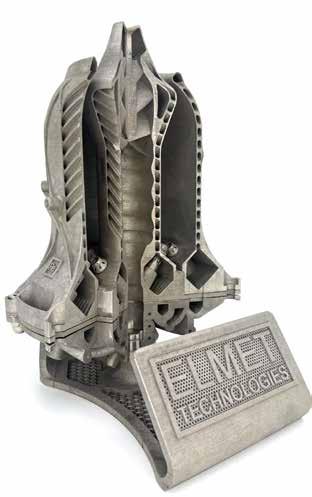
Elmet has been granted a US patent for the fabrication of metal parts by Additive Manufacturing (Courtesy Elmet Technologies)
The technology aims to address a long-standing challenge in metal AM and Powder Metallurgy: the production of dense, flowable and chemically uniform refractory metal powders that retain their properties under demanding processing conditions. Components produced using the process have demonstrated compliance with ASTM B777 Class 1 requirements. www.elmetpowders.com
Norsk Titanium has received a contract award of nearly $4.2 million to strengthen US maritime and submarine industrial capacity (Courtesy Norsk Titanium)
technology in the production of high-performance components for demanding applications.
www.norsktitanium.com
The US Marine Corps has begun field evaluations of the Advanced Integrated Mobile Machine Shop (AIMMS), a deployable manufacturing machine designed to enable the on-site production and repair of components in operational environments.
Developed with support from engineers at the US Naval Surface Warfare Center Carderock Division’s Advanced Manufacturing Branch, the machine has been delivered to the III Marine Expeditionary Force in Okinawa, Japan. AIMMS combines conventional machining with metal Additive Manufacturing technologies to provide expeditionary manufacturing capabilities closer to the point of need.
The programme builds on previous expeditionary fabrication initiatives and supports broader Marine Corps efforts to improve operational readiness and self-sufficiency in distributed environments. By enabling localised production and repair, AIMMS is intended to accelerate maintenance activities while reducing dependence on traditional logistics networks.
Rocket Lab USA, Inc, Long Beach, California, USA, has announced that its 1,000 th Rutherford engine has come off the production line. The company states that the Rutherford engine is the world’s first additively manufactured, battery-powered rocket engine and claims that it is now one of the most-manufactured rocket engines in the world.
The development of the Rutherford engine began in 2013 and made its successful orbital debut in January 2018 aboard the Electron small launch vehicle. Nine sea-level Rutherford engines power Electron’s first stage, collectively achieving
Completed in February 2026, the programme also included training for Marine Corps machinists and fabricators in the operation of the Additive Manufacturing machine’s manufacturing equipment.
According to Ryan Fisher, a mechanical engineer in Carderock’s Advanced Manufacturing Branch, AIMMS enables Marines to produce metal parts in deployed environments that were previously unavailable through expeditionary manufacturing capabilities.
Designed for use in remote and forward-deployed locations, AIMMS integrates a range of manufacturing technologies, including computer numerical control (CNC) machining, welding, 3D scanning, and hybrid manufacturing processes that combine additive and subtractive methods. Personnel can use digital design files and onboard equipment to manufacture, modify, or reverseengineer components as required.
Housed in transportable shelters, AIMMS can be moved
and deployed using tactical vehicles. Although the machine is not intended for operation while in transit, it does provide a mobile alternative to fixed machine-shop facilities, bringing manufacturing capabilities closer to operational units.
In addition to Okinawa, a second AIMMS unit has been fielded at Camp Pendleton, California, as part of an ongoing user evaluation programme. Following training, Marines at both locations began producing parts and providing operational feedback to support further development of the capability. The training programme, conducted over approximately one and a half weeks, covers metal Additive Manufacturing processes, 3D scanning, and CNC machining operations. Feedback from users is expected to inform future updates to both the machine and its associated training materials.
Carderock engineers will continue working with Marine Corps personnel throughout the evaluation period to refine the Additive Manufacturing machine and assess opportunities for wider deployment across the service.
www.marines.mil
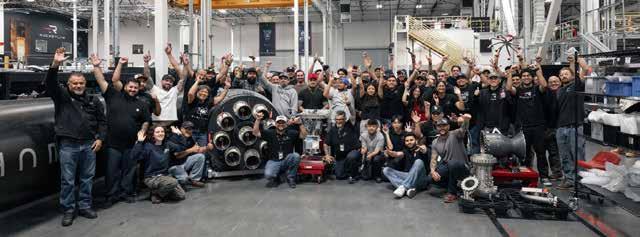
Rocket Lab USA Inc has announced that its 1,000 th Rutherford engine has come off the production line (Courtesy Rocket Lab USA via LinkedIn)
peak thrust of 224 kN (50,600 lbf), while a single vacuum-optimised 25.8 kN (5,800 lbf) thrust variant drives the second stage.
The engine weighs 35 kg and uses brushless DC electric motors powered by lithium-polymer batteries to drive its propellant pumps, replacing the gas turbine systems used in conventional rocket engines
with a lighter electric drive train. The production rate has reportedly grown from approximately one engine per month in 2017 to a current target of around 200 units annually. By late 2025, Rutherford engines had powered over seventy successful Electron launches, with over 800 engines flown to space.
www.rocketlabcorp.com


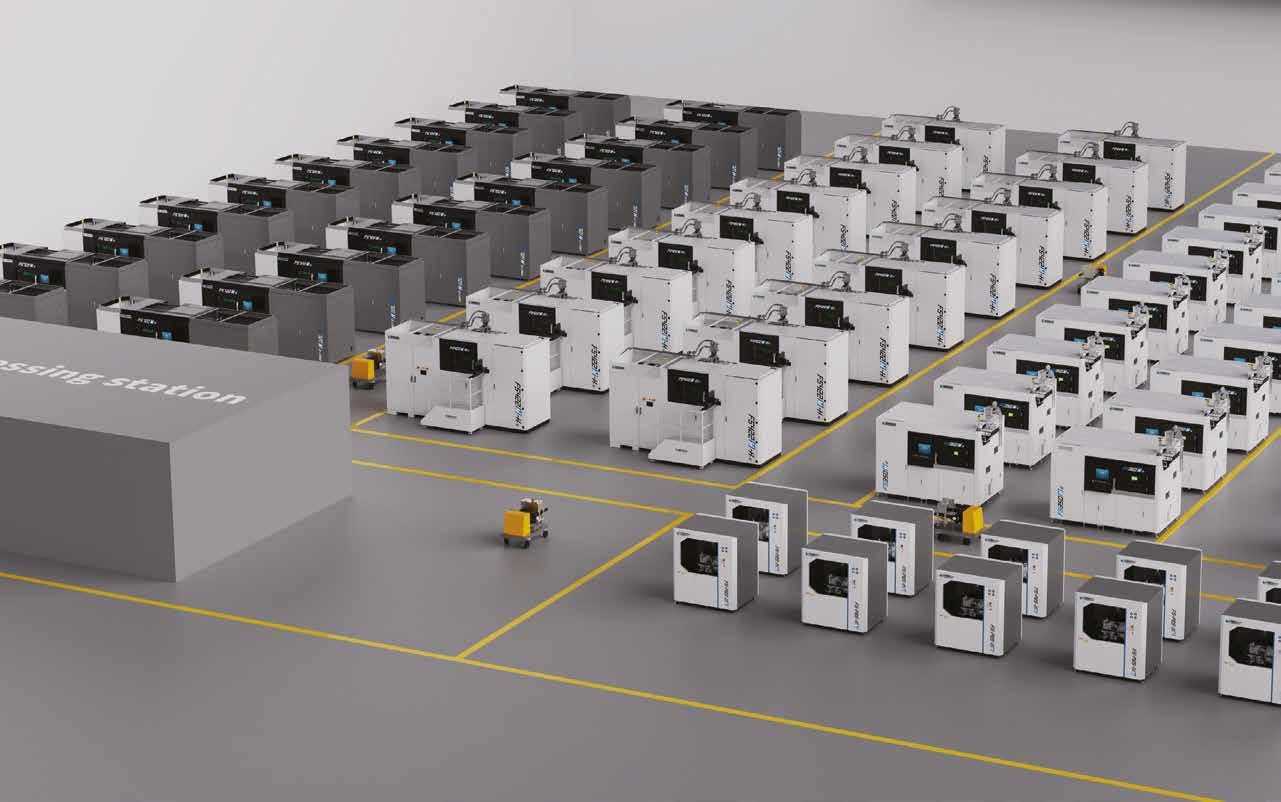
1 Billion +
Pair of shoes produced by Farsoon 3DP shoe molds annually
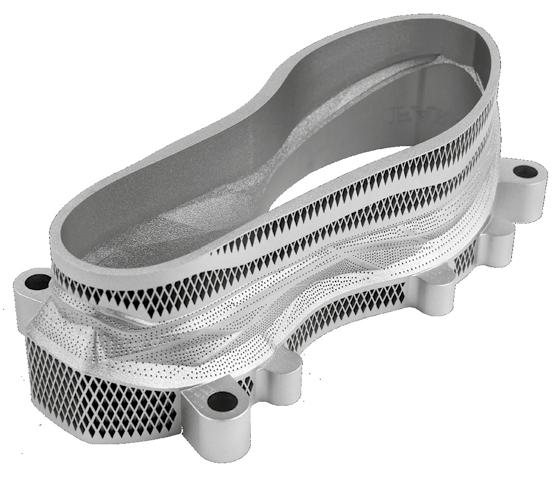
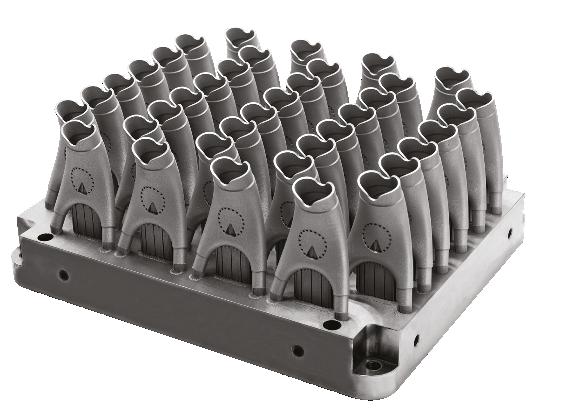
60%+
Serial AM driven by innovations:

> Continuous AM production solutions
> MES System
> And more!
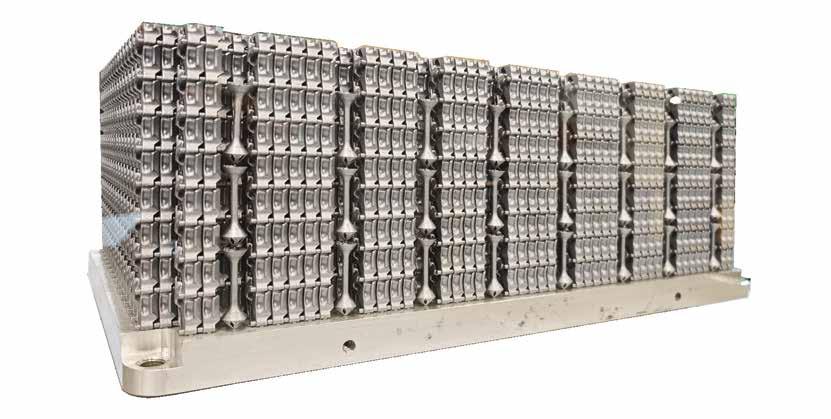
21,000 + Stacking auto parts printed in 1 build with FS721M-CAMS


The Fraunhofer Institute for Laser Technology ILT (Fraunhofer ILT), based in Aachen, Germany, and Etxetar, located in Elgoibar, Spain, are expanding the industrial adoption of Laser Metal Deposition (LMD) and extreme high-speed laser material deposition (EHLA). Under a memorandum of understanding, the partners will combine process expertise, industrial engineering and application know-how to support applications in aviation, coating technologies and other industrial sectors.
Etxetar develops high-value industrial solutions that combine machine-tool expertise with application-focused engineering. In laser-powder Directed Energy Deposition (DED), the company has experience in turbine blade and blisk repair, railway axles and gear components, supported by proprietary process strategies, process monitoring and industrial software integration.
Fraunhofer ILT contributes extensive expertise in LMD and EHLA process development,
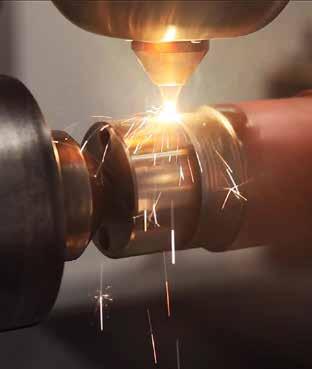
Etxetar is applying LP-DED where precise, localised material build-up can support repair, reinforcement and extended service life (Courtesy Fraunhofer ILT)
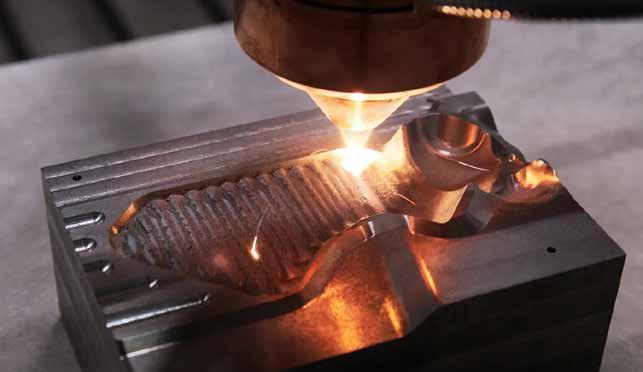
system design and digital process optimisation. Its capabilities include in-process geometry measurement, deviation detection and automatic parameter adjustment, helping manufacturers achieve consistent quality while adapting established processes to new applications.
A key driver for wider adoption is regulation. Europe’s Euro 7 framework now addresses non-exhaust emissions, including brake particle emissions, increasing demand for scalable coating technologies. Etxetar has already positioned EHLA-based solutions to address these requirements.
“Euro 7 is creating a demand for scalable coating solutions – and that pressure will not stay limited to Europe. We expect similar requirements to emerge in other major markets,” said Dr Thomas Schopphoven, Head of Department Laser Material Deposition at Fraunhofer ILT.
According to Fraunhofer ILT, once legislation creates a clear technical need, manufacturers begin looking for practical alternatives, creating opportunities for broader deployment of coating technologies in markets including China, India and Japan.
Aviation is a key focus for the partnership. Components such as blisks and turbine blades combine high material value, demanding operating conditions and a strong incentive to extend service life through repair rather than replacement.
“Aviation sets the bar for what laser-based repair has to deliver – precision, repeatability and full process control on components where failure is not an option,” said Alejandro Bárcena, CEO of Etxetar.
Beyond aviation, the partners see opportunities in gear repair, certified railway axle repair and space-related applications, where advanced manufacturing and repair strategies can reduce costs and extend component life.
Digitalisation and artificial intelligence are expected to support wider industrial deployment. Fraunhofer ILT’s AI-SLAM project enables real-time geometry measurement, contour deviation detection and automatic process adjustment during coating and repair operations. By learning from process data, the system can improve consistency and reduce manual intervention, helping manufacturers scale laser-based repair and coating processes more efficiently.
The collaboration aims to accelerate the industrial deployment of LMD and EHLA in markets where regulation, durability requirements and cost pressures are driving demand, from Euro 7-compliant brake disc coatings to the repair of high-value turbine components. www.ilt.fraunhofer.de www.etxetar.com

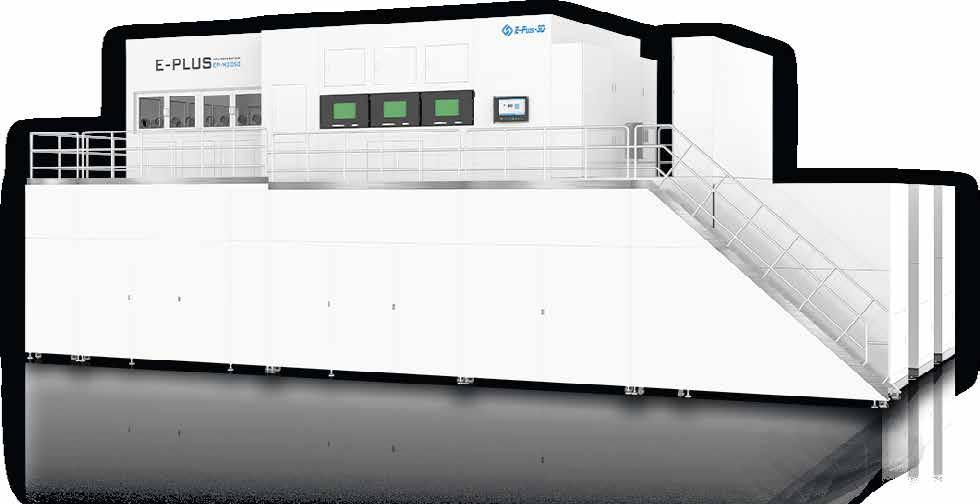


Researchers at New Mexico State University (NMSU), USA, are developing a metal Additive Manufacturing process that could enable aluminium scrap and other recycled feedstocks to be converted into high-quality components. The project focuses on Molten Metal Jetting (MMJ), a process in which millions of molten metal droplets are deposited and fused as they cool. While existing systems already employ this method, the researchers believe their new approach could directly compete with modern industry practice by reducing material waste and enabling the use of recycled metals.
Chaitanya Mahajan, Assistant Professor of Industrial Engineering at NMSU, is co-principal investigator on a nearly $3 million National Science Foundation grant awarded to the Rochester Institute of Technology.
“Many traditional metal 3D printers require highly specialised, expensive and potentially hazardous spherical metal powders,” Mahajan stated. “These powders have a limited shelf life, absorb moisture, and present severe explosion and inhalation risks, making them incredibly difficult to transport and store in harsh environments.”
Unlike many metal AM technologies that melt material during the build process, the team’s approach separates melting from deposition. According to the researchers, this enables faster production rates and allows a broader range of feedstocks to be used, including low-cost recycled materials such as machining scrap.
“For me, transforming aluminium scrap into high-precision parts redefines the limits of Additive
Manufacturing. This project demonstrates that the future of mass production lies in bridging the gap between circular sustainability and next-generation engineering,” Mahajan added.
The researchers are also seeking to overcome limitations associated with single-nozzle molten metal droplet jetting systems. Singlenozzle architectures can restrict build rates and are susceptible to clogging, which can interrupt production. By combining multiple nozzles with advanced modelling techniques, the team aims to increase production throughput while maintaining part quality. The approach could also facilitate the direct reuse of scrap metal, converting waste material into high-performance components.
Mahajan said the ability to produce components from scrap metal could have significant implications for commercial and defence supply chains. www.nmsu.edu

Standard and custom alloys of consistent quality for additive manufacturing and beyond. Let’s shape the future together.
Shanghai Hanbang 3D Tech Co, Ltd (HBD), China, has partnered with CN Innovations, Hong Kong, to design and manufacture two titanium wristwatches. The collaboration demonstrates how metal Additive Manufacturing can be used in luxury applications to produce lightweight components, featuring integrated lattice structures, detailed surface textures and complex geometries.
As wearable products become lighter, more complex and increasingly design-focused, manufacturers face growing demands in metal component design, precision manufacturing, lightweight structures and scalable production, explains HBD.
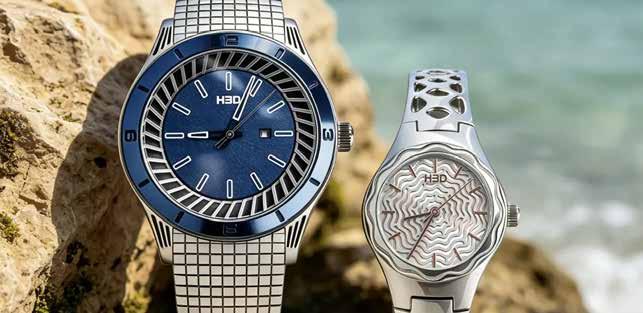
HBD has developed two titanium wristwatches in collaboration with CN Innovation (Courtesy HBD)
The Aurion and Lunelle watches were built on the HBD 400 Laser Beam Powder Bed Fusion (PBF-LB) AM machine. Aurion features a lattice structure and blue bezel, combining an industrial-inspired design with a metallic appearance. Lunelle features a curved case, an openwork strap and a wave-textured dial with rose-gold-coloured accents, resulting in a lighter visual aesthetic.

Beyond traditional watches, the same capabilities can be applied to jewellery and accessories, smartwatch bezels, smartphone frames, headphone structures and next-generation wearable devices. In consumer electronics, AM can support a range of metal components.
www.cn-innovations.com en.hb3dp.com








Swedish steel company SSAB has launched Armox 500 AM, a highstrength steel powder optimised for Additive Manufacturing. The material is particularly suited to protective armour applications where conventional armour plate solutions may not be suitable.
Armox protection plate has been used in armour applications for more than four decades, and SSAB states that Armox 500 AM is the first steel

Camera turret additively manufactured with Armox 500 AM powder, ready for use as built (Courtesy SSAB)
powder to match its properties. The company reports that the material has already attracted interest from customers in the defence sector.
“The demand for protection steel is growing globally, and SSAB’s unique offerings give us a leadership position with customers in the defence industry. In addition, demand for high-performance metal powders for Additive Manufacturing is growing,” stated Per Elfgren, Head of SSAB Special Steels. “We have developed our own high-strength steel powders optimised for Additive Manufacturing, based on many decades of experience in highperformance steel products. This enables advanced designs with low weight and high strength.”
According to SSAB, components produced using Armox 500 AM powder can provide ballistic and blast protection while enabling geometries that are difficult or impossible to manufacture using conventional machining and fabrication methods.
Potential applications include solid components, such as hinges and housings, as well as structures incorporating internal lattice or honeycomb geometries. Such designs can be developed using Design for Additive Manufacturing (DfAM)
Exentis Group AG, based in Stetten, Switzerland, reports it has successfully brought another one of its large-scale Additive Manufacturing machines into operation in Japan. Sintokogio Ltd, based in Nagoya, Japan, is expanding its Additive Manufacturing operations in Toyokawa, and is using Exentis technology for the production of
components across multiple material classes.
The recently delivered machine entered industrial operation at Sintokogio after successfully passing the site acceptance test.
“The rapid expansion of production capacity again confirms the industrial maturity and reliability of our technology platform,” stated
principles to reduce weight, while maintaining structural performance and protective capability.
SSAB suggests that Additive Manufacturing can be used to create customised protective structures for vulnerable external systems on military vehicles and equipment. These may include cameras, antenna mounts, optical sights, radar systems, hydraulic couplings and cable connections.
The company states that components produced using Armox 500 AM powder can achieve the required mechanical and protective properties without the need for subsequent heat treatment.
Armox 500 AM powder is produced at SSAB’s steelworks in Oxelösund, Sweden, where the company also manufactures additional steel powder grades. According to SSAB, Armox 500 has undergone testing for flowability, particle morphology and particle size distribution. The company has also produced and evaluated a range of demonstration components to assess ballistic and blast resistance.
SSAB plans to expand its powder production facility in Oxelösund during 2026 to support commercialscale manufacturing. Production capacity is expected to increase progressively from the first quarter of 2028, with a planned annual output of approximately 350 tonnes. www.ssab.com
Ralf Brammer, Chairman of the Board of Directors of Exentis Group AG. “Sintokogio is now in a position to manufacture sophisticated industrial components in high volumes efficiently and at consistently high quality, without the need for post-processing.”
Exentis reports continued strong demand in the Asian market and said it plans to deliver additional large-scale Additive Manufacturing machines to Sintokogio. www.exentis-group.com www.sinto.co.jp
Direct-to-printer, HEPA-filtered metal powder transfer, full extraction, and integrated sieving in one compact, mobile system. Move faster, recover more − safely.
Reactive & Non-Reactive Metal Powders
No Manual or Open Transfer Steps
Closed-Loop Capability
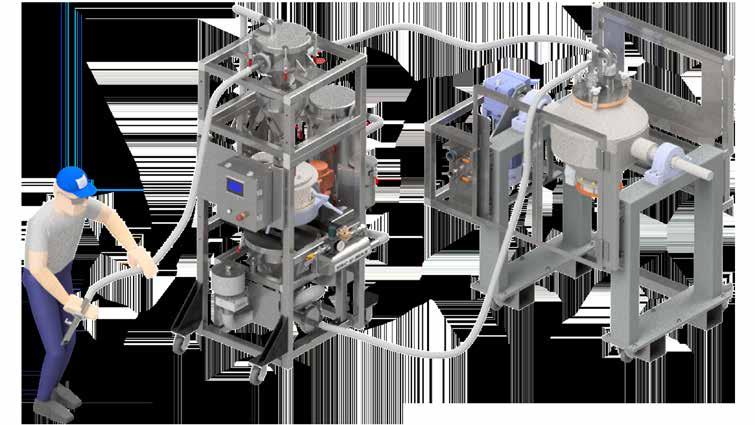
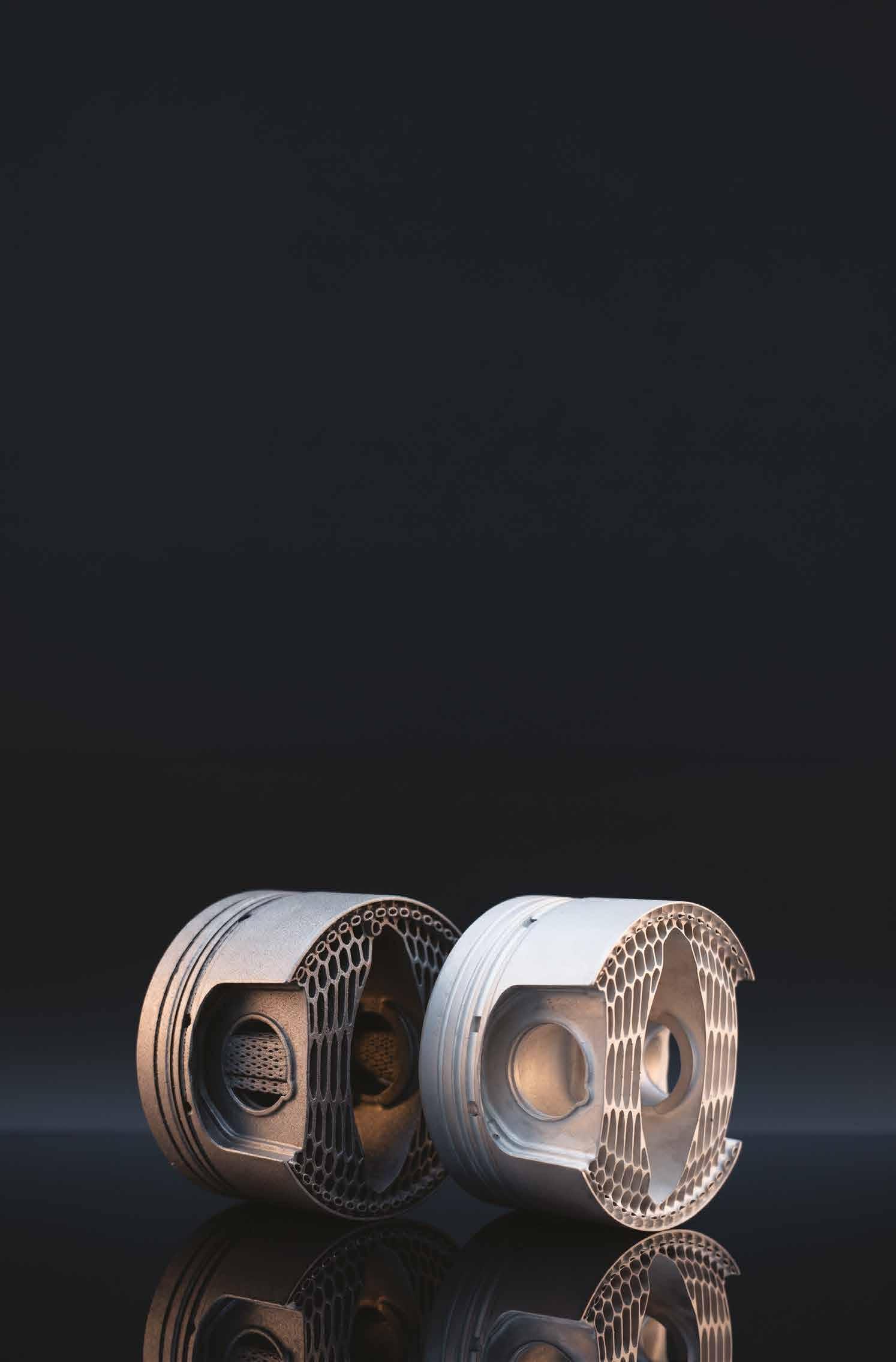
From internal channel polishing to fatigue life increase —we provide the ultimate finish for complex Metal AM components
Hyliion Holdings Corp, based in Austin, Texas, has announced that the US Navy’s Office of Naval Research (ONR), in partnership with the Defense Advanced Research Projects Agency (DARPA), has selected the USX-1 Defiant as a candidate test vessel for Hyliion’s KARNO energy generating technology. Initial sea trials are scheduled for 2027 under a development programme funded by the ONR to advance the use of KARNO Cores for onboard power generation in US Navy vessels.
For the USX-1 Defiant sea trials, Hyliion will deliver a drop-in 800 kW power system consisting of four additively manufactured 200 kW KARNO Cores in a keel cooled configuration. The modular architecture is designed to demonstrate reliable, low-maintenance power generation for an unmanned vessel, where onboard servicing is not available. Trials are aimed at highlighting KARNO technology’s scalability and redundancy, with power units that can be distributed across the ship to support mission reliability.
The USX-1 Defiant was developed under DARPA’s No Manning Required Ship (NOMARS) programme, which challenged the traditional naval architecture model by designing a seaframe (the ship without mission systems) from the ground up with no provision, allowance, or expectation for humans on board. The programme is part of a broader
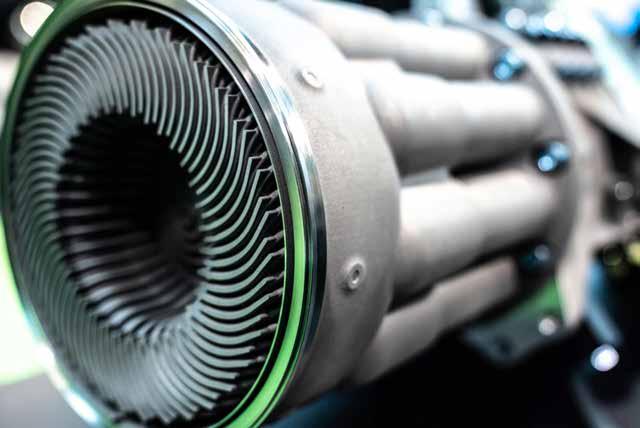
The KARNO is an Additive Manufacturing enabled generator technology that uses heat to drive a sealed linear generator (Courtesy Hyliion)
effort to modernise the US Navy and optimise surface platforms for autonomous operation, enabling simpler hull designs, improved reliability and survivability, and increased flexibility in payload and power system integration.
Measuring about 55 m in length, with a displacement of about 240 metric tonnes, USX-1 Defiant is designed for long-duration autonomous operation in the open ocean, independently or alongside other naval assets. The vessel is designed and developed by Serco-North America as a full-scale technology demonstrator and is currently undergoing sea trials.
“USX-1 Defiant represents a fundamental shift in how naval platforms are designed, powered, and operated,” said Thomas Healy, Founder and Chief Executive Officer of Hyliion. “As the Navy moves toward unmanned surface vessels, power systems must be efficient, resilient, and capable of operating
without human intervention. Our KARNO technology excels in these parameters, and we view USX-1 Defiant as the first of hopefully many naval platforms to be powered by this technology.”
Hyliion’s KARNO Core is a heatpowered linear generator designed for high modularity, efficiency, and low-maintenance operation, making it well suited for unmanned maritime platforms. For the US Navy deployment, the KARNO Cores will operate on F-76 marine diesel and demonstrate its ability to supply onboard power for extended durations with a low thermal and acoustic footprint. The KARNO Core generates direct current (DC) power output at 800 Vdc enabling direct integration into modern ship electrical architectures. The KARNO technology is currently undergoing land-based testing and development using simulated US Navy load profiles. www.hyliion.com
Advertise with Metal AM and reach over 50,000 AM professionals Contact Jon Craxford: jon@inovar-communications.com


Phoenix Scientific Industries Ltd (PSI), Hailsham, East Sussex, UK, has reported the successful development and scale-up of a process for coating 316L stainless steel powders with boron nitride nanoparticles for Additive Manufacturing applications. According to PSI, its work addresses a longstanding challenge in powder
engineering: achieving the uniform dispersion and application of nanoparticles onto metal powder surfaces at an industrially relevant scale. Nanoparticles have attracted interest for their potential to modify material properties and processing behaviour, but their tendency to form agglomerates has limited wider industrial adoption.

Over 6,500 production and laboratory furnaces manufactured since 1954 ®
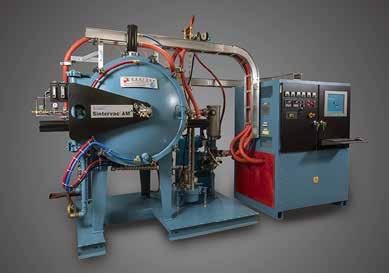
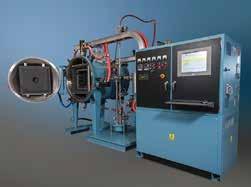
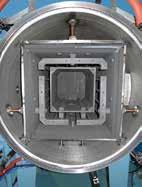
• Metal or graphite hot zones
• Processes all binders for metals or ceramics
• Sizes from 8-1500 liters (0.3–54 cu ft.)
• Pressures from 10-6 mbar to Atmosphere
• Precision heat treating post processing available
• Vacuum, Ar, N2 and H2
• Max possible temperature 3,500°C (6,332°F)
• Worldwide field service, rebuilds and parts for all makes
The company explained that initial investigations found commercially available boron nitride nanopowder exhibited significant agglomeration, requiring the development of specialised pre-processing methods prior to coating. Several preparation routes were evaluated. PSI reported that low-energy ball milling increased agglomeration rather than reducing it, producing larger particle clusters. More promising results were achieved using a solutionbased dispersion approach that combined controlled stirring and liquid-media processing. This reportedly reduced agglomerate sizes to approximately 1–2 μ m and enabled subsequent coating operations. A range of coating technologies were then assessed. While alternative methods provided useful process data, PSI stated that many resulted in uneven coatings or the formation of separate nanoparticle clusters rather than effective adhesion to the powder surface. The company ultimately identified a fluidised bed reactor (FBR) process as the most effective coating route. By optimising gas flow, nanoparticle injection and fluidisation conditions, PSI reported achieving a uniform boron nitride coating on 316L stainless steel powder particles. Optical microscopy and scanning electron microscopy (SEM) analyses were said to confirm the presence of the coating layer through changes in particle surface appearance and reflectivity.
PSI also highlighted the successful scale-up of the process from laboratory to industrial production. Using a larger retort system, the company produced two 20 kg batches of coated powder while maintaining fluidisation behaviour, nanoparticle delivery and coating quality comparable to laboratory trials.
The company stated that further work will focus on Laser Beam Powder Bed Fusion (PBF-LB) Additive Manufacturing and mechanical property evaluation of components produced using the coated powders. www.psiltd.co.uk
PyroGenesis Inc, based in Montreal, Canada, has provided an update on its Additive Manufacturing business strategy, centred on the company’s NexGen plasma atomised titanium powder production process.
The company said it has spent the past several years preparing its Additive division for significant production expansion, with the aim of attracting investment to support the next phase of growth. The required investment was originally thought to come primarily from an eventual spin-off of the division into a stand-alone entity but, more recently, joint ventures are reported to have become an option as well.
Efforts to prepare the Additive division for further expansion include:
Continuous improvement of production processes
• Reducing operational costs (for example, a further ~20% reduction was achieved through technical and workflow upgrades since the last operational update was released in March 2025)
• Building critical mass across the existing product range by developing repeat customer relationships
• Expanding the customer base across key industry segments, including aerospace, medical, defence, contract manufacturing, electronics and alloy producers
• Developing additional products from existing production runs (for example, in December 2025, the company introduced an off-cut powder product to complement its fine- and coarsecut products).
• De-risking product offerings by expanding powder suitability to three broad-based applications: Laser Beam Powder Bed Fusion (PBF-LB); Electron Beam Powder Bed Fusion (PBF-EB) and Direct Energy Deposition (DED).
The company states that momentum for the Additive division continues to grow, providing progress towards its long-term strategic goals. It added that the company had been approached by a corporation interested in securing distribution and/or production capability for the Middle East region, potentially as part of a joint venture.
PyroGenesis also said it had signed a contract towards a potential titanium powder distribution agreement with a materials firm supplying the Asian electronics market. The potential agreement would include distribution to electronics, medical, and aerospace industries in that region.
www.pyrogenesisadditive.com www.pyrogenesis.com



Continuum Powders, based in Houston, Texas, USA, has launched Custom Foundry Runtime (CFR), a new service that offers manufacturers, researchers, and advanced materials developers flexible access to Continuum’s advanced plasma-gas atomisation platform for speciality alloy development, small-batch production, and highvalue material processing.
While Continuum continues to supply productionscale titanium and nickel for advanced manufacturing applications, the company says its roots have always been deeply connected to speciality alloy development and metallurgical innovation.
CFR provides a scalable, customer-facing service designed to solve a growing challenge in the market: the lack of accessible, secure, and economically viable pathways for processing small-volume, high-value materials.
Across aerospace, medical, energy, and defence, organisations are increasingly working with specialised alloys, proprietary chemistries, and precious metals that are difficult to process through traditional foundry
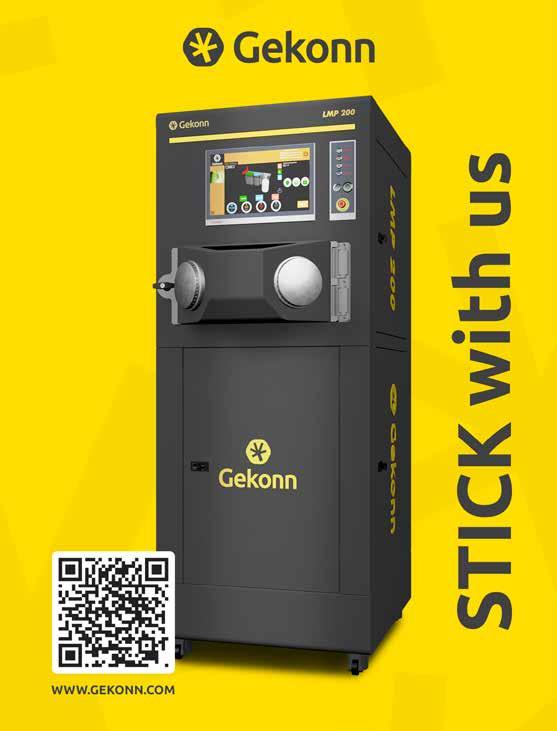
Custom Foundry Runtime gives access to Continuum’s advanced plasma-gas atomisation platform for speciality alloy development, small-batch production, and high-value material processing (Courtesy Continuum Powders)
or atomisation providers due to minimum volume requirements, production economics, or material sensitivity.
“Custom Foundry Runtime represents an important evolution for Continuum Powders,” stated Jon Cozens, CEO. “We’re seeing growing demand for flexible alloy development and secure processing capabilities, particularly for customers working with highly specialised or precious materials. CFR gives companies access to advanced atomisation infrastructure without forcing them into traditional large-scale production models that don’t fit their needs.”
The programme enables customers to:
Develop and validate new alloy chemistries
• Process small-batch and speciality metal runs (as low as 40-50 kg)
• Atomise high-value or precious metal materials, including platinum group metal (PGM) alloys and gold-based materials (400 OTN/day)
• Support rapid R&D and qualification programmes
• Scale from development quantities into commercial production
• Maintain tighter oversight of proprietary or sensitive materials
CFR is supported by Continuum’s metallurgical knowledge, advanced process controls, and secure material handling protocols designed specifically for high-value feedstocks and speciality alloys.
The new service offering is designed for agile development programmes, pilot-scale initiatives, and strategic materials projects where speed, flexibility, and technical collaboration are essential. The result is said to be a more efficient path from concept to production that supports both material innovation and supply chain resilience.
www.continuumpowders.com
AnyShape, based in Villiers-leBouillet, Belgium, has announced its official selection by Airbus Defence and Space for the production of structural mechanical components additively manufactured from Scalmalloy aluminium alloy, as part of the European Eurodrone (European MALE RPAS) programme.
Scalmalloy is a high-performance aluminium alloy designed for aerospace applications requiring lightweight, high-strength, and durability.
“This achievement is the result of years of dedication and teamwork across the entire AnyShape organisation. It represents the realisation of our long-term strategy – to become a trusted producer of serial flight-critical parts through Additive Manufacturing,” stated Roger Cocle, CEO and co-founder of AnyShape with Bertrand Herry.
“But this is only the beginning. Several additional contracts are already in the pipeline, and the European AM market has undergone significant consolidation in recent months, creating a wealth of new opportunities for AnyShape. I am proud that our company can contribute to Europe’s strategic and industrial autonomy, particularly in the current geopolitical context. It is not every day that we have the chance to demonstrate Europe’s ability to re-establish industrial production capacities at home – and to do so through cutting-edge, digital and automated manufacturing technologies,” added Cocle.
The components will be manufactured using Laser Beam Powder Bed Fusion (PBF-LB) Additive Manufacturing at AnyShape’s industrial facilities in Villers-le-Bouillet,
in full compliance with Airbus Defence and Space’s technical and quality requirements. Deliveries are scheduled between 2026 and 2033, in line with the Eurodrone programme schedule.
In accordance with the programme, AnyShape is responsible for the industrial development, production, qualification and in-service support of the parts under its scope, while complying with Airbus requirements on quality, environmental compliance and configuration management.
The Eurodrone (European Medium Altitude Long Endurance Remotely Piloted Aircraft System – MALE RPAS) programme, jointly led by the governments of France, Germany, Italy and Spain, aims to provide Europe with a sovereign and sustainable capability in the field of Intelligence, Surveillance and Reconnaissance (ISTAR) systems.
www.any-shape.com www.airbus.com

Researchers from the UK’s Additive Manufacturing of Functional Materials research group (AMFM) at the University of Wolverhampton, along with engineers at Additive Analytics Ltd, Telford, and Engineering Entropy Ltd, Silverstone, and a researcher from Prince Mohammad Bin Fahd University, Al-Khobar, Saudi Arabia, have published a study demonstrating the feasibility of producing aluminium vapour chambers with integrated lattice wicks directly, potentially opening new opportunities for advanced thermal management devices. The research, published in Applied Thermal Engineering , focused on optimising energy input during the Additive Manufacturing process to create the porous internal structures required for efficient capillary-driven cooling.
“The significance of this work extends beyond vapour chambers,” stated John Robinson, the study’s lead author. “It demonstrates that PBF-LB can be used to manufacture functional internal transport architectures where geometry, process physics and device performance are intrinsically linked. We are moving beyond Additive Manufacturing as a tool for producing parts and towards Additive Manufacturing as a platform for engineering functionality.”
Heat pipes and vapour chambers are widely used passive cooling technologies, with their performance heavily dependent on the geometry and manufacturability of their internal wick structures. Conventional manufacturing methods can
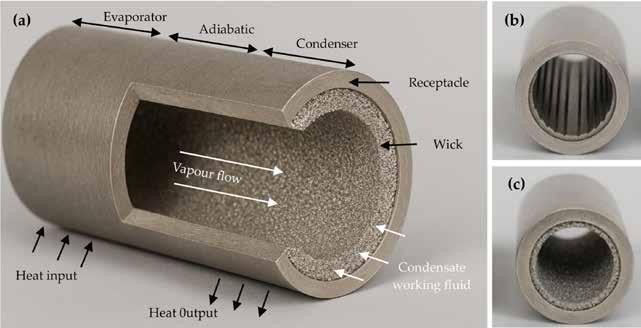
Schematic illustration of a heat pipe and typical wick architectures where (a) is a heat pipe cross section showing the evaporation-condensation working cycle (b) shows an axial grooved wick structure and (c) shows a sintered powder wick structure (Courtesy Science Direct)
limit design flexibility, prompting researchers to investigate whether Additive Manufacturing could enable the direct production of fully integrated devices.
In the study, the team designed a regular orthogonal lattice structure with strut and pore dimensions tailored to capillary performance requirements and the resolution limits of the Laser Beam Powder Bed Fusion (PBF-LB) Additive Manufacturing machine.
Using AlSi10Mg, the researchers systematically varied laser power, scan speed and layer thickness to evaluate the influence of localised energy input on lattice formation, pore interconnectivity and capillary structure.
The results showed that standard machine parameters produced dense material rather than the open, porous lattice required for wick functionality.
By reducing the energy input, the researchers were able to promote lattice formation, with the most consistent and interconnected pore networks achieved at an energy density of 2.86 J/mm 3. Under these conditions, the structures reached approximately 45% porosity.
Building on these findings, the team manufactured complete
aluminium vapour chambers incorporating the optimised lattice wick structures. The devices were sealed, charged with acetone as the working fluid and subjected to thermal performance testing.
During evaluation, the vapour chambers demonstrated temperature differences exceeding 70°C at a heat input of 65 W, confirming their ability to function as effective thermal management devices.
According to the researchers, the work demonstrates that optimisation of PBF-LB Additive Manufacturing processing parameters can enable the direct manufacture of wick-based cooling devices. The study also establishes the functional performance of fully integrated Additive Manufacturing vapour chambers and highlights the potential for producing advanced thermal management systems directly through Powder Bed Fusion technology.
‘Optimisation of energy input in laser powder bed fusion of porous wick structures for functional vapour chambers’ is available to download at ScienceDirect. www.sciencedirect.com www.wlv.ac.uk
www.engineeringentropy.co.uk www.pmu.edu.sa


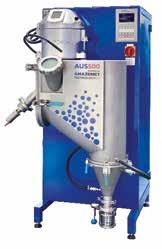
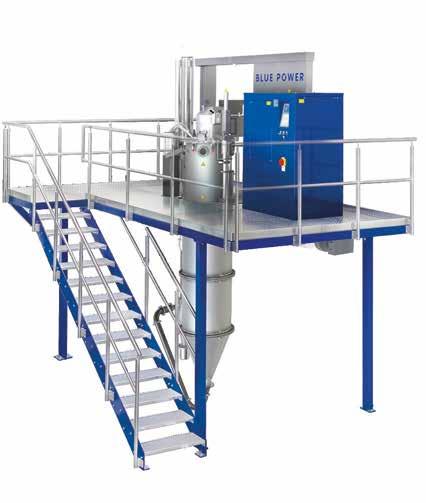
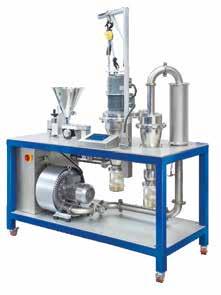
● GAS AND ULTRASONIC ATOMIZERS FOR SPHERICAL POWDERS WITHOUT ANY SATELLITES for LPBF, MIM, Binder Jetting and other Additive Manufacturing applications. High purity, sphericity and wide range of reproducible particle size distribution.
● WATER ATOMIZERS FOR MORE IRREGULAR POWDERS ideal for recycling/refining process, press & sinter process and others.
● AIR CLASSIFIERS FOR THE PRECISE SEPARATION OF METAL POWDERS into fine and coarse powder fractions especially in the range < 25 µm

IperionX, based in Charlotte, North Carolina, USA, has reported progress in scaling its titanium powder operations, with its Virginia Titanium Manufacturing Campus moving to 24/7 production during the quarter ended March 31, 2026.
The move marks the company’s shift from commissioning into continuous industrial operations, as all HAMR (Hydrogen-Assisted Metallothermic Reduction) powder production systems have now been commissioned and are in ramp-up.
Titanium powder output reached approximately 4.2 metric tonnes in March, equivalent to an annualised rate of around 50 tpa, representing an early-stage production baseline.
The company is targeting run-rate capacity of around 200 tpa by the end of 2026, with throughput expected to increase as operations stabilise and product mix evolves toward higher-volume powder grades and integrated manufacturing routes.
A key element of IperionX’s strategy is its scrap-to-powder production model, which uses 100% recycled titanium feedstock as an alternative to conventional Kroll-based supply chains. This approach is designed to reduce energy consumption and reliance on imported primary titanium, while enabling domestic production of high-quality titanium powders.
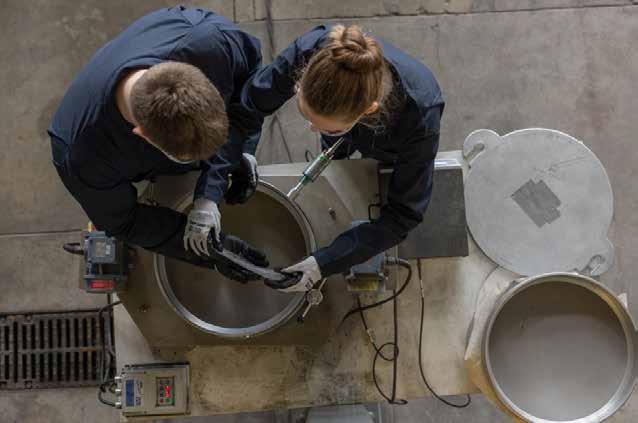
Freemelt AB, based in Mölndal, Sweden, has received a further project order from the UK Atomic Energy Authority (UKAEA), continuing its involvement in fusionrelated Additive Manufacturing development. This latest order is intended to support advanced application testing.
The company has supported UKAEA since 2023 across a number of projects focused on fusion applications, with UKAEA acquiring Freemelt’s e-MELT Electron Beam Powder Bed Fusion (PBF-EB) Additive Manufacturing machine in 2025. This latest order is intended to support advanced application testing.
Alongside current operations, development of GenX, IperionX’s next-generation continuous HAMR platform, progressed during the quarter. The GenX is expected to deliver improved throughput, lower operating costs and enhanced capital efficiency compared to existing batch-based processing.
Powder production is being supported by continued investment in downstream capabilities. During the quarter, the company advanced its Powder Metallurgy and Additive Manufacturing capacity, including the installation of a 300-tonne, six-axis SACMI press and the expansion of its Binder Jetting systems. Additional HSPT sintering furnaces are also scheduled for commissioning to remove production bottlenecks and accelerate customer qualification.
In the Additive Manufacturing sector, IperionX reported increased activity in the qualification of spherical titanium powders, particularly for consumer electronics applications. The company continues to focus on prototype production, testing and low-rate initial manufacturing across aerospace, defence and industrial markets, consistent with the staged adoption of advanced titanium components.
Looking ahead, IperionX’s priorities are said to include increasing powder throughput, improving consistency and scaling its ‘powder-to-part’ manufacturing, as it works toward establishing a fully integrated US-based titanium supply chain.
www.iperionx.com
Alongside its work with UKAEA, Freemelt also recently entered into a Memorandum of Understanding with Novatron Fusion Group to collaborate on manufacturing methods for fusion reactors. Freemelt is also engaged in activities linked to the ITER and Fusion for Energy supply chain, particularly in the development of Additive Manufacturing approaches and tungsten-based materials for plasma-facing components.
www.freemelt.com

Market intelligence and analytics company Context, headquartered in London, UK, has reported that global shipment of industrial Additive Manufacturing machines saw 5% growth year over year in Q3 2025, attributed to increased demand in aerospace and defence and a surge in China’s domestic market.
Context noted that industrial machines benefitted from a general recovery in metal machines, while low-end, entry-level machines are seeing continued growth.
“The mood across the high end of the market is still cautious, but it is no longer defensive,” stated Chris Connery, Vice President of Global Analysis at Context. “The industry has moved past the expansion-at-any-cost phase and is now concentrating on sectors where Additive Manufacturing is already delivering clear economic value. Aerospace, defence and domestic Chinese manufacturing are doing most of the heavy lifting.”
Industrial and mid-range machines
Shipments of industrial machines (defined as those priced at $100,000)
rose 3% YoY in unit terms. China saw the largest growth, with shipments up 22%.
The recovery in this section was concentrated in metal Powder Bed Fusion (PBF) machines; these saw a global shipment increase 25% YoY. China’s domestic aerospace and private space sectors were the main drivers. Shipments from Chinese metal PBF vendors rose 35% YoY, with most of these machines remaining within the local market. Context noted that Western aerospace and defence customers also showed renewed buying activity, although at a more measured pace.
Among Western suppliers, EOS delivered a strong quarter with revenues up 20% YoY, while Nikon SLM Solutions maintained its position in large-format metal machines. China’s Eplus3D also posted revenue growth as demand shifted toward multi-laser, extralarge platforms. BLT recorded double-digit year-to-date revenue growth.
The mid-range segment (machines costing between
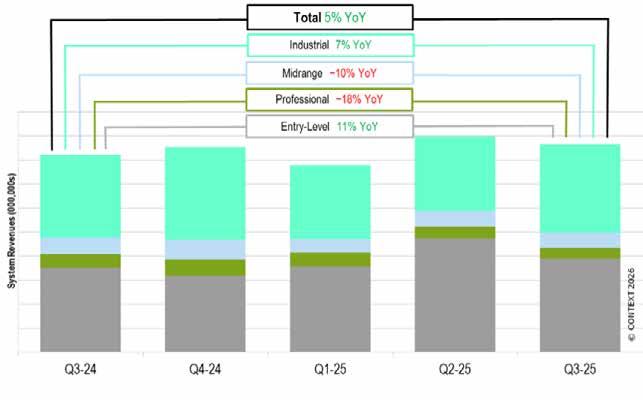
$20,000 and $100,000) reportedly remained under pressure, with shipments falling -13% YoY. This is said to reflect ongoing financing constraints and the uneven impact of regional on-shoring initiatives.
Across industrial and mid-range price classes combined, unit shipment leaders noted by Context include: UnionTech, Stratasys, ZRapid Tech, Formlabs, 3D Systems, Flashforge, HP, Nano Dimension (including Markforged), EOS and BLT. Notable positive year-on-year shipment growth was recorded by UnionTech, ZRapid Tech, BLT, EOS and HP.
The professional price band (machines between $2,50020,000) declined -14% YoY. This contraction was attributed almost entirely to falling demand for Material Extrusion (MEX) Additive Manufacturing machines.
Shipments of Fused Deposition Modelling (FDM) machines in this price class dropped again, with users reportedly migrating toward lower-priced entry-level machines.
Context expects global Additive Manufacturing revenues to grow at a modest, single-digit rate for full-year 2025, with stronger momentum building into 2026. According to the organisation, recent interest rate cuts in the United States are expected to ease capital spending constraints from early next year.
“Much of 2025 was spent simplifying operations and clearing the decks of M&A distractions,” Connery added.
“Supply chain resilience, defence investment and regional manufacturing strategies continue to favour additive manufacturing. China is leading the recovery today, but improving access to capital should support a broader rebound across Western markets next year.”
www.contextworld.com




+ Explore our lineup of Additive Manufacturing technologies
+ Discover integrated post-processing solutions
+ Experience live machine demonstrations...and more!
13 – 18, 2026
Nikon SLM Solutions, Lübeck, Germany, and NB Additive, North Richland, Texas, USA, have entered into a strategic partnership intended to expand access to productionscale metal Additive Manufacturing machines and support the implementation of integrated manufacturing workflows across North America.
The collaboration combines Nikon SLM Solutions’ multi-laser metal Additive Manufacturing machines with NB Additive’s experience in workflow integration, production strategy and manufacturing implementation. The companies expect their partnership to help manufacturers transition from prototyping to serial production.
The partnership will focus on applications in the aerospace, defence, energy and high-performance industrial sectors, with an emphasis on production-scale manufacturing and workflow optimisation.
According to the companies, they aim to address several challenges associated with the adoption of Additive Manufacturing for production applications, including scalability limitations, workflow fragmentation between AM and post-processing operations, and the need for clearer return-on-investment assessments.
“At Nikon SLM Solutions, we believe Additive Manufacturing reaches its full potential when it enables true industrial production,” stated Sam O’Leary, CEO of Nikon SLM Solutions. “NB Additive brings deep expertise in workflow implementation and production strategy, making them a strong partner for helping manufacturers scale Additive Manufacturing beyond isolated applications and into repeatable manufacturing operations.”
NB Additive stated that it selected Nikon SLM Solutions as a partner based on the company’s multi-laser metal AM technology, machine productivity, open parameter architecture and focus on industrial reliability.
The companies believe the partnership reflects a wider trend within the Additive Manufacturing sector as manufacturers increasingly seek production-focused manufacturing ecosystems rather than standalone prototyping capabilities.
“Additive Manufacturing only becomes valuable when it works in production,” stated Jens Kautzor, co-founder and Managing Director of NB Additive. “Our partnership with Nikon SLM Solutions allows us to
L3Harris Technologies has expanded its Advanced Manufacturing Facility-South (AMF-South) in Huntsville, Alabama, USA, with a $25 million investment that adds 12,100 m 2 (130,000 ft 2) of manufacturing space. The move continues the expansion of solid rocket motor production at Huntsville, where it focuses on components such as nozzles, exit cones, aft closures and cases.
The expansion will increase the Huntsville footprint to approximately 62,250 m 2 (670,000 ft 2)
across three sites. According to L3Harris, the AMF-South facility is designed to support rapid production scale-up by utilising existing infrastructure within the site.
The latest expansion follows continued investment in the Huntsville operation, including a threefold increase in capital expenditure between 2024 and 2025. The company states that Huntsville currently supports more than half of its solid rocket motor programmes through the production of inert components,
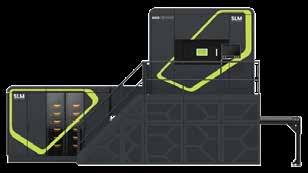
The companies expect their partnership to help manufacturers transition from prototyping to serial production (Courtesy Nikon SLM Solutions)
bring industrial-scale capability to our customers by combining highproductivity AM systems with the workflow expertise needed to support profitable production operations.”
NB Additive adopts a vendorneutral approach, with a focus on post-processing, automation and workflow integration across the wider manufacturing value chain. The company supports manufacturers using both metal and polymer Additive Manufacturing technologies, assisting with application assessment, investment justification and production workflow implementation.
The companies expect the partnership to create growth opportunities over the next 18–24 months as manufacturers increase their use of Additive Manufacturing for production applications.
www.nikon-slm-solutions.com www.nbadditive.com
with output continuing to increase year on year.
“The additional space allows us to lean forward and surge capacity,” stated Ken Bedingfield, President, Missile Solutions, L3Harris. “Huntsville’s expansion at AMF-South gives us the flexibility we need to grow quickly and continue delivering for our customers.”
L3Harris is also recruiting for a range of positions at AMF-South, including roles in Mechanical Engineering, Manufacturing Engineering, Project Engineering and Quality, as well as skilled trades such as Machinists and Composite Technicians. www.l3harris.com
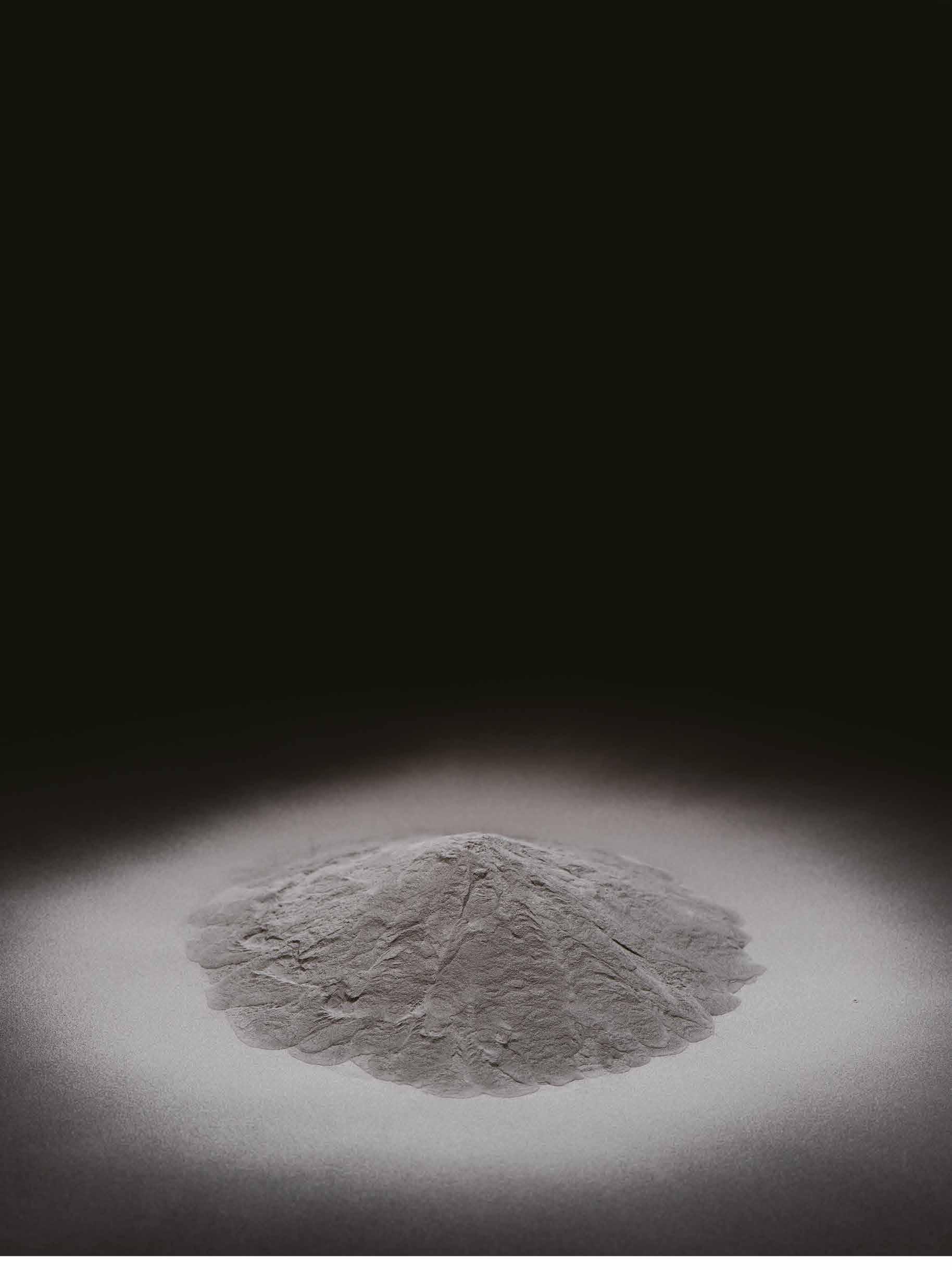
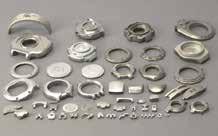
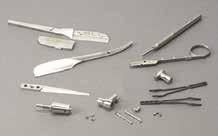
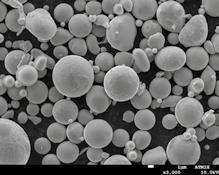
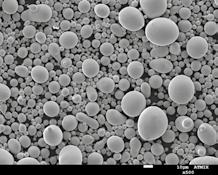


CNPC Powder, a supplier of metal powders for Additive Manufacturing headquartered in Vancouver, Canada, has begun construction of a new production and R&D facility in California, USA. The move is said to strengthen its commitment to the North American market and support growing demand for domestic metal powder supply chains. The company plans to produce powders in a range of particle size distributions for applications including Laser Beam Powder Bed Fusion (PBF-LB), Directed Energy Deposition (DED), Metal Injection Moulding (MIM), thermal spray, and Hot Isostatic Pressing (HIP).
Initial production is expected to begin in the first quarter of 2027. The 5,500 m² facility will house up to six fully automated atomisation production lines for aluminium powders, titanium alloys, nickel-based superalloys, stainless steels, and other speciality alloys for industrialscale Additive Manufacturing.
Advanced atomisation technologies
The California facility will deploy CNPC Powder’s portfolio of atomisation and powder-processing
technologies to produce spherical, low-oxygen powders for demanding Additive Manufacturing applications.
Core production technologies will include Vacuum Induction Gas Atomisation (VIGA); Electrode Induction Gas Atomisation (EIGA); Plasma Rotating Electrode Process (PREP); and Plasma Spheroidisation (PS).
According to the company, these technologies enable control of particle size distribution (PSD), sphericity, satellite formation, oxygen content, and powder flow characteristics, all of which influence build consistency, density, surface finish, and mechanical properties.
The new site will incorporate a closed-loop recycling system intended to convert production scrap, used components, and waste powder. The recycled powders offer a more than 60% reduction in carbon emissions, supporting customer sustainability goals and US clean manufacturing initiatives. They will be supplied with SCS carbon certification.

The facility will initially focus on materials widely used in industrial AM applications, including aluminium, titanium, nickel-based superalloys, steel and copper alloys.
Custom alloy development services will also be offered for customers requiring enhanced weight reduction or heat, corrosion and wear resistance.
Alongside production operations, the California facility will include an alloy development and rapid certification centre staffed by application engineers and materials specialists.
The centre will support:
Rapid prototyping and smallbatch alloy development
Powder parameter optimisation for customer AM platforms
• Material characterisation and validation
• Qualification and scale-up support
• Collaborative development of next-generation AM materials
The California investment forms part of the company’s strategy to expand regional manufacturing and technical support capabilities in key metal powder markets.
CNPC Powder currently supplies customers in the aerospace, automotive, medical, electronics, and industrial sectors and holds certifications including ISO 9001, IATF 16949, ISO 13485, and SCS recycled content certification.
“Additive Manufacturing is entering a new phase where material consistency, localised supply, and engineering responsiveness matter more than ever,” the company stated.
“Our California facility is designed to help manufacturers scale AM production with stable, eco-friendly, and cost-efficient materials, delivered faster, with deeper technical support, and a more resilient supply chain built closer to where innovation happens.”
www.cnpcpowder.com







From advanced machinery and additive manufacturing to digital prototyping and automation, T.Gold brings together the technologies shaping the next generation of
Discover innovations in alloys, micromechanics, finishing technologies, precious metal recovery and laboratory tools Connect with the companies redefining production performance, sustainability, precision and creativity Meet the suppliers, solutions and innovations driving the future of jewellery production.
Now with two annual editions and a location in Hall 4, within Vicenzaoro, the leading international show for jewellery and goldsmithing, creating more opportunities, more business and more innovation
GKN Aerospace has announced the launch of TITAN-AM (Titanium Industrialisation and Technology Advancement for Near-net Additive Manufacturing), an $8.4 million programme in partnership with the US Air Force Research Laboratory (AFRL). The initiative is focused on advancing and industrialising its laser wire Directed Energy Deposition (DED) technology to enable nextgeneration aerostructures.
The TITAN-AM programme aims to address five critical areas required to enable laser wire DED for aerospace structural applications:
1. Industrialisation of laser wire DED processes for large-scale
titanium aerostructure components
2. Development of robust titanium material datasets to ensure structural performance and reliability
3. Advanced simulation capabilities to optimise structural design and manufacturing outcomes
4. Non-destructive inspection (NDI) techniques tailored for Additive Manufacturing processes
5. Demonstration of the technology on selected aerospace structural components
The programme will be executed at GKN Aerospace’s Global Technology
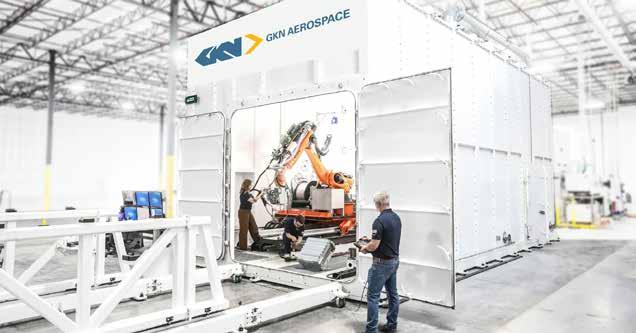
Aerospace has launched a project focused on advancing Laser Metal Deposition (LMD) AM (Courtesy GKN Aerospace)
Divergent Technologies, based in Torrance, California, USA, has named Cooper Keller as Chief Operating Officer. In this role, Keller will help lead the company in its next phase of growth. Having joined Divergent as a key foundational member, the company reported that Keller played a critical role in establishing the company’s operational capability. As COO, Keller will oversee all customer application functions, including application engineering, programme
management, supply chain, quality assurance, and production.
According to Divergent, Keller’s leadership drove customer adoption and the scale-up of its manufacturing platform, DAPS (Divergent Adaptive Production System), positioning the business to meet increasing global demand. Before joining Divergent, Keller led the development of numerous automotive, transportation, aerospace and defence products at Eaton Corporation, ranging from
Centre in Fort Worth, Texas, USA, a hub for advanced manufacturing innovation and collaboration with US defence and aerospace partners.
“TITAN-AM represents a significant step forward in Additive Manufacturing for aerospace structures,” stated David Bond, CTO Airframes for GKN Aerospace. “By combining our deep manufacturing expertise with AFRL’s vision, we aim to accelerate the readiness of LMD-w technology and demonstrate its value on operational titanium structural components.”
The collaboration is said to reinforce the company’s commitment to advancing Additive Manufacturing technologies that aim to deliver lighter, stronger and more sustainable structural solutions for defence and commercial aerospace platforms. By leveraging LMD, TITAN-AM aims to reduce material waste, shorten production lead times and increase design freedom for complex aerostructures.
GKN Aerospace is already in serial production of major additively manufactured structures currently in service, including the fan case mount ring for the Pratt & Whitney GTF (Geared Turbofan) engine family. These components are produced using Additive Manufacturing in Sweden and the USA, and are used on aircraft including the Airbus A220 and Embraer E195-E2.
www.gknaerospace.com
roots-type mechanical superchargers for high-performance engines to non-explosive actuators for satellite systems.
“Cooper is a world-class operator,” stated Lukas Czinger, CEO and co-founder of Divergent. “As a leader, he blends vision with operational precision to push our products, our processes and our teams to new levels of performance and excellence. I’m confident that Cooper taking the COO position strengthens our business – specifically, our ability to deliver products with unprecedented speed, adaptability, and quality.”
www.divergent3d.com

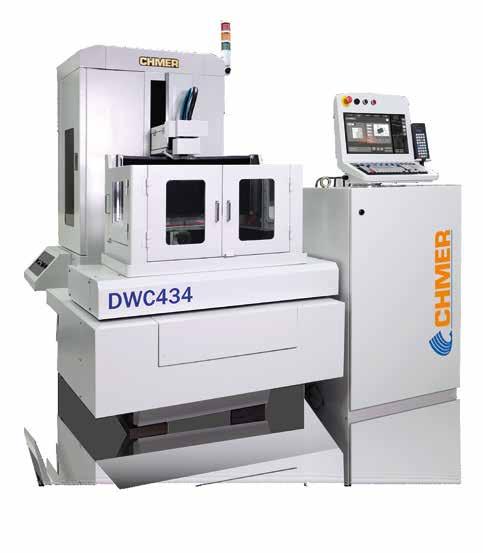
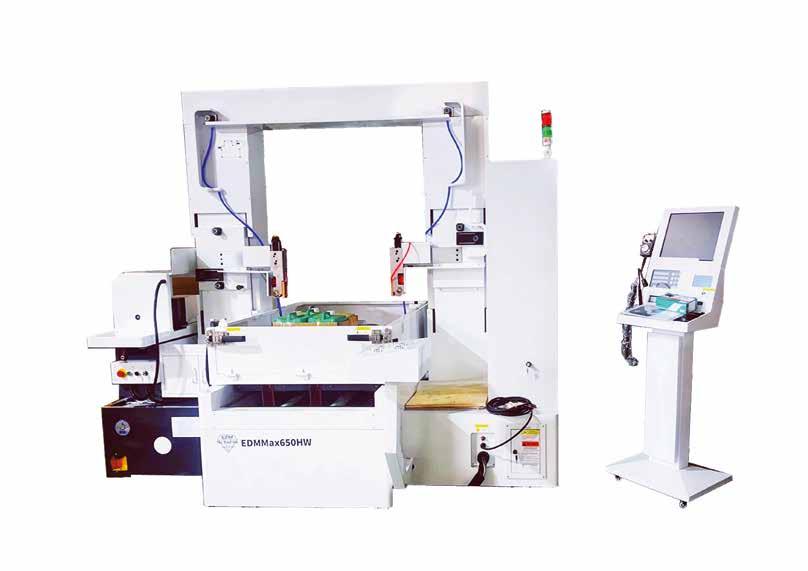
(Horizontal)
CHMER EDM now offers its first FAST Wire EDMs using reusable molybdenum wire. High-quality machines made in Taiwan.
Three models are now available:
• 450 x 300 x 450 mm
• 625 x 500 x 625 mm
• 800 x 600 x 800 mm
These 4-axis Wire EDMs can cut fixtures, tools, dies, and large parts, in addition to removing additivemanufactured parts from LPBF build plates used in 3D printing. The fast-moving molybdenum wire is extremely difficult to break, regardless of flushing conditions. With reusable wire, operating cost is approximately US $1/hour.
The horizontal FAST Wire EDMs are specifically designed to cut medium, large, and very large 3D build plates. Current size offerings are 1000 x 650 x 1250 mm and 1400 x 1100 x 1650 mm.
The single-axis horizontal FAST Wire EDM offers several advantages over vertical machines:
• Quick and easy setup - no additional fixtures are required
• Cuts with the parts standing upright
• No need to catch the cut parts; they simply collapse onto the plate
• Completely unattended cutting - no need to shim, catch or monitor the operation
• The cut parts do not pinch the wire at cutoff, the wire continues to the programmed stop

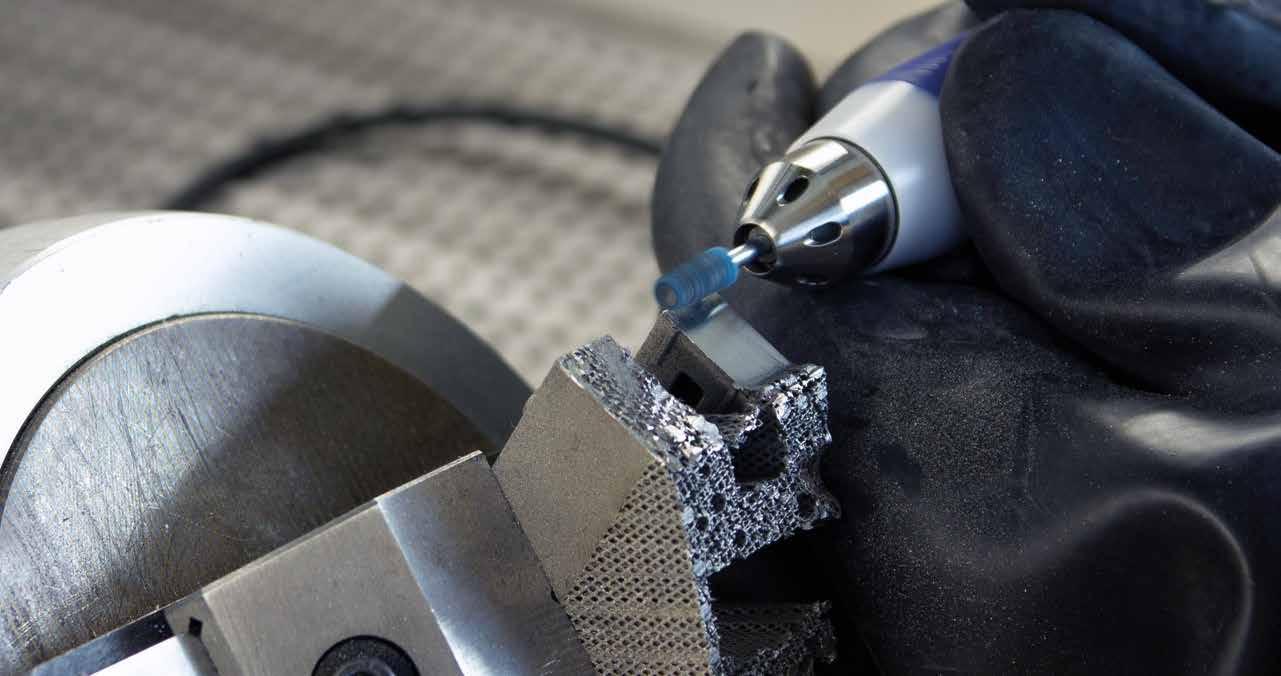
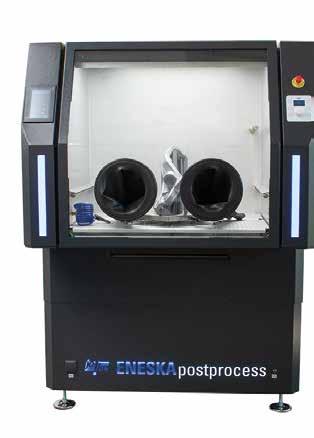
Renishaw, headquartered in Wotton-under-Edge, Gloucestershire, UK, has highlighted the use of its Additive Manufacturing technology in the development of a hypersonic aerospace propulsion system. The company reports that Innovative 3D Manufacturing, a rapid prototyping company based in Franklin, Indiana, USA, was approached by Velontra, a start-up developing a low-cost hypersonic propulsion system for the aerospace market, located in Cincinnati, Ohio, USA. Velontra needed a way to produce rapid prototypes of its propulsion systems while also reducing resource use, meeting quality requirements and manufacturing tolerances, and keeping costs down.
“Compact hypersonic propulsion systems are highly sought after by space companies, so, to remain competitive, we must develop parts quickly,” explained Joel Darin, CTO of Velontra. “In aerospace, we know that the best way to learn is by doing things, particularly if you want to be the first to launch a new technology.”
“Innovation also requires people to keep making iterations of an idea and testing it until it works. Take the Wright brothers – lots of other people across the world wanted to take the first successful flight. The brothers built a test tunnel to try their aircraft over and over again, which resulted in success. We take the same attitude when developing our products,” added Darin.
While the team understood the benefits of Additive Manufacturing for this application, Velontra had no in-house expertise to develop a process within the intended timeline. So it reached out to Innovative 3D Manufacturing, who recently upscaled its facility and operates multiple Renishaw RenAM 500Q multi-laser AM machines.
As well as the propulsion system, Velontra has collaborated with Innovative 3D Manufacturing to prototype and produce other bespoke
parts, such as a ramjet prototype and afterburner hardware. By using AM, Velontra, in partnership with Innovative 3D Manufacturing, can develop complex yet lightweight parts, send designs to its partner and receive prototypes the next day, reducing development cycles.
“We’ve worked with Velontra since its inception to share our expertise on designing for AM in the aerospace industry,” stated Chris Beck, Operations Manager and owner of Innovative 3D Manufacturing. “By helping Velontra to understand the importance of designing geometries for AM, choosing the optimal part thickness and selecting the right materials, Velontra’s engineers have been able to develop and refine their propulsion system. By using the RenAM 500Q, a multi-laser metal AM system, we have been able to print prototypes at a much faster rate, while leveraging the machine’s on-board sieving capabilities, making the entire process more efficient and reducing part turnaround.”
The RenAM 500Q is a Laser Beam Powder Bed Fusion (PBF-LB) AM machine that features four 500 W lasers that can access the entire powder bed surface simultaneously, enabling users to make use of the
entire build plate, thereby boosting productivity. The machine also features automated powder and waste handling systems that enable consistent process quality, reduce operator intervention time, and ensure high standards of system safety.
Darin shared, “By using AM technology we’ve been able to produce a propulsion system that is powerful, yet small, and anything but tame. We recently conducted tests of the Bronco using the wind tunnel at Purdue University, Indiana, and saw positive results. We plan to further our use of Additive Manufacturing to continue developing and improving the Bronco.”
Tests at Purdue University’s wind tunnel simulated speeds of over Mach 4.5 and an altitude of 100,000 ft. Results demonstrated that the Bronco could deliver thrust at greater than Mach 5, over five times the speed of sound and Velontra states that this makes the engine the first of its kind. Velontra aims to integrate the Bronco hypersonic propulsion system into small vehicles to make them supersonic for commercial and industrial use. The company also plans to build an unmanned spaceplane that can be used as a platform for launching satellites.
www.velontra.com www.innovative3dm.com www.renishaw.com
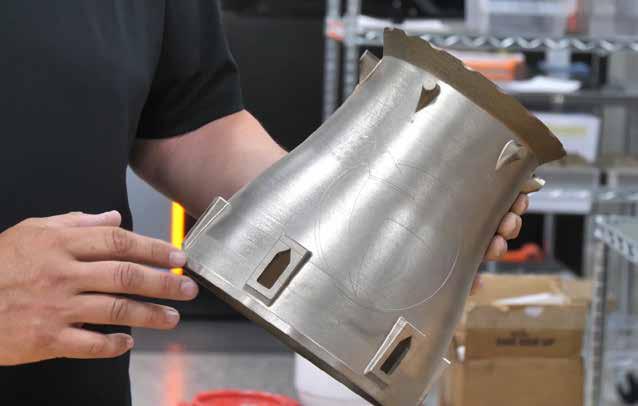
LEAP 71, based in Dubai, UAE, and The Exploration Company (TEC), headquartered in Gauting, Germany, have signed a five-year renewable agreement under which TEC will license LEAP 71’s Noyron RP computational engineering technology to support the development of next-generation rocket engines. Noyron can generate functional designs optimised for modern manufacturing processes, including Additive Manufacturing.
TEC is developing a portfolio of spacecraft and propulsion systems, including the Nyx reusable orbital resupply capsule and the Typhoon rocket engine, a high-thrust, full-flow staged combustion design.
“TEC was founded on agility, building and testing fast while staying rigorous on engineering validation,” stated Hélène Huby,
founder and CEO of TEC. “We have been working with LEAP 71 since 2023 and are now taking the next step. Under this agreement, we will use Noyron RP for propulsion component geometry generation as part of our internal computational engineering programme. The goal is to broaden the design space we can explore and support faster iteration across successive test campaigns.”
Noyron RP is described as a large computational engineering model that incorporates physicsbased principles, engineering logic, production constraints and empirical data into a system capable of generating rocket engine designs from performance specifications through to manufacturable components.
Josefine Lissner, co-founder and CEO of LEAP 71, added, “Most space
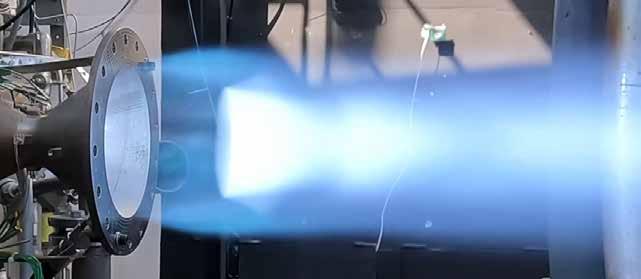
Titomic Limited, headquartered in Melbourne, Australia, has announced that Germany’s Lufthansa Technik AG has signed a contract for additional Cold Spray capability at its Hamburg facility. The contract is valued at around €735,000 (AU$1.2 million), with delivery expected in Q4 2026.
Lufthansa Technik AG has been utilising Titomic Kinetic Fusion (TKF) technology for the last five years for aircraft part repairs and this contract expands that capability by adding additional low-pressure TKF capability in a turn-key spray booth environment.
Titomic Managing Director & CEO, Jim Simpson, commented, “This new contract further solidifies our partnership with Lufthansa Technik AG and confirms their confidence in Titomic’s technology and capabilities to
TEC has licensed LEAP 71’s Noyron RP for the design of next-gen rocket engines, including those for its reusable Nyx spacecraft (Courtesy The Exploration Company)
companies still rely on labour-intensive geometric design workflows. Noyron enables engineers to adopt a code-first, high-level approach. Over the past two years, we have validated Noyron RP by hot-firing different rocket engine architectures at a cadence of weeks.”
TEC will integrate Noyron RP into its internal development processes, with all generated designs subject to the company’s established analysis and validation procedures.
Founded in 2021, TEC develops modular, reusable spacecraft intended to support space logistics. Its Nyx spacecraft family is designed for cargo missions to low Earth orbit and the lunar vicinity, with longerterm plans for human-rated systems. The company operates across multiple European sites, including Bordeaux, Munich and Turin, alongside international activities in the USA, UAE and Luxembourg. www.leap71.com www.exploration.space
boost their capacity for the repair and maintenance of aircraft parts. We are honoured to support Lufthansa Technik AG in advancing their excellence in world class aircraft maintenance and repair.”
Titomic states that the contract reinforces its commitment to expanding Titomic Kinetic Fusion Cold Spray Additive Manufacturing technologies across aerospace, defence, energy, and industrial sectors.
www.lufthansa-technik.com www.titomic.com
The US Air Force Research Laboratory (AFRL) and Ursa Major Technologies Inc, located in Berthoud, Colorado, have conducted a flight test of the Affordable Rapid Missile Demonstrator (ARMD), powered by the Draper liquid rocket engine. The vehicle reportedly reached supersonic speeds and demonstrated operational concepts intended to support rapid strike capabilities.
“This project proves that we can transform and leverage our acquisition models to rapidly deliver critical technology advancements to deter and win in a future conflict,” stated Brig Gen Jason Bartolomei, Commander of AFRL and Air Force Technology Executive Officer. “We are not just building a single missile, we are forging a new path toward a cost-effective, mass-producible deterrent for the nation.”
Ursa Major uses metal Additive Manufacturing to develop and manufacture its rocket engines. The company stated that the ARMD programme demonstrates a new approach to accelerating the development of defence technologies through public–private collaboration.
“This flight proves that you can get a vehicle with a safe, storable and throttleable liquid engine in the air quickly and affordably,” stated Chris Spagnoletti, CEO of Ursa Major. “We went from contract to flight-ready of an all-up round and propulsion system in just eight months.”
The Draper liquid rocket engine builds on several years of development work undertaken by Ursa Major on its Hadley liquid rocket engine. The programme is also part of an ongoing public–private partnership between AFRL and Ursa Major.
The AFRD sits staged for flight in late January. The missile was positioned on a specialised air log cart, used to transport and load the vehicle onto the Transportable Target Launcher (Courtesy Ryan Harty/US Army)
“ARMD represents a key milestone in our efforts to develop affordable and scalable liquid rocket engine technologies for future defence applications,” said Dr Javier Urzay, Chief of the AFRL Rocket Propulsion Division.
Ursa Major is currently under contract with AFRL to continue characterising the Draper liquid rocket engine through additional flight testing. www.afresearchlab.com www.ursamajor.com
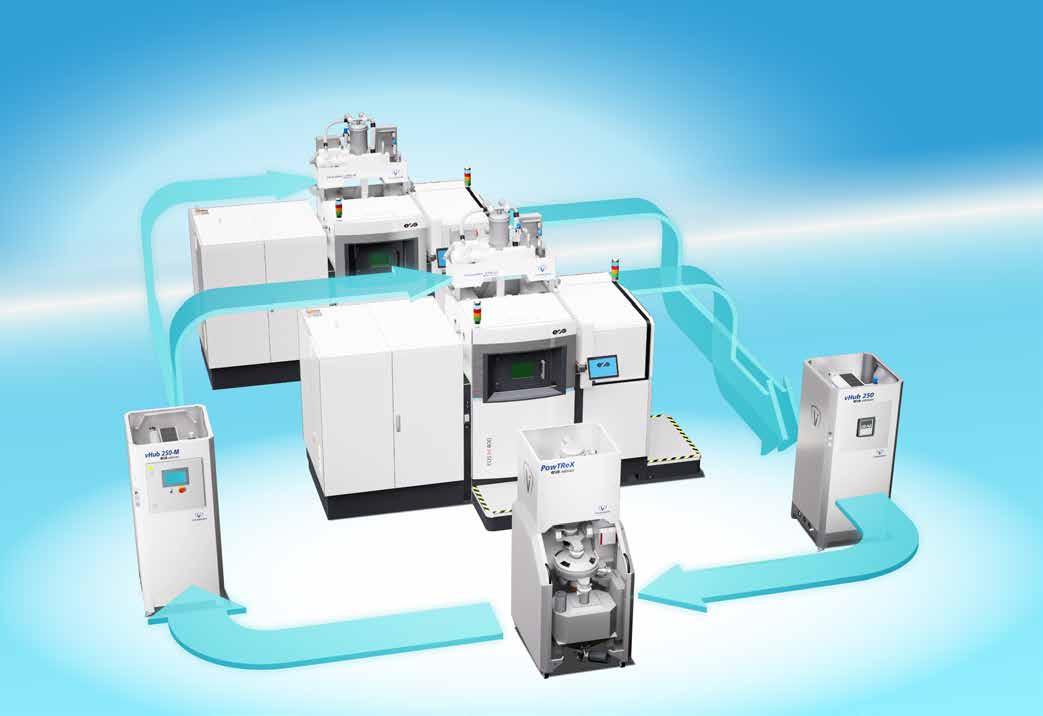
Metal Powder Works (MPW), Pittsburgh, Pennsylvania, USA, has entered the next phase of a product development project with Westinghouse Electric Company (WEC), focused on the further optimisation of metal powders for nuclear energy applications.
The latest three-month phase follows what Westinghouse describes as successful results achieved during earlier stages of development using MPW’s patented DirectPowder process. DirectPowder converts metal bar stock directly into powder feedstock for Additive Manufacturing, Cold Spray and Powder Metallurgy applications without the need for melting.
“This follow-on contract with Westinghouse highlights the solid performance of our DirectPowder process and the hard work of our
combined technical teams,” stated John Barnes, Managing Director of Metal Powder Works. “This continued confidence from WEC highlights that our powder works as expected and can meet their exacting requirements, exceeding the capability of legacy atomised powder methods.”
Under the contract extension, MPW will continue development work aimed at advancing and scaling powder production capabilities for Westinghouse. The companies state that the programme is intended to improve end-product performance and increase the Technology Readiness Level (TRL) of components under development for the nuclear energy sector.
According to the company, the collaboration supports Westinghouse’s broader advanced manufacturing and materials innova -
Metal Powder Works has entered the next phase of a product development project with Westinghouse Electric Company focused on metal powders for nuclear energy applications (Courtesy Metal Powder Works)
tion initiatives for nuclear energy applications. MPW added that the agreement contains standard commercial terms and is binding on both parties.
The company stated that, while the contract is not material from a financial perspective, the ongoing strategic relationship with Westinghouse is considered significant. www.metalpowderworks.com
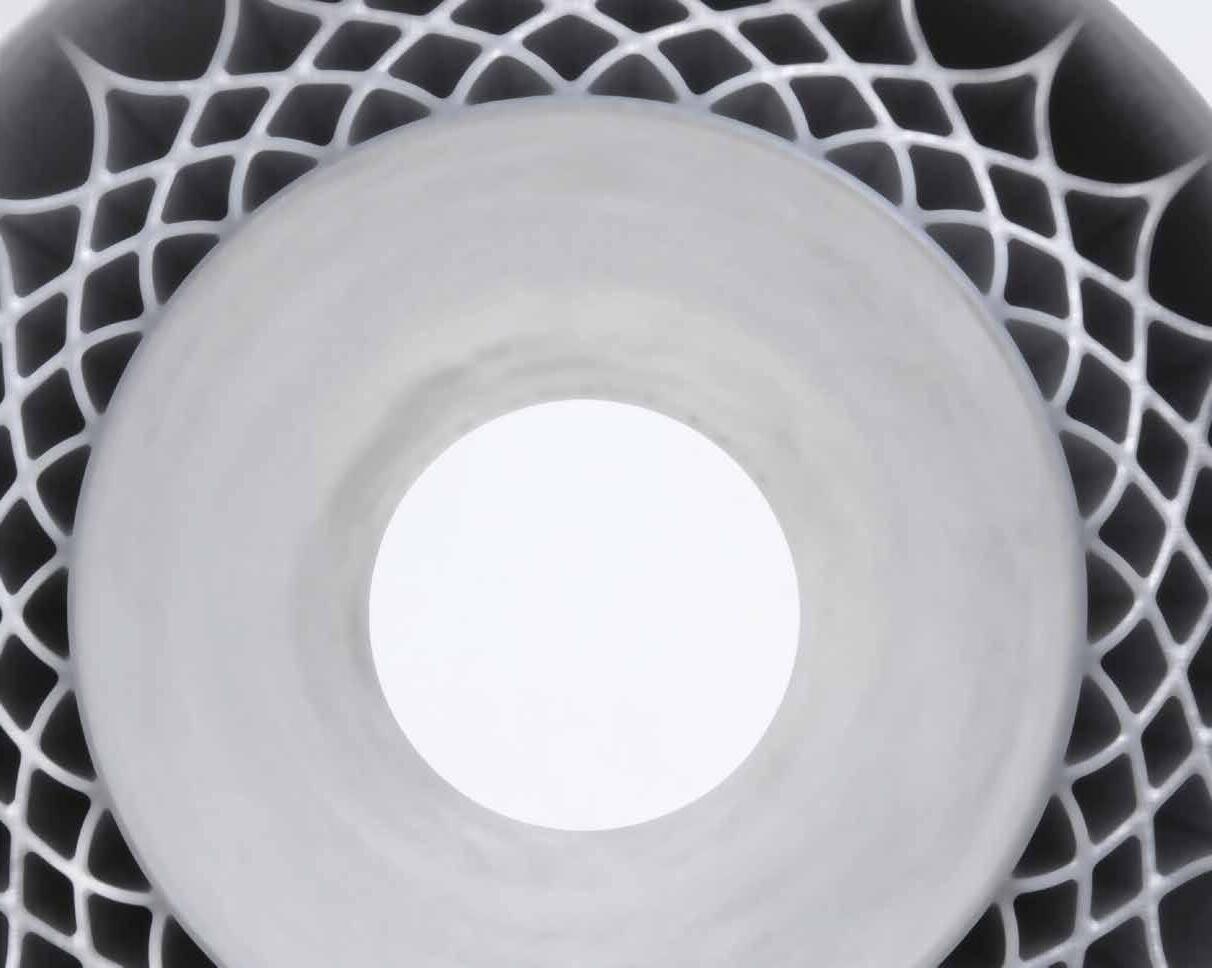
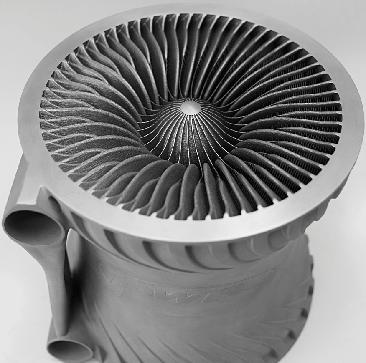
Researchers at the University of Wolverhampton, UK, have secured a share of £1.35 million in funding through the Henry Royce Institute’s Industrial Collaboration Programme (ICP) to develop additively manufactured advanced thermal management solutions for electronic devices. The project is expected to strengthen collaboration between the University’s Additive Manufacturing Group, the Elite Centre for Manufacturing Skills (ECMS), and battery technology company AceOn Group, based in the Midlands.
Led by Dr Manpreet Singh, alongside Dr John Robinson, Dr Tharumal Wanniarachchi and Oluwarotimi Lawal, under the supervision of Professor Arun
Arjunan, the project will focus on the development of advanced heat sinks designed to improve cooling performance in electronic systems.
Excess heat remains a major cause of failure in high-power electronic applications, including electric vehicles, power converters and renewable energy infrastructure. To address this challenge, the research team will investigate the use of metamaterial-based heat sinks featuring Triply Periodic Minimal Surface (TPMS) architectures. These complex internal structures offer high surface area and improved airflow, enabling more efficient heat dissipation while reducing material consumption.
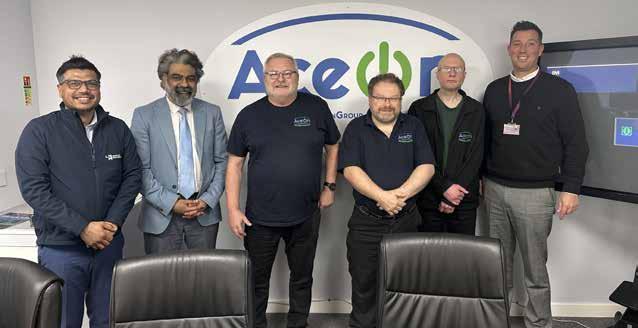
From left: Dr Manpreet Singh, Prof Arun Arjunan, Richard Partington, James Willets, Ben Oldfield and Dr John Robinson at the project kick-off meeting (Courtesy University of Wolverhampton)
Wall Colmonoy Corporation, Michigan, USA, has announced the launch of its new Alloy Products Surfacing Alloys microsite, a dedicated digital resource designed to provide easier access to product information and technical resources. The new microsite is the third in a series of planned digital platforms supporting Wall Colmonoy’s global presence, and provides access to its Surfacing
Alloys, including Colmonoy, Wallex, Colferoloy, and WallCarb Tungsten Carbide and composite alloys. It also features the company’s thermal spray equipment, including the Spraywelder System and Fusewelder Torch.
A key feature of the site is the Product Finder tool, which allows users to search for products by alloy type, hardness, industry, and applica -
The heat sinks will be manufactured using metal Additive Manufacturing technologies at the University’s Centre of Excellence for Shaped Laser Additive Manufacturing. Using copper and aluminium, the team aims to produce microscale heat sinks that can be integrated directly onto electronic components, improving thermal transfer while enabling more compact device designs.
The project is expected to deliver demonstrator components developed in collaboration with AceOn Group, providing a pathway towards the integration of the technology into commercial electronic products.
The funding forms part of a wider £1.35 million investment awarded through the Henry Royce Institute’s Industrial Collaboration Programme to support partnerships between UK universities and industry.
“This award highlights our collaborative approach to tackling the UK’s critical challenges for next- generation electronics,” stated Professor Arun Arjunan, Director of the Centre for Engineering Innovation and Research (CEIR) at the University of Wolverhampton. “By combining innovative material design with advanced metal 3D printing, we are well placed to deliver practical, industry - relevant solutions that address real-world problems.”
www.royce.ac.uk
www.theecms.co.uk www.aceongroup.com www.wlv.ac.uk
tion. This functionality makes it easier for customers to identify and compare products that align with specific operational needs, including wear resistance, corrosion protection, and overall performance requirements.
The microsite also includes a secure SDS Library, where customers can create an account to view and download the most up-to-date Safety Data Sheets. This centralised resource is intended to ensure that users have quick access to the latest product safety information when they need it.
www.wallcolmonoy.com
www.indo-mim.com
LOOKING FOR PROTO-SAMPLES IN 15 DAYS ?
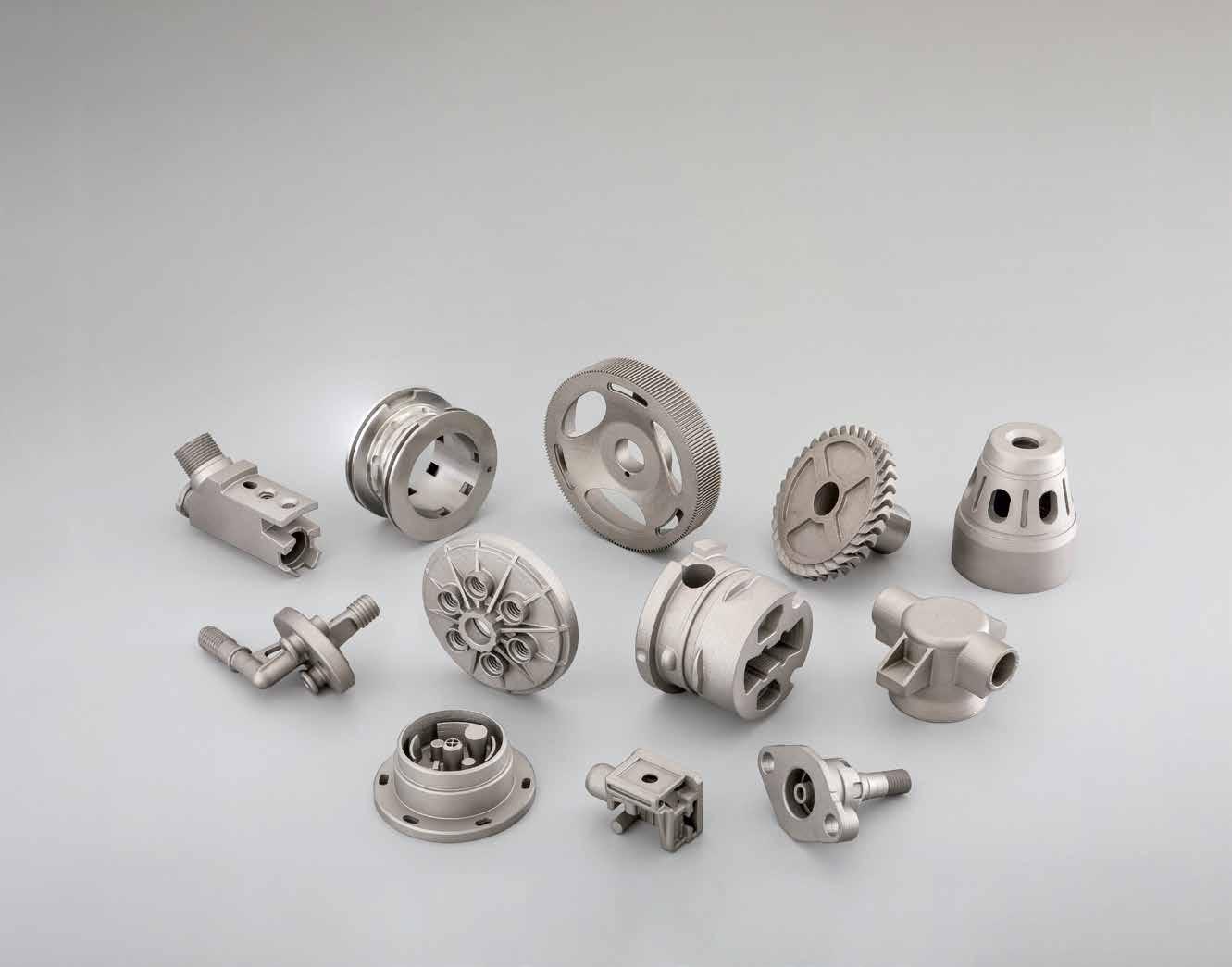
LPBF Binder-Jetting Metal SLA
(Nikon SLM) (HP | Ex-One) (Incus)
Mater ial Options (Metal)
Build Envelope
(Nikon SLM) (HP | Ex-One) (Incus)
SS 17-4PH, SS 316, SS 304, Tool Steel M2, S-7, & H13, IN 625, IN 718
SS 17-4PH, SS 316, SS 304, Tool Steel M2, S-7, & H13, IN 625, IN 718
Weight: 1gm to 8Kg
Minimum Wall Thickness: 0.2 to 1mm
Weight: 1gm to 8Kg Minimum Wall Thickness: 0.2 to 1mm Build
Quantity
Quantity
Tolerance capability
Quantity
Mater ial Options (Metal) Weight: 1gm to 8Kg Minimum Wall Thickness: 0.2 to 1mm Build Envelope Tolerance capability
CONTACT FOR MORE DETAILS
www.indo-mim.com
IN 718
10-50 samples/build box based on envelope dimension/Serial production possible
10-50 samples/build box based on envelope dimension/Serial production possible
Within 2% of the feature size, 2~3 Ra Surface finish, Option of finishing to closer tolerances available
10-50 samples/build box based on envelope dimension/Serial production possible
Within 2% of the feature size, 2~3 Ra Surface finish, Option of finishing to closer tolerances available
Within
Within 2% of the feature size, 2~3 Ra Surface finish, Option of finishing to closer tolerances available
ASIA Email: InfoHQ@indo-mim.com Ph: +9198459 47783 / +91 8970081826
CONTACT FOR MORE DETAILS
EUROPE Email: InfoEU@indo-mim.com Ph: +49 71165500243

NORTH AMERICA Email: shrikant.t@indo-mim.com Ph: +1 609-651-8238
ASIA Email: InfoHQ@indo-mim.com Ph: +9198459 47783 / +91 8970081826
CONTACT FOR MORE DETAILS
EUROPE Email: InfoEU@indo-mim.com Ph: +49 71165500243
CONTACT FOR MORE DETAILS
ASIA Email: InfoHQ@indo-mim.com Ph: +9198459 47783 / +91 8970081826
NORTH AMERICA Email: shrikant.t@indo-mim.com Ph: +1 609-651-8238
ISO 9001:2015 / IATF 16949:2016 / AS 9100:Rev D / ISO 13485:2016 / ISO 14001:2015
ASIA Email: InfoHQ@indo-mim.com Ph: +9198459 47783 / +91 8970081826
EUROPE Email: InfoEU@indo-mim.com Ph: +49 71165500243
EUROPE Email: InfoEU@indo-mim.com Ph: +49 71165500243
NORTH AMERICA Email: shrikant.t@indo-mim.com Ph: +1 609-651-8238
9001:2015 / IATF 16949:2016 / AS 9100:Rev

Scientists at the US Department of Energy’s Oak Ridge National Laboratory (ORNL), Tennessee, USA, have developed a method using Additive Manufacturing to produce custom canisters for Powder Metallurgy Hot Isostatic Pressing (PM-HIP). The aim is to streamline production of large-scale metal components for aerospace, energy and medical applications.
PM-HIP consolidates metal powder into fully dense parts under high temperature and pressure within a sealed canister. The process is used to manufacture components such as turbine parts, pressure vessels and other large structural components.
Conventionally, PM-HIP canisters are produced through multiple manufacturing stages, including metal forming, machining and welding. According to ORNL, these steps can introduce defects, increase production costs and limit design flexibility.
The ORNL team instead used Additive Manufacturing to fabricate the canisters, enabling the production of complex geometries tailored to the final component geometry while reducing the number of manufacturing stages required. The approach also enables near-netshape production, reducing material waste and shortening lead times.
Following manufacture, the canister is filled with metal powder, vacuum sealed and processed by HIP. The elevated temperature and pressure consolidate the powder into a fully dense metal component with minimal internal defects.
“By harnessing the strengths of both Additive Manufacturing and Hot Isostatic Pressing, we are paving the way for greater design freedom and expanded applications in hydropower and next-generation nuclear reactors,” stated Pavan Ajjarapu, researcher at ORNL.
The team reportedly fabricated canisters using a range of Additive Manufacturing technologies, including laser- and wire-based processes, before subjecting the canisters to the standard PM-HIP cycle. The resulting components are intended for use in demanding aerospace and energy applications requiring high strength and reliability under extreme operating conditions.
Researchers also highlighted the potential for PM-HIP to process advanced alloys engineered for enhanced corrosion resistance and high-temperature stability. According to the team, the approach can enable improved control of internal material structures and properties, including radiation resistance for nuclear applications.
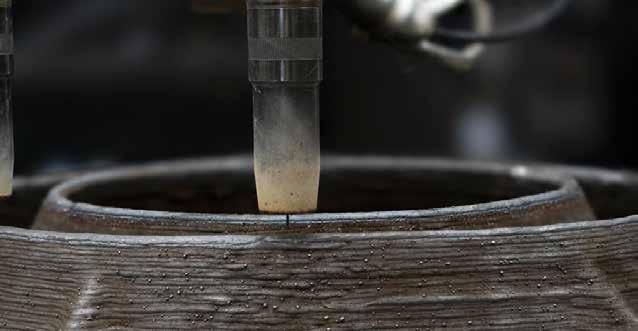
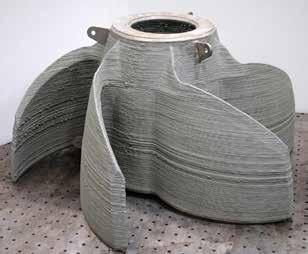
Using the PM-HIP process, the canister was filled with metal powder, vacuum-sealed and subjected to high heat and pressure to form a dense metal component (Courtesy Fred List III/ORNL)
“This approach offers an alternative to casting and forging,” added Soumya Nag, ORNL. “It could also help strengthen US manufacturing and national security by easing supply chain shortages.”
The research paper is available here: www.sciencedirect. com/science/article/abs/pii/ S0032591026004298
ORNL researchers are also developing computational models to predict shrinkage and distortion during PM-HIP processing of large components. It was also posited that an improved understanding of the PM-HIP process could reduce uncertainties in predicting dimensional changes during consolidation. Mechanics-based computational modelling had been used to reduce development costs and lead times by minimising trial-and-error approaches during process development.
The work builds on previous PM-HIP research undertaken at ORNL, including a 2024 project in which researchers reportedly produced a 907.2 kg (2,000 lb) hydropower impeller canister prototype from design to finished part within two days.
Last year, ORNL also hosted a workshop at the Manufacturing Demonstration Facility (MDF), bringing together around 200 stakeholders to discuss challenges and opportunities for PM-HIP production of large-scale metal components. www.ornl.gov
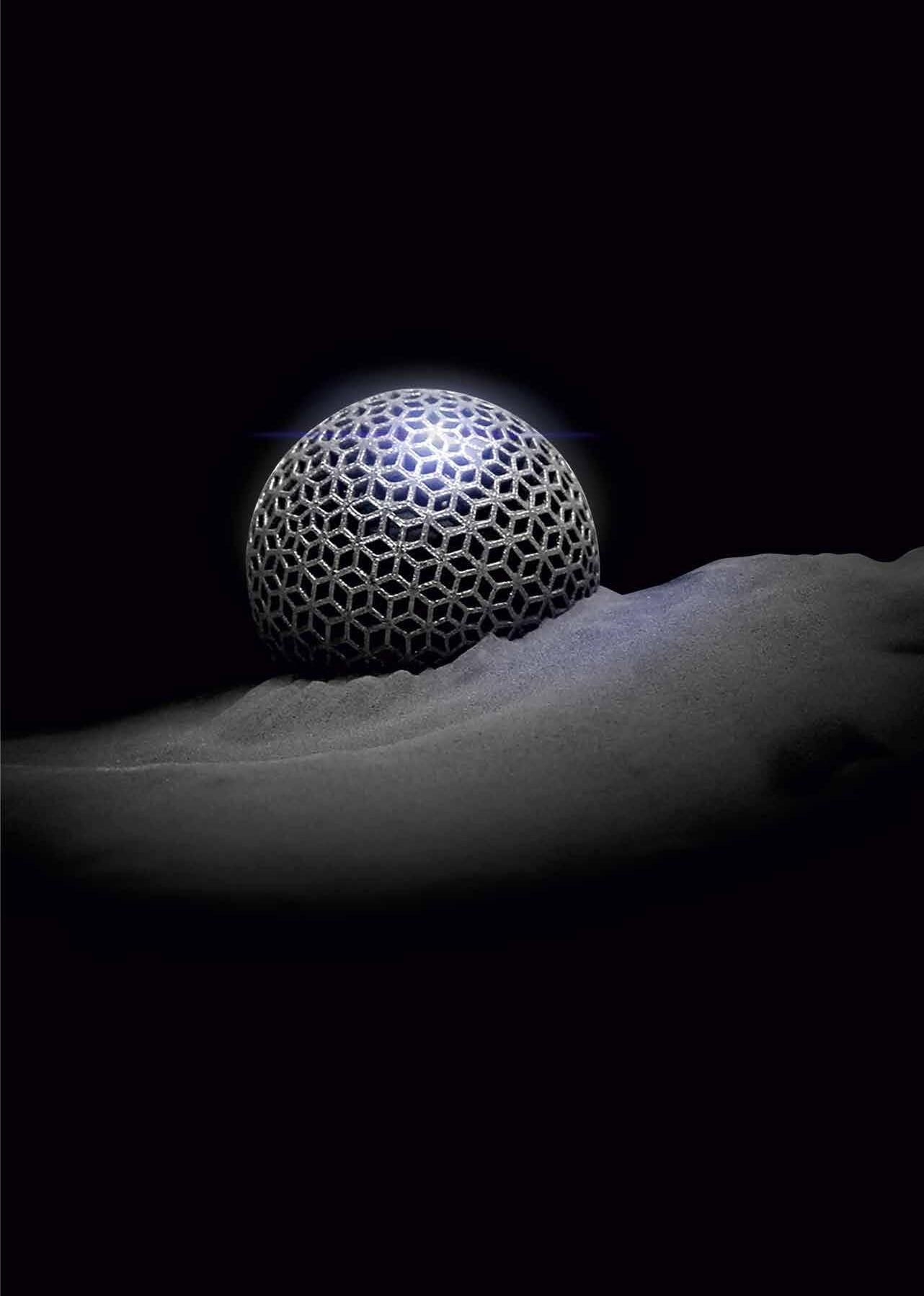
ExOne Global Holdings has announced that it has begun manufacturing Spectra Mono-Z printheads for its Binder Jetting (BJT) Additive Manufacturing machines near Detroit in Canton, Michigan, USA.
According to the company, this decision is the first step in a longer-term programme to bring additional major subsystems into
US production. The move supports supply chain resilience and aims to reduce reliance on international component sourcing for customers in the defence, aerospace, automotive, energy, and foundry sectors. Customers using legacy Polaris printhead systems will continue to receive support, with a defined migration path available.
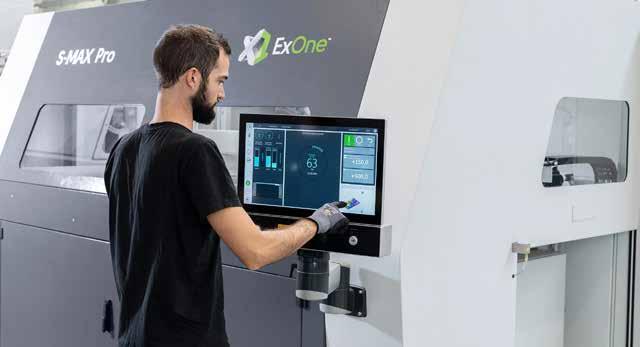
ExOne has begun manufacturing Spectra Mono-Z printheads for its Binder Jetting Additive Manufacturing machines near Detroit (Courtesy ExOne)
The US Army is exploring how Additive Manufacturing could strengthen battlefield sustainment capabilities, with plans to explore the technology beyond polymer-based machines towards metal AM technologies such as Wire Arc Additive Manufacturing (WAAM), a form of Directed Energy Deposition (DED).
At a recent Additive Manufacturing symposium hosted by the 1 st Special Forces Group (Airborne), soldiers received hands-on training in design software, AM workflows and part production, as the Army evaluates how distributed manufacturing could support maintenance, training and operational readiness.
The symposium introduced participants to the fundamentals of the AM process chain, beginning with computer-aided design and
progressing through slicing software and print parameter optimisation. Soldiers used SolidWorks to design components before preparing builds in PrusaSlicer, adjusting variables including temperature, layer structure and print density.
While much of the current activity remains focused on polymer-based Material Extrusion (MEX), the longer-term objective is to expand into metal AM applications capable of producing more durable end-use components.
At unit level, the Army is already using polymer AM systems to manufacture training aids, radio caps, equipment modifications and decoys. One example highlighted during the symposium was a fullscale M777 155 mm howitzer muzzle produced as a training decoy. De La
Alongside domestic printhead production, other updates included a Detroit-based parts inventory intended to reduce lead times for spare parts and consumables. A refreshed three-tier maintenance programme (Essentials, Recommended, and Enterprise), was also announced to support both single-machine users and larger fleet operators. Updates also included 24/7 live phone support for all ExOne customers, complementing its remote support introduced following the company’s change of ownership in 2025.
“These updates are a direct response to recent customer feedback around domestic supply, expedited parts access, predictable pricing, and support they can count on,” stated Mike Dougherty, Managing Director of Americas, ExOne Global Holdings. “Initiating printhead production in Detroit is the first step in our broader US manufacturing buildout, and it reflects the long-term commitment we’re making to our customers and to American industrial infrastructure.” www.exone.com
Cruz explained that the technology’s immediate value lies in reducing lead times for low-cost replacement parts and enabling rapid iteration during field maintenance.
“It just allows more accessible, quick solutions,” she explained. “It’s all made in-house, so it’s a lot less money that we’re spending.”
Despite the growing interest in AM, challenges remain around software access, training requirements, machine availability and programme funding. Software licensing costs and leadership understanding of the technology continue to influence adoption rates across units.
Still, the symposium was said to have reflected a wider shift in how the US Army views digital manufacturing as a future sustainment capability that could eventually incorporate metal AM for deployed repair and replacement part production.
www.army.mil











Expo & Convention Industry Insights Industry Events
We are the central platform for production professionals around the globe and offer you industry information, networking, exchange and access to the latest AM solutions all year round.
Find AM AM Directory
Read AM Fon Mag print & online
Watch AM Formnext.TV
AM updates Newsroom
AM regularly AM4U newsletter
Experience AM AM event calendar
Explore AM Formnext white papers
Discuss AM Formnext Technology Talks

Understand AM AM Field Guide
Discover AM Seminars & webinars
AM around the globe Formnext events worldwide
Shaping AM AM Jobs

Want AM insights direct to your inbox? formnext.com/getindustryinsights
DEEP Manufacturing is not a conventional metal Additive Manufacturing company. Established to support the wider DEEP Group’s ambition of enabling long-duration human habitation beneath the sea, the privately backed organisation is part of a programme supported by more than $230 million in publicly reported investment across the UK and US. Metal AM’s Martin McMahon, Emma Lawn and Nick Williams visited DEEP Manufacturing’s Avonmouth facility and spoke with COO Louise Slade about how an ambitious subsea habitat programme created one of the largest wire-arc DED operations.
DEEP Manufacturing’s Avonmouth, UK, facility is not the sort of place most people would expect to find at the centre of one of the more unusual visions in modern ocean engineering. Rather than being established solely to commercialise wire-arc Directed Energy Deposition (DED), its existence is directly linked to a highly ambitious engineering programme currently under development: enabling long-duration human habitation beneath the sea.
Central to the wider DEEP Group’s vision is what the company calls the ocean’s ‘Blindspot Zone’ – depths between 50 and 200 m where human access remains limited despite the concentration of continental shelf environments, coral reef systems and marine protected areas.
DEEP argues that improving access to these environments will support scientific research, marine operations, offshore energy activities and the development of new underwater industries, particularly given that an estimated 95% of the ocean remains unexplored.
For a relatively young organisation, the scale of investment is notable. Backed by a single private investor, DEEP has committed hundreds of millions of dollars to building the infrastructure required
to support its long-term ambitions. More than £100 million has been invested in DEEP Campus, a 50-acre underwater testing and training facility nearby built around an 80 m-deep flooded former quarry.
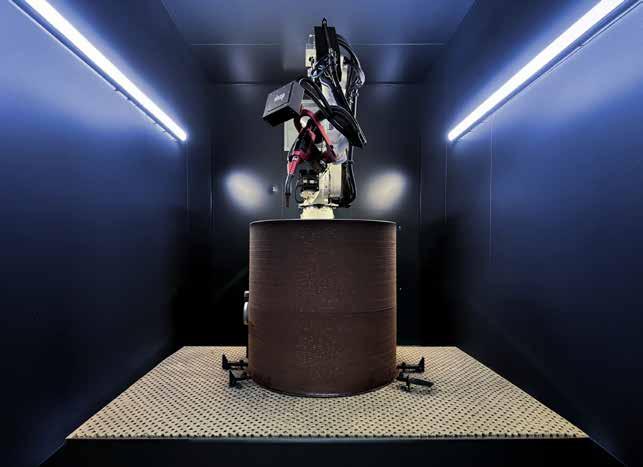

“This was not a technology searching for an application, but an application searching for a technology. The requirement came first: large subsea structures for human occupation and related marine systems.”
The site includes subsea testing infrastructure and the only closedbell saturation diving system in the Northern Hemisphere, supporting year-round training, testing and trials. More recently, DEEP announced a $100 million expansion in the United States, including a permanent engineering hub in Florida and a manufacturing facility in Houston, Texas.
Central to that effort are two flagship projects: the Vanguard pilot habitat and the larger Sentinel habitat. Delivering these systems requires large, pressure-rated, corrosion-resistant structures that can be certified for human occupation while being produced faster than conventional pressure-vessel supply chains often allow. When DEEP set out to build a new generation
of subsea habitats, it concluded that conventional manufacturing routes could not deliver the required structures at the speed, scale and cost needed to support its ambitions.
DEEP Manufacturing, therefore, represents an unusual inversion of the familiar metal AM narrative. This was not a technology searching for an application, but an application searching for a technology. The requirement came first: large subsea structures for human occupation and related marine systems. Wire-arc DED emerged as a manufacturing route capable of delivering the required scale, flexibility and speed.
In solving that challenge, DEEP Manufacturing is quietly establishing one of the world’s largest wire-arc DED operations. What began as a solution to an internal engineering problem is now evolving into a manufacturing capability serving customers in sectors ranging from offshore energy and maritime engineering to defence and aviation.
Arriving at DEEP Manufacturing’s Avonmouth facility, there is little from the outside to suggest the scale of the ambitions it supports, appearing much like any other industrial unit on the edge of Bristol. Inside, however, robots, welding systems, rotating tables, test pieces, pressure structures and machining equipment point to something rather different: an effort to establish wirearc DED as a qualified production route for large, safety-critical metal structures destined for some of the most demanding environments on Earth. New equipment was still being installed and production areas reconfigured during our visit, creating the impression of a business evolving in real time as new capabilities are brought online.
As we entered one of the active production areas, we encountered a series of robotic cells, each capable of manufacturing parts measuring up to 3 m in diameter and height. Slade showed several large cylindrical components produced on the line, including parts from earlier development work built on the first system, where the workpiece is built on a large single-axis manipulator table.
Designed for deployment at depths of around 200 m, the habitat pressure vessels combine demanding performance requirements with challenging manufacturing constraints.
According to Slade, “Traditional fabrication, forging, and casting just couldn’t meet those timelines for the pressure vessels that were needed.” The search for a faster, more scalable manufacturing route ultimately led DEEP to wire-arc DED.
DEEP initially worked with external partners to evaluate various system configurations before selecting an approach that met its pressure-vessel requirements. DED enabled the manufacture of large structures without the build-volume constraints
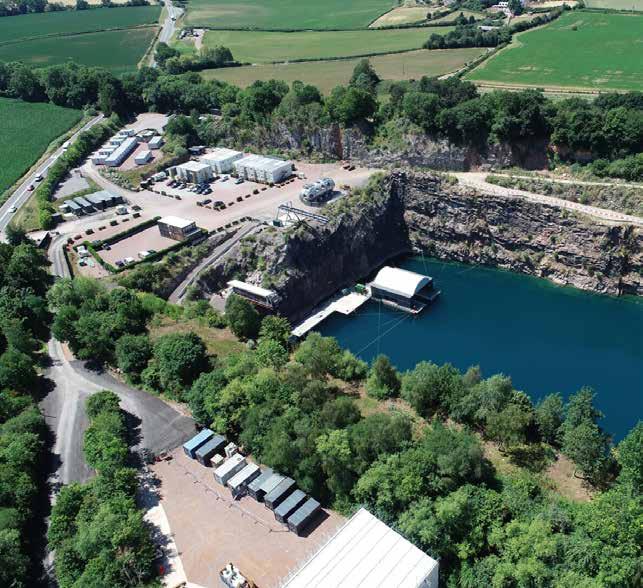
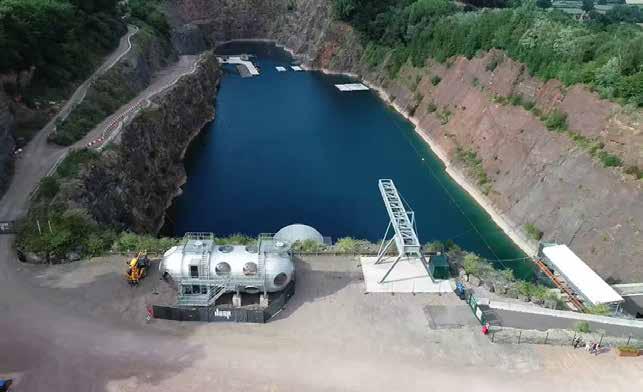
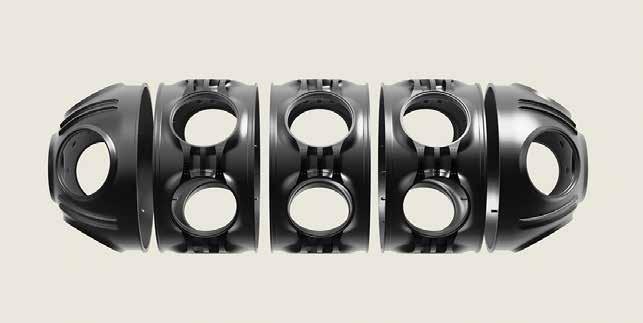
Manufacturing)
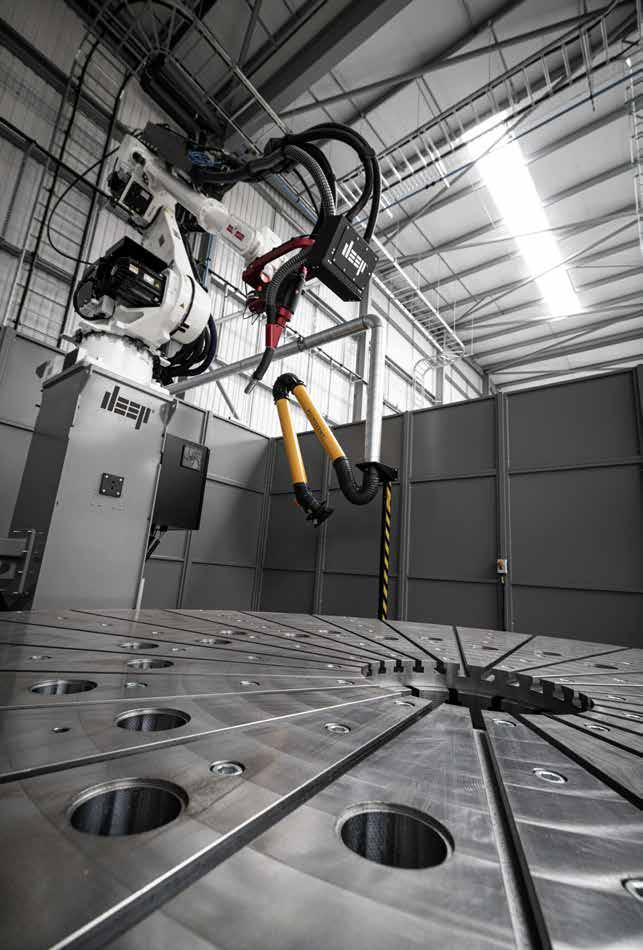
4 A large single-axis manipulator table paired with a static robotic wire-arc DED system, an approach that enables DEEP Manufacturing to produce large pressure-vessel sections while maintaining consistent deposition conditions (Courtesy DEEP Manufacturing)
“We’re a manufacturer at the end of the day. We’re offering a manufacturing service to our clients. The customers that we’re working with just want us to produce the parts that they need.”
associated with many other metal AM technologies. The process can be scaled through larger work envelopes, additional robotic systems and flexible workpiece manipulation strategies. DEEP purchased its first DED systems in 2023 and, within a year, had installed them and begun progressing through sector-specific certification requirements.
One of the most revealing moments of the visit came when Slade explained that the deposition systems are based on “standard MIG welding heads attached to multiaxis robots.” No highly specialised, bespoke AM systems, just ‘run-ofthe-mill’ welding equipment. As Slade put it, “Glorified welding is how we look at it.”
That mindset extends beyond the hardware itself. “We’re a manufacturer at the end of the day. We’re offering a manufacturing service to our clients. The customers that we’re working with just want us to produce the parts that they need.”
These early observations revealed what appears to sit at the centre of DEEP Manufacturing’s approach. Rather than developing bespoke deposition hardware, DEEP Manufacturing has focused on building a production environment capable of delivering large, safetycritical metal structures. Most configurations require only a single robot paired with continuous wire feed modules and standard weld gas mixtures, with differentiation driven by monitoring, software control, process knowledge and workpiece handling. Rotating tables, multi-axis positioners and enclosed cells allow DEEP Manufacturing to scale production without fundamentally changing the underlying manufacturing platform.
Unlike many companies adopting AM for the first time, DEEP Manufacturing did not begin with a single machine and a cautious scaling
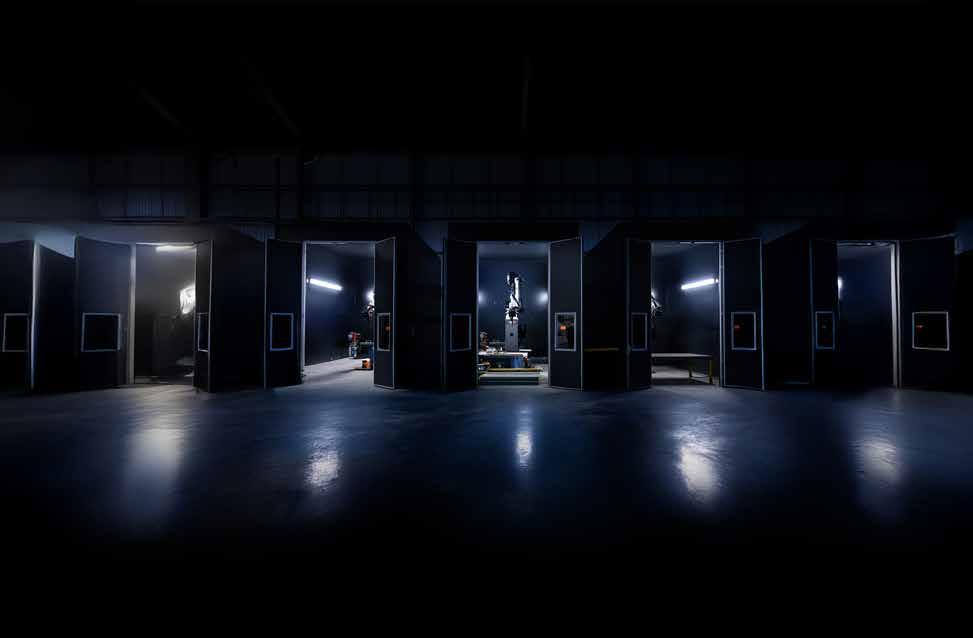
strategy. From the outset, the company anticipated a requirement for significant production capacity. Today, that approach has resulted in nineteen operational DED systems across two sites, with additional equipment continuing to be installed and reconfigured as requirements evolve.
The Avonmouth facility has been designed with flexibility in mind. Offices, control rooms, and engineering spaces are housed within modular shipping containers that can be relocated as the production footprint changes. The manufacturing cells themselves have been configured around the practical requirements of largeformat production.
Broadly speaking, DEEP Manufacturing utilises two types of AM welding cells: open and enclosed. The open cells are large, accessible workspaces where the robot operates without physical enclosure, making them particularly
“Unlike many companies adopting AM for the first time, DEEP Manufacturing did not begin with a single machine and a cautious scaling strategy. From the outset, the company anticipated a requirement for significant production capacity.”
useful for larger structures on the order of several metres in both height and diameter. The company manages safety on these systems with invisible light barriers and strict operational protocols. Slade explained that any intrusion into the working area results in an immediate controlled stop. By contrast, the enclosed cells are smaller, contained environments.
These were introduced during the early days of the company’s formation, when the site was shared with other parts of the DEEP Group. These days, they are used to maintain controlled conditions and isolate specific operations, including material development programmes and customer projects requiring a dedicated manufacturing environment.
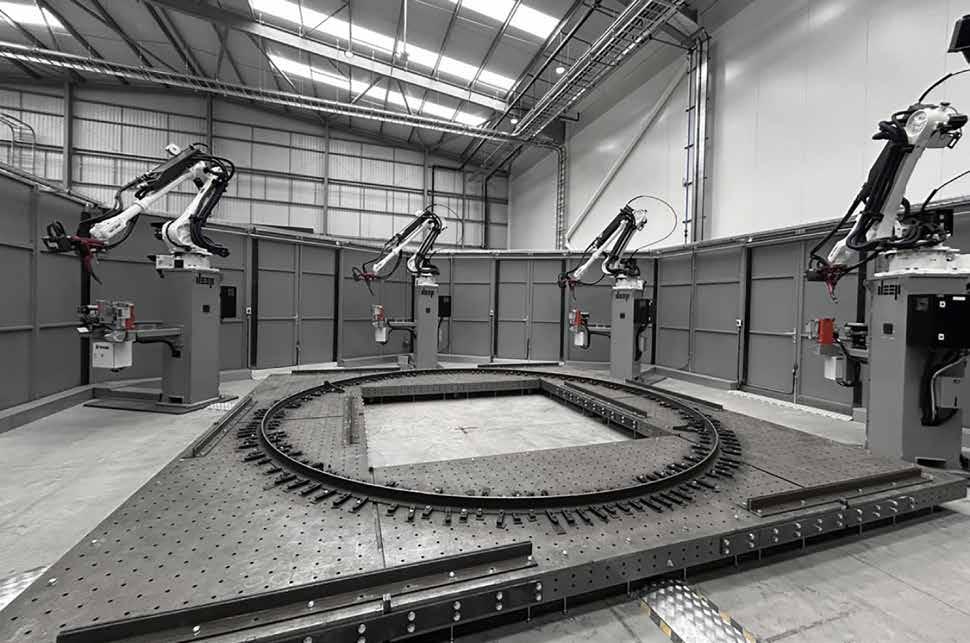
“By decoupling deposition from workpiece positioning, the system avoids placing excessive demands on the robot. This dramatically simplifies the control problem and allows more standard robotic systems to operate effectively at larger scales.”
In contrast to many DED systems, which achieve scale through the deployment of increasingly large robotic platforms, DEEP Manufacturing has adopted a different approach. Many such systems follow an ethos that larger parts require larger robots, often mounted on additional motion systems to extend their working envelope. DEEP Manufac -
turing has chosen to tackle its huge pressure vessel requirements by placing its robots next to or around large single-axis manipulator tables capable of handling loads of up to 10 tonnes, as well as other moving platforms. Slade reasoned that this allows for a much more consistent deposition process, and seeing the sample parts it would be difficult to argue against this.
By decoupling deposition from workpiece positioning, the system avoids placing excessive demands on the robot. This dramatically simplifies the control problem and allows more standard robotic systems to operate effectively at larger scales. It also explains why many of the robots appear to operate in a predominantly single direction, rather than moving around the part in a full 360-degree envelope. One might expect the robot to be positioned centrally, building outward in all directions. However, Slade explained that doing so would require significantly more space and introduce additional complexity.
The multi-robot
As we moved through the site, we came to an enclosed area that hinted at what was protected from view. There was clearly more than one robot arm, but then that was also true of some of the areas we had already passed through. However, the scale of structures required for subsea habitats ultimately neces -
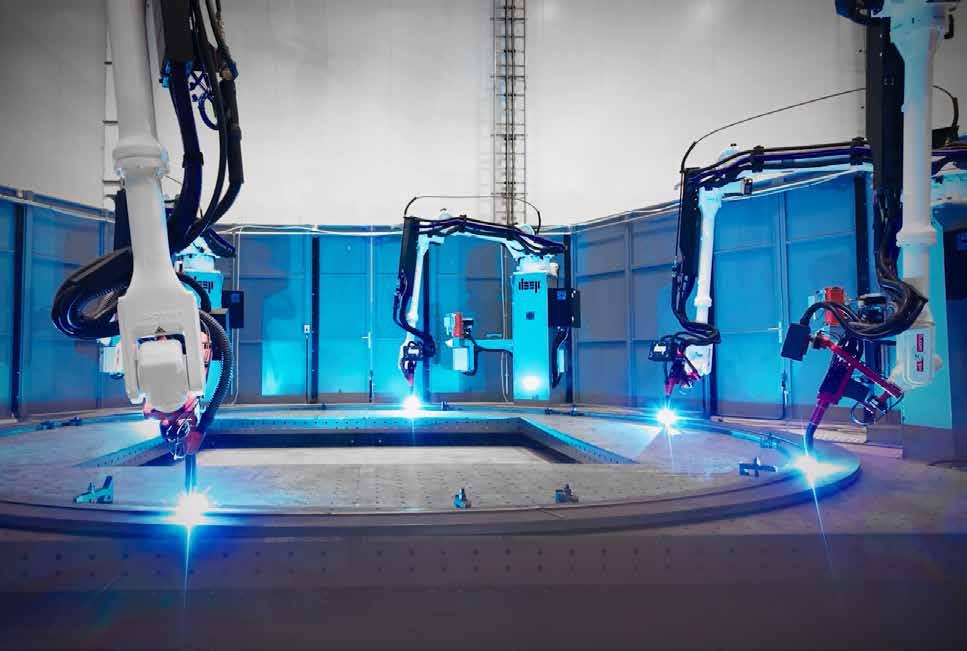
sitates something rather different. Where other companies have worked with two and even three coordinated robots to increase working volume, DEEP Manufacturing has taken the concept considerably further with a multi-robot system currently comprising six coordinated robotic arms. Slade explained that by configuring multiple robots to operate in synchronisation, the company is able to tackle much larger parts while substantially increasing build rate.
A single ‘master’ robot coordinates the build programme, while the remaining five robots execute deposition in harmony with each other. The challenge lies in maintaining consistent process parameters and avoiding interference between six simultaneous welding operations. Any variation in one deposition process has the potential to affect the final structure, and DEEP Manufacturing has invested significant effort into
sequencing and controlling the build to maintain structural integrity.
Slade also pointed out that the system enables multiple sections of a component to be manufactured simultaneously before being welded into a complete structure. For large-format DED, this offers significant manufacturing flexibility, allowing structures to be divided into manageable sections before final assembly. DEEP Manufactur -
ing’s Rolabot system supports this approach by enabling both automated circumferential welding and hybrid manufacturing workflows that combine robotic and manual welding operations during assembly. There is perhaps a pleasant irony in the fact that many discussions around metal AM focus on the implications of joining separately manufactured parts together. As Slade observed, “The whole process is just welding.”
“The challenge lies in maintaining consistent process parameters and avoiding interference between six simultaneous welding operations. Any variation in one deposition process has the potential to affect the final structure.”
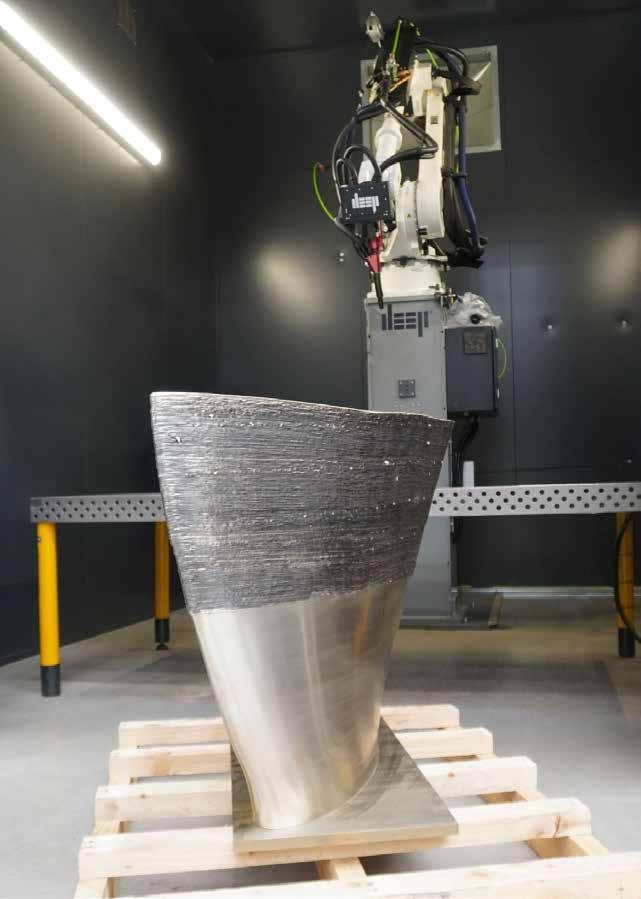
DED at these scales introduces a significant amount of heat into the material. As layers are deposited, heat accumulates and residual stresses develop within both the part and the base plate. Around the facility were numerous development artefacts mounted on build plates that had deformed dramatically under these stresses. Some of the plates were exceptionally thick, yet still exhibited levels of distortion that were difficult to ignore. According to Slade, this was one of the earliest challenges the team encountered. The amount of energy introduced during the build process creates forces that require very close control. One solution DEEP Manufacturing has developed is a ‘green zone’, a sacrificial region at the start of a build designed to absorb deformation. It is a novel concept in which distortion is treated as a process parameter rather than a failure. It is expected, measured, and incorporated into the build strategy.
“One solution DEEP Manufacturing has developed is a ‘green zone’, a sacrificial region at the start of a build designed to absorb deformation. It is a novel concept in which distortion is treated as a process parameter rather than a failure. It is expected, measured, and incorporated into the build strategy.”
Nonetheless, large-format AM comes with significant challenges, and one of the most important is controlling internal defects. At DEEP Manufacturing, each robotic system is equipped with sensing and feedback mechanisms that allow operators to monitor conditions throughout the build. Cameras and sensors provide information on process temperature, deposition quality, and overall process stability. As highlighted during the visit, extensive datasets are generated for every build, capturing information on each layer. This data forms the basis for both quality assurance and ongoing process development. Development can be costly when working with high-value materials, so DEEP Manufacturing uses mild steel during the early stages of parameter and process development. This allowed geometries and robotic toolpaths to be refined before progressing to production alloys.
Several notable materials were in development during our visit, including grades of stainless steel, nickel-based alloys and nickel aluminium bronze. The latter has a long history in marine applications, and Slade pointed to components such as propeller blades as examples of where it is already widely used.
When working with a new alloy, DEEP Manufacturing begins with bead-on-plate trials to evaluate how the material flows and solidifies. From there, wall structures are produced to assess thickness and stability before progressing to increasingly complex test geometries. Slade indicated an array of Ts, Ls and crosses used as intermediate structures, allowing the team to validate process behaviour before advancing to application-specific components.
From deposition to validation In conventional welding, stops and starts are often localised concerns. In Additive Manufacturing, they become part of the structure itself. In DED applications, every time the deposition head stops and restarts there is potential for variation in bead thickness, temperature, and part geometry. These variations can influence both dimensional accuracy and material properties. Slade showed examples of this on a large vertical cylinder used to study the effect of these transitions. As a result, DEEP Manufacturing has developed strategies that include tapering the ends of beads to avoid excessive build-up or abrupt changes in geometry. Much of the development effort has focused on optimising deposition rates to achieve surface finishes that minimise subsequent machining. Given the size and scale of the components being produced, reducing post-processing requirements can significantly shorten the overall production lifecycle. As Slade explained, “Our aim is to only machine mating surfaces.”
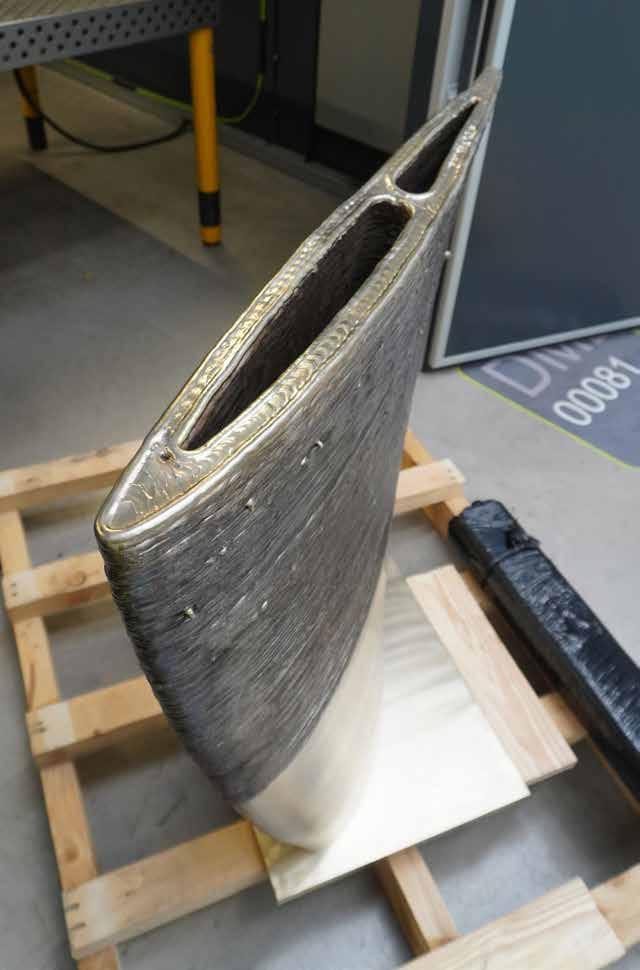
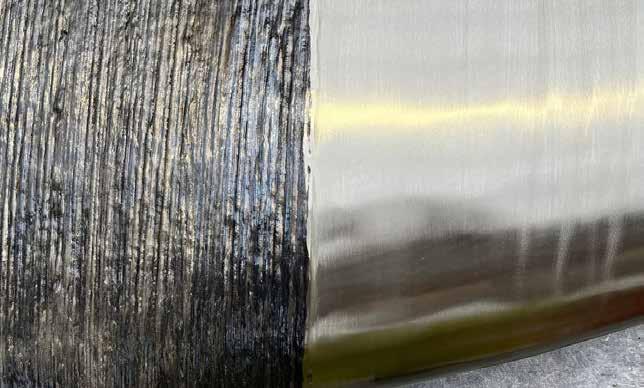
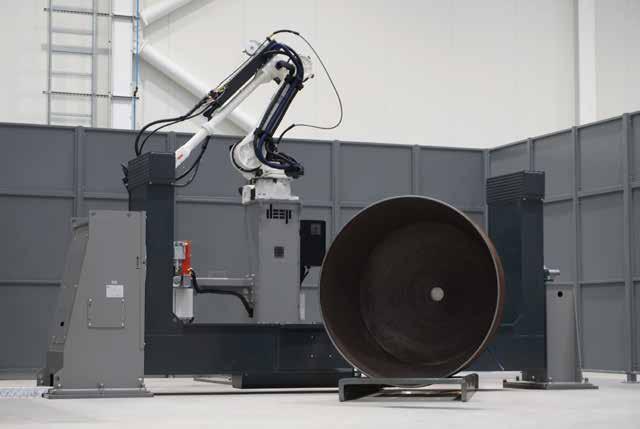
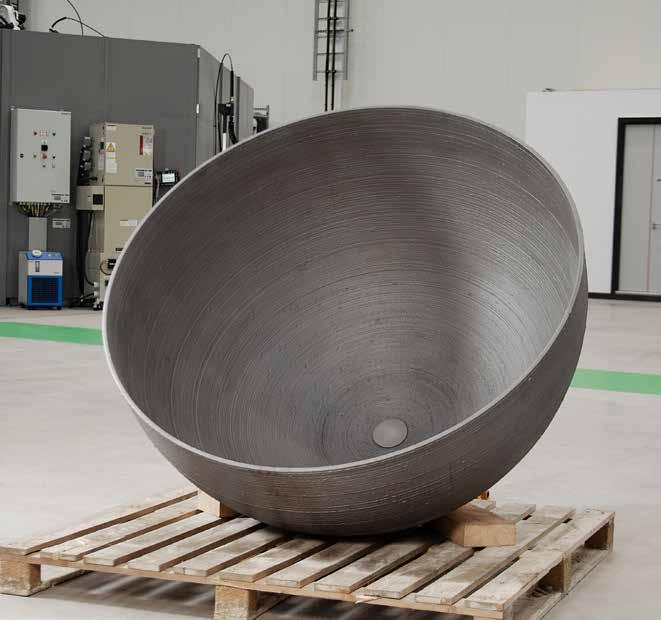
Supporting these activities is an in-house technology development laboratory. Samples are sectioned, mounted, polished, and etched to reveal microstructures. Optical microscopy allows the team to assess grain structure, phase distribution, and potential defects, while mechanical properties are evaluated using Profilometry-based Indentation Plastometry (PIP), providing a rapid assessment of material behaviour. For certified material properties, however, the company continues to rely on external testing. It is the combination of materials knowledge, parameter control, and inspection capability that transforms what might otherwise be considered a relatively simple process, welding, into something considerably more sophisticated than it first appears.
Jumping in at the deep end: starting with the hardest application
Summing up DEEP Manufacturing’s strategy, Slade remarked, “I think the nice thing is that we’ve started with the most safety-critical component that we could possibly wish to manufacture, pressure vessels for human occupancy.” Rather than entering the market through lower-risk components, DEEP Manufacturing chose to focus on one of the most demanding applications in metal AM. The logic is straightforward: if DED can be validated for pressure vessels intended for human occupancy, extending the process into less demanding applications becomes considerably easier.
Certification and validation
“I think the nice thing is that we’ve started with the most safety-critical component that we could possibly wish to manufacture, pressure vessels for human occupation.”
Starting with pressure vessels intended for human occupation also meant engaging early with qualification and certification. ISO 9001 provided the foundation for traceability, process control, and the quality management systems required to support qualification activities. For pressure vessels intended for marine or subsea
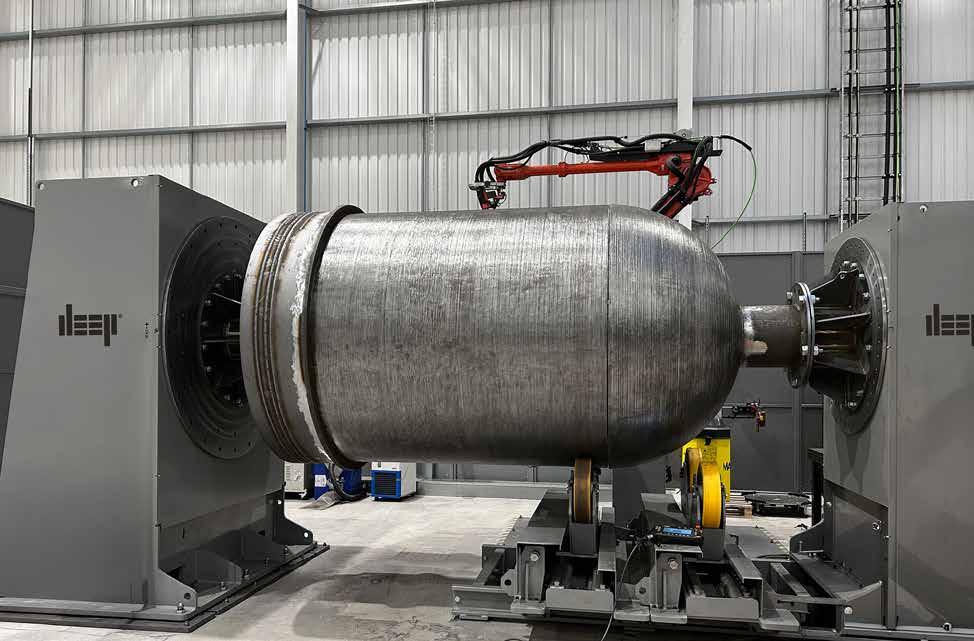
use, classification has become closely associated with DNV, a well-established authority in the offshore and maritime sectors. Slade highlighted the company’s progress through DNV certification activities, including achieving DNV Approval of Manufacture for Additive Manufacturing of pressure vessels for human occupation at its Bristol facility. DEEP Manufacturing’s Houston operation has also secured DNV Approval in Principle for the same capability and is progressing towards full approval.
However, certification is not a single milestone. Initial approvals demonstrate that DED can produce material and structures that meet the required criteria under controlled conditions, while production deployment requires additional qualified builds, full-scale demonstrations, and validation within real subsea applications. As Slade noted, while numerous demonstrators have been produced, the number of fully certified production pressure vessels remains relatively limited.
“While DED may be described as ‘a giant weld’, it is not simply the joining of two materials. Components are created through the deposition of thousands of individual weld beads, producing microstructures, thermal histories, and residual stress profiles that differ from conventional manufacturing routes.”
At the heart of most certification lies a familiar issue within AM, the challenge of materials equivalence. While the behaviour of forged, cast, and wrought products is well understood and codified within existing standards, AM materials do not always fit neatly within those frameworks.
“There’s only so far the equivalency can take you, and then that last 20% is new.” That final 20% is where the challenge lies. While DED may be described as ‘a giant weld’, it is not simply the joining of two materials. Components are created through the deposition of thousands of individual weld beads, producing microstructures, thermal histories, and residual
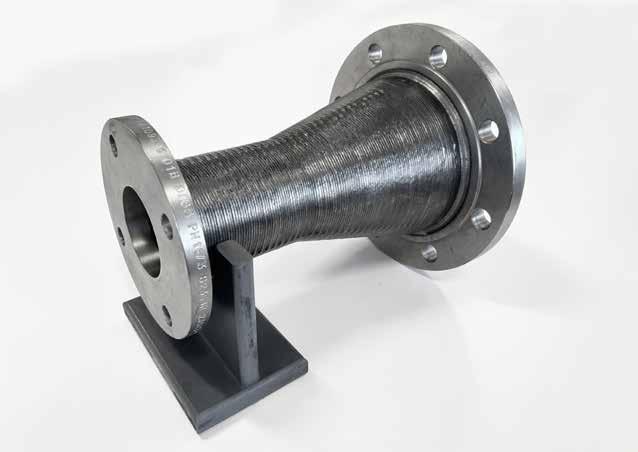
“‘There isn’t a huge talent pool. This isn’t a well-embedded technology industry, so we don’t have that talent pool to draw from’. Despite Bristol’s strong engineering and maritime heritage, recruiting experienced DED technicians is far from straightforward.”
stress profiles that differ from those associated with conventional manufacturing routes.
The way DEEP Manufacturing has approached this is not by attempting to fit entirely within the requirements of existing standards, but by building its own body of evidence. Every stage of the process is documented, monitored and, where necessary, tested. It uses tools such as PIP testing and microscopy to establish a baseline understanding of material behaviour, while more extensive validation is carried out externally. This approach does not eliminate the differences between AM and conventional processes, but it allows DEEP Manufacturing to demonstrate that the resulting materials can satisfy existing requirements while working
directly with organisations such as DNV as AM-specific standards continue to evolve.
Although small-scale test specimens remain essential, pressure vessels ultimately require validation at full scale, as test coupons alone cannot capture all aspects of behaviour in large structures. One of the systems we observed was producing a hemispherical section destined to be joined with its counterpart and subjected to pressure testing. These are not laboratory exercises, but steps towards eventual deployment and validation within the wider DEEP Group’s testing infrastructure.
DEEP Manufacturing is able to support this process through DEEP Campus, the company’s testing and training facility across the Severn
Estuary. The site provides an environment in which full-scale structures can be assessed under representative operating conditions.
Building a skilled workforce
Another layer to the certification challenge lies in the people operating it. The talent pool for DED remains limited, creating a significant challenge for any company seeking to scale production. Despite Bristol’s strong engineering and maritime heritage, Slade explained that recruiting experienced DED technicians is far from straightforward. “There isn’t a huge talent pool. This isn’t a well-embedded technology industry, so we don’t have that talent pool to draw from.” As a result, DEEP Manufacturing has focused on recruiting for aptitude rather than experience, drawing apprentices, graduates and even school placements into an internal training programme, alongside external CSWIP Visual Welding Inspector certification, designed to bring new recruits up to production standard. This was perfectly demonstrated as we stopped to speak with Cheryl Emery, an AM Technician, and learned how she had joined the company without any prior knowledge of welding, let alone AM. However, she was not completely unfamiliar with robotics, and rather amusingly, she told us she is married to someone working in that sector, “now I have to listen to him talking about robots when I’m at home as well as dealing with them here.” Coming from a background in model-making, Cheryl told us her steepest learning curve since starting at DEEP Manufacturing was, “probably the welding side, because it’s actually more technical than you think it’s going to be.” She added, “If you’ve never seen welding before, you don’t know what it’s supposed to look like, so you’ve got no context there. So it’s only when you make a mistake that you go, oh, it’s not supposed to look like that.”
Less than a year after joining the company, Cheryl had progressed rapidly through the company’s training programme. As Slade
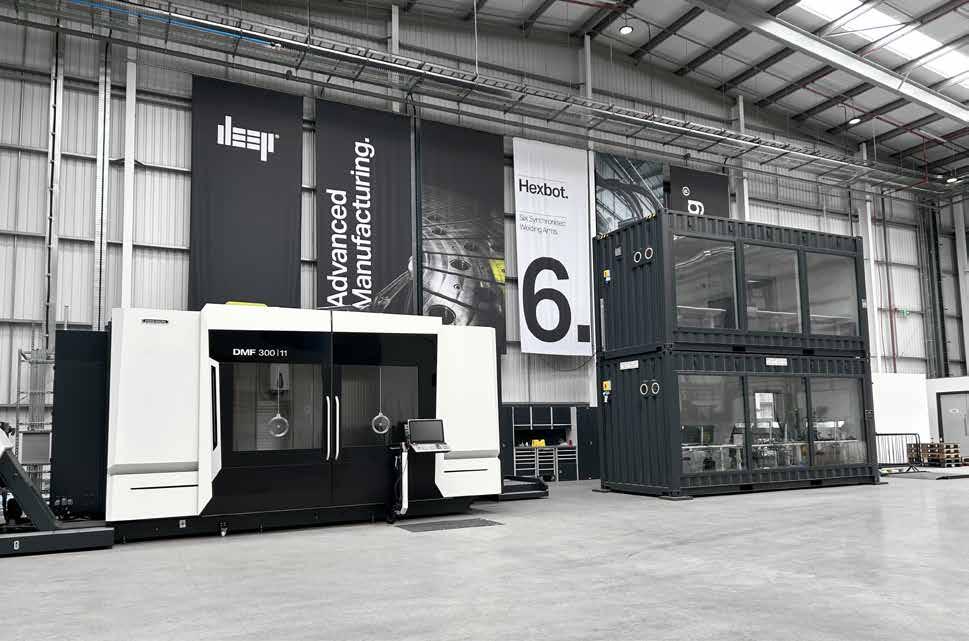
Fig. 13 DEEP Manufacturing’s Avonmouth facility now includes large-scale five-axis CNC machining capability through the installation of a DMG DMF 300/11, enabling complex mill-turn components to be finished in-house with improved accuracy, reduced setup time and shorter lead times (Courtesy DEEP Manufacturing)
proudly observed, “She’s now a Senior AM Technician and running the shift.”
DEEP Manufacturing is also working to formalise and externally certify elements of its training programme, particularly as it expands into regulated offshore sectors and international markets such as the United States. As Slade noted, “NAVSEA requires operator certification that’s externally certified.”
When parts are measured in metres and hundreds of kilograms, and builds are measured in days, production becomes a very different proposition. The facility does not run in the intermittent, batch-based manner that many smaller AM service providers might be constrained to, or even prefer. Instead, DEEP Manufacturing’s operational model is built around keeping systems running continu -
ously, with the site manned around the clock. Slade confirmed that “DEEP Manufacturing has been operating 24/7 since March 2025.”
This is a notable progression for a company that only began deploying its first DED systems in 2024. While some AM technologies lend themselves to lights-out production, DEEP Manufacturing has chosen to maintain a human presence during its large-scale DED builds. For components of this scale, continuous monitoring provides an additional level of assurance, while maintaining a steady process flow ensures consistent thermal behaviour and material properties.
Slade touched on this dynamic when discussing customer interaction, noting that generating initial interest has not proved particularly difficult. The capability itself has been enough to capture attention. The challenge, instead, has been converting that attention into commit-
ment. Her comment that customers are often waiting until “one, two or three others have done it” captures this hesitation succinctly.
It therefore came as little surprise when Slade detailed how much of the company’s early development and commercial work involved producing validation artefacts rather than fully realised production components. Today, those artefacts are still required, but are increasingly planned into larger builds as sacrificial test structures.
DEEP Group may be pursuing human habitation beneath the sea, but achieving that vision will take time. In the meantime, DEEP Manufacturing has turned its attention to broader industrial markets. While there are obvious parallels with sectors such
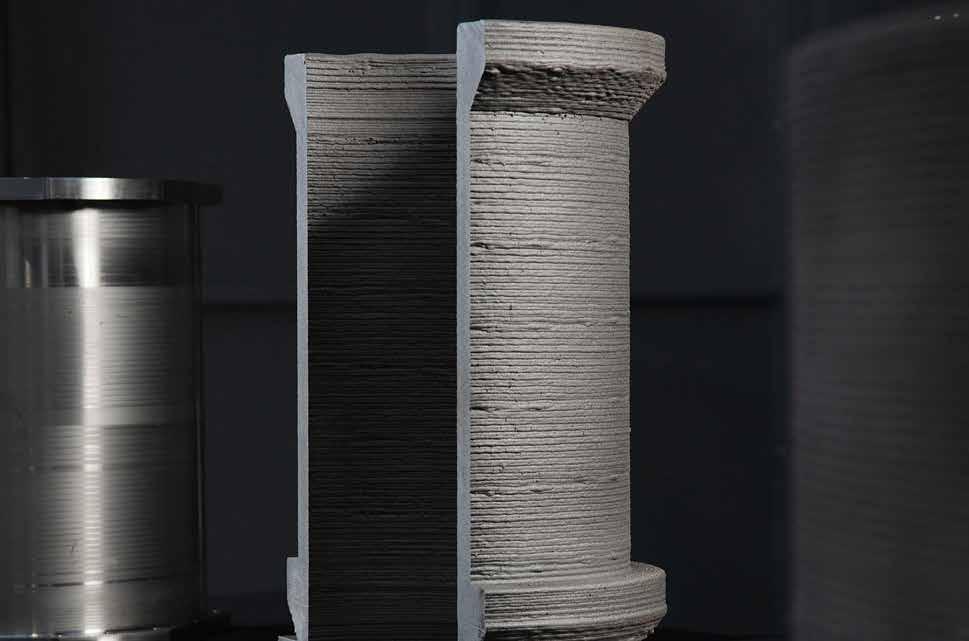
as space in terms of pressure vessel requirements, Slade indicated that current demand is coming primarily from defence, oil and gas, and other marine applications. Across all of these sectors, the primary driver of customer interest has been the potential to reduce lead times.
The ability to reduce procurement timelines from several months to weeks remains one of DEEP Manufacturing’s most significant advantages.
Slade openly acknowledged that this does not always translate into direct cost savings, noting that “whilst we offer speed, that might not necessarily correlate to a cheaper price.” Instead, the value proposition shifts away from simple part-cost comparisons towards the broader impact of reducing time-to-market.
Reducing lead time extends beyond AM itself. Until recently, DEEP Manufacturing often had to
“Whilst we offer speed, that might not necessarily correlate to a cheaper price... the value proposition shifts away from simple part-cost comparisons towards the broader impact of reducing time-to-market.”
send large components elsewhere in the UK for machining, adding both delay and logistical complexity to the production process. To address this, the company invested in its own large-scale machining capability. “That can be a real addition to help speed up that production process because we don’t need to send things off site for machining.”
The investment also creates opportunities beyond DEEP Manufacturing’s own production requirements. “I’m hearing from quite a few companies who are speaking to us because they’ve previously thought about bringing AM in-house, but then perhaps the investment is too high.” In that sense, the machining capability will become a service offering in its own right. Pointing towards the recently installed CNC machining centre, she added, “It’s also an alternative revenue stream that we’ve built for our internal needs, but can also offer this service externally.”
The newly installed CNC station also revealed how DEEP Manufacturing is thinking about post-processing as part of the wider manufacturing system.
The machine itself was impressive, but the real insight came from hearing how DEEP Manufacturing was approaching its integration into production. Slade explained that the successful integration of the CNC machine drew on the combined expertise of specialists across the team. Their knowledge and experience supported the development and integration of the processes required to bring the system into production, with operator training forming part of the final implementation phase.
Could DEEP Manufacturing have missed a trick by not simply adding machine tools to the ends of its robots? It is a question that has surfaced many times when considering hybrid solutions for AM. Slade’s answer was pragmatic. “Our development team are always looking at ways to optimise the production process. One project that we ran for six months looked at automated cleaning to follow the robot around rather than having to have the AM technicians go in and grind or with a wire brush.”
She added, “We’re always looking at ways to get greater efficiency, not just deposition rate. Production efficiency includes outcome time, scanning time, cleaning time. Automated machining with the robot could be considered, but the payload of the robots is something that we’ve got to be mindful of, and not sacrificing their accuracy by overloading them.”
The timing of our visit to the DEEP Manufacturing site in England had only just been preceded by the announcement of DEEP Manufacturing’s new facility in Texas. According to Slade, the decision was driven by strong demand signals
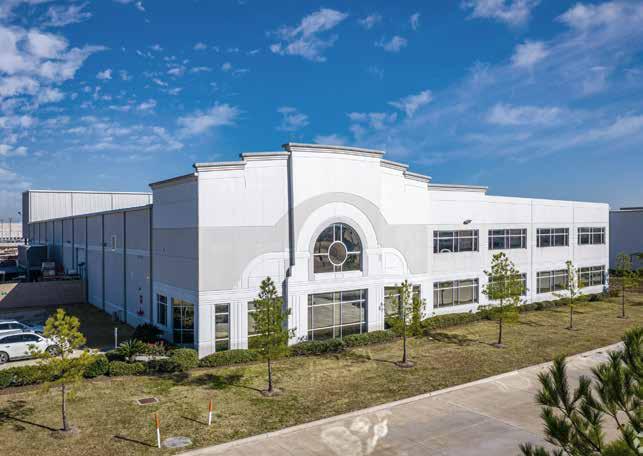
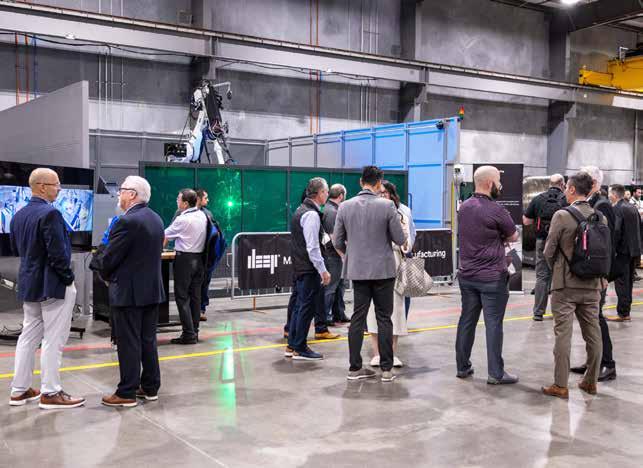
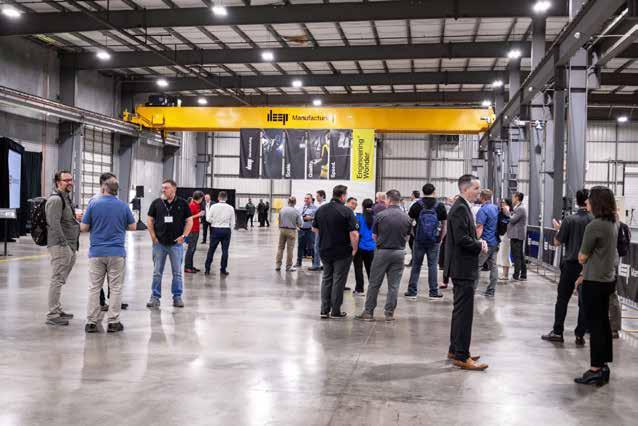
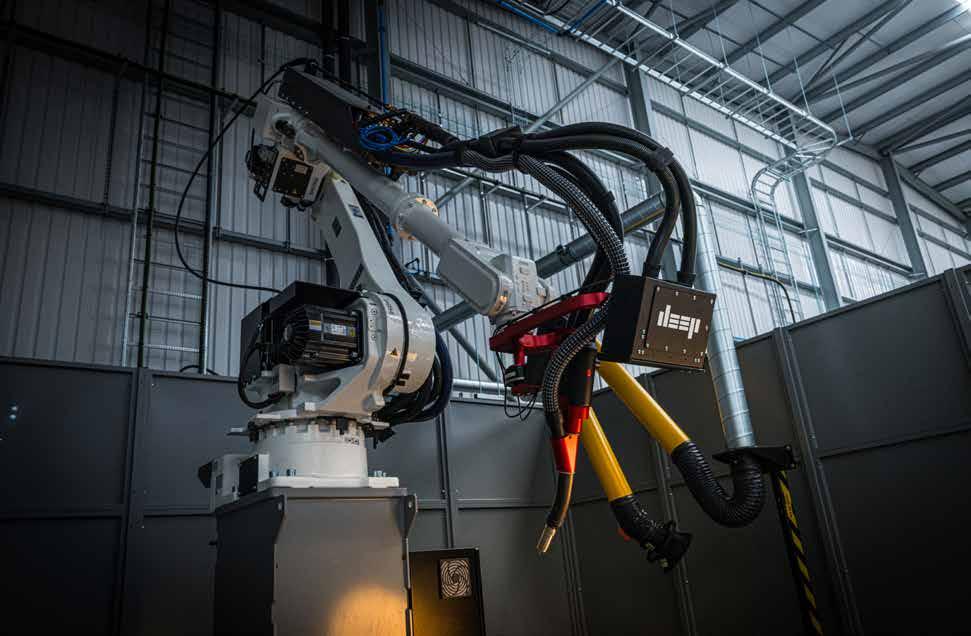
“It was seven months from initial decision to us having a 50,000-square-foot facility, and a launch date. Those seven months involved considerably more than securing a building and installing equipment.”
from the US, particularly within the defence sector. Although expansion into the US had already formed part of DEEP’s longer-term plans, the opportunity accelerated the timeline significantly. Slade explained, “It was originally in our five-year plan for 2026, with operations due to begin in 2027. A business case review was conducted to assess whether it was worth accelerating the expansion, and there was overwhelming agreement to proceed.”
The pace of that expansion became clearer during a conversation with Jim Monroe, US Sales Lead for DEEP Manufacturing. He described the move not as a long-planned international rollout, but as a rapid response to a specific market pull. “It was seven months from initial decision to us having a 50,000-square-foot facility, and a launch date,” he explained.
Those seven months involved considerably more than securing a
building and installing equipment. Monroe explained that the process included implementing ISO 9001, securing DNV Approval in Principle, and establishing industry-specific compliance frameworks, including ITAR requirements, alongside the physical facility. Much of the underlying development work had already been completed in Bristol. As Monroe noted, “We’ve been doing a lot of feasibility and material development work in Bristol, so it can literally just be plugged in here in the US.”
That distinction between development and production was also reflected in Slade’s description of the two sites. “Looking at the Houston site, it’s very much a production hub, and this is our centre of excellence here in Bristol.” The Houston facility is not a direct replica of the UK operation. Monroe explained that the initial configuration reflects local requirements. “Instead of having a six-arm system, we’re going to have a three-arm system, and it’ll be on tracks.”
The strength of defence-sector interest became apparent during the facility launch. Monroe recalled that the event effectively became two launches in one, noting that “We had to essentially have a defencefocused second launch in the second half of the day.”
That interest extends beyond manufacturing capacity alone. Monroe explained that DEEP’s habitat and manufacturing businesses are often engaging with the same customers. “Our habitat division and our manufacturing group are essentially engaged with the same customer because they want a solution on the ocean floor. They also can’t wait three years for it to be manufactured traditionally.”
As an example, Monroe discussed a smaller module first developed in Bristol and now modelled at full scale in Houston. “It’s going to be used to take divers from the surface down to the habitat,” he explained, adding that it had been produced via DED using multiple materials and corrosion-resistant cladding.
DEEP Manufacturing also appears to be engaging with the defence sector at the design stage. Monroe said the company is “very heavily engaged with the DoD at the design level”, adding that it can modify existing designs to accommodate its process. He attributed this in part to “a shift in thinking with more top-down initiatives.”
Reflecting on the company’s growth, Slade noted, “We’ve been very fortunate with our funding model in that we’ve been able to build that capability and the capacity, and now we’re offering it externally.”
Building an industrial ecosystem
The site DEEP has chosen in Texas provides access not only to customers, but also to many of the capabilities required to complete large components. Monroe explained, “There are facilities that could do the heat treat, there are multiple facilities that could do very large machining operations, and these can meet the requirements
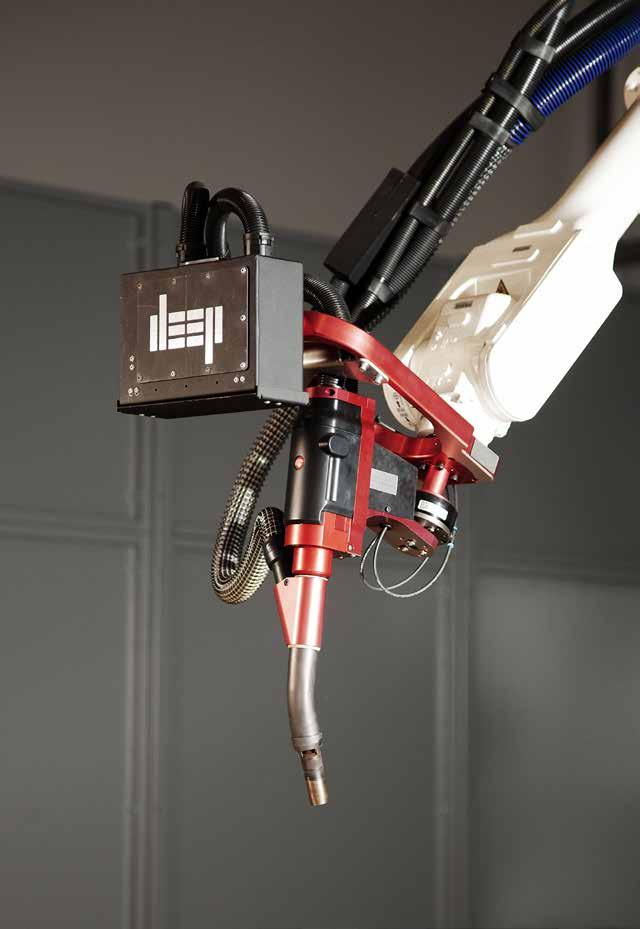
“Reflecting
on
the company’s growth, Slade noted,
‘We’ve been very fortunate with our funding model in that we’ve been able to build that capability and the capacity, and now we’re offering it externally.’”
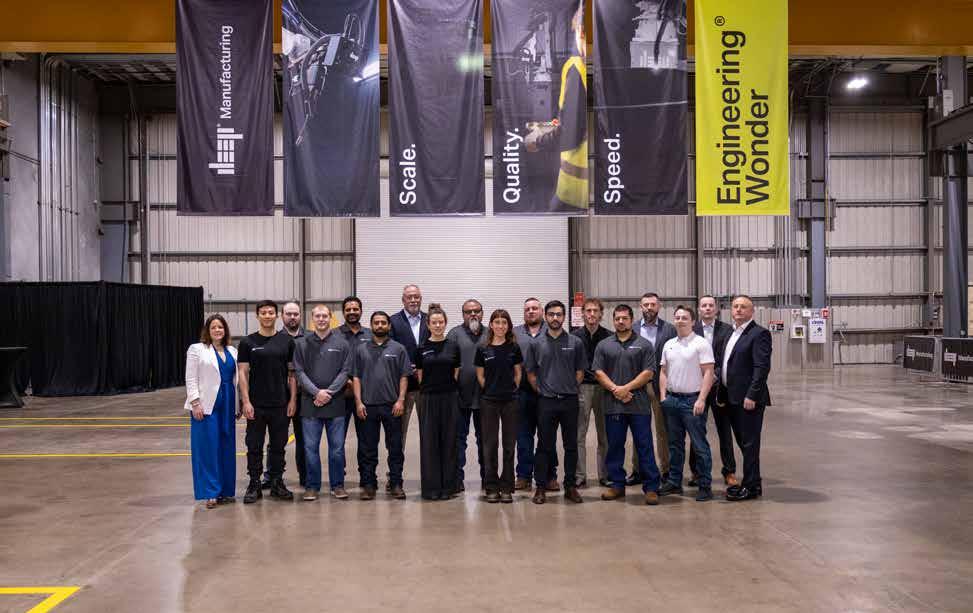
“Monroe argued that DEEP Manufacturing’s choice of technology offers an unusual degree of flexibility, even within Additive Manufacturing.
‘If you need fifty propellers, we can add the systems, and it’ll take sixty to ninety days.’”
from defence customers.” Integration into an established industrial network reduces barriers to delivering finished parts while allowing DEEP to focus on its core manufacturing process.
Another aspect we discussed was how quickly capacity could be expanded when demand arises.
Monroe argued that DEEP Manufacturing’s choice of technology offers
an unusual degree of flexibility, even within Additive Manufacturing. “If you need fifty propellers, we can add the systems, and it’ll take sixty to ninety days. We can scale much more quickly, it doesn’t take a year for us to order a machine and get it installed.”
The region also provides access to a broad talent pool. Monroe said the company has been able to
recruit from “a pretty varied talent pool and from multiple sectors,” while also emphasising DEEP Manufacturing’s willingness to train new employees from scratch. “We’re not really cannibalising jobs from local industry, we’re creating new opportunities.” Training will be particularly important if Houston is to mirror the 24/7, shift operation already established in Bristol.
Monroe added, “We’re forecasted to have thirty full-time employees by the end of the year.”
When asked whether DEEP Manufacturing had encountered resistance from conventional suppliers, Monroe was keen to stress that the relationship is often collaborative rather than competitive. Foundries, he noted, “often have work that goes out two to three years”, meaning DEEP Manufacturing’s ability to deliver faster can help satisfy demand that would otherwise remain unmet rather than directly displacing existing suppliers.
What emerges is a picture of a company that has taken a distinctly pragmatic route into industrial Additive Manufacturing. Rather than defining itself by the technology’s novelty, DEEP Manufacturing has focused on applying it to a clearly defined need. The choice to work with established hardware, to focus on integration rather than invention, and to anchor its activities in a demanding real-world application reflects a broader manufacturingfirst philosophy. In doing so, it is attempting to establish DED as a qualified production route for large, safety-critical metal structures. At the same time, there remains an underlying sense of ambition. The decision to begin with one of the most challenging manufacturing objectives, constructing pressure vessels for human occupation, sends out a very clear signal to the rest of the AM sector. As Slade remarked, by starting at such a level the company is creating a foundation from which it can move into less demanding applications with greater certainty. It is, in effect, an inversion of the more common approach of starting small and scaling up.
Of course, DEEP Manufacturing has not solved every challenge associated with implementing industrial metal AM for very large components. End-to-end cost, workforce development, certification pathways, and continued investment will all influence the company’s future trajectory. Yet what cannot be overlooked is the pace at which DEEP Manufacturing has moved. Within a relatively short period the company has progressed from acquiring its first DED systems to advancing certification activities, establishing operations in Houston, and supporting growing demand from defence, offshore energy and subsea applications.
Whether that ultimately translates into long-term success remains to be seen. What is already clear, however, is that the manufacturing capability developed to support DEEP’s subsea ambitions has evolved into something much larger than an internal engineering function. Originally established to solve a problem for the wider DEEP Group, DEEP Manufacturing is now attempting to establish itself as a supplier of largescale metal structures for industries facing many of the same challenges.
In that sense, the company’s story is not simply about wire-arc DED. DEEP did not set out to build an Additive Manufacturing business; it set out to build subsea habitats.
Author
Dr Martin McMahon
Technical Consultant, Metal AM magazine, and founder of MAM Solutions Martin.McMahon@MAMSolutions.uk
Contact
DEEP Manufacturing Ltd Unit 4, Portside Park Kings Weston Lane Avonmouth, Bristol BS11 8AR United Kingdom
DEEP Manufacturing Houston 6410 Langfield Road, Building F Houston, TX 77092, USA enquiries@deepmanufacturing.com www.deepmanufacturing.com


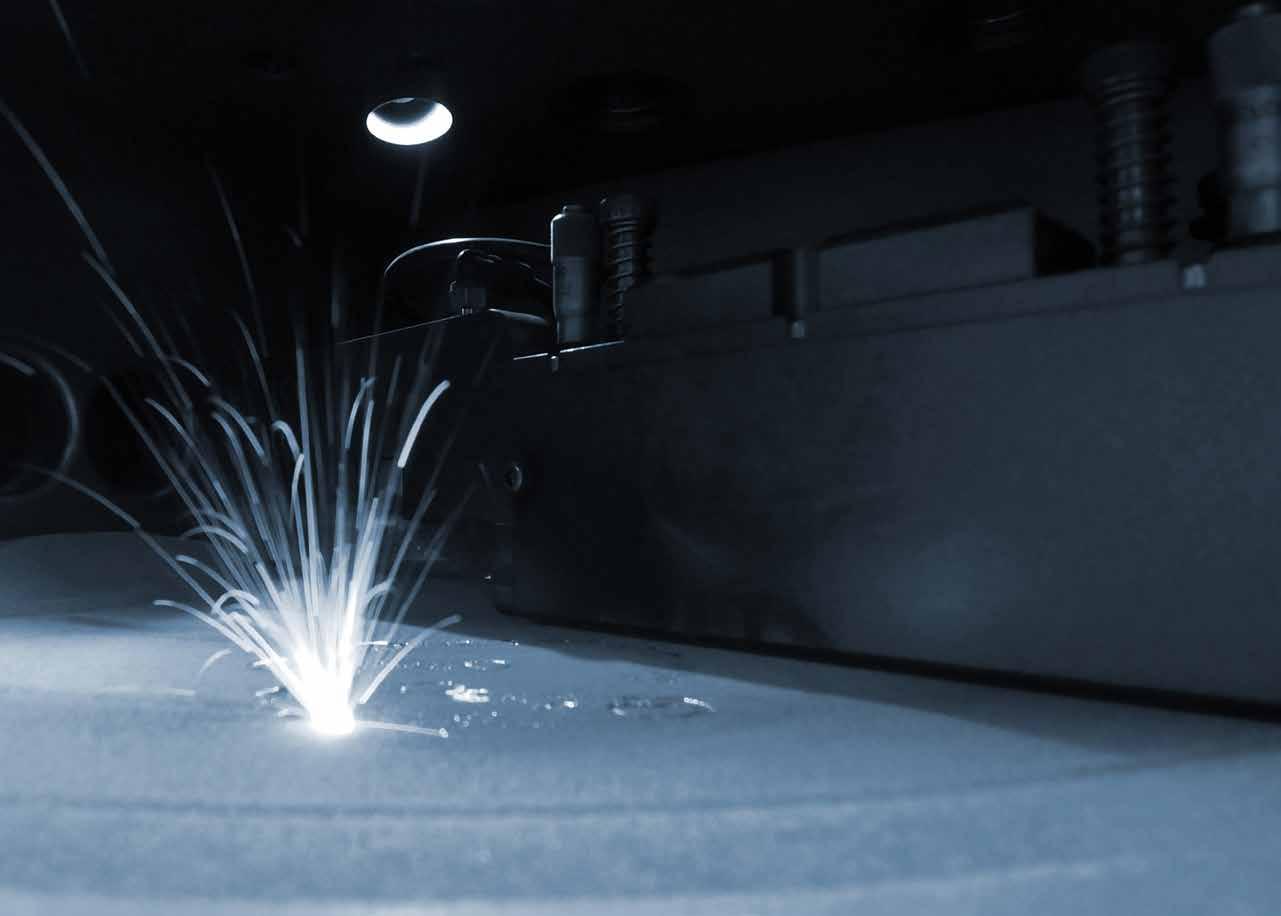
We Convene...
The most brilliant minds from industry and academia
We Coordinate... Transformative technical and workforce data
America Makes is the leading collaborative partner for additive manufacturing and 3D printing technology research, discovery, and innovation in the U.S.
Structured as a public-private partnership, we innovate and accelerate AM/3DP to increase global manufacturing competitiveness.
Focused on additive manufacturing, America Makes is the first institute of the Manufacturing USA® network.
We Catalyze... High-value, high-impact collaborative projects
® REGISTER TODAY! Members Meeting & Exchange (MMX) August 4-5, 2026 Youngstown, OH

Learn more at AmericaMakes.us
As aerospace, defence and energy manufacturers look more closely at where critical metal powders come from, recycled feedstocks are moving from sustainability story to strategic supply chain issue. 6K Additive is addressing that shift by combining recycled metal inputs with UniMelt microwave plasma technology to produce titanium-, nickel- and refractory-metal powders for Additive Manufacturing and advanced industrial applications. Following a visit to Burgettstown, Pennsylvania, Bernard North examines the technology, qualification activity and expansion strategy behind the company’s growth.
For those producing parts by metal Additive Manufacturing, powder supply is no longer simply a question of particle size distribution, flowability and chemistry. Increasingly, it is also a question of feedstock origin, supply-chain resilience, carbon footprint, domestic sourcing and the ability to qualify materials for demanding aerospace, defence, energy and medical applications. These pressures are particularly acute for titanium alloys, nickel-base superalloys and refractory metals, where material costs, strategic importance, and qualification requirements remain high.
It is within this context that 6K Additive has emerged as one of the more distinctive companies in the metal powder sector. Rather than relying solely on conventional gas atomisation of virgin feedstock, the company has built its powder business around converting metal scrap, machining residues and other recycled inputs into powders for Additive Manufacturing and advanced Powder Metallurgy applications. Its core
differentiator is the combination of feedstock upcycling with UniMelt, a microwave plasma spheroidisation process that converts prepared angular powders into highly spherical powders suitable for processes such as Laser Beam Powder Bed Fusion (PBF-LB).
In mid-May, the author visited 6K Additive’s facility, located between Burgettstown, Pennsylvania, and Weirton, West Virginia, and close to Pittsburgh. Discussions with Bruce Bradshaw, Chief Marketing Officer, and Frank Roberts, Chief Executive Officer and Managing Director,


“The company adopted the name 6K for the parent organisation and 6K Additive for its metal powder division, with ‘6K’ reflecting both the 6,000 K temperature achievable in the plasma and the approximate temperature of the Sun’s surface.”
focused on how the company is scaling production of titanium, nickelbase and refractory metal powders, the technical route from scrap to AM-grade powder, and the growing importance of sustainability and critical-material security in powder purchasing decisions.
For AM users, the key question is whether recycled inputs can consistently become qualified, high-performance powders with the chemistry, morphology, flow characteristics and repeatability required by demanding applications. 6K Additive’s answer is a process chain that combines scrap sorting and preparation, hydride-dehydride processing or atomisation depending on alloy family, particle-size control, microwave plasma spheroidisation, sieving and quality assurance. The result, the company states, is a powder portfolio designed to meet AM requirements while reducing reliance on virgin
material supply chains.
That combination of technical capability and supply-chain positioning has attracted both private investment and US Government support. It has also helped establish 6K Additive as a growing supplier of metal powders for AM, defence, aerospace, energy and medical markets.
The company’s current expansion plans are therefore significant not only for 6K Additive itself, but for the wider question of how critical metal powders for AM will be produced, qualified and sourced in the coming years.
6K Additive did not begin as a metal powder business, or even as a metals business in the broader sense. Instead, it emerged from the
convergence of two very different businesses whose capabilities ultimately proved highly complementary: a developer of microwave plasma technology and a specialist in titanium upcycling.
One side of the business originated with Amastan Technologies (now 6K Inc.), a Massachusetts Institute of Technology (MIT)-originating developer of microwave plasma technology. Founded in 2007 by MIT researcher Kamal Hadidi following plasma research dating back to 1994, the company initially focused on processing cathode material precursors (NiMnCo alloys) for lithium batteries [1]. Supported on the metallurgical side by Eric Jordan of the University of Connecticut, its key development was UniMelt, a microwave plasma reactor designed to combine high electrical-to-thermal energy conversion efficiency with a highly uniform operating zone, or plume.
The other side of the business originated with AL Solutions (ALS), a Pennsylvania company specialising in the recycling of titanium grinding swarf for aluminium alloy additions. Frank Roberts, a Penn State materials science graduate, built his career at ATI, where he worked with VSMPO in the Russian Federation on titanium-alloy programmes for aerospace applications. He later joined ALS in Burgettstown and acquired the business in 2012.
In 2017, Aaron Bent, then CEO of Amastan Technologies, together with Roberts and Powder Metallurgy industry veteran John Barnes, now of The Barnes Global Advisors, recognised the potential to apply UniMelt technology to high-value metal powders for aerospace, defence and medical applications. Amastan subsequently raised additional capital and acquired ALS in 2019, retaining Roberts as head of its metal powder activities.
The combination proved particularly significant because it brought together advanced powderprocessing technology with practical expertise in handling reactive titanium materials and converting
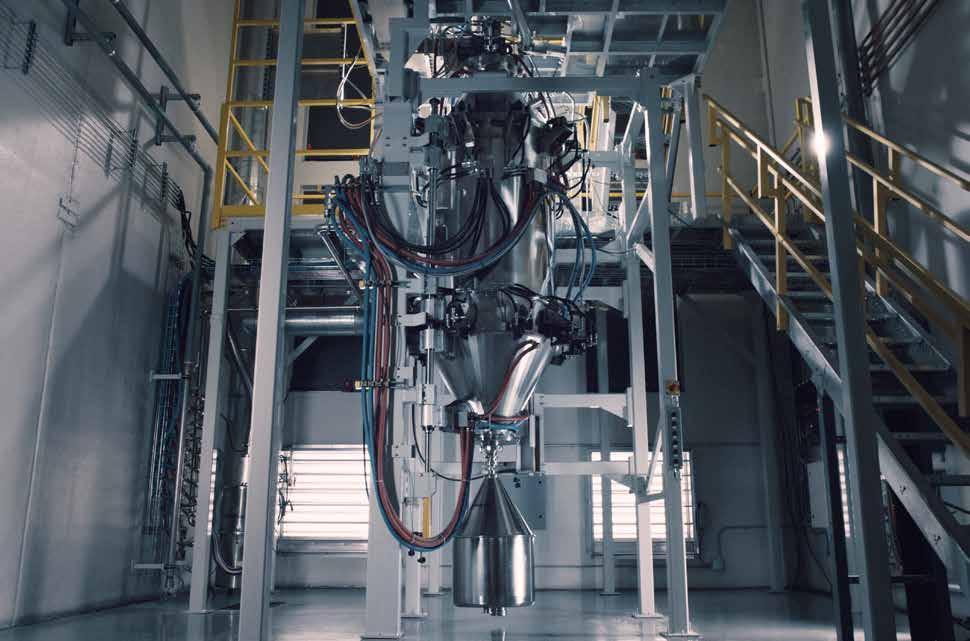
difficult feedstocks into value-added products. Around the same time, Bruce Bradshaw joined the company, bringing two decades of AM industry experience from roles at Objet, Stratasys, Arcam/GE and Evolve Additive Solutions. The company adopted the name 6K for the parent organisation and 6K Additive for its metal powder division, with ‘6K’ reflecting both the 6,000 K temperature achievable in the plasma and the approximate temperature of the Sun’s surface. The company also made its Formnext debut in 2019.
At Burgettstown, new equipment was commissioned and a new building completed in 2020. Following optimisation of operating parameters and procedures during 2021-2022, commercial powder sales began in 2023. The legacy alloy additions business continued to provide operational stability and income while contributing expertise in metallurgical processing, the safe handling of finely divided titanium and established commercial relationships.
Between 2023 and 2025, a number of acquisitions and asset purchases expanded the business, including Specialty Metallurgical Powders (SMP), Global Metal Powders (GMP), and a Vacuum Inert Gas Atomiser (VIGA) asset acquired from Uniformity Labs in Hayward, California [2,3]. The company also has an alloy-products facility in New Cumberland, West Virginia, and oper -
ates a titanium-alloy swarf upcycling facility at the Howmet Aerospace site in Washington, Missouri. The VIGA system is currently operated at the Hayward site.
While 6K Additive focused on metal powders, the wider 6K group continued to pursue battery-material opportunities through 6K Energy. The parent company retained its headquarters in North Andover and
“The combination proved particularly significant because it brought together advanced powder-processing technology with practical expertise in handling reactive titanium materials and converting difficult feedstocks into value-added products.”
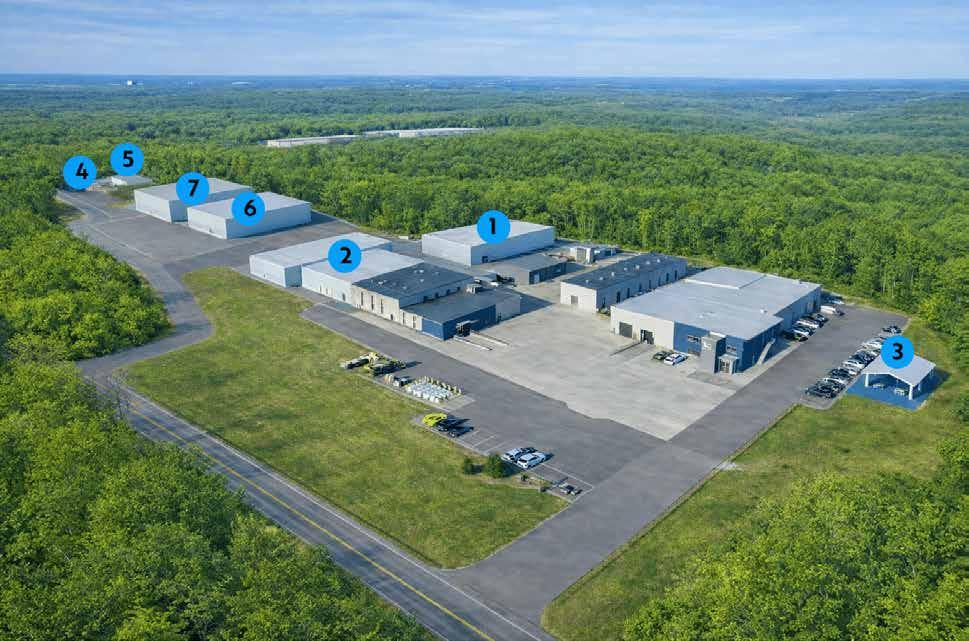
responsibility for the design, development, optimisation and deployment of proprietary UniMelt systems, while 6K Energy focused on cathode materials for lithium batteries, including a planned manufacturing facility in Jackson, Tennessee, supported by US Government funding [4]. Pilot production remains in North Andover until the Jackson facility becomes operational, currently expected in 2028.
While the extension of UniMelt technology from battery metals into metals used primarily in the defence, aerospace and medical sectors made clear technical and economic sense, these markets were not (unlike battery metals) a core interest for many energy investors. 6K Additive leadership, therefore, concluded
“Together with the capital raised through the ASX flotation, this funding is supporting a $48 million expansion programme that will increase Burgettstown’s capacity for spheroidised metal powders from approximately 200 to 1,000 tonnes per annum.”
that higher valuations – and consequently the ability to raise the capital required for major capacity expansion – would be more readily achieved by spinning off the alloy additions and non-cathode metal powders business through a public offering.
The Australian Securities Exchange (ASX) has previously provided a public market listing route for several smaller materials science companies [5,6]. Bradshaw believes its investor base is particularly well suited to metallurgical businesses: “The exchange is small enough that moderate-sized metallurgical companies can stand out better and get good valuations, as its investor base is familiar with such operations.”
A pre-IPO funding round announced in July 2025 raised $14.8 million, followed by an additional $31.4 million upon completion of the listing in December 2025 [7].
Sixty per cent of the stock is still held by 6K, which develops and provides the UniMelt plasma spheroidisation equipment and process technology for which 6K Additive has a global license in its specific fields of interest.
Defence funding and the criticalmaterials push
6K Additive’s titanium, nickel-alloy and refractory-metal powders are considered important for defence and energy applications. Combined with the company’s technical and economic advantages and growing concerns about the stability and robustness of critical-material supply chains, this has led to substantial US Government interest and financial support.
During 2025, a $23.4 million Defense Production Act (DPA) Title III grant was awarded [7] (which must be matched 1:1 by the company’s own funds), and in addition, the company was awarded access to a $27 million Export-Import Bank of the United States (EXIM) loan, backed by the US Department of Defense.
The support reflects growing concern over the domestic availability of critical metal powders and feedstocks for defence, energy and advanced manufacturing applications, including Additive Manufacturing. Together with the capital raised through the ASX flotation, this funding is supporting a $48 million expansion programme that will increase Burgettstown’s capacity for spheroidised metal powders from approximately 200 to 1,000 tonnes per annum, with flexibility for further expansion if required (Fig. 4).
In addition, both before and after the 6K Additive flotation, the company has received $12.4 million through Defense Logistics Agency programmes focused on converting titanium and nickel-alloy scrap into high-value powders. Most recently, it was awarded a further $1.95 million programme over an eighteen-month period to process nickel-, titanium-, niobium- and tungsten-based materials from US military depots into specific products.
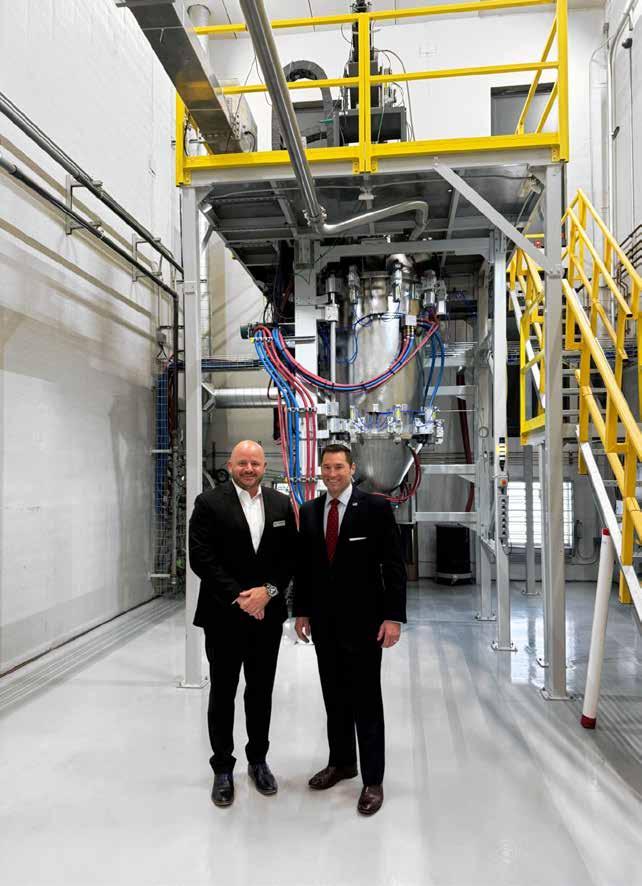
The Burgettstown site comprises 18 hectares (45 acres). A 3,700 m² (40,000 ft²) building was already on site from the ALS days, and the new building, completed in 2020, provides approximately 4,650 m² (50,000 ft²) of additional floor area. Roberts estimated the total floor area of buildings at the company’s other sites at around 5,600 m² (60,000 ft²), while the planned expansion at Burgettstown will add approximately 14,000 m² (150,000 ft²).
Touring the facility highlighted the emphasis placed on safety, process control and scalability. Control rooms and ancillary equipment, including power supplies and vacuum systems, are separated from processing areas, while operating procedures reflect the company’s long experience handling finely divided titanium, a pyrophoric material. According to Roberts, this safety culture has carried over directly from the legacy alloy additions business into the company’s powder operations. Currently, 6K Additive employs approximately eighty-five people.
Table 1 Current and planned production capacity at 6K Additive’s Burgettstown operation (Courtesy 6K Additive)
Niobium C103
Chromium 99.95%
Tungsten Chromium 99.8%
Stainless Steel 316L Chromium 99.5%
Copper C18150 AT Chromium 99.5%
Tantalum
Rhenium
Tungsten/Rhenium
Molybdenum
Table 2 Current spherical and angular metal powder offerings from 6K Additive. Spherical powders are primarily used in Additive Manufacturing, while angular powders are used in applications including press-and-sinter processing (Courtesy 6K Additive)
“To understand 6K Additive’s process for spherical powders, it is important to note that the UniMelt microwave plasma equipment is not a 1:1 substitute for conventional atomising. Its direct input is neither molten metal, nor wire or a billet of metal that gets melted immediately prior to atomisation...”
Although the alloy additions business falls outside the scope of Powder Metallurgy, it accounts for approximately one-third of 6K Additive’s business and continues to experience strong growth. The operation also provides important context for the company’s metal powder activities, reflecting long-standing expertise in the handling of finely divided titanium, the processing of scrap-derived feedstocks, and the conversion of difficult-to-recycle materials into value-added metallurgical products.
Given that finely divided titanium is a pyrophoric material, the legacy business also helped establish the strong safety culture that continues throughout the company’s powder operations today. Per Bradshaw: “Titanium swarf would otherwise be a hazardous waste material that would cost titanium alloy component manufacturers money to dispose of safely; our process provides them instead with net neutral from the swarf, and we in turn convert it into a valuable input for aluminium alloy producers.”
In brief, titanium grinding swarf, received in drums containing an aqueous grinding-fluid emulsion, is de-oiled, dried, quality checked and consolidated into briquettes that are vacuum sealed for shipment to customers. The resulting product provides an economical source of titanium for aluminium alloy production and can be added relatively late in the melting process because titanium particles are rapidly wetted by molten aluminium. Similar processes are employed at the company’s Red Lion and New Cumberland facilities.
To understand 6K Additive’s process for spherical powders, it is important to note that the UniMelt microwave plasma equipment is not a 1:1 substitute for conventional
atomising. Its direct input is neither molten metal, nor wire or a billet of metal that gets melted immediately prior to atomisation, but rather solid metal powders made to a desired particle size range by a prior process, and which process depends on the metal or alloy of interest.
Furthermore, while most of the company’s powder sales are of microwave plasma spheroidised powder, a significant proportion (~20%) is in an angular form, primarily chromium of 99.5% or higher purity levels used for copper-chromium high-voltage vacuum interrupters, which 6K Additive’s customers manufacture by conventional uniaxial pressing and sintering. Titanium is also offered as an angular powder product for pressand-sinter applications in defence and industrial markets.
For the spherical metal powders comprising the majority of 6K Additive’s powder business, several feedstock routes are used depending on the material being processed. For Ti, Nb, Ta and Cr – both pure metals and alloys – scrap materials, obsolete parts, machining chips and other production residues are converted into powder through a hydride-dehydride embrittlement process combined with high-energy dry attritor processing. The attritor process welds small particles into larger, dense particles, allowing angular powders of a controlled particle size range to be produced. Some of this powder (primarily Cr) is sold in this form, but most is used as feedstock for the UniMelt process.
For metals and alloys for which hydride-dehydride processing is not applicable, alternative routes are used to produce the intermediate powder. For Cu alloys, specifically Copper C18150, 6K Additive collaborates with Metal Powder Works [8], using that company’s multi-point machined material as input to the high-energy attritor process to size the powder prior to the UniMelt process.
Nickel-base alloys, most commonly Inconel 625 and 718, are produced using conventional Vacuum Inert Gas Atomisation. The Hayward VIGA unit is scheduled for relocation to Burgetts -
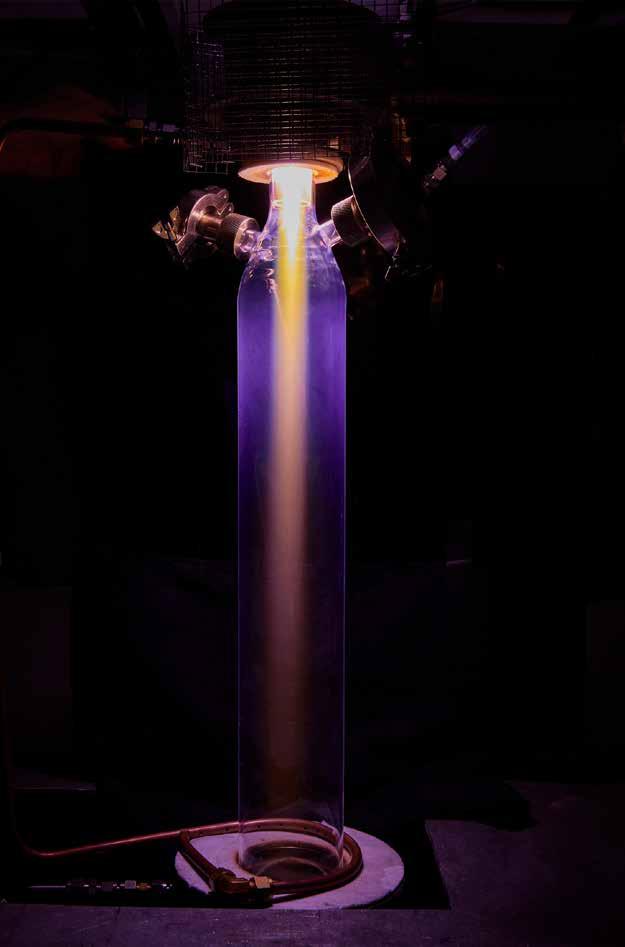
Fig. 6 Inside the UniMelt reactor, powder particles pass through a hightemperature microwave plasma plume, where they melt and form spherical particles through surface-tension effects (Courtesy 6K Additive)
“For Cu alloys, specifically Copper C18150, 6K Additive collaborates with Metal Powder Works, using that company’s multi-point machined material as input to the high-energy attritor process to size the powder prior to the UniMelt process.”
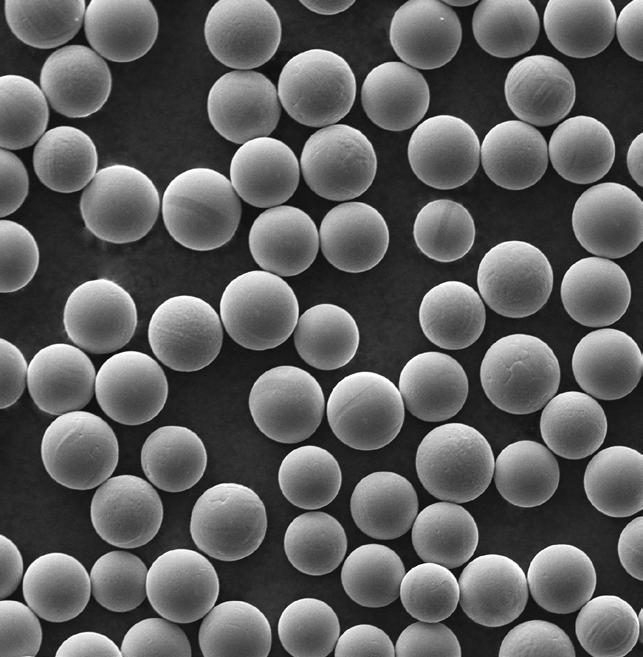
7 SEM image of UniMelt-processed Ti-6Al-4V powder showing the high sphericity and smooth particle morphology required for Powder Bed Fusion applications (Courtesy 6K Additive)
town in 2026, and an additional unit is on order due to the importance and expected growth of these materials. Tungsten, as well as rhenium and molybdenum powders, is processed in non-spherical form and then becomes feedstock for the UniMelt process.
Currently, the Burgettstown facility has four UniMelt systems provided by the 6K sister company in North Andover, Massachusetts, with three more due for installation later in 2026 and a further three in 2027. As elsewhere at 6K Additive, the microwave systems, vacuum pumps and power supplies are physically separated from the powder-handling equipment and operated from a dedicated control room.
Input metal powder, produced within a predetermined particle size range as described in the previous section, is fed into the system during operation and heated within the highly controllable microwave plasma gas plume. The input powder particles are heated in the plasma until they melt, at which point surface tension forces cause them to form highly spherical particles. These retain their shape during cooling before exiting the reaction chamber. A series of sieves then separates the output powder into different size fractions.
Powder below the desired size range can be routed back to the dry attritor process and used in a subsequent UniMelt run. Oversized powder can be used (in the case of titanium) for alloy additions, sold as scrap, and, in the future, may be cast into ingots, with this route being refined under the DLA contract.
Bradshaw and Roberts outlined several advantages of 6K Additive’s process combination. While each is significant in its own right, together they help explain the company’s ability to attract substantial private and government funding, as well as its rapid sales growth.
Unlike VIGA and Electrode Induction Melting Gas Atomisation (EIGA), 6K Additive’s process combination can operate using 100% scrap feedstock from a variety of sources. Although virgin materials can also be processed, the company is currently operating on entirely scrap-derived inputs. This provides both economic and sustainability advantages.
The UniMelt process uses only about one-third of the gas required by conventional gas atomisers. In addition, the ~99% coupling efficiency of the input power to the metallic particles reduces overall energy consumption. Because this is not fully offset by the energy requirements of the preceding mechanical attritor process, the net result is lower power consumption than alternative powder-manufacturing routes.
The UniMelt process, by controlling gas and power inputs, can fine-tune plume characteristics and process temperatures, enabling the processing of a broad range of metals, from aluminium at the low end of the melting temperature range to tungsten at the high end. While 6K Additive has not commercialised aluminium powder sales, it manufactures a wide range of other metals and alloys, broadening both its addressable market and its ability to serve customers seeking a ‘one-stop-shop’.
The temperature distribution within the plume and the movement of powder particles within it result in each particle experiencing a highly similar processing environment. According to Bradshaw and Roberts, combined with
control of the input particle size, this contributes to low levels of satellites, a narrow particle size distribution and reduced oxygen levels. Compared with conventional atomisation processes, this produces a tighter particle size distribution, higher ‘first time through’ yields (typically 80-95%), and improved powder flow and packing density. For PBF-LB users, these characteristics can contribute to more consistent powder spreading, improved layer formation and greater process repeatability across successive builds.
The preparation of the feedstock powder, combined with the low gas usage of the UniMelt process, also results in significantly lower levels of internal porosity and entrapped gases than conventional atomisation routes. The company reports that this can improve the microstructure and mechanical properties of customers’ AM parts while reducing the likelihood of powderrelated defects in demanding applications.
Life-cycle analysis (LCA) conducted by an independent company has quantified the sustainability benefits of 6K Additive’s process chain relative to industry norms [9]. For nickel-base superalloys, CO 2 emissions are estimated to be reduced by approximately 91%, while for titanium alloys the reduction is approximately 78%. A little over two-thirds of the reduction is attributed to the company’s use of recycled feedstock, with the remaining third resulting from internal process efficiencies.
The Burgettstown site has a wellequipped analytical laboratory. Its capabilities include LECO equipment for C, O and N analysis; wet chemistry; Inductively Coupled Plasma (ICP) and desktop X-ray Fluorescence (XRF) equipment for metallic
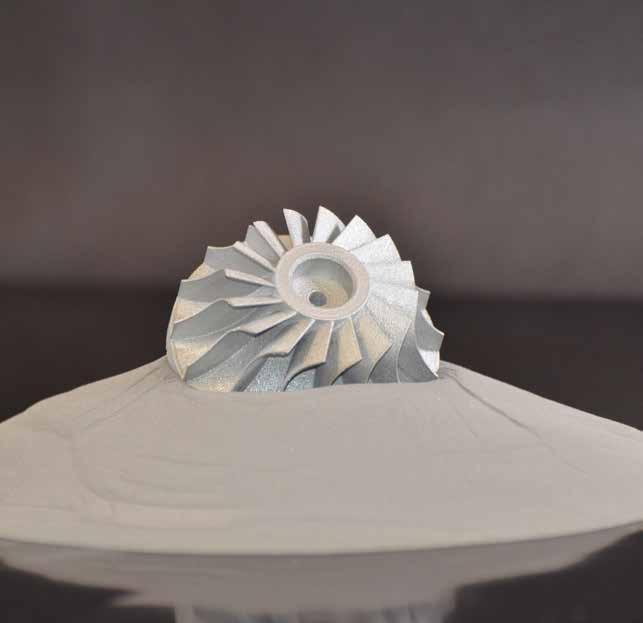
“For
nickel-base superalloys, CO2 emissions are estimated to be reduced by approximately 91%, while for titanium alloys the reduction is approximately 78%. A little over two-thirds of the reduction is attributed to the company’s use of recycled feedstock...”
elemental analysis; laser scattering and sieving equipment for particle size and shape analysis; Scanning Electron Microscopy (SEM) with Energy Dispersive Spectroscopy (EDS); and Hall and Carney flow testing. In addition, the company uses handheld XRF analysers to verify material compositions throughout the plant.
6K Additive is ISO 9001 certified and is compliant with the ISO 13485 medical devices and AS9100 aerospace quality standards, with certification to both currently in progress. The company is also International Traffic in Arms Regulations (ITAR) compliant and holds a Silver EcoVadis sustainability rating.
Segment
Geography
Breakdown
~75% North America; ~25% Europe; some Middle East
Alloy additions markets ~70% automotive; ~30% aerospace
Metal powder markets ~35% industrial/energy; ~30% defence; ~30% aerospace; ~5% medical
Table 3 Geographic distribution and end-market profile of 6K Additive’s alloy additions and metal powder businesses (Courtesy 6K Additive)
Segment
Product family
Breakdown
~33% alloy additions; ~67% metal powders
Powder composition ~60% nickel-base; ~30% titanium-base; ~10% refractory metals and alloys
Powder morphology
Business mix
~20% angular (primarily for uniaxial pressing); ~80% spherical (primarily for PBF-LB, with a small proportion for PBF-EB)
~75% repeat orders; ~25% new business
Product portfolio ~85% standard products (frequently inventoried); ~15% customer-specific alloys and/or particle size ranges
Table 4 Product mix, powder morphology and business profile (Courtesy 6K Additive)
“While some customers were initially sceptical about scrap-derived feedstocks, that concern has largely diminished as qualification data and production experience have accumulated.”
Roberts outlined the company’s current market and product profile, summarised in Tables 3 and 4. The figures highlight the growing importance of metal powders within the business, which now account for approximately two-thirds of sales. Within the powder portfolio, nickelbase alloys remain the largest product category, although Bradshaw expects titanium and refractory
metals to grow more rapidly in the coming years.
Powder order quantities vary considerably by material. Typical orders for nickel- and titanium-based alloys range from 1,000-3,500 kg/ month, while refractory metal orders are typically around 150-300 kg/ month.
Lead times depend on whether material is available in finished goods inventory, work-in-progress inventory or scrap inventory and whether addi -
tional feedstock must be procured. If material is available in finished goods inventory, lead times are typically one to five days. Orders can take longer when material is in work in progress, around six weeks when the required scrap is already on site, and approximately three months when feedstock must first be sourced.
Qualification remains one of the most important challenges for any metal powder supplier seeking to serve aerospace, defence and medical markets. According to Bradshaw, qualification programmes typically take 12-18 months in aerospace and medical applications, compared with around three months for many industrial applications. While some customers were initially sceptical about scrap-derived feedstocks, that concern has largely diminished as qualification data and production experience have accumulated.
The company’s progress is reflected in a growing number of customers and industry qualifications. Honeywell has qualified 6K Additive’s Ni718 powder for aerospace Additive Manufacturing applications [10], while Trumpf has qualified the company’s titanium powder for use on TruPrint systems [11]. The company has also collaborated with EOS through an America Makes project examining sustainability and environmental benefits in Additive Manufacturing [12]. Together, these developments indicate growing acceptance of 6K Additive and its powder technologies within the AM industry.
Bradshaw outlined several factors supporting the company’s commercial growth. “Companies from whom we buy scrap often subsequently become powder customers, and about 20% of our scrap input now comes from customers,” he explained. The desire of many customers to buy domestically is being reinforced by the US government’s concerns about supplychain stability. Existing regulations promoting domestic sourcing are also
expected to be strengthened through tighter definitions of what qualifies as ‘domestic’ content.
6K Additive also benefits from the broad range of pure metal and alloy powders it is able to offer, reflecting the flexibility of its core technologies. This broadens the company’s addressable market and appeals to customers seeking to reduce their supplier base through ‘onestop shopping.’ As Bradshaw noted: “Most of the larger companies have a policy of having both a primary and a secondary supplier for any specific powder that they buy, although a given supplier can be a primary on one grade and a secondary on another.” Many Additive Manufacturing equipment manufacturers also sell qualified private-label powders to their customers, and 6K Additive participates in this market, although the majority of its powders are sold under the 6K brand. The sustainability benefits of the company’s products are also an important selling point, while the technical benefits of its spherical powders, including flowability, packing density and low oxygen levels, remain critical for many customers.
In addition, 6K Additive has announced several agreements with specific customers and/or scrap suppliers [13,14], reflecting growing acceptance of the company as both a supplier of high-quality metal powders and as a purchaser of scrap materials.
6K Additive is now a public company, and five fiscal quarters of financial data are available [15]. Sales of both the alloy additions and metal powder product categories are summarised in Fig. 9. Thus far, the high valuations achieved during earlier 6K fundraising and the 2025 6K Additive spin-off appear justified by the rapid sales growth seen in both the legacy alloy additions business and, especially, the metal powders business.
Alloy Products Powder Products
9 Quarterly sales growth and backlog data (US$ millions) indicate strong expansion in both alloy additions and metal powder businesses, with powder sales showing particularly rapid growth (Courtesy 6K Additive)
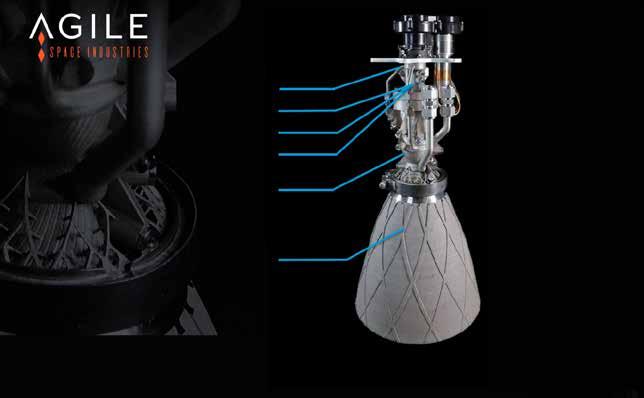
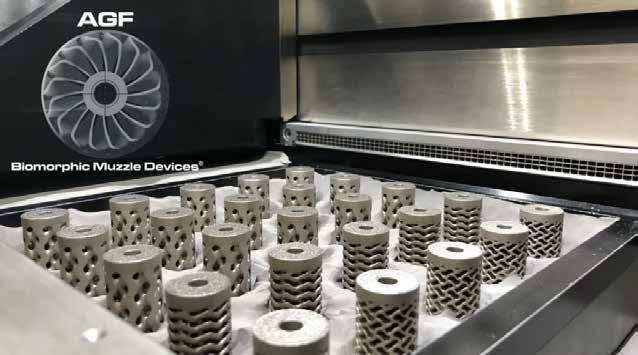
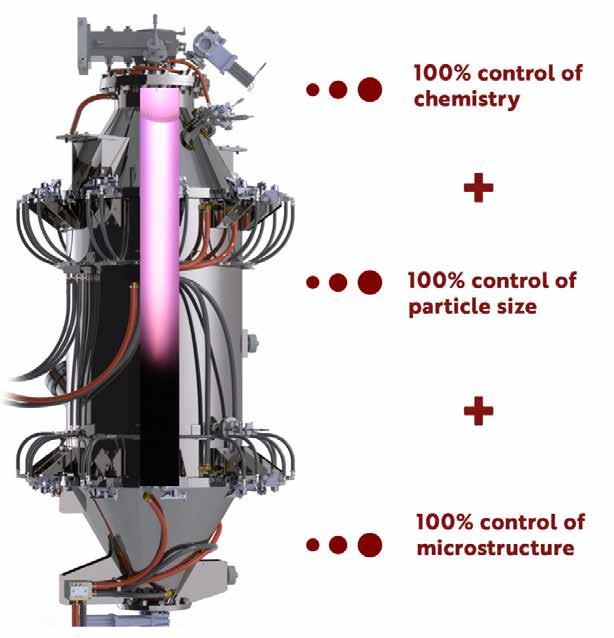
The alloy additions business grew by 17% from FY25H1 to FY25H2 and by 69% from FY25Q1 to FY26Q2, while the metal powders business grew by 38% from FY25H1 to FY25H2 and by 100% (i.e. doubling) from FY25Q1 to FY26Q1. Furthermore, the substantial order backlog at the start of FY26Q2 suggests that the alloy additions business will maintain strong growth, while growth in metal powders is likely to continue accelerating. For comparison, a 2024 SmarTech study [16] projected overall AM powder market growth of approximately 25% per year – a strong figure in its own right, but one that suggests 6K Additive is currently growing faster than its AM metal powders market. Bradshaw indicated that, while all product categories remain in growth mode, the product mix is expected to evolve. Metal powders are anticipated to grow faster than
alloy additions, spherical powders faster than angular powders, and both titanium and refractory metals faster than nickel-base alloys.
The company has a diverse range of products and markets, supplying both alloy additions for aluminium alloy manufacturers and metal powders. These are offered in both angular and spherical morphologies, across a variety of metals and alloys, and are used in a wide range of applications. Such diversity helps reduce business risk and provides a degree of market stability. While currently focused primarily on North America, 6K Additive aspires to establish a European manufacturing operation starting in 2028.
6K Additive’s metal powder processes, with their ability to utilise 100% recycled inputs while reducing process gas and electrical power consumption, are
well aligned with the increasing emphasis on sustainability across industry and government. More recently, the emphasis has shifted towards supply chain stability for critical materials, particularly for defence applications. This has helped support the company’s IPO valuation and attract significant US Government backing through contracts, grants and loan programmes. The company expects US policies promoting domestic sourcing to continue supporting growth.
6K Additive’s processes, while broad in scope, are especially well suited to very valuable titanium- and nickel-based alloys; they give the company an even greater competitive advantage with refractory metals and their alloys based on niobium, molybdenum, tantalum, tungsten, and rhenium. These refractory metals and their alloys represent a strategically important category for powder production, owing to their high melting temperatures, limited supply chains and growing use in aerospace, defence, energy and other high-performance applications.
These materials benefit from growth in established aerospace, defence and power-generation applications, as well as emerging opportunities in areas such as hypersonic vehicles, high-temperature gas turbines, rocket propulsion, and advanced fission and fusion nuclear reactors. In addition to its commercial and defence customers, 6K Additive is working with national laboratories in the US and the UK, supplying advanced refractory materials to support the development of emerging technologies.
6K Additive’s growth is significant not simply because it has found a new way to recycle titanium scrap, nor because UniMelt offers an alternative route to spherical powder production. Its importance lies in the way these elements
come together at a moment when the metal Additive Manufacturing industry is being forced to think more carefully about where its powders come from, how they are produced, and whether supply chains for critical alloys are robust enough to support future growth.
For AM users, the company’s proposition addresses several pressures at once. Scrap-derived feedstocks offer a route to lower carbon footprint and reduced exposure to volatile primary-material supply chains. Microwave plasma spheroidisation offers a means of converting prepared powder feedstocks into spherical powders with the characteristics required for demanding AM applications. Domestic production of titanium, nickel-base and refractory metal powders aligns closely with the priorities of aerospace, defence, energy and medical customers, where qualification, traceability and security of supply are becoming as important as price.
The challenge now is execution. As 6K Additive expands capacity at Burgettstown, relocates, adds atomisation assets and continues to qualify materials with customers, it must demonstrate that its process chain can deliver not only compelling sustainability metrics and attractive powder characteristics but also repeatability at scale. In the AM industry, technical promise only becomes commercially significant when powders are qualified, trusted and reordered.
That is why the company’s next phase will be watched closely. If 6K Additive can scale as planned, it will represent more than the successful growth of a single powder supplier. It will offer a model for producing high-value AM materials from circular feedstocks, supported by domestic supply-chain priorities, and qualified for some of the most demanding industrial applications. In a market where metal powder is often treated as a consumable, 6K Additive’s story is a reminder that powder production itself is becoming a strategic technology.
[1] Winn, Z., ‘Cleaning up critical minerals and materials production using microwave plasma’, MIT News , February 7, 2025
[2] ‘6K Additive acquires Specialty Metallurgical Products’, Metal AM , October 13, 2021
[3] ‘6K Additive acquires Global Metal Powders to expand sustainable Ti and refractory powder production’, Metal Powder Technology , November 3, 2023
[4] ‘The US Department of Energy and 6K Energy execute agreement for the $50M grant for the Plus CAM battery material production plant in Jackson, TN’, 6K press release , December 13, 2023
[5] ‘CFOAM Limited has filed an IPO in the amount of AUD 9 million’, S&P Capital IQ , June 21, 2016
[6] ‘Metal Powder Works lists on ASX after raising $10 million’, NewsnReleases , March 11, 2025
[7] ‘2025 Fiscal Close: Capitalizing for Scale and Acceleration’, 6K Additive press release , 2025
[8] ‘6K Additive and Metal Powder Works partner to produce pure copper, copper alloys, and bronze AM powder’, Metal Powder Technology , November 8, 2023
[9] Van Valkenburg, B., et al., ‘Nickel Life-Cycle Assessment Report’, Foresight Management, February 4, 2022. Available from the 6K Additive website
[10] ‘Honeywell qualifies 6K Additive’s Nickel Ni718 for aerospace Additive Manufacturing’, Metal AM , June 3, 2025
[11] ‘Trumpf qualifies 6K Additive’s titanium powder on TruPrint Additive Manufacturing machines’, Metal AM , April 2, 2025
[12] ‘EOS and 6K Additive awarded America Makes project to analyze sustainability and environmental benefits for Additive Manufacturing’, 6K Additive press release , January 20, 2025
[13] ‘6K Additive signs nickel powder deal with Siemens Energy’, Metal AM , March 2, 2026
[14] ‘6K Additive partners with AGF Defcom for AM suppressor powders’, Metal AM , January 20, 2026
[15] ‘6K Additive reports 57% increase in nickel-based powder sales’, Metal AM , May 15, 2026
[16] ‘SmarTech and 6K release AM powder market analysis’, Metal AM , October 26, 2022
Bernard North North Technical Management, LLC
Greater Pittsburgh area, Pennsylvania brnrdnorth@gmail.com
6K Additive
541 Steubenville Pike, Burgettstown, PA 15021, United States +1 724-215-7049
www.6kadditive.com
26 – 28.8.2026

The range of metal AM parts reaching the production floor has never been broader. High-volume production runs are now driving results across consumer electronics, automotive, tooling and footwear, moving applications from design to delivery in months.
This is metal additive manufacturing at its most versatile, and in Shenzhen, it is already a reality.
Formnext Asia Shenzhen brings together the systems, the expertise and the production knowledge you need to understand what is possible. Handle the parts. Question the engineers. See the machines in action.
Metal Additive Manufacturing is increasingly capable of producing qualified end-use parts, but for maritime OEMs the greater challenge is delivering those parts consistently, securely and at scale. For operators supporting long-lived vessels and offshore assets, legacy spare parts present a persistent service and inventory challenge. Håkon Ellekjær, CEO, and Scott Harding, VP Engineering, of Pelagus, a joint venture between Wilhelmsen and thyssenkrupp, examine how digital inventory, traceability and qualified manufacturing networks are enabling controlled, on-demand production.
For the better part of the decade, the conversation around metal Additive Manufacturing in regulated industries has centred on what the technology can do. Can it produce complex geometries? Can it match the mechanical properties of cast or forged equivalents? Can it achieve the surface finish and dimensional tolerances demanded by safety-critical applications?
For a growing range of applications, the answer is increasingly yes. Process windows and related materials datasheets are now well characterised across the mainstream materials and machine platforms, and build-to-build repeatability is at production-grade levels. As a result, metal AM is increasingly being qualified as a production route for selected safety-critical applications across sectors such as aerospace, defence, energy, and maritime. However, the qualification of technology is not the same as the industrialisation of the supply chain. This distinction is becoming increasingly important as OEMs move beyond pilot projects and begin
evaluating how AM can support long-term aftermarket obligations at scale. These are separate problems; conflating them has been one of the more persistent sources of frustration in the sector. An OEM may
accept that a part can be produced via Laser Beam Powder Bed Fusion (PBF-LB) to a defined specification. The harder question is whether it can be produced consistently, traceably and to the same standard at any loca -
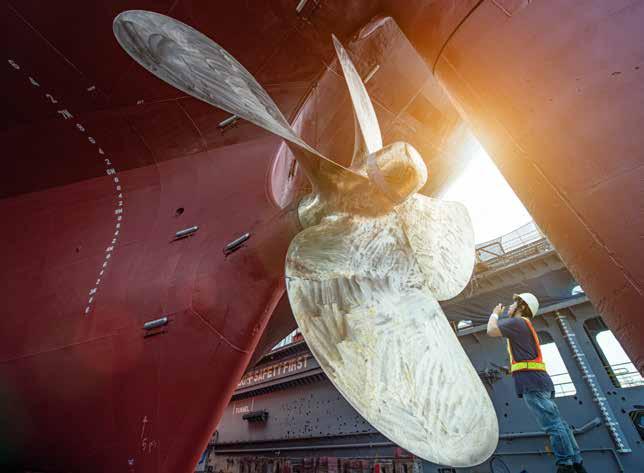


Fig. 2 Håkon Ellekjær, CEO, and Scott Harding, VP Engineering, Pelagus. Ellekjær leads corporate strategy, organisational development, and long-term value creation, drawing on experience in digital transformation and new venture development for shipping and industrial clients. Harding oversees engineering, quality, and manufacturing operations, with prior experience delivering safety-critical Additive Manufacturing components into industrial and nuclear applications (Courtesy Pelagus)
Pelagus: bringing digital manufacturing to maritime spare parts
Pelagus was established in 2023 as a joint venture between Germany’s thyssenkrupp Materials Services and Norway’s Wilhelmsen Group. The company was created to address a persistent issue in the maritime and energy industries: the availability of spare parts for long-lived vessels, offshore assets, and industrial equipment.
Based in Singapore, Pelagus works with OEMs to digitise, protect, and manage legacy parts portfolios for secure on-demand manufacturing. Its digital inventory platform enables selected spare parts to be converted into controlled digital assets and produced through a network of qualified manufacturing partners when required. The model is intended to reduce dependence on physical inventories, long supply chains, and minimum order quantities
for low-volume or obsolete parts. For OEMs, it offers a route to maintaining aftermarket support for components that may no longer be viable through conventional production or stocking models.
Pelagus’ position is shaped by the strengths of its shareholders. Wilhelmsen, founded in 1861, is one of the world’s leading maritime groups, providing products and services to more than half of the global merchant fleet through its network of ports, logistics operations, and maritime service businesses. This is complemented by thyssenkrupp’s expertise in engineering, materials distribution, and digital supply chain management.
Today, Pelagus focuses on helping OEMs manage legacy spare parts portfolios in the maritime and energy sectors, combining maritime service experience with advanced engineering and supply-chain capabilities.
tion within a global manufacturing network, regardless of facility, operator or powder batch.
Legacy parts – components produced by OEMs ten, twenty or thirty years ago – present a specific and sometimes underappreciated challenge. Many remain critical to the safe operation of vessels and offshore assets, but the conventional supply chains that once supported them have changed beyond recognition.
Original production tooling has been scrapped. Foundry relationships have ended. Minimum order quantities are no longer commercially viable for low-volume, sporadic demand. In some cases, the OEM itself has been restructured, acquired or wound down. A growing coverage gap exists between what operators need and what the supply chain can reliably deliver.
For some legacy parts, lead times of three to five months are not uncommon. When that exceeds operational tolerance, operators must decide whether to wait or source from the grey market. Non-genuine parts may offer faster availability, but they can also lead to equipment damage, insurance complications, regulatory non-compliance, and erosion of the OEM’s aftermarket relationship with the end user.
Metal AM offers a route out of this. Parts that are difficult or impossible to source through conventional channels can, in many cases, be produced through on-demand manufacturing. Under OEM control, designs can be digitised, securely stored in a digital inventory, and manufactured where and when needed to OEM specification. The focus then shifts from proving technical feasibility to building the operational framework required to execute this reliably at scale: qualification procedures, supply chain controls and traceability systems capable of delivering parts consistently across a distributed manufacturing network.
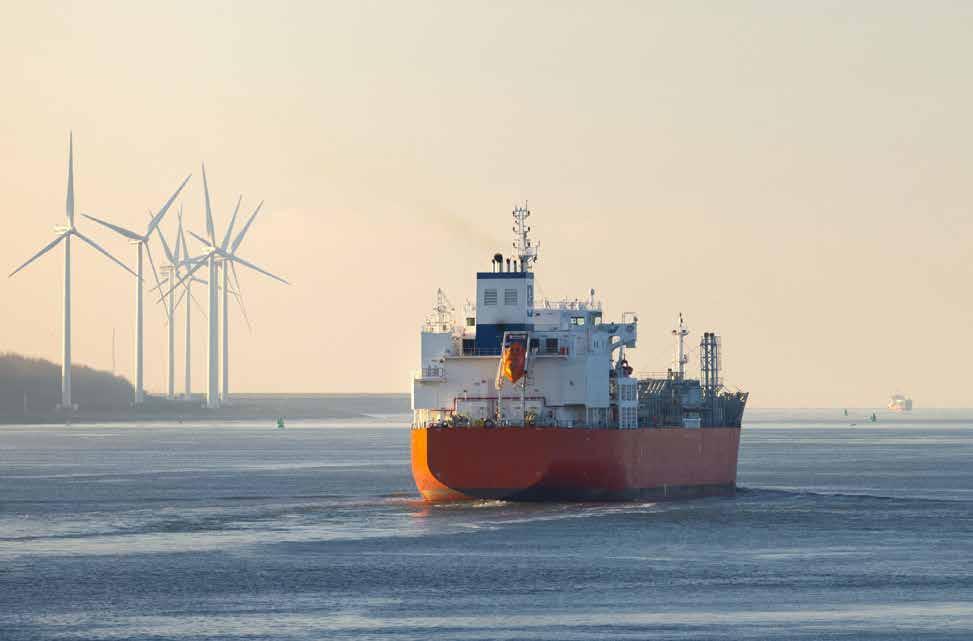
right
Not every legacy part is a candidate for on-demand manufacturing via metal Additive Manufacturing. Getting the selection right is the first – and arguably most important – step in building a scalable programme. To address this, Pelagus assesses candidates through two stages.
The first is technical: does the part sit within the technology and materials portfolio available through a qualified manufacturing network? This involves evaluating geometry, material requirements, size, weight, and any surface-finish or tolerance specifications. It also requires determining whether metal AM is the most appropriate manufacturing route, or whether conventional processes such as casting, forging, CNC machining, or sheet metal
“Not every legacy part is a candidate for on-demand manufacturing via metal Additive Manufacturing. Getting the selection right is the first – and arguably most important – step in building a scalable programme. To address this, Pelagus assesses candidates through two stages.”
fabrication remain preferable. The manufacturing method must match the application rather than fit the application to a preferred technology.
The commercial stage
The second stage is commercial: is there a viable business case for digitising and manufacturing the part on
demand? Across assessed portfolios, the strongest candidates typically represent a relatively small subset of total legacy records, but account for a disproportionate share of service risk and inventory cost. Demand is sporadic and difficult to forecast, lead times regularly exceed operational tolerance, inventory carrying costs
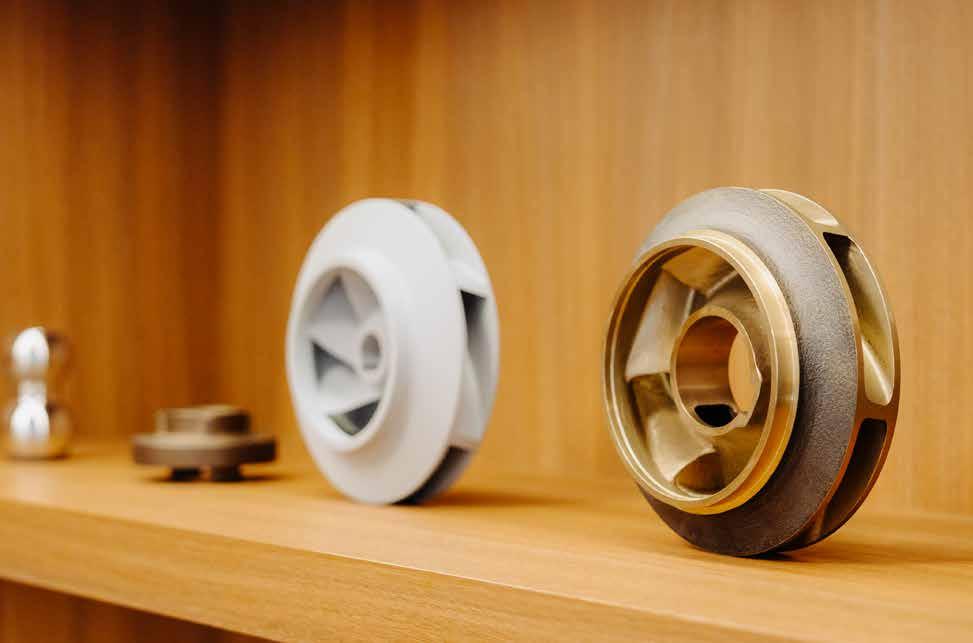
are high, and the consequences of unavailability are significant. Where source portfolios run to thousands of records, manual assessment is rarely viable. Automation can help triage candidates against these criteria, particularly when working with legacy enterprise resource planning (ERP) and product lifecycle management/ product data management (PLM/
PDM) datasets that contain inconsistent metadata, incomplete records, and fragmented drawings. Approaches incorporating large language models can help analyse and categorise this information at scale, allowing engineering teams to focus qualification efforts on the most promising candidates.
Automation is used to support this assessment process by
“The suitable subset, which is substantial for most large OEMs, represents a meaningful opportunity to reduce service exposure, protect aftermarket revenue, and extend the commercial life of legacy support commitments without continuous capital reinvestment.”
identifying parts that meet predefined technical and commercial criteria. Parts that pass both stages may then enter the digital inventory for on-demand production, while those that do not are documented accordingly. This structured approach helps prioritise qualification efforts and focus resources on parts with a clear operational or commercial rationale.
OEMs typically carry legacy portfolios of considerable depth. A major maritime OEM may support equipment installed across a fleet spanning several decades of design generations. Not all of it will be suitable for digital inventory. But the suitable subset, which is substantial for most large OEMs, represents a meaningful opportunity to reduce service exposure, protect aftermarket revenue, and extend the commercial life of legacy support commitments without continuous capital reinvestment.
Scaling on-demand manufacturing across a globally distributed network of independent facilities requires a supplier management framework that can hold quality constant regardless of geography. This is not a problem that can be solved by simply requiring every supplier to meet the highest possible certification standard before receiving any work.
Pelagus’ approach is a tiered qualification model. Suppliers are stratified according to their demonstrated capabilities, audited quality systems, and documented historical performance. Entry-level tiers handle parts with less stringent regulatory requirements. Higher tiers handle work that requires certification and/or class society approval, stringent product specifications, or post-processing and inspection capabilities that go beyond standard practice.
When a production order is generated, the requirements attached to that part: material specification, dimensional tolerances, certification requirements, and post-processing needs, are matched automatically against the verified capability profile of each tier. Complex, regulated parts are routed only to facilities that have achieved the requisite qualification level.
Upward progression through the tiers is evidence-based. A supplier advances by demonstrating consistent performance against defined criteria: quality data from completed orders, audit outcomes, first-pass yield rates, and documented resolution of any nonconformances. This creates a supply base that grows in capability alongside the programme, rather than one that must be fully qualified before it can contribute.
Across the manufacturing network, capabilities are grouped by demand and development priority. Each region carries the same core: PBF-LB, wire-arc Directed Energy Deposition (DED, also referred to as Wire-arc
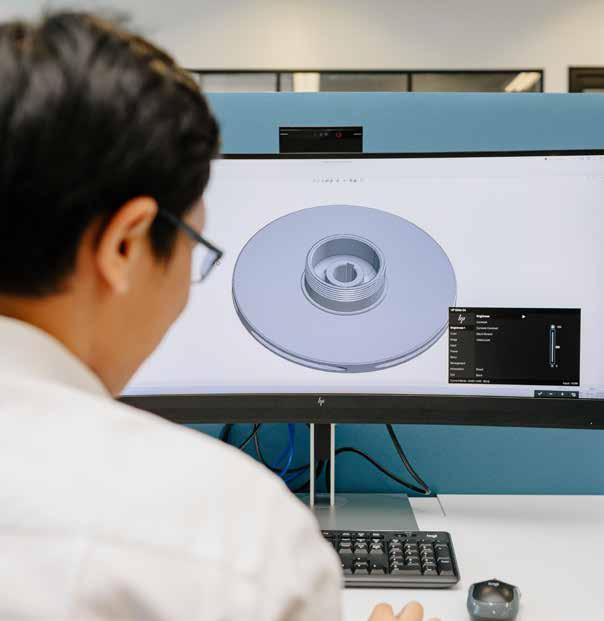
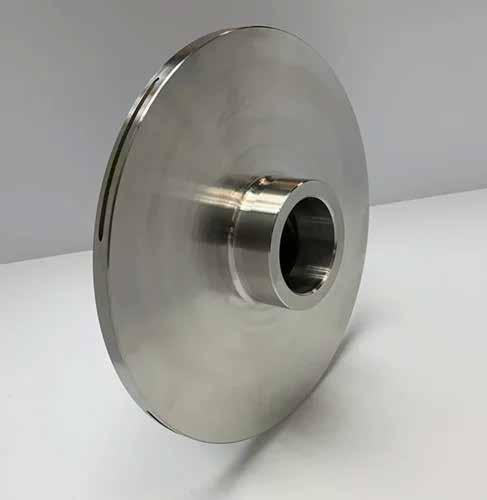
Fig. 5 An obsolete deck seal pump impeller for a Hafnia-operated vessel was reproduced on demand using Laser Beam Powder Bed Fusion in Stainless Steel 316L. The 2.6 kg replacement (153 x 153 x 45 mm) was delivered in four weeks, restoring pump functionality and avoiding lengthy spare-part lead times (Courtesy Pelagus)
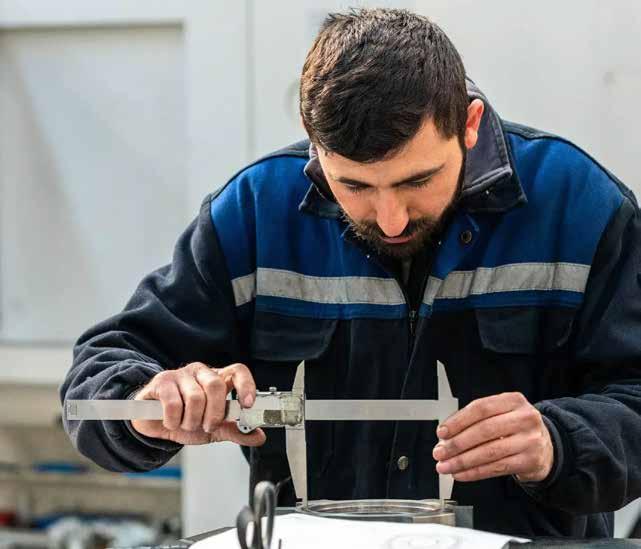
Additive Manufacturing, or WAAM), rapid casting, and Binder Jetting, plus conventional routes such as CNC machining and sheet-metal fabrication. Peripheral processes such as advanced composites are held at network level for the edge cases that need them. The result is a network that remains both agile and rigorous: responsive enough to address urgent customer requirements from a regional supplier, reliable enough to route safety-critical components only to those facilities where the risk is demonstrably controlled.
Pelagus is digital-first by design. The process begins with the digitisation of legacy part information: converting drawings, specifications, tolerances, and accumulated process knowledge into controlled digital assets that can be stored, managed, and deployed across a manufacturing network.
This digitisation is a structured engineering process. Design intent must be captured with sufficient fidelity to support manufacturing across multiple facilities and over an extended period. Material specifications, surface treatment requirements, inspection criteria, and any known process sensitivities are all encoded in the digital part record. For parts that previously existed only as 2D drawings, this process involves engineering analysis to verify that the digital definition accurately reflects the original specification.
Once digitised, part data are held in the Pelagus platform, a digital inventory system that controls access, version management, and distribution. Raw OEM design data are never shared with manufacturing suppliers. What suppliers receive is a controlled manufacturing package: the information they need to produce the part, anonymised and structured to prevent re-use or redistribution. This protects the OEM’s intellectual property across every transaction.
Traceability extends through every stage of production. Each manufacturing event, from powder certificate to process report to dimensional inspection results, is captured in the platform and linked to the part record. This creates a digital thread: a centralised record that holds both the part’s design identity and its complete manufacturing history. When a question arises at audit, in the field, or at a future procurement event, the answer is readily available. In regulated industries, maritime classification societies and flag state authorities are increasingly requiring that design and manufacturing evidence be available in digital form. The ability to produce a complete, structured record of how a part was made, to what specification, by which facility, with which materials, inspected by whom and to what standard, is becoming a baseline expectation. A programme that cannot meet this expectation is not scalable in regulated markets.
The most operationally demanding element is the orchestration of the supply chain itself. OEM intellectual property and quality compliance are at the centre of the Pelagus model. Data are shared only through encrypted, secure channels with qualified and verified partners. The OEM’s identity is protected through white-labelling of specifications, ensuring that suppliers have no context around application or downstream sales channels that could allow them to enter the grey market using sensitive design data.
In this model, responsibility for manufacturing quality, supplier management and delivery execution is centralised within a single programme operator. OEMs are not well-positioned to manage a distributed network of independent AM suppliers across multiple jurisdictions. It requires supplier selection expertise, operational oversight capability, quality system management,
and the willingness to own liability when something goes wrong. Many OEM aftermarket organisations do not maintain these capabilities internally.
Building a digital inventory begins with the digitisation of legacy part information, converting drawings, specifications, tolerances, and accumulated process knowledge into controlled digital assets that can be stored, managed, and deployed across a manufacturing network.
Supplier performance is managed continuously. Delivery data, quality outcomes, and non-conformance records are captured in scorecards, which feed back into the tiering framework, creating a loop that progressively concentrates work with higher-performing facilities and creates structured improvement pathways for those that fall short.
Case studies in digital inventory and on-demand manufacturing
Most parts entering the digital inventory are reproduced to their original specification. In some cases, however, the digitisation process creates an opportunity to revisit the design, and where appropriate, the results can be significant.
Kawasaki Heavy Industries: reducing lead times for a critical standpipe
Pelagus worked with Kawasaki Heavy Industries (KHI) on a joint industry project to demonstrate the model for a critical legacy part: a return oil standpipe used in vessel engine systems. The part had a conventional lead time of up to 135 days. Damage to it could trigger oil leaks and hydraulic alarms, causing main engine slowdowns. These consequences made extended lead times operationally unacceptable.
Using PBF-LB in 316L stainless steel, Pelagus and KHI produced the standpipe as a single unit, reducing lead time to fifteen days. The redesign also consolidated ten components into one and reduced part weight by 90%, from 75 kg to 7.5 kg, removing the need for crane installation and simplifying maintenance access.
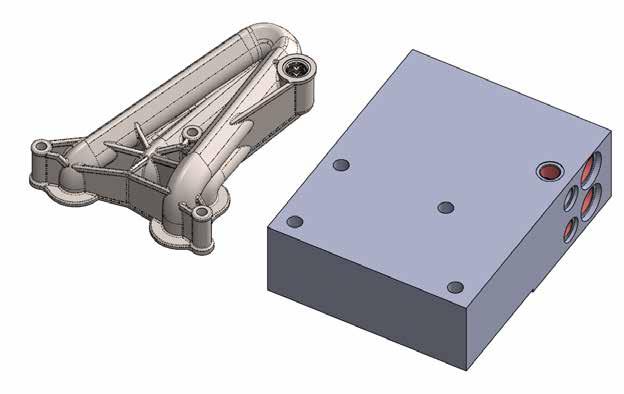
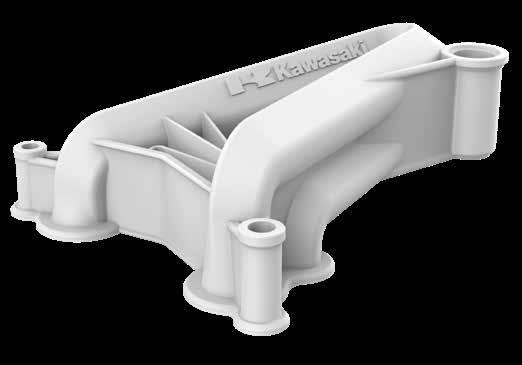
manufactured part
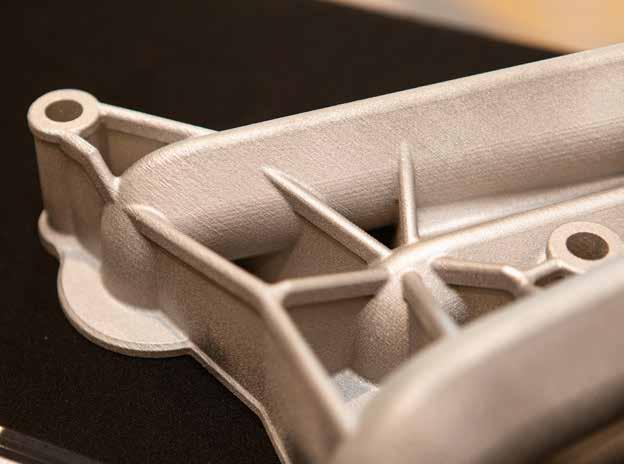
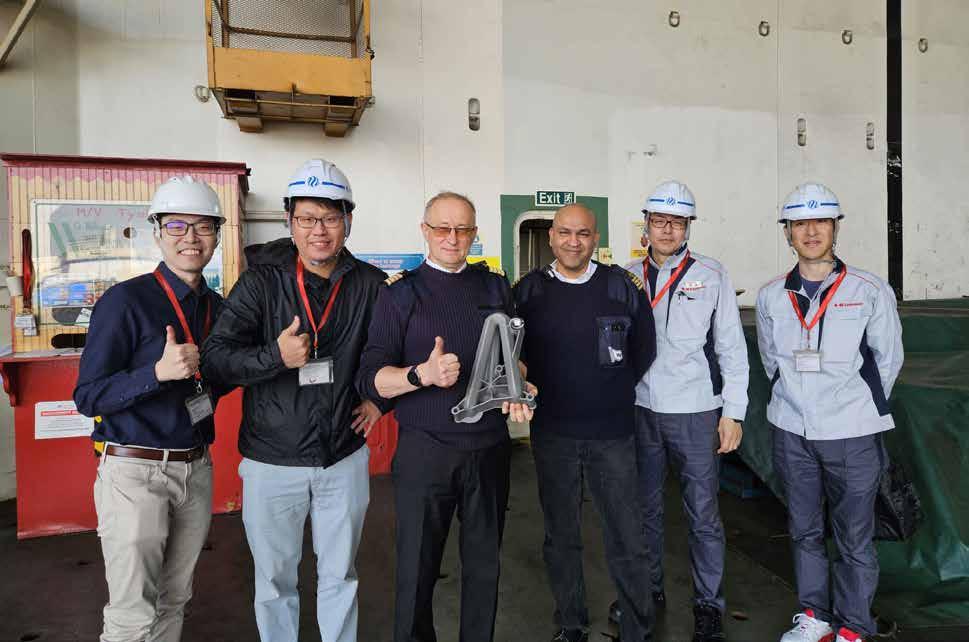
According to the project lead at KHI, “If we can convert physical spare parts to digital spare parts, shipping companies and OEM suppliers can avoid unnecessary investment Transferring data instead of dispatching physical spare parts yields significant savings in air freight and customs clearance.”
Servogear: redesigning a flange for improved thermal performance
A separate programme with propulsion system provider Servogear addressed a persistent overheating issue in an electric motor flange during highdemand operations. The flange was redesigned in aluminium using PBF-LB, integrating topology-optimised passive
“If we can convert physical spare parts to digital spare parts, shipping companies and OEM suppliers can avoid unnecessary investment. Transferring data instead of dispatching physical spare parts yields significant savings in air freight and customs clearance.”
cooling fins to increase surface area and improve heat dissipation.
D elivered within three weeks, the new component was approximately 70% lighter than the original and demonstrated significantly improved durability, withstanding continuous boost-mode operation for 1.5 hours without overheating. The project illustrates how digital inventory and on-demand manufacturing can be used not only to reproduce legacy parts, but also to address performance limitations where conventional redesigns would be difficult or uneconomical.
Servogear’s Service Manager commented: “The quality of this flange has surpassed our expectations, setting a new benchmark for cooling performance.”
The business case for digital inventory
The commercial case for OEMs comes down to inventory risk and service exposure. Legacy portfolios tie up capital in physical inventory that may
sit in a warehouse for years before it is needed. Demand is difficult to predict. Some parts will never be requested again. Others will be urgently required at a moment that conventional lead times cannot accommodate. Warehousing, obsolescence, and tied-up working capital add up quickly against demand that may never materialise. A digital inventory model converts that fixed cost into a variable one. Parts are not manufactured until they are needed. When they are needed, they can be produced within a timeframe that aligns with operational requirements. The OEM’s aftermarket commitment is met not through pre-positioned stock, but through a production capability that can be activated on demand.
This has direct implications for aftermarket revenue. Legacy parts that would otherwise be discontinued, because they cannot be justified in a conventional production model, remain commercially available. OEM customers who would otherwise have been forced toward the grey market retain access to genuine, certified components. The OEM’s service relationship with its customers is preserved rather than eroded.
The qualification work to establish a part in the digital inventory is front-loaded. Once complete, repeat production requires minimal intervention and the cost per part decreases with each subsequent order. Over time, that is how a legacy portfolio moves from a liability managed through physical stock to a service commitment met through controlled, on-demand production.
Even when the operational architecture is in place, with qualified suppliers, a secure digital inventory, end-to-end traceability, and accountable orchestration, adoption ultimately happens inside the OEM. A metal AM programme will not scale across a legacy portfolio without an internal change-management discipline to match. This is where most OEM efforts stall.
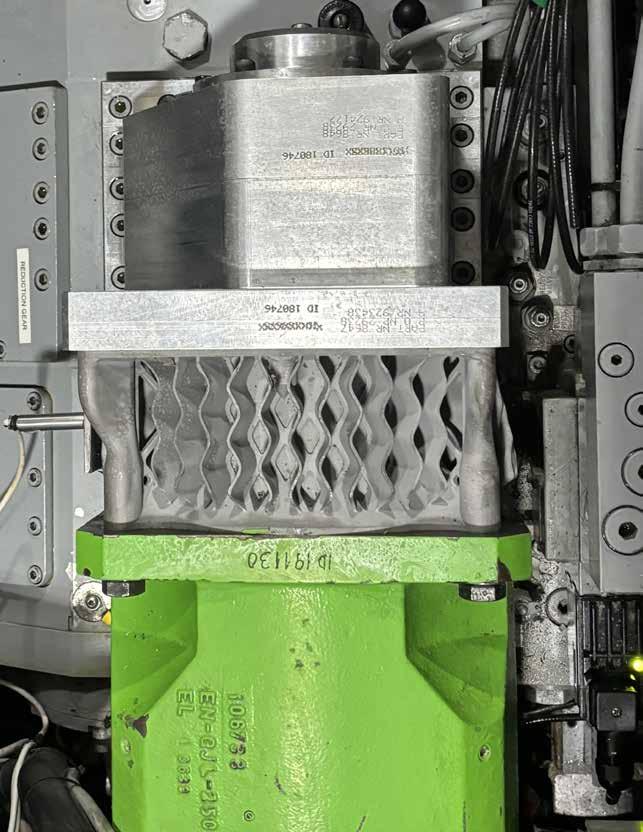
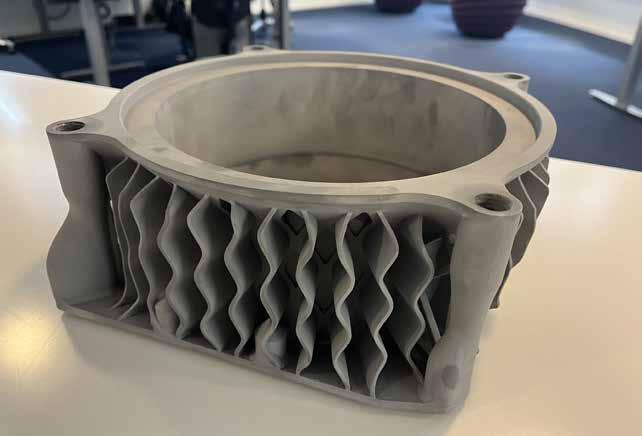
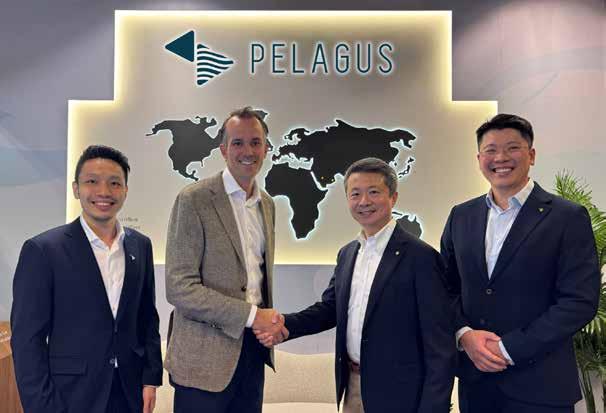
Fig. 12 From left: Francis Ho, Global Quality Director, Pelagus; Håkon Ellekjær, CEO, Pelagus; Dr Gu Hai, Vice President – Technology, American Bureau of Shipping; and Wenjin Wu, Principal Engineer, American Bureau of Shipping (Courtesy Pelagus)
In November 2025, Pelagus was awarded funding under Phase 3 of Singapore’s Maritime Additive Manufacturing Joint Industry Programme, launched by the Maritime and Port Authority of Singapore and National Additive Manufacturing Innovation Cluster (NAMIC) to strengthen Additive Manufacturing in the maritime ecosystem and improve spare parts supply chain resilience.
Phase 1, started in 2019, explored
Programmes that scale share a recognisable internal structure. There is someone senior enough to commit to outcomes, typically inside engineering or aftermarket operations, with enough organisational reach that engineering, procurement, and quality answer to the same agenda. Without that, decisions diffuse between functions and programmes lose momentum between stages.
Digital-inventory build-out carries genuine capital and resource cost, particularly in the first wave of part assessments. OEMs that already run formal technology-readiness assessments apply them to Additive Manufacturing the same way they apply them to any new production
the market feasibility of Additive Manufacturing for marine parts, while Phase 2, launched in 2020, moved into fabrication, testing, inspection and certification with maritime OEMs, end users and classification societies.
Phase 3 builds on this work with a focus on qualified digital inventories, OEM collaboration and streamlined certification processes for on-demand marine spare parts.
route. Risk is sized to the part, qualification effort is sized to the risk, and capability is unlocked in defensible increments. Without that framework, over-qualification kills the economics, and skipping qualification creates audit risk. Programmes without a risk-based structure drift towards one or the other.
The final constraint is structural. Many OEMs run innovation programmes in one function and engineering change control in another. Metal AM scales when the two connect: when a part qualified through an innovation track can be released into the same changecontrolled production environment as any other approved manufacturing route.
None of this is unique to Additive Manufacturing. It is the standard discipline by which any new manufacturing technology is industrialised inside a regulated OEM. The supporting infrastructure, including supplier qualification, digital inventory management and traceability systems, must also be established to support programme scale.
Proving metal AM as a viable production technology was the first hurdle, and for many applications it has now been cleared. The scaling of metal AM for legacy parts will be determined by the infrastructure built around them: the qualification frameworks, the digital inventory systems, the supplier governance, and the internal OEM disciplines that turn a proven technology into a reliable production route.
The next phase of metal AM adoption is likely to be defined less by advances in machine capability and more by the maturity of the surrounding infrastructure. Qualification frameworks, digital inventory systems, traceability platforms and supplier-governance models will increasingly determine how effectively OEMs can deploy additively manufactured spare parts at scale. For organisations supporting long-lived industrial assets, the challenge is becoming one of operational integration rather than technical feasibility.
Håkon Ellekjær, CEO Scott Harding, VP Engineering Pelagus
160 Robinson Road SBF Centre, #17-05/06 Singapore 068914 info@pelagus.com www.pelagus.com
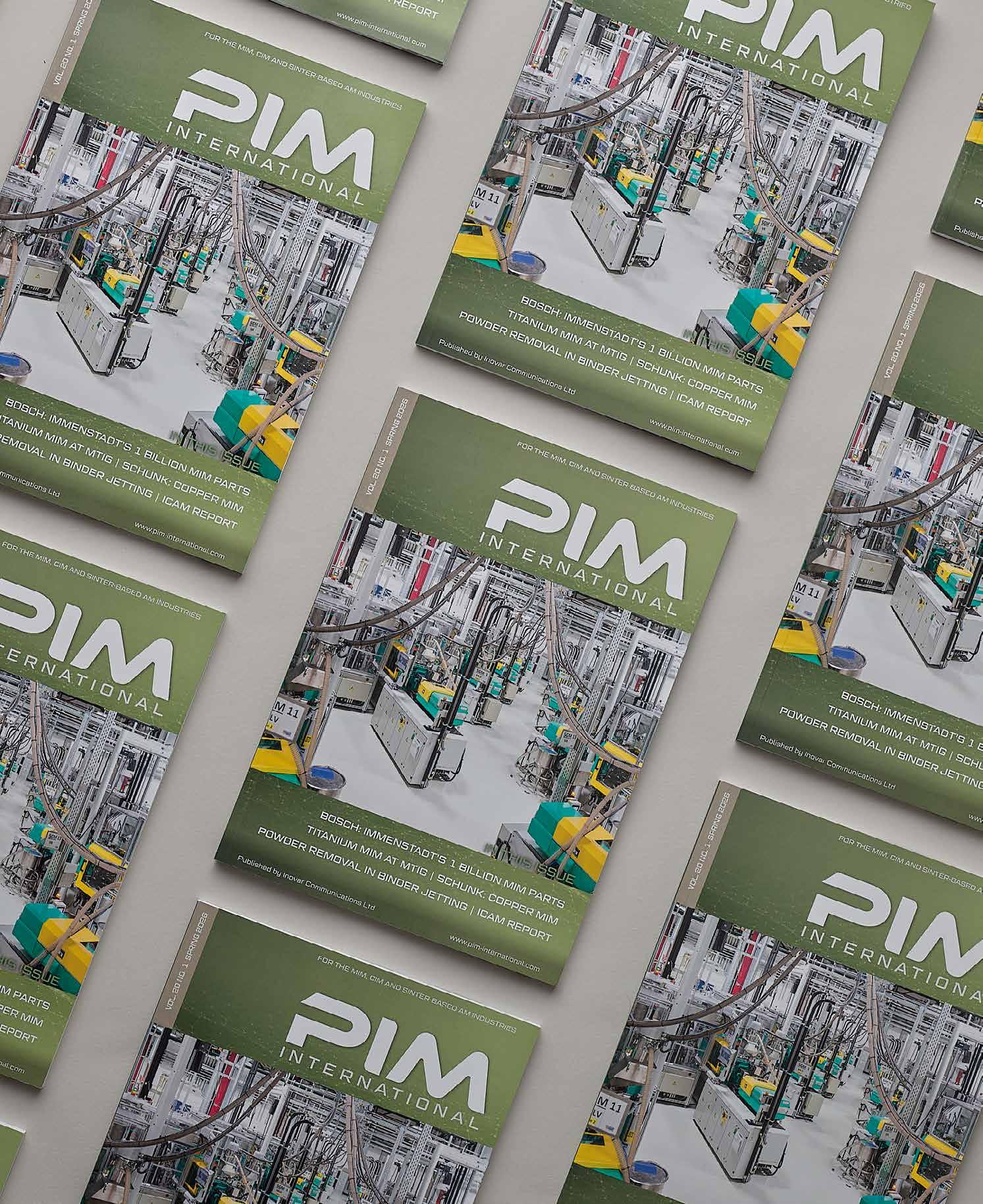
PIM International is the leading international resource for the latest developments in Powder Injection Molding (comprising MIM and CIM), as well as the sinter-based Additive Manufacturing of metals and ceramics.
Delivering in-depth, industry-focused coverage, the magazine explores market trends, technical innovation, materials, equipment advances, research breakthroughs, and software developments shaping the sector. www.pim-international.com






Standards rarely attract the attention given to new Additive Manufacturing machines, materials or applications, but in aerospace AM they are essential to progress. Reporting from the SAE AMS AM Metals Sub-Committee’s spring meeting at GKN Aerospace in Trollhättan, Sweden, Chair Dr Tyler LeBrun offers an inside view of the consensus work shaping flight-critical metal AM, from machine qualification and process control to in-situ monitoring, powder management, Nadcap accreditation and future inclusion in MMPDS.
In aerospace, Additive Manufacturing does not advance solely on machine capabilities. It advances when engineers, materials specialists, regulators, primes, suppliers and standards bodies agree on how a process is to be qualified, monitored, documented and trusted.
Much of that work takes place out of sight. Behind every flight-critical metal AM component sits a chain of consensus-based specifications governing feedstock, machine qualification, process control, material properties and supplier accreditation. These documents rarely attract the attention given to new machines or headline applications, but they are among the essential foundations on which industrial adoption depends.
From May 5-7, 2026, the SAE Aerospace Material Specifications Additive Manufacturing Metals Sub-Committee (SAE AMS AM-M) met at GKN Aerospace’s facility in Trollhättan, Sweden, to continue that work. The spring face-to-face meeting brought together engineers, materials scientists and standards professionals from across the aerospace industry
Fig. 1 GKN Aerospace’s facility in Trollhättan, Sweden, hosted the SAE AMS AM Metals Sub-Committee spring meeting. The company is a leader in the adoption of AM for aerospace, with this fan case mount ring being a notable example (Courtesy GKN Aerospace) to advance the development and revision of specifications that are helping define how metal Additive Manufacturing parts will be qualified, produced and accepted in flight-critical applications.
GKN Aerospace served as a gracious and technically engaged host, providing both logistical support and several of the meeting’s most substantive technical presentations. Participation spanned
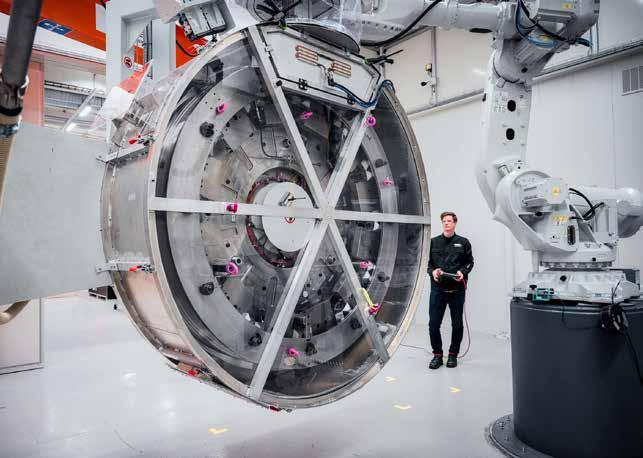
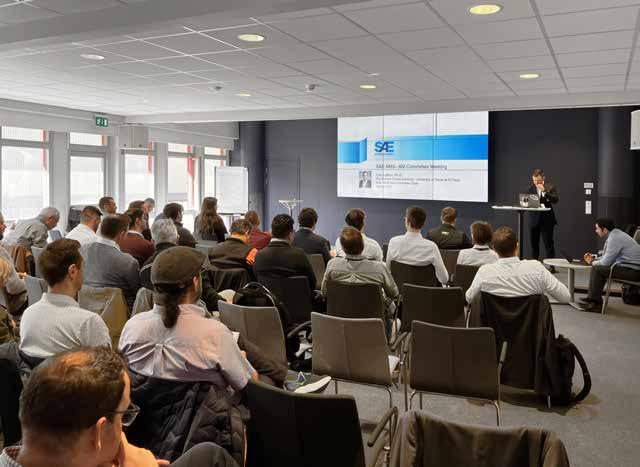
“The technical working sessions in Trollhättan were dedicated to advancing several specifications at various stages of development. The breadth of this portfolio reflects the maturation of the committee’s scope from its founding documents to an increasingly comprehensive body of standards.”
ten countries across Europe, North America, and Asia, a geographic spread that reflects the reach of the committee’s work. The specifications developed in these sessions are used by aerospace OEMs and their supply chains on multiple continents, and the voices that shape them are drawn from the same breadth of organisations that depend on them.
The three-day programme opened with a welcome from GKN and moved immediately into plenary committee business, including a state-ofcommittee address, a presentation from the programme manager of the Metallic Materials Properties Development and Standardization (MMPDS) handbook, and a report from the
Performance Review Institute (PRI) on the Nadcap aerospace accreditation programme. The meeting also featured a tour of GKN Aerospace’s manufacturing facilities, offering attendees a direct view of the industrial AM environment in which these standards are applied.
SAE AMS AM Committee Chair Dr Tyler LeBrun of The Barnes Global Advisors opened the technical sessions with an overview of the committee’s mission and current trajectory. The Trollhättan meeting was organised and chaired by Dr
Chloe Johnson of Beehive Industries, Chair of the Metals Sub-Committee, whose stewardship of the three-day agenda kept a broad and technically dense programme on track. The SAE AMS AM committee operates as the primary consensus-based standards body for metal and nonmetal Additive Manufacturing in aerospace, representing over 220 organisations across 28 industry sectors. Its specifications form an interlocking hierarchy spanning feedstock, process control, machine qualification, and material properties, ensuring that a part produced to an AMS material specification carries an auditable chain of controls from raw powder or wire through finished product.
The technical working sessions in Trollhättan were dedicated to advancing several specifications at various stages of development. The breadth of this portfolio reflects the maturation of the committee’s scope from its founding documents to an increasingly comprehensive body of standards.
AMS7032, Revision A: machine qualification
The original release of AMS7032 established a foundational framework for operationally qualifying an AM machine to produce material in compliance with an aerospace material specification. Revision A, currently past its first partial ballot, represents a substantial update of that framework. The revision extends the document’s scope from Laser Beam Powder Bed Fusion (PBF-LB) systems to all fusion-based metal AM processes, including Directed Energy Deposition (DED) and Binder Jetting, reflecting the growing diversity of process technologies entering aerospace production.
Revision A is a direct response to feedback accumulated from producers, machine OEMs, and contract manufacturers who have worked against the original docu -
ment in practice. Their experience identified opportunities to qualify new machines more cost-effectively and efficiently, without compromising the technical rigour that makes an OQ meaningful. The revision translates that feedback into updated requirements, producing a framework better aligned with the realities of industrial AM qualification. This is the living document nature of the committee’s work in action: when industry engages with a published standard and identifies where it can be improved, the committee is prepared to incorporate that input and revise accordingly.
AMS7003, Revision B: Laser Beam Powder Bed Fusion process AMS7003 is the process specification for Laser Beam Powder Bed Fusion, and its Revision B reflects feedback accumulated from years of industrial adoption of the original and revision A documents. The most significant structural change is the introduction of a formal, documented process control architecture built around a hierarchy of Process Variables, Key Process Variables, Process Details, and Key Process Details. The revision draws a meaningful distinction between calibration, verification, and in-process parameter monitoring and control, three activities that are often conflated in practice but carry different implications for traceability and record keeping.
The revision mandates formal written plans for maintenance, calibration and verification, feedstock handling and storage, moisture and contamination control, and digital file and software configuration control. The result is a specification that does not merely describe what a controlled process looks like in principle; it defines the documentation infrastructure required to demonstrate that control in a manner auditable by a customer, a regulator, or a Nadcap auditor.
Building the material allowables foundation for AM aerospace design: MMPDS and the statistical foundation of material properties
A dedicated presentation from Doug Hall, Programme Manager for MMPDS at Battelle Memorial Institute, provided important context for understanding why the work of the SAE AMS AM Metals SubCommittee carries weight beyond its own membership. Administered by Battelle since 1956, the MMPDS handbook is the primary source of statistically based material allowable properties for metallic materials used in commercial and military aircraft around the world. The handbook is the reference that structural engineers rely on when designing flight-critical components to a known material performance baseline, and its forthcoming Volume II will extend that foundation to cover Additive Manufacturing materials for the first time.
The SAE AMS AM committee deliberately aligns its data requirements with those of MMPDS. This is a consequential design decision: material data generated in support of an AMS AM material specification is set up on the path for inclusion in Volume II. All entries must have a public specification as a precedent before being considered for inclusion in the
handbook. A key strength of SAE AMS AM specifications is that the statistically reduced, specificationminimum material properties are the only statistically based AM material properties currently available in the public domain. The committee’s work is therefore not merely a compliance exercise to MMPDS; it is building the foundational property database that will underpin the structural design of AM aerospace hardware for the next generation of aircraft.
Multiple data submissions are currently active across various phases of development for Volume II, spanning titanium, aluminium, nickel-based superalloy, and steel systems. Several are being generated expressly using AMS AM material specifications, providing direct evidence that the committee’s specifications are functioning as intended gateways into the broader material allowables ecosystem. Alongside these efforts to establish the material property foundation for aerospace AM, the committee continues to advance the qualification and process control standards required to translate those data into production reality.
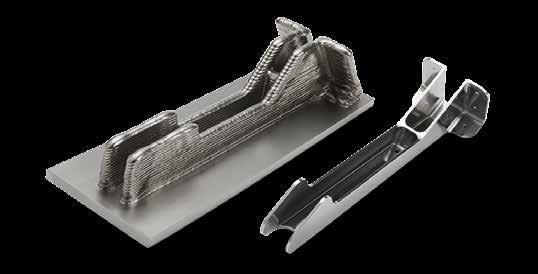
Energy
and
set to become the first AM alloy included in MMPDS Volume II. The milestone highlights the power of consensus standards to turn AM process maturity into recognised aerospace material allowables, supporting greater confidence in the use of metal AM for aircraft structures (Courtesy Norsk Titanium)
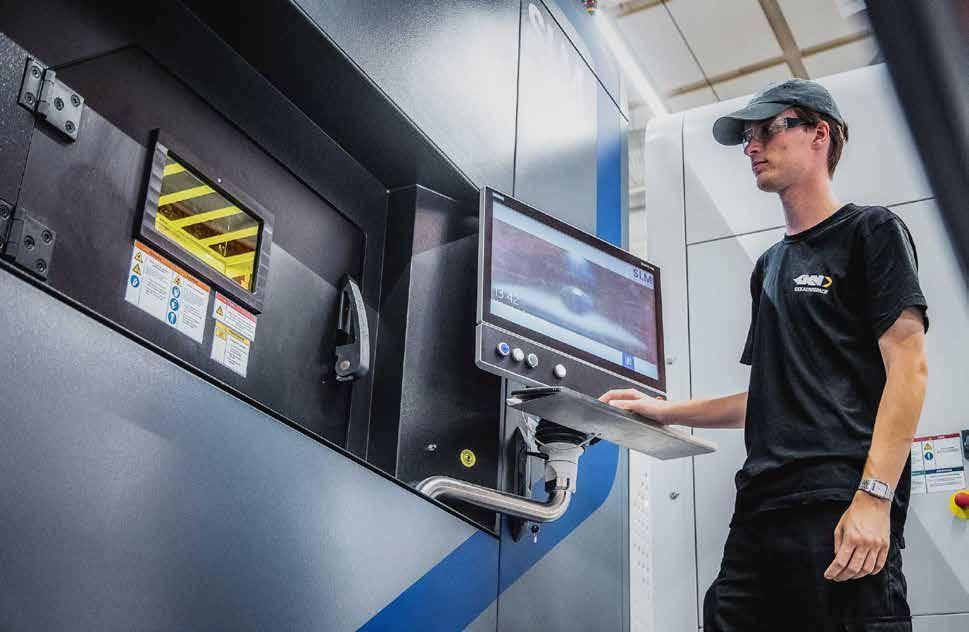
Giving in-situ monitoring a common language
ARP7065: in-situ process monitoring taxonomy and terminology
Among the documents advancing through the committee’s ballot cycle, ARP7065 occupies a foundational position for incorporating future technology maturation into the standards landscape. Now entering its third
ballot cycle, this Aerospace Recommended Practice establishes the complete taxonomy, terminology, and performance-based classification framework for in-situ process monitoring (ISPM) systems in Additive Manufacturing. It is not a qualification standard, a testing protocol, or a sensor specification. It operates as the shared vocabulary and conceptual architecture upon which every
“ARP7065 provides the foundational framework that will allow those references to be technically grounded and consistently interpreted. Without it, each organisation developing an ISPMinformed qualification plan would be defining its own terms...”
future ISPM-related standard in the SAE AMS ecosystem will be built. Its biggest role is to organise what has been a fractured conversation on the diverse landscape of ISPM technologies and their intended use, focusing on the outcomes delivered rather than the implementation pathway. The central construct in ARP7065 is the Category-Tier-Type (CTT) designation system. Every ISPM implementation, regardless of the sensing hardware, software architecture, or machine platform it runs on, can be described by a three-axis classification. The Category axis distinguishes between passive and active systems. The Tier axis defines a progression of increasingly consequential outcomes, progressing from machine and process inputs, through assessment of the execution of the AM process itself, to interrogation of the consolidated material during manufacture.
This three-axis framework produces a set of designations that are path-independent. The CTT desig -
nation describes what the system delivers, not how it delivers it. This is a deliberate and important standards design choice: it allows the taxonomy to remain stable as the sensing technology ecosystem evolves and matures, preventing the standard from becoming obsolete each time a new monitoring approach enters the market.
The document also defines and formalises a vocabulary that has been inconsistently applied across the industry: terms including Key Process Metric, Process Baseline Signal, Process Anomaly, Closed Loop Control, Digital Twin, Digital Thread, On-Machine Inspection, Data Provenance, and Spatial Registration are all given precise, applicationspecific definitions. For an industry that is increasingly relying on sensor data to make acceptance decisions, this terminological consistency is a prerequisite to meaningful intercompany and regulator-to-producer communication.
The committee’s investment in getting this document right reflects a forward lean into where AM qualification is heading. Process monitoring data are already influencing acceptance decisions informally, and regulatory guidance documents from both FAA and EASA have begun to acknowledge ISPM as a potential element of AM process control. ARP7065 provides the foundational framework that will allow those references to be technically grounded and consistently interpreted. Without it, each organisation developing an ISPM-informed qualification plan would be defining its own terms, producing results that cannot be meaningfully compared, audited, or scaled across the supply chain.
A companion document, ARP7068, also received significant attention at the Trollhättan meeting. Where ARP7065 establishes the taxonomy,


Fig. 5 Draft ARP7065, which establishes terminology and a performance-based taxonomy for in-situ process monitoring (ISPM) in Additive Manufacturing (Courtesy SAE International)
ARP7068 operates as a child document that works within it, narrowing focus to the C1T1TA and C1T2TA designations and introducing the first steps towards C1T3TA. Rather than classifying outcomes, ARP7068 addresses the practical question of how to establish and evaluate the efficacy of specific ISPM systems at those designations. Its five-part structure covers sensor selection and integration strategy; IQ/OQ/PQ recommendations for ISPM systems; data analysis and software approval considerations; re-qualification trig -
gers and requirements; and a good practices section spanning system calibration, health monitoring, process failure mode and effects analysis, and data management. The document had completed its first ballot just before the meeting, and the session time was devoted to working through the ballot comments with the document sponsor, Fernando Lartategui Atela of ITP Aero, in preparation for a subsequent ballot cycle. The ballot feedback reflected the maturation of the committee’s thinking
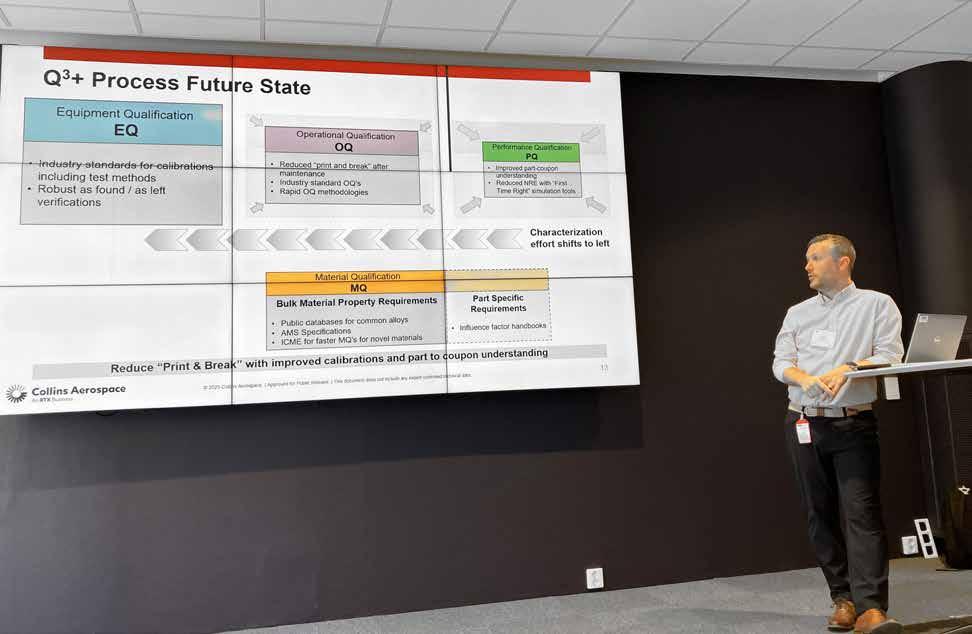
on ISPM: comments called for tighter alignment with ARP7065 definitions, explicit treatment of sensor measurement uncertainty relative to KPV tolerance limits, and a clearer statement of the path-independence of CTT designations within ARP7068 itself, echoing a principle that ARP7065 had already established at the taxonomy level.
Industry in practice: the RTX Q 3+ framework
Among the most instructive presentations of the week was a joint contribution from Scott Wigen, Senior Technical Fellow at Collins
Aerospace, and Lee Barber, Senior Principal Engineer at Raytheon, both RTX businesses. Their Q 3+ framework represents a consolidated, enterprise-wide approach to AM qualification that RTX has developed across its three major divisions, and its structure maps directly onto the AMS specification hierarchy the committee has built.
“Their Q3+ framework represents a consolidated, enterprise-wide approach to AM qualification that RTX has developed across its three major divisions, and its structure maps directly onto the AMS specification hierarchy the committee has built.”
The Q 3+ framework organises qualification into four interdependent activities. Equipment Qualification establishes that a machine is installed correctly, calibrated, and maintained in accordance with baseline requirements, drawing on AMS7003 for calibration and maintenance criteria. Operational Qualification, supported by AMS7032 and AMS7003, demonstrates with objective evidence that the machine produces material meeting a given material specification, and defines three tiered re-qualification levels scaled to the nature of the triggering event, from a minor calibration
•AMS7003 –Calibrations & maintenance
•AMS7032 –Defines testing for each OQ level and triggers for re-OQ
•AMS7003 –Facility, feedstock, work instructions, etc.
•AMS7002 & Powder specs
Material Qualification
•AMS Material Specs
•MMPDS calculation methods for internally characterized alloys
•AMS7003 –PCD requirements
Fig. 7 The Q³ + framework shows how SAE AMS standards support qualification activities across equipment, operational, performance and material qualification (Courtesy Scott Wigen, Collins Aerospace)
through a KPV change or new machine installation. Performance Qualification locks the part-specific process control document and encompasses any part- or systemlevel certification testing required for a given application. Material Qualification sits alongside these tiers as the basis for material specification creation, drawing directly on AMS material specifications and MMPDS calculation methods.
The presentation was candid about where the current AMS documents create friction in practice, and where the ongoing revisions to AMS7032 and AMS7003 are expected to reduce it. Its closing message was unambiguous: AMS specifications are critical to the widespread adoption of AM in production. The presentation stood as a direct example of the feedback loop the committee depends on: a major prime integrator articulating precisely where its operational experience informs what the next revision of a standard needs to say.
“The presentation stood as a direct example of the feedback loop the committee depends on a major prime integrator articulating precisely where its operational experience informs what the next revision of a standard needs to say.”
General agreement for material property specifications
A working group active within the Metals Sub-Committee is developing a General Agreement document intended to serve as a template and governance framework for future material property specifications that go beyond
the current baseline of the aforementioned statistically derived room-temperature tensile properties and chemical composition. Analogous in structure to existing General Agreements used for powder feedstock specifications, this document will establish preferred language, testing data requirements, data reduction methods, and presentation formats for any additional properties a document sponsor elects to include.

SAE has provided this Draft document for the SAE Committee. This document is SAE-copyrighted, intellectual property. It may not be shared, downloaded, duplicated, or transmitted in any matter outside of the SAE Committee without SAE’s approval. Please contact your staff representative for additional information.
AS7082™ REV. X Issued 2026-xx
Standard Method for Collection of Representative Metallographic Images from Laser Powder Bed Fusion Process
RATIONALE
New materials specification where none have previously been released.
1. PURPOSE
1.1 Scope
This specification establishes a standardized method for the production, preparation, and metallographic imaging of witness specimens fabricated by laser powder bed fusion (LPBF) additive manufacturing processes. It defines the specimen geometry, build orientation, sectioning plan, metallographic preparation procedure, image collection locations, magnifications, and minimum image sets required to document process and microstructural consistency.
This specification requires two witness specimens per build: Specimen A, which provides the XY metallographic face (perpendicular to the build direction), and Specimen B, which provides the YZ metallographic face (parallel to the build direction). The use of two dedicated specimens ensures that each metallographic face preserves its full intended crosssectional area and all four original free surfaces with their as-built contour features.
This specification is material-agnostic. Material-specific requirements, including etchant selection, expected microstructural features, and acceptance criteria, shall be defined by the invoking material specification.
This specification addresses optical light microscopy and scanning electron microscopy. Requirements for optical imaging are defined in Section 3.3.1. Requirements for SEM imaging are defined in Section 3.3.7. The invoking material specification shall designate which imaging method or methods are required. Electron backscatter diffraction and other advanced characterization techniques are outside the scope of this document.
This specification is intended for use in the following contexts:
a) Routine per-build acceptance of LPBF production builds.
b) Establishment of baseline reference image sets for material specifications.
c) Initial process or machine qualification metallographic documentation.
1.2 Safety - Hazardous Materials

While the materials, methods, applications, and processes described or referenced in this specification may involve the use of hazardous materials, this specification does not address the hazards which may be involved in such use. It is the responsibility of the user to ensure familiarity with the safe and proper use of any hazardous materials and to take necessary precautionary measures to ensure the health and safety of all personnel involved.
SAE values your input. To provide feedback on this Technical Report, please visit http://standards.sae.org/PRODCODE
Email: CustomerService@sae.org SAE WEB ADDRESS: http://www.sae.org
Fig. 8 Draft AS7082, a proposed standard method for collecting representative metallographic images from PBF-LB processes (Courtesy SAE International)
The working group is explicitly committed to maintaining the existing “commodity” approach for baseline material specifications, which have served the industry well by providing broadly accessible, costeffective entry points into the AM material qualification process. At the same time, the General Agreement will provide a structured pathway for sponsors who wish to publish expanded specifications, incorporating additional requirements, such as elevated temperature properties, fatigue data, or metallographic acceptance criteria, that are needed to guarantee reproducibility of the material for more demanding appli -
cations. Critically, these expanded specifications are not intended to become comprehensive design data sheets; they are meant to define only the minimum set of additional requirements necessary to uniquely and reproducibly characterise the material being described.
AS7082: metallographic preparation standard
AS7082 just completed its first 28-day ballot and addresses a foun -
dational gap that has long existed in the PBF-LB quality ecosystem: the absence of a standardised method for controlling sources of variability when characterising the consistency of energy source and powder interaction, through prescribed witness specimen geometry, build plate placement, and preparation for imaging. The specification is deliberately material-agnostic; etchant selection, expected microstructural features, and acceptance criteria are defined by future invoking material specifications. The in-work general agreement document is meant to leverage this standardised method. Publication of AS7082 will close the gap identified to support future metallographic data and conformance testing against those requirements.
The significance of AS7082 extends well beyond procedural tidiness. PBF-LB microstructure is sensitive to changes in laser power, scan speed, hatch spacing, gas flow, and feedstock quality. A standardised witness specimen, prepared and imaged consistently, provides a visual record of process consistency that can serve as an early indicator of process drift before those changes appear as statistically detectable shifts in mechanical property data. By establishing this standard now, the committee is putting in place an infrastructure that will support both routine per-build acceptance and the long-term process surveillance needed to maintain confidence in qualified production machines over their operational lifetimes.
AMS7052: closed-loop powder management systems (pre-ballot) Looking further along the committee’s pipeline, AMS7052 is currently being circulated ahead of its first formal ballot and represents one of the more industrially consequential specifications under development. The document addresses a tangible cost driver that many high-volume
AM producers contend with daily: the requirement to sample and test circulating powder feedstock every build cycle in a closed-loop Powder Bed Fusion system.
Closed-loop powder management systems, in which used powder recovered from a completed build is recirculated directly back into subsequent builds without removing it from the machine’s inerted circuit, are increasingly common in production environments. They reduce powder handling time, contamination risk, and material waste. However, the existing framework under ARP7302 recommends per-build powder testing in the absence of additional characterisation, which imposes a significant testing burden when a machine may execute dozens of builds against the same circulating powder charge.
AMS7052 provides a structured path for producers to substantiate a reduced testing cadence by demonstrating that their closed-loop equipment monitors and controls the powder’s exposure history with sufficient rigour. The specification organises this path around three Instrumentation Tiers. Each tier maps explicitly to ARP7065 CTT designations, linking the powder management specification directly to the ISPM taxonomy the committee has worked to establish.
The specification also introduces a Qualification Family concept that allows producers to share qualification campaign evidence across machines of identical make, model, and sensor configuration, reducing the per-machine burden of establishing the statistical relationship between process exposure and measured powder condition. Additionally, two production postures are defined, serial and high-mix, reflecting the practical difference between a machine producing a single repeating build versus one running varied part geometries with differing powder consumption profiles.
The committee’s development of AMS7052 signals a maturing view of what AM process control standards can accomplish. Rather than
SAE has provided this Draft document for the SAE Committee. This document is SAE-copyrighted, intellectual property. It may not be shared, downloaded, duplicated, or transmitted in any matter outside of the SAE Committee without SAE’s approval. Please contact your staff representative for additional information.
AMS7052™ REV. X Issued 2026-xx
Operation and Qualification of Closed Loop Powder Management Systems for Powder Bed Fusion-Type Additive Manufacturing Applications
RATIONALE
New material specification where none have previously been released.
1. PURPOSE
1.1 Scope
This specification establishes requirements for the qualification and operation of closed-loop, energy-based powder bed fusion equipment such that a reduced frequency of powder feedstock sampling and testing may be substantiated in lieu of sampling and testing with every build cycle. These requirements are structured around three axes: the instrumentation capability of the closed-loop equipment, the production posture under which the equipment is operated, and the evidentiary campaign through which the producer demonstrates that the relationship between the equipment’s measured process exposure and the measured condition of the circulating powder is sufficiently characterized and controlled.
This specification does not establish requirements for the powder bed fusion process itself, for the initial production of virgin powder feedstock, or for the batch processing of powder removed from a closed-loop circuit for reuse. Those requirements are established by AMS7003 and AMS7007 for laser powder bed fusion and electron beam powder bed fusion, respectively, by AMS7002 for virgin powder feedstock production, and by AMS7031 for batch processing of recovered, used powder This specification is intended to be used in conjunction with those documents, and with ARP7302 and ARP7065, which provide foundational concepts, terminology, or methods invoked by this specification. The Instrumentation Tier structure of this specification builds upon the in-situ powder measurement capability framework of ARP7065 Achievement of higher Instrumentation Tiers, and the corresponding cadence relief available to them, presupposes in-situ measurement capability of the type characterized therein.
Unless otherwise specified, powder sampled and tested at the frequency authorized by this specification is intended to demonstrate conformance to the applicable powder specification for the purposes of producing aerospace parts, providing acceptable characteristics and properties as specified by the corresponding AMS material specification.
1.2 Application
This specification should be applied to laser powder bed fusion (L-PBF) or electron beam powder bed fusion (EB-PBF) equipment configured as a closed-loop process (as defined in ARP7302) and operated in a production posture, where the producer seeks authorization from the cognizant engineering organization (CEO) to sample and test circulating powder at a frequency less than every build cycle.
The equipment to which this specification applies shall, at a minimum, provide the instrumentation necessary to establish a fixed, monitored, and controlled operational state for the closed-loop circuit outside of the build chamber. Equipment that lacks such instrumentation, including legacy or hybrid machines retrofitted with closed-loop circuits but without adequate sensing and control of the circuit’s operational variables, falls outside the scope of this specification and remains subject to the sampling and testing recommendations of ARP7302.
SAE values your input. To provide feedback on this Technical Report, please visit http://standards.sae.org/PRODCODE
Fax: 724-776-0790 Email: CustomerService@sae.org SAE WEB ADDRESS: http://www.sae.org
Fig. 9 Draft AMS7052, covering the operation and qualification of closed-loop powder management systems for powder bed fusion processes (Courtesy SAE International)
“Critically, these expanded specifications are not intended to become comprehensive design data sheets; they are meant to define only the minimum set of additional requirements necessary to uniquely and reproducibly characterise the material being described.”
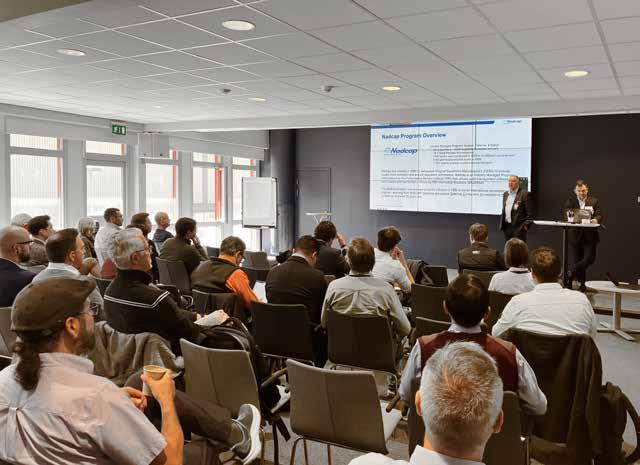
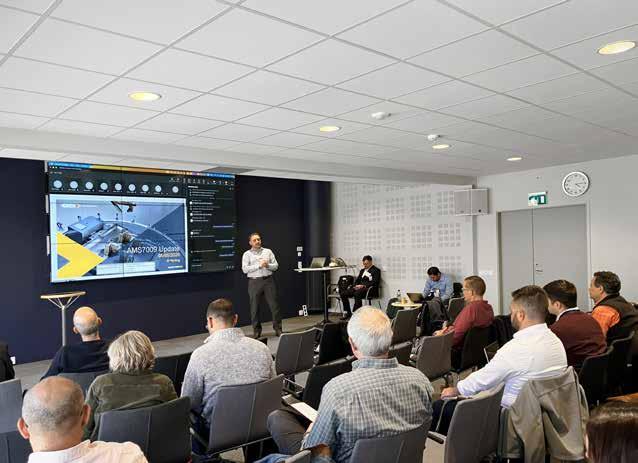
“Rather than imposing uniform testing requirements irrespective of available process data, the specification rewards instrumentation investment with a proportionate reduction in destructive testing burden, a model that aligns quality assurance cost with demonstrated process knowledge.”
imposing uniform testing requirements irrespective of available process data, the specification rewards instrumentation investment with a proportionate reduction in destructive testing burden, a model that aligns quality assurance cost with demonstrated process knowledge.
Learning from production practice at GKN Aerospace
GKN Aerospace researchers contributed four presentations reflecting the technical depth of the host facility. Leonardo Pelcastre addressed the challenges of applying conventional surface roughness parameters to as-built AM surfaces, making the case that waviness components routinely filtered away in standard metrology carry meaningful structural information that should not be discarded.
Arda Baytaroglu demonstrated how volumetric X-ray computed tomography tightens the process development feedback loop, with case studies showing that systematic porosity signatures identifiable in CT data pointed to root causes that were invisible to planar metallographic sectioning alone. Ceena Joseph examined how powder feedstock characteristics, including particle size distribution, atomisation method, and lot-to-lot variability, propagate into the mechanical properties of deposited Ti-6Al-4V in Directed Energy Deposition applications.
A fourth, presented by Sushovan Roychowdhury, Technical Fellow at GKN Aerospace Sweden and Adjunct Faculty at University West, addressed the structural behaviour of AM coupons and parts, examining why coupon-level testing matters at different levels of design analysis and what categories of issue each level of analysis is positioned to detect. The presentation made the case that coupon data is not simply a qualification artefact; it is a tool for catching problems that would otherwise only surface during part-level
structural assessment, and understanding which issues manifest at which scale of analysis is essential to designing a testing programme that is both efficient and genuinely protective.
The Nadcap® Additive Manufacturing Task Group, administered by PRI, covers the auditing of aerospace suppliers in Laser and Electron Beam Powder Bed Fusion with twenty-five suppliers from the USA, Canada, UK, Italy, Switzerland, Belgium, Germany, Turkey, India, Taiwan and Saudi Arabia now accredited to AC7131/1. DED is covered under AC7131/2, with the first Nadcap audit of a US company covering Plasma Wire DED having taken place in April 2026, and further audits planned for July 2026 for a US company conducting Laser Powder DED, and in September 2026 for a Swedish company covering Laser Wire DED.
Laser Beam Powder Bed Fusion of non-metallic materials (AC7131/3) successfully underwent a test audit at Materialise in Belgium in March 2026 and is now progressing through the final editorial ballot and subsequent publication for audits from early Q4 2026. Fused Filament Fabrication (FFF) AC7131/4 has completed all Task Group ballots and will have a test audit at Airbus in Hamburg in September 2026, before final balloting and publication for audits in Q1 2027. AC7131/5 on Cold Spray Additive Manufacturing (Cold Spray AM) is going through the first Task Group ballot, and the auditors are being trained in the process during the Nadcap Auditor Conference in Pittsburgh in June 2026. The plan is to complete all document balloting during 2026, before a test audit and publication in the first half of 2027, ready for Nadcap audits. The AM Task Group leans heavily on the SAE AMS AM standards for the Powder Bed Fusion, DED, FFF and Cold Spray
13 Committee members and industry participants at the SAE AMS AM Metals Sub-Committee meeting hosted by GKN Aerospace in Trollhättan, Sweden (Courtesy GKN Aerospace)
AM processes as it develops Audit Criteria.
PRI is also involved in a twoyear America Makes project (QTIME) with ASTM and Boeing, focused on developing non-destructive testing (NDT) techniques for use on DED and Powder Bed Fusion aerospace parts, in Topics 1 and 2 of the project, with a number of other aerospace companies.
The next face-to-face meeting of the SAE AMS AM committee is scheduled for the week of 19 October 2026, hosted by the National Institute for Aviation Research (NIAR) at Wichita State University in Wichita, Kansas. NIAR is one of the leading applied aerospace research institutions
in the United States and an active contributor to AM material qualification programmes, making it a fitting venue for a committee whose work bridges standards development and the empirical data generation that underpins it. Members and prospective participants are encouraged to register and attend.
The committee continues to seek volunteers to lead working groups and to sponsor specifications to
support its roadmap. Organisations interested in contributing to the development of consensusbased aerospace AM standards are encouraged to engage with SAE International.
The Trollhättan meeting reinforced what the composition of its attendee list already suggested: the work of the SAE AMS AM Metals Sub-Committee is global in scope, grounded in engineering practice,
“The Trollhättan meeting reinforced what the composition of its attendee list already suggested: the work of the SAE AMS AM Metals Sub-Committee is global in scope, grounded in engineering practice, and consequential to the future of structural metal AM in aerospace.”
and consequential to the future of structural metal AM in aerospace. The specifications being drafted, revised, and adjudicated in these sessions will shape how AM parts are qualified, produced, and accepted in flight vehicles for years to come.
Dr Tyler LeBrun Chair, SAE AMS Additive Manufacturing Committee
The Barnes Global Advisors
Anyone interested in joining the committee should contact Jeff Adkins, Jeff.adkins@sae.org www.sae.org

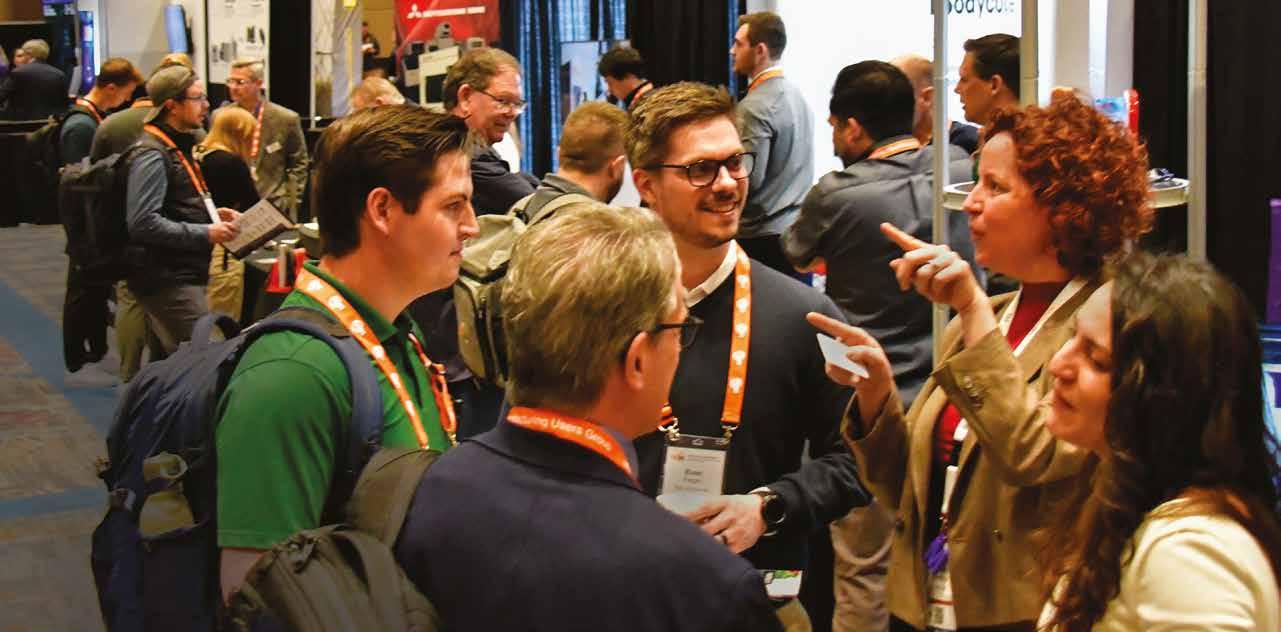











Camaraderie,
All-inclusive





As Incodema3D scaled its EOS metal AM fleet to support aerospace, defence and energy production, manual powder recovery and sieving became a constraint on machine utilisation, material yield and operator efficiency.
Working with HK Technologies, the New York State manufacturer implemented the VacuSift Powder Conveying and Sifting System to automate powder recovery, screening and transfer. In this article, HK Technologies describes how the implementation improved machine turnover, powder reclamation and workflow repeatability in high-volume metal AM production.
As the metal Additive Manufacturing industry accelerates to full-scale production, the factors that determine manufacturing success are changing. While advances in Laser Beam Powder Bed Fusion (PBF-LB) technology have delivered larger build volumes, higher laser counts and improved process monitoring, production efficiency increasingly depends on the supporting processes surrounding the machine.
Among these, powder management has emerged as a critical contributor to throughput, repeatability and production cost. Recovering, screening and reconditioning powder efficiently can have a direct impact on machine utilisation, material yield and the ability to scale manufacturing without proportionally increasing labour requirements.
Although machine productivity has improved significantly, many downstream operations have remained comparatively manual. Powder recovery, screening and reuse are often performed
separately from the build process, extending machine turnaround times and limiting the productivity gains delivered by increasingly capable AM machines.
For organisations operating multiple PBF-LB machines, these supporting workflows are no
longer secondary considerations, but rather an integral part of production infrastructure. As machine fleets grow, the efficiency of powder management can directly influence manufacturing capacity, operating cost and delivery performance.
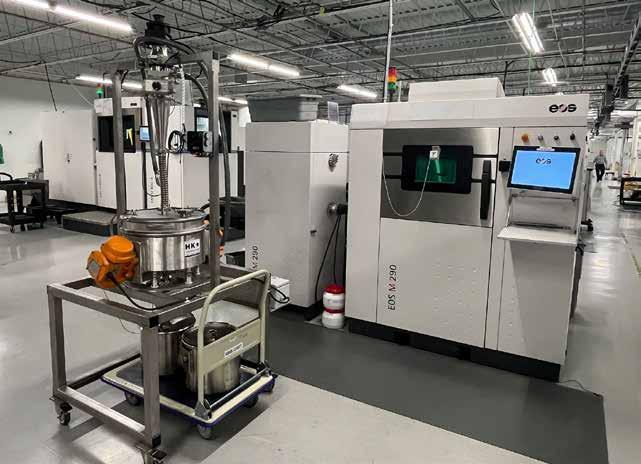
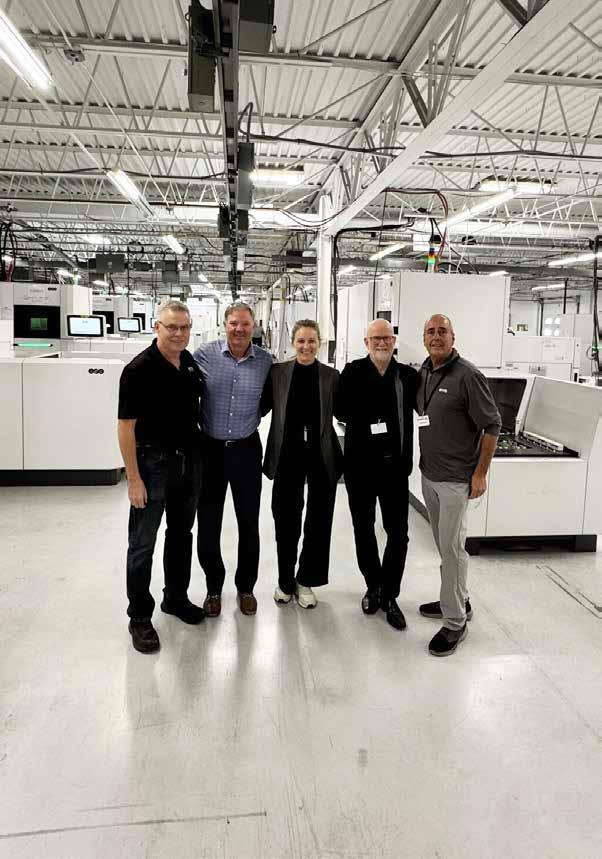
(Courtesy Marie Langer/LinkedIn)
“Unlike organisations focused primarily on prototype and low volume production, Incodema3D operates as a high-volume manufacturing supplier. Its customers require documented process control, repeatable mechanical properties and dependable delivery schedules.”
Based in New York State, Incodema3D specialises in metal Additive Manufacturing for aerospace, defence and power generation applications. Operating one of North America’s larger fleets of EOS PBF-LB machines, the company manufactures complex components including heat exchangers, internal cooling structures and high-performance structural parts that are difficult – often impossible – to produce using conventional manufacturing methods.
Unlike organisations focused primarily on prototype and low volume production, Incodema3D operates as a high-volume manufacturing supplier. Its customers require documented process control, repeatable mechanical properties and dependable delivery schedules, placing increasing emphasis on manufacturing efficiency beyond the AM machine itself.
When the company’s fleet had expanded to thirty-five EOS machines, powder lifecycle management became an increasingly significant operational constraint. The investment follows a period of rapid expansion for Incodema3D. Reporting 50% yearon-year growth, the company has since announced plans to increase its EOS metal AM fleet to more than fifty machines, as part of a broader expansion programme through 2030 that includes facility expansion and workforce growth [1].
In PBF operations, unused powder remaining in the build chamber must be recovered after each job. That powder must be screened to remove partially sintered particles, agglomerates, and foreign debris before reuse. Across qualified production environments, powder quality and consistency are central to build reliability: particle size distribution, flowability, and cleanliness influence layer deposition
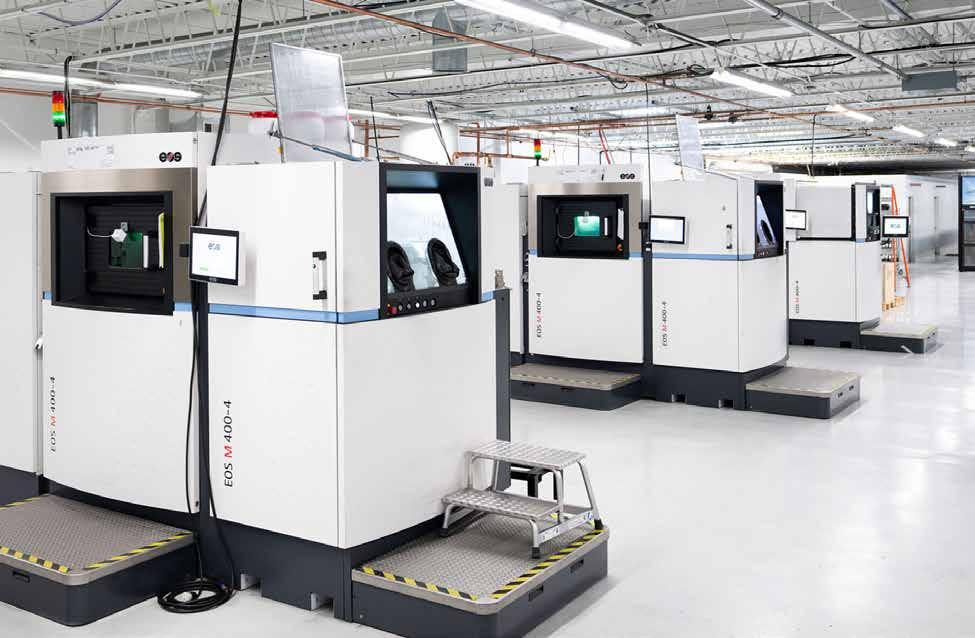
uniformity, energy absorption, melt pool dynamics, and ultimately part density and surface quality.
Prior to implementing an integrated solution, Incodema3D relied on manual recovery and batch-style sieving. Operators scooped powder from each build chamber, transferred it into containers, transported those containers to a separate screening station, and processed material in discrete batches. These steps created inefficiency, exposure risk, and inconsistent cycle times. While effective at lower production volumes, the approach became increasingly labour-intensive as machine utilisation increased.
“It was a very manual, timeconsuming, labour-intensive process,” explained Kevin Engel, Director of Additive Operations at Incodema3D. “Every large-format machine took several hours just to scoop out, and then you had several more hours sieving it. Meanwhile, the machine sat idle – costing us time and money.”
“It was a very manual, timeconsuming, labour-intensive process. Every large-format machine took several hours just to scoop out, and then you had several more hours sieving it. Meanwhile, the machine sat idle – costing us time and money.”
Incodema3D implemented HK Technologies’ VacuSift Powder Conveying and Sifting System as part of a more automated powder recovery workflow. The VacuSift system integrates vacuum conveying with enclosed vibratory screening, allowing powder to be recovered from AM machines, drums, IBCs and other bulk
containers and transferred directly to the screening stage.
Reducing machine turnover time
Incodema3D identified turnover time as a core constraint. Before workflow automation, turnover could exceed one hour per machine; after implementing HK Technologies’ integrated powder recovery and screening approach, it was reduced to approximately five to ten minutes.
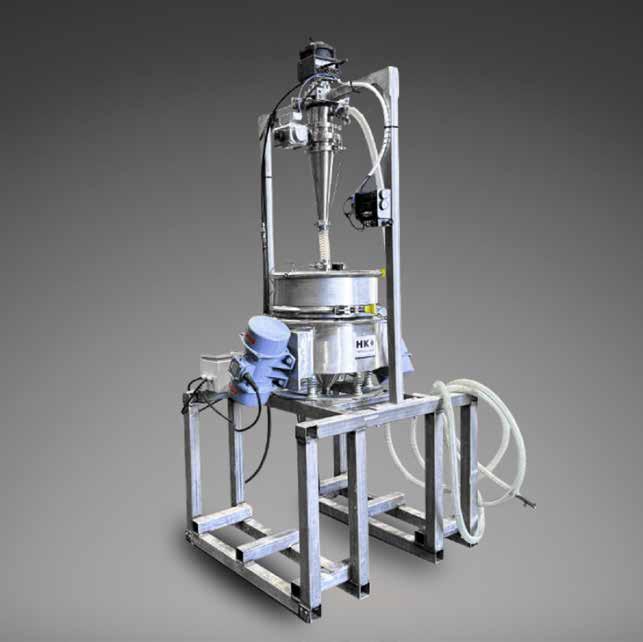
Fig. 4 The HK VacuSift Powder Conveying and Sifting System combines vacuum conveying and vibratory screening to recover and process powder from AM machines, drums, IBCs and other containers. It enables simultaneous conveying and screening as part of an integrated workflow (Courtesy HK Technologies)
“With the ultrasonics, we’re now reclaiming approximately 30% more material that used to be discarded. That translates to real savings – and helps us hold our pricing for customers even as inflation rises.”
“Without HK sieves, we couldn’t have scaled from fifteen to thirtyfive AM machines as quickly as we did,” explained Engel. Jeff Wood, Additive Operations Supervisor, highlighted the cumulative impact of those savings. “Saving an hour per turnover, across ten turnovers a day, across thirty-five machines – the machine hours we reclaimed are incredible.”
For production facilities, this illustrates how powder-handling automation can increase available
machine capacity without immediately adding further AM machines.
Improving powder utilisation
Improving powder utilisation was also commercially important. Aerospace and defence programmes often rely on highvalue alloys such as titanium and nickel-based superalloys, so material discarded during recovery or screening represents both a direct cost and a potential production risk.
Following implementation of the integrated workflow, Incodema3D reported a measurable improvement in powder recovery. By incorporating ultrasonic-assisted screening, the company was able to reclaim a greater proportion of reusable material that would previously have been discarded. “With the ultrasonics, we’re now reclaiming approximately 30% more material that used to be discarded,” Engel noted. “That translates to real savings – and helps us hold our pricing for customers even as inflation rises.”
At Incodema3D, the previous manual workflow required operators to repeatedly lift 7-9 kg (15-20 lb) containers overhead throughout each shift, increasing ergonomic strain and injury risk. Open powder transfer can also increase exposure to fine metal particulates, particularly when handling combustible or reactive powders.
“We’re no longer asking operators to haul and lift buckets all day long,” Engel stated. “It’s safer, more efficient, and better for employee morale.”
The VacuSift system can be configured to suit different powder characteristics and production requirements. Options including ultrasonic screening, enclosed vacuum conveying, interchangeable sieve frames and variable frequency drive (VFD) control allow users to optimise the system for different alloys, mesh sizes and production environments, including PBF-LB, Electron Beam Powder Bed Fusion (PBF-EB) and Binder Jetting (BJT).
In fine mesh screening, throughput is often limited not by motor power but by the condition of the screening surface. As mesh openings become blocked, the effective open area decreases, flow rate drops and screening efficiency becomes less
consistent. Ultrasonic energy applied to the screen helps reduce blinding and maintain a stable separation profile, resulting in fewer stoppages, shorter cleaning cycles and more predictable powder processing times.
Incodema3D also highlights the importance of application engineering when introducing production infrastructure. “HK came to our facility, listened to our needs, reviewed our drawings, and helped us spec out exactly what we needed,” Engel recalled. “It wasn’t a cookie-cutter sale – it was real engineering collaboration.”
This process typically includes assessing material characteristics, defining target mesh and throughput, aligning system features with safety requirements, and considering cleaning and maintenance access, particularly where powders change between jobs or require segregation.
The system also standardises powder movement from AM machine to conveying line, screen and container, reducing variation between operators and shifts while supporting cleaner work areas.
HK Technologies: powder handling and screening capability
HK Technologies applies its industrial screening and material handling experience to Additive Manufacturing applications. Headquartered in Salem, Ohio, the company designs and manufactures systems for industries ranging from Additive Manufacturing and Powder Metallurgy to powder coatings, speciality chemicals, food processing, and pharmaceuticals.
Within the AM market, HK’s approach emphasises practical engineering and configurability. Facilities can specify solutions for standard environments or for more demanding applications requiring additional safety controls. Optional upgrades commonly include explosion-proof motors and controls, grounding and bonding monitoring systems, inert gas porting, sealed covers with viewports, sanitary fittings where appropriate, and PLC control panels for automation and interlocks.
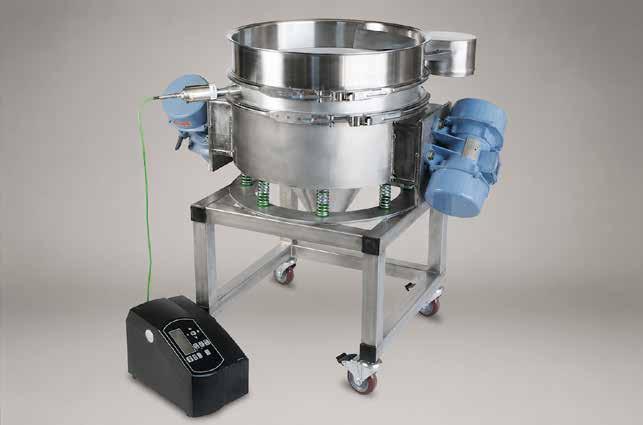
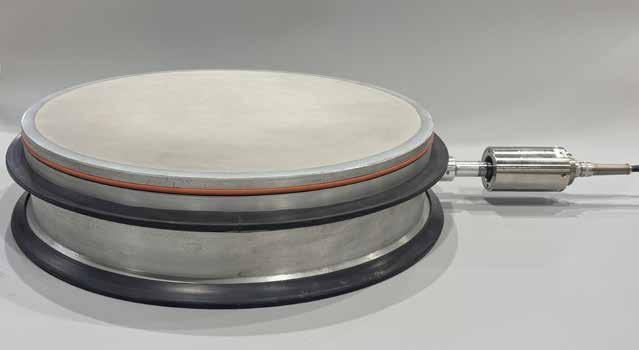
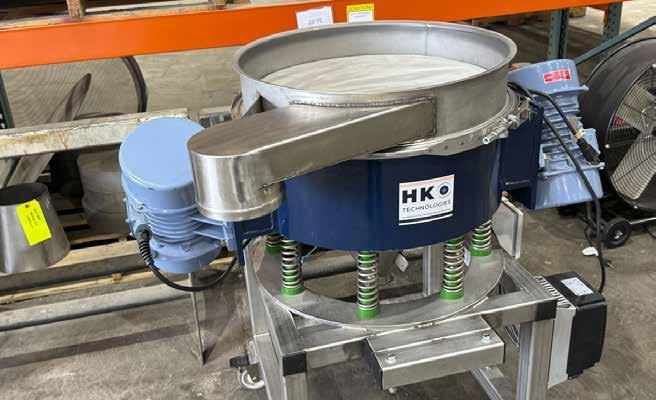
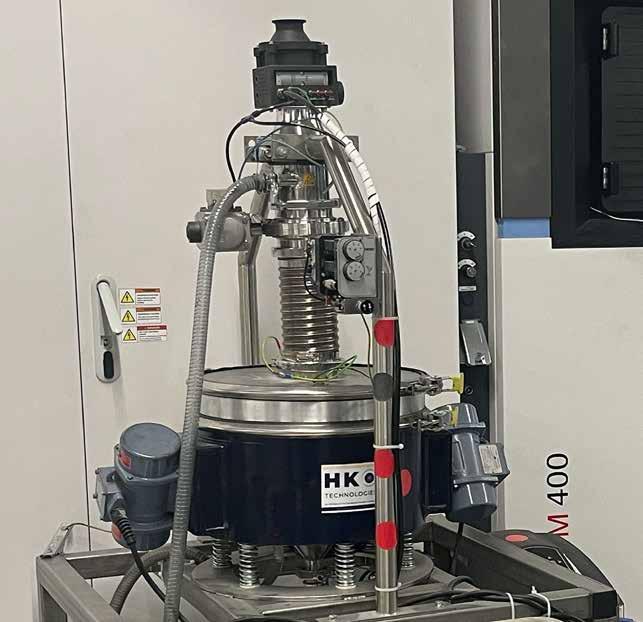
and sieving (Courtesy HK Technologies)
“Ultimately, scaling metal AM is about more than increasing machine numbers. It requires building the ecosystem around the machines –powder management, safety controls, repeatable workflows, maintenance practices and engineering support...”
A key measure of the project’s impact was Incodema3D’s continued production growth. Alongside plans to increase its EOS fleet to more than fifty metal AM machines by 2030, Incodema3D is expanding its facilities, increasing recruitment and continuing to invest in production automation. The expansion also
reflects the increasing diversity of production programmes supported by the company. As founder and CEO Sean Whittaker observed, Incodema3D has developed “welloiled processes” capable of producing “everything from ten mission-critical parts for a defence customer to 10,000 parts for an energy company.”
As Matt Lewis, Vice President of Programs at Incodema3D, explained: “We are constantly introducing
process improvements and efficiencies through automation wherever possible to achieve quality and throughput. By integrating design for Additive Manufacturing, postprocessing, precision machining, inspection and fulfilment under one roof, we can move complex metal parts into production with speed, consistency and confidence.”
Ultimately, scaling metal AM is about more than increasing machine numbers. It requires building the ecosystem around the machines –powder management, safety controls, repeatable workflows, maintenance practices and engineering support – so that increasing machine count does not require a proportional increase in labour, risk or material waste.
As the industry moves toward higher production volumes, particularly in aerospace and defence, powder handling is becoming an increasingly important part of process qualification. Consistent powder management supports repeatable build outcomes, helping manufacturers reduce nonconformances and demonstrate the process consistency required for high-consequence applications. For contract manufacturers, that capability can become an important competitive differentiator.
Integrated powder conveying and screening can contribute to reduced machine idle time, improved powder yield, more stable material streams, greater workflow repeatability, lower manual handling requirements and improved safety through enclosed powder processing.
The continued industrialisation of metal Additive Manufacturing is changing where manufacturers create value. While advances in PBF-LB technology continue to improve build performance, scalable production increasingly depends on the efficiency and repeatability of the processes surrounding the AM machine.
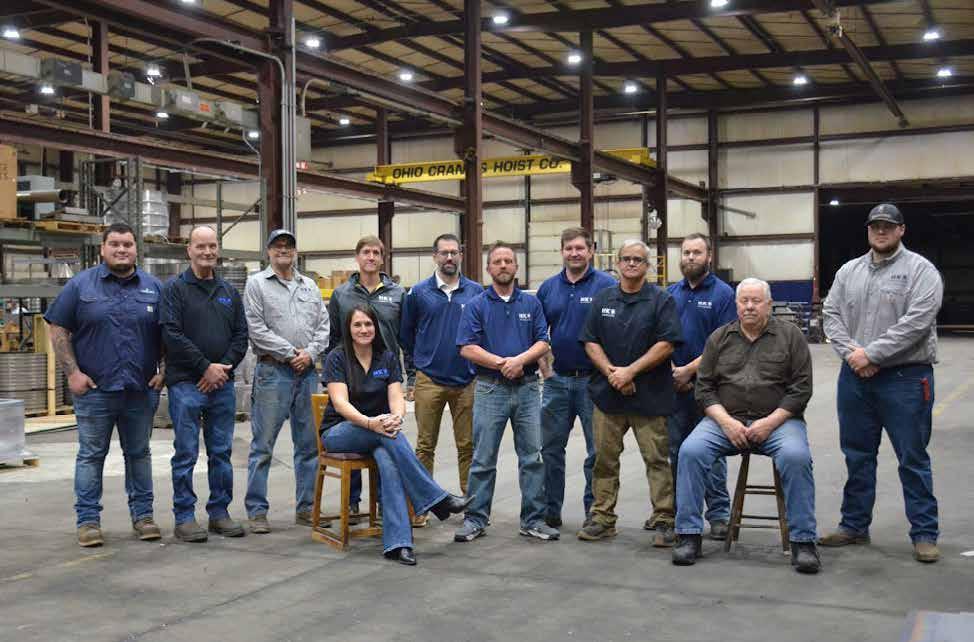
Through the deployment of the VacuSift Powder Conveying and Sifting System, Incodema3D replaced a labourintensive powder-handling workflow with a more integrated production process. The outcome was measurable gains in machine uptime, material yield, safety, and scalability – demonstrating that in modern metal AM, powder management is strategic infrastructure, not a secondary process.
References
[1] ‘Incodema3D to add further 14 EOS metal AM machines’, Metal AM, 4 June 2026. Available at: www.metal-am.com/ incodema3d-to-add-further-14-eosmetal-am-machines
HK Technologies 14000 W Middletown Rd, Salem, OH 44460, US (330) 427-2007 www.hksieve.com
Incodema3D 330 Main St, Freeville, NY 13068 sales@incodema3d.com 607.269.4390 www.incodema3d.com
Metal AM magazine is dedicated to driving awareness and development of metal Additive Manufacturing and its related technologies. Key to this aim is our support of a range of international partner conferences and exhibitions. View our complete events listing on www.metal-am.com
EPMA Summer School
July 19–24, Porto, Portugal summerschool.epma.com
America Makes Members Meeting & Exchange (MMX)
August 4–5, Youngstown, OH, United States www.americamakes.us/events/mmx/
Formnext Asia Shenzhen
August 26–28, Shenzhen, China qr.messefrankfurt.com/s0606
Powder Metallurgy and Additive Manufacturing of Titanium (PMAMTi 2026)
September 2–4, Taipei, Taiwan www.pmti2026.com
VICENZAORO + T-GOLD
September 4–8 – Vicenza, Italy www.vicenzaoro.com/en/t.gold
JTF – Jewelry Technology Forum
September 7 – Vicenza, Italy jtf.it/en/jtf-2/
AM-SMART Conference 2026
September 14–16 – Enschede, Netherlands am-smart.net
EXPO 3D Istanbul
September 17–19, İstanbul, Türkiye expo3d.istanbul
RM Forum
September 23–24, Arese MI, Italy www.rmforum.it
ASTM International Conference on Advanced Manufacturing
September 28 – October 2, Orlando, FL, United States amcoe.org/event/icam2026/
The Advanced Materials Show USA
October 6–7, Pittsburgh, PA, United States advancedmaterialsshowusa.com
Euro PM 2026 Congress and Exhibition October 11–14, Budapest, Hungary powdermetallurgycongress.com
Merryl Le Roux, Operations and Partnerships Manager merryl@inovar-communications.com Running an event? Partner with us
If you would like to see your metal Additive Manufacturing related event listed in this magazine and on our websites, please contact:
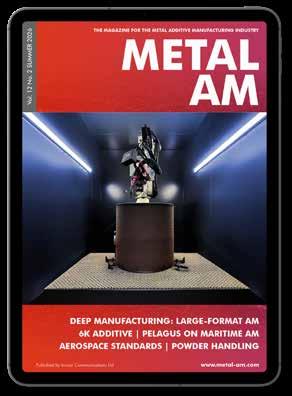

MGA Annual Meeting & Women in AM Summit 2026
October 12–13, Berlin, Germany events.mga-net.com
Additive Manufacturing for Oil & Gas Summit
October 14–15, Houston, TX, United States amoilgas.ascentisgrp.com
ADDITIV Medical (Virtual event)
October 21 app.swapcard.com/event/additiv-medical-2026
Smart Manufacturing Aerospace & Defense
October 27, Chicago, IL, United States www.amg-world.co.uk/smart-manufacturingaerospace-defense/
Metal Additive Manufacturing Conference (MAMC)
November 10–12, Vienna, Austria www.mamc.at
Formnext
November 17–20, Frankfurt am Main, Germany www.formnext.com
Military Additive Manufacturing Summit & Technology Showcase (MILAM)
January 26–28, Tampa, FL, United States www.militaryam.com
Additive Manufacturing Strategies 2027
February 23–25, New York, NY, United States additivemanufacturingstrategies.com
Addit Ɛ D
February 23–25, Bilbao, Spain addit3d.bilbaoexhibitioncentre.com
11 th AM Forum 2027
March 2–3, Berlin, Germany en.am-forum.de
AMUG 2027
March 14–18, Atlantic City, NJ, United States www.amug.com
AM China 2027
March 24–26, Shanghai, China www.amatex.cn
Defence Manufacturing and Materials Expo
April 28–29, Katowice, Poland defencemanufacturingexpo.com


Enjoy
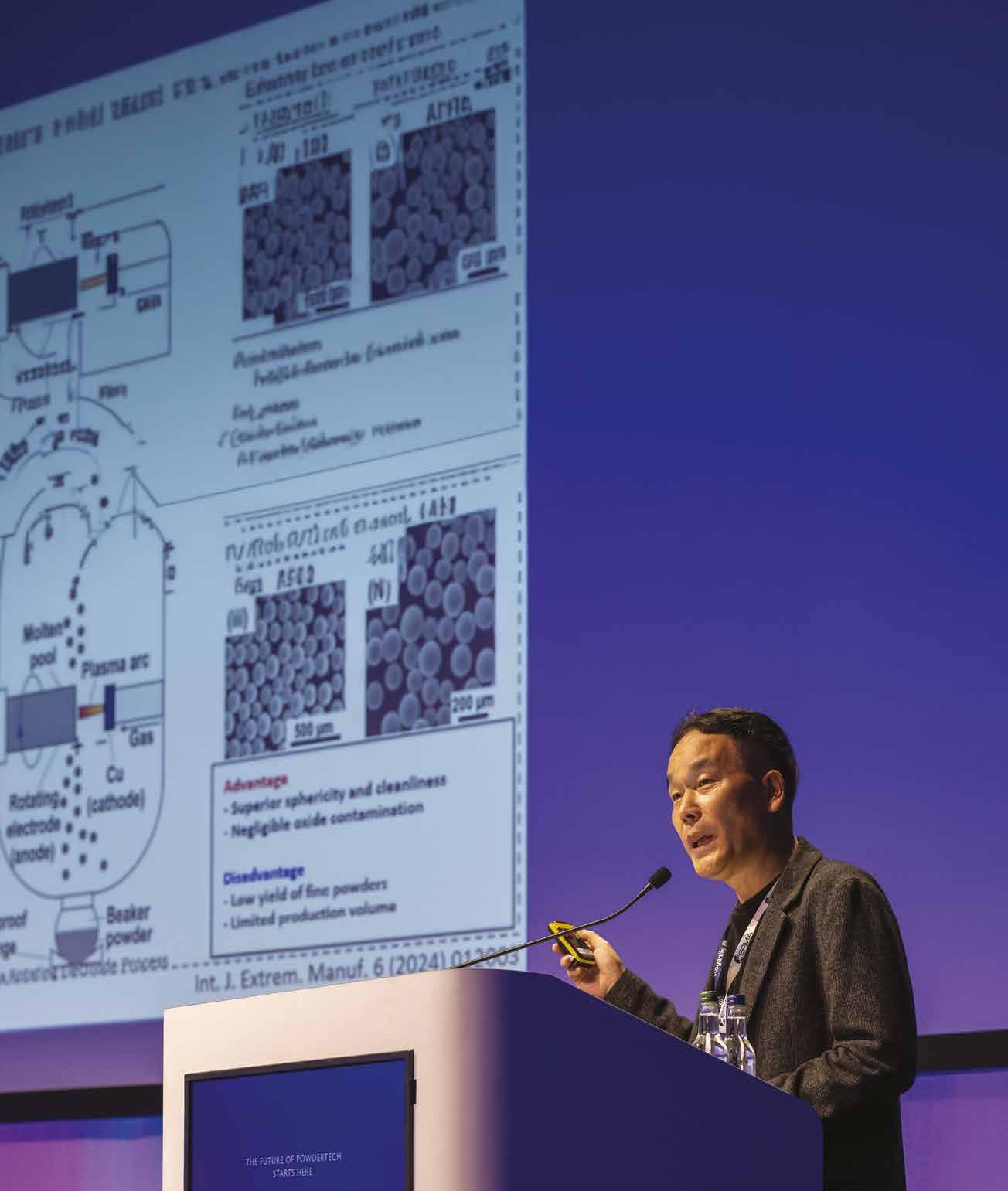

Our advertisers’ index and buyers’ guide serves as a convenient guide to suppliers of AM machines, materials, part manufacturing services, software and associated production equipment. In the digital edition of Metal AM magazine, available at www.metal-am.com, simply click on a company name to view its advert, or on the weblink to go directly to its website: www.metal-am.com
Avimetal AM Tech Co., Ltd
www.legor.com Linde Advanced Material Tech. Inc.
www.oerlikon.com/metco/ Osaka Titanium Technologies Co. Ltd.
www.atomising.co.uk
Blue
www.bluepower-casting.com
www.bluepower-casting.com
Eltra GmbH - Verder Group
www.microtrac.com
www.vac-u-max.com
Carbolite
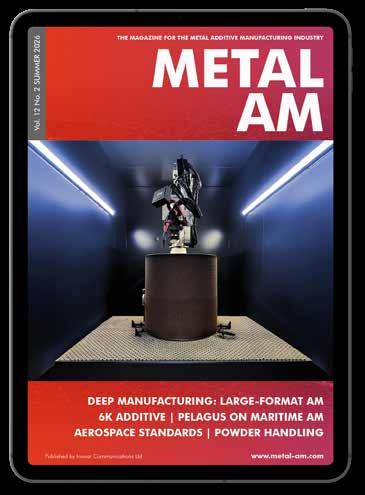

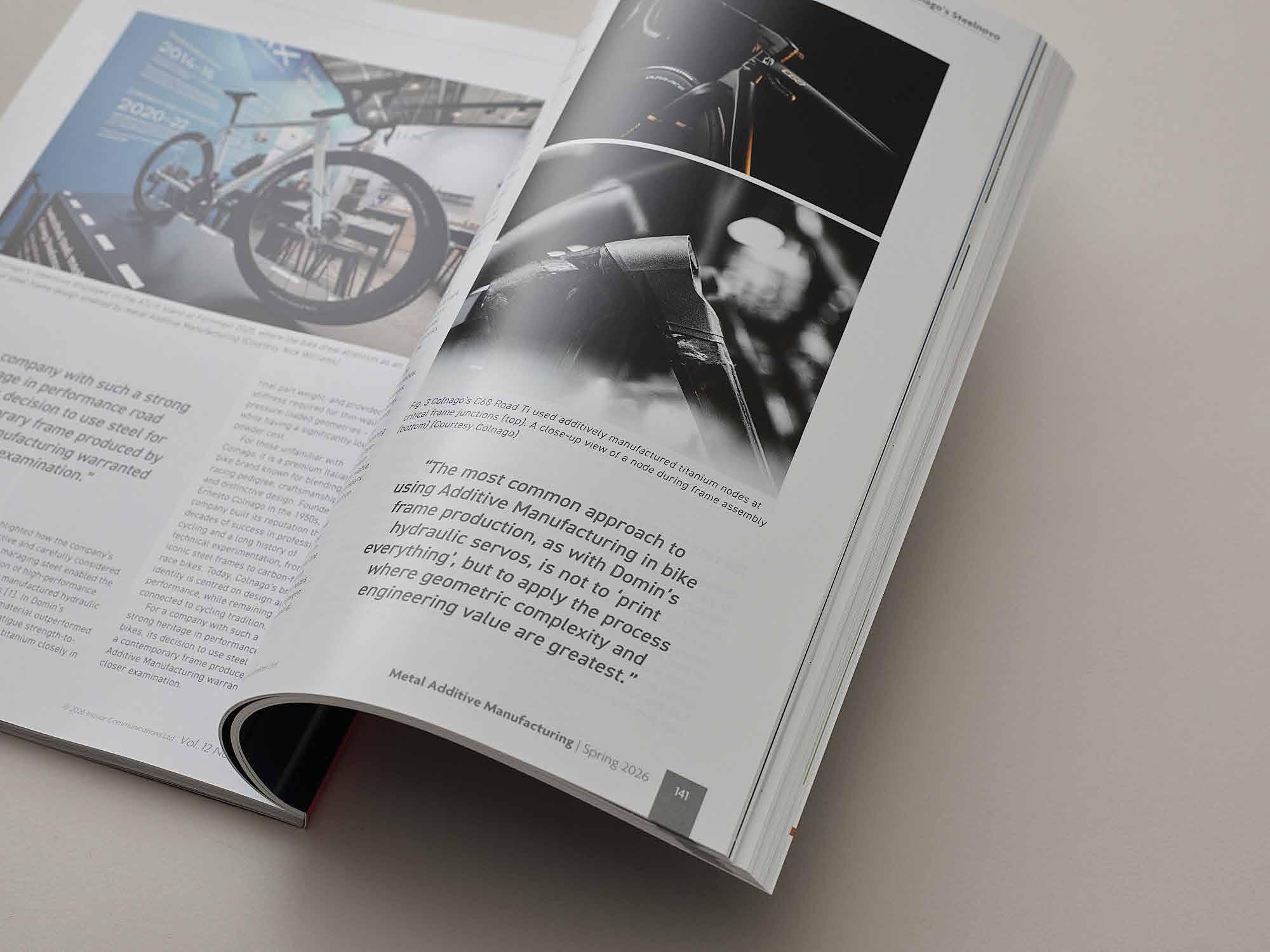
For Colnago, one of cycling’s most prestigious brands, the Steelnovo represents a showcase project – a modern interpretation of what the ‘perfect’ road bike might look like. Instead of the titanium more commonly used for additively manufactured frame lugs, the company worked with Additiva Srl and ATLIX to develop complex 316L steel nodes combined with Columbus steel tubing.
Metal Additive Manufacturing magazine’s Nick Williams explores how the project demonstrates the potential of AM to modernise traditional materials while preserving the distinctive ride quality associated with steel frames.
www.metal-am.com
INJECTOR
Technology: Direct Metal Printing (DMP Factory 500)
Material: LaserForm® Ni718 (A)
Pushing the boundaries of aerospace engineering, this Liquid Oxygen (LOX) Fuel Injector showcases the power of metal 3D printing in rocket propulsion. Produced via Direct Metal Printing (DMP), the component integrates complex internal channels and precision geometries that are difficult—or impossible—to achieve with traditional manufacturing.
Designed for high-performance rocket engines, the injector efficiently delivers and mixes propellants to optimize combustion, ensuring reliability under extreme pressure and temperature conditions
• Accelerated Production: From months to days.
• Lightweight, optimized design: Reduced weight (92 kg) while maintaining structural integrity.
• Design Freedom: Complex geometries for enhanced performance and efficiency.
• High-precision production: 60 µm layer thickness for fine detail resolution and consistency.
With advanced materials, precision engineering, and cutting-edge additive manufacturing, solutions like this are helping aerospace engineers achieve higher efficiency, reduced costs, and faster time-to-launch.