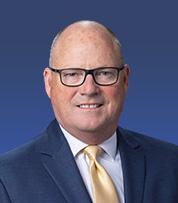
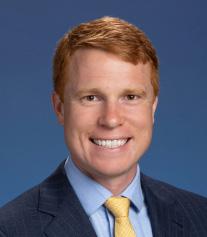
PAGE18 PLUS The gendered glass ceiling PAGE 36 ALSO INSIDE Bringing meaning to life with Prudential’s Salene HitchcockGear PAGE 4
Women stand to inherit trillions over the next two decades. Is the industry ready to give them the advice they need?
IN THIS ISSUE
FEATURE
Guiding women through the ‘Great Wealth Transfer’
By Susan Rupe
Women are set to inherit wealth, and the industry must meet this moment by giving them the guidance they need.
INTERVIEW
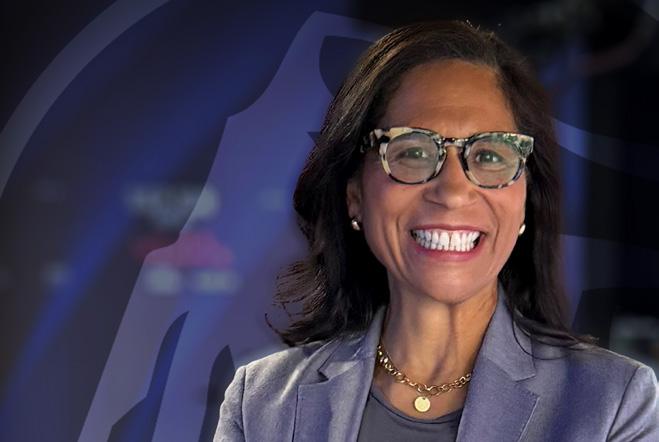
4 Bringing meaning to life Salene Hitchcock-Gear, president of Prudential Individual Life, is on a mission to bring life insurance and related products to more Americans who need financial protection.
IN THE FIELD
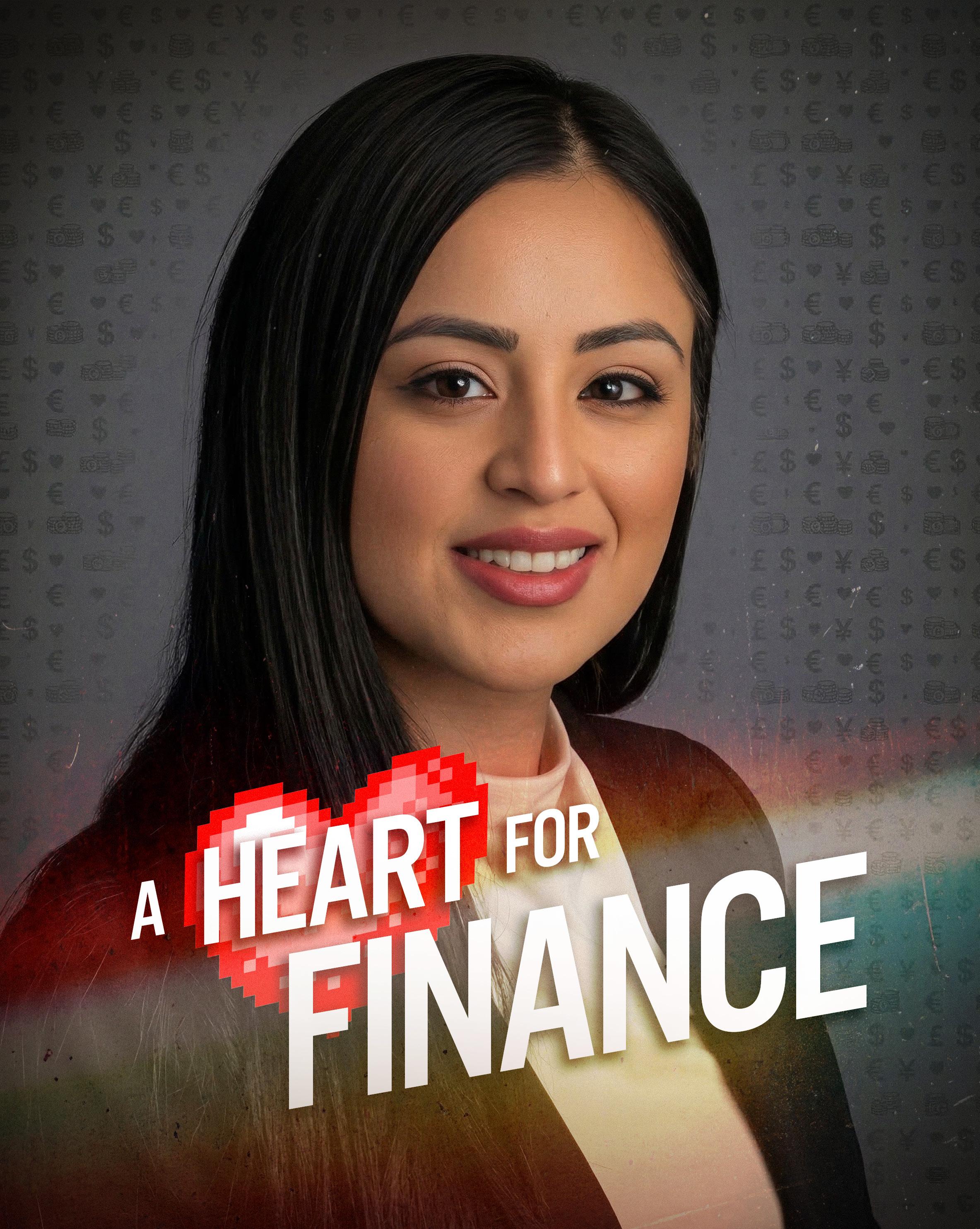
16 A heart for finance
By Susan Rupe Lizbeth Menjivar brings heart to financial planning while nurturing the next generation of advisors and clients.
22 What to do when term life runs out
By Scott Harper
As term life policies enter their final year, a surprising number of people don’t realize the clock is ticking.
ANNUITY
26 How annuities can help small-business owners achieve retirement security
By Anna Baluch
Think of them as personal pension plans for owners and entrepreneurs.
27 Rethinking retirement income: The role of annuity laddering
By Anna Baluch
For some clients, this strategy can be a game-changer.
HEALTH/BENEFITS
30 Making women’s health a higher priority
By Kat Hubben
Workplace benefits must support women through all the changes in their lives.
ADVISORNEWS
33 Plugging the hidden budget leaks of retirement
By Christopher L. Gandy
One of the most overlooked threats to retirement security isn’t inadequate income.
INSURTECH
34 How Integrity Marketing’s AI is creating ‘super advisors’ By
John Hilton
In the insurance world, Integrity Marketing Group was among the few to embrace artificial intelligence early on.
IN THE KNOW
36 The gendered glass ceiling
By Rayne Morgan
Women are not getting promoted out of entry-level roles into manager roles, and that sets them back from the beginning.
The biggest financial hand-off in history
You’ve heard it many times before.
We are in the midst of “the great wealth transfer,” in which an estimated $54 trillion is expected to pass on to widows. Of that amount, $40 billion or more will go to widows who are baby boomers and older. That’s according to research from Cerulli Associates.
Over the next 20 to 25 years, women are expected to control an estimated $30 trillion or more in assets as wealth moves from older generations to spouses, daughters and granddaughters. Longer life expectancy, higher educational attainment and increased participation in the workforce mean women are not just inheriting wealth — they are managing it, growing it and deciding who they trust to guide them.
Women need help in making these newfound funds work for them as they navigate family-building, retirement and
legacy planning. But a woman often finds that the advisor who worked with her when she was part of a couple isn’t a good fit for her in the next phase of her life.
It’s not that the advisor provided bad advice; it’s that the relationship wasn’t built with her in mind.
In this issue of InsuranceNewsNet, which is dedicated to women and wealth, we learn about the latest research into what women want and need from their financial professional. The message is clear: Technical expertise matters, but connection, communication, and trust matter more.
Wealth is personal — especially for women
Women are less likely than men are to focus on performance metrics and competition when it comes to money. Instead, women view money as a tool, a way to achieve security and independence, help their families and pass on their values.
This creates a powerful opportunity for advisors to have conversations about longevity, caregiving and income continuity. Women also need advisors to open discussions about protecting children and aging parents as well as funding charitable endeavors.
Women who inherit money in the great wealth transfer may have many questions for their advisors, but one question is at the heart of their concerns: Will I be all right? This is your opportunity to answer that question.
Also in this issue, we have an interview with Salene Hitchcock-Gear, president of Prudential Individual Life Insurance. An insurance industry veteran with more than 30 years of experience, Hitchcock-Gear has a unique perspective on how the industry can reach the millions of Americans who are uninsured or underinsured.
We also share the story of Lizbeth Menjivar, an up-andcoming wealth advisor from Chicago who is passionate about educating her community to attain financial literacy. Menjivar was honored by the Financial Planning Association with its 2025 Heart of Financial Planning Award for her efforts to share her knowledge with everyone from homeless youth to senior citizens.
And we take a look at the glass ceiling in the insurance and financial services industry. Women’s equality in the industry has come a long way, with nearly half of entry-level positions held by women today. Still, top women in the field say there’s more work to be done as only a handful of women in the industry ever make it to the C-suite level, despite being just as capable as their male counterparts.
As we enter May, we’re nearly at the halfway mark of 2026. It’s a good time to assess whether your practice is on track to achieve your goals for the year — and to determine how serving women will help you reach those goals.
Susan Rupe Editor in Chief, magazine
Markets lose confidence in near-term Fed rate cuts
Financial markets are rapidly dialing back expectations for Federal Reserve rate cuts this year. Strong economic data and persistent inflation have led traders to anticipate a longer period of elevated interest rates.
Bond yields rose sharply following the latest inflation report, signaling investor concern that the Fed may need to maintain a restrictive stance longer than previously expected. Equity markets reacted with increased volatility, particularly in rate-sensitive sectors such as real estate and technology.
Economists say the Fed is unlikely to cut rates until inflation shows sus‑ tained progress toward its 2% target. The shift in expectations could influence borrowing costs for mortgages, auto loans and business credit throughout the
Bitcoin has diverged sharply from traditional asset behavior recently. While equities and commodities have reacted to geopolitical tensions, bitcoin has shown unusual resilience, attracting investors seeking alternative stores of value.
Analysts note that the cryptocurrency’s performance contrasts with previous periods of global instability, when digital assets often moved in tandem with risk-on markets. The shift suggests that bitcoin may be maturing into a more indepen ‑ dent asset class.
However, experts warn that volatility remains high and that regulatory developments could influence future price movements. Investors are advised to maintain diversified portfolios and avoid overexposure to speculative assets.
A federal judge officially killed the Department of Labor’s Retirement Security Rule.
District Judge Reed O’Connor acquiesced to the request from both the DOL and the group of trade associations suing to stop the rule.
It will take some years of positive, real earning gains for people to feel good again, we think.”
WALL STREET BANKS SET FOR 5% CAPITAL DECLINE UNDER NEW RULES
Wall Street bank capital requirements would fall 4.8% under softened capital rules announced by U.S. bank regulators. This would free up billions of dollars for lending, dividends and share buybacks in a stunning victory for the industry, which had faced double-digit hikes under the original 2023 plan.
Since 2015, the DOL has made multiple efforts to expand the definition of “fiduciary” under the Employee Retirement Income Security Act of 1974, aiming to require that financial professionals who give retirement ad ‑ vice — including brokers, agents and insurance sellers — put clients’ best interests first
So far, the industry is undefeated in opposing such efforts.
Capital levels at larger regional banks would fall by 5.2%, while banks below $100 billion in assets would enjoy a 7.8% decline in their capital requirements under the proposals.
The “proposals under consideration would further enhance and streamline the capital framework while ensur‑ ing that U.S. banking organizations continue to be safe, sound, and able to support the U.S. economy across all economic conditions,” Fed staff wrote in a briefing memo for the board.
— Federal Reserve Chair Jerome Powell
Judge O’Connor
Prudential’s Salene Hitchcock-Gear modernizes a legacy brand through tech-driven buying and wellness initiatives while empowering advisors to provide essential financial protection to a diverse 21st-century audience.
An interview with PAUL FELDMAN, publisher
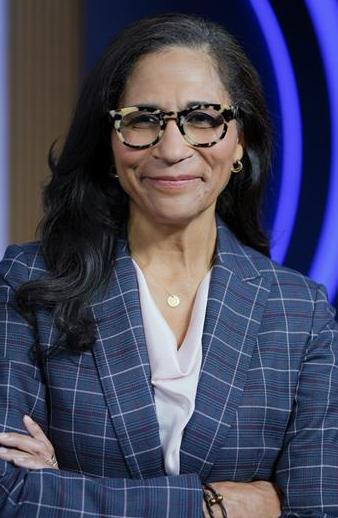
Salene Hitchcock-Gear, president of Prudential Individual Life, is on a mission to bring life insurance and related products to more Americans who need financial protection.
Hitchcock-Gear wants to make a 151-year-old company relevant to the needs and concerns of 21stcentury consumers by incorporating more technology into the life insurance buying process as well as bringing wellness initiatives to help policyholders live longer and healthier lives. At the same time, she endeavors to keep Prudential true to its roots of partnering with its agent field force to bring life insurance to everyday Americans.
Hitchcock-Gear is an advocate for the industry. As the first Black woman to chair the board of The American College of Financial Services, she worked to evolve the curriculum to better prepare the next generation of financial advisors.
In this interview with InsuranceNewsNet publisher Paul Feldman, she describes the trends she sees in the insurance marketplace and her vision of the industry’s future.
PAUL FELDMAN: How did you get into the insurance business?
SALENE HITCHCOCK-GEAR: I got into the insurance business via my law background. I was supposed to be an architect, but I didn’t have the freehand drawing skills, so I wound up becoming a lawyer. As a lawyer, I found myself working with clients on things where financial matters were front and center.
I had an opportunity to work for an insurance company in their advanced markets. They hired lawyers and accountants to do highly technical work. I thought it was a nice way to learn a little bit about some of the things I could use to bring more value to my clients.
That was more than 30 years ago. I keep my law license open, but I became deeply connected to the insurance industry from that first job, and I found the industry to be of high value and high impact for people.
One thing led to another, and I moved into more management roles. I feel privileged to work at a company where I see a
lot coming to the marketplace in terms of the products we offer and how we bring value to people. It has been a lot of fun.
FELDMAN: You serve on many different boards, and you’re highly involved in the industry. What are some things you see as issues and trends in the marketplace?
HITCHCOCK-GEAR: I see two things. One is technology and the advent of artificial intelligence and what it can and should do to help us bring more information to people, make our processes easier and bring more to our overall value proposition.
The second is that there are so many underinsured people in the U.S. For some time now, we have been thinking and talking about how we can expand access, open new products and bring our products to more people.
And then there’s an interesting underpinning to all of this, and it would sort of be in the health sector. It’s the idea that we are post-COVID-19 and seeing some improved mortality capabilities, whether it’s talking about GLP-1 drugs or other things that might help people live better, healthier lives. It’s a positive tailwind for the insurance industry. If we can kind of get on the same side of someone in their health journey, it’s good for them. It’s good for us.
FELDMAN: Let’s talk about technology and AI. There has been a lot of hype about AI, but a lot of people don’t understand AI. How are you finding uses for AI in your operations?
HITCHCOCK-GEAR: AI isn’t a thing for tomorrow; it’s a thing for today. That’s where we see some different trends than we see in other types of technology.
For a long time in the insurance business, we had this adoption challenge. You have all this great technology, but you have to get people to adopt it.
I think AI is presenting a much faster entry to market. It kind of started with things such as risk and compliance, where you can get to some intelligence automation early and where you can measure and monitor.
I do this thing at Prudential where I go talk to people and they have some
great new thing and you ask them a basic question: How does it do that? Most of the time, the answer is “Well, we don’t know.” I can’t use something where you don’t know. We need outcomes and we need certainty.
AI has begun taking off in the things we can count, measure and compare outcomes around.
In our back office, we’ve been able to use AI to help our case managers determine, where is a case? What is the tracking system? How do we see what’s missing?
We’ve also been able to use some of our AI writing tools to look at physician statements and get some of our medical information condensed and consolidated. We are relying on AI to improve efficiency going forward.
On the front end, we are getting into things like agentic AI and how our customers can have conversations where your agentic AI can do intake talk and ask the basic questions, bring data into your environment, and get things solved more easily. This is particularly important in our claims areas, where people need to get the funds they’ve been waiting for and get them quickly.
FELDMAN: What kind of futuristic things are you seeing?
HITCHCOCK-GEAR: Let’s talk about agentic AI some more. We recently talked to some firms that are building these agentic properties, and I learned that these tools can now bring empathy to conversations. What that means is they have the capability to listen and understand. Is someone frustrated? Are they confused? How do we need to guide the conversation? We’re on the cusp of being able to have intelligent and thoughtful interactions with people instead of using some of the robotic tools we’re accustomed to hearing and seeing. I think that’s fantastic because it will create more opportunity if we pull those tools all the way through to the mechanics of our business.
I’m excited that here at Prudential, I’ve been working on underwriting enhancements, trying to make it easier for people to get insurance. Underwriting is the heart and soul of how we price and manage risk and think about which customers we can cover at what cost. For
about 10 years, we have been working on what I call automated underwriting. Underwriting has a lot of rules, so we started with the rules-based philosophy. We are now moving into more predictive analytics, which is helpful because it removes friction from the application process whereby we can take things such as electronic medical data and pair that up against profiles we already know. We’ve been writing insurance at Prudential for 150 years, so we already have a lot of data. We have a lot of know-how. If we can take your electronic information and match that against what we already know, we can come back to people and issue certain policies within minutes based on those fact patterns, because we have those data sets.
So the opportunity is to take these predictive, analytic, machine learning-type things we’ve been building, bring in some of this external electronic data, and give personalized, real-time offers to people that are good for us in terms of speed and pricing.
I think the idea that we can take more public data and more public health information and work with our reinsurers and others around the industry to assemble and share some of this information could bring powerful tools to our industry. The idea is just to make it easier for people to get insurance coverage.
tools. But it’s the coaching, it’s the ability to motivate and encourage people to take the steps needed to get something accomplished.
I think that the human sense of what people value has matched up with how these tools get you to outcomes and get consumers to do something. I think the role of an advisor is to engage with people in a way that gets them to take those important steps. That means you still need to be able to relate to people, know how to do good interviews, to understand all
mentoring, but some of it is educational, foundational things such as getting your securities licenses.
I not only work with our agents at Prudential but we work with so many other external parties who distribute our products that we have to use our wholesalers from Prudential to help train and educate a wide variety of advisors out there. And we use AI and technology in certain categories.
For example, if I am working for Prudential and I am either an agent or a wholesaler, how do I make the best use of my time? I need good case management tools, good sort and hunt tools. In the old days, if you needed to know what a particular form was, you’d have a marketing assistant or someone around to help you with that. Now we can put it online and give you good sort tools. We’re trying to bring as much technology as we can that’s intuitive, where your whole life as an advisor isn’t just about learning new tools. We have a lot that we’re trying to do with AI, where you can put in a prompt and get what you need.
“We’re on the cusp of being able to have intelligent and thoughtful interactions with people instead of using some of the robotic tools we’re accustomed to hearing and seeing ... it will create more opportunity if we pull those tools all the way through to the mechanics of our business.”
the empathy parts of it. I don’t think technology will take any of that away. I think technology enables us to do more.
FELDMAN: Prudential serves a lot of independent marketing organizations, and you also have your career distribution channel. What kind of tools are you using for training? How can the industry do a better job of training?
HITCHCOCK-GEAR: As in many environments, we’re at this intersection where it’s human plus tech. What I would say for sure is that the value of an advisor isn’t the technical work. That’s a little bit of table stakes. You have to be good at the technical side — setting goals, using
I know that we have many successful advisors who say they can handle maybe 150 to 200 clients. That’s it. Yet you have this growing list of people who tell us they need someone to help them. So there’s this conflict about how to bring more people into the business. We know that is slow and difficult. And then how do we make sure we can get people to the advice components they want?
There are a couple of things we at Prudential do to bring new people into the business. We have programs that can take you from college or career change to wherever you want to get you engaged. We have extensive training. A lot of it is
As we’re working with external distribution, we must be mindful of their systems as well. But a lot of the tools that we build now have application programming interface connections, meaning we don’t have to hardwire things. We are putting in the hands of our wholesalers many tools that help them understand for the advisors they work with things like, what did they last do with which clients? Where did they leave off with the case?
Another layer is around understanding how we can best use these tools again to make consuming all this information easier. What’s the next thing I need to do? Where am I in the process? So we built a fully digital case-tracking management tool and system to kind of take the guesswork out of things. If an advisor is working with us, they can better understand where something is.
I think it’s a combination of how do we make it easier for the advisor? How do we
and work to reassign them to someone who contacts them. We use Salesforce and notify someone “We sent you this person who needs help as a lead, as someone for you to talk to, to support. You have 24 hours to contact this person or we reassign them.”
We work through a lot of things in our contact centers and in our service environments. We make sure that our service professionals know how to help people do things like get online access to their policy information. We have built quick and easy premium payment portals.
We recently put together a new team just to be more thoughtful about our enforced support and enforced management of our policies, and particularly in places where we know we could have more contact with people.
I would also say we have opportunities for carriers to understand what insurance people have today and what they might need more of. So for example, you get a raise at work, you buy a new house of
higher value, you have another child or some new dependent that you need to care for. We have built what we call the Simplified Solutions team, things that are designed to be easy and straightforward and likely digital and embedded in various places where you might find insurance opportunities.
There are two features in some of our digital products that I think are novel and helpful to people. One is that we have term insurance in a digital environment. We put a feature in some of our digital term products where if you have a financial hardship, you can keep your policy in force for up to six months and give us $1 of premium each month to keep it alive.
We also know that people have opportunities where they might need more insurance. So if you have a life change, we’ve made it easier for you to get additional insurance.
FELDMAN: I started working in the insurance business when I was 19 years
old, and ever since I entered the business, there’s been talk about the decline of producers, which is a leading reason for so many Americans being uninsured or underinsured. How can the industry allow this to happen?
HITCHCOCK-GEAR: From the day I joined this industry, this has been that chicken-and-egg question. I think this is a multifaceted and ongoing dialogue for the industry, and I think it starts in a couple of places. We all know in this industry that insurance is sold and not bought, and the people who are in the business are trained and not really recruited. Being an insurance person or financial professional is a great career once you mature in what you’re doing. You have a high degree of time and income flexibility, and a high degree of mobility. I mean every lifestyle advantage you can think of resides in this industry, and yet we can’t draw enough people in. We have some carriers who recruit right from college. We have others who just want people who are already in this room.
I think the dynamic around our industry must do more than reflect on the problem. We must put in a lot of new thinking, and I think there are a couple of important trends that I see starting to take root that will help us. I think we have strong and compelling information that will tell people that with learning designations and real career ambition, your professional status with your client gets exemplified. There’s this idea that an insurance career is sales, and I think that is off-putting to many people. We have high standards for professionalism in this industry. These designations help you understand how to care for a client, not just sell a product.
designations and these financial planning trends help us bring a professional status to a career that is meaningful for people.
We’re an industry that can add how to bring value and meaning to life with technology tools. We need to raise awareness that this is a true profession and that there are real standards, there’s professionalism to this that brings real value.
I serve on the board of The American College, and we are doing more today
to learn from people. There isn’t a training program I’ve ever seen that replaces mentorship and one-on-one training and development to know how to work with people, approach people, build your business and be successful.
I believe the industry has an obligation and responsibility to keep talking about what we do and home in on the value our carriers and distribution partners need to continue to amplify the professionalism, the good work we do and why it is so important to be part of this industry. Then we must have the sort of innards — the technology and products and experience. We also need to tell people what life is like if you’re in this profession. I think that all comes from people working together in these team dynamics and making sure we don’t lose sight of the importance of mentorship and development.
“The value of an advisor isn’t the technical work ... it’s the coaching, it’s the ability to motivate and encourage people to take the steps needed to get something accomplished. I don’t think technology will take any of that away. I think technology enables us to do more.”
than we ever have around bringing awareness to all the designations around retirement. We have a marquee event called Horizons, which is focused on retirement, and we had about 1,200 people assemble last year to talk about the retirement challenge.
I think the second thing we must do is make the reality of what technology can do in our business a more compelling story to help us to serve more people.
We have had so much positivity in the industry around financial planning. You can think about it as needs analysis and values-based selling, all the way now into full-fledged financial plans. We have a broad variety of tools to help people reach their goals. I think curriculum
To me, the biggest trend that complements this knowledge and financial planning and professionalism is the idea that many in the industry now are relying on teams, not just solo practitioners, in the dynamics of how people work together in the profession. That, to me, is where the rubber hits the road, because you have
FELDMAN: It seems like the biggest recruiters in the industry right now are multilevel companies. How do you feel about that?
HITCHCOCK-GEAR: When we consider this big uninsured and underinsured population, we need all of us in this industry to come together. And I think multilevel marketing organizations have a real role to play. We also don’t want to forget that these can be full-time, highly professional career ladders as well.
With multilevel marketing organizations, we know a lot of people work part time and this is a way to do it, and it might help us with this base of coverage we need. But I also want to make sure we bring all those people along and through. Along with the multilevel marketing organization conversation, we also must think about the technology and the fact that we have many groups of people who are either self-proclaimed do-it-yourselfers or more comfortable doing things electronically. We must make sure our carriers and our distribution layers include room for these tech-enabled protocols and processes.
I believe it’s a multifaceted approach
and everyone plays a part in it. If we work together as an industry and talk about the dynamics of our products and how they work and help people, I believe we can do a better job tethering these things together.
FELDMAN: Talk about how Prudential is helping people live longer, which I think is the smartest thing an insurer can do.
HITCHCOCK-GEAR: We’re having a dialogue in the industry about what our role is in the health and wellness space — how we help people see us as advocates with them for better life and health. It’s at the core of what we do, because it’s how we underwrite and it’s how we understand people. I think we’re only just beginning to bring together some of the tools that can make this a reality.
For example, I sit in on a lot of industry conversations about some of the medical advancements we have for diagnosing and treating cancer. It’s about the idea that if you get in front of diseases and health challenges, you will have a longer life, you have better underwriting circumstances, etc. So we’re having a lot of dialogue about GLP-1 drugs and other new things that we know can help people with chronic illnesses in the U.S. How do we think about the mortality implications of this?
In our industry, we give you a price for a product on Day 1, and your health might improve over time. How do we build more flexibility in our models to account for that? We’re just scratching the surface on what that looks like.
One of the things we don’t do a great job of in the life insurance industry is talking about the fact that permanent life insurance has benefits while you are living, not just for beneficiaries at the end — whether it’s retirement, illness riders or planning your cash accumulation so that it is tax advantaged and well placed for emergencies. One of the things we must talk more about is if you think about insurance as an asset class, as a risk management tool — you want to live longer. We want you to live longer so you can accumulate more benefits and use them.
Before a Life Insurance Policy Lapses… Did You Show Clients All of Their Options?
Every year, over $100 billion in life insurance for seniors over 65 is surrendered or lapses, often for pennies on the dollar.
Life settlements let your clients sell unwanted or unneeded policies for 5–8x the cash value. It’s simple. It’s regulated. And it’s the right thing to do.
The Real Risk?
Not knowing. And what you don’t know can hurt you.
· Lost value for clients
· Missed revenue for you
· Increased fiduciary and legal risk
The Good News?
You don’t need extra time or expertise… just know what to look for and what to say You win. Clients win.
Start with LISA
The Life Insurance Settlement Association (LISA), the industry’s oldest and largest organization, has helped agents understand life settlements and protect policy owners.
Discipline as a Competitive Advantage
How Oceanview Life Aligns
Product, Pricing, and Partnership for the Long Term
In today’s annuity market, headline rates dominate the conversation.
Rate grids circulate quickly. Competitor comparisons appear almost instantly. Advisors are under constant pressure to deliver visible value for clients nearing or entering retirement. In that environment, it’s easy for carriers to compete primarily on what’s most easily compared: the top-line number.
At Oceanview Life and Annuity Company, leadership believes that approach can miss the bigger picture.
“We understand the importance of competitive rates,” says Jim Ryan, Chief Distribution Officer at Oceanview. “But if rate is the only story, that’s a short-term strategy. Our focus is building long-term confidence — for advisors and their clients.”
That philosophy is anchored in a principle the company returns to often: discipline.
“At Oceanview, discipline isn’t a reaction to market conditions — it’s a repeatable approach to how we price, design, and support products across cycles.”
The Risks of a HeadlineDriven Market
The fixed annuity market has grown dramatically over the past decade, bringing innovation, competition, and more value for retirement savers. But rapid growth can also create pressures that lead some players to prioritize short-term wins over long-term sustainability.
“One of the risks I see is companies entering the market with a short-term view,” says Ben Faught, SVP and Chief Actuary at Oceanview. “Competition can drive rates higher and higher, but
if pricing isn’t grounded in long-term sustainability, something eventually has to give.”
That pressure may appear later in the form of reduced renewal rates, product redesigns, or carriers exiting a segment entirely.
For financial professionals evaluating solutions, Faught says it’s important to look beyond the first-year rate.
“Advisors should balance the initial crediting rate with the experience the client is likely to have over the life of the contract,” he explains. “Ratings, service reputation, and renewal-rate history all matter. Ultimately, you want confidence that the carrier will be a reliable partner for the long term.”
In a market where many products share similar surface-level features, Oceanview believes that long-term perspective is becoming increasingly important.
Discipline as Strategy
For Oceanview, discipline is not about restraint for its own sake. It’s a framework that shapes every major decision— from product design to pricing.
has seen waves of new features, complex index strategies, and increasingly aggressive pricing. Oceanview has deliberately chosen not to pursue every opportunity.
“There have been times when we’ve chosen not to chase the highest rate or follow a popular feature trend because it didn’t align with long-term sustainability,” Ryan says.
“We’re not trying to win one quarter,” Ryan adds. “We’re building a reputation advisors can rely on across many years and many client relationships.”
The company also prioritizes clarity and usability in its products.
“Fixed annuities should be among the simplest solutions for retirement planning,” Ryan says. “If advisors don’t trust the product or don’t fully understand it, they’re less likely to use it.”
For Oceanview, that simplicity is not a lack of innovation. It’s a deliberate design philosophy.
“We spend a lot of time thinking about the client and the advisor sitting across the table,” Faught says. “Innovation doesn’t have to mean complexity. Sometimes it means refining what already works and making it clearer, more transparent, and easier to deliver value.”
“Discipline means designing products we can stand behind not just today, but throughout the life of the contract,” says Faught. “It shows up in how we set rates, structure crediting strategies, and plan for renewal from day one.”
“It means stress-testing assumptions, thinking through different economic environments, and avoiding structures that may create instability later.”
That mindset sometimes means resisting market trends.
In recent years, the annuity industry
Renewal Integrity: Where Relationships Are Tested
That long-term orientation is especially evident in how Oceanview approaches renewal rates.
While a product’s initial crediting rate attracts attention, the renewal experience ultimately shapes the advisorclient relationship.
“The relationship really starts at issue, but it’s tested at renewal,” says Faught. “Each anniversary is an opportunity to reinforce trust.”
For Oceanview, maintaining renewal integrity begins with disciplined pricing
and careful asset strategy. Products are structured with the goal of delivering consistent value throughout the contract period — not just at launch.
“That consistency doesn’t happen by accident — it’s a result of disciplined decisions made at the start,” Faught adds.
Ryan notes that advisors are particularly sensitive to this issue.
“One thing advisors get sideways on is when a carrier offers a strong first-year rate and then dramatically reduces it later,” he says. “We never want to put an
client needs while maintaining clarity and usability.
Two examples are CapLock® and CurrentRate™, products designed to address key accumulation challenges while remaining straightforward to explain.
CapLock® allows clients to lock in gains while still participating in future growth opportunities—providing a balance between protection and potential accumulation. CurrentRate™, meanwhile, offers a transparent crediting approach that aligns closely with prevailing rate environments.
“Ourgoalistobeapartneradvisors
advisor in a position where they have to go back to their client and apologize.”
Oceanview’s approach has resulted in renewal outcomes that have remained highly consistent relative to initial positioning — reflecting a deliberate focus on long-term alignment rather than short-term competitiveness alone.
These observations reflect historical experience and are not indicative of future results.
By pricing with the long term in mind, Oceanview aims to create a smoother experience for policyholders and greater confidence for the advisors recommending its solutions.
Innovation Without Complexity
Innovation remains essential in a competitive market, but Oceanview believes innovation doesn’t have to mean complexity.
“In our view, simplicity itself can be innovative,” Faught says.
Rather than layering on features for differentiation alone, the company focuses on solving specific advisor and
“These aren’t features added for differentiation — they’re examples of how our disciplined approach translates into practical, real-world solutions,” Ryan explains.
“Clear structures, practical flexibility, and solutions that advisors can confidently communicate to clients.”
Product and Distribution: Built Together
Another element of Oceanview’s disciplined approach is the close collaboration between its actuarial and distribution teams.
Rather than viewing product development as a purely technical exercise, the company integrates real-world field insights throughout the process.
“Distribution isn’t downstream from product — it’s part of product,” Ryan says.
Advisors frequently provide feedback on competitive positioning, usability, and client reactions. Those insights inform product design discussions alongside actuarial modeling and financial analysis.
“The question isn’t just ‘Does this work
on a pricing model?’” Faught notes. “It’s also ‘Will this work in a client meeting?’”
This collaboration helps ensure Oceanview’s solutions are not only financially sound but also practical tools for advisors guiding retirement conversations.
The Power of Specialization
Oceanview’s strategy is also shaped by its specialization.
“We’re exclusively focused on fixed annuities,” Ryan says. “We’re not balancing multiple product lines or shifting priorities across unrelated businesses.”
That focus allows the company to concentrate its expertise on retirement solutions and the needs of advisors working with pre-retirees and retirees.
The result is a philosophy built around transparency, consistent value, and long-term partnership.
Looking Ahead: Positioned for Any Rate Cycle
Market conditions inevitably change. Interest rates rise and fall, competitive dynamics shift, and new product ideas emerge.
Oceanview believes disciplined product design provides resilience through those cycles.
“We like to think in terms of cycles, not quarters,” says Faught. “When you build products that can perform across different economic environments, you’re better positioned for the long run.”
For advisors, that approach translates into confidence. Confidence that the carrier behind a recommendation is thinking beyond the next rate comparison.
Ryan sums it up simply: “Our goal is to be a partner advisors can rely on — not just for a competitive rate today, but for consistency, transparency, and support over time.”
In a market where the loudest message is often the highest rate, discipline may not always be the flashiest strategy. But over time, it can be the most powerful one. •
by Susan Rupe
Women stand to inherit trillions of dollars over the next two decades. Is the industry ready to give them the advice they need?
For decades, wealth-planning conversations often began with assumptions about who would be in the room — and who would not. That reality is shifting. As trillions of dollars move from one generation to the next in the Great Wealth Transfer, women are increasingly the ones inheriting, managing and making decisions about these assets.
For financial planners and insurance professionals, the question is no longer whether women will be central to the Great Wealth Transfer, but whether the industry is prepared to meet them where they are.
When women inherit wealth, they often inherit questions along with it: What now? Who can I trust? And how do I make decisions that align with my values, not just my balance sheet? As more women find themselves at the center of the Great Wealth Transfer, advisors are learning that technical expertise alone isn’t enough — context, empathy and adaptability matter just as much.
Trillions are changing hands
An estimated $105 trillion in wealth will be passed down to heirs through 2048, according to Cerulli Associates, with about $54 trillion of that inheritance heading to spouses. Because women, on average, live nearly six years longer than men, they are more likely to be the ones on the receiving end of that wealth.
Cerulli’s research on high- and ultrahigh-net-worth markets projects that total wealth transferred through 2048 will reach $124 trillion — $105 trillion will go to heirs and $18 trillion will go to charity. Nearly $100 trillion — about 81% of all transfers — will come from baby boomers and older generations. More than 50% of the overall total volume of transfers ($62 trillion) is expected to come from those who are currently high net worth and ultra-high net worth, which together make up only 2% of all households.
Projections of horizontal, or intragenerational, transfers show that $54 trillion will be passed on to spouses before eventually transferring intergenerationally to heirs and to charities. Nearly $40 trillion of these spousal transfers will be going to widowed women in the baby boomer and older generations, creating a massive need and opportunity for
providers across the wealth and asset management spaces.
Millennials will inherit the most of any generation over the course of the next 25 years ($46 trillion). However, Gen-Xers stands to inherit the greatest portion of assets in the next 10 years, totaling $14 trillion to millennials’ $8 trillion.
Developing relationships with clients’ spouses or children is a top long-term growth strategy among HNW practices as the prospect of wealth moving from primary clients to spouses and children becomes ever more urgent, said Chayce Horton, Cerulli senior analyst. Conducting family meetings and maintaining a regular communication routine among family members is a key best practice, according to 89% of firms surveyed by Cerulli in 2024.
Women have distinct goals and priorities
Women of the baby boomer and older generations have three distinct financial goals and priorities that are different from those of men in the same age groups, Horton told InsuranceNewsNet.
“The first is financial security. Having a financially secure retirement is the most
more involved in and prioritize to a higher degree than men do.”
Finally, women want to be able to enjoy the wealth they’ve obtained.
“Saving for travel is also a high priority for women,” Horton said. “It speaks to enjoyment and living life. Especially among widows, we find those short-term, sort of splurgy spending categories are higher short-term financial goals compared with those of the broader population.”
Women face unique challenges
Women continue to face economic headwinds from issues such as lower average pay, more career breaks for caregiving and longer lifespans, even as they stand to gain from the Great Wealth Transfer.
Tracy Rokas, director of research and customer insights at Jackson, shared some findings from her company’s research into women’s unique financial experiences and challenges.
Among the highlights:
• Engagement with formal financial planning: Only 39% of female preretirees said they have a formal financial plan, whereas 50% of men do. Women are also less likely to be working with a financial professional (51% versus 57%).
Nearly $100 trillion — about 81% of all transfers — will come from baby boomers and older generations.
important financial goal for baby boomer women, both in the short term and in the long term,” he said. “But having emergency savings is also an important shortterm financial goal. So financial security is paramount.”
After financial security, women seek to leave a legacy for their heirs, Horton said.
“That involves intergenerational planning, making sure that all of the beneficiaries, trusts and insurance designations are in place alongside plans for philanthropy and charitable giving, which our data shows women tend to be slightly
• Investment behavior: 18% of female pre-retirees hold none of the investment types listed in the survey, making them nearly three times more likely than men to report such is the case. Compared with men, surveyed female investors also indicated they are more risk averse when it comes to investments and focus more on protecting against loss.
• Savings mindset: More than twothirds of female investors called themselves “savers” as opposed to “spenders,” but a higher percentage of men (83%) self-identified that way. Additionally, data
Horton
Rokas
showed that female investors were more likely than men to worry about whether they were saving enough for the long term, at 39% and 26%, respectively.
• Gap in assets merges: Pre-retired women reported having average liquid assets statistically even with men’s in the 35-45 age range. However, by the 55-65 age range, there was an asset gap between men and women exceeding $350,000.
Women already are engaged with money in terms of budgeting and managing household finances, while earning salaries from the workplace, Rokas said.
“But we found there’s a difference between that and feeling confident and
informed about investing. So we see this distinction between dealing with everyday finances and working with a financial planner.”
Rokas recommended financial professionals help women prepare for the Great Wealth Transfer “by developing comprehensive plans built on an in-depth understanding of the distinct challenges women have as far as their investment confidence is concerned.”
Jackson’s research found that women have different relationships with investment risk than men do, focusing more on protecting against loss than maximizing potential growth.
Women are making f inancial decisions but have concerns
• The number of women who fully control their wealth is expected to nearly double by 2030
• About 75% of discretionary spending is influenced by women That influence is expected to become control in the next five years.
• Women are less likely than men to have a formal financial plan
• About 83% of partnered women act as their household’s accountant.
• About 73% take on the role of strategist.
• 74% of women surveyed weren’t very comfortable with market volatility.
• 27% of women surveyed are more interested in organizing today’s finances for future success compared with 22% of men.
• 83% of women surveyed are concerned that inflation may lower their savings’ value.
• 81% of women surveyed say major market volatility is a concern.
• 79% say they’re concerned about a major sustained downturn in the market.
• 64% of women surveyed are concerned that low interest rates may affect returns on fixed investments.
Source: Jackson Women+Wealth research
“Advisors must help women develop investment confidence,” Rokas said. “Women indicate their favorite approach to their finances is to learn side by side with financial professionals.”
Younger generations of women stand to inherit wealth from parents and grandparents. Rokas said younger women approach finances differently than their mothers do.
“First of all, in the subset of investors, younger women’s salaries are beginning to get closer to the salaries of men. But they’re still lagging in terms of their investable assets. Some of that has to do with credit card debt and spending. But we see a lot more confidence in younger generations, and a lot more willingness to be independent about their finances.”
More than inheriting wealth
Women will inherit more than money during the Great Wealth Transfer. They will also inherit the decision-making around that money.
Rebecca Dunne, executive vice president of affiliated distribution at National Life Group, told InsuranceNewsNet that financial professionals must recognize the responsibilities that women will carry with inherited wealth.
“Women occupy significant leadership roles in their families. Women are inheriting influence over investment priorities, including philanthropy, and how they want that investing to happen,” she said.
“When you think about it from that perspective, we owe them the ability to bear the responsibility of that long-term stewardship of not only the money but the family that they want to protect and the legacy they want to leave.”
Dunne said she is concerned that the industry and the advisors who work in it do not make enough effort to include women at the beginning of the planning process and to seek their opinions.
“What worries me most about all this is what’s going to happen when the shift does happen, when the woman inherits this wealth and you haven’t taken time to build that relationship first. It’s not insignificant that a vast majority of women fire their advisor after their husband’s death. That’s an indication that
Dunne
they don’t feel that trust, they don’t feel that relationship and they haven’t felt it during the time the advisor had the opportunity to build the relationship.
“More women are becoming the breadwinners in America than ever before. But if you’re not including both parties in that equation early on in that relationship building, then you’re not going to have an opportunity to step in later. And women are telling us that now.”
Dunne suggested the way to retain women as clients is “to go deeper.”
“We need to look not just at the person who’s writing the check, so to speak. But what does that entire ecosystem look like, the intergenerational wealth that’s going to move through that particular family, and think of that first. It’s not a sale. It’s not a transaction. It’s a relationship. It’s knowing who they are, what their dreams and ambitions are, what their fears are, and what they expect for their own financial future. How do you protect that? And how do you protect what they can’t see coming in life? You must be the person who brings all that to life in front of them, helps them see that, and then works with them to protect it, to invest it, to grow it, and to make those dreams a reality across that entire ecosystem of a family, of a client, of a business.”
Dunne called for advisors to be their clients’ financial coach and increase their knowledge of financial matters.
“When I think about women, I think that if we are financially knowledgeable, we can gain financial independence through the course of our lives. We become independent in our own ability to make decisions for ourselves and how we want to lead the lives that we have and to do the things that we want. It’s not just about women and men or diversity. It’s about opening the aperture so everyone can have the ability to reap the benefits of the wonderful work that we do.”
Take the first step
The first step in serving women through the Great Wealth Transfer is to interact with the wives of current clients, said Linda Eaton, a certified wealth strategist and executive vice president at Cannon Financial Institute.
An advisor whose book of business is mainly made up of couples in their 50s and older is “a practice in peril,” Eaton said, with the danger being that the wife will leave the advisor after her husband’s death.
An advisor must ask male clients what would happen to their wives if they were unprepared to deal with the household finances after their husband’s death.
“If the answer is that they are totally unprepared, then say, ‘Let’s create a meeting where we don’t talk a lot about financial stuff.’ She just gets to see my face. She gets to know me. And by the way, now
of ‘fight or flight’ as ‘tend and befriend.’ What this means is that men want motion, but women want protection.”
In talking with women, Eaton advised professionals to focus less on the nuts and bolts of an insurance policy or annuity “and more on answering the question of who’s going to take care of stuff.”
Life milestones provide good opportunities to touch base with women, whether they are the primary client or a spouse. Eaton provided some door-openers.
For the woman who is turning age 65: “Now that you’ve turned 65, many of our clients find that it’s a great time to just
Women generally have an easier time putting words to feelings than men do. And one of the things we know with absolute certainty is that financial decisions are made from the emotional, limbic part of the human brain.
that we have Zoom, nobody even has to wear shoes. ‘You don’t have to get in your car. You don’t have to validate parking.’”
Brain differences between men and women also mean advisors who want to serve women must take a different approach than they would with men, Eaton said.
“There’s this little thing between the lobes of the brain called the corpus callosum, which connects the left and right lobes. It’s 25% bigger in women. Now, what does that mean? One is that women generally have an easier time putting words to feelings than men do. And one of the things we know with absolute certainty is that financial decisions are made from the emotional, limbic part of the human brain. When we kind of unlearn the financial jargon, especially when we’re dealing with the people who’ve not been sort of in the driver’s seat, when we just speak in human terms, we can be so much more effective.”
Men and women also respond differently to stress, and advisors must understand that as well, she said.
“Researchers found that adrenaline mixes with estrogen a little bit differently than it does with testosterone,” Eaton said. “They described the female equivalent
take stock, do sort of a 360 and look at their entire financial situation. Tell me your thoughts about that.”
For the woman whose child is turning 26: “I see in my records that your son is 26, and that means he’s no longer going to be on your health insurance. What are your thoughts about that?”
Ultimately, serving women through the Great Wealth Transfer is about making sure women are protected and empowered to know how to handle what life throws at them, Eaton said.
“Ask the types of questions like ‘If something were to happen, who would be able to take care of you? What would be the impact on their life?’ I call it directing a movie in the client’s head. But instead of telling them what could happen, if you can get them to tell it to you, it is so much more powerful.”
Susan Rupe is editor in chief, magazine, for InsuranceNewsNet. She formerly served as communications director for an insurance agents’ association and was an award-winning newspaper reporter and editor. Contact her at srupe@ insurancenewsnet.com.
Eaton
LIZBETH
MENJIVAR brings heart to financial planning while nurturing the next generation of advisors and clients.
By Susan Rupe
As Lizbeth Menjivar works to help her high net worth clients plan for their retirement, she looks back and marvels at how far she has come in her own financial journey.
Menjivar is a financial planner with Fidelity in Chicago. She is one of two recipients of the Financial Planning Association’s 2025 Heart of Financial Planning Award. The award recognizes financial planning professionals, firms and organizations that demonstrate remarkable commitment and passion for contributing to or giving back to the financial planning community or the public.
But Menjivar remembers the time when she didn’t know how to write a check and she didn’t own a credit card. The daughter of a single mother who came to the U.S. from El Salvador to escape civil unrest, Menjivar not only grew up in a financially challenged household, but she also came from a culture where talking about money was taboo.
“It wasn’t like we were openly talking with my mom about what our finances were,” she said. “But you know, as a child, you kind of get a sense of what’s going on financially in your home.”
Menjivar became a single mother at a young age and worked two jobs while attending college.
“I would work from eight in the morning until five in the afternoon, then go to school from six until 10, then work my second job from 11 at night until seven in the morning and then do it all over again, just to put my daughter in a care facility so I could work.”
Menjivar studied abroad when her daughter was 5 years old, and she took her daughter along with her while she attended classes in China and Thailand. While she was studying in China, she would have her daughter sit in the hallway outside the classroom, doing her own studying on a tablet as Menjivar was
homeschooling her at the time. Professors would allow her daughter to enter the classroom as long as she was quiet, and her daughter eventually crossed the stage with Menjivar when she received her master’s degree from Hult International Business School.
When it was time to center on a future career, Menjivar went to a counselor at her college for some advice.
“I wanted a better future for my daughter and me, so I asked the counselor what would create a better future for the two of us,” she said. “I was already working at a bank at that time, so the counselor thought that finance would be a natural fit.”
Love for clients keeps her there
The counselor’s recommendation may have been what started Menjivar in the business, but something else keeps her there.
“I feel the love and passion that I have for my clients and the profession — the fact that we’re helping other people — is truly what keeps me here,” she said. “At the end of the day, this is a relationship business. And I love talking to my clients, sharing what I know.”
increasing diversity in the profession. “I feel that the next generation of advisors is more diverse and we’re helping a lot more next-generation planners succeed in the industry.”
The profession is changing
Menjivar works with many older female clients, and she said they tell her how comfortable they feel discussing their finances with a female advisor.
“A lot of these older women are inheriting funds from their husbands, and they’ve never spoken about money before, had these conversations,” she said. “They still feel like they can’t be their genuine selves talking about money with a man versus speaking with a woman. And I think you see that across the board, and I think that’s part of the reason why things are changing. I believe the next generation to come into this business will make a world of difference.”
Menjivar believes strongly in mentorship — in the financial planning profession as well as in the community. She is president of FPA of Illinois. At Fidelity, she serves as regional co-chair
“I often walk into a room, and I can count the number of women there on one hand. And if I take it even further, usually it’s just me or one other person of color, because I am Hispanic. So that’s the challenge we face.”
Before Menjivar landed in financial planning, she worked in banking, insurance, mergers and acquisitions, and data analytics. She attended a networking event for women in finance, which led her to her current company.
“I think one of the biggest barriers in this industry right now is representation,” she said. “I often walk into a room, and I can count the number of women there on one hand. And if I take it even further, usually it’s just me or one other person of color, because I am Hispanic. So that’s the challenge we face.”
She said that industry organizations such as FPA are making a difference in
of SOHL (Support and Outreach for Hispanics and Latinx employees). She is a past member of the boards of Arden Shore Family Services and the Chicago Financial Women Association
“Having a mentor in this profession is so important,” she said. “Because it can be discouraging at first, it can be a tough business to get into. I remember reading that only 50% of advisors make it after the first five years, and so that’s why I spearheaded and I created a mentorship program for FPA of Illinois because I saw the need to have that connection. Sometimes you just need to ask someone a question, or you need some advice. It takes a village.
the Fıeld A Visit With Agents of Change
I feel the love and passion that I have for my clients and the profession — the fact that we’re helping other people — is truly what keeps me here. At the end of the day, this is a relationship business.
I’ve had mentors my entire career, and I want to do the same thing for the next generation.”
Over the past year, the mentorship program at FPA of Illinois tripled the number of people interested in being mentored, Menjivar said, with about 60 people looking for mentorship. But the number of mentors isn’t keeping pace, with only about 25 or 30 volunteering for the program.
Those eligible for mentorship include everyone from college students to career-changers to anyone who has been in the business for less than five years. FPA members travel to colleges in Illinois that have financial planning clubs and give presentations with more information on financial planning as a career.
Reaching out to the community Menjivar performs pro bono work in her community to educate people about financial literacy. She answers questions about retirement issues at senior expos and works with Fidelity Cares, a program that educates consumers on smart money moves.
Her husband is CEO of a nonprofit, La Casa Norte, which serves homeless youth in Chicago. Menjivar gives financial literacy presentations to the young
people there, teaching them the basics, such as how to use a checking account or a credit card.
Menjivar also takes time out from being a “girl mom” and “personal chauffeur and chef” for her two daughters to educate them about banking, credit and saving for retirement.
“I talk to them openly about finances because talking about money was a taboo in my culture when I was growing up,” she said.
Looking to the future, Menjivar said she wants to continue helping people achieve financial security, while encouraging more women to enter the profession.
“I’m so proud of everything I’ve been able to accomplish,” she said. “That’s why I want to pay it forward, and I hope more women come into the profession. It’s a great space to be, in and we do a lot of good for the families we serve.”
SERVING WOMEN IN WE A LT H
This May we celebrate the growing influence of women in the financial industry. With more women controlling or shaping major financial decisions, now is the perfect time to partner with thought leaders in women-focused solutions.
Susan Rupe is editor in chief, magazine, for InsuranceNewsNet. She formerly served as communications director for an insurance agents’ association and was an award-winning newspaper reporter and editor. Contact her at srupe@ insurancenewsnet.com.
The Influence of Women as Providers of Wealth Management Advice is Growing by
Tammy Robbins, Chief Business Development Officer, Cambridge Investment Research, Inc.
19
The Influence of Women as Providers and Consumers of Wealth Management Advice Is Growing
Meet the Challenge or Miss the Opportunity.
By Tammy Robbins, Chief Business Development Officer, Cambridge Investment Research, Inc.
Recent data indicates only about 20% of the wealth management industry’s producing advisors are women. However, it’s important to note that the future is tilting female: Women represent 26.5% of producing advisors with less than five years of industry tenure and, overall, have a median age of 42, versus 47 for men.1
It is perhaps fortuitous that emerging financial advisors are skewing female just as the Great Wealth Transfer is kicking into high gear. Actuarial data continues to show that women, on average, outlive men. That means women are likely to be among the primary beneficiaries of this wealth transfer—and many prefer to work with women advisors. This bodes well for the industry – if today’s firms proactively cater to the needs of, and deliver the right resources to, women financial advisors and the expanding base of female clients.
What does that look like? For wealth management firms, it begins with building and nurturing interactive communities designed around women professionals and the clients they serve.
Be the Partner Women Advisors Need
I look at my own firm and see an enterprise where 43% of our Vice Presidents are women, 28% of our executives are women, and four women sit on our 11-member Executive Council – including our CEO Amy Webber.2
Having women in leadership positions is a step in the right direction, but it does not guarantee an environment where women advisors can flourish. Many firms, like Cambridge, support women advisors via dedicated, women-centric initiatives designed to build community, support participants’ professional goals, and expand their networks. From educational conferences and forums to coaching and mentoring programs; I’ve seen the impact.
Our Cambridge Community of Women program launched in 2011 and it has produced results. Cambridge has seen a 57% increase in the number of female advisors producing $1 million or more over the last 5 years, and the number jumps to 72% over the last 10 years.3 This isn’t accidental. It’s a result of intentional strategic planning, authentic motivation, and tailored service and support.
Intentional. Authentic. Tailored.
Translating these industry buzzwords from ideals into functional frameworks is where the magic happens for everyone along the service chain. After all, the same elements that drive engagement between firm and advisor will cascade down to the relationship between advisor and client.
How can firms and advisors deliver support that taps into these important values without it feeling forced or inauthentic?
It starts at the top, with firm leadership that recognizes the nuances associated with supporting women advisors and are
willing to invest in programs and resources that deliver. Often, this comes down to a firm’s values, culture, and commitment to inclusion.
Establishing SMART goals – ones that are Specific, Measurable, Achievable, Relevant and Time-bound – is imperative. Having metrics to illustrate the impact of women-centric initiatives is key to celebrating successes and pivoting to mitigate shortcomings.
Show up. Firms should be proactively present at industry events as speakers or attendees to get the message out and learn from colleagues and competitors. At the practice level, advisors need to remain in front of clients, creating events that align with their interests.
Don’t exclude men from the conversation or the movement. Many men are staunch advocates for women, wanting to support the women in their office, their business partners or their daughters, not to mention their female clients who will control the majority of investable assets in the near future.
Engaging the Women Who Rely on the Wealth Management Industry
How can we cultivate the next generation of women advisors? We must foster mentor/mentee relationships. Be constantly mindful of the succession planning needs of older affiliated advisors and connect them with potential successors. Look outside the industry for career-changers – and be sure to communicate all the benefits of working in wealth management for women.
Ultimately, wealth management is a relationship business where clients are always front of mind. As more women seek professional financial advice, building and sustaining strong relationships becomes essential to growing a practice, and it’s a strength many women naturally bring to the role. Whether that means creating a welcoming meeting space with couches instead of traditional across-the-desk seating, or noting meaningful milestones like birthdays and anniversaries (or, for a new widow, acknowledging a difficult first Valentine’s Day), these small gestures can make a lasting difference and help foster the long-term relationships advisors strive to build with female clients.
However, never forget that female clients remain fact based, data driven, and results oriented. They work with you to protect and grow their account balance and optimize their wealth. Be engaging and empathetic, but not at the expense of expertise.
1FINTRX. (2026). A Data-Driven Look at Representation, Leadership, and the Next Generation of Wealth Management. FINTRX
2As of 3/13/2026
3As of 12/21/2025
® Member FINRA/SIPC
AI accelerates insurance industry modernization
A major shift is underway in the life insurance sector as carriers adopt advanced automation and artificial intelligence-driven decision systems. According to an Equisoft report, insurers are increasingly relying on agentic AI to streamline underwriting, reduce manual review and improve customer experience. This shift is driven by competitive pressure and the need to modernize without waiting for multiyear core system replacements.
A key trend is the use of AI to extract insights from unstructured content — everything from medical records to advisor notes — allowing insurers to accelerate underwriting and reduce friction for applicants. This is particularly important as consumers expect faster approvals and digital-first interactions. Carriers that can unlock this data advantage are positioned to outperform peers that remain tied to legacy processes.
The report emphasizes that customer experience will be the defining battleground in 2026. With rising expectations and increased competition from techenabled entrants, insurers must redesign workflows that blend human exper‑ tise with AI‑driven efficiency. Those who adapt quickly may capture market share, while laggards risk falling behind in an increasingly digital marketplace.
growing influence of private credit. The outcome may shape future investment strategies and determine how aggressively insurers can pursue alternative assets while maintaining financial stability.
PRIVATE CREDIT RAISES REGULATORY QUESTIONS
Private credit is reshaping life insurance balance sheets, with the sale of Atlantic Coast Life serving as a key example. Regulators are watching closely as alternative asset managers increase their presence in the sector, raising questions about concentrated assets and long-term annuity risk.
The trend reflects insurers’ search for higher yields in a challenging interest-rate environment. Private credit can offer at tractive returns, but it also introduces liquidity and transparency concerns. Regulators want to ensure that insurers maintain sufficient safeguards to protect policyholders, especially as more carriers rely on nontraditional investment strategies.
Industry observers say the Atlantic Coast Life transaction will serve as a test case for how regulators respond to the
LIFE INSURANCE EVOLVES INTO COMPREHENSIVE PLANNING TOOL
Industry analysts report that life insurance is undergoing a major redefinition as we move into 2026. Once viewed primarily as a safety-net product, modern poli ‑ cies now offer accelerated benefits, wealth‑transfer features and retire ‑ ment‑planning capabilities. According to Insurance Centers of America, today’s life insurance landscape is far more flexible and sophisticated than in past decades. Technology is playing a central role in this evolution. Data-driven underwriting and streamlined digital applications are reducing barriers for consumers and
QUOTABLE
Indexed life sales have been setting records since a lull in 2020.”
enabling insurers to offer more personalized products. This modernization is helping shift public perception, positioning life insurance as a proactive financial tool rather than a reactive one.
As families face changing demographics — later marriages, multigenerational households and longer lifespans — life insurance is becoming an increasingly important component of long‑term planning. Advisors are encouraging clients to view policies not just as protection, but as strategic assets that support broader financial goals.
LIFE INSURERS HAVE NEW WAYS OF FACT-CHECKING APPLICATIONS
Applying for life insurance used to require a weekslong endurance test of paperwork, blood draws and urine samples. But thanks to improvements in technology and wider access to data, insurers can often fact check an applicant’s medical and finan ‑ cial history on the spot.
This shift toward real-time data includes a recent partnership between the Medical Information Bureau and Equifax. For consumers, insurers having access to more data could mean faster approvals and lower rates. But there’s also a risk that an application gets flagged for discrepancies, leading to delays or even a flat-out rejection.
Earlier this year, MIB announced an agreement with Equifax that gives underwriters real-time access to up to 24 months of income data, job titles and employment dates for more than half of the U.S. workforce.
— Sheryl J. Moore, CEO of Moore Market Intelligence and Wink Inc.
What to do when term life runs out
Reviewing a client’s options when their term life expires.
By Scott Harper
As term life policies enter their final year, a surprising number of people don’t realize the clock is ticking.
Advisors must recognize when a disability buy-sell solution makes sense, when it’s appropriate to pivot to a key person disability structure instead and why the financial stakes are far too high to dismiss the conversation with “It’s too expensive.”
Even though life insurance direct premiums in the U.S. continue to increase, many individuals hold term coverage that quietly lapses. When a 10-, 20- or 30year contract ends, options become more limited, more expensive and often more confusing.
A term policy’s expiration isn’t a dead end. It’s a moment to reassess protection, long-term strategy and what people truly need next.
Diligence at renewal time protects customer confidence
I’ve sat across from enough families to
know how quickly this moment sneaks up on them. Renewal notices get ignored, conversion windows close unnoticed and more households fall into coverage gaps than the industry often acknowledges. Many people don’t realize they’re underprotected until their coverage is about to expire, and research from Life Happens shows that 72% of Americans overestimate the cost of term life insurance. This often keeps them from updating their protection when they should.
The data backs up what we’re seeing. The National Association of Insurance Commissioners’ most recent industry analysis shows the life sector holds more than $3 trillion in total admitted assets. People value protection. They want stability. They want income replacement built into their future. They need guidance on how to transition from one phase of protection to the next.
In my experience, this is where our work matters most. When we help people understand their options early, we protect more than a policy. We protect the financial confidence they’ve built over decades.
Here are seven strategies I rely on when someone’s term coverage is nearing its end and they’re not sure about what to do next.
1.
Start with a needs review while the window is still open
I try to begin this conversation as early as possible, sometimes up to three years before the policy expires. Most individuals in this stage of life have higher income, fewer liabilities and a much clearer sense of the retirement lifestyle they’re aiming for. Early conversations give them room to compare solutions without the pressure of a looming deadline.
A needs review also reframes the original policy’s purpose. The policy wasn’t designed to cover the client forever. It was designed to protect them when their financial risk was highest. Now the question becomes what protection should look like for the next chapter.
2.
Use guaranteed renewals only as a temporary bridge Guaranteed renewals can help people who are dealing with health issues or transitional life events. The pricing jumps sharply because it’s based on the policyholder’s current age. I have found that when individuals understand this structure up front, they’re less frustrated by the sticker shock and more willing to use renewability as short-term coverage.
It may not be a permanent solution, but it can be a bridge that keeps protection in place while they determine their longer-term plan.
3.
Point out conversion opportunities before they disappear
Term-to-permanent conversions are often the most valuable but least understood features in a term contract. A surprising number of consumers don’t know they have this option, and the conversion window often closes years before the term ends.
We can deliver real value here. For people whose health has changed, conversion preserves insurability and offers longterm stability without new medical underwriting. It also supports legacy needs, final-expense planning and income protection that lasts into retirement.
4.
Encourage new applications while people are still insurable
When someone is healthy, new coverage is always the most affordable path. A fresh term or permanent policy resets the structure for the next 10 to 20 years and can be tailored to their current goals.
Application volume supports this trend. Younger Generation X and older millennial consumers continue to drive a meaningful share of new life insurance applications, reflecting a shift in how today’s households view long-term protection.
Younger adults want coverage that adapts with them. Applying early keeps all options on the table. Carriers continue to refine pricing and underwriting models, which means acting early helps people lock in coverage before age, lifestyle changes or market shifts tighten eligibility.
5.
Make sure people understand what happens if the policy expires
Many individuals believe their term policy will refund premiums or automatically convert to another form of coverage. Most will not. When the level-premium period ends, the price goes up, but the coverage does continue. No cash value. No refund.
Inflation and rising expenses make this risk even sharper. Without income
Research from Life Happens shows that 72% of Americans overestimate the cost of term life insurance. This often keeps them from updating their protection when they should.
protection in place, a sudden loss can disrupt retirement contributions, college funding plans and everyday stability. A clear explanation helps people understand why this decision shouldn’t wait until the final notice arrives.
6.
Adjust the coverage instead of walking away from it
Not every person needs to replace the full death benefit. Some only need income replacement for a few remaining highrisk years. Others want a smaller policy that stays with them into retirement.
I often work with individuals to reduce the face value amount, blend term and permanent coverage, or restructure the plan entirely.
These adjustments keep the cost reasonable while preserving meaningful protection. Most people are surprised by how much stability a smaller, well-structured policy can still provide. The goal is to avoid the all-or-nothing thinking that pushes people to drop coverage they still need.
7.
Tie the decision back to the bigger financial picture
The term expiration touches more than insurance. It affects debt paydown strategies, retirement planning, caregiving responsibilities and lifestyle goals. Many people don’t connect these dots until they’re in the middle of the transition.
When we frame the decision through the lens of their overall plan, they start
to see life insurance as a stabilizing force. Late-wave baby boomers and Gen Xers carry more responsibility for their own retirement income than any generation before them. Aligning their protection with their broader financial goals is often the missing piece.
Where this leaves us as professionals
Existing clients look to us for clarity during one of the most overlooked transition points in personal finance. We understand underwriting cycles, conversion windows and long-term consequences. When we start early, communicate clearly and guide without pressure, our clients walk away with stronger coverage and a more direct path forward.
A term expiration doesn’t have to trigger panic. With proper guidance, it becomes an opportunity to reinforce stability and strengthen the next stage of someone’s financial life.
Scott Harper is the owner and founder of Insurance 360, an AmeriLife company. Contact him at scott.harper@ innfeedback.com.
Like this article or any other?
Take advantage of our award-winning journalism, licensure and reprint options. Find out more at innreprints.com
ANNUITY WIRES
Variable and RILA sales lead the way to a 2025 record
Annuity buyers bet on the market in the fourth quarter of 2025, with traditional variable and registered index-linked annuity sales up significantly, Wink Inc. reported.
RILAs saw $21.3 billion in Q4 sales, up 7% compared with the third quarter and up 23.8% compared with the year-ago quarter, Wink found. RILAs allow investors to participate in stock market gains (up to a cap) while providing a “safety net” against losses through buffers or floors.
Variable annuity sales in the fourth quarter were $18.7 billion, up 6.6% compared with the previous quarter, and up 5.3% compared with the same period last year, Wink reported. Total 2025 VA sales were $67.6 billion.
Total fourth quarter sales for all annuities were $116.9 billion, down 0.6% when compared with the previous quarter and up 16.7% when compared with the same period last year. Total 2025 sales for all annuities were $448.9 billion. It topped the prior 2024 record by 4.9%.
REGULATORS TACKLE ANNUITY ILLUSTRATIONS
The newly named Life Insurance and Annuities Illustrations Working Group is taking on the challenge of reforming illustrations in what is expected to be a long process.
Regulators have informally collected illustrations from roughly 25 to 30 of the top annuity market leaders. A prelimi nary review found that about one ‑third of companies showed the highest illus trated annual returns of 10% or lower.
Of those above 10%, roughly half fell in the 11%–15% range, while the rest ranged from 16% to as high as 27%.
Russ Gibson, a consumer advocacy officer with the Iowa Insurance Division, outlined how illustrations — essentially projections of future value — are intended to help consumers understand indexed annuities. But he cautioned that the materials often fall short of that goal.
ANNUITY SALES THROUGH BANKS AND BDS RISE IN 2025
Favorable economic conditions and aging demographics led to record annuity sales in 2025. According to Saltzman Associates, nearly all product lines experienced growth, with RILAs seeing the largest growth rate at 17%.
The Saltzman report represents nearly $90 billion in annuity premiums across banks and broker-dealers. With the favorable interest rate environment, fixed-rate deferred annuities made up the majority of bank sales. Banks saw an increase in both traditional VA (up 19%) and RILA sales (up 33%). Independent BDs saw RILA sales increase 10%, while traditional VA products rose 5%.
Frankly, I thought RILA sales would plateau at some point, but they continue to grow.”
— Todd Giesing, vice president, business development, Saltzman Associates
NAIC TARGETS STRONGER ANNUITY OVERSIGHT, UNIFORM STANDARDS IN 2026
State insurance regulators are stepping up efforts to strengthen oversight of annuity sales and promote more consistent consumer protections nationwide, according to recent actions by the NAIC.
In March, the NAIC’s Annuity Suitability Working Group began drafting a request for public comment on how best to enforce the industry’s “best interest” standard, a key consumer protection requirement governing annuity recommendations.
Regulators are focusing in part on improving training requirements for insurance producers and ensuring that completion of those programs can be verified, officials said.
The effort builds on guidance adopted in late 2025, when the NAIC approved a Safe Harbor Guidance document aimed at clarifying insurers’ respon ‑ sibilities when they rely on third parties — such as broker-dealers or investment advisors — to supervise annuity sales.
The guidance is intended to help insurers better understand their oversight obligations and reduce compliance uncertainty when delegating supervision, regulators said.
Place cases in as little as 23 days!*
You trust John Hancock for our high‑net‑worth expertise — and for motivating clients to live longer, healthier, better lives. Now, we’ve made it easier than ever for you to meet the needs of every market.
Robust product suite — with John Hancock Vitality® included
Use John Hancock’s solutions and experience the difference.
Get the edge
*Results from Q3 2025 on John Hancock ExpressTrack®-eligible cases, i.e., consumers who are age 18-60, submitting an application via JH eApp or iPipeline iGO, and applying for single life coverage up to $5 million with an opportunity for certain applicants to obtain an instant underwriting decision. Policy issuance is not guaranteed as any life insurance purchase is subject to completion of an application, including health questions, and underwriting approval. John Hancock may obtain additional information, including but not limited to medical records, to evaluate the application for insurance; and after the policy is issued, to identify any misrepresentation in the application. ExpressTrack is not available in New York. • FOR AGENT USE ONLY. THIS MATERIAL MAY NOT BE USED WITH THE PUBLIC. • Insurance products issued by: John Hancock Life Insurance Company (U.S.A.), Boston, MA 02116 (not licensed in New York) and John Hancock Life Insurance Company of New York, Valhalla, NY 10595. • LIFE-8216-P 5/26 MLINY032026094-1
How annuities can help small-business owners achieve retirement security
mulated assets into guaranteed lifetime income.
By Anna Baluch
Owning a small business is rewarding, but it’s also risky because unpredictable income is almost inevitable.
That’s why annuities can be invaluable. Think of them as personal pension plans for small-business owners and entrepreneurs.
“Many small-business owners spend decades building a business but never build a pension for themselves. Annuities may help solve that problem. These products allow them to convert accumulated assets into guaranteed lifetime income,” said Howard Sharfman, senior managing director at NFP Insurance Solutions.
With a well-structured retirement plan that strategically incorporates annuities, these hardworking individuals can combat fluctuating income and achieve greater peace of mind for themselves and their families.
Many entrepreneurs choose to reinvest all their earnings back into their business.
“With an annuity, they can create a steady retirement paycheck separate from the company. This product allows money to grow tax-deferred until withdrawals begin,” said Michael Baynes, co-founder and CEO at Clarify Capital.
Those who deal with unpredictable income that fluctuates based on seasonality, market conditions and other factors that aren’t always in their control may gain a sense of stability that can be a huge advantage later in life.
Baynes, who works with entrepreneurs regularly, explained that most view their businesses as their retirement plans and expect to draw income from them indefinitely.
“The issue is that business valuations are not always predictable. As a result of that mindset, products like annuities get ignored when they should actually be used,” Baynes added.
Also, most owners aren’t aware that these products can be used for executive
compensation or deferred compensation strategies. Through annuities, small business owners may retain key employees who are pivotal to their bottom line.
Presenting annuities to entrepreneurs
Advisors who work with small-business owners should introduce annuities as a broader planning conversation rather than as a stand-alone product.
From there, keep things simple and position annuities as a financial safety net rather than a complicated investment product. Clearly convey how setting aside a portion of profits each year could create monthly income in retirement.
Using a simple example could go a long way and help the strategy feel more practical.
“Let’s say an owner is nearing retirement but still depends heavily on the business for income. Converting some of their profits into an annuity can lock in income even if the business slows down or sells for less than expected,” Baynes explained.
An annuity may also help business owners who want to step back gradually but still maintain a steady personal cash flow. In these types of situations, the annuity can act as a personal pension.
Typically, fixed indexed annuities and deferred income annuities are the way to go for most entrepreneurs.
“What’s appealing to business owners about fixed indexed annuities is the ability to offer growth tied to the market while still protecting principal. Deferred income annuities are also useful because they allow owners to lock in income that starts later in retirement,” Baynes said.
Both options turn unpredictable business income into something more stable.
Don’t forget to highlight how annuities might support a business owner in rewarding and retaining top employees. “This use case for annuities is often overlooked yet very effective, “ explained Sharfman.
Anna Baluch is a finance reporter and writer with more than a decade of experience. Contact her at anna.baluch@ innfeedback.com.
Rethinking retirement income: The role of annuity laddering
Two approaches to a strategy that provides guaranteed income.
By Anna Baluch
For some clients, annuity laddering can be a true game changer.
This strategy involves purchasing multiple annuities with staggered start dates, allowing individuals to access or “turn on” income at different phases of retirement.
“Retirees can enjoy a ‘pay raise’ as they age or as they need to keep up with inflation,” said Bryan Kuderna, certified financial planner, founder of Kuderna Financial Team, and author of the new book “Simply Wealthy.”
“This is a good option for those who want to supplement Social Security, pensions or other fixed income sources. It can allow a retiree to meet their expenses throughout various phases of retirement,” Kuderna added.
Turning annuity laddering into a retirement advantage
When you consider that each year, fewer retirees have access to defined benefit pensions, the value of annuity laddering becomes clear.
“These individuals are left with Social Security as their only guaranteed lifetime income source. This strategy can address the risk of longevity and replace a pension or supplement it by providing monthly
Ultimately, annuity laddering provides diversification, protection and predictability where guarantees apply, subject to contractual terms.
As an advisor, it’s essential to understand the ins and outs of annuity laddering so you can confidently recommend it to the right clients.
How annuity laddering works
In general, there are two approaches to annuity laddering.
The first one centers on fixed annuities that provide a guaranteed interest rate for a set number of years, such as three, five or seven years.
“This is similar to certificate of deposit laddering in that it offers guaranteed rates that mature at different intervals, creating windfalls along the way,” Kuderna explained.
The second approach involves income annuities, such as registered index-linked annuities or variable annuities, where guaranteed income can begin at different ages during retirement.
checks to cover everyday expenses and allow other investments to continue to grow,” Kuderna said.
According to Paul Garofoli, regional vice president of sales in individual annuities at The Standard, annuity laddering can also be an effective tool for managing interest rate risk.
“For example, with a fixed annuity, the retiree can lock in today’s interest rates on a tax-deferred basis and then potentially realize those gains at different but predictable times,” Garofoli said.
Penalty-free access to those funds becomes available over time instead of all at once. Then, the process can be repeated, or the proceeds can be paid over time as an income source.
Ultimately, annuity laddering provides diversification, protection and predictability where guarantees apply, subject to contractual terms.
Building a client-focused laddering plan
A needs analysis to determine whether a client is a strong candidate for annuity laddering is a great first step.
This strategy may appeal to investors who are at or near retirement and looking for guaranteed income. It may also benefit risk-averse individuals who prefer predictable outcomes without worrying about market swings.
Additionally, a laddering plan might make sense if a retiree wants flexibility in terms of how and when their money is deployed. As funds become available, they can reinvest or simply “re-up” for another round of laddering.
After you determine that a client is a good fit for this strategy, Kuderna suggested two guidelines to follow.
“First, replicate 70% of their preretiree income. Second, devise a budget of projected retirement expenses and the income necessary to meet this,” Kuderna explained.
From there, you can work together to create an income strategy involving shortterm, midterm and long-term buckets that Kuderna referred to as Go-Go Years, Slow-Go Years and No-Go Years.
“Save deferred income for the mid to later stages of retirement, unless Social Security claiming is deferred to the maximum age of 70 and the client needs some income through their 60s,” he added.
Kuderna said you don’t need anything fancy to explain annuity laddering to a client. Although software tools can help, the strategy is so simple that you can explain it to just about anyone on the back of a napkin.
Anna Baluch is a finance reporter and writer with more than a decade of experience. Contact her at anna.baluch@ innfeedback.com.
HEALTH/BENEFITSWIRES
MA faces scrutiny over billing practices
Federal regulators have intensified oversight of Medicare Advantage plans following new findings that some insurers may have overstated patient risk scores to increase government payments. The Centers for Medicare & Medicaid Services is expand ing audits and tightening rules around diagnostic coding, a move expected to impact some of the nation’s largest insurers.
The heightened scrutiny comes as Medicare Advantage enrollment continues to surge, now covering more than half of all Medicare beneficiaries. While the plans remain popular for their low premiums and supplemental benefits, critics argue that aggressive billing practices have inflated costs for taxpayers. CMS officials say the new audit framework is designed to ensure accuracy and reduce improper payments without disrupting patient care.
Industry groups have pushed back, warning that stricter audits could lead to reduced benefits or narrower provider networks. However, consumer advocates counter that greater transparency is necessary to protect seniors and maintain program integrity. The debate is likely to intensify as regulators finalize additional oversight measures later this year.
continue to prioritize mental-health benefits and chronic- disease management programs, both of which have seen strong demand since the pandemic. Experts say companies are increasingly focused on long-term health outcomes, recognizing that preventive care and early intervention
EMPLOYER HEALTH COSTS CONTINUE TO RISE
A wave of new employer benefits surveys shows that companies across the U.S. are preparing for another year of elevated health insurance costs. Several reports released in the past month indicate that employers expect premiums to rise by 5%‑ 8% in 2026, driven by higher hospital prices, specialty drug spending and increased utilization.
Many employers are responding by expanding cost-management strategies, including narrower provider networks, enhanced care‑navigation tools and value‑based contracting. Some are also shifting more costs to employees through higher deductibles or tiered pharmacy benefits. Analysts note that while employers are reluctant to reduce coverage, sustained inflation in medical services is forcing difficult decisions.
Despite the rising costs, employers
STATES MOVE TO REINFORCE MEDICAID COVERAGE
State health agencies are still working through the massive Medicaid eligibility reviews triggered by the end of the federal pandemic-era continuous coverage rule. Reports show millions of Americans have lost coverage over the past year, often due to administrative issues rather than ineligibility.
In response, several states have launched new outreach campaigns, sim‑ plified renewal forms and expanded call‑center capacity to help residents maintain coverags. Health policy experts say these efforts are critical, as many individuals who lose Medicaid do not
QUOTABLE
Employers are seeing health issues show up earlier and feeling the cost impact sooner.”
—
transition to marketplace plans or employer coverage, leaving them uninsured.
Federal officials have urged states to minimize “procedural terminations” and ensure that eligible individuals remain enrolled. With redeterminations expected to continue through much of 2026, states are under pressure to balance program integrity with the need to protect vulner
HEALTH OFFERINGS
Telehealth usage has stabilized at levels far above prepandemic norms, prompting insurers to broaden their virtual care benefits. Earlier this year, several major carriers announced expanded telehealth partnerships, including virtual primary care programs, behavioral health services and chronic condition management platforms.
Insurers say virtual care helps reduce costs and improve access, particularly in rural areas and regions facing provid er shortages. Many plans now offer $0 copays for virtual visits, reflecting strong consumer satisfaction and lower administrative overhead. Analysts note that virtual-first health plans — once considered experimental — are gaining traction among younger and tech-savvy enrollees.
However, some clinicians warn that telehealth cannot fully replace in-person care, especially for complex diagnoses or physical examinations.
A new National Association of Insurance Commissioners working group aims to identify policy solutions to rising health care costs and insurance premiums.
Source: NAIC
Patty Starr, president and CEO of Health Action Council
65%+ INCOME REPLACEMENT
THE LAYERED SOLUTION
The High Limit Disability income protection plan was developed specifically to meet the needs of those needing supplemental disability insurance. A High Limit Disability plan through Lloyd’s of London provides coverage to those who would like to obtain more protection beyond their existing inadequate disability plans. Our goal is to provide at least 65% replacement of income. Lloyd’s of London is the only market that makes this available.
As incomes increase, the issue and participation limits of traditional Disability Insurance carriers decrease. To properly insure a highly compensated individual at 65% of income, multiple disability income plans are often required and are layered to provide sufficient income protection.
The following scenario illustrates the way income protection plans can be layered to provide an individual with 65% coverage of monthly income.
EXECUTIVE
INCOME: $900,000 annually $75,000 monthly
Making women’s health a higher priority
Why workplace benefits must support women by focusing on preventive care, hormonal health literacy and midlife support.
By Kate Hubben
Menopause symptoms alone cost U.S. employers an estimated $1.8 billion in lost productivity each year, according to research published in “Mayo Clinic Proceedings.” That figure doesn’t account for reduced hours, early retirements or the broader toll on leadership pipelines caused by menopause symptoms. Yet holistic women’s health support remains one of the most underdeveloped areas in benefits strategy.
As employers connect women’s health, engagement and retention in measurable ways, those that succeed will redesign benefits and workplace practices to support the whole person, with a sharp focus on preventive care, hormonal health literacy and midlife support.
NFP’s 2026 “U.S. Benefits Trend Report” underscores the tension. Nearly half of employers expect health care
budgets to rise in the coming plan year, and a widening gap exists between what employers think they’re communicating about well-being and what employees experience. Sixty-three percent of employers rate their well-being communication as strong, while only 42% of employees agree. Closing this gap starts with understanding how women’s health needs evolve across life stages and building benefits that reflect those realities.
Rethinking plan design for the whole person
Women’s health needs look different across life stages, from early-career fertility planning to caregiving, perimenopause and beyond. However, traditional benefits design often segments physical, mental and reproductive health into separate silos that employees struggle to navigate.
Increasingly, we see leading employers
pushing toward integrated plan design strategies that recognize women’s health as interconnected and continuous across life stages. For employers, there is a business case to support this, as many companies with strong wellness programs tend to show a decrease in medical and absenteeism costs with less turnover. Holistic women’s health solutions are emerging as a key differentiator for attracting and retaining talent, especially in competitive sectors. When benefits reflect these realities, employees are healthier, more engaged and likely to stay in their positions longer.
One way to put this into practice is to eliminate financial barriers to preventive women’s services by covering annual wellness exams, gynecological visits, and core screenings for breast, cervical and heart health. Another is making care easier to access by embedding virtual and
Increasingly, we see leading employers pushing toward integrated plan design strategies that recognize women’s health as interconnected and continuous across life stages.
after-hours options so women can get primary care and behavioral health and specialist attention without missing work or caregiving responsibilities.
Bundling benefits along a continuum is another good approach. Instead of isolated, one-off programs, employers can create a continuum from fertility support to postpartum care to return-to-work resources. And by aligning clinical benefits with workplace policies, employers can offer flexible work schedules, protected time for appointments and a culture that normalizes using medical care.
This whole-person approach signals that an organization values its employees as individuals navigating complex health, family and financial responsibilities.
Elevating preventive care and early intervention
Preventive care is the backbone of any holistic wellness strategy for women at work. Routine exams and screenings support early detection of conditions that often disproportionately affect women, including cardiovascular disease, breast and cervical cancers, and certain metabolic and musculoskeletal issues.
Employers that experience the strongest outcomes are those that make preventive care easier and more meaningful. Many employers now cover recommended screenings at 100% and clearly communicate what’s available, when it should be done and why it matters. Some are also expanding coverage for perimenopause and menopause management, including hormone therapy, symptom-relief medications, physical therapy and access to specialists.
Integrating digital tools is also important to nudge employees toward age- and risk-appropriate checkups, vaccinations and lifestyle programs. Beyond traditional preventive care, many companies now offer coaching, nutrition and movement programs that connect daily choices with long-term health and hormonal balance.
When women have easy access to preventive care and understand its relevance, they are more likely to manage conditions before they escalate. This helps reduce potentially avoidable health care expenses and supports and improves consistent participation and performance at work.
Without targeted support, many women in their 40s and 50s scale back hours, decline promotions or leave their roles entirely, potentially eroding leadership pipelines just as organizations need their
expertise most.
Building hormonal health literacy
Hormonal health influences energy, focus, mood and productivity, yet it’s still one of the least-discussed topics at work. NFP’s “Benefits Trend Report” found that only 10% of employers currently offer menopause-related accommodations. This highlights how many hormonal health needs go unaddressed.
Menstrual cycles, fertility treatments, pregnancy, postpartum shifts and perimenopause all can affect how women show up day to day, often in ways that are invisible but very real.
Forward-looking employers are investing in this proactively through several channels. Educational workshops and digital resources on women’s health topics — such as menstrual health, the reproductive lifespan and the impact of hormonal fluctuations on physical and mental well-being — are important starting points. Additionally, equipping leaders to respond with empathy and flexibility rather than stigma is equally critical. Finally, employee resource groups are normalizing these conversations, empowering workers to speak up and get necessary support.
We often hear from employers that younger generations are more vocal about expecting support for menstrual and hormonal health needs than older generations are. Meeting those expectations can strengthen employer brand and retention for early- and mid-career women. This is a competitive advantage that compounds over time.
Midlife support as a leadership and retention lever
Midlife is often a peak career phase, but it frequently overlaps with menopause, eldercare responsibilities, and shifting identities at home and at work. Without targeted support, many women in their 40s and 50s scale back hours, decline promotions or leave their roles entirely, potentially eroding leadership pipelines just as
organizations need their expertise most. Organizations that address midlife health head-on are seeing real returns. Offering educational sessions such as menopause awareness training, clinical navigation and coaching can be a great way to help women manage symptoms and understand options. Flexibility in scheduling or hybrid work arrangements during acute symptom periods, along with counseling and peer support, can help women navigate the physical and emotional dimensions that midlife transitions can bring. These offerings send a powerful message that women are valued at every stage of their careers, not just during their childbearing years. This in turn strengthens loyalty and long-term commitment.
From programs to culture: Making wellness stick
Holistic wellness for women at work is not only about adding new benefits. It is about aligning plan design, education, leadership behavior and culture into a coordinated strategy to support employee health. When leaders model healthy boundaries, normalize conversations about women’s health and prioritize feedback from women employees, benefits are used more effectively and consistently.
The most successful organizations are those that treat women’s holistic health as a shared strategic priority across human resources, benefits and business leadership. These organizations create workplaces where women can thrive through every stage of life, and engagement and retention become natural outcomes of a culture that genuinely supports women’s health and well-being.
Kate Hubben is vice president at NFP. She can be contacted at kate.hubben@ innfeedback.com.
Retirement savings gaps widen by state
A new SmartAsset analysis released this month shows significant disparities in retirement savings across U.S. states, with some re gions averaging nearly double the balances of others. States in the Northeast and Mountain West tended to rank highest, while sev eral Southern states lagged. Analysts say the differences reflect variations in income, cost of living and access to employer‑sponsored retirement plans.
I always tell my clients, ‘My goal is to help make your life easier.’
Michelle Felendes, a financial advisor with Equitable Advisors
Financial planners warn that the widening gap underscores the need for more aggressive savings strate gies, especially for workers in states with lower average balances. Many households remain underprepared for retirement, with inflation and rising health‑care costs eroding long‑term purchasing power.
Experts recommend that savers increase contributions during peak earning years and take advan tage of catch‑up provisions. They also emphasize the importance of diversified portfolios that can withstand market volatility as re tirement approaches.
RIA firms turn to marketing funnels
Registered investment advisors are in creasingly adopting structured market ing funnels to attract and retain clients, according to new reporting this month. With competition rising from ro‑ bo‑advisors and large national firms, smaller practices are investing in digital lead‑generation tools and automated follow‑up systems.
Only 38% of affluent investors are comfortable with AI. Source: Cerulli Edge
Tax season raised new questions
The 2026 income tax filing season is behind us, and financial advisors say this year’s tax season brought a wave of client questions. Those questions particularly centered on 1099 forms, retirement‑account with drawals and new IRS reporting thresholds. Confusion was especially high among gig‑economy workers and retirees who have multiple income streams.
Advisors note that many clients are un aware that small errors — such as mis matched income reporting — can trigger IRS notices. As a result, planners spent more time educating clients on documen tation, withholding strategies and estimat ed tax payments.
The trend highlights the growing need for year‑round tax planning rather than last‑minute filing assistance. Experts rec ommend that households maintain orga nized digital records and consult advisors early to avoid costly mistakes.
Advisors say that targeted content — such as webinars, newsletters and retirement‑plan‑ ning guides — has become essential for building trust with prospective clients. Many firms are also using analytics to track engagement and refine their outreach strategies.
Industry experts note that RIAs that fail to modernize their marketing may struggle to grow in an increasingly crowded marketplace. The shift reflects a broader trend toward profes sionalized business development within the advi sory sector.
Plugging the hidden budget leaks of retirement
What advisors should help clients rethink before and after age 65.
• Christopher L. Gandy
When clients prepare for retirement, most conversations focus on income sufficiency: Will Social Security, savings and guaranteed income streams last? Yet one of the most overlooked threats to retirement security isn’t inadequate income; it’s spending habits that quietly persist long after they stop serving a purpose.
For advisors, identifying and addressing these “legacy expenses” can improve client outcomes without asking retirees to sacrifice quality of life. The challenge is recognizing that overspending risks differ between early retirees (ages 55-64) and those aged 65 and older.
Early retirees: When freedom spending becomes fixed spending
Early retirees often enter retirement healthy, active and newly time-rich. Although that freedom is a positive, it creates a distinct financial risk: Spending patterns formed during peak earning years can harden into fixed expenses once paychecks stop.
Health care is often the most consequential expense for early retirees and the least flexible. While some have retiree coverage, many rely on Affordable Care Act plans. As premiums rise and options narrow, retirees are no longer choosing between basic and premium coverage but are navigating trade-offs. Faced with uncertainty, many default to the richest plan available, locking in high premiums that may exceed actual needs.
Because ACA coverage affects income timing, tax planning and cash flow, it should be reviewed as part of a broader retirement strategy. Advisors add value by reassessing coverage annually and helping clients avoid overinsuring out of fear.
Lifestyle spending also deserves a second look. Travel, club memberships and hobby-related expenses surge in the early years of retirement. The risk is when temporary “celebration spending” quietly becomes permanent. Advisors add value by helping clients frame these experiences as seasons rather than long-term commitments.
At the same time, many early retirees continue carrying out a cost structure designed for full-time employment. Multiple vehicles, professional wardrobes, premium grooming services and convenience subscriptions often linger long after working life ends. Building a retirement budget from the ground up can reveal meaningful savings with little impact on lifestyle.
Another less visible drain is ongoing financial support for adult children. Informal assistance, such as covering phone plans or insurance or occasional “helping out,” often goes untracked. Advisors can help preserve generosity by formalizing support through defined monthly or annual limits.
Finally, the early retirement years are when tax-planning opportunities are often missed. Clients tend to focus on spending while overlooking strategies such as Roth conversions, income smoothing or strategic withdrawals during the “gap years.”
In many cases, thoughtful tax planning increases after-tax cash flow and reduces pressure to cut lifestyle spending later.
Medicare-age retirees: Comfort, redundancy and autopilot spending
Once clients reach Medicare eligibility, spending patterns tend to stabilize, but inefficiencies often multiply. At this stage, redundancy becomes the issue.
Health coverage is a prime example. It is not unusual for retirees to carry Medicare, Medigap, Part D and legacy employer coverage simultaneously. Advisors who understand both retirement income planning
and health coverage can eliminate unnecessary premiums without increasing risk.
Housing costs may also remain misaligned with actual use. Empty bedrooms drive the costs of property taxes, insurance, utilities and maintenance. Advisors can explore solutions such as closing off unused space, adjusting insurance coverage or planning a gradual right-sizing strategy to improve cash flow.
Many household services also run on autopilot. Lawn care, housekeeping, pest control and maintenance contracts are set years earlier. Adjusting service frequency or shifting to seasonal arrangements can reduce recurring expenses.
Charitable giving is another area where inefficiencies surface. Retirees continue writing checks, unaware of more tax-efficient strategies. Tools such as qualified charitable distributions and donor-advised funds allow clients to maintain generosity while reducing tax drag.
By proactively reviewing these categories, advisors can improve retirement sustainability without reducing client satisfaction. In fact, many clients feel relieved when spending finally reflects how they actually live, not how they once did.
Christopher L. Gandy, LACP, is founder and CEO of The Legacy Wealth Group and is 2026-2027 president of the National Association of InsuranceandFinancial Advisors. Contact him at christopher. gandy@innfeedback.com.
How Integrity Marketing’s AI is creating ‘super advisors’
Artificial intelligence is changing how insurance is done, and one independent marketing organization is further ahead than most.
By John Hilton
Artificial intelligence is updating so fast that only the early adopters have any chance to keep pace and take full advantage. In the insurance world, Integrity Marketing Group is among the few that embraced AI early on.
The company began investing in AI as early as 2021, said Bryan W. Adams, co-founder and CEO of Integrity. In 2023, the Dallas, Texas-based company rolled out Ask Integrity, an AI-powered, voice-activated digital assistant designed for insurance agents to streamline client management and plan selection.
From the start, the standard was set,
Adams explained: smart investment for improved quality.
For “advisors who use AI, especially a trusted, secure platform as we have with Ask Integrity, it creates super advisors,” he said. “We processed several million policies in 2025. Agents and advisors who used our technology last year sold 79% more applications.”
Now Integrity is rolling out the next phase of its commitment to AI, a collaboration with Microsoft that will change how business is done by its thousands of producers at affiliated agencies coast to coast.
All Integrity employees will now have access to its intuitive AI Digital Assistant through Microsoft 365 Copilot — designed to help employees be more productive, creative and efficient. The collaboration will “streamline processes and automate tasks to unlock an enhanced quality of work,” Integrity said in a news release.
“It’s a solution that creates a fundamental shift away from routine processes and toward higher, more strategic levels
of work with greater focus on decisionmaking and long-term impact,” Adams said. “This integration with Microsoft builds on our foundation of ongoing innovation and ignites our next phase of industry transformation.”
Although the company did not put a dollar figure on the Microsoft project, Adams said it is a “multi-seven-figure investment.”
“You only make those types of investments if you really think you can get a strong return on it,” Adams added, “and part of the return is to enable our employees to free up their time to go and serve more people. We believe that being able to equip our employees with their own AI-powered digital assistant will allow them to do more.”
Commitment to technology
Integrity’s broader technology push dates back even further, with the company ramping up spending in 2017 in an effort to modernize insurance and wealth management distribution. The COVID19 pandemic accelerated that strategy,
Adams
driving greater reliance on digital tools and remote engagement.
“Especially on the insurance front, we really wanted to make sure that we got ahead of the curve, to make sure that we were equipping our agents and advisors with all the best technology available to them,” Adams explained.
In the health care space, Integrity works with major insurance carriers to develop and distribute a wide range of Medicare products through its nationwide network.
and a half times better than the standard rate, Adams said.
The company is now working with multiple AI providers, including teams from firms such as Anthropic, as it explores more advanced use cases. Some emerging tools can operate autonomously within a user’s computer environment.
Integrity is overcoming a resistance, or perhaps fear, of using AI among producers, Adams said. Many insurance producers have decades in the business, and changing their habits is not always
“Especially on the insurance front, we really wanted to make sure that we got ahead of the curve, to make sure that we were equipping our agents and advisors with all the best technology available to them.”
— Bryan W. Adams, co-founder and CEO of Integrity
Through specific prompts, AI helps Integrity learn which medications its senior clients are taking and which specialists they are seeing. With little use of employee time, the Ask Integrity digital assistant often gets the client connected with a better carrier to suit their needs.
The end result is a persistency rate two
easy. Adams reminds employees that they cannot “break” the technology.
Adams recalled a recent conversation with a team member who used AI, and it got her 80% of the way to a finished product.
“Think about the time you just saved by getting it to the 80% level,” he told her. “That 20% is the easy part, because now
you can refine it. So, I’ll take that any day.”
Protecting data
Guarding the data entrusted to Integrity is a vital piece of the AI acceleration, Adams said. Multiple insurance companies have suffered devastating data breaches, with costly consequences.
“You need the scale, but you also need the security side because that data is really important, and you need to make sure it’s in a secured environment,” he said.
Despite the rapid advances and AI integration, Integrity wants human advisors to remain central to the insurance sales process.
“Our consumers will be even more informed. They’ll be better educated and have a better understanding,” Adams said. “But at the end of the day … you want to meet with a trusted advisor who’s got the experience that can help you. And also somebody who you can call and say, ‘I’ve got a question.’”
The company said agents who adopt AI tools are already seeing stronger performance, calling the technology a “force multiplier” that can enhance productivity and client engagement.
Integrity also pointed to growing interest among younger advisors, with thousands of agents in their 20s and 30s entering the business and showing strong adoption of new technology. At the same time, Adams said, older advisors are increasingly embracing AI as tools become easier to use.
Early results have been “astonishing,” he said, both in terms of productivity gains and employee adoption.
“This is just the beginning for us,” Adams said.
InsuranceNewsNet
Senior Editor John Hilton covered business and other beats in more than 20 years of daily journalism. John may be reached at john. hilton@innfeedback.com. Follow him on X @INNJohnH.
Like this article or any other?
Take advantage of our award-winning journalism, licensure and reprint options. Find out more at innreprints.com
the Know In-depth Discussions With Industry Experts
The gendered glass ceiling
Does it still exist in 2026, and how are women breaking through it?
BY RAYNE MORGAN
Women’s equality in the insurance and financial services industry has come a long way, with nearly half of entry-level positions held by women today.
Still, top women in the field say there’s more work to be done, as only a handful of women in the industry ever make it to the C-suite level despite being just as capable as their male counterparts.
“I think the glass ceiling looks different than it did 20 years ago, but I would say, in many ways it still exists,” said Michelle Youshock, head of personal lines at World Insurance Group.
“It’s less overt, it’s more subtle, but it shows up in who gets the stretch assignments, who gets revenue-driving roles, who’s invited into the strategic conversations. I’d say we’ve made a lot of progress — we see women leading divisions, practices and national initiatives. But we’re still struggling to see representation at the highest decision-making levels.”
Gemma Ross, chief technology officer at The Zebra, is one of the many women executives who say the gap is a symptom
of something more systematic — a repeated pattern of underrepresentation that should be addressed.
“The difference that I’m seeing now versus when I first started is fewer overt barriers. Instead, what I’m seeing are more patterns. There’s just systematic under-representation in technical leadership. There are fewer women in profit-and-loss ownership roles, fewer women in CEO pipelines,” Ross said.
And they’re not alone. Of the five women InsuranceNewsNet spoke with, all agreed that a lack of women in the highest career positions has become an elephant in the room that needs to be addressed.
‘Set back from the beginning’
content at the Lean In Foundation, describes as a significant “drop-off” or “broken rung” for women, beginning at the very first level of career progression.
“What we found over the last 10 years is that the biggest drop-off often isn’t from vice president to C-suite; it’s actually from entry level to manager. There was a tremendous drop where women are not getting promoted out of entry-level roles into manager roles, and that sets them back from the beginning,” Noble-Toller said.
Lean In’s data shows, for example, that at the entry level, men hold about 32% of roles compared with 28% held by women. Just one level higher, at the manager stage, the gap widens.
According to the 2025 “Women in the Workplace” report published by the Lean In Foundation and McKinsey & Co., gender equality in the workforce steadily dwindles at each consecutive level.
Most notably, there is what Mary Noble-Toller, director of research and
That trajectory continues. In the finance industry specifically, the percentage of women in managerial roles goes from around 46% to 38% at the next step up, directors. Eventually, only 27% of women ever reach the C-suite.
“We call it the broken rung because if you imagine career progression as a ladder, the first rung is broken for women. And then when you look at women of color, it’s even more broken,” NobleToller pointed out.
“It doesn’t just drop off before the C-suite or before leadership — it drops
Youshock
Noble-Toller
Ross
from entry level to manager, it drops from director to VP, it drops from VP to senior vice president and it drops from SVP to C-suite, and that’s been true for the last 10 years.”
A complex cause
For those with personal experience and for researchers, the gendered career gap is a complex issue with multiple possible causes — and solutions.
Lean In’s research suggests “flexibility stigma” is a major factor. It found that women working from home are assumed not to work as hard as men who work from home and that women who work remotely three or more days per week were 50% less likely to get promoted.
“Some companies are rolling back flexible work, and that impacts women more because women tend to be caregivers more than men. It looks like women are being held back by flexibility stigma. That’s the bias women face far more than men when they can use flexible working arrangements,” Noble-Toller explained.
Additionally, the report found that women, especially at the entry level, tend to receive “far less career support” than men despite having the same level of ambition. For example, they are often given fewer leadership training opportunities.
The research aligns with what leaders like Andrea Hecht, chief financial officer at CSAA Insurance Exchange, have found to be the case as well.
“I think, ultimately, it comes down to getting people access to things that are going to put them on the right trajectory to get to that C-level early on in their career. Things such as P&L responsibility, getting assigned to super-visible projects, and I think that it’s one of those things that if you’re not thinking about it intentionally, it may not happen organically,” Hecht said.
On the other hand, many women leaders also believe there’s a cultural tendency for women to unintentionally sell themselves short in the workplace.
“Generally speaking, I think women are less likely to advocate for themselves. They’re going to wait until somebody comes to them, but you must advocate
“The difference that I’m seeing now versus when I first started is fewer overt barriers. Instead, what I’m seeing are more patterns. There’s just systematic underrepresentation in technical leadership.”
— Gemma Ross, chief technology officer at The Zebra
for yourself,” Angie Welsh, founder and agent at My Annuity Agents, said.
Breakthrough
Identifying the “why” is only part of the equation, however. A bigger question is how equality can be achieved — and Ross believes the answer is less about a dramatic shattering of glass and more about consistent disruption of the status quo.
“For me, breaking the glass ceiling right now is less about making this big, dramatic smash, but more about systematically redesigning how these opportunities are being distributed,” Ross said.
“Where I see the bigger challenge now is not so much around access as it was before when I first started, but it’s really about sponsorship and advocacy. It’s ensuring that women are allowed to fill stretch roles, that they’re given visibility into high-priority and high-impact projects, and that they’re supported when they take calculated risks.”
Diane Delaney, executive director of the Private Risk Management Association, called for more intentional efforts to place women in the highest decision-making roles in the industry.
She said this is something her board has made an extra effort to achieve, with results that have led to richer engagement
for the organization.
“I’m hopeful that this is starting to change, but it was intentional. It’s being intentional about how we’re reaching out to high-potential female leaders within our organization and encouraging them to apply for this position or mentoring them,” Delaney said.
Mentorship and women advocating for other women are a huge part of the equation, as almost every executive shared their personal experiences with getting to their position with the help of the leaders who came before them.
For Youshock, that journey started at home.
“I have been blessed with a mother who pushed the glass ceilings in the 1980s. She was corporate America, climbing the ladder, leading the charge and showing me how it was done. Representation matters,” an emotional Youshock said as she held back tears.
“I want to be that for others. It’s just super important to me. We must invite them into the room. We must say, ‘Hey, let’s bring you into where the conversations are happening and the decisions are happening.’”
Rayne Morgan is a journalist, copywriter and editor with over a decade of experience in digital content and print media. You can reach her at rayne.morgan@ innfeedback.com.
Hecht
Welsh
Delaney
Using life insurance in a cash balance plan
Cash balance plans are powerful, but volatility can drive unpredictable contributions.
By Ernest Guerriero
Let’s look at why some cash balance plan sponsors allocate a limited portion of plan assets to permanent life insurance for stability, funding efficiency and risk management, when done within the qualified plan rules and a prudent fiduciary process.
Why it matters
The problem sponsors feel is volatility equals contribution surprises. Cash balance plans are defined benefit plans maintained under Internal Revenue Code §401(a), in which the plan sponsor ultimately bears funding responsibility for promised benefits. When markets drop, funded status can decline and contributions can become unpredictable, often when business cash flow is already under pressure. Employee Retirement Income Security Act fiduciary standards evaluate investments in the context of the plan portfolio, including diversification, liquidity relative to cash-flow needs and return relative to funding objectives.
The strategy: Adding a stabilizing plan asset
Treasury department regulations recognize that qualified pension plans may provide incidental death benefits through insurance or otherwise, as long as the plan primarily remains retirement-oriented. In that context, some sponsors consider a limited allocation to permanent life insurance owned by the plan trust, positioned as a risk-managed funding asset rather than a retail accumulation product.
The value proposition
For the plan sponsor (usually the business owner):
» Smoother funded status equals fewer surprise contributions when markets decline (prudence considers liquidity and funding objectives at the portfolio level).
» Stability for outcomes equals lowervolatility assets that may better align with liability growth than equity-heavy allocations do (asset/liability driven methodology).
» If an insured participant dies preretirement, death benefit proceeds received by the plan may help settle plan obligations (subject to incidental benefit limits and
plan terms). A portion of the proceeds is received income tax-free to the beneficiary, provided the economic benefit has been reported and paid.
For the advisor:
» Differentiates your cash balance strategy as outcome-driven by managing volatility, managing funding and managing the fiduciary process.
» Creates a repeatable process: design plan, document, orchestrate, implement and monitor.
How it works
Let’s examine a numeric funding example. This example is illustrative, not product specific.
Your client is a 55 -year-old owner of a professional practice. Their goal is larger deductible contributions with controlled volatility, and the plan provides pay credits and an interest-crediting formula.
Two portfolio approaches (illustrative):
1. Market-only: 60/40 (equity/bonds)
2. With stabilizing sleeve: 45/45/10 (equity/bonds/plan-owned permanent life insurance cash value)
Assumptions (illustrative):
1. Beginning plan assets: $1,000,000
2. Target end- of-year assets (to stay on track with liabilities): $1,060,000 (approximately 6% objective for illustration)
3. Year market shock: equities -20%, bonds +5%
4. Insurance sleeve return shown as +3% (illustrative of smoother crediting; not guaranteed and not reflective of any product or carrier)
Illustrative funding impact
(how advisors should frame it):
In this simplified illustration (see opposite page), adding a stabilizing sleeve reduces the “make-up” contribution after a down year by $35,500. ERISA’s investment duties emphasize evaluating investments in context — especially liquidity and cash-flow needs and the portfolio’s return relative to the plan’s funding objectives.
It’s important to note that this example is educational only. It is not an actuarial funding calculation, not a prediction and not a guarantee. Actual required contributions depend on plan provisions, funding methods and assumptions, timing, demographics, and current law.
Other points to note: The plan must meet various nondiscrimination tests, treating the life insurance availability and
terms as a plan feature subject to nondiscrimination considerations. IRS guidance addresses issues where policy features or purchase rights differ across groups.
The goal is to achieve policy valuation, distribution and prohibited transaction controls. If policies are sold or distributed, there are valuation and transaction requirements and prohibited transaction compliance as applicable.
Cash balance plans are powerful, but volatility can drive unpredictable contributions. ERISA focuses on prudence at the portfolio level, diversification, liquidity and meeting funding objectives. A properly limited, plan-owned life insurance allocation can add stability and, in the event of premature death, help self-complete benefits, while staying within incidental benefit rules.
Ernest J. Guerriero, CLU, ChFC, CEBS, CPCU, CPC, CMS, AIF, RICP, CPFA, is the past national president of the Society of Financial Service Professionals and currently a board trustee for the National Association of Insurance and Financial Advisors. He is the head of Business Sponsored Retirement Plans for the Guardian Wealth Advanced Markets area of Guardian Life Insurance Co. Contact him at ernest.guerriero@ innfeedback.com.
The weakest link: Lifetime earnings assumptions
A client’s income may not always be there. Why disability planning is crucial.
By Chelsea Mucha
Each May, Disability Insurance
Awareness Month challenges financial professionals to revisit one of the most overlooked risks in planning: the assumption that a client’s income will always be there.
It is a quiet, powerful belief woven into nearly every financial plan. We assume paychecks will keep coming, businesses will continue operating and careers will progress uninterrupted. We plan for retirement, premature death and market volatility, yet often fail to plan for the very risk that makes all those strategies possible: the ability to earn an income.
Income is the engine of every financial plan. It pays the mortgage, supports a family and turns longterm goals into reality. Yet unlike homes or portfolios, income is rarely protected with the same rigor. DIAM exists to remind both advisors and clients that this gap matters, that protecting income matters and that the consequences of ignoring it can be severe.
insurance planning conversations, advi sors repeatedly encounter this assump tion, which is often incorrect. Employerprovided long-term disability plans typ ically replace a percentage of income, often around 60%, but benefits are usually capped at a monthly maximum. For higher earners, that cap can significantly reduce actual income replacement. Bonuses, commissions and incentive compensation are frequently excluded.
Taxation further complicates the picture. When an employer pays the premium, benefits are generally taxable. This reduces net income precisely when a household is under the greatest strain.
For business owners, the risk extends beyond personal income. Disability can threaten payroll, operations and ownership continuity. Solutions such as business overhead expense, disability buyout and key person coverage help protect the enterprise itself, ensuring the business survives even if a key individual is unable to work.
What appears sufficient on paper can fall well short in real life. Group coverage can play a role, but it is rarely a complete solution, and DIAM is an ideal time to help clients understand why.
Disability does not require a catastrophic accident. Most long-term disabilities are caused by illness: conditions such as cancer, musculoskeletal disorders, cardiovascular events or mental health challenges. These diagnoses do not discriminate, and they do not need to be permanent to be financially disruptive. A monthslong interruption in income can permanently alter a client’s financial trajectory.
Employer coverage isn’t enough
One reason DI remains misunderstood is the widespread belief that employer coverage is “enough.” How many times have you heard from clients, “I have coverage through my employer?” In most disability
Consider a midcareer professional earning $300,000 annually. A group disability plan replacing 60% of income with a $10,000 monthly cap would provide $120,000 per year before taxes. That is less than half of prior earnings during a period when medical expenses often rise and fixed costs remain unchanged. Without additional planning, clients may be forced to drain savings, disrupt retirement strategies or take on debt.
DI planning must be intentional
This is where advisors deliver meaningful value. Disability insurance planning does not need to be complex, but it does need to be intentional. DIAM provides a natural opportunity to ask better questions: How
DIAM is also about the human side of planning. Imagine your best client calling tomorrow to say they have just been diagnosed with cancer. In that moment, what would you want to be able to tell them? There is tremendous value in being able to say with confidence, “We planned for this, your income is protected and your family will be okay.” That reassurance is not just financial; it is emotional. It reflects foresight, care and true advocacy. Disability insurance is not about fear. It is about resilience. It is the mechanism that allows the rest of the financial plan to hold together when life takes an unexpected turn. Markets recover. Careers can resume. But only if income protection was addressed before it was needed.
Disability Insurance Awareness Month is a reminder that protecting income is not optional. Every financial plan should clearly answer one question: If your income stopped tomorrow, what is the plan? If the answer relies on assumptions or hope, DIAM is the perfect time to strengthen it and to ensure clients are truly protected when it matters most.
Chelsea Mucha, DIA, DIF, CLTC, is an individual disability and long-term care insurance specialist at NFP Solutions, an Aon Company, and is a NAIFA member. Contact her at chelsea.mucha@innfeedback.com.
More than 850 financial services companies in more than 70 countries turn to LIMRA first to help them build their businesses and improve their performance.
Intermediary distribution: Navigating a moving marketplace
Affiliation with a national marketing organization can expand access to resources, technology and carrier relationships.
By Erin Bowler
Expansion and consolidation continue to dominate the independent distribution market, according to the latest LIMRA and NAILBA “Inside the Intermediary” study.
The study, conducted in early fall 2025 with more than 60 brokerage general agency and independent marketing organization respondents, reveals 8 in 10 intermediaries report affiliation with a national marketing organization. The primary reasons are to remain competitive (37%) and for better compensation (20%). These motivations reflect a fundamental reality — affiliation can expand access to resources, technology and carrier relationships in ways that smaller organizations may find difficult to replicate on their own.
A producer force balancing experience with expansion
Producer demographics highlight both strength and vulnerability. Experienced professionals anchor today’s intermediary field force: 38% are age 55 or older, and another 34% are between ages 45 and 54. Tenure reflects similarly deep experience, with 28% working in the industry for more than 20 years and most having more than a decade of service.
This depth is valuable, but it also signals a challenge ahead. The data suggest that growth will require more than shifting producers between firms. Although 77% of intermediaries expect their producer networks to grow over the next three years, this anticipated expansion may not necessarily represent new entrants. It could reflect continued movement within the existing, aging talent pool. The study finds intermediaries are actively working to build their rosters. In the past year, firms signed a median of 45 new producers
Intermediaries’ top 5 reasons to place business with carriers
The study shows intermediaries recognize their relationships with carriers remain central to distribution success, and the study highlights a clear hierarchy of what drives placement decisions.
Intermediaries also described where carriers can improve support. They cited the need for faster turnaround times, including in licensing, contracting, underwriting and problem resolution. There is also a strong desire for more personal contact and communication from carrier home offices, as well as direct data feeds to streamline new and in-force business processing. As producer networks grow and case volumes increase, intermediaries view personal contact not as a courtesy but as an essential part of efficient, high-quality service.
Strengthening support through technology
Intermediaries continue to invest heavily in the support systems that keep producers competitive and productive. Their largest financial commitments include advanced sales and underwriting support, concierge-level service for top producers, and seminar programs that help drive new business. They’re also upgrading the infrastructure behind the scenes, from back-office systems to digital delivery, marketing tools and customer relationship management platforms. The
to adopt them, applying these capabilities in marketing, sales enablement and productivity. For many firms, AI represents the most immediate opportunity to automate routine tasks, accelerate content creation and support producers more efficiently. When combined with broader technology and service investments, AI is becoming a practical extension of intermediaries’ commitment to improving the producer experience and strengthening their competitive edge.
Intermediaries are responding to shifting market forces with thoughtful investments in scale, producer experience, carrier collaboration and modern technology. The next advantage will belong to firms that integrate these efforts, pairing strong relationships with smarter infrastructure and practical AI use.
Those that act now will not only keep pace with a changing distribution landscape but also help define what success looks like in the years ahead. For carriers, the message is equally clear: The partners who deliver speed, transparency and meaningful field engagement will be the ones intermediaries choose to grow with.
Erin Bowler, MBA, is senior research analyst, LIMRA Distribution Research. Contact her at erin.bowler@ innfeedback.com.