
Preserve client assets with a Medicaidcompliant annuity PAGE 42 Annuities at the speed of a cheetah with Revol One Financial’s
Mark Zesbaugh PAGE 10























Preserve client assets with a Medicaidcompliant annuity PAGE 42 Annuities at the speed of a cheetah with Revol One Financial’s
Mark Zesbaugh PAGE 10
















No one can predict the market. That’s why we offer a level of protection with our Shield ® Level Suite Annuities, which are designed to use a portion of retirement assets to participate in market growth opportunities with a level of downside protection. For prospectuses and important information, visit brighthousefinancialpro.com.

Scan the QR code to learn more
This is not an offering of any securities for sale in New York. This communication refers to Brighthouse Shield ® Level II 6-Year Annuity, Brighthouse Shield ® Level II 3-Year Annuity, Brighthouse Shield ® Level II Advisory Annuity, Brighthouse Shield Level Pay Plus ® II Annuity, and Brighthouse Shield Level Pay Plus ® II Advisory Annuity, collectively referred to as “Shield ® Level Annuities Product Suite” or “Shield ® Level Suite Annuities.” These products are index-linked annuities issued by, with product guarantees solely the responsibility of, Brighthouse Life Insurance Company, Charlotte, NC 28277, on Policy Form 5-213-1 (07/24) (“Brighthouse Financial”). The Shield Level Annuities Product Suite is distributed by Brighthouse Securities, LLC (member FINRA). All are Brighthouse Financial affiliated companies. The Shield Level Annuities Product Suite has charges, termination provisions, and terms for keeping it in force. Please contact a financial professional for complete details. Product availability and features may vary by state or firm. Brighthouse Financial ® and its design are registered trademarks of Brighthouse Financial, Inc. and/or its affiliates. The Shield Level Annuities Product Suite is registered with the SEC. Before you invest, you should read the prospectus in the registration statement and other documents Brighthouse Life Insurance Company has filed for more complete information about the company and the product. You may obtain these documents for free by visiting EDGAR on the SEC website at www.sec.gov. You may also request a prospectus from your financial professional or directly from Brighthouse Financial at (888) 243-1932 or brighthousefinancial.com. 2504 BDRM2183050 8109342.1[07/31/2027]


By John Hilton
Powerful shifts are transforming everything from product design to the way consumers experience retirement security.

10 Annuities at the speed of a cheetah Revol One Financial coined the term “cheetah speed” to describe the company’s quickness and agility. Mark Zesbaugh, Revol One chairman and CEO, describes how he challenges the status quo while empowering his team to find new ways to provide retirement solutions to its customers.
22 A foundation of faith
By Susan Rupe
Cheryl D. George’s faith inspires her to serve her clients and support communities at home and abroad.


48 An HSA can help with high costs, but employees need more help in using it
By Kara Trott

Consumers are left to navigate the HSA journey with minimal guidance.
52 How healthcare inflation can eat up a client’s retirement income
By Ron Mastrogiovanni
Higher-than-anticipated healthcare costs will significantly impact financial security in retirement.
54 Reviews and digital trust are essential for advisors in an AI-driven world
38 10 underwriting myths that won’t quit
By Paul Holland


Correct these misconceptions to make better-informed decisions and achieve better outcomes.
42 Preserve client assets with a Medicaidcompliant annuity
By Dale Krause
Convert assets into a stream of income that no longer is counted as a resource.

By Jonas Roeser
Your digital reputation is now your first impression.

56 Why agents should take a second look at TV advertising
By David Naffis
The entry point is lower than most agents would expect.
58 The biggest domestic issue of the 21st century By Susan Rupe

The U.S. is getting older, creating an opportunity for the life and annuity industry to explore ways to serve a population that isn’t getting any younger.


Clients expect speed. Advisors demand efficiency. We make sure you deliver both—without sacrificing quality.
Digital solutions. Seamless presentations. Behind-the-scenes support that strengthens your process at every step.
For 80 years, Diversified Brokerage Specialists has been a leader and innovator in Disability Insurance.
Our advisors work with clients across a wide range of occupations, and we help them identify the right carriers, products, and underwriting strategies to move cases efficiently from application to issue. We provide specialized disability planning support for physicians, dentists, attorneys, business owners, and many other professionals.
DBS Makes selling insurance easier:
• Life, Disability, LTC, and Annuities fully supported
• Advanced case design and client-ready presentations
• Application and underwriting management keeps cases moving

• Guaranteed Standard Issue (GSI) programs that reduce friction and accelerate approvals


When I was a journalism student, one of the first lessons taught was the “inverted pyramid” writing style. It’s a way to structure content so readers get the most important information first.
At its core, the inverted pyramid organizes information from most important to least important. The beginning of the article — the “wide” part of the pyramid — delivers the essential facts right away. The middle of the article provides the supporting details. Finally, the end of the article — the narrow “tip” of the pyramid — contains minor details or extra context.
Unlike literary writing that builds the story toward its climax, the inverted pyramid starts with the conclusion and expands outward. It gives readers the answers they need quickly, allowing them to understand the basics even if they read only the headline and the first paragraph. It also enables editors to shorten articles if needed by trimming the ending.
Looking at the demographics of the U.S., we see another inverted pyramid, and this one tells a different story.
The U.S. Census Bureau reported in 2025 that older adults outnumber
children in 11 states. In addition, the Census Bureau projects that by the mid-2030s, older adults will outnumber children nationally for the first time in U.S. history. Meanwhile, the working-age population continues to grow, but much more slowly than the 65-and-over age cohort. From 2020 to 2024, the working-age population (ages 18-64) grew only 1.4%, compared with 13% growth among those 65 and older.
But lower birth rates mean the child population continues to shrink. Between 2020 and 2024, the number of children under 18 in the U.S. declined by 1.7% nationally. Children represented 25% of the population in 2004 but only 21.5% in 2024. Census data show fewer children in the 0-11 age range than in older child cohorts, confirming a sustained fertility decline. Projections indicate the child population will continue to decrease at least through the mid-2030s.
In short, we have fewer working-age adults supporting an increasing number of older Americans. And it’s projected to get worse.
But some believe this demographic shift is good news for the industry. Americans must understand that they
will be responsible for a longer and more expensive retirement than their parents experienced. That opens the door to a discussion of lifetime income — annuities.
June is Annuity Awareness Month, and it’s the perfect time for us to take stock of where the annuity market is headed.
Longtime industry observer Joe Jordan believes life insurance and financial services must pay attention inorder to the nation’s changing demographics in order to serve a population in which older generations outnumber younger ones. It’s a topic he discusses in one of the many speeches he gives to industry groups across the U.S.
Jordan said the decline in the number of working-age Americans, combined with the possibility that Social Security could begin decreasing payments to beneficiaries unless Congress acts, puts a spotlight on the annuity industry. You can read more of his insights in this month’s In the Know feature.
In this month’s feature article, Website Editor-in-Chief John Hilton describes how the annuity industry is undergoing rapid change, driven by evolving regulation, advances in technology and artificial intelligence, and ongoing consolidation among distributors and carriers.
Market competition and the enormous potential of AI are forcing change on companies both big and small.
Meanwhile, the bottom-line numbers reflect a vibrant industry. The final annual data from LIMRA found that total U.S. retail annuity sales reached a record $464.1 billion in 2025, representing a 7% year-over-year increase.
But even as annuity sales reach record levels, the industry faces a critical challenge: expanding beyond existing customers and educating new ones. How effectively firms respond to regulatory demands, embrace technology and navigate consolidation will shape the next phase of growth.
We may not be able to upend the inverted population pyramid in the U.S., but by including guaranteed lifetime income in your clients’ retirement plans, you can make sure their post-employment years won’t be upended.
Susan Rupe Editor in Chief, magazine

Give your clients the quality coverage and features they deserve with Mutual of Omaha’s Medicare solutions.
Medicare supplement insurance offers a household discount, value-added services and fast policy issue. Clients can also save when bundling Med supp with dental insurance.
Dental plans help cover a wide range of services, from cleanings to implants, while connecting your clients to a national network of dental providers.
Hospital indemnity insurance not only pays benefits for hospitalization, but additional riders can help cover home health care, outpatient surgery, skilled nursing and more.
Contact your marketer or scan the QR code below.

The Smart Start Accumulator Series – featuring Smart Start Accumulator and Smart Start Accumulator Plus – is the next generation of Single Premium Fixed Indexed Annuities designed specifically for discerning clients seeking both growth and protection. These innovative products leverage Nobel Prize-winning research to maximize accumulation potential within different levels of risk tolerance.
Discover the ease of three pre-selected index combinations designed to align with your client’s financial goals and comfort level.
Harness accumulation potential with a suite of indices composed of highperforming, well-established companies that offer robust growth prospects.
Enjoy the advantage of a smart start, positioning you at the lowest market point for higher accumulation potential.
No matter your clients’ goals, the Smart Start Accumulator Series gives you the strategies to guide them forward.

Every client’s financial journey is different and deserves a strategy built around their unique circumstances.
With the Smart Start Accumulator Series, you can offer three portfolio options tailored to meet their needs. Each option has been carefully optimized using Modern Portfolio Theory to estimate the highest projected accumulation potential for each level of risk.1



Conservative Focuses on stability and lower risk.
Moderate
Strikes a balance between risk and reward.
Designed for higher growth potential with slightly more risk.
1) Markowitz, H.M. (1959). Portfolio Selection: Efficient Diversification of Investments. New York: John Wiley & Sons. (reprinted by Yale University Press, 1970, ISBN 978-0- 300-01372-6; 2nd ed. Basil Blackwell, 1991, ISBN 978-1-55786-108-5). “Nobel Prize”. Encyclopedia Britannica. 2007. Archived from the original on 29 April 2015. Retrieved 29 November 2018. 2) The Portfolio Allocation Launch Date is June 3, 2025. All information prior to the Launch Date is hypothetical back-tested, not actual performance, based on the index methodology in effect on the Launch Date. Backtested performance reflects application of an index methodology and selection of index constituents with the benefit of hindsight and knowledge of factors that may have positively affected its performance, cannot account for all financial risk that may affect results and may be considered to reflect survivor/look ahead bias. Actual returns may differ significantly from, and be lower than, back-tested returns. Past performance is not an indication or guarantee of future results. When a person buys this annuity, the person is not buying an ownership interest in any stock or index. American National
Company, headquartered in Galveston, Texas is licensed to conduct business in all states except New York.
The global economy is entering a period of profound uncertainty as geopolitical conflict, shifting trade dynamics and rapid technological change upend tradition al forecasting models. To be blunt, “we are clearly at a pivotal moment,” Bernard Baumahl, chief global economist at the Economic Outlook Group, told a LIMRA conference recently.

Nobody wants to see the Federal Reserve squander its independence.”
Current economic anxiety is driven by “seismic changes” to the global energy supply chain following conflict in the Middle East. But the broader concern, Baumahl said, is that economic systems have diverged so far from historical norms that reliable forecasting has become increasingly difficult. “The economic forecast models are built for a world that no longer exists,” he said.
Over the past 15 months, several major disruptions have converged: the erosion of the post-World War II liberal trade order, ongoing wars in Europe and the Middle East involving nuclear powers, and signs of fragmentation within NATO. At the same time, the emergence of artificial intelligence is reshaping the structure of the U.S. economy, while demographic shifts and declining immigration are slowing population growth.
— Bernard Baumahl, chief global economist at the Economic Outlook Group

“The reality is that our losses are increasing,” she said during a presentation to the Natural Catastrophe Risk and Resilience Task Force. “We need more forward-thinking ways that we can build resilience into our communities and into our built environment.”


Industry experts are weighing whether a newly passed home insurance bill in Colorado could spur other states to take similar action, noting increasing appetite among the American populace for government officials to step in.
Colorado House Bill 1182, which passed last year and is due to go into effect this July, will require insurance companies to acknowledge climate risk mitigation work done by homeowners when setting premiums and determining whether to provide coverage.
The bill is expected to encourage transparency in premium pricing, promote more accurate risk scores and possibly lower premiums for eligible homeowners. For the average Coloradan, for whom home insurance has significantly increased in recent years, this price point is perhaps the largest concern.

Escalating catastrophe losses driven by climate exposure, development patterns and inflation are testing the limits of insurance markets and raising questions about long-term affordability, an Aon risk expert told state regulators.
Liz Henderson, who leads the global climate risk practice at Aon, said insurers have paid more than $2.5 trillion in natural catastrophe losses since 2000 and face increasing pressure to adapt. That’s equivalent to the GDP of Italy or Brazil, Henderson noted. While climate change is a growing concern, Henderson said other factors — including population growth in high-risk areas, rising construction costs and insufficient mitigation — are major drivers of losses.

Investors may soon be able to wager on who wins an upcoming election in their brokerage accounts.
Bitwise, Roundhill and GraniteShares have filed applications with the SEC to offer event contracts as exchangetraded funds which would then be available, for example, within a self-directed individual retirement account. The companies want to offer a Democratic president ETF or Republican president ETF, essentially an investment in who wins the White House in the 2028 election. Similar ETFs are proposed for the outcome of which party takes control of the House and Senate after the 2026 elections.
The ETFs would roughly track the changes in probabilities of the prediction markets, which offer a payout on a win ning bet and nothing on a losing bet.
The Trump administration is indefinitely delaying a Medicare pilot program to cover weight-loss drugs
Source: Axios



Industry veteran Mark Zesbaugh, CEO of Revol One Financial, transitioned from a record-breaking early career in finance to building a modern, tech-forward insurance platform from the ground up.
Cheetahs are the fastest land mammals on Earth, with measured top speeds of about 70-75 miles per hour. A cheetah can accelerate from zero to 60 mph in roughly three seconds, a rate that rivals high-performance sports cars and is a major reason they are such effective hunters. Cheetahs’ speed comes from specialized anatomy, including a highly flexible spine that lengthens their stride, long legs, semi-retractable claws for traction and a long tail that acts as a counterbalance when turning at high speed.
What does any of this have to do with annuities?
Revol One Financial prides itself on its speed in serving its producers and customers. They coined the term “cheetah speed” to describe the company’s quickness and agility.
Mark Zesbaugh is chairman and CEO of Revol One, which was founded in 1980 and is headquartered in Urbandale, Iowa. Zesbaugh believes in challenging the status quo while empowering his team to find new ways to provide retirement solutions to consumers.
Under his leadership, the company is building a modern, agile platform designed to revolutionize how people think about annuities.
He has had a lengthy career in indus try leadership. At the age of 29, he be came chief financial officer at LifeUSA Insurance, then went on to become the youngest-ever CEO at Allianz Life of North America. After a stint as CEO of Security Life, he took the helm at Revol One, where he looks at new ways for technology to help bring annuities to a population in need of retirement income.
started. I was kind of pigeonholed into the insurance industry when I first started at Ernst & Young. LifeUSA was in their first couple of years in business, and immediately after I started working with them, they gave me the opportunity to work directly with them as an employee.
My background is finance. I wanted to get into the investment world. LifeUSA was a great place to start because I knew very little about investments and they didn’t have any. And so, as the company grew, I grew along with it.
leadership took over Allianz. Bob took over as the CEO of Allianz Life of North America, and I was the CFO. Bob retired shortly afterward, and at the ripe age of 37, I became CEO of Allianz Life of North America.
It was a great journey. It was a great run. We were able to grow the company significantly. We took LifeUSA’s culture, distribution and value proposition, along with Allianz’s ratings and capital, and grew the company significantly through my tenure as CEO.

In this interview with InsuranceNewsNet publisher Paul Feldman, Zesbaugh describes the inspiration behind his leadership at Revol One, where he believes AI will take the industry, and the need for speed in delivering solutions.
PAUL FELDMAN: How did you get into the industry?
MARK ZESBAUGH: I started in public accounting, and LifeUSA Insurance was one of my clients when they first
Bob McDonald, who is my mentor, gave me the opportunity in the 1990s to become the chief financial officer of LifeUSA. So I became the CFO of a public company at 29 years old. Bob saw something in me. He believed in me. He’s a good friend, but he believed in me back then, and I worked with him to help grow LifeUSA.
I had more fun building LifeUSA than I’ve had with any other job, because it was truly an entrepreneurial organization. They were doing things differently. The employees were treated with respect and dignity, and they were the foundation of the company. Everybody was an owner of the company. We grew the company throughout the 1990s under Bob’s leadership. In 1999, Allianz Life of North America purchased LifeUSA. But after the transaction was done, LifeUSA’s
I left Allianz in 2007. I was a very young CEO, and I had very young kids at the time. I didn’t have the opportunity to be much of a dad because I was working too much, so I decided to take a step back. But I didn’t step back for too long. I took that entrepreneurial gene that Bob helped me build and started a Bermuda reinsurance company with some other insurance executives. We raised the capital and had it up and running, but the market took a major downturn. After that, I worked with KKR and Apollo and others to purchase a company that I would ultimately run. That didn’t work out, but one of the companies we looked at acquiring was Security Life. They were interested in hiring a CEO, so I spent from 2011 to 2017 turning that organization around. We turned it around and sold it to Ameritas in 2017.
Then I kind of sat on the sidelines until I met the people from XR Capital in 2021. They were looking to get into the insurance space. They asked me, “If you had the opportunity, what would you do in this space?” I said, “I would build another insurance company with a similar culture to what Bob McDonald did in the 1990s.” XR believed in this, and they invested in it.
What we see in Revol One today is the playing out of that vision. Last year, we did about a half-billion dollars in sales. We’re 70-plus employees strong and continuing to grow.
FELDMAN: Revol One is one of the most unusual names I’ve ever heard of for an insurance company. How did you choose that name?
ZESBAUGH: I’m not a big believer in hiring a high-priced marketing firm to come up with a name. The company originally was named Provonia. We wanted to change the name. The leadership team got together and talked about different opportunities. Interestingly enough, there is a whiskey distillery not far from Des Moines called Revelton. We thought it was a unique name, but we couldn’t use the name Revelton for our company. I thought we could shorten it to Revel, but that name was already used by others. So we added a “one” to the name, and now we are Revol One.
I tell our story this way: Three or four years ago, the bad news is we didn’t have any technology. The good news is we didn’t have any technology. So we don’t have the proverbial boat anchor that a lot of our competition has. Because of that, we are much quicker, nimbler and more agile than almost everybody in the industry.
But it’s more than just technology. It’s the relationships that we build with distribution, and it’s the products we offer.
FELDMAN: Your company has moved fast. I think the cheetah mascot is cool, and you live up to that.
ZESBAUGH: We have a cheetah as our mascot. We talk about “cheetah speed” because I think one of our biggest differentiators is our culture that delivers that speed. In today’s world, being responsive to customers with an element of speed is critical and a major differentiator, particularly in an industry that is rather old and slow.
Others ask us how we do things so fast. That’s just the norm for us. Our chief actuary and their team coined the term cheetah speed. We all get more done than you can imagine. It’s in our DNA. And once it’s in your DNA, you don’t know how to work any differently.
FELDMAN: You have a unique perspective on distribution. Tell us more about that.
ZESBAUGH: I believe distribution is the lifeblood of the industry. Most products are sold and not bought. I really believe in long-standing distribution relationships. Where I think we are unique is that we
“Customers want to do business with people, not with AI.”

offer the opportunity for our distribution to invest in Revol One — no different than we allow employees to invest. We’re currently in the process of allowing producers to invest in Revol One, so that is one aspect of differentiation.
The impact of ownership is amazing. Those who create value should share in the value they create because if they’re incentivized to do so, they will help grow the company and the benefit grows to them as well.
When it comes to distribution relationships, we allow complete access to everybody on the leadership team. Our head product actuary spends more than half of his time with our distribution partners, because I believe that those relationships are critical, because the best product ideas don’t come internally. They come from our distribution partners that work with their clients every
single day and solve their needs.
Because of our technology and our team of people, we can deliver upward of six new products to market every year. If you look at the industry as a whole, they typically introduce one product every one to two years. Again, that goes back to us being nimble, agile and quick.
FELDMAN: What sets your technology apart?
ZESBAUGH: At the end of the day, technology is just an enabler. When we think about what’s important to our distribution, number one is that they must get paid. They must get appointed quickly. We must issue their policy fast.
With our technology, along with the experienced personnel behind it, we can appoint an agent the same day. They can send us an application that day, and we
“We talk about ‘cheetah speed’ because I think one of our biggest differentiators is our culture that delivers that speed.”

will issue it that day. We can pay their commissions that same day; so in one day, they can get appointed, submit a ticket and get paid.
I believe all this is easier for the financial professional because the last thing they want is disruption. They want to be out there selling. They don’t want to worry about a case status. They want to know that they’re going to get paid and paid fast, and if they call us, we’re responsive to their questions. We want to deploy artificial intelligence as well, but deploy it in a way that provides greater service to our customers.
FELDMAN: How is AI affecting agents?
ZESBAUGH: I think AI will have a significant impact on efficiency and effectiveness, but it won’t be the end-all. I also believe that it will be a game-changer for
those that don’t adapt and integrate it into their processes.
I think AI can make producers better and it can make organizations like Revol One better at what they do, but it won’t completely replace people. Customers want to do business with people, not with AI. We are deploying AI, but we are not changing our value proposition.
FELDMAN: AI is great, but you still have to build distribution, and distribution is based on relationships. Because no one gets up in the morning and says, “I need to buy an annuity today.”
ZESBAUGH: People may want to do a little bit of research on their own. But they want a trusted professional who can guide them in their decision-making. Financial advisors and financial
professionals are here to stay. They’re not going away. They’re going to be around forever. It’s just that the advice they will give will be augmented with AI. It will make their job easier in many ways, but sometimes tougher as well. If they don’t embrace it, they may fall behind.
FELDMAN: What do you see as advisors’ biggest challenges and biggest opportunities?
ZESBAUGH: The biggest opportunity is our aging population. The need for income in retirement is greater today, and our industry is uniquely positioned to address that need.
The industry has a lot of tailwinds. We have an aging population with a need for income and a greater trust in the types of products we offer.
I think the challenge for all of us is to be open to change. Consumer needs are changing, the way products are delivered is changing and producers must adapt to that.
AI will help with this. But everybody wants everything fast. Everything moves fast, and we must be able to adapt to that. But we also must make sure we do what’s right for consumers and provide recommendations that fit their needs.
We will see more people come into this industry, which is good. But for somebody in their 20s and starting out to become a high-end producer, that’s a tough value proposition. How do you earn the trust of someone who is 65 years old so they will put their life savings with someone in their mid-20s?
I give financial professionals a lot of credit for sticking with it, because it is not an easy business at all. But once they’ve built a book of business and built that credibility, it can be a lucrative career. Even though I see more people getting into the business, it’s still tough.
FELDMAN: What would you tell an advisor today?
ZESBAUGH: First of all, I would reassure them that what they do is of critical importance and it’s not going away. I would tell them to be open to change. And embrace technology and AI, and continue to work with trusted relationships.
NOVEMBER 9TH - 11TH, 2026
THE VENETIAN LAS VEGAS


Evolving regulations and AI-driven technology are colliding with major industry consolidation to fundamentally reshape the annuity landscape. These powerful shifts are transforming everything from product design to the way consumers experience retirement security.
BY JOHN HILTON
The annuity industry is undergoing rapid change, driven by evolving regulation, advances in technology and artificial intelligence, and ongoing consolidation among distributors and carriers.
Together, these forces are redefining how products are designed, sold and experienced by consumers.
This period of intense evolution is being driven by technology and the potential for a faster annuity-buying process in a society that has come to expect rapid service. But the life and annuity industry is not known for quick change.
Market competition and the enormous potential of artificial intelligence are forcing change upon companies both big and small.
channels will create efficiencies and improve margins across the board,” he said. “So, I think we’re just getting started.”
Regulation continues to influence nearly every aspect of the annuity market, particularly around sales practices, disclosures and fiduciary responsibility. Efforts tied to the Department of Labor’s fiduciary rulemaking attempts and the broader “best interest” standard have pushed firms to strengthen compliance, documentation and oversight.
Instead, the department has shifted its focus toward new regulatory frameworks and guidance aimed at providing fiduciaries with more flexibility and specific “safe harbors” for plan investments.
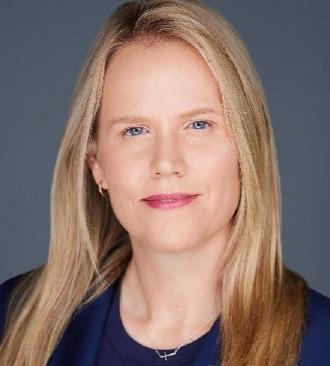
‘They want to go out and sell’ Industry consolidation accelerated after regulatory changes, said Stephanie Bartruff, executive vice president of institutional sales and distribution for Annexus Group, including the DOL’s former fiduciary rule efforts. Firms responded by either acquiring distribution networks or outsourcing backoffice support.
The result, Bartruff explained, is a hybrid model where firms must balance centralized operations with maintaining relationships across multiple carriers and channels. It is at times a difficult collaboration, she noted.

Meanwhile, the bottom-line numbers reflect a vibrant industry. The final annual data from LIMRA showed that total U.S. retail annuity sales reached a record $464.1 billion in 2025, representing a 7% year-over-year increase.
Speaking during LIMRA’s recent Life Insurance and Annuity Conference, Paul Garofoli, regional sales director of individual annuities at The Standard, used a baseball analogy to describe the pace of change.
“I think we’re between second and third base,” Garofoli said.

More like first base, countered Thomas Bumbolow, head of distribution and business development at American Life.
“I think the opportunity around distributing different products, if you will, through similar distribution
This has had a ripple effect across distribution. Broker-dealers and insurers have had to decide whether to build internal compliance capabilities or partner with third-party organizations. In many cases, that decision has fueled consolidation, as firms acquire insurance marketing organizations or other distributors to control the client experience and reduce regulatory risk.
Roughly 45% of annuity sales now flow through independent broker-dealers and insurance marketing organizations, reflecting the broader move away from captive distribution.
At the same time, regulators are increasingly focused on suitability, replacement activity and transparency — especially as annuity exchanges rise. This scrutiny is forcing firms to rethink incentives and ensure recommendations are clearly aligned with client outcomes.
As of April, the DOL has officially removed the 2024 Retirement Security Rule and has restored the longstanding 1975 “five-part test” for determining fiduciary status. The DOL currently has no plans to re-propose a direct replacement for the Biden-era rule that would broadly expand the fiduciary definition.
Ryan Hinchey, senior vice president of product innovation at AmeriLife, noted that consolidation is driving significant acquisition activity, with firms seeking efficiencies by absorbing smaller distributors and centralizing administrative functions.
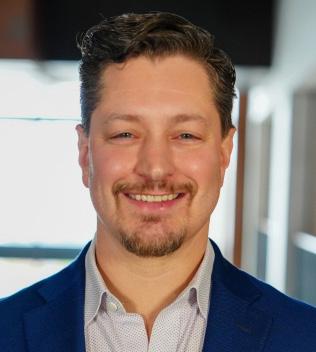
AmeriLife is one of the biggest acquirers, having added more than 100 acquisitions on the health side and 30 on the wealth side, Hinchey said.
“These are entrepreneurs, and they want to go out and sell,” he said. “So, can we make them more effective by letting them sell and taking care of everything else?”
As this issue went to press, the National Association of Insurance Commissioners was working on a pair of significant potential rule changes.
The newly created Annuity Buyer’s Guide Working Group is reviewing draft changes meant to update the guide, last updated in 2013. Since then, new product innovations such as registered index-linked annuities have surged to the top of sales charts.
Proposed revisions focus on providing a more balanced view of annuity
benefits and risks. Key additions include sections on:
» Market value adjustments and their impact on withdrawals.
» Guaranteed living benefits beyond simple withdrawal riders.
» Persistency bonuses and other complex product features not covered in the 2013 version.
Industry trade representatives are unhappy with the language and general tenor of the draft changes.

“The tone and tenor of the guide is perhaps unnecessarily negative,” said Pam Heinrich, general counsel and director of government affairs for the National Association for Fixed Annuities, during a recent working group call.
The guide is delivered “after they’ve already chosen to purchase and apply for an annuity contract,” she added, noting that current “best interest” standards adopted in most states already require disclosures and conversations before a sale. Those standards were not in place when the buyer’s guide was initially adopted.
Indexed annuity illustrations. Another newly renamed NAIC group, the Life Insurance and Annuities Illustrations Working Group, is working on tweaking the rules to rein in annuity illustrations that ballooned to as high as 27%.
Regulators question whether consumers are receiving an accurate picture of potential performance at the point of sale.
The working group is debating whether to build on existing rules — particularly Model Regulation 245, which governs annuity illustrations — or pursue a more comprehensive overhaul.
Some industry trade groups support broader adoption of the current model across states as a near-term step to improve consistency.
Others, including several regulators and consumer advocates, argued that the model is outdated and insufficient to address current concerns. They called for more fundamental changes, including limits on the use of historical data, clearer
disclosures of non-guaranteed elements and greater use of visual tools to improve consumer understanding.

“The original objective for illustrations ... was for the consumer to understand how the policy works,” said industry veteran Dick Weber during a recent call. “And what we observed is that both agents and consumers routinely use the policy illustration to form an expectation of what is likely to occur, and that’s exactly not what any of us want.”
Technology is rapidly becoming a defining competitive factor in the annuity space. Historically known for complex products and paper-heavy processes, the industry is now investing heavily in digital platforms to simplify everything from product design to policy administration.
Ease of use, digital capabilities and the overall client experience are increasingly critical, especially for younger investors.
Improving the purchasing process, often seen as cumbersome compared with digital investment platforms, will be key to attracting new customers, he added during a LIMRA session.
Modern systems are enabling more modular product development, allowing insurers to customize features without rebuilding products from scratch. At the point of sale, digital tools are streamlining applications, improving speed and reducing friction — a critical shift as consumers grow accustomed to fast, intuitive financial platforms.
The 2020 COVID-19 disruption accelerated the adoption of digital tools such as electronic applications, e-signatures and online policy delivery. Those changes have largely persisted even as in-person meetings and events returned.
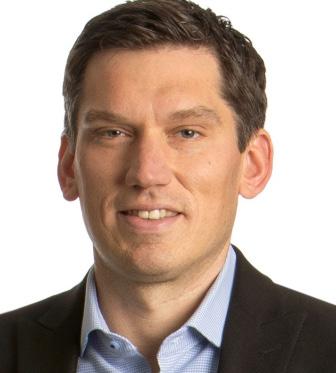
“The idea that we would do anything but e-sign for the large majority of the business, that hasn’t gone away at all,” said Sky Opila, head of business development and growth at Zinnia.

“The original objective for illustrations ... was for the consumer to understand how the policy works. And what we observed is that both agents and consumers routinely use the policy illustration to form an expectation of what is likely to occur, and that’s exactly not what any of us want.”
Dick Weber, Industry Veteran
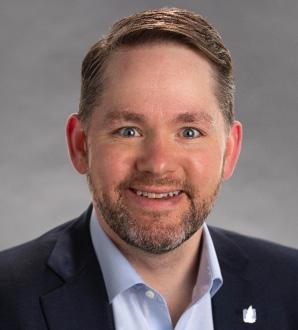
“There’s more need now than ever for product managers to really understand the entire ecosystem in which their product is going to market,” said Aaron Murphy, associate vice president of variable annuity business development at Nationwide, “including the distribution strategies, the marketing strategy behind it, and what the experience is.”
Despite progress, the industry still faces friction in onboarding and servicing, often tied to legacy systems that lack real-time integration. Experiences can vary widely depending on the distribution channel, with bank and institutional platforms generally offering more seamless transactions than independent channels.
“It’s kind of a mixed bag,” Garofoli said. “There are still agents who want to get a hard copy of the policy and want to deliver it and go old school.”
Protective® Aspirations variable annuity.* The variable annuity for the variables of life.
Lock in a 7% compounding roll-up rate for your clients with Protective Aspirations variable annuity and the optional SecurePay Protector℠ income benefit.
It offers guaranteed growth to the benefit base and 6% guaranteed income for life at age 65.
Scan here to help your clients be ready for life’s twists and turns.
Investment and Insurance Products Are: Not FDIC Insured | Not Insured By Any Federal Government Agency | Not a Deposit or Other Obligation, or Guaranteed By, The Bank or Any Of Its Affiliates | Subject to Investment Risks, Including Possible Loss Of The Principal Amount Invested
*In New York, the product offered is Protective Aspirations NY variable annuity.
Protective refers to Protective Life Insurance Company (PLICO) and its affiliates, including Protective Life and Annuity Insurance Company (PLAIC). PLICO, founded in 1907, is located in Omaha, NE, and is licensed in all states excluding New York. PLAIC is located in Birmingham, AL, and is licensed in New York. Securities offered by Investment Distributors, Inc. (IDI), a registered broker-dealer and principal underwriter for registered products issued by PLICO, its affiliate. IDI is located in Birmingham, AL.
Product guarantees are backed by the financial strength and claims-paying ability of the issuing company.
Protective Aspirations variable annuity is a flexible premium deferred variable and fixed annuity contract issued by PLICO in all states except New York under policy form series VDA-P-2006. SecurePay Investor benefits issued under rider form number VDA-P-6063. SecurePay Protector benefits issued under rider form number VDA-P-6061. SecurePay Nursing Home benefits issued under form number VDA-P-5072R, in all states except in California where issued under form number IPV-2159. Policy form numbers, product availability and product features may vary by state.
Protective Aspirations NY variable annuity is a flexible premium deferred variable annuity contract issued by PLAIC in New York under policy form series NY-VDA-A-2024. SecurePay Investor benefits issued under rider form number NY-VDA-A-6075. SecurePay Protector benefits provided by rider form number NY-VDA-A-6073.
Variable annuities are long-term investments intended for retirement planning and involve market risk and the possible loss of principal. Investments in variable annuities are subject to fees and charges from the insurance company and the investment managers.
Withdrawals reduce the annuity’s remaining death benefit, contract value, cash surrender value and future earnings. Withdrawals may be subject to income tax and, if taken prior to age 59½, an additional 10% IRS tax penalty may apply. More frequent withdrawals may reduce earnings more than annual withdrawals. During the withdrawal charge period, withdrawals in excess of the penalty-free amount may be subject to a withdrawal charge.
Investors should carefully consider the investment objectives, risks, charges and expenses of a variable annuity, any optional protected lifetime income benefit, and the underlying investment options before investing. This and ot her information is contained in the prospectus for a variable a nnuity and its underlying investment options. Investors should read the prospectus carefully before investing. Prospectuses may be obtained by contacting Protectiv e at 800-456-6330. For Financial Professional Use Only. Not For Use with Consumers. CABD.6913612.04.26
AI continues to play a larger role as well.
Many annuity sellers are using AI to help agents build an entire sales process in minutes, offering case design comparisons and automated “product translation” into plain English for clients.
Zinnia provides a digital platform for life and annuity sellers that features
they also introduce more competition within their platforms.
Carriers face increased competition within expanded product shelves and greater demands for customized solutions.
Larger distributors are leveraging their scale to negotiate tailored products, Murphy noted, while also operating

“The only way I know how to win selling a commoditized product is with service. If you’re not laser focused on that, whether it’s technology operations, ease of onboarding, ease of doing business, you don’t stand a chance.”
Thomas Bumbolow, Head of Distribution and Business Development at American Life
automated document summaries and prefilled forms to eliminate “not in good order” errors.
Some firms report that more than half of applications can now be processed without human intervention, reducing errors and turnaround times.
“Workflow automation is an exciting term that’s real with AI right now,” Opila said.
Consolidation has been one of the most visible trends in the annuity market, particularly among distributors. Large firms have acquired smaller insurance marketing organizations and broker-dealers to gain scale, expand distribution and centralize operations.
This trend has created both opportunities and challenges. Larger distributors can negotiate more effectively with carriers and demand tailored products, but
distinct internal channels that require different strategies.
“It has created some unique challenges,” he said, including questions about how legacy agreements apply when distribution firms merge or acquire new business.
Despite rising demand for personalized products, experts caution against excessive customization, citing cost and complexity. Many carriers are instead using technology to modify existing products for specific distribution partners, rather than building entirely new offerings.
“You can’t do complete customization of everything,” Murphy said. “But I think there is a way to do a lot more personalization of the products than ever before.”
Modern systems allow for modular product design, enabling faster adjustments without lengthy development cycles, Hinchey added.
For carriers, this means competing not just on product features, but also on
relationships, service and the ability to deliver customized solutions at scale. At the same time, smaller and newer entrants are entering the market with fresh capital and modern technology, intensifying competition further.
The result is a more complex ecosystem in which differentiation is harder to achieve. In some segments, products risk becoming commoditized, pushing firms to compete on pricing, innovation timing or distribution strategy rather than core design.
Taken together, these forces are pushing the annuity industry toward a more integrated, client-focused model. Firms are moving beyond standalone product sales toward broader financial solutions while investing in technology and partnerships to stay competitive.
Even as annuity sales reach record levels, the industry faces a critical challenge: expanding beyond existing customers and educating new ones. How effectively firms respond to regulatory demands, embrace technology and navigate consolidation will shape the next phase of growth.
Annuity executives agree on one point, however: Humans will not be phased out of the process.
With annuities often viewed as commoditized products, Bumbolow emphasized that service, including ease of onboarding and ongoing support, is critical to winning and retaining business.
“The only way I know how to win selling a commoditized product is with service,” he said. “If you’re not laser focused on that, whether it’s technology operations, ease of onboarding, ease of doing business, you don’t stand a chance.”
InsuranceNewsNet

Senior Editor John Hilton covered business and other beats in more than 20 years of daily journalism. John may be reached at john. hilton@innfeedback.com. For up-to-date coverage, follow him on X @INNJohnH.
Like this article or any other?
Take advantage of our award-winning journalism, licensure and reprint options. Find out more at innreprints.com


Rates move quickly. Retirement decisions last decades. Competitive products are only part of the equation. Disciplined, long-term management is designed to support long-term product performance.
Since launching Harbourview FIA in January 2021, renewal cap rates across all contracts have averaged 97.5% of initial cap rate. This reflects historical experience and is not a guarantee of future renewal rates.
A portion of contracts received higher cap rates at their renewal anniversary dates, reflecting responsiveness when market conditions improved.


Cheryl D. George is on a mission to protect her clients, serve her community and spread love to the other side of the world.
By Susan Rupe
Cheryl D. George remembers the incident that set her on the path to an insurance career. A young woman from her community died after a battle with cancer. Her husband and family had no money to pay for a funeral, so they were forced to raise the funds needed to pay for her final expenses.
George vowed that she would do everything she could so that no other family would have to fundraise for a funeral. That vow inspired a career change from a business consultant to a life insurance agent.
Today, she is managing director of Atlanta-based Insure With Cheryl, an independent insurance agency specializing in life and health insurance that she founded in 2012.
George’s practice primarily serves solopreneurs, those who are self-employed and have anywhere from one to five people working for them.
“I lean toward serving female entrepreneurs who are moms, heads of household, usually singles, but I have a lot of male clients as well,” she said.
George said she focuses on self-employed clients “because those in the self-employed market don’t have a good financial road map.
“W-2 employees have structure. They have 401(k)s, and they have life insurance and health insurance through their job, and they have all these different protections in place. As solopreneurs, we’re trying to figure it out. We don’t have it. We’re just trying to stay above water. So I like to work with self-employed so I can bring structure to them. I understand their plight because I experienced it for 30-something years, and I’m still experiencing it. It’s like they’re my tribe.”
“You should have different things inside that portfolio to protect you when life starts happening,” she said. “My model and my theme is: Protection is the plan. When I talk to clients about their goals, their dreams, their aspirations, what their business is and how they got into it, their highs and their lows — I’m listening and taking notes. If I see a way I can connect them to another client who can help their business, I’ll do that. If I see an article that will help their business, I’ll share it.”
Entrepreneurs often lack someone who believes in their vision, George said.
“Most of the time, they’re the first one in their family to step out into entrepreneurship. Their family thinks they’re crazy for leaving a good job, and they don’t see that person’s vision until they hit success. It’s a lonely road, and they don’t have someone cheering them on. So I am their cheerleader, and I listen intently because that’s what I needed and wanted when I went out on my own.”
The skills that George had in her prior career as a business consultant transferred well into the insurance business.
“I understand business structure very well. So when I’m talking to these entrepreneurs, I see the holes, the shortcomings in their plan. I can see whether their insurance is improperly structured or that they don’t have certain things in place, and I’m able to point that out to them. I can see that they don’t have proper systems in place or that they can’t get proper financing from the bank. A lot of my entrepreneur clients call me for consulting. So my background helps me, especially since my target market is self-employed folks.”
George spent the early part of her life in New York before moving to Chicago, where she spent 10 years. She has an honorary doctorate in business administration from a Christian college in Chicago. Her move to Chicago was inspired by searching for something new after her daughter married and left home.
“I wanted to do something different in my life,” she said. “I knew a pastor who was heavily into the mission field, and I wanted to do something with my
life in that regard. My faith is important to me. It’s very big. I wanted to get into the mission field and learn more about that. The plan was to go to Chicago for six months to learn from her. But that six months turned into 10 years.”
George said her faith is the foundation of her practice.
“It is how I choose my clients. It is how I care for my clients. I pray for my clients daily. I motivate my clients through prayer in conversations. I strongly believe that my agency is not my work or my career. I believe it’s my assignment from God that I help navigate these families,
chicken soup,” she said. “I’m not the traditional advisor. As I said, this is my tribe. I can’t do the things I do for my family without my clients. Because they trust me, I want to be a good steward for what they have entrusted me with.”
George is a Top of the Table member of the Million Dollar Round Table and is a member of Pan American Life Insurance Group’s 2025 Chairman Club. But beyond these industry honors, George is most proud of her work in supporting communities both overseas and in her own backyard.

these entrepreneurs who are heads of families. That’s why working with single moms is so important to me. It’s transforming the lives of multiple generations, on multiple levels, and so I believe this is my calling. This is what I’m supposed to be doing.”
George has many multigenerational clients.
“When I do the initial assessment with clients and they tell me how many children they have and their names and their sex, I ask what they are into and what are they about,” she said. “When I talk to the client, I want to talk to the spouse and children as well. I want to know what goals the children have because the children’s goals affect the household finances. If a child wants to be a doctor or wants to play soccer or whatever, those are expenses that the parents must incur.”
She also reaches out to clients on birthdays or when they are ill.
“I’ve sent people coloring books and
In August 2024, she financed the completion of an orphanage in Uganda after the construction was halted during the COVID-19 shutdown.
“It’s the project of a good friend of mine,” she said. “In 2023, he told me that the orphanage was sitting there abandoned, half done. I said, ‘Let’s go ahead and finish this project, and it will be my 60th birthday present to myself.’ It’s a six-bedroom, six-bathroom building for the children. Now we’re going to do the landscaping and furnish it, so we need to buy a washer and dryer, a refrigerator, bunk beds and everything the children need so they can move into the building in September. Then in December, we’ll do Christmas in Uganda.”
Christmas in Uganda has been a tradition for George for the past 15 years, where she feeds an entire village three meals a day for a week. She also sends resources that children need to be fed, housed and educated.

“It costs us maybe $1,200 to feed about 200 children,” she said. “I also sponsor six children in boarding schools in Uganda because there aren’t places to house them. I pay for their school fees, their boarding fees, their meals, clothes, medical bills, whatever they need.”
In addtition to her work in Uganda, she also has done mission work in Abuja and Lagos in Nigeria and Sierra Leone.
“I saw the need of the people,” she said of her interest in mission work. “I have a friend who has been in the missionary field for 15 years, working in 41 countries. Sometimes he needs help, and he shares stories of people with needs — usually medical needs — and I send money to help.”
Back home in Atlanta, George volunteers with and supports organizations that help women who are victims of domestic violence. She also does backto-school drives for children in need.
She recently created the Cherish Foundation, which is aimed at funding programs to help communities at home and abroad. In June, the foundation will launch a financial literacy program in partnership with local churches. The foundation also will fund scholarships to vocational schools and for entrepreneurship.
Excited about tech
George is using her computer science degree to develop digital tools for her clients.
“Some of the tools are free, some are paid, but they will support the work that we’re doing and automate a lot of the processes that we’re doing manually,” she said.
She also wrote her first book, Fire Your Bank, which was published in February.
In 2025, she created a financial planner called “Flowing Financially,” which was designed for the self-employed. The planner includes several trackers for clients to list their saving, spending, investments and income. She is now in the process of turning that planner into an app.
“We also created an assessment that clients can do. One is free, and then there’s another one that costs $69 but it gives you a 15-page report of your financial makeup — not just insurance, but everything,” she said. “ It shows you the areas where you are strong, where you can use more help and where you’re totally exposed. And then it gives you a 12-to-24-month road map on how to get yourself in order and insulate yourself from things that most people who are not in this industry don’t think about.”
George said she is excited about these new products, and she plans to expand her practice and add more advisors. But she doesn’t want to grow to the point where she loses sight of why she is in the business.
“Even though we are building a boutique agency, I don’t want it to be so large that the culture gets lost,” she said. “It’s important that I stay tapped into my clientele. I don’t want them to become numbers on a page.”

Susan Rupe is managing editor for InsuranceNewsNet. She formerly served as communications director for an insurance agents’ association and was an award-winning newspaper reporter and editor. Contact her at srupe@ insurancenewsnet.com. In this year’s Annuity Awareness Month Thought Leadership Series, great minds from elite companies offer their perspective on product, process, and the future of an ever-changing annuity marketplace.
The Nasdaq-100®, Evolving for What’s Next by Nasdaq PAGE 25 Focused Growth. Proven Execution. Earned Trust. by Ibexis PAGE 26 Leveling Up: How SILAC® Is Raising the Bar While Staying True to Its Foundation by SILAC PAGE 28 From Entrant to Established by Talcott Financial Group PAGE 30 You Could Be Losing Up to 20% of Your Commissions Each Year by GreenWave PAGE 31


Founded in 1971 as the world’s first electronic exchange, Nasdaq has always been grounded in innovation. That commitment is reflected across the business, including Nasdaq Global Indexes and its flagship offering, the Nasdaq-100 (NDX®).
Over its 40-year history, NDX has evolved into one of the world’s most robust index-based ecosystems, delivering large cap exposure through a transparent methodology that enables a wide range of investment strategies with liquidity options. This adaptability is increasingly critical as the role of indexes continues to expand beyond traditional benchmarks.
“We’re seeing a transition from passive benchmarking to purposeful strategy design,” says James Caparosa, Director of Insurance Sales at Nasdaq. “Indexes today are being used to deliver specific outcomes that reflect how clients actually experience risk and return.”
Behind that shift is a broader transformation of the Nasdaq-100 ecosystem, shaped by three forces: a modernized index methodology, rapid adoption across annuity products, and a growing set of strategies designed to deliver more precise outcomes.
NDX has always evolved alongside changing markets, products, and investor expectations — and that evolution continues today.
Following a public consultation on proposed methodology enhancements, Nasdaq updated the Nasdaq-100 methodology to keep it aligned with modern public markets. Among the changes: a new framework that allows the index to capture eligible IPOs more quickly than before, ensuring that the Nasdaq-100 remains timely and representative of the market it measures, while preserving replicability for passive managers and investors.
“Exposure to the new economy is what has driven returns over time,” says Pranay Dureja, Head of Derivatives and QIS-Based Index Research at Nasdaq. “The question is whether you want exposure to the companies of the 20th century or the ones shaping the 21st century.”
That distinction is measurable. Companies in the Nasdaq-100 invest more than 1.3 times what their broader market counterparts spend on research and development — a signal of where long-term growth is being built.
Keeping that exposure relevant requires continuous refinement. The index evolves because the economy it represents evolves.
The Nasdaq-100 is no longer just one choice among many inside annuities. It has become a central building block, particularly as registered index-linked annuities (RILAs) continue to gain traction and surpass annual sales records per LIMRA.
“Annuities are evolving from what used to be a niche solution to a core piece of the retirement toolbox,” Caparosa says. “Advisors are integrating them into broader portfolio strategies, and indexes are a critical part of that.”
That shift has changed how indexing functions within insurance products.
“It went from indexes being created and widely available to fund issuers, banks and insurance carriers alike,” Dureja says. “Now we are engineering solutions specifically for the annuity wrapper.”
By adopting a collaborative strategy design specific to the industry, Nasdaq has delivered a smoother experience for policyholders while helping carriers better manage risk. The impact is felt across the entire value chain; in the past two years, NDX has seen over a 50% increase in placements as a crediting option within RILAs.
Nasdaq’s role is not limited to index construction. It extends into how products are conceived and brought to market.
“What we’ve done with HiCap is introduce a different way to improve cap rates,” Dureja adds. “Instead of targeting a certain level of volatility, it reorganizes the risk profile of the Nasdaq-100 to deliver more variability to the upside.”
“We take a very consultative approach,” Caparosa says. “We are working with carriers to design solutions that align with what they are trying to deliver, whether that is consistency, improved crediting potential, or better overall outcomes.”
The next phase of growth is being driven by what can be built on top of the Nasdaq-100. The focus is on expanding the index ecosystem to offer multiple expressions of NDX, each tailored to meet unique retirement needs.
That evolution includes strategies designed to respond to changing market conditions in real time, such as the Nasdaq-100 Chronos 10%™ Index, which uses intraday volatility targeting to adjust exposure up to seven times throughout the day. As markets become more dynamic, that responsiveness becomes more important while expanding the definition of innovation itself.
“The new economy is no longer limited to equities,” Dureja says. “That’s why we’ve introduced strategies like the Bitcoin Trends Index, which blends Nasdaq-100 exposure with digital assets.”
These new solutions are grounded in a clear understanding of what clients want from annuities. Nasdaq consistently adapts to the three core priorities most often cited by clients and partners: higher crediting potential, greater consistency, and fewer zero-crediting years.
That final priority reframes a long-standing industry mindset.
“Why aim for zero? It may be the floor, but clients want the opportunity to exceed it,” Caparosa says. “Clients want to know what they are getting. They want a more predictable experience over time.”
What defines the next chapter of annuities will not be protection alone. The focus is shifting toward what drives outcomes above that foundation.
“The next phase of adoption will be driven by the quality of the underlying investment strategies,” Caparosa says.
That shift is bringing two worlds closer together.
“You’re seeing the convergence of capital markets and insurance,” he says. “That is what will shape the future of retirement solutions.”
The Nasdaq-100 sits at the center of that convergence, evolving to capture what comes next and reaffirming its role as the benchmark of the 21st century.

Nasdaq®, Nasdaq-100®, Nasdaq-100 Index®, NDX®, and Nasdaq-100 Chronos 10%™ are trademarks of Nasdaq, Inc. The information contained above is provided for informational and educational purposes only, and nothing contained herein should be construed as investment advice, either on behalf of a particular security or an overall investment strategy. Neither Nasdaq, Inc. nor any of its affiliates makes any recommendation to buy or sell any security or any representation about the financial condition of any company. Statements regarding Nasdaq-listed companies or Nasdaq proprietary indexes are not guarantees of future performance. Actual results may differ materially from those expressed or implied. Past performance is not indicative of future results. Investors should undertake their own due diligence and carefully evaluate companies before investing. ADVICE FROM A SECURITIES PROFESSIONAL IS STRONGLY ADVISED.
Information set forth contains forward-looking statements that involve a number of risks and uncertainties. Nasdaq cautions readers that any forward-looking information is not a guarantee of future performance and that actual results could differ materially from those contained in the forward-looking information. Forward-looking statements can be identified by words such as “will,” “may”, and other words and terms of similar meaning. Such forward-looking statements include, but are not limited to, statements related to future activities and results. Forward-looking statements involve a number of risks, uncertainties or other factors beyond Nasdaq’s control. These risks and uncertainties are detailed in Nasdaq’s filings with the U.S. Securities and Exchange Commission, including its annual reports on Form 10-K and quarterly reports on Form 10-Q which are available on Nasdaq’s investor relations website at http://ir.nasdaq.com and the SEC’s website at http://www.sec.gov. Nasdaq undertakes no obligation to publicly update any forward-looking statement, whether as a result of new information, future events or otherwise.
built a company that is
paired with responsive customer service, offering competitive products and compensation, all backed by strong financial discipline.”
-
That level of growth also creates opportunities to further strengthen and elevate service standards.
“Driving growth while maintaining service levels is the focus,” Gemmiti says. “We’re constantly monitoring the data to make sure we’re delivering consistent results.”
That deliberate approach has positioned Ibexis in a distinct segment of the market.
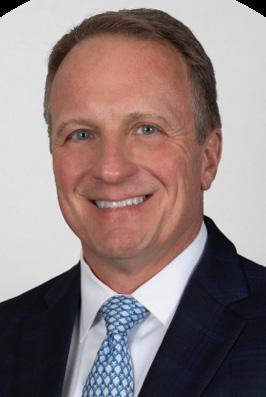
Nate Gemmiti
President and CEO
How Ibexis has grown with focus and discipline while redefining what it means to compete in today’s annuity market.
“When I look at the market, I see three groups,” he explains. “Established players that have been around for a long time, new entrants still trying to find their footing, and a small group that has traction, a reliable track record, and established partnerships. That’s where we are.”
Momentum in today’s annuity market is easy to measure. Sustaining it—without sacrificing service, competitiveness, or trust—is harder. That’s where Ibexis has carved out its position, according to President and CEO Nate Gemmiti .
“What makes us different is that we’ve demonstrated five years of executing on a very clear business plan,” Gemmiti says. “We’ve built a company that is technology-focused, paired with responsive customer service, offering competitive products and compensation, all backed by strong financial discipline.”
That deliberate approach has positioned Ibexis in a distinct segment of the market.
At the center of that consistency is Ibexis’ fully digital platform. Unlike many competitors burdened by legacy systems, the company was built from the ground up with technology at its core.
The results of that approach are difficult to ignore. In a year when indexed annuity sales grew modestly across the industry, Ibexis significantly outpaced the market.
“We have granular data on every piece of business from the moment an application comes in to when money goes out the door,” Gemmiti says. “That level of insight allows
“In a relatively flat environment, we grew by more than 40%,” Gemmiti says. “That’s a combination of deepening relationships with existing advisors and bringing new advisors into the fold every day.”
“We didn’t buy a company. We built one. And we built it specifically for the IMO channel, with a focus on strong partnerships.”
Nate Gemmiti President and CEO
“When I look at the market, I see three groups,” he explains. “Established players that have been around for a long time, new entrants still trying to find their footing, and a small group that has traction, a reliable track record, and established partnerships. That’s where we are.”
Discipline and consistency have become a defining advantage. Rather than chasing rapid expansion or reacting to short-term market shifts, Ibexis has remained firmly anchored to its original strategy.
“The annuity business is built on trust,” Gemmiti says. “Doing what you say you’re going to do everyday matters. Small missteps can become big problems.”
According to LIMRA estimates, overall indexed annuity sales increased by just 1% during the same period.
That level of growth also creates opportunities to further strengthen and elevate service standards.
“Driving growth while maintaining service levels is the focus,” Gemmiti says. “We’re constantly monitoring the data to make sure we’re delivering consistent results.”
At the center of that consistency is Ibexis’ fully digital platform. Unlike many competitors burdened by legacy systems, the company was built from the ground up with technology at its core.
“We have granular data on every piece of business from the moment an application comes in to when money goes out the door,” Gemmiti says. “That level of insight allows
us to see exactly where things are working and where we need to improve.”
The impact is measurable. Even as volumes have increased, processing speeds have improved, an uncommon result in a scaling organization.
“We didn’t buy a company. We built one. And we built it specifically for the IMO channel, with a focus on strong partnerships.”
Discipline and consistency have become a defining advantage. Rather than chasing rapid expansion or reacting to short-term market shifts, Ibexis has remained firmly anchored to its original strategy.
That mindset extends across product design, distribution, and operations. Rather than building in isolation, Ibexis works closely with a select group of partners, using their insight to shape solutions that drive shared success.
“The annuity business is built on trust,” Gemmiti says. “Doing what you say you’re going to do everyday matters. Small missteps can become big problems.”
That mindset extends across product design, distribution, and operations. Rather than building in isolation, Ibexis works closely with a select group of partners, using their insight to shape solutions that drive shared success.
“We built the company from day one with direct input from our partners,” he says. “That feedback continues to guide our decisions — ensuring we’re creating solutions that work in the real world and deliver better outcomes for everyone involved.
“We built the company from day one with direct input from our partners,” he says. “That feedback continues to guide our decisions — ensuring we’re creating solutions that work in the real world and deliver better outcomes for everyone involved.
us to see exactly where things are working and where we need to improve.”
“Good data leads to good decisions” Gemmiti adds. “And that allows us to stay ahead of our growth curve while maintaining some of the strongest service metrics in the industry.”
Technology is also shaping product innovation. With modern infrastructure, Ibexis can design and implement features that may be difficult or impossible for competitors constrained by older systems.
The impact is measurable. Even as volumes have increased, processing speeds have improved, an uncommon result in a scaling organization.
“Good data leads to good decisions” Gemmiti adds. “And that allows us to stay ahead of our growth curve while maintaining some of the strongest service metrics in the industry.”
Technology is also shaping product innovation. With modern infrastructure, Ibexis can design and implement features that may be difficult or impossible for competitors constrained by older systems.
“A clean technology platform gives us agility,” Gemmiti explains. “We can respond faster, build differentiated features, and adapt to what the market is telling us.”
“A clean technology platform gives us agility,” Gemmiti explains. “We can respond faster, build differentiated features, and adapt to what the market is telling us.”
“We didn’t buy a company. We built one,” Gemmiti says. “And we built it specifically for the IMO channel, with a focus on strong partnerships.”
That intentional approach continues to guide how the business evolves.
That responsiveness is especially important in a market where product complexity continues to increase, and client expectations are evolving.
Gemmiti sees a growing contrast between traditional fixed indexed annuities and registered index-linked annuities (RILAs), with many clients searching for a middle ground.
“For us, it’s about strengthening our partnerships,” Gemmiti explains. “Any expansion we make is in service of helping our IMO partners grow, not competing with them.”
“There are clients who look at a traditional FIA and ask, ‘Can I do a little better?’” he says. “And others who look at a RILA and worry about downside risk.”
That philosophy reinforces a broader commitment to alignment across the business.
“When you have open, honest conversations with your partners about everything from product design to process, you arrive at stronger, more effective solutions,” he says.
Ibexis has responded by developing solutions designed to bridge that gap, offering enhanced upside potential while maintaining defined protection.
“The key is delivering meaningful value without overcomplicating the product,” Gemmiti says. “That’s where focus really matters.”
Beyond growth and innovation, Ibexis has also taken a measured approach to portfolio management, an area of increasing scrutiny across the industry.
As Ibexis expands, it continues to do so through the same partnership-driven model that defined its early growth. Even as it moves into the broker-dealer and bank space it is designed to enhance existing IMO relationships.
“We didn’t buy a company. We built one,” Gemmiti says. “And we built it specifically for the IMO channel, with a focus on strong partnerships.”
That intentional approach continues to guide how the business evolves.
“We’ve been very deliberate in how we’ve built our investment portfolio,” Gemmiti says. “We haven’t had to stretch for yield or take on unnecessary risk to remain competitive.”
“For us, it’s about strengthening our partnerships,” Gemmiti explains. “Any expansion we make is in service of helping our IMO partners grow, not competing with them.”
That philosophy reinforces a broader commitment to alignment across the business.
That discipline extends to aligning assets and liabilities, managing liquidity, and maintaining long-term sustainability.
“When you have open, honest conversations with your partners about everything from product design to process, you arrive at stronger, more effective solutions,” he says.
“It’s not just about building strong products,” he explains. “It’s about building a durable company that can stand behind those products over time.”
Beyond growth and innovation, Ibexis has also taken a measured approach to portfolio management, an area of increasing scrutiny across the industry.
“We’ve been very deliberate in how we’ve built our investment portfolio,” Gemmiti says. “We haven’t had to stretch for yield or take on unnecessary risk to remain competitive.”
“I want advisors to think of us as a partner they can trust. One that’s growing, but doing so responsibly,” he says. “They should feel confident that they can grow their business with us while enhancing what they’re delivering to clients.”

While fixed indexed annuities remain a core focus, Gemmiti is closely watching shifts across the broader retirement landscape, particularly the continued rise of RILAs and the appetite for income solutions.
As Ibexis looks ahead, Gemmiti says the strategy remains consistent even as the company scales.
“The income conversation is only getting louder,” he says. “As clients move from accumulation to decumulation, this will continue to be an area of importance for clients.”
Ibexis is exploring opportunities in that space but remains disciplined in its approach.
“Focused growth is about growing without sacrificing service,” Gemmiti says. “It means staying true to our partners, listening to their needs, and being responsive.”
“We’re not going to enter any market unless we believe we can deliver something best-in-class,” Gemmiti says. “That’s been our approach from the beginning.”
It also means maintaining discipline in a market that often rewards short-term gains over long-term stability.
“We won’t ever be everything to everyone,” he adds. “But we want to be excellent at everything we do.”
For advisors, the changing landscape presents both opportunity and complexity. More choice can be beneficial, but only if it’s paired with clarity and confidence.
“Advisors today have more options than ever,” Gemmiti says. “The challenge is knowing which partners they can rely on to deliver consistently.” That’s the perception Ibexis aims to own.
That clarity of purpose — paired with operating discipline and a platform built to scale — positions Ibexis as a long-term partner for advisors navigating a more complex annuity landscape.
“I want advisors to think of us as a partner they can trust. One that’s growing, but doing so responsibly,” he says. “They should feel confident that they can grow their business with us while enhancing what they’re delivering to clients.”
As Ibexis looks ahead, Gemmiti says the strategy remains consistent even as the company scales.
“Focused growth is about growing without sacrificing service,” Gemmiti says. “It means staying true to our part ners, listening to their needs, and being responsive.”
It also means maintaining discipline in a market that of ten rewards short-term gains over long-term stability.
“We won’t ever be everything to everyone,” he adds. “But we want to be excellent at everything we do.”
That clarity of purpose — paired with operating discipline and a platform built to scale — positions Ibexis as a long-term partner for advisors navigating a more complex annuity landscape.
Guarantees are based on the claims paying ability of Ibexis Life & Annuity Insurance Company®.
AM Best Rating reaffirmed June 2025. 4th highest of 13 ratings. For latest ratings visit www.ambest.com.
That discipline extends to aligning assets and liabilities, managing liquidity, and maintaining long-term sustainability.
“It’s not just about building strong products,” he explains. “It’s about building a durable company that can stand behind those products over time.”
Guarantees are based on the claims paying ability of Ibexis Life & Annuity Insurance Company®.
AM Best Rating reaffirmed June 2025. 4th highest of 13 ratings. For latest ratings visit www.ambest.com.
This brochure is for informational purposes only. Review the Contract for product details and benefits. Restrictions apply. Neither Ibexis nor its representatives provide legal or tax advice. Consult with your attorney or tax advisor for additional information. Ibexis’ products are NOT: 1) a deposit; 2) FDIC or NCUA insured; 3) insured by any federal government agency; or 4) guaranteed by a bank, savings association or credit union. Guarantees are based on the financial strength and claims-paying ability of Ibexis. Policy form numbers and product availability vary by state. Withdrawals may be taxable and subject to tax penalties if made before age 59-1/2. Tax-deferral offers no additional value if the annuity is used to fund a qualified plan, such as an IRA or 401k and may not be available if the owner of the annuity is not a natural person such as a corporation or certain types of trusts.
This brochure is for informational purposes only. Review the Contract for product details and benefits. Restrictions apply. Neither Ibexis nor its representatives provide legal or tax advice. Consult with your attorney or tax advisor for additional information. Ibexis’ products are NOT: 1) a deposit; 2) FDIC or NCUA insured; 3) insured by any federal government agency; or 4) guaranteed by a bank, savings association or credit union. Guarantees are based on the financial strength and claims-paying ability of Ibexis. Policy form numbers and product availability vary by state. Withdrawals may be taxable and subject to tax penalties if made before age 59-1/2. Tax-deferral offers no additional value if the annuity is used to fund a qualified plan, such as an IRA or 401k and may not be available if the owner of the annuity is not a natural person such as a corporation or certain types of trusts.
The provisions, riders and optional additional features of this product have limitations and restrictions, and may have additional charges. Contracts are subject to state availability, and certain restrictions may apply.
The provisions, riders and optional additional features of this product have limitations and restrictions, and may have additional charges. Contracts are subject to state availability, and certain restrictions may apply.
Rapid growth, rising competition, and increasing complexity define today’s annuity market, and standing still isn’t an option. But neither is change for the sake of change.
For SILAC Insurance Company, the next phase isn’t about reinvention. It’s about refinement.
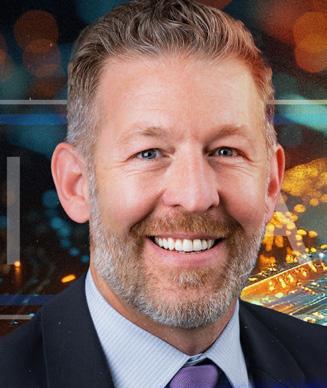
“Leveling up means moving from a company that proved it could grow to one that’s built to scale consistently, profitably, and with less friction,” said Dan Acker, President and Chief Marketing Officer at SILAC. “It means improving the things advisors feel every day: service responsiveness, product clarity, and ease of doing business, while strengthening the foundation underneath that growth.”
That distinction matters. As some carriers chase growth through expansion alone, SILAC is putting its energy into the day-to-day mechanics that make growth sustainable: how quickly it responds, how clearly it communicates, and how smoothly it supports advisors from application to post-issue service.
SILAC’s early years were focused on establishing credibility through competitive products. That mission has evolved.
When we started, the focus was simple — to prove we could compete,” Acker explains. “As we’ve grown, that vision has expanded. Today, it’s about delivering simple, trusted retirement solutions through exceptional service.”
That shift reflects a broader reality in today’s annuity market. Competitive rates and product features are no longer enough to differentiate.
“Advisors need more than products,” Acker says. “They need a carrier that is dependable over time. That means consistency in service, consistency in competitiveness, and the ability to execute.”
Execution, increasingly, is the differentiator.
Service is often positioned as a differentiator in the annuity industry. At SILAC, it is treated as a measurable discipline.
“For us, service means fast, right the first time, predictable, and easy to navigate,” Acker says. “Digitally enabled, but always human supported.”
That focus has translated into tangible improvements
across the organization. Over the past year, SILAC delivered a significant operational transformation:
• Average processing times improved by 75%, from 7.6 days to 1.9 days
• Withdrawals now average two days, down from 11
• Death claims are completed in 2.68 days, down from 16
• Applications are now reviewed the same day they are received
• Once funds are in-house, speed to issue has improved from three days to 1.5 days

The gains extend to service accessibility as well. Call center performance has improved dramatically, with a 77% reduction in hold times. More than 90% of calls are now answered within five minutes, even as call volumes have increased.
“These improvements didn’t happen because demand slowed,” Acker says. “They came from process improvements, automation, and a relentless focus on efficiency.”
The result is a faster, more predictable experience for advisors and their clients across the entire lifecycle of a policy.
One of the biggest challenges facing growing carriers is maintaining service quality at scale. For SILAC, the answer isn’t simply adding headcount.
“You can’t just scale service by adding people. That’s not sustainable,” Acker said. “It has to be a combination of automation, process discipline, better tools, and targeted hiring.”
That philosophy is shaping how the company builds its operating model; one designed not just for current demand, but for future growth.
“Our goal is to build a system that can triple our transaction capacity while improving efficiency,” he said. “That means thinking ahead, making sure our operations and technology are leading our growth, not reacting to it.”
Internally, that mindset translates into a forward-looking approach: building infrastructure for where the business is going, not where it is today.
Annuities are inherently complex. SILAC’s goal is not to eliminate that complexity, but to manage it behind the scenes.
“We’re not trying to remove sophistication,” Acker explains. “We’re trying to move it behind the scenes so the advisor and client experience is simpler.”
That includes fewer touchpoints during the application process, cleaner product design, and tools that help advisors navigate suitability and compliance earlier in the process. SILAC is also investing in portals and digital capabilities to give advisors and clients more visibility and control.
In some cases, it means issuing policies the same day funds
growth,” Acker says. “Expanding that relationship strengthens our financial position and allows us to continue investing in the business.”
Importantly, the added scale is not about changing direction. It is about accelerating what is already working.
With greater resources, SILAC is positioned to invest more deeply in technology, service infrastructure, and product development while maintaining its disciplined approach to risk and execution.
“Ease of doing business isn’t one thing. It’s the entire lifecycle. From the first client meeting to post-issue service, it has to feel seamless.”
and paperwork are received. In others, it means enabling advisors to address suitability questions before an application is submitted, reducing friction before it starts.
The broader objective is consistency.
“Ease of doing business isn’t one thing. It’s the entire lifecycle,” Acker said. “From the first client meeting to post-issue service, it has to feel seamless.”
That mindset treats the experience as a connected system, not a series of steps. When everything aligns, advisors spend less time managing processes and more time focused on client outcomes.
With product innovation often coming at the cost of added complexity, SILAC is taking a more disciplined approach.
“Innovation has to solve a real problem,” Acker says. “If it doesn’t, it’s just noise.”
That philosophy is reflected in how SILAC designs and positions its products. Rather than trying to create all-inone solutions, the company focuses on products with clear, defined purposes.
“When we think about annuities, we focus on three core needs — accumulation, income, and legacy,” Acker says. “We design products that are purpose-built for each, rather than trying to do everything in one product.”
That clarity extends to how products are communicated and used in the field. The goal is not just competitiveness, but usability.
“Differentiation has to be meaningful,” Acker says. “It has to show up in clarity, relevance, and ease of use for the advisor and the client.”
SILAC’s partnership with Hildene Capital Management represents a significant step in its evolution. Following the anticipated close of the acquisition by Hildene and Jefferies, pending regulatory approval, that partnership is expected to deepen further.
The relationship builds on an existing foundation and brings expanded access to capital, enhanced investment capabilities, and additional reinsurance support.
“The partnership has been instrumental in supporting our
As SILAC continues to grow, the challenge is not just operational. It is cultural.
“You have to preserve what made you successful in the first place,” Acker says. “For us, that’s responsiveness, relationships, and a strong sense of accountability.”
That includes maintaining close ties with distribution partners and ensuring that feedback loops remain active and meaningful.
“We rely heavily on input from our partners,” he says. “And just as important, we make sure we close that loop and communicate back.”
Ultimately, leveling up at SILAC is about balance. It is about building scale without losing agility, adding capability without adding friction, and driving growth without losing focus.
“This isn’t about becoming SILAC 2.0,” Acker says. “It’s about continuously improving what already makes SILAC strong.”
For advisors, “leveling up” shows up in practical ways: fewer follow-ups, clearer expectations, and a smoother path from application to policy. As SILAC refines how it operates, the path forward is deliberate.
Service is not a slogan. It is measured and improved. Innovation is not noise. It is purposeful and disciplined. Growth is not the goal. Sustainable, scalable execution is.
For Acker, that is what leveling up truly means.
“Every day, we’re working to deliver a better experience for our partners and their clients,” he says. “And we’re building the foundation to do that consistently as we grow.”
Talcott Financial Group entered the retail annuity market with a clear purpose and a proven record of providing income.
“We’re not a new carrier. We’re a new entrant,” says Ryan Lex, Head of Retail Distribution and Marketing at Talcott Financial Group. “We have $135 billion of assets under management and a long history of delivering for policyholders. This is a natural progression for us.”
That distinction matters: Talcott isn’t starting from scratch. Its foundation is decades of experience through its legacy with The Hartford. “For those who know The Hartford legacy, this is a continuation of that commitment,” Lex says. “We’ve been paying income for decades.”
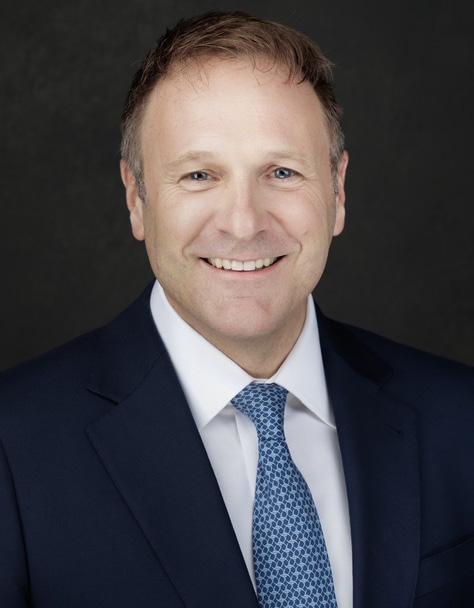
The retirement conversation has shifted. Clients are living longer, facing uncertainty, and relying more heavily on their assets to generate income.
Talcott is focused on solving that challenge directly.
“We’re centered on being a solution for income now and income later,” says Lex. “Some clients need income immediately. Others are planning for the future. We want to meet both needs in a meaningful way.”
That focus reflects a growing need across the market. “People want confidence that they can pay their bills and not outlive their money,” he adds. “That’s what we’re trying to solve for.”
Talcott entered the market with a full suite of annuity solutions designed to address a range of client needs.
“It was important for us to come to market with a well-rounded suite,” Lex says. “We didn’t want to be seen as a single-solution company.”
The lineup includes flexible MYGA durations, accumulation strategies, and guaranteed income solutions for both short-term and long-term planning.
The differentiator is the intent behind the design.
“If you’re not solving a real advisor or client need, the product won’t work,” Lex explains. “Everything we’ve built is centered on delivering value and peace of mind.”
Clarity matters as much as performance.
“It’s important to us that clients understand what they bought,” he adds. “Innovation can’t come at the expense of that.”
Talcott’s approach is grounded in discipline, starting with how products are priced and managed.
“We were very intentional about taking a disciplined pricing approach,” Lex says. “We’re not interested in teaser rates that look good upfront but create risk later. We want
to deliver something that holds up.”
That mindset extends to product design, including features that reduce uncertainty for clients.
“We’ve built options that remove concerns like renewal rate risk,” he notes. “Clients should know what to expect, not just today, but throughout the life of the contract.”
An open-architecture investment model further strengthens outcomes.
“We’re not locked into a single asset manager,” Lex explains. “That allows us to find the best opportunities and pass that value back to the customer.”
Execution turns strategy into results.
Talcott’s team brings deep experience across distribution, marketing, product, and operations.
“The average tenure across our core group is about 15 years,” says Lex. “That experience matters.”
It shows up in the advisor experience, especially in service.
“One of the things that was really important to us was owning the service experience,” he says. “Our back-office team has been supporting annuity business for over a decade on average.”
Technology plays a critical role as well.
“We’ve built a paperless, technology-driven platform focused on straight-through processing,” Lex explains. “The goal is to make it easier to do business.”
Talcott’s commitment extends beyond product.
“If we can equip advisors with the tools and support to confidently position an idea and tell a story, then we’ve done our job,” Lex says.
That includes education, sales concepts, and client-ready materials designed to simplify conversations.
“We’re trying to make their job easier,” he adds. “Give them what they need to communicate clearly with clients.”
Talcott’s long-term ambition is clear. “We want to be viewed as a trusted partner,” Lex says. “That’s not something you claim. It’s something you earn.”
That mindset reflects a broader mission across the organization. “Our aspiration is to be the most respected financial protection business in the industry,” he adds. “That comes down to delivering on the promises we make.”
For advisors, that consistency is what matters most. “You’re trusting us with your clients’ income,” Lex says. “We take that responsibility seriously.”
Visit www.talcott.com to get started today.

Why commission management may be the most overlooked growth lever in your business.
Production drives BGAs, IMOs, and agencies, and most focus almost exclusively on sales. Svyatoslav “Slava” Isayev, Founder and CEO of GreenWave Commissions, warns that this focus is costing firms more than they realize.
“Everyone is told to focus on sales, sales, sales,” says Isayev. “But if you’re not tracking and validating your commissions, you’re missing a significant portion of the revenue you already earned.”
GreenWave’s analysis is based on real-world scale. The platform processes more than $6.4 billion in commissions annually, tied to over $108 billion in premiums across life, annuity, health, and disability lines.

GreenWave identified an average commission error rate of 18.3% of revenue, rising to over 20% in 2025.
“If you’re a $10 million business, that’s $1.8 to $2 million,” Isayev explains. “You’re putting in all the effort to sell, and 20% of that goes to someone else. That’s not a small problem.”
The issue isn’t negligence, it’s visibility. Most firms don’t know what they’re missing.
Once organizations exceed a few hundred policies a year, commissions become hard to verify across multiple carriers, layered compensation, renewals, overrides, and exceptions.
“If you don’t have a system that shows your expectation versus what you actually received, you’re just trusting the numbers,” says Isayev. “And that’s where the leakage happens.”
Many firms still rely on spreadsheets, PDFs, and fragmented systems to manage commissions. Seventy to 80% of BGAs are managing commissions by hand.
“Manual work breeds errors,” he says. “Not because people aren’t doing their jobs, but because there’s only so much a human can process. At some point, shortcuts happen. You check a few lines instead of thousands. And that’s where money slips through.”
GreenWave was built to rethink commission management as a strategic function, not a back-office task.
Isayev’s journey started when he helped an agency that was buried under manual processing. “They had 25 people doing commissions and couldn’t grow,” he recalls. “Two years after implementing our system, they tripled in size and reduced that team to two, redeploying everyone else to support agents and drive revenue.”
That philosophy still defines GreenWave today: automate the tedious, help clients, and turn commissions into a lever for growth.
“Our goal was simple,” says Isayev. “Automate everything from start to finish and give companies a system that solves real problems, not theoretical ones.”
Many platforms offer commission tools, but most fall short.
“Most systems solve about 80% of the problem,” he explains. “But that’s the easy 80%. The real work, the time-consuming
and risky part, is in the exceptions. That’s the 20% we focus on.” GreenWave handles complex compensation structures, edge cases, and evolving business needs, and it doesn’t stop at software.
“You can’t separate technology from process,” says Isayev. “That’s why we combine automation with done-for-you services. We don’t just give you a tool. We make sure it works in your environment.”
That approach scales from small agencies to enterprises processing millions of policies, while adapting quickly as needs change.
“If a client has a unique compensation structure, we can build and deploy it in 24 hours,” he adds. “That flexibility is critical in this business.”
Clients realize the value immediately. “They’ll see an error flagged and assume the system is wrong,” says Isayev. “Then they investigate and realize we’re right. And it keeps happening. That’s when it clicks: ‘We’ve been missing this for years.’”
One firm found $500,000 in underpaid commissions in a one-time audit. Another commission manager went from 60hour weeks to a few half-days, with the system handling data entry and validation.
“We’re not replacing people,” Isayev emphasizes. “We’re elevating them from data processors to commission auditors.”
The takeaway is clear: commission management isn’t just operational; it’s strategic.
“If your agents are calling about commissions, if it takes days to answer simple questions, or if you can’t clearly see what you’ve earned, that’s a red flag,” says Isayev.
For those who get it right, the upside is significant: cleaner data, faster payouts, captured revenue, and a better agent experience.
Looking ahead, Isayev expects even greater transformation as automation and AI advance.
“The future is full visibility,” he says. “From production to expected revenue to actual payouts, all in one place. When you have that, you’re not guessing anymore. You’re running your business with confidence.”
If you have 10 or more agents, GreenWave is right for you. Reclaim your commissions.
We Wrote the Book on Commission
You could be losing up to 20% of your commissions without even knowing it.
Discover how to identify missed revenue, improve accuracy, and take control of your commission process.
Scan the Code to Get the First 3 Chapters of Commission Management Secrets for FREE!




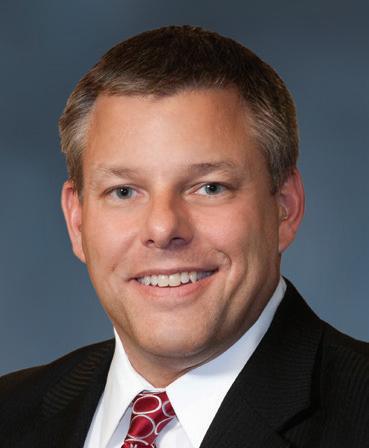



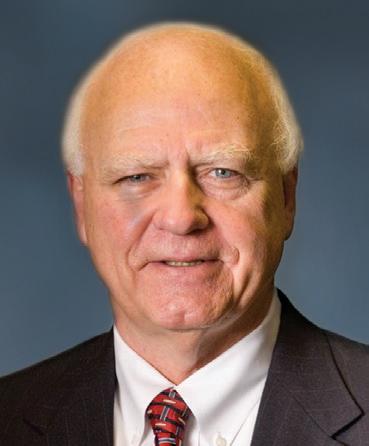



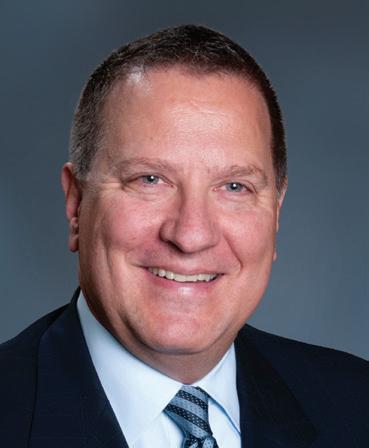
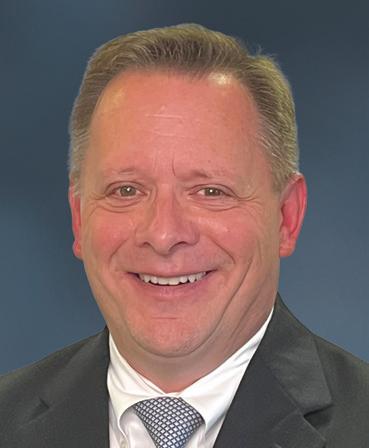
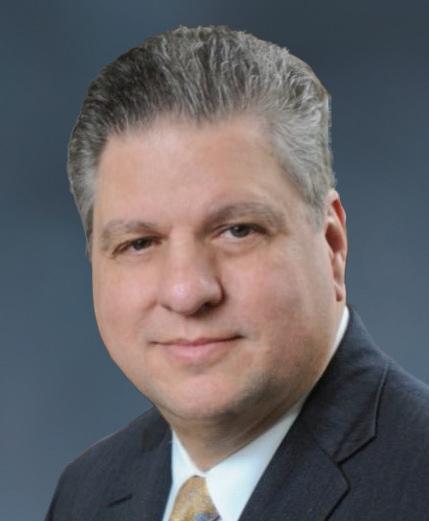
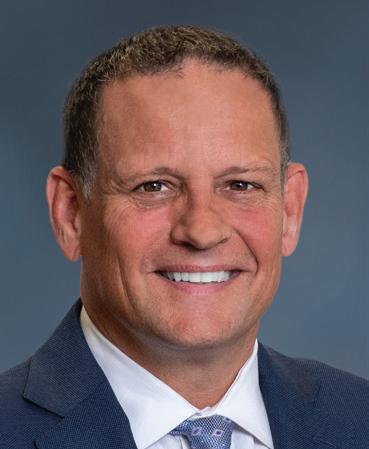

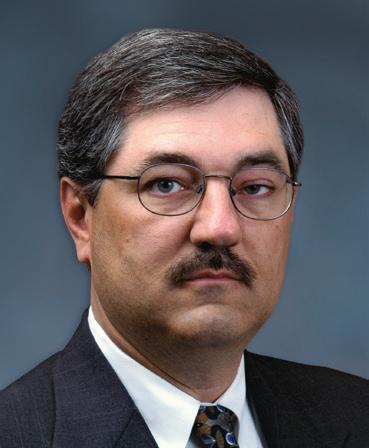
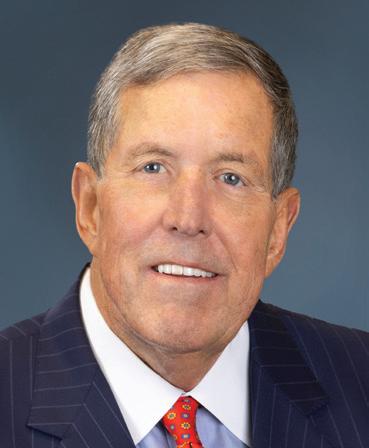
2026 MDRT Top of the Table
Ameritas salutes our valued field associates who have attained the highest levels of MDRT membership.
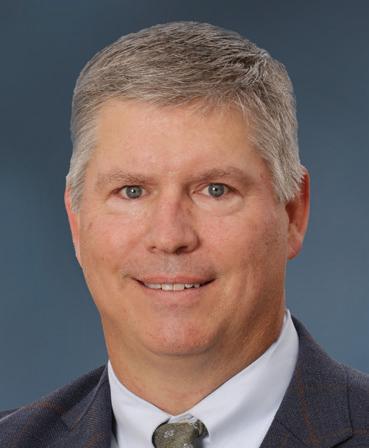
Justin R. Craft, RFC Nowlin and Associates Homewood, AL

Josh A. Jalinski
Jalinski Advisory Group Toms River, NJ
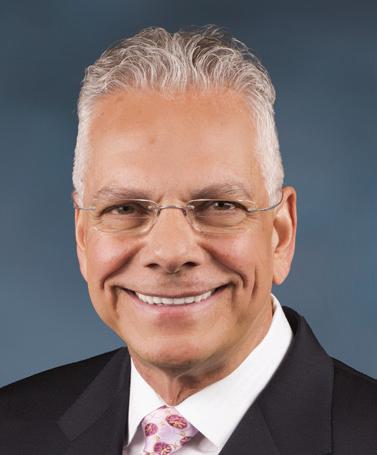
Joseph S. Pantozzi, CLU, ChFC, CKA Alpha Omega Wealth Las Vegas, NV
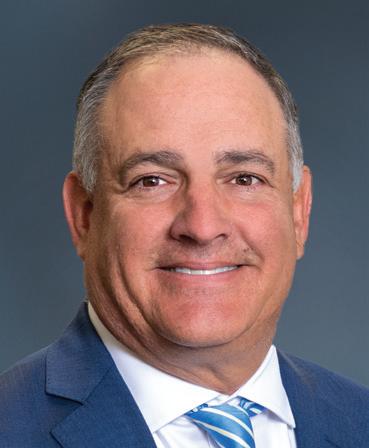
David J. Fazzini, LUTCF Premier Planning Group Phoenixville, PA
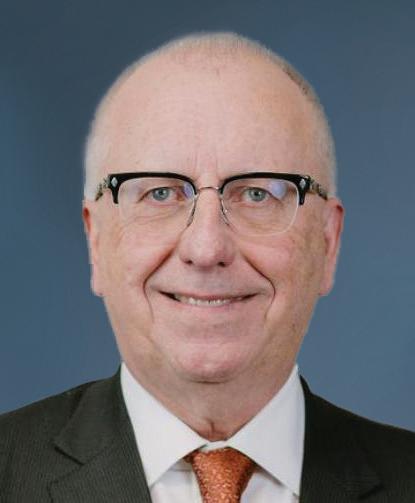
John C. Kenan Southeast Financial Services Greensboro, NC

Christopher M. Pirtle, LUTCF Peake Financial Silver Spring, MD
certain level of skill or training. Clients should conduct their own evaluation. https://www.mdrt.org/join/member-requirements.

Mark E. Friese Friese Financial AdvocatesCanvas Financial Libertyville, IL

Frank C. Kinter, CLU, ChFC WPA Pittsburgh Financial Center Indiana, PA

Allison S. Schaberg Consolidated Planning Group Sugarland, TX

Garrett H. German, CFP Harvest Wealth GroupCanvas Financial Exeter, CA

Bret J. Klabunde inSOURCE Financial Advisors Fremont, NE
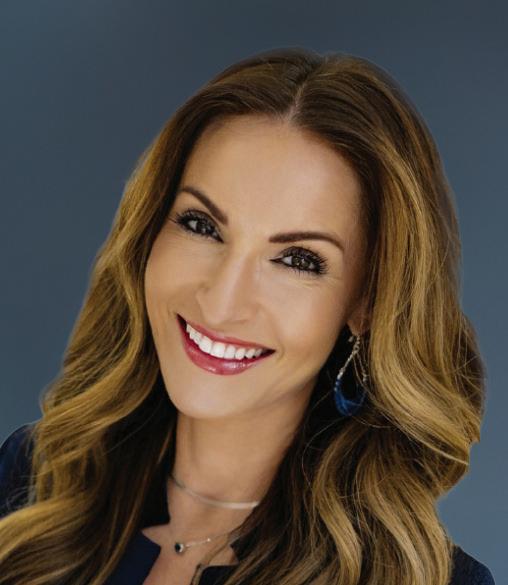
Unique Advantage Cave Creek, AZ
Ameritas®, which is a marketing name for subsidiaries of Ameritas Mutual Holding company. Subsidiaries include Ameritas Life Nebraska and Ameritas Life Insurance Corp. of New York (licensed in New York) in White Plains, New York. Each company is solely condition and contractual obligations. For more information about Ameritas®, visit ameritas.com. affiliate of Ameritas or of any of its affiliates. registered service marks of Ameritas Life Insurance Corp. Fulfilling life® is a registered service mark of affiliate Ameritas Company.
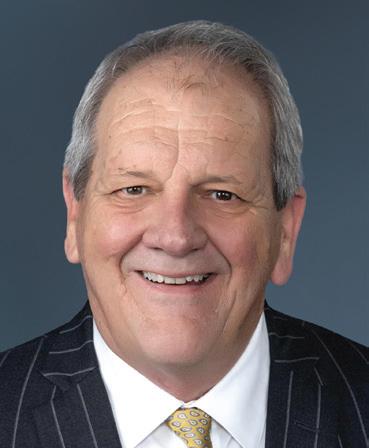
Keith M. Gillies, CLU,
ChFC United Wealth Advisors Group La Place, LA
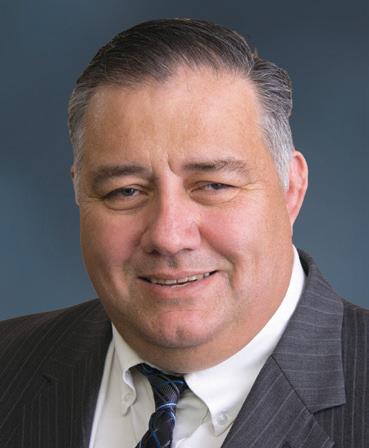
A. Leavitt Gem State Financial Group Boise, ID
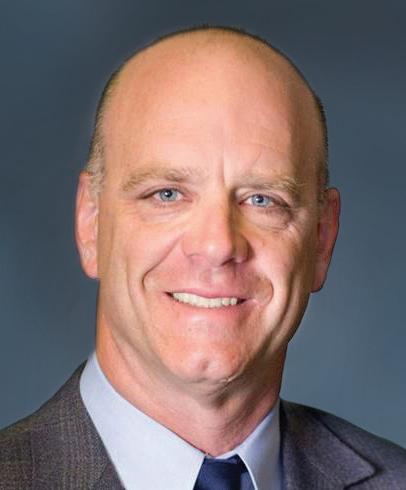
David B. Wentz, J.D., LUTCF United Wealth Advisors GroupTax Favored Benefits Shawnee Mission, KS
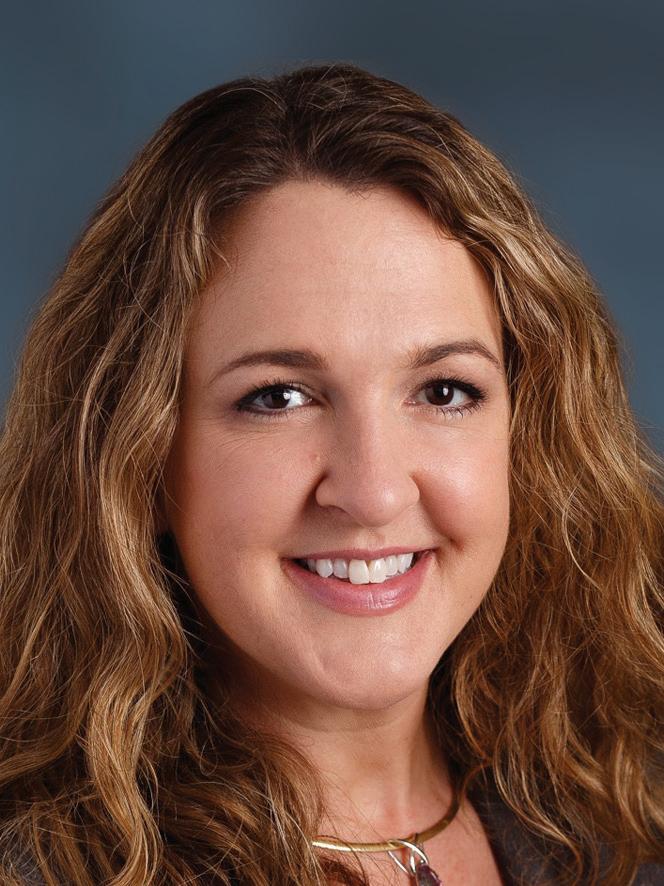
Kimberly A. Carroll, CRC WPA Pittsburgh Financial Center Pittsburgh, PA
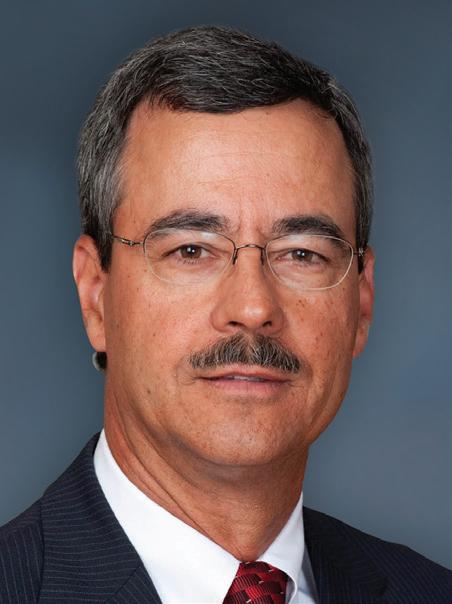
Daniel J. Scholz, CLU, ChFC Ameritas Wealth Advisors Omaha, NE

Thomas P. Hajny Envia Financial Phoenix, AZ

Timothy J. Moran, LUTCF UCL Financial/United Wealth Advisors Group Memphis, TN
* Membership as of 4-26.
Membership does not imply a certain level of skill or training. Clients should conduct their own evaluation. See Membership Requirements at https://www.mdrt.org/join/member-requirements.
This information is provided by Ameritas®, which is a marketing name for subsidiaries of Ameritas Mutual Holding company. Subsidiaries include Ameritas Life Insurance Corp. in Lincoln, Nebraska and Ameritas Life Insurance Corp. of New York (licensed in New York) in White Plains, New York. Each company is solely responsible for its own financial condition and contractual obligations. For more information about Ameritas®, visit ameritas.com. Any agency referenced is not an affiliate of Ameritas or of any of its affiliates. Ameritas® and the bison design are registered service marks of Ameritas Life Insurance Corp. Fulfilling life® is a registered service mark of affiliate Ameritas Holding Company. © 2026 Ameritas Mutual Holding Company.
DST 1423 4-26
Stephen D. Andersen, RHU, inSOURCE Financial Advisors
C. Robert Brown, CLU, LUTCF, UCL Financial/United Wealth Advisors Group
Richard T. Brunsman, CLU, ChFC, RT Brunsman Insurance & Investments
Yvonne Z. Burke, CLTC, Alpha Omega Wealth
Anthony G. Butz, LUTCF, Premier Planning Group - Cincinnati
John Elias Calles, J.D., CLU, ChFC, National Wealth Group
Jenning Chen, Capstone Financial Group
Scott C. Hanna, Westpoint Wealth Management
Carroll U. Hoffmann, Hoffmann Financial
Tobin C. Hoffmann, LUTCF, Hoffmann Financial
Dominick F. Impastato Jr., LUTCF, United Wealth Advisors Group - Metairie
Steven LaBella, Alpha Omega Wealth
Dominick Luongo, Luongo & Associates
Curtis May, Practical Wealth Advisor
Miguel C. Mejia, Mana Advisory & Solutions Group
Stanley B. Plocharczyk, CLU, ChFC, Plocharczyk & Associates
Corey L. Poulosky, CFEd, Ameritas Wealth Advisors
Arnold J. Price, Price/Raffel LA
Stuart J. Raffel, CLU, CPC, RFC, Price/Raffel LA
Ann Baker Ronn, LUTCF, United Wealth Advisors Group - Houston
Zachary C. Sims, Nowlin and Associates
Douglas A. Thompson, CLU, Executive Benefits
John B. Tickle, Houston Agency
John E. Worrel, LUTCF, United Wealth Advisors Group - Metairie

Despite individual life insurance new annualized premium surging 10% in 2025, the fourth record-setting year in the past five, just over half of Americans (52%) say they own life insurance. Nearly 100 million Americans report being either uninsured or underinsured. These are some of the findings of the 2026 Insurance Barometer Study, conducted jointly by LIMRA and Life Happens.
Younger people, particularly young men, greatly overestimate the cost of life insurance. Only 4% of consumers under age 30 correctly estimated a basic term policy’s annual premium. The reasons for this may come down to a lack of knowledge or understanding of life insurance. The study, which has been conducted annually for the past 16 years, reveals that 37% of Americans say they are only somewhat or not at all knowledgeable about life insurance.
When it comes to how they gather information on financial or insurance products, 62% of consumers use social media. This is true among all income levels, with 60% of households making $200,000 or more per year saying they use social media for research. However, 31% of consumers say they prefer having an in-person conversation when they have a question.

Digital nomadism and cross-border living are more popular than ever before. As a result, advisors are increasingly asked how to structure life insurance for those whose careers, families and finances span multiple countries.
Clients who move frequently or live abroad may have different underwriting considerations than those who reside in the U.S. full time. “The key is designing coverage that remains valid, tax-efficient and flexible no matter where life takes them,” said Bruce Parker, president of Pan-American Life Insurance Group. He said advisors must understand how insurers usually assess risk for this demographic. In most cases, insurers focus on residency status and long-term intent,
country of residence and duration of stay, access to medical care and records, occupation and activities, and sanctions and regulatory constraints.

Prudential of Japan is not ready to resume sales after a 90-day ban following widespread misconduct, Prudential Financial CEO Andy Sullivan said. The insurer is extending the sales moratorium for another 180 days, for a total financial impact of about $1 billion.
The extended sales ban “reflects Prudential’s conclusion that the scope and complexity of the required changes within POJ are greater than previously anticipated and will take additional time to design and implement,” Prudential said in a news release.
Most older clients have delayed life insurance because life ‘got in the way.’”

Misconduct issues, including inappropriate investment solicitations, within the Prudential of Japan became public in January. Prudential moved swiftly to install Hiromitsu Tokumaru as president and CEO of POJ, replacing Kan Mabara, who left the company on Feb. 1.

The saying “better late than never” applies to many aspects of life, including buying life insurance. For advisors, it’s essential to support clients who have put this type of coverage on the back burner.
The goal is to recognize this group and provide the guidance they need to secure coverage that protects them moving forward. First and foremost, those in the 45to-60-year age range are usually in the “super earning” years of their careers when they will accumulate most of the savings they will need for their retirement.
“It’s also a time when living expenses are the greatest. They may be caring for older parents while funding their children’s education and still paying the mortgage,” said Kyle McMahan, chief marketing officer at WoodmenLife.


Set yourself apart from the competition by providing your clients a guaranteed income for life with Kansas City Life Insurance Company’s Lifetime Income Rider that:
• Offers 7.2% guaranteed increase to Lifetime Income Amount for the first 10 rider years if no withdrawals in years 1 – 10.
• Provides a secure, guaranteed retirement income stream for life.
• Helps clients grow their retirement savings with a competitive fixed interest rate.
• Protects the value of a fixed annuity during market turmoil.
• Allows clients the ability to maintain the flexibility and control of their deferred annuity contract even after they start receiving income.
The Lifetime Income Rider provides guaranteed income for life and is an optional benefit available on all of Kansas City Life’s fixed annuity portfolio.

For information about a career with Kansas City Life Insurance Company, call Mike Deon, Vice President, Agencies, Marketing, 855-277-2090


The persistent myths that can complicate life insurance underwriting and derail otherwise solid cases.
By Paul Holland
Life insurance underwriting is frequently misunderstood. Over time, several persistent myths have taken hold. These myths shape inaccurate perceptions about how underwriting works, how information is shared and what options are available to applicants with complex profiles. As a result, misconceptions can complicate the underwriting process and lead to missed opportunities for both financial professionals and clients.
Here are some common myths encountered in life insurance underwriting and why they are incorrect. When misconceptions are replaced with clarity, applicants and financial professionals can make more informed decisions and achieve better outcomes.


Myth 1: Insurance companies share decline decisions with the Medical Information Bureau
✅ Reality: Insurance companies do not share final underwriting decisions, including declines, with the MIB.
Instead, insurers exchange limited underwriting information using encrypted MIB codes. These codes serve only as alerts that identify areas warranting further review, such as medical conditions or lifestyle factors. They may be medical or nonmedical, admitted or unadmitted. For example, a condition such as diabetes may be coded, but the underwriting action itself is not.
Myth 2: Closing a case before a final decision prevents information from being sent to MIB
✅ Reality: Closing a case early does not prevent the transmission of MIB codes. Although underwriters typically review MIB information early in the process and transmit codes near the end, codes may be exchanged at any point
during underwriting. Well-managed underwriting departments often follow a “code as you go” approach. Closing a case before making a formal decision does not block this process.
Myth 3: Reinsurance is rarely helpful and should be avoided
✅ Reality: Reinsurance is often a powerful underwriting tool.
Reinsurers can help carriers offer more favorable terms, sometimes saving insureds thousands — or even tens of thousands — of dollars in annual premiums. Reinsurance is especially critical for large face amounts, unusual risks, professional athletes or individuals in high-profile roles. Experienced underwriters know when reinsurer involvement can meaningfully improve outcomes.
Myth 4: Suicide is not a meaningful new-business underwriting risk because policies contain suicide clauses
✅ Reality: Underwriters are trained

When misconceptions are replaced with clarity, applicants and financial professionals can make more informed decisions and achieve better outcomes.
to assess mortality risk independently of policy provisions designed to limit claims exposure.
Suicide remains a significant underwriting concern. Underwriting and policy administration involve real costs. Profitability depends on sound mortality expectations and persistency, not solely on contractual protections such as suicide clauses or contestability periods. For these reasons, suicide risk is evaluated as a core mortality factor during underwriting, independent of policy design.
Myth 5: Younger individuals deemed uninsurable should be placed on short-duration term policies
✅ Reality: Product duration does not eliminate mortality risk.
Underwriters evaluate mortality risk without regard to product duration. Issuing short-term policies to individuals with unpredictable or elevated mortality risk is not a sound underwriting practice. More appropriate strategies include exploring other carriers, considering different products or planning for a future reconsideration when circumstances improve.
Myth 6: A primary care physician record contains a complete medical history
✅ Reality: PCP records often function as only one component of a broader, specialist-driven medical history.
Relying solely on a PCP record can lead to delays and incomplete underwriting assessments, particularly when care has been managed by specialists whose records are not reflected in the primary care file. Providing accurate specialist contact information and confirming where relevant care has occurred helps underwriters obtain the appropriate records and complete a more efficient and reliable review. When applicants
approach underwriting as the “seller” of mortality risk rather than merely the buyer of insurance, they recognize — as any seller would — the importance of making sure what is being presented is clear, complete and accurate.
✅ Reality: Standard doesn’t mean something’s wrong.
A standard underwriting classification represents baseline risk, assigned a value of 100%. Only additional mortality risk results in extra ratings and higher premiums. Standard risks are expected to experience good longevity, just not better-than-average outcomes. For example, a 55-year-old nonsmoking woman offered standard risk has a life expectancy exceeding 29 years, according to reinsurance underwriting data. Presenting both standard and preferred rates can help clients better understand the value of favorable classifications.
Myth 8: A medication list alone is sufficient for informal underwriting
✅ Reality: Context is critical.
Life insurance companies underwrite people, not medications. A medication list without context often provides little insight since many drugs are prescribed for multiple conditions. Accurate underwriting requires understanding the diagnosis, symptom history and degree of control. Supplying meaningful clinical details leads to more reliable and actionable underwriting feedback.
Myth 9: Individuals with defibrillators are always uninsurable
✅ Reality: A defibrillator doesn’t always mean no coverage.
Although most applicants with defibrillators present significant risk and
are uninsurable, select cases involving Brugada syndrome may be considered. Brugada syndrome is characterized by a structurally normal heart with elevated arrhythmia risk, and underwriting typically requires a postponement period following device placement before consideration is possible. After an adequate period of stability, some Brugada cases may be considered at high table ratings when supported by appropriate clinical documentation.
10: Policy owners and beneficiaries can be selected to meet underwriting requirements and then altered soon after the policy is in place
✅ Reality: Ownership and beneficiary arrangements that raise concerns during new business underwriting do not cease to warrant review solely because a policy has been issued.
Underwriters evaluate these relationships to confirm insurable interest and avoid speculation. If an ownership or beneficiary structure raises concern during underwriting, it will raise the same concern after placement. For this reason, requested changes within the first two policy years are typically referred back to underwriting for review.
While legitimate changes made in good faith can and do occur, ownership and beneficiary structures should be established accurately at the time of application, and any uncommon or complex arrangements are best discussed with an underwriter before submission.
Misunderstandings about life insurance underwriting can lead to unnecessary frustration, delays and missed opportunities. By dispelling these common myths and approaching underwriting with transparency, preparation and guidance, applicants and financial professionals alike can navigate the process more effectively. Knowledge remains one of the most valuable tools in achieving favorable underwriting outcomes.
Paul Holland is an underwriting consultant with Crump Life Insurance Services. Contact him at paul.holland@innfeedback.com.


State insurance regulators are stepping up oversight of annuity marketing, partic ularly around indexed products.

At its spring 2026 meeting, the National Association of Insurance Commissioners advanced its work to improve annuity illustrations, focusing on concerns that some projections may overstate potential returns
Regulators are considering updates to disclosure models and actuarial guidance to ensure consumers receive more realistic expectations at the point of sale. The effort is part of a broader push to strengthen enforcement of annuity suitability rules and improve transparency across the industry.
Regulators have informally collected illustrations from roughly 25 to 30 of the top annuity market leaders. A preliminary review found that about one-third of companies showed the highest illustrated annual returns of 10% or lower.
Of those above 10%, roughly half fell in the 11% to 15% range, while the rest ranged from 16% to as high as 27%.
The work to rein in illustrations is expected to take many months to complete and be a tough sell for industry trade groups.

A recent U.S. Department of Labor proposal on fiduciary investment selection is drawing attention in the annuity industry by signaling broader acceptance of lifetime income products within defined contribution plans.
The proposal outlines a “safe harbor” framework for fiduciaries and includes examples involving annuity-based investments. One example notes that a variable annuity option may be prudent even with higher fees if it provides added value through guaranteed lifetime income.
For insurers and annuity providers, this potentially lowers the biggest barrier: fiduciary litigation risk. Industry groups say the guidance could accelerate adoption of hybrid target-date funds that incorporate annuities, offering plan sponsors clearer legal footing as they add income features to retirement plans.
Major insurers such as TIAA, Prudential Financial and MetLife have been pushing for easier integration of lifetime income products into workplace plans. The proposal is still subject to public comment, revisions and likely eventual court interpretation.
New technology initiatives are reshaping how annuities are sold to financial advisors and smaller firms.
Insurance technology provider iPipeline recently partnered with FIDx to launch a digital platform aimed at expanding annuity access for broker-dealers and financial institutions that previously lacked integrated tools.

The platform, called Insurance Exchange Express, is designed to streamline annuity transactions and embed insurance solutions more directly into
Retirement security is one of the most defining issues of our time, and solving for it will require collaboration across employers, financial institutions and policymakers.”

advisory workflows. Industry observers say such moves reflect growing pressure on advisors to incorporate annuities into retirement income planning.
The platform delivers a single unified annuity experience — eliminating operational friction, reducing new business processing errors and eliminating disconnected workflows, the companies said in a news release.
Industry groups are raising concerns about a revised annuity buyer’s guide being developed by the NAIC, citing issues with tone, timing and usability.
The update, the first since 2013, adds explanations of newer features like market value adjustments and complex benefits.
Critics say the draft is overly negative and arrives too late in the sales process, noting that modern “best interest” rules already require disclosures before purchase.

“The tone and tenor of the guide is perhaps unnecessarily negative,” said Pam Heinrich, general counsel and director of government affairs for the National Association for Fixed Annuities.
A second draft of the update effort was released in April, and regulators continue to work on the guide.




Help clients access longterm care while preserving as much of their financial legacy as possible.
By Dale Krause
For many Americans, the cost of long-term care is the greatest financial risk they face in retirement. According to the American Council on Aging, the average cost for nursing home care now exceeds $100,000 annually, and even well-prepared clients can see a lifetime of savings depleted in a matter of months.
When a health crisis strikes and longterm care becomes necessary, families are often forced into reactive decisions. Medicaid becomes a critical resource, but qualifying for benefits requires navigating strict limits on assets and income. For financial professionals, this creates both a challenge and an opportunity, helping clients access care while preserving as much of their financial legacy as possible.
One of the most effective and often
underused tools that can benefit clients in this scenario is the Medicaidcompliant annuity.
Medicaid is the primary payer of longterm care costs in the United States, but eligibility comes with strict financial requirements. In most states, the institutionalized individual must reduce their countable assets to approximately $2,000 before qualifying. For married couples, the healthy spouse living at home has a separate allowance, but most clients have countable assets exceeding these limitations, requiring them to spend down some of their savings.
This “spend-down” requirement creates a difficult situation for many clients. Without proper planning, they may be forced to exhaust assets on care costs, leaving little or nothing for a spouse or heirs. In many cases, clients who assumed Medicare would cover long-term care expenses or thought they would never need professional care are unprepared for the financial reality.
This is where strategic planning becomes essential — particularly in crises, when time is of the essence.
A Medicaid-compliant annuity is a specialized single-premium immediate annuity designed to meet federal and state Medicaid requirements. Its primary function is to convert excess countable assets into an income stream, allowing clients to meet Medicaid eligibility thresholds. Unlike traditional annuities, MCAs are structured specifically for Medicaid planning. They are:
» Income-only vehicles with no accessible cash value
» Designed to produce immediate, equal payments
» Structured to comply with strict regulatory requirements
By repositioning assets instead of depleting them on care costs, an MCA can
Our diverse portfolio of annuities is designed to help you and your clients aim higher.
We offer fixed, fixed-indexed, registered index-linked and advisory annuities, all backed by the financial strength clients deserve.
Superior ratings1
A++ by AM Best. AA by S&P.
Stability
Fixed income investments make up nearly 80%2 of our invested assets.
Commitment to customers
More than $15 billion in guaranteed income benefits paid since 2000.
Scan the QR code to learn more about how we can help you.


1 AM Best rating of “A++” (Superior) affirmed on October 23, 2025. AM Best rating of “A++” is the highest of 16 ratings. S&P rating of “AA” (Very Strong) upgraded on February 20, 2025. S&P rating of “AA” is the 3rd highest of 21 ratings.
2 Data is as of December 31, 2025. Fixed income investments include bonds, cash, short-term investments and policy loans.
help clients qualify for financial assistance while preserving what they have left.
At its core, the Medicaid-compliant annuity is about repositioning, not eliminating, wealth. When a client exceeds Medicaid’s asset limits, those excess funds must be spent before the client becomes eligible for benefits. An MCA changes this dynamic by converting those assets into a stream of income that is no longer counted as a resource. This transformation offers several key benefits:
1. Accelerated Medicaid eligibility
By reducing countable assets quickly and compliantly, an MCA can help clients qualify for Medicaid sooner rather than later.
2. Wealth preservation
Instead of being spent entirely on care, assets are converted into income — often benefiting a spouse, supporting ongoing expenses or preserving funds for future generations.
3. Protection against spousal impoverishment
One of the most common strategies for married couples is to use an MCA to generate income for the community spouse — the spouse living at home. This helps ensure financial stability while the institutionalized spouse qualifies for Medicaid.
4. Tax efficiency
For qualified funds such as individual retirement accounts, an MCA can spread tax liability over time instead of triggering a large, immediate taxable event resulting from liquidation.
Key requirements for compliance
Not every annuity qualifies for Medicaid planning. To be considered Medicaidcompliant, an MCA must meet strict federal guidelines established under the Deficit Reduction Act. These guidelines generally include:
» Irrevocability. The contract cannot be changed or canceled.
» Nonassignability. The MCA cannot be transferred or sold.
» Actuarial soundness. The term must be less than or equal to the owner’s Medicaid life expectancy.

For single clients, an MCA can help preserve a portion of assets through gifting rather than requiring a complete spend-down before Medicaid eligibility.
» Equal payments. No deferrals or balloon payments.
» State as beneficiary. The state Medicaid agency must be named as the primary beneficiary in most cases.
Failure to meet any of these criteria can result in penalties or disqualification. This makes proper structuring essential.
Medicaid-compliant annuities are used in “crisis planning” situations — when a client is already in or about to enter a care facility and has not completed prior long-term care planning. Common scenarios include the following.
» Married couples
When one spouse requires care, the couple’s combined assets may exceed Medicaid limits. An MCA can convert excess assets into income for the healthy spouse, allowing the institutionalized spouse to qualify for benefits and the healthy spouse to continue living comfortably in the community.
» Single individuals
For single clients, an MCA can help preserve a portion of assets through gifting rather than requiring a complete spenddown before Medicaid eligibility. The MCA payments can then be used to cover care costs during the penalty period incurred due to the gift.
» Clients with retirement accounts MCAs can be particularly valuable when dealing with tax-qualified funds, offering a way to reposition assets without triggering significant immediate taxation.
One of the most critical aspects of MCA planning is timing. Medicaid eligibility is
often determined based on asset levels at specific points in time, which can vary by state. In many cases, the annuity must be implemented in close coordination with the intended eligibility month. Improper timing can delay benefits or create unintended penalties.
Additionally, Medicaid rules are state-specific and frequently nuanced. Advisors should work closely with elder law attorneys or specialists to ensure compliance and optimal outcomes.
Despite their effectiveness, Medicaidcompliant annuities remain underused in many advisory practices. This is often due to MCAs’ complexity and regulatory requirements and the need for coordination with legal professionals. However, for clients facing the financial shock of long-term care, an MCA can offer a critical lifeline — providing access to care while preserving dignity, stability and a portion of their financial legacy.
Long-term care planning does not always happen years in advance. In reality, many clients face decisions amid a crisis, when options appear limited and time is short. A Medicaid-compliant annuity provides a way to create options where none seem to exist, transforming a forced spend-down into a strategic repositioning of assets. For advisors, understanding how and when to use this tool can make the difference between a client losing everything to the high cost of care and preserving what they have left.
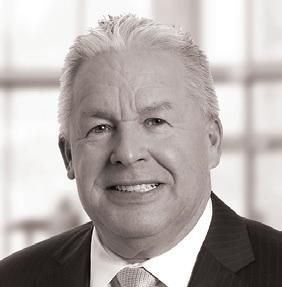
Dale Krause, J.D., LL.M., is a nationally recognized expert in Medicaid planning and the founder and CEO of Krause Agency, a leading provider of Medicaid-compliant annuities. Contact him at dale.krause@innfeedback.com.
65%+
INCOME REPLACEMENT

The High Limit Disability income protection plan was developed specifically to meet the needs of those needing supplemental disability insurance. A High Limit Disability plan through Lloyd’s of London provides coverage to those who would like to obtain more protection beyond their existing inadequate disability plans. Our goal is to provide at least 65% replacement of income. Lloyd’s of London is the only market that makes this available.
As incomes increase, the issue and participation limits of traditional Disability Insurance carriers decrease. To properly insure a highly compensated individual at 65% of income, multiple disability income plans are often required and are layered to provide sufficient income protection.
The following scenario illustrates the way income protection plans can be layered to provide an individual with 65% coverage of monthly income.

EXECUTIVE
INCOME: $900,000 annually $75,000 monthly

One of the few opinions that Americans across the political spectrum agree on is that prescription drug costs are too high. But what can be done to lower those costs? That’s where opinions differ.
The Senate Committee on Health, Education, Labor and Pensions held a hearing on how to make prescription drugs more affordable. While discussing proposed legislation to bring down the cost of drugs, witnesses disagreed on the approach.
Dr. Brian J. Miller, associate professor at the Johns Hopkins University School of Medicine, told the HELP Committee that Food and Drug Administration regulation should be reformed to reduce unnecessary barriers to entry, particularly for biosimilars and generics. Competition depends not only on pricing rules but also on how easily products can reach the market.
Meanwhile, Robert Weissman, co-president of Public Citizen, contended that high drug prices in the U.S. are the result of government- created monopolies layered on massive public subsidies — not a free market. Weissman argued that recent Trump administration efforts — such as secret most-favored-nation deals and the TrumpRx website — do little, risk backfiring or actively undermine Medicare negotiation. Instead, he called for reforms that force competition or empower government buyers.

In less than a year, four claims filed against major health insurers allege the companies used hidden tracking tools on their websites to record users’ most sensitive health queries in real time, then transmitted that data to third-party firms.
The insurers sued are Humana, Cigna, Elevance Health and Blue Cross Blue Shield of Michigan.
The common allegations made in all four lawsuits include that major U.S. health insurers embedded advertising and analytics technology inside their health benefit websites, data was allegedly sent to advertising and data-broker ecosystems , and privacy promises and consent mechanisms were allegedly ineffective or misleading.
AM Best’s outlook for the health insurance segment is negative, with several headwinds influencing that outlook. Legislative and regulatory pressures top the list of factors impacting health insurance, but other issues influencing the negative outlook include:
» Continued higher medical utilization trends for Medicare Advantage
» Rate and acuity mismatch for managed Medicaid

insurance market has worsened, AM Best
The most patriotic thing you can do is take care of yourself.”
— Dr. Mehmet Oz, administrator of the Centers for Medicare & Medicaid Services

said, and it’s uncertain whether premium increases put in place for 2026 will be sufficient.
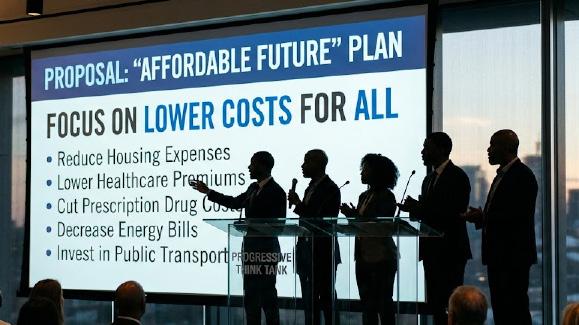
A progressive public policy think tank announced a healthcare plan that it said would deliver immediate relief on premiums, deductibles and insurance denials. The Center for American Progress revealed its proposal, “A Patient’s Bill of Rights to Lower Health Care Costs.” The CAP proposal calls for what it described as “bold actions” to:
» Limit excessive premium increases.
» Lower deductibles by reducing outlier hospital prices, cutting average employer deductibles in half in concentrated markets and lowering average family premiums for employer coverage.
» Prevent price gouging by health insurance companies.
» Ban and replace prior authorization.
CAP said it will build on its agenda in the year ahead to propose additional reforms that reduce prescription drug costs.
The average amount of time employees spend reviewing their health benefits is 119 minutes.
Source: ADP





Employees struggle to manage their HSAs and are frustrated with their HSA experiences.
By Kara Trott
As healthcare costs keep rising, some people are using health savings accounts to be better prepared to handle those costs. And those HSA balances are on the rise. HSA provider Lively reported the average HSA balance rose 11%, from $4,923 in 2024 to $5,457 in 2025.
But although that increase is a promising sign, it masks a deeper issue: Consumers still struggle to navigate a confusing, costly healthcare system, and the difficulties they encounter include managing their HSA. Employees who have HSAs need more education and support from their employers’ benefits managers to help them better understand HSAs and how to maximize them.
Many account holders tap their HSA for everyday care, while others encounter barriers that prevent them from using their HSA funds. A national survey by InComm
Benefits found that HSA account holders were missing out on the full value of their accounts because of usability challenges. The survey showed that some employees failed to submit reimbursements for eligible out-of-pocket health and wellness expenses because they found the submission process to be difficult.
When employees use their HSA regularly, they’re more likely to contribute funds to it, increasing tax savings for both employee and employer. But many employers may not realize that their employees are frustrated with their HSA experiences and are leaving money on the table.
The Medicare Prescription Drug, Improvement, and Modernization Act of 2003 introduced HSAs, which provided the tax-advantaged framework necessary for their widespread adoption. This was a time when consumer-directed healthcare plans were gaining popularity. These plans had an up-front deductible in return for lower premiums after covering some preventive care expenses. They basically put the first dollar cost of healthcare on the consumer. When HSAs were approved
in 2003, such plans also incorporated an HSA that the consumer actually owned.
An HSA lets you set aside money that lowers your taxable income and pays for coinsurance, copayments, deductibles and qualified medical expenses. Employers often contribute to employee HSAs and offer matching contributions or provide funds based on wellness incentives. These contributions are tax deductible for the company and are generally excluded from the employee’s taxable income.
Unlike with 401(k)s, not all employees are eligible for HSAs. To be eligible, you must be covered under a high-deductible health plan and have no other disqualifying health coverage such as Medicare or a general-purpose flexible spending account.
Employees can use an HSA for many IRS-qualified medical, dental and vision expenses. Those expenses include deductibles, copayments, prescription drugs, over-the-counter medications and specialized care such as orthodontics, LASIK or acupuncture. HSAs typically cover GLP-1 medications if prescribed by a licensed healthcare provider to treat a
specific medical condition such as obesity, Type 2 diabetes or metabolic syndrome.
Consumers are putting more money into HSAs to cover record-high out-of-pocket medical expenses with pretax dollars. Increased usage of HSAs as long-term investment vehicles has also driven the growth in HSA balances. Many users see HSAs as strategic savings for healthcare costs in retirement instead of for nearterm, yearly medical expenses.
But if HSA balances were driven by confidence in the healthcare system, we’d see more routine, yearly spending from HSAs and lower idle balances. Instead, we often see HSAs used as stealth retirement accounts, with money untouched for years.
Higher HSA balances are sometimes fear-driven — insurance against a healthcare system that many don’t trust even while anticipating they’re going to receive bad health news in their senior years.
It’s a rainy-day fund reflecting a fear of the unknown and the unpredictability of how a diagnosis can lead to high expenses.
Medical costs can have “fat tail risks” — one diagnosis can mean expenses in the five- or six-figure range. HSA balances grow as a buffer against worst-case scenarios.
HSAs are treated differently than checking accounts or even 401(k)s. People subconsciously label them as “hospital emergency money” or “cancer money.” Once you put that label on an account, spending the funds — even for valid medical expenses — feels risky. Fear of future regret supersedes present-day rational use when you need it.
Many people will delay care and not reach out to a doctor even in the face of symptoms because they don’t believe they have the money to pay for treatment. And having a chronic condition that will have long-term costs creates added stress, which will freeze people and keep them from taking action.
When consumer-directed healthcare plans were introduced, the idea was to give consumers a certain number of dollars to spend. Then you would give them a menu of options — their healthcare

The main flaw in a consumer-directed healthcare plan such as an HSA is that consumers are left to navigate the intricate and confusing journey with minimal guidance.
benefit plan — showing how they could spend those dollars. Once they’d met their deductible, the insurer picked up the tab after some copays or coinsurance. The working theory was that consumers would put their money toward smarter healthcare decisions. But that isn’t the case, and even if you have a high deductible, one serious healthcare event can blow through that overnight.
The main flaw in a consumer-directed health care plan such as an HSA is that consumers are left to navigate the intricate and confusing journey with minimal guidance. Some account holders don’t really understand their HSA because the system sets them up that way. Here are some key reasons why.
» HSAs are poorly explained at enrollment. Some companies aren’t as well-informed about HSAs as they are about other benefits. For most consumers, their first — and sometimes only — exposure to HSAs is a rushed benefits meeting or a dense PDF file during open enrollment. The focus is usually on premiums and deductibles, not on how the HSA works or when to use it.
» Tax rules overwhelm people. Qualified expenses, penalties and age thresholds feel complicated, and most people are scared of doing something “wrong” and getting penalized by the IRS. When people feel unsure, they default to not spending the money or using it only for emergencies.
» Healthcare timing is unpredictable. Unlike retirement accounts, health care spending isn’t linear or planned. Consumers don’t know whether they should save some or most of their HSA for later. There’s also the possibility of switching jobs or insurance — both can cause indecision. And there is no clear guidance on when to pay cash or when to use the HSA. One of the best but least explained HSA features is that you can save receipts and reimburse yourself. Because this isn’t emphasized, people never learn when it makes sense to spend the HSA rather than invest in it.
Employers and their benefits brokers can make a big difference in employees’ understanding of HSAs by removing confusion and friction. Here are some tips.
» Describe HSAs as a long-term wealth tool, not just a spending account. Most employees think “HSA = medical checking account.” That’s underselling it. Employers and brokers should clearly explain that HSAs are triple tax-advantaged (pretax in, tax-free growth, tax-free for qualified expenses); they can be used as a stealth retirement account after age 65; and you don’t have to spend HSA money each year.
» Explain employer contributions. Show employees the annual dollar value per employee and reinforce that unused funds roll over.
» Embed HSA education in workflows. Show estimated HSA impact when employees search for care. Explain deductibles, coinsurance and what expenses are HSA-eligible.
» Emphasize high-value health care. Tie good health outcomes to fewer surprise medical bills and less time off work, protecting the employee’s HSA balance and the employer’s total spend. Give real-world examples of how HSAs helped prevent costly mistakes.
Without accessible, clear and detailed education, employees can struggle to build confidence about getting the most use and value out of their HSA. It’s a benefit that gains added importance as healthcare costs continue to add up. And it’s incumbent upon benefits leaders to give employees the guidance to navigate what can be a confusing road map.

Kara J. Trott, the author of “No One Alone: Humanizing Healthcare as an Outsider,” is the founder and former CEO of Quantum Health. Contact her at kara.trott @innfeedback.com.

Only 40% of Americans are extremely or very confident in their ability to make and execute financial decisions, according to a Corebridge Financial survey. However, those with greater financial skills are more confident decision-makers, are less financially stressed and have more saved for retirement.
Why do so many Americans struggle to make and act on financial decisions? “Our research shows this challenge is widespread,” said John Picone, executive vice president and head of retirement and wealth distribution for retirement services at Corebridge. “ Just 4 in 10 have a high level of confidence in their ability to process financial information well enough to make decisions. In turn, just 4 in 10 have a high degree of confidence in their ability to execute financial decisions and adapt to stay on track.”
“At the heart of that struggle is a gap in financial knowledge,” Picone added. “When people don’t feel they understand the basics, uncertainty and anxiety naturally set in — especially around highstakes decisions. That can create a cycle where financial topics feel overwhelming, and people aren’t sure where to begin.”
The presence of a professional helps shape respondents’ priorities and areas of interest, the survey added. Those who are currently engaged with an advisor are most interested in their guidance on investing (43%) and tax efficiencies (43%), while those without professional support would most value a financial professional’s guidance on retirement planning (48%) and financial goal setting (45%).
Nearly one-quarter of U.S. adults (23%) are members of the sandwich generation, and this generation may be the next wave of America’s retirement crisis.
Athene’s research on the sandwich generation found 73% of those surveyed said supporting their family significantly impacted their retirement goals. Other survey results showed
Although 83% of Americans say they’re comfortable in talking about money with at least one person, most of them are silent when it comes to admitting financial struggles to others who are close to them, including family, friends and co-workers. This is according to the CFP Board’s latest report, “Financial FOMO: A Survey About
.”

73% of Gen Xers fear running out of money more than they fear death.
Source: Allianz Center for the Future of Retirement

The report said that Americans are experiencing financial FOMO, with 82% saying that the financial situations of close friends or family have affected how they think about their own finances . The majority (85%) also feels out of sync with some aspects of their friends’ finances, including housing purchases (28%), travel (28%), career progress (26%) and retirement savings (29%). As traditional life milestones increasingly unfold at different speeds, financial disparities are creating new sources of tension within social circles, the survey pointed out.
Younger Americans (ages 25-40) are more likely than older peers to feel out of sync with friends on housing (35% vs. 23%) and career progress (31% vs. 22%), and they’re nearly twice as likely to experience financial conflict with their friends as a result (28% vs. 16%).

that: 44% are reducing their expenses to accommodate their family members’ needs, 34% are planning to delay retirement, 22% are using their retirement assets to support their family members, and 9% said they will not retire at all .
Athene’s research found “having to rely on adult children for financial support” was one of the top 3 concerns that members of the sandwich generation have about their future retirement.



Looking at healthcare costs in relation to Social Security or projected overall retirement income provides a way to frame these expenses and plan to account for the impact of healthcare inflation. • Ron Mastrogiovanni
An Albert Einstein quote has morphed over time into “We will never be able to solve the problems of tomorrow with the thinking of today.”
This will resonate with financial professionals, since planning for the future requires moving beyond the here and now to imagine financial needs and challenges decades ahead. This is particularly important when thinking about healthcare costs in retirement.
Boston College’s Center for Retirement Research and HealthView Services both issued reports earlier this year showing healthcare expenses as a percentage of Social Security benefits.
The papers appeared to provide contradictory data. Boston College’s data showed that a 65-year-old couple would need 27% of their Social Security benefits to cover healthcare expenses in retirement. HealthView Service’s data showed that the same couple will require 84% of their Social Security benefits to cover
their healthcare needs over their lifetimes.
The data highlights the difference between the relative costs of healthcare versus Social Security benefits today (technically, in the case of Boston College, from the period 2018-22), and throughout a couple’s entire retirement when inflation is considered (HealthView’s approach).
Both sets of data are consistent. HealthView Services reveals that for an average couple this year, around a third of their benefits will be needed to cover total retirement healthcare expenses, a modest increase over Boston College’s data from four years ago.
Today’s thinking may lead clients to assume that the annual c ost-of- l iving a djustment for Social Security, based on the Consumer Price Index for Urban Wage Earners and Clerical Workers, will ensure that healthcare expenses will continue to account for at least one-third of
benefits going forward. That assumption would be a mistake.
Because the inflation rate for retirement healthcare costs is between 1 ½ and two times the CPI, these expenses will take up an increasing percentage of benefits. We have seen this over the last four decades. Actuarial and government data — the basis for our projections — show that this will continue in the future.
The 9.7% increase in the Medicare Part B premium for 2026 compared to a Social Security COLA of 2.8% reflects this trend. For additional context, Part D premiums alone have risen by around 50% over the last three to four years.
A decade ago, HealthView Services developed the Retirement Healthcare Costs Index to help advisors and retirees evaluate the impact of their healthcare expenses in retirement. By showing
Because the inflation rate for retirement healthcare costs is between 1 ½ and two times the CPI, these expenses will take up an increasing percentage of benefits.
the percentage of Social Security benefits needed to cover healthcare expenses, the index helps advisors frame their impact with clients.
Since costs will vary based on a range of factors — including health conditions, state of residence, sex assignment at birth and modified adjusted gross income in retirement — it is imperative to run the numbers for individual clients based on their circumstances.
It is important to note that the index assumes that Social Security benefits will be paid out consistent with current promises. Each day that elected officials do not address the Social Security funding shortfall, the risk of cuts to future benefits grows.
For most Americans, higher-than-anticipated healthcare costs will have a significant impact on financial security in retirement. This requires advisors to use planning data that accounts for healthcare cost inflation.
For a healthy 65-year-old woman retiring in 2026 with an average monthly Social Security Primary Insurance Amount of $2,071, the chart shows the impact of the differential between healthcare and Social Security inflation rates on the portion of benefits that will be required to address these needs.
Medicare Part A coverage for hospitalization at no cost in retirement, since she paid the FICA tax during her working career. We track these expenses versus her currently anticipated Social Security benefits.
In 2026, she will need 39% of her Social Security benefits to cover her projected healthcare costs. In 10 years, at age 75, she will need 58% of her Social Security benefits to meet her healthcare needs. This is based on the 6.3% average inflation rate for healthcare that reflects premium inflation, the Medigap age rating, increased utilization of services as she ages and 2.4% for Social Security COLAs.
At her life expectancy of 90, she is projected to require 92% of her Social Security benefits to cover healthcare. This does not include long-term care costs at the end of life. Over her lifetime, 67% of her total benefits will cover projected healthcare costs.
With more years of inflation driving costs higher, it should be no surprise that the Retirement Healthcare Cost Index shows that the percentage of lifetime Social Security benefits required to cover healthcare costs for a 50-year-old woman is even higher at 81%.
Looking at healthcare costs in relation to Social Security or projected overall retirement income provides a way to frame
Healthcare costs vs. Social Security benefits by age for a healthy female retiring in 2026
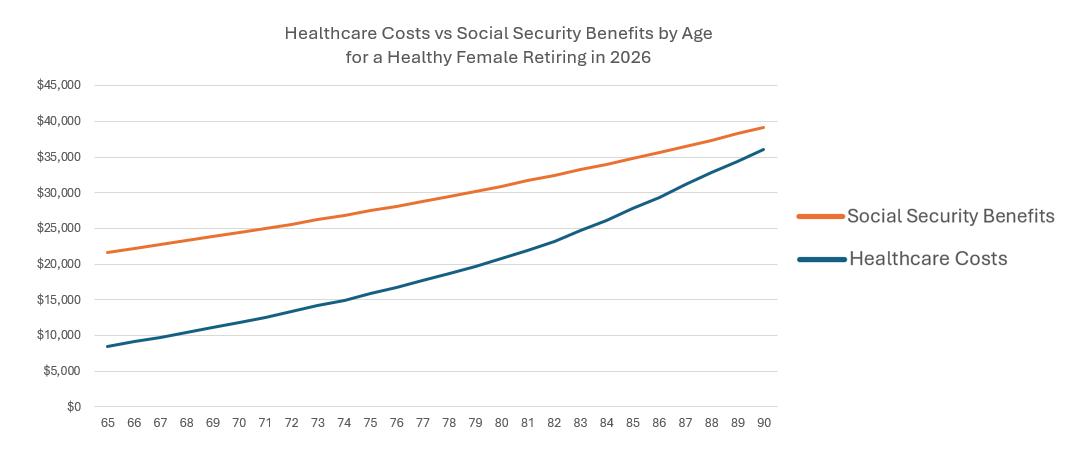
We show average costs for premiums, including Medicare Part B, Medicare Part D, Medigap Plan G (a supplemental insurance plan) and dental insurance, as well as the additional out-of-pocket expenses (hospitalization, doctors, tests, prescriptions, vision, hearing and dental), to project total annual healthcare expenses. We assume she’ll receive
these expenses and plan to account for the impact of healthcare inflation.
Running personalized numbers for each client provides a starting point for conversations about a range of solutions, including decumulation strategies to address healthcare needs.
Since Part B premiums are typically deducted from Social Security benefits,
a good starting point for the retirement planning process is to show clients how their net annual benefits will change over time as Part B premiums increase.
In the case of a 50-year-old woman living to her actuarial projected longevity of age 90, she is expected to receive $1,092,000 in lifetime Social Security benefits, but $308,000 will be deducted to cover projected Part B premiums. Since her total lifetime projected healthcare costs will be $1,002,000, she will need to cover $694,000 from other sources of income.
While these are big numbers, setting aside $125,000 today in an insurance product with a 6% rate of return will be sufficient to address her future uncovered healthcare needs . Alternatively, increasing savings preretirement, allocating a portion of assets for healthcare, maximizing the potential benefits of health savings accounts and Roth IRAs, and implementing decumulation-focused investment strategies designed around healthcare all provide ways for advisors to maximize the efficiency of a retirement portfolio to address future needs.
The key takeaway from the data is that using a general inflation rate to project all retirement costs forward may put clients’ financial security at risk. Today, one-third of Social Security benefits will potentially be required to cover healthcare expenses.
But based on the differential between healthcare inflation and CPI-based Social Security COLAs, the retirement healthcare cost index shows that retirees will require an increasingly significant portion of their benefits to cover future healthcare needs. Since healthcare is one of the most significant expenses in retirement, planning for this expense cannot be left to chance.
Retirement healthcare is a challenge that requires a forward-thinking mindset that starts with reliable, personalized, long-term planning data that incorporates healthcare inflation into the equation as a starting point for retirement conversations and solutions.
Ron Mastrogiovanni is CEO of HealthView Services. Contact him at ron.mastrogiovanni@ innfeedback.com.


Artificial intelligence makes reviews even more influential because modern search systems do more than display them. They analyze them.
Jonas Roeser
For most of its history, the insurance business has been built on one simple foundation: trust.
Clients trust that advisors will guide them toward the right coverage and that carriers will honor claims. For decades, that trust was built primarily through personal relationships, referrals and reputation. Someone would ask a friend, neighbor or family member for the name of a reliable insurance company or advisor, and that recommendation was often enough to start the conversation.
Today, however, that first step rarely happens the same way. Consumers now begin their search online, and increasingly, that search is shaped by artificial intelligence. Whether someone types a
question into Google Gemini, asks Siri, consults ChatGPT or uses another AIpowered platform, the process of finding and evaluating agents has changed rapidly.
Instead of first relying on word of mouth, consumers turn to digital platforms to help them decide who is credible, relevant and trustworthy before they ever make contact. For advisors, this shift creates a new reality: Your digital reputation is now your first impression. In an AI-driven world, reviews and trust signals are no longer optional; they are essential.
Consumers today search differently than they did even a few years ago. Instead of scrolling through long directories, they ask specific questions such as “best insurance agent near me,” “top-rated Medicare advisor” or “Social Security specialist in my area.” Increasingly, AI systems interpret those questions and determine which professionals appear first in search results. These systems do more than simply display a list of names. They summarize professionals, highlight reviews and
surface advisors who appear most credible. In doing so, they rely heavily on visible trust signals such as consumer reviews, profile completeness, professional verification and the consistency of an advisor’s reputation across the internet.
In simple terms, AI is trying to answer the same question every consumer is asking: Can this person be trusted? If the answer is unclear, visibility declines. If credibility is easy to verify and supported by authentic feedback, an advisor gains a significant advantage.
In many ways, reviews have become the modern version of word of mouth. They allow real clients to explain what it is like to work with you, providing a level of credibility that advertising alone cannot achieve. This matters because insurance is a trust-sensitive industry.
Most consumers do not feel expert enough to evaluate every policy detail themselves, so they look for signals that reduce uncertainty. They want reassurance that an advisor is knowledgeable, communicates clearly, follows through on
commitments and has successfully helped others in similar situations. Reviews provide those signals quickly. In many cases, a prospective client may never visit an office or speak to an advisor before forming an opinion. That judgment is often based entirely on what they find online. For that reason, reviews are no longer just a marketing bonus; they are part of the core sales process.
AI makes reviews even more influential because modern search systems do more than display them. They analyze them. AI increasingly identifies patterns within review data, looking for recurring themes, sentiment and credibility indicators. When multiple reviews consistently mention qualities such as responsiveness, patience or expertise during claims and enrollment, those patterns strengthen an agent’s digital trust profile.
Reviews now influence two audiences simultaneously: the consumer deciding who to contact and the algorithms determining who to surface in search results. In other words, reviews help people trust you, and they help digital platforms find you.
Despite this shift, many advisors still underestimate how closely visibility is tied to reputation. They assume that if they do good work, the market will eventually recognize it. But in a digital-first environment, quality without visibility can easily become invisibility. An advisor may have years of experience and a long list of satisfied clients, but if those strengths are not reflected online, both consumers and algorithms may overlook them in favor of professionals who are simply more visible and better reviewed.
The uncomfortable truth of the modern marketplace is that the best advisor does not always win. The most discoverable, trusted advisor often does.
Marketing does not replace competence, but competence must now be supported by visible digital trust. Historically, insurance trust was built one conversation at a time. That personal connection still matters, but the way trust is evaluated has expanded. Increasingly, credibility is measured through structured signals that can be found, interpreted and compared
online. These signals include verified identity, professional licensing or standing, authentic client reviews, areas of specialization and consistent feedback over time.
Other industries established these systems years ago. Physicians have platforms such as Healthgrades. Attorneys have Avvo. Real estate professionals have Zillow. Consumers can easily review profiles, read feedback and make informed decisions.
Insurance has historically lagged in building similar trust ecosystems, creating both a challenge and an opportunity for agents willing to adapt. At the same time, the industry itself is evolving. AI-driven search, digital-first consumer behavior, automated lead routing and online comparison tools are reshaping how
They provide social proof, improve search relevance, increase confidence before the first conversation and generate valuable content for websites and social media.
Over time, consistently collecting authentic feedback creates a compounding trust asset. Each positive experience produces another layer of proof, improving visibility and generating new inquiries. That cycle becomes a trust flywheel that steadily strengthens both reputation and growth.
Insurance will always be a relationship business, but increasingly those relationships begin in digital environments. Trust must therefore be visible before the first conversation. It must be evident to consumers researching online and reinforced
Historically, insurance trust was built one conversation at a time. That personal connection still matters, but the way trust is evaluated has expanded.

people choose professionals. Concerns about fraud, misrepresentation and poor consumer experiences also make trust more important than ever. In this environment, reputation can no longer be passive.
The traditional mindset was simple: Do a good job and referrals will follow. Although referrals remain valuable, advisors must also ensure that their credibility can be discovered online. That means consistently collecting authentic reviews, maintaining a complete professional profile and making it easy for consumers to understand who you are and how you help clients.
AI does not replace human relationships — it amplifies them. Technology can strengthen visibility and consistency, allowing advisors to spend more time doing what machines cannot replicate: building confidence, explaining complex decisions and creating lasting relationships with clients.
When approached strategically, reviews become more than testimonials.
by the signals that modern search systems use to surface professionals.
The advisors who succeed in the coming decade will not be those who are the most knowledgeable in their markets. They will be the most discoverable and trusted advisors when consumers begin their search. Achieving that visibility does not require changing the quality of the service advisors provide; it requires ensuring that digital reputation reflects the expertise and integrity that already exist.
In today’s environment, reviews are not vanity. They are visibility. Digital trust is not optional. It is infrastructure. And AI is already shaping which professionals get found. The question is no longer whether this shift is happening. The real question is whether advisors are prepared to benefit from it.
Jonas Roeser is CEO of Agent Review. Contact him at jonas. roeser@innfeedback.com.

Changes to the ad market and the lower costs needed to produce an ad today make TV a viable way for agents to promote themselves.
By David Naffis
For most independent agents, TV advertising has never been a real option. The math didn’t work. Producing a single ad cost anywhere from $5,000 to $20,000, and that was before buying the media to run it. National carriers could afford that. Most independent operators couldn’t. And so the channel stayed off the table, not because it didn’t work, but because the cost of entry made it irrelevant.
Now three things have changed at once: how the ad market is structured, how inventory is bought and what it costs to produce a credible ad. Together, they add up to something independent agents haven’t had before: a realistic entry point.
Connected TV — streaming, in plain terms — now represents more viewing time than broadcast or cable (around 45%, according to Nielsen’s 2025 data), a mark it passed for the first time last year. That’s not a trend line anymore; it’s a structural shift in where audiences are.
On linear TV, you bought a time slot. You paid for the hour, the day and the network, and you hoped the right people were watching. Minimums were high, commitments were locked in, and targeting was largely based on demographic guesswork. This model was for large budgets. It had to be.
Connected TV flipped this model on its head. Inventory is sold in tiny, flexible increments. There is no locked-in schedule, no bulk commitment. A campaign can start at a few hundred dollars a month

and reach a defined audience: households targeted by ZIP code, income level, life stage or purchase intent criteria drawn from data providers such as Experian.
Carriers buy TV to be everywhere. Independent agents don’t need to be everywhere; they only need to be in their specific market, in front of the households that are likely to be clients. That’s a very different use of the channel, and one that the old model never made possible.
There’s a reason national carriers have been on TV for decades, and it’s not just reach. It’s the trust factor. A 30-second video in someone’s living room has a different effect than seeing it for two seconds on their scrolling feed. Seeing the same name three or four times over a month is how brand recognition really happens. This isn’t exclusive to TV, but TV does it more efficiently than most outlets available to independent agents.
The measurement aspect is where many agents get hung up. TV attribution is not as instantaneous as a search click, but it’s not a black box either. Website pixels can connect ad exposure to site visits. Promotional codes or a phone number in the ad can link inbound activity directly to a campaign. Geographic lift, looking at business volume before and after a
campaign window, can provide a sense of overall momentum. Agents seeking a deeper level of detail can use customer relationship management or point of sale data to measure behavior even deeper in the sales funnel.
The better way to look at it, though, is to consider two time scales: short-term lead indicators and growing brand awareness in the market over time. The two aren’t in conflict; they’re just answering different questions.
The entry point is lower than most agents would expect. A consistent campaign can be run for $100 to $300 a month, not as a test but as an ongoing presence. The important word is “consistent.” A small budget, steady over time, has a much greater effect than a short burst followed by silence. Presence compounds. Absence restarts the clock.
Before streaming changed the media buying side, the other barrier was production. To produce a credible TV ad, a production company, script, shoot and post-production were needed, all before a single impression was bought. Artificial intelligence-based creative tools have significantly reduced those production requirements. The production barrier is far
lower than it was even a couple of years ago; what remains is closer to a recurring line item than a capital investment.
With those constraints minimized, strategy becomes the primary driver. Targeting should be approached in two tiers. The first should target households that have demonstrated high purchase intent — such as movers, coverage researchers and life event triggers — to drive immediate inquiry. The second tier should target a larger reach of homeowners and qualified demographics in your geography. One will drive immediate results, and the other will drive future results.
Another factor to keep in mind is the power of creative execution. A strong, simple call to action, such as “Mention this ad for a free policy review,” will outperform more generic brand messaging. Give your viewers something concrete to do with what they just watched.
The economics of TV advertising have changed enough that it deserves a fresh look from any independent agent who dismissed it a few years ago — and that

The entry point is lower than most agents would expect. A consistent campaign can be run for $100 to $300 a month, not as a test but as an ongoing presence.
dismissal was justified. Production costs made entry prohibitive. Media buying favored large, committed budgets. The audience existed, but the access did not.
That calculus has changed. The production barrier is essentially gone. Streaming has restructured how inventory is bought and at what price. Targeting has moved from broad demographic guesswork to defined audiences. You can take advantage of all that without having a national carrier’s budget.
What remains is a straightforward question: Is a consistent and modest
presence on a platform that consumers have always understood as a standard-bearer of quality something that should be factored into a long-term strategy? For independent agents trying to grow a book of business in competitive local markets, it’s a question worth asking seriously, probably for the first time.
David Naffis is cofounder and CEO of Adwave. Contact him at david.naffis@ innfeedback.com.


The U.S. is facing a demographic shift that could lead to a retirement crisis — and an opportunity for the industry.
BY SUSAN RUPE
The U.S. — along with most other nations — is getting older, creating an opportunity for the life insurance industry to explore innovative ways to serve an aging population.

Long-time industry observer Joe Jordan believes life insurance and financial services must pay attention to the nation’s changing demographics to serve a population in which older generations outnumber younger ones. It’s a topic he discusses in one of the many speeches he gives to industry groups across the U.S.
“I’ve been in this business for 50 years, and I like to quote Marcus Aurelius — ‘Look to the essence of a thing,’” Jordan told InsuranceNewsNet. “What’s the thing that’s really driving change?”
Jordan listed three factors he believes
are driving retirement planning today.
He said the first is regulation, or what he described as “everything you have absolutely no control over and can’t do anything about.”
“It’s the price of food, gasoline, rent and all that other stuff, as well as who gets elected — all things that you have no control over, so you have to deal with it.”
Technology — especially the rise of artificial intelligence in daily life — is another factor. “Everyone’s obsessed right now with technology and how it’s going to change the world,” Jordan said.
But the third factor — and the one Jordan said receives the least amount of attention — is demographics.
“Technology changes how things are done, but what drives how things get done is the demand that comes from the people — the demographics,” he said.
The U.S. Census Bureau reported in 2025
that older adults outnumber children in 11 states. In addition, the Census projects that by the mid-2030s, older adults will outnumber children nationally for the first time in U.S. history.
Meanwhile, the working-age population continues to grow, but much more slowly than the 65-and-over age cohort. From 2020 to 2024, the working-age population, ages 18-64, grew only 1.4%, compared with 13% growth among those 65 and older.
But lower birth rates mean the child population continues to shrink. Between 2020 and 2024, the number of children under 18 in the U.S. declined by 1.7% nationally. Children represented 25% of the population in 2004 but only 21.5% in 2024. Census data show fewer children in the birth to 11 age range than in older child cohorts, confirming a sustained fertility decline. Projections indicate the child population will continue to decrease at least through the mid-2030s.
“We have never experienced a time when we have more older people taking money out of Social Security than we have younger people working and putting money into it,” Jordan said. “That discrepancy is going to continue, and it’s irreversible. There’s not much you can do about it. It has completely changed planning.”
Jordan said he believes this demographic shift is good news for the industry.
“I think it’s great for our business, because people must understand that they will be responsible for their longer and more expensive retirement. So I think that’s a great, unique opportunity for our industry. If you’re a young person looking for a job and you’re afraid to pick a profession because you think artificial intelligence will take it away, I don’t think that will happen here.”
Technology has taken over many aspects of financial services, but one thing that tech can’t replace is the ability to have meaningful discussions with consumers who are making one of the biggest decisions of their lives — how to plan for a lengthy post-employment life.
“When people have to make financial decisions and the penalty for being wrong is high, they want to talk to a person to sort it out,” Jordan said. “As people age, they want to talk to someone — and that’s us. I think there will be a huge demand to help people figure out how to fund their own more expensive and longer retirement. So I think that will be good for us.”
Not only will changing demographics influence retirement, but projected changes to Social Security could potentially upend retirement completely.
The Congressional Budget Office announced in February that the Social Security trust fund would be depleted in 2032 unless Congress acts. This would trigger reduced payments to beneficiaries starting that year. Some CBO scenarios show cuts in Social Security benefits approaching 25% or more over time.
“That’s radical and dramatic,” Jordan said. “And why is that happening? It’s the simple fact that there aren’t enough babies being born; we’re not replacing the
population. I think that’s the biggest domestic issue the U.S. will face in the first half of the 21st century, and it will be a huge wake-up call for a lot of people.”
But planning for a retirement that could include a reduction in Social Security payments “puts a great spotlight on our business,” he added.
Corp., and Ted Rosedale, chief operating officer at the National Association of Registered Social Security Analysts.
Rosedale’s organization, NARSSA, is a professional education, technology and advocacy organization focused on advancing Social Security literacy and informed decision-making. As the governing
... we’re not replacing the population. I think that’s the biggest domestic issue the U.S. will face in the first half of the 21st century, and it will be a huge wake-up call for a lot of people.

“The types of products that we sell — annuities that pay guaranteed lifetime benefits, life insurance policies with living benefits — it’s recognizing the fact that people are getting older.”
As the industry shifts its product lineup to adapt to an aging world, Jordan said advisors also must shift their approach to retirement planning.
He quoted a 2020 report by McKinsey & Co., “Predicting What Wealth Management Will Look Like in North America,” that said, “In the next 10 years, advisors will gradually shed their role as investment managers and become more like integrated life/wealth coaches.”
“This is something AI absolutely could never do,” he said. “There will be a whole new demand coming from the demographics of people who are aging, and they’re going to look for something other than the old rules of what retirement would be like — sitting around smoking cigars, fishing and all that other stuff — into something meaningful and worthwhile.”
Jordan has joined forces with two other industry experts to speak together at industry events as a team they call TRIO, The Retirement Income Optimizers. In addition to Jordan, they include George Bain, vice president of reverse lending initiatives at Fairway Independent Mortgage
body behind the Registered Social Security Analyst designation, NARSSA equips financial, insurance, tax, legal, benefits and other professionals with the education, tools and professional standards needed to help individuals navigate Social Security.
Rosedale speaks on the importance of advisors earning the RSSA designation and why Social Security literacy is needed to help clients prepare for retirement.
Bain discusses what advisors must know about reverse mortgages as a tool to generate retirement income. He also discusses the Certified Home Equity Advisor, a professional designation developed by the National Association of Insurance and Financial Advisors in partnership with Fairway Independent Mortgage Corp. It is designed for insurance and financial professionals who work with older clients and want formal training on the ways home equity — including reverse mortgages — can be integrated responsibly into retirement planning.

Susan Rupe is editorin-chief, magazine, for InsuranceNewsNet. She formerly served as communications director for an insurance agents’ association and was an award-winning newspaper reporter and editor. Contact her at srupe@insurancenewsnet.com.
Help shift the discussion from crisis-driven to intentional.
By Amanda Cassar
The “money is taboo” mantra still is repeated in many families. In my experience, most families don’t discuss long-term financial responsibility until they’re forced to: a medical diagnosis, a sudden loss of capacity or a financial shock that demands immediate decisions. By then, emotions are heightened and options can feel limited.
Even in financially literate or organized families, intergenerational money discussions are reactive rather than proactive. When families are proactive, the outcomes are markedly better: clearer expectations, less conflict and far more confidence across generations. For advisors, introducing intergenerational financial conversations as an expected part of comprehensive planning can help shift these discussions from crisis driven to intentional, creating clarity before circumstances force difficult decisions.
Normalize the conversations clients avoid
Certain topics consistently create tension among families: control of assets, inheritance expectations and long-term care decisions. Questions such as “Who will decide?” “Who will pay?” and “Who ultimately benefits?” may appear logistical, but they often carry emotional undertones tied to fairness, autonomy and long-standing family dynamics.
Long-term care planning is particularly difficult because it forces families to face vulnerability and role reversals. Parents must contemplate dependence. Adult children must consider stepping into responsibility. Without prior discussion, these realities can feel abrupt. Avoidance may seem easier than confrontation, but silence does not eliminate complexity. It simply shifts it to a moment of stress.
For example, I worked with a family forced into urgent care decisions after a fall. With no prior discussion, one child assumed the family home would be kept, another believed it should be sold to fund care, and the parent had never expressed a clear preference — turning a practical decision into an emotional divide. With preparation, families can navigate similar situations with more clarity and less conflict.
Advisors should not shy away from these conversations simply because clients hesitate. Instead, we can normalize them. Use real-world examples, both successes and cautionary tales, to illustrate the practical consequences of delayed planning and the stability that proactive communication can create.
Another barrier is the confidence gap between generations. Some older clients underestimate the complexity of today’s financial systems. They may understand their own intentions clearly but may not realize how difficult it would be for others to step in without explanation.
Younger generations frequently lack the confidence to ask questions. Many adult children do not fully understand the financial frameworks their parents rely on but hesitate to appear intrusive or entitled. At the same time, parents often assume their children will “figure it out” when the time comes. This quiet disconnect can become dangerous when decisions must be made collaboratively and quickly. I often tell families, “This is not about taking control; it is about making sure someone can step in if needed.”
In one meeting, parents assumed their children understood their structure because “everything is in order.” When we gently asked the children to explain how they believed it worked, significant gaps emerged. That moment opened the door to a more productive conversation, in which questions were encouraged instead of avoided.
Advisors should not assume alignment between adult children and their parents simply because no one is objecting. Be the initiator. Encourage parents to explain the reasoning behind their plans and invite adult children to articulate what they do — and do not — understand.
The most persistent barriers to effective financial communication are fear, assumptions and silence. Without a neutral facilitator, many do not know how to begin.
A simple starting point is to ask, “If something unexpected happened tomorrow, who would know what to do?” This is where advisors can create meaningful impact.
Our role extends beyond technical planning; it is also relational. Invite multiple generations into conversations early and normalize open discussion as part of comprehensive planning. Focus on clarity rather than consensus. When families understand the “why” behind financial decisions — why assets are structured a certain way, why care planning is prioritized, why expectations exist — trust strengthens. Continuity follows more naturally because intentions are explicit rather than assumed.
Intergenerational planning is not only about transferring wealth. It is about transferring understanding. Advisors who proactively guide families from reactive conversations to intentional dialogue help protect not just assets, but also relationships and long-term confidence across generations.
Amanda Cassar is the co-founder and director of Wealth Planning Partners. Amanda is a 10-year MDRT member with Top of the Table status. Contact her at amanda.cassar@ innfeedback.com.



By Jennifer Fox
As a financial security professional today, you no longer just manage portfolios, protection plans and retirement income strategies; you also manage policy risk. The decisions coming out of Washington on reconciliation, fiduciary standards and worker classification now shape how you can serve clients almost as much as markets do.
Over the first quarter of 2026, Finseca has had a front-row seat to this evolving landscape through ongoing engagement with lawmakers and regulators. That vantage point offers a clear message for practitioners: You do not need to be a policy expert, but you cannot afford to ignore what happens in the nation’s capital.
There is talk of a second (and even third) reconciliation bill, a process that allows certain budget-related measures to be passed by a simple majority in both chambers. Although the current margins in the House make any sweeping package challenging, reconciliation remains a vehicle through which tax changes affecting our profession could reemerge quickly.
At the same time, the House Financial Services Committee has advanced the Invest Act, a bipartisan bill that, among other provisions, would permit collective investment trusts in 403(b) plans, create a senior investor task force and enable default electronic delivery of disclosures. Those are not abstract tweaks; they could reshape how you communicate with clients, structure retirement plans and protect older investors if momentum
carries the bill through the Senate to the president’s desk.
On the regulatory front, a central principle should guide every rulemaking conversation: Regulation should expand, not restrict, consumers’ access to quality financial advice. Yet many financial security professionals now operate under overlapping and sometimes conflicting regimes, from state securities and insurance laws to the Securities and Exchange Commission Regulation Best Interest, National Association of Insurance Commissioners Model Regulation 275 and Department of Labor rules.
When those frameworks are not harmonized, well-intentioned rules can become a maze of duplicative requirements that drive up compliance costs and ultimately discourage professionals from serving the families who need them most. For practitioners, that means staying alert to efforts to streamline and align these standards, because they directly affect how and whether you can show up for clients.
Nowhere is that tension more visible than in the DOL’s fiduciary rule saga. In March, the DOL officially vacated its latest fiduciary rule, what many called “Fiduciary 3.0.” This removed the expanded interpretation of fiduciary advice that would have swept most rollover conversations into a fiduciary framework.
The decision, which followed litigation brought by Finseca and industry partners, reinstated the long-standing 1975 standard and preserved commission-based models for many retirement-related insurance products. For clients, that means continued access to professional advice and lifetime income solutions; for professionals, it is a reminder that coordinated advocacy can change outcomes.
The DOL has also advanced a separate worker classification proposal that, for
now, takes a more balanced view of independent contractor status, emphasizing control over one’s work and the opportunity for profit or loss. That is welcome news for the many financial security professionals who rely on 1099 or statutory employee arrangements. How this rule is finalized will influence the viability of the entrepreneurial practice models that define much of our profession.
Finally, looming over all of this are the 2026 midterm election s . With a meaningful number of House members retiring and several Senate races rated as tossups, we are likely to see significant turnover in the policymakers who will shape our operating environment in 2027 and beyond.
That is both a risk and an opportunity. The risk is that new members arrive with a limited understanding of how our profession helps families achieve financial security. The opportunity is for professionals, individually and through Finseca, to build those relationships early, before the next wave of tax, retirement or regulatory debates lands on their desks.
In an environment where one rule can determine whether millions of Americans keep or lose access to advice, advocacy is no longer optional; it is part of every financial security professional’s job description. If you want to future-proof your practice, carve out time to stay informed, plug into organizations that are in the arena every day, and build a habit of engaging your elected officials before decisions are made for you and your clients.
Jennifer Fox is vice president of federal affairs with Finseca. Contact her at jennifer. fox@innfeedback.com.


By Bryan Hodgens
For many years, retirement planning was largely framed around market performance — how to save enough, invest prudently and withstand economic cycles. Although these considerations remain critical, they no longer tell the full story. One of the most significant threats to retirement security today is not found on a stock chart, but in the growing financial impact of health-related risk.
Americans are living longer than ever, often with chronic conditions that require ongoing care and rising out-of-pocket expenses. As longevity increases, so does the likelihood that health issues will shape not only retirement lifestyles, but also financial outcomes. This shift is changing how individuals, advisors and insurers think about income, protection and longterm planning — and it is reshaping the role annuities play along the way.
Health-related costs are among the most volatile and least anticipated elements of retirement. According to “The Growing Influence of Health Risks on Retirement Security,” a research paper by Chris Heye, a fellow at the LIMRA Retirement Income Institute, physical decline, cognitive impairment and unexpected medical events can lead to increased expenses and continuous pressure on income during retirement. These risks also tend to manifest when retirees are least able to adapt financially.
Unlike market fluctuations, health-related disruptions often coincide with diminished earning capacity and reduced ability to manage investments actively. When health declines, flexibility narrows — and predictable income becomes more

valuable. As a result, retirement security today is increasingly defined by resilience: the capacity to reliably meet essential expenses despite changes in health or independence.
This reality is forcing a reevaluation of what effective retirement planning looks like and which tools are best positioned to support it.
The annuity market’s continued growth underscores this shift in perspective. According to LIMRA’s U.S. Individual Annuity Sales Survey, which represents 93% of the total U.S. annuity market, total U.S. annuity sales reached $464.1 billion in 2025, extending a multiyear trend of record-setting demand. Although interest rates have certainly contributed, consumer motivation goes far beyond rate-driven decisions.
As individuals approach retirement, concerns are expanding beyond market downturns to include health care costs, longevity and the sustainability of income over time. Guaranteed income can help retirees maintain stability during periods when health-related expenses rise or when personal circumstances become less predictable.
In this context, annuities are being reconsidered not as supplemental products, but as core components of a more comprehensive approach to retirement risk management.
Today’s annuities bear little resemblance to the products many consumers remember. Innovation has expanded their functionality, making them more flexible, transparent and suited to a wide range of planning needs throughout retirement.
Registered index-linked annuities, for example, allow investors to participate in market growth while managing downside risk through defined buffers or floors. For individuals who want to continue growing assets while remaining mindful of future health needs, this balance can be especially appealing. The steady rise in RILA adoption reflects demand for solutions that manage uncertainty without sacrificing opportunity.
Income-focused annuities have evolved as well. Features such as optional income riders, partial liquidity and varying levels of principal protection acknowledge that retirement is not static — and that health-related needs may require both income certainty and access to funds.
The LIMRA Retirement Income Institute research paper by Chris Heye makes clear that health challenges often reduce a retiree’s ability to make financial adjustments. When unexpected medical needs arise, retirees may be forced to draw on assets sooner than planned or liquidate investments at unfavorable times.
In these scenarios, guaranteed income can act as a stabilizing force — helping cover housing, food and health care expenses regardless of market conditions or personal health changes. Predictable income streams can also reduce stress and complexity during periods when decision-making capacity may be compromised.
This dynamic is particularly relevant for populations that strongly value protection but may lack familiarity with available income solutions. Research consistently shows that women nearing retirement place a high priority on financial security, yet often report a lower understanding of how annuities work within a broader retirement strategy.
As retirement challenges grow more nuanced, annuities are taking on a broader and more visible role. They are no longer defined solely by when income begins, but by how effectively they help retirees navigate uncertainty across decades of life.
For financial professionals, this evolution presents an opportunity to shift conversations toward holistic risk management — in which health, longevity and income stability are integrated rather than addressed in isolation. When positioned with clarity and purpose, annuities can help retirees move forward with greater confidence, even as the future becomes harder to predict.
In a retirement landscape increasingly shaped by health-related risk, annuities are evolving to meet the needs of today’s retirees — providing not just income, but also reassurance when it matters most.
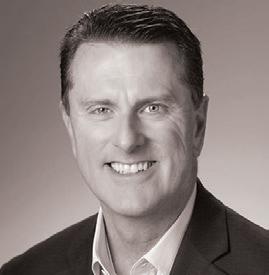
Bryan Hodgens is senior vice president and head of research at LIMRA. Contact him at bryan.hodgens@innfeedback.com.

Every year, more than $100 billion in life insurance for seniors over 65 is surrendered or lapses. It doesn’t have to.
Life settlements can deliver 5–8× more than the surrender value.
Because they were never shown how. Because they don’t know what to look for.
Not because it’s difficult.
Not because it takes more time.
The Opportunity Is Simple:
· Identify a policy that no longer fits
· Get a no-obligation appraisal
· Present the option
The Result?
More value for clients.
More opportunities for you.
The policy lapses. The value disappears. And the opportunity is gone.

The industry’s leading authority for over 30 years, helping advisors understand life settlements and protect policyowners.

Founded
When geopolitical events lead to market volatility, investors seek security.
By Christopher L. Gandy
When geopolitical tensions rise, markets react quickly. The conflict involving Iran has pushed oil prices higher and injected fresh volatility into global markets as investors try to gauge the economic fallout.
For American households, those swings are not just headlines. They show up directly in retirement accounts, college savings plans and long-term portfolios. And when markets become unstable, investors often ask a simple question: Is my financial future secure?
This question feels especially timely as June marks National Annuity Awareness Month, a time dedicated to helping Americans better understand one of the most effective tools for creating stability in uncertain times.
During periods like this, one solution that frequently enters the conversation is the annuity.
It’s important to remind clients that at its core, an annuity is designed to provide a predictable stream of income, often guaranteed for life. While markets may rise and fall due to geopolitical developments or economic shocks, certain annuity structures are designed so income payments continue regardless of market conditions. And more Americans are relying on that stability than ever before. According to the American Council of Life Insurers, life insurers paid out $104 billion in annuity benefits in 2023, the highest amount on record and a 9% increase over 2022. While annuity payments increased, so did the amount of money workers and retirees put into annuities for long-term savings. Premiums paid by annuity owners in 2023 totaled $361 billion, a nearly 3% increase over 2022.


These figures represent real people and real families who depend on annuity income to support their retirement, regardless of what’s happening in global markets.
Annuities are sometimes misunderstood, not because they don’t work, but because they are often compared to traditional investments that were never designed to provide the same features. In reality, annuities address four key risks that many portfolios struggle to solve on their own. Here’s what I tell my clients.
Longevity risk: Americans are living longer than ever, and retirement can last 20, 30 or even 40 years. Many annuity structures provide income that lasts for life, helping ensure retirees do not outlive their resources.
Inflation risk: Over time, rising costs erode purchasing power. Some annuity designs allow income to increase over time or incorporate features that help retirees keep pace with inflation.
Overspending risk: Market downturns combined with high withdrawals can quickly damage a portfolio. Guaranteed income streams can help cover essential expenses, reducing the pressure to sell investments during difficult markets.
Volatility risk: This is the very issue dominating headlines today. Many annuity riders allow income benefits to grow or accumulate even when the underlying investments fluctuate with the market. That structure can help protect future income streams from short-term market turbulence.
For many investors, that combination can make annuities a stabilizing element within a broader financial strategy.
That does not mean annuities are appropriate for every situation. Some involve long-term commitments and product features that investors should fully understand. But when integrated thoughtfully into a financial road map, they can help investors balance growth opportunities with protection and income stability.
Education plays an important role in helping Americans make informed financial decisions. That mission is central to NAIFA and to Life Happens, our consumer education community. Life Happens provides accessible resources that help families understand financial protection strategies such as life insurance, disability insurance, long-term care planning and annuities so they can make informed choices about protecting what matters most.
Global conflicts will come and go. Markets will react, and sometimes overreact, to geopolitical events. But the real goal of a sound financial strategy isn’t predicting the next crisis. It’s building income that can survive one.

Christopher L. Gandy, LACP, is the founder of The Legacy Wealth Group in the Greater Chicago Area. He is NAIFA’s 2026 president. Contact him at christopher. gandy@innfeedback.com.