Curated fashion for women and men who embrace effortless style.
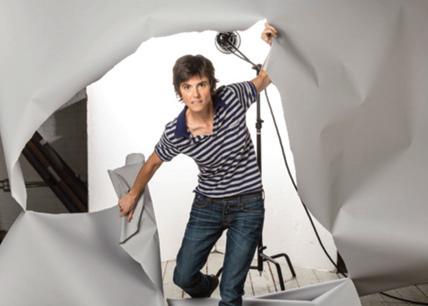
Photo credit: Kyle Caldwell
“For what it’s worth... it’s never too late, or in my case too early, to be whoever you want to be. There’s no time limit. Start whenever you want. You can change or stay the same. There are no rules to this thing. We can make the best or the worst of it. I hope you make the best of it. I hope you see things that startle you. I hope you feel things you’ve never felt before. I hope you meet people who have a different point of view. I hope you live a life you’re proud of, and if you’re not, I hope you have the courage to start over again.”
F. Scott Fitzgerald
No wiser words spoken. Sometimes you just need to push through to get to the other side. Contentment, that arrival point out on the horizon that we as a species race towards achieving, often ends up being a little unsatisfying once reached. If food, Water and shelter were “enough” then why take the time to decorate the place? I am pretty sure that’s why art, music, and literature exist in the first place or at all for that matter. Is the creative spirit a luxury?
It seems there are many here among us who tend to gravitate towards a little struggle in thier lives. Conversely, it also seems that if there is no struggle in your life currently, it will find you, and then it’s your turn.
We are all changing every day, whether we like it or whether we don’t. The ones that embrace it seem to suffer less because they have opened themselves up to the possibility resting in the unknown. The ones who fight it, often find themselves caught in the gears of the larger machine.
If you were given the choice of changing the world into something a little closer to your own vision or changing yourself and allowing the world to change around you, which would you choose?
I know my answer. Enjoy the ride!
Jeffery Lilly founder / publisher
Susan
Ellen
Rona
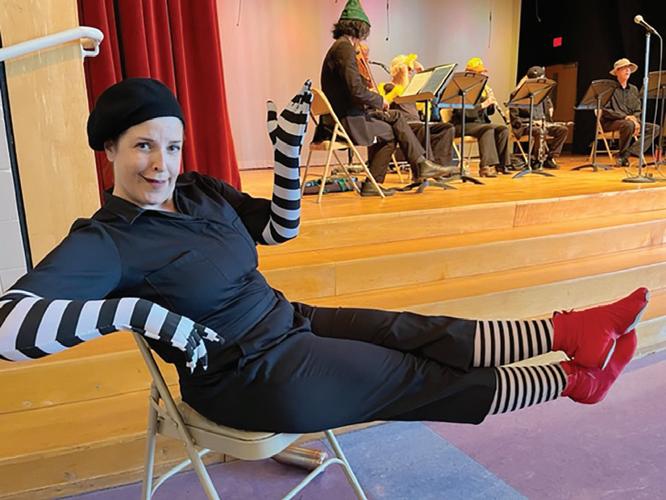
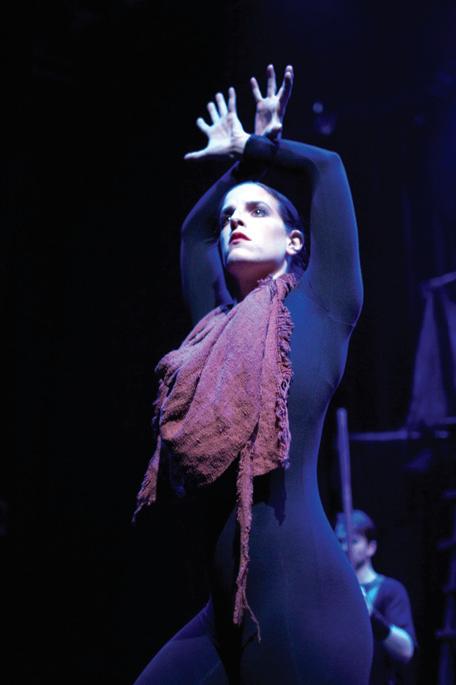
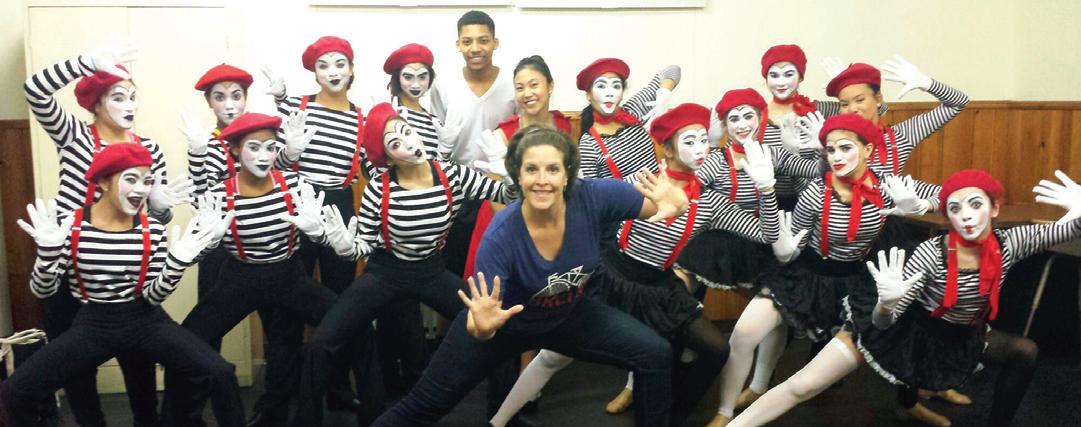
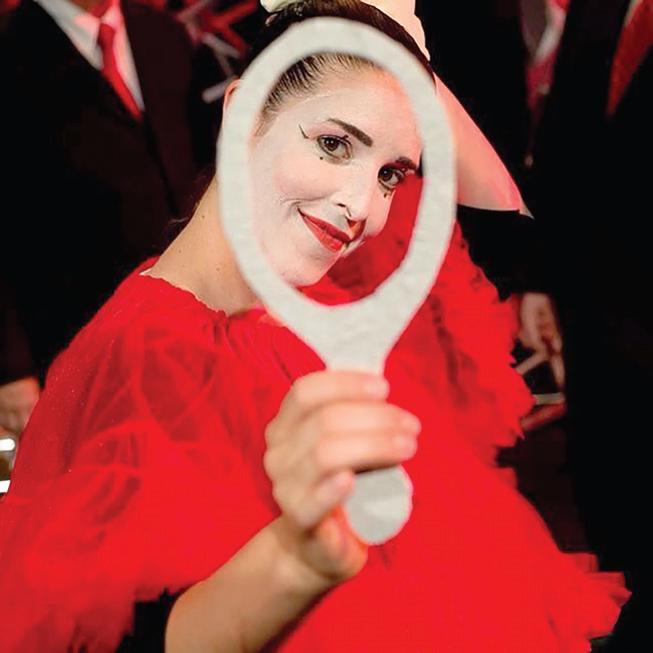
Catherine Gasta Shining Light on the Art of Miming
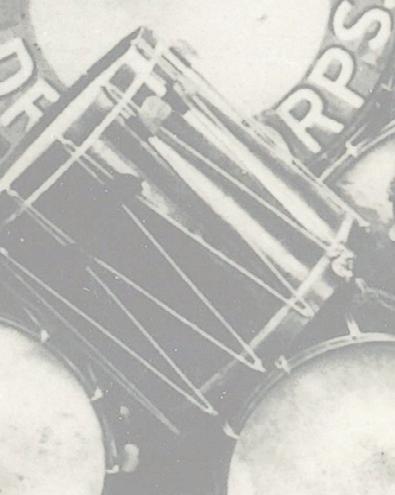
War musical tradition that still thrives today fe and dr
or over two hundred years, the music of fi rum has resonated throughout Connecticut, connecting its colonial history to a vibrant y.
What began as a practical tool of military lifehasbecomeoneofNewEngland’smost
life has become one of New Englands most distinctive cultural legacies.
During the Revolutionary W
ar
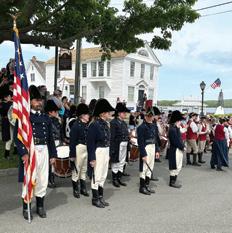
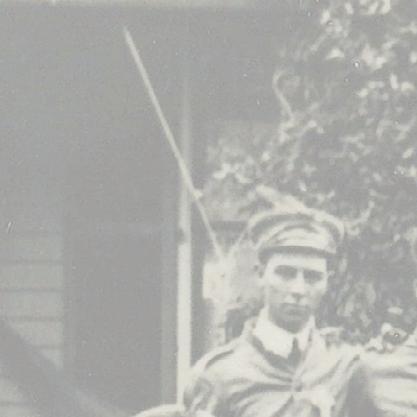
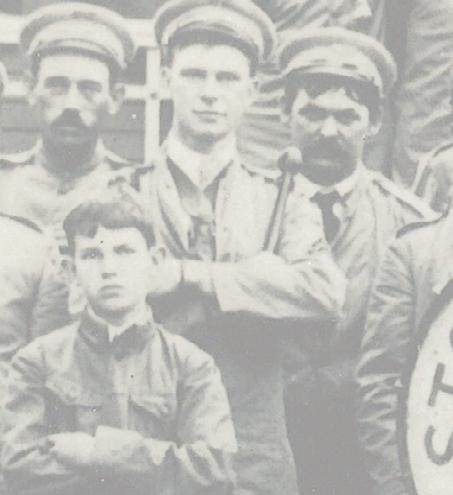
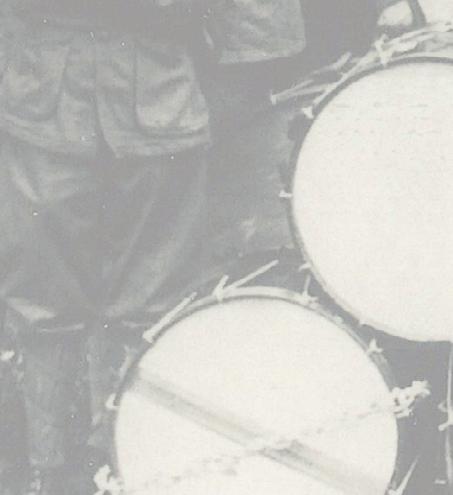
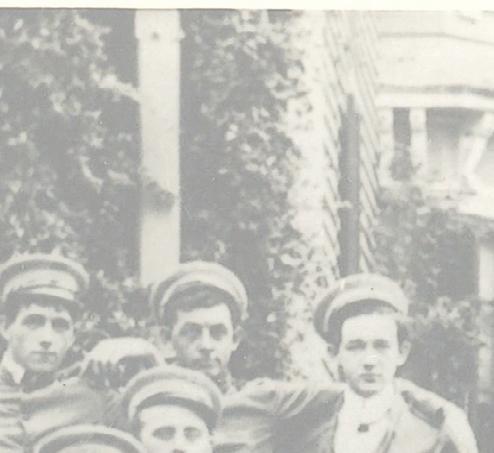
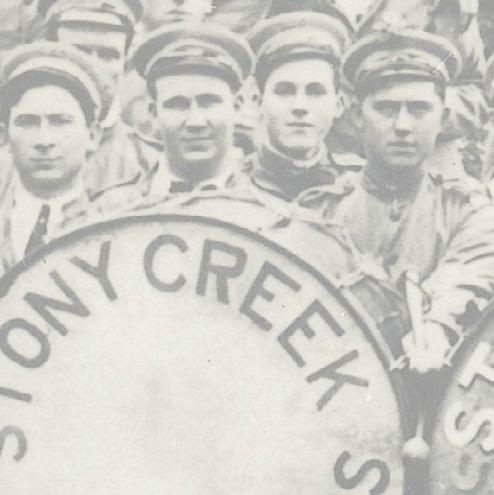
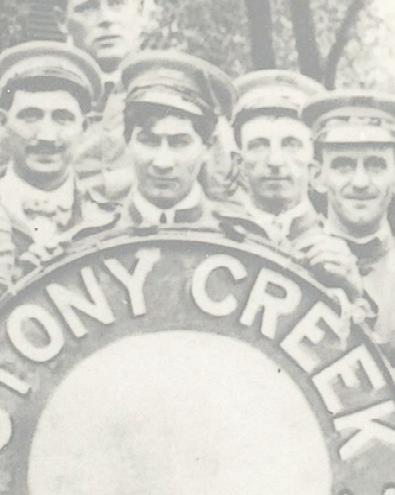
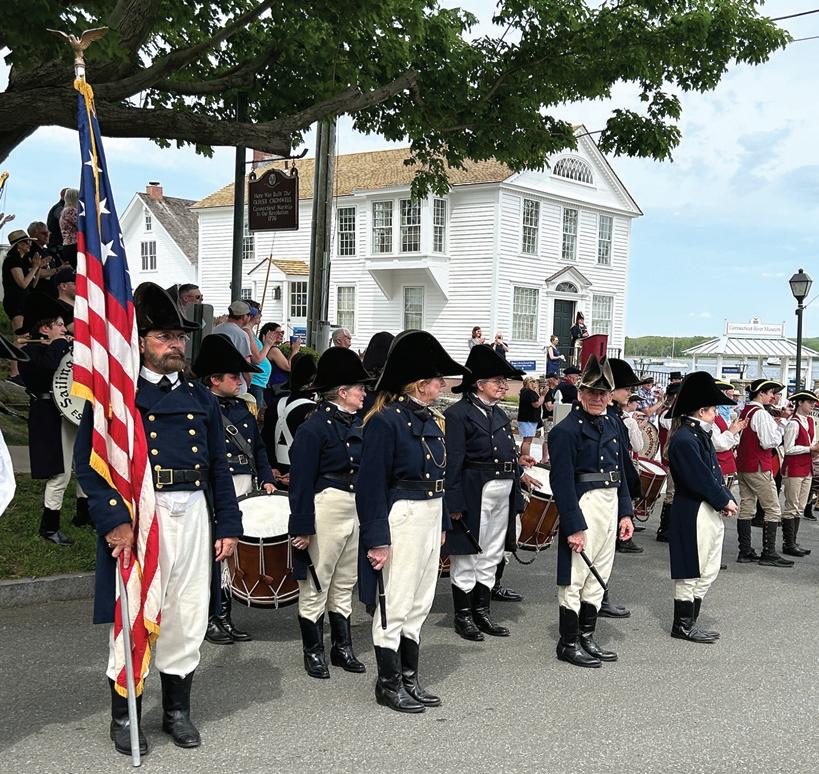
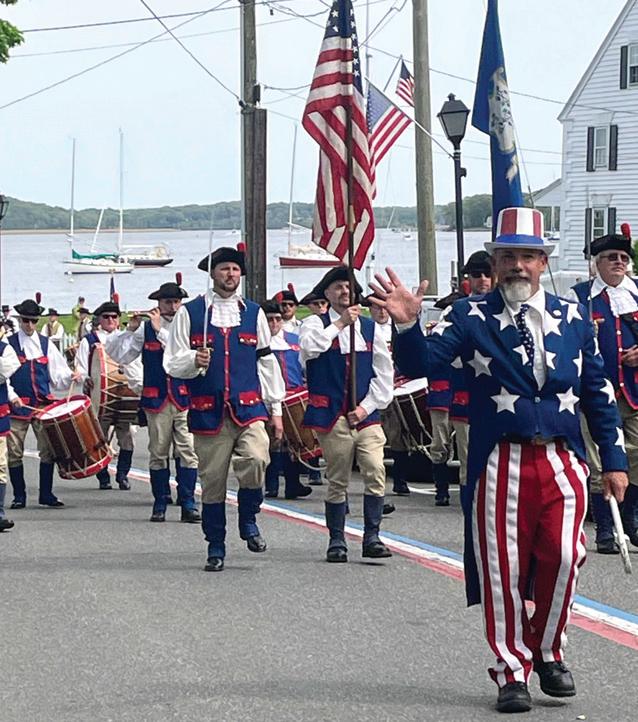
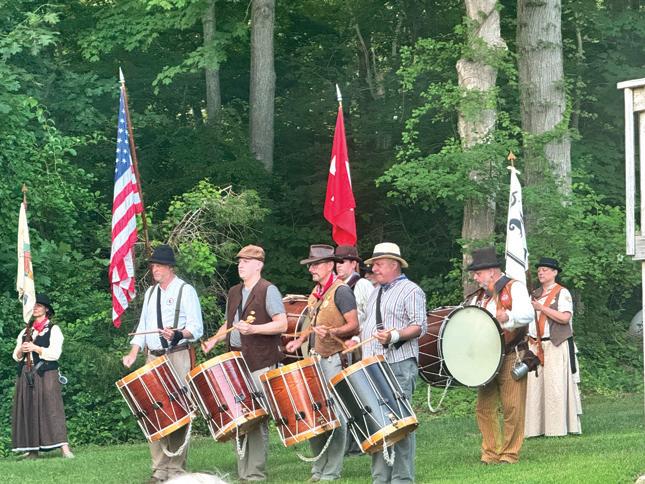
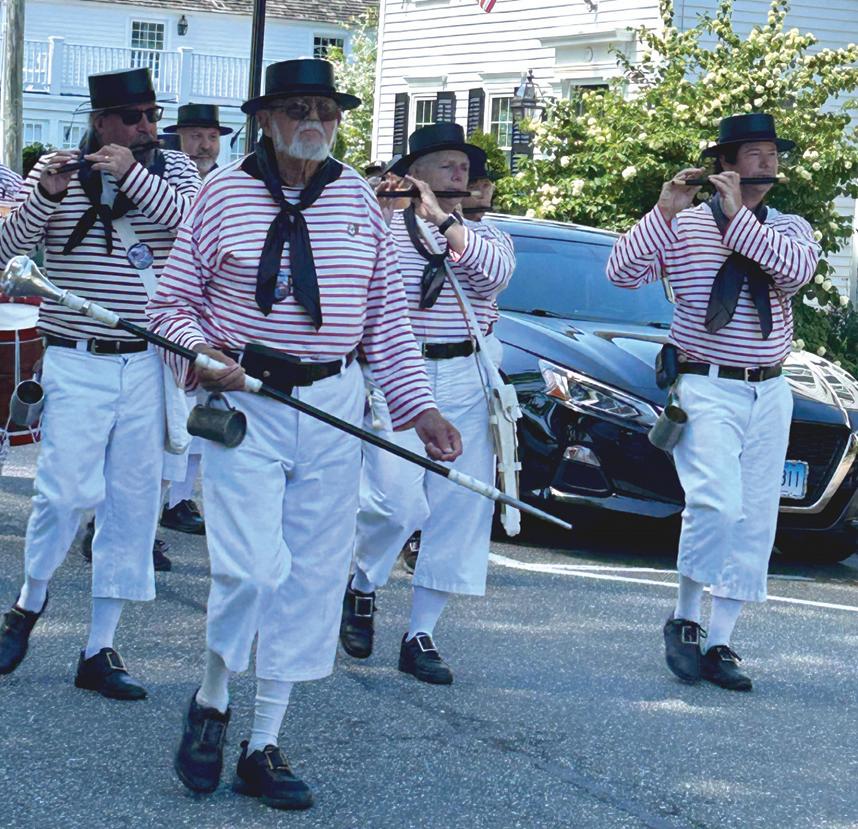
The fife and drum arrived in the Nutmeg State with early colonial militias. In the 1700s, these instruments were essential for communication in battle—signaling daily routines in camp, calling soldiers to arms, and keeping troops in step on the march. War, , Connecticut supplied fifers and drummers to the Continental y..Theirmusicrallied troops, lifted morale, and became a symbol of the fight for independence.
To y, , Yaankee Doodle, Connecticut’s state song, is probably played by every fife and drum corps in America. But the tune itself is much older than the American Revolution — it dates back to the mid-1700s when British troops sang it to make fun of the untrained, scruffy colonial soldiers they saw during the French and Indian
dandified fashions.
War. . The famo his cap and cal Americans for the Europeans an insulting ter referred to a fo to a group in E dandifiedfash of the time. “Y
ous line “stuck a feather in lled it macaroni” ridiculed trying to be fashionable like Yaankee”was rm for a colonist, a “Doodle” ool, and “Macaroni” refers England known for their hions
emains the epicenter of an Y Today Army
corps like the Connecticut V
and Nutmeg V
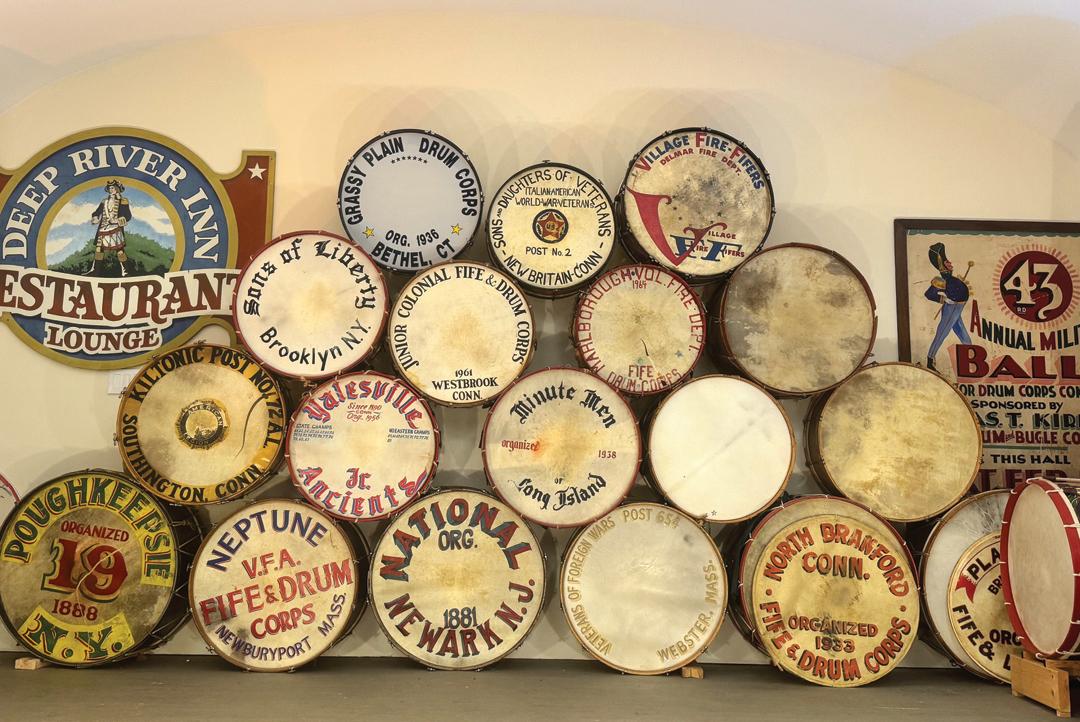
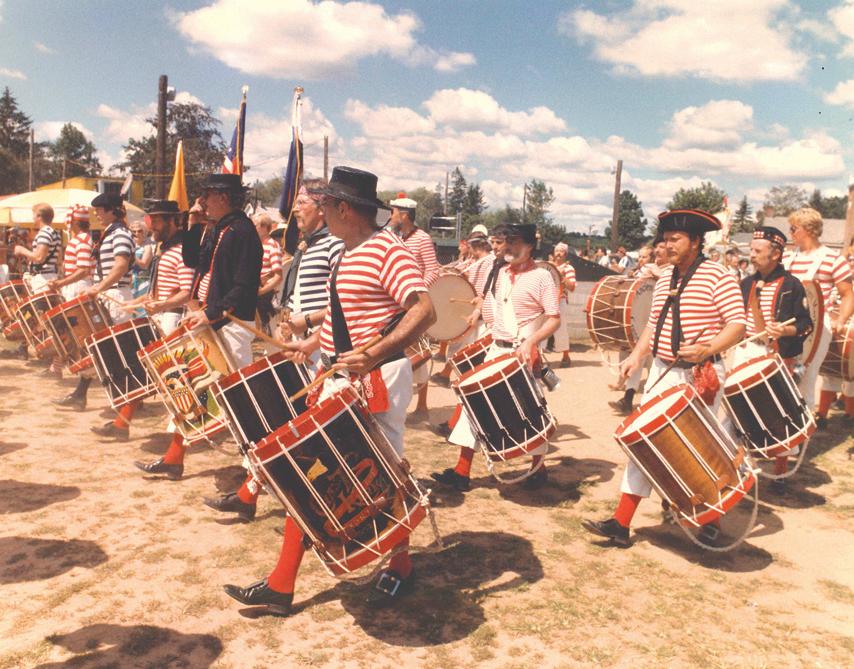
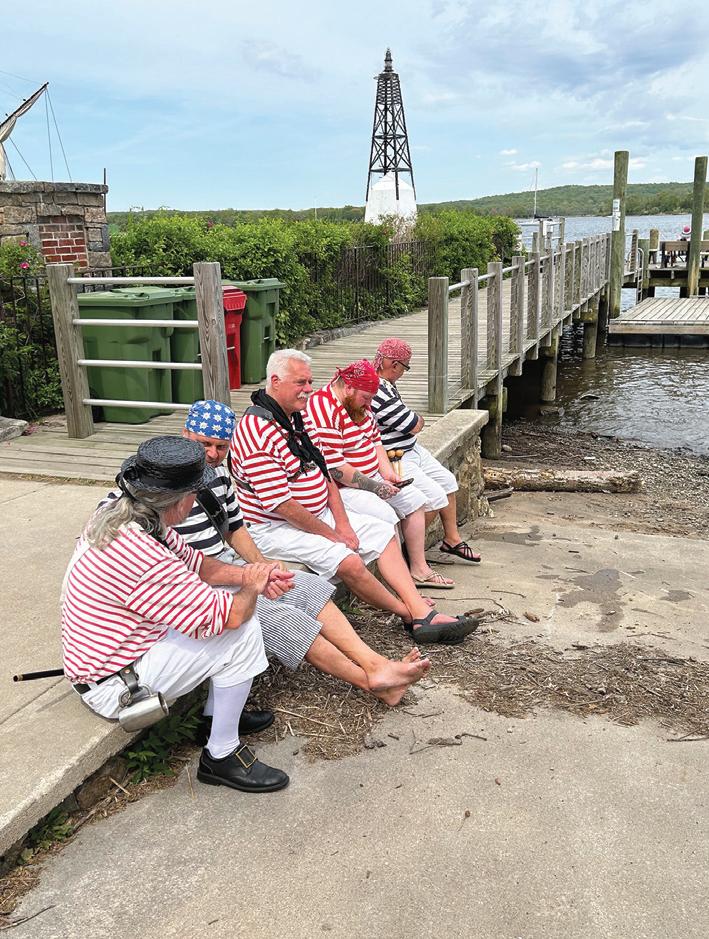
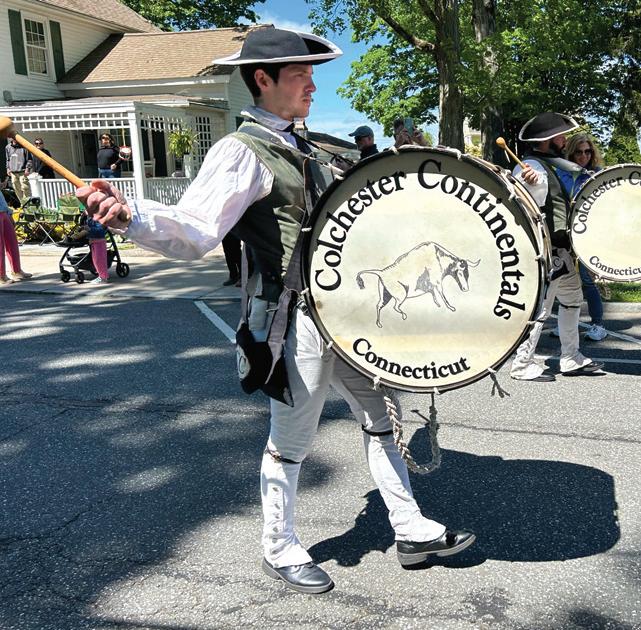
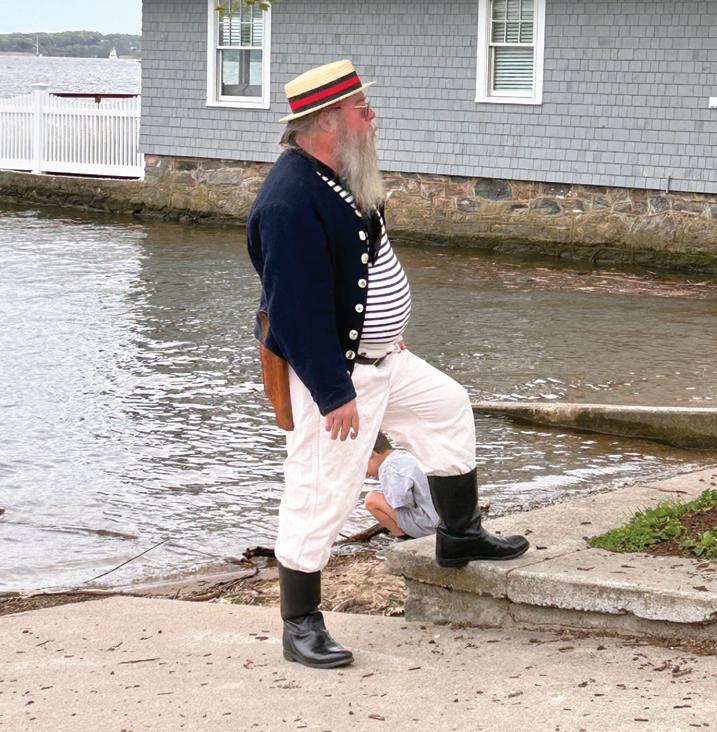
Connecticut rcient fife and drum, with dozens of active Vaalley Field Music, Moodus Drum and Fife Corps, Voolunteer Junior Ancients. Events such as the annual Deep River Ancient Muster (next on July 18, 2026) attract thousands, featuring parades, competitions, and original compositions alongside historical r y. .
epertory
um T Fife and Dr
The tradition influences education (e.g., junior workshops and an annual camp), reenactments, and even modern corps like the Connecticut Patriots, who blend fresh harmonies with ancient beats. Scholarly works, such as James Clark’s Connecticut’s ru Trradition (2011), document its evolution from battlefield utility to folk art.
Connecticut. Many companies ‘extra-curricular’ community a as a local mar Wiith in the workforce, and the tende public to fetishize the military proud of, fi ruum becam ous’ go-to.”
Kyle Forsthof Morneault, however fe and dr ching band. W
Nutmeg nd drum cording to r Joseph by way of the ups or corps ies here in encouraged activities such h veterans ency of the they were so me the ‘obvi-
r, , is not co sure this is accurate.
ompletely
aftertheCivilWar
The question as to why the N State is the epicenter of fife an has been posed for years. Acc Musique Morneaux fifemaker Morneault, “The best answer b old-timers was that many grou were formed by local compani ConnecticutManycompanies nddr
fff, curator and arc Museum of Fife and Drum, exp War, , when fife an no longer relevant as a military function, it survived as a civilia
“It becomes a social club, muc bowling, knitting and bridge. place to get together and see y Forsthoff does not think there cific reason why fife and drum Connecticut but sees how it su
chivist at The plains that ruumwas y musical an function. ch like It’s your your friends.” is one spem survived in urvived.
Musician and historian Marc Bernier observes that fife and drum is the “Town Band” tradition in this part of the country. Then there’s the question of why there is clearly a high concentration within the towns of Deep River, Essex, Moodus, Westbrook, and Guilford.
Morneault explains that Deep River started having a “muster” in 1879. “The host corps came upon the idea of celebrating the anniversary of the Revolution but settled on that year likely due to logistics. It wasn’t called a ‘muster’ at the time, but groups who also played fife and drum assembled to take turns performing traditional tunes. Apparently, it happened a few times until the early 1950s when it became a regular, annual event, and by this time was referred to as a ‘mustering of fife and drum corps’.”
The first event in 1879 inspired new groups to form. By the Bicentennial, almost every town along the Connecticut shoreline had a fife and drum corps of some stripe.
“In an age before TVs, computers, and other distractions, joining such groups was a fun, communal activity without joining a church group! By the Bicentennial, there was momentum to surge the interest in this and historical reenacting.”
Morneault says there are fewer corps and fewer members today, though the idea of fife and drum did inspire groups to be created in areas of the Midwest, and there have been attempts to start corps on the west coast. There are also fewer Junior Corps, and, in Connecticut, these are smaller. Massachusetts, though, is enjoying a little bit of a revival.
According to Bernier, the number of fife and drummers is “decreasing dramatically.” “In 1976, there were at least 12 corps within a 10-mile radius of where the Company of Fifers and Drummers headquarters is today in Ivoryton, today there are seven.”
“In the 80s one could see around 100 corps represented at the DRAM (Deep River
Ancient Muster) for an insanely long event, [today] it is more like 30 or 40 corps that come (including those traveling from the Midwest), with many marching the parade and then heading home,” Morneault says.
So, while the numbers move and corps come and go, generally Morneault thinks it safe to say numbers are decreasing.
Keeping the tradition alive is important because “it’s a charming legacy of American history. It is a building of community in an age when there are SO many distractions and the general tendency to live outside of community. While it could be seen as a form of ‘living history,’ it also is a regional flavor that those involved in the sub-culture see as comfort (like comfort food) and serves as a means for local communities to gather.”
Forsthoff believes, “There is an historical aspect to this music that is very attractive,
and there would be a very large gap in the history of American music if this suddenly didn’t exist anymore.”
“We are preserving the tradition not only of martial music but also the idea of recreational and social music. There are lots of overlaps and this is still a folk tradition in many ways,” he adds.
“The fife and drum tradition preserves something that was brought here from England, and so there’s a link that would be nice not to break. Further, it’s known as sort of the American representative of martial music pre-1900 throughout the rest of the world because Germany, Switzerland and France each had their own traditions. Many of us connect with one another internationally through our common passion for music, which has led to a sharing of history and musical traditions across cultures.”
The creation of “Junior Corps” inspires the next generation of fife and drummers. “Children are invited to join a corps to learn the instruments and to participate in parades and musters. Then what is often the case, when they reach the age, they go on to join a senior or adult corps,” says Morneault.
For the junior corps Forsthoff teaches, h says “There’s a great opportunity to tie y..”
local and national history
“Outside of parades and the occasiona he e into al end.”Typically friends in the hobby
enched — Deep River and W jam session, the biggest opportunity for a corps to play and interact with other such groups is a ‘muster’. Some are old and well entr Weestbrook musters are the glowing examples. Others are ephemeral — a junior corps, for instance, might try their hand at hosting their own event,” Morneault says.
Musters, he says, “become a focal point for those who want to perform their latest musical arrangements, interact with their y, , and then make a big noise by having a general jam session at the Ty y, , people will camp nearby and make a weekend of it.
“Many fifers and drummers will pick their favorite musters and target those each year for the calendar planning, while others (usually younger people) will try to make every event they possibly can get to.”
V Veendors such as Morneault set up their wares, food vans are in attendance, and those towns that are wise will help promote the event and even see about getting a piece of the action.
“Many of the people ‘in the hobby’ plan their summers around these events, just like people do for NASCAR racing or boating.”
The U.S. Bicentennial in 1976 sparked a national boom, with ancient corps proliferating. Connecticut hosted the world’s W W gest muster that year in Deep River lar r, , drawing over 100 units per Guinness Woorld Records.
Wiill Connecticut experience another boom with the nation’s 250th? Neither Morneault nor Bernier feel this will be the case. “There simply isn’t the drive that there was for the Bicentennial,” Morneault says.
booking gigs for next year
Howeverr, , by late 2025 Forsthoff says individual groups were starting to see a lot more local interest. “Many are already r, , and towns which have always done events are going to be doing things bigger.”
“Hopefully the visibility will generate interest and bump some of the corps numbers back up,” he said
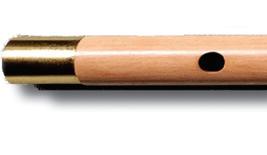
For hands-on exploration, attend a muster or visit The Museum of Fife & Drum in Ivoryton which houses 18th–20th-century artifacts, including drums, fifes, swords, and uniforms, and hosts summer concerts.
Transf ming Your Backyard into a Wild Bird Haven is Summer Transf ming Your Backyard into a Wild Bird Haven is Summer
by Jessica Penfield, Wild Birds Unlimited
Summer
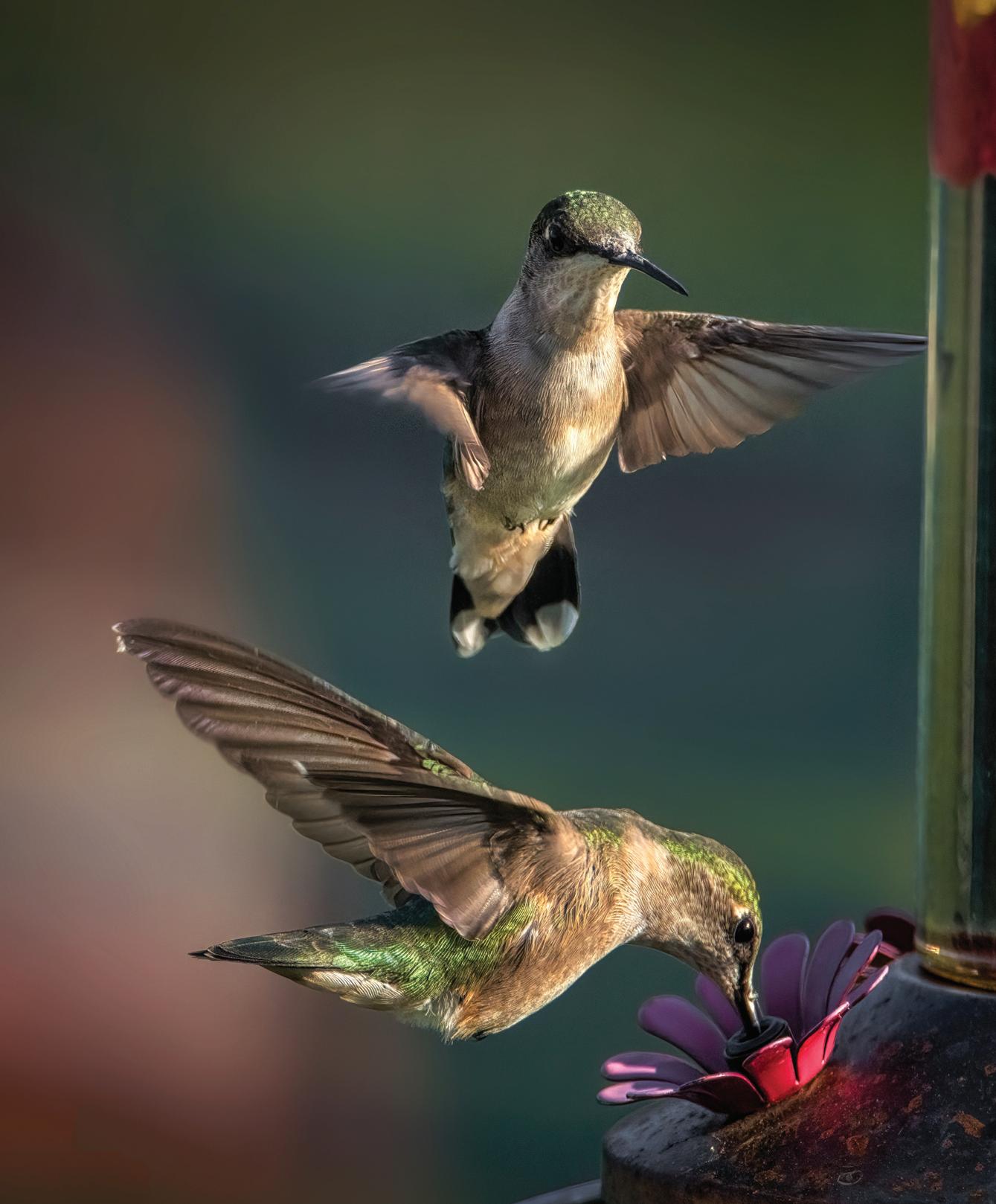
in Connecticut brings a vibrant explosion of both flora and fauna to our backyards. From blooming natives, like cardinal flower and bee balm, to the jewel-like iridescent throat of the Ruby-throated Hummingbird, our region hosts a splendid array of avian visitors and garden favorites. Transforming your yard into a wild bird habitat that provides food, water, shelter, nesting sites, and native plants, you can enjoy a delightful summer symphony of color and birdsong. While many people associate bird feeding strictly with the winter months, summer feeding offers a unique opportunity to support nesting pairs and fledglings. In the last 50 years we have lost nearly 3 billion birds, primarily to habitat loss. That means there are fewer natural food resources for wild birds to rely on. You can help change that by planting more of what our native birds need and then supplementing those natural food resources with bird feeders that provide additional nutritional food offerings.
Savvy Summer Feeding
Feeding birds during a Connecticut summer requires being seasonally savvy. This means adjusting your food offerings to meet your wild birds’ nutritional needs. High-energy, high-protein foods and added calcium are essential for busy parent birds and healthy fledglings. According to Cornell Lab of Ornithology’s nestwatch.org, an abundant food supply can mean female birds lay more eggs per clutch. High-quality sunflower seeds are a staple for our wild birds, and mealworms are a favorite during nesting season, particularly of Eastern Bluebirds. You can also add high-fat options like no-melt suet. To attract hummingbirds, hang a nectar feeder filled with a simple homemade solution of one part white granulated sugar to four parts water. Do not use red dyes, organic sugars, or honey which can be harmful to hummingbirds.
Water
During hot, humid Connecticut summers, a clean water source is an absolute necessity for both drinking and bathing. Birds must bathe regularly to remove dust and parasites, keeping their feathers in tiptop shape and flight-ready. A shallow birdbath, with a water depth of no more than one to two inches, is ideal. To make your water feature even more attractive to birds, add a moving element like a solar-powered fountain. The sound of moving water attracts both migrating and local birds alike. Many migratory birds, such as warblers, are insect eaters and while they may not visit bird feeders, they will be attracted to your yard for bathing and drinking if a birdbath is available. Empty and refill your birdbath daily, and scrub it with a stiff brush and plain water. A copper disk placed in the birdbath will inhibit algae growth.
Shelter
A functional bird habitat must offer protection from both the midday sun and stealthy predators like outdoor cats and hawks. You can achieve this by creating layered vertical structure in your landscaping using native plants. Incorporate a mix of native Connecticut deciduous trees, such as White oaks, and native coniferous trees, such as Eastern red cedar, as well as dense shrubs and ground covers. These plantings allow birds to dart safely from dense cover to your feeders and back. As an added option for shelter and roosting, add a small brush pile in a quiet corner of your yard using fallen branches and yard trimmings.
Safe Places to Nest
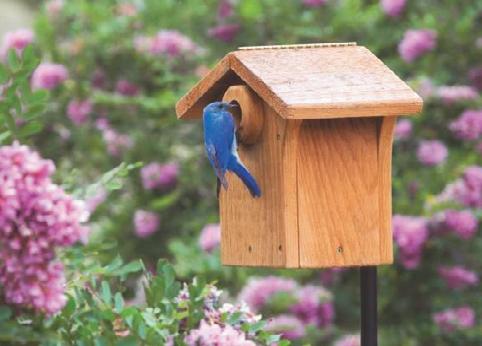
Converting your yard from a temporary pitstop into a permanent sanctuary, you will need to provide safe places for birds to raise their young. Native canopy trees and dense shrubs and thickets, as mentioned earlier, naturally offer excellent nesting sites for wild birds. You can supplement these natural sites by providing nest boxes for specific bird species. Install a bluebird box in an open, grassy area, or hang a chickadee or wren house near the edge of a wooded area. All birdhouses should feature proper ventilation holes, drainage slots, and predator guards. If safe and not a danger to your home or other structures, leave dead trees (known as snags) standing on your property. They will provide perfect nesting cavities for woodpeckers and other cavity-nesting birds. By thoughtfully blending feeders, water features, dense native shelter, and secure nesting sites, your backyard will quickly become an inviting oasis for our beautiful wild birds all summer long.
Visit Wild Birds Unlimited of Old Saybrook, and let us help you create the perfect wildlife habitat in your backyard.
Catherine Gasta, Disco Mime for AnniversaryParty NJ
SBy Ellen Lessard/ Photos Courtesy Catherine Gusta
itting down with Catherine Gasta on a gorgeous Tuesday in East Lyme, I revel in the surroundings and the conversation we are about to have. Catherine is a Renaissance creative of sorts. Visual arts, dance, theater, miming, comedy, and puppetry all shape Catherine’ s creative life.
Catherine has her roots in sports, and then she got heavily into dance in the Philadelphia suburbs. She went to a Montessori school early on. She remembered studying with her teacher, Lori Ardis, who had students improvise as part of the end of classes at her studio and used scarves. In high school, Catherine received intensive art training from her teacher, Mr. Falcone, in a three-year program. She had weekly assignments with art. The pressure to create visually every week was instilled in her. Many students went on to art school. From there, she got an intense sense of criticism and how to deal with your mistakes and learn from them. Her theater teacher was Miss Judy Roman. She went back to high school to take dance lessons in Lori Ardis’s studio. This teacher is now the head of the ballet company at Swarthmore College in Pennsylvania. Years later, she remembered Catherine for her talent in her youth and said, “I remember you for what you did with scarves.” Catherine’s expression of her body and the incredible flow of her moves, as witnessed by anyone who has seen them, can identify her as a dancer in her routines. She is incredibly funny, and all her life experiences have contributed to her future craft as a mime.
Catherine came into the theater first through the practice of charades in her home growing up. Her family had an affinity for knowing the rules and for delivering entertaining clues about the chosen topic or word, all without speaking. She still enjoys a good game of charades and is good at it. She says that charades are good training for miming. Her father died when Catherine was only eight years old. His influence could be felt throughout her future career. She majored in theater and minored in dance in college at Point Park University in Pittsburgh.
In 1994, Catherine made her way to the Eugene O’Neill Center in Waterford, Connecticut, where the artistic director, Richard Digby Day, was serving. The National Theater Institute was a 13-week intensive program
that exposed one to directing, playwriting, mask work, movement, historical movement, and other offerings. After the program, while she was in transition, a graduate of the National Theater Institute, Jessica Cerullo, reached out to Catherine and said a special discount was being offered for a conference at The Eugene O’Neill Center. Catherine took her up on it. It was called The Michael Chekhov Conference. He was the nephew of Anton Chekhov, the Russian playwright, and he believed that you could find your character’s spirit through making huge archetypal gestures like tearing down a wall or sucking into yourself or expanding yourself as wide as you can, so you can then add more life to characters than traditional
ways of learning acting, such as the Stanislavski method, which believed that you write everything out about characters. Chekhov believed that he had gotten heady. There was a Russian director there, and he was working with a couple in Washington, D.C., creating a theater company. Catherine said she “rolled the dice of life” and decided to join that company.
Catherine went down to Washington, D.C., as a founding company member of the Synetic Theater and worked for eight years with Artistic Director Paata Tsikurishvili and his wife, Choreographer Irina Tsikurishvili, both from the country of Georgia. Paata had worked in Tbilisi, the capital, in a pantomime theater company. He was there from the age of nine. It was a state-funded theater. “The acting in Georgia is very passionate, and the traditional Georgian dancing is amazing. Jumping, landing on their knees, jumping landing on their toes. It looks like they are on spring-boards, “Catherine said. She learned from Paata, who did not want to be known as a mime in America. He wanted to be an Artistic Director - and he was. His wife was a character ballet dancer in the Russian Theater. They were doing Alexander Pushkin’s Little Tragedies, four short dramas in verse, and adapting them in Washington, D.C. Catherine was in a scene with three women. They were exiting the stage in different positions, and someone in the audience filmed it. When she saw the footage, she was amazed to see that they looked like three spirits. There were so many things that were created with Synetic Theater that weren’t matched by other projects she had done. She hadn’t been involved in silent acting, where there is inner dialogue. Catherine performed in notable productions such as The Good Doctor (Neil Simon) and Hamlet, the Rest is Silence at Synetic Theater. As a founding member, she and the company won the Helen
Hayes Award for best ensemble in their wordless performance of Hamlet. Here she developed her theatrical skills and the artistry of miming. It was invaluable training, and her time with them was fruitful. She learned much of what she knows about miming from her time with the Synetic Theater.
She moved to New York from Washington, D.C., after her mom passed away. Her Harvard-trained mom had been a Unitarian Minister in rural Maine for 10 years. She has maintained contact with her former teachers, Paata and Irina Tsikurishvili. She did some interesting projects in New York. In 2021, Catherine was in Brooklyn, and someone she had worked for as a mime recommended her for a job with the American Classical Orchestra, for the show Peter and the Wolf, conducted by Tom Crawford. It was a film during the lockdown for PBS Online Learning for Kids. After the pandemic, Catherine continued with Peter and the Wolf. Filling a musical phrase with movement and getting a reaction amazed many. It’s called musicality in dance. It’s how well your body moves with music. She truly enjoyed what she did in the pantomime process. She listened to the music repeatedly. Catherine says there are so many possibilities with music. She performed in many different venues for the show, including the Avenues School in New York. Mae Miller was the head of the outreach program for the American Classical Orchestra and one of the first women to attend Princeton. She brought the show to Princeton and had Catherine go there for the All-Alumni weekend. She is still traveling to do the show. Doing Peter and the Wolf is extra special to Catherine because her father often played that soundtrack for her as a child. Losing her father at such a young age, it feels a little bit like a connection to him. She knows both of her parents would be proud of her.
Synetic Theater, Bohemians, Flora & I constructed the headpiece.
Relaxing before Peter and the Wolf with American Classical Orchestra
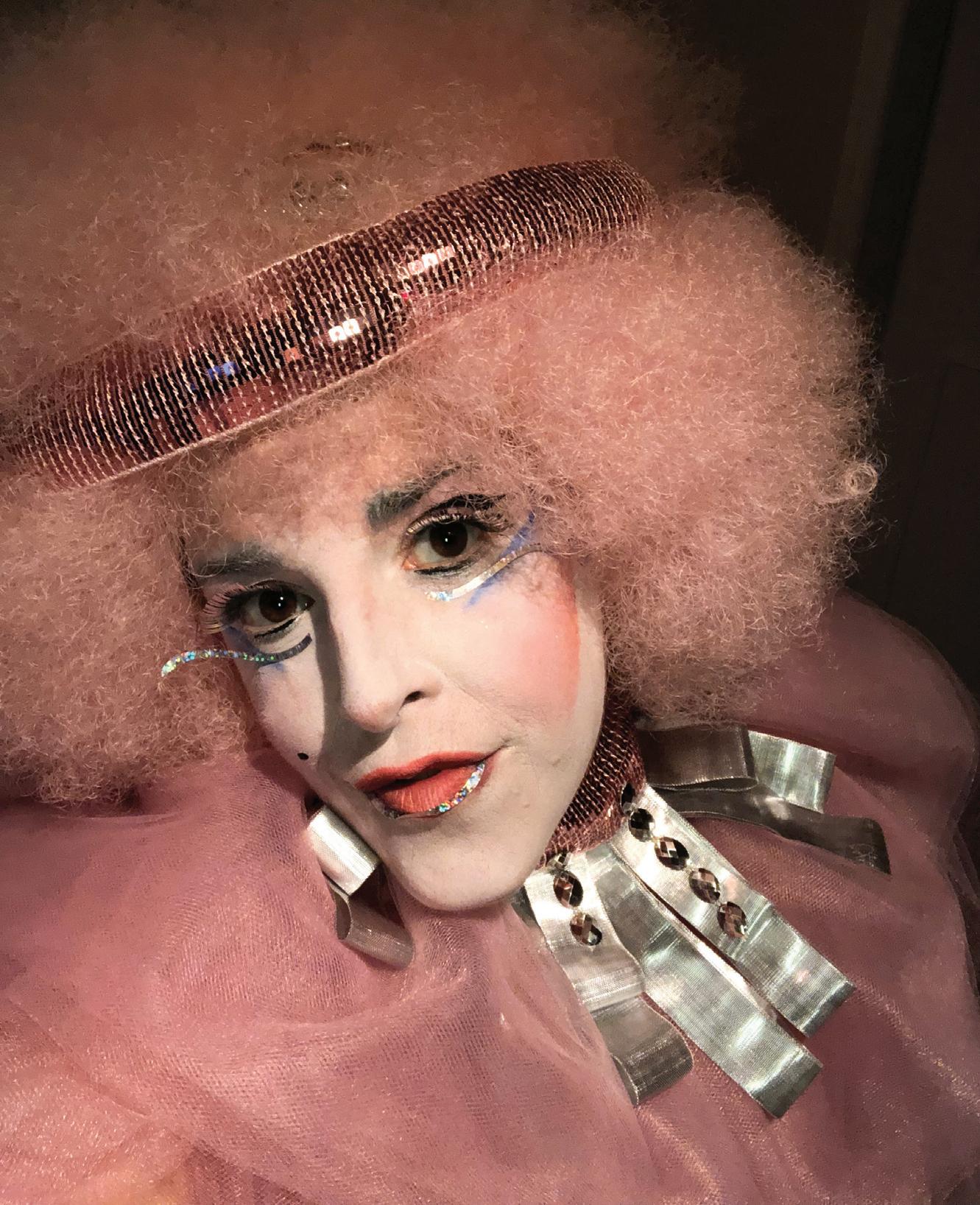
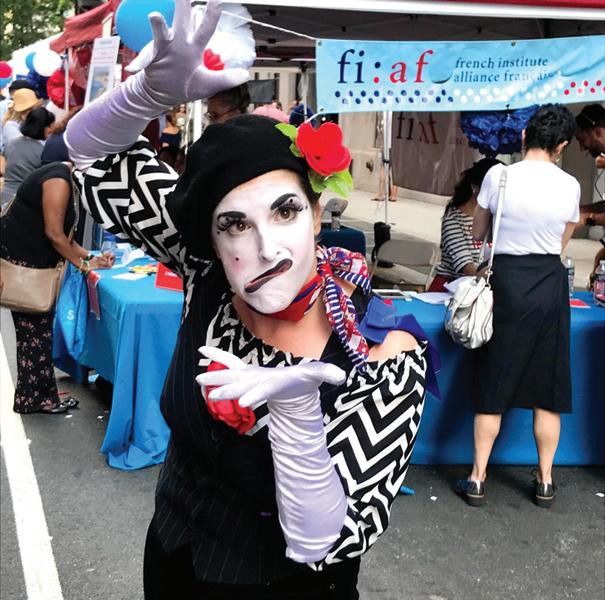
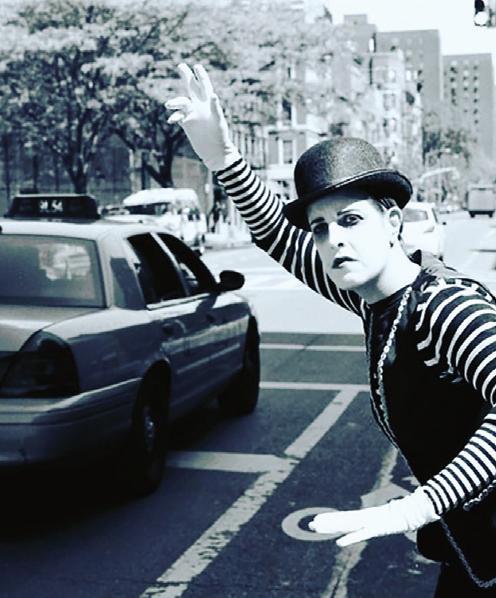
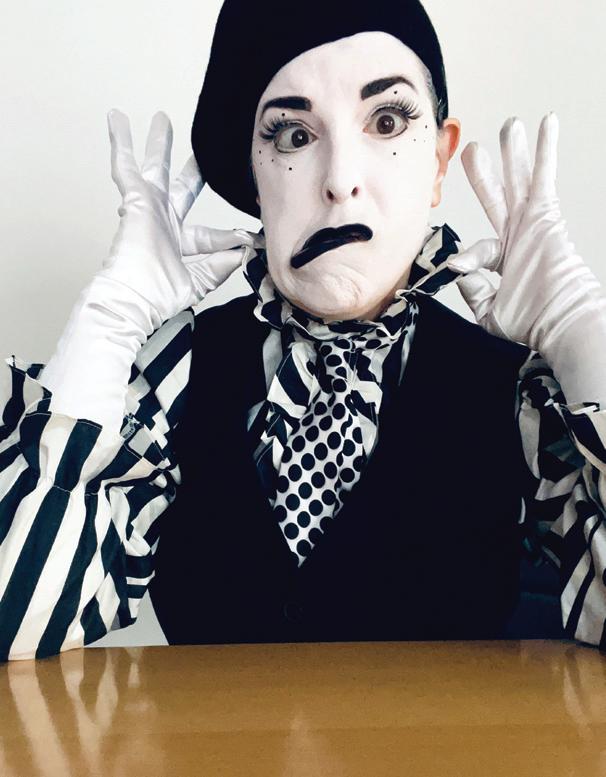
Clockwise: 60th Street Bastille Day mime, Mime in SVA Student film Circus, New Orleans busking, Mime for Hire 2026 Look
Pantomiming the Del Arte Italian characters sung by the Western Wind, an acapella group, was another project. Everyone in the group could read and see everything in the music that was in Italian. Catherine didn’t know Italian, but she and the director, Gamma Valle, would go, chunk by chunk, by chunk, what was being said. He greatly appreci-
ated Catherine’s pantomime abilities. There was some sustained acting she had to do that she hadn’t experienced with Synetic Theater. She hadn’t done pantomime to opera. They did forty-minute shows in schools. She loved the show. “I totally got the assignment as they say. How to be a cartoon, but in real life,” explained Catherine. She did children’s theater in college, but the pantomime shows were even more entertaining. She did this for six years. People often asked her how she was able to sustain attention for forty minutes with children. Catherine went on to discuss the movement in the show and the varied techniques she uses. Catherine recently moved to Connecticut, and, in addition to other projects, she sees teaching in her future. She had worked with Derron Wood of Flock Theatre in New London, Connecticut, and he recommended her to the Higher Order Thinking for Arts in Connecticut Schools, the H.O.T. program, for which she did a residency in March of 2026. She worked in Norwalk at the Concord Magnet School with first graders, and they did folk tales. Christopher Eaves, who is the director of the Higher Order Thinking program, was appreciative to have her on board. She worked with another woman, Adelka
Polak, who did puppetry, and Catherine did the theater component that they had chosen-sen. She did an exercise on creating bird movements to music. The children’s favorite exercise to do was “What am I eating?” Students pantomime eating food. Even though it is simple, it’s a difficult exercise to do even for the most seasoned theatrical performers. “I can tell you that sushi is difficult, “Catherine quipped. “It does so much good work for the young creative mind to learn pantomime.”
Catherine discusses the view of mimes that is a stereotype. She said people don’t always understand that it’s not just whiteface and clownish behavior.
In New York, Catherine did some street miming, but that was a minimal part of
Synetic Theater, Host & Guest part of Deer
her work. She did a fabric project about the experience of a refugee in New York. She used a piece of fabric and created images that reduced me to tears. In the future, she wants to make a fabric project about the universal experience of women. She constantly works to improve her craft. She’s very influenced by the Japanese director Akira Kurosawa. Shana Solomon, a director in New York, and Catherine did a successful ten-minute adaptation of the movie “Ran.” Kuperman Brothers in New York City have done some ensemble movement akin to what she did at Synetic Theater. Marcel Marceau, the famous French mime, brought miming onto the international scene in the 1960’s and 1970s. She counts her evolution as a mime a miracle. She says mimics from other countries, like Poland, have mimed and then gone on to work at Cirque du Soleil. Catherine said mimes come in all shapes and sizes. “It’s a great art form, and I really hope to keep it alive.” She says, “It’s kind of a dying art form in some countries.” At the same time, in the United States, there is a mime presence through the groups Catherine has been involved in and others out West. I joked that for a mime; she sure can talk. To which she replied, “Mimes can all talk a lot. It’s an art form, and I have some good foundation for it, so it’s one of my favorite things.“
Catherine Gasta is a mime for hire. She is represented by Ingrid French Management in New York. Her website is: https://catgasta.wixsite.com/ catgasta. Read the reviews of Catherine Gasta on Gig Salad https://www. gigsalad.com/mime_for_hire_brooklyn. You won’t be disappointed!”
Clockwise: Fall Festival for Moshulu Parks in Bronx NY, Fall, Catherine Gasta,Western Wind production L’Amfiparnaso
June 5 - July 5, 2026
Reception: Friday, June 5, 5-8 pm LIGHT AND VIBRATION
POWELL FINE ART
679 Boston Post Road, Madison, CT 203 318 0616
SUSAN
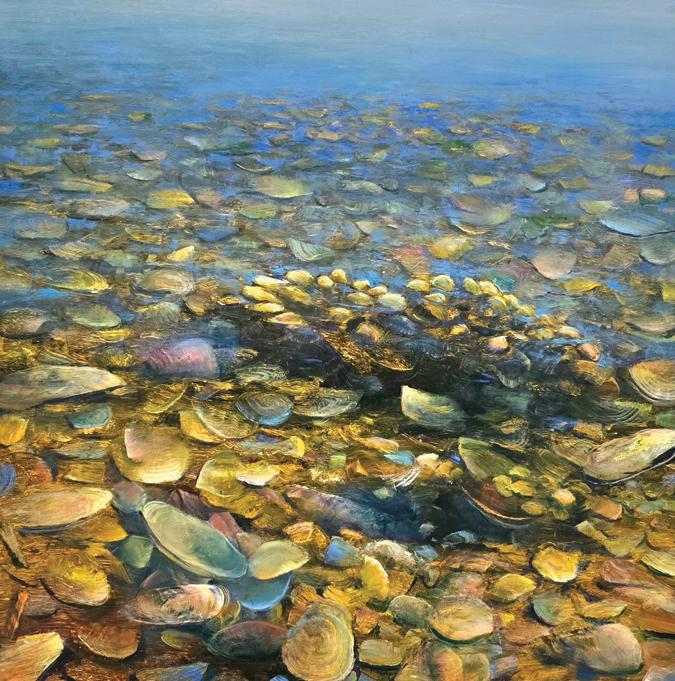
Whispering Tide, Oil, 32 x 32”
Left: Shimmer Across the Water, Oil, 32 x 32”
What is Greg Drinking?
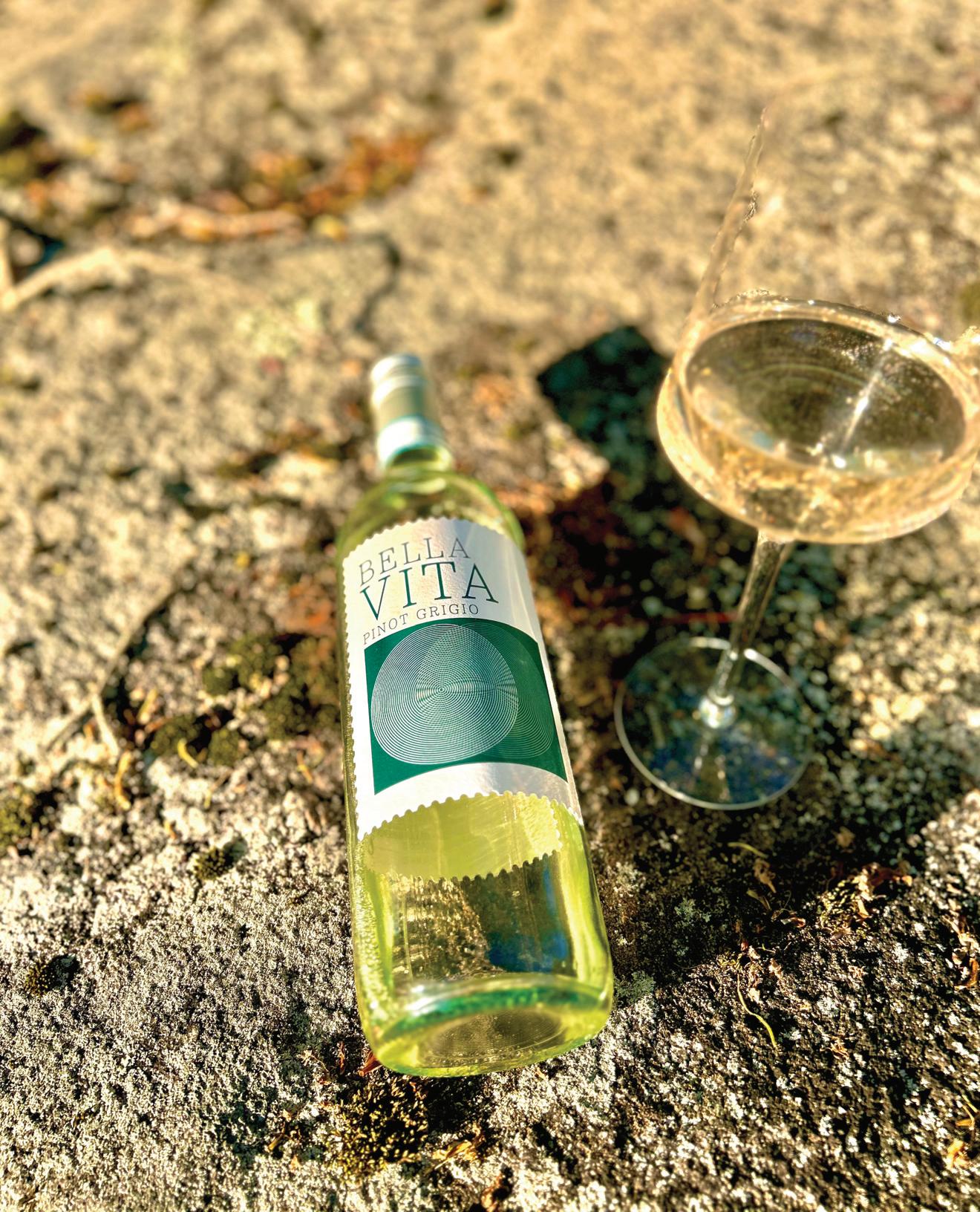
Bella Vita Pinot Grigio (2025)
Yeats wrote a quick poem called ‘A Drinking Song’ where he muses, “Wine comes in at the mouth, and love comes in at the eye. That is all we know for truth before we grow old and die. I lift the glass to my mouth, I look at you, and I sigh.”It is just a simple look at the complex relationship we have with love as an emotional expression, especially compared to many other common daily aspects of the lived experience. Yet this month, I write to you with the hopes of challenging you to look at even the most tedious of daily tasks with a bit of thanksgiving, because all aspects of life are indeed fused with the thing we often take most for granted: life itself. Keeping with this theme, I am here to feature Bella Vita Pinot Grigio (2025).
The profile of this Pinot Grigio is everything that makes it a classic summer vacation staple without the missteps that larger producers of this grape often grapple with. Big-batch Pinots are often spread too thin (like you, the reader, might feel when you take a look at the Google calendar for the day and realize you might have to start scheduling mental health time disguised as a shower). The onceoverly popular white wine became associated with being both watered down and too acidic at the same time. It is also often snubbed because it is looked at as a ‘crowd pleaser’, lacking the structure and complexity that ‘wine snobs’ demand. Yet this is an example of the best of what Pinot Grigio can and should be, reclaiming its spot as a summer sipper extraordinaire.
is even a little ‘nuttiness’ on the tail end, showing a finish more reminiscent of the colder-region Pinot Gris gets all the praise for.
This is an inexpensive wine that is ideal for all the best summer soirees. It can stand alone as an aperitif (something meant to prepare your palate for the meal). Light salad courses from Caesar to anything with a little cheese and fruit mixed in would be wonderful. Surely it would slide right in next to some charcuterie. For the seafood enthusiast, this wine would never fail a fluke or surrender to a scallop. With most vegetarian dishes, this wine easily grants your pairing wishes.
Bella Vita is medium-bodied with beautiful, sharp acidity. It has a bite that is as punctual as you would want any brunch date to be. In the glass, it appears somewhere between dandelion and golden yarrow hues. Take a good sniff and allow ample orange blossoms and golden delicious apples to dance with wild thyme and marjoram. White flowers flowing. The first sip (best from a bottle that was in the fridge but pulled out 15-30 minutes before service to allow the best of the flavors to be featured) should reward your palate with poignant peach and cantaloupe, held together by remarkable minerality. Refreshment on repeat. There
These largely organically farmed grapes are from the Veneto and Delle Venezie regions of Northern Italy. The soil is mostly a blend of limestone and alluvial material (sediment deposited by flowing water over time). This wine has the advantage of often being the result of a collaborative effort with one of Northern Italy’s more established producers, Catine Volpi, which has been doing it for over a hundred years. The wine is aged in stainless steel to really focus on the freshness of everything that makes this wine perfect for pouring.
The article's essence is right on the label. The wine is named Bella Vita (beautiful life) as a tribute to the Italian societal focus on slowing down, enjoying, and, yes, savoring each and every moment with the family and friends you love the most. Seems like a pretty simple concept, no? Yet before you slowed down your digitally dominated daily routine to pick up this magazine, what were you dedicating your precious time to? Between gloomy news headlines and doomscrolling through algorithms, June deserves better. That is why we are going to ‘say less to the stress.’ Life can feel long and often arduous, yet in the end, it is as fleeting as the summer season. You owe it to yourself to find a reason to say La vita è bella (and mean it!)
Gregory Post is a sommelier and manager at Saltwater Farm Vineyard, affiliated with Kingdom of the Hawk Vineyard.
ART IN BLOOM
June 6 - September 6
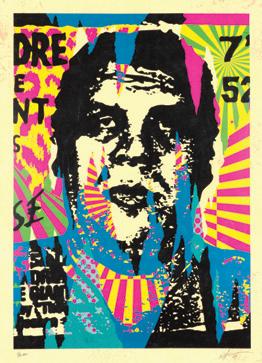
This exhibition surveys three decades of work by acclaimed American street artist Shepard Fairey, from his early imagery inspired by punk rock and skate culture to more recent works addressing social justice, environmentalism, and political engagement.
O.G. Rips 2019, Ed. 1/19, silkscreen and mixed media collage on paper, HPM, 30w x 41h.
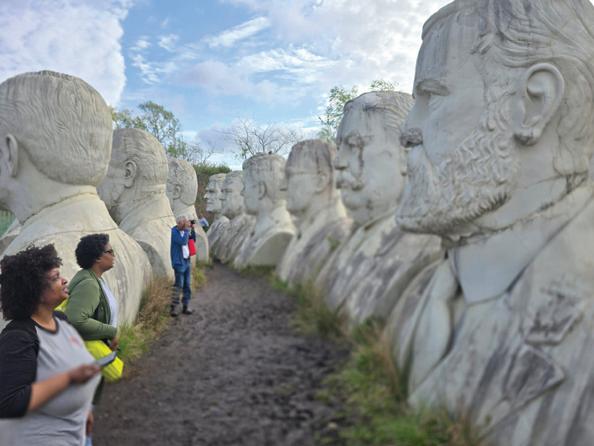
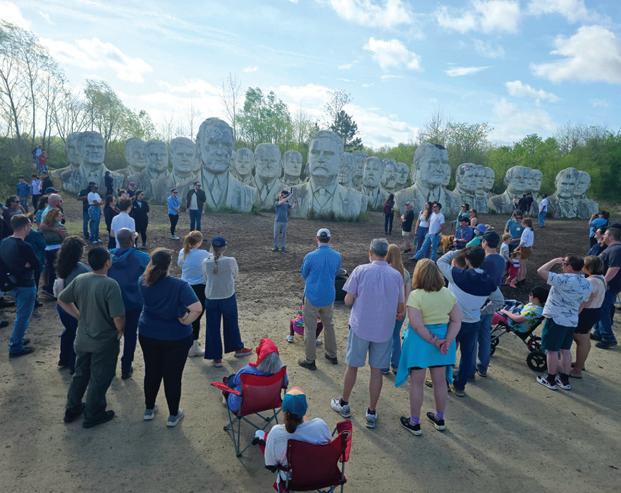
, h y, lone ch A presiden I found m think I nearby . eightening my curiosity ubb hair with two dozen black r ts’ heads. yself in a field with 42 abando
When I a road—st o chase To loomed i backyard hundred collisio A T
oke my brain a little this wee br
ed and mud-la ber boots scatter ned heads—twenty feet tall, al kend, but in the best possible w aden lay them l of wayy.
o arrived, anticipation coursed thr giniaViir Wiilliamsbur , I r, this extraor es cling the pr n the distance, cir ’s farm uction owner d of a constr curious souls signed up, just li ence, a ever , r y, y, n of beauty, decay dinary encounter raight to W g, V e. I’d glimp
ough me like a live wir , the birthplace of our nation. ove 700 miles—twelve hours dr idents’ heads like silent watchm ractors, ditch diggers, a Tr ke me, to see the busts on displ , all playing togeth y, nd absurdity mfield.T psed these s on the men. and haulers lay in the . One her
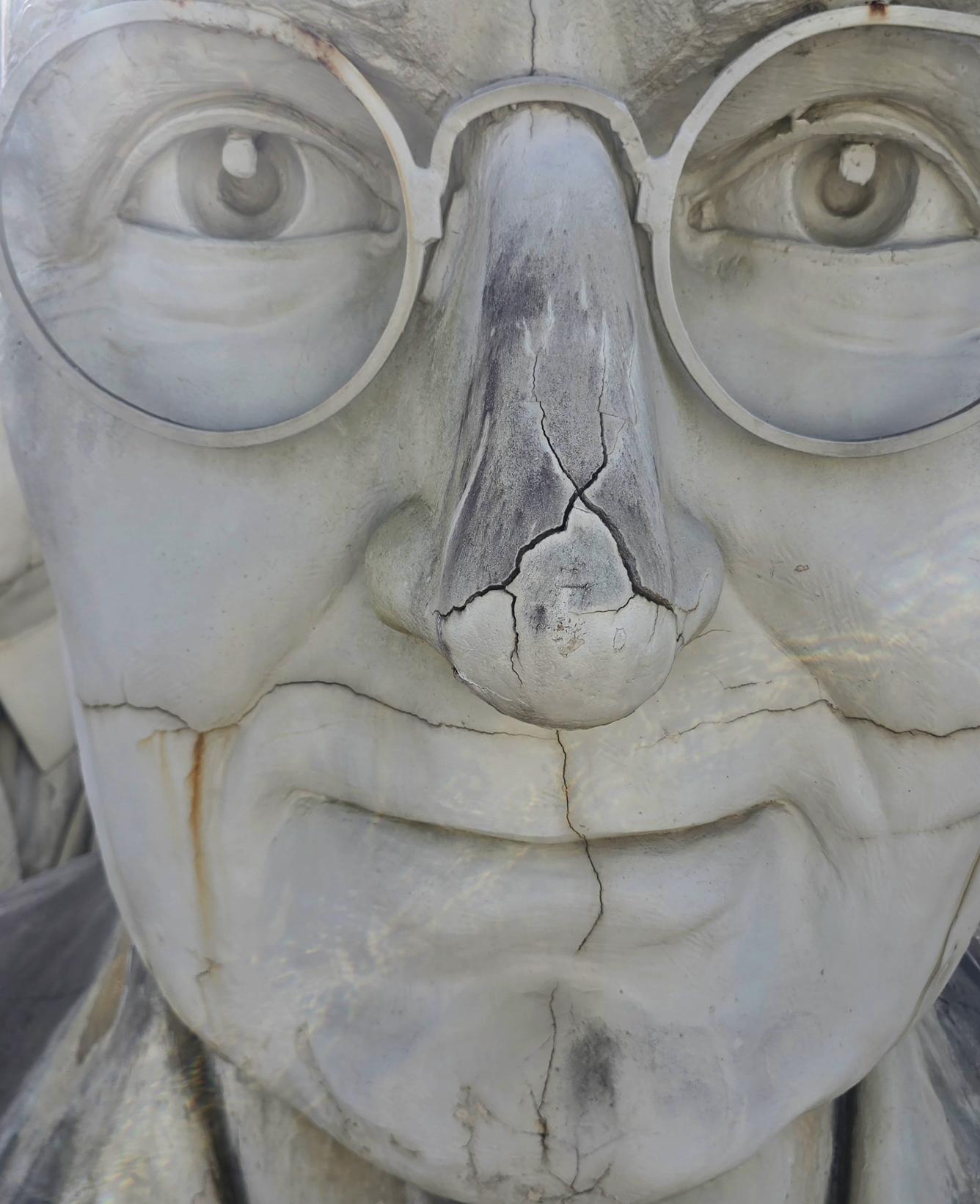
AsIapproache of leaders gathe busts, not just t uly s et what tr Ye e pu and coutur down to the scr staggering; ever the awe of stand heads on PBS a ,p Y edthegiantsIcouldseethatexp ed together was a powerful ju er Seeing r. e uck me was the collective pr tr lled me deeper into their silent st ews in the glasses. The changing r ry face was etched with astonish e these giants. Their sh ding befor ep nd other shows, but nothing pr gp g their individual grandeur posedtothe uxtaposition. g centuries esence of the tories. g hairstyles hing detail, heer size was ed me for par p circlingandsn
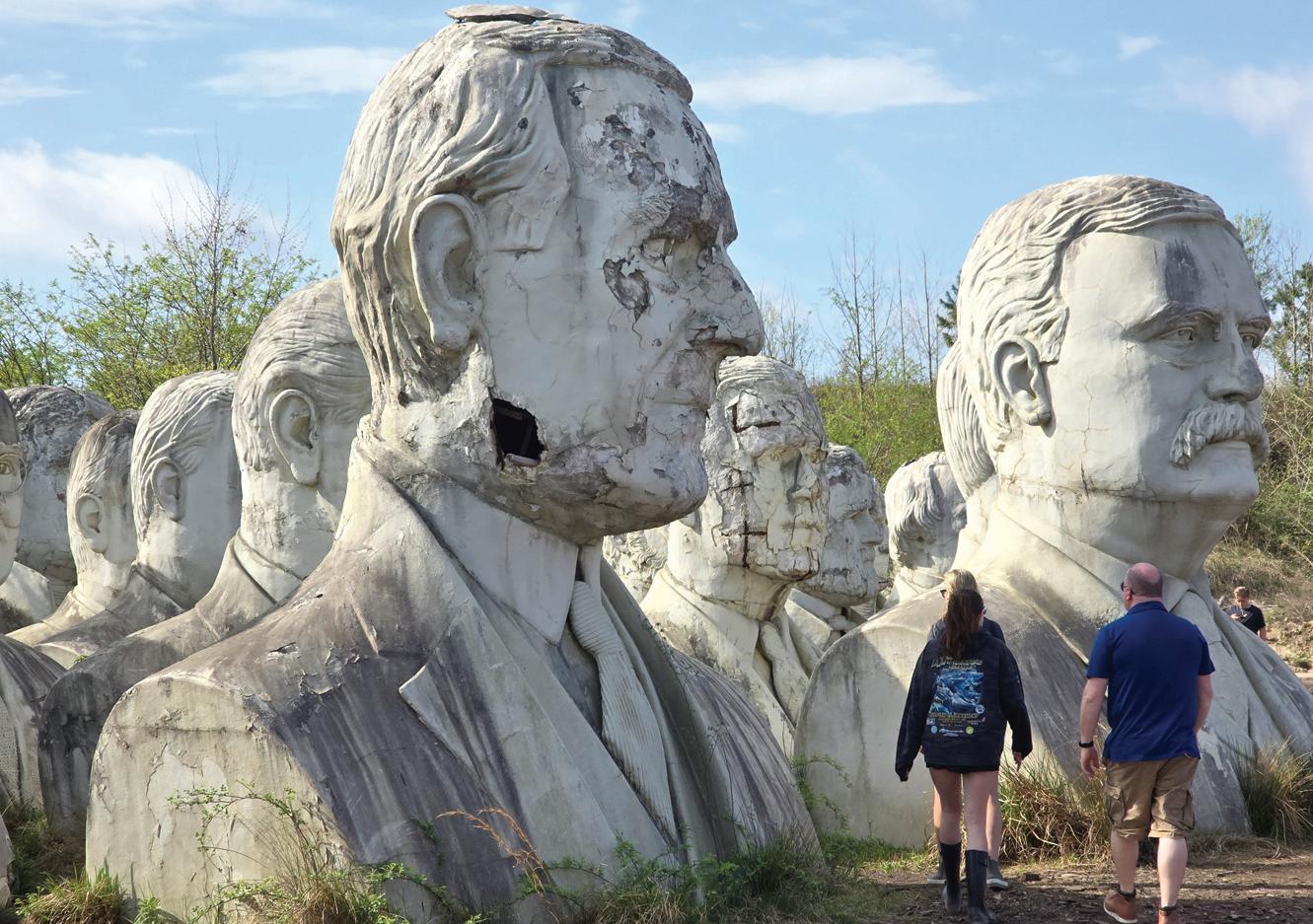
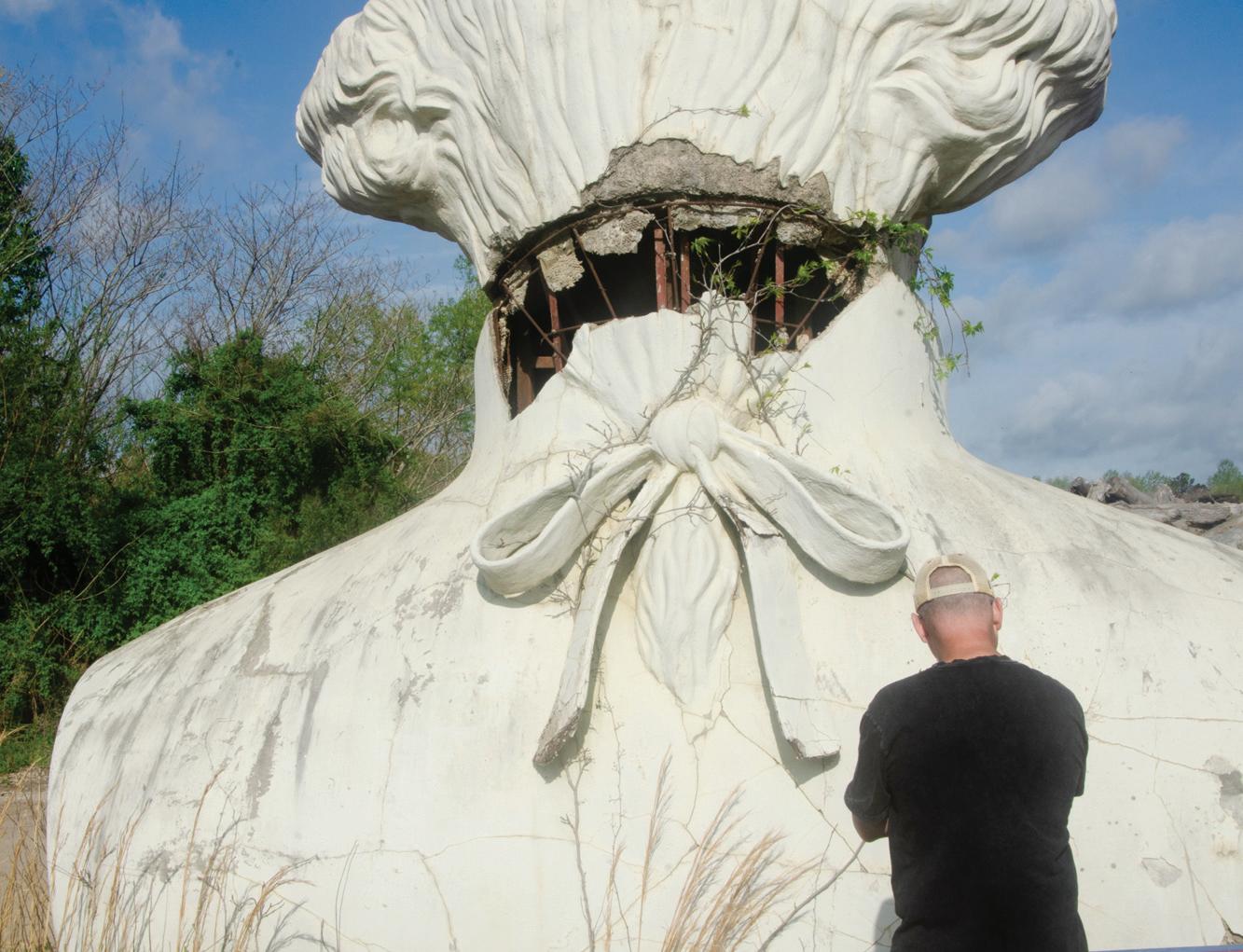
After a few min ing what was e is missing most e I balls—a satir built a honeyco Abe the back of eaking e br wer elements, many oache As I appr nappingphotosThemoreIcapt ou nutes absorbing them as a gr rased. of his mouth, and I caught mys couldn’t help noticing. Chester d Nixo omb behind one of Richar Lincoln’s head was missing. Be ony was everyw and cracking. Ir of the busts had started to deca
e I cr mor W ce full of carved wisdom, now c ough mud and brambles be g thr raved. I was utterly mesmerized cling and sn cir esh sadness a arried a layer of fr ehind the statues, my thoughts s d; caught in a spell I couldn’t qu
e I capt napping photos. The mor and fatigue. spun. Each uite name. ed, the tur
ed the giants, I could see that, exp turedthe up, I started rArthur A. r - on’s eye ees have e, as in wher Several y. posed to the ay self wonder face, onc Wiinding
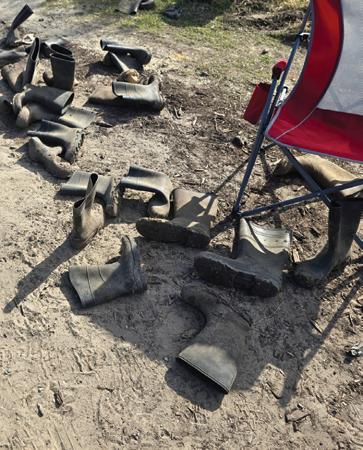
The boots, I later learned, were left for visitors—meant for the mud.
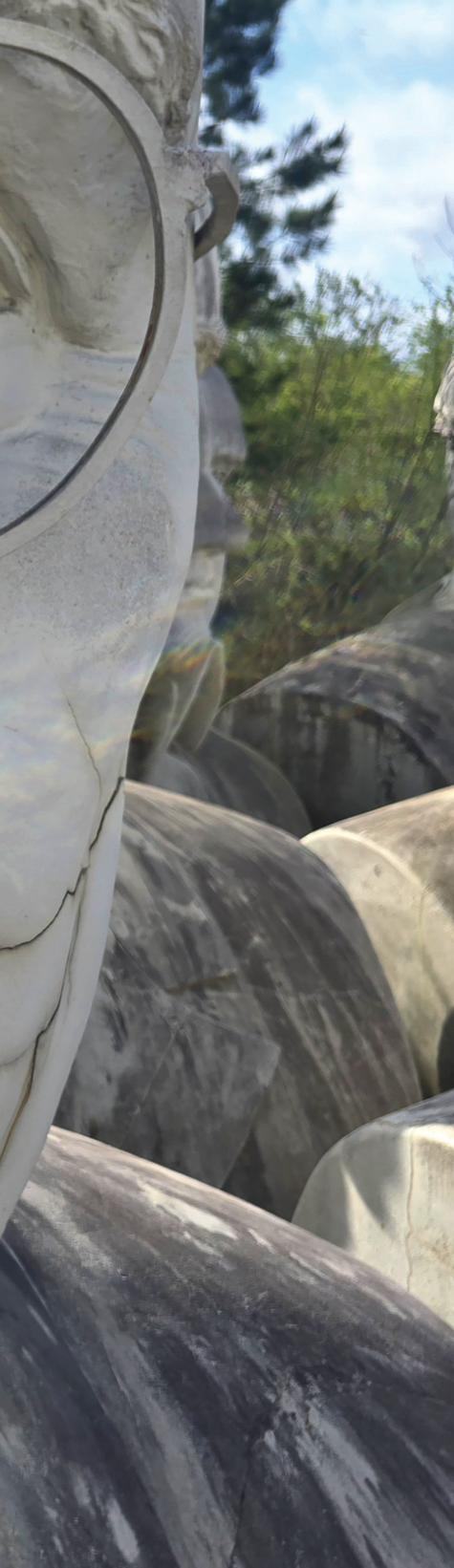
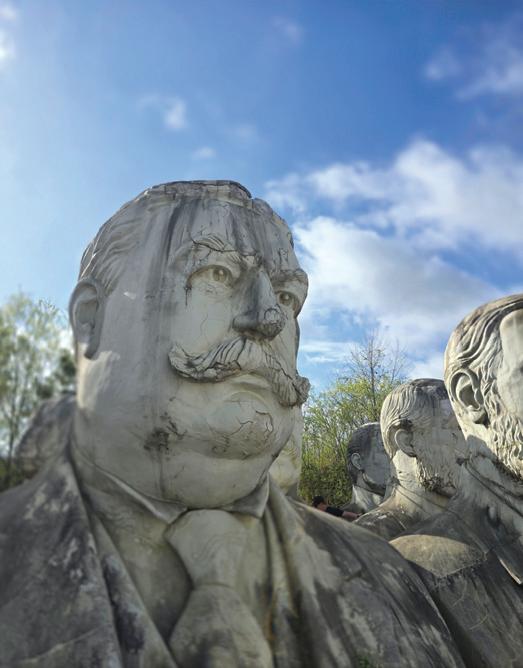
Once towering symbols of power, these busts are now stranded in a forgotten field in Croaker, Virginia.
What surprised me most was how beautiful the site was. There was no care given to placement—they sat in mud, scattered, deteriorating— and still I felt a kind of reverence.
I couldn’t quite put my finger on why. Was it their monumental scale, gathered together in silent witness? Or was it knowing that each of these men once stood at the pinnacle of power, now reduced to just another face in the crowd, mostly ignored? Or was it the visceral acknowledgment that time presses on without you?
I have traveled to many sites with a similar fervor—the caves of Altamira, the Sistine Chapel in Rome, the Cathedral of the Sagrada Família, and the pyramids of Teotihuacan. I have stood at the edge of the Grand Canyon, trekked to the Big Horn Medicine wheel, and walked among the giant redwoods of California. All captured my imagination and satisfied my need for inspiration.
Yet this was not that. This was different. Almost antithetical to those—and still, it gripped me.
I watched a hundred people darting around, snapping photos, and laughing. Requests floated through the air: “Take my picture with JFK, he was so handsome,” or “Please honey pose with a Teddy.” I’d always thought I was alone in my fascination with presidents, but here everyone seemed to share it, mixing irreverence with a peculiar reverence. At one point, a man accidentally photo-bombed my shot and apologized. I smiled and told him it was fine—it gave the photo a sense of scale.
On the bluff to the right of the heads, I bumped into a man with his child. I asked the child what he thought. He shrugged, “it’s okay.” His father, standing next to him, said that they had a choice, the heads or the Easter service. The kids chose the heads. He was glad about their decision; he found it an extraordinary sight.
I could see what it was meant to be—up on a pedestal, all in a carefully manicured, curated park. Maybe that is why the original park failed—or why it wouldn’t have satisfied me in that form.
I recalled feeling devastated when the Taliban destroyed the 100-foot Buddha in Afghanistan. I knew this was different—their act was the destruction of something ancient and sacred. Even thinking of the comparison made me uncomfortable, because this was not that. This was something else. Not destruction, not quite neglect. Something quieter.
Things meant to last… don’t.
As I wandered among the enormous busts, my thoughts circled the same question: What made this place so captivating?
David Adickes, the 95-year-old sculptor, a Texas native who studied in France under artist Fernand Léger, was inspired to create his own monumental presidents after
a trip to Mount Rushmore in South Dakota (his other creations reside mostly in Texas, including a 67-foot-tall statue of Sam Houston). He is not especially political, nor much of a student of history: “I’m a sculptor, and so I just wanted to do the best rendering of these 42 men that existed—or that I could do—and that’s pretty much it.”
The final sculptures are essentially hollow, created by casting a plaster-and-concrete shell from rubber master molds over a metal skeleton. Whether Adickes
succeeded in his goal of creating “the best likeness of each guy,” is up for artistic debate—but even with a cursory knowledge of U.S. history, it’s fairly easy to identify who’s who without the help of an on-site map.
Obama, Biden, and Trump are missing because they were never part of the original installation before the park closed, and these relics were nearly lost forever. Instead, local contractor and landowner Howard Hankins, who had worked on the original park, rescued them by hauling each massive head to his field, saving them from being completely disposed of. (Grover Cleveland’s non-consecutive terms account for the discrepancy.)
I had no expectations, but if I did, they were exceeded. I found it difficult to leave that day, still circling through the heads, as if looking for something I hadn’t quite understood.
I kept snapping photographs, as though repetition might resolve the mystery. It didn’t. And even now, a month later, the image of them hasn’t left me.
For information on this unique place visit: www.thepresidentsheads.com
StoneRidgehasalwaysbeena GROW W
StoneRidge has always been a Life Plan Community where re grows in exciting ways. Now, w on that foundation.
Breaking ground in spring 2026 expansion will add 54 new ind living apartments, 14 assisted residences, and enhanced wel amenities to a community that one of a kind in Mystic. tirement we’re building 6, our ependent living lness Schedule your pe Call
Laurencia Ciprus
Tig Notaro: I’m Just a Person
Tig
Notaro’s memoir, I’m Just a Person radiates the same deadpan, clean-lined voice that defines her stand-up, but the book’s engine is vulnerability: a willingness to describe pain, awkwardness, and grief without sanding off their sharp edges. If you have experienced Tig's candor through standup, The Handsome Podcast with Mae Martin and Fortune Feimster, and her overall imprint on the entertainment industry, it is rooted in an early life that didn’t follow a standard script. She writes about–and often quips about on stage and airwaves–a messy-magical bohemian childhood that scaffolded a singular agility for a life of ongoing improvisation. Even Tig's decision to leave high school was curiously applauded by mom Susie–the boisterous and brilliant Southern Belle. The saga is poignant and dryly funny in the way real life can be funny—even in the depths of crisis and in spite of itself. Notaro refuses to dress up bouts of deep suffering with epiphanies, the humor never feels like a coping slogan or thirsty attention getting. The writing carries humility, depth and perception: a person acutely aware of what’s strange, what’s unfair, and what’s weirdly mundane even when the stakes are terrifying.
Notaro chronicles a rapid succession of mindblowing upheavals that includes a potentially fatal intestinal infection (C. diff), the sudden death of her beloved mother, the end of a relationship, and a diagnosis of bilateral breast cancer. Rather than shaping these events into a tidy triumph arc, Notaro dissects what it felt like to live through them: the logistical absurdities of hospitals, the conversational misfires of well-meaning friends, and the disorienting way grief can flatten time. In a
subtle way, you can feel the same self-reliance she learned early—through a childhood that left room for nonconformity and the decision to leave high school—reappearing here as a refusal to offer performative right emotions for anyone else. The book moves the way crisis moves—by lurches and interruptions, by urgent phone calls and waiting rooms, by moments when you think you can breathe and then something else in your Jenga tower collapses. The reader becomes invested in the authenticity of the journey. Between rogue waves of catastrophe, Notaro observes her own responses with an almost clinical honesty, letting the reader see the numbness, the irritation, the disbelief, and the occasional slapstick timing that shows up when life refuses to behave. The memoir also revisits the now-legendary stand-up set in which she walked onstage at Largo days after her diagnosis and opened with the line,“Hello. I have cancer,” making the case—without preaching—that truth-telling can be both survival and art. This unabashed candor became the tripwire in catapulting a now meteoric career.
Notaro’s writing is spare and observational— more a series of clear snapshots than a sweeping narrative—yet it accumulates power through repetition and restraint. She’s especially good at capturing the social comedy around illness: the things people say because they’re scared, the way support can become performative, and the loneliness that can exist even in a crowded waiting room. Her sentences tend to arrive without fanfare, and that plainness is the point; it mirrors the way catastrophic news can land in the middle of an otherwise ordinary day. The book’s emotional effect comes from what she refuses to
oversell. When she does let the reader close, it’s often through small details—timing, tone, a miscommunication, an awkward silence— that reveal how hard it can be to stay present in your own life while everyone else is trying to manage you. Underneath the jokes is a steady insistence on dignity: not inspirational gloss, but the dignity of being allowed to be messy, irritated, private, and still loved.
Part of what makes I’m Just a Person land so hard is that the reader knows (and Notaro’s career reflects) that she kept building a life and making work after the year the book documents. The memoir never asks for applause, but it does offer a candid look at what “getting through it” actually entails—medical decisions, exhaustion, fear, and the small, stubborn choice to show up anyway. There are no tidy lessons packaged for the reader; instead, there’s the slow work of continuing to be a person when your body, schedule, and sense of safety have been taken over by appointments and diagnoses. That’s why the book reads differently when you hold it alongside her real-world health wins: the simple, hard fact of recovery and persistence. Notaro doesn’t treat survival as a brand, and that restraint
makes the book more moving. Read now, it plays not only as a record of crisis, but as evidence of a long, ongoing recovery—a reminder that survival can be quiet, unromantic, and still profound.
After 2016, Notaro’s post-memoir work reinforces what the book argues without ever stating it outright: that you can be flattened by life and still remain yourself—odd, specific, funny, and useful to other people. In the years since I’m Just a Person, she’s continued to release stand-up, headline tours, and take on prominent acting and writing opportunities, widening her audience without compromising her sensibility. Most moving, though, is how her later work circles back to the same territory as the memoir—illness, caregiving, dark humor, and plainspoken love—without repeating it.
sentimentality, and a bone-dry depth of humor affords bandwidth for grief rather than trying to outrun it. On the pop-culture side, her work in the Star Trek universe—playing the deadpan funny engineer Jett Reno on Star Trek: Discovery and continuing in Star Trek: Starfleet Academy—showcases the same talent in a different key: she can drop a oneliner in the middle of chaos and still make the character feel human.
I'm Just a Person's greatest strength is in its precision: Notaro doesn’t reach for literary fireworks when a plain sentence will do, and that clarity keeps the humor dark but never cruel. She also avoids the emotional shortcuts that can make illness narratives feel like they exist to reassure the healthy. Here, fear and grief aren’t props; they’re weather. If there’s a limitation, it’s tied to the same minimalism—some readers may want more connective tissue, more scene-setting, or more traditional reflection connecting the dots between events. The structure can feel episodic, even abrupt, as if the book is intentionally refusing the smoothness that memoir often promises. But as a portrait of a mind trying to stay intact under pressure, the fragmentary quality reads as both craft and truth: this is what it can sound like when you’re surviving in real time.
That heartrending throughline shows up not only in the work, but in the relationships around it. Andrea Gibson was a close friend from Notaro’s early stand-up days, and Notaro’s support endured in a way that reads less like industry friendship and more like chosen family—especially in her closeness with Gibson’s widow, Megan Falley. As a producer, she helped bring the documentary Come See Me in the Good Light to the screen, a film centered on Gibson and Falley, following their life together through art, community, and Andrea's final days losing her battle with cancer. The documentary’s Academy Award nomination reads less like a genre-industry surprise than a public recognition of the sensibility Notaro has always projected. As a result, Andrea Gibson's own poetry and writing carries its own posthumous legacy. Her blend of tenderness without
I’m Just a Person is for anyone who likes their memoirs unsentimental and their humor earned. It’s also a quietly practical book about how to be around other people’s pain— what to say, what not to say, and how to listen when there’s nothing to fix. Notaro
makes space for the uncomfortable truth that support can be clumsy, that good intentions can still hurt, and that the sick person is still a whole person with preferences and boundaries. Readers who come looking for a conventional uplift narrative may be surprised by how little the book performs inspiration, but that’s exactly its gift. Above all, it’s a reminder that resilience isn’t a personality trait; it’s a series of choices made on ordinary days. Notaro documents the moment those choices were hardest, and her continued creative momentum makes the final impression even stronger: she wasn’t performing bravery—she was practicing it.
I'm one to usually cross the street and sidestep confessional memoir, but I absolutely loved the savory seasoning of this book and recommend it highly. If you haven't heard of Tig Notaro, this is a great place to say hello.
The Cheesemonger
Deana
Simmon, The Cheese Shop of Centerbrook
Happiness served on a cheese board
The scientific reason behind the comforts of cheese
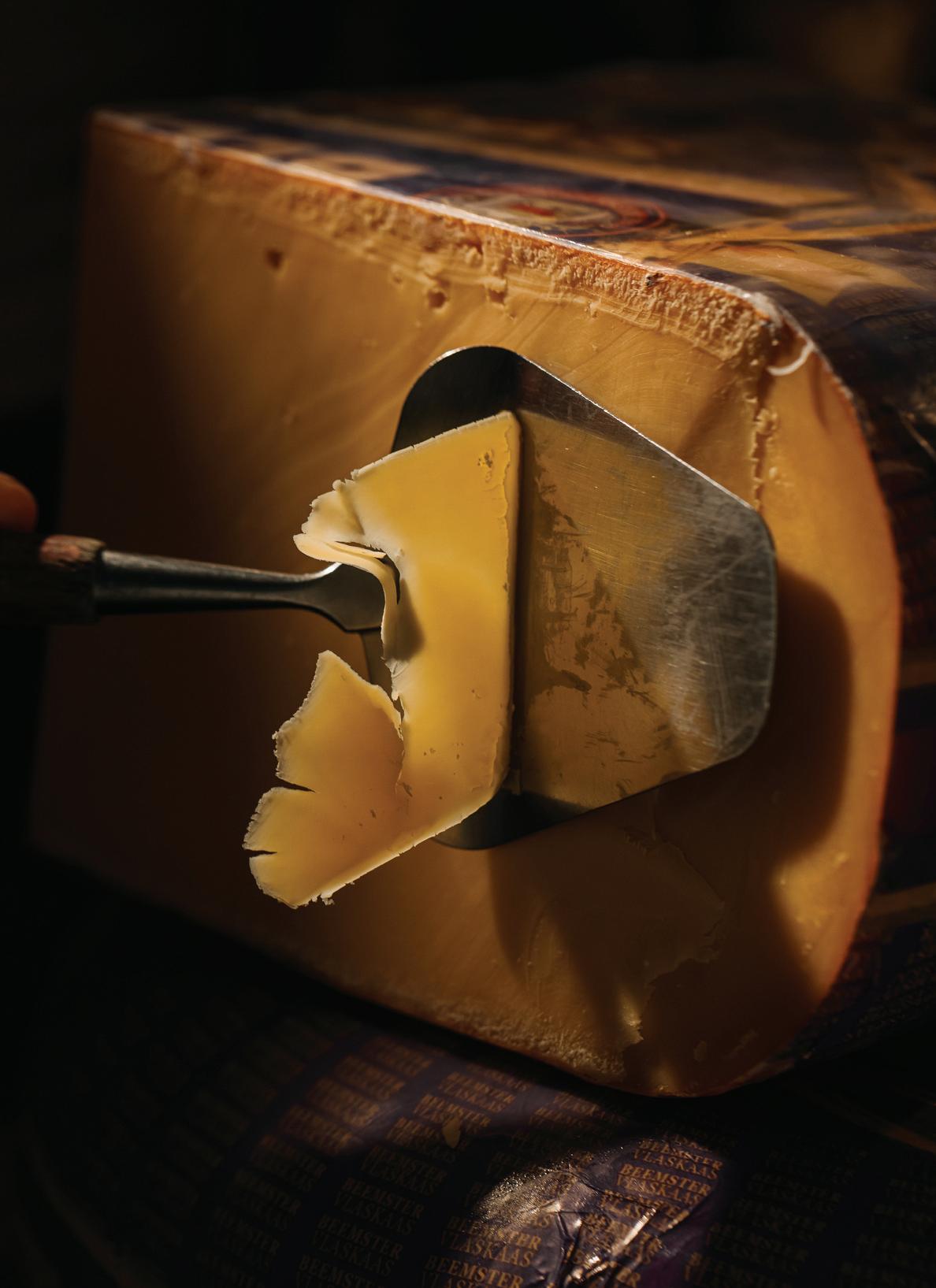
There is something very comforting about cheese. Whether it’s melted into a sandwich, sliced onto fresh bread, or enjoyed slowly, lingering over a cheeseboard with friends. But the comforting power of cheese is not just emotional, there’s real science behind it.
Fat & Salt
Human brains (and perhaps the brain of my dog too) are wired to love fat and salt. Our brains are biologically programmed to enjoy deep savory flavors. Cheese naturally contains rich milk fats, salt and that Umami flavor. When you bite into your favorite cheese it carries that rich fat, creamy flavor, that people associate with indulgence and comfort. When these elements come together, they activate the reward section of our brain, the brain responds by releasing dopamine reinforcing the experience of happiness, pleasure and satisfaction.
Aroma
Aroma is one of the biggest reasons why cheese feels so comforting. Our sense of smell is tied to the limbic system – that’s the part of our brain that’s linked to memory and emotion. When we smell a warm baked brie or a freshly cut slice of cheddar it can instantly bring back memories of family holidays, dinners with friends, or childhood meals. These memories make us feel loved, cherished and happy. These feelings lead our brains to release a mix of chemicals that affect our mood, relieve stress, heighten our memory and improve our physical health.
Texture Creates Comfort
Humans are very responsive to food textures. Soft, creamy, smooth textures are often associated with safety and nourishment from our earliest food experiences. Because cheese offers an incredible range of textures it creates a physical sense of comfort.
Fermentation and complexity
Cheese is fermented. Yes, it is a fermented food. Fermentation transforms milk into something complex, cheese. Over time cultures and molds bread down proteins and fats and you’re left with flavorful compounds that give cheese depth and personality. Complexity keeps our brains engaged. Our brains love discovery, which is why tasting different types of cheese can feel so rewarding. When our brains feel rewarded it once again releases dopamine giving us feelings of happiness and pleasure.
Our brains are built for connection
Humans are social creatures. For thousands of years, we’ve gathered around tables sharing meals. Gathering around food meant safety, survival and a sense of belonging. Our brains still respond to shared meals. It signals connection and trust. Cheese encourages slowing down. When we sit around a cheeseboard with friends and family our brains release chemicals associated with pleasure and bonding. These chemicals create relaxation and comfort. Our nervous system slows down, our stress is released and our overall health is improved.
The bottom line
Cheese is good for you. It’s not only good for you physically – it’s good for you mentally. It’s good for the happiness it brings to your soul. And unlike some foods that are eaten mindlessly, cheese invites people to pause and experience the moment. Cheese not only feeds the hungry, but it also feeds connection, curiosity and comfort, and that right there may be the real secret.
Deana Simmons
The Cheese Shop of Centerbrook
any people enjoy art.
Some may purchase a piece of art now and then when they travel, or support an annual show in their hometown, and simply enjoying their acquisition is as far as it goes.
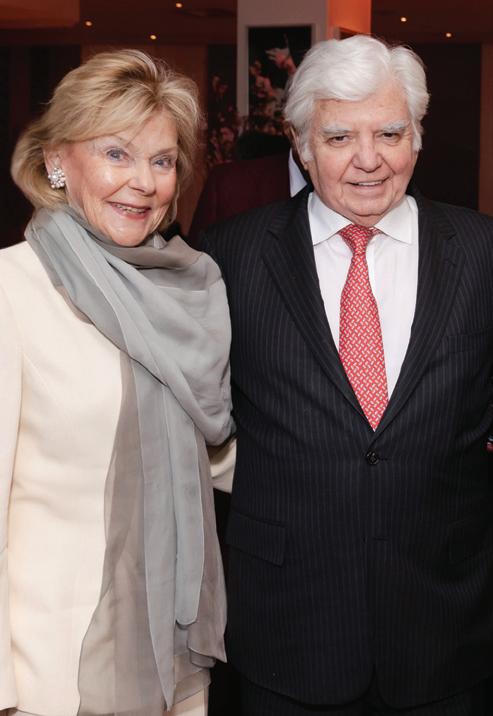
Ah, but then there’s this couple, Thomas and Cynthia Sculco. They started out collecting one painting at a time, but when they discovered American impressionism, they knew they had found their “drug” of choice. While the very roots of American Impressionism stem from the influence of well-known French painters such as Claude Monet and Pierre-Auguste Renoir, American Impressionism has added a greater restraint and tenderness. There is more light, a definite emphasis on nature, and a brighter, more vibrant palette.
There is something deeply personal about choosing what goes on blank walls. In the case of the Sculcos, their art reflects their lives and experiences. Each individual painting is not just an object, but a representation of its own personal landscape. Together, they create a visual autobiography of how this couple lives, and it is a love affair that Cynthia and Tom wish to share with the world.
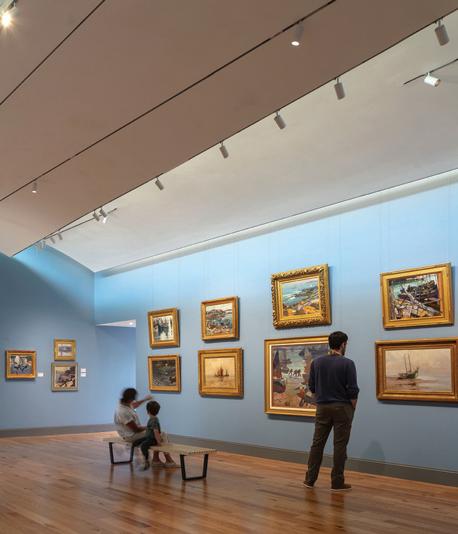
Blank walls have a talent all their own, a talent that makes you wait in quiet anticipation, and it is art that fuels that anticipation, transforming the blank walls into storytellers. The walls that once had no voice are now speaking. They transport you to another place, they fill a space with tone and texture. A well-placed piece on an otherwise open wall can bring power into an otherwise lifeless room. Likewise, they reflect the people who put the painting there. And at the Westerly Museum of American Impressionism, they are Thomas and Cynthia Sculco...personified!
The couple has long, multi-generational roots in Rhode Island, although they spend much of their time in New York City, where both have had solid careers in the medical field for years. Thomas is an orthopedic surgeon and Surgeonin-Chief Emeritus at The Hospital for Special Surgery in Manhattan, while Cynthia has built a storied career in nursing education. Her BSN degree is from the University of Rhode Island, and she holds advanced degrees from Columbia University. For more than 25 years, she has been an educator and currently serves as an adjunct professor of nursing at NYU.
For more than 40 years, the Sculcos have been collecting the works of American impressionist artists. The movement, light, and design of these artists whose work flourished in the late nineteenth and early twentieth centuries spoke to their souls -the sunlit gardens, the seascapes and harborscapes, the vibrant color, they just couldn’t get enough. These weren’t just works of art; they represented a feeling and a place where they had grown up and lived for many years.
But about five years ago, they looked around their home and realized they had more than 350 acquisitions, and yet they did not want to give up the quest for more. What to do? A happy problem has led to an even happier solution. They decided to build a museum and share the joy of their collection with others!
Using the theory of “bloom where you are planted,” they began to seek out a location in the Westerly area, a very special seaside community that had always meant so much to both of them. At first, finding just the right place was difficult
Max Kuehne, Across Gloucester Harbor, 1912. Oil on artist board.
until they realized that if they turned that theory around, they could plant where they had, in fact, always bloomed! A rehabilitation center on land that was adjacent to their home had recently closed its doors in 2021. The now-vacant property overlooked the Pawcatuck River and offered views like those depicted in many of the paintings in their collection. But transforming an empty rehabilitation facility into a museum of American Impressionism would not be an easy task. They needed to align themselves with experts.
They found their experts in the nearby Connecticut river town of Centerbrook and commissioned Centerbrook Architects, a firm with extensive experience in museum design, to take on their project. Only the existing basement and foundation of the rehab facility were preserved, while, over the course of four long years, the building was transformed into an art museum and an homage to the natural beauty surrounding the property.
While the massive construction was underway, the Sculcos launched a nationwide search for the perfect person to serve as the museum’s inaugural director. Their hard work paid off in 2023 when they found Catherine Shotick, then the Curator of the Oklahoma City Museum of Art. Shotick, who had a Bachelor’s degree in Art History from the University of Southern
Illinois and a Master’s from the University of Massachusetts Amherst, had also been a curator in the Chicago area for four years. Best of all, the couple and the curator “got” each other. Catherine could see the Sculcos’ vision, and they could see her plans for making it come alive. It was a match made in American impressionism.
Shotick moved to Westerly, and while the building was under heavy construction, she worked from home, creating a 3D model of the museum’s interior on her computer. “All I needed were blank walls,” she laughed. “I took the architectural drawings and simply rearranged the walls right on my computer.”
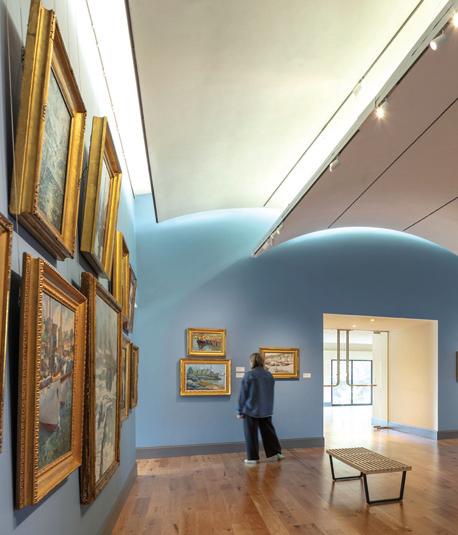
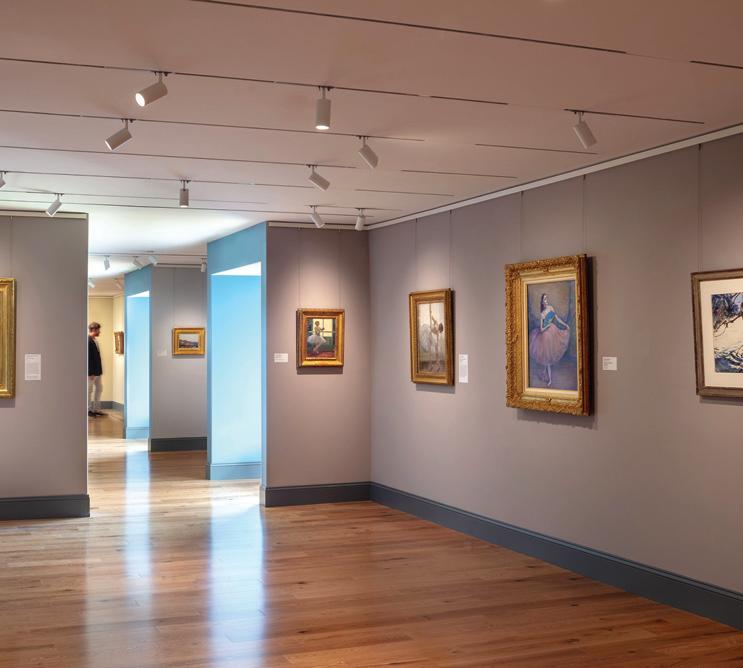
Next, she fully researched the collection, getting to know it thoroughly. In June of 2025, the collection was finally moved inside, and Shotick’s work began in earnest. The blank walls had been holding their breath, but now the art would make them come alive. On October 9th, the Westerly Museum of American Impressionism did indeed come alive to the public, opening its doors to 20,000 square feet and 11 viewing galleries perfectly curated with 140 paintings now on view.
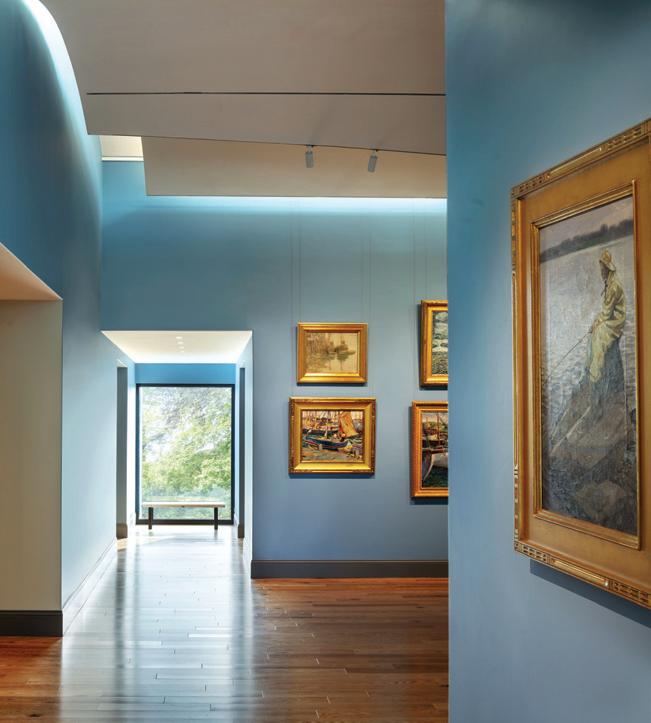
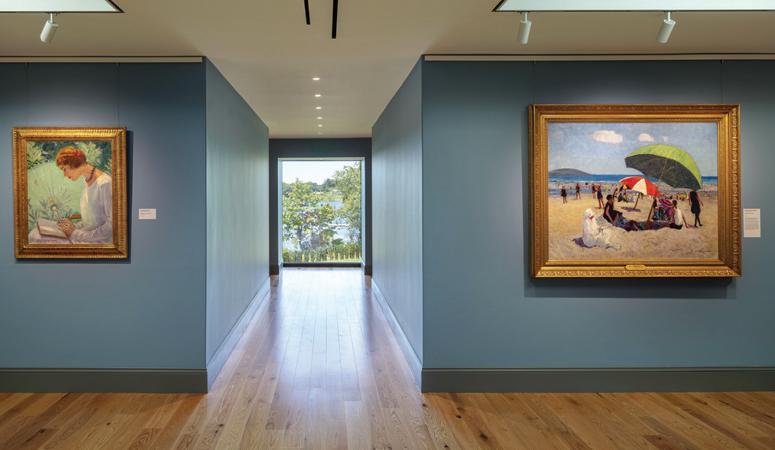
The light appears to filter in from everywhere. As visitors move through the eleven curated galleries, each with a different theme, they are privy not only to the well-known painters of the movement but also to those with names not so easily recognizable. Together, they offer a comprehensive portrait of American Impressionism and the artists
who made it prominent in America from the 1880s through the 1920s.
The brilliant design built by Centerbrook Architects, along with the perfect work of Curator Shotick, makes for an experience that is no accident. As visitors explore each gallery, they are struck by skylights and large windows that discreetly frame riverfront views alongside the paintings, mirroring the natural beauty. They are not just windows to the outside; they provide windows to the soul.
Shotick says, “Education has also guided our mission. “The museum will not be static. There will be rotating exhibitions from time to time to keep the museum vibrant and refreshed. Guest historians and curators will present ongoing programs
Left to Right Painting Details: Charles H. Woodbury, Bathers/Perkins Cove, date unknown. Oil on canvas. Aldro Hibbard, Rockport Harbor, date unknown. Oil on canvas. Mabel May Woodward, Ogunquit Bathers, date unknown. Oil on canvas. Gifford Beal, Garden Party, 1914. Oil on canvas.
with both lectures and a speaker series to be held in the beautiful event space.” Partnerships are being forged within the community and the schools, with an ongoing emphasis on education. Education that is tempered with a whole lot of love and a wish to share this gift with others. Perhaps the true purpose the Sculcos had of building this museum was not only to leave a legacy but to give perpetuity to a vibrant movement that will live on.
In little more than six months, there have been some 7000 visitors with no end in sight. Guests are amazed to learn that general admission to this private love story
made public is just $12 for adults, $10 for seniors, veterans, and students, and free for children under 18. with memberships starting at just $50. Why is it so inexpensive? The answer is simple and may be found at the beginning of this story, for it is the Sculcos’ story.
A couple in love with art and their collection merely wanted to share it with their community and beyond. They wanted to delight and educate, and to fill blank walls and open hearts for a long time. They’ve accomplished the first part of their goal, with walls that not only serve as fascinatingly beautiful storytellers, but also, most
William Glackens, Chrysanthemums, c. 1925. Oil on canvas.
definitely speak to those who take the time to pause and reflect.
So, come listen. Listen to the river flowing endlessly out the windows of the galleries. Listen to the wind blowing through the trees, the birds singing.
Listen to the whispers of famous impressionists like Childe Hassam, John Singer Sargent, Lilla Cabot Perry, Mabel May Woodward, and Willard Metcalf. And listen and become familiar with those lesser artists, Walter Griffin, Jane Peterson, Ernest Lawson, and so many others. Some paintings merely whisper, others reach out of their frames, tapping the visitor on the shoulder, demanding you turn and take a second look. Artists who once captured fleeting moments with vibrant landscapes and seascapes of New England now find those moments preserved by this gift from the Sculcos to Westerly and the world, and you can be a part of it.
“So far as we have found, we are the only museum in America that is solely dedicated to American Impressionism,” Catherine says. All because two lovers of the land where they grew up and the art that so depicted and preserved that love, ran out of wall space.
Discover the Westerly Museum of American Impressionism, located at 79 Watch Hill Road in Westerly. (401) 773-9767 www.wmairi.org
***Ask about private docent-directed tours as well as the public tours available to small groups when you call.
Paintings Details - Fern Coppedge, Winter Along the Towpath, date unknown. Oil on canvas. Louise Upton Brumback, Good Harbor Beach, 1915. Oil on canvas.
Cynthia and Thomas Sculco
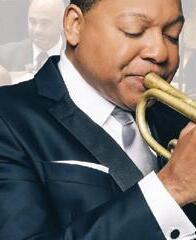
L I AT J AZZ
WEDNESDAYY, , 08.13.26 | 7:0
WYNTON H
0
We Met at Grossinger’s is an im through the Jewish Catskills—o the Borscht Belt—reviving the inspired Dirty Dancing and def Jewish American life.
mersive journey nce known as iconic resort that ined an era of
STILLS, NASH
SUNDAYY, , 08.16.26 | 7:00 PM
Prepare for an unparalleled m as "OUR HOUSE: The Music of C to perform the Crosby, , Stills, N repertoire with an extraordina F LYY&FRIENDS.
ash & Y
THE
LIFE THURSDAYY, , 10
Experience the live on the More Dupré performi special appeara
SUNDAYY, , 08. 23.26 | 7:00
Revisiting Creedence brings t of CCR roaring back to life in a hit-filled concert experience l performers with authentic ro iconic legacy.
MAGIC
usical experience SNY" assembles Yooung ry ensemble of CE M
he legendary sound high-energy, ed by world-class ots in the band’s
ENNE 0 PM spectacle of nning sleight of manship that’s City Music Hall TV shows like
0.01.26 | 7:30 PM timeless hits of Randy Travis Life T r, , featuring James ng all 16 of his #1 songs, with a nce from the legend himself.
our
THE MACHINE PERFORMS K FLOYD
FRIDAYY, , 10.09. 2026 | 8:00 PM
The Machine has forged a 30+ year reputation of extending the musical legacy of Pink Floyd performing a diverse mix of The Floyd's extensive repertoire, complete with faithful renditions of popular hits as well as obscure gems.
JIM HENSON'S FRAGGLE ROCK BACK TO THE ROCK LIVE
SUNDAYY, , 10.11.26 | 3:00 PM
A family stage musical from The Jim Henson Company follows Gobo, Red, Mokey, Wembley, and Boober on a quest to find a lost stone that can bring people together, featuring puppetry from Jim Henson’s Creature Shop and music from Fraggle Rock: Back to the Rock.
HARRY CHAPIN’S GREATEST STORIES LIVE FEATURING THE CHAPIN FAMILY
ATTURDAYY, , 10.17.26 | 8:00 PM
Experience iconic performances and timeless hits from Harry Chapin’s Greatest Stories LIVE performed by The Chapin Family. Don’t miss this unforgettable night of music!