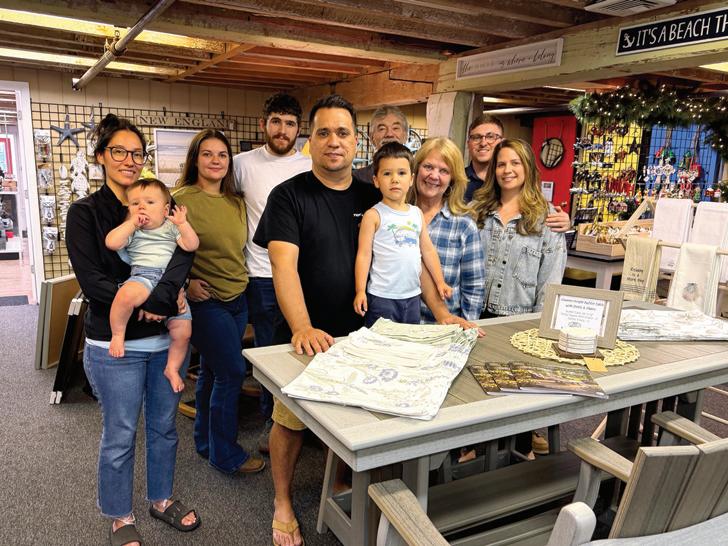
Y Yoou can’t miss the picture on the wall: Lori, David, Geno, Nikki, y. .
e good, very Matt, and Shelby
e that wave a family banner looking for part of that whole family because that’s how Lori Dorothy rolls. She doesn’t just sell merchandise to nameless customers; she embraces people, getting to know exactly who they are, what they’re r, , and how best to help them make their space more livable and enjoyable for years to come.
oclaim in their advertising, “W
And if you’r y, , very good, you might just become partofthatwholefamily family-owned company
Sure, there are plenty of businesses out ther r, , put it on their business cards, and loudly pr Weeare a y,,” as though that automatically puts them in a different or better category than other companies that don’t have DNA running from the
, out the door frontcounterr, r, , an thkiltBtDLKH
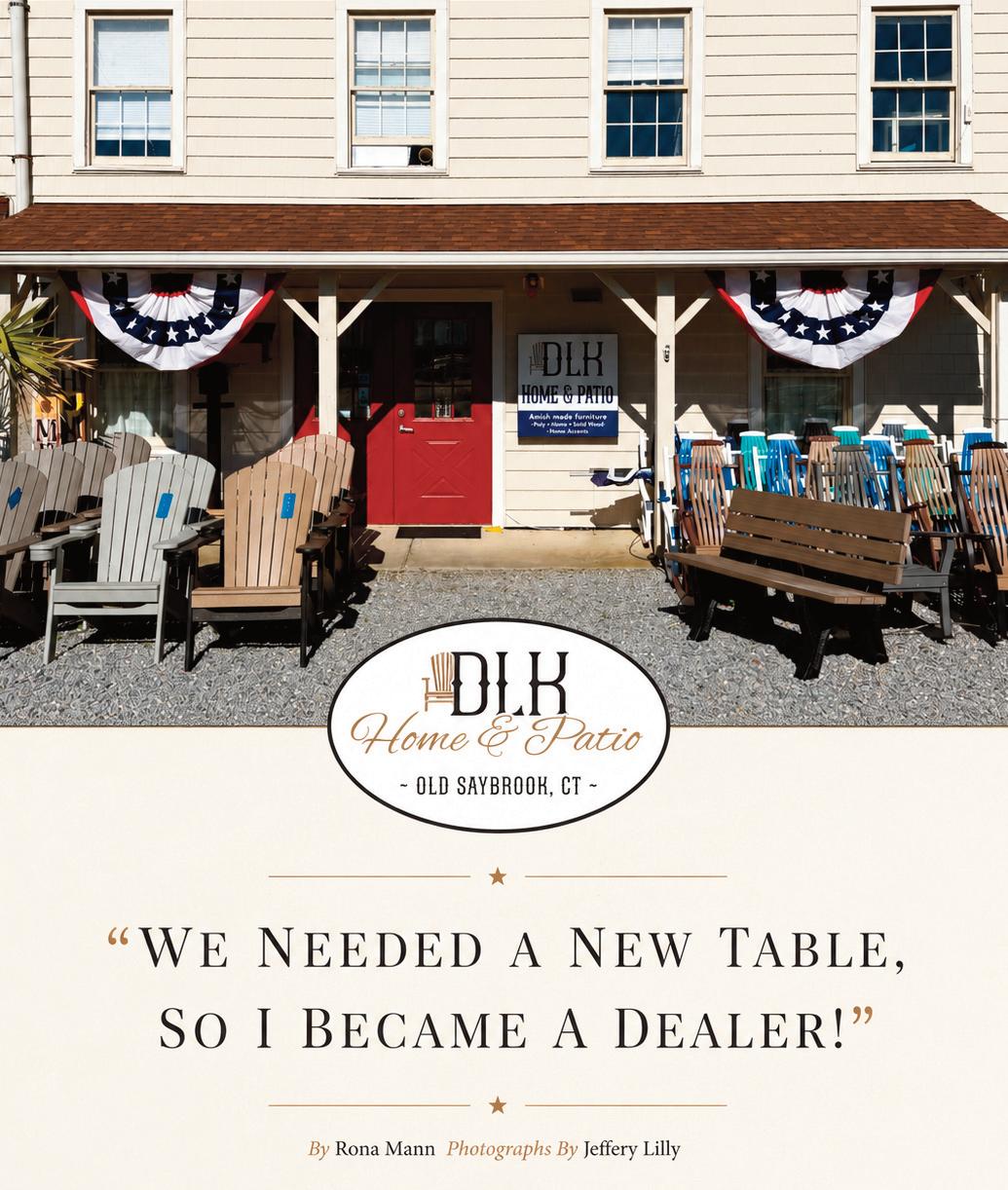
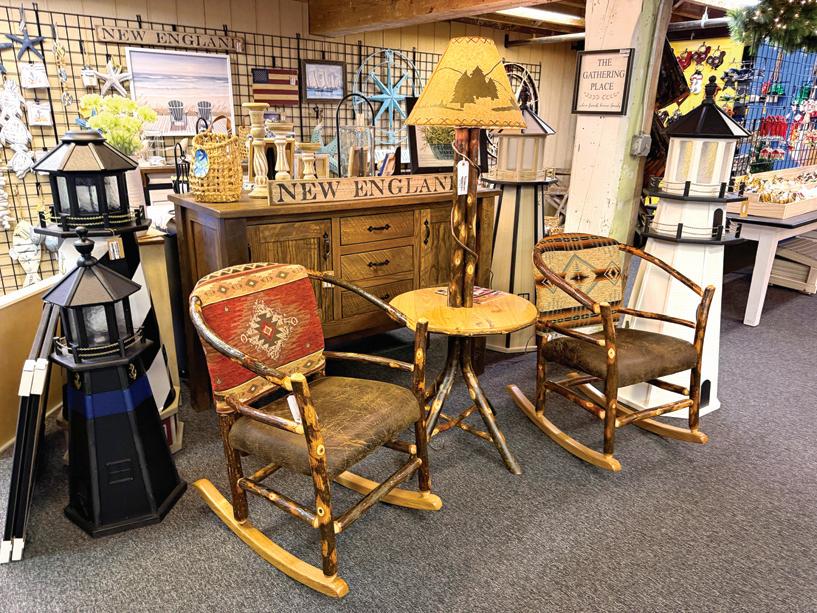
the parking lot But DLK Hom is the real deal, a family that w Amish – made furniture that by a well-respected family in business. Their partners in ex Dor y, , proudly stan every sale, happily deliver to remember your name.
othy family
Y ay their funds. Light the W egularly
DLK is a company that isn’t c just be situated in the shorelin nity; they give back to their co r y. Anyone can throw cause, but the Dorothy family the community’s causes and t hearts and their time right alo Way, , Ol Yoouth and Family Services, co raffles, local people and proje Dorothys are right there to su support is needed.
Lori has always lived on the C shoreline. She loves the vibe, the people, so everything she
nd through me & Patio will sell you was created the furniture xcellence, the d behind you, and content to ne commuommunity money at a y supports throws their ong with ld Saybrook ommunity ects, The upport when Connecticut she loves e ever did in
and Lori Dor
The DLK Family le roothy
, Kasey
Jamie with Enzo, Shelby
eft to right: y, y, , Dave, Logen, Nikki. Front Row
w: Geno, Luca
life was pointed in that direction. Growing up, Lori wanted to either be a hairdresser or a veterinarian. She chose the former, got her professional license, and made local residents as beautiful as their surroundings. Then she moved to Florida, but it was only for a short time. The shoreline once again called to her, and now, toting a couple of children, she was back, this time with a brand-new career in real estate; yet still working closely with local buyers and sellers to help them realize their dreams. She also worked with M & J Bus Company, doing their Accounts Payable for years. So, while you may think Lori Dorothy has had a lot of different jobs, take a look at the similar thread. It was always people-first in everything she did, and everything Lori Dorothy did, she did well.
Life can surprise you, make you pivot, throw opportunities in your path you had never previously considered. One day, just a few years ago, the Dorothy family needed a new table, and Lori and her husband, David, ran across Hostetler Tables & Chairs,
a company also owned by a well-respected, longstanding family, but a family that was very different from theirs because it was owned and operated by Amish people who lived in Punxsutawney, Pennsylvania. Yup, same home as that of the inimitable groundhog, Punxsutawney Phil, he of the dubious shadowed profile each February 2nd.
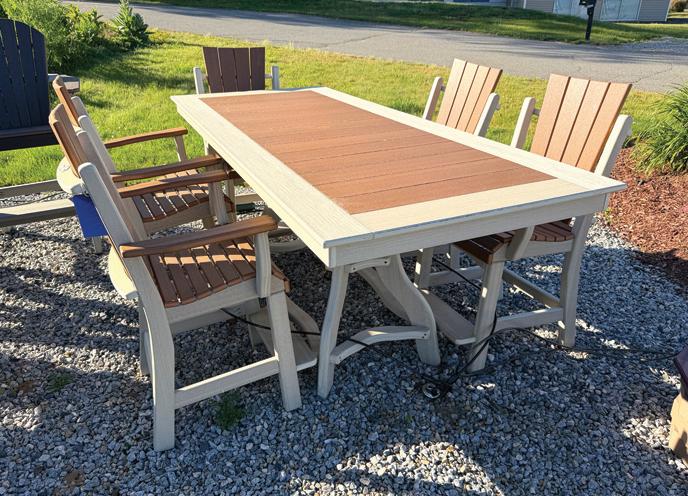
Hostetler has been crafting furniture for both home and patio for more than four decades, with a day-to-day culture and work ethic of mastery over speed and detailed care in every joint, board, and finish, but their work is decidedly different from anything you’ve likely ever seen before, allowing for timeless appeal and sustainability. Yes, it’s attractive, like many similar lines, but unlike those lines, this furniture can stay outside year-round. Even during a precarious New England winter! Then, when the snow is gone, and you’re ready to enjoy the outdoors, just a simple treatment with soap and water, and your spring cleaning is done!
So, what exactly makes Hostetler Tables and Chairs so very different? They are made slowly and meticulously from Poly Lumber,
but not just any Poly Lumber. They use the very best in the business. Ever mindful of the planet and our place in it and with an ongoing responsibility to keep it clean and green for generations to come, Hostetler uses TANGENT, poly lumber that uses post-industrial plastic like milk jugs and laundry detergent bottles diverted from the landfill to reduce air and water pollutants, toxic exposure, waste, and deforestation. It all adds up to building a stronger planet.
When you purchase Hostetler Tables and Chairs from DLK Home and Patio, the shoreline’s only dealer, you are assured that you are getting furniture crafted with integrity as well as durability. A product that has a smooth feel, resists cracking, mold, and mildew, requires no sealing, staining, or painting, and does not absorb chemicals, oil, or water. Talk about a win-win!
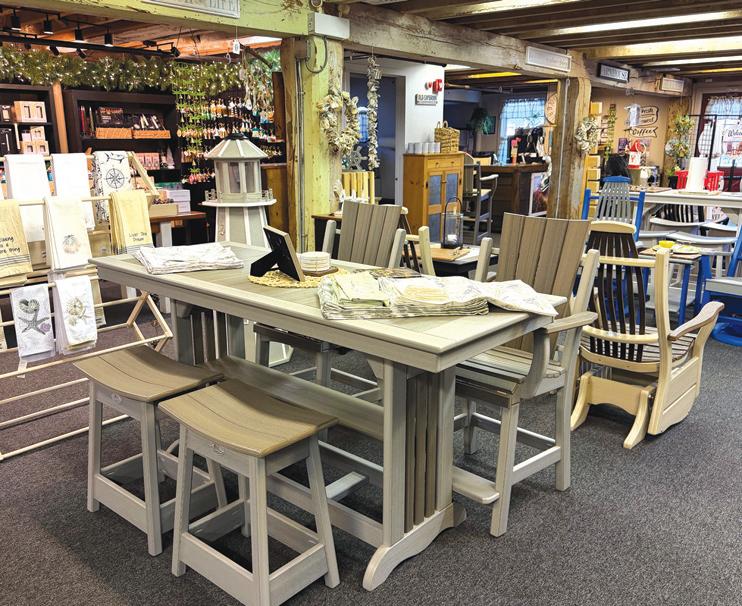
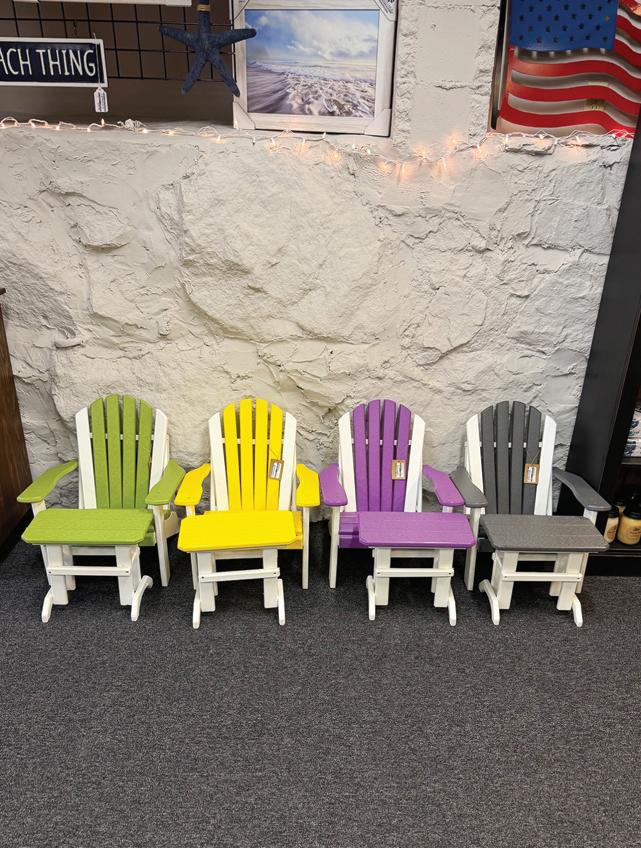
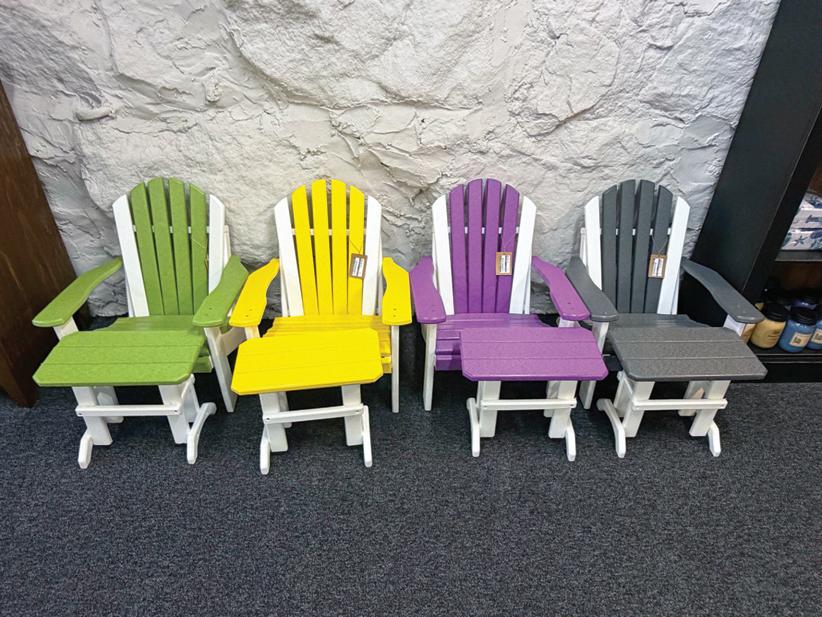
Now, let’s take a look at choice and variety. At DLK Home and Patio, there isn’t just one style of chair or one table... you’ve got different designs, styles, and color options, yet all are built to the same standard of quality: Amish craftsmanship. For example, if you like Adirondack
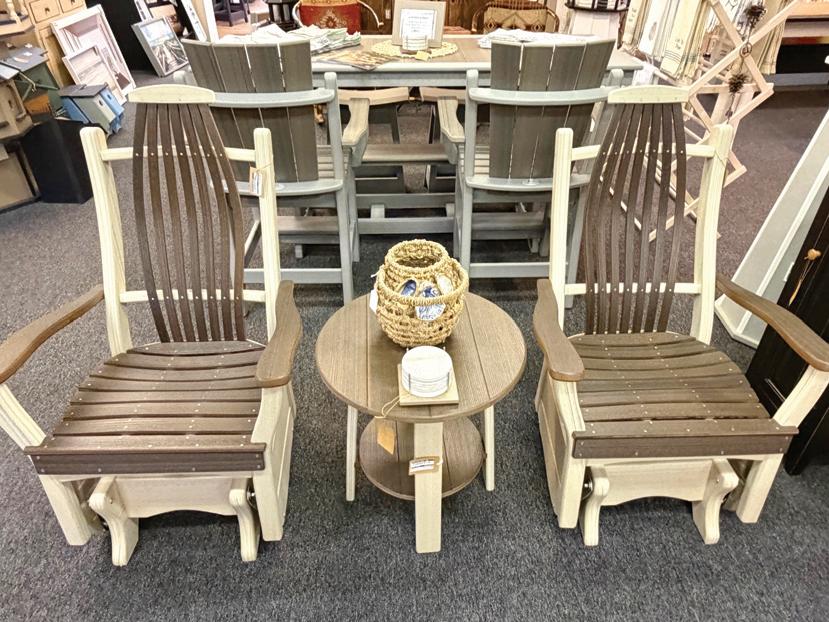
chairs, Hostetler offers not just uprights, but folding Adirondack chairs, chaise lounges with matching dining end tables, as well as rockers and gliders, a wide variety of dining and end tables, bar tables with matching chairs, and designs that run the gamut from traditional to contemporary. Hostetler even crafts romantic double gliders with built-in consoles and swings for couples who want to sit close, toast their home, family, and friends, and even snuggle a bit.
Chairs to encircle the fire pit, large dining tables to accommodate a large family or a beautiful dinner party, and even fire tables for cool nights and warm conversations. Hostetler may just be the gold standard in what they do and how they do it.
The Dorothys were immediately sold, so much so that when Lori’s husband said, “Why don’t we become dealers?” it was a no-brainer. Why not indeed? It was a perfect match. Family to family with a reputation for delivering the best.
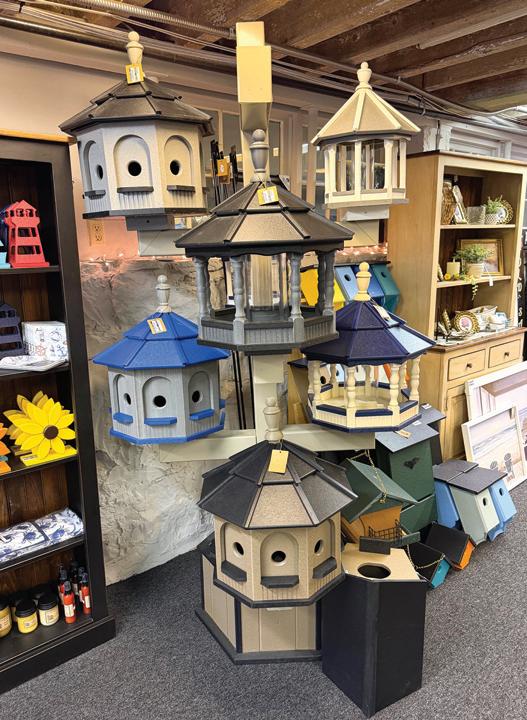
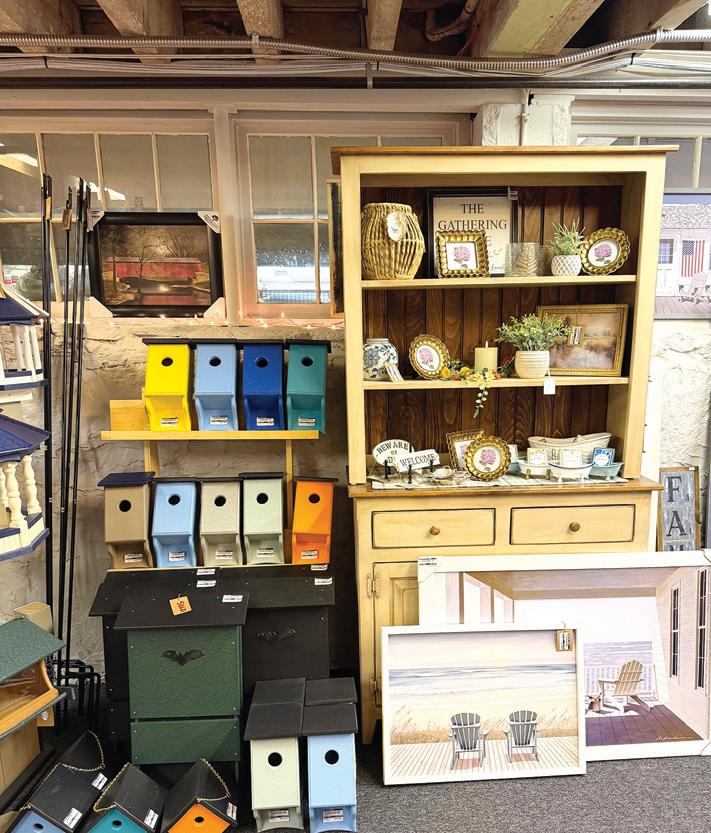
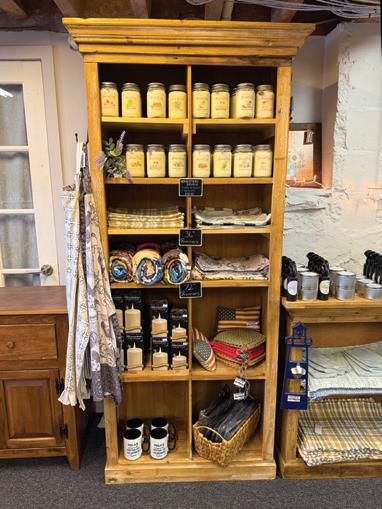
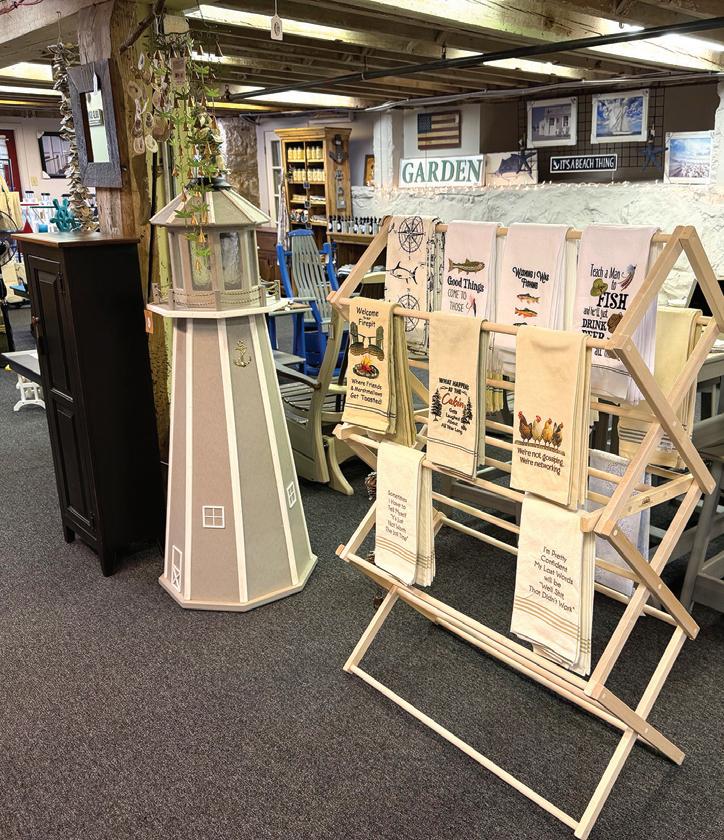
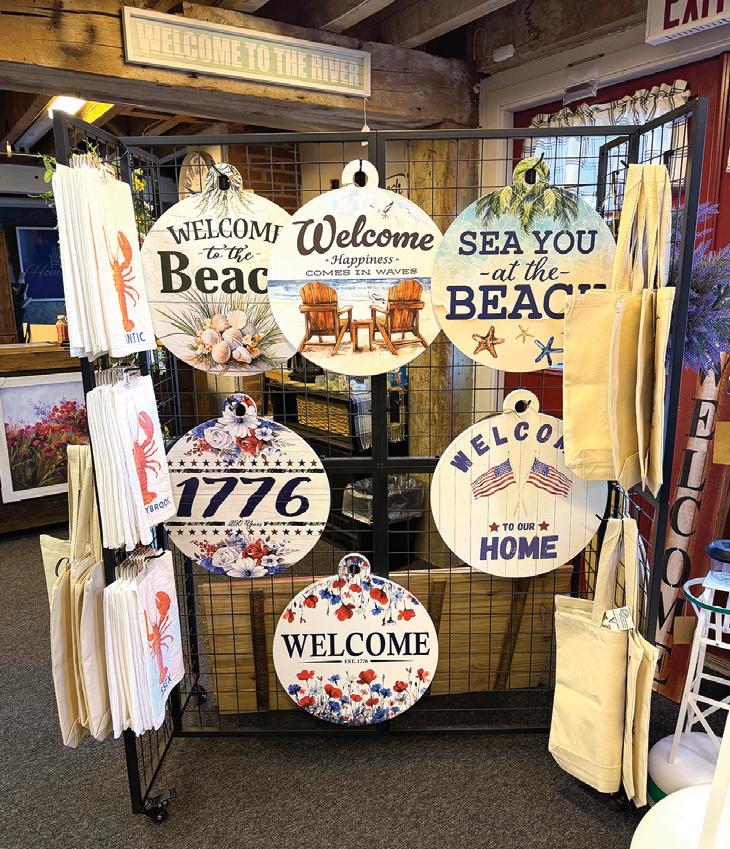
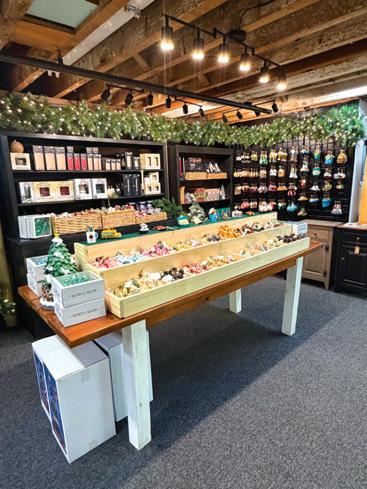
In addition to all those magnificently crafted Hostetler tables and chairs, the Dorothys complement their shop’s uniqueness with gift items and home accents, many from local companies owned by veterans, women, or your friends and neighbors. Don’t miss the year-round Christmas corner with ornaments for every style and taste: Americanism, animal lovers, sports lovers, beach lovers, or just plain ho-ho-ho, and adoration of the guy in the red
suit. There is tabletop, hostess gifts, and plenty of whimsy and wonder. Don’t miss a turn around the store, you’ll probably come out with more than a few delightful items to put on that new Hostetler table.
Two families, yet just one way of doing business. The only way they know how: ethically, joyfully, and in it for the pleasure of their customers and pride in the long life of their products.
One puts their name on the furniture they build with intentionality and sustainable craftsmanship; the other puts their name on their door and stands behind every sale they make. Let the Hostetlers and the Dorothys now put their names on your home for comfort, for outdoor entertaining, for easy maintenance, and for years of you saying, “We got it from the family.”
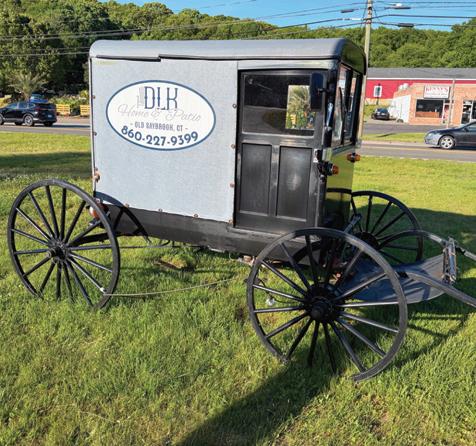
DLK Home & Patio is the sole dealer for the Greater Shoreline area and is easily found at 355 Middlesex Turnpike in Old Saybrook (860) 227-9399
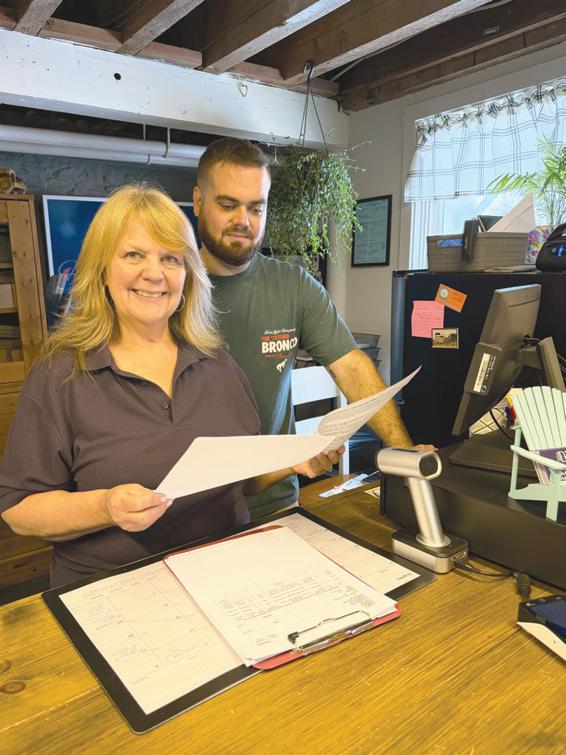
Taking Care of Business Lori and Son Matt Dorothy
Natalia Nosyk, Peonies in Morning Light, Oil, 24 x 20” Harley Bartlett, Easing Out, Oil, 14 x 17”
Jeanne Rosier Smith, Summer Wind, Pastel, 6 x 12”
Jonathan McPhillips, Reliability, Oil, 16 x 20”
ed carved dragon heads cut t ly-color glass bo As serpentine-designed fiber ics and cheer on thrilling dragon boat ra music and dance. Marvel a authentic cuisine; lose your England’s upcoming festi
c and scatter oplets ar , sprays of dr r,
op to the perfect, staccato r and dr
Seated less than two feet apart, the 20 umbeat. deep dr hyt
alkyrie Dragons’ practice boat a Va
Jennifer Potter pur
strokesperminuteandlaststwototh
200 or 500 meters, said Sarah Kuhn, o depending on the length of the race,
Each race host pr alkyrie Dragons’ team coaches. V
ovides teams with b
o win the race in Pawtucket, Rhode To e got it,” Ku We gr sometimes the paddlers encourage ea back of each boat loudly encourage p ont and a ummer at the fr Dr A races.
okes per minute and lasts two to th unts, “Let’s go,” or “W T
Catcher must grab the flag as the boa
oss teams just have to be the first to cr the finish line and hold onto it. In mo
“The Rhode Island Dragon Boat Race said.
. Fo ound the globe every year held ar after the world-famous dragon boat r
e races that ar e modeled es ar s the line, she ost other races, oaches at appr Island, the Flag uhn said. , with r, paddlers, and er at the steer boats for their ee one of thr which is either ee minutes, hr average 60 to 80 0 paddlers in thm of a single, , as paddles lift r, - ough the wa hr - oats with bright aces. obat- t daring acr hythmic rself in r avor ivals. S
e than r mor
ding cise,” accor even military exer entertainment, memorial and vibrant spectacle include “ritual, oots of this Theories about the r elease states. r
eenwich Cove, Based in East Gr y. - .com/articles/drag to history
alkyrie Dragons Rhode Island, V
Island Chinese Dragon Boat Races d, Connecticut, Rhode Hartfor Asian Festival in Dragon Boat & ont in Massachusetts, The Riverfr Springfield Dragon Boat Festival compete four times annually:
of acquiring a second boat within the next couple of years, alkyrie Dragons is thinking Va Appr com/language-and-culture/the-valkyrie-symbol/. outesnorth. ding to r ength, courage and fairness,” accor str , y, alkyrie ar Va - mythology and beautiful warrior goddesses. “The tradi alkyrie” is associated with Norse Va boat and founded this all-women’s team in 2022, competing alkyrie Dragons’ practice Va
T who joined the team last year
UltimateT
Asian cul ive into vibrant ter the V y.
e,” a ole in Chinese cultur important r yg on-boat-races-history & T
tucket, and Laconia Dragon Boat - aiwan Day Festival in Paw Ta
der to accommodate everyone who wants to go, said in or
Alison MacDonald, 64, an anesthesiologist, TeeamMember
eam Sport Te r.
When MacDonald first joined V tions and work together
alkyrie Dragons, she said Va
om their 20s to their 60s. “It’s not just age; ranged in age fr she was amazed to keep up with other members who
e at New ltur r ach other chased the V for the first time in 2023. “V tional characteristics associated with V e bravery oaching 40 members, V
e, the team competed against a men’s team with str shir - alkyrie Dragons’ last race in 2025 in New Hamp Va r..” - that’s also amazing, to interact with people of all genera And it’s temperament and mentality and the team thing.
f ahead of them, paddling har ff esident said. Even though the men’s team Rhode Island r capable men in their 20s and 30s, the South Kingstown, ong,
e together and Weewer y, synchr Dragons won the race. Emphasizing the importance of Vaalkyrie
During V initially took of d, V onicity, MacDonald said, “W
eally matter if you’r ength doesn’t r Yoourstr working as a team. It’s kind of the ultimate team sport.”
“Y e not togeth er Y paddling as one, it doesn’t matter manager for a tech company 2,000 years, the dragon boat races ha
ve played an
ess BVTC pr
e not ong as you want, but if you’r Yooucouldbeasstr r.h-
ccount ,” said Kuhn, an a r,
FestialinNewHampshir
Festival e. l in New Hampshir
S Small Dragon Boat
The prizes vary depending on the races, Valkyrie Dragons
Member Stephanie Lietz said. “Sometimes it’s a medal. Sometimes it’s a case of beer.”
Racing as a club team is about challenging themselves and their teammates, said MacDonald, adding they don’t get upset if they lose. “The whole race day is like a social (event): eat snacks, hang out, communicate with your people. It’s so much more about being with women you like and doing something you like.”
Practice
Some club teams have training facilities. Since Valkyrie Dragons doesn’t, it usually starts its indoor practice season
in February or March, with pool practice once a week at North Providence Pool and Fitness Center in Rhode Island. Sitting on the side of the pool, members place their paddles in the water to work on their form, technique, and understand their timing as a team - paddling back and forth 60 times a minute on average, said Lietz of Warwick, Rhode Island.
Depending on the weather, the team begins outdoor practices at East Greenwich Cove at the end of April or in early May, two to three times per week for two hours per session, with between eight and twenty paddlers. Occasionally, Valkyrie Dragons practices against other coed teams.
“We’ll do a warm-up. We’ll work on some techniques. Today we’re doing some five-minute endurance runs. Sometimes we’ll go up to 10 to 15 minutes at a time and then rinse and repeat. We’ll stretch together beforehand and then we’ll all stretch together afterwards. It’s a sprint sport, so we’re doing our sprints over and over and over again, back and forth in the water,” said Kuhn of Providence in early June.
This two-hour practice period also includes getting the boat in and out of the water, getting to know each other, and offering support on and off the water through feedback and brags. Lietz views this last part as “one of the most special things about the team.”
“At the end of every practice, everybody has to say a ‘brag’ about themselves for the week,” MacDonald said. “It could be, ‘I showed up at practice,’ or ‘I’m now the CEO of a major corporation.’ It’s anything. It helps us get to know each other. But also, women do not brag enough. And so, it’s a really important part of us.”
In addition to the camaraderie and bonding “baked into the team’s culture,” Kuhn said members sometimes socialize outside of dragon boating practices/races: have dinner, attend concerts.
Therapeutic Value of Dragon Boating
MacDonald said the “Chinese tradition of dragon boating has also been brought forward by breast cancer survivors.”
“There is therapeutic and clinical evidence that dragon boating, based on the movement of it, reduces reoccurrences of breast cancer through the action of moving around your lymph nodes,” said Lietz, director of product development for a medical device company. Other cancer survivors have also gotten involved with the sport.
Cultures Blend Together
Prior to joining the team in 2025, MacDonald said she didn’t know anything about dragon boats. “I’ve read a lot, so I have learned things. And festivals are really fun. I love how Asian culture can mix with American culture, can mix with breast cancer survivors and get along.”
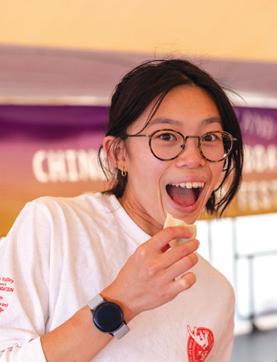
The Valkyrie Team enjoys the festivals associated with each dragon boat racing event, including the food and entertainment, Kuhn said. “The only thing we really don’t recommend is that anyone who’s going to
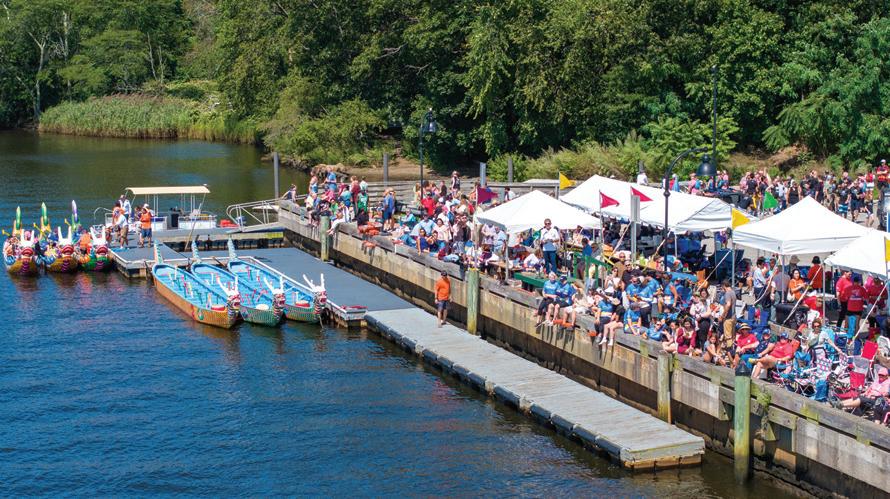
Large Dragon Boats
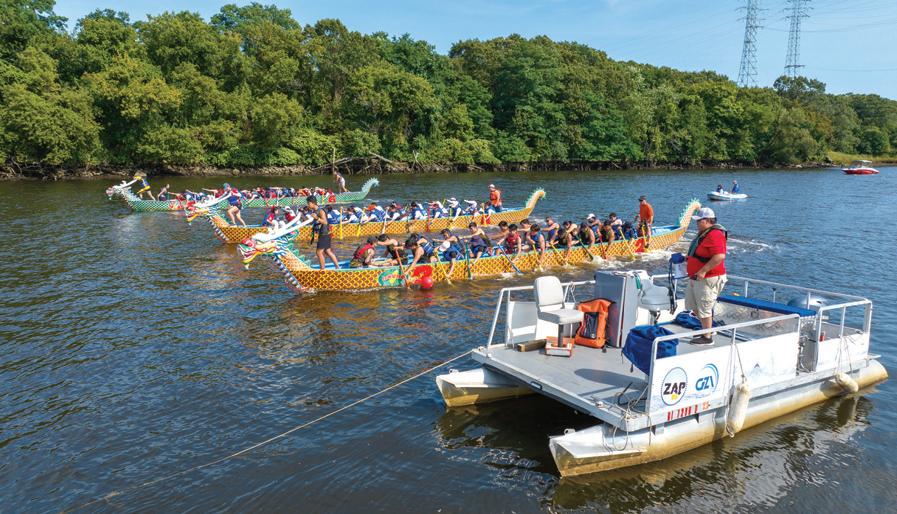
Large Dragon Boats Getting Ready for a Race
be racing compete in the dumpling-eating contest. “It would never be very good to eat that many dumplings before having to race on a dragon boat.”
Members Learn from One Another.
As one of the younger team members, Kuhn, 35, said she receives a lot of feedback from the team’s board of directors, especially Lietz and MacDonald, about “people managing and how to make sure that I’m being fair and kind and honest.”
Kuhn added that she is also in a leadership position at work. “So, there are a lot of transferable skills for me to get feedback from people who aren’t directly in control of my salary.”
“As busy career-oriented women who also have kids and other things going on sometimes, it provides an outlet and a social environment to be part of something,” Lietz
providing some of my work skills to them,” as well as paddling.
Various Levels of Racing and Commitment
There are also some very large teams, such as the Boston 1 Dragon Boat Team from Massachusetts, with boats at various levels, Kuhn said. “When they go to Hartford, they’re looking to win, so they can get points towards qualifying for larger (national) races… Our team is only four years old, so we’re not quite at that level.”
“We also have team members that join another team and are racing in France this summer for a breast cancer survivor race…They join another team to do that specific race. They’re still with us,” MacDonald said.
Kuhn said, “There’s quite a bit of cross-pollination with the different dragon boat teams, and everyone gets along pretty well. So, we all tend to paddle with each other.”
said. “And I think community is important, and with the way that our society is ultra-tribal and divided, it’s a good way to meet like-minded women who want to do something together and work together as a team. So, does it help my career? I don’t know about that, but it helps my sanity.”
“I’m at the end of my career. I’ve done a lot of leadership throughout, and it’s been lovely to be able to reflect back and help out in that way because I’m new on the team,” MacDonald said. “And yet I feel like I’ve found a role,
Community Teams made up of coworkers, friends, and neighbors will also be competing at festivals to bond, raise money, or both. Unlike club members, they don’t practice extensively.
Dragon Boating is fun - a way to make new Friends.
Kuhn encourages people to try dragon boating for one to two hours of practice and hopes they can get what she has gotten out of it. “I think all of us learned about dragon boating for the first time as adults and decided to give it a try
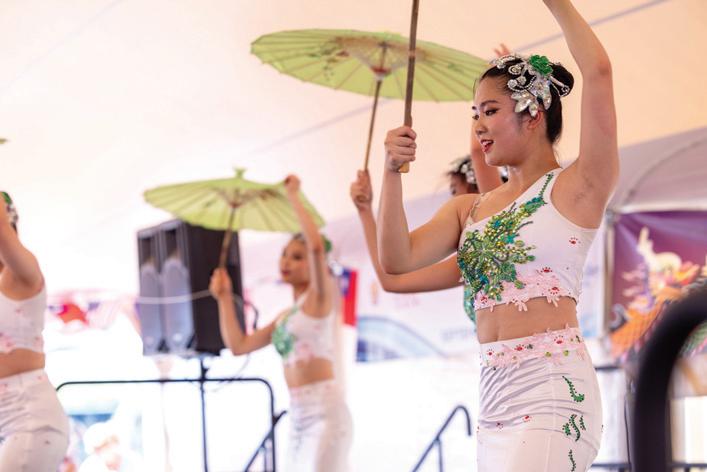
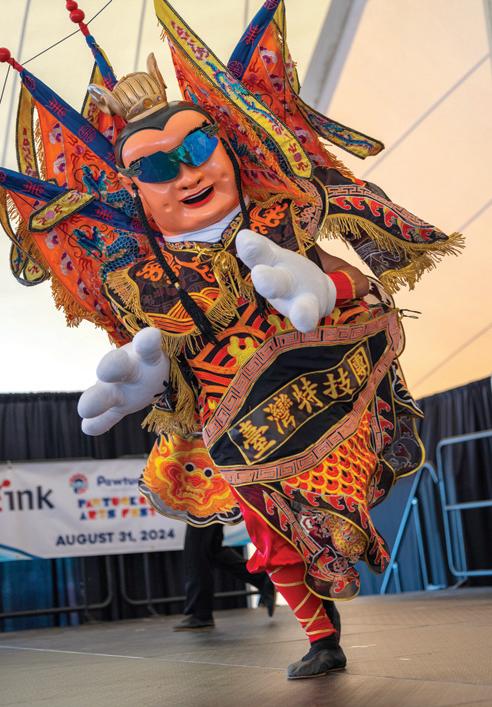
Dancers on stage
Dancer’s during the festival on stage.
on a whim, sometimes, or based on much convincing from a friend in my case. We fell in love. And so now we have this great community and this great team.”
“I think sometimes that dragon boating looks intimidating to people, and they think that even if they are fit or capable, that they aren’t fit or capable or strong enough to do it, and that’s just not true,” Lietz said.
To find a dragon boating group near you, she suggested searching online for “Dragon boating near me.”
“A lot of the teams use the app ‘Meetup’ to advertise their existence. Individuals are also invited to reach out to Valkyrie Dragons through its website, valkyriedragons.org, or via Meetup.
The Springfield Dragon Boat Festival in Massachusetts will be held on Saturday,
July 18, 2026. For more information, go to pvriverfront.org/ dragon-boat-festival. The Lake Champlain Dragon Boat Festival will be held in Burlington, Vermont, Saturday/Sunday, August 8-9, 2026. For more information, go to secure.qgiv.com/ event/2026lcdbf/.
The Riverfront Dragon Boat & Asian Festival in Hartford, Connecticut, will be held on Saturday, August 15, 2026. For more information, go to riverfront.org/events/riverfront-asian-festival/.
The Rhode Island Chinese Dragon Boat Races & Taiwan Day Festival will be held in Pawtucket, Rhode Island, on September 5, 2026. For more information, visit bvtcri.org/dragonboats.
The 2026 New Haven Dragon Boat Festival will be held in Connecticut on Saturday, October 3, 2026. For more information, go to canaldock.org/dragon.
The 2026 Laconia Dragon Boat Festival in New Hampshire has been canceled.
Large Dragon Boats getting Ready to Race
Dragon Boat set up & CrowdDumpling Eating Contest
Corgi with metal
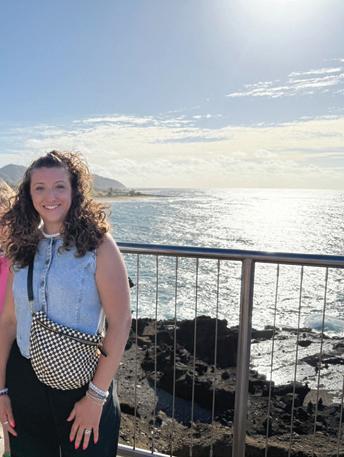
Valkyrie Dragons Team Member Stephanie Lietz of Warwick, Rhode Island, near Honolulu, Hawaii in June 2025. Photo by Kathy Lietz
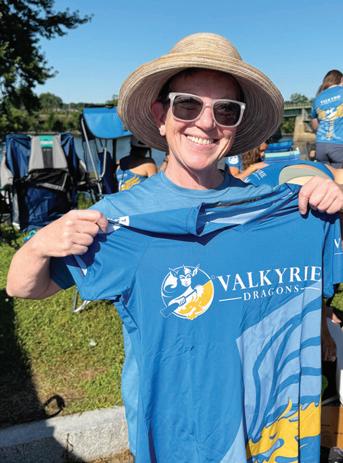
Valkyrie Dragon Team Member Alison MacDonald of South Kingstown, Rhode Island, at her first race at the Springfield Dragon Boat Festival at Pioneer Valley Riverfront Club in Massachusetts on July 19, 2025. Photo by Corian Johnson
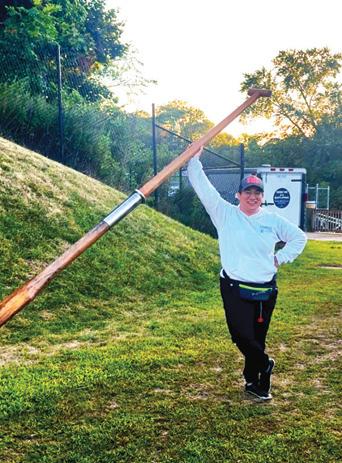
Valkyrie Dragons Team Coach/Steerer Sarah Kuhn of Providence, Rhode Island, holding a steering paddle for a Taiwanese Dragon Boat in August 2025. Photo by Corian Johnson
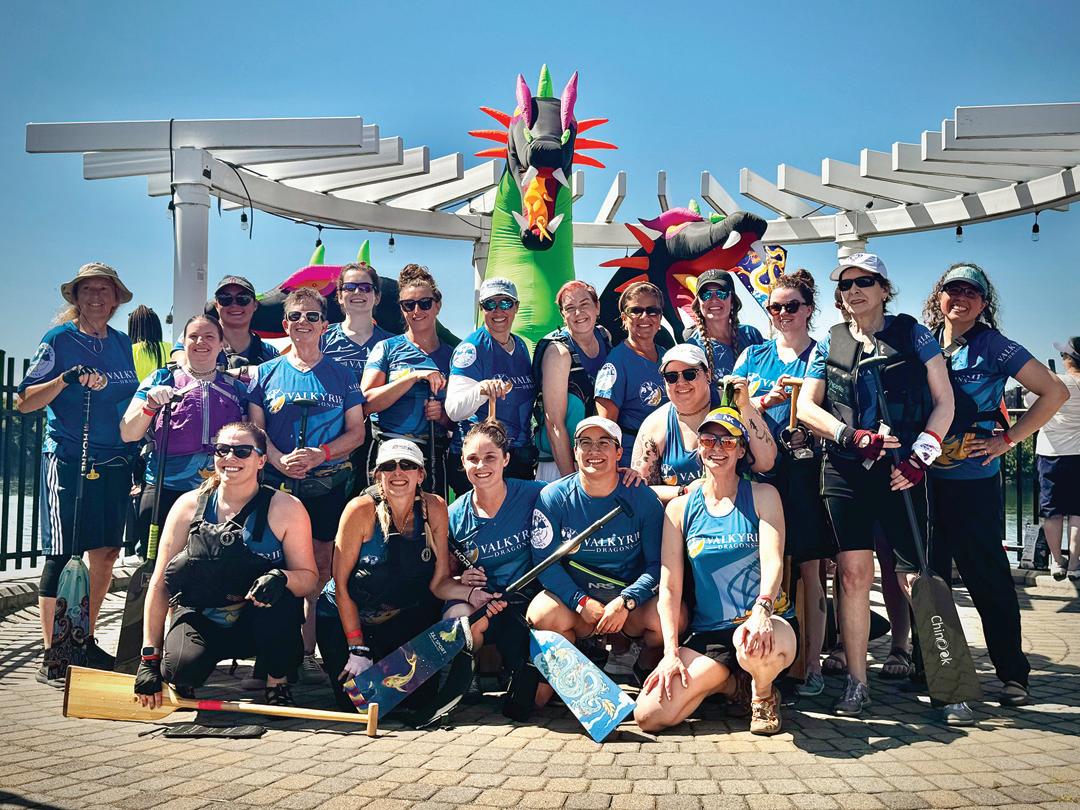
Valkyrie Dragons all-women team at the 2025 Springfield Dragon Boat Festival at Pioneer Valley Riverfront Club. Standing row, from left, are Sharon Roberts, Linda Soeurt, Raquel Muniz, Alison MacDonald, Haley Robertson, Stephanie Lietz, Lisa Close, Jennifer Potter, Marta Trujillo-Bencomo Goncalves, Corian Johnson, Katie Ahern, Patricia Crowley and Lori Bonynge. Kneeling row, from left, are Elizabeth Martin, Melissa Romano, Kim Douglas, Sarah Kuhn, Liz McGraw and Cole Ratkoski. Photo courtesy of Corian Johnson
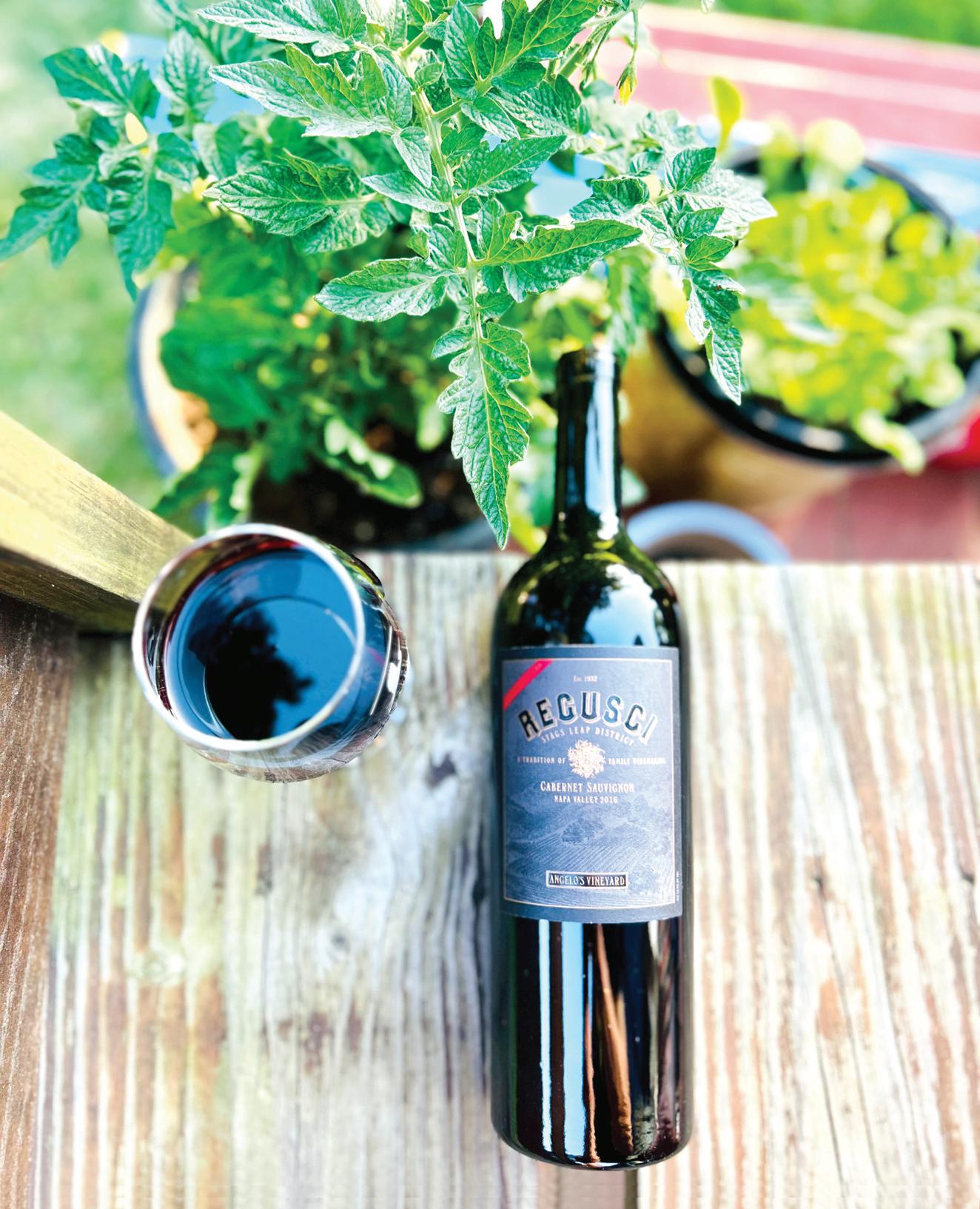
When you think about life and the things that have the ability to motivate you to take chances, love is certainly high on the list. Few things possess the perfect combination of synapse release and subsequent sense of satisfaction better than feeling the sense that you have found something that has made you whole. That, without introducing this element to your chemistry, you would miss the potential the universe had for you. Love is multifaceted and can take on many faces throughout your time on this planet. So, for July, as we nationally celebrate 250 years of the American experience, I offer a legendary wine that exemplifies the intrepid spirit of this young nation (at a time when we all need to be reminded of the shared hopes and dreams the flag is supposed to represent to us all): 2016 Regusci Winery Angelo's Vineyard Cabernet Sauvignon.
While I was getting ready to decant (the process of using a vessel to allow oxygen to open up a wine before service) this small-batch vintage, the song "What You Won’t Do for Love" by Bobby Caldwell came on. You may be familiar with the 1979 smash hit, but maybe less so with the story of the performer and his persona. Bobby was blessed with smooth tones and a sound more commonly associated at the time with black artists (the majority of TK Records' roster, which put out the album). They even elected to make the album cover a dark silhouette to further avoid highlighting his white identity to give the song a better chance of making it into mainstream R&B radio rotation. Such was his love for music that he was willing to hide from the public until he could prove his bona fides to an audience that might have had some preconceived notions about an outsider like Caldwell. What a perfect segue to one of the vineyards that upended the wine world: around the same time this song was being written, the now-infamous Judgment of Paris took place, allowing the upstart Stags Leap Wine Cellars to beat out French First Growths at an international wine tasting competition. The love Warren Winiarski had for what he dared to plant along the Palisades cracked through centuries of established wine lore.
This 2016 vintage is the stuff of big red wine dreams. She is 100% California Cabernet Sauvignon and embodies the best that the varietal can hope to be. Aged in French Oak for 18 months and needs the aforementioned decanting (for at least a couple of hours, ideally) before imbibing. Dark magenta contents are swirled to release a brisk bouquet of cedar wood and roasted fresh coffee grounds that would rival any barista at their best. Dark fruits with all the plum and blueberry jamminess of a bed-and-breakfast spread. The whole thing is grandiosity in a glass, but the tannins are tight and more than keep the body and structure in alignment. The oak is apparent but not antagonistic in how it highlights the rest of what your palate is processing. There is even a little peppercorn and licorice at the tail end to keep you guessing. This is a big wine with bigger menu dance partners, so skip the salmon steaks and head to the butcher for some ribeyes or a prime rib to do this wine justice. Whatever makes it to the plate better be hearty. Whether it is a very mature cheese or a roasted leg of lamb, go big or go elsewhere.
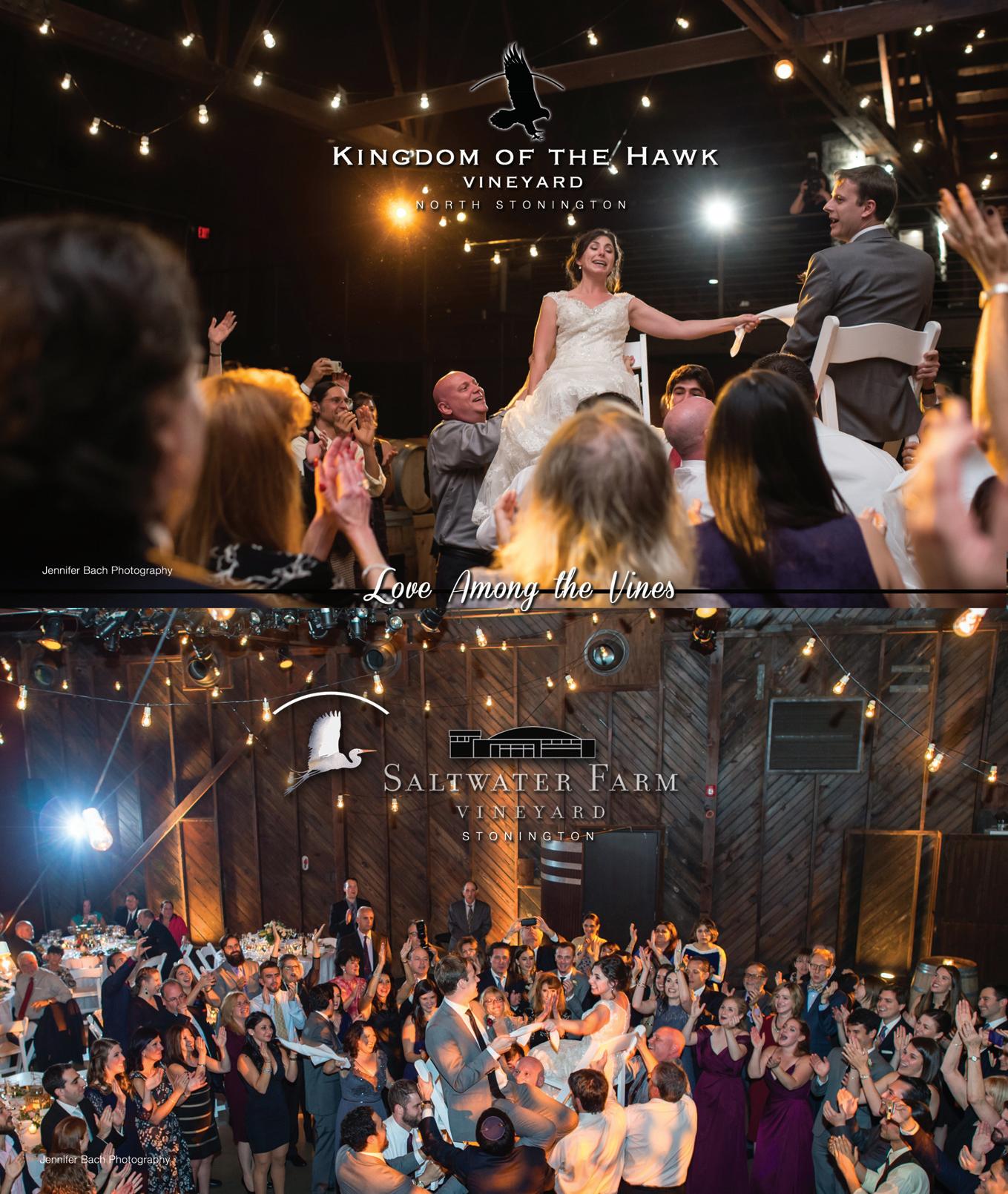
Stags Leap, as a brand and AVA (American Viticultural Area), is already a prize worth purchasing at the most basic offerings, but production fr om a small-batch producer like Regusci Winery is on another level altogether. A future Saltwater Farm Vineyard wedding couple gifted me this wine after a few months of getting to know them,, as they are both planning their second weddings. Both lost their first partners in similar tragic fashions. Neither one of them gave up when faced with the type of event that could easily sink a lesser spirit. Each of them kept their hearts open for the journey that is life. They were rewarded for their patience and persistence. So, as I share this wine with my closest loved ones, I raise a glass to Cheryl and Joe. I know what they are willing to do for love, and I encourage you to take a page from their book.
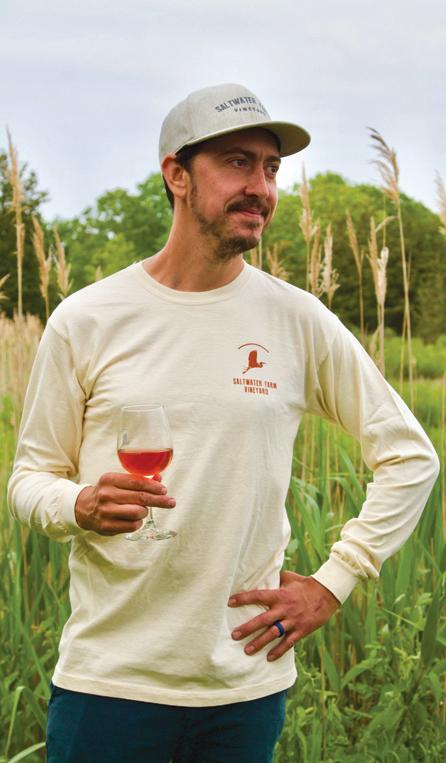
Gregory Post is a sommelier and manager at Saltwater Farm Vineyard, affiliated with Kingdom of the Hawk Vineyard.
GUILFORD T CENTER AR
August 2, 1776, at Independenc
July 4, 1776 | The Contin ce Hall in Philadelphia. This document
ess adopted the Declaratio nental Congr formal on. The Declaration of Independence w t marked the Thirteen Colonies’ omBritishrule. o was primarily signed on separation fr
TT Trravel Ameri the tho Conne
In “Portraits of Patrio of Norwich, Samuel W W the rtal: g mien We Crege a Patrio t Fello w American Revolution,” pub l this year’s 250th anniversar y dence.
back in time and experience can Revolution through a por oughts and feelings of unsung ecticut heroes woven into Dam ethersfield, Seth Ha focuses on Ebenezer H
Pamela Hall, own the egeau and his wife, umbull of Lebanon , Jo Huntington, of Norw r Norwich, Jedediah H , T other and his wife, Faith T s of Five the of nTr well as her br r, Tr r Cr
“It’s literally a portrait, but it’s fi lives, Cregeau said. “What are t guratively u’s historical book, “Portrai t s - Colonel John Trumbull & Patriots From Connecticut i n ished in 2025 - in preparatio n of the Declaration of Indep e y,,” the painting of their hey like as people?” hilihib Norwich house that th
“Connecticut’s ef
Most historical books about the years typically focus on George Franklin, Major General Marqu sorts,” Benedict Arnold, who sw ffforts are overs all the famous events that happ Concord, Bunker Hill, Dorches evacuated Boston), as well as N Y Y shadowed by the Patriots T ashington, Thomas Jef W
American Revolution over the la Wa ffferson, is de Lafayette, and your “villain witches sides, he said.
Trrail a ened in the Boston area (Lexing ster Heights and the British who New Yoork City and New Yoorkas of place, as we often s e’sasen wouldhavevisitedth lived in. “The other th the six people in this b happened domestical socially st 20 Ben of nd ton, s an house, so ther in public or museum history…because I’m here where it y, , ” hesaid. important colonyy..” y he said.
s pain ’s Tr Below: Patriots. John
s Portraits of P egeau ’ re stoiran Damien Cr ery notes, T egeau, not all del re e generations, eve e committee for futur esenting n, Jefferson, and Franklin—pr
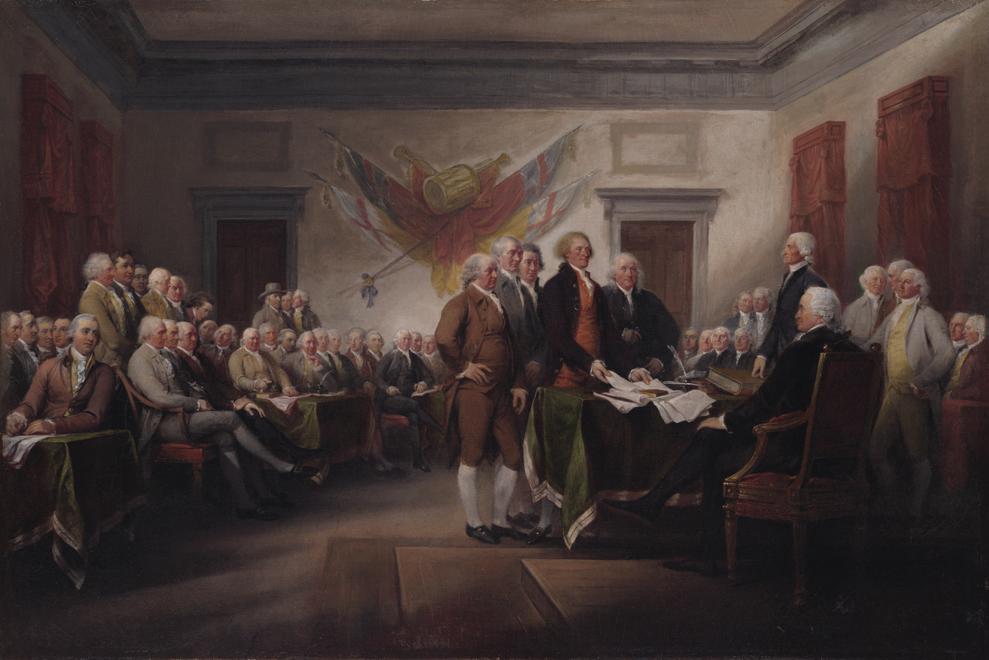
s draft to John Hancock. As t ’s
Cr egates signed until July 6th. ealit en though only Jefferson did so in r
nting “The Declaration of Independence Jefferson’ .
e,
Trrum
University Art Galle
1776” shows the com
The book cover of his courtesy of the T mbull Collection, to 1832. According to rumbull included the whole Tr mmittee—Adams, Sherman, Livingston
Trumbull’ historian Damien
Photo ty Yaale
July 4, the Y
Readers will discover Ebenezer Huntington (Jedediah’s younger brother) to be a very brash, opinionated young man who becomes prominent later, Cregeau said.
Once Ebenezer received word of the Lexington and Concord Battles in April 1775, he left Yale (prior to his summer graduation) to join the Patriot forces gathering in the Boston area, Cregeau said. “He would later serve as an officer in both the Battle of New York in the summer of 1776, and later, the Battle of Rhode Island in August of 1778. It was in Rhode Island that he assumed command of a Connecticut regiment that performed well in the battle. He would go on to serve in other campaigns including the Siege of Yorktown, which will be featured in my second book.”
Both the Huntington and the Trumbull families went into debt to feed, clothe and house their own soldiers.
Many of the enlisted were teenagers, while the officers tended to be in their 20s or 30s, he said.
“People complain right now about Congress being inept, disorganized, slow to respond. Back then, it was even worse, because Congress didn’t have the power to tax,” as there wasn’t a Constitution yet.
“There are times when Congress is supposed to kick in some money.” Sometimes it does; sometimes it doesn’t, Cregeau said. The primary way Congress funded the war involved capturing British ships and selling the goods on the ship on the open market. “The big thing was rum and wine.”
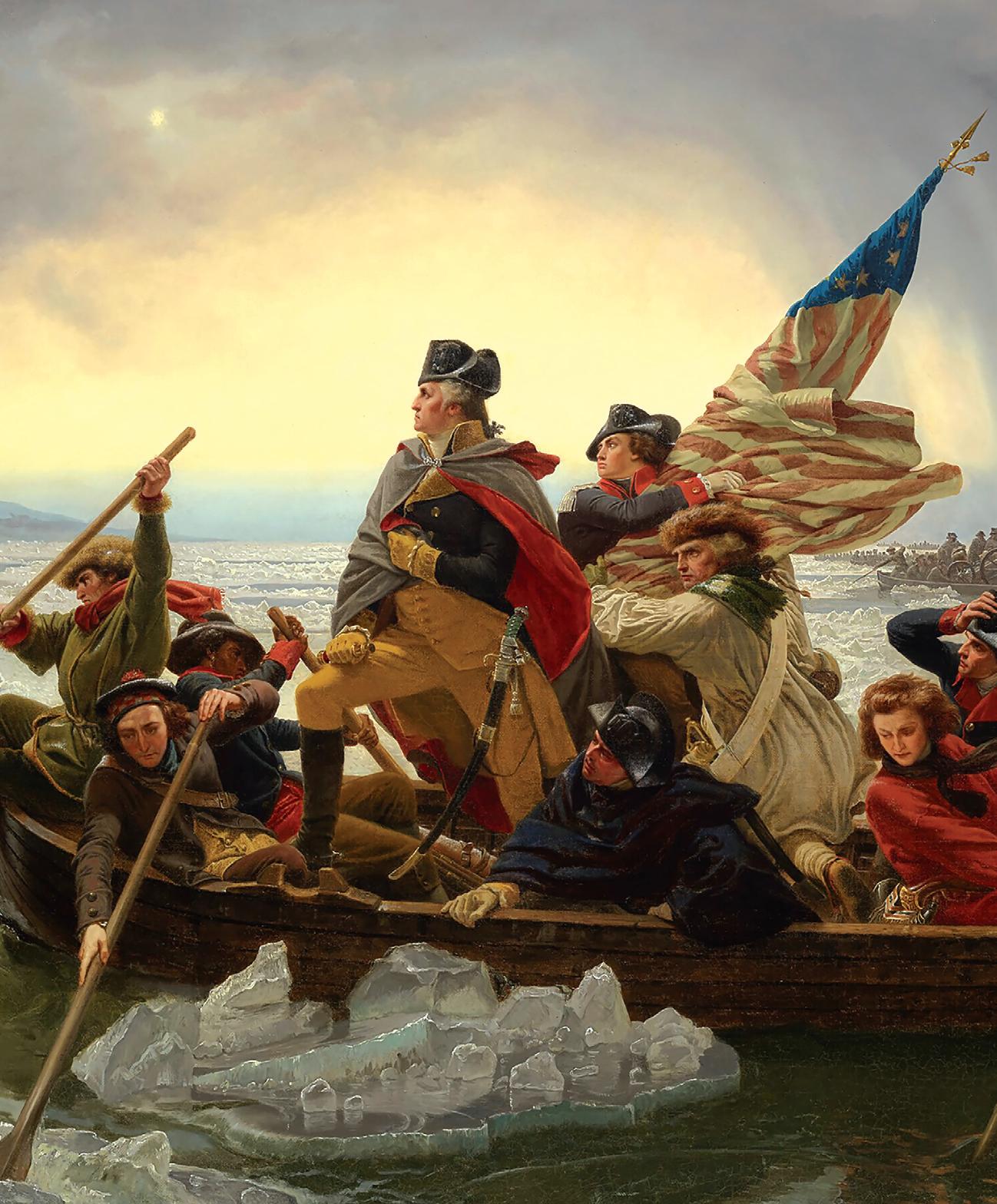
Colonel Samuel Webb of Wethersfield is second in command of a regiment under Ebenezer Huntington. He writes about surviving the Battle of Bunker Hill in Boston in 1775 - just grazed by a bullet, he said. Webb served as an aide to Generals Israel Putnam and George Washington (who he crossed the Delaware River with at Christmastime to attack the Hessians: German soldiers serving under the
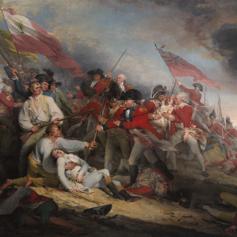
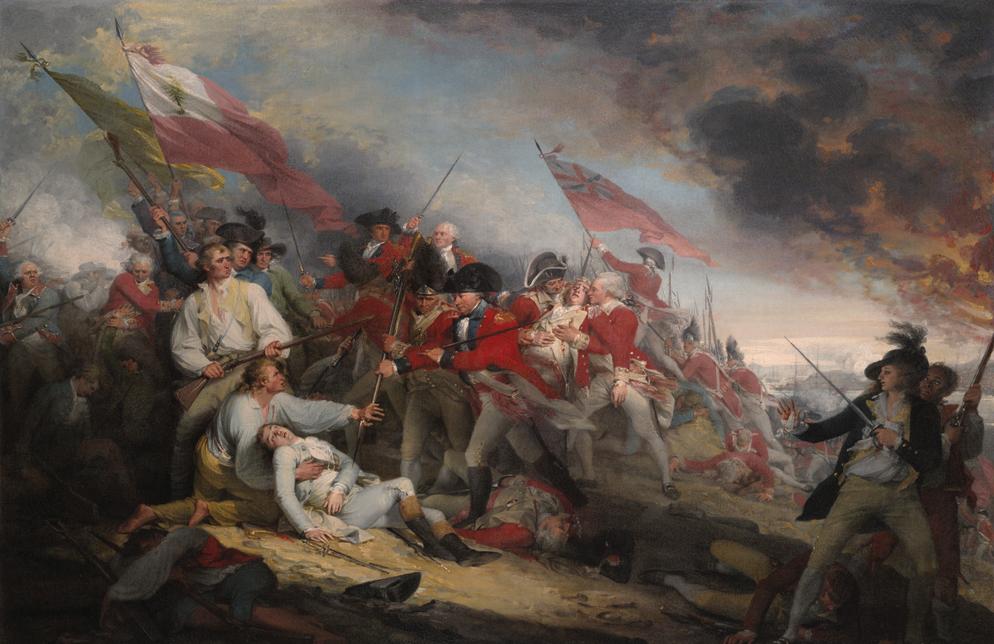
The Death of General Warren at the Battle of Bunker’s Hill, June 17, 1775, is a dramatic painting by John Trumbull. It shows Major General Joseph Warren mortally wounded at the Battle of Bunker Hill, with British Major John Small preventing further violence. Celebrated for its depiction of heroic sacrifice, it’s housed in major museums such as the Yale University Art Gallery and the Museum of Fine Arts, Boston. A larger 1834 version is at the Wadsworth Atheneum in Hartford. Trumbull’s sale of engraving rights for this and a related painting helped launch his career.
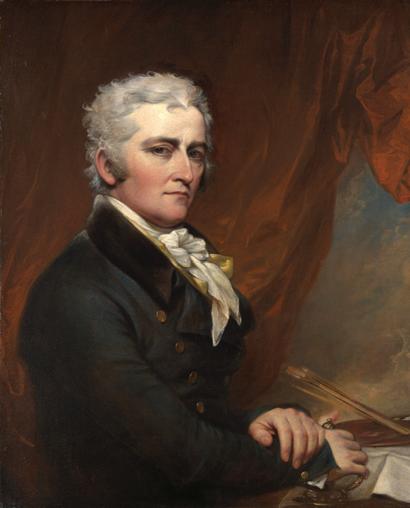
Below: John Trumbull-self-portrait in middle age. Gift of Marshall H. Clyde, Jr. Photo courtesy of Yale University Art Gallery
British Crown at Trenton, New Jersey). After being captured in a Long Island, New York raid and being held prisoner for three years, Webb would go on to lead his regiment again, Cregeau added. He also held the Bible at Washington’s inauguration in New York City in 1789.
Seth Harding is a “colorful character” and excellent sea captain who is appointed by Governor Jonathan Trumbull, Sr. to serve as captain of “the unusual U.S. Navy frigate named the U.S.S. Confederacy.” He is soon frustrated with outfitting the ship (built on Mohegan Tribal Land on the shore of the Thames River on what is now called Preston), Cregeau said. “A supply chain crisis was extreme in the American Revolution, because we’re at war. You’ve got a British blockade.”
Getting the rigging set, the sails, bringing the furniture and the cannons proved challenging. “The book shows how he (Harding) and members of the Marine Committee, those who, like Joshua Huntington living behind us here in his house, were frustrated with how they were getting the ship ready to actually set sail.”
Meanwhile, Jedediah Huntington continually multi-tasked: advocating for his soldiers’ health and welfare, while also trying to be a good husband to his wife, Faith (who he married in 1766) and being a caring father to his young son, Jabez.
first commissioned
done
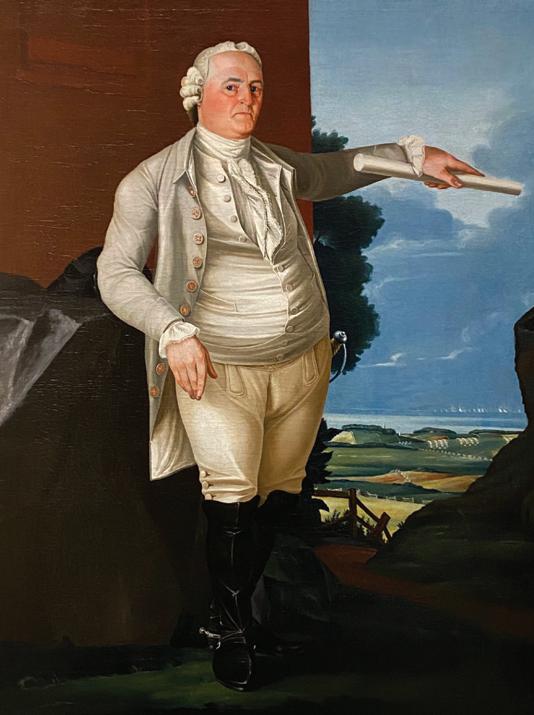
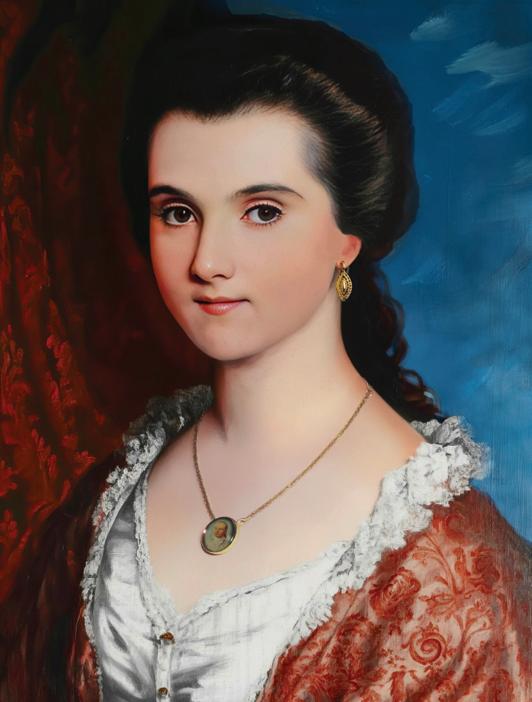
Jabez had just been made sole Major General of Connecticut militia. Here he is showing us his well-fitted troops ready to defend the Connecticut coastline. Portrait owned by the Connecticut State Library. Below: Trumbull painted Samuel Blachley Webb’s portrait around 1790, while working on a series capturing the faces of Continental Army veterans. He hoped to use these portraits in larger paintings about America’s fight for independence. This work is just one example of how Trumbull honored the people and events that shaped the nation.
Already suffering from manic depression during April, May and early June, Faith took her own life after seeing the carnage from the Battle of Bunker Hill at Thanksgiving time in November 1775.
It was important to include Faith Trumbull Huntington in the book “for her own stature as the daughter of the governor, as a talented artist who will inspire John Trumbull, but also because of her mental health history,” as it is not addressed much in colonial American history, Cregeau said.
“She (Faith) was essentially an ‘army wife,’ who became so flooded with anxiety about the possible loss of her spouse and other family members that she was overcome with depression and took her own life,” said Dr. Hall, a trauma psychologist. “It shows that mental health is just as important as physical health and that ‘war-related trauma’ is a real thing to be respected and understood. Ironically, none of the men that Faith was so terrified
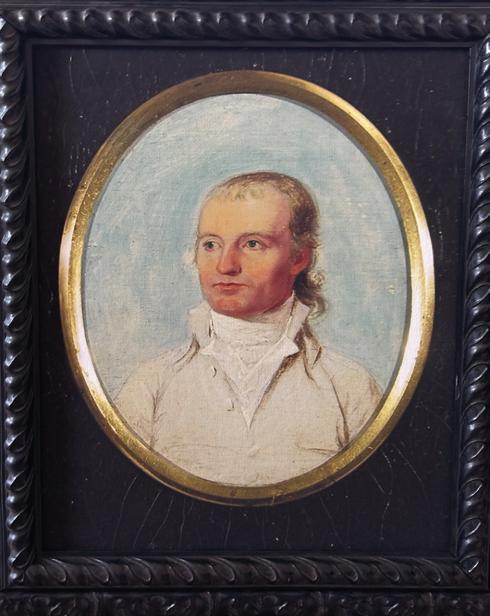
Portrait of Major General Jabez Huntington by John Trumbull (1756-1843). Reportedly
portrait
by Trumbull (in 1777).
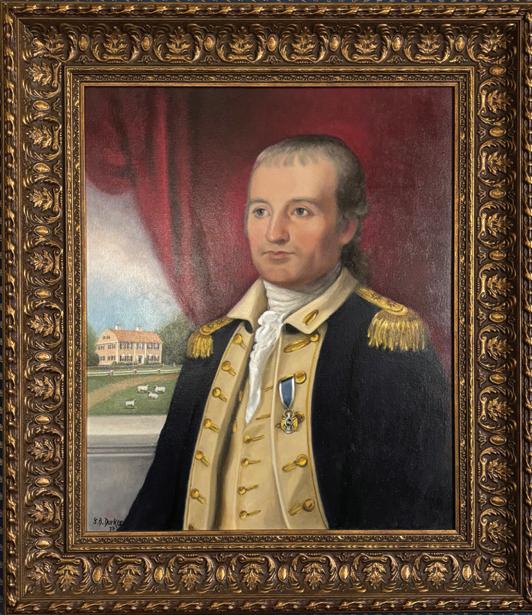
General Jedediah Huntington in uniform. This 2 of losing in the familyy, , including her spo in the war. She was the only one who los and depression she felt after seeing the a
eated by Susan Boone Durkee, bas re 022 painting was cr Br
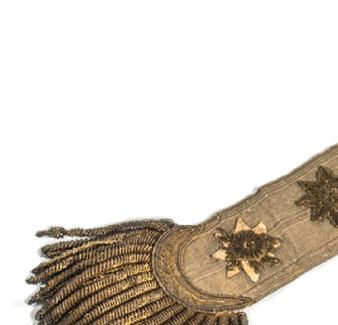
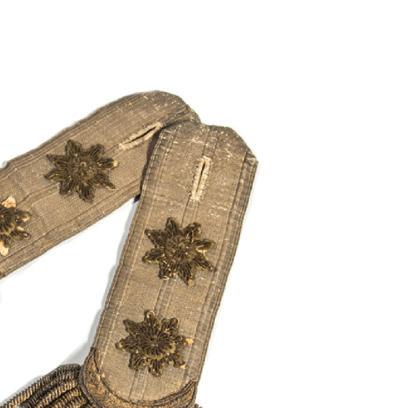
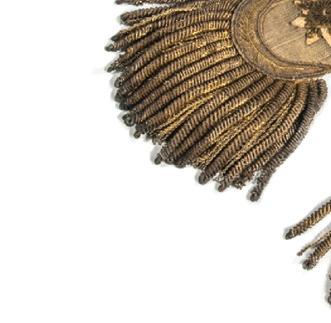
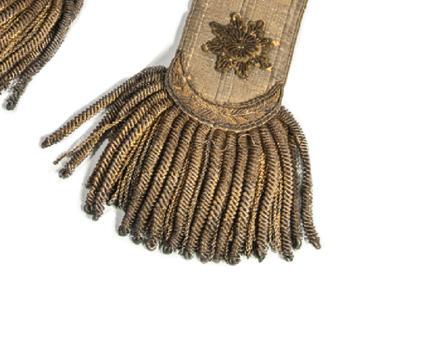
Jedediah Huntington, c. 1790. Photo courtesy of om woven gilt lace with e constructed fr They ar pair of Continental Army epaulets, worn by B A
Reproduction of miniatur f Connecticut Museum of Cultur
e and History re
evet Major General Jedediah Huntington. The two stars on each shoulder s re
e portr re ro Below: bullion tassels, silk, and pasteboard.
ouse, were wounded or killed st her life over the anxiety aftermath of battle.”
“I thought it was interesting to discover how society responded to her (Faith’s) mental health and her suicide, that she did have obituaries and sermons from churches that said, ’Let us honor her for what she did do in her life,’ that they didn’t try to shun or forget r,,” Cregeau said.
Jedediah found love again in 1778 when he married Nancy Moore (who goes by Ann).
Thr r, , Jedediah, an introverted or r, , Waashington’s. “And as a testament Wa ndon,” said Cregeau, adding that this is the reason Jedediah moved out of his Norwich home in 1790.
Blind in one eye due to a childhood accident, John T ashington appointed him collector of customs in New Lon to that, W also becomes a close confidant of W ganizer oughout the course of the war her
Trrumbull still joined the war and became a colonel in the Continental Army in 1775. “It’s a testament to his patriotism,” and sense of adventure, of wanting to get out of “small-town Lebanon where he grew up and see what’s out there in the bigger world,” Cregeau said. As a 19-year Waashington for 19 days, John works as a cartographer drawing maps, but decides he doesn’t like it, so he “just goes back to being in the r y..”
-old aide to W
egular army
other-in- rumbull of his br Tr
esent the rank of Major Gener re re
reege
Tr n Trumbull. Photo by Damien Cr trap repr rait by John T , w, ral. eau -law
Laterr, , John becomes an aide to Generals Horatio dict Arnold and John Sullivan.
convulsions, and his sister
In his published memoirs as an old man in the 1 credits his mother for massaging his skull as a sm upon the advice of doctors to prevent future epil r, , Faith, an “incredible inspired him to become an artist, Cregeau said. “ so beautiful.”
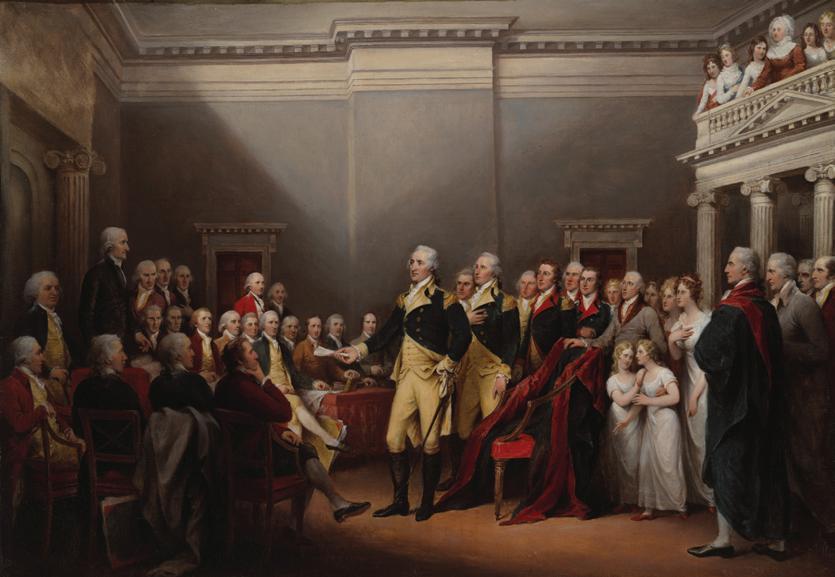
The cloak draped over the cha ar scenes by T rejected. T
ven to the world” ife as “one of the s Wa e has consciously roone, r g- Wa other Revolutinary Waashreently sioned in 1817 and s, Maryland, on ander-in-chief Waashington l oil painting by Resigning His icts W ng is curr Rotunda in W air behind Washing obes on a thr ashington’
ThinkingofJohn’smemoirsandfamouspaintin
Thinking of Johns memoirs and famous paintin
estingly
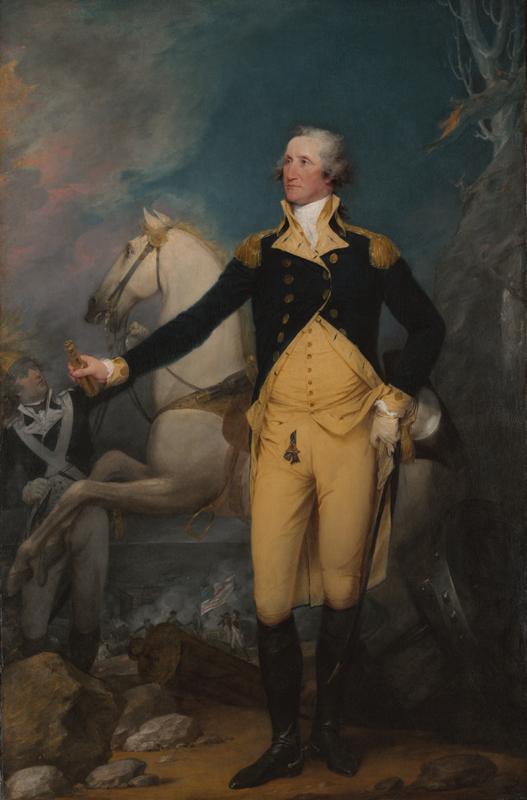
Wa George Washington before the Battle of T 1794, George Washington sat for John T
eated a full-size portrait and a smaller version, both cr rumbull in Ph Tr Wa rg Trrenton
University Art Gallery’ the pivotal Battle of Tr dramatic sky and energetic horse add to the tension. T at Y crypt of T
e re Wa Yaale Trrumbull Between 1792 and n hiladelphia. T now part of the Y ws Washington befor day o Gates, Bene830s, John mall child leptic artist,” who “I think that’s ngs in the eau said, a painting hode Island Narragansett ed that battle. ul to remem-
and his wife, Sarah, Trrumbull
the Society of the Cincinnati in Connecticut.
U.S. Capitol Rotunda and other museums, Crege “Isn’t it amazing the power that he can put into a about a battle” since he fought in the Battle of Rh in Portsmouth in 1778, which overlooks scenic N Bay in Newport. Inter y, , John never painte Cregeau surmised that perhaps it was too painfu ber the violence that occurred. Trrumbull. Wa reee displayed in the U.S. Capitol completed in 1824, the paintin December 23, 1783. Commiss ess in Annapolis re re ole as comm ro re rumbull. The work dep Tr Commission is a monumental ashington R Wa rg General George W John T relinquishing his r before Congr ington, D.C., alongside thr WarscenesbyT highest moral lessons ever giv eturn to civilian li voluntary r rumbull described W Tr re chy he symbolizing the monar oyal ton evokes the image of r
ale above the Ya Tood rg ep enton, looking upward as he pr Trre s collection. The painting sho ’s
om to a gift fr thanks , , the portrait hangs y, . The es his strategy par
om Connecticut in the American ro Tr - s book, “Portraits of Patriots - Col ’s re Benz, 2025,”
Revolution.” Below: This November 2022 photo shows author/historian Damien
egeau. This historical stone re transcribed it at the Connecticut State Museum and s lett ’s Tr Creegeeau r g holding Faith Trumbull Huntington’ Photos by Damien Cr previous historical owners. The pr . Pamela Hall. Photo by Jan T
ek eated by Der -generated image cr umbull Huntington, computer r Tr “Faith T according to Damien Cregeau’ onel John Trumbull & Five Fellow Patriots Fr Toormay wife, Dr operty is now o ro re
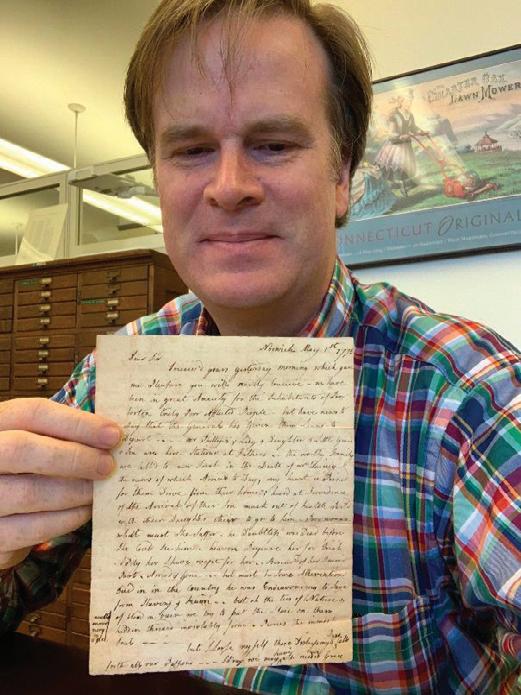
ter to her husband, Jedediah. Cr d Ar owned by Damien Cr
reegeau
e egg marker includes the names of chives in Hartford, Connecticut. rc
egeau and his re
eal history
W Wrriting his book was humblin making r y. . I’m just tel this house, their farm, their live here and burned this General H did part of New London? Ther pings and raids by the British,” theFairfieldCountyshoreline the Fairfield County shoreline. That happened a lot, he said, adding, “They took a lot of risks.”
lling the story ng, Cregeau said. “These people were y. . They could have lost es. What if the British had raided Huntington house down like they re was some concern about kidnap” because they did it in 1779 along “Thathappenedalot ” hesaid
egeau’ Damien Crre ’s s book, “Portraits Trrumbull & Five room Connecticut in the A rcchasedatG re e - Goods & Curiosities, 47 Ma Essex, Connecticut or via Amazon y, , email the author at: d geau@hotmail.com.
Damien Cr signed copy Stor Revolution,” can be pur Patriots Fr ots - Colonel John T
reegeau is an award-winn damien_cr
numer and medal fr
Military History Quarterly
s of Patrie Fellow American Griswold Inn ain St. in .com. For a reening histori-
an having r reeceived the national his room the Daughters of th Revolution in 2021. He has been pu roous journals and magazines, y, , ten fea the Journal of the American Revolu Financial History magazine.
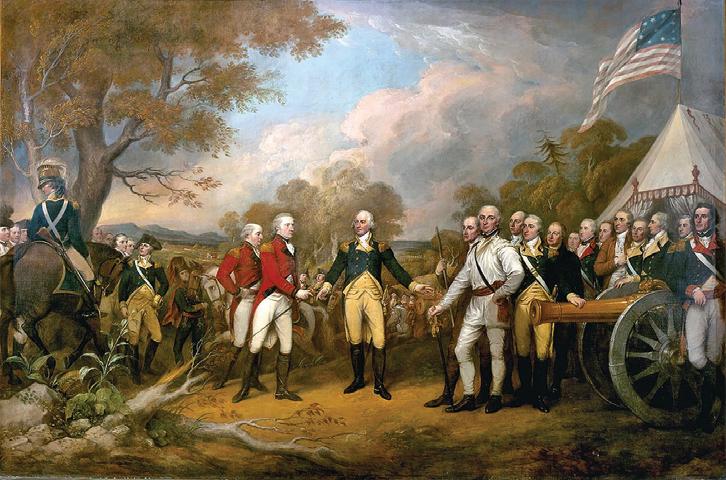
ull depicts British Army General John Bur atur story award he American ublished in , including rees in ution, and
ender his sword to Con re
Trrumbu A painting by John T surr near Saratoga, New Y
General Jedediah Huntingto ork. G Yo
P egeau and Dr Damien Cr
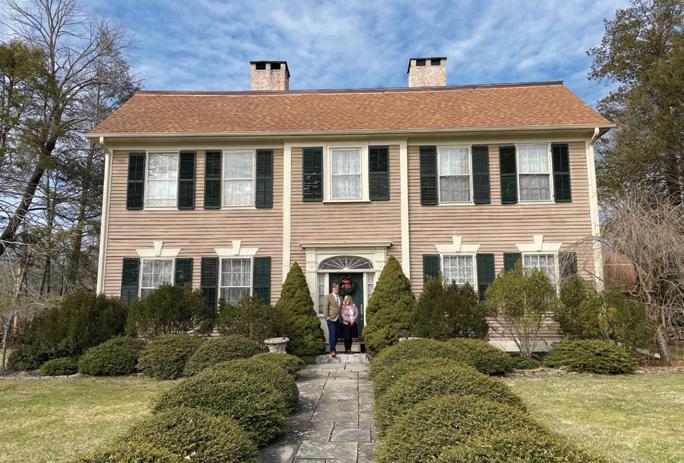
thought, ‘W
shown with his book, “Port , these house Woow fell in love with the style of
eparing to re rg
goyne pr
ently owned by author and historian re
e We . Cr ed in the entryway e pictur Pamela Hall, who ar
e We re fthe 18th-century ar
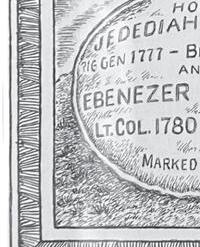
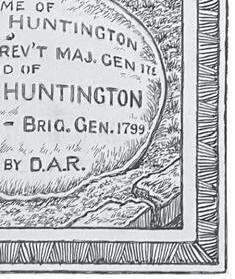
with the names of Jedediah H Connecticut in the America
ed in his and subjects featur
an Revolution.” He is seated on a historic stone egg marker inscribed room Tr egeau is re es ar
evious owners of the house re
The Below: espect. e of r Gates declined to accept the sword as a gestur ntinental Army Major General Horatio Gates on October 17, 1777, on House in Norwich is curr egeau stated, “W chitecture, clothing, and the decorative arts. W e beautiful, the woodwork and everything.’” Damien Cr raits of Patriots - Colonel John Trumbull & Five Fellow Patriots Fr Huntington and Ebenezer Huntington, pr book. Photo by Jan T
volume, which he said picks up wher
left off in 1779 and continues thr
egeau is curr Crre reently working on his se re e t roough t the war in 1783 and beyond into the fed understand what the patriots did with lives when the American Revolution w geau and his wife, Pamela Hall, a psych thitiCtithbilti
W wasover.Cr the r econd historical the other book the end of deral era, to reest of their r. reehologist, own n 1765: the n Norwich and Weethersfield. two historic Connecticut homes built in General Jedediah Huntington House in the Private Samuel Hanmer House in
Toormay
INDELIBLE INK
a book review by Laurencia
Ciprus
/ photos by Winter
Caplanson,
Holding the Line:
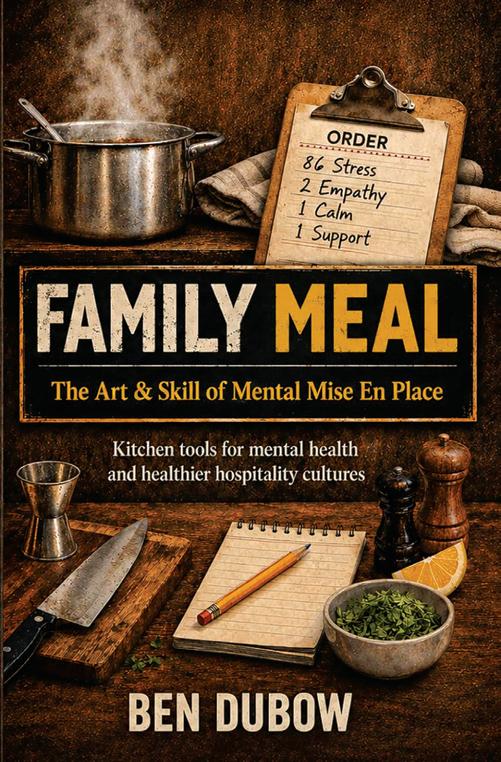
Ben Dubow’s Family Meal, The Art & Skill of Mental Mise En Place
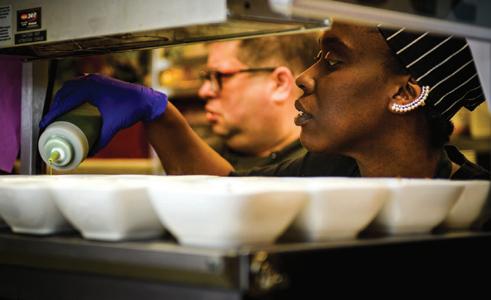
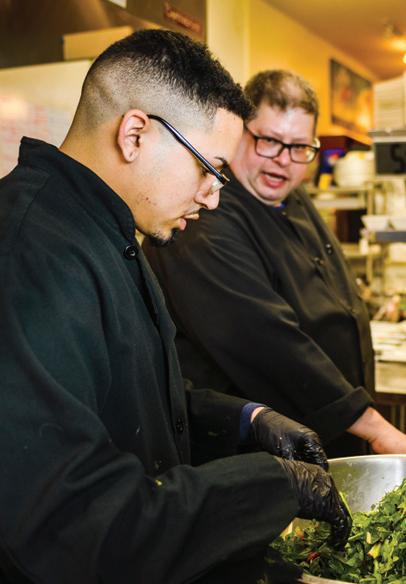
Restaurant work looks seamless when it goes well. This is the sleight of hand trick. The plate lands, the glass is filled, the room hums, and the customer rarely sees the pressure behind the performance. Ben Dubow’s Family Meal: The Art & Skill of Mental Mise En Place is written for the people behind that illusion: chefs, sous chefs, line cooks, prep cooks, servers, bussers, dishwashers, managers, and everyone else who absorbs the heat of service and keeps moving.
Dubow’s résumé gives the book its weight. An ordained pastor, chef, and nonprofit hospitality leader, he has spent decades linking
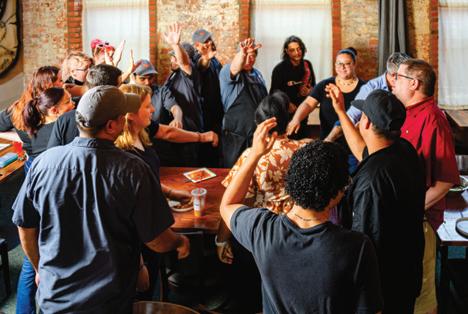
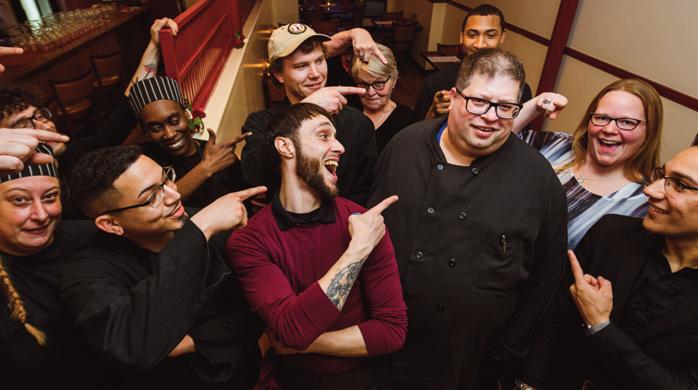
food, service, dignity, and opportunity. That work comes through his leadership at Forge City Works and Fire by Forge in Hartford, where an upscale PanAmerican restaurant also operates as a social enterprise for culinary and customer-service training. Fire by Forge provides transitional jobs, internships, apprenticeships, and real workplace experience for adults facing barriers such as poverty, homelessness, justice-system involvement, addiction and recovery, trauma, or mental-health challenges. Dubow’s contribution is not mission jargon tacked to a wall. It shows up in prep lists, service standards, training shifts, and second chances. That is why Family Meal feels earned: its lessons come from a workplace where hospitality is both craft and repair.
The book is not only for industry insiders. It also teaches diners to look behind the plate. You order, talk, sip, wait—and the food appears. But nothing about that is magic. It takes a culinary orchestra: timing, skill, communication, and care from people most
&
customers never see. Dubow restores those workers to the center of the experience and reminds us that every meal carries many hands, and many interior lives, behind it.
That interior life is the point. Dubow’s core idea—“mental mise en place”—is the inner prep that helps people stay grounded before, during, and after brutal shifts. My first meeting with him at Hartford’s Story and Soil made the concept feel real: he understands both the craft and the cost of hospitality. The book does not pose as therapy or corporate wellness. It speaks kitchen. His solutions land with the urgency of tickets firing on a shortstaffed Saturday night: name the feeling, reset fast, repair conflict, set limits, and recover after service.
The conflict-resolution sections hit hardest because they refuse abstraction; they stay in the heat, noise, and pressure of real restaurant life. Often the right move is not a meeting, lecture, or policy memo. Instead, it is ten minutes in the walk-in: cold air, closed door, no audience, enough space for someone in trouble to come down before words or actions do lasting damage. Dubow honors that practical
de-escalation while pointing beyond the kitchen. For workers at risk, CHOW—Culinary Hospitality Outreach and Wellness— offers an industry-specific safety net through peer support, recovery resources, wellness tools, and connections to care. A healthy crew needs more than toughness. It needs ways to pause, repair, and get help before crisis becomes the only language left.
Dubow is just as clear about what happens after the shift. Without a real cool down, the body stays in service mode: wired, flooded, and looking for the fastest way to shut off. Too often, that release becomes alcohol—not celebration, but sedation. Family Meal argues
65% report using substances at work, and 84% say they feel stress from the job. Those numbers make the pressure impossible to romanticize. Food service is tied to high rates of substance use, depression, and suicide risk, fueled by late nights, unstable money, physical depletion, easy access to alcohol, and a culture that rewards toughness over honesty.
Dubow’s mention of Chef Carlos Perez, whose annual fundraising dinner honors the late Anthony Bourdain, sharpens the point. Restaurants can be a “land of misfit toys”—a haven for gifted, restless, wounded, unconventional people. But when that instability goes unnamed, it can turn dangerous. Here, Family Meal becomes more than a book about better workplace habits. It is a call to name what too many hospitality workers are expected to survive in silence.
for a different exit ritual: breathe, eat, hydrate, talk honestly, move slowly back into yourself. Decompression is not indulgence. It is how workers keep one hard night from becoming a pattern that follows them home. The book’s strongest quality is respect. Dubow does not glamorize exhaustion or treat burnout as a character flaw. He names the overwork baked into many restaurants and offers a working vocabulary for honesty, repair, and self-regulation. The tone is direct, humane, and crew centered. It sounds less like advice from outside the industry and more like a clear, steady voice from the line.
Respect matters because the industry carries a heavy, often hidden mental-health burden. CHOW reports that 53% of food, beverage, and hospitality workers feel pushed to their breaking point; 63% suffer from depression,
The book also belongs in managers’ hands. Owners and leaders get practical guidance for building teams that speak up early, repair tension cleanly, and stop burning out quietly. Dubow’s leadership message is hard but necessary: a healthy kitchen needs more than skill. It needs emotional honesty, clear boundaries, and shared responsibility. Those tools travel beyond restaurants into family life, where patience, repair, preparation, and clear communication matter just as much.
Readers expecting memoir, clinical guidance,
or a sweeping industry analysis may find the book narrow. But that narrowness is part of the point. Family Meal is built for use, not display. It belongs in real moments of pressure, not as a vehicle for virtue signaling.
Family Meal is timely, generous, and essential now that the stress of hospitality work can no longer be treated as background noise. It belongs with the workers who carry the rush, the leaders responsible for their crews, and anyone who wants better language for care under pressure. Dubow treats restaurant workers as whole human beings, not labor on a schedule. He gives them practical tools to stay present, speak honestly, cool down, recover well, and keep showing up without disappearing into the work. That is the book’s quiet power: it insists that the people who feed us deserve to be held, too.
StoneRidgehasalwaysbeena GROW W WITH US!
StoneRidge has always been a Life Plan Community where re grows in exciting ways. Now, w on that foundation.
Breaking ground in spring 2026 expansion will add 54 new ind living apartments, 14 assisted residences, and enhanced wel amenities to a community that one of a kind in Mystic. tirement we’re building 6, our ependent living lness Schedule your pe Call ll 860.7 t t vi viissi StooneRi rsonal visit
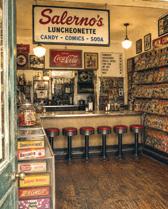
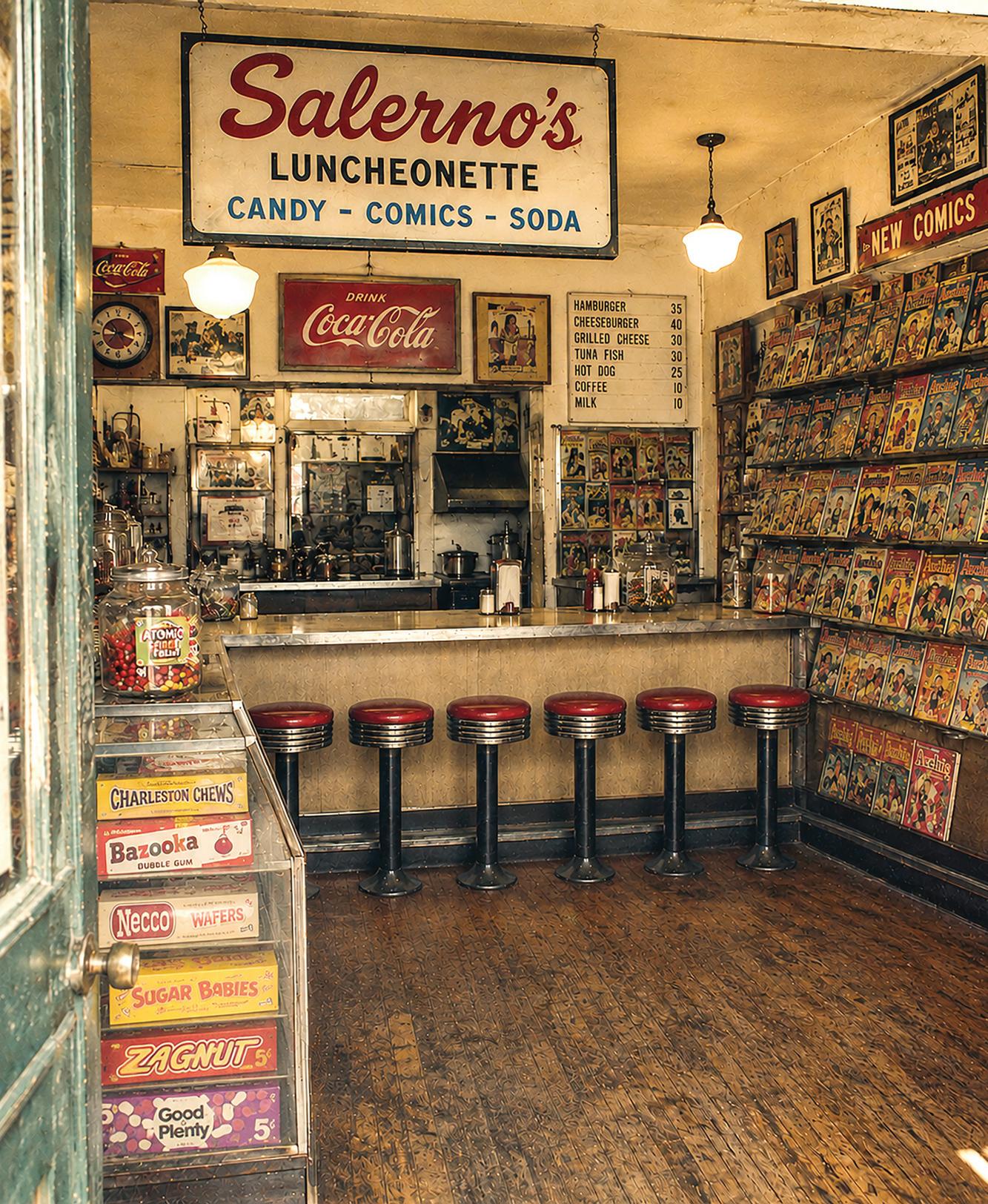
It was one of “those” places that was a part of most everyone’s childhood. The candy store, the luncheonette, the place to get a comic book or an ice cream cone. It was the place to go after school.
It was called Salerno’s and was located on Valley Road in West Orange, New Jersey years and years ago. The actual name was Salerno’s Luncheonette, but in addition to a counter, there was also a wall of comic books, lots of candy bars and confections, and two guys behind the counter who ran the place and cared about us creepy little kids who perpetually inhabited it.
Dominick and Sal were brothers, you had only to look at them to discern that fact. They were beefy, Italian guys with thick heads of salt and pepper hair and equally thick eyebrows. They had booming voices, hands of steel, and hearts of gold, but they didn’t want to let on about that. Their facade was stern, even growly, keeping perfect order with the kids who ran in and out for hours after the final school bell rang.“Close that door! Hey, don’t slam it! Where were you raised? Don’t handle the comic books unless you’re gonna buy them! Stop squeezing the chocolate bars! What, were you raised in a pigsty?”
The first thing I remember about Salerno’s was the way the floor creaked. The store occupied the downstairs space of an old building and had uneven wooden floorboards that groaned whenever someone entered. Right inside the door was the candy counter, chockablock with some which survived the test of time and other confections long gone. Charleston Chews, Bazooka Bubble Gum, Necco Wafers, Slo Pokes, Saf-T-Pops, Flipsticks, Long Boys, Razzies, Bit-O-Honey, Atomic Fireballs, Caramel Creams, Mary Janes, Sugar Daddys, Dad’s Root Beer barrels, candy buttons, Sugar Babies, Zagnut bars, Good & Plenty...I could go on and on, but I have a mouthful of silver fillings to remind me of my devotion.
The lunch counter at Salerno’s wasn’t very long, perhaps eight stools. They had red vinyl padded seats that were cracked and squeaked when us kids would sit on them and swirl round and round until either Dom or Sal would growl at us, and the squeaking would stop. I don’t remember ever eating at that counter, but I do remember the offerings were limited to selections like hamburgers, grilled cheese, and tuna fish on white. Not exactly gourmet food, but you didn’t go to Salerno’s to dine. You went for the ambiance...and the advice.
The Salerno brothers always had advice, whether or not you asked for it. They advised adults on the best place to buy tires, what bank was giving away transistor radios with new accounts, and if the Yanks had a chance at the pennant this year. They also were expert on who was running today at Monmouth or Aqueduct Race Track, and if the trainer said they were in good health.
When it came to us kids, the advice was not as off-the-cuff. It was doled out more like a warning, a stern reminder, or in most cases, a life’s lesson. More than the “don’t slam the door or manhandle the comic books,” Sal and Dominick acted as surrogate parents when ours weren’t around. They didn’t let us buy too much candy, they recognized the nearsighted, clumsy little girl who had trouble reading Little Lulu and Archie, not to mention the blackboard at school and called her parents, recommending an eye doctor appointment; and they also called your parents if they noticed anyone headed for trouble.
Sal and Dominick were part of the town in running their business, and part of the “village” it used to take to raise the neighborhood kids. They worked seven days a week and never complained - they just felt they were paying their dues for being Americans – and they treated every customer with respect, whether they bought lunch, or only a ten cent comic book. The Salernos were part of the rich fabric that built this country, and now are somewhat of a rarity today.
By the way, that little girl got that eye doctor’s appointment, thanks to the Salerno brothers and wound up wearing glasses for many years. It greatly improved her being able to read the board in class, upped her grades, helped her cure the clumsiness, and makes it easy to write this column in tribute today.
olinaMárquez-SterlinCaro
ona Mann
n from Carolina-Márquez
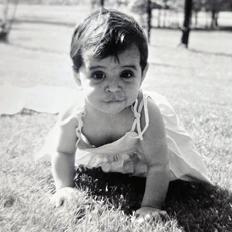
ashington DC 1 a ng, one year old, W
Sterling
1961
by Gustavo
Pérez
Maybe this is your first K Mag Yoou Y
of all our ef uread INK Magazine. time. Maybe you’ve evenbeenanardentreaderforallofour21 it, and Carolina fffort ever not playin saysinhersign
debeenanard
f graphic raphic our gaze. ur gaze years, and yet, been an ar the designers, even our publisher even ardent reader for all of our 21 the names within slip quickly by your gaze. The writers, the photographers, r.... most of you don’t know us. After all, a name is just a name. It’s what’s under or over that name that you care about, and that’s as it should be. It’s the written word, the graphic and photographic art, and the care in delivering a high-quality product each month that
editorialstaf should command your attention.
oughout the year
Believe me, we’re eternally grateful for that and for the fact that you keep reading INK and passing it on to others. When 2026 dawned, our publisher asked the ff f to consider writing some pieces thr r, , geared to the theme of this country’s 250th birthday and aboutthingsthatweredecidedly “Made
tography quez-Sterling, an Editorial Graphic Design about things that were decidedly in America.” That is how he phrased it. I can’t speak for the others, but for me, it wasn’t a hard ask or a difficult stretch at all. I thought immediately of Carolina Mar-er whose contributions add to the exquisite look of this magazine each month. The colors, the angles, the placement of the phoy, , the sheer geometry of the pages,
the fonts and icons that draw your attention to the text...it’s all that which makes people pick up a copy and then hang onto
says in her sign manner. She is an, a perfection pride in her wo at times the litt reconciled the i “Am I a Cuban American-Cub with and pond and its meaning my whole life. T
Firm ng with color is a significant part ts. “I can’t remember r,,”she natureunderstated at, from “Bilingual Blues” altered slightly.
nature understated a very strong womist who takes great rk; yet, she is still le girl who never nner voice asking, -American or an an? I have wrestled ered that identity To o
live the life of a
Carolina’s in he Ink Publication her whole life m design and kno work in concer for each issue a us a magazine andhangonto hyphen.”
r 7th year with s, but has spent aking art. Her talent for wing instinctively how to t with our publisher’s vision nd each story just makes you want to pick up, read, eachmonthInthelastfew
The story of Cubans forced to l beloved homeland for the Unit is not a single incident. It has b a layered chronicle stitched tog wavesofdeparturepoliticalup
and hang onto years she has e INK by writing of her own. Car her artistic cont is a Cuban-Am and grandparen their suitcases fi and dreams de is made in Ame T rica, born in W Y
each month In the last few ven added to the fabric of some outstanding stories olina is special not just for ributions, but because she erican, the child of parents ts who came here as exiles, lled with lives torn apart ferred. YeetCarolina herself Waashington,
D.C., but with facts and feelings that collide on the road to any sort of reconciliation.
waves of departure, political up longing, and reinvention.
nstruction on leave their ted States been called gether from pheaval
Toocross a border from one cou another may appear on paper t simple act, but that crossing ca opposite ends of the human ex
The difference between being a and being exiled is far more tha movement. It’s about choice an pheaval, untry to to be a n live at xperience. an immigrant an physical nd about person to a An immigrant ve; they carry
the invisible thread that ties a p place they once called home. A makes a deliberate choice to leav
Poem
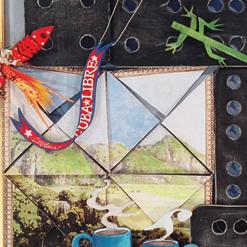
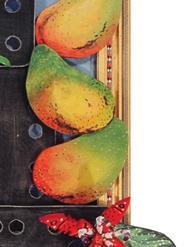
El Exilio, 2010, Mix Media, PVC Co
Cuba in Exile
a suitcase packed with things like urgency or desperation, but it is ultimately their decision whether to stay or go. Or perhaps the choice is between risk and remaining. In so many cases, the immigrant is fleeing hardship, believing that life somewhere else will be better. So they take their family, their most prized possessions, and every bit of money they can cadge, and depart on their own terms, their suitcase filled with hope and dreams.
Exile, on the other hand, does not ask permission. It is an act of being pushed out rather than pulled elsewhere. It is a cold, hard door slammed in the face of everything they know. It may stem from decree or threat, but one thing is certain: the home the exiles may have known is no longer secure. Their lives hang in the balance; every creak in the floorboards or knock at the door brings instant fear, and there are no choices to make. Here is only one way out, with little certainty of what lies ahead.
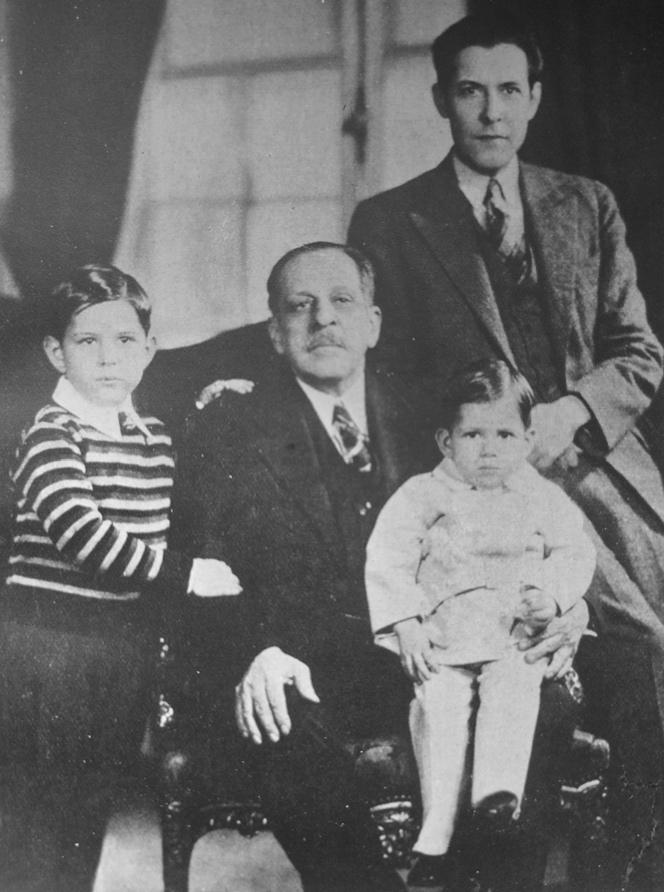
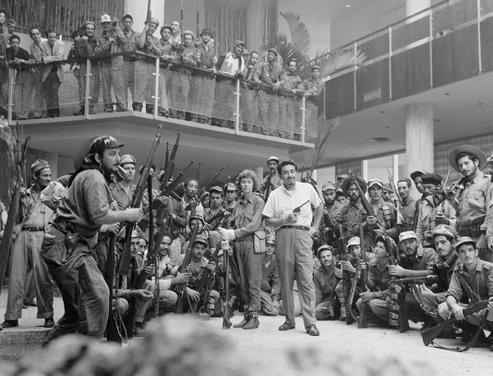
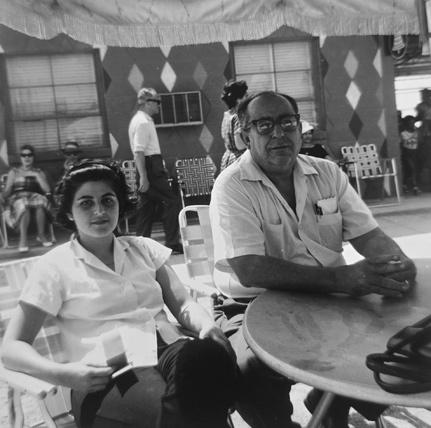
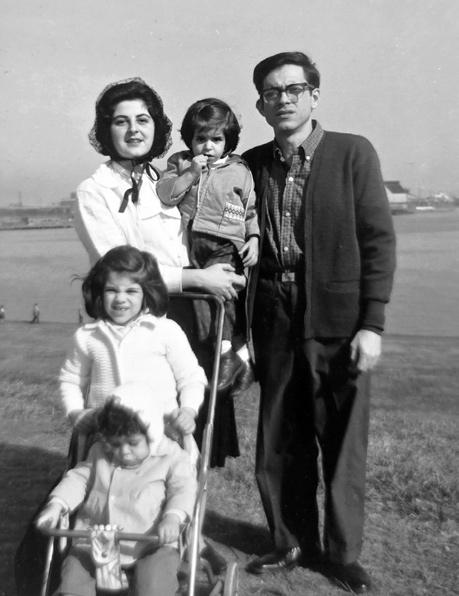
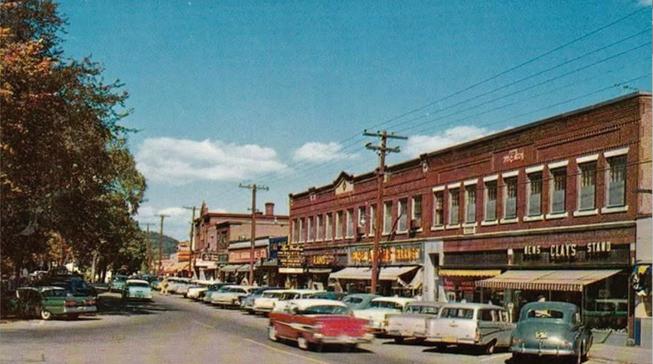
Clockwise: Old Havana with Capitol building in forefront 1950. Cuban rebel soldiers in the Havana Hilton foyer, January, 1959. Family Portrait young Carlos brother to Carolina’s father, Don Manuel Márquez-Sterling great grandfather, Carlos Márquez-Sterling Carolina’s Grandfather and the boy is Carolina’s father Manuel Márquez-Sterling. Carolina’s Mother with her maternal grandfather Valentine Sanchez 1962 Miami.
The first major wave began after the Cuban Revolution when Fidel Castro came to power, transforming Cuba into a socialist state. For many in the middle and upper classes, like Carolina’s ancestors, this new form of government upended the lives of a very prominent and illustrious family. Her great-grandfather, Manuel Marquez- Sterling, had once served as an ambassador to the USA; her grandfather, Carlos Marquez-Sterling, was an attorney and professor of law and economics at the University of Havana, where he also founded the School of Journalism named for Manuel. He served as a member of Cuba’s House of Representatives, as well as Minister of State and Minister of Education. He also precided as president over the writing of the 1940 Constitution of Cuba, but in the 1950s, after being detained numerous times because of his opposition to Batista and later arrested by the government of Castro, he went into exile, as did Carolina’s parents, who could not live under Castro’s rule. A once prominent family, now reduced to a life of exile. Over time, they developed, as many exiles did, a complex identity, balancing memory and adaptation. A life of resilience and reinvention mixed with memory and longing.
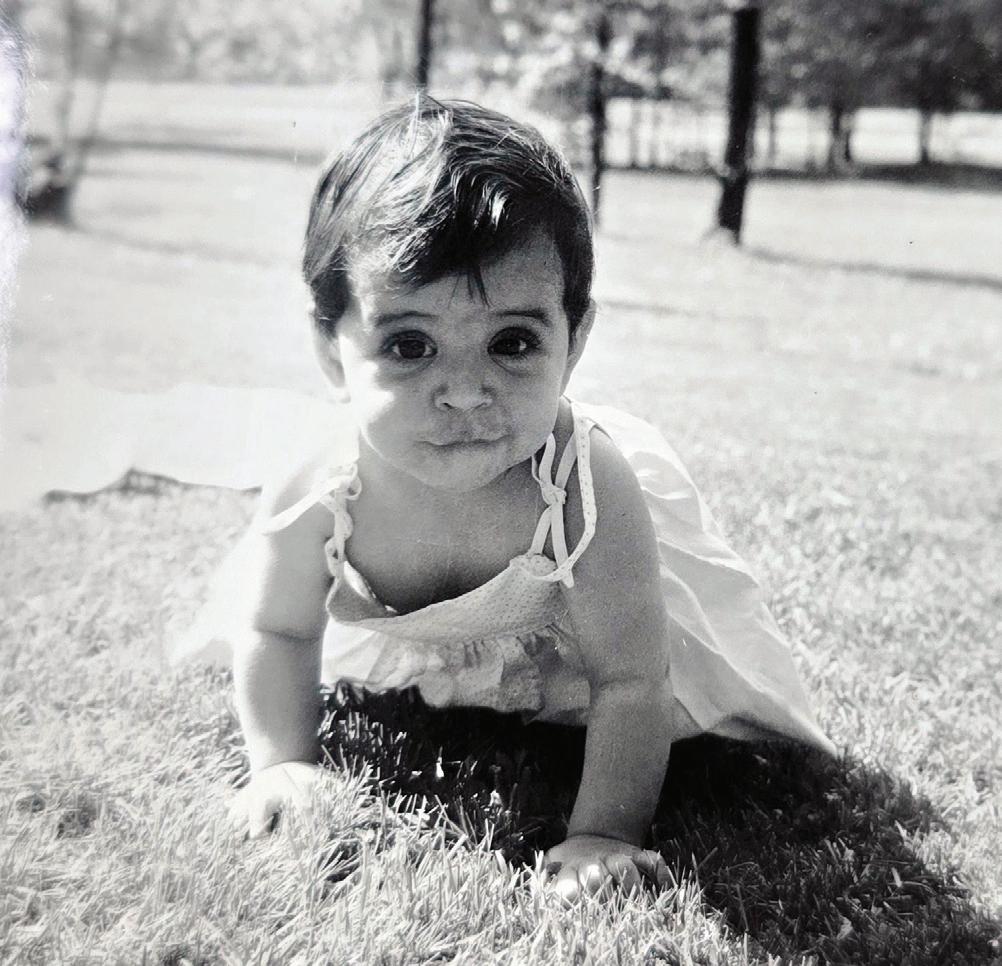
In 1960, just three months after arriving in Washington, D.C., Carolina was born. Her birth marked a new chapter for her family, who had recently left Cuba behind under difficult circumstances and were still adjusting to life in the United States. The arrival of Carolina in the nation’s capital symbolized both the hope and uncertainty of starting anew in a foreign land, carrying with them the memories of their homeland as they began to build a future in America.
Her father soon got a teaching job in Latin and Economics at a prep school in Maryland, and later taught Economics and World history at Ricker College in Houlton, Maine
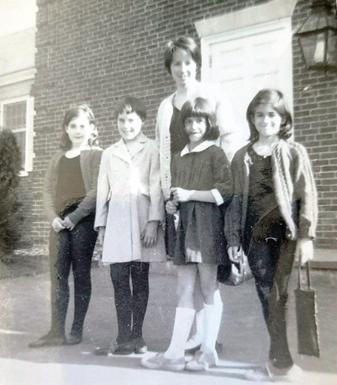
The Capitol in Washington DC. Home of the Marquez-Sterling Family, The family in 1962, Carolina and her sister Gloria after ballet class.
earning an honorary Bachelor’s Degree. A few years after, the family moved to the White Mountains of New Hampshire, where her father secured a position at Plymouth State College teaching Mideivel history.
“Every night, my family would discuss politics at the dinner table,” Carolina recalled. “My parents were adamant that we speak Spanish at home to preserve our language, but outside the house, we spoke English so we could remain bilingual. We were the only Spanish-speaking family in Plymouth, and other kids at school would
mock my sister and me, calling us ‘Castro’s daughter.’ Still, my parents instilled strong values in us. ‘Just do what you do,’ they would say, and over time, the town came to accept and embrace our family.”
“My parents were very intelligent, so they commanded respect. My mother became a Spanish teacher at the high school, and my father went on to head the History Department at Plymouth State.” In addition to the nightly political talk around the dining room table, they gave us a solid background in the arts. When Picasso’s “Guernica” was being shown in New York at the MoMA, they took the whole family down to see it. It was then that I decided, ‘This is what I want to do.’
“In addition to art, they immersed us in music. I took piano, clarinet, ballet, but all
I really wanted was to draw and paint. I took every art class I could in high school, then went on to Plymouth State to learn how to build a professional portfolio so I could apply to the best art schools. I applied to six and got into all of them. My parents wanted me to attend one in a big city like New York or Baltimore, but I was terrified of living in a big city.” Carolina ultimately chose Massachusetts College of Art, majoring in graphic design. She spent a brief period as a production artist at Vogue, then returned to New England to create packaging designs for Hood Milk Company—ice cream, sherbet, and cottage cheese among her projects. Her next position was at LOTUS, a software company in Cambridge, where she thrived professionally. “I flourished there, but I was always somewhat of a docile helion. In my family and in my work, I liked to stir things up,” she laughed, reflecting the gentle mischief that colored both her life and career.
These days, when the writers and the publisher of INK send her a story to design, she does one thing right off the bat. “I read it. I read every single story because I need to know what I’m designing for. You’ve only got five seconds to get someone to read that first paragraph.”
“Over the years, many people have said my painting is Latino, as if the cells remember. Perhaps culture endures not just through language or place, but in temperament, rhythm, and sensitivity – traits quietly passed from one generation to the next.”
Carolina has never visited Cuba and will not return until her people are free. She identifies as a blend of cultures, neither fully belonging to one nor the other, but skillfully navigating the space that connects them.
“I did not flee for life, liberty, and freedom my parents sought. I have always known it and never lacked it. Yet, growing up with people who lost everything deepened my understanding of the gift this country is.”
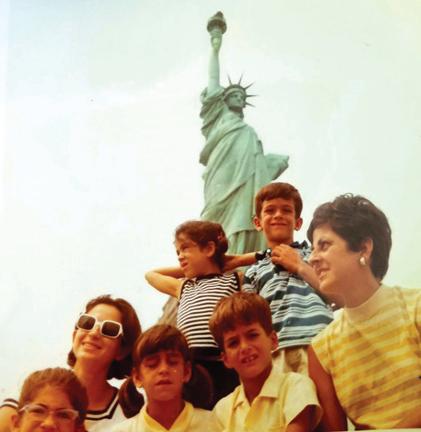
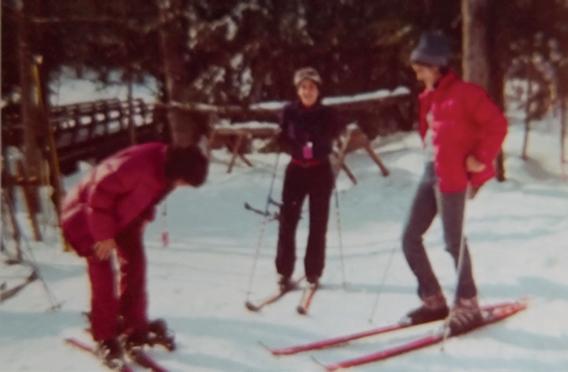
Left page: Carolina’s cousins and sisters visit the statue of Liberty, The Cuban ski team, Plymouth NH. in 1965, Mount Washington NH the backyard of the Márquez-Sterling Family.
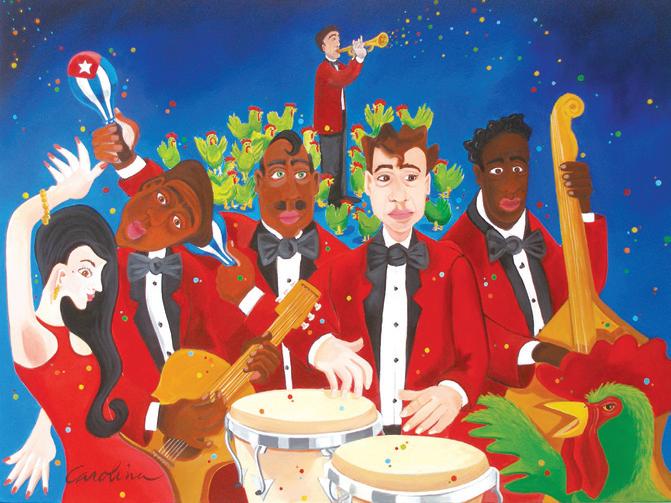
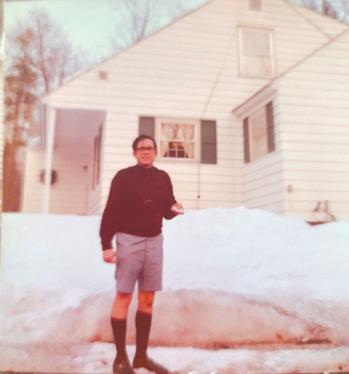
Photos Clockwise: Boom Chicky Boom , Acrylic on Canvas 2008, Flamingo Road, Mix Media Paper Construction 2020, Carolina Márquez-Sterling in her studio. Carolina’s Dad, Manuel, Waiting for Spring in Plymouth NH
Love Letters to the Shoreline
by Elizabeth S. Mitchell
The Miracle of Community: Displaced, but Still Home
W
hen I began writing Love Letters to The Shoreline, I had lived in the same sweet little rental cottage for five years. It was there that I built my first-ever solo home after my divorce, where I became good friends with neighbors on all sides, where I went home every night over the course of more than half a decade, as I found my people, fell in love with local places, and built the community connections that would shape my current life.
It's the house I lived in when my mother passed away, when I finished my MFA, when I finally decided that falling in love might be worth the risk, when I turned my first solo-home into the foundation for an ever-expanding life and love, and when I got married. But late in 2025, it was time to move on. It was time to find our next place for our next chapter. Though we loved living there and will always be grateful for the years we got to call it our home, a confluence of events, many of which were unforeseen or beyond our control, turned our conversations of “maybe we should think about moving” into “It’s time.” But we did not expect any of what came next.
Photo by Elizabeth S. Mitchell
We were out of our former house already when we learned the place we had thought might work out as a temporary home would not, and suddenly, with winter coming, my husband, cat, little dog, and I were without a permanent place to stay and without a plan. What came next, over the ensuing months, were the most incredible demonstrations of neighborly care, community kindness, and both individual and institutional generosity that I have ever experienced in my life. The Shoreline that I spent a year writing “Love Letters’ about, that had welcomed me, a complete stranger, with open arms when I had arrived seven years prior, and where I had spent those years excitedly and joyfully building a whole new life, would turn out to love me back in a way I never could have imagined and never would have expected of any person or any community.
In total, we would go on to stay in thirteen different places between November and March, some of which could accommodate all of us, some of which could accommodate a cat but not a dog, a dog but not a cat, pets but not people, people but not pets -- and so while we were not always all together, never once, not for a single night in four months, during the roughest winter in recent memory, were we without a safe, warm, caring place to stay. If that is not a miracle, I don’t know what is.
During the holidays, when businesses are full to the brim and busy, and when families are fully engaged with their own celebrations and hosting their closest people, we would never have imagined being not just accommodated, but welcomed, looked-after, and cared for, not only by close friends, but by neighbors, acquaintances, and local businesses. I will not name private individuals/families for the sake of their privacy, but I would like to loudly thank Saybrook Point Resort in Old Saybrook, CT, The Griswold Inn in Essex,CT, Old Lyme AirBnb Host and Publisher of Old Saybrook Neighbors Magazine Lori Montazella, and local Ameriprise Financial Advisor Joel Blum of North Cove Capital. Your charitable hospitality will never be forgotten. I also would like to thank local realtor Nick Prevost for his inexhaustible patience, determination, and resourcefulness.
Time after time, friends we knew well and people with whom we were friendly but not yet close, all conspired, one after another, to help us. We stayed at a farm in Chester, CT and looked after the animals while the family was on vacation; we house-sat for a friend in Old Saybrook, CT; I spent a long weekend by a cozy fireplace in a friend’s living room in Clinton, CT; we slept in bunk beds, on couches, in guest rooms; we did our very best to be helpful by getting groceries, shoveling snow; walking dogs, fixing water heaters (okay, my husband did that part). Every time we were sure we were out of options and the bottom was falling out, someone else threw a net underneath us, bought us time, and kept us part of the place we call home.
And because of those people, because of one person after another after another putting us in touch with someone else who “may be able to help,” we found our next home. I lived in the same sweet little cottage for nearly six years, and it broke my heart to imagine leaving the area if we could not find another year-round rental we could afford. Incredibly, through word-of-mouth and the help of friends and neighbors, by Spring we were moving into the perfect place. And not only did we not have to leave The Shoreline, we did not even have to leave the neighborhood. We are now on the same street where we had been previously living, in a lovely house that can better accommodate a newlywed couple and their dreams of a growing family.
One of the most frequent questions I am asked at my job behind the bar at Sip Wine Bar in Old Saybrook, CT is,“Do you live locally?”And when I answer affirmatively, the next question is always,“Do you like it here?”
I have always answered this question by saying, honestly,“I love it here. It feels more like a community than any place I have ever lived,” and then I say,“I’ll stay as long as they’ll have me.”
Now, my answer to these questions is still the same, but it is tinged with even more meaning and depth than before, because not only has this community made clear that it is willing to have me, but that it is willing to go above and beyond to keep me -- a privilege and blessing I cannot express without crying. My gratitude to the incredible communities of The Shoreline is boundless. This truly is an uncommon place filled with uncommon people, and I am immeasurably fortunate to be among you. Thank you.
With Love, Lizzy
The Cheesemonger
Deana Simmon, The Cheese Shop of Centerbrook
Happy Birthday America!
As America approaches its 250th Birthday – it got me thinking, what was cheese making like 250 years ago and what types of cheeses were made. I thought the answers would be obvious since cheese making was heavily influenced by English and Dutch settlers, but I was surprised to learn that most homesteads were not only making farmhouse cheddars and Dutch-style goudas but experimenting with all sorts of aging techniques and styles transforming milk into artisanal style cheeses long before it was a thing.
Back on the homestead in 1776 cheese was a daily chore. It was an essential way of preserving milk. Although Colonial farmers didn’t generally specialize in dairy farming nearly every family in Connecticut, Massachusetts and Rhode Island who owned dairy cows, made cheese. The first commercial cheese factory didn’t exist until 100 or so years later – which meant homesteaders of 1776 were producing cheese by hand, the old-fashioned way… hmm
Let’s take a closer look at the cheese making process in 1776.
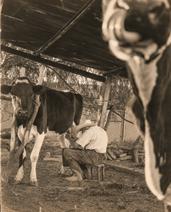
No automation - Automation makes milking faster and more productive today, but our earlier settlers milked their cows by hand twice a day. With an average of 2-10 cows per family – that means up to 4 hours of your day could be spent milking cows. A herd of five cows could provide enough milk during the season to make several wheels of cheese per week. This helped preserve surplus milk and create valuable products for winter use and trade.
Raw Milk - Pasteurization wasn’t introduced until the late 1800’s – farmers of 1776 made cheese with raw milk. This added more complexity to the cheese and reflected the cow’s diet, pasture and terroir.
Animal Rennet. Only natural animal rennet was used. The exact definition of rennet is even too much for me to read – let us just say it’s a natural enzyme found in animals that when added to milk helps it to coagulate. Today, there are several types of rennet used in cheese making: from plant based to microbial. But only animal rennet was available to our early cheese makers. Hand cut curds. Unlike today with curd cutting done on automated equipment, our early cheese makers cut and stirred curds by hand by adapting ordinary farm tools such as rakes and paddles into cheesemaking tools rather than owning specialized equipment.
Cooked, fire side - Curds were heated over a hearth fire. Unless fresh cheese was being made- early cheese makers would heat or cook their curds; also called cheddaring over a hearth. This softens the curd, allowing it to lose moisture evenly. Today’s heating is done with large temperature control equipment.
Wood packaging - Curds were packed in wooden molds and pressed with stone weights. Curds are placed in molds and weighed to drain the whey and promote natural mold growth on the rind. In the modern cheese making world of today – wooden molds have been replaced with plastic or metal molds due to sanitation and hygiene.
Salt - Wheels were salted and aged in cool cellars, attics or spring houses. Today, cheese is still “cave aged” or “cellar aged” but what you may not know is these caves and cellars are all temperature controlled. In early cheese making on the farmstead the cheesemaker had to monitor it daily to make sure it reached the proper temperature for cheese maturation. Without the proper temperature cheese could spoil.
Aging - Wheels are aged from weeks to months. This is true today as it was then. Depending on the type of cheese made it can age anywhere from weeks to months.
Since much of New England was settled by English colonist, many cheese making practices came with them. By the time of the Revolutionary War cheese had become a staple food for families, travelers, sailors, and soldiers. An aged wheel of cheese meant months of food and nutrition, a well needed necessity for every family to sustain through the cold New England winters.
As we approach and celebrate America’s 250th Anniversary, let us remember that our nation was not only built by soldiers and statesmen but by farmers, artisans, craftsman’s and cheesemakers. In the kitchens of New England families used their hard work, skills, and traditions to transform fresh milk into cheese. While cheesemaking has evolved over the past two and half centuries, the heart of cheesemaking has not changed. It is a commitment to turning simple ingredients into something extraordinary.
Deana Simmons
The Cheese Shop . Centerbrook
4
Independence Day Boat Parade | Essex
Decorated boats, booming cannon fire, family activities, and waterfront fun along the Connecticut River. The Connecticut River Museum celebrates America’s 250th with special programming and discounted admission. 67 Main St (Foot of Main), Essex, Connecticut,
5 -12
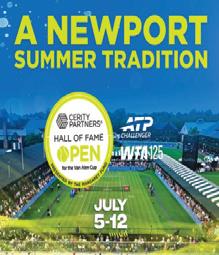
Cerity Partners Hall of Fame O Rhode Island
Open |Newport
1 Sh
11
horeline Summer Festival | New Haven full day of music, art, food, nd community at Armada rewing. More than 30 bands erform across two stages ongside local vendors, craft r, , and food trucks in a festial built by and for Connectiut’s independent music scene. Music Lineup m’’s Length rsh avve Face / Plus 27 More
1
11 and WT W
Woorld-class ATP TA A tennis returns to Newport’s historic grass courts a premier
Ticketsonsalenow gp Newport summer tradition. Ti w.
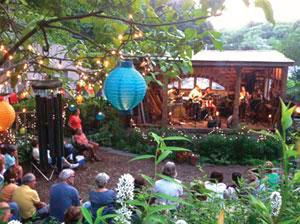
Concerts In The Garden | Ch Leif Nilsson Spring Street Studi Presents
hester io and Gallery
Post T
Trraumatic Jazz Disorder
y, , July 6 Early Rounds
Tu y, , July 7 Early Rounds
We y, , July 8 Early Te FAAME Day +
eamF Rounds, T Wednesday Tuesday Monday
Sunset Slam y, , July 9
Middle Rounds
Sunday Saturday Friday Thursday
y, , July 10 Quarterfinals y, , July 11 Semifinals y, , July 12 Finals
10
7.30pm Show
W p Wiith his newly released second album, Falling In Love, Matteo Bocelli steps confidently into the spotlight as the next generation artist, with the heart of a poet and the reach of a global star.
Levitt Pavilion | Westport Matteo Bocelli - Falling In Lo w, , 6.30pm Doors
7 - 10 pm $20 donation - BYOB and picnicOutdoor Bistro Style Seating in the Amphitheater Rain or shine!
7/18/26 - Roamer 7/25/26 - The Gibbons
8//1/226 Righteous Continentals
8/8/26 - Driving Route 9
8//15//226- Yoou Can Xray 8/22/26 - The Bargain Trrick
8/29/26 - Old Dog New T SomeoneY 5/ 8 - / 8
Sorry
One Spring Street Chester
y, , no pets or unattended childr r, , Conne
17–19
Greater Hartford Festival of J
Three days of world-class jazz in Bushnell Park. Free, festive, and one of New England’s premier summer music events. This year’s festival continues our mission to upliftcommunityresidents
lift community residents, musicians, and local businesses by producing a world class event that honors America’s purest art form—Jazz. Beyond the music, the festival fuels the economic and cultural vitality of Greater Hartford, drawing people from near and far to share in this vibrant celebration.
ren allowed ecticut 06412
Jazz | Hartford
orld T ove W Wo Toour
6–17 20–31
Shubert Summer Theater & Arts Theater & Arts Camp | Musical C
eats from over 30 food trucks. you’re craving cupcakes and c music, poutine and pop, or jus r, , lawn games and l you’ll find it all at our annual f festival.
25
y, , 11 am - 8 pm 0 Columbus d delicious Whether ountry t looking live music, ood & music
11
Y depth c theater by a co emergin Human Early C ment g
nities High School. W
lasses in acting, short film, visual arts, and musical while in an arts rich environment. Camp is staffed mbination of professional artists, teaching artists, and g student-teacher-artists from Cooperative Arts & Weeare licensed by the CT Office of hildhood (OEC) and follow all OEC and health departuidelines and laws.
Midsummer Kickoff Con OldL’Mid Camp |New Haven amp Options
ncert | Old L Lyyme
College Street Music Hall |New Haven
An Eve Band of be perfo celebrat anniver thing A Dinosau perform Yoou Bee entirety Genera ur Jr All The T ening W
Wiith Band Of Horses And Dinosaur JR. Horses will rming as they e the 20th sary of EveryTiime. r..willbe ing Where en in its y..Thiseventis l Admission
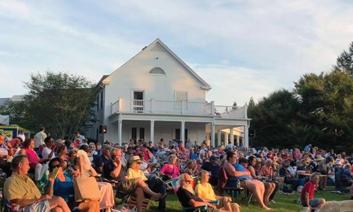
truck, and claim a spot by the river before the music begins Guests are encouraged to bring lawn chairs, blankets, and a picnic. Assorted food trucks will be available on site with loc fare for purchase.
26
Lyyme Midsummer Lyyme
18
Lyyle Lo with H
T L Floor Standin r, , a
ovett And His Small Large Band ayes Carll
A singe and act has bro definiti can mu that spa Couple for stor Teexas-b fuses el country tion-de
tor er and Reserved Seated in the Balcony g Room on the y. .
Old Lyme’s Midsummer Festival gets underway with a free riverside concert at the Florence Griswold Museum. This year’s performers, Mass-ConnFusion, bring polished horns, powerhouse vocals, and a danceable mix of Motown, funk, R&B, and disco to the museum lawn. Arrive early to explore the galleries, grab dinner from a food truckandclaimaspotbytheriverbeforethemusicbegins al se e al pson
The Arts District throws open its doors for a day-long celebration of art, music, gar y. . Brow local artists and vendors, enjoy live performances, explore museum exhibitions, stroll the historic grounds of the Florenc Griswold Museum, and take in everything from a classic car w. . A quintessentia Lyyme summer tradition.
OldL show to the beloved Parading Paws dog show dens, food, and community Festival | Old L
r, , composer r, , Lyle Lovett adened the on of Amerisic in a career ns 14 albums. d with his gift ytelling, the based musician ements of y, , swing, jazz, folk, gospel and blues in a convenfying manner that breaks down barriers. T
29
Sterling Flower Farm | Sterling Flower Picking: Sunflowers, Zinnias and more
Pick your own flowers at Sterling Flower Farm, featuring sunflowers, zinnias, cosmos, ageratum, strawflowers, and more. 1080 Plainfield Pike, Sterling, CT.
Tiickets available on our website www.sterlingflowerfarm.com
OldL
Photo Courtesy Susan Thom
Hop On, Hop Off Harbor Crui
m | New London
Lyyman Allyn Exhibition F Howard McCalebb
TheL L L Lyyman Allyn Museum
Features
W
Woorks by Artist
T
Toours Return For The Summer se & Historic Boat r
toricBoatT , of e back for the summer
toric Boat T anniversary
aterT locally known as the W
Thames River Heritage Park’s popular boat tours ar r, fffering HisToours, Evening Cruises, and the Hop On, Hop Off Harbor Cruise beginning June 13. Operating Friday through Sunday from locations in New London and Groton, the tours give visitors a unique way to explore the region’s history and waterfront attractions.In celebration of the Park’s 10th y, , youth ages 4–17 can ride HisToours and Harbor Cruises for just $5 with a paid adult ticket. The Hop On, Hop Off Harbor Cruise Wa Taaxi runs weekends from 11 a.m. to 5 p.m., connecting heritage sites, parks, shops, and restaurants along the Thames River Tiicketsandinformationare available at Thames River Heritage Park’s website.
Noank Artists Exhibition | Noank June 26 - August 30
Lyyman Allyn Art Museu of Howard McCalebb: The G through October 6. The exhib drawings, paintings, and coll McCalebbhighlightingthee
um is pleased to announce the opening Golden Mean, on view from June 27 bition features a selection of sculptures, lages by Norwich-based artist Howard enduringinfluenceoftheGoldenRatio
McCalebb, highlighting the enduring influence of the Golde throughout his work.
• A
Tin Can on a String: Conversations from the Collectio Through August 9
• Shepard Fairey: Facing The Giant / Three Decades of Dis June 6 – September 6
The Noank Historical Society’s annual “Noank Artists Exhibition” will be on field:PortraitsfromNewLondon’
view at the Latham/Chester Store this summer from June 26 – August 30, 2026. All artists who are interested in participating should please check the links below for details about our 2026 show.
Slater Memorial Museum|Norw
Norwich Stories Of
The American Revolution
May 9 – December 31
Norwich, Connecticut was a center of Revolutionary activity in Eastern Connecticut. From bands of Sons of Liberty to dedicated soldiers of all backgrounds, the city produced scores of men and women who served in all capacities. From humble militiamen to a Signer of the Declaration of Independence lesser-knownstoriesofthesevaliantPatri
copy of Connecticut’s first newspaper
America’s most infamous traitor lesserknown stories of these valiant Patriots as well as the story of r, , Benedict Arnold. Among a few original 18th-century artifacts on display will be an original r, , the Connecticut Gazette, printed the day after the adoption of the Declaration of Independence, July 5, 1776.
•Howard McCalebb: The Golden Mean June 27 – October ffi ’s s Whaling Er September 12 – January 3 8 e of his nect The y Finn ly deceriors en Ratio n ssent 4 ra designed by Louis C. T ooms of the V
See the 19th-century home wher Twwain penned some greatest works like Adventures of Huckleberry Finn. Reconn with one of the nation’s most beloved authors, who wrote T Adventur Toom Sawyer and Adventures of Huckleberry in this very house. Daily tours take visitors through the rich orated r Viictorian home, including stunning inte Tiiffany & Co.
TreeT Tr Trrails Adventures Mystic June 16th - August 30!
railsonT 16th - 30
715 Noank Ledyard Rd Myst
e, come and learn the iotsaswellasthestory tic Ct, 06355-1335
Glow in the Park returns to TreeT Tuuesdays, Thursdays, and Fridays in July and August. Climb through the treetops after dark with glowing lights, music, and complimentary glow bracelets and wearables. Enjoy aerial challenges, summer
mended. g, tunes, and a one-of-akind nighttime adventure in the forest. Advance tickets are $66, and reservations are recomm