Stephanie Sittnick - Director of Sales ( 860) 227-8199 advertising@518mag.com
CONTRIBUTORS
Carol St.Sauveur Ferris, Karen Richman, Rona Mann
Chandler Stevens, Lawrence White, Kirsten Ferguson, Susan Brink, Vanessa G. Ahern, Joseph Raucci, Crystal Cobert Giddens, Nellie Ackerman-Vellano, Kristina Watrobski
Welcome to the March issue of 518 PROFILES! It’s the month that celebrates with shamrocks and green beer. It’s also the month that gives us the promise of warmer, sunny days to come.
In this issue you will find some exceptional and talented artists. To mmy Giamichael, a master craftsman who has hand built gui tars for musicians all over the country and Susan Hoffer, a in credible artist who’s paintings are so rich in detail that you can’t help but get lost in them. We also feature two marvelous destinations to add to your bucket list. The magical healing wa ters of Saratoga S prings, said to have medicinal powers to re lieve many ailments and The Corning Museum of Glass, a fas cinating museum that cel ebrates glass and its history.
So please curl up in your favorite comfy chair and enjoy the March issue. As always, our goal is to deliver authentic, and unique con tent about creative people and interesting places. We hope you love this issue as much as we do.
Stephanie Sittnick Founder / Publisher
CENTER STAGE
ENCORE
518 PROFILES
587 Grand Ave, Saratoga Springs, NY 12866
This Guy Digs for Rocks for a Living and Pulls Strings for Fun! The Wonderful World of Luthier, Tommy Giamichael pg. 4
The Magical Healing Waters of Saratoga Springs pg. 20
The Corning Museum of Glass Understanding the art, history and science of glass pg. 34
FeedMe518 pg. 30
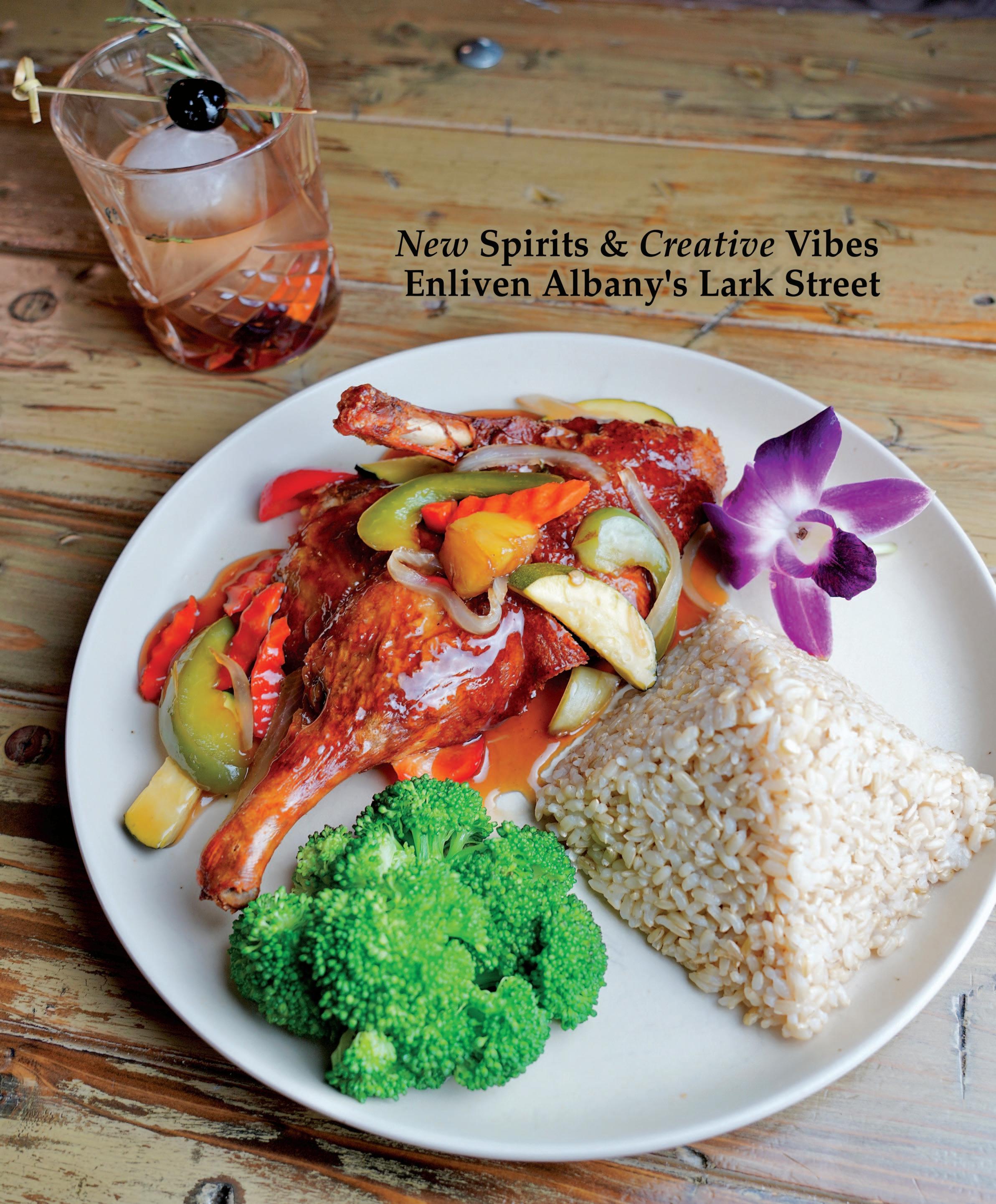
New Spirits & Creative Vibes Enliven Albany’s Lark Street
Upstate Beat pg. 42
Jason Brown produces the sounds and music of a hit
African Children’s show
Sweet Nostalgia
Drs. Welby and Baime Made House Calls
pg. 44
Guest Writer pg. 46
Mind, Body and Sole
This Guy Digs for Rocks for a Living and Pulls Strings for Fun!
The Wonderful World of Luthier, Tommy Giamichael
by Rona Mann
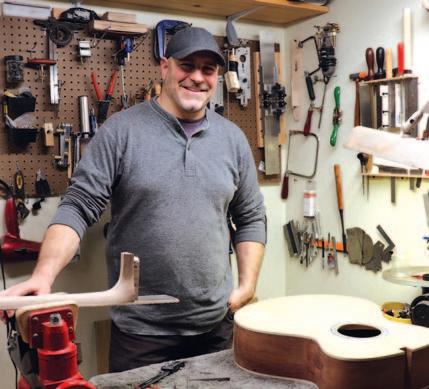
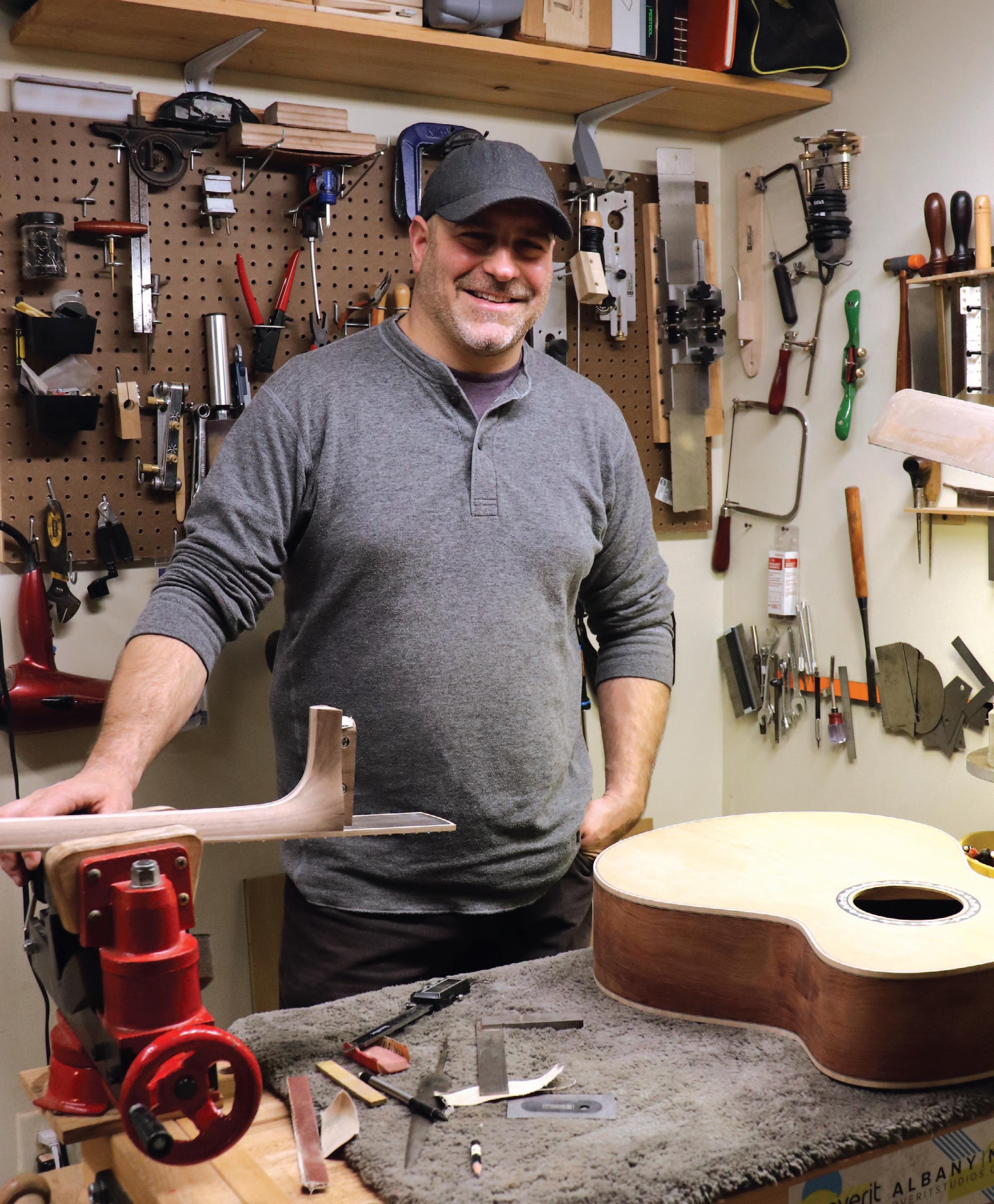
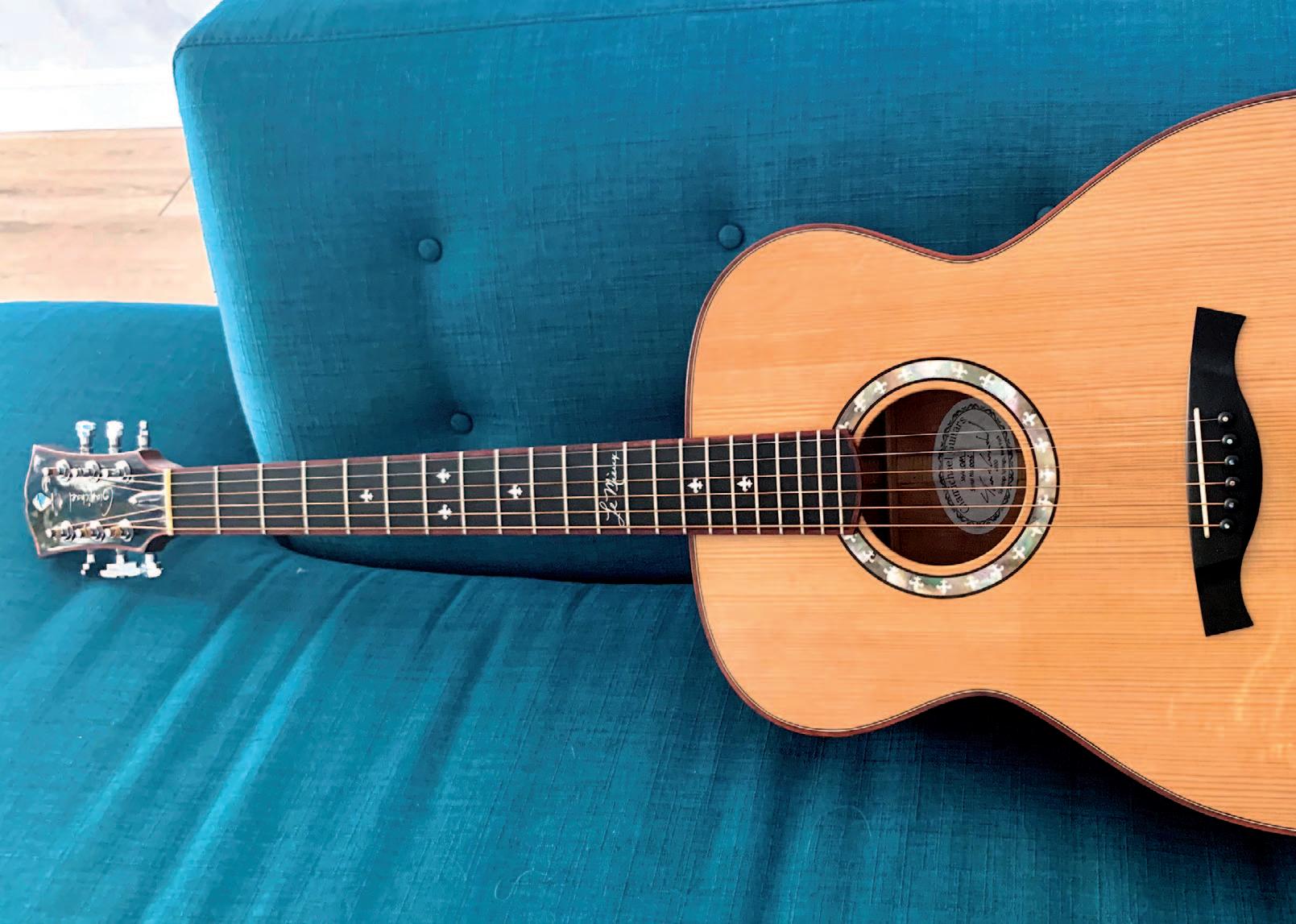
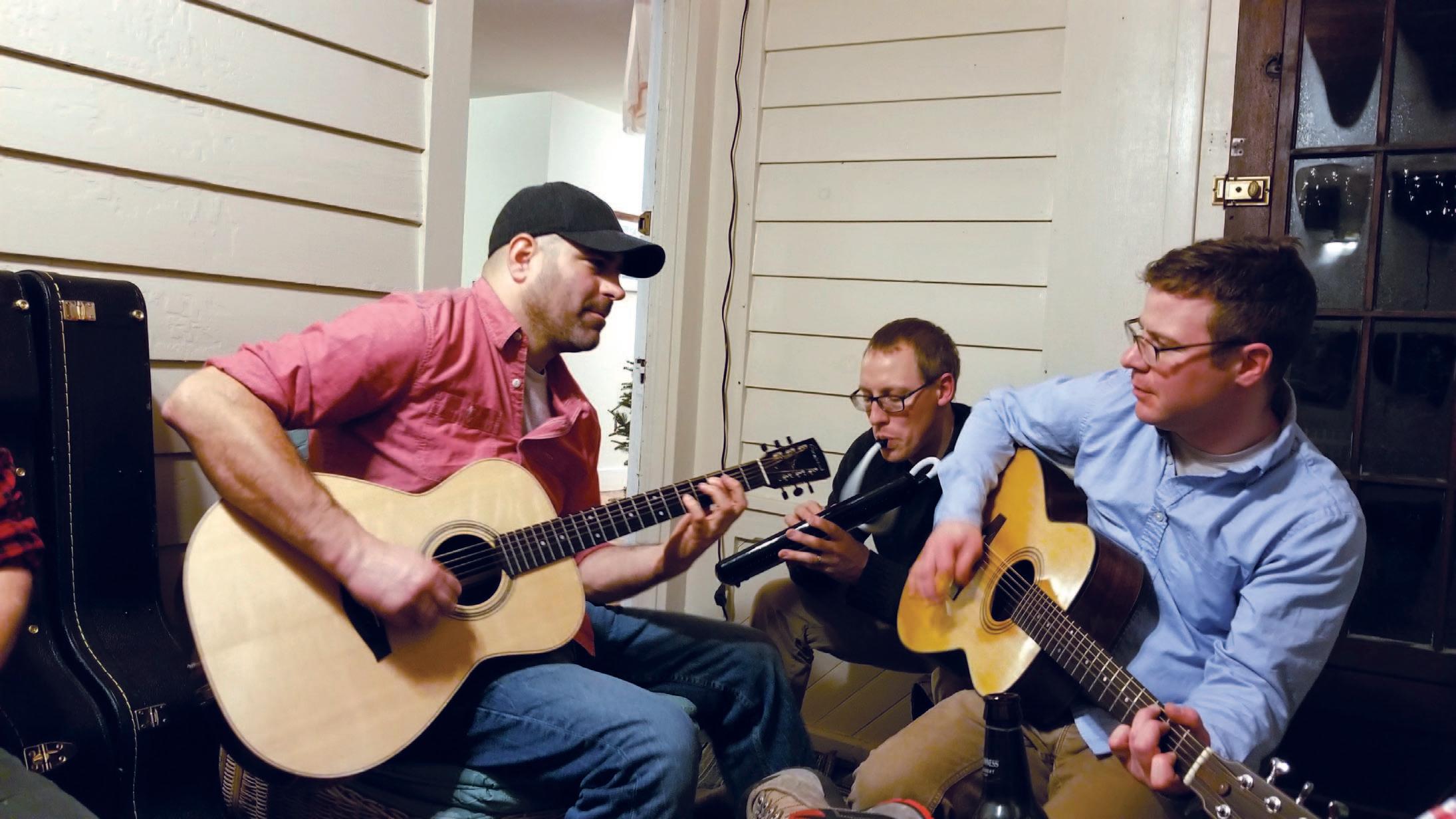
When Tommy Giamichael was growing up in Cortland, midway between Binghamton and Syracuse, he never thought that one day he’d be a luthier. He probably didn’t even know what a luthier was at the time, but he knew he loved building "little wooden things with my gr andfather in the basement after Sunday dinner."
Sunday dinner was a ritual in the Giamichael family as it was and still is in many Italian fami lies, and little Tommy enjoyed puttering, cutting, and creating with his grandfather in the cellar even more than the dinners themselves. Tommy also enjoyed spending time at the family's other home on Skaneatles Lake in the Finger Lakes area where he would spend hours "getting into rocks. I loved to dig out fossils from the rock beds," Giamichael said.
By the time Tommy reached 7th grade, he started playing guitar for fun. Then he started wanting to build a guitar for fun. "Then I started taking them apart to see how they were made. I learned back then, and I still believe, that the only way to get into something you don't know is just to do it. Make mistakes, that's how you learn."
Although Giamichael harbored and cherished the thought that he might work with guitars when
he got older, the rocks won out as being a more viable career, so he went to SUNY Potsdam, graduated, and worked as a professional geologist for engineering companies. He still does, but he does something else as well. Matter of fact, a couple of "something else's." He earned his pilot's license so he could fly up to Skaneateles on a whim, and he also learned to build guitars with the help of both his father and his grandfather. This time they were not the tiny wooden tinkered stuff from the basement, but the real deal, and it lit a fire in the young man's belly.
So in 2014 Tommy Giamichael contacted Berkshire Stringed Instruments, School of Lutherie in North Adams, Massachusetts. Here was a unique school offering an intense opportunity, to learn and build one-on-one guitars, ukuleles, and mandolins. Giamichael traveled a lot in his work as a geologist, but he earnestly wanted to learn to be a luthier. So in 2014 he gave the school in
the Berkshires a deposit to prove he was serious, yet because of his in tense work schedule, he could not begin his study until the fall of 2015. He finally took a month off and ventured to North Adams where he had the sole attention of one instructor 10 hours a day, every day, hand build ing an acoustic guitar side by side along with him, learning at the hands of the best. He completed every step of the process after a demonstration from his teacher.
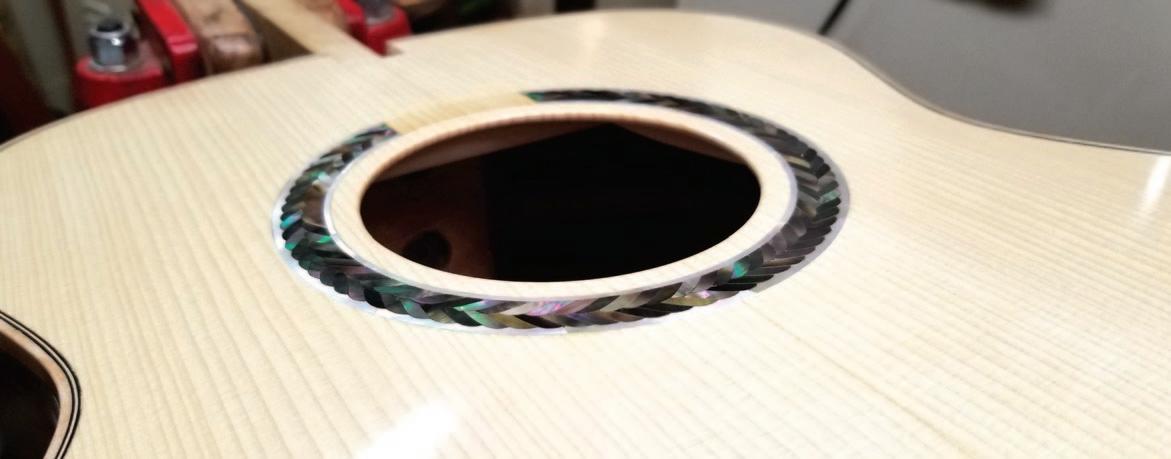
We asked Giamichael if there were similar steps to building any guitar, and he told us the following. "There are several steps that are the same. The process order involves milling the materials to rough dimensions, then designing and sketching out the guitar shape and placement of structural bracing locations. The rosette is usually inlaid at this time."
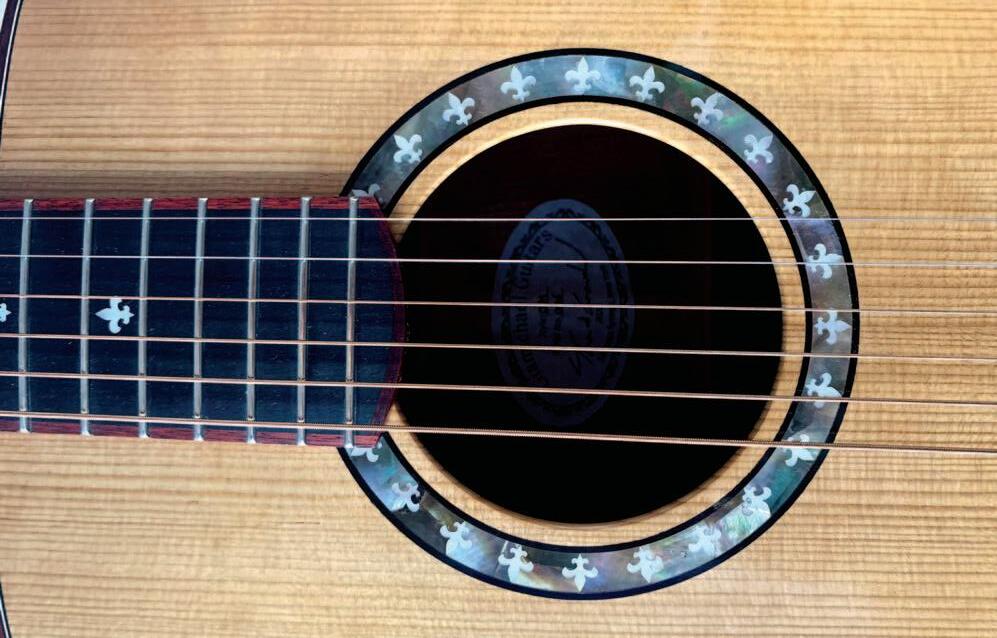
The rosette is one of the most in-your-face elements of any guitar, often the first detail that catches the attention of the client for whom one is crafting the instrument. It's purely decorative; and if hand made, it's the most time consuming task in the making of that guitar. It is made up of hundreds or even thousands of tiny squares of colored veneer in intricate design patterns, almost like needlepoint or pre-electronic pixels.
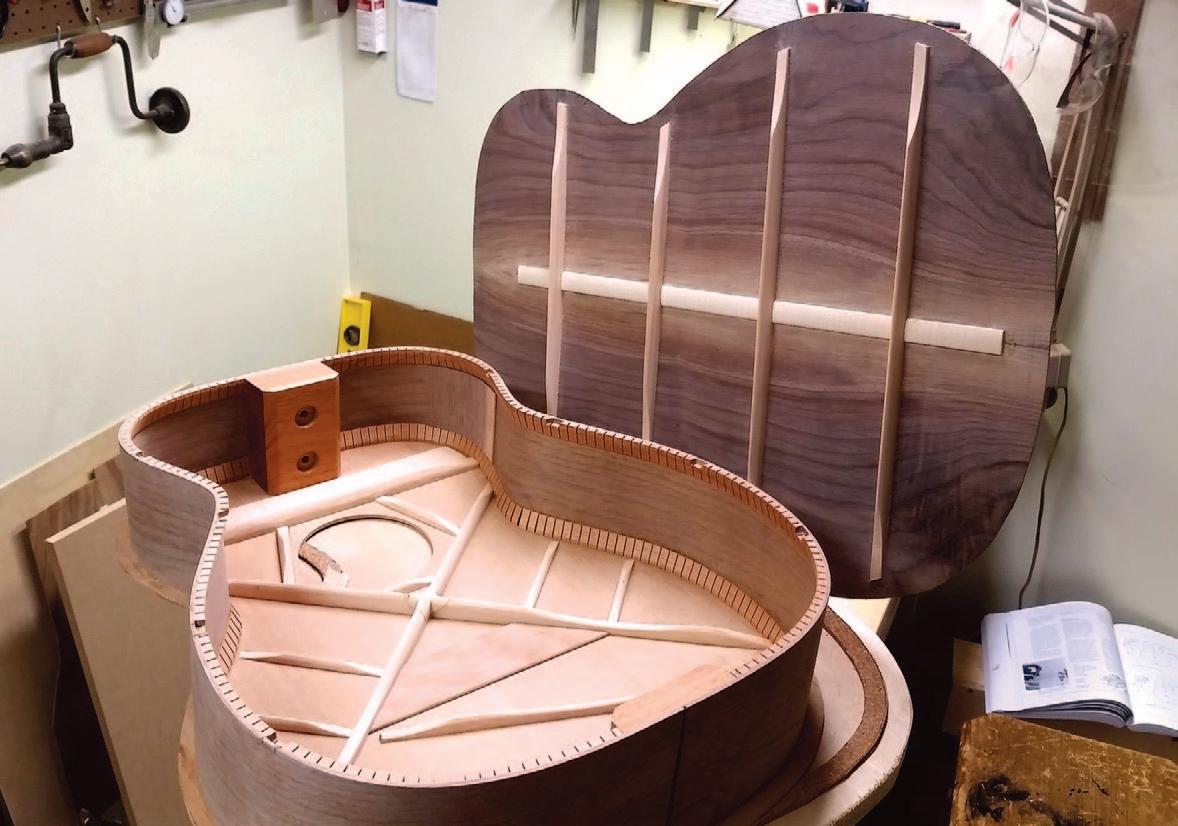
Tommy continued, "The bracewood is then glued to the top and back pieces of the guitar, and then I begin to hand carve the bracing. This is my
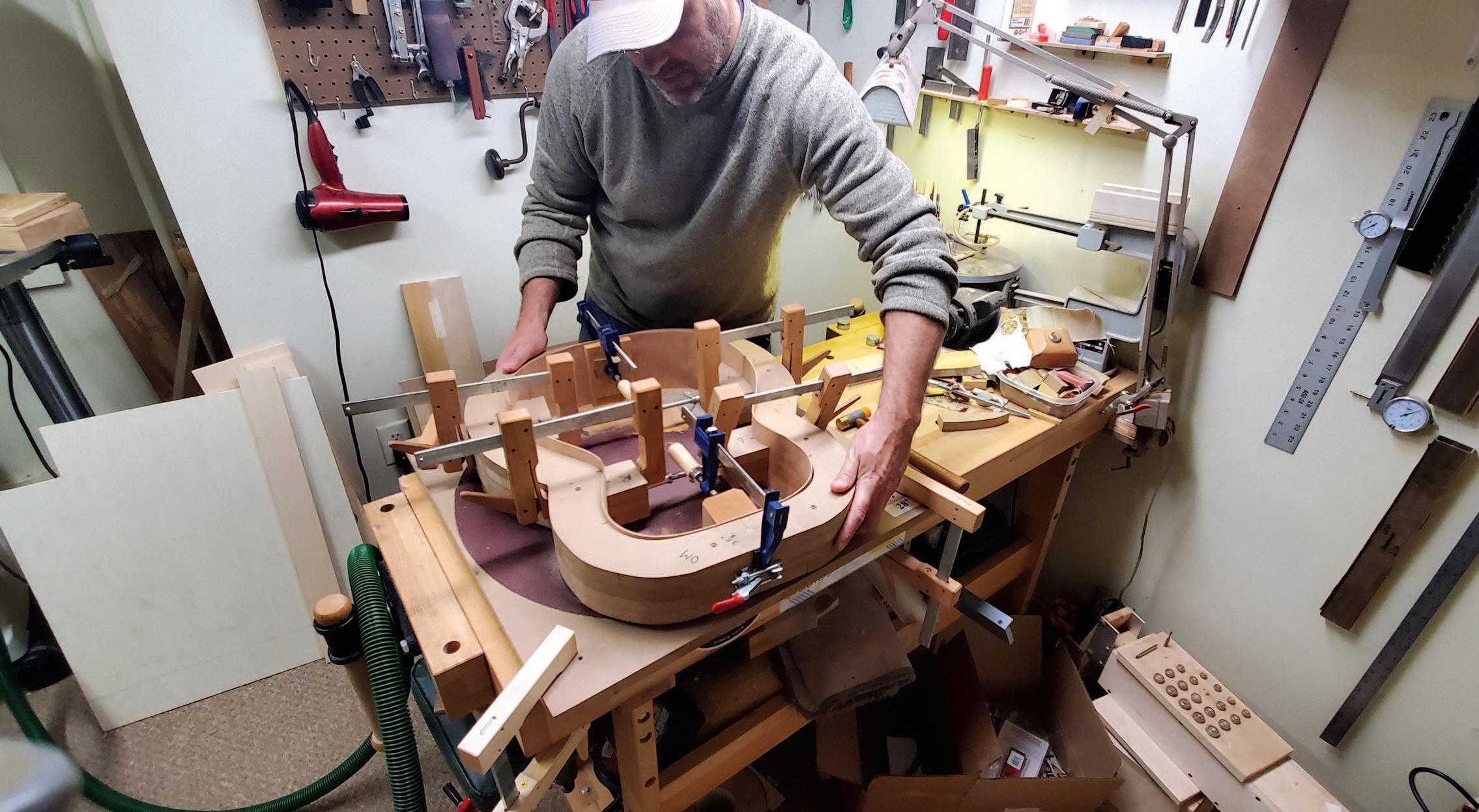
favorite part of the build. The braces are carved until the right resonance is projected from the wood when tapped by hand. While the braces are in the carving process, I bend the sides of the guitar into shape using a combination of free bending by hand on an iron and using a bending jig."
Although some of this detail may be difficult to understand for the uninitiated, it is plain to see that this is painstaking, detailed work, and the craftsman needs not only skill and talent, but a great deal of patience.
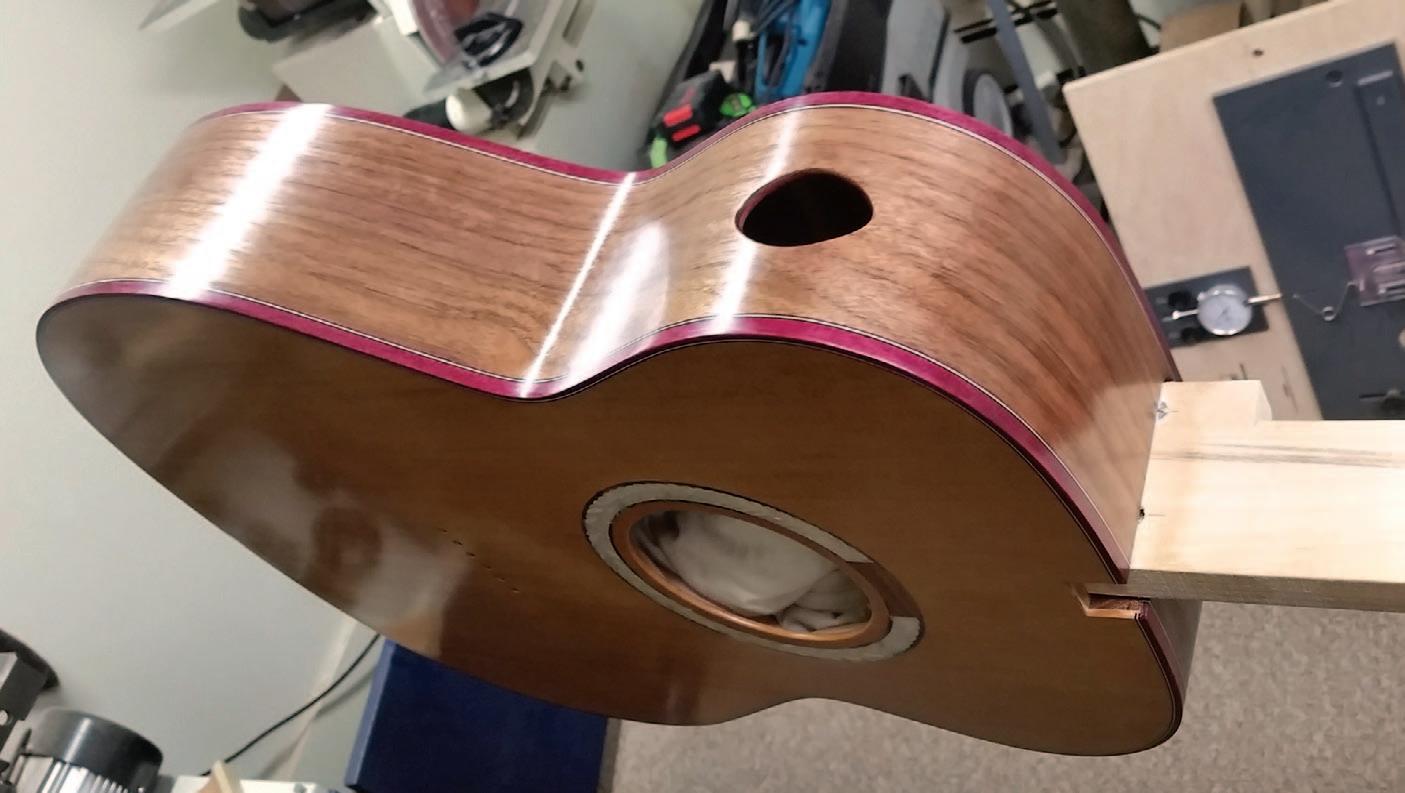
Tommy resumes by adding, "Then it's time to start putting the top, back, and sides all together. These are held with small pieces of cedar or ma hogany called kerfing. Once the "box" has been assembled, I then cut channels in the edges and inlay binding wood. These strips of wood are
n ot only decorative, but also functional as they strengthen the guitar and pro tect the top and back by slowing moisture changes. "
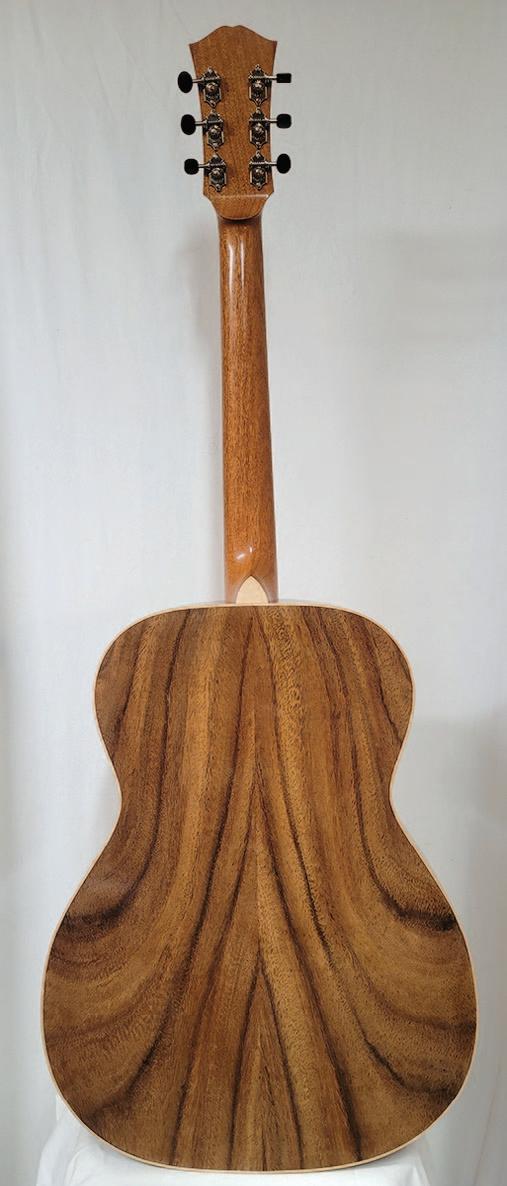
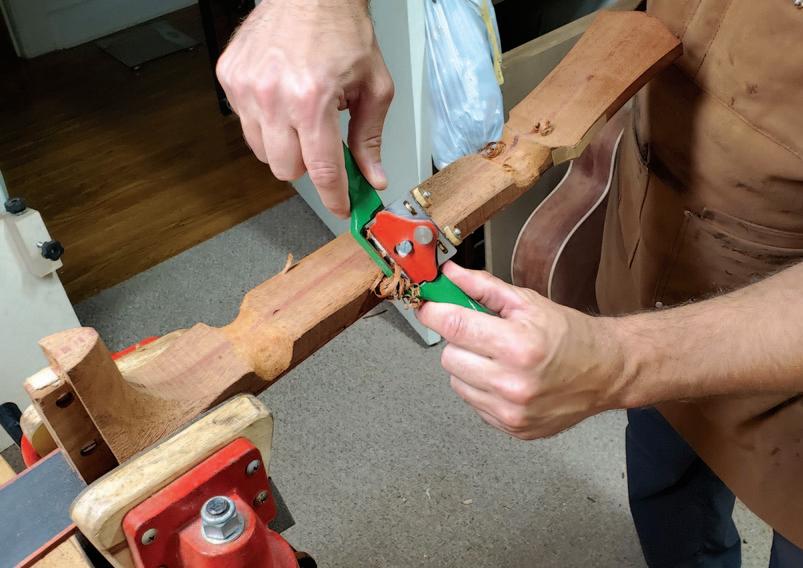
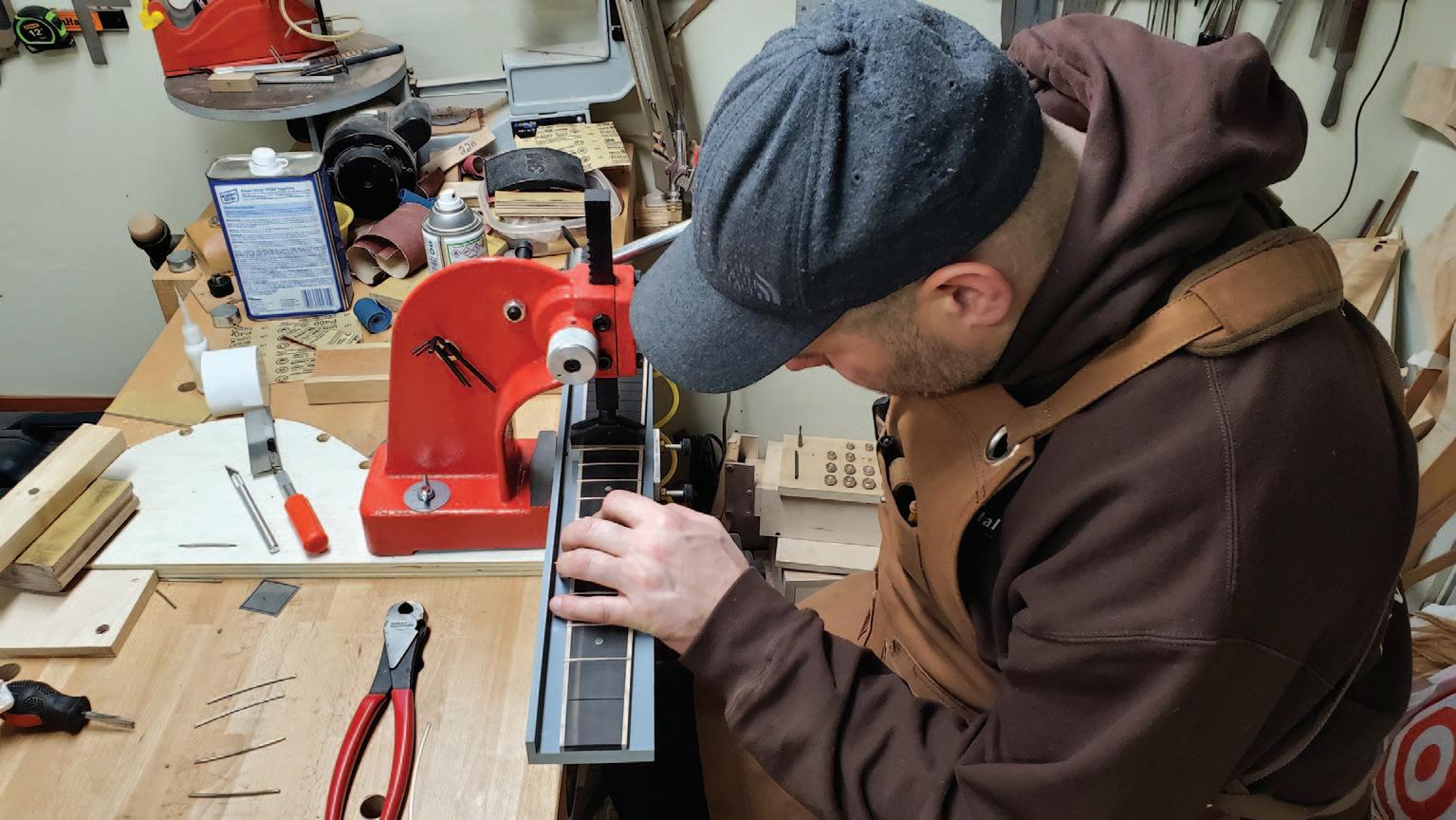
Next, Giamichael builds the fingerboard and the neck and all pearl neck inlays are laid at this point in the process. The neck is completely handcarved to very specific dimensions and shapes, then fitted to the body and modified to fit at a very specific angle.
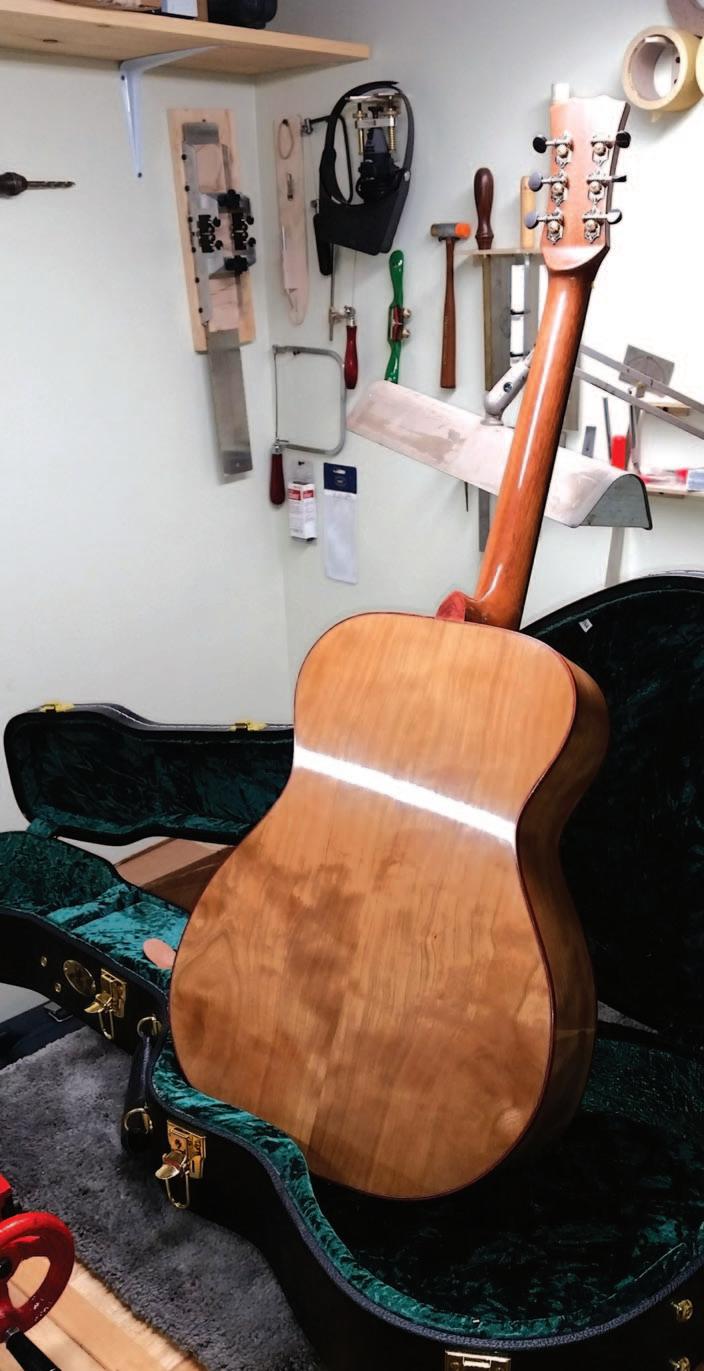
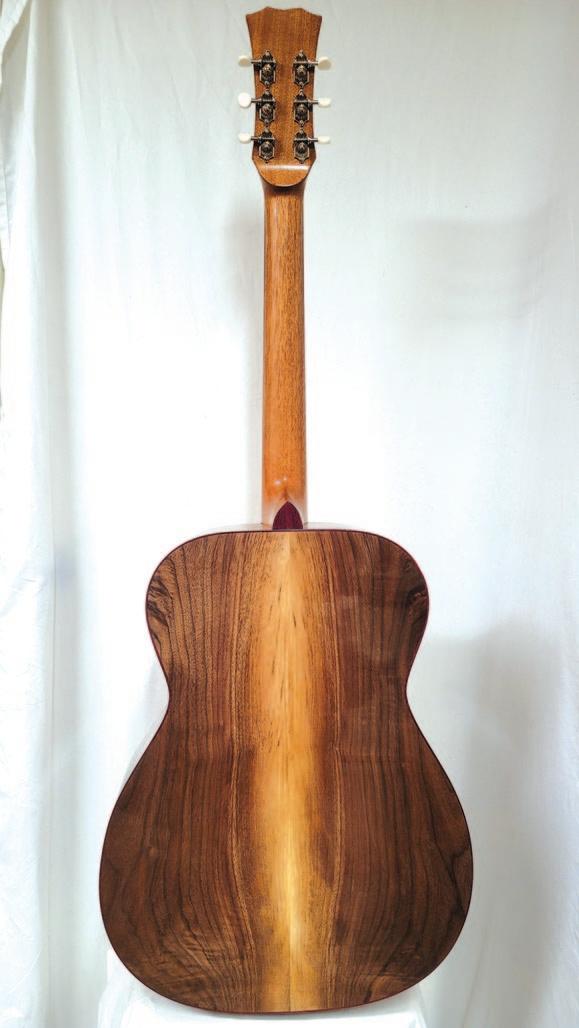
Next, Tommy sands everything to per fection and makes the bridge. Then the finish is applied which takes about a month, as it requires many layers, leveling im perfections, and then more finish until the final coat is buffed to a high gloss. "I use a modified french polish technique," Giamichael reports. This involves buying shellac flakes which results in a high finish on violins, cellos, and guitars, promoting a good sound as well.
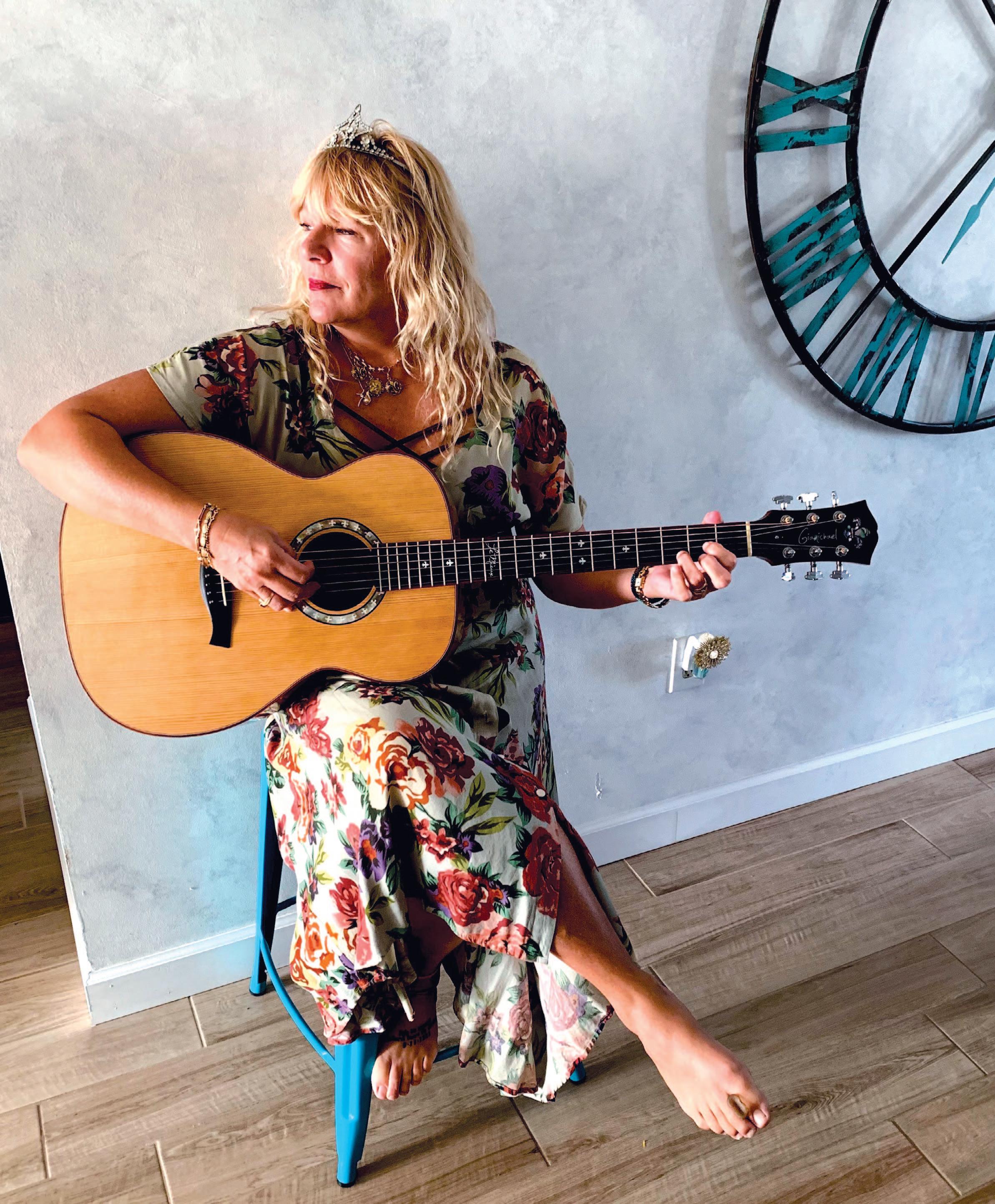
Tommy has built guitars for musicians all over the country, most recently one for a re tired Florida musician, a woman who had played and toured with Prince.
This geologist with a passion for wood and design and the sound he creates both by building and playing guitars, is not one to rest. Although a
freak accident on the job in 2015 nearly ended his life, and he was given only a 1 in 100 chance to have survived the incident, Giamichael real izes how lucky he was to fully recover, al though it took five months at home. Not one to just watch TV while the time passed, he spent his recovery time doing the finish work on the guitars he had built to that point. "I get a fire under my butt, and I just have to go with it."
Finally, Tommy carves by hand the bone nut and saddle, installs the frets, and does an extensive and intensive setup process to get the guitar playing properly. Then the instrument is allowed to rest at full string tension for a few weeks while being lightly played before the final check and adjustment is performed.
Quite a lot of work! Probably why a guitar luthier is a skilled craftsman who has studied and trained in the art of construction and repair. In addition, they must have experience with woodworking, finishing, possess excellent acoustic listening skills, and most, like Tommy, also know how to play the guitar.
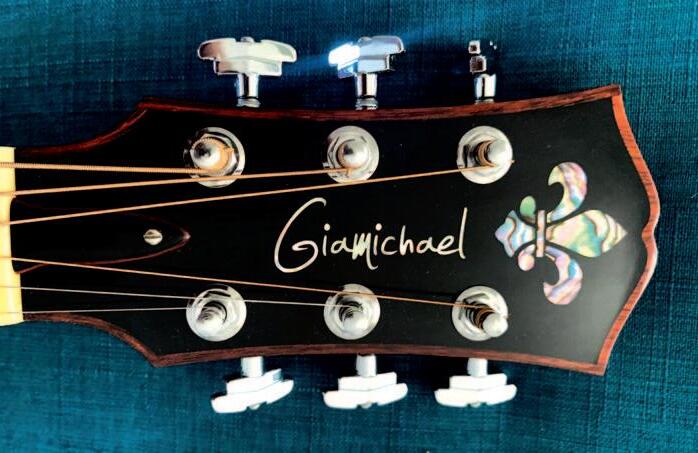
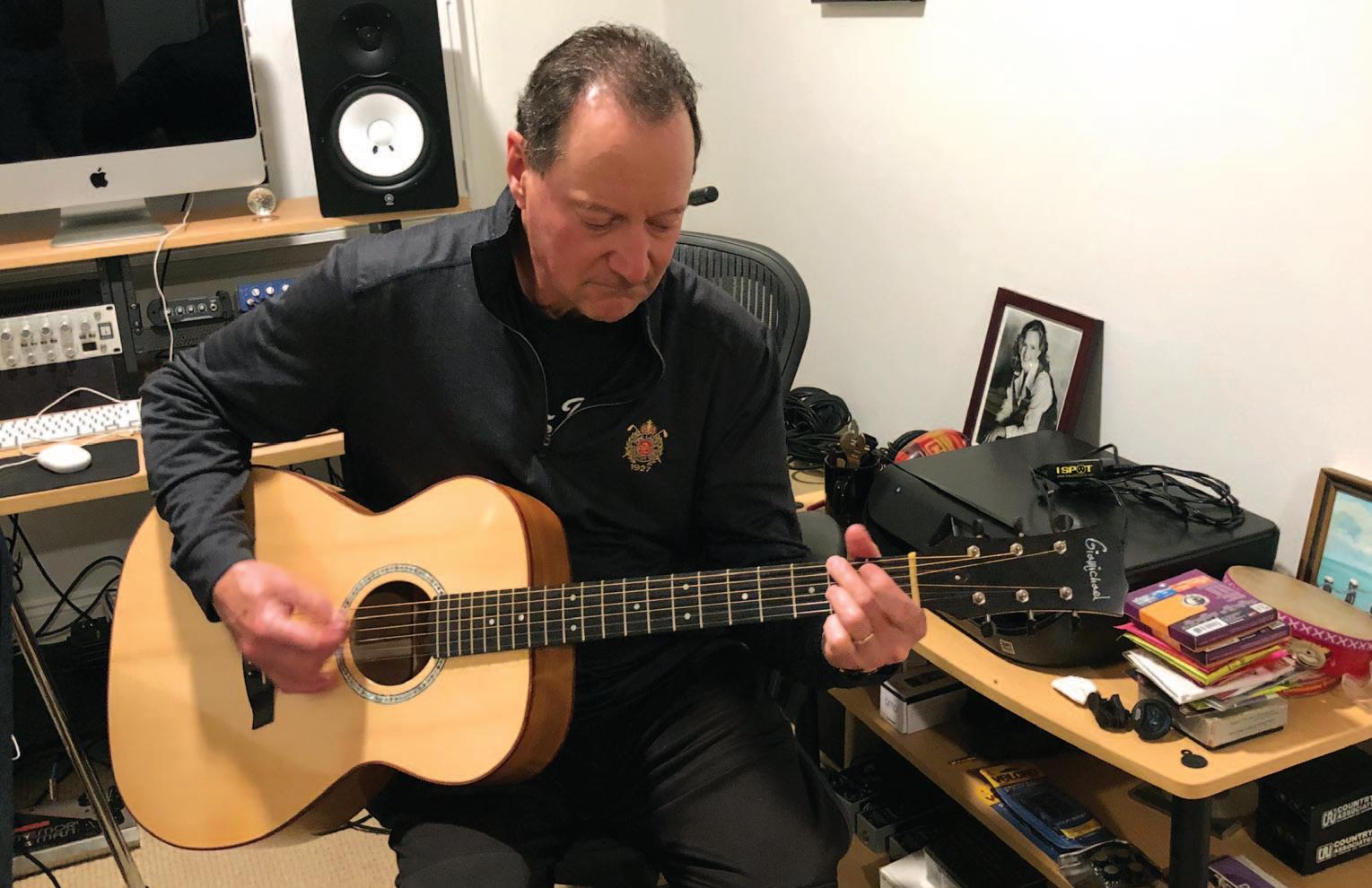
It is then with great pride that when Tommy finishes a build which can take upwards of eight to nine months since he still has his full time job, he enjoys cutting his name into the Headstock of the instrument and embedding it with pearl inlays. When a guitar has "Giamichael" on it, a musician knows they've gotten one of the best.
Indeed,
As for the future, he has no plans to give up geol ogy or guitars. Al though he admits the ul ti mate dream would be to have a storefront in downtown Saratoga, he is content to design and build right from his home. "I plan on getting into b uilding archtops and electric guitars one day."
All this from the little boy who loved to dig into rocks and find fossils on Skaneateles Lake. The little little boy who looked forward to Sunday dinner not for the pasta, but for the chance to
work with his grandfather making little things out of wood. All this from the young teen who took up guitar in 7th grade and then took them apart to see how they were made. And from the man who got an ed ucation in geology, but whose fire in the belly for building guitars led him to luthier school in the Berkshires and a second career.
Along the way, he never really grew up. He's still known to friends, family, and clients as "Tommy."
He still loves playing with wood, digging rocks, finding fossils, and making clients ooh and aah at his enviable talent and craftsmanship.
Tommy Giamichael...like the guitars he builds, an American original.
Find more information at www.giamichaelguitars.com
Ordinary People, Extraordinary Times: Susan Hoffer – “Painted Stories”
by Carol St.Sauveur Ferris
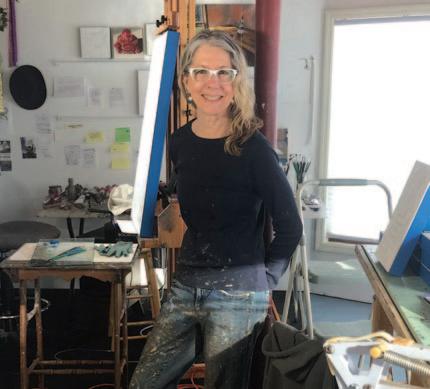
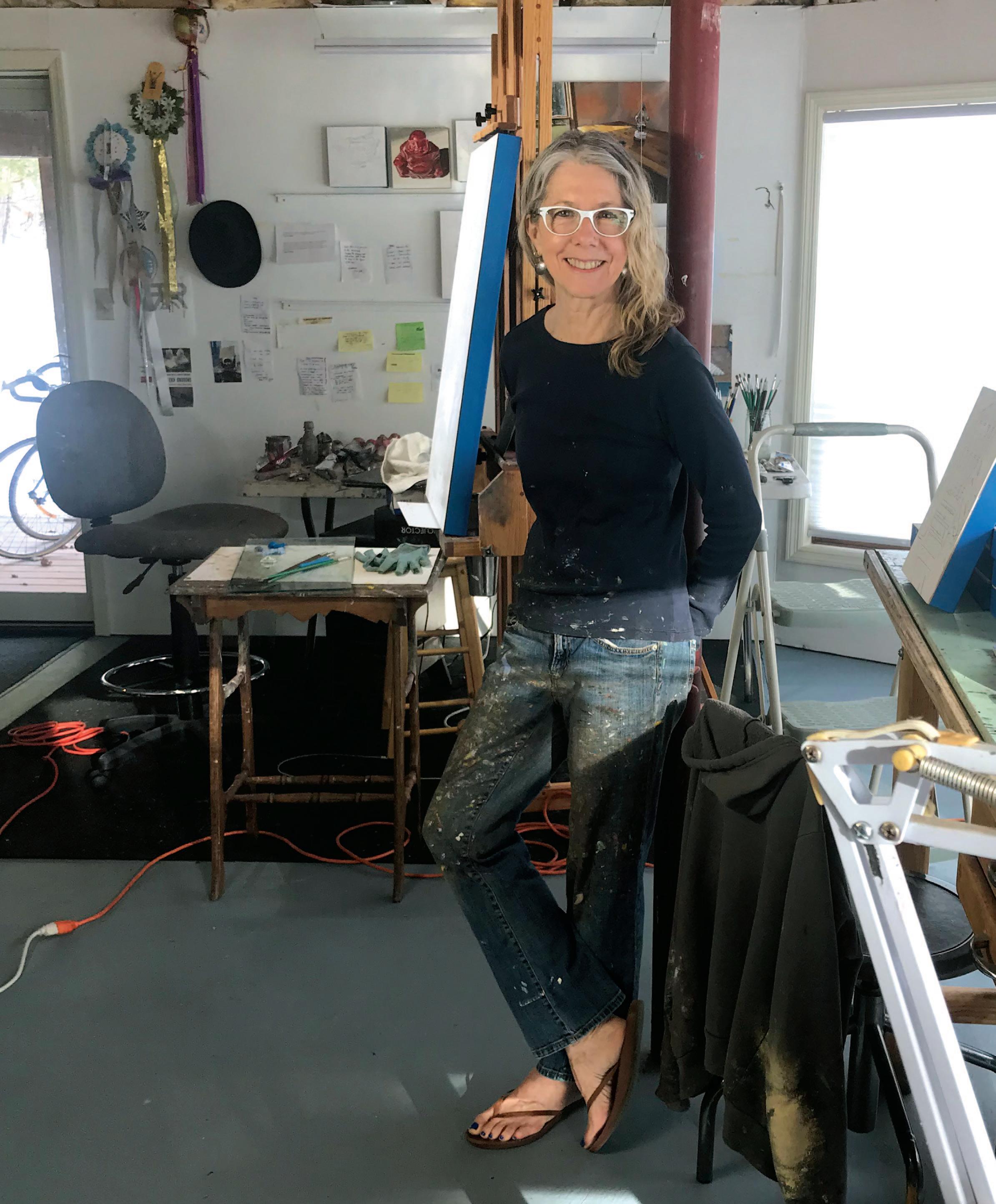
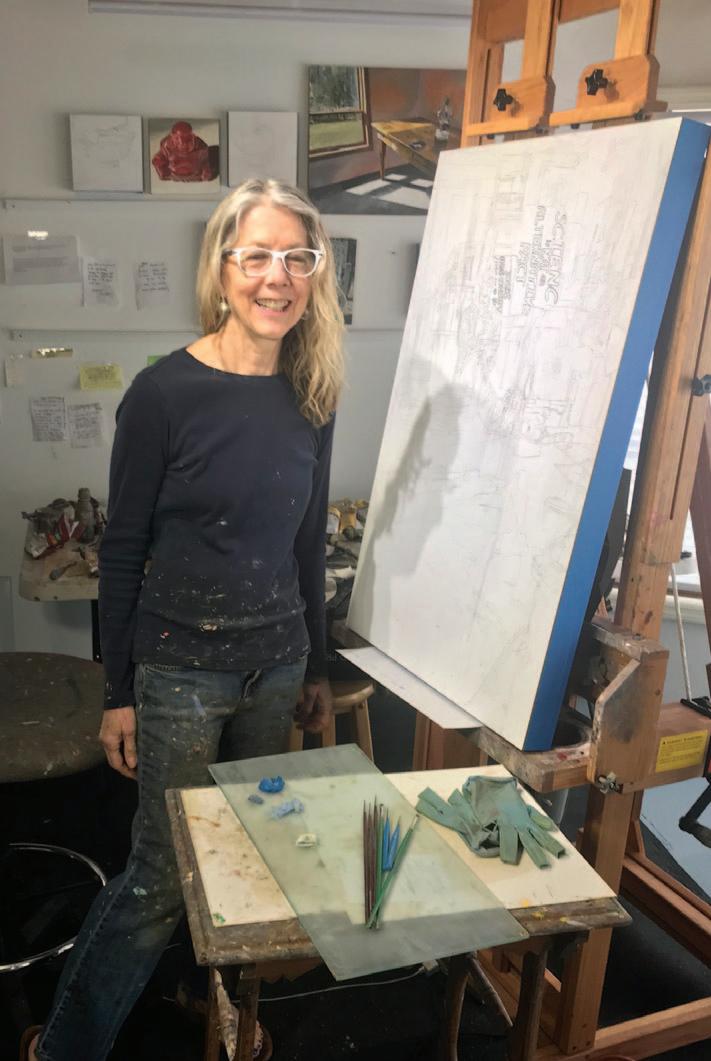
Susan Hoffer is an artist, a listener, and a storyteller.
As a child, she loved to read and was intrigued by drawing and painting. By age 16, she was fully immersed in the arts at Bethpage High School in Long Island, New York. Susan chose to enroll in their unique art program that spanned three class periods. The first period was devoted to art history while the remaining two were focused on painting. While it might seem like a rigorous schedule to some, Susan loved to learn and was happy to be there. The class was taught by John DeGuardi, an incredibly dedicated teacher who nurtured his students and opened their eyes to possibilities. Susan refers to him as a “magnificent human being” who fostered a collaborative learning environment for all his students, and because of him, Susan realized that the arts were of great value, inspiring her to continue studying fine art in college.
After graduating from high school, Susan worked full time at a local supermarket while attending Molloy College in Rockville Centre, New York full-time as well. She earned her B.S. degree in Art and Education. Over the next 27 years, she taught art at the high school level and took courses in printmaking, drawing, painting, and ceramics. It was after raising her two sons that she then returned to college and earned her MFA in Visual Arts and Painting at Johnson State College at Vermont Studio Center in Johnson, Vermont. Today, Susan teaches at North Country Community College. She is also an accomplished artist, with an amazing portfolio of paintings indicative of her many years of hard work, commitment, and compassion for all people.
Now living in a more rural setting, Susan is interested in how ordinary people stay connected to each other and to the mainstream world of global events, politics, and celebrity. She sees upstate New York as an expansive area of “acres of poverty with pockets of great wealth and shifting and aging popu lations." So, how DO ordinary people stay connected and informed?
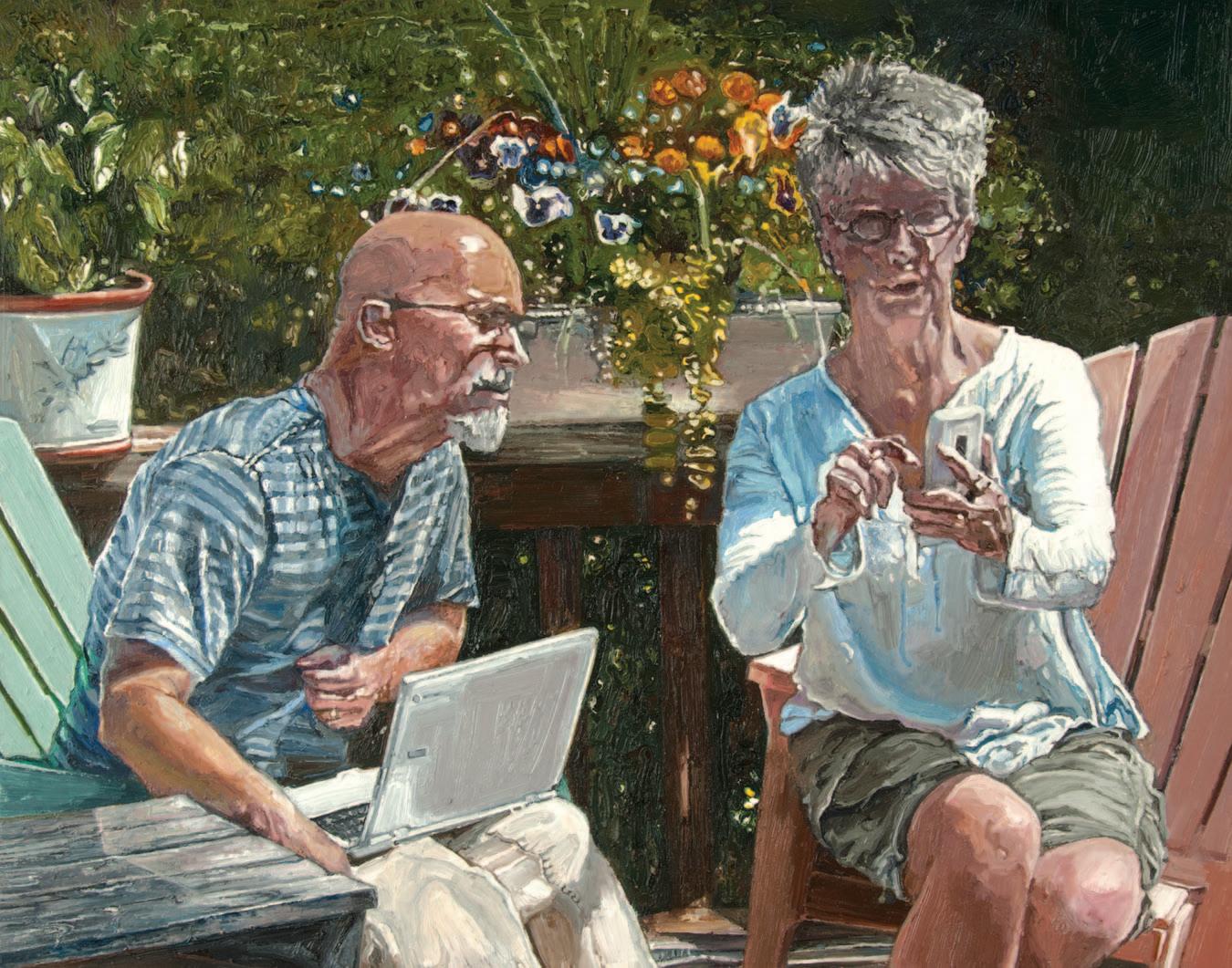
Technology of course. Cell phones, computers, laptops, and tablets are the messengers and purveyors of good news and bad; of beauty and beasts; and of the sacred and reviled. Susan’s paintings capture them connecting with all of these and each other.
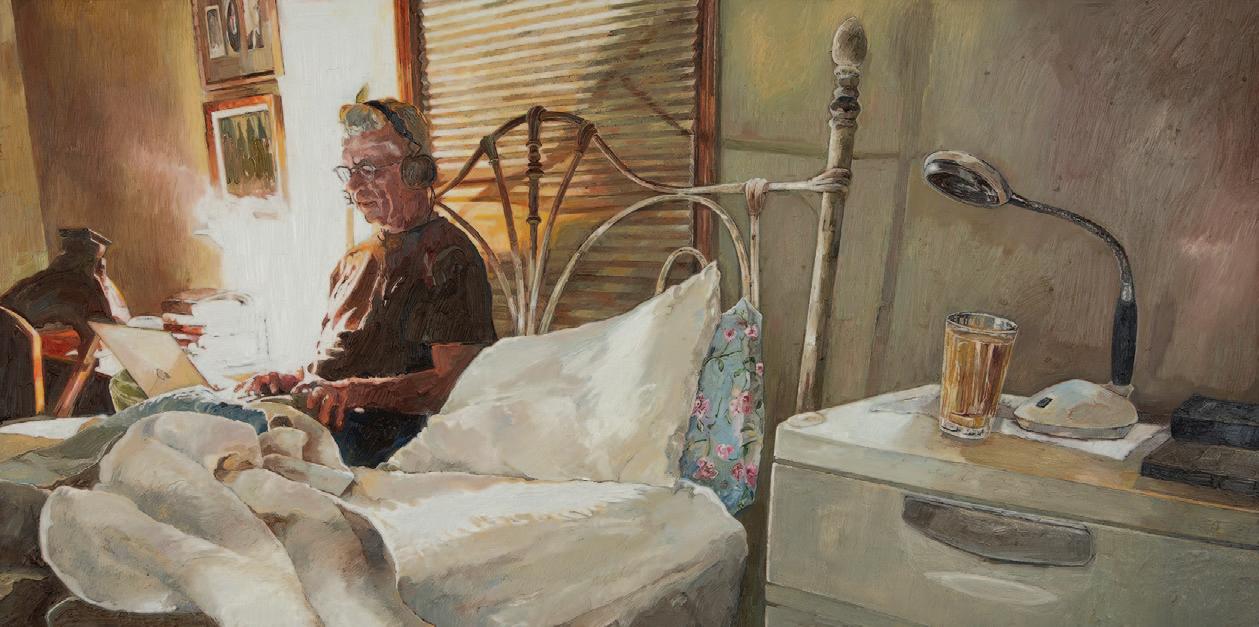
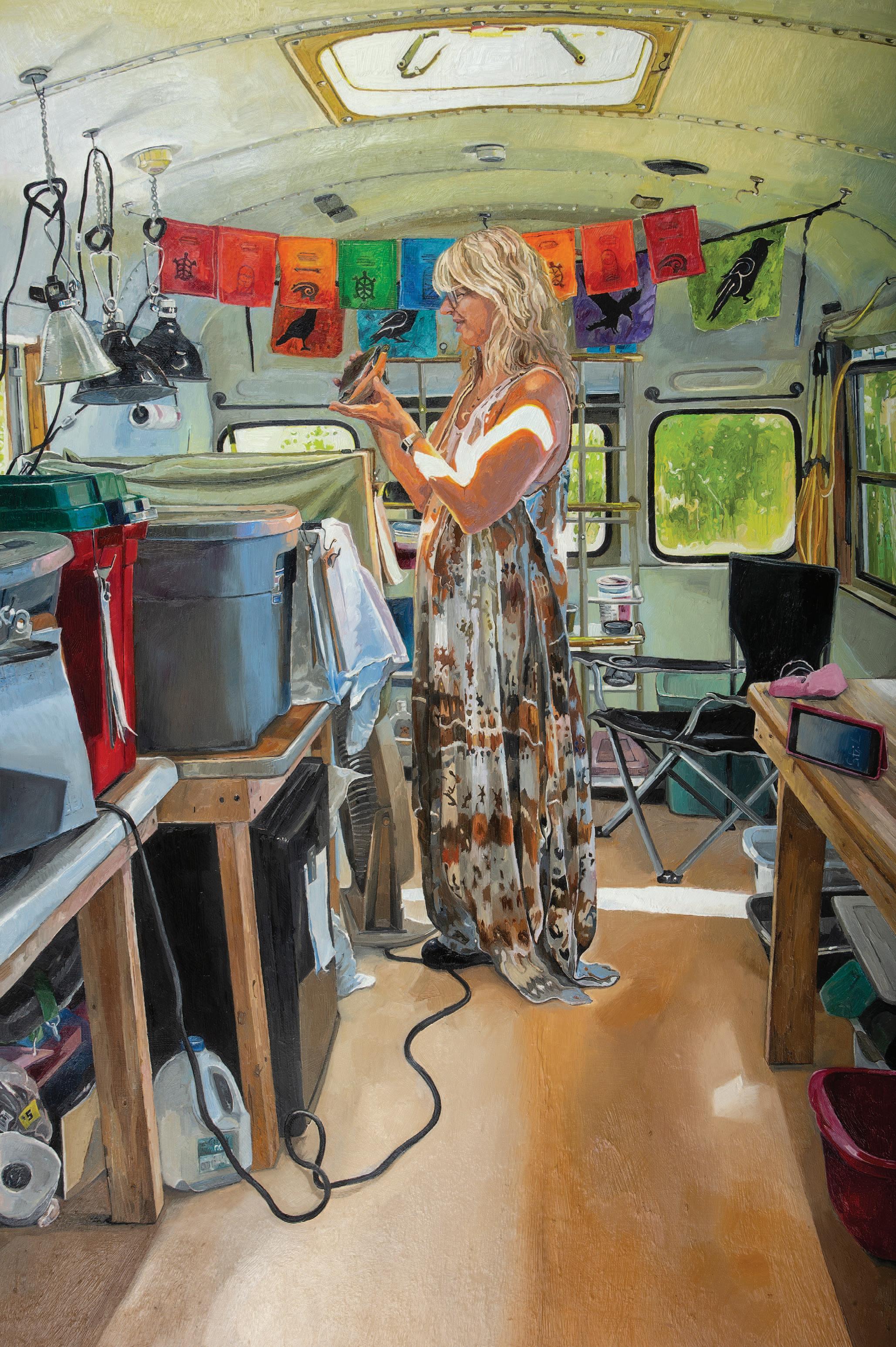
When you first look at her work, there is much to take in. The level of detail is captivating. Her palettes are multi-hued. Her use of light is complex and informative, while her perspective invites you in to see another point of view. To gether, they convey an intimate moment in someone’s life; one of many similar moments taking place in other rural households. And like so many other people across the country, they are trying to process tremendous amounts of in formation. Information that passes through the filter of their own experience, both past and present. The unifying visual element in this col lection of paintings is the source of their in formation, and that source is always some form of technology.
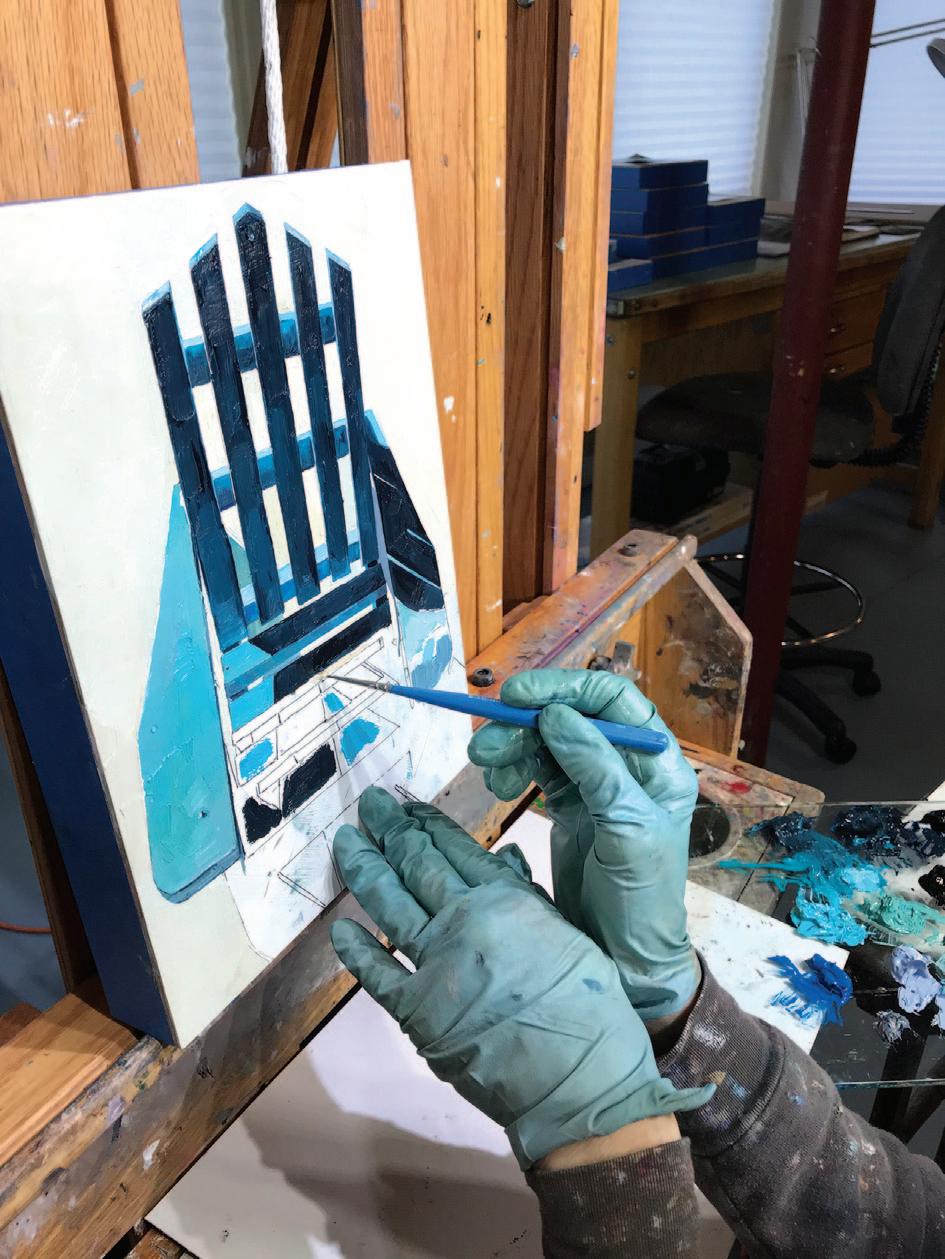
Regardless of subject matter or composition, her process is always the same. She begins with a conversation and then listens. Listens to their experiences, fears, and views. Susan then takes 50 to 60 snapshots before she has satisfactorily documented what she sees. With this wealth of information, she pieces together the myriad of photos, reflects on what she’s heard, and shapes the idea for her next work of art. When Susan finally picks up the brush, she paints from memory.
This very deliberate process has resulted in her most recent collection of paintings entitled "Painted Stories,"
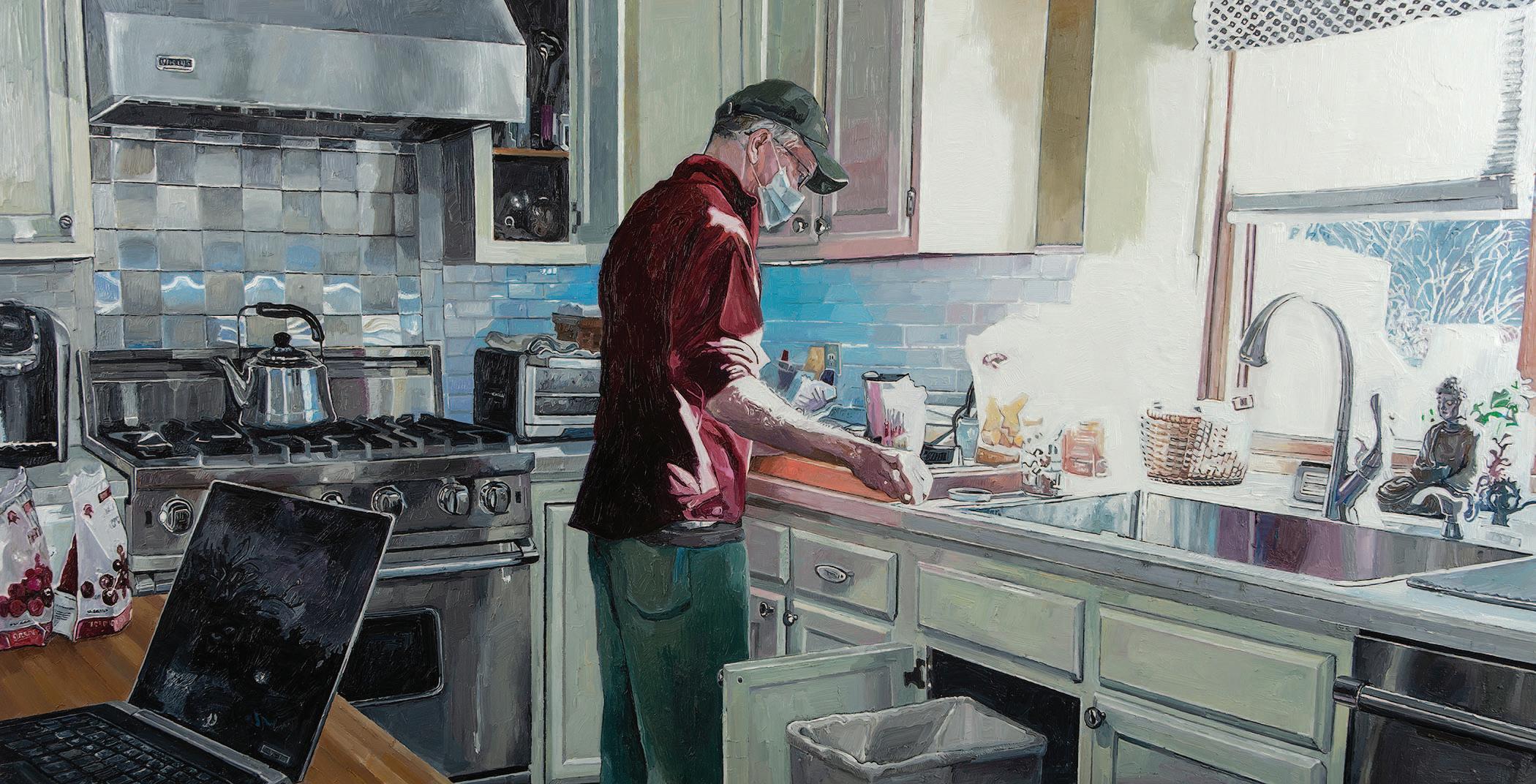
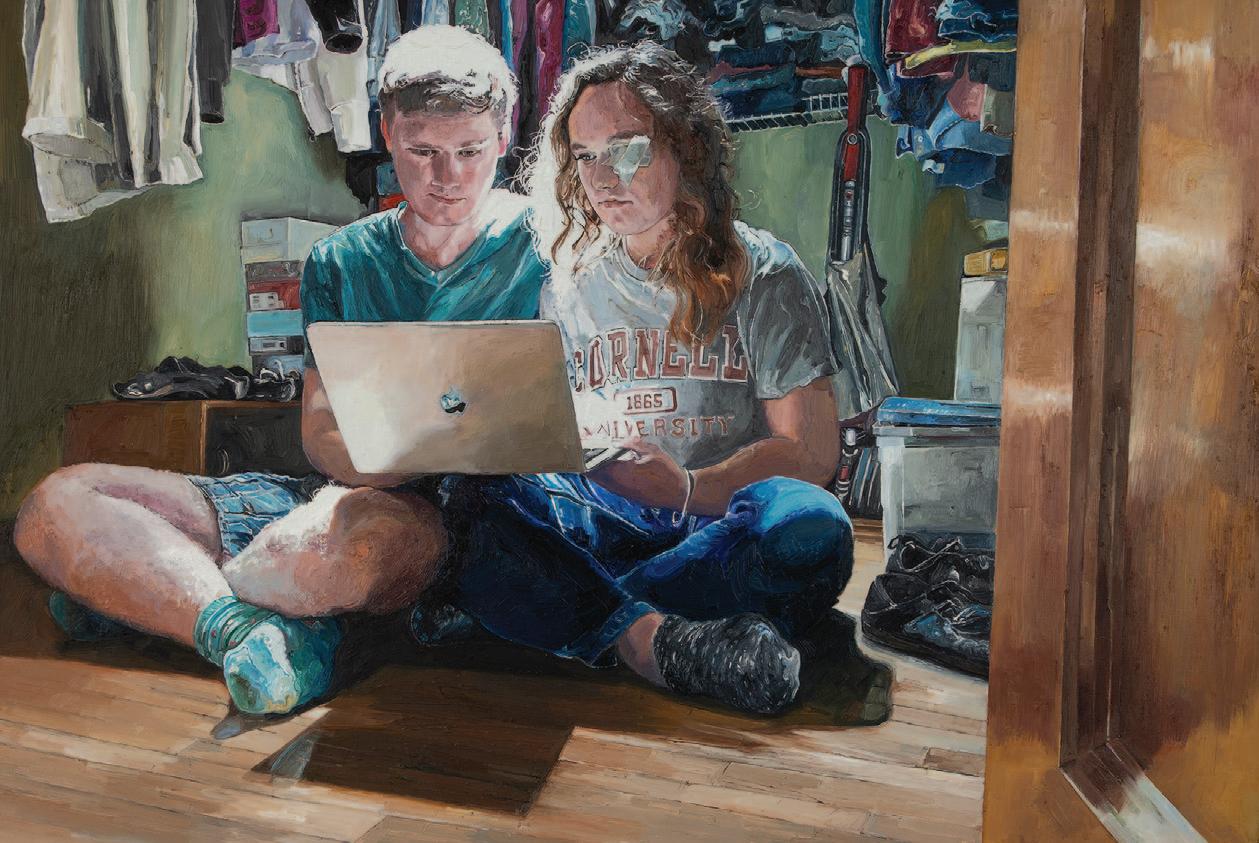
“Persuadables’ of Cambridge Analytica” (16
“Watching the healthcare debate: No pre-existing conditions allowed” (24″x36″)
“Waiting for the Philosopher King” (18″x36″)
paintings of ordinary people living their lives, but whose lives have been overwhelmed with the constant barrage of b ad news streaming in on their electronic devices. This constant up heaval of social norms and resulting insecurity have i nformed this collection, but it is each person’s perspective and experi ence that has provided the details. For instance:
“From the Warsaw Ghetto to Lake Clear, New York: Never Again” Oil on cradled hardwood, 2020, 16” x 20” - This is a powerful painting of a woman named Dana. She was one of many young children of Jewish descent, smuggled to safety by very coura geous citizens during Hitler’s reign of terror. Tragically, her father died in the Holocaust. In spite of her terrifying early childhood, she came to the US and went on to become a chemical biologist. Susan paints Dana seated at the kitchen table covered in a simple cloth of stars, in an unassuming kitchen with a Menorah placed before her. Dana’s outstretched hands show strength and resolve, while the light on her face framed by a flowered burgundy shawl illuminates dark eyes. Eyes that conceal many untold stories. She is concerned with the rhetoric she hears and concerned with the news she reads. Through it all, technology keeps Dana connected to the world and connected to her fears. A laptop sits on the counter behind her.
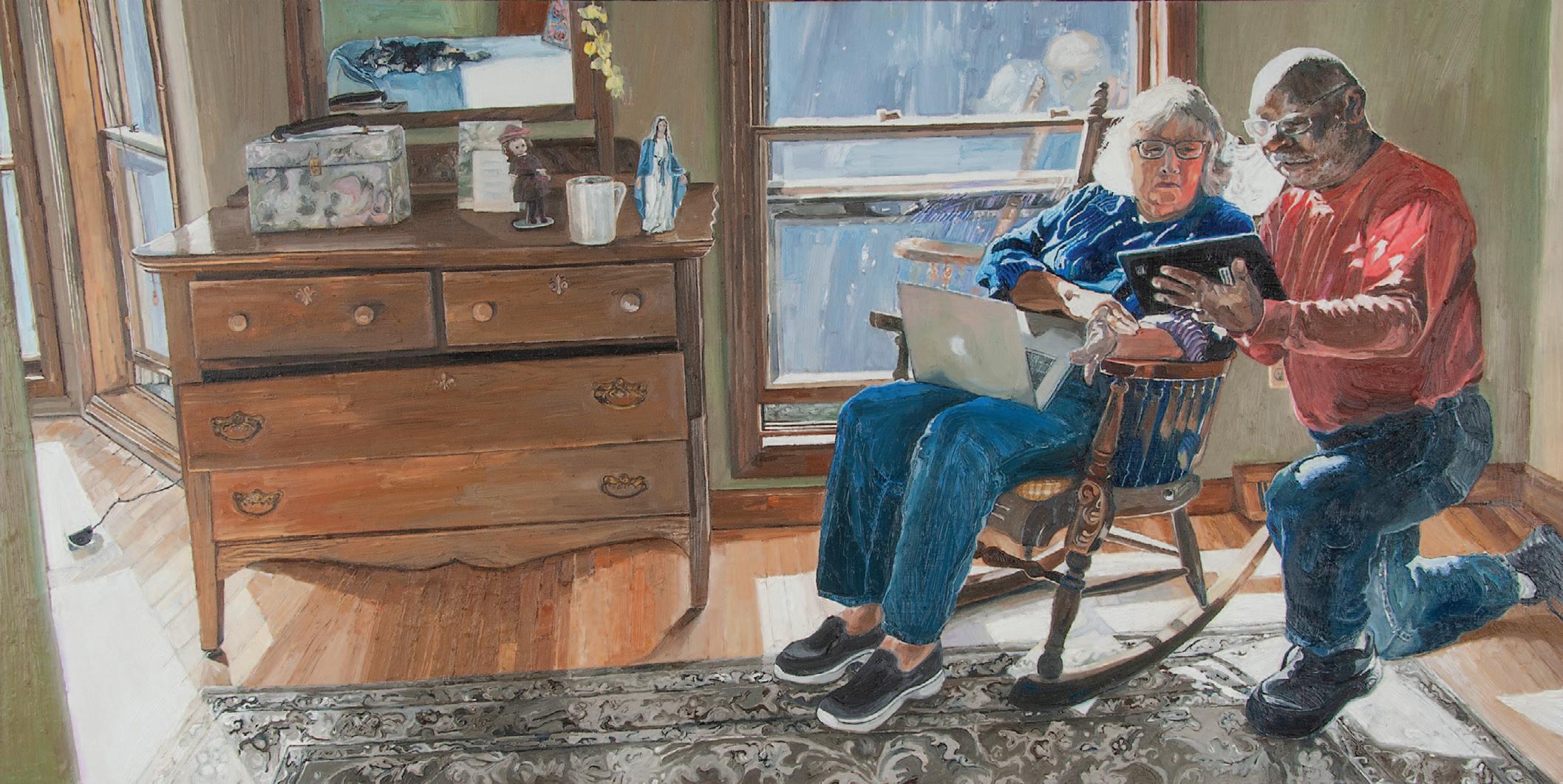
Another extraordinary piece is: “Taking a Knee for Justice” Oil on cradled hardwood, 2018, 18” x 36” - Larry and Jan are a biracial, married couple who have loved each other for more than 30 years. They are both educators. It may be 2021, but it was not that long ago when Larry’s grandfather was lynched by a mob in Alabama. Larry says that “he will never step foot in Alabama,” but he will “always take a knee for justice." In this piece, Susan paints the couple wearing blue jeans, comfortable tops, and sensible shoes - not unlike what ordinary people might wear on any given day. Larry is shown kneeling beside a seated Jan, pointing out something of mutual interest on his tablet, while her electronic device sits in her lap. A vintage dresser mirror reflects a kitty snoozing away on their bed while bright light streams in through several large windows. Susan uses light to illuminate the moment and perhaps illuminate what true love really looks like. Technology keeps them connected
“Taking a Knee for Justice” Oil on cradled hardwood, 2018, 18” x 36”
“From the Warsaw Ghetto to Lake Clear, New York: Never Again” Oil on cradled hardwood, 2020, 16” x 20”
to the world and their students. Love keeps them connected to each other.
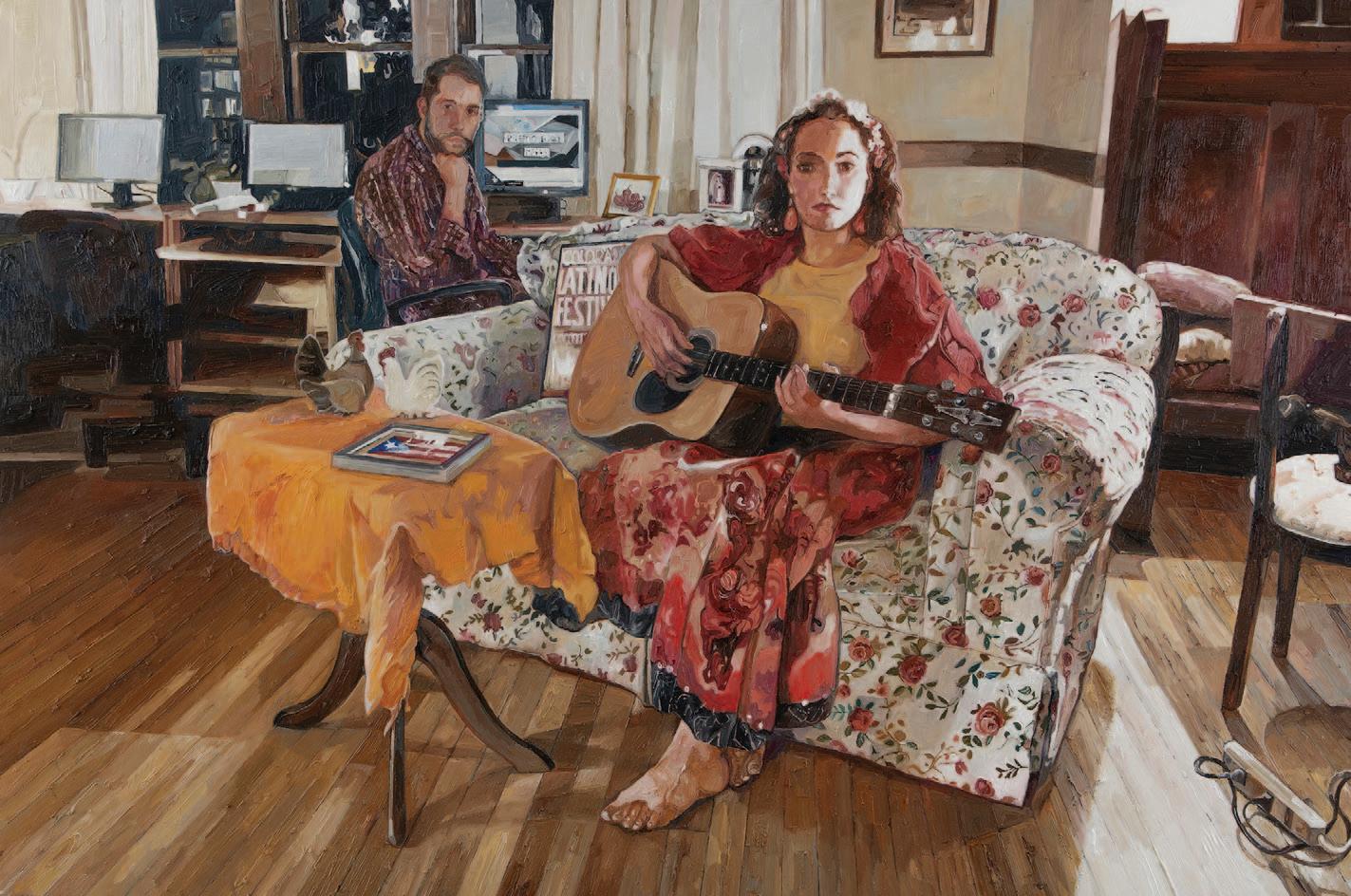
Rich detail defines a wonderful painting t itled: “Open your eyes and you will see us: Proud of my Latinx roots” Oil on cradled hardwood, 2019, 24”x 36” - Maria is a striking young woman of Puerto Rican heritage. She is seated on a floral- patterned sofa, dressed in a richly colored ensemble with a guitar in her lap. Maria stares out with large expressive eyes, framed in wavy brown hair. Her husband, Jason, looks out from behind her, chin in hand, s eated at a desk with one of three large computer screens in the background. Once again, Susan uses light to beautifully illuminate one side of Maria’s face and the fingertips of her left hand while rich texture and detail add depth to the painting. At one of their meetings, Maria shared that her Mom, who immigrated from Puerto Rico, was very worried that her family might not be welcomed in the “deep rural north." Years later, despite the current political environment, Maria continues to teach the culture of Puerto Rico and share news of her ancestral home. And she stays con nected. Connected by technology to her roots, and to the world around her.
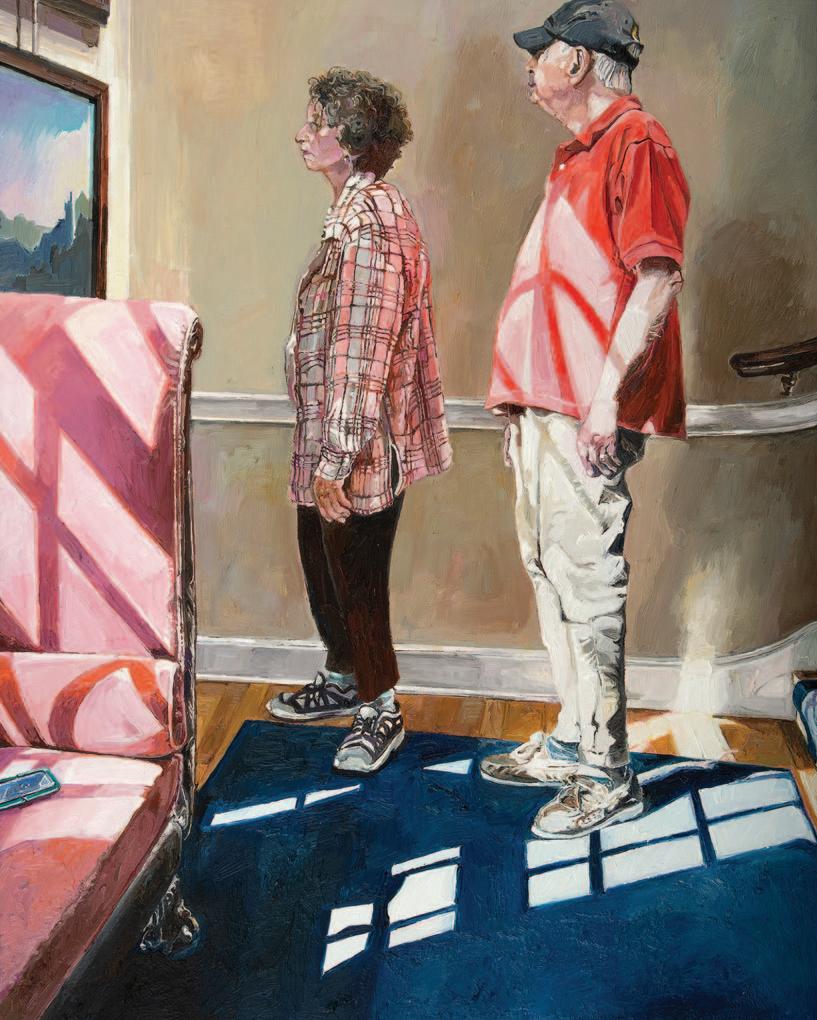
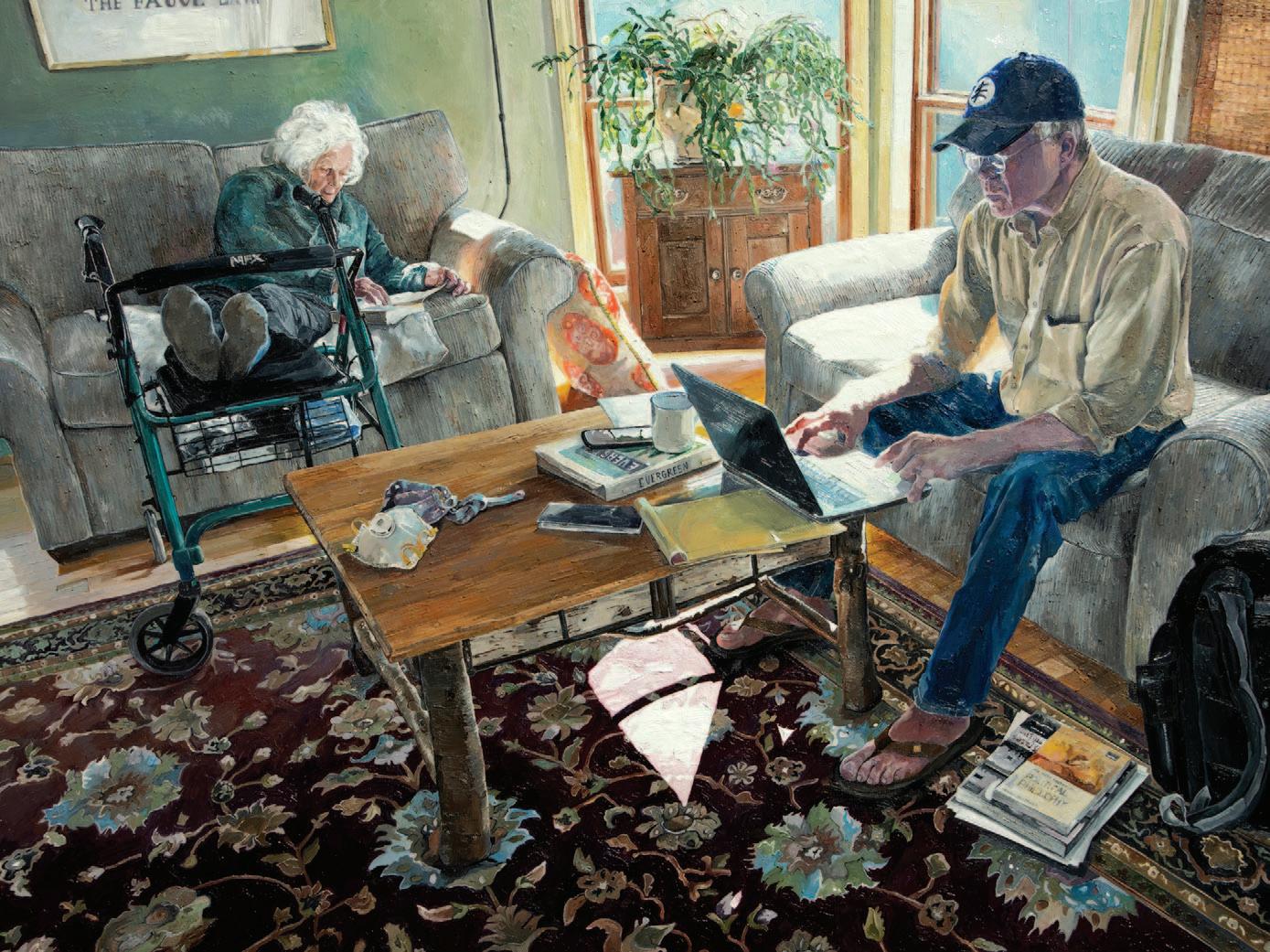
And taken from Susan’s own living room, there is a painting of a scene that has played out in far too many other living rooms across the country entitled: “The day we were sent home to stay home, March 13, 2020, Essex County, New York” Oil on cradled hardwood, 2020, 36” x 48” - It shows Susan’s husband Bruce and her Mom spending time in the living room like any other day. Mom is relaxing and reading while Bruce appears to be surfing the net. But this was not
your typical day. It turned out to be the day that life changed for every American and profound uncertainty became a constant in life. While Bruce was anxiously trying to pin down news of the pandemic, his mother-in-law was happily reading her book, oblivious to the impending COVID-19 storm. The setting could be Anywhere USA. The sun is shining, and a green plant thrives by the window. Several books, papers, a remote, and a cellphone are strewn about. Bruce in his baseball cap and Mom with her feet propped up on a walker are just ordinary p eople doing everyday things. In this household, Bruce does the worrying, she does the relaxing.
Together they stay connected. Bruce through his laptop, and their Mom by their love.
The remaining paintings are equally rich in detail. They tell 18 more stories of ordinary people dealing with everyday life. And throughout this collection, Susan conveys her heartfelt message that if we would just “listen to each other”, we’d soon discover that “we have more in common than our differences suggest."
To view Susan's work, please visit www.susanhofferart.com
“Open your eyes and you will see us: Proud of my Latinx roots Oil on cradled hardwood, 2019, 24”x 36”
“The day we were sent home to stay home, March 13, 2020, Essex County, New York” Oil on cradled hardwood, 2020, 36” x 48”
Alexandra Elise Photography
Many have asked and few have begged. Now, after many a gratifications delayed we present...
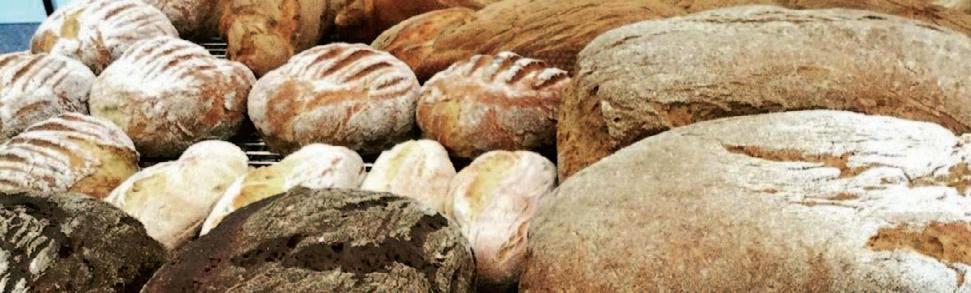
VEGAN GLUTEN FREE SOURDOUGH!!!
Come try many of our new and exciting options as we return from Break.
The Magical Healing Waters of Saratoga Springs
By Lawrence White
"When you put your hand into a flowing stream, you touch the last that has gone before and the first of what is still to come".
There is no more precious resource on earth than water. In some areas of the planet, water has become so scarce that nothing can grow, and the dried plants that do exist combust easily so massive fires consume the countryside.
In other areas, water has become contaminated with hostile chemicals and solvents that can cause catastrophic illness. Water has to be delivered in trucks and rationed as if it were a luxury.
That is certainly not the case in Saratoga. Before the track, SPAC, and Broadway appeared, the healing water of Saratoga Springs was well known. Saratoga is blessed with countless sources of pure clean water including rivers, creeks, and lakes as well as several springs that flow year-round with carbonated and mineral waters that can be collected for no charge. In the warmer months, the water is part of our everyday lives with healthy leisure activities like fishing, boating, and swimming. In winter, the ice is a place for fishing and skating, even hiking on the ice as some do when the temperature is right.
Local Native American writer and storyteller, Joseph Bruchac has a deep understanding of the
- Leonardo da Vinci -
original indigenous American tribes who had lived by the waters of Saratoga Springs since 1300. Mr. Bruchac relates an experience from 20 years ago when he arranged a Caffe Lena gig for a Mohawk friend to perform with his group made up of musicians who were Iroquois. Before the performance, he took the band to Spa Park to visit the springs, and their response was quite profound.
“They were in awe,” Mr. Bruchac tells me. “They heard of this place in tales and stories from their parents and grandparents, but they had never visited it before. Now they could feel for themselves how deeply spiritual this place is.” Mr. Bruchac continues, “The original tribes referred to High Rock as the Medicine Spring of the Great Spirit. The springs are part of a heritage that has been continually maintained. Even though it has been generations since tribes have lived here, they still speak of Saratoga Springs as a spiritual and healing place.”
It is interesting to note that the first European to visit Saratoga Springs, came for health reasons. In 1771, Sir William Johnson was the Superintendent for Indian Affairs for the British
Crown and lived with the Mohawk tribe where he eventually married the chief’s sister. Due to this arrangement, Sir William developed a deep bond with the tribe. Unfortunately, he also became afflicted with painful cases of gout and arthritis and was unable to walk. In response, the members of the tribe lit erally carried Sir William on a litter from what is now Gloversville, to High Rock Springs to bath in and consume the waters. Sir William discovered that the therapy provided great relief, and as the story goes, after four days he was able to walk back to his home. It was not long before word of the miraculous healing waters got around, and the pressure to open the area for settlement increased. Eventually, an arrangement was reached with the Mohawk Tribe which became the basis of what we now know as Saratoga Springs.
In 1783, Phillip Schuyler along with Alexander Hamilton and NY State Governor George Clinton escorted George Washington to High Rock Spring to drink the water. General Washington was so impressed by the spring and the little valley that he attempted to purchase High Rock. Regrettably, he was denied the opportunity and according to legend, was bitter about the loss.
Since that time the waters have attracted people of all walks, including the powerful and famous. Several companies bottled the water, and it is still a popular refreshment in restaurants and over the counter. Through the years the city sprouted glorious spas, fabulous hotels, 3-star restaurants, world-class casinos, the horse track, entertainment venues, fabulous homes, the railroad, and eventually the Northway. All the while, Saratoga’s waters kept flowing and quietly attracting people with its healing powers.
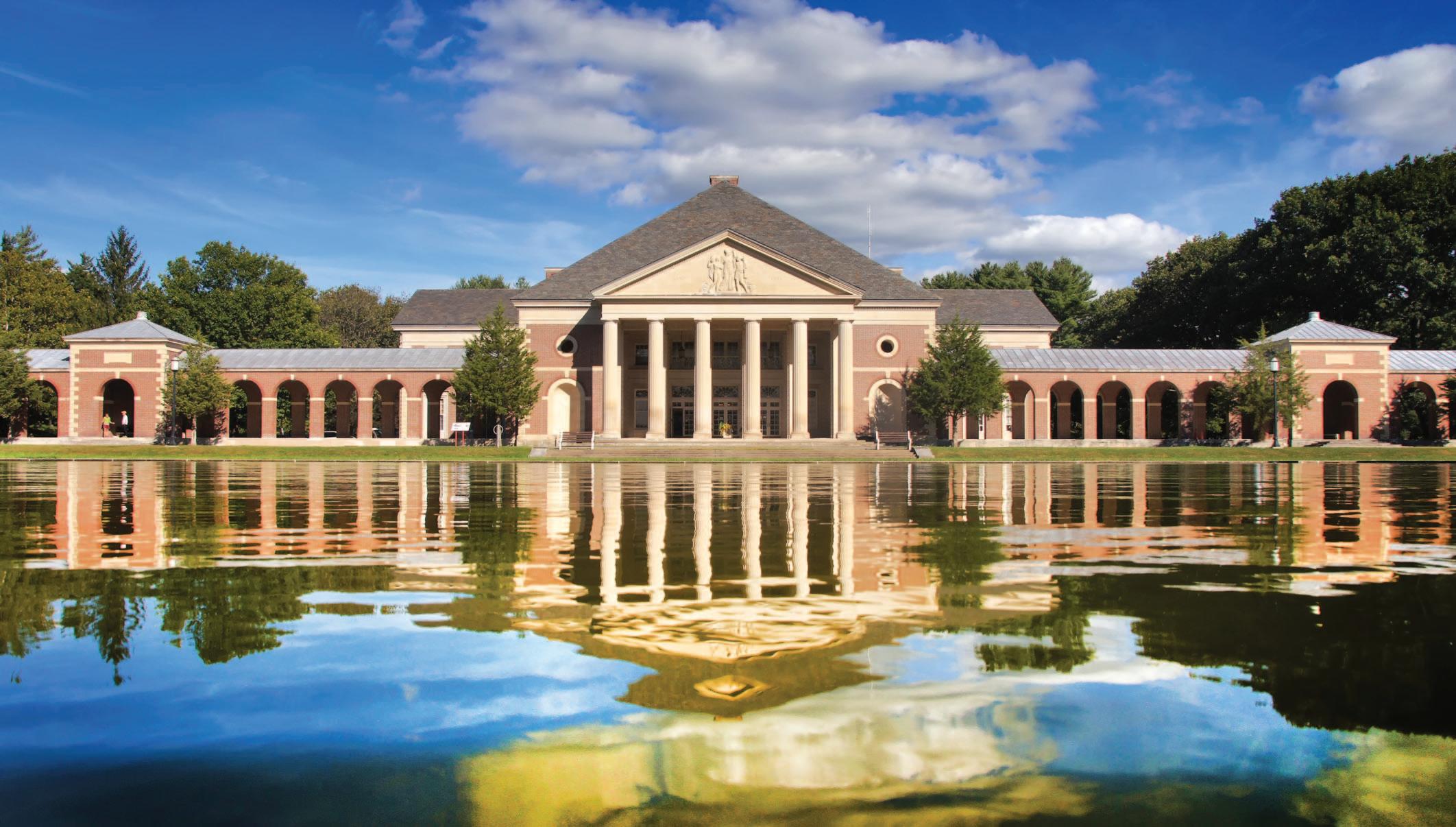
The most notable was the Trask family. Spencer Trask was a financier, philanthropist, venture capitalist, and visionary who had great affec tion for the healing power of the springs. Upon the unfortunate occurrence of his passing, his wife, Katrina along with George Foster Peabody, commissioned the majestic sculpture, Spirit of Life, in Congress
Park in celebration of Mr. Trask's passion for the springs, a passion that still permeates Saratoga Springs today. The waters seem to touch people in a profound manner that they cannot accurately explain but enjoy and celebrate with an elan.
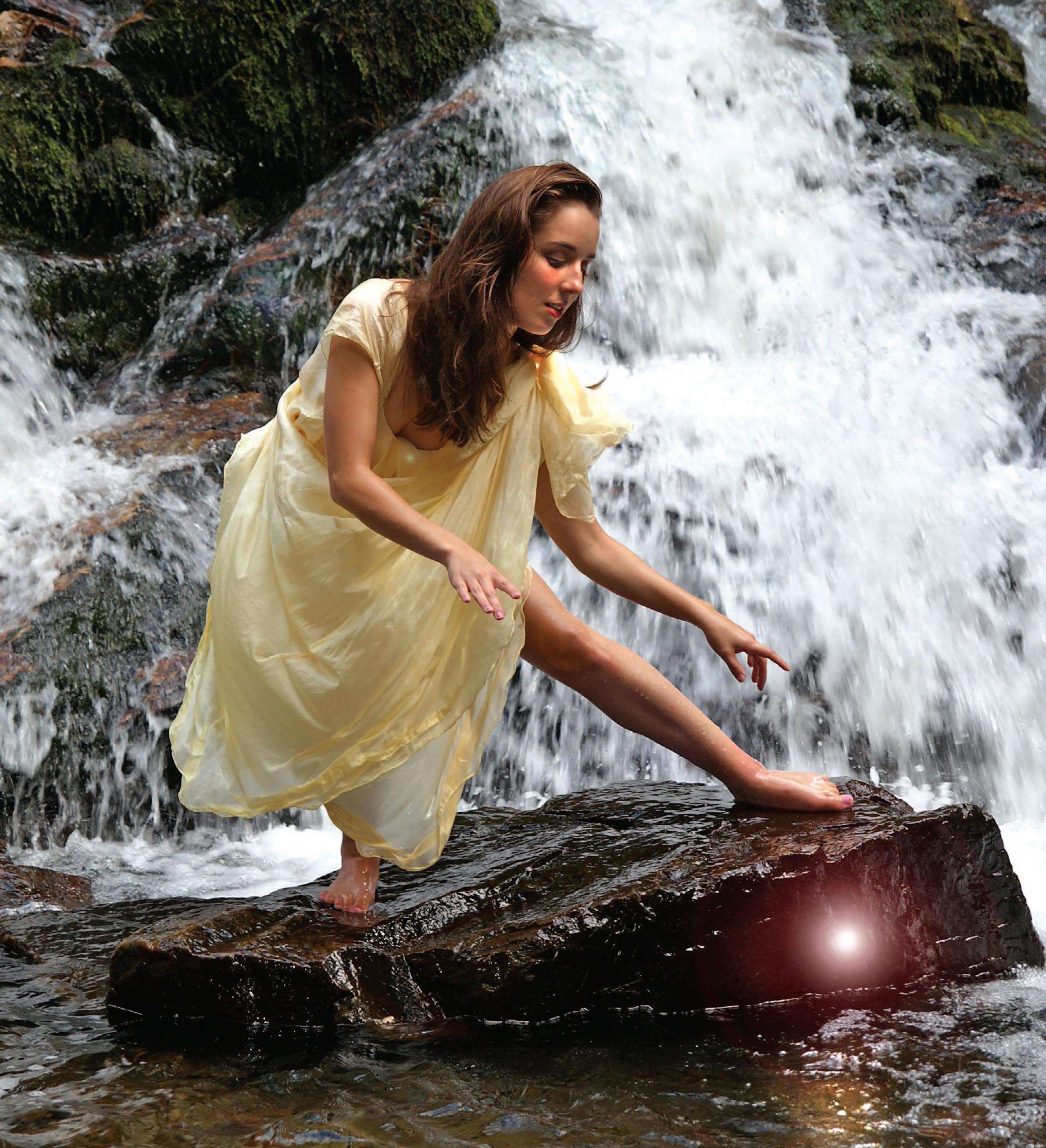
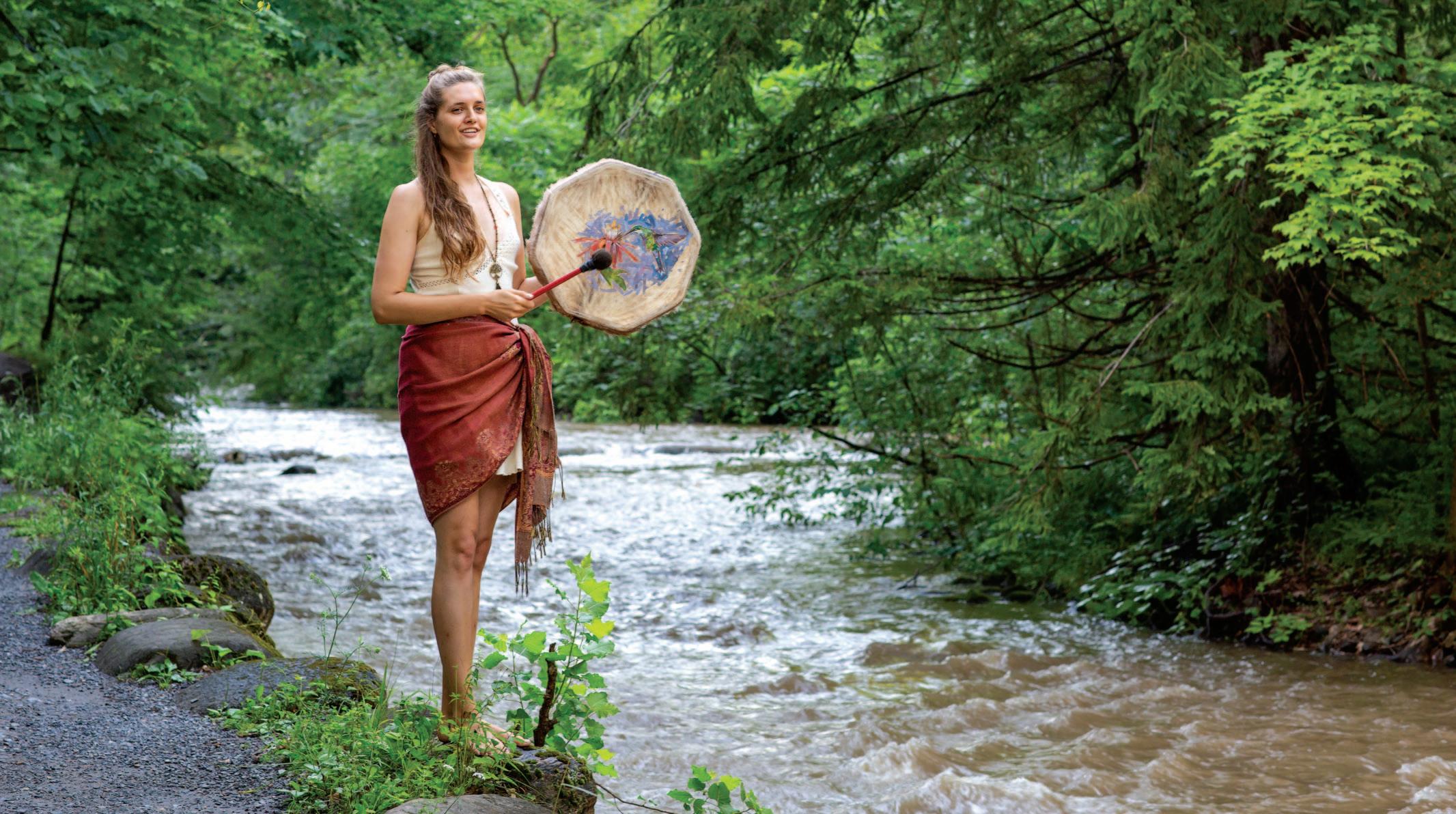
Saratoga Springs native, Hannah Zlotnick, is fully aware of the magnetic attraction of the waters. Ms. Zlotnick refers to her profession as a healing guide. She studied Human Development and Theater at Cornell University and while there developed a great affection for yoga and meditation. Thereafter she joined the Peace Corps and traveled to Peru. While studying natural plant-based medications, she experienced an epiphany to return to Saratoga Springs. She tells me," I felt I had to reconnect with the incredible community, as well as the magical, medicinal, mineral waters. In my mind, I had an image of women dancing at the springs, so I decided I had to return to my hometown to fulfill that vision."
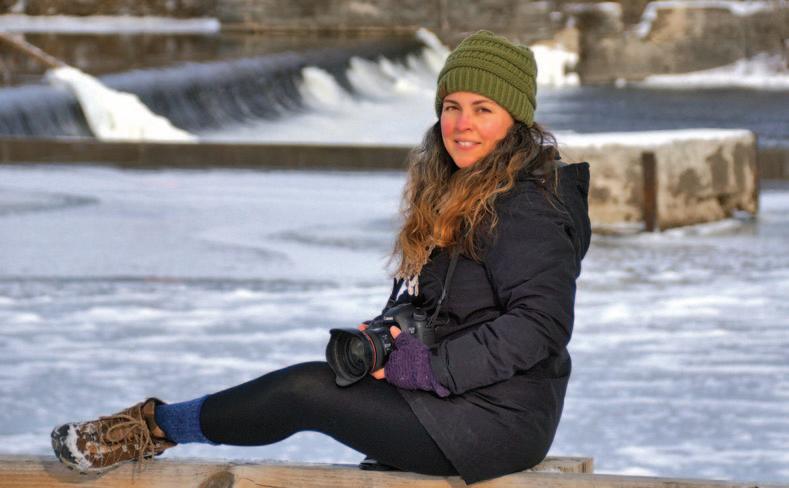
This led to a meeting with artist/photographer, holistic practitioner Susan Meyer. Ms. Meyer is a Saratoga Springs native who focuses on “a unique interweaving of photography, writing, mindful awareness, and energy work that supports presence, awakening, and well-being.”
“I was uncertain of the direction I was taking with my artwork and personal philosophy when I met Hannah and photographed her by Tallulah Spring in Spa Park. It was at that moment that I knew what I wanted to do with the rest of my life.” Ms. Meyer’s
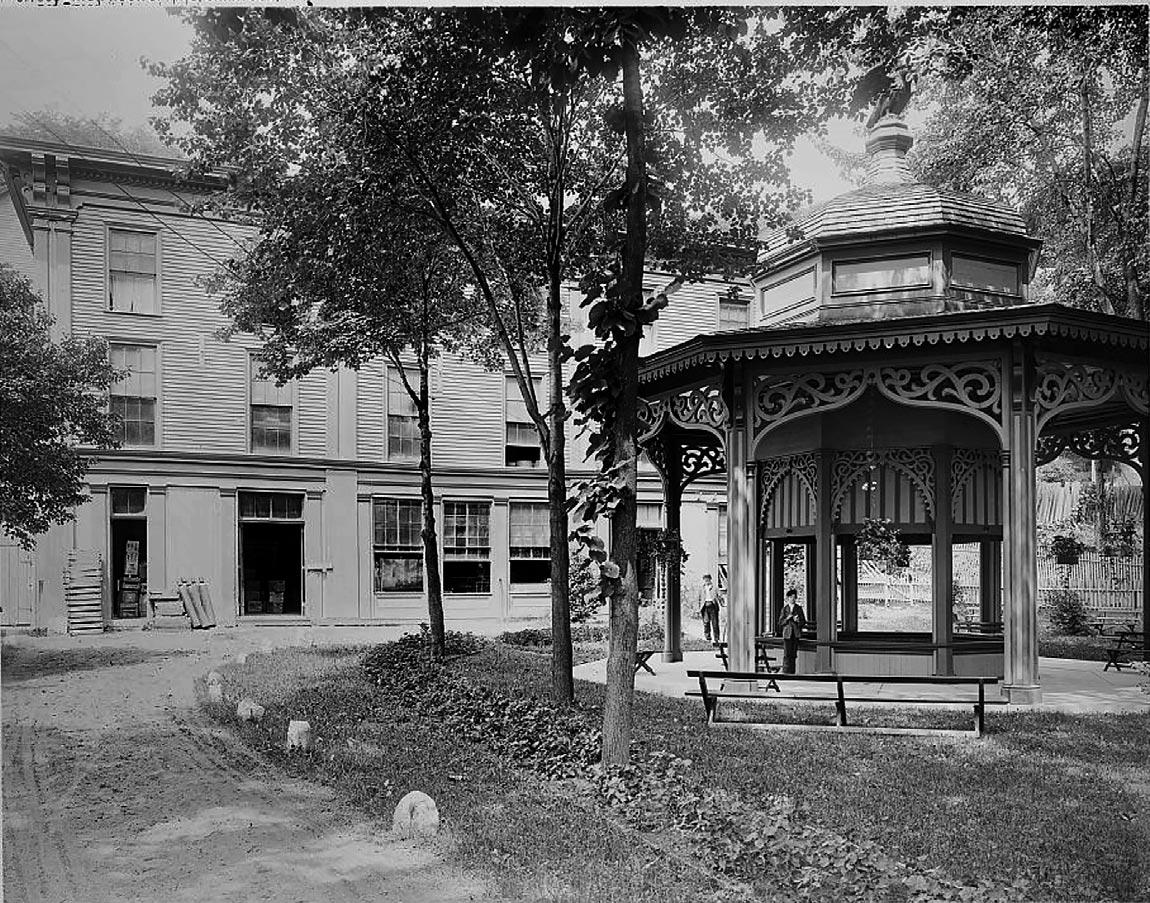
High Rock Park 1890
Sir William Johnson 1767
new photographic artwork can be viewed in an exhibition titled “A Path Back Home” at the Saratoga Springs train station from June through July 2021.
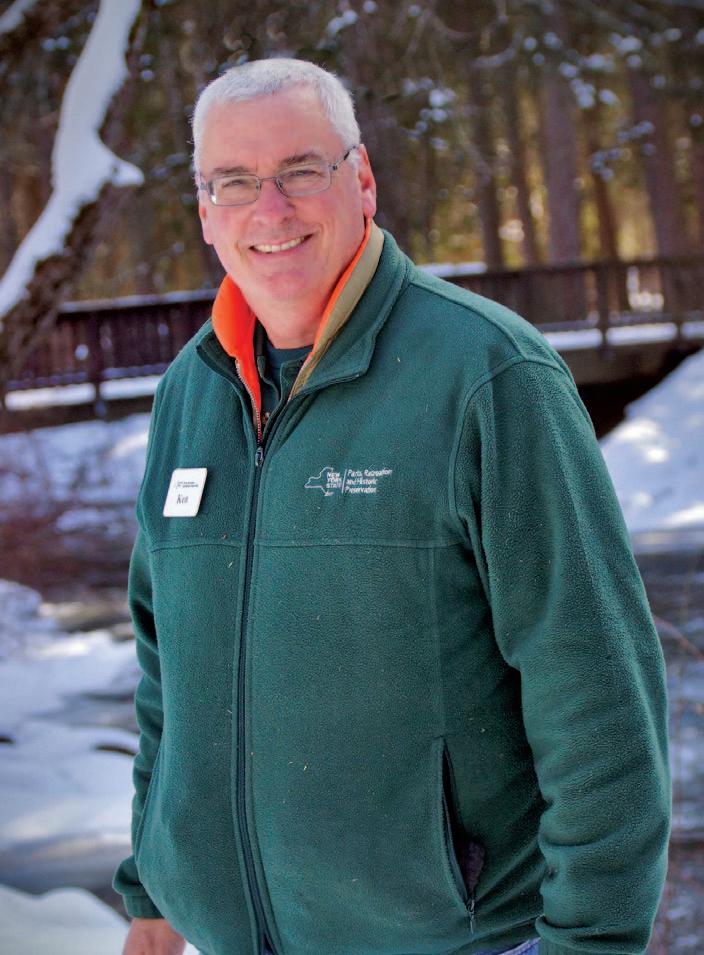
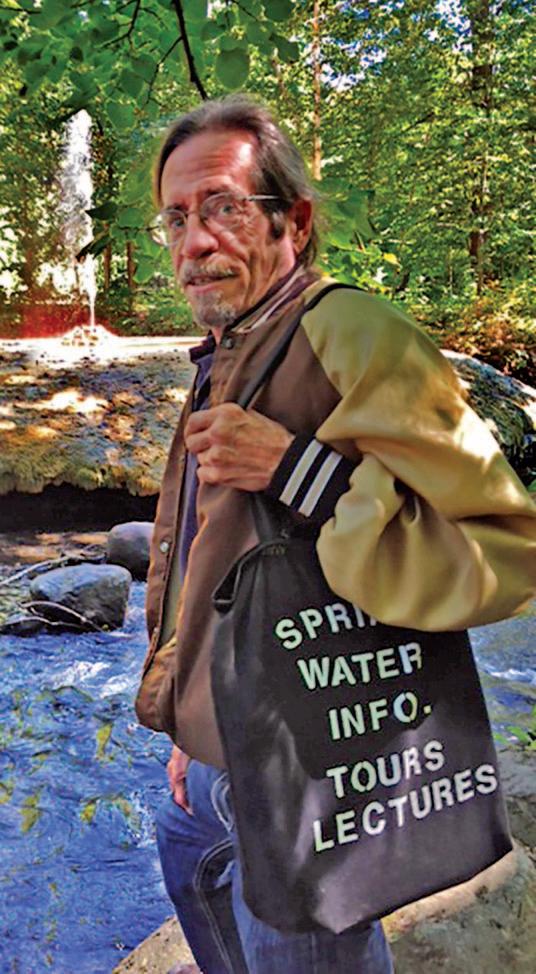
Spa Park docent, Ken Chaisson is stationed in the Creekside Classroom at Spa Park and provides
pre-arranged, socially distant tours of the various springs in the park. I ask him if he meets many people who have a strong interest in the more mystical and healing aspects of the waters.
With a wry smile, he tells me, “Well, the city is called Saratoga Springs for a reason It is because of the cold carbonated min eral springs that brought the people here in the first place and still bring them here today.”
M r. Chaisson goes on. “Is the water magic? No, it is science. It is a chemical composition of the water. The primary component is calcium carbonate which is how they make Tums. If you carbonate Tums, you get Alka Seltzer. This is why so many people claim to find the water to be soothing for stomach issues.”
“There is lithium in some of the springs as well,” Mr. Chaisson explains. “The Hayes Spring is the most productive in that regard. That spring has a vent for the lithium that we call the “sniffer” or “huffer.” A lot of people meditate in that area. Of course, it is not just the lithium that attracts people and gives them a sense of well-being. It is the sounds of the stream, the wind in the leaves, the entire environment is stimulating, inspiring, and healing.”
Susan Meyer
Ken Chaisson
Hannah Zlotnick drumming at the Spa Part - photo by Susan Meyer
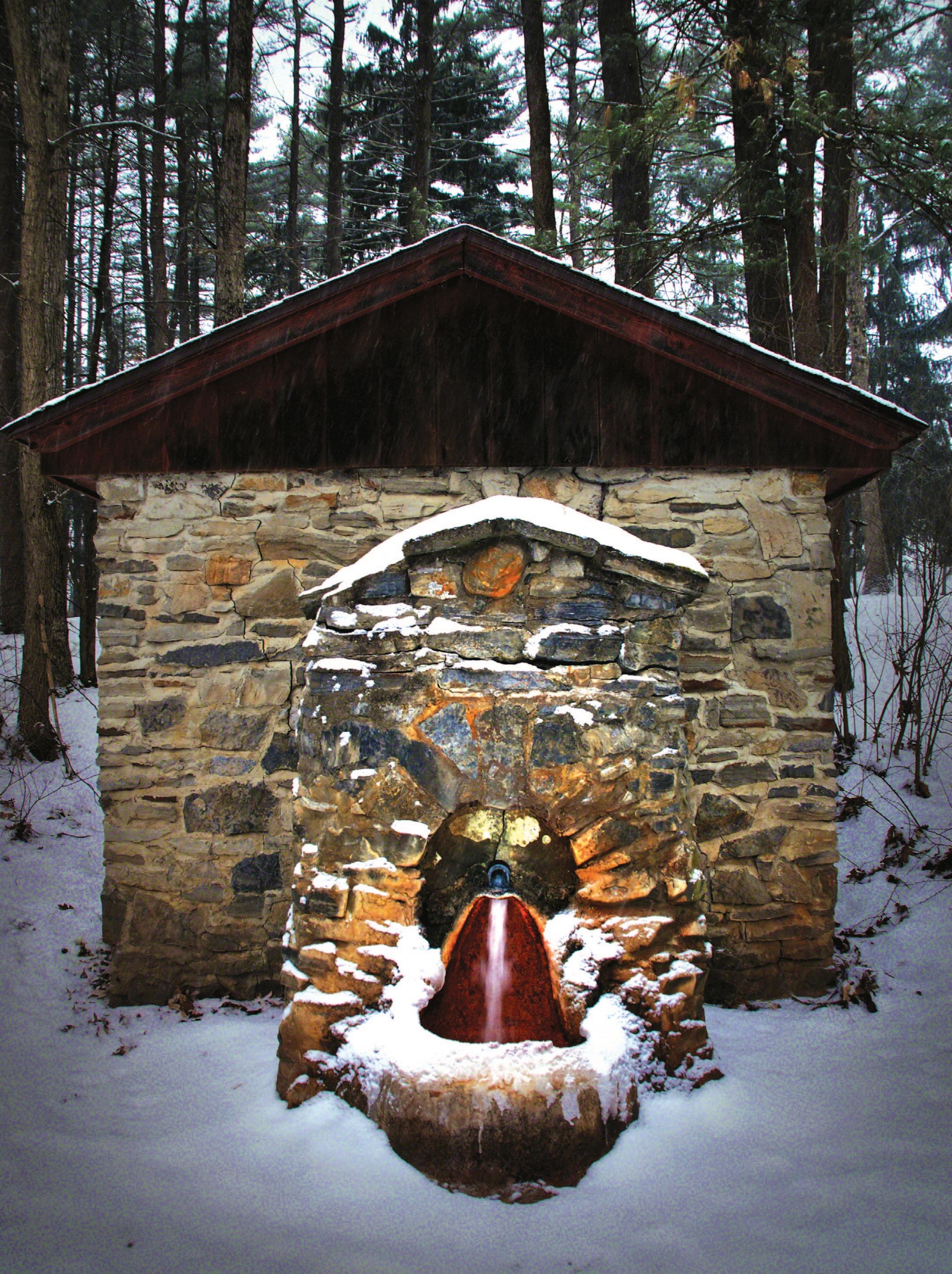
Orenda Spring Fountain
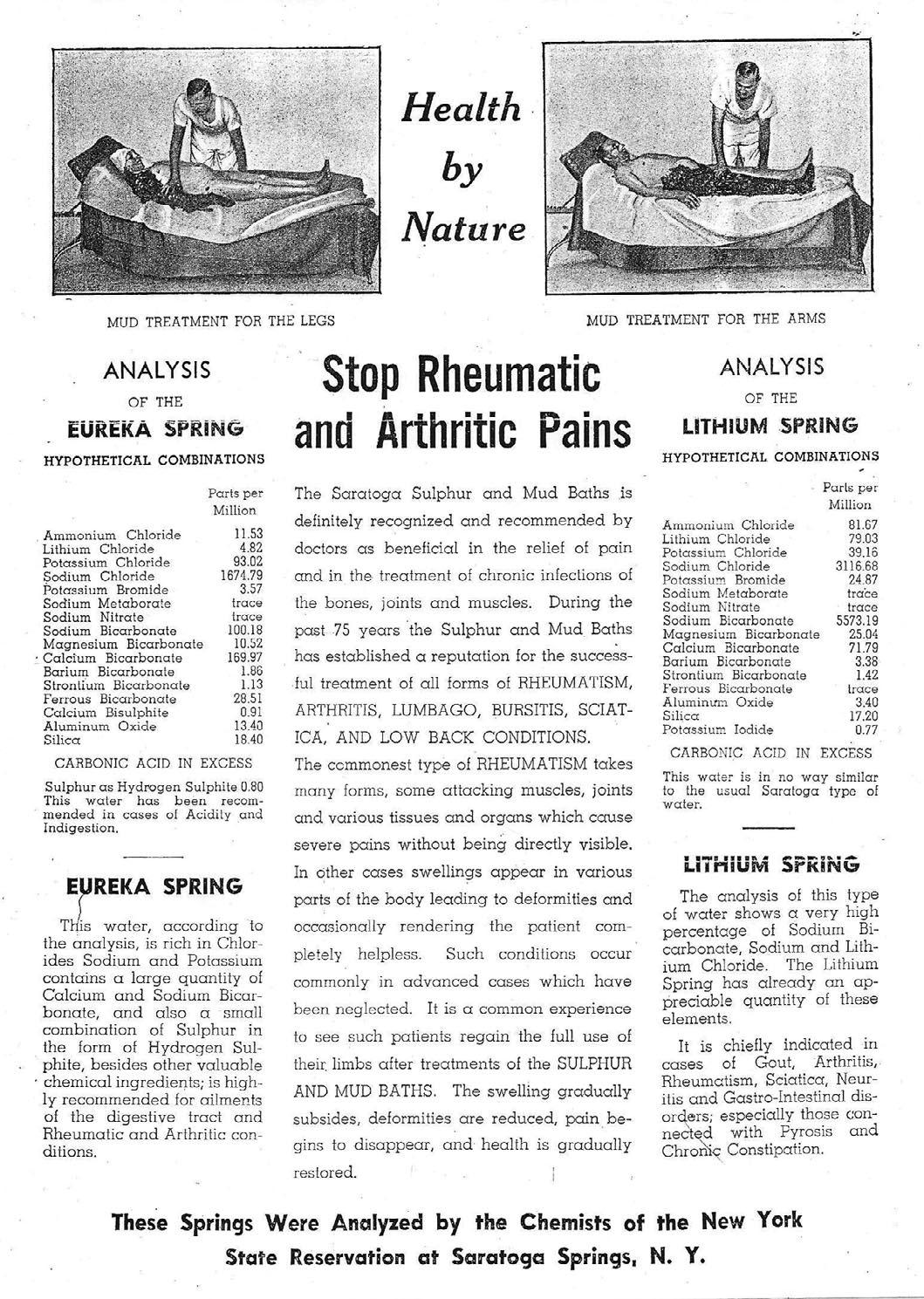
Aimee “Trent” Millet holds a certificate in Bio-harmonics and has been giving tours and lectures about the health and healing powers of the springs for decades. When I ask his perspective on the water’s healing powers, he talks about the Roosevelt Baths. “The Roosevelt Bath was dedicated in 1935 by former New York governor and President Franklin D. Roosevelt. The beautiful structure was built in the Georgian Revival- style and used the Lincoln spring during the years it served as a VA rehab center. The public records compiled at the time by Dr. McClellan for the hospital record shows that the Roosevelt Bath had a 93.9% success rate for improvement of rheumatoid arthritis
93.1% for osteoarthritis, 89.9% suc cess rate for Gout.” Mr. Millet goes on to add, “In my opinion, the water and its effect haven't changed. It is still providing the same benefits today.”
Artist, psychologist, community organizer, and shaman, Amyjo Amyot, has experienced some amazing experiences at the springs in the park but one stands out to her. “Back in 1987, there was an event called the Harmonic Convergence. I decided to invite some friends to come with me to the spouter in Spa Park for that morning’s sunrise to chant and meditate and call in the spirits. Amazingly, people started to spontaneously arrive. We went from a small group of 5 to over 60 who joined us without any prior notice. Somehow, they just knew to come to the geyser. It shows the unique mystical power of the waters and how they unite and heal people.”
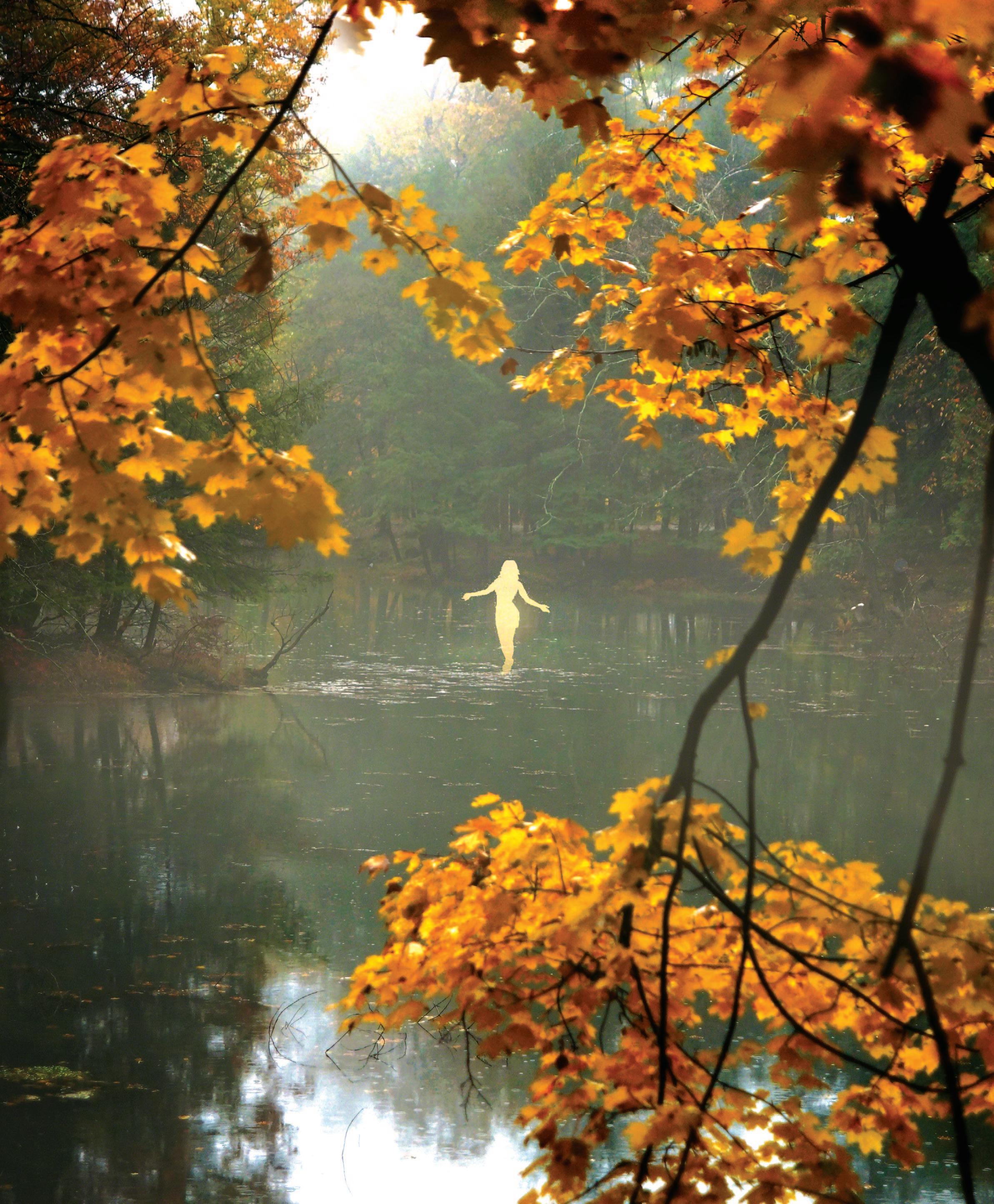
As I finish my conversation with Joseph Bruchac, he shares a wonderful fable using his colorful storytelling skills. “A group of native people from an Algonquin tribe was attacked by another tribe near what is now known as Yaddo Lake. A young woman who was trying to run away was struck by an arrow, fell in the water, and drowned. Her spirit remained in the lake so when her lover returned many years later to that very place where she died, he saw her spirit rise in the mist and dance on the waters. He watched in stunned amazement as she drifted towards the shore and embraced him as he peacefully died in her arms.”
Some who have heard this story swear they still see the spirit of the maiden dancing in the mist on Yaddo Lake during a full moon phase. In my opinion, it may very well be true, but then again, it might just be the lithium.
As you walk through the door, you will immediately see the words, "Welcome To The Loft 205" greeting you, painted in large capital letters on the steps inviting you up into the trendy cocktail bar.
Offering an upscale global menu in a contemporary casual dining environment, The Loft 205 opened in October 2020. Owned and operated by Will Phan and Mary Phan, this dynamic brother and sister duo are not new to upscale dining. Having grown up working in the industry for over 12 years, they ventured into opening their first restaurant together 7 years ago, The LAX Restaurant & Lounge. In October, 2018, that space would later be transformed into their second restaurant endeavor, The Lark Street Poké Bar. The Phan siblings then opened their third restaurant, The Poké Bar, in Loudonville, New York in October of 2019.
"We never wanted to own restaurants, it just happened as we realized it was what we enjoyed doing. We work well together." Phil then jokes, "trust me, we argue, but we both know what to do to make it work, and we do whatever it takes to get the job done."
Family owned and hands on, Mary runs the front of the house from behind the bar, where she can mix a killer cocktail, and Will runs the back of the house, creating the upscale dishes that are offered on their menu. Mary sincerely shared, "When people come in, we like to make them feel like family. This is our passion, so we enjoy the work we do. Our menu was inspired by our love of food! We love to travel, and we love to eat!" All of their menu items are made from scratch in-house and served fresh. You won't find frozen avocado fries or pre-made meatballs in their kitchen. What you will find are delicious appetizers and impressive entrees.
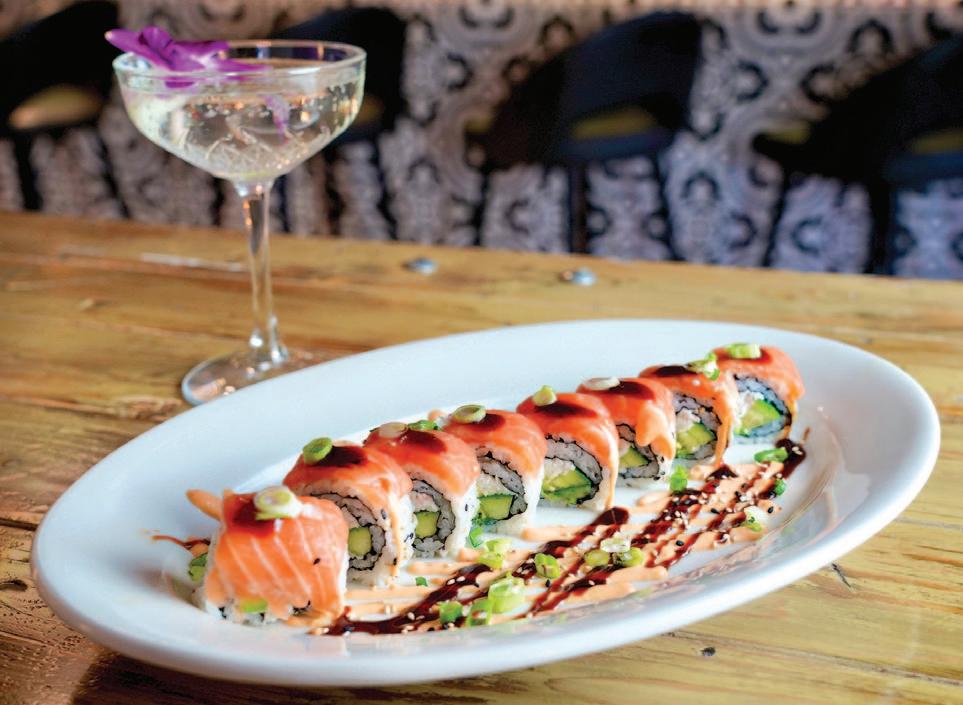
The Loft Roll is filled with crab, tempura avocado, cucumber, topped with seared salmon, seared sesame seeds, scallions, eel sauce, and spicy mayo.
The Jumbo Bang-Bang Shrimp is a delicious crispy shrimp with a spicy mayo, scal lions, sesame seeds, and is a spectacular starter.
With the Pork Belly Bao Bun starter you'll enjoy a soft bao bun filled with garlic soy-braised pork belly, cucumber, cilantro, and scallions.
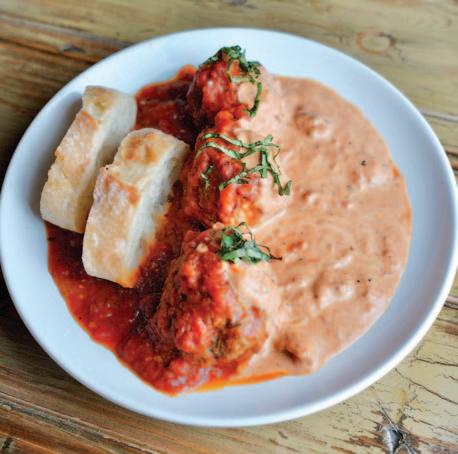
In the middle of all this global influence, you have meatballs. I don't say this lightly. The Loft 205 makes really delicious meatballs. They are homemade, and you can tell that they are made fresh. They are creatively covered in half marinara sauce & half vodka sauce. My Italian husband, raised in an Italian family that has mastered meatballs, ate these.... he already plans on going back for more.
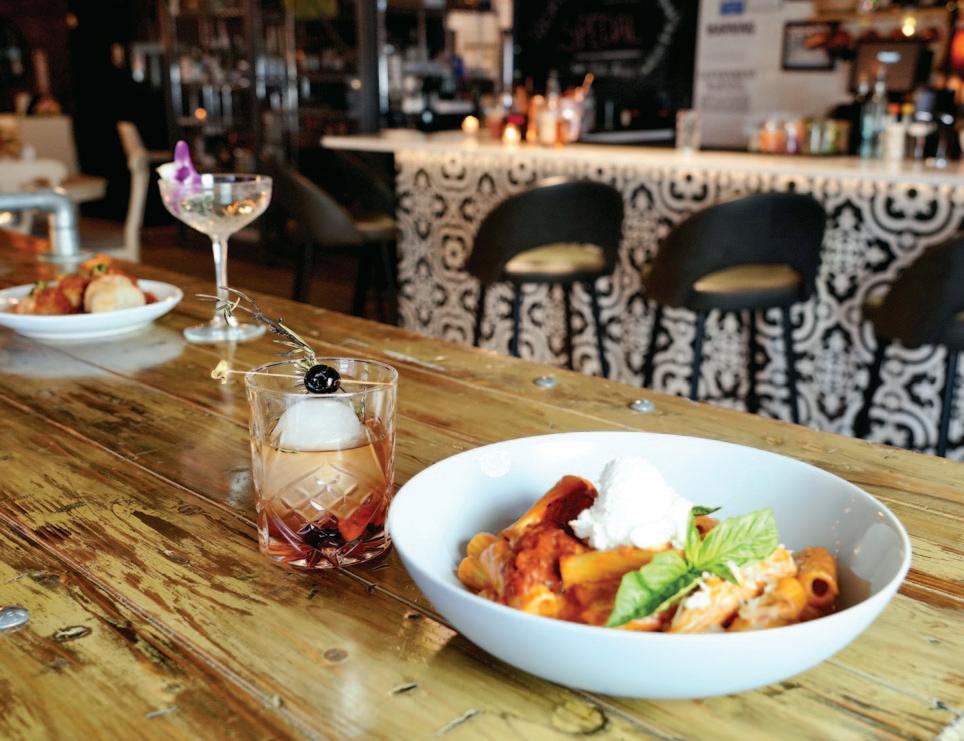
I really enjoyed the Rigatoni alla Vodka, a pasta dish tossed with a creamy vodka sauce, fresh parmesan, ricotta, and basil. You have the option to add chicken, grilled shrimp, or grilled salmon. Their marinara sauce and vodka sauce in many of their dishes are made from scratch, as with all their sauces.
When I tried the Braised Beef Short Rib which rests on a triple butter garlic mash, the beef immediately fell off the bone. They were amazing, flavorful, and incredibly tender. The roasted sweet corn served on the side has a very nice smoky grilled flavor to it.
The Tamarind Duck is a half crispy duck that any duck lover will enjoy. I always gravitate towards a duck entree on a menu. The Loft offers a perfect duck dish with a light crisp skin on the outside and very juicy meat on the inside. The pineapple & vegetable sauce served over this duck is excellent, accompanied with a pyramid of brown rice on the side.
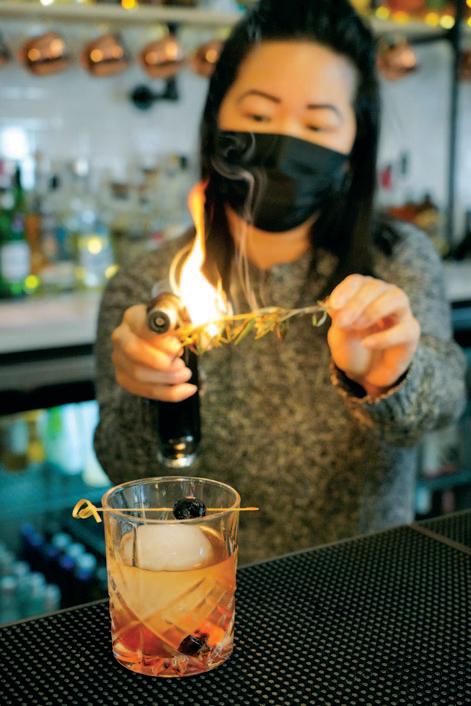
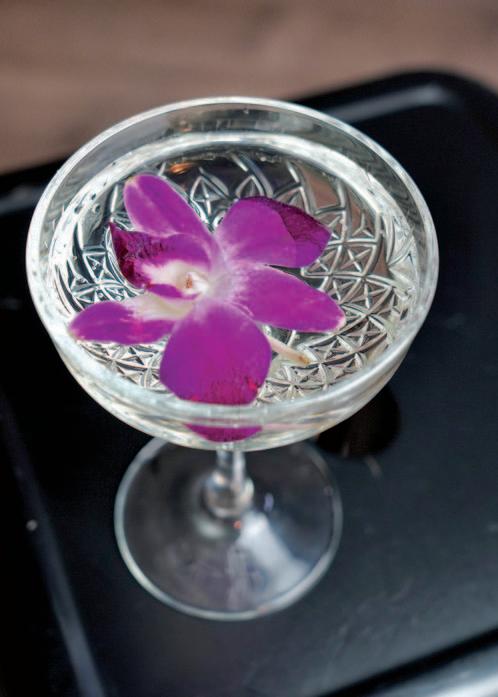
I was very happy to experience The Loft 205 and the vibrancy they add to Lark Street. I plan to come back for a date night with my husband and try their special cocktails, high end bourbons, and nice tequila selection as we eat our way down their well thought out menu. The Loft 205 proudly supports local vendors, breweries, and local liquor brands used in their signature drink, "The Loft Old Fashion." They also offer gluten free & vegan options. The Loft 205 is located above the Lark St Poke' Bar, on the second floor of 205 Lark Street, Albany NY(entrance on State Street).
The Corning Museum of Glass Understanding the art, history and science of glass
by Carol St.Sauveur Ferris
If you haven’t made a bucket list yet, there’s no time like the present. The Corning Museum of Glass is open year-round, seven days a week, and offers something for all ages and interests.
Located in the Southern Finger Lakes region, The Corning Museum of Glass is the centerpiece of the town of Corning which is steeped in the history of glass. In the late 1860s, The Brooklyn Flint Glass Com pany was relocated by the Houghton family, several years after the end of the Civil War. Renamed Corning Flint Glass Company, their timing for the move was perfect. Luxury goods, now in high demand, prompted many artists and glassmakers to move to the area. Soon
the town of Corning became known as “The Crystal City.” The company name was changed to Corning Glass Works and eventually to its current name, Corning Incorporated.
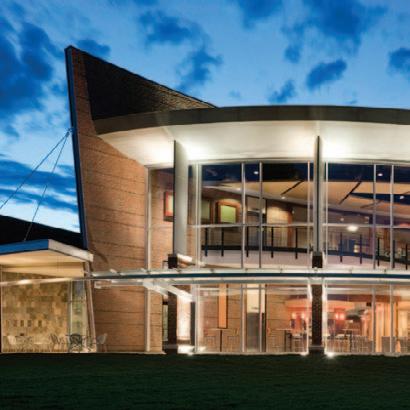
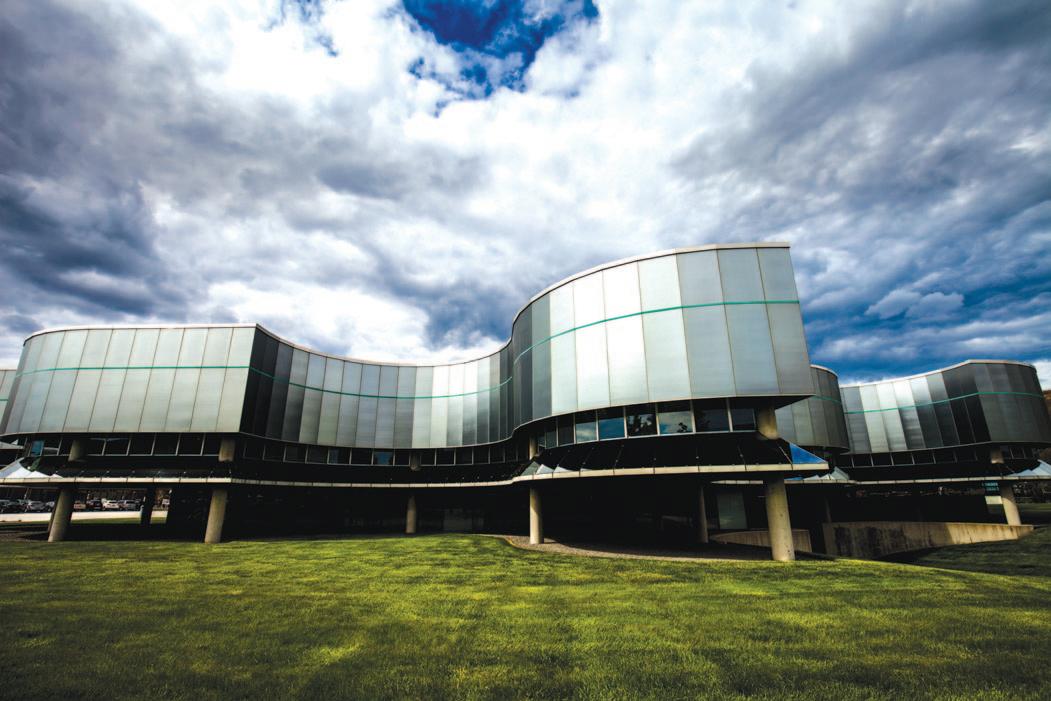
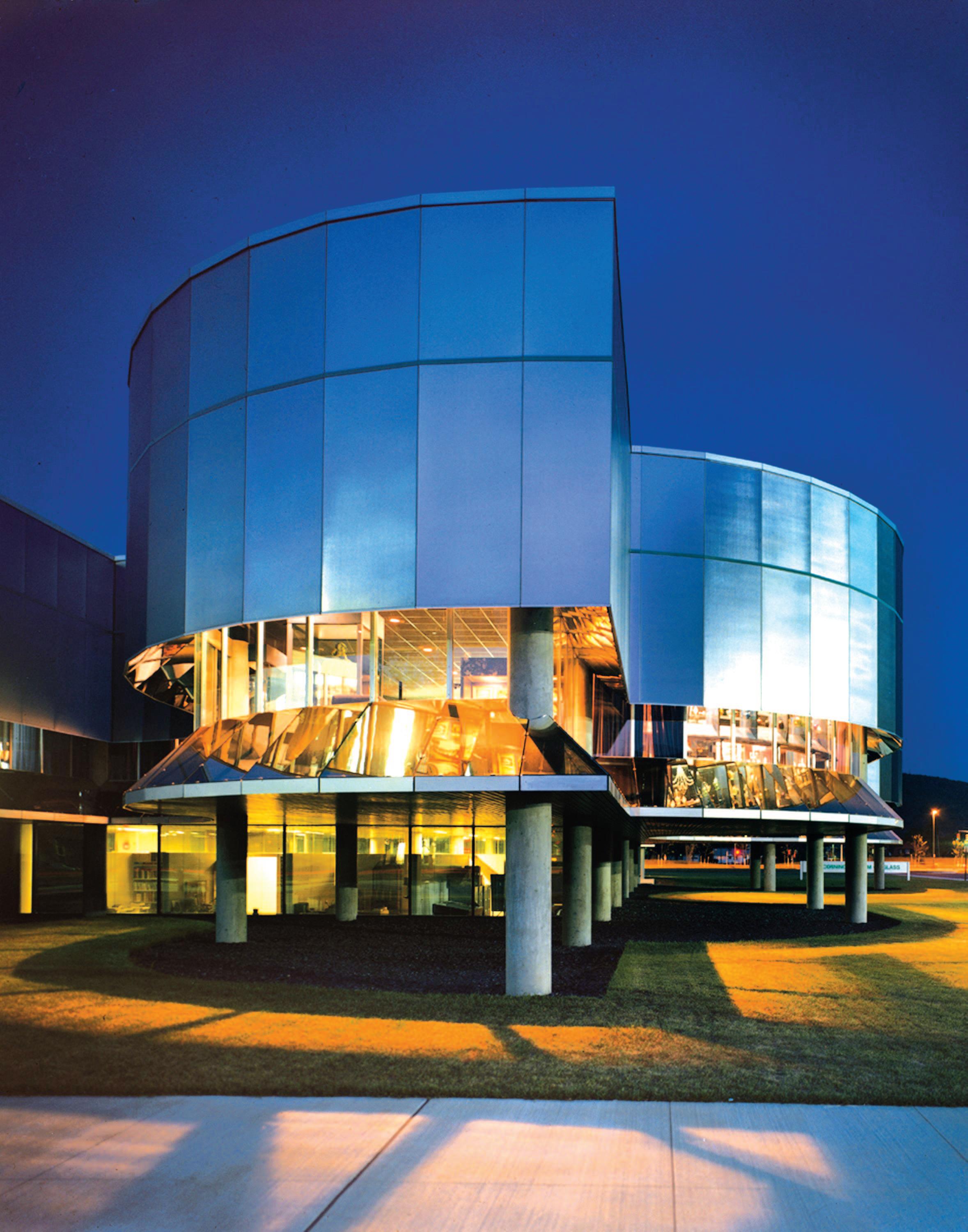
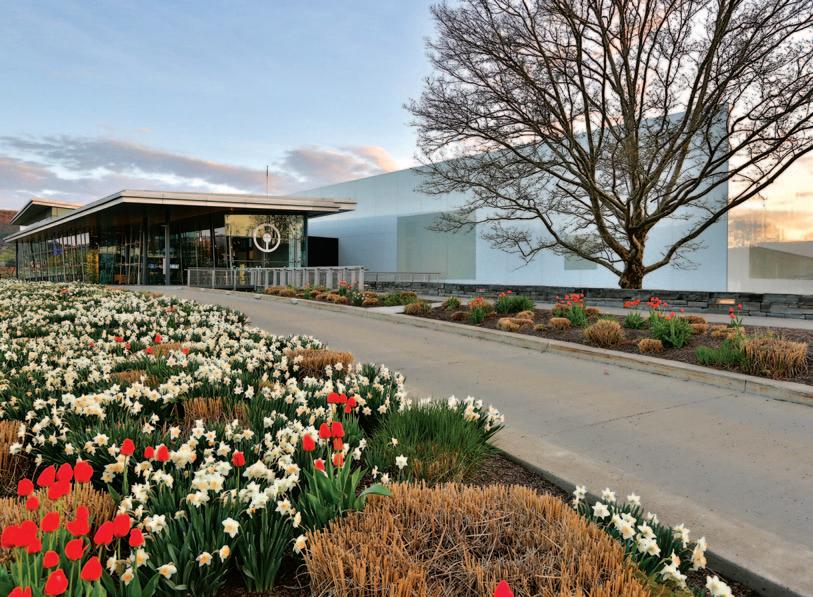
In 1951, Corning Glass Works founded The Corning Museum of Glass as a gift to the world in honor of their 100th birthday. It is an independent, educational facility devoted to documenting, educating, and increasing the world’s perception and under standing of the world of glass. The museum campus is a fascinating collection of award-winning buildings designed and renovated over 64 years by more than five different architects, over three generations, and is on the list of America’s Top 150 Buildings, compiled by the American Institute of Architects. From strong rectangular shapes with clean lines and large expanses of glass to curving organic walls, The Corning Museum of Glass buildings reflect very different architectural styles, yet all its creators shared the same vision – design functional spaces that creatively protect, preserve, and celebrate glass and its history.
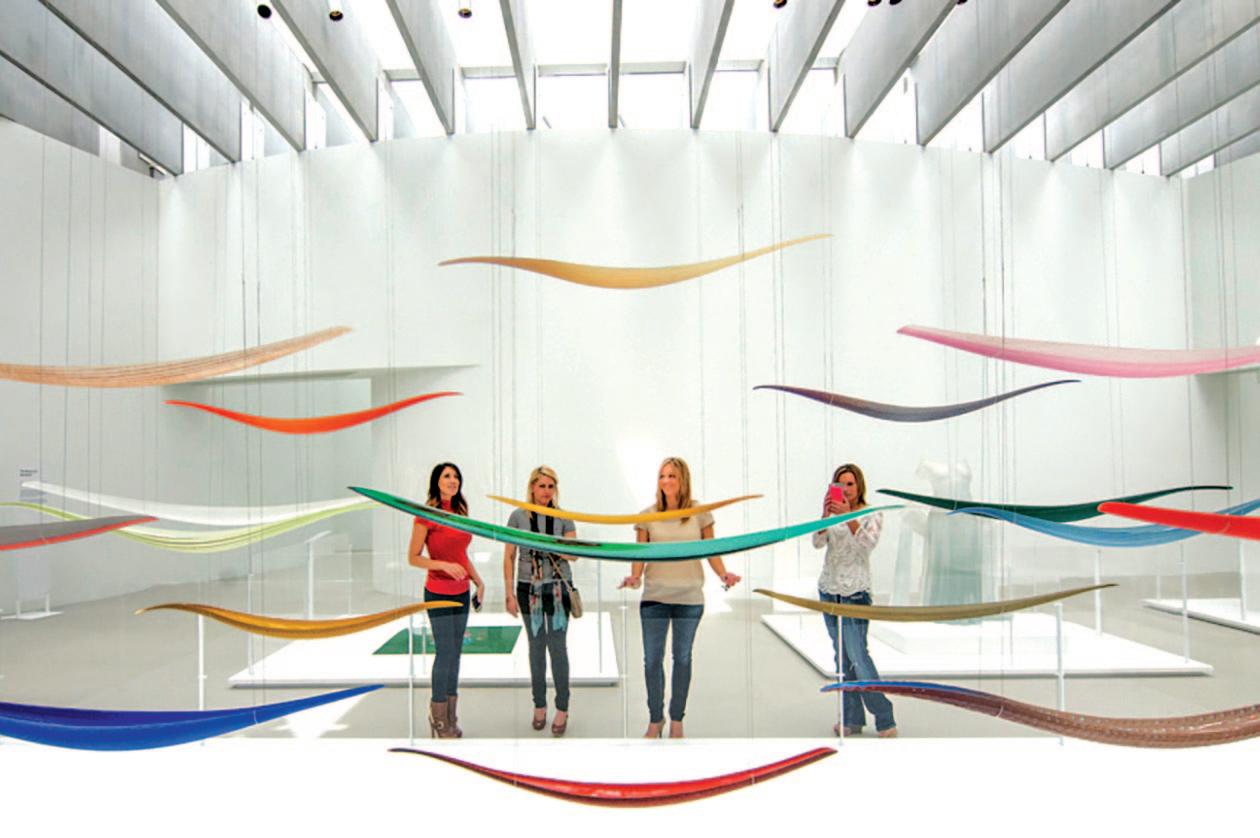
While the exterior of the buildings delineates the footprint of the mu seum and are amazing works of art to enjoy on their own, the interior is a feast for the eyes. There are walls with sharp angles and undulating curves fabricated in steel, glass block, rolled glass with stainless steel backing, mirrors, and translucent super-sized panels of glass. Unique glass stairs, walkways, and freestanding glass walls fur ther define the space. Natural light, a critical component to the architecture, is cleverly invited in and controlled by ceiling systems of skylights, beams, and a solar shading system called a brise-soleil.
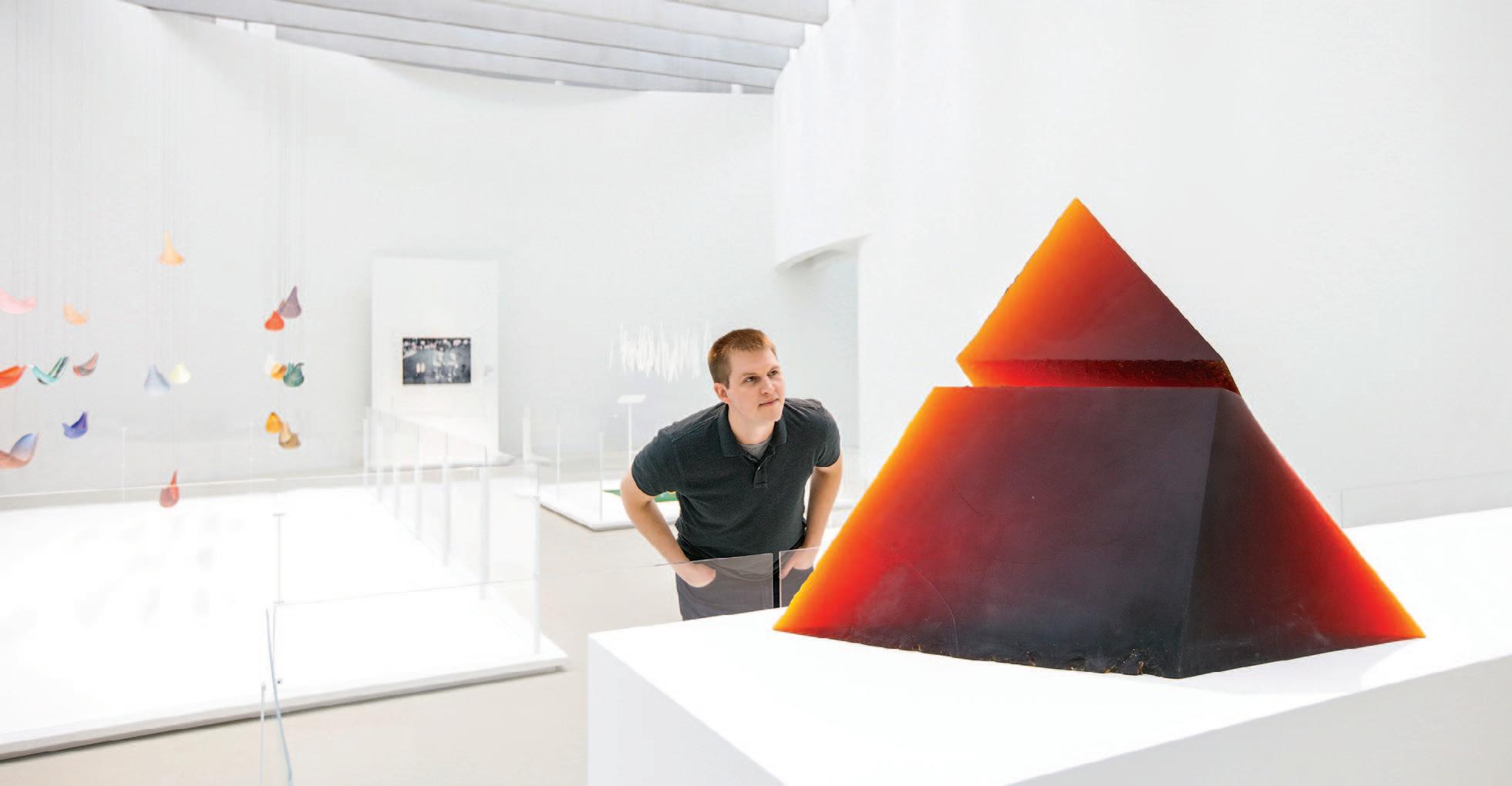
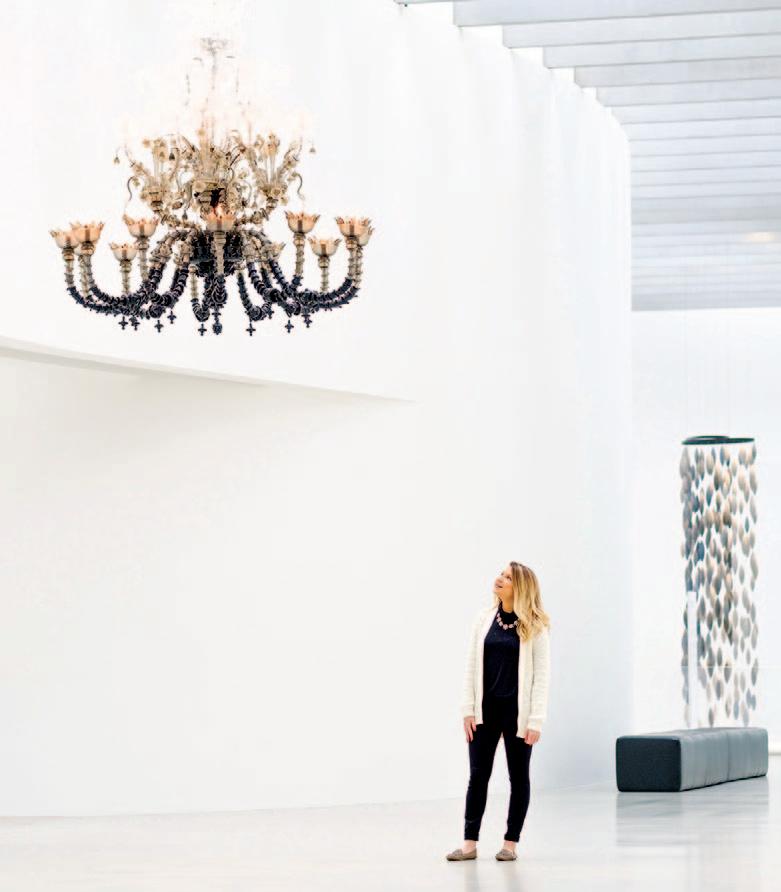
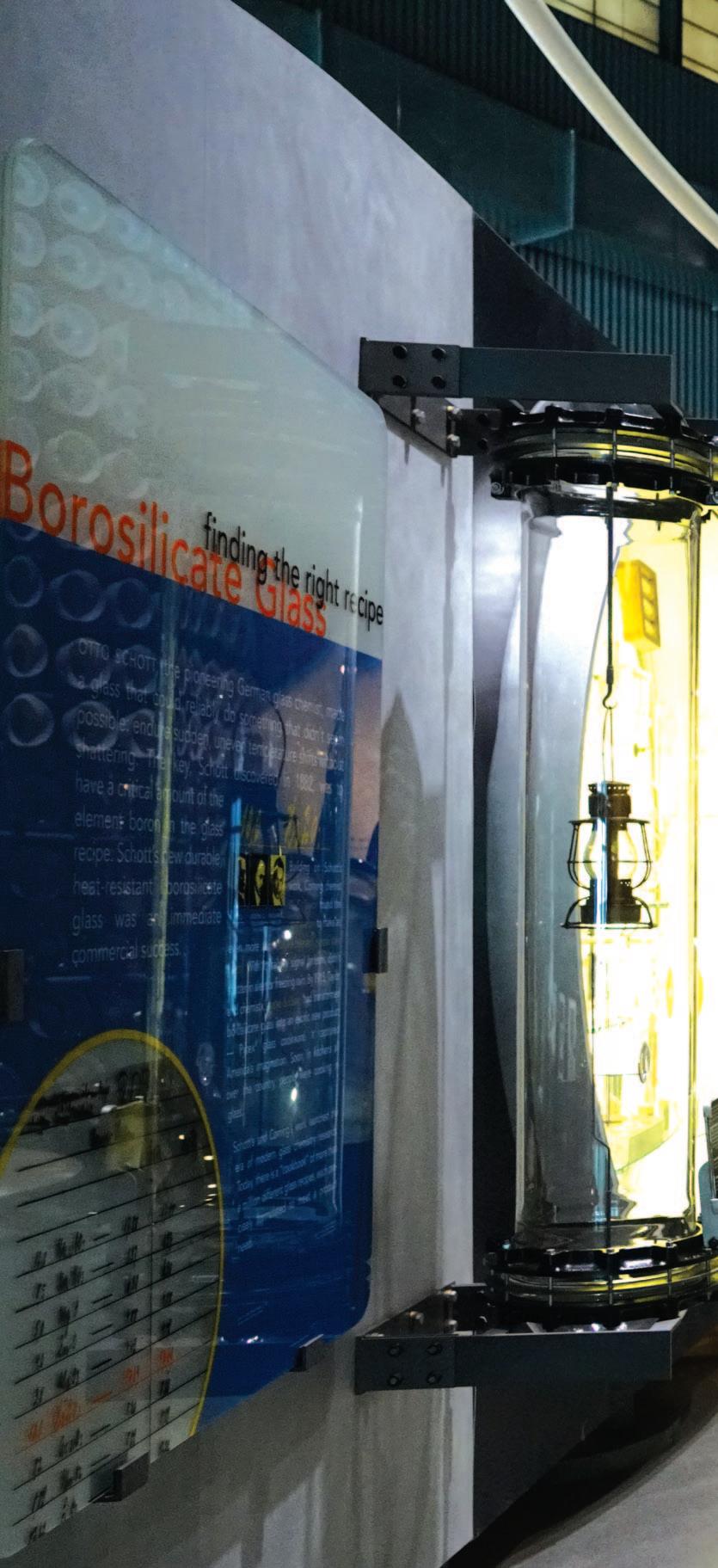
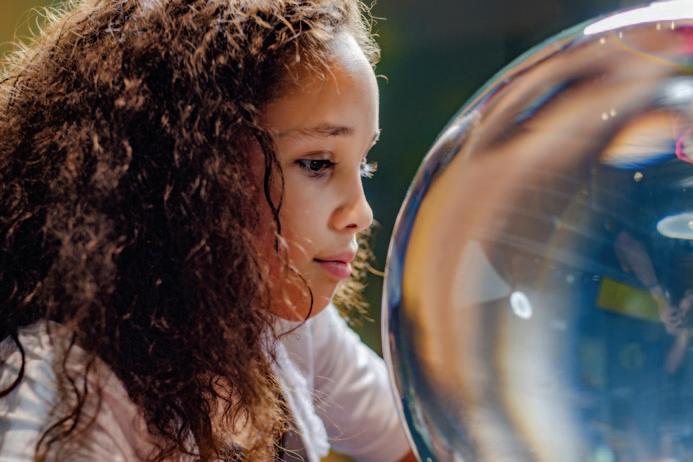
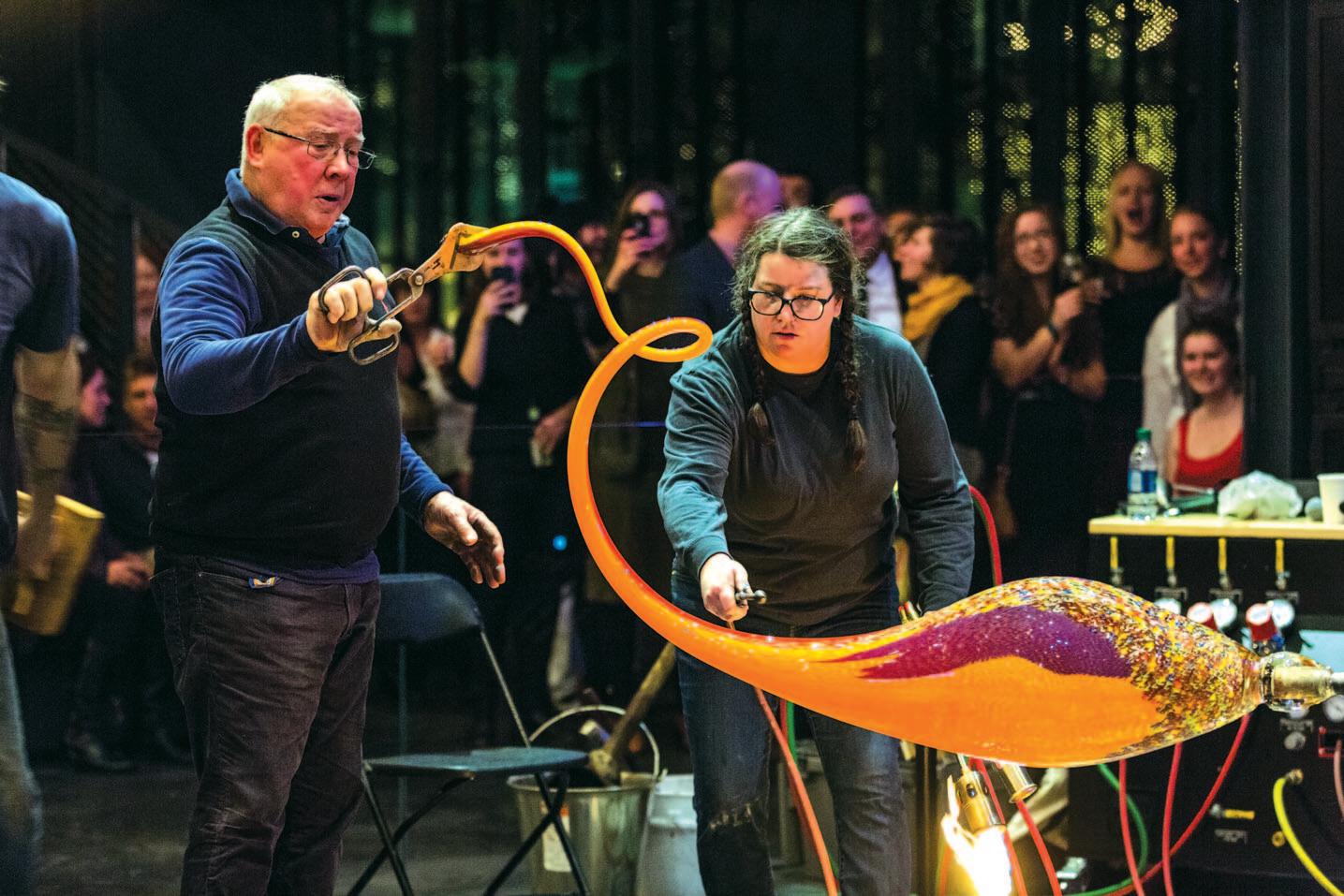
Wit hin The Corning Museum of Glass buildings, there are more than 50,000 works in glass to view and appreciate. Several levels gracefully flow together with dedicated spaces featuring all facets of glass. In addition, there are dedicated s paces for glass research, exhi bitions, galleries, and education. Many more musts to see and ex perience can be found on several stages, i n cluding the Amphitheater Hot Shop, the world’s largest venue of its kind. Here, visitors enjoy watching live, narrated demonstrations including glassmaking, flameworking, optical fiber, and glass breaking by skilled artists who are part of the museum’s Hot Glass Demo Team.
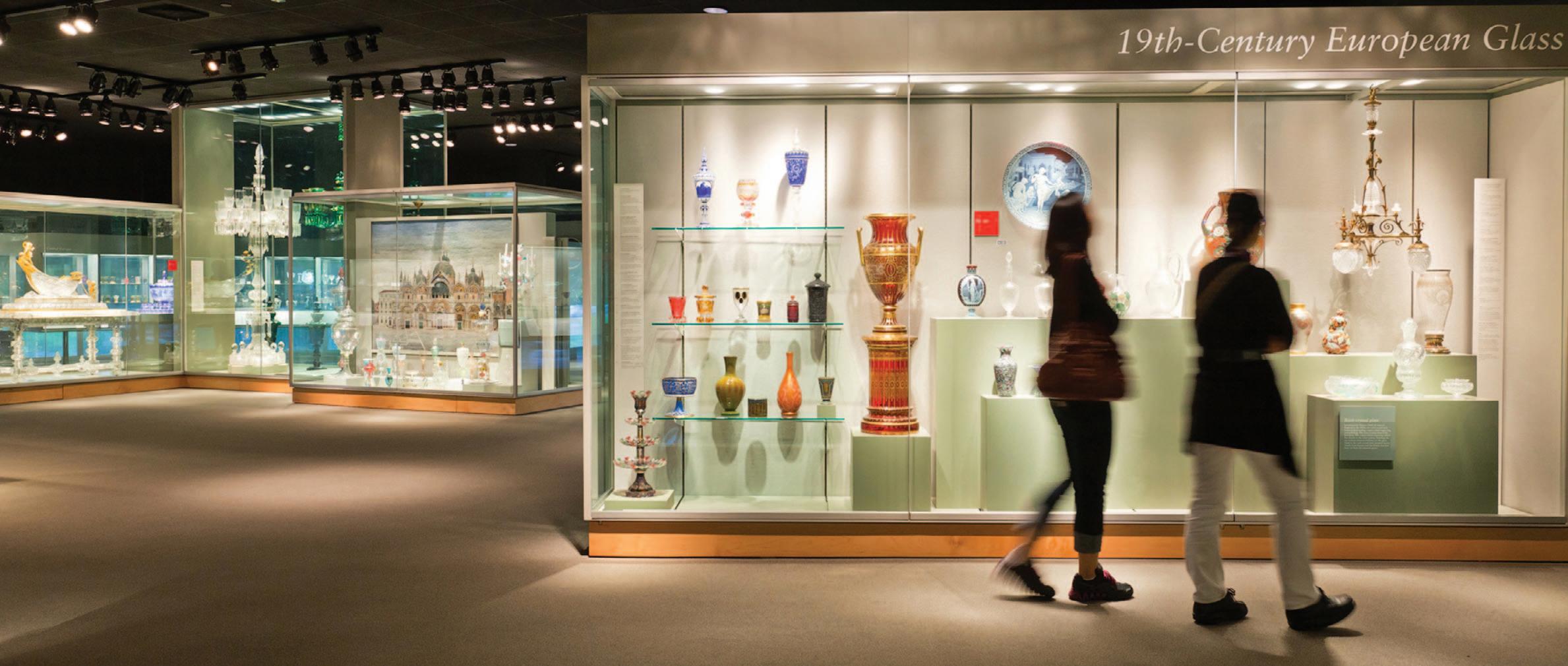
There are many beautiful galleries to visit with spectacular examples o f g lass and glass innovation. So me contain permanent collections while o thers house changing ex hibitions. Of note is the “35 Centuries of Galleries,” lo cated on the second floor which in cludes iconic and captivating masterpieces of glass. Roman, Islamic, European, and Asian are some of the cultures beautifully represented. On display is an example of the earliest Islamic drinking horns and is one of only three known to exist in the world today. Another fascinating piece that is prominently displayed is the Be haim Beaker, an enameled glass that commemorates a Venetian mar riage dating back to 1495.
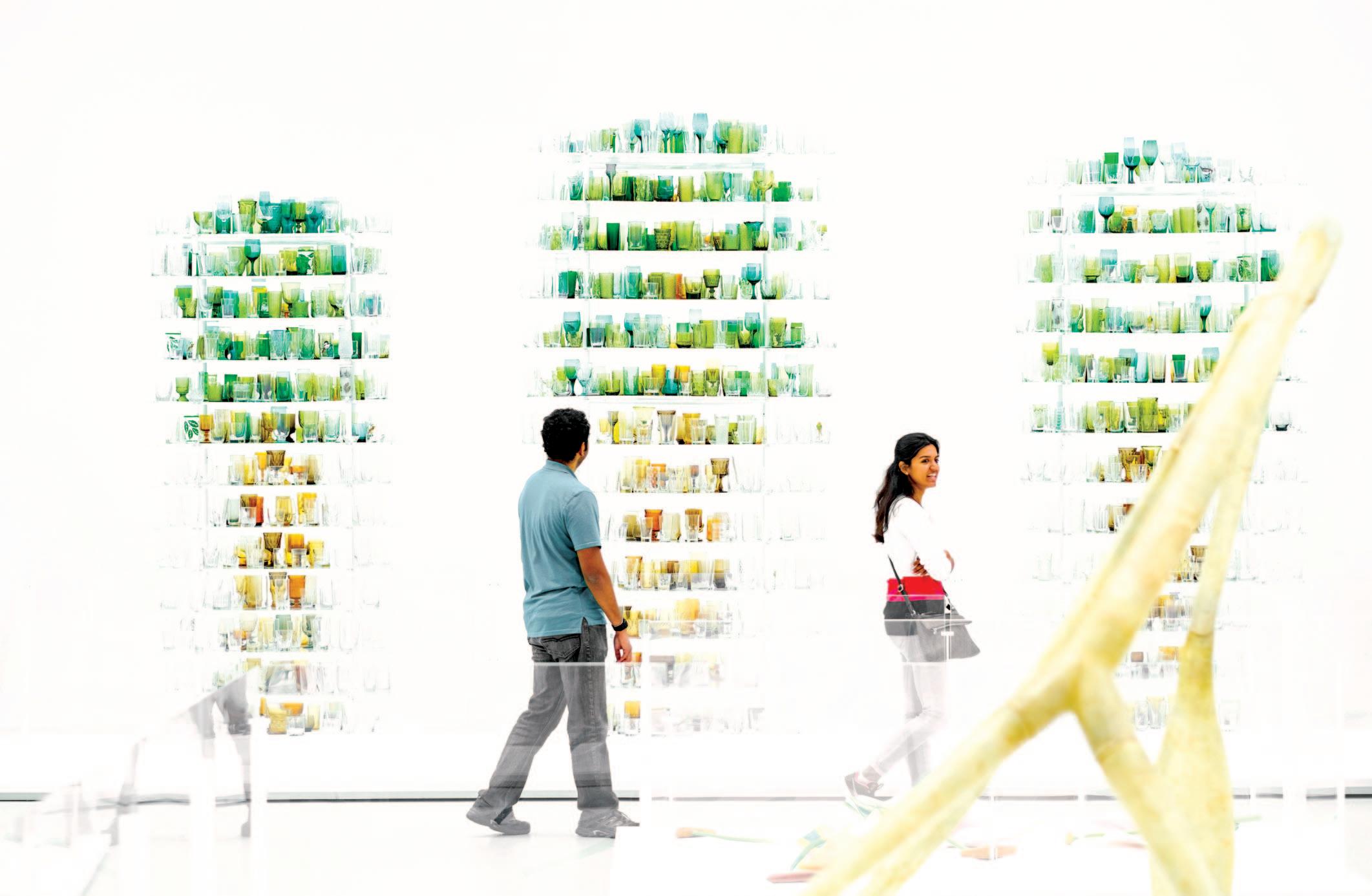
ad dition, there’s a breathtaking 10-foot tall in stallation comprised of more than 2,000 re cycled drinking glasses arranged in the shape of trees; a butterfly chandelier called “Virtue of Blue,” cleverly fabricated out of blue solar panel butterflies; and an amazing sculpture composed of more than four million glass beads called “The Continuous Mile,” created by Liza Lou. They are truly extraordinary.
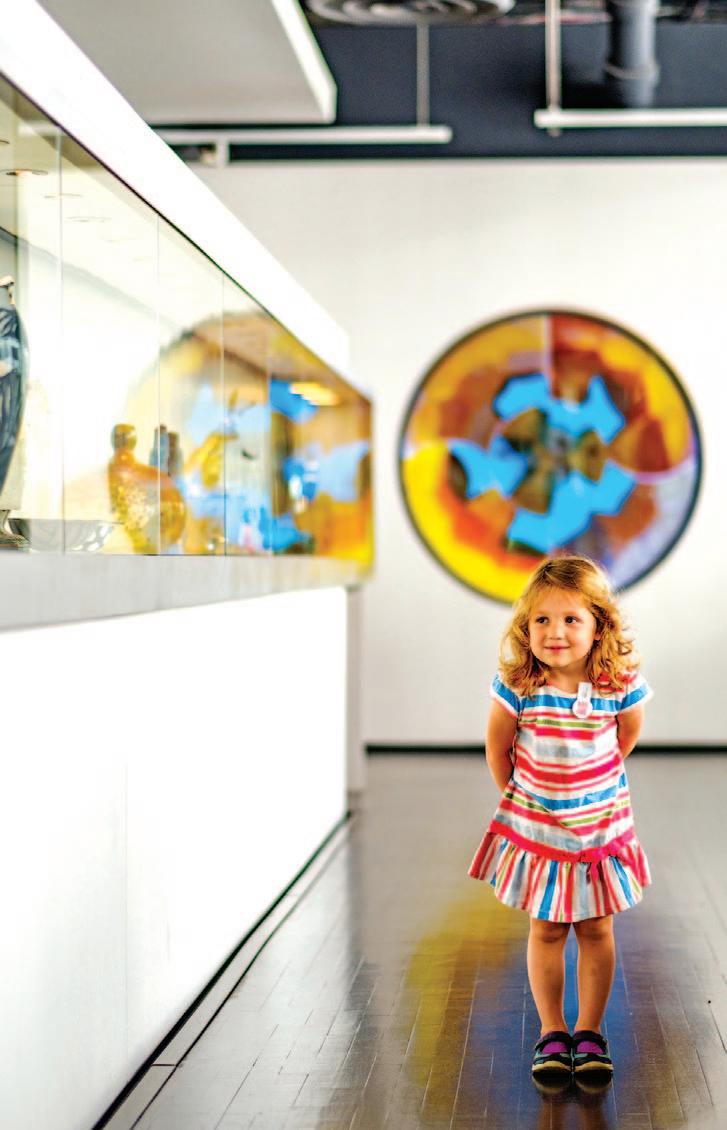
More recent glassworks can be seen at the “Contemporary Art + Design Galleries” and the “Ben W. Heineman Sr. Family Gallery of Co ntemporary Glass” which feature spectacular contemporary glass art by many significant artists including Karen LaMonte, Bruno Pe drosa, Dale Chihuly, and Klaus Moje. In
Another must-see is “The Studio,” a yearround, state-of-the-art, teaching facility. Here the world’s foremost glass artists teach intensive courses and conduct extensive workshops. A number of residency programs are offered as well, including the Artist-in-Residence program, the David Whitehouse Artist Residency for Research and the Specialty Glass Residency.
Artist Fred Wilson “To Die Upon A Kiss”
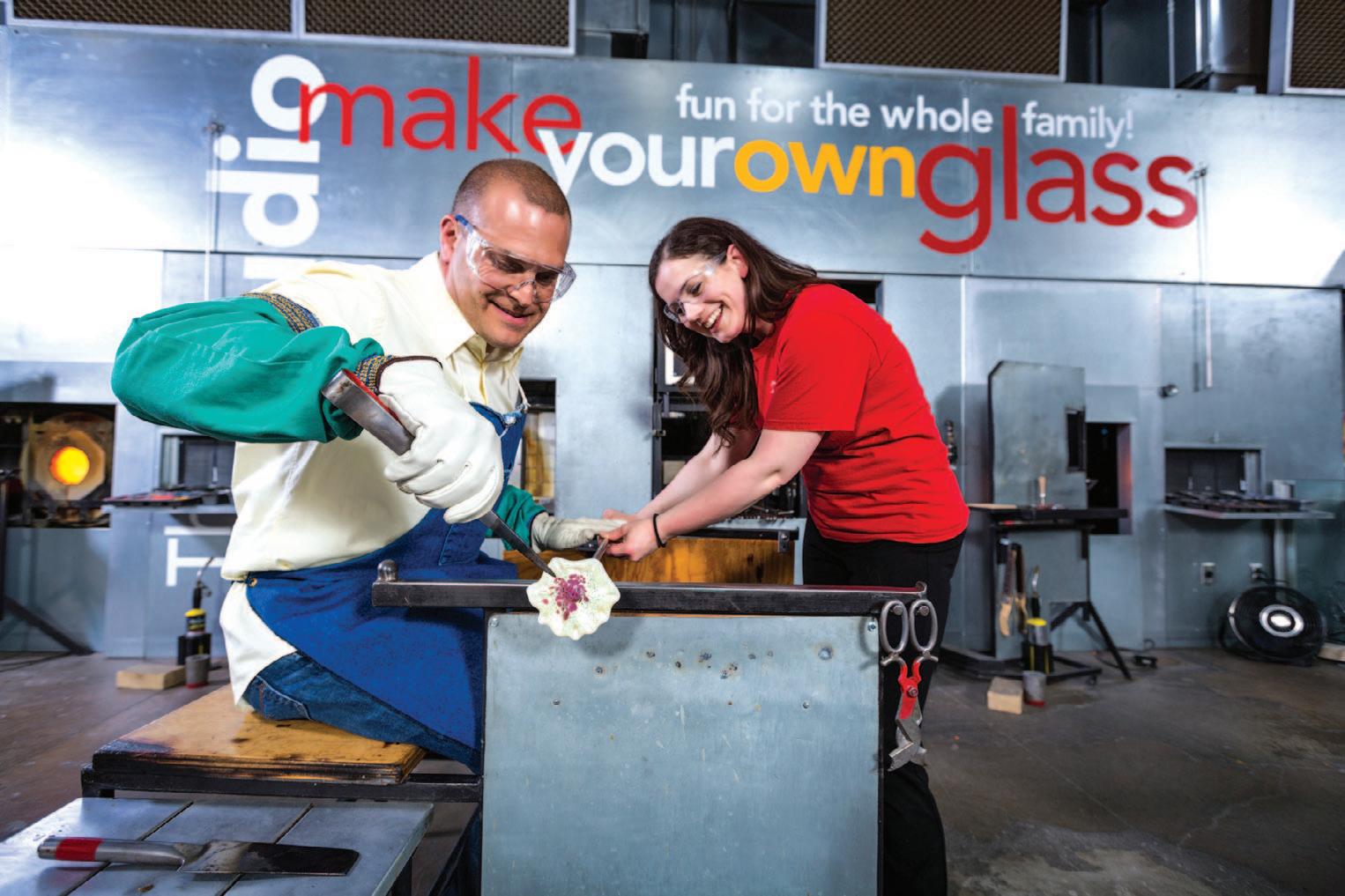
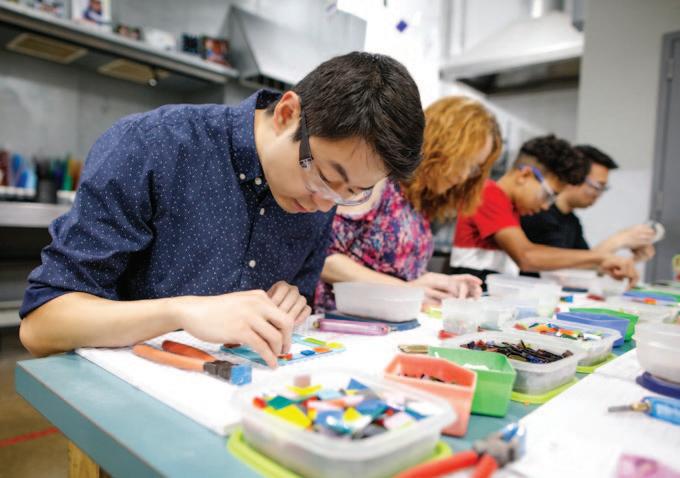
Just for fun, The Corning Museum of Glass invites visitors to take an amazing, 40-minute “Make Your Own Glass” class at “The Studio.” Often inspired by the fascinating Netflix glassmaking show, Blown Away, students and hobbyists of all ages get to per sonally experience the art of glassblowing. First, they select their favorite colors and are then shown how to use a blowpipe and sculpt their own piece by an instructor. With a variety of classes to choose from, the student glassblower is rewarded with their very own, one-of-a-kind glass masterpiece. The masterpiece can be many things including a special bead or pendant, bookmark, frame, ornament or pa perweight. Once sculpted, the instructor places the piece into an annealing oven to slowly cool overnight. It is then available for pickup or direct ship the very next day with one caveat: the newly minted glassblower must find three perfect spots to display it in their home.
The Juliette K. and Leonard S. Rakow Library is another gem in the museum. Holding a comprehensive reference collection of glassmaking history dating
Vessels Gallery in The Innovation Center
back 3500 years, it continues to collect and docu ment the world of glassmaking - past, present, and future.
The Corning Museum of Glass also offers extraor dinary virtual tours and online classes. Some of the many wonderful digital experiences waiting for you and your family are:
Relaxing with Glassmaking Videos – Hundreds of hours of mesmerizing glassmaking videos can be seen on the museum’s award-winning YouTube channel. Enjoy watching glass artists at work and escape from the many stressors in life, especially during this difficult time.
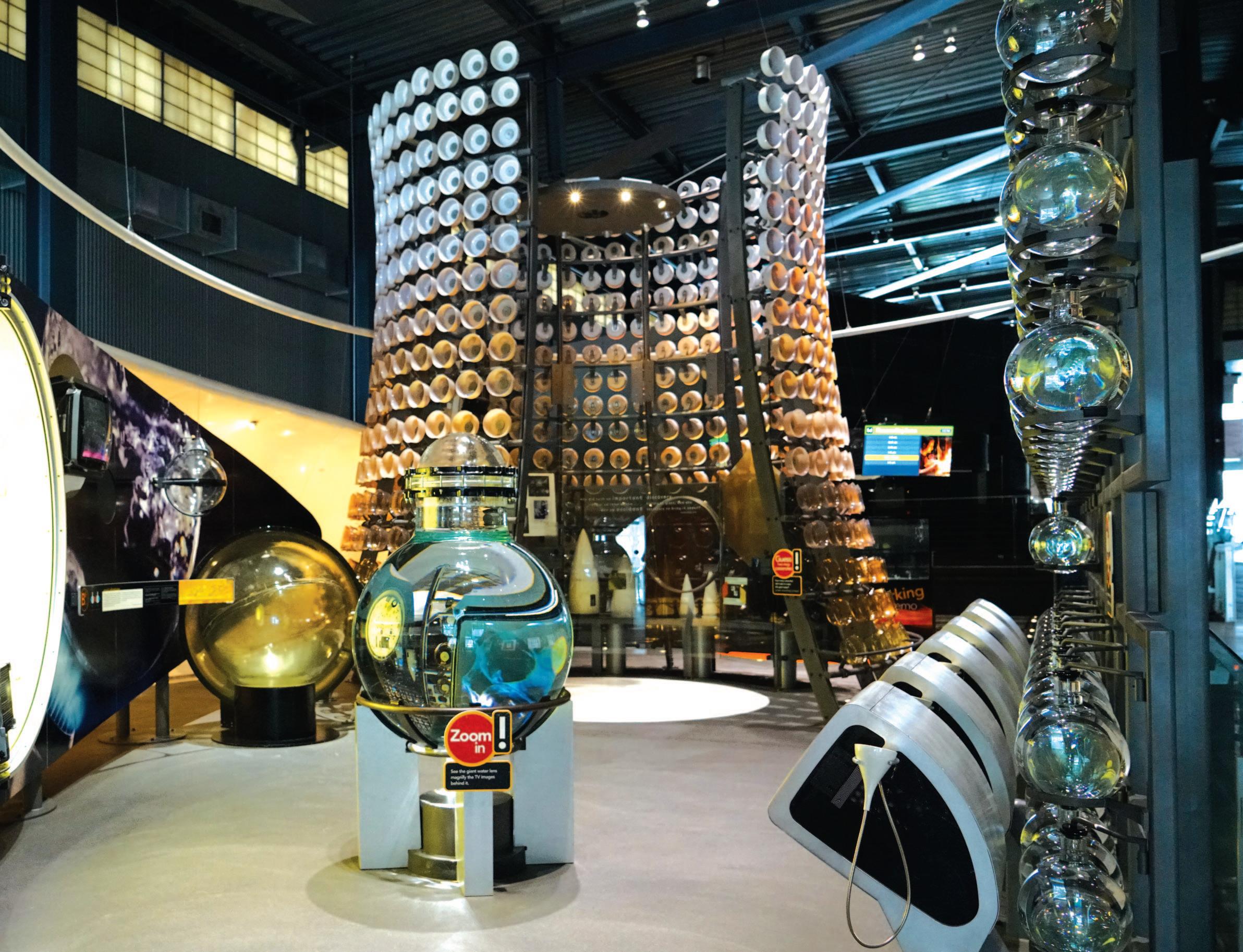
Take a Virtual Tour – Through Google Arts + Culture, you can wander around the Contemporary Art + Design Galleries at your leisure and enjoy the colorful glass sculptures again and again. Or maybe the Innovation Center with its state-of-the-art science and technology exhibits and galleries will capture your attention. There’s the Optics Gallery with the famous 200-inch disk, which was the first casting for Mount Palomar’s Hale telescope. Definitely spend some time learning about the ways in which everything from lighthouses to optical fibers communicate with light. The Vessels Gallery, which will shed light on how glass containers evolved, beginning with the basic bottle
and light bulbs to television tubes and missile nose cones, is another fascinating read. And in the Windows Gallery, learn more about safety glass and tempered glass, while meeting the inventors who devised ingenious methods for making large expanses of flat glass flatter and distortion-free.
Color Our Collections – A set of intricate glass designs are offered for free, easily printed from home and colored with a handful of crayons or colored pencils. Coloring is a proven calming ex ercise and a wonderful way to escape for a while. Children and adults can certainly enjoy this activity together.
Check Us Out on Netflix – The Corning Museum of Glass is featured on the show Blown Away, a
fascinating Netflix glassblowing competition that will definitely draw you in. When you’ve completed the series, you should go back to YouTube to see behind-the-scenes footage from the show and watch fascinating glass experiments conducted by Nick Uhas, the show’s host. Guest Artist demonstrations with the show finalists are a treat as well.
Learn How We Care for Our Collections – Once again on YouTube, enjoy a number of glass con servation videos and see how the museum cares for its incredible collections.
Read Glass Stories – The Corning Museum of Glass blog features stories and behind-the-scenes glimpses of what the people at the museum do every day to ensure you have the best experience possible, both online and in person.
Discover Venetian Glassworking – An incredibly be autiful style of glass, enjoy videos of how Ve netian Glass is made. And be sure to pe ruse the museum’s publications by William Gudenrath, Techniques of Renaissance Glassworking and Tech niques of Renaissance Venetian-Style G lassworking which will give you a new appreciation for this beautiful glass art form.
Contemporary Art + Design Gallery
Lino Tagliapietra at Contemporary Art + Design Galleries
You Design It; We Make It – Watch glassmakers take drawings submitted by the au dience and turn them into imaginative works of art. You’ll see Samantha’s Thinking Cap, D.H.’s Dinosaur, Sean’s Fish Bowl and Jason’s Whale go from an idea on paper to fun works of art right before your eyes. It’s both magical and fun.
Discover What Was Hot in Glass Every Year Since ‘79 – Beginning with 1979 and for every year thereafter, The Corning Museum of Glass has digitized every volume of its an nual exhi bition-in-print, New Glass Re view. At your leisure, read, learn and enjoy as you turn the pages.
Explore Our Collection of Glass –Using the Collections Browser, dis cover and marvel at the vast number of glass collections the museum houses by type of glass. There’s everything you can possibly imagine and more. Then definitely make plans to visit when it reopens.
In addition to the digital experiences described, The Corning Museum of Glass staff, curators, researchers, and artists are hard at work developing an d creating new on line experiences
to educate, entertain, and simply share with you. Every so often it is so im portant to leave our troubles behind. To lose ourselves in the beauty and creative expressions that surround us. These are the moments in time that you give to yourself. These moments were never more important than they are now.
So treat yourself to The Corning Museum of Glass online at www.cmog.org. And be sure to visit their campus at One Museum Way, Corning, New York. Your bucket list is waiting!
Artist Katherine Gray “Forest Glass,”
Exploring The Heineman Gallery
Rocket Launches to Robot Bleeps
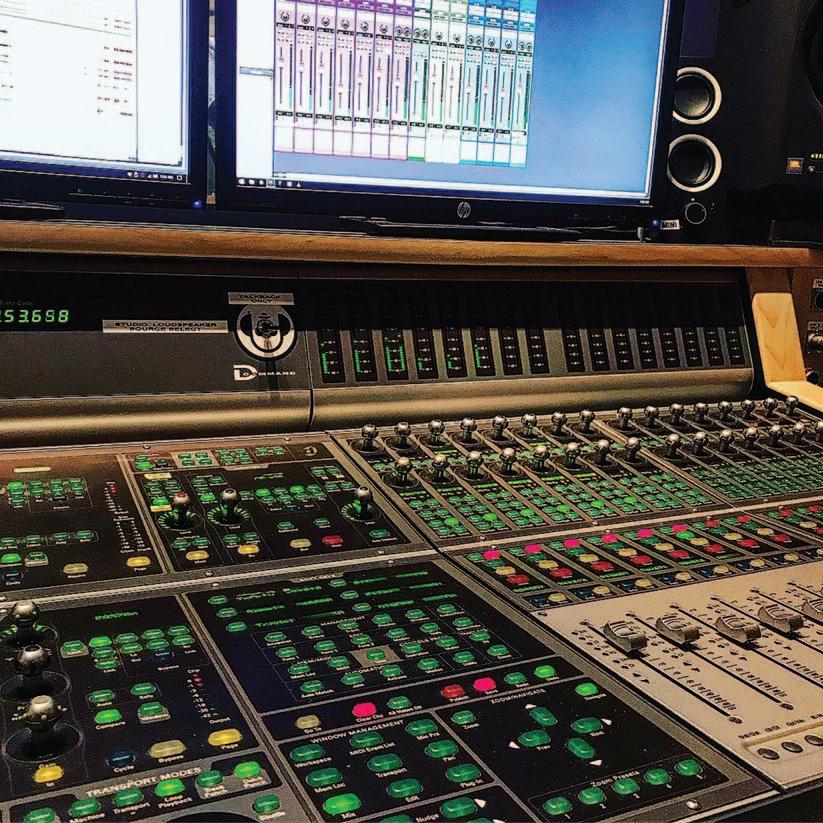
Saratoga recording engineer Jason Brown produces the sounds and music of a hit African children’s show.
By Kirsten Ferguson
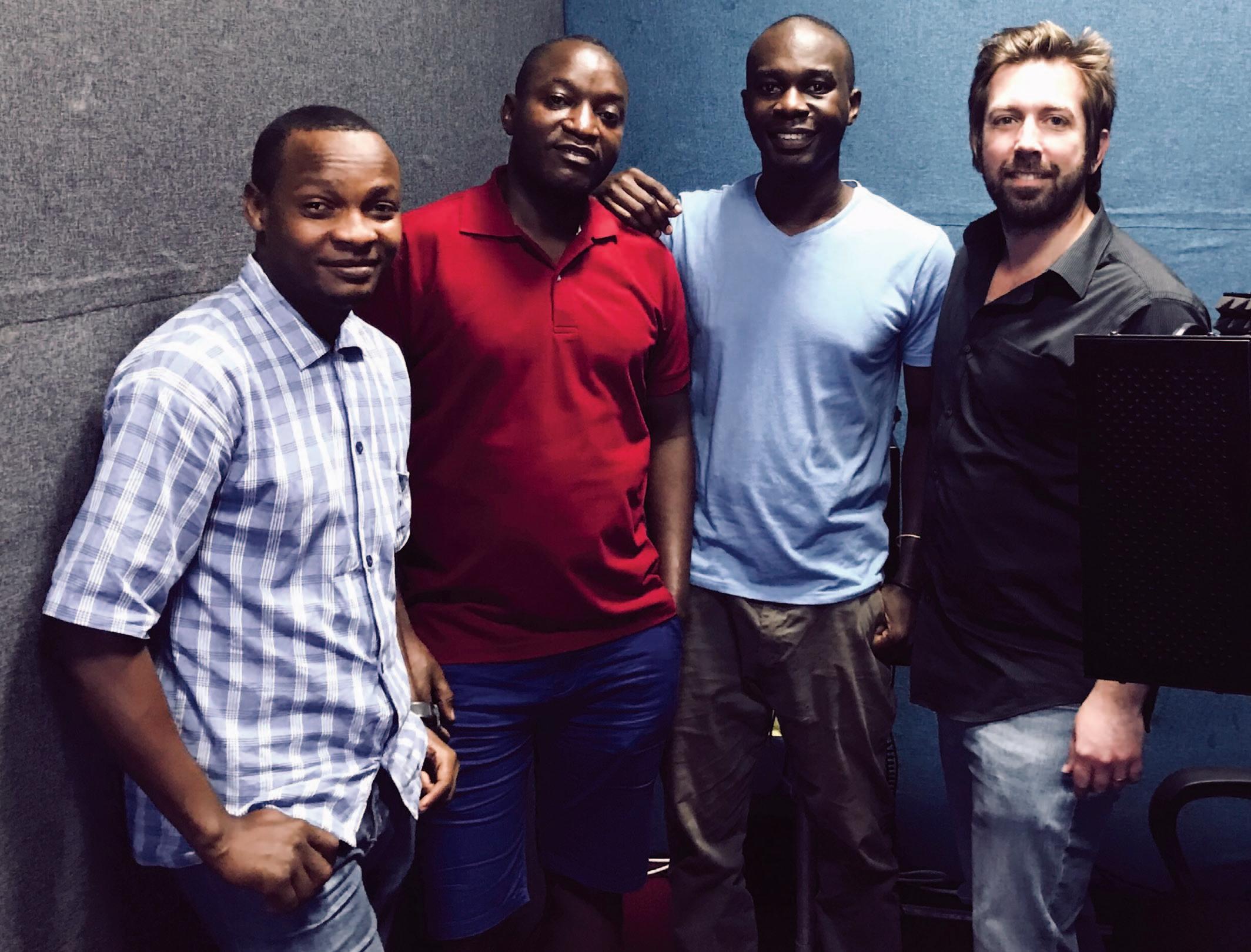
It’s a long way from Saratoga Springs to Dar es Salaam, a bustling commercial port on Tanzania’s Indian Ocean coast. After a chance encounter on a Saratoga Springs playground, music producer Jason Brown of Starling Stu dios found himself on a flight to the East African city just before the pandemic hit.
Several weeks earlier, Brown had taken his three-year-old daughter to play at Saratoga’s
West Side Rec, where he bumped into an old high school friend, Pat Olvera. After the Saratoga Springs High School grads talked for a bit, Olvera—now the creative director for African media agency Khanga Rue invited Brown to Tanzania to lead a training program in podcasting. “About a month later, I was on a plane to Dar es Salaam,” says Brown. “It was one of the most random business things that’s ever happened to me.”
Brown, a Skidmore College alum and former member of New York City rock band FIXER, first launched his Saratoga Springs recording studio primarily to work with bands. Some great local artists have recorded in his basement studio, including Candy Ambulance, MaryLeigh Roohan, Eastbound Jesus, Belle Skinner, and Dryer. (“It’s honestly the best sounding recording we’ve done,” guitarist Bobby Carlton says of Dryer’s Bright Moon Bright Sun, recorded with
Brown at Starling Studios. “Recording with Jason was an awesome experience.”)
When the pandemic made in-person recording experiences more problematic, Brown shifted t o another area of expertise: voice-over se rvices, sound production, and all the facets of narra tive podcasting—from crafting orig inal music themes to script shaping to ed iting out missteps and heavy breathing. Re cent projects include an audio book for best-selling novelist Alice Hoffman and the recording and mixing of the Unfixed podcast a collaboration with Beyond My Battle, a Saratoga Springs group led by Martel Catalano that helps people overcome stress and adversity related to chronic health conditions.
“I started off fully into music, but there’s been a natural progression into these other worlds that now make up more of my business,” Brown says.
The Khanga Rue gig led to Brown working with Peripheral Vision International, a Uganda media and social-change firm led by Olvera’s wife, Gosia Lukomska. The company produces Africa’s first science show for kids:
N*Gen (pronounced “engine”), which first aired on Ugandan TV in September and has since been picked up by TV networks in more than half a dozen African countries. On Feb. 6, the show debuted in North America on The Africa Channel.
The brainchild of six African junior high school teachers, the show—for children ages 8 to 12—looks at science through an African perspective and prominently fe atures women scientists. Episode subjects range from com puter programming to as trophysics to the natural sciences. Presen ters give short lessons and conduct hands-on experiments, whether visiting Lake Victoria to talk about wetlands or learning from paleontologists at the Kenya National Museum.
Brown did all the sound design and mixing f or the hit show, whether that meant recre ating the roar of a rocket or the bleep bleeps of a robot. He also wrote and did the instrumentation for the super catchy theme. (“When the show started, I felt happy be cause of the song. It’s the kind of song that I like. ‘Let’s go! Let’s know!,’” said a young person in a recent focus group about the show.)
The program’s second season is now in pro duction, with Brown continuing his role. “It’s a really incredible show as an in spiration for rural African children,” he says. “It’s remarkable what they’ve been able to do. I didn’t realize how big it was going to be, but it’s been getting a lot of attention.”
Learn more about Starling Studios at www.starlingrecording.com.
Drs. Welby and Baime Made House Calls
by Karen Richman
Remember Marcus Welby, M.D.?
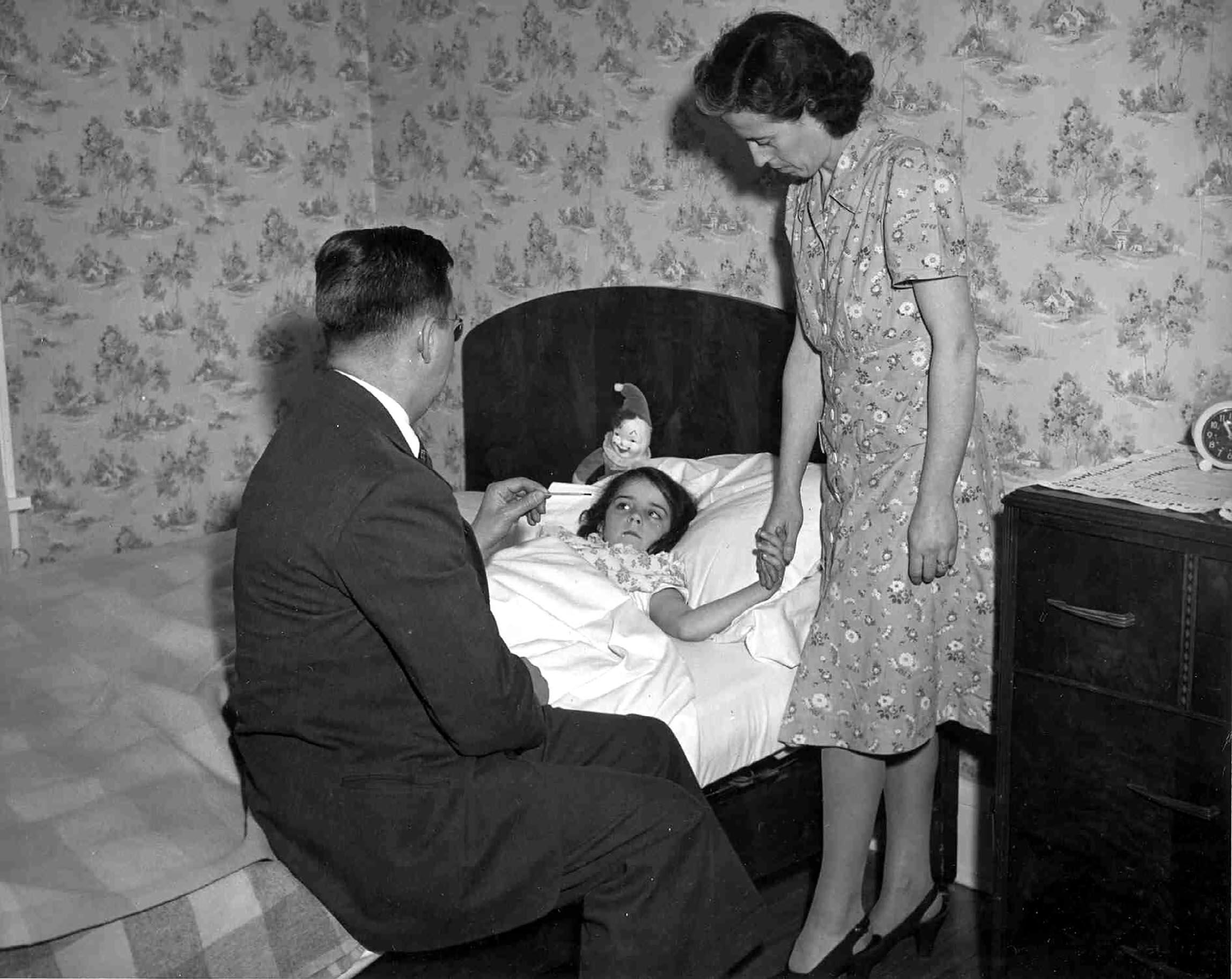
If you do, then you likely are of a "certain age." I'm of that certain age as well and remember quite vividly watching the TV show Marcus Welby, MD. from 1969-1976. Welby was the kindly doctor who would go out of his way to care for his patients in ways not routinely taught in medical school, and always, Dr. Welby routinely made house calls.
Marcus Welby was fictional, a popular, folksy, always-smiling c hap portrayed by established actor, Robert Young, he of "Father Knows Best" fame. Having earned his chops on the aforementioned series, people already loved him and trusted him because
he always "knew best," a perfect persona for a doctor. His fictional character of Jim Anderson always knew what was right and fair and how to solve difficult problems, so when he donned the white coat of Marcus Welby bringing with him a self-assured presence, gentleness, and the ability to solve anything, he already had it made. The show was a resounding success for seven seasons, shooting to the #1 position in the Nielsen Ratings, and Young was an instant hit as well.
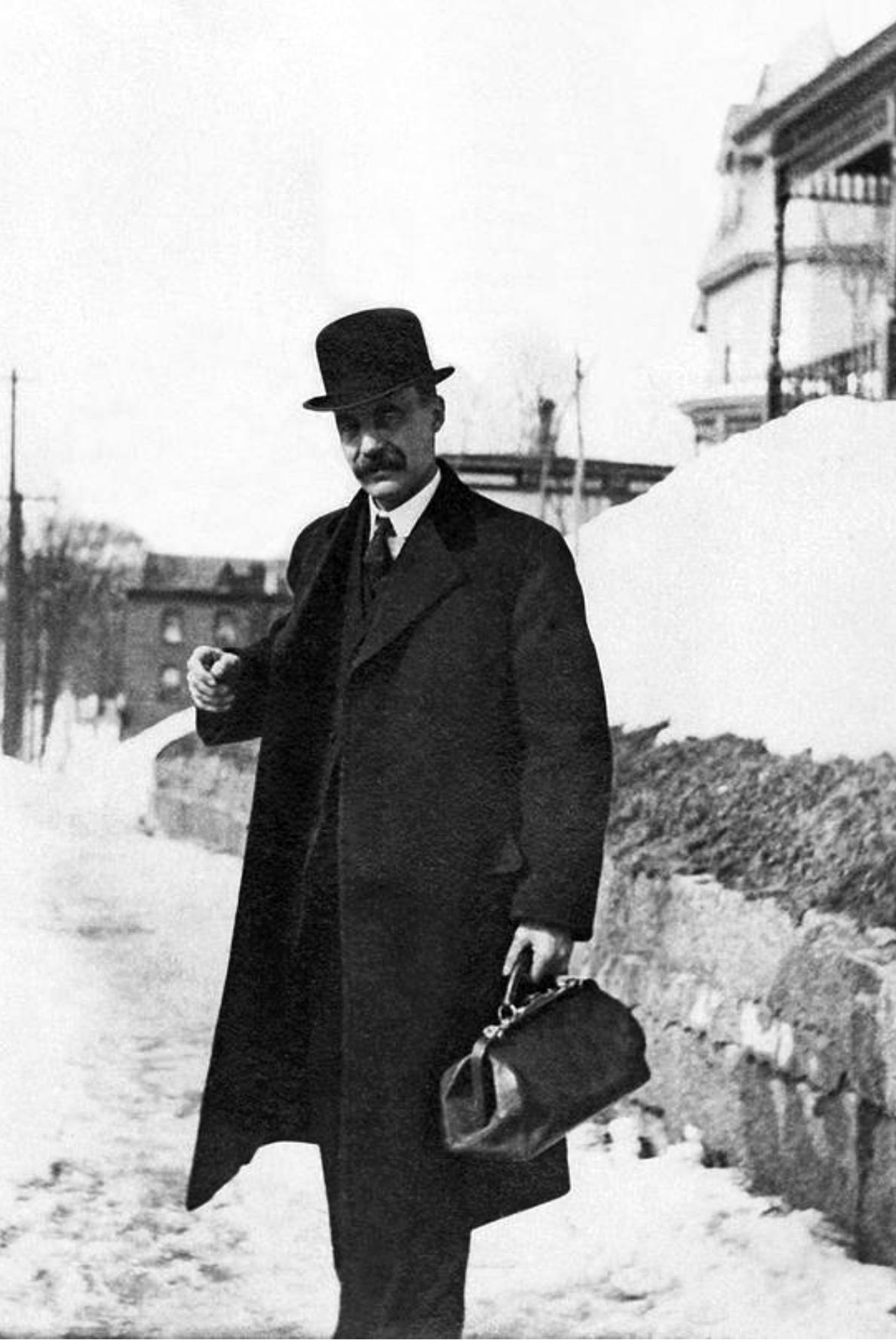
My pediatrician was Dr. Baime, a tall, dark-haired man with thick eyebrows behind even thicker glasses, yet with a gentle manner toward kids. If those kids were sick, really sick, he wouldn't think of asking them to come to his office, sitting in a crowded waiting
room with fever, cough, and who-knows- what else? Instead, Dr. Baime always came to the house, black leather bag in hand. When he opened the latch it would immediately unfold into three sections of strange looking tools, ominous bottles, and lots of gauze, wraps, and one big stethoscope Dr. Baime would immediately put around his neck, its chest-piece, also called "diaphragm,"feeling very cold against my feverish body. As he checked my heartbeat I would look with childish trepidation into that black bag just knowing one of those sections held the needles, although I couldn't see them. It never mattered what it was that was wrong with me, but whatever kind of virus or disease or bug it might have been, it always seemed to require a needle.
On TV you never saw Dr. Welby give anyone a shot, he was too busy smiling, doling out advice, and sitting on the edge of the bed chatting with both patient and caregivers. He had plenty of time, something today's doctors do not appear to have. The insurance industry changed all that with the advent of HMOs which had stringent rules for providers on the amount of time they could spend with a patient. But that was not an issue to Dr. Baime nor to Dr. Welby. They made house calls, and they made the time.
Although a mere dinosaur in the medical world today, house calls were the way doctors tended to the sick and injured starting in the 1930s. Back then it was difficult for people to travel even a few miles - many didn't have any reliable means of transportation - and doctors were few and far between. Since it was nearly impossible to ride a horse when sick or injured, and most did not own an automobile, the doctor came to the patient and did so right into the '50s. Like Marcus Welby. Like Dr. Baime.
Dr. Baime's house calls were always made in the evening after he had finished his daily patient load at his office. I never realized back then how tired he must have been by the time he got to our house at 7 or 8PM, but he never showed it and never complained. His focus was solely on the patient at hand, diagnosing what was wrong and doing whatever he could to alleviate pain and suffering.
Unfortunately for me, Dr. Baime always felt a good old fashioned shot of penicillin would do the trick, and as he sterilized his needle and prepared to alleviate my pain and suffering by causing more, he would give that gentle smile and in a quiet, low voice say, "Roll over." Dr. Baime also said what every doctor always said to a child in those days, usually just before the needle pierced the skin, "This is going to hurt me more than you." Wanna bet?
They also said then, and medical personnel still say today before drawing blood or sticking a bicep with a needle, "Just a little pinch." Must be something they learn in medical school because they all say it. "Just a little pinch." It's not a little pinch, it's someone putting a needle into a vein, an arm, or buttock, and it's usually a bit more than just a pinch.
Injection over, Dr. Baime would smile at me and at my nervous mother, telling us both that I would be just fine in a matter of days, that the shot would bring my fever down and so would the prescription. Yuck! It was always that pink medicine in a small bottle with the yellow cap called oramycin, something that would fight bacteria in the body. It tasted terrible, but Dr. Baime would always tell me that if I were a good girl and swallowed it fast every time my mother told me it was time to dose, I'd get better faster. My mother also told me that she'd give
me a teaspoonful of vanilla ice cream right after to make the bad taste go away. The ice cream was surely welcome, but nothing made that taste go away!
It's been a lot of years since Dr. Baime sat on my bed, taking time to talk to me, to put his ice-cold hand on my feverish forehead, to smile and tell me I was going to be fine. And it's been a lot of years since Marcus Welby sat on the beds of hundreds of people, not always being able to deliver good news, but always able to deliver the tenets of his medical oath with great kindness and caring. In part, this oath says, "I will remember there is art to medicine as well as science, and that warmth, sympathy, and understanding may outweigh the surgeon's knife or the chemist's drug."
Just like Dr. Welby. Just like Dr. Baime.
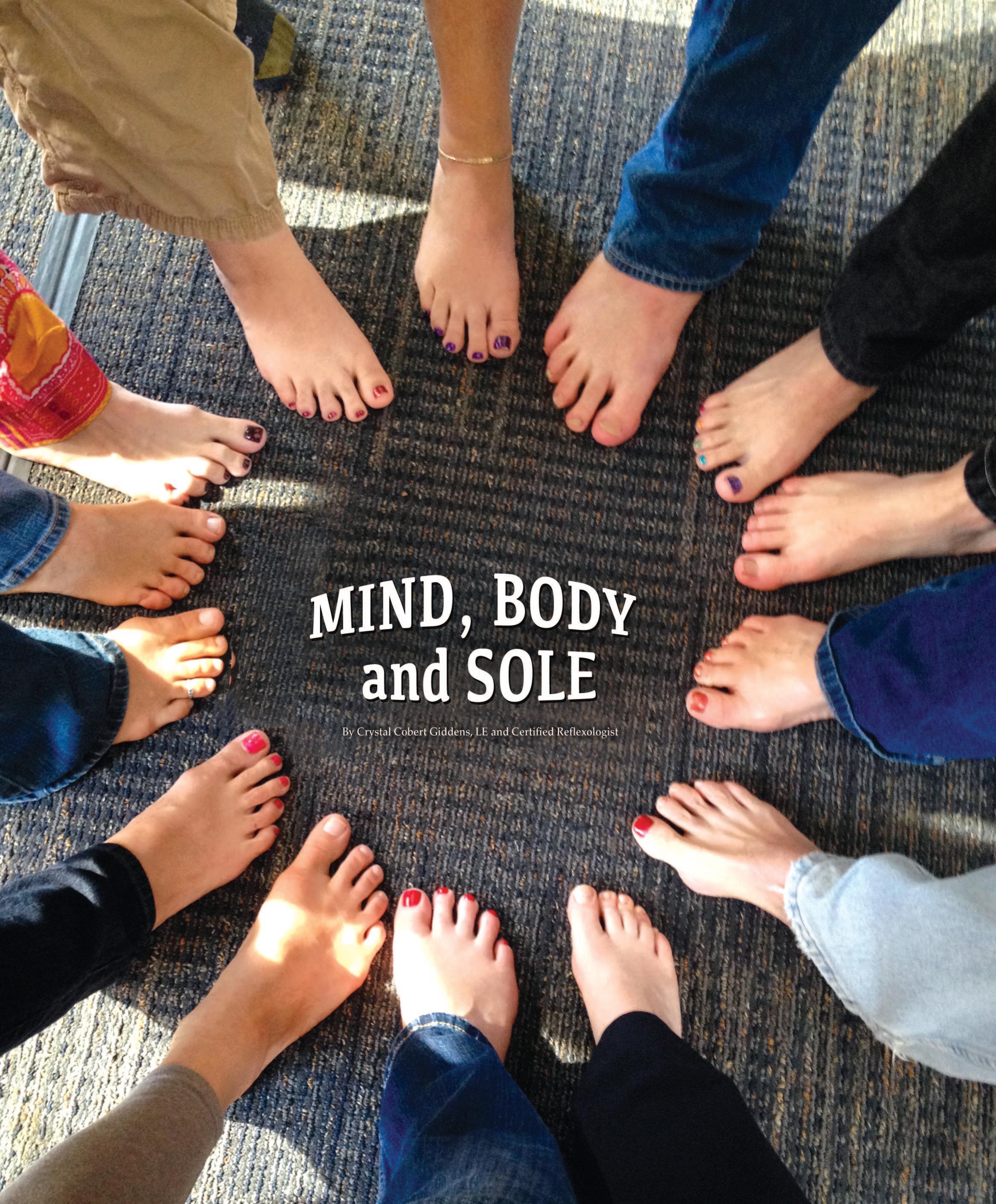
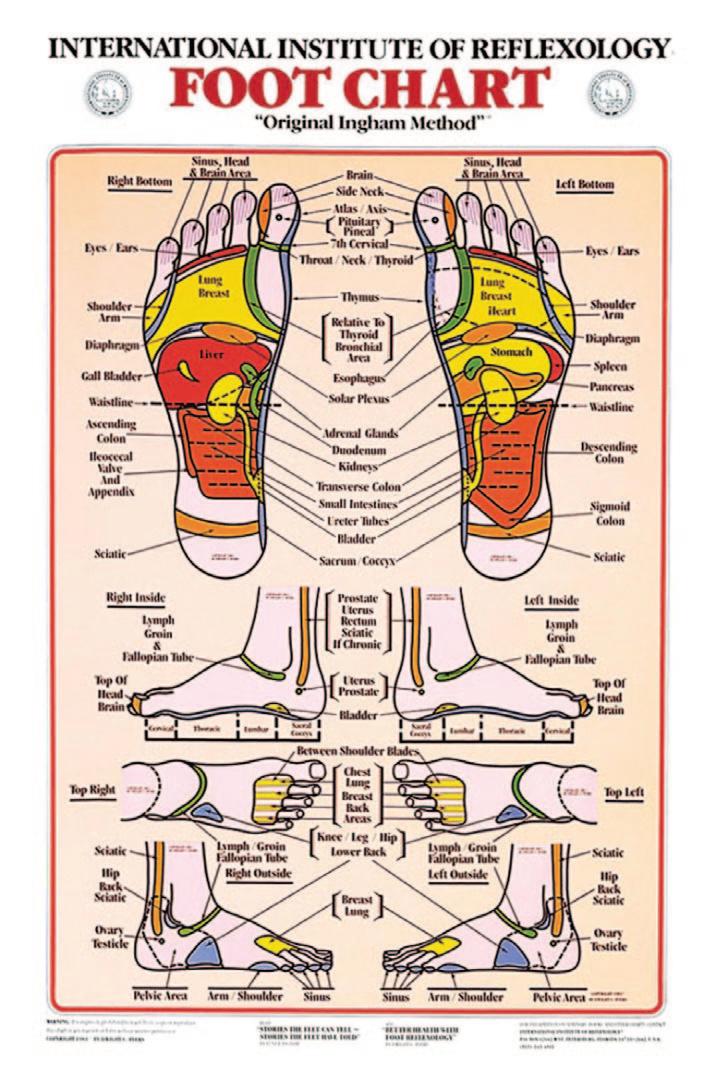
Reflexology is a holistic treatment, centuries old, and treats the whole person - body, mind and spirit - to induce a state of relaxation, balance and harmony, which will encourage the natural ability of the body to heal itself. Reflexology is not meant to replace medical care and is not to be confused with massage therapy or acupuncture. However, just about everyone, from the tiniest of babies to the very elderly, can benefit from reflexology. It can even help our pets!
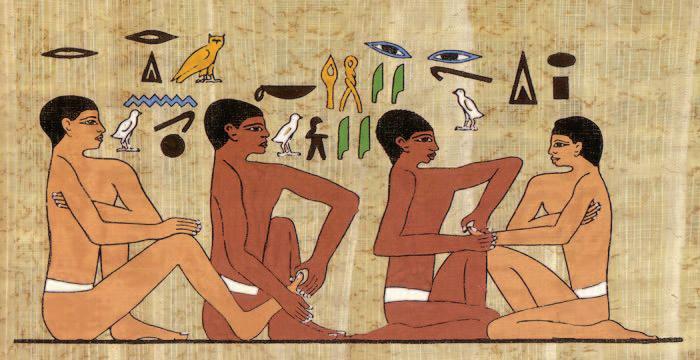
Modern reflexology is about 100 years old, but promoting healing through the feet and hands has been practiced by many cul tures for centuries, even as far back as the ancient Egyptians.
In a tomb at the burial ground at Saqqara, Egypt, there is a famous wall painting dating back to 2330 BCE. The tomb is referred to as the “Physician’s Tomb”, because the painting within shows two figures giving a type of re flexology to two patients. One practitioner is treating his patient’s feet, while the other works on his patient’s hands. According to the translation of the ancient hieroglyphs, a patient is saying: “Don’t hurt me”, while a practitioner replies: “I shall act so that you praise me.”
But why is reflexology beneficial and what does it do? It comes down to a basic philosophy of healing and wellness. Holistic therapies focus on “treating the whole person”, the body, mind and spirit. This entails looking at both the physical and emotional state of the person and their lifestyle. The body is treated as an integrated whole in the understanding that when one system is out of order, every other system is affected.
The main goal of reflexology is to discover and work out the sensitive areas in the feet by an alternating pressure of the thumb and fingers on all parts of the foot. The pressure applied to a nerve ending constitutes a stimulus. Reflex points are also found in other body extremities (hands and ears) but the feet’s sensitivity (they contain over 7,000 nerve endings) and their size, make them an ideal area to treat.
The feet are miraculous masterpieces of design, superbly put together and perfectly coordinating many components. Among the different com ponents of the feet are tissue, 26 bones, 100 ligaments, 20 muscles and an intricate network of nerves and blood vessels. By working on the relaxation points on the feet, a reflexologist can stimulate, through the nerve pathways, any organ, function or body part that is tense, congested or damaged as a result of accident, injury or illness.
Menopause creates apprehension and stress for many women. Reflexology can help reduce the stress that so many women encounter during this time of change. Reflexology has been proven to help with menopausal symptoms such as hot flashes, mood swings and water retention.
Our bodies have remarkable abilities to heal themselves. In fact, the body likes to be well and does everything possible to reduce inflammation, rid itself of disease and restore balance. Included in the healing process is the effect of thought patterns, which affect physical illness, as well as psy chological factors that may be contributing to the expression of dis ease…basically mind over matter. Complimentary, holistic therapies, in particular reflexology, help normalize the body’s protective energy by restoring its balanced state.
Each part of the body and every bodily function has its own reflex point on the feet and hands. This allows an amazingly accurate picture of a client’s health to be reflected. The feet and hands MIRROR the body. For example, if an area of the body is suffering from inflammation, tension or congestion, the corresponding reflex points in the feet and hands will be sensitive when pressure is applied.
Evening Colic, when the baby cries and seems to be full of gas every night, is difficult for the whole family. The more the baby cries, the more air is taken into the digestive system, and a vi cious cycle begins. Reflexology aids the baby’s digestive system by improving circulation to the digestive and intestinal areas and can ease discomfort or pain.
It takes a great deal of energy to fight off infec tion. Reflexology creates a great sense of re laxation for the entire body, which supports a n immune system fighting off disease. It helps to stimulate the elimination of toxic waste prod ucts from the liver, kidneys and bowel, improves nerve and blood supply and normalizes the body function.
Paw manipulation and pressure point work can help soothe our pets and help reduce arthritis and hip dysplasia pain, increase oxygenation of the blood and improve immunity. It increases re laxation, improves flexibility and reduces emotional stress for pets and can help the bonded connection between many pet parents and their pets.
Reflexology is a natural, non-invasive, complimentary therapy that treats the whole body through the stimulation of reflex points. It is an effective, preventative therapy for maintaining health and well being by allowing the body to RELAX, thereby helping achieve homeostasis. I have had one client in 8 years stay awake through the entire treatment. Most clients are asleep within 10 minutes and tell me it is the most profoundly relaxing treatment they have ever experienced.
Crystal Cobert Giddens FACES of Saratoga
489 Broadway, Suite 3 Saratoga Springs, NY www.facesofsaratoga.com