Stephanie Sittnick - Director of Sales ( 860) 227-8199 advertising@518mag.com
CONTRIBUTORS
Carol St.Sauveur Ferris, Karen Richman, Rona Mann Chandler Stevens, Lawrence White, Kirsten Ferguson, Susan Brink, Vanessa G. Ahern, Joseph Raucci, Crystal Cobert Giddens, Nellie Ackerman-Vellano, Kristina Watrobski
Welcome to our kick off to summer issue! The month of June brings beautiful bouquets, delicious fruits and vegetables, and an urge to get out there and enjoy the sunshine. It’s finally time to bust our your flip-flops and take out those summer clothes! Events, arts, and entertainment venues are opening up. It will be the summer to look forward to planning that special time with family and friends.
Our June issue is a special one for sure. Each story is so inspiring and unique but they all have one incredible thread that runs through each of them…..the gift of giving back to others.
As always, our goal is to deliver authentic, and unique content about creative people and interesting places. We hope you love this issue as much as we do.
Stephanie Sittnick Founder / Publisher
ENCORE
Hummingbird Haven
How Two Artists Are Revitalizing The Catskills pg. 4
Charles Wait’s Artistic Inspiration pg. 12
The Real Trend is, Never Stop Giving! DB Trends of Ballston Spa pg. 22 518 PROFILES 587 Grand Ave, Saratoga Springs, NY 12866
Magic in the Making, Manifested One Moment at a Time
Saratoga Staple Celebrates 27 Years in Business pg. 34
Seasons Saratoga Springs Upstate Beat pg. 42
A Shot of Adrenaline. Incendiary trio Candy Ambulance made it through the lockdown and are ready to bust loose.
Nostalgia
44 Getting Your Licks In
The Laffer Gallery
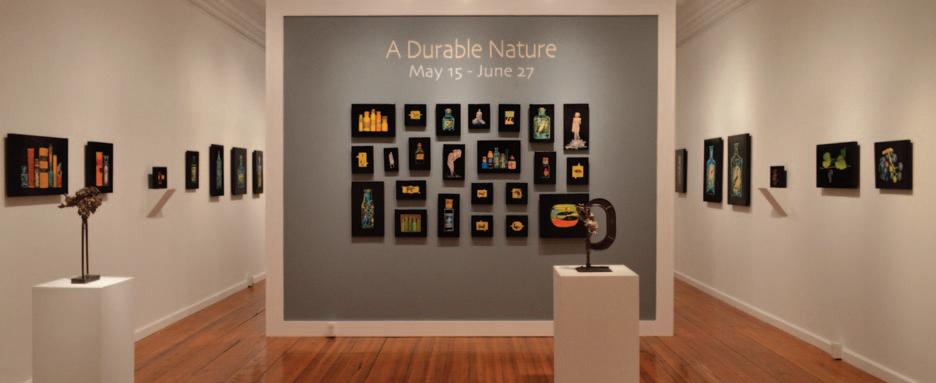
A Durable Nature | May 15 - June 27
The Laffer Gallery is a contemporary fine art gallery and custom framing studio showcasing nationally and regionally recognized contemporary artists. Exhibitions ranging from realism to abstraction rotate every 4 to 6 weeks.
518.695.3181 | 96 Broad Street Schuylerville, NY
Hummingbird Haven How Two Artists Are Revitalizing The Catskills
By Kristina Watrobski
Listen. Do you hear that?
No, it’s not a slightly tired father revving up his lawnmower on a warm Saturday m orning. It isn’t your children ever so quietly singing under their breath as they soar higher and higher on the swing set. Nor is it just some of that annoying sudden ringing sound in your ears.
It’s none other than a tiny, bright hummingbird zipping around and around you in your backyard. With his wings beating rap idly, the little pollinator is just as excited as you are that spring has arrived. Darting about, he is in search of some fresh air and some sweet, delicious nectar.
L uckily, thanks to artists, Dana Sherwood and Mark Dion, an imaginative and hardworking couple residing in the Hudson Valley, this hummingbird and many more in Upstate N ew York need look no further than the Thomas Cole National Historic Site in Catskill.
J ust like the hummingbirds who are currently helping deliver pollen from plant to plant, Sherwood and Dion have both devoted much of their lives to the outside world. W hen they aren’t creating, they’re immersing the mselves in nature. Now married and each a successful artist, they share many of the same goals with their work and frequently collaborate with one another on projects. Last year, they were able to combine both
their love of art and nature to produce the Pollinator Pavilion, but more on that later.
Even though their separate journeys both eventually led them to Upstate New York, Sherwood and Dion each had their own way of embarking on them. Let’s start with Sherwood.
Growing up as part of a big family on Long Island, Sherwood always knew she was searching for something more. She was from a very developed part of the state but w as always wanting to spend time in forests and in nature reserves on the northern shores of the island.
Dana Sherwood , photo credit: of Emily Andrews
Mark Dion
“I always had a yearning for more culture and nature,” says Sherwood. She also had t he chance to form a connection with a nimals early on. Not only did her family run a fishing marina, but she was able to interact with horses and work on a farm for many years. Animals quickly became a big part of her life, and she gained an appreciation and concern for them. This would pay off years later.
H owever, nature and wildlife are only one half of this story - art is the crucial other. She rwood’s family also exposed her to different forms of art at a young age, namely the per forming arts. She was able to witness the magic and camaraderie of the arts firsthand.
I t wasn’t long before Sherwood found herself being inspired enough by that magic to attend
T ulane University in New Orleans where the sense of community in the arts is strong. Although she did not end up graduating from Tu lane, she was able to fulfill her passion and live what she calls an “artist life.” Theater p ro ductions, parades, puppet shows , sculpting,
y ou name it. From the moment she stepped foot in the Crescent City, Sher wood was able to leap right into the type of environment that originally drew her to the arts.
“I quickly became a part of the art scene there,” she says. “It was incredibly vibrant.” Her journey had only just begun. Once she had gotten her fill of New Orleans, Sher wood then went back to school at the
University of Maine and eventually even at tended an art school in southern France.
“I’m a bit of a traveler,” says Sherwood. And the traveling didn’t end there, as Sher wood somehow had to find her way to the Catskills to help create the beautiful Pol linator Pavilion. But before we arrive there with her, we need to tell Mark Dion’s story as well.
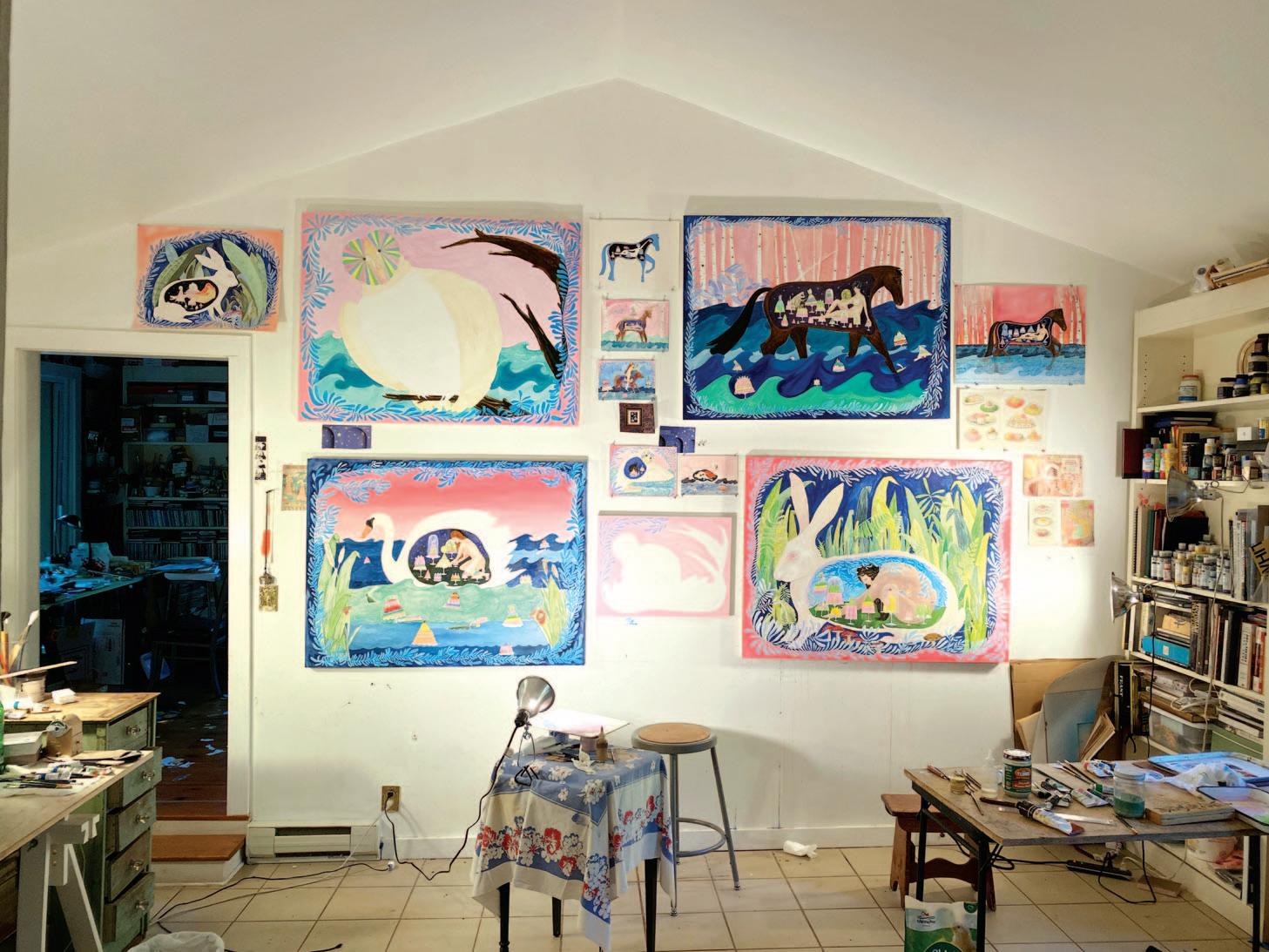
Dana Sherwood’s Studio
Dana at work in the field
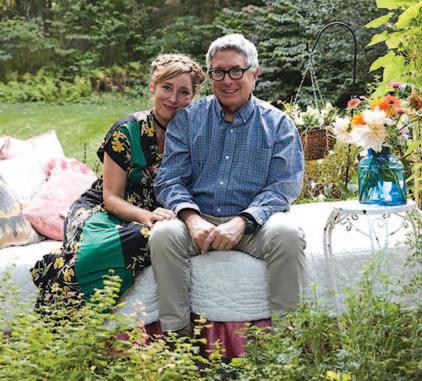
Mark Dion and Dana Sherwood
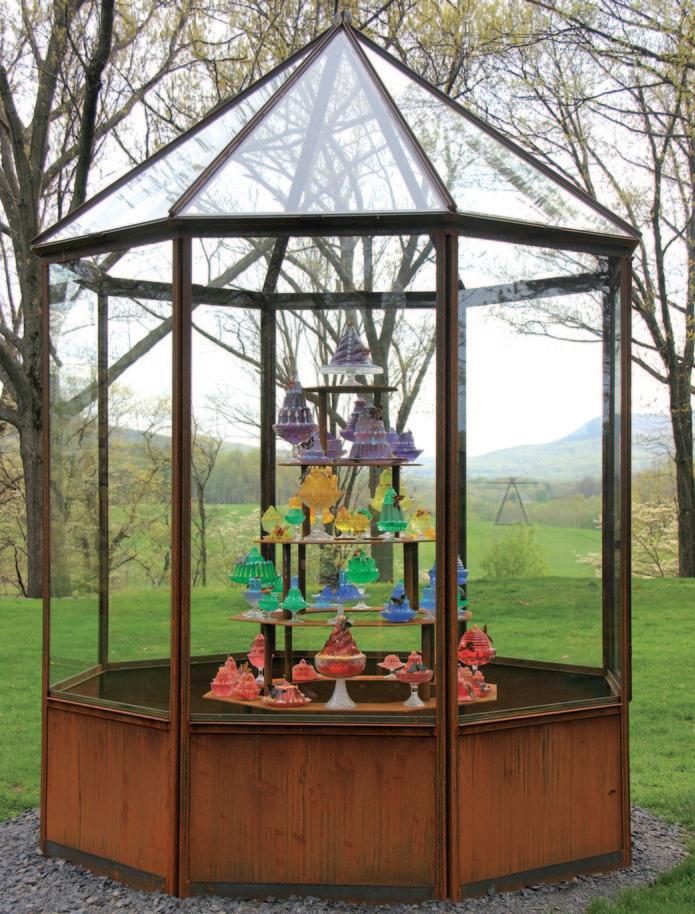
“The Conservatory of Confectionery Curiousities.” Steel, glass, resin, plaster, insects. 2019.
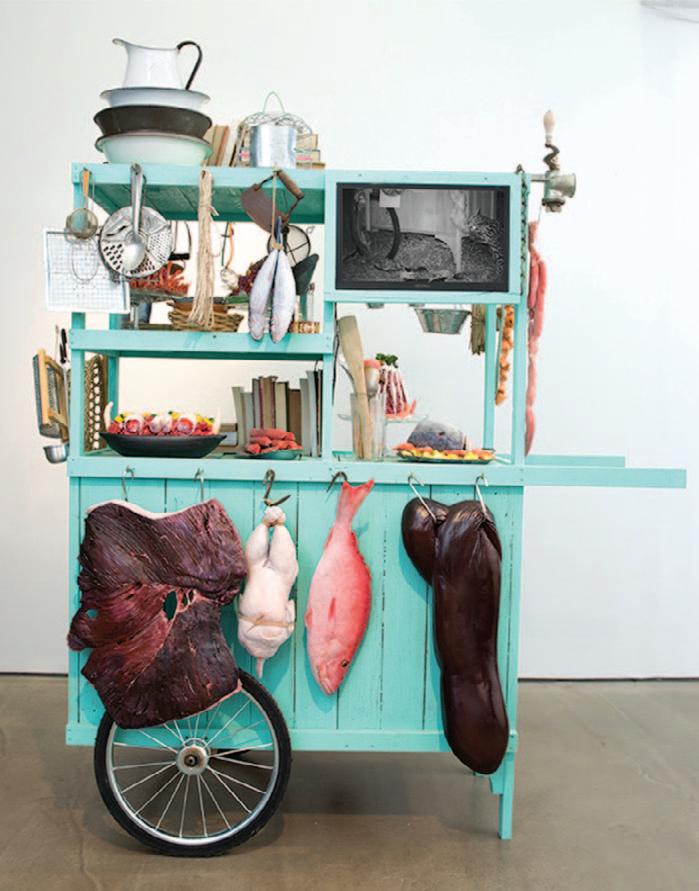
Dana Sherwood, “Crossing the Wild Line” 2015-2016, Wood, Resin, Enamel, aluminum, stainless steel, ceramic, books, video monitor, digital video
Born in New Bedford, Massachusetts to a blue-collar family, Dion grew up close to both the coast and a whaling m useum. It’s no surprise he developed a strong passion for the ocean. The outside world was his first love, even before art.
“It was inspiring and fantastic,” says Dion of that part of his childhood. And inspiring it must have been be cause as he eventually entered the world of art, Dion was determined to combine both his love for creating and his interest in the natural world.
H e attended the University of Hartford Art School and started working his way up the ladder by working for other artists. Eventually, he even took part in the Independent Study Program of the Whitney Museum of American Art in New York City. Through these experiences, he was able to learn about and appreciate art in ways he hadn’t always had the op portunity to do while growing up.
“I didn’t have a lot of modern or co ntemporary art exposure,” says Dion Those exposures and Dion’s own work
ethic began to open up more and more doors — even doors within his own mind. Once he moved to New York City, Dion was surrounded by zoos, aquar iums, and museums, all of which got him thinking. He wondered how he, a visual artist, could contribute to the natural world?
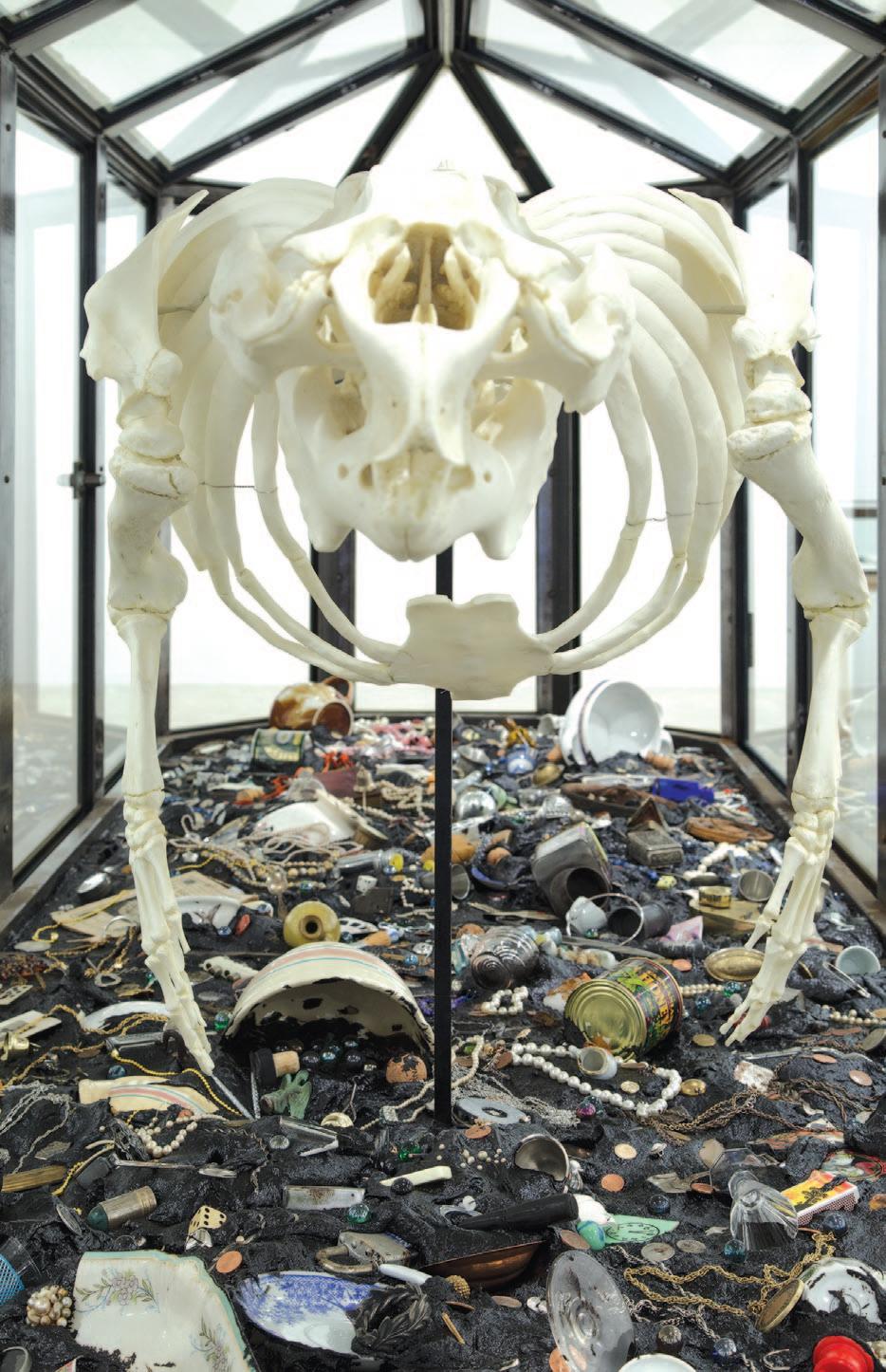
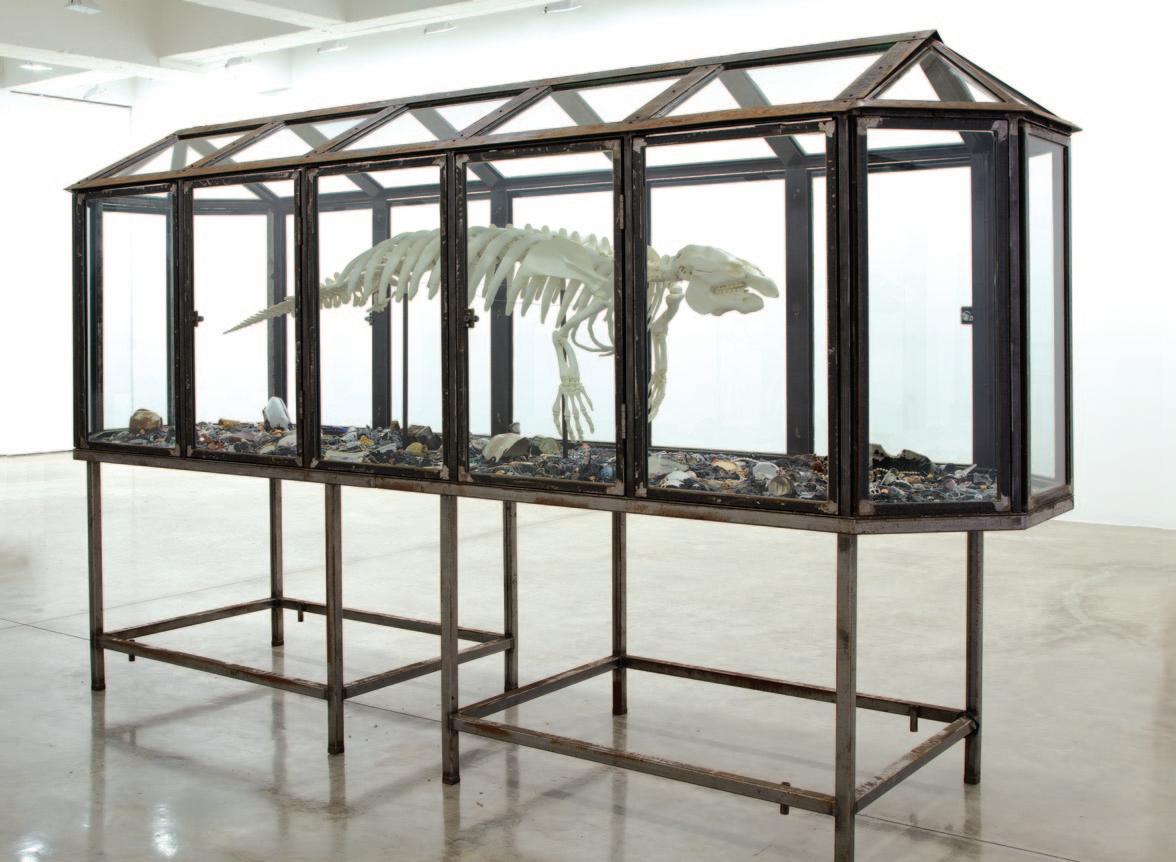
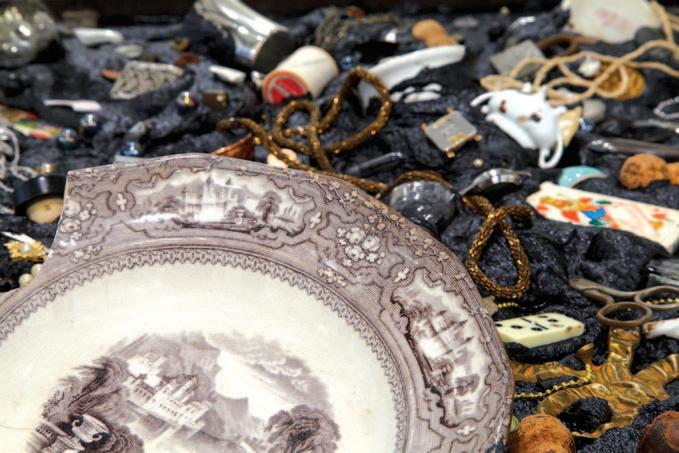
Mark Dion - “Trichechus manatus latirostris”, 2013. Plastic skeleton, tar, found objects in steel and glass case, 72 x 40 x 176 inches; 182.9 x 101.6 x 447 cm
Courtesy the artist and Tanya Bonakdar Gallery, New York / Los Angeles
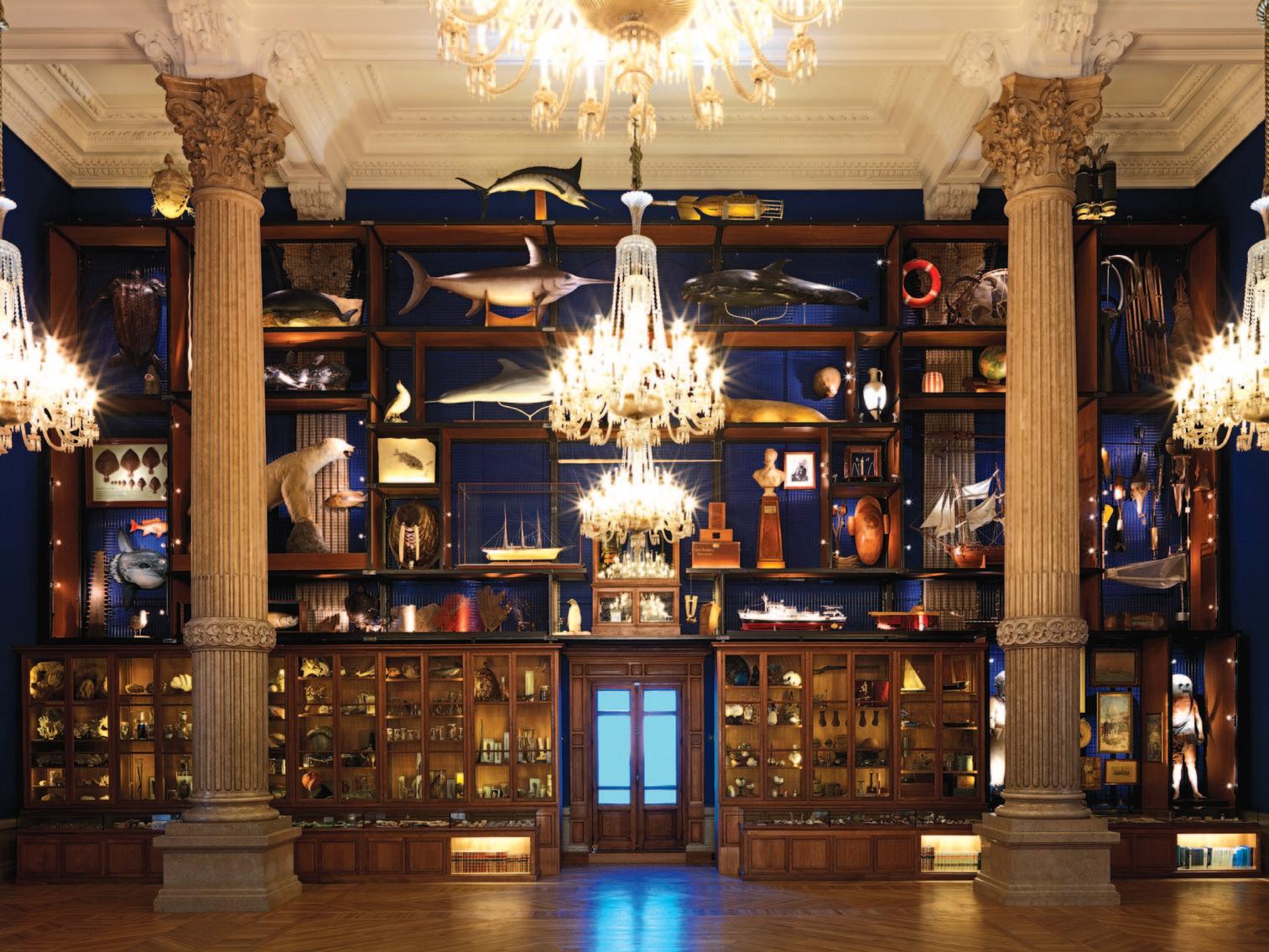
Mark Dion, Installation view, “OCEANOMANIA”, Oceanographic Museum of Monaco, Monaco, 2011 Courtesy the artist and Tanya Bonakdar Gallery, New York / Los Angeles
Photo Credit: NMNM, Oceanographic Museum and Mauro Magliani & Barbara Piovan
“I was always with one foot in the natural history museum and one foot in the art museum,” says Dion. “It set up a template for me. It showed me that natural history and fine arts are not as separate as we think they are.” And just as the worlds of natural history and fine arts began to combine, so did the creative minds of Dion and Sherwood.
The two met while working at an art studio just outside Paris — yes, they were both quite the travelers! — and quickly realized both their creative and personal chemistries. “Both of our practices re volve around wonder,” says Sherwood “and the experience of wonderment that can happen when you spend time in the natural world. We really wanted to bring that experience to a sculpture.”
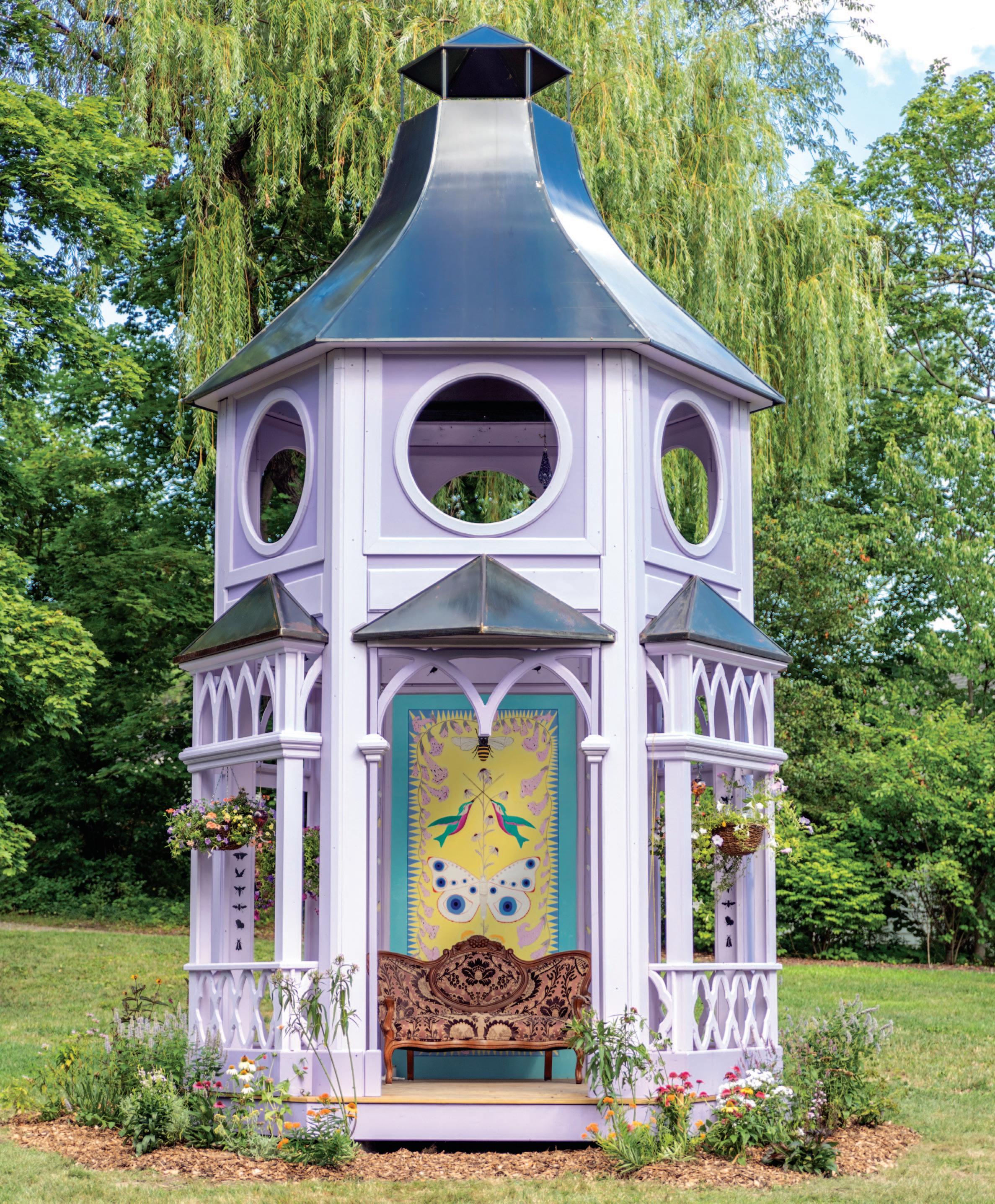
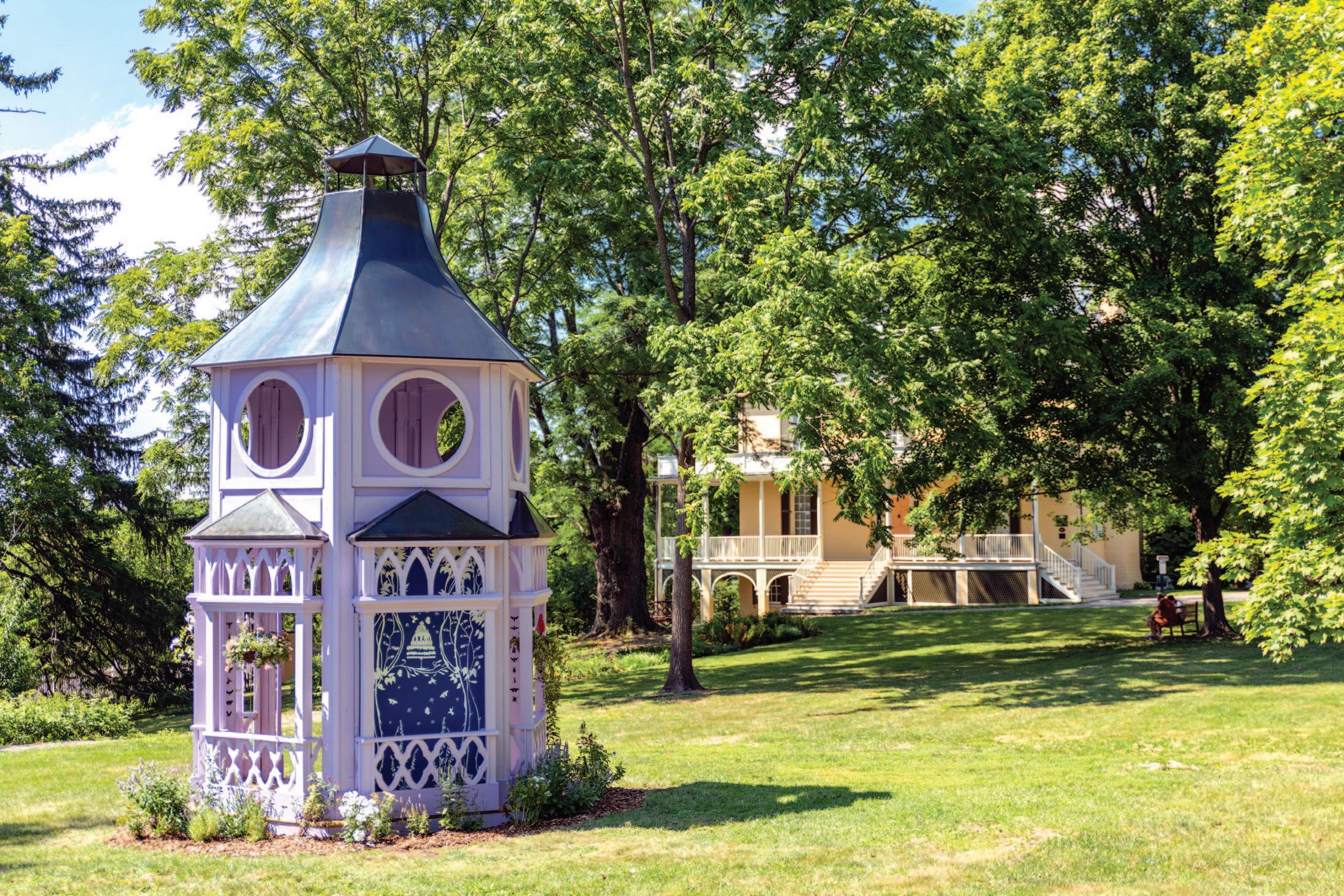
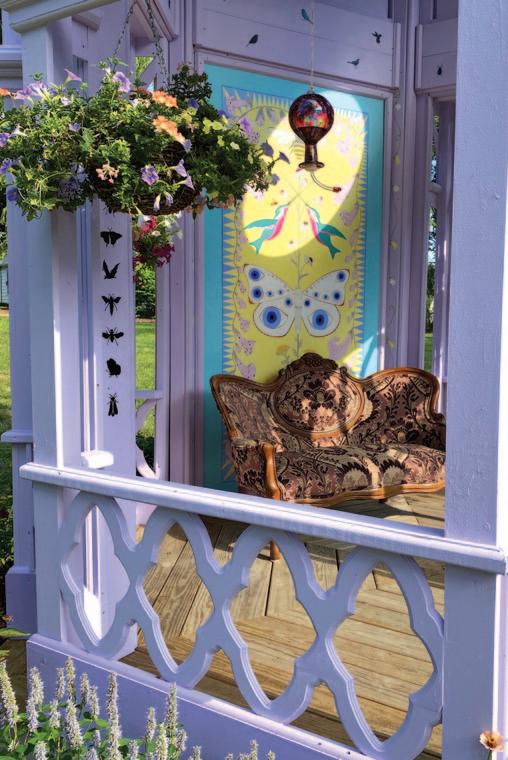
I t is certainly no wonder that after moving back to New York together in 2005, they began to brainstorm ways to create some of those ex periences for others, and that fast forwards us to the Pollinator Pavilion. Completed and standing in the Thomas Cole National Historic Site since August, the Pollinator Pavilion is a combination of both Sherwood and Dion’s artistic abilities and passions for na ture. The piece, a lavender, Gothic-style gazebo, is filled with original paintings by both artists, as well as an abundance of p olli nator gardens and feeders. There is even a small couch, designed for one guest at a time, where one can gaze at the beau tiful flowers, breathe in the fresh air and wait for a visit from a hungry hummingbird.
Sherwood and Dion are both intrigued by the tradition of art in the Catskills and Hudson River Valley. Further drawn there by a desire to preserve its nature and wildlife, the two artists knew their goal was to attract pollinators to the area. Throughout the whole
process, they were able to learn how pollinator culture truly supports an ecosystem. And of course, they were able to meet plenty of hummingbirds. “If you sit there and are quiet,” says Dion, “you will have that encounter with a hummingbird.”
T hose special encounters are something Sherwood and Dion wish to bring to the community with the Pollinator P avilion. With their goal being to protect and grow the local nature and wildlife , th ey know interactions between humans and animals are an important first step. They want members of the community to have these special experiences in order to hopefully, create feelings of connection and concern. Both artists believe that if you’re concerned about animals, you’re also concerned about their habitat. After all, these are the same feelings that helped lead Sherwood and Dion to where they are today.
“One of the ways to foster a caring relationship with the natural world,” says Dion, “is to foster a situation where people can inter act with it.” And whether a hummingbird goes zipping by while you’re relaxing in the Pollinator Pavilion or when you step into your backyard on a Saturday morning, those relationships can be formed.
www.danasherwoodstudio.com danasherwoodstudio@gmail.com Mark Dion Studio, 2595 County Route 7, Copake, NY 12516
The Pollinator Pavilion, Mark Dion and Dana Sherwood 2020. Wood, steel, acrylic, plants, glass
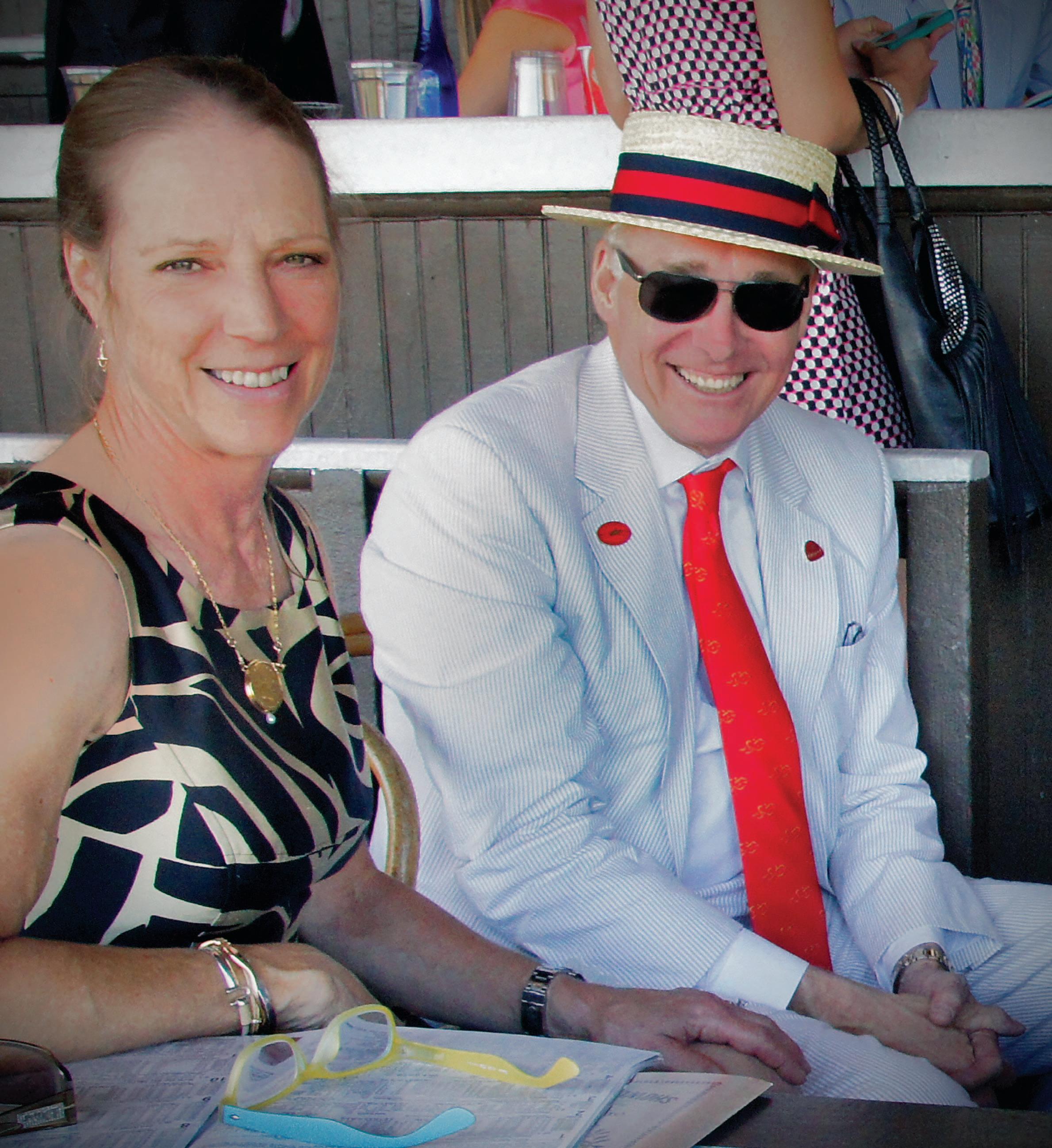
Charles Wait and wife Candace at the Travers 2013
Charles Wait’s Artistic Inspiration
By Lawrence White
Adirondack Trust Board Chairman, Charles Wait was born into a world surrounded by creativity.
“When I grew up, I was fortunate to be exposed to the best per formance art in the world,” Charles tells me while walking through the enormous amount of artwork in his North Broadway home.
Charles continues, “My father was one of the founders of the Saratoga Performing Arts Center, and he would throw parties for both the ballet and orchestras at our summer camp at Lake George. With the orchestra, it was kind of a thank you, but it soon turned into a friendship. We would have these great musicians playing right in our living room filling the camp with wonderful sounds.”
pursue it in college which I guess I regret, but yes, it is the performing arts that first attracted me.”
When I ask Charles if this closeness to such great musical talent inspired him to study music, Charles responds, “My siblings and I were encour aged by our mother to study music and take an instrument. During my grade school years, I studied violin and flute, but nothing really took for me. Later I played guitar mostly as a way to date and woo girls, but I think it drove more away than I attracted,” he says with a laugh.
“I have always loved music. In fact, I sang quite a bit, even competitively in high school. I always enjoyed singing, but I gave it up and did not
When I ask Charles when he first became interested in collecting fine art he explains, “In anticipation of your question, I asked my wife Candace if she could recall the first piece of artwork I collected. A very close friend of mine, Martin McCarthy, had a career working for the Cornell Labs at the Saratoga Harness Track, testing horses. In the middle of that, he decided he was an artist, and he gave me a wood carving of an eagle’s head and a couple of pieces of abstract metal sculpture which are among the very first pieces in my collection.”
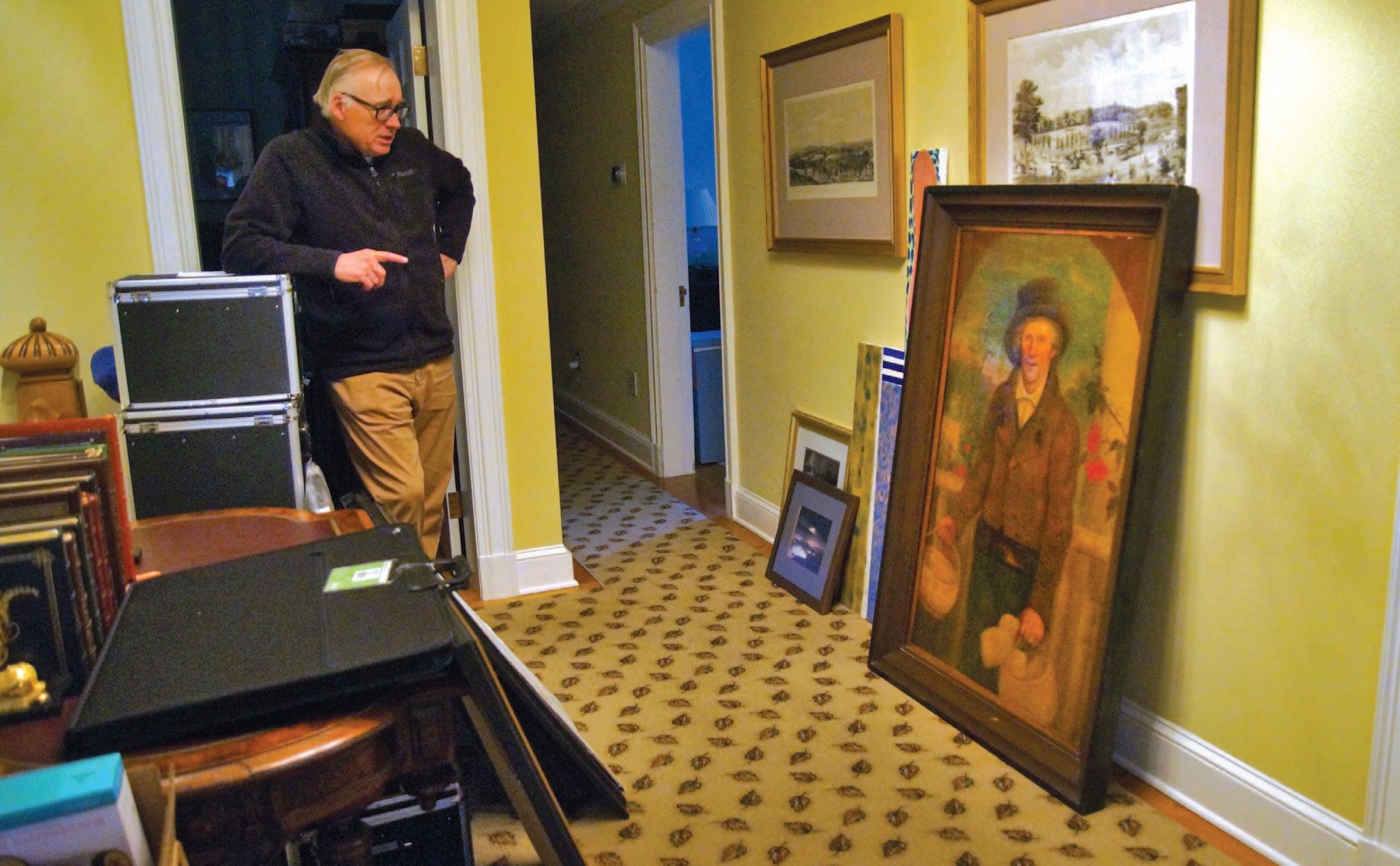
Charles pointing out painting of Sam Hill, circa 1834
Photo illustration Lawrence White
“However, the first piece I can recall that had an emotional impact on me was Salvador Dali’s Sacrament of the Last Supper which is in the National Gallery in Washington D.C. After college, I was visiting the gallery and turned a corner and saw that piece hanging there. I was captivated by it then, and I am still fascinated by it now.”
I asked Charles about peers who may have influenced his understanding of the creative process and he related, “My wife, Candace studied art in college and is quite knowledgeable. She was the art critic for the Saratogian and worked for Yaddo. Among her responsibilities at Yaddo
was to collect the work submitted by artists who were applying for a residency and then organizing the work for the committee to review. She then presented the artwork and observed as it was judged by the committee, so she has a very sharp eye for talent.” With a chuckle, Charles adds, “We agree a lot about art, but we disagree a lot as well. Usually, when we disagree, I defer, but not always.”
I asked Charles about the styles or art motifs he prefers, and he an swered, "Well, Candace leans towards the abstract, and I generally prefer the realistic or traditional, so it is an eclectic mix, to say the least.”
When I questioned Charles about artists he has collected through the years, he responded, “One artist I have collected is Rockwell Kemp. I am drawn to his stark landscapes where he is able to capture the quality of light so well in remote scenes. One of my passions in life has been to travel to distant shores where I can hike and climb and ski and do such things. Rockwell Kent was an adventurer who captured the scenes I can relate to.”
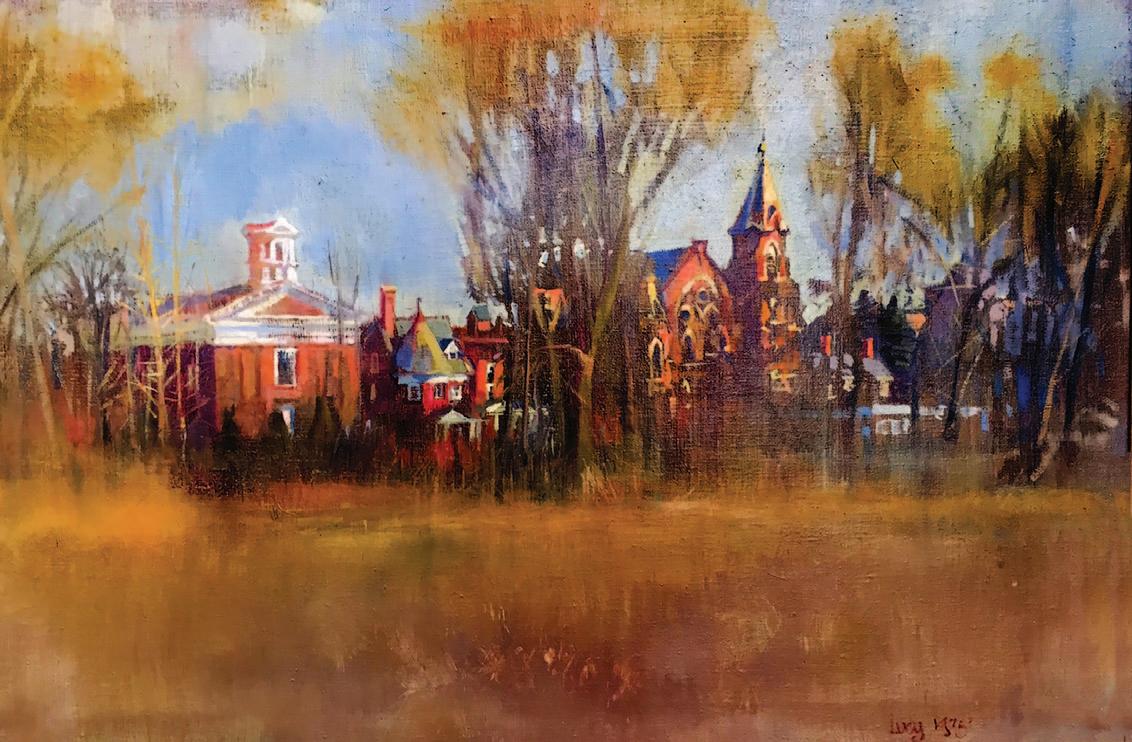
“Lucy Cadu Kettlewell is another local artist I favor. She was married to noted art historian, James Kettlewell and created a number of
paint ings we collected for the bank. She worked out of a studio at Lake Desolation and had a marvelous way of representing natural light. Her paintings of the Saratoga area are wonderful.”
“We also have work from artists who have visited Yaddo. Our connection with Yaddo has been so long and getting to know the artists has been so meaningful, that it was important for us to include some of their work in our collection. “
As we continued the conversation, I asked Charles if he could define the importance of art and culture to the well-being of Saratoga. He responded, “Other than the spring water, Saratoga does not have an innate draw to it. Saratoga is a beautiful place, and it is an historical part of our country, but there is no great port, no minerals to extract, the lumber was chopped down a long time ago. In other words, there are no natural resources for the economy to rely upon.”
“Unfortunately, the pull of the spring water died out long ago. Although people still drink it, the water was used for medicinal purposes for a hundred years, but that era ended. We have to nurture what draws the public, which of course is the natural beauty, the history, the horses, but the arts have been drawing people to Saratoga for a long, long time. It is
as important to the meaning of life as the water, but it also a robust economic driver. Saratoga would be diminished as a community both spiritually and economically without the arts so it is important to nurture the creative com munity in ways that we can.”
Charles continues, “We don’t have the number of patrons that they do in New York City, but then again we don’t have the needs they have in New York City either. In our modest way, we can support good works that keep that spirit of creativity alive.”
I seized upon Charles's comment about the arts community and ask how he envisions ways in which Saratoga could enhance this process going into the future. After a short
pause, Charles thoughtfully responded, “There are a lot of people working on that idea, but I am not sure any of them has the one real answer to it. Clearly, the pillars of the arts in Saratoga need to be sustained, and those are Yaddo, the Saratoga Per forming Art Center, and Skidmore, and these are troubled times for all of those in stitutions. They need all of the support we can give them so they can continue to
Artist Rockwell Kemp - detail
Painting by a Yaddo artist Werner Hoeflich
Lucy Cadou Kettlewell circa 1975 courtesy Kettlewell Edwards Gallery
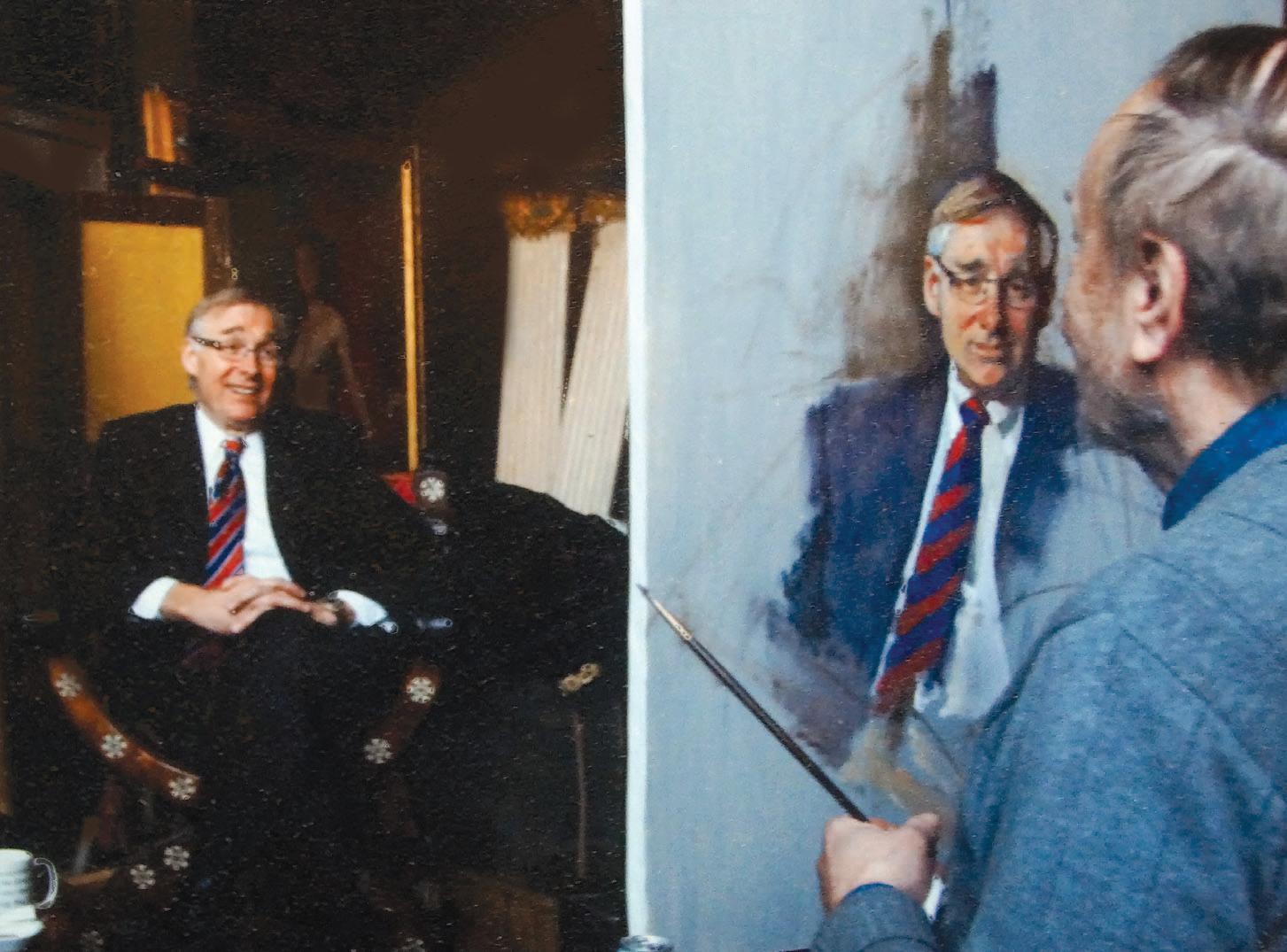
Charles posing for artist Nelson Shanks and the resulting portrait hanging in main branch Adirondack Trust.
have that infrastructure that cre ates the desire for people to want to travel here.”
“Other venues like Caffe Lena, Universal Preservation Hall, Saratoga Arts Council, need support too because we must have infrastructure developed at the highest level and infrastructure developed at the entry-level as well. It is that infrastructure that drew the Orchard Project artist group and the Glens Falls Opera to Saratoga.”
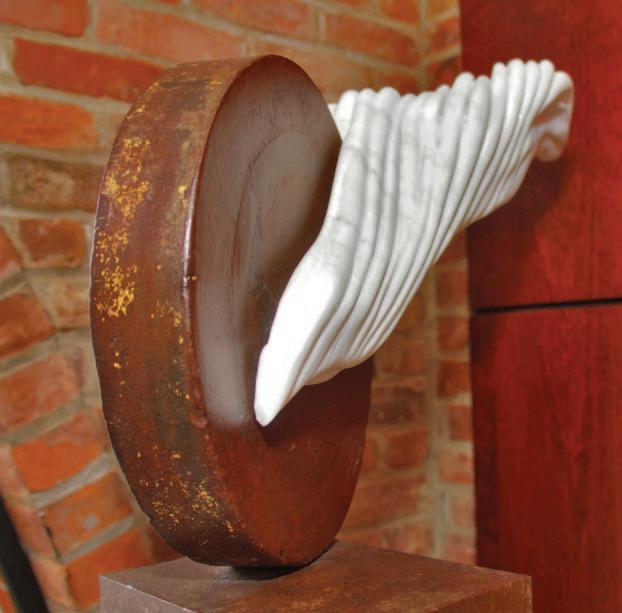
A rtwork on page 17 can be viewed at The Adirondack Trust Company 473 Broadway, Saratoga Springs
Charles continues in earnest, “It is necessary to experiment and be prepared to fail at times. That is the nature of art. It is exciting to see how the State is working with the nonprofit Coesa group to renovate the bathhouse in Spa
Park for several purposes including artist workspace. There are multiple elements to that project, and I suspect some of them will work and some won’t, but that is exactly what we need to do as a community.”
With enthusiasm, Charles exclaimed, “An other exciting thing that is happening now is Adirondack Trust and Skidmore Col lege have created a fund that will be used to commission new artworks every year. That is the sort of collaborative community energy that is vital for the right kind of growth in Saratoga.”
As a final question, I asked Charles if he is per sonally involved in any artistic endeavor at present. e smiled, and pointed to his new DSLR camera, “I have started to study photography.” Then with a broad grin, he says, “It is fun being creative.”
Artist Harry A. Rich
Artist Gary Zack
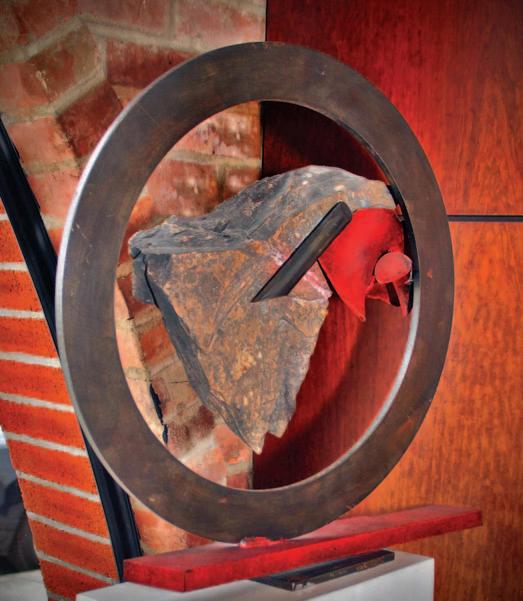
Artist John Van Alstine
Artist Caroline Ramersdorfer
The Real Trend is, Never Stop Giving!
DB Trends of Ballston Spa
by Rona Mann photos by Stephanie Sittnick
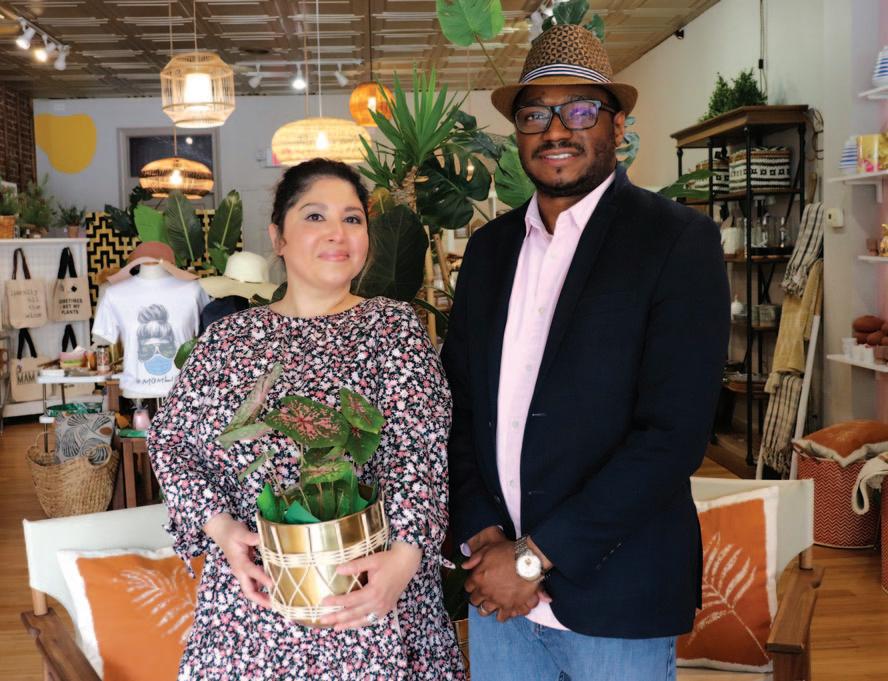
Many years ago a little girl played on the streets of Panama, looking forward to summer when she would visit her grandfather's home in the countryside province of Chiriqui. Her grandfather owned a small convenience store and would allow the young girl to set up a little table and open her own "store" for the three weeks or so that she was there.
Only ten years old at the time, young Dayanis and the oldest of three children, would bring her little brother and sister with her, but the "store" was hers and hers alone. Here she would sell her used clothing and accessories with a definite sense of purpose in mind. "I would make a little money, and first, I would donate some of it to people in need. The rest I would save for myself and my family."
In school, as she grew older, little changed for Dayanis. "I would create and make little knick-knacks like pencils with holiday themes,
and then I'd sell them. I really loved it, and I loved having a little money to help others or to give my family a nice Christmas present, or to have money to go to McDonald's!" She laughed the wonderful, genuine laugh that comes frequently and from deep within her soul. "Everyone in Panama loves McDonald's," she added. More than the burgers and fries, Dayanis spent her money on breakfasts of pancakes and sausages.
Later, as a young single mother, she and her daughter moved in 2006 to the United States and settled in Virginia. "I faced many challenges there as a Latina, but there I also met and married my husband, Darvin who worked in the semiconductor
in dustry, and in 2014 we relocated to Ballston Spa." Dayanis instantly fell in love with the area. "I love the mountains, the lakes, the river, and the people. It is a different world for me, and I know I just want to live here forever!"
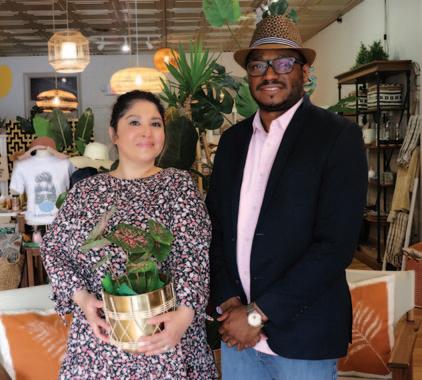
The exuberance that comes forth when you speak with Dayanis Bowie is real and palpable. It is the same exuber ance she had all those years ago at her grandfather's place in the country when she opened her first "store," and that has transcended to her current and most delightful store in Ballston Spa, DB Trends.
While still in Virginia, Dayanis had worked in retail and wanted to do the same in her new home in New York, but then Darvin fell seriously ill, and being completed devoted to this man, she stayed home to nurse him back to health. Still, the fire in her soul to want to sell was still there, so she started an online shop selling both new and used clothing and high- end accessories. "I did very well with it and loved what I was doing."
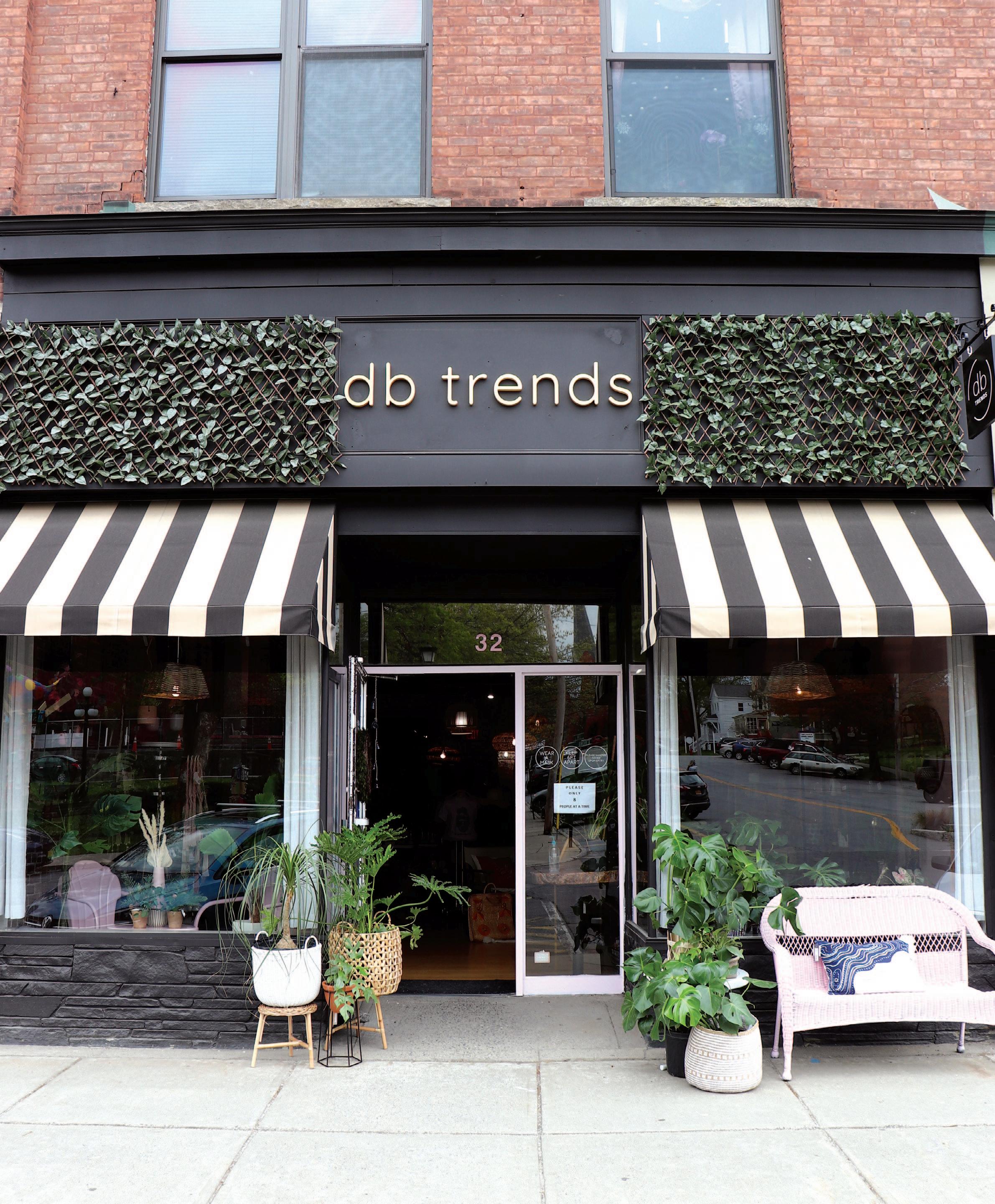
In 2019 Darvin thankfully made a full recovery, and now Dayanis was ready for the big time. She would open her own store, not on a table in the Panama countryside, but right on Front Street in Ballston Spa. Although her first store was only 500 square feet in size, Dayanis made DB Trends work, but not after a few less than successful at tempts and a total re-branding. "I tried at first to sell high-end, but that wasn't working for my customers, so I did some research and began selling clothing and home accessories. But then another roadblock got thrown in her path, and this time it wasn't as easy to get around it. It was Covid.
"So I re-branded again. I took a lot of inventory out, moved things around, and donated what I was not able to sell. I did a complete makeover, making room for safe social distancing, and in October 2020 we relocated to a bigger space. It was still on Front Street but closer to restaurants, other shops, and more foot traffic."
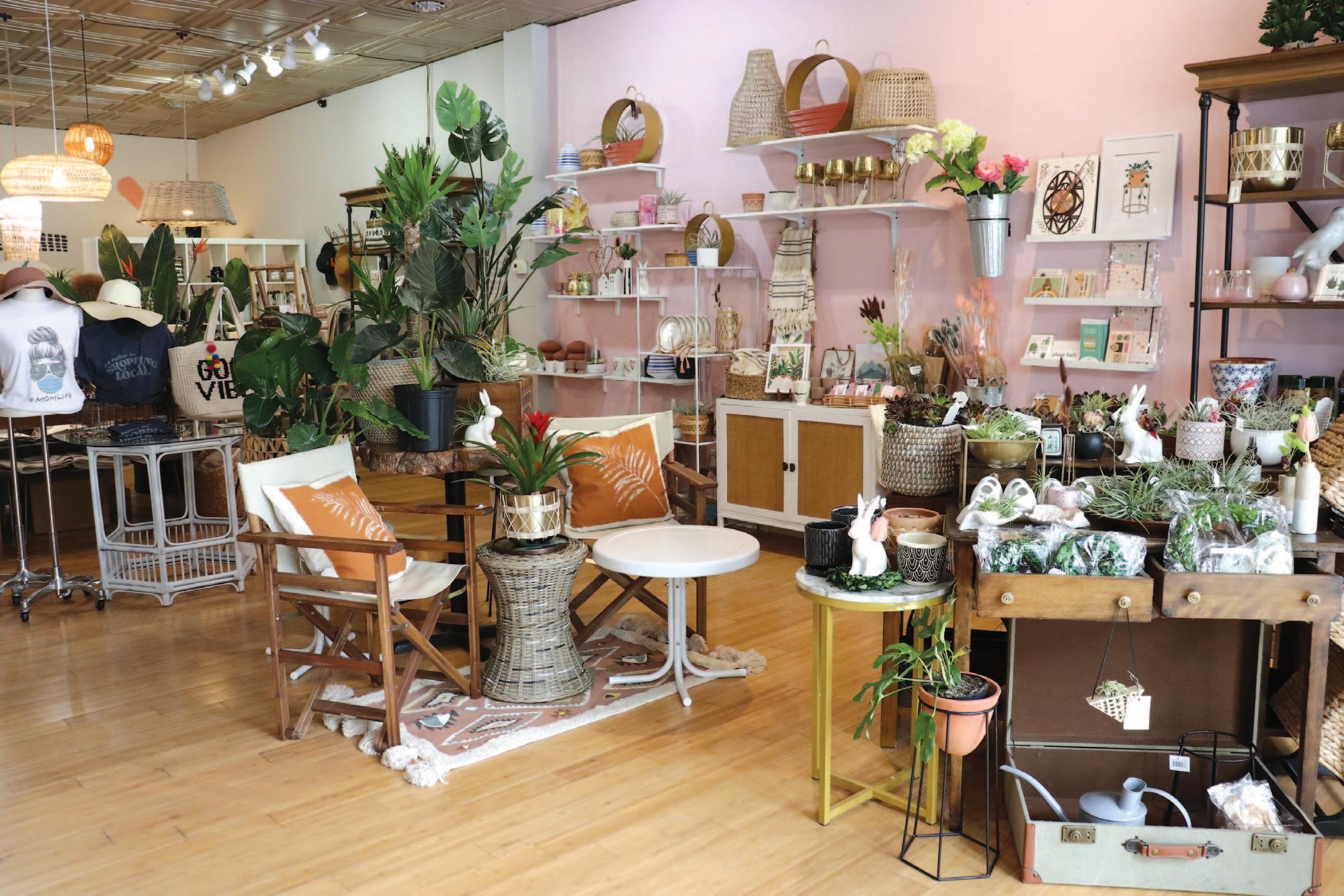
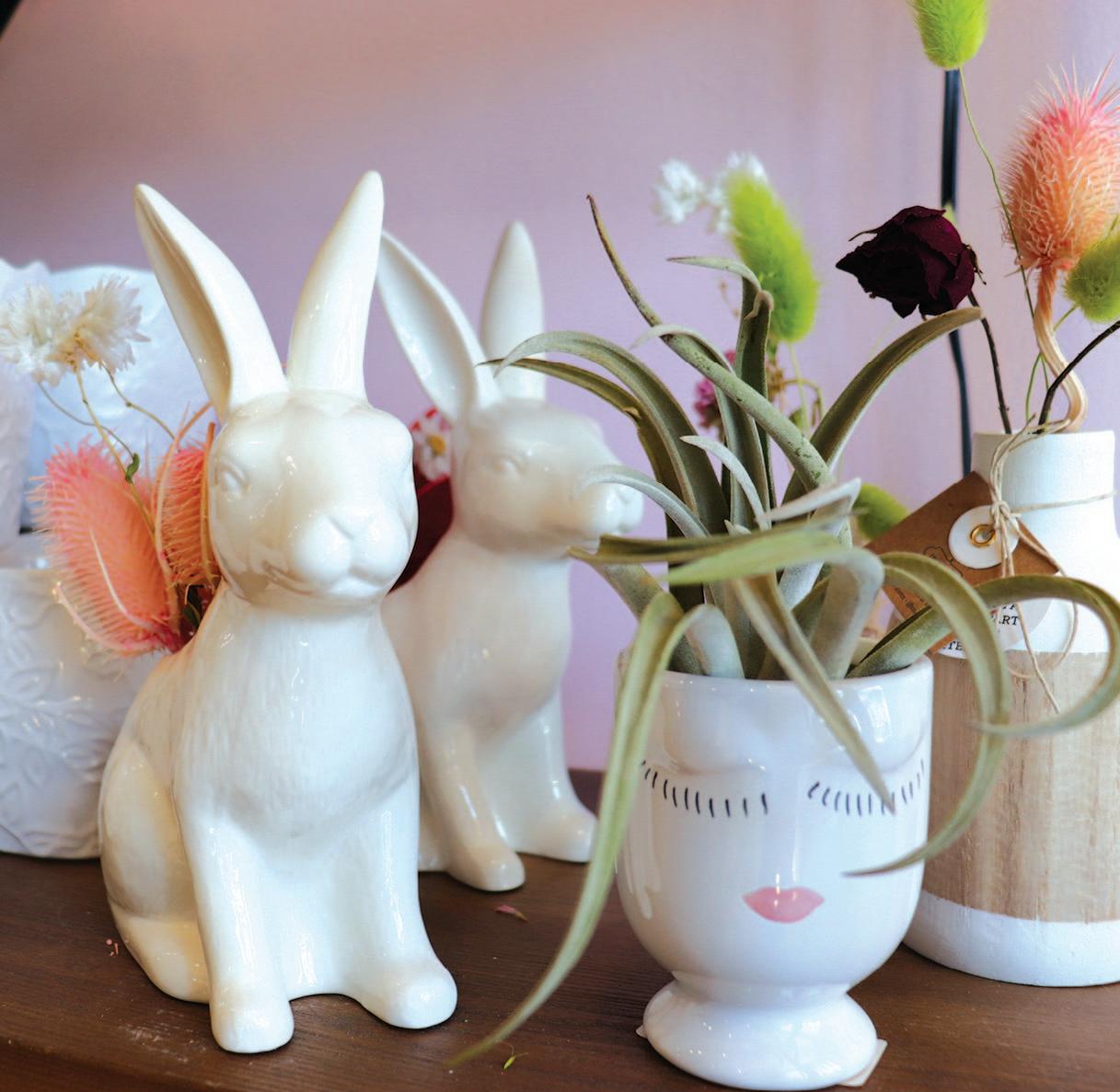
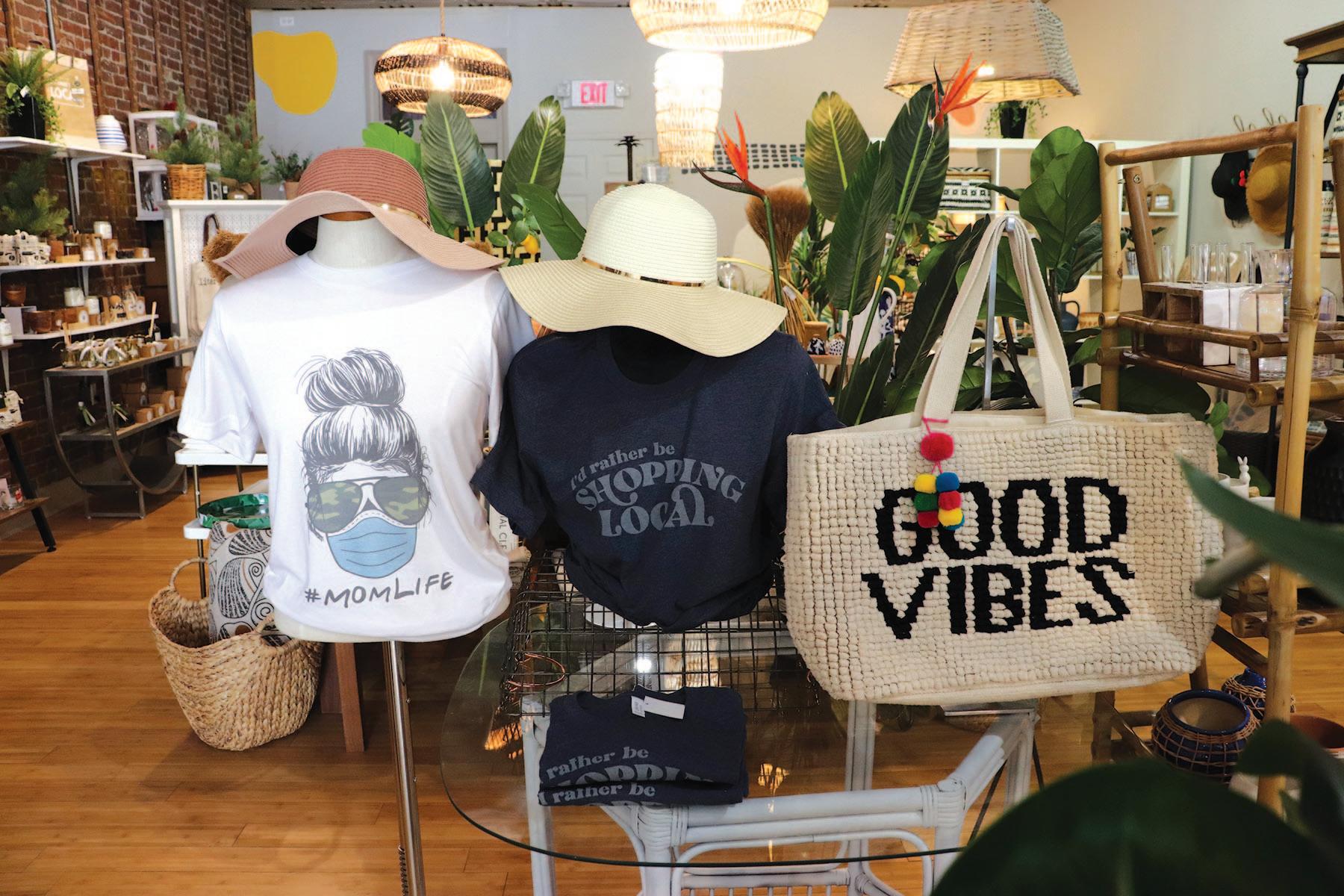
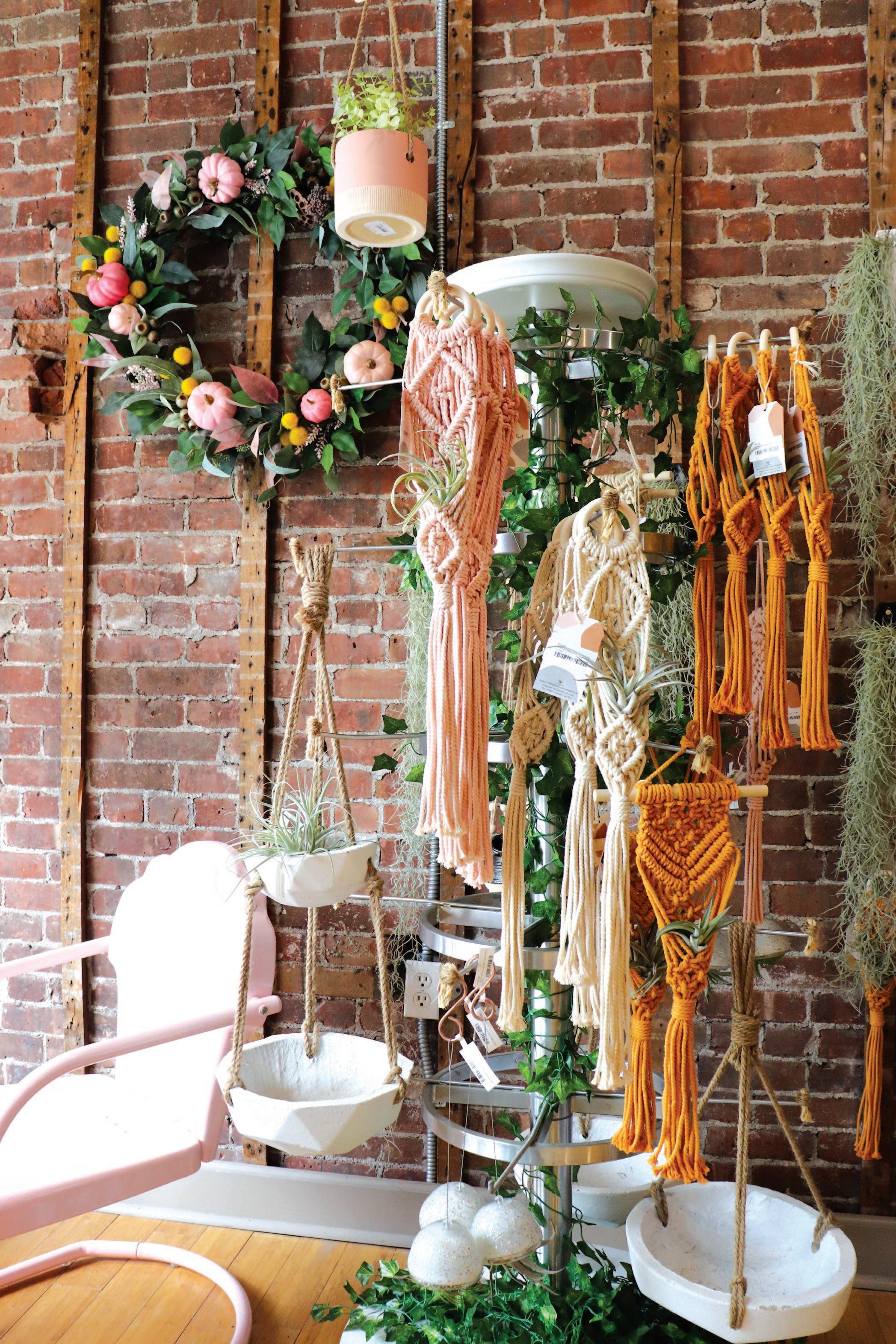
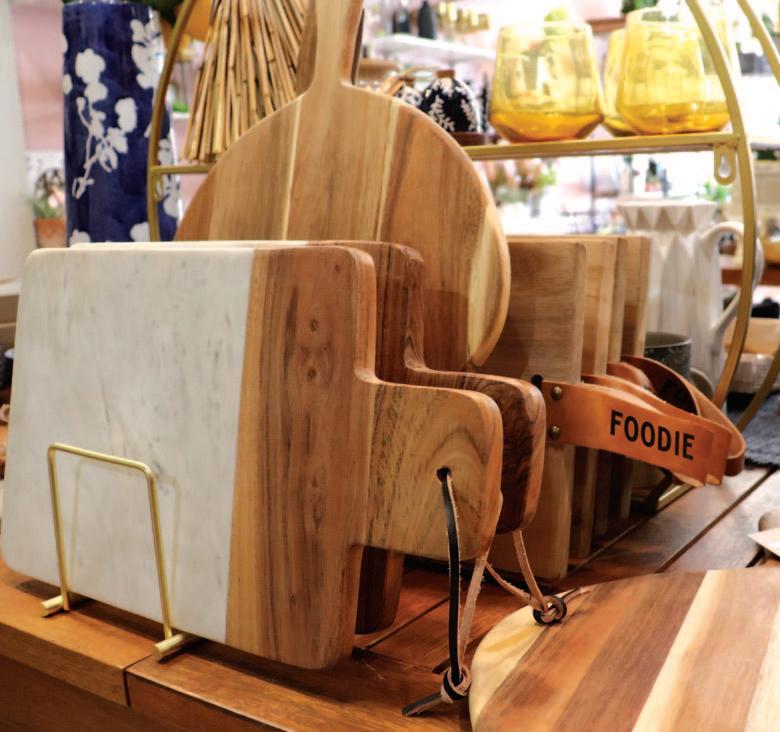
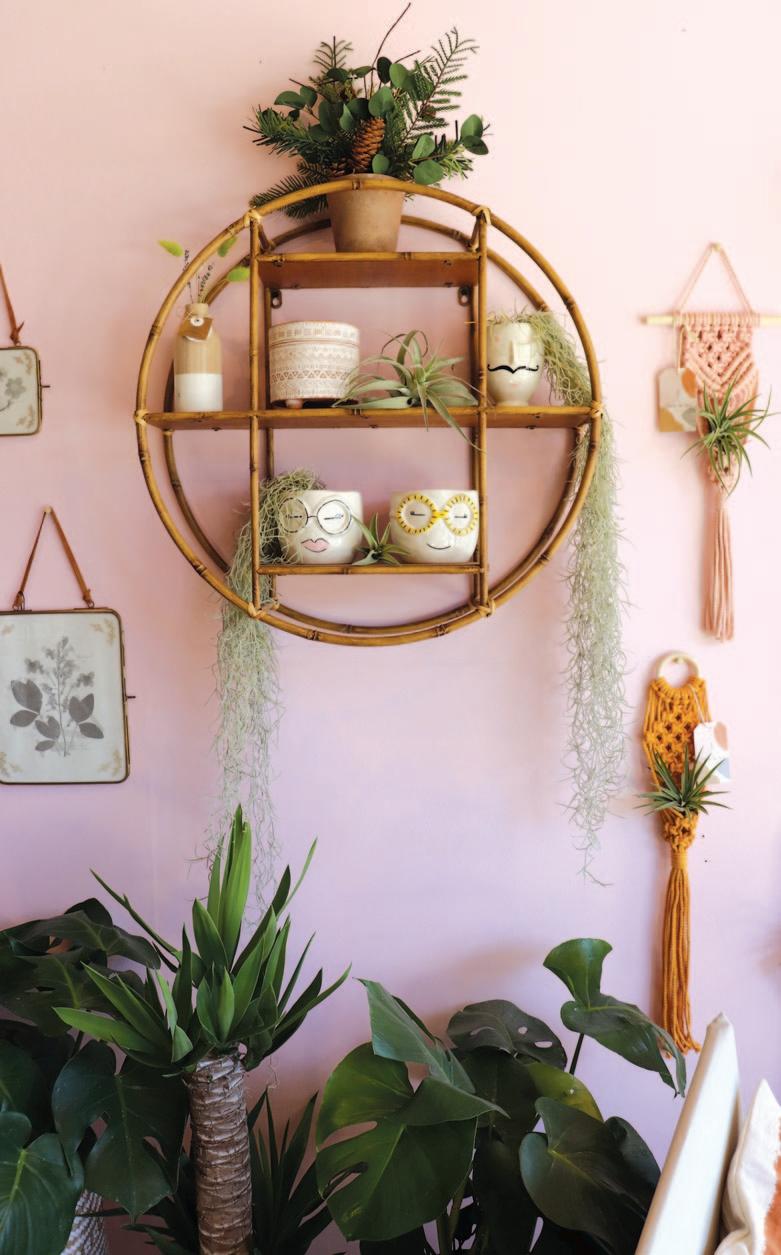
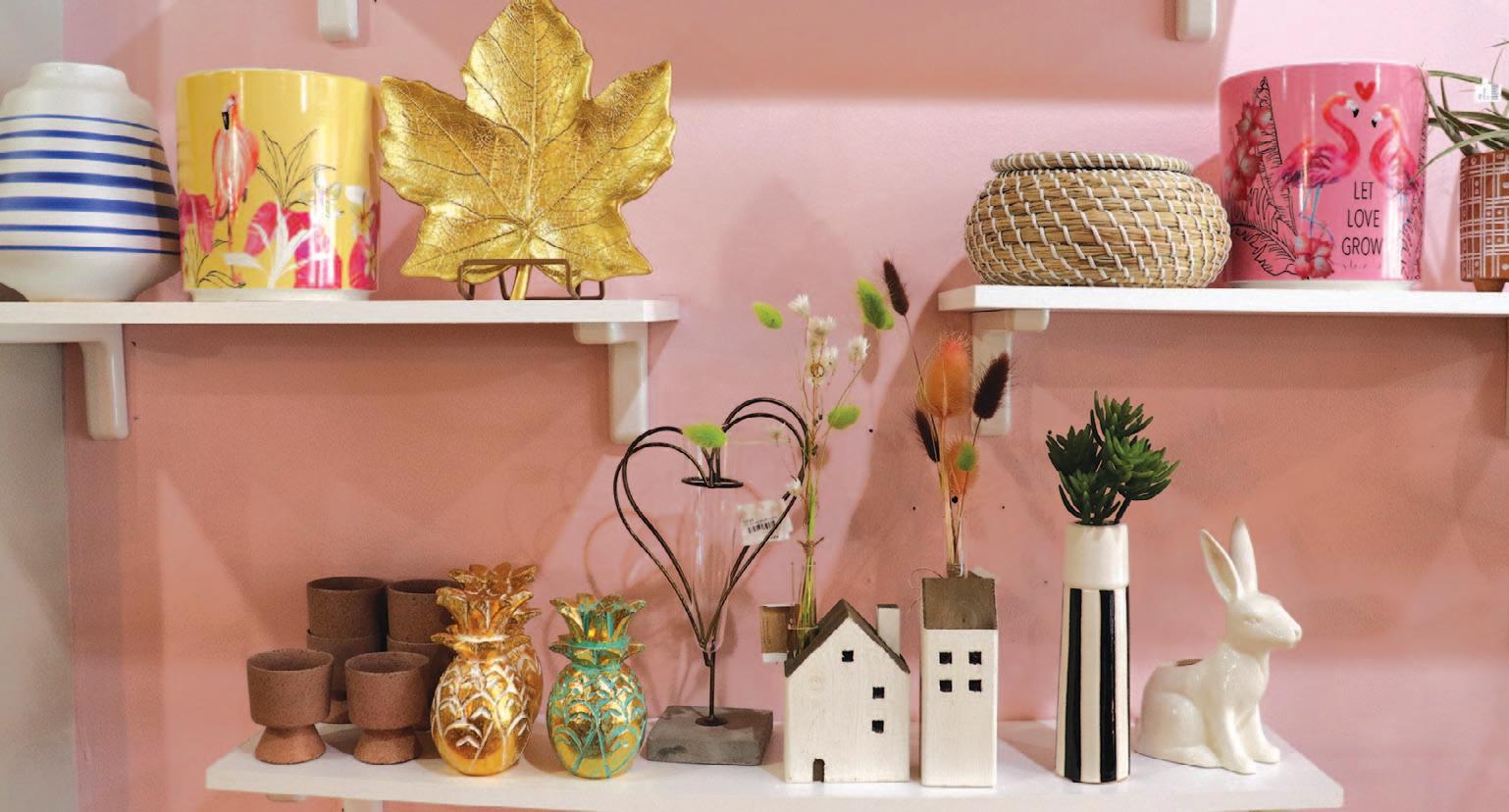
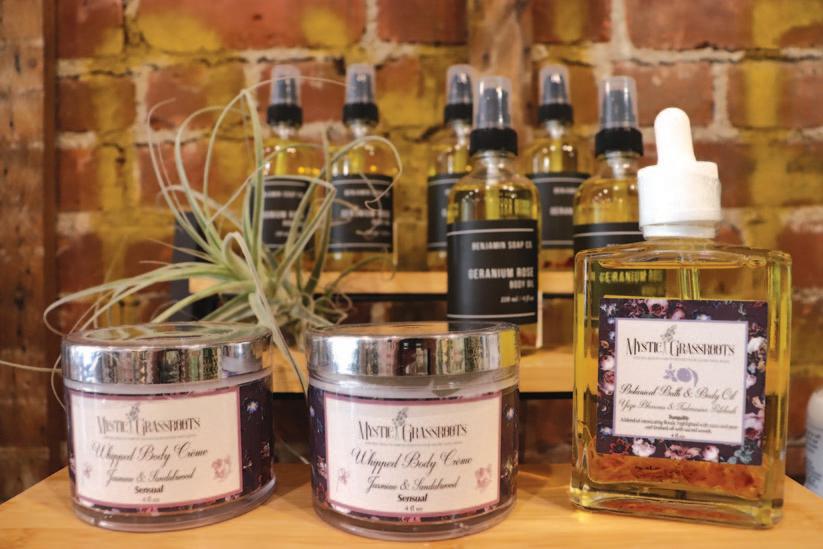
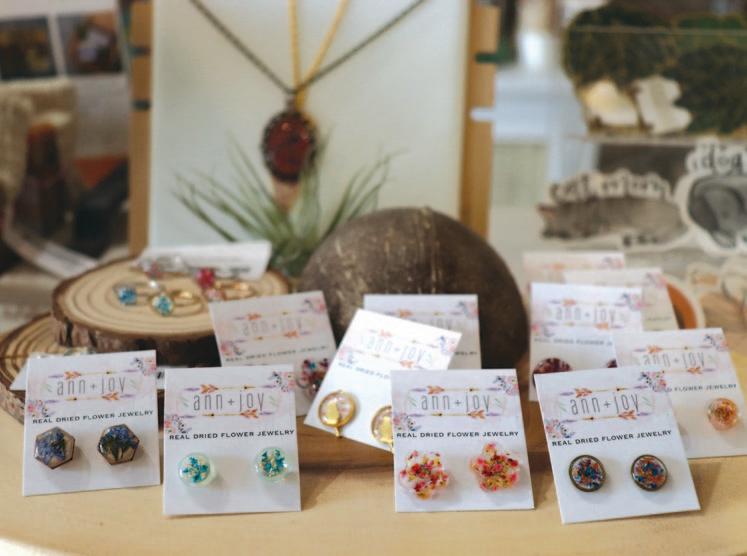
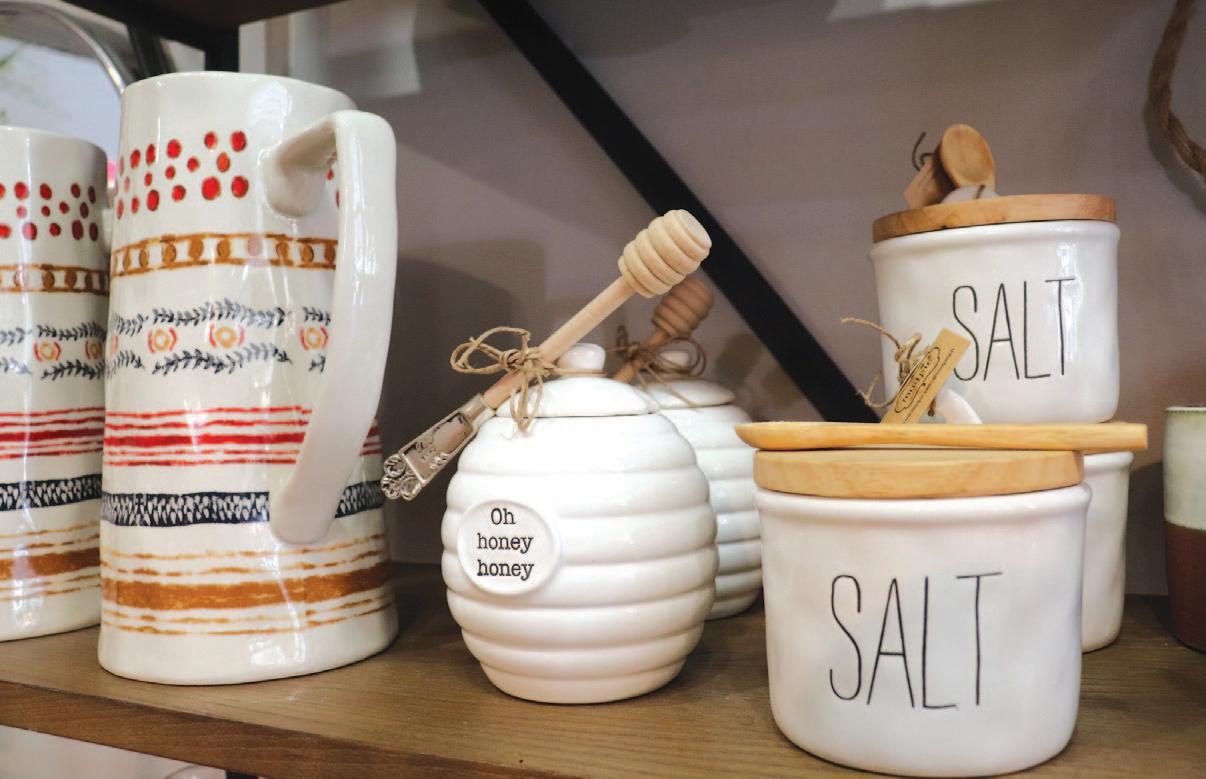
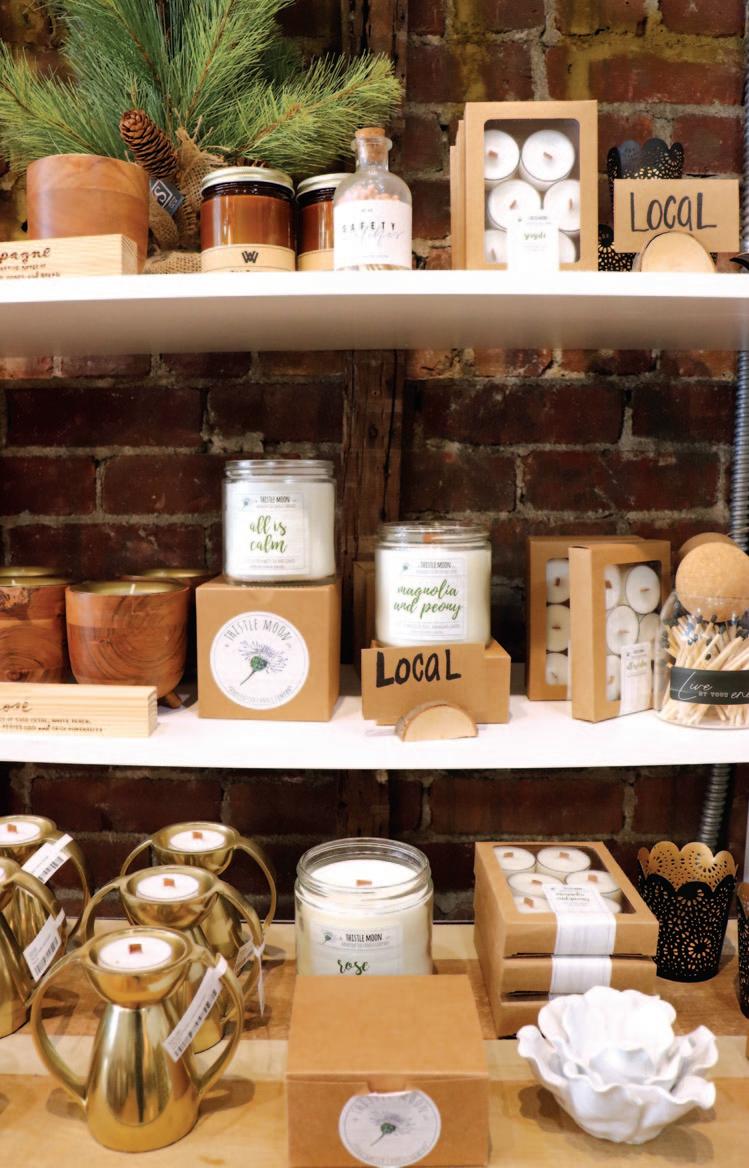
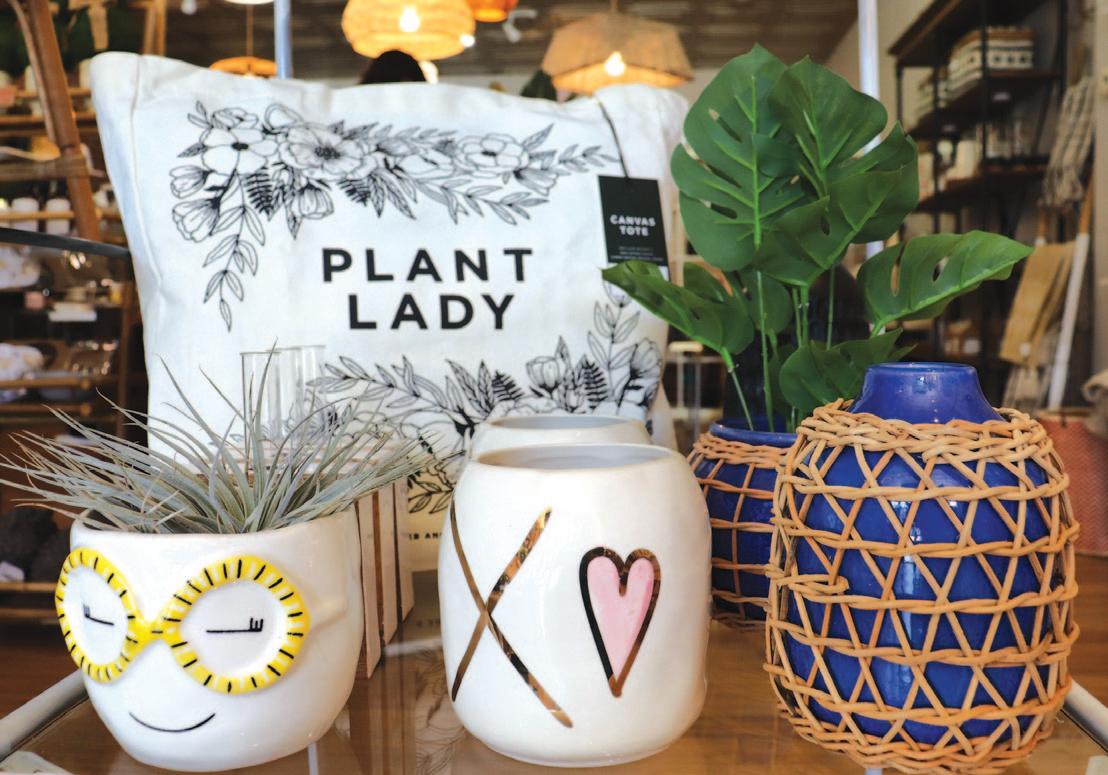
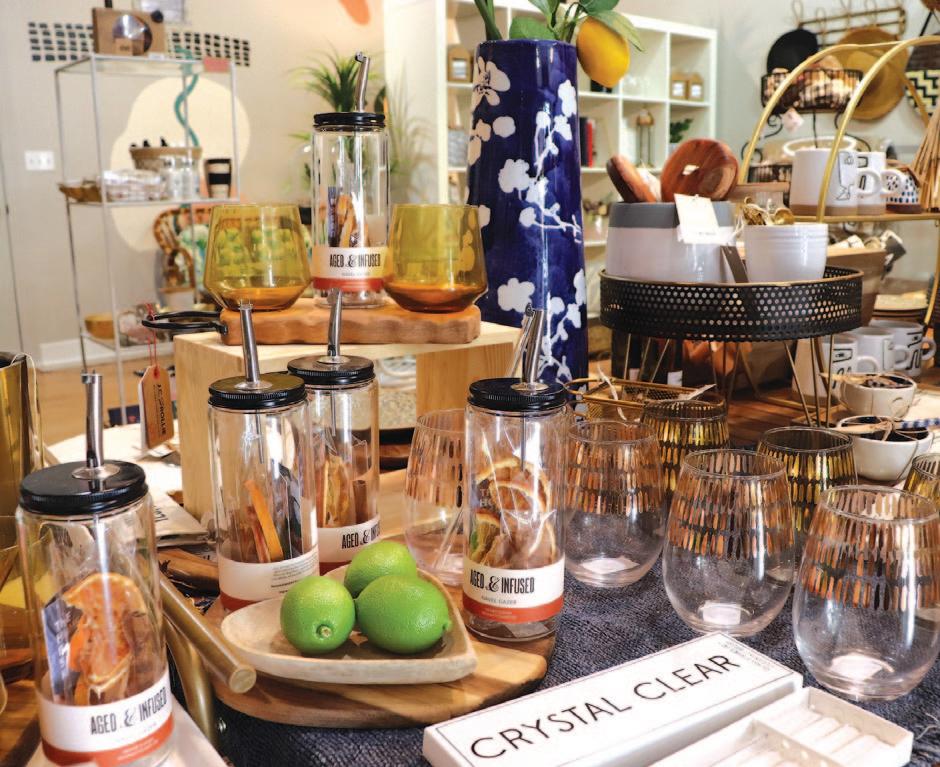
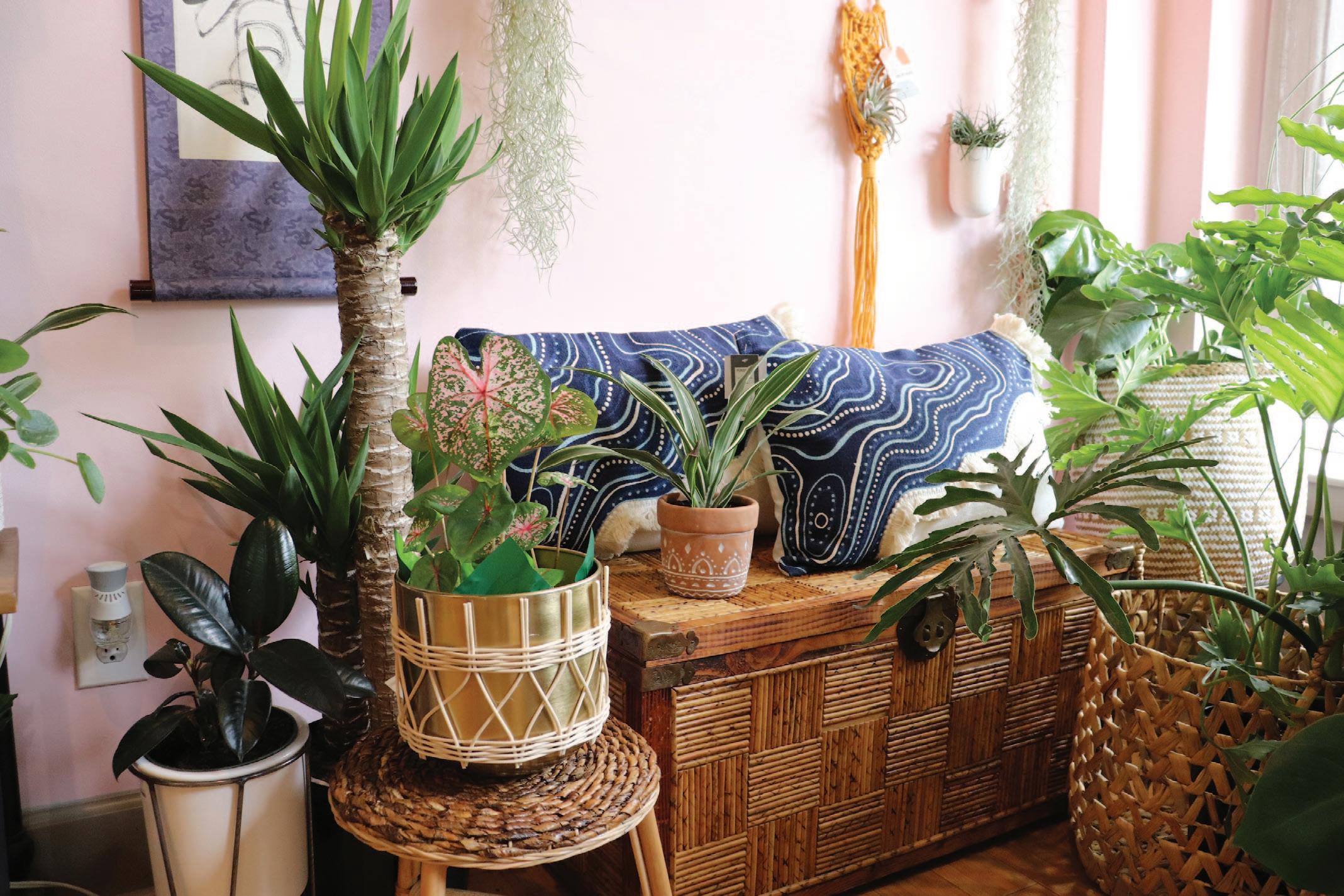
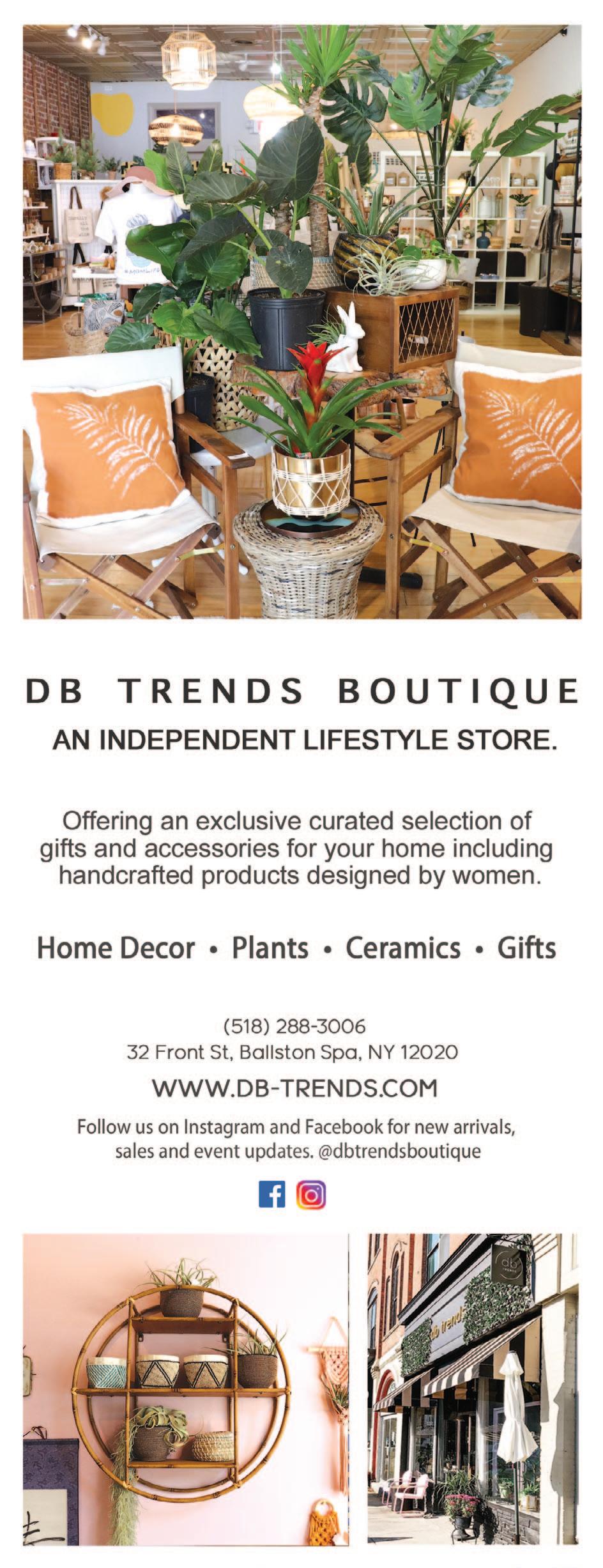
Now with three times the amount of square footage and that unending perseverance and exuberance, Dayanis re-opened DB Trends with a totally different look. "It is now my style with a Caribbean and Mediterranean vibe. I have home decor, gifts, plants, and ceramics, but it is very curated with items carefully and pur posefully chosen, organized, and presented. You will even find gourmet items at DB Trends.... coffees, delicious jellies, and organic good-for-you choices like skin lotion lovingly made from pure goat's milk. And there are pil lows, blankets, totes, wellness products, come see for yourself!"
Dayanis calls DB Trends both "inspired" and a shining example of "empowerment" since many of the items in the shop have been hand-crafted and designed by female artisans locally, regionally, and around the world. But don't think DB Trends is just a boutique for women. Not at all! Dayanis has cleverly designed and curated her space to include gifts for children, pets,
th e fashion-obsessed, jewelry lovers, and men. With Father's Day just a few weeks away why not make a trip to DB Trends for something he hasn't been given before, something exciting and new? N o soap on a rope here, Dayanis treats her store more like an art gallery, with items carefully chosen and with a stock that is constantly changing.
"Every time you come back," says Darvin, her biggest s upporter, "it is never the same store." Reason being she sells a lot, and she is constantly bringing what's new and fresh to her customers both in store and online.
"We still make donations," says Dayanis. To Black Lives Matter, to Go Fund Me, to those in need. We never stopped doing that, and we never will. It's part of me, who I am. My daughter is 18 now," Dayanis says with an envi able source of motherly pride. "I have taught her since she was little to always give to others as I have done since I was little. And it's working! She is absorbing my energy."
They must be mighty proud these days at the old McDonald's in Panama.
DB Trends is waiting for you at 32 Front Street, right in downtown Ballston Spa. (518) 288-3006 www.db-trends.com
Southern Charm Seasons Saratoga Springs
By Nellie Ackerman-Vellano, Feed Me 518™
Jasper was in the kitchen when I got to the restaurant at noon, already cooking as usual. He came out in a white apron and warmly greeted me as if he were inviting me into his home.
Jasper Alexander has been the Head Chef of Hattie’s Restaurant in Saratoga Springs, New York since 2011 when he and his wife Elizabeth purchased this restaurant and the original recipes created by founder, Hattie Austen Mosley herself.
If you ever meet Jasper and Beth in person, they are the kind of people who instantly make you feel like you've been friends for years. They love their community and customers, and it shows in how they give so much of themselves in everything they do.
Hattie's is a staple of Saratoga, NY, where Hat tie's fried chicken recipe has never changed since 1938. "We had to stay true to Hattie's original menu. We kept her fried chicken the same and added new items like the fried chicken sandwich, chicken and waffles, fried green tomatoes, mac and cheese," said Elizabeth.
Chef Jasper has truly mastered the art of fine Southern & Louisiana cuisine that has been served at Hattie's for over 80 years.
This is the first time in my life that I can say I've had whole liver and enjoyed it. Without getting into all the details, my grandmother fed me liver as a child, and I haven’t eaten solid liver since. However...the delicious chunks of chicken livers with caramelized onions, smoked bacon, and
When I asked what made Hattie's work so well for so long, Elizabeth un selfishly credited her team, "We are truly one big family at Hattie's. We have employees who've been with us for 20 years, now their kids are working for us! Everyone knows Zoe, Sal, Llona, Maryann, and our brunch staff who have always been a welcome sight to our regulars. Mike has been in the kitchen 20 years, Zach and Steve 11 years, Chris and Scott about 3 years. Andres has been with us 56 years... he NEVER stops working. We are blessed to have a staff that stays with us and cares about the product they put out. We are so lucky to have had the same core group of chefs for many years and that is what helps keep our food so consistent. We could never do it without them."
Hattie’s Classic Gumbo Chicken is a flavorful rich stew-like dish with andouille sausage, peppers, onions, garlic, celery, and thickened with a dark roux, served with rice. It was deli cious. I had the leftovers for breakfast the next morning and could have eaten it for lunch later that day too.
Their Jambalaya is a generously and deliciously seasoned tomato and rice dish with tasty An douille sausage, shrimp, and very tender pieces of chicken. I'll be going back for this dish.
fresh herbs at Hattie's has totally changed my world view of liver forever. I'm finally a fan of liver.
Blue Cheese lovers, you'll love their homemade buttermilk pecan blue cheese dressing that ac companies their delicious Cobb Salad made of mixed greens, fried chicken, green tomatoes, avocado, candied bacon, and topped with a freshmade deviled egg.
The Peel and Eat Shrimp is fresh, wild Gulf shrimp quick-boiled in a blend of outstanding Creole spices.
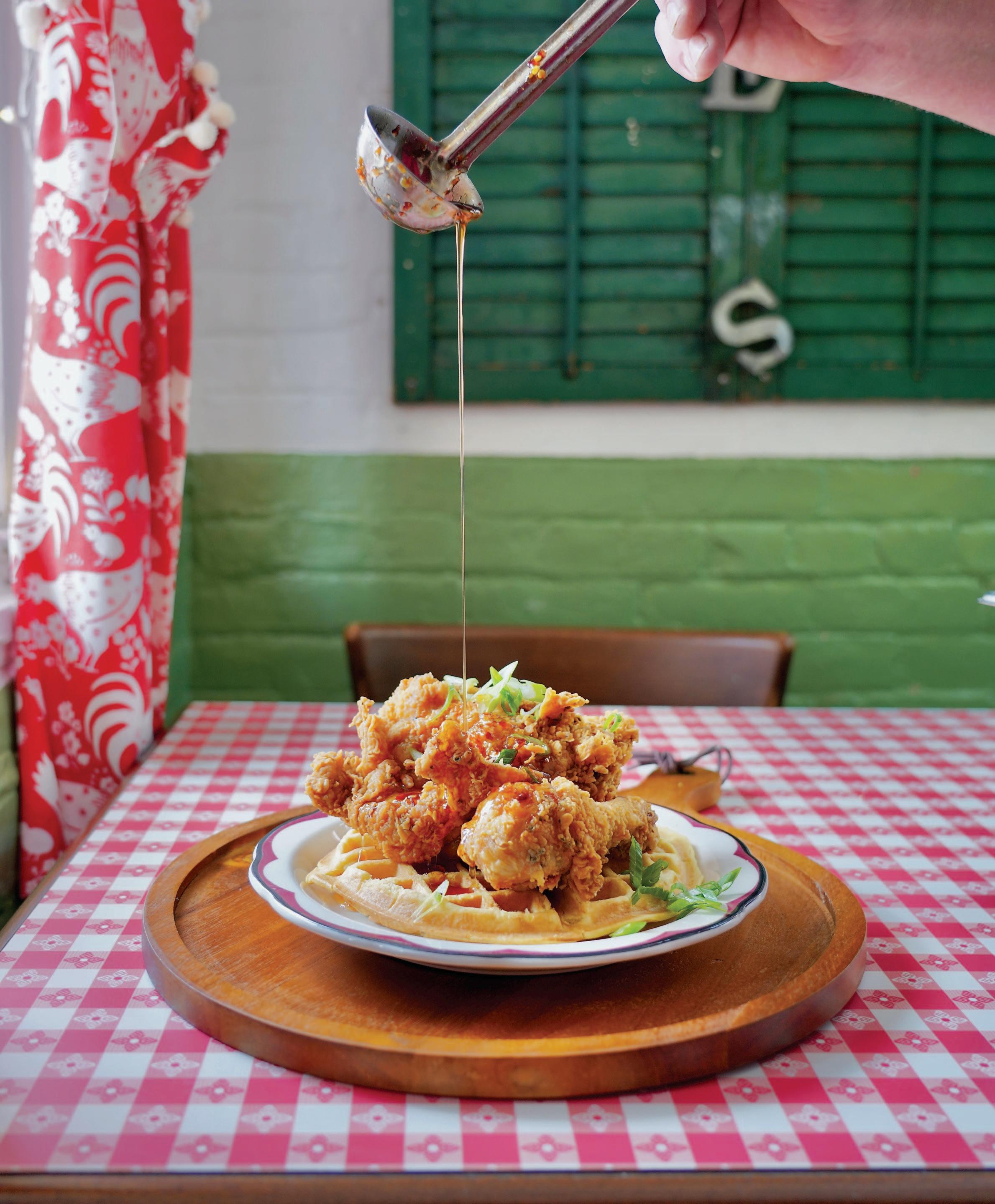
I love waffles. This was one thing I couldn't wait to try! This was wonderful for so many reasons but what really made this dish stand out compared to many other "chicken and waffles" besides the delicious Fried Chicken & fresh Belgian Waffle, was the spicy honey maple drizzle that is poured over the entire dish. It's like the nectar of the fried chicken goddesses Each order comes with two pieces of Hattie’s Fried Chicken, one white and one dark piece.
If you like your ribs falling off the bones, then you have to order their slowcooked tender pork BBQ Spare Ribs with Hattie's own dry rub and awesome BBQ sauce. Yes, I did lick the sauce off my fin gers during and after eating them.
This is a wonderful small family-owned and operated restaurant that you must experience for its southern charm and deli cious food.
Hattie's Restaurant is located at 45 Phila St, Saratoga Springs, NY
Magic in the Making, Manifested One Moment at a Time Saratoga Staple Celebrates 27 Years in Business
By J’Lyn Coppola
Photos by Stephanie Sittnick
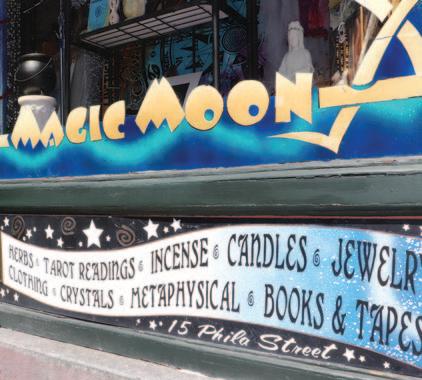
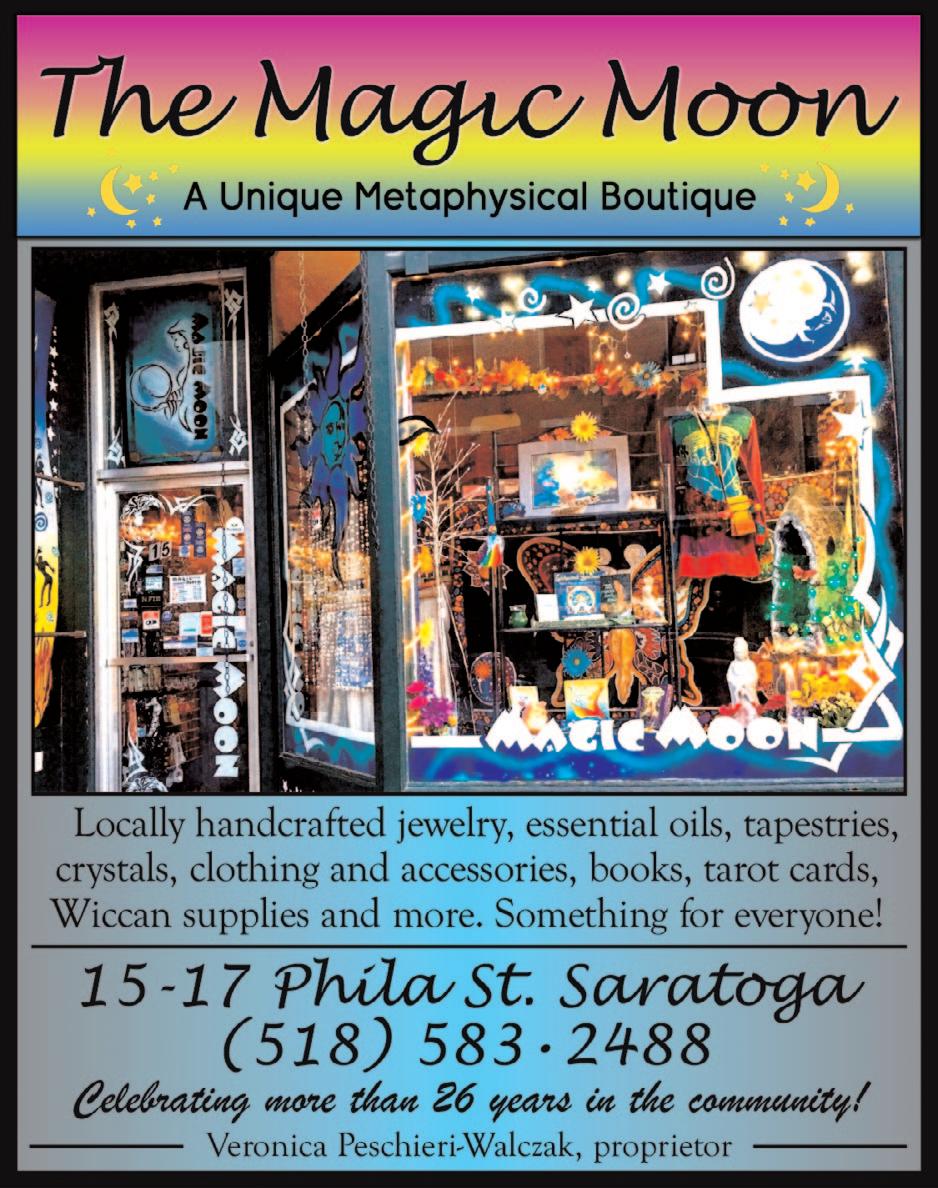
When the wind is just right in Saratoga Springs, you can catch the smell of incense wafting all the way to Broadway from Phila Street. For more than two decades, the source of that scent has likely been The Magic Moon, which celebrates its 27th year in business this month. The store’s inception was set in motion many moons ago when a friendship was forged between two like-minded and motivated women, on a mission to manifest their magic and share it with the masses.
The store, which first opened its doors to the community on the Sum mer Solstice, was initially located directly across the street from where it operates today. “We received our keys to the building on Beltane, May 1,” said store owner Veronica Peschieri-Walczak.
Veronica was a teenager when her family relocated to this area from Long Island. After a few positions in retail that weren’t as lasting, as well as a stint working as a forklift operator for Stewart’s, she joined the staff at Al Kaye’s Jewelry Boutique, formerly located within what is
now known as the Saratoga Marketplace at 454 Broadway. It was here, while serving as manager for 17 years, that Veronica learned all facets of the retail industry. It was here that she met Donna Cruger, hired to be her right hand at the jewelry store. The friendship that blossomed between the two laid the foundation for what is now markedly among the oldest surviving retail establishments in the historic downtown.
“We opened on June 21, the solstice,” Veronica said. “It just happened like that, the timing, like magic,” she added with a smile. Veronica doesn’t believe in coincidence, you see. She has always believed in the universe and what it has in store for her, so it made perfect sense she’d receive the key to her first retail venture — a business that would ultimately become deeply rooted in the community — on a day historically marked with community-wide celebrations filled with gratitude. Beltane is an ancient pagan holiday welcoming summer — offering blessings for the upcoming season, with hopes for fertile crops and livestock — in celebrations still observed by modern Wiccans.
Veronica candidly recounted a time — long before any plans to pursue the opening of her own business — when she sought advice in the form of an intuitive reading by the late Carole Ann Strong, an accomplished astrologer and dear friend at the time, who would later give readings out of The Magic Moon. “She said, ‘At some point, you are going to have your
own store, a very successful one,’” Veronica said. “I was like, ‘How is that gonna happen?’” she laughed. It wasn’t long af terward that it did happen.
“I’ve always been interested in the Law of Attraction and the Law of Vibration,” said Veronica, painting a picture of when her interest in such thought patterns was first piqued. Flashing back to her formative years, when she was living with her grandmother Rita Conroy on Long Is land, Veronica recalled “She was a cool lady. She was very magical — that’s the only way I could describe her.” Mesmerized by the titles and art images found in her grandmother’s extensive library, Veronica spent hours poring over the plethora of printed pages she hadn’t previously been privy to.
The collection included a copy of Dr. Wayne Dyer’s very first self-help book, Your Erro neous Zones, introducing Veronica to the then-novel concept one could consciously take charge of negative thought patterns and energetically shift them toward the positive, something she passionately practices to this day. Other texts included some of the first
ref erences to out-of-body experiences. “Peo ple didn’t talk about those things in public then,” Veronica said. Such topics were defined as “esoteric,” most often meaning ob scure, or “occult,” which encompassed anything falling outside the purview of reli gion or documented science. These um brella terms were assigned to anything emerging outside of mainstream or deemed acceptable patterns of thought. Even though Veronica acknowledged with gratitude that it seems we’ve finally reached an age of acceptance
where those stigmas are disappearing, at the time, the young girl’s only thought was, “I admired my grandmother. I looked up to her. I was looking at what she was looking at,” Veronica recalled.
The Magic Moon has grown in volumes since it first opened, both in size and reputation, based largely at first, on word-of-mouth ac counts between friends, before social media and cell phones. In 2014, Veronica was given the opportunity to expand into the adjacent space. Finally able to build on an alreadyex tensive selection of Wiccan supplies and
literature, as well as crystal specimens for healing and tools for divination — the store responded to the growing demand of an un deniable resurgence in what was once termed “New Age” thought.
In its infancy, Veronica and Donna carried many items that remain staples today — crystals, incense, jewelry, clothing, tarot cards, and books — titles once likely to have graced the shelves of that well-used and revered l i brary downstate. Signs of the times naturally ran their course over the years as well, and members of the community might chuckle at
this reminder of the passage of time. A most impressive assortment of Manic Panic wigs was once among the myriad of modish mer chandise having made its way through The Magic Moon over the last many years.
After 13 years as co-owner, Donna confronted health issues, prompting Veronica to became sole proprietor of the space. Donna succumbed to her long-term illness in 2018, further fuel ing Veronica’s drive to forever grow and improve on the magical creation the two had manifested. “It was born out of a friendship,” said Veronica.
“Magic Moon is a perfect example of what real magic is, and I feel and I know that it is a miracle that the store turned into the thing that it did,” said Veronica, adding “I feel that it is the culmination of every single person that has come in contact with the store that has helped it grow — by all the serendipitous mo ments, the synchronicity.” Speaking of the store’s diverse
customer base over the years, she said “We’ve had surgeons, police officers, judges, priests — we’ve had people from all walks of life — people some might think would never shop in our store, shop in our store.”
Community support for The Magic Moon has never wavered, and it’s a blessing Veronica often cites as her main motivation to maintain relevance over the years. “We’re there trying to help people manifest their destinies and goals,” said Veronica. “It’s about that feeling that I get when I know we’re making a difference in somebody’s life,” she said, adding “Maybe they’re at a crossroads or they’re trying to turn a corner, and they’re really not sure what to do, but all of the sudden they come into the store and get clarity, and I just basically want to let people know that we’re all in there because we love people and we’re just following our collective passion.”
The Magic Moon, located at 15-17 Phila St. is currently open from 10 a.m. to 8 p.m. daily. Contact the store directly at (518) 583-2488, or on social media @MagicMoon518.
Photo by Kiki Vassilakis.
A Shot of Adrenaline Incendiary trio Candy Ambulance made it through the lockdown and are ready to bust loose.
By Kirsten Ferguson
Candy Ambulance, a Troy-based rock trio known for combustible live shows, was on tour in March last year when the pandemic hit, and things started to get weird. First, the South by Southwest music and film festival in Austin, Texas, was cancelled, and then the National Basketball Association suspended its season after a player tested positive for COVID-19.
“We were out in Wisconsin when the lockdown started happening,” says guitarist and vocalist Caitlin Barker over a Zoom call, just a day after Candy Ambulance won a Capital Region Thomas Edison Music Award for alt/indie artist of the year.
“It was weird because I was getting sort of nervous. I was like, ‘Are we going to get quarantined in a different state? What’s going to happen?’ So, we ended up canceling the last half of the tour and coming back home because it was just so unknown in the Midwest. It was like the shutdowns were following us,” Barker recalls. “Normally, when we tour, we have friends that we can stay with, but that wasn’t happening. So, we were in hotels the whole time, just paranoid like, ‘Don’t touch anything.’”
For a band on tour traveling through regions that all had a different take on the impending pandemic, it was hard to gauge exactly what was happening. Friends back home told band members about the frenzied rush to snap up all the toilet paper in stores, but in the Midwest the news had yet to sink in. “It was just so weird getting phone calls like, ‘There are no groceries. It’s like an apocalypse movie. I’m so scared,’” says drummer Jon Cantiello. “I was like, ‘Really? I’m at an arcade bar right now in Wisconsin.’”
After being forced to ditch the final part of their tour, the trio—who formed in 2014 with bassist Jesse Bolduc—returned home to Troy, where they were
able to continue practicing, at least, in the basement of their shared house. Gigs over the past year have been necessarily sparse, but the band played an audience-less livestream in February at the Hollow Bar and Kitchen in Albany with the band KWILLEO that was filmed by Mirth Films (available to view on YouTube). “It was like a shot of adrenaline,” Barker says. “We played just to the staff working the live stream, and it felt amazing. It felt so good.”
The past year hasn’t been all for naught. During the pandemic, Candy Ambulance recorded a yet-to-be released E.P. with two musical artists they admire: Ellen Kempner, front person of the indie rock group Palehound, and Nick Kinsey, drummer for Waxahatchee and Kevin Morby, at Kinsey’s recording studio in a Hudson Valley barn. The E.P. is a follow up to Candy Ambulance’s last full-length album, 2019’s Traumantic, a raw, emotional release recorded and produced by legendary musician Tommy Stinson (The Replacements, Guns N’ Roses, Bash & Pop).
“It was really beautiful,” Barker says of Kinsey’s farm where the latest recording took place. “You can hear crickets chirping on all the tracks, and there were dogs to pet.”
“We could just walk around and be like, ‘There’s some geese, there’s a horse,” adds Cantiello. “And it was cool because both Nick and Ellen played [on the recording]. Nick played an organ, and Ellen played guitar on most of the tracks. So, we got to collaborate with them, too.”
The last year was one of personal growth for Candy Ambulance. Cantiello and Bolduc worked on a side project called Tauroctony with childhood friends, a concept album with a breezy synth-pop feel. The pandemic also made the band even more appreciative of the local music scene, where they find themselves in kinship with artists like Belle Skinner (see last month’s column), Girl Blue, Laveda, and Dark Honey. “I’m just a really big fan of local musicians. It’s hard not to be involved with all the awesome talent around here,” says Bolduc, who works as a local recording engineer and producer (jessebolduc.com).
“I feel like everyone [in the band] just got really focused independently this year,” Barker says. “I think that’s been the most exciting thing, that we’ve all personally put in a lot of effort and grown as musicians and explored new gear. I feel like we expanded. We got closer just by calming the fuck down and not trying to go, go, go, go.”
After all that introspection and self-reflection, Candy Ambulance is ready to explode onstage. “I think we’re going to seem tighter,” Barker says of when the band resumes playing live. “I'm ready to just pack a punch. I’m so excited to play.”
Visit candyambulance.bandcamp.com or www.candyambulance.com
Getting Your Licks In
by Karen Richman
In my town it was called Strubbes. In yours it might have been Mike’s or Wolf’s or O'Leary’s, but it didn't matter what it was called. It's what it was that was important, and what it was, was pure heaven. It was that marvelous sanctuary known as the old-fashioned ice cream parlor. Not a pre-fabricated stand, not a truck driving through the neighborhood playing "Pop Goes the Weasel" ad nauseum, but a parlor.
Just thinking about that wonderful word now I get the shivers...not out of emotion, but because I remember the cold. Ice cream parlors were always dark and cold back then...that was part of their glorious, delicious mystery and charm.
It all started at the front door of Strubbes. It was a heavy door rimmed in dark wood with a big pane of glass and blinds over the glass to keep out the hot New Jersey summer sun. It took a lot to push that door open, but the re wards were great once you got inside. Strubbes had a tile floor with a
pre cise pattern of black and white diamonds that were always gleaming and spotless. The counter seemed a mile long, as if it would go on forever, with an all black marble counter top supported by a rich looking mahogany base. Behind the counter the soda jerks lined up in a row, and they were absolutely perfect! They wore snow white uniforms with black and white aprons, and every one of them had a freshly starched hat with precise points both front and back. However their uniforms were eclipsed only by their talent in concocting milk shakes, malteds, floats, sundaes, frappes, and scooping fresh ice cream into giant sugar cones and stainless steel dishes that had little pedestals attached.
That's what I remember so well...all the stainless steel behind the counter. The pumps, the levers, the bins where they kept the fresh ice cream...all gleaming stainless steel.When one of the Strubbes soda jerks opened one, he would practically fall in getting the scoop of ice cream out. I always thought those people had the longest arms in the world, and watching them work so hard to prepare my ice cream cone was almost as good as the ice cream itself. Ultimately the prized
scoop was retrieved and placed just-so atop the sugar cone. It never cracked, it was never off-center. It seemed perfect. And then they added chocolate jimmies (you might have known them as "sprin kles"), handed it across the counter, and now the responsibility was all yours...to keep that cone upright, to keep that fragile ball from slipping off-center, to work your tongue just one step ahead of the drips...that was hard work when you were a kid. That was perhaps one of the first lessons in responsibility...of accepting consequences for actions.
Ice cream in the 1950’s didn't involve a lot of choice. There was vanilla. Chocolate. Strawberry. And everyone had their favorite. As the years went on, Strubbes added coffee, black cherry, butter pecan, chocolate chip. Maybe a few after that, but really, that was all. That's all an ice cream lover needed...the wonderful, pure taste of the cold ice cream and a favorite flavor.
The days of the simple ice cream cone and the much anticipated visits to Strubbes seem long ago now; and keeping an ice cream cone from dripping or breaking may indeed be inconsequential given all the problems of our world, but it was those precious afternoons in Strubbes that prepared me for what was to come and taught me how to cope. It taught me that sometimes you get your licks in and some times you don't. That things don't always fit perfectly in the spaces we create for them. That sometimes the cone may break, and the ice cream you worked so hard for and looked forward to splats right on the sidewalk in front of you; and when that happens it's okay to cry, because at that moment your whole world has indeed fallen apart. So, yes, it's okay to cry and kick a stone and curse at the world because you realize it's only one small cone on one small day in a whole life filled with flavors and toppings and many more chances to experience them once you learn how to push open heavy doors and take your licks.
Here Comes the Sun
By: Crystal Cobert Giddens, LE, INHC
We inherit a lot of our health, and looks, from our parents. Take a look at your mother and chances are you take after her or maybe your grandmother. If your nana and your mom have pretty good skin, chances are you will too. Combine your inherited traits with all those long days you spent at the lake, the times you forgot to wear sunscreen, those glasses of wine you drank and all those times you laughed at your favorite movie or cried through life’s challenges…and you have a journal of experiences that lead you to where you are now. Today.
What you see on the outside of your body is a reflection of what’s happening on the inside of your body. Even though you can’t see the effects of aging on your inner organs, like your kidneys or your heart, you can see the byproducts of time (and some habits) on your largest and only external organ: your skin.
Wrinkles are an external result of everything that goes on within your cells. Everyone’s body will age, but some habits, like spending too much time in the sun, will speed up the effects of aging. Ultraviolet (UV) radiation dramatically accelerates wrinkles by breaking down collagen and making your skin less pliable or elastic. This process is known as photo aging. Exposure to UV light can also cause age spots, which can provide a great indicator of the amount of UV damage you have accrued over a lifetime.
UV radiation is part of the natural energy produced by the sun. On the electromagnetic spectrum, UV light has shorter wavelengths than visible light, so your eyes can’t see UV, but your skin and eyes can feel it. Tanning beds also emit UV radiation.
There are two basic types of ultraviolet rays - UVB and UVA. UVB rays have a shorter wavelength and are responsible for producing that un comfortable effect known as sunburn. UVA rays have a longer wavelength, penetrate more deeply into the skin, and play a greater role in premature skin aging.
Getting sunburned was a normal part of summer vacation. We would spend hours on the beach, hanging out by the pool or laying on the deck. My mom would use baby oil with a few drops of iodine and she would slather me with sunscreen that smelled like coconuts and had an SPF of 10. The problem is, I never tan. I burn. every. single. time.
Then I got older, became a parent and made sure my daughter was al ways slathered in SPF 100 and wore a hat. Eventually, I made her wear spring suits (a mini version of a wet suit) or a rash guard every time she went to the beach. For some reason, that SPF 100 didn’t protect her from getting a sunburn, even when we reapplied every 2 or 3 hours. She got a lot of sunburns, just like I did when I was her age. This kid was painted in sunscreen, with the highest protection I could find, and she still got some pretty significant sunburns.
Sunburns contribute to permanent skin damage. UV exposure is cumu lative and will increase your risk of skin cancer as you get older. While your body can repair some of the DNA damage to your skin cells, it can’t repair all of it. The un-repaired damage builds up over time and triggers mutations that cause skin cells to multiply rapidly. The degree of damage depends on the intensity of the rays and the length of time your skin has been exposed without adequate protection.
The UVB rays penetrate and damage the outermost layers of your skin. Overexposure causes a suntan (increased melanin production) or sunburn, and sometimes blisters (some of this depends on your skin type and ancestry). UVB rays are connected to the sun protection factor (SPF) on sunscreen products…and here is the part that we weren’t
taught when we were young: The SPF number tells you how long the sun’s radiation would take to redden your skin when using the product compared to your time in the sun with no product. So, for example: I can start burning within 5 minutes of unprotected sun exposure. That means an SPF sunscreen of 30 will only give me 35 minutes of protec tion. My 5 minutes plus the 30 minutes I gained from using a sunscreen. What happens after 35 minutes? I start to burn.
Now what about those sunscreens that read SPF 50 or 100? Well, tech nically that means you would have 55 or 105 minutes of protection before you would start to burn, right? Nope. Studies have proven that most products, no matter what the label reads, won’t protect you longer than your body’s natural ability to fight the sun’s rays plus 30 minutes. In fact, the FDA has been working to change the labeling laws in the U.S. for sunscreens in hopes that people will get a better grasp of the efficacy of wearing a sunscreen, the importance of wearing protective clothing and finally embrace wearing hats.
Why the fight to change labeling regulations? In the U.S., there are an estimated 76,000 new melanoma cases every year. According to the American Cancer Society, the rates of melanoma have been consistently rising for the last 35 years. There were a lot of sunburned kids running around back in the day, and there are too many kids and adults that wear sunscreen and still get burned today. Even though melanoma ac counts for only 1% of skin cancer, it causes the majority of skin cancer deaths.
So how do we change those statistics for our children and fu ture generations?
~ Use a high quality, organic sunscreen on your exposed skin, every day. Even when it’s cloudy or cold and reapply often
~ Teach your loved ones to apply sunscreen daily, especially chil dren. Before school, before recess, before soccer and on the weekends.
~ Use a sunscreen that only contains the active ingredient(s) zinc or zinc and titanium dioxide. Avoid chemical based sunscreens. Mineral based sunscreens actually prevent the absorption of those harmful rays from penetrating your skin. They are environmentally friendly and won’t harm our ocean’s wildlife or our coral reefs
~ Wear a hat and enjoy the sunshine!
FACES of Saratoga ~ Organic Skin Therapy
489 Broadway, Saratoga Springs, NY faces of saratoga.com 518-396-7403