Ingham County Bar Association
Upcoming Events, Page 2 | President’s Message, Page 4
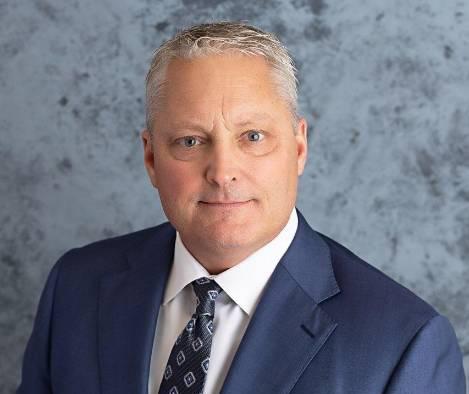
Ingham County Prosecuting Attorney, John Dewane


ICBA Logo and Letterhead Policy


Ingham County Bar Association
Upcoming Events, Page 2 | President’s Message, Page 4
Ingham County Prosecuting Attorney, John Dewane
Founded in 1895, the Ingham County Bar Association continues its longstanding tradition of service to the legal profession and the greater Lansing community, bringing lawyers together to join in a strong organization that works to achieve objectives that transcend the individual.
INGHAM COUNTY
BAR ASSOCIATION
P.O. Box 66
Grand Ledge, MI 48837 www.inghambar.org
BOARD OF DIRECTORS
President
Alexander Rusek
Foster Swift Collins & Smith PC
President Elect
Jessica Zimbelman State Appellate Defender Office
Vice President
Mary Bowen Michigan Attorney Grievance Commission
Treasurer Nolan Erickson Grewal Law PLLCn
Secretary Catherine Tucker Sinas, Dramis, Larkin, Graves & Waldman, P.C.
Immediate Past President
Lindsay Dangl Murphy & Spagnuolo PC
Jordan Ahlers-Smith Speaker Law
Tiffany DeBruin DeBruin Law PLLC
Logan Byrne Byrne Law, PLLC
Theodore Seitz
Dykema Gossett PLLC
Chris Wickman State Appellate Defender Office
Kristina Bilowus
MSU College of Law
John Dewane Ingham County Prosecutor
Alternative Dispute Resolution (ADR)
Jenna Ribbons
Signature Solutions
Gabrielle Lawrence
Foster Swift
Criminal Defense Law
Marisa Vinsky
Chartier & Nyamfukudza, PLC
Chris Wickman
Nichols Law Firm, PLLC
Employment & Labor Law
Kelly McClintock
Blanchard & Walker PLLC
Family Law
Jessica Larson
Mallory, Lapka Scott & Selin PLLC
Nicole Samuel
Samuel Law, PC
Paralegal/Legal Assistant
Megan L. Cochrane
Foster Swift Collins & Smith PC
Emily Erbisch
O’Keefe Law, PLLC
Probate & Trust Law
Ernscie Augustin
Augustin Law Offices
Real Estate Law
William D. Tomblin
William D. Tomblin & Associates
Ellen E. Ward
Oade Stroud & Kleiman PC
Mitchell Zolton
Fahey Schultz Burzych Rhodes PLC
Young Lawyers
Logan Byrne
Byrne Law, PLLC
Annual Dinner
Theodore Seitz / Jessica Zimbelman
Annual Meeting
Alex Rusek / Michael Van Huysse / John Fraser
Ask A Lawyer Committee
Raymond Harris / Brandon Schumacher
Awards
Kristina Bilowus / John Dewane / Jackie Dupler
DEI
Kristina Bilowus / Jackie Dupler
Education
Chris Wickman / Catherine Tucker
Meet the Judges
Nolan Erickson / Tiffany DeBruin
Membership
Mary Bowen / Catherine Tucker
Nominating Committee
Lindsay Dangl / John Dewane
Past Presidents’
Lindsay Dangl
Section Chair Liason
Jessica Zimbelman / Chris Wickman
Shrimp Dinner
Alex Rusek / Michael Van Huysse / John Fraser
Social Deliberations
Kristina Bilowus / Tiffany DeBruin
Social Media
Tiffany DeBruin / Jackie Dupler
Sponsors
Katie Tucker / Theodore Seitz
Wellness Committee
Chris Wickman / Kristina Bilowus
EXECUTIVE DIRECTOR
Madelyne Lawry
517-627-3938
We all know the important roles that lawyers play in our community and country. With the mass adoption of video conferencing technology prompted by the COVID-19 pandemic and the rise of remote work, new attorneys and law students do not have as many opportunities to interact with more experienced attorneys at the courthouse or in the office. As members of the Ingham County Bar Association, I believe it is imperative that we do not simply advocate for a return to only in-person court or work but rather take it upon ourselves to meet new attorneys and law students where they are and take into consideration their unique perspectives on life and the practice of law. So, what can you do to support our next generation of lawyers?
It is important to resist the urge to say, “Back in my day, we were in the office at 7:00 AM and left no earlier than the last partner did.” When a young attorney suggests a new project management tool or a different way to approach legal issues, we need to listen. By validating their perspective, you build a foundation of mutual respect. Mentorship should be a two-way street: they learn the craft of law from us and we learn the future of the legal business and society from them. If we only focus on “the way things used to be,” or how “it was different in my day,” we all lose.
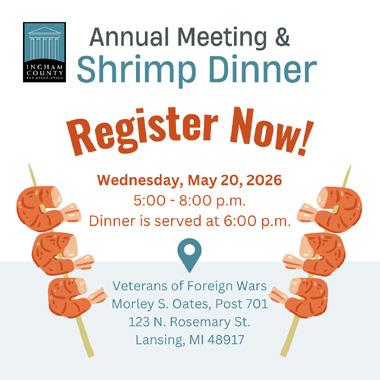
Our events, such as the Young Lawyer Section’s Barristers’ Night honoring our Top 5 Under 25 attorneys, Annual Dinner, Annual Meeting and Shrimp Dinner, Social Deliberations meetings, Bench Bar Conference, and our section meetings, are great opportunities for mentorship and must be designed with the newcomer in mind. When you attend an event, challenge yourself to avoid the “circle of comfort” with colleagues you have known for twenty years. Seek out the person standing alone or the law student volunteer.
We often complain about the “isolation” of remote work, but for a new attorney, that isolation is compounded by the fear of being a nuisance. If you see a name you do not recognize on a virtual motion call or a local filing, reach out. A simple email or LinkedIn message saying, “I saw your argument today and you did a great job,” can be the catalyst for a vital professional relationship. Better yet, invite them to a scheduled virtual coffee chat. By setting a formal time, you remove the barrier of them feeling like they are interrupting your billable hour.
We can also focus on providing the insight that has led us to successful careers. For example, there is a vast difference between what is taught in a civil procedure in law school and how a case actually moves through our local courts. New attorneys need to know

arusek@fosterswift.com
the “local-local” rules: which clerks prefer certain filing formats, the specific temperament of a presiding judge, and the unwritten codes of conduct that keep our bar civil.
We should also be considering how we can create “micro-mentorship” moments. If you are heading into a remote deposition, invite a junior associate or a law student to shadow you. Afterward, hop on a five-minute debrief call to explain why you took a certain tactical approach. These small windows into our thought processes are more valuable than any textbook.
Also, be on the lookout for opportunities to hand over the lectern. If a junior attorney has done the heavy lifting on a motion, let them argue it. Give them the credit in front of the bench and their peers. This builds their confidence and establishes their reputation within our legal community.
Join me in making a collective commitment: find one new attorney or law student this month. Buy them lunch, send them a word of encouragement, or simply introduce them to another member of the bar. By meeting them where they are, whether that is in a courthouse hallway or virtual breakout room, we ensure that the future of the Ingham County Bar Association is as strong and vibrant as its past.
By Kristina Bilowus
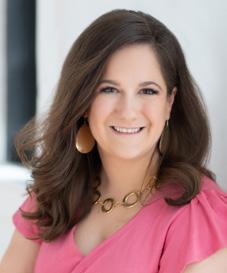
Kristina Bilowus bilowusk@msu.edu
On Tuesday, January 13, 2026, the Ingham County Bar Association and the Women Lawyers Association of Michigan hosted, “Own Who You
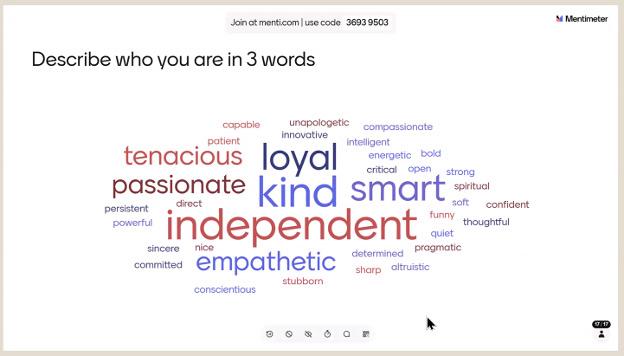
Are.” Jessica Zimbelman, Deputy Director of the State Appellate Defender Office, talked about the way that men and women are often perceived and treated differently by other individuals in the legal profession. Studies have shown that women are stereotypically associated with words such as “Yielding, Cheerful, Shy, Affectionate, Sensitive, Warm, Tender, Gullible, and Childlike,” while men are associated with words such as, “Forceful, Independent, Assertive, Self-Sufficient, Dominant, and Aggressive.” Jessica, herself a strong and experienced attorney, wife, and mother, talked about how to own who you are unapologetically
and eliminate a lot of apologizing and minimizing behavior. Attendees shared their own experiences and additional resources and articles that were enlightening and participated in a word cloud to describe ourselves in three words. It was a wonderful and empowering presentation reminding us to be our own authentic and unique selves and to uplift and empower especially quieter voices in the next generation. Thank you to Jessica for her powerful presentation and to the Women Lawyers Association of Michigan for partnering on this important topic.
By Amia A. Banks
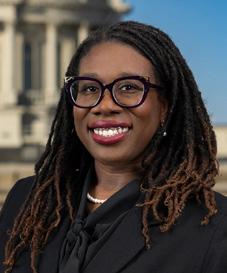
Amia A. Banks aabanks@dykema.com
Affordable housing is a legal and financial puzzle that requires careful guidance. Across Michigan, developers and investors are navigating a web of federal, state, and local incentives to make projects financially feasible while complying with complex regulations. For lawyers, understanding these incentives is an opportunity to provide strategic value, protect clients from regulatory pitfalls, and contribute to sustainable community development.
At the federal level, the Low-Income Housing Tax Credit, commonly known as LIHTC, remains the primary driver of affordable housing development. Established in 1986, LIHTC offers investors a dollar-for-dollar reduction in federal taxes in exchange for equity investment in housing projects that meet strict affordability standards. Lawyers play a central role in these deals because structuring them requires a precise understanding of eligibility criteria, compliance obligations, and
partnership arrangements. Projects must reserve a specific percentage of units for low-income tenants, generally either 20 percent at 50 percent of the area median income or 40 percent at 60 percent of the area median income. The IRS enforces a 15-year compliance period followed by an additional 15-year extended use period. Any failure to comply can trigger recapture of the tax credits, which makes legal oversight essential. Developers often structure projects as limited partnerships or limited liability companies with investors as limited partners. Lawyers must ensure that partnership agreements allocate ownership and profits appropriately while also reflecting each party’s compliance responsibilities.
In addition to LIHTC, historic preservation tax credits frequently intersect with affordable housing projects, particularly when older buildings are rehabilitated. Federal and state historic tax credits can provide significant additional equity, improving project feasibility, but they also introduce separate eligibility and compliance requirements. Lawyers must carefully evaluate whether these credits can be combined with LIHTC and local incentives without creating conflicts related to ownership structure, timing, or qualified expenditures. Misalignment can result in disallowed credits or increased recapture risk. Understanding how these programs interact allows counsel to identify issues
early, coordinate compliance obligations, and help ensure that layered incentives strengthen rather than undermine a project’s financial viability.
At the state and local level, Michigan provides additional tools to make affordable housing projects feasible. Brownfield Redevelopment Tax Increment Financing, or TIF, allows local governments to capture future tax revenue generated by redevelopment projects to reimburse eligible costs such as environmental remediation or infrastructure improvements. Lawyers advising clients on these programs must navigate the requirements of the Brownfield Redevelopment Financing Act, carefully documenting eligible expenses and ensuring that local approvals are properly obtained. Property tax abatements are another tool available to developers in Lansing and throughout many Michigan municipalities. These abatements can significantly reduce operating costs for developers who meet specified affordability or redevelopment criteria, improving long-term project feasibility. Unlike federal incentives, local abatements are discretionary and typically subject to negotiation with municipal officials. Though, some municipalities have adopted more standardized approaches. Detroit, for example, has enacted an ordinance that allows qualifying affordable housing projects to make a payment in lieu of taxes equal to one percent of taxable
value, subject to affordability and ongoing compliance requirements. Lawyers must guide clients through these local programs, clarifying the scope and duration of any abatements or payments in lieu and ensuring that temporary benefits are accurately reflected in financing and underwriting. Understanding local processes and effectively navigating negotiations is just as critical as technical legal expertise in maximizing these incentives for clients.
Affordable housing projects often intersect multiple legal domains. Real estate law, tax law, securities law, and environmental law all come into play. Lawyers must carefully structure syndication agreements for LIHTC investments, including representations, warranties, and indemnities for investors. They must also design compliance manuals and monitoring systems to reduce the risk of recapture. When combining incentives, careful attention is needed to ensure that stacking does not create conflicts or timing issues. Aligning financing requirements with tax credit obligations
is another area where legal oversight is critical. Failure to do so can lead to conflicts that jeopardize both project financing and regulatory compliance.
Ingham County is seeing new interest in mixed-income housing, transit-oriented development, and adaptive reuse projects. Lawyers must consider how zoning changes intersect with incentive programs and how new state legislation affects existing financing structures. Staying ahead of these trends allows lawyers to provide proactive guidance and identify opportunities that might not be immediately apparent to clients.
Lawyers have the potential to be much more than transactional advisors in affordable housing. Their insight can shape deal structures, safeguard compliance, and guide clients through complex interactions between federal, state, and local programs. A deep understanding of tax incentives allows lawyers to provide strategic counsel that directly affects the success of a project. It also positions them as key partners for developers, investors, and municipalities
seeking to balance financial feasibility with community impact.
Affordable housing law is not just about contracts or tax codes. It is a multidimensional practice area that requires careful attention to detail, crossdisciplinary knowledge, and a clear understanding of the policy objectives behind incentive programs. For lawyers in Ingham County, mastering the landscape of tax incentives is both a professional advantage and an opportunity to contribute to the creation of equitable, sustainable communities. By understanding how federal and local incentives work together and by anticipating the legal and financial challenges developers may face, attorneys can assist clients in navigating projects successfully and supporting positive community outcomes.
ICBA may offer scholarships to prospective members who may be experiencing a hardship and cannot pay the standard rates to be an active member of the Bar.
Recipients will remain anonymous. It is up to the discretion of the ICBA President to grant scholarships, but it can only be approved on an annual basis (i.e. this is not a benefit that automatically renews year-to-year).
The scholarship application can be accessed here.
By John Dewane, Ingham County Prosecuting Attorney
When I took office three years ago, our community was facing a serious public safety crisis. My top priority was reducing gun violence and homicides in Ingham County. I reset the priorities of the office from the previous administration by enforcing existing firearm laws, targeting violent and habitual offenders, and taking a firm stance on holding violent offenders accountable for the harm happening in our community.
Through strong collaboration with law enforcement, community leaders, and violence intervention programs such as Advance Peace and Lansing 360, violent crime in Ingham County has been significantly reduced. In 2021, Lansing experienced 23 fatal shootings, most involving teens or young adults. This past year, that number dropped to 10 — a 57% reduction over four years. This reduction shows that our focused, strategic approach is making a measurable difference in reducing gun violence in our community.
My office will continue to prioritize the reduction of gun violence as one life lost is one too many. We are also focusing efforts to address sexual and intimate partner violence, crimes against children, and violent offenses committed by juvenile offenders.
When children are not in school, they are more vulnerable to exploitation, academic failure, and future involvement in the justice system. During my tenure as prosecutor, we have continued to partner with the 30th Circuit Court –Family Division to monitor and address student truancy and hold parents accountable for sending their children to school. Regular school attendance is one of the most effective safeguards we have to promote stability, opportunity, and long-term success for our youth and our community.
I am not naïve to believe that we can simply lock people up and throw away the key to resolve criminal activity. The majority of crimes we prosecute are non-violent and do not result in
significant imprisonment. Many of these cases can and should be resolved through community-based treatment programs and supportive services. Our Diversion Program allows individuals charged with non-violent offenses to complete probationary requirements and other rehabilitative conditions in lieu of traditional prosecution. Upon successful completion, they avoid criminal prosecution and a criminal conviction.
We collaborate with and refer individuals to a range of specialized treatment courts, including Sobriety Court, Mental Health Court, Drug Court, Domestic Violence Court, Veterans Court, Weapons Court for juveniles, and Phoenix Court for victims of human trafficking. These problem-solving courts use a multi-disciplinary approach to collaborate with stakeholders to address the underlying issues that often contribute to criminal behavior – such as substance abuse disorders, mental health challenges, and trauma – while maintaining appropriate supervision and accountability. This balanced approach promotes personal accountability while also creating meaningful opportunities for rehabilitation, stability, and longterm success — ultimately strengthening public safety and improving outcomes for individuals, families, and our community as a whole.
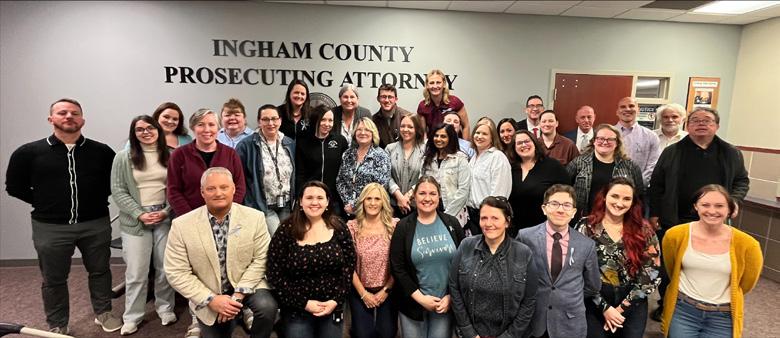
The Ingham County Prosecutor’s Office consists of 32.5 Assistant Prosecutors when fully staffed and approximately 35 dedicated support staff who play a critical role in the office’s daily operations. Our leadership structure includes a Chief Assistant Prosecutor,
a Deputy Chief Prosecutor, and eight Assistant Prosecuting Attorneys who oversee key divisions: Circuit Court, District Court, Family Support, Homicide - Gun Violence, Sexual and Intimate Partner Violence, Family Court, Crimes Against Children, Investigations, and Appeals. This structure ensures focused oversight and vertical prosecutions, subject matter expertise, and consistent accountability across all areas of prosecution.
We also have a dedicated Family Support Unit consisting of two Assistant Prosecuting Attorneys and experienced staff who are responsible for establishing paternity, child custody, parenting time, and securing child support orders. Their work ensures that parents meet their legal and financial obligations to their children and helps promote stability and well-being for families in our community.
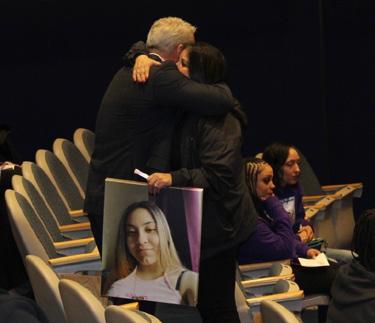
Victims are at the center of everything we do. They are afforded important rights under our state laws and constitution. Our Crime Victim Services Unit is dedicated to ensuring those rights are protected and upheld at every stage of the legal process. Our team provides comprehensive support, including victim
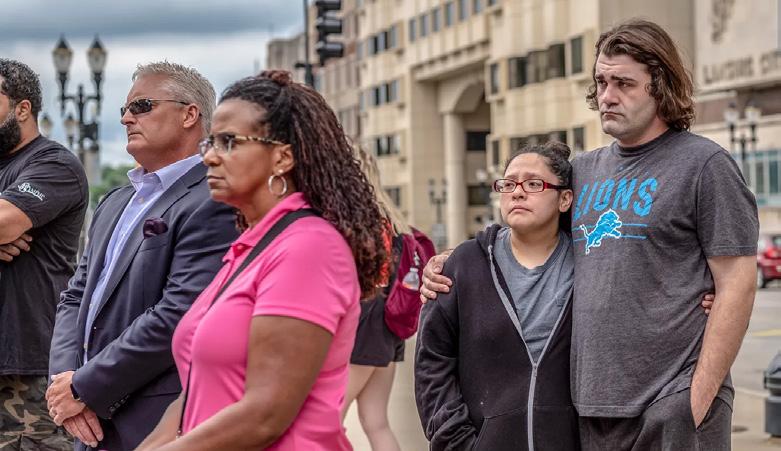
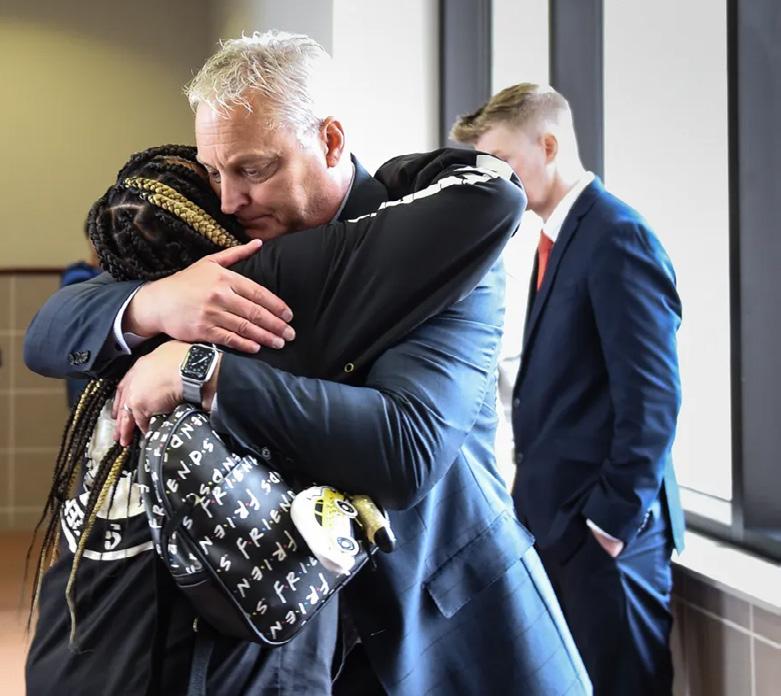
rights advocacy, court notifications, assistance with travel arrangements, restitution coordination, and referrals to community-based counseling and support services. We are committed to treating every victim with dignity, respect, and compassion while guiding them through what can often be a difficult and overwhelming process.
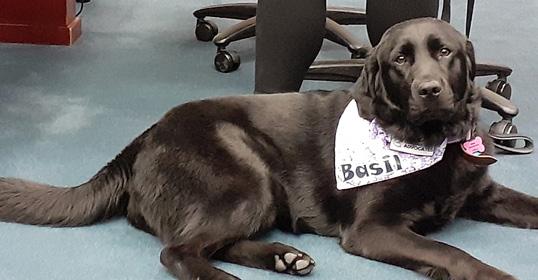
We are also proud to have a dedicated canine advocate, Basil, a black lab who provides comfort and emotional support to victims and survivors of crime — particularly in cases involving child abuse and trauma. Basil helps create a calmer, more supportive environment during interviews and court proceedings, reducing stress and anxiety for those who have experienced significant harm. Her presence reflects our commitment
to approaching prosecution not only with professionalism, but with compassion.
Our warrant clerks, discovery unit, and paralegals play a critical role in ensuring that cases are thoroughly prepared and that discovery is provided in a timely, complete, and transparent manner. Their diligence helps uphold due process and maintain the integrity of our legal proceedings.
In addition, my office administrator, executive assistant, and community outreach staff are essential to the effective operation of the office. They help manage daily functions, coordinate internal operations, and maintain clear, consistent communication with the public — ensuring accessibility, transparency, and trust within our community.
Beyond the courtroom, we actively engage in community initiatives that raise awareness, honor victims, and strengthen public trust.
These include observances such as Child Abuse Prevention Month, Domestic Violence Awareness Month, and Sexual Assault Awareness Month, as well as commemorations like the Fallen Officers Memorial and the annual Candlelight Vigil for Crime Victims. Through these efforts, we aim to educate, support, and connect with the community while reinforcing our commitment to safety, justice, and compassion.
We remain steadfast in our commitment to building a safer community — one that holds offenders accountable for their actions, provides comprehensive support to victims, and invests in prevention and rehabilitation programs. By balancing accountability with opportunities for growth and recovery, we aim to reduce crime, strengthen families, and foster a community where all residents can live safely and thrive.
Ingham County Prosecutor’s Office Assignments
Effective as of January 5, 2026
DISTRICT COURT: Joel Martinez, 6264 JMartinez@ingham.org
54-A DISTRICT COURT
Judge Buchanan Ross March-Meenagh, 6237 RMarch-Meenagh@ingham.org
Judge Flores Haley Fortuna-Gil, 6221 HFortuna-Gil@Ingham.org
Judge Simmons Vacant
Judge Ward Cassidy Koutsioukis, 6262 CKoutsioukis@ingham.org
54-B DISTRICT COURT
Judge Greenwalt Jeremy Baer, 6252 Judge Babcock JBaer@ingham.org
55th DISTRICT COURT
Judge Allen Gabrielle Ezell, 6261 GEzell@ingham.org
Judge Hillman Abigail Wilson, 6234 AWilson2@ingham.org
CIRCUIT COURT: Sarah Pulda, 6265 SPulda@ingham.org
Judge Aquilina Bart Buxton, 6205 BBuxton@ingham.org
Judge Jamo Melood Abugasea, 6230 MAbugasea@ingham.org
Judge Stokes Elena Cisneros, 6517 ECisneros@ingham.org
Judge Cole Jessica Shah, 6211 JShah@ingham.org
CRIMES AGAINST Angela Del Vero, 6229 CHILDREN: ADelvero@ingham.org
Jennifer Lawton, 6267 JLawton@ingham.org
Andrea McCray, 6227 AMcCray@ingham.org
JUVENILE DIVISION: Megan Mertens, 6232 Judge Tremblay MMertens@ingham.org
Judge McCormick Natalie Clinkscales, 6207 NClinkscales@ingham.org
Judge Dunnings Dale Caltrider, 6219 DCaltrider2@ingham.org
Judge Koenig Taycee Friar, 6236 TFriar@ingham.org
Investigations: Randy Behrmann, 6249 RBehrmann@ingham.org
Screener/Appeals Andrew Birge, 6233 ABirge@ingham.org
Opioid Crisis Randy Behrmann, 6249 Response (TCM) RBehrmann@ingham.org
APPEALS: Elizabeth Allen, 6271 EAllen@ingham.org
Jerry Schrotenboer, 6215 JSchrotenboer@ingham.org
Andrew Birge, 6233 ABirge@ingham.org
Homicide/ Bill Crino, 6208 Gun Violence: BCrino@ingham.org
Nattalie Macomber, 6251 NMacomber@ingham.org
Sexual and Intimate Steve Kwasnik, 3210 Partner Violence: SKwasnik@ingham.org
Abigail Tepper, 6228 ATepper@ingham.org
Adam Pfeiffer, 6226 APfeiffer@ingham.org
FAMILY SUPPORT: Laurie Freed, 6204 LFreed@ingham.org
Giacomo Mattioli, 6247 GMattioli@ingham.org
Criminal Non-Support: Vacant All telephone numbers begin: (517) 483 - XXXX
How to: Zoom Court in 7 Minutes
Click here for more information

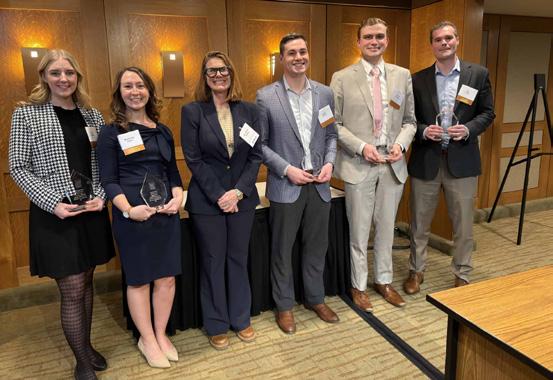
Thank you to all our generous 17th Annual Barristers Night Sponsors:
Abood Law Firm
Buhl Little Lynwood & Harris PLC
Chartier & Nyamfukudza PLC
Dickinson Wright PLLC
Fahey Schultz Burzych Rhodes PLC
Foster Swift Collins & Smith PC
Grewal Law PLLC
Law Office of Edwar A. Zeineh, PLLC
MSU College of Law
Murphy & Spagnuolo PC
Sinas Dramis Law Firm
Thrun Law Firm, P.C.
University Club of MSU
Willingham & Coté PC
Click to view photo gallery.


Maximum charitable tax strategies
Donor-advised funds are superior to commercial DAFs
Endowment funds to suit your client’s charitable intent, forever
Legacy funds require no up-front gift
Professional staff provide personalized service and community knowledge
Contact us to add Community Foundation experts to your team!
Laurie Strauss Baumer President & CEO


By Chris Wickman
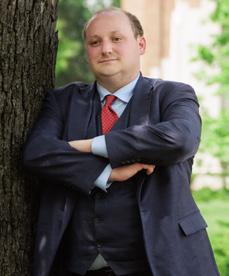
Chris Wickman cwickman@sado.org
Every year for the last three years, my wife and I have been able to set aside some time to head to New York City to take in the best new musicals (and some old classics). I’ve previously written about the way we get heavily discounted (and wonderful!) tickets to those shows. The nice thing about living close to a world-class entertainment venue like the Wharton Center and within driving distance of New York City is we will often catch the first national tour of a lot of those started-on-Broadway shows pretty local.
Broadway in Detroit is a wonderful example of that this year (Wharton Center has not yet released)! Below find a summary of the shows coming to Broadway in Detroit this year. I do not work for Broadway in Detroit nor do I receive any compensation for this - I just want to share my love of musicals with you. The below opinions are my own only and not the opinions or recommendations of the ICBA, the
Nichols Law Firm, or the State Appellate Defender Office. If you join the Wellness listserv, I will also send an email to the listserv once the Broadway in Detroit shows offer heavily discounted ($20$30) tickets or lottery entries. It’s a great way and a short drive to see even more amazing one-off shows!
Not every show is for every person. If you’re looking for a recommendation or have any questions, feel free to reach out to me – chrisbwickman@gmail.com. Enjoy!
September 22-October 4, 2026
Based on the movie of the same name, this tells a classic, but tragic love story of love persevering. Without giving away more of the plot, I must be brief, but this classic love story has some moving songs focusing on love and loss.
You may like this musical if you like: The movie, musicals with a familiar plot, and well-acted love stories.
Chris’s and Kristina’s Personal Ranking: Never seen it! We will see if it comes to Wharton.
October 20, 2026-November 1, 2026
This little musical (cast of four I believe) won the Tony Award for the Best Musical last year – and it deserved it. This is a small show exquisitely acted and beautifully performed. It is about
two “HelperBots” – discontinued robotic assistants who are in their retirement. With common themes from the Robin Williams movie Bicentennial Man, but with a whole different plot, you will leave this show feeling uplifted, emotionally drained, and energized.
You may like this musical if you like: Hamilton, In the Heights, Rent, and Come From Away.
Chris’s Personal Ranking: 6 (of 83). Kristina’s Personal Ranking: 8 (of 53).
The Great Gatsby November 17-29, 2026
Based on the book (and as memorialized in the movie), this musical shows that money can’t buy happiness (though most of my money nowadays seems to go to shows due to the huge amount of shows we see each year). Jay Gatsby has a history of unrequited love and his new neighbor gets drawn into the web of his new rich life as a myriad of other characters deal with their own turns and tribulations. This is a classic “big Broadway” show with huge dance numbers, elaborate costumes based on the roaring 20s, and a classic Broadway feel.
You may like this musical if you like: Some Like It Hot, Catch Me If You Can, and Moulin Rouge.
Chris’s Personal Ranking: 36. Kristina’s Personal Ranking: 37.
The 2025-2026 Broadway in Detroit Musicals continued Boop! The Musical December 1-13, 2026
Betty Boop comes to life – and she’s more complex than ever. This portrayal of the 2-D character adds character, personality, and wonderful theatrics as Betty Boop enters the real world. With large dance numbers, a fun back-andforth between the comics and film world, and fun character dynamics, this too adds a wonderful sense of wonderment and happiness to the show. While we saw this with now Broadway star Jasmine Amy Rogers in her breakout role, equally impressive was the puppetry behind Pudgey – her cartoon dog. It is enough to make you miss your pup and be singing the songs for weeks. This was truly the surprise show of our last New York City trip and we’re looking forward to seeing it again in Detroit.
You may like this musical if you like: Betty Boop, Mean Girls, Anastasia, Wicked, Legally Blonde, or Billy Elliott.
Chris’s Personal Ranking: 14. Kristina’s Personal Ranking: 23.
Operation Mincemeat: A New Musical January 12-24, 2027
In a tale too strange to be true, Operation Mincemeat tells the story of a deception by British Intelligence to fool the Germans during World War II about the target of an invasion. It is classic British comedy (think Monty Python) with amazing performances and moving songs. This is a show we missed out when we were in NYC last year (in place of our next show listed), but we will not miss out on it again.
You may like this musical if you like: Spamalot, Billy Elliott, or Come From Away.
Chris’s and Kristina’s Personal Ranking: Never seen it! We look forward to seeing it!
Death Becomes Her March 23-April 4, 2027
With a similar plot to the classic movie of the same name, this show is full of big show-stopping numbers, hysterical comedy, and wonderful staging all in the pursuit of chasing eternal youth. A classic frenemy story complete with love triangles, workplace challenges, aging in Hollywood, and attempted murder (not for lack of trying though!), this show is sure to delight and make you laugh. “The hardest I’ve ever laughed at the first act of a show” says Kristina.
You may like this musical if you like: The movie, Shucked, Some Like it Hot, Something Rotten, and Kinky Boots.
Chris’s Personal Ranking: 13. Kristina’s Personal Ranking: 20.
Oh, Mary!
February 23-28, 2027
This is a play – a play we saw to make ourselves a three-show day last year in New York City. It’s a hysterical and ridiculous alternate telling of history. What if Mary Todd Lincoln was not the first lady we knew, but instead an alcoholic cabaret singer who drove her famous husband Abe crazy. Often portrayed by a masculine-presenting individual cross-dressing as female Mary Todd, this small cast show has absolutely ridiculous moments that often leave the audience in stitches. It’s a fun show that I’m glad I saw once in my life.
You may like this play if you like: Classic cabaret shows, ridiculous overthe-top acting, and outrageous comedy.
March 2-7, 2027
With a similar plot to the movie of the same name, this show explores those who run away with the circus and find more than they bargained for. This is equal parts circus act and musical as it tells the story of the main character’s running away to the circus. While it has some adult themes and action, you will find yourself engrossed in childlike wonder watching the professionallytrained acrobats (and amazing puppeteers) risk life and limb in this visual story of love and exploration. You may like this musical if you like: The movie, Cirque de Soleil, the circus, or the Lion King musical.
Chris’s Personal Ranking: 35. Kristina’s Personal Ranking: 19.
Please take note that the Ingham County Bar Association does not do Lawyer Referrals. If you need to use this service provided by the State Bar of Michigan, please call them at (800) 968-0738 between the hours of 9:00 a.m. and 5:00 p.m., Monday through Friday, to speak with a lawyer referral representative or you can use the links below.
• Lawyer Referral and Information Service Registration Form
• LRIS Quick Reference Guide
• Become a Lawyer Referral Service Panel Member
By Lindsey M. Mead and Alexander S. Rusek
Lindsey
M. Mead lmead@fosterswift.com
Alexander S. Rusek
arusek@fosterswift.com
Fast Facts:
• Michigan’s Protection from Intimate Deep Fakes Act creates a civil cause of action against creators and disseminators of sexually explicit Deep Fake images and video.
• Michigan’s Protection from Intimate Deep Fakes Act creates misdemeanor and felony criminal offenses for the creation and dissemination of sexually explicit Deep Fake images and video.
• Michigan’s Protection from Intimate Deep Fakes Act follows the enactment of the federal TAKE IT DOWN Act in May 2025.
Exploding onto the scene in November of 2022, generative artificial intelligence programs (“AI”) (such as ChatGPT, Gemini, Grok, Midjourney, Claude, Microsoft Copilot, and many others) have gained widespread adoption in personal and professional settings alike. Concerningly, the proliferation of these sophisticated AI tools has created a new and insidious form of personal violation: the nonconsensual creation and dissemination of sexually explicit “Deep Fakes.”1
In response to the rising proliferation of Deep Fakes, the State of Michigan has moved in a bipartisan manner to address the issue by enacting Public Act
11 of 2025, titled the Protection from Intimate Deep Fakes Act (the “Act”).2 3 This landmark AI legislation establishes a framework of civil remedies and criminal penalties designed to hold perpetrators accountable and provide recourse for victims.
There is no singular definition of what constitutes a Deep Fake, but commentators have described them as:
• “a video, photo, or audio recording that seems real but has been manipulated with AI. The underlying technology can replace faces, manipulate facial expressions, synthesize faces, and synthesize speech. Deepfakes can depict someone appearing to say or do something that they in fact never said or did.”4
• “an artificial image or video (a series of images) generated by a special kind of machine learning called [‘deep’] learning (hence the name).”5
• “videos, picture or audio clips made with artificial intelligence to look real. They can be used for fun, or even for scientific research, but sometimes they’re used to impersonate people like politicians or world leaders, in order to deliberately mislead people.”6
• “[a ‘deepfake’] refers to recreated media of a person’s appearance and/or voice by a type of artificial intelligence called deep learning (hence the name, deepfake).”7
The Protection from Intimate Deep Fakes Act aims to address the issue of AI Deep Fakes in Michigan.8 Under the statute, a Deep Fake is defined as “a video recording, motion-picture film, sound recording, electronic image, or photograph, or a technological representation of speech or conduct substantially derivative of such a recording, film, image, or photograph, that is not an original recording of an actual occurrence or an original photograph without substantial modification to which both of the following apply: (i) [i]t is so realistic that a reasonable person would believe it depicts speech or conduct of a depicted individual. (ii) [t]he production of it was substantially dependent on technical means, rather than the ability of another individual to physically or verbally impersonate the depicted individual.”9
The Protection from Intimate Deep Fakes Act establishes a civil cause of action for “the nonconsensual creation or dissemination of a deep fake”.10 To bring this new cause of action, a plaintiff has the burden to prove that: (1) The “person who created or disseminated the deep fake knew or reasonably should have known that the creation, distribution, or reproduction of the deep fake would cause physical, emotional, reputational, or economic harm to an individual falsely depicted; or created or disseminated the deep fake in order to harass, extort, threaten, or cause physical, emotional, reputational,
or economic harm to an individual falsely depicted[;]” (2) The Deep Fake must realistically depict one or more of the following: “[t]he intimate parts of the depicted individual” or “[t]he depicted individual engaging in a sexual act”; and (3) The depicted individual is identifiable either “[f]rom the deep fake itself, by the depicted individual or by a reasonable individual viewing or listening to the deep fake” or “[f]rom the personal information displayed in connection with the deep fake.”11

An action based on the creation or dissemination of Deep Fakes accrues at the time the depicted individual “discovers that the deep fake has been created or disseminated.”12 The action may be filed in the county where the defendant or plaintiff reside or “where the deep fake was produced, reproduced, or stored.”13 Courts must allow confidential filings in this type of action, and may elect to “grant injunctive relief to maintain the confidentiality of the plaintiff using a pseudonym.”14
For cases filed asserting a civil cause of action under MCL 752.383, it is not a defense to a claim that the individual depicted in the Deep Fake consented to the creation or possession of the Deep Fake or to the voluntary transmission of the Deep Fake, whether disseminated publicly or privately, unless both of the following apply: (1) “[t]he consent is contained in an agreement written in plain language signed knowingly and
voluntarily by the depicted individual;” and (2) “[t]he consent includes a general description of the intimate digital depiction and, if applicable, the audiovisual work into which it will be incorporated.”15
Conversely, the Act creates multiple defenses to a civil cause of action brought for the creation or dissemination of Deep Fakes. The defenses are:
• “The creation or dissemination was made for the purpose of a criminal investigation or prosecution that is otherwise lawful.”16
• “The creation or dissemination was for the purpose of, or in connection with, the reporting of unlawful conduct.”17
• “The creation or dissemination was made in the course of seeking or receiving medical or mental health treatment, and the image is protected from further dissemination.”18
• “The deep fake related to a matter of public interest, the creation or dissemination served a lawful public purpose, the person creating or disseminating the deep fake as a matter of public interest clearly identified that the video recording, motion-picture film, sound recording, electronic image, photograph, or other item was a deep fake, and the person acted in good faith to prevent further dissemination of the deep fake.”19
• “The creation or dissemination was made for legal proceedings and was consistent with common practice in civil proceedings necessary for the proper functioning of the civil justice system, or protected by court order that prohibited any further dissemination.”20
There are also other carveouts in the Act for: (1) “an interactive computer service as defined in 47 USC 230(f) (2);”21 (2) “[a] provider of public mobile services or private radio services;”22 (3) “[a] telecommunications network or broadband provider;”23 and (4) “[a] provider or developer of a technology used in the creation of a deep fake, if the technology is not designed for, marketed for, or deployed for the nonconsensual creation or dissemination of deep fakes that realistically depict the intimate parts of depicted individuals or depicted individuals engaging in sexual acts, and if the provider or developer has prohibited explicit deep fake content in accordance with the provider’s or developer’s terms of service.”24
Damages available for a prevailing civil action plaintiff include: (1) economic and non-economic damages, including, without limitation, financial losses
that incurred due to the creation or dissemination of the Deep Fake, as well as damages for “mental anguish, embarrassment, and humiliation[;]”25 (2) an financial amount equal to any profit made by the individual found liable from the creation or dissemination of the Deep Fake;26 and (3) actual court costs and fees, including reasonable attorneys’ fees.27
Aside from the civil cause of action created by the Act, the Act also creates a misdemeanor offense punishable by imprisonment for not more than one year, a fine of not more than $3,000.00, or both, for people convicted under the Act.28
To secure a conviction under the Act, there are numerous elements that a prosecutor must prove. First, it must be shown that the accused “knew or reasonably should have known that the creation, distribution, dissemination, or reproduction of the deep fake would cause physical, emotional, reputational, or economic harm to an individual falsely depicted.”29 Second, the Deep Fake must realistically depict either: (1) “[t]he intimate parts of the depicted
individual[;]” or (2) “[t]he depicted individual engaging in a sexual act.”30 Third, the depicted individual must be identifiable “[f]rom the deep fake itself, by the depicted individual or by a reasonable individual viewing or listening to the deep fake[;]”31 or “[f]rom the personal information displayed in connection with the deep fake.”32
The Act also creates a felony criminal offense and penalties for those who “intentionally create or disseminate a deep fake”33 if certain aggravating factors are present. A perpetrator convicted of a felony under the Act faces up to three years imprisonment, a fine of not more than $5,000.00, or both, if any of the following are true: (1) the depicted individual suffers financial loss;34 (2) the perpetrator created or distributed the Deep Fake with the intent to profit from it;35 (3) the perpetrator maintains an “internet website, online service, online application, or mobile application for the purpose of creating or disseminating the deep fake[;]”36 (4) the perpetrator posts the Deep Fake on a website;37 (5) the perpetrator created the Deep Fake with the intent to “harass, extort, threaten, or cause physical, emotional, reputational, or economic harm to the depicted individual[;]”38 or (6) the perpetrator has previously been convicted for violating MCL 752.388(1).39
For action filed asserting a criminal cause of action under the Act, it is not a defense under MCL 752.388 to assert the individual depicted in the Deep Fake consented to the creation or possession of the Deep Fake, or to the voluntary transmission of the Deep Fake, whether transmitted publicly or privately, unless both of the following circumstances apply: (1) the consent is contained in
a written agreement utilizing plain language and executed knowingly and voluntarily by the depicted individual; and (2) the consent documentation includes a general description of the intimate digital depiction of the impacted individual and, if applicable, the audiovisual content into which it will be incorporated.40
Moreover, the Act contains an exception which states that MCL 752.388 does not apply if any of the following are relevant to the creation or dissemination of the Deep Fake: (1) the Deep Fake is made for the purpose of a criminal investigation or prosecution; (2) the Deep Fake is for the purpose of, or in connection with, the reporting of conduct that is unlawful; (3) the Deep Fake is made in the course of seeking or receiving medical or mental health treatment, and the Deep Fake work is protected from further dissemination; (4) the Deep Fake relates to a matter of public interest, and the creation or dissemination of the Deep Fake serves a lawful public purpose; or (5) the Deep Fake is made for legal proceedings and is consistent with common practice in civil proceedings necessary for the proper functioning of the civil justice system, or protected by a court order that prohibits any further dissemination of the Deep Fake.41
The Act provides that MCL 752.388 must not be construed as to impose liability on any of the following entities for providing the infrastructure or access necessary to transmit Deep Fake content created by another person: (1) “[a]n interactive computer service as defined in 47 USC 230(f)(2); (2) “[a] provider of public mobile services or private radio services”; (3) “[a] telecommunications network or broadband provider”; or
(4) “[a] provider or developer of a technology used in the creation of a deep fake, if the technology is not designed for, marketed for, or deployed for the nonconsensual creation or dissemination of deep fakes that realistically depict the intimate parts of depicted individuals or depicted individuals engaging in sexual acts, and if the provider or developer has prohibited explicit deep fake content in accordance with the provider’s or developer’s terms of service.”42
In sum, the same liability carveouts for civil actions brought under the Act are also available as to any criminal charges associated with the creation and dissemination of Deep Fakes under Michigan law.43
In May 2025, President Donald J. Trump signed into law the Tools to Address Known Exploitation by Immobilizing Technological Deepfakes on Websites and Networks Act (the “TAKE IT DOWN Act”) with bipartisan support.44 The TAKE IT DOWN Act makes several significant amendments to 47 USC § 223 and 47 USC § 223a, such as:
• Criminalizing the publication of non-consensual intimate visual depictions, which includes both authentic images and AI-generated Deep Fakes.45 Penalties for a knowing violation involving an adult can include fines and up to two years of imprisonment.46 Publications concerning minors have more stringent requirements and carry a sentence of up to three years.47
• Requiring a notice and takedown process for “covered platforms”, including social media websites and mobile applications.48 Upon
receiving a valid removal request from an identifiable individual, platforms must remove the intimate visual depiction or deepfake within 48 hours.49 The new takedown requirements for platforms are scheduled to take effect on May 19, 2026.50
• Holding platforms accountable for non-compliance, with enforcement handled by the Federal Trade Commission (FTC).51 Failure to reasonably comply with the notice and removal requirements is treated as a violation of the Federal Trade Commission Act.52
• Granting liability protection for good-faith removals.53 Platforms that disable access to or remove content in good faith based on a valid takedown request are protected from legal claims, even if the content is later determined to be lawful.54
• Providing definitions for key terms, such as “digital forgery” and “intimate visual depiction”.55 For example, a “digital forgery” must be indistinguishable from an authentic visual depiction according to a reasonable person.56
• Criminalizing threats to publish intimate visual depictions or Deep Fakes.57 The penalties for threats are slightly different, with up to 18 months of imprisonment for threats involving adults and up to 30 months for threats involving minors.58
Altogether, the TAKE IT DOWN Act represents a robust federal response to the evolving challenges posed by non-consensual intimate Deep Fakes and related digital forgeries.
By establishing criminal penalties, expedited removal requirements, and platform accountability, the TAKE IT DOWN Act seeks to balance the urgent need for individual privacy and safety with protections for good-faith compliance by technology providers. As these provisions come into force, they are likely to shape both the conduct of online platforms and the legal landscape for victims and content creators alike. However, given the sweeping nature of these reforms, the TAKE IT DOWN Act is expected to face constitutional scrutiny, particularly with respect to the First Amendment and due process concerns.
As of September 2025, no formal constitutional challenges to the Act have been brought in the state of Michigan, nor challenges to the TAKE IT DOWN Act at the federal level. Nonetheless, commentators across the nation widely anticipate that free speech challenges may be filed against legislation with the same aims as the TAKE IT DOWN Act. In particular, the Electronic Frontier Foundation and Center for Democracy & Technology joined ten other organizations in February of 2025 to oppose the TAKE IT DOWN Act when it was in its bill stage by sending a letter to the Senate which stated, “In its current form, the bill [now, the TAKE IT DOWN Act] creates a notice and takedown (NTD) mechanism that would result in the removal of not just nonconsensual intimate imagery but also speech that is neither illegal nor actually [non-consensual distribution of intimate imagery]. This mechanism is likely unconstitutional and will
undoubtedly have a censorious impact on users’ free expression.”59 Moreover, after its enactment, the Cyber Civil Rights Initiative (“CCRI”) issued a statement on April 28, 2025 that said as follows: “CCRI has serious concerns about the constitutionality, efficacy, and potential misuse of TAKE IT DOWN Act’s notice and removal provision. While we wholeheartedly support the expeditious removal of nonconsensual intimate content and have long called for increased legal accountability for tech platforms that choose to distribute unlawful content, CCRI objects to the notice and removal provision because it is (1) unlikely to
accomplish these goals and (2) likely to be selectively and improperly misused for political or ideological purposes that endanger the very communities most affected by image-based sexual abuse. CCRI repeatedly raised its concerns about the notice and removal provision with federal lawmakers in the hopes that significant revisions would be made to the bill prior to passage. While some of our suggested revisions were made, the takedown provision as passed by Congress today remains unconstitutionally vague, unconstitutionally overbroad, and lacking adequate safeguards against misuse.”60
At the state level, though Michigan’s Act has yet to face any legal challenges, other states that passed similar legislation to the Act have already encountered scrutiny. For example, on August 5, 2025, a federal judge struck down California’s Deep Fake law aimed at restricting AI-generated Deep Fake content during election periods.61 California’s legislation, AB 2655 (officially titled, the Defending Democracy from Deepfake Deception Act of 2024).62 Elon Musk’s social media platform, X, sued the state of California last year challenging AB 2655.63 Notably, the federal judge –John Mendez – declined to give an opinion on the free speech arguments that were central to the plaintiffs’ case within his decision, instead citing the Communications Decency Act of 1996 for online platforms like X as the basis that supported his decision.64
Though California’s Defending Democracy from Deepfake Deception Act of 2024 was tailored to the use of political Deep Fakes, Minnesota, like Michigan, has also developed legislation aimed at creating a broader cause of action for the non-consensual dissemination of Deep Fakes depicting intimate parts or sexual acts of a person within Minnesota Statutes, Chapter 604.65
Conclusions
Michigan has joined the likes of Minnesota, Texas, Virginia, California, and others in addressing the proliferation of Deep Fakes. At the federal level, the TAKE IT DOWN Act has similar aims, seeking to set a national standard for platform accountability and victim protections against Deep Fakes. As legislative and judicial
landscapes continue to evolve, ongoing debates around privacy, free speech, and technological innovation will undoubtedly shape the future of this legislation as a whole. The legal and societal response to Deep Fakes remains in flux, with further court challenges, amendments, and stakeholder dialogues likely on the horizon. Ultimately, the effectiveness and fairness of these measures will depend on their ability to protect individuals from harm while safeguarding constitutional rights in the ever-evolving digital age.
Endnotes
1. “Deep Fakes” may also be referred to as deepfakes or deep fakes.
2. MCL 752.381, et seq.
3. Available at https://www.legislature.mi.gov/ documents/2025-2026/publicact/pdf/2025PA-0011.pdf (last accessed September 3, 2025) and https://legislature.mi.gov/documents/mcl/ pdf/MCL-ACT-11-OF-2025.pdf (last accessed September 3, 2025).
4. Science & Tech Spotlight: Deepfakes, GAO, Publication No. GAO-20-379SP, https://www. gao.gov/assets/gao-20-379sp.pdf (last accessed September 3, 2025).
5. What the heck is a deepfake?, University of virginia, https://security.virginia.edu/deepfakes (last accessed September 3, 2025).
6. Deepfake technology: What is it, how does it work, and what can it be used for?, CBBC, https://www.bbc.co.uk/newsround/69009887 (last accessed September 3, 2025).
7. What are deepfakes?, Malwarebytes, https:// www.malwarebytes.com/cybersecurity/basics/ deepfakes (last accessed September 3, 2025).
8. MCL 752.381, et seq.
9. MCL 752.382(a)(i)-(ii).
10. MCL 752.383.
11. MCL 752.383(a)-(c).
12. MCL 752.384(1).
13. MCL 752.384(2)(a)-(b).
14. MCL 752.384(3).
15. MCL 752.385(1)(a)-(b).
16. MCL 752.385(2)(a).
17. MCL 752.385(2)(b).
18. MCL 752.385(2)(c).
19. MCL 752.385(2)(d).
20. MCL 752.385(2)(e).
21. MCL 752.387(1)(a).
22. MCL 752.387(1)(b).
23. MCL 752.387(1)(c).
24. MCL 752.387(1)(d).
25. MCL 752.386(1)(a).
26. MCL 752.386(1)(b).
27. MCL 752.386(1)(c).
28. MCL 752.388(2).
29. MCL 752.388(1)(a).
30. MCL 752.388(1)(b)(i)-(ii).
31. MCL 752.388(1)(c)(i).
32. MCL 752.388(1)(c)(ii).
33. MCL 752.388 et seq.
34. MCL 752.388(3)(a).
35. MCL 752.388(3)(b).
36. MCL 752.388(3)(c).
37. MCL 752.388(3)(d).
38. MCL 752.388(3)(e).
39. MCL 752.388(3)(f).
40. MCL 752.388(4)(a)-(b).
41. MCL 752.388(5)(a)-(e).
42. MCL 752.388(6)(a)-(d).
43. MCL 752.388(5)(a)-(e); MCL 752.388(6) (a)-(d); MCL 752.385(2)(a)-(e); MCL 752.387(1)-(2).
44. Available at https://www.congress.gov/119/ plaws/publ12/PLAW-119publ12.pdf (last accessed September 3, 2025).
45. 47 U.S. Code § 223(h)(1)-(3).
46. 47 U.S. Code § 223(h)(4)(A).
47. 47 U.S. Code § 223(h)(4)(B).
48. 47 U.S. Code § 223a(a).
49. 47 U.S. Code § 223a(a)(3).
50. The TAKE IT DOWN Act: A Federal Law Prohibiting the Nonconsensual Publication of Intimate Images, Congress.gov, https://www. congress.gov/crs-product/LSB11314 (last accessed September 4, 2025).
51. 47 U.S. Code § 223a(b).
52. 47 U.S. Code § 223a(b)(1).
53. 47 U.S. Code § 223a(a)(4).
54. Id.
55. U.S. Code § 223(h)(1)(B); U.S. Code § 223(h)(1)(E).
56. U.S. Code § 223(h)(1)(B).
57. 47 U.S. Code § 223(h)(6)(A).
58. 47 U.S. Code § 223(h)(6)(B)(i)-(ii).
59. Center for Democracy & Technology et al., Concerns Regarding the TAKE IT DOWN Act, Center for DeMoCraCy & teChnology, February 12, 2025, https://cdt.org/wp-content/ uploads/2025/02/TAKE-IT-DOWN-Sign-OnLetter_21225.pdf (last accessed September 4, 2025).
60. CCRI Statement on the Passage of the
TAKE IT DOWN Act (S. 146), Cyber Civil rights initiative, April 28, 2025, https:// cybercivilrights.org/ccri-statement-on-thepassage-of-the-take-it-down-act-s-146/ (last accessed September 4, 2025).
61.Federal Judge Strikes Down California Deepfake Law, the ConferenCe boarD, August 7, 2025, https://www.conferenceboard.org/publications/pdf/index. cfm?brandingURL=federal-judge-strikesdown-california-deepfake-law (last accessed September 4, 2025).
62. Id.
63. Id.
64. Id.; Chase Difeliciantonio, Elon Musk and X notch court win against California deepfake law, PolitiCo, August 5, 2025, https://www. politico.com/news/2025/08/05/elon-musk-xcourt-win-california-deepfake-law-00494936 (last accessed September 4, 2025).
65. Minnesota Statutes § 604.32.
Are you listed in the online member directory ?
IN GENERAL
Publication Schedule
Copy Deadline
BRIEFS Committee Meetings
Author and Article Pictures
Article Length and Format
• Raising the Bar announcements:100-200 words
• Local legal events notices:100-150 words
• Columns: 300-500 words
• Articles: 700-1,000 words
• Submit articles in a Word .doc/.docx
Article Ideas
Opinion Articles
Author Information
INSERT RATES
ARCHIVED ISSUES
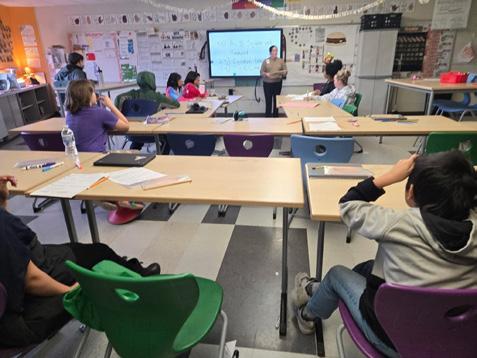
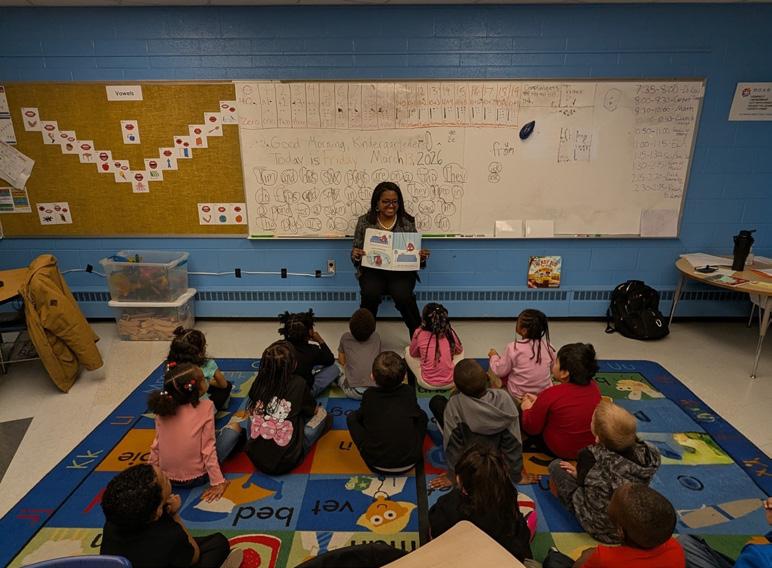
March is National Reading Month, also known as March is Reading Month. March is Reading Month promotes the love of reading. Professionals across the nation visit local schools to read to K-12 students. During the month of March, the Ingham County Bar Association participated in March is Reading Month at Atwood New Tech Magnet School.
ICBA Board member Mary Bowen, read the Couch Potato to a kindergarten class, and she read How to Catch a Dinosaur to a second-grade class. ICBA Board member Kristina Bilowus, read to a fifth-grade class. Additionally, ICBA member Mackenzie Flynn, read to a second class, and third year law student, Alysse Armstrong read to a third-grade class.
The ICBA Public Education and Outreach Committee had the opportunity to interview Kristina Bilowus about her experience. Bilowus stated that she had a great experience. “The students asked great questions, which led to a conversation about the legal profession and sharing of their goals. I was thrilled to share my love of reading and learning together.”
The ICBA Public Education and Outreach Committee would like to thank all the ICBA members who volunteered for March is Reading. The Committee would also like to thank the teachers and staff at Atwood New Tech Magnet School for allowing our members to volunteer as guest readers for March is Reading Month.

By Chris Wickman
cwickman@sado.org
On behalf of the ICBA Wellness Committee, we are happy to continue our regular “Park Profiles” column showcasing one of Ingham County’s greatest resources – our public parks! Parks are great places to maintain or find your wellness whether it’s exercising, playing, socializing, or simply enjoying
some quiet time. You can enjoy them with a partner, friends, children, a dog, or even find peace for yourself!
Our next park profiled will be one of my local parks I most frequently visit in Ingham County – Elmhurst Park. Located behind the former Elmhurst School (now renamed the Eva Evans Welcome Center), Elmhurst is a great example of one of the many small parks that you may be able to find in your own community. There are playgrounds for kids (or me), some basketball courts, some tennis courts, and a large open field perfect for some ultimate frisbee or other open-field sports.
What I personally love about Elmhurst Park is the ability to find serenity due to the localness of the park. Occasionally you will have one family enjoying a
park of the park, but it is set quietly in a lovely neighborhood (Colonial Village) that is extremely walkable. Want to visit Elmhurst Park? You could – or you could explore your local small park and see what they have to offer. Some of my favorite parks are the small parks that really embrace and warm up our community. Feel free to find your own!
More information about Elmhurst Park can be found by visiting …the park itself. It is too small to have its own portion of the Lansing Parks website! If you want your favorite Ingham County park featured (or would like to write a feature of your favorite park) contact co-chairs Chris Wickman (cwickman@ sado.org) or Kristina Bilowus (bilowuskristina@law.msu.edu).
By Chris Wickman
Chris Wickman cwickman@sado.org
We write with an important announcement from the Wellness Committee – a new listserv! Don’t scoff just yet – read on. The purpose of the listserv is to help improve our membership’s physical and mental wellness by helping to coordinate activities together between members. According to the World Health Organization, social connection can protect health across the lifespan by reducing inflammation, lowering the risk of serious health problems, fostering mental health, and preventing early death. According to the Center for Disease Control and Prevention, social connection can lead to longer life, better health, and well-being by helping to manage stress, anxiety, and depression; encourage healthy eating and physical activity; and improve our quality of sleep. We have a stressful profession and engaging in activities that are healthy physically and mentally can build connections between us and improve our own personal wellness.
What kind of activities is the listserv for?
While the Wellness Committee itself may help set up activities a few times a year, a lot of the activities discussed through the listserv are going to be member-initiated rather than ICBAinitiated. Are you looking to join, or looking for others to join, your Book Club? Are you looking for a workout partner? Are you looking for someone who is into crafting? What about needing one more person for your indoor soccer team? Are you excited to see the new Wicked 3 movie? (Kidding, but our hearts started racing nonetheless). The options are endless limited by your imagination (and by the rules below.)
Rules of the Listserv.
• No one is automatically added to the listserv. If you want to be on the listserv, you need to personally opt in. You cannot opt in others either. If you’re not interested in joining, you won’t see any emails about it other than maybe once a year as a general reminder that such exists for those who are interested.
• You will receive, at most, one email per day. Rather than a continuous listserv where you receive each email separately, all members will receive an email once per day with all of the emails to the listserv that day. This will ensure that you do not get spammed with lots of emails and it will encourage individuals to contact each other privately to expediate discussions.
• Anyone on the listserv will be able to email the entire listserv without
moderation as long as they comply with these rules. Nothing shared on the listserv is required to remain confidential or private. Communicate privately if you want to keep communications private.
• This listserv is not for workrelated questions, politics, religion, negativity, or drama. The Wellness Committee is focused on improving mental and physical health of the members and while all the above topics may tremendously help some individuals, we want this to be an open space where individuals feel share to connect with others to engage privately.
Posting about the same event or topic is limited to roughly once per person per month. While digest format will cut down on the spam, we want this to be something people actually skim for activities they are interested in rather than just simply deleting it as soon as they see it.
Tickets to events may be sold between members but may only be sold at the cost the seller paid for the ticket. Each member selling or buying tickets are responsible for engaging in safe transaction procedures and the ICBA and Wellness Committee is not responsible for any loss that results to either party for not engaging in safe transaction procedures. If you do not know safe transaction procedures, do not engage in the selling or buying of tickets. Violators of this policy will be subject to removal from the listserv.
• No illegal activities.
• The activity must have some purpose that is helpful for physical or mental health other than simply the use of intoxicating substance. “Let’s get drinks after work” is a good example of what this listserv is not about – though such may be fun and relaxing. Our profession has a higher rate of abuse of alcohol and controlled substances and while consumption may happen in safe, non-abusive ways, this listserv is not going to facilitate such as a general rule.
This is not a dating service provided by the ICBA. The assumption that must be followed is that all individuals who you connect with for activities is for the activity or friendship at most. Users of the listserv should be appropriately cautious with individuals who they do not know personally. Boundaries must be strictly followed and failure to
abide by another person’s boundaries on one or more occasions may result in immediate removal and ban from future use of the listserv. While romance may blossom between two people in the legal profession (we can’t be total hypocrites), that should not be an expectation of anyone.
The listserv and the activities listed on such are not an acceptable substitute for professional mental health services for those who would benefit from or require such.
• All individuals who engage in the listserv or activities discussed through the listserv assume the risk of physical or mental injury resulting from such and indemnify the Ingham County Bar Association and the ICBA Wellness Committee from any damages resulting therefrom.
• Failure to follow these rules may result in removal of the listserv
at the discretion of the Wellness Chairs and/or the ICBA President. If the listserv no longer serves its intended purpose in the eyes of the ICBA or Wellness Chairs, it may be discontinued at any time. We want this listserv to be a success, but that depends on all of you and setting the proper culture accordingly.
Aren’t rules fun?
Okay – maybe this is the wrong group to ask that question of. Now that we are through that, if you would like to be added to the Wellness listserv, please email Chris Wickman at cwickman@ nicholslaw.net or Kristina Bilowus at kbilowus@law.msu.edu. The list will be populated on approximately a weekly basis and will be advertised at this year’s Bench Bar Conference.
We hope you’ll join us on the listserv!
For Immediate Release
April 28, 2026
Buhl, Little, Lynwood & Harris, PLC is proud to announce that Ashley Kagey has been appointed Shareholder of the firm as of January 1, 2026. Ashley joined BLLH in 2020 as an Associate after graduating magna cum laude from WMU Cooley Law School. Ashley was recognized by Super Lawyers as a “Rising Star” for 2025/2026. This is
a distinction for outstanding attorneys who are under age 40 or who have been practicing for less than 10 years. Her areas of focus include probate and trust administration, probate litigation, Medicaid planning, elder law, estate planning, and guardianships/ conservatorships. In September of 2025, she was elected to the board of the Michigan Chapter of the National Academy of Elder Law Attorneys. In addition, she has served as Vice
President on the Greater Lansing Estate Planning Council (GLEPC) and will become President of this Council in September of 2026. Ashley resides in Okemos with her husband and three beautiful daughters.
For more information contact Tammy Cauthen at Buhl, Little, Lynwood Harris PLC, at tcauthen@bllhlaw.com or (517) 853-6900.
Thank you to the Sponsors
Abood Law Firm
Beacon Rehabilitation Services
Buhl Little Lynwood & Harris PLC
Chartier & Nyamfukudza PLC
Dickinson Wright PLLC
Dykema
Fahey Schultz Burzych Rhodes PLC
Foster Swift Collins & Smith PC
Grewal Law PLLC
Ingham County Bar Foundation
Murphy & Spagnuolo PC
Sinas Dramis Law Firm
Speaker Law Firm PLLC
Willingham & Coté PC
Click to view photo gallery.
All section meetings will be held at Signature Solutions Group’s Office (Anchor Room) at 741 N. Cedar St, Set 101-A, Lansing 48906 (south side of the building, there is a separate conference space entrance).
We look forward to resuming our usual from Noon-1pm second the Thursday of each month meetings beginning on January 9, 2026.
**Please let us know if you/your organization would like to sponsor the event by providing lunch.
The Ingham County Bar Association’s Criminal Defense Section is comprised of criminal defense attorneys who defend people accused of committing crimes. The Section is dedicated to sharing knowledge related to emerging and important topics specific to criminal defense. The Section is also committed to offering opportunities for attorneys to hone critical skills needed to defend those accused by the government.
If you are looking for a way to learn about the latest in forensics or practice your evidentiary knowledge, they you’ll want to join this section.
Contact Chris Wickman cwickman@sado.org or Marisa Vinsky marisa@cndefenders.com
The Employment and Labor Law Section holds its meetings from noon to 1 p.m. each month at WMU-Cooley Law School, 300 S. Capitol Ave., Room 911, in downtown Lansing.
Section Chair is Kelly McClintock. Contact Kelly if you have ideas for topics and speakers.
Upcoming Meetings: 4th Tuesday of the month – Noon, Location: TBA
If you have questions about Section meetings, please email Kelly at mcclintock@bwlawonline.com
The Family Law Section meets on the 2nd Wednesday of the month from noon to 1 p.m. Location TBD. Lunch is provided.
Section Co-Chairs are Jessica Larson and Nicole Samuel
Upcoming Meetings: 2nd Wednesday of the month (no meetings June, July, August) at Noon, Location – Zoom
If you have suggestions for meeting topics, want to sponsor a lunch or just have general questions, please email Nicole Samuel nicole@newburglaw.com or Jessica Larson jlarson@mclpc.com
All section meetings will be held at Chalgian & Tripp Law Offices, 1019 Trowbridge Road, East Lansing, MI 48823
Section Meetings: 12:00 - 1:00 p.m. (in person with Zoom option)
**Please let us know if you/your organization would like to sponsor the event by providing lunch.
Please contact augustin@augustinlawoffice.com
The Paralegal/Legal Assistant Section offers free networking and educational events for legal staff in Ingham County. Meetings are held the third Wednesday of each month, virtual.
Section Co-Chairs are Megan Cochrane and Emily A. Erbisch
If you have questions or would like to learn more about the Section, contact Megan Cochrane mcochrane@fosterswift.com or Emily Erbisch emily@okeefelaw.net.
The Real Estate Section holds its meetings at noon on the fourth Thursday of each month. Location TBD.
Section Co-Chairs are Bill Tomblin, Ellen E. Ward, and Mitchell Zolton.
Upcoming Meetings: 4th Friday of the month unless specified otherwise via Listserv (No meetings June, July, August, and December) — Noon
Location: TBA Lunch is served at meetings. Upcoming speakers and topics will be announced. Member input is always appreciated.
If you plan to attend a meeting, please RSVP to Bill Tomblin at Wdtomblaw@aol.com