

BREATHE BETTER AT NEW ALTITUDES


To list your group’s event on a space available basis, please send your event notice with date, time, place w/city and state, contact name, and phone number to: Calendar, In Flight USA, P.O. Box 5402, San Mateo, Calif. 94402, or email vickie@inflightusa.com.
Note: Calendar includes only information available by our press date. Confirm the status before attending.
June 5-6: US Aircraft Expo, Bozeman, MT, usaircraftexpo.com
5-7: 35th Annual World War II Weekend
- A Gathering of Warbirds Reading, PA
6: Cannon AFB Airshow Clovis (Cannon AFB), NM
6: Chickasha Wings & Wheels Chickasha, OK, shorturl.at/40ZX3
6: Aviation Day, Yakima, WA, flyykm. com/aviation-day
6-7: Spirit of St Louis Air Show & STEM Expo St. Louis (Chesterfield), MO U.S. Navy Blue Angels, Canadian Forces Snowbirds, F-22 Raptor Demonstration Team, Skip Stewart Airshows, Titan Aerobatic Team, U.S. Air Force Heritage Flight, Younkin Airshows, Inc.
6-7: Fairchild Skyfest Spokane (Fairchild AFB), WA
10: Armed Forces Day North Bay 2026 North Bay, ON
27: AEDC 75th Anniversary Open House, Arnold Air Force Base, TN
12-13: Moses Lake Airshow, Moses Lake, WA, U.S. Air Force Parachute Team, Microjet Airshow
13-14: CenterPoint Energy Dayton Air Show Dayton, OH, U.S. Navy Blue Angels, F-22 Raptor Demonstration Team, daytonairshow.com
13-14: Air Dot Show, Ocean City Ocean City, MD, U.S. Air Force Thunderbirds
19-21: NJ Air Show, West Milford, NJ, GhostWriter Airshows, NextGen Eagles, Northern Stars Aeroteam, Warbird Thunder Airshows, njairshow.com
19-21: Columbus Air Show, Columbus, ОН, U.S. Air Force Thunderbirds, Canadian Forces Snowbirds, F-35A Lightning I| Demonstration Team, U.S. Army Parachute Team Golden Knights, columbusairshow.com
20-21: NAS Patuxent River Air Show, Patuxent River, MD U.S. Navy Blue Angels, F-16 Viper Demo Team, Ace Maker Airshows, www.paxriverairshow.com
20-21: Air Dot Show Virginia Beach Virginia Beach, VA F-22 Raptor Demonstration Team, www.paxriverairshow. com
20-21: Truckee Tahoe Air Show, Truckee, CA U.S. Army Parachute Team Golden Knights, www.truckeetahoeairshow. com
27-28: Maryland Fleet Week & Fly
Over Baltimore Ft. McHenry, Baltimore, MD U.S. Navy Blue Angels, F-16 Viper Demo Team, Royal Air Force Red Arrows, U.S. Air Force Heritage Flight, www.visitmaryland.org/thingsto-do/fleet-week
27: Texarkana Airshow, Texarkana, AR, www.texarkanaairshow.com
Jul 1-5: Battle Creek Field of Flight Air Show & Balloon Festival, Battle Creek, MI, F-35A Lightning I| Demonstration Team, U.S. Army Parachute Team Golden Knights, Aarron Deliu, Coleman Aerosports, Dacy Airshows, www.fieldofflight.com
3: Radio Dubuque Air Show & Fireworks Spectacular Dubuque, IA F-35A Lightning I| Demonstration Team, U.S. Air Force Heritage Flight, www. radiodubuque.com/air-show
3: Thunder Over East Texas Air Show Athens, TX, www.thunderovereasttexas.com
4: Airshow ‘26 Mattoon, IL, Dacy Airshows,Warbird Thunder Airshows
4-5: National Cherry Festival Air Show, Traverse City, MI, F-16 Viper Demo Team, GhostWriter Airshows, Mike Goulian Airshows, RJ Gritter Airshows, U.S. Air Force Heritage Flight, www.cherryfestival.org
4: Airshow ‘26 Mattoon, IL, Dacy Airshows, Warbird Thunder Airshows
4: Thunder Over Cedar Creek Lake Air Show, Cedar Creek Lake, Mabank, TX
4: The FourLeaf Air Show at Jones Beach, Wantagh, NY U.S. Navy Blue Angels, www.fourleafairshow.com
11-12: Duluth Airshow, Duluth, MN, U.S. Air Force Thunderbirds, Ace Maker Airshows, Michigan Flight Museum, Third Strike Wingwalking, www.duluthairshow.com
11-12: Geneseo Airshow: The Greatest Show on Turf! Geneseo, NY F-22 Raptor Demonstration Team, U.S. Air Force Heritage Flight
20-26: EAA AirVenture, Wittman Regional Airport, Oshkosh, Wisc. Airshows, night shows, static displays, workshops, celebrations. www.eaa.org/airventure



By Annamarie Buonocore
activities, and he recognized a need for a more efficient oxygen delivery method.
A new name is taking flight in the world of aircraft sales and acquisitions.
Arcadia Jets, headquartered in Phoenix, Arizona, officially launched in January 2025 with a bold mission: to make an immediate, positive impact on the business aviation industry through a combination of integrity, innovation, and giving back.
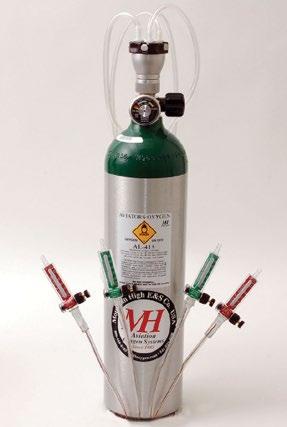
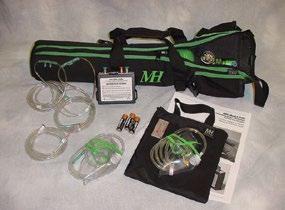
When people think about aviation oxygen, they normally think of large airliners or at least jets flying above 12,000 feet with a pressurized cabin. Most do not consider the health, intellectual, and physical benefits of using oxygen for general aviation flying at lower altitudes. Here at In Flight USA, we had the pleasure of sitting down with Mountain High’s Brad Stankey and Eric McDonald who enlightened us with new information about their systems, their FAA approval process, and the immense benefits when it comes to using aviation oxygen in the cockpit.
lationships rather than one-time deals.
“We wanted to create a company that clients could truly trust,” said Hahn, CEO/Founder of Arcadia Jets. “Our goal is to combine expert market knowledge with genuine, personal service — ensuring that each client feels valued and confident through every step of their aircraft transaction.”
Traditional constant-flow oxygen systems continuously release oxygen, whether the user is inhaling or not, which results in wasted oxygen. Patrick designed an electronic system that delivers oxygen only during inhalation. We call this our Pulse-Demand™ or “electronic delivery system (EDS)” system. Because oxygen is delivered only when needed, the supply lasts approximately twice as long compared to constant-flow systems.
cylinders, we manufacture our own pressure-reducing regulators, built-in oxygen systems, and ground support equipment. We also supply regulators and components to other aviation companies for their certified installations.
client acquisition, sale, or off-market transaction, a donation will be made to Angel Flight West.
been tested by the FAA’s medical division for use up to approximately 25,000 feet.
Founder Adam Hahn, with more than 20 years of experience in aircraft brokerage and acquisitions, Arcadia Jets was built on a simple but powerful philosophy — put the client first and do business differently.
In Flight USA: Can you tell me a little about Mountain High Oxygen Systems and the products you provide?
Doing Things Differently
Mountain High: Our company began in the mid-1980s when our founder and head of research, Patrick McLaughlin, developed the idea for a pulse-demand oxygen system. At the time, he was involved in hang gliding and high-altitude
From day one, Arcadia Jets set out to stand apart from traditional brokerage firms. Every transaction is handled with transparency, data-driven market analysis, and a focus on long-term re-
Whether handling an acquisition, listing a client’s aircraft, or facilitating an off-market opportunity, Arcadia Jets tailors its strategy to each client’s unique needs and goals.
A Commitment to Giving Back
Today, we offer two primary EDS systems: the O2D1, designed for single-place aircraft, and the O2D2, which is commonly used for pilot and co-pilot applications. We started building these systems in homes and garages in Salt Lake City before the business steadily expanded.
Since the early 1990s, we’ve been based in Central Oregon and have significantly expanded our product line. In addition to portable oxygen systems and
Arcadia Jets believes that aviation can be a force for good — both in business and in the community. To reflect that, the company pledged that for every aircraft sold, whether through a
Angel Flight West is a nonprofit organization that arranges free, non-emergency air transportation for people facing medical and humanitarian needs throughout the western United States.
Over the years, we’ve become known as a go-to company for specialized oxygen projects. We’ve sold our products to Space X, NASA, and many major airlines and have assisted with unique altitude attempts, warbird restorations, and custom aviation applications.
Internationally, we sell throughout Europe and around the world, particularly within the glider and soaring communities. Glider pilots appreciate our pulse-demand technology because it significantly extends oxygen duration
Continued on page 12
comed Hunter Yahya, an experienced Director of Aircraft Market Research, a role dedicated to gathering market data and providing analysis and intelligence using advanced data tools and proprietary systems to bring clients the most up to date information and data to ensure they are making the best possible


“We built philanthropy into our business model from the beginning,” Leslie Mogensen, Director of Business Development continued. “Our partnership with Angel Flight West ensures that every deal we complete also helps someone in need. It’s our way of giving back through the gift of flight.”
IFUSA: Who are your biggest customers?
MH: Our largest customer base is the general aviation community, particularly operators of non-pressurized aircraft. Portable oxygen systems are especially popular because they do not require FAA certification.
Rapid Growth and Expansion
We also work with pressurized aircraft operators who use supplemental oxygen. Our supplemental oxygen systems have
In its first year, Arcadia Jets has already begun expanding its team and capabilities. The company recently wel-

Additionally, three new aircraft sales professionals will be joining the company, strengthening its presence in key markets and ensuring that clients continue to receive top-tier service and
Arcadia Jets is proud to bring together a team whose collective expertise spans every corner of the aviation market. Their newest members contrib-
Continued on Page 9








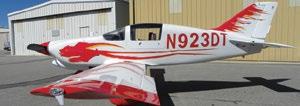
AirplanesUSA Aircraft Sales proudly presents this 2008 Tango II to market. The Tango II is a composite two place aircraft with performance comparable to the RV-8 and Glasair I model aircraft. The fuselage, wing and horizontal spars are factory built, resulting in ease of construction and reliable quality control. This beautiful Garmin equipped speedster is owned and operated by 2 test pilots and is now ready for a new home. Export and worldwide delivery are available.All trades considered..........................................................................$139,900
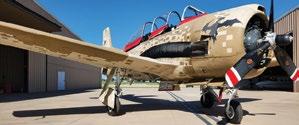




AirplanesUSA proudly presents this one-of-a-kind T-28B. This aircraft completed a frame-up restoration in 2021 by Draken International. Over $600,000 invested. Modern Garmin avionics complement this unbelievable warbird. This is a once-ina-lifetime opportunity to own a truly unique, historical aircraft. Export and Worldwide Delivery are Available. All trades considered.....................................................................$399,900
1976
1953 Beechcraft C-45H


AirplanesUSA proudly presents this better-than-new Cessna U206F. This is such a craft. Garmin Full Glass Panel Avionics, Low time TCM IO-520, new interior and like-new paint serve to separate this example from


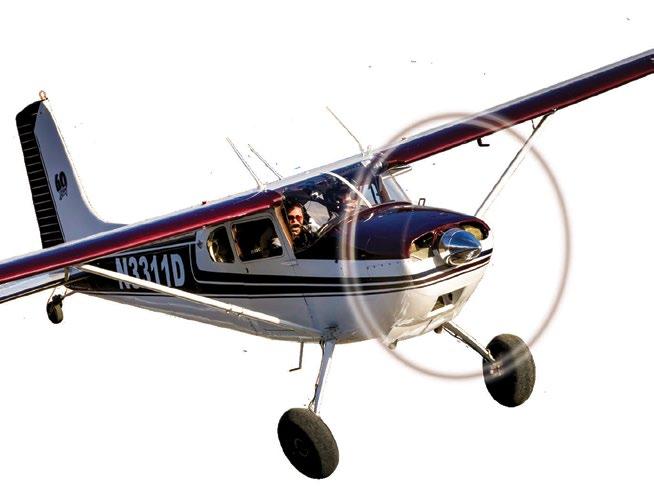
Having recently reached our 18th year of life (in 1959), this writer and twin brother were now Commercial Pilots, working hard to achieve the vaulted ranks of being a CFI. With this writer running our father’s camera/hobby store, my brother working as a “line boy” at our home airport and selling our Aeronca L-3, we had cobbled together enough cash ($4,500) to buy a well-equipped 1955 Tri-Pacer. This wonderful plane even had one of those newfangled radios called a Narco Superhomer. Sporting a VOR (with “whistle-stop” tuning!), 12 transmitting crystals (WOW!), an artificial horizon and DG, both vacuum powered by air flowing through externally mounted venturis, we considered our pride and joy to be of “airline quality,” quite suitable for our advanced ratings to come. We knew the CFI check ride would be given by a crusty old FAA examiner who openly expressed his view that no 18-year-old should be allowed to be a CFI. It would be a tough check ride!
This writer visited the airport early almost every morning, before opening our camera/hobby store, to practice the precision maneuvers I would need to flawlessly execute to impress the “hostile” FAA inspector. This morning was a bit different, having experienced a hard rain the night before. Knowing that the vented fuel caps of the Tri-pacer could allow some water into the fuel tanks, a careful check for water in the fuel would be necessary. Not an easy task in this plane. Only the left fuel tank had a drain plug, with the right tank drained from the gascolator on the carburetor. Not ideal (later corrected by an FAA issued AD) but having proved adequate in the past. The left tank was completely cleared, but the right tank still showed a tiny bit of water after multiple drain efforts. “Good enough” thought this kid, and off I went, planning to use the left tank for take off and then switching to the right tank at a safe altitude.
The normal takeoff was followed by a rapid climb to pattern altitude (back than, 800 feet) before turning crosswind. I lowered the nose and switched to the right tank, resulting in a total engine failure just seconds later… water in the tank. Pitching nose down and heading for a flood control basin straight ahead, I switched back to the left tank, but still no power. The right tank had apparently filled the gascolator with water and fuel
from the left tank could not get through the blockage. Now too low for a turn back, this writer remembered having fixed a small fuel leak in the engine primer line just days earlier, noting at that time that the primer injected fuel into the intake manifold just prior to carburetor air entering into the combustion chamber. Could the primer be used as a “manual” fuel injector, bypassing the blocked carburetor? Worth a try! With just one stroke of the primer, the engine barked to life and then quit again. By priming slowly, multiple times, the engine continued to run, and I augured around to a low downwind, unable to answer tower calls asking if I was in trouble. The engine finally purged the water and began to run normally. Now able to call the tower, I was cleared for an immediate landing. Surprisingly, I was unable to exit the plane for almost five minutes after reaching the ramp as my legs were still shaking from fear that went unnoticed during the emergency. My self-impression of being a “cool” pilot was forever destroyed!
Conclusion? Was I a hero for being able to quickly assess the problem and use technical knowledge to get a relight? Or was I an idiot for having not been absolutely sure all traces of water were gone? Regrettably, I must admit that “idiot” wins the contest but taught a lesson I have shared with students, ever since. An engine needs three essentials to run… fuel… fire… and air. Given that unexpected moment of silence that follows an engine failure, concentrating on those three essentials will often get a re-light, giving you the time needed to make the next important decision. My personal lesson was clear… good enough is NOT good enough.
How about your last preflight inspection? The regs are pretty clear about the PIC’s responsibility to ensure that the plane you are about to fly, and carry trusting passengers in, must be in airworthy condition. Upon analysis of my experience years later, as ADM (Aeronautical Decision Making) came onto the scene, it was apparent that I had fallen into one of several safety traps. Having experienced traces of water in the fuel before, with no ill results, an “abnormal” situation had been “normalized,” thereby reducing my margin
Continued from page 6
of safety. Preflight inspections are wide open to the “normalization” of a flaw. For example, if renting the same plane multiple times, you may have noted that one of the cowling fasteners is consistently loose, or perhaps the baggage door latch does not solidly “click” into place when closed. But shucks, this is not your plane, others have had no problem, so “no big deal,” until that cowling latch finally decides it has had enough abuse and lets go just after lift-off.
Those who own their planes, especially if one participates in regular preventive maintenance as permitted in FAR 43.7, have a head start. As involved owners, you are more likely so see a change in condition that could eventually lead to a decrease in safety margin. That is not to say that such a minor deficiency would be critical to your immediate flight, but a safety factor that may have been at 100 percent is now decreased to perhaps 98 percent. Sure, not much, but what if other issues begin to pile up. It does not take long for what appears to be a good, airworthy airplane to become an event just waiting for the right moment to happen. As the owner,
you are uniquely able to discover and, in many cases, legally correct a minor issue with perhaps nothing more than a screwdriver. This writer soon embraced the idea of always carrying a simple tool kit in my plane – nothing heavy or fancy – but enough to make simple repairs or adjustments without being able to make the excuse that “I don’t want to waste time digging up a pair of pliers.”
Renter pilots have another set of considerations. The plane you are renting experiences a lot of different aviators, all heaping on abuse, which may be so personalized that you would never even think of it as a problem. When inspecting a rental plane, remember, you are compelled to consider how the last guy treated the machine. Also, consider that an FBO must have rental planes inspected every 100 hours. Some FBOs get into the habit of holding off on minor maintenance until the “100 hour is due.” This attitude can lead to a list of minor issues, none of which is a grounding condition, but when coupled together take a toll on your safety margin. Keep in mind, a 100-hour inspection (or especially an annual inspection) requires significant disassembly. Given the need to “get the
Continued on page 9












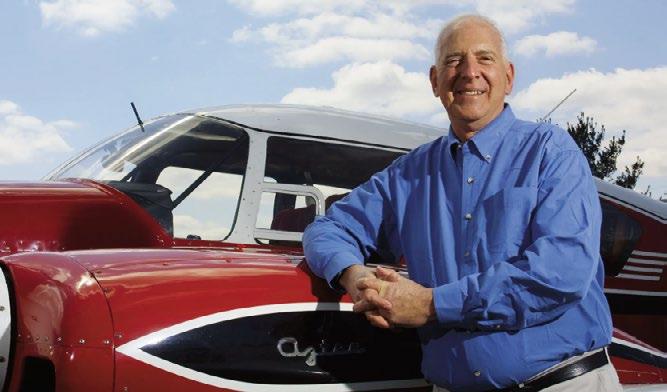
Sporty’s founder and chairman Hal Shevers passed away on May 12, 2026. (Photo courtesy Sporty’s)
Sporty’s announced on May 13, that founder and chairman Hal Shevers has passed away. He was 90 years old.
“It is with profound sadness that we announce the passing of Hal Shevers on Tuesday, May 12, 2026. Founder and longtime chairman of Sporty’s, Hal was a pioneering force in pilot training and a beloved leader in the aviation community. Hal’s life’s work shaped the landscape of general aviation for more than six decades.”
Sporty’s offered the following reflection on Mr. Shevers’ life:
Hal’s journey began as a mechanical engineering student at Purdue University, where he earned his private pilot certificate as a member of the Purdue Flying Club. After graduation, he combined his technical skills and his love of flying to launch what would become Sporty’s Pilot Shop by selling, from the trunk of his car, a small radio that picked up airport
Continued from page 7
plane back on the line,” it is common for a recently inspected airplane to turn up with more pre-flight squawks than one that has seen hours of service. Agreed, your rental plane does not belong to you, and you are not responsible to perform maintenance. But keep in mind, the regs do not care that you do not own the plane. If something breaks that could have been caught during a preflight, you, the PIC, will get hammered.
Let me share a parting thought, advice that was given to this writer very early in my flying career by a very wise and experienced mechanic. That advice
control tower transmissions. This innovative, entrepreneurial venture eventually grew into the world’s largest pilot shop and a leader in product development, from cutting-edge ADS-B receivers to pilot-friendly radios.
Hal was a pioneer in pilot education, creating one of the first three-day ground school courses in the early 1960s, traveling the country in general aviation aircraft to teach ground school to pilots nationwide. His teaching extended to thousands of pilots through Sporty’s Academy, the FAA-approved Part 141 flight school that he founded to provide in-person instruction and industry-leading online courses. His dedication to training safe, savvy aviators became the cornerstone of Sporty’s mission. As Hal was fond of saying, “Without a freshman class, in just three years, there won’t be a senior class,” underscoring his lifelong commitment to
Continued on page 38
went something like this, “Ed, whenever preflightIng a plane, do not have a mind set that you are making sure it is safe to fly. Take the mindset that it is NOT safe to fly and that you are trying to find the hidden flaw. With flying safety, negative thinking will help you discover problems before they happen.” This writer has learned to approach every flight, from the flight planning stage (include the ADM IM-SAFE checklist) to walk around on the ramp, with only one question in mind,“what is going to try and hurt me today.” When the answer “nothing” rings true in your mind, the whole world brightens.


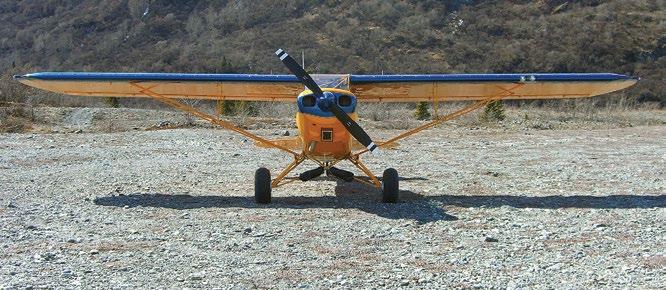
Concerns about the use, or overuse, of automation and technology have been around since the fictional stories of Jules Verne became popular. Discussions about the worth of automation and robotics hit the general population in 1942 when the “Three Laws of Robotics” by author Issac Asimov appeared in the short story “Runaround,” published in the popular magazine Astounding Science Fiction These three laws followed in many other short stories by Asimov, perhaps peaking with the publication of a collection of stories beginning in 1950 entitled I, Robot As crafted by Asimov, these three laws are:
1. A robot may not injure a human being or, through inaction, allow a human being to come to harm.
2. A robot must obey the orders given to it by human beings except where such orders would conflict with the First Law.
3. A robot must protect its own existence as long as such protection does not conflict with the First or Second Law. These three laws, although originally written as fiction, have become the single most used measurement of robotics

Editorial By Ed Downs
behavior as our species plunges headlong into robotics that are now capable of thinking and making decisions independent of human input. We now call the ability to digitally think, “Artificial Intelligence (AI),” a technology commonly employed in aircraft design which allows an aircraft to accomplish tasks that the user (pilot?) might not be able to accomplish without the aid of robotics. Interestingly, Asimov did not claim sole credit for creating these three laws but acknowledges that many science fiction writers of his day alluded to constraints being applied to robotic technology. Even the ancient Greek civilization featured mechanical “automatons” in temples, which operated without apparent interface, even to the extent of serving wine to select visitors. In other words, the automatic coffee kiosk is not a new idea!
Asimov’s three laws have become a major talking point and design consideration as the use of humanoid robots become increasingly sophisticated. To be sure, a discussion of robotics and the ethical questions involved could produce a book-sized editorial dealing with the subject of “Robotics, Friend or Foe,” but for the purpose of flying airplanes, let’s
run these three laws by the “robot” most pilots live with, your auto flight control system. Do you think calling an autopilot a “robot” is a bit of a stretch? Take a look at the following definition of “Robotics” this writer pulled off the web and slightly edited for privity. It might change your mind.
In practice, robotics blends five core engineering and technology disciplines.
1. Mechanical Construction: The physical framework of joints and actuators that provide for the transfer of energy.
2. Power Source: Batteries, hydraulics, or electrical systems that provide energy to operate mechanical devices.
3. Sensor and Control: Circuits, cameras and microcontrollers, which allow the device to perceive its surroundings and relative motion.
4. Software: Algorithms, Artificial Intelligence, and programming languages that run the systems and enable decision making
5. Positional Data: Allowing the machine to operate within a three dimensional environment, including speed solutions.






Most would agree that the preceding is a true definition of a modern auto flight system. First, a confession… this writer started flying in an Aeronca Champ, having no electrical system or starter. As a 14-year-old kid, I was “hand-propping” airplanes, which might be considered child abuse by today’s legal standards. To this writer, an electric starter was “advanced technology.” But does that mean the following opinions will follow the predictable path of “pilot good, automation bad?” NO … I love a well-designed and functioning autopilot. Transitioning from simple GA autopilots to advanced airline aircraft corporate jet systems, the majority of this writer’s professional flying career has been with auto pilot capabilities.
Upon purchasing my first new airplane (a 1971 Grumman TR-2), the first gadget I installed was a single axis autopilot with heading hold, VOR tracking, and a sensitive mode to LOC tracking. Pretty spiffy stuff back in the day for a simple two-place airplane! But, as an individual trained in classic stick and rud-
Continued on page 35


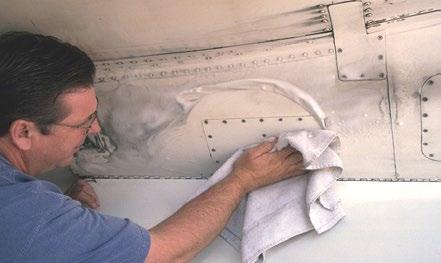










































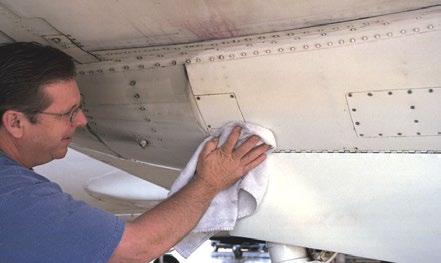




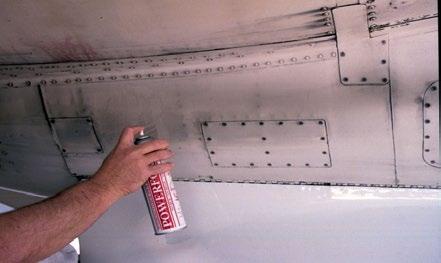
Powerfoam is also great for cleaning food and drink stains on hard surfaces, while disinfecting the surface at the same time. Powerfoam works hard so you don t have to.





















SEPTEMBER 5, 2026




Continued from page 4
during long, high-altitude flights.
IFUSA: You mentioned a newly approved FAA system. Can you explain that process?
MH: We recently received FAA approval under the NORSEE category, which stands for Non-Required Safety Enhancing Equipment.
This approval process provides an alternative pathway for certifying equipment that improves safety without affecting the aircraft’s primary flight systems. Our newly approved system is designed for Part 23 aircraft and uses our O2D2 technology integrated into a semi-permanent installation.
The 2-and 4-place system includes a cylinder mounting kit, regulator, O2D2 units with bracket, dispensing equipment, and is compatible with many of our oxygen cylinders, including both aluminum and composite options. The approval applies to operations up to 12,500 feet.
Because the equipment is considered safety-enhancing and the installation is minimal, it qualifies as a minor alteration rather than requiring a more extensive certification process.
IFUSA: What types of aircraft are these systems primarily used in?
MH: The systems are primarily intended for general aviation aircraft, particularly Part 23 aircraft.
IFUSA: Tell us about your operation in Oregon.
MH: We’re located at Redmond Municipal Airport (KRDM) in Central Oregon. The region’s weather is very conducive to year-round flying, and we enjoy helping pilots operate safely and comfortably at higher altitudes.
Oxygen use is beneficial not only for high-altitude operations, but also for night flying and long-duration flights. Many
pilots report reduced fatigue, fewer headaches, improved alertness, and sharper mental focus when using supplemental oxygen.
FAA regulations under Part 91 require oxygen use above 12,500 feet for more than 30 minutes, but the FAA also recommends oxygen use at lower altitudes and during night operations because of the performance and safety benefits.
IFUSA: Are these systems large or difficult to transport?
MH: No. Our portable systems generally weigh less than 10 pounds, making them easy to move between aircraft.
Pilots can carry the system from plane to plane, which makes portable oxygen a very economical option. The NORSEE-approved configuration essentially adapts the portable system into a semibuilt-in installation using a fixed cylinder.
IFUSA: How is the oxygen delivered to the user?
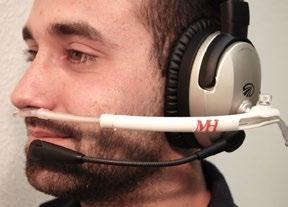
MH: Most pilots use a nasal cannula that fits comfortably around the ears and under the nose. For altitudes above 18,000 feet, we also offer full masks with oro-nasal oxygen delivery.
We manufacture our own medical grade cannulas and masks to work with both constant-flow and pulse-demand systems. We also offer masks with integrated microphones and headset-compatible boom cannulas.
For constant-flow systems, conserving cannulas and masks are available. Pulse-demand systems like the O2D1 and O2D2 do not utilize conserving cannulas and masks, making them smaller, lower-profile, and generally more comfortable for pilots.
IFUSA: Do you provide oxygen systems for pets?
Continued on page 38

The O2D2 mounting bracket is designed to attach to the O2D2 for the ease of mounting. This Mounting Bracket is 3D printed from Nylon for strength and durability. (Photo courtesy Mountain High Oxygen Systems)
By Paul T. Glessner, Associate Editor & Publisher
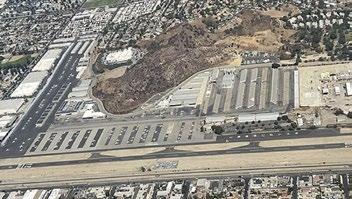
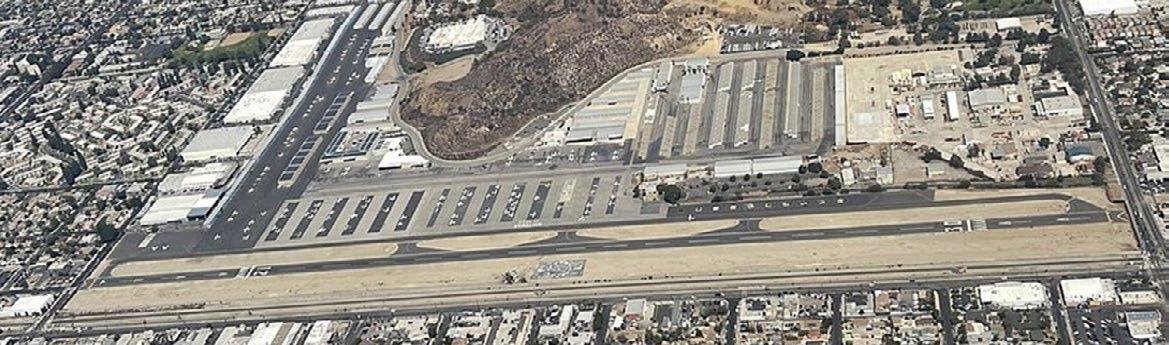
There are many that feel that Whiteman Airport (WHP) should close but those individuals that truly take the time to learn and realize the many benefits the airport affords along with its tenants, whether businesses or aircraft owners, besides the Civil Air Patrol, the Experimental Aircraft Association (EAA) and the Aviation Explorers’ orga-

nizations are here - for the community Well, to my point, a woman who left the opposition called – Pacoima Beautiful, attended last month’s Los Angeles County’s Public Works Aviation Committee meeting and spoke up positively about all that encompasses Whiteman Airport and its vision. She admitted that she was blindly swept up with those opposing the airport staying open into the future but –she saw the light.
One can read the hard charging and unfounded statements at Pacoima Beau-







tiful’s site to shut down the airport, https://www.pacoimabeautiful.org/programs/shutdown-whiteman-airport: For 75 (~80 now) years Whiteman Airport has been more detrimental than beneficial to our community. There has been far too many crashes in the community. Prioritize the public safety of Pacoima residents, shut it down! And, the rate of airplane crashes in our community is alarming. Since 2020, there has been three airplane crashes in our communi-
ty. Two of which have been fatal. That is why we are demanding that Los Angeles County Board of Supervisors prioritize the public safety of Pacoima residents and immediately Shutdown Whiteman airport
It would not take much time to refute many of these types of comments. For instance, 1) most likely everyone that is either on their board and/or its protesters have used an airliner to get to see
Continued on page 14


Fly into Gnoss Field here in Marin County just north of San Francisco on the last Saturday of every month to see some airplanes and classic cars here at the SkyShare terminal. There are complimentary coffee and doughnuts along with a 35 cent avgas discount on both our truck and self-serve!
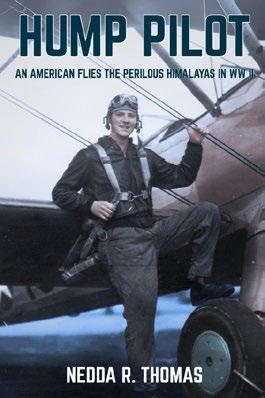
"Hump Pilot is as engaging a read as it is informed and informative. A first-class military aviation history!"
– Midwest Book Review
"Hump Pilot provides an entertaining window into what it was like to fly cargo over the world's most dangerous air route, in the worst flying conditions imaginable. A spirited account!"
– Aviation History
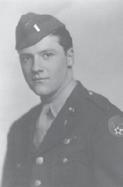
“Descriptions are vivid and engaging, adding a human face to the drama created by perilous missions over a vast mountainous wasteland. Well worth reading.”
– WWII History
"By telling this story in readable language anyone can appreciate, Nedda Thomas conveys how dangerous it was. You don't have to be a military veteran or an aviation buff to love this fantastic true account."
– Robert F. Dorr, Mission to Tokyo, etc.
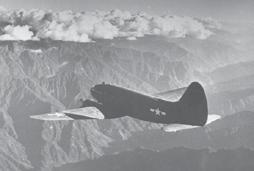
"Thomas has written a dramatic history centered on her father (whose) brassy dedication and decency come across. However, the truly engrossing tale is the amazing Hump drama that ensures the book does a winner's barrel roll overall."
– Asia Sentinel
Continued from page 13
family or vacation. Kind of ironic, isn’t it? Many airline pilots have actually learned over the 80 years at Whiteman Airport, 2) many protestors are on ‘auto-pilot’ and do not take the time to learn the truths, and 3) how many residences ‘knew’ there was an airport in the area/ vicinity before moving or purchasing and – now they complain?
Similarly at many airports nationwide. Long Beach for instance, the very people that are complaining there get on an airliner at Long Beach airport to see mom or family or Disney World in Florida. Eye-opening. Add Santa Monica Airport (see editorial on page 25); 67% of Santa Monica voters oppose closing the airport found in a recent independent survey. Support for keeping SMO open spans every neighborhood and demographic group, including residents who live closest to the airport. Ironic/ perhaps have the opposing residents meet up? The pro-closure side has been the loudest voice in the room. The data tells a different story; residents want the airport to stay open and continue its long history of providing benefits to the area community.
Let us address some of these Pacoima Beautiful blanket concerns in more detail from Whiteman Airport’s point of view:
1. Eight Not-For-Profit organizations on the field
2. Two flight schools teach safe flying in aircraft that uphold and/or surpass the strict FAA standards aside from individual instruction from FAA certified flight instructors.
3. Taxpayers do not fund the airport. Whiteman Airport operates under a self-supporting aviation enterprise fund, funded by aviation revenue.
4. Whiteman Airport is safe; in nearly 80 years of operation, there have been no fatalities of people on the ground caused by Whiteman Airport aircraft with ~110,000 aircraft operations per year and ~13,000 children flown via EAA’s Young Eagle program without incident (over 2.5 million children flown for the total program since its inception in 1992.)
5. The airport is not for the supposed elitist airport dwellers. Whiteman Airport is for the community on so many fronts:
• Glendale Community College’s Aviation Program
• 20+ Businesses accounting for 400+ jobs; many more businesses would start if leases were available.
• EAA’s Young Eagle Program has flown well over 11,000 youngsters and teenagers and ranks as the most active chapter. Participants go on to become airline, military,
and business aviation pilots. Imagine.
• The airport is where LA County Fire Department Air Operations is based and deploys to suppress wildfires, search, and rescue of anyone in trouble and medical response. All of this helps more expediently protect the community’s families and their homes across the region.
• June 27, 2026 will be - Whiteman Community Family Festival with STEM activities, aircraft displays with their pilots more than willing to interface and share the passion and excitement of – flying, career and college booths and – area owned food trucks.
• Youth & Educating Opportunities: STEM partnerships with local schools’ students, student field trips of the airport for potential career exposure and aviation related job opportunities.
• Expanding Family & Community Events over and above the Whiteman Community Aviation Family Festival such as: Pancake Breakfasts, Drive-In Movie Nights, Halloween Plane or Treat and WHP used as a Toys for Tots collection location.
• Angel Flight West’s pilots fly Vista Aviation’s aircraft free of charge to transport patients to the care they need. Over 100,000 flights have been completed on the west coast; they are available 24/7.
• Voluntary Curfew 10pm – 7am
• Unleaded Fuel is consumed.
• The run-up area was changed away from homes.
• Allow non-aviation commissioners on the ‘aviation’ commission.
• Emergency plan in place for any occurrence
• Thirty-two acres previously given over to the community for light industry.
6. Regarding lead being in the air or the surrounding ground, environmental monitoring conducted by LA County found lead levels well below state and federal safety standards.
7. View a great 28-minute YouTube overview of the current situation by current and former members of the Los Angeles County Commission speaking out publicly after far too many years of escalating concerns over the county’s supposed mishandling of Whiteman Airport. https://whiteman-airport-coalition.beehiiv.com/p/summary-of-virtual-news-conference-and-video-link JOIN the Whiteman Airport Coalition (WAC) via https://whiteman-airport-coalition.beehiiv.com
Trifiletti Consulting group was hired by the county’s supervisors for $1.9M to assess and recommend what to do in a land use study with respect to Whiteman. They are giving their report to the Supervisors at the end of June.
Stay open, close, or a hybrid solution – perhaps part for the airport, part use for the community. Apparently, funds designated for the airport’s very benefit, taken from the Aviation Enterprise Fund, $350,000, were used for this study and $1.55M from the County Department of Economic Opportunity ‘or’ taxpayers’ monies as directed by the Board of Supervisors. Hmm. $350,000 that could have aided/updated many of the airport’s aspects of – safety.
While I am open to be contacted by Pacoima Beautiful to hear their point of view, it will be extremely difficult to convince most unbiased individuals the benefits of an airport shut-down will outweigh the benefits that are currently being afforded by the airport as it functions – now. To that end, the airport hired a PR firm as well. Christina Pascucci is part of that firm with significant connections to the airport stating, “I am a licensed pilot and pursued my Instrument Rating (IFR) training through Glendale Community College’s aviation program based at Whiteman Airport. I also served for seven years as an appointed Los Angeles County Aviation Commissioner — and as Chair of the Commission — appointed by Supervisor Sheila Kuehl, whose district includes Pacoima. In that role, I was directly involved in oversight, budgeting, safety review, and long-term planning for the County’s airport system. So, my connection to Whiteman is personal, professional, and grounded in years of policy responsibility.”
Christina elaborated on the negative implications for the surrounding community if Whiteman Airport were to be shut down, “The ripple effects of closing Whiteman would be extensive and deeply felt. Glendale Community College’s aviation program provides one of the most affordable and accessible aviation pathways in the region, dramatically lowering the barrier to entry for those who otherwise could not afford flight training. That school would be severely disrupted. Flight schools, instructors, mechanics, and small aviation businesses would lose stability, affecting local jobs.
From a public safety standpoint, LA County Fire’s Air Operations unit operates at the field. Even if portions of their facilities remained, the airport’s control tower plays a critical role in coordinated communication. Removing the tower would change how that airspace functions operationally. Additionally, the full runway length supports seasonal firefighting operations, including larger aircraft that stage there during fire season. In a region increasingly vulnerable to wildfires, we should proceed carefully. There are also significant educational and economic implications. Whiteman is a STEM gateway. It introduces young people — especially in a working-class community — to aerospace, aviation maintenance, engineering, and emergency operations careers. Closing that
Continued on page 16


































Continued from page 14
pathway would disproportionately affect the very communities we should be investing in.
Independent environmental analysis has shown that emissions levels at Whiteman are below FAA thresholds and in some cases compare favorably to surrounding industrial areas. The airport also functions as open space in a densely developed corridor.
If the County is concerned about modernization, the responsible course of action would be investment — not deferred maintenance. Withholding funding for upkeep while citing deterioration is putting the community at risk.”
When asked what Christina envisioned for Whiteman Airport in the years and decades to come, she responded, “I see Whiteman evolving— not disappearing. Aviation technology is advancing rapidly. Electric aircraft, quieter propulsion systems, sustainable fuels, and advanced air mobility are reshaping the industry. With thoughtful modernization, Whiteman could become a model for sustainable regional aviation.
With the 2028 Olympics approaching and Southern California remaining a global aerospace hub, Pacoima has an opportunity to participate in that innovation economy.
I envision Whiteman as a revitalized community asset — modernized, beautified, environmentally responsible, and integrated with community spaces. A technological and educational hub. A place where local youth can see tangible career pathways and dream bigger.
But that future requires the County to stop starving the airport of resources. You cannot underfund infrastructure and then argue that it has no value.”
There are plenty of examples of Whiteman Airport’s contribution to the community and Christina expanded on a handful, “As a television journalist, I covered Whiteman’s impact firsthand — from Young Eagles flights that gave ~13,000 children their first experience in the air for free, to the LA County Fire Air Operations team fighting wildfires from above. I have watched children who had never stepped into a small plane over-
come fear and light up with possibility. Those moments matter. Exposure changes trajectories. As a Commissioner, I regularly saw families park near the field simply to watch planes take off — something generations have done in Pacoima. For many residents, the airport is woven into the fabric of the community. This is not an abstract parcel of land. It is an intergenerational community space that inspires, educates, and protects.”
Christina continued regarding community engagement and business impact. She stated, “The impact on the community is both economic and personal. Whiteman supports small businesses, instructors, mechanics, and support staff who live and work in Pacoima. These are local jobs tied directly to the airport. Ongoing uncertainty about its future creates real instability for those businesses and the families who depend on them.
After walking door to door speaking with residents directly, many emphatically support the airport, and some do not have an opinion. That does not mean there are no critics. But this firsthand experience suggests that the loudest narratives do not necessarily represent the full community perspective.”
Christina addressed the community’s protection from one significant tenant – LA County Fire, “There is no ironclad guarantee that LA County Fire operations would remain unaffected if the broader airport were closed. Even if certain facilities were preserved, removing tower operations and reducing runway capacity would materially change how the airfield functions — particularly during peak wildfire season. When we are discussing public safety infrastructure in a fire-prone region, decisions should be grounded in operational realities, not assumptions.”
Her parting words were stated as such, “Whiteman Airport can and should evolve. It should be cleaner, modernized, and better integrated into the community. But dismantling it risks harming public safety, economic mobility, and STEM opportunity for the very families we say we want to uplift. This conversation deserves nuance, data, and genuine com-
Continued on page 18


Continued from page 16
munity listening.”
Another stakeholder that matters is Penny Alderson who is the majority owner of Vista Aviation Inc. (FBO), Vista Air Inc. (flight school), and manager of Specialty Aero Leasing LLC. (Hangar rentals) has worked at WHP since
2000. She was a member of the Community Aviation Committee (CAC) appointed by Supervisor Sheila Kuehl in 2020 that lasted for just short of two years. Penny has been involved, supported, and was a dominant funds provider in all of the open houses that the airport has been able to provide for the community in the last 17 years. A prom-
� Available in both Qref® Book, Card and new iPad editions
� Over 50 years of professional experience in every checklist
� Written by Master CFIs with workflow and ease of use in mind
� Professional design, rugged construction
Beechcraft Bonanza A36 285HP1968-1983
Beechcraft Bonanza C/D 35 1951-1953
Beechcraft Bonanza J/K/M 35 1958-1960
Beechcraft Bonanza N/P 35 1961-1963
Beechcraft Bonanza V35 A/B 1966-1982
Cessna 150 1959-1977
Cessna 152 1978-1986
Cessna 172 Universal Universal
Cessna 172M 1973-1976
Cessna 172N 1977-1980
Cessna 172P 1981-1986
Cessna 172R 1998-2006
Cessna 172RG 1980-1985
Cessna 172S 1998-2006
Cessna 172S G1000 2005+
Cessna 177RG 1971-1978
Cessna 182P 1972-1976
Cessna 182R 1981-1986
Cessna R182 Skylane RG 1978-1986
Cessna 182RG Turbo 1979-1986
Cessna 182T Analog Gauges 2001+
Cessna 182T/G1000 2004+
Cessna 210N Centurion 1979-1984
Cessna Turbo 182T 2001+
Cessna Turbo 182T/G1000 2006+
Cessna Turbo 206H 1998+
Cessna Turbo 210M Centurion1977-1978
Cirrus SR20 Analog Gauges 2000-2003
Cirrus SR20 G1-G2 2003-2007
Cirrus SR20 G3 2007+
Cirrus SR20 Perspective 2008+
Cirrus SR22 G1-G2 2003-2007
Cirrus SR22 G3 2007+
Cirrus SR22 Perspective 2008+
Cirrus SR22 G3 Turbo 2007+
Cirrus SR22 Turbo Perspective 2008+
Diamond DA20 C1 1998+
Diamond Star DA40 2001+
Piper Archer II PA-28-181 1976-1994
Piper Archer III PA-28-181 1995-2002
Piper Arrow 180 PA-28R-180 1967-1971
Piper Arrow II PA-28R-200 1969-1976
Piper Arrow III PA-28R-201 1977+
Piper Arrow III Turbo PA-28R-201T1977-1978
inent supporter in funds and presence for the non-profits for youth on WHP, both personally and professionally.
Penny highlights some of the aviation industry’s numbers, “Many aviation careers are great money and very understaffed. General Aviation (GA) pilots start at Vista at $45/hr. Commercial airline pilots range from $100,000 to
$300,000+ and retire with their wage at that time. Regarding FAA Mechanics, Vista pays up to 125,000/yr currently. Some 1,465,000 mechanic jobs are needed in the next 10 years. Between 2.3 and 2.4 million jobs will be needed by 2044 in aviation. Per the board of Labor & Statistics, airline pilots make more money in their careers than doctors, lawyers, and engineers.”












Piper Arrow IV PA-28RT-201 1979-1982
Piper Arrow IV Turbo PA-28RT-201T1979-1990
Piper Cherokee 140 PA-28-1401964-1977
Piper Cherokee 150 PA-28-1501961-1967
Piper Cherokee 160 PA-28-1601961-1967
Piper Cherokee 180 PA-28-1801963-1973
Piper Dakota PA-28-236 1979-1994
Piper Cherokee Lance PA-32R-3001976-1978
Piper Navajo PA-31-310 B/C 1972-1980
Piper Navajo Chieftain PA-31-3501973-1984
Piper Saratoga SP PA-32R-3011980-1992
Piper Saratoga SP Turbo PA-32R-301T1980-1987
Piper Tomahawk PA-38-112 1978-1982
Piper Warrior 151 PA-28-151 1973-1977
Piper Warrior II PA-28-161 1976-1986
MANY MORE MODELS COMING SOON!

Penny gave her viewpoint if Whiteman Airport closed by saying, “Emergency services and Disaster relief – Fire, law enforcement, medical, accident, earthquake, search and rescue and all manner of emergencies would be royally impact. The loss of revenue to County and Community until new businesses can be put in place. Current revenue is understated, as they have only looked at what the County contributes, not what the individual businesses contribute to revenue, taxes, and contributions, direct and indirect economic effect. Then add that the flight pattern of Hollywood Burbank Airport will change. Instead of propeller aircraft flying overhead you will have business jets, passenger jets, and all manner of aircraft overhead. The noise pollution would only increase. While the LA County Board of Supervisors say they would keep LA County Fire where it sits now. What they do not understand is that the LA County Fire Department needs the Whiteman Airport tower to have emergency services operate at top capability. Without the tower they would have to get clearance through Burbank and their commercial jet airliners would take precedence over them needing to leave for fire or disaster relief, delaying their response time. Reiterating, the community does not understand that with the elimination of Whiteman’s airspace, Hollywood Burbank’s flight path would change and instead of a single engine small aircraft flying overhead it will be commercial passenger jets.”
Penny’s other subjects that mattered to her (and other Whiteman Airport stakeholders) are:







Avidyne Entegra
Garmin G1000 Non-WAAS
Garmin G1000
Garmin G1000 WAAS
Garmin G600/G500
Cirrus Perspective by Garmin
Bendix/King KLN 89
Bendix/King KLN 90B
Bendix/King KLN 94
Garmin GMX 200
Garmin GPS 400
Garmin GNS 430



Garmin GNS 480
Garmin GNS 530
Garmin GTN 750/650
Garmin GX Series
Garmin MX 20
Garmin 300XL/250XL
AnywhereMap ATC
AvMap EKP IV / IV Pro
AvMap EKP V (coming soon)
AvMap Geopilot II / II Plus
Bendix/King AV8OR
Bendix/King AV8OR Ace
your
Garmin GPSMAP 96
Garmin GPSMAP 195
Garmin GPSMAP 196
Garmin GPSMAP 295
Garmin GPSMAP 296
Garmin GPSMAP 396
Garmin GPSMAP 495
Garmin GPSMAP 496
Garmin GPSMAP 696/695
Garmin Aera Series
Lowrance Airmap 2000C/1000
Lowrance Airmap 500/600C




“Whiteman is a very safe airport. We have had two accidents in the last five years near Whiteman, resulting in one death from an aircraft coming from somewhere else and attempting to land at Whiteman with engine trouble and his wheels caught on the electrical lines on Sutter Street causing the plane to flip and catch on fire. These electrical wires had previously been voted on to be moved underground and the motion was voted down by (Pacoima Beautiful’s own) Monica Rodriguez and others. If this had been done as requested, this man would be alive, and no tragedy would have occurred.” This is also true of the most recent April 20th accident that happened. Imagine.
When this author asked Supervisor for District Three, Lindsey Horvath, what her stance was on Whiteman Air-
Continued from page 18
port, her staff press deputy responded with Horvath’s comment, “A plane going down next to homes and businesses in Pacoima should never happen—and our community deserves answers,” said Supervisor Lindsey P. Horvath. “There are multiple agencies with responsibility here—the County, the FAA, the NTSB, the City of Los Angeles, and LADWP— and this motion demands clarity on who is responsible for what, because accountability cannot exist without it. While the County owns and maintains the airport, federal agencies regulate the airspace and pilot activity. Every entity must step up—Pacoima deserves transparency, urgency, and real accountability.” Every entity? Like the LA County Board of Supervisors? Release funds for the proactive safety measures that are currently being hampered/stymied. Horvath said in a recent March 1st statement, “… the County will not seek future funding from the FAA that would further lengthen aviation operations at Whiteman Airport, a measure that is also in alignment with her Nov. 7 motion on the future of the 78-year-old airport.” This will not promote – safety. Of course, this author wrote back pressing her for a more pointed set of answers regarding the airport versus the accident and got – crickets after three total attempts. Imagine, planes are to never go down ever again - per
the ‘Supervisor.’ Funny, there are more planes in the ocean than submarines in the sky. I have designed and flight test engineered airplanes for over three decades and I do not see her dream of no planes ever going down again - happening anytime soon. I also brought to her attention that automobile accidents happen a hundred times more than aircraft accidents, yet roads and freeways are not - eliminated. Again, the very same powerlines that could have been underground(ed) played a role in the accident. Councilwoman Monica Rodriguez, listening, err, reading? She apparently disapproved such a safety measure that seemed to play a role in that accident Horvath addressed plus another one being fatal.
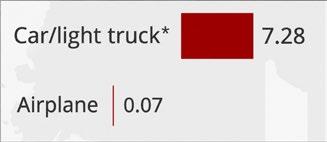
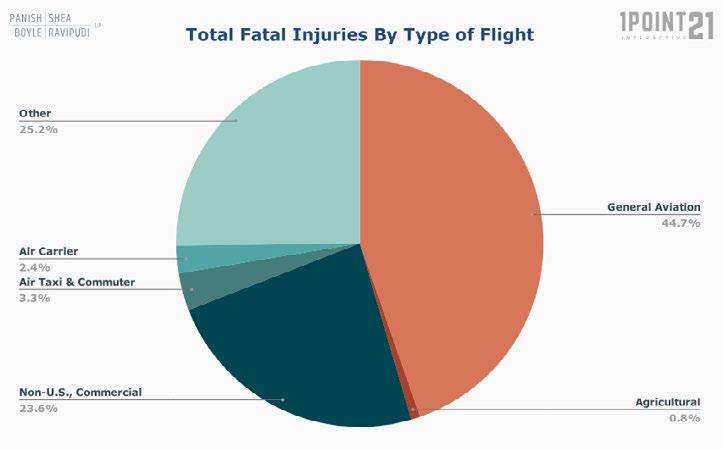
Regarding the classic fatalities per mode of transportation plot seen here, there are roughly 220,000 registered civil aircraft in the United States. General Aviation (GA) comprises more than 90% of those 220,000 aircraft. That is nine plus times more than – business jets and airliners. At a glance, the ubiquitous bar chart, while 17 years old, still holds true today, and the ‘Airplane’ seen in the chart has units of miles. NTSB and FAA give GA numbers in ‘hours’ so it is arduous to make an apples-to-apples comparison. Given that, the pie chart says that General Aviation accounts for just less than half of ‘all’ US aircraft ac-
cident fatalities. Dr. Ian Savage’s report entitled, ‘Comparing the Fatality Risks in United States Transportation Across Modes and Over Time’ from Northwestern University states, “Excluding suicide and terrorism cases, the categorization of the average annual fatalities was: 549 Private flying (“general aviation (GA)”), 50 Passengers and crew on large (10 or more seats) scheduled commercial aircraft, 42 Passengers and crew on small (fewer than 10 seats) non-scheduled commercial aircraft (on-demand air taxis, medical flights etc.)” These data give an approximate factor of six (549/92) when comparing GA to commercial airliner numbers, or now 0.42, still 17.3 times safer than – automobiles. Period. When Kerjon Lee, Chief, Strategic Communications for Los Angeles County Public Works, was asked by this author about his stance on the airport’s current situation, his vision of the board’s forthcoming decision and his take on non-aviation types being on the ‘Aviation Commission’ that advise the County’s Board of Supervisors, he stated, “Can’t speak to those questions, but I can say that we’re awaiting the results of ‘the study.’ The County Board of Supervisors will establish the direction for the future of Whiteman Airport.” But he did supply this candid statement on behalf of
Continued on page 21


Seaplane access should be allowed here in Colorado.
We have made great strides by establishing two charted seaplane bases in Colorado (the first ever), planning and managing several splash-in events (the first ever), establishing an invasive species inspection and decontamination program for seaplanes (the first), and becoming the first ever pilot to receive all the training and obtaining certification totally within the State of Colorado (yep, you heard it right, the first).
Despite these successes, our battle rages on. The state is still adamantly opposed and so we are continuing the fight. There is no level of problem that imagination and creativity cannot overcome. And so, we must continue to be the first with solutions.
We must demonstrate by example the strength and resolve of an idea whose time has come!



Continued from page 19
LA County Public Works: “As the owner and operator of Whiteman Airport, Los Angeles County Public Works is committed to transportation infrastructure that is safe, resilient, sustainable, and equitable. Safety is our top priority, and Whiteman Airport consistently meets all federal and state safety standards for a general aviation airport. Whiteman Air-
port is one of five Los Angeles County-owned airports and part of the County’s multi-modal transportation network. The facility supported over 126,000 aircraft operations in 2025 and houses nearly 500 based aircraft. It is also used by the region’s first responders for emergency and disaster response, firefighting, search and rescue, medical services, law enforcement and other public services like news, weather and traffic reporting,

the Civil Air Patrol, Glendale Community College’s aviation courses, and various non profits, such as the EAA Young Eagles program.”
Mr. Lee continued, “While the FAA has oversight of flight operations, including the control tower and air traffic controllers at each of the County’s municipal airports, County airport managers prioritize safety through several means, including a voluntary nighttime
flight curfew, annual FAA Runway Safety Action meetings, and ongoing safety team meetings. We continue to evaluate and implement efforts to promote safety within the County’s aviation community and are committed to protecting the safety, welfare, and quality of life of our neighboring communities. The Los Angeles County Board of Supervisors has directed the County’s Department
A friend of mine moved to the country, to a place with enough acreage for a grass runway and a big shed to house all this airplane building tools, accumulated parts, raw materials, everything. He got the runway all smoothed out and added onto the shed to be an AirCam hangar.
Apparently due to a lithium fire while charging, it all burned down.
He was/is a good man who helped a lot of folks, including me, in many ways, including when I bought my AirCam. *
The holy grail of homebuilt airplanes, or any kind of airplanes, is engines – powerful, light, long lasting, and affordable. The DeltaHawk diesel is interesting if expensive, but here’s a novel two-stroke engine. Really. That I can’t find on the web at the moment, nor can Grok or ChatGPT. Frustrating. What’s different is that the intake valve is a rotating cylinder adjacent to but separated from the piston cylinder. The numbers are impressive.
But along the way, I found an article about the Bristol sleeve valve radial engines, used on the Hawker Sea Fury and others. Years ago, I read that they fell from favor as they were hard to overhaul. But one of the big engines had a 3,500-hour TBO, which is exceptional!
The gear train from a sleeve valve engine would make a most impressive man-cave decoration.
* * * * * * * *
My most recent application for a Special Issuance Third Class medical has been denied, as mentioned last issue, but with a touch of knowledge from AOPA, I have applied for my medical records under the Freedom of Information Act. As a member of the press, I get prompter treatment, and Kymberly in OKC has been great to work with. Turns out that I needed to sign a release of medical information form, and that’s been done.
I emailed a friend whose application for airworthiness for his almost completed homebuilt was turned down because they didn’t like the title on his signature, somehow. He’s a former civil servant and said that at the start of this year, something changed in the FAA and customer service took a big hit.
I had emailed him some of the back-door tactics I’m trying, and he replied that he had his own set of tactics. The gist of our correspondence was that leadership comes from the top…
* * * * * * * *
Added up some numbers in my head, got a surprise or two. In addition to hangar, it costs at least $1,500 per year to insure the plane, and the condition inspection (annual) another $1,500. The biennial transponder check is another $700 or so (didn’t remember it being nearly that much), plus another grand at least to keep IFR databases up to date for tablets and onboard avionics. In other words, about $5,000 / year plus hangar, before you even start the engine. Mama mia, that’s an expensive hamburger.
At one point, there was a really cute single-seater for sale around here for maybe $18,000. However, the annual cost of ownership, including hangar but before flying it, was well over half of that…
But once you get it in the air… Magnetos cost $1,500 each (there’s that number again) to rebuild/overhaul, whatever the correct term is, and they should get that treatment every 500 flight hours… plus a couple of hours of shop time to pull them, replace them, and time them once reinstalled. So that’s another six bucks per hour that we never talk about. I don’t know what the numbers are for the different electronic ignitions, but that’s something to consider. However, if those need work, they probably have to get shipped somewhere, and that’s extra cost and delay. (A friend loaned me a spare set of mags, so I avoided
downtime last mag overhaul).
Wound up with two interested parties for buying the RV-9A, since my body is past TBO. As I tell myself, and believe at least intellectually, it’s better to quit flying a year too soon than a day too late.
One prospect was a retired gentleman with Cessna 172 and Cherokee time, no instrument rating, on constant speed prop time, but really didn’t understand what airplane ownership might be about. I told him that if he was going to own an experimental, he needed a support network. He replied that there was an RV owner 30 miles away, and another helpful source 20 miles away. I sent him an email that he was not the right person for this airplane, and got some pushback, no surprise. But I think I did us both a favor. He would have needed a lot of handholding, and I didn’t want to do that from a distance and after the sale.
A second buyer showed up, also with 200-some flight hours, but was flying a Piper Arrow (retractable) regularly, had also flown a Cirrus and a Diamond DA-40 with a center stick, and had his instrument rating. And he has 50 hours with the sophisticated GPS in the RV-9A.
He wanted a pre-purchase inspection, no surprise, even though I had all the maintenance records for the last few years electronically, and he got a verbal reference from the shop. So the deal is that the pre-purchase inspection (report on everything wrong but don’t fix it) will also be an annual condition inspection (fix everything). Since condition inspections always find something along the lines of normal wear and tear, he’s paying for the condition inspection plus the first thousand dollars of whatever they find – which I bet is nothing. Anything big will come out of the purchase price.
But… there’s always something. Went to fly the RV-9A and the nose tire was low. It’s a real pain to get on the
ground to take off the fairing to put air in the tire, especially with my knee and spinal problems. The flight was fine, but when we got back, the tire was flat. Yes, it was only flat on the bottom, as the saying goes, but still…
It’s real easy to pinch the nose wheel inner tube when replacing it, so last time it got fixed, I bought two spares. I called the local shop to fix it and they, knowing of this same problem, ordered two inner tubes – for a total of four. I hope the new owner ends up with three spares.
Continuing the RV-9A flight evaluation of the Garmin Pathway, aka highway in the sky, we found some implementation errors in the software. When the airplane is exactly on glidepath per the normal indications, the airplane grazes the top and side of the pathway box on an ILS. Oops!
Thinking that this might be an artifact of the pathway following an LPV (i.e., GPS) path for the same runway, my ex-Garmin CFII suggested we check that the ILS and LPV glide paths might not be aligned. Nope, the two had the same slope and same threshold crossing height. Hmmm…
Highway in the sky is well-known as a partially developed concept – it is excellent for tracking, but as soon as you get off course so that the boxes disappear, or want to use it for intercepting the desired path, it has problems. Those problems are enough to disqualify it for real world use, in my book.
And the implementation on the –granted, experimental, not certified –G3X Touch system means that it’s a curiosity to explore, but not to use.
But I’ve got a ton of mileage doing flight exploration in the RV-9A, finding many things that aren’t in “the book,” or that are in there incorrectly. What a sweet machine. But father time has caught up with me. “Better a year too soon…”


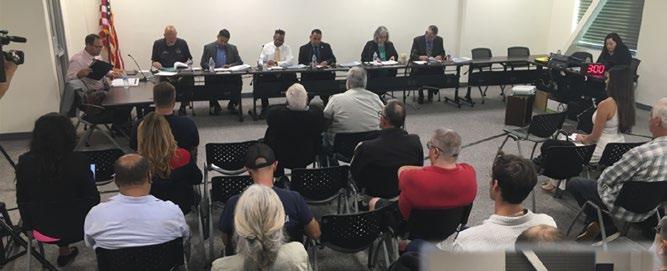
For more than a century, Santa Monica Airport has been both a symbol of Southern California aviation history and a lightning rod for controversy. That controversy eclipsed on May 12 at a standing-room-only Santa Monica City Council meeting by aviation business people, neighbors and enthusiasts who came together in mass to declare their desire for the airport to remain open, at least in part.
After decades of lawsuits, political battles, and neighborhood activism, the airport appears headed toward a dramatic final chapter: permanent closure at the end of 2028 and transformation into one of the largest urban park projects in California.
But not so fast, maybe…
The fate of the airport was largely sealed in 2017, when the City of Santa Monica reached a landmark agreement with the Federal Aviation Administration and the U.S. Department of Justice. Under the deal, the airport can continue operating through Dec. 31, 2028, after which the city gains the right to shut it down permanently.
For city leaders and nearby residents, the closure represents a long-awaited victory. Critics of the airport have argued for years that noise, air pollution, and safety concerns outweighed the benefits of maintaining a general aviation airport in the middle of densely populated neighborhoods. The city has already shortened the runway from 5,000 feet to 3,500 feet in an effort to reduce larger jet traffic and prepare for the airport’s eventual shutdown.
But the future of the 227-acre site remains deeply contested. Santa Monica officials envision a massive “Great Park” featuring recreation areas, green space, arts facilities, and ecological restoration. Public planning efforts are already underway, and the city has released conceptual frameworks dividing the property into themed districts designed to serve generations of residents. Some proponents of the park are asking that housing be planned into the concept.
However, money is tight and many argue the city does not have adequate financial resources to build the park and then maintain it.
Meanwhile, California’s housing crisis has intensified debate over whether part of the land should be used for affordable housing. In early 2026, activists submitted proposed ballot language that could eventually allow thousands of housing units on portions of the airport property. Supporters argue the site offers a rare opportunity to cre-
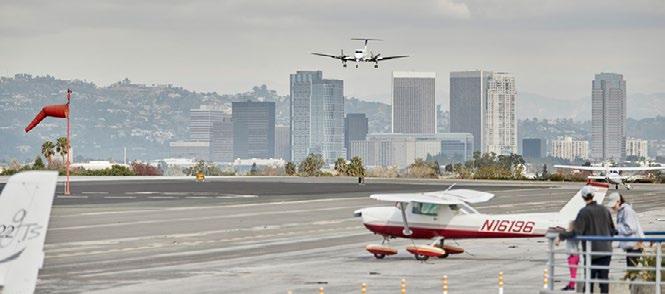
The City of Santa Monica at their City Council meeting on May 12 heard input from airport supporters pushing back on a plan to close the airport and convert the land to a large-scale urban park. Proponents argue that the airport is vital to emergency and disaster relief, to serve as a reliever airport to larger metropolitan airports, to education, especially STEM careers in and around aviation, and to serve the community in terms of cultural and festive gathering events. (Photo by Mike Fizer, courtesy AOPA)
ate housing near jobs and transit on Los Angeles’ Westside.
The aviation community, however, is not giving up quietly. Pilots, business groups, and airport advocates warn that closing Santa Monica Airport would eliminate an important reliever airport for the Los Angeles region, reduce emergency and medical flight access, eliminate valuable learning opportunities in the area of aviation and related careers, and erase a historic aviation landmark that dates back to 1919. Also, the airport is home to The Barker Hangar, where throughout each year, the arts, culture and community come together for major regional events, including Frieze Los Angeles art fair, local food bazaars and an outdoor community drive-in theater.
Airport proponents also argue that the airport supports local businesses and transportation infrastructure. In fact, there are 100 companies with more than 1,000 employees located on the airport campus.
It should be noted that simultaneously, Whiteman Airport ¬– 25 miles away – is also fighting for its life. Advocates say the airplanes that fly in and out of both Whiteman and Santa Monica are not going to go away. Closure of these two vital entities will only create more congestion in the greater Los Angeles area, and – perhaps even more importantly – put emergency services at a great disadvantage in terms of serving the communities in the region with medical transport, fire safety, earthquake and disaster response and other relief services.
At the May 12 Santa Monica City Council meeting, attendees were give one minute to speak and the majori-
our immediate access to this.”
Speaker Zachary Hoevet addressed the medical responsiveness needed in the Santa Monica area. “I have watched Angel Flight pilots take off from that one runway to bring sick children home from distant hospitals.”
He urged the Council to hear all the opinions of the residents and to not rush their decision.
He continued: “I watched an airport that had been here since 1919 quietly hold the line against overdevelopment that has swallowed every other open piece of land in this city. And one January, I watched CalFire relocate helicopters to that runway when the Palisades burned. That is not a liability. That is being a good neighbor.
ty directed their comments at keeping the airport open. The council was not scheduled to take action, nor did they take action, regarding the airport that night.
Bill Schwartz, a lifelong Santa Monica resident, said he “always wanted the Santa Monica Airport to close, but now, since the fire (Palisades fire that started on Jan. 7, 2025 in the Santa Monica mountains), I completely changed my mind… I think (the airport) should be a major command center that could provide services within a 10 to 15 miles radius and it can be a park in some proportion… it could be a very successful mixed-use situation.”
Surveys commissioned by airport supporters in 2026 suggested that a majority of Santa Monica voters favor keeping some aviation operations at the site rather than fully closing the airport. Spirit of Santa Monica, a non-profit organization working to keep the airport open beyond 2028, at least in part, indicates that a poll they commissioned shows two-thirds of registered voters in the city favor keeping the airport open past 2028 at least in some form.
Opponents dispute those findings, noting that earlier ballot measures strongly favored converting the land into park space.
Santa Monica Airport and Whiteman Airport are also very active in STEM education for students and take pride in promoting aviation careers to high school students. Charlie Cohen, president of the Santa Monica Aerospace Club, said “many members (of the club) have gone on to significant engineering universities, include Purdue and Michigan. The club inspires engineering. Closing the airport removes
“I design airports for a living. And the single most important lesson from that work is this. The cities that make the best decisions about their airports are not the ones who move the fastest. They are the ones who listen the longest. Santa Monica has not done that yet. Every voice matters here; the park supporters, aviation community, the housing advocates, and the families exhausted by noise.”
Other speakers, some from the community of Venice, demanded to know why planes are flying over their homes, especially in training flight patterns throughout the day, everyday. Many who work from home cannot do so efficiently. They cannot enjoy their backyards and feel they are at risk over noise, air pollution and safety.
Santa Monica’s city manager Oliver Chi answered by saying, “the FAA draws parameters through which the flight training schools can operate. They’ve established the area over East Venice and Mar Vista as an authorized training area. It’s an FAA jurisdictional issue that we can certainly engage with residents on to start trying to request some relief. However, there’s a long protracted process in engaging with the FAA on those matters. There’s no ability for us to… dictate that change but we can certainly help influence.”
The battle over Santa Monica and Whiteman airports reflects larger California tensions over land use, transportation, housing and environmental quality, often leaving general aviation airports in the crosshairs. To learn more, visit Spirit of Santa Monica (spiritofsantamonica.org), Save Santa Monica Airport (savesamo.com), and Santa Monica Airport Association (santamonicairport.info).










The World’s Greatest Aviation Celebration is living up to its moniker, as EAA AirVenture Oshkosh on May 7 received the title of “2026 Best Air Show” in online voting during the USA Today 10Best Readers’ Choice Awards.
“Every year, our team strives to make EAA AirVenture an experience unlike any other aviation event in the world,” said Rick Larsen, EAA’s vice president of communities and member programs, who coordinates AirVenture features and attractions. “This recognition reflects how what we call ‘Aviation’s Family Reunion’ creates an event that brings together aircraft and people in a way that is unmatched anywhere in the world. It’s a credit to our people, including the thousands of volunteers that make EAA AirVenture possible.”
EAA AirVenture 2025 saw a record-breaking total attendance of 704,000 from more than 90 countries. More than 10,000 aircraft flew into Wittman Regional Airport to experience the event headlined by two Goodyear Blimps, and a commemoration of the 75th anniversary of the Korean War.
Nominees for USA Today 10Best awards are compiled by a panel of industry experts and 10Best editors. The nominees are then presented to the public to vote for the winner over a month-
long period that ended in late April. AirVenture previously was voted the Best Air Show in 2016.
The recognition also comes during National Travel and Tourism Week (May 3-9), which “recognizes the essential role travel plays in powering our economy, strengthening communities and connecting America.” An independent University of Wisconsin Oshkosh study in 2025 estimated AirVenture’s annual economic impact at $257 million for the immediate Fox Valley region of Wisconsin.
Tickets for EAA AirVenture Oshkosh 2026, set for July 20-26, are available now on the EAA website, eaa.org. Features and attractions already confirmed for the event include a commemoration of America’s 250th anniversary, The USAF F-16 and F-22 demo teams, and a P-38 and DC-6 from The Flying Bulls aircraft from Austria.
EAA AirVenture Oshkosh is “The World’s Greatest Aviation Celebration” and EAA’s membership convention. Additional information, including advance ticket and camping purchase, is available at www.EAA.org/airventure. For more information on EAA and its programs, call 800-JOIN-EAA (800564-6322) or visit www.EAA.org.
There are several important FAA-approved updates in the EAA AirVenture Oshkosh 2026 Notice (commonly referred to as the Oshkosh NOTAM), featuring arrival and departure procedures for EAA’s 73rd fly-in convention on July 20-26 at Wittman Regional Airport in Oshkosh. These changes are based on pilot feedback and FAA review of arrival procedure recommendations.
The document is in effect from noon CDT on Thursday, July 16, until noon CDT on Monday, July 27, and outlines procedures for the many types of aircraft that fly to Oshkosh for the event, as well as aircraft that land at nearby airports. The Notice was designed by the FAA to assist pilots in their EAA AirVenture flight planning.
The ATC-assignable transition points approaching Oshkosh from the west that will ease holding and congestion will again be in effect in 2026. These points are at Endeavor Bridge, Puckaway Lake, and Green Lake. They will be announced on the arrival ATIS when ATC activates them at times of highest traffic flows.
“The most essential information for any pilot flying to Oshkosh involves reading and thoroughly understanding the 2026 AirVenture Notice to ensure safe operations on arrival and departure,” said Sean Elliott, EAA’s vice president of advocacy and safety. “We urge all pilots to adequately prepare prior to their trip to Oshkosh and consider such things as our AirVenture arrival flight review so they have the proficiency and confidence to fly safely.”
EAA is also hosting a webinar on June 17 at 7 p.m. CDT regarding flying to AirVenture 2026 and changes in this year’s Notice. Pilots are encouraged to participate to build their knowledge prior to their flights to Oshkosh.
Pilots can download a digital version of the Notice at EAA.org/NOTAM, or order a free printed copy via that website or by calling EAA Membership Services at 800-564-6322.


One of the truly great things about being an aviation buff is the number of “Goodies and Gadgets” available to play with. Here In Flight USA has collected a few new ones worthy of your consideration.
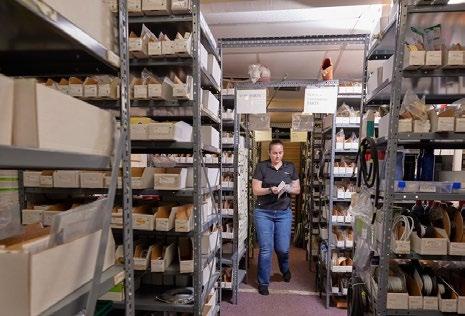
Aircraft Spruce & Specialty Co. has been the supplier that aircraft builders, owners, pilots, and aviation businesses have depended on since 1965. They carry a wide selection of aircraft parts, building materials, avionics, and pilot supplies, all of which are offered on their website (www.aircraftspruce.com) and in the famous Aircraft Spruce catalog, now over 1,000-pages available for download or for free in print. You can depend on Aircraft Spruce for prompt shipping and competitive pricing on all orders.
Aircraft Spruce & Specialty Co. is one of the best-known aviation supply companies in the United States and abroad (Canada and Australia) – with nine locations – especially among pilots, aircraft mechanics, restorers, and homebuilt aircraft enthusiasts. Founded in 1965 by Bob and Flo Irwin in Southern California, the company originally sold aircraft-grade spruce wood used in aircraft construction and restoration — which is where the name “Aircraft Spruce” comes from… but you probably already knew that!
Today, Aircraft Spruce – still a family owned and operated business with Jim Irwin at the helm – has grown into a major supplier of:
• Aircraft parts
• Avionics
• Pilot supplies
• Tools
• Hardware
• Engines and accessories
• Homebuilt aircraft kits
• Upholstery and interior materials
• Safety equipment The company serves:
• General aviation pilots
• Experimental/homebuilt aircraft builders
• A&P mechanics
• Flight schools
• Restoration shops
• Commercial operators
• And more!
Aircraft Spruce is especially respected in the experimental aviation community and has long supported organizations like the Experimental Aircraft Association. In fact, you’ll find them at EAA’s AirVenture in Oshkosh, Wisc., July 20-26. Stop by and say hello or visit the company website at aircraftspruce.com. By the way, their famous 1,000-plus full color print catalog is still available for free. Order it online or by calling 1/877-4-SPRUCE.
UFlyMike Harmony Aviation Kit
The HARMONY Light is a hardwired,

single-application headset designed for seamless use with a specific device or application. It delivers everything you
need to turn your headphones into a reliable communication tool without the complexity of modular systems.
While the HARMONY Light shares the same high-quality performance as the HARMONY Pro, it’s tailored for simplicity, offering a streamlined design without the upgradeable and expandable features of its Pro counterpart. Perfect for those who value ease of use and dependable functionality.
The Auxiliary Audio Jack seamlessly integrates with any device that supports external microphones, such as smartphones and tablets.
• Stay Connected: Make and receive phone calls using your headset.
• Never Miss a Call from ATC: Hear air traffic control (ATC) communications even during phone calls, ensuring uninterrupted situational awareness.
• Reliable Wired Connection: No batteries or Bluetooth required for hassle-free use.
With the Microphone Output Selector, you can easily switch the microphone connection between the aircraft and your connected device.
(Please note: the microphone cannot be connected to both simultaneously.)
Choose from three options: Bose QuietComfort & QuiteComfort 45/2-plug; Bose QuietComfort 35/2-plug; or Sony WH-1000XM5. Each unit sells for $299.
ACF-50 Anti-Corrosion Block Compound
ACF-50 is a state-of-the-art compound for controlling corrosion on aircraft electrical and avionics systems and airframes. ACF-50 is designed for owners of strut equipped Piper aircraft to comply with new Piper bulletin 5280C requiring lift strut inspection.
ACF-50 kills the corrosion process with just one application and will last for 24 months. Microswitches, cannon plugs, and relays will remain corrosion free. Plus, ACF-50 will easily free seized nuts, screws and bolts. ACF-
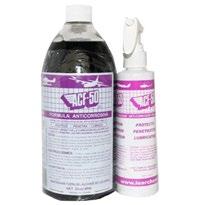
50 is qualified under Mil-C-81309E, and manufactured under ISO 9000 Certified Processes. ACF-50 holds written OEM approvals from: Gulfstream, Bombardier, ATR Regional Transport, Douglas/ Boeing Helicopter, Bell/Textron, Robinson, Enstrom, Sikorsky, MD Helicopters, Schweitzer, Hiller, British Aerospace, Concorde Battery, Raytheon, Piper, Cessna, Pilatus, Beech, Van’s, Extra, Air Tractor, Lake, Rolls-Royce, Britten-Norman, Learjet, McDonnell Douglas, and Canadair. Try ACF-50. You will truly be amazed at the results!
Purchase options include the 13 oz. aerosol spray bottle for $17.75; 32 oz. unit (with spray bottle) is $164.90; 4 liter container is $119.75; 20 liter pail is $554; 114 liter drum is $2,275; and 205 liter drum is $4,148.
The Claw Aircraft Tie Down
The Claw holds more than any other portable system on the market!

Advanced Aircraft Anchoring System – The Claw Aircraft Tiedown kit comes complete with three earth anchors, rope, spikes, hammer and canvas carry bag. The harder you pull, the more it grips the earth. Each unit sells for $135.
The Sierra TPM Module delivers authentic general aviation engine management with lockable metal verniers, a high-resolution trim wheel, and essential flight controls. Built with a general aviation-style layout and premium components, it brings precision and immersion to your flight sim experience on PC and Mac.
Vernier-style throttle, prop, and mixture levers deliver authentic general aviation engine management – ideal for piston aircraft such as the Cessna 172 in flight simulation.

Three push-pull vernier axes with color-coded handles provide smooth travel and precise fine-tuning for throttle, prop, and mixture in any PC flight simulator setup.
Features a high-resolution trim wheel, parking brake, flap lever, and landing gear lever with LED indicators – ideal for building realistic home cockpits for Microsoft Flight Simulator 2024, 2020, and other flight simulators.
General Aviation Layout
Designed for piston-engine aircraft simulation, the throttle quadrant delivers unmatched immersion and realistic flight controls for serious general aviation flight sim enthusiasts.
Each unit sells for $246.95.
The 29.92 Bravo Flight Bag doesn’t just hold your gear; it holds your confidence. It knows the rhythm of pre-flight checks, the scent of jet fuel at dawn, the way your fingertips trace the embroidered wings as you await takeoff.

Made from water and stain-resistant materials, it shrugs off the unexpected. With intelligently designed compartments, everything has its place: your logbook, your headset, even your lucky aviator’s pen. Lightweight enough to carry without effort. Rugged enough to last through ten thousand landings. Backed by a lifetime warranty, because some things should never be left to chance.
Each flight bag sells for $179.95 and come in a choice of stealth (dark gray), lilac or navy.
Aircraft Spruce on the Go
Look for Aircraft Spruce at upcoming airshows and events around the country.
July 20-26: EAA AirVenture, Oshkosh, WI, Hangar A, booth 1022.
Oct. 20-22: NBAA Convention, Las Vegas, NV, booth 1431.
Oct. 27-29: Regional Cargo Carriers Assoc. Convention, Scottsdale, AZ.
U.S. Transportation Secretary Sean P. Duffy on May 12 announced the Federal Aviation Administration (FAA) has successfully implemented phase one of an overhaul of the “Notices to Airmen (NOTAM)” system. This system — which is decades old — is essential to facilitating air travel because it provides pilots with the information they need to fly safely. Upgrading it will prevent nationwide airspace shutdowns, enhance safety, and improve communications.
“The last administration handed us a 40year old aviation alert system on the verge of complete collapse,” said Duffy. “Instead of waiting for another nationwide ground stop, we moved at the Speed of Trump to build a brand new, modern system — and we did it years ahead of schedule. Successfully completing Phase One of the NOTAM transition is just another example of how the Trump Administration is tackling the toughest challenges and delivering results.”
Flashback: The old legacy system was prone to failure leading to a full NOTAM shutdown in January 2023 that grounded flights nationwide. The previous administration said this would take until late 2027.
Fastforward: Under Duffy’s leadership, the FAA moved the NOTAM system into the cloud in April 2026, completed Phase 1 of the modernization effort at record speed, and are well on our way to transitioning the entire system.
“Our transition to this state-of-the-art NOTAM system strengthens safety and reliability across the National Airspace System,” said FAA Administrator Bryan Bedford. “We are focused on building a modern aviation system for the future – one that is resilient, efficient, and capable of meeting the demands of the world’s busiest airspace.”
Additional Information:
NOTAMs communicate temporary changes such as runway closures, airspace restrictions and obstructions, to pilots and flight planners. More than 4 million NOTAMs are issued annually.
The Trump Administration accelerated its NOTAM modernization efforts after the existing system experienced repeated failures, including outages that heavily impacted travelers.
The FAA used a streamlined, innovative vendor challenge to cut through red tape to

get this work done as fast as possible. In collaboration with CGI Federal, the agency developed the new service while engaging with the stakeholders who use it.
The FAA is transitioning to the NMS in phases. In the first phase, the FAA shut down the legacy US NOTAM System (USNS), and thousands of users transi-
tioned over to the new service in mid-April. The next phase will occur later this year as the FAA will retire the other legacy system — the Federal NOTAM Service (FNS). The NMS will then be the single authoritative source for all NOTAMs, delivering a modern, reliable foundation for the National Airspace System.





































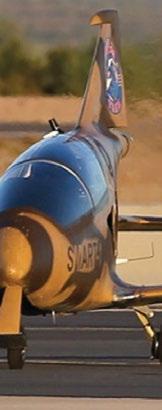








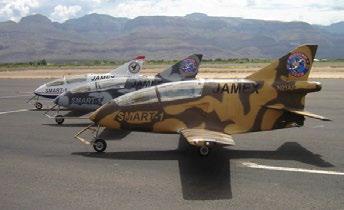










By Destiny Clarkson
For aviation professionals and aircraft owners alike, time on the ground is time that is not generating value or fulfilling mission goals. Whether managing a busy maintenance facility or caring for a privately owned aircraft, efficiency inside the hangar directly affects operational reliability, safety, and profitability. Optimizing the hangar is not about rushing maintenance. It is about equipping teams with the right tools and systems so tasks are completed accurately, consistently, and without unnecessary delay.
Faster maintenance turnarounds depend on preparedness. When technicians have immediate access to essential gear and a workspace designed for workflow efficiency, common maintenance tasks become smoother and more predictable. Aircraft availability improves, scheduling becomes easier, and compliance with inspection standards is easier to maintain.
One of the most significant contributors to maintenance delays is difficulty accessing key aircraft components.
Efficient ground handling equipment is essential for safe and timely inspections, repairs, and servicing. Proper stands, lifts, and mobility aids allow technicians to work at height or beneath the airframe without repositioning the aircraft multiple times.
Reliable lifting solutions are especially valuable during routine inspections and component replacement. Equipment such as aircraft jacks enables maintenance teams to raise an aircraft securely for landing gear inspections, brake service, and structural checks. When lifting equipment is properly maintained and correctly rated for the aircraft type, setup time decreases and safety margins increase.
Investing in certified, well maintained ground handling equipment reduces the risks associated with improvised solutions. It also allows technicians to perform tasks concurrently rather than sequentially, which significantly shortens turnaround windows.
Power and Air Systems That Reduce Setup Time
Maintenance efficiency relies heavily on consistent access to power and air sys-
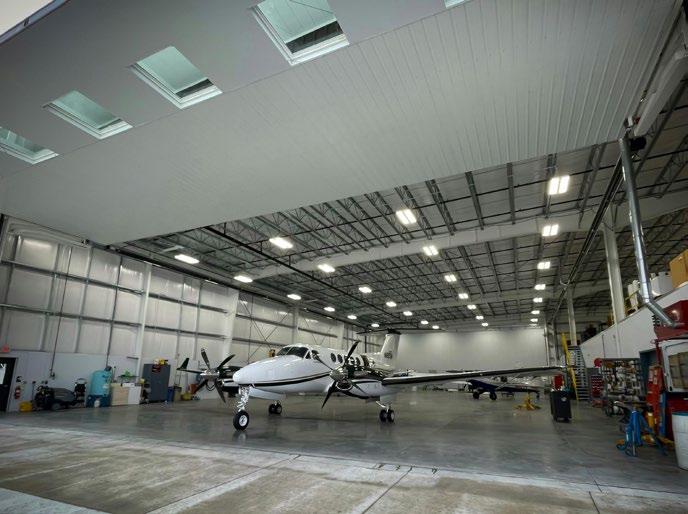
tems. Electrical testing, avionics updates, lighting, and powered tools all depend on stable energy sources. Integrated ground power and compressed air systems eliminate delays caused by portable equipment shortages or inconsistent output.
Hangars equipped with strategically placed outlets and hose reels allow technicians to begin work immediately rather than staging gear for each task. Centralized systems also reduce clutter on the hangar floor, improving safety and preventing workflow bottlenecks.
For aircraft owners managing their own maintenance schedules, dependable power systems offer flexibility. Routine inspections and minor repairs can be completed without coordinating external power sources, which helps streamline planning and minimize downtime.
Tool Organization and Task Specific Kits
Time is often lost not during work itself, but between tasks. Searching for tools, verifying inventory, or sharing limited equipment adds minutes that accumulate into hours. Optimized tool organization is one of the simplest ways to improve maintenance speed without sacrificing quality.
Modern hangars increasingly rely on shadow boards, modular storage, and task specific tool kits. Clearly labeled and standardized tool layouts help technicians confirm completeness at a glance. Task kits designed around common procedures such as inspections, fluid servicing, or avionics checks reduce setup time and limit distractions.
Tool accountability systems also play a role in turnaround efficiency. When tools are tracked and returned consistently, teams avoid delays caused by misplaced equipment or incomplete tool counts before aircraft release.
Digital Tracking and Maintenance Planning Tools
Physical gear alone cannot solve every efficiency challenge. Digital systems now play a critical role in optimizing hangar operations. Maintenance tracking software allows teams to plan tasks more effectively, anticipate parts requirements, and avoid unexpected delays.
By digitizing maintenance logs, in-
spection intervals, and service bulletins, aviation professionals gain a clearer view of upcoming work. This foresight allows gear and tools to be staged in advance, reducing idle time once aircraft enter the hangar.
For aircraft owners, digital planning tools provide peace of mind. Maintenance schedules become predictable rather than reactive. When combined with proper hangar equipment, planning software helps ensure that time spent on the ground is productive and controlled.
Environmental conditions inside the hangar affect both maintenance speed and quality. Poor lighting, extreme temperatures, or inadequate ventilation can slow progress and increase fatigue. Optimizing the hangar environment allows technicians to work comfortably and safely across long shifts.
High quality lighting improves visibility during inspections and reduces error rates. Climate control protects sensitive components and ensures that adhesives, lubricants, and composite materials perform as expected. Ventilation systems reduce exposure to fumes during painting, cleaning, or fuel related tasks.
Consistent working conditions reduce mental and physical strain on maintenance teams. When technicians are comfortable and focused, tasks move forward efficiently without compromising attention to detail.
Optimizing the hangar is about creating an environment where maintenance can be completed quickly, safely, and correctly every time. For aviation professionals and aircraft owners, essential gear plays a direct role in reducing turnaround times while maintaining high standards of safety and compliance. From ground handling equipment to organized tools, power systems, digital planning, and environmental controls, each investment supports smoother workflows and better outcomes. When the hangar is equipped with purpose and precision, aircraft spend less time grounded and more time doing what they were built to do.
The Aircraft Owners and Pilots Association (AOPA) on May 12 held its annual member meeting at the National Aviation Community Center in Frederick, Maryland, where it elected two new members to the Board of Trustees and heard feedback from 17 members.
“This is a game of inches, I want to be clear,” said AOPA Board of Trustees Chairman Luke Wippler as the meeting began. “We need all of our stakeholders pulling in the right direction. I recognize that we need to rebuild your trust.”
Acting Co-President Katie Pribyl then discussed the state of AOPA’s advocacy efforts, while Acting Co-President Jill Baker presented about the state of AOPA’s finances. General Counsel Fernando Campoamor then provided details about the seven potential bylaw changes announced in April, noting that the bylaws have not changed in decades.
“There are seven potential changes
that have been outlined, and those are the things that were perhaps most essential for all of us to focus on,” said Campoamor. “We did this fairly quickly in the past eight weeks. But there is more that can clearly be done, and so when you’re thinking about commenting on what we should be doing or thinking about, not only think about the things that we have proposed, but also think about what else you think needs to happen so that it can be considered by the Board.”
The Board continues to solicit feedback from members on any potential changes until 11:59 p.m. EDT on Friday, June 5, ahead of a vote to implement them this fall.
Chairman Luke Wippler then opened the floor to invite members to speak. Prior to the meeting, Wippler announced a change to previously announced rules that limited speaking slots to 20 AOPA members and said any
member who wanted would be allowed to speak. A total of 17 members spoke, highlighting both the successes and challenges that AOPA faces, and issues they want AOPA to work on.
Members then voted to elect all 11 board members on the slate of candidates to a one-year term, including Peter Burwell and Ryan Samples, who are joining the board for the first time.
Burwell has been an AOPA member for more than 15 years, and flies both fixed-wing and rotor, pistons and turbines. His aircraft of choice are a Cessna Skywagon for weekend flying and a Beechcraft Baron when he flies for business. He leads Burwell Enterprises, a family-owned diversified holding company, alongside his two brothers.
Samples has been a member of AOPA for nearly 30 years and earned his private pilot certificate while in high school. He currently flies a Beechcraft V35 Bonanza, a Carbon Cub, an
Icon A5, and a Cessna Citation CJ4. He founded BankOnIT in 2003, building it into one of the country’s leading providers of private cloud and IT infrastructure for community banks, and is a passionate advocate for bringing young people into flying.
“My commitment to you is I value transparency,” said Wippler. “We won’t always agree, but we’ll know where each other stands, and I value optimism. I believe that this group gathered here today in Frederick because you care about GA and the need for a strong and vibrant AOPA. I ask that you lean in, that you be solution-oriented, and be additive to the organization.”
AOPA members can watch a recording of the member meeting in its entirety at https://www.aopa.org/about/governance/2026-aopa-member-meeting. To learn more, visit www.aopa.org.
The Aircraft Owners and Pilots Association (AOPA) welcomes and supports comments made by FAA Administrator Bryan Bedford during a Senate Aviation Subcommittee hearing on May 19 about the practice of using ADS-B to charge fees to pilots.
Much of the discussion during the hearing centered on differences between the Senate-passed Rotorcraft Operations Transparency and Oversight Reform (ROTOR) Act, and the House-passed Airspace Location and Enhanced Risk Transparency (ALERT) Act — both of which would impose a collision avoidance equipage mandate in response to safety concerns following the 2025 midair collision between a regional jet and a military helicopter that killed 67 people.
During the hearing, Sen. Tim Sheehy (R-Mont.) — an active general aviation pilot — suggested that it wouldn’t be right to charge a fee when you click on a seatbelt in your car. Sheehy then asked Bedford about ADS-B-based billing, and the need to “make it illegal for a safety tool that is specifically designed to prevent two aircraft from running into each other.”
Sheehy is an original cosponsor of the Pilot and Aircraft Privacy Act (PAPA), which would prohibit, nation-
wide, the practice of using a technology intended to enhance safety for fee collection. The ALERT Act includes key provisions from PAPA (section 105).
AOPA has strongly advocated for PAPA and section 105 of the ALERT Act and will continue to advocate for it to be-
come law.
When asked if ADS-B was “intended to be a fee collecting, tax collecting device,” Bedford replied, “No, sir. It was intended to be a safety and situational awareness tool.” Bedford also noted he recently spoke about the is-

sue at an airport operator’s conference, telling attendees “that we frown on the concept of using ADS-B information for revenue collection at airports.” He also told Sheehy that “if we need to step up that in terms of how aggressively we
Continued on page 38
Continued from page 10
der skills, this writer has always viewed the auto flight control system as a tool to enhance my basic abilities, or as a backup, not dissimilar to having a well-trained co-pilot. It never occurred to me that I should ask the autopilot to undertake a task or automatically limit flight activities
that could do harm to me, my passengers, or the airplane. As PIC, that responsibility rests only on my shoulders, as it should on yours.
Today, we see auto flight systems that operate in the background, performing tasks without the pilot being aware such operations are even in play. Automatic, full-time yaw dampers, stabilization sys-
tems, pitch and lateral trim, fuel management, auto communication, and navigation tuning to match selected instrument approaches and many other functions, which may not be apparent to the PIC, therefore creating an unrecognized dependency that replaces some degree of basic flying skill. Let’s compare the advanced auto flight system now in use to

Asimov’s Three Laws of Robotics and see how well technology is serving us simple, often lacking, human beings.
1. Do no harm to humans: Safe to say, we humans crossed that line a long time ago. Robotic systems are now being used on an industrial scale to do as much harm as possible. But what about your auto flight system? It is safe to say the well-designed robotic systems being installed in aircraft are not plotting against us, but they certainly do give us limited humans every opportunity possible to harm ourselves. With multiple pitch modes, such as altitude hold and select, airspeed hold and select, vertical speed hold and select along with the ability to capture a glideslope, be it GPS or ground based, the opportunity for confusion is ever present. If flying an LNAV+V approach, you might be required to select a recommended rate of descent, as there may be no auto capture as in an ILS or LPV approach. Will your autopilot recognize intercepting the MDA at the Visual Decent Point (VDP). More importantly, if you did not understand all the ramifications of the last sentence, should you even have the autopilot engaged? Lateral guidance also offers us humans an opportunity to mess up a perfectly good auto flight system. Do you take off with the NAV set to the GPS programmed route, or perhaps have heading hold engaged in order to comply with a departure clearance? What happens when you engage GPS following the departure clearance to maintain runway heading? What will your robot do? Sure, a fully coupled LPV approach capability is great, but what mode do you select if a RAIM alert is received? Did you set up a ground based back-up before beginning the LPV? No, it is not our robot that will harm you directly, it will not plot and scheme to engage you, but lack of training does allow you to give that faithful robot the wrong instructions, which it will faithfully follow to the point of impact.
2. The robot must obey the orders given to it by human beings: And that is the problem… a good auto pilot system will do exactly what you tell it to do, but few have the intelligence to question your input and thereafter warn the pilot of an unintentional mode selection. This writer has flown with several advanced auto flight systems that do vigorously warn a pilot that something is going wrong, or that our robot is about to fly the airplane into the ground. Regrettably, NASA ASR reports and, tragically, cockpit voice recordings have disclosed that such warnings are often considered an annoyance, versus a life and death warning. Historically, poorly trained pilots concentrate their efforts to assess or silence the warning as opposed to correcting the
Continued on page 36
Continued from page 35
error. For us aviators, “giving orders to the robot” means programming a system that may have multiple selections. Do you include auto flight programming in your pre-flight planning or simply pound on buttons as you taxi to the end of the runway. Runway incursions and taxiway encounters have increased exponentially as planes have become more automated. Is this a failure of automation or are we pilots being distracted during critical phases of aircraft operation? Once again, NASA ASR’s and NTSB reports point to distractions, not flaws in the automation. Another factor is that many aircraft owners are upgrading older planes incrementally, ending up with a montage of avionics from different manufacturers. Nomenclature can be quite different from one brand of avionics to another. It can become even more complicated when these different avionics and display systems are interfaced with the autopilot. Bottom line, your robot will follow your instructions… that is the problem!
3. A robot must protect its own
existence. The ability of an airplane to save itself from disaster is relatively new and has recently made headlines in the media. A twin turbo prop charter flight apparently experienced an anomaly with the pressurization system, and the auto safety capability took over control of the plane, transmitted necessary alerts to ATC, selected an airport, landed, braked to a stop on the runway and stopped the engines. Yes, a major success of new robotic technology, but in the fine print one reads that the flight crew was not disabled and allowed the new system to complete its task. Impressive, but were this writer the chief pilot of that air taxi operator, those pilots would have experienced a possibly unpleasant discussion about decision making. Popular aircraft are now equipped with autopilot intelligence that consistently monitors speed, attitude, and power settings, ready to intercede if the pilot lets bank or pitch exceed what our “robot” considers to be a safe margin of control. Modern use of GPS positioning, magnetometers, accelerometers, and rate sensors now provide levels of automated control that rival the incredible landings of SpaceX boosters. But the engineer in
this writer wonders, if our robot is correctly considering all the varying loads associated with bank, “G” forces, pitch, power, control input rates and trim sufficiently to encompass all circumstances? We mere humans took millions of years to develop the ability to connect all of these forces into a single human characteristic, referred to as “kinesthesia,” by using thousands of receptors, which feed data to our brain. Has this inherent human ability been successfully transferred to our robotic inventions? A well-known, single engine, turbo prop plane broke up in flight several years ago when caught in Sierra Wave turbulence. It was known to possess automatic recovery capabilities. Aircraft equipped with Vne protection have been known to fly into an overspeed situation. Full automation, which runs in background has been known to successfully fly in icing conditions, up until control was lost due to auto trim fighting with elevator pitch. The much publicized failure of the full-time stabilization system I used in the Boeing 737 Max is a tragic example of automation failure due to inadequate inputs and pro-
gramming… the robot did harm humans and failed to protect itself.
So, how does our Technically Advanced Airplane (TAA) stack up against Asimov’s Three Rules of Robotics? In the view of his writer, we are getting there, but it is the PIC that remains the key element. If there is one primary consideration when employing the ever-increasing capabilities of our airborne robot, it is going back to rule number one, do no harm to humans. The catch is, you are the one that needs to explain that rule to your robot, through training, good preflight practices and use that does not replace your skills but enhances them. This writer is reminded of an opinion expressed by a friend and physicist who led the technology division of a major aerospace company, “Having spent so much time and money on this technology, I am fearful that we will feel compelled to use it.” Now, if I can just figure out how to use my cell phone, all will be good in my robotic world!


Continued from page 9
nurturing the next generation of pilots. Beyond business, Hal was deeply rooted in community service and youth development, carrying his Eagle Scout values into decades of support for the Boy Scouts and Aviation Exploring programs. He was recognized with multiple honors, including the prestigious Silver Beaver Award, and was inducted into the National Association of Flight Instructors Hall of Fame in 2007.
John Zimmerman, Sporty’s President & CEO, reflected on his friend and men-
tor: “Hal’s passion and dedication transformed Sporty’s from an idea into a great American business story. As an employee-owned company, we remain committed to his original vision: create uniquely high quality products and back them up with friendly, helpful service.”
AOPA acting Co-President Katie Pribyl stated, “Hal had a profound impact on general aviation. He built Sporty’s Pilot Shop into a place that pilots both wanted to visit, and a place they knew they could trust. Hal also had a lifelong impact on many pilots through his education efforts, including me. He will be
Continued from page 34
dissuade that, we will.”
Sheehy pointed out that the practice has a negative impact on safety as it “creates an incentive for pilots, companies, or any organization that owns and operates an aircraft to say, ‘I don’t want to be emitting my signal. I’m going to find mechanical excuses, I’m going to find regulatory excuses, or I’m going to straight up not going to turn it on.’”
“Senator Sheehy is spot on with his observations regarding the misuse of an aircraft collision avoidance technology to collect taxes and fees. AOPA also applauds Administrator Bedford’s
agreement on this issue, especially as the House and Senate work out differences between these important aviation safety bills,” said AOPA Senior Vice President of Government Affairs and Advocacy Jim Coon. “There is strong supportfor putting an end to this practice, including National Transportation Safety Board Chair Jennifer Homendy, who commented at an earlier Senate Commerce Committee hearing that the use of ADS-B for economic gain ‘should be prohibited.’”
At least a dozen states are considering legislation to prevent ADS-B from being used to collect fees. Florida recently became another state to imple-
Continued from page 12
MH: We don’t specifically manufacture pet oxygen systems, but we do work with companies that produce oxygen enclosures for animals, primarily dogs. In those cases, we provide the oxygen cylinders, regulators, and flow-control devices.
IFUSA: Where can customers purchase your products?
MH: Most of our sales are conducted online through our website, though customers can also purchase through dealers such as Aircraft Spruce. We have distributors and dealers throughout the world. Many customers contact us directly because they are unfamiliar with aviation oxygen systems and want guidance on which setup would best suit their aircraft and flying needs.
We also maintain a presence each year in hanger ‘C’ at EAA AirVenture Oshkosh.
deeply missed.”
Phil Boyer, president of AOPA from 1991 to 2008, worked closely with Shevers during his tenure. He said, “Hal Shevers was one man who was unique in our aviation business community. He had a passion for flying, opened Sporty’s Pilot Shop at just the right time, and let it grow and expand into a worldwide aviation supplier. But little known was his generous philanthropy for aviation education; learning to fly, local aviation groups, and individuals who needed financial support. He had his own unique personality, but never strayed from supporting general
aviation in every way possible. Personally, he was a friend, very opinionated, but always in support of aviation causes, and often those in the industry who needed help.”
Mr. Shevers leaves behind a rich legacy of innovation, education, and community spirit that will continue to inspire aviators around the world for generations to come. He is survived by his wife, Sandy, with whom he shared more than 60 years of marriage, and who was a constant through his life and career.
Learn more about Sporty’s and its history at sportys.com.
ment such a ban. Meanwhile, the Louisiana House recently passed HB 730, which would ban the practice in that state, and will now be taken up by the state Senate.
“We appreciate this growing sentiment at the state level, but we need a national policy to avoid a patchwork of laws across the nation,” said Coon. “Besides, when section 105 becomes law, airports and state and local tax collectors can still collect fees, they just wouldn’t be able to use an aircraft collision avoidance device to do so.”
Learn more at AOPA’s website, aopa.org or on Senator Sheehy’s website, https://www.sheehy.senate.gov/.

FAA Administrator Bryan Bedford said the FAA dislikes the practice of using ADS-B to charge fees to pilots in a Senate Aviation Subcommittee hearing on May 19. (Photo by David Tulis, courtesy AOPA)
IFUSA: What safety advice would you offer general aviation pilots?
MH: Fatigue and reduced mental sharpness can affect pilots more than many people realize, especially during longer flights or as pilots age. Supplemental oxygen can significantly improve alertness, reduce fatigue, and enhance overall comfort during flight.
Many customers who initially purchase a system out of curiosity later tell us it became one of the best investments they made for flying.
IFUSA: What is the typical entry-level price point?
MH: An entry-level portable constant-flow system generally starts around $600, depending on the cylinder size and number of users.
A two-place O2D2 Pulse-Demand™ system with a standard aluminum cylinder typically ranges between $1,100 and $1,200.
Many pilots begin with a simpler constant-flow setup and later upgrade to Pulse-Demand™ systems. Our products are designed to be modular and interchangeable, making upgrades straightforward and cost-effective.
IFUSA: Can pilots refill their own oxygen cylinders?
MH: Yes. Many customers rent or purchase larger oxygen supply tanks for their hangars, allowing them to refill their own portable cylinders or aircraft systems. This can provide substantial savings over time.
We also manufacture and sell a wide range of ground support equipment for oxygen servicing and refilling.
IFUSA: What maintenance is required?
MH: We recommend servicing Pulse-Demand™ units approximately every two years to ensure everything remains in proper working condition.
During servicing, we inspect the regulators, replace seals and gaskets as needed, and perform firmware updates when applicable.
Turnaround time is typically about two weeks.
Oxygen cylinders themselves must also undergo hydrostatic testing every five years, though we send those out to certified testing facilities.
Regular maintenance helps prevent in-flight equipment failures and ensures the systems continue operating safely and reliably.
IFUSA: Closing thoughts?
MH: Our goal is to help pilots fly more safely and comfortably. Supplemental oxygen can make a significant difference in alertness, endurance, and overall flight experience, and we’re proud to support the aviation community with reliable, innovative oxygen systems. For more information and video tutorials visit www. mhoxygen.com.

Continued from page 21
of Economic Opportunity to conduct an Economic Impact Analysis and Land Use Study for the potential repurposing or redevelopment of the Whiteman Airport property. The study is currently underway and expected to be completed later this year.”
At the time of this writing, Mr. Lee just sent the author this statement from the Board of Supervisors’ Chair, Ms. Horvath, May 20th on the report’s outcome: “… outlining immediate actions to further strengthen safety at Whiteman Airport. The report details a series of proposed safety enhancements responsive to community concerns and recommendations developed by the Whiteman Airport Community Advisory Committee. These actions follow the April 20, 2026 aircraft crash near the airport in Pacoima. “The safety of our Pacoima community members is urgent and nonnegotiable,” said Supervisor Lindsey P. Horvath. “This report outlines immediate actions the County can take to strengthen safety, improve transparency, and continue direct engagement with residents as broader conversations about the airport’s future move forward. While the federal investigation remains ongoing, we owe our communities accountability and a continued commitment to pursuing every available measure to reduce risk and enhance safety in our community.”
Among the proposed actions included in the report are:
• Quarterly pilot safety seminars focused on operational safety and local airspace conditions.
• Runway and taxiway pavement rehabilitation and upgraded markings.
• Expanded community outreach and airport safety communications; and
• Consideration of a future FAA Part 150 Noise Compatibility Study to evaluate long-term operational compatibility and mitigation strategies.
The report also outlines the respective responsibilities of the Federal Aviation Administration, National Transportation Safety Board, LA County Public Works, the City of Los Angeles, and other agencies and stakeholders responsible for aviation safety oversight and emergency response. The National Transportation Safety Board and Federal Aviation Administration continue investigating the April 20 crash and are expected to issue final findings and safety recommendations at a later date. The County is in communication with the Federal Aviation Administration and is encouraging their participation in future community meetings. A verbal presentation and discussion before the Board of Supervisors is anticipated in the coming weeks.”
Funny, the ‘full report’s’ link wasbroken. Check, see if it has been fixed since the time of this writing: (NOTE: go online to www.inflightusa.com to see the link to easily click on it.)
https://lindseyhorvath.lacounty.gov/ https:/file.lacounty.gov/SDSInter/bos /bc/1209094_BoardMotion05-05-2026 Item29-EnhancingSafetyatWhitemanAirport_2026-05-18_.pdf
Regarding the study that Mr. Lee spoke of earlier, Penny expounded on the issue of lead pollution. She states, “The AQMD has done two studies of the lead on and off the airport. Levels are the same all the way through the area. Lead levels here are 1/10th of the EPA allowed levels and in fact are lower than other areas of the Valley and Metro areas. Blood levels of children were taken 1½ miles around the airport. Only 1.5% of the children had levels that exceeded the CDC levels. Outside of this area that figure is 3.5% - over two times the level here. You cannot tell where lead comes from and could also be attributable to candy from other countries, cinnamon, applesauce, paint, and residual leaded gas from cars. FYI, Whiteman Airport now has unleaded fuel available at the airport, and as the FAA approves additional choices this will become more widely available, as well.” Regarding ‘unleaded UL94 fuel (94-octane unleaded avgas) and LA County Public works stating that 60-70% (represents more than 130,000 aircraft nationwide) of General Aviation aircraft can use it, but, the aircraft owner/operator must first purchase and install a Supplemental Type Certificate (STC) specific to their engine and airframe to use the fuel legally and safely; the vast majority of these eligible aircraft cannot “immediately” drop it in without administrative preparation. I am not seeing pilots paying any amount for the retrofit when 100LL is available. Funny, Horvath stated this, “Los Angeles County is taking action to safeguard the health of our Pacoima neighbors surrounding Whiteman Airport through this transition to unleaded aviation fuel. I wholeheartedly support Assemblymember Menjivar’s legislation to ban unleaded fuel outright.” Does that make sense to you? Ban it yet supplanted it at the airport via Swift? Mean ban ‘leaded’ fuel? Sorry, this author finds many confusing or ambiguous stances and statements in the County’s press releases. What else is – misleading and/or misinterpreted?
Reiterating the value of the airport to area youth, Ms. Alderson pointed out, “The loss of eight non-profits, most of which support the betterment of our youth, teaching them integrity, respect, leadership, fitness, character building, code of honor, enthusiasm for knowledge, positive habits, and a direct feed to a rewarding and challenging career. These aviation programs have proven to keep youth off drugs and out of trouble by giving them a purpose and goals. They succeed in empowering the youth, just as the youth commission is attempting to do. “One program of note, Penny, says, “…is the second most active Aviation Explorer program in the NATION! The aircraft build project, called ‘Jackpot,’ is teaching skills that will be used their whole lives. The youth that have benefited from all
these programs is astounding. To that end, Lisa Fusano manages the program and is an EAA award winning Young Eagles pilot, as well, having flown over 1,000 children. She states, “Whiteman Airport should be kept open because it is an active training airport and an airport with many youth programs. One of the programs is Aviation Explorer Post 747, which I direct, for youth 14-21 years of age and we currently have 26 registered explorers (and the other Post has about 10 explorers). We have helped finance with scholarship monies over 55 pilots, many of them becoming commercial pilots. A substantial number of these youth have trained at Whiteman Airport. Some Youth in our program are currently training at Whiteman Airport. Please help us help youth and keep Whiteman Airport open.”
Penny adds, “The Civil Air Patrol (CAP) cadet program teaches youth integrity, respect, leadership skills, service, character building, and gives them career opportunities and a foundation for their future success. The proven fact is these programs keep youth out of trouble, and on a prosperous path. The Supervisors claim to be concerned about our youth and have started the LA County Youth Commission, but they want to destroy a proven solution in creating a positive path for our youth.”
Another stalwart youth program of



Whiteman Airport that Penny highlights is, “The Civil Air Patrol Cadet Squadron 137 which currently has 85 Cadets who have an interest in aviation, leadership, and some careers in the military. The training and experience they have received have helped numerous Cadets to obtain appointments to military academies, identify other career paths which they did not even know were of interest to them when they joined Civil Air Patrol, i.e. culinary arts and hospitality, civil engineering, medical fields, heavy construction operators, aeronautical engineering, and similar jobs. All Cadets receive a strong understanding of Leadership which applies to any endeavor they choose. The program gives them real life experiences in leading and training others.”
Heading up the Civil Air Patrol at Whiteman Airport is its Squadron Commander, James Miller, who also rents two hangars at the North end of the Field. “I first began flying into Whiteman Airport in 1971 after earning my Private Pilot’s License. In 1994 I became a tenant at Whiteman Airport with my Cessna 172. I have been a Member of Civil Air Patrol for over 55 years. In 1996, when I became the Commander of San Fernando Cadet Squadron 137, the Squadron moved to Whiteman Airport. I am finishing my third term as a Squadron Com-








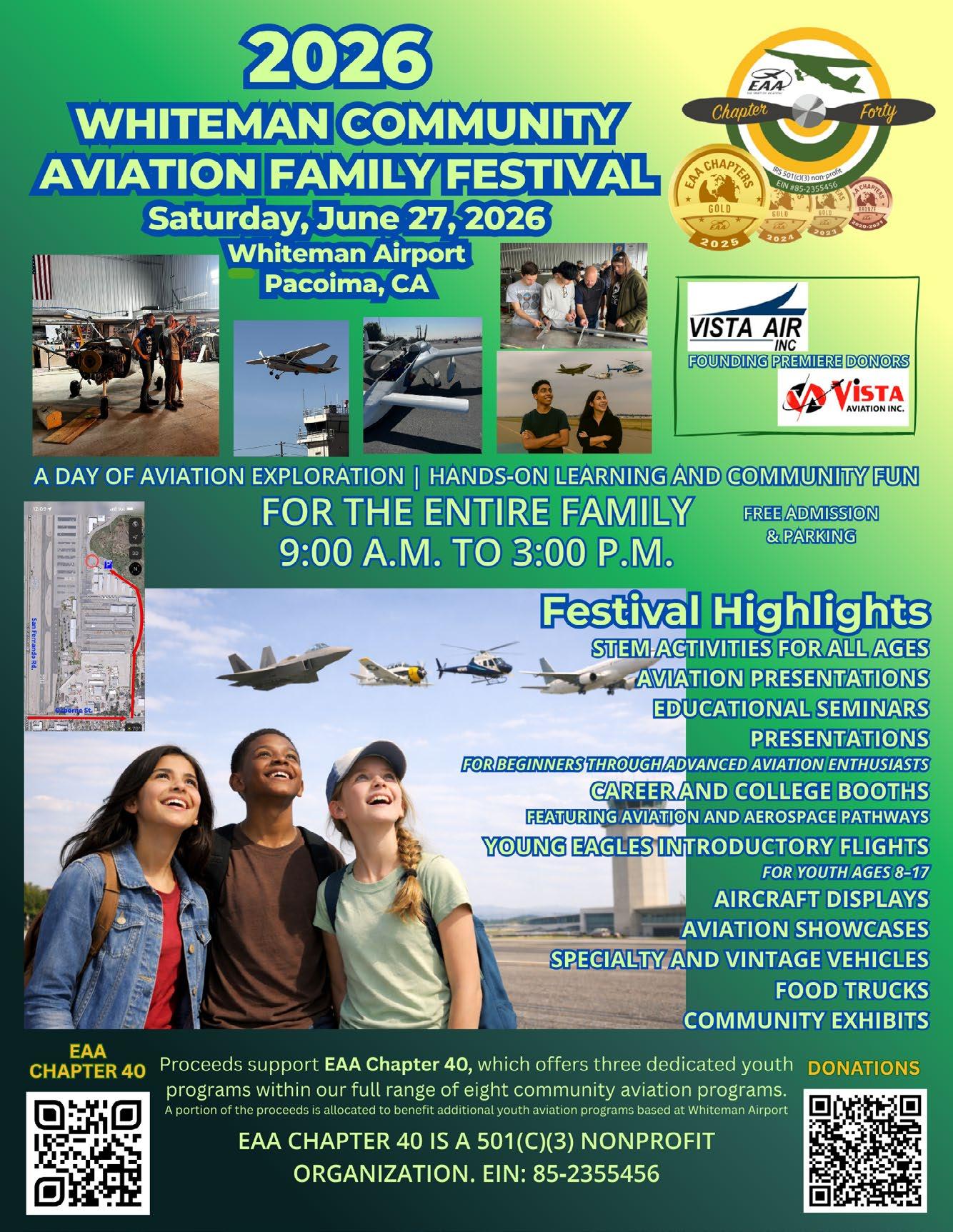
Continued from page 40 mander since we moved to Whiteman Airport. I am the AOPA Airport Support Network Volunteer for Whiteman Airport, an EAA Young Eagles Pilot, active member of the Whiteman Airport Association and Chair of Friends of Whiteman Airport. From January 2020 until July 2021, I was the Whiteman Airport Manager (last Manager before Los Angeles County took over Management of the Airport. In 2022, as the Chair of Friends of Whiteman I coordinated the Whiteman Airport Open House. I played a key role in the 2023 Open House. I attended all Re-envision Whiteman Airport Community Advisory Council Meetings and spoke in support at all of the meetings,” quotes James Miller James continues, “If Whiteman Airport is shut down the following negative things will occur: Civil Air Patrol’s presence in the San Fernando Valley will be reduced to one Cadet and One Senior Squadron. Both Squadrons at Whiteman Airport will be merged with the other existing Squadrons. The other Squadron in the Valley cannot manage the influx of new members at their current meeting location. Past history shows that there will be a significant loss of personnel in both portions of the program. Resources to the San Fernando Valley area will be reduced by two vehicles and one to three aircraft. Millions of dollars in free volunteer service to the community will be lost annually. EAA’s Young Eagle flights will cease to exist and youth wanting to receive a flight will have to travel to Compton or further to receive one, and the frequency will be reduced. The EAA youth build program will cease to exist, preventing youth from having the opportunity to gain hands on experience in building a flying aircraft. The two Aviation Explorer Scout Troops will cease to exist, preventing dozens of youths from receiving their pilots’ licenses through the program, which reduces their cost of flight instruction - significantly. EAA Chapter 40 is second only to it’s own EAA headquarters in Oshkosh, Wisc., out of 900 chapters, in the number of flights provided each year.”
To that end regarding Chapter 40, founded pre-1958, an overview was received from its president, Clyde Carpenter. “We absolutely love that we are able to share with this wonderful community our love of aviation and to help anyone interested find a path to share this love for aviation. Over the last three and a half years, we have watched our young people move from our programs into higher education pathways that include flight schools, trade schools, and university degree programs across a wide range of fields. As of fall 2025, our youth were enrolled in more than 10 different universities and trade schools, studying everything from aeronautical engineering, environmental sciences, aviation business management, and secondary education to airframe and powerplant certification, robotics engineering, and
more. We stay connected with these students because our support does not end when they leave Whiteman Airport. One young woman, for example, used skills she gained in our Youth Build Program to earn a university job—as a freshman— normally reserved for juniors, performing testing on lunar robotics and astronautical engineering equipment. Others have comparable stories of grit, growth, and opportunity, and it is always a joy to hear from them as they continue to chase their dreams.” Bring the children every Saturday to Whiteman Airport for a gratis thrill of a child’s lifetime – perhaps. Young Eagles at Whiteman Airport can be seen at https://events.eaachapters.org/event-details/YE179E38
Some tenants’ and stakeholders’ inputs:
“Please realize that we all have stories to share about what the airport means to us and how it has positively impacted our lives. We also have a sphere of influence, friends, family, coworkers and acquaintances who need to understand the issues and truth about the airport’s influence on the community and economy.” – Jim Miller
“(This effort) needs public safety experts, aviator influencers, leaders of communities, people who have incredible stories about how the airports have changed their lives, Pacoima residents, or anyone who has a platform and would be willing to let their voice be heard on this issue. Any decisions about Whiteman Airport should follow the law, make financial sense, protect regional public safety, and reflect what the community actually wants.” – Christina Pascucci
“Whiteman Airport has taken members of our Hispanic community from peeking and dreaming outside the airport fence to taking off and flying over that same fence.” – Estevan Roth
“If you care about what happens at Whiteman Airport, now is the time to pay attention,” said Penny Alderson, owner of Vista Aviation, whose company services local, state, and national aviation firms as well as defense contractors.
On a final note, the National Business Aviation Association is a very prominent organization that supports business aviation and thus Whiteman Airport. NBAA’s, Alex Gertsen, Sr. Director of Airport Advocacy and Vertical Infrastructure stated, ”NBAA and the national general aviation associations emphasize that Whiteman Airport is grant-obligated in perpetuity and cannot be closed. It plays a critical role in the LA airport ecosystem, where the airspace is already constrained. The airport has regional and national economic impacts and is a vital gateway for aviation careers. NBAA continues to support the tenants and local stakeholders in their advocacy efforts to preserve the airport.”
Bottom Line: You, your family, and neighbors are invited for - community education, fun, entertainment and possibly - an airplane ride by attending the upcoming 2026 Whiteman Community Aviation Family Festival, Saturday, June 27th.




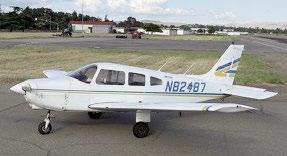
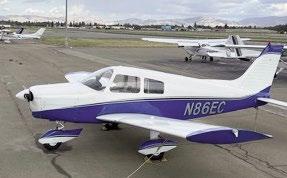
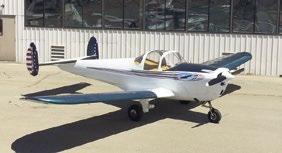


AIRCRAFT FOR SALE
American Aircraft Sales, Livermore Airport, CA, americanaircraft.net, cell (510) 783-2711, (925) 449-5151. 3/13
From Trade-ins to Aircraft Management, financing and appraisals. T.J. Aircraft Sales, Novato, CA, (415) 898-5151, tjair.com. 3/13
AirplanesUSA Aircraft Sales, San Carlos, CA, Airport, (650) 394-7610, airplanesusa.com. 1/16
Quality aircraft since 1948. Volare Air, a TECNAM dealership, (940) 800-8020, volareair.aero. 1/23
Historically significant 1950s-era aircraft for sale or trade. All in restorable condition with minimum corrosion. Inventory includes a Piasecki XHJP-1 and a Sikorsky S-55. American Helicopter Museum, West Chester, PA. Contact info@ americanhelicopter.museum for more information. 231000.TFN
1968 Nanchang CJ-6 Chinese warbird. Reliable Day/VFR, light weight. Apollo GX-65 nav/com, Digital Xpndr., intercom, Delco alternator. New seat cushions and canopy glass. Includes all support equipment, wing jacks, manu- als, spare parts. Much more! $70,000. Located N. Calif., text/cell (530) 957-9760, dennis@ nickson.biz. 24900:11
1966 Piper PA30 Twin Camanche for sale near Oceanside, CA. Call for pricing. Andrew Wignot, (760) 717-0640. 241100:12
Small Manned Aerial Radar Target, Model 1. Tiny jet aircraft, long-range tank. SMART-1, Tucson, AZ, (202) 2132400, smart-1.us. 5/21
SPORT/ULTRALIGHTS
RV12i5. Total performance perfected. Easy to build, fly and own. Van’s Aircraft www.vansaircraft.com. 11/18
Bristell LSA 915 Turbo, 180 mph @18,000. Bristell Aircraft, (516) 6581847. bristellaircraft.com. 2/24
STOL
The STOL Super Breezy with fully covered fuselage. Yakima Aerosport, (509) 453-3412, superbreezy.com. 5/23
AIRCRAFT SALES AIDS
Aviation Sales & Marketing by ABCI.
Ideal for a startup or side hustle in the aviation industry. (702) 987-1679 or aviationsalestraining.com/startup. 1/21
FLIGHT INSTRUCTION
Sunshine Flyers. Flight & tailwheel instruction, rentals, mountain flying, and aerobatics., Auburn, CA, (530) 820-3442, sunshineflyersaviation@gmail.com. 3/20
Arizona Type Ratings
CE-500/CE-525 type ratings or recurrent. Insurance approved, staff examiner. arizonatyperatings.com, (602) 614-7994.
9309:TFN
Recurrent pilot training and services. L/D Aerospace, Grace Passmore, (916) 790-0501, ldaerospace.com. 1/22
Fly for fun or career. Discovery flights, pilot training, AOPA Distinguished Flight School & Cessna Pilot Center. Smith Aviation, Napa County Airport, (707) 3456526, mikesmithaviation.com. 4/22
Come fly with us! CFIs encouraged to apply. For more information, call Sue Clark/RV to the Rescue at 925-997-4778
XL Aviation - Aircraft Maintenance.
Custom-tailored programs for all aircraft. Livermore, CA, (925) 961-6135, xlaviationtailwheel.com. 8/20
Iconic Aircraft Restoration. Repairs, refurbishments, parts fabricated, consulting at reasonable rates. The Wright Experience, (540) 379-9092. 8/21
Custom aircraft & high-quality composite parts. Aviation Composites, Sandersville, GA, (937) 243-7303. 1/22
Serving the GA Community since 1981. Wisconsin Aviation, Watertown Municipal Airport, WI, (920) 261-4567, WisconsinAviation.com. 3/13
World’s largest network of FBOs with over 200 locations offering consistent, exceptional service. Signature Flight Support, signatureflight.com. 4/23
Full-service center. Vista Aviation, Whiteman Airport, Pacoima, CA, (818) 896-5224, vistaair.com 9/23
Avionics for Every Mission. All major brands. Airtronics, Calaveras County Airport, CA, airtronicsavionics.com, (209) 736-9400. 11/14
Basic installs to complete panel and glass retrofits. Pacific Coast Avionics, (800) 353-0370, PCA.aero. 7/15
Update your avionics. FAA-Certified repair station. Treasure Coast Avionics, Ft. Pierce, FL, (772) 464-3148, treasurecoastavionics.com. 2/23
AIRCRAFT PARTS
Keeping “classic” aircraft flying since 1946. Univair Aircraft Corp., Aurora, CO, (888) 433-5433, univair.com. 3/21
Iconic Aircraft Restoration for all the classics. Reasonable rates. The Wright Experience, (540) 347-1909. 2/23
Wingtips with total lighting solutions, aveoengineering.com. 9/23
Aviation wood, composite or metal propellers. Sensenich, (813) 752-3711, (717) 569-0435 or sensenich.com. 4/21
OXYGEN SUPPLIES
Cannula or Mask? For aircraft service ceil- ings to FL180 & FL250. Ask “The Oxygen Lady,” info@aviationoxygen.com 4720:TFN 2/23

FUEL
Fuel Cells. Repair, overhaul or new with 10-year warranty. Hartwig Aircraft Fuel Cell Repair, hartwigfuelcell.com. 2/09
Home of GAMIjectors® fuel injectors! STCs and PMAs on over 300 different engine models! General Aviation Modifications, Ada, OK, (888) 359-4264, (580) 436-4833, gami.inc. 3/23
AVIATION SAFETY
Innovative aviation safety solutions and Parachute Recovery Systems for a variety of aircraft, including for sport, UAVs, more. AviationSafetyResources.com. 2/22
Get ahead of your daily in-flight risks with SAFETYLINQ flight risk assessment. argus.aero/safetylinq. 1/22
AIRCRAFT FINANCING
Get Top Retail Value for Your Aircraft! Sell now! Find your dream aircraft! Shop now! Become an area broker with one of the largest networks in the U.S.! Visit our USA Aircraft Brokers page on Facebook or visit usaaircraft.com. 9/23 INSURANCE
Specializing in personal, business and charter aircraft. Best price, cover- age & customer service. Zanette Aircraft Insurance Center, (650) 593-3030, (888) 7233358. 10/06
Insurance solutions for all aviation-related services. Business Aviation Insurance, bizavins.com, (925) 825-1900.7/20
AVIATION CONSULTANTS
Informed, accurate aircraft appraisals. jetvaluesjeremy.com, (636) 751-3987. 7/20
Complete Aviation Sales & Marketing Services. Use Promo Code “INFLIGHT” to save 10%. AviationBusinessConsultants.com/Lab, (702) 987-1679. 4/23
No cheap imitation watches at HME! Special pricing on ATP series multi- functional watches with Altimeter. To order or for information, (323) 464-6660 or hmewatch.com. 11/16
Aircraft Spruce & Specialty. Free 700page catalog, Corona, CA, & Peachtree City, GA, aircraftspruce.com. 10/06
Protective covers for every make and model. Bruce’s Custom Covers, Morgan Hill, CA, (800) 777-6405, (408) 738-3959, aircraftcovers.com.10/19
Apparel as unique as your journey. Discounts to members. AOPA Pilot Gear, aopapilotgear.com. 9/21
Mountain Bike, Full-size, pilot-friendly, rugged. FLATBIKE, flatbike.com. 10/18
Emergency services, group trips, consulting services. BizAvJets, Inc., Business Aviation Services, bizavjets.com, (702) 465-2027. 10/20
Wherever business takes you. Navigate It. (575) 615-2091, vatit.com. 10/21
Scheduling Software that connects to your flight department. Simple, affordable. airplanemanager.com. 9/22
PROFESSIONAL SERVICES
Aero & Marine Tax Pros
Legally avoid sales tax on your aircraft purchase. In El Grove, CA, (916) 691-9192, aeromarinetaxpros.com. 18500:TFN Left Seat Pilot Medical Solutions. A confidential solution for pilot medical certification. Free FAA medical consultations. Left Seat, (800) 699-4457. 1/21 Global Aircraft Group. USPAP bank values for all aircraft, aircraft management, insurance claims & certified aircraft appraisals. Mark Parry, (855) 6GBL- AIR, (413) 335-7507. 4/22
At Thirty1 Hybrid, we help aviation companies, including flight schools, manufacturers, mechanics, brokers, and more, build a cohesive website that positively impacts their bottomline. And it’s not just a website — it’s an Experience.
We’ll take your prospects on a journey they’ll love (and you’ll love, too — because the final destination is a new client and more money in your pocket). It’s a win-win for everyone! Contact us today at hello@thirty1hybrid. com or by visiting thirty1hybrid.com. 24500:6
HANGARS/TIEDOWNS
One-piece doors. Hydraulic or bifold. Schweissdoors.com,(800)746-8273. 1/15
Aviation Building Systems, custom de- signed hangars. R&M Steel Co., Caldwell, ID, (208) 454-1800, aviationbuildingsystem.com, (866) 454-1800 51217:TFN
HOMES/AIRPARKS
New Runway & Taxiway Homesites
Available in amentity-rich community, Granbury, TX. From $179,900. Pecan Plantation, AviationHomesites. com, (833) 273-2159. 2/24
Become an Aircraft Broker — #1 Largest USA Network of Aircraft Start with USA’s proved system for listing and selling everything from high-performance single-engine airplanes, cabin class through jets, and helicopters & jet fractional shares. Includes multi-million-dollar inventory to start. Complete turnkey proved system. No experience necessary. Will train. Licensed USA Aircraft brokerage. Call (504) 723-5566 or visit Business Opportunity Section at usaaircraft.com. 4208:TFN
Free avgas 100LL and free tie-down parking in exchange for help with projects for an airport in Southern California. Email: wignot@hotmail.com. 23600:TFN
ART/VIDEOS/GIFTS
Specializing in aviation photography. horizontalrain.com. 1/15
Need a gift? Give a ride in an open cockpit biplane. WACO Air Museum, Troy, Ohio, wacoairmuseum.org, (937) 3359226. 20601:TFN
Fly By Wire Air, a one-stop site for aviators.flybywireair.com. 4/21
Aces High Aviation & Military Art. (800) 528-0887, aceshighgallery.com. 10/21
Shirts Made to Fly. Unique, original fabrics embedded with your sectional chart. Save 20% with “INFLIGHT20” code. PilotQuarters.com. 2/24
Avionics Checklists & Quick Reference guides. Available in book, card & new iPad editions. qref.com. 8/14
SEAK, Expert Witness Directory, by Bert Botta for aviation accidents and incidents. (415) 320-9811, bert@bertbotta. com, bertbotta.com. 4/22
“Ghosts,” Phil Makanna’s legendary warbird calendars are back! Visit ghosts. com, (800) 331-8231. 2/23
New Pocket guide to avoid pain & stiffness during travel by a leading pain expert. “Pain-Free Vacation/Travel,” (980) 785-8128, goptfirst@gmail.com. 2/4
PILOT POSITION WANTED
SoCal pilot desires Turbine/Jet SIC time. Comm/Instru/Multi-Eng with SIC for Gulfstream G-IV and scores of hours in the Citation V560. Many years of aircraft design/flight test/aerospace industry experience. Willing to travel as needed (and for repositioning). Contact Paul at (562) 714-6686 or ptglessner@ aol.com. 23700:TFN
HELP WANTED
IN FLIGHT USA, the leading source of general aviation news, seeks writers and photographers to cover all aspects of aviation. Send an SASE for writer’s guidelines to: In Flight USA, P.O. Box 5402, San Mateo, CA 94402. TFN
Oakland Aviation Museum recruiting volunteers. Oakland, CA, (510) 638-7100, oaklandaviationmuseum.org. 12/23
NOW HIRING: A&P Instructor
AvTech Exams is looking for a motivated and knowledgeable A&P Instructor to join our team! If you’re passionate about aviation and enjoy helping others succeed, this is an opportunity to make a real impact by guiding students toward achieving their Airframe & Powerplant certification.
�� Now hiring for:
Our current Riverside, CA location Our new Las Vegas location (coming soon)
What we’re looking for: ✅ Current A&P Certification with General Aviation experience ✅ Strong communication and instructional skills ✅ Real-world aviation maintenance experience ✅ A passion for teaching and mentoring
What you’ll do: �� Prepare students for written, oral, and practical exams Provide hands-on instruction and guidance Support students throughout their certification journey
Join a team dedicated to student success and be part of changing lives through aviation.








Unlike FAA Medical Examiners or other pilot groups, Pilot Medical Solutions activates our exceptional team of experts to confidentially support and resolve your FAA Medical certifications challenges.
Pilot Medical Solutions is the only service which collaborates with private physicians to produce documentation required by the FAA. Other services typically only list FAA requirements, Pilot Medical Solutions helps you comply with them.




"The professionals at Pilot Medical Solutions provide superior, pilot-focused services and help during your time of need. I would, without hesitation, recommend their services to an airman in need."
– Anthony Ison, Aviation Attorney
"Because they assist you in getting your records properly prepared and walking the information through the FAA, they can often accomplish in days what may take months for other sources, including your AME, to do."
– Erwin L. Samuelson, M.D
"I can strongly recommend Pilot Medical Solutions for consideration because they are sympathetic to pilots with medical certification problems. Pilot Medical Solutions also organizes the records which supports the FAA’s requirements."
– Bob Hoover
“They do all the
while we get the
and the
from the
They are
and make


F l i g h t s d e p a r t f r o m o u r C h i n o A i r p o r t
l o c a t i o n f o r a 2 0 - m i n u t e f l i g h t t h a t y o u ’ l l
r e m e m b e r f o r y e a r s t o c o m e . F o r c o m p l e t e i n f o r m a t i o n v i s i t o u r w e b s i t e t o d a y .