San Mateo County offers something truly unique — a blend of coastal beauty, innovation, community spirit, and neighborhoods where generations continue to live, work, and grow together.
From Daly City to Half Moon Bay, Redwood City to San Mateo, Burlingame to South San Francisco, older adults throughout this county remain deeply engaged in the life of the community. Many continue working, mentoring, volunteering, creating, caregiving, and pursuing passions long after traditional retirement age.
At Born to Age, we believe aging should be approached not with fear, but with preparation, support, curiosity, and optimism.
Our mission is to provide valuable local information and trusted resources specifically designed for aging boomers, seniors, caregivers, and families throughout San Mateo County. Inside these pages, readers will find wellness guidance, housing and financial information, caregiving resources, local events, and stories that celebrate resilience, purpose, and community connection.
We also recognize the realities many older adults face today: rising living costs, changing healthcare needs, social isolation, and the challenge of navigating an increasingly fastpaced world. We hope this publication offers not only practical support, but also a reminder that no one should have to navigate aging alone.
Every stage of life carries value and meaning. We are honored to celebrate that journey alongside you.
Thank you for being part of the Born to Age community.
Sincerely,
Annamarie Buonocore Publisher & Editor Born to Age
Business matters, advertising and editorial concerns should be addressed to:
Born to Age, P.O. Box 5402, San Mateo, Calif. 94402 or by calling (650) 504-8549, fax (650) 358-9254.
Born to Age Peninsula is not responsible for any action taken by any person as a result of reading any part of any issue. The pieces are written for information, entertainment and suggestion – not recommendation. The pursuit of making healthcare decisions or any action reflected by this magazine is the responsibility of the individual and not of this magazine, its staff or contributors. Opinions expressed are those of the individual author and not necessarily those of Born to Age. The publisher reserves the right to edit and rewrite, as necessary, all copy submitted for publication. All editorial and advertising matter in this edition is copyrighted. Reproduction in any way is strictly prohibited without written permission of the publisher.
welcome articles from our advertisers and readers for seniors or their families. All submissions will be considered, based on relevancy and space availability. Efforts are made to ensure that all entries are current at the time of printing. Please call the listing you’re interested in for up-to-date information. Submit articles or questions, including any corrections or updated information, to:
REDWOOD CITY, CALIFORNIA: HISTORY, WATERFRONT BEAUTY, AND PENINSULA CHARM
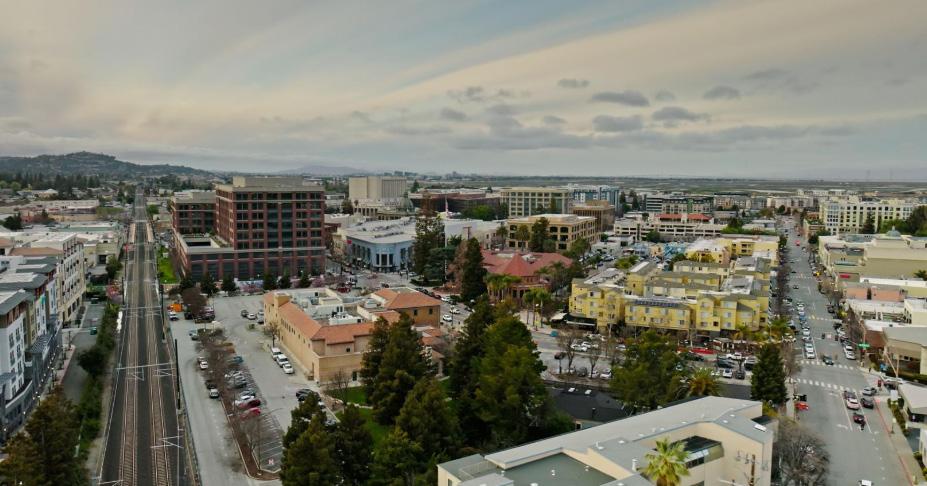
Located midway between San Francisco and San Jose, Redwood City has long been considered one of the hidden gems of the San Francisco Peninsula. With its historic downtown, beautiful weather, waterfront access, and rich California history, the city offers a relaxed yet vibrant atmosphere that appeals strongly to active seniors and longtime Bay Area residents alike.
Known for its slogan, “Climate Best by Government Test,” Redwood City enjoys one of the mildest climates in Northern California. For retirees and older adults seeking walkability, culture, and access to nature without the intensity of larger urban centers, Redwood City strikes an appealing balance.
A City with Deep California Roots
Redwood City’s history dates back well before California statehood. The area was originally home to the Ohlone people, who lived throughout the Peninsula for thousands of years before European settlement.
The city officially began developing in the mid-1800s and became an important center for lumber and shipping. Redwood trees harvested from nearby forests were transported through the city’s port, helping supply materials for booming San Francisco during the Gold Rush era.
In 1867, Redwood City became the county seat of San Mateo County, a distinction it still holds today. Many of its early civic buildings helped shape the Peninsula’s growth during the late 19th century.
By Annamarie Buonocore
Today, remnants of the city’s past blend naturally with modern redevelopment, giving Redwood City a distinct character that feels both historic and contemporary.
A Revitalized Downtown
One of Redwood City’s greatest success stories has been the revitalization of its downtown district.
Centered around Courthouse Square, downtown Redwood City features restaurants, theaters, public art, music events, coffee shops, and pedestrian-friendly streets. Seniors often enjoy simply walking the area, relaxing outdoors, or attending the city’s many free concerts and seasonal events.
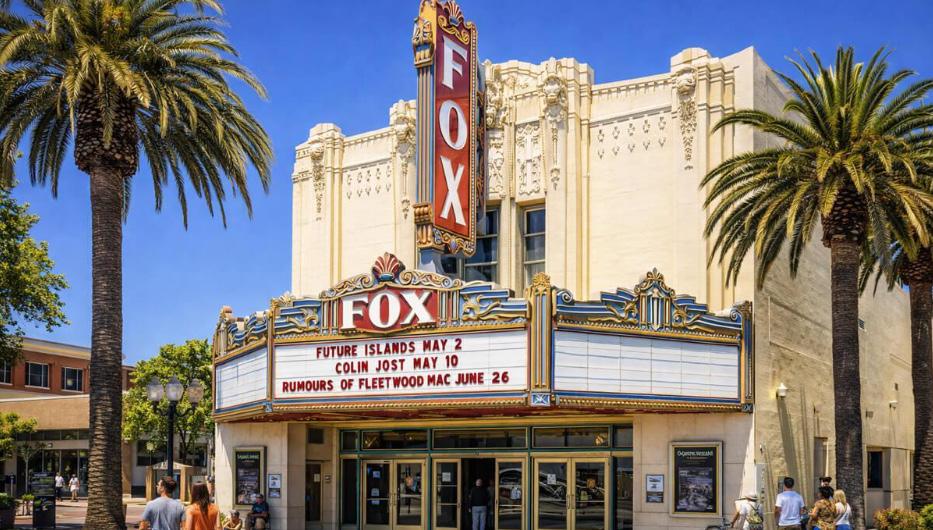
The beautifully restored Fox Theatre, originally opened in 1929, remains one of the city’s iconic landmarks and hosts concerts, performances, and community events throughout the year.
Waterfront Beauty and Outdoor Recreation
Although many people think of Redwood City primarily as an inland Peninsula city, it also has an important connection to the San Francisco Bay.
Redwood Shores and the Bay Trail
The Bay Trail system provides scenic waterfront walking and biking opportunities through nearby Redwood Shores and surrounding marshlands. Flat terrain and peaceful water views make the area especially attractive for older walkers and cyclists.
Birdwatchers often spot egrets, ducks, pelicans, and other migratory species throughout the wetlands.
Edgewood Park and Natural Preserve
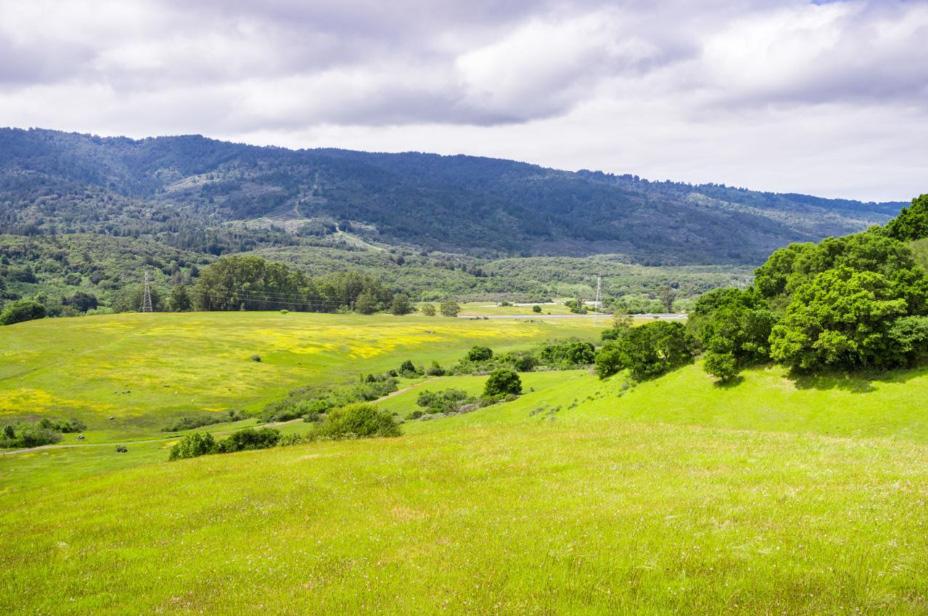
Nature lovers may also enjoy Edgewood Park, located nearby in the hills west of the city. Known for spring wildflowers and open-space trails, the preserve offers some of the Peninsula’s most scenic landscapes.
Stulsaft Park
Closer to residential neighborhoods, Stulsaft Park provides shaded walking trails, picnic areas, and creekside scenery ideal for quieter outdoor outings.
Historic and Cultural Attractions
San Mateo County History Museum
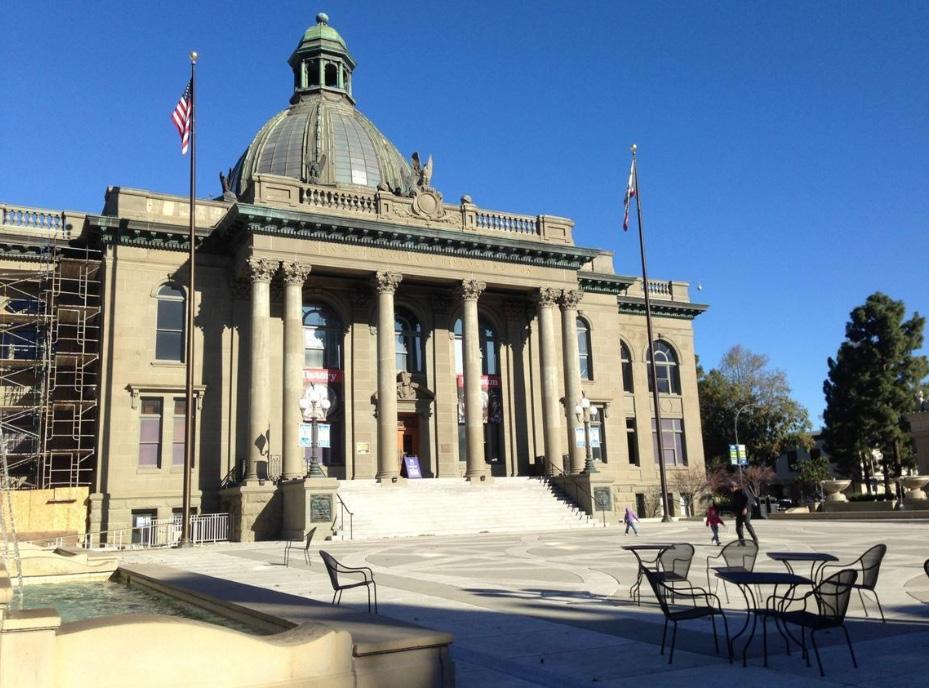
Housed inside the historic county courthouse, the San Mateo County History Museum offers exhibits covering local Native American history, transportation, agriculture, immigration, and Peninsula development.
The courthouse itself is architecturally impressive and worth visiting even for those simply interested in California civic history.
Pulgas Water Temple
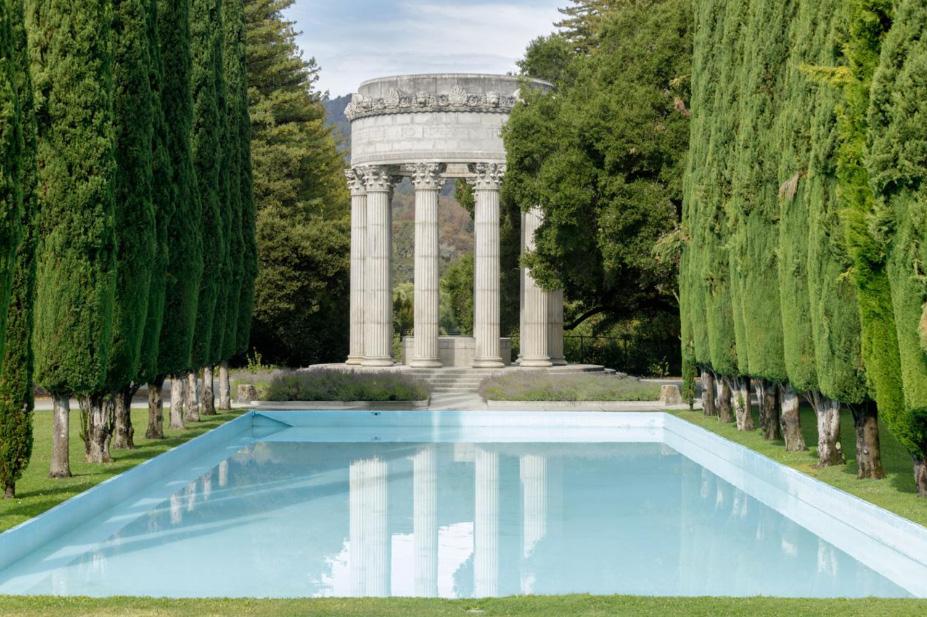
Just west of the city sits the Pulgas Water Temple, one of the Peninsula’s most overlooked landmarks. Built in 1938 to commemorate the
completion of the Hetch Hetchy water system, the classical-style structure is surrounded by peaceful reflecting pools and landscaped grounds.
A Convenient Home Base for Seniors
Many retirees appreciate Redwood City because of its central location. Residents enjoy easy access to San Francisco, Silicon Valley, medical centers, airports, and Peninsula communities
while maintaining a somewhat calmer pace than larger cities.
The city also offers numerous recreation programs, libraries, senior services, and community activities throughout the year.
Public transportation access through Caltrain also makes regional travel easier for older adults who prefer not to drive long distances.
Things To Do in Redwood City
Here are several senior-friendly activities in and around Redwood City:
• Explore Courthouse Square and downtown cafes
• Attend free summer concerts and events
• Visit the Fox Theatre
• Walk the Bay Trail waterfront paths
• Tour the San Mateo County History Museum
• Enjoy local farmers markets
• Visit nearby wineries and Peninsula restaurants
• Take scenic drives along Skyline Boulevard
• Explore nearby Half Moon Bay for coastal day trips
Final Thoughts
Redwood City combines many of the qualities that make Northern California special: history, mild weather, natural beauty, cultural diversity, and strong community identity.
For seniors seeking a Peninsula destination that feels active yet approachable, Redwood City offers a comfortable mix of old California charm and modern convenience.
Photos: Courtesy City of Redwood City
ACTIVITIES
City of San Mateo Parks & Recreation cityofsanmateo.org/parksand-recreation
650-522-7400
2001 Pacific Blvd. San Mateo, CA 94403
Daly City Department of Parks & Rec dalycity.org/327/Recreation 650-991-8001
111 Lake Merced Blvd. Daly City, CA 94015
Foster City Village fostercityvillage.clubexpress.com
650-378-8541 fcvillage94404@gmail.com
1000 E. Hillsdale Blvd. Foster City, CA 94404
Hiller Aviation Museum hiller.org
650-654-0200
601 Skyway Rd. San Carlos, CA 94070
Los Altos History Museum losaltoshistory.org
650-948-9427
51 S. San Antonio Rd. Los Altos, CA 94022
Millbrae Department of Parks & Rec
ci.millbrae.ca.us/departmentsservices/recreation
650-259-2360
621 Magnolia Ave. Millbrae, CA 94030
Oakland Aviation Museum oaklandaviationmuseum.org 510-638-7100
8252 Earhart Rd. Oakland, CA 94621
Redwood City Department of Parks & Recreation redwoodcity.org/departments/ parksrecreation-and-community-services 650-780-7311
1120 Roosevelt Ave. Redwood City, CA 94061
San Mateo County Historical Association historysmc.org
650-299-0104
2200 Broadway Redwood City, CA 94063
San Mateo Elks Lodge sanmateoelks1112.org/ 650-345-4886
229 W 20th Ave. San Mateo, CA 94403
ADVANCE DIRECTIVE FOR HEALTH CARE
California Medical Association Call: 800-882-1262
To order a kit!
San Mateo County Ombudsman ossmc.org 650-780-5707
711 Nevada St. Redwood City, CA 94061
AFFORDABLE HOUSING RESOURCES
Casa De Redwood
Low Income Senior Housing 650-369-4819
1280 Veterans Blvd. Redwood City, CA 94063
Housing Authority of the County of San Mateo housing.smcgov.org
650-802-3300
264 Harbor Blvd., #A Belmont, CA 94002
Lesley Terrace lesleyseniorcommunities.org
650-593-1818
2400 Carlmont Dr. Belmont, CA 94002
Peninsula Del Rey
Ask about Senior Apartments! srgseniorliving.com
650-741-1537
165 Pierce St. Daly City, CA 94015
ATTORNEYS
Cookman Law
Ellen Cookman, Esq. cookmanlaw.com
650-690-2571
2100 Geng Rd., Ste. 210 Palo Alto, CA 94303
Dolan Law Firm PC dolanlawfirm.com
415-619-5204
1438 Market St. San Francisco, CA 94102
Law Offices of Albert K. Martin
650-342-6315
630 N San Mateo Dr. San Mateo, CA 94401
Lee & Haraguchi, APC
Erika M. Haraguchi, Esq. Estate and Trust Planning leeharaguchi.com
650-918-7865
611 Gateway Blvd., Ste. 120 So. San Francisco, CA 94080
Loew Law Group loewlawgroup.com
650-397-8700
1650 Borel Pl., Ste. 123 San Mateo, CA 94402
McDowall • Cotter
Karishma Patel, Esq. Attorney at Law mcdlawyers.net
T: 650-572-7933
F: 650-572-0834
2070 Pioneer Ct. San Mateo, CA 94403
San Mateo County Bar Association smcba.org
650-369-4149
333 Bradford St., #200 Redwood City, CA 94063
Rodnunsky & Associates
Don Sweet, Esq. Estate Planning and Legal Services rodnunskylaw.com
650-285-5400
2000 Alameda de las Pulgas, #154 San Mateo, CA 94403
San Mateo County Commission on Aging Anna Sawamura
650-713-8610
Senior Citizens Commission City of San Mateo Call Parks & Rec: 650-522-7400
UTILITY & WEATHERIZATION ASSISTANCE
(See listing under Home Energy Assistance) WELLNESS/SPAS
Skin Body Zen skinbodyzen.com info@skinbodyzen.com 415-769-4184
277 San Francisco Ave., #A Brisbane, CA 94005
EVERY LIFE HOLDS A LIBRARY: WHY SENIORS SHOULD WRITE THEIR STORIES
By Katie Conroy, Staff Writer
By the time a person reaches their senior years, they have lived through decades of history, change, heartbreak, resilience, humor, and lessons that younger generations can barely imagine. Yet too many older adults believe their lives were “ordinary” and not worth writing about. Nothing could be further from the truth. Every senior carries a story that matters. From growing up before the internet and smartphones to witnessing cultural revolutions, wars, economic struggles, technological changes, and family traditions that may otherwise disappear, older adults hold living history in their memories. Writing those stories down is not only valuable for families — it can also be deeply meaningful for the writer.
Preserving Family History
One of the greatest gifts seniors can leave behind is the story of where the family came from and what life was truly like in earlier generations.
Children and grandchildren often know only fragments:
• Where their grandparents were born
• How the family survived hard times
• What school, dating, work, or military service was like decades ago
• Family traditions, recipes, sayings, and customs
• Stories about parents, siblings, or neighborhoods that no longer exist Once these memories are gone, they are often gone forever.
A written story becomes a family treasure — something future generations can revisit long after photographs fade and voices are forgotten.
Ordinary Lives Are Often Extraordinary
Many seniors hesitate to write because they think they were never famous or accomplished enough. But the stories people cherish most are rarely celebrity memoirs. They are stories about real life.
A grandmother describing how she raised children on a tight budget.
A veteran recalling the emotions of returning home.
A retired mechanic explaining how neighborhoods changed over 50 years.
A widow writing about enduring love and loss. These are the stories that connect generations emotionally. They remind younger readers that courage often looks quiet and ordinary.
Writing Can Improve Emotional Well-Being
Storytelling is not just for the reader. It can also benefit the writer.
Research has long shown that reflective writing may help reduce stress, improve mood, and increase feelings of purpose and meaning. For seniors especially, writing can become a healthy way to process life experiences and celebrate personal growth.
Many older adults discover that writing:
• Helps organize memories
• Encourages gratitude
• Provides emotional release
• Creates a sense of accomplishment
• Reduces feelings of loneliness or invisibility Some even uncover strengths they never realized they had until they see their life written on paper.
Seniors Have Witnessed Incredible History
Today’s older adults lived through astonishing periods of change:
• The rise of television
• The Civil Rights era
• Major wars and conflicts
• The space race
• The transformation of travel
• The arrival of computers and the internet
• Shifting family structures and social expectations
What younger generations read in textbooks, seniors actually lived.
A firsthand account of everyday life during these moments is far more powerful than a historical summary. Personal stories add humanity to history.
Writing Does Not Have to Be Perfect
Many seniors worry that they are “not writers.” But storytelling is not about perfect grammar or polished literary style. It is about honesty and memory.
Stories can be:
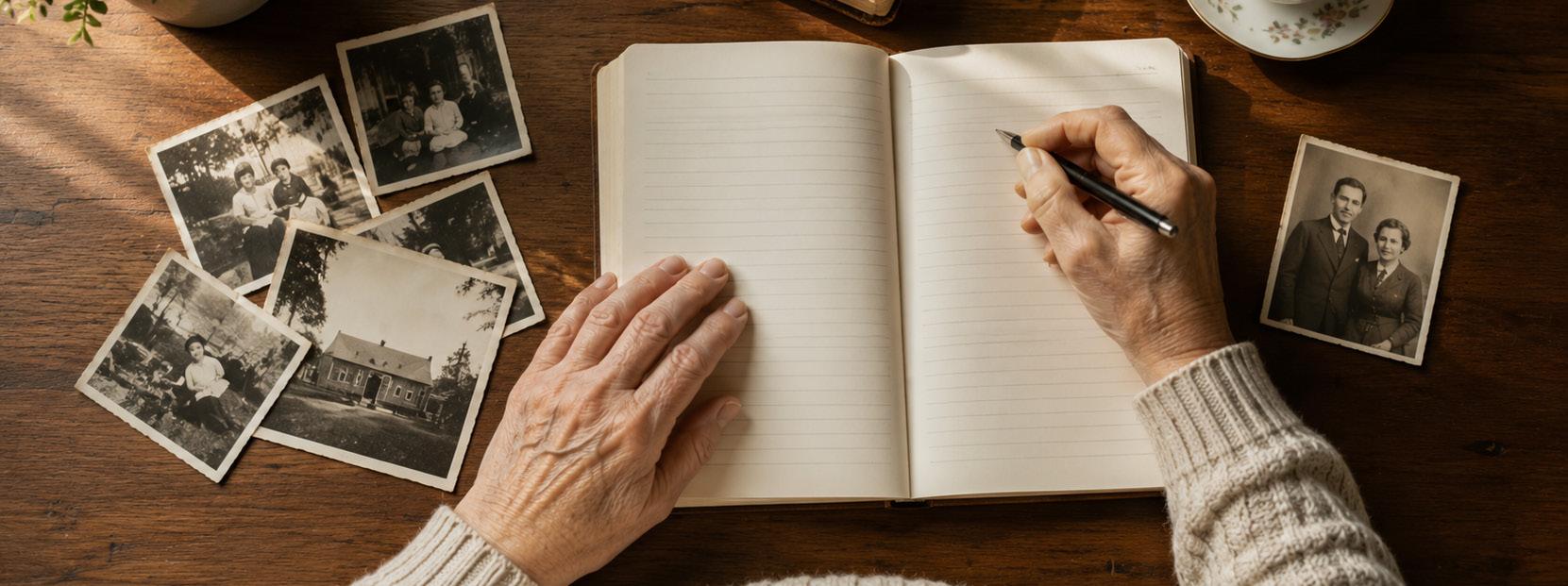
Handwritten in a notebook
Recorded into a phone or voice recorder
Typed on a computer
Shared through letters, journals, or emails
Collected by a family member during conversations
Some people write short memories. Others create full memoirs. Even a single page about a meaningful moment can become priceless to loved ones.
Stories Build Legacy
At the end of life, people rarely wish they had spent more time worrying about appearances or perfection. They often want to know that their life mattered and that they will be remembered.
Writing creates legacy.
It tells future generations:
“I was here. This is what I learned. This is who I loved. This is what life was like.”
That is powerful.
Getting Started
For seniors unsure where to begin, simple prompts can help:
• What was your childhood home like?
• What did your parents teach you?
• What world events do you remember most clearly?
• What was your first job?
• What life lesson took you the longest to learn?
• Who changed your life?
• What traditions do you hope your family keeps?
The key is simply to begin.
Because somewhere down the road, a child, grandchild, or even a stranger may read those words and understand their family — or themselves — a little better.
And that makes every story worth telling.
If you’re thinking about writing your own story, here are some examples of starting points:
San Mateo
In 1920, life in San Mateo was quieter, slower paced, and deeply connected to agriculture, rail travel, and small-town community life. The city was growing, but it still retained much of its rural charm, surrounded by farms, orchards, and open land between San Francisco and San Jose. Dirt roads were common, and many residents traveled by horse, early automobiles, or the Southern Pacific railroad, which linked Peninsula towns together.
Families often gathered on front porches in the evenings, attended church socials, school events, and community dances. Radios were just beginning to appear in homes, so entertainment usually came from live music, silent movies, card games, picnics, or conversations with neighbors. Children played outdoors freely, climbing trees, riding bicycles, or helping with chores around the home or farm.
The 1920s also marked a period of change. Electricity and indoor plumbing were becoming more common, though not every household had modern conveniences yet. Women had just gained the right to vote in 1920, and the nation was entering the energetic “Roaring Twenties.”
In San Mateo, elegant estates owned by wealthy San Francisco families stood alongside modest family homes and farmland, reflecting both prosperity and working-class life.
My grandparents would be one of the working-class families. My grandfather attended Borel School and my great-grandmother would bring him and his siblings lunch each day. She would spread out a blanket on the grassy field behind the school and serve her children leftovers from the night before. My grandfather desperately wanted to go play with his friends but was only allowed to run off after finishing his lunch of Greek delicacies (Spanachopita and Feta cheese with olives) None of his schoolmates would have even heard of, much less would have want to taste such menu items. He would have loved a bologna sandwich but that was unheard of in his Greek household.
Redwood City
The first public school in Redwood City was established in the early 1860s, not long after the city became the county seat of San Mateo County. In 1863, local pioneer and state legislator Horace Hawes donated land for Redwood City’s first schoolhouse. The site was near today’s downtown library area.
As the community grew, education expanded rapidly. By 1895, the city opened the Redwood City Grammar School on Broadway Street across from the courthouse. This large three-story building became an important educational center for the Peninsula. The lower floors served younger students, while the third floor housed the newly created Sequoia High School — the first high school between San Francisco and Santa Clara.
My great-grandfather was a student at that very Sequoia High School. He rode the family horse to school from the hills of Redwood City, now known as Farm Hill. While he remembered stories about potbelly stoves used for heat and chalkboards with spine-tingling scratch sounds, he most vividly remembered very strict discipline. He once talked back to his teacher and was immediately spanked.
I believe this is where I inherited my spunk…
Millbrae
Leaving Millbrae for Berkeley in 1960 to join the peace movement felt both exhilarating and unsettling — like stepping from the quiet certainty of postwar suburban life into the center of a cultural awakening.
Millbrae in 1960 was still a relatively calm Peninsula community where many families valued stability, traditional expectations, church life, and steady careers. The suburbs were growing rapidly during the postwar boom, and life often revolved around family dinners, neighborhood schools, and the belief that America was entering a prosperous new era. Young women especially were often expected to marry young, raise families, or follow more conventional paths. This was the path my parents expected of me… but I had different ideas! I wanted to go to college, a somewhat unexpected path for many women at that time, but I was very excited to have been admitted into the University of California at Berkeley… known as Cal.
Berkeley was becoming something entirely different from most of the Peninsula cities, a especially the bedroom community of Millbrae. Near University of California, Berkeley, ideas were beginning to challenge authority, war, racial inequality, and social conformity. Coffeehouses, folk music, poetry readings, and political discussions filled the air. Students and activists debated nuclear disarmament, civil rights, free speech, and America’s growing role in Cold War conflicts. Even before the major protests of the mid-1960s, Berkeley already carried an undercurrent of rebellion and idealism.
I must say, that rebellion resonated with me…
ADULT DAY HEALTH CARE
Coastside Adult Day Health Center
coastsideadultdayhealth.org
650-726-5067
925 Main St.
Half Moon Bay, CA 94019
cadhc@coastside.net
Mills Peninsula Senior Focus
sutterhealth.org/mills/services/senior-geriatric
650-696-3660
1501 Trousdale Dr. Burlingame, CA 94010
Rosener House Adult Day Care Penvol.org
650-322-0126
500 Arbor Rd.
Menlo Park, CA 94025
ADULT PROTECTIVE SERVICES
Aging & Adult Services
Call 800-675-8437 to speak to a trained staff member
San Mateo County District
Attorney’s Office
650-363-4000
ALZHEIMER’S INFORMATION
REFERRAL & EDUCATION
Alzheimer’s Association
alz.org/norcal
408-372-9900
2990 N 1st St., #101 San Jose, CA 95131
Alzheimer’s Foundation Hotline
866-232-8484
ASSISTED LIVING BOARD & CARE
East West Board & Care
650-438-5584
1749 Maryland St. Redwood City, CA 94061
Encina Care Home
650-364-1657
354 Encina Ave. Redwood City, CA 94061
Heritage House
650-520-9475
843 Jefferson Ct. San Mateo, CA 94401
Flying Cloud Care Home
650-349-2943
197 Flying Cloud Isle Foster City, CA 94404
The Ark
408-807-1277
1320 Valota Rd. Redwood City, CA 94061
ASSISTED LIVING COMMUNITIES
Atria Daly City
650-878-5111
501 King Dr. Daly City, CA 94015
Atria San Mateo
650-378-3000
2883 S Norfolk St. San Mateo, CA 94403
Brookdale Redwood City
650-366-3900
485 Woodside Rd. Redwood City, CA 94061
Sunrise Palo Alto
650-326-1108
2701 El Camino Real Palo Alto, CA 94306
ASSISTED LIVING COMPLAINTS
Ombudsman Services of San Mateo County, Inc.
650-780-5707
711 Nevada St. Redwood City, CA 94061
San Mateo County Human Services
650-599-3811
2500 Middlefield Rd. Redwood City, CA 94063
ASSISTED LIVING ALZHEIMER’S/ DEMENTIA/ MEMORY CARE
Kensington Place
650-363-9200
2800 El Camino Real Redwood City, CA 94061
Love at Home Senior Care
Malia Vea
Home Care Director/CEO loveathomeseniorcare.com
888-842-2923
3723 Haven Ave., Ste. 122 Menlo Park, CA 94025
Meadow Gardens
650-322-4100
800 Roble Ave. Menlo Park, CA 94025
Palm Villas
650-369-3197
1931 Woodside Rd. Redwood City, CA 94061
Silver Oaks Memory Care
650-322-2022
16 Colman Pl. Menlo Park, CA 94025
CAREGIVER
RESOURCES & SUPPORT
Area Agency on Aging
650-713-8610
CAREGIVER FOR HIRE
Care Indeed careindeed.com
650-627-7901
102 S El Camino Real San Mateo, CA 94401
Home Helpers homehelpershomecare.com
650-532-3122
Home Instead homeinstead.com
650-314-9660
Live Well at Home Livewellathome.com
650-291-0009
1875 Trousdale Dr. Burlingame, CA 94010
Love at Home Senior Care
Malia Vea
Home Care Director/CEO loveathomeseniorcare.com
888-842-2923
3723 Haven Ave., Ste. 122 Menlo Park, CA 94025
Synergy Home Care Synergyhomecare.com 650-703-6087 1710 S Amphlett Blvd., #128 San Mateo, CA 94402
CAREGIVER TRAINING SERVICES
Center for Caregiver Training Caregiving101.org 415-563-9286
1320 Divisadero St. San Francisco, CA 94115
CHIROPRACTIC CARE
Dr. Michael Luu
Infinity Spine Center goinfinityspine.com 415-758-2970
(for Eastern Orthodox Christian faith only) greekorthodoxmp@aol.com
650-755-6939
1148 El Camino Real Colma, CA 94014
Greenlawn Memorial Park
Non-sectarian/serving all faiths greenlawnmp@aol.com
650-755-7622
1100 El Camino Real Colma, CA 94014
Neptune Society of Northern California neptune-society.com
650-592-9880
1645 El Camino Real Belmont, CA 94002
Skylawn Memorial Park skylawnmemorialpark.com
650-227-3142
Hwy. 92 at CA-35 San Mateo, CA 94402
Sneider & Sullivan & O’Connell’s Funeral Home & Cremation Service ssofunerals.com
650-343-1804
977 S El Camino Real San Mateo, CA 94402
GRIEF
SUPPORT GROUPS
(Check with any local hospice agency below)
Visit sutterhealth.org
Kara Grief
kara-grief.org
650-321-5272
457 Kingsley Ave. Palo Alto, CA 94301
HOSPICE
Mission Hospice & Home Care missionhospice.org
650-554-1000
66 Bovet Rd., Ste. 100 San Mateo, CA 94402
Sutter Care at Home San Mateo Hospice sutterhealth.org
650-685-2830
1700 S Amphlett Blvd., #110 San Mateo, CA 94402
Vitas Healthcare vitas.com
650-350-1835
3190 Clearview Way, #100 San Mateo, CA 94402
PALLIATIVE CARE
(See Hospice above)
TRUST/PROBATE ADMINISTRATION
(See Attorneys in the Planning Index)
ESSENTIAL FEATURES TO HELP SENIORS CHOOSE A HOME FOR COMFORTABLE AGING
By Katie Conroy, Staff Writer
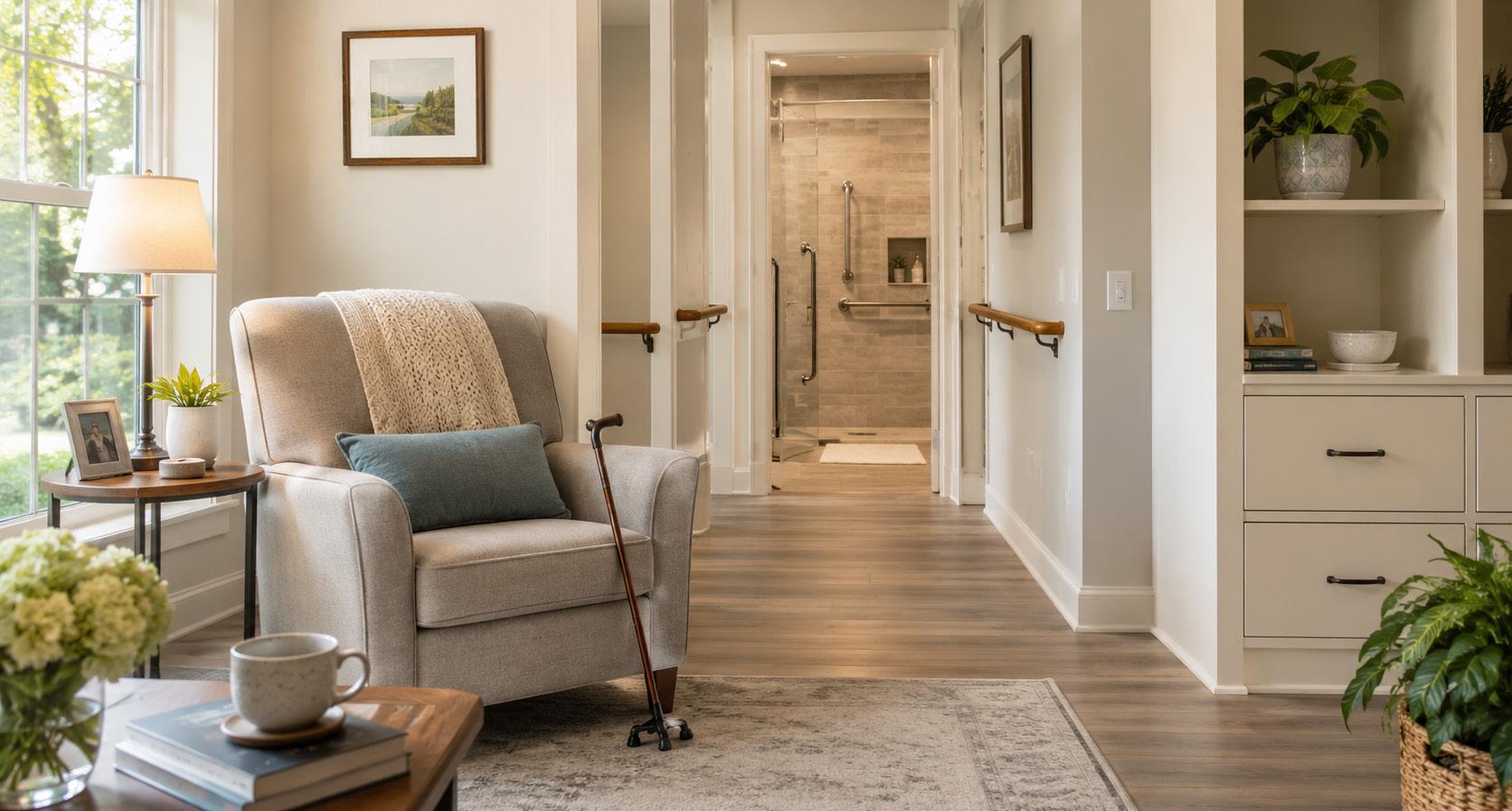
For adult children and caregivers helping parents buy or move within California counties, the hardest part is choosing a place that fits today without becoming a barrier later. Aging home buyers often focus on price and neighborhood, then discover that overlooked home features for seniors can turn normal routines into daily work. The most common senior housing challenges show up when aging in place meets stairs, tight layouts, hardto-use bathrooms, poor lighting, and upkeep that no longer matches energy or health. Prioritizing accessible housing from the start protects independence and reduces avoidable transitions.
Understanding Aging in Place at Home
Aging in place is the idea of continuing to live where you are while staying safe and
comfortable as needs change. The clearest definition of aging in place is staying in your home and community safely, independently, and comfortably as you get older. To evaluate a home for that goal, group features into five buckets: layout and access, bathroom and kitchen usability, surfaces and lighting, maintenance load, and location.
This matters because a home that works well in each bucket reduces daily strain and avoids rushed moves after a fall or illness. It also helps adult children focus decisions, compare options faster, and plan support that protects a parent’s independence.
Think of it like a checklist for everyday routines. If entryways are step-free, bathrooms are usable, lighting is bright, and upkeep is manageable, life stays predictable. Even better, adults ages 50-80 say staying in their own home is very important, so planning for it is practical. Reliable
appliances and repair protection help keep that day-to-day routine from breaking down.
Reduce Breakdowns: Plan for Reliable Appliances and Fast Fixes
Once the basics of an age-friendly layout are in place, day-to-day comfort still depends on the home’s essential systems working reliably. When you’re house hunting, prioritize homes with modern appliances that are less likely to fail unexpectedly, since a broken refrigerator, washer, or range can quickly disrupt routines and add stress for an older homeowner and the family members supporting them. Even with newer equipment, consider investing in an appliance warranty so you’re protected if a costly repair is needed for key appliances or home systems. As you compare options, look for home warranty coverage that includes removal of defective equipment and also applies when
CHOOSE A HOME FOR COMFORT CONTINUED
Continued from page 16
a breakdown is tied to improper installations or repairs.
Use This Quick Walkthrough to Spot AgeFriendly Must-Haves
A quick, room-by-room walkthrough can reveal whether a home will stay comfortable as mobility, vision, or stamina change. Use these checks during showings, and note what’s already in place versus what would require remodeling.
1. Prioritize a one-story layout (or a main-floor “daily living” plan): Walk the route from bedroom bathroom kitchen laundry. If any of these require stairs, ask whether there’s space for a future stair lift or a plan to relocate laundry and sleeping to the main level. One-story homes reduce fall risk and make it easier for caregivers to assist without constant up-and-down trips.
2. Test the entry for a true no-step approach: Don’t stop at the front door, check the path from parking to the entrance. Look for a flat or gently sloped walkway, a threshold you can roll over (not trip over), and enough space to set down bags or a walker while unlocking the door. Also confirm at least one entrance is usable in rain (covered stoop, good drainage, exterior lighting) so arrivals don’t become a hazard.
3. Measure hallways and “pinch points” for wider access: Bring a small tape measure and check hallway width plus tight turns near bedrooms and bathrooms. Even if the hall is fine, doorways, the space between kitchen counters, and corners around furniture can be the real blockers for walkers and wheelchairs. While you’re there, note whether light switches are reachable and if there are sturdy handholds or walls suitable for future grab bars.
4. Scrutinize the bathroom like a safety inspector: Stand in the shower/tub and picture stepping in with wet feet or helping someone who’s unsteady. Look for a curbless shower option (or space to convert), a toilet area with side clearance for transfers, and room to add grab bars without hitting plumbing. A vanity that leaves knee space can make seated grooming possible if standing becomes tiring.
5. Choose slip-resistant flooring in spill-prone zones: In kitchens, entries, laundry areas, and bathrooms, prioritize finishes designed for traction, especially where water or oils show up. The benefit of slip-resistant flooring is simple: it can mean fewer falls during everyday moments like carrying groceries or stepping out of the shower. If replacing floors isn’t in the plan, start by flagging any glossy tile or curled rug edges as “fix first” items.
6. Map proximity to essential services before you commit: Do a real-world test drive at the times your parents would travel, morning appointments, early evening errands, weekends. Confirm the distance to a primary care clinic, pharmacy, grocery store, and a hospital, and check whether there are alternative routes if a main road is congested. If driving may decrease over time, also look for safe ride pickup spots and nearby public transit or senior shuttle options.
7. Pair the home’s layout with a “breakdownproof” plan: As you evaluate features, also note the age/condition of HVAC, water heater, fridge, and washer/dryer, because a great layout still fails when essentials go down. Ask for service records, locate shutoff valves and the electrical panel, and build a small reserve for fast repairs so a minor issue doesn’t become a safety problem. This is also where you decide which upgrades are urgent versus “nice later,” so your budget stays focused.
Aging-in-Place Home FAQs Families Ask
Q: What if the “right” aging-friendly home feels too expensive?
A: Start by separating needs from nice-to-haves so you can compare homes on safety first. Tight availability can push prices and competition, and senior housing occupancy rate forecasts suggest demand will stay strong. Consider a smaller footprint, a simpler yard, and a location that reduces driving and paid help. Continued from page 10
Q: How can we estimate home modification costs without guessing?
A: Get two contractor walk-through bids focused only on access and safety, not cosmetics. Ask for a phased plan with “do now” items and “do later if needed” items. Keep a
repair reserve for the first year so surprise fixes do not derail the budget.
Q: Which accessible upgrades usually matter most for daily safety?
A: Prioritize bathroom traction and stability, a safer shower entry, and grab-bar backing, then improve lighting and reduce trip hazards. These changes help even when mobility and balance vary day to day. If you remodel, general bathroom remodels can also support resale, which can ease anxiety about spending.
Q: When should we stop renovating and look for a different home instead?
A: If the home cannot support main-floor daily living, a no-step entry, or workable bathroom access without major structural work, it is often smarter to keep shopping. Use a cost cap in advance and walk away when estimates exceed it. Safety and simplicity beat perfect finishes.
Q: How do we anticipate maintenance challenges for seniors without overbuilding?
A: Choose durability over customization: easyclean surfaces, reliable HVAC, and accessible shutoffs and filters. Ask for appliance ages and service records and budget for replacements on a realistic timeline. A low-maintenance exterior and smaller yard can reduce caregiver workload immediately.
Choose Three Aging-Friendly Home Features to Guide Confident Tours
Finding a place that feels like home while still supporting changing mobility can be stressful, especially when budgets and timelines are tight. A simpler approach is to use a clear home accessibility summary and focus on selecting aging-friendly home features that reduce risk and day-to-day strain. That mindset keeps tours grounded in what supports safe aging in place and comfortable senior housing, instead of getting distracted by cosmetic upgrades. Pick your top three priorities, and let them decide every yes-or-no. Bring that short list on the next tour and compare each home against it in real time. This keeps decisions steadier and protects health, independence, and peace of mind for the years ahead.
Consumer Protection Price Survey on Death Arrangements -
Sanoma-Marin County
In updating this survey for 2025, Born to Age only compared the prices for either a direct cremation or immediate/ direct burial. Each of the mortuaries have extensive price lists of all their package deals, and must disclose the charges for everything involved in planning a funeral. Anyone can request a price list at anytime. Local mortuaries charge a range of prices for the similar services.
Compare prices. Prices may include additional services. Prices can change and cannot be guaranteed from this chart.
What Direct Cremation usually includes:
1. An alternative container (usually a cardboard container)
2. Removal of the body within the mortuary service area and transportation to the crematorium. (usually within 7.35 miles).
3. A 3 day storage fee.
4. Obtaining required permits.
5. Cost of using a crematory.
What Direct Burial usually includes:
1. Obtaining necessary permits.
2. Removal of the body within the mortuary’s local service area (usually within 7 35 miles from a facility) and transportation to a local cemetery.
3. A 3 day storage fee
It’s important to note that some mortuaries in Solano County don’t include the cost of the lowest priced casket/alternative container in their direct burial packages. That can be a separate charge, ranging from $405 to $1,350 (see chart). You can also purchase caskets from other retailers.