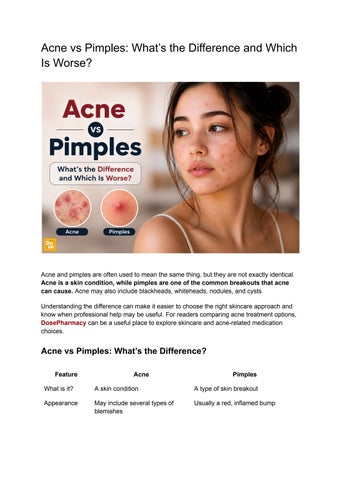
Acne vs Pimples: What’s the Difference and Which Is Worse?
Acne and pimples are often used to mean the same thing, but they are not exactly identical. Acne is a skin condition, while pimples are one of the common breakouts that acne can cause. Acne may also include blackheads, whiteheads, nodules, and cysts. Understanding the difference can make it easier to choose the right skincare approach and know when professional help may be useful. For readers comparing acne treatment options, DosePharmacy can be a useful place to explore skincare and acne-related medication choices.
Acne vs Pimples: What’s the Difference? Feature
Acne
Pimples
What is it?
A skin condition
A type of skin breakout
Appearance
May include several types of blemishes
Usually a red, inflamed bump
Common causes
Clogged pores, oil, inflammation and bacteria
A clogged and inflamed pore
Can it recur?
Yes, often repeatedly
Can appear occasionally
Can it cause scars?
Moderate or severe acne can
Some deep or inflamed pimples can
Treatment
Depends on acne type and severity
Depends on the individual pimple and overall acne
What Is Acne? Acne develops when hair follicles become clogged with oil and dead skin cells. Inflammation and other factors can then contribute to different types of breakouts. Acne can include: ● ● ● ● ● ●
Blackheads: Open clogged pores that appear dark. Whiteheads: Closed clogged pores that create small bumps. Papules: Small, red, inflamed bumps. Pustules: Inflamed bumps containing pus. Nodules: Large, deep and often painful bumps. Cysts: Deep, painful acne lesions that contain pus.
Because acne can involve several types of blemishes at the same time, it is broader than simply having a pimple. dosepharmacy[.]com also offers access to a range of pharmacy products that may fit into an acne-focused skincare routine.
What Is a Pimple? A pimple is a visible bump that can develop when a pore becomes clogged and inflamed. Pimples can appear as small red bumps or pus-filled spots. An occasional pimple does not necessarily mean you have ongoing acne. However, repeated pimples, especially when accompanied by blackheads, whiteheads, or deeper lesions, may indicate acne.
Which Is Worse: Acne or Pimples?
Generally, acne is the broader and potentially more serious condition because it can involve frequent breakouts, inflammation, nodules, cysts and possible scarring. A single small pimple is usually less concerning. However, a deep, painful pimple can still cause inflammation and may leave a mark or scar. Severe acne can extend deeper into the skin and is more likely to cause permanent scarring.
How Can You Manage Acne and Pimples?
A consistent, gentle skincare routine can help reduce breakouts. Avoid repeatedly scrubbing or squeezing blemishes because irritation and picking can make acne worse. If you are considering medication for persistent breakouts, DosePharmacy provides another option to explore available acne-care products.
Common acne-care options include: ● Adapalene: Helps unclog pores and prevent new breakouts. ● Benzoyl peroxide: Helps reduce acne-causing bacteria and inflammation. ● Salicylic acid: Helps unclog pores and remove excess dead skin cells. ● Azelaic acid: Can help with acne and lingering dark spots. ● Non-comedogenic products: These are less likely to clog pores. For mild acne, over-the-counter products may help. More severe, painful, persistent or scarring acne may require evaluation by a dermatologist.
Acne vs Pimples Infographic ACNE → SKIN CONDITION ↓ Can cause multiple types of breakouts
↓ Blackheads + Whiteheads + Pimples + Nodules + Cysts ↓ May be recurring or persistent ↓ PIMPLES → ONE TYPE OF ACNE BREAKOUT ↓ Usually a red or inflamed bump ↓ May appear occasionally or as part of ongoing acne Quick takeaway: A pimple can be a sign of acne, but having one pimple does not automatically mean you have acne.
When Should You See a Dermatologist? Consider professional advice if breakouts are frequent, painful, deep, leaving scars or not improving with consistent skincare. A dermatologist can identify the type of acne and recommend treatment based on its severity.
FAQs 1. Are acne and pimples the same thing? No. Acne is a skin condition, while pimples are one type of breakout associated with acne. 2. Is acne worse than having pimples? Usually, yes. Acne can involve repeated and widespread breakouts, including deep nodules and cysts that may cause scarring. 3. Can you have pimples without acne? Yes. An occasional pimple can happen without having chronic or recurring acne. 4. How do I know if my pimples are acne? Frequent pimples combined with blackheads, whiteheads, inflammation or deeper painful bumps may indicate acne. 5. What is the fastest way to improve acne? There is no instant solution. Consistent use of an appropriate acne treatment is important, and noticeable improvement may take several weeks. Persistent or severe acne should be assessed by a dermatologist.