Priced Out
by Jasmine Gallup, p.4
Chatham Estates residents have less than two months to relocate before their Cary mobile home park is sold to developers. In one of the Triangleʼs most expensive places to live, nearly 100 families have yet to move.
by Jasmine Gallup, p.4
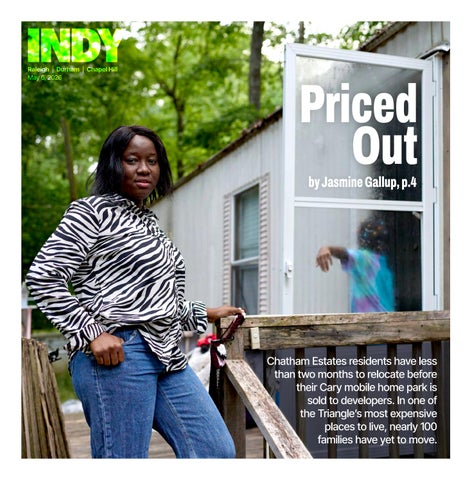
Chatham Estates residents have less than two months to relocate before their Cary mobile home park is sold to developers. In one of the Triangleʼs most expensive places to live, nearly 100 families have yet to move.
4 In the years since Chatham Estates mobile home park was created, Cary has gone from a sleepy suburb to a bustling town. Now, the property is being sold to luxury home developers. BY JASMINE GALLUP
7 Has your car been photographed by license plate reading cameras in the Triangle? BY JASMINE GALLUP
9 Saint Augustine's University, which recently declared bankruptcy, owes $50 to $100 million to more than 300 creditors. BY CHLOE COURTNEY BOHL
10 Why Triangle counties are coming out against a proposal to put a limit on property tax increases. BY CHLOE COURTNEY BOHL, JUSTIN LAIDLAW, AND CHASE PELLEGRINI DE PAUR
12 A Federal Energy Regulatory commissioner called a Durham-based energy efficiency company's business "a scam." BY LISA SORG
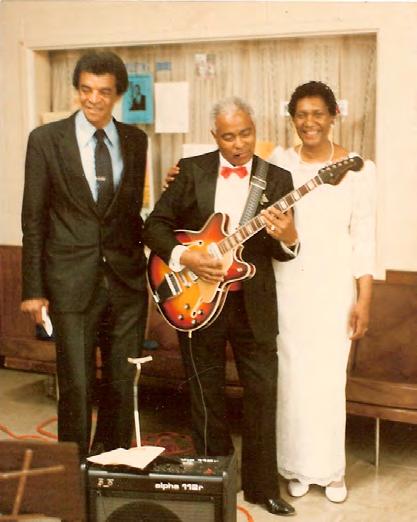
14 A new documentary offers a portrait of the soulful music and mentorship of Durham jazz musician Yusuf Salim. BY SARAH EDWARDS
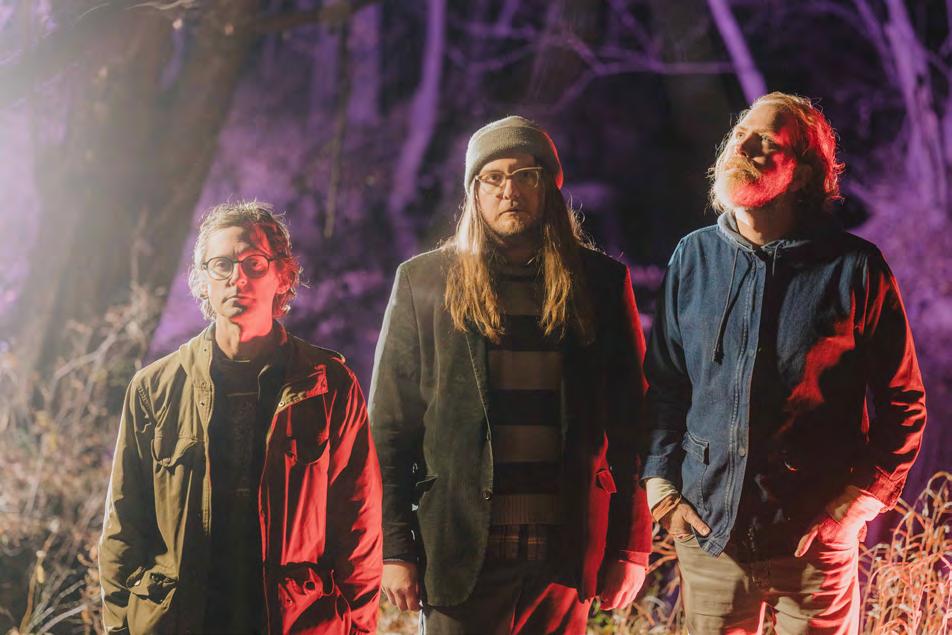
16 When three seasoned musicians started jamming together, an improvisational new sound began to cohere. BY TASSO HARTZOG
18 Talking with Raleigh food writer Brigid Washington, author of Salt, Sweat & Steam: The Fiery Education of an Accidental Chef BY LENA GELLER
20 Tressie McMillan Cottom's documentary short, Power to the People, Y'all, highlights a radical chapter of Winston-Salem history. BY SARAH EDWARDS
22 Incoming! A creepy parallel universe, a clever variation on the murder mystery trope, and more films coming to Triangle theaters. BY GLENN MCDONALD
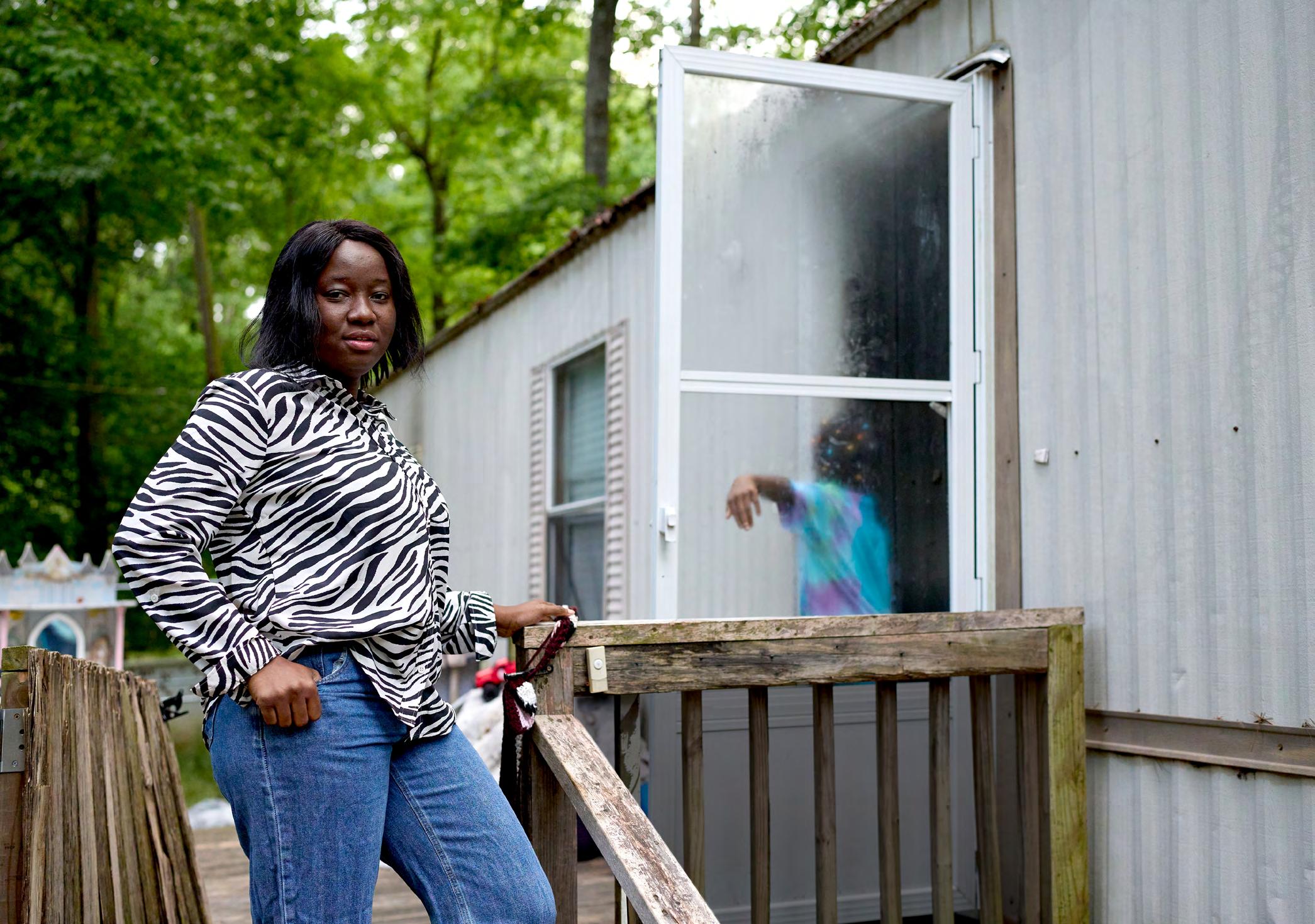
Cover Abigael Dawah stands outside her home in Chatham Estates in Cary on May 1, 2026 PHOTO BY MATT RAMEY
In our last print edition for Earth Day, we spoke to locals whose work intersects with the environment about their big ideas for solving climate-related issues facing the Triangle. Readers were enthusiastic about one idea in particular: waste-to-energy plants (aka burning trash) in lieu of evergrowing landfills.
From reader KAREN COOPER by email:
I absolutely agree with having waste facilities to safely/environmentally responsibly burn our trash. If we can go to the moon and back, surely we have the tech to scrub the emissions from such a facility. Landfills have no reason to exist any more.
From reader W. A. BOWLING by email:
The WTE plants sound like a good idea. Incinerate most of trash, as long as the Plants can “filter” the harmful smoke. Stop cutting our Trees for “over-development.” Eliminate the E-10 and E-15 Ethanol in gas. A hoax. Pollutes just as much and makes gas more expensive. Stop making the Electric Vehicles, with the dangerous Lithium-Ion batteries. Terrible pollution in the making of these batteries.
Online (and on page 20 of this paper), Sarah Edwards wrote about a new documentary short about the Winston-Salem Black Panther Party from UNC-Chapel Hill professor and sociologist Tressie McMillan Cottom. Readers enjoyed the piece and the film.
From Bluesky user CASS:
My mom lived in white Winston-Salem from age infant to 18 and I grew up going there to visit family every spring but I did not know a single thing about this, excited to take a look!
From bluesky user AW STILES:
Love the Larry Little story in the midst
of this. Can’t wait to see the doc short.

Our most recent installment of Character Studies—an INDY series on familiar faces in the Triangle—featured Josh Morin, known for the dizzying feat of running around Durham while punching a ball attached to a band on his head. Readers were delighted to learn more about someone they’ve spotted around town.
From Bluesky user LAURA SELL:
It’s a joy to see this guy about town and makes me glad to live in Durham. I always imagined him listening to the Rocky theme song on repeat, but apparently not.
From Bluesky user NESBUTT:
I love this guy. He’s like a real life cryptid but I see him like twice a week and he’s absolutely locked in.
WANT TO SEE YOUR NAME IN BOLD?
indyweek.com backtalk@indyweek.com @INDYWeekNC @indyweek





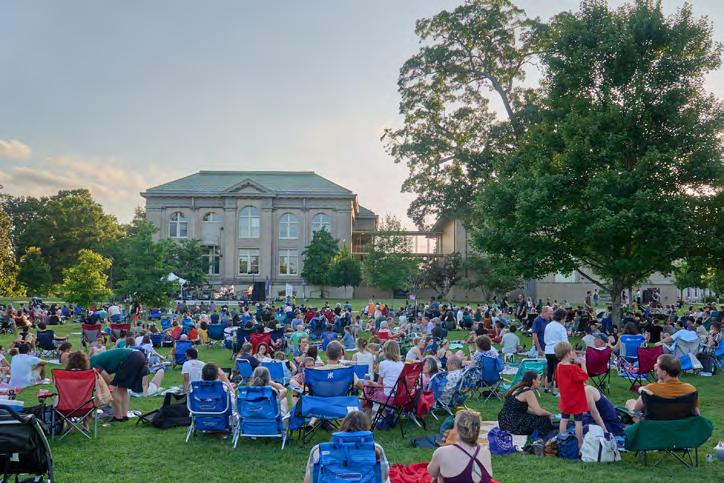
Wednesdays at 7pm | Free and Open


This year, each concert is curated by a di erent Durham-based partner, highlighting the breadth of artistic voices that shape our city.
May 27 Meltdown Rodeo
June 3 Lua Project
CURATED BY Sophia Enriquez
June 10 Brandon Woody's UPENDO
CURATED BY Missy Lane's Charitable Foundation
June 17 Rebecca Porter
CURATED BY Country Soul Songbook June 24
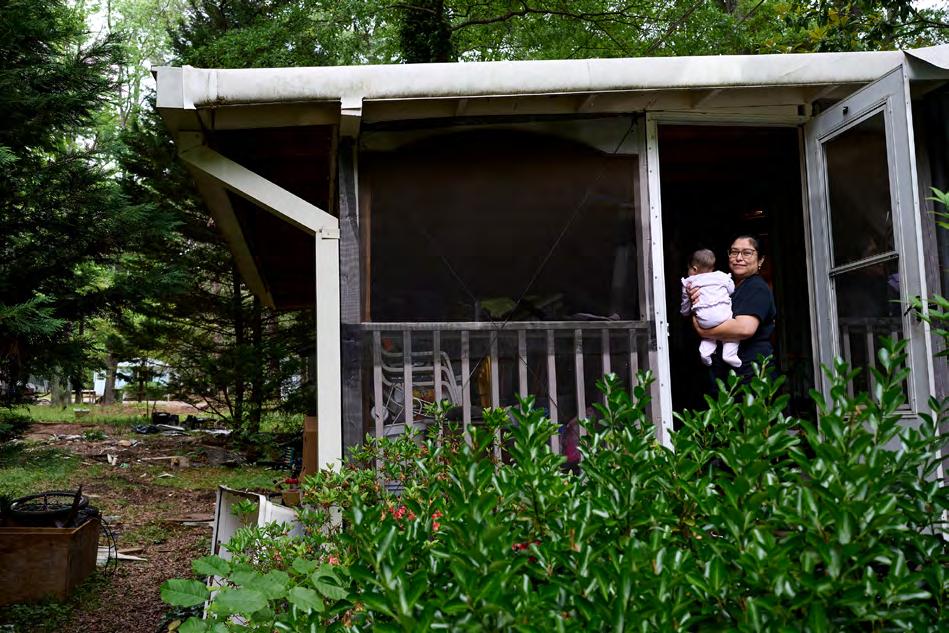
Chatham Estates residents have less than two months to relocate before their Cary mobile home park is sold to developers. In one of the Triangle’s most expensive places to live, nearly 100 families have yet to move.
BY JASMINE GALLUP backtalk@indyweek.com
Just a few days after Christmas, Abigael Dawah opened her mailbox to find a letter. It was less than a page long, but it upended her entire life, along with the lives of her roughly 700 neighbors.
“We are hereby providing formal notice to all residents of Chatham Estates that their mobile home and all personal property must be removed before June 30th, 2026,” the letter, from the property’s owner, read. “For relocation assistance, please see the attached flyer.”
Dawah knew this had been coming ever since the owner announced he was putting the property—home to some 144 mobile homes—up for sale in 2023. “But after two years, we kind of got used to it, and felt like maybe, just maybe, it’s not gonna sell, or it’s gonna take longer,” she told the INDY
Each month during those two years, Dawah visited the office to pay rent and ask if there was any news. Usually,
there wasn’t, and she’d go back home with a sense of security, at least for the next few weeks. Then, in December, the owner’s wife told her the property was finally being sold.
“It was like a bucket of cold water,” Dawah said. “I was so shocked that I don’t even remember what she was saying after that. I was just like, ‘Oh my God, it’s finally happening. What am I gonna do?’”
Once she got the letter, the clock started ticking, counting down to the day she had to be out.
Today, with less than two months to go until the moveout deadline, two-thirds of residents have not yet relocated, and some feel just as lost as ever. Come June, the property is expected to be sold to developers who have submitted plans to build more than 400 new apartments and townhomes on the site, located near booming downtown Cary.
“What people don’t understand is that these are our lives,” said neighborhood leader Angelica Gonzalez, through
a translator, at an emergency meeting in early February. “Ever since I got here about 26 years ago, that’s all I’ve ever known. And not only that, but we have a lot of memories in our home. I was pregnant in that home. My father passed away in that home.”
In the years since Chatham Estates was created in the late 1990s, Cary has gone from a sleepy suburb to a bustling town. In 1997, the property was valued at around $2 million, adjusting for inflation. Today, just a few minutes from downtown Cary and across the street from a new “live-work-play” development, the property is worth nearly $27 million, according to the Wake County Tax Administration.
Chatham Estates is one of the last truly affordable neighborhoods in Cary. The majority of its 700-plus residents identify as Hispanic or Latino and working class. Some live paycheck to paycheck or work two or even three jobs so they can support their children or send money to their families in South America. Some own businesses in the strip mall just outside the park or work at nearby Wake County schools and hospitals. Others are seniors on fixed incomes.
When Cary officials learned 144 families were at risk of displacement, they created the StableHomes Cary program, which (among other things) helps people relocate by giving them money for security deposits, first month’s rent, down payments, homebuying fees, and moving expenses.
The town put $800,000 into the fund and chose nonprofit NeighborUp to spearhead the relocation effort. In January, NeighborUp hosted a workshop to help people apply and got 124 applications (the nonprofit has gotten one or two additional applications since).
Ande Curry, senior director of community services for NeighborUp, told the INDY that while the nonprofit has a lot of experience helping people relocate, “we have never done it at this large of a scale.”
“Our team is well equipped, well educated, and has been preparing for this for a long time. It is still very difficult work,” Curry said in a February interview, adding that she knows Chatham Estates families are under an extreme level of stress. “We are doing our best to assist the families as best we can, to help alleviate what we can.”
About 50 families had moved out of Chatham Estates as of April 30, according to NeighborUp. And that number is constantly growing as more residents secure apartments, close on homes, or move their mobile homes, Shelley Hobbs, vice president of communication and strategy, told the INDY. Several seniors are set to move into Rose Park Manor, an affordable housing development in Cary.
NeighborUp says its staff continue to work with nearly all the families in the park to finalize relocation plans.
But according to Katia Roebuck, an advocate for Chatham Estates residents and coordinator for the N.C. Congress of Latino Organizations, many families throughout the community still need guidance when it comes to getting financial aid from StableHomes Cary and moving—processes that are already complicated enough without a language barrier.
While progress is being made, there are significant challenges facing the 90 or so families who have yet to move or apply for help. And the problems they’re dealing with—mistrust of systems in a country where immigrants are particularly vulnerable, a need for comprehensive and ongoing support, and a dearth of affordable housing— aren’t easily solved.
“We find ourselves in a very difficult situation,” Emilia Robledo said through a translator at a March press conference, called to rally donations from the community and developers. “We keep going on with our lives—continuing to work, taking the children to school, doing the shopping, going to church—but we also carry the added pressure of finding a new place to live.”
NeighborUp expects to use every last cent of the $800,000 allocated to the StableHomes Cary fund. Still, Chatham Estates residents are likely to need more money than is available.
Many residents have poured tens of thousands of dollars into renovating their mobile homes, so they’d like to move them to another park. But moving a single trailer costs around $15,000 to $25,000—and in some cases, the age of the trailer makes moving it impossible.
One couple, Araseni and Elder Ramirez Velazquez, made extensive renovations to their mobile home, including beau-
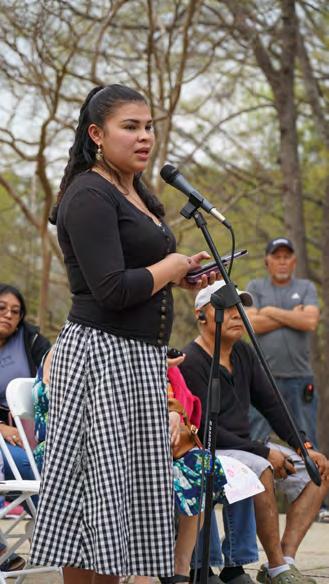
tiful new vinyl flooring and countertops. Their trailer is movable, but they don’t have the title, so it’s difficult to get the moving permit they need from the county—even though they’ve been paying rent and taxes for the last eight years.
A few other residents have similar stories: They bought a used mobile home in an informal transaction, or they rent from a different owner. While the Velazquezes may be able to get help moving into an apartment, that means abandoning their longtime home and losing any equity they have in it.
“It’s very painful to just leave it like this,” Araseni Velazquez told the INDY, through a translator.
Even with the right paperwork, moving a mobile home is a difficult option, requiring “an extensive amount of administrative legwork,” including navigating county permits and repairs, Curry said in February. NeighborUp is helping with that work “as they are able,” she added.
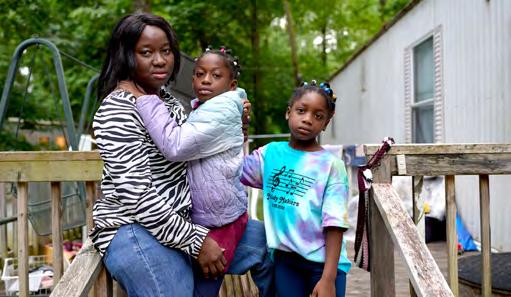
Other residents are looking to buy new mobile homes, but those don’t come cheap either. One woman, Eva, who asked to only be identified by her first name, moved to Chatham Estates from an apartment in Durham three years ago, after her next-door neighbors were robbed. She was looking for a safe place to raise her kids—she now has three, ranging in age from 6 months to 7 years old.
Sitting at a tiny linoleum table, Eva told me in February that she wanted to find a home near her daughter’s school so her child didn’t have to transfer. But everything in the area is so expensive: more than double what she pays for the trailer.
As of 2024, Cary’s median rent was $1,800 per month, according to the U.S. Census Bureau—about four and a half times what many Chatham Estates families are currently paying. For Cary homeowners with a mortgage, the median monthly cost was around $2,400.
“There’s this entire band of families, especially working
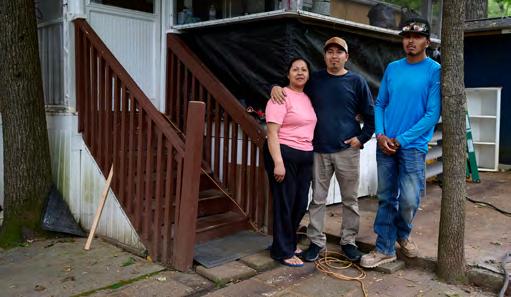
families, who don’t earn what I would consider enough money to manage the cost of living in this area, particularly housing,” said Cary Town Councilmember Carissa Kohn-Johnson. “And yet, there’s limitations to how far the [StableHomes] funding can stretch to include those families. That’s where my biggest worry is right now.”
Kohn-Johnson and Town Councilmember Michelle Craig each said they ran for office because of the affordable housing crisis. Craig, a teacher, represents District B, which includes Chatham Estates and is the lowest-income area of Cary, with residents earning an average of $40,000 per year, she said.
Historically, it’s also been the most affordable area of Cary, but that’s changing as more development comes to town.
“I’ve seen my students and their families be displaced from Cary year after year because it’s not affordable anymore,” Craig said. “We’re seeing a lot of smaller homes downtown being torn down, and larger homes being built.”
NeighborUp distributed lists of affordable housing options and assigned each family a case worker to help them through the process, but it’s still a daunting challenge.
A few of the most affordable housing developments (which have income limits) are already full, with waiting lists. Others have apartments available, but prices range from $1,000 to $1,500 per month, which is out of reach for some residents, including Eva, she said.
When I asked her about the possibility of moving her trailer, she just laughed. It’s too old to move, she explained.
“Mi traila es perdida,” she said with an emotional chuckle—a total loss.
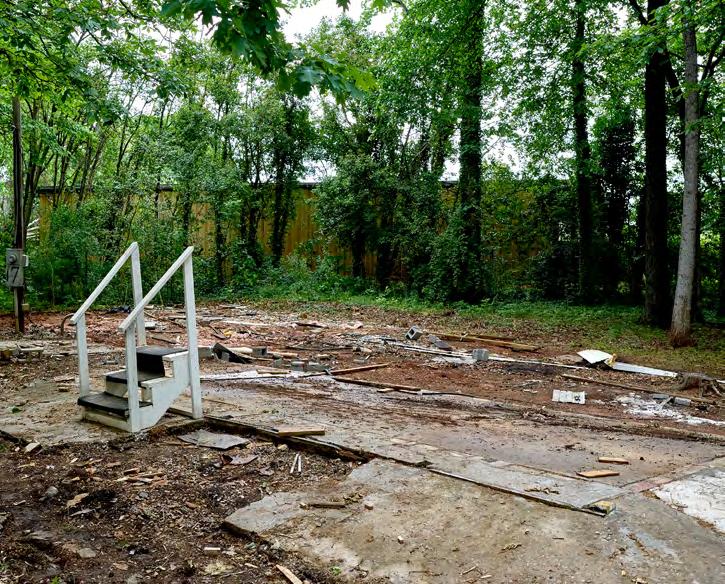
Eva’s story ends as happily as it can. With financial help from NeighborUp, she was able to buy a new mobile home in Garner. But when she moves in the first week of May, she’ll be leaving Cary, and her former home will be left abandoned.
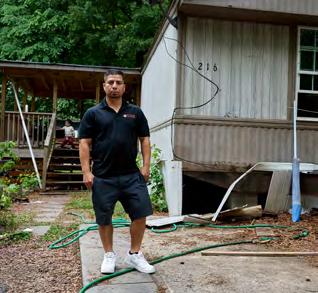
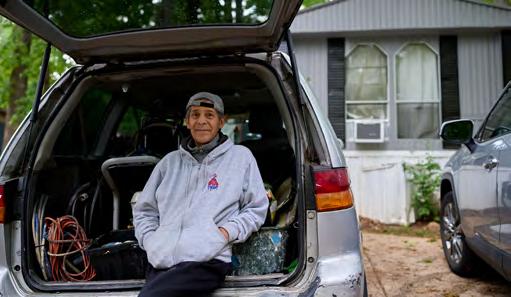
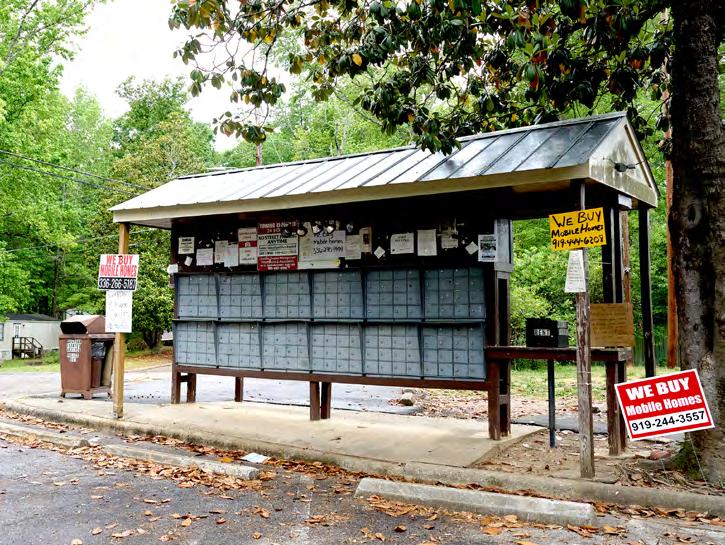
As Chatham Estates residents search for new homes, plans to redevelop the mobile home park are already underway.
A site plan was first submitted to the town of Cary last year by a division of developer Toll Brothers, which will codevelop the site with real estate company Kennedy Wilson. The proposal, now in its fourth round of review, shows plans for 330 apartments, 97 townhomes, a pool, a clubhouse, and a greenway.
Site work is expected to begin in 2027 and will include luxury townhomes and a greenway connecting to downtown Cary and the high-end shopping destination Fenton, Triangle Business Journal reported.
At another Toll Brothers development in Charlotte—a 348-unit apartment complex currently under construction—apartments will have quartz countertops and smart home technology, according to a press release. Amenities include a “resort-style pool,” fitness center, pet spa, and coworking suite.
With the developers’ history of building luxury homes and apartments, residents say they have the money to help address the displacement caused by their redevelopment of Chatham Estates. On a chilly weekday morning in April, about a dozen residents gathered outside an office tower on Fayetteville Street in hopes of talking to attorney Collier Marsh, who represents the redevelopment project.
Shivering on the sidewalk, they lifted signs reading: “Your $1.4 million homes are killing our $40,000 dreams” and “0.5% of your profit = our survival.”
For weeks, residents had been demanding that these billion-dollar developers contribute $2 million to a relocation fund. At the March press conference, Dawah urged them to “show some humanity” and “invest in the people that are being displaced.”
Kennedy Wilson, Toll Brothers, and Marsh did not
respond to requests for comment from the INDY. As of this story, neither company had committed to making a donation or meeting with residents, according to Roebuck.
“They want us, always, to quietly leave,” Roebuck said the morning of the gathering.
And when the residents entered the office tower, hoping to deliver a letter to Marsh, that’s exactly what happened. A receptionist immediately told them they had to leave.
A few minutes after the group retreated from the pristine lobby, the police arrived, four squad cars lighting up around the block. But as people quietly dispersed, officers soon outnumbered activists, and the final few walked away without incident.
While most Chatham Estates residents have been able to apply for financial assistance from StableHomes Cary, the red tape involved has made it difficult for some.
Roebuck, who has been meeting weekly with Chatham Estates residents to help them navigate the relocation, said a few of the families she works with have had trouble connecting with NeighborUp because of work hours. Some are unable or reluctant to take time off work out of fear of losing their jobs. Others don’t have cars, so they find it difficult to visit the office in person.
Hobbs said NeighborUp has “made it as low-barrier as possible for people to apply,” posting information about the nonprofit and the financial assistance available door to door and working with people in person and over the phone. Several of the caseworkers speak Spanish and English, but the nonprofit also uses translation services to work with residents who speak other languages, Curry said.
“We are encouraging everyone to connect with us, because we are here and we are still taking those applications,” Hobbs said.
Ahead of the relocation effort, NeighborUp increased
hours for staff members (converting several from part-time to full-time) and added an additional full-time position.
The StableHomes fund is income limited, meaning applicants have to make below a certain amount of money to qualify. It’s open to households within 300% of the federal poverty level: For a family of two, that means earning less than $64,000 per year. For a family of four, annual income has to fall below $97,000.
Curry told the INDY that few applications for aid have been rejected but declined to provide a specific number.
In January, NeighborUp started an additional fundraising campaign that doesn’t have the income limits the StableHomes Cary fund does. They are encouraging community members to donate, and have so far raised more than $76,000, about 30% of their quarter-of-a-million-dollar goal.
After Cary town staff finish reviewing the developer’s proposal, it will go before the Zoning Board of Adjustment, which will vote on whether the project meets six basic conditions, including following the town’s land use rules and a requirement to mitigate traffic impacts. If the board rejects the plan, the developer can resubmit a revised application.
Regardless, the company doesn’t have to ask for a rezoning or go through a public hearing before the Town Council. That means the Town Council has no leverage to ask the developer to include affordable housing units or meet other conditions.
Meanwhile, in the last week of April, Dawah finally found a place to go: the mobile home park across the street, Mobile Estates. There were only a few spots available, but she “found a great opportunity” to buy a new mobile home, she told the INDY. She got a little financial help from NeighborUp, and paid for the rest with other financing.
To donate to the relocation effort, visit neighborup.org/chathamestates

An explainer on the controversial license plate reading cameras deployed across the Triangle.
BY JASMINE GALLUP backtalk@indyweek.com
George Hogan has a mission: to stop the Apex Police Department from renewing its contract with Flock, which sells automatic license plate readers (ALPRs), or cameras that track cars by license plate number.
“Last night, I was taking my kids to gymnastics. A six-minute drive,” Hogan said during a recent Town Council meeting. “On that drive, Apex police and Flock photographed my car 50 times.”
Flock cameras capture six to 12 images of each car that passes, noting the car’s make, model, color, and “unique features like roof racks and bumper stickers,” according to the company’s website. That information is then stored in a central database, along with data from tens of thousands of other cameras across the country, creating a widespread network for tracking drivers.
“The standard for Apex cannot be ‘Is this technically
legal?’” Hogan said. “The standard has to be ‘Is this wise, is this necessary, is this who we are?’”
Apex isn’t alone; hundreds of Flock cameras are deployed around the Triangle, according to crowdsourced maps. And neither is Hogan. Residents in Hillsborough and Pittsboro have recently raised concerns about the cameras. The town of Hillsborough canceled its Flock contract last year “due to concerns about data privacy.” And Chatham County canceled its contract just two weeks ago, ABC11 reported.
“We don’t have the volume of crime that warrants a surveillance system that observes everyone, anywhere, at any time,” Hogan told the INDY. “There’s no justification in Apex, no justification anywhere in N.C. The ultimate outcome here is that they [Flock cameras] need to be removed.”
Apex approved its contract for 10 Flock cameras on January 14, 2025, and the cameras were installed later that
year. The contract expires in January 2027 unless the Town Council renews it. Apex Police Chief Ryan Johansen says these ALPRs help track stolen cars, which are connected to the “vast majority” of crimes committed in Apex, he said during a work session in January 2026.
Since Apex signed its contract with Flock, however, news outlets, civil liberties organizations, and amateur sleuths have revealed misuse of the Flock system in other towns across the United States, prompting community pushback.
In May 2025, news broke that ICE was accessing data from Flock’s nationwide network of cameras through local police departments. That same month, tech news site 404 Media reported that a Texas police officer had searched the Flock network for a woman who’d had an abortion. In November, an investigation by the Electronic Frontier Foundation (EFF) found that more than 50 law enforcement agencies had used Flock to monitor protests, including No Kings demonstrations.
“We worry that, essentially, it is mass surveillance,” Jay Stanley, a senior policy analyst with the ACLU Speech, Privacy, and Technology Project, told the INDY. It collects data on passing cars “without individualized suspicion of wrongdoing,” he added.
“I don’t think Americans would love it if there was a police officer standing on their street 24 hours a day, writing down every time they drove by,” Stanley said. “And not only somebody on their street, but on every block in a city, writing down everywhere they’re going. And yet, that’s basi-
cally what this technology does.”
In response to a request for comment, Flock spokesperson Holly Beilin wrote in an email to the INDY that “Flock builds its products with privacy in mind. We believe public safety and privacy can coexist when technology is designed thoughtfully and backed by accountability.”
Around town, you can spot Flock cameras by looking for small, rectangular black boxes mounted on tall poles, typically alongside small solar panels.
Police generally don’t release the locations of these cameras because it would allow people to circumvent the system—but they are often posted at major intersections or throughways. Johansen said the Apex Police Department places ALPRs in areas where more crime occurs.
One concern Stanley has, though, is that these cameras will be disproportionately deployed in low-income neighborhoods or neighborhoods of color, as has historically been the case with law enforcement surveillance.
In the past, police departments have used ALPRs locally, checking data against “hotlists” of cars that were stolen or associated with criminal activity. What makes Flock different is its cloud service.
“[The company] gives you the option of having the ability to search, not just the data collected by your devices locally but also devices in your state or across the country,” said Stanley. “And you can only do the nationwide searches if you allow your data to be, in turn, searchable nationwide.”
Activists and civil liberty organizations across the U.S. have obtained public records that give an incomplete picture of how Flock cameras are being used. One dataset from the Danville, Illinois, police department, for example, shows instances when its Flock cameras were included in searches by other law enforcement agencies, including in North Carolina.
More than 85 North Carolina agencies searched Danville’s Flock cameras from June 2024 to May 2025, including Raleigh and Fuquay-Varina police, according to the dataset. One search by the Raleigh Police Department covered more than 6,200 Flock networks, including Danville’s, and more than 76,000 devices, the data shows.
Across Raleigh, some 60 Flock cameras are in place, according to DeFlock, an open-source mapping project that allows community members to report the location of ALPRs. They are mostly spread out across the city, including downtown, North Hills, Millbrook, and Six Forks Road.
But not all Flock cameras are owned or operated by local police departments. Some are owned by private businesses, homeowners’ associations, or residents. The Raleigh Police Department owns and operates only 32 of those cameras, according to its Flock “transparency portal.”
Most suburbs of Raleigh also have Flock cameras. In addition to the 10 in Apex, there are a dozen or so in Cary, including seven set up around local Lowe’s and Home Depot stores. Lowe’s and Home Depot, which have shared Flock data with law enforcement, are often the target of immi-
gration raids—including one in Cary in November 2025.
The Cary Police Department (CPD) doesn’t own or operate these Flock cameras, according to Town Business Specialist Colette Sweeney. But Cary police can access them due to an agreement with private property owners that took effect March 2025.
The Garner Police Department owns and operates 20, according to its transparency portal, while the Fuquay-Varina Police Department has 16. There are also between 20 and 30 cameras in Holly Springs, Knightdale, and Wake Forest, according to DeFlock.
Meanwhile, Durham has about 46 cameras (none owned or operated by the Durham Police Department), and there are another 23 around Raleigh-Durham International Airport and Brier Creek.
While ICE doesn’t have official access to Flock cameras, reporters have found that individual police officers have conducted searches of the Flock system on behalf of federal immigration enforcement officials. Because many local police departments share their data in Flock’s nationwide network, they were effectively able to search cameras across the country on behalf of ICE.
Flock usage logs show information about the agency conducting the search, the officer’s name, the time of search, the license plate searched (often redacted), and the justification for the search.
The INDY found that “ICE” was listed as the reason for at least two searches by the Raleigh Police Department (RPD) from September 2024 to February 2025, according to usage logs obtained by others through public records requests and published on MuckRock. The RPD also conducted searches for specific FBI cases, although the majority of searches were for “wanted person.”
The INDY didn’t find any evidence Cary cameras had been searched on behalf of ICE, examining usage logs provided by the town in response to a public records request. Only one search—of the more than 3,000 conducted by the Cary Police Department between March 1, 2025, and April 15, 2026—seemed related to a federal investigation, with a note reading “fed case.”
While Apex police allows its data to be searchable by other law enforcement agencies, “we only share with local police departments who we know are engaged in the same business we are,” Police Chief Johansen said at the January work session.

“We do not share with federal entities, hard stop,” Johnasen added. “We don’t share our data with the FBI, we don’t share our data with DHS, we don’t share our data with ICE. We just don’t do it.”
The INDY submitted public records requests for Flock usage logs from the Raleigh, Durham, Apex, and Cary police departments. The Raleigh request is pending, while the Durham Police Department said Flock usage logs “constitute a record of a criminal investigation ... and are not public records.” Apex police cited the same statute denying the INDY’s request as well as another on the confidentiality of employee records.
The Cary PD provided usage logs but did not include information about the license plate numbers searched or the specific time and date of searches—citing the same North Carolina law that protects certain information from becoming public because it is part of a criminal investigation.
The usage logs show about 3,200 searches conducted by the Cary Police Department in a little more than a year. Roughly 39% of those searches were connected to a specific case number. But another 58% included no notes about why the search was conducted.
The Apex Police Department, meanwhile, performed thousands of Flock searches—all with the search reason redacted—between August 2025 and March 2026, according to usage logs obtained by independent watchdog website Have I Been Flocked? and shared with the INDY
In police departments across the country, search reasons can be blank or vague, said Dave Maass, investigations director for the EFF. EFF is a national nonprofit that “defends civil liberties in the digital world,” according to its website.
“There are millions of searches where there’s not even enough information to determine whether the search was valid or not,” Maass said.
Back in Apex, the police department has taken some steps to address these concerns. At the January work session, Johansen said he had created a standard operating procedure requiring officers “to enter a case number or an incident number and a detailed description of the reason they are accessing the database to run a license plate.”
As more people push back against Flock cameras in their communities, some local governments have refused to renew their contracts with the company, while some states have put in place laws to restrict the use of ALPRs and address privacy issues.
Others, including local police departments like Apex’s, have put safeguards in place in an attempt to address community concerns about privacy. But in Maass’ opinion, no number of safeguards is enough.
“You can add training on and say, ‘Don’t do this.’ You can add two-factor authentication. You can have an audit system in place. You can reduce the retention period [of the data] from 30 days to two days, or one day, or 30 seconds,” said Maass.
“But even once you’ve done all of that, and it is really, really narrow who can access the ALPR system, ultimately, you’re still reliant on a third-party company. If that data is still there, it can be abused.”
The university also said it will stop fighting to regain accreditation, which means remaining students will need to transfer to accredited universities to finish their degrees.
BY CHLOE COURTNEY BOHL chloe@indyweek.com
Saint Augustine’s University (SAU) filed for Chapter 11 bankruptcy on April 27 and announced the next day that its interim president, Dr. Jennie Ward-Robinson, has resigned after about four months on the job.
The 159-year-old Raleigh HBCU has been struggling for years with mounting debt and declining enrollment. Leadership turnover and financial mismanagement exacerbated the university’s problems. SAU lost accreditation in 2025 and tried to sue its accreditor to regain it—a last-ditch effort the school now says it has dropped.
Last summer, then-Interim President Marcus Burgess said the university’s debts exceeded $47 million. According to the bankruptcy filing, SAU now owes somewhere between $50 million and $100 million to 345 different creditors, including vendors, financial lenders, former students, and multiple federal agencies.
Filing for bankruptcy imposes an “automatic stay” that pauses debt collection, lawsuits, and foreclosures against SAU. According to court documents, the goal of SAU’s Chapter 11 bankruptcy is to develop a “plan of reorganization” approved by the court that describes how the university will settle its debts and move forward. In the meantime, SAU cannot sell off its property or enter into significant financial agreements without the court’s approval.
“This structured, court-supervised process will enable SAU to organize its financial affairs in an orderly and transparent manner,” the university wrote in a press release on April 28. “The decision, made by the University’s Board of Trustees, reflects a deliberate and strategic step to advance the University’s long-term sustainability while addressing current financial realities.”
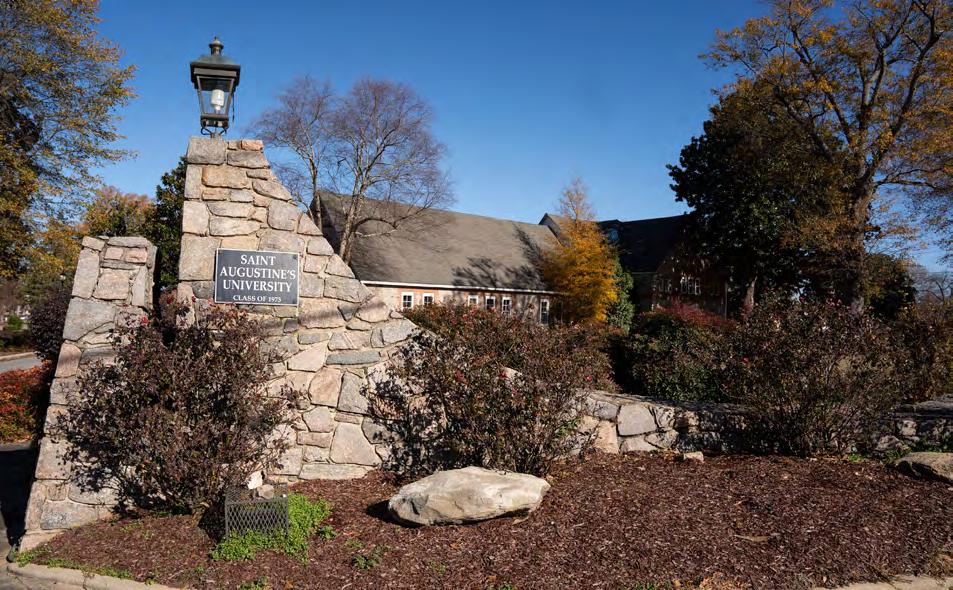
SAU will develop its plan of reorganization with the support of its “primary lending partner,” Self-Help Ventures Fund, according to the press release. WRAL reported in January that Self-Help, a local nonprofit lender, assumed some of SAU’s debt and offered the university a lower interest rate.
“Self-Help believed in the mission and legacy of Saint Augustine’s University when we provided the lifeline financing at the very end of 2025, and we still believe in the mission and potential of the school going forward,” Self-Help CEO Martin Eakes told the INDY. “And we think that the Chapter 11 process will give the university enough time to put a sustainable plan back into operation.”
Per the press release, SAU’s board has appointed Dr. Verjanis A. Peoples to be the new interim president. The release did not give a reason for Ward-Robinson’s resignation, and a university spokesperson declined to respond to the INDY’s questions on the subject. Ward-Robinson did not immediately respond to a request for comment.
Peoples was previously SAU’s interim provost and vice president of academic affairs. She briefly served as interim president in 2025 between Burgess’ resignation and Ward-Robinson’s hiring. She is SAU’s ninth president or interim president in 10 years.
The university also announced last week that it will stop its legal battle to regain accreditation from the Southern Association of Colleges and Schools Commission on Colleges (SACSCOC). SACSCOC revoked SAU’s accreditation in July 2025 and the university has been fighting the decision ever since. A higher education expert told the INDY at the time that lawsuits to regain accreditation are rarely successful.
“After careful evaluation, the Board determined that continuing litigation would not be a prudent use of resources,” the press release read. “SAU will instead focus on supporting students through teach-out agreements, developing non-degree certificates and apprenticeship programs, and building a pathway toward reaccreditation. The institution reached this conclusion in cooperation with its accreditor, SACSCOC, to ensure impacted students were able to graduate from an accredited institution.”
Without accreditation, the value of SAU’s degrees drops. But very few students reportedly remain enrolled to be affected by the change. The private university did not respond to the INDY’s questions about current students but referred us to its FAQ page, which says remaining students “will need to finish their degrees at another accredited institution.”
A university spokesperson emphasized that SAU “will continue operating” during bankruptcy proceedings. The FAQ page says SAU will continue to offer technology and nursing certifications.
For small schools that lose accreditation, the most common outcome is permanent closure. But a handful have made comebacks against the odds. Morris Brown College, an Atlanta HBCU, lost accreditation in 2002 due to financial mismanagement and filed for bankruptcy in 2012. It stayed open, fundraised, negotiated to get some of its debts forgiven, and brought on new leaders. The college regained accreditation in 2020 and enrollment has reportedly rebounded from 20 to over 400. Other financially troubled small colleges have merged with bigger, more stable institutions to stave off closure.
Durham, Orange, and Wake counties have come out against a potential constitutional amendment limiting property tax increases and warned it would jeopardize critical services.
BY CHLOE COURTNEY BOHL, JUSTIN LAIDLAW, AND CHASE PELLEGRINI DE PAUR backtalk@indyweek.com
Each year, Triangle counties spend hundreds of millions of dollars to pick up the state government’s slack: funding prosecutor positions in the district attorney’s office; housing state inmates in their jails; and propping up public school districts that are chronically underfunded at the state level.
And now Republicans in the legislature are considering limiting the source of upward of 70% of county budgets: the property tax.
A Republican-led committee in the state House wants to put a constitutional amendment on the ballot this November to set a statewide limit on local property tax increases.
Late last month, Durham, Orange, and Wake counties passed identical resolutions saying such an amendment would undercut their main revenue source and jeopardize their ability to provide essential services. The commissioners say they care about affordability but that the legislature’s proposal doesn’t fix the real issue: that counties have been raising taxes to fill the gaps left by inflation, population growth, and a lack of state funding.
“[State legislators] are distracting people from what their job is and focusing on what sounds great and sounds like a quick fix but is actually completely disconnected from the source of the problem,” Durham County Commissioner Wendy Jacobs told the INDY House Republicans argue that the amendment would give a break to residents who have seen property values and their tax
bills skyrocket in recent years. Those county taxes account for more than two-thirds of the counties’ revenue and pay for community colleges, emergency medical services, libraries, parks and recreation, affordable housing, social services, public health, and county jails. Counties and the state have also argued—especially in the drawn-out Leandro lawsuit—over public schools, which Triangle counties have continuously raised taxes to fund in recent years. During this spring’s budget conversations, the Durham County budget manager warned that “the ability to [support Durham Public Schools] using natural growth and revenue has all but dissipated.”
Bond projects, like Wake’s upcoming school construction bond or Durham’s recent parks and infrastructure bond, often require a property tax increase, so limiting tax increases could also hamper counties’ ability to take on large-scale capital and infrastructure projects.
Wake County Board of Commissioners Chair Don Mial told the INDY that capping property taxes would hamstring the county’s ability to provide essential services to a growing population.
“In Wake County, we have 1.2 million people, and we’re growing by 66 people per day, and that requires a lot of resources,” Mial said.
One of the committee’s co-chairs is Rep. Erin Paré, whose southern Wake County district covers Holly Springs and part of Fuquay-Varina. Mial said the county commis-

sioners directly appealed to Paré with their concerns about the proposed amendment.
“Her biggest thing is that ... she’s getting a lot of pushback from some citizens about tax increases,” Mial said. “But I don’t think that those citizens really understand the operation of the county. Those services that they receive come from municipalities and the county, and the state does not [cover] a whole lot.”
The language in the resolutions passed by Durham, Orange, and Wake counties comes from the North Carolina Association of County Commissioners, a nonpartisan group that lobbies the legislature on behalf of county governments. The association is arguing that a constitutional tax limit would undermine local control and fiscal stability, and it is encouraging all counties to pass similar resolutions.
“We have been proposing changes for years that would alleviate the burden on our lowest-income taxpayers, and they’ve fallen on deaf ears,” Wake County Commissioner Vickie Adamson said during a recent board of commissioners’ meeting.
Triangle counties have tried to address the rising cost of living through programs like Durham County’s Low Income Homeowner Relief Program, Wake’s Elderly or Disabled Homestead Exclusion, and Orange’s Longtime Homeowners Assistance program. But
the scope of those programs is limited by, you guessed it, the state legislature. The counties have lobbied the legislature to expand tax relief eligibility and let them collect progressive property taxes or income taxes, to no avail.
The amendment wouldn’t be the first time in recent years that the legislature has stripped power away from local governments: In 2024, Senate Bill 382 severely limited local governments’ zoning authority. The bill has halted Durham’s efforts to rewrite its land use codes to encourage housing density and infill housing within the urban core. Proponents of the rewrite say it would provide additional property tax revenue to local governments and limit developments on the outskirts of the city that would rely on already strained service providers like police, EMS, and public schools.
To get a constitutional amendment on the November ballot, Republicans would need to approve it by three-fifths majorities in both the House and Senate. In the House, they’d need at least one Democrat to join them to clear that bar. Once on the ballot, the amendment would need to pass by a simple majority of votes and then the legislature would decide what limit to set.
“Hopefully they listen to us and back off,” Mial said. “And if they set a cap, make it a reasonable cap.”















Durham-based American Efficient says it was incentivizing energy savings at major companies. One Federal Energy Regulatory Commission member claims “their entire business is a scam.”
BY LISA SORG, INSIDE CLIMATE NEWS backtalk@indyweek.com
The Federal Energy Regulatory Commission (FERC) has fined Durham-based American Efficient $722 million and ordered the company to repay more than $410 million in “unjust profits” for alleged fraud in its energy efficiency program.
In an April 15 ruling, FERC claimed American Efficient withheld key information from electric grid operators that allowed the company to manipulate energy markets.
An American Efficient spokesperson said the company “stands by its position that the commission’s allegations are meritless and that it did not commit any wrongdoing.”
FERC took issue with the company’s business model. Durham entrepreneur Ben Abram and his company Wylan Capital purchased American Efficient in 2013. Since then, it has been an energy efficiency aggregator that buys sales data and “environmental attributes”—the inherent characteristics of light bulbs, appliances, and other products
that make them energy efficient—from large retailers, like Lowe’s, as well as other companies.
American Efficient then used that sales data to calculate the energy savings from the anticipated use of the lighting and appliances, entering those projected savings into “capacity auctions.”
At capacity auctions, grid operators pay for the ability of traditional power suppliers and utilities—as well as energy-efficiency aggregators like American Efficient—to produce power when needed. Ratepayers ultimately pay for the costs of fuel through their respective utilities.
The decision was unanimous among the five commissioners, two Democrats and three Republicans.
“I don’t vote lightly for disgorgement and civil penalties this high,” said FERC Commissioner Lindsay See, a Biden appointee, at a public meeting last week. “But we’ve not been faced with a scam that robbed ratepayers of hun-
dreds of millions of dollars in this way before.
“American Efficient has fought with every legal tool they can muster, and it’s easy to understand why—because their entire business is at stake, their entire business is a scam.”
The other two Biden appointees, Judy Chang and David Rosen, criticized American Efficient for sullying legitimate energy efficiency programs that actually reduce demand.
FERC Commissioner David LaCerte, a Trump appointee, said he will refer the case to the U.S. Department of Justice for a possible criminal investigation. LaCerte said at the public meeting that he is concerned about how American Efficient spent its proceeds from the capacity auctions, which the company said in a press release included solar projects in Brazil.
“While I do not take lightly the weight of a criminal referral, the interests of justice demand it,” LaCerte wrote in a concurring opinion. “American Efficient’s conduct is not
only market manipulation, but a fundamental betrayal of the environmental and reliability principles that have been used to justify energy efficiency resources in the first place.”
The investigation into American Efficient began nearly five years ago after independent market monitors alerted FERC’s enforcement staff, as Inside Climate News previously reported. Grid operators like PJM, which operates in many states including northeastern North Carolina, hire market monitors to ensure the wholesale energy markets are fair and to identify potential manipulation.
American Efficient pays a few cents to these entities per product sold, micropayments ostensibly meant to encourage retailers to promote efficient products. In turn, use of more efficient products would reduce energy demand, air pollution, and greenhouse gas emissions.
American Efficient declined an on-the-record interview and instead provided statements by an unnamed company spokesperson.
“What made this approach different is that the end user wasn’t the only party that could move the needle on energy efficiency,” the company spokesperson said. The micropayments “sent a powerful signal through the supply chain.”
FERC argued that a 5-cent payback on a single light bulb cannot influence retailer behavior.
“But $0.05 multiplied across every qualifying product sale in every qualifying store adds up,” the company spokesperson said, “and the academic literature on upstream market transformation confirms what common sense suggests: when you offer incentives at scale, supply chains respond.”
Over the past 12 years, federal records show that several grid operators, including PJM, have paid American Efficient a total of more than a half billion dollars at these auctions. Grid operators use proceeds from ratepayers’ energy bills to pay power suppliers and energy efficiency companies for the ability to produce power when needed.
The payments were based on the theory that encouraging energy efficiency reduces the amount of power grid operators must procure, lowers the cost of energy, and saves ratepayers on their monthly bills.
Those reductions are validated “through well-established measurement and verification protocols used by utilities and energy companies across the country,” the American Efficient spokesperson said.
FERC strongly disagreed. Commissioners gave the example of an agreement between American Efficient and Home Depot over a $10,619 refrigerator. If a customer bought that refrigerator from the store, Home Depot would note it on a “sales data sheet” that it sent to American Efficient, federal documents show. American Efficient would then send Home Depot a “micropayment” of 15 cents in return for the environmental attributes of the refrigerator.
American Efficient contends that it obtained the right to bid energy savings associated with that refrigerator into the PJM capacity auction through this arrangement—and that PJM knew how it worked.
FERC found the connection tenuous, because American Efficient’s contract with Home Depot did not require the retailer to use the “micropayment” for any specific purpose, such as discounting or promoting the sale of the refrigerator.
American Efficient argues that its contract with PJM, in turn, did not require the company to prove that the program caused demand reductions that would not have occurred otherwise. “If there had been such a requirement, the company would obviously have designed the program and the measurement of its impact to comply with these requirements,” the American Efficient spokesperson said.
Selling environmental attributes is not new, said Ari Peskoe, the director of the Electricity Law Initiative at Harvard Law School. Peskoe was traveling and not available for an interview, but pointed to his comments about the case on Twitter for context.
“American Efficient conjured up these attributes, which is clever, fraudulent, or a little of both,” he wrote. Initially, the company seemed to be up front with the grid operators about what it was doing, Peskoe wrote, then, later, claimed that its payments to the retailers increased sales of efficient appliances. “Its plan appeared to unravel from there.”
However, Peskoe questioned whether FERC’s case is that straightforward. The contract between PJM and American Efficient doesn’t require the company to prove a connection to the retail customer, as the commission maintains in its ruling.
“Conduct that looks bad” can still be legal, Peskoe wrote.
American Efficient still has legal options to fight the civil penalties. First, the U.S. Supreme Court is currently considering two cases that consider whether the procedures federal commissions use for assessing penalties comply with the constitutional right to a jury trial. In those cases, it’s the Federal Communications Commission in question—though the ruling could affect FERC as well.
Second, FERC must now file a separate action in federal district court and prove its case from scratch in order to collect the funds. A trial would also give the company an opportunity to present evidence before a judge and jury.
As for the criminal referral, the U.S. Department of Justice can choose whether to investigate FERC’s claims.
“We are focused on defending the business,” the American Efficient spokesperson said.
“This was an American energy company—built with private capital, advancing an all-of-the-above energy strategy that treated efficiency as a resource just like any power plant. It has been brought to the brink of financial ruin by a single federal agency acting as its own prosecutor, judge, and jury.”
American Efficient has few options to participate in capacity auctions. Of the grid operators in the Eastern U.S., only one, ISO-New England, still buys energy-efficiency resources.
Yet ISO-New England became concerned about one of American Efficient’s subsidiaries when it participated in the auctions in 2018 and partially disqualified the company from a subsequent auction, FERC documents show. The reason: The company couldn’t provide enough information to prove its business model worked. This story originally published in Inside Climate News. Disclosure: Ben Abram’s father, Adam Abram, is the chair of the board of The Assembly, which owns the INDY.
FERC:
The Federal Energy Regulatory Commission, which oversees and regulates electric power, natural gas and other utility-related projects, including pipelines and markets. Congress created FERC in 1977. Its five commissioners are appointed by the president, with the consent of the U.S. Senate. No political party can hold more than three seats.
Regional Transmission Organizations/ Independent System Operators:
RTOs and ISOs administer the transmission grid and wholesale electricity markets regionally throughout the U.S. and parts of Canada. The grid operators are like orchestra conductors, with utilities, power producers and energy efficiency aggregators as the instruments. RTOs and ISOs operate the capacity auctions, which are regulated by independent market monitors.
Capacity markets, also known as capacity auctions:
These markets are supposed to increase grid reliability, lower costs to ratepayers and balance the supply and demand of electricity.
In a capacity market, a grid operator pays an energy generator or an energy efficiency resource, such as American Efficient, for its ability to produce or save power to ensure the grid is reliable in the future, as far out as three years.
Power suppliers and energy efficiency aggregators bid their committed amount of energy—or savings— into the market. The RTO/ISO rejects bids for prices that are higher than necessary to meet a need.
Energy efficiency aggregator:
An aggregator bundles multiple energy efficiency products and bids those savings into capacity markets. Some utilities, like Duke Energy, aggregate and sell products, like smart thermostats and LED light bulbs, to customers, with oversight from the state utilities commission. Non-utilities, like American Efficient, have varying methods of accounting for the savings.
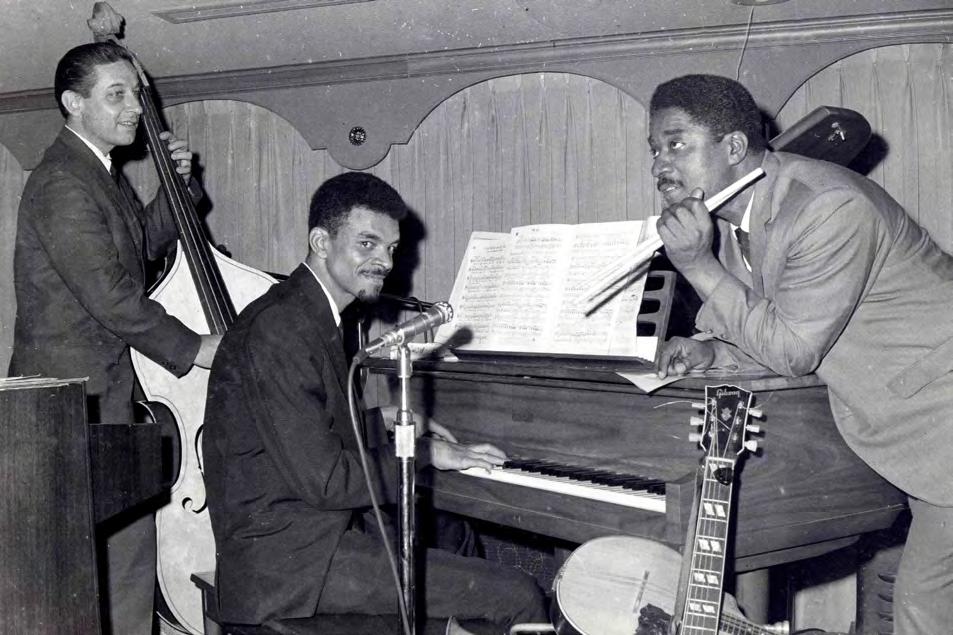
A new documentary, Moonchild: The Life and Music of Yusuf Salim, looks back on the soulful music and mentorship of a Durham jazz pianist and composer.
BY SARAH EDWARDS sedwards@indyweek.com
I
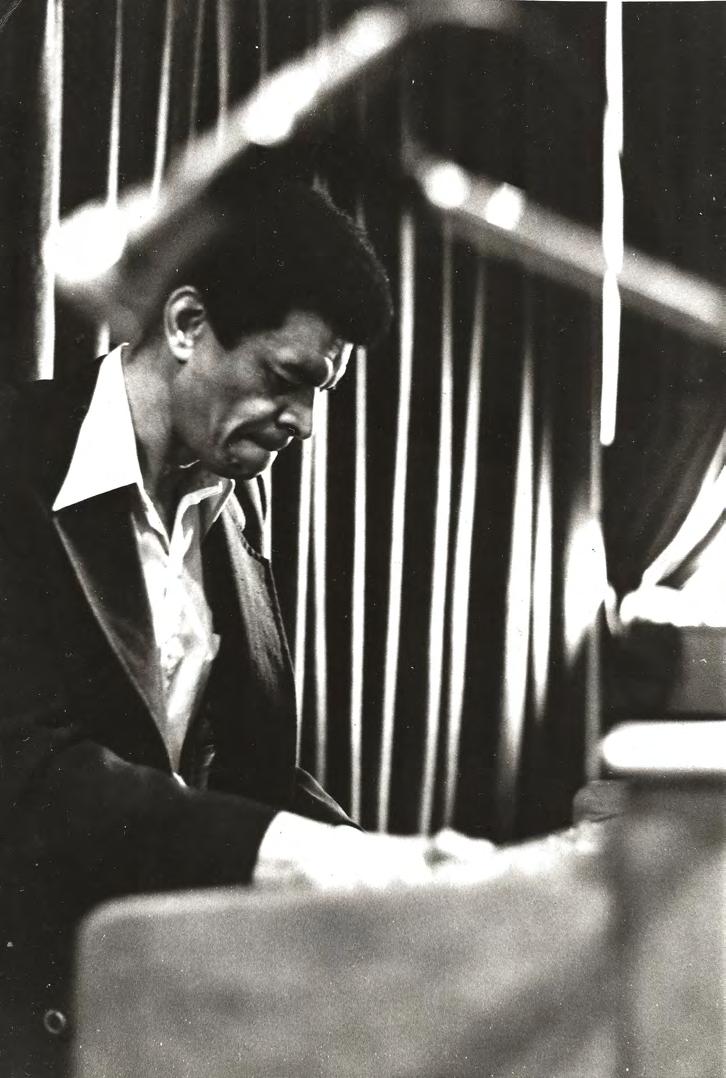
f you Google the jazz pianist and composer Yusuf Salim, one of the first results is a grainy 1979 clip from a program called Arts in Durham. The interviewer begins with a question: “Why Durham, North Carolina?”
“That’s a beautiful question. I didn’t choose Durham. Durham chose me,” says the wiry Salim, known broadly as Brother Yusuf. His answer wasn’t merely a sentimental or rhetorical flourish: Salim’s 1974 move from Baltimore to the Bull City was a dramatic catalyst that ushered in a new chapter of his life, one filled with music, spirituality, and friendship.
That interview is preserved through DigitalNC’s North Carolina Sites and Sounds Collection and, until now, has been one of the scant few pieces of ephemera you can find online regarding Salim, who died in 2008.
That sliver of representation broadens widely with Moonchild: The Life and Music of Yusuf Salim, a new documentary produced and directed by veteran local filmmaker Kenny Dalsheimer, which premiered in mid-April at Winston-Salem’s RiverRun International Film Festival and saw an April 30 Durham premiere at the Hayti Heritage Center.
The project is many years in the making: Dalsheimer said he was first compelled by Salim’s story in the early 1980s, when he heard him play music for the first time. In the early 2000s, Dalsheimer began to plot a film and take footage of Salim; the project stalled out, but Dalsheimer decided to pick it back up in 2021, when several key figures agreed to participate. Dalsheimer is no stranger to making work that holds local legend up to the light—over the past three decades, he’s produced documentaries on Durhamites like bluesman Richard Trice, weaver Silvia Heyden, and folk singer Alice Gerrard. With Moonchild, he pulls on two central threads: Salim’s legacy of mentorship, and the impact of Durham’s Muslim community on his life.
“This is an important part of the untold Black Islamic history in the United States, which has been very pushed down. ... These are not the films that are greenlit,” co-director Rafael Samanez told the INDY, adding, “Films with these social justice subjects are not easily absorbed into the big distributors.”

Salim was born Joseph Oliver Blair in Baltimore in 1930. There, he came up in the big band world, brushing shoulders with the likes of Sammy Davis Jr. and Charlie Parker, eventually converting to Islam and changing his name to Yusuf Salim. When a heroin addiction began to eat away at his life, his old bandmate Kenneth Murray Muhammad encouraged him to move to Durham. Salim made the move, quit drugs, and built a new life with faith at the center.
Murray Muhammad was a childhood friend of Salim’s from Baltimore who had moved to Durham in the 1950s, helping to establish the state’s first mosque, now called the Ar-Razzaq Islamic Center, in a Pettigrew Street storefront. There, as Imam Kenneth Murray Muhammad, he led a Nation of Islam group of less than a dozen that grew into a thriving congregation.
In 1972, the mosque moved to its present location on West Chapel Hill Street; over the next few years, the congregation transitioned from Nation of Islam to Al-Islam.
“I think Durham needs to have these stories out there, because it’s changing so much,” Dalsheimer said, on a recent afternoon from a table outside the Durham Co-op, just down the block from Ar-Razzaq. “If we don’t have the archive now, it’s an archive people won’t know.”
This stretch of West End storefronts has changed considerably over the past few decades: The mosque’s modest exterior and forest-green lettering might now be easy to miss, lost between the neons of the neighboring vape store and the hip crowds filing out of the nearby record, bagel, and vintage shops. At the height of Ar-Razzaq’s promi-
nence, though, it was the neighborhood’s center of gravity—a hub for basic needs and civil rights activism alike.
Ar-Razzaq’s robust community drew in renowned activists, and with that, racist community and the attention of the FBI. In one fascinating sequence in the film, Murray Muhammad’s children, Rhonda Muhammad and Kenneth Mutaqqi ibn Muhammad, recount the time that Malcolm X stayed with their family.
This was April of 1963, the same tense month that Martin Luther King Jr. was arrested and wrote “Letter from Birmingham Jail” and Malcolm X received an icy reception from area universities. After the city of Durham revoked permission for the activist to speak at a city-owned space, the community hosted him on their own turf—a room above a Roxboro Road taxi hub, where over 100 people crowded to hear him speak.
As the years went on, the mosque was central to the spread of Islam across North Carolina, challenging perceptions of what it means to be Southern and Muslim alike. All this was the devout, electric environment that Salim threw himself into upon his 1974 move to Durham.
“We began to have all the components of community life,” Rhonda Muhammad says in the documentary. “We had a bakery, we had a fish market, we had a school. The missing component was culture, and Yusuf came at just the right time.”
If these elements all seem sprawling, it’s because they are—Dalsheimer and Samanez had their work cut out in telling a story so undersung and yet so greatly symbolic.
In the end, at a feature-length 92 minutes, Moonchild: The Life and Music of Yusuf Salim, is not the tightest watch, but it makes great strides in preserving the gentle, enduring spirit of a musical great—a man who composed more than 53 original works, who was a mainstay of the arts scene known for his warm hugs and the way he always redirected praise to Allah.
“It builds bridges,” Salim said of jazz in a 1982 interview with The Sun Magazine. “Every time it has a resurgence, like a phoenix bird, it’s during a time of depression. The whole feeling of it generates spirit.”
Salim defined himself as an accompanist, and there are few public recordings of him playing. Over a phone call, Darrell Stover, a co-producer for Moonchild, described Salim as having his own “style and posture for playing.”
“Each of those fingers seemed to have their own brain, and they all were linked up to one another,” said Stover, a lecturer in the Interdisciplinary Studies Department at North Carolina State University. “The music came out with a real, I guess you could say, ease.”
In 1977, Salim established the Salaam Cultural Center alongside Suman Bhatia, Billy Stevens, and Roger Tygard. The building’s exterior featured a mural of a Black and a white hand shaking; here, he led jazz workshops and hosted events that became foundational for generations of Durham musicians,
like Nnenna Freelon and Eve Cornelius, and for students coming through North Carolina Central University’s (NCCU) prestigious jazz studies program.
In its last half, the documentary turns to the story of Brian Horton, the Kinston-born director of NCCU’s jazz studies program who died unexpectedly in 2022 at age 46. At the time of his death, he was working on curating a series of concerts at Duke celebrating Salim’s life, and Dalsheimer had intended to feature him as a main character in the film, representing the next generation. Shocked, Dalsheimer said he considered dropping the documentary altogether.
He chose to continue; the result is a poignant portrait of intertwining legacies and layers of mentorship, through Horton’s students at NCCU and beyond.
“People don’t realize what keeps this music alive,” the Grammy Award-winning saxophonist Gary Bartz explains in the film. “It’s through the mentorship of the many unsung great musicians whom you may have never heard of. But in essence, you have heard of them through the musicians you do hear.”
In 2018, Duke University began a yearslong initiative called Building Bridges: Muslims in America, which brought in international musical figures and highlighted local ones, including Salim. The 2023 concert Horton had worked on, captured for posterity in Moonchild, paid tribute to Salim’s range. Cornelius’s performance of the playful, halting “My In-Laws Are Outlaws” dialed into Salim’s swing history, while Adia Ledbetter’s rendition of “Moonchild,” the titular song of the film, showcased Salim’s bluesy, searching sounds.
In early April, just a few weeks before the documentary’s Winston-Salem premiere, a North Carolina historical marker was erected across the street from Ar-Razzaq, commemorating the mosque as the first in North Carolina. The recognition comes years after Murray Muhammad, Salim, and the generation who built the community have passed, but it’s a tremendous step forward in keeping that history alive.
Receptive listeners can feel the vibrations of that history throughout Durham and beyond. It’s embodied in Ar-Razzaq, which continues to open its doors to all people of faith, and in clean-ups like the ones Salim organized every year with neighborhood children. It’s embodied in each new achievement of the NCCU jazz band and in warm summer nights at Durham Central Park concerts, like the ones Salim used to play at. It vibrates through Kingfisher’s Tuesday evening jazz nights, where the Jeremy “Bean” Clemons Trio now gigs in Horton’s stead.
On April 30—International Jazz Day, by no accident—Moonchild joined that legacy with its hometown premiere at the Hayti Heritage Center.
When asked about his role in the film, Stover said it was to keep the focus on “the real story— that there is a jazz community here of significance.”
“And that this man—this man, Yusuf Salim, was essential to it,” Stover said, growing emotional.
“We have a major jazz presence on this planet, right in Durham.”

SETTING RELEASE SHOW
Sunday, May 17, 7 p.m. | The Haw River Ballroom, Saxapahaw
When three seasoned Triangle musicians started jamming together, an open, improvisational new sound began to cohere.
BY TASSO HARTZOG music@indyweek.com
I
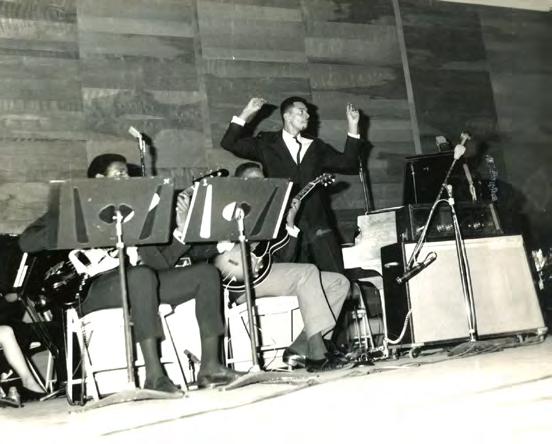
n the fall of 2021, three seasoned musicians gathered for a jam session under a triple-wide carport in Chapel Hill. Jaime Fennelly, Joe Westerlund, and Nathan Bowles had been orbiting each other for years; Fennelly had previously jammed with Westerlund, and Westerlund had performed with Bowles, but the three had never played together as a group. Detecting a shared sensibility, they decided to meet up and improvise. Beneath the canopy of Westerlund’s carport, open to the autumn air, their trio unwittingly became a quartet. “I have a very specific memory of a leaf blower being the fourth member,” Bowles told me.
Noise pollution notwithstanding, that first session was “spacious” and “free,” Bowles said. Familiar as they were with the joys of musical collaboration—Westerlund (Sylvan Esso, Jake Xerxes Fussell), Fennelly (Mind Over Mirrors, Peeesseye), and Bowles (Pelt, Black Twig Pickers) can count more than 20 bands and projects between them, which run the gamut from folk rock to free jazz, experimental minimalism to electropop—they nevertheless felt that they’d
landed on something special, and so they kept it going.
The pool of instruments grew each time they met. Someone would show up to the carport and say, “I brought this thing,” and pull out a zither, a metallophone, a keyboard. Each of the three had his preferred tools—drums for Westerlund, banjo and percussion for Bowles, harmonium and synths for Fennelly—but they played around.
“I had no idea what we were making,” Fennelly recalled when I spoke with all three on a recent video call, and Bowles agreed: “It was really tentative at first.”
They would record their sessions and listen back before making adjustments, like football coaches reviewing tape of the previous week’s game.
Although fresh air allowed the group a freedom that proved essential early on, they had what Westerlund called an “epiphany moment” when, after several gatherings under the carport, they went inside Westerlund’s house and played without the leaf blowers. “The interaction felt closer and more rhythmic,” he said. A sound began to cohere.
Having found their footing, the trio went outside again for a series of improvised performances called “Setting Sounds”—one of them, in the fall of 2022, took place on a tree platform next to the Eno River—during which they conjured slow-moving “environments of sound” responsive to their surroundings. Then, in 2023, Setting released their first LP, Shone a Rainbow Light On. Three live albums followed in the next couple of years.
At no point has Setting’s sound been easy to categorize—genre can only mislead when applied to this kind of improvisational music—but those first four releases traverse a sonic landscape that can loosely be called earthy kosmische, drawing on various traditions (American folk, African percussion) before spinning out into space. Harmonium, keyboard, tapes, and synths set down a layered electroacoustic drone; Westerlund’s drums plod along polyrhythmically then leap forward, jazzy one moment and neolithic the next; and the banjo charts a lonesome path overtop. On their self-titled LP, out April 24 on Thrill Jockey, Setting digs into melody and groove with new confidence. Much of the difference results from the band building these new songs around synthesizer sequences that Fennelly had programmed ahead of time: a “totally new context” for the group’s improvisation, Westerlund said.
“Going through different sequences and playing around, we discovered that there was a handful that we wanted to take as building blocks to the studio,” Bowles explained. Fennelly would then tweak those building blocks in response to Westerlund’s and Bowles’s improvisation, dialing up one section or removing another.
Fennelly had plenty of time to fiddle. Setting spent two days in the studio for their first record, but for this album, they worked with Adam McDaniel at Asheville’s Drop of Sun studios for 15 days.
At some point, they’d considered a different tack.
“I think we said something like, Let’s make a spacious flow record,” Westerlund recalled. “And then we get in the studio and get funky.”
“We surprised ourselves, and I think that comes out of a general openness,” Westerlund said. “No one’s disappointed, no one’s fighting for their idea. This band operates like: Whoa, this happened! And that’s surprising and exciting and fun.”
On the first track, “Heard a Bubble,” Setting’s signature blend of polyrhythm and banjo develops toward something new: an ecstatic synth motif that bends funkily around the edges. “Gum Bump,” retaining that energy, sounds like a
radio broadcast of Miles Davis’ 1972 album On the Corner shredded by cosmic interference and reconstituted by a DJ on an exoplanet.
Absent drums, “What Kind of Fish Is a Turtle?” stretches more slowly into an astral direction. When I asked the band about the title, which struck me as a wise and perfect question in the vein of both Seuss and Borges, no one could recall where it came from. “It seems like it’s always existed,” said Bowles, an answer that could apply just as well to the music, gliding along the geologic timescale from the Cambrian to the Pliocene with a few detours through the future. Any metaphor fit for Setting has this time-warping quality; I couldn’t help but think of the monolith from 2001: A Space Odyssey, sleek and alien, an emissary from beyond embedded incongruously in the jagged earth.
Improvising as a trio has allowed Westerlund, Fennelly, and Bowles access to new— or, in some cases, forgotten—parts of their musician selves. As a student at Bennington College in Vermont, Westerlund had studied with the polymathic percussionist Milford Graves, from whom he learned to approach rhythm as a “malleable, viscous object,” as he put it in a 2019 essay for the INDY.
“I hadn’t had a vehicle where that felt appropriate for a long time,” Westerlund said. “This band felt like a return to something that I’d always wanted to explore more.”
“We’re giving Joe the ability to be off the leash,” Bowles said, comparing the result to the work of free jazz legend Rashied Ali. (Fennelly referred to Westerlund’s unrestrained playing as “fire drums.”)
The open-ended spirit of the carport sessions remains on Setting. “The music
lets you know what it needs,” Bowles said when I asked about how they’d conceptualized the new album. It’s fitting to imagine these songs making their own decisions, like clumps of primordial ooze struck suddenly by the synthesizer spark of life.
In less capable hands, this approach can have the shallow, unearned profundity of someone who’s watched too much Ancient Aliens, or done too much acid, or both. But Setting doesn’t gesture at some substance that isn’t actually there. Instead, in their quicksilver jumps from atavistic percussion to extraterrestrial funk, the trio is drawing both from the venerable lineage of artists like Sun Ra and Popol Vuh who have used myth and tradition to plumb the future, and from their own deep wells of musical experience.
So when Bowles remarks psychedelically, “You can almost see the sound in three dimensions,” I agree. I saw Setting perform at Duke Coffeehouse last year, and the music could rightly have been called a physical presence, animated by the heartbeat of Westerlund’s loping kick drum.
At that lengthy performance—it ran for 75 minutes without pause—Fennelly, Westerlund, and Bowles didn’t look at each other much but nevertheless remained in absolute coordination: three veteran musicians reveling in the alchemy of a yearslong collaboration.
Saturday May 16 8PM

Join us for a unique musical extravaganza by the Triangle’s best (and only!) 22-person psychedelic rock orchestra
Coming off a recent trip to Big Ears Festival in Tennessee and a four-week residency in Durham, Setting isn’t resting on its laurels. In fact, Fennelly told me, “When we finished the record, when we were still at the studio, we were all like, ‘What if we just started making another record right now?’”


SALT, SWEAT & STEAM: THE FIERY EDUCATION OF AN ACCIDENTAL CHEF
Macmillan Publishers; April 28
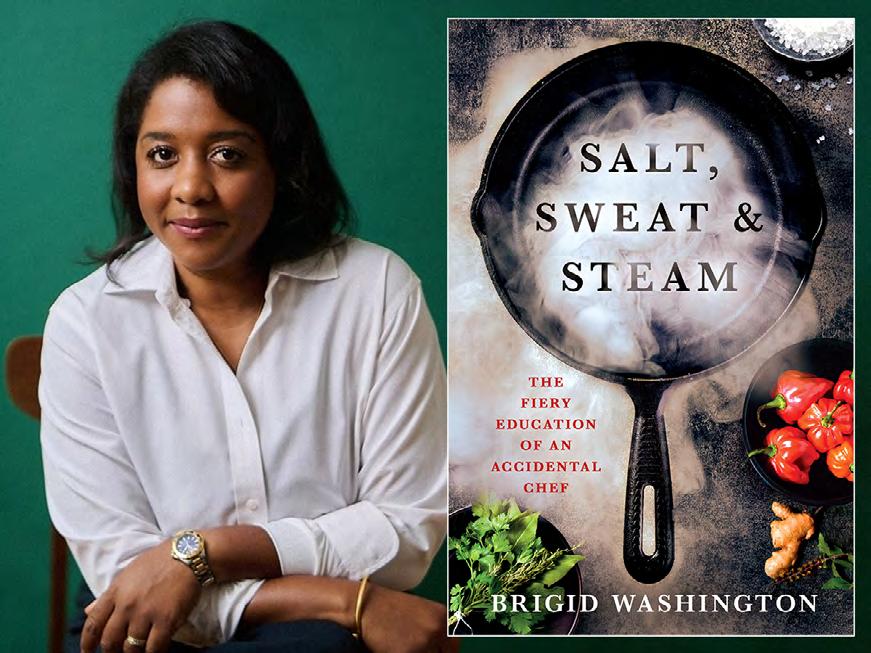
Raleigh writer Brigid Washington’s new memoir documents her time at the Culinary Institute of America and beyond.
BY LENA GELLER lgeller@indyweek.com
Salt, Sweat & Steam: The Fiery Education of an Accidental Chef, a new memoir from Raleigh food writer Brigid Washington, opens with a crushing breakup that drives Washington to overhaul her life and enroll in culinary school at 26.
The rest of the memoir traces more extremes of experience: In one chapter, Washington and her classmates find themselves dancing on the tables of the Michelin threestar institution Eleven Madison Park while famous chefs spray Champagne. In another, she loses a once-in-a-lifetime opportunity over a paperwork fluke.
Throughout, she fields a wide spectrum of feedback from her instructors at the Culinary Institute of America, where the book is largely set: Just as one professor offers Washington an approving nod, another calls her a “goddamn pirate,” a dig at her Trinidadian background, when she does a sloppy job of filleting a black bass. Many don’t seem to talk in a regular register—they bark, bellow, and huff.
Washington attended culinary school in the late aughts, before the industry’s recent referendum on kitchen culture
that has toppled chefs like Noma’s René Redzepi and seen The Bear eclipse tyrant-glorifying shows like Hell’s Kitchen as the defining vision of restaurant life on-screen. That backdrop is top of mind when reading Salt, Sweat & Steam, which publisher Macmillan has billed as “The Devil Wears Prada for the ‘yes, chef’” generation.
That said, the memoir stops well short of condemning the school or the industry at large. Washington writes without much retrospective judgment and, in conversation, pushed back on the notion that the behavior of some school leadership amounted to a normalized culture of abuse.
Washington serves as vice chair of the James Beard Foundation Journalism Committee. She authored the cookbook Coconuts. Ginger. Shrimp. Rum: Caribbean Flavors for Every Season in 2017 and contributes recipes to Bon Appétit and The New York Times, among other publications. She got her first taste of journalism during undergrad at North Carolina State University, writing for the Technician; at culinary school, she became editor-in-chief of the student paper, La Papillote.
Author Brigid Washington PHOTO BY LAUREN VIED ALLEN
On the heels of the book’s publication, the INDY spoke with Washington about harsh teaching methods, life after culinary school, and where to eat in the Triangle.
The following interview has been edited for length and clarity.
INDY: You describe some verging-on-abusive tactics from your instructors at the Culinary Institute. As you’ve gotten distance from the experience, how do you look back on the teaching methods?
BRIGID WASHINGTON: I grew up in Trinidad, went to high school in Trinidad, and to answer the question, I have to answer it within the context of my formative education, which was based off the English system, where there was corporal punishment. I remember as a younger student, playing with an ink cartridge and getting ink all over my page, and my teacher was horrified. She took a ruler and whacked me a couple of times on my knuckles. I remember exactly what she said: “It looks like a cockroach dipped in ink and ran across this page.” And then she gave me, pop, pop, pop, three taps on my knuckles. From then on, my penmanship was very neat and tidy.
Because that was my cultural touchpoint, I was better able to manage—I had the tools to manage this sort of education [at the Culinary Institute] because it mirrored what I knew. I don’t think it was 100% the same for everyone.
Do you have thoughts on how effective that kind of harsh, sometimes humiliating approach is as a teaching method, versus something softer? You write about a mix among the instructors at the institute.
I think it’s not either/or. It is very much a both/and. If it were too gentle, I wouldn’t have learned as much as I did. [There were] times when I thought I wanted gentle, and it would not have been good for me. [But] when I most needed gentle, gentle was there.
Where’s the line?
It’s hard something goes on to instance, Luke, is very If I look at will cry. When it’s a very microcosm impossible ally every From I think instruction way, it some of school number under went on own abuse thoughts
Temperament tradition. that inform the temperament that taught I wrote instructor restaurant dent, and because and warm site is true, But at the hole, because itaristic command dispersed. those are kind of “Correlation And so nuance there sonality of as an example, thousands metric opposite what I wanted ... It’s very someone’s and while run, it is not You describe firmly tradition, it does treatment In the the industry French instance, dominated
INDY spoke life after and clarity. tactics Institute. As how do Trinidad, went to question, I have education, there was student, over my ruler and remember dipped in me, pop, then on, my was betthis sort because it mirthe same kind of a teachwrite institute.
both/and. If it much as I did. gentle, and it most need-
It’s hard to draw a definitive line with something that is truly unquantifiable. It goes on to somebody else’s experience. For instance, with my two children, our son, Luke, is very tough, very rough and tumble. If I look at my daughter a certain way, she will cry. When we have to reprimand her, it’s a very long process. I think that’s just a microcosm of the large experience. It’s an impossible line to be drawn, because literally every person has a different experience.
From a more systemic perspective, I think we’ve seen that when instruction is delivered in a volatile way, it can shape the kitchens that some of these big-time culinary school graduates go on to run. A number of chefs who came up under René Redzepi, for instance, went on to run kitchens with their own abuse allegations. Do you have thoughts on that lineage?
Temperament does not necessarily mean tradition. There’s multiple other factors that inform a culinary landscape other than the temperament of the chef instructors that taught a new bumper crop of chefs. I wrote a lot about [a culinary school instructor named] Chef Le Roux. There’s a restaurant in Chicago from a former student, and he named his restaurant Le Roux because of how engaging and personable and warm our professor was. And the opposite is true, which I think is your question. But at the same time, we kind of pigeonhole, because culinary school has a very militaristic command over how education is dispersed. That does not necessarily mean those are how those restaurants are run. It’s kind of “Correlation is not equal causation.” And so it’s important to consider the nuance there and to also consider the personality of the chefs. We could use Redzepi as an example, but there are hundreds of thousands of other chefs who are the diametric opposite of him, and that is part of what I wanted to get across in the book. ... It’s very careful to delineate exactly why someone’s temperament is the way it is, and while it may inform how a restaurant is run, it is not necessarily the source of that.
You describe the curriculum as firmly rooted in the French culinary tradition, and you write that when it does venture beyond that, the treatment sometimes feels shallow. In the years since you were there, the industry has decentered the French culinary tradition—for instance, The Michelin Guide is less dominated by French restaurants
than it used to be. Do you have a sense of whether the culture or curriculum at the school has shifted?
I can’t speak directly to the culture. But I can say yes, the curriculum has, and that does reflect, as you said, a more robust cultural awareness.
But I think, too, there is that formative element; if we’re studying architecture, I would imagine that a lot of the formative lessons would be tilted toward European design, because they’ve just been doing it longer. And I think similarly, the curriculum [at the Culinary Institute] followed that historical pattern.
When you were at N.C. State, you wrote for the Technician, and at culinary school, you became the editor-in-chief of the student newspaper La Papillote. How did those school publications shape your path as a journalist?
I think it’s really important that everyone, for whatever amount of time is possible, you do a job you love for little money at all. Because I think that really cements the “Why am I doing this?” Writing for the Technician was rewarding. I appreciated the discipline. Things that I didn’t want to cover, like rush and frat week—it was like, you have to cover it. [So] in those moments, it was appreciating “OK, let me try to understand this history, let me take a step back.” I think that it really gave me that bedrock of, like, this is the importance of being socially curious.
Are there certain techniques or ways of doing things that you’ve retained from culinary school that you find yourself putting into practice day to day, when you cook at home?
Absolutely. How to properly sear, how to use a fond, how to deglaze, all of these very old-school traditional French techniques— it’s still part of how I cook today. When I’m making a stock, it’s always a lazy bubble, because you don’t want to emulsify the fats.
What are your go-to places to eat in the Triangle?
Well, it’s different if we have the children with us. They love going to Five Star in Raleigh, next to the train tracks. When it’s Joseph and I, the chefs who are just exceedingly thoughtful and nuanced—I find that to be the case at Ajja, at Brodeto, Peregrine, and Bombolo. The work behind the work is very visible. You can tell when the food is underwritten with scholarship.

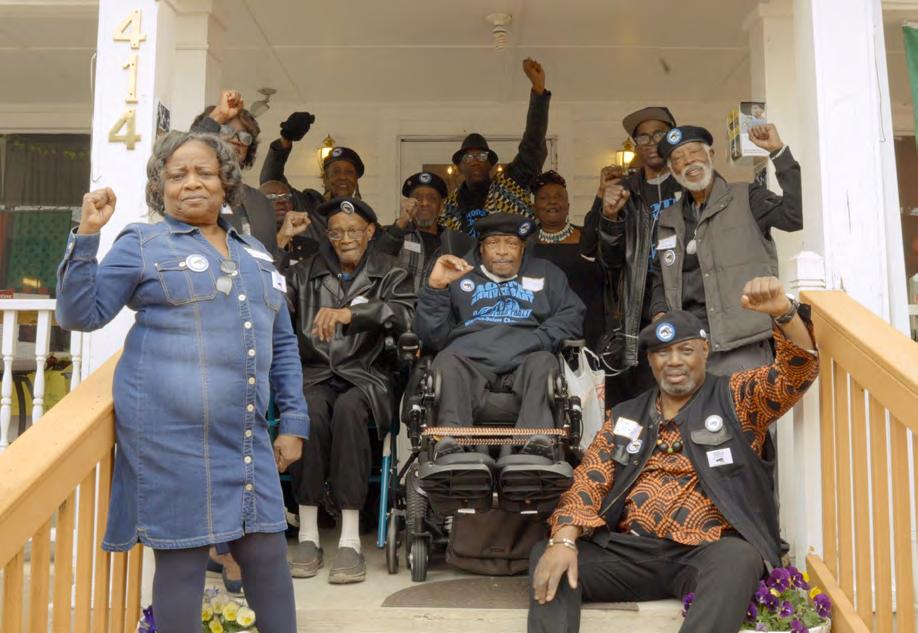
Tressie McMillan Cottom’s new documentary short looks back on the Winston-Salem Black Panther Party chapter—the first in the South—and how its legacy lives on today.
BY SARAH EDWARDS sedwards@indyweek.com
Several years ago, Tressie McMillan Cottom drove her mother, Vivian McMillan, from Charlotte to Winston-Salem for a 50th anniversary party of the local Black Panther Party.
Seeing her mother with fellow former Black Panther Party members—now in their 70s and 80s but lively as “a bunch of teenagers”—McMillan Cottom, a sociologist and writer who teaches at the University of North Carolina at Chapel Hill, began filming “for posterity.” That footage evolved into a mandate and, later, Power to the People, Y’all, a documentary short that focuses on five founding members of the Winston-Salem chapter—Larry Little, Nelson Malloy, Cynthia Norwood, Brad Lilley, and Hazel Mack—as they look back on a revolutionary chapter of North Carolina history.
The 35-minute film premiered in April at RiverRun International Film Festival, where it was met with a sold-out premiere and two encore screenings.
“You don’t do anything easy when you’re doing anything
with the comrades,” McMillan Cottom told the INDY, reflecting on the documentary’s origins. “Hazel Mack is an organizer par excellence. She’s like, ‘If we’re going to do something, we should really do it.’ And I was like, ‘Yeah, somebody should really come down and do a documentary.’ She looked at me like, ‘Yeah.’ So I had my marching orders.”
Winston-Salem became the first city in the South to establish a Black Panther chapter in 1969 after activist Larry Little traveled to Chicago to visit with Fred Hampton, looking to expand the movement. Establishing a chapter was a dangerous bet anywhere but especially in the South, given the group’s perceived political threats to the establishment (just two weeks after Little moved, Hampton, deputy chairman of the national Black Panther Party, was assassinated).
Locally, the chapter gained remarkable traction, running a series of social services for eight years before withdrawing from the national party in 1977, five years before the Black
Panther Party officially dissolved. But as McMillan Cottom spells out in Power to the People, Y’all the vision didn’t die with the chapter—far from it.
At RiverRun, in a bit of archival kismet, the documentary joined a slate of other documentaries, including Free Joan Little and We Are, Because We Were, that explore North Carolina’s radical Black history. On the heels of a whirlwind month that included getting married and having her directorial premiere, McMillan Cottom spoke to the INDY about the film, the history of organizing in the Piedmont, and theories of change. This interview has been edited for length and clarity.
INDY: For people new to the story—why Winston-Salem?
MCMILLAN COTTOM: My personal question was that one, as a sociologist, which is—why does a social movement happen in one place and not another? This is a motivating question of why people organize and mobilize, and this is not a for-granted place for this to happen. It’s dead smack in the middle of the Piedmont of North Carolina, which is not in the power centers of the state—it’s not Charlotte, it’s not Raleigh.
There is a long history of what historian Bob Korstad over at Duke describes as the best, most difficult, ferocious organizing in the Piedmont, North Carolina. And Bob was like, “We don’t know this, because there were a lot of powerful interests to make sure nobody knew,” right? So you have a long history of really radical female-led working-class unions in Winston-Salem and High Point, right? Well, those women had children, and those children knew their moms and their aunties and their cousins to be people who raised hell at R.J. Reynolds [Tobacco Company]. They grow up, and the peace movement and the antiwar movement are happening in the ’60s and ’70s, and they just sort of merged those two things. They got this idea from the people who raised them that you raise hell, and even though they’ve kind of been erased from local women’s history, the people still existed.
That’s why I think the Panther Party took root in Winston-Salem, in a way that it didn’t in, say, Greensboro or Charlotte. They have a history there of this kind of radical organizing. And I wanted people to know that.
Can you tell me a bit about the programs that the chapter ran? I was intrigued by the free ambulance service.
You know, at least in the academic world, there’s been a ton done about the Panthers over the last 15-20 years.
chapter
But for a long time, nobody really talked about the health care programs—they talked about the free breakfast program, and that was the most signature program nationwide and certainly very important. The suite of social programs that the Panthers did [was] driven by what Nelson [Malloy] says is “You saw a problem, and you address it.” The first act that the Winston-Salem chapter did as a chapter was stopping the evictions of elderly Black women.
McMillan Cottom didn’t die documentary Free Joan explore North a whirlhaving her the INDY Piedmont, edited for was that movement motivating and this is dead smack which is Charlotte, Bob Korstad difficult, feroAnd Bob were a lot of right? So female-led workPoint, right? children knew to be peoCompany]. the antiwar and they this idea hell, and local womroot in WinGreensboro or of radical that the ambulance
there’s been 15-20 years.
They also had a suite of health programs, and we only really started exploring those in the last 10 or 15 years. ... In this postsegregation moment, when, ostensibly, health care had been integrated, the state still hadn’t invested in services for poor Black people. There was this gap, right? Ambulances wouldn’t come for poor Black people, or if they came, they would charge them before they let them get on the ambulance. They’d have cash to get on. And even then, they might leave you, only take you halfway to the hospital and leave you. There were instances of people dying while they tried to finagle access to the ambulance service. So the chapter looks, and their theory of change was, “OK, there’s a problem. How do we solve it?” In a very straightforward way, they create an ambulance service. They have a couple of dispatchers. My mom became a 911 dispatcher, after the party, because she’d dispatched with the ambulance service. So it also became this way for them to rebuild their lives.
What did you learn about the ways those programs had second and third lives?
I just read something last week about, you know, the fast-growing careers in health care, how it’s the fastest-growing segment of the labor market. These are female-dominated jobs, and I think back to the 1980s, you know, ’76, ’77, ’78—what you had out of that chapter, my mom included, was that a lot of the women went and got their EMT certification so that they could run the free ambulance program. Surry Community College [was] the only community college in the state that would let the Panthers enroll and get a certificate. The CIA actually tried to stop that community college from allowing them to enroll.
Of course they did.
The [college] president stood in the gap and just said no. I can’t imagine a [college] president saying no today—by the way, in so many ways, we are less independent and less radical than we were then. He said,
“Not only do they deserve education as North Carolinians, but the Panthers are some of our best students.”
What were some of the other surprises or challenges you encountered in the process?
As much as the Panthers have been written about and studied and fictionalized, and loomed so large in our public memory, here in the South ... the archives of their lives are really sporadic, and there has not been much infrastructure for collecting and preserving their memorabilia and activism. And that’s no accident. Like, what are you gonna do? Are you going to the Reynolds or Hanes or Duke Power and ask them to endow the archive for the Winston-Salem Black Panther Party, you know?
The archival images and footage in our film, we had to collect all of that and go around to everybody’s house and centralize this archive. There were some things, obviously, but I think the more intimate, telling things were things still living in their homes. We’re not archivists, but we have the responsibility to that material.
You were picking up that line, “Somebody has to do it.”
Somebody has to do it, that’s it. And if you’re sitting here and I’m looking at you, then it’s your job.
We took a lot from them about that. We would do an interview, or we’d be reviewing footage at a moment when we were having some challenge with the film, and it was almost like they would be speaking to us. There were several times when Hazel [Mack] was like, “Yeah, if you can do it, you’re supposed to do it.” Or Nelson saying, “Listen, we can philosophize about this all day. Or we can go solve a problem.” That’s how we approached making the film.
Well, that ties into my last question— what do you hope people take away?
But also, what was your experience of listening to the group during this particular moment, and what kind of lessons do you think that they are offering in this, you know, specifically bad moment?
I will be honest—I was despondent, maybe borderline depressed, when I started working on this project.
I came away from it with—this is not a uniquely bad time, it is just our turn at the bad. That felt really convicting for me. I was also just really struck by—you know, we tell
a lot of stories about the people who try to revolutionize the world, change the world, who die young. I thought there was something really powerful about this—everybody doesn’t die, Sarah, some people survive. My question was [then], how would they go on? What I learned from them is, well, you take what you got from the party, and then you go infuse it in your work elsewhere. And then when the moment comes back around, realizing, “Oh, something’s happening, it’s time again”—they’re energized for that. They’re like, “OK, we’ve been waiting. Let’s go.” And then that’s what we do. They can’t kill us all.
I think that’s a good note to end on. Thank you so much. Is there anything else that we haven’t talked about, or you haven’t been able to talk about, that’s on your mind?
One of my not-so-super-secret motivations for making this is that I really wanted the women of the party to be as central to the story in the film as they were in the organizing. We tell a really masculine story about the party, and, honey, the reason why some of these people are still alive today and still living and working and raising hell is because of the women.
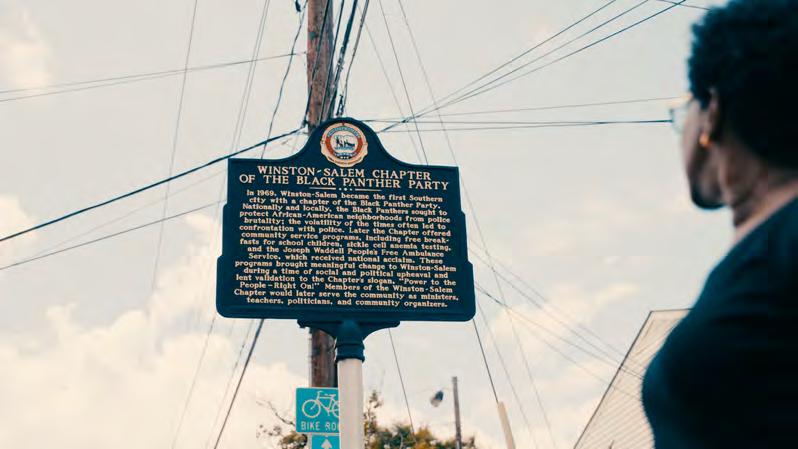
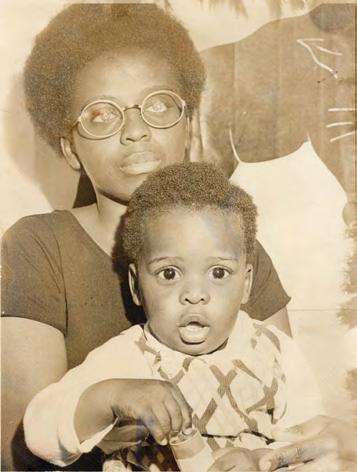
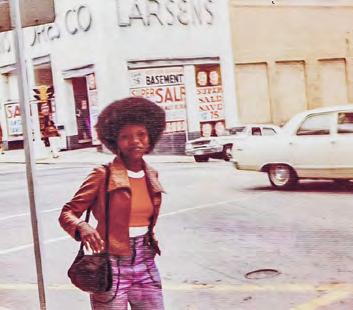
A creepy parallel universe, a clever variation on the murder mystery trope, and more films coming to Triangle theaters.
BY GLENN MCDONALD arts@indyweek.com
If the world isn’t actually broken, it sure seems that way, and discerning citizens have several options for processing their subsequent rage and despair. Therapy is good. Nihilism helps for a while. Simple denial is always popular. Musician, filmmaker, and activist Boots Riley has a better way: Go see his new movie. A rowdy, anti-capitalist crime comedy, I Love Boosters uses surreal satire and livein-the-moment anarchy to tell the story of a group of Bay Area women sick and tired of being broke and powerless.
The setup, loosely: Keke Palmer leads a crew of professional shoplifters—boosters—who steal upmarket fashions for downtown resale.
It’s a kind of guerrilla wealth redistribution, the way they see it. But things get tricky when they plan their biggest heist against a ruthless fashion mogul, played by Demi Moore. Also in the cast: Naomi Ackie, Taylour Paige, Poppy Liu, Eiza González, LaKeith Stanfield, and Will Poulter.
I Love Boosters was a big hit at last year’s South by Southwest festival, where audiences responded to the film’s go-for-broke spirit and heightened comedy style. The film swerves through various genres—sci-fi, body horror, sex comedy, farce—with a maximalist visual strategy.
Riley’s vision isn’t about social change via retail theft. That’s just the bit. It’s about making mad art like I Love Boosters and fighting back against the cruelties of capitalism with compassion, collective action, and a healthy sense of humor. Power to the people.
If you’re looking for a scary movie this month, you have plenty of options, as usual. Horror movies are cheap and profitable these days. But your best bet for May is clear: Backrooms is a sci-fi/horror/mystery hybrid about a therapist (Renate Reinsve) who tracks her disturbed patient (Chiwetel Ejiofor) into an unbelievably creepy parallel uni-

verse of dim rooms, liminal spaces, and impossible geometry. The film is based on a series of YouTube short films, which is in turn based on the online urban-legend variant known as creepypasta.
Director Kane Parsons’ film has a modern origin story, but it’s steeped in the older tradition of weird fiction, which generates tension by suggesting that the universe is so much scarier than we can possibly imagine. Check the trailers online, and you’ll see there’s a funny connection to retail spaces in this movie, too. We’re entering consumerism’s nightmare phase, evidently.
For a gentler time at the movies this month, consider The Sheep Detectives, a family-friendly riff on the cozy mystery with a compelling twist: The murder victim is a shepherd in a small Irish village, and the investigating agency is his bereaved flock of sheep.
The film is based on the crazy-popular 2005 mystery novel Three Bags Full: A Sheep Detective Story by the German crime writer Leonie Swann. While the original book was written in German, the book was eventually translated into more than 30 languages. The story is a little slice of genius. It’s among my favorite mystery novels ever, filled with gentle humor and clever variations of murder mystery tropes.
In the spirit of consumer advocacy, I must report that the film’s preview trailers are a little worrisome. The CGI sheep are more distracting than adorable. But the cast is pretty great: Hugh Jackman and Molly Gordon (Theater Camp!), with voice work from Bryan Cranston, Julia Louis-Dreyfus, Regina Hall, Patrick Stewart, and New Zealand’s funniest man, Rhys Darby. Let us be hopeful about this adaptation. Or just go read the book.
Speaking of books, readers of Richard Powers’ Pulitzer-winning novel The Overstory might want to seek out the recent import Silent Friend. The film follows the fate of a single gingko tree—and the people it shelters and comforts—over three interconnected stories in 1908, 1972, and 2020. You can boost your foreign-film quota with this one, too. It’s technically a German-French-Hungarian-Chinese production.
Playwright Aleshea Harris adapts her own award-winning stage play for the thriller Is God Is, about two twin sisters (Kara Young and Mallori Johnson) on a patricidal revenge quest. Also in the cast: Sterling K. Brown, Vivica A. Fox, and Janelle Monáe.
The documentary Iron Maiden: Burning Ambition charts the rise and fall and rise again of the legendary British metal band. Dads, send your kids down the multiplex corridor for the concert film Billie Eilish – Hit Me Hard and Soft: The Tour. The very funny standup comic Nate Bargatze gets his first leading role with The Breadwinner, a stay-at-home-dad comedy that looks like a quickie cashin. However, older readers will recall that this exact same thing happened with Michael Keaton in 1983. It was called Mr. Mom, it was his first movie, and it was good.
The Balkan coming-of-age drama DJ Ahmet, winner of the audience award at last year’s Sundance Film Festival, profiles a teen from a small conservative village who dreams of becoming a DJ. Reviews from the festival circuit say it’s a genuine heartwarmer.
Jon Favreau directs Disney’s latest Star Wars franchise installment, The Mandalorian and Grogu, billed as a continuation of the popular streaming series. I think we’re all required to see these movies now. There have been a lot of changes in the law.
MUSIC
Duke Symphony Orchestra: Letters to America 8 p.m. The Carolina Theatre, Durham.
Kamru, Lord Velvet, Broadslab 8 p.m. Local 506, Chapel Hill.
Legacy of Jazz: Let’s Be Frank 7 p.m. The Cary Theater, Cary.
Monster Outbreak Tour
Presents: CHE: ENCORE
7 p.m. The Ritz, Raleigh.
Prince Daddy & The Hyena 8 p.m. Motorco Music Hall, Durham.
Soulja Boy’s The Drip Tour with Lil Xan, Uhfwea, PBE Pluto 8 p.m. Lincoln Theatre, Raleigh.
Unprocessed, Allt, Midwinter 7:30 p.m. Cat’s Cradle, Carrboro.
STAGE
Alice By Heart Apr. 17-May 3, various times. Leggett Theatre, Raleigh.
Austin Nasso 7:30 p.m. Goodnights Comedy Club, Raleigh.
Broadway at DPAC: The Great Gatsby May 5-May 10, various times. DPAC, Durham.
Dru Montana 8 p.m. Goodnights Comedy Club, Raleigh.
The Hobbit May 2-10, various times. Louise “Scottie” Stephenson Amphitheatre, Raleigh.
PAGE
Kristy Woodson Harvey: Summer State of Mind 6:30 p.m. Quail Ridge Books, Raleigh.
T.Z. Layton: The Academy VI Series 5 p.m. Chapel Hill Public Library, Chapel Hill.
Florence Dore, Davie Circle, Juniper 8 p.m. Cat’s Cradle Back Room, Carrboro.
Joan Shelley, Grace Rogers 8 p.m. The ArtsCenter, Carrboro.
Skizzy Mars 8 p.m. Motorco Music Hall, Durham.
Son of Goldfinger, Tim Berne, David Torn, Ches Smith 7:30 p.m. Sharp 9 Gallery, Durham.
SPY, Public Opinion, Survival Tactics, and Guard Dog 8 p.m. Local 506, Chapel Hill.
Theo Kandel, Kate Stephenson 8 p.m. The Pinhook, Durham.
STAGE
Brendan Sagalow 8 p.m. Goodnights Comedy Club, Raleigh.
Harold Night 7:30 p.m. Mettlesome Theater, Durham.
Martin Amini May 8-9, various times. Goodnights Comedy Club, Raleigh.
MUSIC
Architects 8 p.m. The Ritz, Raleigh.
Bilmuri - Kinda Hard Tour 7 p.m. Red Hat Amphitheater, Raleigh.
Caroline Davis & Dustin Carlson; Andy Stack; Tim Mislock; Kelly Pratt 8 p.m. Shadowbox Studio, Durham.
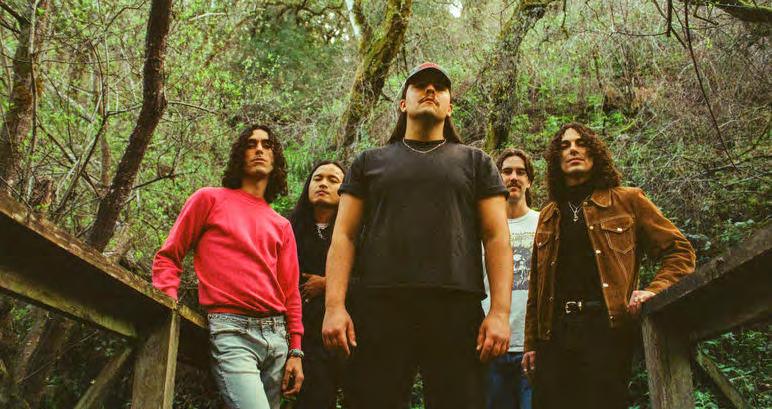
Cole Chaney and Kyova 8 p.m. Cat’s Cradle Back Room, Carrboro.
Cosmic Charlie – High Energy Grateful Dead 8 p.m. Cat’s Cradle, Carrboro.
House Party 8 p.m. Mettlesome Theater, Durham.
NC Symphony: Appalachian Spring May 8-9, 8 p.m. Martin Marietta Center for the Performing Arts, Raleigh.
Yarn 8 p.m. Lincoln Theatre, Raleigh.
STAGE
The Ballad of Johnny Whitmore May 8-17, various times. The ArtsCenter, Carrboro.
Brendan Sagalow May 8-9, 7:30 p.m. Goodnights Comedy, Raleigh.
The ComedyWorx Show Fridays at 8 p.m. ComedyWorx, Raleigh.
The Harry Show Fridays at 10 p.m. ComedyWorx, Raleigh.
Hush Hush: The Worst Kept Secrets in Durham 9 p.m. Mettlesome Theater, Durham.
The Racket Indie Comedy 7 p.m. Mettlesome Theater, Durham.
SAT 5/9
MUSIC
Andrew Duhon 8 p.m. Cat’s Cradle Back Room, Carrboro.
Bahamas 8 p.m. Haw River Ballroom, Saxapahaw.
Caifanes 7 p.m. The Ritz, Raleigh.
Disciple of The Garden –Tribute to Chris Cornell, Soundgarden, Audioslave 8 p.m. Lincoln Theatre, Raleigh.
DØMINA 9 p.m. The Fruit, Durham.
Ingrown with Witness Chamber, Skin You Alive, and Twisted Fate 7:30 p.m. Local 506, Chapel Hill.
John R. Miller 8 p.m. Motorco Music Hall, Carrboro.
Kate McGarry & Keith Ganz Quartet 7:30 p.m. Sharp 9 Gallery, Durham.
Trippers & Askers, Joseph Decosimo 8 p.m. The Pinhook, Durham.
STAGE
Cary Ballet Company: Peter Pan 1:30 and 5:30 p.m. Martin Marietta Center for the Performing Arts, Raleigh.
The ComedyWorx Show Saturdays at 7 p.m. ComedyWorx, Raleigh.
The ComedyWorx Show
Matinee Saturdays at 4 p.m. ComedyWorx, Raleigh.
DanceArt 24th Annual Dance Recital 1 p.m. Martin Marietta Center for the Performing Arts, Raleigh.
Golden Age 7 p.m. Mettlesome Theater, Durham.
Martin Amini 7 and 9:30 p.m. Goodnights Comedy Club, Raleigh.
Show and Tell 8 p.m. Mettlesome Theater, Durham.
SCREEN
Home Is Distant Shores Film Festival 11 a.m. The Cary Theater, Cary.
HUMP! Film Festival 8 p.m. The Fruit, Durham.
SUN 5/10
MUSIC
Angela Bingham and Deidre Rodman Struck: “Love Detectives,” Mothers Day Edition 3 p.m. Sharp 9 Gallery, Durham.
Failure, All Under Heaven 8 p.m. Cat’s Cradle, Carrboro.
Magnolia Park 8 p.m. Lincoln Theatre, Raleigh.
SPANGLISH GOTH PARTY with THE GRAMPS, BLAT, DJ Nätiva 7:30 p.m. The Pinhook, Durham.
Windwaker, If Not For Me, Colorblind 7 p.m. Local 506, Chapel Hill.
STAGE
Kel Perez 4 p.m. Goodnights Comedy Club, Raleigh.
SCREEN
Avatar: Don’t Go Into the Forest Tour 7 p.m. The Ritz, Raleigh.
MON 5/11
MUSIC
An Evening With David Byrne - Who is the Sky Tour May 11-12, 8 p.m. DPAC, Durham.
An Evening with Shawn Mullins: A solo performance filled with songs and stories 8 p.m. Cat’s Cradle Back Room, Carrboro.
Lorna Shore 7 p.m. The Ritz, Raleigh.
Midrift 7:30 p.m. Motorco Music Hall, Durham.
TUES 5/12
MUSIC
Ally J on the Roof 7:30 p.m. The Durham Hotel, Durham.
Bill Callahan, Noveller 8 p.m. Haw River Ballroom, Saxapahaw.
Kreator: Krushers of the USA Tour 6:30 p.m. The Ritz, Raleigh.
PAGE
Jen Hamilton: Birth Vibes 6 p.m. Flyleaf Books, Chapel Hill.
WED 5/13
MUSIC
Arankai: The Portrait Tour 7 p.m. Local 506, Chapel Hill. Stage
The Broadside Presents: An Evening of Asian American Storytelling 7 p.m. The Cary Theater, Cary.
The Psychology of Serial Killers 7:30 p.m. Martin Marietta Center for the Performing Arts, Raleigh.
PAGE
Sarah Glenn Marsh: Our Rogue Fates 6:30 p.m. Quail Ridge Books, Raleigh.
THUR 5/14
MUSIC
Hot 8 Brass Band 8 p.m. Motorco Music Hall, Durham.
Jacoozy w/ Mellow Swells and Bass Battery 8 p.m. Lincoln Theatre, Raleigh.
Moses & Tennishu 7:30 p.m. Sharp 9 Gallery, Durham.
STAGE
Beauty and the Beast May 14-17, various times. Martin Marietta Center for the Performing Arts, Raleigh.
The Racket Indie Comedy ft. Mom Factory & Mango! Mango! 7:30 p.m. Mettlesome Theater, Durham.
PAGE
Nic Brown: Violent Femmes 5:30p.m. Flyleaf Books, Chapel Hill.
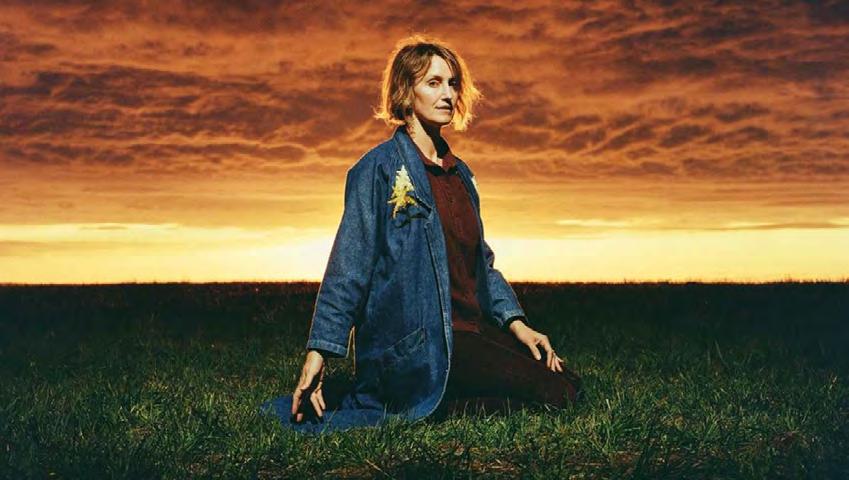
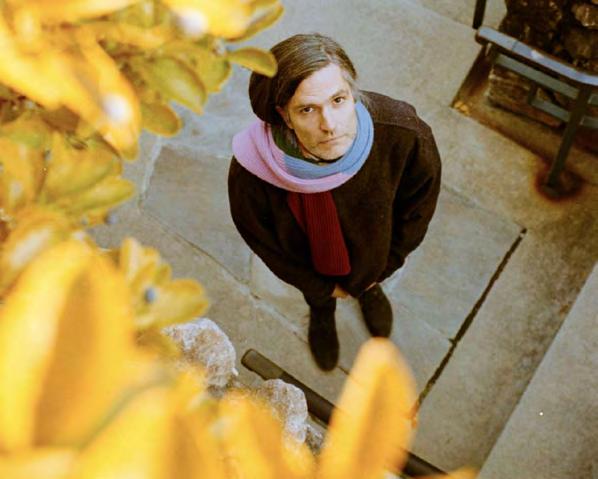
FRI 5/15
MUSIC
Brodie Cormack Band, Josh Rhyne and Silvertones, Kyle Mullins, Sophie Taylor 8 p.m. Lincoln Theatre, Raleigh.
By Storm 8 p.m. Cat’s Cradle Back Room, Carrboro.
Desiree Dawson + Mira Lazuli, Supermutt (solo)
7 p.m. Rubies on Five Points, Durham.
Dynamite Brothers with Crank Stallion and Megayacht 8 p.m. Local 506, Chapel Hill.
An Evening with Lucinda Williams and Her Band 8 p.m. Haw River Ballroom, Saxapahaw.
Mint Field / Big Mistake 7:30 p.m. The Pinhook, Durham.
Scott Sawyer with Rick Bugel & Iahji Hampden 7:30 p.m. Sharp 9 Gallery, Durham.
STAGE
The ComedyWorx Show Fridays at 8 p.m. ComedyWorx, Raleigh.
Gianmarco Soresi May 15-16, 7 p.m. Goodnights Comedy Club, Raleigh.
Grant Lyon and Matt White 8 p.m. The Cary Theater, Cary.
The Harry Show Fridays at 10 p.m. ComedyWorx, Raleigh.
Hush Hush: The Worst Kept Secrets in Durham 9 p.m. Mettlesome Theater, Durham.
Matt Ross 7:30 p.m. Goodnights Comedy Club, Raleigh.
Secret Society Improv Show 7 p.m. Mettlesome Theater, Durham.
The Rocky Horror Picture Show 11:55 p.m. The Rialto, Raleigh.
Andrew Marlin & Josh Oliver 8 p.m. Cat’s Cradle, Carrboro.
Charles and Jackson Pettee – Catch the Bluegrass Bug! 11 a.m. The Carolina Theatre, Durham.
Drayton Farley 8 p.m. Motorco Music Hall, Durham.
Iron & Wine May 16-17, 8 p.m. Haw River Ballroom, Saxapahaw.
Jack the Songman, Eric Lee Hardt, and Chris Chism 8 p.m. Local 506, Chapel Hill.
Jim Ketch Quintet w/ Angela Bingham: Tin Pan Alley and Beyond 7:30 p.m. Sharp 9 Gallery, Durham.
John-Robert 7 p.m. The Pinhook, Durham.
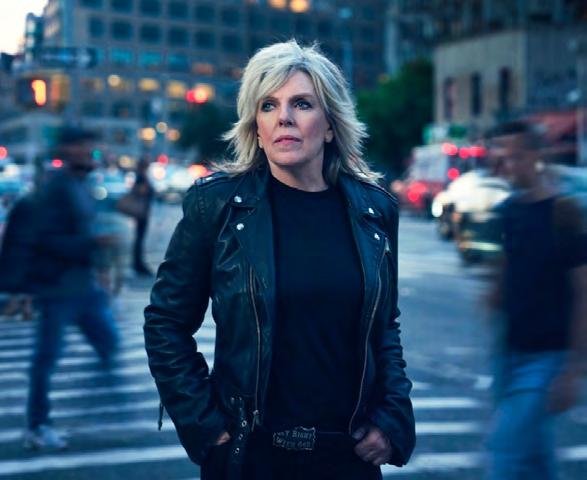
MJ: THE ESSENTIALS May 16-17, 4 p.m. The Fruit, Durham.
NC Symphony: Motown and Beyond 8 p.m. Martin Marietta Center for the Performing Arts, Raleigh.
Ole 60: Smokestack Town Tour 7:30 p.m. Red Hat Amphitheater, Raleigh.
Overcome Fest IV 2 p.m. Lincoln Theatre, Raleigh.
Soda Water Sea 8 p.m. Cat’s Cradle Back Room, Carrboro.
Starling, Total Wife 7 p.m. Rubies on Five Points, Durham.
Toadies 8 p.m. The Ritz, Raleigh.
The ComedyWorx Show Saturdays at 8 p.m. ComedyWorx, Raleigh.
The ComedyWorx Show Matinee Saturdays at 4 p.m. ComedyWorx, Raleigh.
Durham Ballet Theatre presents: Aladdin 2 and 6 p.m. The Carolina Theatre, Durham.
Matt Ross 7:30 p.m. Goodnights Comedy Club, Raleigh.
John Crist 7 p.m. DPAC, Durham.
Golden Age 7 p.m. Mettlesome Theater, Durham.
The Racket: Indie Comedy 5 p.m. Mettlesome Theater, Durham.
SUN 5/17
MUSIC
The Black Angels: Passover 2026 Tour with L.A. Witch 8 p.m. Lincoln Theatre, Raleigh.
Grace Ives 8 p.m. Cat’s Cradle Back Room, Carrboro.
Punch Brothers 7:30 p.m. The Carolina Theatre, Durham.
Setting 8 p.m. Haw River Ballroom, Saxapahaw.
Wooden Rings, Candiland, Lily Desmond (NYC) 7 p.m. Rubies on Five Points, Durham.
Yot Club: Simpleton Tour 8 p.m. Motorco Music Hall, Durham.
MON 5/18
MUSIC
‘68 8 p.m. Local 506, Chapel Hill.
Future Islands May 18-20, 8 p.m. Cat’s Cradle, Carrboro.
WED 5/20
MUSIC
Distant, Tracheotomy 7 p.m. Local 506, Chapel Hill.
The New Pornographers 8 p.m. Haw River Ballroom, Saxapahaw.


RELEASE DATE—Sunday, May 3, 2026
Edited by Patti Varol

There is really only one rule to Sudoku: Fill in the game board so that the numbers 1 through 9 occur exactly once in each row, column, and 3x3 box. The numbers can appear in any order and diagonals are not considered. Your initial game board will consist of several numbers that are already placed. Those numbers cannot be changed. Your goal is to fill in the empty squares following the simple rule above.


Marketing Specialist
Marketing Specialist (Apex, NC) Plan & execute SEO mktg strategies to improve search rankings & product visibility. Conduct mkt research to gather data on competitors, pricing, & mkt trends to identify sales opportunities. Perform digital mktg, campaign execution, & performance analysis. Reqd: Masters in Mktg or Business Administration, 12-month exp in online & offline mktg & mkt data analysis. Knowl & skills in Mkt Strategic Planning, Brand Promotion, Google Analytics, Tableau, Crossdomain Learning & Adaptation. Salary: $69555/ yr. Mail resume to iPearl INC, 2025 Production Dr., Apex, NC 27539.
Remote Personal Assistant
Seeking an organized & detail-oriented Personal Assistant. Responsibilities incl: managing calendars & appointments, coordinating travel arrangements, handling correspondence & confidential documents, and providing general admin support to senior management. Reqs: min 2 yrs exp in similar role, strong written & verbal communication skills, proficiency in MS Office Suite, ability to multitask & work independently. Diploma or degree in Business Admin or rltd field preferred. Pay: $25-$30/hr. Send resume to [dave.huff@phillipsholdings.net]. Ref: PAPH2026.
Sr. Computer Systems Validation Specialist w/ KBI Biopharma, Inc., Durham, NC. Apply at https://www.kbibiopharma.com/careers w/ code R00008429. EEO/AA
26 __ of attrition
27 Daytime show until 2022
28 Sundaes, e.g.
29 2026 Olympics host country
31 Whiskey choice
32 Spanish river to the Mediterranean 35 Evian, par exemple
Woven
36 Sacramento daily
Senior Software Engineer I
37 French father
38 Sly campaign to keep white birds out of the deodorant aisle?
Senior Software Engineer I sought by RELX Inc dba LexisNexis USA in Raleigh, NC to write/review system specifications by understanding needs of business for whom system is being designed. Minimum of Master’s degree or foreign equivalent in Computer Science, Computer Engineering, Information Technology, or rltd + 3 yrs exp in job offered or rltd occupations required. Employee reports to LexisNexis USA office in Raleigh, NC but may telecommute from any location within US. Interested candidates should send email to ResumesICT@RELX.com. Ref job code: R110795
45 Opera solo
48 Ordinary
50 Financial 51 Huge supply of sled dogs in the household goods aisle?
56 Toledo’s lake
57 Pitcher’s rate?
58 Cell service letters
59 Check no.
60 Take by force
($135,408 to $144,400/yr + standard corporate benefits)
61 Vegan cafe order
Software Engineer III
63 Farm insects 64 Bridal party attire 66 Improve Alabama school spirit in the laundry aisle?
Software Engineer III sought by RELX Inc dba LexisNexis USA in Raleigh, NC to lead design of specific software products & introduce new patterns for Microservices FrontEnd (MFE) to support rich, dynamic web experiences & APIs. Minimum of Bachelor’s degree or foreign equivalent in Computer Science, Computer Engineering, Information Technology, or rltd + 3 yrs exp in job offered or rltd occupations required. Employee reports to LexisNexis USA office in Raleigh, NC but may telecommute from any location within US. Interested candidates should send email to ResumesICT@relx.com. Ref job code: R111458 ($128,305.84 to $144,400/yr + standard corporate benefits)
69 Finalize, as a house purchase 73 Exclude
Obscene 79 Show runner?
80 Borscht base 81 “Here Comes the Hotstepper” singer Kamoze 82 Radii neighbors
83 Nota __ 84 Ms. Witherspoon’s Peruvian friends in the candy aisle?
88 Tool for an ENT
90 Have faith in
Software Engineer III
Software Engineer III sought by RELX Inc dba
LexisNexis USA in Raleigh, NC to lead/participate in testing of systems. Work w/ management to enhance quality/process standards & plan/execute effective/efficient test approaches to accomplish on-time/efficient delivery of high-quality software products and/or data. Minimum of Bachelor’s degree or foreign equivalent in Computer Science, Computer Engineering, Information Technology, or rltd + 2 yrs exp in job offered or rltd occupations required. Employee reports to LexisNexis USA office Raleigh, NC but may telecommute from any location within US. Interested candidates should send email to ResumesICT@RELX.com. Ref job code: R111455 ($101,332.03 to $105,100/yr + standard corporate benefits)

Solution Engineer
Siemens Industry, Inc. seeks a Solution Engineer in Wendell, NC to analyze client specifications for electrical engineering-related applications and adjust the oneline and schematic diagrams accordingly. Bach deg or foreign equiv in Elec Eng, & 3 yrs rel exp. Alt reqs: Mas deg foreign equiv in Elec Eng, & 1 yr rel exp. Hybrid work permitted. To apply, go to: https://jobs.siemens.com/en_US/ externaljobs/JobDetail/503301
RECYCLE THIS PAPER RECYCLE THIS PAPER RECYCLE THIS PAPER RECYCLE THIS PAPER RECYCLE THIS PAPER RECYCLE THIS PAPER RECYCLE THIS PAPER RECYCLE THIS PAPER RECYCLE THIS PAPER RECYCLE THIS PAPER RECYCLE THIS PAPER RECYCLE THIS PAPER RECYCLE THIS PAPER RECYCLE THIS PAPER RECYCLE THIS PAPER RECYCLE THIS PAPER RECYCLE THIS PAPER RECYCLE THIS PAPER RECYCLE THIS PAPER RECYCLE THIS PAPER RECYCLE THIS PAPER RECYCLE THIS PAPER RECYCLE THIS PAPER