


June 3, 2026
A Raleigh homeless encampment has a mayor, a charter, and a tight-knit community. As the city pushes to end unsheltered homelessness, the Outlanders could serve as a model—or be cleared out. Raleigh | Durham | Chapel Hill
June 3, 2026
A Raleigh homeless encampment has a mayor, a charter, and a tight-knit community. As the city pushes to end unsheltered homelessness, the Outlanders could serve as a model—or be cleared out. Raleigh | Durham | Chapel Hill
CHLOE COURTNEY BOHL


4 Raleigh voters will decide whether to approve another affordable housing bond this year. How was the last one spent? BY JASMINE GALLUP
6 Eliminating primaries, adopting a true ward system, and other municipal election changes being floated in Durham. BY JUSTIN LAIDLAW
8 “We’re not just camping—we’re building something together,” reads the community charter for Outlanders, believed to be the state's only self-governed homeless encampment. BY CHLOE COURTNEY BOHL
12 A new initiative in Durham aims to functionally end homelessness by 2031— who will pay for it? BY TORI NEWBY
13 Cary spent $330,000 on largely internal videos, including a behind-the-scenes look at a surprise staff dance performance. BY CHLOE COURTNEY BOHL
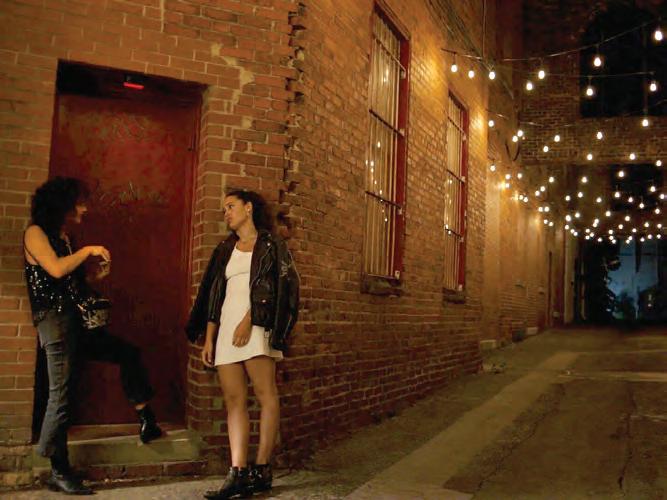
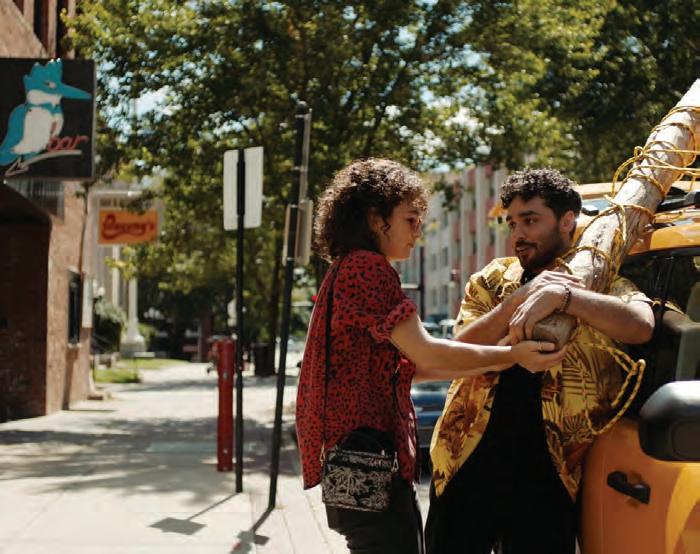
16 The Bull City is somewhat of a main character in the indie rom-com Everything & the Universe, streaming since last year on Amazon Prime. So why has no one heard of it? BY LENA GELLER
18 With local film groups buzzing with activity and a new arthouse cinema slated to open later this year, going to the movies is more fun than ever. BY BRIAN HOWE
20 Four new works, choreographed by North Carolina artists and commissioned by the American Dance Festival take the stage this June. BY LAUREN WINGENROTH
22 A bittersweet coming-of-age story, an Irish horror flick, and more movies coming to local theaters. BY GLENN MCDONALD
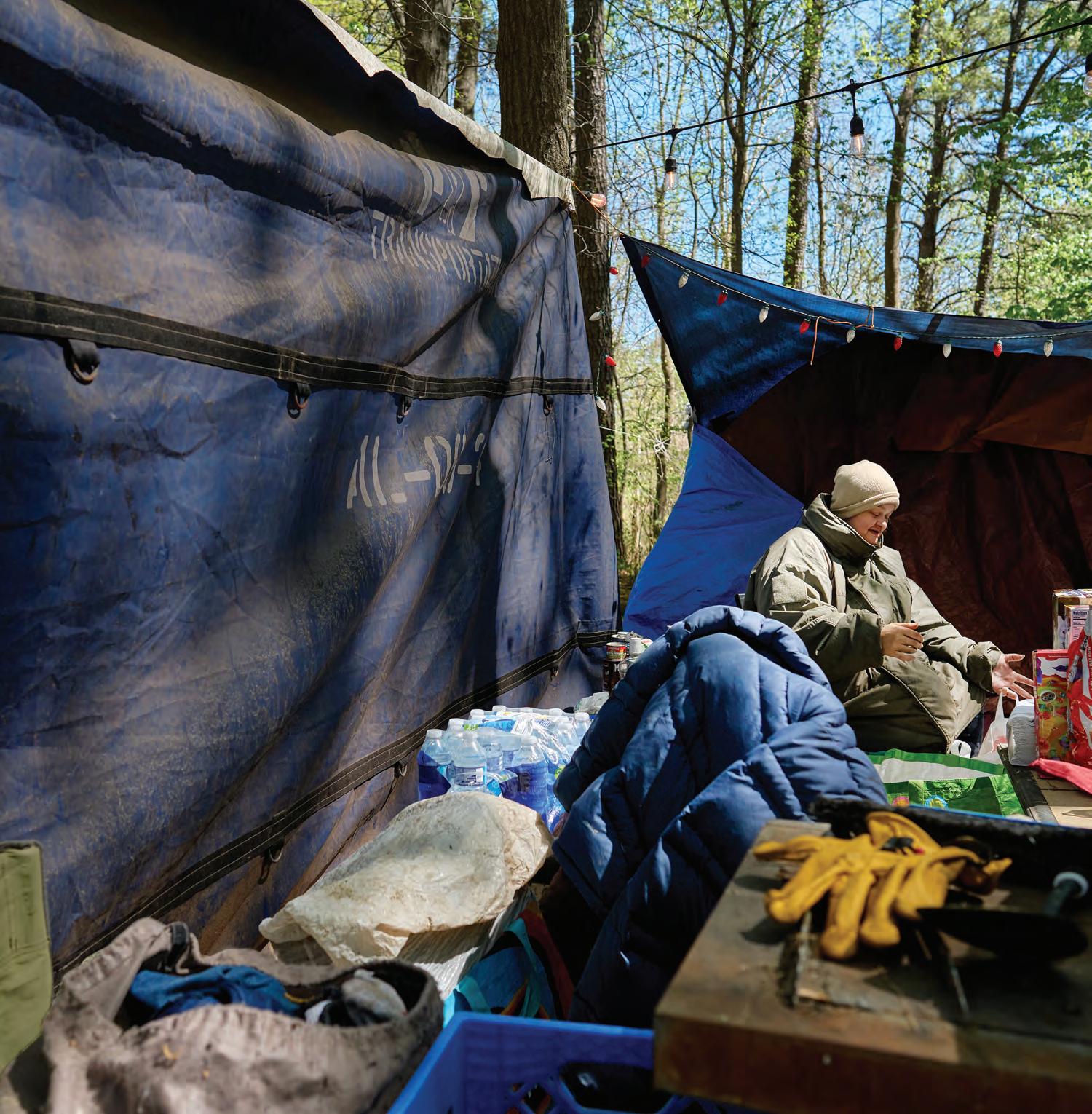
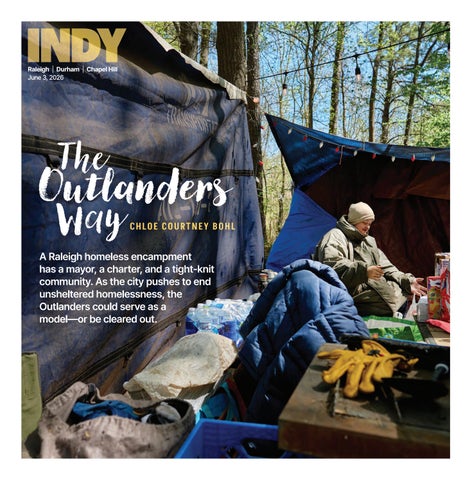
Cover Outlander Penny sits in her living room area preparing to eat lunch. PHOTO BY MATT RAMEY
Last month Chloe Courtney Bohl reported on a dozen videos commissioned by the town of Cary under former Manager Sean Stegall, who resigned in December amid allegations of over-the-top spending. The videos—which include a behindthe-scenes look at a surprise staff dance performance—cost $330,000 and were not made for public viewing. Readers shared their thoughts on the story, as well as the videos and their price tag. Read the article on page 13.
From Reddit user NOVABLISS1:
Thank you Indy for the phenomenal journalism. Seriously. $30k for an internal video is insane. It would be insane for any corporation with 1000 employees to spend that much on a video for their own employees that isn’t to help them learn about their job. It can be important, from a business sense, to boost morale and encourage team building (which seems to be what this was supposed to be) but you can do that with 10x less budget.
The music licensing fees are the most insane thing to me. Why the hell would you believe it is worth $5k to license the song that is going to exclusively be used for internal use. My goodness.
I think many of the criticisms that have been coming out about Cary’s government have been grossly overstated (the police chief’s truck, Bush’s college degree). But this is legitimate and profoundly stupid. I wouldn’t call it corruption, but it is insanely unintelligent and I hope that they vow to make changes moving forward.
From Reddit user RAILHAWK52:
Yikes. I think it’s gonna be critical for the town to show the public they’ve meticulously scrutinized line items in all budgets this year before they can justify raising taxes after this story. The town has almost a billion dollars of infrastructure backlog and $330k ain’t nothing. That could have gone towards building some sidewalks, added new bike lanes, new greenways, police officer salary increases
From Bluesky user JAY:
As a Cary resident, this makes me so mad. I know the cost is minimal in our town budget, but it shows a lack of awareness from the council and staff.
From Bluesky user LAAS:
This is straight up some Michael Scott shit. I both can and cannot believe this is real

Second of all, wdym all these videos were produced by a white man named PEYOTE who is also a former Town of Cary employee
From Facebook user TONIA SANCHEZ:
People are getting desperate. I don’t even see what the big deal is. They got rid of the guy over spending and are cooperating with a state audit to look for any laws broken. I don’t even think the videos are that big of a deal. And they used a local business to create them. Obviously they need to tighten to reins now and seems like they’re working on it. Time to move on.
From Facebook user AMANDA BENSON:
Meanwhile…one month to go and many Chatham Estates residents still have no place to go….someone in Cary needs to learn how to prioritize tax payer money…..and they want to raise my taxes? No thanks!
From Bluesky user JESS:
Feels like we will be reading about the way this one man spent tax dollars frivolously for years to come. All this for ridiculous videos for INTERNAL use made by a vendor who was told they’d spend whatever it takes.
From Bluesky user LIZ SKOSKI:
This is an nbc sitcom
In our last print edition, freelancer Abraham Kenmore followed up with some of the many Triangle residents who lost their jobs due to federal funding cuts last year. Abraham combed data and interviewed experts to understand the scope of the layoffs—and where all those workers ended up. Readers appreciated the story.
From Bluesky user JOSHFRAI:
In this era of too much news too fast, take a second to read about some of the federal employees and contractors who had their lives turned upside down about 500 news cycles ago.
From Bluesky user LAURA SELL:
My home, NC’s 4th Congressional district, was district most impacted by the incredibly stupid and farsighted DOGE cuts last year. These are my neighbors.
From Reader ELLEN BERREY by email:
I don’t even live in the U.S., but I read the Indy [newsletter] regularly.
Abraham Kenmore’s article on federal job losses is devastating. Really excellent work doing shoe-leather reporting, getting people’s stories and showing the numbers. What a service to your readers - and these workers. I keep thinking about this heartbreaking quote: “All of those people were people who had committed their lives to service, had committed their lives to making the world a safer place, a healthier place.”
Raleigh is putting a $101.5 million affordable housing bond on November ballots. Here’s a look at how the 2020 bond was spent, and how the city would use another bond if approved.
BY JASMINE GALLUP backtalk@indyweek.com
Aroughly $100 million affordable housing bond will be on the ballot this November after the Raleigh City Council approved the measure unanimously last month.
The bond, expected to fund projects over the next four years, follows an $80 million affordable housing bond that voters approved in 2020. That money paid for the construction or preservation of nearly 2,500 affordable housing units over a five-year period, some of which are still being built.
It also helped the Raleigh City Council buy land for future affordable housing near major roads and public transportation, including bus rapid transit (BRT) routes. Finally, a chunk of money went toward programs to help first-time homebuyers make down payments and longtime homeowners repair aging houses.
With a new affordable housing bond referendum headed to voters, we took a look at what the proposed bond would cover if approved, and how money from the 2020 bond was spent.
If approved, the 2026 bond would continue to fund the construction and preservation of affordable housing, as well as the city’s ongoing homebuyer assistance and home repair programs.
This time, however, a portion of the money would also go toward creating a loan fund to help developers build mixed-income housing—or a blend of income-restricted and market-rate units.

For projects like this, the city expects about one-third of the units would be affordable, Housing and Community Development Director Emila Sutton said during a March workshop. So for a 200-unit complex, 140 apartments would be rented at market rate, and 60 would be rented at income-restricted rates.
This one-time investment from the city would allow the loan fund to keep operating even after the bond expires, Sutton said. So even though each project might result in a relatively small number of affordable units, the city is getting a lot of bang for its buck.
After one housing project is done and the developers pay back the loan, the city can use that money to make another loan and help another project, Sutton said. The fund would ensure construction of mixed-income housing continues steadily into the future.
“You’re creating that forever fund,” Sutton said.
In the previous bond (and in this one), developments that are 100% affordable are subsidized by the city year after year, Sutton added.
The City Council would also reserve a chunk of money to address homelessness, primarily by expanding a pilot program that has proven successful. The program, created in 2024, provided rent money to people for up to two years, with the goal of housing them permanently. It also offered support services and case management to help people find jobs, for example.
“It is a no-questions-asked rental voucher ... so folks cannot get discriminated against based on their source of income,” at-large Councilmember Jonathan Lambert-Melton told the INDY. “It’s just the ability to go and
find an apartment and pay rent.”
As of July 2025, the city had enrolled 45 households— an entire homeless encampment—in the program. The program was so successful with a relatively small amount of money (about $1 million) that Lambert-Melton says he believes allocating more resources to it will be an ongoing City Council priority.
The supply of housing is mostly under the control of the private development industry. The bond would give the city more money to subsidize affordable housing projects, as well as help create stability by buying existing affordable properties (in an effort to prevent rent hikes or redevelopment) and funding home repair programs.
While the upcoming bond would still be a significant investment in affordable housing, it’s less than the $200 million some activists were asking for. The City Council ultimately decided to put two bonds on the November ballot—the $101.5 million bond for affordable housing and another $101.5 million bond for transportation projects. (The city also already dedicates a penny from the property tax rate to affordable housing, which brings in about $11 million per year.)
The transportation bond would fund projects including BRT, which has been somewhat controversial in Southeast Raleigh. Some activists have said they believe the BRT line planned for New Bern Avenue will lead to gentrification and an increase in unaffordable housing.
Lambert-Melton told the INDY that initially, he was also in favor of a $200 million affordable housing bond. But after talking with staff and looking at the data, he changed his mind.
“There’s only so many projects [staff] can get ready within the timeframe that the bond money has to be spent,” Lambert-Melton said. “Giving them another $100 million dollars is not going to result in substantially more affordable housing.”
He added that along with housing, transportation is one of the two highest costs residents are facing right now and that “if we don’t focus on transportation, we’re not looking at the problem holistically.”
While the 2020 bond did help boost the supply of affordable housing, Raleigh is still facing a persistent shortage, especially for renters making less than $46,000, according to the National Low Income Housing Coalition.
Some critics have said the city should focus less on units affordable to people making as much as 80% of the area median income (AMI) and more on housing that is affordable to people with the lowest incomes. But lower rents require a higher subsidy from the government. (Lambert-Melton notes the new bond would help residents earning very low incomes through money that is dedicated to addressing homelessness.)
As of 2024, there was a deficit of some 70,000 units affordable to renters making 50% AMI or below. Population growth also continues to outpace housing development across the city, according to Raleigh’s 2026–30 Affordable Housing Plan.
About one-quarter of units created or preserved by Raleigh’s 2020 bond—mostly apartments, but also some single-family homes—are reserved for people making 60% AMI or less. In Raleigh, that’s currently around $55,000 for a single person and $63,000 for two people.
Another quarter of those units are reserved for specific populations, including seniors, people experiencing or recovering from addiction, people exiting homelessness, and young adults aging out of foster care.
One of the projects the city spent the most bond money on—$7 million— was King’s Ridge, a 100-unit apartment complex that offers housing and supportive services to people who have experienced homelessness. It opened in January 2025.
How did Raleigh spend its 2020 affordable housing bond?
Raleigh voters approved an $80 million affordable housing bond in November 2020. Over the last five years, the city council earmarked that money for different projects and programs—including the construction or preservation of nearly 2,500 affordable housing units. Here’s how they spent the money.
How many affordable housing units did Raleigh fund with the 2020 bond?
About one-quarter of units created or preserved by Raleigh’s 2020 bond—mostly apartments, but also some single-family homes—are reserved for people making 60% or less than the area median income (AMI). In Raleigh, that’s currently around $55,000 for a single person, and $63,000 for two people.
How does Raleigh plan to spend its 2026 affordable housing bond?
A $101.5 million affordable housing bond will be on the ballot this November. How does Raleigh plan to spend it compared to the $80 million bond approved in 2020?
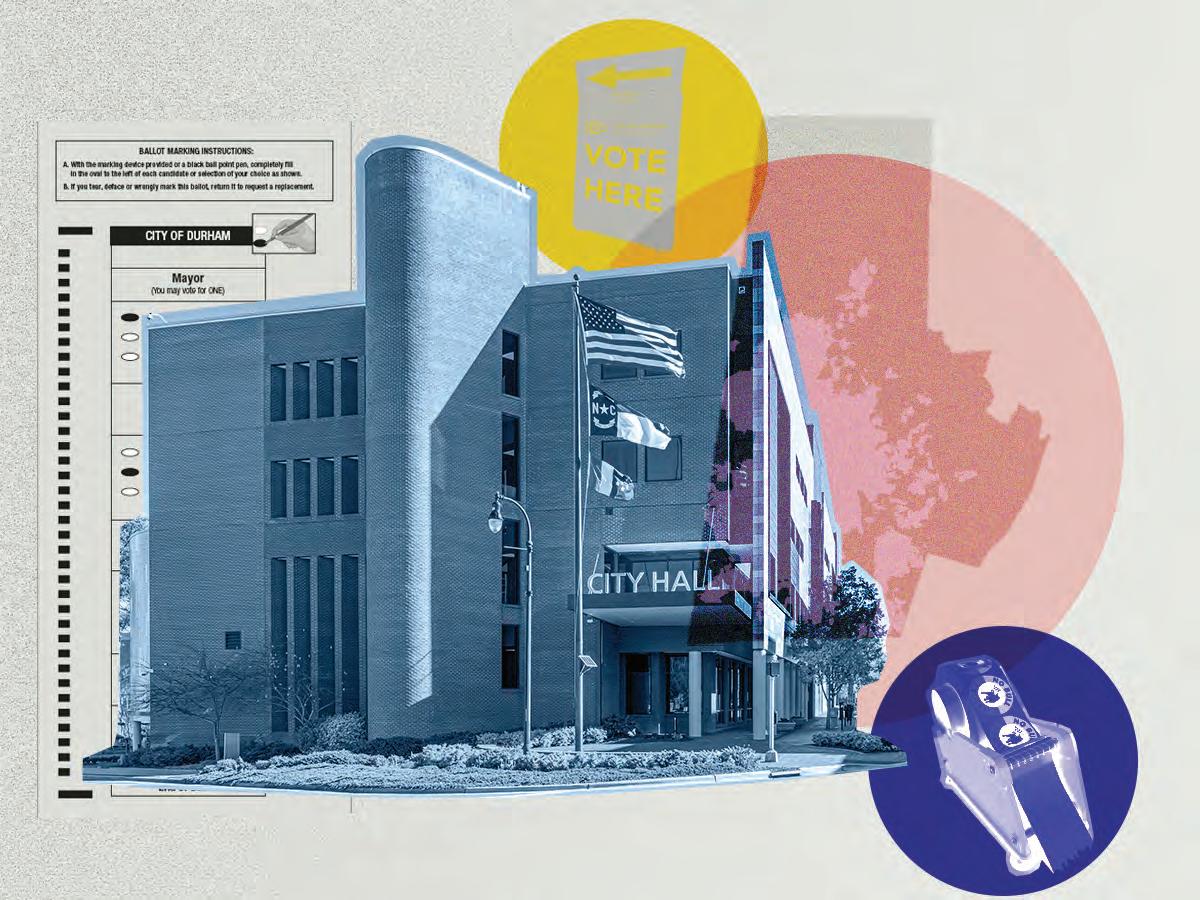
The Durham City Council is having early discussions about a slate of changes to municipal elections, including eliminating primaries and extending mayoral terms.
BY JUSTIN LAIDLAW jlaidlaw@indyweek.com
Elections in Durham are omnipresent. In the odd years, City Council and mayoral races take center stage, whereas the county commission, school board, state, and federal races ramp up in the even years.
The marathon election schedule can be exhausting for nearly everyone involved, politicians and voters alike. That schedule could change substantially in the coming years.
At a recent Durham City Council work session, Durham Board of Elections Chair David Boone and Elections Director Derek Bowens presented a slate of possible changes to City Council and mayoral elections that—if adopted—could reshape Durham politics. The four changes under consideration are: moving City Council elections to even-numbered years, creating a “true” ward system, extending the mayor’s term to four years, and eliminating the primary in favor of a single, nonpartisan general election.
A main driver for reconfiguring municipal elections in
Durham would be cost. The city of Durham is responsible for reimbursing the county to administer the primary and general elections for mayor and City Council in odd years. Those costs have jumped from $374,000 in 2017 to over $800,000 in 2023 and 2025. Over the past five years, the total cost is $3,248,786. This doesn’t include costs to administer ballots for the 614 Wake County and 42 Orange County residents who live inside Durham city limits, which totaled $20,754.27 in 2025.
Here are the potential changes the City Council discussed.
That feeling of déjà vu where you just cast a ballot for City Council in October, and then turn around less than a month later to return to the polls—it’s not just you.
ILLUSTRATION BY NICOLE PAJOR MOORE
Durham holds nonpartisan primaries and general elections for mayor and City Council. A member of any political party can file to run in the primary election, after which the top two vote-getters compete head-to-head in the general election in November. Rarely do the outcomes change after the primary; the winner in October tends to hold on three weeks later.
Eliminating the primary in favor of a single general election would substantially reduce administrative cost and electoral “exhaustion”—as council members put it—from back-to-back elections so close together.
The change received broad support from the City Council members during the May 21 discussion and seems like the most likely change to be adopted in the coming years.
Three of the seven seats on the Durham City Council are ward seats: Candidates must live in their ward, but voters citywide cast ballots in those races. The remaining three seats are at large: Candidates can live in any part of the city and are elected by voters citywide. Under a true ward system, only residents of a given ward would vote on their ward’s council member.
When Durham’s ward system was first implemented, the assertion was that having council members from different parts of the city would diversify the board and prevent a concentration of power from one particular area. But because everyone votes in all ward races, residents can be outvoted by the general public.
The ward system can give voters a false sense of representation, councilors said during the meeting. City Councilmember Chelsea Cook took the idea a step further, suggesting that all six seats should move to a true ward system, shrinking the size of each ward’s footprint and making it easier to stay engaged with the councilor’s specific constituency.
“Three wards to represent a city of this size feels just overwhelmingly not appropriate, because folks are not truly represented if they’re bulked in with a third of the city,” Cook said.
Fellow Councilmember Matt Kopac, who assumed the Ward 1 seat in November, said he’s open to the true ward system but held reservations about the motives for the change.
“I want to make sure we’re clear on the rationale and the criteria for moving to that, to make sure that it’s really based on data for the outcomes we’re hoping to achieve
and not just the feelings we may have about that change,” Kopac said.
Councilmember Carl Rist said he had “serious concerns” after talking with city councilors from around the country who warned that true wards could create “parochial” representatives who care more about their specific districts on issues like zoning cases, rather than acting as a team for the city at large.
During the discussion, Kopac also expressed openness to expanding the number of seats on the City Council, an idea floated during public comment by former City Councilmember Jacqueline Wagstaff, and went as far as saying the city should consider fully merging with Durham County, similar to Charlotte-Mecklenburg. The city of Durham and Durham County have attempted board mergers twice before, in 1974 and 2000.
While the mayor has a few additional responsibilities, the position is ultimately one of seven votes as a member of the City Council. But sitting at the head of the table comes with a drawback: A year after step-
ping into office, it’s right back to campaigning to keep your job. In Durham, mayors are elected every two years, while their council colleagues get four-year terms.
Durham’s current mayor, Leonardo Williams, as well as Kopac and Rist spoke in favor of moving the mayor’s term to four years. Williams called the compressed election cycle “exhausting,” while Rist said it was “crazy” to run on such a tight schedule.
Councilmembers Nate Baker and Cook pushed back, saying that two-year terms for the mayor give voters more frequent opportunities to express their approval or dissatisfaction with the city’s top office.
“I understand that it’s difficult to run an election. ... If you’re doing a good job in your governance, that is part of campaigning as well,” Cook said.
Raleigh, Cary, and Morrisville operate with four-year terms for mayor. Chapel Hill is the only other municipality in the area with a two-year mayoral term.
Moving municipal elections to even years would reduce election reimbursement costs by 70% or more, Boone said. The Board
of Elections already administers ballots in even years for numerous federal and state elections, which tend to draw more voter participation because of the high visibility of the big-ticket races. The switch could boost voter turnout in local contests. Since 2017, odd-year general elections averaged 18.66% turnout compared to 64.03% for even years.
But most of the council stood in opposition to the proposal.
Councilmember Shanetta Burris said local candidates, particularly women, could have a harder time fundraising if they have to compete in an expanded field of races. Baker added that he is “vehemently against” moving to even-year races, saying local candidates would be overshadowed by the top of the ticket. Baker and others also said the odd years are an opportunity to register voters and educate the public leading up to federal and state elections, and free city councilors to campaign on behalf of higher officer seekers in even years.
“I get the exhaustion factor of having elections every single year, but I also think that it’s almost like democratic maintenance that when we pound the pavement in odd years, we are making sure that people are registered to vote,” Baker said.
The city of Raleigh switched to even-year elections between 2019 and 2022, and turnout has steadily risen. Former Mayor Mary-Ann Baldwin won with 20,832 votes in 2019 and 71,521 in 2022, while her successor, Janet Cowell, won with 132,315 votes in 2024.
The City Council would have to get state legislative approval to move from evento odd-year elections but could amend the city’s charter to administer the other changes.
Mayor Pro Tem Javiera Caballero, who presided over much of the discussion in the mayor’s absence, said regardless of what changes council members consider, Durham voters should be the ones to make the ultimate decision.
“To me,” she said, “it would be a modernization of municipal elections and we would put everything in front of the voters and let voters decide.”
No timeline has been given for the council to take action. The city would hold a public hearing before making changes to the charter or putting the measures on ballots.

As the city pushes to end unsheltered homelessness, a selfgoverned encampment in Raleigh could be a model for helping unhoused people get on their feet— or at risk of being cleared out.
BY CHLOE COURTNEY BOHL chloe@indyweek.com
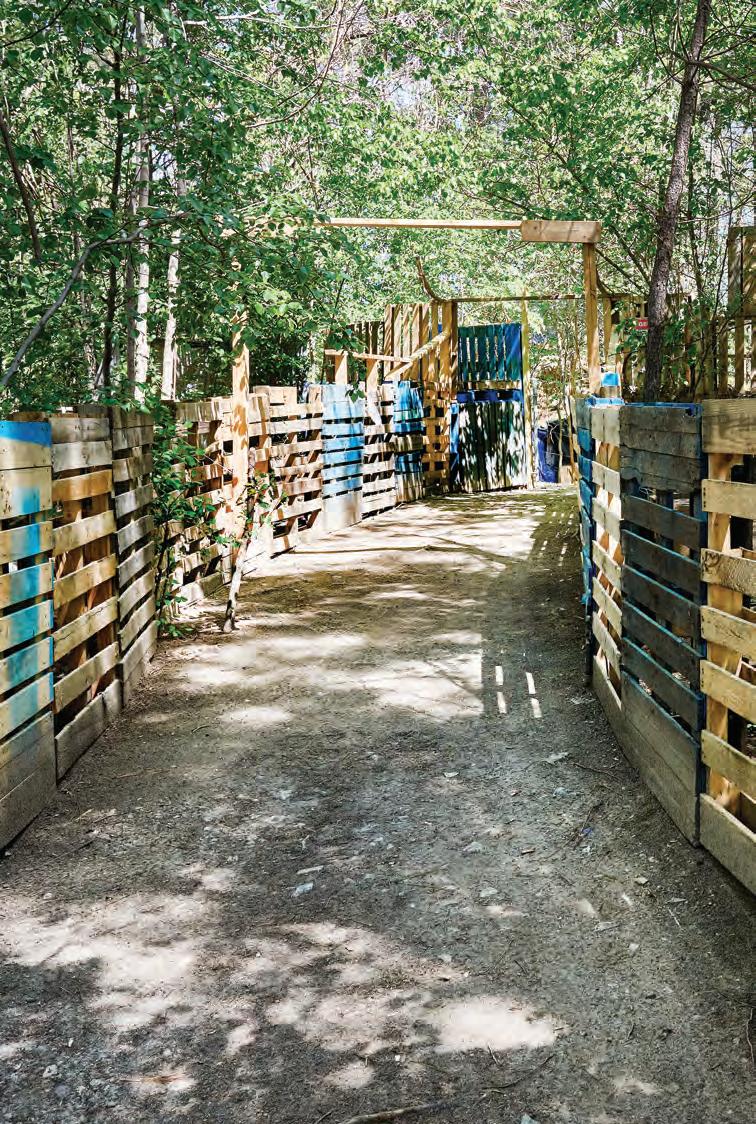
The Outlanders camp is tucked in a patch of woods in South Raleigh near Interstate 40, thick foliage camouflaging it from the road. To enter, follow the wide pathway flanked by fences made from discarded wooden pallets. Signs posted on tree trunks inform you that you’re on camera and ask you to “Pitch in! Put Trash In Its Place.”
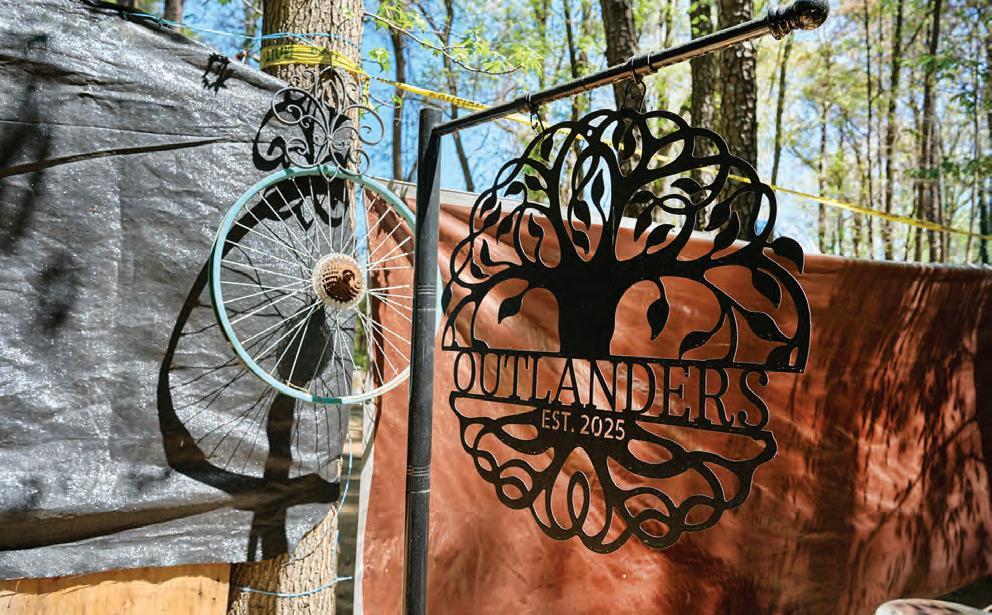
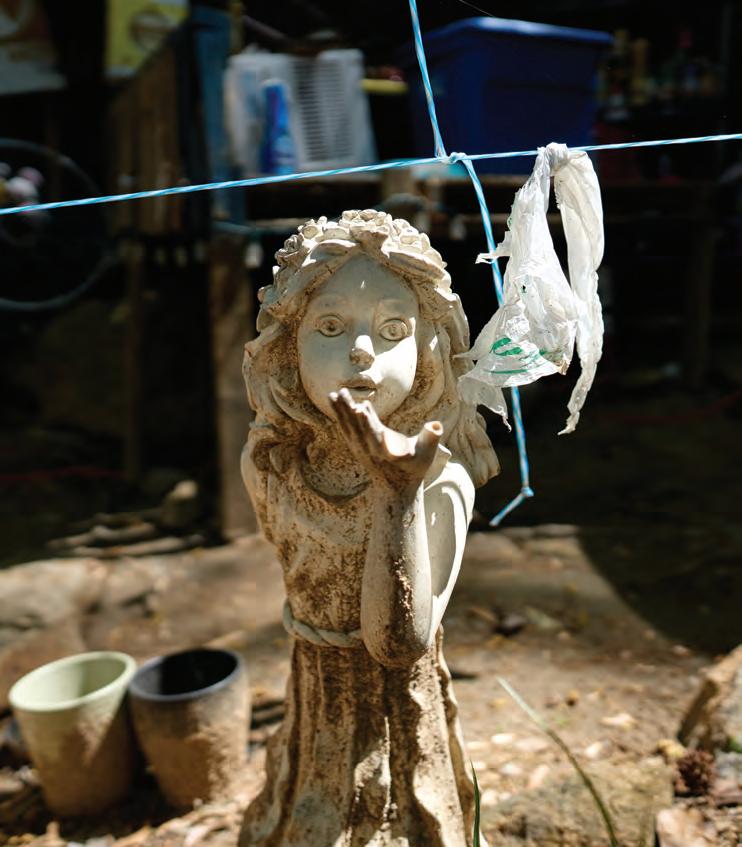
There’s a fire pit, a picnic table, and a portable toilet. Strands of colored lights hang between the trees. Found objects and handmade decorations dot the campsite: a chipped garden statue, a custom metal signpost, pennants made from torn-up plastic bags tied onto blue twine.
Individual campsites are tidy and personalized. They have heaters, generators, TVs, fans, microwaves, full-size beds, and pantries full of nonperishable food. Some residents live in clusters of tents; others have built apartment-sized dwellings out of posts, tarps, and wood panels.
At any given time there are about a dozen people living here. Most of them are middle-aged; a handful are married couples. Newcomers and rule-breakers live on the edge in a zone called Receiving and Noncompliance. Off to the side is an area called Veterans’ Ridge, home to two former service members.
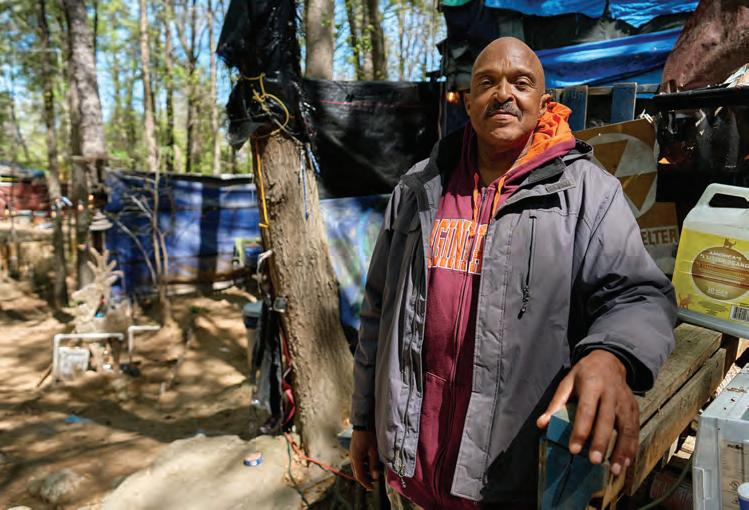
“We chose to live this way,” said Will Harris, who last year was elected mayor of Outlanders—believed to be the first self-governing homeless encampment in North Carolina. “People have that misconception: You live out in the woods, you’re either a drug addict or this and that. No we’re not. We’re none of those. We chose to do this.”
Every Outlander has a different reason for being there. Some of them aspire to live in houses; others like Harris would prefer to camp forever. Some of them have jobs;
some don’t. Some have a history of substance abuse or incarceration. Some are sick or disabled.
Many of the campers don’t consider themselves homeless. After all, they have a safe place to sleep at night and neighbors who care about them. They’re homesteaders, an intentional community.
“I enjoy being out here. I love it,” said Maurice Fowlkes, one of the newest residents. He’s in his early 60s, tall and lanky with a pencil mustache. He nicknamed his campsite, where he and his wife, Shaun, have been living for about seven months, Fowlkes’ Frontier. They came here to find their footing after a hard time: The couple recently got out of prison and Shaun is in cancer recovery.
“I want other people to know, don’t be ashamed of living in a tent,” Fowlkes said. “Because you’re just in a different structure. We’re in a vinyl structure instead of a concrete [or] wood structure.”
Still, life as an Outlander isn’t easy. The camp doesn’t have running water (they shower and do laundry at Oak City Cares). Sleeping outside can be dangerous and uncomfortable. Some of the campers have to wake up at dawn to walk to work. People sometimes come from outside of the Outlanders camp to harass them. And underneath everything, there’s a low-simmering anxiety that the refuge they’ve built for themselves could be taken away.
“Building
Something Together”
Standing atop a low hill near the middle of the camp, Harris can survey every corner.
“I have to look at everybody like they’re chess pieces,” he said. “Me and Karen are the king and queen. So now I need my knights. I need to put my pawns out where I need them.”
Harris and his wife, Karen, live in a structure of their own design that’s bigger and sturdier than a tent but less permanent than a house. Will is tall and bald; Karen is petite with streaks of silver in her long dark hair. They both have crinkly, expressive eyes. They share their home with their black cat, Midnight, their puppy, Layza, and the occasional overnight guest who needs a safe place to sleep.
Will works full-time as a traffic controller for a construction crew, and Karen takes odd jobs through a temp agency. They lived together in the woods for about two years before moving to the Outlanders site seven years ago. Since then, they’ve slowly attracted a community of other people who were also looking for a safe, stable place to be.
Well before the group elected him mayor in September 2025, Will was the de facto leader. He made the rules (basically, keep your space clean and treat each other with respect) and enforced them. No one can join the group without his permission, and he’s the one who decides if and when they graduate from Receiving and Noncompliance to the main site. He tapped his “knights,” his security team, from among the most established Outlanders. Together, they keep an eye out for intruders and “noncompliant” behavior that violates the Outlanders Community Charter, a document which gave the community an official name and rules last year.
Many, but not all, of the campers have signed the charter, which reads: “We are a group of people living together, trying to survive and get back on our feet. To do that, we need
peace, respect, safety, and a clean place to stay. These rules help make sure everyone is treated right and this camp stays strong.
“We’re not just camping—we’re building something together. The Outlanders look after one another not just because we’re a family, but because we are working together to build a place where others can find hope, healing, and a future.”
While nothing like this has existed in North Carolina previously, cities in other parts of the country are beginning to recognize self-governing encampments as a viable, empowering solution to homelessness.
The oldest, most fully realized example is Dignity Village in Portland, Oregon, which formed in 2000 as a tent city under a bridge and now comprises tiny homes for 60 residents on a tract of publicly owned land. Because it’s sanctioned by the city, Dignity Village has amenities the Outlanders don’t, like running water, mail service, Wi-Fi, garbage and recycling pickup, and a dedicated social worker on the city’s payroll. Villagers pay monthly dues of $100 for services and vote on big decisions. Over the years the village has incubated several “microbusinesses,” including a scrap metal recycling business, a firewood business, and a hot dog stand called Dignity Dogs. The median stay in Dignity Village is one year, and 80% of villagers reportedly move into permanent housing.
In its early days, Portland tried to squash Dignity Village. It was founded by a group of homeless activists who staged protests and parades around the city to call attention to the lack of available shelters. Each time they set up “Camp Dignity,” the police would come and decommission it. But they kept moving to new locations and re-forming. They also started a 501(c)(3) nonprofit and gave interviews to local media highlighting the injustice of being repeatedly displaced. Public support for the village grew, and in 2004, the City Council agreed to rezone a piece of land as a campground so the villagers could stay indefinitely.
In Raleigh and wider Wake County, there are at least 1,200 unhoused people and only about 600 beds in the city’s overnight shelters. But even if the shelters had more capacity, lots of people don’t like or trust them.
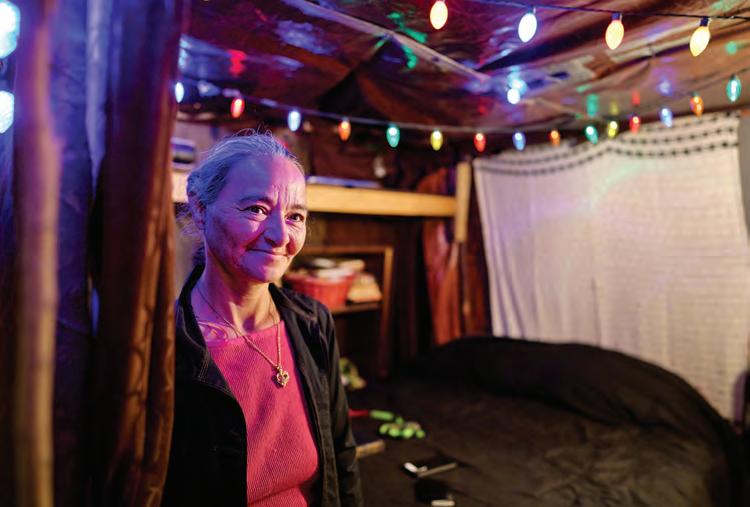
“You’re essentially in a minimum security prison,” said Penny, her pale green eyes narrowing in frustration. She and her husband, Johnny, learned about the Outlanders less than a year ago when they were bouncing between shelters and budget motels.
(Some of the people in this story, including Penny and Johnny, asked to be identified by their first names only for privacy.)
They found that camping with the Outlanders offered them a degree of freedom they’d been missing in the shelters, which are tightly controlled. You can’t bring in food or even a sealed plastic water bottle,
“If somebody’s angering you, and you need to get away from them, you can’t leave,” Penny said. “And then they treat you like you’re inmates. They have jail-orange bedding, jail-orange blankets, jail-orange towels, jail-orange washcloths. It’s like, you want us to be self-sufficient, but you won’t let us be self-sufficient.”
Penny explained. You can’t bring most of your belongings into the shelter with you. Once you come in for the night, you can’t step outside for fresh air. Many people avoid the shelters because they’d be separated from their pet or their partner (many of Raleigh’s shelters are gender segregated).
That leaves hundreds of people sleeping in cars, on couches, in jails and hospitals, and on the street every night. And being unsheltered makes every other dimension of life harder: If you’re struggling with the basics like shelter, hygiene, food, and sleep, it’s very hard to stay employed, maintain
relationships, save money, and take care of your physical and mental health.
Raleigh set a goal last year to reduce unsheltered homelessness to “rare, brief, and non-recurring” instances by 2030. Wake County has the same goal. Last year, Raleigh launched a pilot program aimed at getting unhoused people into permanent housing by providing them with rental assistance, case management, and peer support for up to two years. The first participants were 50 people who had been living in an encampment in Dix Park. Six months into the program, 90% of the group was housed and the encampment was gone, according to the city.
This summer, the Wake County Continuum of Care, the agency in charge of coordinating homeless services across local governments and nonprofits, plans to announce a “surge” to get more unsheltered people into housing using the same model. With $22 million, the agency believes it can “effectively end unsheltered homelessness” in two years, director Eileen Rosa told the Raleigh City Council in April.
That’s good news. But it might cause problems for the Outlanders, who by the city’s and county’s definitions, are chronically unsheltered. Their improvised version of case management, peer support, and transitional housing isn’t documented on any website or funded by any outside grant.
The Outlanders inhabit a gray zone between sanctioned and unsanctioned. Technically, they are occupying public land without authorization. The city could decide tomorrow to decommission the camp and evict the residents. Yet, Harris says the police department and fire department know they’re there, and no one has tried to kick them out. It’s not like they’re taking up prime real estate; the area is hilly, close to the highway, and unlikely to be developed anytime soon. There are no houses or businesses nearby to complain. For now, the Outlanders’ presence is tolerated.
In response to questions from the INDY, a Raleigh Police Department spokesperson wrote in an email that the department’s approach to encampments is to prioritize “outreach, safety, and connection to services whenever possible” and that police do not “independently initiate homeless encampment closures.”
Encampment closures tend to happen when the property owner has concerns about environmental impacts, public safety, or repeated criminal activity, the spokesperson said. The Outlanders camp is peaceful and unobtrusive, with the recent exception of a stabbing in May. A man whom the Outlanders know—and had previously reported to police for unpredictable, sometimes
aggressive behavior—came into the camp and attacked two people, who sustained non-life-threatening injuries. The attacker was arrested and is currently in jail. Harris says this was the first incident of its kind and doesn’t represent the community norms he and the other Outlanders are working hard to uphold.
Before closing an encampment, the police spokesperson wrote, the police department’s co-response unit staffed by officers and social workers known as ACORNS and partner outreach teams will “attempt to conduct repeated outreach and engagement efforts” to connect residents with social services and let them know the area may be closed. The agencies “work closely with city departments, property owners, and community partners to ensure the process is coordinated, informed, and as respectful as possible.”
“Our circle, our organization, has tried to help and mend people that have been wounded.”
To receive outside help, the Outlanders needed an official channel through which they could access Wake County’s homeless support apparatus without overly exposing themselves and jeopardizing the tacit permission they’ve received from the city to continue existing.
Enter Paul Geigel, an optician turned homeless services advocate and founder of the nonprofit Eliza Park Homeless Initiative (EPHI). Geigel met residents of the South Raleigh encampment in 2024 while he was running a weekly food pantry and making an amateur documentary about homelessness in Raleigh. He befriended the group—particularly Harris, with whom he felt an instant kinship—and asked what they needed.
Though Raleigh doesn’t officially recognize Outlanders as a community or homeless services provider, EPHI is bringing the
camp closer to the formal infrastructure it currently exists outside of. Geigel acts as a conduit between Outlanders, the police, and the Wake Continuum of Care, especially in light of the recent stabbing.
As another example, based on requests from the Outlanders, Geigel came up with the “Cash for Trash” program, where participants clean up trash from the woods near Eliza Pool Park and sell the filled bags back to EPHI for $10 apiece. They don’t have to register as employees or deal with employment documentation, and they get paid immediately in cash to clean up public spaces.
In June 2025, Raleigh City Councilmember Christina Jones gave the nonprofit $8,000 in seed funding for the Cash for Trash program from the City Council’s discretionary budget. In December, Councilmember Jonathan Lambert-Melton gave the nonprofit another $5,000 from the same discretionary pool.
The nonprofit hosted its fourth and fifth Cash for Trash days in April and May. In April, 13 paid participants and seven community volunteers filled 111 bags with 3,345 pounds of trash and recycling in the course of a few hours. The nonprofit plans to continue holding cleanups and collecting data in the hope of proving their concept to a longer-term funder.
Geigel’s group also provides weekly food assistance for the Outlanders and people in their orbit. On Sunday mornings, they bring a tower of cheese pizzas and bins full of donated nonperishables to the gazebo
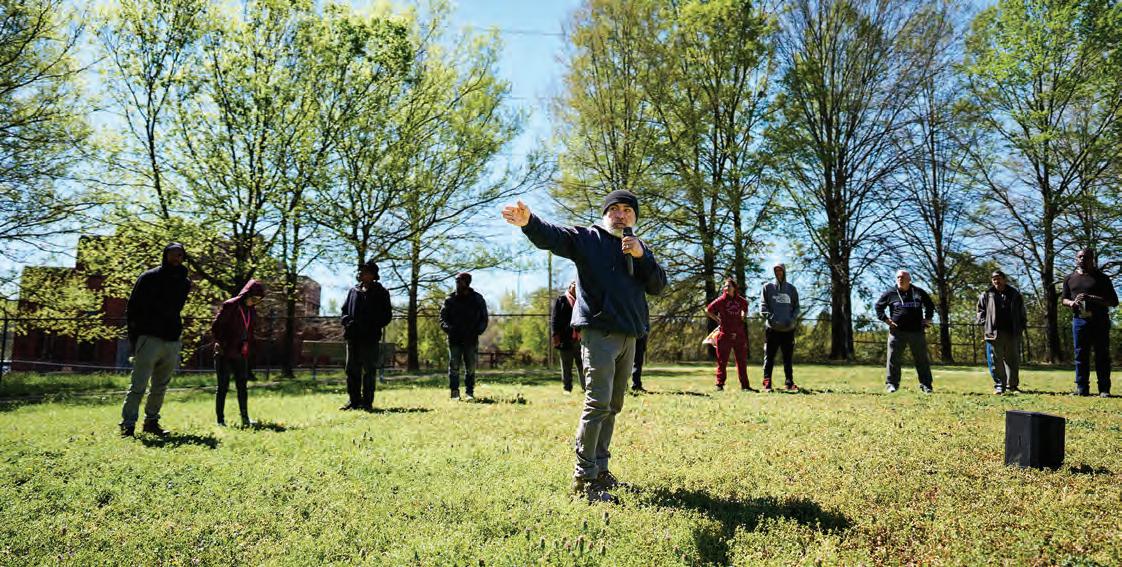
at Eliza Pool Park, gatherings that double as casual, nondenominational church services (though Geigel stresses that he did not impose the religious component and participation is not required to access the food pantry). The group stands in a circle and passes a microphone around, sharing stories, prayers, and reflections.
“I finally found a community I felt like I knew I belonged to ... that would help me help myself, but also let me help them,” Penny shared on a recent Sunday. “I have yet to encounter somebody [here] I really don’t like, which is kind of interesting, because I’m not a people person. But at the same time, I want to help people.”
Geigel runs the nonprofit as a volunteer but would like to expand. Both he and Harris have big plans for replicating their grassroots homelessness response model.
When Harris began building what would become the Outlanders’ camp, he was doing it for Karen. He set it up to be “as hippie as I could get it” according to her tastes, so she’d feel comfortable inviting her adult children to visit. He strung up colored lights and rigged the ceiling of their home to be removable so that on warm, clear nights, they could lie in bed and look up at the stars.
Karen, though quieter and less authoritative than her husband, is a community leader in her own right: the spiritual, emo-
tional kind. People tend to seek her out when they’re struggling. She and the other women in the camp formed a group called the Crafty Divas—an informal peer support group with a side of arts and crafts. She’s one of the people who helped make Outlanders into a true community.
Harris tells a story about a homeless veteran named Bernie who has been living in the woods in Raleigh for more than 25 years. This winter, Bernie got an infection and ended up in the hospital, where they amputated part of his foot. He was discharged, in a wheelchair, on the night of a January storm that coated Raleigh in snow and ice. He tried to check into a shelter but was turned away because it was full. Harris said he found Bernie wheeling himself down the road and brought him to the Outlanders.
“The only reason he survived that snow was that me and Karen came up with a tent, hooked up electrical cords from our generator, and put a heater inside that tent,” Harris said.
But Harris believes Outlanders offer a lot more than basic survival. He’s seen the community restore people’s senses of purpose and self.
Take Penny and Johnny. They met in a mental health treatment facility, found each other again at Oak City Cares, a service hub for people experiencing homelessness, and are rebuilding their lives as Outlanders.
“I got my dignity back,” Johnny said. “Truly I’ve been blessed, because we’re in a community, we look out for each other. [For]
so many people out there, it’s completely different. I feel sorry for them. But our circle, our organization, has tried to help and mend people that have been wounded.”
Penny has been unhoused on and off for about 18 years. She said that in a perfect world, “I’d like to have a home with my husband and be able to just live. But at the same time, we already have that. ... I’m out here in a tent. But that doesn’t mean I don’t have a home. It doesn’t mean I don’t have a neighborhood, a community.”
Harris would like to expand Outlanders and invite more people to join. To do that, he’d need to reach an agreement with Raleigh or Wake County similar to Dignity Village’s with Portland, to permanently and legally occupy a piece of land. It doesn’t need to be their current spot in South Raleigh. In fact, Harris would prefer they move somewhere a little more remote, where they could plant a vegetable garden and raise livestock.
“It’s overdue,” Harris said. “These are citizens of the United States.”
What he is envisioning sounds a bit like farm-based therapy, a newish intervention model that exists all over the U.S.— including down the road in Pittsboro.
Harris’ version would emphasize community, peer support, and shared responsibility. Riffing on it, Geigel envisions daily shuttles to worksites, tiny homes for residents, and a commercial campground nearby to create jobs and fund the whole endeavor.
Convincing Wake County to let the Outlanders start a self-governed therapeutic community on public land feels like a tall order, one that would require funding, political will, and a maze of permissions.
For now, Harris doesn’t want to disrupt the fragile equilibrium the Outlanders have today. He is focused on tending to his work, his community, and his perfect view of the night sky.
“Staying out in the middle of a storm, while the trees and branches around you crack, and you can look up at the heavens and see God being pissed—I love it,” he said. “Ain’t nothing like it.”
NCDOT HOSTING A PUBLIC OPEN HOUSE A PROPOSAL TO REPLACE THE BRIDGE ON VANDORA SPRINGS ROAD OVER U.S. 70 IN WAKE COUNTY

GARNER - The N.C. Department of Transportation is hosting a public meeting to discuss the proposal to replace the bridge on Vandora Springs Road over U.S. 70 in the Town of Garner. The purpose of this meeting is to provide interested citizens with information on the project and gather public input on the proposed design.
Project details and maps can be found on NCDOT’s project input website at publicinput.com/vandoraspringsrd-us70. The information will be available at the meeting allowing for oneon-one discussions with NCDOT staff, but there will be no formal presentation.
The meeting will be held from 5 p.m. to 7 p.m. on June 9 at Garner Town Hall, 900 7th Avenue, in Garner
People may also submit comments by phone at 984-2056615 project code 6509, email vandoraspringsrd-us70@ publicinput.com, or mail at the address shown below by July 1, 2026
By Mail: Martha Hodge, AICP, PMP
NCDOT Project Management Unit –Project Manager 1582 Mail Service Center Raleigh, NC 27699-1582
NCDOT will provide auxiliary aids and services under the Americans with Disabilities Act for disabled people who wish to participate in this meeting. Anyone requiring special services should contact Tony Gallagher, Environmental Analysis Unit, at 1598 Mail Service Center, Raleigh, NC 27699-1598, 919707-6069 or magallagher@ncdot.gov as early as possible so arrangements can be made.
Those who do not speak English, or have a limited ability to read, speak or understand English, may receive interpretive services upon request prior by calling 1-800-4816494.
Aquellas personas no hablan inglés, o tienen limitaciones para leer, hablar o entender inglés, podrían recibir servicios de interpretación si los solicitan llamando al 1-800-481-6494.
3, 2026
Durham is working to secure funding for a new initiative to get unhoused people into existing housing within 30 days. The goal: ending all but “rare and brief” homelessness by 2031.
BY TORI NEWBY backtalk@indyweek.com
After two years of caring for their son’s medical needs, Tiffany Solomon and her husband had exhausted their savings. Unable to renew their lease, Solomon’s family bounced between 15 hotels in one month and landed in a homeless shelter for four more, until a case manager helped them find a stable home.
Seven years later, Solomon has helped Durham create a plan to help people like her. By 2031, the city aims to place people experiencing homelessness into existing housing within 30 days. More than 1,400 people currently experience homelessness in Durham, with about 600 people living unsheltered and 284 on shelter waitlists, according to city data.
“This is the perfect time to look at the entire approach—the system, where the fragments are, and try and do something different,” said Solomon, who worked on the plan as a member of the city’s Homeless Services Advisory Committee.
In partnership with nonprofit Community Solutions’ national Built for Zero initiative, Durham’s Strategic Plan to End Homelessness aims to make homelessness “rare and brief” for all populations in the next five years, with the first milestone being a 30% reduction in unsheltered homelessness by June 2027.
The initiative is projected to cost $13 million for its first year, but not all of the funding has been accounted for. The city’s proposed budget offers $4.55 million, sourced from COVID-era grants. Durham County has proposed chipping in $500,000, much less than the city’s initial ask of $3 million, amid a budget deficit.
The city has requested an additional $5 million from private funders, including Duke University and the A.J. Fletcher Foundation, likely to be finalized in the next three months. The city also asked 4th Congressional District Rep. Valerie Foushee for help securing $2 million in federal funding.
Anise Vance, assistant director of community safety in Durham, said, if fully funded, this plan could “really move the needle” on homelessness in the city.
“Instead of hanging on a waitlist for months or even years, somebody who’s experiencing homelessness could be inside within 30 days,” Vance said. “That is a radical change.”
If the plan does not get fully funded, Vance said the city will need to modify its goals, likely moving fewer people into housing.
The city and county haven’t had a unified plan to address homelessness in nearly a decade, Vance said. Based on a count conducted on a single winter night each year, people experiencing unsheltered homelessness in Durham increased from 32 people in 2016 to 196 people in 2025. The city’s more expansive database, launched in January, now counts 600 people experiencing unsheltered homelessness.
Russell Pierce, executive director of the supportive housing nonprofit Housing for New Hope, helped create the plan. Pierce attributes the increase in homelessness to a lack of affordable housing, signaling a need for more help from the city and county.
Ryan Smith, director of the city’s Community Safety Department, made clear in a presentation to the Durham City Coun-

cil that this plan relies on housing that already exists.
“We’re not going to be building ourselves out of this,” Smith said.
The city launched its strategic plan in August 2025, modeling the initiative after more than 150 communities across the country that have partnered with Built for Zero. Raleigh recently launched a similar approach.
By engaging with landlords, the city plans to make 500 units available each year—up from just 12—to ensure that housing and rent support are lined up before case managers engage with unhoused communities.
The city is incentivizing landlords to set aside housing units, building on a strategy Pierce said has ramped up since the pandemic. The plan will increase landlord engagement over the next five years, paying landlords to hold units while a person prepares to move in, covering the cost of potential property damage, and attaching case managers to each unit.
The goal of the initiative is for tenants to be self-sufficient in 13 months. A flexible housing assistance fund, projected to make up $9 million of the initiative’s budget if fully funded, will offer rent assistance for the first 12 months while tenants secure income and benefits.
“We do see a lot of people [for whom] the fundamental barrier is that initial capital,
and if we can help bridge that barrier, then we really can move somebody out of homelessness,” Vance said.
After the first year, case managers will help tenants set up a long-term housing plan. Vance said the city has begun negotiating contracts for additional case managers and is prepared to roll out a new training in early June.
When Solomon was unhoused, she said the case manager she connected with at the shelter helped her secure a stable home, preventing her family from falling into a cycle of chronic homelessness.
“That case management support was just like the continued care for our family and support until we were, I won’t say truly on our feet, but until we were stable enough to carry the torch on our own,” Solomon said.
Durham’s plan will support case management services to help prevent vulnerable people from becoming unhoused, in addition to those already experiencing homelessness.
Over the next year, Vance said the city will also explore temporary housing options to offer people shelter while they wait for more stable housing. This includes leasing hotel rooms, a process the city also ramped up during the pandemic, and exploring new options such as building temporary cabins.
Durham County commissioners will vote on the budget June 8, and the City Council will vote June 15.
Cary spent $330,000 on videos taxpayers were never meant to see. They offer a glimpse into the town government under its former manager, who resigned amid allegations of over-the-top spending.
BY CHLOE COURTNEY BOHL chloe@indyweek.com
Dancing Queens: A Case Study,” a video the town of Cary commissioned at a cost of $34,975, tells the story of a handful of town staffers who spent months planning a surprise dance performance for their colleagues and bosses.
It plays a bit like a workplace mockumentary, where the actors deliver their lines in earnest and only the audience can see the humor in what’s unfolding.
Scene 1: The camera pans across an industrial-chic event space filled with cheerful-looking professionals in business casual attire. It’s the first night of a two-day staff retreat in Wilmington. Michael Jackson’s “Don’t Stop ’Til You Get Enough” plays softly in the background as they mingle and chitchat. Their champagne flutes are embossed with the town of Cary logo.
Cut to a microphone stationed at the front of the room. “We have one more special touch for tonight,” announces Chief Strategy Officer Susan Moran. Standing beside her is then-Town Manager Sean Stegall. Moran starts to tell a story about how, years ago, Stegall had the idea to end the annual retreat with a performance by staff.
Cut to Stegall, nodding and grinning bemusedly.
“Those of you who have been on the council,” Moran says, “know that we’ve never done that. Until tonight.”
The lights dim. The opening glissando of ABBA’s disco anthem “Dancing Queen” plays. The crowd erupts into applause. Fade to black.
Scene 2: We’ve moved locations to a sun-washed room. It’s nine months later, per a banner at the bottom of the screen. Four women in blazers and slacks are sitting in director’s chairs. On the tables between them are four town of Cary mugs, logos angled carefully toward the camera. Moran asks her collaborators: “How does the Dancing
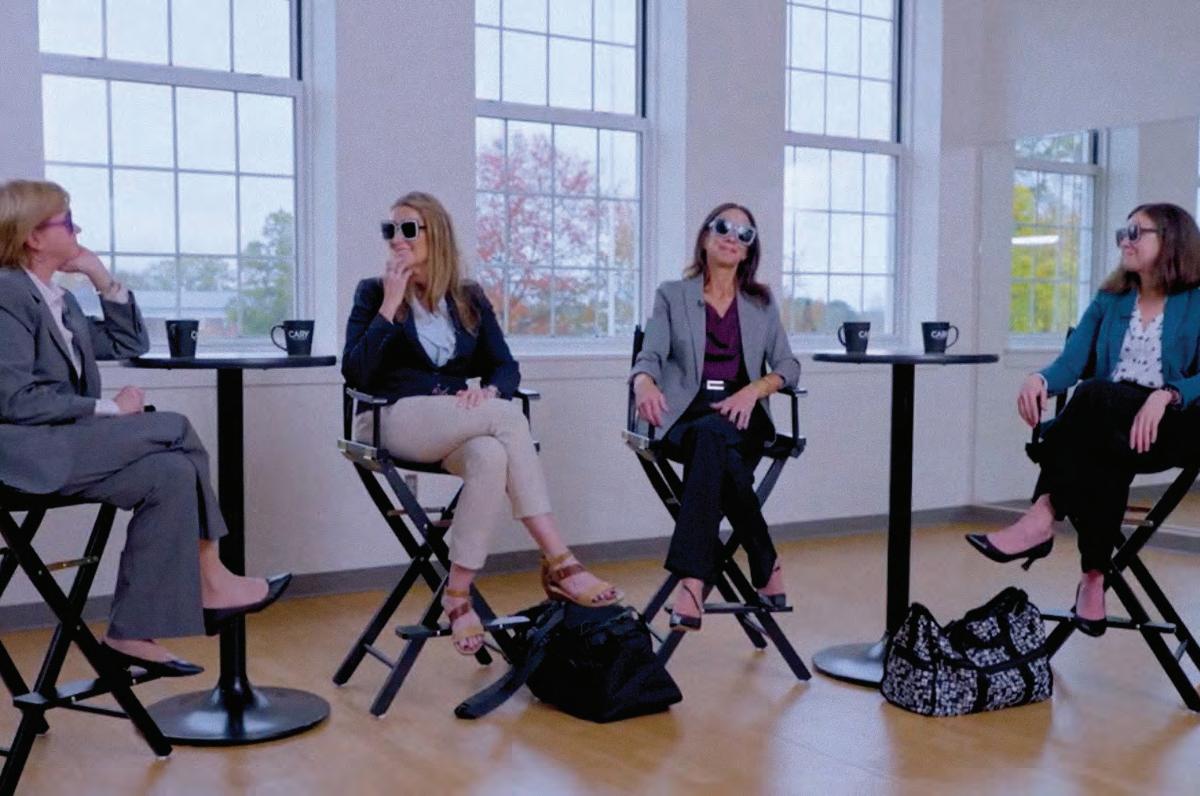
Queens experience exemplify our culture and what we are trying to do at all levels in the organization?”
“I think ... taking a risk, number one,” says Planning Director Heather Welehan. “Putting yourself out there, being vulnerable.”
Moran rests her chin on her hand and nods thoughtfully. Cut to a close-up on Welehan, who continues: “It started as ‘This is a present for Sean, and council, and it’s for the retreat’ ... and it became a commitment to our colleagues and the relationships we’re forming along the way.”
Made in 2024, “Dancing Queens” includes studio interviews with a dozen town staffers, b-roll from rehearsals, and several clips from Mamma Mia! the movie to break up its six “chapters.” The film builds and builds to the final performance, a four-minute, professionally choreographed dance break by staff members decked out in go-go boots and shiny disco pants. (The town did not pay for the choreographer or the costumes, Moran told the INDY.)
Between 2021 and 2025, the town of Cary spent more than $330,000 to produce 12 documentary-style videos about town projects and culture, including “Dancing Queens,” all at Stegall’s direction. The videos range in length from under five minutes to nearly 30 minutes. They were made for internal use only and were not intended for broad public viewing. The INDY obtained them, along with associated invoices and emails, through a public records request. Stegall, who resigned in December 2025, did not respond to a request for comment for this story.
As the title suggests,“Dancing Queens” aims to be a “case study,” an illustration of Cary town staff’s exceptional teamwork and creativity. Stegall commissioned the documentary after the performance because he thought it exemplified camaraderie and risk in government work,
Scan this QR code to watch a clip from “Dancing
A Case Study”
Moran said. Some of the other videos are about Cary’s history, its environmental programs, and its housing plan. For a series of five 10-minute videos from 2023, various council and staff members dissected the town’s motto, “Live Inspired”—what it means, how to do it, and where they get their inspiration. The sixth video in that series is a blooper reel.
“Sean Stegall was an enthusiastic advocate for video,” Moran told the INDY. “He felt like video could convey thoughts and emotions and move people in ways that the written word or in-person simply couldn’t. It was under Sean’s direction that we started producing these videos.”
Together, the videos offer a glimpse into Cary’s government under Stegall, who helmed the organization for almost a decade. On their face, he comes off as an adept leader who spearheaded big projects, motivated the people around him to be better public servants, and cultivated a fun, inclusive culture in Town Hall.
After Stegall resigned, the town revealed he had engaged in “over-the-top spending and inadequate financial reporting” and created an “unhealthy work environment” for staff. Whistleblowers reported Stegall to Mayor Harold Weinbrecht, who told the INDY in January he learned the former manager’s behavior had been “unpredictable” and “inappropriate.” Four separate investigations into Stegall’s con-
duct—by the Wake County District Attorney’s Office, the state auditor, the State Bureau of Investigation, and a law firm hired by the town—are ongoing. Given Stegall’s resignation and the ensuing investigations, the self-congratulatory, sentimental tone of the videos—and their price tag— now feels misguided.
Stegall’s legacy in Cary is complicated. He oversaw a period of hugely successful growth and development for the town. He envisioned Downtown Cary Park as a marquee destination and helped make it happen. He established the 311 service for Cary residents. He also depleted the town’s savings. He “dismantled” Cary’s budget office and communications office, Moran told the INDY. The videos show the good he did and also illustrate some of the bad.
“Sean was a change agent,” Moran said. “He also, as we can all see now, lacked good judgment when it came to spending.”
“Just like so many other things, he just took it too far,” Cary Assistant Director for Citizen Information and Outreach Carolyn Roman told the INDY
“A step too far,” Moran agreed.
Many of the videos celebrate the hard work and creativity of the staff at Cary Town Hall.
“To have somebody want to invest resources to document the magnificent work of what staff was doing ... felt really good,” Roman said.
But at times, the videos devolve into platitudes and boosterism.
“Be your best self. Be the best place to live. Be the best place to work. Be the best. To me, that’s what ‘Live Inspired’ means,” then-Town Councilmember Don Frantz reflects in one of the videos from the 2023 retreat series, titled “Inspiring Better Versions of Ourselves.”
In the same video, then-Assistant Town Manager Dan
Ault monologues on how the town of Cary is able to “do meaningful things.”
“It’s incredibly hard,” Ault says in the video, “and it takes you across the landscape to a variety of different, I’m going to use the term geographies. I’m thinking of it in terms of different concepts, of different things you have to encounter when you’re trying to do something special. It’s beyond what you can imagine.” (Ault resigned about a month after Stegall.)
In “Legacy of Leadership,” a video about Cary’s history made in 2024, the narrator—PBS Frontline’s Will Lyman, whom the town paid $10,000, Moran said—describes the town’s “national and international reputation as the place to relocate to.”
At the end of the video, Lyman name-checks Stegall’s book, The Top of the Arc
“New leaders in government, business, and community are bringing fresh energy into Cary to meet the opportunities we have today, whether by establishing a dynamic collection of breweries or by creating a park to fulfill a commitment to keep Cary at the top of the arc,” Lyman pronounces.
“We have built on the legacy of leadership that Cary is known for.” The music swells. “Leadership not formed from a training manual or prescribed by ideology, but leadership born from a personal promise to ourselves and to each other to always put Cary first. To collaborate and cross the myriad of aisles and boundaries that both separate and define us as individuals, but collectively contribute to the diverse fabric that makes Cary the best place, the brightest star, the beacon for hope and opportunity for those who choose to call her home.”
The least expensive video in the set the INDY obtained, “Environmental Excellence,” is eight minutes long and cost
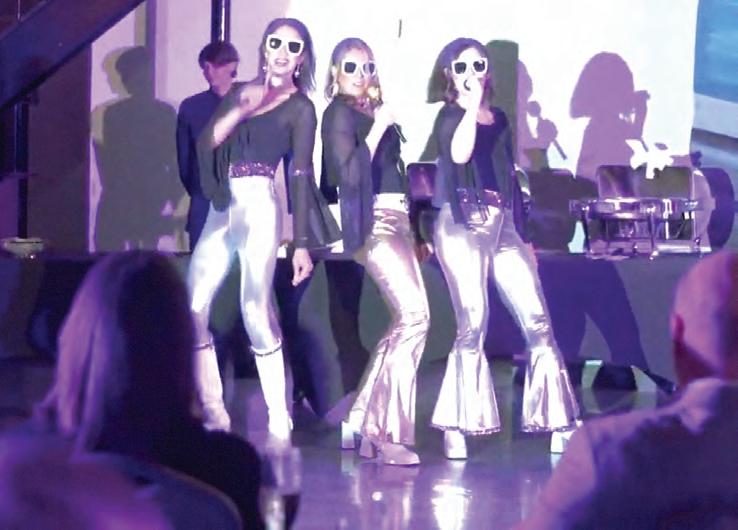
Scan this QR code to watch a clip of the final dance from “Dancing Queens: A Case Study”
$20,510 to make. The most expensive, “Inspiration Lives Here – The Story of Downtown Cary Park,” is 22 minutes and cost $70,000. The series of six short videos on the town’s “Live Inspired” motto cost $61,140 total.
“Legacy of Leadership,” which is 10 minutes long, cost $62,828, including Lyman’s $10,000 voice-over fee and a $5,000 fee to license the background song, “A Sky Full of Stars,” from Coldplay and The Piano Guys.
The most expensive videos in the set included sweeping drone shots filmed around Cary, a large number of studio interviews, and/or a large quantity of b-roll footage.
All of the videos were made by Digital P, a local production studio run by former town of Cary employee Peyote Perryman. Digital P also produces the town’s educational Cary Matters video series, makes commercials for the town, and films the council meetings. The town began using Digital P a few years after Stegall arrived in 2016, Moran said, in part because of Stegall’s decision to “dismantle” the communications department, which had been responsible for video production.
According to Moran, Stegall wanted the videos to be “high-end.” He came up with the general concepts and sometimes made specific requests, like the Lyman voiceover. Then he tasked Moran, whose job encompasses strategic communications and special projects and who reported directly to him, with figuring out the details with Perryman.
“This song has a special meaning to me and I hadn’t thought about it for a while and then I heard a slow version of it just now on television for a Make-A-Wish commercial,” Moran wrote in a December 2023 email to Perryman with a link to “A Sky Full of Stars.” “Let’s do some thinking together about this in the new year.”
When Moran brought Stegall a cost estimate for a video, she recalled that he would invariably approve it, telling her, “Whatever it takes, spend the money.”
“How things looked was very important to Sean,” Moran said. “Sean would say, ‘It’s not form or function, it’s both form and function.’”
The videos—which were shown to new council members and staff, at professional conferences, and by the Cary Chamber of Commerce—were not screened to the broader public or made available online, according to emails the INDY obtained. “Dancing Queens” was screened at a department directors’ meeting, Moran said. As she understood it, Stegall believed the videos could help impress upon viewers “the weight of the responsibility for the legacy of this place, that he purported to love.”
Since Stegall resigned, there have been several other reports of questionable or excessive town spending during his tenure.
The town disclosed last December that in 2024, Stegall authorized two land purchases worth $1 million total without the council’s knowledge.
The News & Observer reported in January that the town of Cary paid about $37,000 toward Councilmember Lori Bush’s public policy master’s degree at Northwestern University in 2024 without the full Town Council’s knowledge. (Bush repaid the town after learning some of her council colleagues weren’t aware of the payment.) The N&O also reported that the town of Cary paid $3,400 for Stegall to stay in a hotel for four nights during a work trip.
Also in January, the INDY obtained public records showing the town paid upward of $100,000 to ghostwrite, pub-
lish, and market The Top of the Arc, which came out last August. The book is about Stegall’s approach to municipal government leadership. The title refers to his vision for keeping Cary from slipping down the metaphorical “arc” from its current, optimal position.
The total cost of the videos across the five years they were produced comes out to less than one-hundredth of 1% of Cary’s current $511 million budget. Cary is widely considered to be financially strong and has long maintained the highest-possible credit and bond ratings. At a recent budget meeting, staff shared that the town’s current fund balance (or savings) is about $125 million, well above the $96 million minimum policy requirement.
“Dancing Queens” was the last video produced under Stegall. It was made after the property tax revaluation of 2024, when the total assessed value of residential property in Cary jumped 50% and homeowners saw their tax bills skyrocket. That year, Cary also raised taxes by 1.5 cents and put two bond referenda worth $560 million— more than the town’s budget that year—on the November ballot, which voters rejected.
“Producing the ‘Dancing Queens’ documentary the same
year you institute the largest tax increase in Cary’s history is tone-deaf,” Moran said. “[Stegall] should have seen it, and we should have helped him see it.”
In The Top of the Arc, Stegall recounts a conversation he had with a consultant friend, who apparently told him, according to the book, “There’s a very slight difference between a cult and a culture. A cult requires its charismatic leader to be there. And when the charismatic leader isn’t there, it doesn’t work. It falls apart or fades. A culture lasts no matter who is in the room.”
Two weeks after Stegall’s resignation, on December 27, Moran emailed the Town Council members, Digital P’s Perryman, and Cary’s newly sworn-in interim town manager, Russ Overton. It was time to start planning the video for the 2026 council-staff retreat.
“This year’s video is intended to get you, along with staff at the retreat, to think about what Cary’s vision is moving forward. What’s precious and must be kept? What’s new that needs to be added?” Moran wrote.
She said the production would be pared down from previous iterations. “This is a simple, no-frills video designed to inform, not to dazzle as some have been in the past.”
Bush, the mayor pro tem, responded that she didn’t want to participate.
“After reviewing the concept and the estimated $30,000 cost, I continue to have reservations about this expenditure, especially as we all have recently learned of the high
costs and number of folks that were engaged and working on the publication of our former Town Manager’s book,” Bush wrote.
“I fully appreciate the intent behind these efforts,” Bush continued, “yet, I also believe there are alternative and more cost-effective ways to achieve these same goals.”
Cary did make a 10-minute video for the 2026 retreat, featuring four of the seven council members and a handful of high-ranking town staff. Money for it had been set aside long before Stegall’s departure. It ended up costing $34,830, Moran said.
Next year may look different. The INDY asked every Town Council member if they believe Cary should continue producing this genre of documentary-style videos. The four council members who were in office when the videos were filmed—Bush, Sarika Bansal, Carissa Kohn-Johnson, and Michelle Craig—said they did not know how much they cost. (Weinbrecht didn’t respond to the INDY’s questions.)
Bansal and Kohn-Johnson said the expense should be eliminated, while Craig and Councilmembers Bella Huang and Brittany Richards (who were elected last year) said they support reexamining how the town spends its money.
“There is a lot we can and should learn from this,” Bush told the INDY in an email. “For me, the question is why the council did not have clear visibility into these costs as they were being incurred. Going forward, I want us to be much more disciplined about asking: what problem are we solving, and is this the most responsible way to do it, especially when activities such as this are not directly tied to the needs of the community?”


Indie rom-com Everything & the Universe, filmed in Durham and rife with local references, has been streaming since last year on Amazon Prime. So why has no one heard of it?
BY LENA GELLER lgeller@indyweek.com
Seventeen minutes into the offbeat indie rom-com
Everything & the Universe, a woman walks into a hotel to check in for a weekend stay. The hotel lobby is bright and airy, with a wall of glass windows near the reception desk and a cream-and-crimson carpet underfoot.
It was here that my sister-in-law, Annie, watching the film last month after randomly encountering it on Amazon Prime, felt a click of recognition. She hit pause and Googled: Indeed, the lobby was that of the Durham Hotel.
As it turns out, Everything & the Universe—in which a man and a woman meet en route to the same wedding and realize they’re both in love with the bride—was filmed largely in Durham. It’s also explicitly set here, as opposed to representing an anonymous Southern city: Characters argue over fries at the Federal, shop for suit jackets at Dolly’s, and swivel in salon chairs at Moshi Moshi, among gathering at nearly a dozen other local spots. The movie has been streaming on Amazon and Apple
TV+ since last year. But there’s been no local press about it, and when I began asking around, few Durhamites knew it had been released—including some of the business owners whose spaces it features.
Erin Karcher owns the downtown bar Arcana, where some 20 minutes of the film are set. Everything & the Universe depicted the bar true to life, down to the tarot readings, queer clientele, and its ambiguously pronounced name (characters debate whether it’s “Ar-canna” or “Ar-cah-na”).
Karcher recalled the shoot happening back in 2022 but didn’t realize the movie was out, or that it was a proper feature, until I emailed her to ask about it. She watched it almost immediately and loved it.
“Nobody knows about this, and they should. It’s delightful,” Karcher said. “It’s so Durham.”
Indeed, unlike the last notable film to feature a modern Bull City backdrop—the 2010 flop Main Street, which depicted Durham, anachronistically, as an emphysemic boondocks wheezing from the collapse of the tobacco
industry—Everything & the Universe has an uncanny grasp on the city in which it’s set. Watching it felt, at times, like watching scenes I’d witnessed around town beat for beat, from the dialogue (“Fascists!” one character yells, when it appears the Durham Hotel has fumbled a booking) to the antics (smoking weed atop the parking deck that overlooks the neon Old Bull sign) and soundtrack (Wye Oak, Big Thief).
Everything & the Universe also clocks Durham’s sometimes-contradictory identity, as a Southern industrial town remade as a secular hub for science and culture. The female protagonist, Jane (Nicolette Pearse), is a chain-smoking scientist—equal parts Lucky Strike and RTP—whose rationalism walls her off from frivolous meaning-making but also from omens she’d do well to notice; she’s nicknamed Cancer for her Zodiac sign, and doesn’t seem to see, or be interested in, the irony.
Jane spends the wedding weekend pining after her best friend, the bride-to-be Sam (Chelsea Gilligan), while trying to
stay chill—a posture destabilized by the fact that Sam seems to reciprocate her feelings, and further muddied by the man she met on the flight in, Sam’s ex Henry (E.J. Bonilla), who keeps insisting the universe brought him and Jane together to stop the wedding. Henry is Jane’s foil; where she dismisses signs, he chases them, though mostly in ways that flatter what he already wants. At one point, he gets a tarot reading at the metaphysical shop Magic on 70 and balks when the cards don’t go his way: “I don’t have the best relationship with the moon, okay?” (The shop is real, owned by Lynn and Tom Swain, who also run MagikCraft near Ninth Street. Lynn Swain has a cameo as the shopkeeper.)
The film’s love triangle and metaphysical streak put it in company with the iconic film Bull Durham, which also prefers spirituality to religion (“the only church that truly feeds the soul, day in, day out, is the Church of
“Nobody knows about this, and they should. It’s delightful. It’s so Durham.”
Baseball”) and pokes at the line between love and self-interest.
But for all of Bull Durham’s cosmic horniness, a 1988 movie can only feel current for so long. Everything & the Universe has refreshed the canon to capture a Durham that contains Lime scooters, queer third places, Cook-Out trays—and, for our sins, liberal men who idolize Elon Musk.
So how did the filmmakers get the city so right? And, in light of that fidelity, why has Everything & the Universe flown so under the radar?
After an unsuccessful attempt at reaching the director, Sarah Scarlett Downing, via LinkedIn, I got her email from an owner of The Federal and made contact. Downing told me that this is her first film and that it’s shaped by her experience living in Durham between 2008 and 2012, whilst attending a PhD program in English at Duke.
The film’s premise, that a queer woman and a straight man are both in love with the
same woman, reflects how she sees the city as a place full of overlap.
“I wanted to make a film that felt a bit messy in that way, that isn’t just coded queer or hetero,” she wrote in an email. “I think maybe there is something of that to the city itself.”
Downing said it was a priority to showcase Durham businesses and to source from within the city wherever she could. That’s how her team found Jim McKeon, a resident artist at 5 Points Gallery downtown, whom they commissioned to paint a portrait that serves as a plot point in the film.
McKeon said he initially thought he was being pranked when producers approached him by walking into 5 Points and asking how he felt about full-frontal male nudity.
“I was like, ‘I have no problem with that. I’m an artist. Painting dudes, not an issue,’” McKeon recalled.
He ended up producing a photorealistic nude of actor Luke Roberts, who plays the groom, working from reference photos Roberts sent over. Like Karcher, he hadn’t known the movie was out until I reached out. (He also didn’t know, until the last day of shooting, that a character pees on the painting in the film. “I got the painting back after the movie, and I was like, ‘That’s kind of sticky,’” he said.)
As to why the film hasn’t reached more Durhamites, Downing said getting a small indie movie in front of viewers—even hometown viewers—is a challenge. Everything & the Universe didn’t land distribution until last fall, through Persimmon, a subsidiary of the LGBTQ-focused distributor Narrative, which placed the film on Apple TV+ and Amazon to buy or rent. (When I mentioned to Downing that it was also streaming free on Prime, she said she somehow hadn’t heard and would be checking in with her distributors.)
“The things we have going against us are that our film wasn’t made with a studio and the actors are not well known, which is a big hurdle,” Downing wrote. “But this is also a widespread issue. It’s upsetting because people are making content, but it isn’t reaching people.”
In some ways, it’s actually fitting that my sister-in-law came across the movie the way she did: Everything & the Universe is a film about the universe sending you signs, and a Durham resident clicking randomly on a Durham movie is exactly the kind of thing the film would want you to read as fate. Still, it’d be nice to skip the celestial handoff every once in a while and just have someone tell you about a movie set where you live.
“I think a lot of people would connect with our film,” Downing said. “But this issue is getting it in front of people.”
A new movie theater for downtown Durham. A new cinema community to help light up its screen.
BY BRIAN HOWE arts@indyweek.com
About 300,000 people. Maybe two dozen screens.
That’s the moviegoing situation in Durham, where 17 of those screens carry mainstream fare at AMC Southpoint and three focus on first-run indies at the Carolina Theatre. You can eke out a few more by including the likes of Duke University’s Griffith Film Theater or the former Full Frame Theater now operated by Fullsteam Brewery.
Of the latter, Fullsteam owner Sean Lilly Wilson told the INDY he hopes to open the brewery’s new American Tobacco Campus location by Labor Day and wants to keep the small theater available as a local resource. In January it hosted the Black Trans Short Film Festival, with a screening by the tipsy Durham Instagram account Two Beer Cinema Club coming up on June 27.
It’s vital cinematic real estate now that the plentiful days of Durham multiplexes like Wynnsong, Willowdaile, and Northgate are long gone, to say nothing of art-house attrition everywhere.
“It’s like bowling alleys—nobody’s ever going to build a
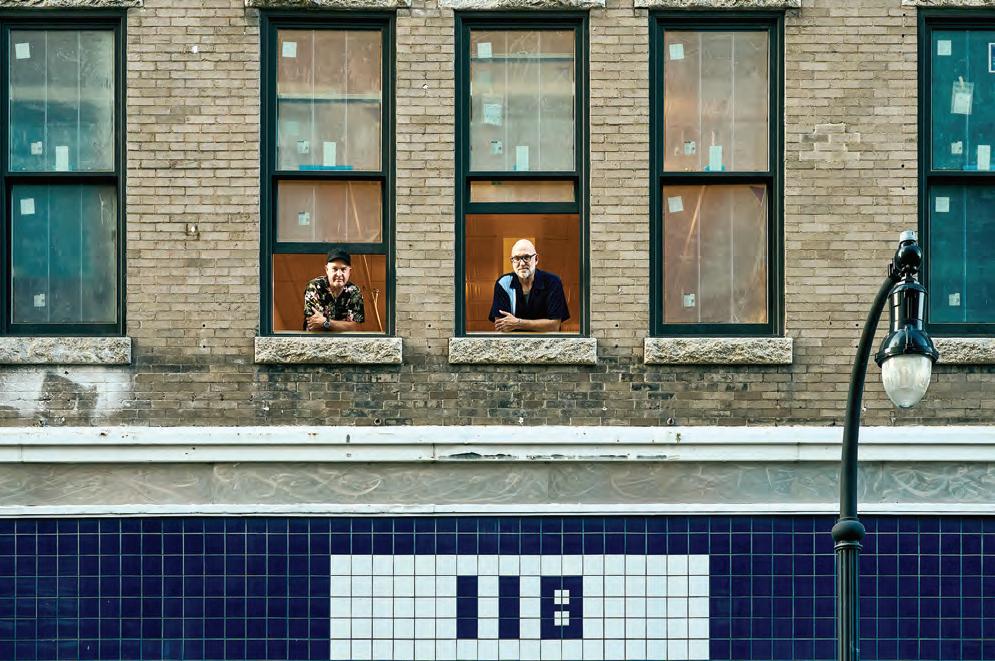
multiplex again,” predicted Jim Haverkamp, a filmmaker, video editor, and Duke film professor. But Haverkamp and Alex Maness, a photographer and theater tech, are preparing to increase the local screen tally by one when they open Skin and Bones Theater downtown in a few months.
The new microcinema’s curator council includes Penelope Bartlett, formerly the Criterion Channel’s director of programming, among other prestigious film jobs. Bartlett is also the creative director of Film Durham, a nonprofit founded in 2024 that aims to become the hub of cinematic activity in the Bull City. Dedicated to cultivating local industry and talent, it has also started to program screenings and is long-range-planning a festival.
Though separately conceived, the theater and the nonprofit have strikingly aligned values. Both see cinema less as commercial content than as a vibrant form of civic life. Both emphasize accessibility, inclusivity, and local identity over top-down curation from larger markets. Both want to hold spaces where all kinds of cinephiles and filmmakers can build
a sustainable scene that fits an eclectic city like Durham.
“I give a lot of workshops about the future of film,” said Alece Oxendine, Film Durham’s executive director, “and my crystal ball says the future is going to be regional.”
Alex Maness and Jim Haverkamp first met in 1997 at the Rialto in Raleigh, which was showing a local film called The Delicate Art of the Rifle and a midnight sneak preview of David Cronenberg’s Crash. Almost 30 years of friendship later, they’re sitting behind the picture window of what’s rapidly becoming a theater of their own.
“What made this possible was the fact that we were able to find a landlord here in Durham who was sympathetic to the local art scene and was willing to rent this building to us at an extremely fair rate,” Maness said, referring to Arthur Rogers of Eno Ventures.
Skin and Bones is under construction at 118 West Parrish Street, where the street number is distinctively tiled on a blue-and-white marquee. Today it’s crammed with loose girders, the pressed tin ceiling is temporarily down, and the HVAC lies about in big foil chunks.
But by late summer or early fall, the space will transform into a single-screen digital cinema with about 75 seats, audio equipment salvaged from the old Mission Valley Cinema, and a simple concession stand. The building also has neat quirks like an old freight elevator and a hidden courtyard that you can count on these two to stick art in.
For more than a decade, Maness and Haverkamp have run Shadowbox Studio, a unique venue tucked in Ample Storage in North Durham. It’s a photography studio, and it shows films sometimes, but it’s really become the de facto home of space-starved performing artists—dancers, theater folks, poets, experimental musicians.
Skin and Bones will welcome performing artists, too, but cinema will be the theater’s central focus. The screening program will include local shorts and features, revival stuff, small festivals, and low-distribution indies. Existing Shadowbox film programming, like Movie Loft and the Transfiguration Animation Film Festival, will move to Skin and Bones, widening access beyond us weirdos who’ll drive out to a storage unit for a good time.
The theater’s curator council, in addition to Bartlett, includes people like filmmaker Chris Everett (who’ll bring BLK Docs Film Festival in October), Ike and Sandra Ntube (Two Beer Cinema Club), and Tom Whiteside (Durham Cinematheque).
Earlier this year, Skip Elsheimer, who curates 16 mm educational films as A/V Geeks, did a screening at Fullsteam’s theater as a fundraiser to upfit Skin and Bones, which is currently more than halfway to its goal in a $50,000 crowdfunding campaign.
“Creating a physical space comes with a lot of overhead,” Haverkamp said, especially when preserving a historic building. “That’s kind of how we named the joint. What have we learned from Shadowbox? Strip it down to its essentials.”
Skin and Bones and Film Durham both say they’re excited about closely collaborating. A place to showcase local talent and an environment to cultivate it—as Maness said, “You can’t have one without the other.”
Alece Oxendine fell in love with classic cinema when she saw 12 Angry Men on TV as a preteen. “I was locked in,” she said. “It’s holding my attention, and it’s only one room. There’s no action. There’s no boom, all these crazy effects. But it was the story. It was the acting. I said, ‘Whatever this is, I want to do this.’”
Soon she was directing the theatrical version at Durham School of the Arts. She went on to take film electives at Jordan High School, a year behind the Duffer brothers, and interned at Durham’s public access TV. “Durham high schools used to have specializations for each public school,” she explained, “and Jordan’s was film and media.”
After graduating college, she built a career in marketing and distribution, working with the likes of the New York Film Festival and Rooftop Films. Now she’s the programs and industry manager at the Gotham Film & Media Institute, splitting her time between New York and Durham.
After Bartlett moved to Durham in 2022, she and Oxendine soon became friends and started talking about how to channel their shared industry experience into something distinctly Durham.
“We wanted to start a film festival initially,” said Oxendine, “but we realized we wanted to build a film community first. We saw firsthand how exclusionary a lot of festivals can be. When we’re bringing films to Durham, we want to make sure it’s accessible for everybody.”
Film Durham has put on three events so far. It started with a program of playful holiday shorts last December, projected on Main Street in collaboration with Downtown Durham Inc. In February came a local Black media panel on
Parrish Street—the historic Black Wall Street where Nicole Oxendine, Alece’s sister, long kept her Empower Dance Studio. And in March, Film Durham brought noted film critic A. S. Hamrah to Letters Community Bookshop.
“We want to have year-round programming that is supporting local filmmakers, like a film society, but I don’t want it to sound too buttoned-up,” Oxendine said. “I think what’s going to be important for us is our access to actors and directors. We’ve seen this time and time again—if there’s a Q and A with the director, or it’s a North Carolina premiere, there’s a higher likelihood that people will attend.”
The goal is to build a film scene that doesn’t just reflect Durham but also benefits it. Film buffs remember when Wilmington was “Hollywood East” in the 2000s, thanks to the state’s generous film-industry tax credits. When those went away, so did the industry, much of it to Georgia.
But today the North Carolina Film and Entertainment Grant offers filmmakers significant rebates, and Oxendine sees an opportunity to build something lasting in Durham.
“The challenge is we don’t want to end up like Georgia, [where] Hollywood brings their people with them. They are contributing to the local economy, but for a short period of time,” she said. “If we have our own indie ecosystem, it’s really impactful. If people can not just shoot here but also do post-production here, that adds to the economy in the state.”
Film Durham is eyeing a fall position for an annual festival. They hope to use their connections to bring in festival-circuit fare curated for Durham and include some local programming, too. But not this fall—building trust takes time.
“We want to bring actors and directors to experience the beauty that is Durham with an engaged, diverse audience,” said Oxendine. “That’s why our first priority is to cultivate our relationship with our audience. So when we launch our festival, it’s not like, ‘Who are these people?’ There’s a big push toward regionality in the industry, and there’s a special place for that small theater, like Skin and Bones, where we can show interesting things.” W
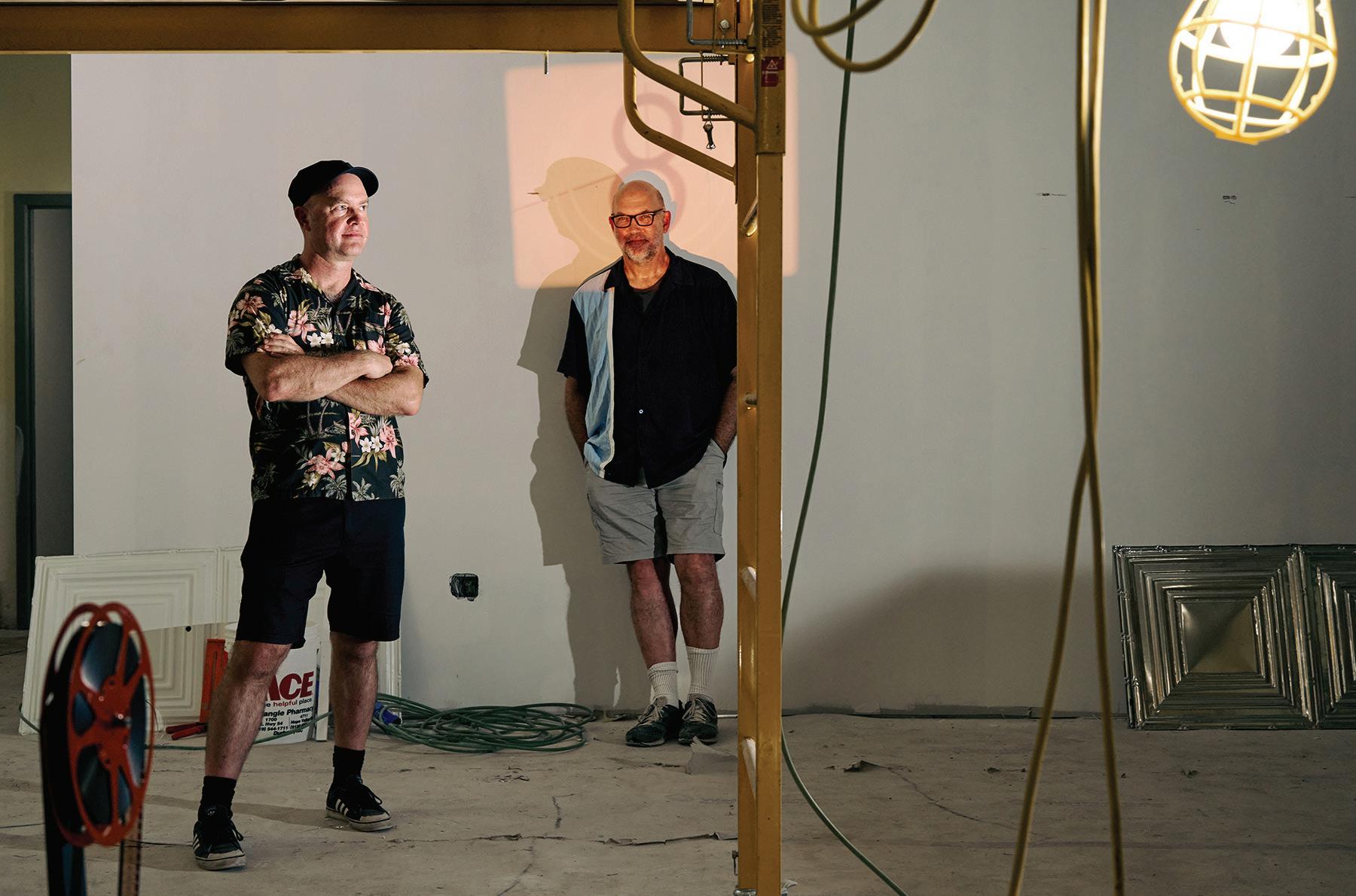

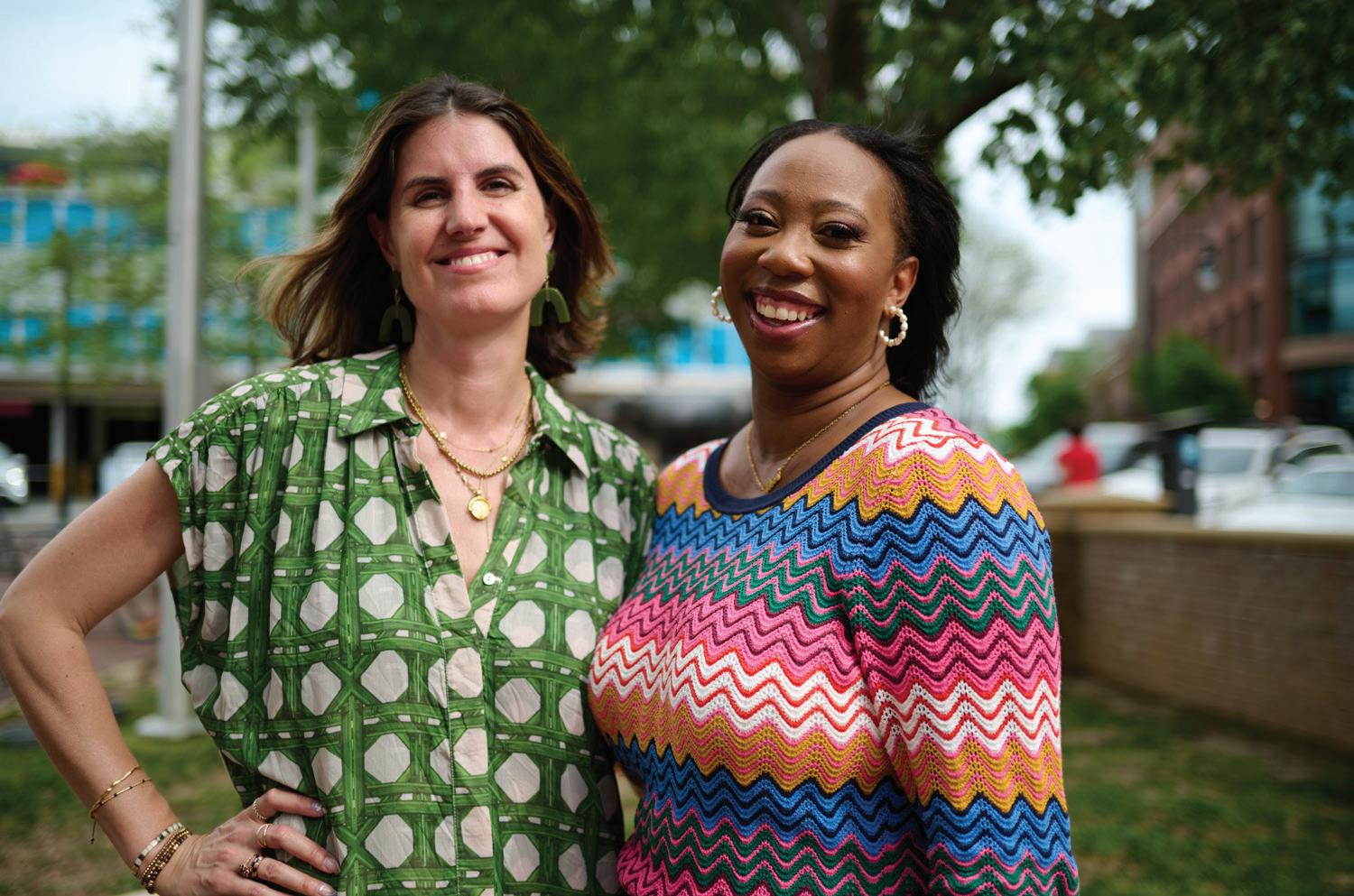
MADE IN NC
June 22, 7:30 p.m. | Duke’s Page Auditorium, Durham

The American Dance Festival’s annual Made in NC program draws together four dynamic performances created by Tar Heel choreographers.
BY LAUREN WINGENROTH arts@indyweek.com
Afew years back, Courtney Liu was deciding where in the United States to settle down with her partner after some time abroad dancing for the famed British choreographer Matthew Bourne.
“We were looking at places where I could really thrive as a dance artist,” Liu said.
The choice came down to one classic option and one slightly unexpected one: New York City or Durham. Liu had previously spent time in both cities: In New York, she’d danced in Broadway shows like Phantom of the Opera and in the Radio City Christmas Spectacular; in Durham, she’d earned both her undergraduate and graduate degrees at Duke University.
Liu and her now-husband landed on Durham, thanks in large part to the American Dance Festival (ADF).
“ADF has created a really special community in North Carolina for dance,” she said. “It’s a draw for so many dancers who either did the program or just want to be around dance and say, ‘I could live in this beautiful area that’s not
New York or Vegas or LA, and still feel really full as an artist.’”
On June 22, the festival will celebrate the richness of the local dance community it has helped grow with the annual Made in NC program, which is co-presented with Cary, NC. (The event will take place in Durham but an encore experience is slated for September 26 at Downtown Cary Park.)
Made in NC will feature four world premiere works by North Carolina-based choreographers. Liu is one of them.
“It’s always been a big celebration moment to see my friends and colleagues put up work,” she said. “I’m excited to be a part of it after seeing it for all these years.”
Each of the four choreographers on the program—Liu, whose background is in ballet and musical theater; Pretty Ugly Dance Company founder Amanda K. Miller; tap dance artist Jabu Graybeal; and jazz teacher and choreographer Tracey Durbin—will bring both a distinct artistic perspective to the ADF stage and a distinct relationship to the local dance community.
L to R: Made in NC choreographers Tracey Durbin, Jabu Graybeal, Amanda K. Miller, and Courtney Liu COURTESY OF

For Liu’s ADF commission, she’s going deep. Really deep. Her piece, called The 85 Percent, explores the fact that 85 percent of the ocean remains unexplored.
“Look at what humans have done to the other 15 percent,” she told the INDY. “Maybe we could leave the 85 percent unturned. Maybe we don’t need to keep colonizing and exploring. Maybe we can satiate our curiosity for the unknown in an artistic way. It’s me exploring what the 85 percent could be without going out there and maybe unintentionally harming it.”
Who better to represent the unknown depths of the ocean than merpeople?
“I was inspired by the idea of mermaiding as a verb—‘to mermaid’,” she said. Liu’s five merpeople include several students from Elon University where she teaches, as well as other local performers.
“We’re creating an underwater world together,” said Liu. The costumes and set, made of all recycled materials, are created by Clare Parker, a professor of costume design at UNC Greensboro.
For Liu, who in recent years has mostly choreographed for musical theater, it’s a chance to spend more time crafting a movement language than she usually gets.
“That isn’t always possible when you have nine days to put up a musical,” she explained. “While I’m rooted in ballet and musical theater, these dancers are rooted in different forms, and you’ll see our collaboration come out in that way.”
In addition to her choreographic work, Liu researches the concept of flow states in dance.
“I don’t think of flow as good or bad,” she said. “I think of it as useful or not useful for the situation. I’m aware of those dynamics at play anytime I walk into a dance space.”
“I don’t do it on purpose,” she said, of any thematic connection between “flow” and the ocean. “I just like both these things that are watery.”
K. Miller
“Europe cares about the arts, and there’s money— not money to waste, but money to not be afraid. I’ve always wanted to be able to help people here not be afraid.”
Though the as-yet-untitled piece that Amanda K. Miller will premiere at Made in NC will be new, it will contain many traces of her long and storied history as an international dance artist.
There are the costumes, recycled from an earlier work and handmade by Seth Tillett, a frequent collaborator with Miller’s former Germany-based Pretty Ugly Dance Company. There’s the music, by avant-garde Czech violinist and singer Iva Bittová, with whom Miller shares a mutual past collaborator, the English guitarist Fred Frith. Another part of the soundscape will be a recording of “baby monks”— aka young students of Buddhism—that Miller took while in India studying the religion. And there’s the setting—a sort of homecoming for Miller, who grew up in Chapel Hill, but since her return in 2009 has not shown much of her choreography.
Miller says that her living room looks like a kaleidoscope at the moment, full of the music, pictures, and documents that weave these facets of her research and history together. For her, this approach is not just about her own personal artistic process, but about “expressing the importance of dramaturgy,” which she feels can be lost in the American dance landscape.
“There’s an invisible depth; an invisible research history,” she said. “When that evolves within oneself, one can share it with the dancers.”
The dancers are one element of this work that will be completely new for Miller, who cast four North Carolina-based performers at an audition in Durham.
“I was like, ‘Oh my god, I have to audition people?’” she said. “I never gave auditions at Pretty Ugly. It’s so hard.” But Miller was pleased with the turnout and the results: “I really believe in the people I work with,” she said.
For Miller, having the opportunity to create a new work in the place where she grew up “has a lot of meaning.”
“Ever since I came back to America, I’ve wanted to help,” she said. “Europe cares about the arts, and there’s money— not money to waste, but money to not be afraid. I’ve always wanted to be able to help people here not be afraid.”

Take a scroll through tap dancer and choreographer Jabu Graybeal’s Instagram page—where he has upwards of 125 thousand followers—and you’ll find videos of him dancing to some songs you’d expect to see from a tap dancer, like “Singing in the Rain.”
Mostly, though, his riveting videos are set to music not typically associated with tap dance. There’s lots of country music and hip hop. There’s Eminem and AC/DC; Old Crow Medicine Show and Lady Gaga.
Graybeal realizes that his music choices are a bit unusual. But for him, it’s about marrying his love for tap dance with the music he actually listens to in daily life.
“Tap dance is very close siblings with jazz music,” he said. “Growing up, I only danced to jazz, and most of my mentors thought that was the only way to do it. If you’re dancing to anything else, it’s not really tap.”
For a while, Graybeal, who grew up on a farm in Chatham County and danced with the Chapel Hill-based North Carolina Youth Tap Ensemble, stuck to jazz.
“But I listen to all different kinds of music—country, hip hop, alternative rock, pretty much everything,” he said. “I would dance to it in private, and found that I was the happiest dancing to what I actually wanted to listen to.”
Graybeal’s Made in NC commission, a duet for himself and another tap dancer, will explore this idea. (Though Graybeal won’t let on what music, exactly, he’ll be using— the surprise seems to be part of the fun.) For him, it’s not just about dancing to music he enjoys, but allowing unexpected music choices to unlock unexpected ideas in his dancing. “You’re gonna dance differently to a hip hop track than a classical track,” he said. “It definitely brings out new ideas and allows me to express myself in different ways.”
After many years on the road, touring with the band Postmodern Jukebox and Riverdance as well as tap artists like Caleb Teicher and Michelle Dorrance, Graybeal returned and is now based back in Chapel Hill.
“I love the people, I love the nature,” he said. “I love it here, and it’s nice to get a break from the busy life of touring. Leaving North Carolina made me appreciate North Carolina.”
Tracey Durbin
Jazz dance teacher and choreographer Tracey Durbin considers herself an instinctual artist. “I just trust my gut and go with what I feel,” she says. So when she saw a large branch on the side of the road that spoke to her, she didn’t question her desire to stop and look closer.
The branch will be a part of her Made in NC piece, called “All Along the Watchtower.” To her, it represents Durham, a city she “used to make fun of” when she came to visit her sister, but that she has come to appreciate after seven years of living here full-time. “I love it here—the nature around me is in my blood,” she said.
It was instinct, too, that drew her to the piece’s musical score—which includes several classic folk songs covered by Richie Havens—and its themes. Though she wasn’t setting out to create a love story, the duet “has turned into the beginnings of one,” she explained. “It’s about finding each other, and how we get through the world together.”
The duet will be performed by two local dancers with whom Durbin recently worked on a piece in conjunction with a North Carolina Museum of Art exhibition on Grace Hartigan: George Barrett, who also serves as the executive director of Chapel Hill’s Marian Cheek Jackson Center, and Layla El-Khoury, who recently earned her PhD in Biological Engineering at NC State University.
Both dancers were originally Durbin’s students: She teaches at NC State and ADF, among other local and national dance organizations, and she sees herself as a teacher first.
“I’m really just a teacher who loves to choreograph,” she said. “I really want to challenge the dancers emotionally and technically and keep pushing them. I keep saying, ‘I just want you guys to crack open.’ So hopefully, we’ll have some cracks.”
Coming-of-age drama Girls like Girls, Adam Scott in an Irish horror film, and more movies coming to local theaters.
BY GLENN MCDONALD arts@indyweek.com
The summer movie season has officially descended with big June releases like Toy Story 5 and Disclosure Day, Steven Spielberg’s much-anticipated alien contact story. In the spirit of 21st-century contrariness, let’s look at some of the smaller films playing in Triangle theaters this month.
The coming-of-age drama Girls Like Girls has quite the multimedia pedigree. Directed and co-written by Hayley Kiyoko—musician, actress, and author—the movie is based on Kiyoko’s 2023 debut novel, which was in turn titled after her own 2015 song and viral music video.
Girls Like Girls has a wide pop culture footprint, but the story is small and intimate. Maya da Costa stars as 17-year-old Coley, reluctantly relocated to a small Oregon town after her mom dies. When she meets popular girl Sonya (Myra Molloy), both must navigate the treacherous terrain of first-time love, queer desire, and other matters of the heart. The official trailer for the film hits all the right notes. It made my heart physically hurt for a minute, but I’m a notorious softie when it comes to stories about the eternal ache of adolescence. In any case, it’s a good counterprogramming option if you’re trying to dodge the summer popcorn movies.
Those looking for a scary-movie excursion should consider the indie horror film Hokum, released in May but only recently booked locally. A joint U.S. and Irish production, Hokum is a classic haunted hotel story steeped in Gaelic folklore and atmospheric dread.
Adam Scott plays a troubled American writer who vis-

its the rural Irish inn where his parents honeymooned. He soon runs afoul of creepy locals and what appears to be a manifestation of the Cailleach, the mystical hag of British Isles mythology. Zoinks, Scoob!
Actually, reviews of Hokum have been uncommonly effusive, with several critics calling it one of the best horror films in recent years. Irish writer-director Damian McCarthy made his bones in the business with the respected indies Caveat and Oddity, and here he combines elements of supernatural suspense, murder mystery, and folk horror. The man is clearly a professional. It’s always a dilemma when taking a chance on a new scary movie: Bad horror films are upsetting and exhausting, but good ones can be so much fun. This looks like a good one.
For a more serious-minded evening out, the Icelandic documentary Time and Water has an intriguing backstory. Oscar-nominated filmmaker Sara Dosa (Fire of Love) works with the Icelandic writer and activist Andri Snær Magnason, whose 2019 book On Time and Water ponders Iceland’s diminishing glaciers from a personal, ground-level perspective.
Magnason’s family has a deep connection to the land. His grandparents were pioneering scientists who lived and worked on the ice. His book serves as a kind of time capsule of geologic time and family memory, and Dosa’s film expands his vision with carefully sequenced imagery. We get family photos and archival footage of the magnificent glaciers, plus present-day panoramas of the bare rocks where the ice used to be.
The unstoppable RuPaul headlines the disaster comedy spoof Stop! That! Train! Think Airplane! with updated jokes and improved 21st-century inclusivity. The cast includes drag superstars like Ginger Minj and Jujubee along with guest spots from Raven-Symoné, Chris Parnell, Charo, Natasha Leggero, and Sarah Michelle Gellar as herself, kind of.
Celebrated Canadian filmmaker Sophy Romvari makes her feature-length debut with the semiautobiographical family drama Blue Heron, concerning a Hungarian immigrant family on Vancouver Island. The film is an expansion on Romvari’s Still Processing, the short-form documentary that broke through to be a small viral sensation a few years back.
The Death of Robin Hood is a dark reimagining of the European folk legend starring Hugh Jackman as a lessthan-merry outlaw looking back on his life and crimes. The movie is actually based on a 17th-century ballad— Robin Hoode his Death—that has a pretty fascinating history, if you’re partial to these kinds of internet rabbit holes.
The musical comedy-drama Power Ballad tells the story of a former boy band star (Nick Jonas) who steals a hit song from a sweet-natured wedding singer (Paul Rudd). The director is Irish musical film specialist John Carney (Once, Begin Again), and early reviews from various festival screenings are encouraging.
WED 06/03
STAGE
Ari Lennox - The Vacancy Tour
7 p.m. The Ritz, Raleigh.
Hamilton
May 29 - June 14, various times, DPAC, Durham.
PAGE
Brook Wilensky-Lanford presents A GOD-SHAPED
NATION with Andrew Ali Aghapour
5:30 p.m. Flyleaf Books, Chapel Hill.
THU 06/04
MUSIC
Bayside
8 p.m. Cat’s Cradle, Carrboro.
Esther Rose / Sam Gelband
7 p.m. The Pinhook, Durham.
Sam Barber
7 p.m. Red Hat Ampitheater, Raleigh.
PAGE
Chrystal D. Giles Presents WE ARE JOY!
5:00 p.m. Chapel Hill Public Library, Chapel Hill.
Marlie Parker Wasserman presents FIRST DAUGHTER
5:30 p.m. Flyleaf Books, Durham.
FRI 06/05
MUSIC
Juan Alamo and Marimjazzia: A Bomba-Jazz Suite
7:30 p.m. Sharp 9 Gallery, Durham.
Larry.
8 p.m. Cat’s Cradle Back Room, Carrboro.
Swan Lake Selections
8 p.m. Koka Booth Amphitheatre, Cary.
STAGE
Rub the Soles of the Hands Ablaze
7 p.m. Shadowbox Studio, Durham.

SAT 06/06
MUSIC
Gracie and Rachel / Bella Peadon
7 p.m. The Pinhook, Durham.
Juan Alamo and Marimjazzia: A Bomba-Jazz Suite
7:30 p.m. Sharp 9 Gallery, Durham.
Khalid
7:30 p.m. Red Hat Ampitheater, Raleigh.
A Space Spectular: Star Wars & More
8 p.m. Koka Booth Amphitheatre, Cary.
STAGE
The Monti: Pride & Prejudice
8 p.m. Carolina Theatre, Durham.
MON 06/08
MUSIC
Mellowpunk / Dreamscent / Khallori 7:30 p.m The Pinhook, Durham.
TUE 06/09
MUSIC
Killswitch Engage 5:30 p.m. The Ritz, Raleigh.
PAGE
Dr. Kemi Doll presents A TERRIBLE STRENGTH, with Omisade Burney-Scott 5:30 p.m. Flyleaf Books, Chapel Hill.
WED 06/10
MUSIC
SUN 06/07
MUSIC
Charlie Ballantine Trio
3 p.m. Sharp 9 Gallery, Durham.
Dylan LeBlanc
8 p.m. Cat’s Cradle Back Room, Carrboro.
Zones, Small Paws (DJ set)
6:30 p.m. Rubies on Five Points, Durham.
Andy Hull
8 p.m. Haw River Ballroom, Saxapahaw.
Feyleux, Jaguardini
8 p.m. Cat’s Cradle Back Room, Carrboro.
Lauren Daigle
6:30 p.m. Koka Booth Amphitheatre, Cary.
The Sonder Bombs / Gay Meat 7:30 p.m. The Pinhook, Durham.
Vundabar – ‘Gawk’ 10 Year Anniversary Tour 8 p.m. Motorco Music Hall, Durham.
THU 06/11
MUSIC
Bad Cop Bad Cop
7 p.m. Cat’s Cradle Back Room, Carrboro.
BALTHVS
8 p.m. Cat’s Cradle, Carrboro.
Pickety Split / Redbud / Po Dunk Ramblers
6:30 p.m. The Pinhook, Durham.
Sleeping with Sirens
7 p.m. The Ritz, Raleigh.
PAGE
Alan Opts Out 6:30 p.m. Letters Bookshop, Durham.
Louise Marburg presents FANCY MEETING YOU, with Jill McCorkle
5:30 p.m Flyleaf Books, Chapel Hill.
FRI 06/12
MUSIC
Anjimile / Dino 7:30 p.m. The Pinhook, Durham.
Ick 6:30 p.m. Rubies on Five Points, Durham.
MAKE Album Release Show
9 p.m. Cat’s Cradle Back Room, Carrboro.
Jess Ray – Bless It All Tour w/ Ethan Nathaniel / Emma-Elaine 7 p.m. Lincoln Theatre, Raleigh.
Joey Calderazzo Solo Piano & Live Recording Concert
7:30 p.m. Sharp 9 Gallery, Durham.
Joyce Manor
7 p.m. The Ritz, Raleigh.
Patriotic Pops
8 p.m. Koka Booth Amphitheatre, Cary.
PAGE
Niki Smith presents MIDSUMMER SISTERS
5 p.m. Chapel Hill Public Library, Chapel Hill.
SAT 06/13
MUSIC
Caleb Caudle & The Sweet Critters
8 p.m. Cat’s Cradle Back Room, Carrboro.
Carin Leon
8 p.m. Lenovo Center, Raleigh.
Joey Calderazzo Solo Piano & Live Recording Concert
7:30 p.m. Sharp 9 Gallery, Durham.
Marisa Anderson / Max Knouse of Califone + Joe Westerlund
6:30 p.m. The Pinhook, Durham.
Riff Raff w/ #2Stoned
8 p.m. Lincoln Theatre, Raleigh.
Under the Sea
8 p.m. Koka Booth Amphitheatre, Cary.
COMMUNITY
NCMA Loves Anime Bazaar
10 a.m. - 7:30 p.m., NCMA, Raleigh.
SUN 06/14
MUSIC
Brandon Mitchell Quartet
3 p.m. Sharp 9 Gallery, Durham.
Plays Well With Others: Justin Ellis’ 35th Birthday Show
7 p.m. Cat’s Cradle Back Room, Carrboro.
MON 06/15
MUSIC
MUELAS / Glamour World
7 p.m. The Pinhook, Durham.
TUE 06/16
MUSIC
Forrest Frank: The Jesus Generation Tour
7 p.m. Lenovo Center, Raleigh.
PAGE
Blair LM Kelley presents BLACK FREEDOM, with Mark Anthony Neal
5:30 p.m. Flyleaf Books, Chapel Hill.
Sarah Van Name Presents TANGLED ROOTS & WILD DREAMS with author Angela Velez
6:30 p.m. Letters Bookshop, Durham.





There is really only one rule to Sudoku: Fill in the game board so that the numbers 1 through 9 occur exactly once in each row, column, and 3x3 box. The numbers can appear in any order and diagonals are not considered. Your initial game board will consist of several numbers that are already placed. Those numbers cannot be changed. Your goal is to fill in the empty squares following the simple rule above.

If you’re stumped, find the answer keys for these puzzles and archives of previous puzzles (and their solutions) at indyweek.com/puzzles-page or scan this QR code for a link. Best of luck, and have fun!
RELEASE DATE—Sunday,
Edited by Patti Varol
A.
First man, in Maori mythology
26 Two-thirds of a magnum
27 Cable giant acquired by AT&T
28 An end to reason?
29 Like a portrait hung by a professional?
31 Four-footed Jetson
33 City on the Orne 34 Ghostly sound
35 How beer is served?
39 Yields
Layered potluck
One of the orgs. merged in the Maastricht Treaty
Rainbow backdrop
Burden
Having the wealth of kings and queens?
Baba ghanoush bread
Bodies of water
“Here we go!”
Like a smart recycler?
Yokozuna’s
“__
Barely beats (out)
“Queer Eye” expert Jonathan Van __
Letter opener
“Hello” singer DOWN 1 Lunchroom, for short
Go __ great length
Like some parliaments
Perfectionist’s creed 5 Beginning to lose? 6 Fastener on many European cars 7 List abbr.
Reputation
“That’s all __ wrote”
Fixed, as shoelaces
Set straight
One resisting the five thieves
Last-ditch attempt
Texas city where German chocolate cake was invented
“In space, no one can hear you scream”
Assistant Pastor
Assistant Pastor - RTP Global Mission Church, Durham, NC. Lead worship and preaching services; oversee worship planning and praise team; supervise Children’s and Next Generation Ministries; provide pastoral counseling, prayer, Bible study, and discipleship; collaborate with church leadership. Requires Master of Divinity or related field and Certificate of Ordination (U.S. or foreign). Salary: $52,083/year. Mail resume to DongHun Jeun, 5045 Chin Page Rd, Durham, NC 27703.
Consulting Principal AWS Cloud Engineer
Consulting Principal AWS Cloud Engineer sought by RELX Inc dba LexisNexis USA in Raleigh, NC to help define best practices, establish cloud vision, mentor teams, collaborate w/ cross-functional stakeholders to ensure our cloud infrastructure is robust, secure, scalable, resilient, cost-efficient. Minimum of Master’s degree or foreign equivalent in Computer Science, Computer Engineering, Information Technology, or rltd + 5 yrs exp in job offered or rltd occupations required. Employee reports to LexisNexis USA office in Raleigh, NC but may telecommute from any location within US. Interested candidates should send email to ResumesICT@RELX.com. Ref job code: R107254 ($157,248 to $177k/yr + standard corporate benefits)
LC MCC Order Engineer
Siemens Industry, Inc. seeks a LV MCC Order Engineer in Wendell, NC to analyze customer’s tech specs & design product solutions for application of Siemens MCC products. Reqs Bachelors or foreign equiv in Elec Eng, Mech Eng, Mechatronics Eng & 2 yrs rel exp. 10% dom travel req. Hybrid work permitted. To apply, go to: https://jobs.siemens.com/en_US/externaljobs/ JobDetail/504880
Specialist Engineer, Protection & Automation
Siemens Industry, Inc. seeks a Specialist Engineer, Protection & Automation in Wendell, NC.
Support customers & dvlmpt of protection sys for generation, transmission, distribution & industrial plants, incl Siemens SIPROTEC 5 protection portfolio & legacy. Reqs Bachelors in Indus Eng, Elec Eng, or rel fld & 10 yrs rel exp. 50% dom travel required. Hybrid work permitted. To apply, visit https://jobs.siemens.com/en_US/externaljobs/ JobDetail/506124
Substation Automation Engineer
Siemens Industry, Inc. seeks a Substation Automation Engineer in Wendell, NC. Design, implement, & maintain automation sys & assoc equip power substations. Reqs Bachelor in Elec Eng, Electron Eng, Comp Eng or rel fld & 3 yrs rel exp. Up to 50% dom travel req. Hybrid work permitted. To apply, visit https://jobs.siemens.com/ en_US/externaljobs/JobDetail/506213
Substation & Automation Panel Design Engineer
Siemens Industry, Inc. seeks a Substation & Automation Panel Design Engineer in Wendell, NC. Design elec, mech & syst drawings for protection & control panels in accord w/customer specs. Reqs Bachelors in Elec Eng or rel fld & 4 yrs rel exp. Up to 10% dom travel req. Hybrid work permitted. To apply, visit https://jobs.siemens.com/en_US/ externaljobs/JobDetail/504897

RECYCLE THIS PAPER
RECYCLE THIS PAPER
RECYCLE THIS PAPER
RECYCLE THIS PAPER
RECYCLE THIS PAPER
RECYCLE THIS PAPER
RECYCLE THIS PAPER
RECYCLE THIS PAPER
RECYCLE THIS PAPER
RECYCLE THIS PAPER
RECYCLE THIS PAPER
RECYCLE THIS PAPER
RECYCLE THIS PAPER
RECYCLE THIS PAPER
RECYCLE THIS PAPER
RECYCLE THIS PAPER
RECYCLE THIS PAPER
RECYCLE THIS PAPER
RECYCLE THIS PAPER
RECYCLE THIS PAPER
RECYCLE THIS PAPER
RECYCLE THIS PAPER
RECYCLE THIS PAPER