July 15, 2026


Raleigh | Durham | Chapel Hill

July 15, 2026
4 In a case likely to set precedent, judges ruled that two Orange County detention officers cannot avoid liability in a lawsuit over Maurice King's 2020 in-custody death. BY MICHAEL HEWLETT
5 In 2023, Fuquay-Varina residents organized against a bond referendum that would have funded ball fields in a popular natural space. Now, those plans are moving forward. BY JANE PORTER
9 A vocal minority is fighting to undo a Raleigh neighborhood's attempt to ditch its slave-owning namesake. BY CHLOE COURTNEY BOHL
12 Why can’t lawmakers figure out how to regulate North Carolina's hemp industry? BY JEFFREY BILLMAN
17 Character Study: With her mobile drinks cart, Mazay ka Matcha, Hayaa Hyder offers a South Asian spin on a Japanese classic. BY DANEEN KHAN
18 Whiskey-glazed pecans, a cartoonishly thin chicken cutlet, the Mezcalito nachos, and more Durham Bulls concessions, rated from strikeout to home run. BY LENA
GELLER
20 Lunch Money: America250 ... America $2.50? A visit to the affordable but clandestine North Carolina State Legislature cafeteria. BY LENA GELLER
22 Talking with journalist Nicole Carr about her new book, the pioneering legacy of Shaw University, and the lasting—and ongoing—impact of systemic racism in medicine. BY KORIE DEAN
A fried chicken sandwich from Home Plate Chicken is held aloft
Ross is one of two Democrats in North Carolina’s congressional delegation who hasn’t signed on to the Block the Bombs Act; the resolution is endorsed by Amnesty International and several Jewish civil rights groups.
BY REEVES PEELER backtalk@indyweek.com
The Block the Bombs Act (officially known as H.R. 3565) was introduced in the United States House over a year ago by Rep. Delia C. Ramirez (D-Illinois). It prohibits the U.S. president from “selling, transferring, or exporting certain defense articles or services to Israel, except in specified circumstances.”
The Block the Bombs Act has been endorsed by Amnesty International, as well as an array of Jewish civil rights groups including Jewish Voice for Peace Action, Rabbis for Ceasefire, Jews for Racial and Economic Justice, IfNotNow, and New Jewish Narrative. While the bill doesn’t ban the sales of all arms to Israel, it does detail specific weapons that cannot be sold.
From October 2023 to September 2025, it’s estimated the U.S. government spent $21.7 billion on direct military aid to Israel. This figure does not include the tens of millions of arms sales agreements paid for outside current government budgets.
Rep. Deborah Ross has served in North Carolina’s 2nd Congressional District, covering various parts of Raleigh and Wake County, since 2021. Ross has handily won all three of her general elections in the district with an average margin over her Republican opponents of 31%.

The Cook Political Report describes the 2nd Congressional District as a “Solid Democratic” district and gives the district a “D+17” rating for partisan ideology. This means that in the 2020 and 2024 presidential elections, the district performed about 17 points more Democratic in terms of two-party vote share than the nation did as a whole. Of the 435 districts in the U.S. House, the district ranks as the 77th most safe district for Democrats in the nation by Cook.
The makeup of Ross’s district is important to understand in order to put her abstention from the Block the Bombs Act into context: Block the Bombs has a relatively large total of 75 cosponsors in the U.S. House. In recent years, bills introduced in the House have averaged between 19 to 22 cosponsors. Of these 75 cosponsors on Block the Bombs, 32 hold House seats that are more vulnerable to a GOP challenger than Ross’s seat, per Cook Political Report. In other words, Ross has a safer seat than close to half of the act’s current cosponsors. Ross’s absence from this list of cosponsors stands out in many ways besides just her extremely safe House seat. Of the four Democrats representing North Carolina
in this Congress, Ross is one of only two to not sign on to Block the Bombs; the other holdout is Rep. Don Davis. While Davis’s absence comes as little surprise— he has shown a willingness to work with the Trump administration on Middle East interventionism, including a notable vote with Republicans on June 30 to reject the Lebanon War Powers Resolution— Rep. Alma Adams (D-N.C.) and Rep. Valerie Foushee (D-N.C.) signed Block the Bombs in January 2026 and August 2025, respectively.
Ross’s abstention from the Block the Bombs act’s cosponsor list has been glaring. But with the new state platform of the North Carolina Democratic Party ratified three weeks ago, her absence is cast in a new light. At its biennial state convention meeting last month, the N.C. Democratic Party voted to adopt the “international” plank of its new platform by a vote of 407-89.
Within this international plank of the party platform, Section 4 states that “we support an immediate embargo on military aid, weapons shipments, and military logistical support to Israel, and we support maintaining that embargo until Amnesty International, Human Rights Watch, and
B’Tselem certify that Israel is no longer engaged in apartheid rule.” Similarly, Section 7 states, “[We support] ensuring that United States foreign assistance, military aid, arms sales, weapons transfers, and diplomatic support are consistent with international law, human rights, and opposition to genocide.”
The call for Ross to support the Block the Bombs Act is not new. Last August, five members from the North Carolina Democratic Party’s State Executive Council met with Ross’s Raleigh staff to call on Ross to sign on to the Block the Bombs Act. This request has not yet been answered.
It’s time for Ross to bring her position in line with voters across the nation, who, by as much as 75% now, believe that aid to Israel should come to a halt. In a time when the Trump administration is willing to trample on international law and human rights both at home and abroad, Raleigh and Wake County deserve representation that uses our taxes to help the working people of the 2nd Congressional District, not to write blank checks to the Israeli military. W
Reeves Peeler is a Raleigh organizer with N.C. Dems for Palestinian Lives and a member of the N.C. Democratic Party’s State Executive Committee.
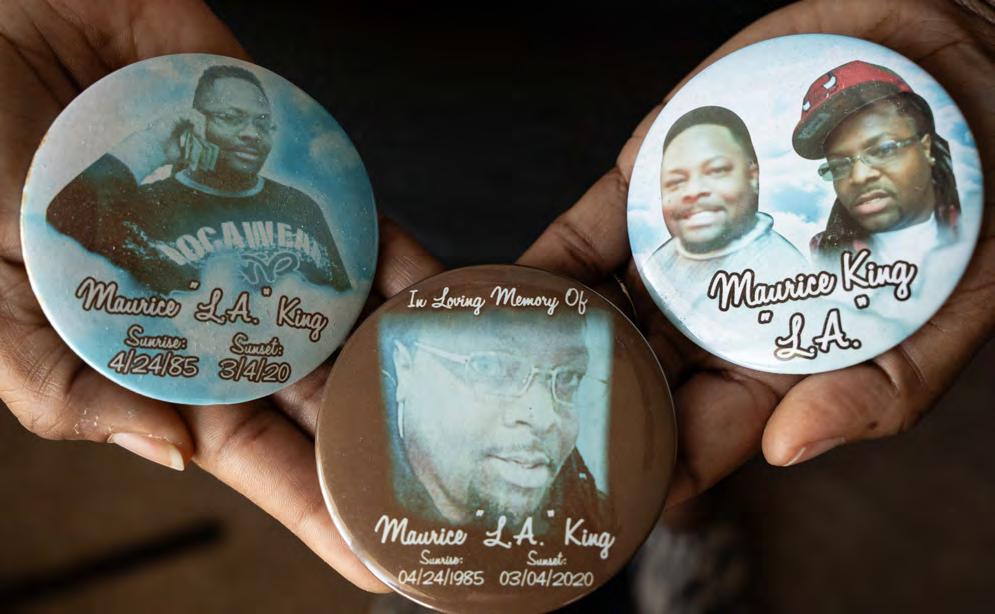
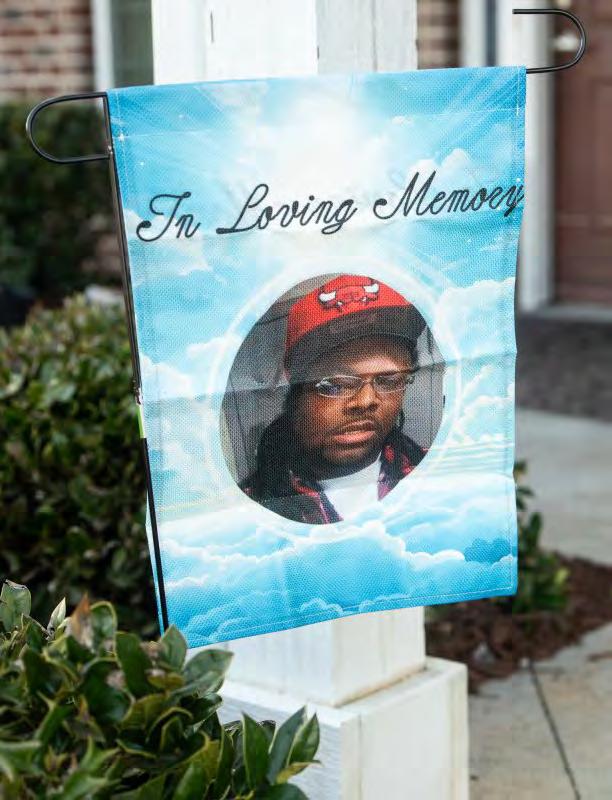
Judges found sufficient evidence that two Orange County detention officers waited to check on a man in custody who later died to avoid extra paperwork. The court denied them immunity in a lawsuit over Maurice King’s 2020 death.
BY MICHAEL HEWLETT michael@theassemblync.com
Two Orange County detention officers cannot avoid liability in a federal lawsuit alleging that their neglect led to a man’s death in 2020, a federal appellate court ruled last week.
On July 2, a three-judge panel of the U.S. Court of Appeals for the Fourth Circuit concluded that there was sufficient evidence that the officers waited 22 minutes to check on inmate Maurice King, even though they suspected he had been assaulted and had heard him groaning, because they wanted to avoid extra paperwork.
As a result, the court said, the officers cannot claim qualified immunity, a legal doctrine that exempts law-enforcement officers from liability in lawsuits. Except in rare instances, like this case, qualified immunity makes it difficult for plaintiffs to win lawsuits against law-enforcement officers. This ruling will likely set precedent for how similar cases will be handled in the future.
As The Assembly previously reported, King was awaiting sentencing on drug charges when he died on March 4, 2020, hours after another inmate assaulted him in his cell. His
mother, Tiffany King, filed a federal lawsuit the following year alleging that officers William Berry Jr. and Thomas Linster III waited an hour and a half before checking on King and seeking medical attention. King wasn’t taken to Duke University Hospital for more than two hours, and died minutes after arriving. An autopsy report listed King’s cause of death as hypertensive cardiovascular disease following a physical altercation.
The lawsuit also alleged that Orange County Sheriff Charles Blackwood operated a jail where officers routinely bucked local policies and state standards. From 2017 to 2020, state inspectors repeatedly cited the sheriff’s office for lax supervision and for allowing inmates to use towels and other items to obscure views into their cells.
U.S. District Judge Catherine Eagle ruled that qualified immunity did not protect the officers from civil liability, but Linster and Berry appealed that decision. She also concluded that the officers made false statements about what happened. The appeal delayed their trial, which was scheduled for March 2025.
Judge Julius Richardson, who was nominated by President Donald Trump and assumed office in August 2018, wrote in the panel’s unanimous decision upholding Eagle’s ruling last week: “We agree that a reasonable jury could find the officers consciously disregarded a substantial risk of serious harm. And we agree that such disregard would violate clearly established law.”
Allyn Sharp, Tiffany King’s attorney, declined to comment, citing pending litigation. Brian Castro, lead attorney for the defendants, also declined to comment.
At the time of the assault, King was housed in B-Pod, a maximum security section of the Orange County jail. According to court documents, an inmate named Tyler Grantz entered King’s cell sometime after 6:39 p.m. on March 4, 2020, and assaulted him. Three other inmates went in and out of King’s cell.
Linster first heard signs of trouble at 7:47 p.m., according to the summary in Richardson’s opinion. Linster also heard a “concerning noise” coming from King’s cell but ignored it. Three minutes later, Berry and Linster turned on the intercom in King’s cell. Berry told investigators he thought he heard a “moan or a groan” and “someone talking.”
Twenty-two minutes passed without either officer checking on King. Because the officers have to punch a sensor on a schedule after finishing their rounds, Berry explained the delay to investigators by saying that he didn’t want to punch too early.
“[I]f you go in 1 minute early, you have to fill out that damn paper… at 5 o’clock in the morning before you go home that you missed a punch,” Berry said in a deposition, according to the ruling.
Both officers told investigators they suspected King had been assaulted, with Berry adding that he looked for injuries when he entered the cell “because somebody [could have] hit him in the face.” Linster told Berry he wanted to determine whether King had been assaulted because “I don’t want to accuse nobody of something they ain’t done.” (Grantz was charged with involuntary manslaughter and later pleaded no contest to that charge; he was sentenced to a maximum of two years and eight months in prison.)
Along with the officers’ disclosures, Richardson noted Berry’s conflicting timeline around when he retrieved an inhaler for King, who had a history of asthma. Surveillance video showed Berry with the inhaler before he entered King’s cell. But Berry consistently claimed that he only got the inhaler after going into the cell and King asking him to retrieve it.
The officers have argued that they made a good-faith, though slow, effort to help King and did not immediately realize the extent of his injuries. But Richardson dismissed that argument based on their conflicting accounts.
The Fourth Circuit’s ruling sends the case back to the U.S. District Court for trial, but the defendants could appeal the decision. W
Fuquay Varina is moving forward with plans to build ball fields on a portion of the popular Hilltop Needmore park. Residents who frequent the natural space are suspicious.
BY JANE PORTER jporter@indyweek.com
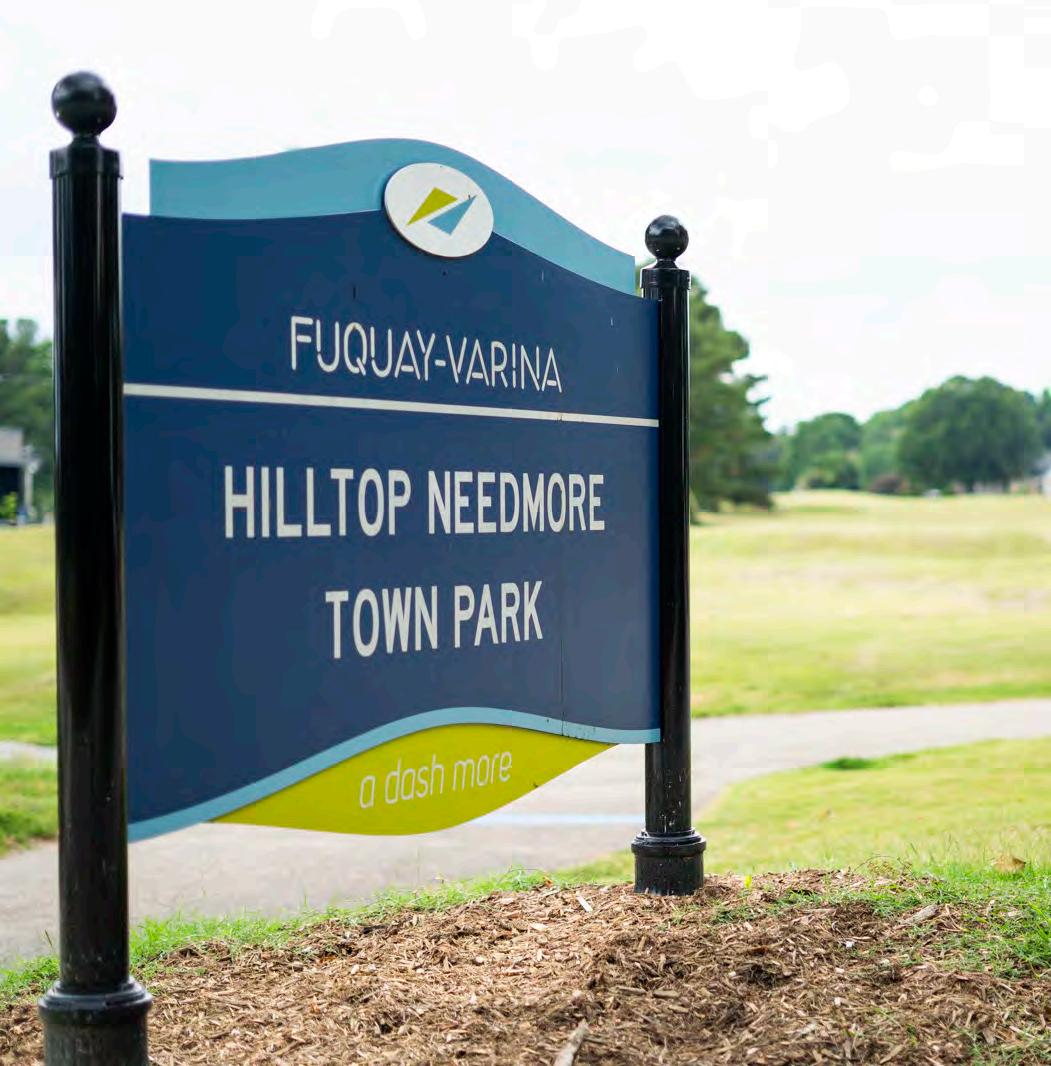
In Hilltop Needmore Town Park in Fuquay-Varina, mature pecan and live oak trees, tulip poplars, and Eastern red cedars flank the walking trails that meander through rolling hills.
White-tailed deer graze near the trees while rabbits and squirrels dart across footpaths.
Barred owls, woodpeckers, and songbirds populate the tree branches. Frogs, turtles, blue herons, and wood ducks make their homes in and around the ponds that dot the 147-acre property.
The park is one of the most beautiful natural spaces in Wake County, beloved by thousands of residents. But last month, Fuquay-Varina’s Board of Commissioners adopted a budget that includes $10 million to build two baseball fields and two multipurpose fields on about 5 acres. Last week, town commissioners selected a designbuild firm for the project.
Dozens of residents filled the town’s municipal building on the evening of the budget vote to register their objections to
the plan. More than 6,000 people also belong to a Facebook group called Hilltop Needmore Town Park and Preserve Advocacy Group, where they organize in favor of preservation and against development of the property.
The budget vote comes a little under three years after Fuquay-Varina voters rejected a $60 million municipal parks bond that included money for two ball fields in the park. Residents thought the park was in the clear from development following the bond’s defeat, but the town says it needs more athletics fields to accommodate a 154% growth in youth sports over the past decade; the bond referendum was a vote on how athletics fields at the park would be funded, not whether they would be built at all, the town says. Ball fields were planned for the park since commissioners adopted a master plan for Hilltop Needmore in 2022, town communications state, and although alternative sites for the ball fields have been considered, every version of a master plan for the park, including
one dating to 2017, included a mix of active and passive recreation.
“We evaluated several models—including purchasing new land and partnering with schools—but ultimately determined that developing facilities on existing townowned land is the most responsible path,” said Susan Weis, the town’s communications director, in an email to the INDY. “This plan allows us to provide much-needed space for our children quickly while avoiding a property tax increase.”
Residents opposed to the plan say they feel betrayed and are suspicious of the town’s motives. They are outraged that the construction process will destroy the park’s popular Blue Trail (the town says “a small section will be realigned”). They say they can’t believe the town couldn’t find another property to build the fields on instead of the hilly green oasis that many have envisioned as a regional park and preserve for generations to come.
“It’s become a landmark for not just preservation but public advocacy,” said Ashley
Manstedt, a resident, park user, and administrator of the Facebook group, in an interview with the INDY. “You’ve got a group of this many people that have been saying this is a safe space for them to get out in nature and decompress from the noise and chaos of their lives. It’s just a blatant disregard for citizen advocacy.”
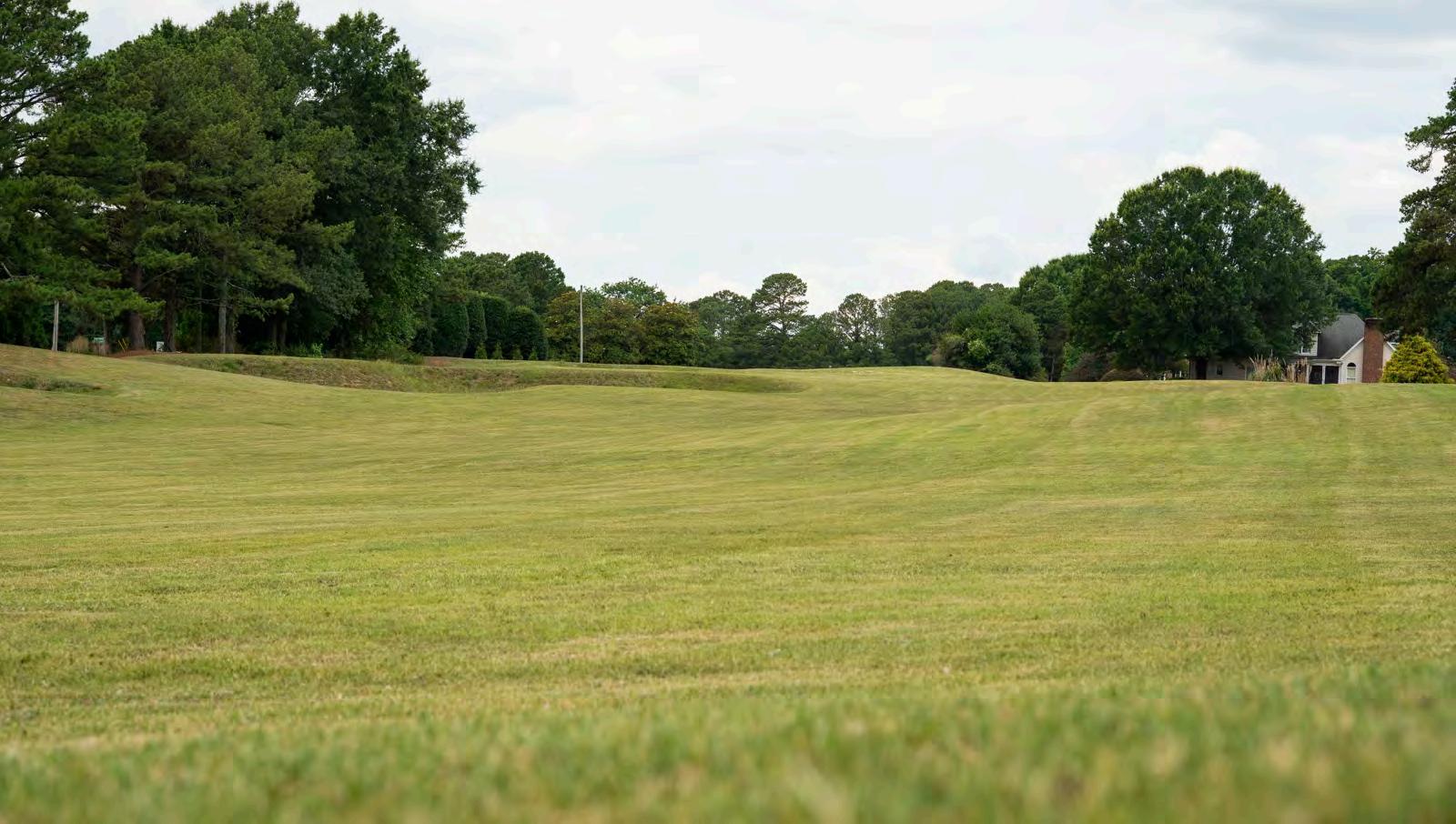
Built in the 1980s and early ’90s, the defunct Crooked Creek Golf Club, surrounded by subdivisions with hundreds of homes, was, by 2014, in need of a lifeline. Five years would go by before the property was gifted to the town of Fuquay-Varina, and in June 2019 town commissioners voted unanimously to rename it Hilltop Needmore Town Park and Preserve.
Last month’s budget vote that is sharply dividing Fuquay-Varina’s town leaders and residents comes eight years after the same “failed golf course” divided the same residents and the leaders of Wake County. And it seems poised to remain a headache for
Fuquay-Varina officials for at least a few years more.
In 2015, after learning Crooked Creek was coming up for sale, a group of residents and preservationists developed a strategy to conserve the land and approached the golf course’s owners, who agreed to work with them. The group approached then-Wake County Commissioners Sig Hutchinson and Matt Calabria, whose district covered Fuquay-Varina, to propose that the county buy the property and use it as a county park for passive recreation—activites that have a low environmental impact, such as trail hiking, bicycling, and birdwatching—without the need for built facilities.
“This was not something that we had really done before, but it was an interesting idea,” Hutchinson said in an interview with the INDY. “And the value is, it’s green space, it’s 147 acres, and the greenways are right there. ... So there was really not much to do to get it done.”
On the evening of the county commission-
ers’ November 2017 vote to buy Crooked Creek, park supporters packed the meeting wearing matching green T-shirts. Commissioners voted 4-3 to approve a lease-purchase agreement with the nonprofit Conservation Fund, following four hours of discussion.
But by the spring of 2018, the park— which the county commissioners ultimately negotiated to buy for $4 million—had become a political football among Democrats in blue Wake County. Residents and activists who were upset with the board over public school funding blamed the four commissioners who voted to purchase the park for what they characterized as misplaced priorities.
All four drew opponents in the Democratic primary, and two commissioners who supported buying the park—John Burns and Erv Portman—lost their seats. After the board officially turned over in December, the county listed the park as surplus and announced its intention to sell the proper-
ty—just months after buying it.
“It was a horrible Christmas for us all,” recalled Hutchinson, “because we spent all this time and effort getting this park functional and done, and now ... we were about to lose it.”
At the new board’s first official meeting in January 2019, hundreds of people showed up to oppose the sale. The county commissioners who pushed to sell the park quickly realized they had made a mistake.
David Carter is the retired director of Wake County’s Parks, Recreation, and Open Space Department. He was also one of the advocates who pushed for Wake County to buy the Crooked Creek golf course over a decade ago.
In May, Carter wrote a letter to Fuquay-Varina Town Manager Adam Mitchell explaining why Hilltop Needmore is a poor choice for construction of athletic fields.
First, the town will have to spend millions grading the land. That process would per-
“There were so many shady things about it.”
manently alter the soil and could ruin underground wells that serve the nearby subdivisions, Carter wrote. Additionally, lighting and its proximity to homes make the site inappropriate for active recreation, and nearby traffic raises safety concerns for children ages 9 and 10, for whom the ball fields are planned. That’s not to mention the impacts on wildlife and people who use the space to walk and bike.
Both Carter and Hutchinson maintain that the town of Fuquay-Varina had no desire to buy the property, either when the Crooked Creek golf course was for sale or when, in 2018, Wake County tried to put the park on the market. Only when offered it for free did town officials say they’d take it.
It was a last resort on the part of the county commissioners, Hutchinson recalled.
“Primarily [the commissioners] were just desperate to find a solution to this mess that they had created, so they immediately jumped on it and said, ‘Hey, yes, we will give Fuquay-Varina the park—problem over,’” Hutchinson said.
In October 2022, the town unveiled a master plan with designs for the property. It would develop “approximately 2.7% of the park’s 147 passive acres for recreational use,” a page on the town’s website states.
Manstedt, the advocacy group organizer, said residents began protesting immediately.
“I was told at that time by certain commissioners and staff, ‘Hey, Ashley, this is only a concept plan. Don’t worry about this. Those things may never happen, and if they do, it’ll be 20 years down the road,’” Manstedt said. “Fast forward not 20 years but one year later, and we see them on the bond.”
In addition to two baseball fields and parking lots at Hilltop Needmore, the $60 million bond proposal included money for an indoor sports complex, renovation of the Fuquay-Varina Community Center, and “a future recreational park” of more than 70 acres with baseball, softball, and soccer fields, a shelter, restrooms, and other amenities, location to be determined.
“They packaged this bond where it was going to, you know, fund so many wonderful things,” Manstedt said.
In an unprecedented move, voters rejected the bond by almost 60%. The advocacy group was, Manstedt said, “instrumental” in stopping the bond because it would level acres of trees and rolling hills and destroy

the park’s popular Blue Trail.
“Ballot measures for parks don’t fail,” said Carter, who worked on numerous parks bond proposals in towns across the country during his career, in an interview. “They don’t fail, and particularly in Wake County. Well, it did, and boy, they, the town was mad. Pardon my language, but they were pissed off.”
Three weeks after the parks bond referendum failed, then-Mayor Blake Massengill, a nonvoting member of the Board of Commissioners, addressed the future of Hilltop Needmore Town Park and Preserve on his public Facebook page. He said he shared the vision for a destination park and wanted “to find a way to advance some planned improvements, without tax increases, while also addressing concerns, such as the proposed ball fields and parking lots.”
Soon after, the town surveyed Fuquay-Varina residents on what they wanted to see across the town’s parks system, including at Hilltop Needmore. Baseball fields came in dead last, and at the Board of Commissioners’ annual retreat in February 2024, an assistant town manager noted that a majority of residents responded that they wanted more parks, greenways, and trails.
According to the minutes from the retreat, the commissioners discussed next steps for the park. Massengill said he thought the ball fields needed to be removed from the master plan, and the rest of the board agreed that “the community appears to enjoy the park in its current form.”
The commissioners then directed town managers to “identify opportunities other than [Hilltop Needmore] for baseball fields.” If they found viable alternatives, the board would consider amending the park’s master plan. Massengill “encouraged management to consider all viable options including leasing existing fields from private owners and reiterated his thoughts about removing the fields from the HNTPP Master Plan,” the minutes state.
Then, in May, when Jason Wunsch, a commissioner who supported preserving the park, was out sick, Mitchell, the town manager, held a closed-session meeting with the remaining commissioners at which they voted to remove the word “preserve” from new signage the town was ordering for the park’s soon-to-open community center.
In a letter to the mayor and commissioners a few months later, in September,
Mitchell noted that residents were beginning to notice the omission and provided talking points in the event that they “get asked why the board did not take a formal action when deciding about the signage and words on the signage or even the branding of the park.”
Mitchell suggested the commissioners respond that it was a unanimous board decision made to meet deadlines for the sign vendor, but added that “all references to park and facility names at the Hilltop Needmore Town Park location were changed on town materials and its website” two months prior.
“This too shall pass,” Mitchell’s letter concluded, “but you probably should expect some noise for a bit, as the Crooked Creek residents are just now becoming aware of the change.”
In emails to constituents a few days later, Massengill and Commissioner Charlie Adcock explained the change, according to public records reviewed by the INDY
“I was told by staff that they wanted a shorter name for the new community center,” Adcock wrote in an email that also broadly admonished park supporters for killing the park bond and their speaking out against the town’s leadership and
management over various issues related to the park.
Fast-forward to April of this year, when residents, who had assumed the town was looking for alternative spaces for the ball fields, were dismayed to see a request for qualifications to build the ball fields and multipurpose athletic fields on 5 acres of Hilltop Needmore park. The resurrected plan was tucked into the budget at a cost of $10 million from the town’s operating fund.
Manstedt, Carter, and other residents say they have no choice but to believe town officials are acting secretly. After the bond proposal failed, town officials, including the town’s Parks and Recreation Advisory Board, which had unanimously recommended the 2022 master plan for adoption, never publicly discussed the plan for athletics fields at the park again, the town confirmed; in their view, the work had been done.
Residents see things differently.
“Not only did they shift gears and go back to that same disastrous plan that lost them $60 million, they also decided to fast track it and bypass conversations about it with their own parks and rec board,” Mandstedt said. “There were so many shady things about it.”
“... I’m convinced they’re going to to be going to the polls and this is going to be a big issue.”
The town of Fuquay-Varina maintains that it is experiencing significant growth in youth sports programs—particularly in soccer and baseball—and that’s why it needs space at Hilltop Needmore, as well as at four other town parks, to build these amenities.
In her email, Weis, the communications director, said the town evaluated 10 alternative options and entered serious negotiations with two landowners who were
ultimately unwilling to sell or acquisition costs were “prohibitively expensive.” Falcon, Action, South, and Fleming Parks were reviewed, Weis said, but are already operating at maximum capacity. Additionally, the town discussed leasing or acquiring the former Fuquay-Varina Middle School campus, but the school system wasn’t amenable.
Hutchinson, the former county commissioner, isn’t buying it.
“I don’t believe that at all,” he said. “You can always find land.”
Residents, too, wonder if the town can’t find alternative space for a lack of trying.
Manstedt pointed to a 4-acre parcel the town owned at the corner of West Academy Street and Judd Parkway that she said would have been “perfect for the ball fields”— it’s flat, has road access, and is located directly adjacent to Fleming Loop Park, an already established athletic park.
Instead of developing the property for town amenities, the town sold it to a developer in 2022—it had been identified for commercial use in town planning documents, Weis said. (The developer, Bluff Valley Contracting, LLC, is registered to Michael Riddick, a business associate of former Mayor Massengill; the pair own Massengill Riddick Building, LLC, together, which they registered in 2021.)
In his May letter to Mitchell, Carter questioned why the town, which has been “booming” for more than 30 years now, didn’t start the planning process for new athletic fields over a decade ago.
It knew from Wake County Public Schools data how much the youth population was growing, Carter added in an interview, and could have bought land or partnered with the school system, the county, or other landowning groups, such as churches, for more practice fields in particular.
“Now the town is claiming that Hilltop Needmore Park is the only place available, and that is simply not true,” Carter wrote. “The warning signs were there, the data was firm. ... What the town has demonstrated over the past few decades is a lack of leadership, a lack of courage, a lack of proper planning, an unwillingness to invest in the future, and regretfully an utter unwillingness to listen to their residents.”
Carter suggested building the baseball fields at Kennebec Road Town Park adjacent to Willow Springs Elementary School. The town has plans in the works to lease the property from Wake County; it’s already connected to water and sewer lines, Carter noted, and has parking and restrooms available that are accessible outdoors. It
could fit up to four ball fields designed for younger children on the property.
“This land was purchased over 37 years ago for this very purpose,” Carter wrote.
The town is already moving forward with construction of three multipurpose fields and parking on the 19.3-acre parcel.
“However, because the Kennebec fields are limited in size, they alone cannot accommodate the town’s youth sports growth, which is why the four additional fields at Hilltop Needmore are being built,” Weis said.
In an emailed statement, Weis told the INDY the town “did not fail to plan.” The town uses a systemwide facility master plan to project infrastructure needs continuously, Weis said, as well as annual sports registration data and biennial citizen surveys.
“The Town actively pursued outside partnerships and alternative properties over the years, but faced external constraints,” Weis wrote. “Fuquay-Varina currently uses joint-use agreements at five elementary schools, but these fields lack lighting for weeknight games/practices and suffer severe wear and tear; meanwhile, middle and high school fields are fully occupied, and local churches have strict space limitations. The Town also lost three full-size fields due to construction at Herbert Akins Middle School.”
Looking back, Hutchinson said, “there’s so much [the county commissioners] could have done” to ensure the property would be preserved.
“We could have put that agreement in place. ... We could have given an easement to Triangle Land Conservancy,” Hutchinson said. “All of these things were things that would have been extremely easy to do. First of all, we never thought about it, and then we never thought it was going to be necessary, because that was not the intention of the park.”
Despite the adoption of the budget last month, park preservation advocates see a fight that is far from over. Mayor Bill Harris and three commissioners will have to defend their seats in a little over a year, and there’s no timeline in place for construction, Weis said. At the pace that municipal projects move, there’s hardly time to get excavators on the ground before the next municipal election.
“These are extremely motivated people ... and they’ve already organized,” said Hutchinson. “In politics, it’s not good going up against an already organized group, it doesn’t tend to end well. These people have already lost the park twice. There’s elections coming up, and I’m convinced they’re going to be going to the polls and this is going to be a big issue.”



A Raleigh neighborhood formerly called Cameron Park voted to ditch its slaveowning namesake. While many residents say they’ve moved on under a new name, Forest Park, some want a court to declare the change invalid.
BY CHLOE COURTNEY BOHL chloe@indyweek.com
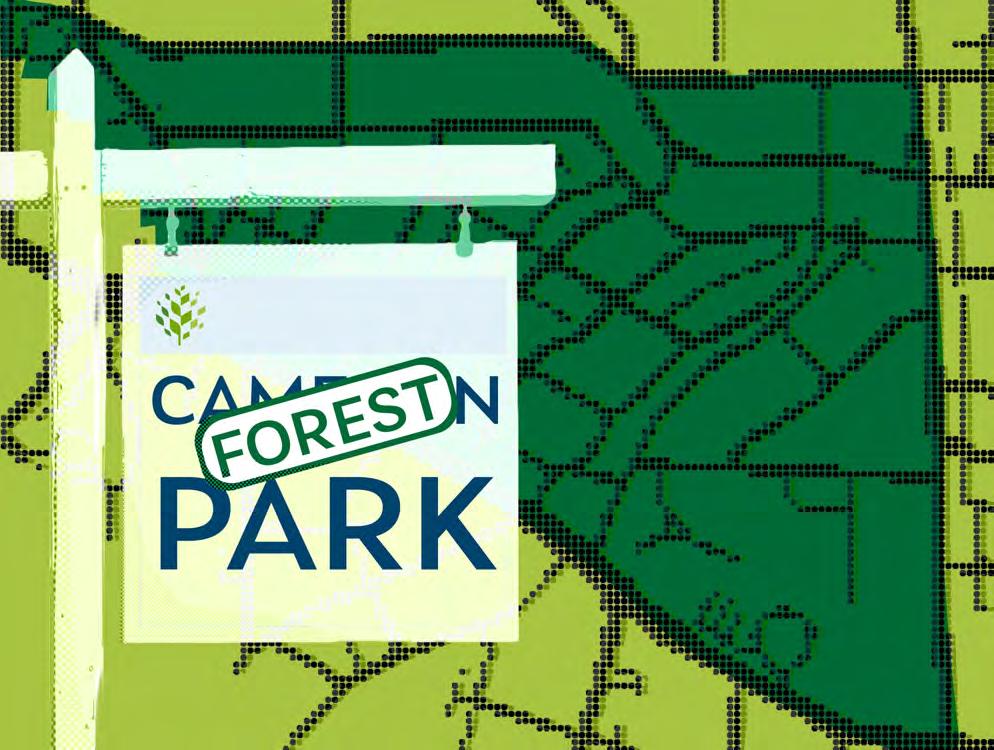
The neighborhood known either as Cameron Park or Forest Park, depending which side of the debate you’re on, is one of Raleigh’s oldest and stateliest.
Tucked off of Hillsborough Street, it’s a patchwork of genteel Colonial and Queen Anne-style homes situated on ample lawns and shaded by oaks, ashes, and elms. Most of the 800 or so residents are wealthy and liberal. Some are politicians and university chancellors. The vibe is friendly: People know their neighbors. They hang out at the bar down the street. They barbecue together.
“When we moved here, the first few days, we literally had to start spying out our windows,” recalls Joel Lutterman, president of the Forest Park Neighborhood Association. “Neighbors were stopping by to talk to us and we couldn’t get any work done.”
The neighborhood has an active listserv, which is a forum for party invitations, furniture giveaways, and the occasional spirited hyperlocal argument. In early 2021, it lit up with discussion about whether Cameron Park should change its name due to its namesake’s connection to slavery.
Over the next five years, the debate would cleave the
otherwise close-knit, politically homogeneous community into two factions, each claiming to have history, the law, and racial politics on their side.
A series of surveys and votes culminated in a decision to rename the neighborhood Forest Park in 2022. Then last year, six neighbors filed a lawsuit claiming the namechange process had been flawed and should be deemed invalid. And although they voluntarily dismissed their suit this spring, they say they plan to bring it back.
The plaintiffs plan to again ask the court to declare that the neighborhood association’s renaming process was improper, said their lawyer Robin Tatum. And they’ll ask the court to clarify the procedure for how the neighborhood could legally change its name.
The INDY spoke to neighbors, current and former neighborhood association presidents, and the lead plaintiff on the lawsuit and combed through court records and emails to understand why this debate still hasn’t been put to rest. A majority of people seem to have accepted the change and moved on. But a vocal minority refuses to let it die.
Born in 1777, Duncan Cameron was a judge, state lawmaker, and University of North Carolina trustee. He and his family owned thousands of acres of plantations and more than 1,000 slaves.
He also owned the land that became Cameron Park. This land was never a plantation, and he leased some of it to the Episcopal School of North Carolina, which became Saint Mary’s School. By the 1900s, developers had acquired the land and planned a suburb for the growing and industrializing capital city. A wave of new uppermiddle-class professionals needed somewhere to live.
Early advertisements for the neighborhood courted businessmen, government officials, professors, and lawyers, seeking to solidify their rising socioeconomic status with a prestigious address.
“Everyone who is familiar with Raleigh recognizes that Cameron Park enjoys the best social conditions available to our city,” one 1914 ad promised. “There are no poor sections. There are no bad approaches. In fact, there is nothing that any one need apologize for in any way.”
But the neighborhood achieved its rarefied reputation in an ugly way. Among the irreproachable “social conditions” that made it desirable for early residents were racist covenants that excluded Black residents.
In 1948, the U.S. Supreme Court ruled that racially restrictive covenants were unenforceable. The Fair Housing Act of 1968 banned them outright. But Raleigh’s residential segregation persisted, and the neighborhood remains overwhelmingly white to this day.
After George Floyd’s killing and the racial justice protests of 2020, Raleigh’s Cameron Village shopping center and Cameron Village Regional Library changed their names to the Village District and Oberlin Regional Library, respectively. Several months later, some Cameron Park neighbors began to wonder if they should follow suit.
In February 2021, the Cameron Park Neighborhood Association formed a nine-person committee to explore the possibility of changing the neighborhood’s name. Three members supported keeping the name, three supported changing it, and three were undecided. The committee brought in historians and civil rights advocates to make the case for and against the name change.
At one resident forum, a historian shared archival evidence of violence, sexual assaults, and family separations committed against people enslaved by the Cameron family. In a primary-source account, an enslaved man named James Curry described how Duncan Cameron himself “used to carry a large cane, and if he met a Black man on the road and he did not raise his hat and bow to him, he would beat him with his cane.”
Another historian countered that Cameron Park has been a neighborhood for longer than it was owned by the Camerons, and that Cameron is one of many place names in Raleigh that come from slaveholders. The name Cameron Park now stands for a century of neighborhood history unrelated to the family, she said.
The naming committee surveyed residents on whether to even consider a name change; according to the neighborhood association’s records, a majority of the 250 survey respondents said they wanted to.
In September 2021, the neighborhood association held an up-or-down vote on the name change. Its bylaws state that “issues shall be determined by a simple
majority of [neighborhood] members present and voting except when related to adoption or amendment of these bylaws,” leading the executive committee to conclude that a simple majority of votes cast would be sufficient for a name change.
“Do I like [the name] Forest Park? Not particularly. … But for me, any name’s better than having that man’s name on the neighborhood I live in.”
ing our neighborhood will protect our children from racism, but the name change has been a powerful, uplifting symbol reminding our families that the community around us reflects hope and change for the better,” said Lau, who is Asian American.
The council agreed to update the zoning designation in a 7-1 vote. Only then-Mayor Mary-Ann Baldwin opposed the motion, citing a lack of consensus in the neighborhood and a desire not to expose the city to a lawsuit.
A year later, in October 2025, six neighbors filed a lawsuit against the neighborhood association asserting that its voting methodology had been flawed and the name change was invalid. The suit describes how some residents had wished to distance their neighborhood from the Camerons.
All full-time residents over 18 were eligible to vote—roughly 600 people, the neighborhood association estimated. They offered in-person, absentee, and online voting options. Volunteers from the pro- and anti-Cameron Park camps
helped count the ballots to ensure fairness. The final tally was 240-201 in favor of renaming—not a landslide, but enough to proceed.
In March 2022, the neighborhood association held a second vote to choose a new name. It used a ranked-choice ballot to select from four options. The admittedly bland “Forest Park” won.
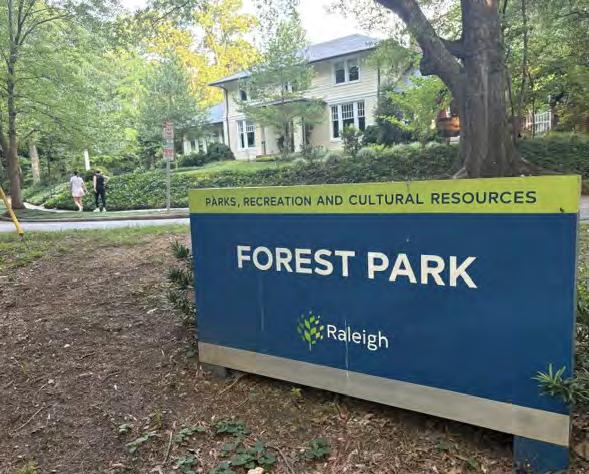
Then the neighborhood association set about implementing the change. It contacted the city of Raleigh and companies like Google, Apple, and Wikipedia. It filed an Assumed Name or “Doing Business As” (DBA) certificate with the Wake County Register of Deeds to change its own name to the Forest Park Neighborhood Association. The name “Cameron Park” would still appear on the neighborhood association’s bylaws, but it would refer to itself everywhere else as Forest Park.
In 2024, the Raleigh City Council voted to update the Cameron Park Neighborhood Conservation Overlay District, a special zoning designation, to reflect the new name. It was reported at the time that this was “the last city document” with the name Cameron Park on it. During the public hearing ahead of the vote, Forest Park resident Holning Lau said 14 residents of color, including “every single Black resident and almost every Asian-American neighbor I know of,” had co-written a statement in support of renaming. (The INDY wasn’t able to reach any of Forest Park’s Black residents for this story.)
“We’re not so naive to think that renam-
“Other residents,” the complaint continues, “took a different approach and were concerned about the importance of preserving, rather than erasing, the history of one of the State’s oldest historical neighborhoods—including its original name. Although just as committed to racial justice as the name change proponents, this group did not believe that renaming Cameron Park was a wise or effective method to achieve this goal.”
The plaintiffs argue the neighborhood association should have required a twothirds margin to approve the name change instead of a simple majority.
“These bylaws may be amended by a vote of 2/3 of the members present and voting at a meeting called for the purpose of amending these bylaws,” the bylaws state. They were never amended and still refer to the neighborhood and neighborhood association as Cameron Park.
The plaintiffs, including Myrick Howard, a resident of almost 50 years, see the DBA certificate as a bad-faith loophole the neighborhood association’s leaders used to push the name change through without a two-thirds vote to change the bylaws. The neighborhood association countered that the DBA certificate was simply the most effective way to carry out the will of a majority of voting neighbors, and changing the neighborhood association bylaws is unnecessary to change the name of the neighborhood.
But arguments about voting technicalities are secondary to the pro-Cameron Park camp’s assertion that the renaming was unnecessary and misguided to begin with.
In May, the plaintiffs agreed to voluntarily dismiss their lawsuit without prejudice rather than enter into an arduous
and expensive discovery process where they would have had to produce years’ worth of emails and documents. But they left the door open to refiling, which they now say they intend to do.
Howard recently retired as president of Preservation North Carolina, a respected nonprofit dedicated to protecting and restoring historic buildings around the state.
The lawsuit’s first named plaintiff and the most outspoken, Howard said he believes that renaming Cameron Park was about virtue signaling rather than having a real racial reckoning.
“This is a way that some white folks who support racial justice can feel better about their neighborhood, which is lily white,” he said, adding that the vote was “a meaningless gesture that does nothing to help, except to make people feel better about themselves.”
Howard said he’d like to do something more substantive like create a neighborhood scholarship fund for minority students. Residents could donate 1% of their assessed property value over a five-year period, he proposed.
“That would move the needle way more than changing a name,” he said.
Howard also says the Cameron legacy is more varied than some of his neighbors admit.
“I call it bumper sticker history,” he said. “If you can boil it down to one sentence, you’ve got it wrong. In this case, Duncan Cameron [was] a complex person.”
Howard has debated neighbors on this for years now.
“People said to me, ‘I don’t understand how you can sleep, knowing that this was part of the Cameron plantation,’” he said. “I’m thinking, ‘Well, it wasn’t part of Cameron plantation, but can you sleep at the Waldorf Astoria in New York City? Because slavery was all over this country.’”
Other supporters of the Cameron Park name did not reply to the INDY’s interview requests.
Howard said he and his five co-plaintiffs have raised about $31,000 from between 15 and 20 neighbors to cover their legal expenses, and plan to modify their argument in their forthcoming suit.
But almost every other neighbor the INDY spoke to insists the plaintiffs are fighting for a lost cause.
Joel Lutterman and Michael Lindsay, the current president and immediate former president of the neighborhood association, said the plaintiffs represent a small minority of neighbors who haven’t accepted the results of the renaming process.
“The vast majority ... has moved on and wants this issue to go away,” Lindsay wrote in an email. “I say that as a person who argued for keeping the Cameron Park name and voted that way.”
Richard “Gus” Gusler has lived in the neighborhood for 40 years and owns the Players Retreat, a popular neighborhood hangout. He hadn’t heard of the original lawsuit until the INDY asked him what he thought about it.
“I sit and talk with all the neighborhood people that come into the PR, and [the name change] has not come up in any discussion I’ve had with anybody. Period,” Gusler said.
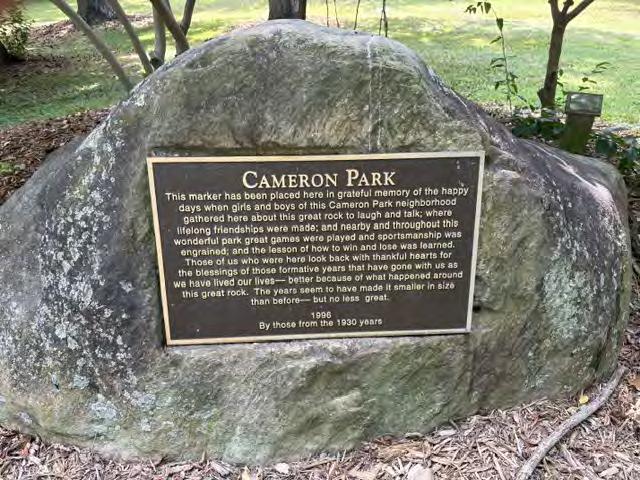
“I was very happy with changing the name. Do I like [the name] Forest Park? Not particularly. ... But for me, any name’s better than having that man’s name on the
neighborhood I live in … and I’ve never really gotten into any arguments about it.”
Ron Aycock is a retired lawyer who has lived here for about 25 years. He felt the name change process was “comprehensive, fair, and in compliance with rules. There was an intensive discussion period online and in person. Folks were given the opportunity to express their opinion. Voting was done on a very adequate basis, so I think the controversy should be over.”
Aycock said he regularly attends neighborhood get-togethers and the name change debate never comes up. At this point, he said, it’s “a controversy engendered by a few and not cared about by the many.”
That may be true, but hard feelings persist. In late May, when the Cameron Park contingent dismissed its lawsuit, the listserv was once again aflurry with commentary, including a letter from the plaintiffs’ lawyer to the neighborhood association’s lawyer describing several “concessions” they feel they extracted in the lawsuit related to the neighborhood association’s legal name still being Cameron Park. Eventually, the listserv moderator stepped in.
“Renewing the name-change debate of 2021-2022 on this listserv will destroy it,” the moderator wrote.
Just last week, residents attempted to relitigate the renaming during a neighborhood association meeting held on Zoom. Lindsay recapped the renaming process, and Howard explained that he intends to bring back his
lawsuit. The conversation quickly devolved.
“Myrick, you are destroying this neighborhood,” one resident commented in the Zoom chat, which the INDY viewed. “We voted. We decided. Please let it go.”
“It is the defamatory statements made by Mike L that are destroying the neighborhood,” another resident replied, referring to Lindsay.
People on both sides of the naming debate have supported their positions with historical and legal arguments. But at the end of the day, names are social constructs. So are neighborhoods, whose boundaries are invented, blurry, and changeable. What is on the deeds and maps doesn’t matter as much as what people actually call it.
“The [neighborhood] Association does not believe any court has the authority to reverse the neighborhood name change,” the defendants’ lawyer, Neil Riemann, wrote in an email to the INDY
So what do the majority of residents call the place they live? Predictably, accounts differed.
“There are still some people that, when they refer to the neighborhood in either the listserv or in flyers that we put under people’s doormats announcing one thing or another, still refer to the neighborhood as Cameron Park,” Lutterman said. “To me that’s ... I won’t say immature exactly, but it’s like, come on. ... It’s time to move on.”
Howard is firm: It’s Cameron Park. W
Everyone agrees that North Carolina’s hemp industry needs to be regulated— including the hemp industry. Why can’t lawmakers figure out how to do it?
BY JEFFREY BILLMAN jeffrey@theassemblync.com

With time running out on the General Assembly’s legislative session, North Carolina’s $3.2 billion hemp industry was hanging on by a thread.
Businesses had already been bracing for the federal ban on intoxicating hemp that Congress passed last fall. In interviews, industry leaders professed confidence that federal lawmakers would change their minds before the law takes effect on November 12, but their Plan B was Raleigh. State regulations, they believed, could mitigate the damage.
But legislation to do that had gone nowhere this year. And just before the July 4 weekend, their situation went from precarious to existential. On the morning of July 2, a last-minute bill surfaced that, rather than giving the hemp industry a path forward, would codify the federal ban in state law—likely shutting down thousands of retailers and manufacturers.
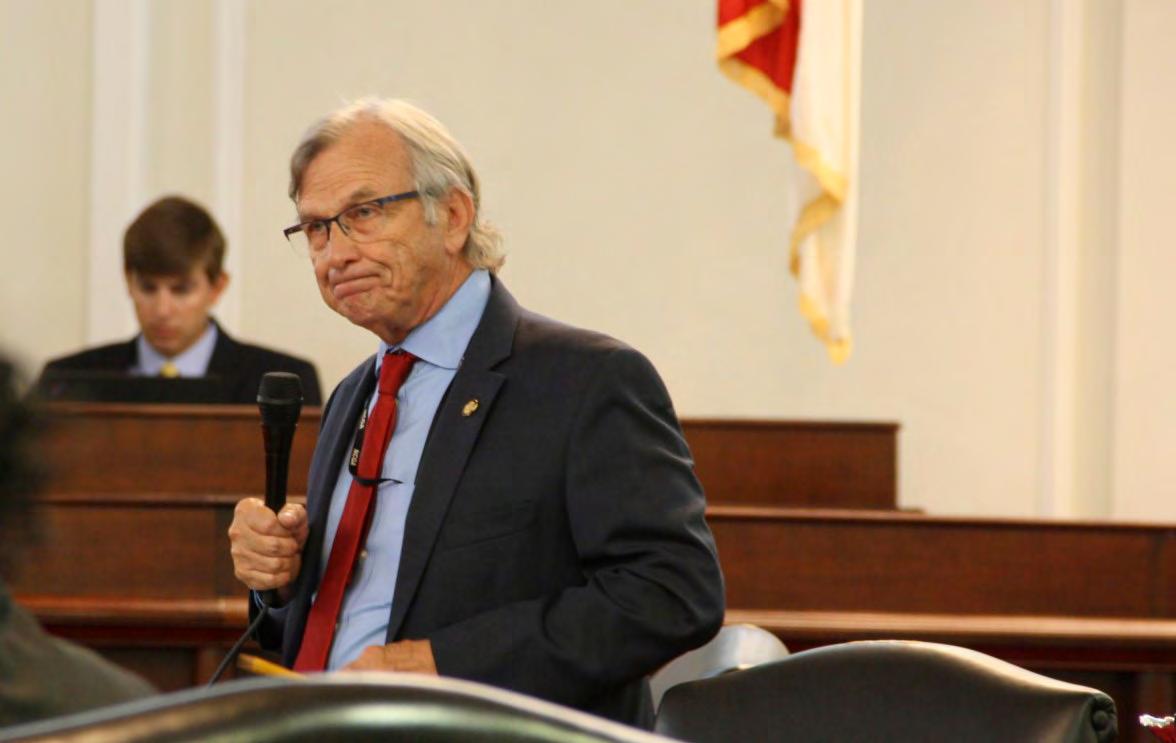
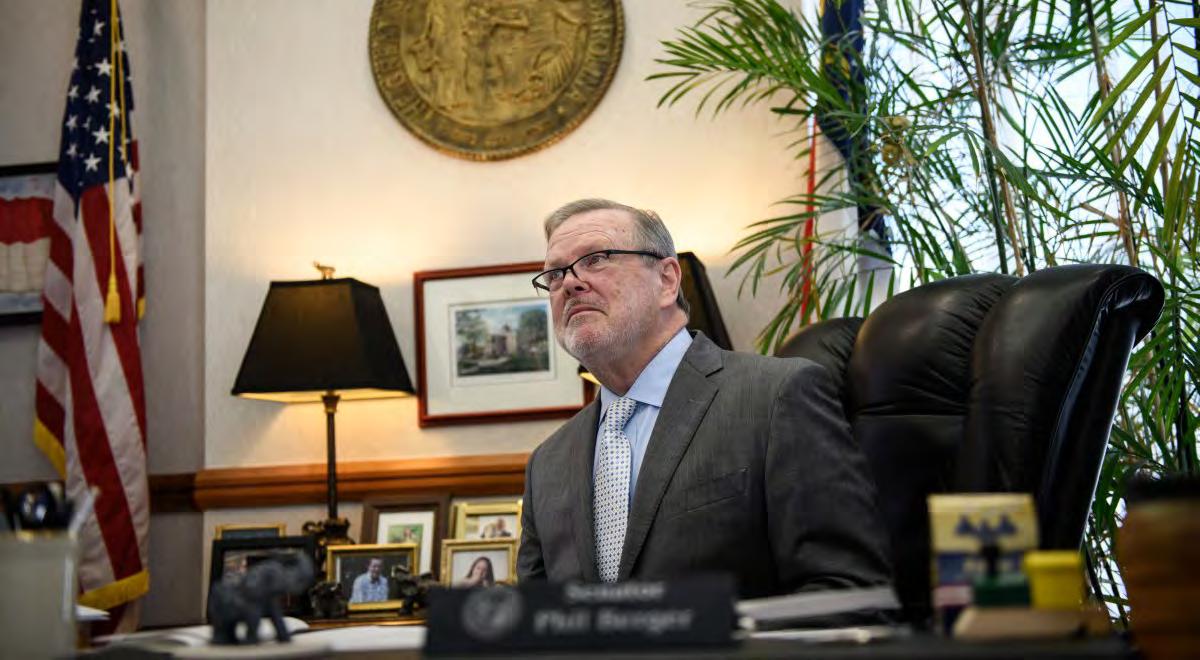
State Sen. Bill Rabon pitched that as a feature, not a bug. “Are we going to affect businesses? Yes, we’re going to affect 12,000 drug dealers’ businesses,” Rabon said on the Senate floor. A top lieutenant of Senate leader Phil Berger, he’d helped craft the bill. “They’re selling it to low-income, to people who are down on their luck, the normal people who buy drugs. But they’re also selling it to teenagers and sub-teenagers, and anyone that they can prey upon.”
(A study found that there were 2,197 hemp retailers in North Carolina in 2025, though that number does not include convenience stores. An industry source said there are at most 6,000 stores that sell hemp products. Rabon’s office did not respond to an email asking for the source of his figure.)
Rabon said he’d given up on working with the industry.
“Are we going to affect businesses? Yes, we’re going to affect 12,000 drug dealers’ businesses.”
Hemp leaders had claimed for years that they wanted to weed out the small minority of bad actors in their ranks and keep the public safe. He’d decided they were lying.
“I’ve had the epiphany that the big players and the people who want to make the money can’t make the money they want to make—they can’t prey upon the people whom they want to prey upon—in a regulated marketplace,” Rabon said. “So if that is the case, we have to do away with all of it.”
In hemp advocates’ version of events, Senate leaders had rebuffed them. “There’s a difference between wanting regulations and not wanting to be regulated out of business,” said Huntersville-based hemp lobbyist April Byrd.
The Senate voted overwhelmingly for the bill. But after a long internal meeting, House Republicans punted. It’s not clear what they’ll do when they reconvene at the end of July.
“Our caucus is looking at it,” House Speaker Destin Hall told reporters on July 2. “It’s a somewhat complicated bill.”
For now, intoxicating hemp remains unregulated in North Carolina, as the first two parts of The Assembly’s investigation have detailed. The state doesn’t impose age restrictions, require products to be tested or have accurate labels, or ensure that they are free of bacteria and other contaminants. Nor does it tax hemp the way it does alcohol and tobacco, potentially forgoing hundreds of millions in annual revenue.
This free-for-all has allowed businesses to thrive. But concerns about rising cannabis-related hospital visits and deteriorating youth mental health made a crackdown seem inevitable. Since 2023, the industry has tried to head it off by lobbying for state regulations. Lawmakers agreed that rules were needed, but not what they should be.
Now, the feared crackdown looms.
Banning hemp won’t eradicate demand. North Carolina is one of only seven states that completely prohibit recreational and medical cannabis. Not coincidentally, it also ranks among the country’s largest markets for illicit marijuana and intoxicating hemp.
A ban will push some consumers into the black market, but it won’t cut off the state’s cannabis supply. The Cherokee reservation in Western North Carolina has legalized marijuana. And now that Virginia’s regulated market for recreational weed is ready to launch, dispensaries will likely

Scan the QR code for The Assembly’s full investigation into North Carolina’s unregulated hemp industry, including test results and interviews.


line the border by next July.
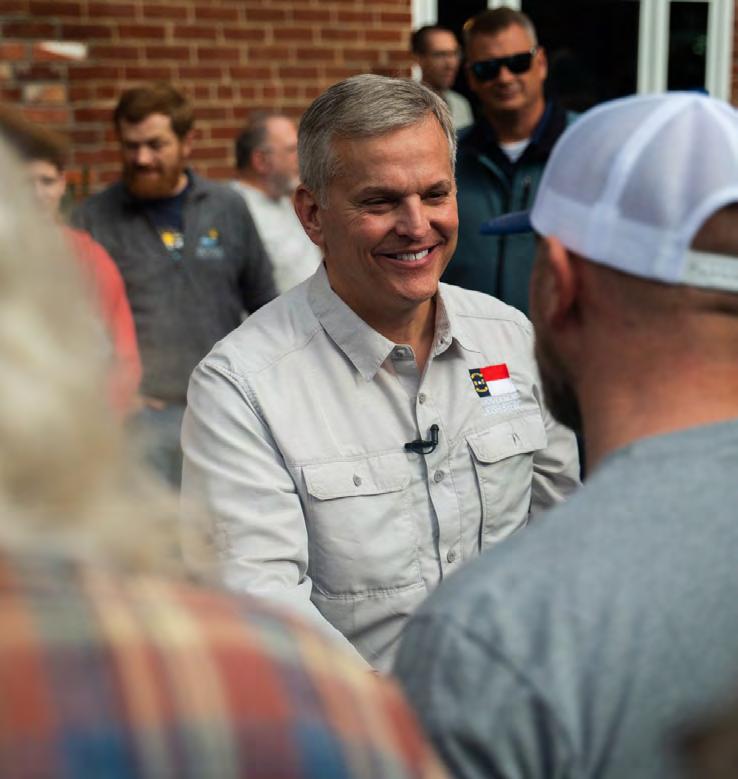
In an interview, Gov. Josh Stein told The Assembly that hemp’s proliferation has come with real problems. Consumers have no way to know that products are safe, and some vape shops have opened next to schools and targeted adolescents.
“That offends me,” Stein said. But in his view, it’s not an argument for complete prohibition. Rather, he wants a regulated market that gives the state control over what’s being sold and who’s selling it—and not just hemp.
Stein is the first North Carolina governor to call for legalizing recreational marijuana, though his preferred term is “adult-use cannabis.”
“We need to have a well-regulated market that puts public safety and public health at its center,” he said. “It protects kids, and it is available for adult use—because adults are using it, and we can’t put our heads in the sand any longer.”
His argument has fallen on deaf ears in the legislature, where a stalemate has left hemp businesses on tenterhooks and their products entirely unchecked.
‘It’s a Significant Impact’
Congress intended for the 2018 Farm Bill to provide consumers with access to hemp, a variety of Cannabis sativa L. that has 0.3% or less of the psychoactive compound delta-9 THC but lots of cannabidiol, or CBD, which is associated with various health benefits. But the law’s definition of hemp inadvertently legalized a wide variety of THC products.
“There’s a difference between wanting regulations and not wanting to be regulated out of business.”
Within five years, the hemp market had swelled to more than $28 billion nationwide. Congress attempted to close that loophole last November in a late rider to mustpass legislation, redefining hemp so strictly that the new law will ban most CBD products along with intoxicating hemp. Lawmakers gave businesses a year to prepare.
That raises an obvious question: Since Congress has largely banned hemp, does it matter what the state does?
The answer is yes, to a degree. On its own, the federal ban will radically reshape the state’s hemp industry, but it probably won’t put every company out of business. Products will still be legal under state law—and for the most part, state and local cops can’t enforce federal statutes. Federal authorities would pose the biggest threat to retailers and producers.
“In theory, the feds can come down here and enforce [the ban] in the states and charge people with federal crimes,” said Phil Dixon Jr., a professor at the University of North Carolina at Chapel Hill School of Government and an expert on cannabis law. “But we haven’t seen that in a long time for marijuana.”
For more than a decade, Congress has inserted a provision into the budget forbid-
ding federal agencies from enforcing laws against medical marijuana in states that have legalized it—a provision that might be extended to hemp, Dixon said.
Many companies won’t take the risk. But others might, especially after investing millions of dollars in building their businesses.
The industry argues that robust state regulations would help keep them afloat.
The U.S. Supreme Court ruled in 1992 that, under the 10th Amendment, Congress can’t intrude on state regulatory structures. This doctrine has also allowed states to legalize marijuana.
Morgan Davis, a Raleigh attorney who focuses on cannabis law, said that the more structured a state’s system is, the more likely it is to withstand court scrutiny.
Byrd told The Assembly that she thinks Congress will change its mind before the federal ban takes effect. She said hemp has become too big to ban. “Nationally, you’re talking about $38 billion to $40 billion. It’s a significant impact. And we’re talking over 300,000 jobs.”
In North Carolina, the industry employs more than 16,000 people, and retail sales generate more than $1.8 billion—and $88 million in sales taxes—per year.

President Donald Trump asked Congress to revisit the law so that Americans could access “full-spectrum CBD products” while “preserving Congress’ intent to restrict the sale of products that pose health risks.”
But Congress hasn’t backtracked, and the lingering uncertainty added urgency to industry lobbying as the legislative session began in April.
“I know our caucus has no interest in doing any sort of marijuana, medicinal or otherwise.”
The General Assembly adopted the Farm Bill’s definition of hemp in 2022 and permanently removed hemp from the state’s Controlled Substances Act. A friction point emerged, however, when House Republicans spiked a Senate bill legalizing medical marijuana—a pet cause of Rabon, a cancer survivor.
During the 2023 legislative session, Byrd said, hemp leaders recognized that their industry was “turning into the wild, wild West” and told lawmakers they wanted to help fix it. They pitched rules “to protect consumers, protect our industry, and help law enforcement identify the bad actors,” Byrd said.
The House unanimously passed legislation from state Rep. Jeffrey McNeely that included age restrictions, packaging requirements, dosing limits, and licensing rules. But the Senate added taxes and medical marijuana, a deal-killer for many House Republicans.
its attention on state Rep. John Bell, chair of the House’s rules committee. Bell ran the hemp company Asterra Labs, a subsidiary of a private equity firm owned by former UNC System Board of Governors chair Harry Smith, with whom Berger had a falling out. Berger operatives believed Smith was maneuvering against the Senate leader. In June 2025, the Senate passed a bill that banned hemp products containing any cannabinoid other than delta-9—including, perhaps accidentally, CBD and other nonpsychoactive compounds. Bell said it would put him out of business. (Bell has since left Asterra, and Smith’s firm has sold it.)
The bill languished in Bell’s rules committee for 10 months. Then, seemingly out of nowhere, House leaders brought it up for a vote in April; it was overwhelmingly rejected.
The House’s goal was to force the Senate into negotiations over an “omnibus-style bill,” Byrd said. The negotiations eventually took place, but they didn’t go the way hemp supporters hoped.
This year, hemp advocates rallied behind Johnson’s bill. They thought that if they could get it out of the Senate rules committee, both chambers would approve it.
But Rabon, who chairs the committee, never brought it to a vote. Industry leaders suspected that he wouldn’t do anything to help them unless medical marijuana was attached.
Medical marijuana remains a nonstarter in the lower chamber. “Some of the House members are not ready to pass a medical program because they believe that it will usher in recreational use, and that is not what the constituents in those districts want,” McNeely, an Iredell County Republican, told The Assembly in an email.
McNeely tried passing another version of his bill in 2025. Sen. Todd Johnson, a Union County Republican, offered a similar proposal in the upper chamber, though McNeely’s had stricter testing requirements and potency limits. Neither measure advanced.
“There’s not many places you’ll go anywhere and volunteer to be regulated and taxed and get turned away,” Neal Orr, executive director of the industry advocacy group Cultivating Breakthroughs In Healthy Development (CBHD), told colleagues at an event in March.
By last year, policy disputes had intermingled with palace intrigue. Berger was staring down a primary challenge that he would ultimately lose, and his team focused
Internal politics also played a role. Soon after Berger lost his primary in March, Johnson announced a bid to replace him as Senate leader. Berger’s team is said to be more aligned with contender Mike Lee, whom Senate Republicans elevated to majority leader last year. (Johnson did not respond to interview requests.)
But there were other reasons Johnson’s bill didn’t budge. Negotiations over the long-delayed budget consumed most of this session’s oxygen. More importantly, some Senate Republicans didn’t see a point in acting after the federal ban, a source close to Senate leaders told The Assembly.
Byrd said CBHD, the advocacy group, encouraged consumers and business owners to call legislators’ offices, and by early June, the industry saw movement. The bill’s supporters pitched their case to the Senate GOP caucus, and advocates felt good about their chances.
“We had overwhelming support in both caucuses to get hemp regs done,” CBHD vice chair Dustin Brauns said. If not John-
son’s bill, Senate Republicans seemed likely to consider straightforward age-restriction legislation that had already cleared the House but stalled in Rabon’s committee.
That legislation, Byrd said, wouldn’t solve all of the problems created by the federal ban, but “it would be better than doing nothing. An age restriction would show that the state has the intent to regulate.”
Weeks passed, and nothing happened. Then, on June 23, legislative leaders revived the bill the House shot down in April and sent it to a conference committee. The seven Republicans they chose to hash out a compromise between the House and Senate telegraphed the leaders’ intentions.
The Senate paired Berger allies Rabon and Lee with Tom McInnis, a staunch cannabis opponent. The House’s delegation included stalwart social conservatives Neal Jackson and Donnie Loftis, along with Majority Leader Brenden Jones and Reece Pyrtle.
“These are not members of our caucus that are generally going to be open
“folks basically wanted some time to be able to review it. So we’ll see if it’s something that we do when we come back.”
Three sources familiar with the situation told The Assembly that some House members worried that Rabon was using it to create a path for medical marijuana. The legislation does not directly address medical marijuana, though the issue appears to have come up during the House Republicans’ meeting on July 2.
“I know our caucus has no interest in doing any sort of marijuana, medicinal or otherwise,” Hall told reporters afterward. A spokesperson said it was his most definitive statement on the issue to date.
Byrd and Brauns said they believe that language in the bill could potentially legalize medical marijuana if the federal government approves its use as a prescription drug. The federal government is currently reviewing marijuana’s status.
“You would need some legislative tweaks” to create a medical marijuana system once federal law changed, Byrd said. “But it would move the ball in that direction.”
at the beginning of the year—saw it as an economic boom—and now he’s completely flipped to just ban it all.”
But Brauns said his group believed McInnis, a MAGA loyalist, would “freak out” at being called a RINO and “cause a huge amount of conversation and ruckus.” McInnis is also a close ally of Rabon, which CBHD saw as icing on the cake.
“The thought was, instead of poking Rabon right between the eyes and potentially making matters worse, McInnis was the better option,” Brauns said. “And it worked.”
Brauns said CBHD is just getting started.
“We have tried the nice way,” he said. “We have tried and tried and tried to make friends and to incentivize and to become educators and to give the optics of the industry that yes, we 100% agree, we want the bad actors out, too. But that has gotten us nowhere except spit in the face.”
to a really wide-open hemp industry,” a source close to House leadership told The Assembly.
Indeed, they weren’t.
Like the federal ban, their proposal prohibited any product with more than 0.4 milligrams or 0.3% of total THC—meaning not just delta-9, but any THC—as well as products with synthetic cannabinoids. As with the federal ban, that definition will also proscribe many nonintoxicating CBD products.
The bill restricted sales of the few remaining legal hemp products to people 21 and over. It also applied that age limit to kratom, a tree whose leaves can produce both stimulant and sedative effects, and banned synthetic kratom.
The committee’s members reached an agreement on July 1. Before noon the next day, though, it had become clear that House Republicans weren’t on board—at least not yet.
“Generally, our caucus’ desire is to make sure that we’re keeping the bad products out and not letting people under 21 buy these products,” Hall told reporters. The bill had come in late the day before, and
Before the Senate vote, Lee expressed disappointment in his House colleagues. “We have approximately eight overdose deaths per day—and that’s a reduction off of where we were,” he said in a Senate speech. (Those overdose deaths are from all narcotics, however, including fentanyl and cocaine. No fatal overdoses have been attributed solely to cannabis.) “And that’s not a mistake. The progress isn’t an accident. They have the opportunity in that chamber to make the policy decision to prevent what is happening to adults and our children in North Carolina.”
The General Assembly is scheduled to return the week of July 27. The hemp industry will likely mount a full-court press before then. CBHD released an ad before the Senate vote attacking McInnis as a “RINO,” or Republican in Name Only. The ad, which has since been taken down, accused the Moore County conservative of opposing Trump’s efforts to “fix our economy” and “keep North Carolina’s hemp industry strong.”
On the surface, targeting McInnis made little sense. McInnis was reelected in 2024 with 63% of the vote. Senate Democrats don’t see him as vulnerable this year. Going after Lee—who is both in a swing district in New Hanover County and seeking a leadership post—would seem more logical.
Brauns said CBHD “definitely had some strategy around Lee,” adding that the group wants “his district to understand that he was very positive toward hemp
Stein was attorney general when hemp became ubiquitous—and when a vape shop opened near his kids’ high school. But he realized that as long as these products remained unregulated, he was powerless to stop their sales to minors.
He also determined that trying to regulate hemp products differently from marijuana had become a fool’s errand.
“There actually used to be a distinction in the law,” Stein said. “The two plants, naturally grown, had different THC levels. You’d smoke hemp, it would take a whole lot to get you high—and it might not. Once hemp was legalized, both growers and sellers realized you could genetically modify hemp plants and increase the level of THC.
“Cannabis is cannabis,” he said. “It doesn’t make sense to try to distinguish between two varieties of the same plant, and what we really care about is, is this product going to get you high or not? That’s why we must regulate the THC molecule.”
Several experts The Assembly interviewed for this series agreed with that sentiment.
“One major challenge for state regulators across the country has been managing multiple regulatory models for essentially the same products,” Cannabis Regulators Association Executive Director Gillian Schauer wrote in an email. “For example, when states have one set of regulations for a 100-milligram THC brownie made from hemp, and another set of
regulations for a 100 mg THC brownie made from marijuana, it can complicate regulatory implementation and leave regulatory gaps.”
Berger, the Senate leader, expressed a similar thought last week. “The problem we have is that while we don’t have recreational marijuana, we don’t have medical marijuana, what we have are products that, for all practical purposes, have the same effect on people, and they’re totally unregulated,” he told reporters.
Berger’s solution was to ban all of it. Stein argues that crackdowns are futile and fly in the face of increasing public support for legalization. A regulated market, he says, allows the state to protect consumers from harmful products and keep children safe.
The degree to which legalizing cannabis would protect young people isn’t clear. Studies indicate that adolescents don’t use cannabis more after states legalize marijuana—and recreational weed doesn’t lead to more substance use overall. Use has, however, increased among young adults ages 18 to 25. Legalization has also been associated with more impaired driving and cannabis-related hospital visits.
Last June, Stein convened an advisory council to figure out what a regulated cannabis market should look like. The council, consisting of more than two dozen lawmakers, health and law enforcement officials, and cannabis industry representatives, issued a preliminary report in early April.
Despite media reports, the report didn’t call for legalizing marijuana. It said that was the General Assembly’s decision; the council’s task was to figure out a framework if lawmakers went that route.
But the report strongly implied that the legislature didn’t have much of a choice: “The question is whether the General Assembly will allow intoxicating products to continue to be sold without enforceable state standards, or whether it will establish a regulatory system designed to protect public health and public safety.”
“An adult-access market with protections for medical consumers” in which cannabis is purchased through state-licensed retailers offered the greatest revenue potential while addressing regulatory gaps, the report argued. A legal
market would also avoid the red tape and loopholes inherent to medical marijuana programs, it said.
The council is supposed to issue a final report in December. Its preliminary recommendations received a cool reception from some Republicans.
“It’s remarkable that we’re going to put money into psychosis treatment and opioid treatment at the same time we have a report out that is trying to legalize marijuana,” state Rep. Timothy Reeder, an emergency physician from Pitt County and chair of the House’s health care committee, said during a hearing.
Brauns, the CBHD vice chair, said there’s “not a snowball’s chance in hell” that Stein will sign the hemp ban if the House passes it. “He’s been very prohemp, very pro-marijuana since the day he took office,” Brauns said.
Byrd, the lobbyist, wasn’t so sure, and the governor’s office did not comment on his plans.
Regardless, the state’s hemp industry isn’t likely to accept whatever lawmakers do—or don’t do—this year as the final word. By next year, the House could have more cannabis-friendly members, and they might have a perceived ally at the Senate’s helm if Johnson wins the leadership race.
“Cannabis is cannabis. It doesn’t make sense to try to distinguish between two varieties of the same plant, and what we really care about it, is this product going to get you high or not?”
Advocates also believe the public supports them. In late April, CBHD released a survey from Republican operative Paul Shumaker that found that 63% of North Carolina voters supported legislation to “allow the state-regulated sale of hemp-derived consumable products.”
Time might be on their side in Washington, D.C., as well, with Democrats expected to make big gains this fall. But for now, hemp businesses are awash in uncertainty.
“It just doesn’t seem fair,” said Shawn Stokes, owner of Hops & Flower in Durham. Stokes opened his shop in January, but his venture had been in the works for well over a year; he’d taken out $150,000 in loans and signed a five-year, $8,000-a-month lease last September.
His store also sells coffee and sandwiches, but cannabis products account for about half of its revenue, Stokes said. Now a federal ban on those products looms.
“I don’t see how I can make it work,” he said.
Stokes said the demand is obvious. “The space has gotten really crowded in just the last year. The number of shops out there has increased substantially,” Stokes said. If anything, the legal uncertainty is holding more back. “There’s still so much confusion in the marketplace among consumers.”
Stein acknowledged that reform won’t be easy, but he thinks it’s a matter of when, not if.
“People change,” Stein said. “Society changes. I can remember when you couldn’t buy alcohol here in the supermarket on a Sunday, and you couldn’t buy wine in a supermarket at all, and you couldn’t get mixed drinks in the majority of the counties in North Carolina. What I’m trying to do is advance the conversation.”
Stokes hopes Congress changes course. If not, he said his best-case scenario is a regulated state market that “prohibits ingredients that shouldn’t be in the products, and instills trust and confidence in the public.”
“The problem is, to do that, you have to concede that everything we’re selling is exactly the same thing as what we would be selling in a recreational cannabis state,” Stokes said. “It’s all just semantics.” W
Additional reporting by Bryan Anderson and Tori Newby.



AN INDY SERIES ABOUT FAMILIAR FACES AROUND THE TRIANGLE— AND THE STORIES YOU MAY NOT KNOW ABOUT THEM.

Instagram posts translating mazay ka matcha to “delicious matcha”—or, more playfully, “a matcha full of fun.”
Matcha is a fine powder created with specially grown and carefully harvested green tea leaves, usually whisked with hot water before being added to drinks or desserts. Although the specific practice originated in China and matcha is primarily produced in Japan, tea is a quintessential cornerstone of many Asian cultures.
Hyder, 23, grew up in California surrounded by cups of chai.
ty of the Triangle’s Basant festival, and various pro-Palestine fundraisers.
Mazay ka Matcha has also set up at brand events, Morrisville’s Earth Day festival, and other community gatherings. Hyder said stand-alone Mazay ka Matcha pop-ups garner around 50 attendees, but when she brings the cart to larger multi-vendor events, she’ll often close out the day with more than 200 drinks sold.
Hyder’s mobile matcha cart, Mazay ka Matcha, blends South Asian flavors with traditional matcha, attracting fans all across the Triangle. BY
DANEEN KHAN backtalk@indyweek.com
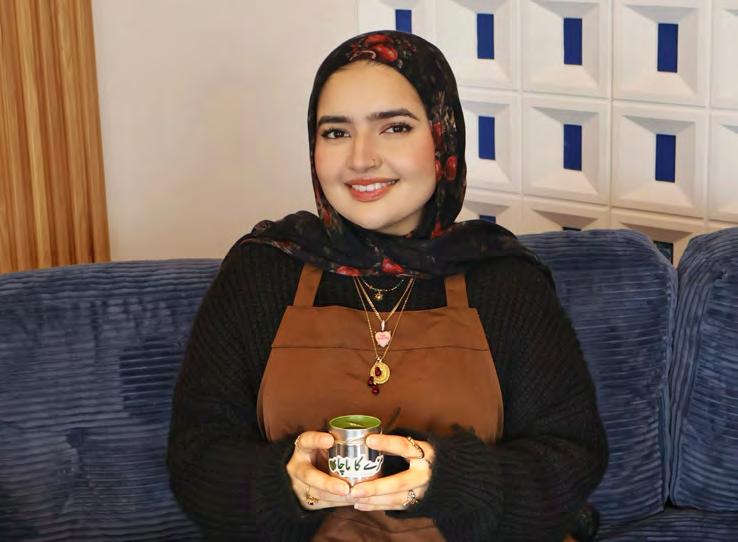
Hayaa Hyder takes matcha seriously.
When she takes a sip of the creamy green drink, she’s searching for a very specific flavor profile. Not too milky. Not overly syrupy. She wants a cup that’s light, strong, and fresh.
Last December, Hyder’s hunt for the perfect matcha led her and her husband abroad.
After trips, tastings, and even personally grinding tea leaves into powder, the Morrisville resident finally found her dream matcha at a small farm in Japan.
The powder was exactly what Hyder was looking for to elevate Mazay ka Matcha, her mobile matcha cart.
Hyder founded the business in August 2025. Since then, she’s taken her forest-green cart across the Triangle for pop-
up sales, local festivals, and vendor markets. She currently averages two to three pop-ups a week, each with a slightly different drinks menu, serving everything from Earl Grey and Thai tea fusions to specialty matchas inspired by South Asian confections including gulab jamun and pistachio kulfi
Her bestselling Rasmalai Cloud and Rasmalai Latte matchas, named after the creamy dessert, are concocted with “rasmalai milk” with notes of saffron, cardamom, pistachio, and almond. Every syrup is homemade, and every drink is served in a cup adorned with a Mazay ka Matcha sticker.
Hyder, who is half Indian and half Pakistani, incorporates her culture as a crucial aspect of Mazay ka Matcha’s brand. Even the business’s name is in Urdu, with one of its
“We obviously drink chai in the morning. We drink it at social gatherings. We drink it at night—my mom drinks before she goes to sleep,” she said. “I just liked the thought of mixing the two traditions.”
While chai was always a part of Hyder’s life, matcha became her drink of choice when she went to college in Dallas, where she worked as a barista. After graduating in 2023, she returned to California before she got married and moved to Morrisville.
In her early days in North Carolina, Hyder spent her time exploring the Triangle’s café culture to find matcha comparable to that at her favorite spots in Dallas and California. She didn’t have much luck. After paying $9 for an 8-ounce matcha so milky she couldn’t bring herself to drink it, she knew she could do better and began to experiment, concocting homemade syrups and creating her branding. Mazay ka Matcha was born. Because of Hyder’s ties to the Triangle’s South Asian Muslim community, many of Mazay ka Matcha’s pop-ups are at Hyder’s local mosque or at her husband’s Morrisville-based restaurant, Hibachi Blue. Even as a vendor, Hyder enjoys selling matcha at events catered toward her community, such as Cary’s late-night Suhoor Fest during Ramadan, the Pakistani American Communi-
These days, Hyder said, customers primarily discover Mazay ka Matcha via Instagram, through which she’s befriended other vendors and received praise from local content creators. At one event, she said, two attendees declared her matcha as the best in North Carolina.
“That warms my heart,” she said. “Like, wow. People actually do like what I’m giving them.”
Hyder’s current favorite Mazay ka Matcha drink is a “double Earl Grey matcha” with Earl Grey syrup, matcha cold foam, and green matcha salt. She’s also working on finalizing her website to implement drink and syrup pickup options and nationwide shipping on matcha powder.
Since many of her friends and family live in Texas or California, Hyder said she wants to give them the chance to make Mazay ka Matcha drinks themselves instead of waiting for her to visit.
When she does travel, she plans to host pop-ups in their cities. Her dream is a Mazay ka Matcha storefront, but that’s far into the future. Right now, Hyder is more focused on enjoying the process and organizing more pop-ups.
“I’m excited to see the new connections that I make and the new events that I’m able to vend at,” she said. “Honestly, it’s still so surreal to think that it’s gone this far.” W

BY LENA GELLER lgeller@indyweek.com
Sometimes I go to the movies and skip the concession stand, content to feast solely on the action onscreen. Such transcendence has never found me at a baseball game. Respectfully, I’ve come to view the sport as an outdoor dining experience: a picnic held around the edges of a field, a forum for eating phallic foods without eye contact. And yet in years of attending Durham Bulls games, I’ve never ventured beyond ultraclassic concessions like hot dogs and peanuts. Part of that is just allegiance to the old guard, but fear’s at play, too—a bad order could sour the whole outing.
This quandary eventually develops into an INDY assignment: If not a hot dog, which concessions should a Bulls fan pursue?
I receive a budget of $100 and decide to prioritize “decision point” items, the ones you hesitate over at the counter wondering if you’re about to drop $15 on something mid. The day of the game, I print out the Bulls’ con-
cessions map and plot out a tasting that includes a fried chicken sandwich, a vegan dog, and the nachos from the outpost of a local Mexican restaurant, among other fare.
In rating items, I plan to consider taste, price, and what I’m calling “ballparkliness,” a food’s quality of being apt for the setting. Each item will receive a final score on a scale from strikeout to home run. For the occasion, I bring along my editor, Sarah, and a freelance photographer, Matt. The game we attend happens to feature a spectacle called “9 Weddings in 9 Innings” in which couples exchange vows on the field between innings. It is unclear to our group to what degree these proceedings qualify as real unions; several appear to be vow renewals, and the whole affair is hosted by a local radio station.
Regardless, the commitment on display makes for an ironic backdrop: Typically a hot dog monogamist, tonight I’ve come to play the field.
Vendor: Home Plate Chicken
Price: $11.50
Rating: Double



The first concession I try is the fried chicken sandwich, a thing of strange dimensions. While the bun is normal-sized, the cutlet is wide and cartoonishly thin, jutting past the edges of the bread like a snapback brim. I imagine its mythology: Once a plump fillet, it was lobbed to a batter who thwacked it so hard that it flattened to a disc and Frisbee-whizzed into the soft catch of a bun.
The only other ingredient in the sandwich is pickles.
“Temu Chick-fil-A,” Matt declares.
I take a bite with low expectations. It’s actually fine—as moist as a skinty piece of chicken can be, with a lovely golden crunch.
My main gripe is with the bun. My thumbs leave dents that hold their shape, making me feel like I’m eating a stress ball. I’m sure this happens when I hot dogs, too, but since my hand cups those from the side, I’m usually spared the image of preservatives.
Meanwhile, Sarah is having her own hand-related crisis. Wool E. Bull, the Bulls’ mascot, has just come by decked out in a tuxedo for the night’s weddings, and his gloved hands, dwarfed by the bulk of his costume, are bothering her.
“They’re not proportionate,” she says, cringing.
Vendor: dinkers® glazed nuts
Price: $8
Rating: Single
One inning in, the Bulls are down a pair and the first wedding is underway. The officiant leans into his mic.


“A marriage is a lot like a night out with White Claws,” he begins, and I promptly tune out, turning my attention instead to a bag of glazed pecans I bought from a local vendor called dinkers®.
The nuts are still toasty from the hotel pan they were lounging in back at the dinkers® kiosk. Between that and their flavors—Canadian whiskey, cinnamon, and sugar cooked to the moment before it started to smoke— they confer a rich amber warmth that feels out of place on a summer night.
What the nuts lack in ballparkliness, though, they make

up for in a sticky nostalgic quality I’ll term “crackerjackitude.”
I inhale them until my molars are completely packed with caramel, then zone back into the ceremony.
“By the power vested in me by Mix 101.5,” the officiant is saying, “kiss your girl!”
He asks everyone to raise a drink. I hold up a nut.
Vendor: Home Plate Hot Dog
Price: $4.95
Rating: Strikeout

seasoned, and all the liquid ends up going to use—it soaks right into the cornbread, which is otherwise a touch dry. The pork is tangy-sharp on my palate but soft on my tongue, downy like cake crumbs.
Vendor: Home Plate Hot Dog
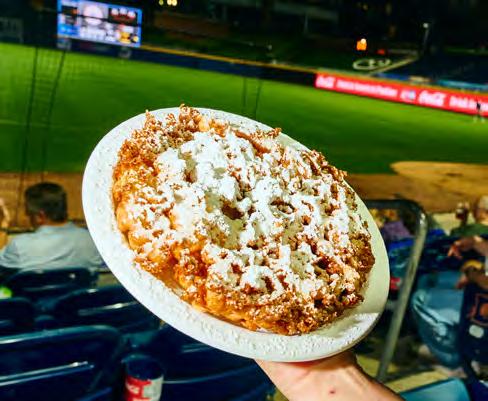
Compared to the dank fluorescence of other booths, the Mezcalito stand is also an oasis—open air, draped in hanging plants. I feel like I’ve gone to hang out with the it-girl at school to find that she lives in a mansion and is also really nice.

I’m forever on the verge of get ting a soft pretzel only to talk myself out of it. Tonight, I have a real excuse to follow through.

My enthusiasm dims the moment it’s passed over the counter. The pret zel has a stiff, inedible sheen, like some one dipped it in bat lacquer.

One bite wicks the moisture from my mouth; it’s crusted in rock salt and stale to the core.
I hand it off to Matt, typing “sand from the shore of the Dead Sea” into my Notes app.
“This tastes like sand,” Matt says, looking up from his own bite.
In better news, the Bulls just tied up the game.
Vendor: Home Plate BBQ
Price: $11.25
Rating: Triple
Price: $4.95
Rating: Foul ball
A few days before this outing, my pescatarian coworker told me that every time she eats a veggie dog at a Bulls game, she worries that they accidentally gave her a real one—as in, they’re just that on point.


A number of local vendors have outposts throughout the concourse—Pie Pushers, Two Roosters, Mezcalito— but homegrown food is also tucked into one of the more generic, Bulls-operated stands, Home Plate BBQ, which sources pulled pork from a wholesaler out of
The platter I get at Home Plate BBQ— pork, mac and cheese, coleslaw, and cornbread—delivers. The coleslaw, a soupy mound, forgoes crunch, but it’s wonderfully
Vendor: Mezcalito Taco Stand
Price: $15.99
Rating: Home run




It must have been a long time since sweet Chloe ate a real hot dog. Or maybe I’m catching the Home Plate Hot Dog stand, which also sold me the sand pretzel, on a bad night. Each bite tastes like a mouthful of bread wrapped around tacky, slightly denser bread.
As I’m feeling preemptively guilty about maybe shifting my default order away from the hot dog in the future, I hear a husband being shaded during a vow renewal. He “normally doesn’t do big romantic gestures,” says an officiant, reading a script that sounds like it was written by the guy’s wife. But, the officiant continues, the husband has finally found it in himself to pull a gesture together—re-upping his marriage at a Wednesday night Bulls game.
I get it. Sometimes it takes a gimmick to break out of a rut.
Vendor: Funnel Cake Kiosk
Price: $8.99
Rating: Home run
It’s the bottom of the eighth inning and the score has somehow swelled to 10-2 without me noticing. The Bulls are fried. I’ve got one more food to try.

Ever since the Durham restaurant Mezcalito opened a satellite at the Bulls stadium a few years ago, I’ve been telling myself that their nachos must be overpriced—a weird crotchetiness that likely stems from the fact that these nachos skyrocketed to popularity soon after debuting several years ago, a rookie everyone instantly became obsessed with. My assignment tonight finally compels me to order some. The experience is humbling. The nachos aren’t cheap—$15.99 for the veggie version—but I get a mountain of food for the money, and each element dazzles me. Toppings that usually come skimped, like guac and chipotle mayo, are laid on thick. Queso graces every chip. I figured “veggie” would just mean no meat, but the chips come strewn with roasted zucchini, bell pepper, mushroom, and onion.


Matt joins me for the walk to the funnel cake kiosk, immediately falling into banter with the crew behind the counter. It’s the end of the night, so they end up giving us a second cake for free.
After a few pulls of dough, I decide this is the platonic ideal of a funnel cake: lace edges, squishy middle, buttery base note, beaucoup powdered sugar (one of the guys at the kiosk kept cranking until we told him “when”).
With nothing left to taste, Matt, Sarah, and I lay the detritus of our meal on the ground to take a photo, explaining to the intrigued row of college students behind us that we’re professional journalists. A minute later, one of them pipes up: She’s a rising junior in journalism school, she says, and she’s curious if print newspapers are doing OK. We laugh uneasily, and I point to the caloric remnants below us, spread out like roadkill.
“What does it look like?” I quip.
We end up giving the students our extra funnel cake, a consolation for the younger generation. A few minutes later I turn around and ask them how it is. Mouths too full to answer, they give me big thumbs-ups and nod, faces dusted white with powdered sugar. W
An order at the North Carolina State Legislative cafeteria that includes beef soup and two casseroles—while the General Assembly, upstairs, finally passes the budget.
BY LENA GELLER lgeller@indyweek.com
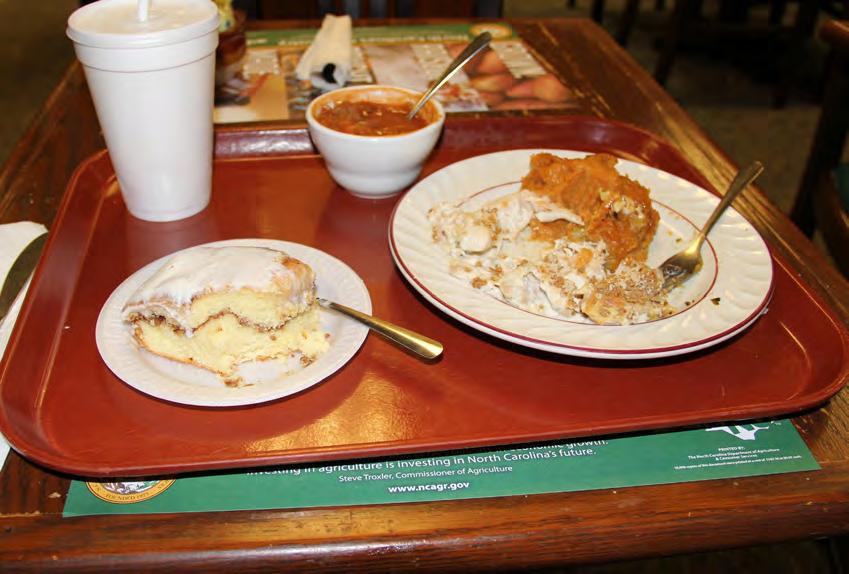
This story is part of a column, Lunch Money, in which staff writer Lena Geller visits restaurants in the Triangle in an attempt to dine out for less than $15.
The cafeteria inside the State Legislative Building has been on my list of places-to-try since I started writing this column. It’s about as hidden as a hidden gem gets—literally underground, in the basement of the marble fortress in Raleigh where the General Assembly convenes.
But I’ve procrastinated on my visit, because government facilities give me the willies. I always feel like someone’s going to tell me I’m in the wrong place.
Sure enough, as I approach the Legislative Building on a 98 degree afternoon for my long-postponed trip, I’m rebuffed: there’s a sign stressing the importance of using the visitor entrance, but none of the doors I see appear to be that. One says MEMBERS AND STAFF. Another says EXIT ONLY. A third door lists hours.
I try not to panic, wandering around for the proper entrance until I’m all the way on the opposite side of the building. Here, I find a silent debate being conducted through window signage. In one window: ABORTION HURTS WOMEN. A few steps further: PROTECT LEGAL, SAFE ABORTION. Next window: an image of a man’s fist dapping up a baby’s fist, with the words NORTH CAROLINA STANDS FOR LIFE. These must be the offices of legislators. I keep walking.
My shirt has by now completely soaked through with sweat, and I feel a rush of relief that I didn’t dress too nicely. I went back and forth about it this morning—the Legislative Building is a formal environment; a cafete-
ria is a casual environment; today is the hottest day on Earth—and ended up splitting the difference with slacks and a cropped tee. For a touch of Americana, I also donned a belt with a big brass bulls-head buckle. Rounding a corner, I find myself back where I startedI’m surprised there aren’t more people around. It’s supposedly a momentous day here at the Legislative Building: the General Assembly is expected to pass the budget it was supposed to pass a year ago. I expected a buzz of activity. Instead I’ve encountered just one person, a man so preoccupied with peeling off his suit jacket that I felt uncomfortable stopping him for directions. God, it’s hot. I peer again at the text on the doors. Under the list of hours, in the same font as the hours, I see the word VISITORS.
In I go. Nine seconds later, I set off the metal detector.
“Probably the belt,” a security guard says, eying my waist.
After wanding me down, the guard points me in the direction of the staircase that will take me into the dungeon that houses the cafeteria. I make a quick stop in the bathroom to splash cold water on my face. When I look up through wet lashes, I notice a sticker on the mirror: DON’T GET AN ABORTION. No, wait—I wipe my eyes—it says YOU LOOK AMAZING.
Fortified, I walk down the stairs and into a parking garage. Every legislator’s license plate is stamped with
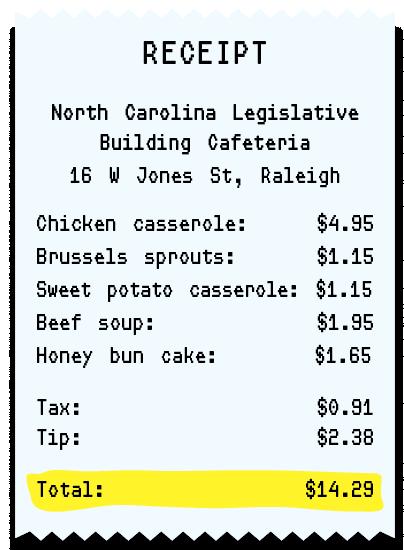
their seat number, which strikes me as kind of cute. I don’t see the cafeteria, so I shuffle past rows of cars until windows with warm light come into view. The sensation is that I have died and am now in the underworld, going to a diner. I step inside.
Immediately, I’m assessed by a fellow soul, a man in a suit who’s showing the salad bar to two people who appear to be interns.
“What are you guys gonna get? This is exciting!” he says to the interns, then, seeing me, points.
“She’s not excited,” he says. “She’s looking at me like I’m weird.”
I smile nervously and grab a tray. The salad bar, a long stainless steel island, takes up most of the room. Along the back wall there’s a buffet of mains and sides that rotate daily; today’s spread includes chicken casserole, stuffed bell peppers, Brussels sprouts, sweet potato casserole, and mashed potatoes. There are also soups and cornbread, and, at the end of the line, shelves of cake slices.
The prices are bonkers low: entrées are $5. Sides, soups, and desserts are between $1 and $2.
I get chicken casserole, Brussels sprouts, sweet potatoes, and beef soup, then stare at the cake slices— there are at least six different flavors—until I hear a voice: “Get ‘em all.”
My intrusive thought has been spoken aloud by a kitchen staffer on the other side of the shelves. We
both giggle. He tells me I should get the honey bun, pointing to a yellow layer cake shot through with cinnamon.
The payment station isn’t until the way out, so after filling a cup of water at the soda fountain, I head right into the dining room. No confusion about signage here; a private space for legislators is clearly marked.
The public side has the homey vibe of an IHOP. I take a seat at a two-top and pull out my camera.
“Is that for Instagram?”
Another voice! This one’s coming from a dapper gentleman in a plaid sport coat and glasses, sitting with two other people at a table near mine.
I tell him that I’m working on a newspaper article. He says I need to come back on Tuesday to try the fried chicken.
“What do y’all do here?” I ask the group, gesturing toward the ceiling.
“Shhhhh,” the dapper man says, bringing his finger to his lips. “You should also try the hamburger patties. They do a good job with those.”
“The hamburger patties,” the man sitting beside him affirms, nodding.
I turn to my tray. The food is so rich with provenance that I find myself nar-
rating my bites in the voice of the region each dish hails from. The chicken casserole, unmistakably made with cream of mushroom, transports me to a potluck in Minnesota. Well, that’s not half bad, I think (high praise, in the Midwest). The Brussels sprouts, soft and a tinge gray, remind me of a chat I once had with Bill Smith of Crook’s Corner where Smith lamented to me that nobody cooks vegetables to death anymore. Honey, somebody here still does.
Speaking of honey, it’s time for some cake. Well, I’ll be. It’s a honey bun in a Sunday dress.
As I eat, I eavesdrop on my three neighbors, trying to suss out what their jobs are. Given the budget vote, I figure work is bound to come up.
It doesn’t. They talk about food for the entire time: Old Bay sauce, Grands biscuits, how to cook eggs.
“Nice hot pan, olive oil, a little butter,” the dapper man tells his tablemates, then turns to me: “You get all that?”
Nobody else in earshot seems to be talking about politics either. At the tables around me, most people are chatting about their plans for the Fourth of July, which is in two days.
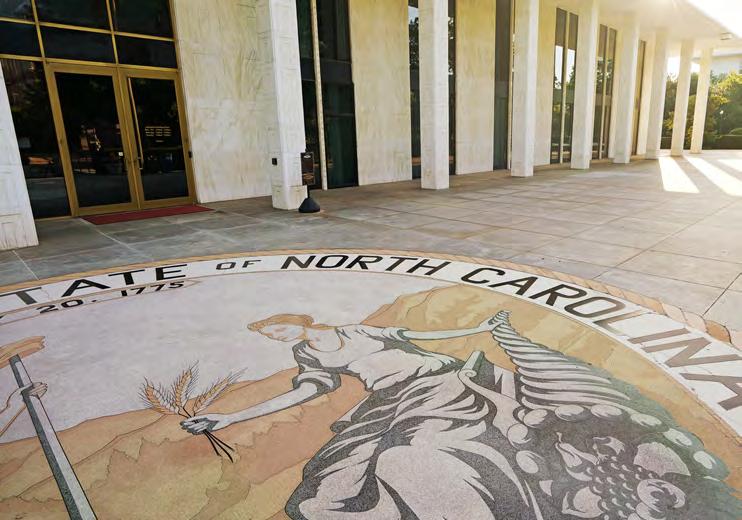
I dig into my sweet potatoes. The dapper man stands to leave.
“Young lady,” he calls over to me once more, stacking his plates. “You need to try the banana cake.”
I give him a salute.
A few minutes later, I head toward the exit myself, paying at the register. My total is $14.29 with tax and tip. Back in the parking garage, I open my phone to a wall of Slack notifications; the budget has passed.

Nicole Carr’s debut book traces the history of her great-grandfather, a pioneering Black doctor. It also includes pieces of North Carolina history that surprised the Tar Heel State native.
BY KORIE DEAN arts@indyweek.com
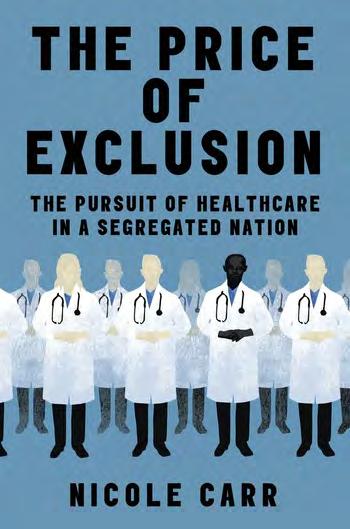
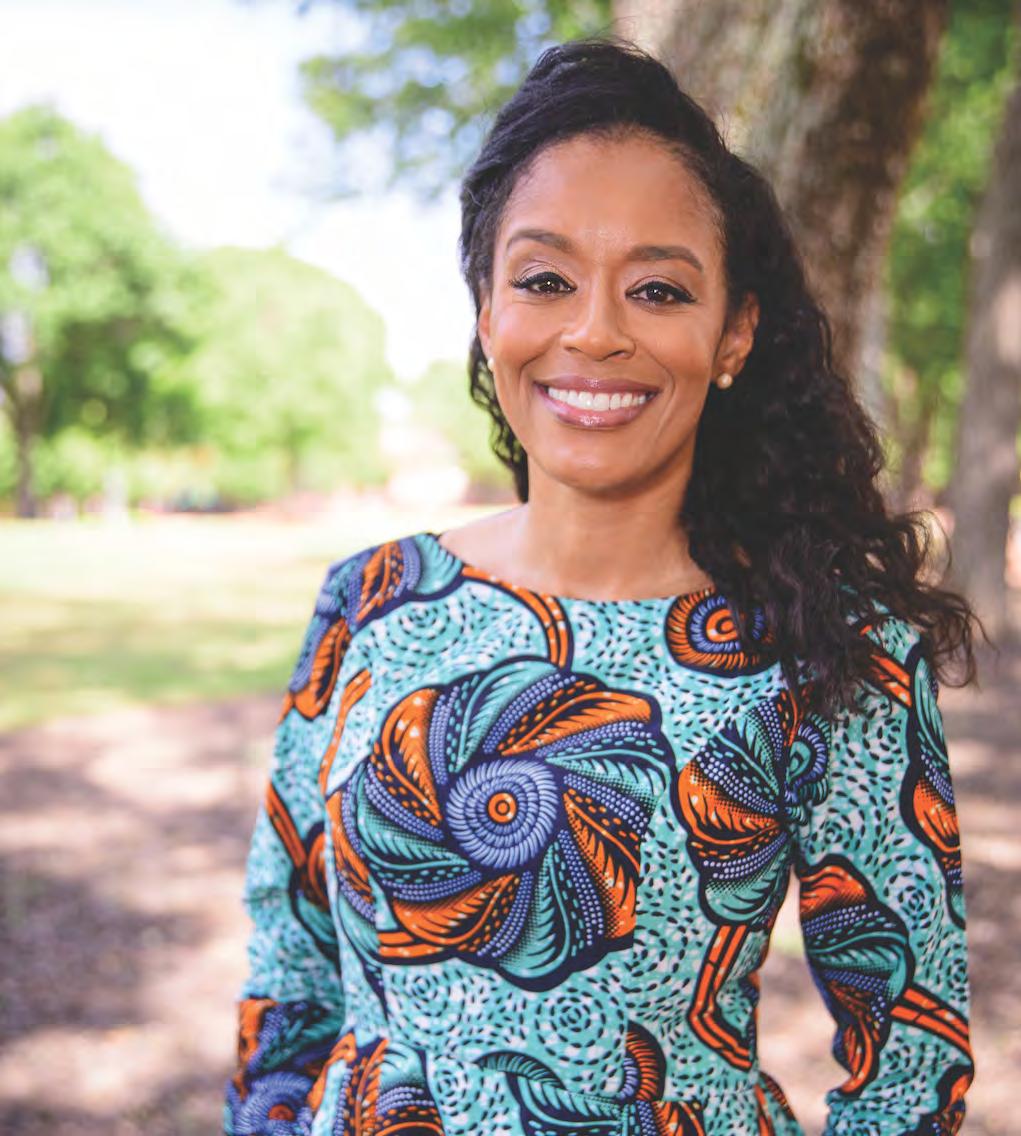
Six years ago, Nicole Carr was in the thick of covering the COVID-19 pandemic as an investigative TV journalist in Atlanta. Outside of work, she was four months postpartum and juggling virtual schooling for her two other children.
“It’s a scary time. It’s an uncertain time,” Carr remembers.
After the 11 p.m. broadcast one night, Carr was exhausted but restless. She wondered, “How the heck did they get through this 100 years ago?” Then it clicked: She knew her great-grandfather had attended medical school during the 1918 flu pandemic. Perhaps his story, which Carr knew little about, could give her a new perspective on the current historic moment.
“I decided to go looking for him in some archives that night,” she said.
She wasn’t looking to write a book. But the history she uncovered became
the backdrop of The Price of Exclusion: The Pursuit of Healthcare in a Segregated Nation , released on June 16. The book chronicles pioneering Black doctors, like her great-grandfather, Dr. Lawrence St. Clair Ferguson, as well as exclusionary policies that led to the demise of most Black medical schools in the U.S. in the 20th century—the effects of which, Carr posits, are still seen today in disparate health outcomes for Black patients and a shortage of Black doctors.
“I started drawing some parallels between the political unrest, race relations, health care, pandemic—they were dealing with all the stuff we’re dealing with right now, in 2020,” Carr said. “That turned into the proposal.”
Carr’s home state of North Carolina plays a key role in the book. The first chapter focuses on Shaw University, the historically Black university in Raleigh
that, in 1880, established the country’s first four-year medical school—a longer-than-usual curriculum for the time that Carr writes was set “because of a groundless doubt concerning the Negro’s ability to practice medicine.” In its nearly 40 years of existence, Leonard Medical School produced more than 430 graduates, many of whom went on to achieve success in medicine, business, and public service in North Carolina and elsewhere.
Carr, a graduate of Winston-Salem State University, writes in the book that she visited Raleigh “to touch the spaces that I hope will explain the divide that remains today between civil rights, community health, and Black life.” The Assembly spoke with her about that journey and what she learned while reporting the book. This Q&A has been edited for length and clarity; a longer version is available online.
THE ASSEMBLY: I did not know Shaw was home to the country’s first four-year medical school. Did you know that prior to writing this book, and why was it an important place to start the story?
NICOLE CARR: I have an uncle in Raleigh, his name is Ted Johnson, and he’s a Shaw graduate. I told him what I was finding out about my dad’s side of the family through my research, and he says, “You know, Shaw had a medical school.” I said, “I did not.” Combined with the family research, I realized there was a story to be told that would help us understand the time we were in.
I thought it was important for the book to start with the first chapter, “The Medical Education of the Negro Sets the Standard,” to reset our thinking around
what education means in a democracy, because right now we’re watching access be cut short to the very same profession. It’s through different methods, but I wanted people to understand that, like so much of our forgotten history, America cannot reach its ideals and its promise of a democracy for all without the inclusion of the formerly enslaved who built the country. We often find so many firsts in Black history—not just for Black people, but for the country, because our full citizenship is what allows America to realize its promise.
Given the anti-everything movement that we’re facing now—the anti-DEI [diversity, equity, and inclusion] and antiCRT [critical race theory] movement— it was important to pull the language from the archives that showed us that the thinking behind making Shaw a fouryear medical school was: If you are going to begin to put the Negro in a white coat, he should go to school longer and prove himself as intellectual and capable as the white man. They were expanding education standards to challenge a group of people based on an idea of merit and intellect, and some of that language is now being used to justify a lot of policies that relate to education, race, admissions, you name it. That’s how we get to Shaw. And I am trying to understand, as a North Carolina native, why I did not know this.
As you point out in the book, the graduates of Leonard went on to be very successful. Readers in Raleigh will probably recognize the name of Manassa T. Pope, North Carolina’s first licensed Black doctor, whose home is an historic landmark downtown. Other alumni operated hospitals or ran for office. What do you think their success says about the quality of education students received at Shaw?
I think their success represented the promise that education has for us when we can access it. Education is not about us being able to spit out facts on a testing sheet. Being able to further your education allows you to envision yourself differently, and I think it’s really important to understand how Black people in America envisioned themselves in the immediate aftermath of enslavement. People were ready to go to college after emancipation; I teach at an institution, Morehouse College, founded in the two years after enslavement.
Education also opens the door to political power, and I think that’s what we see demonstrated here. You go, and you’re trained to do one thing, but you understand that the thing you do is a part of a larger ecosystem, and that’s what these doctors realize. You don’t get to just be the doctor, you become a part of a socioeconomic engine that makes the community run. Their success is indicative of what happens when the front door to the schoolhouse is open for everyone. This is why redistricting for school districts is a political fight. This is why voucher systems go to state lawmakers, because we’re really figuring out how we determine who gets what and how much of it they get.
As far as the quality of education at Shaw, they had some of the best professors. They didn’t have Black instructors in the beginning. These are white men, mostly from the North, who are in community with philanthropists and believe in funding a lot of religious organizations. They believe that education for the American Negro is the right thing to do, to offer. But they also go in these backrooms, and they try to determine how far to go with this. While their intentions are good, they’re also saying, “The measure of whether they’re good enough is if they can do what the white man can do.” Take from that what you will.
You write that Dr. Eaton successfully lobbied the state of North Carolina to pay for his medical education expenses in Michigan in the 1940s, which was another piece of history I didn’t know.
The way that we often recount the Eaton story is that the state of North Carolina was so kind as to pay for his education. You cannot tell the story without noting that because Leonard Medical School had been closed down, he had no option under Jim Crow laws to get an equal and equivalent education in his home state. There was no separate but equal available because there was no medical school anymore. He sued over that, and Black people were doing this all over. The legal argument is that because you cannot offer this where I live, I cannot have a reasonable chance to get an education that I want here, then you owe me the opportunity somewhere else. And that’s how he becomes the only Black person in the graduating class at the University of Michigan the year that he graduates. It’s not that North Carolina was so kind.
That’s how we ought to always recount this story.
The book details changes to medical education in the early 1900s, beginning with new “goalposts” set by the American Medical Association that mandated medical schools have an endowment of $600,000, facilities with “top-grade” equipment, and a four-year curriculum—standards that were virtually impossible for most Black medical schools to meet. What were the impacts of these changes?
If you want a school to have a $600,000 endowment to get points in your criteria, I don’t know a Black school in the decades post-emancipation that would have that kind of endowment. They hadn’t been around. How do you compare that to the Harvards and Yales of the world? Endowments were built through land deals, through enslaved labor. So how were the formerly enslaved, as soon as they’re free, supposed to build institutions that had endowments that were built off the backs of the enslaved? The math is not mathing. It’s impossible. They also looked at the quality of facilities. If you go back to the founding documents in the medical school at Shaw, you see how the university’s founder, Henry Tupper, was begging the Baptists to donate and help build the school. Is it a state-of-the-art building for the time? No. Is it working? Absolutely. That’s like your neighborhood school. Is your old neighborhood school that was built in the ’80s a pretty school? Maybe not. Do you have enough taxpayer dollars to build a new school in the next 10 years? No. Are the teachers in there still good? Yeah.
You write that the man tasked with evaluating medical schools based on the new standards, Abraham Flexner, “had questionable credentials for the role.” He’d never attended medical school and had written a book “on the shortcomings of American universities.” That sounds similar to some of the attacks we’ve seen on higher education in recent years. Do you think that’s a valid comparison?
Absolutely. And I’m going to say something that will make people uncomfortable: That is a function of white suprem -
acy. That is allowing people to envision a world not based on credentials or experience, but what people should do to shape the world they want. It’s not shaped by facts, and it’s not shaped by common sense.
Flexner didn’t have a medical education. He didn’t have a health care background. He barely made it through one of his own graduate programs, but he had a connection to the president of Vanderbilt University, and he had a connection to someone in the Carnegie Foundation. He was connected. That was it. There’s nothing in Flexner’s background that says he should have been evaluating every medical school in North America.
People today have a vision for what education should be, and it’s not a vision that includes everyone. It doesn’t take cultural responsiveness into account; it punishes you for that. And that’s what Flexner does, and he’s enacted generational damage by closing these places when we are legally segregated in every facet of life. He determined that Black people will not be going to medical school in numbers. That’s why just about 5% of doctors in the country today are Black.
Toward the end of the book, you mention legislation—including a bill introduced in Congress by N.C. Rep. Greg Murphy—that has threatened to cut funding for medical schools if they teach or promote DEI. You also note that Black medical student enrollment plunged after the Supreme Court’s decision three years ago. All of that comes as the country is facing a shortage of doctors. What’s your outlook on the state of medical education given these challenges?
I don’t think we have an opportunity to repair the damage that is being done right now. We won’t have the opportunity to repair that for decades to come. The repeal of affirmative action begins this challenge to admissions, and you don’t get a chance to catch up, because every time you make a dent in it, we’re moving the goalpost on who deserves access to education.
The other reason I think what’s happening right now is so dangerous is because, on July 1, the Big Beautiful Bill [went] into effect, and that’s going to cap students’ loan limit and their ability to borrow money for their education. You take the racial wealth gap into consideration, then you add that on the generational damage, the broken pipeline as it is, I don’t know where we go.
MUSIC
Cy&I with Cogan and Adam Xavier
8 p.m. Local 506, Chapel Hill.
STAGE
2026 North Carolina’s Funniest: Preliminary Round Jul. 8-Aug. 6, various times. Goodnights Comedy Club, Raleigh.
ADF: Paul Taylor Dance Company Jul. 15-16, 7:30 p.m. Page Auditorium, Durham.
The Notebook: The Musical Jul. 15-19, various times. DPAC, Durham.
Hank Sinatra, Ramona & the Holy Smokes, Charles Latham & the Borrowed Band
8 p.m. Cat’s Cradle Back Room, Carrboro.
Negative Feedback, Snowblinder, Mary Anna
7:30 p.m. The Pinhook, Durham.
Tiger Bear Wolf LP Release with Verity Den and Forced Fun
8 p.m. Local 506, Chapel Hill.
STAGE
America $2.50 - A Mettlesome Sketch Comedy Show
July 16-25, various times. Mettlesome Theater, Durham.
Hello, Dolly!
July 16-26, various times. PlayMakers Repertory Company, Chapel Hill.
The Marvelous Miss Gender Starring Bosco
8 p.m. Martin Marietta Center for the Performing Arts, Raleigh.
PAGE
Emily Giffin: Love You More 6:30 p.m. Quail Ridge Books, Raleigh.
Julia Ainsley—Undue Process: The Inside Story of Trump’s Mass Deportation Program
7 p.m. The Rialto, Raleigh.
Ahn with Galvenukles, Desidirium, and Orgone Energy Accumulator
8 p.m. Local 506, Chapel Hill.
First Day Back, Ethel Meserve, gapyear
8 p.m. Cat’s Cradle, Carrboro.
Gregory Santa Croce & Science Fiction
7 p.m. Sharp 9 Gallery, Durham.
Keller Williams
11:30 p.m. Lincoln Theatre, Raleigh.
8 p.m. Motorco Music Hall, Durham.
Lindsey Stirling
7 p.m. Red Hat Amphitheater, Raleigh.
Paradiso 30: Kylan Rice, Stephanie Anderson, Julia Drescher
7 p.m. Shadowbox Studio, Durham.
Wombo, Shower Curtain
8 p.m. The Pinhook, Durham.
STAGE
ADF: Shen Wei Dance Arts and Guangdong Modern Dance Company Jul. 17-18, various times. Reynolds Industries Theater, Durham.
The ComedyWorx Show Fridays at 8 p.m. ComedyWorx, Raleigh.
The Harry Show Fridays at 10 p.m. ComedyWorx, Raleigh.
The Rocky Horror Picture Show
11:55 p.m. The Rialto, Raleigh.
Lady Die, Ahna Ell, Al Olender
7 p.m. Rubies on Five Points, Durham.
Bird and Byron
8 p.m. Cat’s Cradle Back Room, Carrboro.
Brad Walker, Matt Booth, Al Sergel
7 p.m. Sharp 9 Gallery, Durham.
Candlelight Concert: Fleetwood Mac
6:30 p.m. The Rialto, Raleigh.
Carter Minor with Scott Sawyer
7 p.m. Succotash, Durham.
Dikembe, Padfoot, Peytopia
7 p.m. The Pinhook, Durham.
Dreamforia presents Progressive House Forever
9 p.m. Lincoln Theatre, Raleigh.
Mella, Boy Thief, Postdrome
7:30 p.m. Local 506, Chapel Hill.
Saturdays in Saxapahaw: Omar Ruiz-Lopez and Eric Hirsch
6 p.m. Haw River Ballroom, Saxapahaw.
SOS: The Recession Pop Party
9 p.m. Motorco Music Hall, Durham.
STAGE
KING SHIT Improv Tournament: Newt Work vs. The Mothership
6 p.m. Mettlesome Theater, Durham.
Still She Stands
Jul. 18-19, various times. The ArtsCenter, Carrboro.
Pirates! A Boy At Sea
Jul. 18-19, various times. Burning Coal Theatre Company, Raleigh.
Tangled Vows
7 p.m. Martin Marietta Center for the Performing Arts, Raleigh.
7:30 p.m. Lincoln Theatre, Raleigh.
Vishal-Sheykhar – The Superhit Tour
5:15 p.m. Martin Marietta Center for the Performing Arts, Raleigh.
Watchhouse: WUNC’s 50th Anniversary Bash Benefit Concert
8 p.m. Haw River Ballroom, Saxapahaw.
STAGE
GIANT ROBOT FIGHT CLUB
7 p.m. Mettlesome Theater, Durham.
MUSIC
Cheer-Accident, Forced Fun, Moms
6 p.m. Shadowbox Studio, Durham.
Slumbering Sun, Doomsday Profit, Skull Servant
8 p.m. The Pinhook, Durham.
Syndicate 99, Insanya, Kittiwake, Lucretia
7 p.m. Local 506, Chapel Hill.
Time Out of Mind – A Tribute to Bob Dylan
MUSIC
Kurt Vile and the Violators, Being Dead
8 p.m. Haw River Ballroom, Saxapahaw.
Queer Noise Night: Breakdancing Ronald Reagan, Spookstina, Slime Queen Bingo, Dumb Dog, Death Envy
7:30 p.m. The Pinhook, Durham.
TUE 7/21
MUSIC
Cat Power
8 p.m. Haw River Ballroom, Saxapahaw.
Mikaela Davis, Nic Panken
7 p.m. The Pinhook, Durham.
WED 7/22
MUSIC
Death Cab for Cutie
7:30 p.m. Coastal Credit Union Music Park, Raleigh.
Osquinn, FearDorian, Mental, Tropes, Heartstopmiami, Bbyazul
7:30 p.m. The Pinhook, Durham.
Oscar Lindsey & James Eichman
7:30 p.m. Rubies on Five Points, Durham.
Willis with Pretty Jane, The Flooks
8 p.m. Lincoln Theatre, Raleigh.
STAGE
ADF: Li Chiao-Ping Dance
7:30 p.m. Reynolds Industries Theater, Durham.
THU 7/23
MUSIC
Born Without Bones with Treasure Pains
8 p.m. Local 506, Chapel Hill.
Buju Banton & Stephen Marley: Roots and Rhymes Tour
8 p.m. Red Hat Amphitheater, Raleigh.
COGS, Emerson Bruno, Badlands
8 p.m. Rubies on Five Points, Durham.
STAGE
Modi 7:30 p.m. Goodnights Comedy Club, Raleigh.
Oscar Aydin
8 p.m. Goodnights Comedy Club, Raleigh.
FRI 7/24
MUSIC
Ally J
7 p.m. Succotash, Durham.
Automag & Strychnine Soul with The Locks
8 p.m. Lincoln Theatre, Raleigh.
Bitchfest
5 p.m. The Fruit, Durham.
Curtis McPhatter Jr and The HeArt
7 p.m. Sharp 9 Gallery, Durham.
Ella Langley: The Dandelion Tour
7 p.m. Koka Booth Amphitheatre, Cary.
Elmiene: Sounds for Someone Tour
7 p.m. The Ritz, Raleigh.
LET IT HAPPEN: TAME IMPALA DANCE PARTY
9 p.m. Motorco Music Hall, Durham.
Renee Christine
8 p.m. Cat’s Cradle Back Room, Carrboro.
STAGE
ADF: Pilobolus
Jul 24-25, various times. Page Auditorium, Durham.
The ComedyWorx Show Fridays at 8 p.m. ComedyWorx, Raleigh.
The Harry Show Fridays at 10 p.m. ComedyWorx, Raleigh.
Hush Hush
9 p.m. Mettlesome Theater, Durham.
Na’im Lynn Jul. 24-26, various times. Goodnights Comedy Club, Raleigh.
Steve Furey Jul. 24-26, various times. Goodnights Comedy Club, Raleigh.
SUN 7/26
MUSIC
“Anthem of the Sundays” Feat: Bring out Yer Dead
6 p.m. Lincoln Theatre, Raleigh.
Cole Nichols Band
3 p.m. Sharp 9 Gallery, Durham.
Destin Conrad
8 p.m. The Rialto, Raleigh.
Grrrlbands Showcase
7 p.m. Cat’s Cradle, Carrboro.
Angela Bingham Quintet
7 p.m. Sharp 9 Gallery, Durham.
Chris Acker, Creekbed Carter Hogan
7 p.m. The Pinhook, Durham.
Huzzah! Hot Jazz & Swing
7 p.m. Succotash, Durham.
maryjo with Brooke Alexx 7:30 p.m. Local 506, Chapel Hill.
Matt Maeson: Watch My Step Tour
7 p.m. The Ritz, Raleigh.
Saturdays in Saxapahaw: Raistlin Brabson and Up Jumped Trouble
6 p.m. Haw River Ballroom, Saxapahaw.
STAGE
Carolina Ballet: Summer Intensive
7 p.m. Martin Marietta Center for the Performing Arts, Raleigh.
Safety Coffin and The Tilt with Booster Club and Elliott Schelske & The Committee of Public Safety
8 p.m. Local 506, Chapel Hill.
Sunday Set with DJ Gemynii
5 p.m. The Durham Hotel, Durham.
STAGE
GIANT ROBOT FIGHT CLUB
7 p.m. Mettlesome Theater, Durham.
MON 7/27
MUSIC
Riley! with Kerosene Heights, bugsy, and Moving Boxes
7 p.m. Local 506, Chapel Hill.
TUE 7/28
MUSIC
Ally J on the Roof
7:30 p.m. The Durham Hotel, Durham.
BELMONT – Performing 10 Years of Between You and Me
7 p.m. Motorco Music Hall, Durham.
Bob Dylan
6:30 p.m. Red Hat Amphitheater, Raleigh.
North Carolina Jazz Repertory Orchestra
7:30 p.m. Sharp 9 Gallery, Durham.
Tommy Oeffling and The B-Team with VRoom
8 p.m. Rubies on Five Points, Durham.

Edited by Patti Varol


Difficulty level: HARD
There is really only one rule to Sudoku: Fill in the game board so that the numbers 1 through 9 occur exactly once in each row, column, and 3x3 box. The numbers can appear in any order and diagonals are not considered. Your initial game board will consist of several numbers that are already placed. Those numbers cannot be changed. Your goal is to fill in the empty squares following the simple rule above.

SCM Specialist Professional
Siemens Medical Solutions USA, Inc. seeks a SCM Specialist Prof in Cary NC. Manage orders through complete dlvry cycle & support funcs to meet customer expects & on-time dlvry goals. Req Bachelor in Bus, Logis, SCM, Biomed Eng or rel fld & 4 yrs rel exp. Hybrid work permitted. To apply, visit careers.siemens-healthineers.com & search R-29501
Software Engineer III, F/T
Software Engineer III, F/T at Truist Bank (Raleigh, NC) Deliver highly complex solutions w/ significant system linkages, dependencies, associated risk. Lead & perform dvlpmt efforts such as analysis, dsgn, coding/creating, & testing. Must have Bach’s deg in Comp Sci, Comp Engg, or rltd tech’l field. Must have 6 yrs of progressive exp in s/ware engg or IT consulting positions performing the following: applying in-depth knowl in info systems & understanding of key business processes & competitive strategies rltd to the IT function to identify, apply, & implmt IT best practices; applying broad functional knowl in reqmt gathering, analysis, dsgn, dvlpmt, testing, implmtn, & deployment of applications; planning & managing projects & solving complex problems by applying best practice; providing direction & mentoring less expd teammates; & utilizing exp w/: AWS; Java 21; JavaScript, TypeScript, Shell Script; Spring Framework, Spring Boot, Spring Security, Spring Batch, Spring Integration; Spring Web (Servlet Stack & Reactive Stack); ReactJS, AngularJS, NodeJS; HTML, CSS, Bootstrap CSS, Tailwind CSS; Apache Kafka, JMS, AMQP, WebSocket; Ant, Maven, Gradle; RESTful & SOAP Webservices, gRPC; Git; Oracle Database, MySQL D/base; Docker, Podman, Kubernetes, OpenShift; Azure DevOps, GitLab CI/CD; Terraform; SAST, DAST, SCA & DevSecOps; Apache Tomcat, Netty, JBoss; STS (Spring Tool Suite) & IntelliJ Idea; & Windows & RHEL. Position may be eligible to work hybrid/remotely but is based out of & reports to Truist offices in Raleigh, NC. Must be available to travel to Raleigh, NC regularly for meetings & reviews w/ manager & project teams w/in 24-hrs’ notice. Apply online (https://careers.truist.com/) or email resume to: recruitment@truist.com. Ref Job# R0116182.
Senior Software Developer Jaggaer
SENIOR SOFTWARE DEVELOPER JAGGAER (RTP, NC) dlvrng cmplx SW sltns applng knwldg of engnrng prncpls, practcs & prcdrs. Dsgn, dvlp, test & implmnt cmplx SW systms & applctns, ensrng hi-qlty, scalble, & mntnbl soltns. Aply tchncl exprts to slve advncd prblms & dlvr innovtv soltns; lead tchncl dscssns, code revws, & archtctrl planng sessns; mentr & prvd tchncl guidnc to SW Engnrs; cllbrte clsly w/crss-fnctnl tms to defne & implmnt rqrmnts; ensrng cmpltn w/in scpe, timln, & qualty stndrds; procss imprvmnt & rcmmnd enhncmnts tht hv sgnfcnt bsnss impct; resrch & evluate nw technlgs, tools, or frmwrks to imprv dvlpmnt prcss; sbjct mttr exprt for specfc systms, compnnts, or bsnss areas; provd rcmmndtns tht inflnce clnt delvrbls or orgnztnl decsns; RESTful API devlpmnt; Query optmztn & Perfrmnc tunng; PostgreSQL, devlpmnt tools & envrnmnts utlzng IntelliJ IDEA, Eclipse, Git, GitHub, Maven & Artfctry. MS in Comp Sci or rel fld. Mst knw (thur acdmc trng or wrk exp) buildng reusbl cmpnnts & extnsn pnts, mkng futr custmztns easr; wrkng w/ crss-fnctnl tms to trn bsnss reqrmnts into techncl soltns, cnfigrng wrkflws; testng, incl unit, intgrtn, & wrkflw simltns; Agile/Scrm prcss, incl sprnt plannng & code revws, ensrng codng stndrds & bst prctcs; wrkflw autmtn, data mappng, pltfrm custmztn; Java, JavaScript, Sprng Boot, OAuth, RESTful API intgrtns. WFH in NC. Apply at CareersTeam@jaggaer.com.
Manager Quality Engineering sought by LexisNexis Risk Solutions FL Inc in Raleigh, NC to lead Quality Assurance/Testing for defined area of responsibility to successfully/ consistently deliver high-quality software products/services on time, on budget, to specification. Minimum of Bachelor’s degree or foreign equivalent in Computer Science, Computer Engineering, Information Systems, Information Technology or rltd + 5 yrs exp in job offered or rltd occupations required. Employee reports to LexisNexis Risk Solutions FL Inc office in Raleigh, NC but may telecommute from any location within US. Interested candidates should send email to ResumesICT@ RELX.com. Ref job code: R115157 ($169,100 to $219,800/yr + standard corporate benefits)

Syntegon Technology Services seeks Field Service Engineer (FSE-VK) in Raleigh, NC. Train customers on proper ops, maint & safety rules of customer equip. Dom & Intl travel reqd 75% of the time. Telecommuting permitted. Reqs BS+2 yrs rltd exp. Will accept a BS equiv based on a combo of edu and/or exp as determined by a prof eval service. Send resume to USTalent. Acquisition@syntegon.com. Must ref job title & code in the subj line.
First Citizens Bank seeks an Enterprise Resilience Analyst in Raleigh, NC to develop, maintain, & test ops resilience & incident mngmt. plans. Reqs: BS in Fin, or rel + 2yrs. 5% dom travel. Remote role. Base pay b/w $89,025 to $154,310/yr. For more info & to apply, go to https://jobs.firstcitizens.com/jobs & ref Job #2026-34753

Ever�thing Now All At Once is organized b� Xuxa Rodríguez, Ph.D., Pats� R. and Ra�mond D. Nasher Curator of Contemporar� Art, with support from Julianne Miao, Curatorial Associate. This exhibition is made possible b� The Nanc� A. Nasher and David J. Haemisegger Famil� Fund for Exhibitions and the Mar� Duke Biddle Foundation.
Barkle� L. Hendricks, Take All the Time You Need (Adrienne Hawkins), 1975. Oil on linen, 72 x 72 (182.9 x 182.9 cm). Collection of the Nasher Museum of Art at Duke Universit�, Durham, NC. Gift of Kelse� (A.B. ‘06) and David (A.B. ‘97, J.D. ‘06) Lamond, 2014.6.1. © Barkle� L. Hendricks. Courtes� of the Estate of Barkle� L. Hendricks and Jack Shainman Galler�, New York. Photo b� Peter Paul Geoffrion.