6 How a 1972 zoning decision led to plans for 382 apartments and townhomes near the Eno River and Durham's "crown jewel" park. BY JUSTIN LAIDLAW
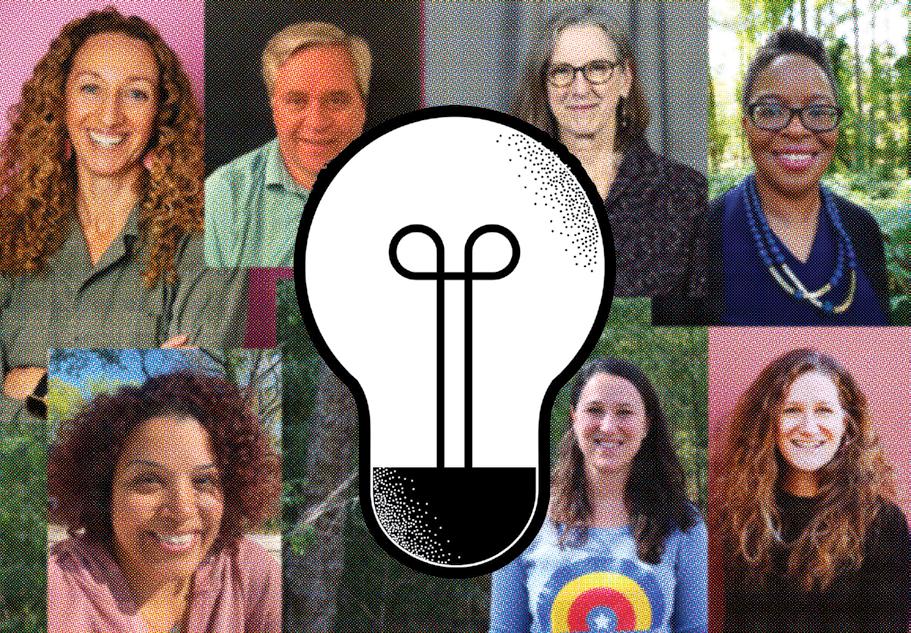
9 We asked some smart people to dream big and share their ideas for solving the Triangle's climate problems. BY INDY STAFF
12 Most Triangle towns and counties have specific goals for reducing greenhouse gas emissions. Some have made notable strides. BY INDY STAFF
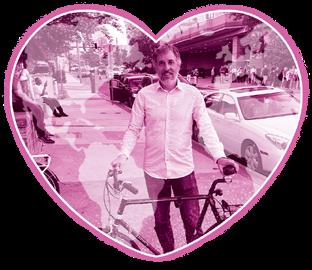
14 Looking to reduce your impact on the environment? Thse three locals may be helpful guides. BY JASMINE GALLUP, KENNEDY THOMASON AND JUSTIN LAIDLAW
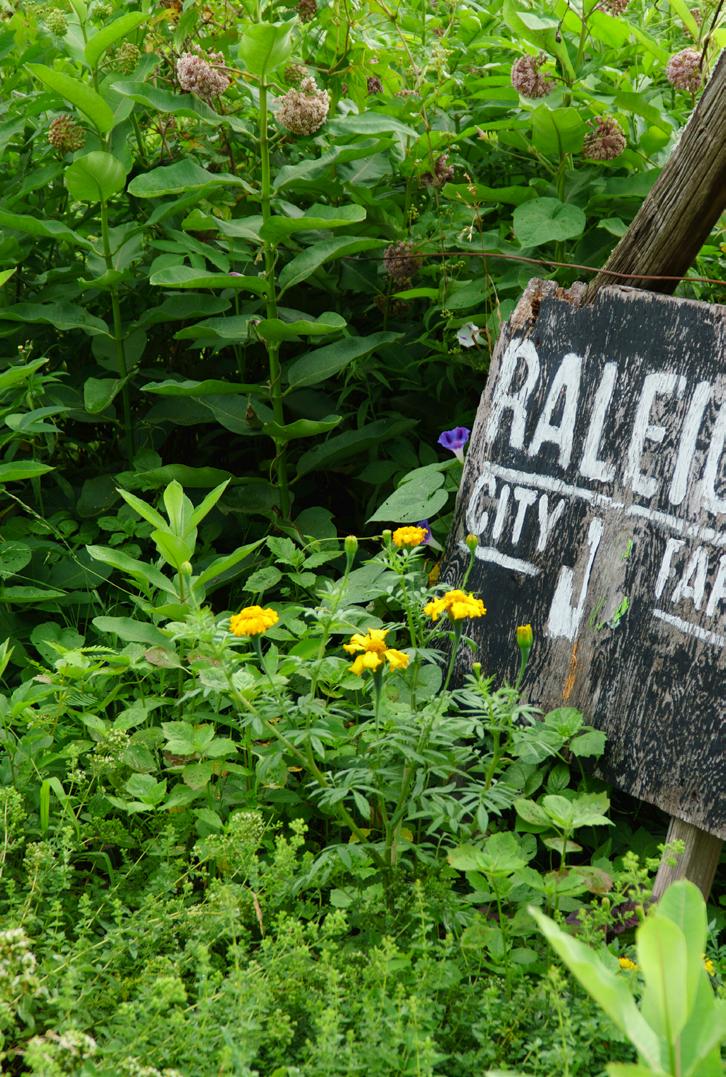
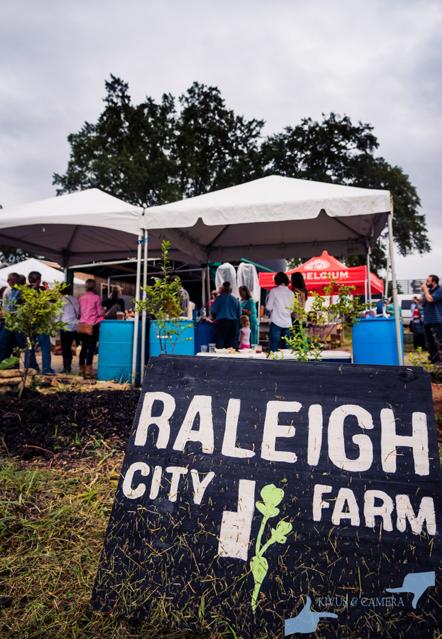
16 Raleigh City Farm celebrates fifteen fruitful years of regenerative farming and community work. BY ELLIOTT HARRELL
Culture
30 Josh Morin and his unconventional workout routine have become a fixture in Durham, where he takes therapeutic daily runs. BY STORMS REBACK
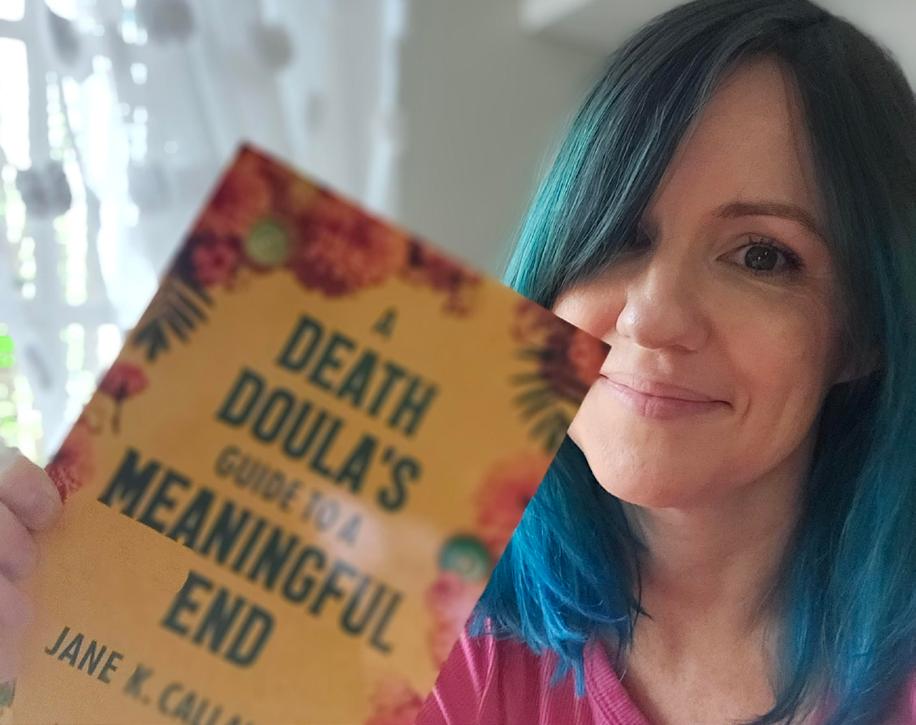
31 “I want this knowledge to be available to as many people as possible,” says Jane K. Callahan, author of A Death Doula's Guide to a Meaningful End BY SARAH EDWARDS
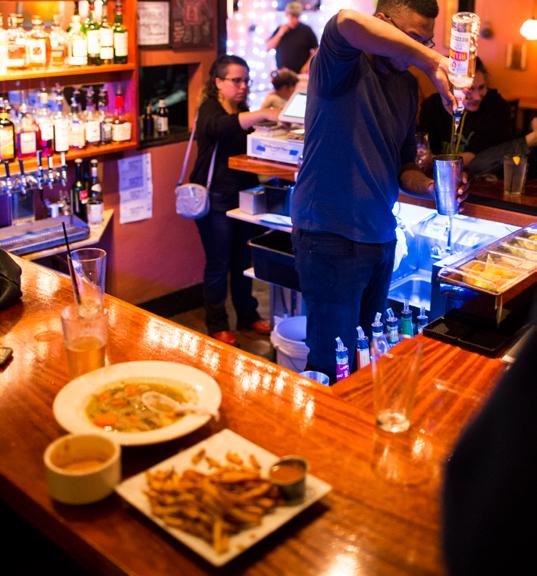
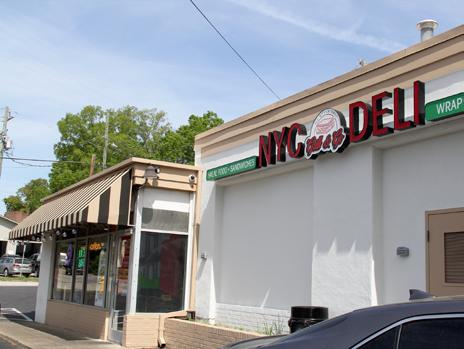
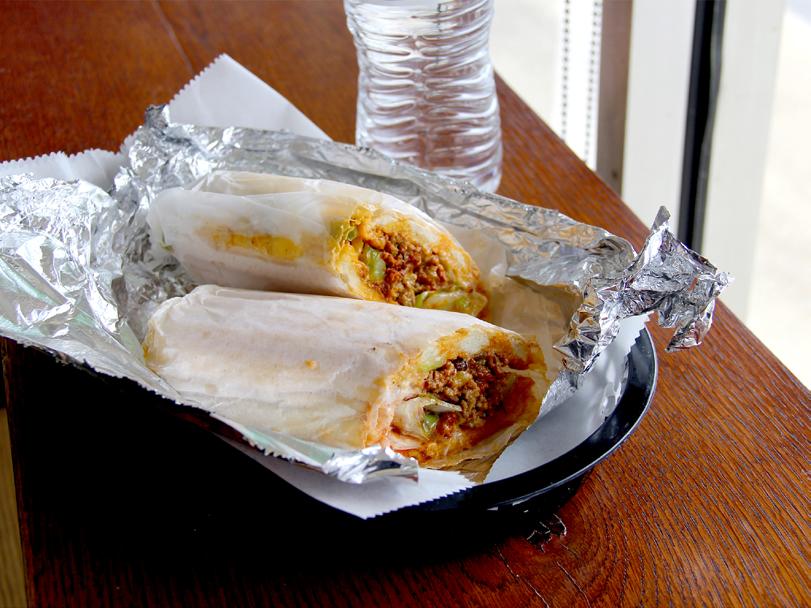
32 Two visits to a New York City-style deli in Raleigh to get lunch on a budget— and test out a viral order. BY LENA GELLER
Regulars
4 Backtalk 5 Op-ed
ILLUSTRATION BY NICOLE PAJOR MOORE
We Made This
Geller
Laidlaw Chase Pellegrini de Paur Report For America Corps Reporter Chloe Courtney Bohl
Contributors
Jasmine Gallup, Desmera Gatewood, Elliott Harrell, Brian Howe, Glenn McDonald, Cy Neff, Andrea Richards, Barry Yeoman, Russ Campbell, Colony Little, Shelbi Polk, Ryan Cocca, Lauren Wingenroth
Wojciechowska
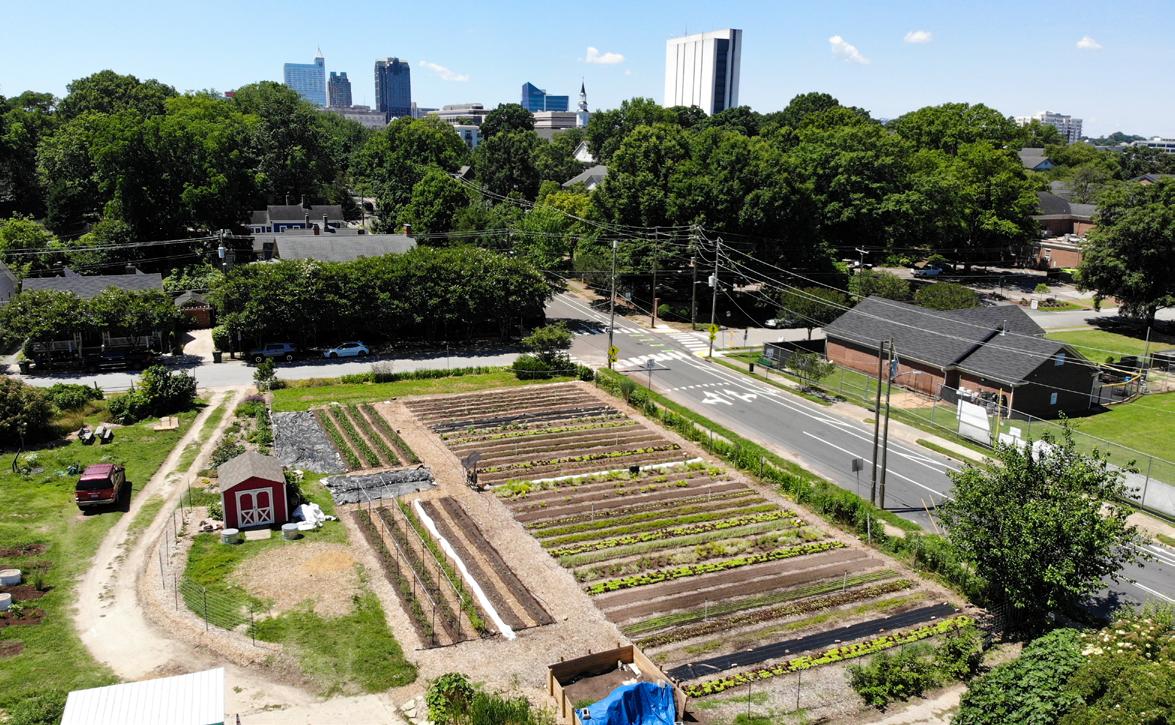
Raleigh City Farm (see story on page 16).
PHOTO COURTESY OF RALEIGH CITY FARM
BACKTALK
In our last edition, Lena Geller wrote about what happened when Duke bought a duplex that housed The Living Room, a sometimes political community gathering space. Readers had mixed reactions to the piece, which, online, carried the headline “Duke Bought a Duplex That Housed a Thriving Community Space. Within Months, It Was Gone. Was That a Coincidence?”
From reader JOHN SCHELP (whose experience as a historian of the Erwin Mills area was featured in the story) by email:
Here we go again. Duke continues its long history of buying mill houses on the edge of campus and pushing out the tenants. This time it’s a wonderful young woman who has spent the last ten years building a community gathering space and garden on Swift Ave.
Duke bought the house and the next month began the process of pushing her out. Once the press got involved, Duke started carefully crafting its message, always protecting their image. But, in the end, out she goes. Shameful.
At the very least, one has to assume Duke will let the community garden remain until breaking ground on these unknown plans.
Finally, not sure why Duke didn’t propose to do what they agreed to do in the past and that is to give away the house for free and throw in the $10k demolition price to help to defray moving costs.
Save the garden and save the house, come on Duke, stop spinning and do the right thing.
From reader MARILYN GRUBBS by email:
I just finished reading Lena Geller’s article about the Living Room. What an amazing piece of research and writing! I’m feeling equal parts of admiration and respect for what the space gave to the community while it existed, and for Geller’s work in bringing that to light, along with anger, frustration, and resignation at how Duke handled the situation. Also, I’m so glad that the Indy exists to do this amazing level of reporting!
From Instagram user JESSD.LIGHT:
This is a pensive piece of journalism. What a loss of community space.
From Reddit user HOG_ENTHUSIAST:
Who cares? It’s a house. Like, it’s half a duplex. Maybe some cool stuff happened there but I bet we can find another half a duplex somewhere in Durham. If the person who owns a house wants to sell the house, and Duke wants to buy the house, I don’t think it’s really news. And I don’t really give a shit what someone who didn’t own the house has to say about it.
From Reddit user FORESKINWHATSKIN:
Talk about sensationalized headlines. Once again, Duke being made the boogie man of Durham. This is the kind of anti intellectual propaganda you see on fox news. A lot of the houses surrounding the undergrad campus are over a century old, falling apart, and probably loaded with mold. These buildings don’t need renovations. They need completely new foundations. No one should be living in a place like that. Also, one duplex doesn’t make or break an entire community and it’s culture. We need more education in this country so people know this BS when they see it. Media literacy is seriously lacking in the US and most people are eating the wrong rich. Eating academic institutions ain’t it.
And in response, from Reddit user NOTERITREA:
Sensationalized headline? It literally describes what happened. Just because you claim the houses around Duke’s main campus
are “falling apart, and probably loaded with mold” doesn’t make it true. Regardless, Duke buying residential properties around the city doesn’t necessarily fix that issue. Ultimately it either removes existing residential property from the market or, like the article describes, leaves Duke as the owner of a residential property in which they can kick the tenants out whenever they please.
And I would say killing any locally organized community is not to the betterment of the city.
Earlier this month, Bryan Anderson wrote for the INDY about Democrats expressing concern that appointing Jonah Garson to Graig Meyer’s former state Senate seat was “risky,” citing allegations Garson has denied. Some readers criticized the INDY’s decision to report on the officials’ comments.
From reader DAMON SEILS on Bluesky:
On top of the questionable editorial decision by @indyweek.bsky.social, it’s hard to see why a senator would go to this effort to smear a potential future colleague by repeating these anonymous—and, as far as we can tell, baseless—allegations. Politics is exhausting enough without this nonsense.
From reader BONNIE BEVAN (one of the local officials who voted to appoint Garson to the seat) by email:
What was risky was publishing this article. Vindictive journalism- possibly unethical, I’d call it.
Did you actually look at the video of the bar scene where Jonah berated the bartender for serving an underage customer? He told the bartender “Do better..” The bartender didn’t like that.
And apparently you don’t know what a rule follower Jonah is. So using cocaine at a party doesn’t compute. Note Graig Meyer’s response.
The article stains the reputation of Indy Week. People will always remember Indy Week published this tacky story.
And lastly, Chase Pellegrini de Paur’s story on Fluid Garage, a new “women-, queer-, and non-binary-led community auto repair shop” in Durham, has struck a chord with many readers excited to check it out, including one who pointed out economic benefits to the model.
From reader NATE JOYNER by email:
I very much enjoyed reading the April 6 article, “At a Soon to Open Durham Garage, Community Is the Driving Force.” While the opening of Fluid Community Garage is a win for Durham’s culture, it also represents a vital, often overlooked, financial investment in our city’s human capital.
In my opinion, Durham’s current economic growth is dangerously lopsided, focused heavily on high-end real estate and tech-sector offices. From a financial perspective, a healthy economy requires sector diversification. By providing a space for residents to learn high-demand vocational skills like auto mechanics, Fluid Community Garage acts as a low-barrier incubator for technical literacy. This reduces the “skills gap” and provides an excellent Return on Investment (ROI) for the community, given that, for every resident who learns to maintain their own vehicle or gains the confidence to pursue a trade, Durham’s overall household economic resilience increases.
Supporting “community-driven” business models is not just about sentiment, but also about building a local economy that is able to be more dependent on community, as opposed to corporate ethics. I hope to see more projects that prioritize skill-sharing and vocational equity alongside traditional profit motives, similarly to how this one did.
Beyond the Dumpster: Rethinking Move-Out Culture at Duke
Cultures of consumption and disposability are normalized on campus and beyond. Students advocate for a more sustainable, community-oriented alternative.
BY THE KENAN ETHICS LIVING LEARNING COMMUNITY RRFM COMMITTEE backtalk@indyweek.com
In May of 2025, at the end of last academic year, Duke received a spotlight in the local Durham newspaper the INDY. This feature made its way to national recognition through a New York Times article within just a few weeks. The recognition: that Duke students regularly leave behind large amounts of still useful goods as trash upon campus move-out every year. As Lena Geller details in her INDY article, the problem is not just that Duke students left barely touched clothes, appliances, and furniture in her downtown apartment trash room but also that the abundant access to goods that is normalized in our culture leads one to casually consume, dispose, and desire in ways that actually feel gross.
We as Duke students have probably seen some of this ourselves. Come finals and move-out week, perfectly good objects are “thrown away” in dorm common areas with little care paid to the financial and environmental waste produced. If we’ve been around for a move-out season, we’ve probably seen and contributed to the like-new appliances, storage cubes, unopened nonperishables, barely used camp gear (from tenting), and gently used high-end shoes and clothing that fill dumpsters outside of residence halls. This is the reality of move-out days at Duke. And unlike the story told about off-campus housing in the INDY article, if members of the public (including faculty and staff) want to repurpose salvageable goods from on-campus housing—for example, by collecting likenew sleeping bags for people with housing insecurity—they cannot do so without officially trespassing in student dorms.
The culture of college students throwing out goods en masse at the end of the year is not specific to Duke. Nor is it a lost cause at Duke. Several initiatives already exist on campus to help change this culture. One initiative, Devils Care Donations, collected over 29 tons of donations brought to TROSA and Goodwill for resale in 2025. Another campaign, Devil’s Thrifthouse, a free, student-run thrift store, offers a more sustainable approach to getting rid of no-longer-needed items throughout the year. Students have even set up tables in dorm lobbies to exchange or barter belongings.
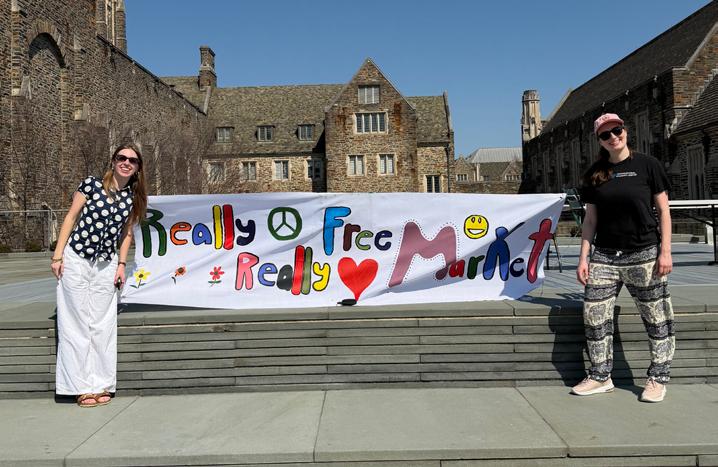
As members of the Kenan Institute for Ethics (KIE) Living Learning Community, a group of us are interested in building a different sort of culture around consumption, waste, and moving out while benefiting both Duke students and our Durham neighbors. This is why we will be hosting the first Kenan Ethics LLC Really Really Free Market, open to Durham residents and the Duke community alike.
What Is a Really Really Free Market?
A Really Really Free Market (RRFM) is exactly what it sounds like: a pop-up gathering where neighbors bring items to share, all for free. It is not a yard sale or place to drop off goods for a thrift store to resell. Rather, it is a local gift economy in miniature. Anyone can lay out clothes, books, furniture, or even food, and anyone can take what they want or what they need. In our society where the logic of making a profit
often feels like it’s supposed to be the sole purpose of life, the thought of having an event where nothing is bought, sold, or even traded is really (really) unusual.
Traditionally, RRFMs are created by grassroots organizations or do-it-yourself efforts. They are participant run, have low logistics, and are typically held at a public park or a common area at a recurring time (often monthly). In North Carolina, groups in Carrboro, Durham, Raleigh, and beyond have run RRFMs for years, each adapting the same basic structure to local needs.
When visiting these local RRFMs for research, we saw there was no stigma attached to the exchanges taking place. All attendees were contributing equally to the event by virtue of being there. The categories of seller and buyer didn’t make sense. Even the categories of giver and receiver broke down, since people participated as both. The interactions we witnessed seemed to have the potential to build trust, empathy, and belonging between members of a community who might not otherwise cross paths. With a band, food, and crafts, it also was fun.
When thinking about move-out and the general cultures of consumption and disposability that are normal on campus (and beyond), we decided we wanted to try out an RRFM and the ethos of mutual aid at its core. RRFMs foreground the values of generosity and connection over profit, and sustainability and awareness over waste and ease. An RRFM offers a living example of how people can meet and be reconstituted as a community through the act
of questioning the normalized practices we live within. As the Kenan Ethics Living Learning Community, we want to experiment with that promise. To participate is an incremental act of creative reimagining toward another way of living.
We’re sensitive to the fact, as Duke students, that move-out is a stressful time of year. To Duke students and parents, we invite you: Rather than leaving our still-good goods behind in trash bins, donation bins, or common areas (inevitably for someone else—invisibly to us—to have to take care of), might it be nicer to offer our goods intentionally to another person? For free? Might it be even nicer to see the material items we accumulate around ourselves bring joy to another person’s day? And might it be even cooler to do so, even if just for a half hour, while enjoying some Locopops (thanks, KIE!) and a student mariachi band?
By hosting an RRFM we hope to make it just a little bit easier to shift from a transaction-based way of relating to goods and people, to a relationship-based ethos.
Please join us at the East Duke Building lawn (on East Campus, 1304 Campus Drive) on Sunday, April 26, from 1 to 3 p.m. Bring what you have, take what you want. Everything and everyone is welcome.
Romit Chunduri, Abby Davis, Raahim Hashmi, Alexandra Himmel, Victoria Pulliam, Rohil Watwe, and faculty director Shannan Hayes are members of the Kenan Institute for Ethics Living Learning Community, a residential community for students interested in living ethically in contemporary society.
April 22, 2026 INDYweek.com 5
Members of the Kenan Institute for Ethics Living Learning Community are launching a free market to reduce waste on Duke’s campus. PHOTO COURTESY OF THE SUBJECTS
The Earth Day Issue
Not So Clear-Cut
The Eno River Association recently succeeded in sparing half of a forested site near West Point on the Eno from development. But the question remains: Why wasn’t Black Meadow Ridge protected to begin with?
BY JUSTIN LAIDLAW jlaidlaw@indyweek.com
Tucked away in a corner of northern Durham, West Point on the Eno has served as a wildlife refuge and recreational hub for decades.
During an idyllic hike through the secluded forest, your wandering eyes might spot an American redstart flying overhead, or a damselfly fluttering across your periphery, or perhaps a redback salamander slinking near the riverbank.
But would you expect to catch a person toweling off through their bathroom window?
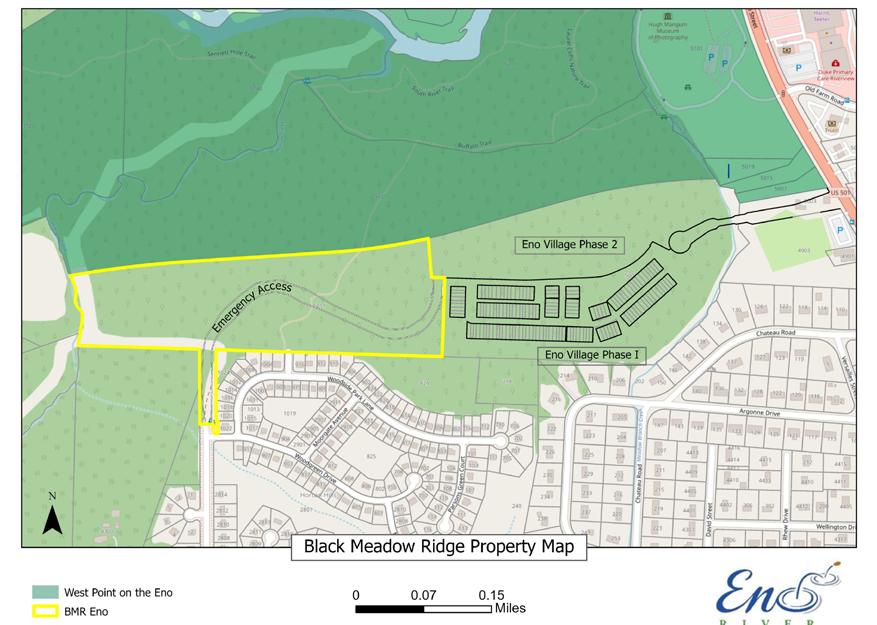
A new large-scale housing development called Eno Village is moving forward just a stone’s throw from the entrance to West Point on the Eno, after three years of back-and-forth between developers, the city of Durham, neighbors, and the Eno River Association (ERA). The site is on 61.5 acres of land known as Black Meadow Ridge, where D.R. Horton, one of the country’s largest home-building firms, plans to build nearly 400 townhomes and apartments. Construc-
tion is permitted on the site thanks to a 1970s-era zoning designation that has remained, despite the city recognizing the ecological significance of Black Meadow Ridge and the surrounding watershed.
Environmentalists advocated to government officials for years to rezone or purchase the site and assimilate the land into the city or state park system, but no deal ever manifested, and in 2023, Durham planning staff approved the plan for Eno Village. While the plans were allowed under existing zoning, residents raised concerns that developing the site would increase runoff and flooding that already occurs in surrounding neighborhoods (notably during Tropical Storm Chantal last year) and disrupt the ecological habitat for wildlife, including some endangered species.
Although the project is moving forward, advocacy efforts were not in vain. The ERA, a land trust and conservation nonprofit, announced in March that it had reached a settle-
ment agreement with the developers to take ownership of and preserve 27 acres of Black Meadow Ridge.
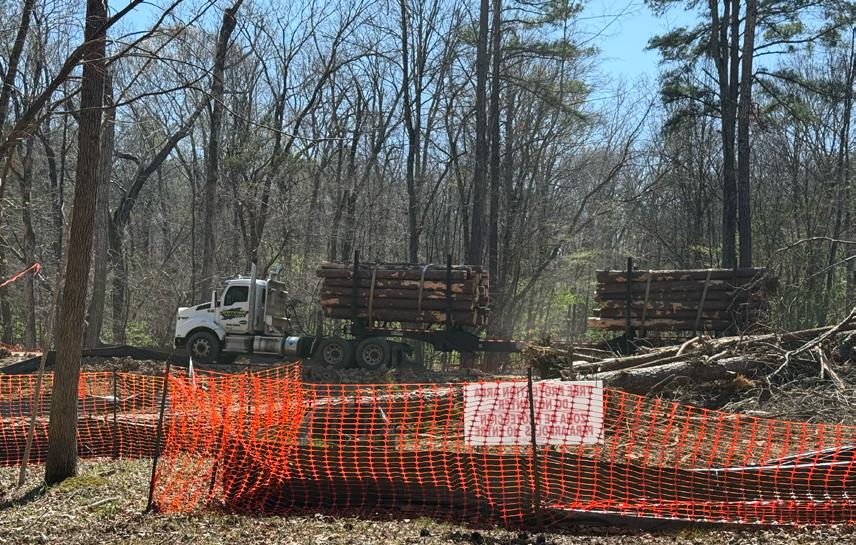
The new Eno Village site plan still proposes 382 units, but the development footprint is much tighter. Acquiring nearly half of the site, which includes the most environmentally sensitive parts of Black Meadow Ridge, is a win, said Ryan Fehrman, the ERA’s executive director, even if it’s still hard to watch hundreds of trees get clear-cut in the process.
“I feel it in the pit of my stomach, and I’m sure the neighbors feel the same way,” Fehrman said.
Not all the neighbors are satisfied with the results.
“There is no place for self-congratulation by those who care about the Eno,” said Jennifer Nygard, a lifelong environmental justice advocate whose mother, Margaret Nygard, founded the organization that became the ERA. “This is still habitat loss and critical watershed loss. So much damage is now taking place, and the degradation of the river will continue once the development is in place. This is a travesty that should have been stopped.”
Fifty years before Eno Village was conceived, developers proposed a nearly identical project in Black Meadow Ridge called Foxmoor, with 412 units of housing that were planned to complement a major thoroughfare being considered in the area by the state. Folks raised concerns that the expressway, called Eno Drive, and the Foxmoor project would encroach on the Eno River watershed and cause harm to the natural ecosystem.
The development plans were met with swift backlash from Margaret Nygard, whose steadfast commitment to preservation earned her the nickname “Mother of the Eno,” as well as famed Durham historian Jean Bradley Anderson. Nygard and a gang of tree huggers had founded the ERA’s predecessor, the Association for the Preservation of the Eno River, Inc., just six years earlier in 1966. At the time, Rachel Carson’s seminal book Silent Spring was sweeping the country, and environmental advocates in Durham were focusing their attention on protecting the Eno, a winding 40-mile river that spans three counties and is a critical water source for the region.
The association formed a partnership with the Nature Conservancy and successfully petitioned the U.S. Department of the Interior to issue the state’s first environmental impact statement, which effectively halted the development of Foxmoor.
Local officials from Durham and Orange counties, representatives from the state government, and members of the ERA and Nature Conservancy worked together to start acquiring property along the river for a state park. Gov. James Holshouser officially welcomed the Eno River State Park into the parks system in June 1973.
Three years later, the city of Durham opened West Point on the Eno to the public. Today, at 404 acres, it is only one-tenth the size of the state park but attracts thousands of visitors a year for hiking, swimming, and activities like kids’ summer camps and the annual Festival for the Eno, the hallmark outdoor music festival celebrating its 60th anniversary later this summer.
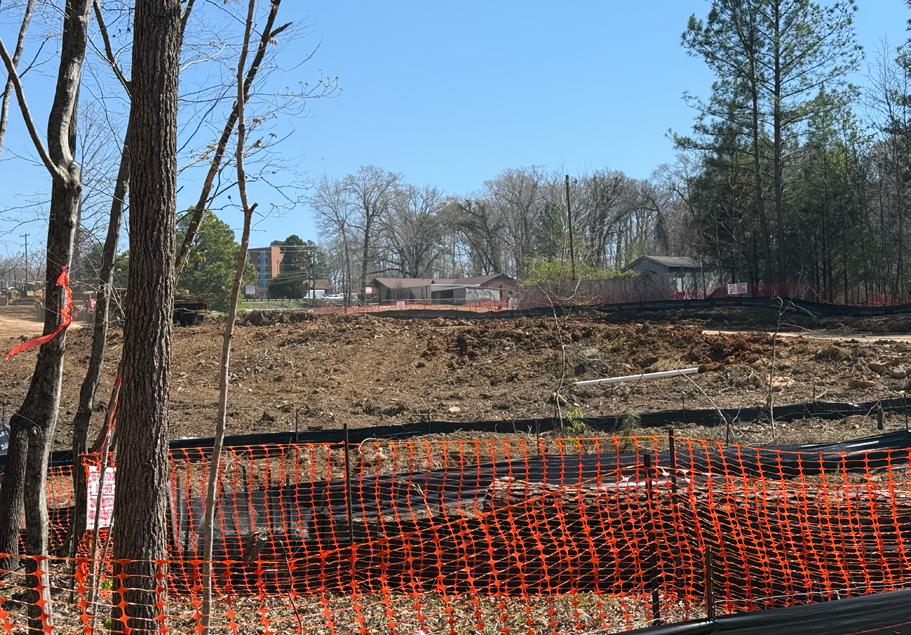
Nearly 400 townhomes and apartments will soon be built in an area known as Black Meadow Ridge near the Eno River and West Point on the Eno PHOTO BY JUSTIN LAIDLAW
The ERA and other community leaders successfully diverted plans for the proposed Eno Drive corridor and protected land around the river. But Black Meadow Ridge remained outside park territory, and the zoning originally permitted in anticipation of Foxmoor—6.2 dwelling units per acre—remains to this day, allowing for the development of Eno Village.
“The huge endeavor to preserve the Eno was made to endure, not to unravel in effect and have but a short 60 year duration,” Jennifer Nygard wrote in a letter to former state Sen. Mike Woodard in 2022 asking once again for the state to intervene. (That same year, Jennifer Nygard helped publish a report on the value of protecting Black Meadow Ridge that relied on her mother Margaret’s copious notes and reflections about the ecological habitats and secluded refuge that the Eno River had to offer.)
The zoning designation survived over 50 years of zoning changes in Durham, 13 mayoral regimes, the merger of the city-county zoning ordinances in 1994, and the growth of the city and state parks systems near the Eno River.
“It was just a thing that people stopped paying attention to, and that’s where the game was lost,” said Chris Dreps, ERA’s director of conservation and stewardship, who has worked in conservation in Durham, including for Ellerbe Creek and the Eno River, for over 20 years. “It seemed to us things were just going quiet, and probably everyone was just hoping this went away, but of course, it didn’t.”
At the turn of the century, interest in the site rekindled. Friends of West Point Park, a Durham environmental advocacy group established by the City Council at the time of the park’s founding, urged local and state officials to pursue acquisition of Black Meadow Ridge, which they felt was the only lever available to protect the site. Longtime advocates for protecting the land say the state parks system and the Black Meadow Ridge property owner went back and forth on a potential sale but could not agree on a price. The state’s budget for land acquisition was limited, and the recession following the 2008 financial crisis tightened it further. The state eventually put the project on hold indefinitely.
“The fundamental problem is that the value of the land was so high,” said Dreps.
To improve the chances of acquiring the property, the Friends of West Point Park pushed Durham officials to consider transferring ownership of West Point on the Eno to the state parks system in tandem with the state acquiring Black Meadow Ridge to increase the amount of total acreage that the state would receive in a deal. Consolidating all the preserved land in the region under one roof would also give the Eno’s preservation more long-term viability.
“The per-acre value was affordable when they’re accepting 460 versus accepting 60 acres at the price they would have had to pay for that 60 acres,” Dreps explained.
During this time, the Durham planning department was reluctant to reduce the allowable building density on the Black Meadow Ridge property so as to not artificially depreciate the value of the land (and appear to be setting up a discount for the state) and Durham leaders were hesitant to relinquish one of the city’s crown jewels in West Point on the Eno. The ERA also made an attempt to acquire
The Earth Day Issue
Black Meadow Ridge but could not raise the requisite funds. Without a clear deal in sight, the state eventually punted on acquiring the property, and the Friends of West Point Park, who were increasingly at odds with Durham leaders on how to proceed with preservation efforts, dissolved.
Following the state’s unsuccessful attempt to acquire Black Meadow Ridge, the city planning department attempted to use what levers it had to influence future uses of the site. In 2012, City Council members voted to change Black Meadow Ridge on the future land use map to “very low density.” But the future land use map, like the comprehensive plan, is a value statement and carries few, if any, enforcement mechanisms; the zoning on the site still did not change. (Durham Planning Director Sara Young told the INDY she did not “have any knowledge or information” as to why the property had not been rezoned since the Foxmoor plan fell apart.)
The Eno River wasn’t the only ecologically sensitive land that Durham and the state had their eyes on. In the early 2000s, the Hollow Rock Master Plan Committee, chaired by concerned neighbor and future county commissioner Wendy Jacobs, mapped out a strategy to acquire property along the New Hope Creek for a public park.
The Triangle Land Conservancy contributed land it owned and purchased additional parcels with grant funding from the state. Neighbors sold their land to the Triangle Land Conservancy for significantly less than market value and raised private funds to help purchase another
tract owned by Duke University. The 82-acre Hollow Rock Nature Park opened to the public in 2016.
But action on Black Meadow Ridge continued to stall out for years. Another concrete plan for the property didn’t materialize until 2021, when Point Ridge LLC began exploring a large-scale development on the site. Neighbors opposed to the project said the site should be prohibited from using a decades-old rezoning change that was established for a different proposal, and that the new Eno Village project should be subject to public hearings and City Council approval.
A team of homeowners in the neighborhoods surrounding Black Meadow Ridge hired an attorney, who filed an appeal to the Board of Adjustment asking its members to “invalidate and reverse in its entirety” a 2016 letter reaffirming the 1972 zoning of the site written by former planning director Steven Medlin to Keith Brown, who owns the Eno Village property and the company developing it (Brown didn’t respond to inquiries from the INDY for this story).
But Medlin’s assessment was upheld by Durham’s current planning director, Young, according to a 2022 letter. In the letter, Young said that the zoning established in 1972 was directly carried over from the county to the city when the jurisdictions’ zoning ordinances were merged and the land was transferred to the city.
“Given that the only stated change in the translation of zoning was the change in jurisdiction, the property’s development plan was not eliminated through the annexation action,” Young wrote.
The Earth Day Issue
Even though the Board of Adjustment appeal was still pending, the planning department approved the Eno Village site plan in December 2023.
Nature parks are appealing because of the isolation from modern society and its trappings. There are no delivery trucks beeping as they back up with plumes of exhaust bursting into the air; no cars with excessively loud stereo systems and those obnoxious mufflers that sound like gunfire; and no hordes of hooligans hootin’ and hollerin’ on their phones, because good luck trying to get a cell signal. That serenity could be in jeopardy for folks who look to parts of the West Point on the Eno for respite, and few have experienced all that the park has to offer quite like Dave Owen, better known as “River Dave.”
Owen met Jennifer Nygard as a high school student at Durham High School (now Durham School of the Arts). She and her friends were how Owen came to understand the Eno preservation cause.
Twenty-four years ago, Owen and his wife built a cabin on half an acre of land near West Point after looking at properties for over a decade. He often walks from his backyard to the park, where he sees an increasing number of deer migrating along the riverbank, hears the occasional coyote howl (a more recent phenomenon) or drops his paddleboat into the water.
“There’s an intimacy I’m able to have that obviously most people can’t have for this particular river because they don’t know how to paddle inflatable kayaks 300 miles and they are not able to find property,” Owen said. “I consider myself lucky and privileged.”
He was an outspoken member of the Friends of West Point Park and one of many voices calling out the importance of
preserving Black Meadow Ridge. Owen remains concerned about the impact of the new development on the park.
“There’s not going to be another place quite like West Point,” Owen said. “It’s kind of the anchor of the whole system. That’s why Black Meadow Ridge is important. Nobody really knows the impact of all those people living up there. They’re going to be in the park day and night, and I can’t blame them for wanting to be up there, because I live on the other side. I can’t deny that to people, if they can do it respectfully.”
Preparations have already begun on the site. Where a forest once stood is now an open expanse devoid of trees and wildlife. Soon, hundreds of residents will occupy Black Meadow Ridge.
In addition to gaining ownership of half the Black Meadow Ridge site, the ERA was able to negotiate additional proffers as part of the settlement agreement.
The latest plans for Eno Village show 240 multifamily apartments and 142 townhomes on roughly 28.5 acres. At least 3% of the units will be affordable to folks at 80% area median income for a minimum of 30 years. The ERA also negotiated a limit on impervious surfaces, one of the primary contributors to runoff and river flooding. Impervious surfaces can’t exceed 16 of the site’s total 34 acres.
Point Ridge has committed to building fencing and historic identification for the Holman Cemetery, an abandoned gravesite connected to the family of formerly enslaved Durham resident Dilsey Holman and her descendants that sits on the edge of the site.
Point Ridge is also donating $20,000 to the ERA “as an endowment for the stewardship and maintenance of the Preservation Tract as undeveloped open space,” according to the settlement agreement.
Eventually, the ERA will likely convey the land to the city of Durham to include as part of West Point on the Eno.
Eno Village is a microcosm of the competing challenges Durham leadership faces. Housing stock still lags behind population growth, increasing the urgency for a larger and more diverse housing portfolio, but that growth can sometimes butt up against Durham’s natural environment. Residents have routinely spoken out at public meetings, urging the City Council to take a stronger stance against what they say are sprawling developments in environmentally sensitive areas, bringing with them vials of “tomato soup,” reddish-brown water filled with sediment runoff from water sources near active construction sites.
“In a basic way, housing is a supply-and-demand thing,” said Fehrman, who previously served as executive director at the Genesis Home, Families Moving Forward, and the North Carolina Coalition to End Homelessness and has a deep understanding of Durham’s housing shortage. “We shouldn’t be building in environmentally sensitive spaces. We shouldn’t be building in floodplains. But people need a place to live, and I don’t think it’s viable for me in this role to oppose any and all development.”
The planning department has worked to prevent sprawling development and encourage density in the urban core through new regulations within the forthcoming rewrite of its land use code. Young told the INDY that city staff, as part of the process of updating the city’s Comprehensive Plan in 2023, “did look at areas that should be preserved due to environmental concerns,” but she noted that after a 2024 change to state law, the city can’t downzone properties without owner consent, “which limits how proactive a local government can be in this regard.”
“Black Meadow Ridge is a big land and it got a lot of attention,” Dreps said. “But there are a lot of smaller, or even not so small, places like that around some of our other parks. And we can avoid this kind of outcome if we invest a little bit more in our parks.”
Many of the neighbors, like Dreps, Jennifer Nygard, and Owen, are conflicted about the state of Black Meadow Ridge. Most agree that acquiring a large chunk of the site for preservation beats the alternative but remain frustrated that more wasn’t done to preserve the land in the five decades that have passed since the initial rezoning that eventually allowed Eno Village and since advocates spared Black Meadow Ridge from the Foxmoor development.
In 2022, Jennifer Nygard told the INDY that her mother predicted that the fight to ensure ongoing protection of the areas around the Eno River would be “never ending.”
“The quality of life of a community can slip away very subtly, little by little, day by day, the deterioration hardly noticed,” Margaret Nygard wrote to the Durham Chamber of Commerce in 1989 as part of her crusade to protect the Eno. “Our task today as Durham grows and prospers is to make sure that these lands are not despoiled and that this area continues to remain ‘The Flower of Carolina.’ The protection of our three main rivers and their surrounding lands is a form of fiscal responsibility.”
The ERA recently reached a settlement with the developers of Eno Village preserving half of a 60-acre site near the Eno River PHOTO BY JUSTIN LAIDLAW
The Earth Day Issue
Big Ideas for the Triangleʼs Climate Future
Local experts and advocates working in environmental fields dream big and share their solutions to pressing climate problems.
BY CHLOE COURTNEY BOHL, CHASE PELLEGRINI DE PAUR, LENA GELLER, KENNEDY THOMASON, AND SARAH WILLETS
backtalk@indyweek.com
As we put together this Earth Day edition, local headlines warned of record high temperatures for this time of year in the week ahead. You’d be forgiven for getting a sense of déjà vu; last year saw central North Carolina’s hottest summer on record. That was, of course, the same summer we experienced historic flooding due to Tropical Storm Chantal. And this past winter saw plenty of ink spilled lamenting a trend of declining snowfall in the Triangle.
Climate change can feel at once inescapable and intangible, a problem too ubiquitous and too abstract to address. But if we have any chance at avoiding the most catastroph-
ic outcomes of a warming planet, we can’t resign ourselves to thinking there is nothing we can do about it.
So we sought out locals who work or advocate in fields that intersect with the environment—from farming to urban planning—and asked them one question: What is your big idea for the Triangle’s climate future? We encouraged these experts to think beyond the confines of the status quo, set aside questions of political and financial will, and allow themselves to dream up solutions to pressing climate problems.
Here we share their big ideas for making the Triangle a more sustainable, resilient, and equitable place.
Big Idea: Set It on Fire
Wake County’s 1.2 million residents collectively produce a staggering 2.3 billion pounds of waste each year. Some of that gets reused or recycled, but most of it goes into the South Wake Landfill in Apex, where it’s smushed into a giant mound and left to decompose very, very slowly.
The sprawling 180-acre landfill is going to be full by 2045 (maybe sooner), and Wake County leaders are actively debating what to do when that happens. They could choose to build a new landfill. But there are a limited number of available sites in fast-growing Wake that offer at least 400 acres sufficiently far from airports, flood zones, water supply watersheds, and historic sites. Or they could opt to haul our waste far away to a bigger, privately owned landfill, like Durham County does. But most regional landfills are expected to fill up around the same time as Wake’s.
John Roberson, Wake County’s solid waste director, thinks we should strongly consider a third option: building a waste-to-energy (WTE) facility to burn our trash and generate power.
“You’re incinerating that trash with modern technology that minimizes the health impact from the burning and, from that process, creating power that you can then put back on the grid,” Roberson explained.
There are only about 66 WTE facilities in the U.S., compared to 542 active landfills. But in other parts of the world—especially places where open space is in short supply, like Japan and Europe—WTE is becoming the norm.
Roberson is aware that “incineration has a bad name, if you will,” because early WTE facilities in the 1970s were basically unregulated and posed serious health and environmental risks. But the technology has advanced by leaps and bounds. Modern WTE plants filter dust, gases, metals, and other pollutants out of the exhaust that leaves the facility and recover recyclable metals from the leftover ash. All told, they produce less local air pollution than greenhouse-gas-emitting landfills. And per Wake County’s calculations, a facility processing 3,000 tons of trash per day could generate 100 megawatts of electricity, enough to power 74,000 homes.
Check out Wake County’s Beyond the South Wake Landfill Study for more information about the landfill and WTE.
Image caption tk PHOTO BY TK
Photos courtesy of the subjects ILLUSTRATIONS BY NICOLE PAJOR MOORE
Big Idea: Healthy Brains
As CEO of Happy Dirt, Sandi Kronick describes herself as the “middlewoman” between farmers and consumers, restaurants, and supermarkets wanting to buy organically grown food. What started in 2004 as a Durham-based wholesale food vendor has since expanded to distribute produce across the continent.
If given unlimited money, Kronick would set out to make food, nutrition, and agriculture part of the basic education for Durham’s youth. Food systems, from production to disposal, are tied to nearly a third of global greenhouse gas emissions, according to the United Nations, which means teaching young people more about where their food comes from and how to eat better is also good for the environment.
Kronick envisions field trips to farms and landfills, a partnership with Durham’s chefs to educate and inspire students, and a program to “ensure that every kid knows that how they feel matters, and that how they feel is partially affected by what they put in their bodies, and that they should be able to make the choices that help them feel great.”
Kronick said she would also start an entrepreneurial program, where students could solve food and nutrition challenges within the school system.
At the end of the school day, parents picking up their children could also grab affordable, healthy, ready-to-go meals.
“We’re all committed to, especially, sending young kids off thriving out into the world,” Kronick said. “And that just means that they know that they can dream, that they know that they have opportunities. And no matter what you’re passionate about, you need a healthy brain. And in order to have a healthy brain, you need to be able to access healthy food.”
The Earth Day Issue
renewable energy commitments. As a result, they committed to achieving carbon neutrality by 2050.
But her action didn’t stop there. Barnett-Loro serves on the Environmental Affairs Board that advises the city and county on anything from watershed protection to environmental education.
A Durham Public Schools and Duke University graduate, Barnett-Loro’s big idea takes on the public school system.
Barnett-Loro said she would focus on four areas: financing energy efficiency retrofits to decrease electricity use; installing solar panels on rooftops so they can serve as “resilience hubs” for the surrounding community in case of a storm; deploying electric school buses; and using solar panel installations and maintenance as a job opportunity and an economic development driver for students.
“These schools are a natural place to start in terms of both having incredible opportunities and infrastructure for implementing clean energy and climate solutions,” Barnett-Loro said. “And then also just really prioritizing students across our community.”
These points are also part of policies that local group A Green New Deal for Durham has proposed, and some of them are already in action. Lyons Farm Elementary School has a 220-kilowatt solar panel system, and Durham is receiving 38 electric school buses,
Barnett-Loro noted. Having a sister who teaches fourth grade has made her think about how public schools and environmental initiatives can interact, she said. It’s a way to capitalize on existing infrastructure to create a better future.
“Obviously Durham’s growing really rapidly, and has been for a while, and that growth presents challenges, but it also prevents a lot of opportunities to identify and layer in climate solutions,” Barnett-Loro said.
health of local residents.
To Ortiz, environmental harm is just as big a threat to Durhamites’ well-being as violent crime or theft, if not more.
“The people stealing our health, stealing our wellness— like, safety is defined to me in that way as well,” Ortiz said.
Ortiz acknowledged that environmental testing takes time. But she alleged that there’s a troubling gap between how quickly authorities act on individual code violations and how quickly they move on industrial ones. Once, when she called the city about a neighbor keeping a rooster in violation of city code, an inspector showed up immediately, notice in hand, Ortiz said. She wants to see that same energy directed at industrial polluters.
“Y’all are creative about fighting roosters,” Ortiz said, “but you’re not creative about fighting businesses that are harming your residents.”
Big Idea: Solarize the Schools
Carina Barnett-Loro, a longtime Durham resident, has spent her career advocating and organizing around climate and clean energy. She joined a campaign pushing the Durham City Council and County Commission to adopt
Big Idea: Green Police
Day to day, Durham resident Aidil Ortiz practices environmental sustainability in small, mindful ways: She keeps her neighborhood’s yard sale map up to date. She maintains her home, a historic structure built in the early 1900s, with repairs that preserve the original materials. She opts for refurbished goods.
“I don’t buy the new iPhone when it comes out,” Ortiz said. “That’s a no-no to me.”
A community organizer, Ortiz also rallies her neighbors to advocate for stronger environmental accountability from local government.
But there’s only so much she can do as one person. Her big idea? Environmental investigators embedded in the police department who go after businesses that harm the
Big Idea: “If You Build It, They Will Come”
UNC-Chapel Hill professor Danielle Spurlock’s work sits at the intersection of environment, equity, and land use. In her “dream world,” these things come together via a regional, multimodal transit system that gets Triangle residents anywhere they need to go without a car.
There are a lot of reasons our current infrastructure isn’t creating this transit utopia, Spurlock noted. Gaps in public transit service and sidewalks can make it difficult to commute to work without a car, much less drop your kids off on the way in or pick up groceries on the way home.
“Sometimes it’s distance,” Spurlock said. “There’s just not a pathway there. There’s timing. There’s ‘Once I get there, if I’m all sweaty, where do I shower?’ Particularly with caregiving parents, whether I’m caring for elders or caring for small children—one, it tends to be very gendered, who takes care of those groups, and then their travel pathways aren’t very conducive to how public transit works. I can’t, you know, stack a lot of trips very easily.”
But big investments in transit typically require demonstrating that ridership exists to support it—based on how people are using transit systems that currently aren’t enticing everyone to (figuratively and literally) get on board.
“If we could build massive, integrated public transit, and didn’t have to worry about ‘Well, is the demand already there?’ We have to often show that there’s demand for it before it gets built, versus if we build it, they will come,” she says. “We’d have better-connected sidewalks, we’d have more public transit. We’d have really great bus shelters. We don’t have to just choose light rail or bus rapid transit.”
The Earth Day Issue
Big Idea: Use What Weʼve Got
Asked to dream big, Lauren Grove , like Spurlock, thought of a regional public transit network connecting Durham, Raleigh, and Chapel Hill.
Even in a hypothetical world with no limits, her mind kept drifting to the constraints. That’s just what happens after years of working in local government, Grove said, with a laugh. As the city of Durham’s “Vision Zero” coordinator, tasked with building a strategy to eliminate all traffic deaths by 2045, her default is one of operating within tight boundaries.
But what Grove had once thought would be a big obstacle to regional transit—building new infrastructure—actually wasn’t one. The bones are already there, she said.
“We already have the major arterials and the state routes to connect the Triangle,” Grove said, pointing to U.S. 70, N.C. 501, and N.C. 54. Since those corridors sit at street level rather than on elevated highways, Grove explained, some of their lanes could easily be reconfigured into dedicated routes for bus or rail service.
The place to potentially invest in new construction would be along those routes; with ample right of way available, the state could line them with tree canopies and wide paths for biking and walking.
Building those paths would require pouring more concrete, which might seem counterintuitive in the name of sustainability, Grove said. But she sees the tradeoff as negligible.
“It’s quite nominal to the offset that you would get with more people walking and biking,” she said. Melissa McCullough, a first-term Chapel Hill Town Council mem-
ber and a former EPA scientist, also proposed making the most of the transit infrastructure we’ve got. On a phone call after a transit meeting, she pitched her big idea: connecting Durham and Chapel Hill via bus rapid transit (BRT) to help residents get around without a car.
“It’s an air quality issue, it’s a climate gasses issue, it’s an equity issue, because it costs about $14,000 a year to own a car. And when you make it possible for people to get to their jobs [even] if they can’t drive a car, then you create the ability for people to have jobs.”
BRT is already underway around the Triangle. The first of four planned corridors in Wake County is under construction. Chapel Hill’s will run down Martin Luther King Boulevard. Durham is in the process of planning routes between Duke and East Durham.
McCullough wants to connect Durham and Chapel Hill via 15-501 (aka Durham-Chapel Hill Boulevard aka the storied Tobacco Road).
“That is our biggest commuting route,” said McCullough. “And the traffic is terrible ... and trying to bike on it or walk is impossible.”
BRT is really just a bus system that is fast and consistent enough for people to rely on it. McCullough said that the environmental impact is obvious: Fewer cars on the road means less emissions. And even if you don’t take the bus, you’d probably appreciate less traffic.
“And it affects quality of life,” said McCullough. “Because if you look at happiness reports, one of people’s most hated things is commuting.”
The Earth Day Issue
We Set Out to Assess Local Governmentsʼ Climate Progress. Hereʼs What We Learned.
We dug into a dozen sustainability and action plans to try to understand what strides local governments have made and the challenges they face.
BY CHLOE COURTNEY BOHL, CHASE PELLEGRINI DE PAUR, JUSTIN LAIDLAW, AND SARAH WILLETS backtalk@indyweek.com
The year 2050, probably because it’s a nice round number, is a landmark year for many local governments that have adopted climate action or sustainability plans in an effort to make their communities greener and fend off the most devastating effects of climate change. If governments follow through on those plans, the Triangle could, in just 24 years, be a beacon of climate progress—with dramatically reduced greenhouse gas emissions, reliable public transit connecting the region, flood- and storm-resistant infrastructure, and a lush tree canopy grown over current urban heat islands.
With this relative utopia in mind, we set out to try to get a sense of whether local governments were on track toward their goals.
We asked 11 local governments around the Triangle— Durham County, Orange County, Wake County, Durham, Chapel Hill, Carrboro, Raleigh, Cary, Apex, Morrisville, and Holly Springs—for their most recent climate or sustainability plan and their latest progress report for that plan. The responses varied widely, with most cities able to produce their plans and slightly fewer providing some form of a status update.
The city of Durham told us our request was “very broad and would take a great deal of time to locate,” though Durham County was able to provide sustainability plans and more recent status updates. Holly Springs sent us its 2023 Sustainability Action Plan, but no corresponding progress report. Cary approved a detailed Sustainability
and Climate Action Strategy in 2025 and tracks its progress on a public-facing dashboard. Raleigh, Wake County, Morrisville, Orange County, Chapel Hill, and Apex also have climate action dashboards.
Most Triangle municipalities have some kind of plan to lower their greenhouse gas emissions, transition to clean energy, and become more resilient to climate change. Some of those plans only pertain to the local government, but Raleigh, Cary, Carrboro, Chapel Hill, and Orange County have community-wide goals. In Durham, there’s a community-wide goal, as well as a shared goal for the city, county, and public school system.
Those goals vary depending on the community and its approach. Experts we interviewed told us there aren’t universal standards for what a local government in North Carolina should include in a sustainability plan. Without those standards, sustainability efforts can largely depend on the values and means of a local government.
While some local governments like Durham (the first in the state to adopt a greenhouse gas reduction plan) have been planning around sustainability goals for 20 years, for many places they’re kind of a nascent effort, said Christopher Lawson, program manager for community and economic development at Central Pines Regional Council, a resource and support hub for local governments.
“Sustainability, environmentalism, the thought around that is changing. The way we view our government’s role ... in these things is changing to be—more recognition that there is a role for local governments,” Lawson said.
Across plans, though, most local governments have a specific goal for reducing greenhouse gas emissions, with
its progWake County, also have of plan to to clean change. Some government, but Orange County commucity, county, community and its aren’t uniNorth CarWithout those depend on the (the first in plan) have years, for Christoand ecoCouncil, a thought around government’s role recognition that said. governments have a emissions, with
The Earth Day Issue
many also staking out plans to achieve 100% renewable energy by 2050.
Some localities have made impressive strides: As of 2025, Carrboro’s emissions are down 20% compared to the 2010 baseline. Orange County reports a decline of more than 40% compared with 2005 levels. Chapel Hill has dropped its emissions by 32% compared to 2005. Raleigh reduced its emissions by 11% from 2014 to 2022. Wake County is 20% of the way to meeting its goal of 100% clean energy. Durham County, meanwhile, has reduced greenhouse gas emissions by 18% since 2009.
Plans for future emission reductions tend to target vehicle trips and energy use in buildings, which make up the bulk of local governments’ emissions. Among the interesting ways they are chipping away at those impacts: Raleigh powers its bus fleet with renewable natural gas created from residents’ wastewater. Morrisville has rooftop solar arrays on five of its buildings.
Tobin Freid, sustainability manager for Durham County, told the INDY that before the county started implementing its climate goals, it found ways to reduce energy consumption at a number of county-owned buildings.
“If you put solar panels on a building where you haven’t done the energy efficiency yet, you’re sort of still wasting energy. You’re just wasting solar energy,” Freid said. But much of what local governments are trying to accomplish via their sustainability plans—reducing community-wide emission reductions, increasing public transit ridership, improving water quality—is actually out of their control, dependent upon the actions of state government, private industries, or residents.
Triangle towns with ambitious climate goals are heavily reliant on the Republican-controlled state legislature and private companies to invest in sustainability initiatives.
“We will not meet our goals without Duke Energy coming along,” Freid said. “We set our goals, both the greenhouse gas goal but more specifically, the renewable energy goal, under the assumption that Duke Energy is going to be following along.”
Carrboro’s Chief Sustainability Officer Amy Armbruster said Carrboro was “disappointed” by the legislature’s decision last year to eliminate a requirement that utility companies reduce carbon pollution by 2030, especially as it “made our own goals
a lot harder to achieve.”
As we reported last year, Carrboro recently tried to sue Duke Energy, arguing that the company misled the public by downplaying the impact of burning fossil fuels. In February, a judge dismissed the case.
Some plans (like Cary’s) are town-wide, which means the government can’t achieve them unilaterally; people and businesses need to get on board. Cary is encouraging residents to consider adding solar panels to their homes or purchasing an electric vehicle—or, if those options are out of reach, to plant a tree, experiment with composting, or try riding the (fare-free) GoCary bus.
Cary’s goal, said energy manager Sara Caliendo, is near-zero, not zero, because “it’s better to be realistic than to set unrealistic goals and fail.” The town operates three wastewater reclamation facilities, for instance, which consume a lot of power and realistically won’t be running on fully renewable energy anytime soon.
Armbruster told the INDY that Carrboro has focused specifically on reaching out to low-income communities and communities of color, which “are both most vulnerable to climate impacts—things like high heat or flooding—but also may have the least resources,” about updating their homes to be more climate resilient and energy efficient. Armbruster pointed out that updates can help people save money on energy and repair costs.
University of North Carolina at Chapel Hill professor Danielle Spurlock, whose work focuses on environmental planning and policy implementation, thinks that policymakers could focus more on accounting for and changing human behavior.
“I would love to see us be able to build more of our policies taking into account all that we know about human behavior and how we can shift that behavior,” Spurlock said. “Because sometimes we hope that, well, if we build it, they’ll come. But we haven’t really built it well enough that it can alter behavior.”
Spurlock said in order for local sustainability plans to be successful, they also need to address affordable housing—which some Triangle plans do to varying extents. But without housing set aside for people who earn well below the area median income, “a huge chunk of people who are vital to what makes our cities great places to live” get pushed out to more affordable areas where they have no choice but to rely on a car, increasing emissions.
“People talk about sustainability, and they’ll talk about the environment, they’ll talk about economics, but if you don’t talk about equity, you’re actually not talking about sustainability,” Spurlock said. “It’s the question that many community residents bring up: ‘Affordable for whom?’ And so I think that is where I really want us to sit down in the Triangle and think hard about who bears the burden. Who gets the benefits for each of these sustainability initiatives that we’re pushing forward?”
While sustainability plans typically focus on one jurisdiction, the issues they contend with—like water pollution and regional transit—cross boundaries. We did find examples of cross-jurisdiction collaboration in the reports we reviewed. For example, the city of Durham, Durham County, and Durham Public Schools are collaborating on a solar farm to help power facilities with renewable energy and, in turn, reduce emissions.
“That is only possible because we work together,” Freid said. “None of us independently would have had enough demand that would make financial sense for a developer to build a solar farm on our behalf, but collectively, we could.”
Developing sustainability goals, implementing plans, and monitoring progress are huge tasks that demand more resources and more collaboration across the entire Triangle, Spurlock said. Local governments need to work together on shared goals, strategies to help communities with fewer means to accomplish them, and steps to take when goals aren’t met. Central Pines Regional Council has helped spearhead efforts to bring local governments together for regional sustainability planning.
“We have a very fragmented system, even as we require a really integrated coalition to meet these goals,” Spurlock said.
There’s an adage that the best time to plant a tree was 20 years ago, but the second-best time is today. That held true in our research—while Triangle city and county governments are now undertaking a lot of initiatives to be greener, it’s not always easy to see the progress. In some cases, that’s because it’s buried in dense reports or departmental presentations. But it could also be decades before the results of these efforts are apparent. Transit projects take years to plan, let alone build. Public works facilities can’t be transitioned to renewable energy sources overnight. Trees planted today won’t provide shade until ... perhaps 2050.
The Earth Day Issue
Green Thumbs
Looking to reduce your environmental impact? Let these locals who are taking steps to be sustainable in their own lives—and build a greener world—inspire you.
BY JUSTIN LAIDLAW, KENNEDY THOMASON, AND JASMINE GALLUP backtalk@indyweek.com
About a year ago, the layoffs from federal funding cuts began to hit the Triangle. The Trump administration’s disinvestment in science and environmental protections, including the dismantling of a significant Environmental Protection Agency office in Research Triangle Park, has been staggering. Against this backdrop, you might be thinking about what steps you can personally take to reduce harm to the environment. Maybe you ride a bike for exercise but are intimidated by bicycle commuting. Perhaps you have plateaued in your efforts to reduce how much you’re buying that comes neatly packaged in seemingly unavoidable plastic.
Or maybe you’d like to be less reliant on Big Energy and more in sync with nature but aren’t sure where to start.
Not everyone has the luxury of going without a car by choice, or seeking out a grocery store that lets you bring your own refillable containers. But for readers looking to reduce their environmental impact in their everyday lives, we wanted to get insight from locals who have done it: What prompted them to make these commitments to sustainability? And how, exactly, do they live out their values day-to-day?
There are so many people in the Triangle making strides to reduce their own environmental impacts and build a
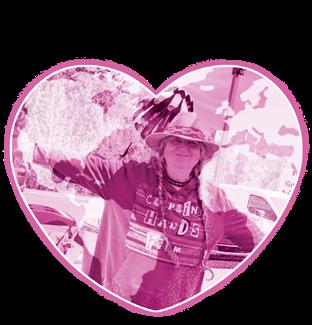
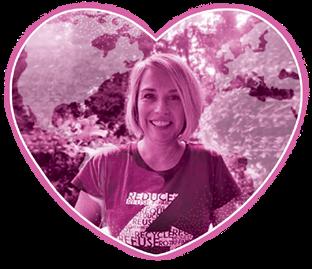
greener world. Here, you’ll find profiles of three of them: Marc Maximov, who has navigated the Bull City without a car for 20-plus years while advocating for bicycle-friendly policies and infrastructure as a Bike Durham board member; Louise Omoto Kessel, an artist, storyteller, and veteran of off-grid living helping people of all ages experience the benefits of a life closer to nature at Clapping Hands Farm in Pittsboro; and Kathleen Liebowitz, executive director of Cary-based Toward Zero Waste, who’s leading efforts to reduce waste in her own household and across Wake County.
Photos courtesy of the subjects ILLUSTRATIONS BY NICOLE PAJOR MOORE
Setting Out on Two Wheels
Longtime cyclist and Bike Durham board member Marc Maximov shares his roadmap for embracing life without a car.
When Marc Maximov set out on his first bike ride as a commuter in Brooklyn in 1999, he was nervous about the traffic conditions.
“I thought I was gonna die,” Maximov said. “I was like, ‘How can anyone do this? There are speeding cars right next to me.’”
Maximov—now a Durham resident and a board member of Bike Durham, a local transportation nonprofit and advocacy group—grew up in the sprawling suburbs of Tucson, Arizona, where everyone drove. When he started a new job in 1999, a friend convinced him that biking 10 miles to Queens would be faster than the subway. A lifelong fitness freak, Maximov saw an opportunity to not only cut down on his emissions and commute time but also maintain his health. His first trip out—riding his TREK brand 7800 silver commuter—was filled with close calls, but Maximov soon discovered a new world, one that any two wheels could take him to.
In major metropolitan areas, robust public transit has long made car ownership optional. In most of the United States, though, car is king. Cars aren’t just a means of transportation—they are status symbols that signify wealth and desirability. Alongside this American dream, though, is the reality that vehicles are one of the planet’s most potent pollutants, emitting millions of metric tons of greenhouse gases into the atmosphere every day.
“One of the main reasons that I became a bicyclist is [that] I do care about our carbon emissions,” Maximov said. “I feel like everyone has a responsibility to do whatever is within their power to help that.”
When Maximov moved to Durham in 2006, even the South’s lackluster public transportation didn’t tempt him to buy a car. Instead, he built his new life here around biking. He commuted 15 minutes to and from his job at Duke University, taking quieter back streets for their pleasant tempo and lower likelihood of encountering “four-ton murder machines”—though he also has no fear of traffic, should he need a more direct route.
Maximov travels with a messenger bag across his chest made out of rubber from post-consumer bike tubes and a strap made from an augmented seat belt. It’s filled with
The Earth Day Issue
practical things: a front light, bungee cords, shopping bags, metal chopsticks, chargers, and his laptop. In cold weather, he rocks a weather-resistant REI jacket, and in hotter months, embraces the sweat.
When it’s time to stock the fridge, Maximov fills up his shopping bags and hangs them from his bike handlebars. Sure, a simple set of pannier bags attached to his bike frame would lighten the load, but he’s comfortable with his method. And should he need a car for an out-of-town trip, he has no qualms about borrowing or renting one.
“I can buy all the groceries I would ever need,” Maximov said. “I don’t go to Costco and buy truckloads of groceries. I shop a little more frequently than most people. Is that a problem? That’s how they do it in France, and they’re not suffering.”
Car ownership can be a major financial burden for many individuals and families. Researchers estimate the average cost—from car payments and gas to insurance and repairs— at north of $10,000 a year and growing.
“So many people that would benefit, especially at the bottom of the income distribution,” said Maximov of his 40 years of savings from not having a car, “but even in the middle, like, who doesn’t want to save $10,000 a year?”
Saving on health-care costs, while a slightly more amorphous metric, is another coin in the piggy bank for bikers like Maximov. He gets his daily dose of recommended exercise (and then some) by commuting to and from work or traveling on the network of trails and bike paths like the American Tobacco Trail and White Oak Creek Greenway that connect Durham to the rest of the Triangle.
“When you get in a car and go somewhere, your body’s just sitting there limply, moving your foot a little bit and your hands a little bit,” Maximov said. “And that’s the way to get super frustrated. Whereas the bike is always a release. You’re always feeling better.”
In 2019, Maximov joined the board of Bike Durham, leveraging his lifestyle into a broader call to action (the author served on the Bike Durham board, too, from 2021 to 2023). Maximov understands that not everyone has the ability to adopt the full-time bike commuter lifestyle— especially people who have children or live farther from the downtown core—but he said that living in a small city without a car is not the insurmountable feat most people expect. He encourages folks to plan incremental trips to nearby places, like the grocery store or a friend’s house, and slowly build up to a bike commuting way of life.
When Maximov tries to convert others to the lifestyle, safety is most people’s primary concern. The city of Durham has made strides toward improving bike infrastructure compared to when Maximov moved down in 2006, but there are still significant gaps in bike lanes and trail networks that make commuting for many Durham residents untenable.
“I can’t argue with that. I was terrified the first time,” Maximov said. “A few years later, I saw the benefits, but you can’t blame anybody for being scared. Durham is so bikeable. People who are scared should be considered in our city design.”
Maximov believes Durham leaders should stop investing in parking garages that cost millions and instead invest in
fully connecting the city’s bike infrastructure network. “No one likes cars except the one that you’re in,” Maximov said. “If we got rid of all of them, we’d all be so much better off. So that’s an impossible dream that I think, 100 years from now, maybe is achievable. We might as well move along that road.” —JL
Lessons from an Off-Grid Lifestyle
As the director for an off-grid camp, artist and storyteller Louise Omoto Kessel finds “the more you delight in and experience just being outside, things happen.”
Three-quarters of a mile back from a paved Pittsboro road, Clapping Hands Farm sits at the end of a long driveway, past old chicken coops and a pond.
The farm doesn’t use public utilities—there is electricity powered by solar panels on-site but no running water, air conditioning, or refrigeration. It also operates as a camp, allowing visitors of all ages to explore nature and art with programmed events. Camp director Louise Omoto Kessel used to live on the farm, where she fully embraced the off-grid lifestyle.
When Kessel first moved to the farm, she lived with her husband, Holmes, in the only finished building on the property, a tiny cabin. Although Kessel can’t remember the exact dimensions, in her memories, it’s about 12 feet by 12 feet with a loft, where the couple slept. Kessel said Holmes used to joke that the cabin was three stories because it also had a root cellar.
In the farm’s early days, Kessel said she fetched water with a long, cylindrical bucket that she would drop down a well. Then the pair pumped well water with a hand pump, extracting the water for themselves and their two horses. Holmes had a commercial farmers market garden at the time, Kessel said, and they would sometimes have to pump water for the plants, too.
After a while, Kessel said they started collecting rainwater in big tanks to use for irrigation.
“We liked the fact that you sort of had to go outside to take care of basic things, like going to the bathroom,” Kessel said. “You had to encounter the weather and the season, and I just love that. You were clear about what was
happening outside, because if it had been cloudy or rainy for days, you might run out of power. We had a tiny little system for light. If it was cold, you built a fire.”
Kessel was a full-time storyteller when she moved to the farm. A year into living there, she took on a new venture and opened the Clapping Hands Farm camp.
“Part of my feeling when I moved out there was ‘This would be an amazing place to have a camp,’” Kessel said. “I wasn’t wrong.”
The camp began in 2000 with Kessel inviting a few of her friends’ kids out to the farm and has since expanded to a year-round operation. Clapping Hands Farm offers seven summer camps, a spring break camp, and programming days throughout the year. It’s the kind of place where shoes are optional and tree climbing is encouraged.
Kessel said the farm is an inclusive community, where she wants people to feel free to be themselves. Fostering creativity and allowing visitors to learn about nature are also important parts of the farm’s objectives, she said.
“I think the outdoor environment is very supportive of all of the things that we’re trying to do,” Kessel said.
The camp has working artists, craftspeople, and naturalists run programs, which range from ukulele classes to writing and performing a musical. Camps and retreats are offered for children, families, and adults, giving them the chance to unplug.
Although Kessel and her family have moved back on the grid to a house across the street from the farm, Kessel said she prefers her former lifestyle.
“I guess it’s a combination,” Kessel said. “It’s equal parts just wanting to have a lower impact on the planet and just enjoying the connection with the natural world.”
To make a change in everyday life, Kessel said people can limit trips in gas-powered cars and start composting.
She still has some remnants of her life on the farm in her current house, with solar panels powering some of their energy usage. Kessel said Holmes, who drives an electric car and has tried to stop buying any plastic, takes more extreme measures to continue to live sustainably.
When Holmes moved his mother to North Carolina from Austin, Texas, he rode his bike to Greensboro, hopped on a train to New Orleans, rode his bike to a hostel, got on another train to San Antonio, then rode his bike to Austin—all to mitigate emissions from the trip.
Both Kessel’s and Holmes’ commitment to living a sustainable life has fueled the farm’s mission, encouraging the same from their visitors.
The farm’s off-the-grid lifestyle and emphasis on nature allow visitors “to just sort of strip away things” and simplify life. It’s one of the many things that make the camp attractive, Kessel said.
“It seems to me that the more you delight in and experience just being outside, things happen,” Kessel said. “A snake will appear, a butterfly will land on you. Things happen. People are more connected, and then they learn things.” —KT
The Earth Day Issue
Waste Not, Want Not
For mom and Toward Zero Waste Director Kathleen Liebowitz, reducing household waste is about making practical changes at home and systemic changes in the community.
Ten years ago, when Kathleen Liebowitz was in her mid40s with two children in elementary school, she decided to downsize from her single-family home to a condo roughly half its size in Raleigh.
By all accounts, she’d achieved the American Dream: She was a married mother of two and a homeowner and could afford a lot of luxuries. But when Liebowitz looked around at her life, “there was just no meaning in all this excessiveness,” she said.
“I just said, ‘We’re making changes,’” Liebowitz recalled. “Within the next three years, we sold our house and downsized to a much smaller condo ... and we just really changed a lot of how we did things.”
Liebowitz—now executive director of North Carolina nonprofit Toward Zero Waste (TZW)—got rid of more than half the stuff in her house. It turned out to be a relief.
“I never missed any of it,” Liebowitz said. “So now, getting rid of stuff doesn’t scare me at all. I don’t feel I’m gonna miss out on something.”
Liebowitz’s blueprint for her family’s new life was Bea Johnson’s 2013 book Zero Waste Home, which describes how the author’s family of four reduced their waste to fit into one jar. Liebowitz hasn’t quite reached that milestone, but at one point she was able to cut down her family’s waste to about 6 pounds per month.
That’s a huge accomplishment given that the average Wake County resident produces about 5.3 pounds of waste per day. For a family of four, per month, that adds up to more than 100 times the waste Liebowitz’s family produced.
According to the Environmental Protection Agency, avoiding purchasing new items, avoiding packaging, and reusing what you can helps save energy, reduce greenhouse gas emissions, and preserve the natural world. It also reduces the amount of trash sent to landfills. Wake County’s only active landfill is expected to be full by 2045, possibly sooner.
But since the “trash jar” fad took over social media in the 2010s, environmental activists have pointed out (fairly) that fitting all your trash in a jar is an unrealistic goal, requiring the kind of time, money, and privilege that many people don’t have.
Liebowitz likewise recognizes that some of the changes she’s made aren’t possible for everyone—one of the first things visitors see upon navigating to the TZW website is the statement that being zero waste “isn’t about fitting all your trash in a jar.”
While the nonprofit started as a local community movement to help people reduce their personal waste, Liebowitz said the organization is now more focused on partnering with businesses, schools, and governments to create more widespread change.
In 2025, TZW kept 475,000 polystyrene lunch trays out of the Wake County landfill by working with nine Wake County schools to use compostable fiber trays instead.
The nonprofit also saved 199,000 food items from landfills through its food recovery program last year. Instead of throwing away unwanted or unopened food items, students donated them to a central pantry, where other students could pick them up. The program is now running in 27 Wake elementary and middle schools, according to TZW.
Liebowitz said composting was one of the biggest factors in reducing her personal waste. About 37 percent of the waste that goes into the South Wake Landfill is compostable, she said, referencing Wake County’s landfill study. Today, Leibowitz has joined forces with her neighbors to collect food scraps and hand them off to a compost collection service, The ReCollective. Between the five of them, they each pay about $10 per month, Liebowitz said. It’s a good option for eco-minded people who live in apartments or condos like Liebowitz, but it is an extra expense. Still, composting is “the absolute easiest thing to reduce your waste,” she said.
Wake County offers backyard compost bins at a discount each May, but if you don’t have a backyard, you can also drop your compost off for free at different locations in Wake and Durham counties. TZW has also worked to create additional drop-off points in Cary and at the Midtown Farmers’ Market.
Liebowitz has also stopped using disposable products that are staples in many homes, like paper towels. For toiletries and cleaning supplies, she visits refillable stores, where she can get the necessities without buying new plastic containers. The same holds true for certain food items, like tea, coffee, pasta, grains, and spices. In Cary, there’s the Mindful Merchant, while in Durham you could visit Fillaree or Part and Parcel.
“I’ve been using the same containers for more than 10 years,” Liebowitz said.
Old clothes get patched or donated to secondhand stores, while broken electronics go to Anything with a Plug Recycling. And on a daily basis, Liebowitz avoids buying new things. The last major purchase her family made was a TV, she said, when their old one literally caught fire. Avoiding plastic food packaging has been the hardest to manage, Liebowitz said. She encourages people interested in reducing their waste to “just find one little thing and see if you can change that behavior.”
“It might take you six months,” she said. “And if you fail it in a little while, give it a try again. I’ve been doing a lot of this for 12 years, and there are still some times I buy stuff that probably is not earth-friendly. But OK, I’ll do better next time.” —JG
The Earth Day Issue
Spring Forward
As it enters another busy season, Raleigh City Farm celebrates fifteen years of regenerative urban farming and giving back to the community.
BY ELLIOTT HARRELL food@indyweek.com
“Arugula!” a woman shouts, browsing the available produce at Raleigh City Farm’s seasonal weekly farmstand, a big smile on her face.
I chuckle with shared delight over her joy in the leafy green. Arugula isn’t necessarily always a hot commodity, says Lisa Grele Barrie, executive director for the nonprofit farm. But this was the first farmstand of the season and, as such, certain vegetables were going quickly.
“We’re just starting to ramp up our veg, and we harvested just 190 pounds of food today,” she explained. “But in the summer, I think the most we’ve harvested is 1,500 pounds in a week.”
Raleigh City Farm sits on a 1.3-acre corner lot near down-
town Raleigh—a vibrant pocket of urban green, sandwiched between Blount Street on one side and a popular neighborhood shopping center, which houses the likes of Yellowdog Bakery and Standard Beer and Food, on the other.
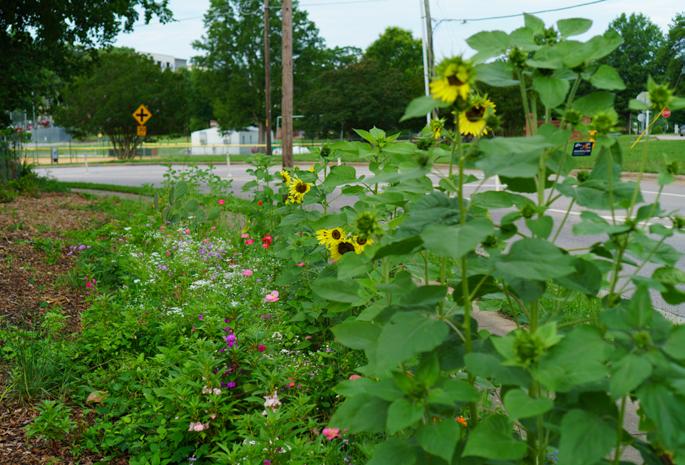
Over the course of the next few months, the farm will produce everything from strawberries and mulberries to gorgeous wildflowers and vegetables like kale, arugula, eggplant, tomatoes, and peppers. Just over half of this produce will be sold during the Wednesday “pay what you can” farmstands that run from April to October.
The rest of the approximately 10,000 pounds of food grown each year will be distributed to community partners focused on food insecurity around Raleigh, like A Place at
the Table, Feed the Pack, and Carolina Cares.
Raleigh City Farm started with a vacant lot in 2011. Grele Barrie said farm cofounders Laura Fieselman and Laurel Varnado Passera first started “noodling” on the idea in 2010, before pulling in three other friends—Josh Whiton, Erin Bergstrom, and Jonathan Morgan—to help. By the following year, the team had secured the land the farm is on now and raised $25,000 from the community with various fundraisers and a Kickstarter campaign. It was enough to get growing.
At this point in the story, Grele Barrie pauses to greet a farmstand regular by name; over the course of our conversation, she greets every customer by name and seems genuinely excited to see them. It’s clear she’s the unofficial mayor of the farm, as well as its executive director, and someone who makes it her business to get to know everyone in the community.
“Before 2020, our business model was about supporting farmers and incubating farmers, and different ones had a different piece of the property,” she continued. One farmer, for instance, ran a community-supported agriculture (CSA) subscription business, another grew hydroponic lettuce, and another sold food to restaurants.
The site began to “fall apart,” she said, so farm leadership
Raleigh City Farm in 2020 PHOTO COURTESY RALEIGH CITY FARM
decided to make a pivotal change during the pandemic, hiring its first farm manager to take control over the produce and production schedule. The nonprofit farm then evolved into its current iteration, working to meet food insecurity needs around the city.
“Our programming began to evolve to this hybrid distribution of giving away food all year long and finding partners,” said Grele Barrie. “Our mission became one to connect and nourish our community through regenerative agriculture. It really took root, and from 2020 to 2026 we’ve grown quite exponentially.”
Raleigh City Farm maintains a small staff, but much of the work is handled by farmer interns and volunteers. The intern “wall of fame” on a shed commemorates the roughly 50 hopeful farmers who have
The Earth Day Issue
been through the intensive semester-long teaching program.
Through the course of the year, Grele Barrie estimates that nearly 3,000 volunteers will help with the farm’s upkeep.
One of the most popular volunteer programs on Wednesdays, called Wine and Weeds, involves volunteers pulling weeds while socializing. It’s often booked weeks in advance.
“Caring for the site is a labor of love and connection,” she said.
On April 25, the farm will commemorate its 15th “bearthday,” a combo celebration of Earth Day and birthday, with a free community event.
But there’s also another reason to celebrate. In November last year, the farm announced that it is growing, through a
partnership with the city of Raleigh, and putting down roots at Marsh Creek Park for a second farm.
“It’s our next iteration and extension of the farm,” said Grele Barrie, adding that the current location’s lease is up for renewal in 2029. While it’s unclear what might happen to the site then, this expansion will allow the farm’s mission to continue if the lease isn’t renewed.
“We’re looking at the future and seeing how we put down roots before we are uprooted,” she said.
If you need to touch grass (and honestly, don’t we all?), swinging by Raleigh City Farm, whether to shop at the farmstand, pick weeds, or just wander, is an accessible way to do so without even leaving the downtown Raleigh orbit.
Clockwise from top left: roadside flowers at Raleigh City Farm PHOTO COURTESY RALEIGH CITY FARM; the farmstand PHOTO COURTESY RALEIGH CITY FARM; Executive Director Lisa Grele Barrie greets visitors to
Raleigh, and Creek Park extension of adding that for renewwhat might expansion will continue if the and seebefore we are (and honestRaleigh City farmstand, accessible the down-
ORANGE & CHATHAM
The often-imitated but never duplicated Best of the Triangle awards are back. For two decades, readers have relied on the INDY ’s Best of the Triangle readers’ poll to help them navigate important decisions about how to spend their time, where they spend their money, and—perhaps most importantly—what to eat and drink.
Here we’re sharing the winners in Orange and Chatham counties—a who’s who of the area’s best restaurants, pet care businesses, shops, recreational activities, and more. Whether you’re trying to find the best wings, a new dentist, your next art gallery visit, or a local cause you can get behind, we’ve got you covered with our readers’ top picks. We hope you’ll take a look and check out some of the places, people, and activities that make the community unique.
In the meantime, thank you to our readers for nominating your favorites—we couldn’t pull off Best of the Triangle without you! And congratulations to all of the finalists in Orange and Chatham, who will receive our coveted star decal and a poster to display.
Stay tuned for Durham and Wake county winners throughout the year and, in December, a special print edition rounding up the best of the best across the Triangle.
ORANGE & CHATHAM
ARTS
BEST ART GALLERY FOR PURCHASE
My Muses Card Shop & Muse Art Gallery
Runners-up: WomanCraft Gifts, FRANK Gallery
BEST ART GALLERY FOR VIEWING
My Muses Card Shop & Muse Art Gallery
Runners-up: FRANK Gallery, Lapin Bleu
BEST COMEDY CLUB/EVENT
The ArtsCenter/Once Upon A Time In Carrboro
Runners-up: Black Sheep Comedy, Yonder -- Josh Rosenstein
BEST DRAG SHOW / EVENT
Franny Starlight
Runners-up: Speakeasy Queer Cabaret, Pittsboro Pride: Drag Show & Dance Party
BEST ELECTRONIC CONCERT VENUE
Cat's Cradle
Runners-up: MOSAIC at Chatham Park, Local 506
BEST FILM THEATRE VENUE/ EVENT
Chelsea Theater
Runners-up: Silverspot, The Lumina Theater
BEST LIVE THEATRE COMPANY
Playmakers
Runners-up: The ArtsCenter, Stone Soup Theatre Company
BEST LOCAL/REGIONAL PODCAST
Wize Woman STORIES by Delia Quigley
Runners-up: Hometown Holler, The Whammy Douglas Radio Hour
BEST LOCAL BAND
Watchhouse
Runners-up: Tan and Sober Gentlemen, Bill Moore and His Secret Admirers
BEST MUSEUM
The Ackland
Runners-up: My Muses Card Shop & Muse Art Gallery, Orange County Historical Museum
Runners-up: MEDSPA 501, Monarch Brow & Facial Studio
BEST WOMEN’S HEALTH PRACTICE
Chapel Hill OBGYN
Runners-up: For Women, UNC Midwives
BEST YOGA STUDIO
Franklin Street Yoga
Runners-up: Loving Kindness Yoga School, YogaSix Chapel Hill
Orange County Sportsplex
Runners-up: FIT Carrboro, O2 Fitness
BEST MASSAGE THERAPIST
Runners-up: Kathryn Kager - Massage and Bodywork, Jeff Wells - Wellsport
Runners-up: Carrboro Pediatrics & Internal Medicine, Avance Care Pediatrics
Thank you to my clients who took the time to vote for me and trust me to help them live their best lives. Grateful to represent Orange and Chatham Counties for a seventh year. This fall, cast your final “Best of the Triangle” vote for me.
AKAI HANA
PEOPLE & MISC. ORANGE & CHATHAM
BEST LOCAL ACTIVIST GROUP
Siembra, NC
Runners-up: Friends of Bolin Creek, Chatham County Democrats
BEST LOCAL CAUSE / NONPROFIT IMPACT AWARD
Beautiful Together Animal Sanctuary
Runners-up: Carrboro In Motion, B3
BEST MIXOLOGIST
Zach White (Belltree)
Runners-up: William Clark (Atlas), Addie Campbell (Atlas)
BEST USE OF PUBLIC MONEY
Orange County Public Library
Runners-up: Chapel Hill Public Library, WCOM (Carrboro)
WORST WASTE OF MONEY
Anything supporting ICE
Runners-up: Changing the UNC logo, Closing Weaver Street in Carrboro studies
Best Local Activist Group: Siembra, NC PHOTO BY ANGELICA EDWARDS, 2025
PLACES
BEST ALCOHOL-FREE VENUE
Occoneechee Mountain State Natural Area
Runners up: Cat Tales Cat Cafe, Chapel Hill Public Library
BEST ARBORETUM OR GARDEN
North Carolina Botanical Gardens
Runners-up: American Indian Cultural Garden at UNC, Coker Arboretum
BEST CAMP
Carolina Friends School Summer Programs
Runners-up: Camp Chestnut Ridge, The ArtsCenter
BEST DOG PARK
Gold Park
Runners-up: Southern Community Dog Park, Homestead Dog Park
BEST GOLF COURSE
UNC Finley Golf Course
Runners-up: Occoneechee Golf Club, Cedar Grove Gold Course
BEST HOTEL
Carolina Inn
Runners-up: Fearrington Inn, The Colonial Inn
BEST HOTEL LOUNGE
Carolina Inn
Runners-up: The Colonial Inn, The Graduate by Hilton
BEST PLACE TO PEOPLE WATCH
Weaver Street Market (Carrboro)
Runners-up: The Plant, Carrboro Farmers' Market
BEST WEDDING / EVENT VENUE
The Parlour at Manns Chapel
Runners-up: Coco Bistro, North Carolina Botanical Garden
AN INDY SERIES ABOUT FAMILIAR FACES AROUND THE TRIANGLE— AND THE STORIES YOU MAY NOT KNOW ABOUT THEM
Josh Morin, the Guy Who Runs While Punching a Ball
Morin and his unconventional workout routine have become a fixture in Durham, where he takes therapeutic daily runs.
BY STORMS REBACK
backtalk@indyweek.com
I f you frequently drive through downtown Durham or run around Duke University’s East Campus, you know who Josh Morin is. He’s that guy who runs while punching a ball that’s attached to his head by an elastic string, and the first thing he wants you to know about him is that he’s not crazy or hostile.
Morin feels compelled to say this because upon seeing his routine for the first time, many people react negatively to it. They’ll yell at him from across the street or cuss at him from the open windows of a passing car.
“They’re just insecure,” he said, musing on the source of the animosity. “Or they don’t how to process it. Or they feel like I’m some kind of threat.”
The idea that someone might be intimidated by him made Morin laugh. “I’m 130 pounds,” he said. “My girl-
friend’s dog is only 10 pounds less than me.”
Several years before COVID, Instagram’s algorithm took note of Morin’s fondness for Ultimate Fighting Championship videos and began steering him toward ads for reflex balls, which help boxers improve their hand-eye coordination and accuracy. But the reflex balls advertised on social media tend to be overpriced and gimmicky, including unnecessary extras such as a computer chip that counts the number of times a ball’s been hit. Morin buys his on Amazon, where you can get four balls and a headband for less than $15. No matter their price, all the reflex balls Morin has tried share a similar defect—the string that attaches the ball to the headband is so weak it quickly snaps. His girlfriend solved the problem when she found some stronger string online, which Morin uses to replace the “wimpy” string the
Josh Morin PHOTO BY CHASE COFIELD
balls come with. After hundreds of punches, the string tends to carve a hole in the ball’s Nerf-like material. Upon seeing Morin’s “go-to” red ball worn down this way, his girlfriend joked, “Oh, you’re making clown noses.”
Morin’s initial public appearances with a reflex ball took place at the YMCA at American Tobacco Campus. He’d pull one out whenever the heavy punching bag he wanted to use was unavailable. Running with a ball was a logical, if not completely smooth, next step. He recalled several spectacular wipeouts but happily reported he’s only lost a ball one time. After his string snapped at Duke and Main streets, he watched helplessly as his ball rolled through the intersection and down a storm drain.
Morin occasionally leaves his ball at home when he runs, but it’s rare. “It’s weird running without it,” he said. “It doesn’t make that much sense to me because it’s more of a workout to do both.”
He usually runs every day, regardless of the weather, calling it “an itch I need to scratch.” How long he runs depends on which playlist he chooses. The ones he’s made typically range from 50 to 90 minutes and include an eclectic mix of bands such as Alice in Chains, The Cure, Hiss Golden Messenger, and the Mississippi rapper B for Better. When the playlist he’s listening to ends, so does his run.
“It’s like the DJ’s your timer,” he said.
The route he chooses is equally variable. He used to gravitate toward downtown because he likes how hilly it is, but he noted a recent preference for East Campus, where he doesn’t have to “watch out for cars.”
The way Morin pronounced the last word—“cahs”— revealed his origins. He grew up an hour south of Boston in Taunton, Massachusetts. He moved to Durham just over a decade ago, and for the majority of that time, he’s lived on West Chapel Hill Street and worked as a butcher at the Whole Foods on Broad Street. One of the reasons he enjoys running with a ball is that it “opens up your back muscles, your scapula, and your shoulders,” providing a therapeutic counterbalance to his job, which often requires him to stand hunched over a table.
Between work and his daily run, Morin, who recently turned 40, often logs several 25,000-step days each week. He doesn’t plan to cut back his running routine anytime soon, but lately he has found a competing interest—pickleball. Frustrated by how busy the courts at Piney Wood Park get, he primarily plays at Pickles and Play in Chapel Hill.
As much as he enjoys punching a reflex ball while he runs, he’s surprised it hasn’t caught on with other runners. On rare occasions, he’ll see a runner mimic his movements, pretending to hit an imaginary ball, but the pastime remains hopelessly niche. His advice for anyone trying it for the first time?
“You’re definitely going to hit yourself in the face, but you’re only going to hit yourself in the face so many times,” he said. “Just keep moving. It’s like swimming. It’s super therapeutic once you get the hang of it.”
A Guide at the End
In a new book, Durham death doula Jane K. Callahan offers a tender, pragmatic roadmap for being mortal and preparing for a good death.
BY SARAH EDWARDS sedwards@indyweek.com
One day in 2009, Jane K. Callahan picked up the phone and learned that her mother was dying.
Callahan, then 27, hadn’t spoken to her mother, whom she had a complicated relationship with, in two years. Suddenly, she was thrust into the position of coordinating urgent medical decisions and flipping through her mother’s address book, making goodbye calls on her behalf. She felt wildly unprepared.
“I can tell you the awful writhing of my spirit, the systemic pulling apart of my very core, as I sat alone in my room and watched my mother’s hands and feet turn purple,” Callahan writes in A Death Doula’s Guide to a Meaningful End, her new book out this month from Chicago Review Press.
The experience set Callahan, who now lives in Durham, on the path to becoming a death doula.
Death doulas offer guidance and companionship for people looking for end-of-life support for themself or a loved one. Doulas do not get involved in medical care, and the profession operates outside of the health care system. Because there is no state-mandated licensing process, most go through specialized training. For Callahan, this meant time doing volunteer hospice work before training with the International End of Life Doula Association (INELDA) and earning subsequent professional certification from the University of Vermont’s Larner College of Medicine. She’s now worked with around 100 clients—the young and old, organized and disorganized, those who believe in an afterlife and those who do not—since 2018. She’s worked to help families find common ground with care decisions and helped patients downsize and plan legacy steps.
In one anecdote, she recalls a client who, as he got closer to the end, kept longingly referencing a childhood friend he hadn’t spoken to in decades. Sensing unfinished business, she tracked down the friend and facilitated an emotional reunion call between the two men.
The death doula profession is fringe but growing quickly. The National End-of-Life Doula Alliance (NEDA) reports that its membership grew from 260 to 1,545 doulas between 2019 and 2024. Loren Talbot, director of communications and partnerships at INELDA, told the INDY that in North Carolina, the organization has trained 354 doulas and has 79 members.
The death positivity movement has seen growth in recent years, and the popularity of “death cafe” events across the globe also points to broader shifts in end-of-life frameworks. According to the death cafe website, more than 23,000 such events have been held across 97 countries since 2011; in the Triangle, you can find death cafés just about anywhere—at Duke University, in Raleigh, and Hillsborough, to name a few.
On a recent sunny afternoon, I met Callahan, who has bright blue hair and was wearing dangly Day of the Dead earrings, at a coffee shop.
“I want this knowledge to be available to as many people as possible,” she explained. “It’s not the same as having a doula walk with you side by side, but this is a way to give people everything I’ve learned over eight years.”
A Death Doula’s Guide to a Meaningful End grew out of a Substack that Callahan, who previously worked as a journalist, began as a way to share reflections on her work; as its title suggests, it is a practicum on how to have a “good death.” Accessible and absorbing, the book is filled with considerations ranging from the logistical (What is my budget for home care assistance? When do I want to be taken off life support?) to the sensory (When I’m in my last hours, what do I want around me? Pasta on the stove? Marvin Gaye on the stereo?).
A blueprint doesn’t mean all is guaranteed to go as planned—in one chapter, Callahan describes a near-death river rafting experience, nodding to the impossibility of planning at all—but writing out a framework is a practice in meaning-making. (In Bhutanese culture, she writes, peo-
Doula continues on page 33 April 22, 2026
Jane K. Callahan PHOTO COURTESY OF THE AUTHOR
FOOD & DRINK
A Chopped Cheese, the Ocky Way, at Grill & Go Deli
A special order of a chopped cheese sandwich and two visits to a New York City-style deli in Raleigh.
BY LENA GELLER lgeller@indyweek.com
Sometimes things that feel normal when you see people doing them on the internet turn out to be nerve-wracking when you try them in the real world, like bleaching your eyebrows or walking backward on a treadmill.
Add to the list: ordering a chopped cheese “the ocky way” at a deli in Raleigh, as I found myself attempting to do last week.
I first learned of the chopped cheese—a New York bodega staple of beef and melted cheese on a hero roll—a decade ago during the golden age of YouTube restaurant journalism, when publications were regularly sending reporters out to interview cooks and regulars at big-city
holes-in-the-wall. (Since the pandemic, the landscape has skewed more toward solo influencers ranking fast-food burgers in their cars.)
In recent years, the sandwich has seen a resurgence on TikTok, with most videos involving someone ordering one “the ocky way.” The internet-ized spelling has origins in the Arabic word for “my brother,” akhi, and implies that the person behind the grill makes it the way they would for a close companion. I’d always wanted to try a chopped cheese—and to order it the ocky way—but they’re hard to come by around here. So when I heard about Grill & Go Deli, a self-described NYC-style bodega near North Carolina State University’s campus with a chopped cheese on the menu, off I went.
The place is serious about New York; there’s a giant subway map on one wall and, on another, a mural of skyscrapers with a wildly out-of-scale Statue of Liberty looming over them like Godzilla. Even the deli’s hours—8 a.m. to 3 a.m.—feel like a nod to the city that never sleeps. When I arrive, I spend some time studying the menu while I psych myself up to order. Beyond the chopped cheese, Grill & Go offers a range of other hot hoagie-style sandwiches (including a vegan chopped cheese), cold cut sandwiches, halal platters, gyros, burgers, paninis, quesadillas, and salads. Most items run between $9 and $15. There’s also an all-day breakfast menu, a coffee bar, a juice bar, a dessert case full of cake slices and macarons, over 50 different bottled drinks, chips, and imported chocolate bars. Eventually, I can’t justify lingering any longer. I walk up to the register and ask for a chopped cheese, the ocky way.
The cashier, a woman in a bright-colored dress, immediately bursts out laughing. My face goes hot. I have used a phrase from the internet in a real-life establishment and the person behind the counter is laughing at me. Then, miraculously, she nods her head. Yes, she says.
I’m elated. I add on a bottle of water for 99 cents, bringing my total with tax and tip to $14.27.
A few minutes later, the cashier walks a foil-wrapped sandwich over to my seat at the window. I ask her what, exactly, makes it the ocky way.
“You just have to try it,” she says, making a motion that’s somewhere between a shrug and shaking her head.
I unwrap the foil, then the wax paper beneath it, and take a bite. There’s a lot going on. The bread is toasted and spread with ketchup and mayo; inside, chopped beef mingles with lettuce, tomato, green pepper, and onion. Melted cheese binds everything together, and there’s a rich tomato sauce running through it that pushes the whole thing toward sloppy Joe territory.
It’s scrumptious. But I’m hung up on what separates this from the regular chopped cheese. It’s like I’m looking at a shampoo bottle that says “40% more volume” without saying 40% more than what.
So I order another chopped cheese to go—“just a normal one,” I tell the cashier.
Back in my car, I inspect the second sandwich. It looks identical to the first. It tastes the same, too. There’s a chance the cashier didn’t understand that “just a normal one” meant “not the ocky way.” There’s also a chance that there is no such thing as the ocky way at Grill & Go, and
The chopped cheese, the “ocky way,” at Grill & Go Deli in Raleigh
PHOTO BY LENA GELLER
This story is part of a column, Lunch Money, in which staff writer Lena Geller visits restaurants in the Triangle in an attempt to dine out for less than $15.
Grill & Go Deli in Raleigh
she was just being nice.
The only way to know for sure, I decide, is to go back the next day wearing a disguise. I show up in a face mask and a hat, in case it’s the same cashier and she recognizes me and tells the cook to make it the ocky way again. This turns out to be unnecessary; a different person is behind the register. I order the chopped cheese and wait.
Once the sandwich is in my possession, I ask today’s cashier what he knows about the ocky way. Like his colleague the day before, he laughs.
“It’s an internet trend one guy made up, where he puts a bunch of random toppings on the sandwich,” he says.
That’s a different definition than the one I’d been working with. In my car, I pull up Google and see that he was referencing a Brooklyn cook, “General Ock,” who went viral in 2021 for piling sandwiches with whatever customers brought to him: mozzarella sticks, lobster chunks, Doritos. The concept of ordering something the ocky way has been part of bodega culture for years, but beyond New York, the phrase is mostly synonymous with General Ock’s version, where you tell the person behind the counter what you want on it.
Well then. Yesterday’s cashier was almost certainly just humoring me.
But then I try today’s sandwich. Something is definitely different. Fundamentals are tweaked: much less sauce, no green pepper, closer to a straight-up burger flavor profile than the rich, tomato-y creation I’d gotten the first time around. It’s good, but it doesn’t have quite as much love in it.
I wipe my hands on the wax paper and start the car. Next up: eyebrow bleach.
RECEIPT
Grill &
ple are “expected to think about death five times a day” to encourage happiness.)
Callahan includes her own “good death” plan in the book. It involves plumeria candles, drugs, a park bench inscription, and money set aside for climate change research. She hopes to die at a vacation house so that her husband and son won’t associate sad memories with her home. This consideration, too, is practical.
“[The rental] will go on credit cards that are only in my name,” she writes, “and by then I will have relinquished all my property—creditors can’t take from an estate you don’t have.”
A2024 survey by the National Funeral Directors Association found that 9 in 10 Americans feel comfortable talking about death. Be that as it may, you’re unlikely to see such apparent comfort externalized in American culture—not when biohacking and an obsession with youth have skewed our relationship to mortality, anyway, and sickness and suffering are often managed privately.
“Care homes are tucked away,” said Callahan, pointing to the decline in multigenerational housing over the past century. “We don’t really see the true population in the everyday world. ... It’s just not built for people who are very elderly. They’re not in society as much as they could be.”
It hasn’t always been this way. Historians point to the shocking scale of death during World War I and the Spanish flu epidemic as a turning point when mourning, previously a much more communal event, became siloed. As the 20th century continued and life expectancy improved with medical technology, mass media has reinforced individualism and the idea that longevity is more or less in our control, given the right step count and diet.
Then came the pandemic.
“COVID was a reality that forced us to look at our mortality,” said Callahan. “When we would read and watch the isolated and graphic nature of these deaths, we [couldn’t] help but start thinking about what we would want for ourselves.”
I began A Death Doula’s Guide to a Meaningful End believing I had no immediate touchpoints for the subject, as someone who isn’t currently serving as a caregiver or dealing with an illness. And while I’ve never felt that thinking about death is morbid, it always did, at some lingering Calvinist level, feel indulgent.
This was a perspective that lasted all of 10 pages.
As I read, touchpoints rose to the surface. I thought about a neighbor whose
health had begun to rapidly fail in isolation, and my aging parents, and their friends. I thought about existential fears about the future and goodbyes to grandparents in the past. In particular, I thought about childhood friends who died much too early, and, in shame-filled Southern environments that cannot bear to look suffering and mental health in the face, much too quietly. To be alive is to have touchpoints for death.
Early on, Callahan describes the birth of her son. As with the death of her mother, she went to the hospital feeling unprepared, and again the event went sideways. A day into labor, her son stuck in the birth canal, the doctors decide to “vacuum the baby out,” whisking him away and leaving her to feel like “another nobody coming through the system.” Nobody, she observes, checked in with her or explained what was happening. In the end, her son (now 13) was healthy, but the experience “felt eerily, in so many ways, like my mother’s death,” she writes. “Why was that?”
The medical system, as Callahan depicts it, is broadly unable to handle end-of-life care—not by any one doctor or nurse’s fault but simply because the system is straining at the seams and unable to sustain that level of care. (“Our health care system doesn’t have the mechanism for good end-of-life care,” one doctor tells her. “Either you have family, or you have money, or you die in squalor.”)
These crushing structural realities swirl around the book, but Callahan maintains a forward-looking tone, highlighting resources for affordable care, like those at the Durham Center for Senior Life, where she runs a support group for the terminally ill. And while she encourages readers to break the taboos around talking about death, she doesn’t suggest that anyone needs to muster an upbeat attitude about it.
“I’m not sure how I feel,” she said, in reference to the term death positivity. “I think it gives the impression that we should be excited and happy about our deaths, or at the very least at total peace, and I don’t think that’s achievable for the vast majority of people.”
This is a comforting and refreshing reflection, one that appears throughout the book, as she details moments of her own fear and anxiety about dying, despite professional proximity to it. But in that human friction is honesty, and a path toward appreciating what we have today and being more prepared for what may come tomorrow. Reading A Death Doula’s Guide to a Meaningful End can be one step important step forward on that path. Doula continued
MOTORCO MUSIC HALL
4/22 WED Brenn! W/ HUDSON INGRAM
4/24 FRI Armand Hammer W/ LORD JAH-MONTE OGBON
4/30 THU Hit The Lights / Major League W/ PUBLIC WORKS, REMATCH
5/1 FRI Searows W/ JORDAN PATTERSON
5/4 MON Drugdealer W/ SEDONA
5/5 TUE Flyte W/ SAMANTHA CRAIN
5/6 WED Prince Daddy & the Hyena W/ REMO DRIVE, RESTRAINING ORDER
5/7 THU Skizzy Mars W/ NO LOVE FOR THE MIDDLE CHILD, YUNG DELIRIOUS
5/8
shows listed at
CULTURE CALENDAR
WED
4/22
MUSIC
BRENN! : The Warm Up Tour with HUDSON INGRAM
8 p.m. Motorco Music Hall, Durham.
Connor Wood Presents: Fibs & Friends
7 p.m. The Carolina Theatre, Durham.
Mint Julep Jazz Band
5:45 p.m. Koka Booth Amphitheatre, Cary.
STAGE
LUNGS by Duncan Macmillan
Apr. 10-26, various times. The Justice Theater Project, Raleigh.
My Fair Lady
Apr. 9-26, various times. Burning Coal Theatre Company, Raleigh.
Shapel Lacey
7:30 p.m. Goodnights PopUp Club, Raleigh.
Steel Magnolias by Robert Harling
Apr. 8-26, various times. PlayMakers Repertory Company, Chapel Hill.
PAGE
CPH presents “The Sacred Door”: The Human Lives of an African Folktale 4:30p.m. Flyleaf Books, Chapel Hill.
Jane K. Callahan: A Death Doula’s Guide to a Meaningful End 6:30 p.m. Quail Ridge Books, Raleigh.
THU 4/23
MUSIC
Easy Honey
8 p.m. Cat’s Cradle Back Room, Carrboro.
Dreamscent, Snowblinder, Exploding the Moments
8 p.m. Rubies on Five Points, Durham.
Good Kid: Can We Hang Out? Tour
7 p.m. The Ritz, Raleigh.
Leonid & Friends
7:30 p.m. The Carolina Theatre, Durham.
Lydia Lunch’s Murderous Again with Tim Dahl and Matt Nelson, Genre is Death, and Crowmeat Christensen
8 p.m. Local 506, Chapel Hill.
Russell Dickerson RUSSELLMANIA Tour
7 p.m. Red Hat Amphitheater, Raleigh.
Wes Parker
7 p.m. The Pinhook, Durham.
STAGE
Bring Your Own Sketch
8:30 p.m. Mettlesome Theater, Durham.
Celebration Of America presented by Carolina Ballet
April 23-26, various times, Martin Marietta Center for the Performing Arts, Raleigh.
Daniel Van Kirk 8 p.m. The Rialto, Raleigh.
Josh Mandl
Apr. 23-25, various times. Goodnights Pop-Up Club, Raleigh.
Shakespeare in the Park 6 p.m. NCMA, Raleigh.
Two Green Hats Presents: Sprung - A Sketch Comedy Show About New Beginnings
7:30 p.m. Mettlesome Theater, Durham.
Zoltan Kaszas April 23-25, various times. Goodnights Comedy Club, Raleigh.
PAGE
Molly Irani and Sara Abernethy: Service Ready 6 p.m. The Durham Hotel, Durham.
FRI 4/24
MUSIC
Alison Krauss and Union Station Featuring Jerry Douglas
April 24-25, 7:30 p.m. DPAC, Durham.
ARMAND HAMMER with LORD JAH-MONTE OGBON
8 p.m. Motorco Music Hall, Durham.
The Happy Fits w/ BEL
7 p.m. Lincoln Theatre, Raleigh.
Jared Benjamin, Harris Boe 7:30 p.m. The Pinhook, Durham.
Krooked Kings, Night Cap 8 p.m. Cat’s Cradle Back Room, Carrboro.
Night! Night!, Alcantara
7 p.m. Rubies on Five Points, Durham.
Night Therapy
10 p.m. Rubies on Five Points, Durham.
NC Symphony: Pictures at an Exhibition April 24-25, various times. Meymandi Concert Hall, Raleigh.
Object Hours with MOMS 8 p.m. The ArtsCenter, Carrboro.
Ritt Momney 8 p.m. Local 506, Chapel Hill.
Stephen Anderson Trio 7:30 p.m. Sharp 9 Gallery, Durham.
STAGE
The Harry Show Fridays at 10 p.m. ComedyWorx, Raleigh.
MettleSketch
8 p.m. Mettlesome Theater, Durham.
The Monti GrandSLAM
8 p.m. The Carolina Theatre, Durham.
The Novelty + Mmm Hmm Improv
8 p.m. Shadowbox Studio, Durham.
Well Seasoned 9 p.m. Mettlesome Theater, Durham.
SAT 4/25
MUSIC
Alabama Shakes
7 p.m. Red Hat Amphitheater, Raleigh.
Candlelight Concert: Coldplay and Imagine Dragons
6:30 p.m. The Rialto, Raleigh.
Candlelight Concert: NeoSoul Favorites
8:45 p.m. The Rialto, Raleigh.
Gatlin, Ggwendolyn
8 p.m. Cat’s Cradle Back Room, Carrboro.
NCMA Sacred Song Series: Persian Nowruz Celebration
3:30 p.m. NCMA, Raleigh.
Ramona & The Holy Smokes with Rebecca Porter and The Rhinestone Roses
8 p.m. Local 506, Chapel Hill.
Skavinjir w/ Lioness, The Last Sin
8 p.m. Lincoln Theatre, Raleigh.
Superchunk, Rosali
8 p.m. Cat’s Cradle, Carrboro.
Tierney Sutton & Tamir Hendelman
Apr. 25-26, various times. Sharp 9 Gallery, Durham.
Victor Jones
7:30 p.m. The Pinhook, Durham.
Alabama Shakes performs at Red Hat Amphitheater on Saturday, April 25
CULTURE CALENDAR
STAGE
The ComedyWorx Show Matinee
Saturdays at 4 p.m. ComedyWorx, Raleigh.
GAG ON TOP with Amanda Lepore and Susanne Bartsch
9 p.m. The Fruit, Durham.
MettleSketch
8 p.m. Mettlesome Theater, Durham.
NC Youth Tap Ensemble: Resonance
7:30 p.m. The Carolina Theatre, Durham.
Show And Tell and Lakehouse
9 p.m. Mettlesome Theater, Durham.
PAGE
Frank Hyman: Ripe Tomato Revolution and How To Forage For Mushrooms Without Dying
2 p.m. Flyleaf Books, Chapel Hill.
SUN 4/26
MUSIC
Bach Cantata Series: Bach & Handel
5 p.m. Duke Chapel, Durham.
Big Ocean
6 p.m. Martin Marietta Center for the Performing Arts, Raleigh.
blankstate., Lennon KC, Fifth Floor, Grace Lucia
7 p.m. The Pinhook, Durham.
Blood Root with Purser and matt phillips
7 p.m. Rubies on Five Points, Durham.
Cece Coakley, Horsepower
8 p.m. Cat’s Cradle Back Room, Carrboro.
Dinastia Tour by Peso Pluma & Tito Double P with Friends
8 p.m. Coastal Credit Union Music Park, Raleigh.
Floetry: Say Yes Tour
7 p.m. DPAC, Durham.
Rhiannon Giddens’ Biscuits & Banjos Presents: A Day of Free Programming
10:30 a.m. The Fruit, Durham.
Sights And Sounds On Sundays Series: Gabriel Martins’ Quartet
2 p.m. NCMA, Raleigh.
STAGE
Misha Brown
4 p.m. Goodnights Pop-Up Club, Raleigh.
Ms. Renee
7 p.m. Goodnights Pop-Up Club, Raleigh.
The Gospel According to Comedy
8 p.m. Goodnights Pop-Up Club, Raleigh.
MON 4/27
MUSIC
Biscuits & Banjos presents: Rhiannon Giddens’ Beloved Community
7 p.m. DPAC, Durham.
Meghan Trainor at Coastal Credit Union Music Park
6:30 p.m. Coastal Credit Union Music Park, Raleigh.
Willie Nelson & Family In Concert
7 p.m. Koka Booth Amphitheatre, Cary.
TUE 4/28
MUSIC
An Evening with Alice Cooper: Alice’s Attic Tour
7:30 p.m. DPAC, Durham.
Luna Luna, VALE
8 p.m. Cat’s Cradle Back Room, Carrboro.
The Music of Hans Zimmer & Others
8 p.m. Martin Marietta Center for the Performing Arts, Raleigh.
North Carolina Jazz Repertory Orchestra
7:30 p.m. Sharp 9 Gallery, Durham.
STAGE
Luis Elizondo
7:30 p.m. Goodnights PopUp Club, Raleigh.
Right in the Eye: Alcoléa & Cie
7 p.m. The Carolina Theatre, Durham.
SCREEN
Lord of The Rings & The Hobbit In Concert
4 p.m. Martin Marietta Center for the Performing Arts, Raleigh.
PAGE
Brigid Washington: Salt, Sweat & Steam
6:30 p.m. Quail Ridge Books, Raleigh.
WED 4/29
MUSIC
Arts Fishing Club, Harvey Street
8 p.m. Cat’s Cradle Back Room, Carrboro.
An Evening with Ernest Turner and the Jazz Piano 6 p.m. Flyleaf Books, Chapel Hill.
Fishbone, Pipe 7 p.m. Cat’s Cradle, Carrboro.
Fishbone performs at Cat’s Cradle on Wednesday, April 29 COURTESY
THE VENUE
Disclosure performs at Red Hat Amphitheater on Thursday, April 30 COURTESY
Liz Cooper, T Hardy Morris
8 p.m. The Pinhook, Durham.
Tedeschi Trucks Band
7 p.m. Coastal Credit Union Music Park, Raleigh.
STAGE
Rob Anderson: Are you Afraid of the ‘90s?
7 p.m. Martin Marietta Center for the Performing Arts, Raleigh.
The Chamber Orchestra of the Triangle presents Music Beyond Borders 4 p.m. Carolina Theatre, Durham.
Essenger with Echos
8 p.m. Local 506, Chapel Hill.
NCMA Sacred Song Series: Nefesh Mountain’s Storytellers
4 p.m. NCMA, Raleigh.
Nettspend 7 p.m. The Ritz, Raleigh.
Tommy Newport 8 p.m. Cat’s Cradle Back Room, Carrboro.
PAGE
Jay Bryan, Myra Rasmussen 2:30 p.m. Flyleaf Books, Chapel Hill.
MON 5/4
MUSIC
DRUG DEALER with SEDONA
8 p.m. Motorco Music Hall, Durham.
Wednesday, Verity Den 8 p.m. Cat’s Cradle, Carrboro.
TUE 5/5
MUSIC
Cass McCombs, Lael Neale
8 p.m. Cat’s Cradle, Carrboro.
The Donn of Tiki
7 p.m. The Rialto, Raleigh.
Ernest Turner Trio
7 p.m. Sharp 9 Gallery, Durham.
Gelli Haha
8 p.m. Cat’s Cradle Back Room, Carrboro.
Jaguar Sun, Wilby, Bee Million
8 p.m. Local 506, Chapel Hill.
PAGE
Sarah Dessen: Change of Plans
6 p.m. Flyleaf Books, Chapel Hill.
Melt performs at Cat’s Cradle on Friday, May 1 COURTESY OF THE VENUE
RELEASE DATE—Sunday, April 19, 2026
Los
To download a pdf of this puzzle or view its solution, visit indyweek.com/puzzles-page
Angeles Times Sunday Crossword Puzzle
Edited by Patti Varol
“SUPERMARKET
SWEEP” BY ADAM
ACROSS Scary story
Corrida star pose
Woman”: Ariana Grande song 19 Shakespearean villain
SUDOKU
Difficulty level: HARD
There is really only one rule to Sudoku: Fill in the game board so that the numbers 1 through 9 occur exactly once in each row, column, and 3x3 box. The numbers can appear in any order and diagonals are not considered. Your initial game board will consist of several numbers that are already placed. Those numbers cannot be changed. Your goal is to fill in the empty squares following the simple rule above.
If you’re stumped, find the answer keys for these puzzles and archives of previous puzzles (and their solutions) at indyweek.com/puzzles-page or scan this QR code for a link. Best of luck, and have fun!
20 Putting in some miles, say 21 Trig function 22 Impersonate Brief but strong infatuation in the beverage aisle? __ of attrition Daytime show until 2022 Sundaes, e.g. 29 2026 Olympics host country Whiskey choice 32 Spanish river to the Mediterranean 35 Evian, par exemple 36 Sacramento daily 37 French father 38 Sly campaign to keep white birds out of the deodorant aisle? 45 Opera solo
Ordinary
Financial 51 Huge supply of sled dogs in the household goods aisle? 56 Toledo’s lake 57 Pitcher’s rate?
up
Russian denials
Clicking sounds? 46 Second chance
Not certain
Route that includes a ferry between Wisc. and Mich. 52 Record-setting pilot Chuck
Wild West robbers 54 One set of pawns, in chess 55 Sch. whose mascot is Sammy the Banana Slug 60 “It’s our turn!”
Mislead
a panoramic view, say
Finalize, as a house purchase
Exclude
CLASSIFIED
HEALTH & WELL BEING
EMPLOYMENT
Finance Analyst
Siemens Industry, Inc. seeks a Finance Analyst in Wendell, NC to Ensure implementation of accounting policies, guidelines and standards, and adapts related procedures and processes. Bach deg or foreign equiv in Fin, Acct, Econ, Bus Admin, & 4 yrs rel exp. To apply, go to: https://jobs.siemens.com/en_US/externaljobs/ JobDetail/501252
Senior Mechanical Engineer
Siemens Industry, Inc. seeks a Senior Mechanical Engineer in Wendell, NC to Review customer specifications and requirements while working with the engineering project team to ensure we deliver a complete and optimal product. Reqs: Bach deg or foreign equiv in Ind Eng, Mech Eng, & 4 yrs rel exp. Alt reqs: Mas deg or foreign equiv in Ind Eng, Mech Eng, & 2 yrs rel exp. To apply, go to: https://jobs.siemens.com/en_US/externaljobs/ JobDetail/501452
Software Engineer III
Software Engineer III sought by RELX Inc d/b/a LexisNexis USA in Raleigh, NC to perform moderately difficult research, design, software development assignments within specific software functional area/product line. Minimum of Bachelor’s degree or foreign equivalent in Computer Science, Computer Engineering, Information Technology, or rltd + 3 yrs exp in job offered or rltd occupations required. Employee reports to RELX Inc d/b/a LexisNexis USA office
in Raleigh, NC but may telecommute from any location within US. Interested candidates should send email to ResumesICT@RELX.com. Ref job code: R111459 ($115,118.19 to $131,300/yr + standard corporate benefits).
Sr. Enterpr. Data Cons
First Citizens Bank seeks a Sr. Enterpr. Data Cons in Raleigh, NC to perform duties as a subject matter expert for data delivery across multiple data domains per business needs. Reqs: BS in IT or rel + 6yrs. Remote role. Base pay gen b/w $164,000 to $191,496/yr. For more info & to apply, go to https://jobs.firstcitizens.com/jobs & ref Job #2026-33547
Sr Business Systems Analyst
First Citizens Bank seeks a Sr Business Systems Analyst in Raleigh, NC to serve as lead analyst and SME for Wealth Management Tech. Reqs: BS in Applied Comp Sci, Comp Sci, IT, MIS, Soft Eng, InfoSys, or Data Sci or rel + 6 yrs or MS in Applied Comp Sci, Comp Sci, IT, MIS, Soft Eng, InfoSys, or Data Sci or rel + 4 yrs. 5% domestic travel. Remote role, may be hired in several mkts across US. Base pay gen b/w $136,864 to $193,983/yr. For more info & to apply, go to https://jobs.firstcitizens.com/jobs & ref Job #2026-33422
Substation Automation Engineer
Siemens Industry, Inc. seeks a Substation Automation Engineer in Wendell, NC to design, implement, and maintain automation systems and associated equipment for power substations. Assoc deg or foreign equiv in Elec Eng, Ind Eng Tech, Comp Sci Eng & 6 yrs rel exp. Hybrid work permitted. To apply, go to: https://jobs.siemens.com/en_US/externaljobs/ JobDetail/501231
Technical Applications Trainer
Siemens Healthcare Diagnostics, Inc. seeks Technical Applications Trainer in Cary, NC to conduct individual & group technical training courses & activities for customer service employees & if needed customers. Reqs: Bach deg or for equiv in Med Tech, Bio Sci, or rel fld & 5 yrs of rel exp. Atl reqs: Mas deg or for equiv and 3 yrs of rel exp. 20% nat’l/int’l travel. Salary: $96,921$133,820/ yr. To Apply & for full reqs see: careers.siemens-healthineers.com & search R-27769
This Duke & Durham collaboration marks the 250th anniversary of the Declaration of Independence with public events that bring history into conversation with contemporary voices. Join us for performances, exhibitions, and gatherings through spring 2027, including a rare exhibition of historic copies of the Declaration on view this fall. Learn more wethepeople.duke.edu