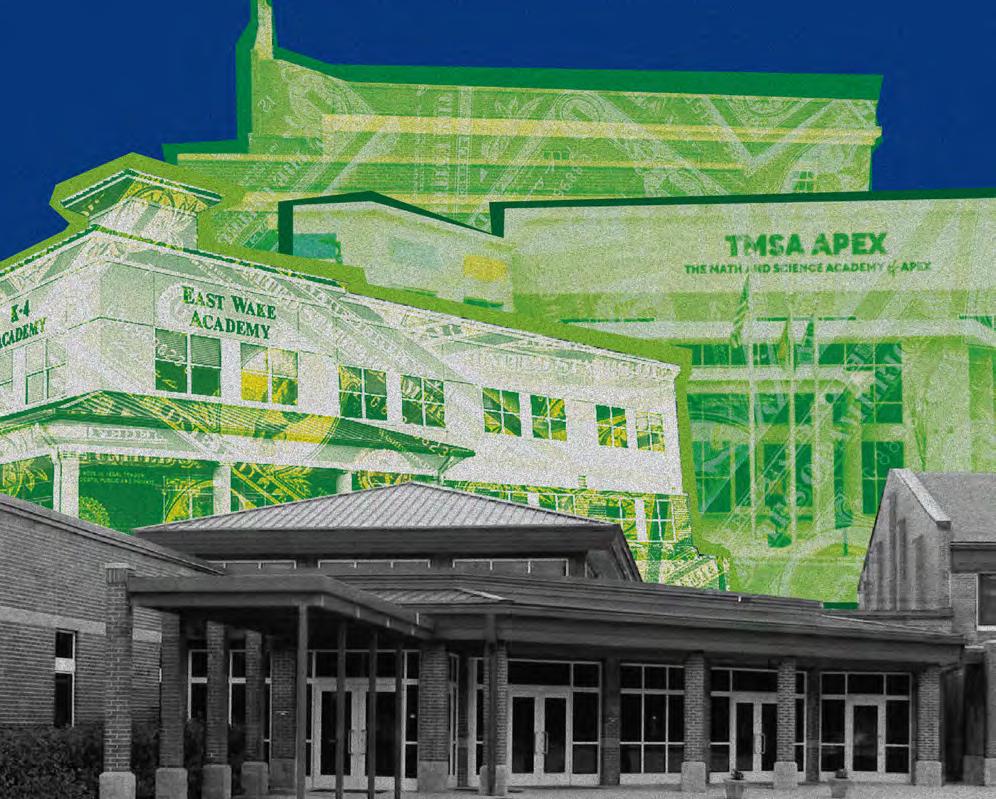
In an unprecedented saga, a Durham County board granted more than $4 billion in property value reductions, largely benefiting corporate landlords and national companies. City leadership—banking on the tax revenue—was left in the dark.
LENA GELLER & LEE GANS
Raleigh | Durham | Chapel Hill
5 Following years of advocacy and political shifts, the Town of Holly Springs adopted its first Pride Month proclamation this year. BY CHLOE COURTNEY BOHL
6 The Wake County Public School System expects to lose around $81 million to charter schools this year, as students increasingly move away from traditional public schools. BY JASMINE GALLUP
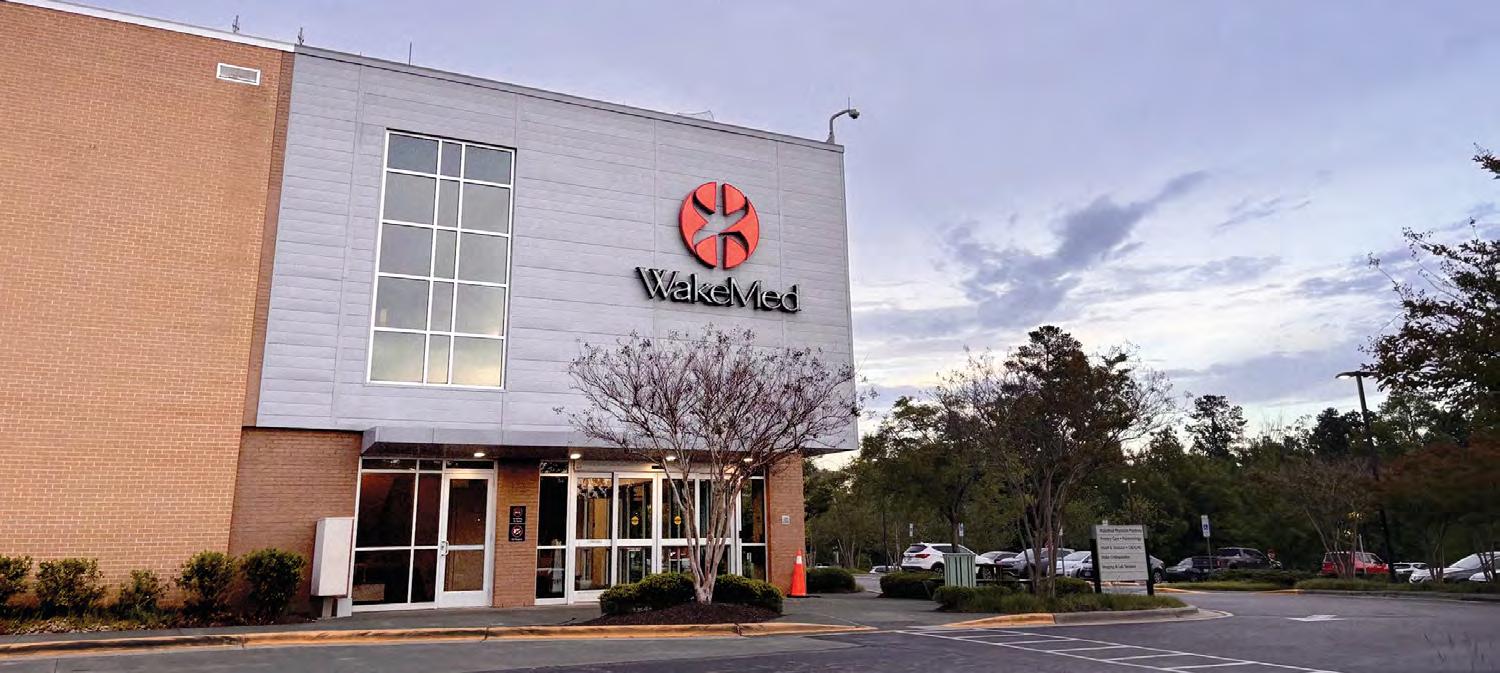
8 Health care leaders discuss what a potential WakeMed-Atrium merger would mean for South Raleigh and other Wake County residents. BY JANE PORTER
10 Amid record property tax appeals, big businesses in Durham saw their property values cut left and right, while the tax burden stayed on the shoulders of ordinary residents. BY LENA GELLER AND LEE GANS
Culture
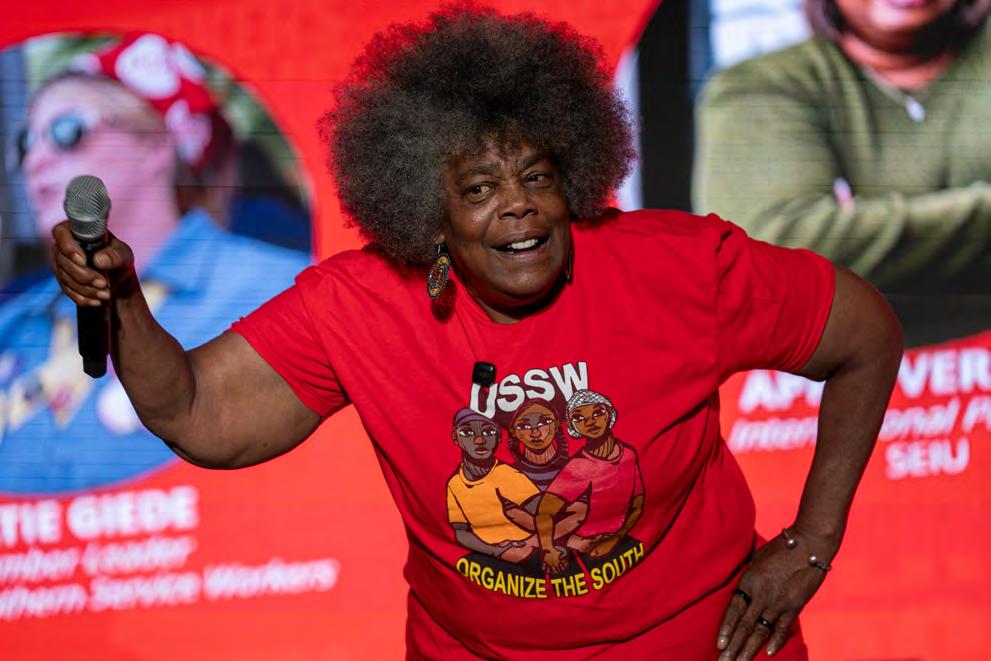
15 "These kids need wisdom and the knowledge of the elders to let them know, 'You got a voice,'" says the Durham activist Bertha Bradley, better known as Mama Cookie. BY STORMS REBACK
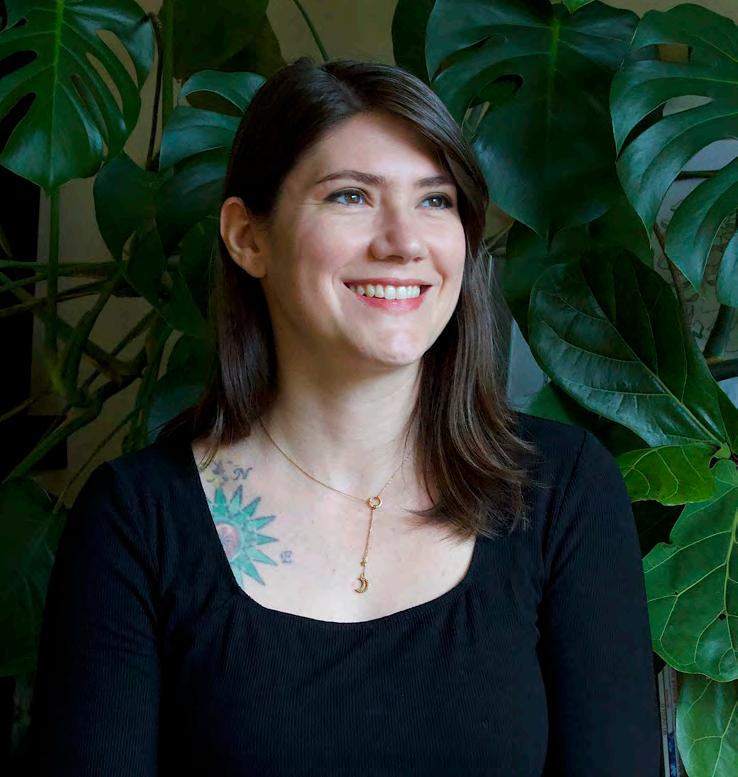
17 Talking with Durham poet Arielle Hebert about Florida, writing about addiction, and her debut collection, Bottom Feeders BY SARAH EDWARDS
18 Celebrated North Carolina author Ben Fountain returns with a new political satire. This one takes on the Trump era. BY NATHAN DIXON
20 Pierce Freelon's latest album, Black Boy Glow, releases on Juneteenth and uplifts the kinship and mentorship of Black men. BY JUSTIN LAIDLAW
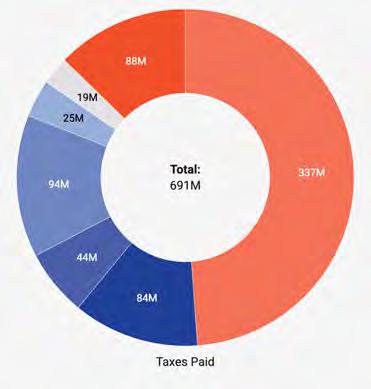
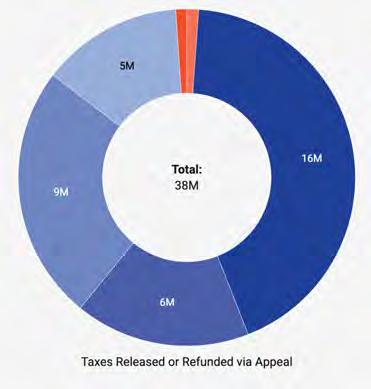
Single-family homeowners paid nearly hald of Durham's property taxes last year but recieved just 1% of the dollars returned via appeals
ILLUSTRATION BY ELLIE
We Made This
Publisher
John Hurld
Editorial
Editor-in-Chief
Sarah Willets
Wake County
Jane Porter
Culture Editor
Sarah Edwards
Editor
Staff Writers
Lena Geller
Justin Laidlaw
Report For America Corps
Reporter
Chloe Courtney Bohl
Contributors
Jasmine Gallup, Desmera Gatewood, Elliott Harrell, Brian Howe, Glenn
McDonald, Cy Neff, Andrea Richards, Barry Yeoman, Russ Campbell, Colony Little, Shelbi Polk, Ryan Cocca, Lauren Wingenroth
Copy Editor Iza Wojciechowska
Editorial Interns
Regan Butler, Tori Newby, Jessica Tobes
Creative
Creative Director
Nicole Pajor Moore
Production Design Specialist
Ellie Bruno
Advertising
Publisher John Hurld
Total taxes billed by property type to all property owners (including both appellants and nonappellants) countywide vs. total taxes released or refunded to appellants via appeals during Durham County's 2025 property revaluation. "Other Residential" includes condos, townhomes, row homes, multifamily properties, and vacant residential land. (see story on page 10) CHART BY LEE GANS SOURCE: DURHAM COUNTY TAX ADMINISTRATION
Director of Revenue
Mathias Marchington
Director of Operations
Chelsey Koch
Sales and Marketing Associate
Lauren Boyle
Circulation Berry Media Group
Membership/ Subscriptions
John Hurld
Mathias Marchington
Advertising sales
sales@indyweek.com
919-666-7229
support@indyweek.com
To reach INDY staff directly: tips@indyweek.com
BACKTALK
In our last print edition, Chloe Courtney Bohl reported on Outlanders, a homeless community in Raleigh with its own mayor, charter, and approach to peer support. The story explored how the camp has become a home for those who live there, its potential to model selfdetermination in homelessness services, and the precarity of the camp as Raleigh pushes to get people into housing. Readers appreciated the story.
From Bluesky user 4ESTRUNR:
This story made me widen my perception of what helping the homeless should look like. Excellent article.
From Reddit user BANANARAMAHAMMOCK:
That is a great story and super inspiring. Good for them.
But man, also, what a sad reflection on the state of our country and society. American favelas sprouting up around the country.
From Reddit user ENDOLITHIC:
This is fascinating and hopeful. I wish these people all the best, however it plays out. I’m also pleased by the City’s initiatives to support the unhoused and hope they continue their soft support of this particular community.
Also in the last edition, Lena Geller wrote about an indie rom-com filmed in Durham—unbeknownest to many
Durhamites, including some whose businesses were featured in the film. We hear a local screening may be in the works. Readers shared their reactions to the story and the film.
From Bluesky user ALL I DO IS WYNNE WYNNE WYNNE:
Queer rom com set in my hometown? With nearly 20 minutes filmed at my friend’s lesbian bar? Whaaaaaat?
From Bluesky user BART:
“Flown under the radar” might be an understatement for this movie. Everything & the Universe doesn’t have a wikipedia entry and has no reviews listed on rotten tomatoes, though it has been logged as seen by 163 letterboxd users
From Bluesky user KEN CHILDS:
If they don’t pop into Dain’s for a glizzy and tots what are we even doing?
The Growing Energy Affordability Crisis
Residents who packed a public hearing in Durham earlier this month made one thing clear: Families are already stretched thin and the last thing they need is a Duke Energy rate hike.
BY SEN. NATALIE MURDOCK backtalk@indyweek.com
North Carolina is facing a growing energy affordability crisis. Utility bills have surged for months, and now rising gas prices are putting even more pressure on working families. Several factors are driving these higher costs: the rapid growth of data centers, utility monopoly profits, Donald Trump’s war in Iran disrupting global energy markets, and North Carolina Republicans cutting clean energy investments when we need more affordable energy supply—not less.
This crisis has been building for years. One report found that electric bills in North Carolina have increased 22% since 2020. Duke Energy is requesting a rate increase of 15% over two years, as well as an additional rate hike of approximately $800 million to recover the costs of the storm we endured this past winter.
Residents packed the Durham County Courthouse on June 3 to push back. Speaker after speaker described the financial strain of rising utility bills and voiced outrage at Duke Energy’s proposed rate hike, urging regulators to reject yet another increase. These increases come as Duke Energy reports massive profits: nearly $5 billion in net income in 2025 and almost $1.5 billion in profit in the first quarter of 2026 alone. Meanwhile, the company’s CEO earned $13 million last year. At a time when fam-
ilies are already struggling with the rising costs of groceries, gas, healthcare, and housing, higher utility bills are becoming unsustainable.
That is why Sen. DeAndrea Salvador and I introduced the “My Bill Is Too High” bill in the North Carolina Senate. The legislation would require Duke Energy to justify rate increase requests annually before the North Carolina Utilities Commission instead of locking customers into automatic multiyear hikes. It would also make sure the current rate-setting system is working for customers, not just for the utility company.
Since 2025, utilities in North Carolina have proposed or enacted more than $3.5 billion in rate hikes affecting over 5 million customers. Much of this pressure is tied to the explosion of data centers. Duke Energy projects electricity demand growth at eight times the pace of the last 15 years, with data centers expected to account for nearly half of future large-customer demand. To meet that demand, Duke has even delayed the retirement of coal plants.
At the same time, state lawmakers weakened North Carolina’s clean energy goals by passing Senate Bill 266, rolling back interim carbon reduction targets and allowing Duke Energy to delay the transition to cheaper, cleaner energy sources. Analysts estimate the legislation could cost tax-
payers billions and reduce long-term energy-sector job growth.
Federal policy has made matters worse. Trump promised lower energy costs, but his war in Iran has driven gas prices sharply upward. Here in the area around my district, the average gas price has increased 48% since Trump’s war in Iran started. Since Trump took office, North Carolinians’ household electricity costs have increased by 17.4% while Duke Energy has benefited from major federal tax breaks under Trump’s “One Big Beautiful Bill.”
Federal attacks on clean energy have also hit North Carolina hard. Multiple clean energy projects have been canceled, delayed, or scaled back, costing the state billions in investment and thousands of jobs. The Department of Energy also canceled hundreds of millions of dollars in grants that would have strengthened North Carolina’s electric grid and energy resilience.
To lower costs, strengthen our grid, and reduce dependence on volatile foreign oil markets, North Carolina must invest in clean energy and ensure utility rate hikes are based on necessity, not corporate greed.
The North Carolina Utilities Commission’s public hearing in Durham made one thing unmistakably clear: Families are already stretched thin, and the last thing North Carolina needs is another rate hike. W
Natalie Murdock represents Chatham and Durham counties in the North Carolina Senate.
Duke Energy’s corporate headquarters in Charlotte. PHOTO BY AARON M. SPRECHER VIA AP
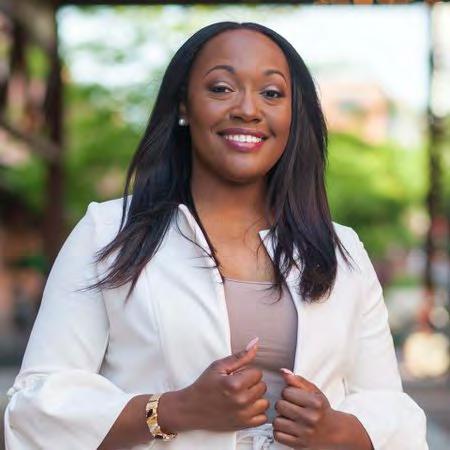
Natalie Murdock COURTESY PHOTO
Pride Prevails
After finally adopting a nondiscrimination ordinance with protections for the LGBTQ community, Holly Springs is gearing up for a festive Pride Month.
BY CHLOE COURTNEY BOHL chloe@indyweek.com
When Donna Friend helped organize Holly Springs’ second-ever pride festival in September 2025, she was blown away by the turnout. The celebration began with a parade from the Food Lion parking lot up North Main Street toward the Holly Springs Cultural Center, where a crowd was already gathering for an afternoon of music, games, and food.
“As we’re walking up, we’re seeing people waving, and we’ve got more people joining us as we go, and as we’re rounding the corner, we had no expectation that there would be like 1,000 people when we got there,” Friend remembered.
“And the people on the other side had the same reaction as they’re watching us round the corner. We probably had 250 people with us. It was amazing.”
Chatham and Carolina
In the recent past, Holly Springs wasn’t exactly known for being queer friendly.
Four years ago this Pride Month, the Town Council declined to call a vote on Wake County’s nondiscrimination ordinance (NDO), which would have banned discrimination against the LGBTQ community, among other groups, within town limits, even as most other municipalities in the county greenlit the ordinance.
Three years ago, then-Mayor Sean Mayefskie issued a proclamation titled “Pride of Holly Springs” which noticeably failed to mention the LGBTQ community.
But a lot has changed. The nonprofit Pride of Holly Springs, which Friend chairs, is gearing up to host its third annual pride festival this year. The town finally passed the NDO in February, and in May, Mayor Mike Kondratick issued a real pride proclamation, the first in town history.
“Our community is strengthened by our residents’ rich diversity, and LGBTQIA+ residents and visitors should feel valued, safe, empowered, and supported by their peers, educators, employers, and community leaders,” the proclamation reads.
In an interview with the INDY, Kondratick credited the Pride of Holly Springs organization for advocating for the passage of the NDO and for “helping council members understand the importance of the LGBTQIA+ community to Holly Springs.”
The nonprofit formed in early 2024 with Jack Turnwald as its chair and Friend as vice chair. Turnwald was fresh off a narrow Town Council election loss; passing the NDO had been central to their platform.
“We all were feeling that the town was just really not
accepting of the LGBTQ community,” Friend said. “No matter what we did, we couldn’t get the NDO signed, couldn’t get a pride proclamation done, and we said, ‘OK, we’re going to start creating a safe space.’”
Past iterations of the festival have included food trucks, local vendors, a kids zone with arts and crafts, live music, and resources from LGBTQ-affirming organizations like PFLAG and Hope for Teens. Friend said the 2024 event had 750 participants with 25 vendors, and 2025 had doubled the number of attendees and vendors. She expects participation to grow again this year.
Pride of Holly Springs also puts on other events throughout the year—including the upcoming Pride at the Park celebration at Womble Park on June 19, a community picnic for families complete with a DJ, a tie-dye station, and lawn games.
“We have a lot of support for this event on Town Council and in the mayor’s office, where before, I wouldn’t say we didn’t have support, I’d say it was just a lack of interest,” Friend said.
According to Friend, this new level of support is a direct result of political shifts on the council. Outside of her role with Pride of Holly Springs, Friend is the regional vice chair for the Wake County Democratic Party, and in that capacity she helped elect four Democrats, including Kondratick, to the Holly Springs Town Council in 2025 to flip the voting majority from Republican to Democratic. (As mayor, Kondratick himself does not vote except to break ties. Besides him, the Town Council is now composed of four Democrats and one Republican.)
Friend says the Holly Springs community has embraced Pride of Holly Springs and the festival.
“You’re going to get a few crankies,” she said. “But for the most part, I think Wake County is pretty good, and I think Holly Springs has come a long way. I will tell you that my wife and I feel a lot more comfortable and a lot more accepted in Holly Springs.”
In addition to putting on the annual pride festival, the nonprofit also funds scholarships for high schoolers who show a commitment to inclusion, community-building, or LGBTQIA+ advocacy. It awarded two $500 scholarships in 2025 and will award four $1,000 scholarships in 2026, Friend said. She expects “that number will grow significantly” next year and beyond as the organization continues to fundraise.
“The scholarship recipients ... they’re bright kids, they’re good academically, but these are people who want to help shape the world, which always makes you feel good.
“The [scholarship] applications ... have all been about ‘I want to be in public service, I want to be in community service,’” Friend said. “They’re all about making this world a better place.”
The 2025 Pride festival in Holly Springs PHOTO BY AMBER FOSTER SMITH PHOTOGRAPHY
Holly Springs
NEWS Wake County
The Cost of School Choice
In the past 15 years, WCPSS has lost more than $500 million in local funding as families look to charters as an alternative to public and private schools.
BY JASMINE GALLUP backtalk@indyweek.com
Natalie Christley, a lifelong resident of North Carolina, originally intended to send her two children to traditional public school. Herbert Akins Road Elementary School, near her home in Holly Springs, had small classes and above-average test scores—exactly what she was looking for.
Then, a few years before Christley’s son was due to start kindergarten, the Wake County Public School System (WCPSS) reassigned her children away from their base schools. So Christley started looking at her options.
As she toured public and charter schools around the area, “we were definitely looking at the quality of the education,” Christley said. “I was [also] looking at schools that have a lot of diversity, [at] their rankings on all the different websites, how they did their testing.”
This kind of “school shopping” is commonplace among parents nowadays, Apex Elementary School Principal Kristin Small told the INDY. Charters, like traditional public schools, are free, creating an alternative for families who can’t afford (or don’t want) to send their children to private schools.
Unlike traditional public schools, however, charters don’t
have to follow state learning standards, or other state rules around school calendar or class size. They have a lot more flexibility, and are typically founded on a “charter” that outlines a specific mission.
To the dismay of public education advocates, they’re also not required to meet the same standards when it comes to providing school transportation or lunches—which creates barriers for low-income students, advocates argue.
Charters can’t legally reject students on the basis of race, income, English proficiency, disability, or special needs status. But, persistently, they have lower percentages of minority and low-income students compared to public schools, according to a 2025 report from nonprofit Public Schools First NC. They also have lower percentages of students with special needs and disabilities and those who speak English as a second language.
As charters rise in popularity, tension is growing between proponents of traditional public education (including local school board officials and groups like the North Carolina Association of Educators) and the families of some 23,000 students in Wake who say charter schools meet their needs. Because with every new charter that opens, there’s less
money for traditional public schools.
An Ongoing Budget Crisis
WCPSS expects to lose around $81 million to charters this year, as students increasingly move away from public schools.
It’s money that could have paid for full-time literacy coaches, school nurses, and more, WCPSS board member Lynn Edmonds told the INDY. In an early draft of the budget, 130 special education teacher positions were on the chopping block. And while the school board was able to postpone those cuts, they still had to reject an ask for special education support services, Edmonds said.
“Our job is to provide students and educators with what they need to be successful,” she told the INDY. “They are really hurting, and we were not able to meet that need, and that is agonizing. It keeps you up at night.”
State laws allowing public school dollars to be diverted to charter and private schools are a big reason for WCPSS’ current budget crisis. Year over year, the state’s chronic underfunding of public education has forced the school
ILLUSTRATION BY ELLIE BRUNO
board to make budget cuts, Edmonds said.
The amount of money Wake County expects to lose to charters this year is about seven times as much as it was in 2011. That’s because in 2011, the North Carolina General Assembly removed its cap on the number of charters allowed statewide, allowing many more to open.
Since then, the number of charters in Wake County has more than doubled, growing from 13 to 27. The growth of charters has been particularly rapid in western Wake County compared to other suburbs of Raleigh.
Since 2011, six new charters have opened across Cary, Apex, and Holly Springs, compared to five in Raleigh— despite the area having about two-thirds of Raleigh’s population—and two in Wake Forest.
In April, the Triangle Business Journal reported that the Triangle Math and Science Academy (TMSA), a charter school network with schools across North Carolina, would open a new campus in Cary, near the Starline at South Hills development off Buck Jones Road.
(TMSA already has schools in Cary and Apex and is planning to build another school in Durham in 2026. The new Cary campus will serve about 900 elementary and middle school students, according to a press release, and is likely to pull students from across the Triangle.)
Likewise, the percentage of students enrolled in charters has gone up, while the percentage of students enrolled in traditional public schools has gone down.
When a student living in the WCPSS district chooses a charter school, they take a certain amount of money in per-pupil funding with them from both the state and the county. At the state level, charter schools in Wake County received around $169 million for the 2025–26 school year, according to a budget report—an average of $7,300 per pupil.
“When enrollment in charters goes up, that does have a fiscal impact on public schools and classrooms,” said Christina Cole, Wake County president of the North Carolina Association of Educators. “It’s death by a thousand paper cuts. A year-after-year [increase] has an impact on the entire system.”
Why Charters?
charters from public full-time literacy member the budwere on the was able to ask for spewith what “They are need, and diverted WCPSS’ state’s chronic the school
The flexibility of charter schools was one of the factors that appealed to Christley, who ended up enrolling her son in Apex’s Peak Charter Academy. Some charters focus on STEM (science, technology, engineering, and mathematics) or embrace educational philosophies like Montessori, which involves hands-on learning. Others offer dual-language immersion or a larger selection of advanced or college prep classes.
Peak Charter, which opened in 2017 and serves elementary and middle school students, was ranked highly online and had the challenging academics Christley was looking for, she said. She felt like the charter’s differentiated learning program would be more beneficial for her son than WCPSS’ academically or intellectually gifted program, she added.
“My son is neurodivergent and gifted, and so it was important to me that he was going to a school that was going to challenge him educationally,” Christley said. “This was his first year in differentiated learning, and it’s been great for him. This is the first year he doesn’t complain all the time that school is boring, because he’s actually being challenged.”
Education for Profit
Many public education advocates worry about state and local funding being turned over to for-profit companies, through a specific model that is growing across North Carolina and allows charter schools to be managed by for-profit “education management organizations.”
The charter school movement “started out with teachers who just wanted more flexibility in smaller environments,” said Heather Koons, director of Research and Communications for Public Schools First NC. “But once the for-profit sector realized that there could be money made in education, they started figuring out their model, and now they’re really coming into North Carolina.”
“It’s creating this false narrative that public schools are somehow inferior, but they’re not.”
As of early 2021, for-profit organizations ran 18% of the charter schools in North Carolina, according to a report from the Network for Public Education. That includes at least eight of the 27 charters in Wake County: two in Raleigh and the rest scattered across the county.
Peak Charter, for example, is operated by National Heritage Academies, a company that runs more than 90 charter schools across nine states, according to the Network for Public Education report. The company regularly uses “sweeps contracts,” which “give for-profits the authority to run all school services in exchange for all or nearly all of the school’s revenue,” the report stated.
In other words, a charter can use public education dollars to pay a for-profit company for educational services like teachers, curriculum materials, administrative support, and testing.
“Whatever money is left over after the bills are paid can accumulate as profit,” the Network for Public Education report stated.
These kinds of charter schools are “especially problematic, because their goal is not educating North Carolina’s children,” Christine Kushner, a former member of the Wake school board, told the INDY. “Their primary goal is to make money.”
Christley, however, had nothing but good things to say about Peak Charter. She’s been impressed by the student performance, she added; according to the school’s 2025 report card, students there performed above the WCPSS average when it came to math, science, and reading.
School Choice
In addition to enabling the rapid expansion of charter
schools, the General Assembly has made drastic cuts to accountability and oversight measures over the past 15 years. That’s led to a large number of charters that can vary wildly in quality.
“While some charter schools consistently demonstrate strong academic outcomes and exceed state standards, others face challenges related to student achievement, teacher retention, and resource allocation,” stated the State Board of Education’s 2023 Annual Charter Schools Report.
At the end of the 2024–25 school year, about one-third of the charter schools across the state were identified as “continually low performing” by the State Board of Education, according to the Public Schools First NC report. That includes 13 charters that received state letter grades of D or F for six years in a row.
By allowing so many private and charter schools to operate with public funding, the General Assembly is undermining traditional public school districts, said Kushner.
“It’s creating this false narrative that public schools are somehow inferior, but they’re not,” she said, adding that public schools have become much more innovative with college and career prep programs, a signature of some charters.
In addition, charter schools can be just as exclusionary as private schools, Kushner argued. That’s often because they offer fewer support services compared to traditional public schools. Free and reduced lunch programs are rare, and some charters may require parents to do things like buy school uniforms or volunteer for a certain number of hours each month.
One of the biggest obstacles is transportation. Charters typically don’t have a bus system, placing an added burden on parents to arrange for school pickups and drop-offs. Christley, for example, drives her son 20 minutes to and from school each day. She also serves as vice president of the school’s Parent Teacher Organization.
While Christley has a full-time job, her boss is very “family first,” she said. “So I’m allowed to be more flexible with my hours and prioritize volunteering when I need to.”
That’s not the case for everyone.
“There are some parents who know their child will never be accepted by a private or charter school,” said Kushner. “They have a special education need, or the parent needs transportation, needs the meal offerings that public schools have.”
Public education advocates say more accountability and transparency is needed when it comes to charter schools. The Public Schools First NC report advised the state to put a moratorium on new charter openings until reforms are made.
The nonprofit’s recommendations include banning the for-profit model and education management organizations, and returning oversight power to the State Board of Education, where it once rested. Charters should also be required to follow the same rules as traditional public schools and create detailed plans about how to serve vulnerable students, the report stated.
Kushner argues that more investment is needed in the public school system—not just financially but also from families with school-age children.
“In the end, you can’t just think about your own child. You have to think of other people’s children,” Kushner said. “What’s best for your child is a peer group and a future society where all these kids have had a great chance to get a great education.”
Wake County
State of Health
Ahead of a Wake County commissioners’ vote that will allow the deal to move forward, WakeMed and Atrium leaders offered an optimistic outlook for the hospital systems’ proposed $2 billion merger.
BY JANE PORTER jporter@indyweek.com
I n a nearly four-hour-long work session last week, the Wake County Board of Commissioners heard from WakeMed and Atrium Health leaders about the proposed $2 billion merger between Wake County’s independent nonprofit hospital system and Charlotte-based Atrium. The presentation comes ahead of a vote commissioners are expected to take later this summer on changes to WakeMed’s articles of incorporation and property agreement. Here are five things we learned from the presentation.
1. There was a lengthy due diligence process.
According to WakeMed Board of Directors Chair Thad McDonald III, WakeMed in early 2022 issued a request for proposals seeking partners in oncology. Atrium Health was
the only respondent, and further conversations revealed that the two nonprofit hospital systems shared a similar mission and values, McDonald said. Following a “deep dive” into Atrium’s culture and commitment to the local community, at the end of 2023, WakeMed directed attorneys to look at a partnership between the two entities and, in January 2024, proposed the merger to the WakeMed board’s executive committee.
“Our initial response ... was much the same as some of you here and members of the community: ‘What, give up our autonomy?’ We’ve always been fiercely proud of our independence,” McDonald said. “However, looking at the future of healthcare and especially the challenges facing safety net hospitals like ours, we felt it would be irresponsible not to give it vigorous due diligence.”
Over the next two and a half years, McDonald said, WakeMed took a deep look at the state of healthcare in North Carolina, the future of so-called safety net hospitals (which provide care to vulnerable people and those who can’t pay), and its capital needs.
The evaluation “revealed almost insurmountable obstacles,” McDonald said.
After engaging advisers, finalizing terms, and receiving unanimous approval from its board, WakeMed leaders presented the proposal, including a transfer agreement and updated articles of incorporation, to the Wake County Board of Commissioners in a closed session in March. The item was placed on the commissioners’ consent agenda for their May 4 meeting, but the vote was delayed following public outcry from stakeholders concerned about the
Wake County commissioners are expected to vote later this summer on a proposed merger between WakeMed and Atrium Heatlh PHOTO BY KATE SHEPPARD
speed and secrecy surrounding the deal, the potential for increased healthcare costs to residents, and Atrium’s level of investment in WakeMed.
2. Leaders promise more community benefits.
Gene Woods, CEO of Atrium Health’s parent company, told the commissioners that one of the hospital system’s main goals is to “make a large system feel like a small community.” To that end, Atrium has invested $2.5 billion in the North Carolina communities it serves.
Atrium partners with 240 schools in Mecklenburg County to provide virtual services to diagnose and treat students while they’re at school. The program treated more than 8,000 students this school year.
Atrium also partnered with the Charlotte Housing Authority and others to invest $20 million in affordable housing via a housing impact fund and $2.6 million in expanding access to food. Atrium launched the first street medicine program in Charlotte, where teams go into encampments to provide medical care for people experiencing homelessness. And it invested $1.4 million to reduce violence-driven injuries via its hospital-based violence intervention program.
“To keep a community healthy, it’s not just what happens inside the hospital walls; it’s what happens outside of the hospital walls,” Woods said.
WakeMed board member Margaret Bratton said that along with its $2 billion investment in capital projects in Wake County over the next 10 years, WakeMed’s partnership with Atrium will allow it to contribute much more than the $400 million it currently provides in unreimbursed patient care, community outreach, education, and health improvement contributions and other community benefits.
The consolidation will allow for expanded mental health services and access, partnerships with community groups on transitional and affordable housing, support for economic development in Southeast Raleigh, and an expansion of WakeMed’s financial assistance policy. WakeMed could also explore partnering with the Wake County Public School System on virtual care.
an hour. It has greatly expanded access to care in the area, including adding a new care tower on the Winston-Salem campus, an outpatient surgery center, an eye institute, and an affordable housing initiative, plus further investments in Greensboro and Guilford County.
“The combination of Wake Forest Baptist secured with Atrium Health not only preserved our stature and legacy but expanded its reach,” High said. “It allowed us not only to survive but thrive in all aspects of our mission.”
4. The deal preserves competition.
McDonald said, healthcare in hospitals those who insurmountable obstareceiving leaders preagreement and Wake County March. The consent agenda delayed followabout the
3. There’s another local success story to look to.
In a deal worth $3.4 billion made at the end of 2020, when healthcare systems across the nation were collapsing under the weight of the COVID pandemic, Wake Forest Baptist Hospital in Winston-Salem joined with Atrium Health.
“It would have been very easy for Atrium to say then, or over the next several months or years, about the challenge from the pandemic, ‘We know we promised X but things changed under COVID and we can only do Y’—they never said that, and followed through with the original agreement,” said Kevin High, former president of Atrium Health Wake Forest Baptist. “I’m here today to tell you that we are exponentially better five years later after this deal was initiated and [Atrium has] delivered in every way. It’s been a true partnership, not a takeover.”
The 2020 combination has seen the addition of 8,200 new jobs and a minimum starting wage increase to $18.85
WakeMed leaders said they feel strongly that a three-system competitive market consisting of Duke Health, UNC Health, and WakeMed-Atrium will serve the region best.
“We’ve had a wonderful graduate medical education partnership with [UNC Health] for over 60 years and I hope this will continue for another 60 years,” said McDonald, the WakeMed board chair. “However, we believe a combination with UNC would decrease competition in this market. ... If we partnered with them, they would have 80% of the market, and in their proposal ... yes, they had a larger offer, but there was a lack of detail on the investment of this additional $2.5 billion especially in Southeast Raleigh; where it’s needed the most, choice for patients and choice for employees would be restricted.”
Furthermore, WakeMed has a signed agreement with Atrium Health, meaning it could not, at this point, entertain UNC Health’s offer it wanted to.
“We looked for a partner, and I mentioned that criteria was the charity care mission, the mission to care for
all, a culture match,” WakeMed President and CEO Donald Gintzig told the commissioners. “That’s the difference between a sale and joining a family.”
Gintzig said he believes the region will still see big investments from UNC Health.
“I suspect, like WakeMed, they’ve got plans to expand and grow services and they have asked for certificates of need to build new hospitals,” Gintzig said. “They’re going to invest here, Duke’s going to invest here, and WakeMed and Atrium, hopefully, are going to continue to invest here.”
5. WakeMed-Atrium has ambitious goals.
Gintzig told commissioners WakeMed hopes to add more than 3,000 local jobs over the next five years across clinical, research, and support roles.
Other goals include updating and expanding the campus hospitals in Southeast and North Raleigh, Cary, and Garner; adding two new healthplex locations; solidifying the state’s largest virtual care network; providing broader reach with charity care; advancing specialty care; and opening the state’s largest mental health network with more than 360 beds as well as expanded mental health access statewide.
In response to a question from Commissioner Shinica Thomas about what he would like to tell people about the partnership in five years’ time, Gintzig said he would want to be able to say that WakeMed was brave enough to make the best decision for the community’s future at a time when it didn’t absolutely have to.
“I will get a great joy from that,” he said. “It really is about planting a tree that I’ll never sit under the shade.”
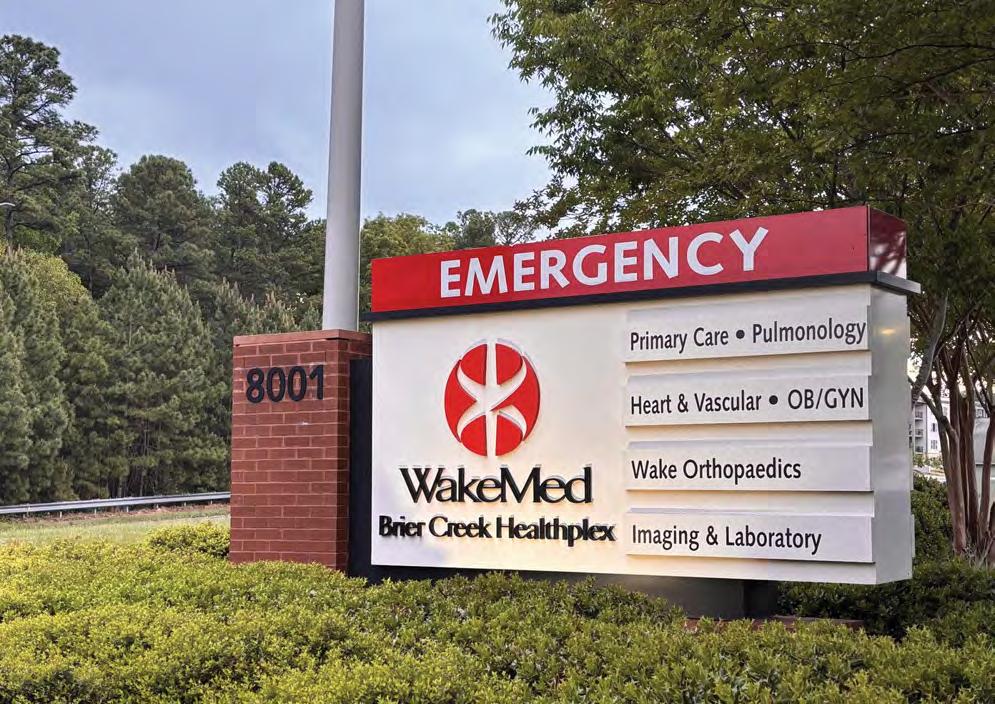
A WakeMed complex in Brier Creek PHOTO BY KATE SHEPPARD
Falling Short
In an unprecedented saga, a county board granted more than $4 billion in property value reductions in the past year, largely benefiting corporate landlords and national companies—and blowing a hole in the city’s budget.
BY LENA GELLER lgeller@indyweek.com
Data analysis and additional reporting by Lee Gans, an independent journalist and data analyst who specializes in housing, environmental issues, and politics.
Property taxes in Durham went up nearly universally last year in the wake of a countywide revaluation. So when City Manager Bo Ferguson announced, last month, that the city faces a $9 million budget deficit due to low property tax revenue—the largest source of income for both the city and the county, the latter of which navigated a deficit of its own before passing its budget last week—council members were perplexed.
For answers, they turned recently to Durham County Tax Administrator Keyar Doyle, who presented a slide deck meant to explain the shortfall during a City Council budget work session on May 27.
Doyle first laid out a chain of record-breaking numbers: Last year’s revaluation, the first since 2019, produced the largest jump in assessed property values in county history, which, in turn, produced a record 10,533 appeals1 from property owners challenging their valuations. Ultimately a six-person board called the Board of Equalization and Review, or BOER, granted enough of those appeals to result in a $4.4 billion reduction in the assessed value of property across the county. That drop translated to $9 million in lost revenue for the city, as it collects property tax based on the values Doyle’s office calculates.
1The
While the tax office had expected to lose some assessed value to appeals, Doyle told the council, the reduction ran well past what his office had planned for. The city’s budget shortfall stemmed from that gap: the difference between what revenue was expected and what actually materialized. No plan could have accounted for a value loss this size, Doyle added, because, he said, commercial properties filed more appeals and won larger sums than anyone could have expected.
Council members were not hostile to Doyle’s presentation, but they weren’t satisfied, either. Mayor Leonardo Williams said he plans to request a “deep dive” to pinpoint the “vulnerabilities in the systems” that brought about the shortfall. Other council members pressed Doyle on questions he was unable to answer on the spot, from how the $4.4 billion breaks down by property type to the success rate of appeals at the BOER.
Meanwhile, a six-week INDY investigation—involving records of the 10,000-plus appeals, data from five public records sources, and hundreds of county, state, and corporate documents—has produced answers to many of the questions the council raised.
Among the INDY’s biggest findings: Relief flowed over-
whelmingly to corporate landlords and to companies like Blackstone, Capitol Broadcasting Company, IBM, and Blue Cross Blue Shield,2 which, just between the four of them, had $524 million shaved off the assessed values of their properties. High-value property owners also didn’t just secure the largest reductions they faced better odds in the appeals process; a low-income homeowner in Hayti was much less likely to get any reduction than, say, an Amazon warehouse. All told, big businesses saw their tax bills cut left and right, while the tax burden stayed on the shoulders of ordinary residents.
There was also a meta finding: Much of what the INDY’s analysis turned up does not align with the explanation Doyle and the tax office have given as to why the reductions ran so large and why they weren’t anticipated.
Nine million dollars is a small slice of the city’s roughly $766 million budget. But most of that budget—which was approved by the city council on June 15—is already spoken for by essential services, leaving a small pool for things like employee raises and park improvements.
Both the size of the current shortfall and how late it came to light are unprecedented for the city of Durham, forcing even tougher budget trade-offs than usual, said
ILLUSTRATION BY ELLIE BRUNO
How property values turn into revenue
A propertyʼs value is the countyʼs estimate of what it would sell for on a set date. For the recent revaluation, that date was January 1, 2025.
The county bases its estimates on data it gathers about each property: what a property would cost to build; what income it generates, if any; and what similar properties have sold for.
Once the county estimates a propertyʼs value, the city and the county tax that value at a set rate.
In 2025, most property within Durhamʼs city limits was taxed at a standard rate of 0.9913%, with 0.5542% going to the county and 0.4371% to the city. Some properties qualify for tax exemptions, which lower their tax rate.
Multiplying a propertyʼs value by its tax rate produces its tax bill, which becomes revenue for the city and county.
So when a propertyʼs value is reduced during the appeals process, the city and county both collect less.
a city spokesperson. The city was left in the dark about just how much property tax appeals would be cutting into its tax base until the 11th hour, so it wasn’t able to take the steps it normally would when a revenue gap looms, like trimming spending. With options narrowed, the city has proposed freezing merit raises for city employees and eliminating nine staff positions in order to close the gap.
So where the revenue went—and why no alarm was raised sooner—deserves a hard look.
Apartment Complexes Drove the Loss, but Offices Were an Easier Scapegoat
Sail a paper airplane off a downtown parking deck and it stands a good chance of drifting into a building whose owner just won a small fortune back from the county: Commercial properties accounted for 93% of the reduction in assessed value countywide, despite making up just 12% of appeals.
The largest share of the $4.4 billion loss, over a third, came from commercial apartments. Successful appellants in this class ranged from brand-new luxury towers to decades-old complexes that cater to low-income tenants.
Commercial vs. Residential Property
companies like and Blue of them, values of their didn’t just odds in Hayti was Amazon bills cut shoulders the INDY’s explanation the reducanticipated. city’s roughly budget—which was already spoken things like how late it Durham, usual, said
Industrial properties made up the second largest chunk of the loss. Among them: an IBM-occupied data center campus that received a $337 million reduction in value—the greatest reduction of any single property and the equivalent of $2.6 million off its property tax bill.
Retail came next, with the owners of big-box stores like Lowe’s, Home Depot, Kohl’s, and Sam’s Club each winning value reductions north of $10 million.
Office buildings brought up the rear, as far as commercial property, making up 12% of the $4.4 billion reduction.
The county has not published this sort of breakdown by property type. And when it does discuss which properties drove the value loss, its narrative only partly matches the numbers.
Specifically, the county tends to name apartments and offices in the same breath, as though the two drove the loss in equal measure. During Doyle’s May 27 presentation to council, for instance, he named offices, alongside apartments, as a top driver of the reduction. A county spokesperson stated the same in response to an INDY inquiry in April.
The logic the county typically pairs with its emphasis on office reductions is easy to follow: that remote work has left office buildings vacant and eroded their value. But, of course, offices made up a small share of the overall value loss, so it’s curious that the tax office has invoked them so frequently.
The county also traces apartment reductions, a genuine heavyweight, to vacancy issues. The tax office’s commercial supervisor, Jeremy Conn, told the INDY last month that the city’s sweeping approval of new apartments in 2022 and 2023 led to “more supply than demand,” leaving apartments sitting vacant and pulling down their values.
Pointing to apartments, though, comes with a complication that pointing to offices doesn’t. Pin the loss on empty offices and the pandemic takes the blame; pin it on empty apartments and you dredge up fraught debates around housing development. This precarity came through during Doyle’s presentation to council, where discussion of apartment vacancies went over awkwardly to a point that Doyle seemed to retreat to the depoliticized territory of offices.
“I sense a road that we may be going down for potential political argument,” Mayor Williams, who routinely votes in favor of new housing development, said, after Doyle linked apartment vacancies to major losses in assessed value. “When you say there’s a vacancy issue, I think we need to provide full context to that.” Williams went on to caution against implying that we don’t need more housing, as that kind of rhetoric “is going to hurt a lot of people.” Doyle concurred, and pivoted.
“I agree. I think that this is a bigger issue,” Doyle said. “It’s not about Durham. There are multiple things impacting the office sector. I benefit—my office benefits—from remote work. That’s a real thing. It impacts the actual ability for these businesses to rent out space in these office buildings.”
Ahead of publishing this story, the INDY put a series of written questions to the county. Asked about the weight it has placed on offices, a spokesperson said references to offices were meant to illustrate appraisal methodology in general terms rather than to identify offices as a cause of the shortfall, and that its intention had been to convey that vacancy drove reductions in offices and apartments alike.
Commercial property drove 93% of the $4.4 billion value loss, with commercial apartments as the single largest contributor.
Commercial and non-residential properties shown in blue and gray. Residential properties shown in red.
Commercial Industrial (21%)
Percent total value reductions in dollars granted through appeals during Durham County’s 2025 property revaluation, by property type. Property type categories were defined using the “land class” and “property class” fields from the Durham County Real Property Database. “Other” includes nonindustrial vacant land and all improved parcels whose property class was not “commercial,” “industrial,” or “residential.”
CHART: LEE GANS SOURCE: DURHAM COUNTY TAX ADMINISTRATION
For Homeowners, the Deck Was Stacked
If you reached into a bag of all 10,533 appeals, chances are you’d pull out an ordinary homeowner’s: someone who, for example, opened their new tax bill last March, balked at a value that had risen twofold, and resolved to get it lowered. Residential owners filed many times more appeals than commercial owners, despite barely contributing to the $4.4 billion reduction.
It might be tempting to write off this discrepancy—so many residential appeals, so little reduction—by reasoning that commercial property is worth more to begin with and would therefore account for more of the lost value. But that logic actually doesn’t hold, for a few reasons.
Residential property owners make up the bulk of the tax base; they paid 62% of the total property taxes billed countywide last year. So it would stand to reason that the bulk of the reduction would be theirs too. Moreover, compared to commercial, residential properties are more likely to be overassessed, and thus more likely to merit appeal in the first place, based on analyses by the University of North Carolina’s School
of Government and DataWorks. In Durham, where sleek new builds often butt right up against aging homes, waves of construction or renovation routinely inflate the assessed values of humbler residences nearby.
With that in mind, it’s quite jarring that residential properties made up just 7% of the overall value loss. That figure stems in part from the fact that many homeowners don’t know how to file appeals. But it also speaks to a gap in success rates between commercial and residential appeals following Durham’s recent revaluation: the BOER granted reductions in 83% of commercial cases, compared to 65% of residential ones.
A Blackstone attorney and a family from Lakewood walked into their appeal hearings with very different odds of relief. (For appeals that didn’t win a reduction, the outcome was typically no change. Increases were equally rare on both sides.)
Across the board, more expensive properties won appeals more often. The spread is staggering: the lowest-valued residential properties won a reduction 54% of the time, while the highest-valued commercial properties won 95% of the time. A modest bungalow contesting a few thousand dollars was far likelier to walk away emp-
ty-handed than a global corporation asking to shed millions.
That imbalance—pricier property, better odds—is evident not just between residential and commercial appellants, but between appellants in the residential category itself: Of the $319 million in assessed value reduced during residential appeals, $153 million went to landlords, investors, and developers, whose property can be counted as residential when the holdings are small enough. In other words: homeowners received a share of the relief that fell well short of their share of the filings. Most of these findings went unaddressed during Doyle’s presentation to council last month, though not for lack of council members asking. When council member Carl Rist asked how much relief had gone to multifamily residential properties, Doyle didn’t have the figures. When council member Chelsea Cook pressed Doyle on what share of commercial versus residential appeals were successful, he said it was a “layered question” and declined to give a number, saying he’d have to follow up. Doyle did hazard a guess when asked how much of the $4.4 billion reduction came from residential appeals, though he
corporation asking property, betbetween resappellants, but residential cateassessed appeals, investors, property can be holdings words: homerelief that the filings. unaddressed council of councouncil memrelief had properties, When counDoyle on residensaid it was to give a follow up. when asked reduction though he type. Database. “residential.”
Of all the reductions won by residential appellants, nearly half went to landlords, investors, and developers.
Just $23 million of the $319 million won by residential appellants went to owners of homes valued at or below $405,000, the county median.
Owners who appealed one single-family home valued ≤ $405k ($23M)
Owners of multifamily & rental properties ($124M)
Owners who appealed one single-family home valued > $405k ($109M)
Owners who appealed 2 single-family homes ($34M)
Developer-owned vacant land ($29M)
Total value reduction for residential properties by owner type during Durham County’s 2025 property revaluation. “Multifamily” refers to apartments with fewer than five units. “Rental” includes single-family dwellings owned by entities in the N.C. Secretary of State Business Registry who lease to tenants. “Developer-owned vacant land” refers to vacant residential tracts owned by business entities. “Home” refers to owner-occupied single-family homes. CHART: LEE GANS SOURCE: DURHAM COUNTY TAX ADMINISTRATION
put the number in vaguely inflated terms, saying “less than $1 billion,” then “closer to $500 million.” Both descriptions technically hold true of the real figure, $319 million, though Doyle’s phrasing tracks with an issue in the county’s records: according to documents the INDY obtained, the tax office miscategorized a sizable chunk of commercial parcels as residential, falsely bloating the residential total to close to $500 million. (A county spokesperson said Doyle had spoken in approximations during his council presentation because staff lacked exact figures at that meeting. Regarding the misclassified parcels, the spokesperson said that property classifications sometimes need adjusting after the property use is confirmed.)
Residential appeals took on outsized weight elsewhere in Doyle’s presentation, too. At one point Doyle walked the council through a table of median property sale prices, connecting it to a cooling market he implied was part of the backdrop to the overall reduction. But the table, which reflected only residential sales—a fact Doyle did not mention to the council—had little to do with the reduction, which, of course, residential appeals barely moved.
Asked about the table, a county spokesperson said it was included in the presentation only to give general market context.
As Revenue Loss Loomed, the City Drafted a Budget in the Dark
Losing assessed property value to appeals doesn’t, on its own, produce a budget shortfall.
A shortfall happens when tax revenue lands below what was expected. So, especially on the heels of a countywide revaluation, it’s incumbent on a tax office to accurately project how much property value will survive the appeals process, because when the numbers are that large, a shoddy projection could blow a massive hole in a budget.
Evidently, the projection the tax office made last year fell short, resulting in the deficit that weighed on the just-passed city budget. How that happened, and how long it took the county to get its arms around the issue, makes for another confusing aspect of this saga.
There’s a state formula for how many appeals a given revaluation will generate.
But there’s no indication that the tax office revised its projected revenue figures, then or in the months that followed. Even seven months on, in late February, the county was still seemingly using the projection built on the 7,500-appeal estimate, citing it in a slide deck it presented at a county budget retreat. By then, reductions had climbed to $2.1 billion—well past the $1.3 billion the tax office had projected for the entire cycle—and there were hundreds of appeals yet to be heard, most of them large, commercial cases where owners had requested hefty reductions. (State law directs most appeal hearings to be held by December 1, though continuances are allowed. Based on records released to the INDY, Durham’s BOER did not begin resolving commercial cases in earnest until mid-November.)
Meanwhile, also in February, the city was getting underway drafting its budget for the upcoming fiscal year. As departments laid out their needs, budget staff took stock of what the city could afford, referencing the revenue figures the tax office had projected. It took two more months for the city to learn the full scope of the impact the reductions would have on its revenue; it wasn’t notified by the county until April 13, a city spokesperson confirmed to the INDY—“much later in the budget process timeline than usual.”
Last year, for Durham, that formula predicted 12,600 appeals. Doyle knew this number; he was quoted, citing it, in an INDY article last April, adding, “I would expect us to have a historic amount of appeals.”
But as the June 16, 2025, deadline for property owners to file appeals in the wake of the revaluation crept closer, not many had come in. Doyle took this as a sign that the historic wave he’d anticipated might not arrive, he recounted in his recent presentation to the City Council. So with two weeks left before the deadline, he revised his estimate from 12,600 down to 7,500—a number he reached by extrapolating from the rate at which appeals had been arriving. That revised figure almost immediately became the basis for the revenue the city and county each projected for the year ahead.
It also quickly became outdated: In the final two weeks before the deadline, 5,000 more appeals came rushing in. After that point, there was every reason to revisit those revenue projections: The tax office had the real number of appeals, and— because every appellant names the reduction they’re seeking—a clear line of sight into how much value was on the line.
That made for a tight turnaround. In an April 28 email to council members and staff that the INDY obtained, Ferguson, the city manager, wrote that despite having just finished drafting the upcoming fiscal year’s budget, an “unexpected” shortfall meant he and staff would be going “back to the drawing board,” less than a month before that budget was due to be unveiled.
Ferguson also wrote that when staff had checked in with the county earlier in the year, “our assessed values appeared on track and our tax collections were strong.”
So how does the county explain the timing?
Reached for comment, a county spokesperson said many of the largest reductions weren’t decided until late—into March and April—which, in the spokesperson’s telling, kept the tax office from knowing how big the reductions would get. The spokesperson also told the INDY that, in September, in response to the crush of appeals, the tax office attempted to create a second BOER to move cases through faster, but a second board never materialized, “based on the applicant pool.” (The BOER’s members are appointed by county commissioners and paid $35 an hour; the current board’s six members are all current or former realtors, developers, and appraisers.)
The fact that many appeals were decided later than usual doesn’t explain the county’s apparent inaction in the face of the tsunami forming on the horizon, though. Asked why it didn’t flag the problem sooner, the county spokesperson said the tax office did tell the city, in February, that reductions could “materially affect anticipated revenue,” with updated figures following in March.
The city, asked by the INDY what it knew in February, reiterated that it didn’t learn the scale of the reductions until April.
Amid Signs of a Flawed Process, Records Remain Under Wraps
While the number of appeals the county received last June was indeed historic, that tally only goes so far in explaining the magnitude of the reduction. Even if Doyle had estimated, ahead of the appeals deadline, exactly how many appeals would be filed, the standard formula for projecting value loss still would have come in $2.6 billion short of what ultimately took place.
This raises an unresolved question: Why were the reductions so large that they blew past what even a correct appeal forecast would have predicted?
The county has yet to offer a clear answer. But tidbits Doyle has dropped—to the City Council and the INDY offer a hint.
Doyle has said that the real estate market data the county used to aid its revaluation—data it bought from outside vendors to gauge market conditions as it set new property values—was “bad data” that didn’t accurately reflect the market and caused appraisers to set values too high. Because of that, he’s said, the county and the BOER had to swap the market data for self-reported data from property owners themselves when deciding whether to adjust
Tax bills reflecting new valuations mailed to residents
Doyle says heʼs expecting 12,600 appeals
value. If the market data pegged an apartment building’s rental income higher than it actually was, for instance, the owner could appeal, submit their actual income data, and win a lower valuation.
But that’s not how the process is supposed to work, according to decades of state Property Tax Commission rulings. A property is meant to be valued on the income it could generate—what’s typical for comparable properties on the market—not the actual income its owner reports. This keeps owners from winning tax breaks for vacancies they created or income lost to their own mismanagement. So while an owner’s numbers might prompt a second look during an appeal, they’re not supposed to override the county’s market data; that’s the reason the county buys the data in the first place.
In his presentation to council, though, Doyle described his office’s commercial appeal review process as closer to automatic deference: “Once you have shown us actuals,” he said of appellant property owners, “we have to replace” the market data with self-reported data.
Asked about Doyle’s characterization of the appeal process, a county spokesperson said the county doesn’t default to owners’ figures. The county weighs all evidence—the market data it buys, the “data in its own system,” and whatever an appellant submits—as state law requires, the spokesperson said.
Of course, Doyle’s office does not make final decisions on appeals; the BOER does. So the only way to know for sure what evidence the BOER weighed and how it justified its decisions is to examine the hearing records.
That’s not currently possible, unfortunately, because the county does not publish the rationale for its appeal decisions, as many jurisdictions do. In response to a public records request, the tax office did share partial appeal records with the INDY, but comprehensive documentation the INDY has requested remains pending.
It’s unclear how much documentation of the appeals process exists: Doyle and a subordinate, tax division supervisor Jack Streater, both told the INDY in May that detailed minutes of last cycle’s BOER hearings were not kept, despite a state statute requiring as much from such a quasi-judicial board, whose proceedings are meant to be documented in near-verbatim detail. (A county spokesperson told the INDY that the tax office’s documentation practices for the board meet statutory requirements but did not provide evidence. The county hasn’t posted any BOER minutes online in several years, and a records request the INDY filed weeks ago has gone unanswered.)
For now, then, the hard facts of why such big reductions were granted remain unknown—to the INDY and, seemingly, to the tax office. Doyle, in one conversation with the INDY, cast the BOER’s decisions, not the tax office’s, as the thing that had gone awry, saying, had the board followed recommendations the county makes on each appeal, “we don’t have these losses.” (Asked about the remark, a county spokesperson said the board acts independently by law, and that its diverging from staff recommendations is to be expected.)
As far as what the public knows about all this, the basics of the situation have been telegraphed by Ferguson, who’s been vocal in attributing the budget shortfall to appeals by commercial property owners. Even without the nitty-gritty, that information, plus the cuts now pinching city workers, has given residents plenty to be up in arms about. Dozens packed the council chambers to speak during a city budget hearing June 1, among them Edgar Ivon, a volunteer at Nuestro Barrio Liberation Center, who lamented the fact that “before we look at supporting our city workers,” Durham is stuck answering for this “tragedy by commercial giants.”
“It’s alarming,” Ivon said. “But it’s not surprising.”
Doyle presents outdated revenue projection pegged to 7,500 appeal estimate at county budget retreat City first learns scope of reductions City manager emails council with news of $9 million shortfall
The road to the cityʼs $9 million revenue shortfall FY 2026-27 overlaid on stacked area chart showing cumulative tax releases by property type and BOER decision date
Doyle revises appeal prediction down to 7,500, projecting $1.3 billion revenue loss
BOER hears first appeal Deadline to complete BOER hearings, barring continuances Deadline to complete all initial BOER hearings
First city budget planning retreat
still pending
appeals prosupervisor detailed mindespite a quasi-judicial documented told the practices for the provide eviminutes online filed weeks reductions and, seemwith the office’s, as board foleach appeal, remark, a independently by recommendations is the basics Ferguson, who’s appeals by nitty-gritty, workers, about. Dozens city budvolunteer lamented the workers,” commersurprising.”
Character Studies
AN INDY SERIES ABOUT FAMILIAR FACES AROUND THE TRIANGLE— AND THE STORIES YOU MAY NOT KNOW ABOUT THEM.
Mama Cookie, Champion for Labor Rights
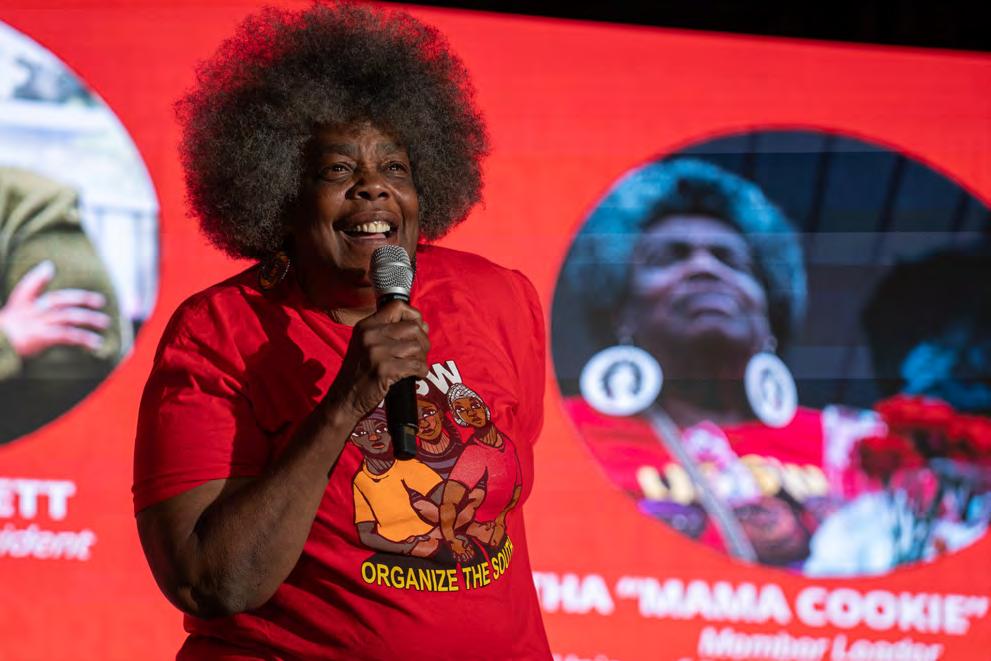
Durham organizer Bertha Bradley, better known as Mama Cookie, has been a trailblazer in the fight for better working conditions across the South.
BY STORMS REBACK backtalk@indyweek.com
Bertha Bradley is one of Durham’s leading activists, yet very few people know her name—but only because no one calls her by it. When she was little, her grandmother called her “Cookie.” The nickname stuck like glue.
Cookie, a lifelong Durham resident, has been instrumental in movements like Fight for $15 and a Union and the Union of Southern Service Workers, both of which strive to improve working conditions for service-industry workers in the South. Her passion about this subject comes from firsthand experience.
While raising her, Cookie’s grandparents imbued her with values that still serve as her moral compass. Not least was the importance of hard work. “It didn’t matter where you worked,” Cookie said. “It was how much you put into it.”
Her grandfather worked at Duke Power—even when it was dangerous to get to and from work. During the unrest stirred up by Martin Luther King Jr.’s 1968 assassination,
he needed a pass just to leave the house.
Her grandmother’s job at Turnage’s Barbecue was equally instructive. Working hard was important, but so was fighting to make sure that work was justly rewarded.
“I used to watch her work so hard with no health insurance or benefits,” said Cookie. “I realized that my grandma was suffering, going to work with her legs wrapped up because she couldn’t afford a doctor, and that she shouldn’t have been suffering.”
Before her family moved to Durham’s West End, Cookie’s early life revolved around Fayetteville Street: Fayetteville Elementary, the Whitted School, the barbershop. Before long, she discovered a painful reality: No matter how smart and driven they were, she and her siblings wouldn’t be going to college. There was no way her grandparents could afford to send one kid there, much less eight.
When she was 14, she got a summer job at Pappy’s
Pizza in Northgate Mall, and she didn’t stop working for the next 50 years.
Cookie’s next job involved deboning chickens at the Central Carolina Farmers Exchange on Gilbert Street. When her grandmother got sick, Cookie got a job at Jareh Healthcare, so she could learn how to take care of her.
Cookie’s grandmother once discouraged her, she recalled, from complaining about the inequities their family faced: “Cookie, you don’t need to get involved in that.”
“Let that girl alone,” she remembered her grandfather responding. “Let her fight. One day she’s going to make us proud. She’s not going to stand down and not open her mouth.”
It was a pivotal moment for Cookie. “That’s why I do what I do,” she said. “Because of my grandpa. He didn’t allow me
“When they rise up, I’m gonna be right there with them. We gonna rise, we gonna rise”
not to be heard.”
Cookie joined the Communist Workers Party when she was 19. “That’s when I learned that I have a voice, that I have rights,” she said. “Listening to their words, how the system was broken and how it was doing us as people—not just Black people, but people period—I realized that I got to stand up and do something.”
Her idealism was all but snuffed out by the events of November 3, 1979, when members of the Ku Klux Klan and the American Nazi Party killed five and injured 12 of her colleagues at the Greensboro Massacre. “I’m not gonna lie,” she said. “I got scared, and I stepped away because I didn’t want to jeopardize my family.”
For the next three decades she held a series of jobs that were high in stress and low in pay: heavy equipment operator, waitress, fast-food worker. She spent 22 of those years working at the Wendy’s near Hillside High School.
“I would take money out of my check to feed those kids,” she said. “Their education meant more to me than having
Bertha Bradley, also known as Mama Cookie PHOTO COURTESY THE UNION OF SOUTHERN SERVICE WORKERS
a dollar in my pocket. They still contact me to this day to say thank you. You don’t know how much that means.”
Cookie credits her son Earl with reviving her activism by convincing her to attend a meeting for Fight for $15 and a Union in 2013. She’s been fighting to get the federal minimum wage increased ever since.
In 2022, she helped found the Union of Southern Service Workers, which lobbies for higher wages and better workplace conditions for service industry workers in North Carolina, South Carolina, Georgia, and Alabama. She credits the union’s deputy director, Keith Bullard, with tweaking her nickname so that it matched her grand dame status. As the name suggests, Mama Cookie has mentored numerous young activists.
“To see the way society is doing these young folks today, it’s not fair,” she said. “That’s why I fight so hard. These kids need the wisdom and the knowledge of the elders to let them know, ‘You got a voice. Don’t let nobody take it away from you.’”
In 2023, Durham recognized her hard work by declaring April 3 Mama Cookie Day. “I accepted the award, but it ain’t about me,” she said. “It’s about the people. It’s our day.”
Now 67, Mama Cookie looks forward to the day when everyone who’s been priced out of the American Dream puts their collective foot down. “I’m hoping to see the people rise,” she said. “When they rise up, I’m gonna be right there with them. We gonna rise, we gonna rise.” W
Mama Cookie PHOTO COURTESY THE UNION OF SOUTHERN SERVICE WORKERS
ARIELLE HEBERT: BOTTOM FEEDERS
Friday, June 26, 6:30 p.m. | Letters Bookshop, Durham
Deep Water
Bottom Feeders, Durham poet Arielle Hebert’s atmospheric debut, sketches out the beauty and fault lines of a queer Florida girlhood.
BY SARAH EDWARDS sedwards@indyweek.com
I don’t think I’ll ever stop writing about Florida,” said Arielle Hebert, author of new poetry collection Bottom Feeders, speaking from a Durham office crowded with lush-looking monsteras.
The Florida Hebert evokes in Bottom Feeders, out this month from Black Lawrence Press, is a place of vivid contrasts—waterfront mansions and invasive snakes; parking lot loosies and cheap beer; and storms that blow in suddenly, the air buzzing “with live heat and salt.”
There’s a certain come-and-go baked into the Sarasota landscape, with its snowbirds and circus vanishing acts and rising sea levels; erosion slowly gnawing at shorelines. OxyContin is a specter. As Hebert writes: “Between 1999 and 2013, prescriptions of opioids increased by 400%. … Police said getting an opioid prescription was as easy as buying a cheeseburger at McDonald’s.”
Woven throughout these lyrical, atmospheric poems is a fierce love between two teenage girls, as addiction hooks its teeth into one, while the other tries to help, to ride out the storm, before resigning to getting out while she still can. Then comes North Carolina, with its seasonality and “acorns so fat they pop like glass bottles” under tires. Visits back to Florida, Hebert writes in “The Dead Layer,” are a “training exercise in breathing underwater /
and I was never the strongest swimmer.”
Hebert is a graduate of North Carolina State University’s MFA in Creative Writing program and the director of operations and marketing at Blair, a nonprofit publishing press based in Durham. Ahead of the book’s release and several local readings, the INDY spoke with Hebert about creating a poetry coven and navigating writing about addiction, place, and grief.
INDY: This is such a cohesive collection—what was the writing process like? Was there a moment when you knew there was going to be this shape to it?
ARIELLE HEBERT: I started writing Florida poems, I guess we can call them, in grad school. That was a little over 10 years ago—so the first seeds were sown quite a while back. One of the early poems that felt like “OK, maybe this is going to turn into something” was the title poem, “Bottom Feeders.” Ada Limón chose it as the winner of the North Carolina State Poetry Contest [in 2019].
After that poem got recognized by Ada, it made me think about the collection in a different light. I didn’t realize, at
first, that it would focus on this relationship between the speaker and her girlfriend, her friend. I did want to write about the opioid epidemic in Florida, and realized after writing “Bottom Feeders,” and it winning that contest, that it felt like the root of something and that the relationship was a big part of that poem. It lays the groundwork for a lot of scene-building taking place in Sarasota and felt like the heart of the collection.
The opioid epidemic is a big through line. What kind of considerations played into that?
While I was there, I knew things—they were calling it an epidemic on the news and in the newspapers already, and it did feel like pills were everywhere. I was in high school and a young adult by this point, and so they were at parties, at my job, you know? It just was part of teenage life, and I assumed it was like that everywhere.
I know communities elsewhere have suffered through the epidemic, but it took leaving Florida and researching all of the news—hindsight helps a lot, too. There was a lot more coverage about Florida being so lax with laws and pill and
Durham poet Arielle Hebert PHOTO BY SCOTT KRIER
Arielle Hebert story continues on page 19
Stranger Than Fiction
North Carolina writer Ben Fountain’s new novel, Rasputin Swims the Potomac, imagines a political reality even more dangerously absurd than the Trump era.
BY NATHAN DIXON arts@indyweek.com
I’d thought departing Durham at 8 would allow plenty of time to get to New Bern for an 11 a.m. interview with author Ben Fountain. But, of course, there is traffic on Highway 147 and Interstate 40, and it took more than an hour to get east of Raleigh, a 20-minute midnight drive. Have humans always measured distance with intervals of time? How can we know how far we’ve come unless we know how long it took to get here?
Fountain, 67, was born in Eastern North Carolina, spent his formative years in the Triangle, and has called both home ever since. His debut collection of short stories, Brief Encounters with Che Guevara, was published to widespread acclaim in 2006.
Three more books followed, including the novel Billy Lynn’s Long Halftime Walk, which won the National Book Critics Circle Award for Fiction and was adapted into a movie directed by Ang Lee. His latest novel, Rasputin Swims the Potomac, centers on a world champion professional wrestler with presidential ambitions. It releases in June.
Highways 42 and 70 take me into the Sandhills on my way to meet Fountain, and I imagine him as a 13-year-old boy traversing this route in reverse, on his way from Kinston to a new life in Cary.
“When I was growing up in North Carolina in the ’60s, there was dire poverty out in the countryside—I mean, tar-paper shacks and naked kids in the yard,” Fountain told me. “And if we aren’t careful, we’ll go right
back to it.”
Fountain’s family made the move in the early ’70s after his father was elected to serve as president of the state’s community college system—the third largest in the nation—which thrived under governors like Terry Sanford.
“If you asked my dad what he did,” Fountain said, “he would say he was a school man. If you pushed him further, he would say he was trying to help poor people.”
After graduating from Cary High School, Fountain attended the University of North Carolina at Chapel Hill, where he majored in English and took classes from the likes of Doris Betts and Marianne Gingher. He then went on to Duke Law School, where he fell in love with Sharrie—his future wife—whom he would follow to Dallas, Texas, thereby escaping what he described, in a 2006 New York Times essay, as “the cumulative weight of family and history and place, a kind of endlessly repeating nostalgic fog.”
Fountain’s quitting his lucrative lawyering job five years later to become a writer—and the long, slogging road to success that culminated in the publication of his lauded debut collection of stories at age 48—has been well documented in Malcolm Gladwell’s famous essay “Late Bloomers” and repeated in almost every article about Fountain since.
“I went to law school,” Fountain explained, “because I was scared of writing.” There was no clear-cut path to the creative endeavor,
failure seemed likely, and “nobody wants to waste their life.” But the monkey was riding his back well before he left the Old North State, and it was still hanging on when he returned more than 40 years later.
The telephone poles lining the exit ramp into New Bern are strung with American flags for Memorial Day. How appropriate, this mise-en-scène, for the conversation to follow. My own debut story collection pillorying the rhetoric of the Tea Party was published last year, though I drafted the stories well before Donald Trump took that infamous golden escalator ride toward the presidency.
I was interested in speaking with Fountain because I see in him a model artist: a cultivator of the golden ear, a methodical experimenter, a fellow traveler who refuses to draw a line between art and protest. On Queen Street, I pass beneath a vinyl sign advertising a Knights of Columbus yard sale. And as I park, here comes Fountain loping down Middle Street, swinging his arms like a little kid.
The bells clang in the 200-year-old gothic Episcopal church across the street, and we sit down at a café less than a block from the birthplace of Pepsi-Cola to talk about education, the breaking of the social contract, the gutting of society, the obscene hoarding of wealth by a handful of evil people, about Maslow’s hierarchy and Bonhoeffer’s ethics and our mutual contempt for the political class; about the death of book reviewing,
the rise of AI, and how every story needs a setting (would Kafka agree?).
We talk about Haiti as “the boiling point,” where the concentrated “legacies of capitalism, the slave trade, and the movement of Europeans into the New World” converged, about how far we’ve come and failed to come in the 500 years since the Old World crashed into the New, and about how there’s always something more to learn, how research—that is, reading, listening, and digging—becomes the muse for every late bloomer.
While Fountain visited Haiti more than 50 times in the process of writing two novels and several short stories about that island nation, his new novel is set in the United States and bears more in common with Billy Lynn’s Long Halftime Walk, in which the author was thinking, as he wrote in a 2017 Guardian essay, about “the fact that at some point in our recent history, fantasy made reality its bitch.”
Fountain cites Trump as a master at blurring the line between reality and fantasy, a job made easier by America’s addiction to screens. In the character Rasputin, he imagines a challenger for our current president—whose all-too-familiar name, it bears mentioning, is completely redacted from the text. (“Less for legal reasons,” Fountain explained, “than that I was simply tired of seeing it.”)
North Carolina author Ben Fountain PHOTO COURTESY OF THORNE ANDERSON
Rasputin takes kayfabe to the extreme by claiming—both in and out of the wrestling ring—to be the literal reincarnation of the historical Grigori Rasputin, with all the Russian mystic’s attendant faith-healing powers.
In the novel, the Supreme Court has cleared Trump to run for a third term just as a mysterious weeping sickness plagues MAGA country. When Rasputin proves he can heal the afflicted at a wrestling match, he’s floated as a potential running mate for the president, before dark money begins pouring into a “Draft Rasputin for President” movement.
Fountain tells the story through the alternating perspectives of Clarence Thomas Jr., a retired political science professor-turned-journalist (who bears no relation to the Supreme Court justice), and Faith Spack, a former reality-TV child star now working as a White House communications staffer. The former, a man admittedly after the author’s “own heart,” struggles “not to be that dreary old head boring everybody to death with … living history monologues” and might well be read as Fountain’s warning to himself and the scant few other fiction writers who have dared to portray Donald Trump.
Such luminaries as Salman Rushdie and Dave Eggers have floundered in attempts to satirize the president, perhaps because they’ve not been able to imagine a reality more absurd than the present. (Cue Alec Baldwin’s puckered face on Saturday Night Live.) “What the late-night soi-disant satirists end up doing is ridiculing, not satirizing,” the writer Will Self wrote in a recent Harper’s article, “and that’s what you do to demagogues, not legitimately elected leaders.”
Had the plot of Fountain’s book remained focused on the machinations of the Trump campaign, rather than shifting to the nascent candidacy of the faith-healing professional wrestler, he, too, might have fallen into the trap that Clarence articulates. Instead, he uses comic exaggeration, to borrow Will Self’s definition of satire, “as a magnifying glass … through which to ridicule [and] catstrophize political reality.”
Clarence’s working definition of fascism, in the novel, beyond its defining characteristics (“white supremacy, Christian nationalism, and charismatic leadership”), is “Power over justice. Power as justice. Ultimate power as the justification of itself.”
It is this gross consolidation of power, exemplified by technocrats and billionaires, at whom Fountain directs his ire, refusing to punch down at individual Trump supporters—especially those like Faith, who is neither “Republican and conservative” nor
“anti-Democrat and -woke” but simply an adherent to the “flesh and heat and voice and … force field of [Trump’s] aura.” Although the Draft Rasputin movement appears to be grassroots, Clarence follows the money to the Tea Party—“the same high-dollar folks who bankrolled a bunch of angry, confused, dress-up-playing white people.”
Here is the rub: In a world where weeping sickness spontaneously erupts in pockets across the U.S., where time stops cold— freezes—for all but our intrepid Clarence and Faith, where the spirit of Terry Southern guides a comatose character through the ethereal waiting room of heaven, in a world like this, how are readers to know, in the thunderous words of Faith, that “RASPUTIN IS NOT REAL”?
For “even as she insists on the irreality of Rasputin, she’s thinking he might be realer than anything. Healing the weepers, that’s real. Curing Clarence Thomas, real. The crowds, the poll numbers, the lightsout fundraising, real. The quaking lust he inspires in every woman in sight, definitely real. For this Faith offers herself as proof.”
And the reader believes Faith, just as the reader believes Clarence Thomas Jr., because the weeping, the time slippage, the Terry Southern visitation boggle them as they would boggle anyone, even as they narrate the familiar irreality of our own collective world.
Not unreality, not surreality, not magical realism (a genre born, by the way, in Haiti), not quite, but the nightmare into which we are all always waking. The novel builds like a Shepard tone, ending abruptly—its energy still building—before the bass drop of the Republican primary.
“It had to end this way,” said Fountain, “because we’re still in the middle of it.”
The interview now complete, I cross the Trent River on Highway 17 and think about the author in a January boat on the Potomac, researching the superhuman physical feat for which his new novel is named. Although the rural lushness of Fountain’s youth has largely given way to superhighway, factory farm, and suburban sprawl, I still sight dust devils spinning in the drought-riven fields.
Fountain and Sharrie long ago figured they would end up in the Triangle, but the traffic, he says, is as bad as in Dallas, where much of the new novel is set. I’m hoping to beat rush hour. The 250th anniversary of our nation is upon us. How far have we come? Part of the festivities in the capital include a UFC cage fight on the White House lawn. Will Self may proclaim satire dead, but Ben Fountain—old master, visionary experimentalist, Tar Heel satirist extraordinaire— proves him wrong at every turn
Hebert story continued from page 17
pain clinics. What I felt living in Florida was confirmed after I left.
I learned a lot via research afterward, looking at news clippings and reading about when Purdue Pharma got taken to court. There were these misconceptions about it being less addictive than morphine, and there was so much money involved in tourism of the selling of pills in Florida. I didn’t know a lot of that before I started writing these poems.
There seems to be this balancing act here—loving a place that maybe doesn’t love you back all the time.
[Leaving] felt like a bad breakup, or burying a friend. I lived there for 13 years, from elementary school through college through undergrad. I’ve been in North Carolina for 13 years now, so I’m at this weird equinox period. It is very poetic to have the collection coming out during this split in my home feelings.
Sometimes it feels like I ran away, and other times it feels like I escaped. I think both of those feelings are still true. I dealt with a lot of guilt after leaving, wondering if I had made the right choice, if I could have done more for my friends who were going through addiction or recovery, whether I could have done more for my community at large.
I grew up 15 minutes away from the beach; one of my first jobs was at the beach. We were always there. I miss the water, the coast. Besides the natural landscape, I love the people I left behind, too. The focus of the book is about a relationship, and I still miss that person, and I [also] miss who I was when I was there. That was part of the grieving—leaving behind a part of myself and having to start over somewhere new. I didn’t know anybody here, and starting from scratch was daunting, but I’ve also made a new home here and feel like I’ve found my people.
Florida feels like it has a distinct voice and perspective, with the writing that comes out of it—Harry Crews, Zora Neale Hurston, Lauren Groff. What do you think it is about Florida?
Florida is so mystical and magical; it feels otherworldly. In part, it’s because it’s a vacation destination—whether you’re going for the coasts or for the theme parks, there is this kind of suspension of reality where, if you’re not a local, you’re there to have a good time and experience some magic. I love Lauren Groff’s work. I feel like she
and Kristen Arnett are both writing books that honor and capture Florida in all of its weird, wild, wonderful, strange nature, and in some ways I feel like I’m following in their footsteps. There are certainly different Floridas that can be experienced, whether you’re on the coast or in the rural parts or outside of Orlando, where the parks are, and then there’s Miami. Florida is not a monolith, as no place is.
I wanted to ask about Sarasota’s history as a circus town. Was that something you planned to weave in from the onset?
I didn’t know it was going to be such a large part of the background of the book. The first poem I wrote that included the circus was “Circus Town,” and it started as a way to flesh out Florida. The sense of place is so strong for me, and I related to it as if it was a character or a person I knew and loved.
It was a puzzle piece that made a lot of other things make sense and click. ... There’s so much history that comes from the circus that paved the way for industries and tourism to happen, and the lifers I’ve mentioned—everyone being unabashedly themselves.
You could be wild and weird and unique, and be accepted and celebrated for that, despite the lack of acceptance in other ways in Florida, whether for queer people or immigrants. There’s a political resistance to accepting people for who they are, but there is also this contrast. You can go to school to be a princess, or go to clown school, or learn how to walk the high wire or the trapeze.
You went to N.C. State’s creative writing MFA program—what was that like?
I had applied to some other programs and was waitlisted at N.C. State. I deferred at other places to study with Dorianne Laux. About a week goes by, and I get a call from Dorianne, and she says someone else dropped out and there’s a spot for you now. I feel like it was kismet.
I really found my literary family there. I’m still best friends with some of the women I met in that program. They’re my poetry coven, and I still write with Dorianne Laux and her husband Joseph Millar—once a week on Zoom, we still share poems and books. It formulated me as a poet. I knew poetry was important in my life, but N.C. State and the family there showed me what it was to be a poet in community—how to form that family and keep it.
Arielle
MUSIC
BLACK
Boys to Men
Out June 19, Pierce Freelon’s Black Boy Glow uplifts the mentorship of Black youth and is another powerful entry in his award-winning children’s music catalog.
BY JUSTIN LAIDLAW jlaidlaw@indyweek.com
For the boys and young men facing increasing isolation and loneliness, it’s all too easy to log on and get lost in the “manosphere,” where toxic influencers like Andrew Tate, Clavicular, and a host of other figures reign supreme.
But for every podcast hack, there is an uncle, coach, teacher, or other male figure in a young boy’s life trying to flip the script by demonstrating a positive representation of masculinity. Pierce Freelon, Grammy Award-winning musician and community leader, believes that kind of positive mentorship is especially vital for Black boys and the Black men who nurture them.
For years, Freelon has facilitated the mentorship of Black youth through Blackspace, the Afrofuturist youth center in downtown Durham that hosts “wokeshops” and the Rowdy Summer Cypher, named for former Blackspace Executive Director Kevin Joshua “Rowdy” Rowsey II, who died in 2024.
In recent years, Freelon has also blended his creative gifts and interest in youth empowerment into an award-winning chil-
dren’s music catalog. His newest record, Black Boy Glow, celebrates kinship and mentorship between Black men; on Juneteenth, he’ll host a CCB Plaza album release party. Ahead of the show, we caught up with him to talk about his children’s music career and how becoming a father shaped his creativity.
INDY: What was the genesis of this new album?
PIERCE FREELON: I don’t think I play a big role in what I create, in a weird way. I just try to listen. In fact, it’s funny—I have this ice cream company [Coco Fro], and I’ve been trying to think of ways to weave the marketing, the values and ideals, around Coco Fro into my music, so early this year I set an intention to make an album about food. I was thinking, “I’m lactose intolerant, so a song about lactose intolerance, a song about eating food that’s powered by the sun, how NASA freeze-dries foods’—you know, sciencey stuff—stuff that would tie into Coco Fro. We’re opening up a brick-
and-mortar in Durham. I’m working on a book about lactose intolerance; a children’s picture book about eating. This was my intention.
But when I sit down to write, I’m listening to beats, I’m producing music, I’m writing choruses, I’m penning lyrics, and what’s coming out is not ice cream, it’s not food. It’s songs about being an elder, songs about rites of passage. There’s this song, Track 2 on the album, called “Rite of Passage,” which is about how boys ascend into manhood. There are songs about dap. Since I cut my hair, I’ve been rocking durags again, checking out the latest durag brands, and I’m writing “My Smooth and Silky Durag.” So these songs, I don’t want to say were against my intention, but the music that was moving me had a theme, and those themes were masculinity, care, whimsy, all things that related to boyhood. This is against the backdrop of the manosphere and the male loneliness epidemic and conversations around toxic masculinity, conversations we’re having at NorthStar and Blackspace. It’s in the
zeitgeist, and it’s what flowed out of my pen.
How has your writing process changed over the years, especially with the pivot to children’s music?
I’ve been doing music forever; first it was Language Arts for a long time, and then The Beast, and my first children’s music album— these were songs that were 10 years in the making, because I was writing them during the Beast and Language Arts eras, but I wasn’t releasing them because I thought to myself, Language Arts is a hip-hop group. We’re going for OutKast, we’re going for A Tribe Called Quest, we’re not really doing Mr. Rogers, even though I was a dad. Same for The Beast; our North Star creatively was The Roots. It was The Coup and political hip-hop.
When I write a song about picking boogers out of my kid’s nose with the suction—like, make it make sense. Mos Def would never; Common would never. So those songs ended up in the vault. Occa-
sionally, if I would bring it to a songwriting session, it just didn’t make sense in the context of the other body of work that we had released, and so I put them to the side. I pretty much started writing about being a dad and about kids-centered stuff the moment I became a father, which was 2008, when Justice was born.
Fast-forward to 2016, my dad was diagnosed with ALS, and he passed three years later in 2019. That time of grief and slowness and reflection really brought me back to, like, “Wow, there’s this other version of you that isn’t showing up in your creative life, and this version of you is the father, this version of you is the son.” My first children’s album, D.A.D., was about my dad and the lessons he taught me as a kid, and the way that he raised me, and it was about me being a dad.
Bro, I must have had 300 song ideas, not fully fleshed-out stuff, but I’d take out my phone and make a voice note—sometimes the idea is simple, fleeting, emergent. They sat in my archives until about 2019 when I was caregiving with my dad, not really trying to do anything creative, honestly, just looking for nostalgic moments to put a smile on my dad’s face.
However, I don’t feel like we have enough cultural commentary on the relationship between Black men and Black boys and the roles that Black men play in helping shape healthy masculinity, healthy values, healthy self-affirmation, and knowledge of self in Black voice. We don’t see enough of it. Coming-of-age rituals are something that Black people, in particular, have lost. Our ancestors had coming-of-age rituals. Some cultures still do it. There are quinceañeras. In the Jewish tradition, there’s a bar mitzvah. Manhood isn’t something you just stumble into. It’s not something you look at your watch and you’re like, “Oh, I’m 15 now. I’m a man.” No, it’s a ritual that other men hold with you to usher you into manhood. Something that is earned. [As a teenager] I was a disobedient smartass getting in trouble at Durham School of the Arts, and my dad called my cousin; he was 11 years my senior. My cousins took me out to climb a mountain and experience physical discomfort, you know, traverse tumultuous terrain and accomplish a goal that requires grit and mental fortitude. It wasn’t the intention, but I recognized it later in life as like, “Oh, that was a rite of passage.”
of my pen.
changed the pivot first it was then The music album— years in the them during eras, but I thought to hip-hop group. going for A really doing dad. Same creatively was political about picking the sucMos Def never. So vault. Occa-
If you listen to my children’s music, you will hear OutKast, you will hear Mos Def, you will hear Alchemist and Q-Tip from a production standpoint. There’s an interesting movement in children’s music to take trap beats and put children’s songs over them. But my stuff doesn’t sound like pop; it sounds like really dope jazz-influenced underground hip-hop, and lyrically, I’m asking my audience, as young as they are, to step up to a higher level of metaphor and storytelling than they’re used to with “Ring Around the Rosie.”
Do you remember Shel Silverstein and Where the Sidewalk Ends? There’s a body of work in the children’s space that to me elevates the genre, because it doesn’t pander.
Why now? What about this moment brings the essence of Black Boy Glow to the forefront for you?
This is a vital moment where Black men are desperately needed as mentors, as “unc” or as coaches, teachers. There’s just not enough of us in their lives. Culturally speaking, the role of the nurturer is stereotypically, historically seen as the woman’s role, and I think that is shifting now. You see more dads out there pushing strollers; you see more dads out there with the baby backpacks. I think that’s great. We are transforming and shifting narratives around masculinity that create space for us to be nurturers.
Instilled in my memory is this ritual to connect with a man who was not my father—who could pour into me, who I can talk about things with that I couldn’t raise with my dad. We talked about girls, we talked about drugs, we talked about basketball. He was a mentor. He stood in that gap for me.
You have an altar to your dad at your home that has expanded to include a number of all-time great Black futurists. Who all has made it onto the altar thus far?
I collect Black action figures, and yeah, they sit on the altar. That’s technically my dad’s altar, but he shares it with some other mythological science fiction characters. So, of course, we got Lieutenant Commander Geordi La Forge and Worf from Star Trek Captain Sisko from Deep Space Nine is on there; Cyborg from the DC Universe; Bishop, the time-traveling mutant from the X-Men universe is up there; Lando from Star Wars; Morpheus from The Matrix
Which futurist do you think your dad most connects to?
Hands down, Morpheus. The Matrix is my dad’s favorite movie. The idea that you can manifest and create your own reality, breaking down the facade of what we perceive to be reality to seize your destiny—he was all about that.
CULTURE CALENDAR
WED 06/17
MUSIC
Arts on East: Rebecca Porter
7 p.m. Duke East Campus, Durham.
The Beths, Squirrel Flower
8 p.m. Cat’s Cradle, Carrboro.
Greg Allman: The Music of My Soul
7 p.m. The Rialto, Raleigh.
Leanna Firestone, Abby Cates
8 p.m. Cat’s Cradle Back Room, Carrboro.
Playboy Manbaby Corporations are People Tour with WolvesX4
8 p.m. Local 506, Chapel Hill.
STAGE
Dear Evan Hansen June 3-21 7:30 p.m. Theatre Raleigh, Raleigh.
PAGE
Barbara McQuade: The Fix 5:30 p.m. Flyleaf Books, Chapel Hill.
Nicole Carr: The Price of Exclusion 6:30 p.m. Quail Ridge Books, Raleigh.
THU 06/18
MUSIC
The Beths, Squirrel Flower
8 p.m. Cat’s Cradle, Carrboro.
Billy Allen + The Pollies
8 p.m. Cat’s Cradle Back Room, Carrboro.
Blacktop Mojo: Texas Checkmate Tour with Seven Year Witch, Anything But Human
8 p.m. Lincoln Theatre, Raleigh.
Cinderella’s Tom Keifer, L.A. Guns
7 p.m. The Ritz, Raleigh.
Jazz in the Garden: Send a Kid to Camp Fundraising Gala
7 p.m. The Justice Theater Project, Raleigh.
Jill Scott: To Whom This May Concern Tour
June 18 and 20, 8 p.m. DPAC, Durham.
The New Flash: A Goth/ Industrial Dance Night
10 p.m. Rubies on Five Points, Durham.
Reveri3, Ajena
8 p.m. The Pinhook, Durham.
Total Chaos, Noogy
8 p.m. Local 506, Chapel Hill.
STAGE
Shadows in Red Light June 13-28, various times. Burning Coal Theatre Company, Raleigh.
SCREEN
Movie Loft presents “Critical Condition”
8 p.m. Shadowbox Studio, Durham.
FRI 06/19
MUSIC
Aaron Hamm and Big River Band, Kaden Jones Band, Tan Sanders
7:15 p.m. Lincoln Theatre, Raleigh.
Babyface Ray X 42 Dugg: 4 The Streets Tour
7 p.m. The Ritz, Raleigh.
Boogie Down Broadway: A Singalong Dance Party
7 p.m. Motorco Music Hall, Durham.
Brandon Mitchell Quartet
3 p.m. Sharp 9 Gallery, Durham.
Drunken Prayer, Knockout Artist, Rabbit Fighter
8 p.m. Local 506, Chapel Hill.
Jake Richter’s New York Quartet
7 p.m. Sharp 9 Gallery, Durham.
Juneteenth with Jooselord
7 p.m. Rubies on Five Points, Durham.
Juneteenth Dance Party with Dàmólá, Himbo & DJ Wicked
10 p.m. Rubies on Five Points, Durham. Max Richter
8 p.m. DPAC, Durham.
Robyn Hitchcock: Live And Electric
8 p.m. Cat’s Cradle, Carrboro.
Sacred Concertos and Motets
7 p.m. Duke Goodson Chapel, Durham.
STAGE
Anastasia the Musical June 5-21, various times. The Justice Theater Project, Raleigh.
Danger! by Lucius Robinson June 11-27, various times. Burning Coal Theatre Company, Raleigh.
Elizabeth June: NOTES from a NARCISSISTIC NEGRO & Other N Words 7:30 p.m.The ArtsCenter, Carrboro.
The Beths perform at Cat’s Cradle on Wednesday, June 17 PHOTO COURTESY OF CAT’S CRADLE.
of Montreal performs at Cat’s Cradle on Saturday, June 20 PHOTO COURTESY OF CAT’S CRADLE.
FIND OUR COMPLETE COMMUNITY CALENDAR AT INDYWEEK.COM/CALENDAR
SCREEN
CULTURE CALENDAR
TUE 06/23
MUSIC
WED 06/24
MUSIC
KING SHIT: Out to Lunch vs. Nerd Lenz
Live And Carrboro. and Goodson Chapel, Musical times. Project, Robinson times. Theatre
NOTES
NARCISSISTIC Words ArtsCenter,
June 20 Durham.
7 p.m. Mettlesome Theater, Durham.
School of Rock
June 11-28, various times. Raleigh Little Theater, Raleigh.
SCREEN
Garrison Keillor
7 p.m. Martin Marietta Center for the Performing Arts, Raleigh.
The Official FIFA World Cup Watch Party: USA vs. Australia
2 p.m. The Rialto, Raleigh.
The Rocky Horror Picture Show
11:55 p.m. The Rialto, Raleigh.
SAT 06/20
MUSIC
DEBÍ TIRAR MÁS FIESTAS
| The Bad Bunny Party
9:30 p.m. Motorco Music Hall, Durham.
Ensign 1999, Dipper Grande, The Matildas
6:30 p.m. Rubies on Five Points, Durham.
The Gay Dolphin Apocalypse presents ENSIGN 1999, Dipper Grande, The Matildas
7 p.m. Rubies on Five Points, Durham.
Horace Pinker, Celebration Summer, Late Bloomer, Oort Patrol
8 p.m. Local 506, Chapel Hill.
of Montreal
8:30 p.m. Cat’s Cradle, Carrboro.
Sistering
7 p.m. Sharp 9 Gallery, Durham.
Solos Duos Quartet ft. Daniel Levin, Billy J. Hawkains III, Laurent Estoppey, and Matthew Rock
7:30 p.m. The ArtsCenter, Carrboro.
Saturdays in Saxapahaw: Story Charlemagne
6 p.m. Haw River Ballroom, Saxapahaw.
Squirrel Nut Zippers
8 p.m. Haw River Ballroom, Carrboro.
Tank and the Bangas Host a Carrboro Juneteenth Celebration with ¡Tumbao!, Ariel J
5 p.m. Cat’s Cradle Back Yard, Carrboro.
Venetian Vespers Music
8 p.m. Duke Chapel, Durham.
STAGE
Comedy Bang! Bang! Ground Beefing Tour
8 p.m. The Carolina Theatre, Durham.
KING SHIT: Show Us Your Teeth vs. Plot Holes
6 p.m. Mettlesome Theater, Durham.
SUN 06/21
MUSIC
The Church THE SINGLES: 1980-2025
8 p.m. Haw River Ballroom, Carrboro.
Dumb Cousin with BEEPER and Horse Deniers
8 p.m. Local 506, Chapel Hill.
Jennifer Curtis and Friends
3 p.m. The ArtsCenter, Carrboro.
Lip Critic, Flatwounds, Bejalvin
8 p.m. The Pinhook, Durham.
Mikaela Davis
7:30 p.m. The Pinhook, Durham.
Father’s Day with the Grateful Dead
7 p.m. The Rialto, Raleigh.
MON 06/22
MUSIC
Bixby
8 p.m. Cat’s Cradle Back Room, Carrboro.
Subhumans, The Iron Roses, Bangzz
7:30 p.m. Cat’s Cradle, Carrboro.
Delta Sleep, Michael Cera Palin, Combat 7:30 p.m. Motorco Music Hall, Durham.
Worm: Total Possession of America Tour
7:50 p.m. Local 506, Chapel Hill.
STAGE
2026 North Carolina’s Funniest Person Contest
Preliminary Round
June 9-Aug. 6 7:30 p.m. Goodnights Pop-Up Club, Raleigh.
PAGE
Elisa Faison: Skin Contact
6 p.m. Flyleaf Books, Chapel Hill.
Arts on East: ZOOCRÜ
7 p.m. Duke East Campus, Durham.
Franny Starlight & The Brass Boudoir
7:30 p.m. The Pinhook, Durham.
Matty Frank, Tenderqueer, Bee Million
8 p.m. Rubies on Five Points, Durham.
The Church performs at Haw River Ballroom on Sunday, June 21 PHOTO COURTESY OF HAW RIVER BALLROOM.
CULTURE CALENDAR
THU 06/25
MUSIC
Dakota Proctor with Mary Anna and Stray Lions
8 p.m. Local 506, Chapel Hill.
Dominican Jazz Project
7 p.m. Sharp 9 Gallery, Durham.
Lowertown, Truman Sinclair
7 p.m. The Pinhook, Durham.
Ol’ Joey Scrums, The Rattletraps, Eric Lee Hardt
8 p.m. Cat’s Cradle Back Room, Carrboro.
Slow Teeth, Skylark
8 p.m. Rubies on Five Points, Durham.
STAGE
Pioneer Winter Collective: Apollo
7:30 p.m. The Carolina Theatre, Durham.
SCREEN
It’s Not You. It’s Me: Chicago
6 p.m. Raleigh Little Theater, Raleigh.
Cool Boy’s Tapes (VHS night)
8 p.m. Shadowbox Studio, Durham.
FRI 06/26
MUSIC
Chuck Ragan, Overton, Brian McGee
8 p.m. Motorco Music Hall, Durham.
Dex Fest Night One
7 p.m. Cat’s Cradle, Carrboro.
An Evening With Goose June 26-27 7 p.m. Red Hat Amphitheater, Raleigh.
Jil Christensen, David Landes, Irina Kruchinina
7 p.m. The ArtsCenter, Carrboro.
Late Nite Lowlights, Persistent Itch, Heavy for the Vintage 6:30 p.m. Rubies on Five Points, Durham.
Le Lotus and Candiland with Lilac Drive
8 p.m. Local 506, Chapel Hill.
North Carolina Symphony: Classics Under the Stars
8 p.m. Koka Booth Amphitheatre, Cary.
Pigeons Playing Ping Pong June 26-27, 11:30 p.m. Lincoln Theatre, Raleigh.
Steve Haines, Ariel Pocock, Sarah Gooch
7 p.m. Sharp 9 Gallery, Durham.
STAGE
Pete Holmes
7 p.m. The Carolina Theatre, Durham.
SAT 06/27
MUSIC
Corporate Fandango with Ruler! and The Unsustainables
8 p.m. Local 506, Chapel Hill.
Dex Fest Night Two
7 p.m. Cat’s Cradle, Carrboro.
The Music of Billy Joel with Tony DeSare
8 p.m. Koka Booth Amphitheatre, Cary.
Saturdays in Saxapahaw: Irving Aday & Cuban Joy
6 p.m. Haw River Ballroom, Saxapahaw.
TJ Maiani Group
7 p.m. Sharp 9 Gallery, Durham.
Triangle Pride Band - 10th Anniversary CelebrationSummer Concert
7 p.m. Martin Marietta Center for the Performing Arts, Raleigh.
PAGE
Rob Miller: The Hours Are Long, But the Pay Is Low
2 p.m. Flyleaf Books, Chapel Hill.
SUN 06/28
MUSIC
“Anthem of the Sundays” Feat: Bring out Yer Dead
6 p.m. Lincoln Theatre, Raleigh.
Kevin Van Sant Quintet w/special guest Angela Bingham: The Matt Dennis Songbook
3 p.m. Sharp 9 Gallery, Durham.
TUE 06/30
MUSIC
NCJRO
7:30 p.m. Sharp 9 Gallery, Durham.
Lowertown performs at The Pinhook on Friday, June 25
PHOTO COURTESY OF THE PINHOOK.
CAT'S CRADLE
JUNE
6/17 WE: THE BETHS W /SQUIRREL FLOWER
6/18 TH: THE BETHS W /SQUIRREL FLOWER
6/19 FR: ROBYN HITCHCOCK LIVE AND ELECTRIC - FULL BAND SHOWS
6/20 SA: OF MONTREAL W/ CORMAE
6/22 MO: SUBHUMANS
W/THE IRON ROSES AND BANGZZ
6/26 FR: DEX ROMWEBER FEST: DALLAS TETNUS, LENNY KAYE & FRIENDS, THE BAD CHECKS, PYLON REENACTMENT SOCIETY, FLAT DO-OVER JETS
6/27 SA: DEX ROMWEBER FEST: JOHN HOWIE JR. & THE ROSEWOOD BLUFF, ENTREZ VOUS, HOT BRAINS, RAMONA & THE HOLY SMOKES, DAVID J, HENRI CASH & SETH CAROLINA
JULY
7/17 FR: FIRST DAY BACK W/ ETHEL MESERVE AND GAPYEAR
7/26 SU: GRRLBANDS SHOWCASE
9/25 FR: REVEREND HORTON HEAT/ MESSUR CHUPS
9/26 SA: SAWYER HILL OCTOBER
10/1 TH: THE FORMAT W/ THE GET UP KIDS
10/3 SA: KEVIN ATWATER W/ JESSE MAZIN 10/5 MO: BLACK COUNTRY, NEW ROAD
10/6 TU: THEO KATZMAN
10/8 TH: WHITNEY
10/10 SA: BRIAN FALLON
10/18 SU: BENJAMIN TOD & LOST DOG STREET BAND W/ TOMMY PRINE
10/31 SA: SAXSQUATCH NOVEMBER
11/3 TU: MENZINGERS, HOT WATER MUSIC, WEAKENED FRIENDS
11/7 SA: THE AFGHAN WHIGS
11/8 SU: SLOW PULP W/ SNUGGLE
11/9 MO: JULIA JACKLIN
11/15 SU: FRUIT BATS W/ SARAH KLANG
AUGUST
8/1 SA: THE DEAR HUNTER W/ MOTHERFOLK, K.SERA
8/7 FR: DIGGY GRAVES
W/ RESENTFUL, RYAN OAKES
8/20 TH: HAPPY LANDING W/ THE BAND SOLSTICE
8/28 FR: WEST 22ND
SEPTEMBER
9/9 WE: ANDMOREAGAIN PRESENTS: WLLOW AVALON
9/17 TH: CIRCLE JERKS / MUNICIPAL WASTE W/ NEGATIVE APPROACH
9/18 FR: MILITARIE GUN
SOFTCULT, SHADY NASTY, DAZY
9/19 SA: THE MILK CARTON KIDS W/ PAPER WINGS
11/16 MO: ANDMOREAGAIN PRESENTS: AX AND THE HATCHETMEN
11/18 WE: THE BENDS
11/19 TH: DIE SPITZ W/ FAETOOTH
11/21 -22: HISS GOLDEN MESSENGER I’M PEOPLE TOUR
11/28 TH: CRAZY CHESTER (CARRBORO TRIBUTE TO THE BAND AND THE LAST WALTZ) W/SUGAREE STRING SOCIETY DECEMBER
There is really only one rule to Sudoku: Fill in the game board so that the numbers 1 through 9 occur exactly once in each row, column, and 3x3 box. The numbers can appear in any order and diagonals are not considered. Your initial game board will consist of several numbers that are already placed. Those numbers cannot be changed. Your goal is to fill in the empty squares following the simple rule above.
PUZZLES
CROSSWORD
RELEASE DATE—Sunday, June 14, 2026
Los Angeles Times Sunday Crossword Puzzle
Edited by Patti Varol
Bad-mouth 49 Mrs. Pepper’s partner on “Blue’s Clues”
Tesla, for one 55 Leonardo’s group, for short
Like week-old
Org. with complex schedules
flier?
Slater of “Wicked”
that
on
CLASSIFIED
EMPLOYMENT
Lead Data Systems Engineer, F/T
Lead Data Systems Engineer, F/T at Truist Bank (Raleigh, NC) Provide consultation & tech’l direction on translating business reqmts & functional specs into logical prgm dsgns. Facilitate the implmtn & maintenance of complex business & enterprise s/ware solutions to ensure successful deployment of released applications. Serve as a tech’l expert for project teams throughout the implmtn & maintenance of business & enterprise s/ware solutions. Must have a Bach’s deg in Comp Sci, CIS, or rltd tech’l field +5 yrs of progressive exp in s/ware engineering or analyst positions providing Splunk Enterprise Platform support. In the alternative, employer will accept a Master’s deg in Comp Sci, CIS, or rltd tech’l field +3 yrs of exp in s/ware engg or analyst positions providing Splunk Enterprise Platform support. Must have at least 2 yrs of exp w/: demonstrating proficiency interacting w/ Splunk user base for the dvlpmt, mgmt & tuning of Splunk dashboards, knowl objects, ad-hoc/ scheduled searches & alerts; data onboarding log sources from n/work devices, infrastructure services, mission critical/business applications into Splunk; integrating multiple data streams, feeds from n/works, infrastructure services, mission critical/business applications into a near, real-time dashboard for use in troubleshooting; interpreting & applying new tech’l & system capabilities as needed to provide updates, enhancements, & modifications to an existing Splunk environment; & building, troubleshooting & supporting Splunk Infrastructure & associated data feeds in a Linux environment. Position may be eligible to work hybrid/remotely but is based out of & reports to Truist offices in Raleigh, NC. Must be available to travel to Raleigh, NC regularly for meetings & reviews w/ manager & project teams w/in 24-hrs’ notice. Apply online (https://careers.truist.com/) or email resume to recruitment@truist.com (Ref Job# R0115174)
Construction Management Professional Associate
Construction Management Professional Associate at Jacobs Engineering Group, Inc., Cary, NC and various unanticipated worksites in US: enforce compliance with Good Manufacturing Practices. Hybrid schedule. Salary: $125,653 - $126,700/yr. Apply at: https://careers.jacobs.com/. Req 40439.
Data Platform Engineer II, F/T
Data Platform Engineer II, F/T at Truist Bank (Raleigh, NC) Responsible for dvlpg, building, & maintaining data or BI or content mgmt, doc composition platforms on on-premise infrastructure & cloud (SaaS) instance, where appropriate. Dsgns & implmts fault tolerant systems (High Availability, Disaster Recovery) & creating a cloud-native enterprise data platform that drives near real-time decision-making. Must have a Bach’s deg in Comp Sci, MIS, Business, or a tech’l field. Must have 4 yrs of exp in tech’l dvlpmt or analyst positions performing the following: Planning & managing IT projects. Providing direction & mentoring less exp’d teammates. Interpreting & conveying complex, difficult, or sensitive information. Administration of IBM Content Manager on Demand (CMoD). Data acquisition, transformation, & storage dsgn using dsgn principles, patterns, & best practices. Working w/in a team environment & interacting w/ data professionals & business data SME’s throughout the organization. Utilizing exp w/: Prgmg/Scripting languages incl: COBOL, JCL, PL/I, REXX, SAS, Easytrieve, Bash, & UNIX; Mainframe; Linux; Storage Systems; SQL; Relational d/bases; ETL/ELT architecture; Data integration concepts; Big data concept; & Data, BI, content, & document composition platforms. Position may be eligible to work hybrid/remotely but is based out of & reports to Truist offices in Raleigh, NC. Must be available to travel to Raleigh, NC regularly for meetings & reviews w/ manager & project teams w/in 24-hrs’ notice. Apply online (https://careers.truist.com/) or email resume to recruitment@truist.com (Ref Job# R0114957).
Vice President
Vice President, Southeastern US, sought by Chill Brothers, LLC, Morrisville, NC, to lead regional sales & operations teams by providing visionary leadership & strategic direction, etc. May telecommute. Reqs 20% travel nationally for client meetings, recruitment, & headquarter meetings, Exp’d wrkg with implmtg operational processes, & driving compliance initiatives, etc. Salary $177,445/ yr. Send resume to HR@thechillbrothers.com.
EMPLOYMENT
Network Engineer III
LAST PRINT ISSUE’S CROSSWORD SOLUTION
First Citizens Bank seeks Network Engineer III in Raleigh, NC to provide tech support for Bank’s data or voice netwrk infra. Reqs: BS in Comp Info Sys, Elec Eng, or rel + 4 yrs exp. May work remotely pursuant to FCB Remote Work Guidelines policy. Base pay for this position is relative to your exp but range is generally $143,223 - $189,091. Position is eligible for variable comp, which may be in the form of incentive, bonus, or commission pay. FCB offers a competitive, comprehensive benefits program which you can review here: https://jobs.firstcitizens.com/benefits. To Apply: https://jobs.firstcitizens.com/jobs & ref Job #2026-34313.