VOLUME 36/2 – 2026
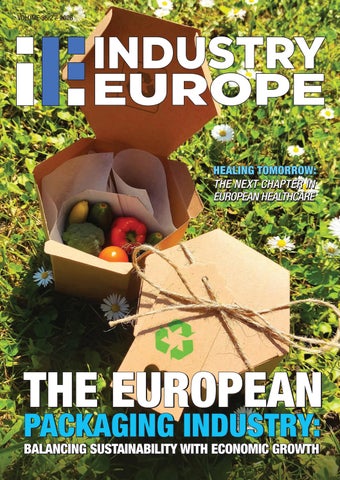
HEALING TOMORROW: THE NEXT CHAPTER IN EUROPEAN HEALTHCARE
THE EUROPEAN PACKAGING INDUSTRY: BALANCING SUSTAINABILITY WITH ECONOMIC GROWTH
EDITORIAL
THE POPULIST TIDE: EUROPE'S POLITICAL EARTHQUAKE SHOWS NO SIGN OF SETTLING If European politics were a dinner party, someone would have flipped the table over by now.
F
or decades, elections across much of Europe followed a familiar script. Centreleft and centre-right parties alternated in government, promised to improve public services, and occasionally blamed Brussels for problems that mysteriously vanished whenever they were in opposition. Then came the financial crisis, migration pressures, Brexit, a pandemic, inflation, war on Europe's doorstep, and a growing sense among many voters that the people in charge either could not—or would not—listen.
Into that atmosphere marched populism. The term itself has become so overused that few agree on what it actually means. Broadly speaking, populism frames politics as a struggle between "ordinary people" and an out-of-touch elite. That message can come from the political right, the left, or occasionally somewhere so ideologically confusing that political scientists need a lie down. Today's European populist movements matter not merely because of electoral success but because of their staying power. A decade ago, many commentators dismissed them as protest votes that would fade once economic conditions improved. Instead, they have become established political forces, influencing governments, opposition parties, and the broader political conversation. Immigration remains perhaps the most powerful driver. Across Europe, migration has evolved from one issue among many into a symbolic test of governmental competence. Populist parties have been particularly adept at connecting these anxieties to housing shortages, healthcare waiting lists, wage pressures, and national identity. The response from mainstream parties has been fascinating to watch. Rather than simply arguing against populist positions, many have gradually adopted parts of them. Policies on border control, asylum reform, and deportations have become noticeably tougher across much of Europe. Political gravity, it seems, has shifted. When enough voters move in one direction, even the furniture eventually follows. Economics has also played a starring role. Inflation, though lower than its recent peak, has left lasting scars. Voters may forget inflation figures, but they remember paying more for groceries, energy bills, and rent. Governments proudly announcing
that inflation has fallen from ten percent to three percent sometimes overlook one awkward detail: prices rarely go backwards. Telling someone their weekly shopping bill is now increasing more slowly is unlikely to inspire heartfelt gratitude.
Then there is the question of trust. Confidence in traditional political institutions has weakened across much of Europe. Social media has accelerated this process by allowing politicians to communicate directly with supporters while bypassing traditional media. Greater access to voices has also accelerated misinformation. Never before has it been so easy for a confidently incorrect opinion to travel around the continent before the facts have even located their passport. The European Union occupies an interesting position within this debate. Once the central target of many populist campaigns, the EU now faces a more nuanced challenge. Following Brexit, outright calls to leave the Union have become noticeably rarer. Instead, many populist parties advocate changing the EU from within. Complete withdrawal has lost much of its political appeal. Watching Britain's complicated departure served as a useful reminder that divorce settlements can be expensive. Looking ahead to upcoming elections across Europe, populism is unlikely to disappear, even where populist parties fail to win outright. Their influence increasingly lies in shaping the political agenda rather than merely securing ministerial offices. Issues such as migration, energy security, industrial competitiveness, national identity, defence spending, and the cost of living are now debated largely on terrain that populist movements helped establish. This does not necessarily mean Europe is marching uniformly to the political right. Electoral outcomes remain highly varied between countries, reflecting different histories, electoral systems, and domestic concerns. In some nations, centre-right parties have successfully absorbed populist voters. In others, entirely new political movements continue to emerge. Meanwhile, progressive and green parties retain substantial support in many urban areas and among younger voters. European politics remains wonderfully resistant to simple generalisations—a fact that delights academics and frustrates television pundits who have already prepared their "political earthquake" graphics.
Coalition politics further complicates predictions. Proportional representation means many governments are built through lengthy negotiations rather than decisive election-night victories. The largest party may not govern, while a smaller one can hold the balance of power. European coalition talks can resemble assembling flat-pack furniture without the instruction manual: everyone insists they know what they're doing until someone discovers three important pieces have been left over. Foreign policy has added another layer of complexity. Russia's invasion of Ukraine has reshaped discussions around defence, energy independence, and strategic autonomy. Populist parties have responded in different ways. Some have embraced stronger defence policies and increased military spending, while others continue to emphasise diplomacy or express scepticism towards deeper international commitments. Ultimately, the rise of populism tells us less about the brilliance of populist politicians than about the frustrations of European electorates. Many voters feel economically squeezed, culturally uncertain, and politically overlooked. Whether those perceptions fully match objective reality is, electorally speaking, almost beside the point. Politics has always been driven by experience as much as statistics. The coming elections are unlikely to determine whether populism survives; that question has already been answered. Instead, they will reveal how effectively mainstream parties adapt to a political landscape that has fundamentally changed. Some will borrow populist themes while retaining traditional governing styles. Others will seek to build broad coalitions against them. A few populist parties will enter government, where they will discover an ancient political truth: it is considerably easier to promise solutions than to deliver them. Europe's political centre has not disappeared, but it has undeniably shifted. Voters have become less loyal, elections more volatile, and governments more fragile. The old certainties have faded, replaced by a political environment in which disruption is no longer exceptional but expected. For journalists, it provides endless headlines. For political scientists, endless conference papers. For voters, however, it is something more consequential: a reminder that democracy is rarely neat, often noisy, occasionally bewildering, and never, ever boring. n Industry Europe 3
INDUSTRY EUROPE
CONTENTS
VOL 36/2
Comment 3
Editorial Director Roger Sullivan
Art & Design studio@industryeurope.net Editorial Office editor@industryeurope.net
Profile Writers Romana Moares Dariusz Balcerzyk Emma-Jane Batey
Accounts accounts@industryeurope.net
Focus on – Packaging 6
Katarzyna Pozoga
The European packaging industry: balancing sustainability with economic growth
Focus on – Healthcare 8
Healing Tomorrow: The next chapter in european healthcare
Aerospace & Defence 10
Director of Sale & Business Development
Editorial: The populist tide: Europe's political earth quake shows no sign of settling
Aerospace & Defence news The latest developments in the sector
Chemicals & Biochemicals 12
Chemicals & Biochemicals news The latest developments in the sector
Construction & Engineering 14
Construction & Engineering news The latest developments in the sector
Consumer Goods 16
Consumer Goods news The latest developments in the sector
Industry Europe 110 Boundary Road, Norwich NR6 5JE, United Kingdom
Energy & Utilities 18
Energy & Utilities news The latest developments in the sector
Tel: +44 1133 281 173 Email: studio@industryeurope.net Web: www.industryeurope.com LinkedIn: www.linkedin.com/company/industry-europe
Healthcare 20
Healthcare news The latest developments in the sector
Metals & Mining 22
Metals & Mining news The latest developments in the sector
© Industry Europe 2026 No part of this publication may be reproduced in any form for any purpose, other than short sections for the purpose of review, without prior consent of the publisher.
Politics & Economics 24
Politics & Economics news The latest developments in Politics and Economics
Technology & Innovation 26
Technology & Innovation news The latest developments in Tech and Innovation
Transportation MAX MEDIA GLOBAL LTD.
4 Industry Europe
28
Transportation news The latest developments in the sector
INDUSTRYEUROPE.COM
FOCUS ON – PACKAGING PACKAGING
THE EUROPEAN PACKAGING INDUSTRY:
BALANCING SUSTAINABILITY
WITH ECONOMIC GROWTH
T
he European packaging industry is undergoing one of the most significant transformations in its history. Once driven almost exclusively by cost, convenience, and product protection, the sector is now at the centre of Europe's sustainability agenda. Governments, manufacturers, retailers, and consumers are demanding packaging that reduces environmental impact while maintaining safety, functionality, and affordability. As a result, companies across the continent are investing heavily in innovation, recycling technologies, and alternative materials to meet ambitious environmental targets. Packaging plays an essential role in modern society. It protects food from contamination, extends product shelf life, reduces waste during transportation, and provides consumers with important information. Without effective packaging, food waste would rise dramatically, leading to even greater environmental damage. The challenge is therefore not to eliminate packaging altogether, but to make it smarter, more sustainable, and easier to recycle. Europe has become a global leader in promoting environmentally responsible packaging. The European Union has introduced a series of regulations designed to reduce packaging waste and encourage a circular economy. These policies aim to ensure that packaging materials remain in use for as long as possible through recycling, reuse, and improved product design. Manufacturers are increasingly 6 Industry Europe
expected to design packaging with its entire life cycle in mind, from production to disposal. Plastic packaging has received the greatest scrutiny. Lightweight and inexpensive, plastic has long been the material of choice for many industries. However, growing concern over marine pollution and landfill waste has led to stricter controls on single-use plastics and greater investment in recycled materials. Many businesses are replacing traditional plastics with recycled content, compostable alternatives, or paper-based solutions where practical. At the same time, advances in chemical recycling and improved collection systems are helping to recover materials that were previously considered difficult to recycle. Paper and cardboard packaging have experienced significant growth as businesses seek renewable alternatives. Corrugated boxes have become increasingly popular due to the continued expansion of online shopping across Europe. E-commerce has transformed consumer behaviour, with millions of parcels delivered daily, creating demand for packaging that is both durable and environmentally friendly. Paper packaging is widely recyclable and often enjoys positive consumer perception, although sustainable forestry and responsible sourcing remain essential to ensuring its environmental credentials. Glass and metal packaging continue to play an important role in Europe's sustainability ambitions. Both materials can be recycled
repeatedly without significant loss of quality, making them attractive options for beverages and premium food products. Deposit return schemes introduced in several European countries have significantly increased recycling rates for bottles and cans, demonstrating how effective policy and consumer participation can work together to improve resource efficiency. Innovation is rapidly reshaping the industry. Packaging manufacturers are developing thinner materials that use fewer resources while maintaining strength and protection. Smart packaging technologies, including QR codes and digital product passports, are helping consumers understand how to recycle products correctly while improving supply chain transparency. Some companies are experimenting with edible packaging, seaweed-based films, mushroom-derived materials, and agricultural waste fibres that could reduce reliance on fossil fuel-based plastics in the future. Sustainability, however, comes with economic challenges. Producing environmentally friendly packaging often involves higher manufacturing costs, particularly during the early stages of adopting new technologies. Smaller businesses may struggle to invest in modern equipment or meet increasingly complex regulatory requirements. Rising energy prices and inflation have also increased production costs for paper, glass, and aluminium manufacturers across Europe. Balancing affordability with environmental responsibility remains one of the industry's greatest challenges. Consumer expectations continue to influence the market. Many shoppers actively seek products with recyclable or reusable packaging and are willing to support brands that demonstrate genuine environmental responsibility. However, consumers also expect packaging to remain attractive, convenient, and reasonably priced. Businesses must therefore avoid "greenwashing" by ensuring that sustainability claims are supported by measurable improvements rather than marketing slogans. The packaging industry also contributes significantly to Europe's economy. It employs hundreds of thousands of people across manufacturing, design, logistics, recycling, and research. Continuous
investment in sustainable technologies is creating new opportunities for engineers, material scientists, and environmental specialists. European companies are increasingly exporting sustainable packaging expertise to international markets, strengthening the continent's position as a leader in environmental innovation. Looking ahead, collaboration will be essential. Governments must continue providing clear and consistent regulations, while businesses invest in research and infrastructure. Consumers also have an important role by recycling correctly and supporting products designed for a circular economy. No single material offers a perfect solution, and future success will depend on selecting the right packaging for each application while minimising environmental impact. The future of Europe's packaging industry will be defined not simply by reducing waste but by rethinking how materials are produced, used, recovered, and reused. Sustainability is no longer a niche objective but a commercial necessity and a competitive advantage. Companies that embrace innovation, invest in circular economy principles, and work collaboratively across supply chains will be best placed to succeed. As environmental expectations continue to rise, the European packaging industry has the opportunity to demonstrate that economic growth and environmental responsibility can go hand in hand, creating lasting benefits for businesses, consumers, and the planet alike. n
Industry Europe 7
FOCUS ON – HEALTHCARE
HEALING TOMORROW: THE NEXT
CHAPTER IN EUROPEAN HEALTHCARE E urope's healthcare industry stands at a pivotal moment. Driven by an ageing population, rapid technological innovation, rising healthcare costs, and changing patient expectations, healthcare systems across the continent are undergoing significant transformation. While Europe has long been recognised for providing high-quality, universal healthcare, maintaining these standards in the face of growing demand will require substantial investment, innovation, and policy reform. The coming decade is likely to see healthcare become more digital, personalised, preventative, and sustainable than ever before. One of the most significant challenges facing European healthcare is demographic change. Europe has one of the world's oldest populations, with life expectancy continuing to increase while birth rates decline. By 2050, nearly one-third of Europeans are expected to be over the age of 65. Older populations inevitably require more medical care, placing additional pressure on hospitals, primary care providers, and long-term care facilities. Managing chronic conditions such as diabetes, cardiovascular disease, dementia, and cancer will become an increasingly important focus for healthcare providers. To meet these growing demands, governments will need to invest heavily in healthcare infrastructure and workforce development. Many European countries already face shortages of doctors, nurses, and specialist healthcare professionals. Recruiting and retaining skilled staff will become a major priority, particularly as existing healthcare workers themselves approach retirement. Greater collaboration between European nations on workforce planning, education, and professional mobility could help address these shortages. Technology is expected to play a transformative role in improving efficiency and patient outcomes. Artificial intelligence (AI)
8 Industry Europe
is already being used to assist with medical imaging, disease diagnosis, drug discovery, and administrative tasks. Over the next decade, AI-powered systems will become increasingly integrated into clinical decision-making, helping physicians diagnose diseases earlier and more accurately. Rather than replacing healthcare professionals, AI is likely to augment their capabilities by reducing administrative burdens and allowing more time for direct patient care. Digital health is another area poised for rapid growth. Electronic health records, telemedicine, wearable devices, and remote patient monitoring have all gained momentum following the COVID-19 pandemic. Patients are becoming increasingly comfortable receiving consultations online, particularly for routine appointments and follow-up care. Remote monitoring technologies allow clinicians to track patients with chronic illnesses from their homes, reducing hospital admissions while improving quality of life. As broadband connectivity and digital literacy improve across Europe, virtual healthcare services are expected to become a permanent component of healthcare delivery. Personalised medicine also represents one of the industry's most promising developments. Advances in genomics, molecular biology, and biotechnology enable treatments to be tailored to an individual's genetic profile rather than relying on a one-size-fitsall approach. Precision medicine is already transforming cancer treatment through targeted therapies, and similar approaches are expanding into rare diseases, cardiovascular conditions, and neurological disorders. As genetic testing becomes more affordable, personalised healthcare could significantly improve treatment effectiveness while reducing unnecessary interventions.
The pharmaceutical and biotechnology sectors will continue to be central to Europe's healthcare future. Europe remains home to many of the world's leading pharmaceutical companies, research institutions, and clinical trial networks. Investment in biotechnology has accelerated, particularly in areas such as gene therapy, mRNA technology, cell therapies, and immunotherapy. The success of COVID-19 vaccine development demonstrated Europe's scientific capabilities and highlighted the importance of maintaining strong domestic research and manufacturing capacity. Governments are likely to encourage greater pharmaceutical resilience by reducing dependence on overseas supply chains for essential medicines. Preventative healthcare will receive increasing attention as policymakers seek to reduce long-term healthcare costs. Lifestyle-related diseases account for a substantial proportion of healthcare expenditure across Europe. Public health initiatives promoting healthier diets, increased physical activity, smoking cessation, and improved mental health are expected to expand. Early screening programmes for cancer, cardiovascular disease, and diabetes can detect illnesses before they become more severe, reducing both patient suffering and healthcare costs. Mental health is also likely to become a much greater priority. The pandemic highlighted widespread mental health challenges across all age groups, particularly among young people. European governments are investing more heavily in psychological services, digital mental health platforms, and community-based support. Reducing the stigma surrounding mental illness and improving access to timely treatment will remain key objectives over the coming decade. Sustainability is emerging as another important consideration. Healthcare systems are significant contributors to carbon emissions through energy use, transport, pharmaceuticals, and medical waste. Many European hospitals are adopting greener practices by improving energy efficiency, reducing waste, increasing recycling, and embracing more sustainable procurement policies. As the European Union pursues ambitious climate goals, healthcare organisations will increasingly balance environmental responsibility with delivering highquality patient care. Despite these opportunities, financial pressures remain substantial. Healthcare expenditure already accounts for around 10% of GDP in
many European countries, and this proportion is expected to rise. Governments will need to carefully balance expanding access to innovative but often expensive treatments with maintaining financially sustainable healthcare systems. Greater use of digital technologies, preventative care, and value-based healthcare models may help improve efficiency while preserving quality. Cross-border collaboration within Europe will become increasingly important. Shared research initiatives, coordinated responses to future pandemics, harmonised regulatory frameworks, and collaborative procurement of medicines can strengthen resilience while reducing duplication of effort. The European Union is already promoting greater cooperation in health data sharing, pharmaceutical regulation, and medical research, trends that are likely to accelerate in the coming years. The future of the European healthcare industry will be shaped by innovation, collaboration, and adaptability. While demographic pressures and rising costs present significant challenges, advances in artificial intelligence, digital health, biotechnology, and personalised medicine offer unprecedented opportunities to improve patient outcomes and healthcare efficiency. By embracing technological progress while maintaining its commitment to universal access and high-quality care, Europe is well positioned to build a healthcare system that remains among the world's leading models for decades to come. n
Industry Europe 9
NEWS
New developments in the Aerospace & Defence
Avia Solutions Group Appoints AJ Abedin as U.S. Based Board Director and Senior Strategic Advisor D
ublin-based Avia Solutions Group (the Group), the world’s largest ACMI (Aircraft, Crew, Maintenance and Insurance) provider, today announced the appointment of AJ Abedin to its Board of Directors and as Senior Strategic Advisor to the Group, effective July 20. Mr. Abedin will be based in the U.S. In these roles, he will focus on deepening relationships with U.S. capital markets and advising the leadership of Waypoint Operating Lease and Finance Holding (WOLF Holding), the Group’s asset management affiliate. Additionally, Mr. Abedin will work closely with the Group’s Chairman, leadership team, and subsidiaries to advance commercial growth and broader strategic value-creation objectives. His efforts will support the continued scaling of the Group’s global ACMI platform and its aviation services ecosystem. Mr. Abedin has more than 20 years of experience across aerospace, aviation finance, aircraft leasing and capital markets. He joins the Group from Air Lease Corporation (now Sumisho Air Lease following its acquisition by SMBC), one of the world’s leading aircraft leasing platforms, where he held senior commercial and finance leadership
roles. Earlier in his career, he advised clients on financing and M&A transactions in J.P. Morgan’s investment banking division. Mr. Abedin holds an MBA from Cornell University and an undergraduate degree in engineering. Gediminas Ziemelis, Chairman and Founder of Avia Solutions Group, said: “I am delighted to welcome AJ to our Board and leadership team. His deep expertise in U.S. capital markets, aviation, and aircraft leasing aligns with our strategic trajectory. As we cement ACMI’s position as a cornerstone of modern airlines' fleet strategy, AJ’s commercial acumen and track record in unlocking value will be instrumental in bolstering our global ambitions.” AJ Abedin, Senior Strategic Advisor and Board Director, Avia Solutions Group, said: “The strength of Avia Solutions Group lies in its unique ecosystem, which supports airlines and aviation businesses as a dedicated partner across the entire industry. At the heart of this ecosystem is our global ACMI model, which allows operators to swap capital-intensive expenditure for operational agility - adding capacity precisely when market demand dictates. This model of capacity management is
an increasingly vital component of the commercial aircraft value chain, offering a flexible, asset-light solution that bridges orderbook delivery gaps, supports maintenance cycles, and facilitates everything from route testing to new airline incubation. To capitalise on these opportunities, I intend to draw on my experience to deepen our integration with global capital markets, building a robust financial framework that supports our growth ambitions. I am honoured to help guide this next phase of the Group’s evolution as we build a future defined by collaboration with our industry partners and sustained, collective success."
Zilvinas Lapinskas Appointed CEO of Avia Solutions Group to Lead the Next Phase of Global Expansion
A
via Solutions Group, the world's largest ACMI provider, has appointed Zilvinas Lapinskas as Chief Executive Officer to lead the next phase of global expansion, effective July 7. Lapinskas brings extensive international aviation experience and a proven track record of scaling operations in complex, highly regulated markets to the role. As CEO of FL Technics Group, he transformed the business from a European MRO provider into a global operation serving Tier 1 carriers across multiple continents. He retains his seat on Avia Solutions Group's Board of Directors. Jonas Janukenas, who has led the Group for almost 9 years, moves into the CFO role, where he will deploy his financial expertise exclusively across capital allocation, financial strategy, and the Group's long-term growth objectives. Zilvinas Lapinskas, CEO of Avia Solutions Group, said: "I am honoured to lead Avia Solutions Group at such an important moment in its development. Over the past several years, the Group has built a strong foundation for sustainable growth, and I look forward to accelerating that momentum. 10 Industry Europe
My immediate priority is to work closely with our teams to strengthen our operational footprint and build the long-term partnerships that will underpin our success in this highly competitive market." Jonas Janukenas, CFO of Avia Solutions Group, said: "Leading the Group has been an extraordinary privilege, and I am immensely proud of what we have achieved together. This is the right time for Zilvinas to take the helm. In my new role as CFO, I will focus on ensuring we maintain the financial discipline and strategic agility necessary to support our continued growth ambitions." Gediminas Ziemelis, Founder and Chairman of the Board of Avia Solutions Group, said: "Our success has always been driven by placing the right leaders in the right roles at the right time. Zilvinas has a proven ability to build and scale aviation businesses globally, making him the right leader to guide our next phase of expansion. Retaining Jonas as a key leader will mean we retain his understanding of the Group. This leadership structure will provide the right platform for our continued growth globally."
AEROSPACE & DEFENCE NEWS
INDUSTRYNEWS Chapman Freeborn helps restore Air Zimbabwe’s Harare–London Gatwick route
C
hapman Freeborn, the global air aircraft charter and leasing specialist and part of Avia Solutions Group, has supported Air Zimbabwe with a tailored ACMI capacity solution for the planned resumption of direct scheduled services between Harare and London Gatwick. The route is expected to restart by the end of July 2026, reconnecting Zimbabwe and the United Kingdom after more than 14 years. The service will be operated by Spanish carrier Plus Ultra using an Airbus A330 aircraft under a longterm ACMI agreement, with initial operations expected to include three weekly frequencies between Harare and London Gatwick. Under the ACMI structure, Plus Ultra will provide the aircraft, crew, maintenance and insurance, while the flights will operate under Air Zimbabwe’s flight code. Chapman Freeborn provided the ACMI and contract management support needed to help shape the long-haul operating structure for the
route, working closely with the teams involved throughout the process. The route represents more than the return of an air service. It re-establishes an important commercial, tourism and cultural link between the two countries, while improving travel options for the Zimbabwean diaspora, business travellers and tourists. It is also expected to support direct air freight capacity for time-sensitive exports, including horticultural and perishable products destined for the UK market. “This is an important milestone for Air Zimbabwe and a significant step in restoring direct connectivity between Zimbabwe and the United Kingdom. We are proud to have played an important role in supporting this project, working closely with Air Zimbabwe and Plus Ultra to help deliver the right structure for the route. “Across Africa, we continue to see growing demand for flexible capacity solutions as airlines look to rebuild networks, respond to passenger demand and manage fleet requirements more
efficiently. ACMI can play an important role in supporting that growth, particularly on strategic routes where speed, flexibility and operational reliability are essential,” says Linas Dovydenas, President – IMEA at Chapman Freeborn. “Long-haul ACMI programmes require close coordination between airlines, operators, aviation authorities and commercial partners, from aircraft suitability and planning to regulatory requirements and operational readiness. In this case, our team supported the project from a capacity and contract management perspective, helping to bring together the right structure for a strategically important route. This project demonstrates how collaborative capacity solutions can help airlines restore important routes and bring strategic services back to market,” says Daniel Huggins, Director – ACMI & Leasing at Chapman Freeborn. Chapman Freeborn’s ACMI team supports airlines worldwide with short-, medium- and longterm capacity requirements across narrowbody, widebody, regional and cargo aircraft. The company provides tailored aircraft leasing and ACMI solutions that help carriers manage capacity, restore routes and respond to complex operational requirements.
The $1.2 billion transaction co-led by Blackstone, Noteus, Airbus and Advent supports Quantum Systems’ industrial scale-up as a leading deep-tech prime for interoperable, multi-domain autonomous capabilities in Europe.
Q
uantum Systems today announced the signing of its $1.2 billion Series D financing round, valuing the company at ~ $8 billion on a post-money basis. The round was co-led by Blackstone, Noteus, Airbus and Advent, and supported by a high-calibre syndicate of crossover and long-term institutional investors including BOND, Fidelity Management & Research Company, Wellington Management, A.P. Moller Holding, and Elephant Lake Ventures, as well as existing shareholders such as Balderton and HV Capital. The financing more than doubled Quantum Systems’ valuation, reflecting the company’s fast-growing revenue, demonstrated profitability, and category-defining market positioning with its multi-domain strategy. With the Series D, Quantum Systems will accelerate the transition from individual uncrewed platforms to an interoperable family of systems connected through MOSAIC
UXS, the company’s software ecosystem for uncrewed systems. Alongside the Series D, Airbus Defence and Space and Quantum Systems agreed to deepen their strategic collaboration, bringing together complementary expertise to accelerate the development of next-generation sovereign European defence capabilities. Florian Seibel, co-CEO and co-founder of Quantum Systems, said: “The future is unmanned. Defence will be defined by autonomous systems that can operate together across domains in real time. With Quantum Systems, we are building a next-generation neo prime that has the potential to disrupt defence as we know it today. We are profitable, deployed around the world and with the latest financing round we now have more than $1.2Bn of dry powder to execute.” Sven Kruck, co-CEO of Quantum Systems, said: “In just a few years, Quantum Systems has
become a trusted defence technology partner. This financing allows us to scale production, expand globally, and deliver the next generation of AIpowered autonomous systems across air, land, sea and adjacent domains.” Proceeds will be used to expand production capacity, strengthen supply chain resilience, scale delivery across allied markets and continue investing in software and AI capabilities. Continue reading at: www.industryeurope.net
Industry Europe 11
NEWS
New developments in the Chemicals & Biochemicals
AnalytiChem continues global product brand transition for Bernd Kraft, Chem-Lab, and SCP Science
A
nalytiChem, manufacturer of specialized chemicals, reagents, accredited standards, equipment and consumables, has announced that the brand transition of its chemical product ranges, currently marketed under the Bernd Kraft, Chem-Lab and SCP SCIENCE brands, to the AnalytiChem global product brand is now in progress. AnalytiChem brings together Bernd Kraft, Chem-Lab, and SCP Science under a unified global AnalytiChem product brand This next phase in its brand integration strategy reflects the company’s continued growth and evolution toward a single, globally recognised identity, bringing together decades of expertise across its portfolio, while reinforcing consistency, quality and innovation for customers worldwide. This transition is central to AnalytiChem’s broader strategy to consolidate multiple legacy brands into a streamlined portfolio centred on four core trusted product brands: AnalytiChem, Redipor®, OREAS and CONOSTAN®. By unifying Bernd Kraft, Chem-Lab and SCP
Science products under AnalytiChem branded Lab Essentials and Environmental product ranges, the company aims to simplify purchasing processes for its customers and improve brand recognition across international markets. This follows the successful combining of its microbiology ranges under the Redipor brand last year, with subsequent launches of innovative products to its Life Sciences range. AnalytiChem’s trusted product quality and performance will remain unaffected by the rebranding, with updates limited to labelling and outer packaging. There will be no changes to product composition and documentation, technical specifications, product source or manufacturing processes, unless there is a necessity due to harmonisation, or benefits in specifications. Existing part numbers will also remain the same, with a new article code (AC number) introduced alongside to further streamline and simplify product identification and ordering processes for its customers. Highlighting the importance of a consistent identity as the company expands its global
footprint, Courtney Barnes, VP Product and Marketing, AnalytiChem, said, “Bringing together our expertise, innovation and heritage of these three strong brands under one unified global brand allows us to better serve our customers and partners. It makes it easier for them to access the full breadth of our chemicals and reagents portfolio, while maintaining the trusted quality and reliability they expect.” The integration of the chemicals and reagents portfolio into the AnalytiChem branded product range represents another step in the company's journey to combine associated strengths and expand its specialist capabilities. It also complements its other brands: Redipor, providing ready-to-use culture media; CONOSTAN, delivering solutions for the petrochemical industry; and OREAS, offering geochemical reference materials. Combined, AnalytiChem enables labs worldwide to make accurate and impactful measurements in analytical chemistry and microbiology.
BASF introduces Oppanol® N PLUS for next-generation batteries – 95 years of innovation with polyisobutene
L
udwigshafen, June 8, 2026 – BASF introduces Oppanol® N PLUS, a new high-performance binder for the next generation of electric vehicle (EV) batteries. The product will be presented at The Battery Show Europe in Stuttgart, Germany, from June 9 to 11, 2026, in Hall 5, booth A20. In 1931 BASF filed the patent for the manufacturing of Polyisobutene, which was sold under the product name Oppanol. The picture shows the cooling unit of the Oppanol plant at the Ludwigshafen site in 1952 With the transition to new battery technologies, particularly solid-state batteries (SSB), material requirements are increasing significantly. This next generation of batteries enables longer driving ranges, faster charging times, and enhanced safety – while placing the highest demands on the performance and reliability of all components used. Oppanol N PLUS is based on BASF’s proven polyisobutene (PIB) technology and has been specifically engineered for modern battery concepts. As a binder, it plays a central role in the cathode, anode, or electrolyte by reliably holding the individual components together while keeping them effectively separated. Thanks to its high elasticity and extensibility, the material compensates for mechanical stress during charging and discharging, thus significantly contributing to battery lifetime and stability. At the same time, Oppanol is chemically inert, preventing unwanted side reactions. A key feature of Oppanol N PLUS is its exceptionally high and consistent product quality with very narrow specifications. This enables:
12 Industry Europe
In addition, BASF offers enhanced services: customers benefit from particularly fresh material supplied directly from stock, as well as more flexible delivery options with smaller packaging sizes starting at 20 kilograms. This supports battery manufacturers and OEMs in efficiently implementing the next generation of high-performance and reliable batteries for e-mobility. “With Oppanol N PLUS, BASF combines decades of expertise with the requirements of tomorrow’s e-mobility. The new product exemplifies the company’s commitment to continuously advancing proven materials and actively shaping the transition to sustainable technologies,” said Madeleine Jordan, Global Business Management, Oppanol at BASF. The launch of Oppanol N PLUS coincides with a milestone year: 95 years ago, BASF laid the foundation for polyisobutene technology. In 1931, Michael Otto first demonstrated that isobutene can be polymerized under suitable conditions – a breakthrough that led to the development of the Oppanol product family. In the same year, BASF filed a patent for a process to manufacture PIB. The product was later named “Oppanol” after the Ludwigshafen district of Oppau, where it was first developed. It took another seven years of research and development before Oppanol could be produced on an industrial scale. In 1938, production began at the newly built Oppanol plant – marking the start of the polymer’s global success. Continue reading at: www.industryeurope.net
CHEMICALS & BIOCHEMICALS NEWS
INDUSTRYNEWS
Summer Humidity Swings Increase Corrosion Risk for Metal Shipments
S
ummer has hit the Northern Hemisphere, bringing a roller-coaster of temperature and humidity swings to many areas. While individuals out in the sun try to avoid heat exhaustion by drinking plenty of fluids and staying cool with popsicles, manufacturers face a similar but slightly different challenge for metals protection: navigating the higher risk of corrosion from hot, humid air and temperature swings. A great solution to keep on hand for a quick boost of protection is Desicorr® VpCI® Pouches, dual moisture-absorbing, corrosioninhibiting materials. Summer is sometimes called “rust season” because higher temperatures and higher moisture content in the air accelerate corrosion rates. This gets tricky for manufacturers trying to keep freshly machined metal parts from corroding. A box of brake discs sitting in a temperature-controlled QC (quality control) office one moment may suddenly be moved to a hot, humid warehouse or truck, where the cool metal is a magnet for moisture condensation from the muggy air. Similarly, multi-day cross-country trucking will expose a shipment of machined parts or mechanical controls to extreme night and day
temperature swings that further encourage condensation and the corrosion that can follow. The traditional approach to moisture absorption is to add desiccant pouches to a package or enclosure. This can help remove one cause of corrosion, but it does not offer active protection against any moisture (not to mention other corrosive material) that reaches the metal surfaces before absorption begins or after the desiccant is spent. Desicorr® VpCI® Pouches go beyond moisture-absorbing action by combining desiccant and Vapor phase Corrosion Inhibitors in the same package. These protective vapors diffuse out of a breathable membrane and throughout the enclosure in which they are placed, forming a molecular layer on metal surfaces to inhibit corrosion reactions even in the presence of humidity or other corrosives. By combining moisture absorption and corrosion inhibition, Desicorr® VpCI® Pouches can enhance corrosion protection strength while still addressing other moisture-specific concerns for sensitive components. Desicorr® VpCI® is typically dosed based on the size of the package or space in need of
protection. The Desicorr® VpCI® 1/6 Unit and 1 Unit offer sufficient corrosion protection for enclosures of 1 and 5 ft³ (28 and 140 L) with a moisture absorption capacity of 1.32 and 9.9 g, respectively.* These smaller sizes are available in windowed versions to reveal when indicator spheres are spent. Larger packages with volumes of 20 or 40 ft³ (560 or 1,120 L) can use Desicorr® VpCI® 4 Unit or 8 Unit non-windowed pouches, respectively, which offer moisture absorption capacities of 39.6 or 79.2 g. All versions now have stronger seal strength to avoid the accidental breakage and release of beads. With temperatures and humidity rising across the Northern Hemisphere, now is a great time to reevaluate shipping conditions and packaging strategies for “rust season.” Throwing more desiccant at the problem, hoping it will be enough to take care of moisture and corrosion, is no longer the go-to option thanks to the availability of dual desiccant/ corrosion- inhibiting materials that can be manually or automatically added to packages.
Meltio Helps ExxonMobil Reduce Costs by 42% and Lead Times by 90% with Titanium wire-laser metal 3D Printing
T
he oil and gas industry requires rigorous equipment reliability. At the ExxonMobil Baton Rouge refinery in Louisiana, protecting critical system panels from fluid contamination is key. This use case details the strategic transition from conventional subtractive manufacturing to Meltio’s Laser Metal Deposition (LMD) technology utilizing the Meltio M600 system, the industrial Directed Energy Deposition technology (DED). It also shows how Titanium was never a material that ExxonMobil considered for its manufacturing operations. However, thanks to Meltio’s technology, they realized it’s not just a doable solution but a cost-effective one, without compromising the part quality and performance. The final solution came from redesigning a protective machinery anti-wicking device. This allowed engineering teams to achieve structural improvements and compelling cost savings.
“Before wire-ded we never thought about having parts in titanium because it was very expensive but after moving to Meltio’s technology we discovered it’s quite affordable.” The existing anti-wicking device, designed to prevent oil from wicking up thermocouple wires into the instrument cabinet, suffered from significant design and operational limitations. The first decision was to move from the original material to a more efficient and effective one. After considering and testing several options, Titanium 64 was the chosen one: It is a lighter and cheaper material compared to the original one, and a material already parameterized with Meltio’s technology. However, adapting these heavy-duty components for additive manufacturing presented distinct metallurgical and operational hurdles. Atmospheric requirements: The chosen material, Titanium 64, requires a strictly inert environment to achieve optimal microstruc-
tural properties. Generating this atmosphere demands approximately one and a half hours of machine time to remove oxygen prior to printing. Thermal constraints: Titanium requires a minimum layer time of seven minutes to avoid overheating, making standard single-part production inefficient due to excessive idle times. Deposition defects: Initial printing trials of the main body revealed surface oxidation caused by localized thermal accumulation, alongside material overbuilding on lateral clamping wings. Furthermore, rapid travel movements during printing physically shifted the unanchored main body, causing the laser to lose focus. Industry Europe 13
NEWS
New developments in the Construction & Engineering
CRAVEN FAWCETT manufactures and installs an upgraded gearbox for a leading global mineral processor
C
raven Fawcett, a company that specialises in the design and manufacture of a full portfolio of clay preparation machinery, recently completed a major gearbox replacement, installation and maintenance contract for a global mineral company. Craven Fawcett manufactured the new gearbox in its factory in Wakefield, which included producing new gears and gearbox components, the majority of which were precision-engineered in-house. It was then assembled, before being delivered to the customer’s premises in Europe. A new and upgraded Centaur 510 Extruder (Hybrid model) was manufactured, replacing the previously reconditioned machine supplied by Craven Fawcett. Heavy use and the associated wear and tear resulted in the original gearbox requiring a major upgrade. The Extruder was located directly below a filter cake press, providing a major logistical
challenge for the site team. It was part of a production line for China clay, which the company processes into a fine powder and is used as a raw material in the manufacture of ceramics, cosmetics, and pharmaceutical products. The Craven Fawcett Service Team was on site for a week to provide full logistical support and undertake the installation, which included the removal of the clutch and pulley from the existing gearbox and integrating it into the new gearbox. The gearbox was then lifted into position, and the service team carried out alignment checks and full commissioning before dry testing the machine to ensure efficiency. Gavin Richardson, Service Manager at Craven Fawcett, explains: “This project involved close collaboration between our production and service teams to ensure the gearbox matched the customer’s exact requirements and could be installed quickly and efficiently. We have
LMT Tools Provides Customer Support for Adam Rollsysteme GmbH L MT Tools Tangential Rolling System: A tangential rolling head has two thread rolling wheels that are moved laterally against the workpiece. The thread is formed as the head moves in a direction tangential to the workpiece. Effective May 1, 2026, LMT Tools has taken over the support of existing customers of the insolvent Adam Rollsysteme GmbH, based in Güster. This does not involve a takeover of Adam Rollsysteme GmbH. Going forward, LMT Fette, a member of the LMT Tools family and the market leader in rolling systems, will ensure the supply of products from its own portfolio. For customers, this means that components, roll heads, and thread rolls will continue to be available. At the same time, they gain access to the group’s full range of services, including its global network and regional sales force. This ensures not only that suitable product solutions are available, but also that customers have personal contacts in their region and technical support directly on-site at the machine. 14 Industry Europe
Stefan Möller, Head of the Rolling Systems Product Line at LMT Tools, explains: “Even during difficult economic times, ensuring a secure supply for our customers was particularly important to us. That is why we provided quick and straightforward assistance even during Adam Rollsysteme’s preliminary insolvency proceedings. By acting swiftly, we were able to help ensure business continuity and reliably meet customer needs. We will continue to support our customers in the future with our service portfolio and technical expertise.” A year ago, LMT Tools integrated the expertise and know-how of PWS Präzisionswerkzeuge GmbH from Schmölln, thereby strategically expanding the product and service portfolio of its gear cutting specialist, LMT Fette. With the acquisition of machinery, equipment, and experienced specialists, tool reconditioning at the Schwarzenbek location was significantly expanded in terms of both quality and quantity. At the same time, key
extensive experience in managing machine refurbishment, installation projects, maintenance, and service programmes, whether that be Craven Fawcett or other manufacturers’ equipment. The project was completed on time, and the Extruder was fully operational after a short commissioning period.” Craven Fawcett has worked with this leading mineral processor for many years. The partnership has included the manufacture of capital equipment, ranging from clay preparation machines to extruders, and the provision of full support, servicing, refurbishment, and repairs. Craven Fawcett is the UK’s largest manufacturer of clay preparation and brick manufacturing machinery, a division of Group Rhodes, and is committed to manufacturing first-class, design-led engineering solutions geared directly toward producing state-of-the-art machinery for the heavy clayworking industry.
industrial expertise in eastern Thuringia was preserved, stabilized, and integrated into the structures of LMT Tools. Since then, customers have benefited from a broader range of solutions, consolidated technical expertise, proven quality, and reliable support through the regional sales force as well as on-site application engineering. “We are proud to have successfully integrated the products, machinery, and, above all, our new colleagues in such a short time. The positive feedback from our customers reinforces our decision to integrate parts of PWS into LMT Fette,” emphasizes André Bollow, Head of the Gear Cutting Product Line at LMT Tools. LMT Tools will continue to focus on targeted skills development, technological strength, and a strong commitment to meeting its customers’ needs. “We are constantly working on new products, technologies, and solutions to enhance performance in the field and improve our customers’ profitability. That is our benchmark – today and in the future,” said Raphael Lienau, site manager at LMT Tools in Schwarzenbek. Visit LMT Tools at AMB 2026 in Hall 3, Booth D20, from September 15 to 19.
CONSTRUCTION & ENGINEERING NEWS
INDUSTRYNEWS Heerema and Amphitrite Shorten Sleipnir's Atlantic Transit by 2.5 Days
T
he pilot combined Heerema's offshore expertise with Amphitrite's vessel-specific voyage optimization platform, using five years of operational data supplied by Heerema to develop a model that predicts Sleipnir's speed and power consumption under changing weather, wave and ocean current conditions. Unlike generic weather routing, Amphitrite's approach combines vessel-specific performance modelling with high-resolution ocean current, wave and weather intelligence. Sleipnir, the world's largest semi-submersible crane vessel, was mobilizing from Rotterdam to New York to install an offshore wind substation. North Atlantic winter conditions put the vessel to the test, with rapidly changing winds, waves and ocean currents providing a demanding proving ground for the routing model. Shortly after departure, the system identified the optimal sailing window to benefit from tidal currents in the English Channel. As the crossing progressed, it recommended a more northerly route around a developing storm, allowing Sleipnir to make use of
favourable tailwinds while remaining close to the great-circle route. The return crossing demonstrated another advantage of dynamic voyage optimization. Rather than following the shortest route, the model directed Sleipnir towards the Gulf Stream. Although the vessel covered a greater distance, favourable currents increased its speed over ground to 14.6 knots, reducing the overall transit time despite the longer route. The collaboration forms part of Heerema's wider use of Amphitrite's Ocean Bulletin, supporting crews and operational teams with ocean intelligence for voyage planning and offshore project preparation across its fleet. Beyond the operational gains, the pilot also gave Heerema new insights into how Sleipnir performs during transit. “Improving fleet efficiency is fundamental to our decarbonization strategy,” said Alejandro Velez Isaza, Decarbonization Engineer at Heerema Marine Contractors. “Working with Amphitrite not only demonstrated the value of vessel-specific voyage optimization, but also gave us a better understanding of how Sleipnir behaves during
From air quality to cost control: 3 compressed air considerations for modern wood manufacturers
W
oodworking facilities are often challenging environments for compressed air systems. Fine, abrasive dust can enter equipment, clog filters and increase wear, while compressors are frequently installed in outdoor or semi-open areas where temperatures and humidity fluctuate. At the same time, cutting, sanding, finishing and automated handling processes often run for long periods and place continuous demand on the air network. So, what should wood manufacturers consider when choosing a compressor system? Air quality is one of the first priorities in wood manufacturing. Woodworking facilities produce large amounts of fine, abrasive dust, which can enter equipment, clog filters and cause early wear in air compressors and downstream tools. That makes air quality and dust protection important factors when choosing an air compressor for woodworking machines. Clean, dry air is especially important for CNC clamping, automated lines and finishing systems. Even small amounts of dust or moisture can affect tool performance, lead to uneven finishes or inter-
rupt production. For that reason, wood manufacturers should look at compressed air systems with advanced inlet filtration, moisture control and safeguards that help prevent polluted air from entering equipment. Woodworking operations rarely rely on one airpowered application at a time. Pneumatic sanders, sprayers, staplers, clamping systems, conveyors and CNC equipment can all draw air from the same network. When several of these applications operate simultaneously, the compressor system needs to maintain both airflow and pressure. If the system is too small or cannot respond to demand changes, tools may slow down, coating quality can become inconsistent, and CNC machines may generate errors. In high-volume facilities, even short disruptions can quickly affect output. A reliable compressed air set-up should therefore be sized for peak airflow and designed for long duty cycles or continuous use, so every part of the production line receives the air it needs. Compressed air is one of the more energyintensive utilities in wood manufacturing. That makes
transit. Those insights create further opportunities to optimize fuel consumption during one of the most energy-intensive phases of our operations.” For Amphitrite, the project demonstrates how vessel-specific modelling helps offshore operators and shipping companies unlock meaningful efficiency gains. Thomas Joyce, Head of Business Development at Amphitrite, said: “This collaboration with Heerema shows the value of combining vessel-specific models with high-resolution ocean intelligence. Offshore vessels such as Sleipnir operate in highly dynamic environments, where currents, waves and weather can materially affect performance. By bringing these factors into routing decisions, we can help crews and operators make better-informed choices that reduce transit time, fuel consumption and emissions.” The pilot demonstrates that vessel-specific voyage optimization can deliver measurable operational and environmental benefits for complex offshore assets. For Heerema and Amphitrite, it also shows how data-driven routing can translate directly into shorter transits, lower emissions and more efficient offshore vessel mobilizations.
efficiency an important factor, not only for sustainability targets, but also for long-term operating costs. A compressor that adapts to changing air demand can help reduce electricity use, especially in facilities that run multiple shifts or continuous production. Durable components, optimised cooling and reduced maintenance requirements also contribute to a lower total cost of ownership. For wood manufacturers, the right compressor choice can support stable production, predictable maintenance and lower running costs. “Choosing the right compressed air system for wood manufacturing starts with mapping the production process, not with looking at the compressor in isolation,” concludes Panagiotis Papaioannou, Product Marketing Manager Portable Air Division at Atlas Copco. “A sawmill, CNC line or finishing area can each have different requirements in terms of air quality, pressure stability, installation conditions and operating hours. By looking at those needs together, manufacturers can avoid undersized systems, unnecessary energy use and maintenance issues further down the line. That broader view is what helps turn compressed air from a hidden utility into a reliable part of the production process.” Industry Europe 15
NEWS
New developments in the Consumer Goods
The age of proof - Why packaging, trust and product design are converging into one system of evidence
C
hristopher Sanderson has spent much of his career looking slightly ahead of where the market thinks it is. As co-founder and chief creative officer of The Future Laboratory, his vantage point is unusual: part cultural analyst, part creative director, part interpreter of how consumers quietly change their minds before brands notice. But for Sanderson, the most important shift underway today is not aesthetic, digital or even technological. It is epistemological. It is about what counts as proof. A career shaped by product, design and packaging “My official role titles at The Future Laboratory are co-founder and Chief Creative Officer,” he explains, “so as well as leading our roster of international keynotes and speaking engagements and running a business, I manage the creative team.” His background, however, predates strategy decks and trend reports. “My background is in creative development. I used to be a creative director and have always been really closely aligned with product development and product design,” he says. That proximity matters. It
places packaging not at the end of the value chain, but at its most expressive point. “Everything that sits within that, and more specifically around graphic design, graphic identity, and all the external elements of product development around packaging,” he continues, “it kind of goes into my blood.” There is a personal lineage too. “My dad was a product and packaging designer… within what would have been regarded as pharma or pharmaceuticals. So it’s something I’ve always been really engaged with.” That inheritance now reads almost prophetic. Because packaging, in Sanderson’s view, is increasingly about infrastructure. The consumer is no longer browsing - they are judging At The Future Laboratory, the work is grounded in observation rather than assumption. “We are a proprietary research business,” he says. “We have analysts, researchers, strategists and writers constantly scanning across lifestyle sectors to understand what’s new and what’s next.” But the deeper task involved is fast becoming behavioural interpretation. “Our focus is always
on the consumer - to think and act with the mind of the consumer.” Sanderson explores this thinking at London Packaging Week, where he is speaking on “Meet the new consumer: packaging for the age of functional health”, a session focused on how packaging is being remoulded by demands for proof, performance and functional clarity. That mindset leads to a blunt conclusion: the consumer has changed their criteria for trust. “There are really critical shifts going on around product, especially in health and how we relate to health,” he says. “We’re at a point where trends that have been evolving incrementally are now reaching a point where the pedal is hitting the floor.” The consequence is pressure on both ends of the system, emotional and financial. “In increasingly squeezed categories, the question of how you produce packaging that both appeals to a consumer but also mitigates cost is absolutely paramount.” What used to be framed as sustainability or ethics has become something more structural. “It’s no longer a moral question,” he adds. “It’s EBITDA. It’s operational reality.” To understand where change begins, Sanderson returns to a long-standing model at The Future Laboratory: the diffusion of innovation curve. Continue reading at: www.industryeurope.net
Adestor: an independent company shaping its own strategy
A
destor, previously named Lecta Self-Adhesives, takes another step forward in its evolution, strengthening its position as an independent company fully dedicated to the self-adhesive materials market. “Entering this new phase represents a significant opportunity for everyone at Adestor. It allows us to define our future strategy and focus all our resources—both human and financial—on serving self-adhesive label customers, offering them the highest levels of dedication, quality, service, and trust,” says Ricard Balart, CEO of Adestor. Adestor’s success has been built on a strong market presence and deep industry knowledge, combined with a modern, efficient, and well-equipped production plant. Together with its converting and distribution centers, this enables the company to effectively meet customer needs. “The transition to an independent company provides us with the financial stability needed to pursue key investments, execute our strategy, and achieve our ambitions,” adds Ricard Balart. 16 Industry Europe
Adestor is a company moving decisively into the future. Service, quality, innovation, and specialization will continue to be the pillars of our activity, strengthening the trust of our customers. "We invite you to visit our website, follow us on LinkedIn, and join us in shaping the future of self-adhesive materials".
CONSUMER GOODS NEWS
INDUSTRYNEWS
A legacy of excellence guiding us into the future.
C
artiere del Garda is entering a new phase, building on its heritage as an Italian paper manufacturer specialized in 2-side coated papers for the graphic printing and publishing industries. “This new stage, built on Cartiere del Garda’s long-standing experience and a newly structured, customer-focused organization, allows us to go beyond premium papers and reliable service— committed to being a trusted partner and setting the standard in the graphic printing and publishing market,” states Corrado Lignana, Cartiere del Garda CEO. Our expertise in high-quality coated papers for publishing and printing is based on technological knowledge, operational excellence, and an unwavering commitment to our customers. Our comprehensive range of 2-side coated papers is designed to meet the highest standards of the publishing industry, delivering consistently outstanding results. At the same time, we proudly support the commercial printing market, building long-term partnerships with merchants and printers based on trust, reliability, and premium products. Thanks to continuous investment, our Riva del Garda mill today stands as a highly efficient and competitive production site, where industrial performance goes hand in hand with respect for the environment. “Our new financial structure enables us to face future challenges with confidence and invest in an even more efficient, competitive, and sustainable mill”, says Corrado Lignana, Cartiere del Garda CEO.
Today, Cartiere del Garda begins a new chapter, one in which its values and the essence of the company remain unchanged, while new digital platforms, including a new website and LinkedIn account, strengthen our connection with customers and partners. At Cartiere del Garda, we believe paper is not merely a medium of communication, but an essential part of the message. That’s why our papers are “made to be seen” and designed to be admired.
The Big Table Group of restaurants including Frankie & Benny's Las Iguanas, Bella Italia and Banana Tree are going further than the government's VAT cut for children's meals this summer ALL children's meals, every day of the summer are absolutely FREE
T
he Big Table Group has announced its biggest ever family dining offer with children eating free throughout the entire summer holidays across all of its UK restaurant brands. The leading hospitality group, which operates more than 200 restaurants including Bella Italia, Frankie & Benny’s, Banana Tree, Las Iguanas and Chiquito, is introducing the initiative to help make eating out more affordable for families during the six-week school break. The announcement comes as the Government has temporarily reduced VAT on children’s meals from 20% to 5%. While some operators have chosen to pass those savings directly to customers, The Big Table Group is going significantly further by offering a completely free children’s meal with every adult main course purchased across all of its brands. The Big Table Group has already reduced children’s meals by 15% VAT, but once the summer holidays start, ALL their restaurants will give away free children’s meals every day of the holidays (July 20-September 1).
The offer gives children a complete meal, including a main course, sides, dessert and drink (menu inclusions vary slightly by brand), representing one of the most generous family dining offers available this summer. Charlotte Dewhurst, The Big Table Group’s Marketing Director, said: “Families continue to face difficult choices about how they spend their money during the school holidays. Dining out should be something everyone can enjoy, not a luxury. “While others are passing on a tax saving, we’ve chosen to invest much more in supporting families. By offering Kids Eat Free across every one of our restaurant brands throughout the entire summer holidays, we’re helping parents enjoy quality time together without worrying so much about the cost. “Whether it’s pasta at Bella Italia, burgers at Frankie & Benny’s, Southeast Asian favourites at Banana Tree or sizzling fajitas at Las Iguanas, we’re looking forward to welcoming families into our restaurants all summer long.” The summer initiative spans all of The Big
Table Group’s major brands, each offering its own unique family dining experience: Frankie & Benny’s will welcome families with its much-loved New York Italian menu, featuring burgers, hand-stretched sourdough pizzas, hearty pasta dishes and diner favourites. Children receive a complete kids’ meal, including a main, two sides, dessert and drink. The restaurant will also go one step further and offer free ice cream for all guests when purchasing a main meal, for a second visit 25% off ALL food and a third visit during the holidays 50% off ALL food until the end of October. At Bella Italia, families can enjoy authentic Italian classics including freshly prepared pasta, pizzas and Italian favourites. Children receive a starter, main, dessert and drink free with an adult main. Bella Italia will also offer free gelato to all guests when purchasing a main meal, 25% off all food for a second visit and 50% off all food for a third visit until the end of October. Continue reading at: www.industryeurope.net Industry Europe 17
NEWS
New developments in Energy & Utilities
novventos Introduces naca.boost, a breakthrough vertical axis wind turbine that brings efficient wind energy to ground level n
ovventos Clean Energy GmbH, an Austrian clean energy innovator, today introduced naca.boost: a vertical-axis wind turbine engineered to operate where conventional wind energy has always failed, at ground level, in the turbulent, unpredictable airflow of industrial sites, rooftops, and remote locations. The result of three years of intensive development and testing at the company’s Neukirchen facility, naca.boost represents a genuine engineering breakthrough in one of the clean energy sector’s most persistent unsolved challenges. The wind energy industry has a blind spot. Conventional horizontal axis turbines are optimised for one thing: steady, high-altitude wind flows far above the ground. They are also irrelevant to the vast majority of operations that need power most: the factory, the remote outpost, the industrial site, the rooftop. At ground level, wind is turbulent, variable, and directionless. Every attempt to harvest it with conventional technology has produced disappointing results. novventos was founded with a single purpose: to solve that problem. The answer took three years. At the company’s facility in Neukirchen, the engineering team put the naca.boost rotor through hundreds of test cycles, refining the aerodynamic geometry iteration after iteration. The challenge was not incremental improvement. It was a complete rethink of how a rotor captures energy in turbulent air.
Beyond aerodynamic performance, near-ground deployment eliminates costs that make large-scale wind infrastructure prohibitive for most operators. naca.boost does not require resource-intensive infrastructure – no underground cabling, no substations. It avoids the land lease commitments and extensive site engineering that conventional installations demand. The result is compelling economics: no grid infrastructure, no site engineering delays, and a system that is generating power within days of delivery. Development of naca.boost started with a fundamental engineering question: what would a wind turbine look like if designed specifically for near-ground conditions, rather than adapted from technology built for something else entirely? Hybrid Lift-and-Drag Rotor design. Standard vertical axis turbines operate on drag alone: one half of the rotor always moves against the incoming wind, generating opposing drag that caps extractable energy. naca.boost addresses this at the design level. Its airfoil-shaped blades in a proprietary novventos geometry generate lift forces in addition to drag. Lift is significantly stronger than drag at comparable wind speeds, enabling the rotor to extract far more energy from the same airflow than any drag-only design can achieve. Wind-guiding Housing. The housing is the second principal innovation. Its asymmetric geometry
performs two aerodynamic functions simultaneously: it shields the returning blade from incoming airflow, preventing it from acting as a braking force; and on the advancing side, it converges and accelerates the wind before it reaches the rotor. Since wind power scales as the cube of wind speed, even a modest velocity increase at the rotor face produces a significant energy gain. Turbulence tolerance. The vertical axis configuration accepts wind from any direction without mechanical adjustment. Where conventional turbines are stressed by turbulent, multi-directional airflow, the naca.boost rotor is engineered to operate within it. Variable, low-level wind increases rotor excitation rather than reducing performance - naca. boost is engineered precisely for these conditions and delivers. Integrated solar and specification. Six integrated 510 Wp photovoltaic panels are mounted onto the housing, adding solar generation without increasing the unit’s footprint. The system harvests wind and solar simultaneously, ensuring output is never dependent on a single source. Near-silent at 10 dB at 10 metres and capable of up to 10 MWh of annual output, naca.boost is a complete, self-contained hybrid energy system and the foundation on which the novventos product family continues to grow. Continue reading at: www.industryeurope.net
Valmet delivers an automation system for CO² liquefaction plant supporting green transition in Finland Valmet has received an order from Suomen Biovoima Oy to deliver a Valmet DNAe Distributed Control System (DCS) for a CO² liquefaction plant at Auris Energia’s biogas plant in Mäntsälä, Finland. It will be the first CO² liquefaction plant of its kind built in Finland with this technology. Valmet will deliver a Valmet DNAe Distributed Control System to Suomen Biovoima Oy for a CO² liquefaction plant being built at Auris Energia’s biogas facility in Mäntsälä, Finland. The project marks a concrete step forward in the green transition, enabling carbon capture and utilization directly at a biogas plant. At Auris Energia’s plant, CO² is generated as a byproduct of biogas production. Instead of releasing 18 Industry Europe
CO² into the atmosphere, Suomen Biovoima’s technology will capture, purify, and liquefy it for reuse in industrial applications such as concrete production, where the CO² is permanently bound into the building materials. By turning emissions into valuable raw material, the solution supports the circular economy and helps reduce the carbon footprint of energy production. “This project is an important step for us in developing more advanced and sustainable biogas and biomethane solutions. By capturing and utilizing CO², we can turn emissions into a valuable product while improving overall efficiency. Collaboration with Valmet allows us to bring modern automation into our solutions
and scale these innovations in future projects," says Mikko Bengts, Sales Manager at Suomen Biovoima Oy. Valmet's automation solution helps Suomen Biovoima and plant owner and operator Auris Energia to strengthen resource efficiency, bringing one of the cornerstones of Valmet's strategy to life at the customer site. With advanced process control and real-time visibility, the Valmet DNAe system enables more efficient use of energy, raw materials, and human resources. Automated controls reduce the need for manual intervention, and a high level of security enables unmanned operations of the plant. Continue reading at: www.industryeurope.net
ENERGY & UTILITIES NEWS
INDUSTRYNEWS An industrial company puts a hydrotreatment reactor up for public action An industrial company, with processing facilities in the south of the European Union, has put a hydrotreatment reactor up for public online auction to facilitate the reuse of this high-severity technological asset. To this end, it has entrusted the specialist firm SURUS, via its Escrapalia auction portal. This is an industrial HDT hydrotreatment reactor that was previously located at one of the company’s industrial sites in southern Europe. The unit, which has been in operation for just one year due to changes in operating modes, is now being made available to the international market as an immediate solution to optimise capital expenditure (CAPEX) and commissioning times in the process industry. The equipment involved in the transaction is an industrial HDT hydrotreatment reactor specifically designed for critical hydrogen (H²) service at high
pressures and temperatures. Manufactured in 2022 to the strictest international standards (PED/ASME certifications), the reactor is 34.9 metres long, has a structural weight of 177 tonnes and a volume of 159 m³. Its Cr-Mo alloy steel construction (SA-387 Gr.11 Cl.2) with an internal stainless steel weld overlay ensures extreme resistance to corrosion and hydrogen attack. The reactor is currently inerted, with the internal vacuum maintained, and has been fully prepared on site for dismantling, lifting and specialised transport. Its location in southern Europe offers an exceptional logistical advantage due to its proximity to deep-water port facilities, facilitating direct loading onto heavy-lift vessels bound for any international destination, thereby minimising multimodal transport costs.
In the current global market context, where manufacturing this type of component from scratch involves lead times of between 15 and 18 months, this asset represents a strategic opportunity in terms of time-to-market. Its internal configuration of three catalyst beds makes it ideal for use in various facilities, such as biorefineries, as a central unit in second-generation alternative fuel production plants, and for finishing units in chemical plastic recycling plants through the processing of pyrolysis oils (Pyrolysis Oil Upgrading). Continue reading at: www.industryeurope.net
Kalfresh partners with global bioenergy technology leader WELTEC BIOPOWER to deliver flagship Queensland project
T
he Queensland-based vegetable business has signed an agreement with the German company to design and build the first stage of the bioenergy facility, which will anchor the new Scenic Rim Agricultural Industrial Precinct. The WELTEC equipment is due to arrive on site in late August, when construction of the first anaerobic digestion (AD) tank will begin. Australia’s first farmer-led 24/7 renewable energy solution that works with agriculture to decarbonise industry and transport. The partnership marks a significant milestone and will unlock the paddock-to-power potential of Kalfresh’s vertically integrated business, which will turn crop residues, processing offcuts and agricultural waste into several renewable byproducts. A by-product, a nutrient-rich digestate, will be returned to farms as a biofertiliser, advancing Kalfresh’s long-term vision of circular agriculture. Kalfresh CEO, Richard Gorman, said: WELTEC BIOPOWER will use its proven stainless-steel tank technology, ensuring durability, corrosion resistance and long operational life. “For us, it was critical to work with a partner that has a track record of delivering reliable, long-term infrastructure,” Mr Gorman said.
“This is proven technology, and we’re building it to last. We have visited many operational bioenergy sites overseas, including those designed and built by WELTEC. They have a reputation for designing efficient, high- quality systems that deliver consistently. “Kalfresh sent a group of Queensland farmers to Germany in April to visit Weltec sites and see the AD technology first-hand.” WELTEC BIOPOWER was established in 2001 and has planned, delivered and constructed more than 450 specialised stainless steel biogas plants in the US, Japan, Cyprus, the UK and Europe. Dirk Krumdieck, CEO and Head of Sales from WELTEC BIOPOWER, says the agreement reflects the extensive preparatory work and technical planning undertaken by WELTEC and Kalfresh over recent years. „We are excited to be delivering a flagship bioenergy project in Australia that combines Kalfresh’s agricultural innovation with our proven European biogas engineering experience,” Mr Krumdieck said. The project will be delivered in three stages. The first stage involves the construction of a large digester with a diameter of 31.48 metres and a height of 8.8 metres, along with a digestate storage tank, supported by the newly implemented WELTEC Control system.
It represents a new model for Australian agriculture where farming, food production and energy generation operate side by side in a closed-loop system. At full capacity, the facility could feature 14 digesters which would be capable of producing enough energy to power up to 31,000 homes, or fuel up to 98 million kilometres of truck and bus travel annually. “Recent international events have made it clear there’s a real and immediate need for national fuel and fertiliser security,” said Mr Gorman. “The introduction of a home-grown, dispatchable source of renewable natural gas to the energy mix comes at an important time. We can help transition Australia’s emitters towards emissions-free operation.“This is a practical, farmer-led solution that works today, and can be repeated in the future in agricultural communities across the country, value-adding what is already produced on-farms.” The Scenic Rim Agricultural Industrial Precinct will co-locate advanced food manufacturing on a 40-hectare site fronting the Cunningham Highway and approximately one hour from Brisbane. The Precinct will feature 16 serviced lots, including three occupied by Kalfresh, with access to on-site renewable power and circular waste services. Industry Europe 19
NEWS
New developments in Healthcare
Nutraceutical boom creates fresh outsourcing opportunities for BCMPA members T he global nutraceutical market is entering a new phase of unprecedented growth, creating significant outsourcing opportunities across the health and wellness sector, reports the BCMPA, the Association for Contract Manufacturing, Packing, Fulfilment & Logistics. Valued at an estimated US$700–850 billion worldwide, the market remains highly fragmented, comprising thousands of ingredient suppliers, contract manufacturers and consumer brands, with no single company holding a dominant global position. As demand for preventive healthcare, personalised nutrition and healthy ageing solutions continues to accelerate, the global nutraceutical market is forecast to exceed US$1 trillion within the next decade. In the UK alone, the market is expected to more than double, growing from approximately US$31.2 billion today to US$68.6 billion by 2035. And it is this rise in activity which is leading to significant demand from nutraceutical start-ups to find outsourcing solutions. As
entrepreneurs look to respond quickly to changing consumer demand, many are turning to outsourcing partners to help them with NPD, contract manufacturing and packing, and final customer delivery to help bring their products to market efficiently and at scale. The strength of this trend was underlined at the inaugural ‘Pitch the Co-Packers’ competition, held at this year’s Packaging Innovations & Empack, where three of the four finalists were start-up brands from the nutraceuticals sector. The winner was Renata Sá, founder of HANGOV, a new wellness brand offering a Brazilian-style supplement designed to support the body before alcohol consumption. In addition, the inaugural Making Nutraceuticals Show took place in April, alongside the Making Pharmaceuticals and Distributing Pharmaceuticals exhibition. It demonstrated the growing appetite to source ingredient suppliers, machinery and outsourced contract manufacturers and packers within the UK.
The nutraceutical sector is being shaped by start-ups and early-stage businesses looking to respond quickly to changing consumer needs. Functional food and drinks, wellness supplements, sports nutrition, healthy ageing and beauty products all require a wide range of product formats including liquids, powders, capsules, gummies and tablets, covering an array of packaging formats including stick packs, blisters, sachets, doy packs, bottles, pots, tubs as well as direct-to-consumer subscription models. Continue reading at: www.industryeurope.net
UK’s fastest-growing teeth whitening brand signs landmark retail deal with BOOTS
W
hites Beaconsfield, the UK’s leading provider of non-peroxide teeth whitening products, has today announced a major national retail partnership with Boots in a landmark moment for the fast-growing oral care brand. The breakthrough deal will see Whites Beaconsfield’s entire teeth whitening range launch in over 300 Boots stores nationwide (UK and Ireland), marking the company’s first-ever retail partnership. The move represents a huge milestone for the disruptive direct-to-consumer brand founded by entrepreneurial brothers Ollie and Toby Brittan, whose affordable, high-performance whitening products have rapidly built a cult following online. As part of the partnership, Whites Beaconsfield products will receive prime branding placement in Boots stores as the retailer continues its strategic push into younger beauty and self-care audiences. The launch forms part of Boots’ wider self-care expansion initiative, rolling out in stores from this month (June), with Whites Beaconsfield selected as one of the standout brands helping redefine modern oral beauty. Founded at the end of 2019 with just £350, Whites Beaconsfield has become one of the UK’s fastest-growing oral care companies. The brothers generated £ 4 million in sales within a few years of trading and have continued to scale rapidly through social media, influencer marketing and product innovation. In 2025, the company topped £8m in revenue. Known for disrupting the traditionally expensive teeth whitening industry, Whites Beaconsfield specialises in affordable, vegan-friendly, non-peroxide whitening products that deliver fast visible results without the use of harsh peroxide ingredients. 20 Industry Europe
The major Boots rollout comes amid soaring consumer demand for accessible self-care and oral beauty products, with Whites Beaconsfield expanding aggressively beyond its direct-to-consumer roots for the first time. The agreement is non-exclusive and forms part of the company’s wider retail growth strategy, with further expansion expected following the initial Boots rollout. Co-Founder of Whites Beaconsfield, Ollie Brittan, said: “This is a huge moment for us as a brand. Boots is one of the most recognised and trusted beauty and health retailers in the UK, so to see Whites Beaconsfield launch nationally across hundreds of stores is incredibly exciting. “We started this business with just £350 and a mission to make teeth whitening more affordable, accessible and effective for everyday consumers. The demand we’ve seen online has been phenomenal, and now, for the first time, customers will be able to discover and shop the full Whites Beaconsfield range directly in-store. “This partnership is another major step in our growth journey, and we genuinely believe it’s the beginning of something very special.” Co-Founder Toby Brittan added: “We’ve built Whites Beaconsfield by challenging the traditional oral care market with innovative products, strong branding and an understanding of what younger consumers actually want from self-care products. Continue reading at: www.industryeurope.net
HEALTHCARE NEWS
INDUSTRYNEWS UK manufacturer supplying Ebola response warns infection-control readiness cannot wait for crisis
A
s health agencies respond to the current Ebola outbreak in Central Africa, a UK manufacturer supplying water purification products for direct distribution in affected communities is warning that infection-control readiness must be planned long before an emergency takes hold. Hydrachem, which has more than 50 years’ experience in water purification and infection control, is currently supplying Médecins Sans Frontières (MSF) and UNICEF with its Oasis water purification tablets and granules. The products generate a hypochlorous acid solution when dissolved, which has far superior disinfection capabilities compared to liquid bleach. This makes it ideal for supporting water treatment and surface disinfection in settings where fast, reliable infection prevention and control measures are essential. The company says the current response highlights a practical but critical challenge in outbreak planning: it’s not enough for chlorine-based disinfection to be available in principle. Products must be capable of being stored, moved, prepared, and used consistently in areas where infrastructure, access, and supply chains may be under severe pressure. Nicholas Barbieri, Chief Commercial Officer at Hydrachem, commented: “In an outbreak, infection prevention often comes down to very practical questions. Can supplies get there quickly? Can they be stored safely? Can they be prepared correctly? And can response teams use them consistently under pressure? “Those details matter. Liquid bleach will continue to play an important role in infectious disease control, but long shelf-life for-
mats such as tablets and granules should also be part of the preparedness conversation, particularly where transport, storage, and supply continuity are major challenges.” While tablets and granules are not a replacement for wider infection prevention measures, they can offer practical advantages in humanitarian and public health settings. Their compact format, stability, and longer shelf life can make them easier to stockpile, transport, and deploy than liquid alternatives. Hydrachem says the current Ebola response should prompt a wider discussion about how infection-control supplies are planned before emergencies, rather than sourced only once demand has already surged. Nicholas added, “Preparedness is often talked about in broad terms, but in practice it comes down to decisions made long before an emergency begins. Building appropriate reserves of durable infection-control formats, including chlorine tablets and granules, is a practical step that can help health ministries, NGOs, and humanitarian teams respond faster and more consistently when outbreaks occur. “This is not about one product or one format being the whole answer. It’s about making sure teams on the ground have practical, reliable options that work in real-world conditions, quickly.” Chlorine-based products are one part of a wider infection prevention and control response, alongside PPE, isolation protocols, safe water access, hygiene measures, community engagement, and clinical care.
MedGuard®: more than packaging – an integrated system for safe, sustainable sterile barrier solutions
W
ith MedGuard, SÜDPACK Medica takes a consistent, system-based approach: Instead of individual materials, customers receive an integrated solution comprising bottom webs and lidding films or pouch systems, combined with production and application expertise and a structured assessment of sustainability performance. The goal is consistent, reliable performance across the entire packaging life cycle – from development and qualification through to commercial scale-up. “More than packaging. It’s a system.” This guiding principle reflects MedGuard’s focus on the key requirements of the healthcare sector: sterile barrier systems, reproducible sealing processes, regulatory compliance, and the growing demand for packaging concepts designed for circularity. The Product Navigator helps simplify material selection in an increasingly complex landscape. It allows users to evaluate suitable material combinations based on specific application requirements and common sterilization methods – such as steam, EtO, or gamma – helping to shorten development times and reduce risks
in packaging development. (Go to Product Navigator) The MedGuard portfolio includes both flexible and rigid packaging systems – from robust thermoforming films to pouch and bag solutions. Dedicated lidding materials are produced in certified cleanroom environments and support clean production requirements as well as sterile packaging validation, including in accordance with ISO 11607. To ensure seamless system compatibility, SÜDPACK Medica works closely with selected suppliers of paper and lidding materials as well as leading packaging machine manufacturers. This collaboration allows sealing performance and opening behavior to be precisely configured, tested, and optimized for the equipment platforms used in industrial packaging production. Furthermore, thanks to its extensive in-house laboratory facilities, SÜDPACK Medica can precisely measure mechanical, thermal and functional film properties, supporting customerspecific requirements and validation processes.
SÜDPACK Medica also offers customers the option of conducting sealing tests with MedGuard films in combination with various lidding materials at its Technology Center in Ochsenhausen. These trials enable a targeted evaluation of sealing ranges, peel performance and process robustness, supporting packaging development ahead of commercial scale-up. Where required, SÜDPACK Medica also coordinates joint optimization tests with customers and their machine suppliers. Sustainability is also firmly embedded in the MedGuard strategy. SÜDPACK Medica’s sustainability team conducts screening LCAs, among other analyses, to quickly generate environmental assessments based on secondary data. This helps to ensure that packaging systems deliver best-in-class sustainability performance – without compromising safety, functionality, or regulatory compliance. Industry Europe 21
NEWS
New developments in Metals & Mining
Metso highlights its latest minerals processing innovations at Metso Summit
M
etso will introduce its latest technologies and innovations for the mining industry at Metso Summit, the company’s first-ever global virtual launch event at this scale. The event will take place on September 10, 2026, and will be accessible to customers, partners and media worldwide. “Metso Summit brings together our latest breakthrough technologies for minerals processing that are redefining our customers’ flowsheet performance. As mining operations work to improve productivity and reduce environmental impact, our latest product launches support these goals by improving efficiency, reliability and long-term value across operations,” says Sami Takaluoma, President and CEO of Metso. The event will feature keynote speeches and customer presentations, alongside expert-led
sessions showcasing new solutions across crushing, screening, grinding, and flotation, as well as digital technologies and aftermarket services. At Metso Summit, participants will gain insights into Metso’s latest innovations designed to support more efficient, sustainable and productive mining operations. Unmatched crushing with Primarok, Optirok, and Durarok: In June 2026, Metso expanded its offering for primary crushing applications. Designed for high capacity and reliability, Metso's new crushers improve uptime while enabling faster maintenance through better access to key components. Enhanced safety features reduce exposure to high-risk tasks and support safer maintenance practices. Unlocking greater performance in conventional screening with the Metso GFF Series screens: Combining hybrid flip-flow and linear-motion screening, the solution enables accurate dry classification down to 0.3 mm, without process water. It eliminates blinding, sustains throughput and supports more efficient HPGR circuits, improving process stability, uptime and total cost of ownership. Sustainable comminution with Metso Loesche VRM: Introduced in early 2026, the solution
enables dry grinding in minerals processing and sets a new benchmark for sustainable comminution. With up to 40% lower energy consumption, high throughput, and superior mineral liberation, the Metso Loesche VRM helps operations reduce energy use, emissions and operating costs while optimizing water consumption and maximizing recovery. A breakthrough in flotation recovery technology: At the Metso Summit, we will unveil a game-changing approach to flotation that challenges conventional flowsheet design, delivering higher recovery and redefining energy and water efficiency. Advances in digital solutions: During the event, Metso will introduce new digital solutions to optimize production and close the gap between planning and execution. Linking planning with equipment and process performance enables plants to respond faster to changing conditions while improving predictability, productivity and resource efficiency. By combining innovation, process expertise, maintenance optimization and digital solutions, Metso helps customers increase throughput, reduce energy and water use, and optimize operations across the entire value chain.
DEScycle opens first-of-a-kind Teesside plant to strengthen UK critical minerals processing capacity
D
EScycle yesterday opened its first demonstration plant at Wilton Centre in Teesside, marking the first operational deployment of its distributed metals processing infrastructure platform and a significant step towards strengthening the UK’s domestic critical minerals supply chain. The UK Government’s Critical Minerals Strategy sets an ambition for recycling to meet 20% of annual UK critical mineral demand by 2035. The launch comes as the UK looks to build greater resilience in critical minerals, which are essential for manufacturing, clean energy, technology and national security. Just last month, Chris McDonald MP, Minister for Industry, visited DEScycle and the Wilton Centre to announce a £50m investment for the domestic production of critical minerals. DEScycle’s Teesside facility will demonstrate how critical and precious metals can be recovered from complex electronic waste closer to where materials are generated, rather than exported for processing overseas. 22 Industry Europe
Operating at 250kg batch scale, the plant is capable of processing 50–100 tonnes of material annually during the demonstration phase and will support DEScycle’s transition from pilot operations to repeatable commercial deployment. The Rt Hon Anna Turley MP for Redcar, and Lord Ben Houchen, Tees Valley Mayor, opened the facility. They were joined by local dignitaries, key UK and international investors, and industry stakeholders. Speaking at the opening, The Rt Hon Anna Turley MP said: “Critical metals are essential to Britain’s manufacturing, energy, technology and national security, yet too much valuable metal-bearing waste is still exported for processing overseas. That means the UK loses materials, economic value and control over strategically important supply chains. DEScycle’s plant in Redcar is an important step towards changing that.” Lord Houchen, Tees Valley Mayor, added: "Teesside has always been at the forefront of
industrial innovation, and it's fantastic to see companies like DEScycle choosing our region to develop new technology that turns electronic waste into valuable critical minerals. That's good for our economy, good for our environment and another example of Teesside leading the way in the industries of the future. We have the skills, the industrial expertise and the ambition to help companies like DEScycle grow, creating highquality jobs and attracting more investment into our region." Leo Howden, CEO at DEScycle, commented: “This facility is the first operational blueprint for DEScycle’s distributed metals processing model. It allows us to prove the platform in an industrial environment, generate the data needed for commercial deployment and show how modular processing capacity can be replicated across industrial clusters in the UK, US, Europe and Japan. Continue reading at: www.industryeurope.net
METALS & MINING NEWS
INDUSTRYNEWS Epiroc wins large order for mining equipment in Peru
E
piroc AB, a leading productivity and sustainability partner for the mining and infrastructure industries, has won a large order for mining equipment for a major copper mine in Peru. The Peruvian mine is operated by a consortium comprising leading Chinese investment companies and a globally recognized mining company headquartered in Australia, which also serves as the mine operator. The customer ordered a fleet of Pit Viper 351 surface blasthole drill rigs that will support the mine’s expansion. Epiroc will also supply drilling tools and spare parts, together with on-site technical services, field support, and specialized training programs, to ensure maximum performance of this large-scale mining operation.
The equipment order is valued at around SEK 210 million and was booked in the second quarter of 2026. “Epiroc has provided this mine in Peru with advanced drilling equipment for around a decade now, and we look forward to continue supporting this major copper producer to optimize its safety, productivity, and total cost of ownership,” says Helena Hedblom, Epiroc’s President and CEO. The Pit Viper 351 drill rig is built to work hard and last long. It comes equipped with Epiroc’s Rig Control System (RCS) operating platform, making it ready for automation. The machine is setting the bar for productivity and reliability
ALFED Lobbying Delivers Expansion of British Industrial Competitiveness Scheme for Aluminium Sector
T
he Aluminium Federation (ALFED) has welcomed the UK Government's decision to expand eligibility under the British Industrial Competitiveness Scheme (BICS), following sustained engagement with Government on behalf of the aluminium sector. The Government has confirmed that just four additional Standard Industrial Classification (SIC) codes will be added following its latest consultation. Significantly, two of these directly support the UK cast metals sector, while the remaining additions recognise manufacturing activities undertaken by businesses across the wider aluminium supply chain. The newly eligible activities are: • 2453 –Casting of Light Metals • 2454 –Casting of Other Non -Ferrous Metals • 2550 –Forging, Pressing, Stamping and Roll -Forming of Metal; Powder Metallurgy • 2561 –Treatment and Coating of Metals The announcement follows months of engagement between ALFED, its members, the Cast Metals Federation (CMF) and Government, ensuring that the British Industrial Competitiveness Scheme better reflects the realities of energy -intensive manufacturing. As part of this work, ALFED and CMF jointly briefed Ministers and MPs following discussions at the All -Party Parliamentary Manufacturing Group (APMG), highlighting the impact that industrial electricity costs are having on investment, production, employment and long -term manufacturing competitiveness. Nadine Bloxsome, Chief Executive Officer of ALFED, said: "This is an extremely positive outcome for the aluminium sector and demonstrates
when large blastholes are part of the mining production plan. Delivery of the equipment is expected to begin at the end of this year and continue through the first half of 2027.
that constructive engagement between industry and Government can deliver meaningful results. The inclusion of these additional SIC codes reflects the compelling evidence provided by ALFED, our members and the Cast Metals Federation throughout the consultation process. The fact that half of all newly added codes directly support our industries is particularly encouraging and recognises the strategic importance of aluminium and cast metals to UK manufacturing. Whilst BICS is a welcome step forward, it should be viewed as one part of a much broader industrial competitiveness strategy. Long -term investment requires internationally competitive industrial electricity prices, stable policy frameworks and continued collaboration between Government and industry. We look forward to continuing those conversations as the Scheme is implemented." The British Industrial Competitiveness Scheme is intended to reduce industrial electricity costs by exempting eligible manufacturers from the indirect costs of the Renewables Obligation, Feed -in Tariffs and the Capacity Market, helping improve the competitiveness of UK industry. The Government has also confirmed the implementation timetable and updated eligibility criteria following the latest consultation. ALFED believes this announcement demonstrates the importance of evidence -led industry engagement and thanks its members for contributing the information and practical insight that helped shape the Federation's response. The Federation will continue working with Government to ensure BICS is implemented effectively while pressing for longer -term reforms that deliver internationally competitive industrial energy prices and support investment across the entire aluminium value chain.
Industry Europe 23
NEWS
New developments in Politics & Economics
Europe's innovation performance strengthens amidst global competition
E
urope's innovation performance continues to improve, with the EU's overall score rising by 11.6 percentage points since 2019, according to the 2026 European Innovation Scoreboard (EIS), just released by the European Commission. This result marks nearly a decade of steady growth, highlighting the resilience of Europe's innovation ecosystem in an increasingly competitive global environment. Between 2025 and 2026, the EU's innovation performance improved by 1.7 percentage points, following a more modest increase of 0.5 percentage points in the previous year. While all EU Member States have shown progress, performance varies significantly from country to country. Sweden, Denmark, and the Netherlands once again lead the ranking, outperforming the EU average and retaining their status as ‘innovation leaders'. Finland maintains a strong, stable fourth position, while Malta has made remarkable progress, crossing the threshold to become a ‘strong innovator' (achieving 100–125% of the EU average). Beyond the EU, South Korea remains the most innovative global competitor, followed by China, showing the largest improvement in recent years. This year's Scoreboard also welcomes Georgia for the first time, reflecting the expanded reach of Horizon Europe, the EU's flagship research and innovation programme.
The Innovation Scoreboard assesses annually the innovation performance across EU Member States, neighbouring countries and key global competitors. It is based on 32 indicators covering areas such as framework conditions (namely education or digital infrastructure), public and private research and development investment, innovation activities (including patents and startups), and impact on the economy, environment and society. Member States are categorised into four performance groups: ‘innovation leaders' (performance 125% above the EU average); ‘strong innovators' (100–125% of the EU average); ‘moderate innovators' (70–100% of the EU average); ‘emerging innovators' (below 70% of the EU average) The EIS relies on the latest and most reliable data and a robust methodology developed and audited by the Commission's Joint Research Centre. A key tool in the EU's innovation policy framework, the EIS helps monitor Europe's progress in closing the innovation gap with global competitors. It also informs major initiatives, including the Startup and Scaleup Strategy, EU Inc., as well as the upcoming European Innovation Act and the European Research Area Act.
Commission to issue €80 billion in EU-Bonds in second half of 2026
T
he European Commission has announced its intention to issue up to €80 billion of EUBonds in the second half of 2026. This will bring the total planned EU-Bond issuance for 2026 to €180 billion, in line with the Commission's earlier indication for the year. The proceeds will be used to fund EU policy programmes financed through borrowing on capital markets. These include disbursements to EU Member States under the NextGenerationEU programme, support for Ukraine (including payments under the new Ukraine Support Loan), disbursements under the Security Action for Europe (SAFE) instrument, and contributions to other EU programmes. The Commission will continue to carry out all issuances under its unified funding approach, using a mix of long-term and short-term instruments. This approach enables the Commission to meet disbursement needs across the increasing range of policy programmes funded by capital market operations, supporting a stable pattern of EU-Bond issuances. The Commission will also continue to issue NextGenerationEU Green Bonds on the basis of reported green expenditures by Member States under the Recovery and Resilience Facility. To date, 24 Industry Europe
€84.3 billion has been raised through the issuance of NextGenerationEU Green Bonds. Such issuances can continue to take place after 2026, as part of the roll-over operations under the management of the NextGenerationEU-related borrowing. The Commission borrows from international capital markets on behalf of the EU and disburses funds to Member States and third countries under various borrowing programmes. EU borrowing is guaranteed by the EU Budget, with contributions to the Budget being an unconditional legal obligation of all Member States under EU Treaties. Using proceeds raised by EU-Bonds and NextGenerationEU Green Bonds issued since mid2021, the Commission has so far disbursed over €241.8 billion in grants and €166 billion in loans to EU Member States under the Recovery and Resilience Facility. Up to €78.4 billion has been allocated to other EU programmes benefitting from NextGenerationEU funding. *: Disbursements funded by borrowing, excluding expenditures financed by the Emissions Trading System (ETS) and Brexit Adjustment Reserve (BAR) EU borrowing will also continue to finance disbursements to Ukraine under the ongoing Ukraine
Facility (where €25.6 billion of the total envelope of €33 billion has already been disbursed) as well as providing new support under the €90 billion Ukraine Support Loan. EU borrowing also finances the Security Action for Europe (SAFE) instrument, which supports the procurement of defence-related capabilities through loans to Member States, and where prefinancing disbursements started in May 2026. To support financing needs and ensure continued access to capital markets on favourable terms, the Commission is continuously enhancing the structure and the delivery of its borrowing operations. Since January 2023, the Commission has been issuing single-branded EU-Bonds rather than separately labelled bonds for individual programmes with transactions based on structured semi-annual funding plans and pre-announced issuance windows. Primary issuances are supported by the EUBonds' secondary market liquidity. The existence of a framework incentivising EU Primary Dealers to provide quotes on EU securities on electronic platforms, and the availability of a repurchase facility, are enhancing the functioning of the EUBonds' ecosystem. Continue reading at: www.industryeurope.net
POLITICS & ECONOMICS NEWS
INDUSTRYNEWS IEPTT: Moving towards a just transition with the support of working people
T
he so-called twin transition – green and digital – is no longer a vision of the future: it is already transforming, in a very tangible way, the way we work, produce and organise businesses. New technologies, changes in production processes and a growing demand for sustainability are redefining the world of work across Europe. Against this backdrop, the IEPTT (Improving Employee Participation in the Twin Transition) project Funded by the European Union - was launched, with a clear starting point: these changes will only be sustainable if they are implemented with the genuine participation of workers.
Understanding the changes in order to participate One of the first steps of the project was to analyse how this transition is affecting different European countries. Through surveys, interviews and working groups, the views of workers and their representatives on the changes underway have been gathered: what concerns they have, what barriers they encounter, and what expectations they hold. This work has resulted in national reports that provide a better understanding of the differ-
ences between countries, as well as identifying common challenges. Among these, the need to strengthen information, consultation and participation mechanisms within companies, particularly at times of change, stands out.
From research to practical tools In addition to analysis, IEPTT has focused on developing useful tools. A clear example of this is the online training courses available via the project platform: https://projects.zzpe.pl/ These courses do not stop at theory. They address very specific issues: from participation rights to the impact of digitalisation, changes in working conditions and new forms of employment. The objective is clear: to ensure that those involved in decision-making have more information, greater security and a greater capacity to exert influence.
designed to be useful in the day-to-day work of representatives and organisations.
Looking ahead: national seminars In this new phase, the project takes a further step forward by organising national seminars in each participating country. These events will make it possible to apply the project's results on the ground, adapting them to local circumstances. The seminars will focus on two key issues: firstly, how to move towards more sustainable production models; and secondly, how to ensure that workers play an active role in these processes of change.
A shared knowledge space Another of the project's cornerstones is the creation of an online platform that brings together all these resources: research findings, training materials, analyses and recommendations. More than just a website, this is a space
Energy shock fears resurface as oil and gas race higher F
ears of a sustained energy shock have resurfaced after the escalation in the Iran war sent oil and gas prices soaring. The prospect of a longer, more drawn-out conflict is in sharp focus, as both sides ratchet up attacks on energy infrastructure. Downbeat sentiment is spreading fast, with London’s Footsie opening around 1% lower as investors assess the repercussions for the global economy. Brent crude remains highly volatile but has traded as high as $114 a barrel today, threatening to climb back towards recent scorching levels. Gas prices have surged by 25%, reaching a range not seen since early January 2023. Warnings that oil could reach $150 a barrel have resurfaced. Israel’s attack on Iran’s gas fields has prompted retaliatory strikes on facilities in Qatar. Europe in particular is reliant on LNG exports from Qatar, as countries have been weaning themselves off dependence on Russia. The conflict is not only highly damaging for economies in the region, with tourism and business activity hit, but the knockon effects of higher energy prices will have toxic repercussions worldwide.
The Bank of England’s Monetary Policy Committee is meeting against this turbulent backdrop, and it looks almost certain to keep interest rates on hold given the inflationary risks posed by the conflict. Not only is the headline CPI rate likely to rise due to higher fuel and energy bills, but there will also be concern that companies will pass on escalating costs through higher prices across a range of goods and services. Food prices, which had been easing, risk rising again as freight costs increase and fertiliser exports from the Middle East are disrupted. There are also concerns about helium supplies being stranded, a key component in semiconductor manufacturing,
which could lead to delays in producing electronic goods and even cars. Traders are now placing more bets on the Bank being forced to raise interest rates by the end of the year, a sharp reversal in policy just as borrowers had been hoping for relief. The mood among central bankers is understandably sombre. The Federal Reserve, as expected, kept interest rates on hold, and Chair Jerome Powell warned of fresh inflationary pressures entering an already complex environment. The European Central Bank, Sweden’s Riksbank, and the Swiss National Bank are also set to announce their policy decisions today. Caution is likely to dominate, with investors expecting a particularly hawkish tone from the ECB. While a hold is anticipated for now, further rate increases are increasingly expected later this year as inflation expectations shift. The spectre of stagflation is hovering, with the combination of rising prices and stagnating growth posing a real threat. High energy costs are set to dampen consumer spending and curb business investment as both grapple with elevated bills and ongoing uncertainty. Industry Europe 25
NEWS
New developments in Technology & Innovation
Rodriguez at AMB 2026. Precise bearings, flexible applications
F
rom 15 to 19 September 2026, Rodriguez will be showcasing its RTB bearings for the machine tool industry at AMB in Stuttgart. The axial-radial cylindrical roller bearings are designed for rotary and positioning units in machine tools and are suitable for applications including rotary tables, tool tables, milling heads and additional rotary axes. The range also includes sizes 650 and 850, with which Rodriguez has recently expanded the series’ scope of application. Rodriguez-AMB-RTB-Collage.RTB-ABS combines the bearing with an absolute encoder, which means that the position of the rotary axis is known immediately after power-up. RTB bearings absorb radial and axial forces in both directions, transmit tilting moments and support precise, repeatable movement. This makes them suitable for applications in which rigidity, running accuracy and load-carrying capacity play a key role. Various versions are available depending on the application: • RTB Standard covers a wide range of rotary
and positioning tasks. • RTB-HSA is designed for applications with low friction torque and high speeds. • With RTB-AMS, measurement is inductive and non-contact. This makes the system insensitive to demanding environmental conditions and allows it to be adapted to different requirements for resolution and precision. • RTB-ABS combines the bearing with an absolute encoder. This means the position of the rotational axis is known immediately upon switch-on, without the need for a reference run. This simplifies machine start-up, reduces additional effort and supports precise motion sequences. Various interfaces are available for integration into the control system. Also part of the trade fair lineup is the MovoTrak Cobot Transfer Unit (CTU): a collaboratively designed range extension for cobots. Trade fair visitors can look forward to another innovation: with the MovoTrak Cobot Transfer Unit (CTU), Rodriguez is offering, for the first time, a collaboratively designed range extension
for cobots. The solution expands the working area by adding a movable 7th axis and enables a cobot to be used at multiple stations within a single system. This allows production processes to be structured more flexibly and robot systems to be utilized more efficiently. The MovoTrak CTU is robustly built and designed for a wide range of applications. It is based on two linear units that ensure maximum torque load and rigidity even when the robot arm is fully extended. Building on these linear units, Rodriguez supplies a complete system including motors, gearboxes, and application-specific configuration. In addition to precision bearings and linear technology, Rodriguez offers customized special solutions. Components can be adapted to the respective design and application requirements on request. “The AMB is an important platform for us to engage with users and machine tool manufacturers,” says Ulrich Schroth, Head of the VAP Division at Rodriguez. “We will be showcasing our RTB bearings there and discussing specific requirements regarding precision, integration and operational reliability with customers.”
PPG excimer UV coatings receive 2026 Ringier Technology Innovation Award
P
PG (NYSE: PPG) announced that PPG excimer ultraviolet (UV) matte-finish coatings for consumer electronics have been recognized with the 2026 Ringier Technology Innovation Award in the Coatings Industry category. The annual awards, which recognize products and technologies that advance the coatings industry through innovation and practical application, were presented during the recent China Coatings & Ink Summit & Expo in Shanghai. Excimer coatings are cured using specialized excimer (excited dimer) UV light that forms an ultra-matte, soft, skin-like texture. PPG excimer UV coatings are available in both waterborne and solventborne formulations and are engineered for both metal and plastic devices including notebook computers, keyboards, mobile phones, wearable devices and smart home products. They cure significantly faster than conventional technologies, providing manufacturers with flexibility to meet a range of different production and application requirements. 26 Industry Europe
Benefits • Distinctive Matte Finish: Micro-wrinkled surface results in a deep, non-reflective, matte aesthetic without the use of matting agents • Excellent Durability: Creates a tough, highly durable surface that has excellent resistance to stains, abrasion, and yellowing • Soft-Touch Haptics: Produces a refined, smooth “skin-like” or velvety tactile feel • Anti-Fingerprint Effect: Highly resistant to fingerprints and smudges due to its matte surface and reduced surface energy “Consumer electronics brands are seeking finishes that combine premium aesthetics with reliable performance,” said Sun Hongyi, PPG general manager, global consumer products, Industrial Coatings. Our excimer UV coating technology helps customers achieve distinctive ultramatte surfaces with a refined soft-touch feel, while supporting durability and manufacturing flexibility. This award recognizes the innovation behind the technology
and our commitment to helping customers bring differentiated products to market.” In addition to their unique surface feel, PPG excimer UV coatings provide excellent resistance to fingerprints and smudges, have high durability against scratches, abrasion, and wear, and good color stability with improved resistance to yellowing. Backed by PPG’s global color expertise, technical support, and application development capabilities, they help customers accelerate product development while meeting demanding design and performance requirements and have been qualified by leading consumer electronics manufacturers. PPG is an industry leader in ultraviolet and electron-beam curable coatings that cure in seconds with significantly less energy than conventional thermal-curing processes. For more information, visit PPG Excimer Coatings.
TECHNOLOGY & INNOVATION NEWS
INDUSTRYNEWS The R&S IMAGER from Rohde & Schwarz uses millimeter wave imaging to inspect the quality of packaged goods in real time
W
ith the new R&S IMAGER, Rohde & Schwarz is expanding its real-time millimeter-wave inspection portfolio. The R&S IMAGER uses innovative imaging technology to penetrate materials with invisible millimeter waves, analyze the return signals using a sensor array, and convert them into razorsharp images that reveal any hidden structures or material defects. The R&S IMAGER allows the inspection of common packaging materials using millimeter waves.
components and their correct assembly can be fully inspected. By using artificial intelligence to evaluate the volumetric images, production lines can automatically detect missing or misaligned parts without affecting throughput. The applied millimeter waves eliminate any risk of radiationrelated damage to sterile products, help ensure compliance with regulatory requirements, and reduce costly recalls.
Use in the pharmaceutical industry
The penetration capabilities of the R&S IMAGER also offer logistics advantages. Weight scales and conventional surface inspections cannot confirm that the correct, high-quality product is inside sealed packaging, and X-ray methods raise both safety and regulatory concerns. The R&S IMAGER projects millimeter waves through plastics, cardboard and composite materials, producing an internal view that reveals missing parts, misplaced objects or damage. When integrated into a conveyor belt system, the R&S IMAGER provides a continuous stream of images that are analyzed by AI algorithms to inspect the
The non-ionizing radiation of the R&S IMAGER does not affect the efficacy of pharmaceutical substances in any way. Thus, the new system fills a long-standing gap in the camera-based or weight-based inspection of pharmaceutical packaging. Multi-layer secondary packaging, cardboard boxes and laminated seals are transparent to millimeter waves, allowing the sensor to detect syringes, needles and autoinjectors inside. The system generates a three-dimensional representation of each package at production speed, which ensures all
Logistics applications
contents and detect anomalies in real time. This reduces the need for manual checks, improves inventory accuracy, and ensures complete documentation of the entire supply chain for each shipment. The technology also promotes the use of more environmentally friendly packaging – even when manufacturers use more 1/2 sustainable, but potentially opaque, materials, contents can still be monitored reliably.
Support for the food and beverage sector The unit provides a non-invasive method for inspecting sealed cartons, multipacks and glass containers in the food and beverage sector. Millimeter waves easily penetrate standard packaging to reveal missing items, damaged products or sealing defects that would otherwise remain hidden. This makes it possible to detect even the smallest deviations, such as a loss of vacuum in glass bottles. Operators can implement strict safety and quality standards even with production lines running at full speed. Since the non-ionizing radiation affects neither food quality nor employee health, the solution complies with all safety regulations. By detecting defects early on, manufacturers reduce waste, extend shelf life, and improve their brand image.
How to Get More Life Out of Parking Ramps and Delay Expensive Replacements
A
s the Northern Hemisphere basks in summer sun, now is a great time to think about final parking ramp maintenance and repair tasks before winter returns. These multi-million-dollar parking structure investments suffer heavily from deicing salts that get tracked in during the winter and accelerate rebar corrosion and premature concrete deterioration. What can parking ramp owners do to mitigate damage and get the most service life possible? Sean Hightower, Regional Sales Manager for Cortec® MCI®, explains why incorporating Migrating Corrosion Inhibitor™ (MCI®) technology is a very attractive option: “Parking garages are tremendously expensive investments, so tearing them down to rebuild is rarely on the table. Using MCI® products can help contractors and owners get more life out of their concrete in a fairly inexpensive manner versus the alternative.” A great place to start? Preventative maintenance.
Why Parking Ramps Should Prioritize Preventative Maintenance Parking ramp corrosion is easier to prevent than repair. Once damage occurs, repairs become more invasive and costly, underscoring the value of de Sitter’s “Law of Fives.” In simple terms, money invested in preventative measures during early planning, maintenance, and repair phases can generate a five-fold return in later life-cycle stages by helping owners avoid more serious repairs. Standard preventative maintenance practices such as applying water repellents every seven to 10 years or traffic membranes every decade or two can be enhanced by prior application of surface-applied corrosion inhibitors (SACIs) such as MCI®-2020. This highconcentration Migrating Corrosion Inhibitor™ SACI penetrates deep into concrete pores, forming a protective molecular layer on the metal surface that delays time to corrosion initiation and reduces oxidation rates once corrosion starts. For those who want to reduce mainte-
nance time and labor, MCI®-2018 offers a dual SACI/water repellent (100% silane) that can be applied wet-on-wet for a faster turnaround. Both MCI®-2020 and MCI®-2018 are available in vertical/overhead versions for easier protection of parking ramp pillars and ceilings.
How to Help Parking Ramp Repairs Last Longer If preventative maintenance has been neglected or age has simply caught up with a parking structure, repair is still more attractive than total replacement, with a potential for millions of dollars of savings. One important key to getting the most benefit from a repair investment is to be aware of and avoid the incipient ring anode effect, in which a new high-alkalinity concrete patch creates an imbalance in corrosion potential with surrounding areas and pushes the corrosion reaction into nearby reinforced concrete. Continue reading at: www.industryeurope.net Industry Europe 27
NEWS
New developments in Transportation
Wärtsilä and Carnival Corporation extend long-standing collaboration with Lifecycle Agreement supporting LNG-powered cruise fleet performance
T
echnology group Wärtsilä and Carnival Corporation (NYSE: CCL), the world’s largest cruise company, have entered into an 8-year Lifecycle Agreement covering four cruise vessels within the Princess Cruises and Carnival Cruise Line fleets, including two newbuild vessels currently under construction. The agreement marks the first service contract between the companies covering Carnival Corporation’s LNG-fuelled cruise ships. Under the agreement, Wärtsilä will provide a comprehensive lifecycle maintenance solution for the vessels’ Wärtsilä dual-fuel engines and related equipment. The order was booked by Wärtsilä in Q2 2026. Wärtsilä and Carnival Corporation have signed an 8-year Lifecycle Agreement supporting four LNGfuelled cruise vessels across the Princess Cruises and Carnival Cruise Line fleets. The agreement provides Carnival Corporation with more than maintenance support. It delivers a
lifecycle partnership focused on maintaining fleet reliability, increasing asset availability and optimising total cost of ownership across the covered vessels. Its performance-based structure also aligns the companies around measurable operational outcomes, including lower unscheduled maintenance costs and fewer unplanned stops. By combining Wärtsilä’s expertise as the original equipment manufacturer along with its extensive digital solutions and global service capabilities, the agreement supports the continued safe and efficient operation of Carnival Corporation’s dual-fuel engine assets. “The agreement reinforces Carnival Corporation’s ongoing commitment to operational excellence, sustainability and delivering a world-class guest experience,” says Vera Lannek, Vice President, Strategic Sourcing & Asset Management, Carnival Corporation. “By working with Wärtsilä through a long-term lifecycle agreement, we can further strengthen the performance of the covered vessels
while supporting the high standards our guests and operations depend on.” In the cruise sector, where vessel availability, schedule reliability and onboard experience are closely connected, operators are increasingly looking to data-driven, performance-based service models to manage complex technologies and support operational excellence. Wärtsilä’s Lifecycle Agreement reflects this shift, providing long-term lifecycle support focused on optimising asset performance throughout the vessel lifecycle. “This agreement is the latest milestone in the long-standing relationship between Carnival Corporation and Wärtsilä,” says Andrea Morgante, Vice President, Performance Services, Wärtsilä Marine. “It reflects our shared focus on ensuring high-performing cruise operations through proactive lifecycle support, data-driven insight and close technical collaboration throughout the vessel lifecycle.” Continue reading at: www.industryeurope.net
Samskip strengthens hydrogen ambitions through HyShip collaboration
S
amskip is taking another significant step towards the future of sustainable maritime transport by bringing its pioneering SeaShuttle project into the European HyShip initiative, strengthening collaboration to accelerate the development of liquid hydrogen infrastructure and support the commercial deployment of zero-emission shipping. The collaboration connects Samskip's two hydrogen-powered SeaShuttle vessels, currently under construction for operation between Rotterdam and Oslo, with a consortium of leading European maritime, energy, research and regulatory partners working to develop the technologies, infrastructure and operational standards needed to scale hydrogen-powered shipping across Europe. Unlike many demonstration projects, the Samskip SeaShuttles have always been designed with commercial operation in mind. Once introduced into service in 2027, the vessels will transport containerized freight between Rotterdam and Oslo using liquid hydrogen as an energy source, creating one of Europe's first green shipping corridors. Each vessel is expected to reduce CO2 emissions by approximately 25,000 tonnes annually when operating in zero-emission mode, while demonstrating that sustainable shipping can become a practical reality for customers and supply chains. "Our SeaShuttles have always been about proving that hydrogenpowered shipping can work in everyday commercial operations, not just as a concept. By joining HyShip, we're taking an important step beyond the vessel itself. Together with our partners, we're helping develop the liquid hydrogen supply chain, bunkering infrastructure and operational knowledge needed to make hydrogen-powered shipping scalable across Europe." Jeroen Hollebrands, Head of Newbuilding & Projects, Samskip.
28 Industry Europe
The HyShip project addresses one of the industry's most important challenges: creating an end-to-end hydrogen ecosystem that connects fuel production, port infrastructure and vessel operations. This integrated approach is essential to making hydrogen-powered shipping commercially viable on a larger scale. The Samskip SeaShuttles form an important part of Samskip's broader sustainability strategy, which combines one of Europe's most energy-efficient multimodal logistics networks with continued investment in alternative fuels and zero-emission technologies. Hydrogenpowered shipping represents a key milestone in delivering Samskip’s ambitions while helping customers reduce the environmental impact of their supply chains.
TRANSPORTATION NEWS
INDUSTRYNEWS
RM Sotheby's celebrates its best-ever UK summer sale, grossing £16 million at the Royal Automobile Club Concours
R
M Sotheby’s enjoyed a highly successful inaugural auction held in partnership at the Royal Automobile Club’s Woodcote Park Concours. The auction proved to be RM Sotheby’s most successful UK summer sale, grossing £15,975,765. The top seller was the much-lauded 1990 Ferrari F40 'Jean Sage' by Michelotto. Representing what many consider to be the ultimate road-legal F40, the highly desirable “non-cat, non-adjust” example was sold new to French motorsport legend Jean Sage and was later modified at Sage’s request by Michelotto to CSAI GT-inspired specification, including lightening, power increase, plus suspension and brake upgrades. This remarkable car achieved £3,605,000. Equally capturing the market’s attention was the utterly unique 1993 Porsche 911 Carrera RSR 3.8 'Strassenversion', one of only two ‘Strassenversion’ examples built by Porsche Motorsport with a fully trimmed interior. What makes the car even more remarkable is the fact that it is completely original, with only delivery use and an odometer showing a mere 10 kilometres. Delivered new to a
Porsche Exclusive VIP client in March 1996, it was left untouched in storage for two decades prior to being rediscovered in 2015, still covered in the factory-applied Cosmoline coating and wearing its original set of tyres. This rare and unrepeatable car achieved £3,492,500, exceeding its presale estimate by more than £1,000,000. The auction featured a number of rare or unique cars, and the 1966 Aston Martin DB5 Shooting Brake by Radford is certainly amongst the rarest of all Aston Martins. Indeed, it is the rarest DB5 variant and among the most exclusive Aston Martins ever produced, being one of 12 factory DB5 Shooting Brakes produced. Finished in silver over grey Machir wool-tweed and black leather upholstery with a black Webasto folding panoramic roof, the car rounded off the top three sales, bringing a deserved £848,750. Another notable highlight was the 1990 BMW M3 Sport Evolution. One of just 600 examples of the E30-generation M3 Sport Evolution made, and among the most desirable of limited-production
BMWs, the 4,503 kilometres example brought a remarkable £404,375, exceeding its pre-sale estimate by over £100,000. Sholto Gilbertson, Director of Sales, UK, and who also conducted the auction, said: “Our partnership with the Royal Automobile Club is amongst the most important we have in the UK. It was entirely logical that we should move our UK summer sale to the Club’s outstanding Concours at Woodcote Park and we are thoroughly delighted with the results we have achieved, continuing a very strong 2026 for RM Sotheby’s.”
Collett completes first dual blade lifter convoy operation in UK at Sanquhar II Wind Farm
C
ollett has completed the first dual blade lifter convoy operation in the UK, successfully transporting wind turbine blades for the Sanquhar II Wind Farm using two blade lifter trailers operating simultaneously. The operation also marks the first project to utilise Collett’s new Goldhofer blade lifter, purchased as part of the company’s ongoing investment in specialist transport equipment. Working alongside Collett’s existing Scheuerle blade lifter, both trailers are now being deployed in convoy to support deliveries to one of the UK’s largest onshore wind farm developments currently under construction. Once complete, Collett will have delivered a total of 480 wind turbine components for the 44-turbine project, comprising 42 Vestas V162
turbines with 80 metre blades and two V136 turbines with 68 metre blades, as well as other components including tower sections, nacelles, hubs and power trains. Deliveries are scheduled to continue in line with the construction programme, with completion expected in 2027. The turbine blades are initially loaded at King George V Dock in Glasgow before being transported using Collett’s quadruple extendable blade trailers to a designated transition point approximately 10 miles from the wind farm site. At this location, the blades are offloaded using Collett-owned Kalmar reach stackers fitted with specialist lifting hooks before being transferred onto the blade lifter trailers for onward transport. The use of the Kalmars removes the requirement for a mobile crane during the transfer process, improving both operational efficiency and site logistics. The blade lifters are then deployed for the onward delivery phase to site. This stage of the operation requires transport through constrained and narrow villages, tight bends and restricted roadways where conventional
blade trailers would be unable to complete the route. Capable of lifting blades to angles of up to 60 degrees, the blade lifters enable components up to 80 metres in length to be safely manoeuvred through these constraints while maintaining control and clearance throughout the journey. Each blade lifter operation is supported by a dedicated six-person crew, with both trailers operating in convoy requiring a total of 12 specialist operators. Prior to mobilisation, Collett’s Consulting division carried out detailed route surveys and swept path analysis to confirm route feasibility and identify any infrastructure modifications or mitigation measures required to facilitate delivery. The introduction of Collett’s second blade lifter and the first deployment of both units in convoy represents a key operational milestone on the project, enabling improved delivery efficiency and supporting programme requirements for Sanquhar II Wind Farm, which is the largest onshore wind farm being delivered in the UK in 2026. Industry Europe 29
TRANSPORTATION NEWS
INDUSTRYNEWS
New developments in the Transportation
Four Million and Counting: Nissan Qashqai Cements its SUV Success Story
N
issan Qashqai has surpassed four million sales in Europe, reinforcing its position as one of the region’s most successful SUVs. Since its introduction in 2006, Qashqai has become one of Nissan’s greatest success stories by combining practical design, everyday usability and technologies developed specifically for European customers. Across three generations, Qashqai has evolved to meet changing customer expectations, introducing innovations such as e-POWER hybrid technology that have helped keep it at the forefront of the SUV segment. The Qashqai has also received more than 110 international awards, including 20 Car of the Year awards across different countries, confirming its continued success and reliability.
How is Nissan Helping Customers Get More from Qashqai? To celebrate the four million sales milestone, engineers at Nissan Technical Centre Europe (NTCE) have developed a tech video series for customers wanting to get the most of their Qashqai. The series ‘Wait, My Qashqai Does What…?’ highlights a range of features that drivers may not be using to their full potential. Each video provides practical tips, helping customers better understand the technologies that have contributed to Qashqai’s success. Topics include personalising Driver Assist settings, simplifying parking manoeuvres, maximising the flexibility of the luggage area, and making the most of the Nissan Intelligent Key. Four million European sales demonstrate how Nissan Qashqai continues to evolve through customer-focused design, advanced technologies and electrified innovation, reinforcing its position as one of Europe’s most successful SUVs. Massimiliano (Max) Messina, Chairperson for Nissan’s Africa, Middle East, India, Europe and Oceania (AMIEO) region, said: “Reaching four million happy customers across Europe is an incredible milestone for Qashqai and reflects the innovation, dedication and craftsmanship of our design, engineering, and manufacturing teams, as well as the trust and loyalty that our customers have placed in the vehicle. “Over the years, Qashqai has continuously evolved to meet the changing needs of drivers and families across Europe. This achievement is not just about sales. There are over four million customers choosing Qashqai and enjoying the confidence, comfort, and technology it brings to their everyday lives. We remain committed to developing technologies that make the driving experience safer, easier, and more enjoyable for all.” Speaking on the achievement and the video series, David Moss, Senior Vice President, Research and Development, Nissan Africa, Middle East, India, Europe and Oceania (AMIEO) said: “Four million sales is a remarkable triumph and a testament to the innovation, quality and customer focus that have defined the model for almost two decades. At NTCE, our engineers are passionate about creating technologies that make everyday driving safer, easier and more enjoyable. Through this video series, we’re sharing their expertise directly with customers, helping them unlock the full potential of their Qashqai and get even more value from the vehicle they own."
• Designed at Nissan Design Europe in London • Engineered at Nissan Technical Centre Europe in Cranfield and Barcelona • Manufactured at Nissan’s Sunderland Plant To emphasise Qashqai’s UK credentials and Nissan’s long heritage here, the model is one of the stars of ‘Designed. Built. Loved. By Britain’, a major new marketing campaign from the brand that features the music of Sam Fender – who himself grew up in North Shields, just a 20-minute drive from Nissan’s Sunderland plant.
Why Has Nissan Qashqai Become One of Europe’s BestSelling SUVs? Nissan Qashqai, introduced almost two decades ago as the original crossover, has created its segment by combining the elevated driving position and versatility of an SUV with the practicality and efficiency of a passenger car. Throughout its history, Qashqai has continued to meet customer expectations in areas including safety, connectivity, electrification and comfort, helping it remain an SUV loved by consumers across the region.
What Technologies Are Available on Nissan Qashqai? Today’s Nissan Qashqai includes a range of advanced technologies designed to make every day driving easier, safer and more convenient.
Key technologies include: • e-POWER, Nissan’s unique hybrid powertrain delivers an electric-drive experience without requiring external charging. It reaches more than 795 miles (WLTP) on one tank of petrol, delivering up to 65.7 mpg. • ProPILOT driver assistance technologies, reducing driver workload during motorway and everyday driving • Connected services and intuitive digital technologies, designed to improve convenience and usability • One of the largest luggage capacities in the SUV segment, improving everyday practicalityFrequently Asked Questions
What is Nissan Qashqai? Nissan Qashqai is a compact SUV introduced in Europe in 2006. It combines SUV practicality with passenger-car comfort and has become one of Europe's best-selling SUVs.
How many Nissan Qashqai models have been sold in Europe? More than four million Nissan Qashqai vehicles have been sold in Europe.
What is Nissan e-POWER? e-POWER is Nissan's unique hybrid powertrain in which a petrol engine generates electricity while an electric motor alone drives the wheels, delivering an EV-like driving experience without external charging.
Designed, Engineered and Built in Europe
Where is Nissan Qashqai designed and built?
Every European Nissan Qashqai is the result of collaboration between Nissan teams across the UK and continental Europe. The vehicle is:
European Qashqai models are designed in London, engineered in Cranfield and Barcelona, and manufactured at Nissan's Sunderland Plant in the United Kingdom.
30 Industry Europe