
HOW DIGITAL E-TRANSPORT BUILDS A COMPETITIVE ADVANTAGE IN THE ERA OF E-INVOICING
HOW DIGITAL E-TRANSPORT BUILDS A COMPETITIVE ADVANTAGE IN THE ERA OF E-INVOICING
BY: MATEUSZ CZARNECKI

HOW DIGITAL E-TRANSPORT BUILDS A COMPETITIVE ADVANTAGE IN THE ERA OF E-INVOICING
HOW DIGITAL E-TRANSPORT BUILDS A COMPETITIVE ADVANTAGE IN THE ERA OF E-INVOICING
BY: MATEUSZ CZARNECKI

If geopolitics were a reality TV show—and let’s be honest, under Donald Trump it often feels like one—the 2026 Iran war would be the season finale nobody asked for but everyone is now binge-watching with rising anxiety and even higher petrol bills.
At the centre of the drama is the Strait of Hormuz, a narrow stretch of water that has suddenly become the world’s least relaxing chokepoint. Roughly 20% of global oil supply squeezes through it on a good day. On a bad day—say, during a war involving naval blockades, sea mines, and strongly worded Truth Social posts—it becomes the economic equivalent of someone sitting on the global fuel hose.
And right now, someone is very much sitting on that hose.
The conflict itself kicked off in late February 2026, when tensions between the United States, Israel, and Iran escalated into full-blown war. Since then, the situation has oscillated between “tense ceasefire” and “imminent catastrophe,” with all the stability of a shopping trolley missing two wheels. When diplomacy briefly flickered into life, oil prices dipped. When talks collapsed—as they reliably have—prices shot back up faster than a hedge fund manager’s blood pressure.
Trump’s latest move—a naval blockade of the strait—has only added to the sense that this is less a carefully calibrated geopolitical strategy and more an episode titled “What Happens If We Just Try This?” The blockade aims to choke off Iranian oil exports, but in doing so it has also spooked global markets and sent energy prices climbing again.
Now, you might reasonably assume that Europe—sitting comfortably thousands of miles away—could simply sip espresso and watch events unfold. After all, only about 4% of Europe’s oil imports pass directly through Hormuz.
Ah, but global energy markets don’t work like your local Tesco petrol station.
Oil is priced globally, and disruptions anywhere tend to send prices everywhere into a mild panic. When the strait effectively closed, Brent crude surged from around $70 pre-war to well over $100, with peaks even higher during the worst moments. That means European countries—most of which import 80–85% of their oil—are paying more regardless of where their barrels actually come from.
It’s a bit like your neighbour setting fire to their kitchen and your insurance premium going up. You weren’t involved, but somehow you’re still paying for it.
Gas prices tell a similar story. Europe has spent the past few years trying to diversify away from Russian energy, leaning more heavily on liquefied natural gas (LNG) from global markets. Unfortunately, a lot of that LNG comes from the Gulf. And when the Hormuz route gets clogged—by mines, missiles, or maritime brinkmanship—those supplies get delayed, damaged, or dramatically more expensive.
So where does that leave Europe? Caught between its dependence on global energy markets and its desire to transition away from them, watching events unfold with a mixture of concern, frustration, and the faint hope that someone, somewhere, has a plan.
The result? European gas prices jumped from roughly €35 per megawatt-hour before the war to peaks above €60, with lingering volatility even during ceasefires. Not quite apocalypse-level, but certainly enough to make heating your home feel like a luxury hobby.
And then there are the delightful knock-on effects. Shipping insurance costs have soared. Tanker traffic has collapsed by over 90% at points.
Supply chains have been rerouted, delayed, or simply abandoned mid-journey like a group project nobody wants to finish. The International Energy Agency has described the situation as the “greatest global energy security challenge in history,” which is not the kind of superlative you want attached to your weekly fuel bill.
Back in Europe, consumers are responding in the only way they know how: by Googling “electric cars” with increasing urgency. Interest in EVs has surged as petrol and diesel prices climb, suggesting that nothing accelerates the green transition quite like geopolitical chaos. Climate policy may talk a good game, but apparently what really moves the needle is a naval blockade halfway across the world.
Of course, policymakers are keen to reassure everyone that things will stabilise soon. There’s always a ceasefire just around the corner, a diplomatic breakthrough in the works, or a carefully worded statement suggesting that markets are “adjusting.” Meanwhile, analysts quietly note that even if the war ended tomorrow, prices might stay elevated for years due to damaged infrastructure, disrupted supply chains, and the lingering sense that the whole situation could flare up again at any moment.
In other words: don’t expect cheap petrol anytime soon.
So where does that leave Europe? Caught between its dependence on global energy markets and its desire to transition away from them, watching events unfold with a mixture of concern, frustration, and the faint hope that someone, somewhere, has a plan.
As for Trump’s war strategy, it’s difficult to say whether it will ultimately stabilise the region or simply add another chapter to the long history of “things that seemed like a good idea at the time.” What is clear is that when you start playing naval chess in one of the world’s most important shipping lanes, everyone else ends up paying for the pieces.
Especially at the pump. n
Industry Europe
110 Boundary Road, Norwich
NR6 5JE, United Kingdom
Tel: +44 1133 281 173
Email: studio@industryeurope.net
Web: www.industryeurope.com
LinkedIn: www.linkedin.com/company/industry-europe



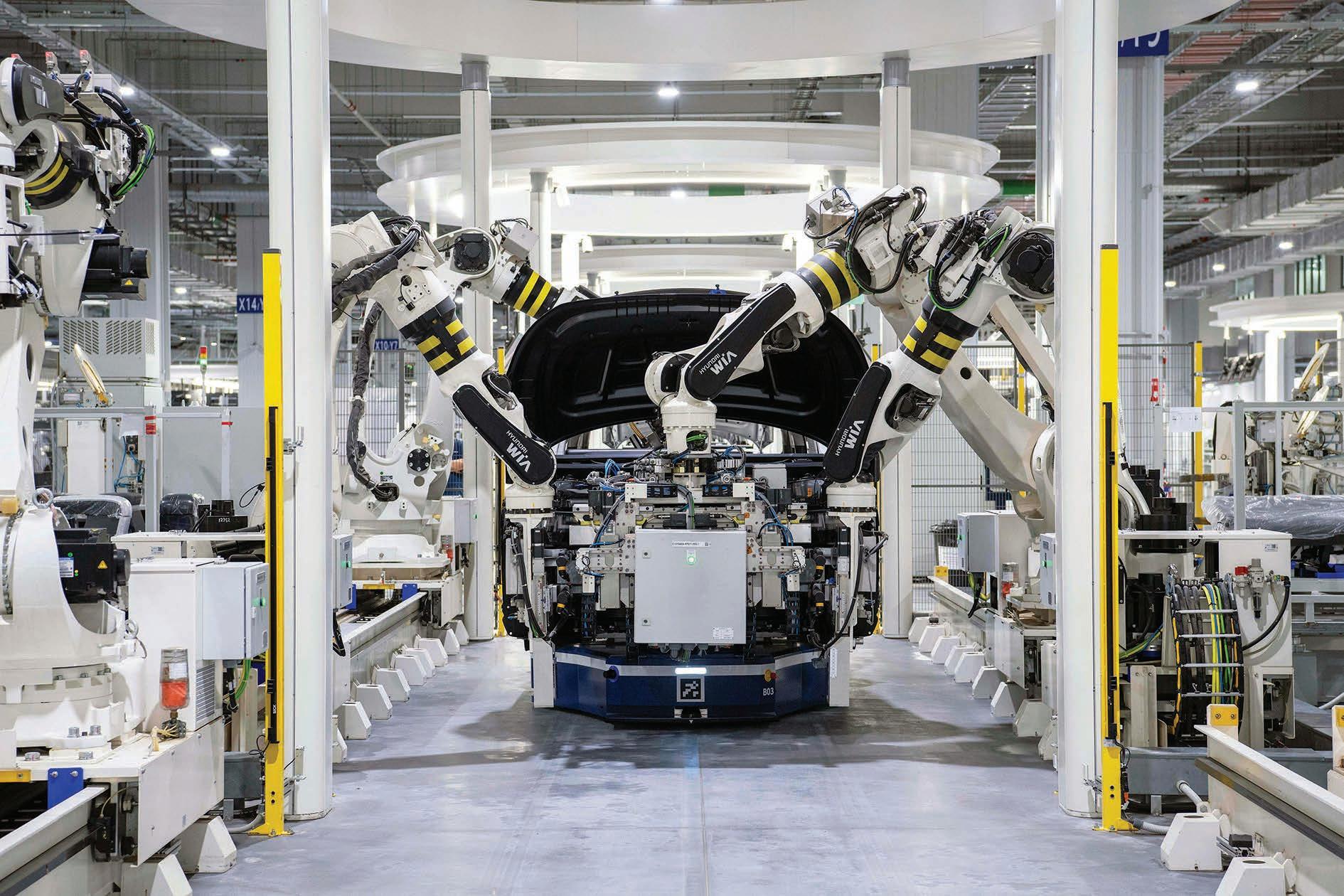
The future of the European car industry is being reshaped by one of the most profound industrial transitions in its history: the shift from internal combustion engines (ICE) to electric vehicles (EVs). This transformation is driven by a combination of regulatory pressure, technological innovation, climate commitments, and changing consumer expectations. While the transition presents major opportunities for innovation and global leadership, it also poses significant economic, social, and geopolitical challenges for Europe’s automotive sector.
At the heart of this transition is the European Union’s ambitious climate policy agenda. The EU has committed to achieving climate neutrality by 2050, and the automotive sector—responsible for a substantial share of emissions—plays a central role in that goal. Policies such as stricter CO2 emissions standards and the planned ban on the sale of new petrol and diesel cars by 2035 are forcing manufacturers to accelerate electrification. As a result, major European automakers, including Volkswagen Group, Stellantis, and BMW, have announced large-scale investments in electric vehicle platforms and committed to phasing out combustion engines over the coming decades.
However, the shift to electric mobility is not simply a technological upgrade; it represents a deep restructuring of the automotive
value chain. Electric vehicles are mechanically simpler than ICE vehicles, with fewer components and less complex assembly processes. While this can improve efficiency and reduce production costs over time, it disrupts established supplier networks. Thousands of small and medium-sized enterprises across Europe that specialize in engine parts, exhaust systems, and fuel technologies face declining demand. This raises concerns about job losses and regional economic disparities, particularly in countries like Germany, Italy, and parts of Eastern Europe where automotive manufacturing is a major employer. Policymakers must therefore balance environmental goals with social and economic stability, ensuring a “just transition” for affected workers.
A central pillar of the EV transition is battery technology, which determines not only vehicle performance but also cost competitiveness. Batteries account for a significant portion of an EV’s total cost, making them a strategic priority for manufacturers. Europe has historically depended on Asian suppliers, such as CATL and LG Energy Solution, for lithium-ion cells. This reliance has exposed vulnerabilities in supply chains, particularly as global demand for batteries surges. In response, European governments and industry players are investing heavily in domestic battery production. Projects such as gigafactories in Sweden, Germany, and France

aim to establish a competitive European battery ecosystem. Companies like Northvolt are at the forefront of this effort, seeking to combine sustainability with industrial scale. Nonetheless, securing access to critical raw materials—such as lithium, cobalt, and nickel—remains a major challenge, especially given geopolitical tensions and environmental concerns associated with mining.
Equally important is the development of charging infrastructure. The widespread adoption of electric vehicles depends on the availability of reliable, accessible, and fast charging networks. While countries like Norway and the Netherlands have made significant progress, infrastructure deployment across Europe is uneven. Rural areas and lower-income regions often lack sufficient charging points, creating barriers to adoption. The European Union has introduced initiatives to expand charging infrastructure along major transport corridors and within urban centers, but the pace of rollout must accelerate to keep up with EV sales growth. Collaboration between governments, utilities, and private companies will be essential to build a seamless and user-friendly charging ecosystem.
Beyond hardware, the future of the European car industry is increasingly defined by software and digital capabilities. Electric vehicles rely heavily on advanced electronics, connectivity, and data-driven features. Functions such as autonomous driving, realtime navigation, predictive maintenance, and over-the-air updates are becoming standard expectations. This shift has blurred the boundaries between automotive and technology sectors, forcing traditional manufacturers to rethink their competencies. Companies are investing in software platforms and forming partnerships with tech firms to stay competitive. The ability to integrate software and hardware seamlessly will be a decisive factor in determining market leaders in the coming decades.
The competitive landscape is also undergoing significant transformation. European automakers, long dominant in global markets, are now facing intensified competition from new entrants, particu-
larly from China. Chinese EV manufacturers such as BYD and NIO have rapidly improved their technology, production scale, and cost efficiency. Their expansion into European markets poses a direct challenge, especially in the affordable EV segment where price sensitivity is high. In response, European policymakers are considering measures to protect domestic industries, including tariffs and subsidies, while also encouraging innovation and competitiveness.
At the same time, consumer behaviour is evolving. European buyers are becoming more environmentally conscious and increasingly open to electric mobility. However, concerns about upfront costs, battery lifespan, and charging convenience persist. Government incentives, such as subsidies and tax benefits, have played a crucial role in boosting EV adoption, but their long-term sustainability is uncertain. As production scales up and technology improves, prices are expected to fall, making electric vehicles more accessible to a broader range of consumers.
Another important dimension of the transition is sustainability beyond emissions. The environmental impact of battery production, resource extraction, and end-of-life recycling is under growing scrutiny. The European Union is introducing regulations to ensure that batteries are produced and disposed of in an environmentally responsible manner. Circular economy principles, including recycling and reuse of materials, are becoming integral to the industry’s future.
In conclusion, the European car industry stands at a moment of transformation. The transition to electric vehicles offers a pathway to cleaner mobility and technological leadership but requires coordinated efforts across industry, government, and society. Success will depend on Europe’s ability to build resilient supply chains, invest in innovation, support workers through structural change, and compete in an increasingly globalized market. While challenges remain, the shift to electric mobility also presents an opportunity to redefine the industry for a more sustainable and digital future. n

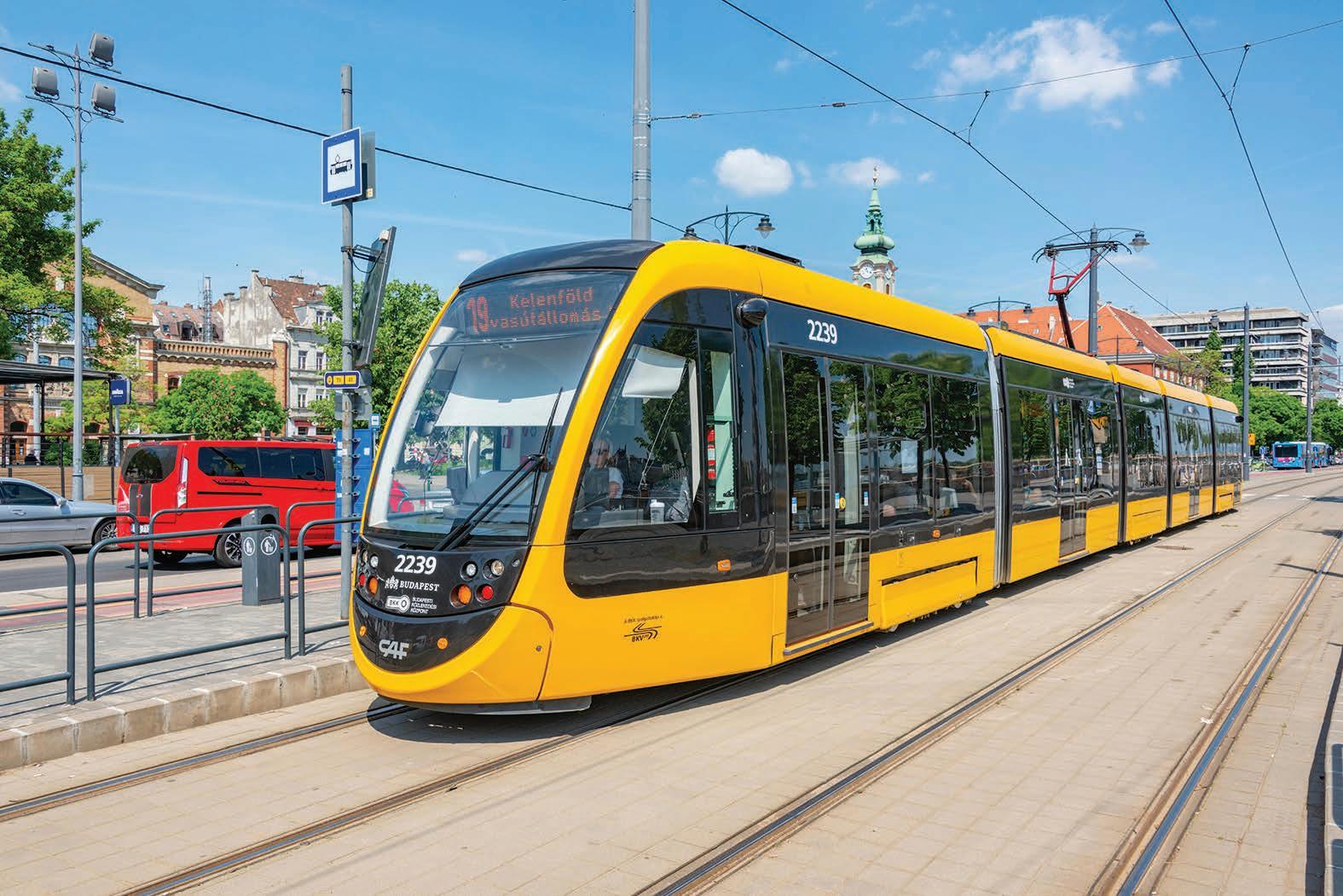

The future of transportation in Europe is poised to undergo a profound transformation driven by technological innovation, environmental imperatives, urbanization, and shifting societal expectations. As the European Union continues to pursue ambitious climate targets, including achieving net-zero emissions by 2050, transportation—currently one of the largest contributors to greenhouse gas emissions—has become a central focus of reform. The coming decades will likely see a redefinition of how people and goods move across the continent, with sustainability, efficiency, and connectivity at the core.
One of the most significant trends shaping the future of transportation in Europe is the transition to electric mobility. Governments across the region are implementing policies to phase out internal combustion engine vehicles, with several countries planning to ban the sale of new petrol and diesel cars within the next decade or two. This shift is supported by rapid advancements in battery technology, which are improving vehicle range, reducing costs, and shortening charging times. At the same time, the expansion of charging infrastructure is making electric vehicles (EVs) more practical for everyday use. Urban areas, in particular, are expected to become dominated
by electric cars, buses, and delivery vehicles, contributing to cleaner air and quieter cities.
Beyond private cars, public transportation systems are also evolving. European cities are investing heavily in electrified and integrated transit networks, including trams, metro systems, and electric buses. These systems are increasingly powered by renewable energy sources, further reducing their environmental impact. Digitalization is playing a key role in enhancing the user experience, with real-time data, mobile ticketing, and integrated platforms allowing passengers to plan and pay for multimodal journeys seamlessly. The concept of Mobility as a Service (MaaS) is gaining traction, enabling users to access various forms of transport— such as buses, trains, bike-sharing, and ride-hailing—through a single digital interface.
Rail transport is expected to play a central role in Europe’s future mobility landscape. High-speed rail networks are expanding, offering a sustainable alternative to short-haul flights. Countries are investing in cross-border rail connections to improve connectivity between major cities, making train travel faster and more convenient. Night trains are also experiencing a resurgence, providing an environmentally friendly option for long-distance travel while reducing the need for air travel.
Freight transport is similarly shifting toward rail, with efforts to modernize infrastructure and increase capacity. This modal shift is crucial for reducing emissions from the logistics sector.
Urban mobility is undergoing a transformation as cities seek to reduce congestion and improve liveability. Many European cities are implementing low-emission zones, car-free areas, and congestion charges to discourage private car use. At the same time, there is a strong emphasis on active transportation, such as walking and cycling. Investments in safe cycling infrastructure, including dedicated bike lanes and bikesharing programs, are encouraging more people to choose these modes for short trips. Micromobility solutions, such as electric scooters and e-bikes, are also becoming increasingly popular, offering flexible and sustainable options for urban travel.
Autonomous vehicles represent another development, although their widespread adoption may take longer than initially anticipated. Advances in artificial intelligence and sensor technology are bringing self-driving cars closer to reality, but regulatory, safety, and ethical challenges remain. In the near term, automation is likely to be introduced gradually, starting with specific applications such as autonomous shuttles, delivery vehicles, and driver-assistance systems. Over time, these technologies could improve road safety, reduce traffic congestion, and enhance mobility for people who are unable to drive.
The future of transportation in Europe is also closely linked to the development of smart infrastructure. The integration of digital technologies into transport systems is enabling better traffic management, predictive maintenance, and improved safety. Smart traffic lights, connected vehicles, and data-sharing platforms are helping to optimize traffic flow and reduce delays. The use of big data and artificial intelligence allows authorities to anticipate demand and respond more effectively to disruptions. This increased connectivity is expected to make transportation systems more resilient and efficient.
Sustainability remains a central driver of change. In addition to electrification, alternative fuels such as hydrogen and biofuels are being explored, particularly for sectors that are difficult to electrify, such as aviation, shipping, and heavy-duty transport. Hydrogen-powered trains and trucks are already being tested in several European countries, offering a promising solution for reducing emissions in these areas. The aviation industry is also investing in sustainable aviation fuels and exploring the potential of electric and hybrid aircraft for short-distance flights.
Logistics and freight transport are undergoing significant changes as well. The rise of e-commerce has increased demand for efficient and sustainable delivery solutions. Urban logistics are being reimagined through the use of electric delivery vans, cargo bikes, and decentralized distribution hubs. Automation and digitalization are improving supply chain efficiency, while innovations such as drone delivery and autonomous trucks could further transform the sector in the future. Efforts to shift freight from road to rail and waterways are also contributing to a more sustainable logistics system.
Policy and regulation play a crucial role in shaping the future of transportation in Europe. The European Union is setting strict emissions standards, providing funding for sustainable transport projects, and promoting cross-border collaboration. Initiatives such as the Trans-European Transport Network (TEN-T) aim to create a unified and efficient transport infrastructure across the continent. At the same time, governments are working to ensure that the transition to sustainable mobility is inclusive and accessible, addressing concerns about affordability and social equity.
However, the transformation of transportation in Europe is not without challenges. The transition to electric mobility requires significant investment in infrastructure and energy systems. Ensuring the availability of raw materials for batteries, such as lithium and cobalt, raises environmental and geopolitical concerns. The integration of new technologies also requires robust cybersecurity measures and regulatory frameworks. Moreover, public acceptance and behavioural change are critical for the success of sustainable transport initiatives.
In conclusion, the future of transportation in Europe is characterized by a shift toward sustainability, digitalization, and integration. Electric vehicles, expanded rail networks, smart infrastructure, and innovative mobility solutions are set to redefine how people and goods move across the continent. While challenges remain, the combination of technological progress, policy support, and societal commitment provides a strong foundation for a more efficient, equitable, and environmentally friendly transport system. As Europe continues to lead in sustainable mobility, its experience may serve as a model for other regions seeking to transform their transportation systems in the face of global challenges. n
Rohde & Schwarz today announced new signal simulation capabilities supporting Pulsar, the next-generation satellite navigation service developed by Xona. The new functionality enables manufacturers to test Pulsar capabilities quickly in production settings using Rohde & Schwarz signal generators, providing an accessible pathway for validating and scaling devices with next-generation positioning, navigation, and timing.
Global communication satellite providing high-speed data network above Europe, orbiting in low Earth orbit. Cutting-edge technology for global communication.

As demand grows for more precise and resilient navigation technology, the industry is preparing for a new generation of satellite signals. Xona’s Pulsar constellation, operating in Low Earth Orbit (LEO), is designed to complement existing GNSS infrastructure such as GPS by delivering stronger signals, improved accuracy, and enhanced resilience against threats and interference.
The capability will be available as a new software option for the R&S SMBV100B and R&S
SMW200A vector signal generators, allowing engineers and manufacturers to test receiver compatibility with Pulsar signals as the new constellation enters scaled deployment. By adding Pulsar simulation to its test portfolio, Rohde & Schwarz enables device developers and manufacturers to begin validating compatibility with the emerging service.
“Navigation technology is entering a period of rapid evolution,” said Matt Hammond, North America Satellite Technology Manager, Rohde & Schwarz. “By adding Pulsar signal simulation to
our signal generator portfolio, Rohde & Schwarz is preparing our customers for the next evolution of satellite navigation. Our goal is to provide the scalable test infrastructure needed to bring these innovations from development into deployment.”
“Pulsar is designed to upgrade the global navigation infrastructure while remaining compatible with GNSS devices already in use today,” said Bryan Chan, Co-Founder and VP of Strategy at Xona Space Systems. “Test and measurement solutions play an important role in enabling device manufacturers to evaluate compatibility as new signals become available. Rohde & Schwarz brings deep expertise in precision signal generation that helps make this possible.”
The R&S SMBV100B and R&S SMW200A vector signal generator will soon join Pulsar’s verified ecosystem program recognizing devices and testing solutions validated for compatibility with Pulsar signals. Rohde & Schwarz will showcase its navigation test solutions at Space Symposium 2026, taking place April 13-16 in Colorado Springs.
To meet the growing demand from the armed forces for the com -
pany’s products and services, MilDef has now decided to expand its operations by 6,000 square meters in Helsingborg. With this investment in offices, production, warehousing, and a showroom, the headquarters will cover just over 10,000 square meters upon completion. The expansion is expected to be completed in the fall of 2027.
By expanding and connecting the existing premises with an adjacent building, MilDef is creating the conditions for higher production capacity and continued growth. The expansion is being carried out in collaboration with the real estate company Wihlborgs.
“This is a strategically important decision that will strengthen our delivery capacity, enabling us to further support our customers’ needs while continuing to deliver a growth rate in line with MilDef’s long-term goals. This is the next natural step following last year’s launch of our quadrupled integration capacity in Stockholm and yet another milestone in our ambition to support our customers’ growing needs,” says Daniel Ljunggren, President and CEO of MilDef Group.
MVB will serve as the construction contractor; the company was also involved from the start when the current Fortress facility was built. The
new property will provide MilDef with production facilities tailored to its operations, offices, and a new showroom. All with a strong focus on expanded delivery capacity and the employees’ work environment.
Systecon, a global software company and the leader in analysis-driven Life Cycle Management (LCM), today announces the launch of a new product, Opus Suite+, a unified and modern solution that pushes the boundaries of LCM analysis.
Systecon’s Opus Suite software empowers leaders in aerospace, defense, and other industries such as transportation and renewables to make informed, data-driven decisions across all phases of the system life cycle, from concept and development to procurement, operations, and sustainment.
Today, the introduction of Opus Suite+ brings together the proven software products OPUS10, SIMLOX, and CATLOC into a single, unified, modern application, combining an intuitive
The EUR 11.4 million loan will finance the unit, which will include 9 laboratories supporting the development and life cycle of unmanned vehicles. The investment is part of a broader government-backed initiative to enhance Estonia’s national R&D capacity. Most activities at the unit will be defence-related.
Metrosert’s Drone Technology Unit will consist of nine laboratories designed to validate and industrialise unmanned systems across the air (UAS), ground (UGV), and maritime (USV) domains. This unit focuses on essential R&D areas: unmanned aviation, communications, navigation, flight physics, and hardware security. It is part of the recently established Applied Research Center in Estonia.
Most of the unit’s environmental testing laboratories are already operational, enabling comprehensive testing of UAS subsystems across a wide range of conditions. These include ingress protection, climate and low-pressure testing, corrosion and materials testing, accelerated life testing (HALT/HASS), vibration, acoustics and electronics testing. In summer 2026, a dedicated field testing area supporting UAS/ UAV, UGV and USV platforms will further expand real-world validation capabilities.
interface, streamlined analysis workflows, and graphical decision support to accelerate time to value. With easier navigation, enhanced visualizations, and AI and cloud-enabled capabilities, it represents the latest evolution of Opus Suite, delivering an improved user experience and enabling more efficient, consistent analysis across the system life cycle.
“Opus Suite+ represents the next step in the evolution of our platform,” said Anders Carlsson, CEO of Systecon. “We are building on decades of proven capability and bringing it together in a unified, modern environment that helps our customers manage complexity, improve decisionmaking, and drive better outcomes across the
Large-scale indoor testing facilities, including a large climate chamber and full-size EMC (emissions, immunity, and radar cross-section) capabilities, are planned to become operational in the second quarter of 2027.
The total investment for establishing Metrosert’s Drone Technology Unit is EUR 17.4 million, and EUR 42.9 million for the whole Applied Research Center.
“To meet the growing demand for testing drones designed for military use, the new unit will offer companies across the NordicBaltic region a platform to accelerate product development—an essential step towards strengthening the region’s resilience,” says André Küüsvek, NIB President and CEO.
Rainer Kivimäe, Head of Drone Technologies Unit at Metrosert’s Applied Research Center, said:
“Developing defence technology demands more than just theory; it requires deep science backed by world-class laboratories. We have created a competence centre where companies can push their systems to the limit in a safe environment. By providing the expertise to industrialise products efficiently, we help turn prototypes into reliable solutions much faster.”
entire life cycle.”
Trusted in over 20 countries and by the majority of NATO defense forces, Opus Suite is used by defense organizations, government agencies, and prime contractors in some of the world’s most advanced and complex programs, including GCAP, F-35, Gripen, Eurofighter, A400M, Queen Elizabeth-class carriers, Type 26 frigates, Leopard 2, and CV90 across air, land, and naval domains.
Whether supporting systems engineering, supportability analysis, logistics planning, maintenance optimization, or performancebased logistics, Opus Suite+ provides a unified environment for designing resilient and cost-effective defense systems. It enables organizations to bring together advanced analytical capabilities, supporting better decisions and sustained operational readiness across the system life cycle.
"Access to high-level testing infrastructure is essential for the rapid development of the defence industry. This investment addresses a critical gap, enabling Estonian companies to develop their products locally and enter global markets more quickly. It sends a strong message that Estonia is committed to building a world-class defence ecosystem," says Kalev Koidumäe, the CEO of the Estonian Defence and Aerospace Industry Association.
Metrosert is the Estonian RTO (Research and Technology Organization) and National Metrology Institute. Its Applied Research Center focuses on five fields: drone technologies, autonomous vehicles, hydrogen technologies, biorefining, and health data. The state-owned company employs around 140 professionals and supports sustainable growth through applied research, measurement and quality systems, and industryacademia collaboration.
NIB is the international financial institution of Denmark, Estonia, Finland, Iceland, Latvia, Lithuania, Norway, and Sweden. The Bank finances projects that improve productivity and benefit the environment of the Nordic-Baltic region. The Bank is headquartered in Helsinki with a regional hub in Riga. NIB has the highest possible credit rating, AAA/Aaa, with S&P Global Ratings and Moody’s.
Technology group Wärtsilä announces that its 4-stroke engine solution for ammonia fuel now offers a higher power rating. As part of the company’s ongoing development of ammonia-fuelled engine solutions, the upgrade to the Wärtsilä 25 Ammonia engine raises output to 315 kW per cylinder at 900 rpm and 345 kW per cylinder at 1000 rpm, matching the power level of the LNG-fuelled Wärtsilä 25DF engine. A key benefit of the upgrade is that fewer cylinders are required for a given power demand, which will reduce installation complexity and simplify maintenance. This supports more flexible and efficient vessel designs for ammonia-fuelled applications.
Wärtsilä s 4 stroke engine solution for ammonia fuel now offers a higher power rating Wärtsilä Corporation
The power increase also supports the conversion of the engine between LNG and ammonia
fuel operation. With this new power range of 1.9-3.1 MW, the Wärtsilä 25 Ammonia engine is an ideal choice for a wide range of applications, both as a main engine or as an auxiliary engine. What’s more, by aligning with the power level of the LNG-fuelled Wärtsilä 25DF, retrofitability is improved resulting in greater flexibility in fuel choice for shipowners. The increased power rating was demonstrated during type approval tests carried out in autumn 2025 under the supervision of classification society representatives.
“With decarbonisation front and centre of our strategy, we continue to enhance the capabilities of our ammonia engine solution. This power increase builds on our extensive testing and development work and helps make ammonia-fuelled ship operations more practical and affordable, while maintaining high standards of safety and reliability,” says Stefan Nysjö, Vice President of Power Supply, Wärtsilä Marine.
Zone 2/22 hazardous locations
Kollmorgen has released a new servo motor for use in hazardous locations including ATEX and IECEX certifications for Zones 2 and 22. Distributed in the UK by INMOCO, the new Kollmorgen AKME Series servo motors are based on the proven performance of Kollmorgen’s existing AKM servo motors. Delivering high torque density, responsiveness, and precision for applications that may be exposed to ignitable gases or dusts, the new AKME servo motors are available in a wide range of voltage ratings and feedback options.
ATEX is the EU standard for equipment used in explosive atmospheres, while IECEx is the global standard, and both certifications use the same Zone classifications. Introducing Zone 2 and Zone 22 servo motors enables end users and OEMs to meet key requirements for hazardous locations without specifying more costly Zone 1 and Zone 0 servo motors when their increased protection may not be necessary.
Meeting Zone 2 classification means the motor can safely operate where flammable gases or vapours may appear briefly under abnormal conditions. The Kollmorgen AKME Series servo motor is designed to prevent sparks, hot surfaces, or failures that could ignite gas.
The servo motor can also operate in environments where combustible dust may be occasionally present, signified by meeting Zone 22 require-
Ammonia is increasingly recognised as an important alternative fuel as the marine industry works towards meeting international emissions reduction targets. With the International Maritime Organization setting clear goals for reducing greenhouse gas emissions from shipping, the shift away from conventional fossil fuels is expected to accelerate in the coming years.
The Wärtsilä 25 engine platform is a nextgeneration, medium-speed marine engine designed for safe and reliable power generation, low emissions, efficient operation and easy integration. The Wärtsilä 25 Ammonia features a modular design and delivers proven reliability for a wide range of vessels and propulsion arrangements.
The increased power version of the Wärtsilä 25 Ammonia engine is now released to the commercial market for deliveries in 2028.
ments. The motor will prevent dust ignition, including via enclosure or surface temperature limits.
By meeting ATEX and IECEx Zone 2 and Zone 22 certifications, the AKME servo motors can be used in applications across pharmaceutical production, food processing, grain elevators, industrial paint booths, and other settings where combustible gases or dusts may be encountered. Achieving further protection for operation within harsh environments, the motors also meet IP64 protection, meaning they are dust-tight and prevent moisture ingress.
Designed for continuous torque applications, the AKME servo motors can generate between 0.37 Nm to 50.4 Nm, operating at speeds up to 5,000 rpm. The motors are available in IEC frame sizes two to seven, spanning 54 mm to 188 mm, and can be powered by voltages including 48 and 75 Vdc, and 120, 240 or 400 Vac.
The AKME servo motors also support a wide range of feedback options with single- and dual-connector devices, including resolver, SFD-M, ComCoder, EnDat, Hiperface and BiSS B options. In control, the motors are ideally matched with Kollmorgen’s AKD, AKD2G, or Kollmorgen Essentials™ servo drives, and this combination operates with standard Kollmorgen servo motor cables that extend between 1 metre and 25 metres in length.
INMOCO is a motion control specialist distributor in the UK, providing motion engineering support in specification and application design. INMOCO can supply Kollmorgen’s new AKME Series servo motors along with servo motor cables and the full range of Kollmorgen servo drives, as a complete, matched package.
BASF is expanding its portfolio of certified biomass-balanced polyarylethersulfones with Ultrason® P 3010 BMB, a polyphenylsulfone (PPSU) with 20% attributed bio-circular feedstock. Ultrason® P 3010 BMB enables customers across industries like household and catering, water and sanitary, medical technology, hydrogen production and E&E to increase the use of renewable resources and accelerate their transition toward a more circular economy. This addition to the Ultrason® portfolio thus helps them to achieve their sustainability goals without compromising on the material’s performance, its quality or the need for investments in new machinery.
With Ultrason® P 3010 BMB, the fossil raw materials used at the beginning of production are partly replaced by renewable feedstock derived from organic waste and residual biomass. This bio-circular feedstock is attributed to the Ultrason® P grade via a mass balance approach which is certified according to ISCC PLUS (1). The BMB grade also benefits from 100% green electricity used in a resource-
efficient, continuously emission-optimized process in the production plant in Ludwigshafen, Germany. This method allows customers to benefit from a drop-in solution that is chemically identical to the standard Ultrason® P 3010 grade. As a result, no re-qualification of applications or changes in processing parameters are necessary.
Same performance – supporting customers’ sustainability goals
“With Ultrason® P 3010 BMB, we are helping customers advance their green transformation at an early stage of their sustainability journey,” says Nami Lohbeck from global business management Ultrason® at BASF. “By choosing Ultrason® P 3010 BMB, customers can contribute to the substitution of fossil resources, increase the use of renewable raw materials, and differentiate their products from the competition through added sustainability benefits.” Like its standard counterpart, Ultrason® P 3010 BMB offers the excellent high-temperature stability, chemical resistance, toughness and long-term durability
BASF starts up the world’s first production plant for 3D-printed catalysts in Ludwigshafen
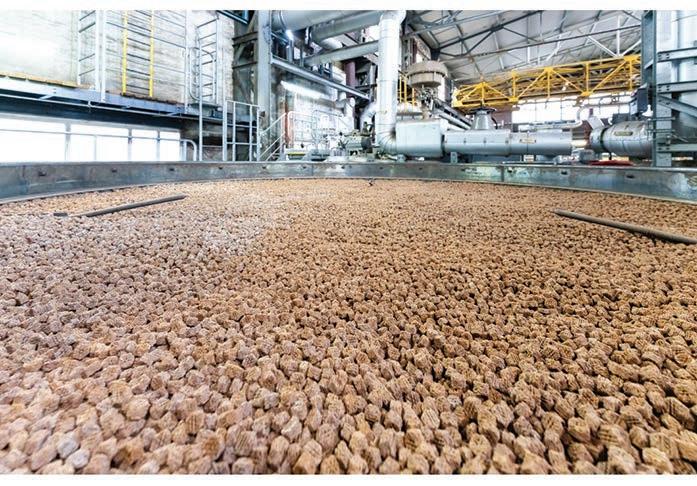
BASF today started up the world’s first production plant for catalysts based on X3D® technology at its Ludwigshafen site. With the commissioning of this facility, BASF is scaling the additive manufacturing of catalysts to an industrial level and strengthening its leading role in innovative solutions for the chemical industry.
BASF already supplies several internal and external customers with X3D catalysts. Here, the reactor of a chemical plant at BASF’s Ludwigshafen site is being filled.
Utilizing X3D technology, catalysts can be produced with optimally designed geometries that combine high mechanical stability with an open structure. This significantly reduces pressure drop in reactors while simultaneously increasing the catalytically active surface area. As a result, customers achieve higher reactor
throughput and improved product quality at substantially lower energy consumption compared to conventional catalysts.
X3D technology already proven in customer applications
BASF has been supplying X3D catalysts to production plants for several internal and external customers for many years. The technology is highly versatile and can be applied to a broad range of catalyst materials, including precious and base metal catalysts as well as various support materials. The new production plant in Ludwigshafen provides the foundation for making this technology more widely available and for further shortening development and market introduction timelines.
In 2025, the Chinese-based fine chemical company An Hui Jintung filled their produc -
expected from BASF’s PPSU materials. Customers can rely on the same performance and certification status, including suitability for applications that demand rigorous safety and quality, e.g. baby bottles, components in contact with drinking water and medical devices. In 2025, BASF was the first company to introduce biomass-balanced polyethersulfone (PESU), i.e. Ultrason® E 2010 BMB with 39% attributed bio-circular feedstock certified by ISCC PLUS.
Ultrason® is the trade name for BASF’s product range of polyethersulfone (Ultrason® E), polysulfone (Ultrason® S) and polyphenylsulfone (Ultrason® P). The high-performance thermoplastic is used to manufacture water filtration membranes, stylish, durable and safe household and catering applications as well as lightweight components for the automotive and aerospace industries. Ultrason® brands can substitute thermosets, metals, glass and ceramics in many applications because of their extraordinary property profile.
tion plant with BASF’s sulfuric acid catalysts O4-115 X3D. “The plant started up smoothly, and plant performance has significantly improved compared to before. Production achieved a record high, generating substantial economic benefits for our company. We will continue our collaboration with BASF to promote catalyst upgrades and replacements across additional units,” said Eter Zhu, General Manager at An Hui Jintung.
CASEConstruction Equipment hosted its 2026 European Dealer Convention in Lecce, bringing together 120 participants from more than 60 dealerships across Europe. The event served as a key moment to align on strategy, share insights, and reinforce the company’s commitment to growth through strong partnerships.
The event took place at one of CNH’s most important industrial sites, highlighting the strategic role of the Lecce plant as both a manufacturing hub and a centre of innovation. With significant ongoing investments in technology, capacity and sustainability, the facility represents a cornerstone of CASE’s global operations.
During the event, CASE leadership outlined the company’s strategic direction, confirming Europe as a core market, with the dealer network recognized as a fundamental driver of customer value and business success.
The comprehensive agenda addressed all key aspects of the construction equipment business.
Market analysis highlighted a stable but evolving European landscape, with growth opportunities linked to infrastructure development and increasing demand for flexible ownership models, such as rental and used equipment.
Innovation remained a central theme, with updates on product development across both compact and heavy equipment lines, as well as advancements in automation, electrification, and digital technologies. Special application machines and tailored solutions were presented as key opportunities to address niche markets and expand business potential.
Marketing and customer engagement strategies were presented, focusing on strengthening brand awareness, enhancing customer experience, and supporting dealers through digital tools, local events, training programs, and targeted initiatives.
Aftersales and customer support were highlighted as critical areas for long-term success. Initiatives aimed at improving parts availability, enhanc-
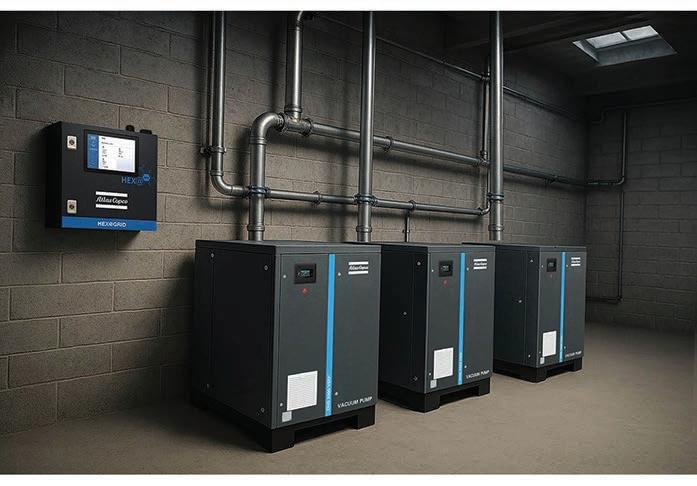
Atlas Copco developed the dry screw vacuum pump DHS 3000 VSD+ specifically for massive flow industrial applications. As dry technology, it is well suited for paper processing, conveying technologies, pick-and-place applications in the food industry, and as a central vacuum system. Powered by a highly efficient IE4 motor with a patented asymmetrical rotor design, users benefit from energy savings of up to 50 percent compared to competitive products. The low-maintenance, compact vacuum pump has a pleasantly low noise level and also runs vibration-free.
Atlas Copco developed the dry screw vacuum pump DHS 3000 VSD+ specifically for massive flow industrial applications.
Lower energy consumption and component wear
An integrated, intelligent control system with frequency converter automatically adjusts the speed of the DHS 3000 VSD+to the require-
ments, ensuring that the exact vacuum level required is delivered in each process section. This results in significantly lower energy consumption and reduced wear on all moving components. Overall, this also extends the maintenance intervals and service life of the vacuum pump. Companies that value stable performance and high process reliability and also need to reduce their energy costs will find the dry-running pump a robust, clean solution.
A wear-free gearbox ensures optimum power transmission from the motor to the screw. “We have achieved a long service life for the gear wheels by using a cooled oil flow,” explains Carol Pignatelli, Product Manager from Atlas Copco. Because the DHS 3000 VSD+ does not use oil in any other way, there is no risk of oil emissions though carry over.
“We have also equipped the DHS VSD+ with an air intake filter to protect operational process from dust and particles,” Carol Pignatelli continues. The
ing service efficiency, and leveraging telematics for predictive maintenance are designed to increase machine uptime and strengthen customer loyalty.
CNH Capital showcased a range of solutions, to support both dealers and customers. Flexible financing, rental-focused products, and liquidity tools are intended to facilitate sales and improve overall business performance.
In all interventions Dealers were recognized as strategic partners and a key driver of CASE’s success across all markets. The event concluded with a strong call to action: turning the energy, insights, and collaboration of the convention into concrete actions and driving tangible results in the market.
As EMEA Vice President Ciro Casapulla said during his speech, “WE BUILD BIG” is more than just a claim:
“WE means that none of us wins alone. We move as one: the brand, the plants, the central functions, and you, our dealers on the front line. BUILD is our daily action: we don’t just build machines, we build relationships and trust. BIG reflects the scale of our ambition and our effort. And above all, we build it together.”
oil-free technology and simple, robust design also contribute to low maintenance costs.
A range of ergonomic advantages and straightforward handling make the DHS 3000 VSD+extremely user-friendly: under a noisereducing hood, it runs pleasantly quietly and vibration-free. The easy-to-use Elektronikon® control system gives users a constant overview of the latest status updates on operating and downtimes, error and alarms. “Atlas Copco supplies the DHS VSD+as a complete plug-and-play unit that can be seamlessly and quickly integrated into any system,” concludes Carol Pignatelli.
When developing drive systems, Liebherr focuses on technological openness and the best possible combination of efficiency and sustainability.
Liebherr-MCCtec GmbH has been awarded the Platinum medal for the first time by the international sustainability rating agency EcoVadis. This places the company in the top 1% of over 150,000 companies assessed worldwide.
Compared to the previous year, the overall score showed significant improvement. This enabled the company to progress from a Gold to a Platinum medal, the highest accolade. “Receiving the EcoVadis Platinum medal is a strong endorsement of our ongoing efforts to embed sustainability into all our business processes,” says Tatjana Grissemann-Peter, Corporate Responsibility Manager at Liebherr-MCCtec GmbH. “The fact that we were able to improve from Gold to Platinum within a year shows that our strategic measures are having an impact.”
EcoVadis assesses companies in the areas of the environment, labour and human rights, ethics and sustainable procurement. The Liebherr group of plants has further improved its sustainability performance across all categories.
Last year, the company implemented numerous measures: Liebherr-MCCtec defined new strategic targets for waste and water management to increase resource efficiency. At the same time, the environmental and energy management system is being continuously developed, with the aim of certifying all sites to ISO 50001 and ISO 14001 by 2030.
Progress was also made in the area of labour and human rights: all manufacturing sites received Matrix certification to ISO 45001. In addition, the company strengthened its information security through ISO 27001 certification and expanded training on the Code of Conduct.
Important steps were also taken in sustainable procurement: CSR audits of suppliers
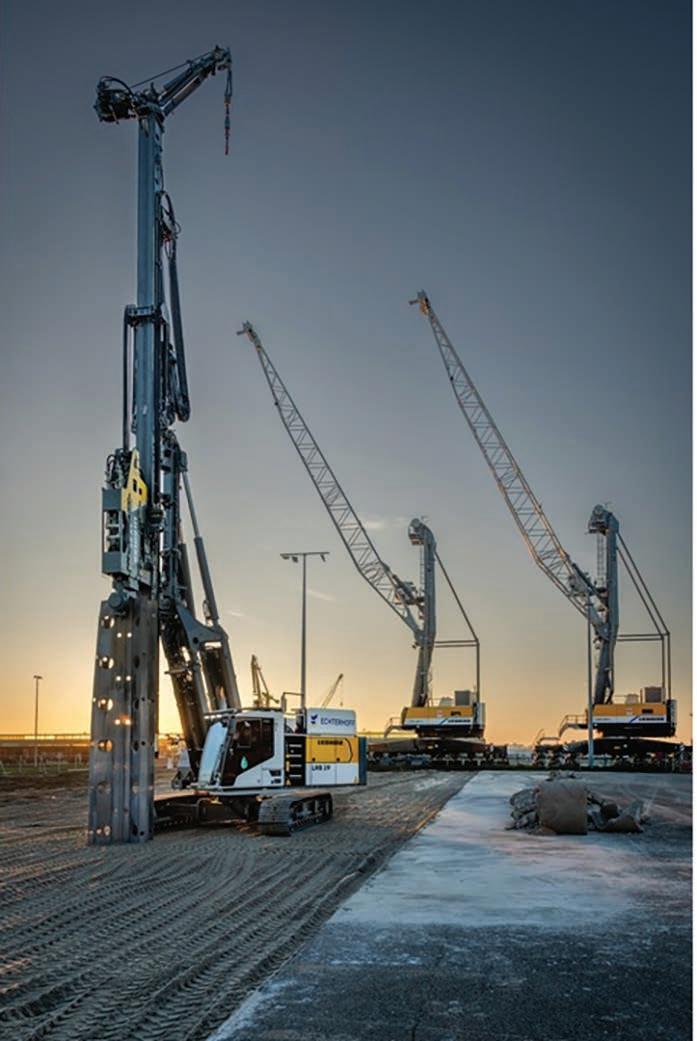
Palm is a leading producer of containerboard with multiple production sites across Europe. At the Wörth location, the company operates a paper machine for manufacturing containerboard, as well as an adjacent automated warehouse for paper rolls — a facility that has long been equipped with Konecranes automated cranes. As part of the ongoing modernization, two existing automated cranes in two of the warehouse’s six bays will be replaced by four new cranes, the crane runways will be renewed, and the entire material flow system will be optimized.
In addition to its proven crane technology, Konecranes is deploying an innovative control system for floor-based material handling equipment for the first time, expanding its expertise beyond traditional crane automation. This reinforces the company's position as a comprehensive provider of material flow automation solutions.
The new control system for the floor-based material flow equipment was successfully implemented during live operation in September/October 2025. Installation and commission-
ing of the first two automated cranes and their associated runway are scheduled for spring 2026, followed by two additional cranes and the second runway in spring 2027.
A key success factor has been the multi-year pilot phase, during which experts from both companies worked closely on the overall system design. Requirements and solution concepts were jointly developed and modeled in detail using simulations at Konecranes. This validated the project’s feasibility and clearly demonstrated the expected efficiency gains within the warehouse.
"We are delivering this challenging project through our longstanding collaborative partnership with Palm. It once again underscores Konecranes' strategy of not only maintaining but continuously expanding strong, long-term customer relationships. What began with the delivery of cranes has evolved into a true partnership over the years — shaped by jointly planned and executed projects, particularly in material flow optimization and efficiency improvements across various sites," said Markus Otto, VP Process Cranes Sales, EMEA, Konecranes.
were expanded, new sustainability criteria were integrated into a supplier assessment tool, and a tool for analysing weak spots and risks in the supply chain was introduced. Another milestone was the publication of the Liebherr Group’s first integrated business and sustain ability report for the 2024 financial year.
“With the expansion and modernization of the crane concept in our fully automated paper roll warehouse in Wörth, we can increase our loading capacity in Wörth by 30 percent and thus supply our customers with our high-quality containerboard even faster and more flexibly. Through our long-standing partnership, we have jointly developed extensive know-how in operating fully automated warehouse structures and are continuing on this path with this step. The resulting performance increase redefines just-in-time delivery for our customers,” said Jürgen Kosse, CTO Containerboard, Papierfabrik Palm.
A strong focus on customers, commitment to business growth, and continuous improvement make Konecranes a material handling industry leader. This is underpinned by investments in digitalization and technology, as well as efforts to make material flows more efficient with solutions that support the decarbonization of the economy and advance circularity and safety.
For a concise overview of Konecranes’ business, please click here. Konecranes’ leading solutions for the paper industry can be found here. More information on Konecranes service programs is here.
Award-winning Hackstons has announced the ultimate whisky lovers’ evening with the launch of an exclusive Islay tasting experience at its Knightsbridge flagship.
Marking the first major whisky event in its calendar, this intimate and highly curated evening celebrates Scotland’s most legendary whisky island through a rare, immersive journey into its history, character and world-renowned single malts.
The evening, dedicated to Islay widely regarded as the most historic and influential island in the world of Scotch whisky, is a landmark experience offering new depth and intimacy to whisky appreciation.
Guests will have a rare opportunity to explore the heritage, character and enduring legacy of one of Scotland’s most revered regions with expert guidance, hosted by wine & spirits specialist Jeffrey Lau.
Renowned for transforming premium drinks retail and tangible asset ownership, Hackstons continues to champion excellence, craftsmanship and discovery across fine wine, whisky and spirits.
With this event, the Knightsbridge flagship store once again reinforces its reputation as a destination for connoisseurs, placing the spotlight firmly on provenance, storytelling and the artistry behind every bottle.
The exclusive evening is a guided exploration of Islay itself, an island whose windswept coastlines, peat-rich landscapes and fiercely independent distilleries have shaped the identity of Scotch whisky for centuries.
Home to a small population yet an outsized global influence, Islay has long inspired devotion among whisky lovers, producing some of the most distinctive and sought-after single malts in the world. This experience brings that story to life through a carefully curated tasting designed to capture both the power and the nuance of the island’s spirit.
Taking place on Thursday 30 April at the Hackstons Knightsbridge store, the evening is deliberately limited to just twelve guests, ensuring an atmosphere of intimacy and immersion. The experience begins with a refreshing Ardbeg
Mondi delivers 10% cost savings for Argesim Teknoloji through tailor-made packaging redesign
Mondi, a global leader in sustainable packaging and paper solutions, has delivered a 10% reduction in logistics and production costs for Argesim Teknoloji, a leading Turkish technology company, by developing a customised corrugated packaging solution for its sensor-based products.
The collaboration, which began in 2023, focused on replacing Argesim Teknoloji’s standard ABOX boxes and foam-filled packaging with high-strength, tailored corrugated solutions designed specifically for sensors used in applications such as solar energy systems and grain silos.
By optimising box dimensions, strength and ergonomics, Mondi eliminated shipmentrelated production damage and reduced operational risks across the supply chain. The redesigned packaging fully removed the need
for foam materials, responding to overseas customer preferences for more sustainable packaging solutions.
The new packaging integrates seamlessly into Argesim Teknoloji’s existing production and logistics processes, delivering measurable cost savings without requiring any additional investment. Improved protection and handling efficiency have helped reduce time losses and ensure smoother deliveries.
The impact has also been reflected in customer feedback, with shipment-related complaints replaced by positive responses and an improvement in overall brand perception, driven by packaging designed specifically for each product.
Metin Morhayim, Sales and Marketing Director, Mondi Corrugated Turkey, said: “This project dem-
10 Year Old highball, offering a bright and contemporary introduction to Islay’s unmistakable character before leading into a deeper, more contemplative tasting journey.
Guests are then guided through six exceptional single malts that together illustrate the remarkable diversity of the island.
The tasting includes Bruichladdich Bere Barley 2013, a whisky rooted in heritage barley and the concept of terroir; Laphroaig 18 Year Old, a beautifully matured expression balancing peat, sweetness and maritime character; and Ardnahoe Inaugural Release 5 Year Old, marking the first bottling from Islay’s newest distillery in nearly two decades.
The journey continues with Lagavulin Islay Jazz Festival 2015, a rare and highly sought-after festival release, and Bowmore 21 Year Old Château Lagrange French Oak Barriques, an elegant expression that marries Islay spirit with Bordeaux wine casks. Both these bottles cost £330 each.
The evening reaches its pinnacle with a remarkable Bunnahabhain 35 Year Old (1989), a rare and refined expression that showcases a more understated and elegant side of Islay, offering depth, complexity and quiet power. This highlight dram which retails at £750 a bottle anchors the experience, reinforcing the event’s focus on rarity and significance while inviting guests to engage with whisky at the highest level.
onstrates how tailor-made packaging can deliver tangible value beyond protection alone. By redesigning packaging around the customer’s exact needs, we achieved cost optimisation, improved operational efficiency and supported sustainability goals – all without additional investment.”
Furkan Canbay, Production Engineer, Argesim Teknoloji, added: “Mondi’s collaborative approach and fast feedback throughout the process helped us implement a packaging solution that improved protection, simplified operations and delivered clear cost benefits.”

Mondi, a global leader in sustainable packaging and paper, ensures consistent packaging performance across long journeys and fluctuating climate conditions, where material choice is especially critical for products to arrive intact. Its semi-chemical portfolio includes ProVantage Powerflute®, made from 100% fresh fibre and developed for applications requiring maximum strength and resistance to variable climates; ProVantage Frescoflute, offering excellent dimensional stability and compression strength during processing and storage; and ProVantage Aquaflute, optimised for environments where short-term moisture and water resistance are essential.
These containerboard grades are widely used across industries with complex requirements, including fresh fruit and vegetables, dairy and deep-frozen products, meat, poultry and seafood, as well as industrial, chemical and automotive applications. Optimising paper choice and grade combinations across all layers of corrugated packaging enables rightweighted solutions that balance material efficiency with reliable protection across converting, packing and distribution.
Compared to waste-based alternatives, fresh fibre-based semi-chemical fluting offers significantly lower creep parameters, which is essential in corrugated boxes maintaining stacking strength over time under changing humidity and load conditions. Mondi supports customers with advanced
creep testing that simulates real-life transport conditions, helping reduce the risk of performance failure and product damage.
“In demanding supply chains, material choice is key to ensuring packaging performance,” says Gijs Huisman, Sales Director for Mondi’s containerboard business. “Our premium semi-chemical fluting grades leverage the strength of fresh fibre to deliver excellent creep performance, enabling reliable, high-quality solutions. We support our customers to create packaging that arrives exactly as intended, no matter how complex the product or its journey.”

Syensqo and Shell Chemicals Europe B.V. have joined forces to supply massbalanced, low-carbon EO solutions for the agricultural and industrial markets, enabling reduced product carbon footprint (PCF) without compromising performance.
Syensqo and Shell Chemicals Europe B.V. collaborate to advance low-carbon ethylene oxide (EO) solutions
Syensqo intends to introduce EO-based solutions made with Shell Chemicals’ lowercarbon feedstocks, which deliver up to 51% lower carbon footprint versus conventional EO[1], enabled through the use of carbon capture utilisation (CCU) credits via a massbalance approach.
Verified under the ISCC Carbon Footprint Certification (CFC), these drop-in solutions allow customers to reduce the carbon footprint
of their formulations without requalification, while maintaining performance, quality, and supply reliability.
“Customers are under increasing pressure to reduce the carbon footprint of their products without compromising performance or supply reliability,” said Chloé Masselon, Sustainability Director at Syensqo. “Combining certified low-carbon feedstocks with drop-in compatibility, these solutions offer a practical and immediate way to decarbonise formulations at scale while meeting evolving regulatory and market expectations.”
This initiative supports Syensqo’s One Planet ambition to reduce Scope 3 GHG emissions in Focus 5 categories[2] by 25% by 2030 compared to 2021 levels. It also demonstrates that reducing value chain emissions requires collaboration across the ecosystem, from raw
material suppliers to ingredients providers to finished goods manufacturers.
[1] The stated 51% reduction applies to the carbon footprint of Shell Chemicals’ feedstocks. The overall product carbon footprint reduction depends on the proportion of low-carbon EO in the final formulation.
[2] Focus 5 categories of Scope 3 emissions: (a) purchased goods and services (b) fuel-and energy-related activities (c) processing of sold products (d) use of sold products and (e) end-oflife treatment of sold products.

ABB is putting the spotlight on the next wave of AI-powered technologies with the announcement of its 2026 Startup Challenge winners. The program seeks to recognize and elevate a new cohort of startups around the world who are developing innovative AIpowered solutions to improve energy efficiency, resilience, and sustainability across industries, buildings, and power grids.
In its seventh year, the global program brings together startups and ABB experts to co-develop technologies that address some of the most pressing challenges in the energy transition. The challenges include solutions to transform smart homes, reinvent circuit breaker technology, advance DC power grids, develop industrial planning tools to cut Scope 1 and Scope 2 emissions, optimize electrical motors and drives, and enable smarter and faster system engineering and integration across industrial systems. From more than 200 applications in 39 countries, ABB selected 18 finalists to compete in the final competition at the Energy Tech Summit in Bilbao, Spain.
The six winning startups each receive $30,000 in collaboration funding to develop a Minimum Viable Product (MVP) with ABB over a six-month period:
U.S.-based Sesame Sustainability's Meridian platform helps industrial companies cut carbon emissions faster and more cost effectively. Replacing expensive traditional audits, it analyzes a company's facilities in days and recommends a decarbonization plan for lowestcost electrification, microgrid, battery storage and demand-response opportunities. By quickly identifying the most cost-effective solutions, Meridian enables ABB's Navigate advisors to move faster from customer uncertainty to actionable decarbonization investment.
NYC and London-based MorphoAI automates circuit breaker design, cutting months of manual work down to hours. Engineers input their requirements – like opening time, force, stroke, and voltage class – and the software generates and tests hundreds of possible designs using real components. Each design is ready to manufacture with no extra steps. This catches design problems early, eliminates costly rework, and gets products to market much faster.
Bisly from Estonia developed a digital twin-based building automation platform that simplifies the deployment of smart building systems by completing engineering and commissioning work before the on-site phase.
On Booth 321 in Hall B1, technical experts will be on hand to discuss how to address flooding and stormwater, reducing the total cost of ownership (TCO) and process reliability. Sulzer will have several solutions on the stand that can support operators of wastewater facilities in tackling these challenges. Digital solutions, including Smart pumping stations, will also be showcased live with demonstrations and handson discussions with experts.
At the same time, Sulzer and Nordic Water, a Sulzer brand focusing on screening and filtration, will be in Hall A2, Booth 127, where water experts will be available to talk about water scarcity and reuse as well as ensuring water quality. Working in
partnership with municipalities and industrial operators, Sulzer is helping to tackle the major challenges of efficient and effective water treatment.
Sulzer offers support throughout the water cycle with high-quality, high-efficiency solutions that optimize each processing stage. This includes the Nordic Water brand, providing filtration technologies that are essential for sites that are experiencing challenges with high levels of micro-pollutants, such as pharmaceuticals and micro-plastics. Also, don’t miss our partner Probig in Hall A1, Booth 238, who is joining us on this IFAT 2026 journey.
As effluent consent levels and regulations become more stringent, treatment plants will need to integrate additional processes and opti-
It reduces manual work, eliminates duplicate data entry and decreases dependency on specialist on-site engineers. The result: projects cost up to 35% less, take less time, and have fewer installation errors. This makes advanced building automation more affordable and scalable across homes and businesses.
eRoots Analytics from Barcelona automated the creation of digital twins for power electronics converters, cutting work from weeks to hours. Engineers feed the software measurement data and component specs, and it builds accurate simulation models that work with any testing software – avoiding costly vendor lock-in. The software uses plain English commands, making it easy for any engineer to use. Models are 7.4 times more accurate than data-sheet-only models, speeding up testing and validation – critical amid regulatory pressures and grid complexity.
Forgis from Europe won with an AI platform that connects engineering and operations across factory systems. Using AI trained on industrial data, Forgis automates tasks that usually require specialists – programming, configuration, commissioning, and diagnostics. The platform diagnoses failures early and optimizes setup time, uptime, throughput, quality, and energy efficiency. By helping manufacturers compete on intelligence rather than labor cost, Forgis supports industrial reshoring and resilience.
Continue reading at: www.industryeurope.net
mize existing assets to meet the new standards. Working in partnership with Sulzer enables operators of wastewater treatment plants to access the expertise and technology required to implement effective and efficient processes that will perform reliably into the future.

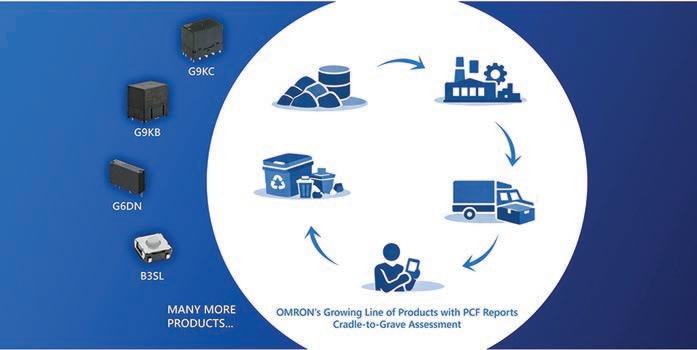
PCF data is available for a growing number of products, including the G9KB, G6DN, and G9KC relays, and B3SL surface-mount tactile switches, as OMRON continues to calculate data for more products in the portfolio. The rollout strategically prioritises the most popular lines, to maximise early support for customers working towards the EU DPP initiative and other regulations.
The reporting program is one result of the wider DMS Green Project, begun by the OMRON Device & Module Solutions Company (DMS) in Japan to cut environmental impact and CO2 emissions. With the goal of turning sustainability obligations into opportunities to share with partners and customers, the project encompasses energy consumption, product design, manufacturing, and supply chain.
Within the DMS Green Project, OMRON built its own PCF calculator leveraging the principles of ISO 14067, the international standard for carbon-
footprint quantification. This calculator is now independently approved, and OMRON is making the tool available to supply-chain partners, assisting industry-wide expansion of product-level carbon reporting and reduction. Depending on the product family, OMRON’s PCF results are either third-party verified or self-declared based on ISO 14067 to accelerate data availability.
Among the board-mount relays for which PCF data is now available, the G6DN slim power relays pack 5A switching capability in a 5mmwide package, featuring ultra-reliable cross bar twin contacts. The G9KB series provides bidirectional switching up to 50A at 600V, while the G9KB-E high-capacity variant handles up to 100A at 800V DC. The G9KC is a 4-pole highpower relay rated for 480V AC at 40A, featuring low contact resistance and a 4.0mm contact gap. Finally, the B3SL series surface-mount
tactile switches feature an IP67-rated sealed structure with a rubber plunger, designed for a crisp click feeling with a middle stroke.
These products are in full production and target a wide range of applications, including industrial controls and automation, energy storage systems (ESS), domestic appliances, heat pumps and HVAC systems, EV charging stations, smart buildings, and energy infrastructure. To support customers, either third-party verified PCF data or self-declared, a report for each model is available upon request.
Whilewindy locations naturally make ideal spots for offshore wind farms, they bring challenges when it comes to assembling wind turbines – particularly in ports.
Most wind turbines have fixed foundations and are assembled at sea using powerful installation vessels that are specially designed to withstand strong winds. Floating wind turbines can be installed in deeper waters and deliver much higher power yields.
However, the movement of their foundations means they must be assembled in the calmer waters of ports – their towers, nacelles and blades constructed on their buoyant bases before being floated out as complete units.
As years pass, the size of these turbines is steadily growing - which means that some of the world’s largest cranes are now needed to assemble them at port.
The Eoliennes flottantes du Golfe du Lion (EFGL) wind farm is a joint venture between Ocean Winds and Banque des Territoires. With this project, floating wind technology will reach its third generation and so mature towards
mass deployment.
Mammoet was approached by Euroports to support with the marshalling – and assembly – of the components that make up the three turbines at Port-la-Nouvelle, in France.
Its engineers managed the entire operation in often turbulent weather conditions. The project is in one of the windiest areas in France, where speeds can reach 10 meters per second.
Mammoet was brought in at the planning stage of the project to advise on what crane would be best suited for the job and how to ensure a smooth transition from component delivery to construction.
Its approach was to ensure that all the components for all three floating wind turbines were delivered to the port well in advance of assembly, to de-risk subsequent stages given the high probability of wind delays.
A large crawler crane, the CC8800-1, was chosen as the main crane for the heavy lifts. It was supported by two 200t mobile cranes for tailing operations.
“With jobs like this, you must use a powerful crane with a big outreach capacity, because the foundations are moored next to the quayside” explains Yan Billard, Managing Director of Mammoet France.
“We used a CC8800, which has a 1,600t capacity, fitted with a boom booster to create a 144-meter main boom. The booster is a special section that increases the capacity of the crane to enable higher lifting within a small radius”.
So that the quay could take the full weight of the CC8800 during lifts, an area measuring 40 square meters was created that could sustain a ground bearing pressure of 30 tonnes per square meter. The ground was reinforced with two layers of wooden mats, laid over gravel to ensure a flat foundation.
24 lines of Mammoet Self-Propelled Modular Transporters (SPMTs) were used to transport the components inside the port –driving them from the quayside to a laydown area, before returning them for assembly. Continue reading at: www.industryeurope.net
Robotronic and Mitsubishi Electric aim to strengthen pharmaceutical supply chain and cut medicine lead times with new ‘smallest’ automated palletising cell
Swiss-based Robotronic has partnered with Mitsubishi Electric’s Factory Automation EMEA division for more than two decades. Now, the two organisations are collaborating together on a new low-footprint cell to help the pharmaceutical industry overcome recordhigh shortages across Europe in recent years for medicines ranging from children’s cough syrups through to antibiotics and even cancer treatments.
The growing demand, which has impacted patient treatment and quality of life, has led the European Medicines Agency to increasingly focus on one of the main causes of shortagesmanufacturing and quality issues - with the aim of ultimately strengthening the fragile pharmaceutical supply chain.
Mike Weber, founder of Robotronic, says faster production is required to shorten lead times and cope with the ever-increasing demand.
“We are a Swiss company concentrating on machine building with robotic applications for the pharmaceutical industry, including everything from de-nesting and re-nesting, through to de-traying, re-traying, and palletising. We have specific expertise in vial and pre-filled syringe handling, offering solutions that deliver maximum efficiency with a small footprint, and enabling pharmaceutical manufacturers to rise to the challenges in their supply chain.”
One of the key challenges for Robotronics is compliance. “Pharmaceutical consistency is about more than quality,” says Mike. “It is also about regulatory compliance and safety.”
He continues: “To get the required productivity, we need two robots working very closely together at high-speed, but we also need the assurance that the delicate products being handled will not be damaged in the process.”
The Robotronic choice is Mitsubishi Electric, specifically the FR series, a highly flexible robot with compact arm sizes that is equipped with SoftTouch technology.
The result is a small footprint automation solution with increased productivity for handling pallets as small as 120cm x 80cm. Most importantly, the FR series has built-in compliance control that offers soft touch capability that delivers zero product damage with no glass-to-glass contact, no broken glass and is easy-to-clean.
“The challenge was to have two robots operating side by side in a confined environment without compromising speed or precision,” says Mike. “With Mitsubishi Electric’s help, we have two robots driving at full speed within millimetres of each other with no possibility of collision. This enables our cells to process up to 600 products a minute, without really challenging the robots.” Continue reading at: www.industryeurope.net
Testo Saveris puts GxP in the Spotlight at Pharma SCL – Live Talk, May 20
and environmental monitoring solutions specialist Testo
Saveris is giving a masterclass on how to monitor GxP at the forthcoming Pharma Supply Chain & Logistics Fair in Basel.
As well as showcasing its holistic approach to environmental monitoring – by integrating sensors, software and services – on Booth no. 18 in the exhibition hall, the company is giving a presentation on how real-time data and GxP-ready solutions can reduce risk, protect product integrity and support smarter decisions across the entire logistics network.
Dr. Fábio A.S Leite, Subject Matter Expert in pharmaceuticals at Testo Saveris GmbH, will be speaking on 20th May, 11:05 to 11:25 a.m,in the conference room, on the topic, ‘Monitoring GxP today: Focus on the most important challenges.’
The talk focusses on why GxP-ready environmental monitoring is a core pillar of pharma logistics, helping to protect product integrity by providing continuous visibility of temperature and humidity across storage and transport.
Dr Leite will show how GxP-ready systems support audit-ready documentation and reduce manual workload in daily operations, while real-time alarms help prevent excursions, protect product integrity, and lower risk in the supply chain.
“We’ve seen time and again that integrating monitoring data with existing logistics and quality systems improves decision-making,” said Dr Fabio Leite. “I’ll be providing use cases from pharma and biotech
companies where digital environmental monitoring has been rolled out across warehouses and distribution centres– with a positive impact in terms of reduced temperature excursions, fewer manual interventions, and lower documentation effort through automated alarms and centralized data.”
Visitors to the stand can discover Testo Saveris’ comprehensive range of sensors and speak to the company’s dedicated pharma team with deep expertise in qualification, validation and regulatory expectations along the supply chain.

Boots, the UK’s leading health, beauty and wellness retailer, has entered a partnership with XPO Logistics, a leading provider of innovative and sustainable end-to-end logistics solutions across Europe.
XPO Logistics will be Boots' new long-term logistics partner, supporting the integration of its supply chain, leveraging new technologies to improve customer visibility, and driving sustainable efficiencies.
Since March 2024, XPO has been managing the primary transport distribution of products from two UK-based Boots Service Centres. This includes the 279-acre site situated at Boots Headquarters in Beeston, Nottingham, and the other, just 30 miles across the East Midlands at Burton-on-Trent.
The new supply chain operation facilitates the distribution of goods from both sites to various Boots Cross Dock Centres at scale across the UK and Ireland.
Boots also benefits from 23 dedicated XPO Logistics support staff and two new operational fleets of varying sizes. One fleet will be assigned for product distribution based on scheduled routes, while the other will be a smaller fleet for dedicated shunting activity at both the Beeston and Burton sites.
Overall, the new operation comprises 50 trunking drivers, 35 trunking vehicles, 22 shunt drivers, and 10 shunt vehicles, operating seven days a week.
With XPO Logistics on board as a new logistics partner, Boots will also benefit from improved visibility through new track-and-trace tech -
nology and XPO’s award-winning system to monitor its carbon footprint.
Dan Myers, Senior Vice President, Supply Chain – Europe, XPO Logistics, said: “Our partnership with Boots is built on a shared commitment to continually improving the supply chain that supports their customers. We’re combining operational expertise with increased digital visibility to enhance service reliability and make the network more responsive and efficient. Initiatives focused on fleet optimisation and lower-emission transport are helping to reduce the environmental impact of deliveries. This collaborative approach supports Boots’ broader sustainability and customer experience goals.”
Keiron Samways, Director of Warehousing – Transport & Distribution UK & ROI, Boots, said: “Our online operations continue to grow at pace as more customers choose to shop with us digitally. This long-term partnership with XPO Logistics strengthens our transport network across the UK and Ireland, giving us greater visibility, resilience and efficiency across our supply chain, supports our sustainability agenda and ensure we’re well positioned to support our customers today and in the future.”
XPO Logistics is a leading innovative supply chain company in Europe, offering end-to-end logistics solutions that combine full-truckload, less-than-truckload, pallet distribution, dedicated delivery service, last-mile delivery, global freight forwarding, and warehousing services. The company tailors its solutions to the specific needs of its customers in a wide range of industrial and consumer sectors.
OMRONhas introduced the VHV5 Inline Verifier, a high-speed barcode verification system designed to verify 1D, 2D, and Direct Part Mark (DPM) codes directly on the production line. The VHV5 performs real-time verification of Code 128, Data Matrix, QR Codes, and DPM marks at speeds of up to 1,000 codes per minute, ensuring that every code applied during marking or printing is readable, compliant, and traceable.
laser, dot peen, or inkjet processes. By applying these standards inline, the system delivers consistent and repeatable grading results across labels, packaging, and permanently marked components used in automotive, electronics, pharmaceutical, medical device, and general manufacturing applications.
The system also includes built-in GS1 syntax checking to validate encoded data structure alongside ISO grading, helping manufacturers identify formatting errors before products leave the factory. Setup and operation are simplified through a guided calibration wizard and a browser-based WebLink interface, enabling configuration, monitoring, and diagnostics without additional software. The VHV5 builds on OMRON’s decades-long leadership in barcode verification technologies trusted across regulated industries worldwide. Boots signs logistics partnership with XPO Logistics to support healthcare and online operations
In production and packaging environments, barcode quality directly affects traceability, compliance, and reliable scanning during internal handling, final assembly, distribution, and pointof-use. Inline verification enables manufacturers to evaluate code quality at the moment it is created, allowing printing or marking issues to be detected and corrected immediately.
The VHV5 is compliant with ISO/IEC 15416 for 1D barcode print quality, ISO/IEC 15415 for 2D symbol grading, and ISO/IEC TR 29158 (AIM DPM) for codes marked directly on parts using
Tilted coaxial lighting is used to improve verification accuracy on reflective, curved, and low-contrast surfaces by reducing glare and enhancing edge definition. This optical approach is particularly effective for DPM codes on metal parts, glossy labels, and curved plastic packaging commonly found in high-speed production lines.
To maintain grading accuracy in space-constrained installations and challenging viewing angles, the VHV5 applies unwarp transform technology to correct image distortion caused by curved or angled surfaces, enabling accurate axial non-uniformity grading of 2D codes. Flat field correction further ensures uniform illumina-
tion and pixel response across the entire field of view, preventing lighting artifacts from influencing grading results regardless of code position.

While automation continues to grow, manual MIG/MAG welding still plays a critical role across a wide range of manufacturing and production environments. When the highest standards of quality, welding power, and flexibility are required across a variety of applications and component geometries, Fronius high-end welding systems and skilled craftsmanship deliver consistently precise results.
Fronius combines high-quality devices with comprehensive support and service, delivering long-term solutions for evolving welding requirements.
MIG/MAG welding is one of the most widely used processes in industrial metalworking. When high welding speeds, productivity, and versatility are required, the arc welding process impresses as it can be used for a wide range of applications. Easy handling combined with high deposition rates makes manual MIG/MAG welding the preferred process for steel, aluminum, and CrNi applications. As production processes, maintenance, assembly, and repairs grow ever more complex, and as welders are called upon to adapt with greater flexibility, manual welding is experiencing a significant resurgence in relevance. “During operation, every welding task is different. Materials, components, and requirements are constantly changing. That’s why we have developed solutions that can be
flexibly adapted and deliver reliable results,” emphasizes Philipp Schlor, Product Manager at Fronius International. Two of these welding machines are the Fortis and the TPS/i, which impress with their modern process control, intuitive operation, and maximum arc stability.
Fortis and TPS/i: the perfect MIG/MAG solution for every job
The Fortis and TPS/i welding systems designed for use in production deliberately address different requirements, but are characterized by high-quality Fronius technology. A stable arc and durable quality are standard features. Choosing the right device depends entirely on the individual welding requirements.
Welding tasks are often a challenge, especially for small and medium-sized companies. These tasks and the required welding processes sometimes change on a daily basis. Our Fortis, which adapts flexibly to changing applications and provides users with optimal support, is ideal for this purpose. With an output of up to 500 amperes, standard and pulse welding processes, a duo version, multiprocess capability, and full connectivity, the Fronius Fortis is engineered to meet the demands of everyday welding operations.
The Fortis handles all standard tasks with ease, but for more complex requirements, the TPS/i is the recommended tool of choice. The available special processes Cold Metal
Transfer (CMT), Low Spatter Control (LSC), or Pulse Multi Control (PMC) not only ensure a stable arc and minimal spattering thanks to their assistance systems and special characteristics, but also enable welding light gage sheets or heat-sensitive joints. With an output of up to 600 amperes, PushPull capability, and a FlexDrive for long distances, the TPS/i is a true all-in-one solution for tackling complex manual welding tasks and achieving highquality weld seams.
Thanks to its compatibility with the new Fronius Velocity Assistant, Velo for short, the TPS/i is also the ideal choice for applications with long weld seams. Velo supports welders in many ways, but especially with weld seams of this type, as the assistant specifies and maintains the welding speed and welding torch distance. This enables higher welding speeds with consistent quality. Velo therefore increases process reliability and significantly reduces the workload for users, particularly in an industrial environment.
Conclusion: TPS/i is fully equipped and prepared to meet the evolving demands of welding. Intelligent equipment, modular design, and extensive expansion options, including automation, combine to deliver unmatched flexibility and efficiency.
Continue reading at: www.industryeurope.net
Epiroc AB, a leading productivity and sustainability partner for the mining and infrastructure industries, has won a large order for mining equipment from Mopani Copper Mines Plc in Zambia. The equipment will strengthen productivity and safety at two underground copper mines.
Mopani Copper Mines has ordered a fleet of Epiroc’s Minetruck haulers and Scooptram loaders. The machines will be used to boost production capacity at the mining company’s Nkana and Mufulira mines, which both were formed almost a century ago.
The order is valued at around MUSD 20 (MSEK 180) and was booked in the first quarter 2026. Epiroc will also provide service on the machines.
“Epiroc has a long history of delivering equipment and services to Mopani Copper Mines,” says Helena Hedblom, Epiroc’s President and CEO. “We look forward to continue supporting Mopani to optimize their operations, this time with our advanced mine trucks and loaders.”
The ordered equipment consists of Minetruck MT436 and Minetruck MT42 S haulers as well as Scooptram ST14 S and Scooptram ST1030 loaders.
Delivery of the equipment has just begun and is expected to be completed by the end of the year.
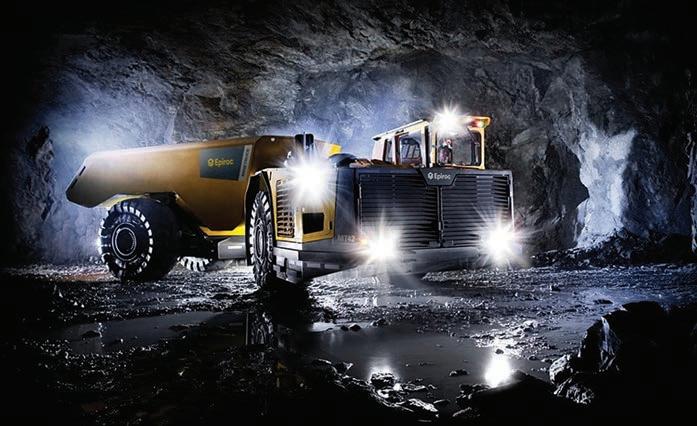
With the new #smart campaign, Degussa is actively taking a cross-generational approach. The aim is to explain gold and silver in a way that is easy to understand and to make access to precious metals simple, transparent and straightforward – as real, tangible assets with long-term value.
Precious metals are not an exclusive topic just for specific target groups, but are relevant to anyone interested in building and preserving wealth – regardless of their experience or stage of life. The campaign is directed at people who are already familiar with precious metals and also at those who are exploring this topic for the first time.
‘If access is made transparent, secure and digital, gold will not remain a topic solely for the wealthy or for passing down through generations, but will also be attractive to those who
are just starting to build wealth,’ says Christian Rauch, CEO of Degussa. ‘With the #smart campaign, we are actively making this knowledge easily accessible and underlining our positioning as a reliable partner.’
The focus is on transparent, clearly understandable information and a low barrier to entry for all target groups. A range of options allow for a flexible entry point and a gradual approach to the topics of wealth building and preservation.
The role of precious metals in the portfolio is also clearly defined: precious metals play a central role in the long-term building and preservation of wealth.
This is precisely why physical gold is of interest: it is tangible, understandable and can be easily passed down from one generation to the next.
With the #smart campaign, Degussa is underlining its commitment to explaining precious metals in a way that is easy to understand and making them accessible to a wide target group. The initiative combines clarity, trust and a modern image – and shows that a responsible approach to precious metals is a relevant topic for every generation.

Metso has launched the Metso GFF Series™ flip-flow screens, engineered for efficient fine dry screening of difficult and often moist materials. The rugged design delivers stable classification in demanding conditions and enables finer cut sizes required in applications such as sand manufacturing in aggregates segment and high-pressure grinding rolls (HPGR) based closed circuits in mining segment. By strengthening the screening stage, the GFF Series helps customers improve energy efficiency, reduce circulating loads and lower water usage, enhancing productivity in fine product making and comminution processes.
The improved screening performance delivers value in two key areas. In HPGR and downstream grinding circuits, finer and more accurate classification reduces circulating loads and improves overall energy efficiency. In fine aggregate production, high screening efficiency minimizes cross-contamination, supporting consistent product quality, for example in sand manufacturing.
The GFF Series combines hybrid flip-flow and conventional deck technology with high excitation forces to deliver precise screening in both dry and wet conditions. It achieves cut sizes down to 0.5 mm in dry applications and 0.3 mm in wet applications, while minimizing blinding and pegging. Compared with traditional screening solutions, this results in higher efficiency, reduced process water demand and less energy wasted in downstream grinding, enabling more efficient flowsheet design.
Practical field performance has been a key design driver. The flip-flow deck’s anti-blinding behavior reduces unplanned stoppages, while straightforward access, rugged construction and easy serviceability support faster maintenance, higher availability and a lower total cost of ownership.
Michael Gyberg, Vice President, Screening Equipment Solutions, says:
“Our customers have been asking for a high-performance screen
that can handle fine, difficult and often moist materials without forcing them into wet screening. The GFF flip-flow delivers the finer, more accurate cuts needed to support HPGRs and the overall comminution process, making the screen a true enabler of circuit performance.”
Beyond mining and aggregates, large-scale fine dry screening also opens new opportunities in applications such as biomass, fertilizers, construction waste recycling and industrial minerals.
Classification plays a critical role in HPGR flowsheets, influencing energy consumption, circulating loads and productivity. The GFF Series widens the technical envelope for fine cut sizes and throughput, enabling more accurate classification ahead of downstream grinding. The resulting finer particle size distribution improves the efficiency of the entire circuit.
Stefan Sakendorf, Director, HRC products, Metso, adds:
“The much finer screen cuts achieved with flip-flow technology are a major advantage for future HPGR circuits. More accurate classification allows a greater share of the workload to be handled by energyefficient HPGRs and strongly supports the implementation of highly efficient HRC™e–Vertimill® circuits.”
The GFF Series further expands Metso’s screening portfolio and strengthens its end-to-end comminution offering. Following the introduction of the Grande Series screens in 2025, Metso now offers fit-for-purpose solutions ranging from coarse, high-capacity applications to demanding fine dry screening.
Combined with Metso’s screening media, lifecycle services, HRC™e HPGRs, grinding mills and digital tools, the GFF Series positions Metso as a full flowsheet partner for customers seeking higher productivity, lower energy consumption and reduced water dependency.
“Fears of a sustained energy shock have resurfaced after the escalation in the Iran war sent oil and gas prices soaring. The prospect of a longer, more drawn-out conflict is in sharp focus, as both sides ratchet up attacks on energy infrastructure. Downbeat sentiment is spreading fast, with London’s Footsie opening around 1% lower as investors assess the repercussions for the global economy.
Brent crude remains highly volatile but has traded as high as $114 a barrel today, threatening to climb back towards recent scorching levels. Gas prices have surged by 25%, reaching a range not seen since early January 2023.
Warnings that oil could reach $150 a barrel have resurfaced. Israel’s attack on Iran’s gas fields has prompted retaliatory strikes on facilities in Qatar. Europe in particular is reliant on LNG exports from Qatar, as countries have been weaning themselves off dependence on Russia. The conflict is not only highly damaging for economies in the region, with tourism and business activity hit, but the knock-on effects of higher energy prices will have toxic repercussions worldwide.
The Bank of England’s Monetary Policy Committee is meeting against this turbulent backdrop, and it looks almost certain to keep interest rates on hold given the inflationary risks posed by the conflict. Not only is the headline CPI rate likely to rise due to higher fuel and energy bills, but there will also be concern that companies will pass on escalating
costs through higher prices across a range of goods and services.
Food prices, which had been easing, risk rising again as freight costs increase and fertiliser exports from the Middle East are disrupted. There are also concerns about helium supplies being stranded, a key component in semiconductor manufacturing, which could lead to delays in producing electronic goods and even cars. Traders are now placing more bets on the Bank being forced to raise interest rates by the end of the year, a sharp reversal in policy - just as borrowers had been hoping for relief.
The mood among central bankers is understandably sombre. The Federal Reserve, as expected, kept interest rates on hold, and Chair Jerome Powell warned of fresh inflationary pressures entering an already complex environment. The European Central Bank, Sweden’s Riksbank, and the Swiss National Bank are also set to announce their policy decisions today. Caution is likely to dominate, with investors expecting a particularly hawkish tone from the ECB. While a hold is anticipated for now, further rate increases are increasingly expected later this year as inflation expectations shift.
The spectre of stagflation is hovering, with the combination of rising prices and stagnating growth posing a real threat. High energy costs are set to dampen consumer spending and curb business investment as both grapple with elevated bills and ongoing uncertainty.”
Market update: Worries rise as oil stays above $100 and the UK economy shows a lack of resilience
"Worries about how the UK economy will withstand the energy crisis have ratcheted up after a highly disappointing report card showed growth stalled in January. The Office for National Statistics painted a picture of stagnation for the UK, with the mighty services sector flatlining and production contracting, with the construction sector only just eking out growth. It doesn’t bode well for the resilience of companies ahead, faced with escalating energy prices which are likely to see many businesses battening down the hatches, putting investment plans on hold while hoping the storm subsides. Stagflation is stalking the UK economy, with inflation set to rise while stagnation settles in, with risks increasing that the economy could go into reverse.
The harsh winds blowing over the global economy show little sign of calming. The FTSE 100 is set to end the week on a cautious note, with stocks on Wall Street hitting the lowest level since last November. Oil prices are staying hot, with the
benchmark Brent crude hovering stubbornly above $100 a barrel as the conflict involving Iran looks increasingly intractable. The energy shock which has rocked markets shows little sign of abating at the end of a turbulent week. Multiple interventions, including the unprecedented release of 400 million barrels of emergency supplies coordinated by the International Energy Agency, have not been able to counter mounting concern about severe disruption to global oil output and distribution.
A statement purportedly from Iran’s new supreme leader pledged to continue to block the Strait of Hormuz, and with three attacks on ships it has become a no-go area for major shipping companies. It means supplies from Iraq, Kuwait and Qatar are largely stranded. While oil from the UAE and Saudi Arabia can be transported through pipelines, overall levels exported are still severely restricted. The strait may be narrow, but its effective closure is having broad repercussions around the world, especially for nations highly reliant on energy

imports. There are reports that China and India are in discussions with Iran to enable some of their flagged ships to travel through the strait, but it’s highly unclear when that could take place. Pledges from the Trump administration that the US Navy will escort tankers still seem a far-off promise.
As energy prices stay highly elevated, it’s helping to fuel Moscow’s war machine. The decision by the US to suspend some sanctions and allow the purchase of Russian crude already at sea underlines just how concerned the administration is about rising gasoline prices denting President Trump’s popularity and the Republicans’ electoral chances. With Iran threatening to widen its attack net, US banks operating in the Gulf are closing down amid fears of strikes on financial institutions supporting the action by the US and Israel.
Continue reading at: www.industryeurope.net
SenkronDigital, a provider of digital solutions, AI models and cybersecurity services to the energy and critical infrastructure industries, has announced the launch of a new intelligent energy trading platform, OnePact Monetize. Designed for energy traders, asset managers, and independent power producers, the platform will automate and optimize participation in electricity markets for flexible assets such as batteries, hybrid plants, and renewables, helping to manage trading risk and execution reliability in increasingly volatile markets.
The move responds to the growing complexity of electricity market participation across Southern and Eastern Europe. Asset operators and owners are under increasing pressure to optimize participation in national wholesale and balancing markets, as well as cross-European platforms such as MARI, PICASSO, and TERRE. With most countries in Europe now bringing markets closer to real time through 15-minute settlement periods, operators are under pressure to bid and dispatch more quickly, often with
lean teams and legacy, manual workflows.
With heightened market volatility and fragmented rules, it is becoming increasingly difficult for market participants to develop trading strategies, manually process bids, and execute them while remaining compliant with ever-changing market regulations. Manual processes also increase operational risk, from data errors to delayed reactions to price movements. By combining automation, validation layers and real-time market connectivity, OnePact Monetize is designed to reduce these risks, support portfolio-scale optimization and help clients with multi-asset structures to capture value more consistently across markets while maintaining human oversight where required.
Remi Ramcharan, Vice President at Senkron Digital added: “Energy markets are becoming faster, more fragmented and less forgiving, with more assets to manage and less time to make decisions. OnePact Monetize introduces automation, AI and built-in validation to support more reliable participation, reducing manual
KetteringMP Rosie Wrighting has highlighted the growing importance of supply chain resilience and component security during a visit to In2tec, a pioneering local manufacturer developing breakthrough technology to enable the reuse and recycling of electronic components.
At a time when UK manufacturers continue to face global supply disruptions, rising costs and material shortages, Rosie visited In2tec to see how its patented ReUSE® and ReCYCLE™ technologies could play a role in strengthening domestic supply chains while accelerating the transition to more sustainable electronics.
During a guided tour of the facility, Rosie met with the In2tec team and saw first-hand how the company’s technology allows electronic components to be safely recovered, reused and recycled at end of life. By designing electronics with disassembly and recovery built in from the outset, In2tec is challenging the traditional “make, use, dispose” model that has long dominated the industry.
Rosie Wrighting MP said the visit underlined how sustainability and economic resilience are increasingly intertwined.
“It was fascinating to see In2tec’s ReUSE® and ReCYCLE™ technology in action. The ability to recover and reuse electronic components has huge potential – not only to reduce waste and carbon impact, but to strengthen supply chains at a time when resilience really matters. In2tec shows how local innovation can help address global challenges, and I’m proud to see this kind of forward-thinking manufacturing happening here in our area.”
She noted that component reuse is becoming an important strategic issue for UK manufacturing, offering a way to reduce reliance on volatile international supply chains while supporting high-quality, skilled jobs closer to home.
Rosie’s visit reflects her ongoing focus on sustainability, green innovation and economic growth and highlights the role that policy and industry collaboration can play in scaling new approaches.
errors and helping teams respond confidently to market volatility. The platform provides real-time visibility, clear controls and human-in-the-loop oversight so traders can capture value at speed while maintaining strong risk management.”
OnePact Monetize consists of a unified dashboard to prepare, simulate and submit bids, operation bots and market integration APIs to streamline and accelerate market participation alongside direct connectivity with Market Operators and Transmission System Operators (TSOs) for real-time data and automated dispatch. The AI-powered, customizable trading bot learns from market patterns and reacts instantly, making it highly effective at capturing shortlived opportunities to improve profitability. The platform also benefits from centralized portfolio management, advanced reporting intelligence providing live trade reports, portfolio breakdowns and exportable analytics, and holistic, real-time visibility of assets supporting coordinated trading strategies.
Continue reading at: www.industryeurope.net
In2tec’s Sustainable Electronics Ambassador Emma Armstrong of In2tec, who hosted Rosie’s visit, commented: “We were delighted to welcome Rosie to In2tec and to demonstrate how our ReUSE® and ReCYCLE™ technology works in practice. Designing electronics so components can be harvested and reused is critical if the industry is serious about reducing waste and carbon emissions – but it also has clear benefits for cost control, supply chain security and manufacturing yields. Having policymakers engage with this technology is vital, and we were encouraged by Rosie’s understanding of its wider economic and strategic importance.”
Founded with sustainability at its core, In2tec is recognised as a leader in environmentally responsible electronics manufacturing. Its patented processes enable components to be separated and recovered without damage, supporting a genuinely circular approach to electronics design and production.
The visit reinforces growing recognition that innovative, locally based manufacturers like In2tec have a critical role to play in building a more sustainable, resilient and competitive future for electronics, not just in the UK but on a global stage.

Treon, a leader in intelligent Smart Industry solutions, today announced the launch of its AI-native Maintenance Orchestration Layer to automate maintenance workflows across industrial asset fleets. The new solution reduces downtime, labour dependency, and manual coordination in factories, logistics hubs, warehouses, and other industrial environments.
As global production continue to expand, companies are facing an unprecedented maintenance challenge. Asset fleets are growing, operational complexity is increasing, and skilled labor is declin-
ing. This widening gap leaves companies struggling to scale uptime, productivity, and safety.
Treon's AI-native Maintenance Orchestration Layer addresses this challenge by replacing today's labour-intensive maintenance practices with automated workflows, enabling growth and uptime despite shrinking workforces.
Treon's solution unifies asset-embedded intelligence, contextual AI, and agent-driven execution into a single AI-native Maintenance Orchestration Layer, enabling to detect issues early, diagnose root causes, make optimal decisions, and execute actions as an automated, software-defined workflow.
Treon Inside will embed physical intelligence into industrial assets, enabling equipment to sense, understand, and act as part of their environment. For original equipment manufacturers (OEMs), this enables a shift from CAPEX-driven product sales to more profitable recurring software and service revenues.
Slim PM Line is a cost-effective permanent magnet brake developed specifically for servo motors in the low- and mid-torque range. It perfectly complements the manufacturer’s High Torque Line, thereby covering the majority of the global servo motor market.
In a market where product variety and cost pressure are rising simultaneously, cost-effective brake concepts are in demand. According to KENDRION, approximately 70 percent of servo motor applications fall within the mid- and lowtorque range. This is precisely where the Slim PM comes in. It is designed as a cost-effective solution for high-volume applications, such as in automation technology, robotics, conveyor technology, and tooling and packaging machines.
The key advantage of the Slim PM lies not in a single feature, but in the combination of standardization, cost-effectiveness, and a precisely tailored design. KENDRION has redesigned the brake’s magnetic circuit from the ground up. This resulted in a design that simplifies the overall system and reduces complexity in both
material usage and the manufacturing process. This reduces material and manufacturing costs. At the same time, the Slim PM is designed for an extended temperature range and uses the same motor interface as the company’s proven high-torque permanent magnet brake.
For servo motor manufacturers, this is precisely the key point. They can expand their brake modular system in the low- and mediumtorque range without incurring additional costs for design, assembly, or documentation. Instead of having to master different brake technologies in parallel, the motor manufacturer remains within a single system architecture. This reduces internal effort and simplifies the scaling of entire motor families. “We wanted to develop a permanent magnet brake that could be seamlessly integrated into existing structures,” explains Waldemar Schaermann, Product Manager at KENDRION. “The Slim PM is therefore not intended as a standalone solution, but as a complement to our High Torque Line. Two brakes, one system—that’s our approach.”
Raw asset condition data is enriched with a broader operational context such as maintenance history, lifecycle stage, technical documentation, and spare-parts availability. This improves AI-driven root-cause analysis, decision-making quality, and situation-specific guidance.
Repetitive and labour-intensive tasks such as ticket creation, scheduling, and technician dispatch are automated by AI Agents while managers supervise operations at a higher level. AI companions augment human capabilities across roles, guiding technicians and operations staff to work faster, more consistently, and with fewer errors.
"Despite major advances in industries, maintenance is the last major industrial workflow still largely run manually," said Joni Korppi, CEO of Treon. "With our AI-native Maintenance Orchestration Layer, companies can automate their end-to-end industrial operations to scale uptime, productivity, and safety."
Treon is unveiling its AI-native Maintenance Orchestration Layer at Hannover Messe, April 20–24, 2026, where the company is showcasing Treon Inside embedded intelligence alongside Agentic Technician Companion user experience.
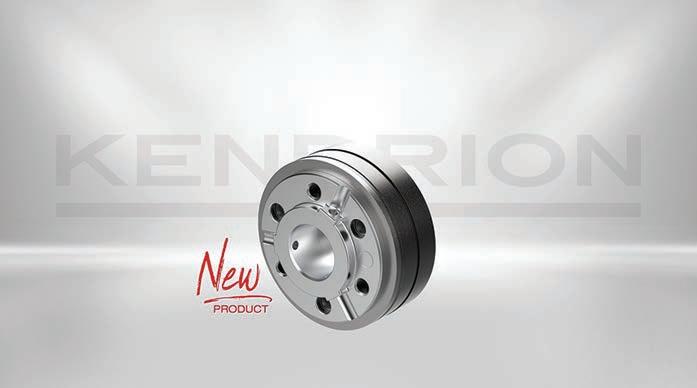
Another aspect is the competitive position of European manufacturers. While significantly cheaper spring-loaded brakes are often used in comparable applications in the Asian market, KENDRION consistently relies on permanent magnet technology. With the Slim PM, the company now aims to offer this technology within a cost framework that was previously more feasible with spring-loaded brakes.
The Slim PM was presented at the SPS trade fair in Nuremberg at the end of 2025 and received a positive response there. The company is currently working with several customers on integrating the new brake into both new generations of motors and existing platforms. According to Waldemar Schaermann, customer feedback sums up KENDRION’s braking concept: “These are exactly the innovations we’re looking for right now.”
Comarch, one of Europe’s largest technology providers, and Sway Outcomes, an independent loyalty and customer engagement consultancy, today announced a partnership designed to eliminate the disconnect between technology and strategic gaps that brands need close. The collaboration brings together Comarch’s enterprise-grade loyalty management platform with Sway’s proprietary strategic methodology to offer brands a single, joined-up path from diagnosis through to delivery, reducing the risk of underperforming programmes, wasted budgets, and customers who never feel the difference.
Among the tools available as a result of the partnership is Sway’s Customer Engagement Accelerator - a structured diagnostic that scores a brand’s customer engagement maturity across six critical dimensions, from marketing foundations through to retention and re-engagement. It gives brands immediate clarity on where their programme stands, where the highest-impact opportunities lie, and what investment is needed to close the gaps before any platform commitment is made.
Beyond the assessment of customer engagement maturity, the partnership creates an integrated offering that spans the full loyalty lifecycle: business case development and financial modelling, competitive benchmarking and market analysis, programme strategy and roadmap design, technology selection aligned to strategic priorities, and full-scale platform implementation and operations. This means brands can move from initial assessment to live programme with a single, coordinated team removing the fragmentation that typically slows loyalty initiatives down.
“The biggest challenge in loyalty today isn’t just access to technology, it’s knowing where to point it,” said Tom Peace, CEO and Founder of Sway Outcomes. “Our Customer Engagement Accelerator gives brands that strategic clarity. Combining that diagnostic rigour with Comarch’s platform capabilities means we can take clients from ‘we think we need a loyalty programme’ to a fully scoped, commercially justified roadmap, faster than anyone else in the market.”
Hexagon unveils VISIUS: The affordable, high-speed optical CMM solving the skills gap for European manufacturers
Hexagon unveils VISIUS, an affordable and intuitive optical CMM designed to address the skills gap and quality demands of European manufacturers with advanced, user-friendly metrology technology.
VISIUS offers high-precision ISO 10360 standard-compliant non-contact measurement with optional touch probe and chromatic white light sensor capabilities, Supporting software provides AI-driven surface defect detection and simplifies integration into high-mix, high-volume production environments.
Hexagon introduces VISIUS, an optical coordinate measuring machine (CMM) that addresses critical challenges facing European manufacturers. Designed to support high-mix, high-volume production environments, VISIUS combines precision, versatility, and ease of use in a single,
affordable metrology system anyone can use.
As manufacturers across Europe face increasing pressure to deliver high-quality components while managing a widening skills gap, the need for intuitive metrology solutions has never been greater. VISIUS addresses these challenges by running on Hexagon’s Metus metrology software. This platform ensures ease of use and requires minimal training, allowing operators of all skill levels to efficiently set up and programme the machine. This accessibility empowers manufacturers to maintain rigorous quality standards without relying solely on specialised metrologists.
"For too long, manufacturers have faced a tough choice in quality inspection", said Khader Ghattas, Product Manager Optical CMMs at Hexagon. "They either invest in expensive, precise tools requiring skilled operators or rely

“We chose to partner with Sway because they bring something our clients consistently ask for: an independent, strategic perspective that makes the technology work harder,” said Ksenia Goncharova, Partnerships Director for Loyalty at Comarch. “With Sway’s methodology embedded in our sales process, we’re not just offering a platform, we’re offering truly comprehensive loyalty solutions—from concept to execution – with a proof that the strategy behind it is right.”
The partnership will operate across Comarch’s key loyalty markets, including the United Kingdom, continental Europe, North America, and the Middle East. The initial focus will span retail, food and beverage, travel, financial services, and telecommunications, sectors where customer engagement maturity varies widely and the commercial case for improvement is strongest.
on affordable manual methods like callipers and micrometers, which lack the precision for consistent results. That’s why we developed VISIUS – advanced technology in a user-friendly design, enabling manufacturers to achieve exceptional results without overspending."
The machine is ideal for manufacturers looking for an accessible entry point into automated vision metrology. VISIUS combines ISO 10360 standard-compliant accuracy non-contact vision measurement with optional touch probe and chromatic white light sensor capabilities. Furthermore, it integrates with Visual Detection, Hexagon's AI-based tool for automated surface defect detection, enabling users to quickly set up automated analyses that identify surface irregularities alongside dimensional inspection.
Hexagon invites industry professionals to experience VISIUS firsthand at the upcoming Southern Manufacturing and Electronics exhibition in the UK, as well as at scheduled events throughout France and Italy this quarter.
by: Mateusz Czarnecki, Head of Product Management for Comarch EDI / E-Invoicing
As tax administrations transition to Continuous Transaction Controls (CTC), mitigating tax risk requires linking digital invoices directly with the verifiable movement of goods. Yet, there’s a frequent misunderstanding regarding the relationship between logistics digitalization (eCMR), new state supervision requirements (eFTI), and global e-invoicing mandates. Simply put: while the EU’s ViDA package standardizes digital invoicing, eFTI regulation governs the electronic waybill, making their integration essential for modern compliance. Read on to discover why integrating your logistics and financial systems is the key to mitigating tax risks, navigating complex regulations, and optimizing cash flow.

eCMR vs. eFTI: Document vs. Law
Many incorrectly treat eCMR and eFTI as similar concepts, sometimes even using them synonymously. However, eCMR is a commercial data carrier (an e-document), whereas eFTI constitutes a public law infrastructure.
• eCMR (Commercial Layer): This originates from the 2008 Additional Protocol to the UN CMR convention. It serves as a
market-driven, digital proof of a road transport contract. While historically adopted voluntarily by supply chain leaders as an optimization tool (such as instant proof of delivery), an increasing number of countries are now introducing or planning to introduce mandatory national requirements for electronic waybills in both domestic and international transport.
• eFTI (Supervision Layer): This is a legislative initiative of the European Union under Regulation 2020/1056. Importantly, eFTI is not a document itself but rather a uniform, mandatory standard and an infrastructure of gateways (known as eFTI Gates) designed for state authorities, such as police and customs, to read data from commercial systems like eCMR.
Crucially, while eCMR applies exclusively to road transport, the eFTI regulation is multimodal and encompasses rail, aviation, and inland waterways . This indicates that future EU eFTI gates will extract data not only from eCMRs but also from their digital equivalents – eCIM for rail transport and eB/L for maritime transport.
The EU eFTI regulation obligates member states to accept data in a digital format. If a carrier fails to implement eCMR solutions, they face what is known as “regulatory fallback” – the necessity to revert to physical documents during road inspections, which undermines IT investments and hinders process automation. To share data with state authorities without compromising trade secrets (such as prices detailed in a complete eCMR contract), companies utilize certified eFTI platforms. These platforms extract only the specific subset of data required by the state (the eFTI data subset) in real time. Examples of this subset include dangerous goods codes or vehicle weight.

To fully grasp the importance of digital logistics, it must be viewed through the lens of upcoming changes in tax architecture. The European Commission is currently processing the ViDA (VAT in the Digital Age) legislative package, which will mandate cross-border e-invoicing.
This raises a critical question: why shouldn’t Chief Financial Officers just implement e-invoicing and stop there? Because a validated e-invoice within a state system only proves that a financial obligation exists, not that physical cargo has been moved. From the perspective of a tax authority, an e-invoice lacking proof of delivery is indistinguishable from an “empty invoice”, which is often used in carousel fraud.
The solution to this issue involves technologically linking the logistics space (digital advice notes/eCMR) with the financial system (e-invoicing) via a single central data bus. Orchestrating this data within ERP systems enables the automation of the three-way matching process (alignment between the purchase order, the waybill, and the invoice). This is the only way organizations can provide the undeniable, auditable evidence required to safely apply the 0% VAT rate for Intra-Community Supply of Goods (ICS).
It’s time to abandon the illusion that upcoming EU harmonization (through packages like ViDA or eFTI) will completely eliminate local national supervision systems. In reality, these overarching European frameworks will coexist with aggressive local reporting systems (known as Clearance models), creating a highly complex hybrid environment.
This trend is particularly evident in markets where the state already heavily interferes in logistics processes by imposing strict e-transport tracking obligations:
• Romania (RO e-Transport): Requires the generation of a unique UIT code prior to beginning a route and mandates continuous GPS tracking integrated with the ANAF system for transports exceeding 2.5 tons.
• Turkey (e-İrsaliye): Demands real-time validation of the electronic waybill by the tax administration before the transport physically leaves the loading yard.
• Serbia (e-Otpremnica): Imposes temporal requirements for the acceptance of structured delivery documents, operating alongside the existing e-invoicing system (SEF).
• Ukraine (eTTN): Is testing a digital waybill as part of its adaptation to rigorous information exchange standards.
For IT Directors, this signifies that data exchange architecture must be highly adaptable – capable of simultaneously mapping information to both pan-European semantic standards and the specific, frequently altering requirements of local tax authorities.

C-Level Perspective: Strategy, Risk, and Single Window Architecture
Maintaining technological separation between financial and logistics systems represents an unacceptable level of architectural debt. Consolidating these layers into a centralized environment serves as a strategic shield for corporate groups. To fully harness this potential, organizations must rely on a Single Window architecture, which guarantees:
• Systemic Risk Mitigation: The automated linking of an e-invoice with digital proof of delivery on a central integration bus significantly reduces the risk of penalties and involvement in carousel fraud. Rule engines proactively detect anomalies between the issued invoice and the actual cargo.
• Cash Flow Optimization: Cryptographic confirmation of delivery from the logistics system instantly triggers the invoice posting process in the ERP system, shortening the Order-to-Cash cycle and optimizing the Days Sales Outstanding (DSO) metric.
• Trusted Integrator Responsibility: Independently building and maintaining integrations with government systems (such as e-transport or central e-invoicing systems) is a massive and costly technological challenge. Furthermore, correctly implementing an IT interface does not mean taking on legal and technical responsibility for global compliance. A trusted EDI provider (like Comarch E-Invoicing) has the necessary ready-made infrastructure and certifications to simultaneously manage tax and transport messages, ensuring complete, legally binding evidentiary archiving across multiple markets at once.
Transitioning to a unified ecosystem managed by a certified operator is one of the most effective strategies for scalable compliance management. This approach guarantees the creation of a comprehensive audit trail – spanning from order generation and digital waybill exchange to the secure registration of the e-invoice in the state API. Optimizing the architecture at the intersection of trade exchange and tax regulations is no longer merely about reducing IT costs, but rather about protecting liquidity, the supply chain, and organizational reputation in the era of Continuous Transaction Controls.
Ready to future-proof your digital supply chain? Contact our experts to discover how Comarch e-invoicing solutions can streamline your global compliance and future-proof your business. n
Wärtsilä integrated propulsion solution to deliver future ‑ proofing for new next ‑ generation short ‑ sea cargo vessel
Technology group Wärtsilä will supply a fully integrated propulsion solution for a new advanced open-deck carrier vessel. The vessel has been ordered by Finland-based operator Meriaura, as part of its fleet renewal programme and has been designed for low energy consumption, operational flexibility and minimised emissions. The order was booked by Wärtsilä in Q1 2026.
Wärtsilä delivers a fully integrated future-ready propulsion solution for Meriaura s next-generation low-emission open-deck carrier vessel
Vessel owners and operators are navigating a dynamic landscape shaped by evolving market conditions, regulatory requirements, and an increasing focus on emission reductions. As a result, there is a growing need for advanced solutions that support both operational flexibility and significant reductions in greenhouse gas emissions in line with international decarbonisation targets.
“This advanced vessel marks a significant milestone in our fleet renewal programme, further enhancing our capabilities in heavy project and
special-cargo transport”, says Jessica Saari, Business Development Director – Meriaura. “With increased capacity, future-fuel-ready Wärtsilä engines and improved operational flexibility, we are well positioned to serve our customers more efficiently and sustainably across a broader range of routes and operating conditions.”
The 6,800 DWT ice-class, short-sea vessel will be equipped with a fully integrated propulsion solution from Wärtsilä. The modular design of two Wärtsilä 25 main engines, which combine fuel flexibility with advanced emission control, will help Meriaura significantly reduce greenhouse gas emissions. The scope also includes one Wärtsilä 20 engine and a Wärtsilä Selective Catalytic Reduction (SCR) system, further advancing emission control and environmental performance.
Alongside the engines, Wärtsilä will deliver a full electric propulsion system which will improve propulsion efficiency, contributing to lower fuel consumption and reliable, sustainable operations.
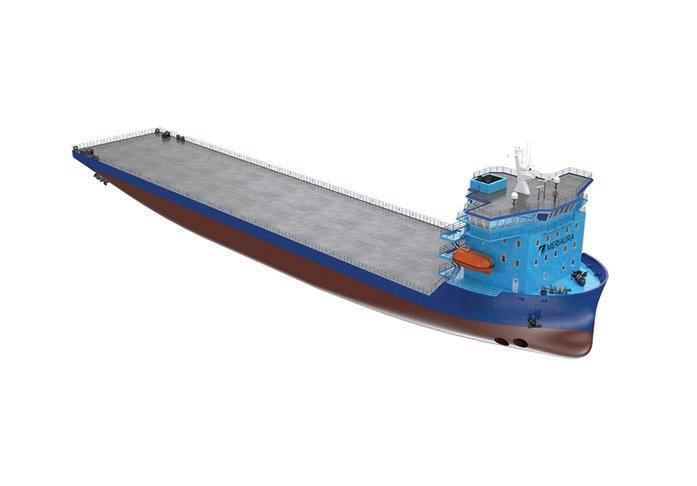
Additionally, three Wärtsilä transverse thrusters will enhance the vessel’s dynamic positioning capability, supporting station keeping during offshore construction and heavy lifting operations.
“This advanced newbuild project demonstrates the shipping industry's drive to decarbonisation through adopting flexible, efficient, and sustainable solutions with built-in readiness for sustainable fuels. By combining engines, electric propulsion, and advanced manoeuvring technologies, we will enable Meriaura to achieve both operational flexibility and emissions savings for this new vessel”, comments Mika Ojutkangas, General Manager, Sales. Finland and Baltics – Wärtsilä Marine.
Wärtsilä’s equipment delivery is scheduled for mid-2027, ahead of the vessel’s planned entry into service in early 2028.
Volvo is taking another step towards net-zero CO2 emissions transport by starting on-road trials of heavy trucks with combustion engines powered by hydrogen.
Volvo’s hydrogen-powered trucks will have industry-leading performance with higher energy efficiency, lower fuel consumption and increased engine power compared to conventional hydrogen combustion engine technology.
This is due to High Pressure Direct Injection (HPDI), a technology where a small amount of ignition fuel is injected with high pressure to enable compression ignition before hydrogen is added. Volvo is already using this technology in its gas-powered trucks, with more than 10,000 units sold globally.
“On-road testing is an important milestone for our hydrogen combustion engine trucks. I feel confident that they will be the best in the industry if you look at fuel efficiency, power, torque and drivability. Customers will be able to operate them just like diesel trucks. Our experience with HPDI technology in more than 10,000 gas-powered trucks is strong proof of its performance,” says Jan Hjelmgren, Head of Product Management at Volvo Trucks.
Hydrogen combustion engine trucks will be especially suitable over longer distances and in regions where there is limited charging infrastructure or time for recharging of battery-electric trucks.
Volvo trucks with combustion engines powered by green hydrogen have the potential to deliver net zero CO2 well-to-wheel when using renewable HVO as ignition fuel. They are categorized as “Zero Emission Vehicles” (ZEV) under the agreed EU CO2 emission standards.
Volvo’s advanced hydrogen engine technology is derived from its diesel powertrain, delivering diesel-like performance while substantially cutting CO2 emissions.
The hydrogen-powered combustion engine trucks will complement the company’s offering of other alternatives, such as battery electric trucks, fuel cell electric trucks and trucks that run on renewable fuels, like biogas and HVO (Hydrotreated Vegetable Oil).
“We see great potential for hydrogen combustion engine trucks and they will have a role to play in the transformation to zero-emission transport. Several technologies will be needed to decarbonize. As a global truck manufacturer we offer a variety of decarbonization solutions and help our customers choose the best alternative based on transport assignment, available infrastructure and green energy prices,” says Jan Hjelmgren.
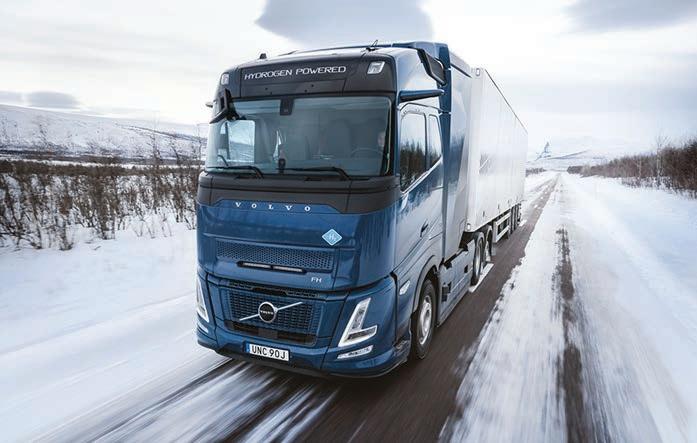
Long-term Wärtsilä Lifecycle Agreement supports Margaritaville at Sea’s commitment to excellence, reliability, and operational performance
Technology group Wärtsilä has signed a ten-year Lifecycle Agreement with Margaritaville at Sea, reinforcing the cruise line’s continued investment in high standards of maintenance, operational reliability, and performance across its growing fleet. The agreement covers the Margaritaville at Sea Paradise and Margaritaville at Sea Islander, both currently in service, as well as the Margaritaville at Sea Beachcomber, scheduled to enter service later this year. The agreements for the first two vessels were booked by Wärtsilä in Q1 2026, with the third vessel to follow within the year.
Wärtsilä has signed a ten-year Lifecycle Agreement with Margaritaville at Sea reinforcing the cruise line s continued investment Margaritaville at Sea is recognised for maintaining exceptionally high technical standards, with a strong focus on proactive maintenance, engineering excellence, and continuous optimisation of vessel performance. This agreement further enhances these capabilities through structured lifecycle planning and advanced technical support.
“This agreement reflects our ongoing commitment to maintaining the highest standards across our fleet,” says Minas Miliaras, Chief Maritime Officer (CMO), Margaritaville at Sea. “Our vessels are operated and maintained with a strong focus on reliability, efficiency, and performance. By working closely with Wärtsilä, we are strengthening our ability to deliver consistent, high-quality operations while continuing to optimise performance and longterm asset value.”
The agreement includes comprehensive lifecycle planning, long-term maintenance support, and technical services tailored to each vessel’s operational profile. These services are designed to enhance reliability, optimise maintenance intervals, and support efficient operations across the fleet. In addition, the Margaritaville at Sea Beachcomber will benefit from Wärtsilä’s advanced Expert Insight digital solution, enabling real-time monitoring and predictive analytics to further enhance performance and operational efficiency.
Stena Recycling expands major investment in electric vehicle batteries – has already invested over SEK half a billion
Right now, a race is underway in Europe among companies working to manage the increasing number of batteries that need to be handled after having been used in passenger cars and other larger vehicles. Stena Recycling is one of several companies that have entered the industry. In recent years, the primary focus has been on recycling, not least to recover valuable minerals such as cobalt, lithium, and nickel. However, automotive batteries have proven to have a longer lifespan than experts initially believed, which has created a new market for battery reuse. Used electric vehicle batteries with remaining capacity can, for example, be reused in forklifts or for energy storage, generating revenue for car manufacturers and other stakeholders in the automotive and battery industries. In this way, the batteries can be used for an additional seven to ten years before they are finally recycled.
“Batteries are valuable, and there is increased interest in giving them a second
life before recycling. We see how the market is developing and how there is not only a need for recycling today. We need to deliver value across the entire chain, from production and handling to recycling. With our investment in developing our service offering within reuse, we are meeting demand and can also strengthen Stena Recycling’s position compared with other players in the market. We are currently one of the few actors that have begun developing an offering in both recycling and reuse, and we expect this business to continue growing. Overall, we believe our battery - related operations will generate SEK 500 million in turnover in five to seven years,” says Marcus Martinsson.
Extending the life of batteries requires expert knowledge. At Stena Recycling’s battery centres around Europe, the batteries undergo a health check to assess their remaining capacity. It requires specialized expertise and customized
“Our Lifecycle Agreements are designed to support customers who prioritise operational excellence and reliability,” comments Andrea Morgante, Vice President, Performance Services, Wärtsilä Marine. “Margaritaville at Sea has demonstrated a strong commitment to maintaining high-performing vessels, and we are proud to support their continued growth and operational success.”
This partnership supports Margaritaville at Sea’s broader strategy of investing in high-quality operations, efficiency improvements, and longterm fleet reliability, ensuring a consistent and seamless experience for guests while maintaining strong operational performance.

systems and algorithms. Stena Recycling has invested heavily in acquiring expertise within reuse and in building a partner network to manage the entire reuse process on behalf of customers. From determining whether and how a battery can be reused in a new product, to selling them on to an appropriate stakeholder. Even though large volumes are often involved, all batteries are inspected individually. In addition, expertise is needed in handling and transporting hazardous materials and navigating the highly complex regulatory framework for the safe reuse of batteries.
“The industry is constantly changing, and to succeed in the future we must meet the increasing needs of the automotive sector. Electric vehicle sales have progressed more slowly than many first anticipated, but the handling of end-of-life batteries is a market that will grow significantly over time. The delay benefits us, as we have made long-term investments. We need to look several years ahead, which is why we are expanding and strengthening our presence in strategic locations across Europe,” says Marcus Martinsson.
Continue reading at: www.industryeurope.net