8 minute read
WORLD THIS WEEK


In collaboration with National Institute for Advanced Studies, Bengaluru
Authored by
Rohini Reenum, Padmashree Anandhan, Anu Maria Joseph, Femy Francis, Dhriti Mukherjee and Shamini Velayutham
The return of the South China Sea
Femy Francis
What Happened?
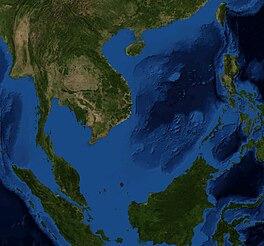
On 28 August, the Chinese Ministry of Natural Resources released a new ‘standard map’ that included contesting regions of Arunachal Pradesh, Aksai Chin, Taiwan and the South China Sea. The map outlines their infamous U-shaped “10-dash” line which covers 90 per cent of the South China Sea overriding many disputed regions, with some of the most tussled waterways aggregating USD 3 trillion worth of trade route passage every year. The “10-dash” line loop cuts into the Exclusive Economic Zones (EEZs) of Vietnam, Philippines, Malaysia, Brunie and Indonesia. Chinese Foreign Ministry spokesperson Wang Wenbin asserted the claims stating: “China's position on the South China Sea issue has always been clear... and We hope that relevant parties can view this in an objective and rational manner.”
What is the Background?
First, a brief background to the 10-dash line claim. Previously known as the “9 Dash line” was adopted in Chinese maps since the 1940s with Beijing claiming their indisputable sovereignty over the regions within. The Chinese officials referred to the area as ‘blue national soil’ and can be traced back to the maps made by the Nationalist Kuomintang or the Chinese National Party before World War Two. In 1947 Chinese geographer Yang Huairen came out with the U-shaped loop with a “11-dash line.” A Chinese Marine geographer Wang Ying stated that the lines mean that all ocean, island and coral reefs belong to Beijing, but the discontinuous line portrays that other countries can pass through it.
Second, claims and opportunities in the South China Sea. The region has a thriving marine life with an abundance of fish which the regional countries are dependent on for fulfilling their major dietary requirements. Additionally, large reserves of natural gases and oil have been found on the floor of the South China Sea. The most significant is that the South China Sea has one of the world’s busiest and most important shipping lanes with trillions of dollars’ worth of trade and business opportunities.
Philippines and Vietnam claim their historical right over the South China Sea whereas Indonesia and Brunei claim the right over their Exclusive Economic Zones as outlined by the UNCLOS.
Third, external interest in the South China Sea. There has been a significant external and especially US presence in the Southeast and East Asian region that has met with criticism by China as an unwarranted incursion. In the context of Southeast Asia, the Philippines and the US revied the Enhanced Defense Cooperation Agreement (EDCA) which provides access to nine Philippines military bases that are of strategic significance as they are in close proximity to both Taiwan and the South China Sea. In 2023, Manila and Washington held an annual Balikatn military exercise and resumed joint military patrols in the region.
Chinese Foreign Ministry spokesperson Mao Ning called it a “zero-sum endeavour” by the US and warned regional players to be more responsible as it might lead to more competition than cooperation.
Fourth, the timing of the release of the “standard map.” The release of the map comes right before the G-20 summit where China wants to reassert its claims over the territories and is well aware that this would become aa a major focus of discussion. Additionally, the publishing of the 10-dash line after the 9-dash line was rejected by the Permanent Court of Arbitration in 2016, relegates that Beijing refutes the ruling. This reassertion before the summit showcases their binding determination over its claims and the rumour of President Xi Jinping’s plans to not attend the G20 summit showcases no space for negotiations and discussion.
ALSO IN NEWS
China: IMF looks to engage in future cooperation
On 1 September, Chinese Premier Li Qiang met the Managing Director of the International Monetary Fund (IMF) Kristalina Georgieva. The meeting aimed to promote economic growth and strengthen policy coordination. Qiang assured that China will provide an environment to promote growth for private enterprises and attract foreign capital. He hoped that the IMF would go against protectionist policies and promote globalization and free trade. Furthermore, he assured continued cooperation of China is aiding the debt issue in supporting the developing countries.
China: Meeting in Fiji between US and China’s Defence officials
On 31 August, China and US defence officers held talks in Fiji as reported by the Chinese Ministry of National Defence (MOD). MOD spokesperson Senior Colonel Wu Qian expressed that talks between the two countries have not been suspended and that both sides have maintained open and effective communication. The meeting comes right after the announcement made by the US State Department approving USD 80 million worth of military support to Taiwan under the “Foreign Military Financing program.” An international affairs expert in China Zhuo Hua states: “If the two militaries want to have further positive interactions, the key lies in whether the US can truly change its erroneous perception and policies towards China in the coming period, and whether it can take concrete goodwill actions”
China: President Xi Jinping announces measures to expand market access
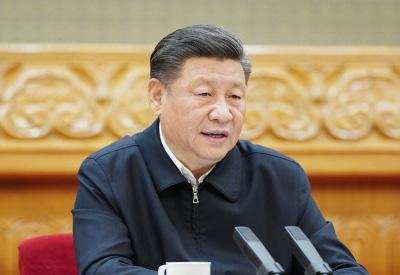
On 02 September, Chinese President Xi Jinping announced that they plan to widen the market access for the service industry and welcome cross-border service trade. The initiative plans to expand on the domestic market by increasing imports of highquality services.
This comes in as China is facing an economic slump where some US-based think tanks are stating the once thriving but now diminishing Chinese economy poses no threat to the US.
China: Discusses export controls with the US
On 28 August, US Commerce Secretary Gina Raimondo met with her Chinese counterpart Wang Wentao in Beijing. The meeting aimed to serve as a platform to mitigate misunderstanding and to further explain their export control systems. They decided that every year both government and private sector representatives would be allowed to discuss trade and investment policy. Several analysts found that while the meeting won't lead to any concrete provisions, talking is better than not talking.
Malaysia: Allocates USD 1.77 billion for National Industrial Master Plan
On 01 September, Malaysia's government will invest RM8.2 billion in a national industrial master plan, targeting the development of a stronger manufacturing sector, the enhancement of SME competitiveness, and the creation of high-skilled jobs by 2030.
Prime Minister Anwar Ibrahim estimates a total investment of RM95 billion, mostly from the private sector. The plan seeks to boost the manufacturing sector's value by 6.5 per cent over seven years and projects 2.3 per cent employment growth in the sector from 2023.
Afghanistan: Ban on Women from Visiting a National Park

On 27 August, the Guardian reported that the Taliban government has banned women from visiting one of its most popular national parks called the Band-e-Amir. The ban was announced in the wake of a complaint made by the acting minister of vice and virtue, Mohammad Khalid Hanafi, regarding women visiting the park not adhering to the proper way of wearing the hijab. He further stated, “Going sightseeing is not a must for women” and requested religious clerics and security forces to enforce the same. This ban is another addition to a long list of bans restricting women’s access to public places in Afghanistan like bathhouses, gyms and parks.
Greece: Indian Prime Minister visits Athen to boost bilateral ties
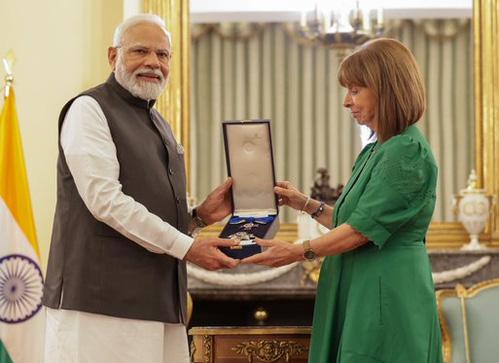
On 25 August, India's Prime Minister Narendra Modi met Greece's Prime Minister Kyriakos Mitsotakis in Athens. The meeting focused on improving bilateral relations in trade, defence, and strategic cooperation. India and Greece will boost military ties, promote skilled migration, and aim to double bilateral trade by 2030. Modi said: "In the sector of defence and security, we agreed to reinforce our military ties and our defence industries." Establishing direct flights and collaboration in tourism, pharmaceuticals, and technology was also in the discussion.
Europe: New EU Digital Services Act imposes rules on tech giants
On 25 August, the EU's Digital Services Act (DSA) came into effect. Henceforth, major tech platforms such as Facebook, TikTok, and Google will be monitored under the act. Under these 45 million EU users, like Alibaba, Amazon, and Twitter will face stringent rules to prevent illegal content, protect rights, and ensure public security. If violated, the firms will be subjected to a fine of six per cent from the turnover and service suspension. DSA requires transparency in algorithms and sharing data with researchers. Some platforms have already implemented changes in line with DSA, impacting advertising and content visibility for younger users.
Europe: Poland takes legal action against three EU climate policies
On 28 August, European Commission published a lawsuit filed by Poland against the European Parliament and the EU Council. The three policies include the EU's ban on the sale of cars emitting carbon dioxide from 2035, the cut down national emissions and the policies to reform the carbon market. According to Poland, these policies seem to endanger its energy security and widen social inequality. It also stated that due to its high dependency on coal where 70 per cent of its power is produced, the EU policies will affect the coal mining jobs.
About the authors
Rohini Reenum is a PhD scholar in the School of Conflict and Security Studies at the National Institute of Advanced Studies. Padmashree Anandhan, Anu Maria Joseph, and Femy Francis, Rishika Yadav, Dhriti Mukherjee and Shamini Velayutham are Research Associates at NIAS. The report has been modified by Australia India News for space considerations.


