Indian Link is a monthly newspaper published in English. No material, including advertisements designed by Indian Link, may be reproduced in part or in whole without the written consent of the editor. Opinions carried in Indian Link are those of the writers and not necessarily endorsed by Indian Link. All correspondence should be addressed to:
INDIAN LINK MEDIA GROUP
Level 25 / 259 George St, Sydney 2000
GPO Box 108, Sydney 2001 Ph: 02 9279-2004
Email: info@indianlink.com.au
What Pauline Hanson might learn in a World Cup fan zone
ABY PAWAN LUTHRA
ustralia has spent years arguing over national identity: what holds it together, what threatens it, and whether multiculturalism strengthens or weakens social cohesion.
In that debate, Pauline Hanson has offered one of the bluntest and most limiting answers. Australia, she argues, should be multiracial but monocultural, with cultural difference tolerated only when it stays safely beneath one dominant national identity.
It is a politics of suspicion, built on anxiety about fragmentation, migration, cultural compatibility and the tired fear that openness will somehow dilute the country’s common values.
Now drag that argument out of Parliament and drop it in the middle of a FIFA World Cup fan zone.
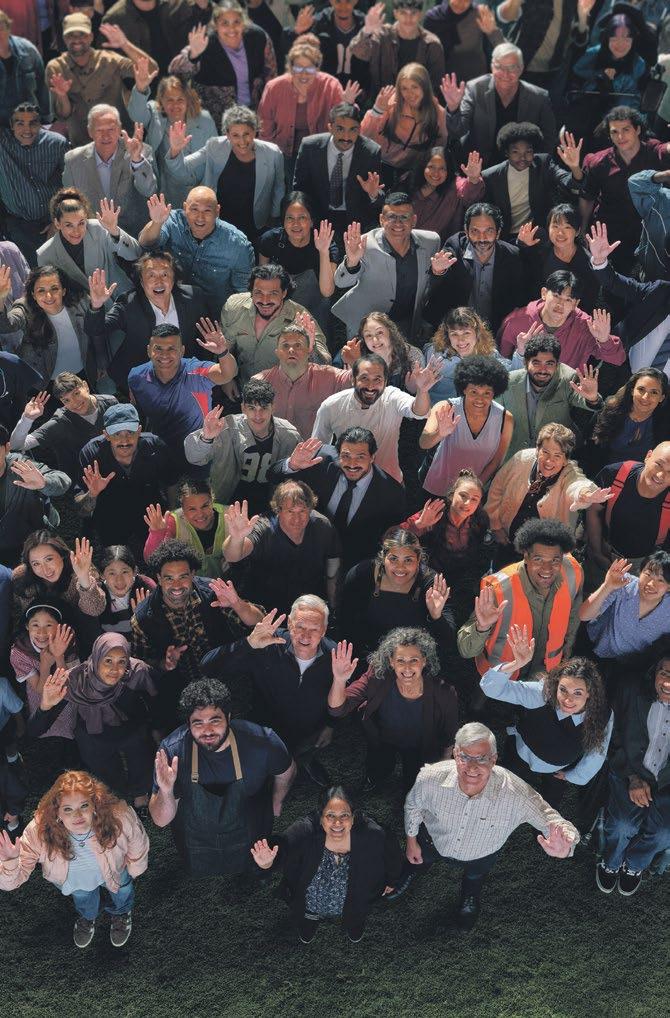
What would Pauline actually see? Not policy papers. Not slogans about failed multiculturalism. Not another warning that difference is a threat. But tens of thousands of people from every corner of the world standing shoulder to shoulder in the same public space.
Japanese supporters quietly collecting rubbish after matches, showing civic
responsibility without needing cultural uniformity. Dutch fans turning precincts into seas of orange yet pulling strangers into the spectacle rather than pushing them away. Brazilian supporters filling streets with music, dance and colour, proving that public culture becomes richer when people are allowed to bring their whole selves into it.
She would see national identity everywhere, not erased but amplified. People not abandoning who they are, but expressing themselves confidently – flags waving, chants rising, faces painted and country colours worn with pride.
In the fan zone, difference is visible, noisy and unapologetic, yet it does not collapse into division. Rival supporters take photos together. Strangers share tables, songs and stories. The dominant emotion is not fear or fragmentation; it is participation, generosity and release.
This is where the contrast becomes important.
This is the point a monocultural worldview struggles to explain: pride does not have to harden into exclusion.
For years Hanson has presented multiculturalism as a zero-sum equation: every culture added somehow subtracts from Australia itself.
The World Cup exposes that argument as fundamentally flawed. Nobody becomes less Australian by celebrating Peru, Japan, Brazil or England.
If anything, Australia becomes more confident because it is comfortable enough to accept the world without demanding the world accept Australia first.
Hanson’s policy instinct is to shrink the national imagination: one people, one umbrella, one approved version of belonging, with everyone else expected to fit inside it quietly.
But the World Cup fan zone exposes how small that imagination is. Identity is not treated as a threat to social cohesion; it becomes one of the ways cohesion is created. Fans remain proudly Japanese, Australian, English or Peruvian, while joining a temporary community built around the game.
That does not mean every political concern is unfounded. Societies are complex, and questions of integration, values and belonging matter. But fear-based politics turns these into blunt weapons, framing cultural difference as danger rather than a normal, productive part of public life.
The lived reality in these crowds is more fluid, more social and far more generous than the fear merchants admit.
The FIFA fan zone is not naïve multicultural fantasy, but a practical rebuke to the idea that national identity survives only when difference is managed, muted or made invisible. Here, identity does not vanish. It opens outward. And that openness is not a weakness in the national story; it is the part that makes the story worth telling.
YOUR SAY
KING’S BIRTHDAY HONOURS 2026
You responded with pride and warmth to Indian Link’s personal profiles of this year’s King’s Birthday Honours recipients.
Australian High Commission New Delhi wrote: The Indian diaspora is integral to India-Australia ties. Congratulations to the Indian-Australians recognised in the 2026 Kings Birthday Honours. Their service and achievements enrich Australia and strengthen our enduring people-to-people bonds. This year’s recipients reflect the remarkable contributions of the Australian-Indian community across medicine, mental health, education, technology, multicultural affairs and community service.
Timsi Marwah wrote: Congratulations to all these amazing contributors.
Atul Kumar Garg wrote: Many thanks to Indian Link for excellent coverage.
Sue Advani wrote: Congratulations all.
Shantha Viswanathan wrote: Congrats to all the recipients of the King's Birthday Honours. Best wishes with all the wonderful work that you do for the community.
Dinsha Palkhiwala wrote: So proud for all of them.
Arun Venkatesha: Congratulations to all the awardees!
VENKATESH BALA AM
Prof Dr Praveen K Jain wrote: Well deserved, Bala. Everyone in Critical Care Education Foundation joins me in congratulating you on this recognition. Dr. Ankur Gupta wrote: Glad to have met Bala in my lifetime... the award got awarded.
Chithambaram Veerappan wrote: Congratulations Bala. Well deserved. Damon Bruce, Ravindra S Jaiswal, Suman Banerjee and Dr. Vivek Baxi also shared words of appreciation.
BIJINDER DUGAL OAM
Madhu Chaudhuri wrote: Congratulations Bijinderji, definitely an outstanding and continuous commitment that will help the Indian diaspora.
Josheph La Posta wrote: Bijinder Dugal, thoroughly deserved.
Sheetal Challam wrote: Congratulations - so delighted for you.
Parul Mehta: Bijinder Dugalji, very well deserved and proud achievement. You are making a huge difference in community.
Mala Mehta wrote: Congratulations, Bijinder, on being awarded the OAM! What a wonderful achievement. You have made us all at Indo-Aust Bal Bharathi Vidyalaya Hindi School Inc very proud. Wishing you continued success and many more accomplishments in the years ahead.
Tarini Puri wrote: Heartiest congratulations to Bijinder Dugal and AASHA Australia Foundation for this recognition. Countless members of the Indian diaspora in Sydney have been helped and supported by their work.
Uma Menon wrote: Congratulations Bijinder, all the hard work and dedication you have put in so generously is now recognised and honoured. Well done.
Navjeet Singh Matta wrote: Many congratulations Bijinder, we are all very proud of you.
Vijayata Kripalani wrote: Congratulations Bijinder, and thank you for your contribution to the community.
Shantha Viswanathan wrote: Congrats on this wonderful recognition. Wishing you continued success.
Loreen Lal wrote: Congratulations on this remarkable honour. Your OAM is a reflection of your hard work, commitment and contribution to the community.
Jenny Patel wrote: Congratulations Bijinderji, you have served the community relentlessly, and earned an honour worthy of you. You are the inspiration that benefits many.
Akanksha Srivastava wrote: She is a pillar of strength.
Sumathi Krishnan wrote: Fabulous work and most deserving award! Bijinder Dugal wrote: Thank you Indian Link for your wonderful support of AASHA, our senior community, and this journey of ours. Honoured and humbled to receive such an honour for my small service.
Thanks also toreaders Rakesh Sahgal, Ronna Guzmann, Ganesh Natrajan, Anna Wilson, Jayaraman Guruswamy, Usha Goyal, Dollyi Mehul Somaiya, Neena Sinha, Jyuthika Vyas, Tanima Banerjee, Dr Neeraj Duggall, Gita Mitra, Rashmi Chauhan, Suman Mathur, Amrita Kohli, Siddharth Maitrak, Indu Harikrishna, Neeru Saluja, Sharda Jogia, Daljit Dhindsa, Poornima Menon, Sue Advani, Aruna Chandrala, Bindi Shah and Anita Bassi.
SAURABH MISHRA OAM
Natasha Jha Bhaskar wrote: Huge congratulations Saurabh. Richly deserved. Puneet Pushkarna wrote: Many congratulations Saurabh for the great work that you do, not only for the world of Hindustani music, but also for humanity at large!! You’ve made this a more caring and compassionate world through your
work in palliative care! Big hugs, my friend.
Dr Raghu Iyer wrote: Congratulations on this well-deserved recognition in the King's Birthday Honours. Your service to the community through a range of organisations is a reflection of your sustained and meaningful contribution to public life in Melbourne. It is an honour to see members of our community recognised at the highest level. A proud moment for the entire Indian-Australian community and TiE.
Cylie Williams wrote: Huge congratulations, Saurabh! So well deserved for all you do for the community.
Surit Sethi wrote: Congratulations, Saurabh. Such good news and so richly deserved.
Sandeep Chitale wrote: So well deserved, Saurabh. Great acknowledgment of your years of service to community.
Tim Odokeychuk wrote: Congratulations, Saurabh! Well deserved - your inspiring vision and impact is admirable.
Julia Hausler wrote: Congratulations Saurabh, what a wonderful recognition for your amazing leadership.
Will Khan wrote: Congratulations Saurab, you have given quite a lot to the Melbourne entrepreneurial community over many, many years. We’re all definitely fortunate to have a true tech leader like yourself engaged in local and international startup activity. You deserve this award!
Philip Wollen wrote: A true gentleman. And a Gentle Man. First Class in every way.
Sheela Edwards wrote: Keep doing the wonderful work, (but) don’t forget to stop just for a moment to celebrate. Well deserved dear friend and brother. My heartfelt congratulations.
Sudhir Chaurasia wrote: Congratulations and well done, Saurabh! Your selfless effort and dedication to community service are truly remarkable. Your commitment to helping others and making a positive difference in the community is inspiring. Thank you for your hard work, generosity, and unwavering spirit of service. Wishing you continued success in all that you do.
Prantik Mazumdar wrote: Many congratulations Saurabh - indeed a proud moment for all of us! Thanks for inspiring and leading the way.
Harish C Mathur wrote: You are a gem of the community.
Ajay Hiraskar, Kashyp Bhatia, Rolee Kumar, Daniel Pollock, Rajiv Khanna, Gitesh Agarwal, Poornima L Nathan, Anoushka Gungadin, Anoma Baste, Alka Warrier, Arjun Agarwal, Kristy Williamson, Bhanu Sud, Dr.Chandra Vadhana Radhakrishnan, Shuman Paul, Abhimanyu Bhola, Alok Kulkarni, Pankaj Sindhu, Sai R, Balendran Thavarajah, Rohit Singh, Sangeeta Mulchandani, Nithya Gopu Solomon, Bronwyn Portes, Aman Madan, Pramod Khatiwada, Ani Kulkarni, Anil Advaney, Pallavi Khanna, Adam Isaacs, Geoff Collinson, Somyajyoti Banerjee, Ameeta Jain, Sameer M, Pankaj Singh, Anurag Saboo, Sharon Dhillon, and Arun Venkatesha also wrote messages.
NOSHIR IRANI OAM
Mala Mehta wrote: Congratulations, dearest Noshir, on being awarded the OAM. This honour is so well deserved and, in many ways, long overdue. Thank you for your outstanding service and contributions to the community over so many years. Wishing you continued success, good health, and happiness. Blessings always to you Maggie Homaxi, Hilla Gary Ranelle Jayden and the family.
Jayaraman Guruswamy wrote: Congrats Noshir.
Sherna Kotwal wrote: How wonderful and so well deserved, Noshir. Congratulations. Shantha Viswanathan wrote: Congrats dear Noshir. What a wonderful recognition of years of hard work that you do silently and diligently.
Dinsha Palkhiwala wrote: Wow, Noshir that is a great achievement and an appropriate reward for all the things you have done.
Walter Vierera wrote: Good to see recognition of the work done for the Parsi community, to Mr Noshir Irani. A well deserved honour.
Noshir Irani wrote: Thank you Indian Link Media Group who have always supported the Indian community in Australia and thank you all for your kind messages, I'm humbled by the honour received.
Arun Venkatesha, Nimmi Banerjee, Phirooza Battiwalla, Aparna Tijoriwala, Mahrukh Palkhiwala, Vipul Vyas, Aruna Chandrala, Nina Moddie, Rani RJ, Tehmi Meher-Homji, Kamal Colah, Jimmy Medhora and PL Sharma also offered their congratulations.
ATUL KUMAR GARG OAM
Alan Erasmus wrote:…and the journey continues Atul. Heartiest congratulations to you.
O'Neill Fernandes wrote: Well done, Atul. Well deserved.
Deepak Sanghvi, Neha Singhal and Lily Sarkar also conveyed their congratulations.
MELBOURNE’S TWO LITTLE INDIAS
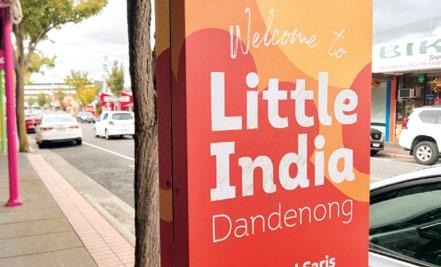
A curated Little India precinct is planned in Docklands while demolition looms at Little India Dandenong. What can we learn from this, asked LAKSHMI GANAPATHY.
Hamish F wrote: Cool piece! I agree with how Docklands was described in the article - it feels like it has the outer furnishings of a city but doesn't have much life to it.I don't think it's a particularly apt location for a thriving community hub.
Steve Khan wrote: Very well written article with good selection of words. Thank you.
Nikos Papastergiadis wrote: Thank you very much, Lakshmi. This is an excellent piece! Well done.
Damien Millar wrote: This is cracking work, full of perspective. You should be very proud.
Veena Hora wrote: Very thoughtful and informative article. Totally agree.
Migrant neighbourhoods are social ecosystems rather than commercial or tourist attractions.
Gwen De Lacy wrote: Fabulous article, Lakshmi!
Jade Ollerenshaw wrote: Great writing Lakshmi! And interesting. And also photo is fab.
Brady G wrote: Love your work, Lakshmi!
Nitin Setia wrote: Need stronger leaders and advocates.
Wincel S wrote: Very nice piece! Nothing more upsetting than hearing community spaces disappearing / being pushed away. Describing Docklands as a soulless wind tunnel sounds about right.
Karen Wang wrote: Why are we developing it (Docklands hub) like a tourist attraction?
Jyoti Patel wrote: Oh wow, great article. Thank you for sharing it. Lakshmi is an amazing writer, well done.
Mitha Chambers wrote: Good article, well written.
Radha Venkatraman wrote: Congrats, Lakshmi's article is very well written and very informative.
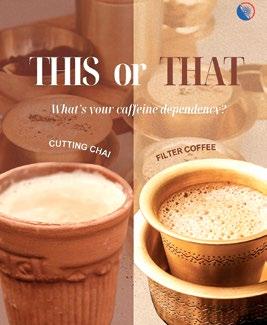
THIS OR THAT
The great Indian debate: Cutting chai or filter coffee?
It’s almost like a personality question for us Indians - how are you getting that daily caffeine kick?
Ankush Gokarn wrote: At home, chai. Kadak adrakwali. At office, coffee only as I can’t stand teabag chai.
Chitra Iyer wrote: Filter coffee 100%.
Rital Kapadia wrote: Kadak adrakwali chai at home, and coffee when out and about.
Sushma Putta wrote: Can’t decide. This on some days and that on some.
Moulik Bavisi wrote: Always cutting chai.
Megha Vaghela wrote: Chai at home and coffee outside.
Kris Na wrote: Filter coffee at home. Creamy Irani chai and Osmania biscuits outside home. The watery "cutting" chai is a cop-out too IMO
Alan J Maurice wrote: Both. Depends if it’s raining.
Meena Sunder wrote: Adrak chai, filter coffee at home. Outside I use Wagh Bakhri masala teabags.
WHEN A SMALL INDIAN VILLAGE CREATED A FASHION STAPLE
Lost in the Lore: HARINI SRIDHAR and RAJNI ANAND LUTHRA on dungarees, the iconic fabric birthed in Dungri village - a fact rarely remembered.
Shanti Raman wrote: Great historical note. Thank you! Padmaja Sahani Sarkar wrote: Informative. Wore dungarees in the 1980s when it was a trend.
Tanima Banerjee wrote: Beautiful story. I do remember the time when we rocked our dungarees.
Indian Literary and Art Society of Australia Inc.(ILASA) wrote: Nicely narrated.
Meena Mahanty Kumar wrote: How interesting! Thanks for sharing.
Sandip Hor wrote: Excellent narration.
Dinsha Palkhiwala wrote: Excellent narration. Reminds us that the so-called "Great Britain " became Great at the cost of so many others. Sad but real and often not expressed openly.
ON PAULINE HANSON’S MONOCULTURAL AUSTRALIA
PAWAN LUTHRA's reflections on culture, cohesion and contemporary Australia sparked discussions on identity and belonging.
Menaka Iyengar Cooke wrote: Well said Pawan Luthra. Hanson’s tirade comes from a place of ignorance and blindness. She seems to forget that this land belongs to First Nations people not the recently arrived (in the past 250 years) white AngloEuro settlers. This great land now supports First Nations, Brits, Europeans, African, Asian incl South Asian, middle Eastern, Japanese and more.
Gwyn Rees wrote: The problem with multiculturalism is that, increasingly it has come to mean many groups living alongside one another adjacent, but separate. Perhaps we should be thinking in terms of a polyculture. Think of a polymer: many individual components that come together, bond and form something stronger as a whole. Not many peoples merely sharing the same space or retreating into cultural enclaves, but many peoples bound together by a common identity, shared values and a common future. And like any successful polymer, not every element is compatible. A polyculture must be selective, favouring those willing and able to bind to the whole rather than simply exist beside it.
Mahesh Enjeti wrote: Good one, Pawan. Australia is the 'crucible'. The land, sea and sky and our indigenous heritage make up the 'environment. Colonialism is the added 'medium'. Migrants are the nutrients. Their symbiotic growth is called 'culture'.
Get the best of Indian Link straight in your inbox. Scan the QR code to sign up to our weekly enewsletter
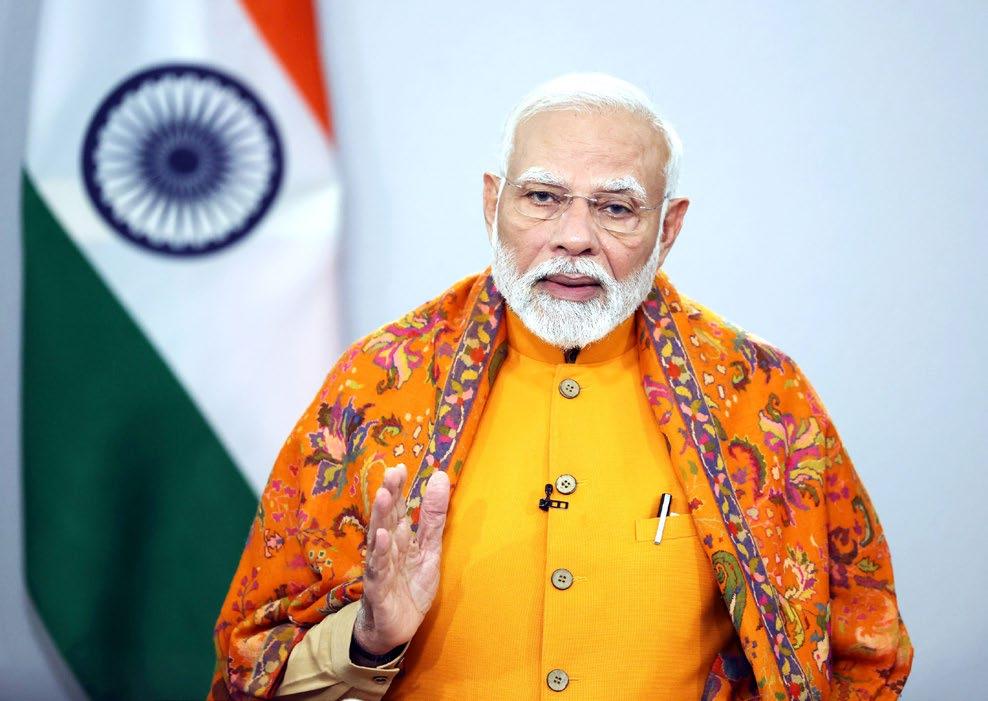
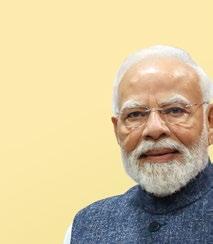
Melbourne Awaits Modi Community hopes and expectations
MBY LAKSHMI GANAPATHY
elbourne’s Indian community are in the grips of Modi mania as they count down the days to the Indian Prime Minister’s reception on the evening of 9 July at Marvel Stadium.
Organised by the Australia India Foundation, almost 26,000 people from across the country have registered to attend, already surpassing attendee numbers of the Sydney reception three years ago.
A rapturous welcome
The AIF arestrictly regulating attendance, making tickets feel just as sought after as passes to the FIFA World Cup. The registration system limits five people to an application, with approval required from a selected Welcome Partner organisation.
“Even my wife couldn’t get the chance,” laughs 79yo Yashpal Vasudeva from Doncaster East, who was lucky enough to secure a spot for himself. “She was upset
like anything, saying ‘what a mistake you’ve done, how could you miss me!’; I couldn’t sleep that night!”
Attendees cite many reasons for registering, chief among them to be in the same room as a man they find fascinating and who they have only ever seen from afar.
“I love his speeches, I watch them [online] all the time when he makes them internationally,” says 25yo Fraser Rise resident Hiren Chauhan. “Seeing him speak in person at a major event would be phenomenal.”
Having received a rockstar welcome on his last trip down under, many are curious to know more about ‘The Boss’’ allure and soak up the electric stadium atmosphere.
“Marvel Stadium is known for big concerts, and I don’t think this would be any different – we have such a big diaspora
who want to see him,” says 26yo Sammy Choudhery, who lives a stone’s throw from the venue.
“He’s probably more famous than Karan Aujla who’s coming later this year!”
For some, being in close quarters with PM Modi has been a longtime goal; 74yo Ashok Kumar Chopra of Epping has been dreaming of him since a chance encounter on a Meerut highway four years ago.
“We were lucky there was no crowd,” he recounts. “We waved to Modiji as he passed us by, and he responded! I am so enthusiastic to meet him…I will try to shake hands with him.”
Meanwhile, those who grew up away from the homeland see Modi’s visit as a chance to reconnect with India and contribute to political conversations.
“We discuss a lot of Indian politics [at home], and what that means for us in
“We’re facing lots of unwarranted racism right now, and I really hope Modiji’s visit navigates and addresses that.”
Australia,” says 23 yo Shreya Bose from Clyde.
“We live so far away and sometimes it’s hard to keep track...I’ve heard a lot about the things [PM Modi]’s done, so I think it’d be good to see him in person.”
The reception is also a great chance for diverse Indian associations, usually separated by geography, to finally connect.
“I hope this inspires the organisations invited to work together, regardless of differences; coming together would help us create bigger and better events,” says 23yo Vedant Mantri from Glen Waverley.
For every reason someone has for attending, there are just as many choosing to stay away - like 51yo Raman Ahuja from Prahran*, who is not enthused about the visit.
“I was excited when Modiji became PM in 2014 but over the years, I have seen how his government has controlled media and awarded contracts to their friends,” Ahuja notes.“There have been too many incidents of the whittling away of secularism in India, so I am disappointed. My Thursday evening of the Modi Meets Melbourne will be at home with my family rather than to hear tall tales be told.”
Gauri Menon, 36yo from Footscray*, also has mixed feelings.
“I always thought that he was very divisive, being so pro Hindu, but India has really grown to be a force to be reckoned with under his leadership. Whether that's due to his leadership, or whether it would have happened organically, I can’t exactly pinpoint,” she tells Indian Link.“He acts decisively in a time of crisis, but as to whether he’s good or bad on the whole, I don’t know.”
There are also those who don’t feel the pull of the pageantry.
“My husband and I got an invitation, but we thought what’s the point? We will just be one in a crowd and won’t even meet him,” says 58yo Gayathri Kandasamy of Point Cook*.
“We have been away from India for so long, we don’t feel the connection; we’re not very interested in what’s going on there.”
Nonetheless, with PM Modi having spurned the garden state on his last visit in 2023, the appetite amongst much of the Victorian diaspora to host an official visit has become ravenous.
“We were disappointed when he went to Sydney; many people travelled from Melbourne, but I was not fortunate enough to,” says 70-year-old Ranganathan Padmanabhan of Oakleigh. “We are so fortunate to have him in Melbourne now, and I’m not going to miss the opportunity.”
Many are travelling hundreds of miles just to be a part of this historic moment, with a charter flight from Sydney to Melbourne already taking expressions of interest.
Forty-two-year-old Anup Deshmukh will journey from Adelaide with around 30 other performers from his Dhol Tasha group: “We’re going to hire a truck for the instruments, and we’re all going to drive.”
He’s been juggling accommodation and food arrangements alongside their rehearsals, but the excitement more than makes up for the admin.
“Compared to Sydney, Melbourne is closer, so we’re planning to go with full enthusiasm and lots of the team members to welcome Modiji as per the Maharashtrian tradition,” Deshmukh smiles.
While the organisers work on processing registrations, preparations are already underway, with everything from banners to outfits being planned meticulously for the big day.
“I was thinking of wearing my India [cricket] jersey,” says Sammy Choudhary. “I wouldn’t be surprised if everyone comes in Indian tricolours like the sporting events – I might do this myself!”
*details have been anonymised to protect interviewee privacy.
Community wishlist
While still to confirm a detailed agenda for the visit, PM Modi’s tripit is believed will also include time in Indonesia and New Zealand.
Clues about what could be discussed emerged in Prime Minister Albanese’s recent speech to Parliament, where he praised the ECTA Agreement and cited the potential within India as the third largest economy - to that extent, Australia seem keen to advance the Australia-India Comprehensive Economic Cooperation Agreement (CECA).
At the 17th Framework Dialogue held in May, Australian Foreign Minister Penny
Wong and India’s Minister of External Affairs S Jaishankar hinted at energy trade discussions, with India eager to leverage Australia’s uranium supplies.
But what do the diaspora want to see discussed behind closed doors on this visit?
With Victoria being a key destination for international students and skilled workers, education and visa requirements will probably be on the table.
“We have a lot of good skilled professionals here, so I hope the agenda is about the productivity and contribution we are making to each other,” says 43yo Nirali Dhruv of Viewbank.
With numerous conflicts raging overseas, there’s hopes regional peace will be prioritisedin the two countries’ discussions.
“There’s a lot of conflicts, like fuel prices, trade agreements, where everyone stands on AI. Hopefully there’s talks about reducing the tensions – not just within the Indo-Pacific, but how India and Australia can help other countries get peace,” says Vedant Mantri.
Though bilateral relations prosper, the climate towards the diaspora has shifted with the advent of March for Australia, so it remains to be seen if PM Modi will acknowledge this during his visit.
“Although it doesn’t seem big, I think racism’s something that’s creeping up exponentially…we’re facing lots of unwarranted racism right now and I really hope Modiji’s visit navigates and addresses that,” says Shreya Bose.
To this extent, PM Modi’s visit offers the diaspora a chance to show a united face in turbulent times.
“His visit will definitely help us establish an identity – having his support, hearing him talk about how we’re doing, it’ll invoke a greater sense of community between Indian Australians here,” says 26yo Shivani Verma from Taylors Hill.
Regardless of what’s discussed, the consensus is that India’s global reputation has shifted since Modi took the reins, so if anything, the reception offers diaspora a rare chance to recognise PM Modi’s transformative leadership.
“I’ve really noticed the change in the recognition we get in Australia and internationally,” says Hiren Chauhan.
“Their vision of India has changed a lot.”
As excitement continues to mount, the community are glad to see PM Modi turn his attention towards the Australian diaspora amidst broader geopolitical tensions.
“I think it’s a very good time that PM Modi has decided to come at – it’s a very nice gesture that will be welcomed by both the communities, and shows we are strong and happy to support each other,” says Nirali Dhruv.
“There’s a lot going on in international politics, so such support is a good assurance to the Indian community they’re being represented and heard.”
Anup Deshmukh
Ashok Kumar Chopra
Nirali Dhruv
Sammy Choudhery
Shivani Verma
Vedant Mantri
Hiren Chauhan
Yashpal Vasudeva
Ranganathan Padmanabhan
The Home of HomeShopping
When you’re making one of life’s biggest purchases, you want to see your options, compare what’s available and feel confident you’re making the right choice. That’s what HomeWorld is all about.
With hundreds of display homes from Leading Building Companies, HomeWorld gives you the opportunity to explore a wide range of home designs, floorplans, styles and inclusions across 5 locations.
Walk through homes. Compare builders. Discover the latest trends. Gather ideas and inspiration for every stage of your building journey.
Whether you’re buying your first home, planning a knockdown rebuild, upsizing for a growing family or simply dreaming about what’s next, HomeWorld makes it easier to find a home that’s right for you.
When it comes to shopping for a home, nothing compares to experiencing it for yourself.
All display villages are open 7 days – 10am-5pm. Visit today.
Weeks of planning, hundreds of volunteers, one historic visit
FBY PAWAN LUTHRA
or most people, a community reception lasts just a few hours. For the organising committee behind Prime Minister Narendra Modi’s proposed Melbourne visit, it represents months of planning, countless meetings and the dedication of hundreds of volunteers working towards one common goal.
Leading much of that effort is the Australia India Foundation’s Jay Shah, who has been involved in the organisation of the previous two community receptions for Prime Minister Modi in Australia. While the two Sydney events in 2014 and 2023 drew enormous crowds and international attention, Jay says Melbourne’s event is shaping up to be even bigger.
“There is tremendous excitement,” he says. “Not just in Melbourne, but right across Australia. People genuinely want to be part of this historic occasion.”
(Preparations for the event are in full swing even as reports emerge that Iran has invited Mr Modi to attend the state funeral of its second Supreme Leader, Ayatollah Ali Khamenei, who was killed in February. The three-day mourning period coincides with Mr Modi’s proposed visit to Australia and, at the time of publication, India had not responded to the invitation.)
The enthusiasm in Melbourne has surprised even the organisers. Registrations have flowed in from every corner of the country, with people planning to travel from Perth, Darwin, Adelaide, Brisbane
and beyond. The interest has even extended overseas.
“One gentleman contacted me to say his 80-year-old mother is visiting from Fiji and is hoping to attend,” Jay recalls. “Those are the stories that tell you how much this visit means to people.”
According to Jay, the excitement comes down to one simple factor.
“Whenever Prime Minister Modi speaks, he connects with people,” he says.
“Whether you’re sitting in Los Angeles, Paris, Auckland or Sydney, he has an ability to make every person feel like he is speaking directly to them. That’s a rare quality.”
Behind the scenes, however, turning that excitement into a successful event is no small task.
Some 300 volunteers are expected to contribute to the project, supporting in registration teams, logistics coordinators and technology specialists working across multiple cities. More than 400 community organisations have also joined as ‘welcome partners’, reflecting the extraordinary diversity of Australia’s Indian diaspora.
“We’re fortunate to have an incredible team,” Jay says. “People are giving their evenings, weekends and holidays because they want to contribute. Technology has also helped us enormously. We don’t always need to be in the same room to keep everything moving.”
The committee has spent months meeting with community organisations across Melbourne’s northern, western, eastern and south-eastern suburbs, ensuring every part of the community has an opportunity to participate.
Yet despite the scale of the operation, Jay believes the biggest challenge is not logistics.
“The biggest challenge is managing expectations,” he admits. “Everyone wants to meet the Prime Minister, shake his hand, take a selfie or present a portrait they made. We completely understand these emotions because people genuinely feel a personal connection with him.”
The organisers have worked hard to streamline registrations and communicate regularly with attendees, ensuring the process remains transparent while balancing the security and operational requirements that accompany a visit by a world leader.
Having helped organise the two previous receptions, Jay says each event has become progressively larger and more complex.
“It hasn’t necessarily become more difficult,” he says with a smile. “It’s simply become bigger.”
Despite spending as many as 12 hours a day on preparations, Jay is quick to deflect any personal recognition.
“This is never about one individual,” he insists. “It’s always about the team.”
He points to volunteers such as Gurpreet
Varma, Amit Karand and Dr Anil Asthana (who, after completing surgery during the day, still dedicates his evenings to planning the event), as examples of the commitment driving the project.
“Our souvenir will actually include the names of every volunteer,” Jay says. “Everyone deserves recognition because every contribution matters.”
Meanwhile, Iran’s invitation to the Indian Prime Minister to attend the funeral of the late Iranian leader has sparked discussion about its potential impact on his proposed visit to Australia and New Zealand. Given the significance of the funeral and India’s strategic relationship with Iran, there may be diplomatic pressure for the Prime Minister to adjust his travel plans. However, cancelling or postponing a high-profile visit to Australia and New Zealand could affect important bilateral engagements, trade discussions, and regional cooperation initiatives. Any decision would require balancing diplomatic sensitivities, international commitments, and India’s broader foreign policy priorities in a rapidly evolving situation.
Nonetheless, as anticipation builds ahead of the Prime Minister’s arrival, Jay hopes the event will leave the same lasting impression as the celebrated Sydney community reception.
“This will be one of those memorable moments for our community,” he says. “Our job is simply to create the platform. Once the Prime Minister steps onto the stage, the rest will take care of itself.”
If the months of planning remain invisible to the thousands of people attending, Jay and his volunteer team will know they have achieved exactly what they set out to do.
Jay Shah of the Australia India Foundation
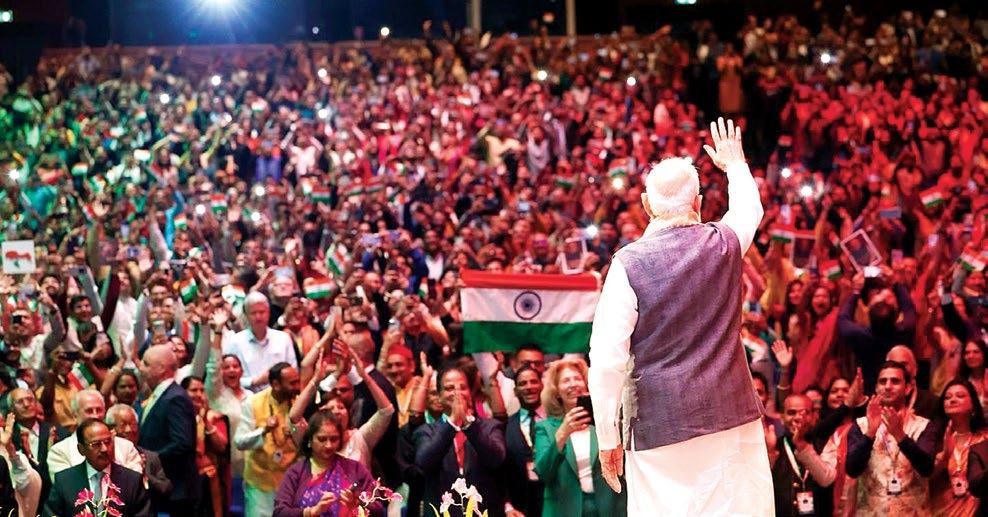
Mr Modi, no stranger to mega diaspora events, at a community reception in Paris in May this year.
Source: X
Sydney supporters’ Melbourne trip plan
Here’s your chance to be part of a group travelling to Melbourne in anticipation of the Indian Prime Minister's proposed early July visit
Excitement is building among members of Sydney’s Indian community as they make plans to travel to Melbourne for Indian Prime Minister Narendra Modi’s upcoming visit.
Community organiser Chetan Kusumgar said interest in the trip has exceeded expectations, with more than 140 people already registering their interest through an online expression of interest campaign launched shortly after the visit date was confirmed.
“We received a very strong response from the community,” Kusumgar told Indian Link. “People are excited about the opportunity to see Prime Minister Modi and be part of what is expected to be a major event.”
Organisers initially explored the possibility of arranging a charter flight from Sydney to Melbourne if sufficient numbers committed to travelling together. Discussions were held with travel agents and airlines, with organisers aiming to make travel affordable and convenient for supporters.
According to Kusumgar, travel arrangements are currently being finalised with Travel Crafters, with participants being contacted to confirm bookings. A target of around 130 travellers has been identified to ensure group travel remains cost-effective.
The Melbourne visit has generated enthusiasm among supporters, many of who see the event as an opportunity to celebrate India’s growing international profile and connect with fellow members of the Indian-Australian community.
While final numbers are still being confirmed, organisers expect a large Sydney contingent to make the journey south. The group plans to travel together and attend the Prime Minister’s public engagement in Melbourne.
“We are looking forward to meeting friends from across Australia and being part of a memorable occasion,” Kusumgar said.
Further details on travel arrangements are expected to be confirmed in the coming days. For more information, contact Chetan on chetank2413@ gmail.com.
At this stage, the travel plans are not quite ‘Modi Airways 2.0’, following the special charter in 2023 that brought a planeload of Melburnians to Sydney.
Meanwhile news has come in that Adelaide doesn’t want to be left behind – organisers there have announced a car rally for supporters, Melbournebound. 33 registrations have been received so far.
Neither the Indian nor Australian government however, has so far officially confirmed Mr Modi’s visit.
Rajni Anand Luthra
The Census is coming this August.
Sydney-bound passengers of chartered flight ‘Modi Airways’ organised during PM Modi’s 2023 visit, waiting to board at Melbourne Airport.
KING’S B’DAY HONOURS
REBUILDING LIVES, ONE SURGERY AT A TIME
Dr Dilip Gahankari, OAM
For service to plastic and reconstructive surgery
An 18-month-old girl from Melghat, a tribal Maharashtra region, arrived with severe burn contractures across her right arm and fingers. Malnourished and living far from specialist medical care, she could barely use her hand.
Years later, Dr Dilip Gahankari watched a video of the same child dancing at home. “The smile was priceless,” he recounts to Indian Link.
The Australian surgeon had operated on her during one of his annual surgical camps at Melghat, where access to reconstructive surgery remains scarce. Today, the child attends school and has a functioning hand.
“For us, it’s just another operation. For them, it is their new life,” he shares, smiling. It is this lifelong commitment to restoring lives through surgery – both in Australia and India – that has earned Dr Gahankari a Medal of the Order of Australia (OAM) in this year’s King’s Birthday Honours.
Recognised for his service to plastic and reconstructive surgery, the Gold Coastbased surgeon says the honour belongs as much to his volunteers and patients as it does to him. “Humbled, and genuinely surprised,” he says, of his reaction upon first hearing, adding, “My very first thought was that this award doesn’t belong to me, it belongs to every person who has given up their Christmas to operate in a village most people will never find on a map.”
To love is to serve Today, Dr Gahankari is recognised as one of Australia’s leading plastic and reconstructive surgeons. Most recently, he was named a Champion of Rural Surgery 2025, an honour conferred at the 29th Annual ARSICON, Conference of the Association of Rural Surgeons of India. But his connection to Melghat stretches back more than four decades.
Growing up in a small town in India, he says education was the greatest gift his father could offer. “My father believed his children’s education was the only inheritance worth giving – and he was right,” he shares.
As a medical student in Nagpur, he and three friends shared a dream of serving remote communities. One of those friends, Dr Ravi Kolhe, moved to the isolated village of Bairagad in Melghat in 1984. Dr Gahankari soon joined him.
The experience left a lasting impression.
“There was no electricity, radio, phones. We slept on the floor in a shack. The village would be cut off from the rest of the world for four months during the rainy season.”
The young doctors treated difficult childbirth cases, severe injuries, malnutrition and infectious diseases with almost no resources.
“The plight of people, their poverty and their helplessness left a lasting impression on me.”
Determined to return better equipped, Dr Gahankari completed surgical training in India before pursuing further training in Malaysia, the United Kingdom and eventually Australia, where he specialised in hand surgery and later settled permanently.
Bridging back to the motherland
Yet he never lost sight of Melghat. After establishing himself as a plastic surgeon on the Gold Coast, he began organising annual surgical camps in the region. After 2007, these camps have operated in partnership with the MAHAN Trust and the Mahatma Gandhi Tribal Hospital.
“What keeps me returning is simple,” he says. “Tribal people in Melghat have practically no direct access for specialised plastic and reconstructive surgery care.”
LIFELINE FOR SENIORS
Bijinder Dugal, OAM
For service to aged welfare
Bijinder Dugal is a familiar face at community events across ever-expanding Sydney. Being the co-founding director of AASHA Australia Foundation, she has championed support for the health and well-being of older members of the Indian community since 2017. Her work has
been acknowledged as part of the King’s Birthday Honours this year with an OAM. Dugal says the accolades belong equally to the volunteers of AASHA Foundation, which conducts regular programs for elderly members of the Indian diaspora, combining cultural programs, music, dance and entertainment with food, information
The work addresses conditions that are often life-altering. Burn contractures are particularly common, with children injured by open cooking fires and untreated burns leaving permanent deformities.
“This isn’t cosmetic surgery. It’s giving someone back their hands, their work, their place in the world.”
The camps take place annually during the Christmas period, requiring Australian surgeons, anaesthetists and medical staff to sacrifice holidays with their families.
“They [Dr Dilip Gahankari’s team and volunteers] ask for nothing, and they come home changed.”
Balancing a busy public and private surgical practice with humanitarian work is demanding, but he sees the two pursuits as complementary.
“The private and public practice on the Gold Coast is my profession; the camps are my purpose. Each one makes the other meaningful.”
Two homes, two hearts
“Nearly five billion people in the world cannot access safe surgical care,”
Dr Gahankari says.
Australia’s healthcare system, he
and awareness sessions, health checks and vaccination drives.
Australia has been home for Dugal since 1975. She’s worked with the NSW Department of Education for more than four decades, working her way up from a teacher, all the way to Assistant Principal in schools including Auburn Girls High School, Clarke Road School, Redfern Public School, Ryde Public School and Spastic Centre among others. She continues to be a teacher with IABBV Hindi School, besides serving as Executive Member of Ryde Indian Association, and is the former vice president of the Australian Hindi Indian Association (AHIA).
believes, excels because it successfully organises goodwill through training, accountability and strong institutions.
India has taught him resilience and adaptability, and ‘the ability to deliver world-class outcomes with very little investment.’
“The ideal,” he muses, “is to combine both.”
Beyond humanitarian work, Dr Gahankari has served in emergency responses following the Bali bombings and natural disasters, and has held academic and advisory positions across Australia and India. Yet among all his achievements, one role remains closest to his heart.
“The operating theatre in Melghat –without question.”
“When I release a contracture from a young person’s hand and watch them open their fingers for the first time in years, there is no abstraction.”
The camps, he says, represent something deeper than medicine. “It is where the two halves of who I am – the country that gave me my roots and the country that gave me my opportunities – come together completely.”
Prutha Chakraborty
MAKING SURE NO CHILD IS OVERLOOKED
Valsamma Eapen, AO
For service to psychiatry, child and adolescent mental health, neurodevelopmental research, and tertiary education
When Tourette Syndrome activist John Davidson involuntarily shouted a racial slur during this year’s BAFTA Awards, the backlash was immediate. The incident sparked global debate about a condition still widely misunderstood despite affecting thousands. Davidson later said he was “deeply mortified”, while disability advocates stressed the outburst was an involuntary symptom of Tourette Syndrome (TS), not a reflection of his views.
For Sydney-based psychiatrist Professor Valsamma Eapen, the controversy highlighted a reality she has spent years trying to change.
Despite growing awareness of neurodiversity, children with Tourette Syndrome in Australia still wait an average of two years for a diagnosis, often facing stigma and significant mental health challenges along the way.
“It is one of the most under-recognised, misunderstood and misdiagnosed medical conditions,” Eapen tells Indian Link.
Eapen’s lifelong commitment to improving outcomes for child and adolescent mental health has now been recognised with an Officer of the Order of Australia (AO), one of the nation’s highest civilian awards, in the 2026 King’s Birthday Honours.
Ask her reaction to the recognition, and she simply says: “Deeply humbled and honoured.”
Currently Chair of Infant, Child and Adolescent Psychiatry at UNSW and Director of the BestSTART Child Health Unit in South Western Sydney, Valsamma Eapen AO has helped shape national guidelines on autism and ADHD while advocating for equitable access to care for children across Australia.
Dugal has been a strong advocate for health of the elderly for several years, especially helping raise awareness about dementia, and credits her work there in laying the roots for AASHA Foundation.
Learning
brain and behaviours
Her journey into child psychiatry began with a fascination for both children and the human brain.
“I always wanted to work with children, and during medical training, the brain fascinated me as an organ, but seeing a young patient with Tourette Syndrome and the diverse behavioural manifestations totally got me,” she recalls.
That early clinical encounter would go on to define an illustrious career that has focused on early identification and intervention in neurodevelopmental conditions. For Eapen, the appeal of the field lies in its potential to change life trajectories before difficulties become entrenched.
While early support is one of the most powerful tools in child mental health, she argues that systemic barriers continue to prevent many families from accessing timely care.
“One of the biggest challenges is the ‘inverse care effect’ in that those children from the most disadvantaged backgrounds with the highest risk of having neurodevelopmental needs are least likely to have early access to services,” she explains.
According to her, access to diagnosis and treatment is often shaped not by need, but by geography and socioeconomic circumstances. “It is often the case of a ‘postcode lottery’,” she says, pointing to deep inequities embedded within the system.
Australia’s problem
Beyond diagnosis and access, Eapen believes one of the most overlooked gaps in Australia’s mental health system is the stage of life at which support is prioritised.
“Support in the early years of life is still
“’Aasha’ means hope in Sanskrit, and that is exactly what we try to provide for the elderly members of our community. So many of them suffer loneliness, isolation, sickness, familial challenges and abuse etc but have nobody to share their problems with, nor any outlet for respite,” she explains. “To bridge that gap, we regularly conduct programs across different corners of Sydney to provide this cohort of people a safe space for a few hours of fun and enjoyment.”
Sessions are well attended, Dugal reveals.
“We are present in Blacktown, Gordon, Crows Nest, Strathfield, West Ryde, to name a few centres. In the few hours of the program, the attendees get to mingle with others, enjoy good food, learn new skills, enjoy dancing and music, fitness and health sessions etc. All these are wonderful activities for their mental well-being too.
We also try to bring expert speakers to talk about subjects like digital literacy, how to identify and tackle abuse, do their health checks,” she says.
The sessions have evolved over the years, she says. “Covid was a particularly
lagging behind, in particular under 6s and under 12s are overlooked with quite a bit of focus instead on youth services,” she informs.
Yet, she argues, it is precisely these early years that offer the greatest opportunity for meaningful intervention. By the time children reach crisis points in adolescence, many developmental and behavioural challenges have already become complex and harder to treat.
“The return on investment and the opportunities to make a difference in the life course are much earlier in life and not after the issues have consolidated and comorbidities and complexities have set in,” she says.
Her work has increasingly focused on closing this gap through both research and practical tools. One of her key contributions is ‘Watch Me Grow’, an electronic developmental screening platform designed to track children from birth to school age. The aim is simple: identify developmental differences early and ensure families are connected to support as soon as concerns emerge.
“My hope is that no child is left behind due to their cultural, linguistic, geographic
challenging time, but we managed to conduct programs online and that helped us to connect with elderly in other parts of the world too, and they continue to stay in touch. I have learnt so many new skills too along the way, including how to conduct live programs on social media!”
It’s no wonder that AASHA Foundation and Bijinder Dugal have been recognised at various forums through the years, including Individual Community Hero by City of Ryde Volunteer Recognition Awards 2025, Volunteer of the Year (Blacktown City Multicultural Awards 2023), Upper North Shore Volunteer Team of the Year, and NSW Volunteer of the Year Awards 2022.
or socioeconomic background,” she shares.
Raising kids with care
Born in Kerala, Eapen undertook specialist training and research in the United Kingdom before establishing her career in Australia. Along the way, she says, her guiding philosophy has remained consistent.
“I am guided by the values of family and I truly believe in the spirit of family and community connections as ‘it takes a village to raise a child’,” she adds. That belief, she explains, becomes even more important in migrant contexts, where families may not have the same extended support networks they once relied on. In those situations, she says, communities and services must help recreate that sense of collective care.
As a mentor to young clinicians and researchers, Eapen says the future of mental health care will depend on adaptability in a rapidly changing field and strong emotional intelligence.
For her, empathy is not abstract but essential – the foundation for building trust with children and families across diverse cultural and social backgrounds.
Prutha Chakraborty
Awards and accolades notwithstanding, Dugal says the biggest reward for her continues to be the smiles on faces of the elderly. “This recognition is not the end of a journey,” she says. “Rather, it is a reminder that there is still much work to do. Too many people are still isolated, their voices unheard. There are countless others who just need someone to stand beside them to assure them that they are not alone. At AASHA , we feel honoured to be able to watch strangers become friends, see the hope return to someone’s eyes, and witness communities come together in support of one another.”
Tarini Puri
ACCOLADES KING’S B’DAY HONOURS
DUTY, THEN SERVICE
Dr Atul Kumar Garg, OAM
For service to the community through a range of organisations
Reflecting on his journey since arriving in Australia, Dr Atul Kumar Garg of Perth says, “Australia has given me great opportunities since I arrived here in 1993.”
As someone who grabbed these opportunities with both hands and made something of them, he is not only a great role model, but one whose contributions have now been recognised with an OAM.
Dr Garg gave up a life in the Indian Navy when he moved to Australia, taking up roles in the State Energy Commission, Alinta Energy, Department of Planning and Infrastructure of Western Australia and more. He has spent years building and directing volunteer networks across Western Australia. In his 33 years here, his civic participation has touched community as well as mainstream platforms.
Community builder
At the community level, almost immediately after his arrival, he became involved with activities in the Indian Society of Western Australia (ISWA), the Hindi Samaj of Western Australia and the Hindu Association of Western Australia. He played a major role in the establishment of WA’s first Hindu temple at Perth. In 2017, Dr Garg founded the Federation of Indian Associations of Western Australia, uniting over 150 Indian associations under one umbrella for better outcomes for the Indian community of the state.
In the mainstream, Neighbourhood Watch was one of Dr Atul Kumar Garg’s earliest forays in community involvement, only months after arriving in the country.
He began as a street representative, rose to suburb manager and area coordinator, and has been a Member of the State Board since 2017.
“We must all use our skills to do good to the community,” Dr Garg tells Indian Link about his early start in civic roles here in Australia.
It’s a lesson he claims he learned from his parents, and from his time in the Indian Navy.
“My parents taught me values of hard work, integrity and education, and to use these in the service to others. The Indian navy taught me the importance of serving the community and serving something larger than myself.”
Roles in the Prostate Cancer Foundation of Australia and Carers’ Advisory Council also seemed aligned to his interest in public health.
Dr Garg also joined the Returned Services League of Australia in 2020, currently Acting President in the Applecross sub-branch.
His interests in technology took him to Chair the High Technology Club at Murdoch University, and he also founded the Institute of Electronics and Telecommunication Engineers Australia.
Dr Garg is also a Justice of the Peace, and a keen golfer, founder of the Ozind Golf Club.
A LEGACY IN BRICK AND SPIRIT
Chethicad Thomas, OAM
For service to the Indian community in Victoria
When Chethicad Oommen
Thomas OAM landed in Victoria in 1969, the White Australia Policy had just been lifted. Determined to help other migrants build a life here in Australia, he dedicated over 50 years of his life to championing the Indian community, leading with grace, empathy and kindness.
Thomas founded the Malayali Association of Victoria just a few years after he landed and later joined the Australia India Society of Victoria, established the Victorian Indian Community Charitable Trust and helped bring the Indian Orthodox Church to Australia.
Now 83, he’s showing no signs of slowing down.
But wait, there’s more.
If you’re wondering about that ‘Dr’ title – the unstoppable Atul Garg completed a PhD, from the University of Paris no less, in the field of Transformational Leadership. This latest accolade is the newest feather in his cap, arriving only six months ago.
“I’ve believed strongly in transformational leadership in all my roles professionally and in the community,” he says. Looking at his life’s work, it is obvious why transformational leadership – with its focus on fostering morale, motivation and evolving ‘followers’ into leaders themselves – would appeal to him.
Bridging the Indian Ocean
Dr Garg served in the Indian Navy for nineteen years, before retiring as a Commander in 1993 to move to Australia with his family. Honoured with six decorations in the navy, he served as the Chief Aviation Officer/Engineer on the highly distinguished INS Viraat Aircraft Carrier, and was part of the team that installed computers on it, a first for the Indian Navy. As an engineer in the Navy with a Masters in IT and Computer Science, he sits at the nexus of defence and technology, an area of deep interest to him.
Dr Garg’s nineteen-year career in the Indian
“I believe God has given me talents and education,” he says. “It is my duty to give what I have to other people. Helping others doesn’t mean helping financially, but extends to giving advice, getting involved in initiatives and giving others moral support.”
First established in 1976, the Malayali Association looked very different from the organisation it is today.
“Initially, our home became a hub for Indians, especially Malayalis, to get together on the weekend. But eventually, I realised that we needed a common place to meet that was accessible to all. That was when a good friend and I came up with the idea for the Malayali Association,” he says.
Soon, the organisation began hosting
Navy has given him strong insights into the relationship between the Indian and Australian navies over the Indian Ocean.
Through his Perth Research Organisation, he writes policy papers for the state and federal governments on areas of significance. His latest paper was on the AUKUS submarine deal.
“What happens in the ocean is of importance to both the countries,” he says, hoping for a deeper partnership between the two nations.
Now serving as the newly appointed Australian advisor to the Economic Council of India, he hopes to “make sure that Australia and India develop defence and maritime ties and share new technology,” to make their region more secure.
Clearly, Dr Garg’s service to the people did not end with the Indian Navy – it simply found new expression in Australia.
“Volunteering gives you great satisfaction,” Dr Garg muses. “I feel that this OAM honour is not mine alone – it belongs to every volunteer who is quietly serving the community out there, without expecting any recognition. This honour has reinforced my beliefs that every individual can make a positive difference through service to the community.”
Tanisha Shah
INTENSIVE CARE TRAILBLAZER
Professor Bala Venkatesh, AM
For significant service to critical and intensive care medicine, to infection control, and to tertiary education
In the 1800s, U.V. Swaminatha Iyer (known affectionately as Tamil Thaataa) painstakingly rebuilt Tamil scholarship, restoring lost texts and revitalising the language for future generations.
Is it any surprise that Professor Balasubramaniam Venkatesh, one of Australia’s pre-eminent intensive care medicine specialists who has shaped the discipline’s scholarship internationally, is a descendant of Tamil Thaataa?
Surely his forefather would approve of his recent appointment to the Member of the Order of Australia?
“The scale of his achievements was phenomenal,” Prof Venkatesh muses. “I’m sure he’d be proud of this if he was alive though.”
As a child, he remembers being brought to the feet of his antecedent’s statue in Chennai to learn about Tamil literature. But he always had an eye for science, loving biology when he was in school.
“I’m the first doctor in my family, as far as we can trace back. My grandfather built a free maternity hospital for the poor in Tirunelveli with charitable donations. That was a big influence in our family,” he recalls.
Training generations of ICU professionals
After completing his MBBS at the Christian Medical College, Vellore, Prof Venkatesh studied a research degree at the University of Birmingham, where he felt compelled to specialise in intensive care medicine.
“The attraction of intensive care is you see conditions related to all the specialties,” Prof Venkatesh describes. “It’s also very procedural, you are very hands-on. You have to put patients on life support and put big central cannulae into
Onam functions and attracted the attention of Victorian-Indians from other parts of India who were exposed to Kerala’s culture for the first time.
The exposure got him introduced to the Australia India Society of Victoria (AISV) which, after seeing the rapid growth of the Malayali Association, was eager to get him on their team of executive members.
Thomas saw the AISV as a platform that would allow for greater reach to Indians all across Victoria.
“It was a well-recognised organisation that was able to get support and grants from both the Australian and Indian governments. This meant that our efforts to raise awareness about the issues faced by the Indian
the arteries and veins. All that makes it challenging, but at the same time, very attractive.”
When Prof Venkatesh arrived in Australia in 1995, intensive care medicine was a discipline still in its infancy, with only one accredited course. Over 25 years, he helped establish the College of Intensive Care Medicine’s training program, a course which every ICU practitioner working in Australia has undergone.
“It’s pleasing to see people who’ve gone through it succeed, become specialists and come back as examiners on the course,”
Prof Venkatesh says.
It was a training model so successful he was invited to implement it in India, where he remains an Honorary Professor at the College of Critical Care Medicine, and at St John’s Medical College Research Institute, Bangalore.
Serving as an examination chair, Vice President, and then President of the College of Intensive Care Medicine from 2014 to 2016, he helped set the rigorous framework which has made Australia a leading critical care provider.
“Intensive care in Australia has the world’s best outcomes; we have a 90 to 95 percent survival rate which is fantastic.
[Even those that do not survive] get the best care whilst in the intensive care unit,” he says.
During his tenure, Prof Venkatesh not only advanced the field’s academic rigour, but its workplace culture, leading an international taskforce to improve gender equity and eliminate discrimination.
A confronting, pressurised environment, ICU specialists see people in the worst of health, from burns victims to car crash survivors.
“When you start, it is confronting, especially when you see people who don’t
community were well received by the greater public,” he says.
During his time as the President of the Association, he used the connections he forged with politicians and businessmen in the broader community through his role in financial management, to help Indians get the help they needed to settle in Australia as well as to help organise events such as Indira Gandhi’s visit to Victoria in 1981.
“One issue I was proud to be involved in addressing was that of discrimination which was rampant at the time,” he remembers.
survive the illness despite your best efforts, and when you see young people die,” Prof Venkatesh says.
Despite the demanding nature of the job, he stresses the importance of collaboration.
“You’ve got to remember you are part of a team and respect your colleagues. Patients are always first and foremost. The team is equally important,” he advises budding doctors.
Fighting septic shock deaths
From 2013 to 2017, Prof Venkatesh helmed ADRENAL, the world’s largest septic shock clinical trial across Australia, New Zealand, Denmark, Saudi Arabia and the UK. It found administering steroids greatly improved septic shock patients’ recovery, findings which were published in the prestigious New England Journal of Medicine in 2018.
A life-threatening reaction to an infection, septic shock is caused by an overactive immune system causing blood pressure to plummet, which leads to organ failure and death within hours if not treated.
“The trial was important for a variety of reasons, because till then this had been a 50-year controversy – people weren’t sure whether steroids improved it or not, and clearly the ADRENAL trial established the conclusions very clearly,” Prof Venkatesh recalls.
Since this trial, he has worked to increase our understanding of the condition, currently chair of Queensland Health
On one occasion, when a psychiatrist was denied a promotion on account of his background, the AISV lobbied ministers, and provided moral support during legal proceedings.
The Victorian Indian Community Charitable Trust that he launched, helped provide financial relief to the disadvantaged.
His continual engagement with the broader community is largely underpinned by his faith. Whilst balancing his day job and his role as an executive member of the AISV, he helped bring the Indian Orthodox Church to Victoria, with the launch of the St. Gregorios Indian Orthodox Church at Clayton South.
Today there are two other Indian Orthodox churches in Victoria (St. Mary’s Indian Orthodox Cathedral at Coburg, and St George Indian Orthodox Church at Thomastown) with five to six congregations in regional areas. Thomas has played a vital role
Statewide Sepsis Steering Committee.
“People understand the word pneumonia, but they don’t understand sepsis. It’s interesting because when people die from pneumonia, they’re dying because the pneumonia progresses to a whole lot of body reactions which cause sepsis,” he explains. “Too often, the term sepsis is absent from medical records and death certificates, replaced by terms like pneumonia. Greater use of the word itself is key to improving awareness.”
As a Professor in Intensive Care Medicine at the University of Queensland and The George Institute for Global Health, Prof Venkatesh has helped develop a nationwide sepsis standard to help clinicians recognise the condition.
“Sepsis is one of the most common reasons for admission and death in the intensive care unit. The deaths from sepsis exceed those of the national road toll and all the common cancers combined in Australia, but it’s a little-known fact. Sepsis is an area which really needs a lot of research,” he stresses.
Committed to sharing health outcomes across the pond, he was instrumental in The George Institute’s Indian COVID-19 research program and is currently investigating the efficacy of precision medicine in treating septic shock with paediatric patients in Delhi.
“We have to think global now,” he muses. “We are very privileged to live in this country, but we have the ability to influence global health.”
Lakshmi Ganapathy
in establishing all three churches as Chairman of the Church Development Committee. His contributions included organising building development, funding renovations and establishing a trust for the Church. With the spike in attendees over the past few years, the Church is looking to expand once again with renovations already underway.
Although Thomas is now primarily concerned with the Church, he notes the declining popularity of cultural associations. To him, this growing disinterest is largely a by-product of a lack of youth-focused events.
“I urge everyone to share a bit of what they have with others – it will be well appreciated.”
Sruthi Sajeev
KING’S B’DAY HONOURS
CONNECTING PEOPLE WITH PEOPLE
Saurabh Mishra, OAM
For service to the community through a range of organisations
I’“m interested in many things,” Saurabh Mishra says, matter-of-factly.
“I find I can contribute meaningfully in many streams.”
For his many innovative contributions –in healthtech, healthcare, edtech, business mentoring, classical Indian music – Mishra has received an OAM in this year’s King’s Birthday Honours.
As a tech entrepreneur, Mishra started and scaled tech initiatives in healthcare that have now gone on to become part and parcel of the daily work life of practitioners. These include EClinic (a communication software that surgeries utilise to send out medical test results), Healthnote (SMS reminders) and PalCare (a patient management software in use in palliative care in Australia and New Zealand).
Throughout though, it was community service and pro bono work that really defined Saurabh Mishra.
The first voluntary activity he talks about, is with TiE (The IndUS Entrepreneur), one of the world’s largest entrepreneurial networks that supports founders through mentoring, education, funding access, investor connections and a global community of business leaders.
At TiE Melbourne, Saurabh Mishra has helped nurture the careers of early stage entrepreneurs, changing their business by connecting them, helping them grow, even investing in them as an angel investor.
“I gave twenty years, even serving on their executive,” Saurabh tells Indian Link. “It was deeply satisfying.”
Alongside, Saurabh kept up his early
passion for Hindustani classical music. It has been fascinating to watch him “scale” that passion too, to borrow the business parlance he is accustomed to.
In 2016 he founded the Melbourne Hindustani Classical Music Society.
“It’s been a good forum to promote this genre of music – in nice venues, to good audiences, and to promote local artistes.
Besides our monthly performances, we organise an annual international festival on Labour Day weekend by inviting international performers.”
His goal here is nothing short of ambitious – to see a world-class Hindustani classical musician emerge from Melbourne.
“For this, I’ve been deep in grassroots work, investing time and effort in teaching and learning endeavours, and in performances.”
Saurabh talks with equal passion about the unexpected opportunities that came from his technical contributions in palliative care. He began to volunteer as a companion for end-stage patients.
“It was an opportunity that came at the right time,” he recalls. “I had always wanted to give back, and always had a strong interest in spiritual practice. I began to look forward to my weekly visits. We would have coffee, or walk, or chat, or meditate. Soon I began to help write their biographies.”
He has kept up this weekly activity to this day.
“I’ve met some remarkable people who have inspired me. One person that comes to mind was close to my age, and while it was disturbing for me at first, I found he had reconciled to the fact, talking about [his impending death], even joking. What a remarkable outlook to life he had – it was greatly inspiring, making me look at my own life anew, and with gratitude.”
For someone whose life has been shaped by multiple passions, the obvious question was this: if he could start again but only pursue one, which would he choose?
“I’ve been asked that before,” he laughs. “My answer – all! Each has given me joy. I’ve come to realise an underlying theme in my life’s activities – connecting people with other people, and with themselves.”
Saurabh Mishra has doing both together in a brand new program that he’s waistdeep into these days. It’s called Vyatra (pronounced V-yatra, as in, virtual travel), an innovative educational platform that is finding a growing audience in schools.
“Using live video technology, students can explore places they are studying without leaving the classroom,” Saurabh describes. “A geography lesson on river ecosystems, for example, might feature a
MEALS, MOMENTS AND COMMUNITY
Noshir Irani, OAM
For service to the community
Noshir Irani, a beloved figure in Sydney's Zoroastrian community, has been awarded the Medal of the Order of Australia (OAM) in the King's Birthday Honours 2026, recognising decades of volunteer work and community service.
For Irani, the recognition came as a genuine surprise. "It was a great surprise,
but I felt happy that the little bit I'm trying to do in my own capacity was recognised," he tells Indian Link. Characteristically modest, he was quick to put the award in perspective. "It's not really about getting the award, to be honest with you. The most important thing is that whatever little you're trying to do for the community has been recognised. The award is secondary, really."
Irani arrived in Australia in 1979, transferred here by the multinational pharmaceutical company he worked for at the time. He admits he was initially uncertain about the move, worried about how his wife Maggie and two young daughters, Hilla and Homaxi, would settle into a country that was vastly different from the Bombay they had left behind. His concerns proved unfounded. "To my great surprise, all three of them just loved the place. It was I who took another four, five, six months to come around."
After a long career in the corporate world, including a stint in Dubai, and a period
guide joining in real time from the banks of the Ganga, taking students on an 800km journey through Hrishikesh, Haridwar, Prayagraj and Varanasi while explaining the river’s ecological and cultural significance. Student engagement has been incredible.” The concept extends beyond geography to history and culture, with immersive experiences for students in places such as Japan or Uzbekistan or East Arnhem Land. The idea was born in 2020 during lockdown, when a virtual journey along the Ganga moved participants to tears.
Since then, Vyatra has shown Indian families their ancestral homes in prepartition Pakistan, taken Japanese Buddhists to religious spots in South Asia, and connected palliative care patients with distant memories in Europe.
Virtual pilgrimages. Ancestral homecomings. Immersive classrooms. Smarter medical surgery practices. Gentler palliative care. A movement for Hindustani classical music. On the surface, these may seem very different ideas. But each, in its own way, is about connecting people – to place, to memory, to culture, to one another. And given that track record, it is hard not to wonder what Saurabh Mishra OAM, tech entrepreneur and social connector, will dream up next. Rajni Anand Luthra
running a small water purification business, Irani retired around 2006. It was at that point that he made a decision that would define the next chapter of his life. "I made up my mind very, very strongly, what I want to do is try and give something back to the community. They've been nice to me. I've been very fortunate. So, come on, time to give back something."
That commitment took many forms. For nearly nineteen years, Irani has been a volunteer with Meals on Wheels, delivering food to elderly residents across Sydney.
“There’s great satisfaction in ringing the bell and having an elderly person, often struggling to walk, answer the door. You hand them a meal they can no longer prepare
CONSULTING ROOMS AND BOARDROOMS
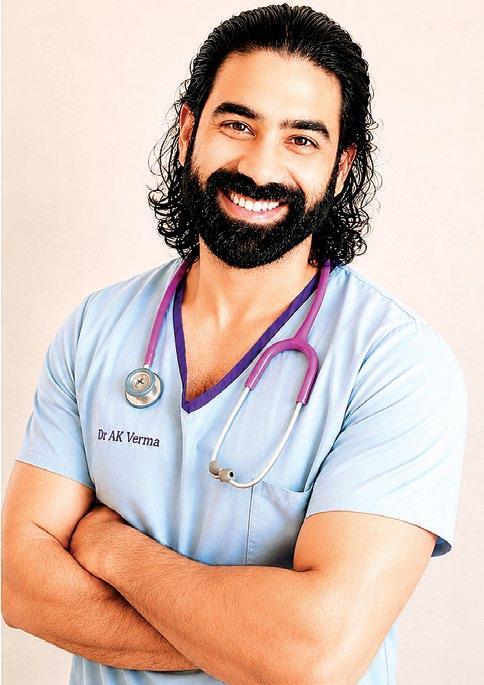
Dr Abhishek Verma, OAM
For service to medicine, and to medical administration
When Melbourne’s Dr Abhishek Verma first found out he was getting an OAM, he didn’t believe it.
“I thought this has got to be some sort of scam – like, I haven’t done anything extraordinary or special,” he laughs. “It was not anything that was on my radar in a million years.”
Growing up in a household full of medical professionals, including Dr Amit Verma, consultant dermatologist at The Alfred Hospital, and Dr Ajai Verma, Chief Medical Officer at Barwon Health, Dr Abhishek Verma feels like the ‘least accomplished’ member of his family.
But as the youngest Chair of the Victorian Medical Board, and a GP of the Year winner in 2022, he has achieved career successes most of us can only dream of.
“My parents instilled the value of having a job where you are doing something with impact and tangibly improving people’s lives, not just doing a job for a pay cheque or recognition,”he says of his family’s passion for medicine. “I guess that was the reason we were all encouraged to consider medicine as a career.”
Dr Verma fell in love with general practice in Year 10, when work experience at his family practice ‘exceeded his expectations’.
“I was sitting in on our family GP, just watching him do his job and [loved] the variety of stuff,” he recalls. “You got this sense that this doctor knew everything. Now it’s not possible to know everything about medicine, but he just had a breadth of knowledge and could contribute something to every consultation.”
“I thought, wow, that’s pretty extraordinary.”
After medical school, he did a brief stint as an ENT surgeon but found his way
back to General Practice when his child was born so he could ‘be around a bit more’.
Coming from this surgery background, Dr Verma still enjoys the more handson parts of being a GP, such as skin procedures. But his favourite part of the job is the chance to offer longitudinal care, and to witness the impact of that care.
“General practice can be whatever you want. It can be a transactional thing where you go in, needing a script or a medical certificate and that’s it,” he explains. “But the kind of GP that I want to be is your partner in health, to help you manage whatever it is that you need to manage.”
In a system that prioritises expedience, Dr Verma believes in taking the time to listen and learn from his patients.
“As a GP, you get this unique window into people’s lives and you don’t just see the illness, but you also see other stuff, which is amazing,” he says.“From any clinical consultation, I get just as much out of it as my patients. I’m very lucky in that way.”
As the lynchpin of primary care, general practitioners are crucial for managing quality of life – so Dr Verma’s time and care towards his patients has garnered their exceptional trust.
“I’ve had patients who’ll wait four hours in my waiting room just for a script because they want to see me. They won’t see anyone else – it’s really humbling that they trust you with any healthcare issues,” he reveals.
“I’ll have some patients see a specialist, come back and they won’t have done anything the specialist says because they want to check that you’re okay with it, which is crazy because they just value you [so much]. I think to get that level of trust, you have to invest the time.”
Equally, Dr Verma feels strongly about using his talents to help marginalised communities in Melbourne’s outer-eastern suburbs access medical care, inspired by his grandfather’s selflessness.
“My grandfather was a maxillofacial surgeon; once, on holiday, there was a disadvantaged patient who had a bad cleft lip palate, a physical deformity which in particular countries can be really debilitating socially,” he recalls. “He left the holidays with the family to go and work on this young person for free. Using your training to add something in an altruistic way – that’s amazing.”
Dr Verma juggles practice alongside his roles as an examiner for the RACGP, and as the chair of the Victorian Medical Board.
With only 17 percent of new medical graduates considering general practice, he hopes to use these roles to advocate for the next generation of practitioners.
“We need to give medical students more exposure to general practice in
for themselves. But more importantly, it’s not just about delivering the food - it’s about spending a little time with them. Many of them are incredibly lonely,” he says.
Twelve years ago, he became a Justice of the Peace, offering his services free of charge across multiple locations in Sydney every week. He has also served on the board of Ku-ring-gai Neighbourhood Centre (KNC), a not-for-profit dedicated to health and welfare support for the elderly, and was president of the Indo-Australian Cultural Society, which worked to foster exchange between Indian and Australian communities.
Irani's contributions to the Zoroastrian community in Australia span decades.
medical school. If we did, you’d have a lot more uptake because people would see this is actually what you thought being a doctor would be like, seeing a patient from scratch, figuring out their problems, coming up with a plan,” he says.
Despite workforce shortages and persistent Medicare challenges, Dr Abhishek Verma OAM says it’s his desire to help his patients that keeps him going.
“It sounds awfully hubristic, but when people say, ‘you’re the best doctor I’ve ever met’, I just tell them I’m the doctor with the best patients because I learn something from all my patients,” he says. “I learn from the way they manage their health, the way they manage their relationships. I see their courage, their resilience, their hope, their dreams, and I learn something. It’s the patients that sustain me. I really feel that I’m blessed to work in a profession where you can make a difference.”
Lakshmi Ganapathy
He served multiple terms as president of the Australian Zoroastrian Association, helping grow a community of just 40 or 50 families in 1979 to over 500 today, and led a landmark legal battle that secured the community's right to use their own prayer hall in the Baulkham Hills area. Now in his eighties, Noshir Irani plays golf twice a week and shows no signs of slowing down. His message to younger generations is simple: look up from your screens and look after the vulnerable. "The old and the vulnerable people of society, they need a lot of support. Whatever little you can do in your capacity, please do it."
Torrsha Sen
Gods in the house
ABY DIYA MEHTA
sleep atop a multi-headed serpent, floating in an ocean of cosmic milk.
As a man-lion, a boar, a fish. As the dwarf Vamana, the prince Rama, and as Krishna.
These forms all belong to Vishnu, one of the major Gods of the Hindu religion. Blue-skinned and all-powerful, he is the second in the Hindu trinity - the Preserver (the other two being the Creator and the Destroyer). As the protector and restorer of order, Vishnu has appeared in countless forms across space and time: it is these incarnations that form the central conceit of the Art Gallery of NSW’s (AGNSW) new exhibition Avatar: Forms of Vishnu.
The largest presentation of South and Southeast Asian art that the Gallery has hosted in over 20 years, Vishnu: Forms of Avatar was curated by Melanie Eastburn, Senior Curator of Asian Art at the AGNSW, and Dr Chaitanya Sambrani, Associate Professor of Art History and Curatorial Studies at the ANU. It is a landmark exhibition for the AGNSW, with an impressive number of artistic traditions on display, featuring 200+ objects from over fifteen centuries and all across Asia.
The Dashavatara: Vishnu’s ten incarnations
Welcoming visitors is the visually imposing sculpture Vishnu with attendants, from the Pala Dynasty (700s-early 110s). Set against a saffron backdrop - appropriately chosen for its sacred significance in Hindu tradition - the sculpture presents a powerful, fully embodied Vishnu.
Inside, we get to see all ten forms, or avatars, of Vishnu (the ‘Dashavatara’). To begin, an exploration of the early animal incarnations: Matsya the fish, Kurma the tortoise, and Varaha the boar. Matsya’s story is eerily similar to that of Noah’s ark. Both are deluge myths, featuring a single saviour who must build an ark to save humanity from ruin. The exhibition takes great pains to explain Hindu myths to its audience; as a result, one hopes that these parallels become evident to a wider range of people, and we can celebrate the common ground between cultures, religions and peoples.
Contemporary
interpretations of Vishnu
Among the exhibition’s highlights is the Turtle avatar by artist Desmond Lazarro, whose stylised interpretation of the Churning of the Ocean of Milk is inspired by Indian and Australian landscapes. Threaded through with lustrous, reflective paint, these works are bold and eyecatching. Lazarro’s works tell the story of the Gods’ attempt to retrieve the amrita
(elixir of immortality) from the bottom of the ocean. Their first pass unearths the poison halahala, but their efforts are eventually rewarded with a host of treasures, and ultimately, the amrita. The moral narrative of this myth, that to reach the best of ourselves, we must confront the ugly, twisted parts, is one that is universally applicable, and Lazarro’s works successfully update this truth for our present day.
As we move from the animal forms to the hybrid Narasimha avatar (a man-lion form), another work of note beckons. Sumakshi Singh’s Thresholds, an installation of cotton and silk, frames a 13th century sculpture of Narasimha. Singh’s practice is novel: her ethereal, web-like installations investigate what endures when structure begins to come apart, probing the fragile boundaries between presence and absence.
The story of Narasimha is one of liminality, as he must defeat the demon Hiranyakashipu in the space between day and night, between earth and sky. Singh’s artistic technique mirrors this sense of in-betweenness, and as her threadwork frames the original statue, Narasimha is given a new meaning. The confluence of the ideas Singh explores in her practice and the themes of the myth itself results in one of the exhibition's most artistically and philosophically resonant moments, breathing new life into Hindu myths that have been retold for centuries.
Vishnu’s other halves
From here on, the focus shifts to Vishnu’s human avatars, and immediately, one of the exhibition’s most interesting artistic interventions becomes apparent - the incorporation of the feminine principle in Vishnu’s stories, his shakthis (strengths). There are separate rooms dedicated to the more well-known avatars Rama and Krishna, which also include depictions of their wives Sita and Radha, opening up traditional understandings of what Vishnu means. Artist Pushpamala N.’s work, for example, depicts the kidnapping of Sita by the demon Ravana in the epic Ramanaya, through a staged, Bollywoodesque photoshoot where the artist herself plays Sita. Works like these centre the female characters at the heart of Indian myths, as the curators insist on women’s irreplaceability to Vishnu’s broader story. As one continues through the exhibition, the artworks presented become more diverse and eclectic. There are lintels from Khmer temples, pichhwais (backdrop tapestries) and jewelry from India, a ballet costume worn by dancer Vaslav Nijinsky from the Parisian ballet company Les Ballets Russes, and embroideries from Indonesia.
How ancient Indian myths are represented in the exhibition
While the scope of the exhibition is widereaching, it can also be overwhelming.
Bangladesh Vishnu with attendants (early 1100s)
Cambodian Vishnu, juxtaposed between Desmond Lazarro’s ‘Samudra Manthan’
Lotus-clad Radha and Krishna (c1700–1710)
house
AGNSW’s ‘Avatar: Forms of Vishnu’ reveals the enduring power of Hindu stories in an age of uncertainty
Moving from room to room, you are asked to reckon with dense mythologies, many of them unfamiliar. The wall text in the exhibition tries to remedy this and provides a thorough knowledge of traditional Indian legends, for which the curatorial team deserves credit.
While this level of detail is impressive, it is also slightly alienating. There is a lot of historical and religious ground to cover, and the exhibition struggles at times to convey these mythologies both faithfully and accessibly. It is hard to understand exactly who the exhibition is pitched at; if you have no background knowledge of the subject matter, you could find yourself adrift, and if you are familiar with these stories, the exhibition's explanatory material is perhaps too rudimentary.
The exhibition is at its strongest when it is using art, rather than words, to explain Vishnu’s forms. At the centre of the exhibition is a giant LED touchscreen, which lights up with animated forms of contemporary Bengali artist Kalam Patua’s kalighat paintings of Vishnu. Viewers can interact with the screen, which presents the information in a more intuitive way than the wall text that tries to summarise the complex narratives of the Bhagavad Gita, the Mahabharata and the Ramayana.
The enduring relevance of Vishnu
Long after leaving the gallery, several
themes resonate. Avatar: Forms of Vishnu represents a significant moment for Indian art and artists in Australia. It engages thoughtfully with South Asian storytelling and artistic traditions, making the AGNSW's decision to platform them especially significant at a time when cultural othering is increasingly prevalent.
By bringing Indian culture into the mainstream, the exhibition broadens understanding of the stories that define one of Australia's largest cultural groups, revealing their universality and fostering deeper connection.
The story of Vishnu is one of transformation, resonating strongly with our times. The exhibition ends with Kalki, Vishnu’s final prophesied avatar, who will descend after an age of darkness and usher in a new era of purity - a necessary message amid today’s geopolitical, cultural and environmental uncertainty.
Ultimately, this is the goal of the exhibition: to show us that the ancient stories of Vishnu have not faded. Rather, Avatar: Forms of Vishnu is an affirmation of how much we can learn from our oldest stories, and how engaging meaningfully and thoughtfully with our past can help us to navigate our present.
Avatar: Forms of Vishnu is currently open for viewing at the Art Gallery of New South Wales from 20 June to October 2026.
Vishnu as Matsya (c1775)
A giant pichhwai (backdrop tapestry)
Sumakshi Singh’s ‘Thresholds’ frame a 13th-century Narasimha
Curators Melanie Eastburn and Dr Chaitanya Sambrani
STAND WITH SMALL BUSINESS
Small businesses are the lifeblood of every community. Small businesses employ more than 5 million Australians.
Our commitment to small business in Australia:
$50,000 Instant Asset Write-Off. This will help small businesses invest, grow and create jobs.
Deliver a Tax Back Guarantee. This will end the inflation tax and bracket creep and stop Australians being taxed more.
Axing Labor’s Toxic Taxes. This could take up to 47% of your hard-earned business.
Reducing Red Tape. We will rewrite and simplify the legislative rule book.
To find out more go to: standwithsmall.au
SENATOR DAVE SHARMA
In perfect Ritam
Selected for Glasgow 2026, Ritam Malik becomes the first male gymnast of Indian origin to represent Australia at the Commonwealth Games
MBY TARINI PURI
eet Ritam Malik. The 19-year-old is the first male of Indian origin to be included in Australia’s Men’s Artistic Gymnastics (MAG) contingent headed for the 2026 Commonwealth Games in Glasgow.
Speaking to Indian Link in between his hectic training schedule ahead of the Australian Gymnastics Championships in Sydney, Malik says he is ‘honoured, proud and super stoked’ to have the opportunity to don the green and gold at this upcoming international event. Sports analysts are predicting the team is primed for gold for the first time since Delhi 2010.
“I will be competing alongside my state teammate and other seasoned athletes I have grown up watching,” Ritam reveals.
The young gymnast has already enjoyed a phenomenal start to the year, including his All Around victory at the recent Commonwealth Games Selection Trial, as well as a third-place finish at the Continental Championships.
When quizzed about when it all began for him, Ritam claims it’s hard for him to think of his life without the sport. For in the Malik household, gymnastics was always part of the balance. Ritam’s father Rajesh, himself a decorated national gymnastics champion from India, introduced his son to the sport at a young age. Ritam recalls he not only enjoyed it as a kid but was also always very competitive.
From doing the forward and backward rolls and basic jumps and swings as a wobbly six-year-old, Ritam of today is focused on gymnastics full time, gearing up for the upcoming career defining phase of his life. And while he continues to pursue his formal education in the US, his eyes are also already set on 2032 Brisbane Olympics. Letting in on his tough training routines, Ritam says, “I have trained for average 2022 hours a week since probably the time I turned ten years old. These days I put in
nearly 24 to 26 hours, training six days of the week.”
With his family based in north-west Sydney, Ritam continues to train with his first coach at his childhood gymnastics school. The super-focused teenager credits both his parents for his upward swing in the sport. “My father knows this sport, so my selection into the national team is as much his achievement as it is mine. My mother has always been my biggest supporter and has ensured I take care of my health and nutrition needs. They both have sacrificed a lot for me,” he says.
Ritam says he has never shied away from putting in hard work and staying focused, as he believes it’s the only way to nurture
talent. He also emphasises on eating balanced, nutritious meals and reserving time for rest, recovery and quality sleep.
Which is why, he admits, he didn’t celebrate his selection for too long. With the enormity of what lies ahead sinking in, Ritam says, “All my friends and everyone who has supported me are all thrilled, but I knew I have to reserve time for training at this stage”. He does admit, though, that he misses going out with his friends sometimes.
Describing his readiness for the competition, Ritam says he is feeling confident. “I am in a very happy place now with my recent form. I know the competition in Glasgow is going to be tough,
but I am confident,” he says.
Elaborating on his performance routines, Ritam admits he has his strengths, but also a few nemeses on the bars and rings which he is continuing to sharpen. He is also not shy to talk about injuries and physical setbacks. “As an athlete, I know those come and go. I have had my share of them too recently, but over time, one learns to manage them, while continuing to work on strength and flexibility,” he says.
Ritam's openness about both his strengths and his struggles perhaps explains why he has already won so many admirers.
Congratulations, Ritam. We'll be cheering every routine, every landing and every medal attempt in Glasgow.
How a Melb chef’s book found its way to PM Modi
Narendra Modi read Helly Raichura’s book. Then he picked up his pen
ABY RAJNI ANAND LUTHRA
s her plane touched down after a work trip, Melbourne restaurateur Helly Raichura switched on her phone – and nearly jumped out of her seat.
In her inbox was a complete surprise: a personal note from the Prime Minister of India, Narendra Modi.
In the letter, carrying the official seal of the Prime Minister’s Office, Mr Modi congratulated Helly on her new book The Food of Bharat, published last year.
“Gratitude for sending a copy of your book,” the prime minister wrote. “The interest you have taken in tracing and documenting the diverse culinary traditions and tastes of Bharat is laudable.”
He added, “Since you are part of our diaspora abroad, such a book also helps inform people from other nations and cultures about Bharat’s wonderful food cultures.”
He signed off, true to form, in Hindi.
“I’m still pinching myself,” Helly told Indian Link days later.
It’s not often you get a note from the Indian Prime Mnister, and this is one Helly will treasure.
The first people Helly shared the news with were her husband Vishal and her parents.
“Of course, my parents in their excitement have now shared it with everyone they know, and I’ve been receiving texts and phone calls from people I haven’t seen in years!”
What inspired her to send a copy of the book to Modiji?
“When I finished the book,” Helly recounted, “I made a list of people I’d like to send a copy to. I had on it, other chefs I’ve admired like Asma Khan, Kylie Kwong, Gary
Mehigan; food personalities like Nigella Lawson and Padma Lakshmi; chef friends in Australia like Ajoy Joshi of Sydney, and friend and absolute powerhouse of a woman Sanjana Ganesan – people I thought would like and appreciate my effort, and people who I know enjoy food.”
Narendra Modi was on the list too.
“Not only because he is prime minister,” Helly explained, “but also because he’s a fellow Gujarati, and that too one who comes from the same part of the state as my mum – Maninagar.”
Her mum, incidentally, is a Modi herself, although not a relation.
Helly is still working through the list and sending out copies of the book. Sanjana Ganesan and her cricketer husband Jasprit Bumrah claimed their copy when they visited Helly at her restaurant, the highly claimed Enter Via Laundry. Nigella has received her copy and has already written to Helly to share her favourite recipe from the book.
For some time now, Helly has also had a wish list of people she would love to cook for. And yup, Narendra Modi is on it.
“Yes he definitely is, but most people on that list are people I admire for raising
the profile of India and of Indians outside of it. Like sports presenters and other professionals. Even comedians like Hassan Minhaj and Nimesh Patel who are changing the perceptions about our country of origin. I have high regard for them all, I want to spend time with them and learn from them.”
She sees her own work with the same lens.
“My own work is not just cooking, but bringing to the fore aspects about India, and increasing awareness and understanding about India. And that’s why my favourite sentence from Modiji’s letter is the bit about sharing ‘Bharat’s wonderful food cultures’.”
She’s clearly still on cloud nine about ‘the letter’.
“Yes, I’m still digesting it all,” she laughed. “Still wondering how this even happened… I want to savour it for a little while longer!”
What would she cook for Modiji if she got an opportunity?
“Khandvi, a Gujarati dish I became known for here!” she replied after taking a moment to think. “And then, paperbark undhiyu with Davidson plums. And perhaps a malpua with rye berries and lemon myrtle. I’d love to show him an Australian take on
something typically Gujarati!”
(For Nigella, the menu is already planned: a kangaroo pasanda, followed by the Kerala duck curry from the book which she liked, this time with Great Ocean Road duck to proudly spruik Australian ingredients yet again.)
Meanwhile, Helly continues the passion Modiji picked up on – lifting the profile of India here in Australia.
His letter reached her as she was returning from South Australia, where she had been working with the Maggie Beer Foundation to bring more diverse flavours to aged care menus. Amidst chefs of Polish, Malaysian, Chinese and Turkish backgrounds, she helped create the Indian menus for South Asian origin aged care patrons.
Alongside, her love of Australia and its cuisine is finding new expression. For NAIDOC Week, she has sought out an upcoming First Nations chef to create a fusion meal with.
“It’ll be a wonderful opportunity to learn, have fun, and share our resources.”
Interestingly, that program coincides with Modiji’s proposed Melbourne visit in early July.
HBY TANISHA SHAH
ow do you see your new role – not just in terms of its geopolitical significance, but also as the challenge of creating something entirely new, with no predecessors or established blueprint to follow?
What attracted me most to the role was precisely that combination. The geopolitical significance is obvious, we are living through a moment when India is becoming a far more consequential actor in regional and global affairs. But the more exciting challenge is institution-building. For much of my career, whether as a researcher, speaker at international forums, or even as a journalist I've found myself analysing and presenting India's strategic choices to international audiences. The opportunity now is to build a platform that does that systematically and at scale.
The fact that there is no predecessor is actually exciting. It gives us the opportunity to create something that is responsive to this moment, rooted in rigorous research, connected to policy debates, and capable of building enduring links between Australian and Indian strategic communities. If we do this well, the program will become an institutional bridge in its own right.
What can we expect from the India Program, both short and long term?
In the short term, I think the priority is straightforward: improving India literacy. There is tremendous interest in India across government, business, academia and the media, but often less familiarity with the strategic logic that informs Indian decisionmaking. The India Program will want to help explain not just what India does, but why it does it. That means accessible research, policy briefs, participation in dialogues, expert exchanges and public engagement that demystifies India's foreign policy, security outlook and economic ambitions.
Over the longer term, I would like the programto become a trusted platform for ideas, talent and partnerships, a place where Australian, Indian and international experts can engage seriously on the issues that will shape the Indo-Pacific over the next decade.
You've said there is 'more shared strategic logic between Canberra and New Delhi than people often realise.'
Yet the 2025 Lowy Institute Poll placed India relatively low in public trust among Australians. What do you think ordinary Indians and Australians most misunderstand about this partnership, and is bridging that gap something the India Program is positioned to address? I think both sides sometimes underestimate how much the relationship has changed. Australians often encounter India through headlines that don't always capture the complexity of its strategic thinking. Indians, meanwhile, sometimes still view Australia through an older lens and don't fully appreciate how central the Indo-Pacific has become to Australian strategic policy. What I have consistently found in conversations across both countries is that there is actually considerable convergence beneath
Leading the Lowy Institute's India Chair Program
Shruti Pandalai, the Program’s inaugural chair discusses institution-building, the Indo-Pacific and the future of Australia-India relations.
the surface. Both countries are navigating questions about economic resilience, technological competition, maritime security and managing strategic uncertainty. The challenge is translating elite-level cooperation and leadership momentum into broader public understanding. Think tanks have a role to play here. Habits of cooperation are difficult to sustain without familiarity, and familiarity begins with understanding.
Where do India and Australia diverge in their approach to China, and does that create friction?
There are differences, but there are also real convergences. India's China challenge is immediate and continental as well as maritime. Australia's experience is shaped by different geography, economics and alliance considerations. So it is natural that the two countries don't always frame the problem in exactly the same way. What is striking, however, is how much convergence has emerged over the past decade. Both countries are thinking seriously about resilience, strategic autonomy, economic security and preserving a stable balance in the Indo-Pacific. The objective isn't identical policies; it's developing enough strategic understanding to cooperate where interests align. In that respect, the trajectory remains very positive.
What are the key priorities for Australia-India collaboration in the Indo-Pacific?
The first priority is maritime security in the wider Indian Ocean region, where both countries have a strong interest in maintaining an open, stable
and rules-based environment. The second is technology. Whether we're talking about critical technologies, digital infrastructure, cyber resilience or supply chains, this is increasingly where strategic competition and cooperation intersect. The Pacific Islands are also becoming an important area of convergence. What stands out to me is that both India and Australia increasingly recognise the importance of being responsive to local priorities. Development partnerships, climate adaptation, healthcare, capacity building and digital connectivity are all areas where the two countries can work together constructively. The focus should be on delivering practical outcomes rather than viewing the Pacific solely through a geopolitical lens.
We're navigating a volatile world order and an unpredictable United States. How
does this affect minilaterals like Quad, and how can Australia and India ensure that it doesn't lose momentum?
The real test for any minilateral is whether it can survive changes in political circumstances. The Quad’s core strength was for it to be a versatile flexible format, and in that regard, it has evolved beyond being a diplomatic concept. It increasingly reflects genuine strategic demand from its members. The challenges that brought the Quad together - maritime security, technology governance, resilient supply chains and regional stability - have not disappeared. For Australia and India, the answer is to keep the focus on delivery. The more practical cooperation the Quad produces, the less vulnerable it becomes to shifts in political leadership or changes elsewhere in the international system.
As the first person to hold this role, what does success look like for the India Program in the years ahead?
The Lowy Institute has set benchmarks on global excellence in research - the India Program should be contributing to that effort. I would like to see a program that has helped deepen understanding of India's strategic choices among Australian audiences, strengthened institutional connections between our two countries, and created opportunities for the next generation of scholars and policy practitioners. Ultimately, if policymakers, researchers, journalists and business leaders increasingly turn to the program as a trusted source of insight on India and the Indo-Pacific, and if we've built networks that continue to thrive long, then I think we will have succeeded.
The calm in someone’s worst day
Inside Acting Sgt RAJESH
SAMBAMURTHY’s mission to support victims, build trust, and reshape community policing
What drew you to policing?
Acting Sgt Rajesh Sambamurthy: Back in 2012, there was a gang rape case in India, Nirbhaya. That was a spark for me; were I in the job at that time, doesn’t matter whether in India or Australia, maybe I could have made a little bit of difference.
I didn’t know then the process to get in. I had to lose weight, among other things. Being from a different background, not knowing what’s going on here, it’s not that easy.
People I knew said: ‘it’s not easy for you to join’, but I took it up as a challenge. I’ve been in the job for eight years now.
What’s a day in the job look like?
I’m part of a proactive policing unit. Prior to that, I was working as a frontline duties police officer. Sometimes you are assigned to watchhouse duties, sometimes to van duties. When you’re on the watchhouse, you’ll get phone calls, you write reports and emails. If there are any triple zero calls, then we triage. We come to the counter, take reports and statements and things like that. Sometimes people walk in for arrests, and you process them.
But when you’re on the van responding to triple zero calls, every day is different. Sometimes you’ll get a simple job like a noise complaint, which turns into a difficult job. There could be stabbings, lost wallets; I’ve dealt with lots of family violence offenders and victims.
Put it this way – when people are calling triple zero, it’s probably one of the worst days of their lives. When people are walking
away from danger, you’re walking towards the danger. That is a challenge.
Now, in the proactive policing unit, I go to universities and community engagements. As a crime prevention officer, we liaise with the victims of bigger offenses and see how best we can assist them.
What has policing taught you about people?
People are desperately looking for a little bit of help and difference. They don’t need big time help or anything, but when they are in a situation which is really demanding, they just want someone to say, ‘hey, you’ll be all right, we are there to provide you with assistance’. Those are the comforting words that they look for.
If you can do service to that role and provide the best possible support from your end according to your ability, that really solves the problem then and there. Of course, you can’t provide solutions to every individual. But if you can do your best, I think that’s pretty much what is required at that point in time.
What kind of person makes a good police officer?
I would say you’ve got to be a jack of all trades. You have to have a decent amount of fitness because every day, you’re putting on about 10 to 12 kilograms of equipment. You should be a good communicator. Then it’s things like good emotional balance, which is why you go through lots of different stages during the interview as well. If you have skills in different areas and a bit of life experience, that’s all that matters.
What’s the strangest incident you’ve dealt with?
There’s a funny incident – at that point in time, it was scary for the victim, and for us the spider senses were tingling.
I was on night shift at Forest Hill Police Station. We had a triple zero call and we responded within 30 seconds because we were close. A woman came out of the house with the kids saying she was having a glass of water at 2.00AM, and saw this guy hiding behind the curtains in her son’s bedroom. We waited outside the bedroom, asking him to come out. My offsider was keen to go in. I said just wait for a bit; we will assess from here. There was no response, we did all the police challenges, nothing happened.
My offsider then went in and moved the curtains - there was no-one there. Because it was winter, the hot air was blowing from the vent and it was creating an illusion as if someone was hiding behind the curtain. It turned out to be nothing.
The woman freaked out saying ‘I shouldn’t have called triple zero, am I going to get charged?’ We said, no, it’s a legitimate call. We ourselves thought someone was behind the curtain! Anyway, it turned out all right after that.
What’s a split-second decision you’ve had to make on the job?
I was working at Moonee Ponds, and the highway patrol unit arrested an offender. We arrived at the location before they could start doing the search on him.
The offender was huffing and puffing. I gave him my Ventolin to assist him. He kept reaching to his groin area, while
resisting us. We were in the middle of the freeway; he was wrestling with us. We had to make a split-second decision to go hands on. Someone had to spray him and take him down and then we arrested him.We ended up finding a pen pistol in his groin area. Luckily, we were able to cuff him and de-escalate the situation; fortunately, the offender did not get injured. But if we didn’t take that decision at that point in time, then it could have turned into an ugly situation –you never know what could have happened after that.
How do you think the community perceive your job, and how has your work changed that?
Sometimes we get the bouquets, sometimes the brickbats. That’s unfortunately the nature of the job.
I’ve been in the proactive policing unit for two years; I just love this job. I talk to a lot of people and they thank us for the information that we provide. I don’t take it as a personal thanks. It’s for the organisation; that’s the way I look at it.
It’s a highly respectable job, but sometimes you get people that call us names and things like that, even if you’re just walking to get coffee or whatever. Again, I don’t take it personally; it does affect you at that point in time, but I look at it as they hate you being a police officer because they’ve had bad experiences before perhaps. We try and change that experience if we can, and we treat them as human beings. Maybe they had a bad day, it’s not them. Wear the uniform, do the job with pride. Lakshmi Ganapathy
with Lakshmi Ganapathy
SONIA SARANGI is an architect and co-founder of andever, who incorporate cultural heritage into the design process to create enduring homes. With over 18 years of experience across Asia and Australia, she also teaches at the University of Melbourne’s School of Design.
Why is light and communal space so important in a South Asian home?
We are a collectivist culture, so communal space is a big thing - you've got people dropping in all the time. Our festivals also don’t limit themselves to a nuclear family; almost everyone's an uncle or aunty.
I think if you are someone who lives those values, it becomes central to space. When people think of communal space, they often think it needs to be big. That's not true - it just means the spaces need to bleed into each other and allow for that flexibility.
Whether it be ancient practices or just our preferences, I think the way a lot of older spaces were oriented before we had artificial light to extend our day [meant] the rhythm of your day was [influenced by] where the sun was moving. There's also the preference for airflow; we don't like our houses to be closed and stuffy, so even if it's colder, we will open the window and get that breeze.
I think that awareness of daily ritual and the connection to light matters a lot.
What makes a house a home?
I think somewhere where you can truly feel at ease following daily rituals and using the space. Often we don't know the difference unless we lose it, and feel space constrains us.
we’re going to spend more time in our bedrooms separately, rather than being in a shared space…when it's enforcing that, then it doesn't feel like a home.
Can culturally informed architecture solve our housing crisis?
sustainable, less well connected to neighbours, to transport. When that flexibility is not considered or designed in, you are forcing choices that put more pressure on housing supply.
For example, you're making chai, but you don't want to be cut off from everyone else, you want to be able to have a chat with someone as you're doing that. If it allows you to enjoy that ritual in the way you want it to, that I feel is what differentiates a house from a home.
A lot of homes here assume
I don't think any one thing will solve our housing crisis. But what I will say is housing that allows choices and is aware of cultural preferences means you have a more robust housing stock where more people can see themselves. Otherwise, you are essentially setting up homes to fail for the variety of people that could occupy them, so people will instead choose other forms of housing that perhaps are less
What's something that you're currently listening to, reading, playing, or watching that you want to shout out?
I just finished Maxine Beneba Clarke's Foreign Soil, and wow! That book will rip your heart out. I feel like the timing of that book couldn't have been more perfect with what is happening on our news waves now. It shows the truth of people who have ‘embraced foreign soil’ in so many definitions, and so many parts of the world.
What's a word that you like in a South Asian language and what does it mean? which means ‘it will happen’ in Odia – like, you're not quite sure, but you have faith that between your intention and the universe, it will kind of happen. You know, not everything has to be a five-year plan kind of thing.
And finally, Soan Papdi or
Definitely Papdi Chaat. Making Soan Papdi is a science, but Papdi Chaat is an art – if you up the chutney to sev proportion, you get slightly soggy sev, you scrimp on the chutney, you get slightly crispier sev. I just love the variations of Papdi Chaat that exist; the way I make it is completely different from how my friend makes it, you can mess around with it.
TWO categories: Kids up to 7 years, and Kids 8-12 years. WIN book vouchers valued at $75 and $50 in both categories.
PLUS: The winning entry will be designed into Indian Link’s Diwali cards for the year 2026. Colour in or paint the pattern presented here. Photocopy the pattern if you need to. Send in your work, along with your name, age, address and phone number, to:
A cup of chai to honour Grandad
In a heartwarming tribute to his grandad, Prahar Shukla brews chai for a Cancer Council fundraiser
N“BY HARSHENI MANIARASAN
o matter how small you are, you can always make a difference,” says eightyear-old Prahar Shukla.
And he means it.
Living by his favourite words, Prahar successfully raised a grand total of $5163 with his Biggest Morning Tea campaign –serving his specialty masala chai.
“I used boiling water, milk, tea leaves, sugar, spices, ginger, cardamom – and don’t forget, love,” a beaming Prahar told Indian Link.
At the age of five, Prahar watched his mother host a Cancer Council Biggest Morning Tea with her friends. Over the years, he learned from her that even ordinary people can play a part in contributing towards cancer research and
support services.
After the loss of his grandfather – who he fondly calls Nana – to liver cancer, Prahar felt motivated to do something positive and help bring change for families facing cancer.
“My Nana inspired me very much to host this tea party, I wanted to dedicate this to him.”
What began as a small seed of an idea soon grew into a month-long community campaign. Following his registration for Australia’s Biggest Morning Tea in early May, the enthusiastic Prahar started sharing the word around.
“He was very excited,” mother Harita Mehta shared. “He even gave a little speech at his father’s office about why he was fundraising.”
In the days leading up to his big event, Prahar was met with warm support and generosity from his family, fellow Scouts, his teachers and school families as well as the community.
On 24 May, Prahar hosted his morning
tea at the 4th Kingsgrove Scout Hall. Standing before his guests, he expertly demonstrated how to make authentic masala chai.
Mum and Dad stood by, watching closely, and jumped up when it was time to pour.
The community turnout at the tea party was testament to the people’s sincere support for a young lad’s enthusiasm - and also for the fight against cancer - with gestures of magnanimity making the event all the more meaningful.
The auction for Prahar’s masala chai attracted a winning bid of $101 for a single cup.
Mum Harita Mehta said on Indian Link Radio later, “As the winning bid came in, I wanted to jump for joy. I could feel my Dad watching from above and jumping for joy himself.”
Is Prahar a keen chai drinker?
“Yes he does take a cuppa – when we make a ceremony out of it on Saturdays,” Harita described. “He helps to make it of course, and we put in spices and herbs and
Prahar’s fundraising campaign continued well beyond his main tea party, ending on June 4 – a date he chose to honour his Nana. Falling on his death anniversary, the fundraiser became a heartfelt tribute, carrying with it love, remembrance and hope for better days ahead.
make it a proper occasion.”
The Biggest Morning Tea was also a proper occasion for Prahar, but on a different scale altogether. “My most favourite part of the event was making tea for everyone, making everyone smile and seeing all the happy faces,” he recounted. “I loved meeting all those kind people – it was so amazing. I also loved when they clapped for me - I felt like a superstar and a superhero.”
Prahar’s fundraising campaign continued well beyond his main tea party, ending on June 4 – a date he chose to honour his Nana. Falling on his death anniversary, the fundraiser became a heartfelt tribute, carrying with it love, remembrance and hope for better days ahead.
When asked what kindness means to him, Prahar replied, “Kindness means helping others, caring for them, and accepting diversity.”
If there is one lesson to take from Prahar’s journey, it is that kindness, however small the gesture, has a way of reaching far beyond itself.
The BUZZ
What we’re obsessed with this month
By SRUTHI SAJEEV
Books Binge
In The First House, the second book by Booker Prize shortlisted novelist Avni Doshi, the domestic space quickly turns into a battlefield. When the main character’s husband leaves her, her biggest obstacle to normalcy is not just a broken heart, but a completely shattered worldview. A downward spiral ensues, memories can no longer be trusted, and the line between fiction and reality becomes increasingly blurred. In classic Doshi style, the novel intertwines myth, modernism and superstition to craft a story that is uncomfortably true to life.
Strap in for the wackiest film of the year with Venkatesh Maha’s Rao Bahadur. Set in the backdrop of a fading aristocracy, the film follows an aging, terminally ill prince who can’t seem to separate the past from the present or illusion from reality. Satyadev shines as the ailing Rao Bahadur, pulling off a multi-genre script that veers from dark comedy to tragedy to psychological drama. Suspenseful, insightful, but also hilarious, this is one of those films that demand a rewatch (and deserves a sequel).
Beats Bites
wunderkind turned icon
is now dipping his toes into the ever-
Craving something warm and hearty to fight off the winter blues? Spice up your menu with our recent discovery thought up by food influencer @lil_experiments. The paal kappa & beef shepherd’s pie is a Malayali twist on a quintessentially British dish. Encased in a crispy coconut-garlic pastry and filled with creamy coconut tapioca and spiced beef, this indulgent dish may require time and an experienced home cook to perfect, but it's destined to become a dinner-table favourite.
Former
Anirudh
growing Indian Indie-pop scene and to massive success. Gaining 13 million views in 13 days, his latest single Aravinth is a loving tribute to his childhood friend. Filled with heart, yet infused with his characteristically joyous style, the song is a celebration of big dreams and of all the artists waiting for their chance to shine. A deeply personal anthem that’s somehow relatable to all, the single is an exciting glimpse of projects to come.
finds her voice.”
Writer-Director Tony Rogers
Across the film, Shani shifts from quietly observing the chaos to actively challenging it, becoming a catalyst for change.
“There’s something powerful about showing women, especially South Asian women, embracing their anger in a healthy way,” Ria says. “Anger can be feedback.”
The role resonated personally. Ria describes herself as the quintessential “good Indian daughter”. “I was that student who wanted the A-plus grades,” she says. “Playing Shani let me explore another side of myself and find that fire.”
That understated approach shapes How To Talk Australians, which avoids stereotypes and instead finds humour in the awkwardness of cultures colliding.
One of the film’s strengths is its refusal to caricature either Australians or Indians. Instead, it pokes gentle fun at the assumptions both groups make about one another.
Laughing through the cultural divide
Blending heart and humour, here’s a film that captures the migrant experience with an honesty that feels relatable
IBY NEERU SALUJA
f you’ve ever landed in Australia wondering why strangers call you “mate”, why there are giant roadside attractions everywhere, or what Australians mean when they say “have a crack”, How To Talk Australians will feel instantly familiar.
The new comedy film from writer and director Tony Rogers takes those moments of cultural confusion and transforms them into a hilarious, absurd and surprisingly insightful story about belonging.
Adapted from the cult web series of the same name, the film follows a group of Indian students navigating Australian culture through a crash course that quickly descends into chaos.
While the premise lends itself to plenty of laughs, Tony tells Indian Link the story was always about something deeper.
“Humour is one of the quickest ways to connect people,” he says. “I’ve always believed that if the comedy is right, most people will laugh regardless of where they come from.”
That belief was reinforced when the film screened in India, where audiences embraced its distinctly Australian humour and awarded it Best Comedy at the Jaipur International Film Festival.
“The audiences really connected with it,” Tony says. “At the end of the day, people understand what it feels like to be misunderstood.”
The journey from web series to feature film, however, was far from straightforward.
Tony spent years developing the project, navigating funding challenges familiar to many independent Australian filmmakers.
“Getting funding for unusual comedy is incredibly difficult,” he says. “We explored different versions of the concept over the years before deciding to make the film independently.”
Eventually, a group of private investors
helped bring the project to life, allowing Tony to preserve the unique voice and offbeat humour that had attracted a loyal following online.
At the centre of the film is Shani, played by Melbourne actor Ria Patel. Introduced as a diligent, rule-following student, she gradually becomes one of the story’s most compelling forces – a transformation that immediately drew Patel to the role.
“Growing up, I often saw Indian female characters portrayed in very limited ways,” Ria tells Indian Link.
“What I loved about Shani is that she starts off as the good student but gradually
For Tony, his own travels through India as a young backpacker in the 1980s helped shape that view. “The more time you spend with people from different backgrounds, the more you realise how similar we all are,” he says.
Ria admits she wasn’t sure how Indian audiences would respond to the film’s distinctly Australian setting.
“I remember wondering whether people in India would connect with it,” she says. But her cousin laughed the whole way through and her parents loved it.
What struck her most was the story’s universality. “The characters are constantly misunderstanding each other, but most of the time their intentions are good,” she says. In an era often defined by division, How To Talk Australians offers something refreshingly basic – that laughter may be one of the most effective ways to close the distance between cultures.
For both Tony and Ria, that idea feels particularly relevant in contemporary Australia, where conversations about migration, identity and multiculturalism continue to evolve.
“We live in a time shaped by questions about race, belonging and how we relate to each other,” Tony says. “Comedy gives us a way to talk about those things without preaching.”
Ria hopes audiences leave the cinema with more than just a few laughs.
“With everything happening in the world, I hope the film reminds people of our shared humanity,” she says. “Most problems happen because of misunderstanding. If we take a moment to understand each other, so many of those problems disappear.”
In a country built on migration and cultural exchange, How To Talk Australians offers a simple but timely message: understanding one another does not always begin with grand gestures or political debates. Sometimes it begins with listening, learning – and laughing together.
“I really believe we’re more alike than we are different,” Tony says. “That’s what the film is about.”
The kingdom that chose happiness
How
Bhutan put wellbeing ahead of wealth - and what the rest of the world can learn from it
SBY MANAN LUTHRA
omething hit me as I stepped off the plane in Paro, Bhutan. It wasn’t the stunning rugged mountains nearby, topped with a faint mist, like something out of a National Geographic magazine. It wasn’t the emptiness of the airport, since our plane was the only arrival. It was the stillness. The absence of sound, the lack of commotion, the complete serenity of the landscape. I felt isolated. Separated from the rest of the world. Like nothing and no one could reach me.
Bhutan is often called the happiest country in the world. The fact it measures its citizens’ Gross National Happiness (“GNH”) suggests it values this just as much as economic output: in the 1970s, Bhutan’s fourth king even said ‘Gross National Happiness is more important than Gross Domestic Product.’ By the end of my trip, I realised just how true that statement was. Bhutan did seem to me the happiest country in the world - or at
least of all the countries I have visited.
The question, of course, is: how? I believe the answer lies in three things.
First, Bhutan is isolated, located at the base of the Himalayas, a 22-hour flight from Sydney. Seventy percent of their country is forested. My phone signal was patchy, so I
received some news from the outside world, but not very much. Much of my time was spent hiking the Himalayan mountains, reaching sites like the Tiger’s Nest, a monastery built on a 900-metre cliff. I felt all alone.
But Bhutan is also isolationist in political and commercial ways. They recognise
only 57 UN Member States, and have no diplomatic relations with the US, China, UK or Russia. Inside the country, Bhutan has no Western fast-food chains or noticeable commercialism. The country also operates a ‘high value, low volume’ tourism model, which requires visitors to pay a tax of USD100 per day to see the country. Far fewer travellers go as a result; only 145,000 visited Bhutan in 2024, compared to over 7.63 million visitors that travelled to Australia that year. Bhutan locks itself away from the outside world and seems all the happier for it. Second, Bhutanese society is collectivist. Strangers offered me advice openly, providing souvenir recommendations and access to hidden tourist spots. The people greet each other with a warm smile.
I didn’t just see that limited to tourists; the interactions I saw between locals on the street, who wouldn’t have known I was watching them, reflected those qualities too. Neighbours help one another freely with their time and resources.
The people of Bhutan don’t see others as a threat, and like many South Asian nations, help is simply a part of their culture. Given the country only has 800,000 inhabitants,
Paro Taktsang, a Buddhist temple nestled in Paro Valley
Finding peace
and their biggest city Thimpu has less than 2% of Sydney’s population, that willingness to help each other is much more noticeable. The third is religion. Some 75% of Bhutanese population practice Buddhism, which preaches self-fulfilment, wellness, calm and focus. The people really follow these preachings - not once did I see a Bhutanese local raise their voice or react angrily. They spoke slowly, thoughtfully, and with great care. Traffic and minor inconveniences did not frustrate them. The cumulative effect is a society that feels remarkably calm and composed.
I was also lucky to be there during the “Paro Tschechu” festival which honours Guru Rinpoche, the man who brought Buddhism to this country in the 8th century. Hundreds of people descended on Buddhist temples (known as “dzongs”) to witness cultural dances, drink tea, and receive blessings. Buddhism, and the calmness it delivers, was in full swing.
Sure, the people of Bhutan are happy. But I saw more than that in them; they are content. They don’t want for anything, at least outwardly. They are aware of what’s going on in the world – I got my daily updates on the Middle East conflict from the Bhutan Today newspaper – but they manage
their emotions calmly and thoughtfully. Most importantly, they support one another. They share advice, food, stories and goods. If one person has a problem, the village finds a solution.
The Bhutanese approach to happiness can’t be adopted in Australia, but that doesn’t mean its individual elements shouldn’t be. We don’t need to be completely isolationist to lead healthier, less consumerist lives, nor do we need to be Buddhist to
prioritise our wellness. But we can afford to be more collectivist as a community.
With Australia having dropped five places in the 2025 World Happiness Report, practices like helping others in need, showing kindness in adversity, and thinking through one’s actions before performing them, are worth attempting. They worked for the Bhutanese, and could well work for us.
Perhaps we might better understand what it means to be content.
Punakha Dzong, Paro.
Inside Rinpung Dzong during Paro Tschechu Festival
Khamsum Yulley Namgyal Chorten, Punakha.
Tashichho Dzong, Thumpu
Memorial Chorten in Thimphu Tachogang Lhakhang Bridge, Paro
cineTALK
From epic mythologies to gritty thrillers and endearing romances, this month offers a bit of everything for everyone, writes HARSHENI
SUPER SUBBU (Netflix)
In a desperate attempt to escape his conservative father’s wrath, Subbu (Kishan) reluctantly accepts a covert job teaching sex education in the rural village of Makhipur. But here’s the twist - he’s inexperienced himself! Full of heart and humour, Super Subbu strikes a balance between its quirky premise and opening honest conversations about ‘taboo’ topics. Unpredictable villagers, awkward conversations, and the threat of risking his love, the series promises to be an engaging watch.
Releasing 2 July
NAGABANDHAM (In cinemas)
Diving into the sacred realm of Anantha Padmanabha Swamy Temple, this mythological fantasy follows a wicked force’s attempt to steal the divine Brahma Kamalam artifact which causes Lord Shiva (Karrna) to step in alongside the Naga Sadhus and defeat the dark forces. When the temple’s mythical guardian Nagabandham joins in, an epic battle between the divine and the evil unfolds. Set against a breathtaking canvas with larger-than-life visuals, the film is a powerful glimpse into hidden mysteries and spiritual traditions.
Releasing 3 July
MATRIMONIALS
SEEKING GROOM
Seeking professionally qualified match for my daughter, Brahmin, doctor, born, brought up and working in Melbourne, 34, 5' 4". Expressions of interest by SMS or WhatsApp on +61 488 780 516.
36-year-old traditional and conservative woman seeking a life partner with good morals, values and ethics. I am not very educated and I am not wealthy. Please message on WhatsApp 0430 025 516.
Professionally qualified match for Brahmin dentist girl, practising in Sydney. Divorced, no children. Australian citizen, 1986-born,
MANIARASAN
ALPHA (In cinemas)
The pulse-pounding YRF Spy Universe is back and this time, with two new female assassins! Rigorously trained since childhood to become a lethal killer by her stepfather Fateh Singh (Deol), Sita (Bhatt) undertakes a mission to demolish Singh’s illicit soldier program. Her rebellion forces her to team up with another fierce, highly trained operative (Sharvari). Fast-paced and explosive, Alpha follows the two women as they navigate the perils of the spy world, putting themselves and their espionage skills to test.
Releasing 3 July
ISAKAPATNAM (Prime Video)
Gang wars, political rivalries and family feuds. Set in a ruthless 1990s port town, the hard-boiled thriller follows three individuals - a woman seeking justice, a henchman trapped between duty and conscience, and a vengeful ordinary man - whose paths overlap as they attempt to dismantle the empire of Naidu (Samuthirakani), an outsiderturned-ruthless crime lord. As his daughter Bharathi (Rajesh) begins to doubt the moral cost of her father’s power-hungry ambition, mayhem becomes inescapable.
Releasing 2 July
PRITAM AND PEDRO (JioHotstar)
Meet Pritam (Hirani) and Pedro (Arshad), a shrewd techie and a tough cop who cross paths in a cyber cell and team up to find the kidnapped son of a minister. As the unconventional duo joins forces to solve the crime, they find themselves in dangerous situations riddled with mischances. Inspired by Amit Dubey’s ‘Hidden Files’ and ‘Return of the Trojan Horse’, the cybercrime comedy is primed to thrill its viewers with a wild and entertaining ride.
Releasing 3 July
IDHAYAM MURALI (In cinemas)
In this coming-of-age romance, a young man Murali (Murali) experiences the aches of unrequited love as he navigates his journey moulded by dreams, connections and yearning. As time passes, he comes to realise that some feelings are destined to remain. Drifting between yesteryear memories and presentday realisations, Idhayam Murali seems to portray romance with a breath of simplicity as it walks the audience down a nostalgia-filled lane of youth and love.
Releasing 10 July
RAO BAHADUR (In cinemas)
Doubt, they say, is a deadly demon. Building upon these words and set against the milieu of a fading aristocracy, the film follows the life of a royal figure Rao Bahadur (Satyadev) stuck in the past who battles with his internal demons amid the shifting currents of his legacy. Delving into the decay of nobility and personal dilemmas, the psychological drama is set to combine dark comedy and magical realism.
Releasing 3 July
I, NOBODY (In cinemas)
This Malayalam crime thriller brings us into the life of Rajeevan (Sukumaran), a seemingly ordinary government employee whose life spirals into disarray when he gets entangled in a bank heist - as a central figure - and must fight to survive, protect his family and perhaps, ensure his true identity stays hidden.
Releasing 9 July
IKKA (Netflix)
If you love a solid courtroom thriller, this one is for you! When his loved one’s life is threatened, respected attorney (Deol) is forced to defend a murder suspect (Khanna) he had once brought down and still believes is guilty. To save them, he must break every rule while battling his conscience and powerful forces. Gripping and stacked with moral questions that linger long after the gavel hits, Ikka harps on the many dilemmas faced on the pursuit of justice.
Releasing 10 July
DHAMAAL 4 (In cinemas)
Bigger, dumber and deadlier! Bollywood’s iconic goofy gang - Adi (Warsi), Deshbandhu (Desmukh) and Manav (Jaaferi) - returns for a wild treasure hunt to find the ‘Treasure of Life’, and this time, they team up with a smooth-talking IRS officer, Guddu (Devgn). The stakes are higher in this one - think pirates, wild jungles and some unexpected traces of horror - as the gang find themselves in outrageous conditions. Unhinged and chaotic, the laugh-out-loud disaster is on once again.
Releasing 10 July
MAHAPRABHU JAGANNATH (In cinemas)
Set in the Kaliyuga, this animated epic mythological film narrates the story of Mahaprabhu Jagannath, Balram, and Garud as they embark on an adventure across realms to take down the asura Aham, who has held devotees and divine beings captive inside an enigmatic mercury-based world. Focusing on the premise that pure devotion can never be defeated and that the divine will always safeguard the faithful, the film is bound to immerse its audiences into a culturally-rooted and magical animation experience.
Releasing 10 July
BABY DO DIE DO (In cinemas)
The neo-noir crime thriller revolves around a deaf and mute woman, Baby (Qureshi) who leads a dangerous double life as a contract killer in Mumbai. Haunted by the voice of her murdered sister, Baby navigates her grief and trauma but everything turns upside down when a seemingly routine hit mission goes completely awry, forcing Baby to confront her old wounds and most importantly, fight to survive.
Releasing 3 July
JULY 2026 BY MINAL KHONA
Minal Khona has been reading tarot cards for the last two decades. She uses her intuition and connect with the cards mostly to help people.
TAURUS
TAROT
GEMINI
Difficult conditions, relationship tensions and an inability to let go of the past may weigh heavily. Introspect on your own role in current situations, before blaming others. Workplace pressures could escalate, so keep a low profile and avoid confrontations. The self-employed will see a growth in business. A new job, opportunity or demanding project may come your way. Trust your abilities, stay adaptable and accept each situation for what it is rather than resisting change.
A month of abundance and wellbeing, with contentment, personal goals and aspirations taking centre stage. Singles may find themselves seeking a deeper, more meaningful connection - perhaps with someone new, but only if it feels truly fulfilling. Work could see ups and downs but eventually, things will even out. Sleep-related issues could affect your health. Money owed to you will come through. Focus your energy on productive pursuits and avoid measuring your progress against past mistakes.
The Ace of Cups card signals a fresh beginning, particularly in matters of the heart. Be ready to receive as your cup overflows. Emotional healing, greater clarity and renewed optimism are highlighted. For some, an engagement, marriage or pregnancy may be on the horizon. Writers, artists and creatives can expect ideas to flow and projects to flourish. A new source of income or opportunity will boost confidence and momentum. The universe is helping you get what you want.
A positive month, bringing progress in career or even a promotion. Manifesting your ambitions, deepening a meaningful relationship and enjoying financial rewards are highlighted this birthday season. A matter you've been avoiding will require a decision - don't be afraid to say yes. Expect support for ideas at work. Female Cancerians must deal with underlying daddy issues if their relationships are unhappy. Financial gains are on the anvil. A new opportunity could lead to great success.
SCORPIO
A challenging month, with emotional strain, possibility of a messy break-up, low moods or health concerns. If a relationship separation occurs, it’s likely to be temporary, with reconciliation possible down the track. Work, however, looks promising, with your ideas attracting recognition, success and financial rewards. Pay attention to diet; male Leos should consider a prostate check-up. A family member may require hospital care. Finances remain strong, with the possibility of an inheritance. Patience is key.
You draw the Aquarius card this month, making you doubly practical. An Aquarian may enter your life, or humanitarian causes could interest you. Singles may be drawn to someone unconventional, though you'll only pursue the connection if it meets your standards. Finances improve substantially. A spiritual practice could provide valuable inner renewal and clarity. If you're considering a career change, success is possible in the field of holistic or new-age therapies. Be clear about goals.
An excellent month for Librans, despite challenges. Your desire to break free from limitations is heard by the universe, and you move steadily towards your goals. Let go of the past in love, and give yourself time to heal before a new beginning. Obstacles you encounter are temporary and learning opportunities. Spiritual growth comes through setbacks. Multiple income streams are possible. Meditate, let go of old burdens, and welcome the freedom that follows.
The Knights card signifies fast-moving energy, so if you've been seeking clarity on a long-standing issue, expect answers now. Good tidings come in career and home life. Short trips, entertaining at home and a promotion at work ensure you stay busy all July. A fresh business idea has strong profit potential. Visualise what you wish to manifest, including personal growth goals. Stay focused and optimistic - luck is firmly on your side this month.
Ask yourself what is weighing you down and work towards releasing it, whether it's a negative emotion, a painful memory, a past experience or even a person. If disagreements at home persist, don’t force a resolution - it won’t go in your favour. If a relationship has ended, reconciliation appears unlikely for now. Overwork leads to fatigue and insomnia, so slow down. Unexpected setbacks may affect finances. Plan ahead and avoid impulsive decisions.
A month of laying foundations in multiple aspects of your life. If single, a special love may be on its way. You may hear of an estranged couple reuniting. A change of perspective thanks to a bonus or raise will lift your spirits at work. Family members can act up. Have a health check if you lose appetite. Finances improve in small amounts. Work on inner health to regain peace of mind and a positive outlook.
Wanting to see your manifestations come true, you’ll focus on self-improvement to achieve them. Proceed with caution if you meet someone who seems caring yet lonely - they may already be committed. Expect good news via someone who admires you. An estranged ex could seek reconciliation. An unexpected trip may be on the horizon. Plan your new projects. Eat healthier for more energy. Your work will attract praise, and a new income opportunity may emerge.
Drawing the Leo card places you in a position of leadership. If there’s a passion you've been wanting to pursue, give it your full attention. Singles will be reluctant to make a move in a relationship due to lingering feelings for an ex. Self-help and healing modalities will prove beneficial and keep you engaged. Although results may not be immediate, your efforts at work will bring in rewards in the months ahead.
I arrived with two suitcases. Two years later, I need a cargo flight to leave
An international student's deeply unglamorous account of wondering where all the stuff came from
It's 2024. I step off a plane in Sydney, jet-lagged and slightly terrified, clutching two suitcases like they're lifelines. I had prepared myself mentally for the international student experience - the loneliness, the bad instant noodles, the crying in a tiny room while FaceTiming home. I was ready to suffer beautifully, like in the movies.
What I was not prepared for was being immediately absorbed into a Mallu family of twelve, all in their early twenties except one, who is older in age only, and who fits into the group so naturally that we will simply say he is mentally ageless and leave it at that.
I came here expecting to find myself. Instead, I found a shared bathroom, a walk-in wardrobe, and twelve people who immediately had opinions about how I was cutting the chicken.
Aah, the walk-in wardrobe. If you know, you know. My soft little heart took one look at it and said: We are okay here, we are more than okay. The bar for "I can survive this foreign country" was, it turns out, a walk-in wardrobe and people who genuinely wanted to teach me things. And teach me things they did. How to cut chicken properly
(apparently I was doing it wrong in a way that offended everyone present). How to get an Opal card. Where the good rice is.
On my very first night in Sydney, jetlag still sitting on my chest like a small malicious animal, they had a sleepover. A sleepover! I had barely unpacked and I already had twelve friends.
Two years passed. Fast. Embarrassingly
MATRIMONIALS
SEEKING GROOM
Seeking professionally qualified match for my daughter, Brahmin, doctor, born, brought up and working in Melbourne, 34, 5' 4". Expressions of interest by SMS or WhatsApp on +61 488 780 516.
36-year-old traditional and conservative woman seeking a life partner with good morals, values and ethics. I am not very educated and I am not wealthy. Please message on WhatsApp 0430 025 516.
Professionally qualified match for Brahmin dentist girl, practising in Sydney. Divorced, no children. Australian citizen, 1986-born,
5’3”. Interested parties may share profile on mobile and WhatsApp +61 468 342 814, or email profrajayurveda@gmail.com
fast, in the way that only the good years do. Uni ended. People started scatteringjobs, cities, life going in seventeen directions at once. And me? A fresh graduate with a diploma in one hand and approximately four dollars in the other, staring down the barrel of Sydney's rental market. Fantastic. After some search (a whole new story for another full column), I landed a place in
Newtown.
I’m moving. Suddenly it hits me. That person who arrived here with two suitcases, she’s gone.
In her place is someone standing in the middle of a room surrounded by so much stuff that it genuinely cannot fit in a car. Possibly not two cars.
Clothes I forgot I owned. Clothes I bought for a personality I was briefly trying out and then quietly retired. Things I kept "just in case" of an occasion that has still not arrived and frankly probably never will. Somehow, I’ve accumulated the belongings of a person who has lived here for a full decade and also has a storage unit. It's all here. All of it. Documented. Incriminating.
Somewhere between the third carton and the existential crisis, the penny drops. I didn't just collect stuff over two years. I collected a whole life - late night dinners, friendly fights, all-nighters, three apartments with zero boundaries and twelve people who never once let me feel like a stranger in a strange country – the junk is just proof it happened.
That's growth. That absolutely counts. Harini Sridhar
Smoking causes mutations. This is how cancer starts.
When you smoke, the chemicals you inhale cause mutations in your body. If you could see the damage, would you stop?
Are you driving above the speed limit? Significant fines apply.
If you drive faster than the speed limit, you’re breaking the law and could face serious legal penalties or lose your licence. Police and speed cameras can be anywhere, so why take the risk? Police can be anywhere at any time.