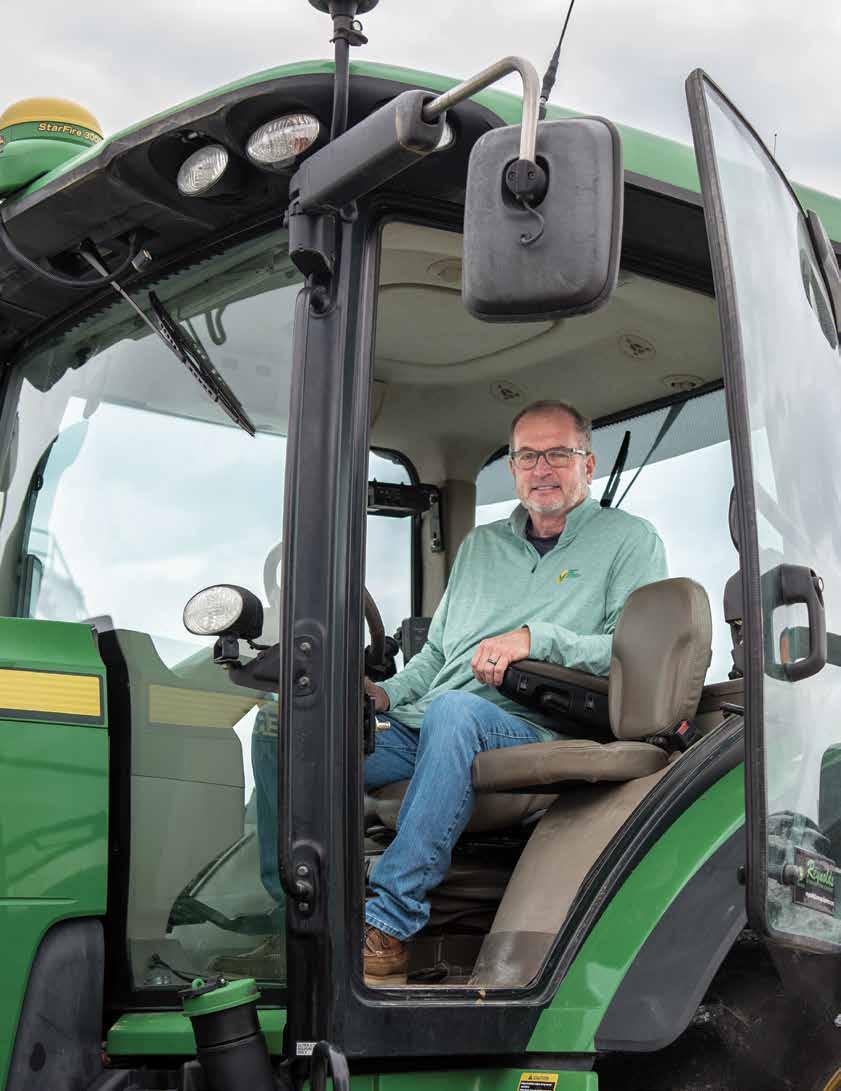
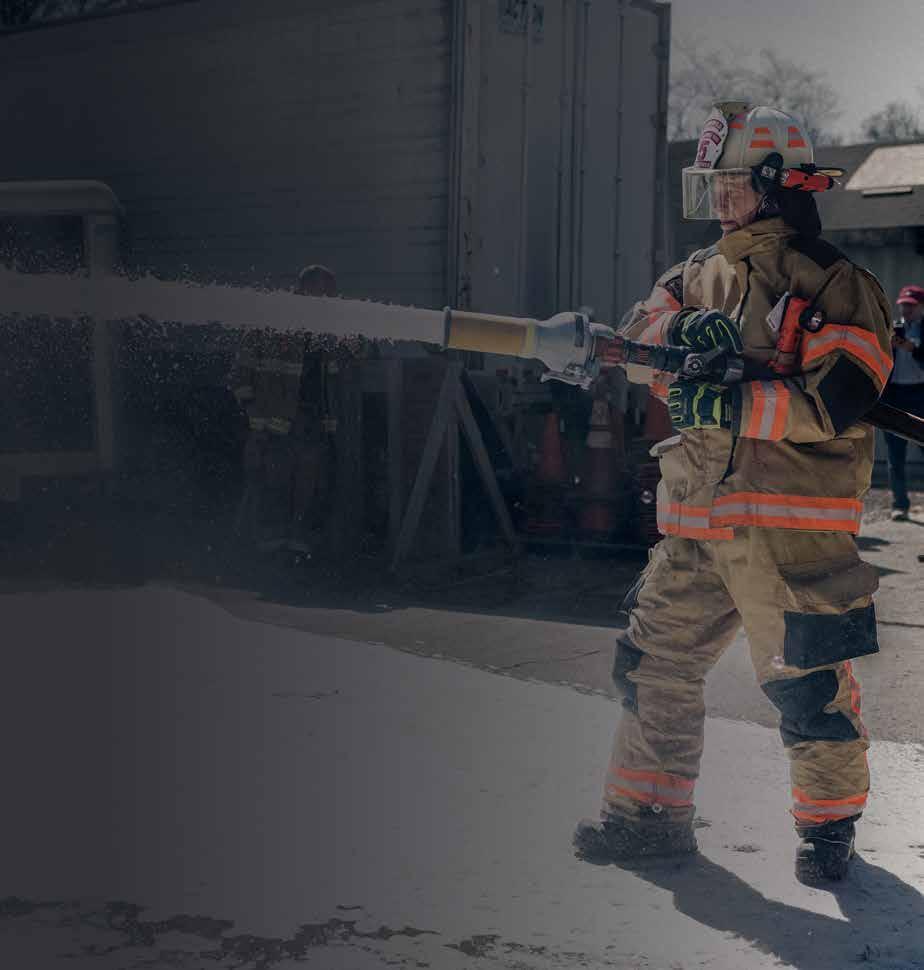
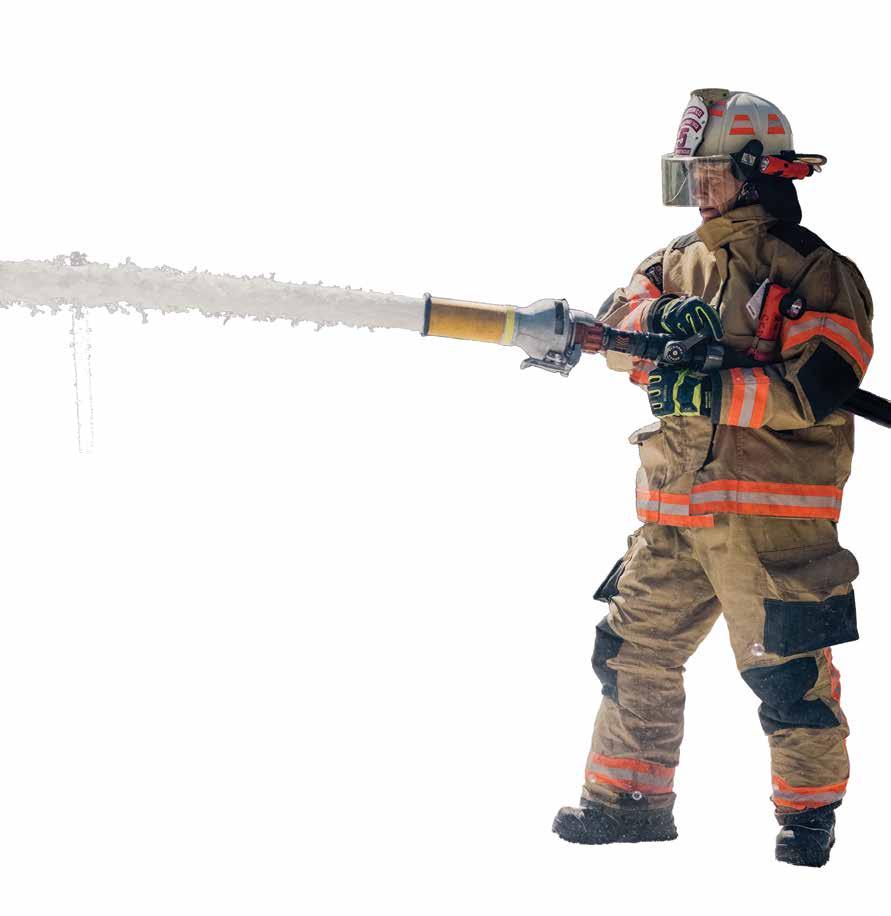
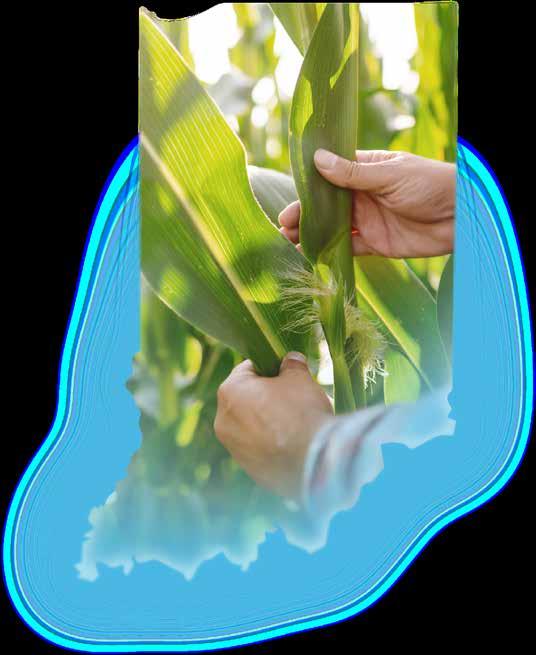
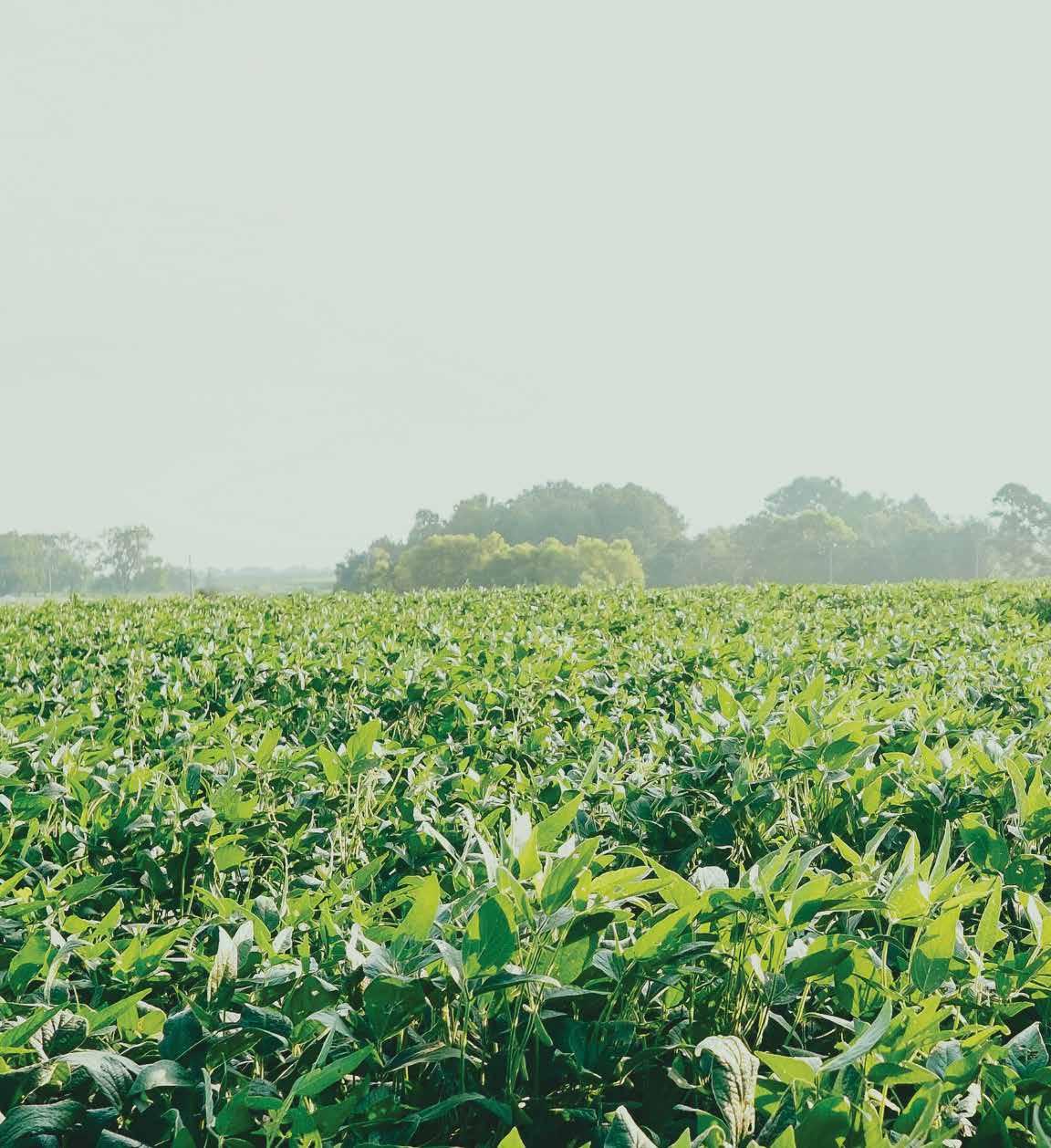
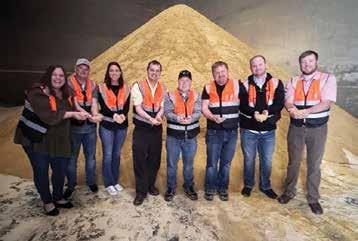
The more we discover about soybeans, the more valuable they become. One innovative product, SoyFoam™, creates a new, sustainable use for your crop that protects firefighters and the planet.
See how your Soy Checkoff is unlocking new markets for soybeans at unitedsoybean.org
MAY-JUNE 2026 | VOL. 19, NO. 4
Year-round E15 legislation passes in the U.S. House
The U.S. House of Representatives voted on May 13, to pass the Nationwide Consumer and Fuel Retailer Choice Act that removes restrictions on summer sales of E15.
14
Nutrient management strategies help pinch fertilizer pennies
Fertilizers cost more money today than they did at the start of the year, but there are specific actions farmers can take to stretch their dollar farther.
22
Indiana farmer’s journey through Egypt’s soybean market
When corn and soybean farmer Stewart Douglas joined a Soy Checkoff See for Yourself trade mission to Egypt, he found a booming demand for U.S. soy.
26
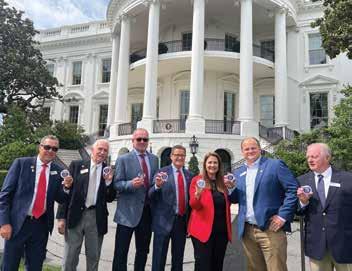
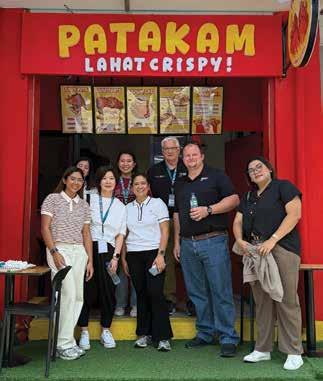
ICMC participates in USDA trade mission to the Philippines
ICMC was among 58 U.S. agribusinesses and trade associations that participated in a USDA-led trade mission to the Philippines to expand market access for U.S. farmers.
34 About the cover:
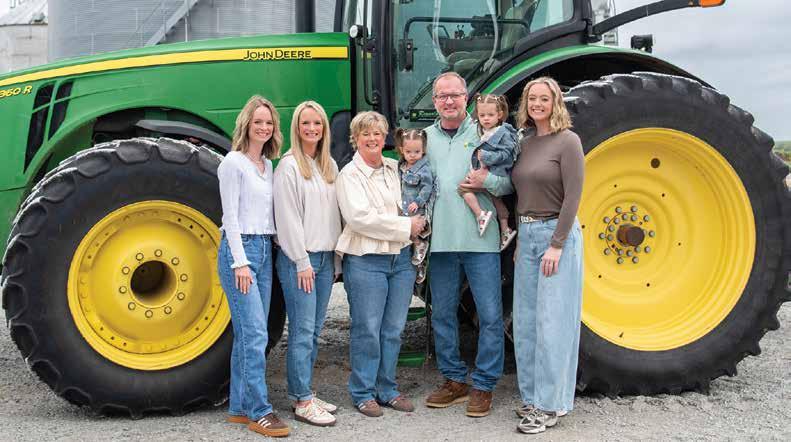
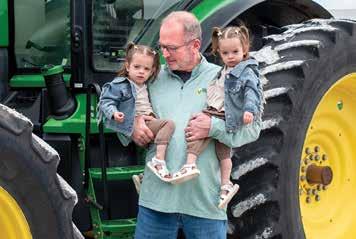
Chris Cherry, a farmer from New Palestine, Ind., is a board member and past president of the Indiana Corn Growers Association. He is also seeking election to the National Corn Growers Association’s National Corn Board. At home, Cherry finds inspiration from his wife, Cristi, his three daughters and twin granddaughters. For more, see the story on page 17. (Amy Kelley photo)
ISA Membership & Policy Committee
Chair
David Hardin, Avon / D4
Dylan Christopher, Brookston / D1
Allen Buchanan, Fowler / D1
Kevin Kelley, Brookston / D1
John Peters, Monticello / D1
Denise Scarborough, LaCrosse / D1
C.J. Chalfant, Hartford City / D2
Carey McKibben, LaGrange / D2
Steve Phares, Albion / D2
Jenna Scott, Muncie / D2
Brian Warpup, Warren / D2
Mark Wenning, Cambridge City / D2
Directors
Philip Springstun, Boonville / D3
Mark Legan, Coatesville / D3
Derika Lynam-Spaetti, Richland / D3
Gary McDaniel, Boonville / D3
Larry Rusch, Vincennes / D3
David Ring, Huntingburg / D3
Andrew McDaniel, Waldron / D4
Kevin Burbrink, Seymour / D4
Chris Eck, Boggstown / D4
Roger Wenning, Greensburg / D4
Donald Schnitker, Seymour /D4
President
Secretary
Alan Dunn, Michigantown / D4 J.R. Roesner, Ferdinand / D8
Vice President
Treasurer
Tyler Everett, Lebanon / D7 Joe Tuholski, LaPorte / D2
Tom Murphy, Chesterton / D1
Directors
Chris Cherry, New Palestine / D6
Phil Zicht, Winchester / D3 Tyler Pottschmidt, Crothersville / D9
Scott Smith, Windfall / D5
Staff Credits
Editor / Dave Blower Jr. dblower@indianasoybean.com
Indiana Corn & Soybean Post® is published six times per year by the Indiana Soybean Alliance and the Indiana Corn Growers Association.
For address corrections contact: Indiana Corn & Soybean Post® 8425 Keystone Crossing, Suite 200 Indianapolis, IN 46240 Phone: 317-614-0376
Email: cornandsoybeanpost@ indianasoybean.com
For advertising information in the Indiana Corn & Soybean Post®, contact Dave Blower Jr. at 317-347-3620 or dblower@indianasoybean.com. Comments and statewide news articles should be sent to the above address. Advertising space reservations must be made by the first day of the month preceding publication. In consideration of the acceptance of the advertisement, the agency and the advertiser must, in respect of the contents of the advertisement, indemnify and save the publisher harmless against any expense arising from claims or actions against the publisher because of the publication of the content of the advertisement.
Indiana corn farmers target mycotoxins, plant diseases with research investment
MAlan Dunn President Indiana Corn Growers Association
any farmers throughout the state have experienced the frustration and fear of having a truckload of corn rejected at an elevator or an ethanol plant due to mycotoxins or a variety of other plant diseases. It has happened to me, and it caused my thoughts to spiral.
“My corn looked perfectly normal; how can this be? What will I do with this load? What will I do if my whole crop is contaminated? How will we survive if we can’t sell our corn?”
Fortunately, I can now share that our problem was limited to corn from one field. However, there was still a cost, and it added up in a year when prices were less than great.
In my February magazine column, I discussed how corn growers as an industry – our biomanufacturing industry – compares with other manufacturing industries as far as investing in research and development. Based on last year’s published yield for Indiana corn multiplied by Indiana’s half cent per bushel checkoff rate, Hoosier farmers invest a little more than one-tenth of 1 percent of their revenue into research and promotion. The national average for other U.S. manufacturing industries is 3-4 percent of revenue on similar spending.
So, where do farmers invest in research against challenges such as southern rust, tar spot and mycotoxins?
The volunteer farmer leaders of the Indiana Corn Marketing Council (ICMC) Board of Directors target this research through Purdue University, USDA and other sources.
As president of the Indiana Corn Growers Association, the state’s corn policy organization, we campaign for as much funding as possible from state and federal budgets to combat these in-field problems.
ICGA and ICMC are working on a daily basis to offset the persistent threats from fungal diseases that can slash yields, degrade grain quality and create serious marketing headaches.
The recently created Mycotoxin Mitigation Center of Excellence (MMCOE) is an example of that work. The MMCOE is a partnership between the National Corn Growers Association (NCGA) and USDA to fund research that could reduce or eliminate mycotoxins. Scott Smith, a farmer from Tipton County who is on both the ICMC and ICGA boards, represents Indiana corn growers on the MMCOE board.
With research funded through state checkoff programs like ICMC and others, the work of the MMCOE is showing promise of offsetting the effects of mycotoxins.
Indiana ranks among the top corn-producing states. Plant diseases don’t just cut bushels per acre, they raise production costs, tighten margins and threaten the reliability of the state’s corn crop for livestock feed, ethanol and exports. By pooling checkoff resources, ICMC farmer leaders turn checkoff dollars into targeted solutions. An example is the Indiana Corn and Soybean Innovation Center at Purdue University, which was created by checkoff investment to battle on-farm challenges.
Having a top-notch ag research university in state like Purdue is a benefit to all Indiana farmers.
When ICMC invests in research, farmers gain tools to stay ahead of evolving threats such as changing disease pressure. Purdue’s disease monitoring network includes free diagnostic testing for tar spot and southern rust from samples submitted by Indiana growers. Real-time tracking maps and in-season updates help farmers make timely fungicide decisions. With diseases showing up earlier in some regions and weather variability increasing, these efforts provide data-driven advice rather than guesswork.
As farmers, we don’t wait for solutions. When a fence is broken, we mend it. If equipment isn’t working, we repair it. When we’re battling an invisible pest, we pool our resources together to solve it. That’s what ICMC and ICGA work is all about.
MADE IN INDIANA
At POET, we’re rooted in rural America. For almost 40 years, we’ve been turning locally grown corn into homegrown bioproducts that fuel our economy and support the family farms that make our communities strong. By adding value to every bushel, we help ensure that rural families can continue to do what they love for generations to come.
There are five POET Bioprocessing facilities across Indiana: Alexandria, North Manchester, Portland, Shelbyville, and Cloverdale. | poet.com/grain
Hardin: Are farmers playing checkers while everyone else is playing chess?
SDavid Hardin Chair ISA Membership and Policy Committee
ometimes we have to ask ourselves, are we playing checkers while everyone else is playing chess? Are we being strategic and thinking several moves ahead, or are we being reactive and just putting out fires as they pop up? We ask this question on our farms every day.
To Become A Member
Do you take the time to do the preventative maintenance on your tractor, or do you wait until something breaks and suffer the downtime while you wait on a service technician to show up in the field? The same principle can be used when it comes to farm policy and advocating for the soybean industry.
While the bridge payments that many of us received in the first quarter of this year were helpful to the bottom line, they were necessary because we hadn’t done the things we needed to future proof our industry. I’m not saying that we need to anticipate every black swan event and have a contingency plan for it, but we do on issues that can have a high impact on soy producers with reasonable odds of happening.
There are three areas I see where we need to urgently engage with Congress and the administration to prevent future harm. The first is access to reasonably priced fertilizer. We need to make sure that we have domestic or near shored production capacity that doesn’t expose us to geopolitical risk in places like the Persian Gulf or the Straits of Malacca.
We don’t need tariffs on Moroccan phosphates that increase our annual costs by more than $1billion annually. There aren’t domestic deposits of phosphate rock to replace that imported product currently.
The second issue is one that House punted on during the recent farm bill debate. Crop protection manufacturers need clarity in labeling laws that protect them from costly litigation and a patchwork of rules from one jurisdiction to another.
Companies like Corteva or BASF aren’t going to invest billions of dollars in creating a new active ingredient if we don’t have federal pre-emption. They don’t want to deal with 50 state regulators in addition to federal ones. There is also increased likelihood of lawsuits and their associated costs. This leads to one of two outcomes: No new pesticide products in the pipeline in an era of super weeds, or greatly increased costs to the farmer for any new products.
Lastly, the Trump Administration is planning to roll out new Section 301 tariffs to replace the ones struck down by the Supreme Court. If this is done in a clumsy fashion, we risk undoing all the hard-won trade deals we have or reigniting the trade war while we are already dealing with higher input costs.
Indiana soybean farmers and our partners at ISA and the American Soybean Association (ASA) need to stay engaged in Washington, D.C., to ensure our future success.
These are just a few of the major challenges we have to deal with, as I see it. Get your voice involved in the discussion. Your views will add to our strength as an interest. To join ISA’s Membership and Policy Committee, contact Khyla Goodman by email at kgoodman@indianasoybean.com.
Fertilizer costs, fuel demand, export markets dominate farm bill debate in House, Senate
BY BLAIR SHIPP, American Soybean Association
Indiana soybean growers are in the middle of planting season, making decisions every day on inputs, marketing and risk, while ASA and its farmer leaders are in Washington working on many of the same issues. From fertilizer costs to fuel demand and export markets, those conversations are shaping the environment growers will be operating in long after this year’s crop is in the ground.
That work has taken on added urgency in recent weeks as Congress moves forward on a new farm bill. The House of Representatives passed H.R. 7567, the Farm, Food and National Security Act of 2026, by a bipartisan vote of 224-200, marking a significant step toward a new five-year framework for agriculture policy.
Reaching that point required several days of negotiations in the House Rules Committee, where lawmakers worked through disagreements on a range of issues before bringing the bill to the floor. Debate stretched into the early hours as amendments were considered, including proposals tied to biofuels, livestock production standards and pesticide policy.
Some of those issues were ultimately addressed outside of the final package. Provisions related to yearround E15 access were removed from the farm bill and
An amendment allowing state-based livestock production standards was also not included in the final rule governing floor debate.
Language tied to the Agricultural Labeling Uniformity Act was also removed during the amendment process. The proposal would reaffirm the role of the Environmental Protection Agency in establishing consistent pesticide labeling standards. Its removal reflects a broader shift in how pesticide policy is being debated in Washington, with increased attention from outside groups and a more complex legislative environment for agriculture.
Connecting farm bill to the farm
Even with those changes, the House-passed bill includes several provisions that connect directly back to decisions being made on the farm. The legislation provides investments in conservation programs, expands access to credit and supports precision agriculture.
It also reauthorizes the BioPreferred Program and the Biorefinery Assistance Program, and includes provisions aimed at addressing challenges stemming from statelevel animal welfare regulations. Authority for Food for Peace programs would also shift to the USDA.
The focus now turns to the Senate, where Agriculture Committee leadership has signaled interest in taking up the bill, with a potential markup as early as June. As that process begins, differences between the House and Senate approaches are expected to emerge, particularly
Learn more about ASA
Beyond the farm bill, many of the same concerns growers are managing this season continue to be part of the conversation in Washington.
Fertilizer availability and affordability remain a top issue. ASA and its farmer leaders are continuing to press for policies that improve competition and transparency in fertilizer markets, strengthen domestic production and address supply chain challenges that have contributed to price volatility. Ensuring reliable access to key inputs at reasonable prices remains central to that work.
Renewable fuel policy is moving
Renewable fuel policy is also moving forward, with direct implications for soybean demand. In April, the Environmental Protection Agency released updated Renewable Volume Obligations under the Renewable Fuel Standard, outlining proposed volumes for conventional biofuels, advanced biofuels and biomassbased diesel.
For soybean growers, the biomass-based diesel category carries particular importance, as soybean oil
remains a primary feedstock for renewable diesel. The proposed volumes come as domestic renewable diesel capacity has expanded in recent years, strengthening the connection between federal fuel policy and soybean markets. The rulemaking process will include a public comment period before final volumes are set, and ASA is engaged with EPA as that process continues.
Trade remains another key piece of the picture. USDA has announced additional funding for trade promotion programs, reinforcing the role exports play in supporting demand for U.S. soy. At the same time, early discussions tied to the upcoming review of the U.S.-Mexico-Canada Agreement are beginning to take shape, with agriculture groups focused on maintaining strong market access.
Taken together, the activity in Washington reflects many of the same factors growers are weighing on their operations today. As planting continues and the season unfolds, the policy decisions taking shape now will continue to influence the markets and conditions soybean growers face in the months ahead.
E15 legislation exposes the joy and frustrations of farm advocacy work
BY LESLY WEBER McNITT, NCGA Vice President of Public Policy
Working on farm policy issues in Washington can be rewarding, but often there is a form of delayed gratification. There are all types of competing interests that must be addressed to get legislation across the finish line and signed into law. Even widely popular bills can take years to pass, a problem that has been compounded by an increasingly divided Capital City.
For more on NCGA
I was reminded during the last several weeks of the exhilaration, disappointment and pure anxiety that comes with advocacy work. The U.S. House of Representatives recently passed the Farm, Food and National Security Act (H.R. 7567), its version of an updated farm bill.
NCGA has been working to shape and pass the new farm bill for years, including growers testifying at field hearings and in Washington, D.C., since at least 2022. While the budget reconciliation bill last year provided many key priorities, the full farm bill needs to be completed this year – almost three years after it originally expired.
Our work now turns to the U.S. Senate, as we encourage a bipartisan product to advance.
While the farm bill momentum was a positive step, the House also punted a vote on legislation that would expand consumer access to higher blends of ethanol. We have worked for years trying to secure passage of legislation that would allow for the year-round sale of fuels with
15 percent ethanol blends, referred to as E15. The legislation, H.R. 1346, entitled the Nationwide Consumer and Fuel Retailer Choice Act, enjoys the support from corn grower allies across the political aisle in Congress. The legislation offers something for everyone. Expanding access to ethanol would increase corn demand, helping growers as well as the rural communities in which they live. This bill strengthens American energy independence and dominance. And it would help lower gas prices as fuel costs continue to climb.
Yet, like most bills, this legislation is analogous to a Rubik’s cube. Right when you think all the colors are lined up, you look to the side and find that you have more work to do.
In our case, we have some members of Congress who wrongly think E15 is a mandate. In fact, it eliminates burdensome restrictions.
Another complication we’ve run into is greed. A small group of million- and billon-dollar oil companies are masquerading as small refineries to obtain exemptions to the nation’s Renewable Fuel Standard’s ethanol blending requirements. Simply put: This legislation would close that loophole, and they don’t like it.
So as the nation’s corn growers and many drivers struggle with an unaffordable cost of living, a small handful of corporations want to continue exploiting a loophole to pad their profits.
Despite all these efforts to derail E15 legislation, corn grower leaders have worked hard, pounding the pavement on Capitol Hill, knocking on the doors of hundreds of House members, meeting with those
who need more information on our bill and weighing in at the grassroots level with elected officials.
We have engaged the media as a vehicle for reaching policymakers. And, as a result, we hope to see a vote on this legislation in the Senate soon.
Yet, there is still a lot of work to do. We have come close to passing E15 legislation before, only to find that some special interest group or a procedural maneuver has thwarted our efforts.
So, we are spending our time engaging in an extremely aggressive outreach effort. Calling undecided senators, holding press conferences and launching campaigns that will reach members of Congress.
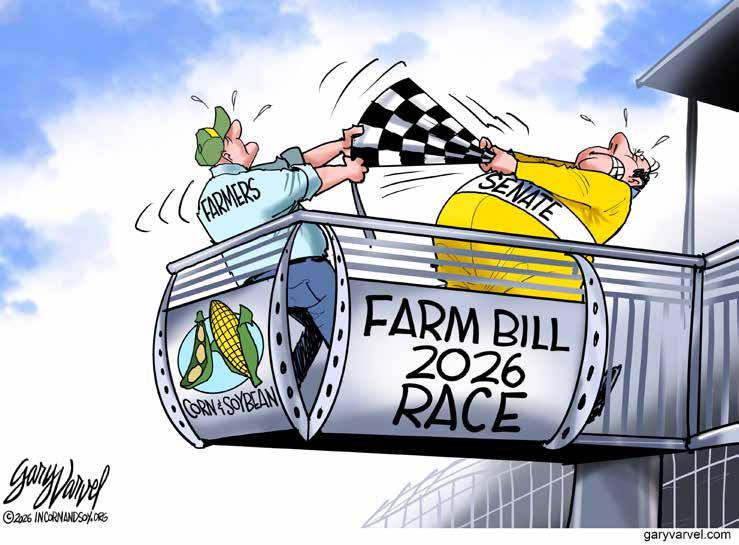
It’s no doubt a race to the finish with the opposition on our heels. But we are dedicated to getting this passed in the Senate and then signed into law. NCGA will keep fighting for opportunities to increase market demand for corn growers.
Even as we face a tough playing field, we are going to show Washington that corn growers are up for the challenge.
Ethanol’s economic returns
The ethanol industry has had a substantial impact on the economic vitality of rural communities, especially in America’s heartland, where the majority of the nation’s corn ethanol plants are located. Short transportation distances and local investment have led to most ethanol facilities being centrally located in the United States, providing more economic independence and energy security to our country while supporting local jobs.
Ethanol production is a domestic energy industry, creating jobs and economic vitality all across America — especially in rural areas of the nation.
• In 2024, the U.S. ethanol industry helped support nearly 314,000 direct and indirect jobs.
• Ethanol contributed more than $53 billion to the Gross Domestic Product and added $28 billion to household income.
• This generated more than $10 billion in tax revenue for federal, state and local governments.
Corn farmers, just like all Americans, want access to the lowest cost, most efficient, environmentally friendly, and safe motor fuels available.
The move to higher octane fuels will not occur overnight, but it is NCGA’s stance that we must move quickly to plant the seeds for future ethanol demand that will positively impact farmers for decades to come.
From property taxes at the Statehouse to the Farm Bill on Capitol Hill, the Indiana Ag Policy Podcast will share the latest from the biggest names in ag policy. Scan below to listen now!
Young: Hoosier farmers need trade certainty
BY U.S. SEN. TODD YOUNG, (R-Ind.)
The success of Indiana’s agriculture industry relies on inputs and markets. But it takes the right trade policies to make the first affordable and the second dependable. That’s why the current debates in Congress are so critical to Hoosier farmers.
The first formal review of the U.S.-Mexico-Canada Agreement (USMCA) this July will be a key test of whether the pact reinforces confidence in the North American market or creates more uncertainty. The prices of fertilizer, fuel and equipment, and whether corn, soybeans and pork have steady buyers, all hinge on the outcome.
USMCA is not perfect. President Donald Trump and U.S. Trade Representative Jamieson Greer are right to drive a hard bargain during negotiations with our partners in this pact, Mexico and Canada. The former’s threats against U.S. corn products and the latter’s import controls of its dairy market should be confronted directly.
But the purpose of a trade agreement is rules, commitments and enforcement, all of which are essential to Hoosier farmers and agribusinesses. Disputes should be resolved quickly, not left hanging over planting decisions, financing and export relationships farmers have spent years building.
Uncertainty over trade arrangements impacts inputs, as well. A recent Farm Bureau survey found that 70 percent of farmers nationwide said they could not afford all the fertilizer they needed this year. In the Midwest, 48 percent said the same.
Trade policy does not simply open or close markets, it also shapes the cost and availability of nitrogen, phosphate, potash, seed technology and the equipment needed to produce a crop. When input costs are high, farmers have less room for policy mistakes. Both sides of the ledger must work.
Some of this instability can be remedied by emergency aid. Based on my conversations, though, farmers would rather earn income from the marketplace than receive it from the government. Replacing stable markets with continual ad hoc assistance is ultimately
detrimental to an agricultural economy. If trade instability becomes normal, the result is more debt, fewer farms, more consolidation, less local control, and fewer opportunities for the next generation.
During the upcoming review of the USMCA, Congress must work with President Trump to fix remaining imperfections in the agreement, assert America’s interests, and establish market stability for its farmers. But beyond this, legislators can also find practical ways to create new market opportunities for American products. Some will come through smaller, overlooked programs where Congress can press for better rules and fewer barriers.
The African Growth and Opportunity Act (AGOA), for example, is a U.S. trade preference program that gives eligible sub-Saharan African countries duty-free access to the U.S. market for certain products. Congress has extended AGOA through 2026, creating a narrow window to modernize the program.
That modernization should explicitly include agriculture. One practical place to start is biotechnology, including genetically engineered crops, seeds and related agricultural products. AGOA eligibility can encourage transparent, science-based rules for biotechnology and other agricultural standards.
That would not turn AGOA into a farm bill or a full trade agreement with Africa, but it could help reduce arbitrary walls and create better conditions for U.S. commodities, seeds and value-added farm products.
That matters for Indiana. Clear rules can support demand for commodities, expand opportunities for seed and innovation and strengthen markets tied to the broader farm economy.
Africa’s food demand is growing, and U.S. agriculture should not sit back while competitors such as Brazil move aggressively to meet it.
Agriculture is a major driver of Indiana’s economy, contributing over $35 billion annually. This sector will only grow stronger when markets are both expanded and defended. That is why it is so critical that Congress and the White House get the USMCA review right and continue to establish new opportunities for our products. And farmers should continue to encourage us to do both.
Baird: Congress must pass farm bill and deliver results for all Hoosiers
BY U.S. REP. JIM BAIRD, (R-District 4)
Agriculture is the foundation of rural communities, and it is an honor to help protect Indiana’s farmers and producers. I am proud to represent a district where agriculture is the heart of our economy.
The farmers in Indiana’s Fourth District help supply the food that feeds our nation and the world. I know firsthand that farming comes with significant risk and tight margins, and our farmers deserve a Congress that provides them with the tools they need and the economic certainty to plan ahead.
One of my top priorities has been working on a full, fiveyear farm bill, and I am proud to say that after months of hard work and deliberation, the 2026 Farm Bill passed the U.S. House of Representatives on a bipartisan basis.
This bill, also known as the Farm, Food and National Security Act of 2026, was truly crafted with our farmers in mind. It builds on the historic investments in the Working Families Tax Cuts (H.R. 1) by strengthening the farm safety net, making the small business tax credit permanent, expanding crop insurance, increasing reference prices, investing in livestock biosecurity measures, improving standing livestock disaster programs, and restoring integrity and accountability to our federal nutrition programs.
These were critical measures for our farmers, but Congress could not make much-needed policy changes. We needed a farm bill to do that.
I am proud of the work I have done in creating this legislation, and multiple of my priorities were included. The Farm, Food and National Security Act of 2026 invests in agricultural research so that our farmers remain at the forefront of cutting-edge innovation and technology and includes my legislation, the NSF and USDA Interagency Research Act, to promote interagency collaboration and agricultural research. This year’s Farm Bill also addresses California’s Proposition 12, which sought to dictate how pork producers raise their livestock and harmed producers nationwide.
This farm bill also expands farmers’ access to credit,
funds successful conservation programs, and prioritizes American commodities on the global stage. Our farmers grow the safest, most abundant food supply in the world. We need to grow domestic and global market access if Indiana’s farmers are going to succeed.
Another opportunity for Hoosier farmers lies in biofuels. Indiana’s agricultural landscape is defined by corn and soybeans, key ingredients in biofuels. Expanding the biofuels market, including year-round E-15, increases demand for these crops.
At a time when our farmers and producers have faced economic uncertainty and global barriers to trade, it is time to focus on expanding our domestic markets, and increasing opportunities for biofuels must be part of this conversation.
During the coming weeks, Congress will work on and debate critical biofuels policies. I will continue to advocate for America’s biofuel leadership to help Hoosier farmers thrive.
Congress finally has an opportunity to deliver the economic and regulatory certainty our farmers and producers deserve. It is time for the U.S. Senate to work with the House to get this vital legislation signed into law soon.
I have been a proud advocate for our farmers throughout my time in Congress, and I will be hard at work to get the 2026 farm bill across the finish line.
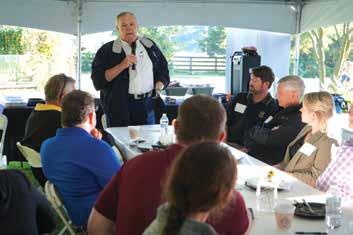
U.S. Rep. Jim Baird (R-Dist. 4) speaks with farmers during a Shop Talk in Putnam County, Ind. Baird is a member of the House Ag Committee, and he has been working on farm bill issues.
Year-round E15 legislation passes in the U.S. House
BY EMILY McNIFF
The U.S. House of Representatives voted 218 to 203 on Wednesday, May 13, to pass H.R. 1346, the Nationwide Consumer and Fuel Retailer Choice Act. The legislation removes restrictions on the summer sales of E15 – a blend of 15 percent ethanol with 85 percent gasoline – and is a major victory for Indiana corn farmers that have advocated for year-round E15 on Capitol Hill in recent weeks.
Leading up to the vote, 12 farmer leaders traveled to Washington, D.C., to meet with House lawmakers from across the country, including legislators from California, Maryland, Kentucky and Florida. During these meetings, they highlighted the benefits of higher ethanol blends as well as the positive impact expanded E15 access would have on American corn farmers, rural communities and consumers.
In Indiana alone, nearly 43 percent of Indiana’s corn
crop is used for ethanol production. Expanding access to E15 could create demand for more than 200 million more bushels of Indiana corn, strengthening markets and supporting farm profitability.
This shift would also provide environmental and economic benefits to Hoosiers, including fuel savings of up to 30 cents per gallon and a reduction of 455,000 metric tons in lifecycle emissions – the equivalent of taking more than 99,000 vehicles off Indiana roads each year.
The bill now moves to the U.S. Senate for consideration. Indiana Corn Growers Association farmer directors, members and staff will continue urging Senators Jim Banks and Todd Young to act quickly to provide longterm certainty for year-round E15 sales and support the profitability and sustainability of Indiana farm families for generations to come.
Gov. Braun to provide opening remarks during the Livestock Summit on June 23
BY EMILY McNIFF
Indiana Soybean Alliance (ISA) and Indiana Corn Growers Association (ICGA) is hosting a Livestock Summit on Tuesday, June 23 at the JW Marriott hotel in Indianapolis.
This event convenes leaders from across the livestock and grain sectors to discuss the interconnected challenges and opportunities shaping animal agriculture and feed industries. The Livestock Summit is designed to strengthen collaboration across the value chain and highlight innovations that support producers.
Indiana Gov. Mike Braun will provide opening remarks, and the agenda highlights speakers on the leadership teams of the following organizations:
• Elanco Animal Health
• United Animal Health
• CSA Animal Nutrition
• Lowe’s Pellets & Grain
• U.S. Dairy Export Council
• U.S. Grains and BioProducts Council
• U.S. Meat Export Federation
• U.S.A. Poultry and Egg Export Council
• Indiana livestock membership associations
Attendees are also invited to participate in optional activities following the program, including an Indianapolis Motor Speedway Museum tour and an Indianapolis Indians baseball game.
Space is limited, so attendees are encouraged to register to reserve a spot. For more information about the Livestock Summit and other events this summer, visit incornandsoy.org/events
Take action to help Hoosier farmers
Become a lifetime member of Indiana’s corn and soybean policy groups
The Indiana Corn Growers Association (ICGA) and the Indiana Soybean Alliance’s Membership & Policy Committee (M&P) represent our state’s farmers in the legislative halls in Indianapolis and Washington, D.C. These organizations need your membership to influence federal and state lawmakers.
Indiana soybean and corn growers can now save money and eliminate the hassle of annual renewals by purchasing a LIFETIME MEMBERSHIP to both ICGA and M&P. For only $1,700, you can be a member of both ICGA and M&P for life!
Anyone interested in buying this membership, should contact Industry Affairs Outreach Manager Khyla Goodman by phone at 317-614-0377 or by email at kgoodman@indianasoybean.com. Or, you can go to our website, incornandsoy.org/membership, to join!
Lifetime Members
Phil Ramsey
Courtney Kingery
Matthew Lucas
Tyler Everett
David Gottbrath
Mike Sprinkle
Jeff Troike
Jim Douglas
Michael Steinbarger
Sam Caldwell
Mark Nigh
Alan Dunn
Mason Gick
Aaron Johnson
Nathan Luallen
Sam Mehringer
David Wenning
Mark Wenning
Creed Gunn
Andrew Fansler
Kent Burton
Russell Anderson
Troy Hattery
Mark Bacon
Ronald Sutherlin
Jordan Caldwell
Mike Shuter
John Baugh
Janice Peterson
Cullen Page
Don Wyss
John Peters
Bruce Herr
Lauren Tolle
Luke Roush
James Wood
Allen Buchanan
Matt Hart
Ron Hudson
Mark Tolle
Carl Kissel
Chris Eck
James Wenning
JR Roesner
William Roesner
Sarah Delbecq
Jim Geller Jr.
C.J. Chalfant
William Gerard
Carey McKibben
Neal Smith
Matthew Chapman Jim Flanders
Chris Cherry
Luke Mullet
Tom Murphy
Matt Hayden
Kevin Kelley
Douglas Matthys
Randall Matthys
Brian Warpup
Tom Weaver
Larry Rusch
Chad Chism
Troy Furrer
Brent Bible
Jeremy Mullins
Joe Stoller
Matt Wilson
Adam Sheller
Philip Springstun
Joe Steinkamp
Keevin Lemenager
Dylan Christopher
Chris Faut
C.J. Chalfant, Hartford City, Ind.
“Becoming a Lifetime Member was an easy decision for me. It helps soybean and corn farmers get a seat at the table with our state and national legislators. It is important for farmers to help drive the decisions that affect us. We can advise them on policies that will help – and not hurt – our bottom line.”
Central Indiana farmer followed unusual paths, unique experiences to leadership
BY DAVE BLOWER JR.
Chris Cherry is a multi-generational farmer in Hancock County, Ind. He farms with his brother, an uncle and a long-time employee who is more like family than an employee. They raise corn, soybeans and wheat on both owned and rented land. Cherry has a variety of ag-related businesses that supplement his farm income.
He cares about his industry and has served in many volunteer capacities – currently as a board member and past president of the Indiana Corn Growers Association (ICGA).
On the surface, he sounds like a fairly typical Hoosier farmer. On the other hand, he’s experienced something much more rare than lightning striking the same spot twice. Thirty years ago, Chris and his wife, Cristi, became parents of identical twin daughters – Caitlyn and Cassidy. That’s rare, but not too surprising. Then, a little less than two years ago, Caitlyn became the mother of identical twin daughters –Wrenly and Evelyn, who will celebrate their birthdays in July.
According to research by the University of Texas Southwestern Medical Center, there’s less than a 0.4
percent chance of a twin daughter having twin daughters. This research said there is no hereditary link for identical twinning, and it is considered a spontaneous event that does not run in families.
Regardless of the odds, the Cherrys’ three children – including youngest daughter, Claire – and their two granddaughters are the delights of their days.
“Cristi finds it funny that on the days that she is watching the twins, I tend to come home early,” Cherry quipped. “Many days I don’t get home until 5:30 or 6 (p.m.), but on the days she is watching the twins, I come in the door at 4 o’clock. I walked in the house the other day, and they saw me and said, ‘Poppa, Poppa.’ They wanted me to pick them up, so I did and carried them around for a while. It’s just great.”
He added that both Caitlyn and Claire are married and beginning their lives, and Cassidy is getting married this August. Beyond the farm, beyond the work with ICGA and other farm groups, family is a priority for Cherry. “I’m pretty selfish about my time with Crisiti and the girls,” he said.
ICGA Board member Chris Cherry poses with his family on his Hancock County, Ind., farm. From left are his twin daughters Caitlyn Shepherd (mother of the twins), Cassidy, Cristi, Evelyn, Chris, Wrenly and his youngest daughter Claire Gray.
That is partly why he doesn’t live on the farm where he works.
“I guess we’re unique because we live in a subdivision in New Palestine, about 25 minutes from the farm,” Cherry explained. “A lot of people want to live on the farm; I grew up on this farm, and I think it’s great. But we found this house in the subdivision and fell in love with it. We agreed that it was a great place to raise the kids. They could have streets to ride their bikes on in a quiet and comfortable, nice neighborhood. So, we just stayed there.
“My 25-minute drive to and from the farm has been good. I had an uncle who drove from here to Kokomo for work, about an hour and 15 minutes every day for 25 years. For me, the drive allows me to decompress each day. If I’ve had a bad day, it allows me to leave it in the truck before I get home.”
Building a diversified business
Cherry said he comes from farm stock. He is a fifthgeneration farmer on his father’s side and a seventhgeneration farmer on his mother’s side. His parents also farmed on the same 80-acre spot near Greenfield, Ind., that he and his brother, Jeff, own and operate today. In addition to the farm, Cherry owns Cherry Ag Service, which offers several different farm products.
Yet, most farmers don’t have a college degree in journalism from Franklin College. An excellent high school athlete, Cherry was recruited to play basketball and tennis
at Franklin, which is where he met Cristi. They enjoyed their time at Franklin, but Cherry thought the call to the farm might bring him back.
“Journalism was my degree, but it was really focused on marketing and advertising,” Cherry explained. “I would say that I use those skills today in marketing the different aspects of our ag retail business.”
Although he grew up on the farm and always worked on the farm, Cherry didn’t join the farming side of business until 2016. To make it work, he established several small businesses.
“Along the way, you learn that you need to start accumulating small piles; and if you get enough small piles, then the overall pile gets large enough to live off of and feed your family,” Cherry said. “I’ve been a Pioneer seed rep for 29 years now. In 2006, I became a licensed crop insurance agent. I’ve sold seed tenders for the past 15 years, and four years ago I picked up a Shurco dealership to sell tarps and equipment for grain trailers. Every farmer has a grain trailer; tarps will wear out, so we stock parts for them. We are very diversified. If you add these small piles up, it hopefully is enough to provide.”
The farm produces non-GMO soybeans, mostly for the soybean protein market, and corn for ethanol. They also usually plant wheat or double-crop soybeans.
“We generally raise wheat for better soil health,” Cherry said. “We didn’t raise wheat this year, but we usually do because of the soil health benefit. Over the last five years, I’d say every farm that we farm has had wheat on it. Many farmers don’t grow it anymore because they see wheat as more of nuisance than as a value crop.”
The value of conservation
Like most multi-generational farmers, maintaining good soil health is a responsible way to prepare for the future. That has been an important principle on the Cherry farm.
According to medical research, a female twin giving birth to twin daughters has a 0.4 percent chance of happening. However, one of Chris Cherry’s twin daughters, Caitlyn, gave birth to twin daughters Wrenly and Evelyn.
A multi-generational farmer on both sides of his family, Chris Cherry earned a degree in Journalism from Franklin College. Although he has operated many ag-related businesses for nearly 30 years, Cherry became a part of his family’s farm in 2016.
“My dad and brother started going no-till back in the mid-90s, and we’ve carried that through the years,” he said. “At first, it was no-till soybeans, but then in the 2010s, we went to no-till corn. Now, we pretty much no-till everything – not quite everything, but we’re working toward that.”
As a result of his many ag supply businesses, Cherry has met many farmers and frequently travels around the state. He has observed that Indiana farmers have adopted many conservation practices that growers from other areas have not.
“For a lot of guys, no-till has been considered farming ugly; and now with a cover crop, it’s like really ugly,” Cherry said. “Cover crops are something we decided to do, and we think it’s been a good thing.”
He added that 20 or 25 years ago, the idea of no-till and cover crops were radical, and sometimes it required explanation to some of the landlords.
“I had to go talk to some of our landlords and tell them that we were going to plant cover crops, just so that they weren’t caught off guard,” Cherry said. “I would explain that we would kill that cover crop after we planted it. I do care a lot about what our landlords think. I want them to be happy with the job that we’re doing on their land. I don’t think that’s unique; I think every farmer wants their landlords to be comfortable with the job they’re doing.”
Walk the walk; Talk the talk
Cherry is known as an advocate for the ethanol industry. In fact, he serves on the National Corn Growers Association’s (NCGA) Ethanol Action Team. He has campaigned for year-round E15 for several years.
This year, he is seeking to become the second Hoosier farmer on the NCGA’s National Corn Board. J.R. Roesner, a farmer from Ferdinand, Ind., is on the National Corn Board. The board election will take place during NCGA’s annual Corn Congress in Washington, D.C., in July.
“I’ve been asked several times about what I’d like to accomplish if I were on the NCGA board. I’ve been so ethanol focused, and that’s a big part of what I want to do, but it’s not my only focus,” Cherry said. “Expanding opportunities for ethanol has been my passion to this
point, but I’m also very interested in finding new products made of corn and finding new export markets. To me, it’s all about moving the pile. I don’t care whether we feed it, eat it, burn it or wear it. As long as we’re using corn, I’m for it. There’s a new Lycra-type clothing made of corn that’s coming out soon. I think that’s pretty cool. I think we’ve got to keep searching for things like that.”
He is closely watching the Farm Bill 2.0 debate in the U.S. Senate, and he is campaigning for year-round access to E15, a blend of 15 percent ethanol with 85 percent gasoline, also known as Unleaded 88, which will be included in the final legislation.
“We’ve been trying to get E15 legislation through Congress since 2011,” Cherry said. “Obviously we’ve ramped up the discussion during the past few years, but I’m hopeful that we’re finally getting close. USDA Secretary Brooke Rollins is a strong advocate for it; President Trump said he is for it, and House Ag Committee member Rep. Jim Baird is for it. I think there is support for it on both sides of the aisle. We have great support from our Indiana delegation, in fact (U.S.) Rep. Frank Mrvan, a Democrat from northwest Indiana, has been in support of it.”
In recent years, the U.S. Environmental Protection Agency has offered a waiver allowing summer sales of E15, but that doesn’t provide the retail fuel industry the assurance it requires to invest in the product.
“If we don’t have year-round E15 on the books, then retailers will not make the investment to put in the tanks and pumps necessary to make Unleaded 88 available to consumers,” Cherry said.
was part
delegation
farmers, from
are Scott Smith of Windfall, Ind.; Jerry Osterholt of Roanoke, Ind.; Cherry; Alan Dunn of Michigantown, Ind.; Susan Brocksmith of Vincennes, Ind.; Tyler Everett of Lebanon, Ind.; and Ron Hensley of Daleville, Ind. The U.S. House of Representatives approved the pro-E15 bill, and it is now being considered in the U.S. Senate.
Just like the license plate on his truck, Chris Cherry isn’t shy about sharing his opinions.
Chris Cherry
of a
of Indiana farmers who campaigned lawmakers in Congress in support of yearround E15 legislation. The
left,
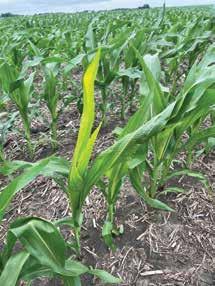
A variety of reasons may cause many colors in early-season corn
BY DAN QUINN, Purdue Extension Corn Specialist
As corn begins to emerge and develop across Indiana, questions often arise regarding the range of plant color differences observed within fields during the early growing season. Variations in corn color are common and can result from several factors including environmental conditions, hybrid genetics, nutrient availability, soil conditions and temporary stress responses. This article highlights several of the most common color differences observed in young corn plants, explains the underlying causes behind these symptoms, and discusses their potential implications for early-season corn growth and development.
Purple corn
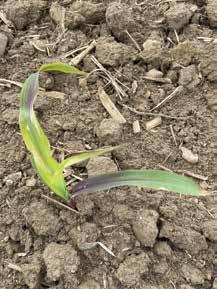
Purple corn symptoms (Image 1) are caused by the accumulation of a purple pigment in the corn leaves known as anthocyanin.
Corn leaves produce sugars by photosynthesis and these sugars are typically metabolized to generate energy for further plant growth.
However, when cool temperatures cause plant growth to slow or root development is restricted, these sugars tend to accumulate in the leaf and trigger anthocyanin pigment formation (e.g., purple leaf color). Purple corn can also occur from a genetic response to bright, sunny days and cool nights.
In addition, hybrid genetics can play a role in whether or not a corn plant produces anthocyanin. This symptom often disappears with warmer temperatures and yield losses should be minimal to none.
Note: This symptom is often confused with phosphorus deficiency of corn. So, before you get the fertilizer spreader out once these symptoms occur, pay attention to your soil test levels and to the corn as temperatures become warmer and if these symptoms begin to disappear.
Yellow-green corn
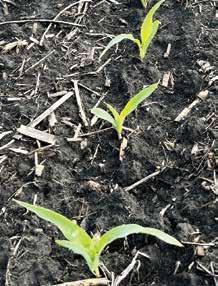
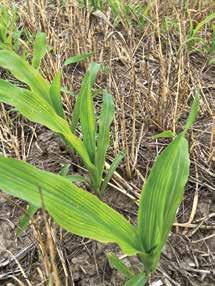
Cool temperatures and poor root or stand establishment can also cause corn to appear ugly yellow-green (Image 2) instead of that dark, beautiful green we are all looking for. Up until corn reaches the V3 growth stage (3 visibly collared leaves), the energy and nutrition of the seedlings are dependent on the kernel reserves. Once corn gets beyond the V3 growth stage, seedlings begin to transition to being dependent on the nodal root system. During this transition, when poor growing conditions occur this causes insufficient photosynthesis, slowed nodal root development, and poor plant nutrient uptake.
Therefore, corn plants appear an ugly yellow-green. However, with more sunshine and higher temperatures, these symptoms are often resolved.
Image 1: The purple corn leaf symptoms observed in this photo on V2 corn in northern Indiana in 2021 were caused by the build-up of anthocyanin in the corn leaves due to cool temperatures.
Image 2: Young corn plants in this photo are exhibiting a yellow-green color early in the growing season in a field near West Lafayette, Ind., in 2025.
In this
bright yellow leaves present in corn shows that it is experiencing rapid growth syndrome. This is from a photo in 2024.
Rapid-Growth Syndrome
Rapid growth syndrome (Image 3) often occurs when corn enters the V5 to V6 growth stage and is caused when the corn leaves fail to unfurl properly from the whorl. This often happens after drastic temperature changes, needed rainfall, root establishment, and an acceleration in plant growth.
A common symptom is the whorl often becomes tightly wrapped and twisted on the plants. In addition, leaves that were trapped in the whorl will often emerge with a very noticeable bright yellow color.
Striped Corn
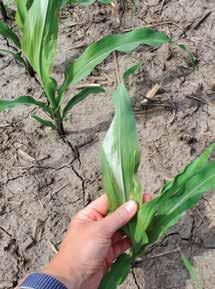
The presence of yellow and “striped” corn, specifically on the upper leaves of the plant, has been observed in multiple areas across Indiana in 2024 (Image 3). This symptom is largely caused by nutrient deficiencies, with the most common nutrient deficiency being sulfur.
Silver corn
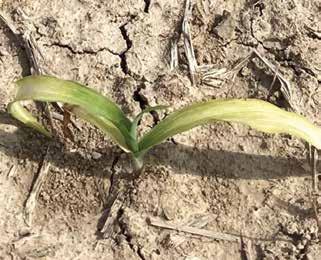
Image 6: Corn at the V2 growth stage in this photo exhibited symptoms of white corn leaves caused by stressful early-season conditions in 2021. Photo taken by Emma Spurgeon.
Corn that has experienced cool, calm and clear nights can cause radiational heat loss from corn leaves, thus causing minor leaf surface damage. This minor chilling injury can result in a silver or gray leaf surface often known as “silver leaf syndrome.”
White corn
White or “bleached” corn leaves are often blamed on herbicide damage, specifically the pigment inhibitors herbicides (e.g., group 13 and 27). However, young corn that has been under environmental stress such as cool and cloudy weather, which can cause poor root development, can cause a white appearance.
These symptoms have been observed previously on corn that has had significant root burn caused by a spring anhydrous application. Frost damage can also cause the bleaching of corn leaves. Furthermore, single, white corn plants within a field can be genetic mutants, although this is a rare occurrence.
Image 3:
photo,
Image 4: The upper leaf yellowing and striping in this photo is occurring in V4 corn in central Indiana following a rye cover crop in 2024.
Image 5: Silver corn leaf symptoms in this photo were observed on V4 corn in central Indiana in 2023. Photo taken by Rachel Stevens.
Nutrient management strategies may help pinch fertilizer pennies
BY BEN WICKER, Executive Director, Indiana Agricultural Nutrient Alliance
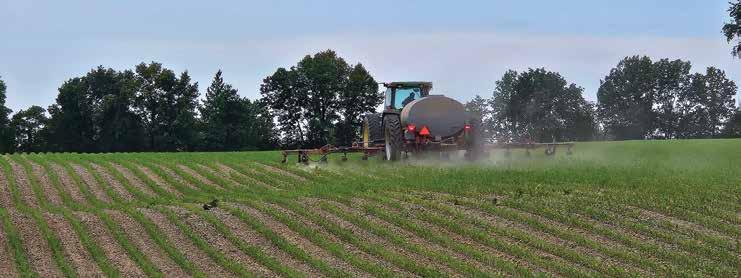
Fertilizers cost a lot more money today than they did at the start of the year, but there are specific actions farmers can take to reduce reliance on expensive inputs or stretch their dollar farther. Specifically, soil testing, using cover crops where appropriate, sourcing (and testing) manure, and avoiding overdependence on foliar fertilizers can save dollars and build efficiency.
Although every farm has different farm management techniques, pinching the fertilizer penny this year can pay off later.
Recent events have fertilizer prices receiving a lot of focus, and not only from farmers. The prices of phosphorus in particular have the USDA and our President going on record about finding solutions to prices that, according to the American Farm Bureau Federation (AFBF), have 70 percent of farmers unable to buy all the fertilizer they need.
AFBF national numbers made headlines, but it’s important to note that the Midwest number is 47 percent, mostly due to two-thirds of Midwest farms prepaying for fertilizer, a much higher number than other regions of the United States. As most farmers know, fertilizer prices are quick to increase and much slower to decrease. As we look past this planting season into the fall and the next crop year, how can we ensure viable farms?
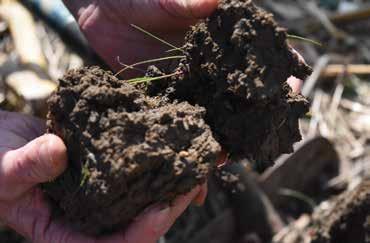
The easiest answer is to get the soil testing plan up to date. If you haven’t tested the farm in a few years, test. If you have, plan to test fields according to your established plan, at least every field every four years, plus a field or two that you suspect will return high values, should it suit you.
Avoid application of phosphorus and potash on fields that return very high soil test values. This year, start looking for high soil test values and avoid application there. If you grid sample, try to find a way to variable-rate apply. If you routinely apply micronutrients like boron, sulfur, zinc or manganese, be sure you’re also soil testing for
values of those micros. Soil testing may have the highest return on investment for any farm expense this year.
Fine tuning a nitrogen plan
Fine tuning your nitrogen plan may allow you to make more efficient use of your fertilizer dollars. Consider the 4Rs – using the right source at the right rate in the right place at the right time can allow you to potentially cut back on nitrogen rates – or increase bushels to offset the cost.
Shifting more applications to in-season, using nitrogen stabilizers or incorporation to reduce loss risks, and adjusting rates based on the growing season and conditions can allow you to use nitrogen more judiciously.
Cover crops done right are excellent ways to scavenge a few pounds of nutrients or build nitrogen for the coming season in the case of legumes. Wherein they can get close to canopy closure in the fall, they also protect the soil from organic matter depletion or erosion over the winter. Programs like the Regenerative Pilot Program, Farmers for Soil Health, Soil and Water Outcomes Fund, and others can provide incentives that, in many cases, completely offset the cost of planting and termination.
This time of year is perfect for plotting a cover crop course and locking in seed. The increase in drone capabilities in the state is allowing for more pre-harvest seeding possibilities, making seeding windows for many cover crops more viable.
Consult the Midwest Cover Crop Council’s Selector Tool for more research on appropriate species for your goals.
Build nutrients in the soil
Manure is an invaluable tool for building nutrients in the soil, especially since they slow-release nutrients during the course of three years or more. In many areas where livestock are plentiful, they can eliminate supplemental phosphorus needs.
If manures are used, this year is a good year to get manure tested for the nutrients they contain and work those numbers into nutrient application budgets. Manure
does contain much more than phosphorus, and the other nutrients therein may allow for reductions, sometimes steep, in nitrogen, potassium, and select micronutrients based on the analysis.
Foliar fertilizers are great for rescue treatments when plant tissue tests (or visual indicators) show a nutrient deficiency. This year would be a good year to research what each specific nutrient’s deficiency symptoms look like and work that knowledge into crop scouting visits. However, it is important to understand that very little
foliar fertilizer is taken up by the leaves and most must work it way to the soil to be taken up by the roots. In the meantime, a lot can happen to degrade or make unavailable much of that fertility.
For more information on these topics or others related to nutrients, contact the Indiana Agriculture Nutrient Alliance. We have a recently remodeled web site at inagnutrients.org, and our team and our partners want to ensure you have a safe and successful growing season, not just this year, but well into the future.
No matter if your farm has been in the family for decades or you represent the first generation, the soil is your foundation for success. The Indiana Agriculture Nutrient Alliance (IANA) is here to help your protect this precious resource through improving nutrient use efficiency, enhancing soil health and protecting water quality.
• Collaborating for Success: IANA brings together Indiana’s ag and commodity groups, alongside state government and conservation leaders to collaborate on efforts that improve the environment while protecting farmers’ bottom line.
• Advancing Vetted Practices: We work with our partners to evaluate and promote sustainable, proven practices that drive farm success and protect our natural resources.
• Connecting to Resources: Our team can help you find programs and resources to put dollars in your pocket for conservation practices on your farm. Visit the IANA website at www.inagnutrients.org for more information and follow our social media on Facebook and LinkedIn. Your farm is your legacy and IANA is here to help.
Photo Credit: Conservation Cropping Systems Initiative, Knox County field
Sampling supplies are going out for first round of crop scouting
BY SCOTT GABBARD, Purdue On The Farm Senior Administrator
One would think that after decades of farm and outdoor work, spring fever would abate. It doesn’t. There is just something about warm sunshine, a brisk breeze, and the smell of damp soil that fills the soul with the hope and promise of a new cropping year.
Marketing Council and the Indiana Soybean Alliance checkoff dollars. We also have onfarm research projects scattered throughout the state looking at seeding rates, nitrogen rates and other farmer-requested small studies tailored to their farming needs.
This year is no different. Sampling supplies are going out and training for the first round of crop scouting has been set. We have anticipatory planting, cotyledons poking, or sidedress applications all at the same time in various parts of the state – or even the same county.
There is a lot of corn and soybeans already in the ground and a lot of it is popping up. You can read more about this year’s rate of planting program on The Kernel (https://purdue.ag/ thekernel).
Utilizing Purdue Extension field personnel, this pushes Purdue research projects further throughout the state. It’s a win-win-win, farmers get direct access to Purdue onfarm research, the educators build stronger relationships with row-crop farmers in their communities and faculty benefit from additional farm datapoints.
Thanks to Dr. Megan Bourns’ tracking, faculty participation and educator encouragement, we have about 32 trials sprinkled throughout the state. This does not include the crop survey work conducted nor facultyled assessments and trapping.
We have had our first 2026 twist with the rapid planting rate followed by cool weather and storms. Some have already mitigated drowned fields and two cold snaps. It is typical in the fact it is atypical.
At time of writing, recent rains have washed away the lingering drought a portion of the state endured all winter as indicated on the U.S. Drought monitor. Still, the southwestern portion of the state is abnormally dry. Recent rains hopefully took care of this and the drought map just hasn’t caught up, yet.
The Purdue On The Farm team will again be out monitoring with a special thanks to the Indiana Corn
This farmer-partner involvement gives Purdue broader access for assessment, modeling and tracking throughout the growing season to the benefit of Hoosier row-crop farmers and the industries that serve them.
Since last year, investments have been made to share the story. Plans are in place to more closely monitor and share insights straight from the field on our social platforms of LinkedIn, Instagram, X (Twitter), FaceBook and YouTube. You can find all of those links on our homepage at https://purdue.ag/onthefarm
Spring fever; it happens every year. It is often cured by June when the heat and humidity creep into the mix. Here’s to a safe and productive 2026.
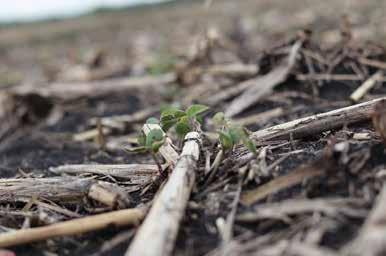
A small soybean plant emerges through corn stubble in a no-till field. Purdue On The Farm will have 32 trials sprinkled throughout the state during this growing season.
ISA, ICMC take part in agriculture takeover during Purdue Ag Week
The Indiana Soybean Alliance (ISA) and the Indiana Corn Marketing Council (ICMC) were part of an agriculture takeover in April as part of Purdue University’s annual Ag Week on it’s West Lafayette, Ind., campus.
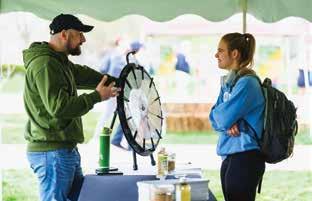
The festivities kicked off on Wednesday, April 8, at the Ag Expo. ICMC and ISA joined industry partners on the Memorial Mall to showcase the diversity of Indiana agriculture to the broader student body. The organization’s “Wheel of Ag Trivia” was a major draw, challenging students with facts about local corn and soybean production.
From the versatility of soybeans to the economic impact of corn, students walked away with fun prizes, custom stickers, and a deeper appreciation for the work Indiana farmers do every day.
The momentum continued through Friday, April 10, for a student-favorite event: “Fry-Day.” To support the Farm to Fork initiative, ISA donated premium soybean cooking oil for the day’s main course. Students lined up to enjoy free pork tenderloin sandwiches and french fries, all prepared in high-oleic soybean oil.
While they ate, students learned why this high oleic soybean oil is a staple for professional kitchens: It is heart-healthy, grown by local farmers, and it features a neutral flavor profile that doesn’t distort the food’s natural flavor. “The feedback was overwhelmingly positive with many students noting they hadn’t realized how a local crop contributes to their favorite campus meals,” said ICMC Consumer Outreach Manager Ben Linder.
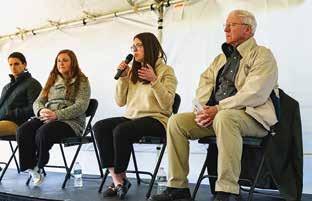
ICMC Board member Tim Gauck, a farmer from Greensburg, Ind., participated in several events during Purdue Ag Week. He participated in the Cultivating Conversations panel discussions, including a talk that was titled Shaping the Future of Food: Trade and Policy in Action.
“When asked to serve on a Purdue Ag Week Council panel focused on agricultural policy, I was honored to accept,” he said. “My experience serving on the NCGA Rick Management Team over the past several years has given me valuable insight into how corn growers help shape farm bill priorities and agricultural policy discussions.”
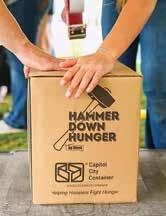
Gauck, who is a Purdue graduate, also helped package food for the hungry during the Hammer Down Hunger project. “My involvement with the Hammer Down for Hunger group has shown me the passion and enthusiasm college students have for the future of agriculture,” he added. “It has truly been a pleasure to be part of these efforts and support the next generation of agricultural leaders.”
Among the many events during Purdue Ag Week, volunteers including ICMC and ISA staff and Indiana farmers helped package food to help those fighting hunger at the Hammer Down Hunger event.
ICMC and ISA Consumer Outreach Manager Ben Linder plays the Wheel of Trivia game at the organization’s booth during Purdue Ag Week in April. Students were quizzed about facts that prove the value of corn and soybean farms to all Hoosiers.
Purdue Ag Week featured panel discussions called Cultivating Conversations. ICMC and ICGA were represented in a panel discussion titled Shaping the Future of Food: Trade and Policy in Action. From left are ICMC Industry Affairs Outreach Manager Khyla Goodman, ICMC Industry Affairs Project Manager Emily McNiff and ICMC Board member Tim Gauck, a farmer from Greensburg, Ind.
Seeing a bigger picture: Indiana farmer’s journey through Egypt’s soybean market
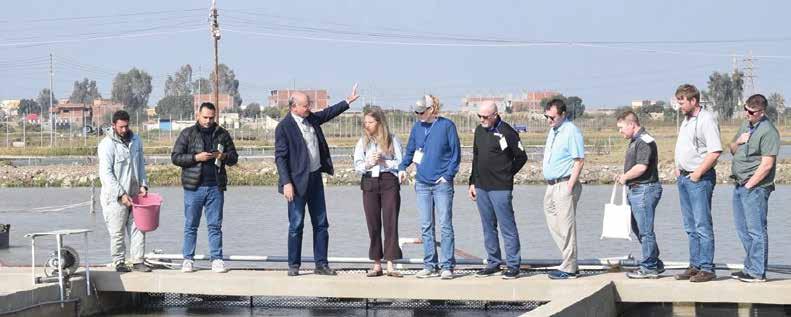
Stewart Douglas had never given much thought to Cairo. But when the corn and soybean farmer from Flat Rock, Ind., joined a Soy Checkoff See for Yourself trade mission to Egypt, he found a booming demand for U.S. soy, and a reflection of the same generational values that define farming back home.
“We really got to see the full circle of that soybean,” Stewart said. “From the moment it entered the country at the port to where it ended up at the end users and out into the consumer market.”
A next-gen moment
One evening stands out above the rest. During dinner at the hotel, Stewart and fellow participants met with industry leaders, including the CEO of a local fish feed mill. The CEO brought along his son, Muhammad, a young man in his early 20s and roughly Stewart’s age, who represents the third generation of his family in the business.
“That feed mill had been started by his grandfather, passed on to his dad, and now he’ll be the third generation to run it,” Stewart said. “Just the knowledge of that young man was really cool to see.”
The feed mill is a meal and pellet operation that transforms soybean byproducts into fish feed, and it depends on quality U.S. soy as a primary ingredient.
Seeing that connection up close got Stewart thinking about the parallel conversations happening back home about cultivating the next generation of agricultural leaders.
“There aren’t too many industries that still operate the way farms do, very much a family business,” he said. “That’s something I’d look to pass on someday.”
Why Egypt? Why now?
Egypt is a market that deserves farmers’ full attention. With a population of around 110 million, its position as a gateway to the broader African continent, and the fourth largest export market for U.S. soybeans, the country represents enormous and growing demand for agricultural products.
Poultry and fish are dietary staples, and both industries rely heavily on soy-based feed. As Egypt’s population grows and living standards rise, so does demand for affordable, high-quality protein, and U.S. soy is wellpositioned to meet it.
Stewart points to several competitive advantages that set U.S. soy apart, starting with sustainability. Deforestation remains a significant concern in other major soy-producing regions, while U.S. farmers operate under a vastly different standard.
Another difference is that U.S. soy is naturally dried in
See for Yourself participant Stewart Douglas, third from right, visits an aquaculture facility in Cairo.
the field instead of being run through a grain dryer, as is common in other soy-producing countries. Naturally drying increases digestibility and reduces damage, qualities that end users notice and value.
Then there’s infrastructure. Our river system, road networks and grain handling capabilities give U.S. soy a logistical edge that’s difficult for competitors to replicate.
“Every year, end users around the world need to be able to count on a consistently high-quality product from American farmers,” Stewart said. “That’s key.”
The relationship behind the commodity
One of the most eye-opening parts of the mission was meeting the U.S. Soybean Export Council (USSEC) staff working on the ground who cover the Middle East and North Africa region. Watching the people who represent the U.S. Soy team walk into facilities, greet owners by name, and ask about their families drove home where soy checkoff investments are going.
“Seeing that relationship and the trust they have, those individuals representing U.S. soy as a whole, was really neat,” Stewart said. “And then to step back and think, we have people doing that same work in countries all across the globe.”
Diversification as a safety net
The broader economic lesson Stewart brought home is one of market diversification. In a global economy where conditions can shift quickly, whether due to a trade dispute or port closure, having strong relationships across multiple markets protects farmers from price volatility at home.
“Just like farmers like to be diversified on their income streams so a tougher year in one enterprise doesn’t sink
them, the same goes in the global marketplace,” he explained. “You don’t want to put all your eggs in one basket. If one country decides not to purchase one year, you don’t want the global price to tank.”
More buyers and producers in the marketplace mean more stability for everyone. Egypt and the broader region represent exactly that kind of meaningful, high-volume demand, the kind that moves markets, even for a farmer who never ships a bushel directly overseas.
Investing in what comes next
Stewart came back from Egypt energized about the role young farmers can play in shaping the future of U.S. soy.
Raised on farm family values and deeply involved in 4-H, FFA, and junior leader programs growing up, Stewart went on to study at Purdue University in West Lafayette, Ind. There, he joined Alpha Gamma Rho, the agricultural fraternity, where the connections he made opened doors he couldn’t have anticipated.
“That networking has taken me very far,” he said. “It opened up a lot of doors I wouldn’t have otherwise had the opportunity to go through.”
A trip like this one does the same thing. It connects young farmers to the bigger picture, shows them where their soybeans go and why it matters, and builds the kind of global perspective that will be essential for the next generation of checkoff leaders.
“The hope is that the next generation will have better technologies and better practices, so they can do it better than the one before them,” Stewart said.
Whether it’s a young Egyptian entrepreneur like Muhammad, learning his family’s trade, or an Indiana farmer seeing the journey of his soybeans for the very first time, the future of U.S. Soy is being built one relationship, one generation, and one bushel at a time.
Stewart Douglas, middle, and fellow participants tour a feed mill in Cairo.
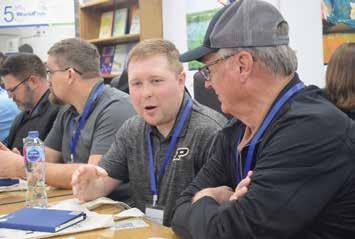
Stewart Douglas attends a session at the WorldFish Center in Egypt.
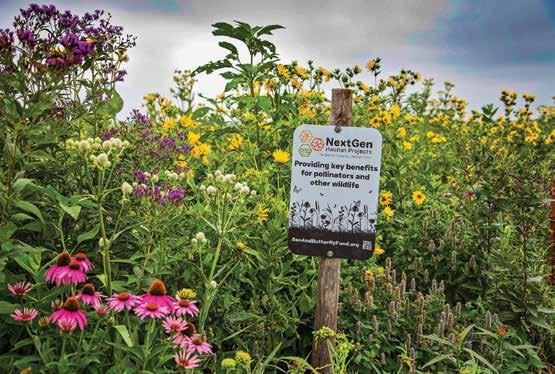
SEED A LEGACY Pollinator Habitat
Program
Critical pollinator & wildlife habitat is disappearing, YOU can help reverse the trend!
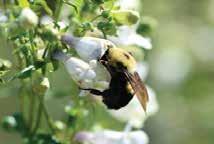
Pollinators across the country are experiencing population declines due to reduced access to diverse nutritious habitat. The SEED A LEGACY program restores high quality pollinator habitat with FREE or REDUCED COST seed.
RESEARCHED & PROVEN NEXTGEN SEED MIXES that provide superior pollinator habitat
FREE or REDUCED COST seed mixes for sites that are prepped and ready to plant
ONE-ON-ONE TECHNICAL GUIDANCE to ensure the success of your project
Monarch Butterfly Honey Bee Native Bee
USSEC strategically promotes U.S. Soy globally
BY COLBY PINKSTONE, USSEC Executive Director, International Strategy
The U.S. Soybean Export Council (USSEC) works around the world on behalf of Indiana farmers.
Our team actively attains access to markets for U.S. Soy, differentiates its quality from soy of other origins and elevates a preference for U.S. Soy among international customers.
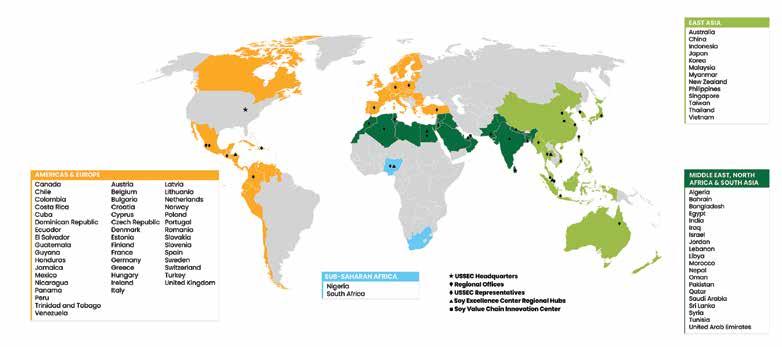
Every one of the more than 90 countries we work with has unique market factors. USSEC team members consider those factors as we encourage purchase of U.S. soybeans, soybean meal and other soy products. What does that look like?
Here’s an overview of USSEC’s approach in different regions given the current global soybean market.
East Asia: Scalability
The USSEC team estimates that East Asia represents roughly 65 percent of the world’s soybean trade and 30 percent of global soybean meal trade. That means nearly two-thirds of soybeans sold from one country to another end up in markets like China, South Korea, Malaysia,
Taiwan and their neighbors, including more than 50 percent of U.S. Soy exports. Projections estimate that soybean meal consumption in this region will increase by 35 million metric tons over the next decade.
The volume and growth potential of this market means that effectively marketing U.S. Soy in these countries can move the export needle. Just a 1 percent increase in market share in East Asia equals about 1.4 million metric tons, or 51 million bushels, of soybeans, growing demand for Indiana soybeans.
Thus, USSEC designs efforts in East Asia to be scalable.
For example, aquaculture and livestock feeding trials seek to increase soybean meal inclusion rates in feed, while also differentiating the quality of soybean meal from U.S. Soy. Small increases in soybean meal inclusion in feed translate to millions of bushels of soybeans. In countries with large soybean meal demand but small U.S. Soy market share like Thailand, Indonesia and Vietnam, demonstrating real value from the consistency of U.S. soybean meal grows the market for the increasing volume of soybean meal produced in Indiana crush plants. The Indiana Soybean Alliance (ISA) support bolsters this work. USSEC protects and preserves market share where U.S. Soy comprises more than 80% of imports. Japan prefers
whole U.S. soybeans for crushing and soy food beans for food manufacturing, and the Philippines relies on U.S. soybean meal imports.
Americas: Growth
About 24 percent of U.S. Soy exports go to this region. Many markets, like Colombia and Mexico, are and will continue growing. Emerging markets like Honduras and Nicaragua will increase as they develop.
USSEC aims to grow exports by maintaining U.S. Soy’s strong market share as industries expand. Costa Rica’s crush industry relies exclusively on U.S. Soy, and Venezuela has been importing U.S. soybean meal for years. ISA supports USSEC work to increase soy protein use in foods like bread in Colombia.
The U.S. is fortunate to have many free trade agreements in this region. These agreements have proven durable in the current trade environment, providing stability for both U.S. Soy and our customers.
Europe: Sustainability
As a region, Europe accounts for about 11 percent of U.S. Soy exports. But the European Union, which operates as a single market, has been the secondlargest U.S. whole soybean customer behind China.
In this mature market, sustainability matters. It will soon have an even larger impact on purchasing decisions. Major regional importers report to USSEC that some downstream customers request sourcing soy only from the U.S. because it helps them manage risk as they aim to meet sustainability requirements. Indiana farmer practices contribute to the data showing U.S. Soy has the lowest carbon footprint compared to soy of other origins.
USSEC is working to grow this market through product diversification, as the U.S. currently has a low share of the soybean meal import market. As our team promotes the value, availability and sustainability of U.S. soybean meal, demand should increase. For example, Poland recently received shipments of U.S. soybean meal for the first time following a pause for a few years.
Middle East, North Africa and South Asia: 4 Ds
Geopolitical uncertainty marks this region, including the Iranian conflict in the Middle East and new governments in Bangladesh and Nepal following overthrows last year. At the same time, rapid urbanization and disposable income growth sparks great potential in these markets, which account for roughly 12 percent of U.S. Soy exports.
Throughout this region, USSEC focuses on telling the story of U.S. Soy using what our team calls the “four Ds of differentiation” compared with soy of other origins.
U.S. Soy is dried naturally in the field, with overall five times less damage as compared to other origins, allowing better digestibility due to higher nutrient availability because of lower total damage, and grown with limited deforestation. Strategically placed team members serve as boots on the ground to share this story using targeted, market-specific communications.
As a result, U.S. Soy exports have increased yearover-year, up 54 percent to supply Algeria’s growing crush industry, 53 percent in Bangladesh with purchase intent agreements and 34 percent in Egypt, a flagship market in the region. In Pakistan, U.S. Soy exports have resumed after a few years of blocked market access, with the potential to reach 50 percent market share.
On behalf of Indiana soybean farmers, USSEC is on defense for segments with high U.S. Soy market share, like whole soybeans in Egypt and soybean meal in Morocco and Sri Lanka. However, USSEC focuses on offense in markets with low U.S. Soy market share but high potential, like Saudi Arabia.
Soy Excellence Center: Operational efficiency
USSEC’s Soy Excellence Center, or SEC, provides workforce training for people working in the protein industry in developing markets. Its success has been made possible with ongoing support from the Indiana Soybean Alliance.
Training offerings include aquaculture, livestock and poultry production, feed milling, soy processing and soy food manufacturing. The SEC works in five regions across the globe, soon to be six with the coming addition of China, thanks in part to an Indiana soybean checkoff investment.
The goal of this training is for the early and midcareer participants to put what they learn into action. Educational content focuses on improving operational efficiency, primarily using U.S. Soy. They learn how to get the most value from U.S. Soy products.
While many of these participants may not be in a position to buy products or influence purchasing decisions, they likely will be in the future. The SEC is an investment in long-term markets for U.S. Soy.
Together, these strategies support the 68.7 million metric tons of U.S. Soy products exported in the last marketing year, worth $29.6 billion to farmers and the soy industry.
“U.S. SOYBEAN MEAL IS MORE CONSISTENT WITH QUALITY. YOU CAN SEE THE DIFFERENCE.”
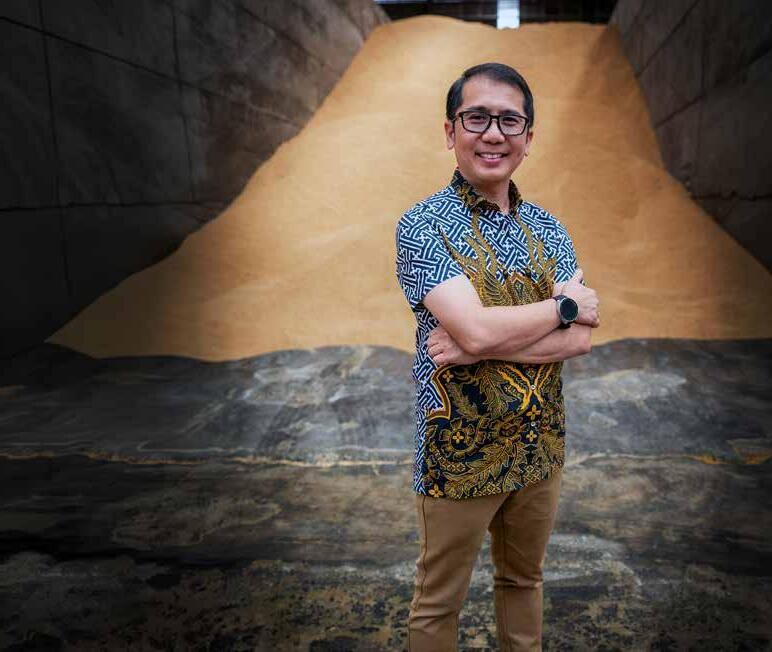
Hendri Chandra Director, PT Shahabat Yaya Tio Perkasa, Indonesia
YOU GROW THE WORLD’S MOST SUSTAINABLE SOY. WE GROW DEMAND FOR IT.
USSEC elevates a preference for U.S. Soy by working directly with buyers in over 90 countries to demonstrate its proven quality and sustainability.
U.S. Poultry exports drive growth for Indiana soy, corn in Colombia
Indiana’s corn and soybean farmers serve as a vital engine behind a thriving global protein supply chain. The partnership between the Indiana Soybean Alliance (ISA), the Indiana Corn Marketing Council (ICMC) and the USA Poultry & Egg Export Council (USAPEEC) is currently demonstrating how strategic investments in international markets like Colombia directly “move the pile” for Hoosier agriculture.
The poultry industry is the single largest user of soybean meal and a primary consumer of corn in the United States. In 2024 alone, Indiana poultry and egg production utilized 48.7 million bushels of soybeans and 92.7 million bushels of corn. Poultry exports in 2024 accounted for 3.6 million Indiana soybean bushels and 6.4 million Indiana corn bushels.
Colombia has emerged as a cornerstone of this strategy, and in 2025, it solidified its position as the leading destination for U.S. poultry in South America, with export values skyrocketing by 40 percent to reach $84 million. This growth is vital because, without these robust export markets, U.S. soybean and corn prices could face significant downward pressure.
securing new business. Recent events in Bogotá and Medellín introduced American duck to more than 200 HRI professionals, with more than 90 percent of attendees expressing intent to incorporate these high-quality products into their menus.
Simultaneously, the HRI Extension Program provides personalized training to chefs and hotel, restaurant and institutional operators. From January to March 2026, 43 training sessions were conducted, focusing on proper cold chain management and the versatility of U.S. poultry.
These efforts are designed to forge deep-seated regional demand for U.S. protein, ensuring that Indiana-fed poultry becomes a permanent fixture on Colombian menus.
USAPEEC recently hosted the “Noche del Pato” (Duck Night) seminar in Colombia, a format that has proven effective in securing new business. At these events in Bogotá and Medellín, USAPEEC was able to introduce American duck to more than 200 potential buyers.
Supported by funding from ISA and ICMC, USAPEEC is executing a multi-pronged approach to expand the Colombian market and ensure U.S. poultry remains the preferred choice of protein.
Traditionally a seasonal product, turkey is being repositioned as a year-round staple through the “Pavo Todo el Año” campaign. Recent efforts targeted the fitness market through gym chains and major retailers, resulting in a 62 percent sales increase during promotional periods.
Furthermore, the innovative “Noche del Pato” (Duck Night) seminar format has proven highly effective at
The results of these joint programs are measurable and provide a clear return on investment for Indiana’s agricultural stakeholders. Recent implementation of the HRI program saw a growth of more than 300 percent in new establishments featuring U.S. chicken.
Post-training surveys show that 50 percent of participants now cite “excellent flavor” as the primary reason for choosing U.S. products, successfully overcoming previous misconceptions about frozen poultry. Beyond perception, USAPEEC has successfully introduced new SKUs of chicken, duck and turkey into major Colombian supermarket chains and specialized retail stores.
As Colombia’s economy continues to grow, so does its appetite for high-quality protein. By continuing to support sanitary diplomacy and technical training, Indiana’s corn and soybean farmers are playing a critical role in building a sustainable, long-term preference for American poultry in one of the world’s most dynamic markets.
With eye on future, USGBC expands into sustainable marine fuel markets
BY EMMA DOSTAL, U.S. Grains & BioProducts Council
The U.S. Grains & BioProducts Council (USGBC) Director of Global Ethanol Export Development Alicia Koch and USGBC Vice President
Cary Sifferath visited Indiana in April to meet with Maersk, an international shipping logistics company and toured sustainable corn grower and ethanol operations.
This trip follows a Joint Officers Mission earlier this year where Koch and other USGBC and National Corn Growers Association members visited Maersk stakeholders at their headquarters in Copenhagen, Denmark, and discussed sustainable maritime fuel opportunities for their business.
“With ethanol quickly becoming a serious contender as a maritime fuel, global logistics companies like Maersk are engaging through pilots, policy development and supply chain interactions to gain a comprehensive picture of its potential,” Koch said.
The Maersk team visited Indiana to learn more about the sustainability and efficiency of farming and ethanol production. The visits to a grower and the Shelbyville POET ethanol plant, a USGBC member, highlighted the advancements in both industries and emphasized the ability of ethanol to participate as an alternative fuel for the maritime sector.
“Through partnership with groups like the Indiana Corn Marketing Council, the Council was able to provide an in-depth view of U.S. farming practices for the Maersk team,” Koch said.
“Member participation allows us to showcase the benefits of ethanol and growing sustainability in farming as well as support the ability of the industry to enter new markets – especially exciting opportunities like maritime fuel.”
Indiana Value of Trade:
2024 Report
Exports of grain and grain products added $2.9 million in value to the Indiana economy in 2024, according to a ComplEat Analytics study commissioned by the U.S. Grains & BioProducts Council and the National Corn Growers Association.
Indiana contributed $937.7 million in corn export value. Ethanol export values totaled $753 million,
and the export value of ethanol co-products was $387.8 million. This was a 148.6 percent and 42.2 percent increase respectively in export values from 2023. Corn, ethanol and co-products created $1.52 billion total in export value.
Indiana growers also contributed a total of $2.22 million for all grain and grain products exported to the global market in 2024.
The USGBC is pleased with the continued support and partnership with the Indiana Corn Marketing Council.
Maersk representatives visited the ethanol plant of a USGBC member, POET, to learn about the ethanol production process and sustainability efforts. USGBC Vice President Cary Sifferath, far right, and Director of Global Ethanol Export Development Alicia Koch, second from right, showcased the Council’s efforts to promote ethanol as a sustainable marine fuel.
ICMC participates in USDA-planned trade mission to Philippines in April
BY DAVE BLOWER JR.
The Indiana Corn Marketing Council (ICMC) was among 58 U.S. agribusinesses and trade associations that participated in a USDA-led trade mission to Manila, Philippines, from April 13-16 to expand market access for American farmers, ranchers and producers.
Representing ICMC on the mission were Tyler Everett, a farmer from Lebanon, Ind., and Ed Ebert, ICMC Senior Director for Market Development. This mission followed a trade agreement negotiated by the Trump Administration in July 2025. USDA said that trade deal opens new opportunities for U.S. agricultural exports to the Philippines. Michelle Bekkering, who is the Deputy Under Secretary for Trade and Foreign Agricultural Affairs, led the mission.
“USDA is committed to getting American farmers, ranchers and agribusinesses better access to strong markets and fair opportunities abroad,” Bekkering said.
“Since the Philippines is one of the fastest-growing markets in Asia, this mission will connect U.S. exporters directly with reliable buyers, strengthen our trade relationship, and help keep American agriculture globally competitive.”
The Philippines is the 10th-largest market for U.S. ag
Representing the Indiana Corn Marketing Council (ICMC) on the USDA trade mission to the Philippines in April were ICMC Senior Director of Market Development Ed Ebert, at left, and Indiana farmer Tyler Everett. In the middle is Michelle Bekkering, USDA Deputy Under Secretary for Trade and Foreign Agricultural Affairs, who led the mission.
Tyler Everett, a farmer from Lebanon, Ind., attended the grand opening of a retail fuel station in Manila that offered E20, a blend of 20 percent ethanol with 80 percent gasoline.
and food products, averaging $3.4 billion in annual exports during the past five years. The Philippines offers growth potential for U.S. exports due to a population of 118 million plus a rapidly expanding middle class. Bekkering added that consumers in the Philippines show a strong preference for U.S. products. ICMC’s representatives concurred.
“I think there’s a lot of potential for the Philippines and Eastern and Southeastern Asia for exports as far as different animal variety meats and more wheat and ethanol exports,” Everett said. “They are at a higher blend of ethanol than we are in the United States. I think for them to be ahead of us in that market and to test out the longevity of ethanol and how it how it impacts a foreign market is a great thing for American consumers to see. Hopefully, in the future, we can adapt to their ethanol standards.”
Expanding ethanol market
Everett and Ebert participated in the grand opening of the first E20 station in the Manila area at Jetti Oil in Paranaque. U.S. Grains and BioProducts Council (USGBC) staff and farmer directors also attended the event including USGBC Chairman Mark Wilson, a farmer from
Illinois. E20 is a blend of 20 percent ethanol with 80 percent gasoline. More than 101 million gallons of U.S. ethanol were exported to the Philippines in 2025, which is 45 percent of the country’s demand.
“U.S. Grains and BioProducts Council partners advanced E20 expansion, discussed sustainable aviation and marine fuel potential, and met with Philippine ethanol producers during this trade mission,” Ebert said. “The Philippines remains a strong market for U.S. ethanol. We participated in this grand opening and also toured the Philippine Coastal Storage and Pipeline Corporation in Subic Bay, Philippines. This facility in Subic Bay is where all U.S. ethanol is unloaded for import to the Philippines.”
In addition to expanded corn and soybean exports, Ebert and Everett also wanted to see Indiana-funded projects led by partners such as the U.S. Meat Export Federation (USMEF) and the USA Poultry and Egg Export Council (USAPEEC) in the Philippines. Expanded U.S. meat exports create more demand for corn and soybeans as a feed source for American-produced livestock.
“We saw all types of variety meats offered while I was there,” Everett explained. “I tried several types of chicken and pork that were all brought in from the United States. We saw how differently they cook things and prepare food. They are increasing the use of imported American meats.”
A first-hand experience
Everett said seeing the projects that farmer-leaders choose to fund around the world is an important task. This way the evaluation of the effectiveness of these projects is easier to assess.
“These trade missions benefit Indiana farmers with boots on the ground, meeting key people, seeing firsthand our checkoff dollars and the projects we support at work,” he said. “You could see the projects that we support through USMEF or USAPEEC firsthand in the freezers and the shelves of the markets and groceries over there. The more variety meats they use in the Philippines, like ham hocks for example, the more value can be found in that animal. The more valuable those animals are, the more corn and soybeans we’re going to sell as feed.”
He advised farmers to take advantage of opportunities to participate in these trade missions.
“I think a trade mission like this is something that every single American farmer would benefit from seeing firsthand,” Everett stated. “When you go on a trade mission, you come back thinking how lucky and blessed we are to farm in America. We should always feel thankful for what we have here at home.”
In addition to ICMC, two Indiana-based food businesses, BNutty Peanut Butter of Portage, Ind., and Scout and Zoe’s of Anderson, Ind., participated in the trade mission. BNutty offers peanut butter in a variety of flavors in easy-to-transport, nine-ounce jars. Scout and Zoe’s producers pet treats in many different flavors for dogs and cats.
In 2025, USDA trade missions connected more than 200 U.S. companies with buyers in Hong Kong, Thailand, Peru, Guatemala, the Dominican Republic, Taiwan and Mexico, generating an estimated 12-month sales total of $125 million. USDA is hoping to expand export opportunities in this region this year with upcoming trade missions to Australia and Vietnam.
Tyler Everett holds U.S. produced beef and pork products found in a grocery store in the Philippines. Everett and Ed Ebert met with U.S. Meat Export Federation staff in the country that is working to promote U.S. meat products in the Philippines.
Patakam is a business in the Philippines that offers quick service ham hocks, among other variety meats, to customers. The ham hocks are part of a U.S. Meat Export Federation effort to add value to variety meats produced in the U.S. Indiana representatives Ed Ebert and Tyler Everett visited Patakam.
A HOME-GROWN LEGACY
A legacy of faith. A tradition of farming. A future rooted in both.