

While Indiana eyes focused on March Madness, local schools ignite their own end of winter/beginning of spring celebrations, honoring skill development as a key metric defining community excellence . In our pursuit of greatness, we acknowledge results will always matter; however, we also recognize those results as necessary to generate confidence in a continual skill-building process . By shifting our focus to the rigorous preparation and character built during the journey, we empower students and staff to develop skills with creativity and integrity.

In Plainfield, this spirit thrives through a tiered celebration of community values Students embodying the monthly value receive recognition first within their classrooms, then by grade level, and ultimately by the entire school This structure ensures the celebration of identified values at every scale of the educational journey, making excellence a visible, shared goal
Similarly, Batesville High School channels this energy through its "Bulldog Ready" initiative Staff members nominate colleagues exemplifying the attribute of the month, submitting a concise tribute of four sentences or less These nominations represent more than just awards; they offer unique recognition deeply meaningful to the staff
March Madness celebrates champions and the stories written over the years leading to a single moment
As we celebrate our own champions and success stories, refusing to wait until May, whom can we acknowledge as an example to others? Large-scale celebrations demand time, resources, and energy, all in short supply; yet, the most profound impact often occurs in silence . A private card of gratitude to a colleague or friend can be transformative Too often we fixate on the final score, but by appreciating the energy and effort expended to reach a position of strength, we allow the results to speak for themselves . For those competing throughout March and beyond, the true victory resides in their preparation
Andy Allen IASP President

Marching Forward: Honoring Milestones and Memories
Celebrating Student Success, Staff Achievements, and End-of-Year Moments
By Dr Tiffany D Barrett, IASP Assitant Executive Director Editor-in-Chief, IASP Indianagram
.
Marching Forward: Honoring Milestones and Memories
Celebrating Student Success, Staff Achievements, and End-of-Year Moments
As the calendar turns to March, there is a distinct shift in the rhythm of our schools . The pace remains fast, but a sense of reflection begins to emerge alongside the daily work of teaching, learning, and leading March is a time when school leaders across Indiana find themselves both marching forward and looking back, recognizing the progress made while preparing for the final stretch of the school year
This month’s edition of the IASP Indianagram highlights an important theme: the power of celebration and recognition in shaping strong school cultures Throughout these pages, you will find inspiring examples of how school leaders intentionally honor students, staff, and community achievements in meaningful ways .
Serena Salloum reminds us that the traditions, rituals, and recognitions we build into our schools form an “invisible curriculum” that defines culture and belonging Andy Allen shares how celebrating character and skill development through initiatives like Champions of the Month creates visible pathways for recognizing growth in both students and staff Ashley Nevin offers a timely reflection on how schools can simultaneously celebrate progress while preparing for the year ahead as we begin “Marching Toward the Year’s End . ”
These stories remind us of something important: recognition matters Celebration matters . The moments we take to acknowledge effort, growth, and impact help reinforce the values that make our school communities strong
For school leaders, March is also an opportunity to pause and ask an important question: What milestones should we be celebrating right now? Whether it is a student achievement, a staff member’s dedication, a team accomplishment, or a tradition that brings your community together, these moments deserve intentional recognition
As you read this month’s Indianagram, I encourage you not only to enjoy the insights shared by your colleagues across Indiana, but also to carry the spirit of celebration into your own school community Our students, our staff, and our communities benefit when we pause to honor the progress made along the journey
After all, the work of school leadership is demanding, but the memories we create and the milestones we celebrate are what make the journey meaningful
Thank you for marching forward with us And as always, thank you for the leadership you bring to Indiana’s schools each and every day
2025-2026 Themes
APRIL: Safe & Sound: Prioritizing School Safety and Wellbeing
MAY: Hearts of Gold: Celebrating the Power of Gratitude
JUNE: Best of the Best: A Year to Remember
Share your thoughts on the Indianagram: https://forms gle/2LaxqTUNUc5AdviF8
IASP Executive Committee
Andy Allen President
Dr. Bret Bailey President-Elect
Dr. Jane Bitting Vice President
Dr. Holly Arnold Past President
Raimeka Graham NAESP State Representative
Dave Strouse NASSP State Coordinator
Kristen Peterson Assistant Principal Liaison
IASP hosts events throughout the year to support the growth and development of Indiana school administrators and students. Each event is intentionally designed to encourage and engage all participants in the pursuit of learning!
Find A Full List Of Events at www.iasp.org/Events
Special thanks to our Sponsors:




Dr. Katie Jenner Indiana Secretary of Education
As educators and leaders, we know that what defines our state…our communities…and ultimately, our schools, comes down to one thing: our people As another academic year begins to wind down, and we look back at both our opportunities for improvement and our successes, this is also an excellent opportunity to celebrate everyone who makes it happen—and this includes both the adults in our buildings, as well as our students
The 13 years that we have students in K-12 are filled with daily opportunities to prepare students with knowledge and skills…and also prepare them to be good citizens The latter part of this is going to become even more important as artificial intelligence continues to make its mark in education and on the world around us . Making the best ethical and appropriate decisions about technology requires a strong value set and genuine desire to do what is best for our communites— both of which are uniquely human skills One way that schools across the state have been celebrating this is by awarding good citizenship recognitions, in addition to the many academic awards or other superlatives This is one of the best ways we can recognize a student’s character and integrity and is something we should continue to grow throughout the state!
Another way we celebrate a student’s hard work and talent is through competition Whether it’s academics, athletics, or the arts, shining a spotlight on our students is what we do! One of the statewide awards that we should all feel proud of this school year was when Barrett Hodorek , a student from Warsaw Community Schools, won the Indiana Civics Bee and went on to place second at the National Civics Bee hosted in Washington D .C .!
And as we remain student-centered, our adults, including our educators and the thousands of people who serve our students, must also be celebrated While I know you do many things locally (thank you for that!), as a state, we continue to try to elevate our people in a number of ways Here’s a quick look back at some of these awards during the 2025-2026 school year:
■ At the fourth annual Indiana Educational Excellence Awards Gala, many awards were provided to schools and educators in celebration of their work to support student learning, as well as being awarded nearly

$270,000 to continue this good work .
■ Megan Johnson, a teacher at Central Elementary School in Plainfield, was named our 2026 Indiana Teacher of the Year
■ Kayleigh Fosnow, a principal at New Palestine Elementary School, was surprised with the prestigious Milken Educator Award – a national award from the Milken Family Foundation – for creating a strong culture of learning and achievement .
So many of you celebrate your educators locally by naming your teacher of the year, at both the school and district-level, as well as celebrating a support staff member who has gone above and beyond . These folks are truly unsung heroes, and we cannot thank them and celebrate them enough
Finally, as each of you stands at the helm of your own ship (or in our case, school!), as a leader, you often hear the concerns and put out the fires for your teams These everyday impacts – often done behind-the-scenes –rarely get the thanks and celebration they deserve So, if you haven’t heard it very much lately…THANK YOU…for the time and energy you put into making your school as successful as it can be
While there may not be an award for all of the daily challenges you solve, I hope you feel the reward of serving your unique purpose… today and everyday
Let’s continue to celebrate the students and adults who make our schools so special and keep up the great work going into the final stretch of the school year!


Mrs. Kristen Peterson Associate Principal Chesterton High School IASP Assistant Principal Liason
Ashley Nevin 7/8th Grade Assistant Principal
Highland Hills Middle School
Our March theme is “Marching Toward the Year’s End . ” In this month’s article, Ashley Nevin, Assistant Principal at Highland Hills Middle School, shares how this time of year offers an opportunity for both reflection and preparation . Ashley reminds us that we must evaluate how the current year has gone in order to enter the next year with a clear instructional vision Preparation for next year begins now with course placements and aligned scheduling “that prioritizes rigor, relevance, and studentcentered learning . ” Thank you, Ashley, for sharing how your school simultaneously celebrates progress while preparing for the new school year!
Marching Toward the Year’s End: Celebrating Progress and Preparing for a New School Year at Highland Hills Middle School for Grades 5-8
As Highland Hills Middle School approaches the conclusion of another successful academic year, our Jaguar community finds itself in a season of both reflection and preparation . The final months of the school year not only represent a closing chapter, but they also mark a pivotal moment of anticipation, celebration, and renewed commitment to excellence As we march steadily toward the year’s end, our focus remains firmly on ensuring that the upcoming school year begins with clarity, purpose, and momentum .
Throughout this year, Highland Hills Middle School has demonstrated a strong commitment to academic growth, student engagement, and continuous improvement Our students and staff have risen to high expectations, and their progress is evident in classrooms, hallways, and schoolwide initiatives . From academic gains across core content areas to increased participation in leadership and enrichment opportunities, this year’s accomplishments provide a strong foundation for the work ahead . With the implementation of a new intervention and enrichment block for all students, there was a new level of flexibility for everyone in the building as we adjusted curriculum, schedules,
passing periods and collaboration plans This could not have been possible without a team effort from all stakeholders .
Central to our preparation for the new school year is a focus on high-quality instruction which requires accurate scheduling and course placement for all students Teachers and instructional teams are actively reflecting on student performance data, classroom practices, and curriculum effectiveness . These reflections are guiding intentional planning efforts as we design our master schedule and begin enrolling students into courses for the upcoming school year Our teachers, instructional coaches, and leadership team meet regularly to analyze student performance, ensuring alignment with state standards, ILEARN checkpoint tests, and our corporation’s benchmark assessments As a result, we are entering the next school year with a clear instructional vision that prioritizes rigor, relevance, and student-centered learning .
Highland Hills Middle School continues to place a strong emphasis on professional learning as a driver of school improvement During the final months of the year, staff members are collaborating within professional learning communities to analyze outcomes, share best practices, and identify targeted areas for growth Plans for summer professional development are underway with the goal of promoting student engagement and academic resilience . This commitment ensures that our educators remain well-equipped to meet the evolving needs of our students
Our preparation extends beyond academics to include the overall learning environment . Intentional efforts are being made to assess classroom spaces, technology readiness, and school safety procedures to ensure a smooth transition into the new year . Investments in instructional resources and digital tools, along with updates to facilities and learning spaces, reflect our belief that students perform best in environments that are organized, safe, and welcoming .
Equally important is our continued focus on building a positive and inclusive school culture . This year, Highland Hills Middle School has strengthened its emphasis on positive behavior supports, student recognition programs, and leadership development opportunities for both our staff and students Initiatives such as our Best Buddies program, partnering with Hope Collaborative to bring in mentors for students, and school-wide celebrations of Jaguar achievement have reinforced a sense of belonging and pride among students . As we plan for the year ahead, we
are committed to expanding these efforts to ensure that every student and staff member feels valued, supported, and empowered to succeed .
Student readiness and transitions remain a key priority as we approach the year’s end Our building’s unique size and organizational structure extends more opportunities for us to support our students and families throughout multiple transition years within their middle school career . The focus for these transition years is to maintain a safe and welcoming environment for all students while supporting academic preparedness and building socialemotional confidence Planning for our incoming fifth graders entails meeting with our feeder elementary schools and designing our upcoming Be A Better Jag event held during the summer . We also work with our sixth graders transitioning to seventh grade as they move from a three-block day to a seven-period day schedule Lastly, our commitment to helping our eighth graders transition to high school is no small task . Orientation programs, goalsetting activities, and collaboration with our feeder high school is crucial to help ensure that students enter their next academic chapter feeling informed
and prepared
As the school year draws to a close, there is a strong sense of optimism and purpose at Highland Hills Middle School . The progress we celebrate today is the result of dedicated students, committed educators, supportive families, and a shared vision for excellence . Every plan being made, every reflection being shared, and every goal being set is part of a collective effort to ensure that the next school year begins strong
Marching toward the year’s end, Highland Hills Middle School stands ready. Our readiness to not only close the year with pride, but to open the next year with forward trajectory As we finish this year strong, we do so with confidence as we know the steps we take today are shaping a successful tomorrow for our students, our staff, and our entire Jaguar community

Dr. Tiffany D. Barrett IASP Assistant Executive Director Editor in Chief, IASP Indianagram
As we enter the month of March, schools across Indiana find themselves in a unique and meaningful moment of the school year The pace is still strong, the goals for learning remain clear, and yet we can begin to see the finish line of another academic year coming into view . March invites us to do something powerful as school leaders; it invites us to pause long enough to notice the progress that has already taken place .
Within the School Leader Paradigm, leadership is not only about systems, instruction, and improvement cycles It is also about culture, meaning, and the shared experiences that define a school community The stories we tell, the achievements we highlight, and the traditions we honor become the living narrative of our schools .
As leaders, we have the opportunity and responsibility to ensure that the final months of the year are not simply about finishing strong, but also about recognizing how far our students, staff, and communities have come
In schools across Indiana, incredible milestones are unfolding every day. Students are mastering new skills, teachers are refining their craft, and staff members are making quiet yet powerful contributions that shape the lives of children . These moments deserve our attention When we intentionally celebrate progress, we reinforce the values that define our learning organizations
The School Leader Paradigm’s Cycle of Inquiry reminds us that reflection is a critical component of growth . Celebration, when done thoughtfully, becomes a form of reflection It allows us to look back at the journey, acknowledge the effort, and carry that energy forward . As you lead your school through the final stretch of the year, consider three simple but meaningful actions that can strengthen culture and honor the work happening in your building:
1. Make Recognition Visible
Highlight student and staff successes in ways that the entire school community can see . Morning announcements, hallway displays, newsletters, and social media posts can spotlight growth, leadership, and perseverance .
2. Celebrate the Journey, Not Just the Outcome
Recognition should extend beyond awards and final achievements Celebrate effort, improvement, collaboration, and resilience . These are the qualities that build lasting confidence in students and staff
3. Capture the Memories
Create opportunities to document the moments that make this year special . Encourage photos, reflections, student showcases, and staff shout-outs These artifacts help preserve the culture and pride of your school community.
March reminds us that leadership is both forwardlooking and reflective As we continue marching toward the end of the year, may we take time to celebrate the milestones, honor the memories being created, and recognize the incredible work happening in schools across Indiana every day.
Because in the end, the moments we celebrate today become the traditions that shape tomorrow’s school culture
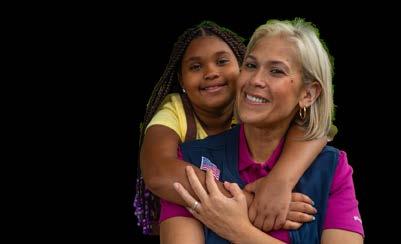
Strong school communities thrive when educators and volunteers work hand in hand to support students’ growth. Girl Scout leaders throughout Indiana’s six Girl Scout councils play a unique and meaningful role in this partnership, extending learning beyond the classroom while reinforcing the values schools work to instill every day.
Girl Scout volunteers—often parents, caregivers, educators, and community members— create safe, inclusive spaces where girls build confidence, leadership, and resilience. Through hands-on activities, service projects, and teamwork, Girl Scouts develop skills such as problem-solving, goal setting, and collaboration that directly complement academic learning. These experiences help girls have the confidence and support to lead their best lives.
Volunteers make all of this possible. They generously give their time, energy, and expertise to guide girls during critical developmental years. Their dedication deserves recognition and appreciation. When schools welcome and support Girl Scout leaders, they help strengthen communities and open doors for girls to make new connections and have new experiences.
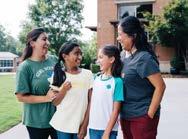

Share the love of Girl Scouts with your school community!


Jennifer Abrell, Bill Decker, Dr. Lindley
McDavid, Heather VonDielingen
A confident teen staying overnight on a University campus for the first time; a previously shy 12th grader filming a video about her 4-H experience for University leaders; two young teen boys who have barely traveled outside of their hometown presenting at a national conference; a young 4th grader presenting a research project on tractors to a full room of adults These are the experiences that shape Indiana 4-H members across the state . As we look toward the end of the school year and celebrate the accomplishments of young people, we acknowledge that 4-H is a partner in education at many of your schools and may have played a role in the success of some of your students If your school is not currently connected, we welcome a conversation on how Indiana 4-H can partner with your school to give youth additional experiential learning opportunities both inside and outside of the classroom .
Indiana 4-H is expanding with new programs across the state and we invite you to learn more about Next Chapter 4-H, 4-H Discovery Challenge, and Juntos 4-H
The Indiana 4-H Next Chapter program provides engaging activities designed to build the skills youth need to prepare for life after high school No matter your students’ interests, they can get ready for enrollment, employment or enlistment with transferable skills for life Are you a school administrator looking for tools to help your students meet Indiana workforce and college readiness expectations? Are you looking for volunteers to conduct Career Discovery sessions with youth? Do you want to more intentionally embed the Indiana Employability Skills and Agilities into your existing curriculum and Preparing for College and Careers classes? Connect with Jennifer Abrell at jlabrell@purduee .edu to learn more . 4-H Discovery Challenge provides structure and assistance to children in grades 3-7 as they research and present a topic of interest to their teachers and classmates The primary goal of Discovery Challenge is to introduce students to various subjects in a fun and engaging manner while promoting personal growth and life skills development in the areas of research and presentation . Through age-appropriate activities, students can choose from topics in the areas of science, social studies, arts and crafts, healthy living, environmental stewardship, and leadership Unlike other programs, which are all about the competition, Discovery Challenge focuses more on exploration and competence building Children participate
in activities designed to encourage creativity, critical thinking, and communications skills, laying the groundwork for their future involvement in community initiatives and their careers Did we mention these engaging lessons are all directly aligned to Indiana State Academic Standards? Ready to start 4-H Discovery Challenge at your school? Reach out to Bill Decker at wdecker@purdue edu .
The Juntos 4-H Program provides bilingual education for both youth and families The mission of the Indiana Juntos 4-H program is to help students and their families gain knowledge, skills, and resources to ensure high school graduation and broaden post-secondary career and academic opportunities
You can learn more about Juntos 4-H by watching our promotional video: https://purdue .ag/Juntos4HVideo . Juntos is a bilingual academic success program focused on increasing high school graduation rates and increasing a sense of belonging in education for first-generation students The Juntos program is available to all families seeking enrollment The program is an intensive long-term program made up of four components: 1 Juntos 4-H Family Engagement via a 5-to-6-week workshop series and other family nights and family events 2 Juntos 4-H Clubs with a focus on tutoring, STEM, public speaking, life skills, career exploration and community service 3 Monthly One-On-One Success Coaching and/or Mentoring by an adult who monitors academic progress and coaches them to achieve their academic goals . 4 Juntos 4-H Summer Programming that includes a visit to Purdue University For more information, contact Heather VonDielingen at schneidh@purdue edu
We evaluate these three programs through a partnership with Purdue University’s Evaluation and Learning Research Center (ELRC) in the College of Education . ELRC supports research, education, and engagement projects through their expertise in educational theory, research methodology, evaluation, and project management Dr Lindley McDavid leads the evaluation and research efforts for Next Chapter, Discovery Programs, and Juntos . We are thrilled to share our findings with school leaders . The evaluation and research team collected data to demonstrate how each program is unique in its implementation and approach to academic support, but consistent in the enactment of the 4-H principles
Specifically, they examined how caring and supportive program leaders who deliver engaging program activities have programs that build competencies and future oriented assets like hope and self-esteem that help youth persist academically,
graduate high-school, and pursue their goals Data collection included program delivery records and end-of-program youth surveys Program delivery records were used to capture boith the content and duration of program activities and were maintained by program leaders throughout the year Youth surveys were used to understand program quality across the 4-H principles and were administered at a milestone event at the end of each program
Across all three of these programs in school year 2024/2025, the educational aspirations of students in the programs are strongly oriented to post-secondary education where over 97% have plans to attend some college or have a specific career path in mind after high school Further, every senior student in the Juntos 4-H program graduated high school this past year In the state of Indiana only 90% of students graduate high school and only, nearly 51% attend college
Overall, the evaluation findings indicate that the Next Chapter, Discovery Challenge and Juntos programs are well positioned to deliver quality positive youth development program activities that not only help students build useful
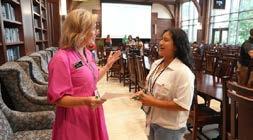
Juntos 4-H Networking Photo: A Juntos 4-H Member networks with Dr. Angie Abbott, Associate Dean of Agriculture and Director of Extension, at the Juntos 4-H Summer Academy experience at Purdue University.
skills for today but also position them to pursue their goals in their future When programs focus on the 4-H principles of program delivery and provide opportunities for longer-term participation, they can take advantage of the established chain of connections between leader support and positive outcomes in young people
It is the duality of the consistent enactment of 4-H principles through flexible and tailored program design and implementation that enables Indiana 4-H to reliably deliver quality programming in ways that meet the unique needs of youth and families within the many counties of Indiana
Thank you, school principals, for what you do every day to ensure your students are learning and growing . If your school is not currently connected to 4-H, reach out to any of us to start the conversation We asked the Indiana 4-H Class of 2025 to tell us about the impact 4-H has had on their lives and the results are promising: 95% try to live up to the values of respect, responsibility, honesty, kindness, and generosity; 95% try to live up to the values of respect, responsibility, honesty, kindness, and generosity; and 94% set goals that helped them achieve short- and long-term success We are excited to celebrate the Class of 2026 in a few short months with their high school graduation!

By Serena J. Salloum
As someone who has had the privilege of visiting schools across our state, I am always struck by the distinct feelings that emerge within the first five minutes of walking through the doors For example, I might walk into two schools within the same district, with similar schedules, resources, and faculty profiles and one hums with belonging and pride while the other feels transactional . What I’m sensing is culture—the shared meaning that tells people who we are here and what matters Scholars remind us that culture lives not only in mission statements, but in the visible, repeatable artifacts and behaviors that people experience every day: routines, rituals, symbols, and ceremonies (Ouchi & Wilkins, 1985) .
For education leaders, culture is not a mystery It is built— intentionally or by default—through what we repeatedly honor, celebrate, and tell stories about In schools, celebrations, traditions, and awards are among the most powerful (and most underestimated) levers for shaping a healthy culture Rituals, ceremonies, stories, and traditions are “culture in action,” embedding purpose and meaning into daily life (Deal & Peterson, 2016)
Celebrations are culture’s “loudspeaker”
If culture is the set of beliefs that guide behavior, then celebrations are how those beliefs become public and memorable A tradition like a “Senior Walk,” a weekly shoutout ritual, or a student-led assembly communicates far more than a poster in the hallway These moments say: These are our values This is what we do when things get hard . From a culture framework, these rituals are visible “artifacts”—the tangible practices that both reflect and reinforce deeper values and assumptions
School improvement isn’t sustained by plans alone; it runs on trust . Research on relational trust in schools emphasizes that trust is a “critical resource” that supports day-to-day functioning and enables ambitious improvement efforts (Bryk
& Schneider, 2002; Goddard, Salloum & Berebitsky, 2009)
Thoughtful celebrations can be trust-building infrastructure because they:
■ increase visibility of staff and student contributions,
■ signal respect and appreciation,
■ create shared experiences that strengthen connection across roles
When people feel seen and valued, they are more likely to take risks, collaborate, and persist through change
Positive emotion broadens what’s possible
Celebration is not fluff; it’s a strategic use of emotion Positive emotions can widen our attention and thinking in the moment and help build enduring social and psychological resources over time In schools, this can look like increased openness to feedback, greater willingness to try, and a stronger sense of collective efficacy (Bandura, 1993; Salloum, 2022)—especially when celebrations highlight growth, effort, collaboration, and service
Design Principles for Celebrations and Awards That Strengthen Culture
1) Celebrate values, not just victories
If the only big recognitions go to top GPAs, high scorers, or star athletes, your culture message becomes: “Worth = rank ” Instead, broaden what “success” looks like Consider recognition aligned to the culture you want:
■ academic growth and persistence,
■ collaboration and peer leadership,
■ improvement in attendance or engagement,
■ service, care, and community-building,
■ creative problem-solving,
■ bilingualism and cultural leadership,
■ restorative choices and repair after harm
A useful check: Would a student who struggles academically still believe they have a path to being celebrated here?
2) Build traditions that belong to students and staff
The most powerful rituals aren’t “delivered” to a community; they are co-owned by it Student-led assemblies, staff-created “gratitude rounds,” and family-involved traditions create identity
3) Make recognition specific, narrative, and instructional Avoid vague praise (“Great job!”) Use recognition that teaches
the community what excellence looks like:
■ “You stayed with a complex text and used evidence to revise your thinking . ”
■ “You welcomed a new student at lunch every day this week—our value of belonging in action ”
■ “You repaired harm after a conflict; that’s leadership ”
4) Engineer equity into visibility
Equity doesn’t mean equal applause; it means fair access to being seen Practical moves:
■ Track recognition data (by grade, program, race/ethnicity where appropriate, gender, multilingual status, special education) to catch patterns .
■ Rotate nomination power: peers, families, bus drivers, office staff, cafeteria staff, coaches, and teachers all see different strengths
■ Create multiple pathways: “caught being kind,” “growth spotlight,” “community builder,” “quiet leadership,” “most improved,” and team awards .
5) Use tiers: frequent micro-celebrations and meaningful anchor ceremonies
Culture is built through cadence
■ Micro-celebrations (daily/weekly): shout-outs, gratitude boards, advisory recognitions, “Friday wins,” staff “roses & thorns,” positive calls home
■ Anchor traditions (monthly/semester): community circles, showcases of learning, induction ceremonies, service celebrations, senior traditions, staff legacy moments Frequent recognition makes culture felt; anchor events make it remembered
6) Make celebrations about connection, not consumption
A celebration doesn’t have to be expensive What matters is meaning and inclusion Some of the strongest traditions are low-cost and high-story: hallway “clap-outs,” student exhibitions, community read-alouds, staff appreciation circles, and end-of-term “learning museum” nights
2) Build traditions that belong to students and staff
The most powerful rituals aren’t “delivered” to a community; they are co-owned by it Student-led assemblies, staff-created “gratitude rounds,” and family-involved traditions create identity
3) Make recognition specific, narrative, and instructional
Avoid vague praise (“Great job!”) Use recognition that teaches the community what excellence looks like:
■ “You stayed with a complex text and used evidence to revise your thinking ”
■ “You welcomed a new student at lunch every day this week—our value of belonging in action ”
■ “You repaired harm after a conflict; that’s leadership ”
4) Engineer equity into visibility
Equity doesn’t mean equal applause; it means fair access to being seen Practical moves:
■ Track recognition data (by grade, program, race/ethnicity where appropriate, gender, multilingual status, special education) to catch patterns
■ Rotate nomination power: peers, families, bus drivers, office staff, cafeteria staff, coaches, and teachers all see different strengths
■ Create multiple pathways: “caught being kind,” “growth spotlight,” “community builder,” “quiet leadership,” “most improved,” and team awards
5) Use tiers: frequent micro-celebrations and meaningful anchor ceremonies
Culture is built through cadence
■ Micro-celebrations (daily/weekly): shout-outs, gratitude boards, advisory recognitions, “Friday wins,” staff “roses & thorns,” positive calls home
■ Anchor traditions (monthly/semester): community circles, showcases of learning, induction ceremonies, service celebrations, senior traditions, staff legacy moments Frequent recognition makes culture felt; anchor events make it remembered
6) Make celebrations about connection, not consumption
A celebration doesn’t have to be expensive What matters is meaning and inclusion Some of the strongest traditions are low-cost and high-story: hallway “clap-outs,” student exhibitions, community read-alouds, staff appreciation circles, and end-of-term “learning museum” nights .
Leadership Mindset Shift
Celebrations, traditions, and awards are the culture, made visible They’re the moments students remember years later—the times when they felt proud, included, and known . They’re also the moments when adults decide whether this is a place where their work matters . When recognition is designed thoughtfully—specific, values-aligned, inclusive, and autonomy-supportive—it becomes a daily investment in trust, belonging, and motivation . A school’s culture is shaped by what it celebrates The question for leaders is not whether your school will have rituals and awards—it will The question is whether those celebrations will happen by accident, or by design

Susan Miles Program Officer, Kids Caring & Sharing TM Riley Children’s Foundation smiles@rileykids org
Indiana K-12 schools - making all the right moves for Riley kids!
Take a look at the recently announced gift totals from these amazing high school dance marathon fundraising initiatives which celebrated their culminating events in February .
2/13/2026 Boonville High School - $31,000 .00
2/13/2026 Plymouth High School - $8,609 57
2/14/2026 Avon High School - $2,154 88
2/14/2026 Westfield High School - $117,346 26
2/21/2026 Heritage Hills High School - $21,047 84
2/21/2026 Carmel High School - $323,468 18
2/27/2026 Fishers High School - $100,509 .26
2/28/2026 University High School - $21,600 .00
And be sure to support a Riley High School Dance Marathon happening near you before Tax Day 2026!
3/06/2026 White River Valley High School
3/07/2026 Owen Valley High School
3/12/2026 Pike High School
3/13/2026 Terre Haute South Vigo High School
3/13/2026 Noblesville High School
3/14/2026 Center Grove High School
3/14/2026 Franklin Community High School
3/20/2026 Terre Haute North Vigo High School
3/20/2026 Danville High School
3/26/2026 Carmel Middle School
3/27/2026 Hamilton Southeastern High School
3/27/2026 Eastern Greene High School
3/28/2026 Elkhart High School
4/02/2026 Norwell High School
4/03/2026 West Lafayette High School
4/04/2026 Bloomington South High School
4/10/2026 Harrison High School
4/10/2026 Herron High School
4/10/2026 Plainfield High School
4/11/2026 Delta High School
4/11/2026 Yorktown High School
4/12/2026 Bloomfield High School
Don’t be shy, share your Riley fundraising success!
We recognize that Riley fundraising is engrained in the DNA of many schools throughout Indiana with staff and students needing little assistance from the Riley Children’s Foundation’s Youth Philanthropy team We often find out about your amazing efforts only after we receive your school’s checks or online gifts

We would like to learn more about all that you do to be successful in a sea of philanthropic opportunities How would you like to receive information from the Riley YP team? What kind of fundraising/marketing items are or would be helpful? What Riley mission connection resource is most valuable to you in your fundraising efforts? What changes would you like to see in our annual school and school corporation recognition? What advice would you offer to schools who are interested in supporting Riley, but have not done so before?
As our team is working to better understand the youth philanthropy landscape across Indiana, your perspective is very valuable You may have received a link to a quick survey through an earlier IASP communication You can also access the survey here . You do not need to be a current school philanthropy partner to participate in the survey.
As the roles and responsibilities of the Youth Philanthropy program evolve, we want to be sure we are making changes in ways that best serve you!
Please reach out to the YP team with any questions!
Annie Cole
Alli Kimmell
Jason Zuñiga
Susan Miles
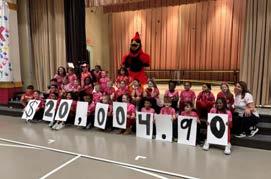
Thorpe Creek Cardinals (Fishers, IN) celebrate a big win for Riley kids and families!
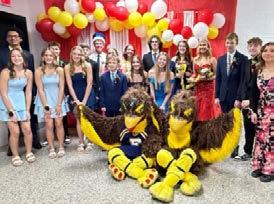
Fairfield Jr Sr High School (Goshen, IN) recognizes Riley Royalty who played important roles in securing nearly $45,000 in this year’s Riley campaign
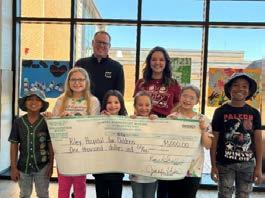
Lowell Elementary (Indianapolis, IN) celebrated their 22nd Kindness and Justice Challevnge with a $1,000 gift to Riley Hospital – one of four community programs supported in their month-long philanthropic initiative .
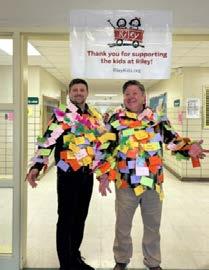
Peifer Elementary (Schererville, IN) students and staff really stuck it to their school administrators, raising more than $1,000 in one day!


Séamus Boyce Attorney Kroger Gardis & Regas, LLP
Keith Butler
Associate Attorney Education Law & Policy
Kroger Gardis & Regas, LLP
The “madness” of the Indiana General Assembly’s legislative session ended on the last day of February this year — weeks earlier than the typical March finish for short sessions . And just like the number of your bracket picks after the tournament’s first weekend, several education mandates didn’t make it to the second round .
Spoiler alert: A follow-up briefing will cover the new mandates added this session Our “mandate selection committee” needs a little time to sort through the statutory additions and their implications .
For now, here are ten things Indiana schools no longer must do under state law
1. Employee Injury Reporting to IDOE — Repealed (HEA 1249)
HEA 1249 repeals IC 20-26-5-42, eliminating the requirement to report employee injuries to the Indiana Department of Education (IDOE) .
This repeal pairs with a new requirement to report data on school employees who are victims of battery to the Indiana Department of Labor (DOL) — likely a positive shift because it:
■ reduces ambiguity in what counts as “reportable,”
■ improves consistency across districts, and
■ places data where it can be analyzed
The other nine came through HEA 1004 (2026) 1004 eliminates several longstanding mandates Here’s what’s gone:
2. Early Graduate Reporting — Repealed
Repeals IC 20-26-5-42.1, which required reporting students who graduated before the spring count date .
3. Website Graduation-Rate Posting — Repealed
Repeals IC 20-26-5-43, which required school corporations to post graduation rates on their websites . Schools may still choose to post these data, but the

mandate disappears July 1 Also note: HEA 1004 has a new mandate to “conspicuously” link to the GPS Dashboard, which includes graduation rates
4. Adjunct Teacher Reporting — Repealed
Schools no longer must post additional adjunct-teacher information already submitted to IDOE . A small repeal — but as we all know, the small stuff adds up
5. Graduation Plan Timeline Change
HEA 1004 repeals the requirement to consult with parents before developing a graduation plan . Schools must still:
■ Provide parents a copy of the plan, and
■ Allow parents to offer feedback after the plan is created
6. Reporting Convictions to the Secretary of Education — Repealed
The mandate for school leadership to notify the secretary of education when a licensed employee is convicted of certain offenses is repealed
Why? Because prosecutors must report the same convictions directly — making the school-side requirement redundant
7. Social Worker Degree Requirement — Repealed
School social workers no longer must hold a master’s degree in social work.
This gives schools much-needed flexibility in hiring, without preventing a school from preferring or requiring an MSW if it chooses
We saved for last the “fun” teacher-contract mandates that have been eliminated:
8. Dual-Contract “Void-Contract Rule” — Repealed
Repeals IC 20-28-7.5-8, which voided contracts for teachers who already had an employment contract with another public school Implications:
■ Upside: Teachers in shortage areas can serve multiple
schools
■ Upside: Schools can hire teachers away from other districts without delay
■ Downside: Schools can no longer “hold” teachers who leave at the start of the year
Net effect: Two upsides + one downside = Good thing? Time will tell, but it increases flexibility
9. Daily-Hours Requirement in Teacher Contracts — Repealed
Teacher contracts no longer must specify the required hours per day
Legally, teachers will be able to be treated as exempt salaried professionals that they otherwise are under the law Practically, building leaders should continue ensuring reasonable expectations — or the market may impact retention and recruitment .
10. Special Education Director Contract Mandate — Eliminated
HEA 1004 repeals the requirement that local special education director contracts be based on the standard teacher contract . Why did we save this for last? Earlier drafts would have extended this change to principal
and assistant principal contracts Thanks to the very effective work IASP, the final version preserves the status quo for building leaders unless both parties agree otherwise. Impact includes:
■ Special education directors no longer must be teachers
■ Principals and assistant principals keep existing protections unless they opt-in to a different structure offered by the employer
Legal Lesson? Less Compliance Work — With Caveats
These repeals eliminate some outdated or duplicative requirements — meaning there could be less administrative burden and more flexibility for schools Think through the practical impact of discontinuing or changing a practice even if the law permits it
Need Help? The KGR Legal Help Desk is available to IASP members for support with these topics and any non-personal employment questions
Until the next KGR Law Brief, may your brackets stay bust-proofed!





11025 East 25th Street Indianapolis, IN 46229
1-800-285-2188 or 317-891-9900
www .iasp org | iasp-info@iasp org