

The 2026 Winter Olympics in Milano Cortina offer more than athletic feats; they provide a high-stakes classroom for mastering durable skills: communication, collaboration, and critical thinking America Succeeds champions this modernization of education, integrating these skills with Google Gemini to prepare students for a tech-driven future
With Gemini, students transform raw data into compelling narratives For example, by analyzing the trajectory of stars like Mikaela Shiffrin, students practice communication by prompting the AI to draft persuasive sports reports on the "physics of peak performance " This shifts the focus from simple reporting to expert storytelling
Collaboration flourishes as student teams use Gemini as a "thinking partner " Groups can brainstorm predictive models for the "Quad God" Ilia Malinin, debating which variables, like vertical velocity or landing consistency, most impact gold medal odds . Gemini facilitates this collective intelligence, acting as a bridge between technical data and team-based strategy

Finally, critical thinking is sharpened through iterative problem-solving Students are encouraged to challenge AI outputs, questioning if historical datasets contain biases that overlook emerging nations By evaluating Gemini’s predictions against real-world factors like weather or injury, students learn to move beyond memorization to nuanced systems thinking
By anchoring data analytics in the excitement of the 2026 Games, the state durable skills endorsed by America Succeeds and empowered by Google Gemini enable students to become "Olympians of Innovation ." This blend of real-world relevance and cutting-edge technology creates a blueprint for success in a rapidly evolving world
Elementary Level (Grades K-5): "The Medal Tracker"
Focus: Data entry, basic sorting, and identifying patterns
The Story: Use the journey of Chloe Kim (Snowboarding) Students track how her performance (scores) changes over three Olympics
■ Sheet Activity: Create a "Team USA Medal Tracker " Columns include: Athlete Name, Sport, Medal Color
■ Gemini Integration: Have students use the "Help me organize" feature in Sheets to create a table
■ Gemini Prompt: "Create a table for me to track 10 U S athletes in the 2026 Winter Olympics . Include columns for their sport and how many gold medals they have won before "
■ Skill: Communication Students explain to a partner why a bar chart of gold vs silver medals looks different
Middle Level (Grades 6-8): "The Performance Scout"
Focus: Formatting, formulas, and data visualization .
The Story: Focus on Ilia Malinin (Figure Skating) and his "Quadruple Axel ." Students analyze the "Success Rate" of highdifficulty jumps
■ Sheet Activity: Build a spreadsheet comparing the point values of different jumps Use formulas (e g , =SUM, =AVERAGE) to calculate potential scores
■ Gemini Integration: Use Gemini to generate the data
■ Gemini Prompt: "Provide a list of the 5 hardest figure skating jumps and their base point values in a format I can paste into Google Sheets Then, tell me Ilia Malinin's average score from the 2025 season "
■ Skill: Collaboration Groups act as "Olympic Committees" to decide if higher difficulty should always equal a higher score
High School Level (Grades 9-12): "The Predictive Analyst."
Focus: Conditional formatting, pivot tables, and predictive modeling
The Story: Use Mikaela Shiffrin’s (Alpine Skiing) comeback arc . Students analyze her World Cup standings vs . Olympic results to predict her 2026 medal count
■ Sheet Activity: Import a large dataset of Alpine Skiing results . Use Conditional Formatting to highlight "Personal Bests" and Pivot Tables to find which snow conditions favor U S skiers
■ Gemini Integration: Use the "Ask Gemini" side panel in Sheets to analyze the data directly
■ Gemini Prompt: "Look at the data in my 'Skiing' tab . Identify any correlation between air temperature and Shiffrin's finishing time . Suggest a formula to predict her time if the temperature in Milano Cortina is 28°F."
■ Skill: Critical Thinking Students must evaluate if the AI’s prediction accounts for "human" factors like Shiffrin's recent injury recovery or psychological pressure
Andy Allen IASP President
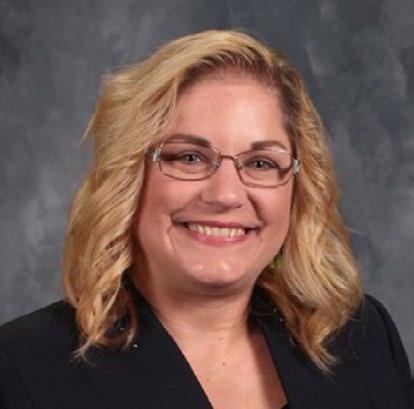
Innovation doesn’t always arrive with fireworks or fanfare . More often, it shows up quietly, in a principal rethinking a system to better support teachers, an assistant principal leveraging technology to reclaim time for relationships, or a leadership team asking better questions to improve learning for students Across Indiana, school leaders are igniting innovation every single day, and this month’s Indianagram proudly shines a spotlight on that work .
Our February theme, Ignite Innovation: Tech, AI, and Olympic-Level Ideas!, invites us to think boldly about how technology and artificial intelligence can enhance, not replace, the human-centered work of leadership . Like Olympic athletes, our school leaders train relentlessly, adapt strategically, and perform under pressure, all while keeping their eyes on the ultimate goal: student success . The articles in this edition reflect that same level of commitment, creativity, and excellence
You’ll hear from leaders across our state who are thoughtfully integrating technology and AI with strong guardrails, intentionality, and purpose
These stories are not about chasing trends; they are about aligning tools to mission They remind us that innovation is most powerful when it is rooted in values, driven by context, and guided by reflective leadership .
This work aligns seamlessly with the School Leader Paradigm, particularly the Learning and Systems Domains Technology becomes a lever for growth when leaders engage in the Cycle of Inquiry, asking what’s working, what’s not, and how we can refine our practices to better serve our communities Innovation, in this sense, is not about doing more, but about doing what matters most, more effectively .
As you read this month’s articles, I encourage you to reflect on where innovation is already alive in your own building What systems have you refined? How are you using tools to amplify learning, deepen relationships, or support your staff more sustainably? And just as importantly, how are you empowering others to lead alongside you?
Indiana’s school leaders are not waiting for the future; instead, we are actively shaping it . On behalf of IASP, thank you for your courage, your curiosity, and your unwavering commitment to growing as Learning Leaders . Your work matters, and we are honored to elevate and celebrate it in this month’s Indianagram .
Together, let’s continue to ignite innovation, one thoughtful, intentional leadership move at a time
Dr. Tiffany Barrett
IASP
Assitant Executive Director Editor in Chief, IASP Indianagram
2025-2026 Themes
MARCH: Marching Forward: Honoring Milestones and Memories
APRIL: Safe & Sound: Prioritizing School Safety and Wellbeing
MAY: Hearts of Gold: Celebrating the Power of Gratitude
JUNE: Best of the Best: A Year to Remember
Share your thoughts on the Indianagram: https://forms .gle/2LaxqTUNUc5AdviF8
IASP Executive Committee
Andy Allen President
Dr. Bret Bailey President-Elect
Dr. Jane Bitting Vice President
Dr. Holly Arnold Past President
Raimeka Graham NAESP State Representative
Dave Strouse NASSP State Coordinator
Kristen Peterson Assistant Principal Liaison

IASP hosts events throughout the year to support the growth and development of Indiana school administrators and students. Each event is intentionally designed to encourage and engage all participants in the pursuit of learning!
Find A Full List Of Events at www.iasp.org/Events
Special thanks to our Sponsors:




Dr. Katie Jenner Indiana Secretary of Education
If you ask educators what is top of mind these days – beyond reading, STEM, or helping students make the most of the four years of high school – one topic comes up again and again: artificial intelligence (AI) And it’s no wonder AI is rapidly changing the world we live in, and education is part of that
A few years ago, as AI started to become more of a household term, we asked the question, how might we leverage AI to improve education for our students? Today, schools across our state are answering that question with out-of-the-box thinking, intentionality, and strong guardrails to maximize impact for both teachers and students
Since 2023, we’ve partnered with and highlighted schools across Indiana that are responsibly integrating AI into teaching and learning From high-dosage, 1:1 tutoring for students…to tools that reduce administrative burdens on teachers…AI is helping to expand opportunities and make learning more engaging Today, I’d like to shout out just a few schools where our principals are empowering teachers to incorporate AI into the classroom, and ultimately, improving their local educational environment and setting an example for others across the state!
Aspen Meadow Elementary School, Principal Kim Lochmueller
At Aspen Meadow Elementary, second graders use an AI-powered reading platform that adapts to their unique needs—whether they’re sounding out letters or reading full passages Teachers combine this data with their own insights to set goals and guide small-group instruction
Franklin Central High School, Principal Zak Tschiniak
At Franklin Central High School, English students took character analysis to the next level while reading 12 Angry Men Using AI, worked to better understand each character and even completed personality tests as if they were the characters themselves—deepening critical thinking and perspective-taking
Guilford Elementary School, Principal Colleen Perry
Fifth graders are using AI to elevate their writing After drafting their work, students receive personalized feedback aligned to IDOE’s writing rubric and curated exemplars The AI tool offers actionable suggestions to strengthen their writing, helping students—especially those hesitant to ask questions—gain confidence and improve their skills in a supportive, interactive way .
This example is featured in the Indiana Learning Lab here

Hobart High School, Co-principals Colleen Newell and Craig Osika
If you recall, School City of Hobart was an early pilot corporation for Khanmigo back in 2022, helping teachers to work smarter, not harder . They continue to utilize AI as a way to maximize supports for both teachers and students For example, chemistry students are using Khanmigo’s “Tutor Me” feature to get started on challenging problems and explore enrichment opportunities Rather than simply providing answers, the AI guides students through the process—supporting differentiation and scaffolding, while empowering learners to master concepts at their own pace
You can find this example in the Indiana Learning Lab here
Julia E. Test Intermediate School, Principal Laura Brazil
Before diving into Civil War texts, fifth graders used AI to chat with historical figures . Through this interactive activity, students gained additional insights into the Civil War— building background knowledge in a way that felt more like a conversation than a lecture
Monroe Central Jr/Sr High School, Principal Nick Middleton
Eighth-grade math and Algebra I students are getting personalized remediation and enrichment through AI . Teachers can track progress in real time and meet with small groups for targeted support, while students receive tailored practice to prepare for upcoming tests and quizzes—making math instruction more efficient and effective
Plainfield High School, Principal Brent Schwanekamp
In an interdisciplinary project, high school family and consumer science students teamed up with first graders to bring creativity to life Younger students designed Squishmallows and wrote about their characters, while high schoolers created stuffed animals and used AI to craft personalized books explaining how they were made— complete with translations when needed
This example is also featured in the Indiana Learning Lab here
Again, this is only a small list of the innovative uses of AI happening in classrooms around our state With strong guardrails in place, Indiana is proving that when implemented responsibly, AI can serve as an asset for teachers, extend instructional time, and empower students to take greater ownership of their learning
Thank you to all of our Indiana principals who are working to responsibly integrate AI into your schools, and as always, thank you for all that you do for our Indiana students!

INALI is a two-year "on-ramp" designed to help beginning administrators transition quickly from educators to effective instructional leaders It provides the logistical tools and emotional support needed to survive and thrive in the first years of building administration
or Newer Principals, Assistant Principals, and Deans (0–2 years experience)
Intensive Evaluation Training: Specialized workshops to master teacher evaluations
The "Starter" Toolkit: Access to the School Leader Calendar and Entry Plan
New Admin Workshop: Annual July sessions tailored specifically for beginners
Peer Cohorts: Monthly regional meetings with others in their first years
Foundational Mentoring: Focus on navigating the daily logistics of administration

IPLI is a two-year intensive institute that shifts focus from "individual management" to "systemic excellence " While Year 1 focuses on increasing the leader's personal capacity, Year 2 brings teacher leaders into the process to improve school-wide outcomes and culture
Experienced Principals (3+ years) and Assistant Principals (5+ years)
Team Leadership: Bring two teacher leaders in Year 2 to drive school-wide change Cycle of Inquiry: Use action research to solve buildingspecific challenges
Graduate Credits: 12 credits toward an Ed S at ISU (50% tuition discount)
Strategic Growth: Seminars focused on Social, Systems, and Cultural Intelligence Executive Mentoring: Guidance from master administrators on legacy and impact


Mrs. Kristen Peterson
Associate Principal Chesterson High School
IASP
Assistant Principal Liaison
Ms. Kortney Golden Assistant Principal Clinton Central Elementary
Our February theme for the Indianagram is “Winter Olympics . ” Kortney Golden, Assistant Principal at Clinton Central Elementary School, had a unique opportunity to serve as the interim principal in her building As she connects her experience to the Winter Olympics, leaders at all levels can benefit from the lessons she gained by temporarily stepping into the principal role this year . Thank you, Kortney, for your willingness to share the tremendous leadership insights you gained through this atypical opportunity!
The second quarter of the school year, and the entrance to it, is unlike any other They all have their peaks and valleys, but something - actually many things - about quarter 2 make the “game on” vibes extra strong From the marathon of parent teacher conferences and the race to Fall Break, to the uphill trek through the holidays, this time of year puts many educators to the test It was during this time of the school year that I got to jump into a new pair of shoes, stepping into the interim principal role
Having now crossed the finish line, I have realized that leading a school as an interim principal turned out to be a lot like competing in the Winter Olympics: there were cold conditions, unpredictable terrain, and a whole lot of people watching your every move
With four years of practice under my belt as an AP, I felt wellcoached, trained, and ready to move up to the next tier of the podium
Here are a few lessons I learned along the way
Curling: Sweeping Isn’t Glamorous
First, let’s talk about curling If I’m being honest, it looks ridiculous until you realize what’s really going on Curling taught me that some of the most impressive school leadership work we do looks unimpressive from the outside . It’s the conversations no one sees The decision to wait The intentional sweeping—clearing the path so others can succeed
As an interim principal, I swept a lot I swept for teachers who needed space, for students who needed grace and for systems that needed a little less friction and a little more clarity . No one claps for sweeping—but it's the work that matters .
Figure Skating: Wobble and Recover
Figure skaters fall A lot You just don’t always see it during the final performance .
Leadership is the same There were moments when I said the wrong thing, answered too quickly, or walked away thinking, Well… that could’ve gone better The goal wasn’t perfection
The goal was recovery
I learned that my school didn’t need me to be flawless, they needed me to be real We need to be leaders who can wobble, adjust, and stay upright Leaders who model grace under pressure—and self-forgiveness when things don’t go as planned Too often we can extend a lot of grace to others, and aren’t as kind to ourselves
Bobsledding: You Are Not the Hero
Bobsledding only works when everyone is in sync . School leadership is not a solo sport - you have to lean on your team, your people I leaned heavily on my temporary dean of students, counselor, teachers, office staff—the people who truly knew the school
The job isn’t to be the hero, it’s to trust and work as a team We need to listen more than we talk, and jump in when needed Things run a lot smoother when we remember that we don’t have to (and shouldn’t) do everything ourselves
Cross-Country Skiing: Leadership Is Mostly Endurance
Cross-country skiers don’t get flashy moments They just keep going
That’s what leadership really is It’s not dramatic or loud It’s answering emails when you’re tired . Staying calm when you want to scream into a pillow Showing up consistently, even when the novelty wears off
I learned that leadership stamina matters more than leadership adrenaline You don’t win by burning yourself out You win by pacing yourself, caring for people, and showing up—again and again Work/Life balance is a real and necessary thing
Snowboarding: Expect the Unexpected Snowboarders adjust constantly Conditions change Courses surprise you You adapt or you fall
Schools are the same . Emergencies pop up . Plans derail People react emotionally This experience improved my flexibility - the real kind The kind where you breathe, pivot, and move forward without losing your balance or your humanity
Sometimes the best response isn’t a solution—it’s empathy, humor, or simply saying, “We’ll figure this out together . ” What I gained throughout this experience is something better than a medal
I gained confidence without arrogance and humility without hesitation A deeper understanding that leadership isn’t about control—it’s about connection . It's not about having all the answers — because I surely don’t — but about being steady for your school when things are uncertain
Like the Winter Olympics, the hardest runs were the ones that changed and grew me the most
I am thankful for my coaches, my teammates and my experiences that trained me for the big event
And while I may not have earned a medal, I walked away stronger, wiser, and deeply grateful for the chance to lead—on ice that taught me more than I ever expected

Looking for a long-term career that makes a difference? Consider teaching in secondary or special education!
•Pass a secondary content Praxis related to your Bachelor’s Major or Minor
• 18 credits, 12 months/Summer Start or Fall Part-time Start
• IUB professors with significant secondary experience
•Teach on an emergency license, serve as an aide, or come with no experience
• Easy transition to complete an M.S.Ed. (Online)


• A bachelor’s degree in any content area
• 24 credits, 18 months/Fall Start or Spring Part-time Start
•Praxis testing at program finish
•Two semesters of flexible clinical experience
•IUB Special Education Professors who understand today’s classrooms
•Already teaching? This program is tailored to ToR and aides!
•Easy transition to complete the M.S.Ed. in Special Education (Online)
• Personalized support and placement (state-wide and surrounding states)
• FAFSA Eligible and Accessible Online Tuition Rates
• Indiana State Scholarship Eligible up to $10,000 (Transition to Teaching and NG Hoosier Educators) Click on QR codes for details.
• Teach while you earn your initial license!
• Learn from the best! All IU professors and supervisors offer practical classroom experience and current research based training.
• Academic Advising and Personalized Support Start to Finish!
• 100% Teaching Placement Rate for 7 years-IUB Campus Interview Day Included!

Dr. Tiffany D. Barrett IASP Assistant Executive Director
Innovation in schools is often misunderstood as something flashy or expensive New platforms New programs . New buzzwords . But when you listen to Indiana school leaders, innovation looks far more human It looks like protecting teacher time, asking better questions, and reworking systems that no longer serve students well Innovation is not a product . It is a leadership practice .
As we continue our February focus on Ignite Innovation: Tech, AI, and Olympic-Level Ideas, it is worth pausing to ground ourselves in what truly moves schools forward The School Leader Paradigm reminds us that sustainable innovation lives at the intersection of learning, systems, and people . Below are three leadership actions you can take right now to ignite innovation in a way that is thoughtful, grounded, and human-centered
1. Use technology to give time back to people
One of the most consistent needs school leaders voice is time: time to coach teachers, build relationships, and think strategically . Innovative leaders use technology not to add more work, but to remove friction
This might look like streamlining walkthrough data, automating routine communication, or organizing systems so leaders are not constantly reinventing processes The innovation is not the tool itself The innovation is the intentional decision to reclaim time for learning conversations and relationship- building
Ask yourself: What is one task draining time and energy from your leadership team that could be simplified or systematized? Even small shifts can create meaningful space
2. Lead innovation through inquiry, not urgency
True innovation does not come from reacting faster . It comes from thinking more deeply . The Cycle of Inquiry offers leaders a framework to approach new ideas with purpose rather than pressure
Innovative leaders pause to ask: What problem are we actually trying to solve? What evidence do we have? How will we know if this is working? This mindset keeps schools from chasing every new trend and instead focuses energy on what aligns with their context and values .
In practice, this may mean piloting a new tool with a small group, gathering staff feedback, or reflecting openly on what needs adjustment . Modeling curiosity over certainty builds trust and leadership capacity across the building .
3. Empower others to lead innovation with you
The most innovative schools are not led by one visionary . They are fueled by collective leadership . When leaders invite teachers, assistant principals, and staff into decision-making, innovation becomes shared work rather than top-down direction .
This can be as simple as asking teachers how technology could better support instruction or creating space for teams to experiment and share what they are learning Innovation feels human when people see themselves in it .
Indiana school leaders are already doing this work: balancing systems and relationships, making thoughtful choices under pressure, and adapting in real time for students and staff . Innovation is not something you need to add It is something you are already practicing .
Remember this: innovation is not about doing more It is about leading with clarity, curiosity, and care When leadership stays human, innovation follows

Kim Hendrick Indiana Online Director
Through the DLAC Network
Indiana is witnessing a fundamental shift in its educational landscape Digital learning tools, blended learning, and the use of AI technology have increased steadily The number of students enrolling in full-time virtual schools has seen a significant rise There has also been a steady increase in school districts offering fulltime virtual options within their own districts As school leaders, you are navigating the complex demands of this new reality, which requires more than just hardware— it demands Olympic-level ideas and unprecedented innovation to serve students involved in online learning effectively
As more students and schools embrace online learning, the need for shared expertise and leadership makes DLAC (The Community Advancing Digital Learning) essential . DLAC is a one-stop shop for everything related to digital learning It offers online and in-person conferences, affinity groups, research, and webinars to create opportunities for deeper dives into topics like student engagement, teacher recruitment and professional learning, funding, and other issues of practice and policy
The Power of Collaboration
In support of DLAC and its initiatives, local action has helped it gain strength Indiana Online serves as the State Affiliate and hosts four meetings per year Recently, the DLAC Indiana State Affiliate brought together virtual and in-person representatives from approximately 36 online schools and programs across the state . Participants engaged in critical conversations that move beyond simple implementation and into strategic excellence, discussing topics such as:
■ Policy and Compliance: Navigating the unique regulatory and funding hurdles tied to online education in Indiana
■ Engagement Strategies and Program Management: Sharing innovative methods to ensure student participation, mental health, and administrative efficiency in a virtual setting
■ AI and Student Use: Exploring how technologies like MagicSchool AI (which sponsored the collaborative luncheon) can be leveraged responsibly to personalize instruction, increase teacher efficiency, and prepare students for a tech-driven future
These collaborative meetings allow principals, administrators, counselors and technology coaches to share what's working, troubleshoot challenges, and forge a shared vision for Indiana's digital learners
Just as an Olympian trains continually, the DLAC network provides year-round professional development The State Affiliate model ensures that the conversation doesn't end when the in-person meeting does .
DLAC offers school leaders and their teams multiple avenues for continuous collaboration:
1 Routine Meet-Ups: Regular virtual and in-person gatherings to address current issues
2 Asynchronous Discussions: Through the Indiana State Affiliate page on the DLAC website, members can engage in ongoing conversations—asking questions, getting immediate feedback, and collaborating on topics of interest regarding virtual education This essential feature allows year-round collaboration without the constraint of time or travel
3 Webinars and Events: In-person and online opportunities designed to support learning leaders
As the prevalence of online learning grows, DLAC serves as a crucial partner in elevating our efforts from "adequate" to "Olympic " This organization is important because it:
■ Drives Innovation: Provides a dedicated space to explore innovative technologies and instructional design that specifically address the unique challenges of remote and blended learning
■ Ensures Equity: Focuses on strategies for student engagement and ensuring equal access for all students, regardless of their learning environment
■ Empowers Leadership: Fosters the professional development necessary for leaders to enhance their skills and effectively lead complex, rapidly expanding digital programs .
For every Indiana leader seeking to begin or transform their online learning options into models of excellence and equity, DLAC is a vital resource Get involved with the DLAC Indiana State Affiliate today Let's harness this network to create the most engaging, inclusive, and effective digital learning experiences for every student in the state
Get Connected: To join the DLAC Indiana State Affiliate and participate in year-round discussions, email Natalie Freeman at nfreeman@indianaonline org to be added to the communication list

Dr. April Holder Principal
Lanesville Elementary School
Winter is the toughest stretch for administrators and teachers, so the gold-medal move is reducing tasks, restoring energy, and uplifting morale Here are some heartfelt ideas just in time for the Winter Olympics
GOLD level administrator tip: work to protect staff energy What can you reduce? With the new assessments and diploma track some of our data entry and reporting is on overload Take a minute to audit what your school does and requires . Can something be cut? Even symbolic cuts boost morale because they signal respect . It only takes a minute to send a google survey “What’s one thing I could take off your plate this month?” Then actually remove it Those little lifts will make you a gold-medal leader and reenergize your team .
SILVER level administrators tip: restore energy with the gift of time . Can you come up with a team to give every teacher 10 minutes? You could pop in with a kindness book to celebrate kindness week or plan a 10-minute talk with secondary classes The gift of time will touch their hearts just in time for Valentine’s Day. Go even further and look to see if you can shorten a meeting or extend a passing period or indoor recess Get on the
announcements and tell each class that during 5th period any class that had everyone on time will get a 5 minute in class break This gets everyone working together and excited which refuels and puts a little silver sparkle back into your building .
BRONZE level administrators tip: work to normalize the Winter Slump . As leaders we have to stay calm Remember that your tone sets the temperature You can take simple steps to make your staff feel safe and respected: slow speech, fewer emails, less urgency = safety Create an Olympic brag board in a digital space: What celebrations do you see? Small wins combat burnout better than big vision speeches
This February, remember to stay positive Take a moment to measure impact, not gratitude . Teachers may be too tired to say thank you Look for fewer sick days, more laughter in the break room and more conversation before and after meetings The Olympic motto is “Faster, Higher, Stronger- Together” In order to achieve success, you have to reduce, restore and uplift . "Go for the Gold- you got this "


Dr. Kelly Andrews Director
Indiana Principal Leadership Institute
IPLI is a premier professional development opportunity for Indiana's practicing principals We support and encourage you as we grow in our leadership, learning, leading, and connecting Racing Toward Excellence
The Winter Olympics are one of my favorite sports to watch each cycle . It showcases a wide range of events, each requiring its own unique abilities and strategies . Similarly, Indiana principals navigate diverse events in their daily roles: shaping school culture, guiding instruction, fostering staff collaboration, and communicating with stakeholders Each task demands specialized skills, yet all contribute to a unified mission to elevate student success .
Olympic athletes spend years preparing for their big moment Becoming and being a school leader requires extensive preparation before and throughout one's career, including learning leadership skills, collaborating with mentors, and strengthening practice . This professional learning, becoming while doing, helps principals continually grow, just like athletes refining their techniques to reach peak performance .
Even the strongest Olympic athletes depend on teams of coaches and supporters . In the same way, Indiana principals succeed through collaboration at their schools and with their IPLI professional development cohorts and mentors . Leadership is at its best when everyone moves forward together Just as Olympians embody dedication, fairness, teamwork, and giving their best, school leaders rely on these core values to create inclusive, supportive, and high-performing learning environments for all
As we cheer for athletes this winter racing toward excellence, we can also cheer on the dedication of our Indiana principals, leading with resilience, collaboration, and with the same spirit of excellence that defines the Olympics
IPLI 2025-26
Thank you all for making our Virtual Winter Seminar for Cohorts 12 and 13 such a success Our featured speakers, Dr Roos and Dr Gruenert from Cohort 13, along with Dr Phil
Warrick from Cohort 12, shared powerful insights and practical strategies to elevate leadership for everyone involved
We're excited to keep the momentum going this spring On April 7th and 8th, IPLI will proudly showcase the outstanding principal action research projects completed this year We will also celebrate Cohort 12 as they graduate after two years of focused professional development, collaboration, and dedicated leadership growth
Your commitment continues to make a meaningful difference—thank you for all you do
To learn more about IPLI, please contact Dr . Kelly Andrews, Director, at kelly andrews@indstate edu or 765-993-0133

Strong school communities thrive when educators and volunteers work hand in hand to support students’ growth. Girl Scout leaders throughout Indiana’s six Girl Scout councils play a unique and meaningful role in this partnership, extending learning beyond the classroom while reinforcing the values schools work to instill every day.
Girl Scout volunteers—often parents, caregivers, educators, and community members— create safe, inclusive spaces where girls build confidence, leadership, and resilience. Through hands-on activities, service projects, and teamwork, Girl Scouts develop skills such as problem-solving, goal setting, and collaboration that directly complement academic learning. These experiences help girls have the confidence and support to lead their best lives.
Volunteers make all of this possible. They generously give their time, energy, and expertise to guide girls during critical developmental years. Their dedication deserves recognition and appreciation. When schools welcome and support Girl Scout leaders, they help strengthen communities and open doors for girls to make new connections and have new experiences.


Share the love of Girl Scouts with your school community!
Berley Goodin Treasurer Austin Builder's Club
My name is Berley Goodin and I am the treasurer of Austin Builder’s Club . Today, I will be telling you about what our school did to start the program, what Builder’s Club is about, and how we, as students, are impacting our community Now, you might be thinking that all we do is help grandma’s cross the road You couldn’t be more wrong…Builder’s Club is so much more We collect and donate food for families in our community We were able to help 2 families in our school with entire meals in November . In addition, Builder’s club allows us to impact and lead our community as middle school students .
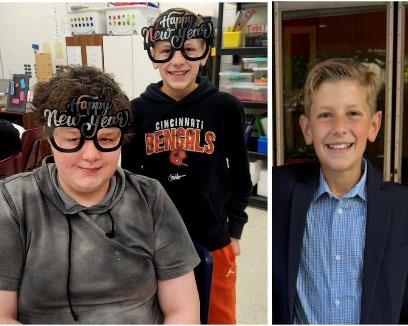
Now, I will tell you some additional things we have done with Builder’s Club The first, is starting Peer Buddies at our school Peer Buddies is a simple program, but so important Every other Tuesday we go into a classroom and eat lunch with students with special needs Our buddies are people with special challenges such as autism or wheelchair bound students that don’t always get to see other students outside of their classroom . My peer buddy teaches me in so many different ways, and I hope I am impacting him in a good way

Peer Buddies has impacted me and my buddy in so many crazy ways . My peer buddy has learned how to be more open and talk more While I have learned how hard it is to have a special need and how much stuff he goes through as a person We don’t just help our buddy, but we also have formed a group that cares about one another We talk, eat together, and learn more about one another One time, we even went out on a field trip to eat pizza as a group! We laughed and had the best time!

Now, I want to tell you some parties we have done with our Peer Buddies We had a Halloween party where we covered each other in toilet paper When I was covered, my buddy had the biggest smile on his face, and that was awesome! One really fun thing we did was decorate a paper heart in red, white, and blue for veterans that were handed out at the Veteran’s Day Program at our school . We were able to treat our Peer Buddies to pizza for the New Year from funds we had collected this year We wore hats and talked about the coming year I hope you enjoyed reading about this program and how it impacts our community and school!

Beth Cooper, EdD Assistant Professor of Ed Leadership Ball State University
AI is the genie we can’t put back in the bottle School leaders who better understand the situation can determine the next steps to manage it .
AI Applications
Teachers can use AI tools to design lessons, differentiate instruction, offer student supports, expedite grading, and perform administrative tasks more efficiently Some popular AI tools include MagicSchool AI for lesson planning and text scaffolding, Khanmigo and Querium for student tutoring, SchoolAI to help students generate ideas and revise writing, ELSA Speak to improve students’ English pronunciation and speaking Tools such as ClassDojo and Remind help teachers streamline communication with families and Google Classroom organizes assignments, announcements, and feedback Gradescope scans and assists with grading and Turnitin Draft Coach and GPTZero assess how much of a student’s assignment was generated with AI . Teachers support accessibility and inclusion with tools like Microsoft Immersive Reader with visual supports for reading comprehension, Speechify that turns written text into audio, or TalkingPoints for two-way, multilanguage communication with families ChatGPT, Gemini, and Grammarly are three of the most popular tools teachers and students use to find answers to questions, generate ideas, guide writing, and create practice problems Students and teachers can even get help creating designs and presentations with Canva, MagicWrite, or Magic Design .
School administrators, teachers, and staff are also using AI for administrative tasks and systems beyond the classroom Brisk Teaching helps staff generate IEPs or schedules Omnilert, VOLT AI, Lightspeed, and ZeroEyes integrate with security systems to flag potential threats (e .g ., firearms and fights) or scan students’ activities on school devices for safety issues . However, these systems are new, include potential design flaws, and pose limitations especially without appropriate human interaction, data analysis, and monitoring . All these AI tools have great potential to improve teaching, learning, and school systems, but downsides exist and ethics come into play
Ethical Considerations
There is no doubt that students can use AI to bypass learning or cheat if educators fail to design instruction differently, clarify expectations, and monitor . Reaching agreement on expectations remains essential As

educators, do we agree whether it is ethical to use an AI-generated title for an essay? Maybe some think generating a title is alright, but others feel it goes too far . How about using AI to generate any of the content of the essay? That’s probably where everyone draws the line, but is the line clear-cut or a little blurry? What about using AI to generate ideas for themes or organization of the essay? If educators don’t clearly agree yet on the gray areas, how can we expect students and parents to understand the expectations?
Ethical questions also revolve around teacher and staff use of AI Is a teacher uploading each of their students’ essays into an AI plagiarism detection application or only the essays of the students they suspect of cheating? How is cheating ultimately determined – based on a percentage of suspected AI use on the assignment or is the teacher conducting further investigation? Did the teacher define their expectations for AI use in writing? Unfortunately, some students also know how to create deepfakes, generate objectionable online content, tamper with school systems, and use AI for cyberbullying . What should the school’s role be in these incidents and are the consequences clearly defined and fairly implemented? Do the consequences violate anyone’s individual rights and pose potential legal issues?
To effectively manage AI in schools, leaders can plan, analyze, clarify, and monitor AI uses, consequences, and systems . A couple of recent AI-related lawsuits in schools highlight potential legal issues and steps leaders can take to mitigate them
Recently, parents in Massachusetts filed a lawsuit against a school district after a teacher accused a student of using AI-based plagiarism on a paper for a high school U .S . History project . The school district alleged that the student violated the academic integrity policy outlined in the student handbook . As consequences, the student received a zero on that portion of the assignment, was assigned detention, and was barred from joining the National Honor Society The parents alleged that their child was falsely accused of cheating because (1) the handbook lacked clarity related to AI use and (2) the discipline applied to their child would harm the child’s college placements . The school district won, but the case reveals a need for school leaders to clarify policies to improve understandings and expectations among stakeholders
A good starting point for leaders is to hold discussions and conduct surveys to better understand how students and staff are using AI, teacher expectations for students, and stakeholders (e .g ., students, teachers, administrators, support staff, and parents) understandings and questions The Massachusetts lawsuit reminds leaders to revisit their school’s academic integrity policy and consequences for AI-violations As a first step, leaders could require teachers to include specific AI policies on their course syllabi and/or assignment directions Next, hold discussions with key stakeholders to establish clear and consistent handbook and board policies for AI, then communicate the revised policies with all stakeholders through meetings, newsletters, trainings, and websites .
Another recent AI-related lawsuit in Maryland occurred after a teacher uploaded a student’s assignment to the AI-detection tool GPTZero which determined with 90% probability that the assignment was written by AI . The parents’ case claimed that the teacher violated the GPTZero Terms of Service which required the person
using the system to (1) be the creator and owner of the materials being uploaded, (2) have permission to upload the material, and (3) agree to not violate the privacy or publicity rights of a third party
The Maryland case demonstrates the need for school leaders to clearly define and train teachers, staff, students, and parents which AI tools to use and how to use them And it’s critical to clearly specify in vendor contracts what and how any student data or confidential information can be shared (or not shared) and where (or if) it’s stored . This helps avoid potential individual rights violations when using certain AI tools
The AI genie isn’t going back in the bottle, but school leaders can become more familiar with what AI can do, identify strategies to manage use, and start moving forward today to prevent misuse, avoid misunderstandings, and mitigate ramifications

Susan Miles Program Officer, Kids Caring & Sharing TM Riley Children’s Foundation smiles@rileykids org
To AI or not to AI ...
As an “old school” journalism major and overall creative, I struggle with the concept of using Artificial Intelligence (AI) . It goes against the Honor Code statement I diligently wrote out and signed at the top of every college paper and exam – no signed code, no grade . But much like the internet being a wonderful improvement on my family’s multi-volume, not easily portable set of encyclopedias, when used for good, AI can be a helpful resource in our school and business interactions
While not a replacement for the important and trust building face-to-face exchanges needed to promote a successful relationship, especially in the sphere of philanthropy, AI can be called upon to serve as an additional resource when geographic distance is an issue and personnel and budgets limited
For example, the Riley Children’s Foundation is honored to receive gifts from hundreds of thousands of people every year who want to impact kids and families who need Riley Hospital . While our staff of 70+ try our best to personalize connections with our donors, the sheer numbers make person-to-person contact with all donors improbable We can, however, engage AI assistance in creating virtual connections, driven by our team, to more regularly reach out to donors who might overwise receive no contact beyond a gift receipt
Additionally, AI can be helpful in developing strategic, audience-centered resources personalized for maximum impact and effectiveness The Riley Children’s Foundation Youth Philanthropy Program (YPP) team is using AI as one of several tools to help ensure our content, training and resources continue to resonate with and meet the needs of this generation of young philanthropists
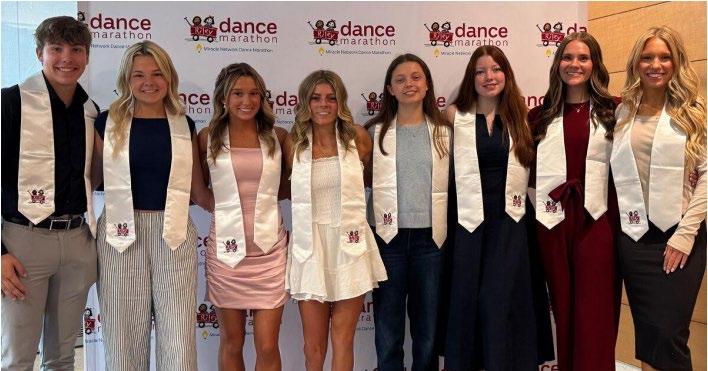
Late winter, and early spring are busy times in the school-based Riley fundraising world . The 6-member YPP team is actively mentoring collegiate and high school students who are planning, promoting, and hosting dance marathons; helping create and monitor hundreds of online individual and school team fundraising pages and campaigns; and reaching out to schools throughout the state who are still considering how best they can engage as a KCS or high school dance marathon school

If your elementary, intermediate, middle, or junior high school is part of a school corporation that has a high school hosting a dance marathon, and you would like to raise funds for Riley in solidarity with your high school philanthropists, please reach out to Jason Zuñiga at jzuniga@rileykids .org Carmel Clay Schools, please connect with Alli Kimmell at akimmell@rileykids .org
If your high school students are interested in exploring the activities and responsibilities involved in hosting a Riley dance marathon, please reach out to Annie Cole at acole@rileykids org
If your staff and student fundraisers are interested in augmenting their traditional in-person Riley fundraising activities with an online giving opportunity, please reach out to Susan Miles at smiles@ rileykids org
Indiana K-12 schools moving into action for Riley kids and families
Dance Marathons – help support a high school hosting a Riley dance marathon this February or March .
2/13/2026 Boonville High School
2/13/2026 Plymouth High School
2/14/2026 Avon High School
2/14/2026 Westfield High School
2/21/2026 Heritage Hills High School
2/21/2026 Carmel High School
2/27/2026 Fishers High School
2/28/2026 University High School
3/06/2026 White River Valley High School
3/07/2026 Owen Valley High School
3/12/2026 Pike High School
3/13/2026 Terre Haute South Vigo High School
3/13/2026 Noblesville High School
3/14/2026 Center Grove High School
3/14/2026 Franklin Community High School
3/20/2026 Terre Haute North Vigo High School
3/20/2026 Danville High School
3/26/2026 Carmel Middle School
3/27/2026 Hamilton Southeastern High School
3/27/2026 Eastern Greene High School
3/28/2026 Elkhart High School
On-line Peer-to-Peer Campaigns – does your school have an online fundraising team within one of these live online corporation campaigns? If you would like a dedicated school corporation campaign created to
host your school district’s online fundraising efforts, contact smiles@rileykids org
Concord Community Schools
East Allen County Schools
Fairfield Community Schools
Fort Wayne Community Schools
Garrett-Keyser-Butler Community School District
Hanover Community School Corporation
Lake Central School Corporation
LaPorte Community School Corporation
North Central High School, Indianapolis
Penn-Harris-Madison School Corporation
Warsaw Community Schools
We are now accepting applications for this year’s Riley Children's Foundation Next Generation Philanthropist Award - Class of 2026 Invite your students to apply today!
The Riley Children's Foundation Next Generation Philanthropist (NGP) Award, Class of 2026, will recognize a class of exceptional high school juniors and seniors who have made significant contributions to their school’s Riley fundraising efforts through their commitment to Riley Hospital for Children . These young philanthropists represent the top percentage of fundraisers within their school’s Riley program
The ninth annual class of Riley Children’s Foundation Next Generation Philanthropists from across the state will represent students who have displayed exceptional leadership and character, along with a commitment to the cause through personal fundraising efforts and advocacy for Riley Hospital for Children . This award recognizes students who have participated in any K-12 programs benefiting Riley Children's Foundation, including both Dance Marathon and Kids Caring & Sharing™ programs Expanded information about the award, its requirements, and the selection process timeline can be found HERE


Séamus Boyce Attorney Kroger Gardis & Regas, LLP
Keith Butler
Associate Attorney
Education Law & Policy
Kroger Gardis & Regas, LLP
We examine Henderson v Springfield R-12 School District (8th Cir 2025), as a reminder that First Amendment issues may appear in unexpected ways . Henderson is a case involving school staff members that claimed a school’s mandatory diversity training violated their First Amendment rights The diversity training in question took place in the fall of 2020 . In the time between the training class being presented and this case being decided, the school board underwent significant changes, and the training is no longer being presented
The training was mandatory Some of the curriculum included a guiding principle of “Acknowledge YOUR privileges” . The staff were instructed that they “should share [their] personal experiences and identities” and “must acknowledge [their] privileges and hold [themselves] accountable ” An instructor allegedly told staff members that they “had to agree or [they] would lose credit and that [they] had to be an ally, and it was part of [their] job duty to be an anti-racist-educator .” The training included modules where a staff had to select the “correct” answer to be able to finish . An instructor explained that black people cannot be racist . The staff member questioned this statement and then claims she was subject to very hostile statements from other staff, and the instructors allowed this to occur
The court examines two issues in this case: (1) whether the training chilled the First Amendment speech rights of the staff members and (2) whether the training class amounted to compelled speech . Under both theories, the staff member must show a concrete particularized injury The court notes that the case is not about the ability of a school district to educate students about race and discrimination or whether the school corporation’s views are distasteful It is also not about creating rules regarding professional conduct of teachers .
To make a claim that speech was chilled, someone bringing the claim must be able to show that they intended to engage in constitutionally protected speech and received a credible threat of an adverse consequence The court found that the school was chilling speech because the staff members self-censored
views when it became clear that the school employed trainers found their views unacceptable and showed hostility toward them, and that they would receive negative consequences for expressing those views, like not being given credit for mandatory training .
To make a claim for compelled speech the person would have to show they gave speech which they objected to giving that was compelled by government action To meet the compulsion requirement, the government action must be an actual or threat of consequences or punishment Mere disagreement with views, discomfort, or hurt feelings is not enough The court found that in this case the school forced the staff members to adopt the school’s views under threat of punishment . This was mainly because the modules forced the staff to select the “correct” answer even if it was contrary to the staffs’ views or not receive credit for the mandatory training
If speech is part of the school staff’s official duties the staff do not have First Amendment protections The test is whether the speech is ordinarily within the scope of the employee’s duties . However, this issue was not analyzed in the decision because the court said the issue was not properly preserved at the lower court level .
Schools have broad authority to control their curriculum and train teachers and staff regarding what their curriculum is . Furthermore, schools can take positions on topics that can be considered controversial, for example, evolution . Additionally, schools can require their teachers and staff to teach the school’s curriculum on these topics In the evolution example, a school can require a science teacher to teach evolution even if the teacher does not subjectively believe it If the speech is part of the product of the employee’s official duties, there is no First Amendment protection . Furthermore, schools can have general rules about professional staff conduct . These rules apply regardless of whether a staff member disagrees with a school position on a particular issue
However, this case shows there are some limited situations where a school could face some potential
First Amendment related liability Remember statements from the trainer can be factors in whether speech is compelled or chilled . However, the training must threaten actual concrete negative consequences Your litigation antenna should be particularly sensitive to this issue when the training or curriculum touches on hot button political issues . Consider if someone were to screenshot a particular part of the training and put it on their social media account without any further context, how would that look? Often these pitfalls can be avoided by simply clarifying that the training is explaining the school’s curriculum or positions and any training questions are regarding what the curriculum says or means not affirming the staff member’s belief in the curriculum
We at the KGR Legal Help Desk are here to address these and any non-personal employment legal issues for IASP members. Until the next KGR Law Brief, stay warm!



11025 East 25th Street Indianapolis, IN 46229
1-800-285-2188 or 317-891-9900
www .iasp org | iasp-info@iasp org