Reclaiming the Hallways: A New Chapter for Student Well-Being
Across Indiana, K-12 principals are witnessing a pivotal shift in the educational landscape. The focus has moved beyond traditional academic metrics to a comprehensive model of student, staff, and community well-being. As digital distractions and mental health challenges become increasingly complex, school leadership is now tasked with navigating a new era. This transformation is supported by a series of legislative actions designed to fortify the boundaries between learning environments and the digital world.
Strengthening the Home/School Connection
The integration of technology in the classroom has long presented a challenge for families once the school day ends. Under Senate Bill 159, school districts now provide parents with enhanced filtering controls on school-issued devices, such as Chromebooks and tablets, when they are used outside of the school’s internal Wi-Fi network. This policy bridges the gap between the classroom and the home, ensuring that the safety protocols established during the day follow students home. By giving families the tools to manage screen time and restrict harmful content, the community can work in tandem with educators to foster a safer digital environment. Building and district leaders should continue to consult technology vendors and consider informational campaigns to evaluate current capabilities. Further, these controls are best tested in small group settings before being implemented district wide.
Curbing Addictive Digital Behaviors
Complementing these hardware controls is House Enrolled Act 1408, a landmark piece of legislation aimed directly at the architecture of social media. This law empowers parents by requiring explicit consent for users under the age of 16 and mandates that social media platforms disable "addictive features" including infinite scrolling and targeted algorithms for minors. For school administrators, this change is a vital step in reducing the constant dopamine-loop distractions thus allowing for a more regulated and focused student body.
Restoring the Instructional Space
To further combat the "spillover" of digital conflict and bullying into the classroom, Indiana schools are implementing Senate Bill 78. This policy requires the secure storage of personal wireless devices, including smartphones and smartwatches, which must be powered off and put away during instructional time. By reclaiming the school day as a phone-free space, leadership aims to:
■ Enhance Focus: Minimize the constant interruptions of notifications.
■ Reduce Cyberbullying: Limit the opportunities for digital harassment during school hours.
■ Improve Social Skills: Encourage face-to-face peer interaction and genuine community building. By practicing the discipline required to navigate these new device policies, students are developing the essential professional habit of managing digital distractions in favor of deep, focused work. These boundaries do more than protect well-being; they cultivate the high-level digital literacy and situational awareness necessary for success in the modern workforce.
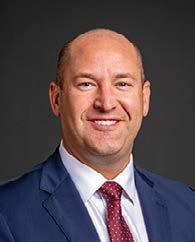
Andy Allen IASP President
Leading with Purpose: Safety as the Foundation for Learning
As we welcome this month’s edition of the Indianagram, I am reminded that the work of school leadership is both deeply complex and profoundly human. Each issue brings together the voices, experiences, and insights of educators across Indiana, and this month, those voices center on a topic that sits at the very heart of our work: school safety.
Safety is often thought of in terms of procedures, plans, and physical structures. While those elements are essential, they represent only part of the picture. Through the lens of the School Leader Paradigm, safety becomes something much deeper. It is not only about protection, but it is also about creating environments where students and staff feel seen, supported, and valued. It is about cultivating a culture where trust is present, relationships are strong, and every individual has the opportunity to thrive.
In this issue, you will find thoughtful contributions that challenge us to think beyond compliance and toward connection. Andy Allen’s piece invites us to consider the evolving landscape of student well-being and the role leaders play in navigating both digital and emotional safety. His perspective reminds us that the boundaries of school no longer end at dismissal; they extend into homes, devices, and daily experiences that shape our students’ lives.
You will also find powerful insights from leaders who are working to strengthen systems and structures while never losing sight of the human element. Their work reflects the Systems and Culture domains of the School Leader Paradigm in action, where intentional design meets authentic care. These authors remind us that safety is not a one-time initiative, but an ongoing commitment that requires reflection, adaptability, and leadership courage.
As leaders, we are called to continuously engage in the Cycle of Inquiry; pausing to assess, reflect, and respond to the needs of those we serve. School safety is not static; it evolves with our students, our communities, and the world around us. This month’s theme challenges each of us to consider: How are we creating spaces where all students feel safe to learn? How are we supporting our staff in feeling secure, valued, and empowered? And how are we leading in ways that align our actions with our beliefs?
It is my hope that this edition of the Indianagram not only informs, but also inspires. May it prompt meaningful reflection, spark important conversations, and support you in the critical work you do each day.
Thank you for the leadership you bring to your schools and communities. It matters more than ever.
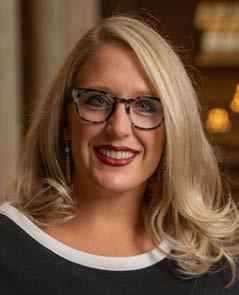
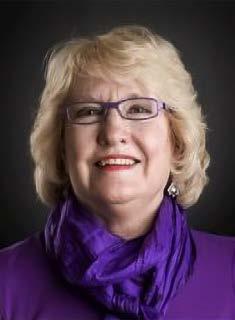
Dr. Tiffany D. Barrett Editor-in-Chief, Indianagram
2025-2026 Themes
MAY: Hearts of Gold: Celebrating the Power of Gratitude
JUNE: Best of the Best: A Year to Remember Share your thoughts on the Indianagram: https://forms.gle/2LaxqTUNUc5AdviF8
IASP Executive Committee
Andy Allen President
Dr. Bret Bailey President-Elect
Dr. Jane Bitting Vice President
Dr. Holly Arnold Past President
Raimeka Graham
NAESP State Representative
Dave Strouse
NASSP State Coordinator
Kristen Peterson Assistant Principal Liaison
IASP hosts events throughout the year to support the growth and development of Indiana school administrators and students. Each event is intentionally designed to encourage and engage all participants in the pursuit of learning!
Find A Full List Of Events at www.iasp.org/Events
Special thanks to our Sponsors:
From the IDOE
Dr. Katie Jenner Indiana Secretary of Education
Investing in our Greatest Asset: Ending the Social Media Experiment on Kids
Often when talking with you as principals (as well as with other educators!) our conversations focus on reading, STEM, and igniting a sense of purpose in our students for what’s next. Each of these priorities remain top of mind— and increasingly, social media has become an important area of focus as well.
This month’s topic of safety issues, bullying prevention, mental health, and social media safety comes at a moment of significant momentum in our state. During the most recent legislative session, educators, parents, students, lawmakers, and other caring adults stood together to support a bold new law that takes an important step forward in protecting our children from the growing dangers of social media. This includes requiring age verification, limiting data collection, restricting addictive design features, and holding companies accountable when they knowingly endanger minors.
As principals – and in many cases, as parents – you see these dangers every day. Maybe you’ve witnessed a child hurt by online bullying or overwhelmed by constant comparison. Unfortunately, these stories are all too common across Indiana and our nation.
An entire generation of Hoosier children are bearing the weight of the largest unregulated experiment ever conducted on young minds, and the discussion our state continues to have on this issue is long overdue.
For most of you reading this, social media arrived when we were already well into adulthood. We had childhoods free from constant comparison, cyberbullying, algorithm-driven manipulation, and 24/7 access to content that is designed to keep us constantly engaged and constantly scrolling.
Our children, growing up today, do not have the same luxury that we did.
Rates of anxiety, depression, self-harm, and suicidal ideation among children and teens have risen sharply during the social media era. Middle schools report students afraid to come to school after viral harassment. Families struggle with their children experiencing loss of sleep, eating disorders, constant online pressure, and exposure to inappropriate and dangerous content while their young minds are still developing.
As teenagers, the regions of the brain responsible for self-regulation, impulse control, and emotional resilience are still under construction. Meanwhile, social media platforms are intentionally engineered to be addictive— using reward loops, notifications, and algorithms to capture a young child’s attention at all costs. That’s not a fair fight, and with Indiana’s new law, it’s not one our children will be expected to navigate alone any longer.
By requiring parental consent to be on social media and prohibiting addictive, harmful design features for children 15 and under, we are giving kids time to grow, learn face-to-face communication, and discover who they are before exposing them to platforms designed to exploit their vulnerabilities.
While this is not solely an “education issue,” we know that safety, mental health, and academic success are closely intertwined. Safety is fundamental to learning, and whether dangers arise in the classroom or after students leave our building for the day, they impact their learning all the same.
Together, let's continue to prioritize the safety of our students—on social media and beyond. Thank you for loving and caring for our students, and for all that you do to keep them safe!
From the AP Lens: Safety and Well-being
Mrs. Kristen Peterson
Associate Principal Chesterton High School
IASP
Assistant Principal Liason
Mr. Tom Stoner
Assistant Principal
Rensselaer Central High School
Our April Indianagram theme is Safety and Wellbeing, and we’re proud to spotlight the incredible work happening at Rensselaer High School!
Assistant Principal Tom Stoner shares how the studentled club BAM FAM (Bomber Athletic Medicine Family) is making a real impact—both in their school and throughout the community. This dedicated group is leading the charge by educating others on cardiac care, CPR, nutrition, and more—empowering people with life-saving knowledge and healthy habits.
We’re inspired by these students’ leadership, initiative, and commitment to caring for others. Thank you, Tom, for highlighting such a meaningful and impactful approach to safety and wellness in Rensselaer!
BAM FAM: MORE THAN JUST A CLUB
At Rensselaer Central High School, I feel like we do a lot of the right things when it comes to safety and wellness. During the first week of the school year, we have a safety week where we do all of our first quarter drills in the same week. That way the students and staff are familiar right away with the expectations and procedures for the drills. However, I think the one thing we do that is the best is our BAM FAM club. BAM FAM is a student led club that was started approximately 4 years ago. The name, BAM FAM, stands for Bomber Athletic Medicine Family, and while it may have started out as a group to focus on the safety, health, and well being of the athletes, it has evolved into so much more than that. Within the group of approximately 50 students, there are several different committees responsible for many different trainings and checks that take place throughout the year.
A few years ago, the students in BAM FAM created our Cardiac Care Plan for the school. In the event of a cardiac emergency, there is an outlined plan for what and how staff and students are to respond. From making an all call throughout the building alerting everyone there is a cardiac emergency, to calling 911, to someone starting CPR, it is all outlined in that plan. The
students themselves have trained the staff and faculty of the school how to respond in the event of a cardiac emergency.
BAM FAM recently provided instruction to our freshmen Health classes as well on how to perform hands only CPR. The BAM FAM students walked the Health class students through the CPR procedures and then had them practice the CPR on their mannequins. They also walked the students through the cardiac care plan and the importance of it. The Health class students would then role play walking into a room and finding a classmate in cardiac arrest and activating that care plan. In the fall, BAM FAM ran a Teddy Bear Clinic for the elementary school students. The elementary students were dressed in scrubs, hair net, shoe covers, etc and then “scrubbed in” to give their teddy bears an exam. The BAM FAM members would assist the students in doing the exam on the bears to help ease any fears or anxieties about going to the doctors office.
In addition to the Teddy Bear Clinic the BAM FAM students work with the elementary students on overall health and wellness. They do lessons on nutrition and activity to help promote a healthy lifestyle among the students. In addition to training elementary school students, high school students, and the staff, BAM FAM has also done presentations for community organizations such as Tri-Kappa and Daughters of the American Revolution. They have been contacted by the town Little League and Soccer clubs as well to help do CPR trainings for their coaches and volunteers.
One of the big things BAM FAM does for the school system is to maintain the AED’s for the district. The students take on the responsibility of going to each building in the district each month to check the batteries and pads within the school to make sure all are in good working order. The students have done much work in obtaining additional funding to purchase AED’s for the corporation. As a result of the work the students have done in the corporation raising the awareness of the importance of the AED’s, the town has committed to placing AED’s in the town parks.
Recently I sat down with the chair members of BAM FAM to talk about some of the strengths, challenges, hopes for the future for BAM FAM, and what else they wanted others to know. Among the different strengths the students mentioned was the fact that they have a very strong and supportive sponsor. Their sponsor, Mrs. Webb, leads them in the group but really takes it where the students want to go. She may make suggestions but then she just helps them achieve their goals and help them celebrate their accomplishments. Mrs. Webb points all the success of the group back to the students and how hard they work with the different trainings they do. Another of the biggest strengths is
the recognition the group is receiving outside of the school corporation. To have different organizations within town reaching out to them to do presentations and trainings just points to the amount of success the students have had with BAM FAM.
Another strength of the group is that because they have a solid group of members and they are very flexible, there are now outside groups pursuing them for trainings. The group, rightly so, is very proud of the fact they have been able to do the trainings with DAR, the parks department, and have been sought out for trainings with the little league and soccer clubs.
One of the biggest challenges they have had to overcome is getting people to listen and take them seriously. They stated that with being teenage students themselves sometimes getting the adults to realize they know what they are talking about is challenging. Because they see the students they train in the halls everyday, they find it is also hard to get those younger students to take them seriously. Neither of these challenges have deterred this group of great students, it has only strengthened their resolve to spread the word of health, wellness, and preparedness.
Their hopes for the future of BAM FAM is to see it grow even more in our school. Even though they are the largest club in the school, they would love to see even more students get involved with them. They stated you do not have to be going into a health field to be involved in the group, just have a desire to share health and
wellness with others. As they are starting to spread into the community, they would love to see that involvement grow as well. They want to be able to provide trainings for different businesses and organizations within the community. Their last hope for the future of this organization is to be able to share it with other school districts and see them get similar groups started in their schools so it goes from being a Rensselaer club to a club that thrives in multiple districts.
When asked what they wanted others to know, they said they wanted them to know you just have to start somewhere and to start with an open mind to what the group can grow into. You may not have a definite plan for where you want to go with the group, but you have to take the first step in order to progress. They also stated it is better to do something than to do nothing. Getting involved and helping to bring awareness to health and wellbeing does a lot more than doing nothing at all. That sounds like a simple statement but it packs a lot of truth in it as well. As a result of the work they have done, a lot of the kits they use with the mannequins and first aid kits have been donated by community organizations to aid them in their pursuits. They are grateful for the strong community and corporation support they receive and know they could not accomplish what has been accomplished without it.
Thank you to Bryn, Brodie, Kamri, Abby, Alivia, Cayden, and Mrs. Webb for sitting down with me to discuss BAM FAM.
Help New Kindergarten Families Get Ready with Girl Scouts
For pre-K and Kindergarten families, Get Ready with Girl Scouts is designed to support a smooth, confident transition into the classroom.
Rooted in Kindergarten Readiness standards, this program helps girls build essential skills in early literacy, social-emotional development, and independence. Through engaging, age-appropriate activities, girls practice listening, following directions, problem-solving, and working with others— skills that set the tone for long-term academic success.
Just as important, Get Ready with Girl Scouts supports caregivers. The program creates meaningful opportunities for families to connect with one another and with their local school community. For many caregivers, especially those new to a district, this connection can be the first step in building a strong, supportive network of fellow parents.
Accessibility is a key priority. The program is offered at no cost for girls participating in Head Start, helping remove financial barriers and ensuring more families can benefit from early preparation and community connection.
By partnering with Girl Scouts of Central Indiana, Indiana schools can help ensure that incoming kindergarteners arrive ready to learn—and that their families feel informed, connected, and confident from day one.
Accessibility is a key priority. The program is offered at no cost for girls participating in Head Start, helping remove financial barriers and ensuring more families can benefit from early preparation and community connection. Visit GirlScouts.org/HeadStart for details on how families can join for free.
Help spread the word!
Families can join Girl Scouts now for an extra summer of fun and support.
Safety Starts with Leadership: Three Actions that Make a Difference
Dr. Tiffany D. Barrett IASP Assistant Executive Director Editor in Chief, IASP Indianagram
As school leaders, we know that safety is not a standalone initiative. It is not a checklist that we complete at the beginning of the year or a plan we revisit only when required. Safety lives in the daily experiences of our students and staff. It is shaped by the decisions we make, the systems we build, and the culture we intentionally create.
Through the lens of the School Leader Paradigm, safety becomes both a responsibility and an opportunity. It is where the Culture and Systems domains intersect with our leadership actions, and where our commitment to the well being of others is most visible. The question is not if we are addressing safety, but how intentionally we are leading it.
Start with Listening: Understand Your Current Reality
Before making changes, pause and gather input. Create space for students, staff, and families to share how safe they feel in your building. This can be done through quick surveys, small group conversations, or informal check ins. The goal is not just to collect data, but to truly listen for patterns and perceptions.
Within the Cycle of Inquiry, this is your opportunity to assess. What are you hearing about physical safety, emotional safety, and digital safety? Where are the gaps? When we take time to understand the lived experiences of those we serve, we are better equipped to lead meaningful change.
Strengthen the Structure: Align Systems with Purpose
Once you have a clear understanding of your current state, take a close look at your systems. Do your procedures, schedules, and expectations reflect the level of safety you want for your school community?
This might mean revisiting supervision plans, evaluating communication protocols, or strengthening digital safety practices. It could also mean ensuring that staff know not only what to do,
but why it matters. Strong systems provide clarity and consistency, which in turn builds trust.
When systems are aligned with purpose, safety becomes embedded in the daily operation of the school rather than an added layer.
Lead the Feel: Build a Culture of Safety and Trust
The most effective safety measures are the ones that are experienced every day. Culture is what people feel when they walk into your building. It is reflected in relationships, in how adults respond to students, and in how students treat one another.
Be intentional about modeling care, consistency, and connection. Recognize students and staff. Be visible. Follow through. Create an environment where people feel comfortable speaking up and confident that they will be heard.
When individuals feel valued and connected, safety becomes part of who you are as a school community.
Final Reflection
Safety is not a one time effort. It requires ongoing reflection, adjustment, and commitment. As you move through this month, consider one small leadership move you can make in each of these areas. Listen more closely. Align one system. Strengthen one relationship.
The environments you create matter. The leadership you bring matters. And the impact you have on students and staff will last far beyond the walls of your building.
Being Solid
Eitan Gordon, M.Ed., Ed.S. School Psychologist, Lebanon Community School Corporation
Imagine. You are standing at the edge of a cliff. Perfectly content and all is right, then BAM, you are falling. Falling fast and uncontrollably. You don’t know why or how you got there, but you know that it’s happening. Instinctively, one will try to grab onto something, anything, to prevent them from plummeting faster and becoming more out of control. You reach for any outgrowth from the rock wall. If you grab onto something dry and inflexible, it’ll snap. If you grab onto something that is too soft and too loose (“vacillating”), you will find no security there. You need to find something that’s firm and immovable, yet gives you the confidence that it will not move or waver when you test its stability.
This is what it is like for kids with emotional dysregulation issues, especially young (2–5-year-olds) with these issues. Younger children are learning to function in society, where things are not always under their control, and that alone will cause them to free-fall off this cliff. Add to those issues controlling emotions, and that is a recipe for panic and a fast plummet off this said cliff. I am a school psychologist who works primarily in early childhood (2-5 year olds) and am in the classroom a lot teaching various social emotional lessons to these ages and throughout this work, I have been seeing many people struggle with kids emotional outburst and trying to find an effective way to help these behaviors that not only helps in the moment but also long term.
Having the summers off, being lucky enough to have that opportunity, I make use of my time and usually work in the summer camp space, but I try to find camps that specialize in a space that is not typical. For many years, I worked at a camp specializing in serving teens and adults with developmental disabilities. Currently, I work as an Assistant Camp Director at Jameson Camp, serving preteens through late teens, providing them with a summer camp experience. Its unique specialty is its ability to work with kids with emotional and behavioral control issues. During my training for this position, I was given the
opportunity to become a trainer for the behavior method Jameson Camp uses, called Handle With Care® (HWC®). When learning the verbal and physical components of HWC®, one model resonated with me; the whole training was extremely useful, but one stood out as helpful with the analogy above of free-falling from a cliff. This model was entitled the Solid Object Relationship Model™ (SORM™).
In this model, two assumptions are made when it is described in the training presentation. The first assumption is that an angry or fearful person in crisis is “aware” of their emotional instability and instinctively seeks equilibrium by holding on to, or “attaching” themselves to, a more stable object or person. They provide the example that if one is pushed from behind, they would instinctively try to hold on to something, anything, rather than fall. What would one want in that situation, a solid object! When the person grabs onto that solid object, they put their weight on it and truly test its solidity. In an emotional crisis, the person in crisis “tests” the emotional solidity of the people (objects) around them by activating anger and fear responses to see who’s solid. The second assumption is that the person who is out of control is aware, at some level, that they are out of control and expects us to demonstrate the capacity to help them be brought under control safely. It goes on to talk about the ego and how the person in crisis’ ego is all over the place because they lack the internal skills to be able to control it, we as the solid object need to be, well… solid and provide the external stability in order for them to first control their emotions/behaviors in the moment and then eventually internalize these skills to be able to do it whenever another crisis arises.
So, this year, I saw many behaviors arise in the classrooms and many students in crisis, and the reactions varied. Some handled it well and were solid for the student. The student felt safe and was able to put their weight onto the object, and the behavior was de-escalated. I also saw the opposite. I saw many struggle with being solid, with being consistent, and with being strong when weight was placed on them. So now, since the student tested their solidity and it crumbled, the student did not feel safe, and they continued in freefall, and the freefall in the moment and long term intensified.
I saw many colleagues sharing their wisdom and expertise during staff training and professional developments, so I thought maybe I’d try this out and give over these lessons and part of the model that have been extremely helpful to me. I try to practice this all the time when in the classroom. It could be a minor freefall or a major one, but remaining solid and not crumbling under pressure is extremely vital to healthy social and emotional development and well-being.
Now, this also begs the question of what being “solid” means. One could say a mooring or an anchor for the child, while true, and you are stable in those examples, it almost appears or seems like one is a weight upon the child. Being solid is more than just being immovable or consistent. It’s about how the child is supported. How, when the weight is placed upon you, can they lift themselves up and be able to stabilize on you? When they jump or push on you, are you still there, or have you moved? If you are still there, and you have not moved, can
they internalize your skills and become solid themselves? This, and I cannot state this enough, is SO important for early childhood-aged kids with emotional instability (issues). Yes, any age can benefit from it, but if you start these lessons early and become solid, it will be more impactful for the child. The effect will be so much longerlasting if started younger.
So, back to the freefall. The person is falling; they find a solid object, grab hold, and find safety in it. Weight is placed upon, and they remain solid. The person is now able to step off the solid object back to solid ground; they don’t need that solid object anymore. They can walk on their own. Now, imagine as the person walks through life, they think, "What if I trip on something? What if I fall?” Then they remember there are solid objects out there, and if they fall, they can rely on them. Then they realize they are a solid object themselves. That is why remaining solid, even when one might feel like crumbling, will not only benefit you, but will benefit the student well beyond their years in the classroom.
Student Leadership in Action: Building a Greener Future
Al Riggle Former Kiwanis International Governor
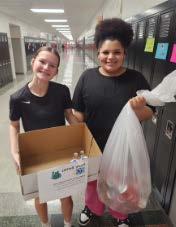
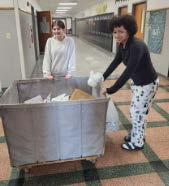
Kyleigh Bautista, an 8th grader and Builders Club
President at Austin Middle School, is leading with purpose. Through the creation of a schoolwide recycling program, she and her team are turning vision into action—demonstrating the power of student leadership to positively impact both school culture and community.
In Her Own Words: A Student Leader’s Perspective
This school year, as an 8th grader, I started a recycling program at Austin Middle School. As president of the AMS Builders Club, I was asked to come up with an idea for the environment group— something that would help the community.
I started by talking with Mr. Plasse, who oversees the high school recycling program. He showed me how the process works and helped me think through how we could implement something similar at the middle school level. From there, I gathered the materials and began setting everything up. Our teachers were very supportive and excited to make their classrooms more environmentally friendly.
Every other Thursday, my group and I collect recyclables from classrooms across the school. Then, every other Friday, we meet to reflect, plan next steps, and talk about additional environmentally friendly projects we can take on.
As some of us move on to high school next year, we are focused on passing this work on—making sure the recycling program continues through future student leaders.
Leadership in Action
■ Identifying a need within the school community
■ Seeking guidance and learning from existing systems
■ Taking initiative to launch a new program
■ Creating structures that ensure sustainability
■ Empowering others to continue the work
Connection to the School Leader Paradigm
This work reflects the heart of the School Leader Paradigm, empowering learners to lead, problemsolve, and create meaningful change. When students are given ownership and purpose, they do more than participate; they lead.
Coming Next
Austin Middle School students are expanding their impact even further through a Kids Caring and Sharing initiative supporting Riley Children’s Hospital—another powerful example of student leadership in action.
Photos and article provided by Austin Middle School Builders Club.
DISCOVER! INSTITUTE LEADERSHIP, TALENT DEVELOPMENT, AND GIFTED EDUCATION PRACTICES
ABOUT THE INSTITUTE
A professional development program for teachers, gifted specialists and coordinators, curriculum and professional development specialists, school counselors and psychologists, and school administrators, who are committed to advancing gifted education.
Supports growth in knowledge, practice, and leadership in gifted education.
Brings together educators, researchers, and leaders to collaborate, share ideas, and build professional networks.
WHY ATTEND?
Participants will have the opportunity to:
Learn practical strategies and tools that can be applied directly in classrooms or schools.
Engage with leading faculty, researchers, and practitioners through keynote and breakout sessions.
Expand professional networks across schools, districts, and universities.
Participate in a collaborative Hackathon and compete for a small grant opportunity to support initiatives in gifted programming at their schools.
PROGRAM DETAILS
Dates: June 1–3, 2026
Location: Indiana Historical Society–450 W Ohio St, Indianapolis, IN 46202
REGISTRATION FEES:
$750–Three-Day Registration
$300–Single-Day Registration
Registration includes lunch, refreshments, parking, and free admission to the museum exhibits at the Indiana Historical Society.
Early Bird Discount: 10% off if registered by the end of April 17.
Lucky 7: For every 7 people registered, the 8th person receives free registration.
Scholarships: Available on a first-come, first-served basis.
REGISTER TODAY! SCAN THE QR CODE OR VISIT PURDUE.EDU/CONFERENCES/DISCOVERINSTITUTE2026
KEYNOTES
DAY 1 JUNE 1, 2026
John and Hazel Feldhusen Distinguished Lecture in Gifted, Creative, and Talented Studies, Ann Robinson, Ph.D.,
Distinguished Professor and Founding Director of the Jodie Mahony Center for Gifted Education at the University of Arkansas at Little Rock.
Past President of the National Association for Gifted Children (NAGC), Arkansans for Gifted and Talented Education (AGATE), and the Arkansas Association of Gifted Education Administrators (AAGEA).
Talent Development—How Did We Get Here? What Do We Know? Where Are We Going?
DAY 2 JUNE 2, 2026
Michelle (Shelli) Frazier Trotman Scott, Ph.D.
Professor, Interim Assistant Dean, and Chair of the Department of Counseling, Higher Education, and Speech-Language Pathology at the University of West Georgia.
President-Elect of the National Association for Gifted Children (NAGC).
The Strategic Pause: Enhancing Leadership and Cultivating Clarity
DAY 3 JUNE 3, 2026
C. Matthew Fugate, Ph. D.
Provost and Chief Academic Officer at Elmbridge University.
Immediate President of the Texas Association for Gifted and Talented (TAGT)
The Many Dimensions of Giftedness: Rethinking How We See, Support, and Develop Talent
Coach Beyond: Supporting the Mental Health of Student-Athletes
Nick Elam, Ph.D. Ball State University
Student-athletes are not immune to the mental health challenges facing many other students in our PK-12 schools. Furthermore, student-athletes navigate circumstances that can present additional unique mental health challenges. Coaches play an important role in helping their athletes address these challenges. However, schools and youth sport organizations are struggling to attract and retain enough coaches to tend to these needs effectively. This is attributable in part to a lack of training provided to coaches related to youth development backgrounds, and also on the sheer number of athletes – over 60 million – participating in interscholastic and youth sports. (It should be noted that even this number might not always be on the rise. For example, in Indiana, the home of basketball, participation rates in girls high school basketball have decreased 40% since 2000, which could be indicative that student-athletes themselves do not see interscholastic sports as supportive of their needs to the extent they once did.)
This article provides information about the Indiana chapter of the Coach Beyond initiative, which provides free online and in-person trainings to coaches and school leaders that teach researchbased strategies for supporting young athletes’ mental health, life and leadership skill development, and personal growth, in part by promoting positive team climates and safe, inclusive, prosocial sport experiences. Coach Beyond: Indiana is a collaboration of Ball State University’s Department of Social Work, School of Kinesiology, and Teachers College. The initiative is well underway, having trained thousands of coaches in interscholastic and recreational settings throughout the state of Indiana. Courses include Supporting Student-Athlete Mental
Health, Mental Health 101, Youth Coaching, Mental Health Strategies for Athletic Performance, and Promoting Life Skills Development through Sport, and all courses are eligible for Professional Growth Points for any educator who completes one or more of them.
Courses were developed based in part on the findings of a needs assessment with over 400 respondents (all of whom were youth sport coaches, and 87% of whom were coaches specifically in interscholastic settings), where they indicated feeling less confident in identifying off-field stressors, preventing burnout, and addressing mental health concerns, and where they indicated greater interest in training that involves understanding mental health, performance anxiety, and life skill development. The assessment further highlighted the importance of engaging local school-based leaders and youth sport feeder programs in conversations around coaching training needs, and the importance of collaboration and the interdependent nature of school-based and local youth entities in supporting a youth sport ecosystem focused on positive youth development (Dorsch et al., 2022). Indiana-based trainings were developed not only by researchers at Ball State University, but a team of stakeholders including coaches, school leaders, and student-athletes themselves from various settings and regions throughout the state.
Backing up even further, Coach Beyond started as a partnership between LiFEsports at The Ohio State University, Ohio High School Athletic Association, and the Susan Crown Exchange (OSU LiFEsports, 2025), setting (and since meeting) The Million Coaches Challenge – an effort to train over one
million coaches nationwide. The success of this initiative can be credited largely to the foundational work of the Ohio team, but would not be possible without the additional efforts of states such as Indiana – which has led the second wave of the Coach Beyond initiative, and of additional states –including Kansas and Maryland – leading the next wave. It will be exciting to follow the progress of Coach Beyond as it continues to grow throughout the United States.
Now is the best time to connect with Coach Beyond for the coaches and student-athletes in your school. Anyone can take Coach Beyond courses online for free by following these steps: To register, participants should visit go.osu.edu/CBxUSCAH and select “Create new account with Program Code.” When prompted, they should enter the code SCsports, choose “N/A” for Options 1 and 2, and complete the
required account information. After confirming their account by email, coaches may log in to begin the courses. Upon completion, participants can email Dr. Nick Elam at npelam@bsu.edu to request a PGP certificate.
If you would like to host a free Coach Beyond inperson training, please contact Dr. Jerry Reynolds at jfreynolds@bsu.edu or (765) 285-1015. Thank you for all you do for your students and for your community!
References
Dorsch, T. E., Smith, A. L., Blazo, J. A., Coakley, J., Côté, J., Wagstaff, C. R., ... & King, M. Q. (2022). Toward an integrated understanding of the youth sport system. Research quarterly for exercise and sport, 93(1), 105-119.
OSU LiFEsports. (2025). OSULiFEsports. https://lifesports.osu. edu/
Kids Caring & Sharing Update
Susan Miles Program Officer, Kids Caring & Sharing TM Riley Children’s Foundation smiles@rileykids.org
Youth Philanthropy Changemakers Summit
As part of the Lilly Family School of Philanthropy’s Youth Philanthropy Initiative, the inaugural Youth Changemakers Summit for high school students and advisors will be hosted on the IU Indianapolis campus Friday June 12- Sunday, June 15, 2026. This summit will bring together youth philanthropy organizations from across the country to learn how to “Put the Fun in Fundraising”.
This will be a great opportunity for Riley partner high schools, both Kids Caring & Sharing and Dance Marathon model partners, interested in strengthening youth leaders engaged in their school’s philanthropy programs and help students learn more about philanthropy as an academic and career interest. The summit will provide a national convening space for youth philanthropy programs. Separate tracks for youth changemakers and their advisors will be offered. Youth attendees will participate in skills-based workshops that will prepare them for hosting a giving day in their own communities. In addition, they will participate in a networking event and The Amazing Race for Good! Advisors will learn about best practices, resources, fundraising, and more!
Conference highlights will include student-led panels, youth philanthropy awards, TED-style talks, fundraising workshops, and participation in The Amazing Race for Good, an interactive activity that teaches how philanthropy can be applied to careers. In addition to the summit, LFSOP will host a pre-summit social event at The Fowling Warehouse, at 5 p.m. on June 12.
There is no cost for workshop registration, while housing, transportation, and some meals will be attendee responsibility. Limited on-campus housing will be available for $150/person for double occupancy rooms. Registrations details are available through the YPI link above.
Indiana K-12 schools - making all the right moves for Riley kids!
Here are more recently announced gift totals from our amazing high school dance marathon fundraising partners who celebrated their culminating events in March.
3/07/2026 Owen Valley High School $10,406.50
3/12/2026 Pike High School $546.95
3/13/2026 Terre Haute South Vigo High School $31,627.26
3/13/2026 Noblesville High School $12,448.13
3/14/2026 Center Grove High School $15,000.54
3/14/2026 Franklin Community High School $2,263.97
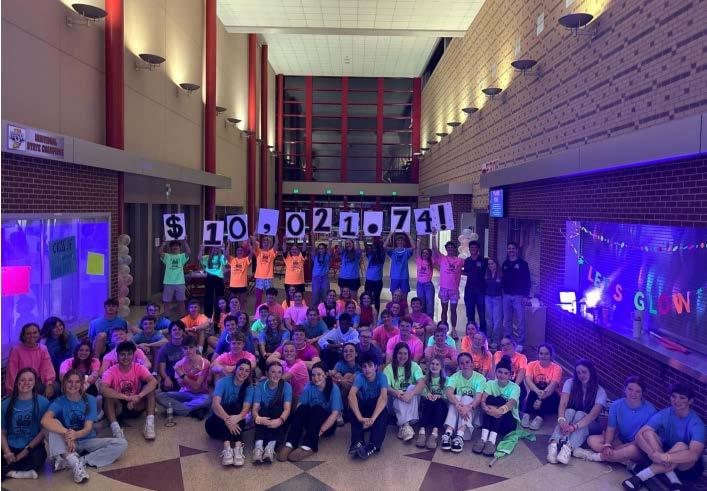
3/20/2026 Danville High School $10,021.74
3/27/2026 Carmel Middle School
3/27/2026 Hamilton Southeastern High School $42,358.26
3/27/2026 Eastern Greene High School $2,113.50
There is still time to show your support for Riley kids and families before the end of the school year through these upcoming Riley High School Dance Marathons!
4/02/2026 Norwell High School
4/03/2026 West Lafayette High School
4/03/2026 White River Valley High School
4/04/2026 Bloomington South High School
4/10/2026 Harrison High School
4/10/2026 Herron High School
4/10/2026 Plainfield High School
4/11/2026 Delta High School
4/11/2026 Yorktown High School
4/12/2026 Bloomfield High School
4/17/2026 Brebeuf Jesuit Preparatory High School
4/17/2026 Terre Haute North Vigo High School
4/17/2026 Franklin Central High School
4/18/2026 Brownstown Central High School
4/18 2026 North Daviess High School
4/18/2026 Edgewood High School
4/24/2026 Elkhart High School
4/25/2026 Bloomington North High School
5/01/2026 Cowan High School
5/02/2026 Huntington North High School
5/02/2026 Pike Central High School
5/03/2026 Martinsville High School
5/15/2026 Lawrence North High School
5/16/2026 New Palestine High School
5/16/2026 Lawrence Central High School
5/16/2026 Angola High School
These are just Indiana high schools hosting dance marathons for Riley kids and families this spring! There will be nearly 200 additional elementary, intermediate, middle, and high schools dressing up, jumping, running, reading, hosting coin wars and a variety of other activities all to benefit Riley
Hospital. What fun things will your school be doing to help raise funds for Riley kids?
Your school can sponsor a Red Wagon for families to use while at Riley with a $5,000 gift. Or, become a Red Wagon Booster with your $3,000-$4,999 gift.
Please be sure to have your school treasurers send your Riley gift for 2025-2026 to our secure bank lock box by June 1. Riley Children’s Foundation, P.O. Box 3356, Indianapolis, IN 46206-3356, Attn: KCS
Danville Community High School celebrates an amazing, double-their-goal, 2025-2026 Riley Dance Marathon total!
KGR Law Briefing
Séamus Boyce KGR Education Law & Policy
Keith Butler KGR Education Law & Policy
Interim Alternative Education Setting (IAES) a/k/a 45-Day Placements
In our April article may be past the first of the month, we nonetheless bring to your attention a case that should remind readers not to be “fooled” into using terminology with specific legal meanings. The New Jersey federal court case of Great Oaks Legacy Charter School v. M.V. on behalf of N.W. (D. N.J. 2026) emphasizes the importance of precise language in special education law, particularly when imposing exclusionary discipline.
Federal special education law permits disciplinary removal of a special education student from the educational environment for up to ten days prior to having to do a manifestation determination review (MDR). The ten days are cumulative if they constitute a “pattern” of removal. 511 IAC § 7-44-2 . If the behavior is a manifestation of the student’s disability, the school must return the student to the setting required by the IEP. 511 IAC § 7-44-5(e). Even with a “manifestation” determination, Schools can remove the student to a “Interim Alternative Education Setting” or “IAES” for up to 45 days if the situation involves the student possessing weapons or drugs, or inflicting a serious bodily injury. 511 IAC § 7-44-6. If, however, the MDR results in a finding that the behavior is not a manifestation of the students’ disability, the school can apply discipline in the same manner and duration as they would if the student did not have a disability. 511 IAC § 7-44-5(f). Regardless of whether there is a manifestation, after ten (10) cumulative days of removal in a school year, the school must provide services that allow the student to continue in the general education curriculum and make progress on IEP goals. 511 IAC § 7-44-5(f) and 511 IAC § 7-44-6(d).
The New Jersey case involved a student with an IEP based on the student’s special education disability of ADHD. The student brought 37 bullets to school including 30 illegal hollow-point rounds. The school initially suspended the student from school for a week “pending an investigation.” After a week of the student’s suspension, the school board met and conducted a disciplinary hearing where they decided to expel the student for the remainder of the school year. The school did not convene the MDR meeting until after the decision was made to expel the student but prior to the tenth day of removal. The MDR meeting resulted in a determination that the student’s actions were not a manifestation of his ADHD.
The parents appealed the expulsion to the school board.
The school board initially upheld the expulsion but later changed the expulsion to placement in an “interim alternative education setting” for the remainder of the year. The parents sued arguing that the term of the discipline was not compliant with the law because it was greater than 45 days permitted for an IAES. The administrative law judge agreed with the parents. The school appealed on the grounds that the MDR resulted in a finding of no manifestation and as such they can have a disciplinary removal for the same duration and manner as they would if the student did not have a disability, which could include removals for greater than 45 days. The court disagreed with the school because the school had labeled the removal as an IAES and therefore bound itself to the IAES 45-day limit.
The implication is that school board could have simply stuck with the expulsion without using the IAES label. Alternatively, the school board may have been able to use 45 days of removal as an IAES and the remainder of the school year beyond the 45 days as the expulsion not subject to the special ed law. But note in any scenario involving a special education student, schools are still obligated to serve their students after ten cumulative days of removal in the school year even during an expulsion for behavior not connected to the disability.
What is the legal lesson from this brief?
The timelines and other regulations related to disciplinary removal for special education students are specific and it is important to review and understand deadlines. Additionally, terminology in this process often has specific defined meaning with critical implications. Carefully consider the labels used before moving forward with removals and discipline involving special education students. Special education terms such as “IAES” should not be used to describe discipline in outside the special education process. In the Great Oakes example, they used the term interim alternative education setting in the disciplinary process which is what caused the violation. Similarly, avoid having disciplinary terminology such as “suspension” and “expulsion” in a behavioral intervention plan or the IEP generally.
We at the KGR Legal Help Desk are here to address these and any non-personal employment legal issues for IASP members. Until the next KGR Law Brief, we hope your April showers lead to May flowers!