How to Plan a Golden Triangle Tour in India
Planning your first trip to India can feel exciting—and a little overwhelming at the same time. With so many destinations, cultures, and experiences to choose from, it’s easy to get confused about where to begin. That’s exactly why the Golden Triangle route is considered the best starting point for first-time travelers. Covering Delhi, Agra, and Jaipur, this well-connected travel circuit offers a perfect mix of history, architecture, culture, and local experiences. From witnessing the sunrise at the Taj Mahal to exploring royal palaces in Jaipur and bustling markets in Delhi, this journey gives you a complete snapshot of India in a manageable timeframe. In this step-by-step guide, you’ll learn how to plan your trip efficiently—without stress, confusion, or common beginner mistakes.
What is the Golden Triangle Route? The Golden Triangle is India’s most popular travel circuit, forming a triangular route between three iconic cities: ● Delhi – The capital city, where ancient monuments coexist with modern infrastructure. Expect historic forts, street food, and vibrant markets.
● Agra – A city steeped in Mughal history, best known for the Taj Mahal but also home to impressive forts and tombs. ● Jaipur – The Pink City of Rajasthan, famous for royal palaces, colorful bazaars, and grand forts. What makes this route special is not just the destinations, but how well they complement each other. You experience Mughal grandeur, Rajput royalty, and urban India—all in one journey. From a travel planning perspective, the distances between these cities (200–300 km each) make it ideal for a short yet fulfilling trip.
Best Time to Plan the Trip Timing plays a crucial role in shaping your travel experience in India.
Winter (October to March) – Ideal Season This is widely considered the best time to explore the Golden Triangle. The weather remains pleasant, making sightseeing comfortable. It’s also perfect for photography, especially at monuments like the Taj Mahal and Amber Fort. Expert Tip: Book hotels and transport (December–January), as demand is high.
in
advance
during
peak
winter
months
Summer (April to June) – Challenging but Manageable Temperatures can rise above 40°C, particularly in Jaipur and Agra. While sightseeing becomes tiring during the day, early morning and evening visits are still possible.
Who should consider this? Budget travelers looking for discounted hotel rates.
Monsoon (July to September) – Underrated Option The landscapes become greener, and tourist crowds reduce significantly. However, humidity and occasional rainfall can affect travel plans. Travel Insight: Monsoon is great for photographers who enjoy dramatic skies and fewer crowds.
Ideal Trip Duration Choosing the right duration depends on your travel style, pace, and interests. ● 3 Days: Suitable only if you're short on time. Expect a fast-paced trip with limited exploration. ● 4 Days: A better option, but still slightly rushed. ● 5 Days: The most recommended duration for first-time travelers. Offers a comfortable balance between sightseeing and relaxation. ● 6–7 Days: Ideal for deeper exploration, cultural activities, and local experiences. Experience-Based Recommendation: If this is your first visit to India, avoid rushing. A slower pace allows you to absorb the culture, not just check off landmarks.
Step-by-Step Planning Guide
Step 1: Decide Travel Dates Start by selecting travel dates based on weather and your personal schedule. If possible, avoid peak summer unless you are comfortable with heat. Also, consider Indian festivals like Diwali or Holi—they can enhance your experience but may require early bookings.
Step 2: Choose Route & Transport There are multiple ways to travel between Delhi, Agra, and Jaipur: ● Private Car: Flexible, comfortable, and ideal for first-time visitors ● Train: Cost-effective and relatively fast, but requires planning and punctuality ● Flights: Limited practicality due to short distances Expert Insight: A private car with a driver is often the easiest and safest option, especially for international travelers unfamiliar with Indian transport systems.
Step 3: Select Accommodation India offers a wide range of accommodation options: ● Budget hotels and hostels ● Mid-range boutique hotels ● Luxury heritage properties (especially in Jaipur) Pro Tip: Stay in centrally located areas to save travel time and improve accessibility to attractions.
Step 4: Plan Experiences (Not Just Attractions) Instead of overloading your schedule with monuments, focus on meaningful experiences: ● ● ● ●
Sunrise visit to the Taj Mahal Rickshaw ride in Old Delhi Cultural evening in Jaipur Local food exploration
This approach aligns with modern travel trends and creates more memorable experiences.
Step 5: Book in Advance Advance booking helps you: ● Secure better prices ● Avoid last-minute stress ● Ensure availability during peak seasons Book your accommodation, transport, and major entry tickets ahead of time.
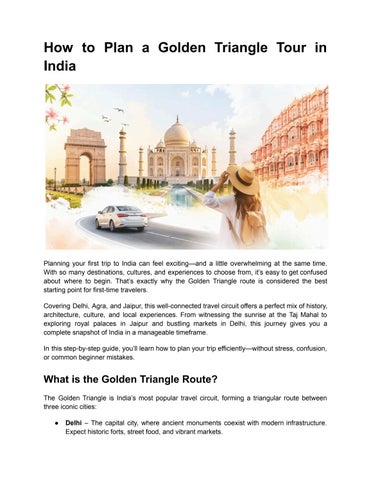
Must-Visit Highlights of India's Golden Triangle No Golden Triangle tour is complete without exploring the remarkable landmarks of Delhi, Agra, and Jaipur. Each destination offers a unique glimpse into India's royal heritage, Mughal architecture, history, and vibrant culture. From world-famous monuments to magnificent forts and lively traditional markets, these three cities promise an unforgettable travel experience.
1. Taj Mahal, Agra – A Timeless Symbol of Love The magnificent Taj Mahal is the highlight of most Golden Triangle itineraries and a UNESCO World Heritage Site. Built by Mughal Emperor Shah Jahan in memory of his wife Mumtaz Mahal, this extraordinary white marble mausoleum is admired for its elegant architecture, intricate marble inlay work, symmetrical gardens, and beautiful reflecting pools. Visitors can explore the monument's detailed craftsmanship, admire its changing appearance in different daylight conditions, and capture memorable photographs of one of the world's most celebrated architectural masterpieces.
2. Amber Fort, Jaipur – A Glimpse into Rajasthan's Royal Heritage Perched on a hill overlooking Maota Lake, Amber Fort is one of Jaipur's most impressive historical attractions. This magnificent fort showcases a beautiful combination of Rajput and Mughal architectural influences, with grand courtyards, ornate gateways, decorative halls, and intricate mirror work. Visitors can explore the famous Sheesh Mahal (Mirror Palace), admire the artistic details of the royal residences, and enjoy panoramic views of the surrounding Aravalli hills. Its impressive architecture offers a fascinating insight into Rajasthan's royal lifestyle and history.
3. India Gate, Delhi – A Landmark of National Pride Located in the heart of New Delhi, India Gate is an iconic war memorial dedicated to Indian soldiers who lost their lives during the First World War and other conflicts commemorated by the monument. Designed by Sir Edwin Lutyens, this impressive stone arch stands as an important symbol of remembrance and national pride. Visitors can walk around the landscaped lawns, appreciate its imposing architecture, and enjoy the lively atmosphere of the surrounding area, particularly during the evening when the monument is beautifully illuminated.
Beyond the Famous Monuments: Discover Local Culture The Golden Triangle experience extends far beyond its famous historical attractions. Each city has its own character, traditions, food culture, and shopping experiences that make the journey even more rewarding. ● Delhi: Explore the bustling lanes of Chandni Chowk, taste authentic Old Delhi street food, discover traditional spice markets, and experience the city's fascinating blend of historic and modern life. ● Agra: Browse local handicraft shops, discover the traditional art of marble inlay, explore colourful bazaars, and sample local favourites such as Agra's famous petha. ● Jaipur: Visit Johari Bazaar and Bapu Bazaar for traditional jewellery, textiles, handicrafts, colourful clothing, and souvenirs that reflect Rajasthan's artistic heritage. These experiences allow travellers to connect with local communities, discover regional flavours, and understand the cultural traditions that make each destination special. Make Your Golden Triangle Journey More Memorable Whether you are admiring the timeless beauty of the Taj Mahal, exploring the royal corridors of Amber Fort, or discovering Delhi's historic landmarks, the Golden Triangle offers a wonderful introduction to India's cultural diversity. Combining famous monuments with local markets, traditional cuisine, and authentic cultural experiences makes this journey much more than a sightseeing holiday.
Budget Planning Tips Understanding your budget helps you plan better and avoid overspending.
Budget Travelers ● Stay in hostels or budget hotels ● Use trains or shared transport ● Eat at local restaurants
Mid-Range Travelers ● 3-star hotels ● Private car transport ● Guided tours for major attractions
Luxury Travelers ● Heritage hotels and 5-star properties ● Private chauffeur-driven cars ● Personalized experiences Smart Saving Tips: ● ● ● ●
Travel during shoulder season Book in advance Compare prices across platforms Avoid tourist traps and overpriced guides
Travel Tips for First-Time Visitors If you're visiting India for the first time, these practical tips will help you travel confidently: ● ● ● ● ●
Dress modestly, especially at religious sites Carry bottled water and stay hydrated Use trusted transportation services Keep copies of important documents Use cash and digital payments (both are widely accepted)
Safety Insight: India is generally safe for tourists, but like any destination, awareness and basic precautions are important.
Common Mistakes to Avoid Many first-time travelers make avoidable mistakes. Here’s what to watch out for: ● ● ● ●
Overplanning: Trying to see everything in limited time leads to exhaustion Ignoring Travel Time: Distances may look short but can take longer due to traffic Choosing the Wrong Season: Extreme heat can impact your experience Last-Minute Bookings: Can result in higher costs and limited availability
Expert Advice: Focus on quality experiences rather than quantity.
Make Your Trip Easier While planning independently gives flexibility, it can also be time-consuming—especially if you're unfamiliar with India. If you prefer a hassle-free experience, you can explore curated travel options that handle transport, accommodation, and local guidance for you. If you prefer a ready-made experience, explore our Golden Triangle tour packages
Final Thoughts Planning a Golden Triangle journey doesn’t have to be complicated. With the right approach, you can create a smooth, enriching, and memorable travel experience. By focusing on the right season, balanced duration, practical transport, and meaningful experiences, you’ll not only explore India’s most iconic destinations—but also enjoy the journey along the way. Take your time, plan smartly, and most importantly—immerse yourself in the experience.