🍚 India Gate Foods | indiagatefoods.com
Hyderabadi vs Lucknowi vs Kolkata Biryani What Actually Sets Them Apart Source: indiagatefoods.com | Republished for reading & reference
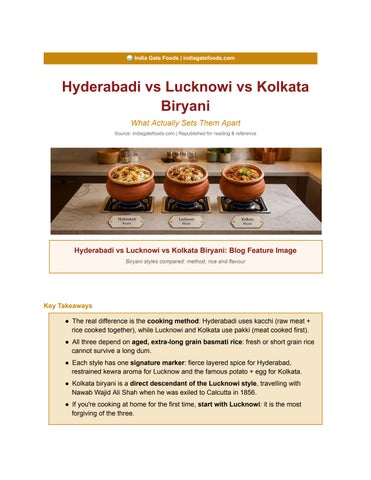
Hyderabadi vs Lucknowi vs Kolkata Biryani: Blog Feature Image Biryani styles compared: method, rice and flavour
Key Takeaways ● The real difference is the cooking method: Hyderabadi uses kacchi (raw meat + rice cooked together), while Lucknowi and Kolkata use pakki (meat cooked first). ● All three depend on aged, extra-long grain basmati rice: fresh or short grain rice cannot survive a long dum. ● Each style has one signature marker: fierce layered spice for Hyderabad, restrained kewra aroma for Lucknow and the famous potato + egg for Kolkata. ● Kolkata biryani is a direct descendant of the Lucknowi style, travelling with Nawab Wajid Ali Shah when he was exiled to Calcutta in 1856. ● If you're cooking at home for the first time, start with Lucknowi: it is the most forgiving of the three.
What is actually different between Hyderabadi, Lucknowi and Kolkata biryani? Most people assume it is just how spicy each one is: that is the least interesting part of the answer. The real story sits in three places: how the meat and rice meet each other, which rice you use and one defining ingredient that each city refuses to give up. This guide breaks down all three styles the way a veteran kitchen would explain them to a new cook. By the end, it becomes clear which one to order, which one to cook first at home and why the rice matters more than any masala.
Quick Comparison at a Glance Style
Method
Rice Used
Signature Ingredient
Spice Level
Hyderabadi
Kacchi (raw meat + rice under dum)
Aged extra-long basmati
Fried onions, mint, green chilli heat
High, layered
Lucknowi (Awadhi)
Pakki (meat cooked first)
Aged long grain basmati
Kewra, saffron, restrained whole spices
Mild, aromatic
Kolkata
Pakki (Lucknowi lineage)
Aged long grain basmati
Boiled potato & egg, hint of sweetness
Mild, slightly sweet
1. What Makes Hyderabadi Biryani Different?
Hyderabadi Biryani Kacchi Dum: Layered Saffron Rice with Bold Spices
Hyderabadi biryani is different because it is the only one of the three that commonly uses the kacchi method: where raw marinated meat cooks entirely in the sealed pot along with the rice. The meat is tenderised with curd, raw papaya paste, fried onions, mint and green chillies and everything depends on timing. If the rice finishes before the meat, the biryani fails. Because the dum runs long and hot, the rice takes real punishment in a Hyderabadi pot. This is where grain choice stops being a preference and becomes a rule: the style demands aged extra-long basmati, parboiled to about seventy percent, so it can absorb the meat juices for another 25–30 minutes without collapsing. The flavour profile is assertive: whole garam masala, fried onion sweetness, mint freshness and genuine chilli heat: all in distinct layers rather than blended into one gravy. When you dig into a proper Hyderabadi biryani, the top rice is fragrant and pale, the middle is streaked with saffron and the bottom is rich with marinade. That gradient is the whole point of kacchi cooking. Key Fact: A well-aged basmati grain lengthens to nearly twice its size under dum and still stays separate, while a fresh crop grain in the same pot turns to paste. That is not the masala's fault: it is the rice.
2. What Makes Lucknowi (Awadhi) Biryani Different?
Lucknowi (Awadhi) Biryani Pakki Dum: Refined & Aromatic with Kewra and Saffron
Lucknowi biryani is different because it takes the opposite philosophy: refinement over intensity. The meat is cooked separately in a spiced stock called yakhni until tender, then layered with partially cooked rice for a short, gentle dum. Because the meat is already done, the dum only has to marry the aromas: it runs cooler and shorter than a Hyderabadi dum. The Awadhi kitchens of the Nawabs believed that no single spice should announce itself. So instead of chilli heat, you get saffron, kewra water, a little cream or milk and whole spices used with restraint. First-time eaters sometimes call it bland. Give it a moment: the perfume builds as you eat and the meat is usually softer than anything a kacchi pot produces, because yakhni cooking is far more controlled. This is one of the reasons experienced cooks point beginners here first: the pakki method forgives small mistakes that a kacchi biryani will punish.
3. Kolkata Biryani: And Why the Potato?
Kolkata Biryani Pakki Dum: With the Famous Potato, Boiled Egg & Gentle Sweetness
Kolkata biryani is a child of the Lucknowi style with its own distinct identity. When the British exiled Nawab Wajid Ali Shah from Awadh to Calcutta in 1856, his kitchen came with him and the Awadhi pakki biryani evolved in its new home. The two changes that define it are the large boiled potato cooked in the biryani itself and a gentle sweetness in the rice: often with a light touch of rose and kewra water and a boiled egg on the plate.
The Potato Story: People love to repeat that the potato was added because the exiled court could not afford enough meat. Food historians are not fully convinced. Potatoes were a fashionable, almost exotic vegetable in Bengal at that time: the royal kitchen likely treated them as an addition of interest, not economy. Either way, the potato earned its place: it soaks up the stock and masala until many Kolkata locals will honestly say they fight over the aloo before the mutton.
The spicing is the mildest of the three, the colour is a soft yellow rather than deep orange and the overall effect is comfort rather than fireworks. If you serve a Kolkata biryani with properly elongated separate grains, a glistening potato and a halved egg: you have got it right.
4. Can the Same Rice Be Used for All Three Styles?
Best Basmati Rice for Biryani Aged Extra Long Grain: The Foundation of All Three Styles
Yes. All three styles were built around aged, extra-long grain basmati: that is the single thread that ties Hyderabad, Lucknow and Kolkata together. What changes between the styles is not the rice variety but how far you parboil it before dum: Style
Parboil Point
Reason
Hyderabadi
~70% cooked
Long kacchi dum; rice must absorb raw meat juices
Lucknowi / Kolkata
~80% cooked
Shorter, gentler dum; meat already fully cooked
Ageing matters because rice loses moisture as it matures over one to two years. Drier, aged grain absorbs stock evenly and elongates dramatically without turning sticky: exactly what a layered biryani demands.
5. Which Biryani Should You Try First? If you are ordering, choose by your palate. If you are cooking, choose by your confidence. Those are two different decisions and people mix them up all the time. ● Order Hyderabadi: if you want intensity, real chilli heat and dramatic layers. The boldest plate of the three. ● Order Lucknowi: if you prefer aroma over heat, or are introducing someone to biryani who doesn't handle spice well. ● Order Kolkata: if you want comfort and something distinct to talk about at the table. The potato and egg make it the most homely of the three.
For cooking at home, the recommended sequence is fixed:
Lucknowi first → Kolkata second → Hyderabadi last Pakki methods let the cook taste and correct the meat before it ever meets the rice, so first attempts are protected. Kacchi cooking gives no second chance: once the pot is sealed, the marinade, the parboil point and the flame have already decided the result. That one has to be earned.
India Gate Classic Biryani Masala Range Hyderabadi · Lucknowi · Kolkata: Authentic Spice Blends
Frequently Asked Questions Q: Is Hyderabadi biryani spicier than Lucknowi biryani?
Yes, noticeably. Hyderabadi biryani carries genuine green chilli heat along with layered whole spices, while Lucknowi biryani deliberately avoids sharp heat in favour of saffron, kewra and yakhni depth. The two styles represent opposite philosophies: Hyderabad celebrates intensity, Lucknow celebrates restraint.
Q: Why does Kolkata biryani have potato in it?
The potato entered when Nawab Wajid Ali Shah's exiled Awadhi kitchen settled in Calcutta after 1856. Potatoes were a prized novelty vegetable in Bengal then, so it was likely added for interest as much as economy. Today the stock-soaked potato is the style's defining feature.
Q: What is the difference between kacchi and pakki biryani?
Kacchi biryani layers raw marinated meat under parboiled rice so both cook together in one sealed pot: deep, integrated flavour but very little room for error. Pakki biryani cooks the meat fully first, then layers it with rice for a short dum. Hyderabadi is kacchi; Lucknowi and Kolkata are pakki.
Q: Can the same basmati rice be used for all three biryani styles?
Yes. All three styles were built on aged, extra-long grain basmati. What changes is the parboil point: around 70% cooked for Hyderabadi kacchi dum and closer to 80% for the gentler Lucknowi and Kolkata dum.
Q: Which biryani style is easiest to make at home?
Lucknowi is easiest for beginners: the pakki method lets you fully cook and taste the meat before layering, so mistakes are caught early. Kolkata follows the same forgiving method with the potato added. Hyderabadi kacchi biryani is the hardest.
Originally published by India Gate Foods (KRBL Limited) | indiagatefoods.com Click any image link to view the original image or page on the India Gate Foods website.