FILTERING NATURAL RESOURCES
AN ABUNDANCE OF WILDFIRES, DROUGHTS & ENERGY SHORTAGES
HIGHLIGHT OPPORTUNITIES FOR FILTRATION INNOVATION
AIR FILTRATION
Dualing Hazards to Health from Wildfire Smoke

GAS TURBINE PERFORMANCE
Why Filters Cannot Fail
WATER MANAGEMENT
Extreme Decentralization Is a Viable Option
filtnews.com Issue 5 | 2023
2023
PREVIEW
FILTXPO
SHOW
TM
Creating a cleaner world.
At H&V, the sky ’s the limit for cleaner air, water and energy.
OUR FILTRATION BRANDS
NanoWave®
Technostat®
NanoWeb™
Trupor™
AlphaPerm™
OUR TECHNOLOGIES
Molecular
Cellulose
Composites
Microfiber Glass
Nanotechnology
Meltblown
Electret
Membrane
OUR INDUSTRIES
Appliance Filtration
Cleanroom
Mobility
Indoor Air Quality
Industrial Filtration
Process Liquids
Mechanical Power
Respiratory & Medical
H&V is a global leader in filtration and energy storage solutions. Our advanced materials are used in nearly every industry and touch every aspect of modern life – helping to make air healthier, water cleaner and energy greener.


For more than 200 years, H&V has been known for continuously innovating to meet the world’s needs. Today, with more than 100 scientists and 13 R&D and manufacturing facilities throughout the Americas, Europe and Asia, we’re able to serve the unique requirements of our customers efficiently, accurately and cost effectively – wherever they are.
See for yourself what makes H&V a valuable partner and a true worldwide leader at booth #401 and at hollingsworth-vose.com.

™ Visit us at FiltXPO 2023, Booth #401
hollingsworth-vose.com


2 IFN ISSUE 5 2023 CONTENTS Corporate Profile A2Z Filtration Specialties Solution Center Showcasing Solutions for Success Berry Global Showfloor Showcase: FiltXPO™ 2023 Showcasing Solutions for Success Beverlin Specialty Tube Chase Machine & Engineering Inc. Hollingsworth & Vose JCEM Engineering Manufacturing PSE – Pleating Systems & Equipment Dualing Hazards to Your Health from Wildfire Smoke By Mark Davidson Extreme Decentralization By Will Sarni Gas Turbine Performance: Why Filters Cannot Fail By Dr. Iyad Al-Attar Biden Administration Bets the House on Direct Air Capture By Adrian Wilson, International Correspondent, IFN Show Preview: FiltXPO™ 13 12 2023 | VOL 42 | ISSUE 05 30 Viewpoint When Clean [insert resource here] Is Gone By Caryn Smith, Chief Content Officer & Publisher Tech Spotlight Parker Hannifin Starts Operating New Test Rig Tech Notes New Technology Briefs Tech Talk Back to School By Matt O’Sickey, Director of Education & Technical Affairs, INDA True Cost Expanded Program to Reduce Filtration True Costs While Increasing Supplier EBITDA By Bob McIlvaine, President, The McIlvaine Company M&A Insights Competitive M&A Sell-Side Process Generally Leads to Outlier Results for the Owner By Len LaPorta, Managing Director, Wiley Bros.-Aintree Capital, LLC Movers & Shakers Industry News & Notes 26 FEATURES 14 20 30 26 34 38 6 42 8 44 46 40 10 COLUMNS & DEPARTMENTS
iStock/Benny
34 40
Cover:
Marty/TWildlife

INDA mosickey@inda.org
+1 919.459.3748
Jennifer
Molecular Filtration Segment Manager, Western U.S./Mexico Camfil USA, Inc.


Water Foundry will@waterfoundry.com +1 720.341.7272
Custom Converting and Automation Equipment for the Filtration Industry
EQUIPMENT:
• Pleat Welding
• Ring Welding
• Laminators (Ultrasonic/ Thermal/ Adhesive)

• Slitters (Ultrasonic/ Laser/ Mechanical)
• Traverse/ Spiral winders
• Hollow fiber/ Memb rane Lines (Lab/ Pilot Scale)
• Custom Mac hines
TECHNOLOGY:
• Ultrasonics
• CO2 Lasers
• RF Welding
• Hot Air/ Wedge








• Band Sealing
• Adhesive Dispensing
• Impulse Welding
Visiting Academic Fellow School of Aerospace, Transport, and Manufacturing Cranfield University Iyad.Al-Attar@cranfield.ac.uk
CALL FOR CONTRIBUTORS
International Filtration News is actively seeking contributed technical articles from qualified industry professionals and those allied to the filtration industry. If you would like to pitch an article for publication in IFN, contact Caryn Smith at csmith@inda.org or +1 239.225.6137.
We employ our 68 years of web handling experience to benefit our customers. Contact Chase Machine today for your equipment needs!
4 IFN ISSUE 5 2023 CONTRIBUTORS | ISSUE 5 2023
Bob McIlvaine President, The McIlvaine Company +1 847.784.0013 rmcilvaine@mcilvainecompany.com
Caryn Smith Chief Content Officer & Publisher, INDA Media csmith@inda.org
Len LaPorta Managing Director Wiley Bros.-Aintree Capital, LLC llaporta@wileybros.com
ULTRASONIC LAMINATORS HOT MELT LAMINATORS
ULTRASONIC RING WELDERS
� se\<"µ,essed\ iitJICl.�E MA CHINE & ENGINEERING, INC. ._...__. 324 Washington Street, West Warwick, RI (401} 821-8879 • www.chasemachine.com
Matt O’Sickey Director of Education & Technical Affairs,
Dr. Iyad Al-Attar
Will Sarni Founder and CEO of
Webb
Mark Davidson Marketing and Technical Materials Manager Camfil USA, Inc. mark.davidson@camfil.com
Adrian Wilson International Correspondent, IFN +44 7897.913134 adawilson@gmail.com

CSMITH@INDA.ORG +1 239.225.6137
When Clean [insert resource here] Is Gone
Do not, my friends, become addicted to water. It will take hold of you, and you will resent its absence!
—Immortan Jo, Mad Max: Fury Road
Well, that may be an outlandish headline, but it probably got your attention. The quote, though, it might have some truth in it. I love a good sci-fi movie, like Mad Max (1980) and Mad Max: Fury Road (2015). These cult classic films explored scarcity of resources we take for granted. At the time, these films were outlandish fiction. Now, they might have some resonating undertones.
Headlines surrounding the Colorado River’s historically low water supply, tell the story: “The water wars of the future are here today – Seven thirsty states, including California, are fighting over the dwindling waters of the Colorado River,” says the University of Southern California News. The article says, “The fate of the Colorado now depends on the states’ [Arizona, California, Colorado, New Mexico, Nevada, Utah and Wyoming] ability — and willingness — to agree on a plan to slash water consumption and equitably distribute what’s left.”
The amount of water on the earth is the same as it always has been, experts say. What has changed is the number of people requiring access to the resources. There is a correlation.
The top fastest growing states in 2023 according to the U.S. Census Bureau – measuring growth from 2010 to 2023 in percentages – are Utah (#1 by 23.88%), Nevada (#5 by 19.45%), Colorado (#6 by 19.25%), and Arizona (#9 by 15.45%) [Source: worldpopulationreview.com]. California is losing residents,
yes, but is still the most populated state in the U.S.
“Extreme Decentralization” (page 26) explores water scarcity looking at the American West’s water problem in a piece by Will Sarni. He is the founder/CEO of water strategy consultancy, Water Foundry, and the CEO of the Colorado River Basin Fund, the first placed-based water-focused investment fund in the U.S. that invests in exponential technology solutions to address water scarcity, quality and equitable access.
My thoughts go to filtration. While nearly 70 percent of the world is covered by water, only 2.5 percent of it is fresh. The rest is saline and ocean-based. Even then, just 1 percent of our freshwater is easily accessible. Desalination looks attractive as a filtration solution, but isn’t without its own consequences.
Filtration experts – you are smarter than me; feel free to chime in. Email your thoughts on water to csmith@inda.org! Your letter may run in our new “Letters to the Editor.”
Also in this issue is an interesting article on air filtration (page 20) by Mark Davidson on filtering contamination of wildfires. And, on page 30, Dr. Iyad Al-Attar explores “Gas Turbine Performance: Why Filters Cannot Fail.” I hope you enjoy the read!
Caryn Smith

Chief Content Officer & Publisher, INDA Media, IFN
International Filtration News Editorial Advisory Board
R. Vijayakumar, Ph.D., Chair
AERFIL
Tel: +1 315-506-6883
Email: vijay@aerfil.com
Rahul Bharadwaj, Ph.D.
Lydall Performance Materials
Tel: +1 603-953-6318
Email: rbharadwaj@lydall.com
Tom Justice, CAFS, NCT
ZENE, LLC Filtration
Tel: 757-378-3857
Email: justfilter@yahoo.com
James J. Joseph
Joseph Marketing
Tel/Fax: +1 757-565-1549
Emai: josephmarketing120@gmail.com
Wenping Li, Ph.D.
Agriltech Research Company
Tel: +1 337-421-6345
Email: wenpingl@agrilectric.com
Ernest Mayer, Ph.D.

E. Mayer Filtration Consulting, LLC
Tel: +1 302-981-8060
Email: ernestmayer6@gmail.com
Robert W. McIlvaine
The McIlvaine Company
Tel: +1 847-784-0013
Email: rmcilvaine@mcilvainecompany.com
Thad Ptak, Ph.D.
TJ Ptak & Associates
Tel: +1 414-514-8937
Email: thadptak@hotmail.com
INDA, Association of the Nonwoven Fabrics Industry. +1 919.459.3700 info@filtnews.com | www.filtnews.com News & Press Releases to IFNNews@inda.media
International Filtration News covers the topics and technologies that will shape the future of filtration and separation. Using subject matter experts from all parts of the industry, IFN is the leading source for the dialogues, debates and innovations across the full spectrum of filtration and separation applications and processes.
If you would like to utilize your expertise to help shape the content in the IFN , consider applying for the IFN Editorial Advisory Board. We welcome participation through input on trends and innovations, new story ideas and overall thought leadership. This is a collaborative board that meets quarterly to discuss the state of the industry. Send an email to Caryn Smith at csmith@inda.org for consideration.
6 IFN ISSUE 5 2023
VIEWPOINT CONTENT | EDITORIAL CHIEF CONTENT OFFICER Caryn Smith Driven By Design LLC csmith@inda.org | +1 239.225.6137 EDITORIAL & PRODUCTION MANAGER Ken Norberg ken@filtnews.com | +1 202.681.2022 ART DIRECTOR Julie Flynn INTERNATIONAL CORRESPONDENT Adrian Wilson ADVERTISING | SALES PUBLISHER Driven By Design LLC advertising@inda.media | +1 239.225.6137 ADVERTISING COORDINATOR Vickie Smead vsmead@inda.org +1 919 459 3700 x 3720 AUDIENCE | CIRCULATION CIRCULATION MANAGER inda@stamats.com | +1 800.553.8878 INTERNATIONAL FILTRATION NEWS (ISSN: 1078-4136x), is published bi-monthly by INDA, Association of the Nonwoven Fabrics Industry, +1 919.459.3700. Subscription price is $125 per year for non-U.S. subscribers. Periodicals postage paid at Novi, MI, and additional mailing offices. POSTMASTER: Please send address changes to International Filtration News, PO Box 158 Cedar Rapids IA 52406-0158 USA. International Filtration News is published by INDA Media, the B2B publishing arm of
MISSION
TM
GESSNER PROVIDES FILTRATION SOLUTIONS FOR THE MOST COMPLEX CUSTOMER CHALLENGES AND TAKES PRIDE IN ITS MISSION TO PROTECT PEOPLE, MACHINERIES, AND THE ENVIRONMENT






Leveraging the combined knowhow and expertise of former SWM & Neenah after the merger, we now present a broader portfolio of filtration solutions for diverse applications under the GESSNER brand.
Our highly engineered papers, films, nets, nonwovens, cores, tubes, and machined parts are designed and manufactured for a variety of industries, such as Transportation Filtration, Water Filtration, Air Filtration, Industrial Processes, and Life Science.

FILTER MEDIA
PLEAT SUPPORT
FEED SPACER
October 10th - 12th, 2023
www.gessner-filtration.com
gessner@mativ.com
CORES, TUBES & SLEEVES
• Delpore™, NeenahPure®, NeenahGuard® , & NeenahSilence® Meltblown Nonwoven
• Delpore™ Thermobond Nonwoven
• Alphastar™ Triboelectric Nonwoven

• Cranemat® Synthetic Wetlaid Nonwoven
• Craneglas® Glass Wetlaid Nonwoven
• GESSNER® Cellulose Wetlaid & Nonwoven Composites


• Naltex™ Extruded Diamond Nettings
• Conwed™ Extruded Square Nettings
• Delnet™ Apertured Films

• Naltex™ Extruded Diamond Nettings

• Conwed™ Rigid Tubes & Cages
• Naltex™ Extruded Sleeves
• Coretec™ Tubing
• Coretec™ Machined Parts

our team at FiltXPO in Chicago, IL
Meet
Booth #208
Parker Hannifin Starts Operating New Test Rig
A Major Milestone for Fuel Cell Technology
Parker Hannifin’s filtration business has reached a major milestone on the journey towards mass production of hollow fiber membrane technology for fuel cell humidification applications, a vital step towards reducing carbon emissions. By enabling optimal moisture levels, hollow fiber membrane technology allows fuel cells to last longer and to perform more efficiently and reliably. It supports the transition from fossil fuels, accelerating the shift to fuel cell electrical vehicles in the next five years.
Burkhard Hartmann, R&D Officer at Parker’s Engine Mobile Filtration Europe (EMFE) Division, said: “The results speak for themselves: This has been an outstanding collaboration with the Fraunhofer Institute. It moves us all towards better, more efficient, more reliable fuel cell electrical vehicles, a vital step towards a cleaner, better tomorrow.”
Dr. Gunther Kolb, representative from the Fraunhofer Institute for Microengineering and Microsystems, said: “Fuel cell technology is key to reduce emissions worldwide. The
Dr.
Dr.
for fuel cell humidification applications. The partnership was expected to run for up to two years and cover efficiency evaluations of existing Parker-designed fuel cell humidifiers; development and use of a specialized test rig; and performance simulations to identify the effects of fiber length, diameter and permeability on the humidifiers.
Parker first introduced membrane fibers for gas separation in the 1980s and is now using this knowledge to develop the next generation of fuel cell humidifiers.
Parker Hannifin is a Fortune 250 global leader in motion and control technologies. For more than a century, the company has been enabling engineering breakthroughs that lead to a better tomorrow. Learn more at www. parker.com.
Parker announced the successful completion of the specialized test rig which is to validate products by Parker OEM (Original Equipment Manufacturer) customers. This new technology enables Parker to test the membrane technology in ways that are much more advanced and aids in developing robust system solutions for fuel cells. It was produced in partnership with the Fraunhofer Institute for Microengineering and Microsystems (IMM), a Germany-based non-profit for scientific research.
partners are confident that the hollow fiber membrane technology will be further improved, the service life of the fuel cell humidifiers will be extended, and their efficiency will be increased for the customers.”
It was last year that Parker Hannifin’s Engine Mobile Filtration EMEA Division (EMFE) announced they were partnering with Germany’s Fraunhofer Institute for Microengineering and Microsystems (IMM) to further develop and test new proprietary hollow fiber membrane technology designed
The Fraunhofer Gesellschaft, based in Germany, is the world’s leading applied research organization. Prioritizing key future-relevant technologies and commercializing its findings in business and industry, it plays a major role in the innovation process. A trailblazer and trendsetter in innovative developments and research excellence, it is helping shape our society and our future. Founded in 1949, it currently operates 76 institutes and research units throughout Germany. Over 30,000 employees, predominantly scientists and engineers, work with an annual research budget of €2.9 billion. Fraunhofer generates €2.5 billion of this from contract research.
parker.com
www.fraunhofer.de/en
For details on how to submit your company’s technology for consideration as a “Technology Spotlight” in IFN , contact Ken Norberg at ken@filtnews.com or +1 202.681.2022.
8 IFN ISSUE 5 202 3
SPOTLIGHT TECH
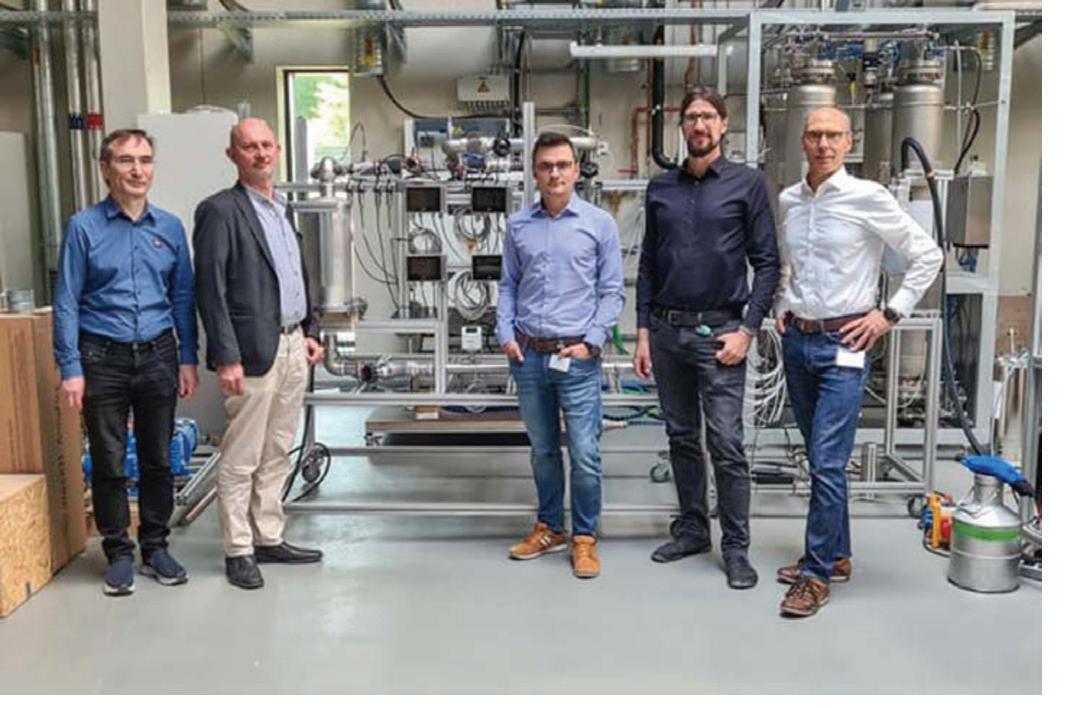
t Parker Hannifin’s test rig and the development team, left to right:
Valerii Danilov, Fraunhofer Institute, Simulations;
Gunther Kolb, Fraunhofer Institute, Head of Business Division Energy; Robert Jozsa, Parker EMFE, Product Manager Alternative Technology; Dr. Jonas Schramm, Fraunhofer, Hydrogen Technology Group; and Burkhard Hartmann, Parker EMFE R&D Stuttgart Officer. Parker Hannifin

Put your trust in us Filtration Products Increased demand for better indoor air quality requires highly efficient solutions. For unmatched quality and expertise, choose the leader in nonwoven technology–Kimberly-Clark Professional™ Find out more at KCProfessional.com ®/™ Trademarks of Kimberly-Clark Worldwide, Inc. or its affiliates. Marques de commerce de Kimberly-Clark Worldwide, Inc. ou de ses sociétés affiliées. © KCWW. T23T88 5/23 Visit us at the You can sample our filter media material at Booth 220.
NOTES TECH
Aquaporin and Singapore’s PUB Work on Biomimetic Low-Energy RO Membrane Demo
Danish company Aquaporin A/S, an innovative water technology company dedicated to rethinking water filtration with biotechnology, announced that Aquaporin and PUB, Singapore’s National Water Agency, are partnering to develop the world’s first lowenergy Aquaporin Inside ® membrane demonstration for NEWater.
A total of 504 CLEAR Brackish Water Reverse Osmosis (BWRO) modules from Aquaporin will be implemented at one of PUB’s NEWater production facilities, with a capacity of 1.7 million imperial gallons per day. This will demonstrate the Aquaporin Inside® technology’s ability to save energy and validate the technology for implementation in PUB’s future membrane replacement projects.
The Aquaporin Inside® CLEAR products feature the world’s first and only biomimetic BWRO membranes. The Aquaporin Inside® technology inspires itself from nature’s way of filtering water by incorporating biotech-based protein water channels into a filtration membrane. www.aquaporin.com
New Melt-Blown Polyester Depth Filter Cartridges from Eaton

Eaton’s LOFTOP™ and LOFTREX M™ depth filter cartridges ensure the safe and efficient filtration of demanding media such as process chemicals, fine chemicals, acids, alkalis and solvents, as well as paints, lacquers and resins. The filtration division of the energy management company Eaton is now expanding its range to include filter cartridges that use polyester as the filter material for particularly high chemical resistance. The new melt-blown polyester depth filter cartridges are not only suitable for a variety of aggressive media, but also provide an alternative to filter cartridges that are bonded with phenolic resin. The entire LOFTOP and LOFTREX M filter cartridge range is now available with polypropylene (PP), polyamide 6.6 (PA) or polyester (PES) filter material.
NUS Scientists Develop a New Class of Artificial Water Channels for More Efficient Industrial Water Purification

A team led by scientists from the National University of Singapore’s (NUS) Department of Biological Sciences in collaboration with the French Centre for Scientific Research (CNRS) has successfully synthesized a special protein-mimic that can self-assemble into a pore structure. When incorporated into a lipid membrane, the pores permit selective transport of water across the membrane while rejecting salt (ions). These proteinmimics, known as “oligourea foldamers,” represent an entirely new class of artificial water channels (AWC) that can be used to improve the energyefficiency of current methods of industrial water purification.
Current methods of water purification involve the use of reverse osmosis and membrane distillation technologies. Reverse osmosis, however, is a highly energy-intensive process as high pressures are needed to pass seawater or wastewater through a series of semi-permeable membranes to remove salts and other pollutants. In light of climate change and the growing demand for fresh water, there is an impetus to develop more energy-efficient, water-selective membranes for large-scale desalination purposes. This invention represents an excellent contribution to these efforts. The relatively high water permeability of the pores formed by these oligourea foldamers suggests that overall energy requirement for water purification can potentially be reduced. www.nus.edu.sg
The filter cartridges are available in different lengths and with all common adapter configurations and sealing materials so that they can be used safely in a wide range of applications and filter housings. LOFTOP depth filter cartridges offer absolute retention rates from 0.50 to 120 μm with a retention efficiency of 99.98%. LOFTREX M depth filter cartridges offer nominal retention rates from 1 to 150 μm with a retention efficiency of 95%. www.eaton.com/filtration
10 IFN ISSUE 5 202 3
p A team of scientists from NUS comprising (left to right) Prof. Prakash Kumar, Prof. Manjunatha Kini, Dr. Li Jianwei and Dr. Pannaga Krishnamurthy, has developed a new class of artificial water channels for more efficient industrial water purification. NUSNews
Aquaporin membrane
FreshAir Announces Smart Sensors That Detect Mold Conditions in Military Barracks


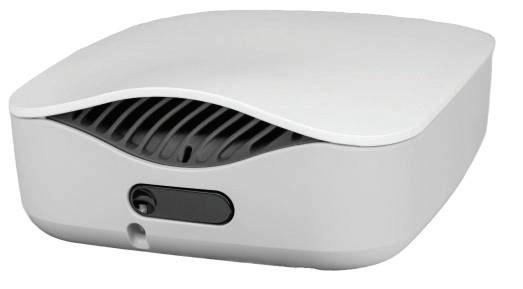
FreshAir, an industry leader in the development of sensors to detect and alert for hazardous chemicals, announced new Smart Sensors that can track conditions that allow mold to grow, as well as monitor for and detect tobacco and marijuana smoking. The system provides real-time alerts to building and operations managers, enabling corrective action before mold growth, significantly improving living conditions in military barracks and housing. Using FreshAir’s devices will result in cleaner and safer military barracks and housing, as well as reduce long-term smoking-related medical costs.

FreshAir’s Wi-Fi devices provide real-time monitoring and send alerts of mold conditions and smoking incidents to clients with scientific proof, including detailed, time-stamped charts. The devices detect specific components of tobacco and marijuana smoke with patented, polymer sensor technology (PolySens™), the only technology that can monitor for and specifically detect tobacco smoke and marijuana smoke. FreshAir devices are used at hundreds of locations across the United States, including apartments, hotels, housing authorities, schools and other multi-unit, professionally managed properties. The new patented mold sensor provides an effective way for proactively monitoring
spaces, enabling building operators to address conditions before mold growth can occur.

FreshAir’s detection devices are easy to install; they plug into outlets and are secured with tamper-proof screws. The WiFi-enabled detection devices connect to building networks to communicate 24/7 with FreshAir’s monitoring platform. Each device can monitor up to 500 square feet of open space.
When potential mold conditions or smoking is detected in a monitored space, FreshAir sends users an immediate alert via email, computer desktop, and/or mobile phone push notification. Smoking alerts come with timestamped reports of the incident in the monitored space, providing the scientific proof needed to enforce no-smoking policies. FreshAir’s Mobile App and online portal allow facilities teams to access alert history, stay updated on device information, and log additional evidence of smoking to be archived in the account’s alert history. www.freshairsensor.com

ISSUE 5 2023 FILTNEWS.COM 11
AVAILABLE NOW! High-performing filtration solutions made in the U.S. specialties@berryglobal.com | 1.877.662.3779 | berryglobal.com Contact your Berry sales rep or scan the code for product details, specs, and samples. WWW.EXPAC.COM (909) 481-8800 Developers of X-Mesh® for filters. U.S. Patent 8,696,781 MicroForm® micromesh for specialized applications. Three strategically located U.S.-based plants: California, Georgia, Texas. State-of-the-art tooling facilities with an onsite Engineering & Design Team. Customized specifications for your needs. YOUR PARTNER FOR HEALTHY AIR QUALITY Employee-owned and North America’s largest manufacturer of light gauge expanded metals for air filters. BOOTH #309 WALLNER EXPAC ENGINEERS INNOVATORS MANUFACTURERS C M Y CM MY CY CMY K ai169273452523_2023 Filtration News- QTR PG Vertical Ad-SEP-OCT APPROVED.pdf 1 8/22/2023 1:02:06 PM
and Housing
p FreshAir smart sensors that detect mold conditions.
The Largest Range of End Caps & Components
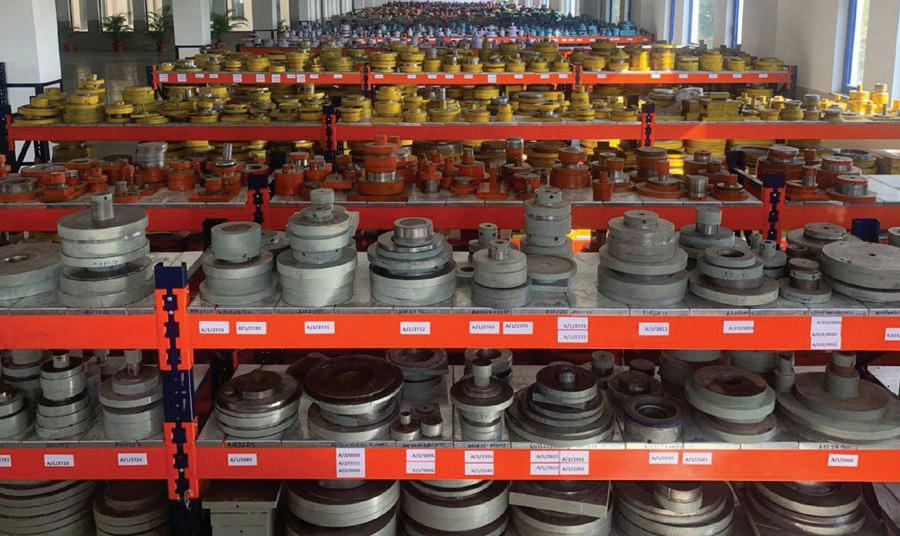
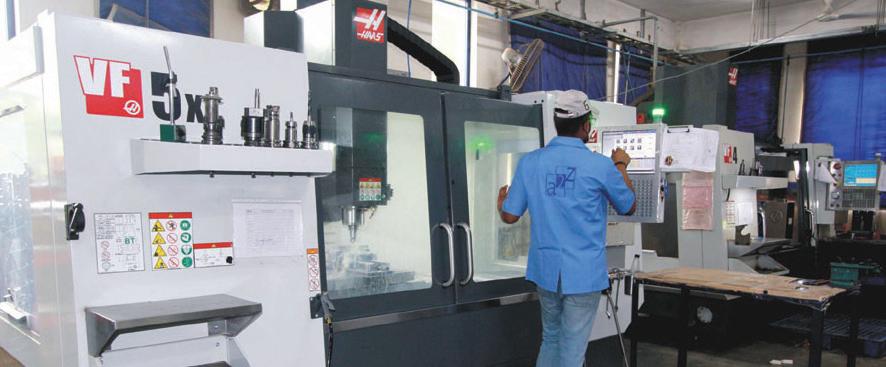
A2Z Filtration Specialities manufactures a large variety of end caps, components and parts to suit the assembly of all types of filters. A2Z supplies products in sheet metal duly stamped, machined, cast as well as injection molded parts. With a range of over 6500-part numbers, we offer the broadest range of end caps on earth. Only the latest version of SolidWorks is used to design all tooling. The ability to manufacture our own tooling with HAAS CNC machines allows us to quickly turn around parts from concept to finished product in less than three weeks.
A2Z Supplies
• End caps – stamped, spun and fabricated.
• Expanded metal is available as cut-tosize sheets as per the specification of the customers or in coils in galvanized steel, stainless steel and aluminum.
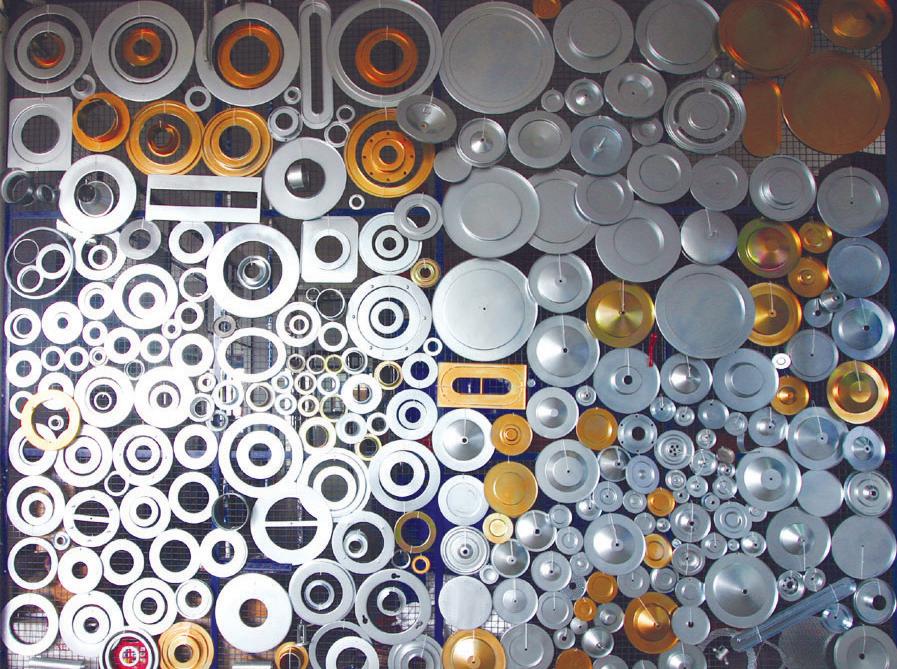
• Injection molded parts can be supplied in nylon (any grade), ABS, polypropylene silicon, polyester and polycarbonate materials. The above components can be supplied in various grades including FDA-approved.
• Machined parts in materials such as steel, stainless steel, aluminum, Brass and nylon.
• Synthetic rubber grommets, gaskets, sponge rubber air filter molded sealing rings (endless/jointless). Available in EPDM, natural rubber, and silicone among other materials as per requirement.
• Weld mesh cages of any size or configuration.
• Deep drawn housings and threaded top cover plates for spin-on filters.
• Perforated sheets (tin, mild steel, zinc plated or paper board)
• Springs
The picture top right showcases over 50,000 square feet of area used for storage of over 6,500 tools and dies.
Infrastructure for Quick Turnaround of Your Needs
1. Over 11 solid workstations for design
2. A tool room is spread over 75,000 square feet and consists of seven Haas CNC machines, over 14 mechanical lathes, surface grinders, milling machines. At any given time A2Z carries over 500 tons of various grades and thicknesses of stainless steel and steel materials.
3. We have spot welding, projection welding, MIG welding, TIG welding,
capacitor discharge projection welding and stud welding machines.
4. We have over 60 pneumatic power presses, hydraulic presses, double action presses with the range from 10 tons to 250 tons spread over 100,000 square feet. We can offer a quick turnaround of your orders.
5. We also have a turret punch press and CNC hydraulic press brake machines to manufacture a large range of frames and punched parts.
6. Four dedicated high-speed automated expanded metal lines to produce expanded metal.
7. State-of-the-art inspection system such as Carl Zeiss – CMM – Mitutoyo Contracer and various measuring instruments from Mitutoyo.
A2Z is the go-to supplier for all your component needs. A2Z also has the ability to provide supplies through thirdparty warehouses in North America.
For further information, please visit our website – www.a2zfiltration.com or contact us at info@a2zfiltration.com

12 IFN ISSUE 5 202 3
ADVERTORIAL | CORPORATE PROFILE
p HAAS CNC Machines for tooling.
p Over 50,000 square feet of area used for storage of over 6,500 tools and dies.
q With a range of over 6,500 part numbers.
Innovation for the World. Solutions for You.
At Berry, we leverage our unmatched global capabilities, sustainability leadership, and deep innovation expertise to serve customers of all sizes around the world. Harnessing the strength in our diversity and industry leading talent of 47,000+ global employees across more than 300+ locations, we partner with customers to develop, design, and manufacture innovative products with an eye toward the circular economy. The challenges we solve and the innovations we pioneer benefit our customers at every stage of their journey.
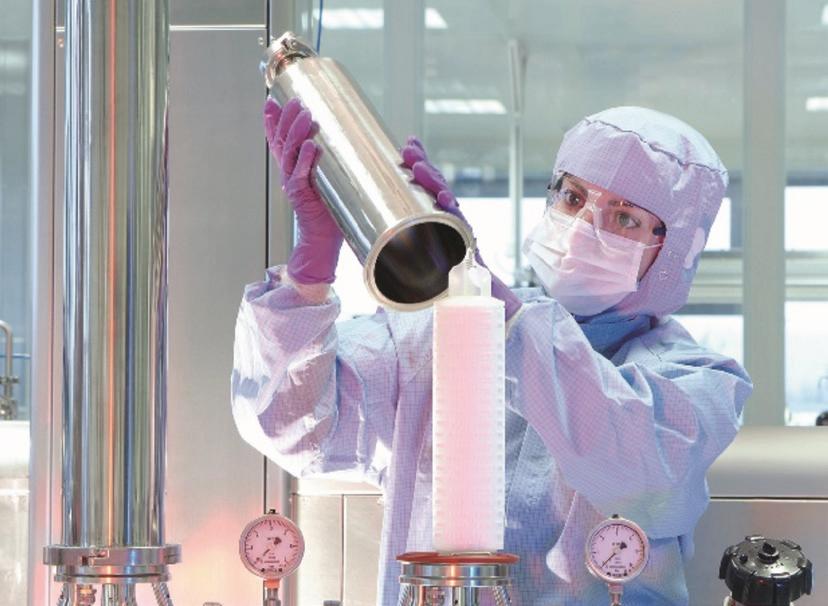
With over 35 years of experience manufacturing filtration media, Berry Global’s products have become the industry standard in the pleat support and filter layers for air, liquid, and gas applications. Berry Global’s proprietary technologies deliver unique material solutions for challenging customer needs. Whether using our unique REEMAY® spunbond PET technology in vaccine manufacturing, or TYPAR® spunbond PP nonwovens in water filtration to create safe drinking conditions, customers trust our proven filtration solutions.

Our filtration capabilities encompass a wide range of specialty materials, process technologies, and state-of-the-art innovation centers.


• Reemay®
• Meltex™
• Typar®
• Superpleat
• Air Filtration
• Industrial Filtration
• Water Filtration
• Automotive Filtration
• Food & Beverage Filtration
specialties@berryglobal.com

ISSUE 5 202 3 FILTNEWS.COM 13
ADVERTORIAL | SOLUTION CENTER: WWW.BERRYGLOBAL.COM
Beverlin’s Custom Core Solutions
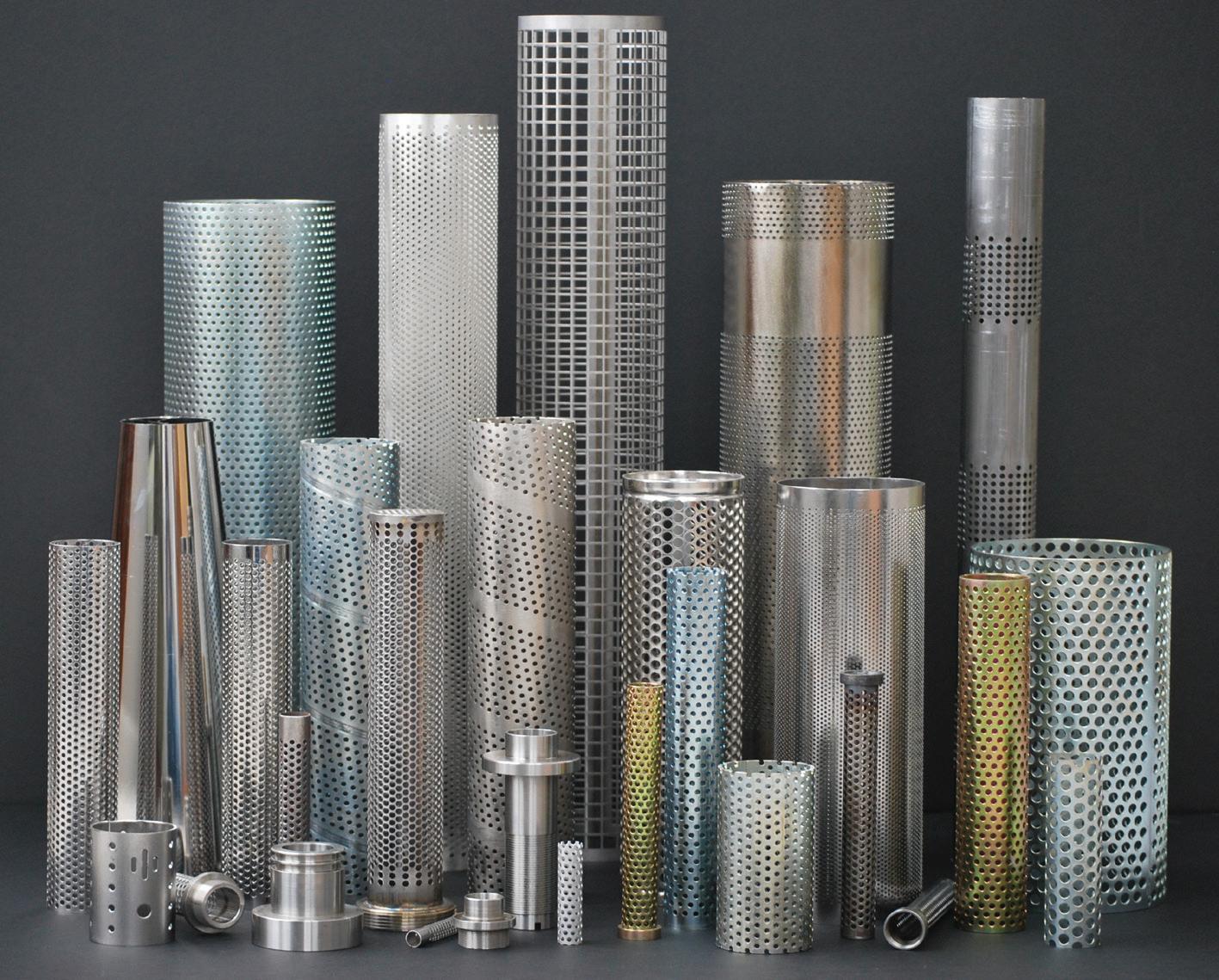
Beverlin’s focus is producing welded perforated cores and welded assemblies for filter manufactures. We are the recognized leader and have been since 1976.
We have a global reach and provide many industries including Aerospace, Oil & Gas, Industrial, Power & Energy, Nuclear, Defense, Medical and Food & Beverage for the most demanding and critical applications. We take great pride in being the core that our customers build upon.
Benefits of a Welded Core
• The most obvious advantage is strength, a welded core is stronger for demanding high pressure applications. We would argue that if it is a critical or demanding application where failure is truly NOT an option – a welded core is the best solution.
• Ability to use thicker material for demanding applications up to 1/8’’ thick and even .157’’ in some cases.
• Welded cores are not made from pre-plated materials like other cores.
With pre-plated materials the holes, seam and edges are not plated.
• Welded cores are “flush” so there are no raised areas, or raised seams. The flush seam allows the filter media to reach its peak potential.
• DESIGN FREEDOM – Not only are welded cores stronger and able to be thicker – there are many other advantages that most people have not considered.
> You can have any diameter, any length, any material type (steel, stainless, exotic alloys, aluminum or Titanium).
> You can pick any perforated pattern and add feature holes.
> You can have the seam style you want (straight or spiral).
> You can incorporate end margins (non-perforated areas).
> You can incorporate a counterbore.
> With a welded core you can use any surface treatment you desire vs. preplating of coil.
> With a welded core, we can produce any shape you need (round, triangle, rectangle, oval, etc.).
> Welded cores provide more design freedom so you can provide a more reliable and better performing core to better serve your customers and provide better solutions.
> With the design freedom of a welded core it can be made “unique” or custom making it difficult for someone else to recreate it. Your design could even be patented. That way the OEM can lock in their hard work and retain the ongoing sales for the long haul. That is huge!
* Remember ‘’if your part looks the same as everyone else’s, you will be competing with everyone else.’’
Showcase for FiltXPO
Aside from our extensive standard offerings we will also be showcasing four categories.
• Our large diameter core offerings – more and more we are seeing the need for larger diameter cores that are 10’’, 12’’ and 14’’ and more.
• Examples of welded assemblies – we have been providing our customers with 100% complete welded assemblies including the core, CNC components, sleeves, posts, flanges and more which allows them to focus on a clean room type assembly.
• A new patented “seamless” technology with exceptionally tight tolerances that outperforms stainless steels in its mechanical properties and in corrosion while also providing holes as small as 80 microns – it will be a game changer for some applications.
• Offerings that include perforated cores and assemblies that are made from exotic super austenitic alloys like Hastelloy, Duplex, Super Duplex, Nickel 625, Nickel 825 and Titanium.
www.beverlin.com

14 IFN ISSUE 5 202 3
ADVERTORIAL | SHOWFLOOR SHOWCASE: FILTXPO 2023
Visit us at FiltXPO: Booth #301
Chase Machine and Engineering Designs and Builds Custom Converting and Automation Equipment for Your Application
For over 68 years, Chase Machine and Engineering has been designing and building a variety of standard and custom converting machinery for woven-nonwoven fabrics, films and foils. From integrating independent modules to supplying Full-Scale Production Lines, we offer a comprehensive range of machinery that play an essential role in the success of well-known brands and products worldwide.
As one of the premier design and manufacturing companies for custom web handling machinery, Chase serves a wide range of customers in the textile, medical, nonwoven, converting, geotextile, extrusion, filtration, and packaging industries. We partner with leading manufacturers to produce application-specific equipment ranging from festooners, accumulators, inspection machines, unwinds/rewinds and traverse winders, to ultrasonic slitters, laminators, and cut-to-length machines.
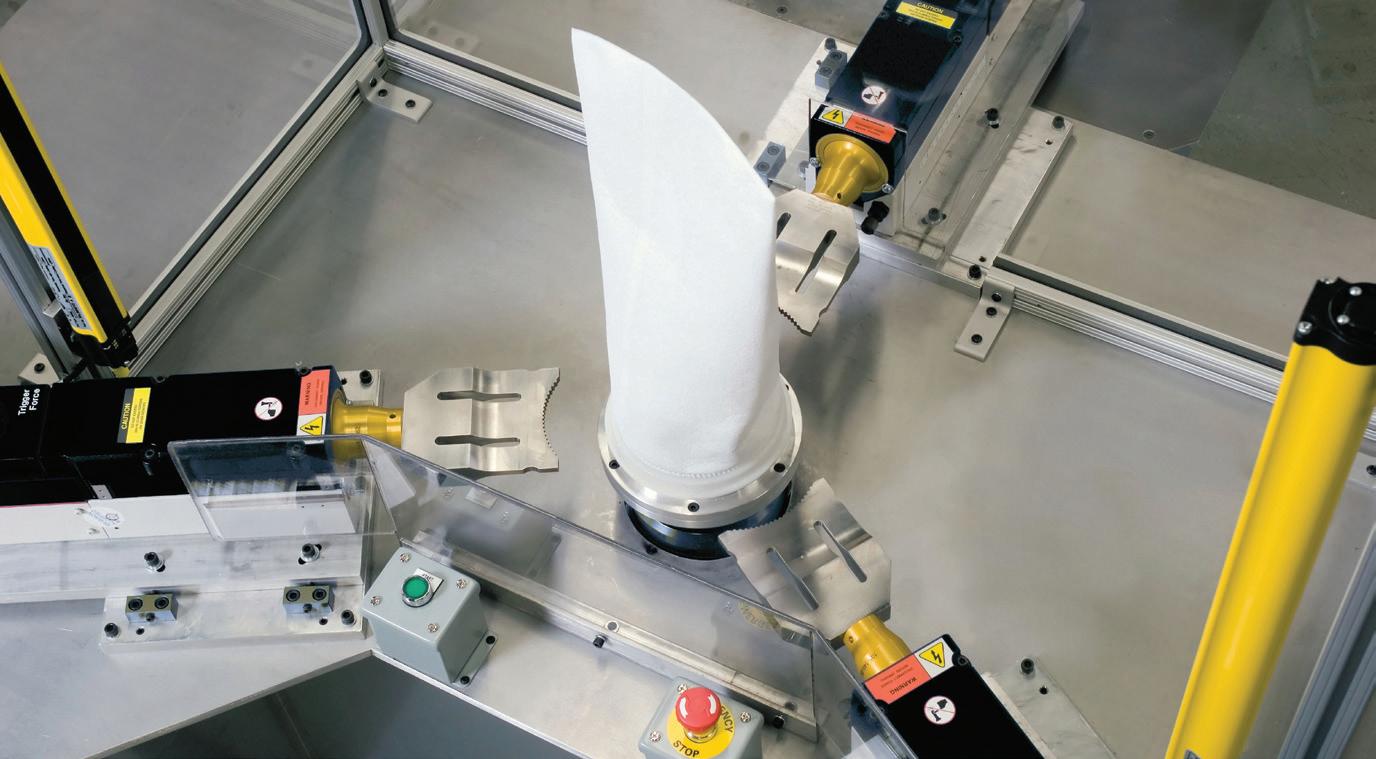
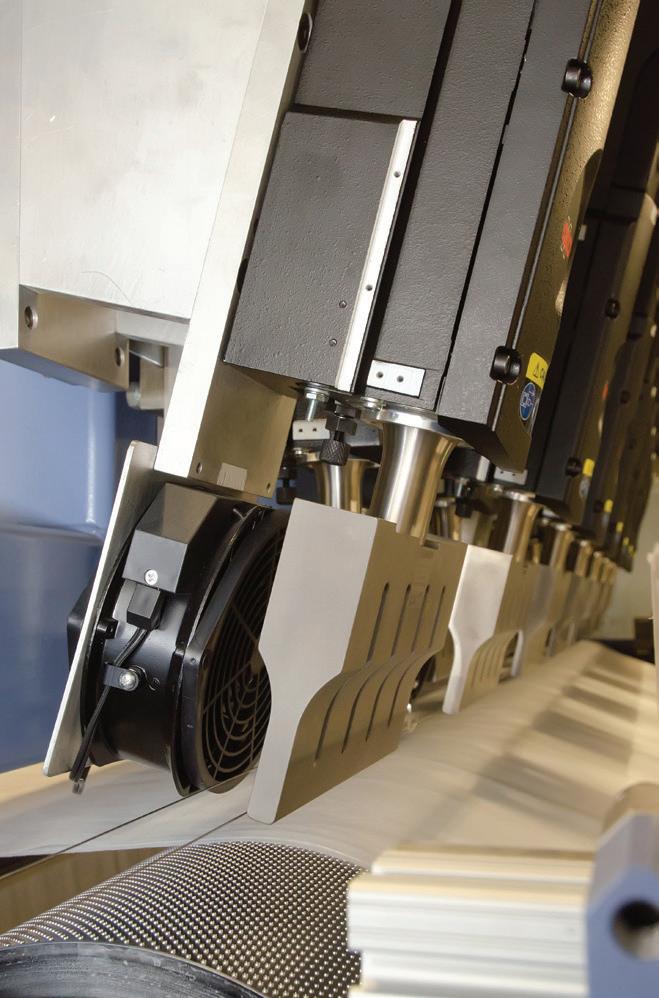
Chase specializes in the integration of technologies such as Ultrasonics, Impulse Welding, RF Welding, Band Sealing, Hot Air Welding, Glue Dispensing, Hot Knives and Conventional Blade Slitters as well as Vision and Marking Systems.
Chase is a vertically integrated company, utilizing state-of-the-art 3D solid modeling software for our machine designs. Within our 28,000 sq. foot facility, located in West Warwick RI, we program our PLC’s and HMI’s, build our electrical control panels and machine, weld/fabricate, paint and assembly our equipment while maintaining tight control of quality and delivery.
We place a high priority on customer and product confidentiality, and
Chase specializes in the integration of technologies such as ultrasonics, impulse welding, RF welding, band sealing, hot air welding and glue dispensing, and more.
constantly seek to improve our quality and process controls as we help our customers improve their products and processes. Working together with our customers, Chase will deliver equipment that is newer, faster, more efficient, and more reliable for a timely return on your investment.
For those interested in product development, the Chase Materials Application Lab exists to help your team take their ideas to the next level. Whether creating new products or improving existing ones, Chase can determine the optimum method for manufacturing. Lab capabilities include web handling systems with ultrasonic technology for laminating, embossing, welding, slitting as well as impulse welding machines.
ISSUE 5 202 3 FILTNEWS.COM 15
Visit us at www.chasemachine.com and learn why Chase Machine and Engineering has adopted the tagline “EXPECT TO BE IMPRESSED.” www.chasemachine.com
Ultrasonic Ring Welder.
ADVERTORIAL | SHOWFLOOR SHOWCASE: FILTXPO 2023 Visit us at FiltXPO: Booth #804
q Chase Ultrasonic Laminators.
H&V Brings Innovation, Commercial Solutions to FiltXPO
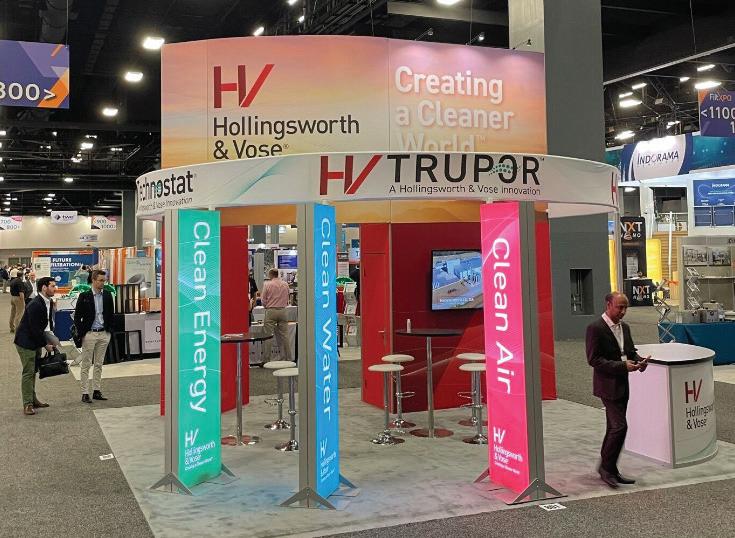
Hollingsworth & Vose (H&V) is a global leader in filtration and energy storage solutions. The company’s advanced materials are used in nearly every industry and touch every aspect of modern life. Wherever you work, live or travel, chances are an H&V solution is close by, contributing to a cleaner, healthier, more sustainable world.
In the world of filtration, H&V’s innovative materials and solutions – including synthetic filter media, microfiltration membranes, microfiber glass, nanofibers and more – meet and exceed the exacting demands of customers.

H&V helps clean and filter everything from air and water to fuel and industrial liquids across a wide range of industries and applications, including appliances, cleanrooms, process liquids, healthcare, heavy industry and mechanical power.
At FiltXPO, H&V will be spotlighting all of its filtration solutions. Its team of skilled experts, who understand the complex applications and process needs of the industries they serve, will be on hand to match FiltXPO attendees with the H&V solution that is right for them. Fred Lybrand, H&V’s Senior Director of Membrane Microfiltration, will lead
a presentation about “Accelerating Membrane Adoption with ROI.”
Among the H&V brands being highlighted at this year’s FiltXPO:
• HV Technostat® – Technostat® is the leading electret filter media traditionally used in critical applications such as medical ventilators, spirometry, CPAP and respirators. Technostat® also offers higher efficiency for capturing small particles, low pressure drop, a long shelf life and exceptional performance in highly regulated applications.
• HV TRUPOR® – Trupor® leverages two centuries of H&V innovation in fibrous porous materials. It is H&V’s first product for buyers of micro-
filtration membranes, targeting food, beverage and bioprocessing applications. Trupor brings membrane reliability and maximum performance with the thinnest possible efficiency layer, which is made possible by superior pore size uniformity. Its composite design delivers long life and stable performance.

• HV NanoWave® NanoWave® is a patented extended surface area synthetic filter media that works against hazardous air pollution by providing clean air while significantly lowering energy consumption in commercial, residential and industrial buildings. It provides extraordinarily low pressure drop and superior dust-holding capacity, and it improves air quality by enabling higher levels of filtration without reducing HVAC system airflow. The result: better filtration with lower energy usage.
www.hollingsworth-vose.com
16 IFN ISSUE 5 202 3
ADVERTORIAL | SHOWFLOOR SHOWCASE: FILTXPO 2023
Visit us at FiltXPO: Booth #401
JCEM Group Announces All-New, High Performance, High-Speed Combi-Line Pleating System
In 2017, JCEM introduced its P7 HighSpeed Blade Pleating machine, the world’s fastest blade pleating machine to date, with speeds of up to 350 pleats/ minute. And now, in 2023, JCEM releases its latest high-speed pleating machine, the all-new P8 with speeds of up to 500 pleats/minute!
The new P8 uses the latest Bosch Rexroth magnetic levitation technology that allows for record-breaking speeds previously thought to never be achieved in a blade pleating application. The P8 design has tremendously reduced the number of mechanical/moving parts that eliminate the need for greasing or cleaning, while still offering very good strength characteristics. The result is world-record pleating speeds with excellent pleat height tolerance and quality.
Simultaneously, TAG, part of the JCEM Group, has also just released its latest Mini-Pleating machine with completely new Beckhoff controls and Bosch Rexroth motors and drives. For customers, the new platform offers many updates,
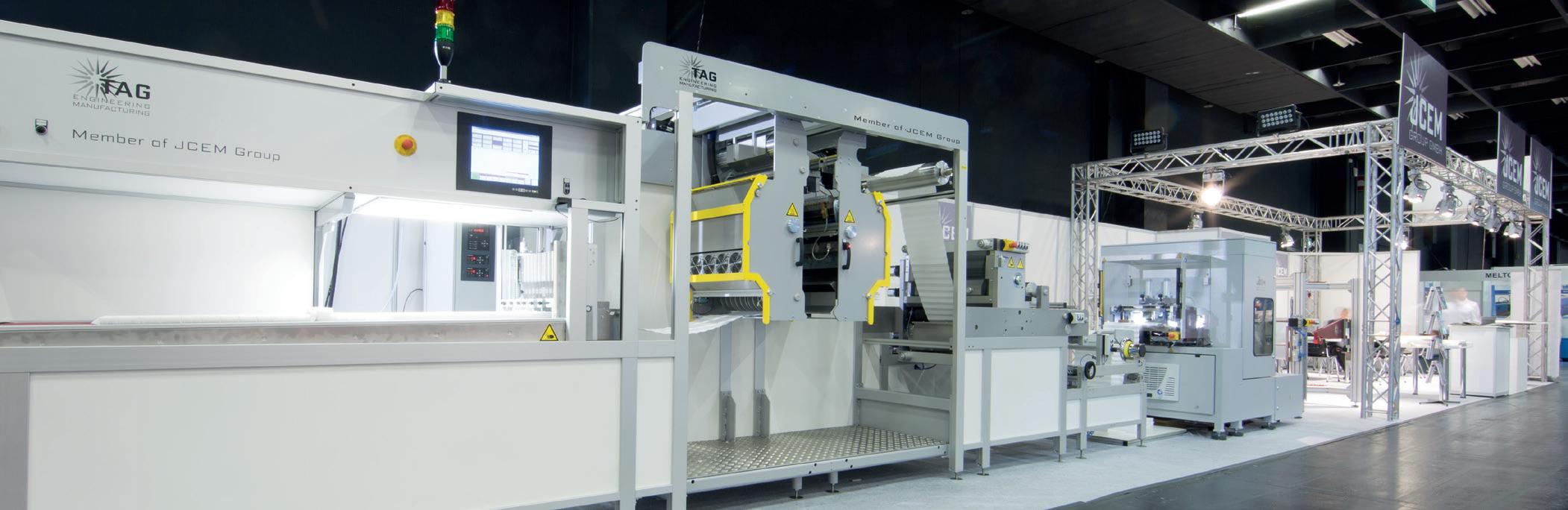
such as higher pleating speeds (up to 30 meters/minute), improved web tension control, a new Servo Unwinder, full synchronization between Mini-Pleater and Blade Pleater, and much simpler integration of additional accessories or features in the future.
Another big advantage is the ability to change pleat heights completely onthe-fly without stopping the machine, which is quite revolutionary as this is a huge time saver, as well as a tremendous reduction in scrap. This allows the user to load an entirely new recipe with a different pleat height, glue pattern, pleat spacing, and pleat count without
having to stop the machine to “reload.” Customers can also opt for an automated slitting system that adjusts slitting knives to desired slit-width positions with no operator involvement at all.
Together, the new P8 and updated TAG machine create an extremely highperformance Combi-Line Pleating system for applications requiring synthetic media with glue-bead separators. This was part of the overall strategy when JCEM acquired TAG GmbH, to create software, programming, and component commonality between all machinery for a more streamlined customer experience and offering the evermore popular Industrie 4.0 compatibility.
JCEM Group, including JCEM GmbH (Switzerland), TAG (Germany), and JCEM Inc. (USA), is the global leader for all types of pleating equipment, offering the world’s most innovative, efficient, and robust pleating systems available.
www.jcem.group
ISSUE 5 202 3 FILTNEWS.COM 17
The P8 design has tremendously reduced the number of mechanical/moving parts that eliminate the need for greasing or cleaning, while still offering very good strength characteristics.
ADVERTORIAL | SHOWFLOOR SHOWCASE: FILTXPO 2023
Visit us at FiltXPO: Booth #313
The JCEM P8 pleating machine with speeds up tp 500 pleats per minute.
Flexibile and Proven Pleating Solutions for Filter Production
Pleating Systems & Equipment – a leading supplier of high-quality manufacturing equipment and contract pleating services – specializes in helping filter manufacturers to select the right type of equipment and solutions to fit their filter production needs.
The principals of “PSE” have owned and operated the largest privately owned filter manufacturing facility in the United States from 1996, while simultaneously owning the most successful pleating machine distributorship for 20 years. We are experts in filter manufacturing, pleating machinery and accessories and understand the challenges manufacturers face. At PSE, we are third-generation filtration family and continue to provide outstanding solutions for our customers.
Our Capabilities
The brands we represent offer best-in-class solutions for all filter manufacturers from start-ups to the largest in the industry. The advances in technology have changed everything from media and adhesives used in the filters, to the equipment used in their manufacture. Outdated equipment in the industry is being replaced by our newer, quieter and more simplistic operating designs without compromising robust performance, faster speeds and higher precision. Being a leader in the filter manufacturing equipment industry allows us to offer a wide range of manufacturing solutions and a faster return on investment than ever before, including:
High Speed CNC Blade Pleaters
Integrated Mini-Pleat Systems
Servo Rotary Pleaters
USED Equipment
Contract Pleating
OEM Parts & Service
Our Brands
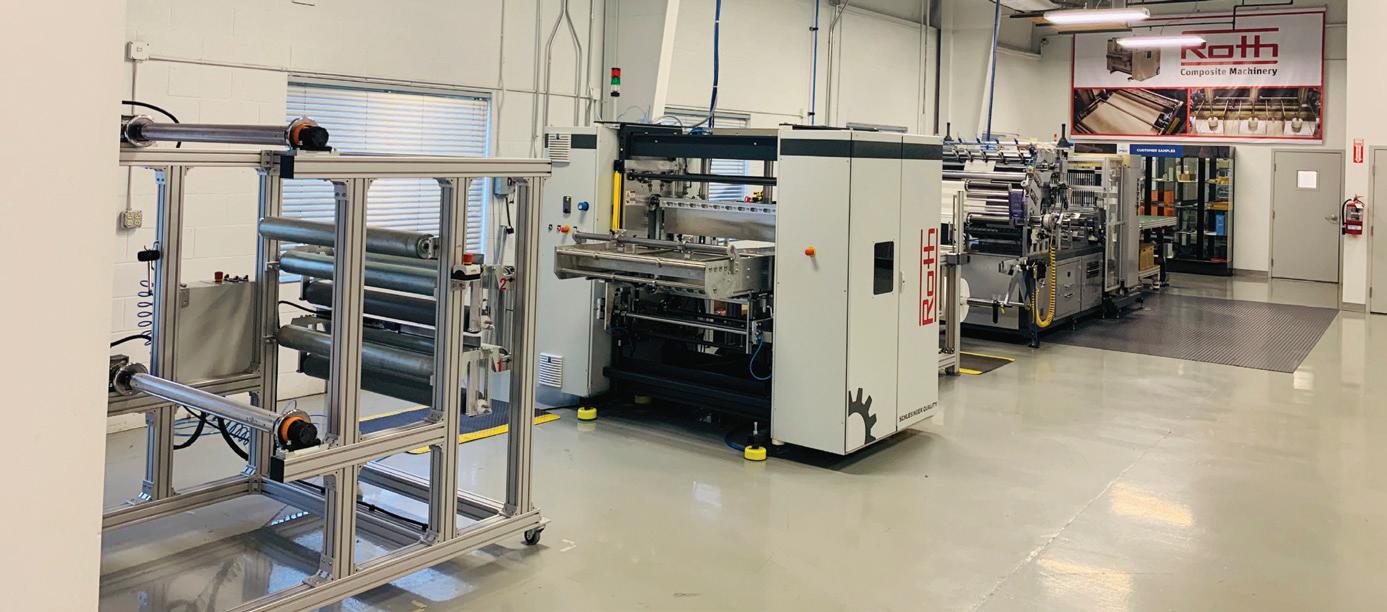
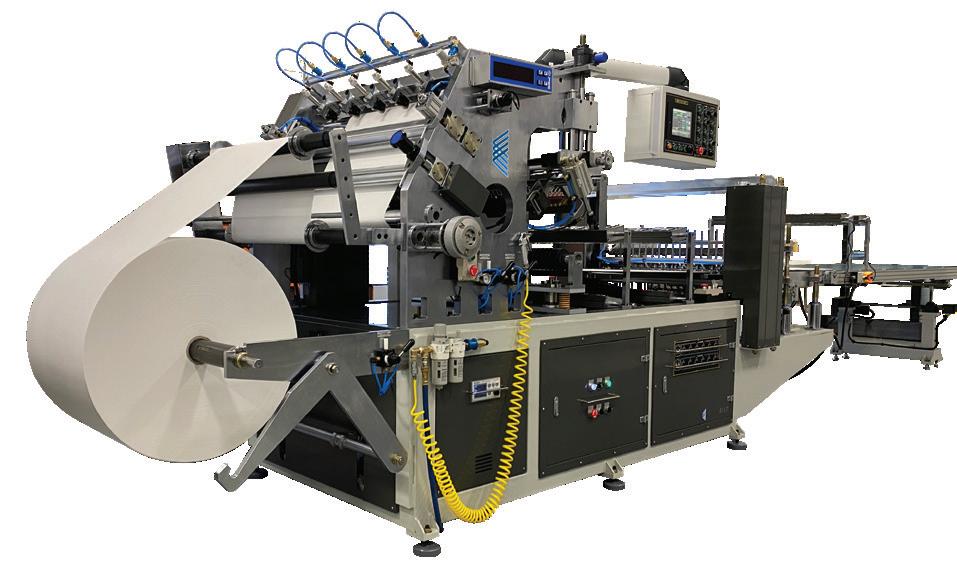
currently assisting with the COVID-19 demand for pleat packs for respirator filters. Our production lines feature our new CroyBilt Integrated Mini Pleat Systems and the latest High-Speed CNC ROTH Blade Pleaters. Capabilities include 4-300mm pleat heights including glue bead application.
Used Equipment and Trade-In Program
CroyBilt is our flagship brand of highquality mini-pleating machines, rotary pleating machines, and many other types of filter manufacturing equipment.

Used pleating equipment can be a great way to get started or expand your growing filtration business. PSE regularly acquires used pleating equipment, often via our trade-in program. Customers can frequently check our website to see what treasures we have in our warehouse.
Additionally, not only do we provide highquality pleating equipment, but also a wide selection of ancillary equipment options:
Roth Industries, which recently partnered with Pleating Systems & Equipment, was founded in 1947, is supported by over 1,000 employees globally, and has long been respected as an innovator in the areas building & industrial equipment solutions.

Contract Pleating
PSE continuously runs multiple contract pleating lines to accommodate customer’s overflow pleating requirements, interim machine sale pleating, and is
Perforators
Robotic Automation
Edge Banding
Filter Banding
Potting Stations
Unwind Systems
Core Machines
Pre/Post Cutting
Inline Slitters
Gluing Systems
18 IFN ISSUE 5 2023
pseusa.com
Visit us at FiltXPO: Booth #513 ADVERTORIAL | SHOWFLOOR SHOWCASE: FILTXPO 2023
NORTH AMERICAN NONWOVEN MATERIALS ANNUAL STUDY 2022
A COMPREHENSIVE SURVEY AND OUTLOOK
This new report details the 2022 key metrics for capacity, production, and operating rates for the overall nonwoven material industry.
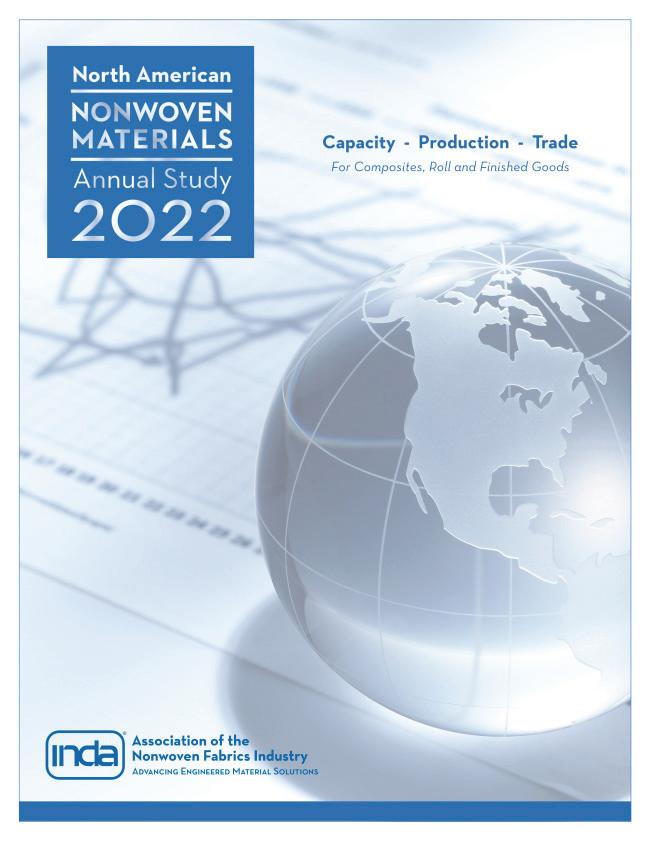
• North American capacity continues to increase with investments being made across all the processes and for a variety of end-uses.
• In 2022, capacity of nonwovens in North America reached 5.565 million tonnes, an increase from the previous year of 2 4% (net growth of 128,700 tonnes).
• North American imports, in tonnage, decreased 24. 3% in 2022 and exports decreased 16. 3%.
The geographic scope for this study is Canada, Mexico, and the United States. This study presents the detailed capacity and production for the North American nonwovens industry in 2022 based on actual surveys and interviews with nonwoven producers. It also compares 2022 data to prior data points from previous INDA surveys and INDA publications.

Create better investment and planning strategies with actionable, relevant, and accurate data.
To purchase this report, visit: https://bit.ly/INDApubs
Advancing Engineered Material Solutions
1100 Crescent Green, Suite 115, Cary, NC 27518 P: 919 459 3700, F: 919 459 3701 inda.org For ordering questions, contact Cindy Garcia, publications@inda.org, T: +1 919 459 3711 © INDA 2023. INDA is a registered trademark of INDA
DUALING Hazards to Your Health from Wildfire Smoke
 By Mark Davidson
There are occasions when the knowledge and experience a person has developed over their professional career intersects with their personal life. Such is the case for many in the air filtration industry who are unfortunate enough to find themselves in areas where air quality is jeopardized by wildfire smoke. While generally considered to be an issue that those living in the Western half of the United States deal with every year, vast portions of the Northeast and Upper Midwest experienced weeks of air quality alerts in the summer of 2023 due to wildfires in Central and Eastern Canada.
In 1999, the Environmental Protection Agency (EPA) created a measure for the quality of the air known as the Air Quality Index (AQI), which is easily accessed through the website AirNow.gov. A network of sensors around the nation reports the current air quality for five pollutants; ground-level ozone, fine particle pollu-
tion, carbon monoxide, sulfur dioxide, and nitrogen dioxide. Alerts are announced when the AQI Index for a given area is deemed to be unhealthy. There is a specific area of AirNow dedicated to conditions created by wildfire smoke.
Air filtration professionals, accustomed to troubleshooting and recommending solutions for a wide range of industrial and commercial applications, now use these skills in their homes and those of their family and friends when the AQI Index climbs due to wildfire smoke. The same steps used when troubleshooting on a job are followed and one of the first steps to improving air quality is to identify the particles of concern and determine how best to remove those from the indoor environment.
Two Hazardous Components of Wildfire Smoke
Wildfire smoke is comprised of particulate matter and various gaseous substances.
Particulate matter generated by burning matter become suspended in the air and carried vast distances. While the smoke odor is a nuisance, the fine particles are harmful to human health.
Gaseous substances are released by the process of combustion. These include nitrogen dioxide, various volatile organic chemicals (VOC), and ozone. Due to the presence of other powerful odors, ozone is sometimes not immediately detected by our sense of smell. The damage ozone can
AIR POLLUTION
20 IFN ISSUE 5 202 3
do is sometimes described as a sunburn on your lungs.
The exact mixture of wildfire smoke for both particulate matter and gases depends on what’s burning, what stage the fire is in, and how hot the fire is. An intense fire with visible flames can produce one mixture while a smoldering fire produces another. And as the distance increases from the source of the fire, the dynamics of the smoke can change as larger particles settle and gases disperse. As such, knowing exactly what type and size of particulate matter and gaseous substances are in the smoke is often difficult to predict.
Particulate Filtration
From an air filtration point of view, controlling particulate matter from a wildfire requires a different approach than controlling the gaseous substances released during that same fire.
Particulate matter is broken down into one of three categories based on size: PM10, PM2.5, and PM1. The size of a particle dictates how far into the human body it could penetrate. PM10 particles are coarse particles 10 microns and
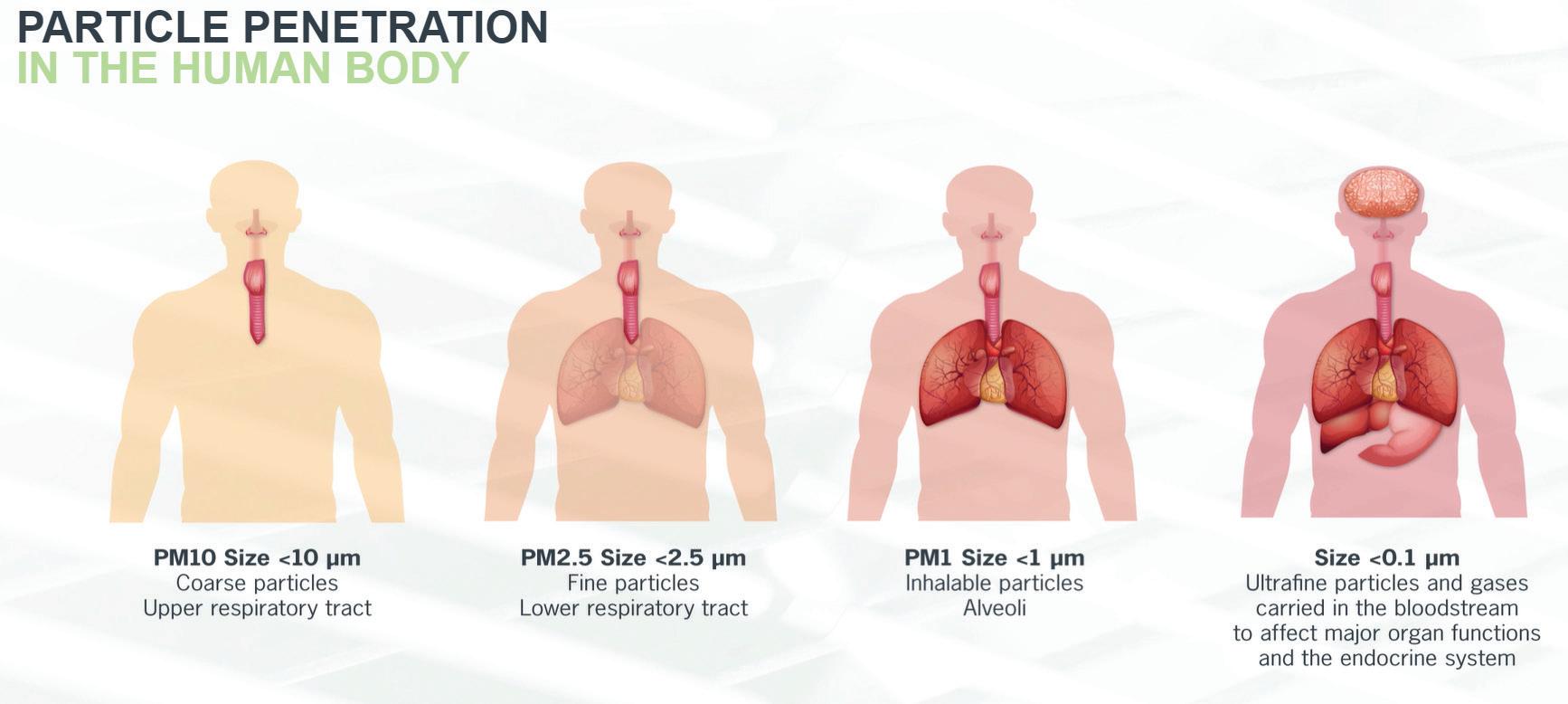
smaller, PM2.5 particles are 2.5 microns and smaller and PM1 are 1 micron and smaller. Particles with a diameter of less than one micron are sometimes referred to as ultrafine particles. The AQI Index for particle pollution is calculated based on the level of only PM2.5 and PM10 particles, not PM1 or ultrafine particles.
For particulate filtration, general ventilation air filters are tested and classified by their particle capture efficiency and assigned a performance value according to test procedures outlined in ASHRAE Standard 52.2 or ISO Standard 16890. Standard 52.2 test filters against particle sizes ranging from 0.3 to 10 microns while ISO16890 classifies performance based on PM10, PM2.5, and PM1 particle capture. While wildfire smoke varies according to the fire and what’s being burned, 90% of the particulate mass in wildfire smoke is comprised of PM2.5 particles.
When testing an air filter to assign a MERV value according to 52.2 or ePM percentage according to 16890, calibrated test dust whose particle composition is well-defined, is fed into a test duct with a new filter installed. Based on how well a filter captures particles in each various size ranges, 52.2 assigns a MERV value between 1 and 16 while ISO assigns a ePM average. It’s important to note that the ISO16890 test includes a procedure
to account for efficiency drop-off due to electrostatic degradation while a similar procedure in 52.2 is an optional appendix. Note: after 1/1/25, the new ASHRAE Standard 241 requires filters tested under 52.2 to include the optional test, known as Appendix J, and designate the results as the filter’s MERV-A value.
Earlier it was stated that 90% of wildfire smoke is estimated to be comprised of PM2.5 particles and high-quality, non-degrading general ventilation air filters can achieve 90-95% particle capture efficiency on particles of this size. However, in a large fire or multiple fires where smoke merges and travels hundreds of miles, the number of ultrafine particles that penetrate high-efficiency filters is significant and represents a serious health hazard, particularly when the smoke event lasts for days. This is where HEPA filtration plays a role.
The common definition of a HEPA in the U.S. following IEST-RP-CC001, is one tested to a minimum efficiency of 99.97% on 0.3-micron particles. HEPA filters with higher efficiencies can be produced as well. Other HEPA test standards, EN1822 or ISO29463, classify efficiency performance on most penetrating particle size (MPPS) which is generally between 0.1 and 0.2 microns. The minimum efficiency considered to be a HEPA filter according to those standards is 99.95% on MPPS.
ISSUE 5 202 3 FILTNEWS.COM 21
Camfil
t The Triborough Bridge along the East River in New York City with massive air pollution from wildfires. iStock/James Andrews
IEST-RP-CC001
EN1822 CLASSIFICATION
ISO 29463 CLASSIFICATIONS
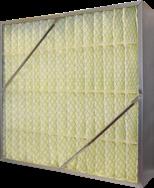
While air handling units serving industrial and commercial spaces are typically capable of holding high MERV-rated air filters, HEPA filters require special frames and stronger fans to overcome their higher resistance. For a residence, it's unlikely MERV 14 or MERV 16 air filters (or ISO16890 equivalent) are an option unless the unit has been reconfigured to hold a larger, six or 12-inch deep filter which would lower the resistance to suitable levels. The resistance (aka pressure drop) on a thinner, 2- or 4-inch panel-type filter rated a MERV 14 or 16 would likely be far too high for a residential unit, especially if the filter is a legitimate MERV 14A or 16A. In those cases, a stand-alone air purifier with HEPA filtration to supplement the HVAC system could be considered. It operates independently of the HVAC system. The majority of air purifiers are portable and can be moved to areas impacted by wildfire smoke that caused clean air alerts.
Gas-Phase Filtration
Controlling the gaseous pollutants produced in a wildfire can be more challenging. Jennifer Webb is the Molecular Segment Manager for Camfil USA covering the Western portion of the U.S. which includes Northern California where she lives. Having lived near prime wildfire country most of her life, smoke-filled skies are almost a seasonal occurrence with some years being worse than others. As her career in the air filtration industry took shape, she was able to use the knowledge gained in molecular filtration to better protect her family and friends during particularly bad air quality alert days.
Jennifer explains molecular filtration. “Molecular filtration involves a technique known as adsorption to capture particles at their molecular level, thousands of times smaller than what the best HEPA filters can capture. Adsorption, with a “d,” is different from the more common word, absorption, with a “b.” In absorption, the molecules are drawn into the material and cannot easily be separated again such as milk added to coffee. In adsorption, molecules adhere only to the surface of the material and remain separate, such as a sponge adsorbing water.”
22 IFN ISSUE 5 202 3
Filter Class Particle Size for Testing Global Values Local Leak Values Collection Efficiency (%) Penetration (%) Collection Efficiency (%) Penetration (%) Multiple of Global Efficiency (%) E10 ≥ 85 ≤ 15 E11 ≥ 95 ≤ 5 E12 ≥ 99.5 ≤ 0.5 H13 MPPSa ≥ 99.95 ≤ 0.05 ≥ 99.75 ≤ 0.25 5 H14 MPPSa ≥ 99.995 ≤ 0.005 ≥ 99.975 ≤ 0.025 5 U15 MPPSa ≥ 99.9995 ≤ 0.0005 ≥ 99.9975 ≤ 0.0025 5 U16 MPPSa ≥ 99.99995 ≤ 0.00005 ≥ 99.99975 ≤ 0.00025 5 U17 MPPSa ≥ 99.999995 ≤ 0.000005 ≥ 99.9999 ≤ 0.0001 20 a MPPS - Most Penetrating Particle Size
Filter Type Particle Size for Testing Global Values Local Leak Values Collection Efficiency (%) Penetration (%) Collection Efficiency (%) Penetration (%) Multiple of Global Efficiency (%) A 0.3a ≥ 99.97 ≤ 0.03 B 0.3a ≥ 99.97 ≤ 0.03 Two-Flow Leak Test E 0.3a ≥ 99.97 ≤ 0.03 Two-Flow Leak Test H 0.1-0.2 or 0.2-0.3b ≥ 99.97 ≤ 0.03 I 0.1-0.2 or 0.2-0.3b ≥ 99.97 ≤ 0.03 Two-Flow Leak Test C 0.3a ≥ 99.99 ≤ 0.01 ≥ 99.99 ≤ 0.01 1 J 0.1-0.2 or 0.2-0.3b ≥ 99.99 ≤ 0.01 ≥ 99.99 ≤ 0.01 1 K 0.1-0.2 or 0.2-0.3b ≥ 99.995 ≤ 0.005 ≥ 99.992 ≤ 0.008 1.6 D 0.3a ≥ 99.999 ≤ 0.001 ≥ 99.99 ≤ 0.005 5 F 0.1-0.2 or 0.2-0.3b ≥ 99.9995 ≤ 0.0005 ≥ 99.995 ≤ 0.0025 5 G 0.1-0.2 ≥ 99.9999 ≤ 0.0001 ≥ 99.999 ≤ 0.001 10 a Mass median diameter particles (or with a count median diameter typically smaller than 0.2 µm as noted above). b Use the particle size range that yields the lowest efficiency.
Filter Class (Group) Particle Size for Testing Global Values Local/Leak Values Collection Efficiency (%) Penetration (%) Collection Efficiency (%) Penetration (%) Multiple of Global Efficiency (%) ISO 15 E MPPS ≥95 ≤5 - -ISO 20 E MPPS ≥99 ≤1 - -ISO 25 E MPPS ≥99.5 ≤0.5 - -ISO 30 E MPPS ≥99.9 ≤0.1 - -ISO 35 E MPPS ≥99.95 ≤0.05 ≥99.75 ≤0.25 5 ISO 40 E MPPS ≥99.99 ≤0.01 ≥99.5 ≤0.5 5 ISO 45 E MPPS ≥99.995 ≤0.005 ≥99.975 ≤0.025 5 ISO 50 E MPPS ≥99.999 ≤0.001 ≥99.995 ≤0.005 5 ISO 55 E MPPS ≥99.9995 ≤0.0005 ≥99.9975 ≤0.0025 5 ISO 60 E MPPS ≥99.9999 ≤0.0001 ≥99.9995 ≤0.0005 5 ISO 65 E MPPS ≥99.99995 ≤0.00005 ≥99.99975 ≤0.00025 5 ISO 70 E MPPS ≥99.99999 ≤0.00001 ≥99.9999 ≤0.0001 10 ISO 75 E MPPS ≥≤99.999995 ≤0.000005 ≥99.9999 ≤0.0001 20
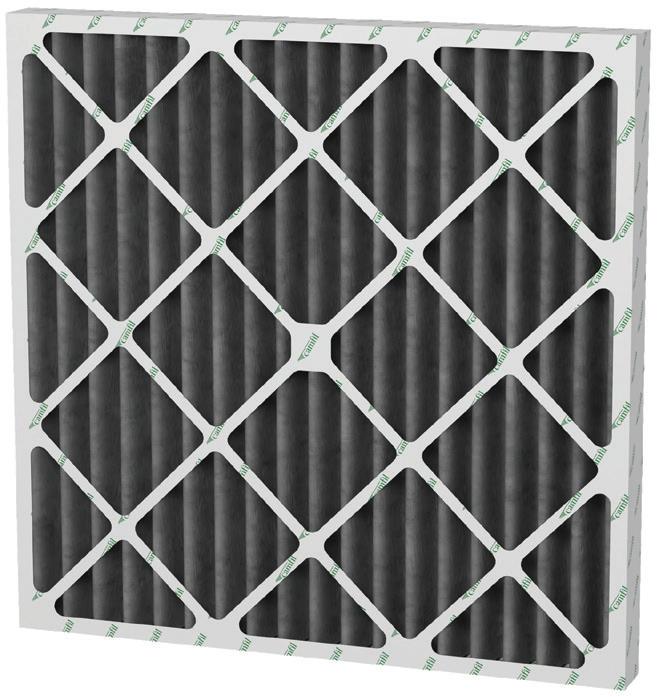
“Unlike air filters that use a fibrous media, molecular filtration relies on a porous media like activated carbon, commonly made from carbonized coconut shells. If you were to view a piece of activated carbon under strong magnification, you would see the surface fractured with deep canyons and cavelike structures. This greatly increases the surface area of the material to such an extent that if a spoonful of activated
carbon were spread flat, it would cover an entire football field.”
“When the various gases created in a wildfire encounter an activated carbon filter, the molecules making up the gas are physically attracted to the surface of the media by weak intermolecular forces. This attraction holds the molecule in place and removes it from the airstream.”

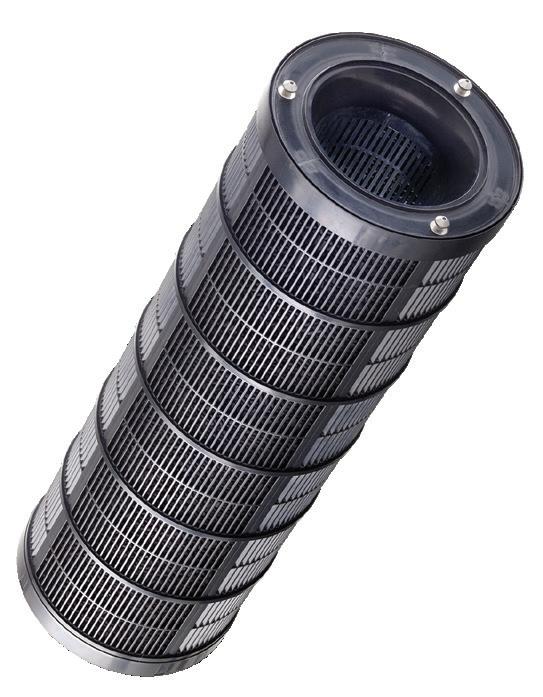
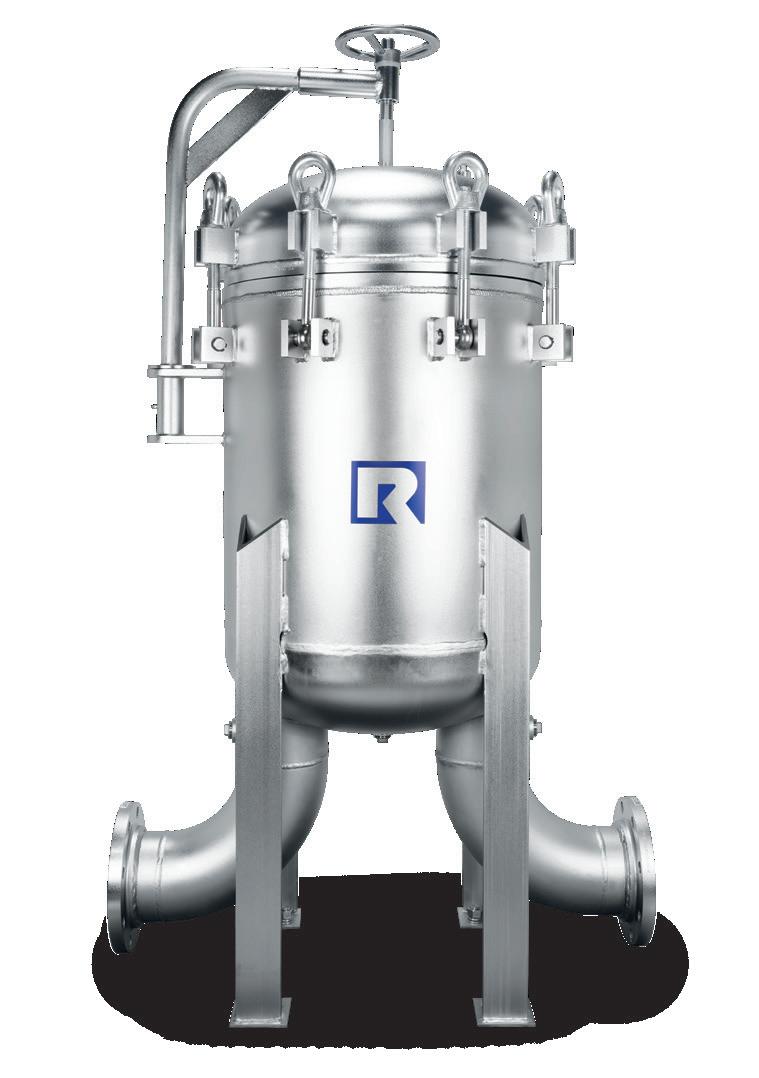
Molecular air filters can look similar to general ventilation filters, but with


activated carbon included in the design, or they can look dramatically different and require specialized housings to hold the cylinders or modules.
Strategies To Keep Smoke Out
In the U.S., there’s an average of almost 70,000 individual wildfires per year(1) and the number of acres burned recently has been as high as ten million. Strategies to prevent wildfire smoke from entering a facility depend on the design of the building and its HVAC equipment. Commercial, retail, or industrial buildings for example generally have more complex HVAC systems than smaller stand-alone buildings and residences. Commercial spaces often have minimum requirements for how much outside air must be brought into the building based on size, intended use, or occupancy. But the buildings may also have requirements to exhaust air from certain spaces such as kitchens or restrooms.
ISSUE 5 202 3 FILTNEWS.COM 23
DESIGNED, ENGINEERED, BUILT, ASSEMBLED AND SERVICED IN THE U.S.A Elsnereng.com | eew@elsnereng.com | 1.717.637.5991 Elsner's automated filter manufacturing machinery helps you save time and money. From unwinding and folding to cutting and gluing to pack building and robotic glue applications, we make every step of the way easy to boost your productivity. 2023 Elsner Engineering Works, Inc Save Labor, Boost Throughput & Improve Quality!
Camfil
When wildfire smoke surrounds a building, positive air pressure inside creates a barrier that helps keep smoke from entering through open doors, windows, and unseen cracks. If the air pressure inside a building, or a separate space within the building, is lower than the surrounding area, a pressure differential exists and air will naturally flow from higher to lower. Exhausting air can create a low-pressure zone and a pathway for smoke to enter. For commercial, retail, and industrial facilities, this can be difficult to manage since employees, customers, shipping, and deliveries can continue during business hours. This is a little easier to manage in smaller facilities or residences, but there are surprising day-to-day activities such as running a dryer or range hoods that need to be monitored. Exhausting that air could be enough to tip the scales from positive to negative.
Ultimately, outside air polluted with wildfire smoke will get into a facility. It could be unintentional when pressure slips or it could be because the HVAC equipment must run to bring in warmed or cooled air. When this happens, air filters in the HVAC system or in stand-alone air purifiers can be used to remove the PM and gaseous pollutants within the smoke.
Most commercial HVAC equipment has the capability to adjust the amount of outside air brought inside. Setting the system to recirculate as much air as possible gives the air filters multiple opportunities to filter the same unit of air. As mentioned before, high-efficiency air filters capture a high percentage of PM2.5 in a single pass, and multiple passes through an air filter with a lesser efficiency can also be effective. However, there’s still the issue of ultrafine particles below the capability of high-

efficiency air filters especially during times of extreme wildfire events. Stand-alone individual room air purifiers with HEPA filters are useful in this situation. There may be certain areas of a facility where managing smoke is more difficult than others, such as in shipping and receiving. In those situations, areas of the facility with greater occupancy such as office or shopping spaces, can be isolated with both physical barriers and barriers created by air pressure. Within these areas, air can continually be recirculated through the air purifiers. This is true for homes as well. Many air purifiers also contain molecular filters that target the gaseous pollution from wildfire smoke.
Jennifer Webb was in this situation and was able to use her experience in both particulate and gaseous filtration. “Since the highest my house’s HVAC system could accept is a MERV11 filter and while I could set the fan to recirculate the air continuously, I wanted to find a separate recirculating system that would capture the smaller particles more efficiently. I also wanted it to capture any ozone gas that might be present. And finally, back to the very beginning of our conversation, I wanted something to remove the nuisance odors. So not only did I need something with a higher MERV value, but I also needed a molecular- or carbon-filter to capture the odors and gases.”
Wildfire smoke contains both particulate matter and gaseous pollutants. Each requires a specific type of air filter to manage the contaminant levels. While there are strategies to limit smoke from entering buildings, it's likely smoke will find a way inside. Relying on what air filtration professionals have learned is a good starting point to protect human health.
Mark is the Manager of Technical Marketing which includes responsibility for writing and editing articles for Camfil’s popular Clean Air Blog and participating in ASHRAE committees including 170 for healthcare facilities. Prior to that role, Mark was the Food and Beverage Segment Manager for Camfil USA with overall responsibility for growing market share in food or beverage production facilities located throughout the United States.
His 25-year background in industrial food processing and healthcare facilities gives him the understanding required to select the air filtration solution that provides the appropriate level of indoor air quality while tackling the high cost of energy, fewer maintenance staff, and a growing shortage of landfill space.

After completing her BS in Mechanical Engineering from the University of Delaware, Jennifer Webb worked in various product, process and sales engineering roles in the aerospace and semiconductor manufacturing industries.
She joined Camfil in 2019 as the Molecular Filtration Segment Manager for the western United States and Mexico. She is responsible for technical sales, marketing and business development of molecular (aka-”carbon“ or “gasphase”) filtration solutions for a wide range of industries and applications, including airports, hospitals, cannabis, cultural heritage preservation, petrochemical, wastewater, pulp and paper, industrial exhaust and biogas.

24 IFN ISSUE 5 202 3
1Wildfires and Acres | National Interagency Fire Center (nifc.gov)
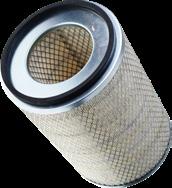
Housing with carbon modules.
Carbon pleat. Carbon filled cylinder. Camfil


Welcome to the future of liquid filtration technology. Single Bag Housings Multi-Bag Housings Polypropylene Housings Indicating Filter Centrifugal Separators Backwashing Systems Coolant Filter Systems High Capacity Elements Filter Bags Contact us today for more information. 800.821.5373 RosedaleProducts.com Rosedale Products Inc. 3730 W. Liberty Rd. Ann Arbor, MI 48103 Email: Filters@RosedaleProducts.com Phone: 734.665.8201 • Fax: 734.665.2214 ©2023 Rosedale Products Inc.
EXTREME Decentralization
What It Means for Technology Innovation and Investing
By Will Sarni
Global Water Technology Innovation
The onslaught of news on droughts, mega-droughts (aridification), and the impacts of climate change in the U.S. and globally has reached a new high. Water scarcity and poor quality are taking their toll on local communities, regions, and countries along with impacts to business continuity and growth. The American West, Latin America, Europe, and the Middle East are dealing with less water for utilities, agriculture, cities, and ecosystems.
The reality of rapidly declining water security has resulted in a robust renewal of investing in innovative water technologies and business models to solve “super wicked water problems.” Examples of the opportunities in investing in water technologies have been recently chronicled in numerous articles such as “Investment in European Water Tech Startups,” “3 Ways to Invest in America’s Crumbling Water Infrastructure,” and “Amid VC’s Downturn, Some Corporate Titans Are Doubling Down on Startups.”
In my view, the key trends in investment in innovative water technologies are digital technologies (AI, remote sensing, sensors), advanced treatment membranes (graphene and 3-D printing), smart water homes (water efficiency, leak detection, and water reuse), alternative sources of water (air moisture capture and reuse), industrial (AI for monitoring asset performance and water use) and agricultural technologies (precision gravity irrigation).
For me, one of the more significant trends and compelling investment opportunities is in residential and commercial water treatment technologies. For this article, I will focus on the trend of “extreme decentralization” in residential and commercial buildings as I believe it is one of the most significant opportunities for technology innovation and investment.
The Case for Extreme Decentralization
Residential and commercial water treatment technologies can be categorized as decentralized (local or neighborhood
scale) or extreme decentralized (the individual home or commercial building) water treatment systems. An excellent overview of extreme decentralization is captured in the article, “The Third Route: Using Extreme Decentralization to Create Resilient Urban Water Systems.”

They advocate for household-based personalized water systems, first targeted at the affluent who expect more functionality and sustainability from water systems, with the funds to invest in systems tailored to their personal water preferences. The result, they say, will allow for tremendous creativity-base of individual users and entrepreneurs, facilitating the type of co-creation that accelerated the rapid development of consumer electronics.
The authors make the case that the water sector can learn from other sectors on infrastructure transition. Specifically, the transition in the power sector from centralized systems to localized (residential and commercial) systems most closely resembles the water sector.
26 IFN ISSUE 5 2023
THOUGHT LEADERSHIP
q Drought conditions causing low levels in the Colorado River which supplies water to western USA and Mexico. iStock/adogslifephoto
The learnings from the power sector infrastructure transition include the significant decline in costs for residential solar and the appeal of renewable energy by early adopters. The appeal by early adopters included the reliability of being “off-grid” and the contribution to reducing greenhouse gas emissions. The rapid growth of household and commercial solar systems accelerated advances in technology innovation and the development of an “innovation ecosystem.” This innovation ecosystem included home-based power storage systems and integration with electric vehicles. The authors conclude that the “opportunity to create sustainable electric power at the individual household level became the key driver for a rapidly innovating sector, in time surpassing the conventional sector from an economic standpoint and bringing along secondary applications.”
The major conclusion of the authors is that, when considering the developments of distributed power generation as a model, “centralized urban water systems will coexist with decentralized systems during a transition phase. Eventually, centralized systems will lose their viability in some areas with low population densities and be replaced by fully household or building-scale systems in locations where decentralized systems offer substantial advantages.”
Moreover, radical innovation was possible in the power sector through the emergence and mass production of personalized, small-scale systems. The authors maintain that the same is possible in the water sector, if we are willing to consider alternatives to the existing centralized, large-scale infrastructure with piped and trucked water. Their research concludes that in many cases houses and buildings can become waterindependent or can deliver water with occasional supplementation.
What does this mean for the water sector?
The water sector is very different from power generation. However, we are seeing a move to decentralized and extreme decentralized water treatment systems
in residential and commercial buildings in response to water scarcity and the challenges facing traditional water utilities (e.g., aging and underinvested infrastructure). Moreover, in many parts of the world communities can no longer solely rely upon traditional sources of water (surface water and groundwater), and water reuse is gaining acceptance.
While decentralized and extreme decentralized water treatment systems may not completely replace more traditional water treatment infrastructure in the near future, we will likely see greater adoption and the birth of hybrid systems (centralized and decentralized/ extreme decentralized systems). Also, the technology opportunities for the adoption of water treatment technologies in the “built environment” are being accompanied by other water technologies in the areas of water efficiency and leak detection (e.g., flume, conservation labs, etc.). It is important to keep in mind that this trend of smart water homes mirrors the development of residential and commercial power generation (residential solar) and energy-efficiency appliances and metering which we now take for granted.
An Example: The American West
The need for innovative water reuse technologies at the residential and commercial scales is strikingly apparent in the American West and in particular, the Colorado River Basin (CRB) and Arizona.
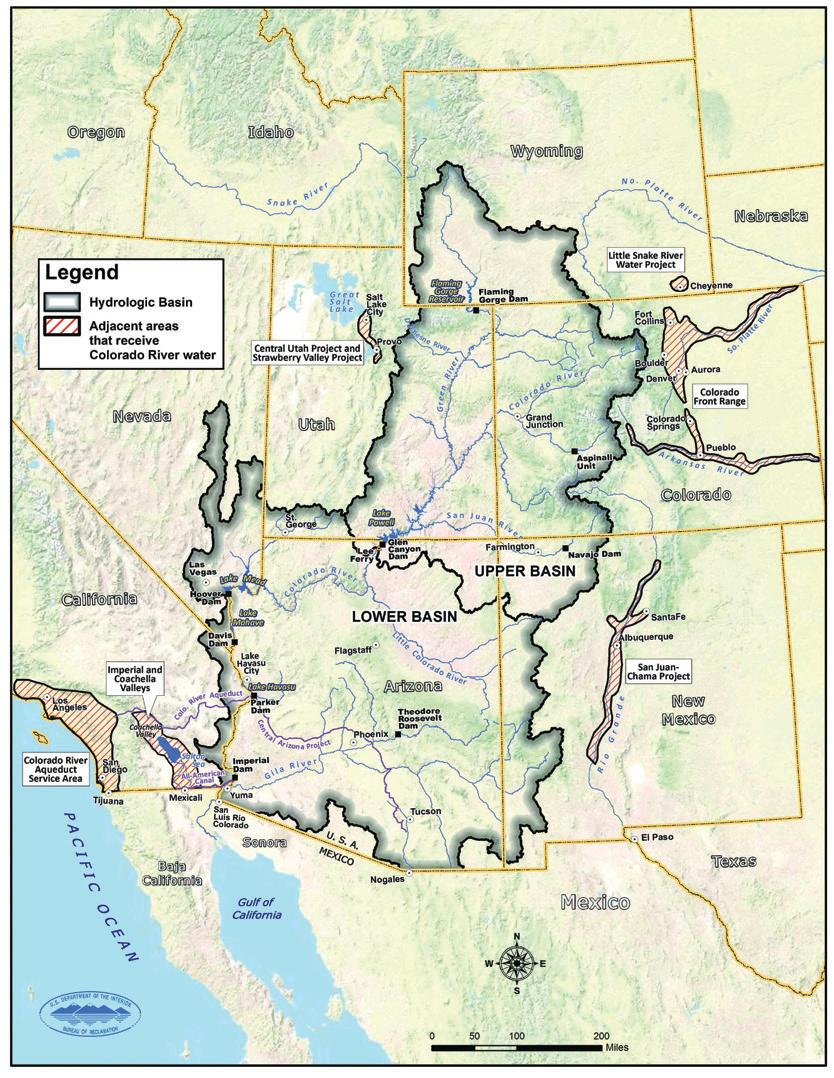
The CRB is one of the most productive and influential, economically and environmentally, yet conflicted regions of the United States. The Basin spans seven states, with its northernmost borders stretching into Wyoming, across Colorado and Utah, and down into Nevada, southern California, Arizona, and New Mexico. From there, the basin expands into northern Mexico where the Colorado River reaches toward the Gulf of California.
In addition to its environmental role, the economic importance of the CRB cannot be overstated: the Colorado River supports $1.4 trillion in annual economic activity and 16 million jobs – the equivalent to about 1/12 of the total gross domestic product in the U.S. It is estimated that if 10 percent of the river's water were unavailable (a decline quite possible under projected climate change scenarios of 10 to 30 percent flow reductions by 2050), there would be a loss of $143 billion in economic activity and 1.6 million jobs, in just one year.
The CRB is experiencing severe water scarcity due to the aridification (extreme prolonged drought) from climate change. This aridification has led to intervention by the U.S. Federal government, which ultimately forced key states to craft an agreement to use less water. Arizona, California, and Nevada agreed to take less water from the CRB – a breakthrough agreement that, for now, keeps the river from falling so low that it would jeopardize water supplies for major Western cities like Phoenix and Los Angeles as
ISSUE 5 2023 FILTNEWS.COM 27
U.S. Bureau of Reclamation
p The Basin spans seven states, with its northernmost borders stretching into Wyoming, across Colorado and Utah, and down into Nevada, southern California, Arizona, and New Mexico. From there, the basin expands into northern Mexico where the Colorado River reaches toward the Gulf of California.
well as for some of America’s most productive farmland.
What this translates to is a negative impact on economic development, which is being covered in recent media coverage. In particular, this coverage has focused on the impact of water scarcity on residential development highlighting the severity of aridification (not a drought but a long-term shift in the climate to an arid environment) on the region and the opportunity to accelerate the scaling of water reuse at utility scale and, in my view, residential and commercial scales (“Arizona Limits Construction Around Phoenix As Its Water Supply Dwindles” and “Phoenix Hopes To Turn Wastewater Into Drinking Water by 2030.”) Alternative sources of water, such as reuse, are needed as the Colorado River can no longer be the sole source of reliable water for the region.
What is happening in Arizona is part of a broader trend in the American West. Many western states are expanding water reuse with California, Arizona, and Texas have seen the fastest growth recently due to supportive policies, growing populations, and recurring drought issues. Water reuse adoption is growing fastest in a few key states:
California – California has emerged as a leader in water reuse. The state has set goals to increase recycled water use by two million acre-feet per year by 2030. Major reuse projects exist in Southern California, the San Francisco Bay Area, and the Central Valley.
Texas – Recycled water use has expanded rapidly in cities including, El Paso, San Antonio, and Dallas-Fort Worth. Agriculture and landscape irrigation are major uses. Texas also has the largest direct potable reuse project in the country.
Nevada – Las Vegas recycles nearly all water used indoors for uses like
irrigating golf courses and parks. Nevada requires the evaluation of reuse potential for new developments.
Colorado – Reuse in Colorado is focused on non-potable uses such as irrigation, but direct potable reuse is being explored in response to shortages in the CRB.
New Mexico – Albuquerque and other New Mexico cities have significant recycled water programs, mainly for landscape irrigation and industrial uses. More projects are in development.
manufactures decentralized, consumerfriendly, IoT-connected, compact and scalable graywater recycling products for residential and commercial properties, reducing water consumption by up to 45 percent. Hydraloop has a global partner network of more than 120 partners in more than 50 countries. Headquartered in the Netherlands, Hydraloop has offices in the United States and the Middle East, as well as representatives in Canada and Australia.
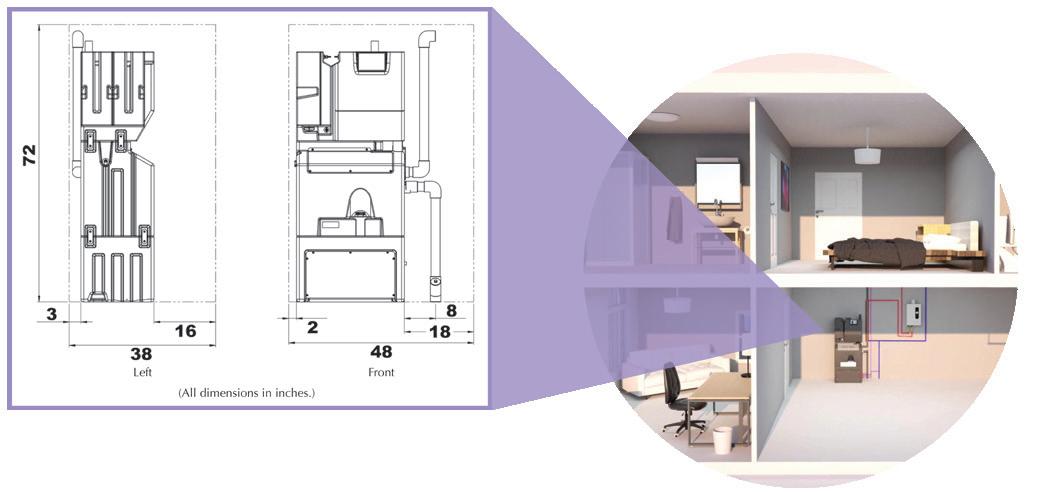
Innovative Technologies and Companies
Examples of companies focused on extreme decentralized that I find interesting are Hydraloop (we are an investor), Greyter, Epic Cleantech, and Rainstick.
Hydraloop – A Dutch company that makes a compact unit that recycles shower and sink water for reuse in toilets, washing machines, and irrigation. Their units can recycle over 85% of household water. Hydraloop is a multi-awardwinning company that designs and

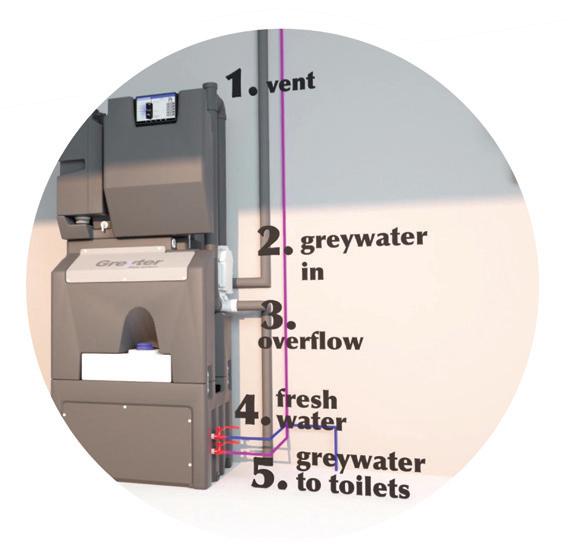
Greyter – A U.S.-based company focused on simple, compact greywater recycling systems for the home. Their systems filter and disinfect greywater for non-potable residential residential use. The system captures greywater from bathroom sinks, showers, tubs and washing machines. The greywater passes through a hair and lint filter first to remove large particles and then goes through a two-stage filtration system: a sediment pre-filter followed by a cotton filter. After filtration, the water passes through a UV disinfection system to kill bacteria and viruses. Finally, the treated greywater is stored in a 30-gallon tank and can be reused for non-potable purposes like irrigation
The entire system fits under the sink or in a basement/garage for easy retrofits and can recycle over 22,000 gallons per year, reducing household water use.
Epic Cleantec – A U.S.-based company that Epic Cleantec (Epic) specializes in innovative, energy-efficient decentralized wastewater recycling suitable for sites not connected to sewer systems. Epic opened its U.S. headquarters and first American demonstration facility in San Francisco in 2018 when it retrofitted
28 IFN ISSUE 5 2023
p Hydraloop designs and manufactures decentralized water recycling products for new builds and retrofits. We offer a wide range of innovative, sustainable, and IoT-connected water recycling devices for residential and commercial real estate. Hydraloop
With only five standard plumbing connections, the compact, energy-efficient Greyter HOME™ Water Recycling System is designed for quick and easy installation into new residential developments. This simple process enables professional plumbers to install several systems per day, helping to dramatically reduce the cost of equipping growing communities with advanced water recycling appliances.
Greyter
p The compact Greyter HOME is easily installed in a garage or basement, ensuring no impact to living space and eliminating the time and cost of building an enclosure to conceal the unit. Greyter
q Water collected from showers, sinks, washing machines and other greywater sources is stored in an equalization tank that buffers out flow, reducing the size of the downstream system. The raw water undergoes biological treatment for removal of organics, known as Biological Oxygen Demand, or BOD. Water is then rigorously filtered using membranes with a nominal pore diameter of .04 microns. Before pumping for reuse in the building, water undergoes multiple steps of disinfection via ultraviolet light and chlorine, which render the water safe for reuse in non-potable applications. If heat recovery is included, the system will capture energy from wastewater and use it to pre-heat domestic hot water, resulting in lower heating costs for the building. Epic Cleantec
Shower can help the average family save approximately 25,000 gallons of water per year. It requires minimal installation and connects to existing plumbing in the home.
Conclusions
t Epic’s OneWater™ system can safely recycle up to 95% of a building’s wastewater – either blackwater or greywater – and produces three sustainable outputs: Recycled water that can be reused directly onsite for non-potable applications like cooling towers, toilet and urinal flushing, irrigation, or clothes washing; Recovered energy from wastewater heat can be captured and used to preheat domestic hot water supply; Repurposed natural soil amendments that can be used in landscaping projects, gardens, or even local parks. Epic Cleantec
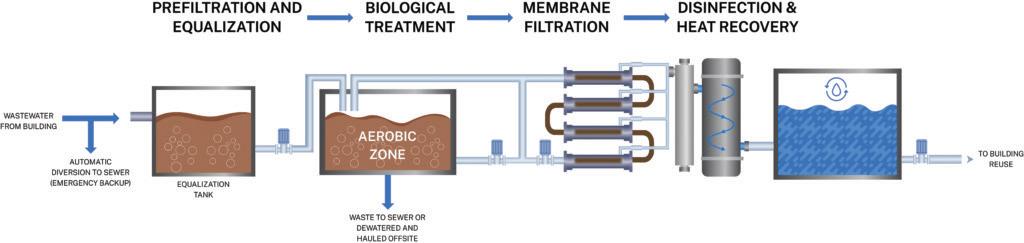

I believe that extreme decentralization, residential and commercial water, and wastewater treatment, will increase in adoption for several reasons. Alternatives to centralized water systems that solely rely on traditional sources of water (surface water and groundwater) are facing challenges due to the impact of climate change, aging infrastructure and inadequate funding. These challenges, coupled with demand for off-grid and personalized water systems, create a driver for technology and business model innovation (water and wastewater treatment as a service) and, in turn, investment opportunities.

an existing warehouse building into a high-tech water recycling site to showcase its system. The San Francisco facility has the capacity to recycle over 30,000 gallons of water per day back to drinking quality standards. It uses an integrated system of collection tanks, membrane bioreactors, reverse osmosis, UV disinfection, and electrochemical activation. Testing achieved over 90% water recovery turning the wastewater into high-quality water for reuse. Also, Epic uses the site to educate policymakers, potential partners, investors and others about their water reuse technologies.
RainStick Shower is a product made by the company RainStick that helps recycle water while you shower. It is a shower head attachment that connects between your existing shower head and the shower arm. It contains a small microfiltration system inside that filters and purifies water while you shower. During the shower, it redirects a portion of the clean recycled water back into a pipe that connects to your toilet tank or an irrigation system. This enables you to
reuse some of the shower water, typically about 25-35%, reducing the amount that goes down the drain. The water is filtered to remove particles and treated with a disinfectant to kill bacteria and viruses, making it safe for toilet flushing or irrigation. No separate water storage tank is needed since the recycled water is sent directly to its end use. The system recycles automatically and the shower works normally, giving you the same pressure and experience. RainStick claims the
The move away from solely relying on centralized water and wastewater systems is ultimately inevitable and the time is now to participate in this transformation of the water sector.
p Similar to your conventional shower, RainStick begins with a fresh supply of grid-provided water. However, instead of being wasted down the drain, its technology captures, circulates, and cleanses the water in real-time, ensuring not a single drop goes to waste. Embrace sustainability without sacrificing comfort as RainStick redefines your showering experience. RainStick
Will Sarni is the founder and CEO of Water Foundry (www.waterfoundry. com) a water strategy consultancy. He is also the Founder and General Partner of Water Foundry Ventures, a water technology venture fund focused on addressing water scarcity, quality and equitable access to water. He has been a sustainability and water strategy advisor to multinationals, water technology companies, investors, and non-governmental organizations for his entire career. Prior to Water Foundry, he was a managing director at Deloitte Consulting where he established and led the water strategy practice. He was the founder and CEO of DOMANI, a sustainability strategy firm, prior to Deloitte. Will is an internationally recognized thought leader on water strategy and innovation. He was ranked as; Worth Magazine Worthy 100 for 2022, A Key Player Pressuring Businesses to Care About Water and one of the Top 15 Interviews In Smart Water Magazine 2019. He is also the author numerous publications and books on water strategy and innovation He can be reached at will@waterfoundry.com or 720.341.7272.

ISSUE 5 2023 FILTNEWS.COM 29
Gas Turbine Performance WHY FILTERS CANNOT FAIL
Gas turbines have substantially enriched societies' living standards, whether by generating shaft power or thrust to enhance our daily lives and activities. We take electrical sockets for granted, relying heavily on power to operate our cities and appliances. Today, gas turbines still dominate a significant role in the global energy mix as far as fossil fuel combustion is concerned. However, to meet the 2oC target, efficient and affordable power generation among other alignments must be in place to move humanity toward sustainable, equitable, and prosperous economies.
The Critical Importance of Gas Turbine Performance
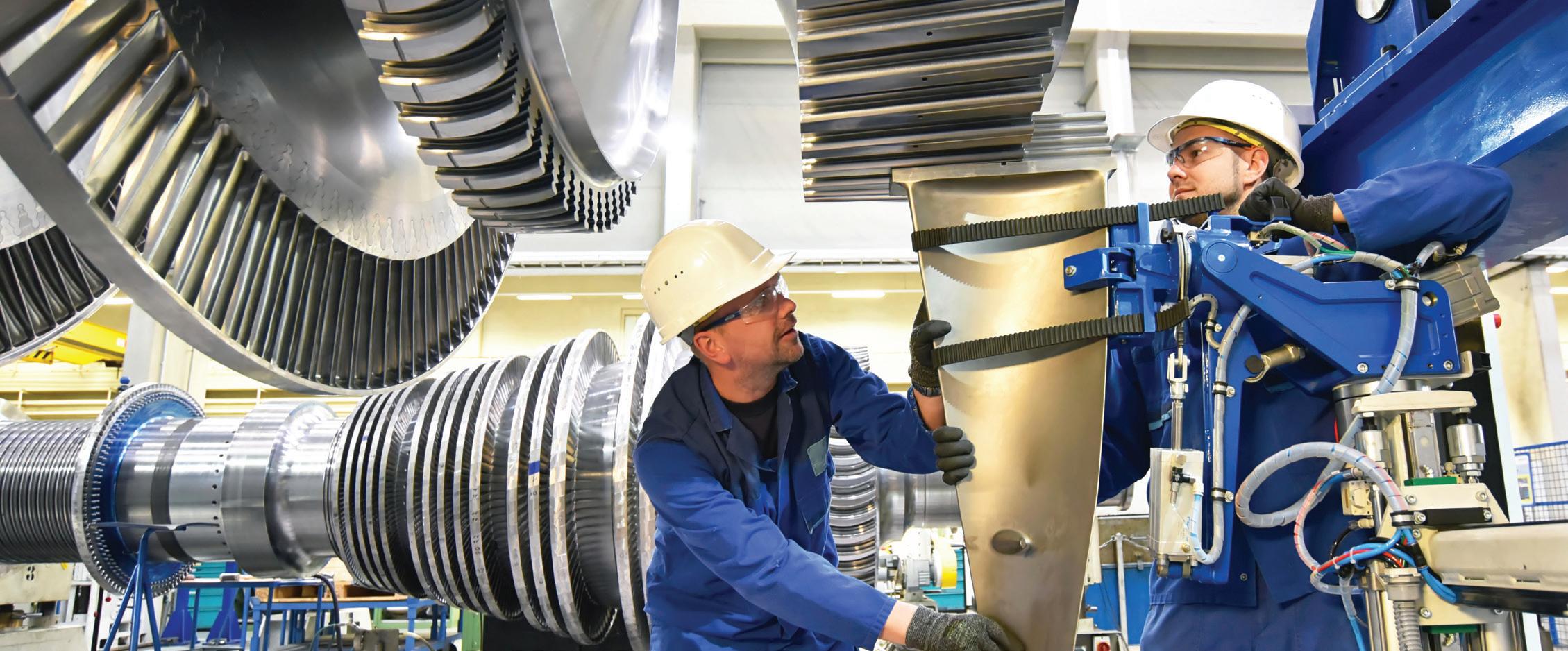
Gas turbines are widely used in power generation, where quick startup, high availability and reliability are needed to meet the increasing power demand under all steady-state and transient conditions. Globally, sources indicated that power generated from land-based gas turbine amounts to one-quarter of global generation [1]. The International Energy Agency highlighted in their recent report that the demand is forecasted to grow by 3.3% in 2024 due to a prosperous economic outlook, although it has had a slow growth recently[1]. Ultimately, gas turbine performance emerges as the most critical operational parameter to assess their power generation success and minimize the economic impact of outages. The rising cooling demand, population growth, and the scale, speed, and scope of urbanization emphasize the importance of enhanced gas turbine performance while adhering
to environmental regulations. Gas turbines operating in environments sustaining high dust concentration and extreme temperatures suffer from performance degradation. Power plants and grids are strained to meet the rising cooling capacity to avoid load-shedding and, eventually, power outages. Air conditioning systems use about one-fifth of the global power generation[2]. That would emphasize better building design, stricter building codes, and efficient air conditioning installation, which would help counter the growth in cooling-related electricity demand. Ultimately, sourcing responsible power generation and embracing sustainable living standards harness the opportunity for a decarbonized economy and recognize our environmental limits.
The Working Principles
The essence of the gas turbine operation lies in accelerating a gas to high velocities by increasing its specific enthalpy and converting it to kinetic energy.
Atmospheric air is drawn through a filter house installed at an evaluated level. Air is then passed through the filtration stages before entering the compressor via the bell mouth. The cleaned air is then compressed to a high pressure and temperature to enter the combustion chamber, where fuel is added, and combustion occurs. Energy is then extracted from the hot pressurized exhaust gas, thus reducing pressure and temperature. The energy is converted to work in the turbine, 50 to 60% of which drives the compressor, and the rest drives the generator to produce power or operate mechanical equipment (gas compressors and pumps). An example of a combined cycle power plant is shown in Figure 1.
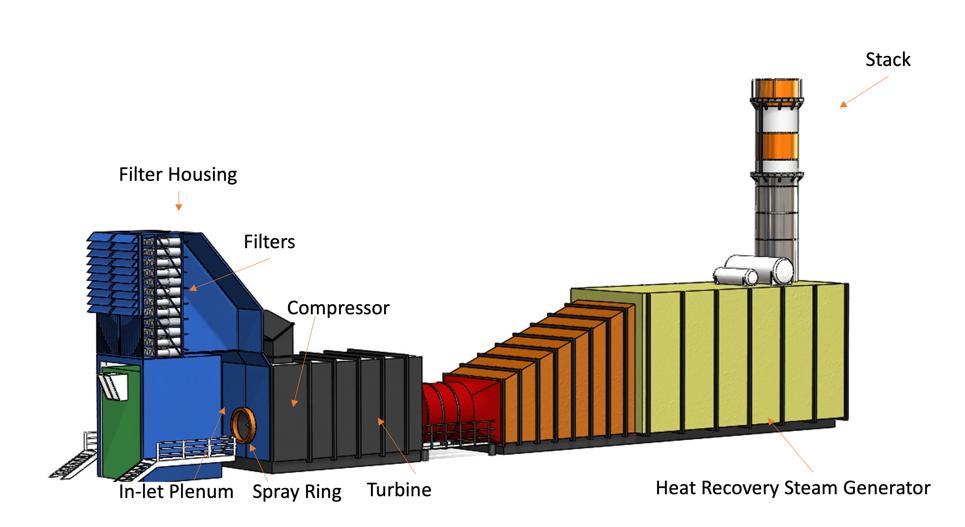
Gas Turbine Performance Degradation
Gas turbines operate in different climates and confront multiple atmospheric contaminants with various concentrations that can lead to performance degradation and component deterioration [3] .
30 IFN ISSUE 5 2023
By Dr. Iyad Al-Attar AIR & GAS FILTRATION
q Figure 1: Schematic of combined cycle power plant.
Shutterstock
Images courtesy of Dr. Iyad Al-Attar
A standing challenge of all gas turbine engines is compressor fouling. It occurs when various contaminants deposit on the compressor assembly, reducing the throat area between the blades, as shown in Figure 2. Such deposition (Figure 3) reduces the mass flow rate, pressure ratio, compressor efficiency, and surge line leading to performance degradation and more fuel has to be burnt to maintain the designed power output[4,5]. Consequently, turbine blades will experience higher firing temperatures producing high thermal and mechanical stresses due to centrifugal force, vibratory and flexural stresses which negatively impact the turbine
Various air filters as shown in Figure 4 are sought in land-based gas turbines to separate and retain particles through depth and surface deposition (Figure 5). On the other hand, surface filtration facilitates the filtration action through dustcake formation on the surface of filter media. The regeneration of the media is done by means of a pulse system to prepare it for an additional filtration cycle as shown in Figure 6. While two techniques have their own and common benefits
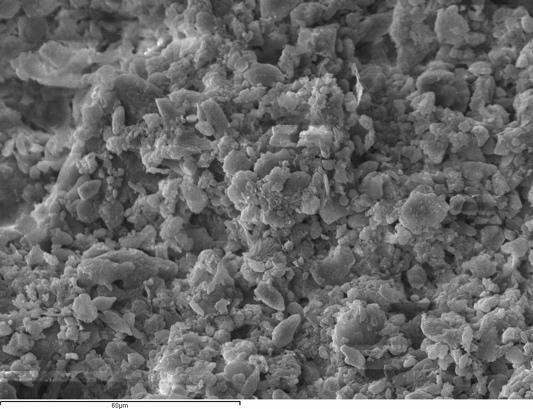

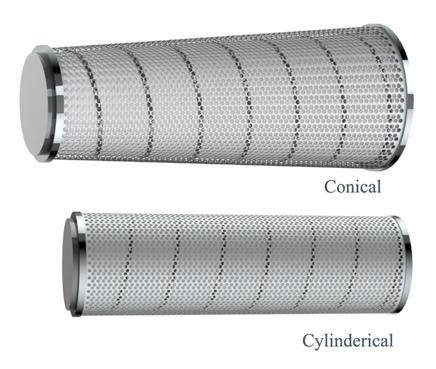
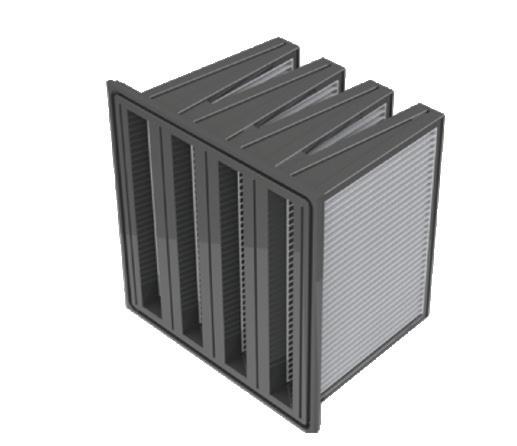
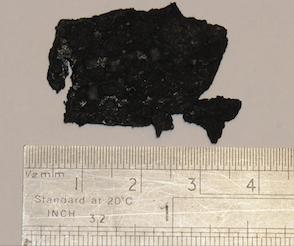
and challenges, providing the required mass flow rate of air is essential to operate the gas turbine engine – starving the compressor of air cannot be an option. On the other hand, a fouled compressor degrades the engine performance, reducing power output and gas turbine availability. Research has suggested that 70% of the performance degradation comes from compressor fouling[8,9], highlighting the importance of air quality feeding the engine and the compressor washing solutions required to restore compressor assembly to its design point and performance[10,11]. Therefore, appropriate air filter selection is essential to strike a balance between particle capture and air permeability. Ultimately, the main objec-

tive at this stage is to feed the compressor assembly with the required mass flow rate of air that is fit for purpose.
Geographic Location Sensitivity
The physical and chemical characterization of outdoor air is sensitive to a given geographic location and can influence the selection of air filters. While the role of efficient and permeable air filters cannot be overstated, one must be mindful of the specific requirements of gas turbines which can be dynamic, different, and challenging, relevant to the surrounding microclimate conditions. The real-time performance of installed air filters in gas turbine applications deviates from that predicted by laboratory results [12]. Such performance deviation could be attributed to variations in particle physical characteristics, loading conditions through filtration stages, operational, and environmental conditions.
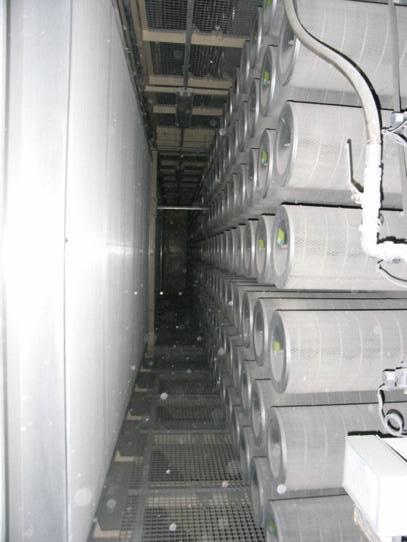
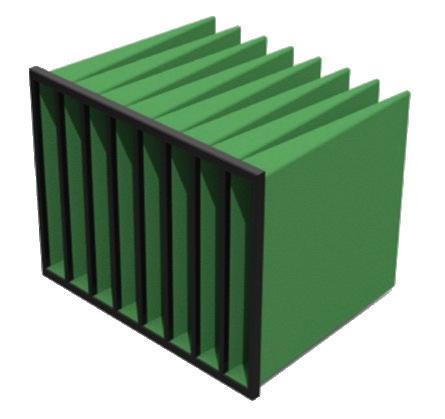
ISSUE 5 2023 FILTNEWS.COM 31
p Figure 2: Illustration of the throat area in a typical compressor assembly.
p Figure 3: Layer of fouling recovered from compressor blades during schedule outage.
p Figure 4: Various examples of static [A,B] and pulse filters [C] used in land-based gas turbine applications.
p Figure 5: Typical examples of depth [Left] and surface [Right] particle depositions.
p Figure 6: Typical installation of pulse filters in the land-based gas turbines.
Design Aspect for Gas Turbine Air Filtration
Several parameters influencing air filter performance include particle characteristics (size, shape), loading mechanisms during different operational conditions, and design parameters (pleat count and effective surface area). Figure 7 illustrates different particle shapes and size ranges found in loaded filters. The size and shape of particles play a role in determining the dominant capture mechanism and, eventually, their depth or surface deposition on the filter medium. On the other hand, suspended particles and their loading characteristics are size and shape-dependent. Furthermore, filter medium pore structure characteristics can also influence filter loading and clogging.
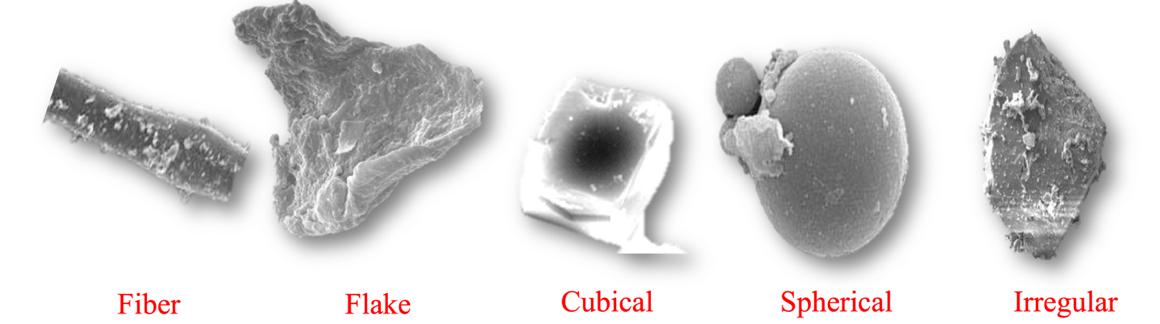
Given the tremendous mass flow rate required, any low concentration of particles will amount to great particle loading, leading to a higher pressure drop, which is inversely proportional to permeability. At such higher mass flow rates, and subject to the structural stability and characteristics of the filter media used, pleats and pleated panels can deform, causing surface area losses leading to permeability reduction. This highlights the importance of the media's physical characteristics and structural integrity to sufficiently support the induced forces by the mass flow rate. From an efficiency perspective, reduced air permeability due to increased particle loading and/or inappropriate filter media selection can compromise the overall filter efficiency.
The Effective Surface Area Concept
Adding surface area to a filter cartridge by means of increasing the pleat density
is not the point; the point is introducing effective surface area that participates in the separation and retention process. In addition to the media characteristics and operational and climate conditions, filter design can play a role in engineering the flow dynamics through a pleated filter cartridge for optimum filter performance. The filter's permeability and particle capture should be a major consideration of gas turbine operation to enhance its performance. Therefore, optimized filter design, appropriate media selection, and aerodynamic filter performance can help achieve the desired efficiency without impeding the flow. Filter deformation and eventual failure and/or prematurely clogging lead to unscheduled maintenance and disruption in the gas turbine operation. For this reason, air filters cannot fail in land-based gas turbines.
The Order of the Day
Operating a gas turbine close to the design point is essential to utilize the
installed engines' maximum performance. Embracing sustainability as we aim to decarbonize our economy requires that all sectors contribute at an incredible speed. Given that we have ambitious dreams to chase when it comes to a sustainable planet and digital future, the role of efficient processes becomes wellpronounced.
Our reliance on fossil fuels cannot be overlooked. However, their use has contributed to climate change over the last 100 years, and it is time to re-engineer our minds and gears toward enhanced performance and responsible consumption of our fossil fuels. Planet Earth needs responsible habitants that allow it to regenerate itself if we aim to fulfill the promise to our grandchildren of a healthier planet than the one we inherited.
To support more environmentally friendly energy policies and embrace sustainable living, the order of the day must be to grant renewables a greater role in the global energy mix and accompany them with responsible combustion.
Dr. Al-Attar is a mechanical engineer and an independent air filtration consultant. He is also a Visiting Academic Fellow in the School of Aerospace, Transport, and Manufacturing at Cranfield University, consulting for air quality and filter performance relevant to landbased gas turbines. Dr. Al-Attar is the strategic director, instructor, and advisory board member of the Waterloo Filtration Institute. In 2020, Eurovent Middle East appointed Dr. Al-Attar as the first associated consultant for air filtration. Recently, he became the Indoor Air Quality (IAQ) patron for EUROVENT. Dr. Al-Attar received his engineering degrees (BSc, MSc, Ph.D.) from the University of Toronto (Canada), Kuwait University, and Loughborough University (UK), respectively. Dr. Al-Attar’s area of expertise focuses on designing and performing high-efficiency filters for HVAC and landbased gas turbine applications, particularly on the chemical and physical characterization of airborne particles. Dr. Al-Attar is a columnist in the Filtration News, EUROVENT Middle East newsletter, Climate Control Middle East Magazine, ES Engineering, USA, and Caloryfrio Magazine, Spain. He has authored many articles on air quality, filter design, performance, particle characterization, and climate change, which were translated into Arabic, Portuguese and Spanish. Dr. Al-Attar is an editorial member/referee in the Filtration Society (UK) and the Journal of Cleaner Production.

32 IFN ISSUE 5 2023
q Figure 7: Examples of different particle shapes.
References:
1. IEA. “Electricity Market Report Update”, Outlook for 2023 and 2024. International Energy Agency.
2. IEA (2018), The Future of Cooling: Opportunities for energy-efficient air conditioning, International Energy Agency, Paris.
3. Goldberg C, Nalianda D, Laskaridis P & Pilidis P (2018). Installed performance assessment of an array of distributed propulsors ingesting boundary layer flow, Journal of Engineering for Gas Turbines and Power, 140 (7) Article No. 071203: GTP-17-1588.
4. Kurz, R. and Brun, K. (2012), “Fouling mechanisms in axial compressors,” Journal of Engineering for Gas Turbines and Power, vol. 134, no. 3, pp. 032401.
5. Meher-Homji CB. Gas turbine axial compressor fouling – a unified treatment of its effects, detection and control. Int J Turbo Jet Engines 1992;9(4):99–111.
6. Patil A.A., Shirsat U.M., (2012). Study of Failure Analysis of Gas Turbine Blade. IOSR Journal of Engineering (IOSRJEN), ISSN: 2250-3021
ISBN: 2878-8719 PP 37-43 National Symposium on engineering and Research.
7. Jordal, K., Assadi, M. & Genrup, M. (2002). Variations in Gas-Turbine Blade Life and Cost due to Compressor Fouling – A Thermoeconomic
C NTRACT PLEATING

Approach. International Journal of Thermodynamics, 5 (1) , 37-47
8. Saravanamuttoo, H.I. H., Cohen, H., Rogers, G.F. C. and Straznicky, P.V. (2009), Gas Turbine Theory, Sixth ed, Pearson Prentice Hall, Harlow Essex England.
9. A. Kermanpur (2008), “Failure analysis of Gas turbine compressor blade;” Engineering failure analysis; 15 pp 1052-1064.
10. R. Agbadede, P. Pilidis, U.L. Igie, I. Allison, Experimental and theoretical investigation of the influence of liquid droplet size on effectiveness of online compressor cleaning for industrial gas turbines, Journal of the Energy Institute, Volume 88, Issue 4, November 2015, Pages 414-424, ISSN 1743-9671, http://dx.doi.org/10.1016/j. joei.2014.11.002.
11. U.Igie, P. Pilidis, D.Fouflias, K.Ramsden, and P. Lambart, “Online compressor cascade washing for gas turbine performance investigation,” ASME2011 Turbo Expo: Turbine Technical Conference and Exposition, American Society of Mechanical Engineers, pp.221 2011.
12. Al-Attar I.S., 2011. “The effect of pleating density and dust type on performance of absolute fibrous filters,” doctoral diss., Loughborough University Institutional Repository.
With our extensive knowledge in production of the innovative SOLTECH “Mini Pleat” Systems, and over 20 years of contract pleating with our revolutionary glue bead technology.
We offer the following services to our customers:-
MINI-PLEAT-GLASS
Mini-Pleat: H.E.P.A., ULPA & ASHRAE
Pleat heights 1/2” to 12” upto 39” wide. Interrupted beads, many configurations.
MINI-PLEAT-SYNTHETIC
Mini-Pleat: H.E.P.A. & ASHRAE
Pleat heights 3/4” to 4” upto 25” wide. Interrupted beads, many configurations.
We can incorporate the following features in your elements: Edge Seal - allowing economical frame sealing Slitting/Perforating - multiple packs
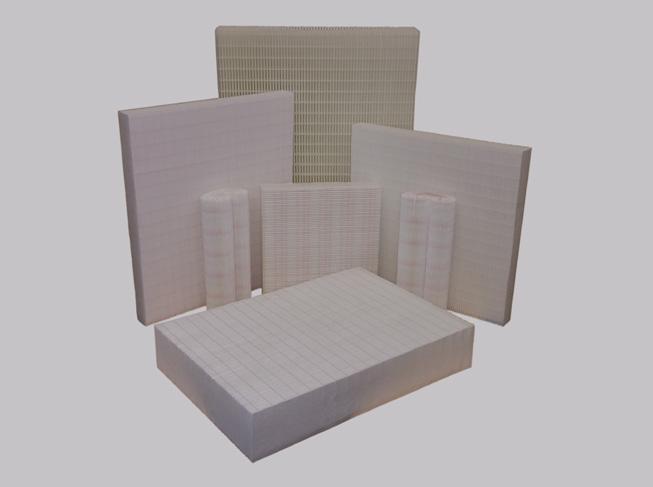
“W” pleat Fire retardant glue
cps@solentech.com
ISSUE 5 2023 FILTNEWS.COM 33
Filter Manufacturing Machinery Solent Technology Inc
A service of South Carolina, USA. Tel. +1(803)739-0770 Fax:+1(803)739-0814
SERVICES
GLASS | SYNTHETICS | PAPER | MEMBRANE
Biden Administration Bets the House on Direct Air Capture
By Adrian Wilson, International Correspondent, IFN
Ushering in a huge new opportunity for advanced filtration, on August 11th this year, the U.S. Department of Energy (DOE) announced up to $1.2 billion in funding to advance the development of two commercial-scale direct air capture (DAC) facilities in Louisiana and Texas.
DAC Hubs
The two projects announced by the DOE – the first on such a scale in the United States –represent the initial selections from the President’s DAC Hubs program aiming to kickstart a nationwide network of large-scale carbon removal sites to address legacy carbon dioxide (CO2) pollution and complement rapid emissions reductions.
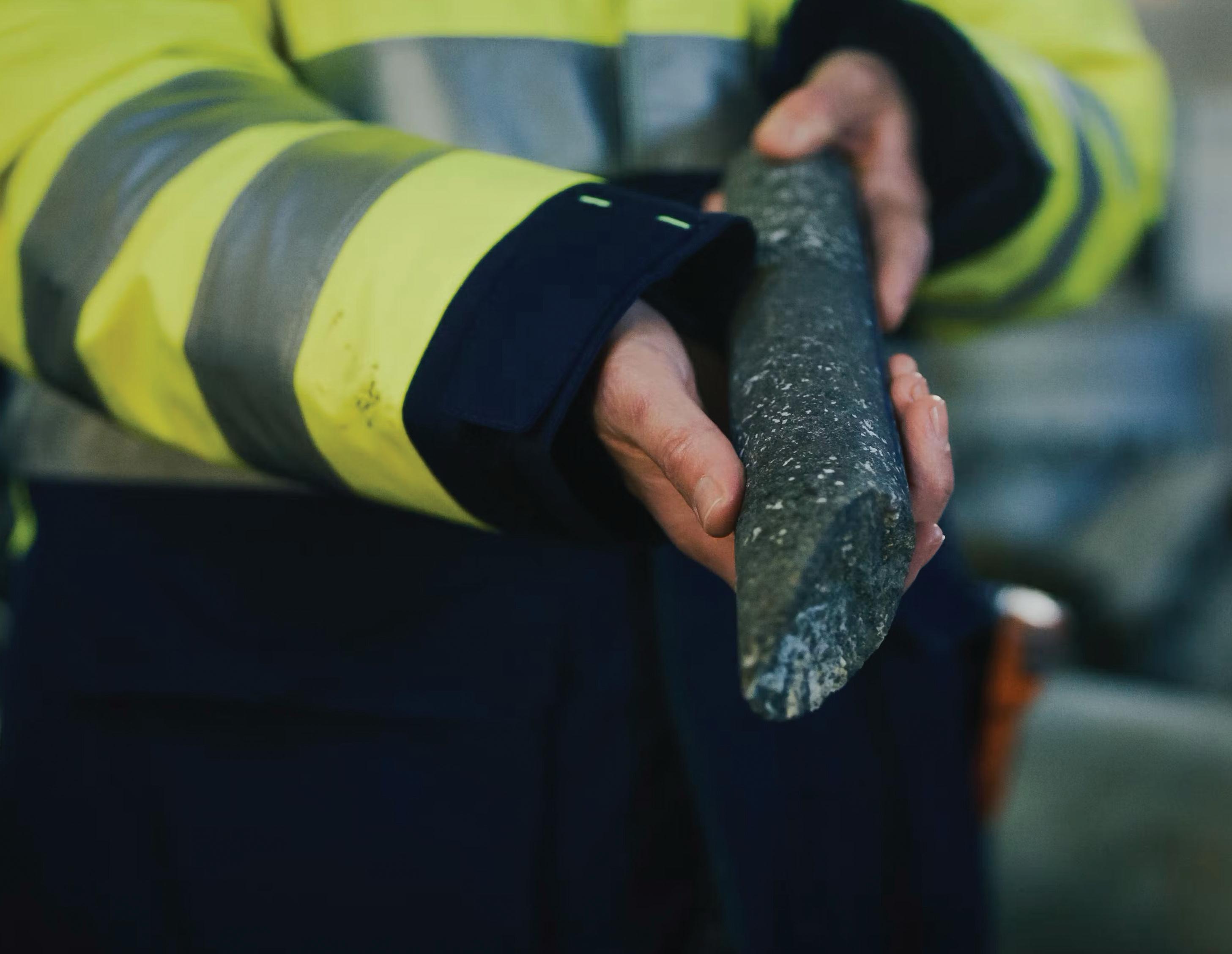
These emissions are already in the atmosphere, fueling climate change and extreme weather and jeopardizing public health and ecosystems across the globe.
Together, the two projects are expected to remove more than two million metric tons of CO2 emissions each year from the atmosphere once fully scaled –an amount equivalent to the annual emissions from roughly 445,000 gasolinepowered cars – and create 4,800 goodpaying jobs in Louisiana and Texas.
Transformational
“Cutting back on our carbon emissions alone won’t reverse the growing impacts of climate change – we also need to remove the CO2 that we’ve already put in the atmosphere which nearly every climate model makes clear is essential to
achieving a net-zero global economy by 2050,” said U.S. Secretary of Energy Jennifer M. Granholm. “With this once-ina-generation investment made possible by President Biden’s Investing in America agenda, the DOE is laying the foundation for a DAC industry crucial to tackling climate change – transforming local economies and delivering healthier communities along the way.”
Technology
There are a number of different DAC technologies for filtering CO2 from the air by either absorption or adsorption techniques using common chemicals which are already in use in other applications, notably water and gas filtration. These include liquid amine solutions and aminefunctionalized sorbents, while MOFs
34 IFN ISSUE 5 202 3
CLEAN AIR
t At the Climeworks Orca plant in Iceland, the geological storage of CO2 is handled by Carbfix. It is first dissolved in water and injected into the sub-surface where it reacts with the rock to form solid carbonate minerals.
Climeworks
(metal organic frameworks) now show the most promise for the future.
MOFs are materials composed of metal ions and organic ligands that form a three-dimensional structure with a high surface area and well-defined pore size and porosity. These properties make MOFs ideal for gas storage and separation, including carbon capture.
Adsorption technology is considered a promising alternative to replace typical absorption methods based on liquid amines in carbon capture due to the simplicity of the process, mild operating conditions, flexibility during operation, low operating cost and no corrosion in equipment. Adsorption technologies are also favored for CO2 capture in post-combustion conditions such as low pressure, mild temperatures and low carbon dioxide concentration, where implementing absorption techniques results in higher operating costs.
Sequestration
Once the CO2 is captured from the atmosphere, heat is typically applied to release it from the filters. The captured CO2 can then be injected deep underground for sequestration in certain geologic formations or used in various products and applications. To maximize climate benefit, most captured CO2 would need to go to vast and permanent underground sequestration rather than useful but more limited utilization routes.
Companies with the most developed DAC technologies today include Climeworks, headquartered in Zurich, Switzerland, Canada’s Carbon Engineering and Global Thermostat, of Brighton, Colorado.
The DOE estimates that reaching President Biden’s plan for a net-zero emissions economy will require between 400 million and 1.8 billion metric tons of CO2 to be removed from the atmosphere
q In 2021 Climeworks launched Orca in Iceland as the world’s largest direct air capture and storage (DAC+S) plant to date. Climeworks
and captured from emissions sources annually by 2050.
Momentum
The momentum of DAC in the USA doesn’t stop with the two projects – to assess the viability of future DAC Hub demonstrations, the DOE also announced 19 additional projects selected for award negotiations that will support earlier stages of project development, including feasibility assessments and front-end engineering and design studies. On August 22, the DOE announced a further $12.5 million in funding for Los Angeles-based CarbonCapture and a team of strategic partners to develop a 20,000-ton DAC Hub in Southwest Wyoming, with further projects still to be announced.
Louisiana Hub
The initial two DAC Hubs selected for award negotiations will help further demonstrate the ability to capture and store atmospheric CO2 at scale.
The first, Project Cypress, is to be located in Calcasieu Parish, Louisiana, and involves Battelle, a private non-profit applied science and technology development company headquartered in Columbus, Ohio, working in coordination
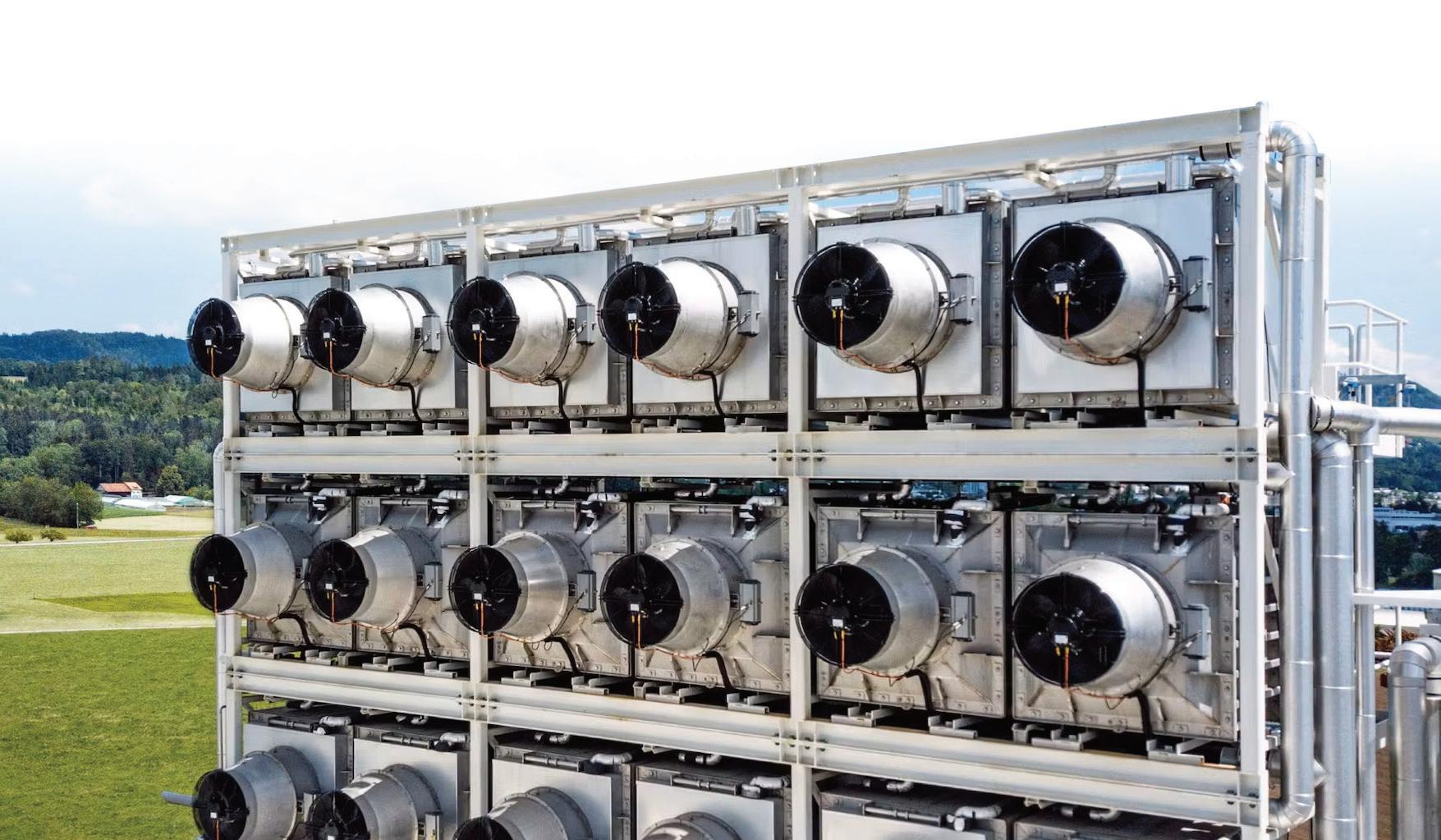
ISSUE 5 202 3 FILTNEWS.COM 35
The DOE estimates that reaching President Biden’s plan for a net-zero emissions economy will require between 400 million and 1.8 billion metric tons of CO2 to be filtered from the atmosphere and captured from emissions sources annually by 2050.
with Climeworks Corporation, and Heirloom Carbon Technologies, which is currently operating a small DAC facility in Brisbane, California. In a first-of-its-kind project, the CO2 captured by the Brisbane plant has already been permanently embedded in concrete used in building projects in the Bay Area, by partner CarbonCure.
The Louisiana Hub will rely on Gulf Coast sequestration for offtake and geologic storage of the captured atmospheric CO2.
Orca
In 2021 Climeworks launched Orca in Iceland as the world’s largest direct air capture and storage (DAC+S) plant to date.
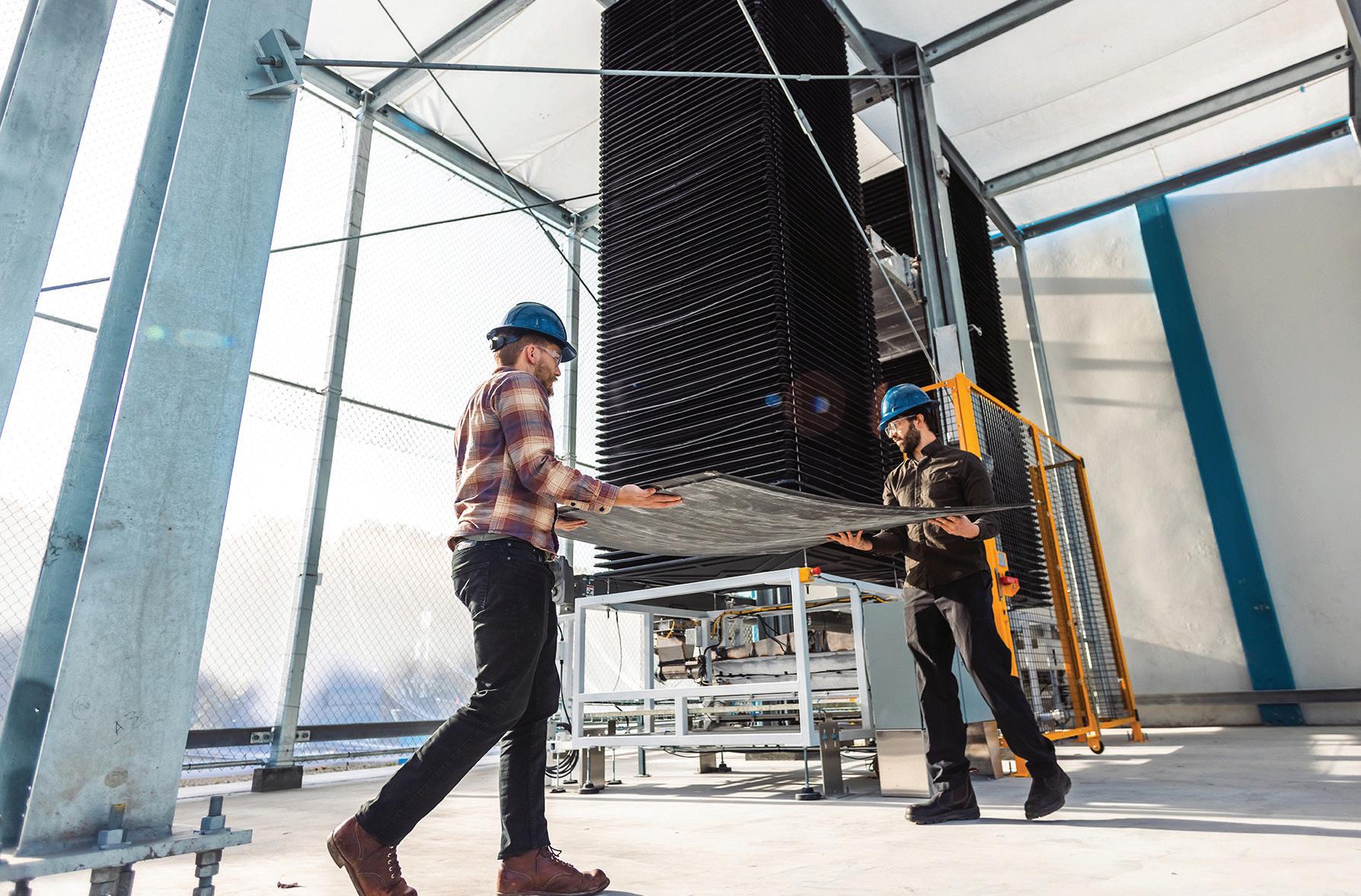
The facility consists of eight collector and filtration containers, each with an annual capture capacity of 500 tons. The containers are arranged around a central process hall that accommodates all electrics, such as the processing unit, allowing the company to remotely operate and control the facility.
Construction of a second and larger plant in Iceland – Mammoth, with a planned capacity of 36,000 tons per year – is now in progress.
Benefits
The key benefits of DAC according to Climeworks, are that it is location-independent, highly scalable and measurable and enables efficient land usage.
CO2 is in the air at the same concentration everywhere in the world which means that DAC plants can be located
anywhere as they do not need to be attached to an emissions source. They are only required to be placed near a renewable energy source and in a place where CO2 can be stored.
Climeworks plants are based on a modular technology design, making them highly scalable and require less land than other techniques. The planting of trees is the most obvious and natural way of absorbing carbon, but on a land area of 0.42 acres, the Orca plant can remove 4,000 tons of CO2 from the air every year – almost 1,000 times more effective than trees. The same land would host around 220 trees with an estimated capacity of 22kg each – only 4.62 tons of CO2 per year.
Storage
The company further points out that DAC+S is often confused with carbon capture and storage (CCS), but the two are very different. CCS captures CO2 emissions at a point source, for example, a smoke stack at a power plant where the aim is to offset carbon emissions as they’re being released into the atmo-
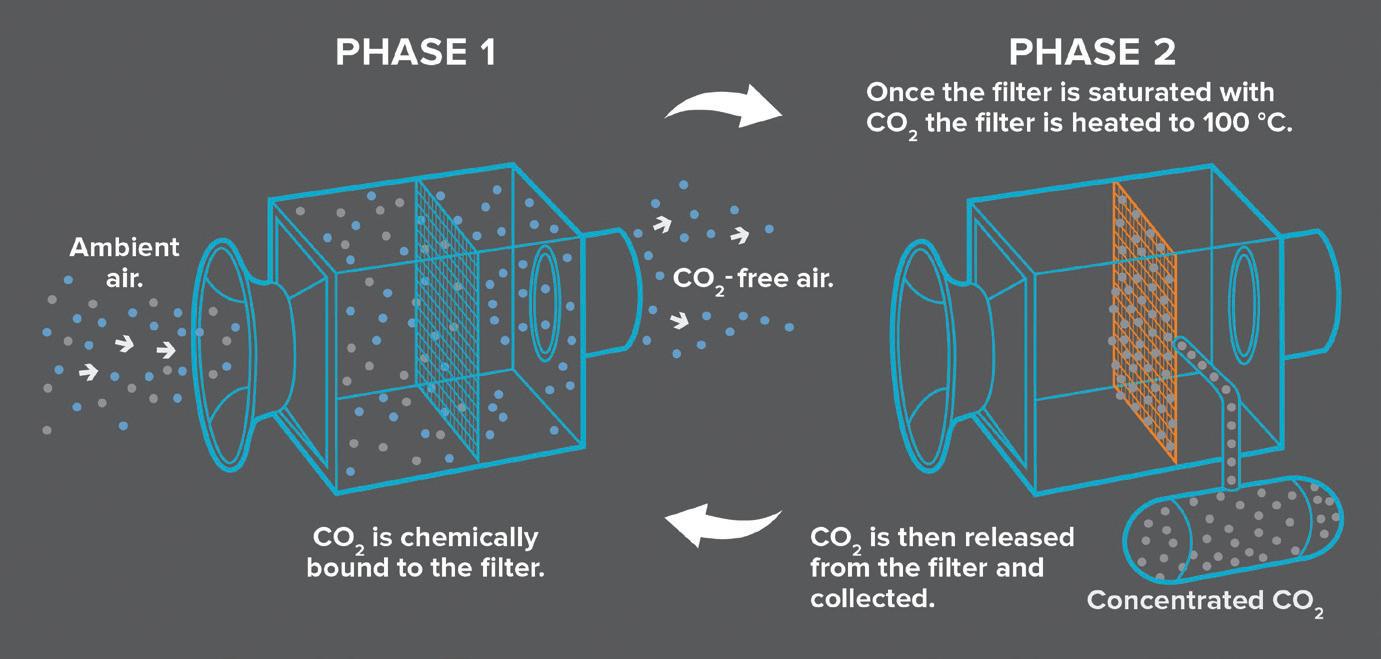
sphere. DAC+S works instead to remove unavoidable and historic CO2 emissions already released into the atmosphere.
At the Orca plant in Iceland, the geological storage of CO 2 is handled by partner Carbfix by being first dissolved in water before it’s injected into the subsurface, where it reacts with the rock to form solid carbonate minerals.
Texas Hub
The South Texas DAC Hub is being sited in Kleberg County, Texas, and involves 1PointFive, a subsidiary of Occidental, and its partners, Canada’s Carbon Engineering and Australian engineering company Worley.
In a further development just after the DOE DAC Hubs announcement, 1PointFive announced the acquisition of Carbon Engineering for total cash consideration of approximately $1.1 billion.
All Nippon Airways (ANA), Japan’s largest airline, has already announced a CO2 credit purchase agreement with 1PointFive.
Carbon Engineering’s DAC technology is based on an air contactor – a large structure modelled on industrial cooling towers – and a giant fan that pulls air into this structure, where it passes across thin plastic surfaces that have potassium hydroxide solution flowing over them. This non-toxic solution chemically binds with the CO2 molecules, removing them from the air and trapping them in the liquid solution as a carbonate salt.
36 IFN ISSUE 5 202 3
The Climeworks filter system. Climeworks
t CO2 captured by Heirloom has been permanently embedded in concrete used in building projects in California. Heirloom
The CO2 contained in the carbonate solution is then put through a series of chemical processes to increase its concentration, purify and compress it, so it can be delivered in gas form ready for use or storage. This involves separating the salt out from solution into small pellets in a structure called a pellet reactor, which was adapted from water treatment technology. In this chemical reaction, in addition to precipitating out the calcium carbonate pellets, the original capture chemical to be used in the air contactor is regenerated.
Fig Leaf
DAC is not, however, without its critics and Jonathan Foley, executive director of San Francisco-based Project Drawdown, a group that publicizes climate solutions, suggested to The Guardian newspaper that the money being invested in it could be much better spent on actual climate solutions that would be cutting emissions from the start, citing energy efficiency and lowering emissions from agriculture, transportation and electricity generation as better approaches.
stuff and remove it later,” he said. There is also the question of cost. In a 2022 report for the Washington-based World Resources Institute, authors Katie Lebling, Haley Leslie-Bole, Zach Byrum and Liz Bridgwater observe that despite its benefits and flexibility, DAC is more costly per ton of CO2 removed compared to many mitigation approaches and natural climate solutions.
“The range of costs for DAC vary between $250 and $600 per ton of CO2 today, depending on the technology choice, low-carbon energy source and the scale of their deployment – for comparison, most reforestation costs less than $50 per ton,” the authors state.
However, with the rate of deployment now poised to rapidly accelerate, prices will fall significantly, and even prior to the recent announcements, Heirloom said its carbon removal credits would cost less than $100 per ton of CO2 from the smaller-scale California plant by 2035.
Permanence
It’s also important to note that DAC offers quantifiable and permanent storage, whereas natural carbon removal solutions like trees are at risk of deforestation and climate change-induced threats such as wildfires and drought.

DAC also provides atmospheric cleanup, which is a public good rather than a product people need to purchase, so opportunities for direct revenue are more limited. Captured CO2 can be sold for use in products from concrete aggregate to carbon fibre production, but these markets don’t typically provide enough revenue to offset the cost of capture. The largest market for CO2 today is enhanced oil recovery (EOR), which is controversial given its connection to fossil fuel production.
“Ultimately, the greatest climate benefit for DAC comes from geologic sequestration for which there is no revenue opportunity beyond public policy support,” the 2022 World Resources Institute report concludes. “Public investment in and support of carbon removal technology has increased in the past few years, but more will be needed to scale sufficiently and avoid the worst impacts of climate change.”
In the USA, it appears that is exactly what’s happening right now.
Adrian Wilson is an international correspondent for International Filtration News . He is a leading journalist covering fiber, filtration, nonwovens and technical textiles. He can be reached at adawilson@gmail.com.

“What worries me and a lot of other climate scientists is that it potentially creates a fig leaf for the fossil fuel industry – the idea that we can keep burning BOOTH 532 October 10th-12th Navy Pier, Chicago

ISSUE 5 202 3 FILTNEWS.COM 37
MEET US AT
FiltXPO™ Delivers on Innovation & Exposition
As a premier International Filtration & Separation Exhibition and Technical Conference to attend in 2023, FiltXPO™ brings together expert innovators with filtration product developers and end users to create a vibrant marketplace to move ideas forward in the filter media space. As North America’s only exhibition and conference dedicated exclusively to filtration and separation, the event covers two days, October 10-12, 2023. Preceding the event, from October 9-10, there is an intensive training for those wanting to expand their knowledge base. The event is held at the historic Navy Pier in Chicago, Illinois.
Put on by INDA, Association of the Nonwoven Fabrics Industry, the conference features topics such as filtration sustainability, indoor air quality, critical air, non-optional standards and technology reviews in the Summit for Global Change panel discussions.

Expo Spotlight
This year’s exposition is filled with over 100 filtration and separation companies ranging from machinery to media to materials to technology, and more. It boasts new expo show hours – 9am – 4pm on Tuesday and Wednesday and 9am –1pm on Thursday as well as presentations from exhibitors on the show floor. Filtration professionals will share their perspective, experience, and ideas of the future in special sessions.
Companies like repeat exhibitors Chase Machine and Engineering Inc. enjoy FiltXPO™ as a key place to connect
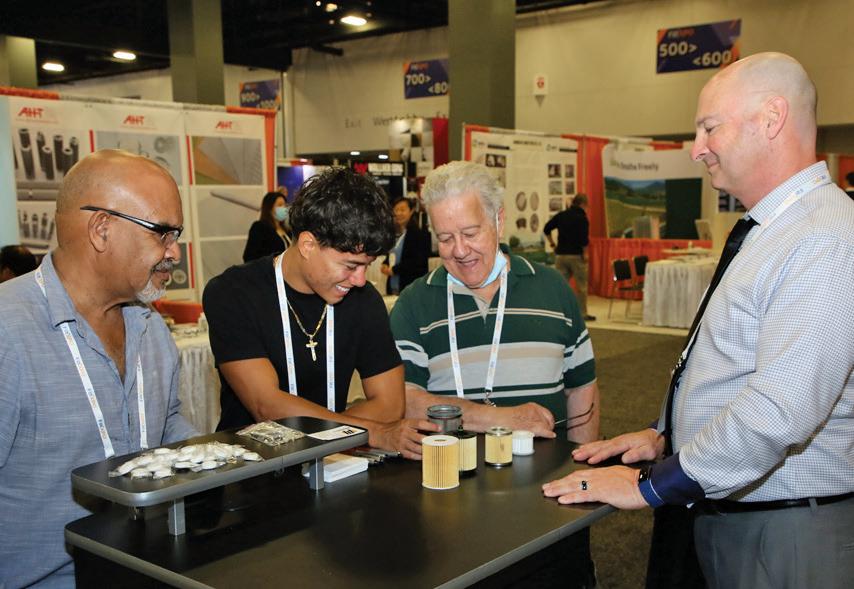


with customers and share helpful offerings. “We are excited to exhibit at FiltXPO 2023!,” says Gil Chase, President. “This show offers a wonderful opportunity to connect with professionals in the filtration industry to gather in the U.S., and discuss in person how Chase can provide a competitive advantage by leveraging over 68 years of custom machine building experience to help make their product better! We will be demonstrating our FS-90 Ultrasonic Sewing Machine as well as our Ultrasonic Ring Welder and Ultrasonic Tube forming Machinery in booth #804. Stop by to test your materials and meet with our team to discuss your application.”
Intensive Training
As part of FiltXPO™ 2023, INDA and the Nonwovens Institute (NWI) are collaborating to provide an intensive course on media used in filtration and separation on Monday and Tuesday – October 9 and 10 – prior to the conference opening. This course has been built with some unique elements to provide added value not normally seen in training courses.
Before diving into filtration and filter media technology, INDA and NWI will share a review of market trend data and, more importantly, the market drivers that underlie that data. Understanding these market drivers will establish the basis for why knowledge of the fundamental and more recent technology is needed for market success.
Professor Benham Pourdeyhimi will provide an overview of the relevant aspects of nonwoven structure critical to filter media performance and additionally provides insights into potential nonwoven issues that can result in loss or failure of filtration function. Media forming processes such as spunbond, meltblown, and electrospinning will be covered.
Professor Hooman Tafreshi, one of the leading investigators into the phenomenon of flow of particles and droplets through porous media, will guide the class through how and why filters work and the basis for how to make them work better and more cost effectively. Understanding “better” will be covered in sections on testing and standards, including what this data really means as well as what it doesn’t. As part of this, ASHRAE and ISO standards will be reviewed.
Professor Hechmi Hamoud will share his expertise in mechanics of fibrous structures and liquid filtration covering relationships between pore size, fiber dimensions and filtration performance of nonwoven media. Additional focus topics will include membrane microfiltration and electric charging of filter media.
Students should expect to come away with principles guiding selection, application, and evaluating of different filter media and a knowledge of what “good” looks like as well as being able to diagnose when things don’t go according to plan.
Registration
To secure your spot, visit www.filtxpo.com/ registration.html to attend.
www.FiltXPO.com
38 IFN ISSUE 5 202 3 SHOW PREVIEW
Gehring Tricot Corporation
Gehring Tricot Corporation is a leading US manufacturer of warp knits, circular knits and stretch woven fabrics. Since 1946, GTC has been providing custom-engineered solutions to meet a variety of industry needs, including those in the medical, sports, safety, apparel and defense industries.
Through a steady process of growth, powered by adaptation and acquisitions, Gehring Tricot’s third generation family ownership has provided the leadership and vision needed to survive and thrive in the challenging arena of domestic textiles. GTC prides itself in being a forerunner in textile manufacturing, able both to supply traditional fabrics for mainstream industries and also to engineer custom fabric solutions. They are always ready to tackle any challenge that is brought their way.
Founded as Gehring Textiles, Inc. in 1946, Gehring Tricot Corp. is a family business that has always emphasized quality control, innovation, precision manufacturing, hands-on technical assistance and superior customer service.
Further, through a steady stream of acquisitions, from 2006 of Hyde Park Industries - - one of the rst ne circular knit plants in the country - - to the 2008 acquistion of Tweave - - known for 50 years as the pioneer of stretch woven fabrics -both brough dimension and unlimited fabric possibility to Gehring. Adding to the unparalleled knitting and dyeing/ nishing facilities already under the Gehring umbrella in upstate New York.
These combined abilities o er Gehring customers specialized expertise, fast turnaround and competitive pricing, both in complete fabric package development and in contract services for knitting, dyeing and nishing along with the
very unique ability of research and development toward new fabrics.
Company CEO/president, Skip Gehring states, “Innovation is our specialty.” Gehring feels that GTC is positioned very uniquely to be able to use history to create the future. “Our research and development team look to see what is needed and create that.”
One such need was mark-o , also known as indentation, occuring because localized high pressure at the runner medium or bag o set with relatively low pressure in surrounding areas. The uneven pressure distribution produces variability in bre volume and bre content weakening the part.
GTC created Trafusion - Runner which reduces mark-o in the underlying composite versus spiral warp tubing, which is a common runner medium.
Another innovative product is their GTC-Vasiform line of seamlessly woven tubes. The Vasiform brand encompasses a range of woven glass bre structures manufactured to stringent speci cations:
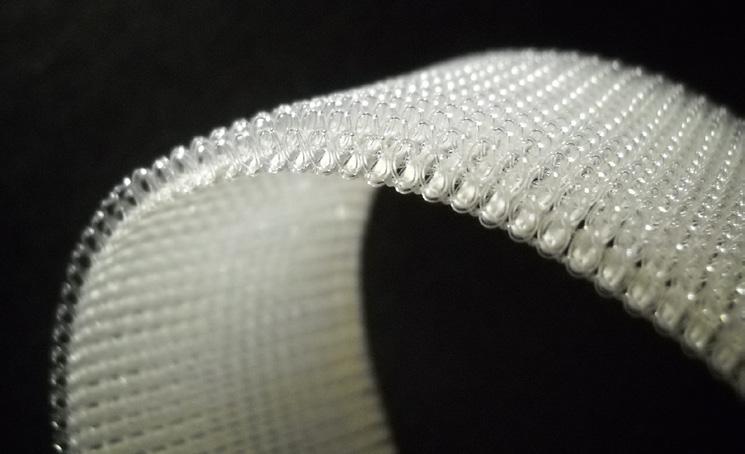
Plain Weave
Performance Features - Flat and Light surface
2-In. (50.8mm) O.D. Example
Warp & Fill Yarns: 225 yd./lb. (2200 tex)
Fabric Weight: 47.5 oz./yd.2 (1610 g/m2)
Linear Tube Weight: 2.76 oz./ln.ft. (257 g/ln.m)
Dry Thickness: 0.0630 in. (1.7 mm)
2x1 Basket Weave
Performance Features - Flat surface, pliable
2-In. (50.8mm) O.D. Example
Warp & Fill Yarns: 225 yd./lb. (2200 tex)
Fabric Weight: 48.0 oz./yd.2 (1624 g/m2)
Linear Tube Weight: 2.79 oz./ln.ft. (259 g/ln.m)
Dry Thickness: 0.0787 in. (2.0 mm)
2x1 Twill Weave
Performance Features - Pliable, high strength
2-In. (50.8mm) O.D. Example
Warp & Fill Yarns: 225 yd./lb. (2200 tex)
Fabric Weight: 47.4 oz./yd.2 (1608 g/m2)
Linear Tube Weight: 2.76 oz./ln.ft. (257 g/ln.m)
Dry Thickness: 0.0591 in. (1.5 mm)
Designed to maintain loft during the infusion process, Gehring’s Trafusion - Runner can be used as an infusion ow reinforcement for improved resin ow in select regions within the lamina, as a resin feed runner is a surface infusion scheme, or as a vacuum distribution runner.
These two product demonstrate the ability of Gehring to be a forerunner in textiles manufacturing; able to supply traditional fabrics for mainstream industries but also able to engineer custom fabric solutions.
Gehring has come a long way from creating laces back in 1946 but there is so much potential still to discover.
Point Load Spiral Wrap Point Load Lamina Trafusion™-Runner Distrubuted Load Distributed Load Lamina
Photo: cross-section of Trafusion - Runner
Photo: GTC-Vasiform
By Matt O’Sickey Director of Education &
Technical Affairs, INDA
Matt O’Sickey, PhD is Director of Education & Technical Affairs at INDA, Association of the Nonwoven Fabrics Industry. Matt was previously Director of Technology for RKW-North America and Global Director of Market Development for Tredegar Film Products and may be reached at mosickey@inda. org or +1 919 459-3748.

Back to School
One aspect of my position as the Director of Education & Technical Affairs at INDA is the responsibility of evaluating the educational and work force development needs of the nonwovens industry. INDA provides a number of courses and workshops ranging from an Elementary Nonwovens course – a short introduction to nonwovens, an Intermediate Nonwovens – a more involved course which includes deconstruction and reverse engineering of nonwoven using products, and courses with greater depth on specific nonwoven technology topic areas such as spunbond/ meltblown nonwovens, fibers and filaments, fabric design and characterization, and product development. Additionally, INDA provides courses that focus on specific nonwoven end-uses such as wipes, absorbent hygiene, and filtration/filter media. In considering the course on filter media it is important to understand how it fits within the broader space of educational offerings provided for HVAC, filtration, and separation industries and what unmet needs it should address.
In North America there are a number of organizations and groups that provide training related to filtration and separation including ASHRAE, NAFA, AFS, WFI, NWI, and INDA. There is some overlap between the offerings each provides, but each addresses different educational and certification needs.
technologies is needed (www.nafahq.org/afspecialist/#). Certification examinations are conducted in-person at NAFA events throughout the year and virtually. Learning is largely self-directed with periodic opportunities for virtual Q&A/Tutorials. A required resource for achieving certifications is a strong working knowledge of the NAFA Guide to Air Filtration (www.nafahq.org/publications/). Regardless of whether one is pursuing a NAFA certification, this guidebook is an indispensable resource and is highly recommended to anyone new to the industry. It covers principles of air filtration, filter types, air cleaners, filter testing, clean rooms, airborne contaminants and micro-organisms, air cleaning for industrial applications, and applications of various ASTM, ANSI, and ISO standards.
The American Filtration & Separations Society also provides a program to become an AFS Certified Professional (afss.mclms.net) which recognizes individuals with a combination of education, training, and experience in filtration and separation technologies. There are three main components to the exam-verified training requirement: liquid/solid separations, air/gas filtration, and filter media.
As director of education and technical affairs, Matt presents regular training related to nonwovens and filter media from INDA’s headquarters in Cary, NC.
For more information about upcoming training opportunities, visit inda.org/training
ASHRAE® (www.ashrae.org/professionaldevelopment) for instance, has built a portfolio of educational offerings to support HVAC professionals designing, installing, and operating HVAC systems, including in-depth understanding of all components of such systems and sub-systems. Additionally, they provide resources for understanding and properly implementing relevant standards for air quality. Many of their ASHRAE Learning Institute courses are accepted for continuing education credits by individual states, the American Institute of Architects, the Green Building Certification Institute, and other credentialing organizations.
The National Air Filtration Association® provides a range of educational offerings that support air filtration specialists: NAFA Certified Air Filter Specialist and NAFA Certified Technicians, Level I and Level II. These certifications address when a clear and up-to-date knowledge of air filtration products and
The courses are provided both in-person at AFS events and virtually. I recently had the opportunity to audit the full solid/liquid separation course at FiltCon 2023. INDA has historically had far greater focus on air/gas filtration and filter media than solid/liquid separation processes. Thus, I attended this course with decidedly limited background in this area. The course was broken into four sections, each section was taught by a recognized expert, with a rich history in both service and education from the industry. The course was designed to focus primarily on conceptual understanding rather than mathematical modelling of filtration and separation processes.
A question that is always asked in evaluating training courses is whether the student anticipated being able to apply the knowledge gained. In my case, the knowledge gained during the eight-hour course immediately jumpstarted my understanding and appreciation of the subsequent two days of technical presentations at FiltCon. While not planned, the fortuitous combination of the training course and attending the technical seminars
40 IFN ISSUE 5 2023
TECH TALK
* International Fiber Journal is owned by INDA, Association of the Nonwoven Fabrics Industry (inda.org).
In
proved beneficial and is an approach worth considering when available at events like FiltCon.
The Waterloo Filtration Institute has designed a Certified Filtration & Separation Specialist program that entails a comprehensive coverage of air and liquid filtration that ranges from fundamental principles to sophisticated technologies, contemporary challenges, novel opportunities, and up-to-date market trends. The content is provided via more than twenty virtually delivered two-hour modules (www.wfinstitute.com/wfi-onlinecourses). More than half of the modules are focused on in-depth treatment of specific technology and end-use applications such as nanofibers in filtration, engine intake and cabin air filtration, and membranes in filtration amongst others. WFI’s courses are taught by leading members of industry, testing labs, and academia. WFI’s courses are the only ones that are provided entirely virtually and they are augmented with open-door “Filtration Hour” virtual panel sessions and capstone virtual conferences for Innovative Clean Air Solutions and Innovative Clean Water Solutions.
The Nonwovens Institute at North Carolina State University, a frequent education collaborator with INDA, has made available pandemic response focused modules on N95 and Surgical Masks, Air & Aerosol Filtration, Meltblown Fabrics for PPE, Spunbond Fabrics for PPE, and testing of both N95 Masks and Surgical Masks (https://thenonwovensinstitute.com/workforcedevelopment/#course00). Additionally, Dr. Pourdeyhimi and colleagues regularly provide customized courses pertaining to filtration topics.

Both INDA and EDANA, trade associations of the nonwovens industry, also provide workforce development resources. In both cases, the primary focus is on filtration media. For those in Europe, EDANA (www.edana.org/trainings/filtration-training/fundamentals-in-filtration) provides a two day, in-person training course providing a broad coverage of air filtration technologies and filter media, with particular focus on nonwoven materials used.
INDA conducts their two-day long Filter Media course in conjunction with FiltXPO – next occurring in October 9-12th in Chicago, IL (www.filtxpo.com/training.html). The course includes elements of air/gas filtration, solid/liquid separation, and a heavy emphasis on filter media design, choice, and performance. This course will be taught by Dr. Pourdeyhimi and colleagues from The Nonwovens Institute. The choice to focus on filter media rather than filter and filtration system design was informed by the review of existing filtration training options. Also at FiltXPO, there will be
two days of technical seminars co-organized by Dr. Christine Sun of the Waterloo Filtration Institute and INDA.
Regardless of one’s needs or one’s place within the filtration value chain, there are appropriate technical education opportunities available to support career growth and technical understanding.
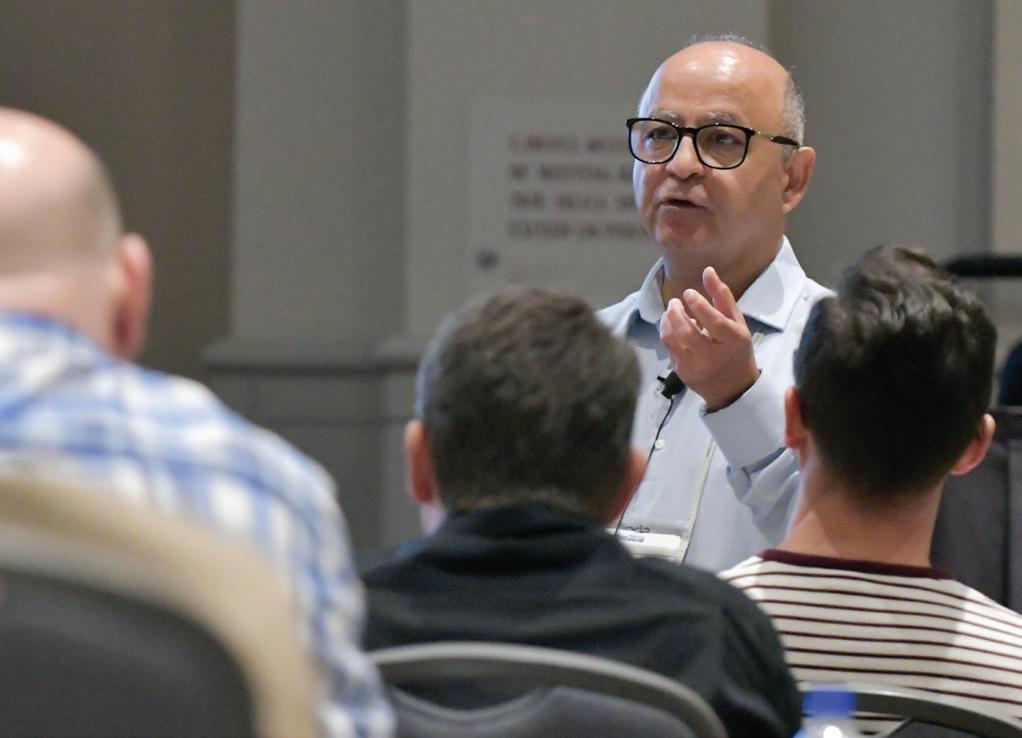
ISSUE 5 2023 FILTNEWS.COM 41
North America there are a number of organizations and groups that provide training related to filtration and separation including ASHRAE, NAFA, AFS, WFI, NWI, and INDA.
Courtesy of INDA
There is very little overlap in the vast training courses offered by North America’s organizations in regards to filtration and separation.
By Bob McIlvaine President The
McIlvaine Company
Bob McIlvaine is the president of The McIlvaine Company, which is helping filter suppliers understand the true cost of their products and the impact on the Serviceable Obtainable Market. He can be reached at rmcilvaine@ mcilvainecompany.com or +1 847.226.2391.

Expanded Program to Reduce Filtration True Costs While Increasing Supplier EBITDA
International Filtration News (IFN) and Mcilvaine have been collaborating on True Cost articles in every issue for the last three years. The goal has been to better inform both purchasers and suppliers as to the choices which will lower the cost of ownership while increasing supplier EBITDA. A further goal has been to encourage the participation of the media suppliers. They are the ones with the greatest opportunity to meet the new needs of end users, but their contact is with the OEMs.
This initiative with IFN has been expanded to a whole program with a Productivity Hub where IFN articles can be accessed in an organized manner.
International Filtration News January 2022
International Filtration News November 2021
Reducing the True Cost in Blood Plasma Fractionation Filtration, Separation
True Cost Determination is the First Step Toward Increasing Profitability
International Filtration News October 2021 BECCS will Provide a Boost for the Filtration Industry
International Filtration News March 2021
are potential modifications which could be very valuable but unanticipated by the customer.
Proactive development can spring from the value propositions. R&D departments of the media companies will find them useful.
New Metrics for Filter Selecton and True Cost Determination
There is not one filtration market. Every purchaser defines the market in very narrow terms. The supplier needs to understand the application from the buyer’s perspective. So, all parties need to access the relevant facts and factors and determine the best value propositions for the niche. It may involve more than just a filter sale. You can buy a furnace filter from 3M with a sensor which will result in a replacement being delivered when the pressure drop limit is reached.
When you consider media options, filter design, and all the potential complementary product combinations you need to generate a niche forecast for each of millions of value propositions.
Most Profitable Market Program
The purchaser wants a value proposition that perfectly fits his needs. But there is a limit to the premium he is willing to pay. The supplier needs to determine if the investment in customization can be offset by other customers with the same need. This is where the niche forecast becomes critical. From an R&D perspective, this is reactive. There
IFN reaches competitors. Suppliers should view this positively. The value proposition is comparative. So, the alternatives need to be considered. Discussion groups in the Productivity Hub enhance this process.
One discussion group focuses on who should be making the decontamination design decisions for cell and gene therapy cleanrooms.
August 2003 VHP Integration with Cleanroom HVAC Systems
An option has now been developed where a bypass duct can be incorporated. It has a catalytic or activated carbon filter to remove residual H202 and reduce cleanroom downtime. Companies such as Camfil who makes H202 filters for hospital isolation rooms can now enter the discussion with their own contributions.
Another discussion group probes who should be the expert relative to filter decisions.
August 2003 Cleanroom Supplier Value Propositions for Cell and Gene
One cleanroom company says that ULPA rather than HEPA filters are needed for cell and gene therapy applications. The general assumption is that the consultant makes these decisions for a small operator whereas the staff of a large pharma company would make their own decisions. But a good argument can be made that it is the OEM who is most likely to take advantage of new developments.
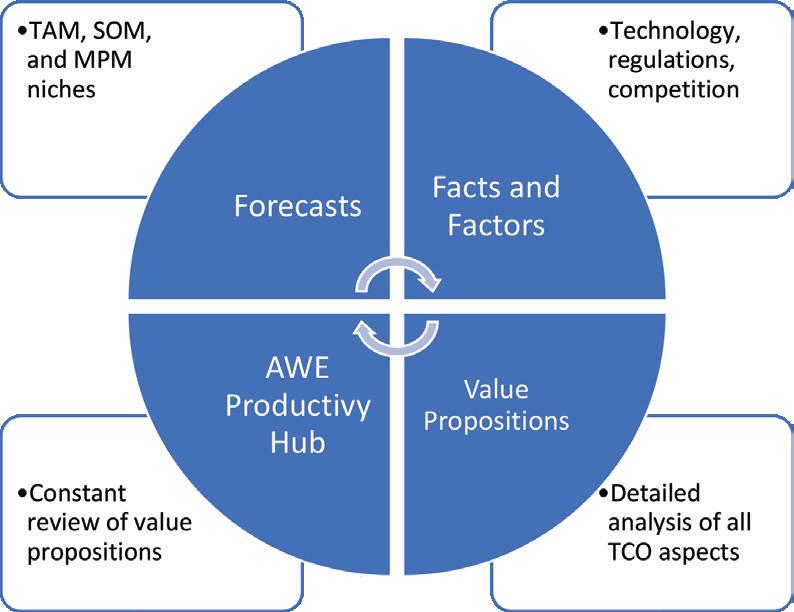
42 IFN ISSUE 5 2023
TRUE COST
New continuous viable particle counters and variable air flow for constant counts is another development where filter manufacturers need to weigh in on the impacts on filter design and energy consumption.
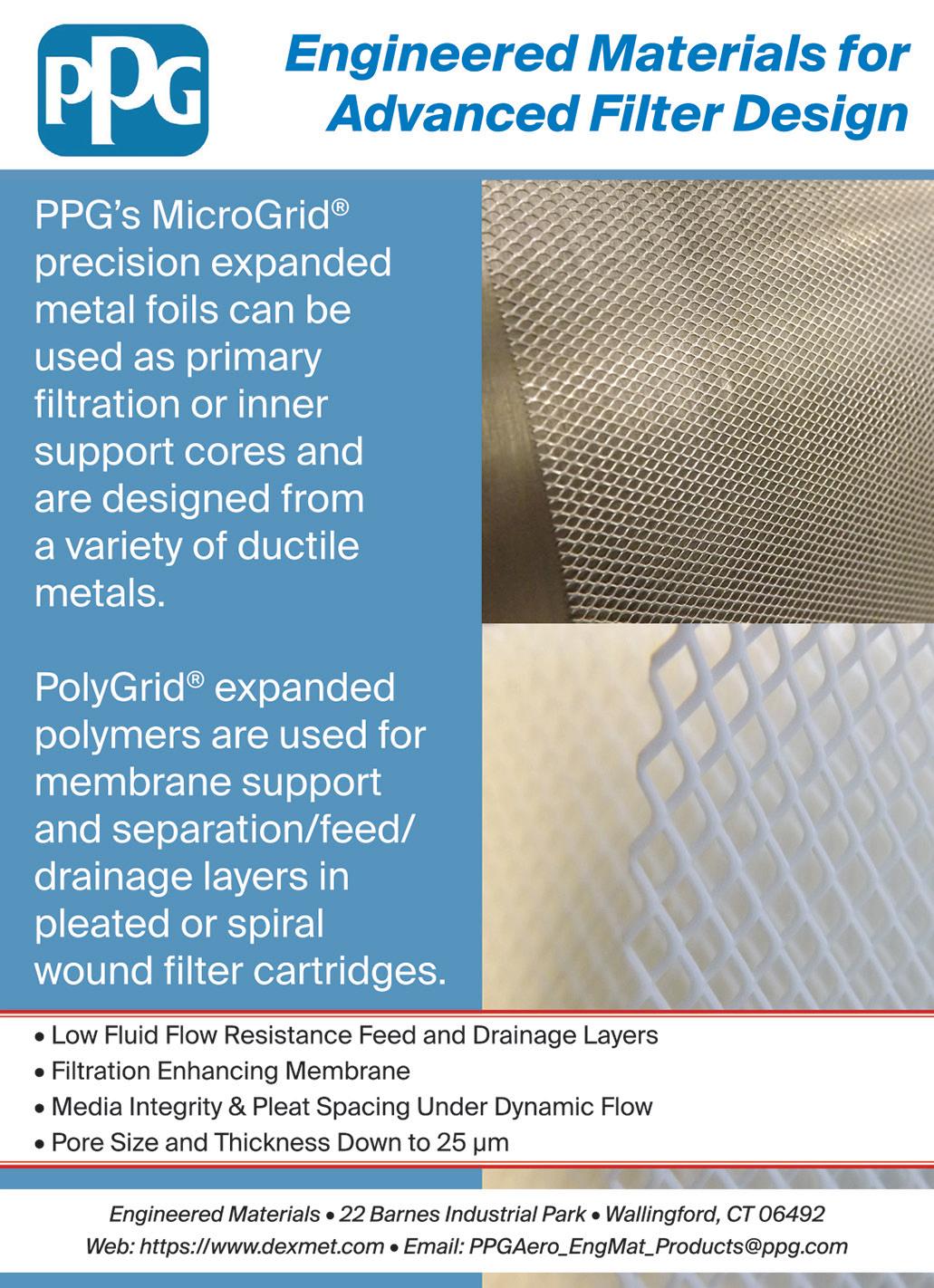
The value propositions of process equipment suppliers can be indicative of future filtration opportunities.
MHI has a new CO2 absorber with 99% removal capability.
This promises to make CO2 capture and sequestration the choice for many small waste combustion plants as well as for the big electricity generators.
The segmentation of the market into small niches results in value propositions which can then be the basis of sales activity and advertising.
Several filter companies make both HVAC air filters and dust collectors. Here is an example of how the number of days per year spent pursuing California niches can be budgeted.
Promotional expenses can be determined the same way. The
template allows $100,000 of promotional expense per niche. California represents 3% of the revenue or $30 million. So, the promotional budget would be $1.5 million.
The advertising and exhibition investment should ensure the validation of the value propositions. The California market will benefit from some combination of local, national, and international promotion. It is likely that $1 million would be allocated to national and international promotion and only $500,000 to strictly local promotion.
International Filtration News is well structured for article retrieval. So many value propositions can link to the bi-monthly articles including a continuation of the Mcilvaine True Cost analyses.
ISSUE 5 2023 FILTNEWS.COM 43
Daily budget for the California salesperson for the next 12 months Industry HEPA Filters Other Air Filters Other Air Products Dust Collectors Other APC Pharmaceutical 8 10 2 4 3 Electronics 7 9 2 2 1 Commercial 7 11 1 2 1 Municipal 4 6 1 4 3 Food 6 8 1 6 5 Refining 5 7 1 3 2 Power 7 9 1 5 4 Other 5 10 1 14 11 Total 50 70 10 40 30 Grand Total 200 days in next 12 months 2002 MHI Power-biomass Absorber Highly efficient CO2 absorber for carbon negative electricity Yearly promotional expenses for California $1000 Industry HEPA Filters Other Air Filters Other Air Products Dust Collectors Other APC Pharmaceutical 60 90 10 40 20 Electronics 50 70 10 30 20 Commercial 60 100 6 30 60 Municipal 30 60 7 40 20 Food 40 60 15 50 25 Refining 30 50 10 35 15 Power 70 80 10 50 30 Other 30 30 2 25 10 Total 370 560 70 300 200 Grand Total $1.5 million in next 12 months
By Len LaPorta Managing Director, Wiley Bros.-Aintree Capital, LLC

Len LaPorta is a managing director of Investment Banking at Wiley Bros.-Aintree Capital, LLC – a 75-year-old firm, located in Nashville, TN, focused on investment brokerage and underwriting municipal bonds for utility districts in the state of Tennessee. Len brings to the Firm experience in crossborder M&A transactions between USA and Europe, advises business owners on sell-side and buy-side transactions, capital advisory, and valuations. Len is a graduate of the U.S. Naval Academy with MBA from Boston College and a veteran of the U.S. Navy. He is also a member of INDA’s non-woven Technical Advisory Board. llaporta@wileybros.com or (615) 782-4107.
Competitive M&A Sell-Side Process Generally Leads to Outlier Results for the Owner
Discussions in determining the right business strategy usually center around your competition. The correct exit strategy when selling your business depends heavily upon creating competition among the bidders.
Acompetitive sell-side process is an art-form that your investment bankers champion when you decide it is time to sell your business. Too many times, a business owner thinks that going down a path with only one interested party will lead to a great outcome in valuation and meeting the personal goals of the selling family or shareholder. That assumption generally is not correct.
During M&A competition, generating broad interest is the goal and comes down to how many Confidential Information Memorandums (CIMs) are distributed to the prospective buyers that have executed an NDA. In the example below, the sellside process resulted in nine prospective bidders submitting an Indication of Interest (IOI) with a valuation range based upon the information contained in the CIM. The bidder competition is now defined.
The next phase of the competitive process is called the Management Presentation (MP) round.
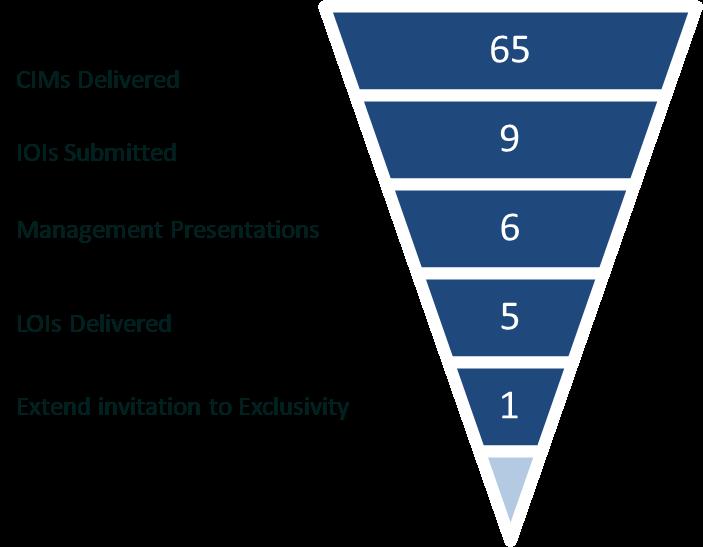
Not every bidder submitting an IOI is invited to meet with the seller and their management team. Your investment banker interacts with the bidders and provides guidance on what is required, from a valuation standpoint, to be invited to the MP.
Achieving an “outlier” valuation bid occurs in the final phase, after the MP, when the finalist submits their Letter of Intent (LOI) in hopes of going exclusive with the seller. A fabulous result would be five of six finalists submitting competitive bids, allowing the seller multiple options for moving forward with a closing transaction.
Business owners have done remarkably well during 2023. The M&A market continues to be bullish and certain sectors remain in strong focus for consolidation. Hopefully, the reduction in global transportation costs have benefitted your company.
Freightos; Freight cost changes from 2020-2023. https://www.freightos.com/freight-resources/ shipping-delays-and-cost-increases/
This article has been prepared solely for informational purposes. This article does not constitute an offer, or the solicitation of an offer, to buy or sell any securities or other financial product, to participate in any transaction or to provide any investment banking or other services, and should not be deemed to be a commitment or undertaking of any kind on the part of Wiley Bros. –Aintree Capital, LLC (“WBAC”) or any of its affiliates to underwrite, place or purchase securities or to provide any debt or equity financing or to participate in any transaction, or a recommendation to buy or sell any securities, to make any investment or to participate in any transaction or trading strategy. Any views presented in this article are solely those of the author and do not necessarily represent those of WBAC. While the information contained in this commentary is believed to be reliable, no representation or warranty, whether expressed or implied, is made by WBAC, and no liability or responsibility is accepted by WBAC or its affiliates as to the accuracy of the article. Prior to making any investment or participating in any transaction, you should consult, to the extent necessary, your own independent legal, tax, accounting, and other professional advisors to ensure that any transaction or investment is suitable for you in the light of your financial capacity and objectives. This article has not been prepared with a view toward public disclosure under applicable securities laws or otherwise.
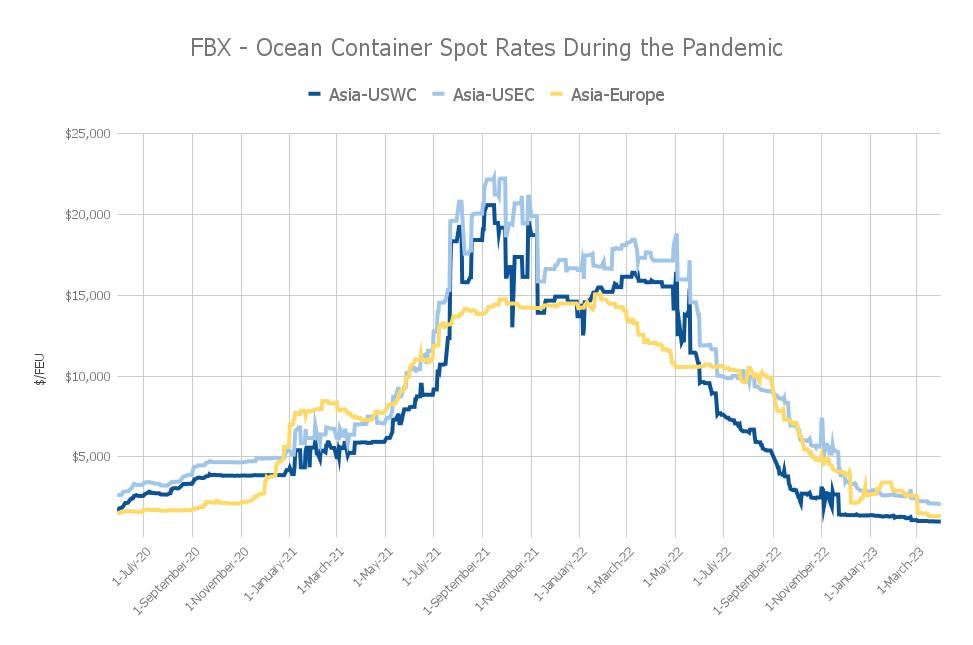
44 IFN ISSUE 5 20 23
M&A INSIGHTS
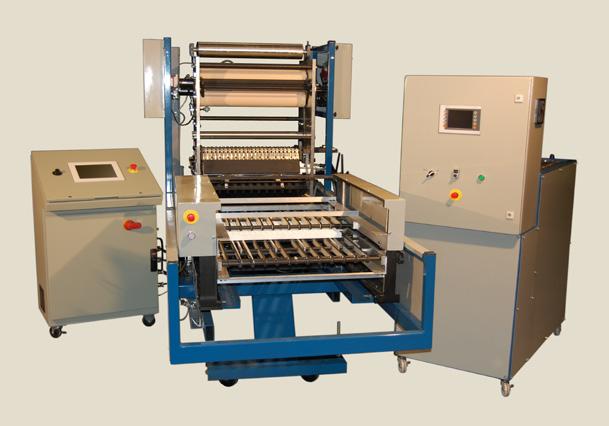


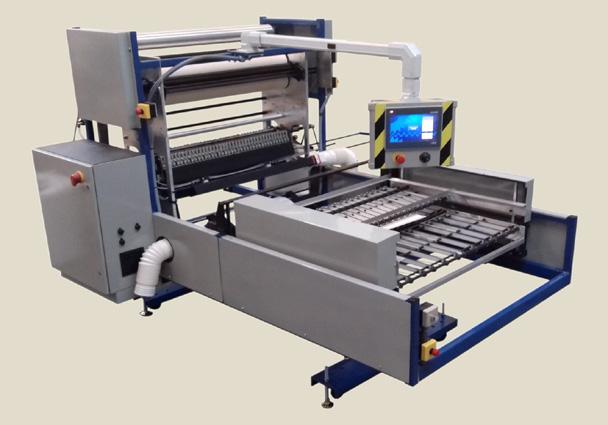



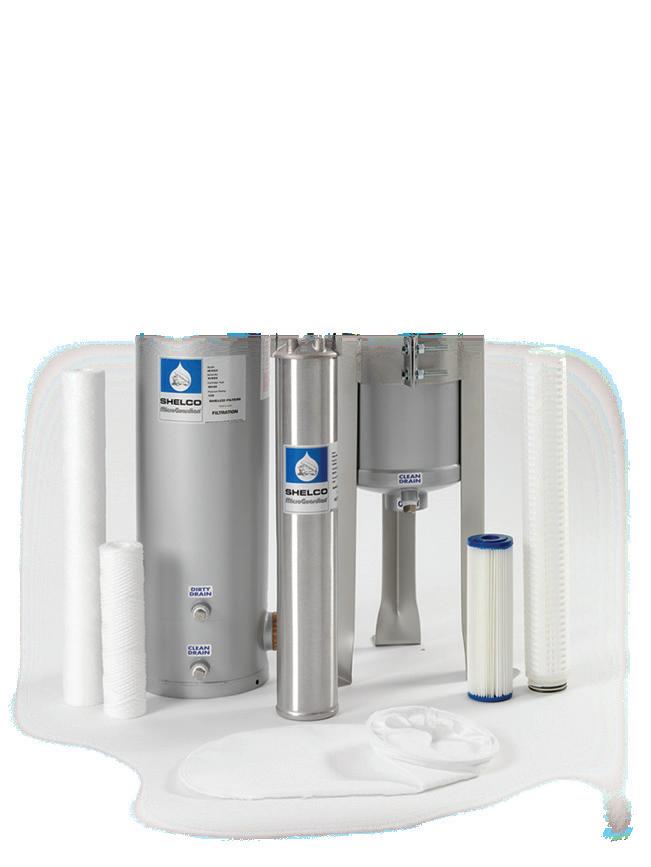
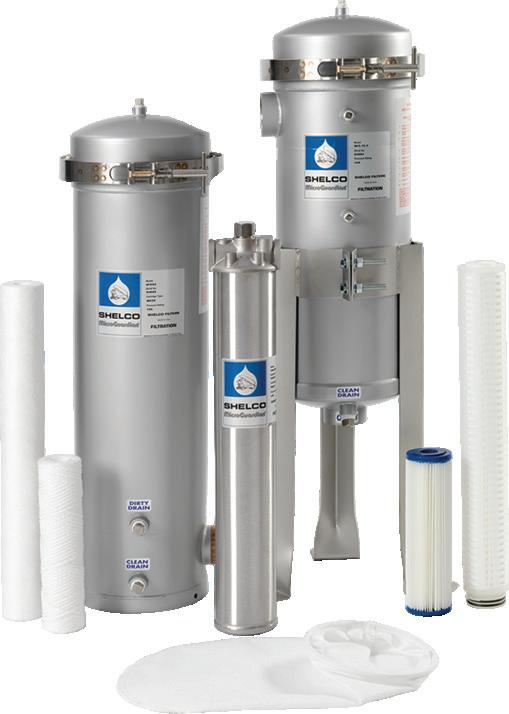
ISSUE 5 2023 FILTNEWS.COM 45 85 Old Barnwell, W. Columbia, S.C. USA 29170 | Tel: +1 (803) 739-0770 | Fax: +1 (803) 739-0814 sales@solentech.com | service@solentech.com | service.usa@solentech.com Many useful options offered www.solentech.com 106 Mini-Pleat systems High-speed, manual ALSO AVAILBLE: 105 Extension Conveyor The World Renowned SOLTECH Mini-Pleat Systems Since 1985. These compact Systems have been engineered for reliability, and are user friendly with "Touchscreen" operation Have you tried our “Contract Pleating” service? Give us a call and we will rush you a quotation Filter Manufacturing Machinery Solent Technology Inc Compliant for our European Customers 212 Mini-Pleat Systems - Hybrid of our two successful machines H.E.P.A. ASHREA - GLASS & SYNTHETIC H.E.P.A. ASHREA - SYNTHETIC 202 Mini-Pleat Systems - Computerized H.E.P.A. ASHREA - GLASS 102 Mini-Pleat Systems - Computerized CLEARLY SUPERIOR FILTRATION Now offering ASME-Code Certified Housings Proudly Made in the USA 100 Bradley Street, Middletown, CT info@shelco.com • 1.800.543.5843 SHELCO.COM ISO 9001:2015
Honoring the Late Dr. Ernie Mayer
Long-time contributor to International Filtration News and one of American Filtration & Separations Society (AFS) founding members, Dr. Ernie Mayer, passed away on July 1, 2023.

Dr. Mayer had made tremendous contributions to AFS in multiple capacities, including as a founding member, member of the AFS Board of Directors with multiple terms, Chairman of the Chapter Affairs/Users Committee since 1995, and a member of three other committees. He was an instructor in the AFS short course program since it started in the mid-1990s and served until recently. One of his significant contributions to AFS was that he presented multiple highquality papers yearly at AFS conferences. He was also the conference chair for three AFS Annual/National conferences; Co-chair of the World Filtration Congress in 2004, and Chair of the 2008 Filter Testing Conference. With his great contributions and achievements, he was awarded the AFS Frank Tiller award in 1996, the AFS Fellow award in 2000, and the Lifetime Achievement award in 2005 (the first nonacademic to receive it).
Dr. Mayer or “Ernie” as many called him, was a Senior Consultant with DuPont in Wilmington, DE, specializing

in Solid-Liquid Separation technology, especially in the wastewater treatment arena, since 1980 and until his retirement. He received his B.S. and M.S. Chem. Eng. Degrees from Columbia University, New York City, NY, and his Ph.D. in Chem. Eng. From U. of Delaware, Newark.
In addition to AFS, Dr. Mayer was also a member of AWWA, AlChE, WEF and had a brilliant professional career; among his numerous awards are Tau Beta Pi, Sigma Xi, Deans’ Lists, 3 Eng. Excellence Awards, 7 Environmental Respect Awards. He has over 200 publications and two patents. In 1991, a remediation technology he developed was accepted into the EPA SITE program. At the request of President Jimmy Carter, he was asked to participate in the Three-Mile Island nuclear cleanup in 1980.
Ernie has left his legacy in AFS and the fluid/particle separation field and will forever be remembered and respected in AFS and the industry.
INDA and the Waterloo Filtration Institute to Partner for FiltXPO™ 2023
INDA, the Association of the Nonwoven Fabrics Industry, announced that it is partnering with the Waterloo Filtration Institute (WFI) to produce the two-day FiltXPO™ conference program, October 10-11, Chicago, Illinois. WFI brings decades of filtration experience, resources, and a worldwide network to support the education and technical development of the global filtration industry.
Filtration and separation professionals from the global supply chain will connect at FiltXPO 2023 for advancements, innovations, and business development.

The conference portion of the FiltXPO event will focus on advanced filtration technologies and science for products that create a cleaner, healthier, and safer world.
“We are excited to partner with INDA on the FiltXPO Conference,” said Christine Sun, Ph.D., President, Waterloo Filtration Institute. “WFI’s technical experience and reach will bring an added dimension to the event,” Sun added.
“INDA is proud to partner with WFI as they bring a wealth of filtration knowledge to the table,” said Tony Fragnito, President, INDA. “We are very fortunate to have their technical expertise in planning the FiltXPO Conference,” Fragnito continued.
The Nonwovens Institute (NWI) is a valued partner to INDA in bringing educational offerings to the nonwoven and engineered material industry. Behnam Pourdeyhimi, Ph.D., Professor and Executive Director, The Nonwovens Institute, and his team will teach the two-day Filter Media Course in conjunction with FiltXPO, October 9-10, at Navy Pier in Chicago.
Professor Pourdeyhimi and his team will share the latest insights in the development, testing, and application of nonwovens in air, aerosol, and liquid filtration. Participants will gain knowledge about the physics of filtration, how nonwoven filter media is designed and used in air, aerosol, and liquid applications, testing standards, unmet needs in filter media, and the latest market trends and intelligence. www.filtxpo.com
46 IFN ISSUE 5 202 3
MOVERS & SHAKERS
Pall Water Announces Name Change to Aria Filtra™

Pall Water announced that it is changing its name to Aria Filtra. This rebranding effort is in response to the brand joining Trojan Technologies Corp., following a separation from Pall Corporation.
Aria Filtra will continue developing, implementing, and maintaining water filtration solutions that help customers tackle tough water challenges just as the team has done for the last 30 years. Proven and reliable membrane technology is at the core of Aria Filtra’s water and wastewater systems. With a strong reputation for durability, consistency, and high performance, Aria Filtra’s ultrafiltration, microfiltration, reverse osmosis, and mobile water treatment solutions are in use on six continents, delivering more than two billion gallons of installed capacity daily.
Sun Capital Affiliate to Acquire Koch Separation Solutions
An affiliate of Sun Capital Partners, a private investment firm focused on the business services, consumer, healthcare, industrial, and technology sectors, is to acquire Koch Separation Solutions (KSS) from Koch Engineered Solutions, a subsidiary of Koch Industries.

KSS is a specialist provider of membrane filtration, ion exchange, evaporators, dryers, and proprietary cheesemaking technologies for the industrial, food, beverage, and dairy markets.
Once the transaction is completed, KSS will operate as a standalone business that includes all its current operations and will continue under the existing management team.
Financial terms of the deal have not been disclosed. www.kochseparation.com
“Aria Filtra celebrates our decades of experience in filtration by combining the name of our industry-leading solutions (Aria) with the Latin word for filter (filtra),” said Daniel Benitez, general manager, Aria Filtra.
While the brand name has changed,
Aria Filtra’s staff, solutions, and membranes are remaining the same. Customers can expect the same highquality, durable, and reliable products and services that made Aria Filtra a leader in water filtration.
ariafiltra.com
Strong, Leak-Proof Barrier Seams
Sonobond’s ultrasonic assembly equipment — featuring our SeamMaster® Ultrasonic Sewing Machine — provides regulatory-compliant sealed seams in nonwoven and synthetic materials. This enables manufacturers to achieve effective and efficient production outcomes wherever sewn seams are inadequate to satisfy their end-use requirements. Typical items requiring sealed seams include:
• Surgical and hospital gowns
• Face masks & wound dressings
• Disposable shoe, pillow & mattress covers
• Body armor & ballistic vests
• Pleated, HVAC and HEPA filters
• Air, gas and jet fuel filters
• Automotive & Aviation acoustic and thermal insulation panels
• Vacuum & heavy-duty filter bags
• Hazmat & PPE garments
• Sterilization and storage pouches for medical instruments
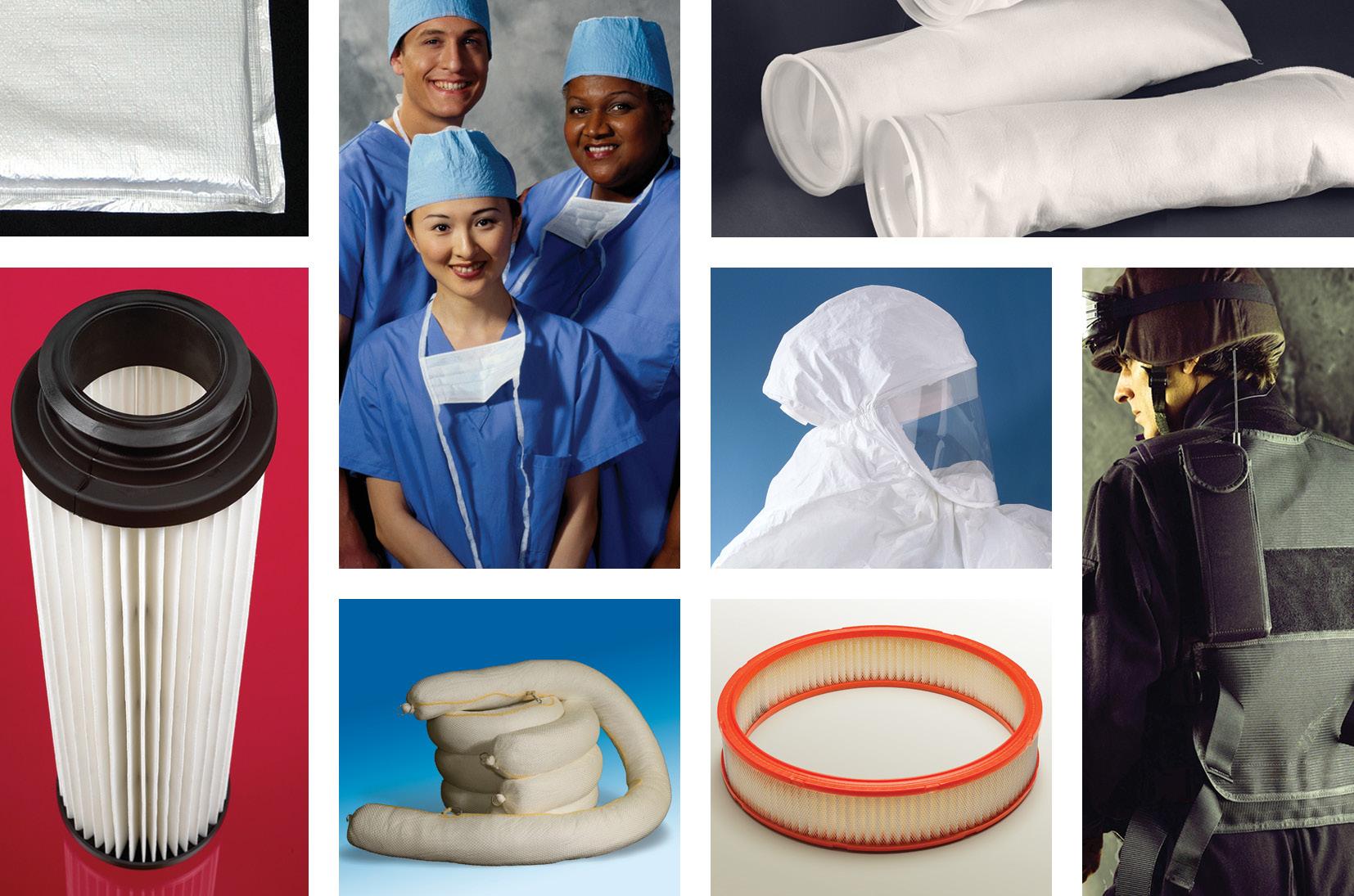
• Lint-free cleaning & paint-prep wipes
• Water-proof covers for outdoor furniture
• Oil containment booms and spill clean-up cloths
ISSUE 5 2023 FILTNEWS.COM 47
Sonobond Ultrasonics, Inc • 1191 McDermott Drive • West Chester, PA 19380 sales@sonobondultrasonics.com • 1.800.323.1269 • www.sonobondultrasonics.com
SONOBOND
Visit us at FiltXPO, October 10-12, 2023, at Booth# 811
Driven By Design LLC PUBLISHER advertising@inda.media

+1 239.225.6137
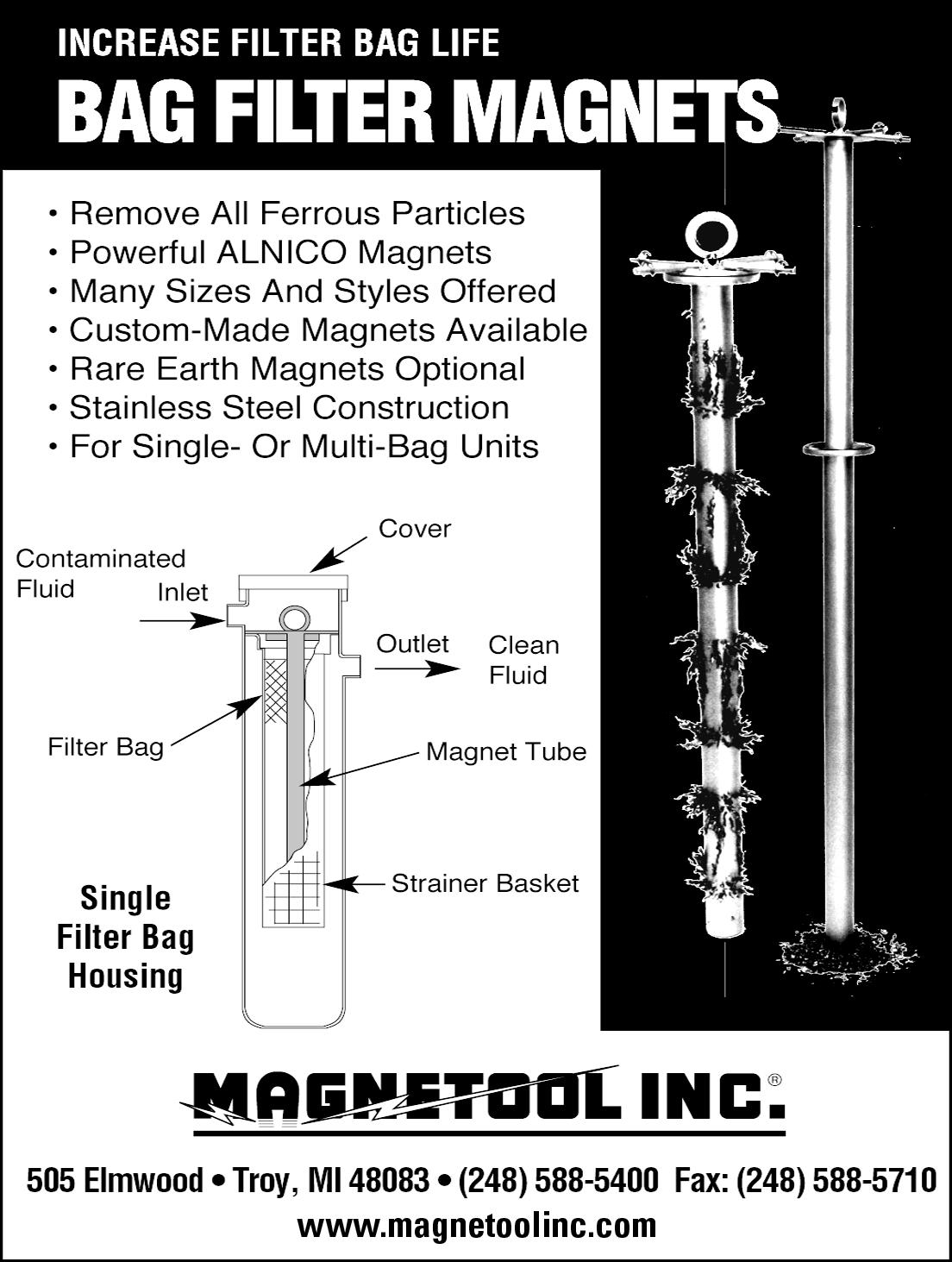
Sabine Dussey GERMANY, FRANCE, AUSTRIA, SWITZERLAND, SCANDANAVIA, BENELUX sabine.dussey@dussey.de +49 2129 5900910
Joan Oakley BUYER’S GUIDE joakley@inda.media +1 248.347.3486
Ferruccio Silvera & Filippo Silvera ITALY & SPAIN info@silvera.it +39 02.284.6716
Frank Strazzulla UNITED STATES +1 949 375 2902 franks@tmsmedia.net
Zhang Xiaohua CHINA ifj_china@126.com +86 13522898423

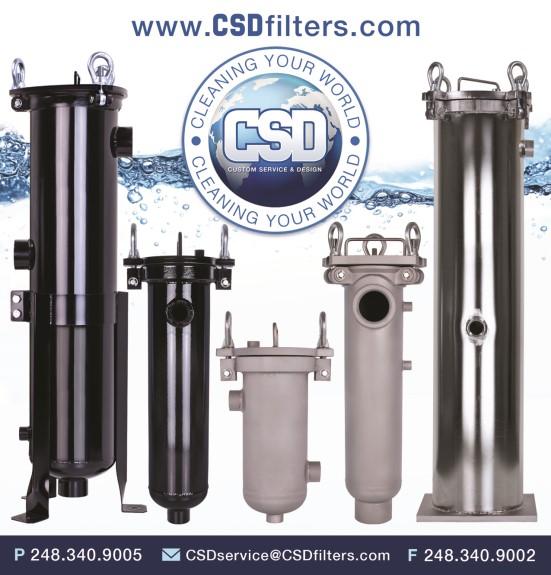
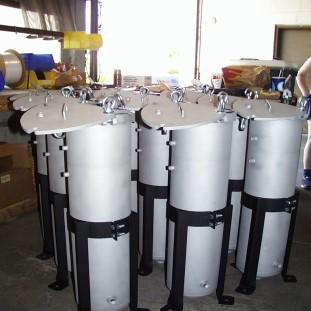
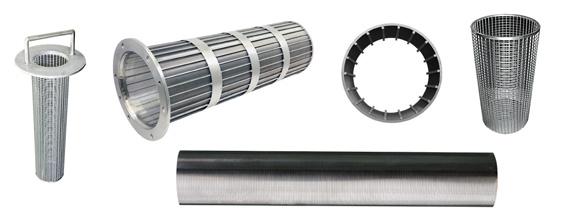
48 IFN ISSUE 5 202 3 WEDGE WIRE SCREEN
DURABLE OPTION TO WIRE MESH AND PERFORATED METAL MINI
www.federalscreen.com
MART
ADVERTISER WEB PAGE A2Z Filtration Specialties a2zfiltration.com 5 Berry Global berryglobal.com 11 Beverlin beverlin.com 48, BC Chase Machinery & Engineering, Inc. chasemachine.com 4 Contract Pleating Services solentech.com 33 Custom Service & Design Inc. customserviceanddesign.com 48 Elsner elsnereng.com 23 Federal Screen Products Inc federalscreen.com 48 FiltXPO™ filtxpo.com IBC Gehring Tricot gehring-tricot.com 39 Gessner gessner-filtration.com 7 Hollingsworth & Vose hollingsworth-vose.com IFC INDA Market Reports inda.org 19 Industrial Netting industrialnetting.com 41 JCEM jcem.group 3 Kimberly-Clark Professional™ kcprofessional.com 9 Magnetool Inc. magnetoolinc.com 48 Mid Atlantic Industrial Textiles, Inc. ordersmidat@rcn.com 48 Percor Manufacturing Inc. percormfg.com 46 Pleating Systems & Equipment (PSE) pseusa.com 1 PPG Engineered Materials dexmet.com 43 Rosedale Products Inc. rosedaleproducts.com 25 Shelco Filters shelco.com 45 SIFA Technology sifatechnology.com 37 Solent Technology Inc. solentech.com 45 Sonobond Ultrasonics Inc. sonobondultrasonics.com 47 Wallner Tooling Expac Inc. expac.com 11
IFC = Inside Front Cover | IBC = Inside Back Cover | BC = Back Cover CUSTOM SERVICE & DESIGN We offer a complete line of #1 and #2 Vessels in 304L & 316L Stainless Steel and Carbon Steel. In Stock ready to ship Support@csdfilters.com 248-340-9005 (p) 248-340-9002 (f) customserviceanddesign.com
AD SALES
ADVERTISER INDEX
World-Class Business Happens at FiltXPO
Register to attend FiltXPO – North America’s technical conference and exhibition dedicated exclusively to filtration and separation. See and touch the latest technology developments. Competitively source your next filtration solution from 130+ global exhibitors.


Hear industry experts discuss society’s most urgent challenges in filtration and separation. Take advantage of on-site filter media training. Be where our industry is going: FiltXPO
Register on filtxpo.com.
Questions? Contact the Registrar, registrar@inda.org, T: +1 919 459 3724.
PIER, CHICAGO, ILLINOIS
10-12, 2023
filtxpo.com NAVY
OCTOBER
of what you do
Beverlin is the recognized industry leader, offering high quality craftsmanship since 1976. Our Michigan-made perforated cores set us apart from the competition. We offer both straight weld seam and spiral weld seam to meet your needs – any diameter, gauge thickness, material type or open percentage. At Beverlin, we’re at the core of what you do.
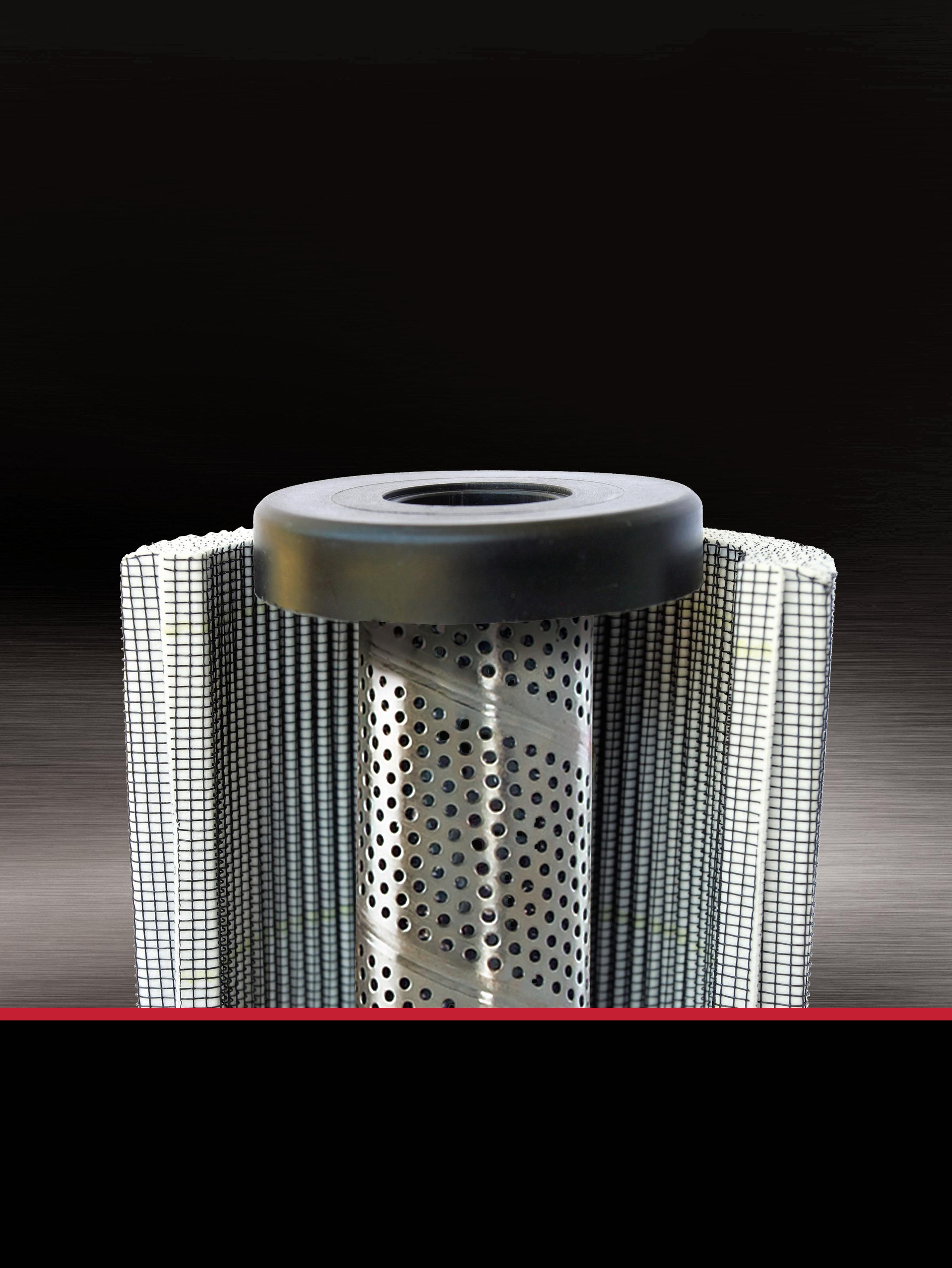
We’re
at the CORE
CONTACT US: 616.949.5990 • sales@beverlinmfg.com www.beverlin.com