filtnews.com Issue 1 | 2026 TM
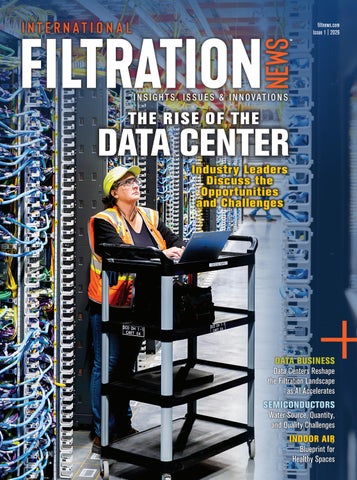
TH E R I S E O F TH E
DATA CENTER Industry Leaders Discuss the Opportunities and Challenges
DATA BUSINESS
Data Centers Reshape the Filtration Landscape as AI Accelerates
SEMICONDUCTORS
Water Source, Quantity, and Quality Challenges
INDOOR AIR Blueprint for Healthy Spaces
CONTENTS
2026 | VOL 45 | ISSUE 01
FEATURES
10 Solution Center The Urgent Need for Better 18 Air Filtration in Data Centers Harmsco
Article and Interviews by Tom Justice
20 | A AF: Setting Standards for Air Filtration in Data Centers 22 | C AMFIL: Hybrid Cooling for Air Filtration in Data Centers 24 | MANN+HUMMEL: From Components to Critical Infrastructure—How Filtration Shapes the Future of Data Centers 26 | R ENSA: Fresh Air Take on Air Filtration in Data Centers
18 42
Energy Distillation: 28 ZeroAtoTransformative Approach Thermal Water Purification
30
in AI Data Centers By Brad Matineau
30 34 WELL—The Blueprint for Healthy Spaces Big Business Gets Bigger
By Adrian Wilson, International Correspondent, IFN
11
COLUMNS & DEPARTMENTS
6 Viewpoint
Data Centers Rising, and Fond Farewell, Jim By Caryn Smith, Chief Content Officer & Publisher, IFN
39 | E xcerpts from the Experts
By Dr. Iyad Al-Attar, Global Correspondent, Technology and Innovation, IFN
7 Tech Spotlight 8 Tech Notes 11 Green Economy
Powering AI With Ultrapure Water
Filtration: Contaminants 42 TheClarity,ThreeColor,C’s andof Liquid Filters vs. Traditional Media: What Every Plant Operator Should Know 44 Nanofiber the Balance Sheet: 48 Beyond The Moral Energy to Save Lives and Redesign Future Cities
New Technology Briefs
By Norman Hall
From Reporting to Circularity: What EDANA’s Sustainability and Policy Forum in Brussels Means for the Filtration Value Chain By Philippe Wijns, Principal, CleverSustainability
By Joe Hunt
14 Water Works
By Dr. Iyad Al-Attar, Global Correspondent, Technology and Innovation, IFN
Show Review
46 / World Filtration Institute
14
Water for Semiconductor Manufacturing—Source, Quantity, and Quality Challenges By Peter Cartwright, P.E.
52
Movers & Shakers
Industry News & Notes
On the Cover: In November 2025, Amazon announced plans to invest an additional $15 billion in Northern Indiana data center campuses. Since 2010, Amazon has invested more than $31.3 billion in Indiana supporting 24,500 full and part-time jobs. © Amazon INTERNATIONAL FILTRATION NEWS (ISSN: 1078-4136x), Copyright © 2026 is published bimonthly by INDA, Association of the Nonwoven Fabrics Industry. Business and Editorial Offices: INDA, 1255 Crescent Green, Suite 145, Cary, NC 27518, Accounting and Circulation Offices: INDA,1255 Crescent Green, Suite 145, Cary, NC 27518. Call 319-861-5017 to subscribe. Periodicals postage is paid at Cary, NC and additional mailing offices. POSTMASTER: Send address changes to International Filtration News, PO Box 158, Cedar Rapids, IA 52406-0158.
2 IFN ISSUE 1 2026
CONTRIBUTORS | ISSUE 1 2026
Caryn Smith
Chief Content Officer & Publisher, INDA Media csmith@inda.org
Dr. Iyad Al-Attar
Global Correspondent, Technology & Innovation, Visiting Academic Fellow Cranfield University i@driyadalattar.com
Philippe Wijns
Principal, CleverSustainability, Filtration Expert and Sustainable Business Development Advisor philippe.wijns@ cleversustainability.com
Adrian Wilson
International Correspondent adawilson@gmail.com +44 7897.913134
Peter S. Cartwright, P.E. Cartwright Consulting Co. LLC peterscartwright@ gmail.com
Tom Justice, CAFS, NCT
ZENE, LLC tjustice@zenefiltration.com
INQUIRE AT ADVERTISING@INDA.MEDIA FOR THE 2026 MEDIA KIT!
International Filtration News is actively seeking feature article ideas, columns, viewpoints, tech notes, and news from filtration professionals and companies that support the industry.
Send your story ideas on topics mentioned below in our Editorial Grid to Advertising@Inda.Media, with “IFN TOPICS” as the subject line. Send your news & press releases to IFNNews@inda.media.
2026 EDITORIAL CALENDAR AS OF 01/01/2026 - SUBJECT TO CHANGE SHOW DISTRIBUTION
ISSUE 1
Editorial: Dec. 1 Ad Close: Dec. 3 Materials: Dec. 10 Mail Date: Jan. 5
ISSUE 2
Editorial: Jan. 23 Ad Close: Jan 27 Materials: Feb. 4 Mail Date: Mar. 2
ISSUE 3
Editorial: Apr. 6 Ad Close: Apr. 8 Materials: Apr. 13 Mail Date: May 4
AHR 2026, Feb. 2-4, Las Vegas INTERPHEX, April 21-23, NY
FILTCON26, May 11-14, 2026, in Pittsburgh, PA
FILTECH 2026, Jun. 30–Jul. 2, Cologne, Germany
ISSUE FOCUS
SPOTLIGHT
FILTRATION TRENDS IN ...
The Rise of Data Center Filtration
• Air/Gas filters – HEPA, ULPA, Activated Carbon, Baghouse Filters Ultra-Pure Water • Adsorption Filtration – and Chemical Activated Carbon & Resin Filtration • Multimedia & Specialty Media
Digitalization & Smart Filtration – Trends in AI, Sensors and the IoT
Mechanical and Hydraulic Self-Cleaning Technologies
The Power of Gas Turbine Filters
• SPECIAL REPORT: Navigating Filtration’s Global Standards Maze Automotive, • Hydraulic and Oil/Gas Filters – Aerospace/ Spin-on Filters, Cartridge Filters, Aircraft Filtration Centrifugal Filters • Stationary Filters & Applications
• Nanomaterials, Graphene Oxide, Membrane Filtration • Ultrasonic and Sonic Cleaning • Nanomaterials and Coatings • Backwashing Advancements
MARKETING OPPORTUNITIES See pages 9 and 10 for details
Solution Center: Air/Gas Filtration Life Sciences Technologies & Solutions Showfloor Showcase: AHR 2026, FILTREX 2026, INTERPHEX Solution Center: Mechanical & Hydraulic Filtration Smart Filtration Technology Showfloor Showcase: FiltCon26 Solution Center: Automotive/EV Filtration Membrane Filtration Metal Filtration Options Showfloor Showcase: FILTECH
Ask Your Sales Representative for an Annual Contract with IFN to Ensure You Receive Best Placements! Certain Opportunities are Limited! ISSUE 4
Editorial: May 22 Ad Close: May 27 Materials: Jun. 3 Mail Date: Jul. 6
ISSUE 5
Editorial: Jul. 24 Ad Close: Jul. 29 Materials: Aug. 4 Mail Date: Sept. 7
ISSUE 6
Editorial: Sept. 25 Ad Close: Sept. 30 Materials: Oct. 5 Mail Date: Oct. 31
FiltXPO, Oct. 28-29, Minneapolis, MN WEFTEC, Sept. 26-30, New Orleans, LA + IFN 2026 Buyer’s Guide
Big and Small Trends in Water Filtration – From Industrial to Consumer Applications
FILTREX 2026, Oct. 7-8, New Delhi FiltXPO, Oct. 28-29, Minneapolis, MN + FiltXPO Program Guide Supplement
Advancing Filtration with Technology, Media & Equipment, plus Machinery for Production Efficiency
AHR 2027
The Annual “Best of 2026” in Filtration Innovation
2027 Shows to be Announced
(Ask Us How to Be Featured) Entries Due Sept. 25
Filtering Fast-Fouling, Semi-Solid Materials
Nanofiber Composites & Ceramics Bio-Based Membranes
Renewable Raw Materials
• Liquid Filters – Cartridge Filters, Bag Filters, Strainers, Sand Filters • Ultraviolet Sterilization Filtration • Ceramic, Ion Exchange, and Ultrafiltration Systems
Solution Center: Industrial Filtration Solutions Consumer-Focused Filtration Showfloor Showcase: FiltXPO, WEFTEC
• Membrane Filtration – Microfiltration, Ultrafiltration, Nanofiltration, Reverse Osmosis. • Petrochemical Filtration • Food & Beverage Processing • Filter Cores & Supports
Solution Center: Electrospinning, Needlepunch, Spunlace, Spunbond and Meltblown Equipment Filter Pleating, Hot Melt Applicators & Cutting Devices Showfloor Showcase: FiltXPO
• Mechanical Filtration Methods • Biological and Specialized Methods • Chemical and Treatment-based Methods
Solution Center: Oxidative & Ionizing Filtration Biofiltration Solutions Showfloor Showcase: AHR 2027
Make Sure to be Included in the 2026-2027 Buyer’s Guide! It is hosted on FiltNews.com for One Full Year! ISSUE 1 2027 Editorial: Nov. 30, 2026. Ad Close: Dec. 3, 2026. Materials: Dec. 9, 2026. Mail Date: Dec. 29, 2026.
As Of 9/26/25 - Editorial topics subject to change. Please Note: Show copy issues will be distributed either via Print Distribution at the show or to specified lists via e-Blast through show management or INDA Media.
ISSUE CORRECTION: In the November/December print edition of IFN, on page 34, the title for our interview subject was listed incorrectly under his photo and name. His name and correct title is Mr. Ricardo Meléndez-Ortiz, Senior Advisor, Enlighten Advisory. It was correct in the digital edition. We apologize for the error.
4 IFN ISSUE 1 2026
7
Platform for your success 600+ Exhibito rs
Join the world’s largest Filtration Event More Space · More Exhibitors · More Solutions for all F+S Tasks Choose and reserve your space or register as a visitor: Filtech.de Your contact: Suzanne Abetz· E-mail: info@filtech.de
Media Partner
CSMITH@INDA.ORG +1 239.225.6137
VIEWPOINT Data Centers Rising, and Fond Farewell, Jim “Strive not to be a success, but rather to be of value.” — Albert Einstein
B
ack in my hometown of Sterling Park in Northern Virginia, in high school I would drive to school on country roads that cut through the cornfields of the rural suburb located in the long shadow of Washington, DC. If you know NoVa, you know that this statement really ages me. Fast forward to today: This area is now known as the Dulles Technology Corridor, or Data Center Alley, one of the largest clusters in the U.S. with 130+ known data centers (many others are secret that handle the nation’s defense). These monster buildings stand on the former scenic landscapes of my youth. NoVa isn’t the only community, worldwide, experiencing the rise of the data center and their challenges. On page 18, Tom Justice, member of our IFN Editorial Board and President of Zene Filtration, took the lead for our cover story, The Urgent Need for Better Air Filtration in Data Centers. This industry is as complex as it is vast, and struggles to balance growth and resources. He compiled the viewpoints of key filtration executives on data center trends. On page 30, Adrian Wilson reports on the data center industry’s business challenges that come with accelerated growth. Other issue topics include news from the EDANA Sustainability Forum (page 11) from Philippe Wijns, and the Blueprint for Healthy Spaces—an interview of Dr. Jason Hartke, from the International WELL Building Institute conducted by Dr. Iyad Al-Attar (page 34).
Sadly, I want to acknowledge the passing of a trusted advisor to the IFN, James J. Joseph (left) on October 21 at the age of 90. He was a faithful member of the IFN Editorial Board up until his passing— in fact, he wrote an article in the last issue (Vol. 6, 2025, p. 45). Jim was a widely respected authority on industrial liquid filtration, primarily metalworking coolants, and was owner of Joseph Marketing. He wrote for many trade magazines, as well as authored the book Coolant/Metalworking Fluids Filtration, and had just released this fall its third edition, Technology Update. He was also an inventor of advanced cross-flow filtration systems, and the Cross Flow Filter. Jim will be greatly missed. In another farewell, this issue of IFN is my last as your Publisher & Chief Content Officer. I am very proud of the work we accomplished together. I want to sincerely thank all the writers, experts, and companies who contributed their ideas and content to the IFN. The very capable Rachael Davis, previously Executive Editor of Textile World and their collection of titles, will take the mantle in January. I sign off with high esteem for all of you, the readers, and gratitude for all of your contributions that make this industry great!
Caryn Smith Chief Content Officer & Publisher, INDA Media, IFN
International Filtration News Editorial Advisory Board Tom Justice, CAFS, NCT R. Vijayakumar, Ph.D., Chair AERFIL
+1 315-506-6883 vijay@aerfil.com
Jay Armstrong, MBA, PhD Mott Corp.
MS Teams #: +1 (860) 999-9035 JArmstrong@mottcorp.com
6 IFN ISSUE 1 2026
Wenping Li, Ph.D.
Thad Ptak, Ph.D.
TJ Ptak & Associates
Agriltech Research Company
+1 414-514-8937 thadptak@hotmail.com
Rishit R. Merchant
CleverSustainability
+1 337-421-6345 wenpingl@agrilectric.com
Parker Hannifin
+1 805-604-3519 rishit.merchant@parker.com
CONTENT | EDITORIAL
CHIEF CONTENT OFFICER & PUBLISHER Caryn Smith Driven By Design LLC csmith@inda.org | +1 239.225.6137 EDITORIAL & PRODUCTION MANAGER Ken Norberg ken@filtnews.com | +1 202.681.2022 CREATIVE DIRECTION Driven By Design GRAPHIC DESIGNER Julie FLynn INTERNATIONAL CORRESPONDENTS Adrian Wilson, Jason Chen GLOBAL CORRESPONDENT, TECHNOLOGY & INNOVATION Dr. Iyad Al-Attar BUSINESS DEVELOPMENT ADMINISTRATOR Angelica Gonzalez advertising@inda.media +1 (919) 459-3718
AUDIENCE | CIRCULATION
QUESTIONS ON YOUR SUBSCRIPTION? CONTACT IFN CIRCULATION MANAGER inda@darwin.cx | +1 800.553.8879
International Filtration News is published by INDA Media, the B2B publishing arm of INDA, Association of the Nonwoven Fabrics Industry. +1 919.459.3700 info@filtnews.com | www.filtnews.com News & Press Releases to IFNNews@inda.media
IFN SALES TEAM Vickie Smead SALES ASSOCIATE, INDA BUYER’S GUIDE vsmead@inda.org +1 919.459.3715
Filippo Silvera ITALY & SPAIN info@silvera.it +39 02.284.6716
Sabine Dussey GERMANY, FRANCE, AUSTRIA, SWITZERLAND, SCANDANAVIA, BENELUX sabine.dussey@dussey.de +49 2129 5900910
Zhang Xiaohua
ZENE, LLC Filtration +1 757-378-3857 justfilter@yahoo.com
TM
Philippe Wijns
philippe.wijns@cleversustainability.com
CHINA ifj_china@126.com +86 13522898423
MISSION
International Filtration News covers the topics and technologies that will shape the future of filtration and separation. Using subject matter experts from all parts of the industry, IFN is the leading source for the dialogues, debates and innovations across the full spectrum of filtration and separation applications and processes.
TECH SPOTLIGHT
Powering AI With Ultrapure Water From Producing Chips to Helping Data Centers Run, Ultrapure Water Is a Must, and Fluence Is Here to Deliver It.
A
s artificial intelligence continues to make breakthroughs across industries—from machine learning and generative models to robotics and natural language processing—the physical infrastructure powering this digital revolution is facing mounting demands. Among the required resources that are most critical, yet often under appreciated, is ultrapure water (UPW). AI’s exponential growth hinges on ever-more powerful semiconductor chips, specifically advanced GPUs and custom AI accelerators that require sophisticated manufacturing processes. These chips are produced in ultraclean environments where UPW plays a vital role at nearly every step of fabrication. Ultrapure water must be nearly devoid of all contaminants such as particulates, organics, ions, and dissolved gases. Even trace impurities can disrupt chip performance or yield. As chip architecture becomes denser and more complex to handle AI workloads, the tolerances for water quality grow even tighter. In this context, UPW is not just a support utility. It is a strategic enabler of AI innovation.
AI’s Thirst Meets Water Scarcity The AI boom has triggered a surge in the construction of semiconductor fabs and hyperscale data centers around the globe. Many of these new facilities are being built in regions already grappling with water scarcity. AI data centers also have enormous cooling needs, often relying on large volumes of water to keep processors running efficiently and without thermal failure. This convergence of AI growth and local water constraints creates a significant hurdle.
p AI’s exponential growth hinges on ever-more-powerful chips that require sophisticated manufacturing processes in ultraclean environments where ultrapure water plays a vital role. iStockphoto/MJ_Prototype
The key question is how to provide the high volumes of high purity water required by AI infrastructure without straining local ecosystems or breaching sustainability commitments.
Fluence: Delivering the Water AI Needs Responsibly Fluence is uniquely equipped to address these challenges. This advanced water treatment technologies provide a modular, intelligent, and efficient way to produce ultrapure water, whether for AI chip manufacturing facilities or high-performance data centers. Typical treatment systems may include: • Pretreatment for UPW systems: Fluence’s NIROBOX™ units offer compact, containerized solutions using ultrafiltration and reverse osmosis to handle a wide range of feedwaters. They are ideal front-end systems in ultrapure water trains and deliver water with extremely low total dissolved solids and stable quality. This makes them perfect for polishing stages downstream. • Custom treatment trains: Fluence also engineers bespoke systems that combine ultrafiltration, RO, degasification, and UV disinfection. These systems are scalable to match the precision required by AI applications. They can be deployed at greenfield sites or integrated into existing infrastructure. • Smart monitoring and automation: All Fluence solutions come with intelli-
gent control systems, offering real-time performance optimization and predictive diagnostics. This ensures reliability and uptime, which are critical in AI environments, where failure can mean millions in lost compute hours or chip output. Fluence’s approach to ultrapure water does not sacrifice sustainability. Systems are designed to minimize energy use, reduce the use of chemicals, and operate in compact footprints. These capabilities are essential for AI facilities striving for net zero goals or operating in water-stressed regions. Fluence can help clients meet environmental compliance and ESG commitments without compromising technological performance. As AI reshapes everything from health care to autonomous systems, the infrastructure behind it must evolve intelligently and sustainably. Ultrapure water is a foundational element of AI innovation, and Fluence is here to ensure that it flows reliably, efficiently, and responsibly. With proven technology, deep domain expertise, and a track record of delivering containerized, scalable water solutions, Fluence stands ready to power the AI infrastructure of tomorrow.
www.fluencecorp.com/why-artificialintelligence-needs-ultrapure-water/ For details on how to submit your company’s technology for consideration as a “Technology Spotlight” in IFN, contact Ken Norberg at ken@filtnews.com or +1 202.681.2022.
ISSUE 1 2026 FILTNEWS.COM 7
TECH Convestro
NOTES
WaterSurplus
WaterSurplus Announces Certification for NanoStack™ Membrane Coating WaterSurplus, a leader in sustainable water treatment, announced that its NanoStack™ Coating for RO membranes is now NSF/ANSI/CAN 61 certified. This prestigious designation indicates that this membrane coating has been independently tested and verified by IAPMO R&T, North America’s premier plumbing and mechanical prod ImpactRO™ uct certification agency. This is an important development for WaterSurplus, as its NanoStack technology is a core component of the company’s ImpactRO™, a breakthrough brackish water reverse osmosis (BWRO) system that integrates multiple technological advancements into a single transformative platform. Equipped with NanoStack-coated membranes, ImpactRO can achieve up to 96% product recovery, along with up to a 4× reduction in membrane fouling, up to a 4× reduction in system downtime, and as much as double the membrane life compared to conventional multi-stage BWRO systems. It is exceptionally well-suited for rapidly fouling environments, high-recovery and high-efficiency applications, and water reuse or reclamation systems. The NSF/ANSI/CAN 61 certification represents the internationally recognized benchmark for drinking water product safety and quality. IAPMO R&T’s certification program entails a comprehensive evaluation of materials, manufacturing practices, and product performance, supported by ongoing audits and periodic retesting to verify sustained compliance. www.watersurplus.com
Covestro and Allmed partner for more circular medical products. From left to right: Thomas Hennig (Head of Sales & Market Development Engineering Plastics HealthCare EMEA, Covestro), Lily Wang (Head of the Business Entity Engineering Plastics, Covestro), Ahmed Sorour (CEO Allmed Group), Ulrike Luetzow (Market Development Manager HealthCare EMEA, Covestro).
Covestro and Allmed Join Forces to Recycle Kidney Filters Covestro and Allmed announced a groundbreaking partnership to explore the recycling of used artificial kidney filters. This collaboration aims to recover polycarbonate from medical devices, paving the way for new materials with recycled content and advancing sustainability in healthcare. The initiative seeks to establish a circular economy model for medical devices by demonstrating both technical feasibility and economic viability. Additionally, the study will address the complex regulatory landscape surrounding medical waste management. “The circular economy in healthcare is still emerging—but it holds tremendous potential. With this feasibility study, we want to demonstrate that even complex applications like artificial kidney filters can be circular and become a valuable source of high-quality polycarbonate recyclate instead of being incinerated or sent to landfill,” said Lily Wang, Global Head of Engineering Plastics at Covestro. www.covestro.com
Ahlstrom Launches Flow2Save™ Filtration Media Ahlstrom, a global leader in sustainable fiberbased materials, has introduced an enhanced version of Flow2Save™ filtration media. The advanced solution is specifically designed to improve indoor air quality while significantly reducing energy consumption. Flow2Save™ offers a compelling value proposition built on Ahlstrom’s deep expertise and commitment to sustainable innovation. The nanofiber-enhanced gradient structure
8 IFN ISSUE 1 2026
extends filter life and reaches the highest energy efficiency while meeting ISO 16890 standards from ePM1 60% to ePM1 80%. With advanced media engineering, Flow2Save™ delivers up to 50% higher dustholding capacity and reduces initial pressure drop by an average of 30% compared to conventional filter media. In filter element evaluations, Flow2Save™ has demonstrated
the potential to achieve up to 50% energy savings, supporting more sustainable building operations. Efficient filtration is essential for protecting both human health and industrial processes. Flow2Save™, produced in Tampere, Finland, lowers energy use and operational costs while setting a new benchmark in HVAC and Air Intake performance. www.ahlstrom.com
PPG Introduces Ultrafiltration Antifouling Membrane
of the most challenging industries. Unlike other UF and microfiltration (MF) membranes currently on the market, PPG’s entire portfolio is produced using a proprietary composite material that does not contain intentionally added polyfluoroalkyl substances (PFAS). Applications for the UF membrane include offshore and onshore oil-water separation, dry dock and in-water marine ship treatment, industrial process water and wastewater, automotive and industrial paint lines, and graywater treatment. PPG has invested in equipment and technology to produce the
PPG
PPG announced the introduction of an ultrafiltration (UF) antifouling membrane for industrial water purification and treatment to its portfolio of spiral-wound filter elements. Developed to meet growing demand for sustainable UF filtration solutions, the new membrane is engineered to handle extremely hard-to-treat water containing a wide range of oily waste and other contaminants, enabling safe and economical disposal or reuse. The new UF membrane features a superhydrophobic (water-repelling) surface that resists fouling from trace amounts of oil, grease and other tough-to-remove contaminants. By reducing fouling, the technology can extend membrane service life, lower maintenance costs and minimize downtime for some
u PPG membrane technology.
membrane at its Barberton, Ohio, facility to meet growing market demand. PPG’s high-performance microfiltration (MF) and UF membranes separate oil, grease and emulsified contaminants from industrial process water at higher throughputs than conventional membranes. This reduces the number of filters and the amount of floor space needed to recover the water for reuse while improving cleanability and ensuring long-term durability. www.ppg.com/filtration
Electrolux Professional Group Partners with Mimbly – A Cleantech Company
Acuriant Technologies Inc., the company behind the Nanostone ceramic ultrafiltration (UF) brand, recently introduced CUF|Flow ™ , a new highcapacity PFAS-free UF module designed for municipal and industrial applications. The launch expands the company’s ceramic UF portfolio to three modules, each developed for different water qualities and space constraints. The new CUF|Flow™ was p Nanostone ceramic ultrafiltration introduced at the Innovation modules in an industrial installation. Driven Water Sustainability Conference (IDWS 2025) in Jeddah, Saudi Arabia. The debut is Nanostone’s third new product in a year, building on the CUF|Shield module released earlier in 2025. The company said the broader portfolio is intended to help utilities cope with increasingly variable raw water quality, tightening regulatory expectations, and space constraints. CUF|Flow is a capacity-enhancing module with 40% more active membrane surface area within the same housing dimensions as CUF|Shield. This supports two deployment strategies: boosting water output by up to 40% from an existing rack or reducing module count by nearly 29% for the same production rate. www.nanostone.com
Electrolux Professional has partnered with Mimbly, a Swedish cleantech startup company focused on water saving and microplastic filtration technology. “By partnering with Mimbly, we will strengthen our commitment to sustainable innovation by supporting the development of microplastics filtration and water-saving technology. This will further strengthen our position as the sustainability leader in our industry,“ said Paolo Schira, President Business Area Laundry, Electrolux Professional. Mimbly has developed a p Mimbly technology saves water and filters microplastics. Electrolux Professional technical plug-in solution called Mimbox that lowers water consumption, filters microplastics down to around 50 microns and saves energy from retaining the water. Electrolux Professional and Mimbly will co-develop new solutions within the field of microplastic filtration. The continued need to be more efficient in water and energy use, in combination with preparation for future regulatory requirements, are key drivers for partnering with Mimbly. Electrolux Professional will also take a minority stake in Mimbly. www.mimbly.se
Nanostone
Nanostone Launches PFAS-Free CUF|Flow™ Ceramic UF Module
ISSUE 1 2026 FILTNEWS.COM 9
ADVERTORIAL | SOLUTION CENTER: HARMSCO
Proven Stainless Steel Harmsco® Filtration Solutions for All Industrial, Commercial, and Municipal Applications
D
riven by innovation and built on decades of engineering expertise, Harmsco designs high-performance industrial filtration systems trusted across industries worldwide. Founded in 1958 in West Palm Beach, Florida, Harmsco began with a simple mission: to engineer better, longer-lasting filters. From hand-crafted stainless-steel pool filters to advanced industrial filtration solutions, the Harmsco name has become synonymous with quality, durability, and performance in liquid filtration technology. John F. Harms pioneered the first pleated polyester filter cartridges—an industry-changing advancement that continues to define Harmsco’s superior filtration efficiency and cost savings. Under the leadership of Harold “Hank” Harms II,
10 IFN ISSUE 1 2026
the company expanded into commercial, industrial, and municipal water treatment markets, introducing the acclaimed Hurricane® XP filtration systems and municipal water treatment markets, addressing the LT2 compliance rule, and GWUDI (Ground water under direct influence). Harmsco also prides itself in the fact that we have the largest offering and selection of cartridges and media, specifically designed to resolve the many challenges normally faced by the water treatment industry. Whether it is a potable drinking water facility, wastewater, or a myriad of industrial applications, Harmsco will assist with technical support and provide solutions to a substantial number of applications around the world. Strategically partnered with its distri-
bution network in the US and around the world, the company stands ready to meet any challenge, anywhere. Now led by the third generation, Harmsco remains a family-owned American manufacturer dedicated to engineering excellence, reliability, and customer satisfaction. With state-of-the-art manufacturing facilities in Florida and a global distribution network, Harmsco continues to develop innovative filtration technologies that meet the toughest water quality and liquid process challenges—delivering cleaner, safer, and more efficient results for industries everywhere. For further information, please visit our website – www.harmsco.com or contact us at sales@harmsco.com or 800.327.3248
GREEN ECONOMY
FROM REPORTING TO CIRCULARITY:
What EDANA’s Sustainability and Policy Forum in Brussels Means for the Filtration Value Chain By Philippe Wijns Principal at CleverSustainability, Filtration Expert and Sustainable Business Development Advisor
q Murat Dogru, Deputy General Manager at EDANA. Philippe Wijns
Note from the Author he original article was prepared for the International Fiber Journal, where it addresses the nonwovens industry broadly, as this is the main goal from an EDANA perspective. In this version, I expand the discussion to focus specifically on implications for the filtration industry. In many filtration applications, nonwovens serve as the functional basis for composite media and can materially influence final filtration performance. This has direct consequences for the filtration and supply chains. There’s an overlap. A further reason for this deeper focus is the clear distinction between durable nonwovens and singleuse applications. The Forum discussions underlined that there is no single solution applicable across all product categories; rather, meaningful progress depends on segmentation, context-specific trade offs, and application-led strategies. Accordingly, I will address several topics in greater detail and outline what they may imply for the filtration sector. The conclusions are therefore primarily framed for filtration stakeholders. I hope you find this a valuable read.
T
EDANA’s Sustainability and Policy Forum in Brussels EDANA’s Sustainability & Policy Forum in Brussels (Dec. 9–10, 2025) combined plenaries, an EU advocacy workshop, and a visit to the European Commission. Topics ranged from sustainability priorities to operational issues like disclosure, CSRD as a management tool, and product metrics such as Carbon Footprint and LCA. Circularity was key, with panels emphasizing that it won’t be achieved in silos and questioning how textiles and nonwovens can collaborate amidst evolving regulations and infrastructure. Day 1 focused on enabling routes, chemical recycling, and policy impact, while Day 2 explored EU policy formulation. There were interactive workshops on turning circularity goals into actionable rules without compromising safety and performance. The European Commission discussions covered operations, the Waste Framework Directive, and environmental policy. EDANA highlighted the importance of strategic dialogue beyond compliance, encouraging collaboration across the nonwovens chain. Sessions underscored the need for collective action, anticipating future trends to reconcile regulatory demands with practical needs in hygiene and safety. This signals a shift from merely reporting sustainability data to actively managing it, aiming for credible, actionable outcomes in nonwovens.
What EDANA Aimed to Achieve
Philippe Wijns is Principal at CleverSustainability, and serves as a Filtration Expert and Sustainable Business Development Advisor. He is a Certified Expert in Sustainable Finance, Climate Finance, and Renewable Energy from the Frankfurt School of Finance and Management. He began with global leaders in the nonwovens industry before transitioning to the filtration sector, where he specialized in filtration technologies across a wide range of applications and markets—including industrial and automotive systems, HVAC, household appliances, medical and life sciences, as well as power storage solutions such as fuel cells, hydrogen systems, and battery separators. Wijns recently founded CleverSustainability, a consultancy dedicated to sustainable business development to help companies develop and implement sustainability strategies, ensure compliance with the EU legal reporting requirements, and enhance their sustainable business growth, product portfolio and development, and market positioning.
EDANA describes the Forum as a space where industry, policymakers, experts, and stakeholders can step back from daily regulatory pressures and engage in strategic, forward-looking discussions. Its purpose extends beyond sharing information: it is designed to foster dialogue across the value chain, identify emerging trends early, and support a more coordinated and credible industry response to sustainability and policy challenges. In EDANA’s view, the format was effective: participation, diversity of viewpoints, and the quality of exchanges, particularly on regulation and circularity during the advocacy workshops, confirmed the Forum’s relevance. The real test, ISSUE 1 2026 FILTNEWS.COM 11
From a filtration perspective, this is where the “policy–data–performance” triangle becomes unavoidable. In our value chain, the sustainability question is rarely limited to “Is it greener? Is it more sustainable?” Customers, regulators, and auditors increasingly ask the harder follow-up: does it still perform, is it demonstrably safe, and can you prove both with evidence rather than statements?
p Working session at the Sustainability Forum.
Philippe Wijns
EDANA notes, is translating this into action: turning the exchanges into tangible follow-up work in the months ahead.
Common Themes Across Presentations and Discussions • Practical implementation within regulatory simplification A key focus was advancing circularity alongside regulatory simplification. The workshop shifted the debate from whether circularity matters to how product policy can operationalize it for nonwovens manufacturers. Participants stressed that processes, safety, and performance are non-negotiable and must be embedded in regulation. This supports proportionate, application-specific regulation that integrates essential criteria into the framework, especially for hygiene, medical and technical products (including filtration), instead of treating them as secondary. • Advancing from reporting to strategic sustainability management A key theme was shifting from sustainability reporting as an end to sustainability management as a core discipline. Highlight CSRD as a strategic tool, given organizations invest in data infrastructure and build resilience for EU requirements. The overlap of regulatory instruments adds complexity, requiring internal alignment. Practically, sustainability teams now need to adopt financelike approaches: data governance, controls, accountability, and decision-useful outputs to support prioritization and performance, rather than just narrative disclosures. VSME (stands for the Voluntary Sustainability Reporting Standard for non-listed SMEs) was briefly discussed.
12 IFN ISSUE 1 2026
• Driving systems-level circularity through collaboration Systems-level circularity became a priority, emphasizing the need for deeper collaboration across textiles and nonwovens, and even polymer suppliers in general. Discussions focused on reducing barriers, sharing opportunities, and turning ambitions into scalable actions. While progress in chemical recycling and mass balance is evident, their adoption needs policy support and clear regulations. Clear definitions, consistent interpretation, and legal validation are essential for investment and market growth. • Emphasizing credibility and transparency Throughout the sessions, credibility and trust were key themes, with speakers emphasizing that credible communication depends on transparency, traceable evidence, and data-driven commitments that withstand scrutiny from regulators, customers, and stakeholders. The discussions reflected the industry’s pragmatic, science-based approach, stressing informed decisionmaking and reliable data as fundamentals for progress. Ultimately, the Forum confirmed that credibility is a performance outcome achieved through governance, evidence, and transparency, vital for maintaining trust and advancing the industry’s sustainability journey.
Focus Topics and Filtration Implications Common themes from the Forum
• Circularity and enabling policy frameworks: Focus on practical cross-sector cooperation, circularity routes (including chemical recycling where relevant), and the need for clear policy frameworks and legal recognition to make these routes implementable. • Reporting as a business tool (CSRD, ESRS and related disclosures): Reporting was positioned as a strategic management instrument, emphasizing strong data foundations and data-driven commitments. • Product-level evidence for durable nonwovens (PCF/LCA/ EPD): A clear push toward customer-relevant metrics and product-level evidence, notably via Product Carbon Footprint and Life Cycle Assessment. • Supply security and resilience: Supply security was flagged as a constraint during transformation, requiring companies to balance adaptation, innovation, competitiveness, and supply stability; reporting was also linked to operational and supply-chain resilience. • Credibility, transparency, and claims: While “greenwashing” was not explicitly addressed, the underlying emphasis was on credibility, transparency, and evidence-based claims. • Single-Use Plastics Directive: Referenced as a policy tool supporting reuse, collection, and recycling systems, but without detailed timing or dedicated coverage in the program.
Filtration-Specific Implications • Performance remains non-negotiable: Circularity objectives must align with qualification requirements, safety standards, and functional performance expectations typical of regulated filtration applications. • Data pressure is multi-directional: Filtration value chains are increasingly pulled by simultaneous data requests from customers, regulators, and corporate reporting teams, creating a clear need for interoperability across frameworks and internal systems. • Policy must be implementable across p European Commission. the whole supply chain: Circularity rules must work in practice without undermining process stability, safety, or product performance, particularly where change control and requalification are costly and time-consuming. • Proportionality matters: Filtration must be treated as a distinct, performance-critical application area; “one-size-fits-all” approaches risk missing technical realities and societal needs. • PCF/LCA/EPD are becoming decision tools: Comparable product-level evidence will increasingly influence supplier evaluation, purchasing decisions, and customers’ ability to meet their own reporting obligations.
Forum Takeaways The materials do not describe any formal communiqué or new commitment from the Forum. The primary outcome is EDANA’s positioning of the event as a platform for constructive debate, with success measured by follow-up actions. Workshop questions remain how to make circularity goals into practical policy without sacrificing hygiene and performance, how industry can influence Commission drafting, and how inter-departmental dynamics affect decisions. For nonwovens, these issues impact compliance and innovation. EDANA notes the difficulty of keeping up with evolving regulations and ensuring innovation and supply security. It stresses that one-size-fits-all rules risk overlooking technical and societal differences across nonwoven applications, underscoring the need for segmentation for both advocacy and strategy. Rawaa Ammar, Sustainability Director from EDANA said: “This year’s Sustainability & Policy Forum brought together an exceptional mix of insights, exchanges and forward-looking discussions. The sessions were rich and thought-provoking, exactly the kind of space we aim to create to network and codevelop ideas, stay up to date with the latest regulatory and market developments, and spark new reflections for the industry. The true impact of the event will unfold in the months ahead, and I am keen to channel the valuable conversations we had into tangible projects that can strengthen the industry’s sustainability journey. As the new Sustainability Director, my focus is on building on this strong foundation and helping our sector
Philippe Wijns
accelerate credible, science-based action on climate, circularity and responsible value chains.”
Personal Conclusions and Perspectives from a Filtration Perspective From a filtration perspective, this is where the “policy–data– performance” triangle becomes unavoidable. In our value chain, the sustainability question is rarely limited to “Is it greener? Is it more sustainable?” Customers, regulators, and auditors increasingly ask the harder follow-up: does it still perform, is it demonstrably safe, and can you prove both with evidence rather than statements? This reality reshapes what “good” looks like for circularity and reporting in filtration. Whether a filter is used in HVAC, cabin air, industrial dust collection, liquid filtration, or coalescing, qualification cycles are typically long, and the tolerance for unintended performance drift is low. Against that backdrop, the Forum’s emphasis on product-level proof (PCF/LCA/EPD) and on policy approaches that do not compromise performance is not simply relevant; it is essential to maintain market acceptance and regulatory feasibility. This leads to a practical recommendation. Filtration companies and associations should treat measurement, qualification-ready testing, and policy engagement as strategic capabilities alongside supply security. Supply continuity is not a background issue in filtration; it is a design constraint. If regulations and customer expectations accelerate material and design changes, the winners will be those who can manage transition plans that protect availability, quality consistency, and compliance evidence while still progressing on circularity. My view is that filtration also holds an underused strategic advantage: it plays a dual role. The sector must improve the circularity of its own products, but it also enables circularity elsewhere by making resource recovery, cleaner processing, and emissions control technically possible. If we articulate that “enabler” role with credible data, filtration can move from being perceived as a compliance-heavy industrial input to being recognized as sustainability infrastructure. ISSUE 1 2026 FILTNEWS.COM 13
WATER WORKS
Water for Semiconductor Manufacturing— Source, Quantity, and Quality Challenges By Peter S. Cartwright, P.E.
Cartwright Consulting Co. LLC
W
ater, so critical to life, has been present in roughly the same quantity on this planet for millions of years. We are neither gaining nor losing water. Unfortunately, humankind is doing a great job of contaminating this fixed quantity of water.
p Figure 1.
All Images Provided by Peter Cartwright/ Equipment Photos Courtesy of Water Control Corp.
Figure 1 indicates the availability of global water accessible for human activities. Note that only about 30% of the fresh water is available (not frozen), and most of that is in aquifers, some of which are difficult to access. No two sources of water have identical contaminant types or concentrations, and as population growth increases, our existing water supplies are becoming more polluted. Global warming is affecting precipitation frequency, intensity, and location, thereby disrupting the availability of water, regardless of quality.
Peter Cartwright entered the water/wastewater treatment industry in 1974 and has been operating his consulting engineering firm since 1980. He has a degree in Chemical Engineering from the University of Minnesota and is a registered Professional Engineer in that state. Peter has provided consulting engineering services to many clients globally. He has authored over 300 articles, written several book chapters, delivered more than 300 conference presentations worldwide, and holds several patents. He also provides extensive expert witness testimony and technology training education. He is on editorial advisory boards and technical review committees of several trade publications. Peter is a recipient of the Award of Merit, Lifetime Member Award, and Hall of Fame Award from the Water Quality Association (WQA) and has received the Frank Tiller Award from the American Filtration & Separations Society (AFS). He was the Technical Consultant for the Canadian Water Quality Association from 2007 until 2018. As the 2016 McEllhiney Distinguished Lecturer for the National Ground Water Research and Educational Foundation, he delivered over 35 lectures worldwide on groundwater contaminant mitigation. Since 2022, Peter has been one of two instructors providing technical training for the WQA Professional Certification program. You can reach him at www.cartwright-consulting.com or via email at peterscartwright@gmail.com.
14 IFN ISSUE 1 2026
Continuing improvement of chemical analyses have enabled scientists to identify a growing list of emerging contaminants, revealing that water supplies are much more contaminated than previously thought, albeit with tiny amounts of heretofore unidentified contaminants. The smaller the concentration we can measure, the more we find. Although the chemistry of water contaminants is very diverse, they can be categorized into the following groups: • Suspended solids • Dissolved ionic salts • Dissolved organic compounds • Dissolved gases • Microorganisms As each of these groups may require a different suite of treatment technologies for optimum removal, the total water treatment system requires a relatively complex design. The specific contaminants (and their concentrations) in a given water supply can also complicate the system design. Fortunately, the water treatment industry is constantly developing new technologies and today, there is virtually no contaminated water or wastewater supply that cannot be treated to meet virtually any quality requirement.
Water Quality According to a report from Precedence Research, the global semiconductor market size was estimated at $628 billion in 2025 and is expected to reach $1207 billion by 2034, with a CAGR of 7.54%. By one estimate, this industry uses 12 gallons of ultrapure water to rinse one square inch of wafer, and given that this application demands the highest-quality water possible, an even greater understanding of water treatment processes is required. As stated, the water used in semiconductor manufacturing must be of the highest quality; in reality, it cannot be pure enough. Quality requirements are pushing the envelope of innovative water treatment technologies, and the plethora of contaminants and their concentrations present a significant challenge to the system designer. The industry has developed a standard, ASTM D127-13, “Standard Guide for Ultra-Pure Water Used
in the Electronics and Semiconductor Industries.” It lists recommended quality requirements based on device line width: the smaller the line width, the higher the quality of water required. All of the above contaminant groups are addressed, and the contaminant values are generally limited by the accuracy of analytical measurements. This standard is not mandatory, but offers suggested guidelines. Many manufacturers have developed their own quality standards. Given that analytical chemists are now measuring contaminant concentrations in the nanogram/liter (ppt) range, it is reasonable to expect this standard to be revised to include even more stringent requirements. To put it into context, one ppt is equivalent to one second in 32,000 years. Herein, the focus is on the technologies for Type E-1.3 water used in the production of devices with line widths ranging from 0.032 to 0.065 µm.
p Figure 2.
Treatment System Design Figure 2 is an illustration of a water treatment system for producing semiconductor rinse water. It is separated into three units: Pretreatment, Primary Treatment, and Polishing. The Raw Water source is assumed to be municipal or a dedicated well. Treated wastewater is included in the influent to the treatment system. In many cases, there are several technology choices for these components; however, the ones described are based on this writer’s years of experience.
Pretreatment
p Figure 4. p Figure 3.
Primary Treatment
ACTIVATED CARBON FILTRATION (GAC)
REVERSE OSMOSIS TECHNOLOGY (RO)
If the incoming water is from a municipal water treatment facility, it will contain a disinfectant (usually chlorine or chloramines) that must be removed prior to the reverse osmosis membranes (Figure 4). Granular activated carbon (GAC) filtration will also reduce some organic contaminants, which could foul the reverse osmosis membranes.
RO technology removes dissolved salts, dissolved organics (above 150 molecular weight) microorganisms, and virtually all traces of suspended solids. It is essentially atomic filtration, and in semiconductor applications, RO removes the bulk of contaminants but requires polishing technologies to achieve ultimate water quality (Figure 5).
MEDIA FILTRATION
The level and size of suspended solids in the raw water will dictate the type and micron rating of the prefilters (Figure 3). Generally, surface water sources contain higher concentrations of suspended solids than groundwater, and for large volumes of water, bed filters containing media such as sand, anthracite, and/or other filter media are effectively utilized. The purpose of this treatment is to minimize the fouling or plugging of downstream technologies by suspended solids.
q Figure 5.
ISSUE 1 2026 FILTNEWS.COM 15
q Figure 7.
p Figure 6.
ULTRAVIOLET IRRADIATION (UV)
FINAL FILTRATION
UV is a viable technology for inactivating (destroying) microorganisms. 185 nm wavelength UV is used for both microorganism destruction and for breaking some chemical bonds of low-molecularweight organics not removed by RO. 254 nm wavelength UV is primarily for microorganism destruction (Figure 6).
Ultrapure water is highly aggressive and wants to dissolve everything in sight. Although the treatment technologies and storage and distribution components are made from inert construction materials, some contamination is always released from them. Additionally, microorganisms, particularly bacteria, are a major source of trace contamination. They contribute to TOC, ionic, and suspended solids contamination. There is more on these issues further in the article. Ultrafiltration (UF) is a membrane technology designed to remove dissolved organics and very small suspended solids (<0.10 µ). Like RO, it uses a membrane to remove both on a continuous basis. UF
STORAGE TANK
The treated water is somewhat aggressive (corrosive) so it should be contained in an inert plastic (such as PVDF) or stainless steel (316L) tank. A nitrogen blanket within the tank usually replaces the air to keep oxygen out of the tank. It is recommended that a low concentration of ozone (~0.5 mg/L) be maintained in the tank to minimize microbial growth.
Polish DEGASIFICATION
This component removes dissolved oxygen and carbon dioxide from the treated water. The latest technology is a membrane process that uses hollow-fiber membranes to absorb and remove the gases. This technology improves on traditional vacuum degasification (Figure 7 and 8). ELECTRODEIONIZATION (EDI)
EDI offers significant advantages over the mixed-bed DI technologies formerly used to produce 18.2 megohm-cm resistivity (ionic quality) of Type E-1.3 water (Figure 9). Utilizing electricity as the energy source it requires no regeneration and produces a small wastewater stream while removing ionic contaminants and some TOC (total organic carbon).
16 IFN ISSUE 1 2026
q Figure 8.
generates a small waste stream containing these rejected contaminants. The pore sizes are listed as MWCO (molecular weight cutoff, the smallest molecular weight of an organic compound removed). Many different device configurations and polymers are available. Most UF configurations allow for backwashing to remove accumulated fouling material. Figure 10 illustrates a small skidmounted complete treatment system.
p Figure 9.
Microorganism Issues This group of contaminants commands special attention. The normal water-borne microorganisms are protozoa, bacteria, viruses, algae, and fungi. They are all viable—selfpropagating, but the most troublesome are bacteria. There are estimated to be 5x1030 bacteria on this planet. About 98% of water-borne bacteria form biofilms, organic, lipopolysaccharide polymers that enclose and protect the bacteria from attack by disinfectants and cleaning chemicals. Bacteria want to attach to virtually all surfaces, including filtration media, membranes, and the inside walls of piping and tankage. This is the “scum” that forms on the sides of a container holding water for any length of time (think of the water dish for your dog or cat). Not only do biofilm cover and protect the bacteria, but some sloughs off and contributes to TOC (total organic carbon). Dead bacteria (endotoxin) contribute suspended solids, TOC, and some ionic contamination to the water supply. Membranes (RO and UF), UV, ozone
p Figure 10.
and EDI can all be utilized to minimize microorganism contamination. It is virtually impossible to prevent microorganism (mainly bacteria growth; the realistic goal is to keep these concentrations low enough to meet the water quality requirements.
Wastewater Recovery and Reuse As stated prior, with today’s water treatment technology and engineering expertise, there is no contaminated water supply that cannot be treated to meet any water quality standard, so let’s take a look at the wastewater leaving semiconductor manufacturing processes. According to the reference: “Semiconductor manufacturing wastewater challenges and the potential solutions via printed electronics.1 The manufacturing of semiconductors involves more than 400 chemical products, and the IC fabrication process as a whole generates substantial volumes of wastewater containing a wide array of hazardous chemical pollutants including heavy metals, acids, alkalis, solvents, and other toxic substances.” This reference includes the statement that “…nearly all products (about 98%) contained trade secret ingredients…” The good news is that although the “ingredients” may be secret, they are certainly included in the contaminant groups listed above and can be removed from the wastewater with the same technologies. The challenge is not the ability to remove these wastewater contaminants to meet ultrapure water quality standards; it’s a matter of economics.
By one estimate, grinding and cutting, ChemicalMechanical Planarization, and hydrofluoric acid discharge account for more than 50% of the wastewater volume. The wastewater treatment industry is wellpositioned to effectively remove these and prepare them for safe disposal. Some chemicals, such as silica, volatile solvents, and certain recalcitrant compounds, are difficult to remove, but technologies exist to remove them. It is possible to further treat the concentrated waste material and even produce “dry” solids; however, energy-intensive technologies such as crystallization and evaporation will likely be required. O f course, landfilling i s al so a possibility, but some waste may require hazardous materials treatment, usually based on local regulations. It is important to note that recovering and reusing wastewater from semiconductor manufacturing is not a “piece of cake” and will likely involve thorough testing and/or piloting, but it should not be held up as an impossible task requiring undeveloped technologies. PFAS ( per - and poly f luoroalkyl substances) have gained notoriety in recent years because they are ubiquitous in the environment, and two (of more than 16,000 PFAS compounds) have been listed on the EPA Primary Standards list for drinking water. Everybody has heard of these “forever chemicals,” which supposedly cannot be broken down, and the semiconductor industry has adopted the position that the PFAS they use cannot be replaced. In reality, technologies have been developed to break PFAS down into their basic chemicals (water, carbon dioxide, fluoride), and they will certainly be employed at municipal drinking water plants when the law goes into effect in 2031. Humans are very innovative, particularly when money can be made. As an example of this innovation, the “poster child” for wastewater recovery and reuse in the U.S. is the Orange County
Groundwater Replenishment System located in Fountain Valley, CA, touted to be the world’s largest water purification system for indirect potable reuse. Since 2008, it has processed secondary treated municipal sewage into 130 million gallons per day supplying drinking water to over one million people. Motivated by the chronic water shortages in the Western U.S., coupled with sea water intrusion contaminating the drinking water aquifers, the success of turning sewage into drinking water is a testament to an outstanding public relations initiative that overcame the “toilet to tap” mindset of their customers. Concomitant with that is the recent revelation that Samsung Semiconductor has announced plans to use sewage to help supply its demand for almost one billion gallons per day of ultrapure water.
Conclusion According to the SIA (Semiconductor Industry Association), “Semiconductors are a marvel of modern technology and the foundation of our digital world.” Such developments as chiplets, advanced packaging, backside power delivery, and numerous new materials, combined with quantum computing and AI, and buoyed by the Chips Act investment, give a strong indication that this industry is on the verge of explosive growth. Water, with its fixed volume and increasing contamination threat, represents a potential limitation working against this growth. We must be able to access all water sources and economically treat them to meet the quality standards for both today’s products and those of the future. The rapid deployment of data centers, with their significant cooling water requirements, will underscore the value of recovered water and spur innovation. Hopefully, this article provides guidance and direction to assist those challenged by addressing the water quality and quantity needs of the Semiconductor Industry today and into the future. 1https://doi.org/10.1016/j.isci.2025.113576,
October 17, 2025.
ISSUE 1 2026 FILTNEWS.COM 17
AIR FILTRATION
THE URGENT NEED FOR
Stockphoto/quantic69
Better Air Filtration
F
in Data Centers
or years, the North American HVAC air filtration market grew at an AAGR of between 2% to 3%. Similar statements could be made for both Europe and Asia. One could point to several events that helped break the industry out of its lethargic growth pattern. You could point to the advent of the internet and the sudden rise of the mega cleanrooms for chip production. You could point to the awareness that improved filtration could increase the profitability of swine operations or the huge agricultural greenhouses. Or you could point to research showing that residential fiberglass disposable filters were insufficient to protect human health during wildfire episodes. These were all transformative events that relied heavily on either improvements in filtration or better application of existing filtration, by necessity or by awareness. However, COVID-19 made it clear that we were not moving quickly enough to adopt best practices and fund research for future development. Coming into the 2020’s, we saw an accelerated growth rate in the construction of new data centers and their size. We had server rooms back in the 70s and 80s; however, we are now seeing new purpose-built data centers, some over
18 IFN ISSUE 1 2026
Article and Interviews by Tom Justice 1m sf in size. At first, these were targeted to support cloud services and 5G needs; however, it was Artificial Intelligence (AI) that really accelerated investment in infrastructure. And air filtration was now tied directly to the design, cost, and operation of the critical use facilities.
Taking In the Numbers It is important to understand the scale of the investment currently being made in support of AI versus business as usual if we are to plan for growth in our own industry. We all agree that it is impossible th e se d ay s to read an e c onomic newsletter or browse the internet without seeing numerous discussions about AI or data center growth. In this process, do we really stop and let the numbers sink in? As I sit here at my computer, just a short distance away is Northern Virginia’s “Data Center Alley,” encompassing 35 million square feet of just such facilities. Whether we are measuring CapEx or Opex, the recent growth in data centers and the associated operating expenses are having a huge impact on the world economy. Harvard economist Jason Furman recently stated that U.S. GDP growth in the first half of 2025 was “almost entirely driven by investment in data and information processing technology.” In August, Renaissance Macro Research estimated, to date in 2025, “the dollar value to GDP growth by AI data center
buildout had surpassed U.S. consumer spending for the first time ever.” That’s a profound statement, given that U.S. consumer spending typically accounts for two-thirds of GDP. Lisa Shallet, chief investment officer for Morgan Stanley Wealth Management, wrote on September 29th that “the hyperscaler’s CapEx on data centers and related items had risen fourfold and is nearing $400 billion annually.”
Critical Energy We will hear terms like sustainability and geographic diversity in discussions on data centers; however, don’t let these sidebars distract from what is the central focus. Energy remains at the forefront, and this is where filtration comes in. A recent Department of Energy study, performed by Lawrence Berkeley National Laboratory, found that U.S. data center annual energy use in 2023 was approximately 176 terawatt-hours (TWh), approximately 4.4% of U.S. annual electricity consumption that year.1 Roughly one-half or greater of the electrical power demand of data centers stems directly from the operation of electronic IT equipment.2 Much of the rest is for cooling.3 Servers generate large amounts of heat, and since data centers are designed for high-density server arrangements, there is a need for tremendous volumes of conditioned air. This conditioned air
has to be filtered for both particulate and molecular contaminants. Particulate contaminants build up on components, creating insulating layers that lead to overheating and premature hardware failure. Gaseous contaminants such as sulfur oxides and nitrogen oxides can cause corrosion, leading to premature failures and shortening the life of servers.
Power Usage Effectiveness (PUE) is the most critical metric for data center efficiency. The goal is 1.0, which in this case means all the energy goes into running IT equipment rather than cooling.4 As this relates to filtration, a number of factors come into play. High-efficiency filtration often requires more fan energy but results in fewer failures by removing smaller particulates, thus decreasing downtime and increasing hardware life. Filters with longer useful lives may be more expensive but require less downtime for changeouts and service. One filter may start out with a lower pressure drop but load prematurely, resulting in higher energy costs, while another filter with a higher initial pressure drop may load more efficiently and maintain a lower static curve, resulting in overall lower operating costs. So there are already an almost infinite number of variables at play, even before we take into account that requirements may vary by location and cooling type.
Industry Responds I have posed seven questions to four filtration experts from AAF, Camfil, MANN+HUMMEL and RENSA. Each is well-known in the industry. These interviews touch on a number of topics which are filtration-related, such as what are specific performance requirements are and what we can expect in the not-toodistant future. I have left the debate on air cooling versus liquid cooling to the Mechanical Engineers. And the debate over whether rapid growth and huge investments are creating a bubble, I leave to our economists. As for the filtration side, read on to learn what these experts see.
Visual Capitalist
Efficiency Requirements
References: 1 Shehabi et al., 2024 United States Data Center Energy Usage Report (LBNL report), p. 5. 2 Shehabi et al., 2024 United States Data Center Energy Usage Report (LBNL report), p. 47. 3 For more information on the use of CPUs and GPUs in data centers, see CRS In Focus IF12899, Data Centers and Cloud Computing: Information Technology Infrastructure for Artificial Intelligence, by Ling Zhu. 4 DataCenters.com Colocation, “Top 5 Metrics Every Data Center Operator Should be Tracking in 2025,” March 10, 2025.
Tom Justice is well known throughout the filtration industry having spent over 38 years in various assignments from R&D to Operations and Sales. He served as VP of Operations for Clarcor until 2005 and later as COO of Flanders. Active in industry trade associations, he is currently President of the National Air Filtration Association, member of UL Standards Technical Panel for Air Filter Units, a voting member of the US TAG to ISO/TC 142 for international air filter test standards and US expert to ISO for Aerosol Filters for Nuclear Applications. He previously served as chair of ASHRAE’s TC 2.4 on air filtration, member of ASHRAE’s SSPC 52.2 standards committee, section head over ASHRAE’s MTG’s, chair of ASHRAE’s Technical Activities Committee and member of ASHRE’s Tech Council. In 2018 he was awarded the designation of ASHRAE Life Member. Mr. Justice served as chair of INDA’s Filtration Conference from 2012-2017 and is currently heading up exposition sales for the 13th World Filtration Conference. In 2014 he was presented INDA’s Lifetime Service Award and in 2016 he received NAFA’s Distinguished Service Award for his contributions to the industry. He holds a bachelors degree in Mechanical Engineering from N.C. State University and is a certified CAFS and NCT by NAFA. ISSUE 1 2026 FILTNEWS.COM 19
AAF: Setting Standards for Air Filtration in Data Centers Interview with Nathaniel Nance, Vice President of Product Management, AAF International
Justice: Explain the typical filtration systems that are currently being used in data centers and why these products/systems were selected. What are the needs and opportunities for future filtration research? Nance: Currently, standard installation is like any other filtration system with filter frames and filters. However, “standard” can mean a wide variation of installations. Typically, there is a diverse setup of inlet frames, locations, and applications with a large variation of filters used in those applications, depending on the degree of advanced filtration needed. As the data center industry continues its dramatic growth, a keen eye will be needed on the vast resources and energy
20 IFN ISSUE 1 2026
required to operate these centers, including a focus on reducing energy consumption, the disposal of exhausted equipment, and labor. In advanced filtration, the challenge is also our opportunity to optimize efficiency with minimal energy use and the lowest labor requirements. A tall order, however, one that data center managers should demand of their advanced air filtration partners. Justice: Pocket filters (a.k.a. bag filters) have been on the decline in North America for close to two decades, with their market share shifting to other filtration options such as compact filters. Now, suddenly, we are seeing the revival of this product group, mainly driven by data centers. Why did pocket filters suddenly come back into favor in North America, and why for this application? Nance: Pocket filters with either highend synthetic or microglass provide a cost/benefit workhouse function for these applications. They have decent lifetime expectations without a prefilter, are
relatively lightweight, and have a high packing density for truckload shipments. They are also easily disposed. There is also no regulating body that sets standards. Although the use of pocket filters has expanded, they are not the only solution, and in many cases, may not be the right solution for the setup. Over time, as the data center industry becomes more regulated and best practices are created, leading air filtration manufacturers can help support new, innovative, and progressive solutions to keep costs low and efficiency high. Justice: Currently, conventional filters are used to capture both gases and small particles that could damage servers. Could there be, or are there other cuttingedge technologies under development that might become a major disruptor for this industry? Nance: Industry-wide, I believe there has been a renewed focus on filtration and clean air with new, innovative technologies constantly being developed.
All Graphics from AAF
Tom Justice: Given the significant investments in new data centers, can you offer any projections on how this will affect the air filtration industry? Nathaniel Nance: According to Stratview Research, the global data center air filtration market is expected to grow from $244 million USD (2024) to $417 million USD by 2031. This presents a tremendous opportunity for air filtration manufacturers. And yet, I believe, in addition to greater sales, we have an even greater responsibility and obligation to “lead through innovation” for our customers, helping them anticipate their needs as their various technologies evolve. This means greater demand for equipment, frames, and, of course, air filtration. However, the bigger questions are the ones yet to be asked: how will advanced air filtration support the volume and growing sophistication of data centers over the next half century? This is something we, as leading manufacturers, need to answer NOW.
The challenge is that the data center industry doesn’t have complete information to determine the real pain points that new filtration technologies can support. The industry is also too segmented and lacks a clear understanding of the “right” level of cleanliness to support optimal production. Systems that can monitor corrosion and detect airborne gases will benefit data center operators by providing real-time data on the molecules in the environment, enabling them to be proactive about removing them. We’re also working in a sector where everyone wants to develop a proprietary solution, while the end customer wants a commodity. As manufacturers, we need to step in and create bleeding-edge technology that is readily available, cost-effective, and meets the stringent needs of the client. It may be a tall task; however, the company that gets it right will win. Justice: With so much attention focused on reducing landfill usage and lowering carbon footprints, do you see renewable, biodegradable, compostable, or incinerable solutions in filter design gaining favor with data center operators? Nance: Without a regulatory standardssetting body in place, data center companies must take it upon themselves to focus on the total cost of ownership while reducing environmental impact. It is a challenge and a balancing act. Sustainability is important to all companies; however, airflow efficiency and total cost of ownership still drive decisions. If the right balance can be struck, and products can be developed to achieve maximum sustainability objectives and meet strict performance, reliability, and cost thresholds, then we may be on to something.
The key is whether companies will find the worth in paying more for highly specialized products or can more commodity-oriented solutions be found. Justice: How do you see the debate over air cooling versus direct liquid and immersion cooling affecting the projected demand for air filters? Nance: If direct immersion cooling is utilized, it will reduce the overall number of filters needed for an installation; however, it will not eliminate the need to keep a clean space and protect the equipment. There is already a significant installed base and consistent demand for direct cooling from traditional methods for the foreseeable future. I think it may change the growth trajectory, but not enough, since the capacity for either solution is insufficient to meet demand. The industry also has a lot of principles thinking like any other industry, whereas if a solution is working and understood, the pain of going through a change will be slow to be adopted, barring external forces. Justice: What future air filtration performance criteria are being demanded by data centers and can these goals be met? Nance: This is an area where I am really excited to see how the industry changes over time. We have already seen shifts in some efficiency requirements; however, for the most part, this is still the wild west from the products/applications and setups standpoints. We have no clear direction of where the industry is going, which makes it both exciting and difficult to predict the final outcomes. However, like all emerging industries, the goal is always to reduce energy, lengthen
service life, and minimize change-out schedules. With that is the drive for innovation and it is incumbent on advanced air filtration manufacturers to work with data centers to develop solutions that balance cost, efficiency, and energy savings with sustainability and profitability objectives. To make all of this happen, we need consistent industry guidance. Without this, it will be extremely difficult to predict tomorrow’s requirements, as not only the growth rate but also the turnover in these facilities is incredibly high.
AAF Offers Options Powerful IT infrastructures need clean air to help protect against downtime and data losses. Advanced filtration solutions are available to reduce airborne contaminants and maximize airflow, helping keep computers running as intended. The right systems can help shield against the risks of humidity, dust, and various airborne contaminants—even in coastal or polluted environments. AAF provides data centers with energy-efficient, high-performance solutions designed to help them stay competitive. Data centers can require more energy than common commercial buildings. Fortunately, air filtration provides opportunities to improve energy efficiency while maintaining computer performance. AAF products, such as PrecisionCell and VariCel 2+, combine efficiency with low resistance, helping protect airflow; and, in many cases, systems such as the DriPak GX may provide all the filtration you need without supplemental filters. Every time a filter is changed, it costs money and presents a risk of a shutdown. Reducing the number of unique filters needed—and how often they need to be changed—can improve your bottom line. AAF solutions help clients select systems that require fewer filters and fewer changeouts. The MEGApleat M9 filter is a cost-effective solution designed to be left in place for much longer than standard M8 filters. AAF can also design a system using permanent metal filters that may allow for the removal of an entire filtration stage. ISSUE 1 2026 FILTNEWS.COM 21
CAMFIL: Hybrid Cooling for Air Filtration in Data Centers Interview with Adam Wiggins, Segment Sales Manager - Data Center, Camfil USA, Inc. Tom Justice: Given the significant investments in new data centers, can you offer any projections on how this will affect the air filtration industry? Adam Wiggins: The current wave of hyperscale AI facilities has fundamentally changed how operators view air filtration, from a basic HVAC c omp on ent to critical infrastructure alongside power and cooling, where even minor contamination can potentially create server failures. The shift to hybrid liquid-air cooling, where liquid handles roughly 70% of the load but still rejects heat to air, makes clean, low-pressuredrop filtration even more vital to protect both servers and microchannel coolant loops. That’s driving demand for smarter, hybrid-ready filter systems that integrate seamlessly with mixed cooling designs. Justice: Explain the typical filtration systems that are currently being used in data centers and why these products/ systems were selected. What are the needs and opportunities for future filtration research? Wiggins: Data centers rely heavily on air and water filtration systems to maintain optimal operating conditions for servers, networking equipment, and other sensitive hardware. These systems primarily target air quality to prevent dust, particulates, and corrosive gases from causing equipment failure, while water filtration supports cooling loops to avoid scaling, fouling, and inefficiencies. With the demand for power and sustainability goals in the data center space, there are opportunities with filtration to improve energy efficiency solutions, realtime monitoring, more sustainable media, and ways to reduce CO2 off-gassing.
22 IFN ISSUE 1 2026
Justice: Pocket filters (a.k.a. bag filters) have been on the decline in North America for close to two decades, with their market share shifting to other filtration options such as compact filters. Now, suddenly, we are seeing a revival of this product group, mainly driven by data centers. Why did pocket filters suddenly come back into favor in North America, and why for this particular application? Wiggins: AI-driven data centers demand maximum dust-holding capacity with minimal pressure drop to support aggressive free-air and hybrid cooling strategies. Their deep-pocket design delivers 2–3× the media area of compact filters, cuts fan energy use by 15–35%, extends changeout intervals, and complements maintaining ISO corrosion class G1/G2 protection in high-volume airflow environments that rigid compacts simply can’t match.
p AirImage-COR air quality monitor measures the corrosivity levels of any environment in accordance with the International Society of Automation (ISA) standard to identify threats to sensitive electronics and valuable assets in real-time. Camfil
In an industry where every 0.1 drop in PUE and every avoided hour of downtime is worth millions, pocket filters have become a popular choice for performance, OPEX savings, and sustainability compliance. Justice: With so much attention focused on reducing landfill usage and lowering carbon footprints, do you see renewable, biodegradable, compostable, or incinerable solutions in filter design gaining favor with data center operators? Wiggins: Yes, sustainability pressure is pushing data center operators toward renewable, biodegradable, and compostable filter options. This is gaining traction rapidly. It’s no longer “nice-to-have;” it’s becoming a board-level checkbox for ESG and cost of capital. Justice: How do you see the debate over air cooling versus direct liquid and immersion cooling affecting the projected demand for air filters? Wiggins: The shift to liquid and immersion cooling for AI/high-density racks is indeed tempering future long-term growth in air filter demand as these setups bypass traditional HVAC airflow entirely. However, hybrids and legacy/ edge facilities will keep baseline needs steady, creating a market where premium air filters persist for residual applications.
Sustainability pressure is pushing data center operators toward renewable, biodegradable, and compostable filter options. This is gaining traction rapidly. It’s no longer “nice-to-have;” it’s becoming a board-level checkbox for ESG and cost of capital. Justice: What future air filtration performance criteria are being demanded by data centers, and can these goals be met? Wiggins: Data centers are quietly pushing for higher particle capture, low-pressure drop, gaseous protection monitoring, and smart predictive features, all while hitting strict sustainability targets.
Data Centers and Camfil Particulate and gaseous contaminants pose a serious threat to this security. They can come from indoor sources, from peo-
ple entering and exiting the building, and from outdoor ventilation systems. These contaminants can result in equipment downtime, complete failure, or in worst case, loss of data. Risks include: • Corrosion of components due to dust containing sulfur-bearing gases • Obstruction of cooling air flow and deformation of surfaces • Electrical impedance changes, circuit failure and burnout, with the associated fire risk Data centers consume 2% of all the electricity used in the United States, and
32% of that is used by the air-conditioning system. In locations with naturally cool climates, facility owners turn to free-air cooling to address energy costs. But the incoming air must be purified to protect the equipment. Camfil’s 5-Star air filters can help you reduce your energy costs—in many cases, up to 40% or more. Use Camfil’s life cycle software to consider filter price, disposal costs, energy costs and labor costs associated with the air filtration solution.
ISSUE 1 2026 FILTNEWS.COM 23
MANN+HUMMEL: From Components to Critical Infrastructure— How Filtration Shapes the Future of Data Centers Interview with Dr. Mark Müser, President Air Filtration Americas and Group Vice President Operations Life Sciences and Environment Tom Justice: Given the significant investments in new data centers, can you offer any projections on how this will impact the air filtration industry? Dr. Mark Müser: The data center industry is in a period of historic expansion, with projections showing operational capacity in the Americas, for example, set to more than triple by 2031. This places an immense responsibility on our industry. As a long-standing leader in filtration, MANN+HUMMEL sees its role evolving from being a component supplier to a strategic enabler of infrastructure resilience and efficiency. This growth means the demand for filtration is broadening. It’s no longer just about air. It encompasses a holistic need for purity across the entire facility— from the air that cools the servers to the liquids in advanced cooling circuits to the fuel powering backup generators. For us, this fits directly with our purpose: separating the useful from the harmful to deliver cleaner air, cleaner water, and cleaner industry. Our projection is that operators will increasingly value a partner who can provide a reliable foundation of proven purity across all these applications. This ensures their multi-billion-dollar assets are protected, allowing them to focus on their core business of delivering the digital services that power our world. Justice: Explain the typical filtration systems that are currently being used in data centers and why these products/systems were selected. What are the needs and opportunities for future filtration research? Dr. Müser: Data centers have traditionally used a layered setup, combining
24 IFN ISSUE 1 2026
multiple stages of air filtration with liquid purification, all aimed at minimizing risk and ensuring continuous uptime. Looking ahead, the opportunity lies in advancing beyond conventional designs. One area of focus is liquid cooling, which is becoming increasingly important as rack densities rise and thermal loads escalate. Filtration solutions must evolve to support these systems, ensuring purity and stability while minimizing operational risk. At the same time, advanced materials that deliver higher dust-loading capacity and lower resistance will help improve energy efficiency and extend filter life—reducing both operating costs and environmental impact. At MANN+HUMMEL, our research teams are already working on nextgeneration materials and system designs that support this shift—driven by our ambition to remain the global leader in filtration innovation across all media. Future research will center on balancing durability, efficiency, and sustainability. By creating solutions that meet the demands of high-density computing while reducing environmental impact, data centers can realize meaningful gains in total cost of ownership and long-term operational performance. Justice: Pocket filters (a.k.a. bag filters) have been on the decline in North America for close to two decades, with their market share shifting to other filtration options such as compact filters. Now, suddenly, we are seeing a revival of this product group, mainly driven by data centers. Why did pocket filters come back into favor in North America, and why for this particular application? Dr. Müser: The renewed interest in advanced pocket filters underscores a simple fact: in the data center world, proven, predictable performance matters most. In these high-stakes environments where
uptime cannot be compromised, operators choose technologies that deliver reliable, consistent performance even under demanding conditions. While the form factor may appear familiar, today’s pocket filters are engineered for a new era of computing. Modern data centers require exceptional durability, high dust-holding capacity, and low pressure drop to maintain efficiency and control energy costs. Our ProPocket DC Elite Bag Filters set this benchmark. With a tapered pocket design, they maximize dust capture while minimizing airflow resistance—extending service life and improving energy performance, both critical in high-density computing environments. This is more than design innovation; it’s about delivering stability and compliance. By combining robust construction with advanced engineering, these filters help operators achieve the lowest total cost of ownership while meeting OEM specifications. That reliability provides the operational peace of mind that data center managers demand as they navigate the challenges of scale, sustainability, and performance. Justice: Currently, conventional filters are used to capture both gases and small particles that could damage servers. Could there be or are there other cutting-edge technologies under development that might become a major disruptor for this industry? Dr. Müser: The next major disruption in data center filtration will come from breakthroughs in advanced materials and sustainable product design rather than incremental improvements to conventional filters. However, material innovation alone won’t be enough. As data centers scale and workloads intensify, operators will need a higher level of system optimization. This is where predictive tools such as
MANN + HUMMEL
an Intelligent Purity Management System come into play. By leveraging advanced modeling and performance insights, these solutions can help optimize operations and anticipate future needs—supporting efficiency, reliability, and cost control. The combination of advanced materials, sustainable design, and predictive intelligence is shaping the future of filtration. It’s no longer just about capturing contaminants, but about creating smarter and more sustainable systems that meet the demands of high-density computing while improving long-term efficiency and compliance. This aligns closely with MANN+HUMMEL’s strategic direction to enable cleaner air, cleaner water, and a cleaner industry through integrated purity management. Justice: With so much attention focused on reducing landfill usage and lowering carbon footprints, do you see renewable, biodegradable, compostable, or incinerable solutions in filter design gaining favor with data center operators? Dr. Müser: Responsible end-of-life solutions are gaining attention, and we are committed to advancing sustainable product design. While renewable or biodegradable options may play a role, the most immediate impact on sustainability comes from improving energy efficiency— and optimizing filter performance can positively influence a facility’s power usage effectiveness. Lower pressure drop means less fan energy, which translates directly into reduced power consumption and carbon emissions. Looking further ahead, our advanced R&D teams are focused on what will truly drive change in data centers: innovative materials and designs that lower environmental impact while delivering superior performance. This includes developing products with a smaller carbon footprint
and exploring sustainable components that meet the rigorous demands of highdensity computing environments. Our vision combines breakthrough engineering with practical solutions that support the evolving priorities of data center operators—balancing efficiency, reliability, and sustainability to help shape the future of filtration. This integrated view of air and liquid purity is exactly where MANN+HUMMEL’s leadership in filtration brings value to operators seeking total facility reliability. Justice: How do you see the debate over air cooling versus direct liquid and immersion cooling affecting the projected demand for air filters? Dr. Müser: We see an evolution, not a replacement. While liquid cooling is a vital technology for managing the extreme heat loads of AI hardware, it expands the need for comprehensive filtration rather than eliminating it. The mission simply grows. Our perspective is that a hybrid approach will become standard. Critical air filtration will always be necessary to protect the overall white space, networking equipment, power infrastructure, and staff areas from contamination. Simultaneously, the introduction of liquid cooling creates an entirely new and critical demand for high-performance liquid filtration to protect pumps, prevent blockages in cooling channels, and maintain the integrity of dielectric fluids. Our role is to serve as the expert partner for contamination control across this entire, integrated ecosystem, ensuring total facility reliability. With our strong position as a membrane specialist and capabilities in fluid handling, we are uniquely positioned to address today’s and tomorrow’s most pressing issues for our clients in immersion cooling.
Justice: What future air filtration performance criteria are being demanded by data centers, and can these goals be met? Dr. Müser: The industry’s demands are evolving from simple product specifications to guaranteed operational outcomes. The key criteria for the future are: • Verifiable Performance: Operators require validated data demonstrating a filtration solution’ s impact on power usage effectiveness and total cost of ownership throughout its lifecycle. • Holistic Purity: They need a partner who can provide expert solutions for air, process liquids, and water, ensuring comprehensive protection. • Auditable Sustainability: They demand clear, data-backed proof of energy savings and transparent documentation of material composition to meet their ESG goals. • Supply Chain Resilience: In an era of rapid growth, guaranteed product availability and a resilient supply chain are as critical as technical performance. Can these goals be met? Absolutely. Meeting them requires a partner with a deep engineering heritage and the breadth of expertise to address the entire facility. As a global leader in filtration, we are committed to providing comprehensive, proven purity that customers can build their critical operations on. This is how we fulfill our purpose: by expertly separating the useful from the harmful to protect people, machines, and natural resources.
MANN+HUMMEL in Action Efficient filtration of the air prevents corrosion, among other things, and is a key technology for enabling continuous and safe operation of data centers. Corrosion poses significant risks and occurs regardless of whether data centers are located in inner cities, industrial areas, or rural areas. MANN+HUMMEL’s reliable protection against corrosion and its consequences are found in a comprehensive range of products and services for ventilation and air-conditioning systems in data centers. MANN+HUMMEL’s filter experts can help make smart, energy-efficient filter and service choices for applications. ISSUE 1 2026 FILTNEWS.COM 25
RENSA: Fresh Air Take on Air Filtration in Data Centers Interview with Michael Corbat, Vice President of Engineering, RENSA Tom Justice: Given the significant investments in new data centers, can you offer any projections on how this will affect the air filtration industry? Michael Corbat: While none of the technologies used in most data center applications that are currently in use are new, the number and rapid growth are dramatic. This is similar to what was seen during COVID-19, with a rise in the use of MERV 13 filters, putting direct stress on the supply chain for products entering this market. There will likely be a large amount of capital installed for manufacturing media and filters for these specific programs. Justice: Explain the typical filtration systems that are currently being used in data centers and why these products/ systems were selected. What are the needs and opportunities for future filtration research? Corbat: Each data center tends to have its own version of need. Some are seeking the lowest initial pressure drop, others are seeking good pressure drop and efficiency, while others are looking only at initial cost. Individual hyperscalers are often given recommendations from the corporate parent engineering group; however, final decisions are made locally due to environmental concerns. Filtration research will focus where it always has, with goals of higher efficiency at lower resistance. Now that large technical companies are involved, there will be more funding for development to address traditional constraints. Justice: Pocket filters (a.k.a. bag filters) have been on the decline in North America for close to two decades, with their market share shifting to other filtration options
26 IFN ISSUE 1 2026
such as compact filters. Now, suddenly we are seeing a revival of this product group, mainly driven by data centers. Why did pocket filters suddenly come back into favor in North America, and why for this particular application? Corbat: Under normal considerations, in internal use, there is a lot of use for solid minipleat filters. Pockets had constraints due to the need to relax and inflate in traditional HVAC applications. However, in data centers, airflow is more constant, allowing the pockets to stay continuously inflated. Pocket media technology has also taken a leap forward in the industry lately due allowing for improvements in the finished filters. Lastly, pockets tend to ship well, filling three or four in a box that would traditionally hold a 12” V-bank style filter. This allows for installation and shipping reductions on installations that could be in the thousands of filters. Justice: Currently, conventional filters are used to capture both gases and small particles that could damage servers. Could there be or are there other cuttingedge technologies under development that might become a major disruptor for this industry? Corbat: Currently, the need to keep the processors cool is the greatest concern. The second aspect is to keep the processors clean. These can be accomplished with traditional filters. Whatever is determined to be the third most important factor after the first two will allow for a disruption as long as the first two objectives are met. At this point, the industry is simply not mature enough yet. Justice: With so much attention focused on reducing landfill usage and lowering carbon footprints do you see renewable, b i o d e g ra d a b l e , c o m p o s t a b l e , o r incinerable solutions in filter design gaining favor with data center operators?
Corbat: Without a regulatory standardssetting body in place, data center companies must take it upon themselves to focus on total cost of ownership while reducing environmental impact. It is a challenge and a balancing act. Sustainability is important to all companies, however, airflow efficiency, and total cost of ownership still drive decisions. If the right balance can be struck, and products can be developed to achieve maximum sustainability objectives and meet strict performance, reliability and cost thresholds, then we may be on to something. The key is whether companies will find the worth in paying more for highly specialized products or can more commodity-oriented solutions be found? Justice: With so much attention focused on reducing landfill usage and lowering carbon footprints, do you see renewable, biodegradable, compostable, or incinerable solutions in filter design gaining favor with data center operators? Corbat: This has the potential to be a disruptor in the sector, with many hyperscalers pursuing net-zero corporate strategies as well. If this can be incorporated in the design without a major impact on performance and price, then yes, it has the potential to gain favor in the marketplace. Justice: How do you see the debate over air cooling versus direct liquid and immersion cooling affecting the projected demand for air filters. Corbat: The immersion will have the greatest impact on demand, followed by direct-to-chip. As these technologies advance and consume more energy, they will offset the need for some intake air filters. That will only be a slowdown due to limitations in other technologies, again proving that the industry has not yet reached maturity.
Each data center tends to have its own version of need. Some are seeking the lowest initial pressure drop, others are seeking good pressure drop and efficiency, while others are looking only at initial cost.
RENSA Filtration
Justice: What future air filtration performance criteria are being demanded by data centers and can these goals be met? Corbat: We have seen requests specific to each data center. Some requests are for very specific E values that do not align perfectly with a MERV value. Others might like washability or recyclability to be a focus of development. There are many innovative ideas being driven by engineers from data centers who do not know the filtration market. The goal is, as it always has been, to achieve higher efficiency with lower life pressure drop for reduced costs. Now we have a chance to listen to new ideas from the industry, which may help us drive forward not only here but in many other markets as well. Local support and service, with the ability to hear the voice of the customer, will be a key differentiator for tomorrow’s suppliers.
The Revolution Pocket Filter is an extended surface air filter built around NanoWave technology, a “best of both worlds” filtration media combining the superior mechanical filtration properties of fiberglass with the nonshedding moisture resistant properties of synthetic. The synthetic media utilizes internal “waves” to increase surface area by more than 2.4x in the same space. The unique synthetic fiber matrix will not lose its efficiency compared to other synthetic or “electrostatic” pocket or bag filters used in the market. Resistant to humid environments, it has a greater dust holding capacity when compared to other media. It is sonic-sealed for leak free seams.
RENSA and Data Centers RENSA’s solutions achieve 99.999% uptime and reduce energy and operating costs by up to 40%. RENSA offers filtration solutions that optimize total cost of ownership—from energy usage to filter longevity. Their website showcases an informational video at https://www.rensafiltration.com/industries/datacenters for one of the company’s recommended solutions for data centers’ Fresh Air Intakes to help customers maintain uptime, eliminating dust, particles, and debris from affecting the data center’s equipment. It features the following products RENSA: PreVent Air Intake Filter, R e v o l u t i o n Po c ke t Filter, Endurex HD PreFilter, and SuperFlo Mini-Pleat Final Filter. Another resource for the industry is the company’s “Essential Guide to Data Center Air Filtration,” an eBook that features how to improve uptime, reduce maintenance costs, and optimize HVAC performance. It is downloadable from the website listed above. ISSUE 1 2026 FILTNEWS.COM 27
WATER FILTRATION
ZERO ENERGY DISTILLATION: A Transformative Approach to Thermal Water Purification in AI Data Centers The Evolution of Thermal Distillation and the Energy Barrier It Faced By Brad Matineau
T
Gneuton
hermal distillation has long been recognized as one of the most reliable methods for producing high purity water, yet its traditional implementations have been constrained by the immense energy required to vaporize and condense water at scale. The recent emergence of Zero Energy Distillation represents a significant shift in the economics and physics of water purification by eliminating the need for dedicated electrical or thermal input.
Instead of relying on standalone boilers or electrically powered evaporators, this ground-breaking technology captures and repurposes the waste heat already produced by natural gas turbines. The exhaust heat from gas turbines can purify wastewater, brackish water, industrial wastewater, and oilfield produced water to a level as clean as distilled water without consuming any additional electricity. This approach reframes waste heat as a valuable asset rather than an unavoid-
28 IFN ISSUE 1 2026
able byproduct of power generation. This breakthrough is especially critical for AI data centers, which require vast volumes of ultra pure water for cooling and thermal management, and access to low cost, high purity water will increasingly determine the scalability, sustainability, and geographic viability of next generation compute infrastructure.
The Thermodynamic Foundation of Zero Energy Distillation The scientific foundation of Zero Energy Distillation rests on the thermodynamic principle that all engines release a substantial portion of their input energy as heat rather than mechanical or electrical output. Gas turbines in particular operate at extremely high temperatures and pressures, often exceeding one thousand degrees Fahrenheit at the exhaust stage. This exhaust stream contains enough thermal energy to drive phase change processes such as evaporation and condensation. In a conventional power plant, this heat is typically vented into the atmosphere through stacks or heat recovery systems that are not optimized for water purification. Zero Energy Distillation intercepts this exhaust stream and channels it into a controlled thermal exchange environment where wastewater is exposed to temperatures and pressures sufficient to induce vaporization. Most importantly, the heat source is produced during normal turbine operation, so the distillation
process requires no incremental fuel consumption or electrical draw.
The Physics of Vaporization and the Role of Gas Turbine Exhaust The physics of this process can be understood through the lens of enthalpy of vaporization, which is the amount of energy required to convert liquid water into vapor at a given pressure. At atmospheric pressure, this value is approximately two thousand two hundred sixty kilojoules per kilogram. Gas turbine exhaust streams routinely contain thermal energy far in excess of this threshold meaning that even a modest capture of the available heat can vaporize significant volumes of water. Once vaporized, the water cools and returns to liquid form. The resulting distillate is free of dissolved solids, heavy metals, organic contaminants, and most chemical impurities as they are removed from the bottom of the chamber. This process is particularly effective for treating oilfield produced water, which often contains high salinity and complex chemical mixtures that are difficult and expensive to remove through desalination, membrane filtration, or chemical treatment.
Integrating Distillation with Power Generation Infrastructure The integration of Zero Energy Distillation with gas turbine infrastructure creates a synergistic and regenerative relationship between power generation and water purification. Gas turbines are widely used in industrial facilities,
energy production sites, and increasingly in artificial intelligence data centers. These turbines generate both electricity and heat, but historically only the electrical output has been monetized. By capturing the thermal output for distillation, operators effectively double the utility of each combustion event. This dual use of energy improves overall efficiency and reduces the carbon intensity of operations because the system avoids the need for separate thermal or electrical inputs for water purification.
and local water aquifers while minimizing the need for trucking, chemical treatment, or off-site disposal. This is particularly valuable for AI data centers that rely on evaporative cooling systems, which are the most efficient but require a consistent supply of clean water. By producing distilled quality water on site, operators can maintain optimum cooling performance without drawing from local freshwater resources.
Environmental Impact and Sustainability Advantages
Scalability Across Industrial and Energy Environments
The environmental implications of this approach are significant to say the least. Traditional desalination and wastewater treatment technologies typically rely on electrically powered reverse‑osmosis systems or thermal evaporators that require dedicated boilers, imposing substantial energy costs and contributing to greenhouse gas emissions. This problem is especially critical given rapidly rising electricity prices, which sharply increase operating expenses, threaten the economic viability of plants, and can push operators toward cheaper, more carbon‑intensive power sources. Zero Energy Distillation eliminates these burdens by using heat that would otherwise be wasted. It also reduces carbon emissions per kilowatt hour of information technology energy because the purification process does not require additional combustion or electrical load. This aligns with broader sustainability goals across industries that are seeking to reduce environmental impact while maintaining operational reliability.
The scalability of Zero Energy Distillation is another defining advantage. Gas turbines range in size from small portable units producing a few hundred kilowatts to massive industrial turbines generating hundreds of megawatts. This flexibility allows organizations to deploy the technology in remote locations, oilfields, or urban AI data centers without requiring major infrastructure changes. The system can be retrofitted into existing facilities or integrated into new construction enabling immediate water regeneration without disrupting core operations.
Economic Efficiency and the Value of On Site Water Regeneration The economic benefits of Zero Energy Distillation are equally compelling. Water scarcity is a rapidly escalating global challenge, and industrial facilities often face rising costs for freshwater procurement and wastewater disposal. By enabling on site purification and reuse, Zero Energy Distillation reduces dependence on municipal water supplies
Strategic Implications for the Future of Energy and Water The broader strategic implications of Zero Energy Distillation extend beyond operational efficiency. As industries increasingly adopt artificial intelligence and high density computing, the demand for reliable water and power will only continue to grow. Facilities that can generate their own purified water on site gain resilience against supply disruptions and regulatory constraints. By minimizing additional electricity and freshwater demand through on‑site, waste‑heat‑driven purification, Zero Energy Distillation also reduces the basis for community pushback and strengthens social license to operate. Thus, facilities position themselves as leaders in sustainable infrastructure by demonstrating that advanced computing can coexist with responsible resource
Gneuton
Zero energy distillation eliminates these burdens by using heat that would otherwise be wasted. It also reduces carbon emissions per kilowatt hour of information technology energy.
management. The ability to convert waste heat into a valuable input for water purification represents a monumental paradigm shift in how organizations think about energy systems, environmental stewardship, and long term operational planning.
Gneuton and Zero Energy Distillation Gneuton, the architect of the ZeroEnergy Distillation ground-breaking technology, is a cutting-edge technology company providing an affordable and massively scalable solution to for AI data centers and thermal power plants to purify industrial wastewater as well as oilfield wastewater. Gneuton helps AI data centers come freshwater neutral and even freshwater positive depending on the location. Bradley J. Martineau is the CEO of Gneuton, an innovative technology company delivering massively scalable and affordable, carbon-neutral solution for purifying AI data center and power plant raw water. He is also the author of the Amazon best seller, The AI-Enabled Executive and AI & God – Can the Two Coexist? As the CEO of The AI-Enabled Executive™, he frequently speaks on AI as well as provides strategic & responsible AI governance consulting for executives and organizations. ISSUE 1 2026 FILTNEWS.COM 29
Photo Provided by Parker Hannifin
AI & BUSINESS
BIG BUSINESS GETS
BIGGER Data Centers Reshape the Filtration Landscape as AI Accelerates By Adrian Wilson, International Correspondent, IFN
T
he escalating needs of data centers—largely driven by hyperactivated market expectations for artificial intelligence (AI)— have, without doubt, been a major influence on recent mergers and acquisitions across the U.S. filtration industry. Not least, is the acquisition by Parker Hannifin—announced on November 11, 2025—of Filtration Group, on a cash-free, debt-free basis, for $9.25 billion. The agreed price is 19.6 times Filtration Group’s estimated 2025 EBITDA and 13.4 times that figure, including expected cost synergies. Another notable development is RENSA Filtration’s acquisition, for an undisclosed sum, of German company Irema-Filter and its US subsidiary Aeolus Filter Corporation—RENSA’s ninth acquisition since it was taken over by private equity firm Audax in 2022. Further moves include the $450 million acquisition of Koch Filter by Atmus Filtration Technologies and significant activity among smaller-scale players.
30 IFN ISSUE 1 2026
Scale and Intensity Underpinning not just AI but also cloud services, financial markets, and national infrastructure, data centers now operate at a scale and intensity previously unimaginable, housing dense arrays of servers and networking equipment that continuously process vast volumes of data. While attention is frequently directed towards power resilience, cooling architecture, and cybersecurity, the quality of the air circulating through these environments remains one of the most influential yet undervalued determinants of performance and longevity.
Explosive Growth Global electricity consumption by data centers is forecast to approach 945 terawatt-hours per year by the end of this decade, with the sector already accounting for approximately 2-3% of total global electricity use and, in some scenarios, projected to reach 4%. This escalation is being accelerated by the explosive growth of AI workloads, with some projections indicating a 165%
increase in data center power demand by 2030 compared with 2023 levels. Such figures translate directly into immense thermal loads and a relentless requirement for controlled airflow, both of which heighten the importance of maintaining exceptionally clean, stable air conditions. Cooling systems consume a substantial share of non-IT energy in data centers, and their effectiveness is intrinsically linked to the quality of the air they move. Modern efficiency benchmarks, expressed through power usage effectiveness (PUE), highlight this dependence. Leading operators now report energy-weighted annual PUE values approaching 1.09, meaning that only 9% of total energy is consumed beyond the IT load itself. Achieving and sustaining such performance demands tightly controlled airflow with minimal resistance and stable thermal dynamics. Contaminated air undermines this balance, forcing fans and cooling systems to operate harder, drawing more power and eroding the very efficiency gains that data center operators strive to achieve.
Beyond particulate control, data centers also face growing exposure to gaseous contaminants such as sulfur dioxide, nitrogen oxides, and volatile organic compounds. These can also react with metallic surfaces on electronic assemblies, initiating corrosion and compromising signal integrity. Critical Role Filtration assumes a critical role here, since air drawn into or recirculated within a data center inevitably carries particulate matter, aerosols, and gaseous pollutants. The tiniest of particles can settle on sensitive electronic components, obstruct heat sinks, and disrupt finely engineered airflow paths. Over time, this leads to uneven temperature distribution, localized hotspots, and accelerated component wear. The consequences are not trivial. Reduced equipment lifespan, increased failure rates, and unplanned downtime pose both financial and reputational risks in an industry where continuous availability is fundamental to business operations and trust. Traditional filtration systems often struggle with the finer fractions of airborne contamination. Standard air conditioning unit filters may fail to effectively capture particles in the 0.5 to 1.0 micron range—precisely the size most likely to penetrate deep into server enclosures and accumulate on printed circuit boards. These micro-contaminants contribute to thermal insulation effects, corrosion and gradual performance instability.
Essential Balance Advanced nonwoven filter media are specifically engineered to address this challenge, offering controlled pore-size distributions and fiber geometries that
p Parker supplies combustion and ventilation air intake filtration systems, power augmentation solutions and acoustic silencing systems to data centers. Parker Hannifin
enable efficient capture of fine particulates without excessive pressure drop. This engineering flexibility results in high dust holding capacity with low airflow resistance—an essential balance in environments where unrestricted airflow is critical to thermal management. By maintaining consistent filtration performance over extended service intervals, nonwoven media help stabilize cooling efficiency and reduce the frequency of disruptive maintenance interventions. Beyond particulate control, data centers also face growing exposure to gaseous contaminants such as sulfur dioxide, nitrogen oxides, and volatile organic compounds. These can also react with metallic surfaces on electronic assemblies, initiating corrosion and compromising signal integrity. Filter lifecycle management further reinforces the operational significance of advanced filtration. In many facilities, filters are replaced every three to six months, although environments with high dust loads or variable air quality require more frequent attention guided by real-time monitoring.
Parker’s Agenda Headquartered in Cleveland, Ohio, Parker Hannifin is a Fortune 250 global leader in motion and control technologies with expertise spanning electromechanical, hydraulic and pneumatic, fluid and gas
handling, filtration, engineered materials, climate and process control. With sales of $19.9 billion in 2025, the company has increased its annual dividend per share paid to shareholders for 69 consecutive years and operates in 44 countries, employing approximately 58,000 people worldwide. Data center projects have been high on the company’s agenda recently. In October 2025, for example, the company secured a major contract to supply advanced equipment for nearly 30 aeroderivative gas turbines powering a new data center power project in Abilene, Texas. The deal highlights Parker’s growing contribution to powering hyperscale data operations, reducing grid dependence while maintaining efficiency and sustainability. The project, named Stargate Site 1, will feature 29 GE Vernova LM2500XPRESS dual-fuel gas turbines, each rated at 35 megawatts electrical (MWe), with a total capacity exceeding 1 gigawatt electrical (GWe).
Complete Package Under the agreement, Parker Hannifin will deliver combustion and ventilation air intake filtration systems, power augmentation solutions, and acoustic silencing systems, which together form a complete performance package for the high-efficiency gas turbine fleet. ISSUE 1 2026 FILTNEWS.COM 31
t In November 2025, Amazon announced plans to invest an additional $15 billion in Northern Indiana data center campuses. Since 2010, Amazon has invested more than $31.3 billion in Indiana, supporting 24,500 full and part-time jobs. Amazon
Parker’s scope of supply includes clear current PRO cartridge filters, part of its compact, optimized filter house system engineered for consistent, high-performance filtration in extreme conditions. These filters maintain steady pressure loss throughout their lifespan, operate over a temperature range of –60°C to +50°C, and deliver reliable performance in the dusty, high-heat environments typical of the Texas climate. Each turbine air intake will feature recirculating-water evaporative coolers to enhance thermal efficiency during hot weather, as well as acoustic silencers that meet local environmental noise standards. “Data centers need flexible and reliable power 24/7 but rightly expect that performance to be delivered in the cleanest way possible,” said Pete McGuigan, market manager for Parker’s Filtration and Energy Solutions Division. “Aeroderivative gas turbine packages using local associated gas reserves are among the cleanest energy generation technologies available today, but rely on effective filtration, cooling, and acoustic solutions to sustain efficiency with a minimal environmental footprint. “ We’re proud to support both GT OEMs and growth industries like data centers with our full suite of capabilities— from filtration and aerodynamic design to thermodynamic and acoustic performance,” McGuigan continued.
32 IFN ISSUE 1 2026
Filtration Group Acquisition In its current shape, Filtration Group, with its US headquarters in Austin, Texas, and European headquarters in Lochem, Netherlands, is the result of multiple acquisitions—some 19 in total—since it was acquired by private equity firm Madison Industries in 2009. It has assembled a wide portfolio of filtration businesses specialized in air, liquid, process, and environmental filtration for industries including healthcare, clean air, industrial manufacturing, water treatment, and life sciences, and more. The company’s highly engineered products use proprietary media and leverage strong technical and application
knowledge and processes. Approximately 85% of sales are generated from the aftermarket, creating strong recurring revenue streams across multiple product platforms. Filtration Group has predicted 2025 sales of $2 billion with an adjusted EBITDA margin of 23.5%. It employs approximately 7,500 people worldwide. As such, its acquisition by Parker will create one of the largest global industrial filtration businesses. “Filtration Group’s complementary capabilities and strong aftermarket presence will enhance our ability to serve customers globally,” said CEO Jenny Parmentier. “We see clear opportunities to deliver strong cost synergies, compound earnings per share growth, and create shareholder value.”
Irema’s Flexible Platform The acquisition in September this year of Irema and Aeolus by RENSA Filtration, headquartered in Aurora, Illinois, is directly related to data center projects. Irema, founded 50 years ago near Postbauer-Heng, Germany, is an innovator in filtration media and filter media pleating technologies, and Aeolus, based in Archdale, North Carolina, has used its technologies to establish a strong market
p Cooling equipment in a Google data center. Google announced in November it will invest $40 billion in new data centers in Texas. Google
presence in critical data center supplies and healthcare air filtration applications. “The filtration market has long held the Irema/Aeolus business in high regard, and we look forward to supporting their continued technology development, increased manufacturing capacity, and commercial growth,” said RENSA CEO Brandon Ost. Irema’s filter media process technology is a flexible platform capable of producing both polymeric microfibers and nanofibers, and combining them to create filter media structures with multiple layers, gradient structures, and mixed micro- and nanofiber structures. For end users, these technologies enhance both dust-holding capacity and service life. The media can be electrostatically charged or fully mechanical in nature. Because it is completely polymeric, the media has high moisture resistance and mechanical durability and does not support microbial growth. Finished filters can be recycled or sent to waste-to-energy facilities.
PM 2.5 The World Health Organization (WHO) and scientific studies have identified PM 2.5 (airborne contaminants less than 2.5 microns in size) as detrimental to human health, and these fine particles are a key component of the AQI (Air Quality Index). Irema’s polymeric nanofiber depthloading media delivers high filtration efficiencies for PM 2.5 and submicron contaminants, along with long service life and energy efficiency. The acquisition marks the ninth acquisition in air filtration companies—many of which supply data centers—since private equity firm Audax invested in RENSA in 2022. “This acquisition checks a number of boxes for RENSA,” said Joe Rogers, a partner at Audax. “Beyond building out the company’s solution set and extending its footprint into Europe, the combination of RENSA, Irema, and Aeolus Filter enhances the value proposition to
customers seeking a range of high-quality solutions.”
Dependable Flow As data centers grow in density, complexity and strategic importance, the impact of airborne contamination becomes even more pronounced. Against a backdrop of rising energy demand, escalating computational intensity, and heightened expectations of uptime, the role of nonwoven filter media has emerged as integral to operational excellence. It is a line of defense that preserves the physical integrity of digital systems, underpins energy efficiency, and sustains the dependable flow of information upon which society now relies. Adrian Wilson is an international correspondent for International Filtration News. He is a leading journalist covering fiber, filtration, nonwovens and technical textiles. He can be reached at adawilson@gmail.com.
ISSUE 1 2026 FILTNEWS.COM 33
iStockphoto/Petmal
INTERVIEW
+A WELL Q The Blueprint for Healthy Spaces IWBI’s Dr. Jason Hartke on Prioritizing Human Health in the Built Environment By Dr. Iyad Al-Attar, Global Correspondent for Innovations and Technology, IFN As global focus shifts toward creating environments that actively enhance life, the pursuit of prioritizing human health inside our buildings has become one of the defining public health opportunities of our time.
34 IFN ISSUE 1 2026
IN THIS ISSUE:
DR. JASON HARTKE
Executive Vice President of Global Advocacy, International WELL Building Institute (IWBI)
I
n a special exclusive, Dr. Iyad Al-Attar recently spoke with a driving force behind the movement to improve our well-being through better buildings: Dr. Jason Hartke, Executive Vice President of Global Advocacy at the International WELL Building Institute (IWBI), the global authority for healthy buildings. Dr. Hartke is a central figure behind the WELL Building Standard—the globally recognized roadmap for creating spaces that actively and comprehensively promote human health, well-being, and productivity. For over two decades, his career has been dedicated to driving transformational change in the built environment by building powerful coalitions, advancing breakthrough policies, and forging innovative partnerships that elevate health, sustainability, and resilience for communities everywhere. This interview cuts through the noise to introduce Dr. Hartke’s leadership and to illuminate IWBI's core mission: putting people first by shaping healthier, more resilient spaces and places. It unpacks the economic and human benefits of the WELL Building Standard and the larger WELL ecosystem, while also discussing the critical, often unseen role that components such as air quality monitoring and filtration technologies play in translating these bold aspirations into tangible, measurable reality.
Prioritizing People and Our Health Dr. Iyad Al-Attar: We often talk about wellbeing as a design goal—but do we truly understand what it means in human terms? How does IWBI translate the idea of well-being from an abstract ambition into something people can feel every day inside a building? How does IWBI define it in measurable, actionable terms within building performance standards? Dr. Jason Hartke: In our present moment, we are all acutely aware of the enormous impact our buildings have on our health, well-being, and productivity—from the air we breathe, the water we drink, and our sleep quality, to the effects of light on our performance and rest, the materials that surround us, and even the ways our
I think we’re seeing a cultural and market shift: building owners, developers, and occupants are expecting spaces that actively support health, from better air and water quality to lighting, thermal comfort, and mental well-being. This heightened awareness is driving a market transformation, making a healthy building no longer a nice-to-have but a must-have. spaces encourage movement and connection with others. At IWBI, the WELL Building Standard ensures people are at the forefront, that our health and wellbeing serve as a guiding principle in all the decisions we make about the places we design, build, and operate. WELL is exclusively focused on driving positive health outcomes. It is grounded in an extensive body of research and evidence, with every feature translating science into actionable strategies. Drawing from building science, health science, and behavioral science, WELL demonstrates how targeted interventions directly and measurably improve occupant health, ensuring accountability through its rigorous third-party verification process. Today, WELL is uniquely backed by the most robust body of independent, peer-reviewed research from leading institutions worldwide, validating its effectiveness in improving health, wellbeing, satisfaction, real estate value, and performance. These studies provide scientifically backed evidence that WELL leads to positive real estate and human performance outcomes. For example, one seminal study, the largest and most comprehensive longitudinal research of its kind1, found that WELL Certified buildings led to increased occupant satisfaction by nearly 30%, improved occupant wellbeing scores by 26%, boosted productivity scores by 10 median points, and improved reported mental health by 10%.
The Opportunity Dr. Al-Attar: What does the larger healthy building opportunity look like and how do we ensure we are making progress and remaining accountable? Dr. Hartke: From a macroeconomic standpoint, the opportunity is huge. McK-
insey Health Institute recently reported that improving holistic employee health at scale could generate nearly $12 trillion in global economic value and boost global GDP by up to 12%. Similarly, the Global Wellness Institute (GWI) recently found that the wellness real estate market has grown significantly, doubling from $225 billion in 2019 to $584 billion in 2024, and projected to hit 1.1 trillion by 2029. From an organizational perspective, the outlook is equally compelling. Savvy organizations around the world are adopting WELL to demonstrate health leadership and unlock economic benefits from improved productivity, boosted retention, and attracted top talent. WELL is now reaching more than 6 billion square feet of real estate, a 12-fold increase since 2020. WELL is used in 137 countries spanning more than 100,000 locations, and nearly a fifth of the Fortune 500 is using WELL to advance their health and well-being goals. As WELL adoption has grown, independent studies have confirmed that WELL performs strongly on the factors that matter most to human performance and experience. One study found WELL Certified buildings report significantly higher employee satisfaction compared to non-certified buildings, including 18% more satisfied with access to sunlight, 17% more satisfied with acoustical privacy, 16% more satisfied with connection to the outdoor environment, 12% more satisfied with lighting, 11% more satisfied with thermal comfort and 10% more satisfied with both indoor air quality and air movement. Another independent peerreviewed study found that occupants in WELL Certified buildings are 39% more likely to report satisfaction with the building than those in green-certified buildings. ISSUE 1 2026 FILTNEWS.COM 35
Still, we know health is not a destination. It’s a journey. Smart organizations are embracing sustained vigilance and underscoring ongoing performance. WELL is helping these organizations steward this progress over time and benchmark and track progress across health-specific metrics and indicators. Specifically, to retain their status over time, WELL achievement requires renewal or recertification to confirm that the requirements continue to be met. In addition, ongoing monitoring and occupant surveys based on WELL features and verification methods help buildings continue to validate that they are addressing occupant needs.
The Business Case for Healthy Buildings Dr. Al-Attar: What does the research say about the role healthy buildings have in driving economic benefits and boosting productivity? Dr. Hartke: We recently released the second edition of our Investing in Health Pays Back report, a singular resource that brings together the largest collection of research to date linking investments in health and well-being to measurable economic returns. Released as the second edition, it more than doubles the research and citations from the original, integrating academic studies, industry data, and real-world case studies. This report offers a clear answer to a pressing question facing practitioners today: how should future projects be shaped to elevate human health while unlocking significant economic value? Collectively, it also makes a powerful case to policymakers, real estate leaders, and institutional investors that investing in people is not just the right thing to do— it’s one of the smartest economic strategies organizations can pursue. Across the literature referenced in the report, we see a strong link between investments in health and measurable returns across multiple lenses: employee well-being and performance, reductions in absenteeism and health care costs, and increases in rent premiums and lease terms.
36 IFN ISSUE 1 2026
J
ason Hartke is the Executive Vice President of Advocacy and Policy at the International WELL Building Institute, where he leads efforts to advance policies that better address health and well-being in buildings and communities. In his role, Jason manages strategic outreach to Congress, governors, state legislatures, mayors and city councils across the nation. Prior to IWBI, Jason was the President of the Alliance to Save Energy, a nonprofit dedicated to achieving bipartisan policy solutions that advance energy efficiency. Jason was named one of The Hill’s Top Lobbyists in 2018 and 2019 for his efforts to keep energy efficiency a top priority in Washington, helping protect critical R&D programs and significantly increasing federal funding. Before that, Jason led the U.S. Department of Energy’s efforts to advance energy efficiency in commercial buildings, a sector that accounts for nearly 20 percent of the nation’s energy consumption. In the role, Jason managed a nearly $30-million program, working closely with national laboratories and industry partners to develop and deploy innovative energy-efficiency solutions, strategies, and technologies. Jason also spent nearly a decade as a senior executive at the U.S. Green Building Council, leading missioncritical policy and advocacy efforts that helped result in the passage of historic federal investment in green building, new federal leadership programs in energy efficiency, and a fourfold increase in green building policies at the state and local level. While there, he led several signature national advocacy programs in sustainable and resilient p Dr. Jason Hartke, Executive Vice President of communities, energy efficiency, green Global Advocacy at the International WELL Building Institute (IWBI), the global authority for healthy buildschools, and green affordable housing. ings. Dr. Iyad Al-Attar Over his career, he has created numerous collaborative initiatives and partnerships with other organizations, including the C40 Cities, the World Green Building Council, the National League of Cities, the American Institute of Architects, the Real Estate Roundtable and the Natural Resources Defense Council. Jason also served in the Clinton Administration, working in the West Wing of the White House in the Office of Intergovernmental Affairs, a policy and outreach team that serves as the president’s liaison to state and local elected officials nationwide. Early in his career, Jason was an award-winning journalist, working as a reporter for Connection Newspapers, covering state and local politics, real estate, land use, and community affairs. Jason serves on the Board of Trustees of the Keystone Policy Center, a non-profit dedicated to driving actionable, shared solutions across numerous contentious policy issues. He also serves as a pillar co-chair for Dentons’ Smart Cities Think Tank. He is a chapter member of the U.S. Green Building Council’s National Capital Region. Jason received his Ph.D. in public policy from George Mason University and holds his master’s degree in journalism and mass communication from the University of North Carolina at Chapel Hill. Jason lives outside Washington, D.C. with his wife and two children, and he is outside hiking or playing basketball with them every chance he gets.
Here is a small sampling of findings from the report: • Certified healthy buildings command rent premiums of 4% to 7%, according to two independent studies, one from MIT researchers and another from researchers at the University of Cambridge. • Improved ventilation can increase employee productivity up to $7,500 per person per year, according to a study led by Harvard researchers. • Indoor thermal comfort can improve employee work efficiency by 15-20%. • Circadian lighting, which affects sleep quality, improves decision-making by 32% compared to traditional office lighting. The overarching message of this report is clear: prioritizing health delivers measurable returns across productivity, talent retention, real estate value, and operational resilience. By having this report available, we’re equipping everyone with the
evidence they need to accelerate the adoption of healthy building practices.
Cultural Transformation and Helping the Most in Need Dr. Al-Attar: What cultural/social shift is most needed to make well-being the primary design driver? And how can we bring these health benefits to all people? Dr. Hartke: I think we’re seeing a cultural and market shift: building owners, developers, and occupants are expecting spaces that actively support health, from better air and water quality to lighting, thermal comfort, and mental well-being. This heightened awareness is driving a market transformation, making a healthy building no longer a nice-to-have but a must-have. I also recognize that change is hard and we have more to do. But over the course of my career, over 20 years focused on healthy and sustainable buildings, I’ve witnessed time and time again that leadership begets leadership. Today, we are
Custom plastic filtration netting, mesh screens, and cores with various configurations and pore sizes.
• Rigid plastic cores • Flexible tubular sleeves • Flow channel spacers • Media, pleat support • Welded tube overwraps • You design it, we create it!
ORDER TODAY!
800-328-8456 | industrialnetting.com
seeing exponential growth in health leadership across regions and organizations. That leadership is not only inspiring, but it’s also actively shaping the future trajectory of healthy buildings. At the same time, I’m as impatient as the next person and want to see progress move even faster. Yet one of the biggest levers we have, but are still underutilizing, is policy, particularly incentive policies. If you look at the sheer volume of policy (and government dollars) designed to incentivize and accelerate energy efficiency, as an example, health buildings receive only a fraction of that attention. With meaning ful national and subnational incentives for healthy building strategies, we could unlock extraordinary growth in a remarkably short period, transforming buildings at scale and delivering health benefits to millions. Moreover, better utilization of these policy levers would also help ensure that the sectors and communities most in
CUSTOM CONVERTING EQUIPMENT FOR THE FILTRATION INDUSTRY • Unwinds / Rewinds • Pocket filter machines • Slitters (Ultrasonic, Laser or Conventional) • Laminators (Ultrasonic,Thermal and Adhesive) • Traverse and Spiral winders • Membrane / Hollow fiber lines • Festooners • Accumulators • Ultrasonic sewing machines • Pleat welders • Ring Welders • Custom assembly machines
We employ our 70 years of web handling experience to benefit our customers. Contact Chase Machine today for your equipment needs! 324 Washington St.,West Warwick, RI USA 02893 401.821.8879 www.chasemachine.com
ISSUE 1 2026 FILTNEWS.COM 37
need, such as schools, affordable housing, and healthcare, are among the first to benefit and build momentum, and that those who want to see faster progress are among the first to benefit.
when wildfire smoke blankets entire regions. In these moments and others, effective indoor air filtration is not just helpful, but a critical tool for protecting health.
Technology and Human Connection
Dr. Al-Attar: You’ve led the launch of the Global Commission on Healthy Indoor Air, bringing together leading experts from science, public health, civil society, real estate, and industry. Why was the Commission created, and what role do you see it playing in driving major improvements in indoor air quality worldwide? Dr. Hartke: At the launch of the Global Commission at the United Nations this past September, IWBI’s President and CEO Rachel Hodgdon invoked Margaret Mead’s timeless reminder : “Never underestimate the power of committed citizens to change the world. Indeed, it’s the only thing that ever has.” That spirit defined the moment. Upon its formation, the Commission became the world’s foremost alliance of global leaders united in advancing healthy indoor air. In short, the Commission was created to meet what we feel is an unprecedented moment to build momentum and increase awareness in a way we’ve never done before. There is an urgent need to accelerate progress. For far too long, the air we breathe inside our buildings has been overlooked and neglected. I’d argue indoor air remains our most overlooked public-health opportunity, yet we spend nearly 90 percent of our time indoors, and studies show it's three to five times more polluted than outdoor air. So what excites me about the Commission is its ability to change that. By bringing together some of the most respected global leaders—scientists, public health
Dr. Al-Attar: As AI-driven monitoring and biosensing technologies evolve, how is IWBI preparing to integrate real-time wellbeing metrics into its frameworks— and who owns the data? Dr. Hartke: WELL is a market transformation tool that seeks to encourage and incentivize the strategies and solutions that will help protect and enhance human health. AI will, invariably, help accelerate a host of new technologies and breakthroughs, and I’m excited about how those technologies will help speed health interventions and our ability to respond to actionable data. Today, WELL requires performance testing and encourages continuous indoor air monitoring, as well as monitoring across other health performance metrics. Organizations maintain ownership of the data they submit and IWBI encourages collaboration with projects to assess insights from anonymized data to further improve its programs and disclose the impacts of healthy building strategies.
Utilization of Air Filtration Technologies Dr. Al-Attar: How important are indoor air filtration technologies in helping support healthy indoor air? Dr. Hartke: Understanding and controlling indoor pollutants can significantly reduce the risk of respiratory issues and a wide range of other health conditions. In WELL, the WELL Air concept strives to maintain high levels of indoor air quality throughout a building's life by employing strategies, such as source elimination or reduction, active and passive building design, and operational measures, as well as human behavior interventions. When outdoor air is also compromised, indoor air filtration becomes a key aspect of the overall strategy. We see this in communities that consistently face high levels of outdoor pollution and during periods
38 IFN ISSUE 1 2026
On Building Coalitions
luminaries, architects, engineers, policy experts, and industry innovators—we are coalescing around a shared agenda and blueprint to elevate indoor air as a priority in national and global health discussions, and chart actionable pathways that governments, businesses, and communities can adopt. With our signature deliverable, the Global Framework for Action, which we anticipate completing in late 2026, we will have articulated a collective vision for catalyzing a full range of market transformation solutions in indoor air quality to help protect health, enhance resilience, and reshape how the world considers indoor air. 1https://resources.wellcertified.com/press-releases/
groundbreaking-study-finds-well-certification-boostsoccupant-satisfaction-and-perceived-health-wellbeing-and-productivity/.
A Note from the Author Dr. Hartke highlights a major cultural shift underway, in which designing spaces that promote well-being is moving from a “nice-to-have” to a “must-have” expectation. A central focus of the interview is Dr. Hartke’s identification of Indoor Air Quality (IAQ) as the “most overlooked publichealth opportunity.” Dr. Hartke underscores a critical gap in public policy; he argues for incentive structures—mirroring those used for energy efficiency—to scale health benefits across vital sectors such as schools and affordable housing. To address this, the IWBI has launched the Global Commission on Healthy Indoor Air to establish a unified framework for action. This coordinated approach is imperative. When enhancing IAQ, we cannot afford to be mentally everywhere and strategically nowhere. IWBI has the blueprint ready to go. Are we ready to use it?
Dr. Al-Attar is IFN ’s Global Correspondent, Technology and Innovation, with insight as a mechanical engineer and an independent air filtration consultant. He is a Visiting Academic Fellow in the School of Aerospace, Transport, and Manufacturing at Cranfield University, consulting for air quality and filter performance relevant to land-based gas turbines. His expertise is on the design/performance of high-efficiency filters for HVAC and land-based gas turbine applications, focusing on chemical and physical characterization of airborne pollutants. Dr. Al-Attar is also the strategic director, instructor, and advisory board member of the Waterloo Filtration Institute. In 2020, Eurovent Middle East appointed Dr. Al-Attar as the first associated consultant for air filtration, as well as an Indoor Air Quality (IAQ) patron for EUROVENT.
EXCERPTS FROM THE EXPERTS Compiled By Dr. Iyad Al-Attar
Tailoring Filtration: Matching Media to Application and Environment
W
Suzana Vidaković
hen talking about filtration, the end result of removing contaminants is a fine balance among all the components that make up a filter. The overall effectiveness of a filter is influenced by the filter media, the shape, size, bonding, and processing of the filter, as well as other components such as frames, gaskets, or housings. However, it is important to understand that the performance and efficiency of a filter is largely influenced and determined by the filter media. Selecting the right filter media for a given application will influence both the filtration outcome and the filter system design, its quality, and cost efficiency. For some applications, like, e.g., in the life sciences industry, choosing the appropriate filter media is crucial to ensure compliance with regulations and product safety. Another important feature to consider when selecting filter media is its environmental impact and sustainability: During filter production, while in operation as well as during disposal. Filter media can have a significant effect on energy savings in certain indoor air filtration applications, for example, in commercial buildings, airports, or data centers. When discussing air quality in vehicles, the filter media in cabin air filters in passenger cars or trucks should be able to remove particles and gases. Meaning, it needs to be a so-called combination filter media, consisting of one or multiple particulate layers and activated carbon layers. In the electronics industry, multiple filter media layers are needed to protect people and sensitive
components from particles, fumes, and gases generated during production processes. Filter media selected for air filtration in trains need to comply with strict fire safety standards. In wind turbines, appropriately selected filter media can prevent component wear and costly downtime by keeping their hydraulic and lube oil systems clean. Different applications, whether industrial or residential, air or liquid filtration, have different filtration requirements. Whether it is about removing particles, gases, or even removing or deactivating microorganisms like bacteria and viruses, the right type of filter media will make the difference and play an integral part in achieving safety and cleanliness goals. About Suzana Vidaković: Suzana Vidaković has a background in Strategic Marketing, Product Management, and Segment Management, holding positions at EATON Corporation, APEX Tool Group, and Hollingsworth & Vose. She holds a University Master’s degree in Economics and an Academic Degree in PR & Communications from Universities in Belgrade (Serbia) and Krems (Austria). Vidaković strongly believes in the importance of clean air and liquids, and in raising awareness on how filtration solutions support a healthier environment.
The Power of Real-Time Data
Mrs. Yasmine Skanji
I
ndoor air quality (IAQ) monitoring is emerging as a major public health priority and a cornerstone of environmental building performance. Given that we spend nearly 90% of our lives inside homes, offices, schools, and commercial spaces, the air we breathe indoors has a direct impact on our health and well-being. Yet this air is often more polluted than outdoor air—and
the most concerning aspect is its invisibility. As buildings become more airtight for energy efficiency, and as new construction materials, furniture, cleaning products, and coatings enter our environments, a new, diffuse, and chronic form of indoor pollution is emerging. Over time, these pollutants accumulate and can contribute to respiratory disorders, allergies, irritation, fatigue, and, in severe cases, long-term illness. Consequently, monitoring indoor air quality is no longer optional—it is essential. Modern monitoring technologies make the invisible visible. Instead of relying solely on periodic inspections, continuous real-time measurement provides a dynamic profile of how pollution levels fluctuate throughout the day, across seasons, and under different occupancy patterns. A single annual audit offers only a snapshot and can easily miss key events, such as recurring emissions from specific products, irregular spikes in volatile organic compounds (VOCs), or a slow decline in ventilation performance. Continuous monitoring, however, creates a detailed history of indoor air behavior and generates alerts the moment an anomaly arises. It equips building operators with the knowledge needed to act swiftly— and with precision. Today, indoor air monitoring goes far beyond simple detection; the rise of datadriven systems enables predictive maintenance and intelligent building control. By analyzing pollutant trends, occupancy variations, seasonal patterns, and equipment aging, managers can anticipate faults before they occur. A clogged filter, a failing fan, unexpected emissions in a newly renovated room, or an insufficient renewal of fresh air can all be identified early—long before they negatively affect occupants. Predictive maintenance transforms building management from reactive to proactive, preventing degradation rather than repairing damage after it occurs. The result is a dual benefit: healthier environments and significant operational savings. Automation represents the next leap forward. Monitoring systems are no longer passive observers—they are becoming active controllers. Connected directly to ventilation systems and Building Management Systems (BMS), they can automatically adjust airflow,
ISSUE 1 2026 FILTNEWS.COM 39
activate treatment systems, or trigger freshair renewal based on actual pollutant concentrations rather than assumptions. Instead of ventilating continuously and wastefully, the building “breathes” only when required. This intelligent, on-demand ventilation maintains optimal air quality while minimizing energy consumption—one of the most powerful dual benefits of modern IAQ solutions. Indoor air quality is not defined by CO₂ or temperature alone. It is the result of many interacting factors, including particulate matter, VOCs, humidity, formaldehyde, pressure levels, spores, and allergens. The true value of monitoring lies in interpreting this multidimensional dataset—transforming raw measurements into actionable insight. When these indicators are cross-analyzed, they reveal relationships, sources of contamination, and environmental dynamics that remain invisible to traditional assessments. This metadata serves as the foundation for smart building management, enabling environments that adjust and self-regulate like living ecosystems. As monitoring technology evolves, professional expertise must evolve with it. Engineers, building operators, facility managers, and consultants are developing new skills to help owners interpret complex data and optimize ventilation strategies. This guidance is not merely a service—it is an investment. Better indoor air quality reduces health risks, improves comfort, enhances cognitive performance, cuts operational costs, and increases property value. In the near future, indoor air quality will be as fundamental a metric for real estate as energy efficiency is today. What began as a simple diagnostic tool is becoming a continuous cycle of improvement. With real-time monitoring, predictive maintenance, and automated ventilation control, building management is entering a new era: healthier, smarter, and more responsible. Investing in indoor air quality is synonymous with investing in collective long-term well-being. Indoor pollution may be silent and invisible, but with the right tools, it no longer goes unnoticed. In a world where we live almost entirely indoors, taking control of the air we breathe is not just relevant—it is vital. About Mrs. Yasmine Skanji: Yasmine Skanji serves as the Director at ZAACK, the
40 IFN ISSUE 1 2026
RDI division of IGIENAIR Group dedicated to Indoor Air Quality (IAQ) Services. A chemical engineer by training, she holds a Master’s from University Pierre et Marie Curie and a PhD in NMR Spectroscopy from the Institut Chimique des Substances Naturelles (Ecole Polytechnique), with prior analytical experience at L’Oréal. Leveraging her expertise in organic chemistry and field operations, she leads the development of innovative systems to monitor and control indoor air quality, delivering comprehensive building assessments that elevate industry standards.
When Air Becomes Ethics
Farhan Juratli
O
ur cities breathe through machines. Cooling towers rise, compressors hum, and ducts pulse like arteries. We invest vast resources to condition air-billions spent to cool, circulate, and comfort. Yet the true purpose of this vast effort is not temperature. It is health—the quiet, invisible essence of life sustained through every breath we take. After more than two decades in the HVAC and district cooling industry, I have learned that temperature is often the illusion of comfort. It is measurable, adjustable, and obedient to the thermostat. But health hides in the unseen—in the purity of the air itself. Microbes, bacteria, viruses, and volatile compounds drift invisibly, indifferent to human perception. Though modern sensors can detect carbon dioxide, volatile organic compounds, and fine particulates, detection alone does not equal protection. Knowledge without action is as ineffective as silence in a polluted room. Filtration is the silent art of turning knowledge into responsibility. Healthy air is not cold air recycled through the lungs of others, nor the weary breath exhaled by one and drawn by another, stripped
of freshness and life. It is air reborn-cleansed of what the body and the world release, restored to purity before it returns to us. Among all components of a cooling system, the filter is the smallest yet the most consequential. Its role extends beyond mechanics; it is an ethical device. What matters is not only that it is clean but that it is wellspecified—chosen with discernment and respect for the sanctity of breath. A poorly selected filter, however new, is a quiet betrayal of duty disguised as efficiency. Hidden from view, the filter performs its quiet labor: separating what sustains from what harms. A properly designed and maintained filter is not merely an element of comfort-it is the conscience of the system, a reminder that technology, when guided by empathy, safeguards the unseen purity of life itself. Poor indoor air quality is a thief of vitality. It dulls the mind, weakens the body, and erodes concentration. It manifests as fatigue, dizziness, and headaches—the kind we often treat with a Panadol, unaware that the true cause lies not in our biology, but in the air that has lost its vitality. We medicate the symptom and ignore the source. This is more than a technical oversight; it is a philosophical one. We have mastered the science of cooling, yet forgotten the meaning of breathing. For millennia, air was regarded as more than matter; it was the unseen essence that binds all living things. Philosophers once described it as the breath of the world, a subtle bridge between body and spirit, between the human and the natural. To breathe was to participate in something shared and enduring. Today, in the age of thermostats and sensors, we risk forgetting that truth. Air remains our silent covenant with life—a medium of both existence and ethics, deserving of respect, not merely regulation. As engineers, we must redefine our purpose. Air is not simply a medium for heat exchange-it is a medium of existence. Every breath represents a bond of trust between those who design and those who dwell. Providing clean air is not merely efficient— it is ethical. True sustainability begins with invisible kindness. What cannot be seen can still heal or harm. The future of HVAC belongs not to those who perfect efficiency, but to those
Why Higher Efficiency Is Not Always the Optimal Solution?
Ruud Poppelaars
I
ndoor Air Quality (IAQ) has become a critical priority in modern offices and homes, driven by a growing awareness of the health risks posed by fine dust, pollen, and microparticles. Consequently, high-performance air filters are being increasingly integrated into ventilation systems. Two commonly compared standards are the EPA E12 and the HEPA H13. At first glance, the higher efficiency of the H13 (or H14) seems like the obvious winner, promising up to 99.95% particle removal. However, the reality is more nuanced. In many scenarios, the E12 proves to be the optimal choice, delivering comparable realworld performance without the additional energy penalties associated with higherrated filters. The key difference lies in the balance between filter efficiency and energy consumption. A HEPA H13 filter has a very dense structure, which means air must be pushed through it with greater force. This requires fans to work harder, leading to higher energy use. In a time when sustainability and energy savings are central concerns, this can be a significant drawback.
An EPA E12 filter, on the other hand, has slightly lower efficiency—about 99.5% instead of 99.95%. That difference looks large on paper, but in practice it’s often barely noticeable. For applications, such as offices, schools, or homes, an E12 filter can provide sufficient particle capture efficiency to maintain healthy air quality. It still captures nearly all harmful particles while allowing the ventilation system to operate much more efficiently. This is especially important in schools, where children spend many hours each day in classrooms. Children are more vulnerable to poor air quality than adults, and fine dust is particularly harmful for them because: • Their lungs are still developing, making them more sensitive to pollutants. • Their immune system is not yet fully mature, leaving them less able to fight off harmful particles. • They experience a higher incidence of acute respiratory infections and asthma, which can be worsened by polluted air. • They have a higher “air consumption” per kilogram of body weight during physical activity, meaning they inhale more pollutants relative to their size. Unfortunately, many schools still rely on PM1 50% filters, which only remove about half of the smallest particles. That leaves children exposed to airborne pollutants that can affect concentration, trigger asthma, or cause long-term health issues. By upgrading to EPA E12 filters, schools can dramatically improve indoor air quality without the heavy energy burden of HEPA H13 filters. Cleaner air helps children stay healthier, reduces absenteeism, and even supports better learning outcomes by creating a more comfortable environment. “More” isn’t always “better.” Of course, there are situations where an H13 filter is necessary—for example, in hospitals or laboratories where absolute purity is required. But for schools and everyday environments, the EPA E12 filter is the smart choice: it delivers excellent air quality, consumes less energy, and gives children the clean air they need to grow, learn, and thrive. About Ruud Poppelaars: Ruud Poppelaars is General Manager at Filtech Nederland BV, Filtech France SAS and Filtech Swiss SA.
SUBSCRIBE
who honor air as a living element, worthy of purity and respect. Temperature offers comfort. Purity grants vitality. And though thermometers can measure degrees, only conscience can measure the worth of the air we deliver. About Farhan Juratli: Farhan Juratli, BSc MSc (Hons), LEED AP, CEM, is the Associate Director – District Cooling, Dubai Holding and a Judicial Engineering Expert – UAE Ministry of Justice.
ISSUE 1 2026 FILTNEWS.COM 41
INDUSTRIAL FILTRATION 101
q In fried snack production, such as potato chips, filtration is implemented across multiple stages. iStockphoto.com/Zulkarnieiev Zulkarnieiev
The Three C’s of Liquid Filtration
Clarity, Color, and Contaminants By Norman Hall
I
n the industrial, food and beverage, and chemical processing sectors, liquid filtration is a process critical to product quality, operational efficiency, and safety. While air and gas filtration are also essential in broader applications, liquid filtration stands apart due to its influence on both the functionality of equipment and the characteristics of end products. The quality of filtered liquids often defines the quality of what’s ultimately consumed, whether by machines or people. A useful framework for understanding the priorities in liquid filtration, across such a wide range of applications, is the concept of the “Three C’s”: Clarity, Color, and Contaminants. These three elements, while not always equally weighted in every setting, provide a consistent guide for evaluating and optimizing filtration systems. Whether the goal is refining the appearance of a juice or fine wine, preserving the golden hue of an edible oil,
42 IFN ISSUE 1 2026
or protecting high-value equipment from catastrophic failure, filtration’s role revolves around managing these three critical characteristics.
achieving the optimal balance of these three traits ensures reliability and repeatability in production and performance.
Clarity, Color, and Contaminants
Applications in Food and Beverage Processing
Clarity refers to the visual transparency of a liquid, often a direct indication of its purity and stability. Color, meanwhile, can signal quality, freshness, or contamination depending on context. Contaminants pose a tangible threat to both the aesthetic and functional qualities of a liquid. Effective filtration helps maintain clarity, control color outcomes, and eliminate unwanted particles or emulsified water. Each of these attributes plays a distinct role depending on the industry. In food and beverage, clarity and color are closely tied to consumer perception and product consistency. In industrial settings, contaminants are often the focus, with clarity and color serving as important indicators of system health. Regardless of the priority,
In food and beverage manufacturing, liquid filtration is an essential but often invisible contributor to product quality. It spans the full production chain, from water purification to oil handling, flavor infusion, and visual presentation. For example, major global brands often rely on complex, built-in filtration systems to ensure consistency across regional markets. These systems are tailored to local water supplies and are designed to produce a uniform taste regardless of location. This filtration process includes high-performance systems embedded within facility infrastructure. In fried snack production, such as potato chips, filtration is implemented across multiple stages. The oil used for frying
Color changes in industrial oils may not be as important for end-user perception as they are in consumer products, but they still play a critical role in monitoring system health. must remain clean and fresh, with filtration preventing taste degradation and contamination. Following the frying process, oil is again used during the seasoning phase, where spices are blended and applied. Every stage presents a contamination risk, and filtration systems are installed to maintain consistency and meet strict safety standards. With alcoholic beverages, filtration determines both clarity and refinement. Whether it’s a triple-distilled vodka or a craft beer, each product's visual and flavor profile is tightly linked to the filtration stages it undergoes. Some filters are specifically engineered to control haze and deliver the desired aesthetic. In this context, filtration isn’t just about safety or shelf life. It’s about achieving a look and profile that defines the brand. From amber ales to crystal-clear white wines, visual clarity supports a perception of quality. The same goes for perfumes, sparkling waters and juices, where clarity and color are integral to the consumer experience.
Industrial and Chemical Considerations In industrial and chemical processing environments, the role of filtration becomes more protective than aesthetic. These sectors rely on high-value machinery and equipment that require consistent lubrication and performance. Filtration ensures that oils, lubricants, fuels and chemical liquids remain free of harmful contaminants such as grit, particulate matter, or moisture, which could cause equipment to fail or degrade prematurely. Infrequently used systems, such as dam wastegates or backup generators, are especially vulnerable. These components might sit idle for long periods but are expected to perform when activated. If the lubricants used in these systems are
not adequately filtered, the presence of even minor impurities can result in failure at critical moments. Water ingress, for example, can emulsify within oil, creating a milky appearance that signals contamination. These visual indicators serve as red flags, prompting maintenance or system checks. Color changes in industrial oils may not be as important for end-user perception as they are in consumer products, but they still play a critical role in monitoring system health. Vacuum dehydration and centrifugal separation are two methods used to remove water from oil, restoring its clarity and functional properties. These systems work by either boiling off the water under reduced pressure or spinning the mixture at high speeds to separate based on density. When paired with appropriate filtration stages, these technologies can dramatically extend fluid life and reduce equipment wear.
The Importance of Multi-Stage Filtration Filtration systems must often be customized not just by industry, but by the nature of the contaminants present. A frequent mistake in system design is attempting to capture everything with a single, fine-micron filter. While this might theoretically produce a very clean output, it rapidly clogs the filter media and leads to excessive maintenance costs. A more efficient approach is multistage filtration. For instance, a system might begin with a 50-micron filter to remove larger debris, followed by a 5micron filter to capture finer particles. By segmenting the workload, each filter operates within its optimal capacity range, extending the life of both filters and reducing change out frequency. In fluid
systems where both 100-micron and 10-micron contaminants are present, trying to remove everything with a single 5-micron filter would not only be wasteful, it would be counterproductive. The choice of media, flow rate, and replacement schedule must all be aligned to the contaminant profile. In doing so, facilities can ensure consistent output without overspending on consumables or risking premature failure of filtration elements. Lab analysis can be done on liquid samples to determine the span of your contaminants present to enhance a multistage filtration selection.
Industry Nuance While the Three C’s apply broadly, their relative importance varies by sector. In food and beverage, color and clarity are often top priorities because they directly influence customer satisfaction and brand perception. In contrast, industrial and chemical environments prioritize the removal of contaminants. However, clarity and color still play supporting roles, often functioning as early indicators of underlying issues. These visual traits can help identify leaks, emulsification, chemical degradation, or other operational problems before they result in major equipment damage or downtime. By using these characteristics as part of a diagnostic strategy, teams can catch small deviations before they become costly outcomes. In this sense, clarity and color serve not as end goals, but as tools for continuous improvement, contaminant control and system integrity. Norman Hall is the Director of Operations at Valin Corporation. Valin Corporation, a subsidiary of Graybar, is the leading technical solutions provider for the technology, energy, life sciences, natural resources, and transportation industries. For 50 years, Valin has offered personalized order management, on-site field support, comprehensive training, and applied expert engineering services utilizing automation, fluid management, precision measurement, process heating, and filtration products. Valin's solutions and capabilities can be found at www.valin.com. ISSUE 1 2026 FILTNEWS.COM 43
vs
TRADITIONAL MEDIA
iStockphoto/Kinek00
NANOFIBER FILTERS
PLANT MANAGER
What Every Plant Operator Should Know
C
hoosing the right cartridge filter can reduce cleaning cycles, cut utility costs, and improve dust collection performance—all while keeping emissions low. Dust collection systems are a critical part of industrial plant operations— but one component is often underestimated in its impact: the filter media. Whether you’re overseeing maintenance, purchasing consumables, or working to reduce operating costs, understanding how different filter media perform can
44 IFN ISSUE 1 2026
By Joe Hunt make a measurable difference in your bottom line. Today’s most common cartridge filters rely on one of three media types: • Pure cellulose • An 80/20 blend of cellulose and synthetic fiber • Cellulose topped with a nanofiber layer All are widely available and relatively affordable—but they don’t perform equally. And for plant operators seeking better reliability and lower lifecycle costs, nanofiber media stands out.
Surface Loading vs. Depth Loading Cartridge filters operate on two basic principles: depth-loading and surface-loading. Cellulose and 80/20 filters are depthloading, which means they trap dust throughout the full thickness of the media. Dust builds within the fibers, forming a dense cake that improves particle capture but also increases resistance to airflow. Over time, this rising pressure drop requires frequent cleaning with compressed air. Eventually, embedded dust can’t be removed, and the filter must be replaced.
Nanofiber filters require fewer cleaning pulses, reducing compressed-air use and emissions—two of the most costly aspects of dust collection. By contrast, nanofiber filters are surface-loading. An ultrathin nanofiber layer—laid over a cellulose substrate— captures most particles on its outer face. The underlying layer remains largely free of contamination. This structure reduces cleaning demands and maintains lower pressure drop for longer.
The True Cost of Cleaning Pulse-jet cleaning may restore filter performance temporarily, but it comes at a cost. Compressed air is one of the most expensive utilities in a dust collection system. Depth-loading filters typically require more frequent pulsing—as often as 17 times per cleaning cycle—to restore airflow. In contrast, nanofiber filters may only need one or two pulses. The result: less wear and tear, lower utility costs, and a longer filter lifespan. Additionally, dust released during cleaning doesn’t all go into the hopper. A portion escapes into the atmosphere— known as fugitive emissions. Standard cellulose filters can emit 35 times more dust than nanofiber cartridges, which not only require fewer cleanings but also trap finer particles.
Efficiency That Doesn’t Compromise Airflow
Lower pressure drop means less fan horsepower is needed, reducing energy consumption. Over time, this can translate into meaningful cost savings.
Total Cost of Ownership: A Winner When evaluating filters, don’t stop at the price tag. Look at performance over time, including: • Number of cleaning cycles • Compressed-air usage • Power consumption • Filter replacement intervals • Emissions Bottom line: Nanofiber filters may cost more upfront, but they last longer, use fewer resources, and emit less dust—a win-win for both performance and compliance.
Selection Tips for Plant Operators Although nanofiber filters offer numerous advantages, no single solution fits every
application. When selecting a filter: • Don’t rely solely on MERV ratings. • Test filters in your actual equipment under real dust loading conditions. • Consult with filtration experts who understand your process. • Seek feedback from peers in similar industrial settings. Because no industry-wide metric combines all relevant performance factors— cleanability, emissions, pressure drop, and filter life—hands-on evaluation remains essential. The next time you're replacing dust collector filters, consider the bigger picture. Nanofiber filters offer high efficiency, longer service life, and significant operational savings—benefits that go far beyond their purchase price. As plants face increasing pressure to reduce emissions and energy use, upgrading your filter media could be one of the easiest wins on the table.
Metric
Cellulose
80/20 Blend
Nanofiber
Filtration Efficiency
Low (MERV 10)
Moderate (MERV 10)
High (MERV 14–15)
Cleaning Frequency
High
High
Low
Compressed Air Use
High
High
Low
Pressure Drop
Increases rapidly
Moderate
Low
Filter Life
Short
Moderate
Long
High
High
Very Low
Low
Moderate
Highest
Highest
Moderate
Lowest
Emissions Filter efficiency is commonly rated using MERV (Minimum Efficiency Reporting Upfront Cost Value), a scale developed by ASHRAE. It measures how well a clean filter captures Total Cost of Ownership particles of various sizes. But MERV isn’t everything. Some filters achieve high MERV ratings Filter Type MERV Rating by adding a melt-blown layer, but this increases media depth and Cellulose MERV 10 pressure drop. Nanofiber filters 80/20 Blend MERV 10 strike a better balance: their thin outer layer does nearly all the filMelt-Blown MERV 14 tration work, while the porous substrate underneath allows air to flow Nanofiber MERV 15 with less resistance.
Particle Size Efficiency ≥1.0 micron ≥1.0 micron 0.3–1.0 micron: 75–84.9%
Joe Hunt is a filtration specialist and industry consultant with over 20 years of experience helping plants optimize dust collection systems. He writes frequently on industrial air quality and energy efficiency topics.
0.3–1.0 micron: ≥85%
ISSUE 1 2026 FILTNEWS.COM 45
SHOW REVIEW
WFI 2025: Filtration for a Healthy, Resilient, and Sustainable World
F
“
iltration for a Healthy, Resilient, and Sustainable World” served as the World Filtration Institute’s (WFI) annual international virtual conference that featured six main session topics with 18 outstanding presentations, along with six interactive virtual roundtable discussions led by distinguished industry leaders, culminating in WFI’s signature events: Product of the Year Award Ceremony and the Certified Filtration & Separation Specialist (CFSS) 2025 Class Graduation Ceremony. The high-quality presentations and roundtable discussions were truly inspiring—active, engaging, and fueled by thoughtful questions and lively dialogue from the attendees. WFI set a new attendance record and strengthened the overall commitment to advancing the filtration and separation industry for a cleaner, healthier, and more sustainable world.
Session Topics Included: • Filtration Innovations for Resilient & Healthy Buildings • New Technologies for Sustainable Filtration • Filtration Advances for Emerging Technologies • Circular Economy and Sustainable Filtration • Regulations, Tariffs, and Resilient Global Operations • Smart Filtration: Sensors, Data, and AI Innovations Additional Highlights • WFI CFSS 2025 Class Graduation Ceremony • 2025 Products of the Year Awards The full recordings and proceedings are now available on demand at https://www. wfius.org/wfi2025-recordings.
“The conference was a great success. The topics and speakers addressed current key issues and did excellent jobs. I learned a lot.” — Dr. Wu Chen, Chair, Education Committee, AFS, USA
R egulations, Tariffs, and Resilient Global Operations Panel and the Circular Economy and Sustainable Filtration Panel, INSET.
Recognizing Innovation & Excellence WFI received a record-high number of nominations for the Product of the Year (POY) Awards, highlighting the continuous innovations driving the industry forward. Among these highly competitive entries, the following products were honored as the 2025 Products of the Year: • Filter Element: CBF™ - Carbelim Biomimetic Facade™ by Carbelim, UAE • Filter Device: MagAFS by Unicat Catalyst, USA • Filter Device: •N ANONET N3 by Atmus Filtration Technologies, USA •N anowave MERV13A Media for Data Centers by Hollingsworth & Vose, USA Emerging Technology Award: • TFX™ membrane by NEXT Membranes, USA
“An excellent two days of presentations, learning, knowledge exchange, and innovation. These events, combined with the educational program CFSS, help direct and inspire the industry for the future.”—Mr. Richard Lydon, Secretary-General, TFS, UK 46 IFN ISSUE 1 2026
Innovation Product Awards: • Aireshield by ReviveAire LLC, USA • Ultra-nano Porometer by Poretech, Taiwan • Blue Signature by BlueAir, Sweden
WFI CFSS 2025 Class The conference concluded with a truly inspiring milestone—the WFI 2025 Class Graduation Ceremony—celebrating 80 graduates who earned the prestigious title of Certified Filtration and Separation Specialists (CFSS). Earning recognition, the 2025 Outstanding Graduate Awards are: • Twong Weng Fung, Engineer, AAF Asia, Malaysia • Paolo Rocchi, Key Account Manager, Hollingsworth & Vose, Germany • Staci Tantum, Sourcing Manager – Americas, Camfil USA 2025 Student of the Year Award: • Paolo Rocchi was also recognized with the Student of the Year Award for his exceptional dedication and excellence.
October 27-29, 2026
Minneapolis Convention Center Minneapolis, Minnesota
Step Into the Spotlight at FiltXPO™ 2026 FiltXPO™ 2026 is where breakthrough filtration technologies, industry leaders, and new business opportunities converge. Whether you’re looking to showcase your innovations or discover the next big thing, FiltXPO is where filtration moves forward.
Why Exhibit at FiltXPO? Grow your business by connecting with decision-makers across diverse industries who are actively sourcing advanced filtration and separation solutions. • Engage with 1,200+ filtration professionals from around the world • Expand your North American market reach • Generate leads across high-impact sectors, including: • Automotive & Aerospace • Biotech & Pharmaceuticals • Food & Beverage Production • HVAC & Indoor Air Quality • Water & Wastewater Treatment • Power Generation, Oil & Gas, and more Minneapolis offers direct flights from major international and domestic cities, making it the ideal location to meet top-tier prospects.
Reserve your space on the show floor today and make your mark at FiltXPO 2026.
THOUGHT LEADER
t Figure 1: Pollutant accumulation within urban street canyons significantly increases the particle loading burden on HVAC filters All Graphics from Dr. Al-Attar.
BEYOND THE BALANCE SHEET The Moral Energy to Save Lives and Redesign Future Cities By Dr. Iyad Al-Attar, Global Correspondent, Technology and Innovation, IFN Why funnel billions into building skyscrapers that generate only rental revenue, when we could invest in crafting thriving, enduring neighborhoods that cultivate long-term human health and collective well-being as our greatest return on investment? The proposed transformation, as suggested by Dr. Iyad Al-Attar, is a three-part blueprint for change: harnessing technology and governance to drastically improve air quality; fundamentally redesigning urban centers to become “healthy habitats;” and reorienting the economy to define success through collective well-being rather than financial metrics.
48 IFN ISSUE 1 2026
I
n the relentless march of progress, humanity has achieved wonders, transforming forests into cities as we rapidly urbanize. Yet current progress is primarily driven by the pursuit of profit and the dictates of business models, inadvertently creating a precarious existence for countless lives and the planet itself. We stand at a crossroads where the fundamental question arises: should our energy be spent perpetuating economic systems that prioritize financial gain, or should it be unequivocally directed towards the preservation of every single life, even if it means radically altering our business models and reimagining the fundamentals of our built environments? We ought to assert that every life is worth the energy it takes to save it, advocating for a future in which public health and well-being drive the design of our modern world. The prevailing global economic system, while fostering innovation and generating wealth, often operates with a dangerous disregard for its collateral damage. Industries pollute our air and water, extract resources uncontrollably, and create products with planned obsolescence, all in the name of economic growth. The actual cost of these activities, measured in human lives lost to preventable diseases, ecosystems destroyed, and the accelerating climate crisis, fails to appear on corporate balance sheets. It is the norm to witness business models dictating our energy consumption, transportation choices, and even the quality of the air we breathe—a profound misallocation of our collective energy and ingenuity. Imagine a world where the paramount objective is not quarterly profits but the safeguarding of human life and the health of our planet. This requires a fundamental paradigm shift, a re-evaluation of our values in which the intrinsic worth of a human life outweighs any potential financial gain, and where energy savings achieved without the loss of any lives would win an energy-efficiency award. Attaining and delivering fit-for-purpose filtered air in buildings designed with the
t Figure 2: Various examples of SEMs illustrating particle capture within fibrous filter media.
“The air quality missteps of the past are not dismissed as failures; they serve as essential data and powerful lessons that actively tweak future road maps toward sustainability.” premise of safeguarding public health and well-being may sound utopian—but it is not. It is rather a moral imperative, an actionable framework that demands our immediate attention and concerted effort. One of the most immediate and tangible areas where this shift is desperately needed is in addressing environmental pollution , particularly air quality. Anthropogenic pollution from industrial emissions, vehicular exhaust, and power generation contributes to seven million premature deaths globally each year and exposes 99% of us to poor air quality, according to the World Health Organization1. These are not inevitable tragedies; they are preventable outcomes of business models that externalize their environmental costs. The energy currently expended on maintaining these polluting industries should be redirected towards implementing robust, efficient, and appropriate filtration solutions. This means investing heavily in technologies that capture and neutralize harmful airborne particles and gases at their source, from industrial smokestacks to urban centers. The larger energy shift involves a rapid transition to cleaner production methods, a full commitment to renewable energy sources, and a complete revolution of public transportation networks to significantly reduce fossil fuel reliance in our cities.
Enhanced Air Quality Governance: Beyond Technology A commitment to saving lives requires a comprehensive air quality governance framework that extends far beyond technological and hardware fixes. This commitment necessitates establishing stringent regulations, continuous monitoring, and transparent reporting mechanisms. Governments must shift their role from merely facilitating industrial growth to becoming staunch guardians of public health. This is anchored by independent regulatory bodies empowered to enforce compliance, impose penalties for violations, and hold corporations accountable for their environmental impact.
The Power of Closed-Loop Regulation The foundation of modern air quality management lies in sophisticated, realtime, data-driven reporting systems that incorporate a crucial feedback mechanism: they must loop back into the system to regulate issues. These systems—which include continuous monitoring of ambient and indoor air quality—are not just data-collection tools; they represent a closed-loop governance model. The instant that high pollution levels are detected, the data flow triggers an immediate operational or regulatory response. Indoors, this might mean ISSUE 1 2026 FILTNEWS.COM 49
automatically realigning air filters to regain compliance. Outdoors, the system facilitates rapid, preemptive measures such as issuing pollution alerts, enforcing traffic restrictions, or ordering temporary industrial shutdowns. This focus on instantaneous feedback and self-correction is critical for transforming air quality governance from a slow, reactive system based on retrospective penalties into one capable of proactive, immediate regulation to safeguard public health.
reimagined as healthy habitats by designing for optimal Indoor Environmental Quality (IEQ), specifically engineering superior air quality, thermal comfort, noise control, and lighting. However, a singular reliance on technological fixes, such as the prolific production of air filters, represents a flawed approach. It is akin to "training the wrong muscle" or solving the wrong sustainability problem. The fundamental challenge is not merely how to filter pollutants indoors; it is ecocide—the systemic planetary damage caused Public Empowerment by unsustainable anthropogenic and Accountability emissions and consumption, Finally, the success of this sysp Figure 3: Optimizing building parameters is key to creating sustainable which no amount of localized tem relies on public support and living conditions. filtration can ultimately solve accountability. Public education called to reimagine and rebuild our built (see Figure 3). campaigns are vital to empower citizens environments. We possess the ingenuity Resistance to such radical change often with knowledge about air quality and to transform outdated architectures into stems from the perceived economic costs. its impact on their health. An informed healthy, breathing habitats, where the air Business models are entrenched, and the citizenry fosters a powerful collective deitself stands as a testament to our comidea of disrupting them for the sake of mand for cleaner environments, ensuring mitment to human flourishing. public health can be met with fierce opthat regulators and corporations remain position. However, this perspective fails accountable to the public they serve. to account for the immense economic The concept of “every life is worth The Flawed Promises of Massive benefits of a healthy population. Reduced the energy it takes to save it” also exTree-Planting and Air Filtration healthcare costs, increased productivity, tends to our built environment. For too On an urban scale, a holistic public health and a more resilient workforce are all dilong, urban planning and architectural approach is superior to relying solely rect outcomes of prioritizing public health. design have been driven by energy effion single-action climate remedies. This The time for making a business case for ciency, aesthetics, and cost-effectiveness, strategy centers on creating walkable, cyimproved air quality, health, and well-bewhile often overlooking the profound clable cities with extensive public transit ing is over; the science is settled, and the impact these choices have on human and abundant green spaces, which inherdevastating impact is well established. We health and well-being. We need to posiently promote physical health, reduce must stop wasting time re-debating provtion public health as the primary driver stress, and improve air quality. en facts and immediately transition to of the modern and future design of our In contrast, tree-planting is often chamaction, governance, and systemic change. built environment, moving beyond mere pioned as a simple solution because trees Furthermore, why pour critical funding compliance with building codes and absorb carbon dioxide via leaf stomata; into treating illnesses that are fundamenembracing a holistic approach that priorhowever, high concentrations of polluttally preventable in the first place? The itizes fresh air, natural light, green spaces, ants such as ozone, sulfur dioxide, and energy we spend on treating preventand sustainable materials. nitric oxide force trees to close these able diseases, cleaning up environmental Consider the design of our modern citvalves, drastically reducing photosyndisasters, and mitigating the effects of ies. Densely packed concrete cores, often thesis and thus crippling their ability to climate change far outweighs the investdevoid of adequate ventilation and green sequester carbon. ment required to create a healthier, more infrastructure, exacerbate the urban heat This biological paradox is compounded sustainable world in the first place. island effect and trap pollutants. These by moral hazard, where relying on offDefying current business models is systemic failures have created polluted setting schemes like mass tree-planting not a rhetorical gesture to obscure susstreet canyons (Figure 1)—transforming provides a "license to pollute," distracting tainability but an uncompromising call outdoor air into an indoor hazard that from the necessary, systemic task of immeto action as we watch the foundations challenges the limits of our current filtradiate emissions reduction at the source. of our climate being shattered. We must tion technology (Figure 2). We are now On a building scale, buildings must be
50 IFN ISSUE 1 2026
immediately shift from profit maximization to life preservation, a change that will unleash human ingenuity to develop cleaner technologies, sustainable business practices, and more resilient urban designs. New industries will emerge around environmental remediation, renewable energy, green building materials, and health-centric urban planning. The energy currently locked in unsustainable practices can be liberated to fuel a new era of ethical, life-affirming economic activity.
The Time to Choose The era of incremental change is over. The moment demands a radical shift from profit-first business models toward a society driven by the principle that every life is worth the energy it takes to save it. This is
not merely an ethical choice but the most intelligent and sustainable path, requiring a complete reorientation of our collective endeavors to prioritize public health and human flourishing above financial gain. The air quality missteps of the past are not dismissed as failures; they serve as essential data and powerful lessons that actively tweak future road maps toward sustainability. To achieve this critical goal, we must execute a bold, three-pronged transformation: aggressively campaign to improve air quality through advanced filtration, robust governance, and the swift curbing of fossil fuels; redesign the built environment to function intrinsically as a healthy habitat; and finally, fully embrace the immense economic and innovative opportunities that arise when success is redefined by human and planetary health,
Dr. Al-Attar is IFN’s Global Correspondent, Technology and Innovation, with insight as a mechanical
engineer and an independent air filtration consultant. He is a Visiting Academic Fellow in the School of Aerospace, Transport, and Manufacturing at Cranfield University, consulting for air quality and filter performance relevant to land-based gas turbines. His expertise is on the design/performance of high-efficiency filters for HVAC and land-based gas turbine applications, focusing on chemical and physical characterization of airborne pollutants. Dr. Al-Attar is also the strategic director, instructor, and advisory board member of the Waterloo Filtration Institute. In 2020, Eurovent Middle East appointed Dr. Al-Attar as the first associated consultant for air filtration, as well as an Indoor Air Quality (IAQ) patron for EUROVENT.
References:
1 World Health Organization (WHO) (2024) Air pollution. Available at: https://www.who.int/health-topics/air-pollution (Accessed: 24 October 2025).
C NTRACT PLEATING SERVICES
With our extensive knowledge in production of the innovative SOLTECH “Mini Pleat” Systems, and over 20 years of contract pleating with our revolutionary glue bead technology.
GLASS | SYNTHETICS | PAPER | MEMBRANE
We offer the following services to our customers:MINI-PLEAT-GLASS Mini-Pleat: H.E.P.A., ULPA & ASHRAE Pleat heights 1/2” to 12” upto 39” wide. Interrupted beads, many configurations.
MINI-PLEAT-SYNTHETIC Mini-Pleat: H.E.P.A. & ASHRAE Pleat heights 3/4” to 4” upto 25” wide. Interrupted beads, many configurations.
We can incorporate the following features in your elements: Edge Seal - allowing economical frame sealing Slitting/Perforating - multiple packs “W” pleat Fire retardant glue
A service of
Solent Technology Inc Filter Manufacturing Machinery
South Carolina, USA. Tel. +1(803)739-0770 Fax:+1(803)739-0814 cps@solentech.com
ISSUE 1 2026 FILTNEWS.COM 51
MOVERS & SHAKERS
FTC Sues to Stop Loctite, Liquid Nails Construction Adhesive Merger
T
he Federal Trade Commission in the USA has sued to block Henkel AG & Co. KGaA (Henkel), the manufacturer of the industry-leading Loctite brand construction adhesives, from acquiring Loctite’s main competitor, Liquid Nails. The FTC’s enforcement action seeks to lower the cost of housing for Americans by protecting U.S. consumers from paying higher prices for the materials they use to build and maintain their homes. Under the terms of the proposed deal, Henkel and its U.S. subsidiaries seek to acquire Liquid Nails from private equity firm American Industrial Partners for $725 million. The deal would combine the two biggest brands—by far—of construction adhesives sold at retailers like The Home Depot, Lowe’s, and Ace Hardware, according to the FTC’s complaint. The FTC alleges that the merger would eliminate fierce competition between Loctite and Liquid Nails, leading to higher prices, lower quality, and reduced innovation, all of which would be detrimental to American consumers. www.ftc.gov
Atlas Copco Expands in Brazil
M
KG Equipamentos Ltda., a Brazilian process filtration solutions company located in São Paulo, Brazil, has become part of the Atlas Copco Group. MKG, established in 2002, designs, manufactures, and distributes industrial process filtration solutions, including strainers, cartridges, housings, self-cleaning filters, and mixers. The company’s main customers are in the pharmaceutical, food & beverage, and energy industries, as well as general industry. “We are very pleased to welcome MKG to the Group”, said Philippe Ernens, Business Area President Compressor Technique. ”With this acquisition, we are adding advanced filtration technologies to our portfolio and increasing our presence in the region.” The business has become part of the Medical Gas Solutions division within the Compressor Technique Business Area. www.atlascopcogroup.com
52 IFN ISSUE 1 2026
Camfil Acquires F.C.R. in Italy
C
amfil has acquired F.C.R., an Italian company specializing in air filtration solutions. The acquisition took effect on January 1, 2026. The acquisition expands Camfil’s presence p Representatives for Camfil and FCR at the announcement. in Italy and strengthens its ability to serve customers with reliable, energy efficient solutions for cleaner air. By combining Camfil’s global reach with F.C.R.’s local expertise, Camfil will offer a broader range of products and services designed to improve indoor air quality and environmental performance. F.C.R. has built a strong reputation over decades for technical know how, product innovation, and responsive customer service. The company is known for its deep expertise in filtration design and manufacturing, delivering solutions that meet strict performance standards. Its experience makes F.C.R. a trusted partner for customers in sectors where air quality is critical, and reliability is non negotiable. www.camfil.com
Parker Hannifin to Acquire Filtration Group Corporation
P
arker Hannifin Corporation, a global leader in motion and control technologies, announced that it has entered into a definitive agreement to acquire Filtration Group Corporation on a cash-free, debt-free basis for a cash purchase price of $9.25 billion, which represents 19.6x Filtration Group’s calendar year 2025 estimated adjusted EBITDA, or 13.4x including expected cost synergies. The purchase price is expected to be financed with new debt and cash on hand. The transaction is subject to customary closing conditions, including receipt of applicable regulatory approvals, and is expected to close within six to twelve months. Filtration Group, a U.S.-based private company and an affiliate of Madison Industries, adds complementary filtration technologies to key growth markets, serving with strong product brands that are often validated and specified. The company’s highly engineered products use proprietary media and leverage strong technical and application knowledge and processes. Approximately 85% of sales are generated in the aftermarket, creating strong recurring revenue streams across multiple product platforms. Filtration Group has a strong organic growth profile and serves high-value, performancecritical applications. Filtration Group expects calendar year 2025 sales of $2 billion with an adjusted EBITDA margin of 23.5%. “This strategic transaction continues our investment in high-quality businesses that continue to transform our portfolio, accelerate sales growth and improve profitability,” said Jenny Parmentier, Parker’s Chairman of the Board and Chief Executive Officer. “Filtration Group is excited to become part of Parker,” said Jon Pratt, President and Chief Executive Officer of Filtration Group. “Together, our mission-critical offering of advanced filtration technologies will create a broader portfolio of solutions for customers in key growth markets around the world. Parker is an exceptional company, and we are confident Filtration Group will benefit from Parker’s increased scale, technical knowledge and disciplined approach to driving growth and operational excellence.” www.parker.com
MAY 12-15, 2026 PITTSBURGH, PA
CALL FOR ABSTRACTS
Share Your Knowledge, Research, and Best Practices This year's theme, Energy Transition & Regulatory Compliance, spotlights the pivotal role of filtration and separations in enabling cleaner energy systems and meeting increasingly complex global standards. From renewable fuels and hydrogen production to carbon capture, battery technologies, and advanced manufacturing, innovations in filtration are driving efficiency, reliability, and sustainability across sectors. And as emerging technologies and AI-driven design reshape the landscape, FILTCON26 offers a platform for scientists, engineers, and practitioners to share breakthroughs, discuss evolving regulations, and explore solutions that will define the next generation of clean technology. Submit your abstract today and contribute to advancing the science and practice of filtration in a changing world.
www.afssociety.org/filtcon26/call-for-abstracts Deadline Extended to Jan. 15
MOVERS & SHAKERS
Ahlstrom Invests in North American Filtration
A
Toray Integrates Reverse Osmosis Membrane Fabrication in Saudi Arabia
hlstrom, a global leader in fiber-based specialty materials, announced a strategic investment to upgrade the existing Taylorville, IL (USA) line to enhance its capability to produce advanced synthetic filter materials. The upgraded line is expected to begin operations in the final quarter of 2026, enabling customers to meet rising demand for sustainable and efficient filtration solutions. Synthetic filtration materials are essential for high-performance applications across demanding industrial environments and transportation applications. Materials deliver superior filtration through higher ef f i ci en c y, g reat er dust-holding capacity, and exceptional durability—even under the most demanding operating conditions. The line will produce materials with up to 100% synthetic fiber composition, including optional fiber blends of glass and/ or cellulose. It supports both single and dual-layer filter material designs and includes saturation and corrugation capability, ensuring flexibility and consistent performance across a broad range of filtration applications. www.ahlstrom.com
oray Industries, Inc., ann o u n c e d t h a t To r a y Membrane Middle East LLC (TMME) has expanded capacity for desalination reverse osmosis (RO) membranes by initiating operations at a new facility in Dammam, Saudi Arabia. That upgrade made the company the first in the nation to integrate everything from membrane manufacturing through assembly. Toray will continue to support water infrastructure in the rapidly industrializing Middle East and North Africa region. On November 12, 2025, TMME held a ceremony to commemorate that launch and the opening of the Middle East Water Treatment Engineering Center (MEWTEC), which became operational in April 2025. The numerous distinguished guests included His Royal Highness Prince Saud bin Nayef bin Abdulaziz, Governor of the Eastern Province, representatives of various ministries and agencies, Japan’s Ambassador to Saudi Arabia, and local business leaders. This ceremony celebrated these milestones, which reflected the achievements and trust that Toray has built over more than a decade of joint ventures with Saudi entities and signaled expectations for further development. Recent years have witnessed a transition from conventional evaporation techniques to membrane water treatment at desalination plants, significantly reducing energy consumption. As population growth and industrial development intensify water shortages, membrane-based desalination technology is becoming essential for securing sustainable water resources. The new facility and MEWTEC will strengthen Toray’s capacity to deliver timely, energy-efficient membrane technology and help address regional water challenges. www.toray.com
AqueoUS Vets Appoints Harland Pond as VP of Sales
Amazon Filters Expands European Presence with New Warsaw Production Facility
queoUS Vets (AV) has appointed Harland Pond as vice president of sales, strengthening its senior leader- p Harland Pond. ship team as the company expands its PFAS and emerging contaminant treatment work across the United States. AV is a vertically integrated manufacturer of treatment systems designed to remove PFAS and other contaminants of emerging concern from groundwater and drinking water supplies. The company operates manufacturing facilities in California and Florida, providing turnkey solutions from design and fabrication to installation, commissioning and long-term service support. Pond will guide AV ’s overall sales strategy, leading both internal teams and the company’s national network of channel partners. His remit includes developing strategic key account programs, supporting sales team performance and building partnerships across the water sector. aqueousvets.com
mazon Filters, a leading UK-based manufacturer of process filtration systems for the water treatment and industrial sectors, has opened a new 2,800 m² production, warehouse and office facility near p Amazon Filters’ new facility outside Warsaw, Poland. Warsaw, Poland. The expansion marks a significant milestone in the company’s European growth strategy and pushes total investment across the region beyond £1 million. The new site, located at CTPark Nowy Konik, positions Amazon Filters’ Polish subsidiary as the park’s first tenant. The facility will significantly boost production capacity and improve logistics links across Europe, serving sectors including municipal water, food and beverage, pharmaceuticals, and energy. www.amazonfilters.com
A
54 IFN ISSUE 1 2026
T
A
iStock/eugenesergeev
BUYER’S GUIDE Your Complete Resource to Industry Companies Offering the Products & Services You Need! For Filtration Resources, Visit: www.filtnews.com/buyers-guide
2025-26 BUYER’S GUIDE
Now e! n i l n O
WE’VE GOT IT COVERED Want In? Email Us For Details! For more information, email Advertising@Inda.Media to request a Media Kit or visit us online at https://Inda.Media
MOVERS & SHAKERS AAF International Teams with Airtho and the University of New Hampshire Partner on Innovative Clean Room Project
A
AF International, a member of the Daikin Group, and global leader in air filtration solutions, joined The Honorable Kelly Ayotte, Governor of New Hampshire, as well as local dignitaries and leaders from the University of New Hampshire (UNH) to unveil a new, state-of-the art ISO 7 Clean Room at the University’s John Olson Advanced Manufacturing Center in October 2025. Led by the University and Airtho, a leader in developing controlled environment solutions, the clean room is a technology hub for high-tech industrial partners looking for spaces to advance innovation, while giving University students the opportunity for real-world, hands-on learning. “We are thrilled to partner with our friends at Airtho and the distinguished staff and faculty at the renowned Olson Center on such a dynamic project,” says Mike Sehgal, Global Director High Purity Segment Microelectronics & EV Battery, AAF International. “This project advances industry and creates valuable learning experiences for today’s students and tomorrow’s leaders.” Key to the clean room’s construction is the use of advanced filtration products from AAF International which are vital to many industries, particularly electronics, pharmaceuticals, semiconductors, medical equipment, space, and marine.
p On October 27, 2025, the Honorable Kelly Ayotte, Governor of New Hampshire (right of center) is joined by Brandon Bogard, President and Founder of Airtho; John Roth, Director - John Olson Advanced Manufacturing Center and Professor - Mechanical Engineering (with scissors); Cyndee Gruden, the Dean of UNH’s College of Engineering and Physical Sciences (CEPS); as well as other dignitaries and supporters at the ribbon-cutting ceremony celebrating for the new, state-of-the art ISO 7 Clean Room at the University’s John Olson Advanced Manufacturing Center.
“Advanced HEPA filtration is critical to clean room applications to remove pollutants such as dust, airborne microbes, and aerosol particles to maintain the highest levels of cleanliness and hygiene,” adds Sehgal.” The Olson Center Clean Room features the combination of AAF’s AstroFanTM EC FFU and MEGACel® II ME, designed for maximum airflow efficiency, ease of use, and powerful filtration. The tandem is well-suited for cleanrooms supporting microelectronic fabrication, semiconductor manufacturing, medical device manufacturing and assembly, pharmaceutical processing, sterile compounding pharmacies, hazardous
drug and/or material handling, as well as all other regimented and regulated applications. AstroFan EC Fan Filter Units are ideal for use in all applications requiring controlled clean air, with whisper-quiet operation, top-side servicing or room-side replacement, high efficiency airflow rates, and multiple sizes. For the Olson Center clean room application, AAF’s MEGACel® II ME membrane-media HEPA filter is designed to help increase cleanroom uptime and reduce risks. In addition to its durability, high particulate filtration efficiency and lowest pressure drop, the MEGAcel II ME is the industry’s first and only membrane media compatible with polyalphaolefin (PAO) for HVAC validation.
AD SALES CONTACTS Caryn Smith
DRIVEN BY DESIGN LLC, PUBLISHER/CHIEF CONTENT OFFICER csmith@inda.org +1 239.225.6137
General Advertising Inquiries advertising@inda.media
Vickie Smead
ADVERTISER INDEX
SALES ASSOCIATE, INDA BUYER’S GUIDE vsmead@inda.org +1 919.459.3715
ADVERTISER..............................................................................WEB ............................................................................................PAGE
Filippo Silvera
AFS Filtcon 2026...................................................... afssociety.org/filtcon26................................................ 53 A2Z Filtration Specialties ...................................... a2zfiltration.com............................................................. 3 Beverlin.................................................................... beverlin.com.................................................................BC Chase Machine & Engineering, Inc....................... chasemachine.com....................................................... 37 Contract Pleating Services...................................... solentech.com............................................................... 51 Filtech ...................................................................... filtech.de......................................................................... 5 FiltXPO...................................................................... filtxpo.com..................................................................... 47 Harmsco Filtration Products ................................... harmsco.com....................................................... 10 IFN Buyer’s Guide.................................................... filtnews.com/buyers-guide.......................................... 55 Industrial Netting.................................................... industrialnetting.com.................................................... 37 JCEM....................................................................... jcem.group................................................................... IFC Magnetool Inc. ....................................................... magnetoolinc.com........................................................ 27 Pleating Systems and Equipment........................... pseusa.com..................................................................... 1 Pres-On Corporation ..............................................preson.com..................................................................23 Rosedale Products..................................................rosedaleproducts.com............................................... IBC Solent Technology Inc............................................solentech.com.............................................................33 IFC = Inside Front Cover | IBC = Inside Back Cover | BC = Back Cover
56 IFN ISSUE 1 2026
ITALY & SPAIN info@silvera.it +39 02.284.6716
Sabine Dussey GERMANY, FRANCE, AUSTRIA, SWITZERLAND, SCANDANAVIA, BENELUX sabine.dussey@dussey.de +49 2129 5900910
Zhang Xiaohua CHINA ifj_china@126.com +86 13522898423
Download 2026 Media Kit: www.filtnews.com/advertise
Welcome to the future of liquid filtration technology. Single Bag Housings
Basket Strainers
Backwashing Filter Systems
Multi-Bag Housings
Centrifugal Separators
Coolant Filter Systems
Polypropylene Housings
Duplex Filter Systems
Filter Bags
High Flow Housings
Multiplex Filter Systems
Filter Cartridges
Contact us today for more information. 800.821.5373 RosedaleProducts.com
Rosedale Products Inc. 3730 W. Liberty Rd. Ann Arbor, MI 48103
Email: Filters@RosedaleProducts.com Phone: 734.665.8201 • Fax: 734.665.2214
©2026 Rosedale Products Inc.
+
WELL ASSEMBLED Custom welded assemblies. Unified expertise. Beverlin Specialty Tube and Perforated Tubes have joined forces, bringing
together over 100 years of expertise—from perforated cores and filter elements to
fully welded assemblies. By uniting our capabilities, we deliver complete solutions
that are truly well assembled—in both the products we build and the way we work.
Every project reflects the same high standards our customers have always trusted.
To learn more, visit beverlin.com and perftubes.com or call us at 616.949.5990.
Customer-driven. Family-owned. 616.949.5990 sales@beverlinmfg.com 3515 Raleigh Dr SE Grand Rapids, MI 49512