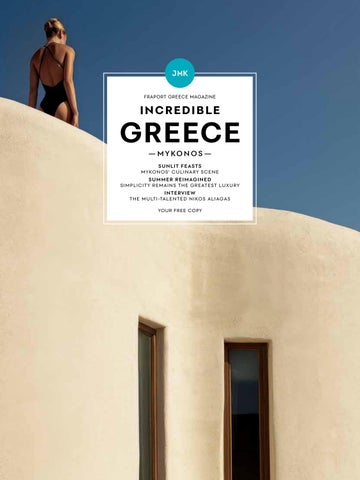
INCREDIBLE GREECE
— MYKONOS —
SUNLIT FEASTS
MYKONOS’ CULINARY SCENE
SUMMER REIMAGINED
SIMPLICITY REMAINS THE GREATEST LUXURY INTERVIEW
THE MULTI-TALENTED NIKOS ALIAGAS
YOUR FREE COPY
FRAPORT GREECE MAGAZINE











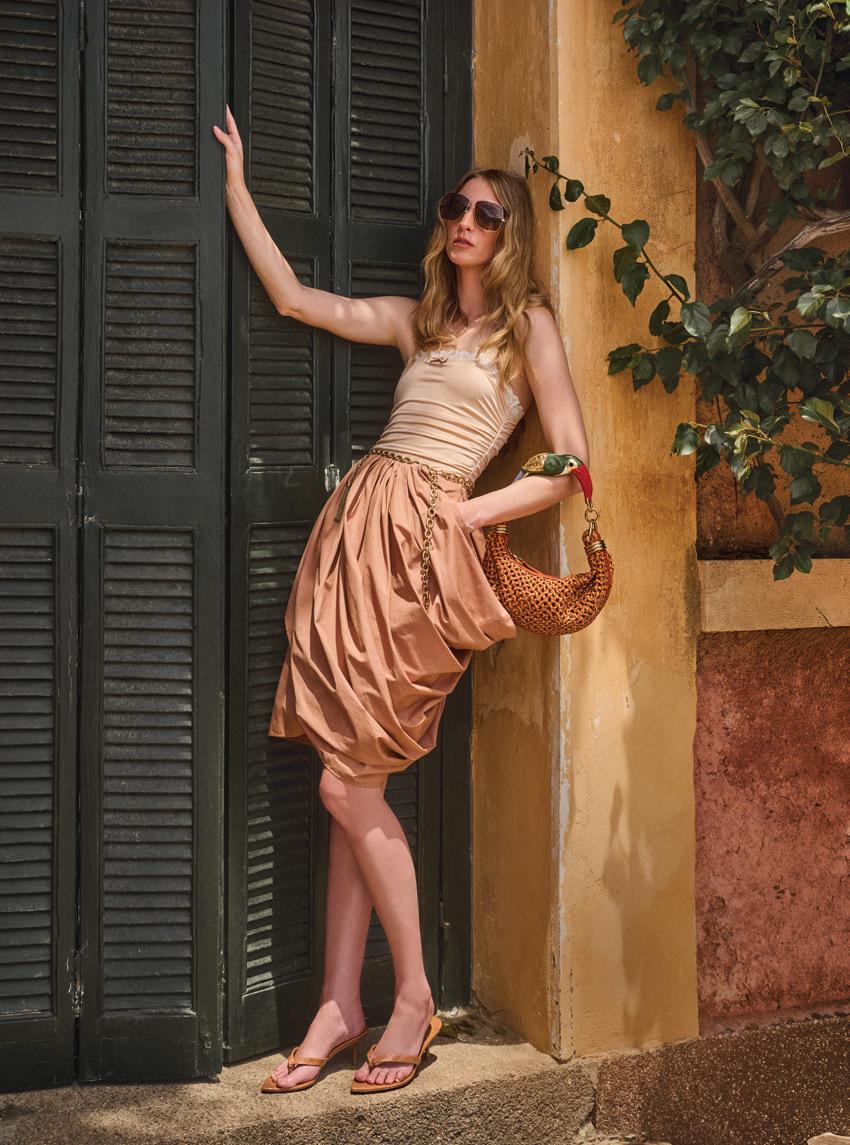
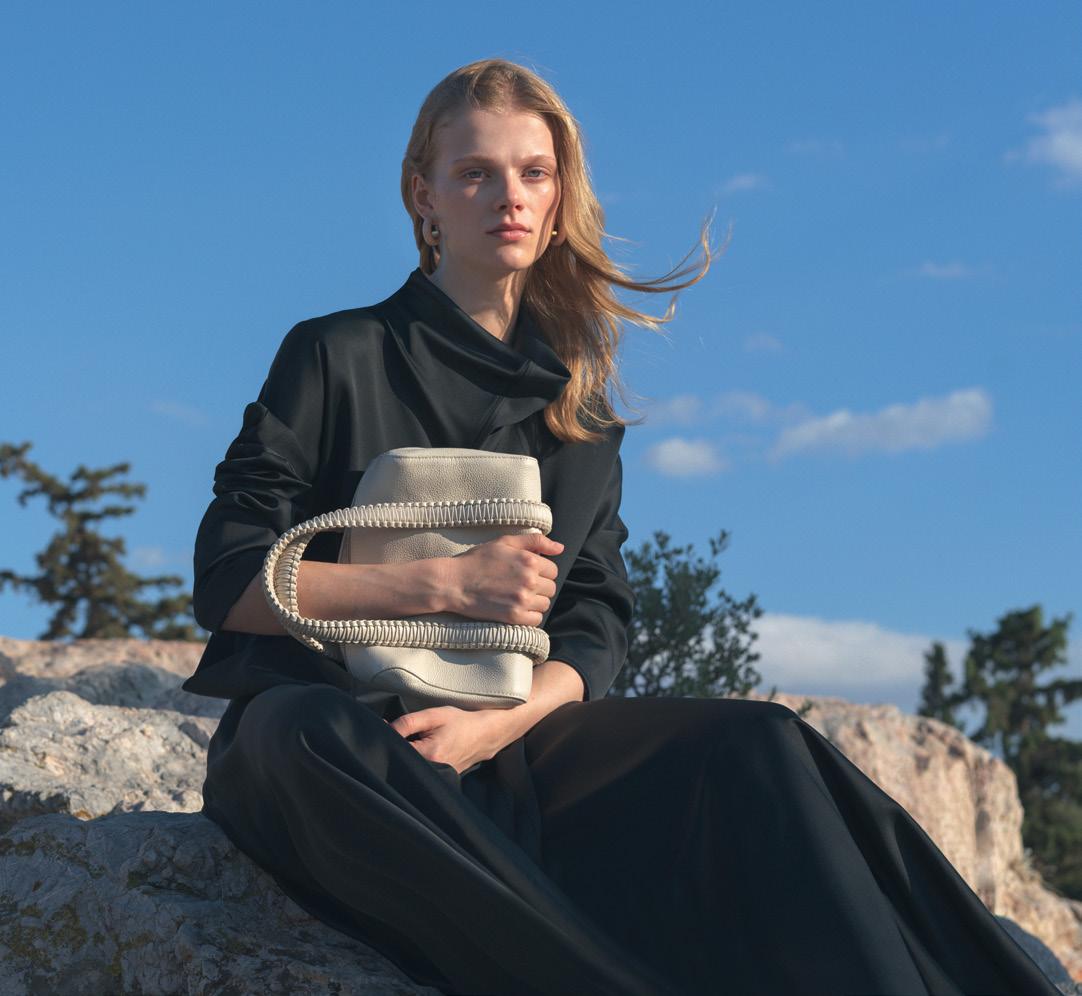
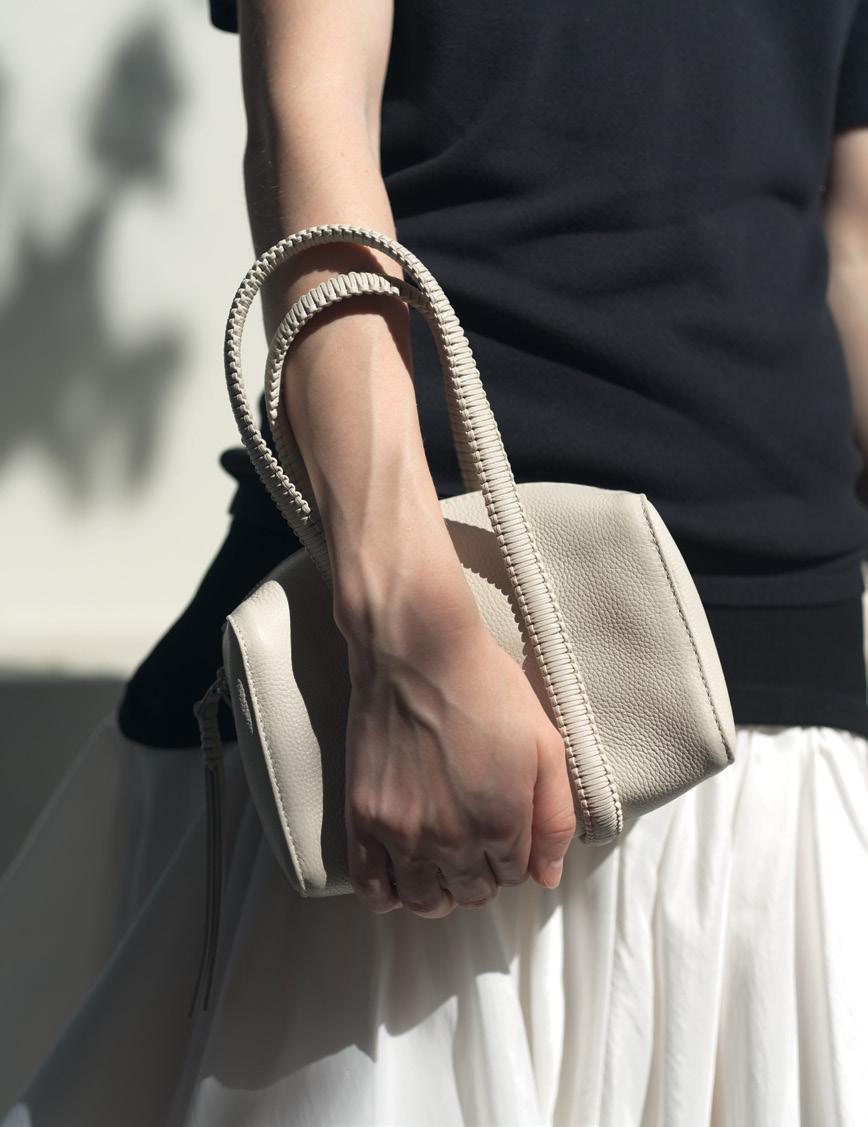
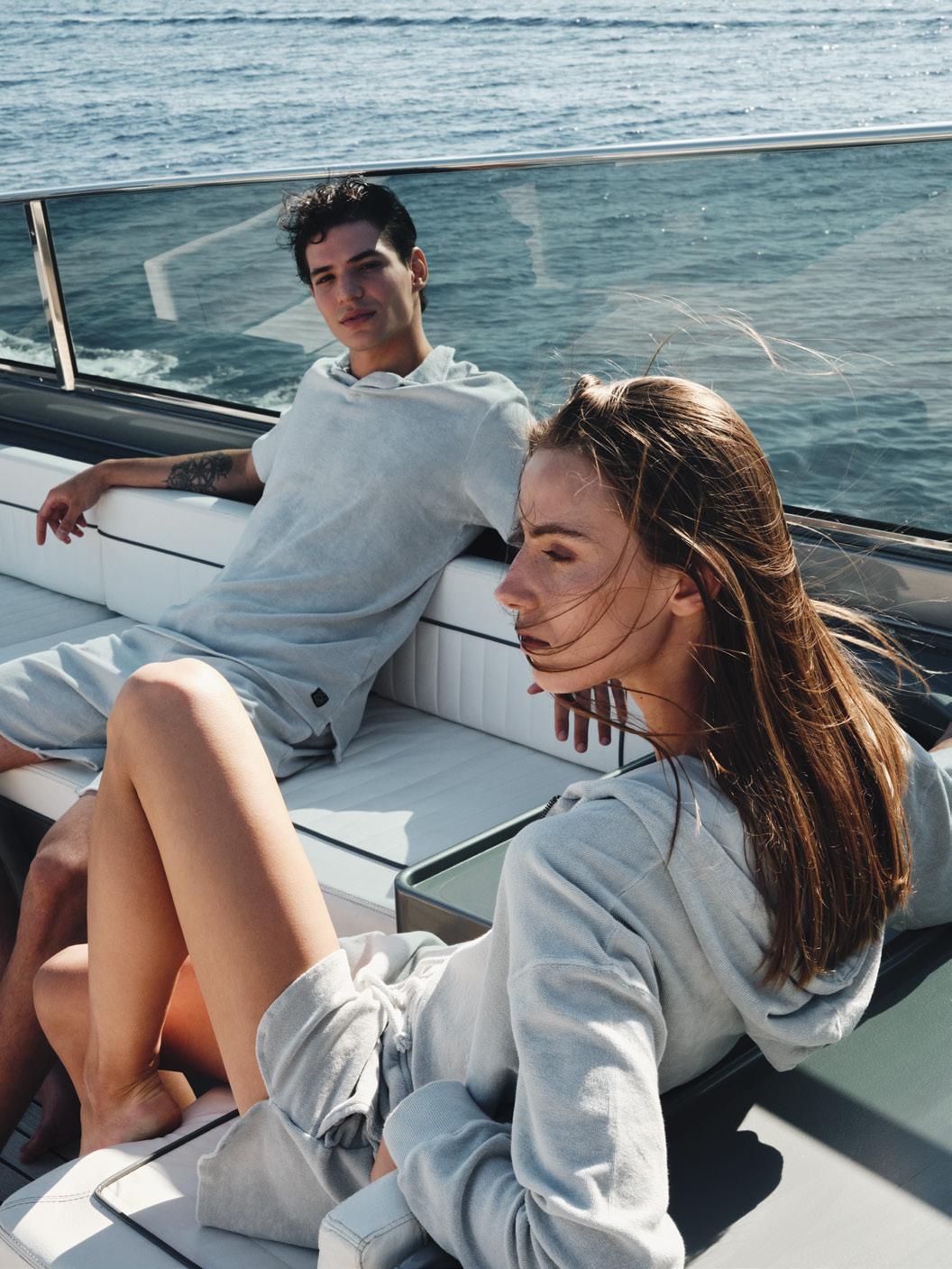
Dirty Laundry is a Greek brand that creates contemporary apparel designed to express individuality through simplicity, comfort, and effortless style.
Each garment undergoes a unique garment-dyeing process, giving it distinctive character, rich color depth, and an authentic lived-in feel.
The brand combines modern aesthetics with premium-quality fabrics and timeless designs made for everyday wear.
Designed and primarily produced in Greece, Dirty Laundry oversees every stage of development and production, ensuring consistent quality and attention to detail.
Before reaching its final owner, every piece is carefully washed and scented with natural fragrances, creating a unique sensory experience that has become part of the brand’s identity.
Today, Dirty Laundry offers a complete wardrobe for men and women, from T-shirts and sweatshirts to shirts, trousers, jackets, and outerwear, all defined by comfort, quality, and understated luxury.
Exclusively available in selected retailers across Greece www.dirtylaundry.gr
Athens: International Airport "Eleftherios Venizelos" || Schengen Area - Departures, Retail Concourse Glyfada, 18 A.Metaxa Av. || Kifisia, 6 Panagitsas Str. || The Mall Athens, Marousi || attica Department Stores Crete: Chania, 22 Skalidi Str.
EDITORIAL
Dear travellers,
Welcome to one of our 14 airports – your gateway to authentic Greece. Every journey begins with a first impression, and we are honoured to be part of that experience. Through our airports, visitors from around the world connect with the unique beauty, culture, and hospitality that make Greece such a distinctive destination.
Every arrival and departure has its own story. Whether you are travelling for leisure, business, or to reunite with loved ones, our mission is to ensure a safe, comfortable, and welcoming travel experience for all. Every day, we work to combine operational efficiency with genuine hospitality, reflecting the spirit of the local communities we serve.

Over the past year, Greece has continued to attract record numbers of visitors, with more than 37 million passengers travelling through our airports. This growth highlights the enduring appeal of our country and confirms the important role of aviation and tourism in supporting local economies. At the same time, we continue to face challenges arising from geopolitical instability and global uncertainty. In a rapidly changing environment, resiliency, adaptability, and cooperation are more important than ever. Despite these challenges, we remain committed to maintaining high operational standards and delivering the best possible travel experience. Looking ahead, we are dedicated to creating lasting value for the regions and local communities we serve. Through our Corporate Social Responsibility initiatives, we support projects focused on education, social inclusion, the environment, culture, and local development, with the aim of ensuring that tourism growth goes hand in hand with the well-being of local communities.
As we move through the second half of 2026, we will continue investing in modern infrastructure and enhancing the travel experience. Together with our people and partners, we are working toward a more sustainable and resilient future for Greek tourism and aviation.
Thank you for choosing to travel through our airports. We look forward to welcoming you and helping you discover all that Greece has to offer.
With warmest wishes, Alexander Zinell
CEO, Fraport
Greece


42 Where the Day Starts
50 Unspoilt Ionian
62 The Blue Passage
70 Sunlit Feasts
80 Tides of Tradition
88 The Multi-Talented Nikos Aliagas
98 Summer Reimagined
104 Τhe Tranquil Harbour
112 Sea of Stone
CONTENTS
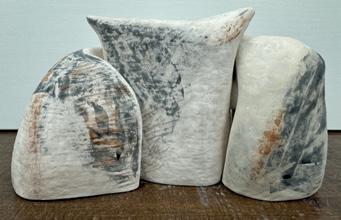
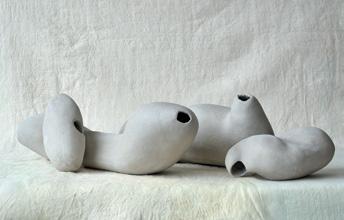
Biennale of Contemporary Keramics. This summer, Rhodes plays host to the Biennale of Contemporary Keramics.
On Meganisi, pristine nature meets island charm.
Zakynthos’ most beautiful route runs along the coast.
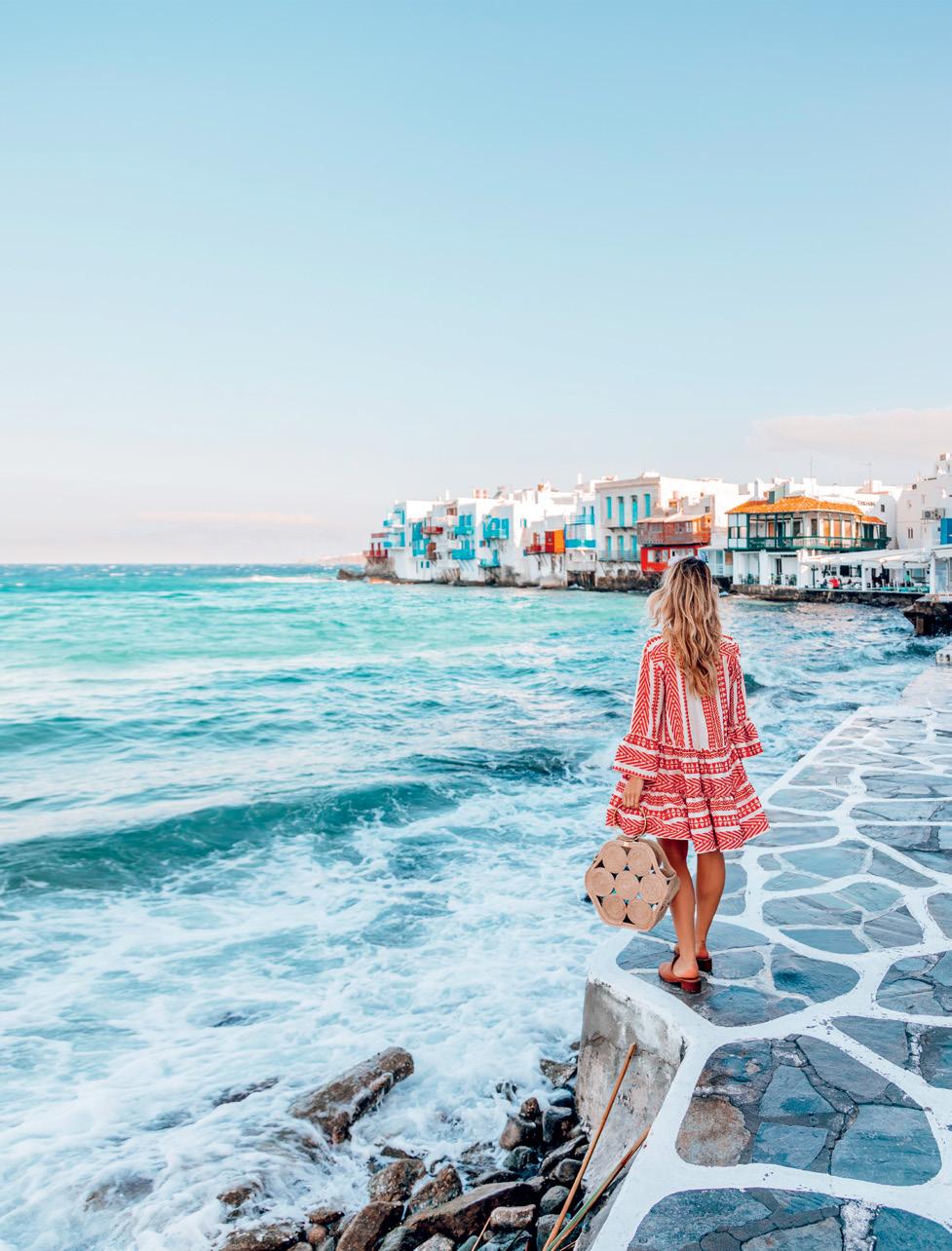
Mykonos’ culinary scene combines Cycladic simplicity with cosmopolitan luxury.
At Axios Delta National Park, nature takes centre stage.
An interview with the internationally renowned journalist and presenter.
On Agathonisi, simplicity remains the greatest luxury.
To
Loutro in Sfakia remains intentionally off the beaten track.
The southern part of Laconia hides a secret: the spectacular Agios Nikolaos Geopark.
ON THE COVER
AKTIO: Constantinos Sofikitis, CHANIA: Kostis Aggelopoulos, CORFU: Perikles Merakos, KALAMATA: Costa Navarino, KAVALA: Tourism Organization of Thassos, KEFALONIA: Getty Images/Ideal Image Miljko, KOS: Constantinos Sofikitis, LESVOS: Petros Sofikitis, MYKONOS: Mara Lazaridou, RHODES: Achilleas Georgallidis, SAMOS: Constantinos Sofikitis, SANTORINI: Yiorgos Kordakis, SKIATHOS: Marina Vernicos, THESSALONIKI: Constantinos Sofikitis, ZAKYNTHOS: Marina Vernicos
CONTENTS
120 Aerial Tales
130 Where Flamingos Wander
136 A Place Apart
144 Life in Blue and Green
152 Ιsland Table Stories
158 Rooted In Terroir
162 A City Unfolds H Kαβάλα
170 Α Regal Landmark
176 Αn Urban Revival
Costas Spathis’ photographs reveal the beauty of Greece from above.
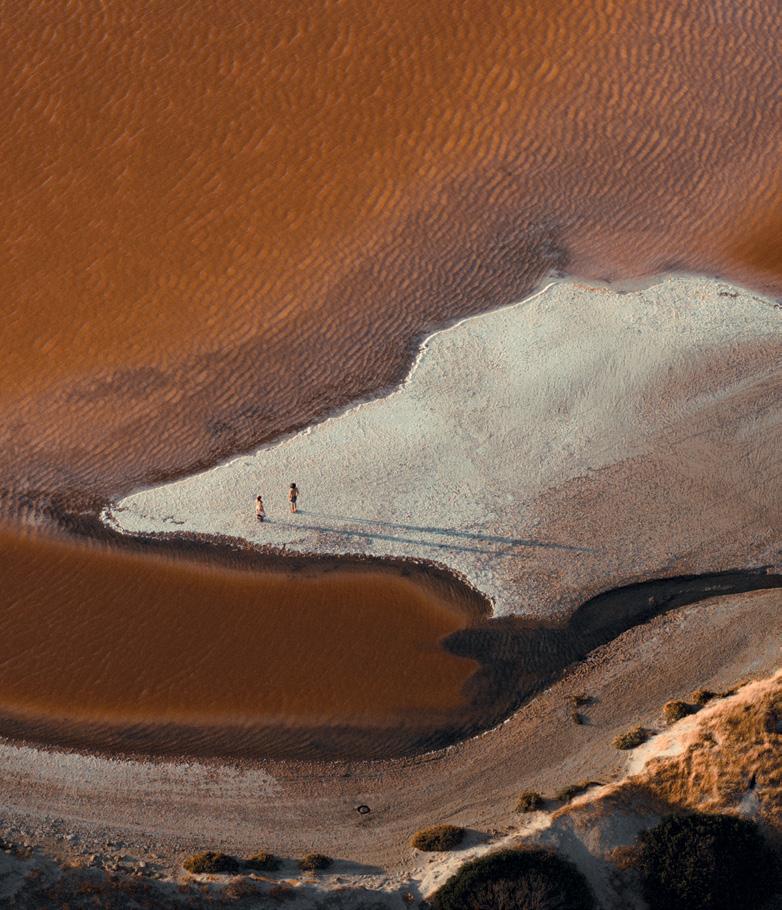
The Alykes Salt Lake near Tigaki on Kos offers sanctuary to migratory birds.
Molyvos on Lesvos is the most beautiful ‘balcony’ overlooking the Aegean.
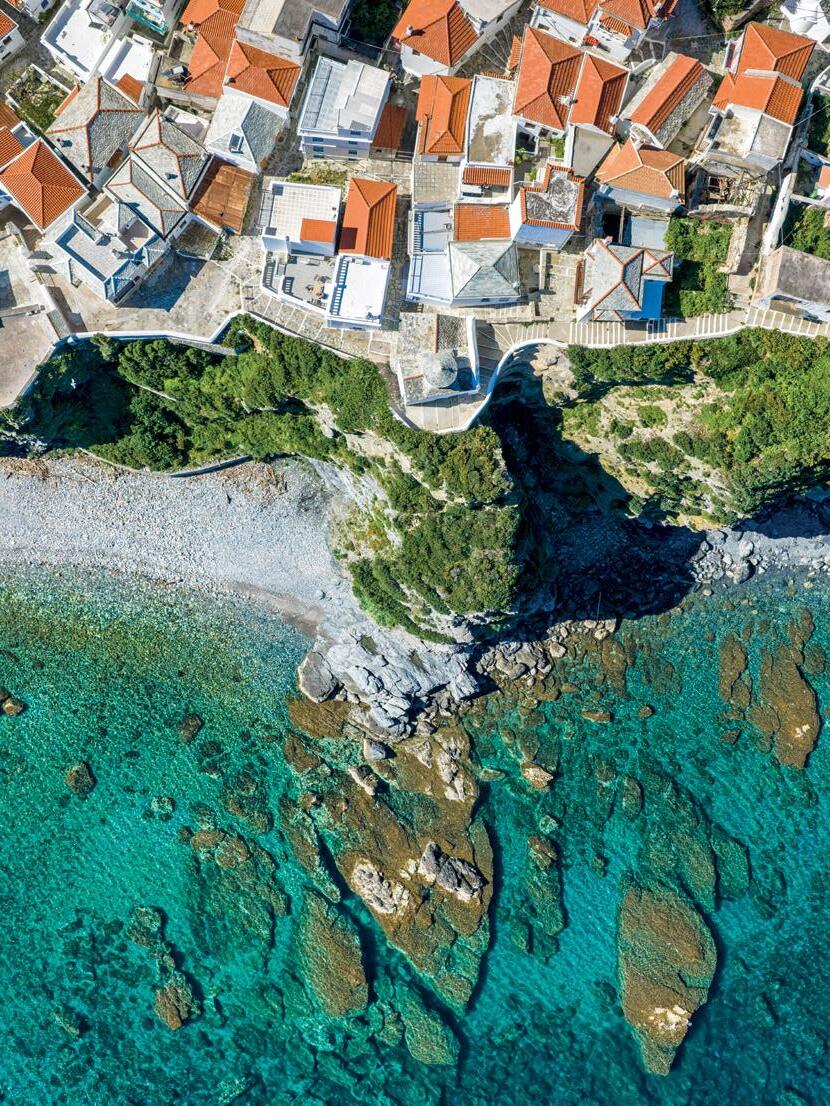
Skopelos unfolds through pine-covered hillsides and tranquil seas.
In Santorini’s understated cuisine, the land and the sea coexist in harmony.
Sclavos Winery follows Kefalonia’s winemaking tradition.
Kavala is a city that lives and breathes its rich historical heritage.
The Palace of St Michael and St George is one of Corfu’s architectural gems.
The historic Arsakeio Mansion in Athens is being reborn while honouring its past.

“As you set out for Ithaca, hope your road is a long one...” wrote Constantine P. Cavafy, and it would be difficult to find a better way to describe every new journey we embark upon in creating this magazine. For the true value lies in every moment along the way – in the places we discover, the people we meet, the flavours we savour, the stories we capture, and the remarkable landscapes that Greece so generously reveals.
For this issue, we travelled to volcanic Santorini, where we experienced local gastronomy in its most authentic form, and to cosmopolitan Mykonos, where we enjoyed creative interpretations of contemporary Greek cuisine. In search of some of the most peaceful and unspoilt corners of Greek summer, we wandered through the picturesque Loutro in Crete and ventured as far as remote Agathonisi, a destination that offers visitors moments of complete tranquillity.
We also journeyed to the turquoise waters surrounding Meganisi, a place that effortlessly enchants all who visit. Marking a new chapter for Kalamata International Airport, our travels then took us to southern Laconia, a region of extraordinary beauty that serves as a gateway to a past stretching back millions of years.
We had the pleasure of speaking with the multi-talented and internationally acclaimed Nikos Aliagas, and are delighted to share with you a glimpse into his fascinating photographic world.
And now, as our own voyage reaches its Ithaca, the greatest reward is being able to share with you the experiences, images, and stories we gathered across our travels. The rest of the journey belongs to you.
Enjoy!
Ioannis K. Dragounis
GR EN


MISSONI SANI RESORT, HALKIDIKI
MISSONI BOUTIQUE VOUKOURESTIOU STREET, ATHENS
MISSONI ATTICA CITYLINK, ATHENS
MISSONI ATTICA GOLDEN HALL, ATHENS
INCREDIBLE GREECE
PUBLISHED BY I. K. DRAGOUNIS PUBLICATIONS P.C. Ifigeneias 81, Nea Ionia 142 31 Tel. +30 2160 027 027
Publisher - Editor In Chief
IOANNIS K. DRAGOUNIS
Art Director MANOS DASKALAKIS
Managing Editor ISABELLA FOUSTANOU
Deputy Editor ROMINA XYDA
CONTRIBUTING EDITORS
ELLIE KARNEZI, KALLIA KASTANI, CHRISTINA KATSANTONI, LYDIA KOKKINA, ELENI PSYHOULI, ALEXANDRA TSOLKA, ELEFTHERIA VASILIADI
Proof Reading GEORGIA TSANTILA
English Renditions KAROLINA THOMOGLOU
Creative Translation Editor BRIAN KNIGHT
Photo Editor
Photoshop Editing & Retouching
GEORGIA GEORGOPOULOU
STELIOS SOFIANOS
Financial Services IAS LTD
COMMERCIAL
AGGELIKI KYRKILI, IOANNA KOUKOU
Tel. +30 210 3425515
INCREDIBLE GREECE® THE FRAPORT GREECE AIRPORTS MAGAZINE BIANNUAL PUBLICATION FOR THE 14 REGIONAL AIRPORTS
Chief Executive Officer
INCREDIBLE GREECE magazine exclusively for FRAPORT GREECE
Germanikis Scholis 10, Marousi 15123 Tel. +30 2144 000 484
ALEXANDER ZINELL
Executive Director of Commercial and Business Development GEORGE VILOS
Airline Marketing and Development Manager KATERINA POLLATOU
FRAPORT GREECE DOES NOT NECESSARILY SHARE THE OPINIONS EXPRESSED IN THE MAGAZINE. NO PART OF THIS PUBLICATION MAY BE REPRODUCED -PARTIALLY OR IN FULL- WITHOUT THE PRIOR EXPLICIT WRITTEN PERMISSION OF THE PUBLISHER. THE MAGAZINE IS DISTRIBUTED FREE OF CHARGE. RESPONSIBLE AGAINST THE LAW IOANNIS K. DRAGOUNIS.

PROJECT H
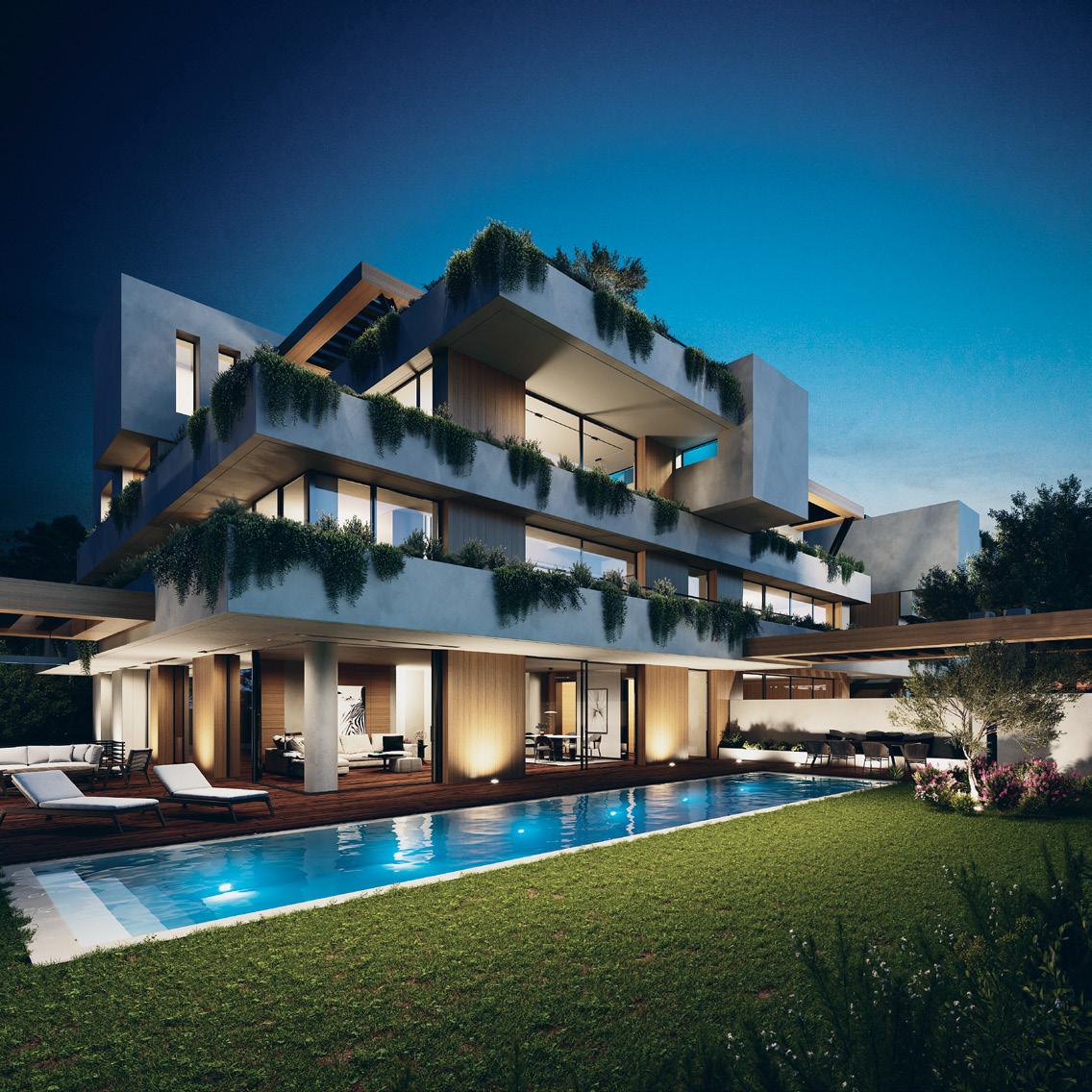
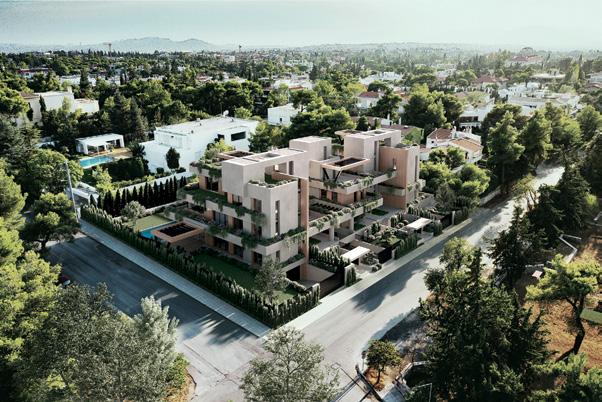
Private Residences in Kefalari, Kifissia
Five private residences in one of Kifisia's most privileged addresses, where refined architecture, landscaped gardens, private pools and A+ energy performance define a discreet new standard of living. With three already spoken for, the final two residences are complete and ready for delivery.



Rodos Palace Hotel, Iraklidon Ave. Ixia, Rhodes T: +30
Rodos Palace Hotel, Ave. Ixia, Rhodes T: +30
F: +30 22410 25350, info@rodos-palace.gr, www.rodos-palace.gr
+30 22410 info@rodos-palace.gr, www.rodos-palace.gr
At ‘Makedonia’ Airport, contemporary creativity meets the world at the very moment of departure.
Art Takes Flight
EN GR
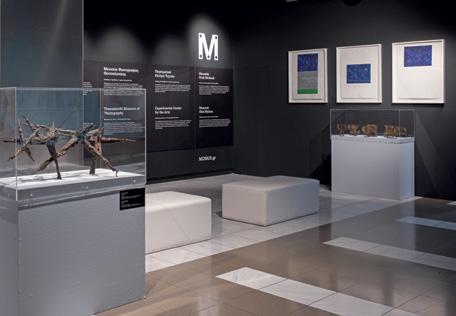
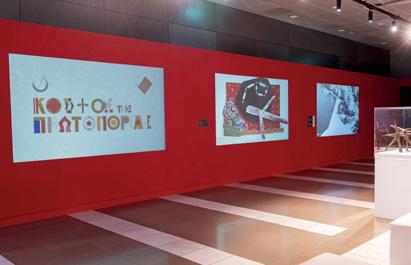
MOMUS Air, which has been operating since last December at Thessaloniki Airport ‘Makedonia’, demonstrates in a dynamic and contemporary way how culture can elevate the travel experience. Developed within the framework of Fraport Greece’s strategic partnership with the Metropolitan Organisation of Museums of Visual Arts of Thessaloniki-MOMUS, it transforms the airport into a cultural hub – one that strengthens the connection with the city while highlighting its identity.
Across a 163-square-metre space within the departures area, visual artworks, digital applications, and documentaries offer travellers the opportunity to engage with selected material from the collections of MOMUS’ five museums. The inaugural thematic exhibition explores the idea of flight – a concept that has symbolised the desire for escape and emotional elevation. It features reproductions of works by avant-garde artists from Russia and Eastern Europe of the early twentieth century, alongside works by contemporary Greek artists and photographers.

Piraeus WealthAdvisor
Η Biennale of Contemporary Keramics
2026
The Biennale of Contemporary Keramics 2026 transforms Rhodes into an international point of reference for contemporary ceramics.
Where the Day Starts
Text: Christina Katsantoni
Η BCK 2026
ΤΗΕ BCK 2026 is curated by S. Dimitrakopoulos, L. Thomopoulou, and A. Touati.
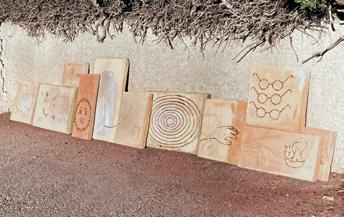
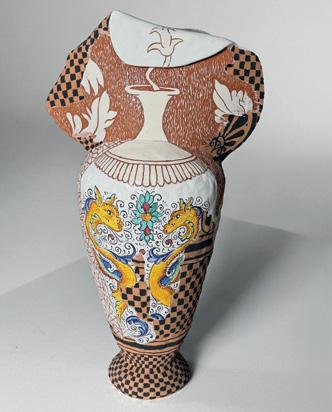
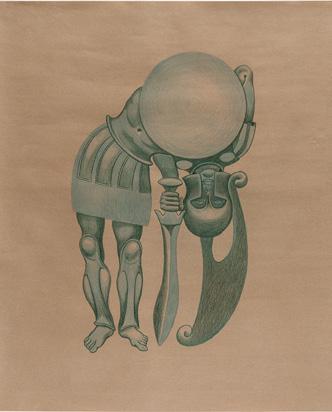
THE DOMINANT narrative thread of this year’s biennale is the Sun.
GR EN
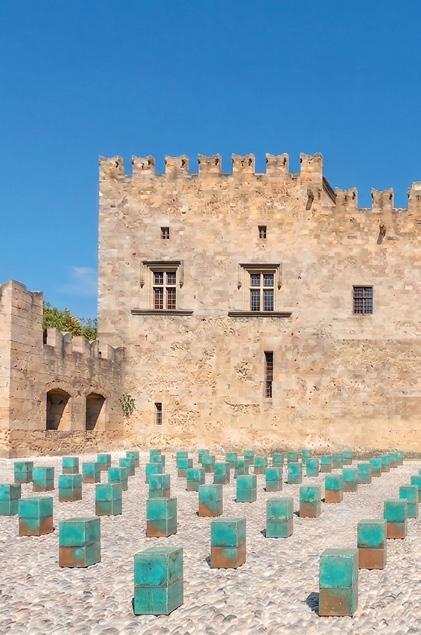
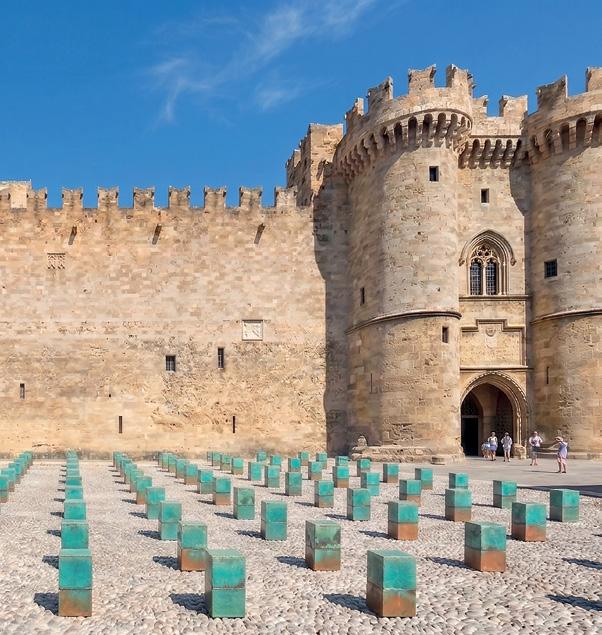
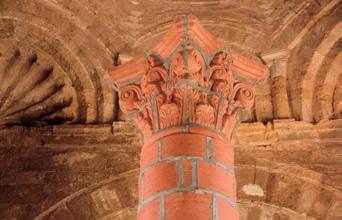
At the eastern edge of the Aegean, on the island that, according to mythology, first greets the light of the sun, history enters into a dialogue with contemporary artistic expression. The Biennale of Contemporary Keramics, titled Where the Day Starts, transforms the medieval city into an international meeting point for an art form that has travelled and evolved along the shores of the Mediterranean for centuries.
Dedicated to contemporary ceramic creation, the Biennale maintains a nomadic character, travelling every two years to a different Greek island. In Rhodes this summer until 31 October, it draws inspiration from the island’s mythical dawn and its unique relationship with light, landscape, and centuries-old tradition, weaving connections between the past and present.
The exhibition unfolds across five landmark locations within the medieval city –among them the Armoury de Milly, the Decorative Arts Collection Museum, the Church of Panagia tou Kastrou, the Archaeological Museum, and Kleovoulou Square– inviting visitors on an immersive cultural journey. Forty-two artists from 18 countries are participating, while the programme is accompanied by events and initiatives that, through the language of ceramics, bring together cultures, narratives, and human stories beneath the same Mediterranean sky.

EXPLORE
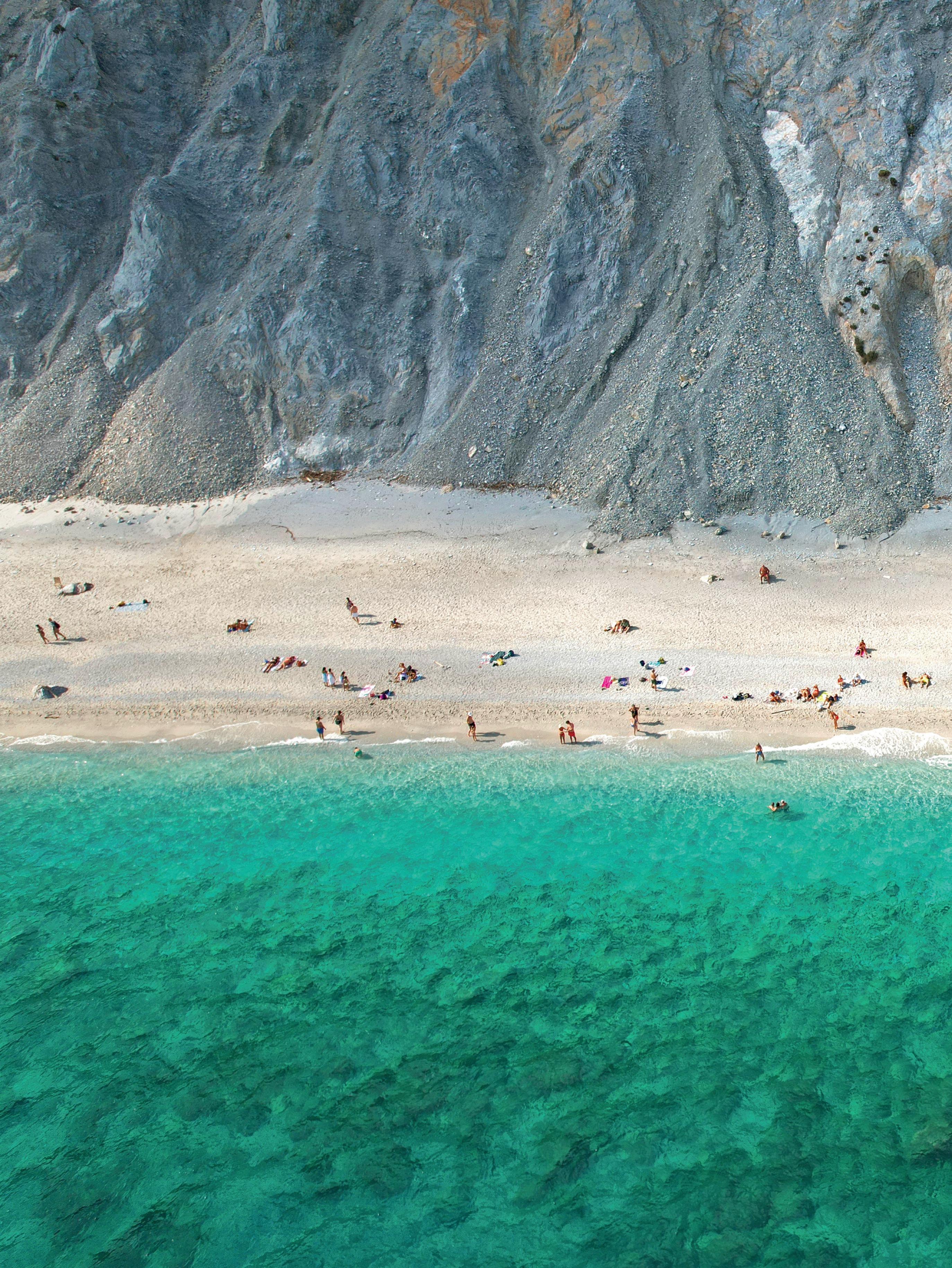
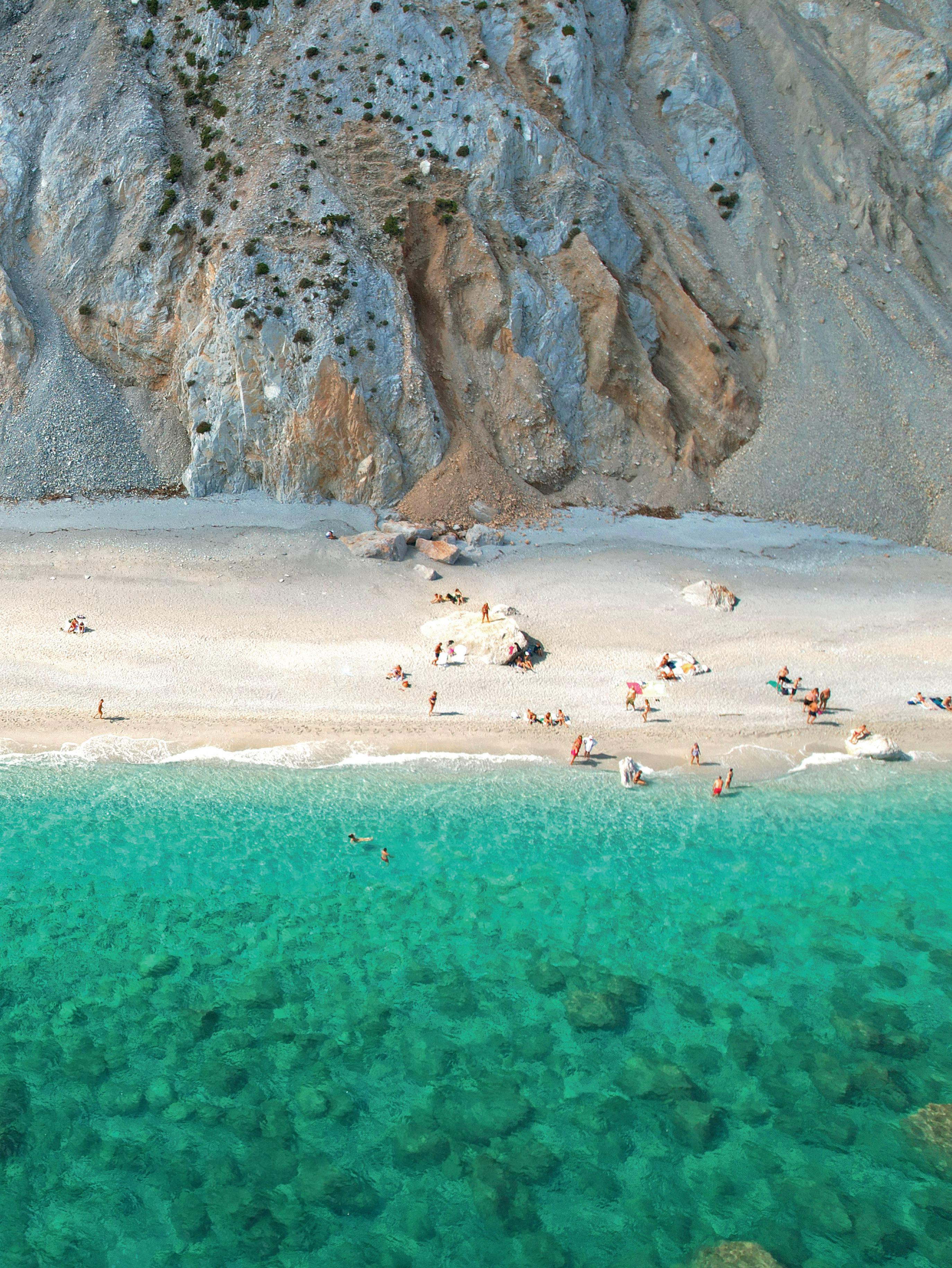
EMERALD waters, pineclad shores, golden sandy beaches, and hidden coves come together to create a landscape that feels as though it belongs to a far-flung exotic destination. In Skiathos, summer seems to have found its natural sanctuary, a place where nature reveals itself in its most generous form.
PHOTO: MARINA VERNICOS
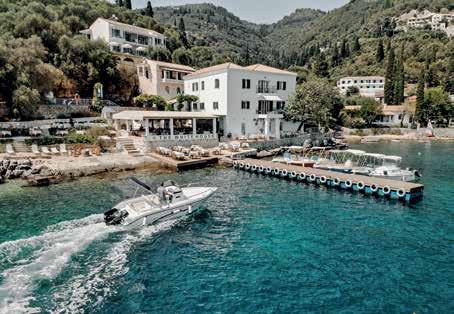
Where history meets haute cuisine, Corfu reveals its most cosmopolitan self.
The White House
EN GR
& Alan’s Greek Job».
In the north of Corfu, in the idyllic village of Kalami, a striking white historic building seems to rise effortlessly from the Ionian Sea itself. The White House Restaurant is far more than a culinary destination; it is a living part of the island’s cultural and cosmopolitan identity. In the 1930s, it served as the residence of British writer Lawrence Durrell, who drew inspiration from the light, the sea and the profound sense of tranquillity. Today, that same atmosphere continues to enchant, attracting international personalities such as Amanda Holden, Magic Johnson and LeBron James. It has also provided the backdrop for iconic productions, from For Your Eyes Only to Amanda & Alan’s Greek Job
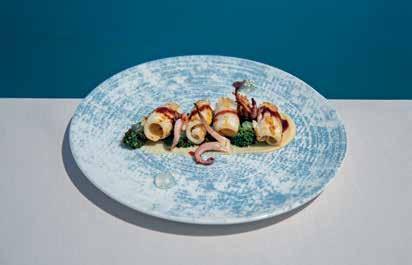
Within this singular setting, award-winning Greek chef Lefteris Lazarou curates a menu that celebrates the essence of Corfu’s land and sea, with deep respect for exceptional ingredients and a distinct creative identity. Refined flavours and a sophisticated ambiance come together to create an experience where the present is not a mere echo of the past, but its seamless continuation.
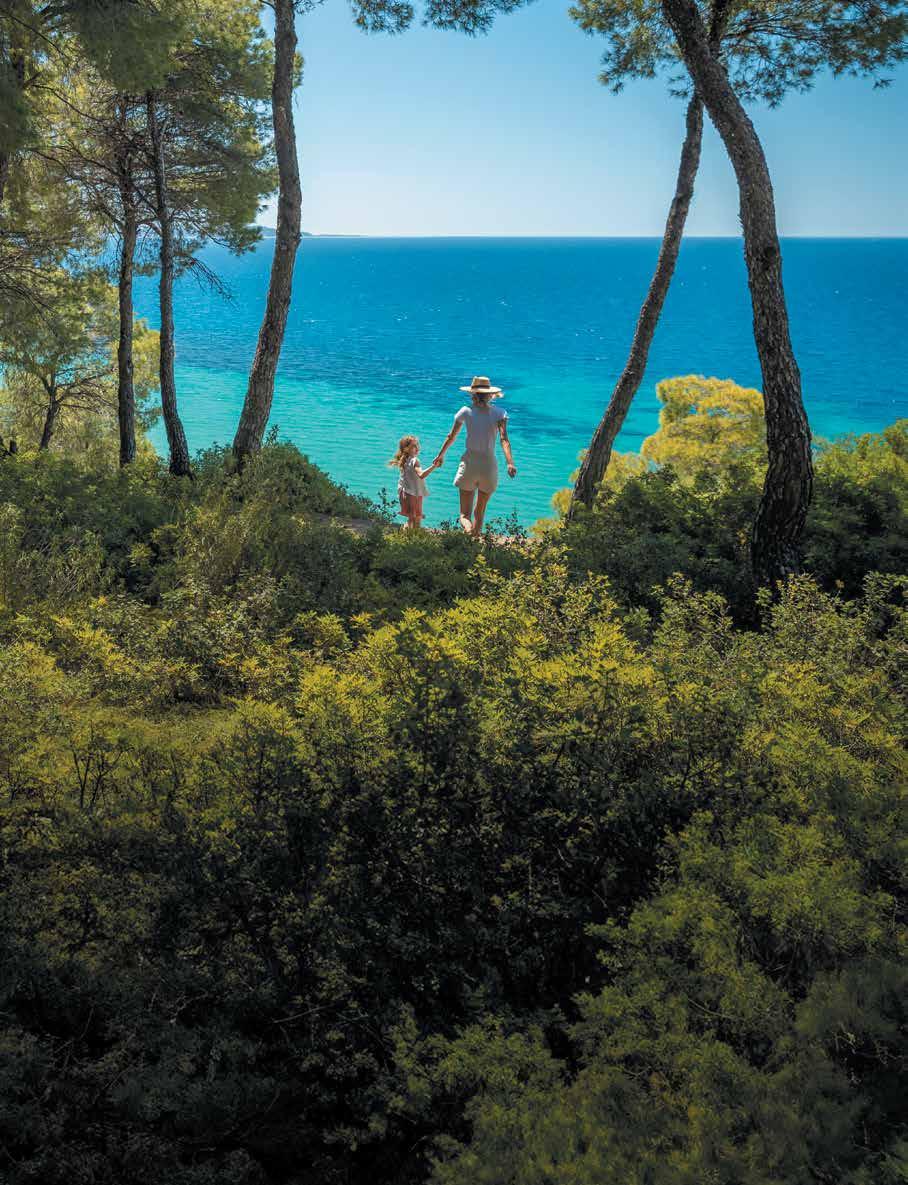
Untouched nature meets authentic island charm on an island that promises at least one beach you’ll feel is yours alone.
Text: Kallia Kastani
Photos: Constantinos Sofikitis
UNSPOILT IONI A
N
GR EN
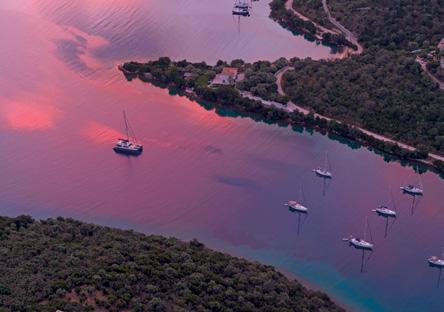
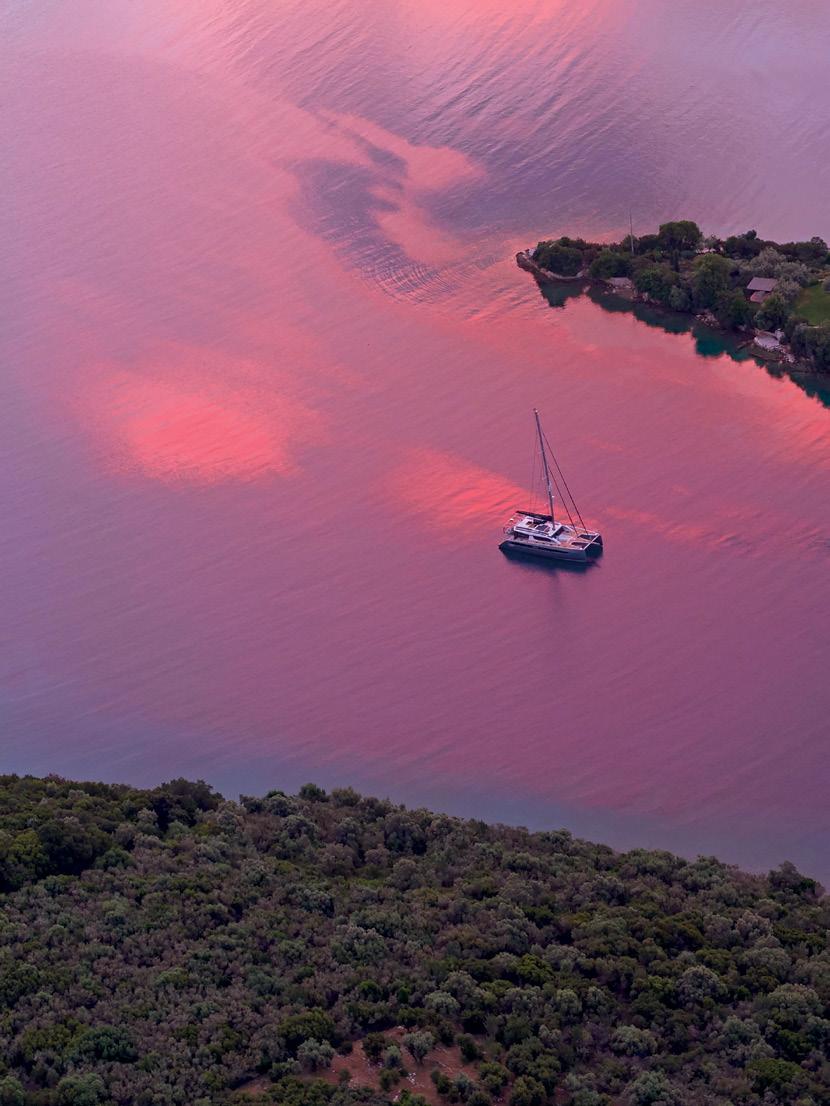
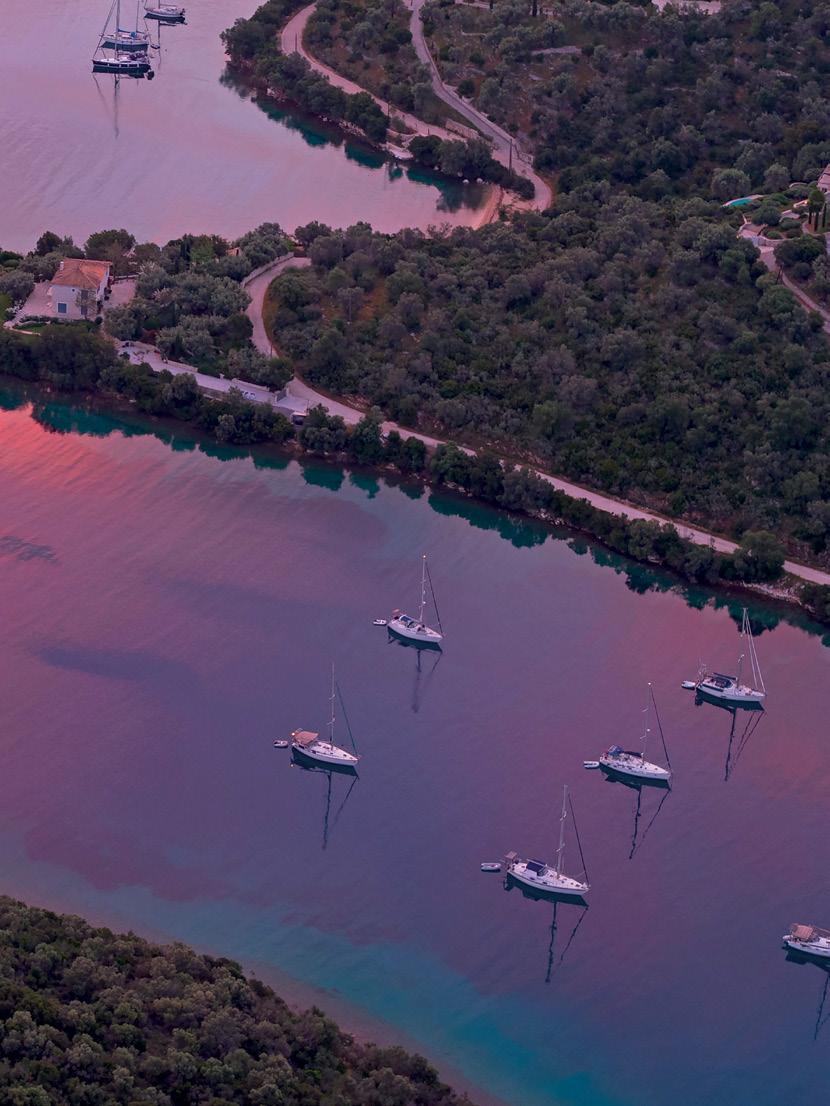
The paradox begins with its very name: Meganisi – literally, Big Island. Covering just 22.4 square kilometres, it feels far larger than any map suggests. Here, true size is not measured in distances but in images. It’s in the light that shifts colours over fjord-like inlets and unspoilt beaches, in the crystal-clear waters that conceal myths and a fascinating underwater world, in the fishing boats gently rocking in picturesque harbours, in the stone-built houses and windmills, and in the open horizon, painted shades of pink as the sun sets.
Its size is inversely proportional to the generosity of the experiences it offers. Meganisi may be small, but in many ways it feels grand. Together with Skorpios, the two are the most famous of the Prigiponisia – a cluster of islands lying just off the town of Nidri on Lefkada. Yet it boasts more than 30 kilometres of stunning coastline, carved into a succession of sheltered coves, each seemingly hiding a secret beach waiting to be discovered – one for every visitor.
Every day, offers something different. It begins early with a breathtaking sunrise at the small lighthouse of Fanari and a first swim in waters that are surprisingly
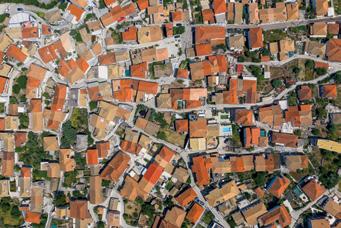
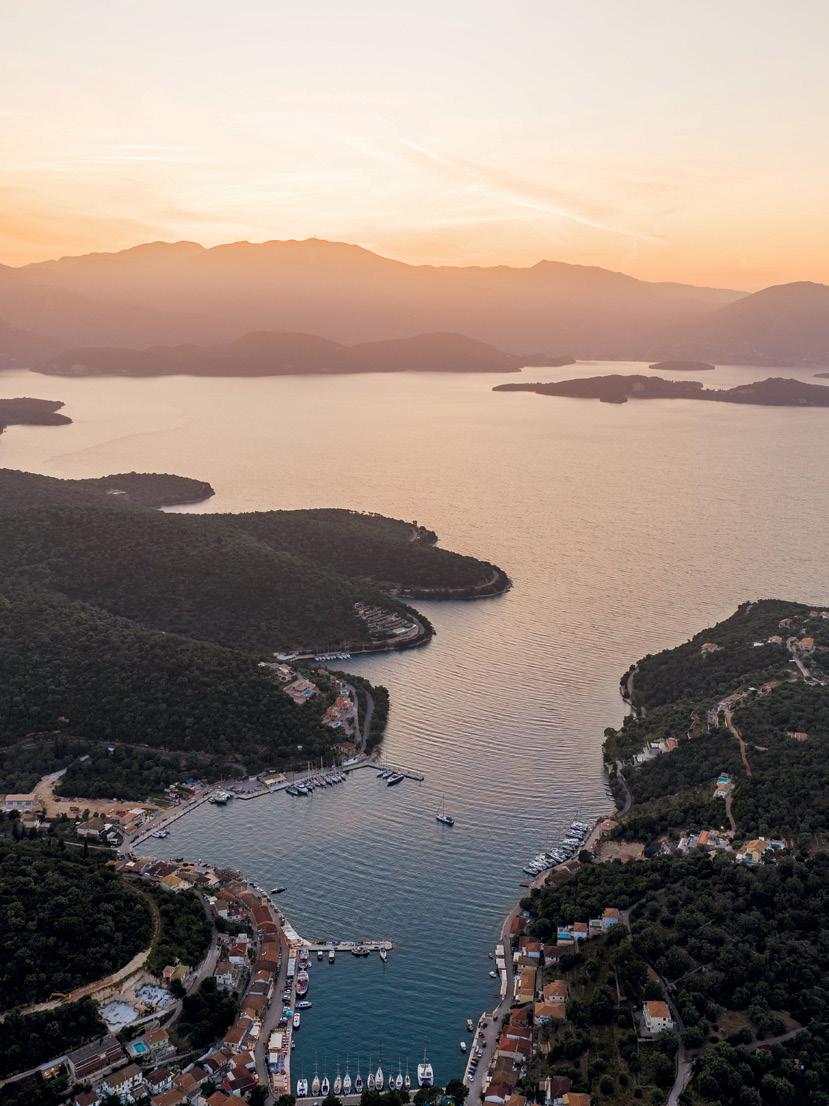
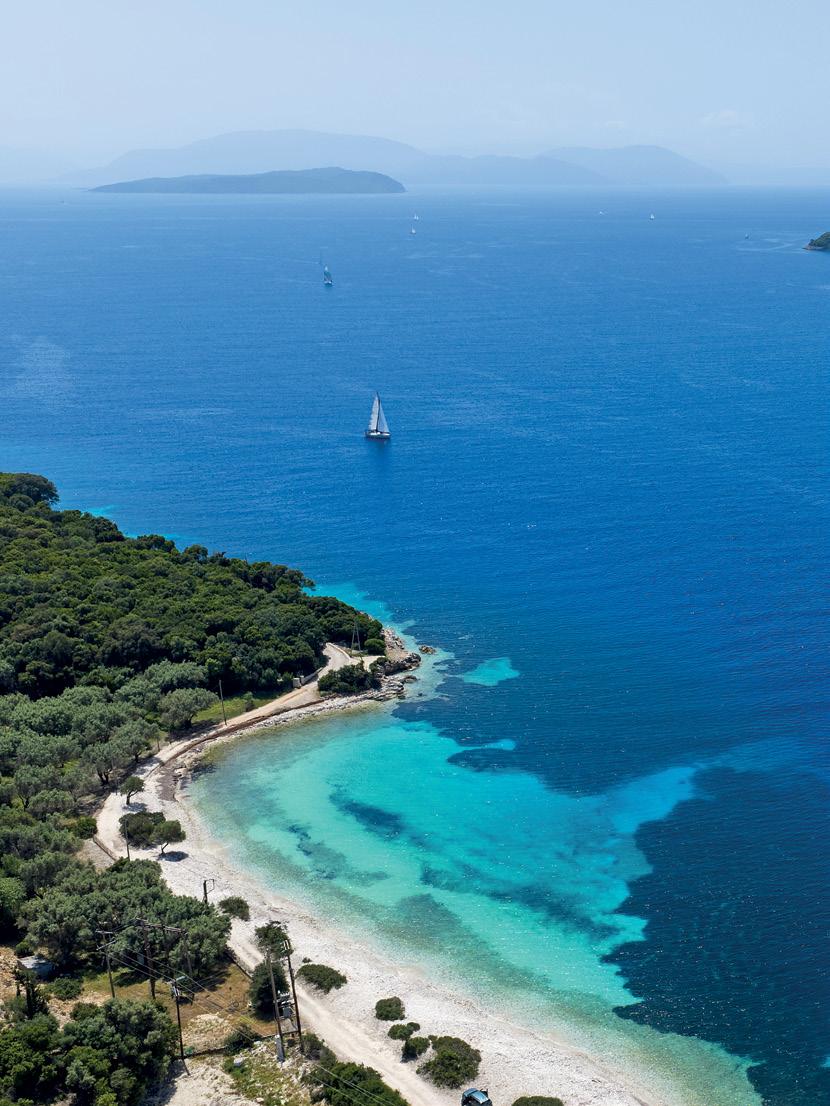
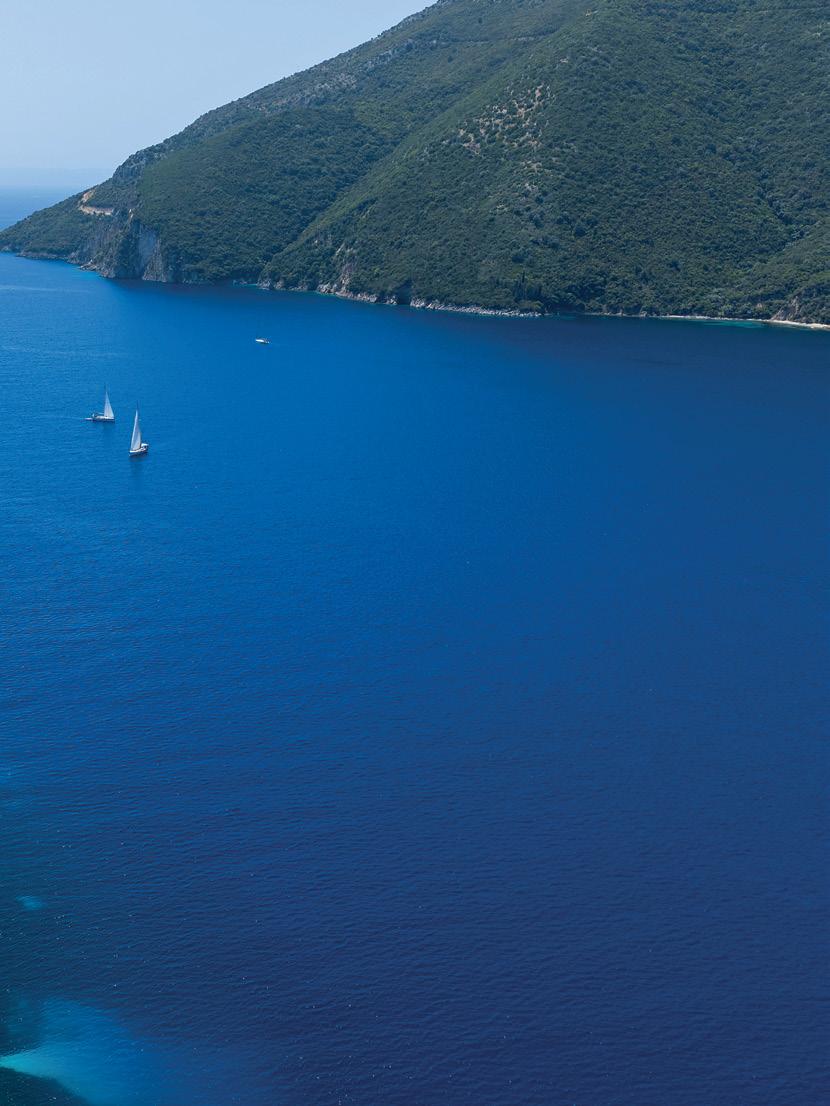
lies just a stone’s throw from the island of Lefkada.
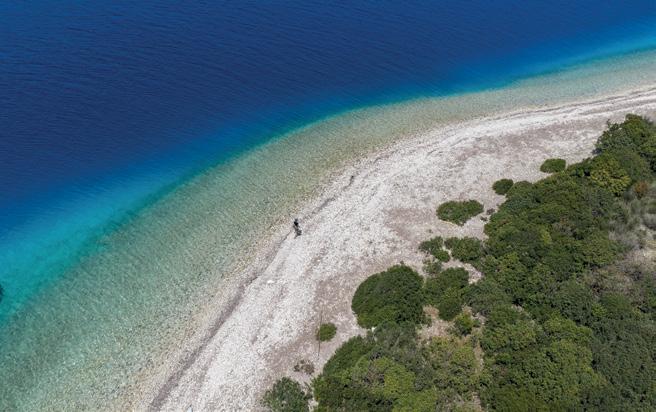
AMMOGLOSSA and Fanari are two of the island’s most popular beaches.
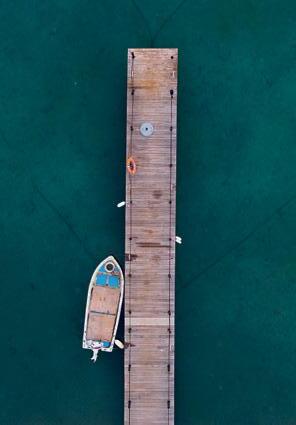
warm. If you wish, you could drive around the whole of Meganisi in less than an hour. But you won’t want to. Here, haste feels both foreign and unnecessary. You will need time to surrender to the place and discover it step by step. Begin at the beautiful harbour of Vathy, a picturesque and lively settlement surrounded by old windmills, where tavernas scented with freshly prepared seafood line the waterfront. Alongside them lies a large marina, home to both yachts and traditional fishing boats.
The scenery changes in Katomeri, the island’s picturesque capital, where old stone houses with flower-filled courtyards are nestled among olive groves. To the west, perched atop a hill, lies the third settlement, Spartochori, with its traditional homes and narrow cobbled lanes. Its square, resembling a terrace overlooking the Ionian Sea, offers one of the most beautiful sunsets.
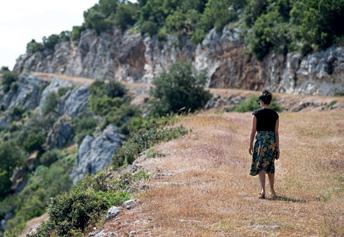
The island’s footpaths lead through lush green landscapes with sweeping views and down to secluded coves alive with colour, where pine trees lean
PERCHED ATOP A HILL LIES SPA RTOCHORI, WITH ITS TR A DITION A L HOMES A ND N A RROW COBBLED L A NES.
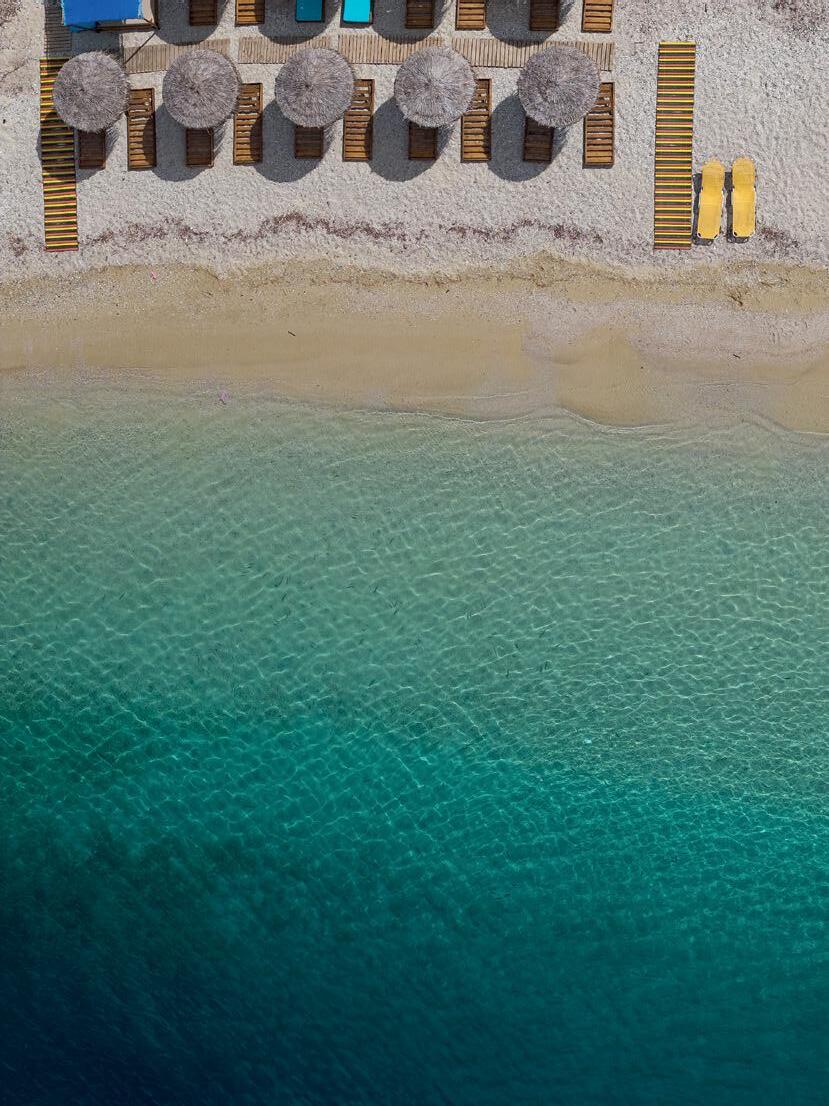
gracefully over crystal-clear waters. With their exceptional visibility, these locales are ideal for snorkelling and underwater exploration.
Its beaches, some accessible only by sea, form an endless chain of discoveries. From the more organised stretches of coast, such as the popular Fanari, Roca, and Ammoglossa, to the secluded Loutrolimni, and Bereta with its striking rock formations, and the most unassuming, hidden cove. Each location feels like a natural jewel framed by white pebbles and emerald waters. Their small size only adds to their charm, making them seem as though they were created exclusively for you.
The seabed surrounding Meganisi combines remarkable natural beauty with significant ecological value, revealing colourful reefs, rare marine species, and caves adorned with stalactites and sculpted rock formations. The most famous of them all is Papanikolis Cave, which, according to local legend, served as a hideout for the submarine Papanikolis during the Second World War. The cave is renowned for its impressive stalactites and for the unique experience of swimming to its small, secluded sandy beach.
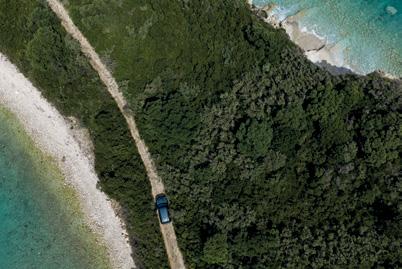
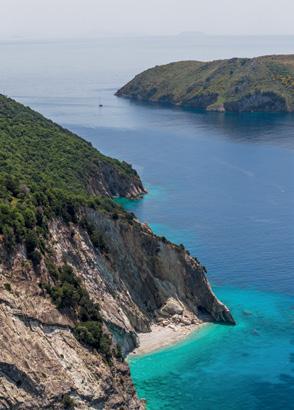
AT THE SOUTHWESTERN TIP, a hidden world of secluded coves and sea caves waits to be discovered.
Timeless elegance
Discover the ultimate luxury address in Thessaloniki’s glittering promenade
Leoforos Nikis 5, Thessaloniki, Greece onresidence.gr
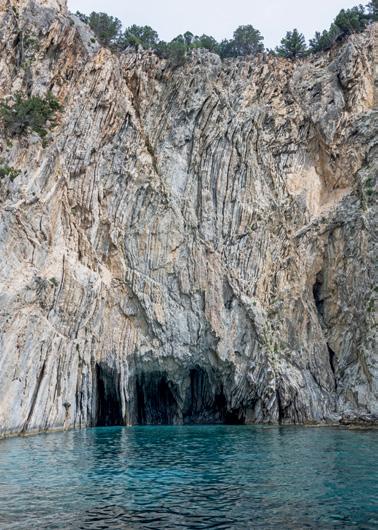
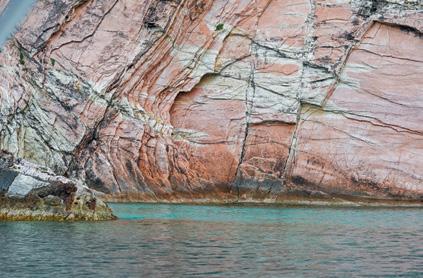
PAPANIKOLIS CAVE brings together local legend and sea exploration.
GR
EN
Traces of the island’s recent history can be found in the sunken airplane resting in shallow waters near the edge of Vathy harbour. According to the most widely accepted account, the aircraft was carrying six paparazzi who were flying over Skorpios around 1970 in an attempt to photograph Aristotle Onassis and Jacqueline Kennedy Onassis. A mechanical failure forced them to abandon the plane, but all aboard were rescued by local fishermen. The single-engine aircraft was later towed to the spot where it remains today, having become one of the area’s most intriguing underwater landmarks.
On Meganisi, myths converse effortlessly with the landscape, the open sky, and the sea. All it takes is getting to know its secrets: walking its footpaths, diving into its waters, finding your own secluded corner of paradise, experiencing traditions such as the local wedding ceremony, breathing in the sea breeze tinged with the scent of pine, and tasting local specialities such as ladopita and savoro-style fish. Then you begin to understand just how great the true measure of this place really is.
THE SE A BED SURROUNDING MEG A NISI COMBINES REM A RKABLE N ATUR A L BE AUTY WITH SIGNIFICA NT ECOLOGICA L VA LUE, REVE A LING COLOURFUL
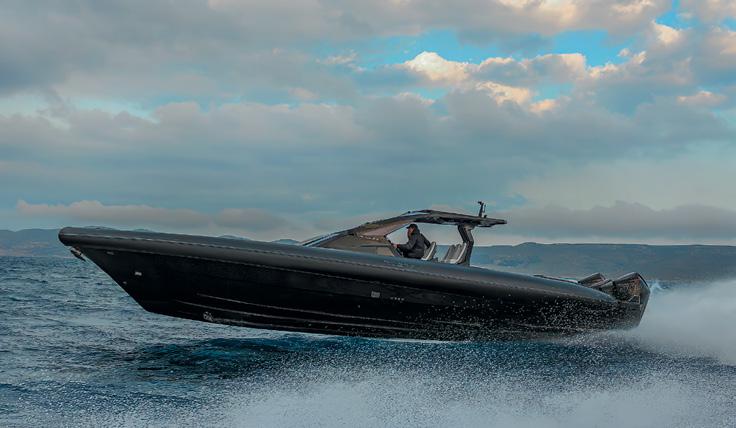
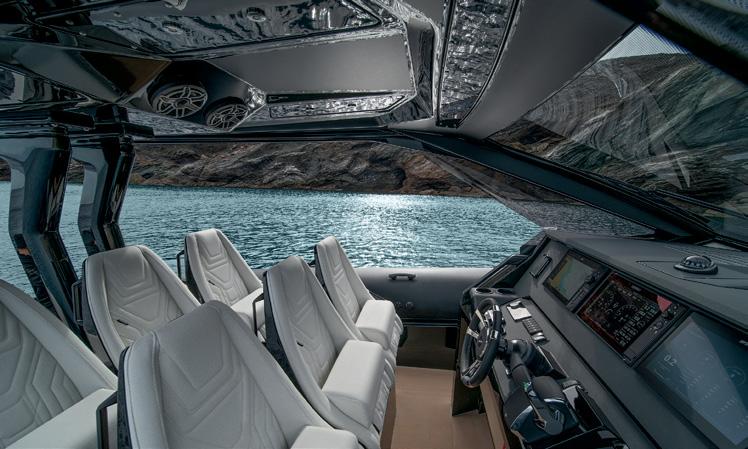
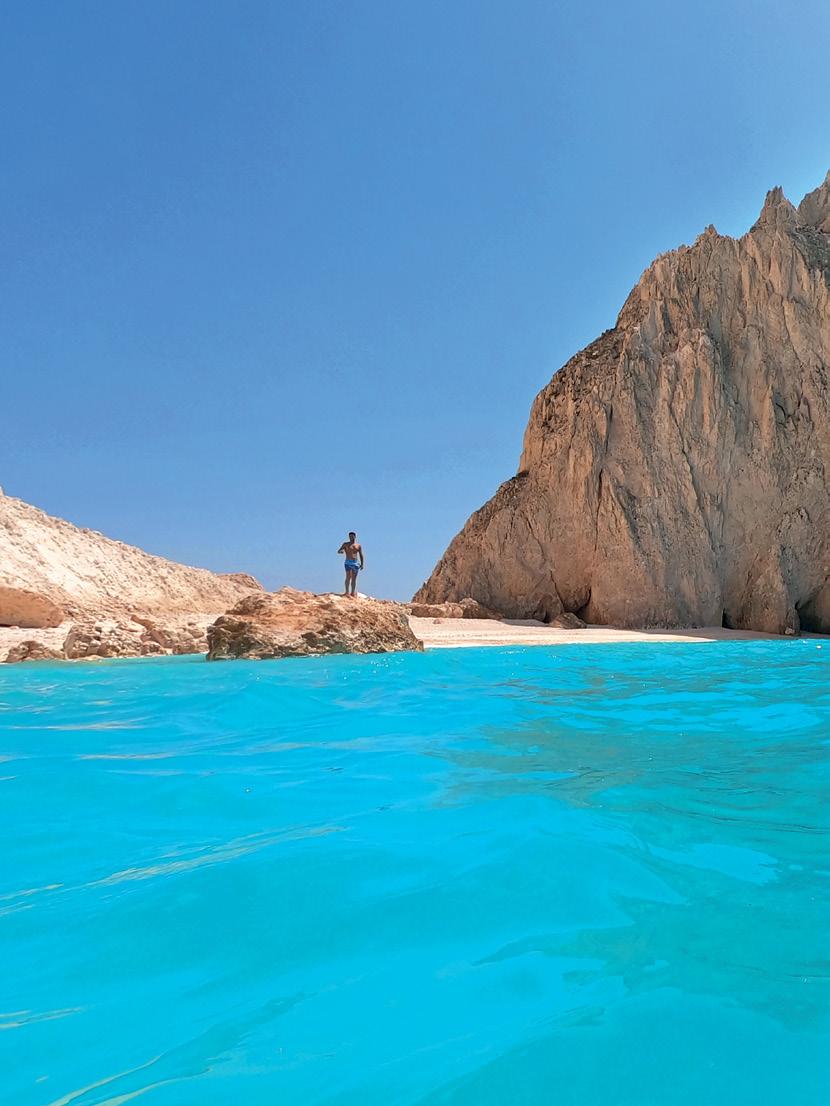
Zakynthos’ most beautiful route doesn’t follow roads. It follows the sea.
Text: Ellie Karnezi
Photos: Marina Vernicos
THE BLUE PA SS AGE
GR
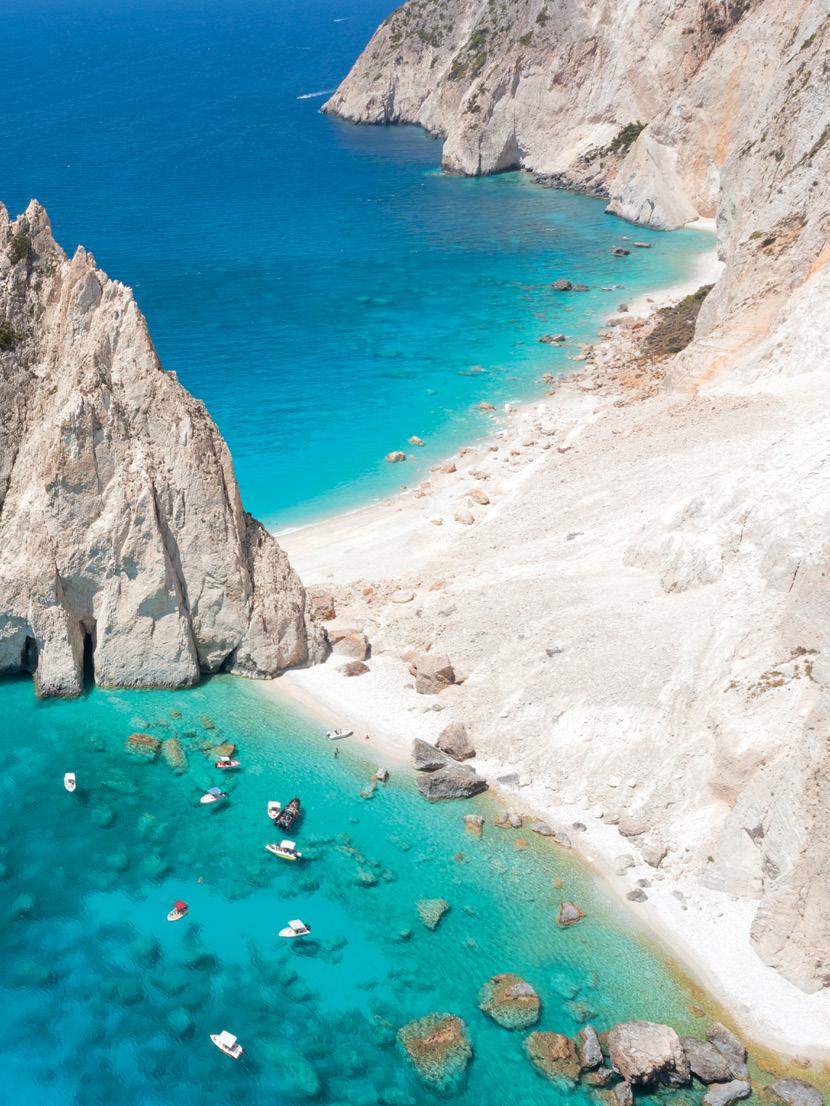
Some places are discovered step by step. Others reveal themselves only when you leave the shore behind, like small wonders of nature waiting to be unveiled. One such place unfolds along the south-western coast of Zakynthos, in the waters of Laganas Bay. It begins at Keri, a picturesque seaside village that serves as the gateway to some of the island’s most spectacular seascapes.
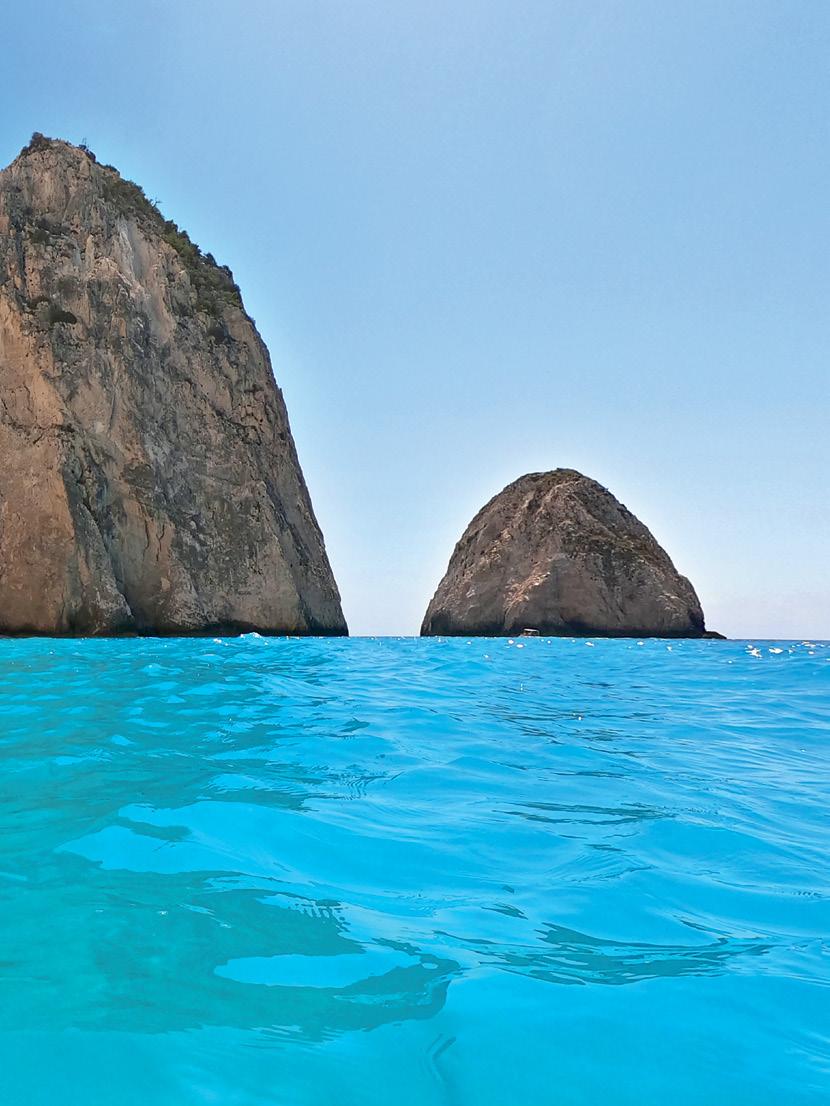
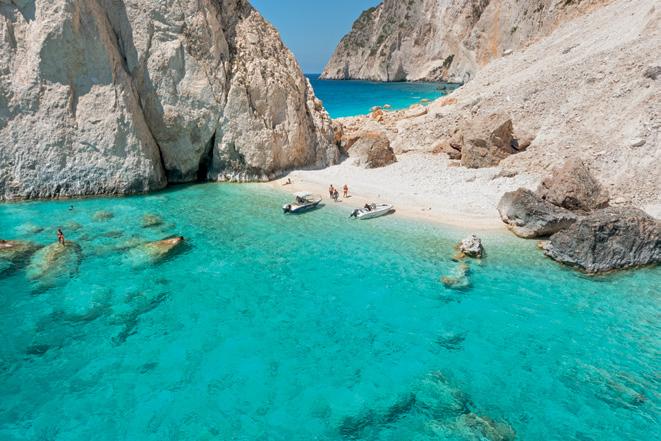
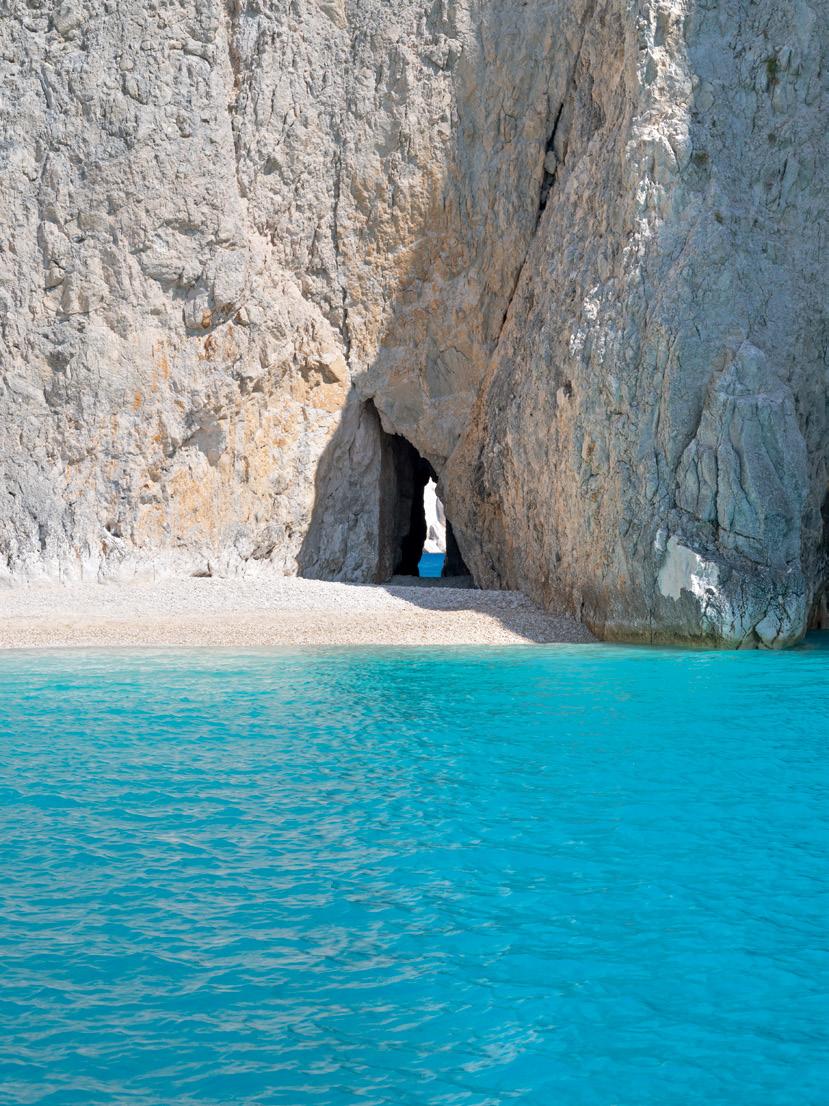
From its small harbour, you can board one of the traditional boats that depart daily. Just a few minutes after setting sail, you’ll notice the landscape begin to change. Steep cliffs plunge into the sea, a succession of small caves appears along the coastline, and sunlight reflects off the limestone formations, creating colours that seem almost unreal. The Keri Caves invite you to take your first swim, while a little further on rise the Mizithres –Big Mizithra and Small Mizithra– two striking white sea rocks that emerge from the water like giant cones. Over time, they have become one of Zakynthos’ most recognisable landmarks. Their name is said to derive from myzithra, the
THE STRIKING
Mizithres: limestone formations shaped by the sea, wind, and time.
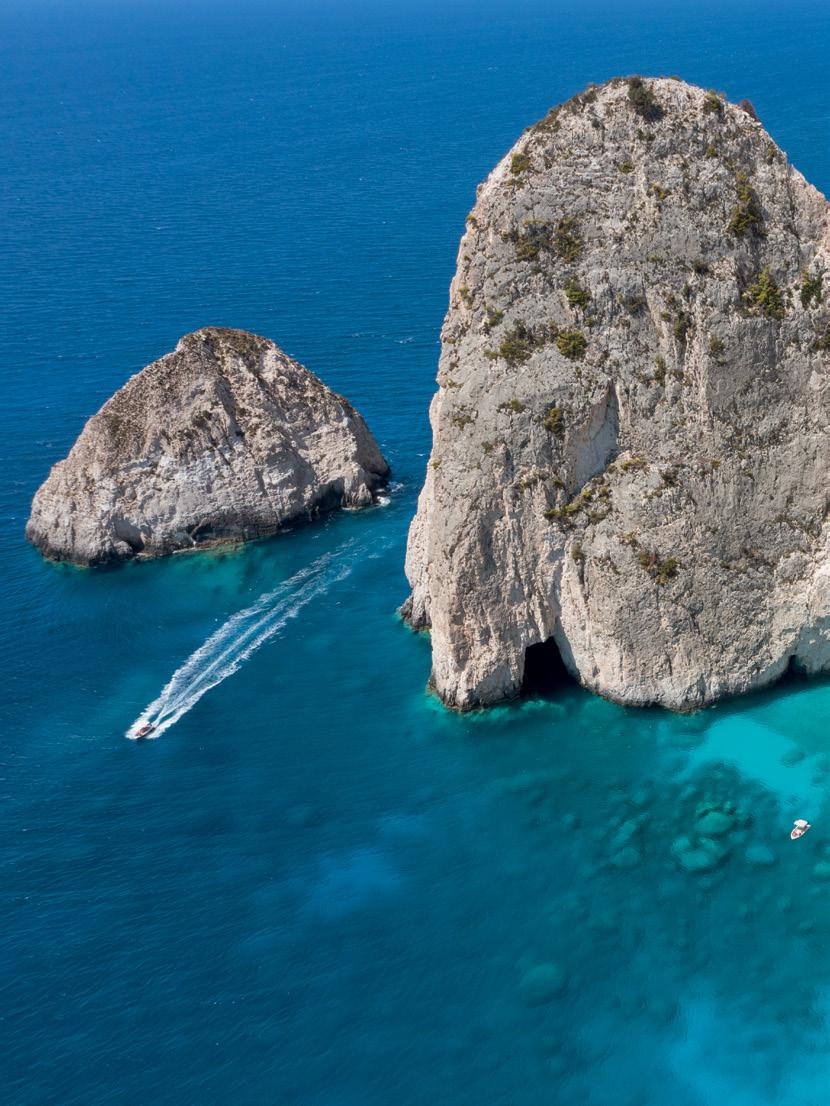
ACCORDING TO LOCAL tradition, the two rocks are named after the famous myzithra cheese.
GR traditional Greek cheese, because of their distinctive shape and brilliant white colour. The journey continues to Marathonisi, a lush, uninhabited islet in Laganas Bay that seems to float between shades of blue and green. Locals refer to it as Τurtle Ιsland, both because of its distinctive shape and its close connection to the loggerhead sea turtle, which returns to its beaches every summer to lay its eggs. Here, you’ll find two beaches –one sandy and the other pebbled– crystal-clear turquoise waters, and the feeling of being somewhere that still moves to the rhythms of nature. As the sun begins to set and Marathonisi gradually empties of visitors, it becomes clear that this place’s greatest luxury is its steadfastly unspoilt character. And its uniqueness.
Caretta caretta.
LUSH and uninhabited, Marathonisi is a summer nesting ground for the loggerhead sea turtle.
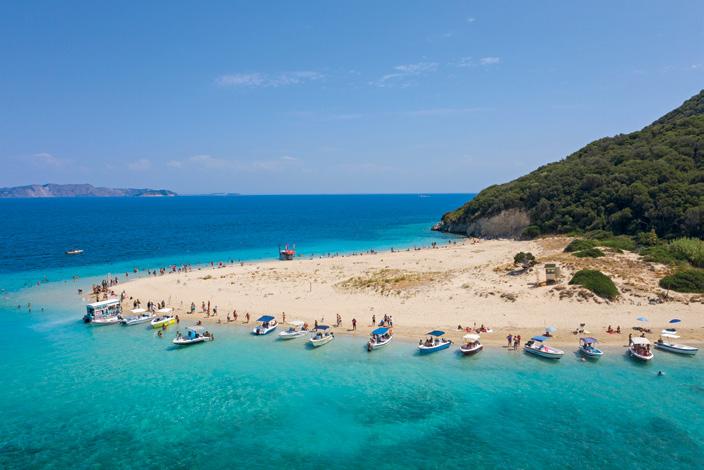
ON MARATHONISI, YOU’LL FIND TWO BEACHES –ONE SANDY AND THE OTHER PEBBLED– CRYSTAL-CLEAR TURQUOISE WATERS, AND

SUNLIT FE A STS
In Mykonos, summer takes on flavour through a culinary scene that balances Cycladic simplicity with cosmopolitan luxury.
Text: Eleftheria Vasiliadi
INCREDIBLE GREECE
ΒOHO CHIC
Scorpios
Nōema.
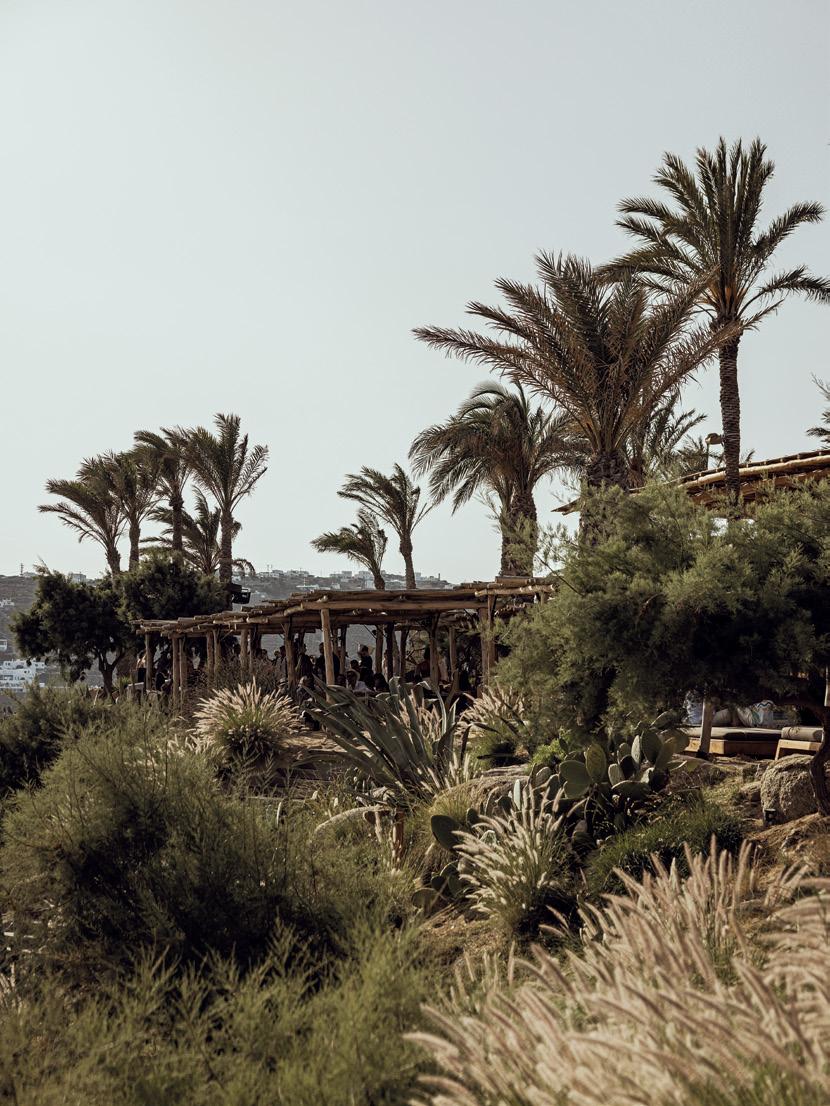
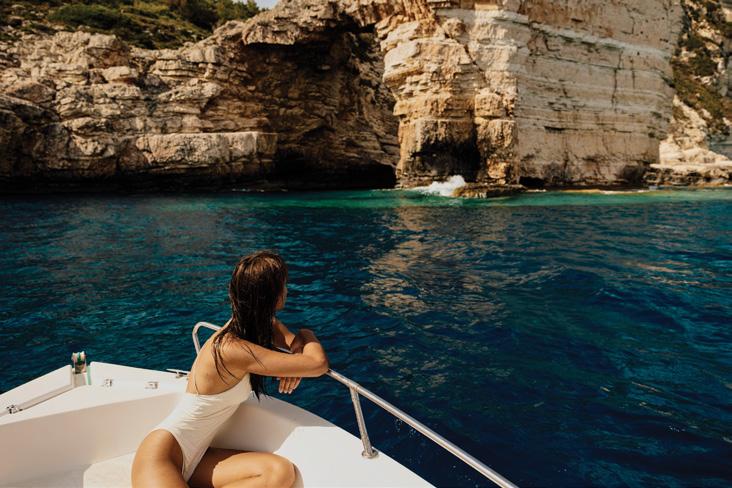
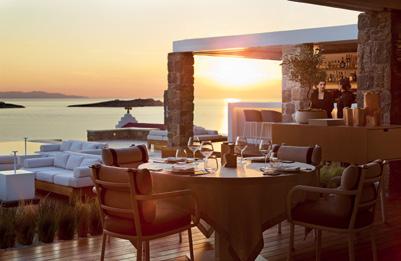
A BOHO-CHIC atmosphere at Scorpios and cycladic spirit at Nōema.
ΓΑΛΛΟ-ΜΕΣΟΓΕΙΑΚΟ
άρωμα στο Katrin.
Στο Scorpios, η
Ανατολική
δίνει
FRENCHMEDITERRANEAN
flair at Katrin. At Scorpios, the flavours of the Eastern Mediterranean take centre stage.
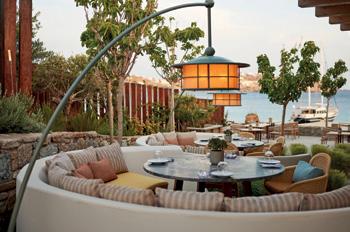
GR EN In Mykonos, you dine against the backdrop of a sunset, a powerful sea breeze, and music that gradually grows louder as the night unfolds. From traditional Aegean flavours to contemporary fine dining experiences, the island tells its own story through tables set beside the sea, wine savoured slowly, and nights scented with olive oil, herbs, and the summer air.
chateaubriand.
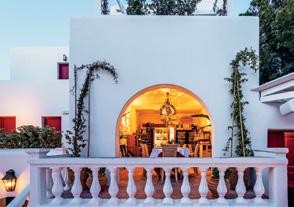
At Katrin, the family-run restaurant with a history dating back to 1971, the island’s timeless charm is expressed beautifully. Hidden within the narrow alleys of Chora and infused with an atmosphere of old European elegance, it serves French-Mediterranean cuisine with a sense of understated luxury. Here, dinners unfold slowly, carrying that rare feeling that time itself has eased into a gentler pace. The third generation of the Giziotis family preserves a homely approach to food, serving delicately refined recipes passed down through generations: from moussaka, dolmades, and calamarata pasta to sole meunière, wine-braised rooster, and chateaubriand.
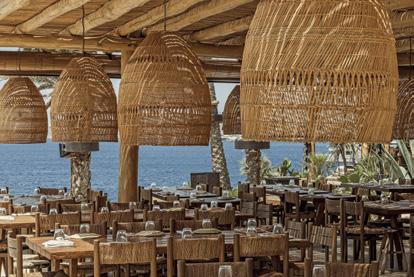
Within the bohemian chic world of Scorpios, the aromas of charcoal, herbs, and olive oil mingle with the scent of the sea. Under the culinary direction of
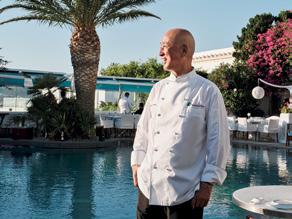
NOBU MATSUHISA’S Japanese precision meets the salty character of the Aegean.
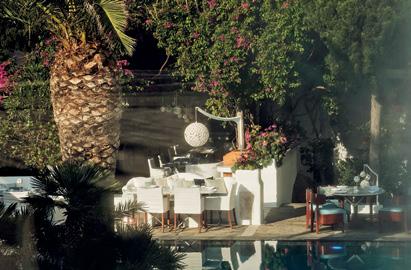
BLENDING TR ADITIONAL AEGEAN FL AVOURS WITH CONTEMPOR ARY
FINE DINING, THE ISL AND TELLS ITS OWN STORY THROUGH SE ASIDE TABLES, SLOWLY SAVOURED WINE, AND NIGHTS SCENTED WITH SUMMER AIR.
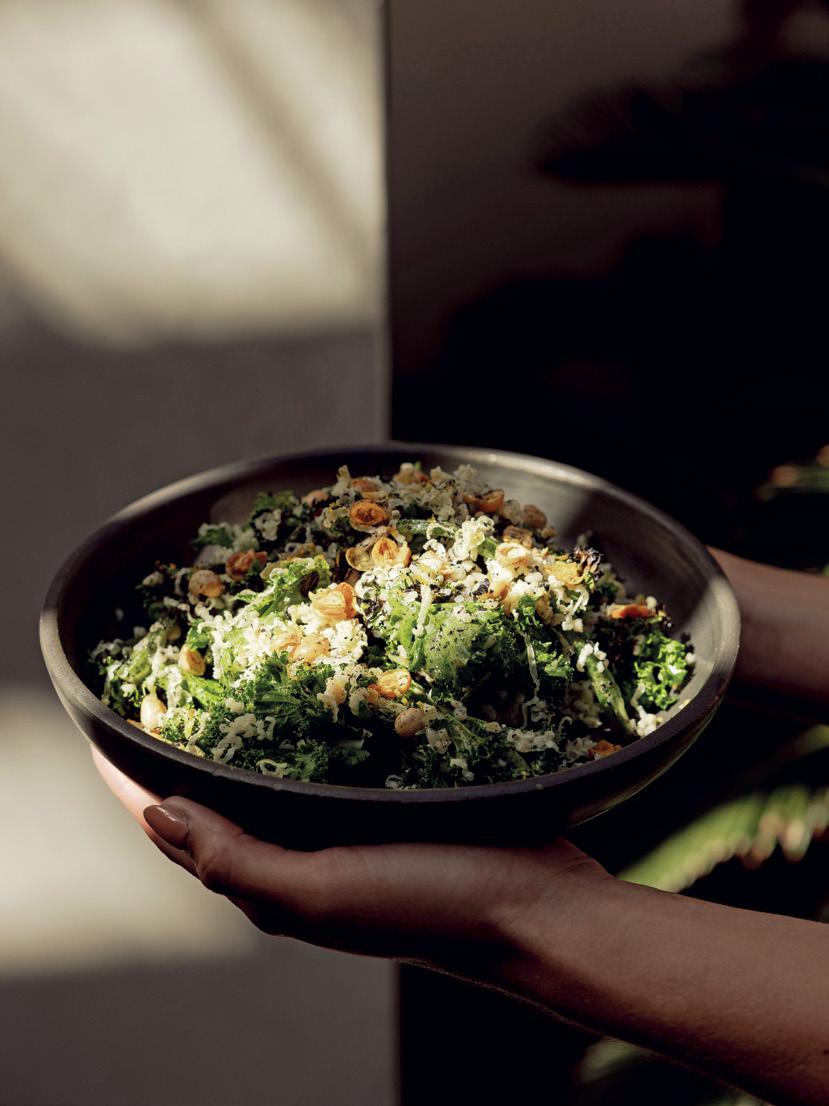
GR EN Athinagoras Kostakos and the coordination of head chef George Michelakos, the dishes arrive at the centre of the table, designed to be shared: meze plates, grilled vegetables, delicate flavours from the sea, and heartier creations come together to form a generous yet unpretentious feast made for large gatherings, offering sweet summer abundance. As the sun sets, carefully curated live DJ sets take over, blending seamlessly with the warmest hues of the summer evening.
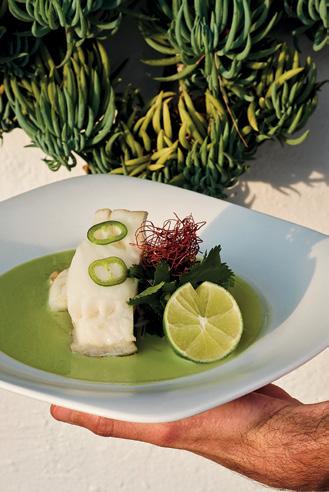
Another landmark destination is Matsuhisa Mykonos at the Belvedere Hotel. It transports the island into an entirely different aesthetic and culinary dimension where Japanese precision meets the salty essence of the Aegean. Highly skilled sashimi preparation, signature flavours with international influences, and exceptional raw ingredients come together to create a destination that has firmly established itself within
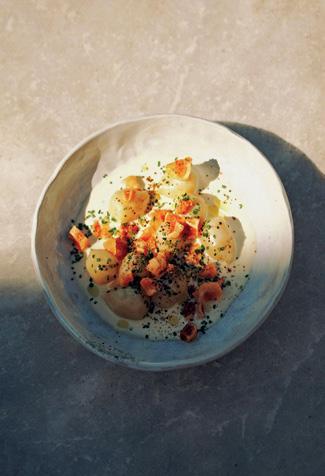
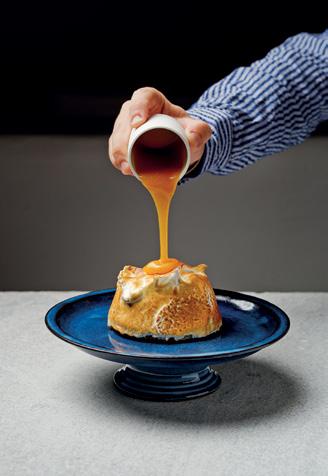
FLAVOURS and a distinctive energy come together in harmony at iconic Interni.
GR
Mykonos’ fine dining scene. From June 12th to the 15th, the hotel will once again host the Nobu Festival, featuring the presence of the legendary Nobu Matsuhisa – an event that deserves a place on the agenda of every devoted gastronome.
At Beefbar, located within The Coast Bill&Coo, Mykonos reveals its most lavish and sensual side. The food here is bold, generous, and infused with a natural sense of luxury. Premium cuts of meat arrive at the table with an almost ritualistic flair, while every dish remains faithful to the same philosophy: uncompromising indulgence – from the humble gyro made with Kobe beef to a colossal, succulent Tomahawk steak grilled to perfection.
In Chora, Interni remains one of those places where everything seems to happen at once. Mediterranean-inspired flavours accompany the island’s electric nightlife, while dinners effortlessly evolve into parties. Hidden within a lush green garden in the heart of Matogiannia, it captures the essence of modern Mykonian nightlife with effortless elegance. At its core lies a culinary identity built around
GR
εκλεκτές προτάσεις συνοδεύονται από δροσερά cocktails, δίνοντας
TO BEEFBAR στο The Coast Bill&Coo.
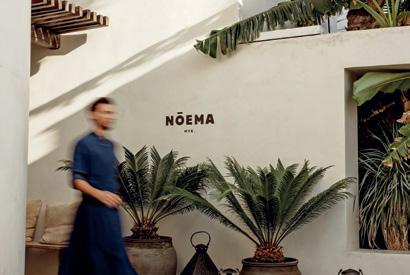
Nōema.
BEEFBAR at The Coast Bill&Coo. Seasonality and Greek creativity define the experience at Nōema.
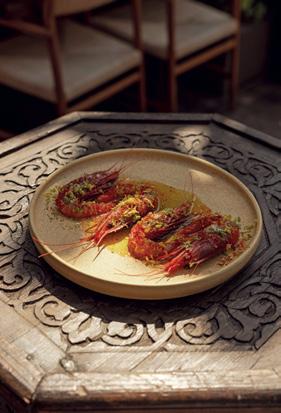
EN designed to create a sense of familiarity and connection around the table. Fresh catchof-the-day seafood scented with the sea, carefully selected cuts of meat, pizzas, salads, and other refined dishes are paired with refreshing cocktails, setting the mood for a relaxed summer evening out.
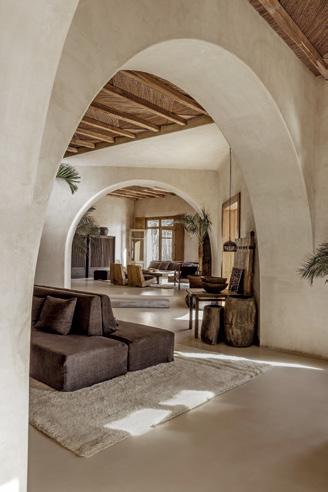
And then there are the places that seem to turn their gaze back towards the Cyclades. At Nōema, Athinagoras Kostakos and head chef Panos Tsikas craft a contemporary interpretation of Greek identity rooted in seasonality, sharing, and the purity of exceptional ingredients. Fire takes centre stage in dishes filled with Mediterranean intensity: charcoal-grilled sea bream, crab pasta, lamb souvlaki with yoghurt and olive oil-lemon dressing, beef cheeks with orzo and truffle, and pork ribs served with grilled peaches. Everything is devoted to an earthy, authentic cuisine infused with the rhythm and spirit of the Cyclades.
A similar philosophy can be found at Yevo, at The Coast Bill&Coo, where the cuisine is defined by its lightness, the ingredients take centre stage, and the flavours remain clean and balanced – as though offering a brief pause within the intensity of
Koukoumi
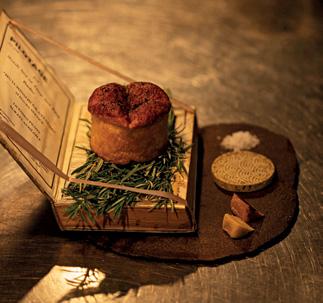
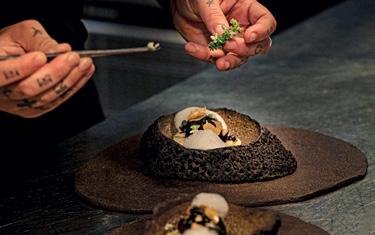
REFINED gastronomy at Yevo and elevated plant-based dining at Koukoumi
the Mykonian summer. The menu is curated by executive chef Aggelos Bakopoulos, who highlights the power of exceptional ingredients, the simplicity of technique, and the defining role of fire through both à la carte dishes and two tasting menus, shaping an experience that firmly establishes the restaurant as a true gastronomic destination.
Finally, Koukoumi, at the Koukoumi Vegan Boutique Hotel, proves that contemporary gastronomy can be elegant, sustainable, and genuinely creative while remaining entirely plant based. Guided by authenticity, simplicity, and balance, chef Angeliki Charami has created a menu that brings together Mediterranean ingredients, Japanese influences, and refined techniques. Flavours, aromas, and textures unfold as a sensory experience through dishes defined by clarity, finesse, and a strong character, redefining vegan cuisine. This year’s menu turns more consciously towards Greek culinary identity, adding greater depth and interest to the restaurant’s overall gastronomic narrative.
ON THE ISL AND OF THE WINDS, YOU DINE AG AINST THE BACKDROP OF A GOLDEN SUNSET, A POWERFUL SE A BREEZE, AND MUSIC THAT GR ADUALLY GROWS LOUDER AS THE NIGHT UNFOLDS.

Mykonos
The Authentic Cycladic Life
mykonos.gr
TIDES OF TR A DITION
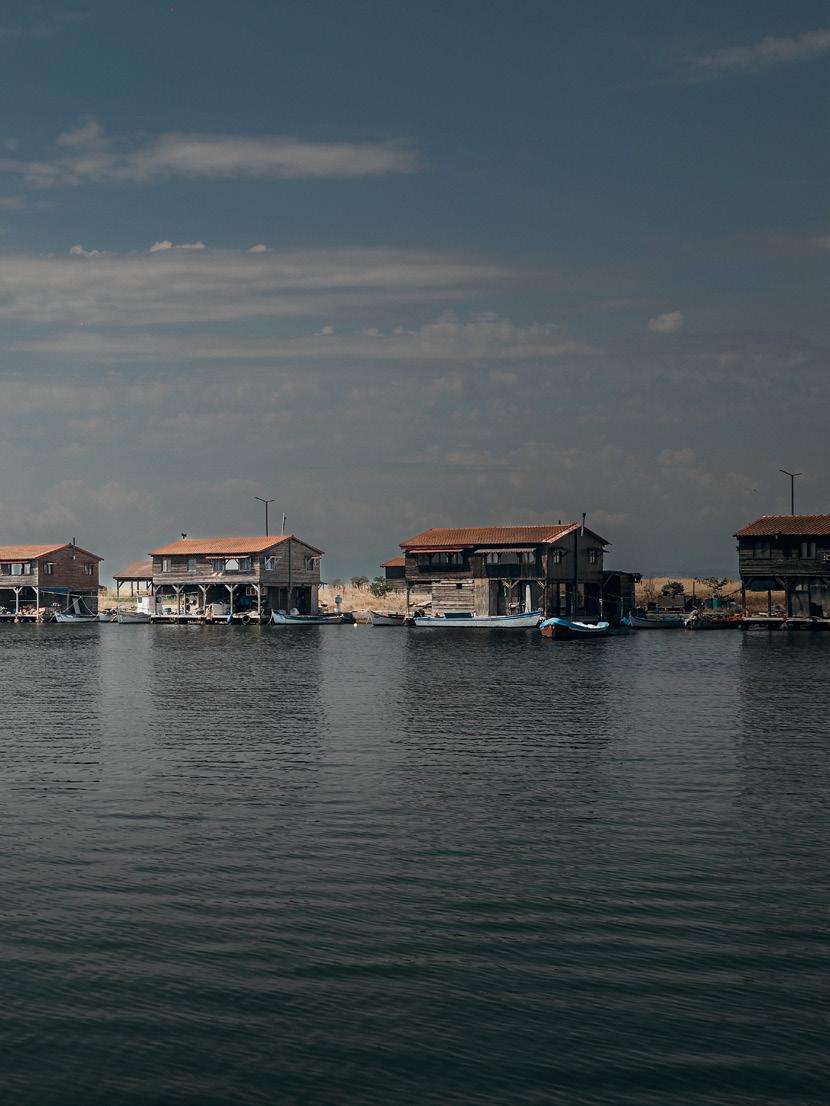
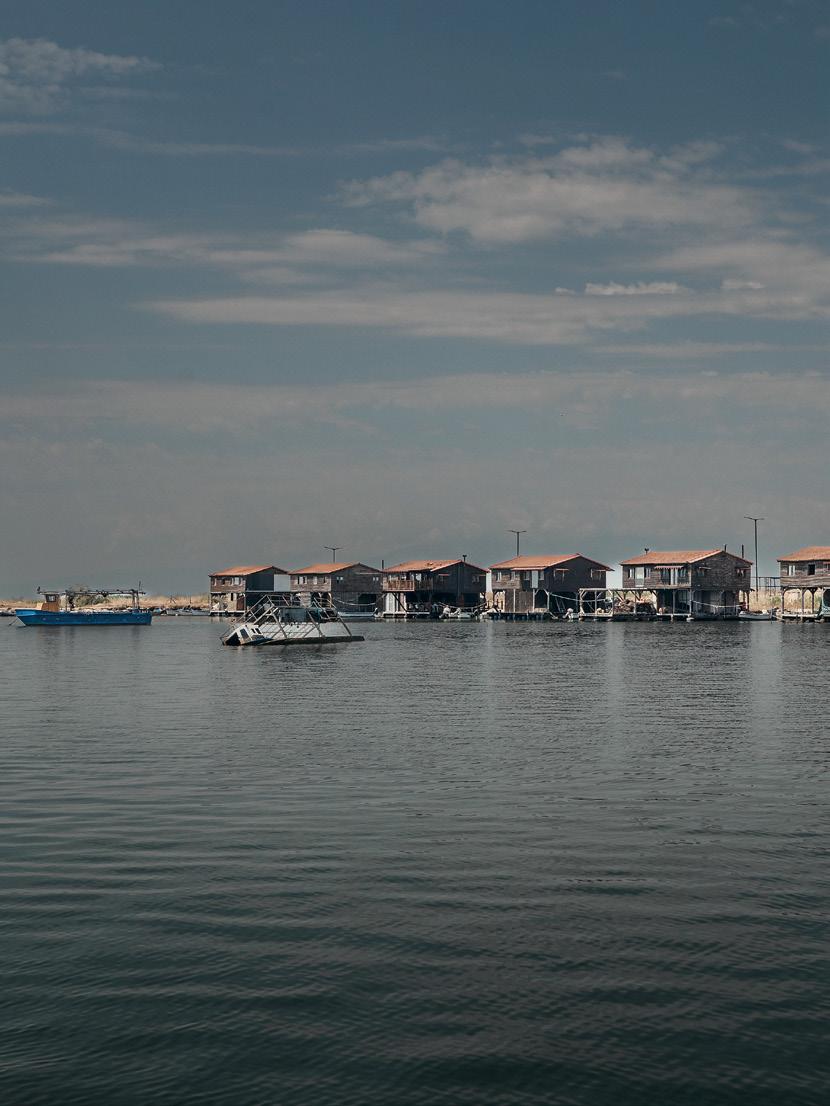
In the wooden huts and mussel farms of the Axios Delta National Park, life unfolds between the flutter of birds’ wings and the fishermen’s nets.
Text: Christina Katsantoni
Photos: Olga Deikou
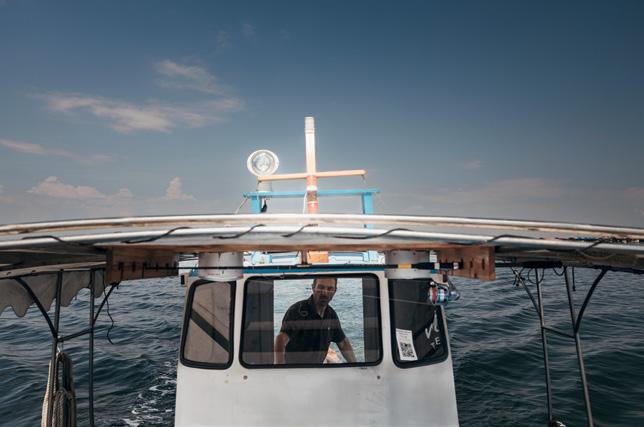
STAVROS GIAGIAS continues a family tradition deeply rooted in the sea.
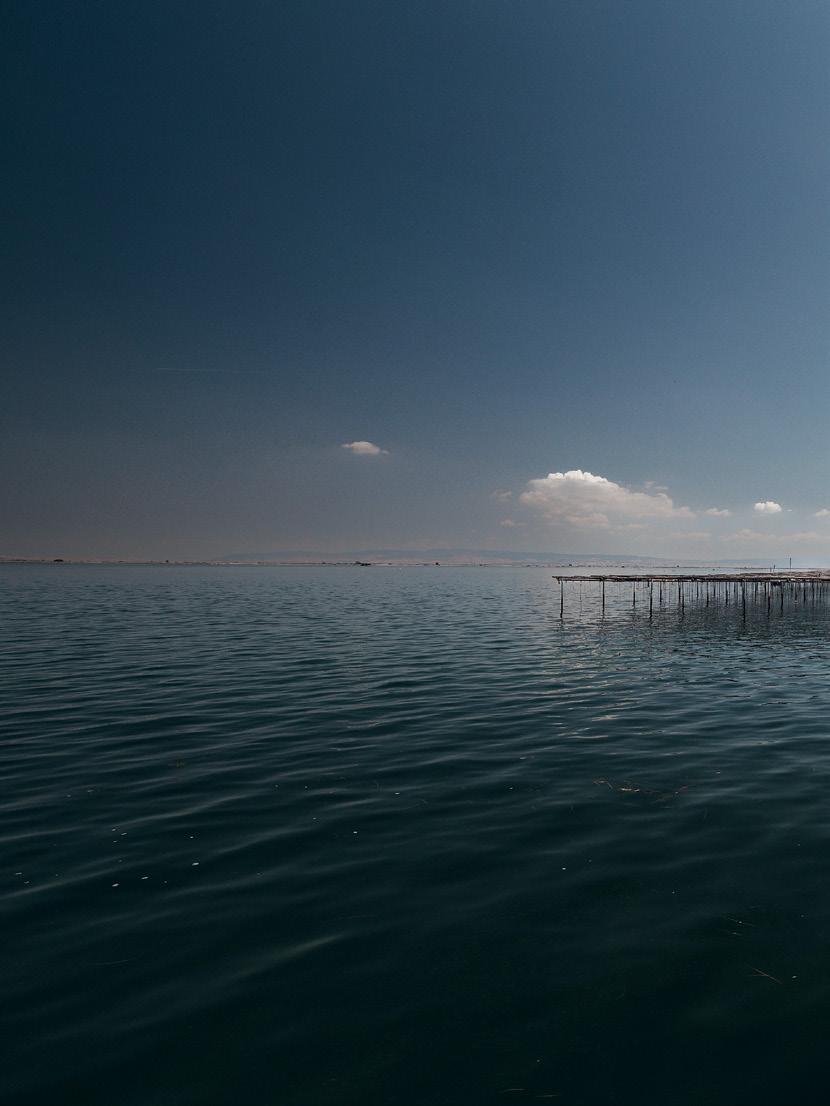
GR EN Arriving at the Axios Delta National Park, it’s hard to believe that so close to Thessaloniki, on the western shores of the Thermaic Gulf, lies a world so far removed from the pace of city life. Rare birds build their nests, horses roam freely across shaded meadows, fishing boats sway gently on the water, and wooden huts emerge from the shallows. Here, nature takes centre stage. The charm of the landscape, with its reed beds, water lilies, and sand dunes, is matched by the area’s outstanding ecological importance as an ideal habitat for a wide variety of wildlife and nearly 300 species of birds.
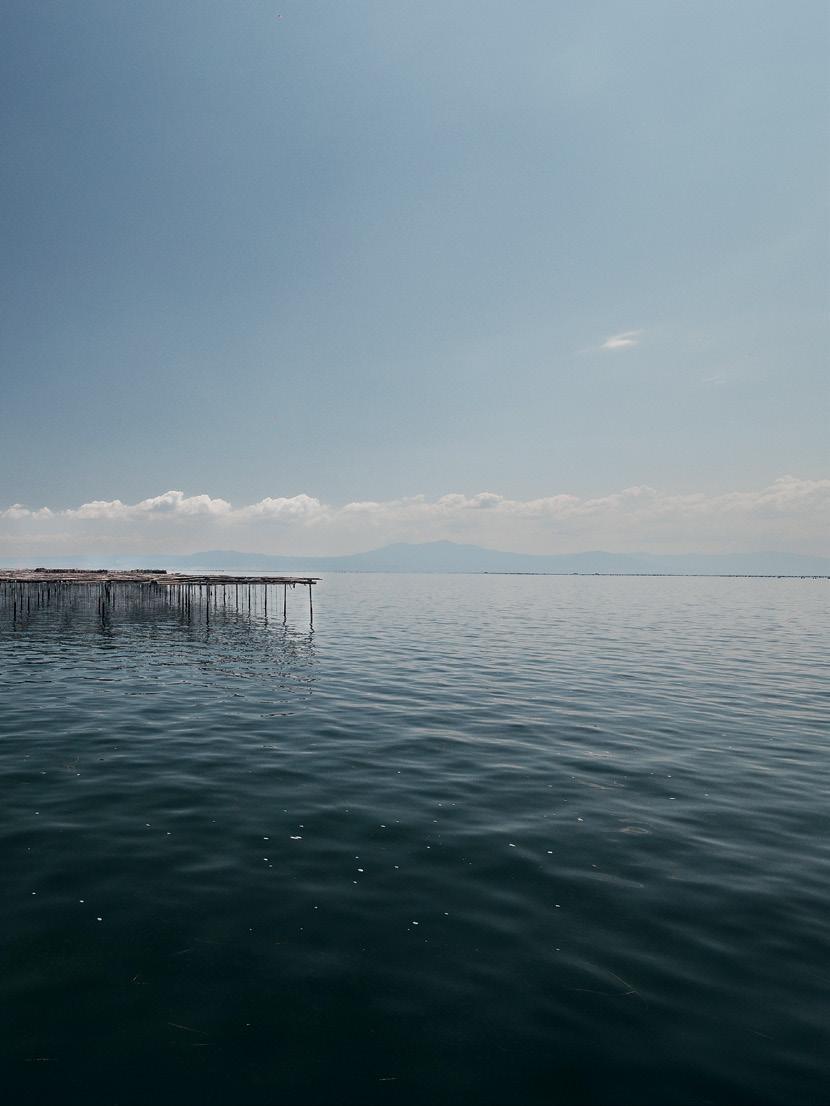
In the most tranquil corner of the wetland, you come across a harbour with a long fishing tradition. The eye is immediately drawn to the 30 wooden huts lined up in perfect symmetry, each with its own small jetty and fishing boat. Built to the same design in 2001 to serve the needs of local fishermen, every hut nevertheless has its own distinct character.
The Delta’s mussel farms produce 80-90% of Greece’s mussels, most of which are exported to countries such as Italy, France, and Spain. These are the waters where Stavros Giagias grew up and learned the trade, continuing the tradition of a family devoted to the sea.
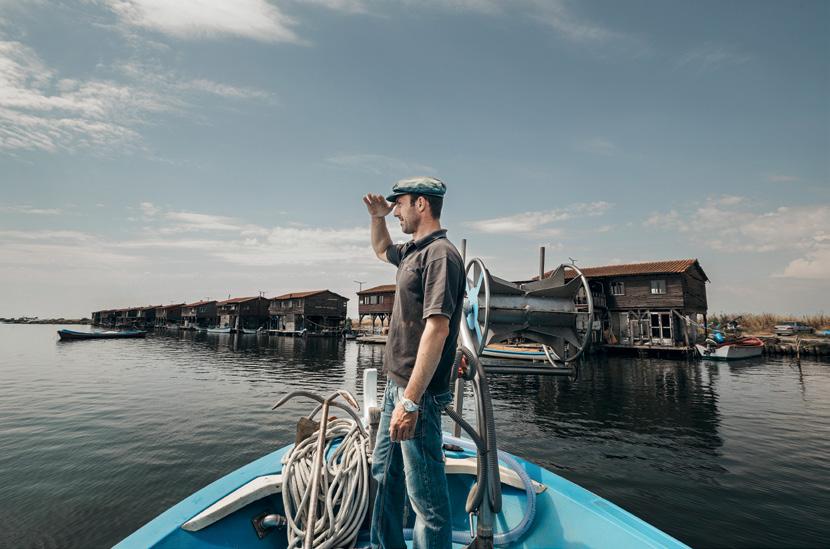
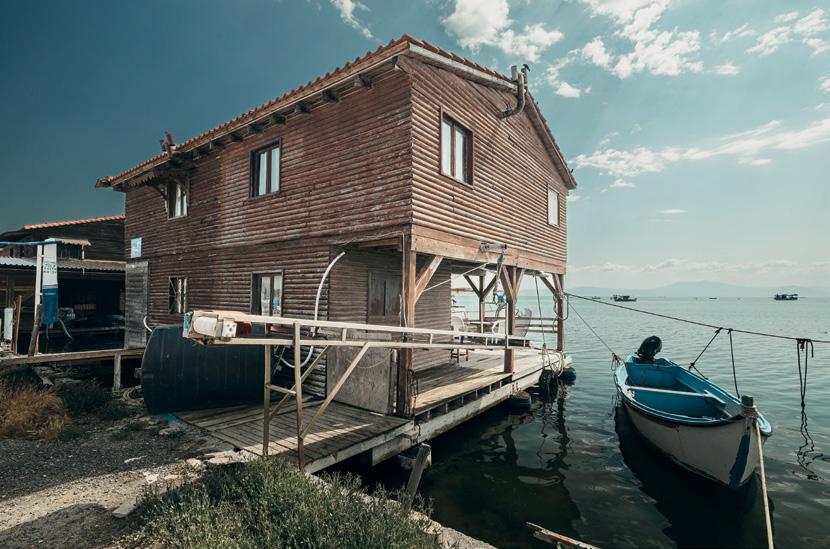
IN THE MOST TR A NQUIL CORNER OF THE WETL A ND, YOU COME ACROSS A HARBOUR WITH A LONG FISHING TR A DITION. THE EYE IS IMMEDIATELY DR AWN TO THE 30 WOODEN HUTS LINED UP IN PERFECT SYMMETRY.
GR EN
A fourth-generation fisherman, he has dedicated himself to the demanding and painstaking craft of mussel farming. Since 2018, through his fishing tourism activities, he has been sharing its secrets with visitors, offering a different perspective on the region and an opportunity to connect with its authentic identity. The experience aboard his fishing boat begins just before dawn, as nature awakens with the rising sun. Fishing is carried out using traditional methods –nets and rods– with respect for the environment that has sustained and nourished the local community for decades.
The introduction to the fishermen’s daily lives continues at the mussel farms and culminates at the picture-perfect wooden huts. There, the day’s catch –sole, shrimp, cuttlefish, octopus, and shellfish– is transformed into a meal, complete with the region’s renowned mussel pilaf. “We love this place,” says Stavros. And as the sun disappears behind the tranquil waters and the birds return to their nests, the land seems to smile back in return.
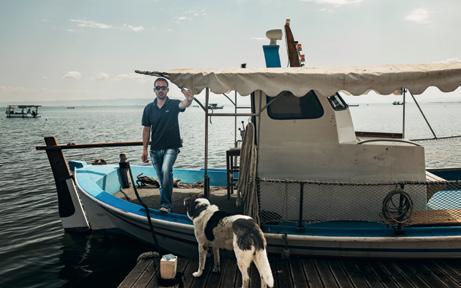
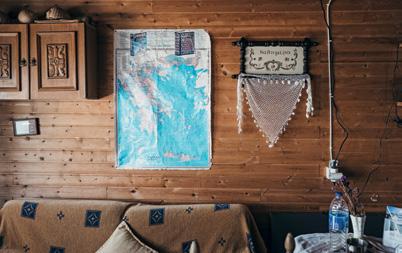
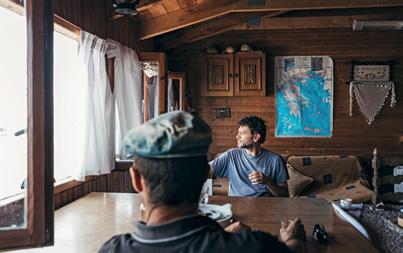
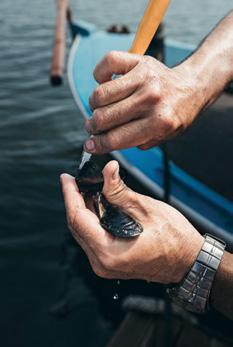
MUSSELS, shrimp, octopus, and fresh fish make up the rich culinary heritage of the Thermaic Gulf.

THE MULTI-TA LENTED NIKOS A LI A G A S
The internationally acclaimed journalist and tv presenter found in photography a new way to tell stories that transcend words.
Text: Romina Xyda
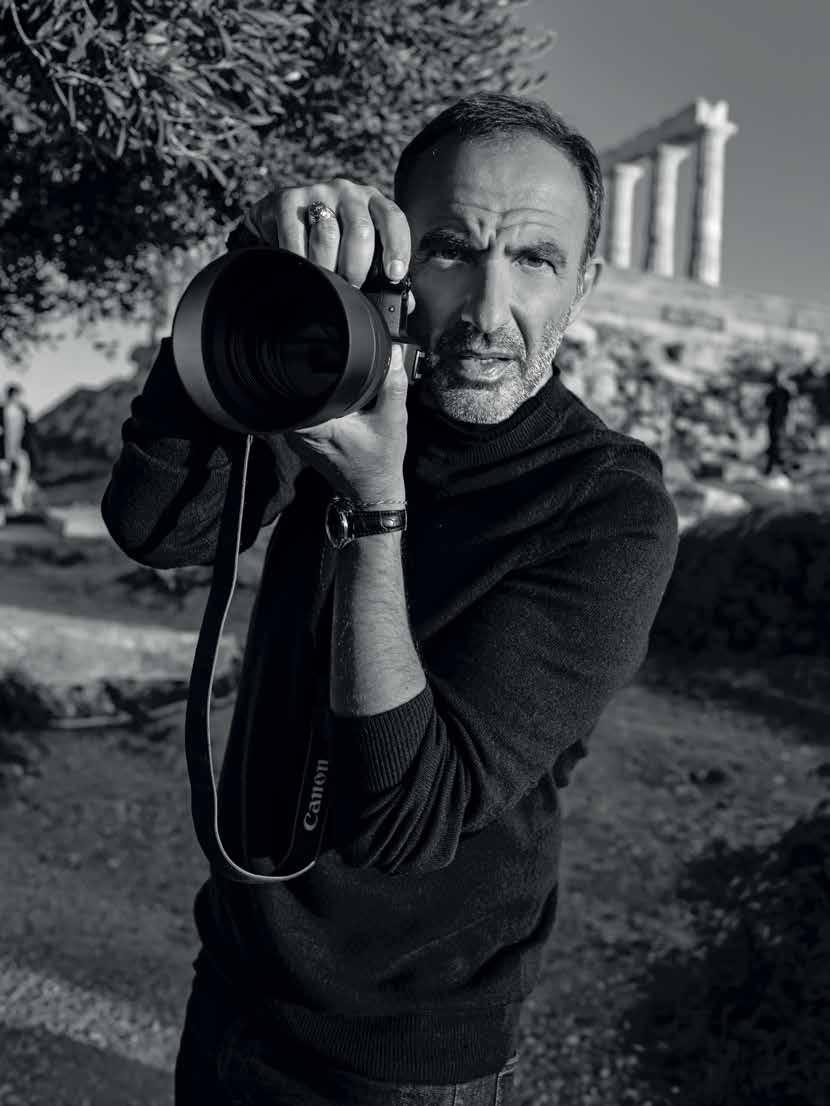
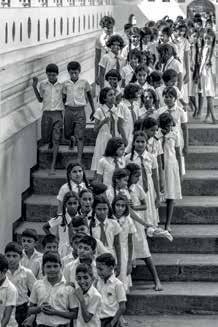
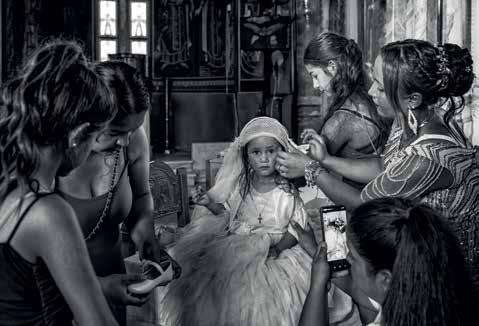
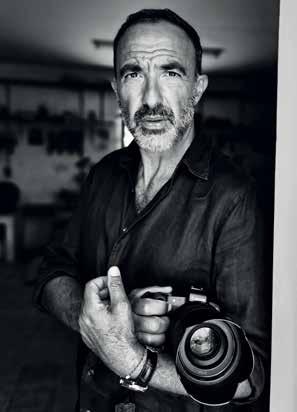
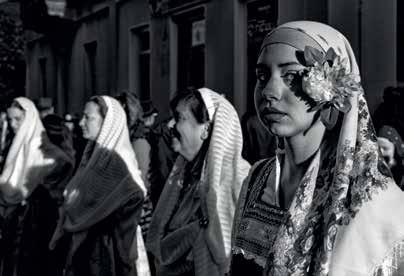
THE TEMPLE of the Sacred Tooth in Sri Lanka, a baptism in Gastouni, Karagiozis (shadow puppet) in Stamna, and Stathis’ eyes in Aitoliko.
Born in France to Greek parents, Nikos Aliagas went on to become one of the most influential figures on French television, always carrying within him two worlds: the glamour of Paris and the light of Greece. It is this dual identity that continues to shape the way he sees people, time, and travel.
For him, journeys are not measured in miles but in experiences. From brightly lit television studios to the lagoon of Messolonghi, his path has been shaped by a constant search between departure and return. Today, through photography, he turns his gaze towards people and places marked by the passage of time, seeking out those rare moments of authenticity that remain alive no matter how many years go by.
Living and creating in France for so many years, how have you managed to keep your Greek identity alive – not only as part of who you are, but also as a way of thinking and expressing yourself through your work? For me, Greekness was never about folklore or a distant heritage. It is a way of looking at the world, of relating to people and to time itself – a kind of guiding memory. I grew up between two cultures and two languages. In France, where I was born, I learned a Western discipline of thought; from Greece, I held onto our language as a form of identity, and I learned the value of measure – the right sense of distance and balance. I believe that what is truly essential in life is not always tangible. Self-awareness often passes through the intangible, through things that cannot easily be explained. I carry within me an inner world deeply connected to Greece. It reveals itself as a sense
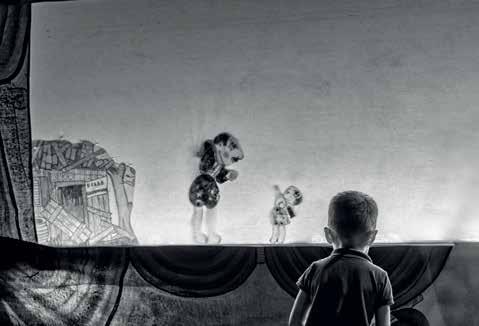
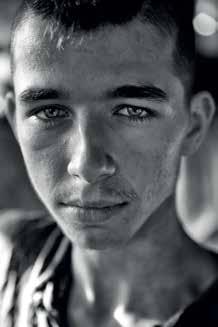
“BL ACK AND WHITE TOUCHES SOMETHING TIMELESS. IN IT, LIGHT AND SHADOW ARE FREE TO CONVERSE WITH ONE ANOTHER. WHEN COLOUR IS REMOVED, ONLY WHAT IS ESSENTIAL REMAINS: A G A ZE, A SILENCE, A GESTURE.”
of return, a strange nostalgia that continually brings me closer to people.
That inner world found remarkable expression under the spotlight and brought you tremendous success. Are there moments when you feel the need to step away from it all? Has your involvement in photography become a way of returning to yourself? Absolutely. Television is a world of intensity, speed, and noise – a world I have been part of for thirty-five years. I know the rules of the arena well. Photography came into my life as an existential need. When I photograph, observation becomes a form of expression. It is perhaps the only space where I can truly lose myself and, paradoxically, feel closer to who I really am. It is not that I pretend when I stand in front of the camera; I am simply doing my job. But behind the lens, I feel able to express myself without the pressure of exposure. I have nothing to prove there. Photography brings me back to a more introspective dimension.
When did you first feel the need to express yourself through images, and how did that initial spark evolve into such a meaningful and lasting relationship with the medium? It all began when my father gave me a small Kodak Instamatic camera. I was still a child. He could see that I was restless by nature and that I noticed things no one else paid attention to. I still remember the shock I felt when I realised that such a small box could preserve something from being lost forever. Over the years, I came to understand that what interested me was not
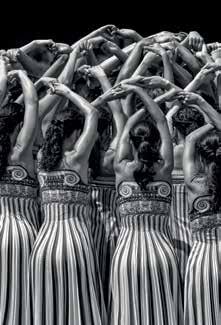
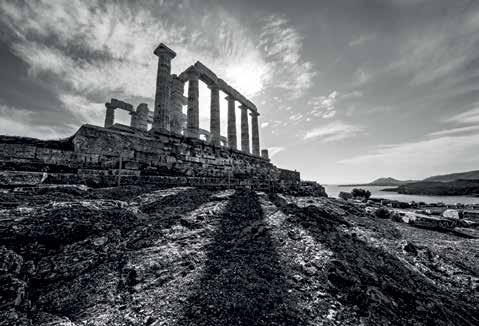
THE PRIESTESSES OF ANCIENT OLYMPIA, and in the shadow of the ancestors at the Temple of Poseidon.
GR
ΕΝ simply taking or collecting images, but capturing the traces of life – the bittersweet passage of time. Without fully realising it at first, photography became a way of resisting oblivion.
You have said that you photograph in order to breathe. What is it that gives you this sense of oxygen? In the feeling that I truly exist within the moment. Photography forces me to look more deeply, to listen to the world without interrupting it. In an age of relentless speed, where each image instantly replaces the one before it, photographing allows me to touch the mystery of life and hold my breath, as though I were immersed in a deep inner dive. Your work has a deeply human-centred perspective. What is it that fascinates you most when you turn your lens towards another person? I am always drawn to what lies behind the face or the social mask – the silences, the dignity, the marks left by time. Every person carries an invisible biography within them. I do not need to know much; it is enough for me to be able to feel. Intuition is the beginning of a dialogue. I recognise an inner world that speaks to me. The most powerful images are born when the protective mask falls away. That is where a person’s deepest existential truth reveals itself – within the fracture, within the vulnerability. And empathy is transformed into a mirror.
“I CARRY WITHIN ME AN INNER WORLD DEEPLY CONNECTED TO GREECE. IT REVE ALS ITSELF AS A SENSE OF RETURN, A STR ANGE NOSTALGIA THAT CONTINUALLY BRINGS ME CLOSER TO PEOPLE.”
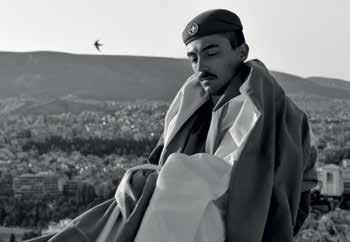
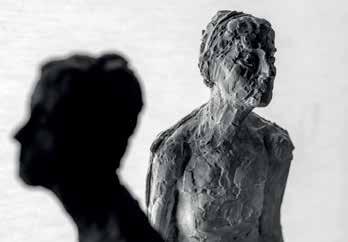
THE RAISING of the flag on the Sacred Rock of the Acropolis, and inside the workshop of sculptor Yannis Pappas in Athens.
Why does black and white move you so deeply? Perhaps because it strips away the noise of the world. Black and white touches something utterly timeless. In it, light and shadow are free to converse with one another. When colour is removed, only what is essential remains: a gaze, a silence, a gesture. Colours fade more easily, whereas black and white seems to resist time itself. A black-and-white photograph by Brassaï, André Kertész or Robert Frank from the beginning of the last century can feel more alive than many colour images taken today. It does not simply capture an era. It preserves not just an impression, but something more primal: the archetype.
You have photographed some of the most recognisable faces in the world, as well as ordinary people. In the end, who leaves the deeper impression on you? The people who do not try to impress. Those who carry within them something older and deeper than themselves. Sometimes, the gaze of a fisherman in Messolonghi or an elderly woman in Thrace can move me more profoundly than any famous face. Fame does not guarantee depth, and conversely, obscurity does not necessarily guarantee authenticity either.
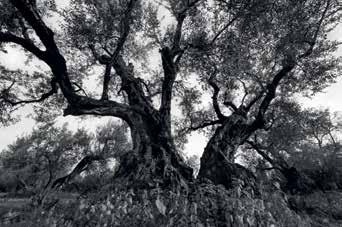
How much does your Greek identity –and your memories of your homeland– influence the way you see and capture the world? I feel deeply attuned to Greece. I am intensely influenced by this coexistence of beauty and tragedy that runs through our Greek heritage. Perhaps that is why I am so moved by ordinary people, weathered landscapes, the elderly, ancient olive trees, and faces that seem to have been sculpted by time itself. I
“IT ALL BEG AN WHEN MY FATHER G AVE ME A SMALL KODAK INSTAMATIC CAMER A . I STILL REMEMBER THE SHOCK I FELT WHEN I RE ALISED THAT SUCH A SMALL BOX COULD PRESERVE SOMETHING FROM BEING LOST FOREVER.”

NIKOS ALIAGAS in Sifnos in 2019, the ‘Centuries-Old Dance’ in Stamna, and The Commemoration of the Exodus of Messolonghi.
feel that I come from this very same substance – both visible and invisible. I recognise something familiar in it: the quiet resilience of people who continue to stand tall, even when life puts them to the test.
If you could turn back time, which moment would you rush to record? Perhaps a deeply personal moment. My father, working quietly in his tailor’s shop. My mother, teaching me Greek at home when I was a child. As you grow older, you come to realise that the greatest stories are often hidden within the simplest moments of childhood.
And if you could leave behind just one image that would define you, what would it be? Perhaps two ancient olive trees in Stamna, near Messolonghi, their branches seeming to touch in the wind as though they were dancing. For me, that image expresses something deep: roots, endurance through the passage of time, and the human need to remain connected to something greater than oneself. Those olive trees have been dancing for centuries, and they will continue to dance long after we are gone. I am deeply moved by their quiet compassion towards us. And the fact that this image is becoming a postage stamp in France touches me profoundly. It feels as though a dialogue between my two homelands is still continuing.

SUMMER REIM A GINED
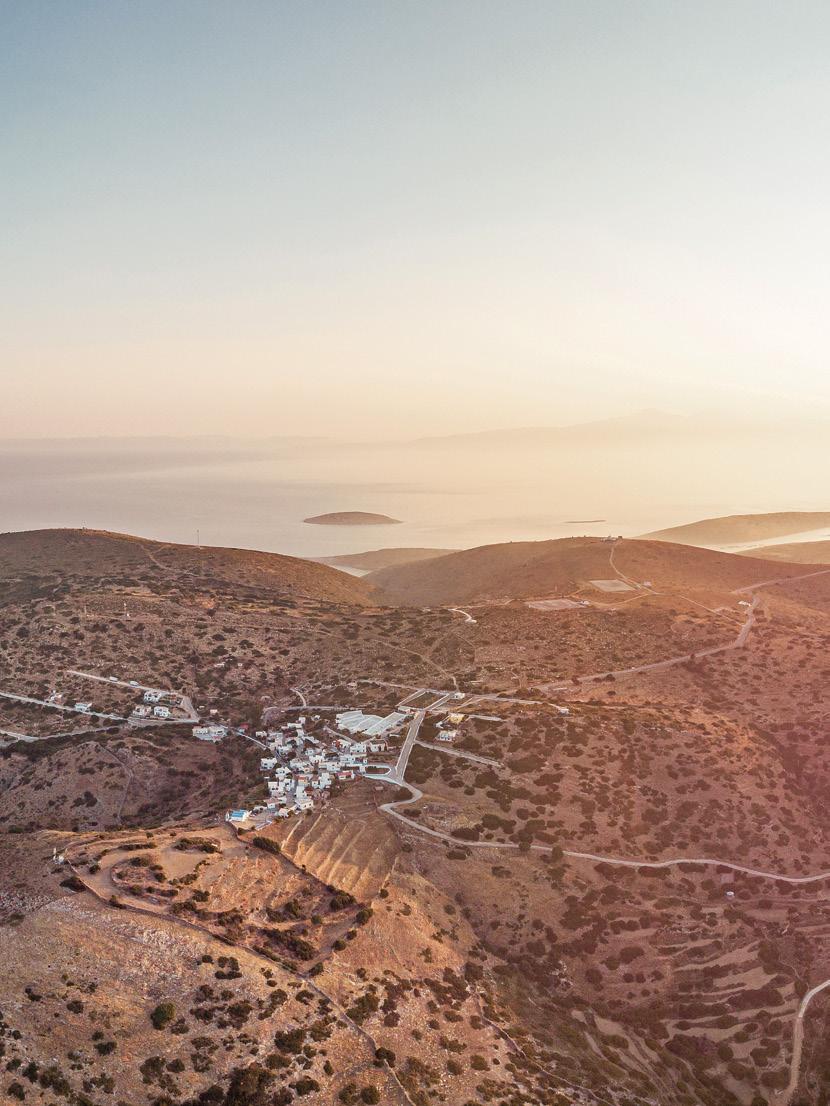
In certain corners of the Aegean, simplicity remains the ultimate indulgence. Agathonisi is undoubtedly one of them.
Text: Alexandra Tsolka
Photos: Manolis Thravalos
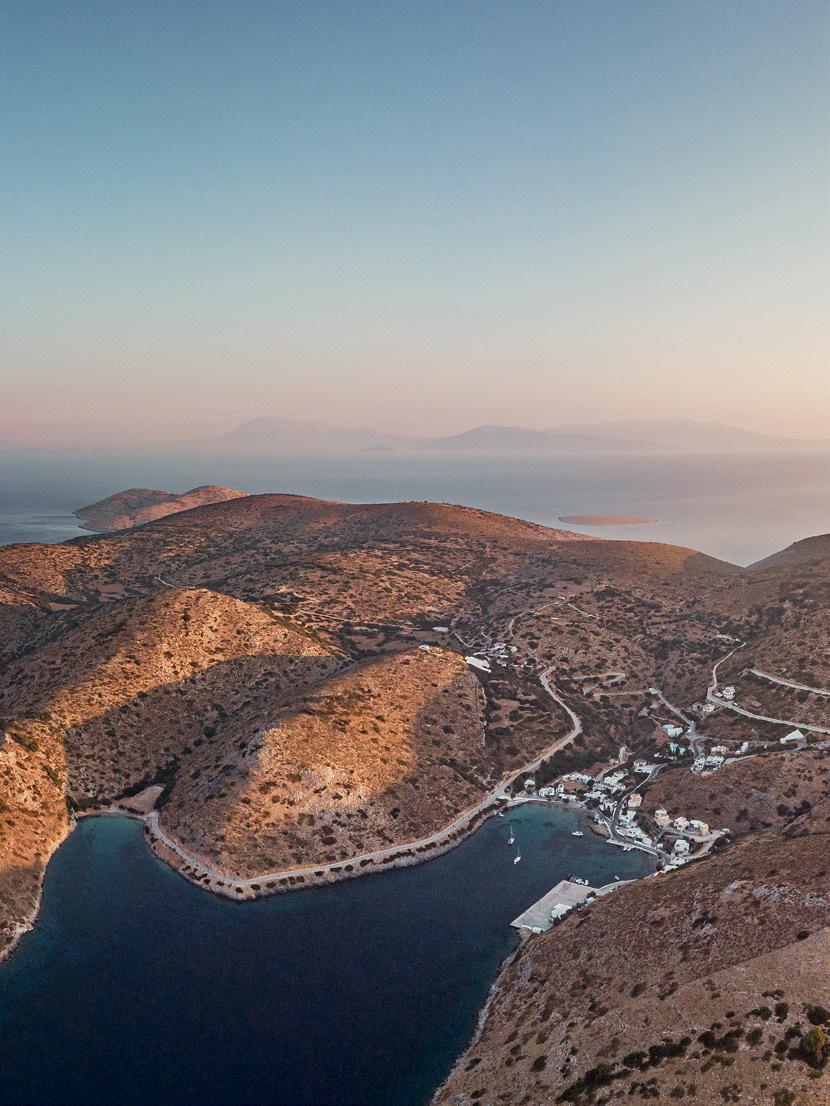
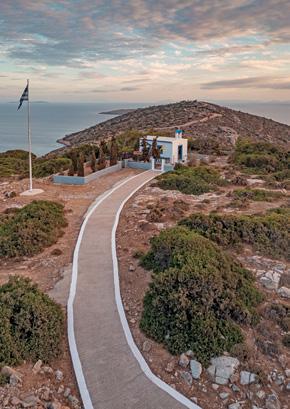
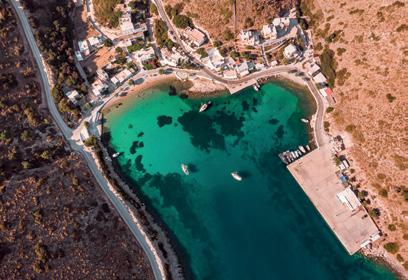
THE CHAPEL of Agioi Anargyroi, the deep blue of the Aegean, and Agios Georgios, Agathonisi’s picturesque harbour.
EN ΤΟ
They say that this sun-drenched speck of land, resting at the northernmost tip of the Dodecanese, took its name from the kind-hearted people who call it home. Here, the landscape and its people seem to share the same soul.
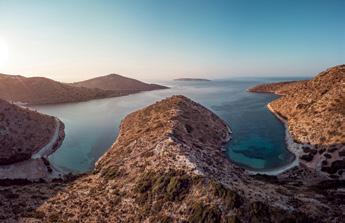
Sheltered coves, crystal-clear calm waters, golden beaches, traditional architecture, tranquillity, and endless charm all come together to define the character of the island. This rugged place, bathed in salt air and sunlight, holds so much history and so many corners waiting to be explored that one summer is simply not enough to experience it fully.
The picturesque harbour of Agios Georgios is the vibrant heart of Agathonisi. Beyond the harbour lie the island’s two settlements: Mikro Chorio and Megalo Chorio. The latter, the oldest village, was built out of sight from the sea to protect inhabitants from pirate raids. Today, around 200 people still live in quaint houses with stone walls and large wooden doors.
Beyond the villages, the island remains a wild sanctuary. Rare bird species find refuge here, including Eleonora’s Falcon, Audouin’s Gull, and the Yelkouan Shearwater, all of which are protected under

EN
the Natura 2000 network. In these pristine and unspoilt surroundings, charming little chapels such as Agios Ioannis, Agios Charalambos and Agioi Anargyroi offer breathtaking views across the endless Aegean Sea and the neighbouring islands. The beaches, some covered in coarse golden sand and others in smooth pebbles, are shaded by tamarisk trees and washed by emerald blue, while the nearby islets and rocky outcrops –Glaros, Nerο, Psathonisi, and Kouneli– remain virtually untouched by time.
Agathonisi is renowned for its fresh fish, local cheeses, and traditional home-cooked dishes, with braised goat in tomato sauce and potatoes standing out as a particular favourite. Steamed mussels, pies filled with myzithra cheese, and honey-based sweets are also among its culinary highlights. The excellent food, outstanding ouzo, and warm hospitality of the islanders reach their peak during the major festivals of the Assumption of the Virgin Mary and Saint Panteleimon’s Day. At these celebrations, the soul of this remote island beats to the authentic rhythms of the Aegean.
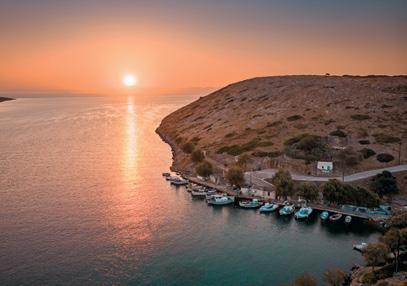
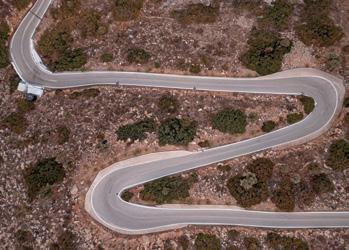
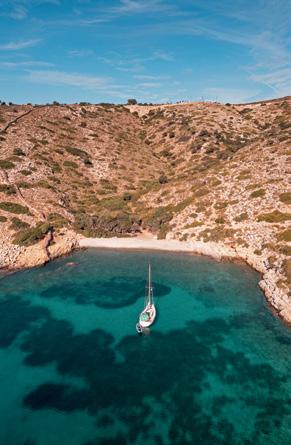
THE BAY OF KATHOLIKO , dotted with colourful fishing boats, and Palos Beach, with its turquoise-green waters.

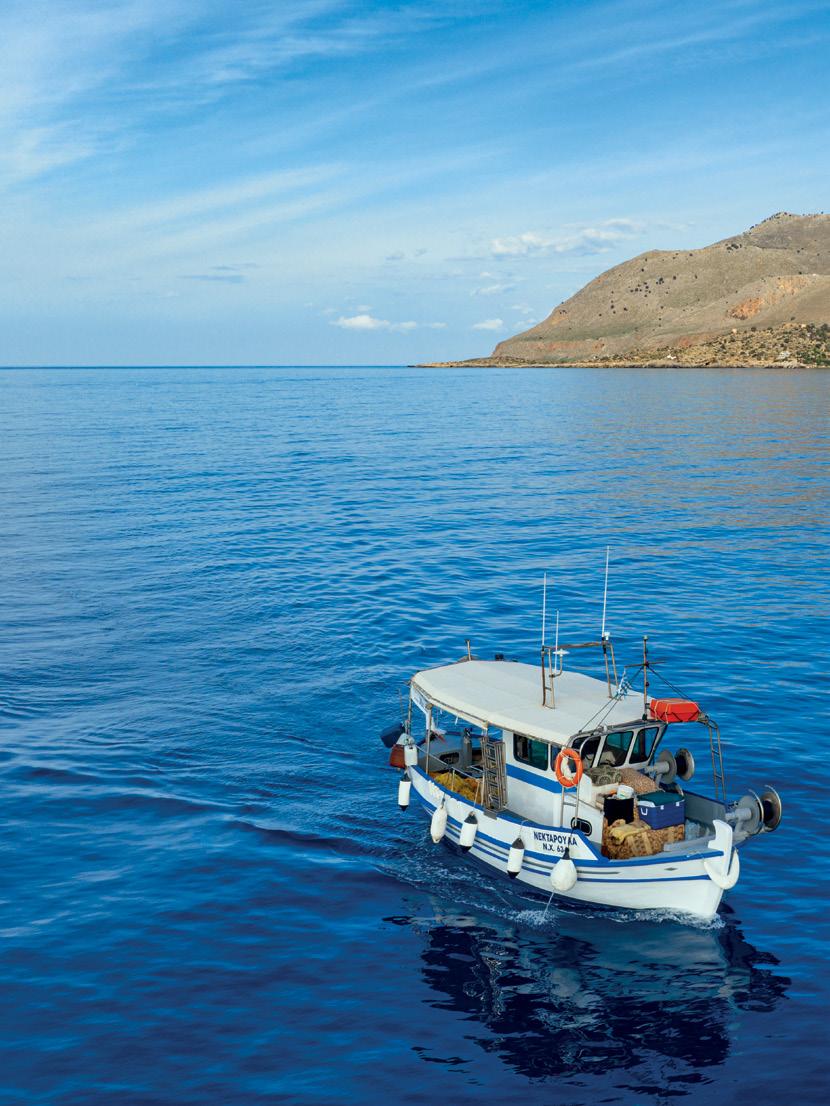
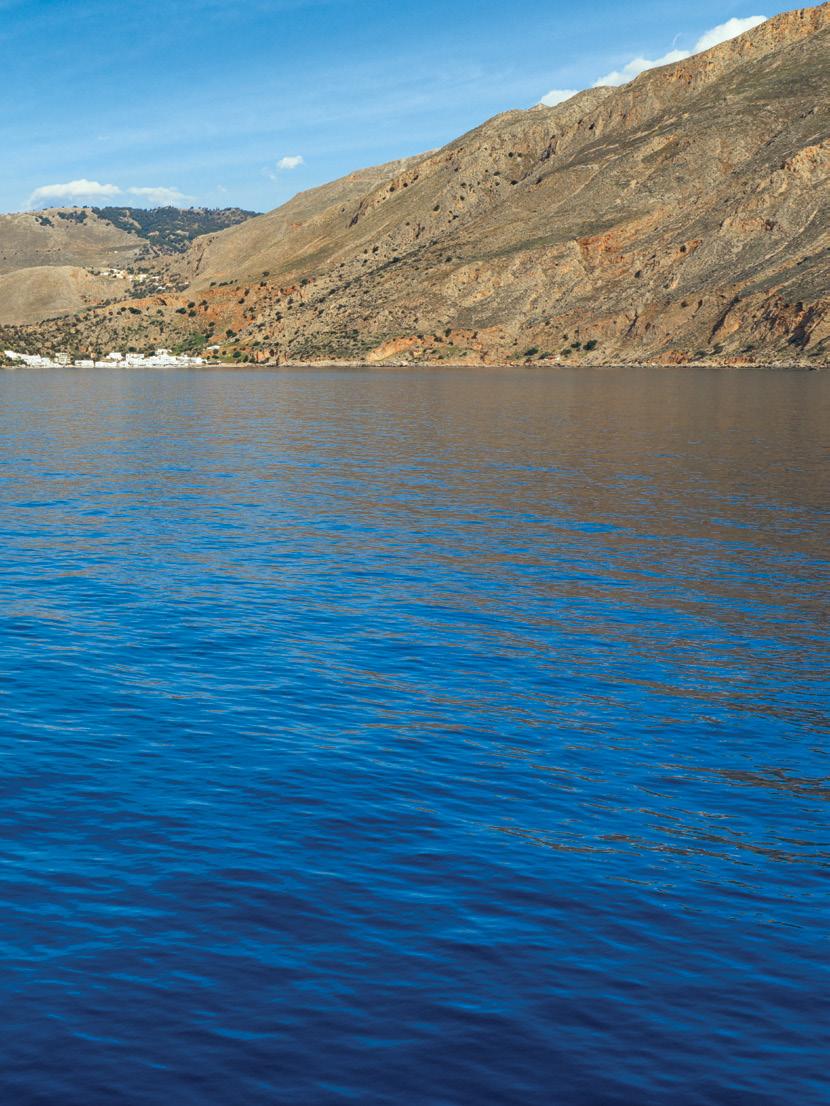
There are places that remain inaccessible not because of distance, but by choice. Loutro in Sfakia, on the southern coast of Crete, is one of them.
TR A NQUIL
H A RBOUR
Text:
Christina Katsantoni Photos: Silvio Augusto Rusmigo
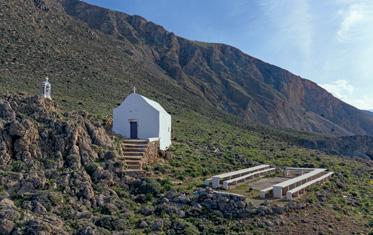
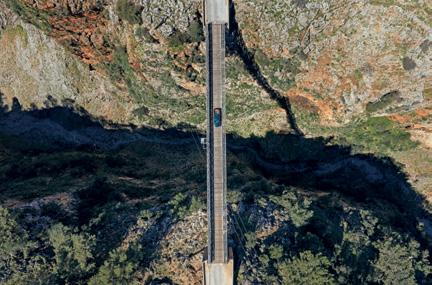
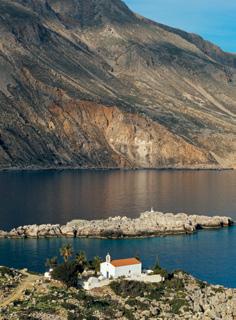
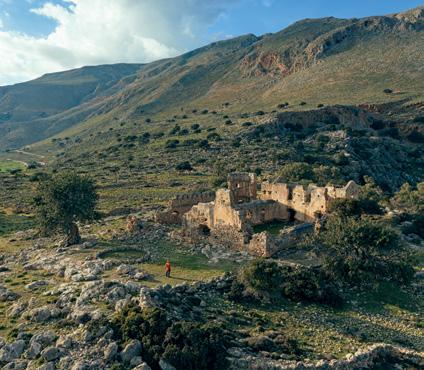
THE CHAPEL of Timios Stavros at Glyka Nera, Marmara Beach, and the Aradena Bridge.
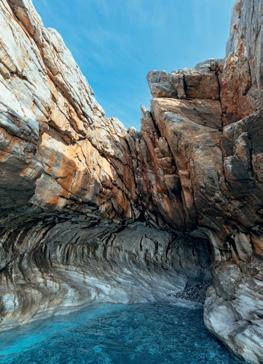
Like a secret whispered only to those willing to seek it out, Loutro reveals itself slowly, without haste. You do not stumble upon it by chance after taking a wrong turn, nor do you stop there for a quick swim on the way to somewhere else. You come to Loutro having heard about it, eager to experience it.
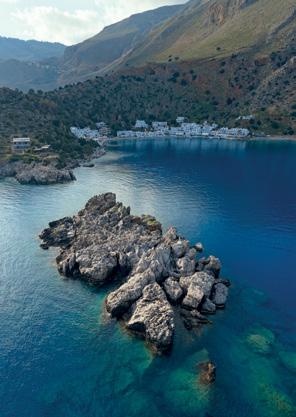
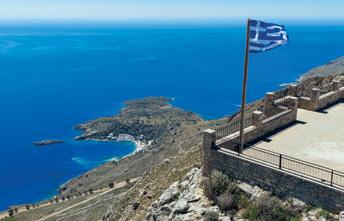
Nestled on the southern coast of Chania, where the White Mountains descend into the Libyan Sea, it preserves a rare distinction: it cannot be reached by road. The only way to visit is by sea via regular ferry routes, mainly from Sfakia and Agia Roumeli, or by hiking trails that test the endurance of even the most experienced trekkers.
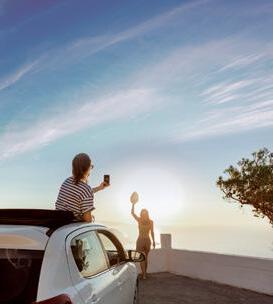
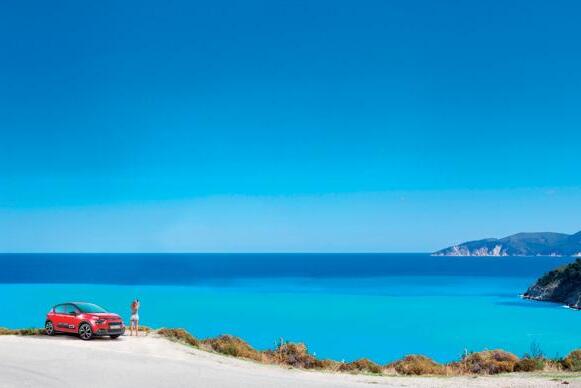
With a sense of isolation, this tiny retreat welcomes you with authentic Cretan warmth in a setting reminiscent of the Cyclades. Daily life is measured by the arrival of fishing boats. Built amphitheatrically around the harbour, it unfolds in whitewashed houses with blue shutters and crystal-clear waters shimmering in the sun. Every house in the village faces the sea, while tables serving raki, Sfakian pies, and fresh seafood are set right beside the waves. Narrow al-
GR EN
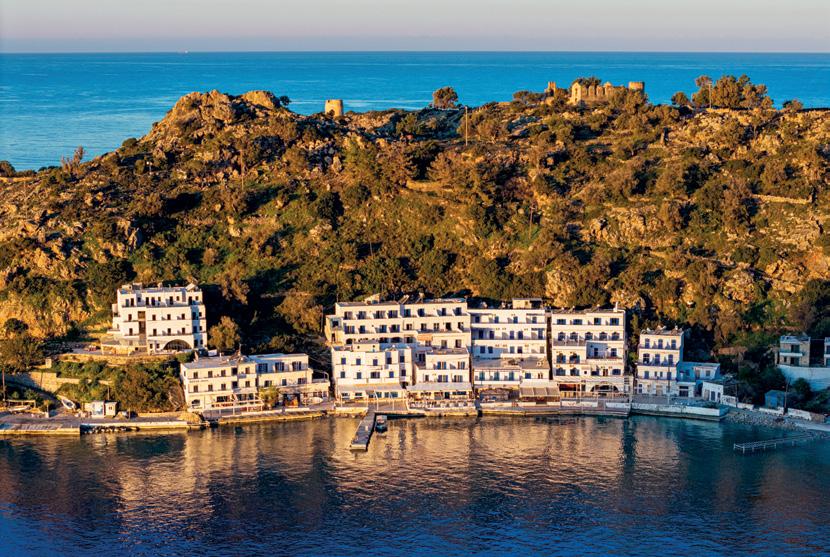
leyways lead to the centre of the settlement, where the beautiful Church of Panagia stands. Gialos, the organised central beach which, during the 1970s, was filled with free-camping enthusiasts, becomes crowded during the peak tourist season. Yet even then, Loutro retains its distinctive character – the unshakable tranquillity of a small but self-sufficient world.
The village may be tiny, but its history is extensive. In antiquity, it served as the harbour of Phoenix, which flourished as the port of Anopoli. Today, a footpath leads to the ruins of the ancient city, where among columns, public baths, and the remains of a temple, stands the cave-like Church of Agios Antonios.
The building of the old Government House, which served as the headquarters of the Sfakia Chancellery during the uprisings of 1821, bears witness to the region’s revolutionary past. Overlooking the small harbour from the hill above stands Koules, the largest Ottoman fortress built in Sfakia, distinguished by its imposing architecture and large cistern. To its south-
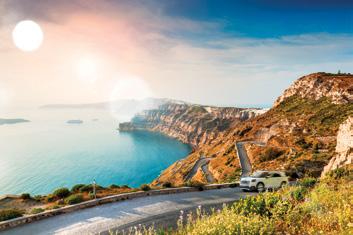
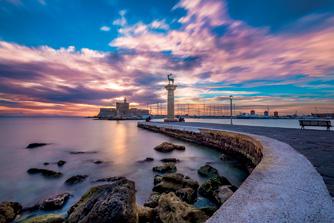

LOUTRO WELCOMES YOU WITH AUTHENTIC CRETA N WA RMTH IN A SETTING REMINISCENT OF THE CYCL A DES. BUILT AROUND THE HA RBOUR, IT UNFOLDS IN WHITEWA SHED HOUSES AND CRYSTA
GR EN
L-CLE A R WATERS.
east rises the much older fortress of Kastella, offering uninterrupted views across the bay. Loutro has its own way of satisfying every mood, whether you seek pure relaxation or adventure. All around it stretch rugged mountains, gorges, and hidden beaches accessible only via hiking trails –often along cliff edges– or by sea.
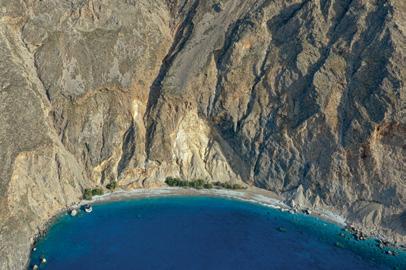
Among these locations, the enchanting Glyka Nera stands out, where fresh-water springs flow from the White Mountains and the sea remains icy cold even in August. Moments of complete tranquillity await at the secluded beach of Agios Pavlos, with its picturesque Byzantine chapel almost touching the waves. Marmara is another distinctive little beach formed at the exit of the imposing Aradena Gorge, home to the second-highest bungee jumping bridge in Europe. Anyone who dares to make the climb up to Anopoli is rewarded with one of the most breathtaking views over the Libyan Sea, in a place that does not reveal itself easily. To truly experience it, you have to leave your comfort zone behind.
THE TINY ISLET of Fanari at the entrance to the village, and the ruins of the ancient city of Phoenix.
SE A OF STONE
In the south of Laconia, a pale and stony landscape hides a natural gateway to a past that stretches back millions of years.
Text: Kallia Kastani, Photos: Kostis Aggelopoulos
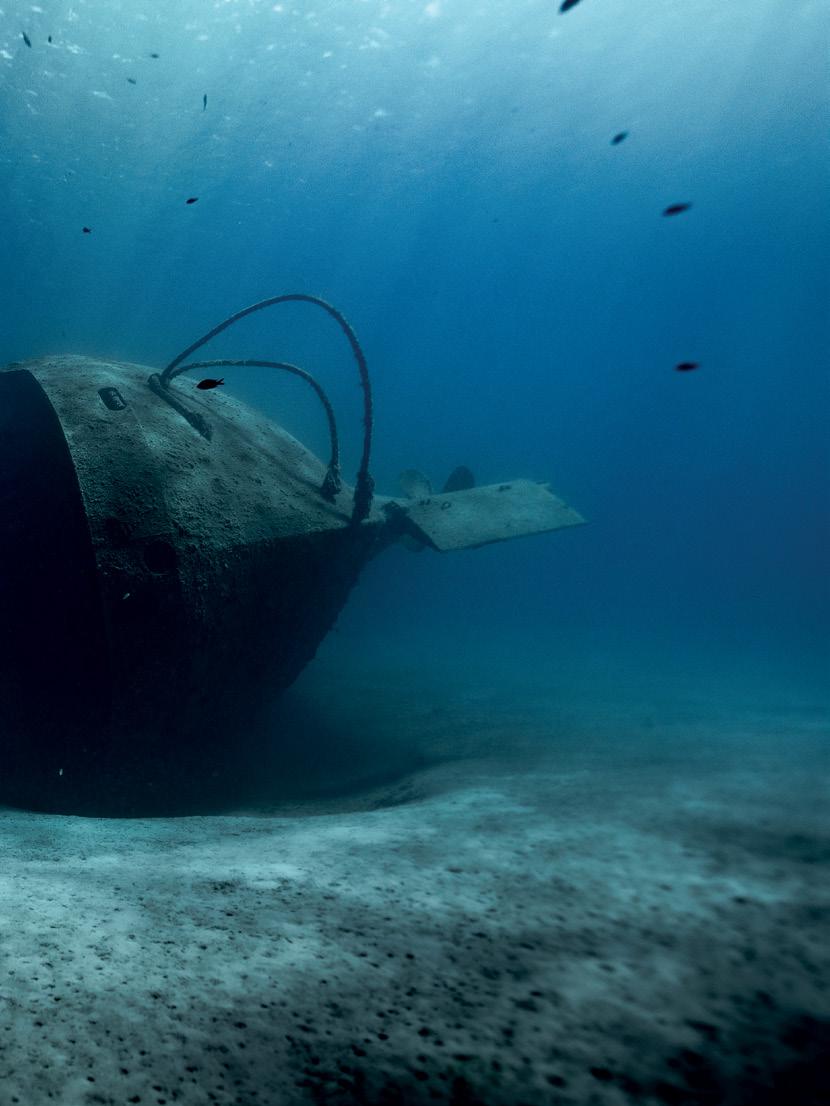
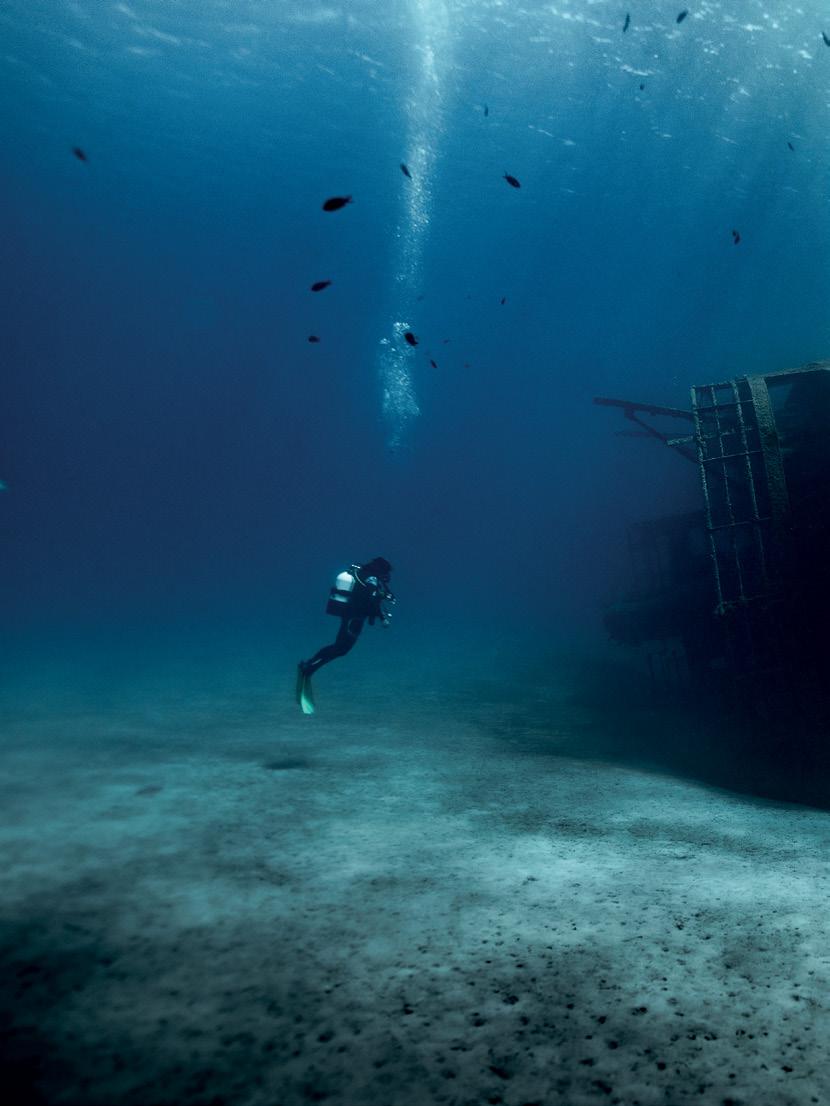
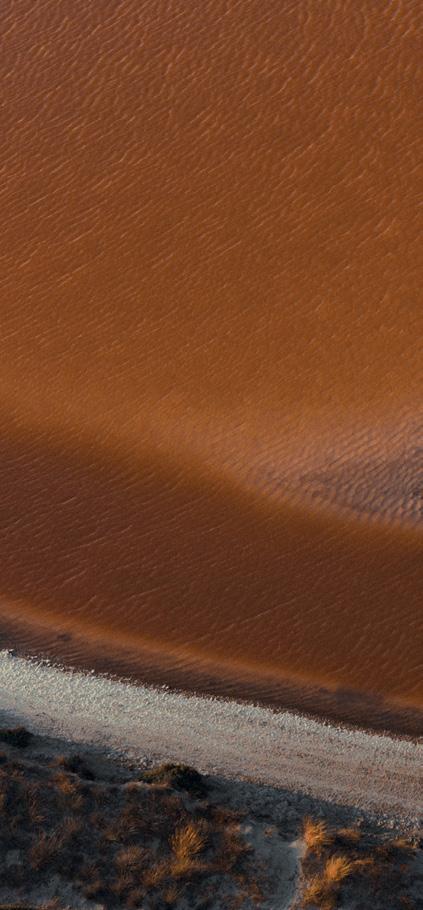
IN THE ARE A OF AGIA MARINA LIES A SECRET MILLIONS OF YE ARS OLD: A FOSSILISED PALM FOREST BESIDE THE SE A – THE REMARK ABLE AGIOS NIKOL AOS GEOPARK. HERE, THERE ARE NO MYTHS, ONLY NATUR AL HISTORY.
“All of Greece is absorbing and rewarding. There is hardly a rock or a stream without a battle or a myth, a miracle or a peasant anecdote or a superstition” – so writes Patrick Leigh Fermor in the introduction to his book, Mani, perhaps one of the most important travel writers of the twentieth century.
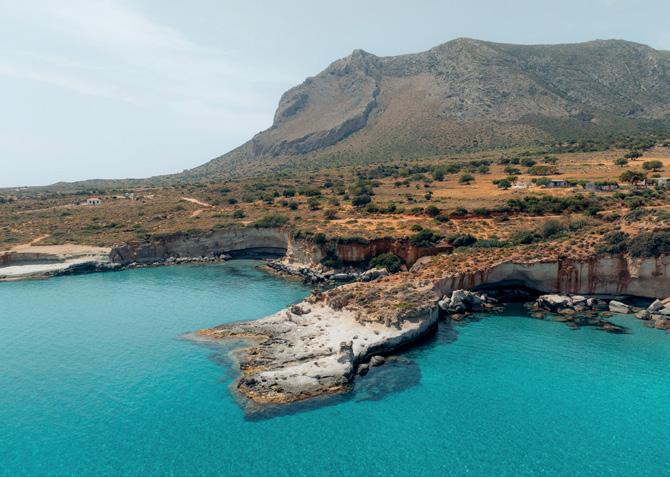
Nowhere else are myths and miracles so all-encompassing as they are in the southern reaches of Laconia. You feel it especially when driving along the eastern leg of the peninsula, heading south towards Cape Maleas, and suddenly finding yourself crossing a lunar landscape –barren, treeless, and stark– scattered with rocks large and small, as though they had sprouted from the middle of nowhere.
At the very end of this route, in the area of Agia Marina, lies a secret millions of years old: a fossilised
shaped over time by the forces of nature.
των φοινίκων, οι ρίζες τους, αλλά και η υδρόβια πανίδα αντικαταστάθηκαν από διαλύ-
palm forest beside the sea – the remarkable Agios Nikolaos Geopark. Here, there are no myths, only natural history. It appears that around two to three million years ago, geological phenomena such as natural disasters, earthquakes, and volcanic eruptions caused the coastal forest to sink beneath the sea. Through a long process of calcification underwater that lasted for millennia, the trunks of the palm trees, their roots, and even marine life were gradually replaced by silica and calcium deposits. Today, geologists and palaeontologists regard it as a landmark of immense importance, and it has been included in the Atlas of Geological Monuments of the Aegean.
The area also features an observation point and an information kiosk with details about the findings and the history of the site, while during the summer months free guided tours are organised for visitors. Be sure to take a swim at the small beaches nearby, half-hidden among colourful rocks, with their white sands, shallow crystal-clear blue waters, and the famous shipwreck situated just offshore in the
THE GEOPARK is home to striking fossils
GR ΕΝ

FOR NEARLY HALF A CENTURY, the shipwreck has rested in the bay of Agia Marina.
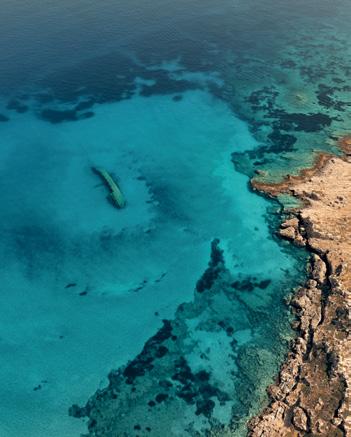
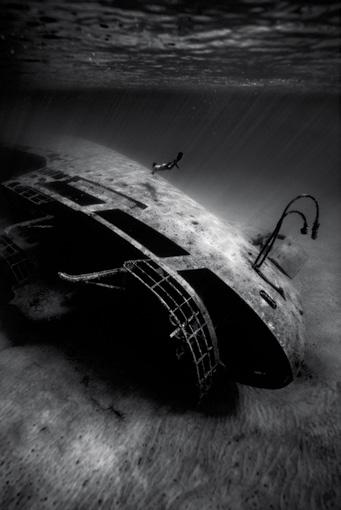
bay of Agia Marina. Just 100 metres from the shore, resting gently on the seabed, with its stern facing the land and its bow turned towards the open sea, lies the iron wreck of the Turkish cargo ship Kaptan Ismail Hakki. The vessel, measuring 58 metres in length, was carrying 578 tonnes of iron ore and a car on its final voyage. It sank during the early evening hours of January 30th, 1978, most likely due to rough seas that caused its cargo to shift suddenly. There were no casualties, thanks to a shepherd who lit a fire on the beach and guided the shipwrecked crew safely ashore, saving them from the rocks of Cape Maleas. The wreck can be found at a shallow depth beneath the surface of the water, making it easily accessible from the shore and suitable for divers of all levels. Yet even swimming in its turquoise waters is a truly unforgettable experience.
THE WRECK OF THE TURKISH CARGO SHIP K APTAN ISMAIL HAKKI LIES AT A SHALLOW DEPTH BENE ATH THE SURFACE OF THE WATER,
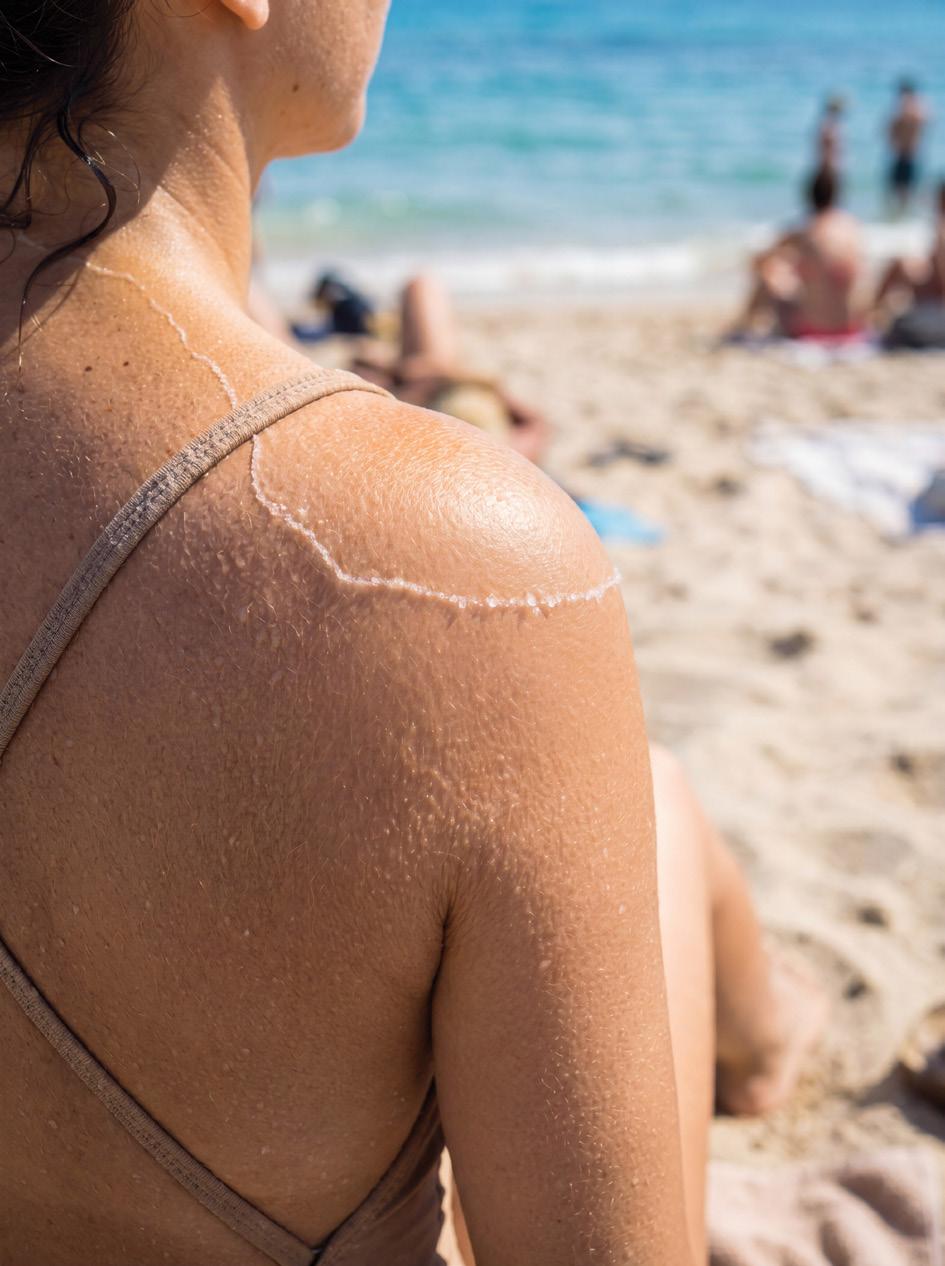
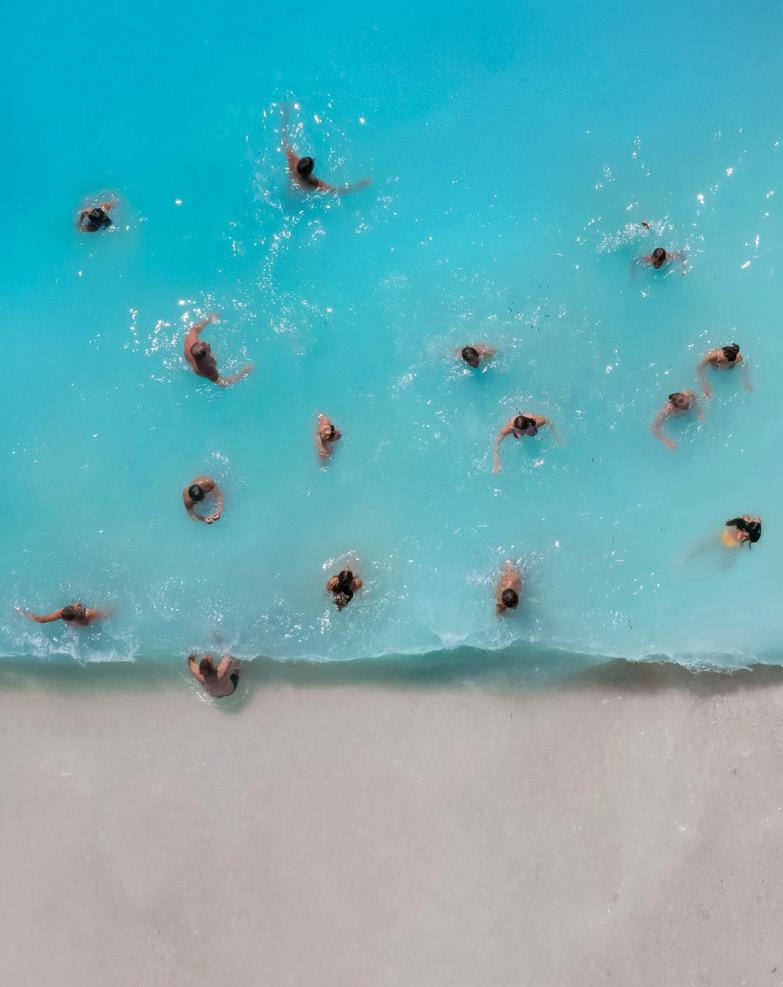
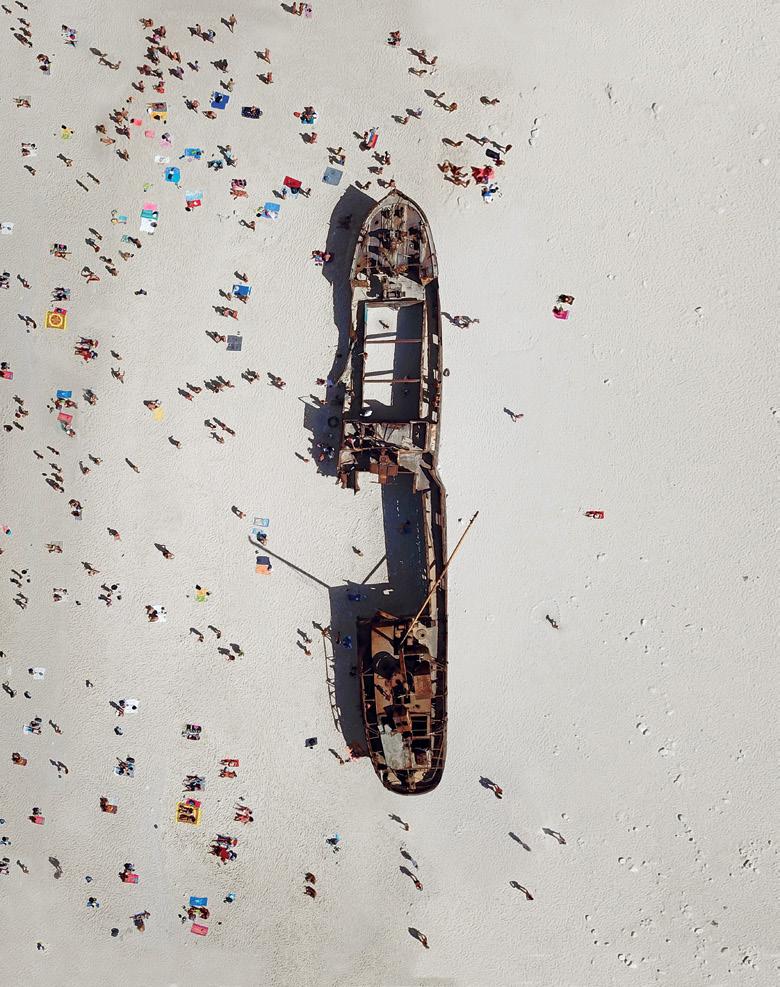
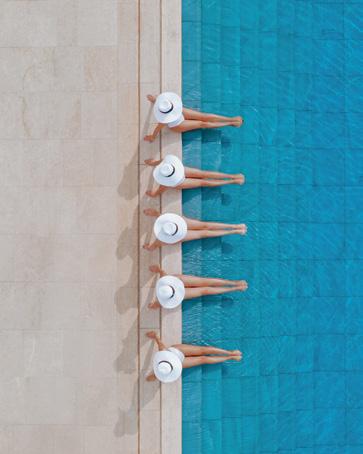
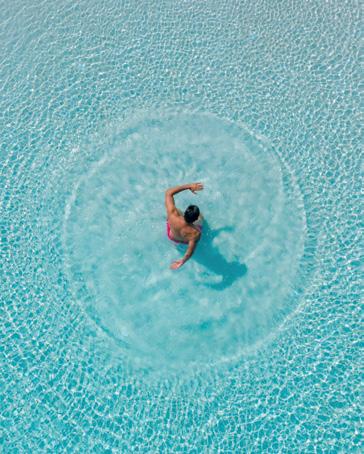
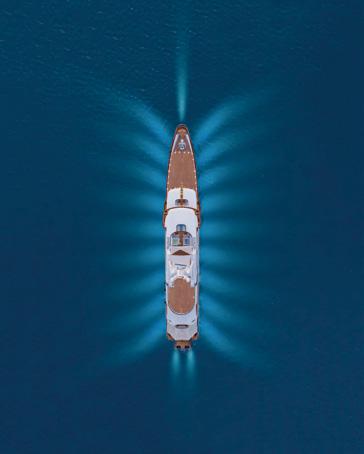
Costas Spathis’ photographs, with their geometric compositions and vibrant colours, reveal the beauty of Greece from above.
Text: Christina Katsantoni
A ERI A L TA LES
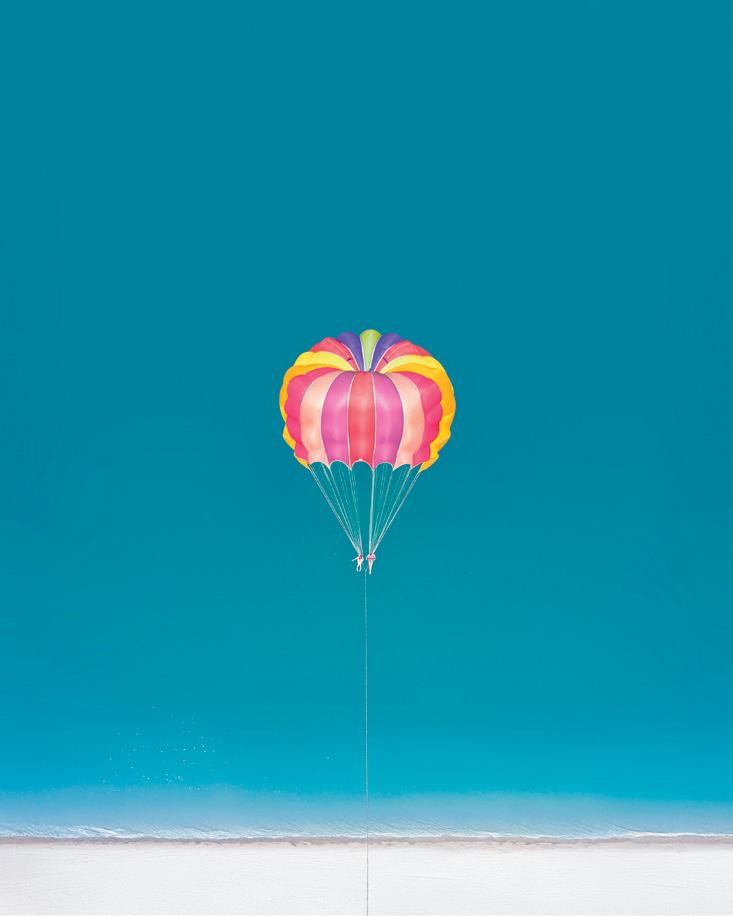
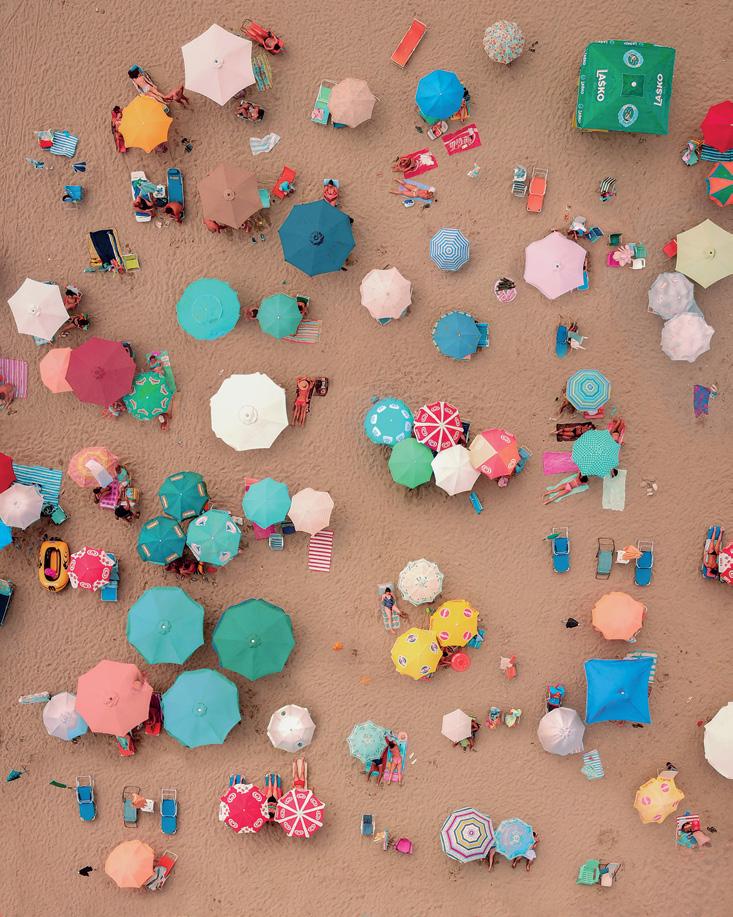
«POLLY POCKET»
POCKET’
Neos Panteleimonas, Pieria.
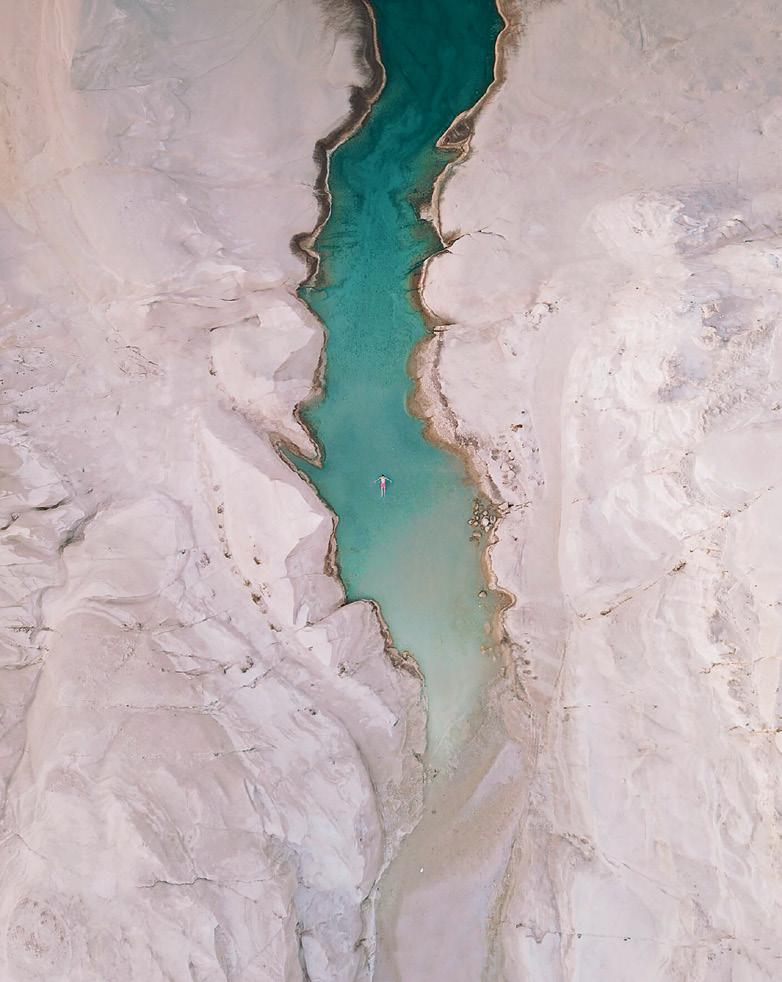
– Sarakiniko, Milos.
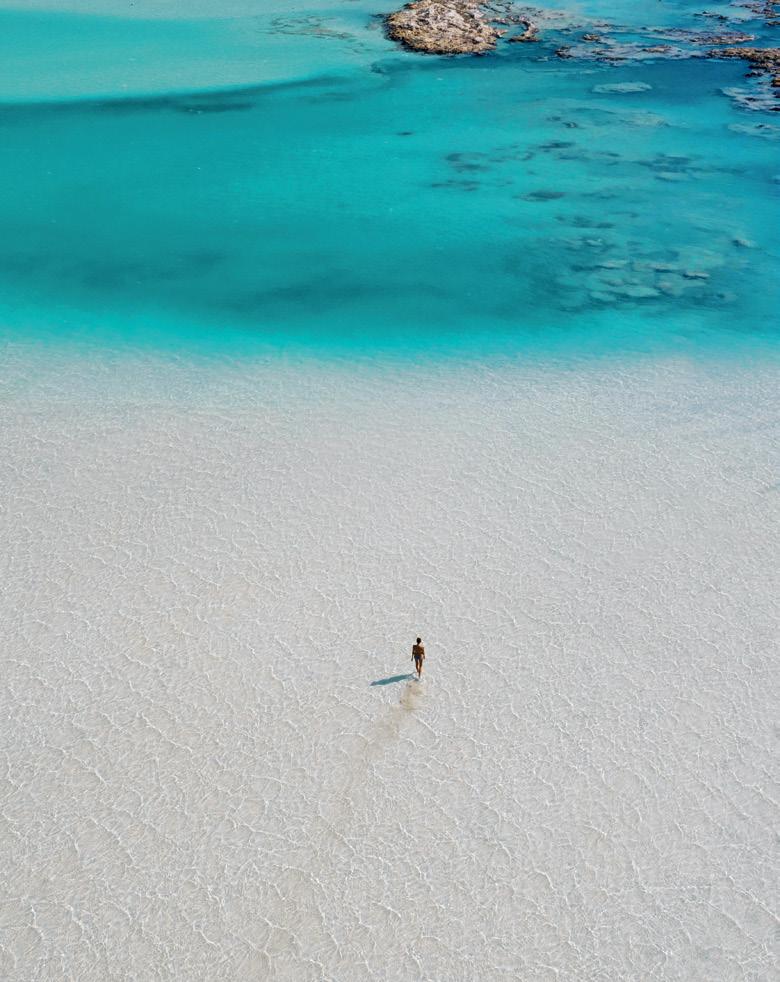
«NEPTUNE» – Κρήτη. ‘NEPTUNE’ – Crete.
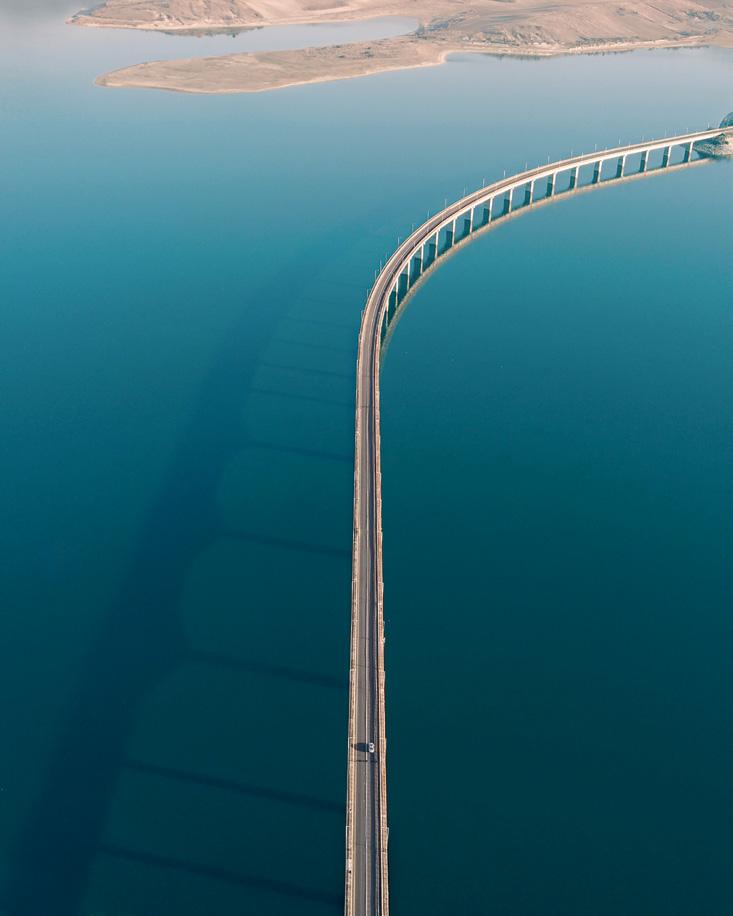
Servia, Kozani.
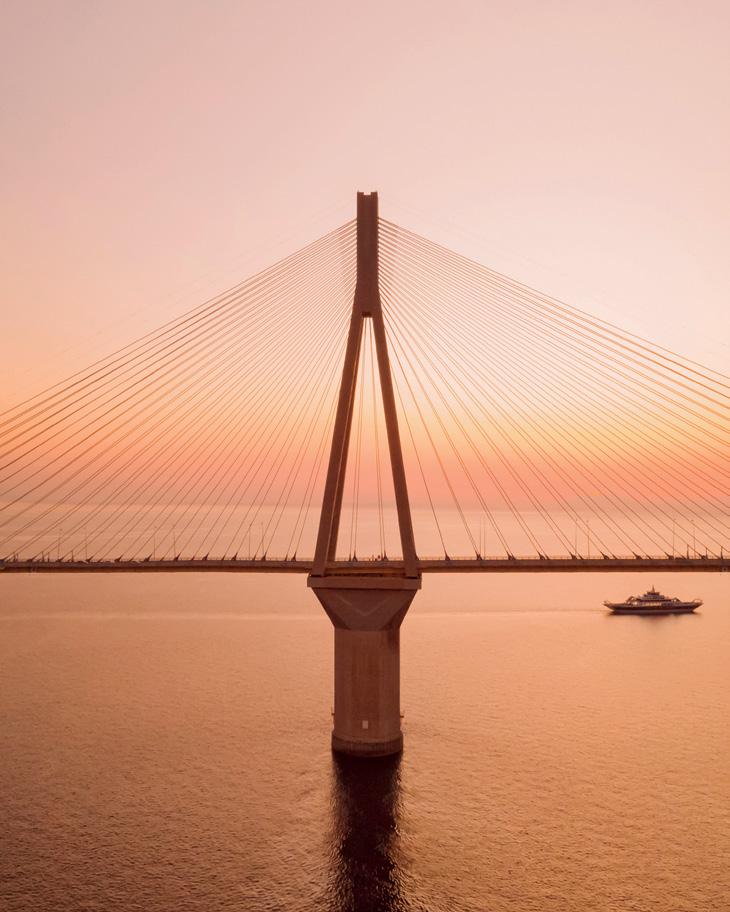
«SEWING NEEDLE»
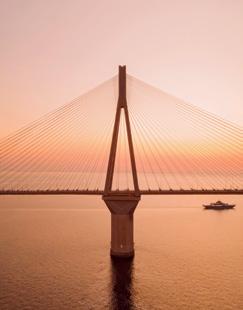
‘SEWING NEEDLE’ – Rio-Antirrio Bridge.
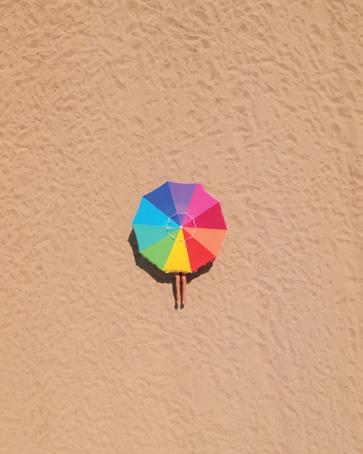
«Lollipop»
«Clockwatch» – Costa Navarino, «Butterfly»
«Montgomery Buttons»
CLOCKWISE: ‘Lollipop’ – Neos Panteleimonas Beach, ‘Clockwatch’ – Costa Navarino, ‘Butterfly’ – Mykonos, ‘Montgomery Buttons’ – Athens.
His photographic vision was shaped by the principles of architecture: composition, proportion, light, and attention to detail. Costas Spathis recalls searching for symmetry from an early age. He explored drawing and painting and went on to study architecture, but his true passion was capturing geometric photographs. Inspired by the distinctive blue of Greece, he embarked on a journey of discovery, narrating stories through his images.
His artistic style is characterised by minimalism and a constant search for geometry in everyday life and nature. The view of the world from above fascinated him long before the advent of drones, when he was already seeking ways to create bird’s-eyeview images. “Today, the drone is an essential tool in my work, and many of my photographs capture life from an aerial perspective, revealing shapes and colours that often go unnoticed from the ground.”
His work conveys a sense of optimism. “I am interested in offering viewers a different way of seeing the world, inviting them to imagine how beautiful, colourful, and unexpected life can be when viewed from a new perspective.”
Before every photo shoot, he makes a point of getting to know the unique character and spirit of the places he visits and the people who live there. “Connecting with them is very important to me. Even when my photographs are minimalist or taken from above, there is always a human story behind them. I try to capture the relationship between people and their environment, the traces they leave on the landscape, and the way they coexist with it.”
His inspiration may stem from a tradition, a local custom, a geographical feature, or even the simplicity of everyday life. Yet his goal remains the same: “What I look for every time is an image that tells a story, even without words.”
Exploring the secrets of Greece’s landscapes has taught him the value of observation, patience, and openness to the unexpected. “Perhaps that is the greatest gift of this journey: an enduring sense of discovery. Knowing that beyond every bend, on every island, mountain, or in every neighbourhood, there is always a new image waiting to be found, a new story to be told, and a fresh source of inspiration.”
“I AM INTERESTED IN OFFERING VIEWERS A DIFFERENT WAY OF SEEING THE WORLD, INVITING THEM TO IMAGINE HOW BE AUTIFUL, COLOURFUL, AND UNEXPECTED LIFE CAN BE WHEN VIEWED FROM A NEW PERSPECTIVE.”
WHERE FL A MINGOS WA NDER
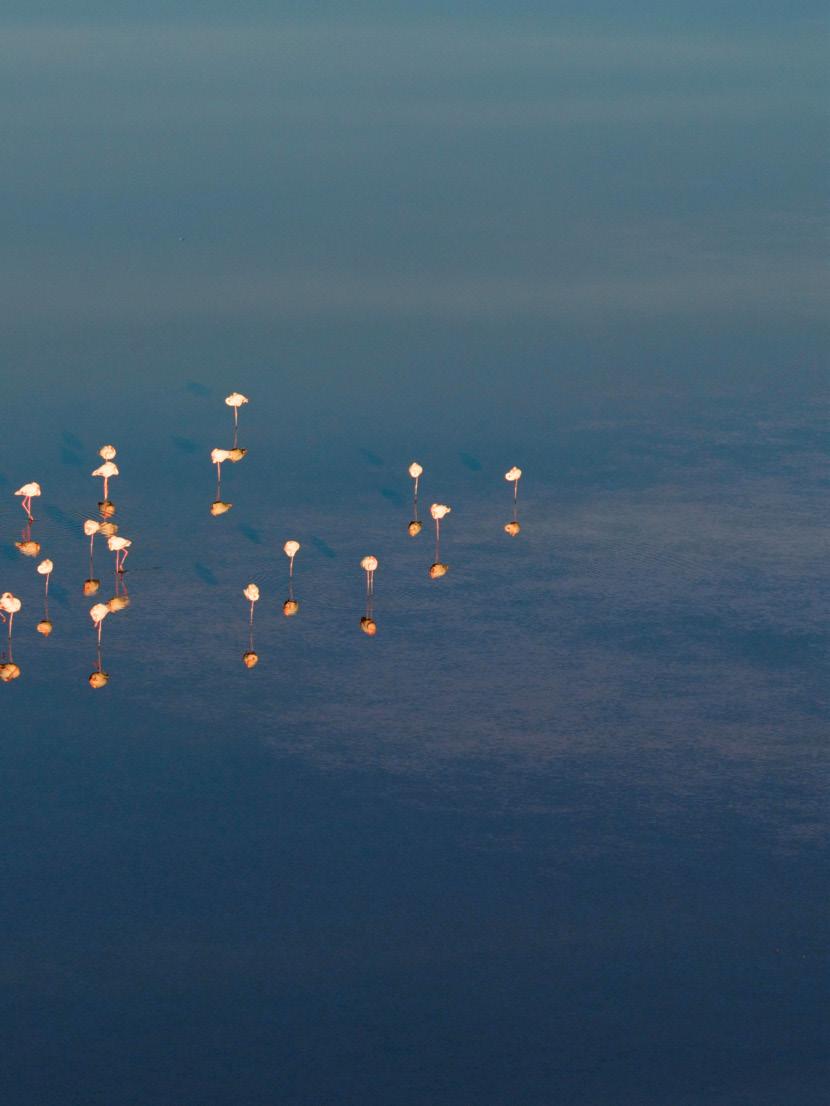
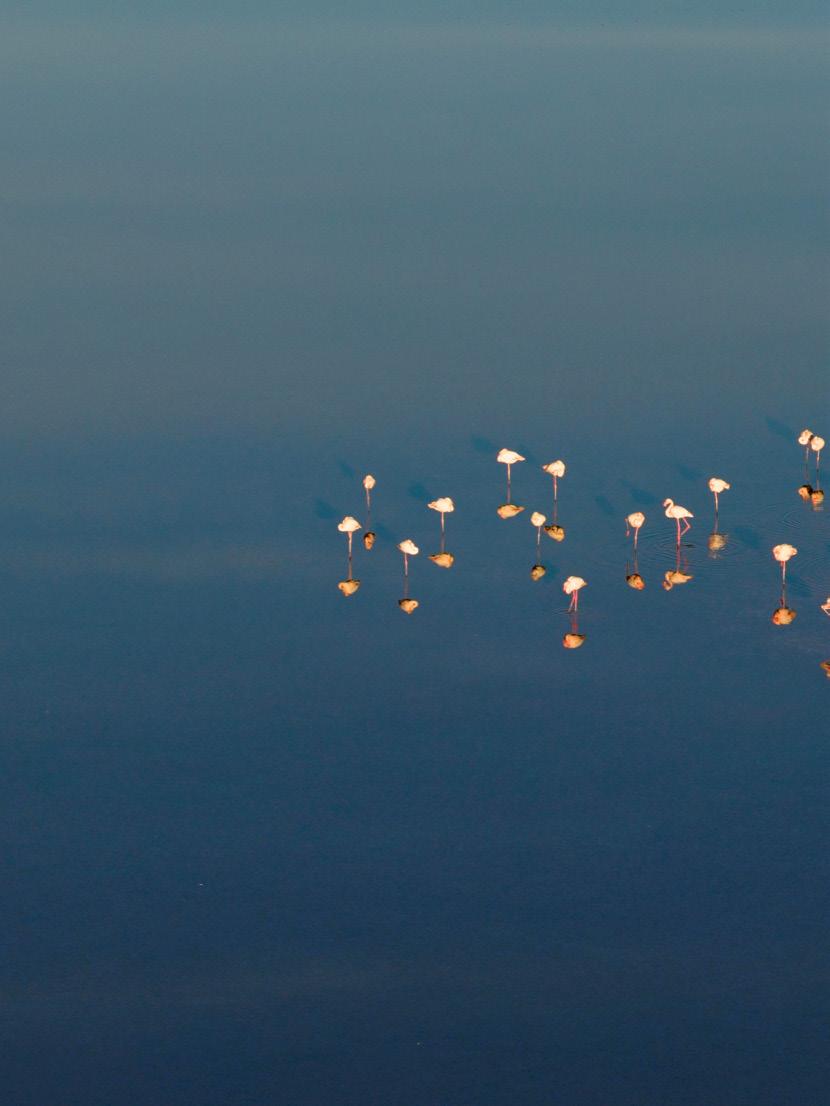
In the old salt flats of Tigaki, on the island of Kos, lies a peaceful world filled with pink feathers and dazzling white landscapes shimmering under the sun.
Text: Christina Katsantoni
Photos: Constantinos Sofikitis
FROM AUTUMN to spring, the wetland transforms into a magical landscape.
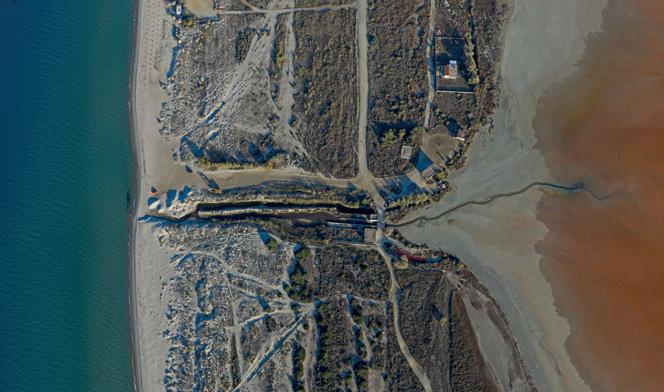
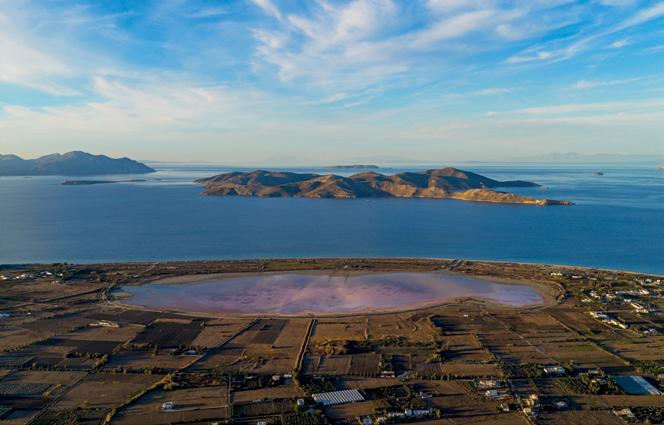
Along the northern coastline of Kos, just a short distance from beautiful Tigaki, stretches a place that moves endlessly to its own rhythm. It is a point of both departure and return – a cycle of life repeated tirelessly. The Alykes salt lake is one of the most distinctive and captivating natural formations in the Dodecanese, where centuries of history meet remarkable ecological wealth and rare, unspoiled beauty.
ομορφιά.
Ενταγμένος στο ευρωπαϊκό δίκτυο Natura 2000,
THE A LYKES
Protected as part of the European Natura 2000 network, this precious wetland holds a past that bears little resemblance to its present-day character. From the late 19th century, salt-harvesting facilities operated in the area, and from 1930 onwards, they were connected by an industrial railway network. At the time, salt was an important resource for the local economy, and the salt flats remained a hub of activity until operations ceased in 1989. Today, the traces of this human chapter in their history have almost disappeared. Nature has reclaimed the area, transforming it into a vibrant wetland that constantly
S A LT L A KE IS ONE OF THE MOST DISTINCTIVE AND CA PTIVATING
EN
changes with the light, the seasons, and its winged visitors.
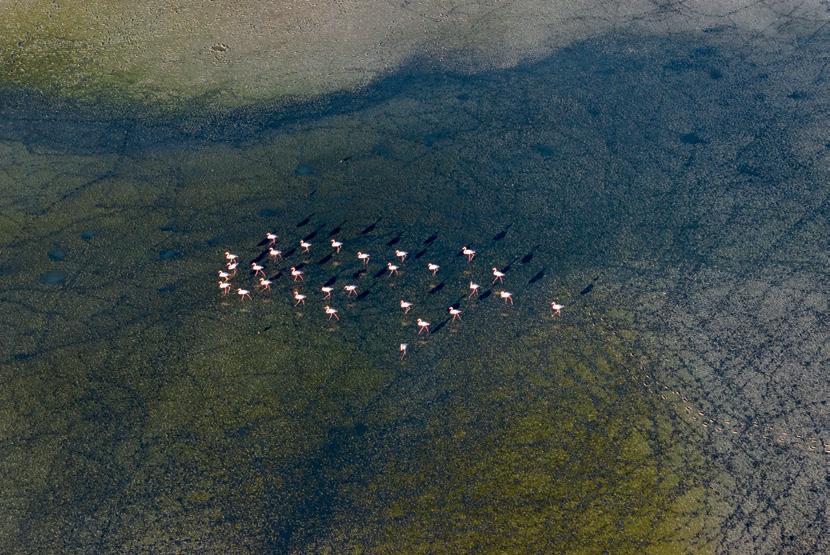
Pelicans and herons are among the more than 200 bird species found in the 230-acre salt lake which, when seen from above, resembles a heart. Large numbers of migratory birds find shelter here, while the exotic flamingos have, in recent years, become seasonal residents from autumn through to spring, attracting visitors eager to capture their graceful movements.
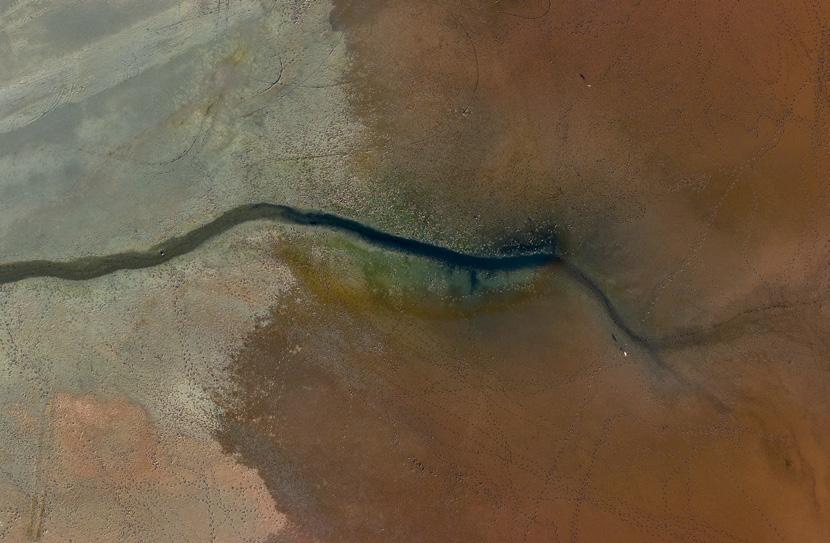
During the winter months, the area fills with seawater, turning into a mirror that reflects the changing hues of the sky. In summer, the landscape is transformed as the salty earth reveals itself in all its splendour. The water evaporates, leaving behind a dazzling white, almost lunar terrain.
At any time of year, the wetland is an ideal destination for hikers, nature lovers, and avid photography enthusiasts. The many natural trails, the shadows of birds overhead, the gentle whisper of the wind through the reeds, and the refreshing salty breeze combine to create a truly unique and memorable experience, right beside one of the island’s most popular destinations.
THE SALT LAKE serves as a refuge for a rich variety of migratory birds.
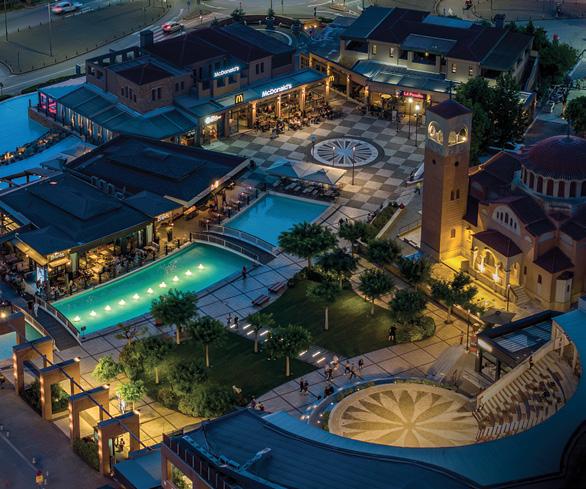
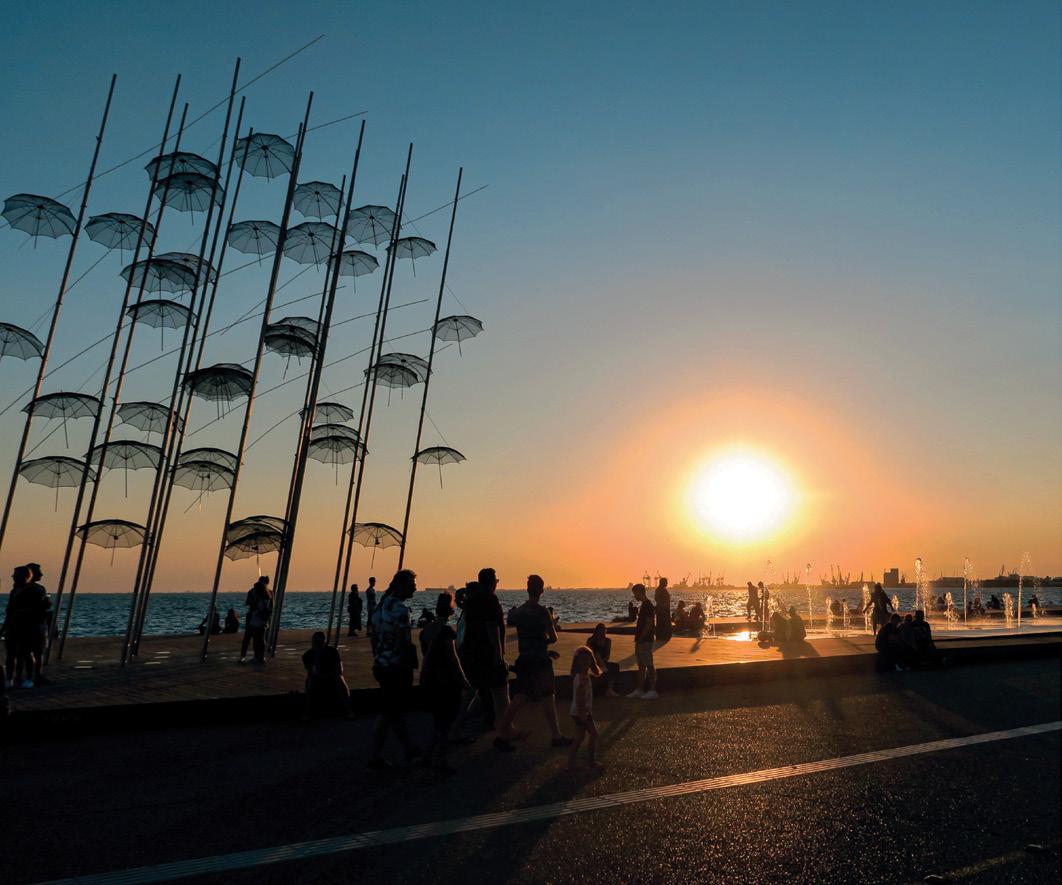
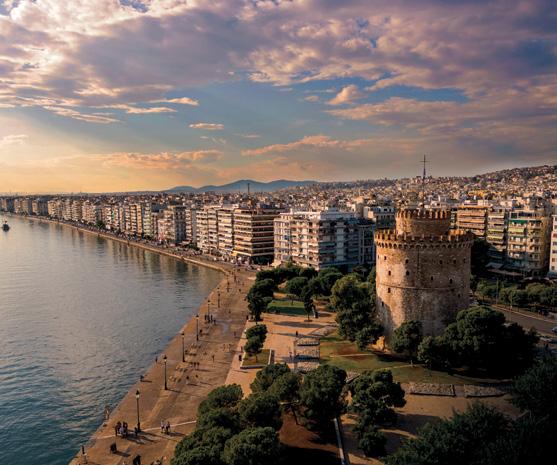
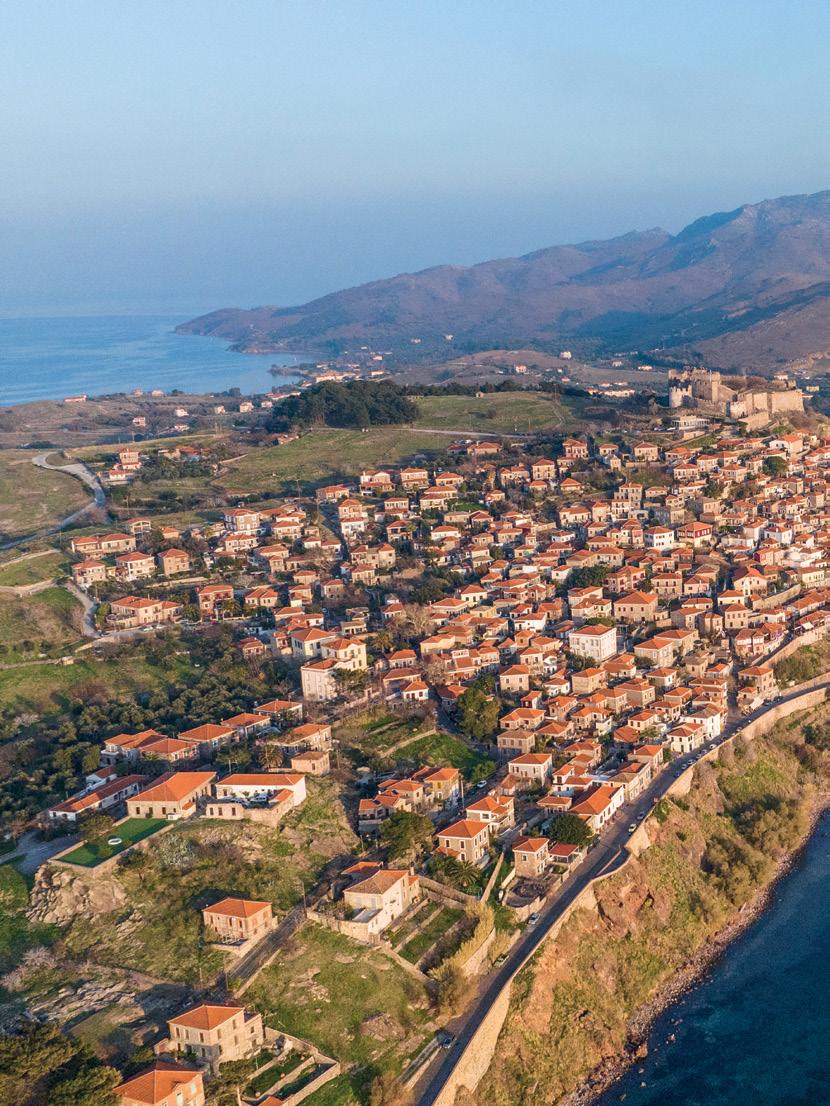
Discover the ultimate destination for shopping, dining & entertainment
A PLA CE A PA RT
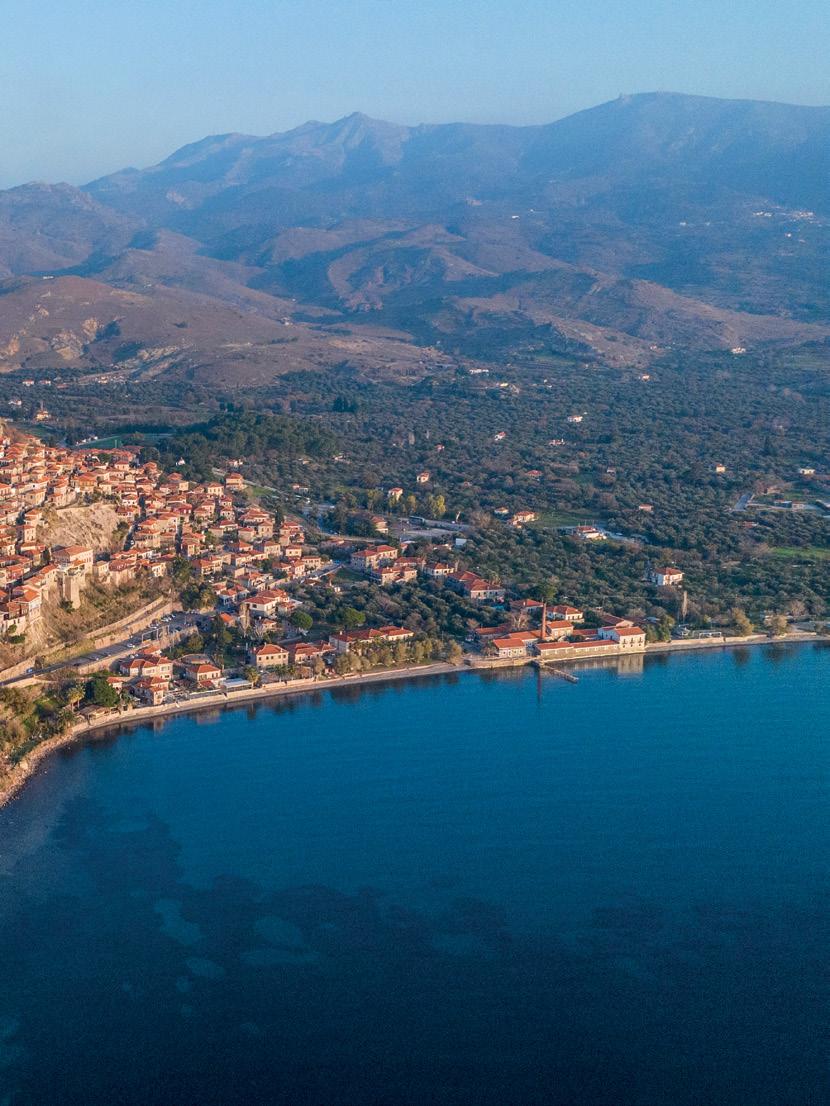
Stately, picturesque, vibrant, and romantic, Molyvos is widely regarded as the most beautiful ‘balcony’ in the Aegean.
Text: Kallia Kastani
Photos: Petros Sofikitis
GR
In an interview years ago, the renowned lyricist and poet Lefteris Papadopoulos, who has been visiting Molyvos every summer for decades, explained what it is that captivates him about the village: “I love Molyvos because it is ‘handmade’. It has nothing to do with machines. Thousands of craftsmen worked on it over hundreds of years, with the wisdom and skill of a swallow building its nest. Everything is in its proper place: the streets, the churches, the houses, the trees, the fragrant wisteria, the fishing boats, the people…” And there lies the secret: here, you feel that everything has found its rightful place in the world.
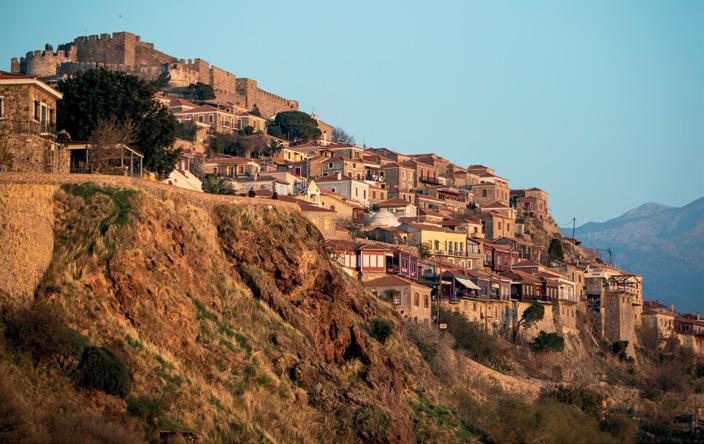
In ancient times, and until the mid-14th century –when Lesvos came under the rule of the Genoese Gattilusi family– the settlement was known as Mithymna. Curiously, that name is still used today in official government documents. Later, the name Molyvos came into common use, most likely as a corruption of the Frankish Mont d’Olives. Olive groves, pine forests, and a winding road lead visitors here. But the journey’s end more than rewards the traveller. Built on a rocky outcrop at the northern tip of the island, Molyvos appears from afar to hover between earth and sky – an explosion of colour. White,
THE IMPOSING medieval castle dominates the skyline of Molyvos.
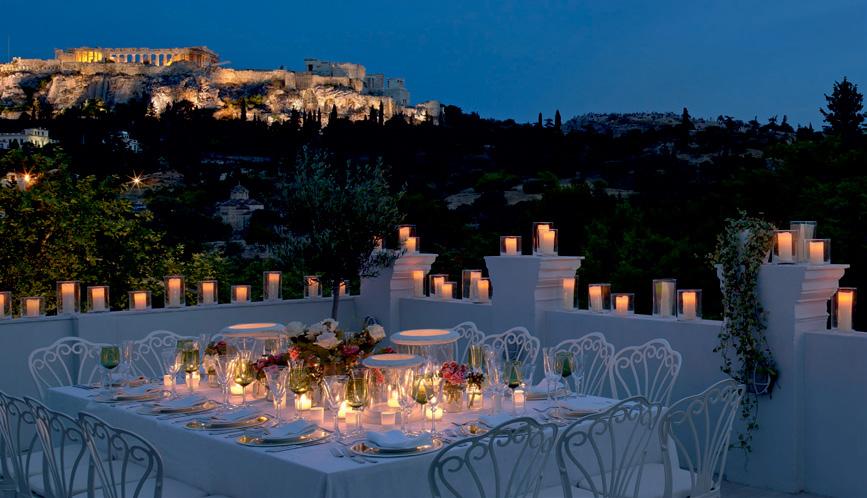
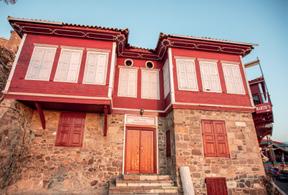
THE CHARM of a bygone era lives on in the ornate façades of mansions that have stood the test of time.
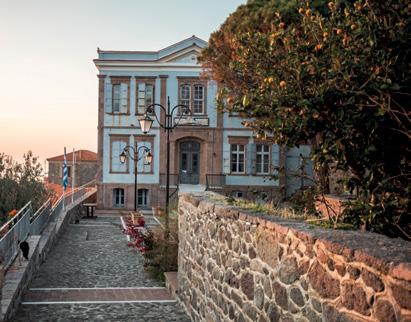
BUILT ON A ROCKY OUTCROP AT THE NORTHERN TIP OF THE ISL A ND, 62 KILOMETRES FROM THE TOWN OF
GR EN blue, purple, and red blend in a tapestry of shuttered windows, along with brown stone and terracotta rooftops smothered in bougainvillea and wisteria.
Towering above the village is the imposing Mithymna Castle, the second-largest castle on Lesvos. From its commanding position, it overlooks the bay, the harbour dotted with fishing boats, the mansions with their wooden overhanging balconies, the flower-filled shops, and the cobbled alleyways. One of these streets was voted, a few years ago, the most beautiful in the world. And this is no exaggeration. The entire settlement is a masterpiece of traditional architecture. It is little wonder, then, that Molyvos was designated a protected settlement in 1965.
Anyone fortunate enough to wander through its narrow lanes will discover a place that tells its story at every turn: in the old fountains dating back to the Ottoman era, in the Historical Public Library, and in the Komninakis-Krallis Mansion, with its rare folk-art murals. And when, late in the afternoon, they reach the castle to admire the majestic sunset spreading across the horizon, they will understand that Molyvos is not merely a destination. It is an experience.
hh.gr
The official gateway to Greece’s cultural heritage
Explore sites & museums
Book tickets & experiences easily
Free digital guide & AR/VR experiences
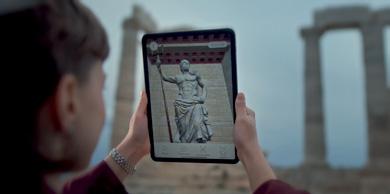


Hellenic Heritage Digital Guide Hellenic Heritage AR Hellenic Heritage Virtual Tours
EXPLORE
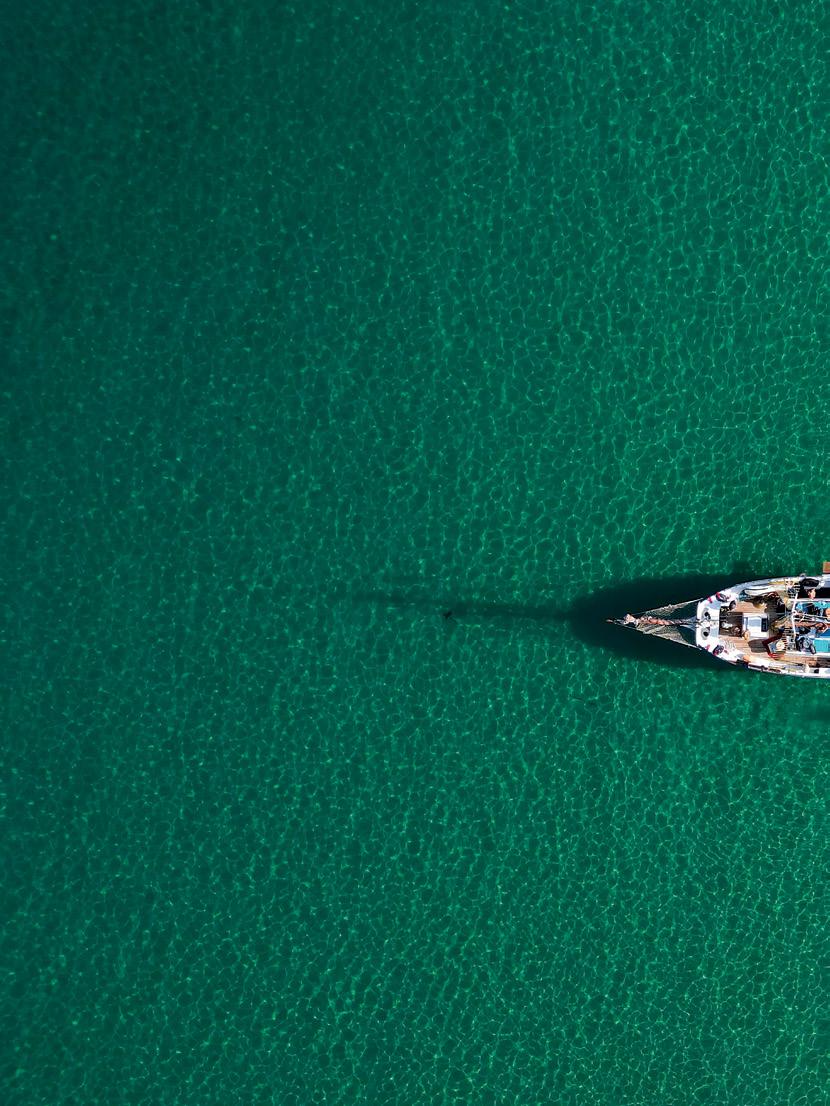
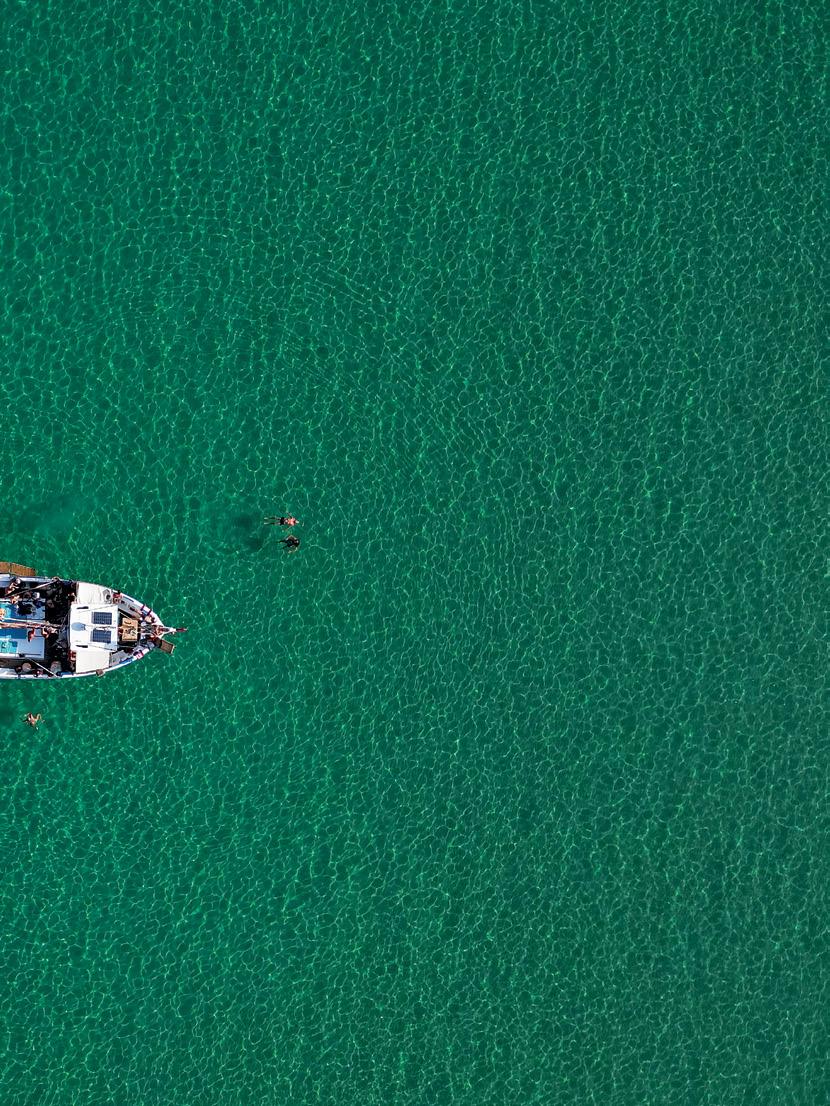
TRADITIONAL WOODEN boats set out each day for secluded beaches and hard-to-reach coves, revealing hidden corners that remain unseen from the shore. Stops for swimming, dives into crystal-clear waters, and a sense of complete freedom transform every excursion into an experience that captures the very essence of a holiday in its most authentic form.
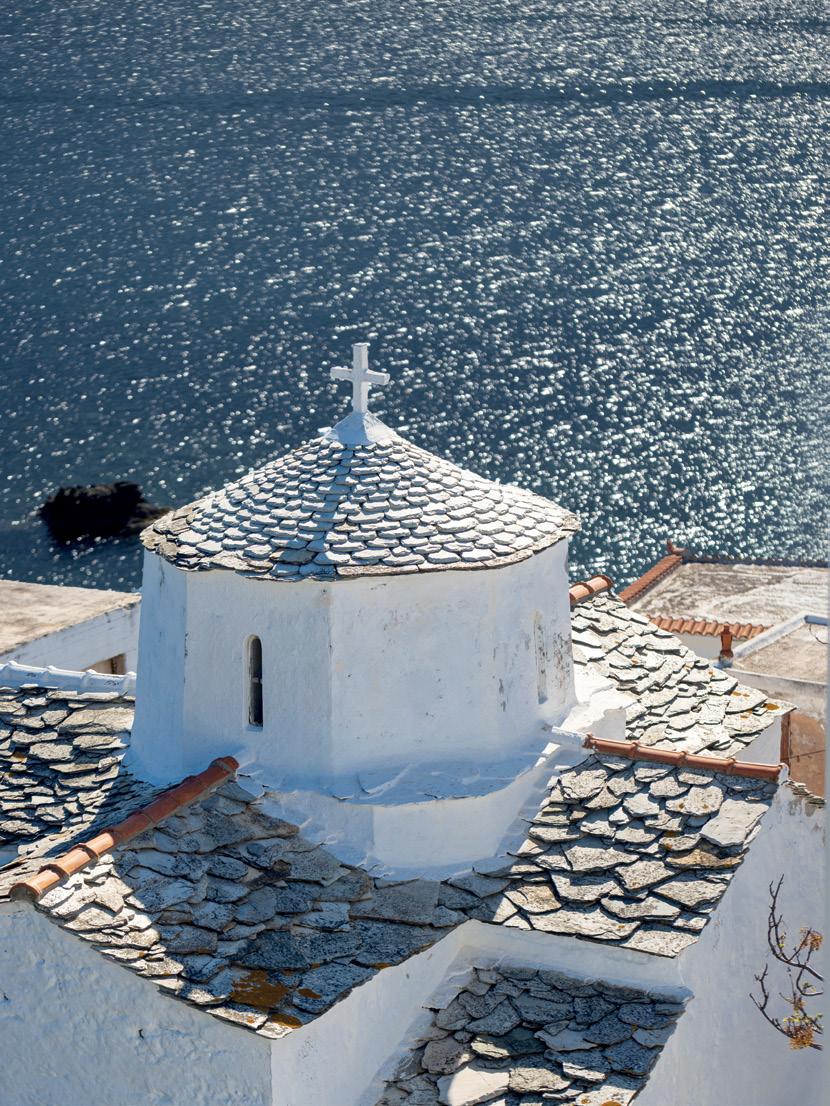
ρεμπέτικες ιστορίες. Small in size yet endlessly captivating, Skopelos reveals its charm through pine-clad hillsides, tranquil seas, and stories steeped in the spirit of rebetiko.
LIFE IN BLUE
A ND GREEN
Text: Alexandra Tsolka, Photos: Petros Sofikitis
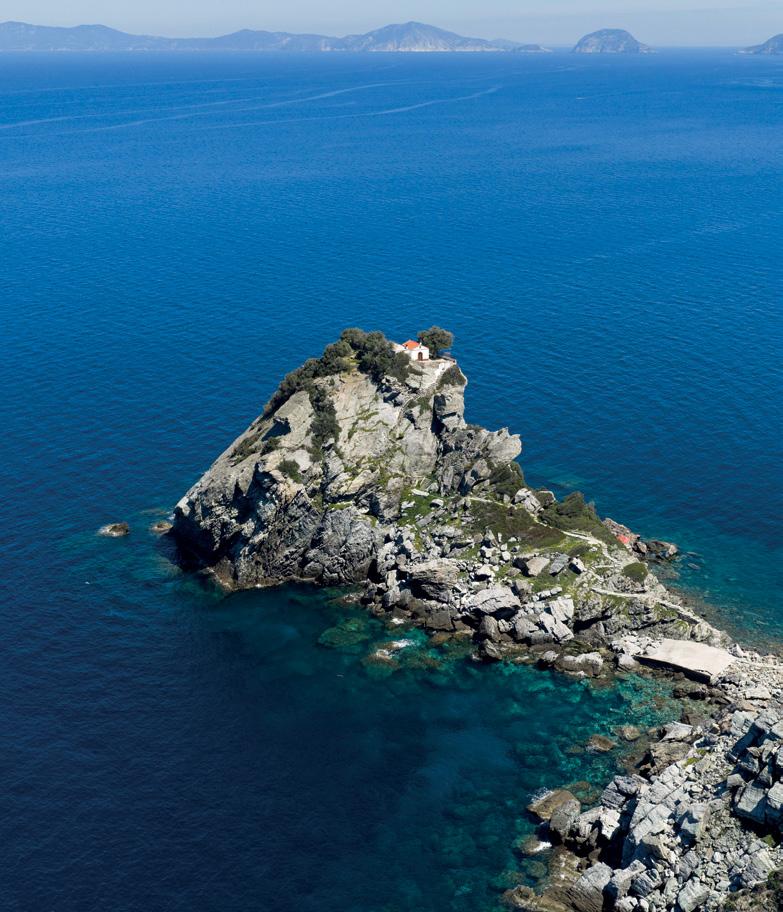
PERCHED ATOP A DR AMATIC ROCK, THE CHAPEL OF AGIOS IOANNIS, WITH ITS HUNDRED STEPS AND SWEEPING VIEWS ACROSS
THE AEGE AN, STILL CARRIES THE CINEMATIC AUR A OF ‘MAMMA MIA!’
EN
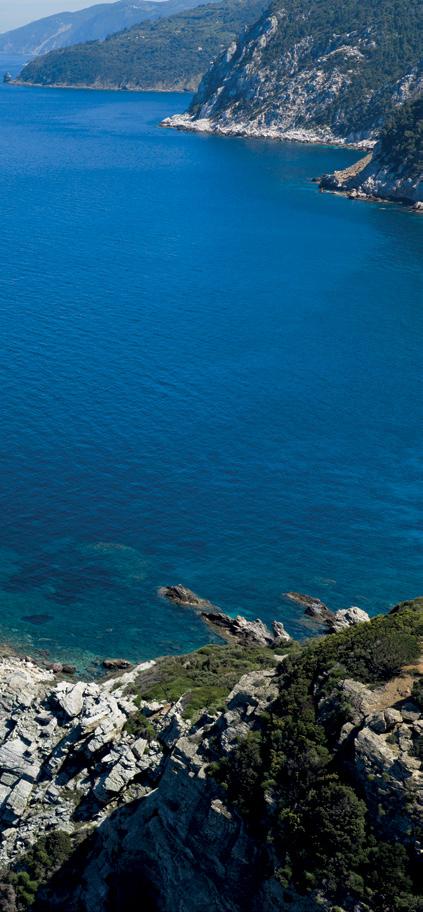
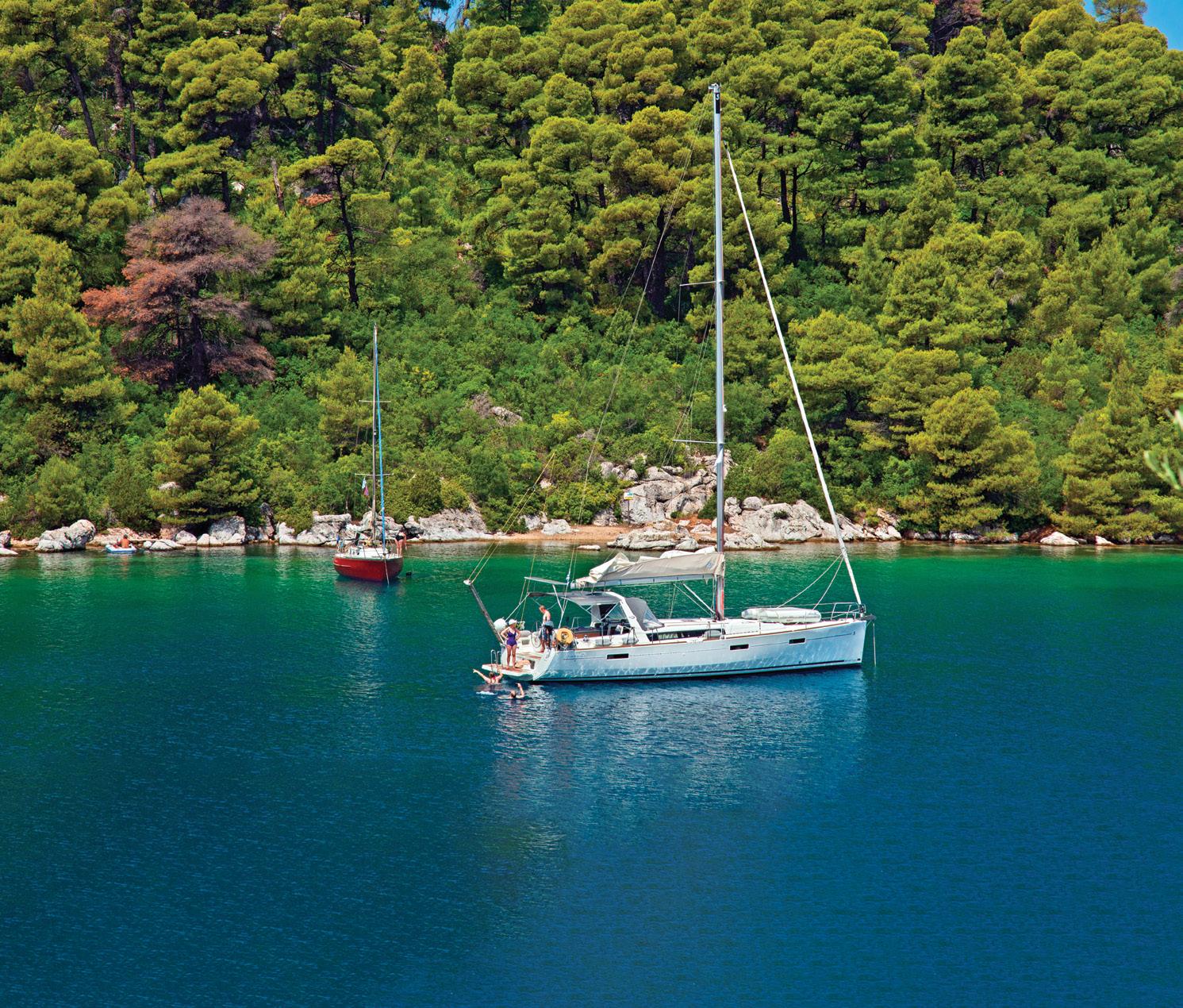
Lush vegetation, emerald beaches, pinefringed coves, picturesque villages, monasteries perched on hillsides overlooking the Aegean, and a subtle touch of Hollywood glamour come together to create the portrait of one of Greece’s most enchanting destinations.
The first impression is the spacious pedestrianised harbour. From the old Karyatis Bar to the winding cobbled lanes that climb through Chora, the journey reveals an irresistible charm that continues on the slopes of Mount Palouki, among centuries-old monasteries adorned with beautiful frescoes. Amid narrow alleyways, whitewashed houses, and small courtyards fragrant with basil, visitors can discover the home of the writer Pavlos Nirvanas, as well as the Vakratsas Mansion, once the residence of the renowned Skopelite physician, where traditional furnishings and exquisite handcrafted objects offer a glimpse into the island’s past. Higher up, in Metochi,
AGIOS IOANNIS on the rock of Kastri, the cliffside chapel that stole the spotlight in ‘Mamma Mia!’
BUILT AMPHITHEATRICALLY above the harbour, Chora serves as the vibrant heart of the island.
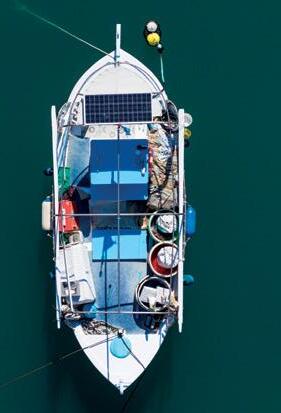
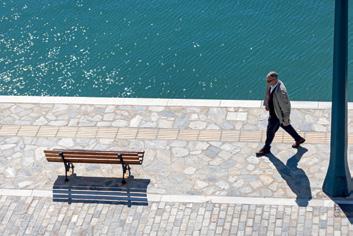
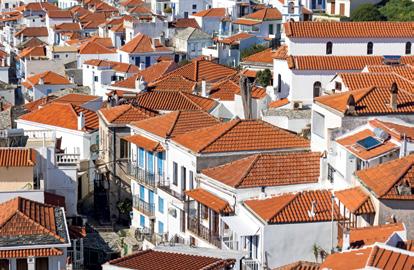
where crystal-clear springs flow ceaselessly from the earth, walking trails invite wanderers to lose themselves in panoramic views.
Just beyond Chora, the road leading to Elios alternates between climbing lush green hillsides and tracing the endless blue of the sea, passing beaches of extraordinary beauty. Stafilos, Limnonari, Panormos, Milia, and Kastani are ideal for those who enjoy well-organised seaside escapes, while Amarantos, Ftelia, Hovolo, and Spilia reward travellers seeking complete tranquillity. Some are fringed with fine pebbles, others with soft sand, yet all share the same striking setting: dark green pine forests that seem to plunge directly into the calm, crystal-clear waters. But the sea’s allure extends far beyond its surface. Cave entrances near Agia Anna invite exploration, while reefs, shipwrecks, and diving routes around the islet of Dasia reveal a second world hidden beneath the water.
As the journey unfolds, one captivating scene follows another. Perched atop a dramatic rock, the chapel of Agios Ioannis, with its hundred steps and sweeping views across the Aegean, still carries the cinematic aura of Mamma Mia! Further along, the
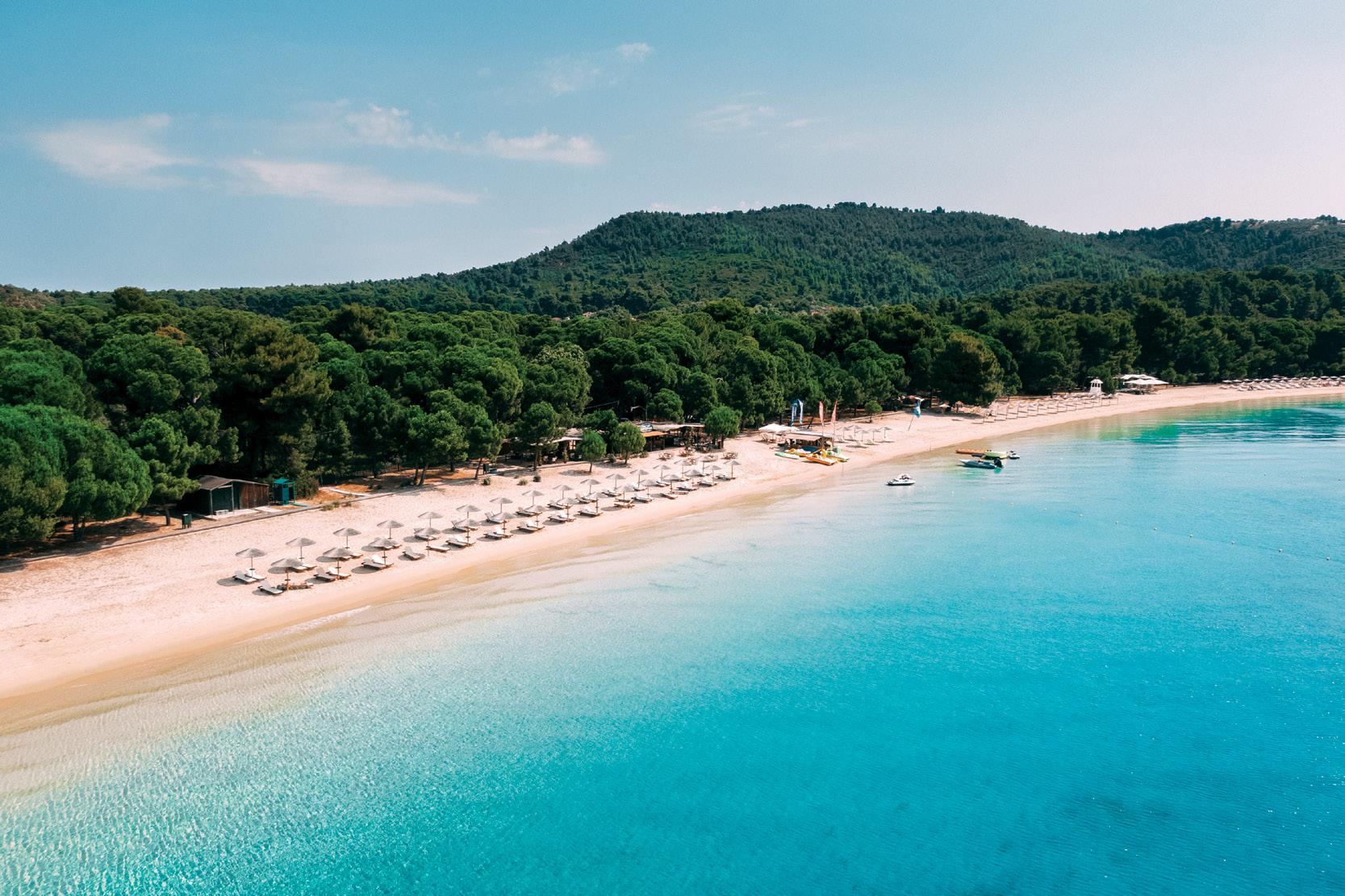
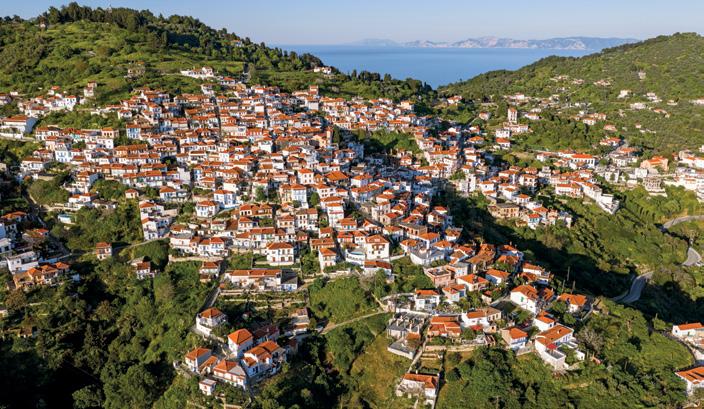
GLOSSA, Skopelos’ second-largest settlement, offers unobstructed views of the open sea.
lighthouse at Cape Gourouni stands proudly at one of the island’s most remote locations, while to the north, Glossa –the second-largest settlement on Skopelos– rises amphitheatrically at an altitude of 300 metres, gazing towards Skiathos.
And just as the landscapes constantly change, so too do the island’s stories, revealing themselves through art, flavours, and music. At the workshop of the Rodios family, the craft of pottery continues to take shape, preserving techniques passed down through the years. Local tables are graced with Skopelos’ famous twisted cheese pies, pork with prunes, and grouper stifado, while traditional sweets such as chamalia made with almonds, walnut rozedes, and avgato –a spoon sweet made from plums– hold a special place in the island’s culinary heritage. When the sun sets, music takes centre stage. At Anatoli and many other traditional tavernas, the sounds of rebetiko fill the air, remaining an inseparable part of a tradition deeply rooted in the island and its people.
AMID NARROW ALLEYWAYS, WHITEWASHED HOUSES, AND SMALL
COURTYARDS FR AGR ANT WITH BASIL, VISITORS CAN DISCOVER THE HOME OF THE WRITER PAVLOS NIRVANAS, AS WELL AS THE VAKR ATSAS MANSION.
SKOPELOS
visitthessaly.gr
In Santorini’s simple cuisine, land and sea coexist in dishes born of necessity and shaped into a distinct culinary identity.
Text: Eleni Psyhouli, Photos: George Drakopoulos
Food Styling: Makis Georgiadis, Styling: Katerina Likouressi
A ND TA BLE STORIES
1 2 3 4 5
Το αυγό, όμως, πρωταγωνιστούσε καθημερινά, καθώς μπορούσε γρήγορα να προσφέρει ένα εύκολο φαγητό για την
πολυάσχολη νοικοκυρά
που δούλευε και στα
χωράφια. Το οικογενειακό μποστάνι, από την άλλη, έδινε κάθε εποχή τα λαχανικά του, την ντομάτα, το κολοκύθι και τη μελιτζάνα.
THE PEOPLE OF SANTORINI ARE BOTH FISHERMEN AND FARMERS, POISED BETWEEN THE SECRETS OF THE OPEN WATER AND THE RHYTHMS OF THE L AND.
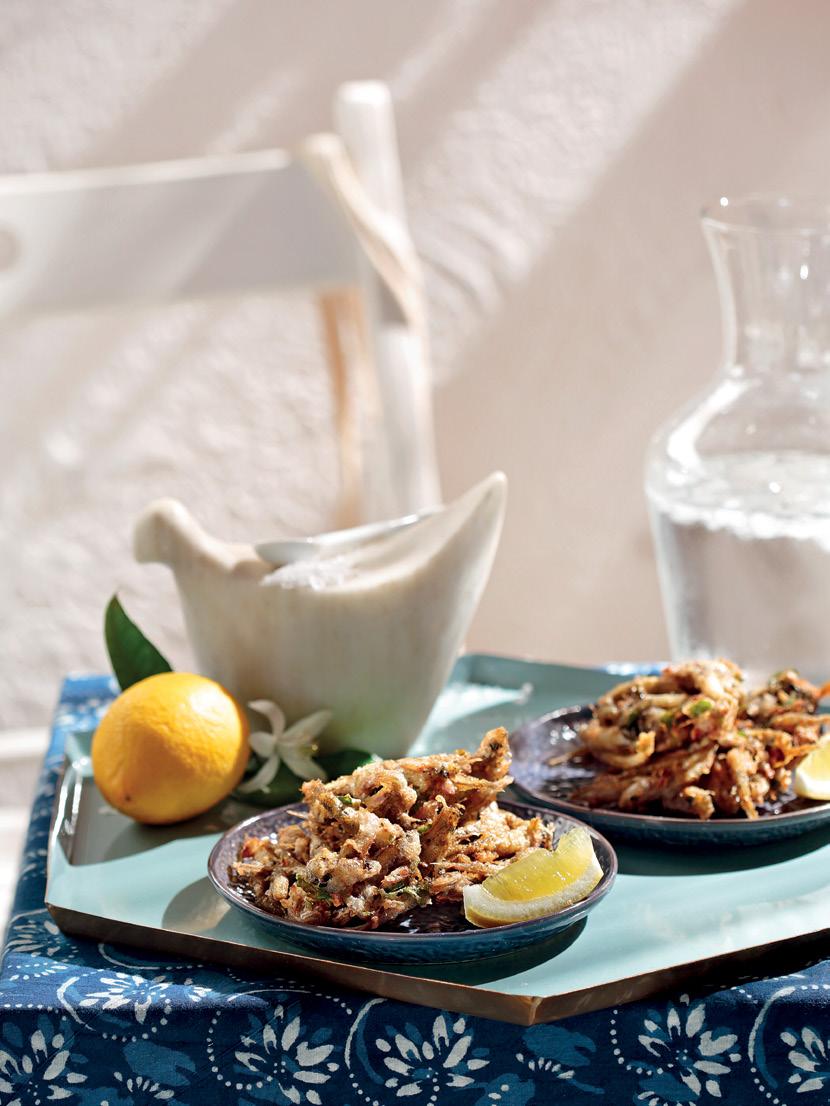
Atherinopita
The sea has always been a source of life, generously offering its bounty to the local table. The people of Santorini are both fishermen and farmers, poised between the secrets of the open water and the rhythms of the land. On the island, fresh small fish, known as atherina, give rise to a distinctive meze, atherinopita – a dish that often takes centre stage at the family table, while also pairing perfectly with tsipouro. A little flour and chopped onion, together with thyme or oregano, are combined with the tiny fish and fried in olive oil, creating abundant flavour.
Tomatokeftedes
The aromatic and thicklyfleshed cherry tomato is a symbol of Santorini. Tomatokeftedes are a meze for every moment: a welcoming treat and a quick dish prepared by home cooks with fresh summer tomatoes or with preserved ones during the winter months. A masterpiece of the cucina povera, which knows how to create greatness from the simplest ingredients, the dish highlights fresh herbs –mint or parsley– and the sweetness of natural onion, while frying in olive oil gives them their rich flavour and an irresistible, crisp crust.
Fava
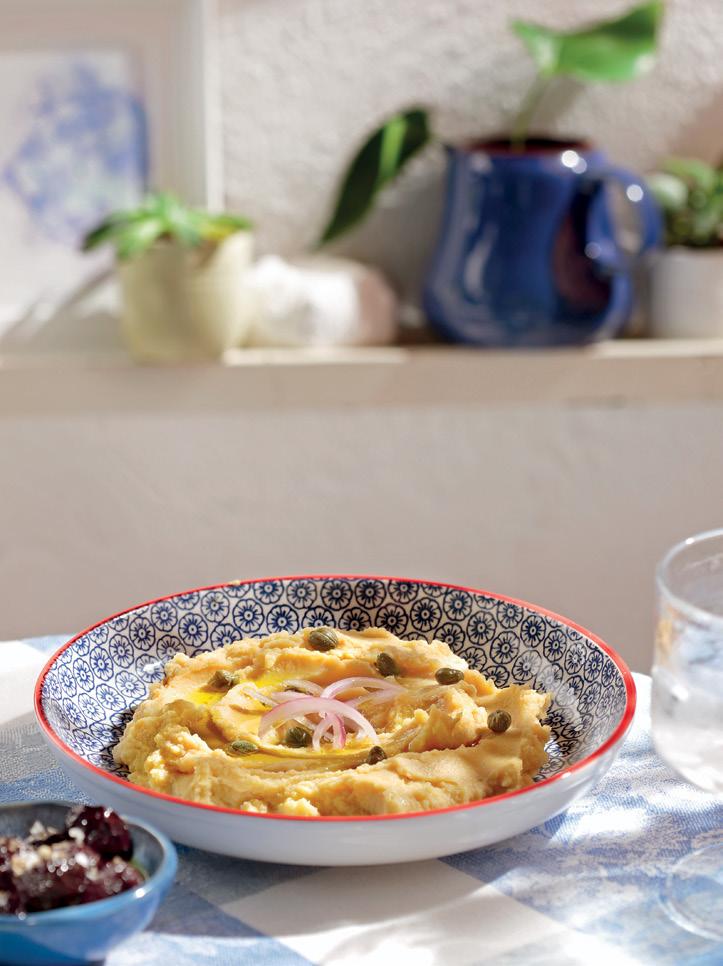
Santorini’s love affair with fava stretches back more than 3,500 years. In 2011, it was awarded PDO status, thanks to its natural sweetness and velvety texture. A nourishing, easy-to-cook legume, it is sown each December and harvested in April, then prepared in countless ways: fava with onion, or with lard and tomato paste, fava with tomato, onion, and capers, or paired with pork or octopus. It is also transformed into soups, fritters, and even omelettes, while contemporary creativity has found new ways to showcase it in experimental kitchens.
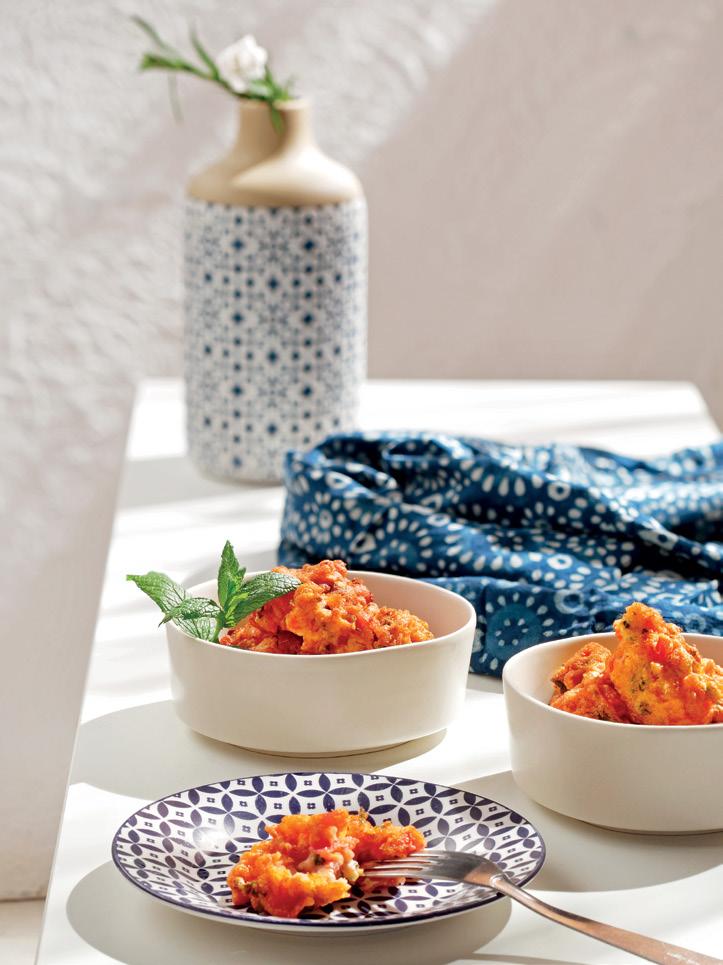
Sfougato
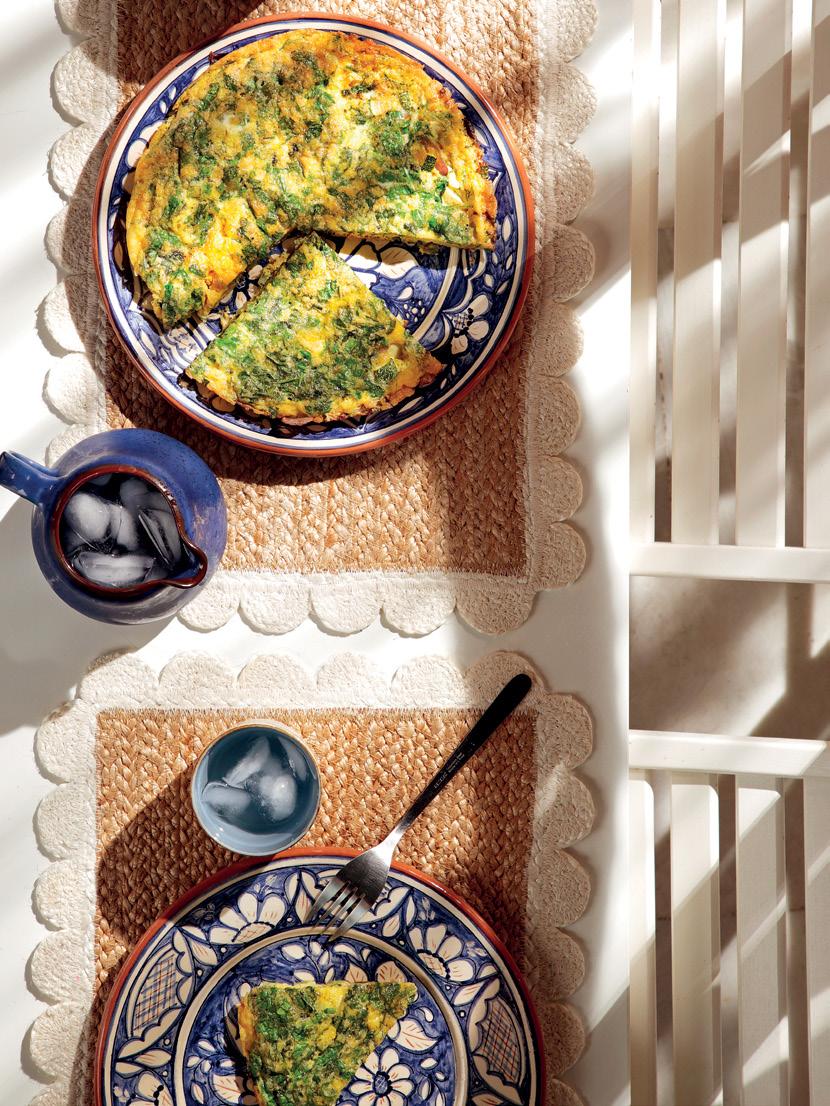
In earlier times, every household kept its own chicken coop. Poultry appeared on the table on festive occasions. Eggs, however, were always a staple of the daily diet, offering a quick meal for the busy housewife working in the fields. The family garden, meanwhile, provided seasonal vegetables –tomatoes, courgettes, and aubergines. Sfougato is Santorini’s version of the omelette, made with finely chopped vegetables and tomatoes sautéed in olive oil before the eggs are added. It’s a dish to suit every appetite and every occasion.
Melitinia
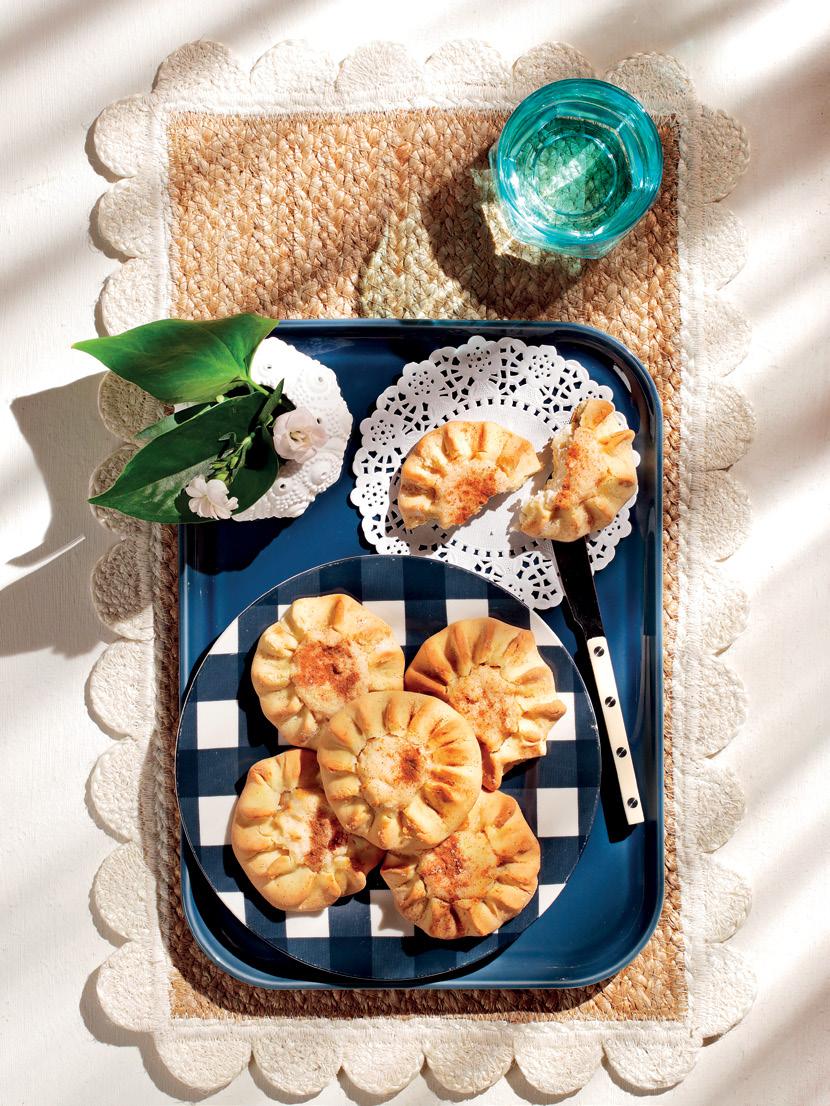
The sweets of local culinary tradition are prepared for major celebrations or on important occasions such as weddings and christenings. Melitinia are delicate “little baskets” of dough filled with a mixture of fresh spring cheeses –myzithra and anthotyro– along with honey, mastic and eggs, before being baked in the oven. Their preparation requires skill and patience, and becomes an occasion for learning, as older home cooks gather to pass down their craft to the younger generation.
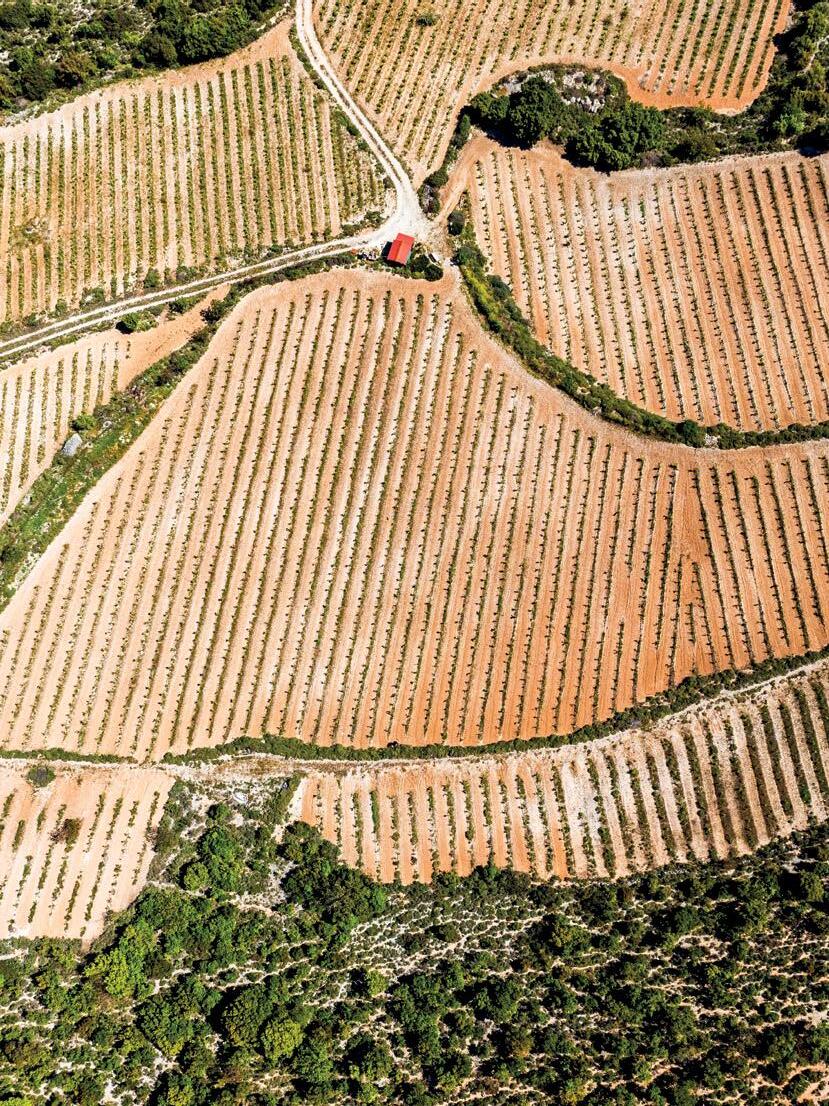
On the slopes of Mount Aenos, a winery captures the essence of Kefalonia in its wines.
Rooted In Terroir
EN
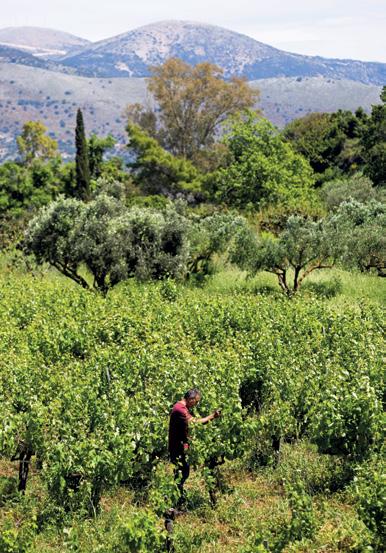
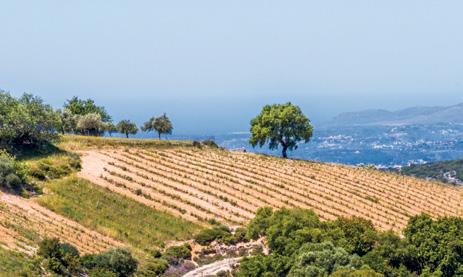
Where the stone of Kefalonia’s steep limestone slopes meets the Ionian Sea, and maritime winds sculpt the vineyard, Sclavos Winery consistently tells the story of its unique terroir through wines that express the island’s climate and viticultural heritage with remarkable clarity. From the very beginning, Evriviadis Sclavos viewed the vineyard as a living organism and wine as a vessel of the land’s memory. This philosophy gave rise to wines with a strong sense of place and origin, playing a pivotal role in the international recognition of Kefalonia’s distinctive vineyard landscape.
Among the grape varieties that the winery has championed with unwavering dedication, Vostilidi holds a special place. Sclavos was among the first to recognise its potential, and in his wines the variety reveals itself through a rare combination of saline minerality, a refined aromatic profile, and remarkable structure. It captivates with its elegance, complexity, and precise expression of the island’s microclimate, captured in the glass with both depth and clarity.
Robola, on the other hand, is Kefalonia’s flagship variety and its most distinguished
Text: Eleftheria Vasiliadi, Photos: Petros Sofikitis
EN
ambassador. Grown at high elevations on the slopes of Mount Aenos, it develops the vibrant acidity, taut structure, and distinctive minerality for which it is renowned. In Sclavos’ hands, the variety gains even greater depth, expressing the concept of terroir with exceptional purity and consistency. Wines such as Vino di Sasso embody the island’s bare stone, brilliant light, and sea breezes, offering one of the most authentic and restrained interpretations of Robola to be found in Greece.
In an era when winemaking often pursues uniformity, Sclavos Winery remains devoted to distinctiveness. Through Vostilidi, Robola, and other local varieties such as Tsaousi and Mavrodaphne of Kefalonia, it tells the story of a place that continues to surprise even the most experienced wine enthusiasts.
ROBOL
A , GROWN AT HIGH ELEVATIONS ON THE LIMESTONE SLOPES OF MOUNT A ENOS, DEVELOPS THE VIBR A NT ACIDITY, TAUT STRUCTURE, A ND DISTINCTIVE MINER A LITY FOR WHICH IT IS RENOWNED.
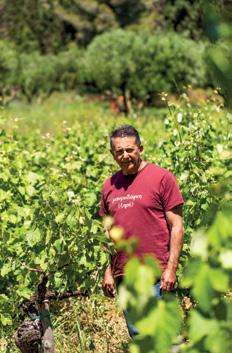
FAITHFUL to his homeland, Evriviadis Sclavos embodies Kefalonia’s heritage in his wines.
https://tastecrete.eu/el/
https://tastecrete.eu/el/
A CITY UNFOLDS
Every corner of Kavala is a captivating blend of history, flavour, sea breezes, and unforgettable aromas.
Text: Romina Xyda
Photos: Yiannis Giannelos
Wix,
ΕΝ
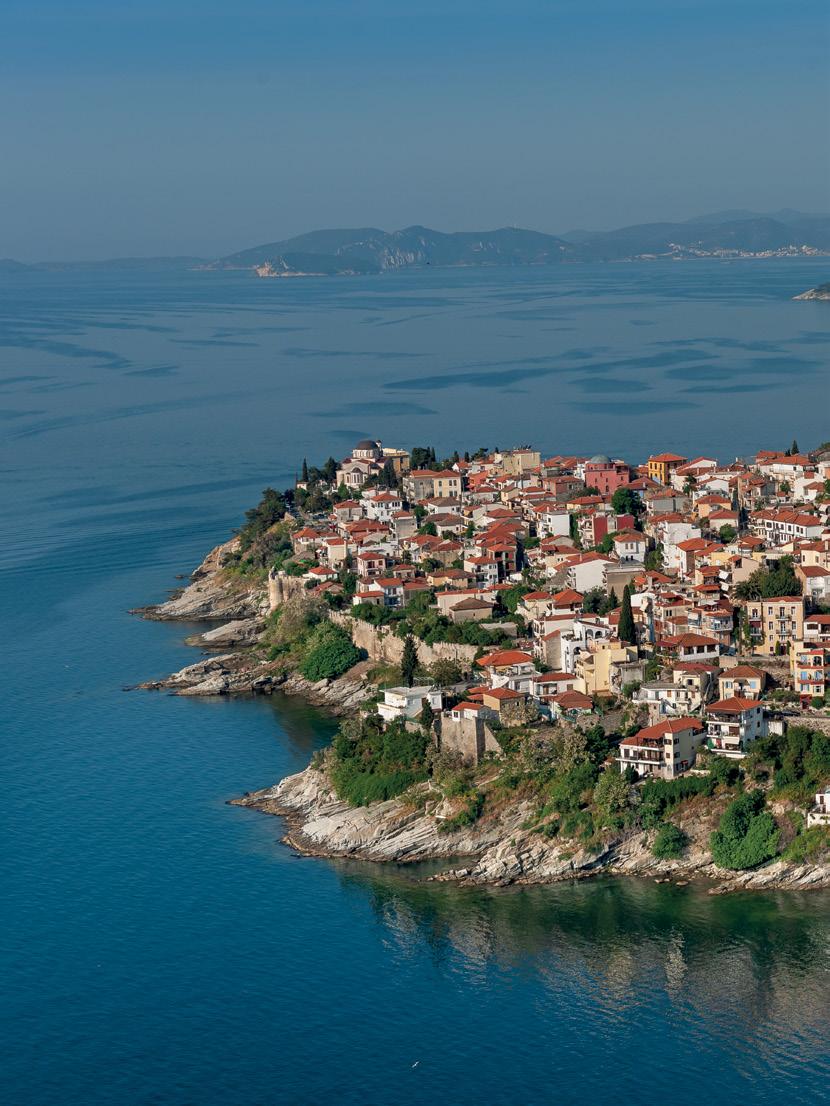
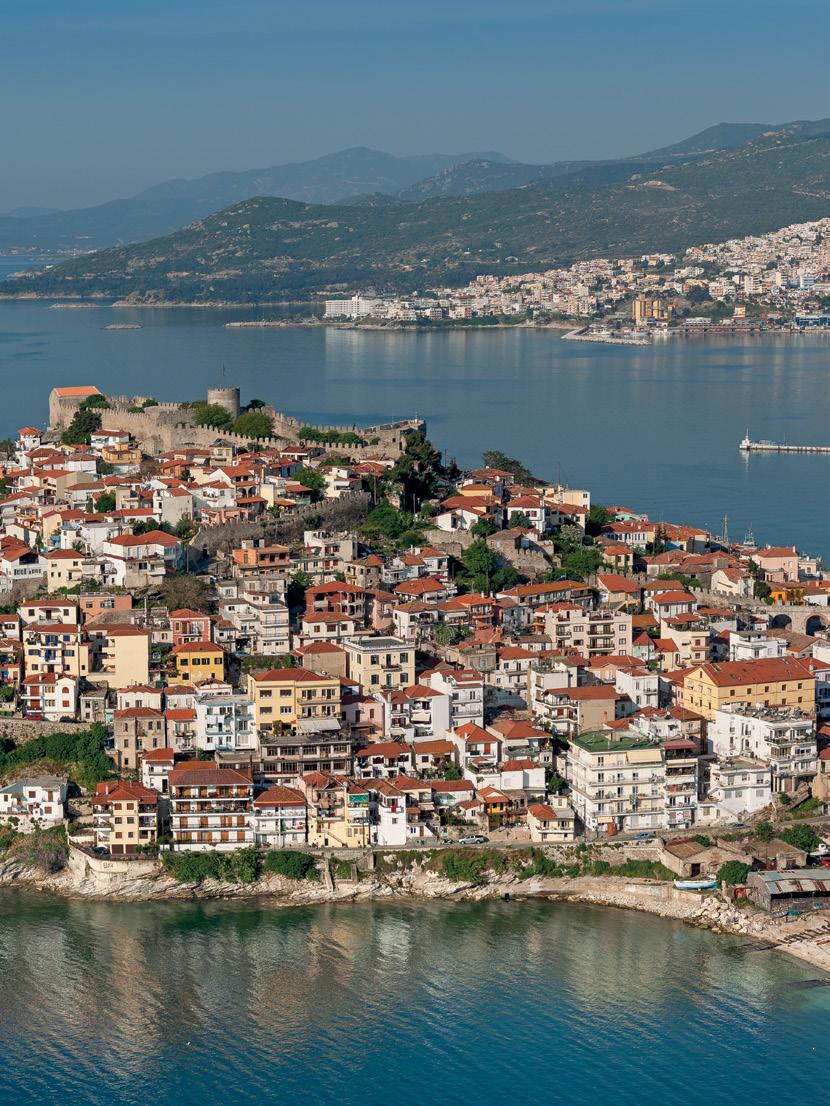
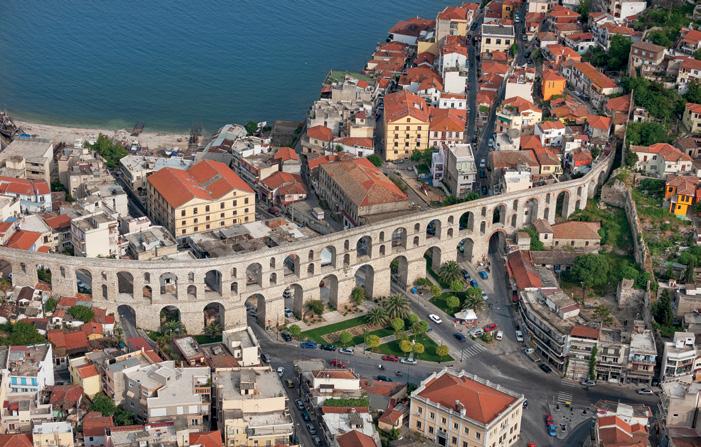
Right from the start, Kavala welcomes you through its landmarks: the Kamares –the Byzantine aqueduct that has defined the skyline for centuries– the Castle, perched high above the harbour with sweeping views of the sea, and the Imaret, one of the finest Ottoman monuments in Greece. It is as if the city makes one thing clear: its history is not a footnote, but an integral part of everyday life.
Then it leads you to its iconic buildings: the Great Club, the Herzog Mansion, the Wix Mansion and the Halil Bey Mosque. They are architectural masterpieces that do more than simply line the streets; they stand with the confidence of places shaped by centuries of history.
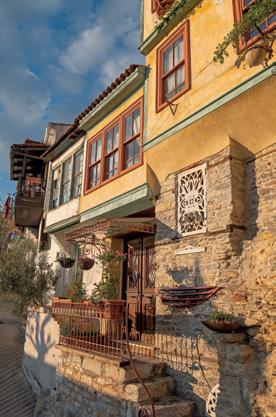
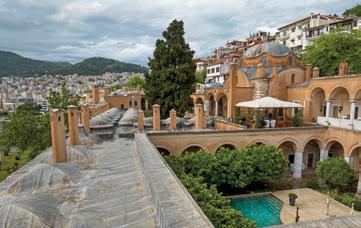
It is almost impossible to resist the pull of Kavala’s picture-perfect Old Town, a neighbourhood wholly unsuited to hurried visits. You wander through its cobbled lanes, admiring the tiled-roof houses, courtyards overflowing with basil and geraniums, the wooden balconies that seem to hover above the narrow streets, and views bathed in endless shades of blue. Yet its charm does not end there. It flows down towards the harbour, passes through Ermou Street and lingers for a moment on Omonia, where the
STRETCHING 270 metres and rising 25 metres, the aqueduct dominates the landscape.
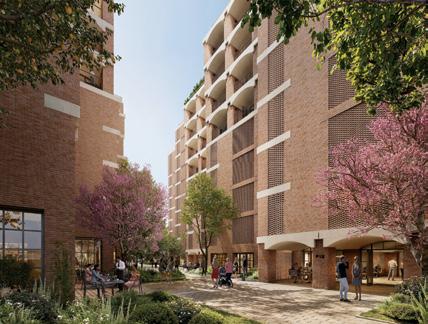
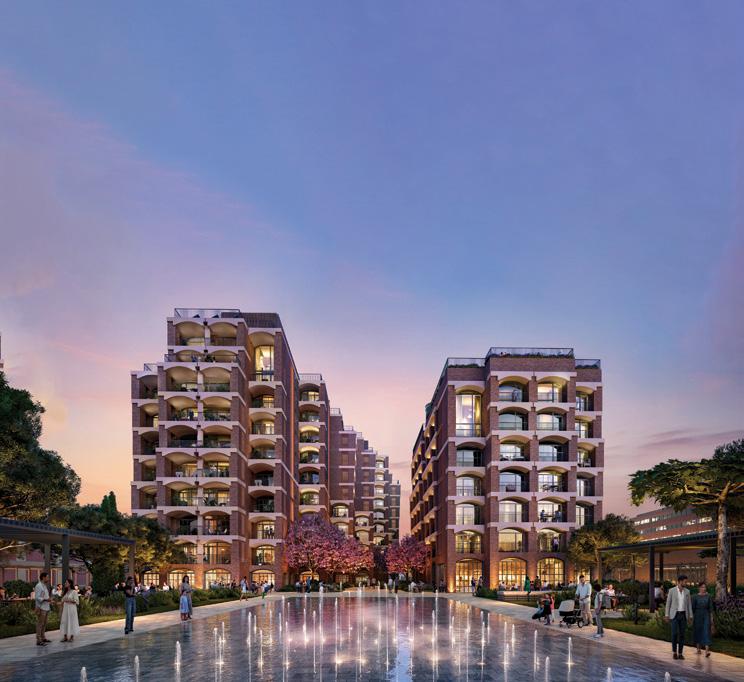
FIX Residences
aroma of freshly ground coffee is ever-present, treats you to a traditional kourabie butter cookie with powdered sugar from Nea Karvali, and continues past the old tobacco warehouses –silent witnesses to an era when Kavala was one of the Balkans’ leading tobacco-trading centres– and through the refugee quarters that still keep the memories of Asia Minor alive.
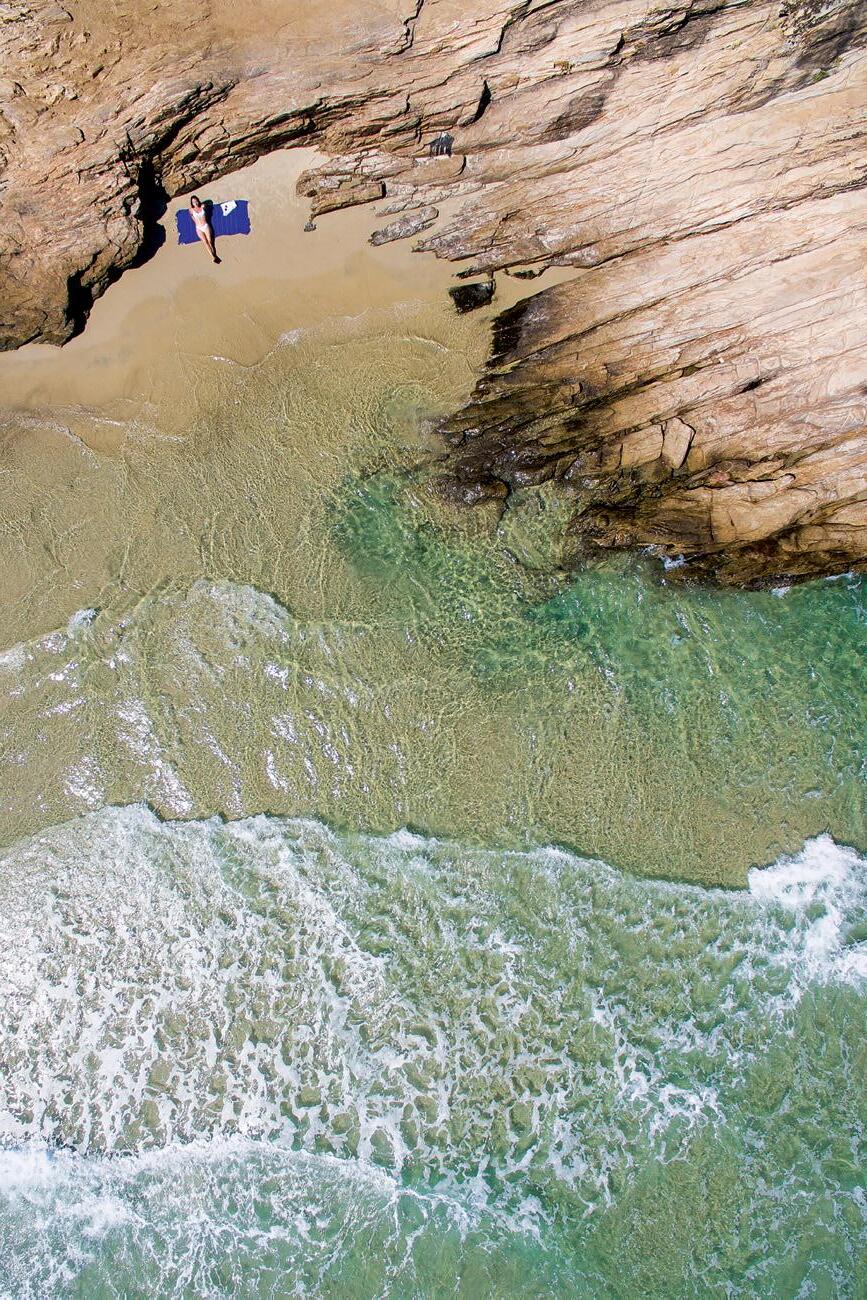
Throughout it all, the sea remains a constant companion, never ceasing to guide you on a journey. You see it everywhere – from balconies, from café tables, from almost every corner of the city. Perhaps that is why Kavala seems to breathe differently: slowly and deeply. The beaches of Kalamitsa and Rapsani are practically part of the urban landscape, while a little further along lies Perigiali, home to Savvas’ legendary fish taverna, a cherished staple for generations of Kavala residents.
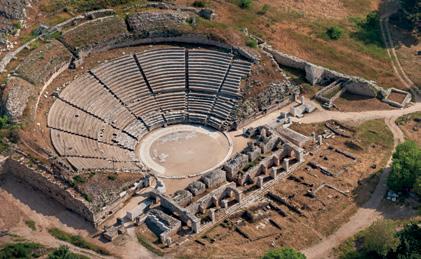
As though all this were not enough, the city tempts you a few kilometres further afield to the archaeological site of Philippi, home to its majestic ancient theatre. Every summer, the stage comes alive with cultural performances, inviting you to become part of the experience.
THE OLD TOWN, the historic Imaret, and the ancient theatre of Philippi.
EXPLORE
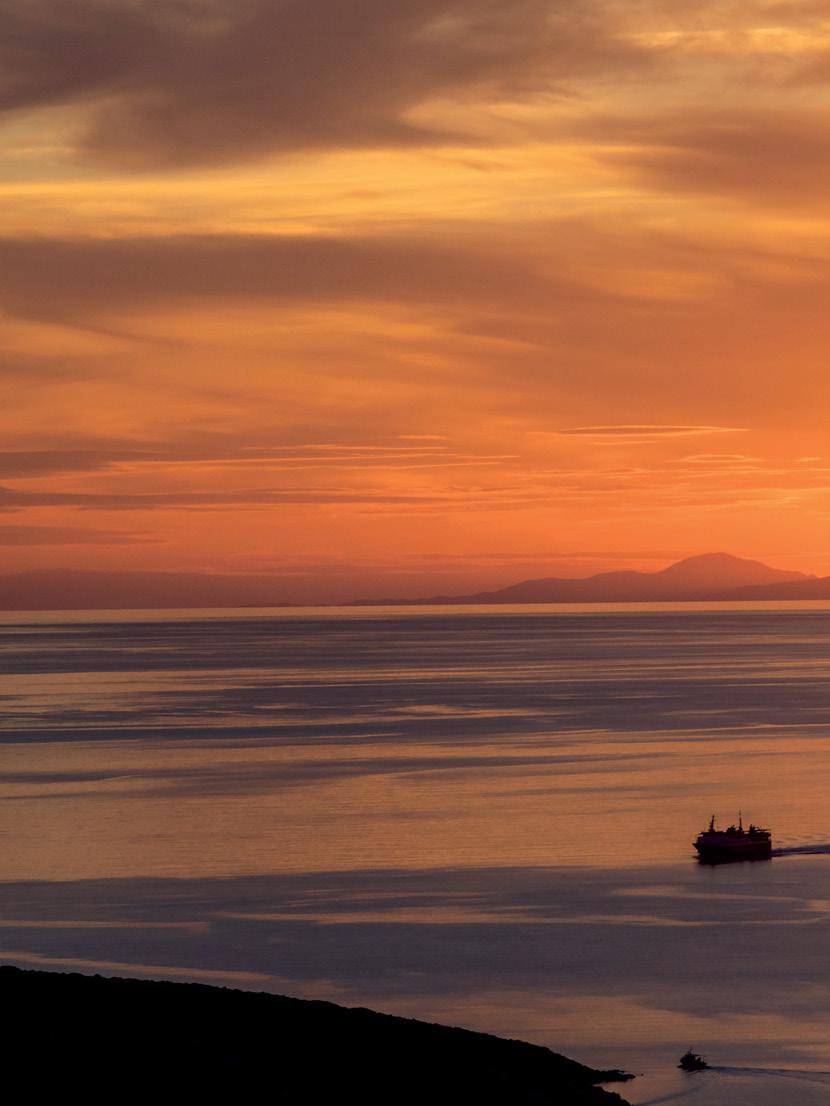
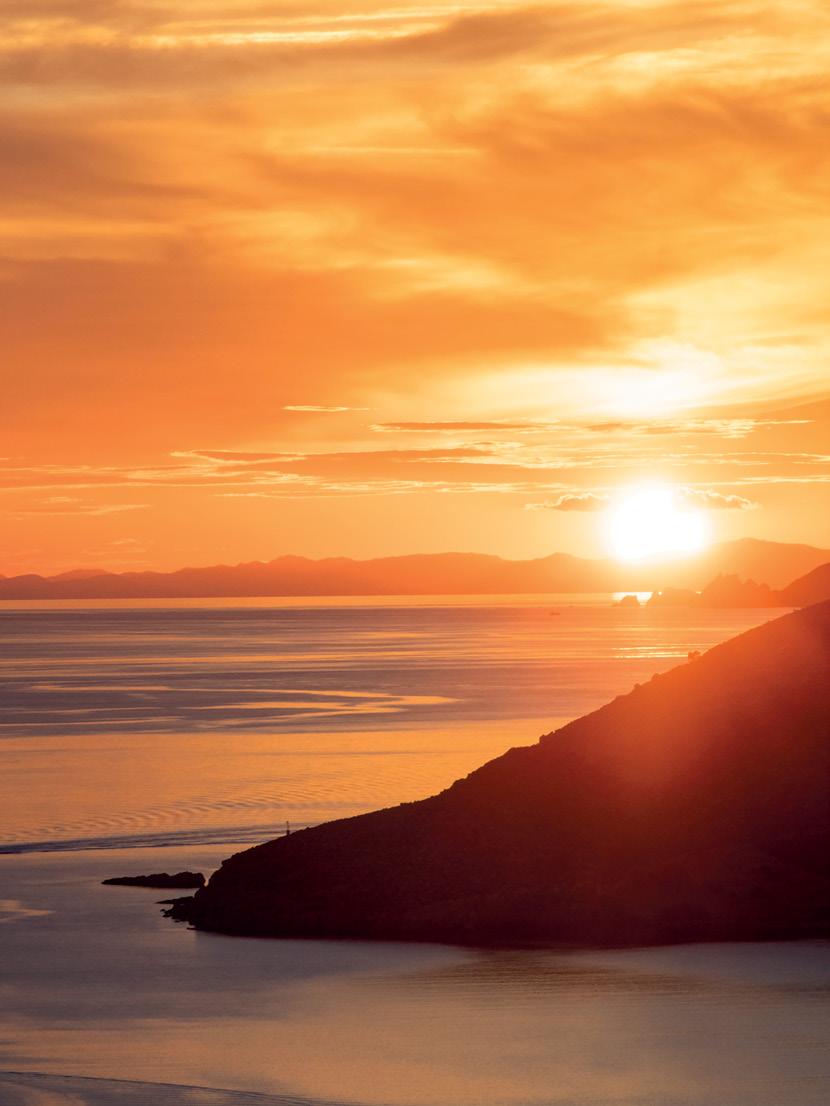
THERE IS a moment that belongs exclusively to the Greek summer. You’ve just washed the salt from your skin, yet your face and body still hold the warmth of the day. The sun begins to sink, the horizon turns to gold, and in the distance you hear the horn of the ferry as it enters the harbour, carrying a new wave of travellers. The evening is just beginning.
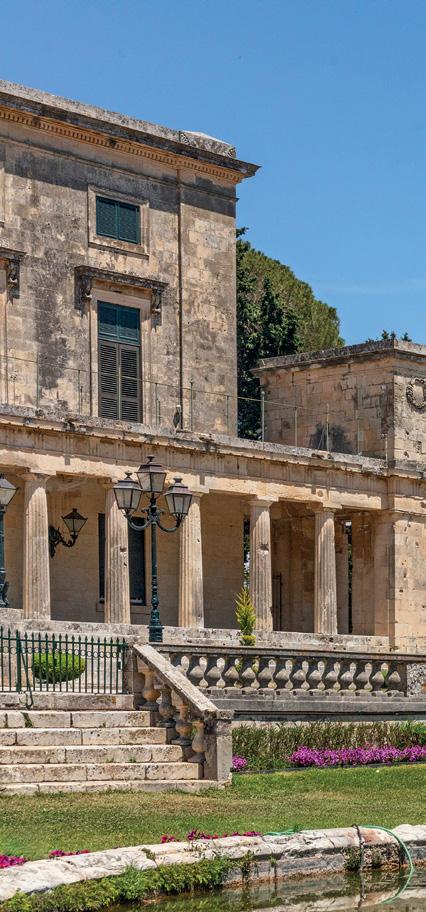
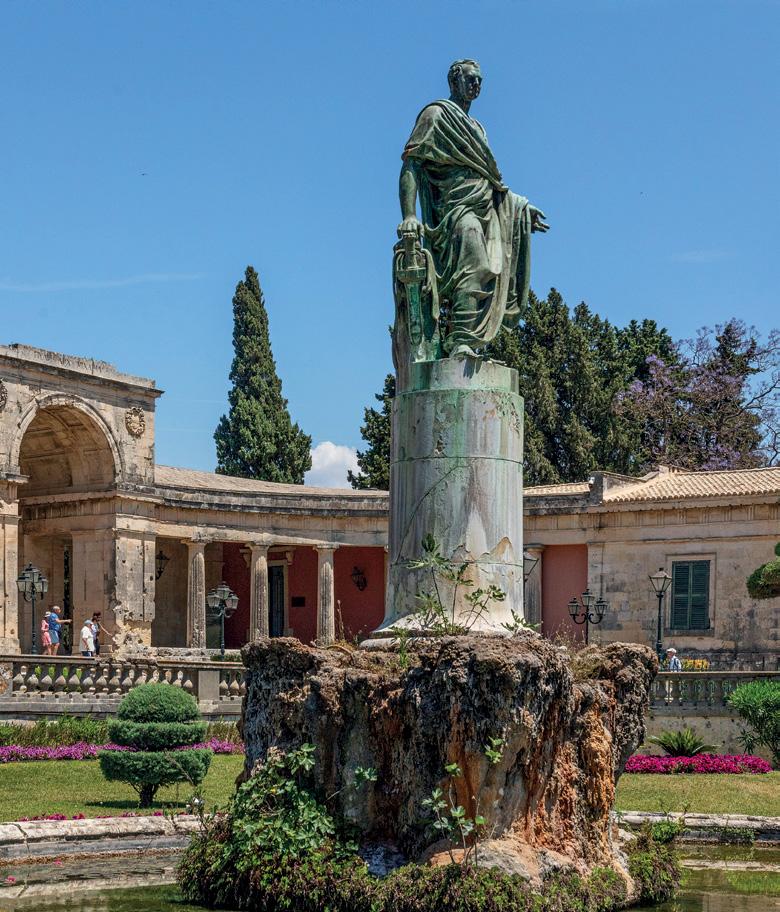
Imposing, elegant, and majestic, the most important monument of the British period in Corfu is an architectural marvel of the city.
Text: Kallia Kastani
Photos: Perikles Merakos
A Regal Landmark
Once a powerful Venetian port that later experienced both French and British rule, the city of Corfu became a crossroads of peoples, cultures, and influences, all of which can still be traced in its magnificent architecture.
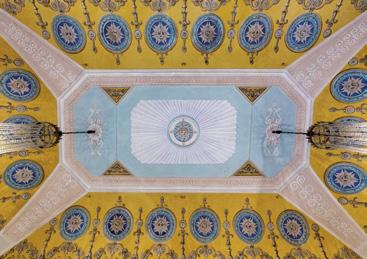
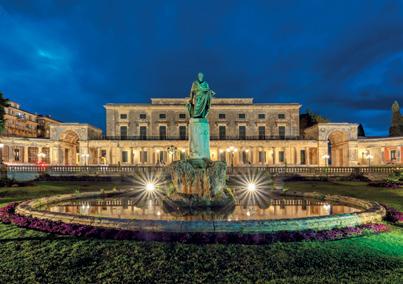
A building of exceptional beauty and scale, the Palace of St Michael and St George dominates the northern end of Spianada Square. It was built between 1819 and 1824 on the orders of Sir Thomas Maitland, the first British Lord High Commissioner of the island, originally intended to serve as his official residence. The Palace was also designed
THE PAL ACE
ARCHITECTURAL grandeur and cultural heritage unite in one of the island’s most emblematic monuments.
GR EN
to house the Ionian Senate and the Ionian Parliament and, as later decided, to become the headquarters of the newly established Order of St Michael and St George. Indeed, it is from this order that the Palace derives its name.
The project was entrusted to Sir George Whitmore, an architect and commanding officer of the Royal Engineers, who designed an elegant neoclassical building in the Regency style. Two storeys high and built in the shape of an inverted U, the Palace was constructed almost entirely from Maltese limestone, specially imported for the purpose. Its exterior is particularly striking, featuring a long colonnade of Doric columns across the façade, culminating at either end in two beautiful, symmetrical arched gateways.
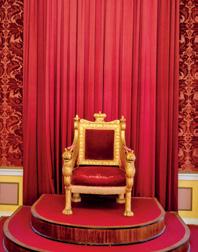
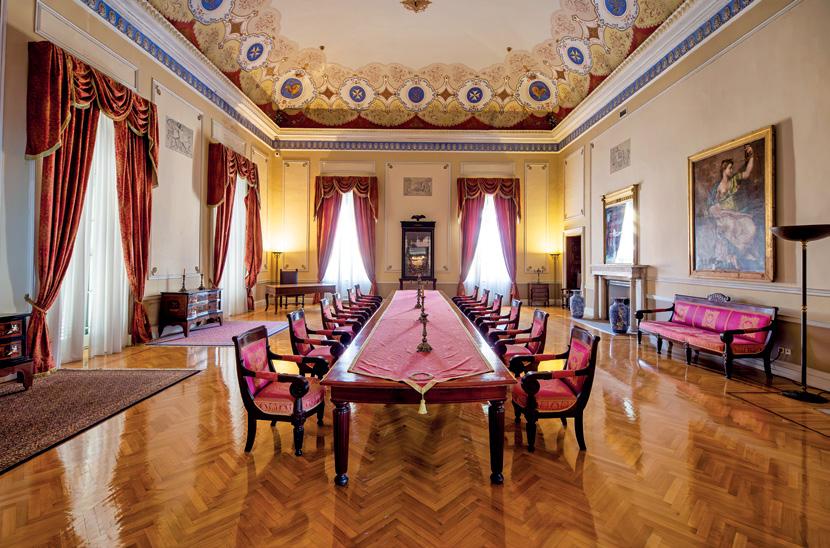
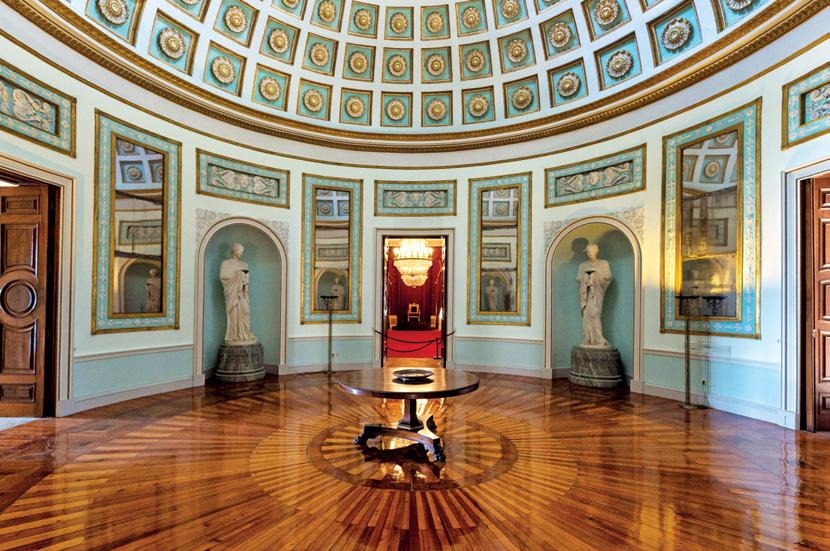
Marble and bronze were extensively used throughout the interior, from the grand central reception hall with its Ionic colonnade to the first floor, where Corinthian columns frame three monumental state rooms: the circular Reception
WAS ENTRUSTED TO SIR GEORGE WHITMORE, AN ARCHITECT AND COMMANDING OFFICER OF THE ROYAL ENGINEERS, WHO DESIGNED
AN ELEG ANT NEOCL ASSICAL BUILDING IN THE REGENCY STYLE .
EN
THE PALACE now houses the Municipal Art Gallery and the Museum of Asian Art.
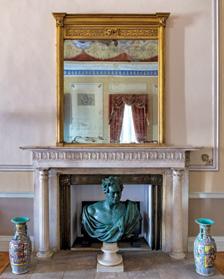
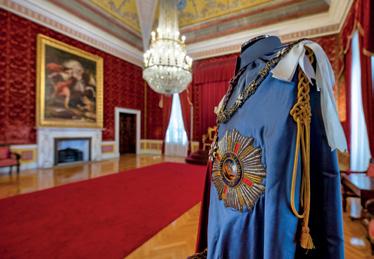
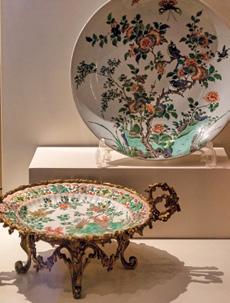
Hall (Rotunda), distinguished by its magnificent domed ceiling and radiating floor pattern, the Banquet Room, and the Throne Room. Painted ceilings, frescoes, mirrors, fine porcelain, crystal chandeliers, heavy draperies, and rich red carpets adorn the interiors, enveloping every space in an atmosphere of elegance and luxury.
In 1864, following the union of the Ionian Islands with Greece, the Palace became the property of the Greek state and, until 1913, was used periodically as a summer residence by the then royal family.
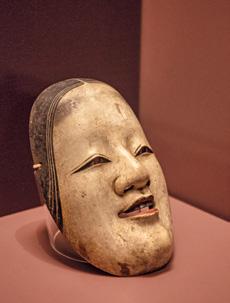
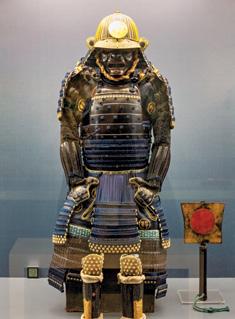
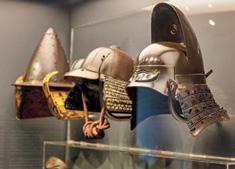
Today, the Palace houses the Municipal Art Gallery and the Museum of Asian Art – the only museum of its kind in Greece and one of Corfu’s most important attractions. Equally rewarding is a stroll through the idyllic Garden of the People that surrounds it, a lush, shaded oasis overlooking the sea, the Old Venetian Fortress, and the small island of Vido.
GR




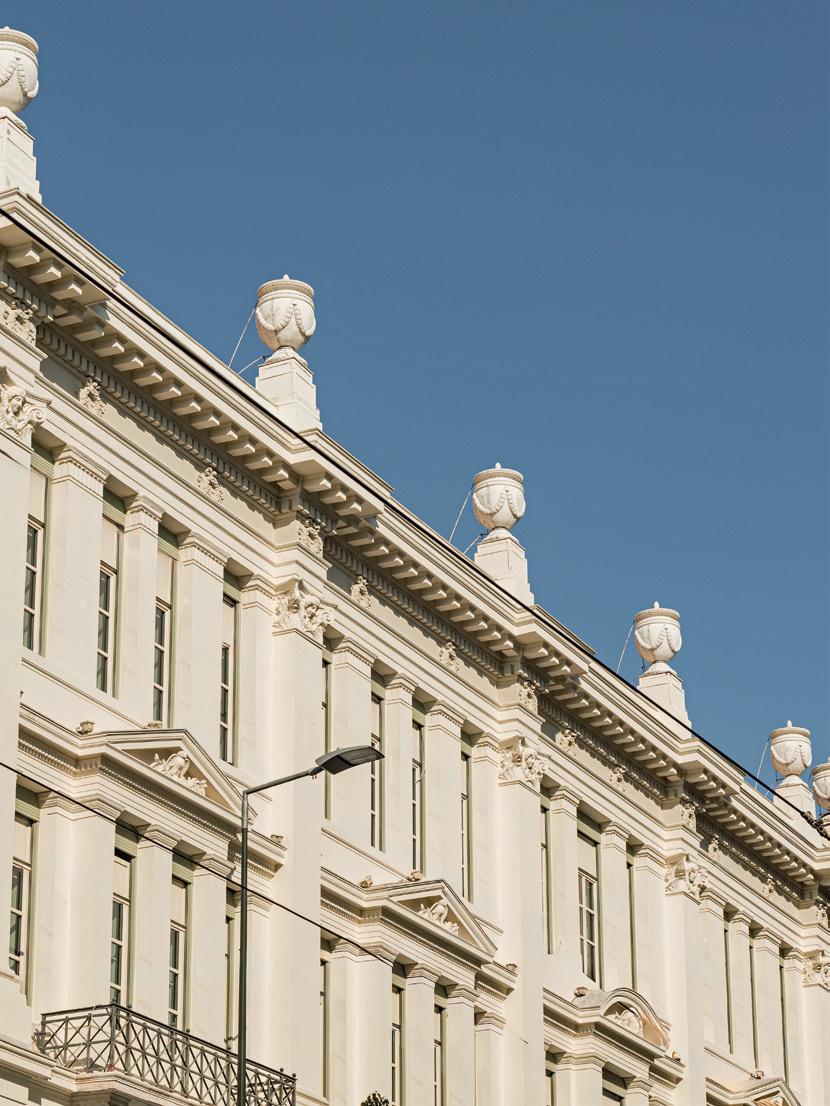
στην οδό Πανεπιστημίου μεταξύ 1846 και 1852, στεγάζοντας μέχρι τη δεκαετία του ’30 τα εμβληματικά Αρσάκεια και Τοσίτσεια Σχολεία. Στις αρχές του 20ού αιώνα, το Μέγαρο επεκτάθηκε, ενώ το 1907 δημιουργήθηκε η Στοά Αρσακείου
The historic Arsakeio Mansion is being reintroduced as a centre of culture, gastronomy, and social life.
An Urban Revival
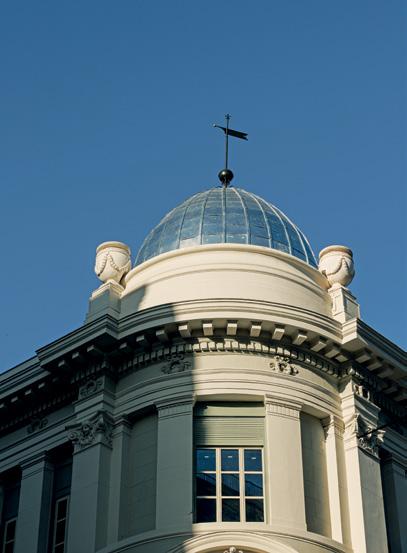
Few buildings in Athens carry the city’s memory as vividly as the Arsakeio Mansion. Behind its neoclassical façade, generations of schoolgirls walked its corridors, while its Arcade served for decades as a hub of commercial life – a lively crossroads where countless everyday stories unfolded.
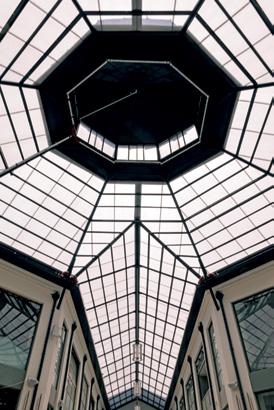
Designed by the celebrated architect Lysandros Kaftanzoglou, the building was erected on Panepistimiou Street between 1846 and 1852, serving as the home of the prestigious Arsakeia and Tositseia Schools until the 1930s. In the early twentieth century, the complex was expanded, and in 1907 the Arsakeio Arcade was added –one of Athens’ first covered shopping galleries, inspired by the elegant passages of Paris. Later interventions by Ernst Ziller, with their distinctive vaulted roofs and elaborate cornices, were instrumental in defining the building’s architectural character. With its bookshops, jewellers, and a diverse array of stores, the Arcade emerged as one of the most dynamic spots in the city centre. Beyond its commercial role,
Text: Ellie Karnezi, Photos: Spyros Chamalis
it became a lasting place of encounter – a space where people met, connected, and exchanged ideas.
Today, this legacy is being revived through the building’s renewed presence as it returns to the heart of Athenian life – a vibrant hub of culture, creativity, and engagement, where memory meets the city’s modern pulse.
διάστημα, η γαστρονομία θα προσθέσει μία ακόμη
διάσταση
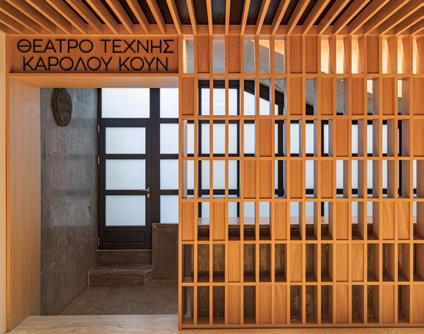
The Karolos Koun Art Theatre and the Europa Experience reinforce the building’s educational and cultural mission, continuing its tradition as a place of knowledge and public discourse. In the coming months, gastronomy will further enrich the visitor experience through Greek products, Mediterranean flavours, and welcoming dining spaces that celebrate the richness of Greek cuisine. At the same time, the Retail Hall will reintroduce commercial activity with a curated selection of contemporary shops, while preserving the complex’s historic character.
In the courtyard –already hosting cultural events and activities– the renewal of this landmark is most clearly expressed: a revival that honours the past, thrives in the present, and inspires the future.
Let Athens Spring a Surprise on You.
From festival stages in every neighbourhood to timeless landmarks and everyday wonders, the city blooms in unexpected ways.
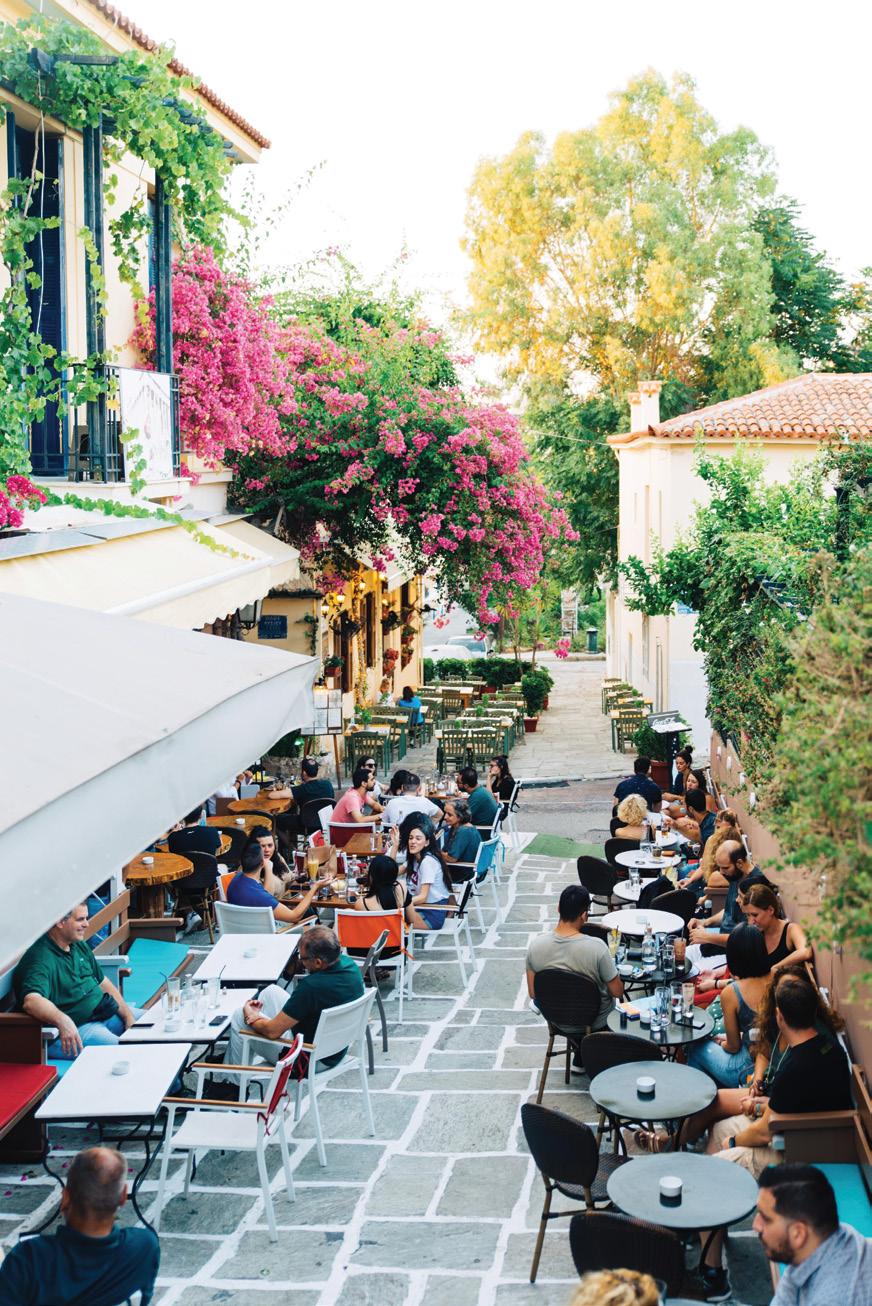

THE INSIDER
Tips & tricks. The Ultimate Guide for your Destination
ΣΚΙΆΘΟΣ/SKIATHOS
Golden Sands Escapes
2
KOUKOUNARIES
The island’s most famous beach, framed by a dense pine forest and lapped by crystal-clear turquoise waters. Fully organised and easily accessible, it’s a must-visit for every traveller.
LALARIA
A striking coastline of dazzling white pebbles and towering cliffs. Accessible only by sea, it rewards visitors with a sense of raw, untouched beauty.
1 4 5 6
A Cliffside Hollow
3
TROULOS
Fine sand and pristine waters, with views of the small islet opposite resembling a dome. A peaceful setting, perfect for relaxed swims and slow summer days.
VROMOLIMNOS
Beach bars and seaside
tavernas meet turquoise waters and soft sand, creating one of the island’s most loved and lively beach scenes.
MEGALI BANANA
Golden sands, crystalclear waters, lively beach bars and water sports create a vibrant atmosphere, especially popular with a younger crowd.
GR
EN
Among pine trees and olive groves, the narrow stone alleys in the picturesque village of Agalas lead to the Cave of Damianos. Its most striking feature is that the cave has two levels. You can carefully explore both chambers, although reaching the upper one requires a short climb. The view of the hills covered in dense vegetation and the sea in the distance is truly captivating.
AGIA ELENI
A tranquil bay overlooking Mount Pelion, ideal for families. Shallow, crystalclear waters, soft sand, and organised facilities ensure a calm and comfortable experience.
ACCORDING to tradition, the benevolent ruler Damianos fought and defeated the evil dragon Andronios at this very spot. As punishment, he forced him to build twelve wells around the village, so that the inhabitants would always have water to drink.
Tastes
Worth Taking
Souma: A traditional spirit distilled from grape pomace, with a warm aroma and a smooth taste. It pairs well with cheeses and desserts and is a characteristic product of Samiot distillation.
Extra Virgin Olive Oil: Golden and fruity, with a delicate bitterness and full flavour, it is produced in the island’s traditional olive groves and is a staple of the local cuisine. Honey: Thyme or pine honey, aromatic and rich in flavour, reflecting the biodiversity of the hills of Samos and considered among the most distinctive in Greece.
MUSCAT OF SAMOS
The island’s most famous PDO wine, made from small, aromatic grapes. It stands out for its fruity, unique character – one which reflects Samos’ timeless winemaking traditions.
ΚΕΡΚΥΡ
/CORFU
Unmissable Attractions
1 2 3 4 5 6 7 8
OLD TOWN: Wander through the alleys and discover the city’s rich history.
SPIANADA SQUARE AND LISTON: Enjoy a coffee or ice cream in the largest square in Greece, with its neoclassical buildings and lively atmosphere.
ACHILLEION: Visit the impressive palace of Empress Elisabeth of Austria, with its beautiful gardens.
MOUNT PANTOKRATOR: Drive or walk to the island’s highest peak and admire the panoramic views.
MONASTERY OF PALEOKASTRITSA: Follow the steps up to the historic monastery overlooking the Ionian and experience the tranquillity of the landscape.
OLD PERITHIA: Discover the abandoned village and explore its stone pathways.
CANAL D’AMOUR: Swim in the famous canal with its striking rock formations, one of the most distinctive natural landscapes on the northern coast.
BOAT TRIP: Hire a boat or join an organised excursion to discover hidden beaches and secluded coves.
1
Medieval Island Treasures
2
3
Grand Master’s Palace: The most imposing monument of the Knights’ period, it operates as a museum featuring impressive mosaics, medieval artefacts and historical representations of the era.
Archaeological Museum: Housed in the Hospital of the Knights, it hosts important archaeological finds, such as the Aphrodite of Rhodes and the marble head of Helios.
Museum of Modern Greek Art: Home to one of the most important collections of painting, printmaking and sculpture, featuring works by distinguished 20th-century artists that reflect the evolution of Greek art.
4 5
Decorative Arts
Collection: Located in the Armoury of the Medieval City, it presents embroidery, wood carvings, ceramics and other objects of Dodecanese folk tradition.
Panagia tou Kastrou: Housed in the Gothic basilica of the same name, it presents a permanent collection of Byzantine icons, medieval sculptures and ecclesiastical artefacts highlighting the island’s religious tradition.
Fossilised Wonders
The Petrified Forest of Lesvos, one of the largest in the world, is considered among the most impressive geological monuments in Greece. Around 18 million years ago, volcanic ash covered a large part of the North Aegean, freezing in time everything that lived in the area and creating a fully petrified ecosystem. Tree trunks and plant remains are preserved in exceptional condition, revealing valuable evidence about natural history and the evolution of ecosystems. Today, it operates as an open-air natural museum, is protected as a Preserved Monument of Nature, and forms part of the UNESCO Global Geopark of Lesvos.
ΜΥΚΟΝΟΣ/MYKONOS
A Beacon Over the Aegean
The Armenistis Lighthouse, built in 1891 at the northwestern tip of Mykonos, is one of the island’s most distinctive landmarks. Standing at 19 metres tall, it rises above the Aegean, offering panoramic views of the surrounding islands. It was constructed following the shipwreck of the British vessel Volta, while its original Fresnel-type lens had been awarded at the Paris International Exhibition. Today, it is a favourite spot for magical sunsets.
In Kos, the Hippocrateia are held every year, an important cultural institution dedicated to the father of medicine. From July to September, the island comes alive with concerts, performances and exhibitions. The highlight of the events is the evocative re-enactment of the Hippocratic Oath at the ancient Asklepieion – a ceremony that captivates visitors from around the world.
XANIA/CHANIA
Cretan Cheese Guide
GRAVIERA KRITIS: The island’s finest hard cheese, usually matured for around three months. It stands out for its slightly piquant flavour and rich aroma. ‣ XINOMYZITHRA: White, soft and creamy, with a distinctly tangy taste. Made from sheep’s or goat’s milk and used in pies and traditional dishes. ‣ PICHTOGALO CHANION: Soft and spreadable, slightly salty and mildly sour. A key ingredient in traditional Chania-style Bougatsa (traditional Greek pastry). ‣ XIGALO SITIAS: Fresh and creamy, with a gentle tangy flavour. Produced mainly in Sitia and enjoyed as a spread or accompaniment. ‣ ANTHOTYROS: Made from whey. In its fresh form it is soft, while the dried version is firmer and saltier, ideal for grating. ‣ MYZITHRA: A traditional whey cheese made from sheep’s or goat’s milk. In its fresh form it has a mild, slightly sweet taste, while the dried version is grated over pasta.
A Unique Tradition
Karya in Lefkada is known for the Karsaniko stitch, a unique embroidery technique that emerged in the late 19th century. It is associated with Maria Stavraka, known as Koutsochero, who, despite a severe disability in her hands, devised her own method of embroidery and created an original stitch. This technique spread among the women of the village and remains an important part of the island’s cultural heritage.
360
356
Secrets of Philippi
360 BCE: Colonists from Thassos found Krinides.
356 BCE: Philip II of Macedon captures the city, renames it Philippi, and strengthens it both militarily and economically.
2nd century BCE: The passage of the Via Egnatia, a Roman road, through Philippi establishes it as a key point of reference in the region.
42
Colonia Augusta Julia Philippensis.
49-50
3,5
4:
1:
42 BCE: The Battle of Philippi establishes the area as an important Roman urban centre; it later develops into a Roman colony, known as Colonia Augusta Julia Philippensis.
49-50 CE: The Apostle Paul visits the site and founds the first Christian church on European soil.
3.5 km: The approximate total perimeter of the walls that surrounded the city from the 4th century BC to the Byzantine period.
500 CE: The complex of Basilica A is built, covering an area of approximately 6,800 sq. m, and is one of the site’s most important monuments.
1914: Excavations by the French Archaeological School begin.
2016: The archaeological site is added to the UNESCO World Heritage List.
87.5 hectares: The approximate extent of the protected archaeological site, according to UNESCO data.
4: Main historical periods are represented at the site –Hellenistic, Roman, Early Christian and Byzantine– reflecting the city’s continuous use over time.
1: Ancient theatre on site. It was built during the reign of Philip II and continued to be used in the Roman and Byzantine periods.
THE SITE OF PHILIPPI is one of the most important archaeological sites in Macedonia. The unique monuments and archaeological remains preserved to this day bear witness to the city’s long history and life.
76
69
567
15,500
300
3-3,5
DID YOU KNOW THAT? Santorini, together with Therasia and Aspronisi, originates from an ancient volcanic landform that in antiquity was known as Strongyli. The Minoan eruption, around 1600 BC, destroyed the central part of the island and the prehistoric settlement, forming today’s Caldera.
THE SECRET RECIPE
•
15
The city’s iconic koulouri, crisp and coated in sesame seeds.
• 300 ml lukewarm water
• 1 sachet dry yeast
• 550 g all-purpose flour
• 25 g sugar or honey
• ½ tsp salt
• 250 g sesame seeds
INSTRUCTIONS : In lukewarm water, dissolve the yeast with the honey and leave for 5 minutes to activate. Gradually add the flour and knead until a soft dough forms. Cover and leave to rise for one hour. Shape the dough into ropes and form rings. Dip them in water and coat with sesame seeds. Place on a baking tray and bake at 200°C, for approximately 15 minutes.
Into
the Woods
ON THE MOST BEAUTIFUL forest trails of the Peloponnese.
FOLOI FOREST (ILIA): One of the most important oak forests in Europe, unique in the Balkans for its extensive, flat landscape of oak trees. Ideal for relaxed walking, with the most well-known route being Gravata. MENALON TRAIL (ARCADIA): Crossing valleys, forests and traditional settlements, the trail extends for approximately 75 km. Certified as Leading Quality Trails - Best of Europe, it offers safe and well-marked hiking. TAYGETOS TRAILS (LACONIA): On Mount Taygetos, an extensive network of trails unfolds, covering around 90 km and connecting the mountain villages of Laconia. Forests, historic routes and picturesque landscapes invite hikers of all levels to explore them.
Discover the picturesque villages of Fiskardo and Assos, swim in the crystal-clear waters of Myrtos and Antisamos, as well as the unique Xi Beach with its distinctive red sand. Explore the caves of Melissani and Drogarati, and head up to the protected Mount Aenos for one of the most captivating views in the Ionian.
Don’t visit only in summer. In spring and autumn, Kefalonia reveals a more authentic side. The beaches are quieter, nature is in bloom, and local festivals bring you closer to the island’s culture. Take time to explore the villages and the island’s natural beauty.


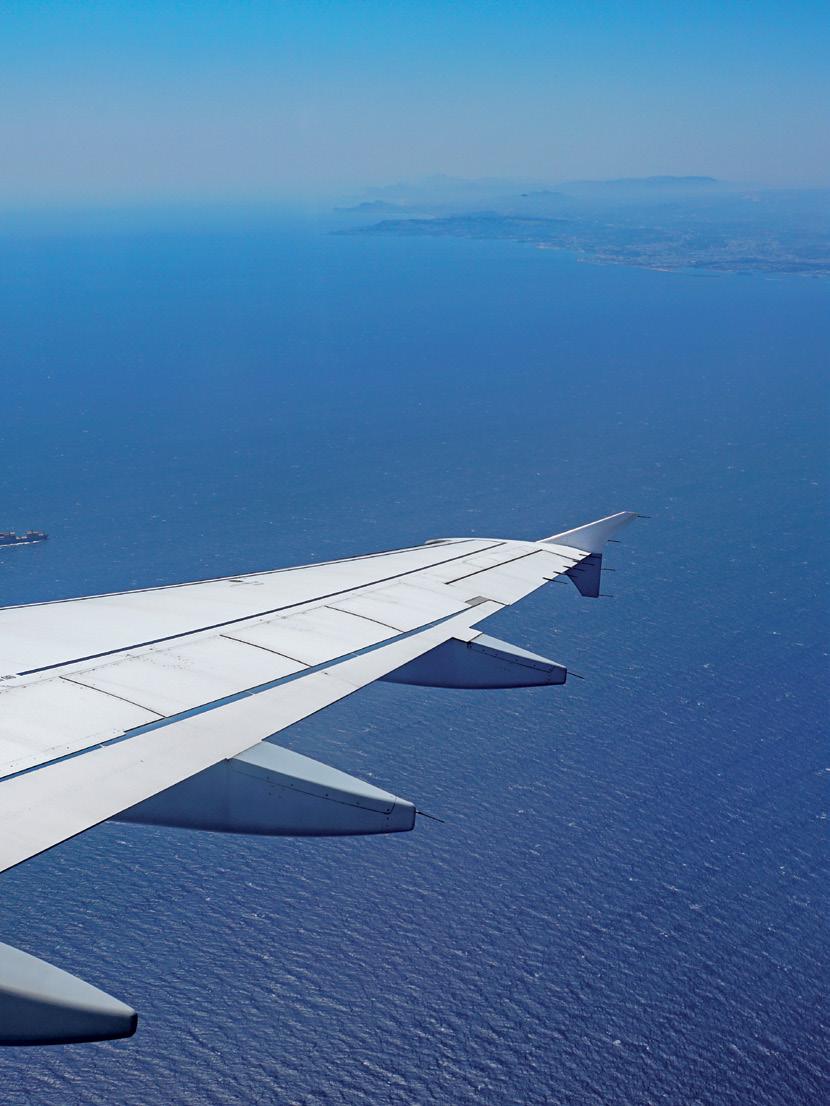
Fraport Greece welcomes you to one of the 14 Incredible Greek destinations it serves.
14 Welcome
Your travels start here: Fraport Greece’s 14 upgraded and new airports are now a reality.
A New Era for Travel in Greece
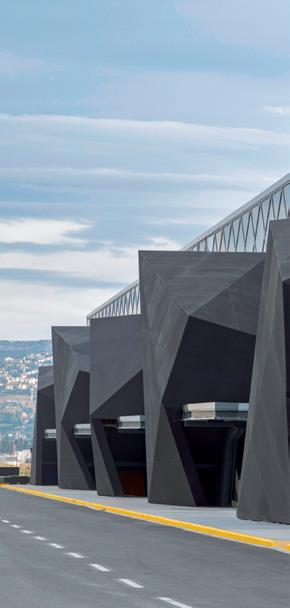
Fraport Greece delivers redeveloped and modernised airports ahead of schedule.
New services, more comfort and more choices for passengers
Three months ahead of schedule, Fraport Greece has completed a major four-year infrastructure development program at the 14 regional airports. Thus, Fraport Greece delivered redeveloped, safe and future-oriented airports that provide new services, greater comfort, and more amenities to Greek and international travellers from around the world.
Fraport Greece launched the airport development program in April 2017, in tandem with the start-up of its concession for managing eleven island and three mainland airports across Greece. Despite various challenges, construction works advanced
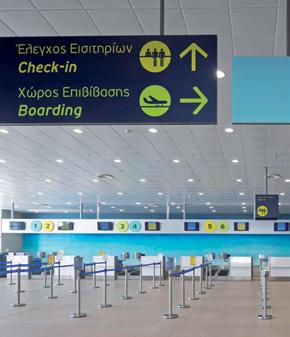
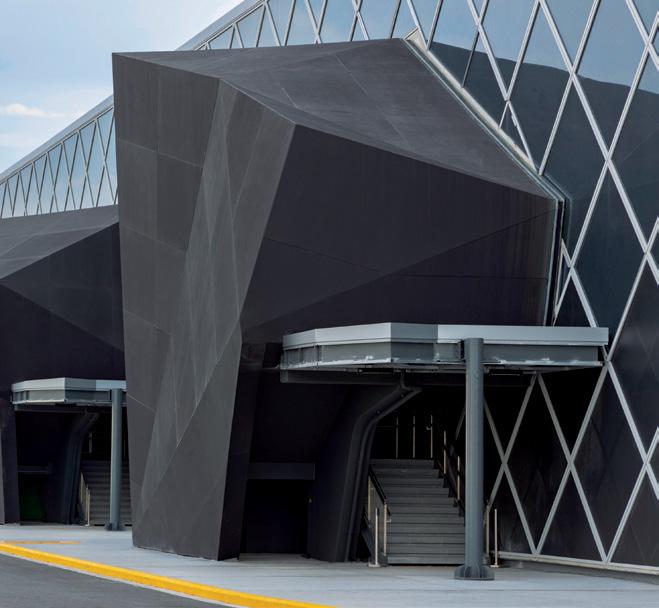
1. The iconic new terminal at “Makedonia” airport.
2. The new check-in area at Kefalonia airport.
3. Aerial view of the new terminal at Corfu airport.
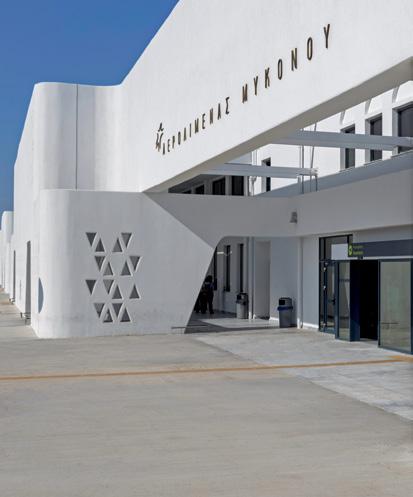
επενδυτικό πρόγραμμα, ύψους 440 εκατ. ευρώ της Fraport Greece, μεταμόρφωσε
successfully throughout the first three years, including peak summer months, and overcame many difficulties and challenges during the pandemic. In January 2021, Fraport Greece concluded the last of the construction works for the 14 airports – well ahead of the April 2021 contractual deadline.
Fraport Greece’s innovative €440 million airport development program has significantly transformed these airports. In particular, Fraport Greece has delivered five brand new terminals, expanded and modernised five existing terminals, and upgraded four other terminals. Construction projects at airside operational areas of the regional airports included renovating 12 runways, improving ramp areas, and constructing and renovating 12 fire stations. All of the airports have also been equipped with new state-of-the-art baggage handling and security detection systems.
Construction projects were completed first at the airports of Zakynthos, Chania (Crete) and Kavala. At Zakynthos, refurbishing and remodeling the terminal made it possible to increase the number of check-in counters and security checkpoints by 35% and 150%, respectively. The terminal at Chania was completely modernised, while the number of gates increased by 25% and
1.
2.
3.
1. The new check-in area at Mytilene.
2. Architectural detail at the new Kefalonia airport.
3. In harmony with the local architecture-the new terminal on Mykonos.
4. Αerial view of the new terminal at Mykonos.
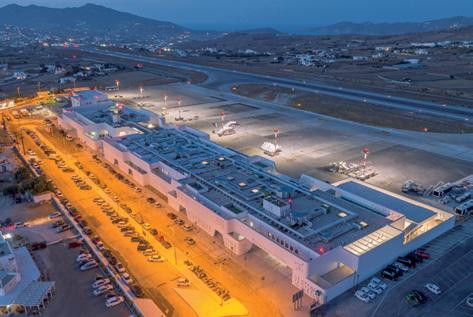
security checkpoints doubled. On the Greek mainland, Kavala’s “Megas Alexandros” Airport received a similar refurbishment, as well as more than a 1,900 square metre expansion.
Also on the mainland, Aktion Airport’s terminal had a complete overhaul and a 2,500 square metre expansion –providing extra space for twice as many security checkpoints, 14 check-in counters, and 7 departure gates. On the island of Samos, the airport terminal was modernised and expanded by over 1,500 square metres – with plenty of room for more check-in counters, departure gates, security checkpoints, and other services. At Skiathos Airport, the terminal has also been completely refurbished and enlarged by nearly 2,200 square metres.
“Odysseas Elytis” Airport in Mytilene features a new terminal with over 7,100 square metres of space. Similarly, the new terminal at Kefalonia “Anna Pollatou” Airport offers some 10,700 square metres of space for passenger comfort, including more services, a 70% increase in the number of check-in counters, and twice as many security checkpoints and departure gates. On Mykonos, the redesigned terminal is now 50% bigger and
1.
2.
3.
4.
5.
1. Waiting area at Aktion airport.
2. Exterior view of the Chania terminal.
3. The impressive new terminal at Thessaloniki.
4. The new terminal at Kos.
5. Modern aesthetics at the new terminal in Santorini.
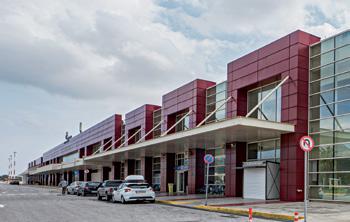
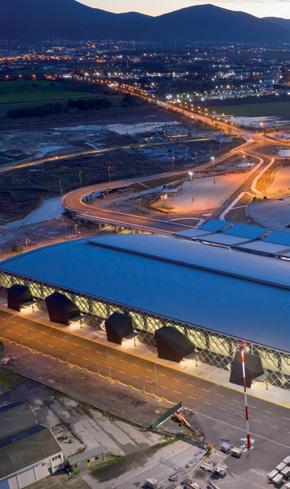
combines traditional Cycladic architectural highlights with modern airport facilities. As a result, there is more space for check-in counters, departure gates, as well as a unique ambiance with attractive amenities.
On Rhodes, the airport has also been upgraded to offer world-class services. The terminal has a larger check-in area, plus more security checkpoints and baggage belts, a wider choice of shopping and dining. The apron in front of the terminal was also redesigned for improved operations.
Similarly, in the second quarter of 2020 Corfu “Ioannis Kapodistrias” Airport opened a new terminal with nearly 10,400 square meters of space: including 28 check-in counters, 8 security checkpoints and 12 departure gates.
The remaining construction works continued to progress at three airports: on the islands of Kos and Santorini, as well on the mainland at Thessaloniki “Makedonia ” Airport. At
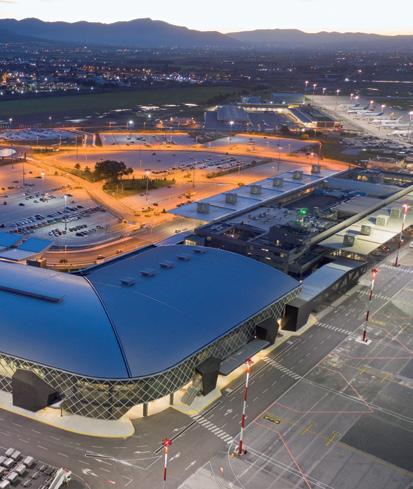
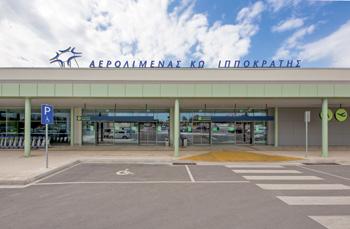
Kos Airport, the new passenger terminal now boasts more than 23,000 square metres of space and a new apron area. Santorini Airport’s terminal underwent a major redevelopment resulting in a far larger facility total well over 15,000 square metres of space for an optimum passenger experience.
Final construction works were completed at Thessaloniki “Makedonia” Airport, the largest airport in Fraport Greece’s portfolio. This €100 million development has created a new terminal complex to rival Europe’s most popular airports. The new terminal is linked via skyway bridges to the redesigned existing terminal – thus doubling the amount of terminal space available. More check-in space, twice as many departure gates, and a wide range of attractive restaurant and shopping facilities now shape a completely new environment at the international gateway to Greece’s second largest city.
Fraport Greece was established in 2015 for the purposes of developing, managing, operating and improving the 14 regional airports in Greece for the next 40 years. Fraport Greece took over the management of the airports on April 11, 2017 with the objective of enhancing their international competitiveness by way of
modernising their infrastructure, and optimising training programmes for staff. Customer service, competent staff and overall safety have been paramount to the successful implementation of the programme’s overall design.
In every corner of Greece an upgraded airport managed by Fraport Greece, is there to welcome you and elevate your travel experience. Every part of the country is connected and the 14 destinations bring you closer to the world.
The 14 Fraport Greece Airports
PVK Aktion
CHQ Chania
CFU Corfu
KVa Kavala
EF l Kefalonia
KG s Kos
MJT Mitilini
JMK Mykonos
RHO Rhodes
s MI Samos
JTR Santorini
J s I Skiathos
s KG Thessaloniki
ZTH Zakynthos
The 14 Fraport Greece airports are accredited by the ACI
regarding the measures taken aiming to curb the spread of coronavirus.
JTR
KGS
RHO
Aktion Airport, Ε952 (National Road Preveza - Vonitsa) & Eirinis Avenue, Preveza, Aktion, 300 02, www.pvk-airport.gr
Chania Airport, National Road Aerodromiou - Soudas, Chania, 731 00 www.chq-airport.gr
Corfu Airport, Corfu, 491 00 www.cfu-airport.gr
Kavala Airport, Chrysoupoli, 642 00 www.kva-airport.gr
Kefalonia Airport, Kefalonia, 281 00 www.efl-airport.gr
Kos Airport, Antimachia, Kos, 853 02 www.kgs-airport.gr
Mitilini Airport, Lesvos, 811 00 www.mjt-airport.gr
Mykonos Airport, Mykonos, 846 00 www.jmk-airport.gr
Rhodes Airport, Paradisi, Rhodes, 851 06 www.rho-airport.gr
Samos Airport, Pythagoreion, Samos, 831 03 www.smi-airport.gr
Santorini Airport, Thera, 847 00 www.jtr-airport.gr
Skiathos Airport, Skiathos, 370 02 www.jsi-airport.gr
Thessaloniki Airport, National Road, Thessaloniki, 55103, Greece www.skg-airport.gr
Zakynthos Airport, Zakynthos, 290 92 www.zth-airport.gr