CDP, Specializes in CD professionalization and policy research, UWC SoE-SI Coordinator.
AlanJackson
Social Worker, Founder of NPO Development an NPO - development through Mediation & Peace Conversations
LubabaloMbekeni
Director: Strategic Land Acquisition – Provincial Shared Service Centre at DALRRD, Western Cape TerriesNdove
Deputy DirectorGeneral, Department of Land Reform and Rural Development (DLRRD)
Editorial
Bridging Practices, Deepening Ethics:A Transformative Lenson Community Development
It is with great appreciation that I offer this editorial reflection for the second issue of Inclusive Impact Magazine a platform that has become a resonant space for critical and practiceinformed thinking in Community Development (CD). From its inception, this magazine has served not only as a publication but as a declaration: that grounded, situated, and justice-oriented practice must be at the heart of any authentic development agenda
This issue showcases a compelling range of contributions across disciplines, contexts, and orientations all of which speak to the evolving and contested
terrains of CD Together, the ten featured articles remind us that development is never neutral. It is always a political, ethical, and deeply human process.
We begin with Malmesbury Farmers and Government: A Model of Integrated Land Redistribution for Subsistence Livelihoods, which offers a grounded reflection on partnership-based approaches to land reform. People as the Most Valuable Asset in Non-Profit Organizations extends this exploration by highlighting the collective labour, diversity, and symbolic capital that animate community-driven institutions
Four Quadrants and Community Development Practice: Seeing the Whole Picture for Real Change provides a practical framework that encourages CDPs to hold complexity, purpose, and ethics in balance illuminating how theory and practice intersect in real-world facilitation In Intersection of Ethics and the Professionalization of Community Development Practice in South Africa: A Plea for a Vigorous Knowledge Foundation, I offer a personal and sectoral reflection on the tensions between standardization and responsiveness and call for a stronger epistemic base rooted in lived experience and contextual ethics.
My personal and sectorial reflection piece is deepened by the personal narrative Through the Eyes of a Community Development Socialized Social Work Activist, which offers a rare and textured account of how community development values can shape professional identity and activism. From childhood encounters with inequality to formal community development, the author paints a vivid portrait of how integrative practice emerges when values, vocation, and lived experience align.
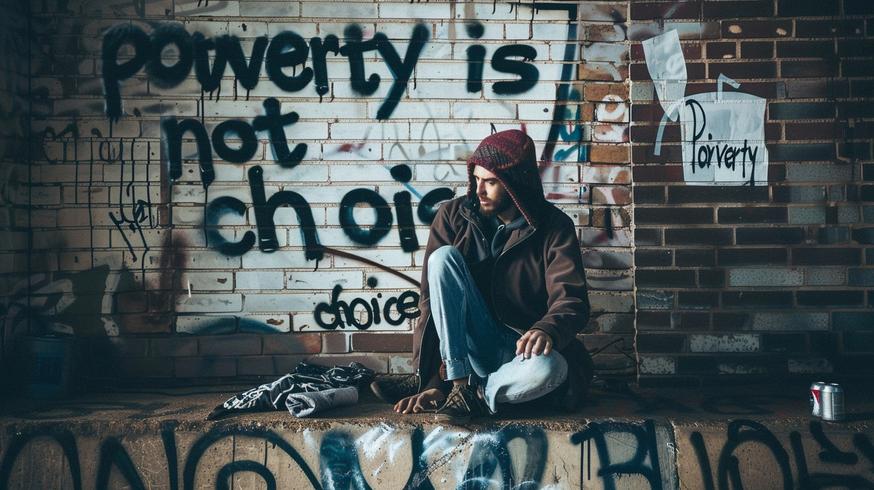
Land and Livelihoods in South Africa: Redress, Redistribution, and the Future of Equity powerfully reasserts land as a developmental, economic, and social justice imperative It places the ongoing struggle for access and ownership in direct relation to systemic poverty and intergenerational exclusion In Sleeping Rough in the City of Cape Town, the author draws us into the lived experiences of urban homelessness, urging us to reframe street-dwelling not as deviance but as resistance to dispossession and to explore more humane alternatives to carceral urban planning.
Why Household Profiles Miss the Point: Reclaiming Community-Level Data in Community Development Practice challenges dominant methods of data extraction and surveillance. It presents a well-being-based alternative that centres community voice, systemic analysis, and local planning
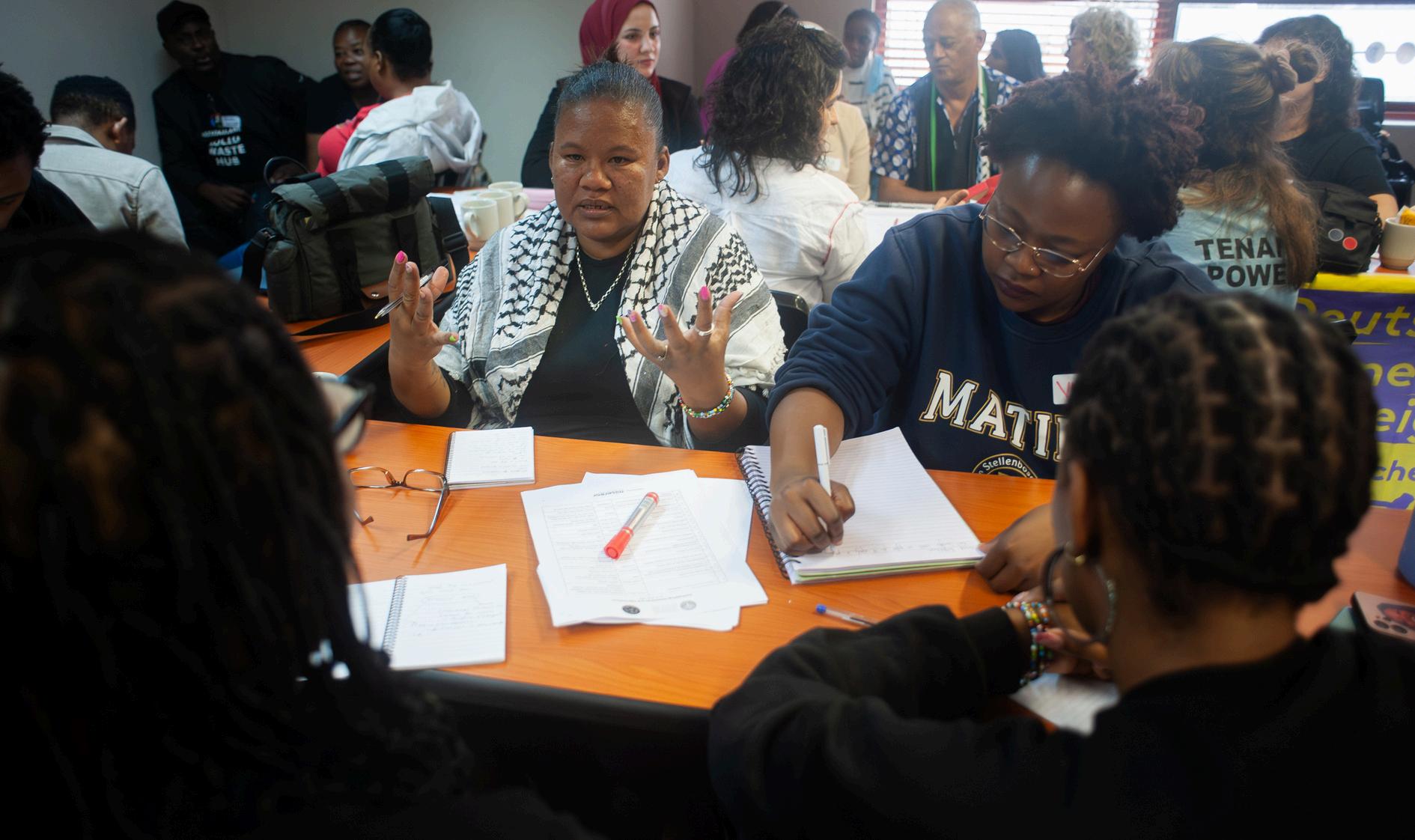
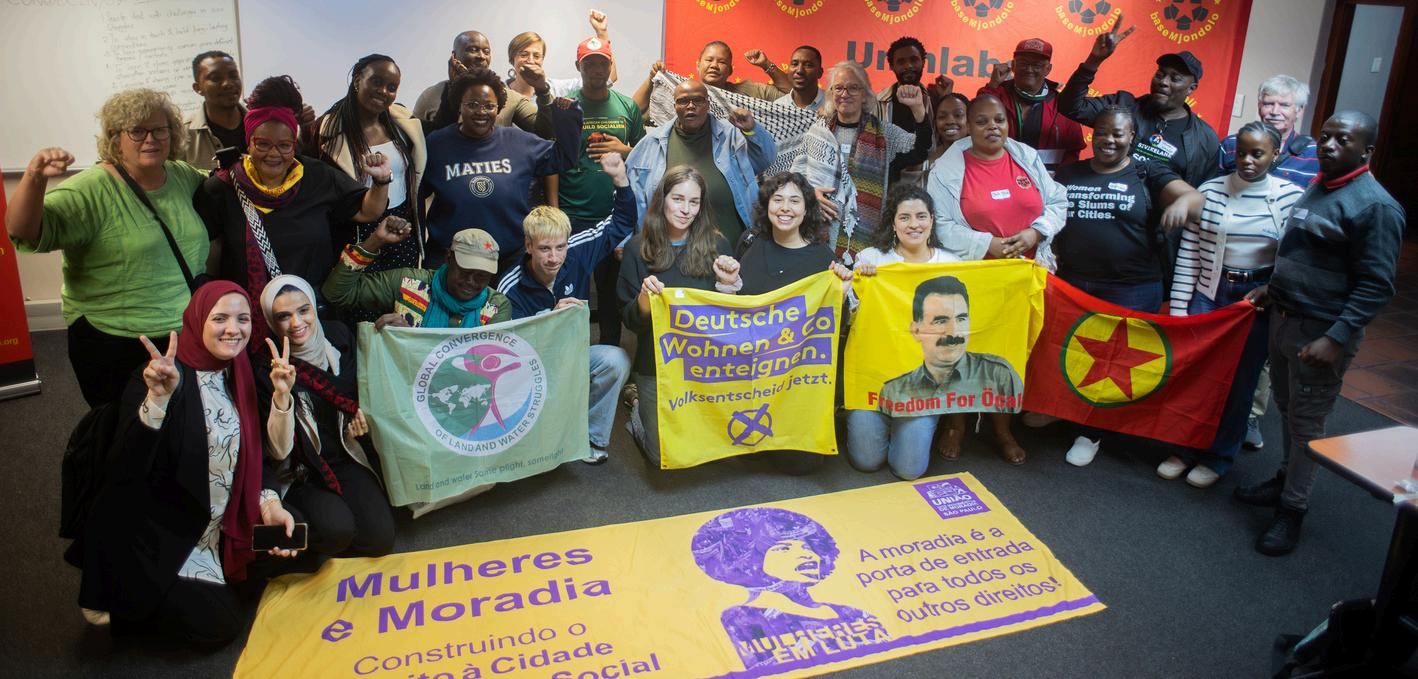
We also hear from practitioners working in solidarity locally and across borders The Global Fight for Safe Homes and Secure Land: South Africa’s Housing Crisis connects local struggles with global advocacy, reminding us that tenure security is both a human right and a foundation for collective well-being Finally, Building Healthy Schools Across Africa: The Hygiene and Sanitation Education Movement offers a hopeful and gender-aware look at how education, dignity, and health intersect It calls for deeper recognition of the structural barriers to hygiene and the possibilities of grassroots transformation
Collectively, these contributions weave a tapestry of urgent questions and grounded responses. They challenge us to ask: Whose voices are included in our development narratives? Whose priorities are centred? And how do we measure success without reinforcing structural inequality?
As guest editor, I am inspired by the authors’ commitment to critical honesty, humility, and hope These pages reflect not only what is but what is possible when development work is reimagined as solidaritybuilding, boundary-crossing, and deeply situated in context.
We hope this issue offers provocation and inspiration. May it spark dialogue in classrooms, in practice sites, in policy circles and most importantly, in communities.
With deep gratitude,
KefilweDitlhake
GUEST EDITOR
Kefilwe Ditlhake is an Associate Professor in the Department of Social Work and Community Development, Faculty of Humanities, at the University of Johannesburg (UJ).
A seasoned educator, researcher, and practitioner, she has worked across medical, community, and academic settings bringing a strong commitment to social justice, ethics, and the professionalization of community development Her scholarship spans social policy, Afrocentrism, and leadership in Community Development practice
As Guest Editor of Issue 2, she brings both critical depth and generative insight to the evolving role of Community Development Practitioners (CDPs) across disciplines and contexts
STAKEHOLDERS AND NETWORKS IN COMMUNITY DEVELOPMENT
Community development thrives on partnerships, bringing together government, non-profits, businesses, and community members to drive collective action and transformative change. This section highlights the collaborative efforts and networks that strengthen community development practice.
SLandlessness is a complex dimension of poverty that requires multiplelayered and integrated interventions
outh African agriculture is comprised of mainly two categories of farmers, (a) the subsistence farmers who are mainly African and (b) the large-scale commercial farmers who are mainly white (Kirsten & van Zyl, 1998). Subsistence farmers are generally classified as resourcepoor with limited institutional support and market access (Ncube, 2018). Almost every township in the Western Cape has a
presence of subsistence farmers, many of whom face persistent challenges such as limited access to land, inaccessibility of formal markets, poor marketing skills, and inadequate institutional support services (Ndlovu & Masuku, 2021) According to Syahza, et al. (2025) landlessness is a complex dimension of poverty that requires multiple-layered and integrated interventions.
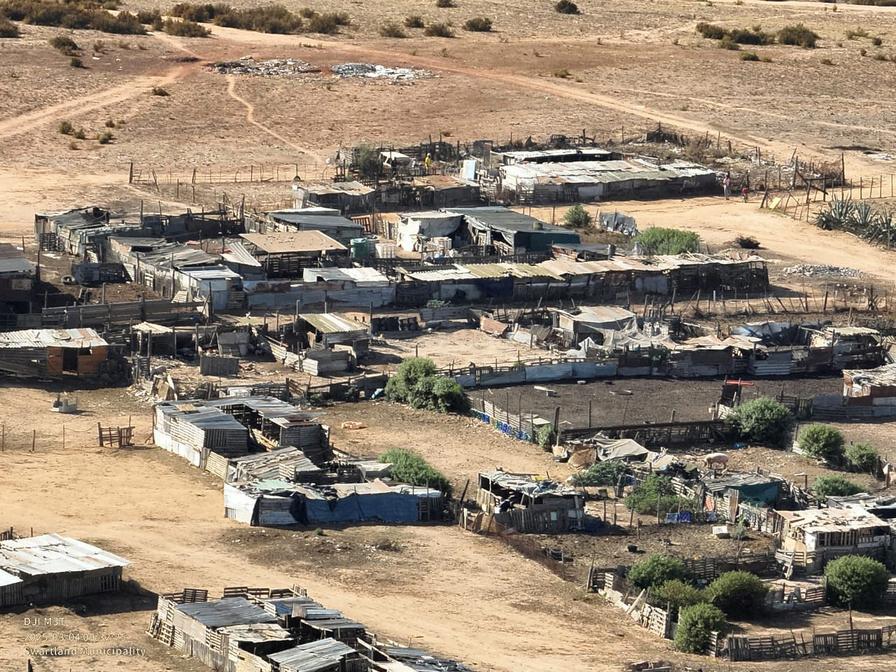
The Challenge Subsistence farmers near Malmesbury are one example They began farming on the municipal land in the early 2000s without formal permission from the landowner. In 2015 the Swartland Municipality (SM) formally notified the farmers that they would need to vacate the land, which had been ear-marked for human settlement. The land was in demand both for sheltering homeless residents and
This model demonstrates how land redistribution can address the needs of the poor and vulnerable as envisaged in the White Paper, 1997
residents and for agricultural livelihoods.
In response, the farmers partnered with SM and Western Cape Department of Agriculture (WCDoA) to approach the Department of Land Reform and Rural Development (DLRRD) for alternative land. They are 53 subsistence farmers organized into three primary cooperative and one secondary cooperative. This marked the beginning of a multisphere collaborative intervention.
Approach to the Challenge
According to Mathebula (2018) community participation is a process that brings together community members, business owners, NonGovernmental Organizations (NGOs), and municipal
delegates to discuss and address common challenges In this case, such an approach was enabled by South Africa’s Intergovernmental Relations (IGR) framework which refers to a matrix of interactions among organs of state and institutions of government to deliver services in a coordinated and integrated manner (Malan, 2005).
Guided by the IGR framework, this case reflects the power of collaborative governance. The SM (local), WCDoA (provincial), and DLRRD (national) partnered with the farmers through their legal entities SM played a key coordination role, WCDoA provided technical agricultural support, and DLRRD enabled access to land.
An intergovernmental structure (committee) was established, meeting quarterly to track progress. Bureaucratic processes were followed, goals were set, and regular engagements were held with the farmers for updates and capacity building. When a suitable farm was
identified, the farmers were consulted to assess its suitability –ensuring the process was both inclusive and participatory - before DLRRD started the processes to buy it This approach aligns with Ndaguba & Hanyane’s (2019) view that community development is grounded in collective problem-solving and action.
The Solution
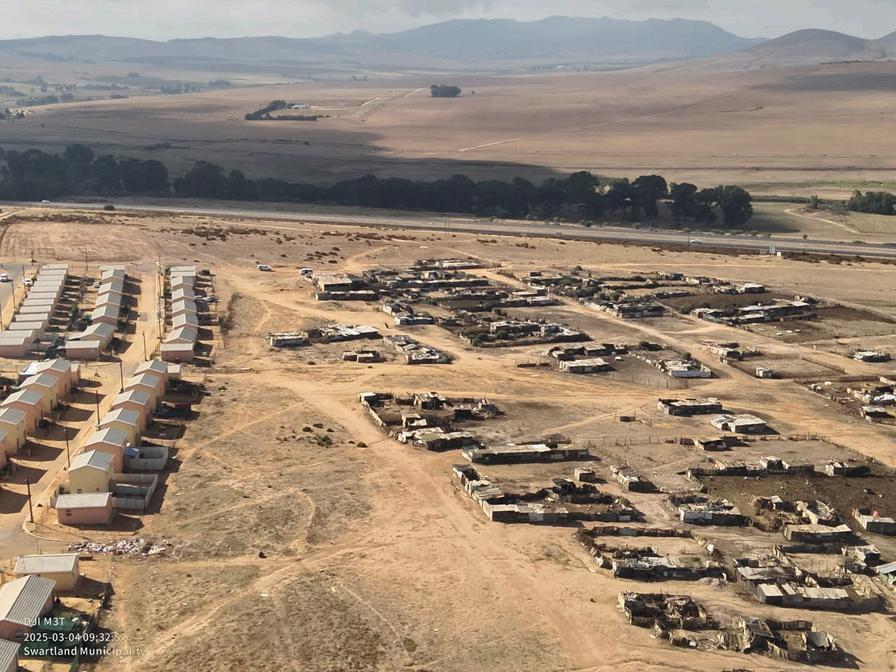
After several attempts, a 400-hectare farm was successfully secured to relocate the Malmesbury subsistence farmers Most of them farm with pigs, chickens, cattle, goats, and sheep, with a few keeping horses. The move to the farm was collectively planned by all parties concerned to avoid chaos and disorder. Given their current farming practices where most of them have pigs and chickens which will need to be contained and fed, each farmer was allocated one hectare for personal farming operations. Farmers have been clustered according to their cooperatives The remaining land was designated as communal grazing space for cattle, sheep
and goats.
This model demonstrates how land redistribution can address the needs of the poor and vulnerable as envisaged in the White Paper, 1997 Without the assistance of government, these farmers would not have had the financial and related resources to buy land on their own. Farmers were identified by SM and WCDoA provided technical support and capacitation of the farmers The farmers are initiators of own development through farming and were active participants in selecting the farm, as highlighted by Mamokhere & Meyer (2022), who emphasizes the value of participatory decisionmaking in development.
The farmers are initiators of own development through farming and were active participants in selecting the farm
This partnership illustrates how all three spheres of government can work together to support bottom-up development initiatives
This approach also aligns with Ndlovu & Simbanegavi (2022), who argues that project stakeholders must be involved from planning to implementation. Importantly, farmers pledged their own resources to resettle on their farm, demonstrating agency and ownership. This partnership illustrates how all three spheres of government can work together to support bottom-up development initiatives in an integrated and coordinated manner
The Blind Spot
Despite its many strengths, this model faces two identifiable key risks.
Security and proximity: All the identified farmers reside in a township about 5 km from the newly allocated land This raises concerns about the security of their livestock and infrastructure due to high crime rates While relocating 53 farmers to live on the land is a potential solution, it introduces additional complexities associated with township
establishment and settlement planning
The relocation is still one of the issues that is under consideration by all relevant parties for an amicable solution Potential intra-group conflict: Barry et al (2007) caution that conflict is common in collective community ventures. This case is no exception Therefore, conflictsensitive planning and robust communitybased governance structures are essential for sustainability.
Lessons Learnt
Lack of land access remains one of the most pressing issues
facing subsistence farmers in the Western Cape. They are amongst South Africans who are severely affected by land hunger in our province.
This case highlights the complexity of periurban farming the vulnerability of the urban poor, often hidden by the supposed prosperity of urban areas. Human settlement in these areas tends to focus solely on housing, overlooking livelihoodsupporting initiatives like subsistence farming.
A farm that previously
served one commercial farmer now support 53 subsistence smallholder farmers through their legal entity – a major shift. However, such models require careful coordination, inclusive planning, and scientific assessments of land use potential. It is to be noted that beneficiary selection was done in a transparent manner where all relevant parties participated. This hybrid settlement
Author
model of individual and communal land use creates a flexible, contextually appropriate approach to land redistribution.
Importantly, these farmers are not entirely dependent on government – they bring their own livestock and resources to the site.
Ultimately, this case reaffirms that land redistribution is a key
anti-poverty strategy, as envisioned in South Africa’s 1997 White Paper on Land Policy (DLA, 1997). It also reaffirms the value of Intergovernmental relations and coordination, which has proven instrumental in unlocking opportunities for the poor and vulnerable groups.
This intervention is a partnership-model between all three
spheres of government working with the community to address a given socio-economic challenge. The model offers a learning platform for Community Development Practitioners (CDPs) reminding us that community development is not confined to lecture halls, but takes place in the lived realities and collective actions of communities.
Dr Lubabalo Mbekeni is the Director: Strategic Land Acquisition – Provincial Shared Service Centre: Western Cape. Department of Land Reform and Rural Development. Contact: lubabalo.mbekeni@dalrrd.gov.za.
References
1 Barry, M B , Dewar, D , Whittal, J F , & Muzondo, I F (2007) Land conflicts in informal settlements: wallacedene in Cape Town, South Africa In Urban forum (Vol 18, pp 171-189) Springer Netherlands
2 Department of Land Affairs, 1997, White Paper on South African Land Policy, Government Printers, Pretoria
3 Kirsten, J F , & van Zyl, J (1998) DEFINING SMALL-SCALE FARMERS IN THE SOUTH AFRICAN CONTEXT Agrekon, 37(4), 551–562 https://doi org/10 1080/03031853 1998 9523530
4 Malan, L (2005) Intergovernmental relations and co-operative government in South Africa: The ten-year review Politeia, 24(2), 226-243
5 Mamokhere, J , & Meyer, D F (2022) A review of mechanisms used to improve community participation in the integrated development planning process in South Africa: An empirical review Social Sciences, 11(10), 448
6 Mathebula, N E (2018) Integrated development plan implementation and the enhancement of service delivery: Is there a link?. International Conference on Public Administration and Development Alternatives 04-06 July 2018, Stellenbosch University, Saldahna Bay, South Africa.
7.Ncube, B. (2018). Constraints to smallholder agricultural production in the Western Cape, South Africa. Physics and Chemistry of the Earth, Parts A/B/C, 106, 89-96.
8.Ndaguba, E. A., & Hanyane, B. (2019). Stakeholder model for community economic development in alleviating poverty in municipalities in South Africa. Journal of Public Affairs, 19(1), e1858.
9.Ndlovu, C., & Masuku, M. (2021). Small-scale farming and access to market: Challenges and opportunities in South Africa. Journal La Sociale, 2(5), 50-63.
10.Ndlovu, P., & Simbanegavi, P. (2022). Engaging External Project Stakeholders Within Social Distancing Parameters in Community Development Projects in South Africa. In The 45th Australasian Universities Building Education Association Conference: Global Challenges in a Disrupted World: Smart, Sustainable and Resilient Approaches in the Built Environment.
11.Syahza, A., Dahlan, T, Brilliant. A, and Mitri, I. 2025. “Poverty Alleviation through Cross-Sectoral Approaches: Solutions to Accelerate Coastal Community Economy.” Cogent Social Sciences 11 (1). doi:10.1080/23311886.2025.2462451.
12.Zwane, V. Z. J. (2020). Community participation in the Integrated Development Plan (IDP) of the Umzumbe Local Municipality (Doctoral dissertation).
The recent amendments to the Non-Profit Organizations (NPOs) Act 71 of 1997, enacted in April 2023 to curb money laundering and terrorist financing, have heightened the importance of people in ensuring compliance and sustaining the critical work of NPOs At the heart of every NPO lies the goal of advancing sustainable community development, particularly for marginalized
communities A goal that can only be achieved through collective effort, diverse perspectives and shared commitment. The active participation of people in this process is not only desirable but essential to achieving social accountability, integrity and adherence with the new legislative framework.
Context
& Background
The NPO Act was amended by the General Laws (AntiMoney Laundering and Combating Terrorism Financing) Amendment
Act, No 22 of 2022 The intention behind this legislative chance is to strengthen transparency, protect the sector from potential financial abuse, and reinforce its capacity to continue playing a pivotal role in in building sustainable communities.
Who are the People in Non-Profit Organizations?
As Bujak (2018) notes, organizations cannot exist without people It is people and their unique qualities who make a lasting
difference in the services that organizations deliver to communities.
Typically, a non-profit organization comprises six vital groups: Volunteers – Often regarded as the heartbeat of NPOs Staff Members – The operational backbone of daily functions. Board Members –Strategic leaders and visionaries Service Users – The inspiration and driving purpose behind the organization’s work Donors – Financial enablers of the organization’s programmes and services.
Community Partners and Stakeholders –Collaborative agents who help realise the organization’s mission.
Each of these groups must embody collective efforts, embrace diverse perspectives, and demonstrate shared commitment to ensure successful compliance with the amended NPO Act.
when collective efforts are recognized and implemented, they generate a powerful ethos of ownership, creativity, and change
Towards Collective Efforts
According to Brinkerhoff et al. (2015), collective efforts are only possible when collective leadership exists. Collective leadership refers to a group of individuals working together toward a shared goal It is most effective when individuals are both internally and externally motivated to contribute their talents, skills, and energies toward the organization’s mission. Crucially, this type of leadership thrives on trust, power-sharing, transparency, accountability, and a culture of shared learning.
Furthermore, when collective efforts are recognized and implemented, they generate a powerful ethos of ownership, creativity, and change Such synergy enables organizations to
declare: “We have achieved this together ”
Embracing Diverse Perspectives and Shared Commitment Tynes (2022) underscores the value of diverse perspectives within organizations, noting that diversity promotes openness to different ideas, cultures, and experiences, ultimately enhancing organizational culture. By drawing from a broad talent pool, NPOs not only improve internal practices but also offer more responsive and inclusive services to beneficiaries
A diverse workforcespanning various cultural, gender, and racial backgroundsfosters innovation and comprehensive
planning. This richness of perspective is key to aligning with and effectively implementing the NPO Amendment Act 22 of 2022
Organizational commitment refers to the emotional and professional attachment individuals have to their organization (Bartlett, 2001). Committed staff and volunteers reduce turnover, boost productivity, and ensure consistent, mission-aligned action.
As Guo et al. (2005) suggest, today’s nonprofit sector increasingly relies on alliances and partnerships across various sectors to enact social change. Shared commitment across these collaborative
relationships generates unity, strengthens motivation, enhances teamwork, and aligns efforts toward achieving organizational objectives including compliance with the updated legislative framework
Practical Application: Characteristics and Interventions
Having worked in the sector since 1992, I have witnessed first-hand the enduring impact of people driven by a passion for human rights, justice, and community upliftment In the 1990s, their voluntary contributions exemplified collective effort, diverse thought, and shared commitment. This ethos remains just as vital today especially
People are the cornerstone of non-profit organizations.
in navigating and responding effectively to the recent legislative amendments.
To translate these values into daily practice, the following characteristics can serve as anchors for organizational action:
Collective Effort: Ensure inclusive participation in organizational decision-making across all stakeholder groups including volunteers, staff, board members, beneficiaries, and donors.
Diverse Perspectives:
Promote representation across different cultures, professions, and communities Embed diversity into strategic planning and service design
Shared Commitment: Conduct regular engagement and planning sessions involving all role players. This reaffirms commitment to the organization’s vision and fosters genuine collective ownership.
People are the cornerstone of
non-profit organizations Whether volunteers, staff, board members, donors, or community partners, their collective actions, diverse inputs, and shared vision remain crucial to the success and sustainability of the sector.
Recognizing their roles and creating space for authentic collaboration is not only vital for development, but also essential for ensuring compliance with South Africa’s evolving legal landscape
Ensure inclusive participation in organizational decision-making across all stakeholder groups
Author
Sallvon Fransman is the acting Programme Manager: Institutional Capacity Building (ICB) at the Western Cape Department of Social Development. Contact: Sallvon.Fransman@westerncape.gov.za
References
1.Bartlett, K.R. (2001) The relationship between training and organisational commitment: a study in the health care field. Human Resource Development Quarterly, 12(4), pp. 335–352.
2.Bujak, A. (2018) The Art of Leading Collectively: Co-Creating a Sustainable, Socially Just Future. San Francisco: Berrett-Koehler.
3 Brinkerhoff, D W , Wetterberg, A and Dunn, S (2015) Service delivery and legitimacy in fragile and conflictaffected states Public Management Review, 17(2), pp 241–258
4 Guo, C , Brown, W A , Ashcraft, R , Yoshioka, C F and Dong, H K D (2005) Strategic human resources management in nonprofit organizations Review of Public Personnel Administration, 31(3), pp 248–267
5 Preskill, H , Gopal, S , Mack, K and Cook, J (2008) Evaluating Complexity: Propositions for Improving Practice California: FSG Social Impact Advisors
6 Tynes, S (2022) Diversity and Inclusion in the Non-Profit Sector: Driving Impact Through Representation, Journal of Organisational Culture, 34(2), pp 113–125
EDUCATION, TRAINING, AND PROFESSIONAL DEVELOPMENT
Empowering practitioners through education and training lies at the heart of sustainable community development. This section showcases transformative initiatives and continuous professional development opportunities that equip practitioners with the skills and knowledge to drive meaningful change.
Four Quadrants and Community Development Practice: Seeing the Whole Picture for Real Change
In community development practice, we often encounter situations where people act in ways that are confusing, destructive, or seemingly irrational The 4-quadrants is a very important tool to assist us as facilitators to better understand how change comes about, as it provides important insights into why people do the things they do, even when they do seemingly destructive or strange things.
The developer of the 4 Quadrants, Ken Wilber, is a Psychologist and a Philosopher, and this diverse academic background probably helped shape his efforts to understand why people act in the way they do both as individuals and together with others in groups, communities and in society.
After more than a decade of research, and in an effort at understanding the results of the research, he put together the 4 Quadrants. Ken Wilber concludes that
laws, policies, plans and programmes are not the key drivers of change Instead change happens when individuals shift change their own behaviour and communities transform their values and norms.
In order to apply the 4 Quadrants Matrix, we must first develop a clear understanding of the Matrix
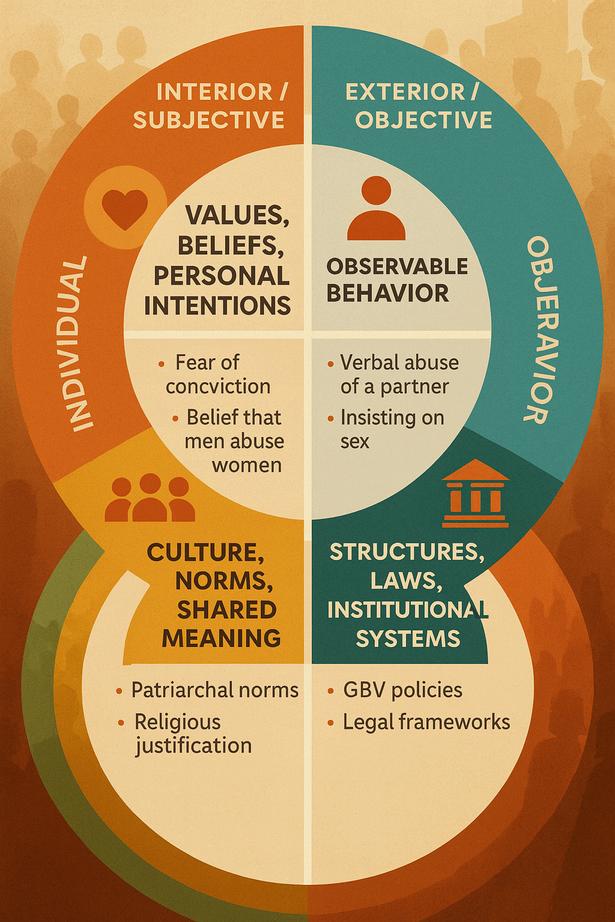
The 4-Quadrants Matrix
As is the case with most theoretical frameworks, the 4 Quadrants lends itself to various applications. In this instance I am apply it specifically to understanding individuals and groups in community settings In order to apply the 4 Quadrants Matrix, we must first develop a clear understanding of the Matrix (4-quadrant model) itself.
Quadrant Headings
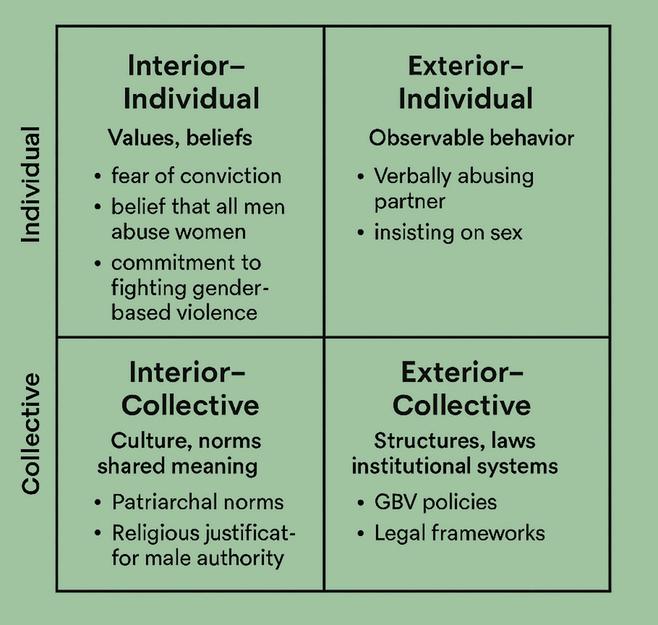
There are two primary headings on the lefthand side of the page: Individual and Collective.
These clarify that Quadrants (or sections) 1 and 2 apply to the individual, and Quadrants 3 and 4 apply to the collective, i e to groups, communities, families etc.
At the top of the page there are two further headings, i.e. Subjective (Interior) and Objective (Exterior).
The Subjective (Interior) heading tells us that Quadrants (or sections) 1 and 3 relate to internal experiences: individual (personal) values and beliefs (Quadrant 1) and collective values and beliefs - i.e. collective culture, norms and shared meaning (Quadrant 3).
These are not visible, as they exist inside the individual or group, club, or community.
The Objective (Exterior heading) refers to what can be observed Quadrants 2 focuses on individual behaviour, while Quadrant 4 reflects collective systems, structures, laws, and policies.
These elements are external and visible in both individuals and collectives
The Quadrants
In an effort to simplify how the 4 Quadrants can be used in practice, I will apply the model to one Community Concern: Gender Based Violence (GBV). However, It can just as easily be applied to any other social concern.
Quadrant 1 (Interior–Individual) refers to the internal, personal world of the individual their values, beliefs, principles, and commitments.
It helps us understand what shapes a person ’ s behaviour from within.
In relation to GBV this quadrant or sector would include:
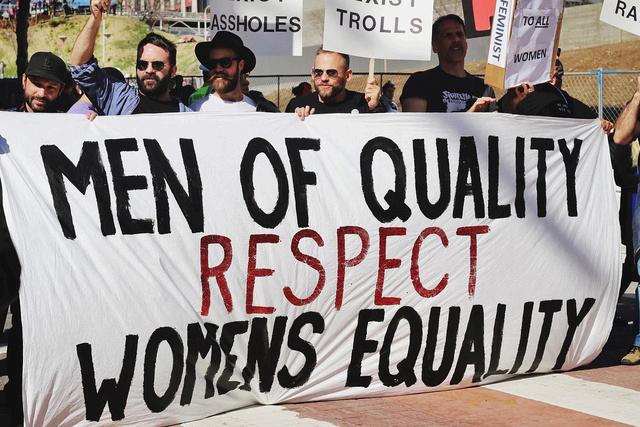
A man ’ s fear of being convicted of gender-based violence
A man ’ s belief that all men abuse women
A man ’ s commitment to fighting genderbased violence
A man ’ s belief that he is the head of the household and that he should therefore be obeyed
A man ’ s belief that a woman is asking for sex if she wears revealing clothes
The commitment to obeying the laws of the land
A man who believes he has a right to sex with his girlfriend/wife
Quadrant 2 (Exterior–Individual) reflects the external behaviour of individuals – what they say or do, or the actions and behaviour of the individual This quadrant gets a great deal of attention from facilitators, teachers, trainers and coaches, focused on behaviour change.
In relation to GBV this quadrant or sector would include:
A man instructing his girlfriend/wife what to do
A man insisting on sex because he has paid for supper for a woman
A husband / boyfriend insisting on sex
Quadrant 3 (Interior Collective) explores the shared internal reality of families, groups or communities culture, norms, taboos, and unwritten rules These are often invisible, but they strongly shape people’s thinking and actions.
In relation to GBV this quadrant or sector would include:
The belief in certain circles that to hit a woman means he loves her
Men who think it is clever to tell dirty and derogatory jokes about women
The school community which reinforces, even subtly, that boys are superior
A Church’s belief that to be the head of the household means the man gets to instruct the woman
Quadrant 4 (Exterior–Collective) refers to collective/external aspects of behaviour, external systems and structures such as the systems, structures, laws, policies and procedures used by businesses, government, churches or other organizations.
In relation to GBV this quadrant or sector would include: The laws which counter sexual violence
The of Conduct in the workplace with regard to GBV Teaching women to defend themselves physically Teaching women their rights
Each of these quadrants or sections are closely related to one another
A man ’ s fear of being convicted for gender-based violence or his commitment to ending it (Quadrant 1) might make him think twice before committing abuse (Quadrant 2) However, it is important to note that other internal beliefs or values may override this fear or commitment
A man ’ s belief that he is the head of the household and should therefore be obeyed or his belief that a woman “asks for it” based on how she dresses (Quadrant 1) might lead him to insist on sex (Quadrant 2), even when it is unwanted 2).
When a man instructs his partner or insists on sex because he paid for dinner (Quadrant 2), his behaviour can reinforce and deepen the beliefs that justified those actions (Quadrant 1) A church’s teaching that men should lead the household, a school environment that subtly reinforces male dominance, or a home where gender-based violence is normalized (Quadrant 3), can pressure men to internalize those values (Quadrant 1) and act on them (Quadrant 2).
Each of the quadrants or sections are closely related to one another.
if we hope to bring about real lasting change in our communities, we must commit to the long term
When dominant social institutions such as churches or schools reinforce male superiority (Quadrant 3), it can influence lawmakers to uphold systems that benefit men (Quadrant 4), such as legalizing polygamy but not polyandry.
So How Does The 4Quadrants Contribute to Community Development?
It helps us to understand that laws, regulations, policies, procedures and – even in the case of GBV –severe legal penalties, do not necessarily determine people's behaviour. In the case of GBV, figures continue to grow despite all the efforts made. Structures, procedures, plans and programmes are likely to remain ineffective if they do not address the values, beliefs, intentions and commitments of individualsparticularly men, and even more critically, boys who have not yet become fixed in their thinking. Equally
important is addressing the cultural norms upheld by families, schools, churches, and other community institutions
So, if we hope to bring about real lasting change in our communities, we must commit to the long term and often difficult work of engaging with both individuals and community groups
In the case of individuals we need to work at shifting their values, beliefs, commitments, and intentions.
Beyond the time this requires, it also demands the consistent building of relationships with the individuals involved. It is equally important to recognize that many individuals in Cape Town and the Western Cape more broadly, are deeply traumatized by their history and present circumstances This adds further complexity to the work we must do. It is also helpful to remember that children and young
people, tend to be more adaptable and are not yet too set in their ways This makes them a vital focus for early intervention
So, to relate this work to GBV once again, there is great potential for facilitating dialogues on GBV with children and youth, by providing safe spaces where they can talk about their views on women and men, build relationships with them, share different perspectives and challenge one another.
In the case of community groups we need to work on the culture, norms and values of those groups. This means being willing to hold lengthy dialogue, again in a safe space, to facilitate new thinking and ideas And once again, we will be working with people who are traumatized, and who therefore will be even more disruptive and combative than those who are not traumatized.
The following case
study, which arises out of the United Nations Community Capacity Enhancement (CCE) Programme, demonstrates what can be done through challenging and timeconsuming community conversations
“During one Community conversation in Southern Africa, the community discussed the practice of widow cleansing The purpose of the custom is to “cleanse” or purify a woman after the death of her husband to prepare her for remarriage This cleansing is thought to take place when the widow has sex with the men in her late husband’s family. The community identified the practice as one which could potentially increase the spread of HIV. Through a facilitate conversation the members of the community were able to agree on an alternative method of cleansing that was nonsexual in nature”
(UNDP, 2005:5)
This example reminds us that even the most entrenched cultural practices can be transformed through respectful, communityled dialogue. While the work is slow, messy and often painful, the 4 Quadrants framework can help us stay grounded supporting deeper understanding and more sustainable change across all layers of our communities
Author
Alan Jackson is a Social Worker, with a long time interest an involvement in Community Development, and more recent training and experience in Community Mediation and Peace Conversations
His NPO is entitled “NPO Development” Cape Town, Western Cape, South Africa. Contact: npodevt@gmail.com
References
1 United Nations Development Programme (2005) Community capacity enhancement strategy note: Collective dialogue and action by communities to prevent further HIV infections UNDP HIV/AIDS Group https://www undp org/sites/g/files/zskgke326/files/publications/15 pdf
Maintaining high standards and ethical practices is essential for impactful community development. This section delves into the standards, case studies, and frameworks that uphold integrity and ensure effectiveness in the field.
The professionalization of community development is attaining ascendency internationally and in South Africa, motivated by the necessity to schematize, regulate, and uplift the quality and influence of interventions intended to build buoyant and just and equitable communities In South Africa, this impetus is predominantly important, given the national history of structural discrimination and the current demand for equitable development engrained in equality,
inclusivity, and social justice.
Community development is intrinsically multidisciplinary, harvesting from varied fields such as law, sociology, development studies, economics, social work, education, public health, and political science. This multidisciplinary viewpoint prepares the profession with a varied and lively foundational knowledge, empowering practitioners to respond to the intricate and intersectional social complexities
confronted by communities. Situated at the intersection of practice, people and policy - community development practitioners and professionals are distinctively prepared to drive social justice results while nurturing community empowerment
explicitly on ethics in community development - a shortcoming that has consequences for the discipline’s cogency, professional distinctiveness, and practice excellence
Yet, as community development advances into a standardized profession, several inherent limitations have become apparent. Foremost among these is the dearth of research and studies concentrating professionalization of community development is attaining ascendency internationally and in S.A.
The Pursuit for Specialized Recognition and Ethical Simplicity Notwithstanding considerable evolution in institutionalizing community development profession in South Africa over the past twenty years, a tenacious apprehension amongst practitioners and professionals is the inadequate official acknowledgement and recognition of the profession. This challenge is aggravated by the profession’s
The multidisciplinary foundation of community development provides both strengths and limitations
continued dependence on ethical frameworks derived from contiguous disciplines, such as social work or sociology, instead of evolving a tailored ethical code associated with the authenticities of community development profession and practice.
The non-existence of a comprehensible and homegrown ethical framework is more than an academic gap; it inherently influences practitioners in the field Questions such as conflict of interest, double associations, corruption, favouritism, and deception are not unusual in development contexts, where power subtleties, resource insufficiency, and susceptibility are widespread. However, deprived of strong, context-specific framework, community development
practitioners are frequently left to circumnavigate these encounters grounded on individual decisions or copied standards that could not satisfactorily mirror the distinctions of their experiences.
Ethics, in this setting, must go outside regulatory acquiescence to guide as a moral scope that directs practice, certifies accountability, and maintains the pride and agency of community members. The professionalization of community development accordingly involves not only official recognition and formal training paths, but similarly the development of a painstaking ethical infrastructure to sustain just and spontaneous community practice.
Multi-Disciplinary Origins and Their Ethical Consequences
The multi-disciplinary foundation of community development provides both strengths and limitations On one hand, it enables an allinclusive grasp of community
undercurrents and permits practitioners to induce from a rich range of models, tools, and approaches. On the other hand, it can instill ambiguity into the profession’s distinct uniqueness and obscure the development of a collective ethical linguistic.
Contrasting fields with well-established professional bodies and ethical codes such as psychology or social work - community development is its nascent stages of building its epistemic and ethical framework. The outcome is a profession that is occasionally seen as disjointed or deficient in firmness, particularly in contrast to disciplines with clearly collated knowledge classifications The challenge, thus, is in refining a uniting ethical scaffolding that safeguards the profession’s interdisciplinary foundations while enunciating standards of practice unique to community development.
Such an infrastructure must be underpinned
by the real experiences of South African communities in their diversities, the past legacy of apartheid, and the requirements for healing It must moreover echo the profession’s pledge to inclusiveness, empowerment, and resilience – the values that differentiate community development from more technocratic frameworks to social development
The Ethics Dearth in Literature
One of the conspicuous pointers of the profession’s growth phase is the inadequate size of academic and practical literature tackling ethics in community development. Whereas much has been written about ethical encounters in fields such as social work, psychology, or sociology, there is a scarcity of devoted research investigating how ethical predicaments manifest in community development practice, mostly within the South African setting.
This absence of records has numerous implications. Primarily,
it hampers the evolution of evidencebased ethical standards and best practices Additionally, it leaves professionals and practitioners disempowered to foresee, diagnose, and reply to ethical questions in the field.
Finally, it weakens the integrity and professional stature of the discipline, making it harder to advocate for official acknowledgment, certification, and funding provision.
Tackling this weakness needs a thoughtful research programme that elevates ethical examination as a central factor of professional development. This involves recognizing shared ethical problems, authenticating how practitioners circumnavigate these encounters, and appraising the efficacy of diverse decisionmaking mechanisms It similarly requires community engagement, guaranteeing that ethical ideals are cocreated with those affected by social intervention programmes.
The Necessity of Ethics in a Social Justice Agenda
At its fundamental, community development is a valuemotivated profession, profoundly entrenched in the ethics of social justice, fairness, and human dignity. These standards are not intellectual principles but practical necessities that guide how professionals and practitioners relate with communities, allocate resources, and impact systems. Ethics in community development, consequently, cannot be a marginal apprehension; it is essential to the profession’s distinctiveness and impression.
In the South African situation, this ethical necessity is amplified by national social and political history The lasting impact of apartheid, economic segregation, and structural inequality require a strategy to development that is equally transformational and responsive Community development practitioners, as architects of social change, are obliged to exemplify
TowardsEthically GroundedCommunity Development Profession
Astheprofessionof community developmentprogress, numerousdeliberate activitiesarerequired tospreaditsethicaland professional development: AdvanceSituationExplicitEthical Frameworks:Astrong, SouthAfrica-explicit codeofethicsfor
community development is needed, drawing lessons from both international standards and local specificities
Embed Ethics into Training and Certification: Ethics must be a central element of community development instruction, reinforced by ongoing professional development and insightful practice.
Encourage Research on Ethical Practice: Education institutions, professional bodies, and donors must allocate sufficient funding to research that investigate ethical questions in community development.
Involve Communities in Co-Creating Ethics: Community participation is essential in determining ethical values, guaranteeing Ethics in community development, consequently, cannot be a marginal apprehension
that practice is socially appropriate, and responsive to local practices
Conclusion
The professionalization of community development in South Africa signifies an important phase towards institutional acceptability, practice reliability, and social
influence. Nevertheless, the complete recognition of this possibility is contingent on the enunciation and incorporation of a durable ethical footingone that is entrenched in the principles of social justice, guided by multi-disciplinary understandings, and advanced through evidence-based
investigation. Only then can community development ensure its due position as a valued, ethical, and transformative profession able to be responding to the multifaceted challenges confronted by communities in South Africa.
a durable ethical footingone that is entrenched in the principles of social justice, guided by multidisciplinary understandings
Author
Kefilwe Ditlhake is an Associate Professor in the Department of Social Work and Community Development, Faculty of Humanities, at the University of Johannesburg (UJ).
From an early age, I was exposed to a mix of both worlds – the harsh realities of the “haves and the have nots”. I was born and raised on my dad’s farm, which had a big residential home with vast land for crop and animal farming, as well as several watering holes and a dam. What I learnt later from oral history and interactions with children of our neighbours was that our lineage or origins were from faraway places - Sana’a (Yemen), Rhodesia (present-day Zimbabwe and Zambia)
Swaziland (present-day eSwatini) and many other places I came to know through social studies in primary school The owners of the land all possessed various skills, knowledge and expertise, such as artisans, farmers and water engineers
At the age of 5, I was also exposed to realities of living crammed up in a “matchbox house with an outside toilet” in the city - Orlando East,
Soweto - where my ‘Ouma Dalie’, as we called my grandmother Magdeline, happily lived with my dad’s five siblings, their spouses and our nephews and nieces. It was here that my political awareness first germinated, through intense discussions around shared meals, or by following news about Nelson Mandela on the radio. From the age of 8, I was further exposed to life in a different urban “settlement” in Seshego township, which was the capital of the non-independent Bantustan of Lebowa (former Northern
Transvaal, present-day Limpopo). People were zoned according to either tribal or ethnic origins (Tsonga, Venda, Pedi and “Others” - for people from other African countries) or according to their work titles or business interests For example, Masakeneng (Zone 1), then Zone 2 which was demarcated for diplomats and prime ministers who lived in a section called “Magoshing”. This area had big houses for all the people from royal families, traditional leaders, members of parliament (MPs), and others with diplomatic ties to the legislature and government Furthermore, the GG section which had government offices and housed government employees, police officers, security personnel, nurses and other public servants
realities of living crammed up in a “matchbox” house
Other sections of zone 2 such as “30 Houses” adjacent to the industrial area and Newtown became central business areas where community halls, school facilities and a teachers’ college were established The rest of the people, except for those in Magoshing, were housed in “better matchboxes’ – this time with built-in toilets. The stark contrast and visible inequality deeply roused my curiosity about the roots of such disparities and what can or cannot be done to change the situation.
The discrimination I experienced within the school environment and the broader community piqued my interest in justice and equity from a young age - eventually leading to my early involvement in student
politics and community activism. My late dad’s positive contributions to the community’s development such as establishing a labour centre to impart skills to young artisans, supporting creches (what we now call Early Childhood Development (ECDs) centres) elderly care centres, and promoting sports (especially soccer) opened my eyes to the world of community development in action. At the time, I had no language for it - I did not know the concepts of “community development” , “community work” , or even “social work” –but I loved the social impact buzz created in the communities I grew up in. My activism bug got heightened as I started to notice and get concerned about social ills around me: poverty, bullying (in both primary and high school), ethnic divisions, inequality, family dysfunction and gender-based violence (GBV) to name a few, in my community.
I learnt about resilience and the value of social capital and intersectoral
collaborations from an early age by shadowing my late dad in his additional roles (extra services) as an esteemed member of the community. I was more interested in humanitarian type of careers so much so that I once aspired to become a nun, or to serve as a medical doctor or nurse working in war-torn areas. For some strange reason I always wanted to work in India and Cambodia – perhaps influenced by the films I watched at the time. Later, I wanted to become a social worker after I learnt about the profession during my final year of high school Form V (present-day Matric/Grade 12)
Appreciation of Community Development Influence as Cornerstone of My Activism Within Social Work Practice
As I reflect on what set me apart from my peers during my formative years as a newly qualified social worker, and still to this day, it is my rich embedded exposure to community development concepts and experiences
This grounding shaped my practice and perspective in profound ways. A vivid memory comes to mind of how I became an enthusiastic community development activist, and how, in later years, I continued to advance the recognition of community development as a profession in its own right
As I mentioned earlier, I almost became a nun or nurse (inspired by the lives of Mother Theresa and Florence Nightingale)
I was raised in a catholic home full of laughter, singing (church hymns), music (freedom songs, rhythm and soul, jazz, classical) reading (the bible, Readers’ Digest, novels such as James Hardley Chase, Mills and Boon, Pace and Bona Magazine etc.). Our home was also a space of games and strategy –board games and cards
Myactivismbug gotheightenedas Istartedtonotice andget concernedabout socialillsaround me
like Monopoly, Ludo, chess, Crazy 8 and 5 Cards) – as well as ongoing debates on religion, politics and gender equality My Dad cooked and cleaned floors, and my Mum managed the household and taught us valuable lessons about personal development. She also introduced us to the ethic of hospitality, opening our home to homestay hosting – a kind of modern Airbnb, but without charge There were always people being fed and accommodated, be it overnight or extended stay for whatever reasons, coming from different African countries or other homeland provinces. Sharing and Ubuntu values were not just taught; they were modelled and lived in our household.
Everyone in the household was encouraged to express themselves, learn different skills, choose whatever career they wanted to follow, and most importantly, believe in themselves. I remember my own childhood projects from Standard 3 (Grade 5) through to Standard 10 (Matric/Grade 12) –which included
gardening, selling shoes and serious fundraising for children from impoverished households. At varsity, I opted to study social work because there were no degree programmes in community development. Even so, I became a catalyst for change. Immersing myself in anti-racism activism as a student leader. I also headbutted entrenched racism at one of the institutions where I was placed for my work integrated learning (WIL) - a story for another day
A chance encounter at ZEBCIT Maatskappy (Zebediela Citrus Pty Ltd) deepened my appreciation of community development and community work practice within social work. I had been invited to a job interview for a social work post at Groothoek Hospital, which was located adjacent to a large citrus farmZebediela Citrus. The ZEBCIT (Pty) Ltd was renowned for exporting sweet and juicy oranges both locally and across borders But it wasn’t the hospital or the citrus industry’s global footprint that
consumed my thoughts Seeing mothers with babies on their backs, harvesting oranges, haunted me. I can't recall much about what happened during the interview – my mind was fixated on those women in the fields. Why were the children not in a crèche? The safety of mothers climbing harvesting ladders unsettled me. Images of children nearly trampled by speeding mankolonkolo (tractordrawn harvesting carriages) weaving in and out of the citrus rows on route the packhouse, played out in my mind
Driven by urgency and concern, I asked my late dad to drive to the entrance of ZEBCIT so I can inquire more about the place that caught my attention Upon entry at the security checkpoint, I immediately asked who was in charge I was directed to Morena or Baas xxx, with whom I had a rather unexpected and transformative encounter. I respectfully shared my concerns about the farmworkers I had seen near the Groothoek Hospital exit point, and asked for permission to
explore their welfare further, especially the women and children. When I asked about the general welfare of labourers, he paused asked if I was a journalist
I explained with youthful exuberance that I was an activist, newly graduated in Social Work from Turfloop, (University of the North, now University of Limpopo) and that I would love to collaborate with him and his management to improve the lives of his employees! His blue eyes were fixed on me; blood rushed through his pale cheeks. I wasn’t sure what to make of his intense stare Then, extending his hand, he said: “You are hired” , he immediately offered me a job as a GOB My rugby ball eyes bulged as if to ask him to explain the acronym he just mentioned He said: “Van vandag af, is jy die nuwe
Gemeenskaps
Ontwikkeling Beampte” (GOB). Eh, I thought I was dreaming! I had whetted his appetite by asking too many inquisitive questions about his entity, which resulted in an instant appointment as a Community Development Officer!
I quickly briefed my late dad and told him we needed to get home fast to pack my suitcase and basic furniture and set off for life as a Community Development (CD) social worker! I had to find my Tweetalige woordeboek (EnglishAfrikaans dictionary) to ensure I could conduct meaningful engagements with people on ZEBCIT, especially management. I applied all the principles of social work and interspersed the CD concepts I had learnt to bring about desired changes in the communities surrounding the citrus farm In my head, it was clear as daylight that social work and community development practice goes together. A lot of exciting life-changing experiences took place on the farm due to my ingenuity and participatory approaches. For example, after entering the 10 sections on the farm, I managed to build rapport with the ZEBCIT community through participatory rural appraisal (PRA) and communication. A Gemeenskapsontwikkel ingsentrum (community development centre), which became the
gained from using both Community Development and Social Work concepts
In instances where collaborative efforts took place between Social Workers and Community Development Practitioners (CDPs), there was enhanced community engagement and participation, resulting in more effective service delivery and increased impact and sustainability. By working together, CDPs and Social Workers can leverage each other's strengths to create positive change and improve community outcomes
Throughout my professional journey of integrating Social Work and Community Development across diverse contexts, I was always tuned in to addressing social inequalities and disparities and not burying my head in the
sand. I learnt that our (Social Work and Community Development) duty of care and skill is always to enhance community well-being and resilience through our complementary approaches
Conclusion I believe that communities can be better served by embracing an integrated case management approach as well as the District Development Model, which depends on
collaborative efforts amongst Social Workers and CDPs. It is important for the CD sector to be organized so that the recognition and professionalization agenda advance meaningfully and gain formal traction
Community Development is essential in social service, enabling professionals to work with communities to create positive change and improve community well-being.
Author
Langi Malamba is the former 5 Registrar of SACSSP. She is the Chief Executive Officer and Head of programmes at Society Activation Management and Empowerment (SAME) NPO, where she specializes in social entrepreneurship, social innovation and work readiness programmes to combat graduate unemployment. th
Contact: admin@societyactivationsame co za / malamba langi@gmail com +2773 143 2779 / +2779 407 7325
Langi owns Mangena Health and wellness (PTY)LTD where she specialises in holistic wellness and healing using natural therapies as well as African traditional medicine.
Contact: mangenalx@outlook com +2761 522 2807
RESEARCH AND THEORY IN COMMUNITY DEVELOPMENT
Theoretical frameworks and research enrich community development practice by bridging knowledge and action. This section explores groundbreaking studies, findings, and academic discourse that connect theory to impactful practice.
FLand in South Africa is not just a physical asset it is bound up in our country's deepest struggles for justice, identity, and survival.
or many, land represents historical loss and ongoing marginalization. For others, it offers a gateway to dignity, development, and economic inclusion Exploring the evolving nature of land reform, we need to ask what it truly means to reclaim land not only as property, but as a platform for diverse livelihoods.
Land and Legacy
The roots of land dispossession in South Africa date back to the
1652 colonial occupation, which introduced racially discriminatory systems of land control. The 1913 Natives Land Act formalized this exclusion, reserving only 7% of arable land for African people, and was later followed by the 1936 Native Trust and Land Act which increase the land reserve from 7% to 13% These acts entrenched the fragmentation of land ownership, forcing millions into overcrowded reserves. By 1994, an estimated 87% of South Africa’s land was under white
ownership, while historically marginalized groups –particularly African communities – bore the brunt of forced removals, poverty, and displacement This historical injustice is not just a legacy it continues to shape economic inequality and spatial exclusion today.
The legacy of this history has left deep structural inequalities, manifesting in poverty, homelessness, and uneven access to services. These marginalized
At the heart of our reform is Section 25 of the Constitution, which mandates the state to ensure equitable land access
households were denied access to stable, income-generating land, while rural areas still face systemic neglect and underdevelopment. Landlessness is not just about property it directly affects education, health, and food security. The triple challenges, namely inequality, unemployment and poverty that continue to undermine the benefits from 1994 political and democratic breakthrough can be traced back to the history land dispossession in South Africa
Livelihoods Beyond Title
Beyond ownership, the concept of title relates to security, dignity, and long-term stability. Land under communal tenure or informal
arrangements often lacks financial leverage, limiting access to loans or grants For many, especially in peri-urban areas, formalizing tenure is essential to unlock economic potential and sustainable development
At the heart of our reform is Section 25 of the Constitution, which mandates the state to ensure equitable land access, secure tenure, and redress for past dispossession Since 1994, this mandate has produced a series of policies: the settlement land acquisition grants (SLAG) and land redistribution for agricultural development (LRAD) programmes enabled redistribution, while the Proactive Land Acquisition Strategy (PLAS) launched in 2005 allowed for targeted land acquisition and also introduced leasehold to protect the loss of land reform experienced due to freehold tenure system The 2009 State Land Lease and Disposal Policy provided long-term lease mechanisms for beneficiaries Most recently, a 2024 amendment to the lease policy now allows
leaseholders to apply for land ownership without the burden of market-value purchase. This new policy shift reflects a move toward understanding land not merely as a commodity, but as an enabler of transformation
As our history makes clear, land dispossession dislocated people from both space and purpose. In the past, apartheid spatial planning placed rural African South Africans on underdeveloped, overpopulated reserves, restricting not just their movement but their access to basic services, jobs, and opportunity. Urban migration patterns were shaped by exclusion from land in cities. This means that contemporary land reform must recognize a wider array of land purposes including housing, local business, cultural preservation, and micro-livelihoods. Secure land title provides the foundation for all of these Title deeds enable households to access credit, pass land to their children, and enter markets with confidence In this way, land is a gateway to asset-building, job
creation, and long-term well-being. Crucially, not all productive land is rural. In peri-urban areas, informal trade, gardening, waste recycling, and other micro-enterprises are made possible through secure tenure and recognition of use rights.
Reform in Practice
The Department of Land Reform and Rural Development (DLRRD) operates under a host of legal instruments, including the Land Reform (Labour Tenants) Act, the Communal Property Associations Act, and the Extension of Security of Tenure Act These frameworks aim to correct historical injustices, but implementation gaps and overlapping mandates remain key challenges
The principle of coordinated action was made clear in the Malmesbury case, where 53 informal urban farmers were using municipal land
“Land is not a commodity to be sold off it is the basis for life.”
for over a decade before it was earmarked for housing. Through a unique three-tier partnership, the Swartland Municipality worked with the Western Cape Department of Agriculture and DLRRD to resettle the farmers on a 412-hectare farm. This allowed for a blend of individual and communal rights, with both grazing land and allotments provided Challenges remain some farmers face security risks, and services have yet to be fully installed but the case demonstrates the power of coordinated government action and land policy as livelihood support
Similarly, in the Bitou Municipality, the former Minister Didiza oversaw a land handover that combined housing and small-scale agriculture This integrated approach affirms that land reform is most effective when it links settlement, food security, and community development not treating each in isolation. Both these interventions reflect land use diversity, an idea that must become
central in policy moving forward
Grant instruments such as the Proactive Land Acquisition Strategy (PLAS), the Settlement and Production Land Acquisition Grant (SPLAG) complimented with appropriate proper integrated coordinated planning with other relevant organs ensures sustainable land reform that is inclusive of appropriate support government wide support Additionally, leasehold systems, direct land transfer and appropriate tenure systems, and envisaged digital land administration platforms aim to streamline transactions, monitor usage, and improve transparency These mechanisms, while promising, require institutional coordination and capacity strengthening to be effective
Closing
Gaps: Infrastructure, Capacity and Modernizing Land Administration Systems
Title deeds alone do not build livelihoods. Infrastructure, extension services, skills development, and
ongoing government support are critical This post-settlement support has been a weak link in reform efforts, often leaving beneficiaries with land but no means to make it viable. Addressing this requires interdepartmental alignment, responsive municipal planning, and flexible models that reflect local realities
Land administration, too, must improve There is a need for digitized land records, updated cadastral systems, and spatial planning reforms. Weak land governance hinders transparency and investment. By modernizing our systems and recognizing informal land rights particularly in rural and traditional communities we can ensure more inclusive, accountable reform
Land and Identity: Symbolism, Belonging and Economic Inclusion
Beyond these structural dimensions, land is also deeply symbolic. In many communities, it is tied to cultural rituals, burial practices, ancestral belonging, and social identity Land justice, therefore, cannot be reduced to
hectares transferred it must include recognition, participation, and reparation. Since 1994, land reform efforts have yielded mixed outcomes. While over 5 2 million hectares have been redistributed, fragmentation, insufficient support, and contested claims persist. The Malmesbury and Bitou cases illustrate the complex socio-political realities that shape land reform outcomes. In both instances, community agency and government partnerships have made progress, but challenges in coordination, service delivery, and benefitsharing remain significant Secure land title does more than legitimize ownership it opens doors to broader economic inclusion With title deeds in hand, beneficiaries can leverage their land as collateral, access agricultural loans, apply for state
There is a need for digitized land records
This means participatory reform, where policies are shaped by those most affected
infrastructure grants, and formally enter local markets. It also provides generational security, ensuring that families can invest in their land knowing it will remain part of their long-term livelihood strategy. In this way,
tenure reform becomes not just a symbolic act of justice but a functional tool for economic mobility and rural development
A Broader Vision for Land Reform
As we look to the future, we must broaden our understanding of who land reform is for and what land is for. Land must serve urban informal workers, periurban entrepreneurs, rural women and youth, and traditional authorities alike. This
means participatory reform, where policies are shaped by those most affected, and where land is understood as a living resource that supports diverse life plans Only through such inclusive approaches can we ensure that land delivers on its promise of equity and economic renewal.
In this light, land reform emerges as a multidimensional development strategy one that cuts across education, health, food
security, economic growth, and governance. When done right, it brings dignity, stability, and the possibility of transformation
“Land is not a reward it is a right, and a responsibility we carry into our collective future.”
Author
Terries Salani Ndove is the Deputy Director-General, Department of Land Reform and Rural Development (DLRRD). Contact: Terries.Ndove@dalrrd.gov.za and/or +2782 940 3420.
References
1.Constitution of the Republic of South Africa, Act 108 of 1996. (1996). Constitution of the Republic of South Africa. Section 25.
2.Land Reform: Provision of Land and Assistance Act, Act 126 of 1993 (as amended). (1993). Land Reform: Provision of Land and Assistance Act.
3.Department of Agriculture, Land Reform and Rural Development. (2024). Amendment on State Land Lease Policy. Pretoria: DALRRD.
4.Department of Land Affairs. (2005). Proactive Land Acquisition Strategy (PLAS). Pretoria: Government of South Africa.
5.Department of Rural Development and Land Reform. (2009). State Land Lease and Disposal Policy. Pretoria: Government of South Africa.
Editorial Note
This article was compiled with editorial support from OpenAI’s GPT-4, under the author’s guidance It was developed from my (DDG: Mr T S Ndove, DLRRD) guest lecture PowerPoint presentation at the University of the Western Cape on 17 March 2025. Hosted by the Faculty of Community and Health Sciences (Bachelor of Community Development Programme) in partnership with the Faculty of Law, the event formed part of a national engagement series on land and spatial justice.
Sleeping Rough in the City of Cape Town
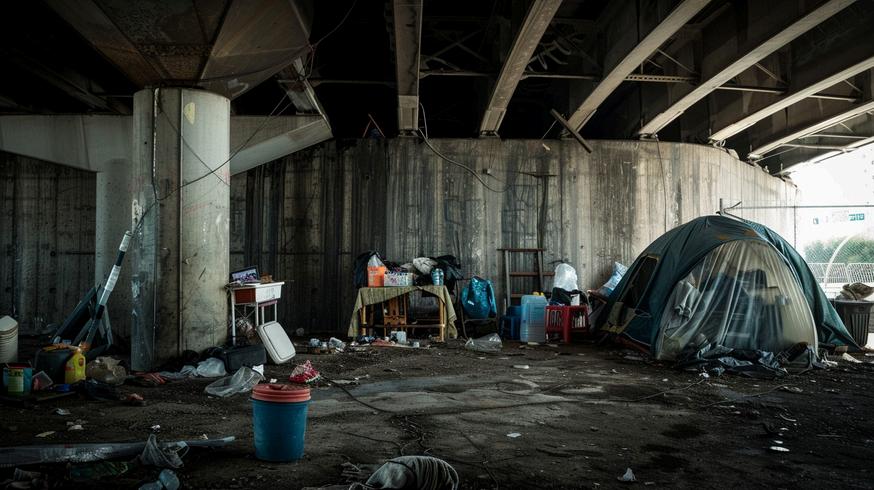
In South Africa and elsewhere, a pressing socio-economic problem is the unlawful occupation of public spaces Globally, people living in public places are generally referred to as ‘rough sleepers’ or the ‘street homeless’. The City of Cape Town offers an interesting case study to reflect on conflicting state responses to excessive rough sleeping within a human-rights framework. In South Africa, two constitutional rights apply when the housing interests of vulnerable persons are involved The property clause of the Constitution places a duty on the state to create spaces where landless persons, specifically previously dispossessed persons, may live, whereas the housing clause confirms everyone ’ s right of access to adequate housing. Of course, these rights are intended to assist persons who are destitute, homeless, and desperately in need of a space to live. More importantly, rights to access land and housing form part of a culture of
rights and values that aim to create a more equal, dignified society However, faithfulness to this culture and the fulfilment thereof depends on the actions of the state, the way in which it controls private and public property and the social controls that impact all community members.
The City of Cape Town: A case of controversies Against this background, the City of Cape Town serves as an example of discrepancies. It is estimated that there are more than 14 000 people living on the streets of Cape Town. In comparison to Darwin, Australia with 2000 rough sleepers
and 2648 in New York City, Cape Town therefore has a very high percentage of rough sleepers More worrisome is the high percentage (71% of the homeless population) of ‘chronically homelessness’ individuals who have experienced homelessness for lengthy time periods Two conflicting laws affect the lives and future prospects of Cape Town’s street population.
Firstly, the Streets, Public Places and the Prevention of Noise Nuisance By-law (2007), controls the use of public places and it prohibits aggressive, abusive or obstructive
behaviour in public. Also, when in a public space no person may bath or wash himself/herself; consume any liquor or drugs; be drunk or under the influence of drugs; start or keep a fire; or sleep overnight or erect any shelter Failure to comply with the By-law is an offence. If a homeless person fails to comply with the By-law, he/she will be served with a compliance notice, whereafter (in the event of noncompliance) an admission-of-guilt fine is issued, to be paid to admit guilt and avoid court proceedings Failure to pay the fine will result in a summons to appear in court and failure to
appear in court results in a warrant of arrest. Of course, everyday life on the streets and sidewalks of the Mother City demonstrate that the By-law is inconsistently enforced, at least in the context of rough sleeping. Warrants of arrest are seldomly issued and executed; where street people appear before a court, they rarely face any consequences It is therefore not surprising that homelessness costs the City R744m per year The By-law, which functions as a mechanism that prevents social disorder, is arguably in conflict with the socioeconomic reality of the homeless community who are forced to use and occupy public spaces in the Mother City – the extent of rough sleeping is extreme, which means that the use of some public spaces is shifting. This change is driven by the desperate living conditions of the most vulnerable
community in the City Although the state should exercise control over public spaces for objectives such as public safety and recreational activities, a by-law that prohibits rough sleeping cannot be supported if the constitutionally promised land/dwellings are not provided by the state
Secondly, the Street People Policy (City of Cape Town, 2013) makes provision for supportive networks according to which street people are supported by social workers to facilitate their referral to an assessment centre where they aid in the development of the person ’ s personal development plan A job readiness assessment will for instance facilitate a job replacement and enable reunification or reintegration into community structures. Different from the Noise Nuisance By-law, the Street People Policy focusses on social inclusivity, although from a housing (or property) perspective it fails to accommodate and include the poor as dignified members of the urban environment. Temporary
accommodation is only provided if the social worker requires more time for assessment purposes and the street person entered the assessment centre after business-hours; or when a street person appears to be in distress. Secondary Accommodation is only available if a social worker refers a street person to a shelter for rehabilitation or a diversion programme following a decision by the community court.
The right of access to adequate housing/land remains out of reach, because the local, state response to ‘street people’ is generally to offer temporary, overnight, accommodation in the form of shelters Overnight shelters are provided by state-like institutions and are not subject to specific laws Empirical studies show that overnight shelters fail to accommodate homeless individuals’ autonomous way of living, because of the strict rules imposed, specifically in relation to opening and closing times. Shelters enforce social controls that limit marginalized group ’ s means to earn some income. To date, the City of Cape Town
has not taken the most basic, fundamental steps to provide a physical space, let alone decent housing, where its weakest residents can take occupation and live with autonomy. Why the policies fail Cape Town’s laws confirm the proposition that conventional policies are inadequate to address the complex social problem of rough sleeping. Traditional policies, or even some adjustment thereof, will grapple to address rough sleeping if a) the law conflicts with what is normatively established – social norms include informal customs and practices, to which state law often takes second place; and b) property/housing remains inaccessible for welfare-orientated, human-right objectives.
former (a), the Noise Nuisance By-law has partly become of no effect. The extent to which it is no longer enforceable is determined by a complex, norms-based understanding of what is reasonably accepted behaviour in public spaces by those who have no access to private property
‘[T]he public peace –the sidewalk and street peace – of cities is not kept primarily by the police, necessary as police are It is kept primarily by an intricate, almost
unconscious, network of voluntary controls and standards among the people themselves, and enforced by the people themselves … No amount of police can enforce civilization where the normal, casual enforcement of it has broken down ’ (Jacobs, 1961: 31-32)
Property rules – taking the form of by-laws that control the use of public spaces – are meant to set behavioural boundaries. If they are not enforced or, even worse, unequally enforced, uncertainty,
social disorder, community resentment and compassion fatigue will ensue. In relation to b) the property problem, the Street People Policy is essentially misdirected from a property perspective as it fails to offer accommodation (temporary/permanent) or simply aid the homeless to access spaces where they may legally take refuge from the elements and perform every-day acts It is essential that temporary/interim housing suggestions must accommodate the
homeless community’s way of life, which requires some insight from the community by way of stakeholder engagement, interviews and in-depth discussions. State agencies must meaningfully engage with landless/homeless communities to develop laws and policies that result in real change, to assist in the interim, and more permanently. More urgency and innovation is required from the state, in all spheres, to overturn deplorable housing conditions
Property rules –taking the form of by-laws that control the use of public spaces – are meant to set behavioural boundaries.
The Constitution demands that property – land or a dwelling –must be distributed to
landless/homeless persons Once this promise is fulfilled, property as an
institution can do much more and allow marginalized groups to take their rightful place
in society and live with dignity
Rough sleeping exposes the fragility of urban ideals like inclusion and accessibility. It asks us to confront how we govern space and whose needs are excluded in the process. Perhaps justice begins not with shelter, but with the simple right to remain.
From Journal to Practice
This contribution is adapted from a scholarly article originally published in the journal: Critical Social Policy It has been reworked for Inclusive Impact Magazine to make the insights more accessible and relevant to diverse actors in community development practice, including practitioners, educators, and policy stakeholders working at the coalface.
Original citation:
Viljoen, S. M. (2025). Regulating Public Property: The Account of the Homeless. Social & Legal Studies, Critical Social Policy, 34(3), 439-457. https://journals.sagepub.com/doi/pdf/10.1177/09646639231225582
Author
Sue-Mari Viljoen is an Associate Professor in the Department of Private Law, Faculty of Law, University of the Western Cape. Contact: suviljoen@uwc.ac.za
References
1.City of Cape Town. (2007). Streets, Public Places and the Prevention of Noise Nuisance By-law (Western Cape Provincial Gazette no. 6469).
2.City of Cape Town. (2013). Street People Policy. Available at: https://d7.westerncape.gov.za/assets/departments/socialdevelopment/norms and standards for shelters for homeless adults pdf (Accessed: 1 July 2025)
3 Gaetz, S (2012) The real cost of homelessness: Can we save money by doing the right thing? Available at: https://www homelesshub ca/costofhomelessness (Accessed: 1 July 2025)
4 Jacobs, J (1961) The Death and Life of Great American Cities New York: Random House
5 Keuschnigg, M and Wolbring, T (2015) ‘Disorder, social capital, and norm violation: Three field experiments on the broken windows thesis’, Rationality and Society, 27(1), pp 96–126
6 Parsell, C and Phillips, R (2014) ‘Indigenous rough sleeping in Darwin, Australia: “out of place” in an urban setting’, Urban Studies, 51(1), pp 185–202
7 The Inkathalo Conversations (2013) Phase One Comprehensive Report Available at: https://groundup org za/media/uploads/documents/Inkathalo-2021-compressed pdf (Accessed: 1 July 2025)
8 The Constitution of the Republic of South Africa, 1996 (1996) Constitution of the Republic of South Africa. Pretoria: Government Printer.
WhyHouseholdProfilesMissthePoint:Reclaiming Community-LevelDatainCommunityDevelopment Practice
Why are Community Development Practitioners (CDPs) still asked to complete household profiles when our work has never been focused on individuals or families/single households as units of intervention?
A Misguided Obsession
For far too long, household profiling has been treated as a default data practice in community development
Commonly practiced in social services professions such as
community care givers, social workers, health care workers and census traditions, this approach reflects an outdated and individualized model of intervention But community development is not social work and our data practices must reflect that Despite this, household profiling has been imported into community development without due consideration of its fit-for-purpose. The social worker’s heavy case load gives them limited time to conduct full household profiling
at the scale or intensity expected in community development. The result is an extractive and repetitive form of data collection that frustrates communities and burdens practitioners. As Hart (2018) argues, such practices contradict the systems-based, collective orientation of community development and risk alienating the very communities we aim to empower. She further contends that the routine profiling of individual households perpetuates deficit narratives, often reducing families to
units of need, rather than acknowledging them as agents of community change and in turn undermines the role of CDPs as agents of collective empowerment
Moreover, repeated household profiling without clear feedback mechanisms violates basic participatory ethics It can create frustration, research fatigue, and alienation among residents (Hart, 2018) In environments where people have been 'profiled' over and over again with no tangible outcomes or community benefit this practice risks becoming extractive
What CD Practitioners Actually Do
Community Development (CD) is a collective process. It centres on empowering groups, facilitating participation, and
our work has never been focused on individuals or single households
Profiling households repeatedly, especially withoutclearuse ofthedataor feedback mechanisms, leadstodistrust &disengagement
enabling people to shape their futures through shared action. We do not deliver social casework. Our work is not about assessing the needs of individual families in isolation. Profiling households repeatedly, especially without clear use of the data or feedback mechanisms, leads to distrust and disengagement. At best, it borders on unethical to continually profile ‘the poor ’ about matters they have already shared multiple times especially when no action follows after the profiling is completed As noted in Hart (2018), this kind of practice undermines both the relational foundation of CD practice and the trustbuilding necessary for long-term development. CDPs must instead focus on building relationships, fostering partnerships, and responding to community-defined
priorities through evidence-based facilitation.
Leave Statistics to the Statisticians
Household-level data is already systematically collected by Statistics South Africa (StatsSA) Their national census and household surveys are robust, nationally representative, and publicly available. What is lacking is not more profiling but more confidence and training in how to access, interpret, and use existing data sources effectively As Hart and De Beer (2022) argue, building data literacy among CDPs is essential for shifting from extractive to empowering forms of knowledge use The repeated gathering of similar information at local level is inefficient and often uncoordinated. CDPs should be taught to work with the data that exists, rather than duplicating what has already been done by national statistical agencies. This data then forms the baseline from which to conduct the community profiles with, and by, the community, so that they can lead with regard to the well-being improvement indicators they wish to
target. In doing so, it will signal to all stakeholders representing the different indicators what the priorities are according to the community, and not political agendas imposed by outsiders.
The Right Tool for the Right Job
A more appropriate and empowering approach is the development of a Community Well-being Profile a tool rooted in participatory planning, aligned with municipal IDPs, and structured around indicators that reflect local priorities, national development plans and global development drivers (Hart and De Beer, 2022). These profiles are co-created with communities and allow for meaningful benchmarking of collective well-being. They do not intrude into the private lives of individuals and households, but instead build a shared picture of community assets, needs, risks, and progress
An Integrative, Community-Led Tool
At the heart of theCommunity Well-being Profile is a tested survey instrument developed by Hart and De Beer (2022), co-
designed with practitioners and communities It captures five interrelated dimensions of wellbeing: Social, Economic, Political, Physical/Environmental, and Mental / Spiritual well-being. These five dimensions are aligned with internationally recognized well-being standards and are measured using twelve specific indicators:
Social well-being
Participation in social networks and community activities
Access to education and development opportunities
Social cohesion and inclusion
Economic well-being
Employment and livelihoods
Access to income and productive assets
Food security and nutrition
Political well-being
Participation in decision-making processes
Access to justice and rights awareness
Physical/Environmental well-being
Access to infrastructure and services
Environmental safety and sanitation
Mental/Spiritual wellbeing
Sense of belonging and dignity
Perceived quality of life and emotional well-being
Unlike fragmented household surveys, the tool enables communities to assess their collective wellbeing in a holistic and relational manner. Each dimension is not measured in isolation, but rather scored in relation to the others, using spider graph visualization. This reflects the interconnectedness of local life where, for example, poor infrastructure may limit participation in community networks, or where emotional well-being is impacted by food insecurity or safety concerns.
How the Tool is Used: Four Operational Stages
As outlined in Hart and De Beer (2022), the Community Well-being
Assessment Tool is implemented through four sequential and participatory stages:
Community Organizing and Decision-Making
A decision to conduct a well-being profile is made collaboratively between community members (insiders) and stakeholders (outsiders such as state or NGO actors) A discussion is held about why the community needs to know its well-being status, followed by clarification of who will lead and who will participate in the survey process.
Community members are selected and trained as fieldworkers. Data Collection and Capturing Community fieldworkers are trained on how to administer the structured questionnaire and capture responses. Sampling is agreed upon, and the wellbeing survey is conducted using a facilitative and
It is time for the CD sector to make a definitive shift We must stop profiling people as if they are problems to be documented, and start profiling communities as sites of potential and collective transformation. CDPs are not file collectors we are facilitators of change in partnership with communities Replacing outdated household profiling with community-level well-being assessments, rooted in participatory tools and strategic partnerships, is both a professional necessity and an ethical imperative Let’s work smarter more strategically and with greater accountability toward what matters most: community-led development for longterm well-being.
We must stop profiling people as if they are problems
Author
Cornel Hart, is a CDP and Specializes in CD professionalization and policy research, and the UWC’s SoE-SI Coordinator Contact: chart@uwc ac za / timbo@mweb co za / +2782 872 1270
References
1.Hart, C.S. (2018). A micro level model for assessing community development towards improved wellbeing (Doctoral dissertation). University of the Western Cape.
2.Hart, C. and De Beer, F. (2022). A Community Level Well-being Assessment Tool for Integrative Partnerships in Community Development. JJDMS Special Edition: New Institutionalization Designs for Community Development and Environmental Conservation. Ranchi: Xavier Institute of Social Service (XISS). (ISSN 0973-8444).
VOICES FROM THE FIELD
Real stories from practitioners and communities bring community development to life. This section elevates personal experiences and practical insights from those at the forefront of transformative change.
My understanding of how communities worldwide are addressing the intricate problem of safe and secure housing has deepened during my participation in a recent three-day convergence on housing justice The varied perspectives and tactics offered by activists from Gaza, Brazil, Germany, and Mali deeply inspired me as the chair of the Cape Crisis Committee and a community development practitioner in the Western Cape. In light of our continuous fight to gain land for housing in the Western Cape, these international reflections have strengthened my resolve to amplify our local struggle for housing justice.
Global Perspectives on Housing Struggles
One of the most powerful aspects of the convergence was the
range of testimonials shared by activists addressing housing challenges in their local contexts Asma and Maha from Gaza highlighted the devastating impact of military occupation on access to safe homes and secure land Their accounts demonstrated how women are disproportionately impacted by housing precarity and highlighted the connection between gender-based violence (GBV), displacement, and political conflict (UN-Habitat, 2023) An activist from Berlin described their attempts to change urban planning and policy frameworks from the inside out by employing creative lobbying techniques to obtain rent controls and stop mass evictions. Their efforts reminded me that systems that often silence marginalized voices can, in fact, be transformed
(Mietenwahnsinn, 2023). Brazilian activists shared insights into the power of grassroots organizing, particularly within urban favelas Despite systematic neglect, their movements anchored in collective action and local knowledge demonstrated how marginalized groups can create dignified living conditions (Rolnik, 2021). Land
justice remains a critical and ongoing struggle across the continent, as reflected in Hilary's reflections on Zimbabwe's People's Land Rights Movement (Moyo et al., 2021).
Local Lessons from Durban and Cape Town I was deeply inspired by the ongoing action of Abahlali baseMjondolo (AbM) and the transformative work of Groundwork in
Durban. Participating in the Unfreedom Day demonstration was a moving experience that reaffirmed the power of symbolic action when grounded in the lived realities of communities (AbM, 2023) In Cape Town, my awareness of how legal, urban, and grassroots initiatives intersect to resist spatial apartheid and advance housing justice was expanded through my interactions with Reclaim the City and Ndifuna Ukwazi (Ndifuna Ukwazi, 2024)
These conversations were enriched by a broader Pan-African lens, particularly through engagements with the Durban Coalition and Massa Kone from HIC Mali, who reminded us of the deep interconnections between the rural and urban housing justice struggles across the continent (HIC, 2023).
The Role of Civil Society and Data in Housing Advocacy
As a member of the Cape Crisis Committee, I have witnessed firsthand the transformative power of collective (group) action in addressing housing inequities. Civil society organizations such as DAG, Ndifuna Ukwazi, and the Legal Resources Centre have actively advocated for the release of underutilized military land including Wingfield, Youngsfield, and Ysterplaat which could accommodate approximately 67,000 low-income households (GroundUp, 2023) Progress has been hindered, however, by limited intergovernmental collaboration and persistent bureaucratic delays (Development Action Group, 2024).
A key theme that emerged during the convergence was the critical importance of accurate data and research. Organizations such as Ndifuna Ukwazi have used compelling evidence to map and quantify underutilized public land and advocate for its release to support affordable housing development (Ndifuna Ukwazi, 2024).
Using evidence-based advocacy not only strengthens our arguments but also challenges the dominant narratives that continue to justify or obscure housing inequalities.
Safe Housing as a Fundamental Right
One message resonated deeply across all the contexts shared: safe and secure shelter is a fundamental human right Families in Gaza continue to endure frequent demolitions and forced displacement, with devastating consequences for women and children (UN-Habitat, 2023). Berlin's push for rent restrictions reflects a broader struggle against financial speculation in housing markets (Mietenwahnsinn, 2023). The resilience of favela communities in Brazil underscores the importance of communal land rights and community selfdetermination (Rolnik, 2021). In South Africa, millions still live in informal settlements, overcrowded conditions, or under threat and fear of eviction, despite the Constitution's explicit recognition of the right
to adequate housing (Section 26)
(Constitution of South Africa, 1996) Our urban landscapes continue to be shaped by the legacy of apartheid spatial planning, which positions low-income households on the outskirts of cities, away from essential services and economic opportunities (DAG, 2024)
Moving Towards Policy Advocacy and Collaboration
The convergence emphasized the importance of policy advocacy that elevates the voices of those most affected by housing injustice. Legal strategies – such as those employed by the Socio-Economic Rights Institute (SERI) –provide vital support to communities facing eviction and displacement and serve as a key complement to grassroots organizing efforts (SERI, 2024)
When lawyers, planners, and community members collaborate to advocate for housing solutions, the outcomes are more likely to be both socially responsive and legally sound International examples from Brazil and Berlin further illustrate the
value of participatory urban planning in building inclusive cities. In Berlin, tenantled campaigns have effectively influenced housing policy, resulting in cooperative housing models and the implementation of rent limits (Mietenwahnsinn, 2023) In Brazil, participatory budgeting has enabled marginalized communities to have a direct say in how public resources are allocated (Rolnik, 2021).
inequality and provide dignified housing to approximately 67,000 households (GroundUp, 2023). In my view, as the chair of the Cape Crisis Committee, unlocking these sites for affordable housing could begin to dismantle the enduring spatial legacies of apartheid and contribute to the
Solidarity Across Borders: Lessons for Our Struggle
My experience at the convergence reaffirmed that the fight for housing justice is both a global and local struggle The courage and persistence of activists in Brazil, Mali, Berlin, and Gaza serve as a powerful reminder that our movement is
The Urgency of Military Land Release in South Africa
The convergence strengthened my conviction that With their strategic locations close to social amenities and economic hubs, sites such as Wingfield, Youngs Field, and Ysterplaat present a rare opportunity to confront spatial
creation of truly inclusive and thriving communities
However, achieving this goal demands more than local will. It requires international solidarity, political courage, and an unwavering commitment to principles of social justice
commitment and determination to keep promoting datainformed advocacy, inclusive planning procedures, and legal reforms to prioritize the voice of those most directly affected. It has also reinforced the urgent need to place women, youth, and marginalized communities who are part of a much larger international effort
Despite the distinct challenges and strategies in each context, a shared belief in the right to safe, secure housing and equitable access to land connects us all. This sense of global solidarity has strengthened my
so often at the forefront of both vulnerability and resistance at the centre of these conversations. (UN Women, 2024).
therighttosafe, securehousingand equitableaccessto landconnectsus all.
Photo credit: Courtesy of Mathew Jodaan
Conclusion
The three-day convergence was a powerful reminder of the transformative potential of collective
Author
(group) action and shared learning. The global examples I encountered offered both inspiration and practical guidance for
our ongoing struggle for land justice in the Western Cape They demonstrate that even if there are many obstacles to overcome,
meaningful change is possible – but only if we work together with courage, integrity and a deep respect for the dignity of every person
Latifah Jacobs is a community development practitioner (CDP), award-winning author, City Hero, and Ambassador for Change, dedicated to tackling gender-based violence, empowering youth, and advancing social justice through advocacy and storytelling Contact: latifahjacobsm@gmail com
References
1 Abahlali baseMjondolo (AbM) (2023) Unfreedom Day protest and housing rights in South Africa Retrieved from https://abahlali org/
2.Constitution of the Republic of South Africa. (1996). Bill of Rights: Section 26 – Housing. Retrieved from https://www.justice.gov.za/legislation/constitution/
3.Development Action Group (DAG). (2024). Spatial inequalities and housing justice in Cape Town. Retrieved from https://www.dag.org.za/
4.GroundUp. (2023). Cape Town military land could accommodate 67,000 families. Retrieved from https://www.groundup.org.za/article/
5.Habitat International Coalition (HIC). (2023). Land and housing struggles in Africa: A Pan-African perspective. Retrieved from https://www.hic-net.org/
6.Mietenwahnsinn. (2023). Berlin housing struggles and rent control campaigns. Retrieved from https://mietenwahnsinn.info/
7.Moyo, S., Yeros, P., & Jha, P. (2021). Reclaiming Africa’s land rights: Zimbabwe’s People’s Land Rights Movement. Third World Quarterly, 42(4), 654-670.
8.Ndifuna Ukwazi. (2024). Public land for public good: Housing advocacy in Cape Town. Retrieved from https://nu.org.za/
9.Rolnik, R. (2021). Urban warfare: Housing struggles in Brazil’s favelas. International Journal of Urban and Regional Research, 45(2), 345-360.
10.Socio-Economic Rights Institute (SERI). (2024). Legal support for housing justice in South Africa. Retrieved from https://www seri-sa org/ 11 UN-Habitat (2023) Gaza housing crisis and gender-based impacts Retrieved from https://unhabitat org/ 12 UN Women (2024) Women and housing rights in conflict-affected areas Retrieved from https://www unwomen org/
Across South Africa, Burundi, Uganda, Kenya, and beyond, a quiet transformation is taking place in schools. What began with a simple question how can every child learn in a clean, safe, and dignified environment has grown into a continent-wide movement led by the Community Development Foundation (CDF). With each handwashing station installed and every hygiene
ambassador trained, this initiative is changing the way we think about education, equity, and health At its core, the Hygiene and Sanitation Education Programme acknowledges that schools are more than places of learning. They are spaces where dignity, development, and public health converge. In many communities, poor sanitation and the lack of basic hygiene infrastructure have long disrupted learning,
especially for girls CDF’s response has been both practical and visionary ensuring that children don’t just access education, but do so with confidence and health.
In South Africa, more than 200 schools in both rural and urban areas have benefitted from the installation of handwashing stations and the distribution of sanitary kits These interventions, supported by local governments and
NGOs, have contributed to a 30% reduction in absenteeism and improved menstrual health support for over 50,000 learners
Teachers have also been empowered, with over 1,000 trained in basic sanitation and health practices that ripple outward into their classrooms and communities.
The programme ’ s impact in Burundi tells a similar story In partnership with the Ministry of Education, CDF introduced hygiene education and safe water access in schools that had long operated without such basics. Over 100 schools were equipped with reliable water sources, and more than 10,000 learners were taught essential hygiene practices. Local data points to a significant drop in waterborne diseases and improved sanitation culture, strong enough to influence regional policy Kenya presented another challenge girls regularly missing
Realchange beginsatthe communitylevel.
school due to a lack of menstrual hygiene support. CDF stepped in with a solution rooted in both compassion and practicality. Safe, reusable sanitary pads were distributed, private changing areas were created, and community dialogue sessions broke longstanding stigmas. As a result, school attendance among girls during menstruation rose by 80%, and over 10,000 girls participated in workshops that equipped them with knowledge and dignity.
In Uganda, the focus was on sustainability. Rainwater harvesting systems were introduced in areas where water scarcity had long disrupted school operations. Hygiene committees made up of students
Author Robert
and staff were established, ensuring that the responsibility for sanitation was shared and maintained. Within a year, schools reported a 60% improvement in water access, and healthrelated absenteeism dropped by 40%
What unites these diverse country experiences is a shared belief in the power of hygiene as a human right At CDF, we understand that clean toilets and safe water are not luxuries they are foundational to human dignity and educational success. When children can focus on learning instead of illness, stigma, or fear, they thrive And when girls no longer have to stay home during their periods, they unlock their full academic potential
This is why our work extends far beyond installations and training sessions. It
includes advocacy, community dialogue, and parental involvement. In each region we work, families are encouraged to model the hygiene practices children learn at school. School health committees, often led by parents, monitor sanitation needs and mobilize resources. Conversations around menstrual health are normalized, helping to dismantle silence and shame.
To date, the Hygiene and Sanitation Education Programme has reached over 500,000 students across more than seven African countries. From Burundi to Malawi, each milestone every new handwashing station or hygiene club adds to a continentwide commitment to health and equity. We are proud to work with governments, educators, and communities to make this possible.
As we look ahead, CDF remains committed to growing this movement. We aim to reach more schools, influence national policies, and ensure that school hygiene is recognized not as an afterthought, but as a core pillar of quality education. Our vision is one where every African child can walk into a classroom that is not just welcoming, but safe, clean, and empowering.
Real change begins at the community level We invite parents, teachers, professionals, and young people to join us not just as beneficiaries, but as cocreators of this vision Whether it’s fixing a broken toilet, planting a handwashing garden, or mentoring a group of student ambassadors, every act matters. Together, we are not only building healthy schools we are building stronger, more resilient communities
Mugalula, Chief Executive Officer, Community Development Foundation (CDF) Contact: rmugalula@eaiettpa.org | +27 68 238 1336
AI Editorial Support Declaration
This article was originally submitted in bulletin-newsletter format by the Community Development Foundation (CDF) Communications Team. It has been editorially adapted for Inclusive Impact Magazine with the support of generative AI (ChatGPT-4, OpenAI, June 2025) under the direction of the editorial team. The use of AI focused on restructuring the article into a flowing, reader-friendly magazine narrative while preserving the original voice, facts, and programme integrity. All edits have been reviewed and approved by the editorial team Attribution and programme data remain the intellectual property of CDF