Revista diàlegs 7 - Leading the school of the future
Leading the school of the future
From a good education to an excellent one
PANORAMA
Andy Hargreaves
IN DEPTH
John Hattie
Héctor Ruiz Martín · Mª Rosa Buxarrais
Anna Jolonch · Nacho Calderón
Gloria Gratacós · Carles Monereo · Anna Forés
Anna Cristina d’Addio LEGACY
editor’s letter
Educational systems designed to serve, not just to be efficient
RESERVA
PEGADO
The closer we are, the better we lead
Ana Moreno Salvo Director of Impuls Educació
Dear reader,
There are conversations you never forget. One of them took place just over a year ago, with leaders of school organizations reflecting on the training of their management teams. Their demand was unanimous: it was necessary to move from a purely administrative management style, trapped in daily bureaucracy, toward a pedagogical and collaborative leadership, visionary and rooted in evidence. Shortly after, UNESCO's 2024-2025 GEM Report confirmed with data what that conversation already sensed: educational leadership is the second most influential school factor on learning, right behind classroom teaching. The lever had been identified. The question was how to pull it.
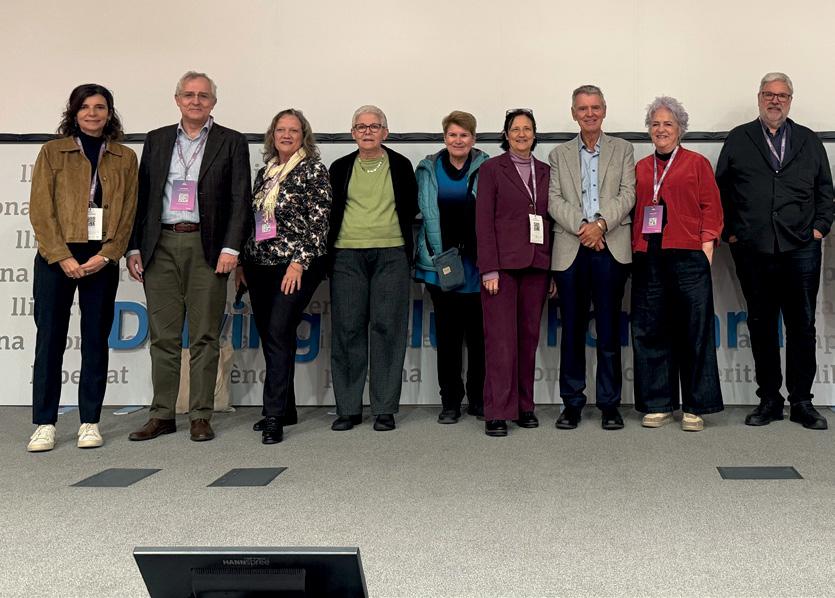
From that shared concern, a working group was born with Catalan experts from diverse backgrounds: Coral Regí, Miquel Àngel Prats, Pepe Menéndez, Neus Lorenzo, Maria Rosa Buxarrais, Josep Maria Esteve, Montse Jiménez, Anna Jolonch, Jesús Moral. In the first meetings, the idea to create the Leading the School of the Future conference emerged. That is how, in February 2026, the first edition of the I Impuls Educació Congress took place, exceeding all expectations, even meteorological ones: a civil alert forced it to move online in a matter of hours. The event opened in the Aula Magna of the UIC, empty of physical bodies but full of digital presences—a paradox with a powerful message: “Leading is also about managing uncertainty, making difficult decisions, and adapting course without losing purpose.” That day, we all put it into practice.
This issue of Diàlegs captures precisely all the voices of this first congress, both national and international, each with a powerful and enriching message that deeply impacted attendees. Andy Hargreaves championed leadership from the middle as the heart of educational change and challenged the systematic failure of top-down reforms. John Hattie brought the backing of 2,500 meta-analyses to propose five key arguments that hold the “magic” to move schools from ordinary performance to excellence. Anna Cristina d'Addio, from the GEM Report, recalled that education does not change with documents: it changes through people. Anna Jolonch reframed a fundamental question—what school for what world—and, alongside Maria Rosa Buxarrais, placed moral purpose at the center of any genuine educational leadership. For Héctor Ruiz Martín, the challenge is to build innovation born from the problem, not enthusiasm, evaluated through scientific criteria, moving from dogma to evidence.
The congress also provided space for debates and roundtables, offering context and analysis of key ideas to foster effective leadership with an ethical and pedagogical vision. Naturally, one of the most exciting highlights was the experience panels, which showcased the high professionalism in transformative leadership across many Catalan schools—this time, not as a theoretical concept, but as a living reality happening in many classrooms today.
We hope it inspires you.
Visible learning: Unlocking leadership strategies for school transformation JOHN HATTIE
Leadership from the middle for professional development ANDY HARGREAVES
VIVAS
EDITORIAL BOARD
Management and interviews
Ana Moreno
Publications
Impuls Educació
Original Design
Guillem Batchellí
Design and Communication
Marta Masip Gibert
Illustrations
Maria Yuling Martorell
Editorial department and subscriptions
Impuls Educació
Avda. Montserrat Roig, 3 08195 Sant Cugat del Vallès revista@impulseducacio.org https://impulseducacio.org/
ISSN 2938-2122
DL B 7336-2023
ANNA CRISTINA D’ADDIO
panorama
Academic inauguration
Anna Cristina d'Addio is a Senior Policy Analyst for UNESCO’s Global Education Monitoring (GEM) Report. As head of the thematic section, she spearheaded the research for the 2024/2025 GEM Report on leadership and education, examining how school leaders can transform learning systems. Holding a PhD in Quantitative and Public Economics, she previously worked at the OECD. Her vision masterfully combines statistical rigor with policy design to empower school leaders and educators worldwide.
Education transformed through people
by Impuls Educació
ANNA CRISTINA D'ADDIO'S KEYNOTE
Dwindling student achievement across high- and low-income nations, a mounting teacher shortage, youth mental health crises reaching a breaking point, accelerating digital transformation, climate disruption, and widening systemic inequalities. At the inaugural keynote of the 1st Impuls Educació Congress, Anna Cristina d'Addio—a leading voice behind the UNESCO GEM Report—positions educational leadership at the very heart of the global response. The data is unequivocal: leadership stands as the second most influential school-level variable driving student success, second only to classroom instruction. This underscores her opening thesis: education is not transformed by policy mandates, strategic plans,
or theoretical frameworks. It changes through people.
The Urgency: a complex global landscape
Student achievement is declining globally, even within wealthy nations, while the population of out-of-school children continues to rise. Concurrently, the fiscal prioritization that governments worldwide allocate to education is either stagnating or shrinking. This compounds a litany of preexisting challenges exacerbated by the pandemic: learning loss, acute teacher shortages, deteriorating mental health among students and educators alike, the relentless pace of digitalization, the climate crisis, and ever-deepening inequities. Yet, amidst these challenges, ground-breaking innovations, novel pedagogies, and unprecedented coalitions are emerging. The core
question—posed by d'Addio from the outset—is no longer whether education must change. Change is inevitable. The real question is how we lead it.
Leadership as a pedagogical force
Recent data confirms that leadership lies at the core of any school improvement process. The 2024–25 GEM Report underscores this with hard numbers, ranking it as the second most powerful school-level factor, trailing only classroom instruction. Effective leadership enhances teaching quality, fosters a thriving school climate, boosts teacher retention, and, ultimately, drives student achievement.
This directly challenges a long-held misconception: that running an educational institution is merely an administrative task, subsidiary to what happens inside the classroom.
The fundamental question is no longer whether education must change— change is inevitable. The question is how we lead it
Far from it. Leadership is inherently a pedagogical practice. Educational transformation does not occur through policy documents or theoretical frameworks; it is driven by individuals who steer the vision, build trust, cultivate professional growth, and engineer the conditions necessary for learning to thrive. This principle permeates every echelon of the system—from school principals and informal teacherleaders to district administrators, higher education executives, and ministry officials. Leaders at all levels dictate how resources are allocated, how faculty is supported, how equity and inclusion are championed, and how the wider
From heroic leadership to collective capacity Leadership, d'Addio reminds us, is not about management, command, or control. It is about exercising influence, providing direction, cultivating trust, maintaining systemic coherence, and sustaining a shared purpose. It is a process, not a position. Consequently, it is not confined to those who formally head an institution or decree regulations from a ministry office; it is equally present in a teacher mentoring a colleague, a technical advisor bridging policy and practice, a university team nurturing professional culture, or communities advocating for their students. Effective leadership is inclusive, distributed, evidenceinformed, context-sensitive, and learning-centered. The GEM Report underscores that today’s educational leaders navigate an exceptionally fraught landscape. They are tasked with boosting student achievement, supporting staff well-being, integrating emerging technologies, responding to rapid societal shifts, and safeguarding the system against
Robust leadership enhances teaching quality, fosters a thriving school climate, and, ultimately, drives student achievement
stakes equation, the myth of the heroic, solitary leader is untenable; instead, systems must build collective capacity. High-performing educational systems thrive on robust professional cultures. This demands three deliberate paradigm shifts: from bureaucratic compliance to a shared culture, from administrative supervision to professional support, and from individual authority to collective responsibility. Leading through this lens builds capacity rather than concentrating power.
A commitment to the future of education
Deliberating on educational leadership, d'Addio insists, is far
The discourse directly impacts the classroom, shaping the realities of educators, students, and communities alike. The ultimate objective is to harness leadership as a powerful engine for social justice, instructional quality, equity, and opportunity.
Achieving this demands three core attributes. First, courage: the willingness to challenge deep-seated assumptions, pose uncomfortable questions, and destigmatize failure by sharing it as transparently as success.
Second, collaboration: working within and across disciplines, recognizing that the most innovative breakthroughs occur at cross-disciplinary intersections.
In an era of profound complexity, effective leadership must shift from an individual construct to the cultivation of collective capacity
We must transition from regulatory compliance to culture, from supervision to support, and from isolated authority to shared responsibility
Finally, purpose: a steadfast reminder that leadership is fundamentally about people— ensuring that every student flourishes, every professional grows, and educational systems are designed to serve human needs rather than chase efficiency for its own sake.
The future of education is not forged in political arenas. It will be authored by those who remain relentlessly focused on learning, invest heavily in educators, listen deeply to communities, and champion equity as a core responsibility rather than a mere slogan. This is the essence of
of quality, a lever for inclusion, a vital bridge between policy and practice, and an unyielding commitment to the success of every student.
The future of education cannot be decreed; it is shaped by those who safeguard the focus on learning, invest in educators, actively listen to the community, and embrace accountability for equity
in depth
John Hattie PhD, is an educational researcher with nearly thirty years of experience analyzing what works best in student learning and achievement. His groundbreaking research, known as Visible Learning, is the culmination of nearly three decades of work synthesizing over 2,100 meta-analyses. This body of work spans more than 100,000 studies and involves over 300 million students worldwide. Dr. Hattie has been a keynote speaker at more than three hundred international conferences and has received numerous accolades for his contributions to education. His most notable publications include Visible Learning, Visible Learning for Teachers, Visible Learning and the Science of How We Learn, Visible Learning for Mathematics, Grades K-12, and 10 Mindframes for Visible Learning.
Visible learning: Unlocking Leadership Strategies for School Transformation
Leadership as an amplifier: five keys to a high-impact school
by Impuls Educació JOHN HATTIE’S KEYNOTE
Behind Visible Learning lie 2,500 meta-analyses and data from 300 million students, forming the most extensive corpus on educational efficacy in existence. Building on this foundation, John Hattie positions educational leadership as an amplifier of instructional impact. Although leadership operates as a mediated influence filtered through the teaching staff, it boasts a remarkably high effect size of 0.37. To leverage this, Hattie proposes five arguments to move schools out of the stagnant "yellow zone" (effect sizes below 0.40) and firmly into the high-performing "blue zone" (above 0.40). Crucially, cultivating collective teacher efficacy yields an effect size of 1.32, effectively quadrupling the baseline rate of learning.
The two zones of visible learning
The empirical framework for high-impact leadership is robust, utilizing a key metric: the average effect size, which centers at 0.40 on the continuum of impact. Notably, virtually no educational intervention falls below zero, meaning scarcely any deliberate strategy actively harms students. The rare factors yielding a negative effect—such as bullying (–0.30) and anxiety (–0.50)—predictably reduce achievement. Because 95% to 97% of interventions raise performance to some degree, the true benchmark for success must be set at the system average: 0.40.
The core of Visible Learning consists of contrasting high-leverage influences in the blue zone (above 0.40) with modest ones in the yellow zone (between 0.0 and 0.40), which functions as a counterfactual baseline. Hattie's ultimate goal is for
every student to have a blue-zone teacher. Longitudinal data across several countries reveals that the typical academic growth a student makes from one academic year to the next corresponds exactly to an effect size of 0.40. Therefore, an educator operating in the blue zone facilitates more than one year of growth for every year of input. Currently, 50% to 60% of schools meet this standard. For blue-zone schools, the mandate is to understand and sustain their excellence; those in the yellow zone must improve. While external excuses frequently surface, the authentic challenge for school leaders lies within their own institutions: minimizing internal variability. The defining question is why one teacher yields blue-zone results while another, in the exact same context, remains in the yellow zone.
Leadership as an amplifier
be framed as professional growth rather than an exercise in deficitframing or culpability.
Daily reality and leadership styles
The average effect size derived from nearly 90 meta-analyses on school leadership stands at 0.37. While this metric sits marginally below the 0.40 threshold, it represents a distal, secondary influence that is invariably mediated through the teaching staff.
The course progress benchmark is 0.40: above is the blue zone (excellence); below is the yellow zone (low achievement)
In the landscape of organizational science, a mediated effect size of 0.37 is exceptionally high. School leaders primarily exert influence through two vectors: magnification and amplification. Their greatest strategic leverage lies in controlling the narrative of what happens within the educational institution. Consequently, two distinct leaders can implement identical initiatives yet produce vastly discrepant impacts on student outcomes. Executive effectiveness hinges less on what they do and far more
build trust and engineer psychologically safe environments ultimately dictates whether a faculty can transition from the yellow zone to the blue zone. Crucially, this transition must
It is a curious anomaly how rarely practicing school principals document their insights on executive stewardship. While career academics publish extensively, very few books are authored by active school leaders. A typical school head navigates between 80 and 120 discrete tasks daily—95% of which are unplanned—yet over 90% report deriving profound professional satisfaction from the role. Codifying these real-world strategies is vital for the profession. Regarding leadership typologies, early educational research distinguished between transformational leadership and instructional leadership. Transformational leadership prioritizes organizational climate, individualized support, and teacher autonomy. Conversely, instructional leadership maintains a relentless focus on direct classroom observation, data diagnostics, and high academic standards. Viviane Robinson’s research (2010) decisively established that instructional leadership yields a substantially greater impact on student achievement. The highest recorded effect size within this domain (0.84) emerges when school leaders actively promote and participate alongside faculty in professional learning. While establishing ambitious goals is critical, actualizing these standards is only possible when anchored in relational trust and an optimal school climate. Ultimately, executive leadership bears sole accountability for safeguarding the culture of the entire institution.
Teacher autonomy and the coalition of success
Empirical data indicates that many secondary school educators
Leadership is not about executing initiatives—it’s about amplifying them.
Same plan, different leader, vastly different results
frequently opt for insular practice, viewing absolute classroom autonomy as a sacrosanct professional value. However, when autonomy is misconstrued as isolation, it fundamentally sabotages the development of a collective, high-impact institutional culture. The Visible Learning architecture counters this isolation by systematically mapping where each educator falls along the impact continuum. Leadership must intentionally forge a "coalition of success" anchored by blue-zone practitioners, elevating their voices within site-based professional learning, and constructively inviting yellow-zone colleagues to join this collective ecosystem. This mechanism must be executed entirely devoid of shame or blame, relying instead on high relational trust and explicit transparency of intent to drive student progress.
Five arguments for high-impact leadership
FIRST: REDEFINING IMPACT AND THE LEARNING ENVIRONMENT
First, leaders must redefine how they conceptualize institutional impact. True high impact transcends test scores; it requires engineering a welcoming, secure learning environment characterized by profound psychological safety— specifically, the safety to acknowledge gaps in knowledge and to treat errors as cognitive opportunities rather than sources of shame. Hattie highlights this imperative
through a poignant familial vignette detailing his granddaughter's first day of schooling. While the child initially approached the classroom with enthusiasm, she quickly spiraled into acute distress upon realizing she could not immediately read, internalizing a deep sense of shame. This everyday episode exposes a systemic pathology: students frequently learn, almost from day one, that a lack of prior knowledge is a shameful deficit rather than the very catalyst for their schooling. The intrinsic motivation to embrace cognitive challenge must be intentionally cultivated, particularly since highattaining students frequently exhibit extreme risk-aversion, preferring tasks they have already mastered. Beyond insular staffroom debates regarding competing instructional methodologies, leaders must confront a fundamental truth: at their core, students focus on learning, not teaching. Utilizing analytical diagnostics like the Jenkins curve, school executives must rigorously evaluate whether students maintain an intrinsic desire to process what is being taught. If student engagement plummets upon transitioning into primary education, the institution is demonstrably failing to achieve highimpact status.
Leadership that learns alongside teachers achieves an effect size of 0.84. This requires a high level of trust
SECOND: PRIORITIZING PROGRESS OVER STAGNATION AND HIGH EXPECTATIONS
School systems must evaluate performance metrics through longitudinal measures of valueadded progress over time. A pervasive systemic pathology is the
Misunderstood autonomy hinders a collective culture. The coalition for success invites; it does not blame
phenomenon of "cruising" schools or classrooms, where students enter with above-average baselines but fail to achieve the equivalent of a single year’s academic growth. Traditional frameworks are frequently adept at remediating underperformance, yet signally struggle to add value to highattaining cohorts, often masking this stagnation behind a rhetorical obsession with high standards. The most effective institutions are those that, irrespective of their initial intake baseline, generate greater than one year of academic growth per school year. The rigorous diagnostic analysis of classroom data is entirely decisive here, as illustrated when contrasting highachieving yet stagnating students against lower-attaining students demonstrating accelerated valueadded progress. As Graham Nuthall famously documented, educators remain oblivious to roughly 80% of real-time classroom interactions. Consequently, systematic peer observation and open-to-learning conversations are vital structural interventions that forcefully shift the analytical gaze back toward the individualized progress of the entire student body. Furthermore, the leverage of educator expectations is extraordinarily potent. Teachers harboring high expectations for all learners effectively double the rate of student learning progress, yielding an effect size of 0.42. Conversely, under low-expectation mindsets, the magnitude of effect collapses to an absolute negligible 0.03. The minimum acceptable professional standard is scaffolding students to realize the potential they believe
they possess; the true executive objective is empowering them to far exceed their own perceived limitations. Therefore, institutional professional learning must focus relentlessly on unpacking and elevating teacher expectations, as this cognitive mindset dictates classroom reality.
THIRD: SUPPORT MECHANISMS AND ACCURATE PROBLEM DIAGNOSIS
The third argument mandates the institutionalization of targeted support frameworks. As Stephen Covey astutely noted, intense effort expended within an incorrect context is entirely futile. The faculty lounge must transcend traditional socializing, serving instead as a sanctuary for deprivatizing and dissecting authentic problems of practice. A core executive responsibility of school leadership is ensuring that the correct systemic problem is accurately diagnosed and confronted. Frequently, schools squander resources deploying excellent professional development initiatives in instructional areas where the faculty is already highly competent, leaving the authentic institutional bottleneck untouched. Nuthall demonstrated that between 40% and 50% of the instructional content delivered daily is already mastered by the student cohort, rendering the tasks devoid of real cognitive engagement or desirable difficulty. Leaders must diagnose the right problems, elevate the voices of the practitioners actively solving them, and embed tracking mechanisms to monitor impact— guaranteeing that every student
High expectations double the rate of learning. The goal: for every student to exceed what they believe they are capable of
The threat isn’t resistance—it’s the kind of adaptation that turns the new into the old
captures at least one year of growth.
FOURTH: COLLECTIVE EFFICACY IN ACTION
The fourth argument centers on the operationalization of collective efficacy. A powerful operational blueprint is found in collaborative, evidence-based moderation protocols regarding student progress against explicit success criteria, which effectively eliminates the systemic confusion and subjectivity generated by disparate grading standards among isolated teachers. Collective teacher efficacy boasts a staggering effect size of 1.32, effectively quadrupling the baseline rate of student learning. To activate this leverage, the faculty must collectively evaluate their own instructional impact, debate and calibrate expectations, and actively engage as critical friends in peerto-peer critique. Concurrently, cultivating collective student efficacy and sophisticated collaborative learning skills is increasingly demanded by the modern labor market. However, authentic collaboration requires explicit instruction in specific competencies, namely active participation and theory of mind—the capacity to seamlessly navigate alternative perspectives. Without guidance, group work frequently degenerates into pseudo-collaboration, where one highly capable student executes the workload while peers remain passive. Ultimately, deep listening remains the most undervalued skill in the educational landscape; exceptional leaders are distinguished by their capacity for profound, active listening before executing action.
FIFTH: THE IMPLEMENTATION MODEL AND EVALUATIVE THINKING
The final argument underscores the necessity of a transparent, disciplined implementation
framework. Cultivating deep relational trust constitutes the non-negotiable foundational step, systematically forged through active listening, absolute clarity of expectations, and shared accountability for institutional success. The implementation architecture—formalized via the DIIE model (Diagnosis, Intervention, Implementation, Evaluation)—must invariably initiate with a data-driven, rigorous diagnosis. Subsequent interventions must be directly lockstepped with the diagnosed problem and deployed with absolute fidelity and precise dosage control. For example, while the science of reading is highly effective for decoding mastery, administering intensive phonics drills to students who have already achieved decoding fluency is pedagogically redundant and counterproductive. The single greatest threat to successful systemic implementation is not active resistance, but rather excessive adaptation or "lethal mutation," wherein educators incrementally alter an intervention until it merely replicates legacy, comfortable practices under a new rhetorical guise. Leadership must relentlessly foster a culture of evaluative thinking—constantly interrogating empirical evidence of impact, including actively seeking signs that current strategies may be failing—to secure continuous optimization and unlock highimpact outcomes across the entire system.
in depth
Andy Hargreaves PhD, is a Research Professor at Boston College with over 100,000 academic citations. He has served as a government advisor in Scotland and Canada, and as president of the ARC, a global network committed to equity and well-being. Ranked as the 15th most impactful scholar in the US educational debate, he has developed foundational concepts such as professional capital and sustainable leadership. He is the author of award-winning seminal works, including his recent book Leadership from the Middle (2023). Backed by honorary doctorates and the prestigious Grawemeyer Award, his career combines cutting-edge research with a steadfast commitment to the humanistic transformation of schools.
Leadership from the middle for professional development
The heart, soul, and backbone of educational change
by Impuls Educació ANDY HARGREAVES' KEYNOTE
Professor Andy Hargreaves challenges the mechanistic metaphors that traditionally dominate educational policy, advocating instead for a paradigm shift in executive leadership. His core thesis posits that the closer leaders operate to actual instructional practice, and the tighter the peer collaboration they cultivate, the more profound the systemic impact. In response to the chronic failure of top-down mandates, "leading from the middle" reclaims school principals as primary catalysts of transformation rather than passive administrators of external directives. This framework builds a robust model for improvement grounded in cocreation, social capital, solidarity, and structural solidity.
The premise: the closer we are, the better we lead
The foundational theory of leading from the middle rests upon a deceptive principle: proximity optimizes leadership. This assertion operates on two distinct horizons. First, collective efficacy and leadership capacity accelerate when professionals collaborate deeply across traditional silos. Second, when leadership maneuvers are tightly coupled with the core business of the classroom—teaching and learning— the margin of impact increases exponentially. This framework is universally applicable to principals, middle leaders, and teacher leaders navigating within and across school communities.
The systemic failure of top-down policies
To appreciate the necessity of middle-out leadership, one must
confront the stark track record of top-down governance. Longitudinal research conducted by Romain Vienne and Beatriz Pont at the OECD tracked 450 educational policies across multiple nations over a decade, revealing that over 80% of these mandates fail to achieve full implementation. This implementation gap stems from two systemic flaws. The first is a dogmatic reliance on linear dissemination. Under the banner of "deliverology"—a corporate paradigm popularized by Michael
Impact multiplies when collaboration tightens and leadership moves closer to the classroom
Barber—policies are engineered at the apex of the hierarchy and pushed downward through rigid timelines, arbitrary quantitative quotas, and aggressive micromanagement. Because these frameworks routinely carry punitive sanctions, they incentivize practitioners to distort data and game the system, rendering real pedagogical impact negligible or counterproductive.
Over 80% of macro-level OECD educational policies fail to achieve authentic implementation on the ground
Repetitive change syndrome and the response of co-creation
The second structural barrier is what organizational theorist Eric Abrahamson terms Repetitive Change Syndrome. Educational systems frequently operate in hyper-cycles, introducing novel reforms every few years. Consequently, before a mandate can mature and yield measurable
outcomes, a shifting political administration imposes a contradictory directive, inducing widespread change fatigue. When diagnosing why specific educators languish in John Hattie's low-impact "yellow zone," evidence suggests they are frequently casualties of this syndrome. Far from being inherently obstructionist, these teachers have logically deduced that investing professional energy into transient, top-down initiatives is a futile exercise. Mitigating this implementation crisis requires co-creation: policies must be organically designed alongside the very stakeholders tasked with enacting them—educators, school staff, students, and the local community.
Social capital and networking in the face of complexity
While linear initiatives can occasionally be mandated from above, complex, multi-layered policies flatly reject top-down implementation. This reality was starkly evident in the inclusive education strategy in Nova Scotia, Canada, evaluated by Andy Hargreaves and Jess Whitley.
Many educators in the underperforming yellow zone are not change-resistant; they are exhausted by repetitive change syndrome
This equity framework transcended traditional special education to address gender identity, linguistic variance, immigration dynamics, and concentrated poverty. In evaluating which leadership attributes predicted success in
executing this complex mandate, two clear variables emerged. The second most potent predictor was a principal's ability to cultivate rich internal collaboration, allowing local teams to engineer contextualized solutions. However, the single most decisive factor was the principal's capacity to collaborate externally with peers across different school sites. This cross-institutional leverage utilizes two forms of social capital conceptualized by Robert Putnam. Bonding capital develops internally within homogeneous professional groups sharing common values, while bridging capital links diverse professionals operating across distinct contexts. While educators naturally cultivate bonding capital, bridging capital remains the vital missing link required to solve complex, system-wide challenges.
From engineering to ecology: the metaphors framing change
The linguistic frameworks used to articulate educational change dictate how it is operationalized. Historically, policy rhetoric has been dominated by mechanistic engineering and construction tropes: driving, delivering, scaling, and building levels. These industrial terms fundamentally fail to capture the human, relational ecosystem of schools. A superior alternative lies in organic, ecological metaphors: growth, networks, sustainability, and the life-sustaining centers of an organism.
The most decisive success factor is not the internal cohesion of the staff, but rather the collaborative networking among school leaders
Under an ecological lens, the role of middle leadership is transformed. While traditional theorists like Michael Fullan, Andreas Schleicher, and Michael Barber have conceptualized the middle as a mere conduit or transmission belt designed to funnel dictates from top to bottom, an ecological view positions the middle as the heart, soul, and backbone of educational transformation. Leading from the middle empowers principals to act as primary instigators of sustainable change rather than passive compliance managers.
Leading from the middle means being the heart and backbone of the system—not just a transmission belt
Verstehen: the distinctive methodology of the human sciences
This ecological orientation aligns with a sophisticated epistemological tradition within the social sciences. A century ago, Max Weber argued in The Methodology of the Social Sciences that human disciplines differ fundamentally from the natural sciences: atoms do not hold opinions on their behavior, whereas human beings do. Weber advanced the concept of Verstehen (interpretive understanding), asserting that analyzing human systems requires deep engagement with the subjects' internal perspectives. Instructional practice cannot be reduced to a controlled laboratory experiment or a linear surgical intervention. It functions much more like community medicine, mental health, or elder care— disciplines that demand deep contextual nuance.
Teaching isn't a lab experiment; it's community medicine. It requires a profound understanding of context
While large-scale macro-quantities offer value, qualitative research— meticulous observation, active listening, and identifying organic field practices—is equally indispensable. Educational science must dynamically balance broad statistical averages with a deep, rigorous understanding of unique, complex cases.
Collaborative professionalism: solidarity and solidity
Empirical evidence confirms that authentic collaboration drives student achievement, suppresses teacher attrition, and elevates job
satisfaction. To isolate the structural mechanics of high-performing collaborative cultures, Andy Hargreaves and Michael O'Connor executed a cross-national analysis spanning five countries. Their findings isolate two nonnegotiable pillars: solidarity and solidity. Solidarity transcends superficial cordiality or artificial consensus; it requires a deep, unwavering commitment to shared values. It provides the relational trust necessary to navigate conflict, engage in difficult pedagogical debates, and present a unified front in the pursuit of equity. Conversely, solidity addresses the structural architecture of collaboration. Relationships alone cannot sustain change; solidity demands robust protocols, clear roles, explicit accountabilities, and disciplined time management. For
example, tools like the talking stick are utilized to enforce equitable participation and regulate emotional dynamics during high-stakes deliberation. High-impact leadership requires the integration of both: relationally driven leaders must inject structural solidity, while data-driven technocrats must cultivate authentic solidarity.
Decolonizing collaborative professionalism
Furthermore, collaborative professionalism must be thoroughly decolonized and culturally contextualized. Collaboration
manifests in highly divergent forms globally. In Hong Kong, protocols like Lesson Study operate efficiently within a deeply respected, structured hierarchy, as evidenced by the work of Veronica Yao. Conversely, in Colombia, teacher collaboration is intensely vibrant, informal, and inextricably bound to personal, social, and political passions.
Goodwill is not enough: a highimpact collaborative culture demands both shared values and structural rigor
When importing collaborative blueprints from foreign jurisdictions, leaders must critically analyze which core principles should remain constant and which elements must adapt to the local cultural fabric. School systems must avoid uncritical dependency on imported models, opting instead for a respectful, reciprocal dialogue with external frameworks.
Working with resistance, not against it
Finally, leading from the middle requires a sophisticated approach to organizational resistance. Change
agents inevitably encounter friction, yet instead of viewing resistance as an obstacle to be crushed, leaders can look to other disciplines for superior tactical metaphors. In medicine, resistance (inoculation) introduces a controlled pathogen to strengthen the organism; in electrical engineering, resistors regulate current to prevent systemic collapse; in carpentry, the master artisan works with the resistance of the wood grain, never against it.
In educational practice, working with resistance means intentionally identifying and partnering with highly respected, skeptical veteran teachers who question a new initiative. In a project funded by the Lego Foundation, an astute principal intentionally recruited Carrie Sloan, a highly structured, traditional educator deeply skeptical of play-based learning. By honoring her clinical expertise and persuading her to co-design the pilot, the principal transformed her
Collaboration is not uniform; every cultural context demands discerning what must be adapted and what must be preserved
practice and leveraged her informal network influence to convert the entire faculty.
Network theory confirms that the most critical node in an organization is rarely the individual at the formal apex of the hierarchy; it is the person sitting at the center of the informal communicative web. Identifying, dialoguing with, and persuading these central nodes allows leaders to transmute organizational friction into a powerful engine for sustainable improvement.
The most critical node is not at the apex, but at the center of the communication network
project
Gloria Gratacós Casacuberta holds a PhD in Education and is a Full Professor in the Faculty of Education at Villanueva University (Madrid), where she has served as Dean of both the Faculty of Education and the Faculty of Psychology. Currently, she directs the Master’s Degree in School Leadership and Management, aimed at training national and international school leaders. A specialist in school governance, her research focuses on the impact of school leadership on teacher leadership, instructional quality, and school climate. She is the author of numerous publications on school leadership and actively collaborates in international networks and forums, such as the International Study of Teacher Leadership (ISTL). Furthermore, she coordinates the CEAFAP Research Group (Educational Quality, Effective Learning, and Teacher Professional Development) at Villanueva University.
Pedro-León Vivas holds a PhD in Education and Society from the University of Barcelona. He is a professor and researcher at Austral University (Argentina) and a visiting professor at universities in Spain, Uruguay, and Argentina. His work focuses on understanding school leadership practices within school change processes. He also conducts research on teacher leadership and the use of generative artificial intelligence in school management. He is a member of the ISTL (International Study of Teacher Leadership) network and the CEAFAP Research Group (Educational Quality, Effective Learning, and Teacher Professional Development) at Villanueva University. He has published chapters and articles in international publishing houses and journals and has extensive experience in educational management, including his service as an Inspector of Higher Education for the Ministry of Education of the Province of Santa Fe (Argentina).
When school leadership sows, teacher leadership blooms
by Impuls Educació
ARTICLE BY GLORIA GRATACÓS AND PEDRO-LEÓN VIVAS
In 2019, the arrival of a new principal at an early childhood and kindergarten school in Madrid triggered far more than a routine leadership handover: it unlocked the latent potential of the faculty and fundamentally transformed the institution's professional culture. Documented by the International Study of Teacher Leadership (ISTL), this case provides a concrete operational roadmap demonstrating how teacher leadership can revitalize an educational institution when administration chooses to cultivate capacity before demanding raw results.
The ISTL research collective (www. mru.ca/istl) unites international scholars to investigate teacher leadership across diverse cultural landscapes. Their foundational
premise posits that contemporary societal shifts require educational institutions to move beyond legacy models centered exclusively on the principal. The 2020 global health crisis vividly illustrated this reality: the schools that successfully maintained instructional continuity did so not because of physical infrastructure or material wealth, but through the professional commitment of an adaptable faculty capable of mobilizing individual strengths to scaffold students under extraordinary constraints.
The ISTL group concentrates on three core imperatives: how teacher leadership is conceptualized, how it is intentionally fostered, and how it is sustainably maintained within distinct cultural frameworks. Relying on case study methodology to extract insights from the daily clinical realities of schools, their findings were featured at the 1st
Impuls Educació Congress, "Leading the School of the Future," where Gloria Gratacós presented this fieldanchored research alongside global experts.
This specific case documents how a Madrid-based early childhood center catalyzed teacher leadership in 2019 through the strategic deployment of "expert groups." The following analysis dissects the administrative practices that facilitated the initiative, the resulting pedagogical shifts, and the downstream impact on student learning. Because this study examines an early childhood setting, the teaching staff was entirely female, which governs the gendered focus of the primary field data.
Where to begin? A clear diagnosis and a guiding question
The intervention initiated with a rigorous baseline diagnosis: a contraction in student enrollment
driven by regional demographic declines, intensifying local competition, and an urgent need to modernize instructional workflows. In response, the leadership team formulated a strategic question to guide the entire transformation: how can we accelerate academic outcomes while simultaneously elevating teacher motivation and professional commitment? The framing of this query served as an explicit statement of intent, rejecting the premise that accountability and educator well-being are mutually exclusive, and positioning them instead as inherently symbiotic. The administration recognized that superficial procedural compliance would not suffice. True optimization demanded a profound cultural shift that repositioned classroom teachers as the primary architects of school improvement. This required migrating from a centralized, principal-centric hierarchy toward a highly distributed model, where pedagogical decisionmaking was deprivatized and grassroots professional initiative was actively incentivized. The operational strategy materialized by identifying and leveraging the pre-existing assets of the faculty. As the principal noted: "True leadership development begins by identifying the unique strengths and pedagogical passions of the faculty, using their intrinsic interests as the structural foundation for specialized expert teams."
The decisions that ignited the engine of teaching innovation Expert groups were engineered as lean, agile teams of educators organized around specific curricular domains. Rather than serving as bureaucratic committees, these groups functioned as autonomous pedagogical laboratories tasked with researching, trialing, designing, executing, and evaluating novel methodological frameworks before scaling them across the entire institution. In this school, they
catalyzed targeted innovations in English phonetics, mathematics instruction, socio-emotional learning, psychomotor education, and project-based learning. Successful implementation required pairing logistical adjustments with a deliberate shift in administrative disposition. The principal first conducted individualized clinical interviews to map the specific motivations, aptitudes, and vocational interests of every educator. This granular diagnostic profile formed the bedrock of the school's professional development architecture. Central authorities then aligned the school’s macro-curricular priorities with the individual passions of the staff. Researchers isolate this specific intersection as the primary catalyst for the project's success: teams configured around authentic professional affinity operate from a deep intrinsic motivation that no external compliance mandate or financial incentive could replicate. To sustain these laboratories, the administration structurally protected dedicated collaboration time within the school week, provisioned teams with material resources and specialized training, and established a non-negotiable cultural baseline: honest instructional mistakes would not be penalized. This psychological safety and institutional backing turned expert groups into a powerful engine for innovation and professional capital.
How expert groups revitalized teaching and activated teacher leadership
The introduction of expert groups fundamentally disrupted the school's legacy operational logic. Educators shifted from passive executors of top-down administrative directives to authentic co-authors of the school's curricular and pedagogical design. They took full ownership of methodology engineering, content synthesis, and active instructional
Groups established under this paradigm operate driven by an intrinsic motivation that is impossible to achieve through external incentives
decision-making. This paradigm shift was sustained through systematic, disciplined collaborative professionalism. Teachers engaged in continuous, data-informed dialogue regarding their daily practice, deprivatizing their classrooms and co-calibrating didactic strategies. This collaborative workflow enhanced vertical and horizontal curricular alignment across grade levels while cultivating a professional climate rooted in deep relational trust. Internal knowledge-transfer symposia served as the primary mechanism for scaling these insights: each expert group systematically presented its action-research findings, provided practical toolkits, and scaffolded colleagues in adopting the new methodologies, thereby turning individual expertise into collective institutional capital. As a teacher said: "Professional development and applying what you learn significantly boost confidence and self-esteem. This, in turn, makes you a better teacher". Throughout this iterative process, specific educators naturally emerged as pedagogical experts in their respective fields. They assumed these roles not via formal administrative appointment, but through organic peer recognition of their clinical expertise, commitment, and capacity to mobilize colleagues. This organic evolution represents the precise profile of teacher leadership investigated by the ISTL: informal in its origin, yet exceptionally potent in its systemic scope and influence. By actively designing the innovations they deployed, teachers developed
deep psychological ownership over the school's evolving charter. Integrating personal strengths into institutional goals infused their daily labor with elevated professional meaning.
The Impact of expert groups on student learning
The sophisticated collaboration within the expert groups translated into measurable, observable progress across all target developmental domains. In mathematics, the integration of hands-on, conceptually rich methodologies empowered students to master cognitive milestones that exceeded the faculty's baseline expectations, unlocking advanced capacities for mathematical abstraction and numerical reasoning rarely documented in early childhood
cohorts under traditional frameworks. In English, a strategic pivot toward systemic phonology, targeted listening comprehension, and proactive verbal expression generated a noticeable surge in student communicative competence, ensuring a seamless, high-attaining transition into
More integrated, feeling as though the school is a part of you, because you are contributing something of your own to educational growth and development
primary education. Concurrently, the socio-emotional learning laboratory established early affective awareness and self-regulation protocols, significantly reducing behavioral friction and optimizing the classroom learning climate. Finally, the widespread deployment of project-based learning boosted intrinsic motivation, positioning young learners as active protagonists in their own inquiries. This accelerated development caught the attention of families, who reported significant, unexpected cognitive and social progress in their children. Ultimately, the expert group model demonstrates that sustained, job-embedded professional collaboration—when structurally supported by executive leadership—serves as a highleverage mechanism for maximizing student learning growth.
Leading together: when administration and teachers form a single team
This case study confirms that navigating complex institutional challenges demands a leadership style that rejects centralization in favor of strategic distribution. The school administration did not abdicate its executive authority; rather, it reconfigured it. Management transitioned from top-down monitoring to engineering an ecosystem where frontline educators could execute high-level initiatives grounded in their localized expertise. Executive leadership, viewed through this lens, exerts its greatest impact not through direct command, but by cultivating the structural conditions and psychological safety that activate the collective capacity of the team. Administrative management alone is fundamentally insufficient to navigate the complexity of contemporary educational demands. Conversely, grassroots teacher leadership lacking institutional scaffolding, structural resources, or alignment with a unified vision quickly leads to widespread professional frustration. Sustainable school improvement requires the deliberate articulation of both leadership vectors working in lockstep. For executives and practitioners committed to authentic
school improvement, the takeaways from this case are highly actionable: audit and identify the latent strengths of the faculty, build the structural conditions required for deep collaborative professionalism, and design explicit mechanisms to convert individualized expertise into shared institutional capital aligned with a common educational vision. While expert groups are not a rigid, universal template, they offer a replicable blueprint of how integrated leadership— where administrative authority and teacher leadership operate as complementary forces—can fundamentally transform an educational institution from within.
Lessons learned from practice
The ISTL research cohort strongly champions the value of an educational science that originates within live school environments and returns directly to them. When academic research engages deeply with local practitioners, respects school ecology, and seeks to understand the nuanced dynamics of daily routines, it establishes a powerful virtuous cycle: field practice informs theory, and refined theory returns to the classroom to optimize practice. At the 1st Impuls Educació Congress, international authority Andy Hargreaves emphasized the vital importance of deciphering
clinical practice from an internal perspective. This case study mirrors that philosophy, making visible an integrated leadership framework that yields concrete dividends for both educator capital and student learning trajectories. The core takeaway is straightforward: if a school house contains teachers with unmapped talents and untapped interests, the first executive imperative is to actively listen to them. The subsequent step is to provide the structural scaffolding required to translate that latent capacity into collective, institutionalized practice. What began as small, localized teams of educators ultimately altered the organizational DNA of an entire school. This is the true promise of integrated educational leadership.
School leadership exerts its influence both through its direct actions and through the conditions and capacities it fosters within its team
educational leadership Spotlight
ANNA JOLONCH
OSCAR SECORÚN LUPÓN
Anna Jolonch Director of LID-BARCELONA – Center for Educational Leadership and associate professor at the UCL Centre for Educational Leadership at the London Institute of Education. Her work focuses on how management teams can transform their schools to improve academic outcomes and the well-being of the entire educational community. Her vision offers leaders a guide to exercising pedagogical leadership that truly drives change and improvement. Her career has been oriented toward building bridges between educational theory and practice, and she has served as an advisor in comparative educational policy for the Catalan government.
The virtues of a leadership that improves learning
Leading is cultivating the growth of others
by Impuls Educació
Second only to classroom instruction, educational leadership stands as the single most influential school-level factor driving student success. Building upon this premise, Anna Jolonch reformulates a fundamental question: what kind of school do we envision, and for what kind of world? In an era marred by warfare, structural inequality, and democratic crises—where a third of young people have lost faith in the system—the answer demands virtuous leaders rather than merely competent managers; leaders who are genuinely capable of cultivating the growth of others. After all, while good leaders transform organizations, great leaders transform people.
What kind of school for what kind of world?
Reflecting on the ideal school for our contemporary world is the defining question of any educational endeavor and pedagogical leadership. Over eighty years ago, the United Nations Charter posited that placing education and culture at the core of global collective interest would safeguard human dignity. Today’s reality sharply contradicts that foundational principle. We inhabit a
world plagued by armed conflicts— such as in Ukraine, where thousands of schools have been bombarded— structural violence, exploitation networks, and a democratic crisis that has alienated a third of our youth from the system. This profound complexity infiltrates classrooms every single morning, turning schools into spaces of resistance that must safeguard shared values and civic coexistence. Education represents both a horizon and a future. Educators bear an immense responsibility: to protect the dignity of every student, acutely aware that a single pedagogical gesture can reshape a life. The ultimate goal is to nurture a critical citizenry capable of reading the world and navigating their own lives autonomously. As Professor Andy Hargreaves reminds us, schools must serve as sanctuaries of belonging. In a world prone to building walls, the school must forge community, honor diversity, and unearth the unique talent within every child, empowering them to believe in themselves.
The three poles of pedagogy: axiology, science and praxis
Professor Philippe Meirieu conceptualizes pedagogy through three primary poles: the axiological (values and ethics, a dimension
explored by Maria Rosa Buxarrais), the scientific (evidence and knowledge, expounded by John Hattie), and the praxiological (methodologies and practice). In the contemporary landscape, pedagogy cannot rely exclusively on empirical science. An evidence-based approach alone cannot dictate the trajectory of an educational vision; rather, it is the axiological pole that determines our direction and defines the ultimate purpose of education.
A single teaching gesture can turn a life trajectory around. The school, a space of resistance and belonging
While neuroscience and cognitive psychology clarify how the brain functions and how learning occurs, they can never prescribe what students ought to learn or which texts they should engage with. A values-driven perspective provides the necessary vision and direction; consequently, educational leaders must anchor themselves in these ethical imperatives before making technical or administrative decisions.
Viewed this way, the teaching profession carries a foundational moral purpose: the intrinsic desire to exert a positive influence on others. An effective educational leader engineers the conditions that unlock opportunities for all, cultivating the growth of others and cultivating new leaders in the process. Nevertheless, systemic complexities and widening inequalities severely hamper daily classroom practice.
The second factor with the greatest impact on learning Empirical educational research and recent UNESCO reports, presented by experts like Anna Cristina d'Addio, unequivocally demonstrate that educational leadership is a decisive lever. Investing in the professional development, capacity building, and resources of these leaders ranks among the most cost-effective educational policies available. Moreover, a global consensus has emerged: well-equipped leaders are vital across every echelon of the system—from classroom teachers to school inspectors and district administrators—a reality reflected in the contextually adapted framework developed by LID Barcelona.
Science deciphers how the brain learns, but does not dictate what students should learn
Indeed, leadership is the second most powerful school-level variable influencing student outcomes, second only to instructional practice. For leaders to fully exert this influence, however, the system must provide enabling conditions: decisionmaking autonomy, institutional recognition, structured mentoring, formative assessment, and a drastic reduction in the bureaucratic
Administrative burden distances the leader from the pedagogical leadership they should be exercising
burden that currently alienates school leaders from the pedagogical stewardship they are meant to provide.
The virtues of leadership: three dimensions of the profession
Professor Viviane Robinson highlights the paramount importance of virtuous leadership. In this framework, virtues are neither abstract concepts nor rhetorical embellishments; they are daily, operational practices that define a leader's methodology. They crystallize into a deceptively simple yet demanding maxim: doing the right work, the right way. These virtues span three distinct dimensions. First are the intrinsic leadership virtues: an unyielding moral purpose and an unconditional commitment to student learning, entirely divorced from the pursuit of power or personal status. Second are problemsolving virtues: the strategic capacity to prioritize, the analytical acumen to understand phenomena like teacher resistance, and the creative agency to reinvent schools in marginalized communities—as illustrated by the Magnet schools program highlighted by Jesús Moral and Núria Sabaté. Finally, interpersonal virtues anchor the profession: moral integrity, respect, courage, empathy, and the professional humility required to remain a lifelong learner.
Liderar l'aprenentatge: indagació i comunitat professional
The paradigm of "learning organizations" positions continuous growth at the core of the institution: if
educators and leaders stop learning, student progress stalls. This vision unyieldingly demands the success of every single student, without exception.
Drawing from the research of Viviane Robinson and John Hattie, the single most impactful lever an educational leader can pull is promoting the professional learning of their staff. This development must transcend isolated, passive workshops that fail to transfer to the classroom; instead, it must rely on high-impact, sustained models, such as those mapped out in Thomas R. Guskey’s evaluation framework, referenced by Ana Iturbe. To actualize this, school structures must adapt, normalizing collaborative practices like co-teaching and peer observation.
Virtues are not rhetoric: they are daily practice.
Moral commitment, strategic capacity and humility
Furthermore, this evolution hinges on a robust culture of teacher inquiry. Prior to launching innovations, teams must systematically investigate and diagnose the specific realities of their classrooms. As Professor Louise Stoll emphasizes, powerful professional development is forged by bringing practitioner experience into direct dialogue with empirical data and academic research. This necessitates dedicated spaces, protected time, and structured protocols to sustain rigorous, learning-focused pedagogical conversations that yield actionable, highly contextualized knowledge. It is equally vital to cultivate professional learning communities (PLCs) rooted in trust, where peer observation is geared entirely toward
The action with the greatest impact from a leader is to promote the professional development of their team
continuous improvement rather than performance evaluation. Crucially, this collaborative spirit must extend beyond individual schools, replacing institutional competitiveness with shared collective responsibility.
Teacher well-being: when transforming the organization implies transforming people Educator well-being is inextricably
linked to professional growth. Professor Qing Gu notes that much of the contemporary burnout and frustration within the teaching workforce stems from structural barriers that prevent educators from fulfilling the moral purpose of their calling. Beyond competitive compensation or reduced class sizes, the system must offer meaningful pathways for teachers to cultivate their talents, build clear professional trajectories, and step into impactful mentoring roles. While good leaders transform organizations, great leaders transform people. A school is, first and foremost, a human ecosystem; the cornerstone of its success lies in guaranteeing that every individual has authentic opportunities for professional flourishing. In a
The system must provide meaningful pathways for teachers to cultivate their talent, advance along clear career trajectories, and step into mentoring roles
fragmented world, education bears the historical mandate of anchoring the society we aspire to build—laying the groundwork for a more just and promising future for all.
Ethical educational leadership. Identity, interiority and ethics
The future of schools depends on the integrity and values of those who lead them
by Impuls Educació MARIA ROSA BUXARRAIS'S KEYNOTE
Pandemics, climate crises, artificial intelligence, and social polarization: the uncertainty of the present drives the search for technical solutions, measurable indicators, and managerial efficiency. Countering this impulse, Maria Rosa Buxarrais advocates for a less traveled path: the profound transformation of leadership itself. Three dimensions—identity, interiority, and ethics—articulate a proposal in which outward action begins with inward reflection. Leading is, above all, a way of being.
The present demands much more than technical management
We live in a time of profound uncertainty. The pandemic, climate crises, geopolitical tensions, growing inequality, and the technological revolution driven by artificial intelligence are transforming the context in which educational leadership is exercised. Schools
face unprecedented challenges: integrating artificial intelligence without losing the essence of education, guiding a generation immersed in information overload, responding to increasing diversity, and sustaining communities within a climate of social polarization.
In this scenario, it is tempting to seek solely technical responses: efficient management, measurable indicators, and rigid protocols. However, the transformation of schools requires something prior to any protocol: the profound transformation of those who lead them. As William Foster noted, every administrative decision entails a restructuring of human life. Therefore, school administration is, in its most intimate essence, the resolution of moral dilemmas. Each decision unfolds consequences
that transcend the organization and affect students, families, and communities.
There is a need for leadership that not only manages effectively but also acts with ethical consciousness. A leadership that understands its primary task is to educate, guide, and inspire. This ethical leadership is structured around three inseparable dimensions: identity, interiority, and ethics itself.
Identity: a process of becoming, not a heroic gift
Contemporary research demonstrates that identity is not fixed, but rather a process of becoming. It is a fluid and multiple identity, constructed at the intersection of various discourses, contexts, and
Every administrative decision restructures lives. School leadership is, in essence, the resolution of moral dilemmas
Maria Rosa Buxarrais Estrada is a professor in the Department of Theory and History of Education and the principal investigator of the Research Group on Moral Education (GREM) at the University of Barcelona (UB). Her work focuses on how educational leaders can build schools that are not only centers of academic excellence, but also communities that promote integral human development and responsible citizenship. Her vision is fundamental for anyone seeking leadership with purpose and solid values. Her work has been recognized for its contribution to the debate on the function of education in society and the importance of values in shaping new generations.
experiences. Traditionally, it has been conceptualized from individualistic perspectives that privilege the figure of the heroic leader—a trend documented by authors such as Nietzsche and Heffernan. This vision is insufficient and, above all, detrimental to the challenges of the 21st century: it generates unrealistic expectations, isolates the leader, and hinders the development of distributed and collaborative leadership. Identity, far from descending from pedestals, is constructed in everyday practice and social relationships. This identity presents multiple interrelated dimensions. Personal identity—life history, core values, formative experiences—heightens sensitivity to environmental difficulties, an essential quality for maintaining an awareness of reality. Professional identity—how one conceives their educational task and the principles that guide it—is not acquired solely through degrees: it is reconstructed throughout a career via accumulated experiences and the resolution of value conflicts. Relational identity serves as a reminder that leading is a relational practice: as Martin Buber taught, ethical leadership requires building genuine "I-Thou" relationships, based on the recognition of the other, avoiding the "I-It" relationship in which the other is reduced to an instrument. Finally, contextual and intersectional identity indicates that context is constitutive, not accessory. Researchers such as Blackmore and Horsford highlight how these identities are constructed at the intersections of gender, social class, and ethnic origin: female leaders, for instance, navigate contradictory discourses regarding femininity and authority, while minority leaders face
challenges stemming from structural stereotypes.
Building a solid ethical identity requires four fundamental elements: self-knowledge, following Socrates' maxim, as a gateway to identifying one's own values and biases; critical reflexivity, with the necessary humility to question one's own assumptions; coherence among thinking, being, and acting, thereby reducing the distance between personal narrative and actual practice; and sensitivity toward diversity, expressed in a genuinely intercultural identity. As Kappers points out, leadership for equity demands profound personal transformation.
Interiority: an act of countercultural resilience
The concept of interiority may sound unusual in an educational context dominated by efficiency and measurable outcomes. In a world obsessed with metrics, speaking of interiority is an act of countercultural resilience—and yet, it is fundamental for sustaining authentic and enduring leadership. Interiority refers to the inner life: the deep values, motivations, purposes, and the capacity for reflection that enables the development of practical wisdom—what Aristotle called phronesis.
In an era that constantly pushes toward the exterior and hyperconnectivity, cultivating interiority is an act of freedom that prepares one to activate consciousness and depth of thought. Great educational figures such as Maria Montessori, Paulo Freire, and Nel Noddings worked extensively on this dimension. Leadership emanates from the deepest core of one's being: if the inner world is fragmented or saturated with unresolved anxiety,
The myth of the heroic leader belongs to the 20th century. Ethical identity is forged in everyday practice
these deficiencies will inevitably be projected onto professional decisions and relationships. Foucault, with his concept of technologies of the self, demonstrated how it is possible to consciously work on one's own subjective formation.
Cultivating this interiority involves several concrete practices. First, self-reflection through tools such as a reflective journal, dedicating time to analyze the experiences and decisions of each day. Second, emotional awareness: researchers like Shapiro and Stefkovich and neuroscientists like Antonio Damasio have demonstrated that rational decisions incorporate essential emotional dimensions—something that transcends Kohlberg's classic dichotomy. Third, self-care: in caregiving professions such as education, establishing healthy boundaries and maintaining personal balance is not a private whim; it is an ethical responsibility to prevent professional burnout. This interiority enables a more authentic relationship with others. It translates into a quality of presence, deep listening aimed at genuinely understanding the interlocutor, and a response from the core of one's being, which avoids the automatic reactions so often triggered by conflict. Authors such as Deborah Netolicky have documented how this exercise transforms the way one relates to others. Furthermore, it implies recognizing one's own vulnerability and abandoning the model of the invulnerable leader to become a more human, accessible, and therefore, more credible figure.
Four paradigms for an ethics of leadership
The ethics of educational leadership is approached through four fundamental paradigms that should be recognized and combined. The first is the ethic of justice, rooted in the liberal democratic thought of authors such as Kant, Rawls, and
Without a cultivated inner life, there is neither practical wisdom nor leadership that can be sustained over time
Kohlberg. It focuses on rights, laws, and principles of equity: it asks whether rules are applied fairly and proportionally to all.
The second is the ethic of critique, grounded in authors such as Paulo Freire, Henry Giroux, and Michael Apple. This paradigm invites the questioning of power structures and systemic inequalities. It compels one to ask who benefits from a particular policy, whose voices are silenced, and in what ways school practices might be reproducing classism or racism. It serves as a reminder that education is not neutral and that leading means transforming the dynamics that perpetuate inequality.
The third is the ethic of care, advanced by authors such as Carol Gilligan, Nel Noddings, and Virginia Held. It places the focus on responsibility toward others, empathy, and the concrete consequences of decisions on the individuals involved. In the face of conflict, it prioritizes understanding the student's needs and seeking restorative options that promote their growth.
The fourth is the ethic of the profession: it integrates formal professional codes with personal values. It demands always prioritizing the well-being and best interests
Authentic ethical leadership doesn't choose: it orchestrates the four paradigms—justice, critique, care, and profession
of the student, even when this may conflict with deeply held personal beliefs. True ethical leadership does not consist of adopting one paradigm or another exclusively; it consists of integrating all four, recognizing the tensions among them, and applying Aristotelian phronesis to make balanced decisions in each specific situation.
Daily dilemmas and collective deliberation
Numerous ethical dilemmas emerge in daily practice. Among the most common are: the tension between individual rights and community standards—limits on freedom of expression or dress codes, for example; the dissonance between the formal curriculum and the hidden curriculum, that is, between what is proclaimed and the implicit messages in spatial organization or conflict management; the conflict between personal and professional codes; and the balance between privacy and security—a particularly delicate issue today, given the massive presence of social media and artificial intelligence in school life. To address these dilemmas with rigor, a systematic process is proposed: clearly identifying the underlying dilemma, gathering information and solid theoretical foundations, analyzing the situation from the four paradigms, evaluating the available options and their consequences, and, finally, making and reviewing the decision. This process should never be a solitary exercise: it calls for spaces of democratic deliberation with the leadership team, the teaching staff, and the community. The constant discussion of dilemmas is, in fact, a powerful engine for elevating the
moral reasoning capacity of the entire institution.
Leading from who you are Identity, interiority, and ethics form an inseparable unity. Ethical leadership is not exercised from a position: it is exercised by a person of integrity who maintains coherence among being, thinking, and acting. Such a leader cultivates their inner world as a source of wisdom, makes decisions by considering multiple ethical perspectives, recognizes their own vulnerability, and builds communities based on care, justice, and equity—always keeping the student at the center.
As practical guidelines, it is advisable to develop a personal and professional ethical code that serves as a compass in moments of uncertainty, and to establish stable routines of reflection: personal journaling, mentoring, or mindfulness are accessible and provenly effective tools. New generations need models of integrity, spaces of genuine care, and real opportunities to develop critical thinking. They can only be offered what is, in some way, already embodied. One leads from who one is: therefore, the most important work of all is the inward work—one's own formation as an ethical and integral person.
The constant discussion of ethical dilemmas elevates moral reasoning. Deciding well is a democratic practice
What science brings to a quality education
Educating with evidence: science as an ally for school leadership
by Impuls Educació HÉCTOR RUIZ MARTÍN'S KEYNOTE
Slashing reading failure from 30% to 5%, or driving literacy proficiency from 47% to 84% within a three-year span in socioeconomically marginalized districts— these are just a glimpse of the tangible outcomes that science delivers when applied with systemic rigor. Héctor Ruiz Martín champions a profound paradigm shift: moving beyond choices dictated by mere tradition or intuition, identifying the cognitive biases that distort professional experience, and anchoring innovation in well-defined problems— rather than blind enthusiasm—while ensuring everything is evaluated through rigorous scientific criteria.
Medicine as a mirror: from dogma to research
We now take for granted that medicine is inherently rooted in scientific research; indeed, few would entrust their health to a practitioner operating otherwise. Yet, this empirical bedrock is surprisingly recent: for millennia,
medical practice relied almost exclusively on tradition, academic authority, and anecdotal personal experience. This very transition—from dogma to evidence—presents the defining challenge facing education today. From the standpoint of school leadership and instructional design, the core question is clear: what exactly can science contribute to educational quality?
From Babylon to Louis XIV: the lesson of phlebotomy
A striking testament to the stranglehold of tradition over evidence is phlebotomy, or bloodletting, a technique deployed since ancient Babylon to treat virtually any ailment. Physicians across eras remained absolutely convinced of its efficacy. In the 17th century, Louis XIV underwent preventive bloodletting so routinely that Molière penned The Imaginary Invalid to satirize the indiscriminate use of a single remedy for opposing pathologies. Academic texts from the period, including those by Professor Guy Patin, Dean of the Faculty of
Héctor Ruiz Martín is a researcher and science communicator whose work focuses on promoting evidence-informed education by translating scientific insights into how people learn for the educational community. His vision provides educational leaders with a scientific foundation for decision-making aimed at maximizing every student's learning potential. His contributions have been recognized in international forums for his ability to simplify complex concepts and make them accessible for educational practice.
Medicine transitioned from dogma to evidence; today, education faces precisely the same crossroads
Medicine at the University of Paris, went so far as to laud the practice as miraculous. It was not until the mid-19th century that physician Pierre Charles Alexandre Louis pioneered an approach revolutionary in its simplicity: empirically verifying the treatment's efficacy through systematic data collection. By comparing the survival rates of patients who underwent bloodletting against those who did not, his findings were conclusive: patients had a significantly higher survival rate without the intervention. Yet, even though a single controlled study shed more light than millennia of authoritybased dogma, resistance to change was monumental—bloodletting persisted in some regions until the Second World War. This trajectory illustrates how a discipline rooted in art and technique can leverage science to isolate best practices without sacrificing its human, professional dimension.
Bloodletting was practiced until the Second World War. Resistance coexists with evidence
Probability versus determinism: science in complex systems
Within educational circles, skeptics frequently question the feasibility of the scientific method, citing the dizzying array of variables converging in a single classroom. Yet, modern science has skillfully navigated
multivariable systems for decades. Its exact purpose is to isolate which variables truly dictate outcomes—a feat that far exceeds the analytical limits of human experience alone. Crucially, empirical science does not offer deterministic answers; it provides probabilistic ones, much like meteorology. Science reduces uncertainty; it does not manufacture absolute certainties. When educational research compares two instructional methodologies, it indicates which one yields a higher probability of success. Because learning hinges on interconnected factors, an individual student’s success or failure under a specific method does not invalidate macroevidence. The decisive task for leadership is discerning whether students are flourishing because of the applied methodology or, rather, in spite of it.
What is decisive is whether the student learns because of the method or despite it
The limits of science and the frontiers of experience
Science, like any epistemological framework, has inherent limitations: it cannot answer every question education poses. Deciding what overarching goals a school system should pursue or what curriculum to mandate falls squarely within the realms of politics, philosophy, and ethics, not empirical research. However, once a community democratically establishes an objective—such as ensuring every child achieves reading proficiency— science can provide rigorous, roadmap-grade guidance on how to actualize it.
Faced with these limitations, the alternative—basing institutional decisions solely on personal
history, tradition, or intuition— presents far more dangerous deficiencies. Professional experience holds undeniable value, but it is perpetually vulnerable to cognitive biases. These biases are hardwired neural mechanisms that systematically distort our perception, memory, and interpretation of reality.
Science does not answer everything, but tradition and intuition have far greater shortcomings
Confirmation bias and cognitive dissonance
The human brain does not passively record sensory data; it actively reconstructs it. This explains perceptual illusions, where physical reality diverges from visual experience. Beyond basic perception, confirmation bias operates heavily in professional settings. It is the subconscious tendency to notice, interpret, and recall information in ways that validate our preexisting beliefs and expectations. It conditions what we pay attention to, how we interpret student outcomes, and which memories we retain. In practice, it causes educators and school leaders to vividly remember instances that validate their initiatives—such as a heavily championed innovation— while neatly forgetting data that contradicts them. Ultimately, unmonitored experience leads inexorably to the very conclusions one wished to reach from the outset.
The scientific method serves precisely to liberate us from these psychological traps. In doing so, however, it frequently triggers
cognitive dissonance—the acute psychological discomfort that arises when hard evidence clashes with deeply held convictions. Historically, modern science was forged by provoking massive dissonance when heliocentrism shattered the intuitive, everyday experience of geocentrism. The same friction occurs in education: many popular, intuitive practices lack empirical backing. Embracing an evidenceinformed model thus demands radical intellectual honesty and a genuine willingness to dismantle prior certainties.
The tangible impact of evidencebased education
The systematic application of scientific insights yields demonstrable breakthroughs in student outcomes. Case in point:
Experience, without method, leads to the conclusions we already wanted to reach
literacy instruction. Implementing methodologies anchored in the Science of Reading has dramatically shrunk student failure rates from 30% down to margins between 5% and 8%. Consider the largescale turnaround in several socioeconomically marginalized districts across Pennsylvania: by training teachers deeply in these evidence-based frameworks, proficient reading rates skyrocketed from 47% to 84% in just three years. Similarly, Ruiz Martín’s own research on metacognitive strategies—aligning with John Hattie's synthesis—demonstrates that explicitly teaching secondary students learning-to-learn
techniques does more than boost short-term exam scores; it fundamentally enhances the longterm durability of knowledge.
Redefining innovation: from blind enthusiasm to problem solving
Paradoxically, robust research rarely reaches the frontlines of classrooms, a disconnect that severely undermines innovation. Within school ecosystems, innovation is routinely conflated with creativity, novelty, or techdriven development, all too often sidelining its most vital anchor: the problem. Innovation must never become an end in itself, nor should it spring from ad-hoc brainstorms
The science of reading raised proficient students from 47% to 84% in Pennsylvania
or faddish trends, however well-intentioned. Instead, it must emerge disciplined from the urgent need to solve a specific, diagnosed challenge. When designing an innovative initiative, leadership must mandate three non-negotiable questions: what exact problem are we trying to solve, how will we rigorously evaluate the outcomes, and what empirical evidence justifies this specific intervention? The innovation cycle must mirror a scientific posture: establishing a clear baseline, conducting an initial diagnostic assessment, deploying the evidencebased intervention, and evaluating the data with methodological rigor. If outcomes fall short, leaders must resist confirmation bias at all costs—such as retrofitting objectives ex post facto to justify capital expenditure—and instead use the data to transparently pivot.
Pseudosciences and neuromyths: the toll of not knowing how to separate the wheat from the chaff Finally, science provides the critical filters necessary to audit the relentless stream of innovative proposals marketed to educational institutions. Many of these well-packaged initiatives completely lack empirical footing and border on pseudoscience. Examples range from "Brain Gym" and the use of colored overlays or tinted lenses to treat dyslexia—a neurodevelopmental disorder whose origins are phonological, not visual—to the Doman method.
The saturation of neuromyths within the profession remains deeply alarming. Recent studies indicate that over 90% of the educational community still subscribes to the debunked Learning Styles theory (visual, auditory, kinesthetic), despite exhaustive scientific evidence proving it ineffective. Furthermore, over 40% lend credibility to the fallacy that humans utilize only 10% of their brain capacity. Weaponizing superficial neuroscience to legitimize unproven classroom practices is a constant systemic risk. Advancing toward an authentic evidence-informed paradigm requires equipping school leaders with robust benchmarks and scientific literacy, empowering them to make decisions that truly serve their school communities.
Leading requires distinguishing evidence from neuromyths. More than 90% believe in refuted myths
The present and future of AI as a tool for educational quality
Learning is not generating: AI as a pedagogical challenge, not a technological one
by Impuls Educació OSCAR SECORÚN'S KEYNOTE
Oscar Secorún Lupón leads the implementation of innovative tools such as Gemini and NotebookLM, helping institutions leverage them to drive quality and efficiency. He is currently the Education Lead for Google for Education in Catalonia, Andorra, the Balearic Islands, and the Valencian Community.
Integrating generative artificial intelligence into the classroom is fundamentally a pedagogical challenge, not a technological one. This is the central thesis championed by Óscar Secorún Lupón, drawing upon his extensive tenure at Google, his background as a mathematics educator and industrial engineer, and the latest data from the OECD's Digital Education Outlook report. Rather than yielding to the temptation of measuring learning solely by the final generated output, Secorún reclaims the value of the process itself: while an AIgenerated text or infographic can be produced instantaneously, genuine comprehension only
emerges when a student can independently articulate what they have learned. His framework is underpinned by critical thinking, institutional data privacy, and a completely redefined assessment paradigm.
A mission reformulated by AI
This address examines the evolution of Google, the trajectory of artificial intelligence integration, and the contemporary needs of the educational ecosystem— from classrooms to ministries of education and universities. Since its inception, Google's core mission has been to organize the world's information, making it universally accessible and useful. This objective takes on a particular
urgency today, as universal learning and personalized student attention demand the highly refined solutions that artificial intelligence can provide.
Crucially, Google boasts a longstanding history of integrating artificial intelligence. While the concept has only recently dominated media headlines, the company has quietly embedded AI into everyday products for years: predictive text in emails, smartphone dictionaries, and recommendation algorithms on search engines and YouTube are prime examples. Today, over two billion people seamlessly interact with tools powered by this technology without a second thought.
A scientific powerhouse: DeepMind and the Nobel Prizes
Beyond the ubiquitous search engine and educational tools, Google operates as a fundamentally scientific enterprise. As a testament to this scientific rigor, Secorún points to the three Nobel Laureates on its roster. Demis Hassabis and John Jumper, awarded the 2024 Nobel Prize in Chemistry, lead the Google
The question is not whether AI will reach the classroom: it is with what pedagogical criteria we will integrate it
DeepMind team alongside Vice President Oriol Vinyals. DeepMind has pioneered breakthrough projects with massive scientific impact, most notably AlphaFold, which maps protein folding to catalyze advancements in biology and medicine. Similarly, Michel Devoret has earned widespread recognition in physics for his work at Google Quantum AI, where quantum computing intersects with artificial intelligence. Parallel to its biological research, DeepMind drives initiatives like AlphaGenome, advanced robotics, and high-precision meteorological modeling designed to anticipate natural disasters. The overarching objective is to ensure artificial intelligence serves humanity as a whole, keeping rigorous
science and learning at the absolute forefront.
LearnLM and NotebookLM: AI conceived for the classroom
Artificial intelligence is radically changing how we solve problems and slashing the time required to synthesize content. Within the educational sphere, this transformation deeply alters how students learn and study, and how educators teach. In response, Google has engineered specialized tools like Gemini for Education and NotebookLM, both powered by its proprietary underlying engine, LearnLM.
As Secorún emphasizes, LearnLM is not a commercial consumer product retrofitted for the classroom; it is a
foundation model intentionally built and fine-tuned for education, deeply rooted in the learning sciences. This engine is embedded across Google's own ecosystem—Google Classroom, Gemini, YouTube—as well as thirdparty platforms like Khan Academy. In Gemini, for instance, the guided learning feature intentionally avoids giving direct answers; instead, it leverages Socratic questioning to scaffold the student's independent journey of discovery. Currently, one of the most compelling tools is NotebookLM. This specific AI is completely insulated from hallucinations; it generates responses exclusively from the source materials—such as PDFs, presentations, and web pages—uploaded and verified by the user. It operates, therefore, as an intelligent workspace that resolves queries and synthesizes study aids, like infographics and mind maps, strictly from the provided source data.
Critical thinking as a premise
Speaking from his dual perspective as a parent, a former mathematics teacher, and an industrial engineer, Secorún’s primary concern is not how children interact with technology, but how they learn and what enduring capabilities they develop along the way. The most vital competency students must acquire is critical thinking coupled with a deep, conceptual understanding of their material. This shift necessitates a profound paradigm change. We must definitively transcend the era of
LearnLM is a model designed for education. In Gemini, Socratic questioning replaces direct answers
Data governance is not optional. Student data may end up training commercial models
measuring learning through highstakes rote examinations—the kind that leave students feeling intellectually drained the moment the test concludes.
Authentic learning is demonstrated when a student can confidently explain a concept in their own words. Consequently, it is vital to balance technological workflows with analog methodologies, deliberately cultivating oral expression and reading comprehension.
Genuine learning is demonstrated when the student is able to explain what they have learned
Privacy and security: the institutional red line
Deploying AI-driven educational tools requires an unyielding commitment to student data privacy and security. At this juncture, it is critical to distinguish between commercial consumer accounts—where data routinely fuels the provider’s business model—and institutional educational accounts. Within a validated educational domain, data privacy and security operate at an enterprise grade: Google does not train its AI models on user data from educational accounts, never shares it with third parties, and grants institutions total governance over their information. Furthermore, these environments strictly comply with rigorous frameworks like the High Level of Spain's National Security Framework (ENS) and the General Data Protection Regulation (GDPR). Secorún warns that logging into
third-party commercial products with institutional credentials is a critical error; if the platform fails to recognize the educational nature of the domain, student data may inadvertently be harvested to train commercial models entirely alienated from the school environment.
The OECD report: four vectors for integrating generative AI
Integrating artificial intelligence into education remains a pedagogical challenge rather than a technological one. The OECD's Digital Education Outlook report on the effective deployment of generative AI in education offers striking insights. Paradoxically, the study reveals that the tasks causing educators the highest levels of stress are administrative duties and assessment workflows. Artificial intelligence can effectively mitigate this administrative overload, acting as a micro-assistant that boosts productivity and frees educators to focus squarely on pedagogy.
The report outlines four fundamental imperatives:
1. Students must be taught to think critically before drafting instructions, or prompts. Prior to interacting with an AI tool, they must structure their thought process and clearly define the objective of their query.
2. Algorithms suggest, but educators decide and validate the workflow; under no circumstances should AI outputs be blindly accepted.
3. Educational tools must be designed by instructional teams for explicit educational purposes, rather than being late-stage adaptations of mass-market consumer tech.
4. Technology must empower rather than surveil. The objective should not be to police whether students use artificial intelligence—its adoption is
inevitable. Prohibition and disciplinary oversight are futile; the solution lies in a profound transformation of our assessment methodologies.
Process over product
The closing reflection — and the most far-reaching one, according to the speaker — is that the
Technology must empower, not surveil. The solution is not to prohibit: it is to transform assessment
generated outcome, the output, is not synonymous with learning. Producing an infographic or an essay through AI is an almost instantaneous act that presupposes no form of understanding whatsoever. Authentic learning resides in the process: in the cognitive journey of deciphering a concept and, most particularly, in the capacity to transfer and explain it to a third party. It is here that the true virtuous circle of education takes shape. The practical implication of this premise is direct: assessment must shift its focus from the final product towards the accompaniment and holistic evaluation of the learning process.
Output is not learning: generating is instantaneous; understanding is not. We must assess the process, not the product
Ultimately, school leadership teams and those responsible for designing technology integration policies in schools must embrace this distinction as a foundational starting point, rather than as an afterthought.
CHALLENGES OF LEADERSHIP FOR LEARNING
John Hattie, Carles Monereo, Anna Forés and Pepe Menéndez p. 54
CHALLENGES OF SUSTAINABLE LEADERSHIP
Andy Hargreaves, Maria Rosa Buxarrais, Anna Cristina d'Addio and Gloria Gratacós p. 60
John Hattie holds a PhD and is an educational researcher with nearly thirty years of experience analysing academic achievement. He is the author of Visible Learning, the largest meta-analysis synthesis on education conducted worldwide, carried out at the University of Melbourne. He has received numerous international accolades for his scientific contributions to understanding real learning impact.
Anna Forés holds a doctorate in Philosophy and Education Sciences and is director of the Chair of Neuroeducation at the University of Barcelona (UB). She is a full member of the Hispanic-American Academy of Doctors and a recognised expert in resilience and didactics. Her research focuses on the relational dimension of leadership, underscoring the importance of affective networks and openness to change.
Pepe Menéndez is a leading figure in educational leadership in school transformation projects and an international advisor. He spearheaded the Horizon 2020 project within the Jesuïtes Educació network and is the author of Educating for Life. He advocates for a school grounded in the consent to learn and in the creation of emotionally safe environments.
Carles Monereo holds a doctorate in Psychology and is a Professor of Educational Psychology at the Autonomous University of Barcelona (UAB). He is a leading authority in the psychology of instruction, coordinates the SINTE research group, and is an expert in the analysis of critical incidents. His approach highlights the importance of authentic leadership and the capacity for dialogic reflection among teachers..
How to lead real progress over academic achievement
moderated by Enric Vidal CHALLENGES OF LEADERSHIP FOR LEARNING
Four pioneering voices convened at the 1st Impuls Educació Congress to interrogate the contemporary challenges facing learning-oriented leadership. Moderated by Enric Vidal, the panel featured John Hattie, author of Visible Learning; Carles Monereo, Professor of Educational Psychology at the Autonomous University of Barcelona; Anna Forés, Director of the Neuroeducation Chair at the University of Barcelona; and Pepe Menéndez, an expert in school transformation. Their discourse moved beyond administrative technicalities to map the essential conditions required for educational leadership to deeply impact student learning trajectories.
The authentic leader: vulnerability, reflection, and commitment
Carles Monereo opened the dialogue by anchoring authentic leadership in an approachable, non-defensive posture capable of demonstrating vulnerability and navigating critical feedback. He identified two core capacities necessary to cultivate this state: rigorous self-reflection and the ability to unify a faculty around a shared vision.
Monereo framed reflection through a dialogic lens, describing it as an internal negotiation among the competing roles an educator embodies—evaluator, communicator, rule manager, mentor, and researcher. Drawing on Hubert Hermans' theory of the dialogical self, he posited that
internal democratic dialogue directly mirrors and informs external democratic practice. Authentic leaders must synthesize these diverse internal perspectives to make balanced, democratic choices. Supporting this with empirical evidence from LOMLOE curriculum mentors in Catalonia, Monereo noted that the most effective mentors avoided manufacturing a superficial consensus; instead, they negotiated clear boundaries to build a genuine, shared institutional narrative. Furthermore, true professional commitment requires viewing colleagues holistically as authentic partners. This demands honoring their individual professional trajectories, granting them genuine agency, and establishing common frameworks for managing institutional crises.
The authentic leader avoids defensive positions: he reveals his own vulnerability and accepts criticism
Consent to learn and moral authority
Pepe Menéndez introduced a highly original concept to the panel: the "consent to learn." Evoking the insights of Begonya Gasch from the Fundació El Llindar, Menéndez argued that young people do not truly become students until they consciously grant this consent. Consequently, a primary obligation of school leadership is to engineer environments rooted in emotional safety, well-being, and a deep sense of belonging. Only within such a culture of trust can leaders establish the moral authority required to inspire personal and academic growth without resorting to
coercion. Aligning his argument with Paulo Freire’s philosophy of dialogic education, Menéndez maintained that schools must reject industrial, mass-production methodologies in favor of negotiating progressive student autonomy. Crucially, this principle extends across the entire institution: faculty members must also recognize themselves as visible, highly valued contributors within a collective mission.
Listening, connection, and exploration: the attitude of those who lead
Anna Forés expanded the definition of leadership by prioritizing its relational dimensions. Referencing Nélida Zaitegi’s work Alto y claro, she argued that effective executives must embody radical openness and active listening. In a hyperaccelerated society where genuine listening is scarce, this receptive posture serves as a profound mechanism for welcoming others.
The young person does not become a student until they accept to learn. The school does not manufacture: it negotiates
This attitude requires leaders to routinely re-evaluate their own assumptions with humility and execute course corrections without fear. Forés emphasized that trust— the ultimate antithesis of fear— must be systematically cultivated across the entire educational ecosystem, rather than exclusively within the central executive team. Carles Monereo built upon this point by citing Néstor Román’s framework of fundamental human needs: the need to feel loved, respected, and actively recognized. The overarching
institutional challenge is to ensure that every member of the school community experiences these three affirmations simultaneously.
Forés concluded by highlighting the exploratory mandate of leadership, referencing Genís Roca’s assertion that sustainable innovation requires pioneers. To drive true systemic improvement, school leaders must act as explorers of hidden opportunities—identifying novel pathways and communicating them to their communities with genuine passion.
The opposite of fear is trust. A leader is an explorer who communicates with passion
The courage to ask the difficult questions
When asked to isolate specific leadership behaviors that maximize student learning, John Hattie focused on a deceptive imperative: the courage to ask difficult questions, diagnose root problems, and relentlessly pursue their resolution. Hattie argued that a leader's core focus must always center on student impact. The primary goal is to empower every child to view themselves as an active learner, and leadership must grant students explicit permission to exercise curiosity while making their learning visible. Achieving this requires leadership teams to remain open to learning themselves. Hattie observed that too many schools are closed to learning, remaining open only to teaching. High-leverage leadership forces a shift in focus toward what students are actually internalizing and whether that knowledge yields a measurable difference. According to Hattie, children are inherently sophisticated learners,
Too many schools are impermeable to learning and only open themselves to teaching. What do students actually learn?
as evidenced by their deep engagement with video games and social networks—spaces that offer immediate interaction and validate their agency. Leadership teams must display the institutional courage necessary to listen to and learn from these authentic voices of learning.
The forging of new leaderships: legacy, network, and mentorship
The panel offered three distinct, complementary models for cultivating successor leadership within schools. Carles Monereo described the human mind as a complex social laboratory. When navigating organizational conflict, an effective leader must mentally simulate scenarios to comprehend alternative viewpoints and build sustainable agreements. He noted that systemic transformations inevitably trigger friction due to the emotional toll of change. Often, empirically validated methodologies fail to endure because they are imposed without considering the school's unique culture. Consequently, leadership development must prioritize the capacity for sophisticated negotiation, ensuring leaders treat teachers as authentic partners rather than mere compliance agents. Pepe Menéndez focused on executive accountability, urging current directors to establish structured succession pipelines before completing their tenure. He framed this as an ethical obligation to leave a legacy rooted in exemplary practice. For Menéndez, educational leadership is the manifestation of a shared life project built on common values—an endeavor that demands vision, enthusiasm, and a willingness to take calculated risks. Anna Forés added a structural perspective, warning leaders against the trap
of isolation. In complex systems, organizational components behave non-linearly. High-impact leadership depends on surrounding oneself with exceptional talent to sustain the collective vision. A leader's true strength resides within the affective and effective support networks they intentionally build around their office.
A leader must surround themselves with powerful people. Their strength lies in the affective and effective network
Vulnerable performance: prioritizing progress over results
When addressing underperforming schools, John Hattie introduced a critical distinction: the most pervasive executive error is obsessing over absolute achievement metrics rather than longitudinal progress. Leadership must focus heavily on value-added growth. Every school houses localized pockets of success where specific educators generate exceptional student growth. The core task of leadership is to identify these high-impact practices and scale them, ensuring their underlying expectations permeate the entire institution. This strategy requires the institutional courage to reward demonstrative student progress over mere faculty seniority. Leaders must secure short-term wins by ensuring students understand how to learn and by accurately diagnosing learning gaps. Hattie emphasized that underperformance is rarely solved
The first mistake: becoming obsessed with achievement.
Identifying pockets of success and scaling them
by rewriting curriculum; it is solved by actively supporting the educators who move the needle.
Carles Monereo proposed a complementary strategy: target the school’s institutional zone of proximal development by scaffolding existing high-leverage practices. Systematically documenting these internal successes ensures they survive faculty turnover, allowing a school project to advance through secure, iterative steps.
Pepe Menéndez highlighted organizational communication, noting that leadership dictates the dominant narratives within a school. When professional meetings focus on student potential and pedagogical efficacy, a positive culture gradually reshapes the entire institution. He reminded the panel that a faculty is continuously trained by the way its meetings are managed.
Anna Forés concluded by emphasizing the power of visual symbolism. When an institution deploys evidence-based strategies, it must communicate them clearly to its community. She shared an example of an underperforming school with historically low graduation rates that began displaying a star for every student who completed secondary education. This simple visual symbol motivated the student body and offered proof that academic success was attainable.
Families and learning: the transformation of questions
Regarding family engagement, John Hattie advocated for shifting
the questions schools prompt parents to ask. Rather than focusing on grades, parents should ask children what specific feedback they received from teachers and what cognitive difficulties they overcame during the day. Educators have an obligation to provide families with clear evidence of authentic learning progress while building confidence in the instructional methodologies deployed. Pepe Menéndez aligned this with organizational practices, noting that traditional parent-school meetings focus heavily on technical or logistical compliance. Reframing these community dialogues around the actual mechanics of learning builds a much tighter, more productive alliance between families and the school.
Time, bureaucracy, and resilience: sustaining the teaching profession Addressing the challenge of transforming vulnerable schools while managing heavy administrative workloads, Anna Forés noted that time is fundamentally a reflection of institutional priorities. If a leadership team fails to dedicate time for collaborative dialogue, sustainable professional learning becomes impossible.
Changing the questions: from what grade did you get, to what difficulty did you overcome
Carles Monereo offered a datadriven approach: maintaining clear analytics on student trajectories allows leaders to personalize instruction and anticipate critical incidents, reducing the reactive crisis management that often consumes the workday. John Hattie focused on collective responsibility. Echoing Andy Hargreaves, he noted
that Martin Luther King Jr. did not capture the world’s imagination with a strategic plan, but with a dream. A faculty needs to understand the overarching dream of its leadership; if management is reduced to bureaucratic compliance, the school fails. Hattie challenged the narrative surrounding administrative overload, noting that empirical evidence often reveals that required regulatory compliance consumes minimal time. Instead, bureaucracy frequently serves as an excuse for redundant, internally perpetuated practices. The panel concluded by discussing community resilience. Pepe Menéndez argued that resilience is directly linked to organizational purpose. When a school community shares a compelling dream, it can navigate severe adversity, a process accelerated by the non-verbal cues and mindset of the leadership team. Carles Monereo added a final tactical recommendation: leaders must intentionally protect and reward highly dedicated teachers who take on the most complex institutional tasks. Providing organizational recognition and support to these frontline educators is vital to prevent professional burnout. Anna Forés synthesized the debate by identifying the two pillars of educational resilience: a unified, shared organizational purpose and a robust, supportive community network. Every other leadership initiative, she concluded, builds upward from this foundation.
Teaching staff need to know the dream of those who lead them
Anna Cristina d'Addio holds a doctorate in Quantitative and Public Economics and is a senior economist at UNESCO. As a key figure of the GEM Report (Global Education Monitoring), she has led global research on leadership and education, bringing a perspective that combines statistical rigour with policy design to empower school leaders and teachers.
Maria Rosa Buxarrais holds a doctorate and is a specialist in ethics and educational leadership at the University of Barcelona (UB). Her research focuses on how leaders can build schools that, beyond academic excellence, become communities grounded in solid values, purpose, holistic human development, and responsible citizenship.
Glòria Gratacós holds a doctorate in Education and is a senior lecturer at Villanueva University (Madrid). An expert in school governance and director of the Master's in Educational Centre Management, her research focuses on the impact of school leadership on teacher leadership, teaching quality, and school climate.
Andy Hargreaves holds a PhD and is a research professor at Boston College, and is one of the most influential and widely cited academics in current educational discourse. An advisor to governments and originator of key concepts such as professional capital and sustainable leadership, he combines cuttingedge research with a firm commitment to the humanistic transformation of schools.
A school with a future and a project that endures
moderated by Enric Vidal
Four preeminent voices convened to untangle the complexities of cultivating genuinely sustainable educational leadership during the Congress’s second international panel, moderated by Enric Vidal. The panel brought together Andy Hargreaves, who coconceptualized the framework of professional capital alongside Michael Fullan; Maria Rosa Buxarrais, an expert in ethics and educational leadership at the University of Barcelona; Anna Cristina d'Addio, a pivotal figure behind UNESCO’s GEM (Global Education Monitoring) Report; and Glòria Gratacós, a specialist in leadership and teacher development. The
overarching diagnosis was unanimous: leadership is, first and foremost, about engineering the systemic conditions that allow an educational project to endure long after the leader's tenure. Sustaining this ecosystem hinges on robust professional capital— comprising human, social, and decisional dimensions—a shared moral contract, and a profound sense of community belonging.
What does it mean to lead people in the educational environment?
Maria Rosa Buxarrais initiated the dialogue by anchoring leadership within the paradigm of capacitybuilding and environmental design. Leading individuals, she argued, requires expanding opportunities
and establishing the vital structures that empower all community stakeholders to co-construct the overarching educational vision. Steering a team toward a shared objective demands an unyielding foundation of core ethical values— namely equity, care, and systemic commitment. A non-negotiable prerequisite for this is moral legitimacy: the entire faculty must clearly understand and align with the leader’s value system to preempt friction and cultivate institutional trust.
Glòria Gratacós expanded on this framework from an operational standpoint, positing that leading is fundamentally rooted in an unwavering belief in human potential. Within the
landscape of teacher leadership— specifically referring to classroom practitioners operating without formal administrative titles— trust serves as the cornerstone. While contemporary educational policies frequently enforce teacher participation through top-down, bureaucratic directives, schools must pivot toward strategies centered on cultivating supportive conditions. Ultimately, it is front-line educators who best comprehend the immediate needs of students and their families. Gratacós introduced a critical nuance regarding vocational dedication: empirical research underscores that teachers driven by high altruistic motivation—those intent on advancing social mobility and equity—routinely exit the
Leading means creating the conditions for everyone to share in the project. Without moral legitimacy there is no trust
profession if they lack institutional support from school leadership and a collaborative school culture. Anna Cristina d'Addio reframed the challenge through a systemic lens, characterizing human leadership as a collective enterprise aimed at a singular goal: elevating educational quality. According to the UNESCO GEM Report, highly effective leadership rests upon four pillars: articulating clear, shared expectations; maintaining a relentless focus on learning; fostering deep collaboration through distributed leadership models; and championing the
continuous professional learning of staff. Because an outstanding educator does not automatically translate into an effective leader, professionalizing school leadership through specialized, targeted training is imperative.
Andy Hargreaves concluded the opening segment by contextualizing these imperatives within today’s hyper-complex educational climates. Leadership, he noted, must be exercised in a way that allows individuals to find moments of genuine joy in their daily stewardship, particularly by witnessing the positive growth they
cultivate in others. While systemic friction and operational challenges are inherent to the role, school leadership must transcend being a mere source of chronic stress; it must empower leaders to approach each day with a resilience and positivity that actively inspires the wider educational community.
Vocation, professional cycle, and the moral contract
When prompted by the moderator to address how leadership models should adapt to the shifting lifecycles and professional stages of faculty, the panelists converged on a central truth: the defining variable is not chronological age, but vocational alignment and institutional culture.
Attitude does not depend on age: it depends on vocation and moral culture
Maria Rosa Buxarrais noted that empirical research debunks the idea that professional attitude correlates strictly with age. Many novice teachers enter the field bursting with innovative pedagogy only to become quickly demoralized if the institution erects bureaucratic roadblocks, whereas veteran educators frequently sustain a profound, lifelong vocational dedication. The key, therefore, resides in vocation and the ethical fabric of the school. The moral contract forged upon entering an educational team carries deep ethical weight, fundamentally reflecting each professional’s intrinsic definition of what it truly means to educate. Glòria Gratacós added a systemic dimension to this argument, stating that for teacher leadership to remain viable, it must be systemically recognized, structurally supported, and culturally valued. Schools host highly experienced educators who have thoroughly internalized the
Professional capital rests on three pillars: human, decisional, and social. Rapid turnover destroys them
institutional heritage; the mandate of modern leadership is to establish mechanisms that allow these veteran role models to seamlessly share their expertise and shepherd incoming generations into the educational project. This represents a model of mission-driven leadership that aligns institutional milestones with faculty aspirations, leveraging the rich cognitive diversity of the entire team.
Professional capital: three elements for leading with consistency
The question on professional capital gave Andy Hargreaves the opportunity to unpack one of the most influential concepts in his theoretical corpus. This construct, coined together with Michael Fullan, emerged as a counterweight to neoliberal policies that sought to replace teachers with technological solutions or to promote high turnover among young, low-cost teaching staff. In response to this drift, professional capital holds that teaching expertise is forged slowly, through meaningful bonds and the sediment of clinical judgement. It is structured around three axes.
FIRST, HUMAN CAPITAL. For school leadership, this entails knowing how to be: self-confidence, an unshakeable ethical framework, courage and, above all, authenticity. Masking one's own identity — Hargreaves warned — erodes both the individual and their professional ecosystem.
SECOND, DECISIONAL CAPITAL. The capacity to distil expertise and pedagogical judgement over time.
This is, precisely, the dimension that staff instability and contractual precarity systematically erode.
THIRD, SOCIAL CAPITAL
The certainty that the collective always surpasses the sum of individual contributions. Hargreaves cautioned, however, that collaborative culture must be balanced and must never lead to paralysis in the decision-making inherent to the profession.
Building resilient leadership requires training, mentorship, greater diversity, and attention
Forging resilience in scenarios of uncertainty
Addressing the blueprint for building resilient leadership in today’s volatile landscape, Anna Cristina d'Addio centered her framework on four structural imperatives. Navigating contemporary systemic complexity requires, first and foremost, robust specialized training and institutional support systems. School leaders require structured mentoring and rigorous preparation to master a role that now extends far beyond oversight of academic benchmarks; it fundamentally encompasses engineering safe, physically and emotionally supportive environments for the entire student body. To this, d'Addio appended two critical systemic needs: aggressively addressing the lack of demographic diversity within school leadership to ensure that administration accurately mirrors the multicultural realities of modern classrooms, and systematically investigating how leaders construct and sustain a positive, enduring
institutional legacy—an area where educational research still requires profound development.
The non-negotiable pillars of a good school
When asked to define the core guarantees that every school must secure, the panelists offered a series of complementary, highimpact standards.
The excellent school is one where every child returns home feeling part of the community and with life lessons in their backpack
Maria Rosa Buxarrais synthesized three essential criteria: a school must maintain deep alignment with family values, secure a stable and committed faculty, and operate under a unified, rigorous educational project.
Glòria Gratacós focused on institutional integrity, demanding absolute coherence between an organization's stated philosophy and its operational actions. Schools must harbor an unyielding belief in the potential of their students,
faculty, and families, actively integrating them to address the authentic learning needs of the student body.
Andy Hargreaves proposed three concrete operational metrics: ensuring that students acquire novel, actionable knowledge every single day; deliberately fostering deep social belonging and peer friendships, particularly across diverse demographics; and guaranteeing an unconditionally safe environment backed by clear, proactive, and positive anti-bullying frameworks.
Anna Cristina d'Addio delivered a highly pragmatic criterion that serves as an excellent benchmark for policy design: every child must return home each afternoon carrying a profound sense of institutional belonging and possessing actionable knowledge tailored for daily life.
Middle leadership and the sustainability of teacher commitment
El The panel’s concluding inquiry targeted the core of institutional sustainability: how middle leadership can drive enduring commitment, and what structural conditions are necessary to sustain faculty engagement. Anna Cristina d'Addio emphasized that cultivating capacity is never the exclusive domain of
the executive cabinet; it belongs to every single professional within the building. Executive leaders must intentionally empower and extend trust to middle management and staff, enabling every professional to proactively confront systemic challenges from their distinct operational spheres.
Glòria Gratacós synthesized the entire discourse with a powerful mandate: to sustain high-level teacher engagement, institutions must provide professional learning and support systems directly tied to the authentic, real-time needs of the school. Furthermore, leadership must transparently articulate to all stakeholders how their individual contributions drive the collective mission. When educators, students, and families are genuinely valued and assume collective accountability, an authentic culture of institutional belonging is born, cementing an enduring, sustainable commitment to the educational vision.
When everyone is included and everyone takes on their responsibility, a sense of belonging is born
EVIDENCE-INFORMED INNOVATION
Abraham de la Fuente, Carol de Britos, Sandra
p. 68
Entrena, Marc Colomer, Francesc Giménez and Núria Samsó
p. 74
LEADERSHIP, VISION AND TRANSFORMATION
Xavi Ros, Xavier Solé, Jordi Mussons and Nuria Cagigós
Experiences
From the classroom to the system: four experiences of educational transformation grounded in evidence
moderated by Josep Mª Esteve EVIDENCE-INFORMED INNOVATION
Four distinctive Catalan educational experiences were featured in a panel moderated by Josep Maria Esteve, outlining a common, vital mandate: ensuring educational innovation is structurally sustained, empirically evaluated, and successfully scaled beyond institutional walls. The panel brought together Abraham de la Fuente, Director of the Institut Angeleta Ferrer in Barcelona—a public institution engineered from its inception as a systemic incubator for teacher training; Francesc Jiménez and Núria Samsó, Director and Quality Coordinator of the Institut de Gurb, showcasing an ISO 9001-certified management model and block-based formative assessment; Sandra Estrena and Carol Britos, Head of Innovation and Head of Primary Education
at Escola Virolai, where threeyear strategic roadmaps drive sustainable organizational growth; and Marc Colomer, Manager and Head of Educational Research at Innovamat, presenting a rigorous framework for responsible transformation.
Institut Angeleta Ferrer: teacher training as the engine of the system
Abraham de la Fuente introduced a unique institutional model: a public secondary school deliberately designed to serve as a catalyst for the broader educational ecosystem. Established through a joint initiative of the Department of Education and the Barcelona Education Consortium, the Institut Angeleta Ferrer was built from the ground up to address areas of improvement in national educational outcomes by embedding teacher training
and action research into its core operational design. While the student body pursues standard state objectives, the institution expands its focus to encompass advanced teacher professional development. Rather than merely optimizing individual classroom performance, this framework aims to develop highly skilled educational leaders capable of implementing empirically validated strategies across other schools within the system. Drawing on the research of Héctor Ruiz Martín and John Hattie, the school structures its pedagogical architecture around three main pillars: project-based, personalized, and community-based learning. Under the personalized learning framework, each of the 320 students navigates an individualized plan characterized by flexible scheduling and dual guidance from faculty and peers, fostering autonomy, intrinsic
motivation, and metacognitive self-regulation. This framework demands strict operational symmetry: if students learn through collaborative projects, the faculty must mirror those practices. Consequently, every teacher follows a personalized professional learning itinerary supported by individualized mentoring and structured reflective spaces, such as dialogue and reflection circles. De la Fuente emphasized that the school's mission rejects isolated exceptionalism; it is designed as a scalable system resource. In practice, consolidated educators trained within the institution systematically transition to lead or establish new high schools.
Training educational leaders to scale up what works across the system. Teacherstudent symmetry is the condition for this
Assessing by dimensions through rubrics, moving away from overall grades. Process automation frees up high-value teaching time
This systemic dissemination is further enhanced by a robust program of external study stays, offering practical proof that a model operating without traditional subjects, numerical grades, or punitive measures is highly effective and reproducible.
Institut de Gurb: formative assessment and quality management
The leadership team from the Institut de Gurb—Director Francesc Jiménez and Quality Coordinator Núria Samsó—presented a data-driven approach to school management. Founded in 2010 to serve students across four municipalities in Osona and Lluçanès, the institute focuses on competency-based learning, rigorous formative assessment, cooperative structures, and proactive tutorial action to ensure
student well-being.
The school's administrative model frames its educational project through a continuous quality improvement system certified under the ISO 9001 standard. This framework consciously avoids treating faculty as an aggregate of isolated, autonomous actors. Instead, the institution operates within a structured organizational system featuring built-in coordination spaces, targeted professional development pipelines, and internal evaluations guided by rigorous performance indicators. A key operational improvement involves the complete redesign of student assessment reports to provide detailed feedback to families and students regarding progress and targeted growth strategies. Moving away from uninformative global grades, the institute evaluates performance
across specific skill domains. In English, for example, marks are disaggregated into oral communication, reading comprehension, and written expression, alongside transversal personal, social, and digital competency domains. These evaluation profiles include narrative feedback generated from rubrics that highlight explicit achievements and actionable opportunities for growth.
Furthermore, the institute incorporates student agency via quarterly reflection protocols where learners evaluate their personal contributions to the classroom climate, task management, and cooperative team dynamics. Students also track their own reading development and learning portfolios.
From intuition to evidence. Three years, the optimal timeframe for assessing impact
To prevent this process from causing administrative overload, the school developed a custom digital tool that automates baseline comments from rubric data, which teachers subsequently review and personalize before distribution.
Escola Virolai: evidence-based decisions and strategic plans
Tot Sandra Estrena and Carol Britos presented the organizational framework of Escola Virolai, a single institution serving 1,400 students across four separate campuses, spanning early childhood education through vocational training cycles. In an educational landscape marked by intensifying academic standards, community mental health concerns, growing diversity, and rapid digital shifts, the pace of institutional change can become overwhelming. Faced with this complexity, the school rejects intuition, inertia, or reactive management in favor of data-informed decisions, collective reflection, and objective educational metrics. The core inquiry driving the institution remains constant: does this specific initiative yield a
measurable, positive impact on learning outcomes for the entire student body?
This foundational principle shapes the school’s culture as a "learning organization" guided by excellence metrics like the "e2cat" framework. This operational approach requires defining clear goals, tracking accessible indicators, validating strategies through university research partnerships, and maintaining constant evaluation cycles.
This vision is implemented via three-year strategic plans, which the presenters identified as the optimal timeframe for evaluating the sustainable impact of educational interventions. The school is currently concluding a strategic
We must thoroughly analyse whether an innovation works: for whom, in what context, with what support
cycle focused on creative thinking, built upon Harvard University research and PISA frameworks. The initial year is dedicated to defining strategic objectives and building consensus among the faculty—a deliberate process incorporating reflective pauses to ensure deep professional ownership and a shared identity. The second year focuses on execution and continuous professional learning, while the final year concentrates on rigorous impact evaluation. Crucially, these strategic initiatives do not expire at the close of the three-year cycle; they are permanently integrated into the institutional culture.
Innovamat: responsible transformation and programme evaluation
Marc Colomer concluded the presentations by analyzing the intersection of educational research, data analytics, and real-world classroom resources. He introduced the concept of "responsible transformation," asserting that no educational innovation should be executed out of inertia or trendfollowing; every shift must be thoroughly informed by empirical research and theoretical evidence. Furthermore, this process extends beyond classroom delivery: institutions must gather real-time data on impact and feed those insights back into the research cycle to drive continuous collective learning. The initiative addresses a widespread challenge: traditional mathematics instruction that relies excessively on rote memorization and mechanical, opaque algorithms. Innovamat aims to reshape this classroom dynamic. However, Colomer warned that determining program efficacy requires moving past simplistic binary conclusions to investigate what specific strategies work, for which students, under
The true centre is not the student: it is learning. For teaching staff too
what environmental conditions, and with what structural support. Implementation is highly complex, shaped by a multifaceted ecosystem of educators, leadership teams, families, and resource constraints. The organization evaluates impact across three dimensions. The first is content analysis: theoretical principles are formalized within a public white paper, and research tools are deployed to evaluate the mathematical depth of classroom activities. Materials undergo external validation processes, such as the expert review committees for the State of California. The second dimension centers on implementation: annual teacher evaluations indicate that educator perception and program efficacy increase substantially starting in the second year of deployment. The final dimension measures downstream impact: an external evaluation in Rio de Janeiro documented strong positive results across five public schools, prompting the government to scale the program to 160 institutions. Additionally, schools utilizing the program show high academic performance on international assessments adapted from TIMSS metrics.
Synthesis: learning as the true centre of gravity
In synthesis, Josep Maria Esteve isolated five core principles connecting the four institutional models: collaborative professional development must replace isolated teacher workflows; educators are the primary drivers of sustainable transformation; individual innovations risk dissolving if they are not scaled to the broader system; schools must operate as constantly learning organizations; and performance indicators must
be empirically validated to ensure they demonstrably improve learning, thereby securing a responsible transformation.
Abraham de la Fuente added a critical nuance to reframe the discussion: the traditional educational axiom of placing the student at the center requires a vital pivot—the true center must be the mechanics of learning itself. Within this framework, teachers are also positioned as active learners. International data demonstrates that educational systems that provide rigorous professional development pathways and treat the faculty as active learners achieve superior academic outcomes. Learning must serve as the central backbone for the entire educational community, aligning students, educators, and the broader system in a continuous cycle of growth.
Team, purpose, coherence, and mission: four accounts of leadership
moderated by Coral Regí LEADERSHIP, VISION AND TRANSFORMATION
Chaired by Coral Regí, a panel of four prominent voices from Catalan school leadership explored grassroots experiences of systemic educational transformation within their respective institutions. Jordi Musons, Xavi Ros, Xavier Solé, and Núria Cagigós—each operating within a distinct institutional landscape—shared the strategic levers that have enabled them to sustain deep-seated change among their faculties. These levers include cultivating the leadership team as a cohesive, collegiate body; articulating a clear, unwavering purpose within public education; ensuring absolute alignment between institutional philosophy, discourse, and spatial design; and developing highly visible classroom practices anchored in empirical research. Together, these four case studies offer a unified response to a critical question: how highly effective leadership for learning seamlessly manifests in the daily operations of an educational institution.
The school leadership team as a collegiate body Jordi Musons opened the panel by de-centering the myth of the solitary leader, a shift informed by years of cumulative operational experience. While the institutions undergoing these transformation processes span highly diverse organizational typologies—ranging from asynchronous structures to legacy projects with a marked historical identity—he argued that relying on individual leadership is fundamentally inadequate. Instead, the long-term sustainability and consistency of an educational project must rest squarely upon the leadership team—a collective body that institutionalizes the vision irrespective of its transient individual members. One of the most critical insights gleaned from his tenure is the absolute necessity of scaffolding and caring for the leadership team itself, given the acute pressures and sheer complexity of daily executive decisions. Musons recommended configuring pluralistic leadership teams that deliberately integrate three non-negotiable profiles: strategic visionaries attuned to
macro-trends in global education; divergent thinkers capable of designing innovative, lateral solutions rather than merely diagnosing systemic friction; and representatives who reflect the demographic and cognitive diversity of the faculty across age, gender, and disposition. Furthermore, institutional decisionmaking must be anchored in scientific evidence, intentionally dismantling the operational inertia born of subjective biases. The executive team must project an inspiring, forwardlooking vision and continuously communicate it to the teaching staff, thereby embedding shared meaning into every daily action. Today, Musons warned, the administrative workload heavily outstrips the capacity of traditional, lean leadership structures. This reality, coupled with generational shifts that rightly prioritize work-life balance, mandates an urgent resizing of these executive teams. Among the concrete tactical successes of this transformation, he highlighted coteaching as a foundational structural lever to foster pedagogical synergy and shatter classroom isolation during change cycles. Organizational transparency, systemic agility, and the
executive humility to step back and rectify missteps emerged as equally vital attributes. Sustained evolution demands progressive empowerment, granting teams the requisite time to internalize and assimilate new methodologies. Ultimately, the mandate of the leadership team is to ensure that no educator is left isolated, to deeply accompany the professional learning journey, and to actively cultivate networks with external institutions.
Consolidating change in the public school
Xavi Xavi Ros addressed the complexities of systemic transformation through the specialized lens of the public school sector. Driven by an imperative to deepen inclusion, catalyze deep learning, and guarantee a psychologically safe climate, his institution deployed tailored learning pathways, rigorous formative assessment, and cross-disciplinary thematic domains.
The individual leader is insufficient.
Transformation must rest on a plural school leadership team
Sustaining this momentum is exceptionally complex, particularly when compounded by high faculty attrition and the diminishing autonomy of public school leaders over talent acquisition and staff selection. Compounding this challenge is a mounting wave of external sociopolitical pressure that routinely labels pedagogical innovation as suspect and clamors for a regression to traditional, didactic models.To buffer against these headwinds and preserve institutional transformation, his school deploys
Consolidating change in the public school requires purpose, training, distributed leadership, ethics, and cohesion
five core strategies:
1. Articulating an explicit purpose for every administrative and instructional action, communicating it relentlessly because progressive models demand greater cognitive investment and require clear, evidence-based pedagogical justification.
2. Leveraging site-based professional development and collective inquiry as the primary engines of change, anchoring this growth in nonevaluative peer observation and continuous improvement.
3. Structuring an elegant, distributed leadership framework comprising multiple collaborative planning spaces and steering committees, where the executive cabinet functions primarily as an ecosystem facilitator.
4. Ensuring the educational blueprint is perceived as intrinsically just, highly ambitious, and ethically ironclad, particularly regarding its mandate for equity and full inclusion.
5. Intentionally forging cohesion within the human capital ecosystem by celebrating institutional milestones, cultivating mutual support, and prioritizing professional well-being—thereby transforming the school into a genuine sanctuary of safety and asylum for its teachers..
Coherence, spaces, and narrative
Xavier Solé outlined the strategic deployment of personalized learning models within his institution—a direct response to an increasingly diverse student demographic where standardized, one-size-fitsall frameworks had demonstrably failed. This evolutionary curve was intentionally non-linear.
Implementation began as a targeted pilot within the early childhood cycle, creating a scalable blueprint that was later expanded across all
remaining key stages through a shared commitment to vision and purpose. Solé argued that leadership must operate using highly robust, conceptually clean paradigms rooted in unconditional trust in the child's inherent capacity—viewing the student as a seed that already contains the latent blueprint for its own holistic development. Absolute alignment between internal thought, public discourse, and classroom execution is what grants authenticity and resilience to an educational project. To mitigate the systemic challenge of faculty instability, their model focuses heavily on a rigorous, highly deliberate onboarding framework for incoming educators, integrating them through institutional rituals that explicitly validate and honor their distinct professional biographies. Concurrently, the physical design of the learning environment serves as a powerful methodological catalyst. Dismantling traditional raised lecterns and front-facing rows physically impedes a regression to passive, teachercentric lecturing, structurally lockstepping the physical space with the progressive educational model. The architecture of this project is anchored across three strategic axes: heritage—recognizing and honoring the institutional history; meaning— co-constructing collective agreements and driving pedagogical reflection with the community; and direction— relentlessly steering all organizational action toward a unified goal. These axes are further reinforced by crafting a powerful, shared institutional narrative, deprivatizing best practices to make them highly visible, maintaining openness to the surrounding ecosystem, and building external networks to permanently cement the school's culture.
OTHER PANELS OF THE I IMPULS EDUCACIÓ CONGRESS
Vision, evidence, and visible practice
Núria Cagigós showcased her institution’s educational blueprint as a prime example of visionary stewardship designed to embed sustainable pedagogical transformation deeply within the school culture. This systemic
Three axes: meaning, significance, and direction. Without platforms or desks, there is no turning back
evolution is accelerated via three distinct levers: a robust network of distributed stakeholders to insulate the project from dependency on a single figure; high-impact, continuous professional learning that transcends abstract theory; and the systematic deprivatization of classroom practice to ensure pedagogy goes beyond mere rhetorical discourse. Sustainable leadership, she posited, must define educational improvement by its tangible impact on deep, enduring student learning, demonstrating the capacity to inspire the community and outlast executive tenures. This iterative cycle requires rigorously identifying authentic institutional needs, selecting instructional interventions backed strictly by empirical research, deploying them with high intentionality, and accurately measuring impact to manage feedback loops and drive continuous improvement. Operational execution depends on continuous, job-embedded professional learning directly tied to real-time classroom conditions, robust teacher accompaniment via structured observation and feedback loops, and leveraging pedagogical leads who actively model these
More resources and autonomy. And, beyond that: awakening teachers' sense of mission and belonging
instructional standards for the rest of the faculty. Furthermore, the school strictly operationalizes core principles from cognitive science, operating under the maxim that students retain what they cognitively process with desirable difficulty. Along these lines, the faculty incorporates high-impact, evidence-based instructional techniques—modeled on Doug Lemov’s frameworks— such as expanding wait times following queries to catalyze deeper conceptual processing, and deploying specific routines to make student thinking visible. These practices guarantee rigorous, ongoing formative assessment and secure equitable participation across the entire student body.
Sustainable leadership: network, professional development, visible practice. Students learn what they process through effort
The structural conditions: what the Administration should guarantee
The panel’s concluding inquiry regarding the systemic conditions necessary to safeguard and elevate front-line instructional practice— the ultimate crucible of school transformation—elicited four highly complementary directives from the leaders. Jordi Musons isolated three critical structural imperatives: significantly enhanced staffing ratios to actualize genuine classroom inclusion, a unified and cohesive systemic vision across the
region, and heightened institutional autonomy spanning both talent acquisition and fiscal management. Xavi Ros framed his imperative around a fundamental redefinition of the relationship between central government and local school sites. The public administration must focus exclusively on facilitating the structural conditions that empower local institutions, steadfastly refraining from top-down, compliance-driven mandates which empirical evidence consistently reveals to be counterproductive. As Andy Hargreaves has exhaustively documented, authentic transformation can only be driven by internal conviction, never by external decree. Xavier Solé appealed to an intangible yet entirely decisive systemic asset: protected time and organizational calm to dedicate exclusively to pedagogy, which requires an immediate, aggressive mitigation of nonessential bureaucratic overhead. To this, he appended a demand for courageous political leadership capable of looking past electoral cycles to secure a comprehensive, long-term, non-partisan educational pact backed by robust, sustained public appropriations—particularly earmarked for inclusive education. Núria Cagigós concluded the address by shifting the analytical focus from resource allocation to existential meaning. While fiscal and material resources are vital, she argued that the ultimate engine of long-term commitment and professional excellence lies in systematically igniting the faculty's internal sense of mission and institutional belonging. Remaining acutely aware of our profound, lasting impact on human lives is the true internal catalyst of sustainable professionalism.
news library
10 Mindframes for Visible Learning: Teaching for Success
John Hattie and Klaus Zierer
Corwin / Routledge (2nd ed.)
The Visible Learning research found that how teachers think about learning and their role is one of the strongest influences on achievement.
Hattie and Zierer, drawing on 2,100+ meta-analyses, define ten evidence-based "mindframes" every highimpact teacher should hold: self-evaluating impact, treating assessment as feedback, collaborating, embracing challenge, exchanging feedback, prioritising dialogue, clarifying success criteria, and building trust. This updated guide, with questionnaires, scenarios, and exercises, gives schools a proven roadmap for making learning visible.
Visible Learning: The Sequel
John Hattie Routledge, 2023
When Visible Learning came out in 2008, the TES called it teaching's Holy Grail. Fifteen years later, Hattie revisits that landmark work with a research base more than doubled: over 2,100 metaanalyses from 130,000+ studies covering 400 million+ students worldwide. The Sequel doesn't just update the data — it expands the model, reflects on how Visible Learning has been understood (and sometimes misunderstood) in schools, questions schooling's current grammar, and maps out where research should go next. Essential for researchers, teachers, school leaders, teacher trainers, and policy makers.
Sustainable Leadership
Andy Hargreaves and Dean Fink
Jossey-Bass, 2006
Sustainability is one of leadership's most important, most overlooked dimensions. Hargreaves and Fink offer seven principles: Depth (real learning over surface performance); Length (impact beyond individual leaders via succession); Breadth (shared, distributed influence); Justice (helping, never harming, other schools); Diversity (cohesion over standardisation); Resourcefulness (renewing leaders' energy); and Conservation (building on the past for a better future). Essential for leadership that matters, lasts, and reaches beyond one's own school.
Leadership from the middle
Andy Hargreaves Routledge, 2023
Facing pandemic, climate crisis, war, racism, and attacks on democracy — how should leaders respond? Hargreaves proposes a third way beyond top-down and bottom-up: leadership from the middle, linking government, districts, and schools into a network capable of real change. Based on research with leaders across the US, UK, and Canada, it explores leadership that turns obstacles into opportunities, embraces paradox, and is collaborative, inspiring, and inclusive — defining the model and showing how to deploy it against education's toughest challenges.
How Do We Learn?
Héctor Ruiz Martín Wiley, 2024
Bridging cognitive science and classroom practice, this book offers a rigorous, accessible account of how learning actually works. Ruiz Martín guides readers through the cognitive mechanisms behind memory, the socioemotional factors shaping motivation and performance, and the key teaching processes of instruction, feedback, and assessment, with particular focus on self-regulated learning and its link to achievement. The result is an evidence-based resource giving teachers, students, and the wider educational community practical, sciencegrounded principles, beyond personal experience or fads.
«Edumitos»
Héctor Ruiz Martín ISTF Editorial, 2023
Education is full of widely held but scientifically ungrounded beliefs about learning. These "edumyths" stem from misread research, untested intuitions, or both, and their uncritical acceptance distorts educational debate by passing off unsubstantiated ideas as scientific consensus. Across eight thematic sections — the brain and memory, study techniques, emotions, cognitive development, and educational technology — Ruiz Martín confronts these beliefs with the available evidence. Rigorous yet accessible, essential for anyone wanting their practice grounded in what learning science actually supports.
Tiempo para el liderazgo educativo
Anna Jolonch i Miquel Martínez (coords.) Graó, 2024
What makes leadership genuinely transformative?
This collaborative volume, with leading international researchers, examines the conditions and practices defining school leadership today. It argues that collaborative leadership — grounded in moral authority and relational trust — is key to improving outcomes, with teacher inquiry, evidenceinformed practice, and wellbeing as inseparable drivers of quality. Essential for school leaders seeking purpose and genuine commitment to change.
Temps per a l'escola Coral Regí, Montserrat Jiménez i Carme Ortoll Penguin Random House, 2025
What's happening in our classrooms, and what does it mean to educate today?
Three veteran Catalan educators reflect critically yet hopefully on education's key challenges — inclusion, poverty, immigration, families, bureaucracy, technology, the teacher vocation crisis, training, and identity. Drawing on real voices, it's a rigorous, urgent contribution from those who still believe in education's power to transform.
Ten mindframes for Visible Learning
John Hattie (1950, New Zealand) is arguably the educational researcher whose work has had the greatest practical projection over the last two decades. Professor Emeritus at the Melbourne Education Research Institute (University of Melbourne) and former chair of the Australian Institute for Teaching and School Leadership, he has spent over twenty-five years synthesizing what research has uncovered about what works in the classroom. His synthesis, known as Visible Learning, currently rests on nearly 2,500 meta-analyses and data from 300 million students. His ambition is not to identify what works—practically everything works to some degree—but rather what works best and how to amplify its impact.
JOHN HATTIE MASTERCLASS
by Impuls Educació
Recently published in Spanish, this book captures one of the foundational theses of Hattie's work: teaching expertise transcends methodology. The decisive factor is not what a teacher teaches, but how they conceive their work and why they understand it as an activity with measurable impact. The work organizes this perspective into ten mindframes grouped into three dimensions—impact, change and challenge, and learning focus—and offers a common vocabulary to discuss the teaching profession with rigor. The masterclass Hattie
delivered at the 1st Impuls Educació Congress transfers this same architecture to the realm of educational leadership. If the book is a working tool for the classroom, the masterclass is its equivalent for school leadership. We recommend reading both materials as a practical prerequisite so that the author's mindframes can unfold simultaneously and coherently across both the administration and the faculty.
Mental frameworks of leadership: thinking and acting with an evaluative mindset
John Hattie has redefined the concept of high-impact teaching. In this masterclass, addressed to school leadership teams, the New Zealand author transposes to the field of leadership the ten mental frameworks originally conceived for teaching staff. His premise is a demanding one: the first framework that any leadership team must internalise, before making any other decision, is «I evaluate my impact». Everything else — assessment, feedback, classroom culture and continuous improvement — is subordinate to this principle.
The empirical framework: 2,500 meta-analyses and the 0.40 threshold
The conceptual framework rests on approximately 2,500 meta-analyses encompassing 300 million students. A meta-analysis synthesizes existing literature by determining an effect size and identifies moderators: variables that can alter said effect, such as geographic location or age. At the scale of 300 million students, however, significant moderators are difficult to find. What works in education essentially works equally well across the developed world: a school's uniqueness lies not in its student body, but in how it implements interventions and how its leadership thinks. The average of all educational influences is an effect size of 0.40. This figure serves as a baseline to distinguish low-impact interventions from high-impact ones. The effect of the "summer slide" (summer learning loss) is –0.15. Interestingly, the effect of school closures caused by the COVID-19 pandemic was also –0.15. The pandemic presented an almost impossible situation, yet the overall negative effect remained relatively contained. The credit belongs to the teaching staff, who
reinvented schooling overnight. The goal is not to identify what works, but what works best and how to optimize its implementation.
The key question of leadership is no longer what works, but what works best and how to optimise it
The mental frameworks of impact: evaluating what is done
The most critical mindframe for any school leadership is singular: "I evaluate my impact." Every morning, those who lead an educational institution should enter it with that objective. Putting this into practice requires a clear and shared understanding of what impact means. Impact is not merely achieving high scores on standardized tests: it also encompasses ensuring that every classroom has a desirable climate and culture, that the school is a welcoming environment where every student feels a sense of belonging, and that the student body develops the confidence to take on challenges.
Evaluative thinking materializes in three questions: What was taught well today and what was not? Who was taught well and who was not? How much growth occurred? The role of leadership is to ask the faculty for evidence to answer these questions. As Karl Popper noted, science advances by asking what evidence would prove us wrong. Finding evidence that confirms what we already believe is easy; the true challenge lies in seeking out areas where our impact is falling short. Leadership must utilize tools such
as the Lee Jenkins curve to measure student engagement. If a significant percentage of students do not want to be in school learning what is being taught, the system is failing. The most urgent issue in education is the variability of teacher impact within the same school. Leadership must identify which teachers systematically facilitate progress, which allow students to coast on cruise control, and which are indifferent; from there, they must prioritize the voices of highly effective faculty members to drive collective improvement. Linked to the first mindframe is a second: assessment as a tool to inform impact. If an assessment does not inform the teacher about what was taught well, who learned, and how much growth occurred, it is a waste of the students' time. The purpose of formative assessment is to dictate the next steps in teaching. In educational measurement, data quality matters, but interpretation is the decisive factor. The same applies to complex constructs like creativity or passion: they are assessed through expert observation,
interpretation, and collaborative critique. The ultimate goal is to develop students and teachers who are capable of evaluating their own learning, aware of their current level of understanding, able to seek feedback, and capable of recognizing when they have mastered a concept.
If data is not interpreted, it is better to stop collecting it: nobody will read it
Applying this mindframe to the faculty requires building an environment where obtaining evidence of one's own impact is the norm. Peer observation must be normalized, but observing another teacher solely to criticize their style is counterproductive. The goal of observation is to help teachers see their impact. As Graham Nuthall demonstrated, 80% of what happens in a classroom goes unnoticed by the teacher themselves. Video analysis—playing the recording without sound and asking the teacher to explain the learning that is taking place—shifts the dialogue away from justifying methods and toward analyzing the actual impact on the student body.
The mental frameworks of change and challenge Teachers are agents of change. The effects of expectations are enormous: teachers with high expectations for all their students double the rate of learning, yielding an effect size of 0.42. At the opposite end of the spectrum, teachers with low expectations achieve a negligible effect of 0.03. Christine Rubie-Davies's research shows that low-expectation teachers rely heavily on static
differentiation and ability grouping. As Carol Ann Tomlinson argues, rigid or semi-permanent grouping is detrimental: it offers easier tasks to lower-ability students and, consequently, widens the achievement gap. True differentiation consists of providing different timeframes and different pathways so that all students can reach the same high success criteria. Recent studies show that a student needs between five and seven opportunities to learn a concept; an effective teacher ensures that these opportunities exist.
The teaching profession must also claim credit for its success. In 1900, only 14% of the world was literate and numerate; by 2000, that figure had reached 86%. This shift was not due to textbooks or infrastructure: it was due to teachers. The role of leadership is to ensure that every teacher recognizes and celebrates the magnitude of that impact.
High teacher expectations double the pace of learning (0.42); low expectations nullify it (0.03)
Learning also requires the active pursuit of challenge. The science of teaching rests, in this regard, on the Goldilocks principle: the task must not be too difficult, too easy, or too boring. Video games illustrate this paradigm well: they assess prior performance, adjust to the optimal challenge, and provide deliberate practice in which failure is an expected part of the process. Schools should embrace this and welcome errors as an essential step in the journey, not as a source of shame.
It is important to distinguish between expectations and aspirations. If a family demands a specific aspiration, a negative effect usually occurs due to excessive pressure. High general expectations have, conversely, a positive effect. The school should not extinguish family expectations, but rather channel them toward a general love for learning and the development of resilience.
The mental frameworks of focusing on learning
Feedback is one of the most powerful engines of learning. But a third of the feedback provided has an effect ranging from zero to negative. Its major problem is variability. To be effective, it must be heard, understood, and translated into action. And praise dilutes it: if a teacher mixes praise with critical feedback on a task, the student will only remember the praise. Teacher performance evaluation operates on the same principle. Traditional evaluations that merely list past successes and failures are ineffective. Just like the student body, the faculty values feedforward: proactive guidance that clearly identifies problems and provides actionable steps for future improvement.
The classroom also suffers from a severe imbalance between monologue and dialogue. Based on 20,000 hours of observation, it is known that teachers speak 89% of the time. Teacher talk is necessary during the initial acquisition phase of surface knowledge, but it becomes detrimental during the consolidation phase. Consolidation requires student discourse, selfquestioning, and thinking aloud. Memorization during the acquisition phase has an effect size of 0.03; during the consolidation phase— through retrieval and deliberate practice—it reaches 0.96. Schools must transition from being
A third of the feedback we give has an effect ranging from null to negative: praise dilutes it
places where teachers perform to environments where students consolidate what they have learned through dialogue and problemsolving.
Showing students—and teachers— what success looks like beforehand markedly increases the probability of achieving it. 63% of students who do not know the success criteria become bored in class; engagement completely reverses when those criteria are transparent. Relational
trust, the foundation of any learning environment, rests on all of this. Trust ensures that mistakes are welcomed and that teachers can bring the problems of their practice to the faculty without fear of judgment.
Leading transformation:
AI, diagnosis, and deimplementation
If computers took fifty years to cross the 0.40 effect threshold— because they were used to gain efficiency, not to improve teaching—artificial intelligence will force a much faster pedagogical shift. Today, in a typical school day, teachers ask between 80 and 120 questions; students ask an average of two non-procedural questions. Such a dynamic is completely useless in the age of AI. The fastest-
Teachers speak 89% of the time.
consolidation reaches an effect size of 0.96
growing jobs in the tech industry are those of prompt engineers: students must be taught to ask the right questions, to formulate follow-up questions, and to exercise evaluative thinking to discern whether what an AI produces is reliable and accurate. For those stepping into a leadership role with the mission of leading a transformation, Hattie's recipe is clear: do not implement new programs immediately. Begin with a
rigorous diagnosis—an assessment of the institution's capacities—that determines whether the school is a true learning environment, whether students and faculty feel supported, and whether there is collaborative critique focused on impact. Standardized tests, classroom assessments, and interviews combine to build a complete picture. A new administration must be perceived, above all, as a listener and a collaborative problem solver. We should stop looking solely to foreign jurisdictions for answers. Every region has its own history and context. The focus must be on identifying and reliably scaling the excellence that already exists in local schools. The greatest global challenge is the lack of
social prestige associated with the teaching profession: if teaching expertise is not publicly recognized and celebrated, a crisis in recruiting future teachers and leaders is guaranteed.
High-impact leadership requires a transparent implementation model, such as the DIIO model (Diagnosis, Intervention, Implementation, Evaluation). But its counterpart is equally important: de-implementation. Having the courage to stop doing what adds no value in order to create space for practices that actually impact student learning. Adopting these evaluative mindframes allows for the transformation of the culture, the dialogue, and the outcomes of the entire institution.
Just as important as implementing is de-implementing: ceasing to do what does not contribute to learning
legacy
The architect of the collective school soul
Tribute to Andy Hargreaves
Andy Hargreaves is a research professor at Boston College and one of the most influential academics in the international educational debate. He has served as an advisor to governments in Scotland and Canada, and has developed key concepts such as professional capital and sustainable leadership. The author of award-winning seminal works such as Leadership from the Middle (2023), his career is underpinned by the prestigious Grawemeyer Award and thousands of academic citations. His work combines cutting-edge research with a firm commitment to humanistic transformation and equity in schools.
by Impuls Educació
For forty years, he has been reflecting on educational change from within the teaching profession. Andy Hargreaves has dedicated his career to a coherent project: restoring teachers and middle leadership to the center of educational change and demonstrating, through rigorous research and a practical vocation, that no reform is sustainable unless it originates from—and for—those who inhabit it every day. Andy Hargreaves is one of the most influential thinkers in the field of educational change and school leadership of the last four decades. Professor Emeritus at the Lynch School of Education and Human Development at Boston College, where he held the Thomas More Brennan Chair in Education, he is currently a Research Professor
at the University of Ottawa and a Visiting Professor at the University of Hong Kong. Co-founder and director of the Atlantic Rim Collaboratory (ARC Education)— an international network of educational systems committed to equity, well-being, and inclusion—he has presided over the International Congress for School Effectiveness and Improvement (ICSEI). Across more than thirty books, Hargreaves has shifted the debate on educational change from a top-down, mechanistic logic toward an ecological, professional, and sustainable vision. Concepts now commonly used in specialized literature—professional capital, collaborative professionalism, leading from the middle, sustainable leadership—are largely owed to him and his most enduring collaborations.
A prolific author, his publications include the following:
Teachers, Culture and Postmodernity: Changing Times, Changing Teachers (1994). A foundational essay on the teaching profession and the impact of school time on the profession.
Sustainable Leadership (with Dean Fink, 2006). An internationally renowned framework for conceiving the sustainability of educational change beyond the tenure of the serving leader.
Professional Capital (with Michael Fullan, 2012). His most widely cited contribution: professional capital understood as the sum of teachers' human, social, and decisional capital.
Collaborative Professionalism (with Michael O'Connor, 2018). A comparative analysis of five collaborative teaching cultures around the world.
SYNTHESIS OF HIS THOUGHT:
Andy Hargreaves's closing keynote at the Congress became a true testamentary synthesis of his thinking on educational sustainability.
Seven rules for sustainable educational leadership Depth, durability, breadth, diversity, energy, justice, and conservation: in collaboration with Dean Fink, the professor delineated these seven principles nearly two decades ago and now revives them to describe a leadership capable of operating in a world caught between global volatility and systemic hyper-standardization. Far from the misconception of sustainability as mere bureaucratic continuity, his proposal reclaims the original definition from the Brundtland Report: meeting the needs of the present without compromising the ability of future generations to meet their own needs.
The improvement-innovation matrix: an institutional
taxonomy
To understand what truly sustainable leadership entails, Hargreaves proposes a matrix that intersects two essential dimensions: improvement and innovation. Improvement consists of refining existing practices and achieving greater efficiency and effectiveness in what is already being done: this is the logic of best practice. Innovation, conversely, involves deploying radically new and different approaches: the logic of next practice. From the intersection of both axes emerge four
Improving without innovating: a racehorse. Innovating without improving: Pegasus. The goal is the iron horse
organizational archetypes, which the professor metaphorically represents as four types of horses. An institution with neither improvement nor innovation is stagnant: it is a dead horse. An institution that improves without innovating becomes a racehorse: highly efficient and fast, but essentially unaltered. An institution that innovates without improving resembles a Pegasus or a unicorn: it pursues magical and novel ideas that, nevertheless, lack practical efficacy and real grounding. Finally, an institution that simultaneously improves and innovates acts as an iron horse: a transformational entity that achieves traditional objectives through entirely new and powerful mechanisms. The goal of sustainable leadership is precisely to cultivate this transformational capacity.
The unsustainable context: between the VUCA environment and GERM
The urgency for sustainable leadership stems from the profoundly unsustainable environment in which schools operate today. Educational institutions are currently trapped between two opposing systemic forces. On one side is the VUCA environment— Volatility, Uncertainty, Complexity, Ambiguity—a world that feels increasingly out of control due to pandemics, armed conflicts, climate change, and the global regression of full democracies.
On the opposite side is what Pasi Sahlberg termed GERM (Global Education Reform Movement). This force represents excessive control: standardization, rigid prescription, and high-stakes assessments. It is fueled by systemic panics surrounding metrics such as PISA results, which often provoke immediate interventions by international bodies, even though these tests measure past educational performance rather than the immediate reality of present classrooms.
This dichotomy—being simultaneously out of control globally and hyper-controlled systemically—generates an unsustainable psychological burden for both the student body and the teaching staff. A clear manifestation of this is the crisis of digital addiction: while educational systems attempt to ban smartphones for students, adults frequently model the exact same addictive behaviors. Addressing this issue demands a model of shared responsibility: schools and families must navigate the challenges of the digital age together, rather than placing the burden of adjustment solely on one party.
The teaching crisis: from the periphery to the core of the profession
This unsustainable environment has precipitated a global crisis in teacher recruitment and retention. In response, global commissions have published comprehensive frameworks regarding the future of the teaching profession, identifying the urgent need to improve peripheral conditions such as compensation,
status, well-being, and allocated planning time. However, these structural measures only address the outer layers of the trade. To truly resolve the retention crisis, what must be transformed is the fundamental nature of teaching work: making it more engaging and, above all, more joyful.
Schools, caught between the global VUCA environment and the systemic GERM: out of control and hypercontrolled
This transformation requires cultivating cultures of innovation within schools. Supported by strategic international partnerships, schools must generate environments where both students and teachers experience engaging and innovative learning. There is no student engagement or well-being without teacher engagement and well-being. This does not mean imposing technological disruptions from the top down; it means granting teachers the necessary autonomy to innovate. High-performing educational systems prescribe a core curriculum but leave a significant percentage of instructional time completely open for the development of context- and community-specific proposals.
Redefining sustainability: the legacy of the Brundtland Report
To reach this horizon, it is imperative to redefine what we understand by sustainability. In the educational sphere, sustainability is often confused with mere maintainability—preserving an ongoing program after funding or leadership changes.
There is no student engagement or wellbeing without teacher engagement and wellbeing
True sustainability, however, reclaims the definition coined by the Brundtland Commission: meeting the needs of the present without compromising the ability of future generations to meet their own needs. Building upon this foundational definition, Hargreaves, alongside Dean Fink, has broken down the concept into seven core principles of sustainable leadership.
Sustainability is not maintainability: it is not compromising the capacity of future generations
The seven rules of sustainable leadership
1. Depth: sustaining what matters. Leadership must focus on truly meaningful purposes—deep learning, well-being, and genuine engagement—rather than fixating myopically on standardized test scores.
2. Durability: will it endure over time? Sustainable leadership demands meticulous succession planning. Some leaders destroy their own legacy by denying their eventual departure: they deplete resources before leaving, divide the institution into factions, or attempt to control the future by choosing a successor in their own image and likeness. Leaving leadership is an existential transition that must be managed with foresight, ensuring that the institution prospers beyond the tenure of the current executive.
3. Breadth: shared responsibility and diversity. Standardized and monocultural environments are fragile, both ecologically and organizationally. Sustainable schools require neurodiversity, diverse identities, and varied professional skill sets— integrating both visionary individuals and meticulous planners—to build a robust and resilient shared responsibility.
4. Diversity. Effective networks must evolve from centralized hub-and-spoke models toward nodal structures and, ultimately, toward crystalline networks, in which schools and educators interact and innovate independently, facilitated—not controlled—by the center of the system.
5. Renewal. Instead of viewing organizational energy through the prism of entropy—whereby energy inevitably dissipates and must be cautiously conserved to avoid burnout—sustainable leadership treats it as a renewable resource. Engaging the teaching staff in meaningful innovation generates self-renewing energy that actively combats professional fatigue.
6. Justice: community impact. Sustainable leadership transcends the walls of one's own department or institution. It implies a systemic commitment to equity, ensuring that the hoarding of resources or affluent demographics does not disadvantage neighboring schools and communities.
7. Conservation. Genuine sustainability is, in its most literal sense, conservative: it preserves the best of the past as a foundation for advancing into the future. Discarding previous practices at a stroke alienates veteran teachers and squanders invaluable institutional wisdom.
The integration of these seven principles equips educational institutions with the compass needed to
navigate the tensions of contemporary times without yielding to any of them. The horizon is to attain and consolidate the status of the iron horse — one that combines continuous improvement with disruptive innovation — in order to transform schools into genuine engines of educational and social progress. Highly efficient entities, capable of self-renewal and of generating a positive impact across the entire educational community. This is, without doubt, a fitting horizon on which to close a congress and to distil the legacy of forty years of pedagogical thought.
The seven principles turn schools into iron horses: not dead, not fleeting Pegasuses
Roundtable
LEADING FOR LEARNING
Héctor Ruiz Martín, Ignacio Calderón, Mercè Gisbert and Neus Lorenzo p. 96
EFFECTIVE EDUCATIONAL LEADERSHIP
Mireia Tintoré, Meritxell Ruiz, Anna Jolonch and Ignasi García Plata p. 100
roundtable
Leading for learning
Evidence, ecosystems, inclusion, and data: four levers of pedagogical leadership
moderated by Montse Jiménez
Four preeminent voices convened at the panel discussion dedicated to leadership for learning, moderated by Montse Jiménez. The panel featured Héctor Ruiz Martín, science communicator and founder of the International Science Teaching Foundation; Ignacio Calderón Almendros, Professor at the University of Málaga and a leading authority on inclusive education; Mercè Gisbert, Professor at the Universitat Rovira i Virgili specializing in educational technology; and Neus Lorenzo, educational consultant and expert in digital policies. Four key principles underpinned their contributions: buffering teaching staff through evidence-based practices, transforming the educational institution into an ethical digital ecosystem, reshaping school culture by exposing the hidden suffering caused by exclusion and pathologization, and repurposing data metrics for continuous improvement rather than compliancedriven control.
EVIDENCE AND PROFESSIONAL LEARNING: SCHOOL LEADERSHIP AS A SHIELD FOR FACULTY
Héctor Ruiz Martín opened the panel by noting that the UNESCO GEM Report identifies teacher quality as the premier school-level variable driving student outcomes, aligning with John Hattie’s extensive meta-analyses. The leverage of leadership thus resides in scaffolding educators to refine their clinical practice by providing robust professional learning, actionable tools, and targeted support within instructional workflows. A defining function of school leadership is to buffer faculty from external distractions, allowing them to focus squarely on core instruction. This support is anchored in professional development. All too often, schools are subjected to professional learning that lacks empirical grounding, including pseudoscientific frameworks masquerading as science. The mandate of leadership is to guarantee that educator development aligns strictly with the best available evidence. School leaders must first build their own capacity to discern which interventions hold a high probability of classroom efficacy and which should be
discarded. With respect to innovation, Ruiz-Martín flagged two pervasive pitfalls. The first is treating innovation as an ultimate objective rather than a strategic mechanism to resolve a discrete problem. The second is superficial innovation—altering the aesthetics without shifting underlying pedagogical principles. A clear manifestation of this error is leveraging technology merely to replicate analog workflows—such as displaying a traditional textbook on a digital screen—offering zero marginal value. To navigate these choices, he recommended anchoring decisions in established international clearinghouses like the Education Endowment Foundation (EEF, UK) or the What Works Clearinghouse (WWC, USA), while localized benchmarks continue to mature.
ARCHITECTS OF DIGITAL ECOSYSTEMS: LEADERSHIP IN THE ERA OF AI
Neus Lorenzo reframed the digitalization discourse with a foundational premise: the critical question is not the trajectory of technological evolution, but our pedagogical intent. School leaders must position themselves as architects of ethical, sustainable, and high-impact digital
ecosystems. This stewardship invariably begins with institutional realities: optimizing available infrastructure and transforming instructional practices to meet evolving student needs. As ecosystem architects, leaders must adopt a multi-sectoral lens. The European Union Artificial Intelligence Act (the EU AI Act) already mandates that organizations maintain transparency regarding how they deploy these technologies. Consequently, it is imperative to map how AI permeates the institution and to coconstruct shared protocols and guardrails for responsible deployment. The digital ecosystem must directly serve the instructional priorities of the school's charter: deepening learning, advancing inclusion, and scaffolding vulnerable student populations. School administration should provide scaffolded, evaluative sandboxes for experimentation, leveraging family partnerships and active student agency. The objective is never digitalization for its own sake, but rather engineering a digital context that reinforces the educational vision, interfaces with the local community, and scales solutions through interschool networks.
Leadership shields teachers from external pressures so they can concentrate on teaching
EXPOSING HIDDEN SUFFERING: INCLUSION AS AN INSTITUTIONAL CULTURE
Ignacio Calderón Almendros directed the dialogue toward the core tenets of inclusion and the moral taxonomy utilized to navigate diversity. The initial step, he argued, is to imbue the inclusive education charter with profound purpose. Inclusion is not a fleeting trend; it is an ethical response to a hidden, deeply institutionalized suffering within schools that impacts students, families, and practitioners alike. Unearthing this suffering gives moral weight to systemic transformation and bridges fragmented stakeholder groups across the community. Simultaneously, the cognitive frameworks shaping educational thought and practice must be overhauled. Binary constructs of 'good' versus 'bad' students, deterministic notions of socio-educational destiny, and deficit-based expert models have been thoroughly naturalized. It is vital to dismantle the pathologization of variance, challenge counterproductive practices like grade retention or segregation, and lean into professional conflict, which institutions historically suppress. Cultivating an authentic culture of inquiry within schools requires disrupting entrenched 'common sense'. This paradigm shift cannot be driven solely by academia; the school community must actively co-reconstruct scientific knowledge. This is achieved by anchoring inquiry in lived experiences and emotional realities, synthesizing them with empirical evidence, and co-designing novel practices through biographical and participatory action research.
FROM A CULTURE OF COMPLIANCE TO A CULTURE OF ACTIONABLE DATA
Mercè Gisbert addressed the intersection of assessment and data analytics with a cross-cutting thesis: every educator must function as a leader of the formative learning process, an attribute rarely explicitly articulated within pre-service teacher preparation curricula. To steer this process effectively, instructional decisions must be data-informed.
The question is not how technology evolves, but what we want to use it for in the classroom
From an applied research standpoint, Gisbert underscored the necessity of bridging higher education and the clinical realities of the classroom. It is critical to evaluate how technology transforms these landscapes through a longitudinal lens—spanning from early childhood settings through higher education. Utilizing activity theory as an analytical framework allows leaders to conceptualize the educational ecosystem holistically: the infrastructure deployed, the instructional design enacted, and the diverse stakeholders engaged. This structural mapping enables a rigorous evaluation of whether formative milestones have been achieved. Crucially, a clear distinction must be drawn between basic digital literacy and true digital competence. Competence does not merely denote technical proficiency with a specific tool, such as ChatGPT; rather, it entails the judicious, seamless integration of that tool into instructional design. Qualitative diagnostics yield the contextual insights necessary to determine what interventions succeed in specific environments. The primary hurdle, she warned, lies in data systematization. While schools possess a myriad of platforms that continuously harvest data, they routinely lack a coherent strategy to translate metrics into executive decision-making. It is necessary to map the school's digital architecture and foster collaborative partnerships between university researchers and school systems. Higher education institutions can provide the analytical capacity and methodological expertise required to systematize the raw data that schools already generate.
Inclusive education is not a trend: it responds to the hidden suffering that schools have normalised
STRATEGIC LEVERS OF CHANGE: PARTNERSHIPS, CONSTRUCTIVE CONFLICT, AND SHARED CAPITAL
The moderator’s concluding prompt—asking each panelist to isolate a single lever of change to insulate the time allocated for instructional leadership—elicited four distinct yet deeply complementary frameworks. Neus Lorenzo advanced a singular concept: partnership. Leadership entails forging high-performing teams and professional learning networks to scale shared resources and solutions. Generative and predictive artificial intelligence, for instance, can already execute pattern recognition and simulate complex spatial or operational designs—such as optimizing school grounds or managing school infrastructure. Given the abundance
Schools generate data, but a strategy is lacking. The challenge is to move from data to judgement
of existing platforms and empirical precedents, executive time should be spent scaling proven practices rather than perpetually reinventing workflows from scratch.
Ignacio Calderón offered a seemingly paradoxical proposition: cultivating institutional space for the highly improbable, which necessitates leaning into constructive conflict. Within participatory evaluation frameworks, when the voices of marginalized students are authentically elevated and their lived experiences of exclusion are laid bare, it triggers a systemic friction essential for true transformation. Participatory action research and citizen science empower communities to co-construct high-value knowledge that reshapes school environments from the inside out.
Mercè Gisbert advocated for sustained, embedded collaboration between higher education and K-12 systems. Through collaborative initiatives like the Projecte Pont, pre-service university students co-design
and deploy custom technological interventions in classrooms, responding directly to authentic, sitebased needs. This reciprocal exchange injects fresh pedagogical frameworks and tools, simultaneously enriching pre-service teacher preparation and the clinical practice of veteran educators.
Héctor Ruiz concluded the session with a candid appraisal of research mobilization. The bridge between academic research and the practitioner community remains underdeveloped, further complicated by systemic barriers in scientific publishing regarding paywalls, jargon, and layout constraints. For the interim, he recommended leveraging international clearinghouses that systematically synthesize and translate clinical research for practitioners, while working toward consolidating analogous, open-access translational databases within the regional landscape.
Complicity, conflict, collaboration, and evidence: four levers for protecting the time of pedagogical leadership
roundtable
Effective educational leadership
Culture, vision, equity, and autonomy: four conditions for high-impact educational leadership
moderated by Xavier Chavarria
Four prominent voices with deep expertise in the Catalan educational ecosystem convened for a roundtable symposium on effective educational leadership, chaired by Xavier Chavarría. The panel featured Mireia Tintoré, PhD in Humanities and Social Sciences, tenured professor, and founder of the Iberian Observatory of Educational Leadership; Ignasi García Plata, educator, school inspector, and former Secretary of Educational Policies; Meritxell Ruiz, Secretary General of the Foundation of Christian Schools and former Catalan Minister of Education; and Anna Jolonch, director of LID BARCELONA – Center for Educational Leadership, PhD in Educational Sciences, and head of research at the Jaume Bofill Foundation. Their insights converged on four non-negotiable conditions for optimizing instructional leadership: a robust institutional culture, a strategic vision that balances long-term objectives with manageable short-term milestones, a leadership preparation model that dismantles the false dichotomy between equity and excellence, and a framework of school autonomy anchored in co-responsibility and systemic stability.
CULTURE AS THE INVISIBLE FOUNDATION: CLIMATE, VALUES, AND EMPOWERING LEADERSHIP
Mireia Tintoré opened the discourse with an evocative iceberg metaphor: organizational climate is the visible manifestation of a school's environment—the palpable atmosphere of order, high expectations, well-being, and rigorous learning encountered upon entering—yet it represents merely the tip of the iceberg. The submerged foundation that sustains the entire organization comprises its core values, shared meanings, and deep institutional culture. To engineer a positive climate optimized for learning and socio-emotional well-being, institutions must explicitly define their guiding ethical values, which serve as the scaffolding for the school's vision. Primary accountability for operationalizing this vision rests with the executive leadership team, who must model these values through daily clinical practice and safeguard a secure, nurturing environment. As scholars like Karen Seashore Louis have demonstrated, relational trust forms the bedrock of leadership, meaning that collective teamwork and individual interactions carry equal strategic weight. Another critical pillar is distributed leadership, re-conceptualized here as empowering leadership. Far from the mere delegation of
Distributed leadership is not delegating tasks: it is empowering professionals to take on responsibilities
tasks, true distributed leadership empowers individuals to actively assume authentic executive responsibility. This distributed framework must prioritize middle leadership roles, such as department heads and guidance counselors. Drawing on Andy Hargreaves' paradigm of leading from the middle, these professionals must transcend functioning as mere transmission belts, positioning themselves instead as core engines of change. Concurrently, cultivating teacher leaders—professionals wielding significant instructional influence both inside and outside the classroom—is highly advisable. Ultimately, academic rigor, mutual respect, individual care, and collaborative workflows consolidate a professional climate where educators genuinely thrive.
STRATEGIC HORIZON, INCREMENTAL STEPS: BALANCING LONG-TERM VISION AND SHORT-TERM EXECUTION
Drawing from her extensive executive and governmental tenure, Meritxell Ruiz addressed the challenge of pacing institutional transformation with equilibrium. Leaders must dynamically calibrate both temporal horizons:
failing to identify the long-term destination stalls forward momentum, yet neglecting the immediate roadmap breeds deep institutional frustration. Ruiz warned that the over-saturation of grandiloquent rhetoric surrounding innovation and transformation has frequently sparked apprehension and change fatigue among teaching faculties. Consequently, it is far more effective to pair an ambitious long-term vision with highly feasible, incremental steps. Guided by a collective reflection on the school's future, leadership must isolate actionable, short-term objectives. These incremental milestones must be tightly grounded in the unique reality of each school site and the pre-existing expertise within its classrooms. Because every educational institution operates within its own localized context, enforcing uniform transformation templates uniformly across all schools is a critical error. True progress is unlocked by cultivating a shared vision, mapping out digestible operational steps, and initiating change directly from the current baseline of the faculty.
The long term requires goals that are immediate, tangible, and rooted in the reality of each school
Equity and excellence can and must go hand in hand: every student must achieve their own excellence
DISMANTLING THE FALSE DICHOTOMY: EQUITY AND EXCELLENCE AS INTERDEPENDENT GOALS
Anna Jolonch reframed leadership preparation by challenging a pervasive educational cliché, arguing that the perceived tension between systemic efficacy and equity—as well as between equity and excellence—is an absolute false dichotomy. As Professor Ferran Ferrer has masterfully documented, equity and excellence can and must operate in tandem. Cultivating equity entails guaranteeing that the entire student demographic possesses rich learning opportunities, thereby enabling each individual student to achieve their own distinct pinnacle of excellence. Actualizing this standard demands a profound paradigm shift in leadership training, steering professional development toward tangible impact within schools and classrooms. This requires embedding job-embedded, inquiry-based methodologies, such as learning walks, peer-to-peer cross-institutional school visits, structured mentoring, and lesson studies. These practices—predicated on the collaborative observation of student learning and constructive peer feedback—forge a
genuinely collaborative professional culture. Furthermore, school leaders must actively engage in professional learning networks to mitigate the structural isolation inherent to the role and accelerate peer-led growth. Finally, the system requires a rigorous professional competency framework for school leadership to guide the training, capacity building, and formative assessment of educational executives.
AUTONOMY WITH INTENT: CO-RESPONSIBILITY AS A STRUCTURAL CONDITION
Ignasi García Plata, leveraging his extensive experience within educational administration, reframed the discourse around macro-structural parameters. He posited that the public administration carries two nonnegotiable mandates: articulating a clear, macro-level purpose focused on high-quality outcomes and equity, and equipping local schools with the statutory tools necessary to actualize those goals. The codification of the Catalan Education Law (LEC), alongside subsequent decrees governing school autonomy, instructional leadership, and human resources, marked a milestone in structural policy. This framework drew inspiration from pioneering initiatives like the School Autonomy Plans, championed by educational leaders such as Jesús Moral, Eugeni García, and Marta del Campo. Those early roadmaps anchored themselves in participatory strategic planning, asymmetric resource allocation, continuous field support, and rigorous accountability.
The Administration has two obligations: setting a purpose oriented towards equity and providing the tools
In the current landscape, a pivotal mechanism is the statutory capacity of schools to define specialized, profiled teaching posts, filled via accredited professional learning or demonstrated clinical experience. Within the context of language immersion, García Plata advocated for reclaiming foundational pedagogical touchstones, such as Josep Maria Artigal or Ignasi Vila, to aggressively confront the contemporary emergency surrounding the socio-linguistic use of the Catalan language.
Consolidating this decentralized model requires securing faculty stability by aggressively mitigating excessive teacher turnover and ensuring that specialized, profiled positions can be filled by tenured civil servants through targeted competitive examinations. Furthermore, it is essential to operationalize the statutory role of the expert teacher already encoded in legislation to formally validate instructional excellence and systemic commitment to school improvement. These master educators could then spearhead internal mentoring and instructional leadership workflows without being decoupled from classroom practice.
STABILITY, RESOURCE ALLOCATION, AND GOVERNANCE: THE MISSING SYSTEMIC LINKS
The moderator's concluding prompt regarding equitybased asymmetrical funding models and standardized competency frameworks elicited four highly complementary structural critiques.
Anna Jolonch identified chronic institutional instability as a primary impediment to the successful execution of macro-educational policies. Unceasing political shifts within central administrations systematically disrupt and truncate local school projects before they can consolidate. She argued for a strict structural firewall between transient political agendas and technical educational competence. Moreover, the structural diversity of school sites must never degenerate into systemic inequality; funding mechanisms must remain asymmetrical to precisely mirror the distinct socioeconomic realities of each institution, flatly rejecting standardized, one-size-fits-all funding formulas. Mireia Tintoré reinforced this perspective by drawing on international comparative data. During a research expedition to Portugal organized by the Iberian Observatory of Educational Leadership,
her team observed that highly vulnerable schools serving concentrated cohorts of students with special educational needs are provisioned with vastly superior staffing allocations compared to local baselines. Inclusive policy frameworks, she reminded the panel, are entirely hollow unless accompanied by the robust human and fiscal capital required to render them structurally viable.
Meritxell Ruiz clarified that the ecosystem demands optimized structural conditions, not merely uncoordinated resource injections. Political predictability and teaching staff stability are absolutely foundational. Systemic governance must be drastically refined: the public school sector requires the nimble, flexible personnel governance mechanisms characteristic of the charter school network, while the publicly subsidized private sector urgently requires fiscal parity with public school funding. Ultimately, restoring absolute professional trust in classroom teachers and executive leadership teams— fully validating their localized expertise in school operations—is imperative.
Ignasi García Plata concluded the panel by asserting that while asymmetric funding models are vital to mitigate demographic complexity, they must never be strictly tied to raw performance outcomes. Schools navigating complex, high-needs environments must simply be structurally provisioned with permanently expanded staffing ratios. The true paradigm shift lies in cementing robust school autonomy through formalized co-responsibility agreements with central authorities, built on participatory strategic planning, personnel stability, and continuous formative evaluation. Utilizing contextualized school indicators—which allow for objective benchmarking against institutions operating under comparable socio-demographic complexity— serves as a powerful mechanism to ground improvement roadmaps in empirical data, steering the entire ecosystem toward continuous, iterative optimization.
Diversity among schools must never translate into inequality: asymmetric funding is the fair response to the complexity of each reality
CALL FOR PAPERS
More human than ever
Growing with AI without losing our center: the person
We are already preparing the next issue of «Diàlegs» magazine. Would you like to participate?
While we debate whether to allow ChatGPT for homework, the frontier is already elsewhere: AI tutors adapting each lesson instantly, pioneer schools condensing instruction into a couple of hours a day and freeing up the rest for projects, agents accompanying primary school children, systems that sense a student's discouragement before their teacher does. The question is no longer whether AI will enter schools, but what school will remain when it is everywhere. And that is where the important part begins. When the machine explains, corrects, personalizes, and even consoles, what no machine can ever give is exposed: a gaze that recognizes, a question that awakens, a community where we learn to be. AI is not here to replace the human element: it is here to rediscover it. That is why this issue is not about technology, it is about greatness: the opportunity to use the deepest epochal change of our generation to shape people who are freer, wiser, and more fully human. Do you dare to think it through with us? Would you like to participate? Send your contribution to: revista@ impulseducacio.org Indicate the section you would like to collaborate with: Project, Current Affairs, Experiences, In-Depth, or the Opinion column.
Articles
Articles must have a length of 1,500 words. Authors must provide:
• Title
• Subtitle
• Author bio (40 words)
• Author photo
• Publishable email address (optional)
• Social media profiles (preferably Twitter and/or LinkedIn)
• Bibliographical references
Citations included in the text must be accompanied by their corresponding reference as a footnote. Data, figures, or mentions of reports must be accompanied by their corresponding footnote. If you propose a callout text, it must be around 30 words.
Opinion column
Opinion columns must have a length of 900 words. Authors must provide:
• Title
• Subtitle
• Author bio (40 words)
• Author photo
• Publishable email address (optional)
• Social media profiles (preferably Twitter and/or LinkedIn)
• Bibliographical references
Citations included in the text must be accompanied by their corresponding reference as a footnote. Data, figures, or mentions of reports must be accompanied by their corresponding footnote. If you propose a callout text, it must be around 30 words.