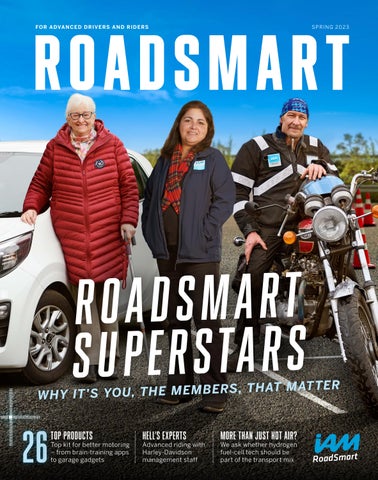
ROADSMART SUPERSTARS
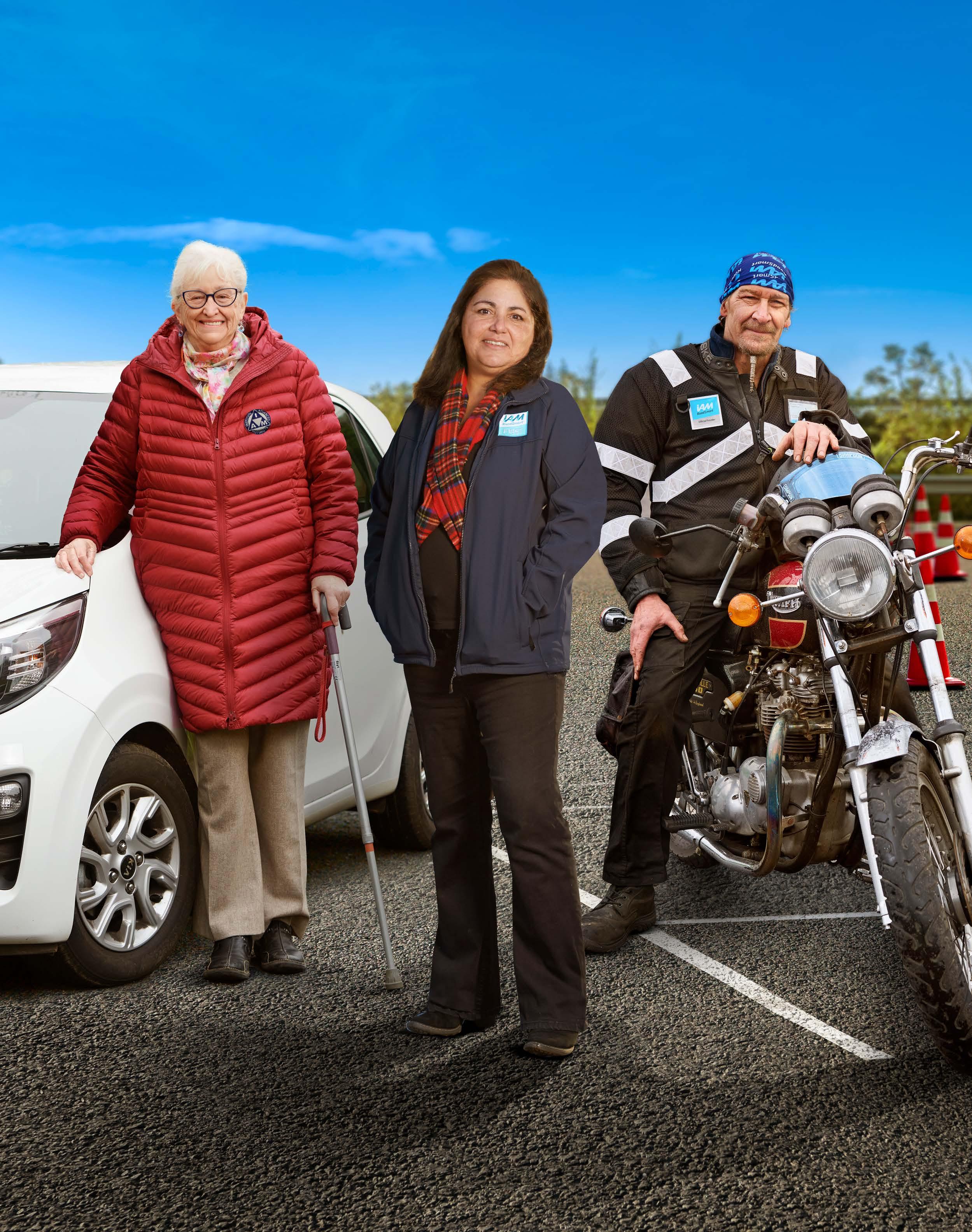
WHY IT’S YOU, THE MEMBERS, THAT MATTER
26 TOP PRODUCTS Top kit for better motoring – from brain-training apps to garage gadgets
HELL’S EXPERTS Advanced riding with Harley-Davidson management staff
MORE THAN JUST HOT AIR? We ask whether hydrogen fuel-cell tech should be part of the transport mix
FOR ADVANCED DRIVERS AND RIDERS SPRING 2023

F o r m o r e i n f o r m a t i o n p l e a s e v i s i t y o u r l o c a l H o r n b y s t o c k i s t o r g o t o w w w. h o r n by. c o m tiktok com SJGMEPLSVRF] youtube com LSVRF]QSHIPVEMP[E]W X[MXXIV GSQ LSVRF] facebook com SJGMEPLSVRF] instagram com SJGMEPLSVRF] spotify com &I]SRH XLI &YJJIVW G a u g e 0 0 2 R A I L 8 LM W WY T I V F GS PP I G X MS R SJ J M RI P ] H I X EMP I H , SV R F] ( Y F P S Q SH I P W L EZI F I I R G EVI J Y PP ] GS Q TMP I H X S GI P I F V EX I X LI P S GS Q SX M ZI ´ W 'I R X I R EV ] 8 LI WI P I G X MS R SJ Q SH I P W X V EGI W X LI WM \ Q ENSV W X E KI W S J F SX L W X V Y G X YV E P E RH PM ZI V ] G L E RKI W SJ *P ] M RK 7 GSX W Q E R ´ JVS Q X LI X M Q I M X [ E W SY X W L S T T I H M R X S [ LI R M X VI X YV RI H X S X V E J J MG E J X I V E J Y PP VI W X SV EX MS R M R 8 LM W J M RI GS PP I G X MS R SJ Q SH I P W E PP SJ [ LMG L [ MPP F I TVI WI R X I H M R W T I G M E P PM QM X I H I H M X MS R GI R X I R EV ] T EG O E K M RK [ MPP M R G P YH I E H I H MG EX I H Q SH I P W T I G M J MG F V E W W I J JI G X Q I H E PPMS R * SV X LI GS PP I G X SV M X QY W X F I R SX I H X L EX X LM W [ MPP F I X LI J MV W X M R W X E R GI [ LI R E R] Q SH I P W SJ *P ] M RK 7 GSX W Q E R ´ L EZI F I I R TVSH Y GI H Y RH I V X LI , SV R F] ( Y F P S F V E RH Ce le br at e t he ce n t e n a r y of Fl y ing S cot s m a n w i t h H or nby A RRI VI N G S PRI N G 2023 R 3 0 2 0 6 , S V R F] ( Y F P S 0 2 ) 6 % ' P E W W * P ] M R K 7 GS X W Q E R ´ ) V E R 3 0 2 07 , S V R F] ( Y F P S 0 2 ) 6 % ' P E W W * P ] M R K 7 GS X W Q E R ´ ) V E R 3 0 2 0 8 , S V R F] ( Y F P S 0 2 ) 6 % ' P E W W * P ] M R K 7 GS X W Q E R ´ ) V E R 3 0 2 0 9 , S V R F] ( Y F P S 0 2 ) 6 % ' P E W W % P E R 4I K P I V ) V E R4 0 3 69 * P ] M R K 7 GS X W Q E R X L % R R M ZI V W E V ] ; L I I P ' S EG L R 3 0 210 , S V R F] ( Y F P S 0 2 ) 6 % ' P E W W * P ] M R K 7 GS X W Q E R ´ ) V E R 3 0 211 , S V R F] ( Y F P S & 6 % ' P E W W * P ] M R K 7 GS X W Q E R ´ ) V E 0 GIRWIH F] 7'1+ )RXIVTVMWIW 0XH * ]MRK 7GSXWQER ERH HIWMKRW 7'1+ Ever y purchase suppor ts the museum www nrm org uk ; - 8 , ' 3 ( ) H E R I TAG E 5 5% O F F
SPRING 2023
HOW TO GET IN TOUCH
IAM RoadSmart
1 Albany Place, Hyde Way, Welwyn Garden City, Hertfordshire AL7 3BT
Phone: 0300 303 1134
Email: roadsmart@iam.org.uk
Web: www.iamroadsmart.com
Patron HRH Prince Edward, Duke of Kent
President Nigel Mansell
Vice Presidents Sir Peter Bottomley, Steven Norris, Nick Ross
Chief Executive Officer
Antony Kildare
Marketing and Communications Director
Kat Hyde
Head of Membership Engagement and Operations
Karolina Brzeska
Council of Trustees Stuart Donald

QPM (Chair), Jeff Willcocks (Vice Chair), Elizabeth Coyle-Camp, Nick Lomas, Tom Kelman, Victoria Milford, Nick Stein
Registration England & Wales 562530
Registered Charity Number 249002 (England & Wales), SCO41201 (Scotland)
PUBLISHED BY Our Media www.ourmedia.co.uk
Editor Matt Rigby
Senior Account Manager Katy Hewett
Account Manager Edith Violet Naisubi
Editorial Director Dan Linstead
Art Editor Robin Coomber
Production Editor Sarah Newman
Cover photography Matthew Pover & Joby Sessions
TO ADVERTISE
Head of Commercial & Partnerships
Jamie Bolton (0117 300 8518; jamie.bolton@ourmedia.co.uk)
Sales Manager
Amie Price-Bates (0117 300 8247; amie.price-bates@ourmedia.co.uk)

WELCOME
Welcome once again to another new issue of the IAM RoadSmart membership magazine. This spring we’re celebrating something that makes this organisation unique – you. On page 63 you’ll be able to read a specially extended version of our regular Member Profile feature, where we speak to three members who show the breadth and depth of commitment to their IAM RoadSmart Groups and to the cause of road safety in general.
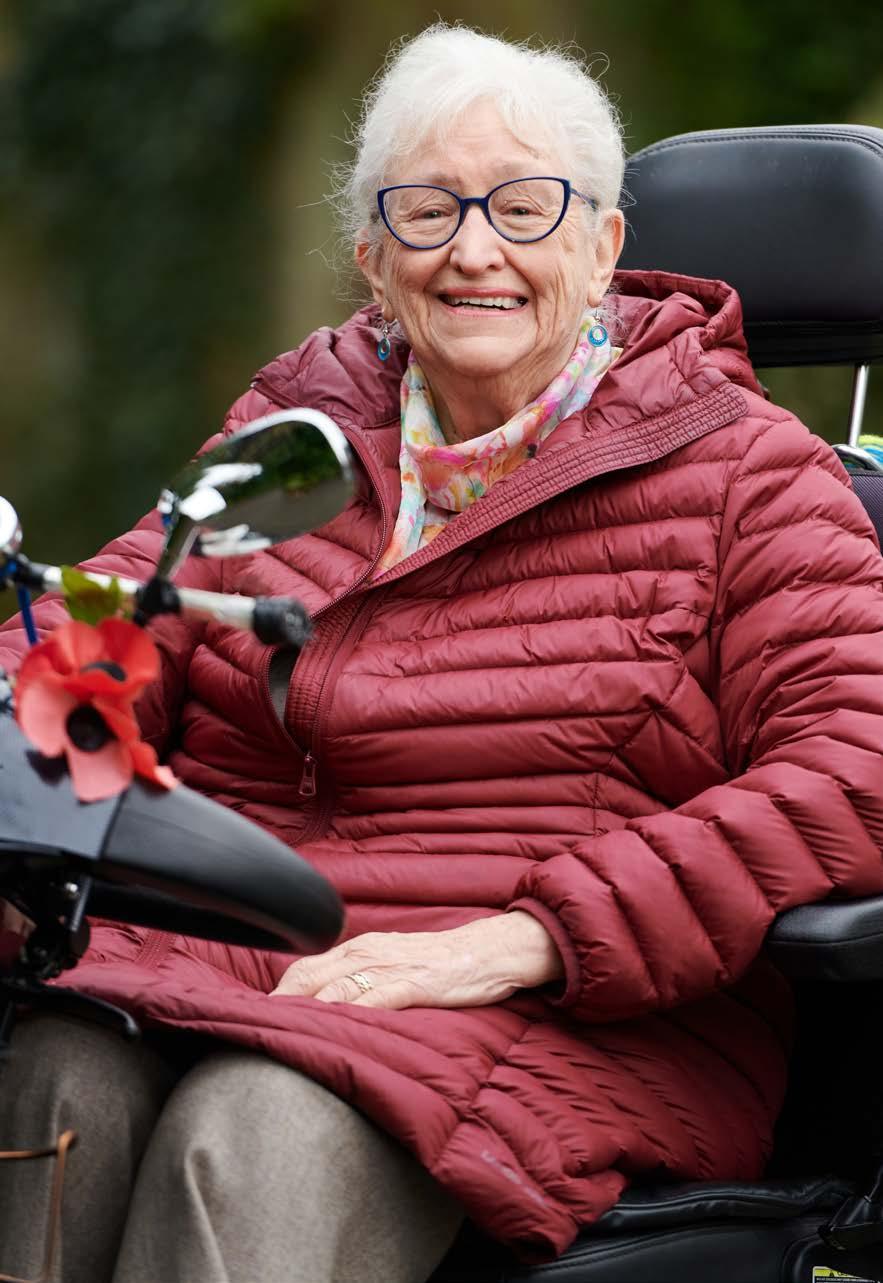
From spirited octogenarian member Fiona Haig, who uses her advanced driving skills and experience on her mobility scooter, to Andy Arnot, who also represents the National Association for Bikers with a Disability – via a thousand other stories we just don’t have the space to print – your stories are an inspiration. As are the members who have given decades of service to their local Groups – we’re paying tribute to some of those in this issue, too.
We also celebrate the 65th anniversary of one of the earliest Groups, paying homage to their first, and most famous, president (page 50).
And if you want to know how well-regarded an IAM RoadSmart qualification is in the wider world, go to page 44 and find out why HarleyDavidson chose the IAM RoadSmart Advanced Rider Course to help their senior managers become better bikers.
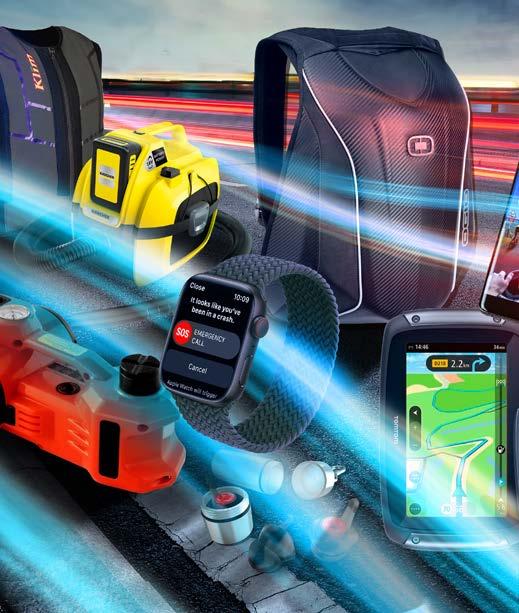
This issue is all about the ‘best of IAM RoadSmart’, and it’s in that spirit that we’re also highlighting some of the motoring-related products and services available to buy that we think fit in best with IAM RoadSmart’s ethos. See what makes our list of 26 products on page 38. You’ll find all sorts of recommendations, from high-tech stuff like the Waze app and Amazon’s Alexa Auto to more traditional choices such as the evergreen RoadCraft manual –via battery chargers, emergency kits and car-cleaning equipment.
There’s all the usual features, too, including an investigation into the science behind road signs (page 17), while on page 12 we debate the future of hydrogen as a fuel for road transport.
Antony Kildare Chief Executive, IAM RoadSmart
“YOUR STORIES ARE AN INSPIRATION, AS ARE THE MEMBERS WHO HAVE GIVEN DECADES OF SERVICE TO THEIR LOCAL IAM ROADSMART GROUPS”
SUPPORT AND SAVE WITH BENEFITS
5%
Sail away in style this summer
Plan your dream driving holiday in France, Spain or beyond with this exciting offer from Brittany Ferries for IAM RoadSmart members

As winter fades away, now’s the time to think about a summer getaway. And for the ultimate in convenience and comfort, it’s hard to beat a selfdrive adventure. Whether you’re craving the cultural and culinary delights of France, or the history and hospitality of Spain, Brittany Ferries can carry you – and your car – to a range of destinations.
With daytime and overnight sailings from Portsmouth, Poole and Plymouth to Brittany, Normandy and Spain, it’s easy to plan a route that works


for you. And unlike flying, you can pack as much as you need, and even check in from the comfort of your own car!
Once on board, you’ll find spacious decks and roomy cabins, with only fresh sea air circulated everywhere. There's a tempting range of food and drink available, with fine dining in the main restaurant more casual fare in the self-service restaurant. You'll also find bars where you can order a drink and relax in comfort.
IAM RoadSmart members can claim 5% off all Brittany Ferries sailings, making it a great way to get your holiday off to a wonderful start.

BOOK YOUR TRAVEL TODAY
Save 5% on sailings from Portsmouth, Poole or Plymouth to France, or from Portsmouth or Plymouth to Spain.

To find out more about this great deal, visit brittanyferries.com/roadsmart or call 0333 162 6021
TERMS AND CONDITIONS: New bookings only. Subject to availability. Savings apply to the vehicle and passenger elements of a booking but excludes on-board accommodation. Cannot be combined with any other o er or promotion.

ADVERTISING FEATURE SAVE
France
Spain
Portugal
CONTENTS
INTAKE
07 NEWS
What’s happening in motoring, such as Euro NCAP’s new report, semiconductor availability and Britain’s best roadside eateries
11 INNOVATIONS
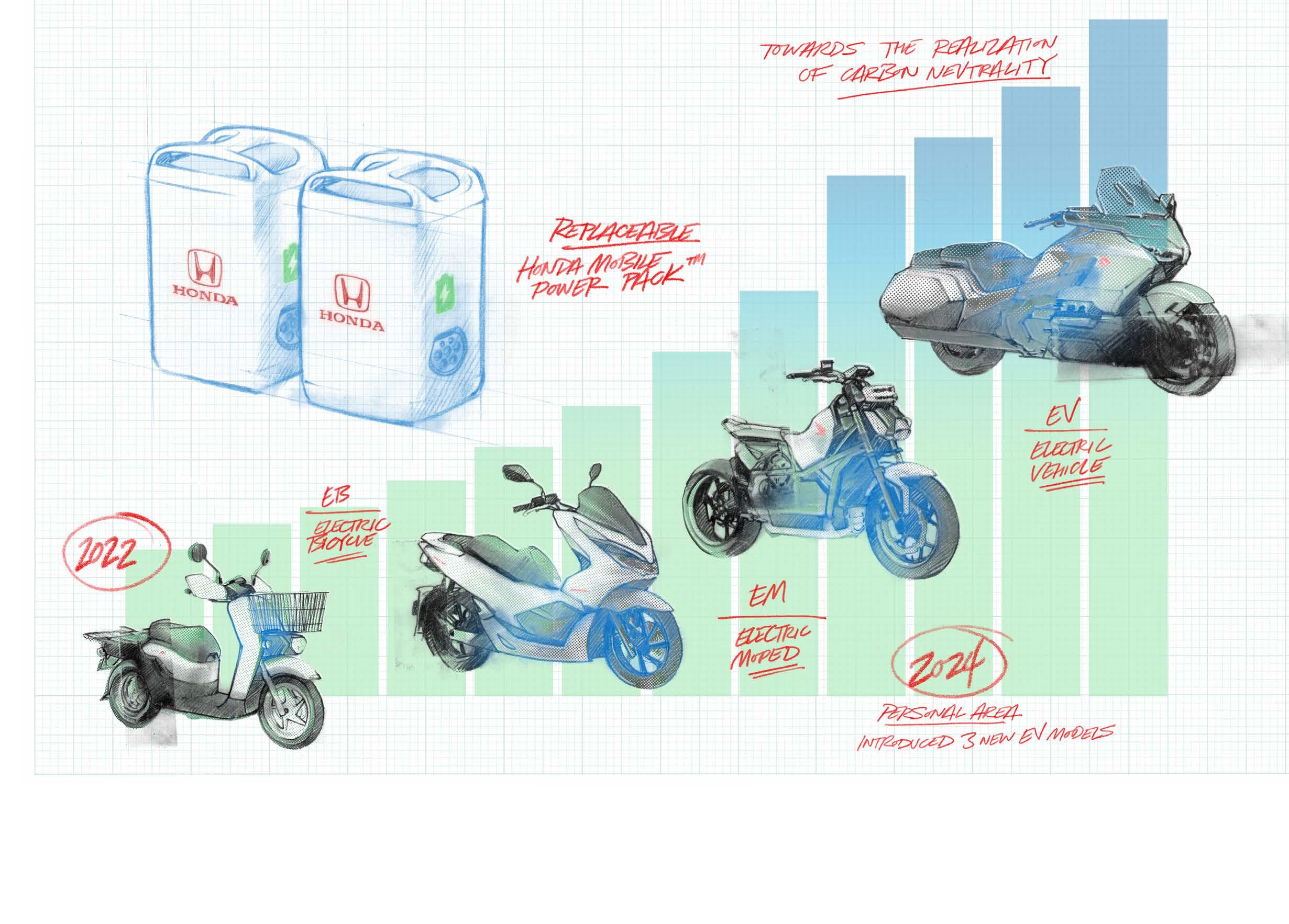
Honda’s electric ‘bicycles’ are huge in Asia, and now they have a plan for launching e-motorbikes worldwide. We look into the details
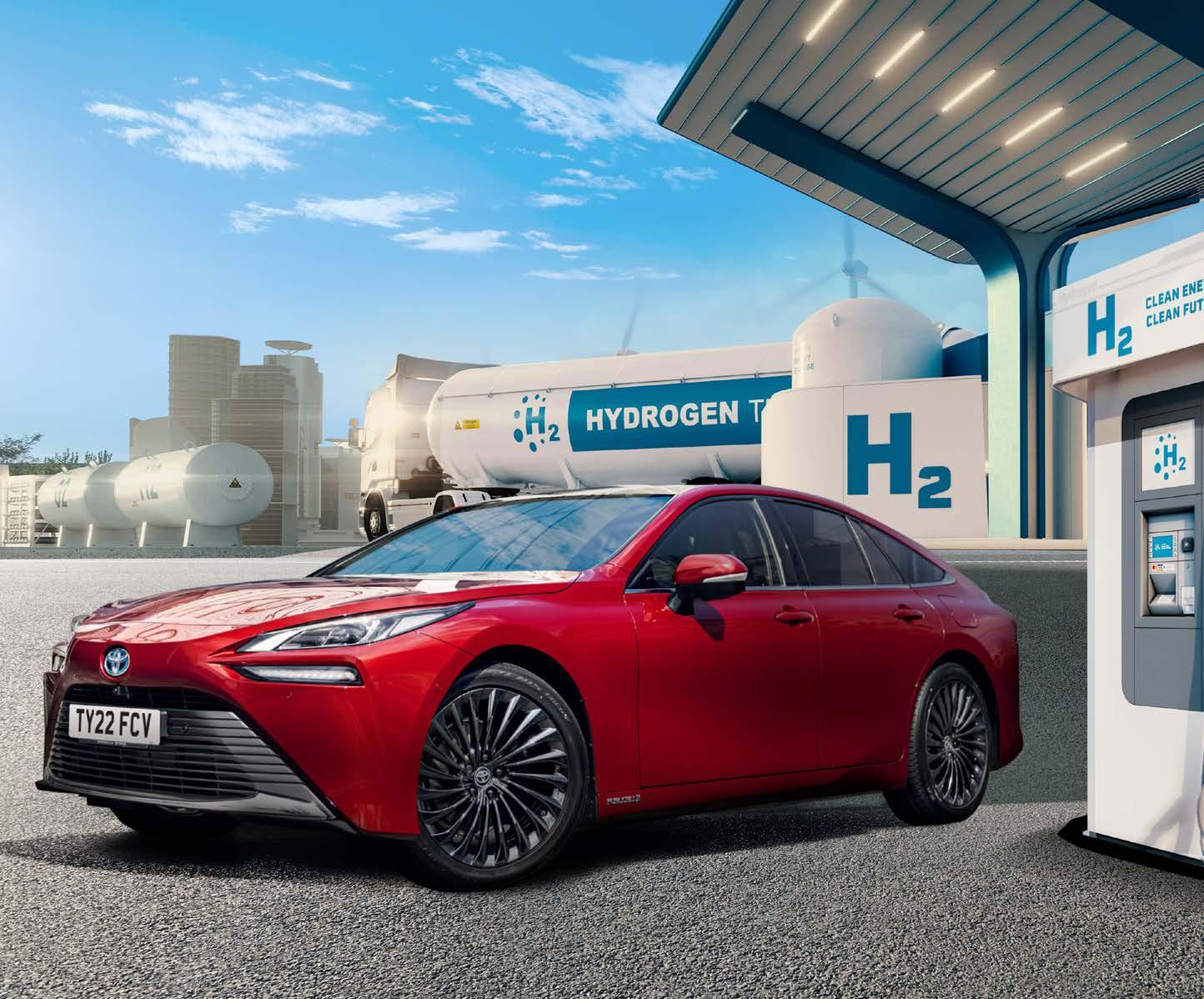
12 THE GREAT DEBATE Hydrogen fuel cells, a more eco alternative to fossil fuels, have been around for a while. Could they ever be a viable option for vehicles?
17 THE SCIENCE OF ROAD SIGNS
They may only receive a swift glance, but plenty of forethought goes into the signs lining our roads. Experts explain how signs help us to read the road ahead

FEATURES
38 THE IAM ROADSMART HOTLIST
With so many products and services available for drivers and riders nowadays, we’ve compiled a list of great gear to make your decision-making that bit easier!
44 RIDE WITH SKILLS AND STYLE
Harley-Davidson is synonymous with biking freedom, but they know that riding skilfully is imperative. That’s why they are working with IAM RoadSmart to hone their riding knowledge
ON THE ROAD
21 SLICK CITYSCAPES
Be in the thick of it with downtown driving in historic London, stunning San Francisco and on Singapore’s famous F1 racetrack
29 RICHARD GLADMAN
Readying for road use after a break is worth it, says our Head of Driving and Riding Standards
31 SKILLS REFRESHER
Tips to interpret the subtleties of road signs
32 ASK THE EXPERTS
Our team tackle all your road-based questions
36 GEAR GUIDE: MOTORBIKE SECURITY Tracking could give you added peace of mind
INSIDER
50 GALLERY
The 65th anniversary of one of our Groups is cause for celebration
53 ANTONY KILDARE
New crash test dummies will make us all safer, says our CEO
55 IAM ROADSMART NEWS
The latest updates from within the organisation
58 MEMBER BENEFITS
Exclusive offers and discounts for you
60 LETTERS
Members have their say on motoring matters
63 MEMBER PROFILES
We highlight the stellar work of members and their dedication to road safety
12 63 17 38

Trustpilot score correct as at 04/01/2023 based on 657 reviews. Terms, conditions & acceptance criteria apply. Cornmarket Insurance Services Ltd is a wholly owned subsidiary of Cornmarket Group Financial Services Ltd. Cornmarket Group Financial Services Ltd is a member of the Irish Life Group Ltd. which is part of the Great-West Lifeco Group of companies. Cornmarket Insurance Services Ltd is authorised and regulated by the Financial Conduct Authority (FCA) registration number 308099. You may check this on the Financial Services Register by visiting the FCA’s website or by contacting the FCA on 0800 111 6768. Cornmarket Insurance Services, registered in Northern Ireland, company number NI030039. Registered Oce: First Floor, Boucher Plaza, 4 – 6 Boucher Road, Belfast, BT12 6HR 18378 IAM Car Ins online Ad 01-23 Don’t forget to tell your spouse or partner that they too can get the same great insurance premiums from us! Call 028 90 44 5058 Prefer to talk to us? Car insurance Home insurance Motorbike insurance Gap Insurance Visit cornmarketinsurance.co.uk/quoteiam We compare quotes so you can save on your cover. Trustpilot Buy your car insurance online, anytime
INTAKE
News and views from the world of road safety

How signs are designed to show us the way
Plus: Could hydrogen be a part of the post-petrol transport mix? Read the debate and decide on p12.
/ SPRING 2023 / 7
Vision for the future of vehicle safety
VIRTUAL TESTING processes, a greater emphasis on the assessment of automated driver-assist systems and an adjustment of the four key areas of crash phase assessment will form part of future Euro NCAP tests, the independent vehicle safety assessment programme has revealed.
Called Vision 2030, Euro NCAP’s plan sets out their roadmap for the coming decade, and re ects the shi towards assisted and automated driver safety systems. One of the most signi cant adjustments will be the revision of the four key areas of potential crash events: from 2026, these four assessment phases will become safe driving, crash avoidance, crash protection and postcrash safety. In response to increasingly rapid shi s in vehicle safety tech, Euro NCAP now also says that it will update these four protocols on a rolling three-year basis.
Other additions to the programme are set to include detailed testing and assessment of assisted and automated driver-support systems. It will also see driver tiredness alerts – which monitor a driver’s distraction levels or cognitive impairment.
Euro NCAP also says it will introduce requirements to improve the e ciency of speed-assistance technology (which can be confused by speed limit signs or incorrect GPS information). In addition, the tests that look at a car’s active safety systems will be revised to be a more realistic simulation of real-world, on-road environments.
Passive safety systems, meanwhile (those that help us in the event of a collision rather than in avoiding them), will be assessed in new ways. is includes more consideration of gender equality and the demographics of an ageing population (read more on page 53).
“By developing timely voluntary standards for advanced safety technology, we can be a catalyst for increasing uptake and promoting best practice,” says Michiel van Ratingen, Euro NCAP’s Secretary General. “Collaboration with industry is essential and is key to our success. We are looking forward to working together to meet the objectives outlined for the next decade.”
New tool to check cars’ environmental impact
IF YOU’RE about to buy a new car and want to minimise its e ect on the environment, a new online tool by Green NCAP could be just the ticket. Green NCAP – the independent body that promotes environmentally sustainable motoring – has revealed a life cycle assessment (LCA) tool on its website that allows users to work out the environmental impact of cars before they buy them. It lets you set various factors, such as the miles you drive, the energy usage mix where you live, and what country you live in, to assess the overall environmental impact of vehicle models over their entire lives – their lifetime carbon footprint.

e Green NCAP tool considers all processes, greenhouse gas emissions and ows of resources and energy associated with a car’s production, usage, and recycling at the end of its life. It uses a database of 30,000 models and lets you compare up to three cars. Find it at www.greenncap.com/lca-tool.
BRITAIN’S BEST ROADSIDE EATERIES
ROAD TRIP guide site Detour has revealed its top 10 best independent cafes and diners in the UK, to help you find the perfect pit stop away from service station cafeterias and chain pubs.
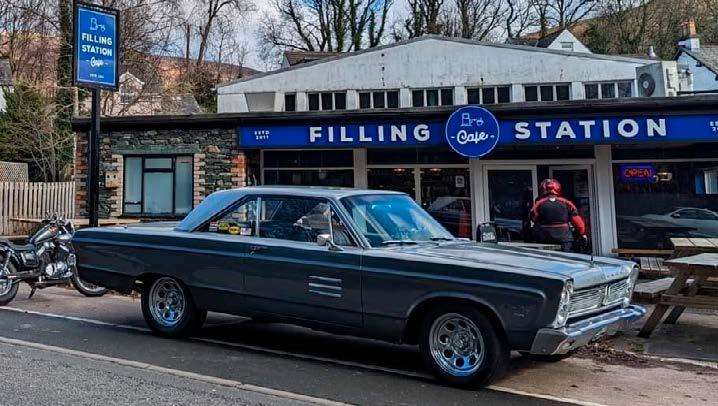

The list includes the Yonderman Café in Buxton, Derbyshire, the Super Sausage Café in Northamptonshire and the famous Ace Café in north London – all proud independent eateries. “Detour exists to celebrate the romance of the road trip – to take the longer way, said Detour’s founder, Nik Berg. “And where you pause on your journey is as important as the route itself.” Find the list on detour-roadtrips.com, and read more of Nik’s road trip advice on page 22.
OUR VIEW
“Working out your personal car’s environmental footprint up until now has been a bit of a minefield, as there are so many variables to consider. The new LCA tool from Green NCAP goes some way to help car buyers work out exactly what impact their buying choices might have, giving consumers much more power to choose a vehicle that best suits their situation, whether it’s a petrol car, an electric model or a hybrid.”
Neil Greig, IAM RoadSmart’s Policy and Research Director
INTAKE
8 / / SPRING 2023
DETOUR-ROADTRIPS.COM/ACE CAFE LONDON
GETTY
CALENDAR

Touring Europe? Check your paperwork
THE NATIONAL Motorcyclists Council has issued new advice on crossing the border into the EU with a motorcycle, particularly if you carry it in a van or on the back of a motorhome. If it’s your vehicle, the council advises that you ll out the form for an Oral Declaration for Temporary Admission for your bike. ese vary for each country, though there shouldn’t be fees for transporting the bike. If you’re transporting a bike for a friend, you will need extra paperwork – a cover letter signed by the bike’s owner, plus a declaration

that the bike is not commercial goods, so wouldn’t be subject to import/export duties. It’s also recommended that you get this translated into the language of the country of entry. On top of this, original vehicle paperwork (V5) for each motorcycle carried is recommended. And, of course, always carry original vehicle documents to prove that your bike is legal for use on the roads in the UK (VED, insurance, evidence of MoT if applicable). You should also be able to show your return travel tickets and a basic travel itinerary in case they are requested.
End in sight for new-car supply crisis?
THE SHORTAGE of semiconductors – also known as chips – that caused new car supply issues recently looks like it could be coming to an end.

Modern cars are heavily dependent on chips for high-tech systems, and the shortage has caused lengthy wait times for new cars and increased demand – and higher prices for secondhand models.
Now, though, fears for the health of the economy has caused consumers to rein in spending on electronic devices and chip-heavy white goods such as washing
machines and dishwashers. Which means more availability of chips for vehicle manufacturers.
“It’s ironic that the very situation that triggered the shortage for much of the automotive industry should be driving the recovery, now that it has become reversed due to the prospect of recession,” says Tom Blackie, CEO VNC Automotive, which supplies high-tech hardware and so ware to the likes of VW Group, Toyota and Honda. “In fact, such has been the speed of the shi to oversupply that we are regularly approached by chip suppliers asking if we’d like to increase our orders.”
INTAKE / SPRING 2023 / 9
Read more road-safety news at www.iamroadsmart.com or follow us on our social channels: @IAMRoadSmart IAMRoadSmart
GETTY
Make the most of your trip and avoid delays by ensuring your papers are in order
11–12 MARCH The Scottish Motorcycle Show, Royal Highland Centre, Edinburgh 24–25 APRIL Skills Day, Thruxton Circuit, Hants (cars on Monday, bikes on Tuesday) 25–27 APRIL The Health & Safety Event, NEC, Birmingham 05 MAY Motorcycle Skills Day, Blyton Park, Lincs 09–11 MAY Future of the Car Summit, Convene, London (and online) 16–18 MAY Safety & Health Expo, Excel London 22 MAY Motorcycle Skills Day, Thruxton Circuit, Hants 12 JUNE Motorcycle Skills Day, Mallory Park, Leics 20 JUNE Motorcycle Skills Day (Ladies’ Day), Thruxton Circuit, Hants 23–25 JUNE Adventure Bike Rider Festival, Ragley Hall Estate, Warks
Drive away a new car for less with Motorfinity Corporate
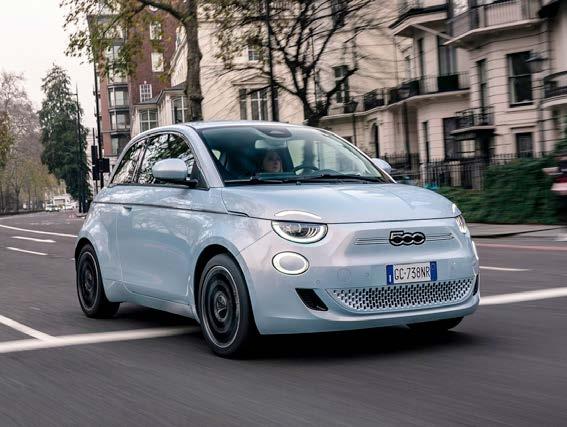

Enjoy discounts of up to 30% when you take advantage of the great savings available to IAM RoadSmart members
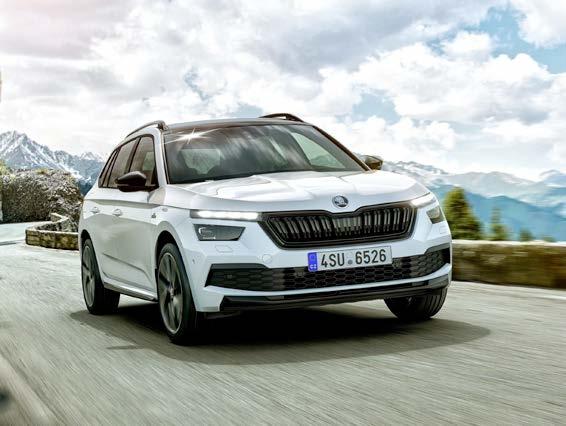
Thinking of treating yourself to a new car this year? You can access up to 30% off a range of cars when you buy through Motorfinity Corporate.
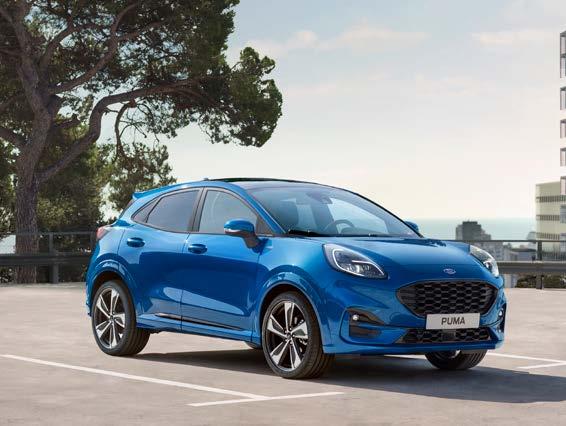

Working with manufacturerauthorised suppliers, Motorfinity Corporate offers cars directly from

leading brands including Ford, Cupra, BMW and Skoda. Finance packages and part-exchange requirements are all accommodated in a simple and easy process, ending with your car delivered to your door. Motorfinity Corporate’s ‘one-stop shop’ philosophy enables you to enjoy the best customer service possible, keeping it easy and convenient.

As well as the discounts, there are many other excellent reasons to buy your car with Motorfinity Corporate.
● No fees – you won’t be surprised by any hidden extras.
● Available nationwide.
● Regulated and authorised by the FCA.

● 5* Trustpilot rating – Motorfinity Corporate’s staff always go the extra mile to ensure complete satisfaction.
SAVE UP TO 30% ON A NEW CAR
To find out more, please visit https://corporate. motorfinity.uk/IAMRS or call 01636 557 171
TERMS AND CONDITIONS: Full T&Cs apply. Deals are correct at time of going to print. Images for illustration purposes only. Finance subject to terms and conditions, eligibility and approval. Indemnities may be required. Subject to status. O ers subject to last-minute change and can be cancelled or withdrawn at any time.
ADVERTORIAL SUPPORT AND SAVE WITH BENEFITS
INNOVATIONS
Motorbikes: time to charge
Honda’s decision to go electric is a big deal. Paul Horrell investigates its two-wheeled EV plans
Electric vehicles are helping to reduce the world’s tailpipe emissions. is much we know. But surprisingly it’s not cars at the forefront of this – it’s two- and three-wheelers that are responsible for the majority of this saving, more than electric cars, buses and commercial vehicles combined. Electric bikes and trikes alone have been responsible for removing 2.3% of all global road-transport oil demand. Although they’re still pretty rare on UK roads, in Asia and especially China, they’re a huge trend. Tens of millions are sold each year, more than nine out of 10 being either electric ‘bicycles’ (top speed below 15mph) or ‘scooters’ (below 30mph).
Another surprise: the dominant Japanese motorcycle makers are largely absent from this market. But Honda has now gone public with a roadmap for its entry. And you know that when Honda arrives, other companies will take notice.
Nearly all Honda’s current sales are of two- and three-wheelers to the Japanese and ai postal services. ey use a swappable battery to minimise time o the road. Indeed, last year Honda agreed with Yamaha, Suzuki and Kawasaki a standard for
OUR VIEW
“Electrification of motorbikes is inevitable, even if the UK market is behind some other markets. What’s vital, though, is that the charging tech and infrastructure is in place to ensure riders can get around safely and without the risk of becoming stranded.”
Neil Greig, IAM RoadSmart Director of Policy & Research
swappable batteries. Battery swapping has taken o big-time in Taiwan too, with a standard led by major national rm Gogoro. e two standards are di erent but similar. Recharging appliances are like vending machines: insert a at battery, and immediately get a charged one out. e batteries can also be taken inside for home charging, which might be a good bike-the prevention measure in Britain.
By 2024 Honda will have ve sub-30mph electric two-wheelers on sale worldwide. Some will be on sale here, although the rm isn’t being more speci c. From 2024/5 it will launch four proper electric motorbikes, but still says, “Batteries and charging infrastructure need to be addressed.” It adds the bikes will have navigation systems that show rangeoptimising routes, and charging-station waypoints.
Honda, like many car makers, is doing its own research on solid-state batteries. ese will be reproof, so without the need for today’s liquidcooling they’ll be lighter and smaller for the same capacity yet will charge faster. Unfortunately they’re not yet durable enough for mainstream use. But when ready for cars, Honda says it will t them to its motorbikes too.
INTAKE / SPRING 2023 / 11
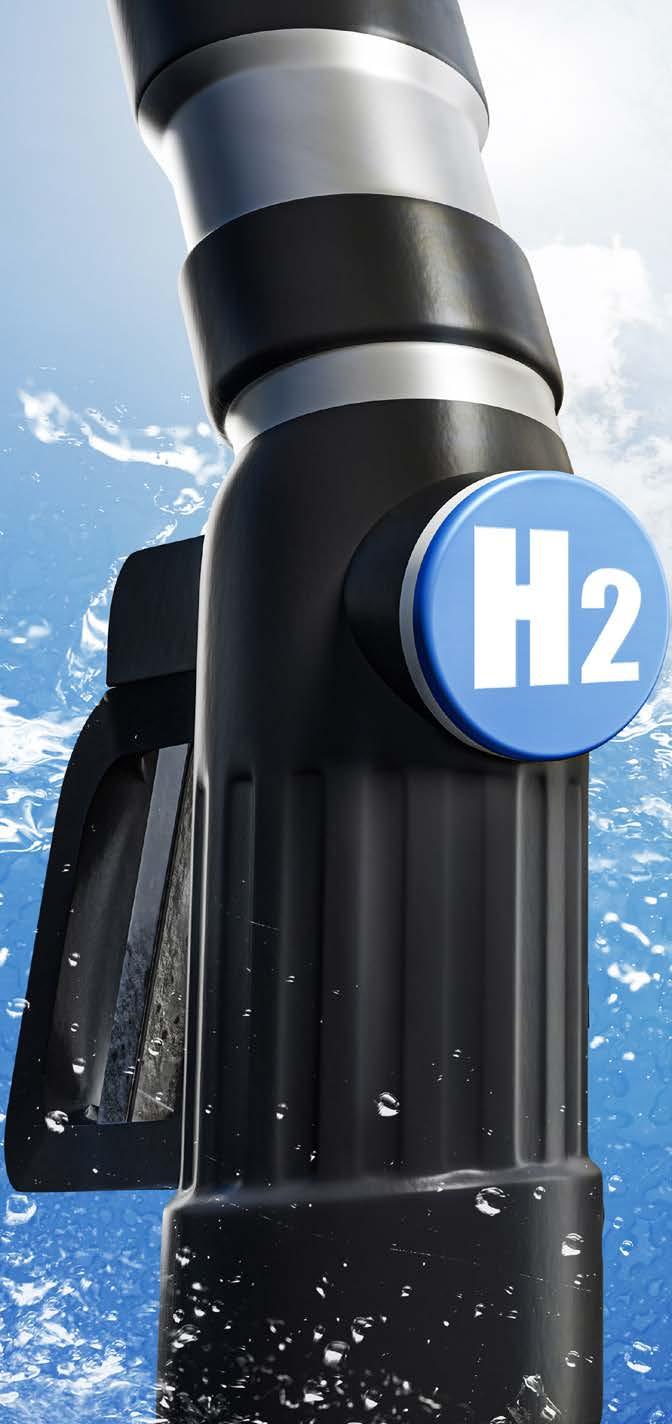
ILLUSTRATION JAMES CAREY
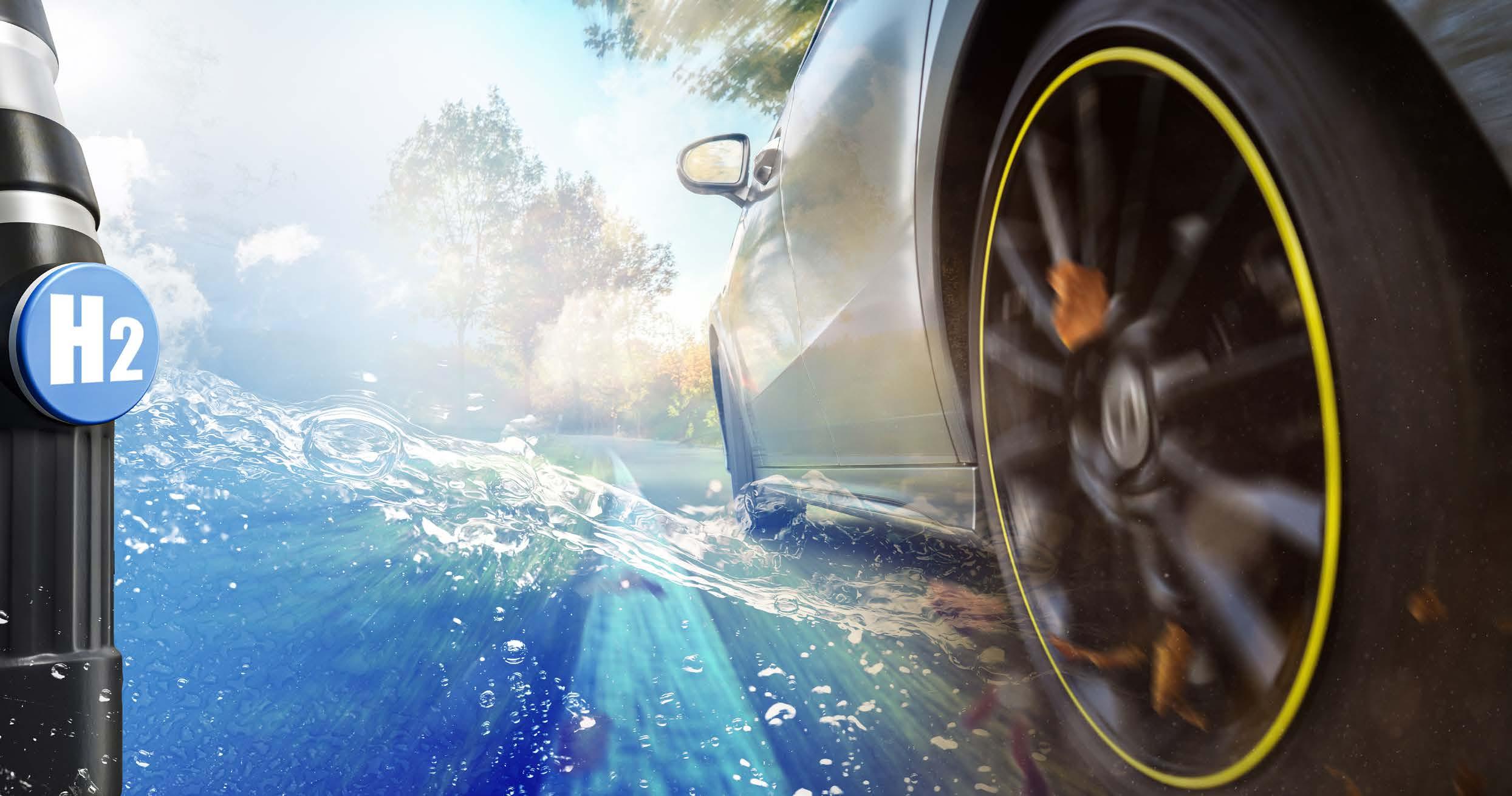
Can hydrogen be an alternative to petrol?
Hydrogen fuel cells have long been touted as a green substitute to fossil fuels. But why has hydrogen never taken o like battery power has? Is there still a case for it as a fuel for our vehicles? Paul Horrell investigates, and two experts share their views…
Where do you stand on the subject?
Send a tweet to @IAMRoadSmart or visit facebook.com/iamroadsmart
highlighted to those who virtue signal with their EVs.
MARTIN R There’s not a debate about this – it’s a simple ‘no’ to hydrogen. Electric power from batteries is the future for vehicles, at least for the next few decades.
INTAKE 12 / / SPRING 2023
YOUR VIEW
THE GREAT DEBATE
JOHN G Seeing as the only exhaust gas from an IC powered with hydrogen is water vapour, the refuel time is about five minutes and the range is much better, then it’s a better alternative to EVs. Plus the child labour and the huge carbon footprint to extract the various ingredients for EV batteries should be
DAVID
Enthusiasts for hydrogen fuel-cell vehicles say their mass adoption is only about 15 years away. Trouble is they’ve been saying that every year for 25 years. I rst drove prototype fuel-cell cars in the mid-1990s, and the engineers said they’d start being common by the early 2010s.
A hydrogen fuel cell combines hydrogen stored in a high-pressure tank with oxygen from the air. at produces electricity to drive the wheels.

e only emission from the powertrain is pure water vapour; nothing toxic, no CO2 . e cell does its work silently and without combustion, and as time has passed several car companies have improved its reliability and reduced the size and weight, and most of all dramatically cut the cost.
So what happened? e battery car happened. Even before we look at the carbon-reduction possibilities of those two types, let’s look at convenience, which is why people own cars in the rst place and thus central to the success of any transition. Back in, say, 2010 it was widely assumed that a battery-electric car would never be able to improve much beyond the then-new Nissan Leaf’s 100 miles without a ‘fast’ recharge of an hour. Meanwhile fuel-cell prototypes could go hundreds of miles and refuel in ve minutes.
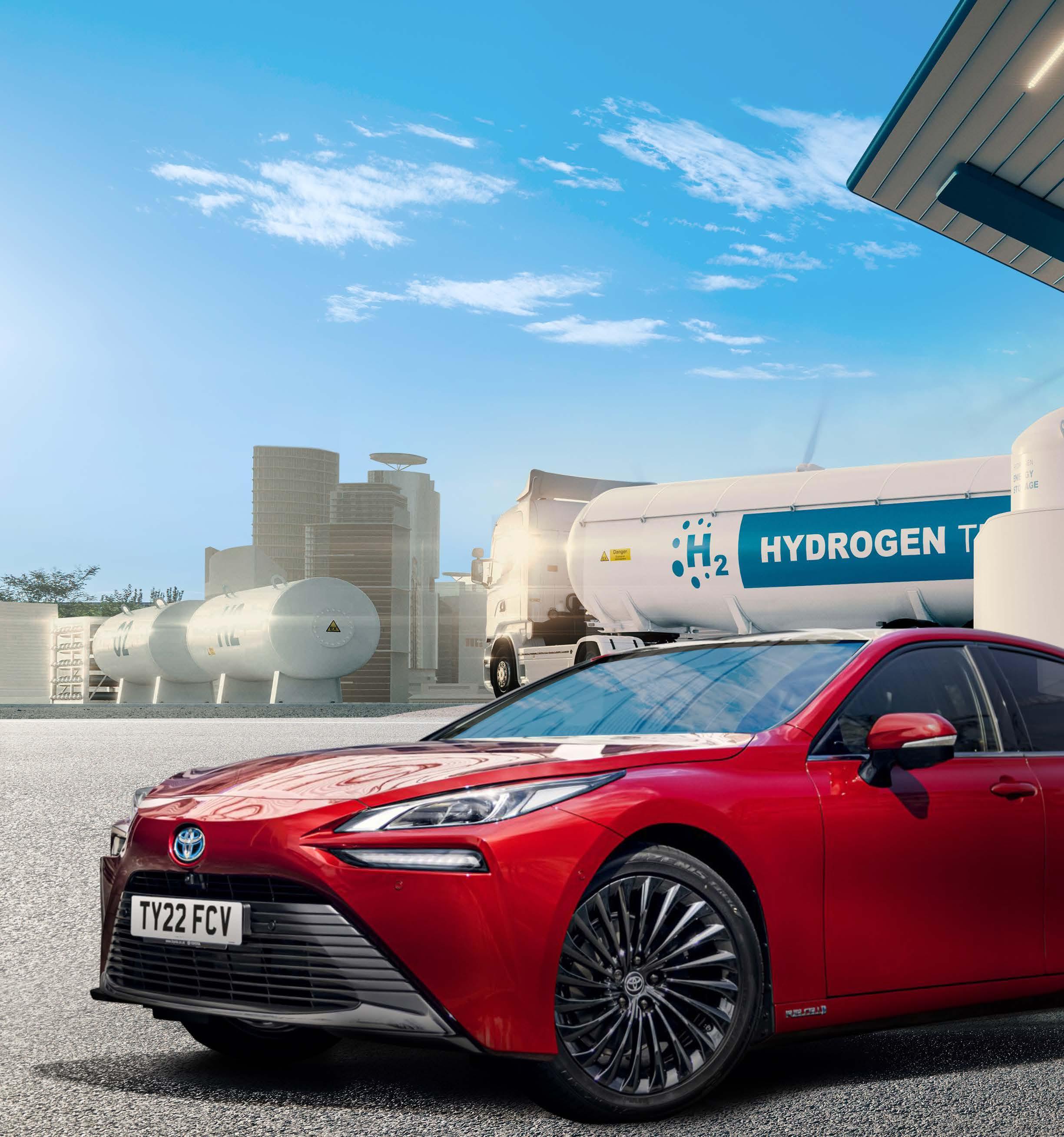
ey still can. Toyota has a production fuel-cell car, the Mirai. It’s in its second generation now, and is handsome and good to drive. Its £49,995 price is about the same as Toyota’s new equivalent battery car, the bZ4X. But have you ever seen a Mirai? Its scarcity versus a battery electric vehicle (BEV) is down to one reason. ere are eight public hydrogen refuelling stations in all of Britain. Electricity is on every street, and BEVs can now go 300 miles.
Still, let’s take a leap of imagination and park the infrastructure issue. What are the pros and cons of fuel cell versus battery vehicles? Bear in mind they’re both electric vehicles; the di erence is if the source of the electricity is on-board with the fuel cell or oboard with the power station that feeds the battery.
Fuel-cell cars use hydrogen, which is a vastly abundant element, contained of course in every water molecule. It can be obtained by passing electricity through water. If the electricity is green, then the hydrogen, too, is zero-carbon. But a lot of today’s hydrogen comes from dirty electricity, or direct from other industrial processes.
PETE
INTAKE / SPRING 2023 / 13
M Hydrogen is still an environmental disaster. It has to be produced, stored, shipped, distributed and then re-stored in smaller units. At least the basic infrastructure is in place to get electricity around the country, even if it has been produced in a dirty way.
STAVROS T One could argue that the infrastructure for hydrogen distribution and refuelling is already in place. We have decades of experience in storing and transporting fuel from one place to another. Production of hydrogen remains the big issue.
B Why use up electricity to create hydrogen, which is then put into a fuel cell to be burnt to create electricity that’ll power electric vehicles? It’s clearly a highly ine cient method of creating energy and a waste of electricity.
Still, building a fuel cell requires less mass of scarce minerals than a battery, which lessens the cars’ manufacturing environmental impact. ey tend to be lighter because the hydrogen tanks, although strong enough to contain the immense 700 bar pressure, weigh less than batteries.
But if we take one kWh of green electricity and use it to electrolyse water, then compress and distribute the hydrogen, and then pump it into the car’s tank, we could only drive about a mile. If we take one kWh and send it over the grid to a socket where we plug in a battery car, it would drive about three miles. So is hydrogen a good use of green electricity when we don’t have enough?

Hydrogen supporters say yes, because hydrogen acts as a bu er. If we increase
ANDREW S Energy storage for renewables is probably the best use for hydrogen, but using it to power a car may o er advantages in terms of charge time (minutes instead of hours).
wind and solar power, we’ll have a grid that uctuates with the weather. Hydrogen can be generated when grid power is in surplus, then stored.
Hydrogen would need governmental intervention through tax incentives on the fuel and installation of stations. Drivers will act as individuals, choosing the best car for them without an eye to the overall energy system. Battery cars are winning with ever-increasing range and durability, everreducing charge time, and ever-improving infrastructure.
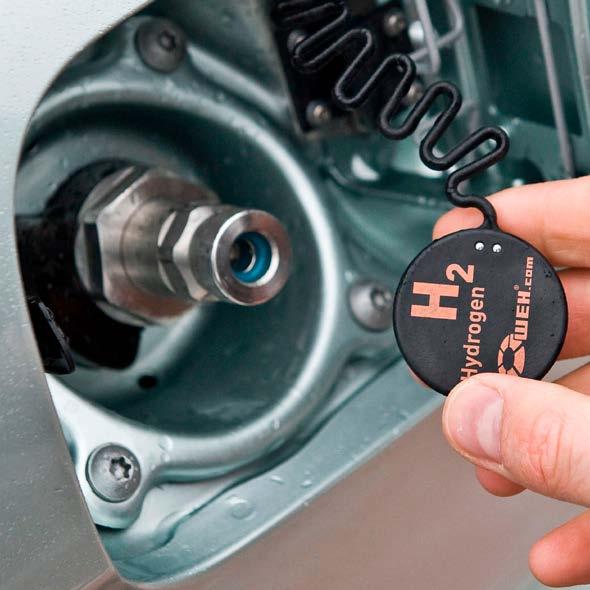
Shell has recently closed its two UK hydrogen stations. Many manufacturers – Volkswagen, Audi, Mercedes, GM, Honda – have scaled back development of fuel-cell cars.
A fuel-cell vehicle makes sense if it’s part of a eet, returning o en to a depot
where it can be refuelled. at means taxis (London’s Green Tomato Cars runs Mirais), vans and especially buses and trucks. e batteries for an electric truck are expensive to buy, heavy and take a huge amount of power, or a long time, to recharge.
For commercial vehicles, fuel cells are closer to acceptance. ere are many truck eets globally. For example, 47 Hyundais are running in Switzerland, their fuel coming from hydro, and they’ve totalled three million miles. JCB has diggers with hydrogen combustion engines, still zero-emission, for remote sites where electricity is unavailable. Peugeot has built a few hundred vans. Fuel-cell buses built by Wrightbus in Ballymena, Northern Ireland are now running in London, Birmingham, Belfast and Aberdeen. e vehicles work well enough, but their use in an overall hydrogen fuelling system is still at the proof-of-concept stage. Can hydrogen ever be a sensible transport fuel, a good business and a sustainable option?
RICHARD E The basic infrastructure for electricity is already in place. Sure, it may need upgrading, and transitioning to electric cars will undoubtedly require massive upgrades to the power system. But hydrogen requires an entirely new system – transporting and storing hydrogen e ciently requires very high pressures and cryogenics.
STEVE B I hope so. Hydrogen looks good but the energy companies and vehicle manufacturers are dragging their feet as it doesn’t suit their business model.
INTAKE 14 / / SPRING 2023
IMAGES: ALAMY
To be a viable option, the electricity to create hydrogen fuel must be clean
NO: Michael Liebreich

Clean energy and transport consultant and advisor to the UK Board of Trade

ere is a ‘trilemma’ in energy: it must be sustainable, a ordable and secure. Hydrogen was always seen as sustainable but the economics didn’t work. Climate damage accelerated. But about 10 years ago wind, solar and batteries got really cheap, and for them economics joined sustainability. Now with the war in Ukraine we see that fossil fuel brings insecurity. e gas and oil price spike will cause a clean energy transition.
Battery-electric cars are coming along well in abating CO2 . But what will we do with the hard-to-abate sectors: industry, chemicals, shipping, agriculture and industrial heat? Hydrogen can play an exciting role. e experience curve will do for green hydrogen what it did for solar, wind and batteries – reduce the price. But today we use 94 million tonnes a year of bad hydrogen, much of it made from natural gas and even coal, emitting 830 million tonnes of CO2 . Currently, hydrogen is a problem, not a solution to climate change.
It’s used in making fertiliser, methanol and in industrial processes: hydrogenation, desulphurisation and hydrocracking. We must switch those to green hydrogen. But if we use all the wind and solar in the world today to generate green hydrogen, it wouldn’t even cover those uses. Add shipping, chemical feedstock, steel-making and long-duration energy storage and that would be four times more.
Cars, domestic heating and grid balancing are in competition with electri cation. e trouble is that converting green electricity to hydrogen, compressing and distributing, then using it in fuel-cell cars and vans or domestic hydrogen boilers, is hugely ine cient compared with battery-powered cars or domestic electric heat pumps.

e supply chain for renewables is not going to cope if we use hydrogen for anything other than the most essential uses. Cars, vans and buses are not one.
YES: Rob Cockerill
Managing Editor, H2 View, the leading global hydrogen publication
Could hydrogen be a realistic part of the post-petrol mix? I say an emphatic yes, in the right context. It all depends on the use and the journey to be undertaken. Hydrogen’s niche, at least in the short-term, will be in heavy-duty trucking and long-haul transport that will ultimately lay the groundwork for the refuelling infrastructure we so desperately need. ere still exists more than 8,000 conventional forecourts; we have a long way to go before we can match that fuelling coverage with hydrogen. Commercial vehicles will blaze the trail for this infrastructure, as well as proving the business case. We will then see the trickle-down e ect to our passenger vehicles. BEVs have a head-start, not only with charging stations increasingly at supermarkets and easyto-use public spaces, but in hearts and minds too. Yet they simply cannot compete with hydrogen-fuelled vehicles in terms of range, ultimate e ciency and the speed and simplicity of refuelling. A fuel-cell car is normal to drive; comfortable and nimble, yet very quiet. Even the refuelling experience is comparative – quick and seamless and the same principle as we are used to with petrol or diesel. Hydrogen at the forecourt is no more hazardous than these.
e challenge lies in policy. We have aggressive climate objectives to meet, and hydrogen will be key to a sustainable energy matrix. While I understand the calls to use hydrogen and its derivatives in the industrial sectors rst, the transport sector is also among those hard-to-decarbonise sectors. Further still, it’s one of the most tangible, relatable applications for us all.
For me, it really is only a matter of time before we are lling our tanks with hydrogen. People like familiarity, and hydrogen is the closest to our current transport experience. We like the lowest cost base too, and the onus is now on implementing the policy and investment to make this happen, and at scale.
INTAKE / SPRING 2023 / 15 THE GREAT DEBATE
“COMMERCIAL VEHICLES WILL BLAZE THE TRAIL FOR THE INFRASTRUCTURE, AS WELL AS PROVING THE BUSINESS CASE”
“94 MILLION TONNES OF BAD HYDROGEN IS USED A YEAR, SO IT IS NOT A SOLUTION TO CLIMATE CHANGE”
S Y HELLO
TO BRITAIN’S PREMIUM VALUE CRUISE LINE
Journey to new lands to explore breathtaking destinations, fascinating cultures and exceptional cuisine in the comfort of our Ambassador ships, with no exchange rate worries; all for the best value.
 1 ©1 t ±± ( © P1 ©1tUÅt jÅ1 v Hjä !©ÅU±1 jUv1 HH1©UvI v Å P1v U! 1ã 1©U1v!1 v( P1 ©t1± 1j! t1 ±1
Say hello at ambassadorcruiseline.com !ó0808 102 8355
THE W RMEST WELCOME AT SEA
ROAD SIGNS THE OF SCIENCE
Sharing information quickly, succinctly and safely to drivers is a huge communication challenge. We investigate the science behind the words and symbols we see on our roads…


INTAKE / SPRING 2023 / 17
WORDS JHENI OSMAN ILLUSTRATIONS CHRIS STOCKER
You’re driving along the M4. It’s late. Up ahead a sign shows there has been an accident. e motorway is closed between junctions 12 and 13. Your heart sinks. e last thing you’re thinking about is how those messages are conveyed using symbols, words, placement – the science behind road signs. Yet a lot of research has gone into creating a system that’s clear, concise and safe.
SIGN DESIGN
Designing signs is no simple matter. Crucially, signs need to be read and understood by road users in time for them to act safely.
“ e key is to give drivers essential, but not super uous information,” says John Mitchell, Senior Researcher at Transport Research Foundation (TRL). “A sign has got to be clear and unambiguous. ere is nothing worse than a confusing sign.”
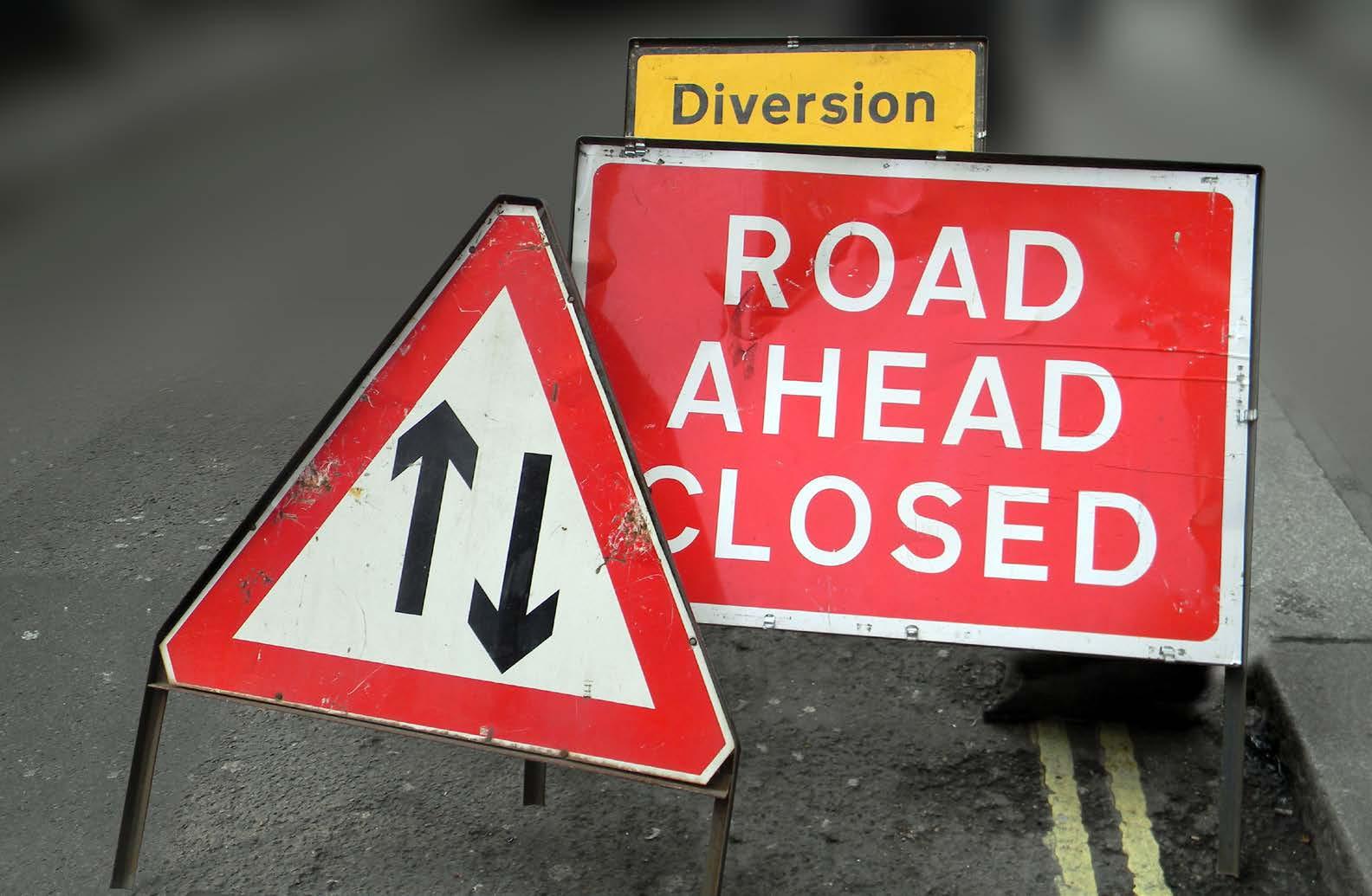
Originally, words on signs were all written in capital letters. Today, signs tend to have mixed-case fonts, because research has found lower case letters are easier to read. But if a message has two parts, capitals are sometimes used for emphasis, such as in the case of the familiar sign ‘SLOW children crossing’.
“ e solution is to use few, simple words,” says Shaun Helman, Chief Scientist in Behavioural Sciences at TRL. “More complex words means more
information to process, so longer looking time and higher cognitive load. People have a very limited attention span, and time with eyes-o -road is a good predictor of crash risk.”
Indeed, research carried out by TRL in 2012 looked at how bilingual signs a ect road safety in Scotland. Bilingual signs are more complex, and so take longer to read and can a ect driver behaviour in high workload situations. However, the study found that drivers slow down to cope with this extra task demand, and so there is not a signi cant increase in crash risk.
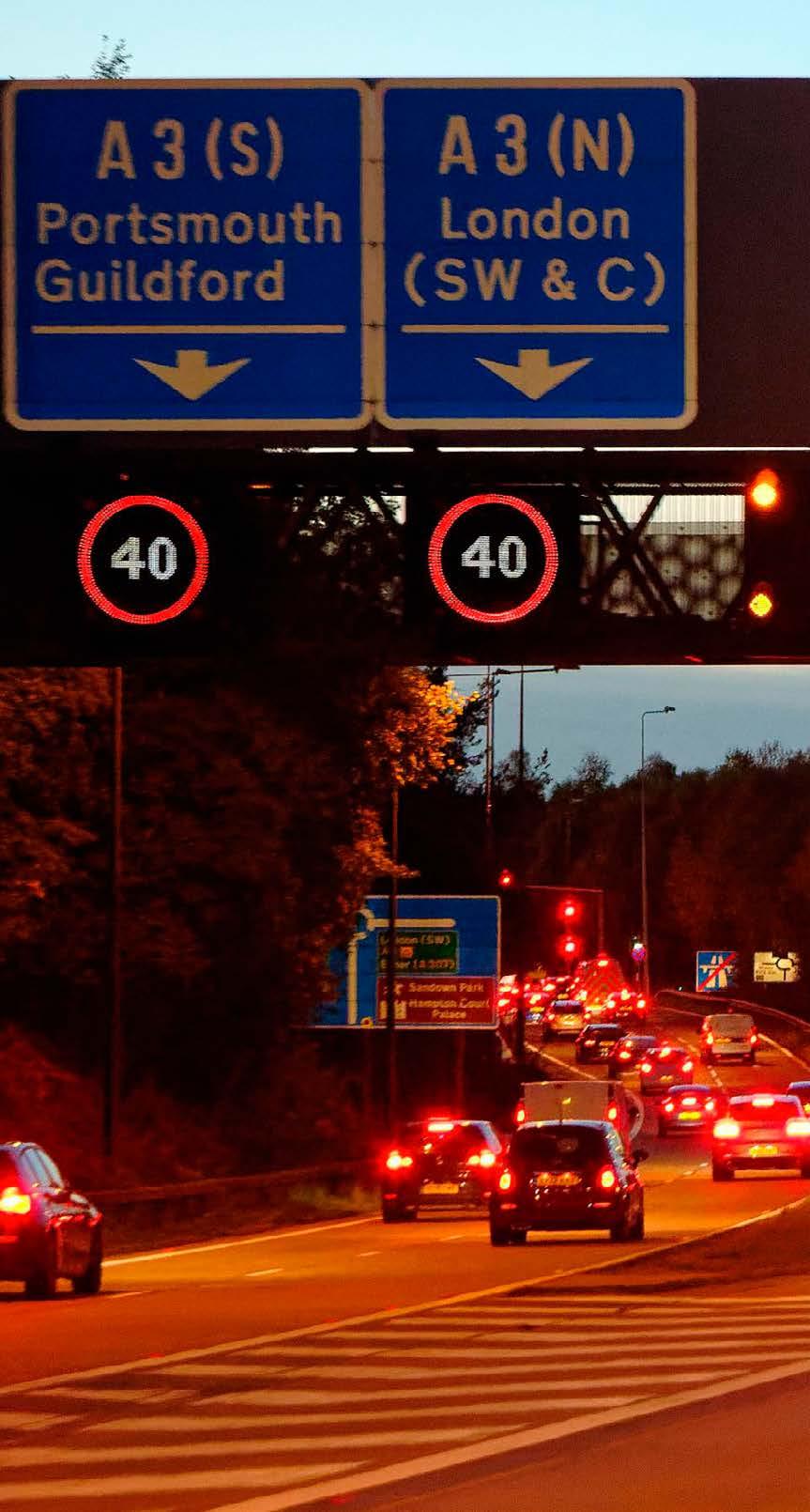
Colour plays a vital role. You need good contrast between foreground and background and the best colour combination is white text against a dark colour. Other colours are used to convey other messages, such as red to indicate danger. e Department for Transport’s Tra c Sign Manual has clear guidelines for the number of di erent colours.
A MOMENT’S NOTICE
Size also matters. e size of a sign depends on the speed a vehicle is travelling: the faster the vehicle, the larger the sign needs to be. Although, in towns, signs need to be large enough to compete with other distractions. Ensuring a sign is conspicuous is not only down to size, however, and design rules have been developed to maximise legibility without wasting space. Research has also identi ed ‘attention conspicuity’ – the ability of a
sign to attract attention when the driver is not looking for it, and ‘search conspicuity’, when the driver is looking for an object but it lacks attention conspicuity. A sign with a good attention conspicuity will always have a good search conspicuity. Where the sign is located is carefully considered, too. “It’s important to have
RESEARCH IN NUMBERS
Signs have to convey important messages in a short space of time, so getting it right is crucial for safety
6–8% 34%
The level of recall if a sign is displayed twice. Only showing the sign once means recall is between 2–20%.
The amount of light bounced back from the first road signs that used retroreflective sheeting.
INTAKE
18 / / SPRING 2023
Red is used on signs as we inherently associate the colour with warnings and danger, but the size and position of them are also carefully considered
READING THE SIGNS
Variable message signs – the digital road signs used to inform drivers and riders about specific temporary events and real-time tra c conditions – have radically improved in legibility over the years. For decades, the letter shape on variable signs was defined by a small matrix on central reservation signs, and the letters were often oddly shaped and illegible – defeating the object of clearly transmitting a message. Then, in the early 2000s, there was a seismic shift in signs with the development of the Motorway Signal Mark 4, a fully programmable, high-resolution, two-colour display, able to show both text and pictograms. Many vehicles can now read signs such as speed limits, but this can be a problem, especially for autonomous vehicles
the correct sign in the right location,” says Mitchell. e Department for Transport’s Tra c Sign Manual states drivers should not need to divert their eyes more than 10 degrees away from the road ahead, so a sign’s message needs to be absorbed before a driver reaches that position. is is known as the ‘cut-o distance’.
Sign repetition also helps drivers respond to its instructions. Research from 1996 showed that if a sign is only presented once, levels of recall range from 2–20%. If the sign is repeated in a short interval, recall rises to 34%.
NEW TECH
Over the years, driver safety has improved both on the road and in vehicles, due to developments in technology.
Retrore ective sheeting is used for all xed-plate road tra c signs. Where once retrore ective sheeting from glass beads (with a re ective coating behind them) returned 6–8% of incident light to the light source, 75 years later with microprismatic technology it is now almost 10 times better.
Meanwhile, technological leaps have also been made in vehicle design to read road signs. Vehicles now use on-board cameras to read road signs, such as speed limits, including variable message signs. Euro NCAP has required these systems to be tted since 2014. In Europe, there is now a legal regulation, GSR2, that requires them to be tted to all new vehicles from 2024 (though this regulation doesn’t apply in the UK and no alternative approach has yet been con rmed by the UK government).
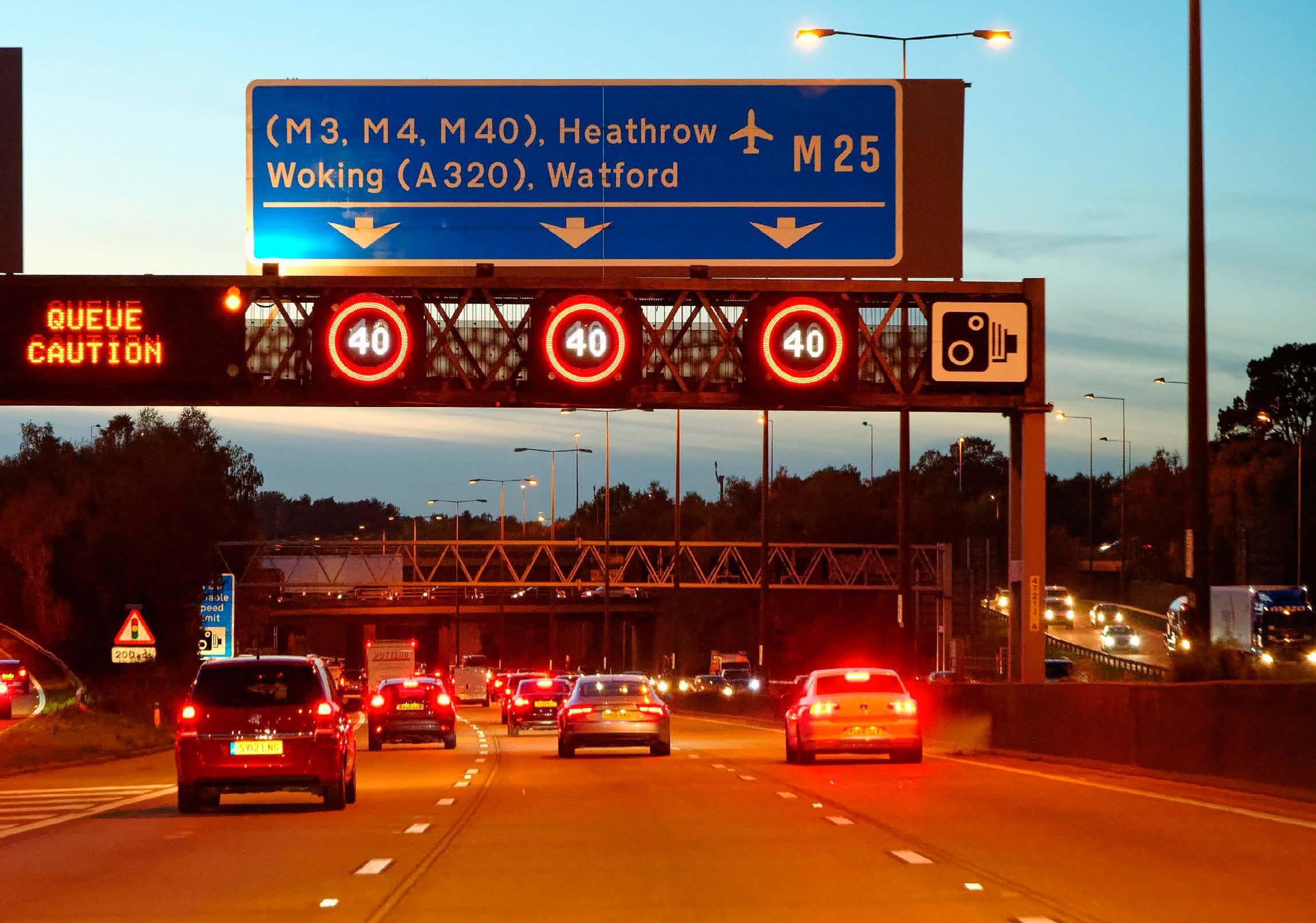
“Signs must be standardised, though most [vehicles] only read speed signs or school zones,” says Matthew Avery, Chief
Research Strategy O cer at the motor insurers’ automotive research centre, atcham Research. “ ey could read road geometry or railway crossing signs, for example. But the systems should not be distracting or change too frequently.”
Currently there are issues with systems reading the right sign. Problems crop up when there are two signs adjacent to one another for two di erent roads. “Systems can get confused,” says Avery. “If you programmed systems to dynamically adjust vehicle speed, it could lead to dangerous situations with vehicles travelling at inappropriate speeds.”
Whether it’s a vehicle or a person processing the information on a sign, the key to any good design is to ensure it is well laid out with an unambiguous message. As Mitchell puts it: “People and vehicles just need clear, simple, timely information.”
Jheni Osman is an award-winning science writer, author and broadcaster. See more of her work at www.jheniosman.co.uk, and follow her on social media @jheniosman
/ SPRING 2023 / 19
“THE KEY TO ANY GOOD DESIGN IS TO ENSURE IT IS WELL LAID OUT WITH AN UNAMBIGUOUS MESSAGE”

















greatest biking memories Your start with the right gear Exclusive over £100 for IAM members 15% OFF save now at getgeared.co.uk/iam Available in the checkout 5-star rated by over 5,000 reviewers Exclusive over £45 for IAM members 15% OFF 5-star rated by over 600 reviewers save now at motohut.co.uk/iam Passionate about auto accessories that get the job done, properly – from car cleaning to battery charging Available in the checkout
ON THE ROAD
“IT’S NOT ABOUT THE CONNECTION BETWEEN CAR AND DRIVER, BUT DRIVER AND THE CITY ITSELF. ” Experience

your journey to the next level / SPRING 2023 / 21 ALAMY Please ensure you take note of any current Covid-19 restrictions at the time of your drive, and only make the trip if it’s safe and legal to do so.
Taking
downtown city life from the comfort of your (hire) car
SLICK
Motor through a metropolis with road trips through three stand-out cities around the globe
ROAD TRIPS CITYSCAPES
Congestion charges, low-emission zones and cycle superhighways could be seen as a conspiracy against car drivers, but cleaning up the air in the world’s city centres is a necessity. Even the most ardent petrolhead can’t argue against efforts to cut city air pollution and its associated public health problems.

For those with access to more ecofriendly transport these measures actually open up urban driving. Traffic intensity
can be reduced, while travelling at a slower pace means more time to enjoy the cityscape and soak up the culture of different neighbourhoods.
Making the most of metropolitan motoring requires a bit of recalibration. It’s not about the connection between car and driver, but driver and the city itself. Relaxation and observation are the key. So, let’s take in the sights, sounds and smells of urban life in three of the world’s most iconic cities.
22 / / SPRING
2023
WORDS NIK BERG /DETOUR-ROADTRIPS.COM
Old and new structures sit side-by-side and jostle for prominence in the English capital, adding to the thrill of driving through its streets
LONDON CALLING
When a man is tired of London, he is tired of life; for there is in London all that life can afford.” Samuel Johnson famously said that in 1777 and it remains true today.

The cityscape is forever changing, while simultaneously remaining one of the greenest capital cities in the world.
Inhabitants at the high points of Crystal Palace in the south and Alexandra Palace in the north of the city have always had the best vantage points of London’s incessant evolution, so these two landmarks make the ideal start and finish for a drive through the heart of the Big Smoke.
To avoid contributing to the cause of London’s old nickname – and to escape paying its daily £15 Congestion Charge –
you will need a zero-emission vehicle (or a motorcycle or scooter). This will also mean you won’t have to cough up (sorry) £12.50 for the Ultra Low Emissions Zone charge which covers the area between the North and South Circular roads and from which only relatively new vehicles are exempt. (See Transport for London website for details.) If you don’t own an electric car you can rent a Tesla from UFO Drive from £70 a day, or from £8 per hour with Zipcar for a Vauxhall Corsa-e.
VARIOUS VISTAS
Crystal Palace is worth a quick wander before settling in for a cross-town trek. Walk the grounds and you’ll still find traces of the race circuit, which first hosted the London Grand Prix in 1937. And you can’t miss the 219-metre tall
/ SPRING 2023 / 23 ON THE ROAD
“THE CITYSCAPE IS FOREVER CHANGING, WHILE ALSO REMAINING ONE OF THE GREENEST IN THE WORLD”
“
transmission tower, beaming TV and radio signals across the city.
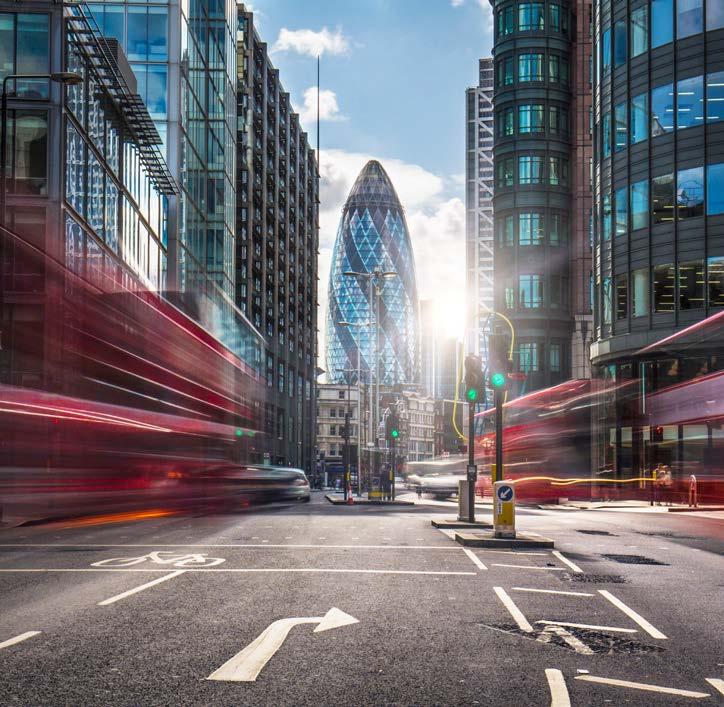
For the best vista, you’ll need to leave the park and head to Westow Hill where the narrow street slopes steeply downward, neatly framing the Square Mile of the City below. Follow Sydenham Hill northwards, skirting Dulwich Woods and Sydenham Hill Wood, and cross the South Circular to pick up Honor Oak Road and you’ll be driving through leafy suburbs until you reach the more gritty Lewisham and New Cross. Join the A2 eastwards and cut across Blackheath.

Turn north, passing The O2 (formerly the Millennium Dome) and dive beneath the Thames through the Blackwall Tunnel. You’ll pop back out at ground level to admire the gleaming towers of Canary Wharf. This city within a city was conceived to reinvigorate London’s Docklands. It was a project that skirted financial disaster but eventually led to the construction of the pyramid-topped One Canada Square and a bustling business centre. Carry on through Wapping and Limehouse, past the fancy

yachts moored in St Katharine Docks and soon you’ll be travelling back into London’s history. First Tower Bridge, London’s enduring icon and then the Tower of London.

From here it’s a rapid reintroduction to the 21st century. Glance across the river and you’ll see the imposing Shard rising 310 metres into the sky above the city, then head north through the City of London, passing under the newer towers of London including the 180m-tall Gherkin. Following the remains of the ancient London Wall you’ll find yourself among the brutalist architecture of the Barbican
events venue. Goswell Road will take you to Angel and the trendy boutiques of Islington’s Upper Street.
The final stretch is a steep climb to Alexandra Palace, home of the first BBC television broadcast in 1936, but today popular with local families skating around its ice rink. Park up and you’ll have a clear view back across the incredible capital city.
24 / / SPRING 2023
Inset: The route takes you up close to the Gherkin Left: The curve of the Thames frames the O2 and highlights the towers of Canary Wharf and beyond
Right: Tower Bridge can be raised at any time of day or night, as river tra c has priority over road tra c
Blackwall Tunnel
Westow Hill Crystal Palace Park
The Leadenhall Building
The Gherkin
Heron Tower
Upper Street
Highbury
Alexandra Palace
The lookout at Battery Spencer offers the most Instagrammed view of San Francisco – the massive span of the Golden Gate Bridge stretching out across the water and into the city – so it’s from here that any Frisco city drive should begin. You could spend many days exploring San Francisco, but this is a route of quick-fire driving highlights.
Circle round from the viewpoint and you’ll soon become one of the 110,000 drivers who make the 1.7-mile crossing over the Golden Gate strait (which connects San Francisco Bay to the Pacific) every day. Don’t forget to pay the toll online, which contributes to the continuous maintenance of the

SAN FRANCISCO USA

suspension bridge’s steel structure. Be sure to glance to your left where you’ll see the infamous Alcatraz Island, before making landfall at Fort Point.

BULLITT CHASE
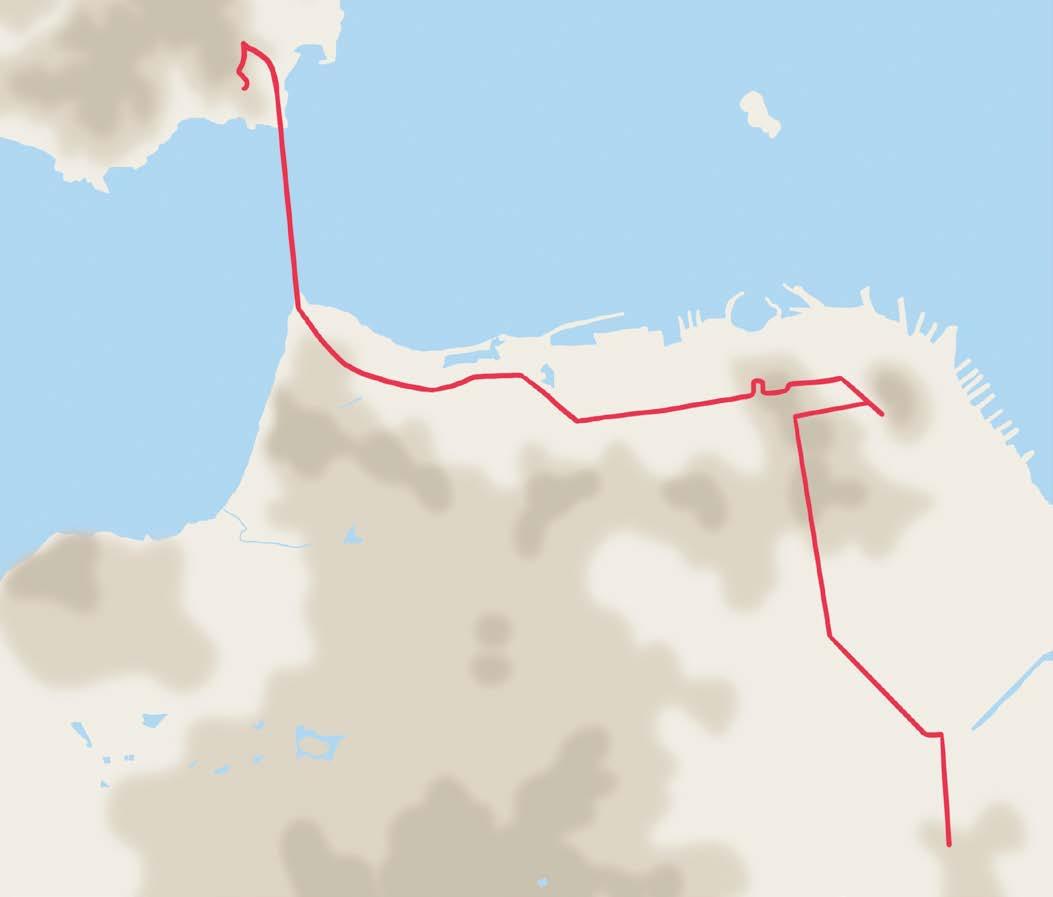
For expediency stay on the 101 Presidio Parkway which takes you to Lombard Street, the most famous road in the city. For the first few miles you may wonder why as it charts an arrowstraight path from east to west, but as the 101 turns south, Lombard shrinks as it enters George Sterling Park. East of Hyde Street, Lombard becomes one of the steepest and twistiest roads in the world. With eight hairpins in just 180 metres it has a recommended speed of just 5mph. Nonetheless over 2,000 cars a day creep down it and huge queues can form, so best to time this one carefully.
The next part of our route follows one of America’s coolest actors of yesteryear, Steve McQueen, taking in the roads featured in the classic car chase of Bullitt. McQueen insisted on doing much of the stunt driving himself so as you tool down Columbus and Union Street to Russian Hill you really will be driving in his wheeltracks. Join Hyde Street, passing through Nob Hill, Tenderloin, Little Saigon and you’ll be on Potrero Hill where the cross streets provide the launch ramps for McQueen’s Mustang, but hopefully not your hire car.
North Beach Russian Hill
Potrero Hill
Lombard Street
Battery Spencer San Francisco Bay Golden Gate
/ SPRING 2023 / 25
ON THE ROAD
Above Oakland Bay Bridge peeks through the skyscrapers as a cable car trundles down from from Nob Hill
Above The most photographed bridge in the world has seen over two billion cars cross over in its 85-year history
Protect yourself from speeding tickets, road hazards & insurance scams!
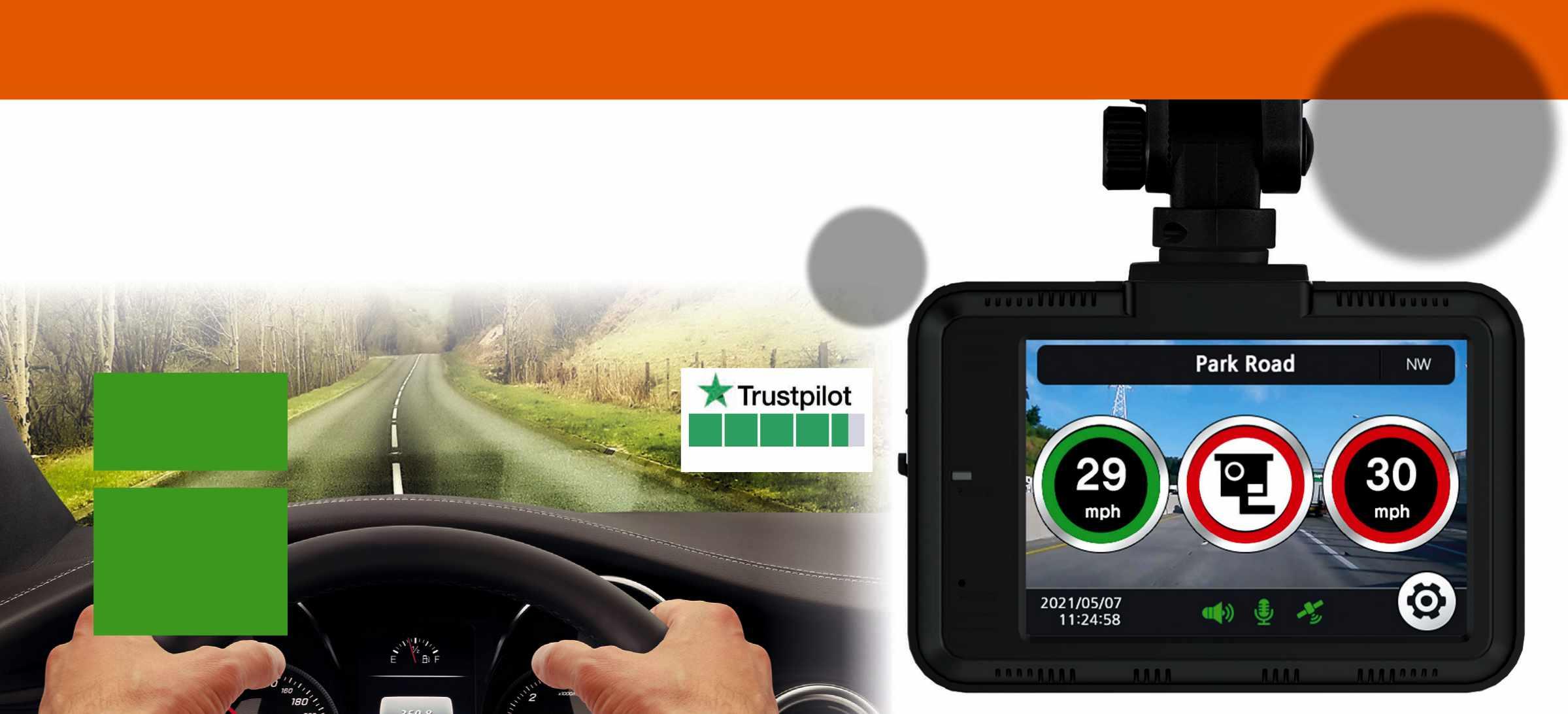
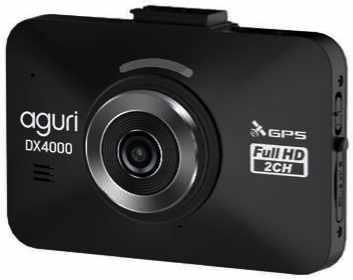
DX4000 Drive Assist dash cam and speed limit alert system.
For the last 5 years there has been a steady rise in ‘crash for cash’ incidents and acts of ‘driver aggression’ on our roads. Motorists are now taking action to protect themselves from the rise in fraud as well as the increased threat of violence.
DX4000 Drive Assist is so much more than a dash cam. Simple to use, this sophisticated device records every mile you drive in crystal îî îîî' alert you audibly and visually to approaching îîî îîîîîî îî drive from one speed limit to another, for total î
DX4000s super wide-angle lens continuously îî H¬'îîîîî î built in GPS antenna plots your exact location îîîî îîî recording and crystal-clear high-resolution playback come as standard as does the large g '' îîî
ClearCrystalDay & Night
comprehensive speed trap database and the speed limits of every road across the UK î/
updates are completely free!
The comprehensive database preloaded into 'î of every road across the UK & Europe it also includes the locations of Gatso, Truvelo, O'/ ¬¬îqî îî Øîî¬'¬¬¡/ îî îîîîî îîîîî îîîŒî 'î
Comes ready to go & includes:
• DX4000 Dash Cam (100 x 70 x 30mm)
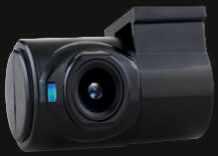
• Windscreen & Fixed mounting kits
• 12V/24V in-car charger
• GPS tracking & video playback software

• 16GB SD Card - PC & Mac compatible
• FREE lifetime speed trap updates

• 12 month warranty

“
it wasn’t for our dash cam footage, the other driver might not have been held responsible for knocking the cyclist off his bike & injuring him.”
“The driver coming in the opposite direction jumped the red light, knocking the cyclist off his bike & leaving him seriously injured. Mandy helped the cyclist whilst the emergency services were on their way. We showed the police the high-res dash-cam footage of what happened & they were really impressed with clarity of the recording. Later, it came out that the driver of the other car had denied jumping the red light, but when confronted with the video evidence quickly confessed. Our dash cam footage helped the poor chap who was injured as it could have taken months, if not years, to sort it out otherwise. We wouldn’t drive without our DX1000 dash-cam now.”
John & Mandy Nightingale
See the evidence for yourself online
îîîîîî
¡
If
DISPLAYS SPEED LIMITS ggTq/¬ DISPLAYS SPEED LIMITS ~G //¤¤~' ¤~¬¬O/ UK & EUROPE
Rating 4.6 • Excellent Call 0330 102 5578 online: aguriworld.co.uk Buy on-line and spread the cost with 3 interest-free payments. See website for details. Order now for FAST FREE delivery in 2-3 working days. For full terms and conditions please visit www.aguriworld.co.uk £169.99 DX4000 Drive Assist Dash Cam. R.R.P £239.99 - Now £209.99 DX4000R Dash Cam + Rear Camera. R.R.P £279.99 - Now FREE FAST DELIVERY Exclusive IAM Roadsmart Offer Code: DX23 Save £70 Exclusively for IAM Roadsmart Members
CIRCUIT MARINA BAY SINGAPORE
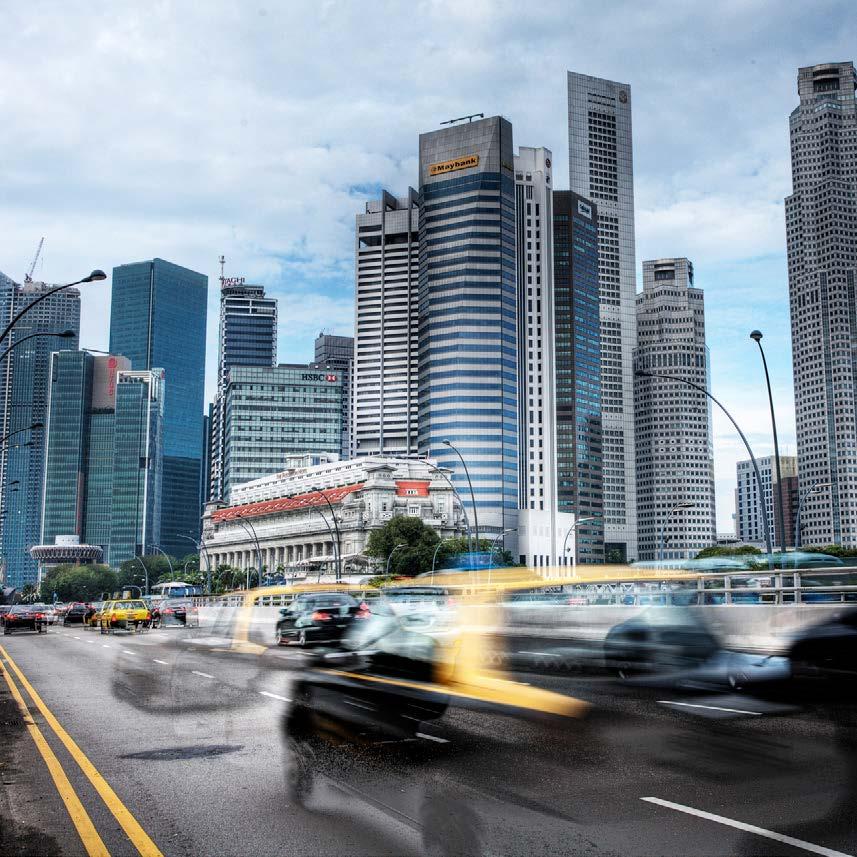
There are still some drivers who are allowed to hurtle around city centres without a care. Formula One races take place on seven street circuits, perhaps the most impressive of them all in Singapore. The Marina Bay circuit is 3.1 miles around Singapore’s Downtown Core and Kallang area. With its start/finish straight on Raffles Boulevard, the track follows Nicoll Highway, Stamford Road, St Andrew’s Road and passes the Padang and City Hall. Over the Anderson Bridge it goes, past the swanky Fullerton Hotel and then a tight
left onto Esplanade Drive before rejoining Raffles Boulevard. As well as having 23 corners, it’s bumpy and notoriously hot and humid – even at night when the race occurs.
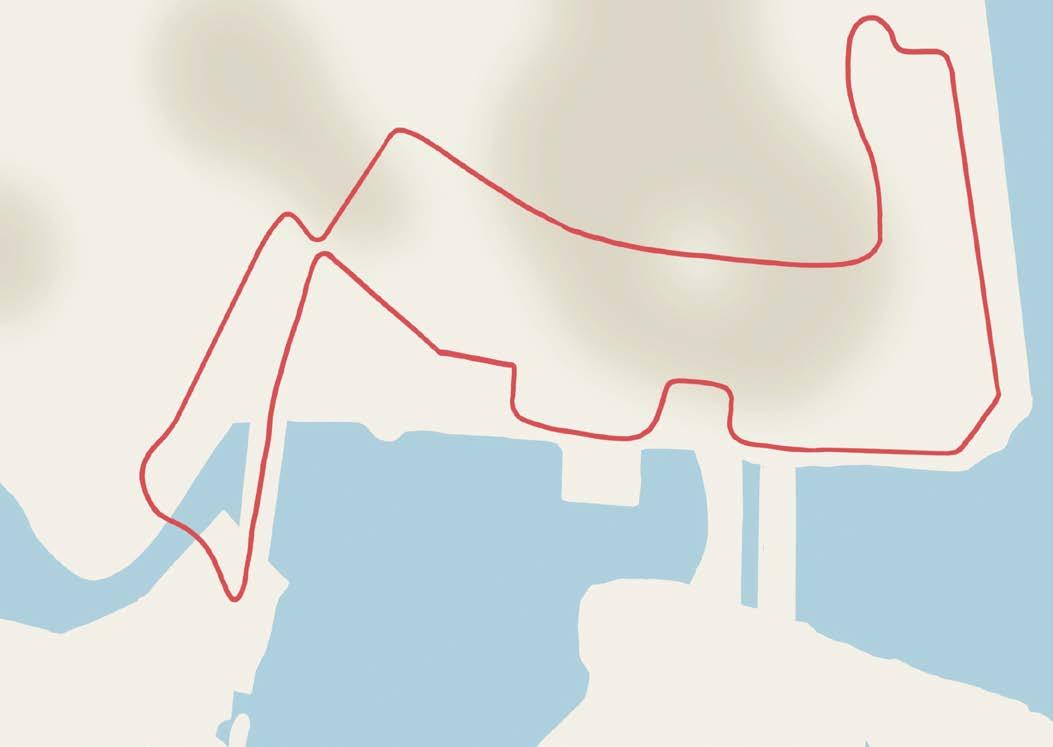
When the race is on drivers see little beyond the tunnel created by crash barriers and fencing, but when these are gone the boulevards seem more spacious. It’s a much greener city than it appears in races; the tropical foliage contrasting with the modern towers set back from the road.
Don’t be tempted to copy your F1 heroes, though; the speed limit is 50km/h (31.07mph) and rigidly enforced, so use your imagination instead.
Singapore has long been a proponent of congestion charging to reduce traffic so your lap round won’t be free, but if you use the city’s Blue SG electric car share scheme at least you won’t be adding to the fumes.

Useful information
TFL www.tfl.gov.uk/modes/driving/congestion-charge
UFO Drive www.ufodrive.com
Zip Car www.zipcar.com
Turo www.turo.com
Blue SG www.bluesg.com.sg
ON THE ROAD / SPRING 2023 / 27
The Padang
The Fullerton Hotel City Hall Esplanade Drive NicollHighway Ra les Boulevard Ra les Avenue Marina Bay BridgeAnderson St Andrew’s Road
Above Esplanade Drive passes the Central Business District before crossing Marina Bay and skirting parks and five-star hotels
Singapore Flyer

Transfer & Save with HMCA *This discount is also available to you if you do not presently have private medical cover. f S Do you have Private Medical Cover? This advertisement is produced and presented by HMCA/S PLC (trading as Hospital Medical Care Association, HMCA and HMCA Members) which is authorised and regulated by the Financial Conduct Authority (FRN:307587). HMCA/S PLC is a company registered in England, company number: 01362094, registered oce: Beech Hall, Knaresborough, North Yorkshire, HG5 0EA. Rated ‘Excellent ’ by our customers on Call today for a no obligation quote on or enquire online at www.hmca.co.uk/roadsmart 01423 799949 OVER 40 YEARS PROVIDING SERVICES TO MEMBERSHIP GROUPS SPECIAL OFFER discount for readers of RoadSmart *40% Up to Your choice of hospital & specialist NHS queues avoided No age limit Tax free NHS cash benefit Claims settled promptly Excellent UK based service
Richard Gladman

and Riding Standards
We are in the depths of winter as I write this, but when this magazine lands on your doormat I can only hope that we are looking back at a winter that was kind to us all. We will all have driven through the winter – and some of us will have ridden, too. Even me, on that rare sunny day, although the one-hour ride will have triggered a two-hour cleaning session. Of course, some of you will be looking to bring the ‘my other car’ or ‘my other bike’ out from hibernation and enjoy the improving weather, the quiet roads, and the experience that we all love – driving or riding for fun and not just to get to a destination.
If you have properly winterised your pride and joy, make sure you now take the time to prepare it for the seasons ahead. Fresh oil and fresh fuel will help the propulsion bits stay in good condition. Old fuel will be ‘gummy’ and may block jets in the carburettor if your car or bike has one, while old oil is a false economy – the best protection will be a good helping of oil at the right viscosity and a shiny new lter to boot.
Check the tyres, too. How old are they? Do they have any cuts and bulges? What is the tread depth and pattern like? A legal tyre with uneven wear is o en a sign of suspension problems, so now is the time to check, and, of course, if you re-bush the suspension it would be remiss to put a tyre back on that has uneven wear. Check the pressure on them as well: if your classic is running on modern tyres, the
DREAM SHEEN
With so much choice at our fingertips it can be hard to decide which vehicle cleaning products and gadgets are worth purchasing. If you want to add to your selection or up your cleaning game and are looking for ideas, then peruse our ‘hotlist’ of products on page 38.

pressures in the handbook may be way o , so have a chat with the tyre supplier as they will be able to guide you.
If the vehicle has a maintenance schedule for grease on the suspension, make sure you attend to it – that annoying squeak will become a clunk and then possibly something even more sinister if you ignore it. Chains and sprockets on your bike don’t last forever and if you have been saying ‘one more year’ for as long as you remember, now might be the time to change it – it is amazing how smooth my gear changes become when I have a new chain and sprockets to play with.
Now for the therapeutic and fun bit – the wash, polish and detail. Spring is a good time to strip back and start again. ere are many bespoke cleaners, polishes and coatings available and we all have our favourites, but the best investment in this part is time, if you have it. If you don’t have time, consider getting a professional to do it properly: this is your pride and joy and a good coating of wax or ceramic will help keep that bodywork pristine. Don’t forget the wheels, either: they too will bene t from the protection, and the brake dust will wash o much more easily.
When everything is ready and the car or bike is beckoning you to come out and play, don’t forget the most important piece of the jigsaw: you. Settle yourself in gently. Your classic will ride or drive di erently to your winter hack; ABS, DCT, DSG, TC, DTC etc will all become a distant memory and it is your responsibility to bring your A-game to the road. Better still, book a refresher course with your local Group or examiner. e System in an older car or on a classic motorcycle? What better way to mark the arrival of spring!
/ SPRING 2023 / 29
Preparing your beloved car or bike for use after a long rest is worth the e ort, says our Head of Driving
VIEWPOINT
“WHEN EVERYTHING IS READY AND THE CAR OR BIKE IS BECKONING YOU TO COME OUT AND PLAY, DON’T FORGET THE MOST IMPORTANT PART OF THE JIGSAW: YOU. SETTLE YOURSELF IN GENTLY”
ILLUSTRATION DAVID MAHONEY ON THE ROAD

Trustpilot correct as at 03/01/2023. Promotional photography required. No purchase necessary. No cash alternative to prize. Only one entry per person. Competition closes 31/03/2023. Winners will be notified within five working days of the draw by phone, if winner doesn’t respond with 72 hours Cornmarket reserve the right to select another winner(s). Prize draw is open to persons aged 18 and over who are UK residents. Draw excludes duplicate entries, any employee of Cornmarket and anyone directly or professionally associated with the promotion. Entries not submitted in accordance with these rules, delayed or incomplete entries will be disqualified. By entering the competition, the winner consents to take part in any publicity accompanying or resulting from this promotion, and for his/her name and county to be used for publicity purposes by Cornmarket in printed and/or online formats. The promoter, Cornmarket Insurance Services Ltd., reserves the right to alter, amend and foreclose the promotion without prior notice. Cornmarket Insurance Services Ltd is a wholly owned subsidiary of Cornmarket Group Financial Services Ltd. Cornmarket Group Financial Services Ltd is a member of the Irish Life Group Ltd. which is part of the Great-West Lifeco Group of companies. Cornmarket Insurance Services Ltd is authorised and regulated by the Financial Conduct Authority (FCA) registration number 308099. You may check this on the Financial Services Register by visiting the FCA’s website or by contacting the FCA on 0800 111 6768. Cornmarket Insurance Services, registered in Northern Ireland, company number NI030039. Registered Oce: First Floor, Boucher Plaza, 4 – 6 Boucher Road, Belfast, BT12 6HR 18990 IAM Karcher K4 Advert 01-23 Car Insurance Home Insurance Motorbike Insurance Gap Insurance Visit cornmarketinsurance.co.uk/iam-karcher and register before 31st March 2023 Win 1 of 5 KARCHER K4 Pressure Washers! Insurance due within the next 30 days? Call 028 9044 5058 Trustpilot
Sign reader
How complicated can it be to understand a road sign? Surprisingly so, says Richard Gladman. The Highway Code and Know your Road Signs help with the subtleties of reading signs
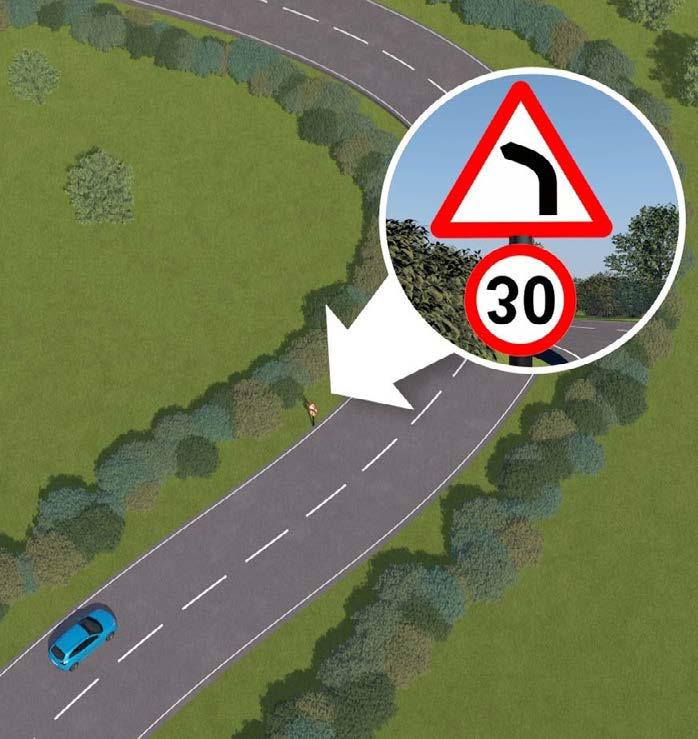
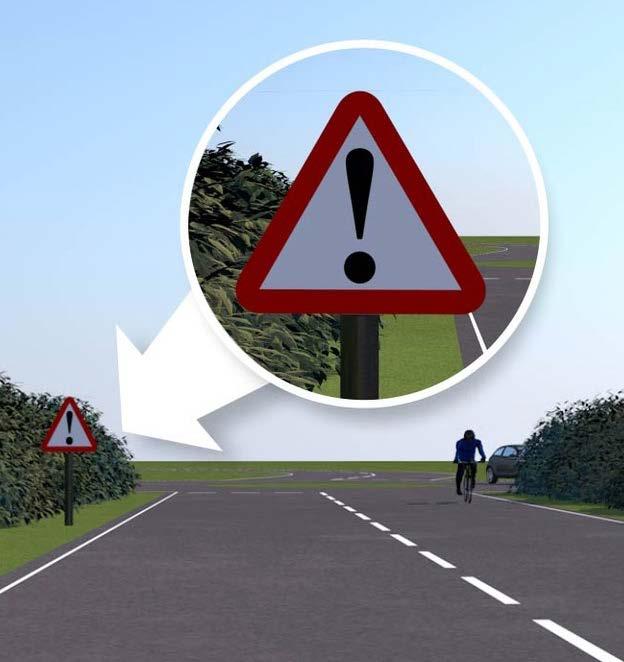
1. ADVANCE WARNING
As advanced drivers, we know a triangle is a warning – and a circular sign is also a warning –so from quite some distance even just the shape of a sign should provide information. This can often inform our thinking and, by the time we can clearly read the sign, it should merely be confirming our thoughts as to what lies ahead.
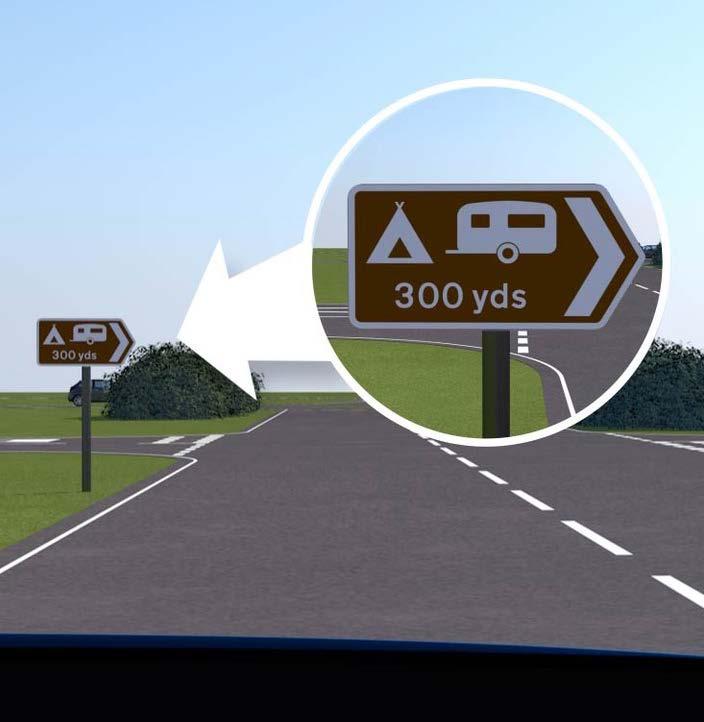
2. MULTIPLES
Multiple signs on the same pole need to be read from top to bottom. Of course, so much information all at once implies we proceed with a bit of caution. If you’re warned of a sharp bend, the road narrowing and a humpback bridge, that’s three reasons to make sure you can stop safely in the distance you can see to be clear.
3. TIME TO ACT
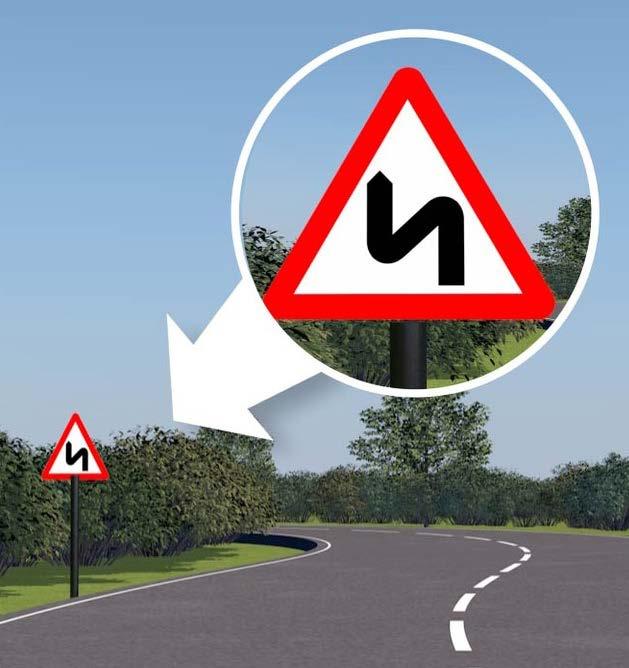
Signs are also positioned to give you time to act safely, so a double bend sign will mostly show the first phase of the bend in the correct direction and may have been put there to warn mainly about the second phase, which may be tighter – allowing that extra bit of time to assess will pay dividends.
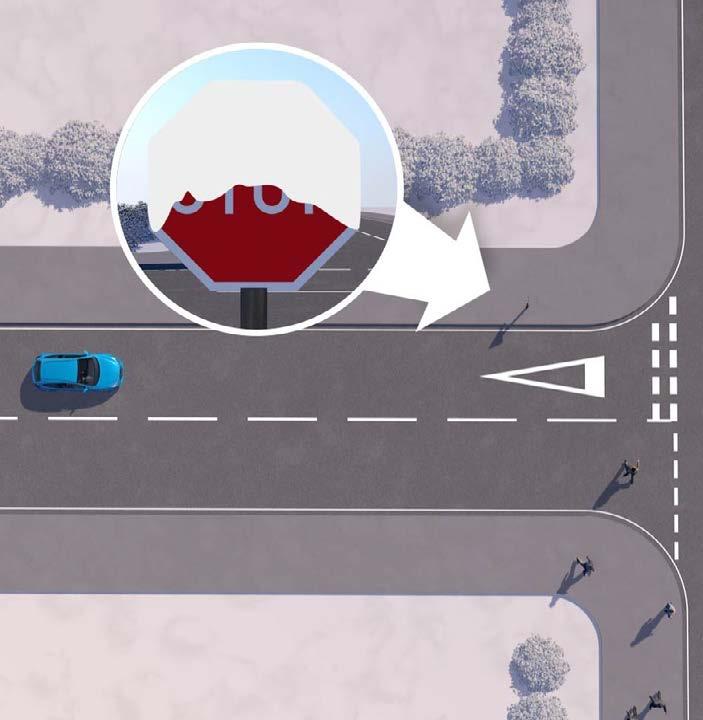
4. SHAPE
The unique shape of some signs is important, too: ‘stop’ and ‘give way’ signs have unique shapes, so a snow-covered stop sign, or a lichen-covered give way sign can be correctly interpreted even if you can’t see the written words. Also, you will often see a junction before you pick up the warning sign for it.
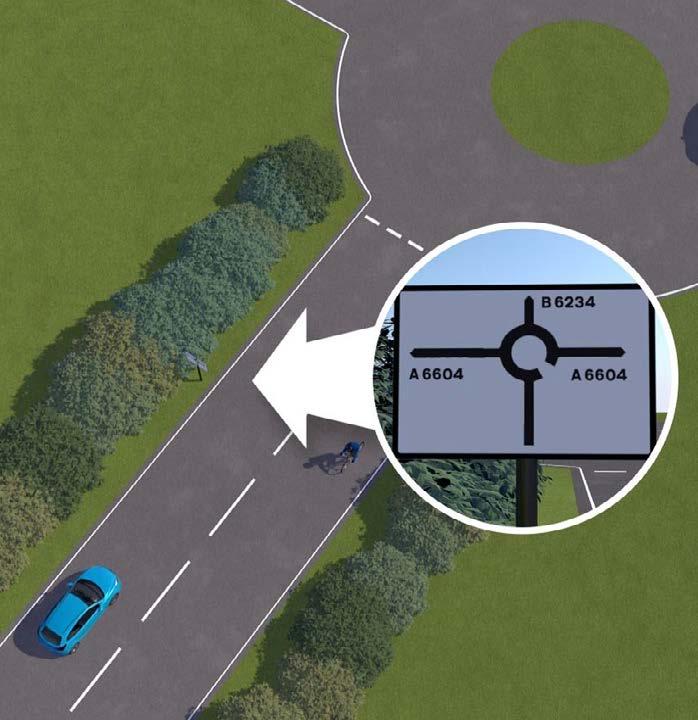
5. ROUNDABOUT
Roundabout signs are helpful, giving the shape of the island and the angle of the exits. Occasionally they will be misleading but overall, they allow us to plan our lanes early and be ready to exit safely. Remember on a mini roundabout, the painted disc is a road sign and staying o it is expected unless your vehicle is too large to be able to avoid it.
6. OTHER ROAD USERS
More subtle inferences can be drawn too: brown signs signify places of interest and suggest tra c not familiar with the area, while the background colour on direction signs will help you work out what grade of road to expect. Finally, don’t forget non-o cial signs: fresh eggs may interest other motorists, so be prepared for them to stop or turn suddenly.
ON THE ROAD ILLUSTRATION ROUGHCOLLIE / SPRING 2023 / 31
SKILLS REFRESHER
ASK THE EXPERTS
HAVE A QUESTION ABOUT LIFE ON THE ROAD? OUR TEAM ARE HERE TO HELP
I would be interested in hearing your views on the parlous state of lane markings. There are many instances in which they have been completely obliterated by wear and tear. This is especially dangerous at roundabouts, where it is often impossible to negotiate positioning safely. It is made worse by aggressive and impatient drivers who are familiar with a road and expect others to be too. It is not enough for highway authorities to make the excuse of cash shortages when lives are potentially at stake.
Q
annual survey, which we use as evidence to lobby government for more funding. Whilst welcome, short-term ‘pothole funds’ are not the answer and only long-term committed investment will return our roads to the standards we expect and deserve. e really frustrating thing is that fresh road markings are known to be a safety bene t. If you see particularly poor markings then you can report them.
e following generic reporting links can be used:
England and Wales –www.gov.uk/reportpothole
Scotland –www.mygov.scot/ report-pothole
Above Markings are essential for road users, but their upkeep is often overlooked

Below Autonomous delivery vehicles are being trialled in select locations across the UK

QI have read the latest edition of The Highway Code from cover to cover. Nowhere can I see reference to autonomous grocery delivery vehicles. These little shopping robots have recently put in an appearance where I live. I have seen cars at a zebra crossing waiting for one to cross! Who has priority in this instance? And if a vehicle is involved in a collision with a robot, how would blame be apportioned?
A
e state of our roads remains the number one concern of drivers in our

Northern Ireland –www.nidirect.gov.uk/ services/report-pothole-orother-surface-defect NG
AYou are correct that this speci c circumstance is not covered in the current Highway Code. e Code is updated on a regular basis though and there have been separate consultations around the use of autonomous vehicles. ese place full responsibility with the operators of the driverless vehicles. e issue of priority should be clari ed and we will be making representations to the government to ensure that it is. NG
32 / / SPRING 2023
ALAMY ALAMY
OUR PANEL OF EXPERTS
If you have a question to put to our panel of IAM RoadSmart experts, then please get in touch. We’re all ears!

roadsmart@iam.org.uk
@IAMRoadSmart
With the need for us all to reduce fossil fuel usage, I’ve been trying to maximise the fuel e ciency of my car. I imagine that the biggest bene t is to reduce road speed to the optimum level. During the 1970s oil crisis the UK set a temporary speed limit of 50mph. With half a century of technology improvements, is this still the optimum driving speed?
Although modern technology makes cars more fuel e cient than they were, they still use less fuel at lower speed. Above about 20mph the main reasons cars burn fuel are to overcome air resistance and to accelerate. Air resistance increases roughly as the square of the car’s speed, so at 40mph it will be four times greater than at 20mph, nine times greater at 60 mph and 12.25 times greater at 70mph. e 50mph limit was set as a compromise between saving fuel and an acceptable journey time, but as everyone was limited to 50mph, no one was getting in the way of cars going faster on a motorway. A lower speed reduces air resistance, but you shouldn’t risk becoming an obstruction. Staying at a constant speed minimises acceleration as well, so around 60mph on a national speed limit motorway is a good, modern compromise. It gives better fuel consumption and reduces the risk of a collision with an inattentive higher speed driver. TS


QUICK FIXES
2030 is the cut-o date for ICE sales. If petrol is a ordable, ICE vehicles could last until 2050. Will personal imports be permitted after 2030?
Personal imports haven’t been specifically covered by the legislation. The EU (and other countries) has similar targets so it will be di cult to find a brand-new right-hand drive ICE to import after 2030. Hybrids will still be available until 2035.

For specialised vehicles
Individual Vehicle
Type Approval may be available but we have no information to confirm this currently. NG
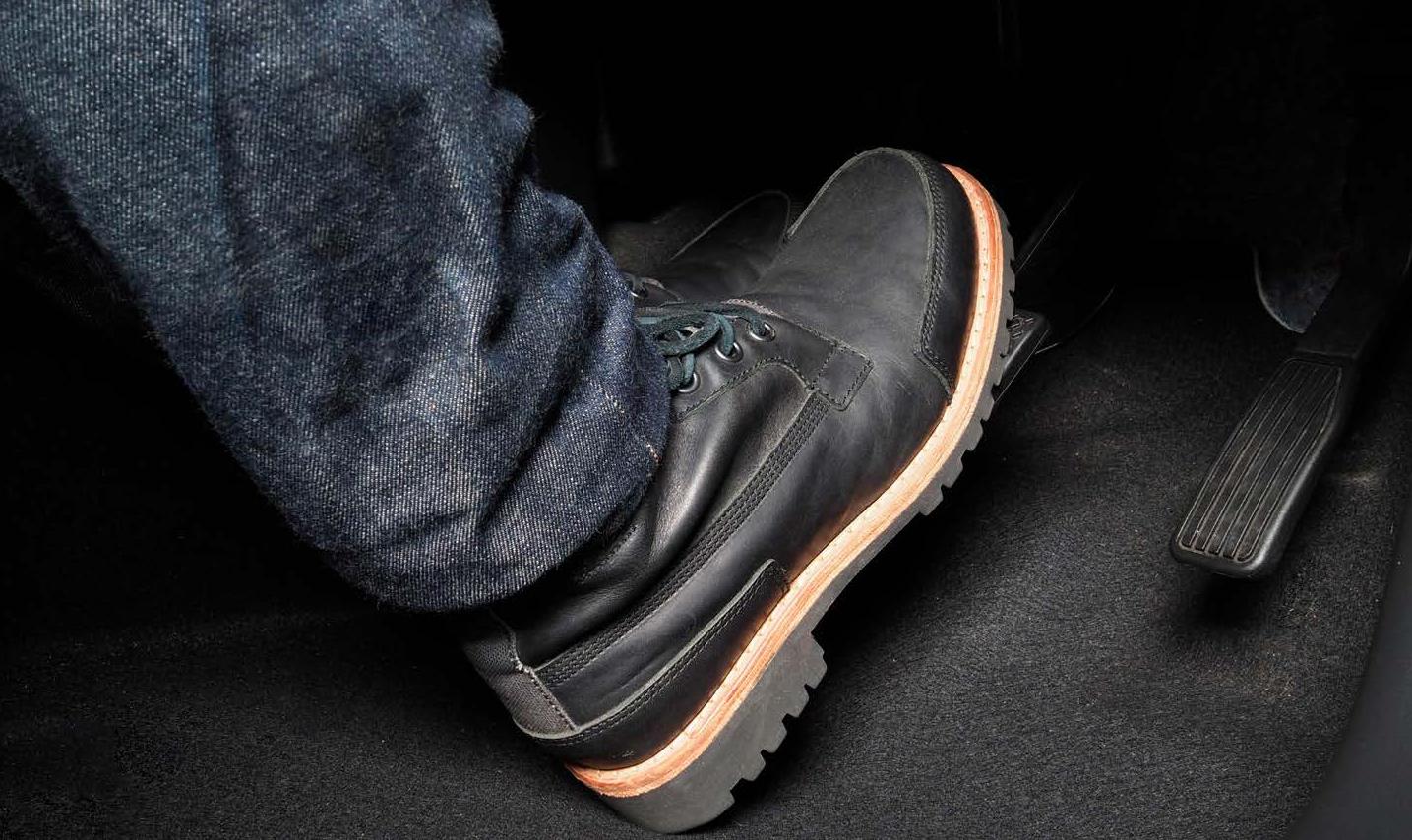
It seems the advice given to new-car drivers is to coast to a stop, in order to save fuel. Along with the growing practice of holding your vehicle on the footbrake rather than handbrake, I wonder if this is a general decline in standards?
Coasting is de ned as rolling along in neutral with the engine running or with the clutch depressed (when there is no mechanical need), and neither of these practices is taught or encouraged. Modern gearboxes may contain a coast function but this is not akin to the above; the slightest touch on the accelerator and the drive is restored. We do encourage drivers to release the accelerator fully when appropriate and let momentum carry the car forward, as o en this will mean zero fuel is being used, but this would not be coasting. Likewise, de-clutching in the latter stages of braking is not considered coasting as the car is controlled on the brakes. As for holding with the footbrake, this annoying habit relates to the stop-start system tted to the vehicle. When you apply the handbrake and release the footbrake the engine o en restarts; selecting neutral prevents this in some cases. e auto-hold feature is also partly responsible as when used it displays rear brake lights. Education and familiarity with vehicle systems is the only answer. RG
/ SPRING 2023 / 33
Q
A ON THE ROAD
Rebecca Ashton Product Development Manager
Richard Gladman Chief Examiner
Neil Greig Director of Policy and Research
ALAMY
Tim Shallcross Head of Technical Policy
A break from the norm: is the way we brake changing?
Q A
d a
Enjoy one fantastic holiday after another with HPB
Become a Bondholder by investing £5,000 or more with HPB and you will be allocated Holiday Points that you can use every year to book your holiday. Just to give you an indication, the average investment last year was around £15,000.
You can then holiday year after year with HPB, as your Holiday Points are reissued every year for life. You can even pass your Bond on to your children and grandchildren for them to enjoy or cash in if they prefer.
As soon as you become a Bondholder like Sue, you can take your pick from over 1,400 exclusive holiday properties at some fabulous locations across the UK and Europe. So one year you could be holidaying at St Brides Castle in Pembrokeshire or Tigh Mor Trossachs in the Highlands. The next year it could be our restored medieval fortress of Stigliano in Tuscany or one of our villas at Javea on Spain’s Costa Blanca.

To find out more please read ‘Exclusive holidays for life’ below and then ask for your FREE information pack
Call FREE on 0800 66 54 90
Visit our website hpb.co.uk/rs


Or complete and return the FREEPOST card today
As an IAM RoadSmart member HPB will add an extra 5% to your investment when you become a Bondholder
Other terms and conditions apply. Visit hpb.co.uk/rs
Exclusive holidays for life An initial payment from £5,000 and a quarterly fee of just over £35 (that is around £140 a year), linked to RPI, gives you access to all HPB’s holiday homes. For each HPB holiday, you will pay a no-profit user charge covering only property running and maintenance costs and use of on-site facilities. The charge is level throughout the year – there are no high season premiums. For a studio the charge averages about £347 a week, for a 2-bedroom property around £533 a week. Larger properties are also available. After an initial charge of 25% your money is invested in a fund of holiday properties and securities. The fund itself meets annual charges of 2.5% of its net assets at cost, calculated monthly. Your investment return is purely in the form of holidays and, as with most investments, your capital is at risk. You can surrender your investment to the company after two years or more (subject to deferral in exceptional circumstances) but you will get back less than you invested because of the charges referred to above, as well as other overheads and changes in the value of the fund’s properties and securities.
A“In my experience, HPB has all the ingredients of a perfect holiday – stylish and comfortable homes, excellent leisure facilities, and all in such beautiful parts of the world. As a Bondholder, I’ve got a lot of holidaying to look forward to in retirement!”
– Sue Barker
This
The Holiday Property Bond

Discover
Enjoy
Relax
TheHolidayPropertyBond
other
Assurance
reserves the right to decline an application at its sole discretion.
advertisement is issued by HPB Management Limited (HPBM) registered at HPB House, Newmarket, Suffolk, CB8 8EH. HPBM is authorised and regulated by the Financial Conduct Authority and is the main UK agent and the property manager for HPB, issued by HPB Assurance Limited (HPBA) registered in the Isle of Man and authorised by the Financial Services Authority there. The Trustee of HPB is Equiom (Isle of Man) Limited, registered at Jubilee Buildings, Victoria Street, Douglas, Isle of Man, IM1 2SH. The Securities Adviser is Stanhope Capital LLP of 35 Portman Square, London, W1H 6LR. No medical examination required. HPB is available exclusively through HPBM. HPBM promotes only HPB and is not independent of HPBA. Holders of policies issued by HPBA will not be protected by the Financial Services Compensation Scheme if the company becomes unable to meet its liabilities to them but Isle of Man compensation arrangements apply to new policies. We are now unable to accept new applications from residents of EU countries and some
jurisdictions. HPB
Limited
walks along the clis and fantastic sea views at St Brides Castle in Pembrokeshire
at one of our private villas at Javea on Spain’s Costa Blanca
5% bonus for all IAM
Special
RoadSmart members
historic places and ne cuisine at Palazzo Stigliano in Tuscany
Motorbike security
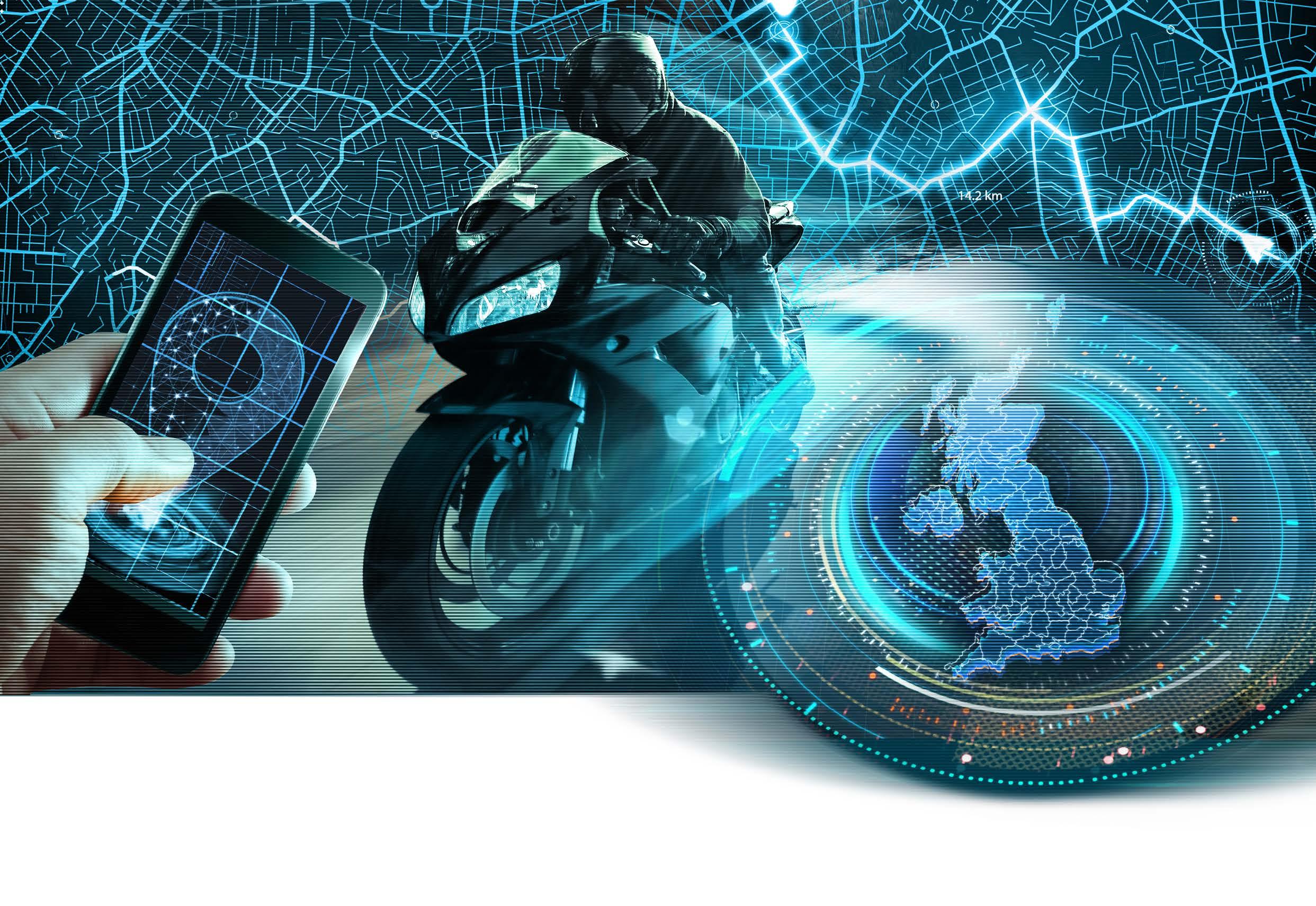
Bike owners do all they can to make sure their two wheels stay in one place at the end of a journey. If the worst should happen though, tracking could make the nightmare of theft end positively
With bike theft, prevention is often better than cure. You don’t want your pride and joy to be half-inched, so you install alarms, and fit the chunkiest lock you can to the biggest possible ground anchor you can buy. And yet a determined thief could still spirit your bike away.
Which is where tracking comes in. BikeTrac is one of several options available for tracking and recovering stolen bikes. It comes in two versions – BikeTrac and BikeTrac Lite. As the name suggests, the ‘Lite’ is the cheaper of the two, but don’t confuse that with ‘cheap’: it still costs £199, while the full-fat model costs £299.
That’s not the only expense you’ll have to consider – unlike some cheaper alternatives, BikeTrac comes complete with subscription service. At £9.99 per month it’s a significant chunk of change, but it offers one crucial advantage –monitoring. With the lower-spec devices
with no subscription, the onus is on you to monitor the whereabouts of your bike. With BikeTrac, there’s a 24-hour call centre that will alert you if your bike’s been stolen.
Another difference between BikeTrac and many competitors is that it is S7 Thatcham-approved. The lower-spec S5 will use a driver ID tag, generally in the form of a key fob that the rider needs in order to operate the bike. The weakness with this is if your keys are stolen with the bike, then it won’t alert you.
Both versions of BikeTrac offer accurate and sophisticated location detection using GPS satellite tracking, as well as GPRS and GSM tech (the systems also used in mobile phones). BikeTrac also uses radio frequency VHF signals, which can be accurate to around one metre – useful if a bike has been stashed in a lock-up garage, for example.
Stepping up to the top-spec BikeTrac adds a bundle of extras, including
European cover and a dedicated Securitas theft response team. Of course, whether or not you think the latter is worth it is possibly down to how successful your bike’s recovery would otherwise be with your local police force.
It’s certainly a pricey product, but both versions of BikeTrac offer potential cost advantages with many insurers (including with IAM RoadSmart partner Cornmarket). This is thanks to that top-level Thatcham rating and the fact that BikeTrac’s location and tracking technology is sufficiently robust to mean that the police will issue search warrants based on BikeTrac evidence.
Those savings are unlikely to cover the extra cost of the subscription service, but then you’re paying for the peace of mind that you should be able to retrieve your bike, if it is stolen.
www.biketrac.co.uk
BikeTrac: £299, BikeTrac Lite: £199
Subscription: £9.99 per month
ON THE ROAD
GET THE GEAR 36 / / SPRING 2023
Brighter Headlamp Bulbs
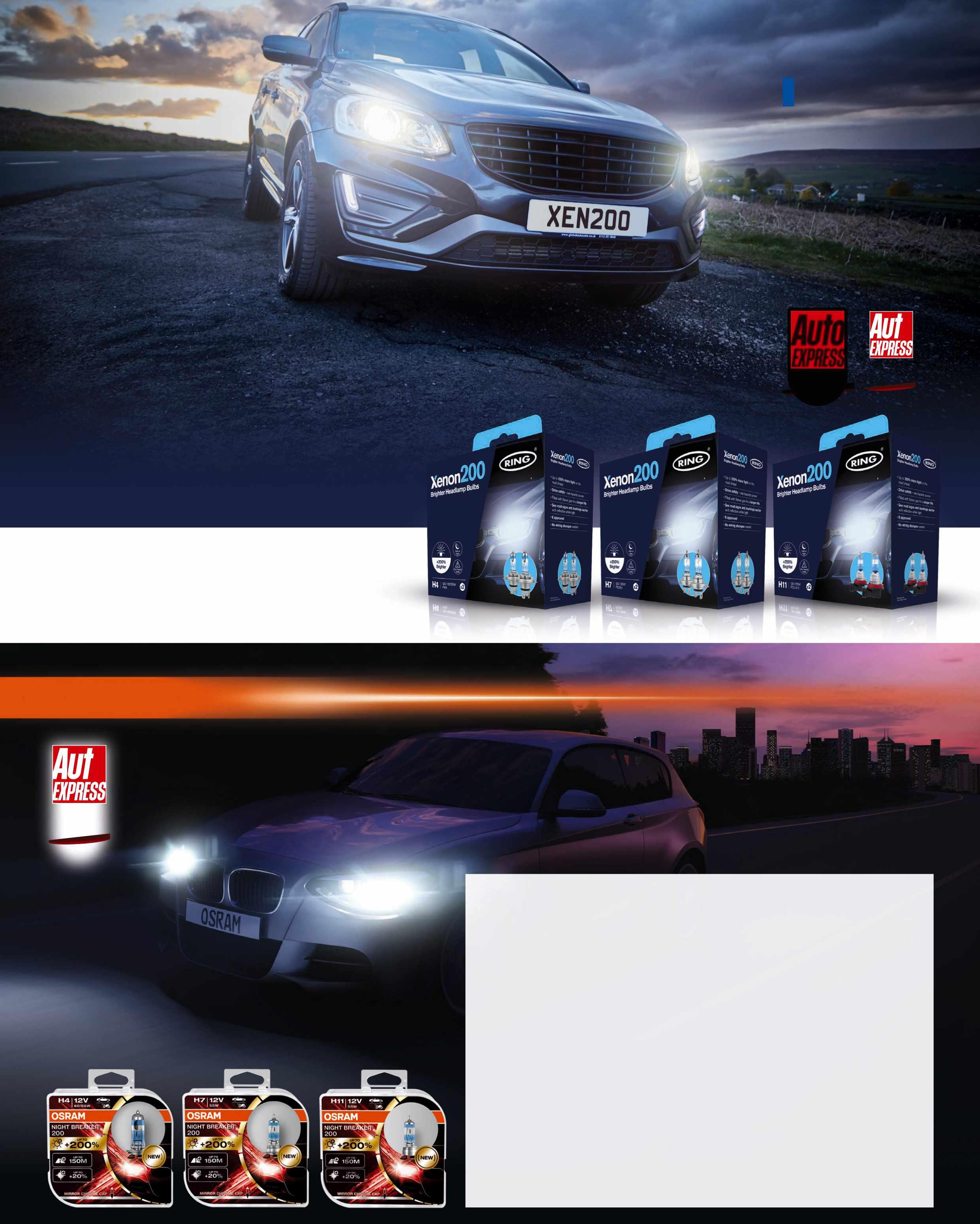
Upgrade and get more light on the road! Up to 200% more brightness* than a standard headlamp bulb and a longer beam pattern, Xenon200 allow drivers to see hazards sooner.
For more information visit: ringautomotive.com
/ringautomotive
www.osram.co.uk/nightbreaker-200
NIGHT BREAKER®
200
2022
See better, drive safer with 200% more brightness.
Light is OSRAM
*
Introducing our brightest halogen headlight bulb range: NIGHT BREAKER ® 200. With up to 200% more brightness* to guide the way, these high-performance halogen bulbs enhance your ability to drive safer at night. *Compared to standard halogen bulb. *Compared to minimum ECE R112/R37 requirements.
HOTLIST
When it comes to motoring accessories, it can be tough to work out what’s useful and what’s an unnecessary frippery. But fear not: we’ve sorted the wheat from the cha to highlight products and services we think could make your motoring life better and safer

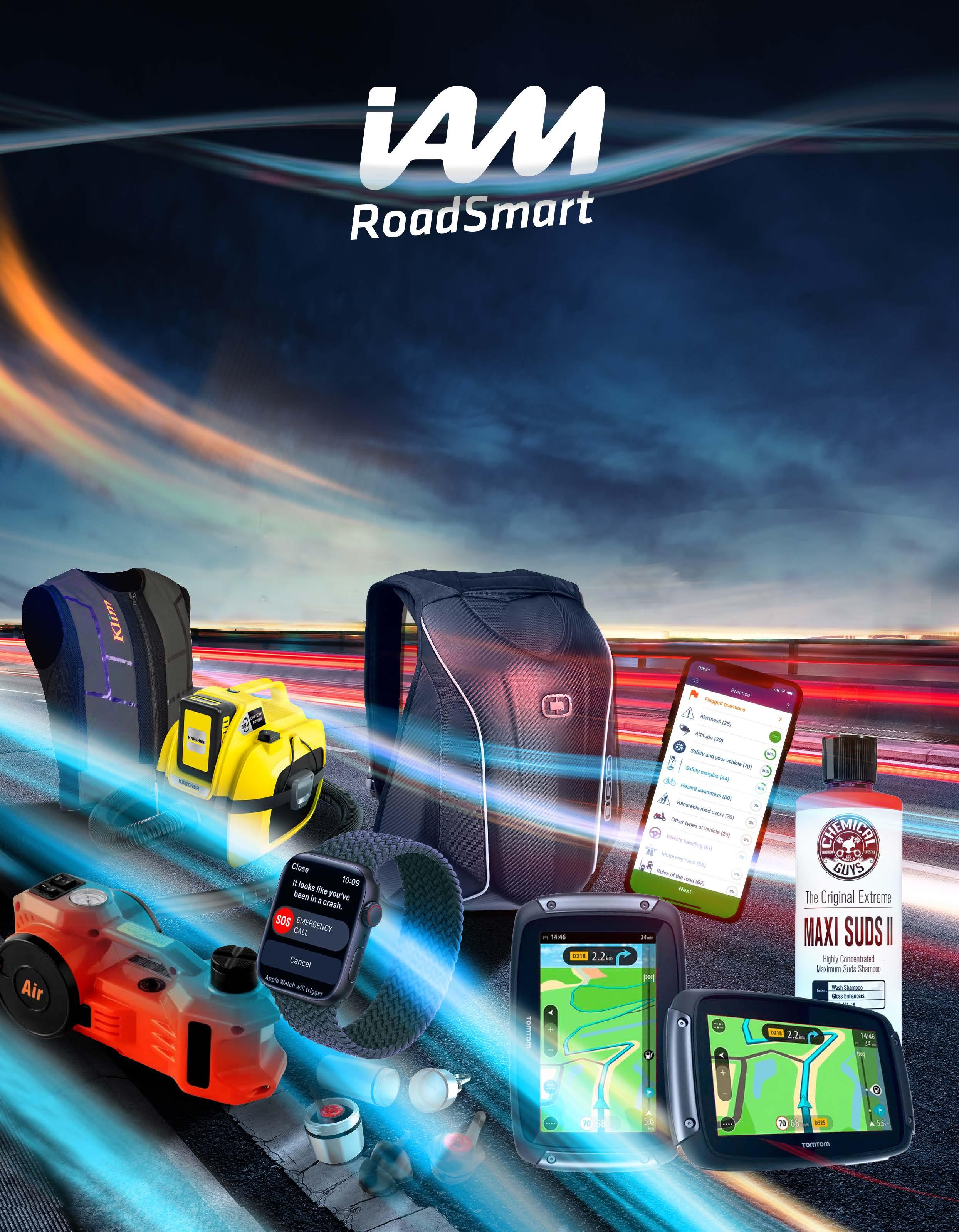
38 / / SPRING 2023
Road trips
Accessories, essentials and entertainment on the go
WAZE
A free app for accurate, real-time navigation –finding the best routes based on crowd-sourced data. Users report information including accidents, roadworks, road closures, tra c jams or even black ice. It’s compatible with Apple CarPlay and Android Auto or you could open the app on your phone and place it safely in a cradle. With over 100 million downloads it’s one of the most popular apps on earth.
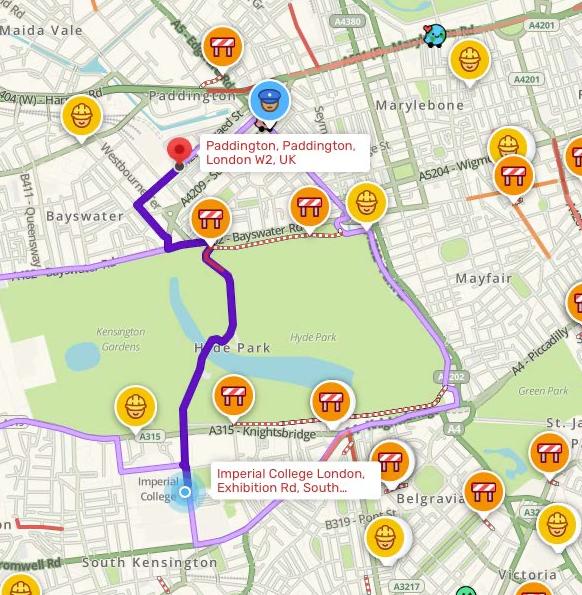
Free to download from Google Play or App Store.
ANGELWAX REVENGE

Keep your screen or visor clean with this spray-on, rinse-o bug remover to quickly get rid of stubborn insects from a range of surfaces including paint, glass and chrome. The waterbased formulation is environmentally safe, biodegradable and free of harmful £8.20; www. cleanandshiny.co.uk
BREAKDOWN AND ROADSIDE EMERGENCY PACK

Online store Evaq8 stocks all sorts of safety equipment. This top-of-the-range pack includes everything from a wind-up LED torch, light sticks to signal other road users, a first aid kit, a fire extinguisher, plus an emergency hammer and seat-belt cutter for shattering windows and rescuing accident victims. Smaller kits are available. £96; www.evaq8.co.uk
OGIO NO DRAG MACH 5
With its aerodynamic, low-drag and waterresistant moulded shell, the Mach 5 is designed especially for motorcycle riders. The main compartment has adjustable dividers and storage compartments, including a laptop sleeve and a shoe pocket. The soft shoulder straps won’t scratch your helmet, and the reflective logo and piping help increase visibility.

From £131.99; www.winstanleysbikes.co.uk
AUDIBLE

A smash-hit app and streaming service, featuring thousands of audiobooks and podcasts – from timeless classics to the latest best-sellers.

Think of it as your ultimate companion on long road trips or daily drives. Play via your smartphone and connect to your car’s speakers via Bluetooth, CarPlay or Android Auto. Free 30-day trial, then from £7.99 a month; www.audible.co.uk
RAC SERVICE
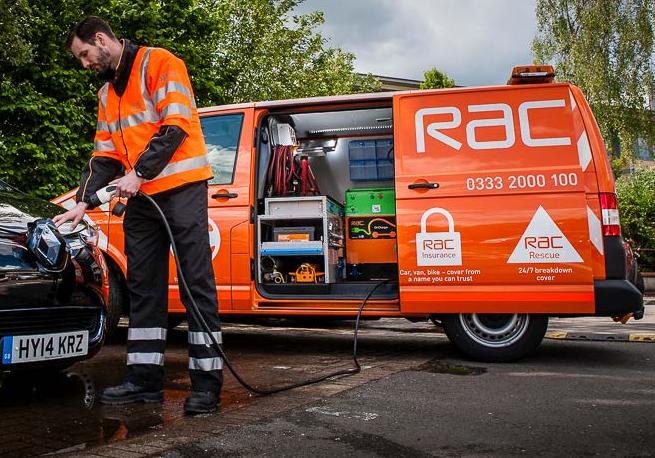
As well as add-ons such as a tyre replacement service (covering you for up to five new tyres per year for an extra £6 a month), the RAC also o ers a new electric car breakdown service, including a 10-mile roadside battery boost and vans capable of towing EVs with all four wheels o the ground, so there’s no need to wait for a recovery truck.
From £6.75 a month; www.rac.co.uk
ON THE ROAD
GET THE GEAR
/ SPRING 2023 / 39
Maintenance essentials
Keep your car or bike in tip-top condition
CAR JACK KIT
This three-in-one kit includes an electric car jack, wheelnut gun and tyre inflator –everything you need to quickly change a wheel with minimal physical e ort. With a lifting height of up to 45cm and a maximum capacity of five tonnes, it has more than enough power to jack up everything from a hatchback to a large SUV, all via a 12V outlet. £189; www.mycarlift.co.uk
OXFORD TOOLKIT PRO
A comprehensive yet compact toolkit, small enough to keep under your motorcycle seat. Features 27 tools with soft gel handles, along with sockets, extension bar and hex keys made from durable chrome vanadium steel. £39.99; www.oxfordproducts.com

NORSHORE MINI TYRE INFLATOR
A small, lightweight and sleek compressor capable of inflating everything from a blow-up crocodile to truck tyres. Takes up minimal room in the car, charges via USB or runs directly from a 12-volt power supply. £64.79; www.amazon.co.uk

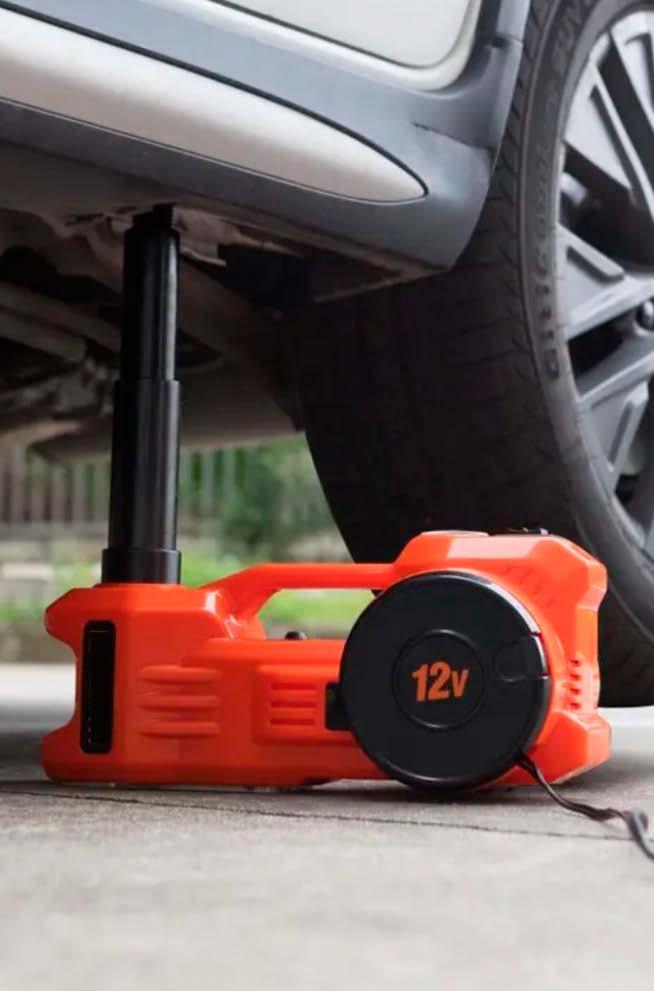
NOCO GB40 1000A JUMP STARTER
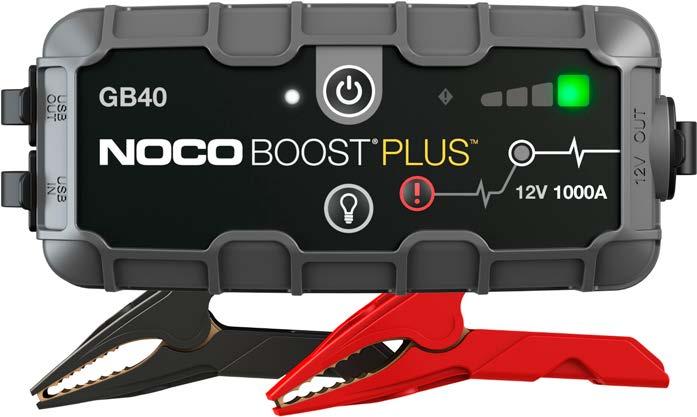
It’s barely bigger than a smartphone, yet this lithiumion pack – for petrol engines up to six litres and diesels up to three litres – gives you up to 20 starts on a single charge. It has spark-proof connections and protection if connected to the wrong terminals, a USB outlet for charging other devices, and a 100-lumen LED torch to flash SOS in Morse code. £109.95; www.halfords.com
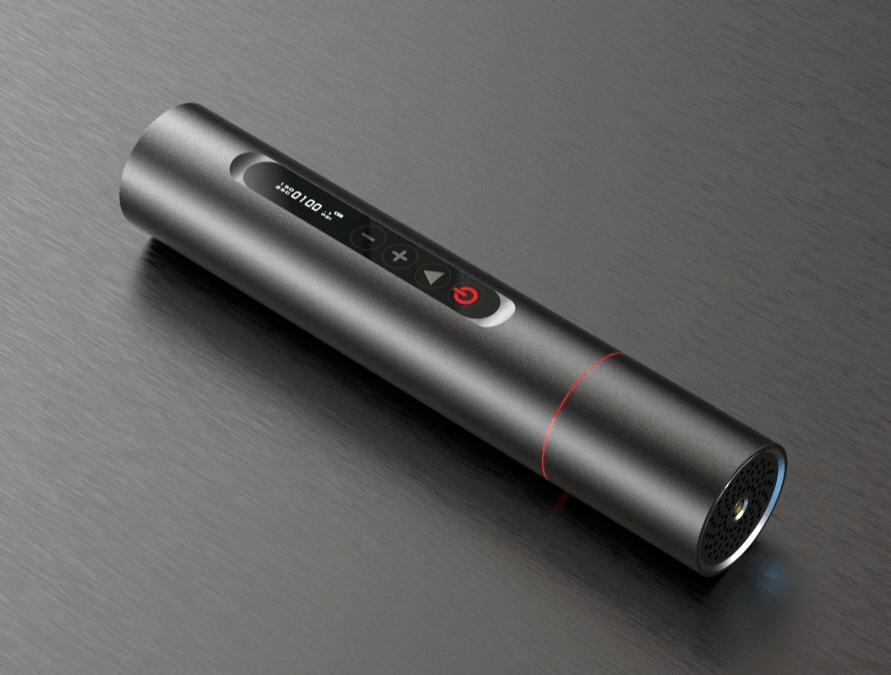
CTEK CS ONE BATTERY CHARGER
The CS One automatically recognises the type of car or bike battery you’re using and delivers an appropriate charge – you just plug and play, for quick charging or long-duration trickle charging (controlled by a smartphone app via Bluetooth). The clamps are polarity-free so it’s impossible to make a wrong connection. £220; www.ctek.com
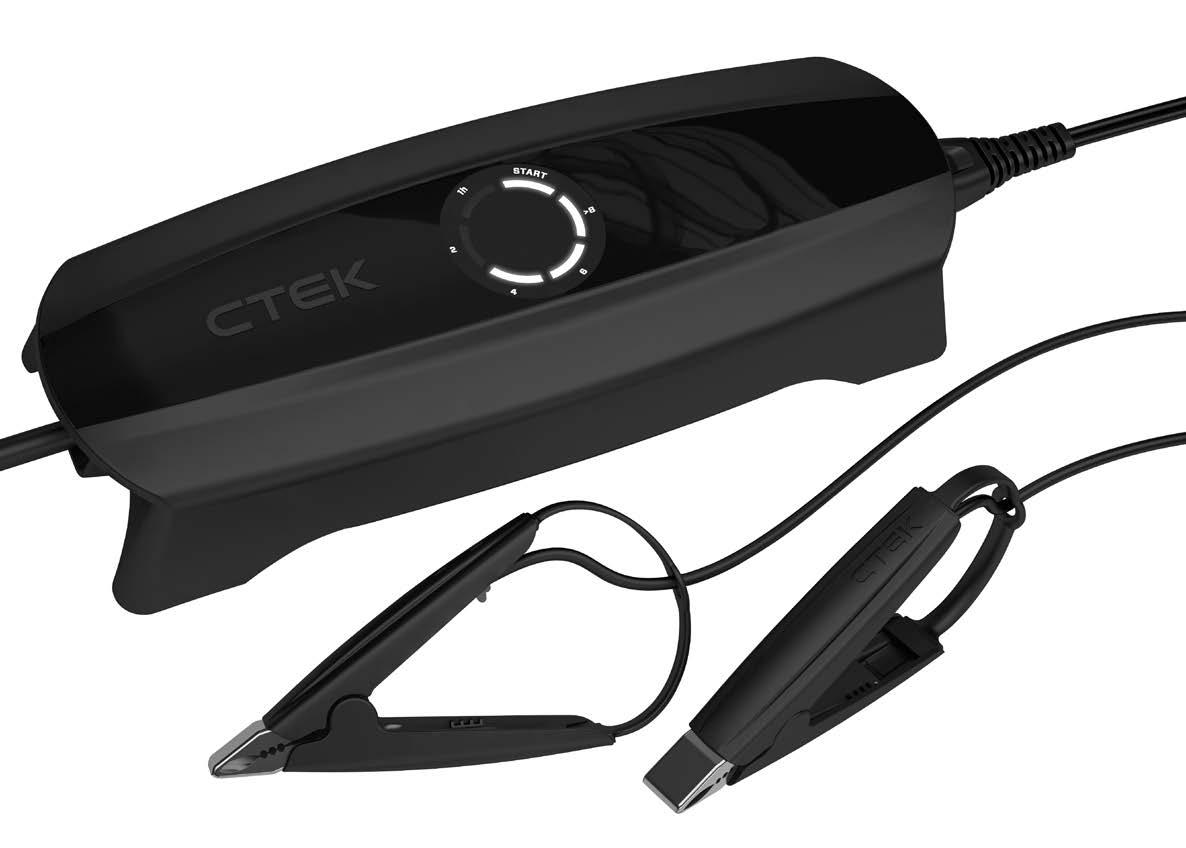
GET THE GEAR
40 / / SPRING 2023
Car/bike cleaning
High-tech, low-fuss ways to keep your car or bike squeaky clean
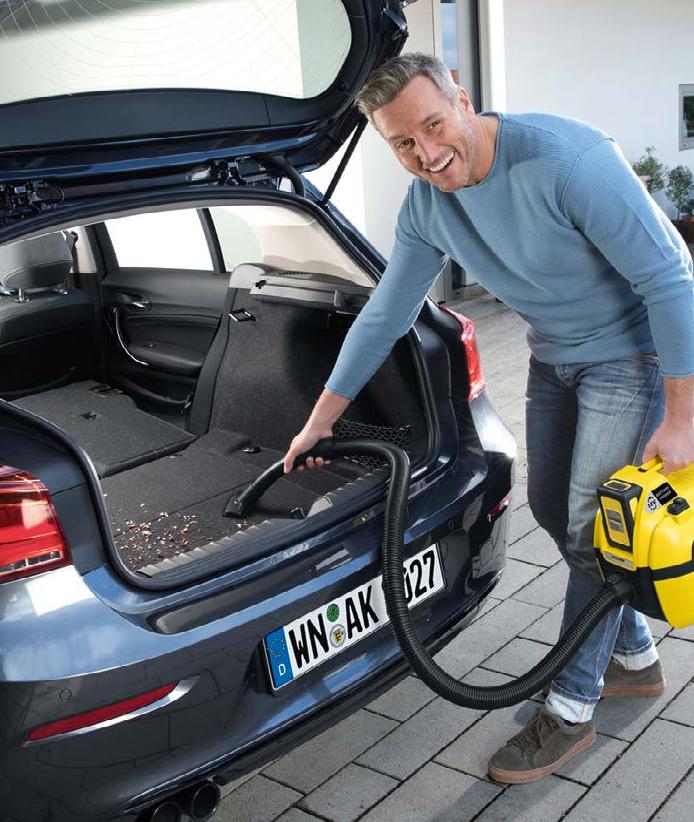
SONAX XTREME CERAMIC SPRAY COATING
Si-Carbon technology creates an instant ceramic barrier – giving you a slick, highgloss surface that’s protected from dirt, road salt, tree sap, bird mess and other grime. It also refreshes existing sealants and coatings. £21.95; www.cleanyourcar.co.uk
BILT HAMBER WHEEL CLEANER
The absolute best wheel cleaner bar-none, according to many online reviews. Simply spray on, let the nonacid, non-alkaline solution work its magic, then rinse o . In most cases there’s no need to scrub, although a quick once-over with a wheel brush won’t hurt. From £14.95 for one litre; www.bilthamber.com

KAERCHER WD1 BATTERY

With its 1.2-metre flexi hose, crevice tool, upholstery nozzle and cordless portability, this is an ideal vacuum for car-cleaning duty. It has wet and dry capability, plus a blower mode to blast dirt and dust out of the most inaccessible gaps.

£69.99; www.kaercher.com
MJJC FOAM CANNON PRO

A snow foam lance with new tech to create thicker foam with less soap, even with smaller pressure washers. A quick-connect system makes life easier, although make sure you choose the correct fitment for your pressure washer.
£42.95; www.mycarcleaning.co.uk
CHEMICAL GUYS MAXI SUDS II

Snow foam is a car-cleaning essential – spray a thick blanket on to loosen dirt, pressure-wash it o , then finish with a soapy microfibre mitt. This one features a gentle, non-toxic and biodegradable formula which won’t remove existing wax or sealant. From £9.95; www.chemicalguys.co.uk

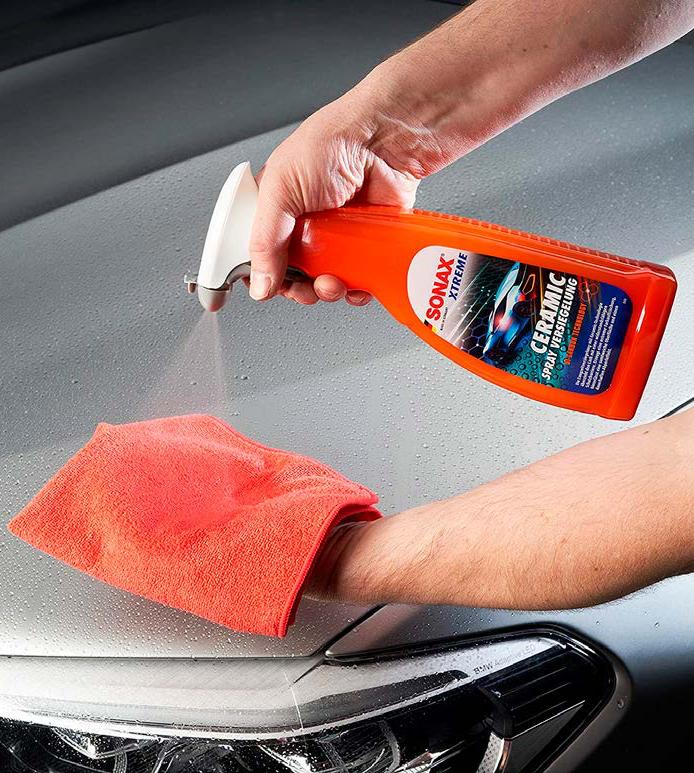
ON THE ROAD
GET THE GEAR
/ SPRING 2023 / 41
Skills top-up
Stay sharp with these apps, books and brain games




DRIVER BRAIN TRAINING
An online brain-training tool with modules designed for drivers and riders that features games and exercises to improve spatial perception, processing, planning, reaction times, coordination and concentration.


Programmes are tailored for di erent ages and abilities so the whole family can play and benefit.
From £9.99 a month; www.cogni t.com
THEORY TEST REVOLUTION APPS
Although not an o cial DVSA product, this is a suite of free apps of approved DVSA revision materials, including a licensed digital version of The Highway Code. Ideal for all manner of vehicle theory tests – useful for studying or just swotting up. Search App Store or Google Play for ‘Theory Test Revolution’.
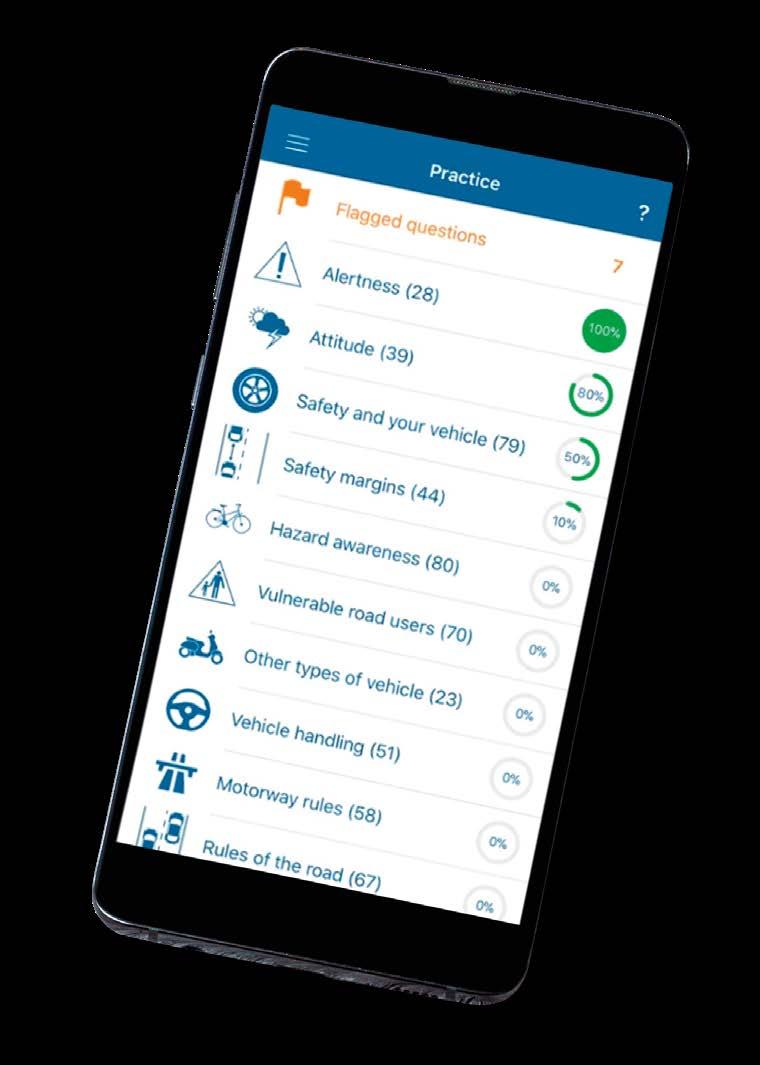
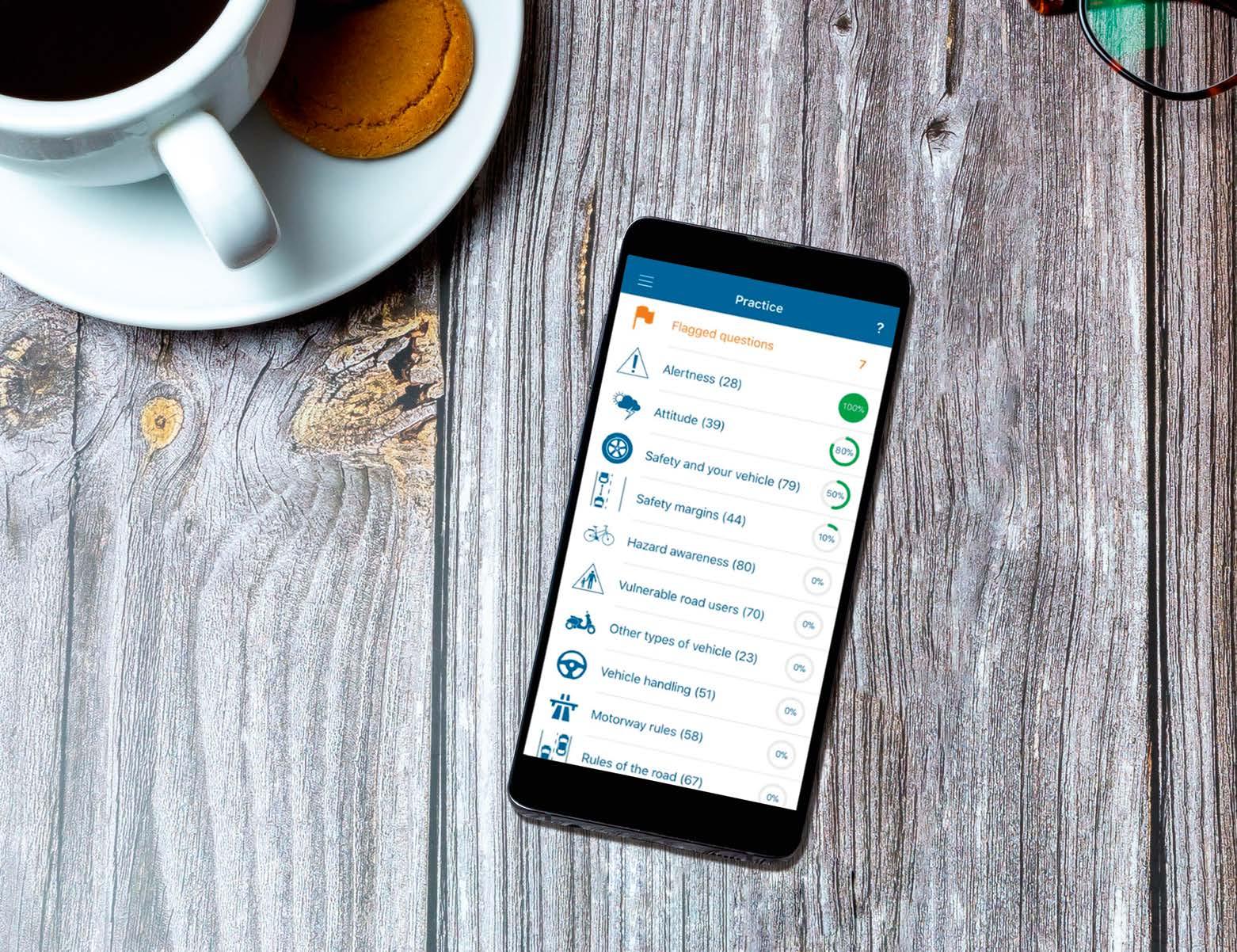
ROADCRAFT
The latest edition of the o cial police driver’s and rider’s handbook is an essential read to become a better and safer road user. £13.99 using IM30 discount code; www.safedrivingforlife.info
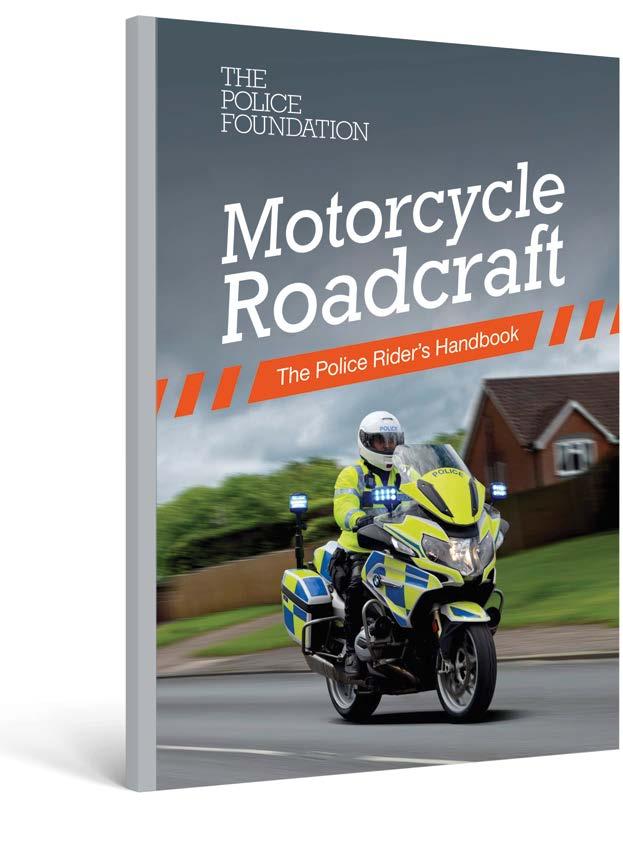
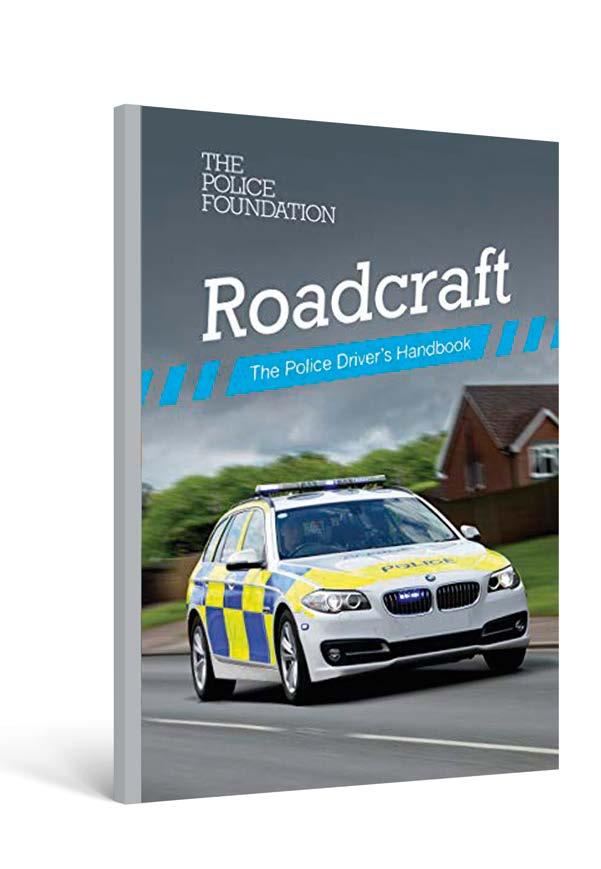
ADVANCED LEARNING
The ultimate gift for IAM RoadSmart members is surely a course to improve specific skills, such as Driving in Towns or Managing Speed. There are courses suitable for gifting to loved ones, too.
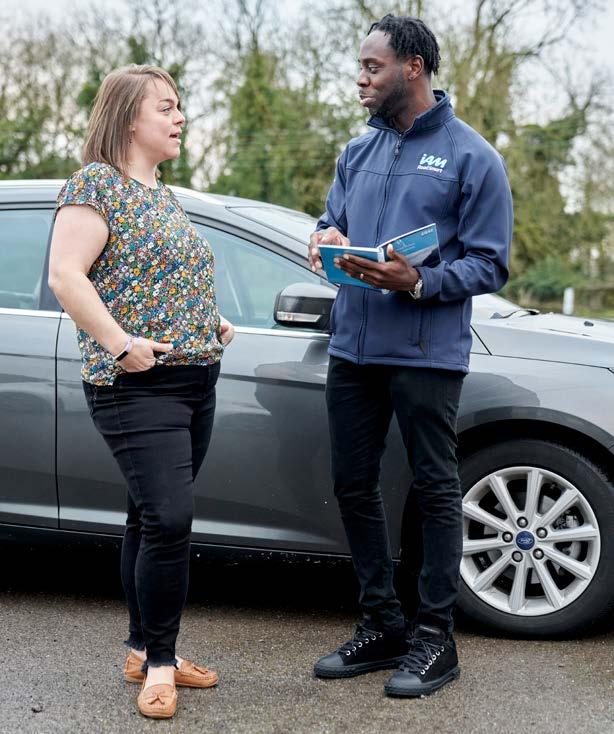
www.iamroadsmart.com/courses

GET THE GEAR
42 / / SPRING 2023
Tech and gadgets
Life-improving, life-saving products for riders and drivers
NEXTBASE 622GW
Nextbase’s flagship dash cam is also an industry benchmark. The 4k, stabilised video quality is almost cinematic with incredibly fine detail, even in low light – great for identifying number plates or other essential information (including precise GPS and WhatThreeWords location).
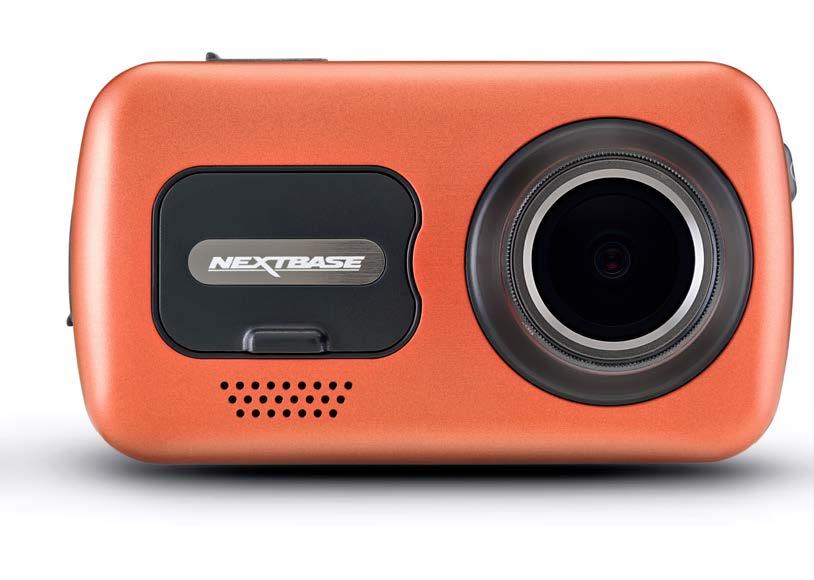
There’s also Alexa voice control, a parking mode to monitor your car when it’s parked, and you can link a second camera for a rear view. £269; www.nextbase.co.uk

NEW APPLE WATCH
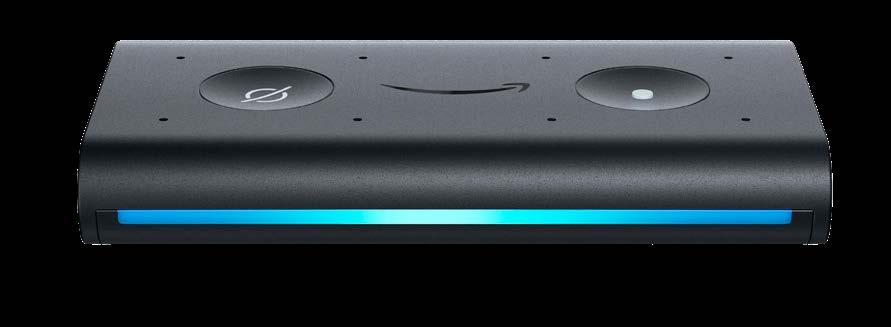
Includes a crash detection feature on all versions including the entry-level SE. If a crash is detected, and if there’s no response from the wearer, the watch dials the emergency services and gives them its location. This is thanks to an inbuilt gyroscope, accelerometer, GPS and an algorithm trained using one million hours of real-world driving data. From £259; www.apple.com

TOMTOM RIDER 550
TomTom’s top-of-the-line motorcycle satnav features live maps and updates, glove mode for easy operation and a range of route-planning magic – you can sync it with TomTom’s online road trip library, and select routes based on twistiness and di culty.
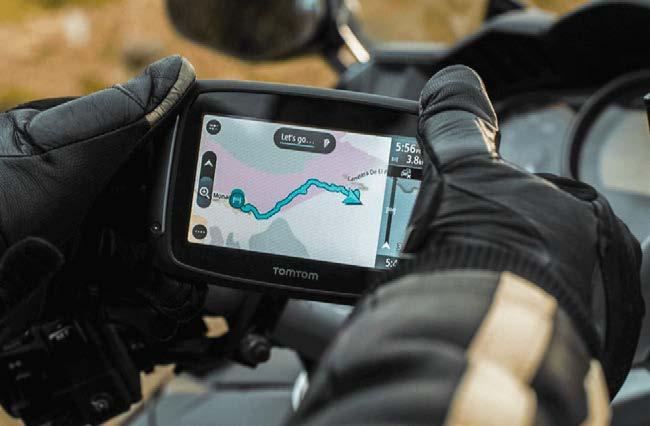
£399; www.tomtom.com
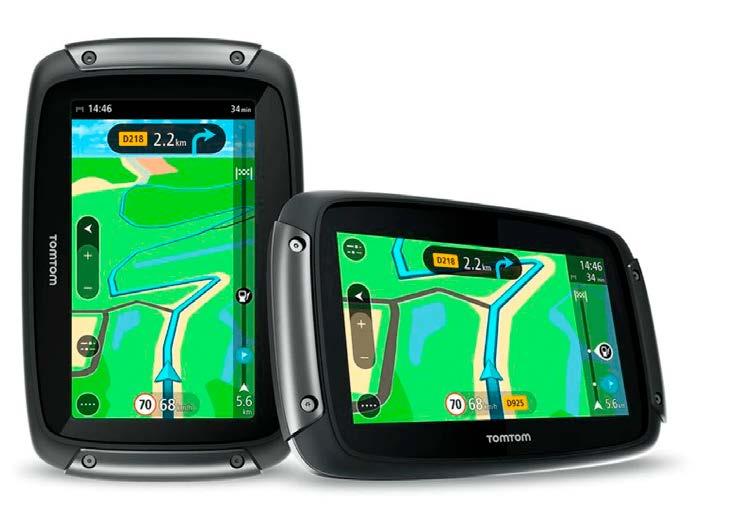
KLIM AI - 1 AIRBAG VEST

A lightweight, slimline airbag vest designed to be worn under a compatible motorcycle jacket. Unlike tethered vests (triggered when bike and rider separate), this one is controlled by an electronic device that monitors the rider 1,000 times a second, using constantly updated algorithms to detect a crash and deploy in 60 milliseconds or less.
£380; www.motolegends.com
EARPEACE MOTO
Earplugs designed for bikers – with filtering tech that reduces wind noise and background din while allowing important sounds through, including horns, sirens and other essential acoustic information. Soft silicone makes them comfortable for long rides too.
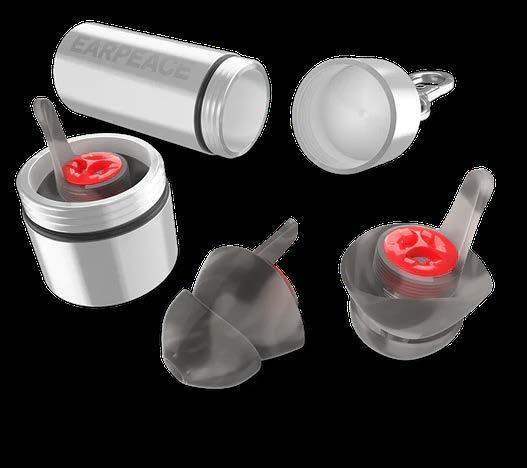
£29.95; www.earpeace.co.uk
AMAZON ECHO AUTO
Connects to your smartphone’s Alexa app and plays through your car’s speakers via auxiliary input or Bluetooth. Ask Alexa to stream music, radio or podcasts, get news and weather, make hands-free calls or add things to your to-do list while you think of them.
£49.99; www.amazon.co.uk
/ SPRING 2023 / 43 ON THE ROAD
GET THE GEAR
Prices correct at time of writing
CLASSIC STYLE, NEW SKILLS
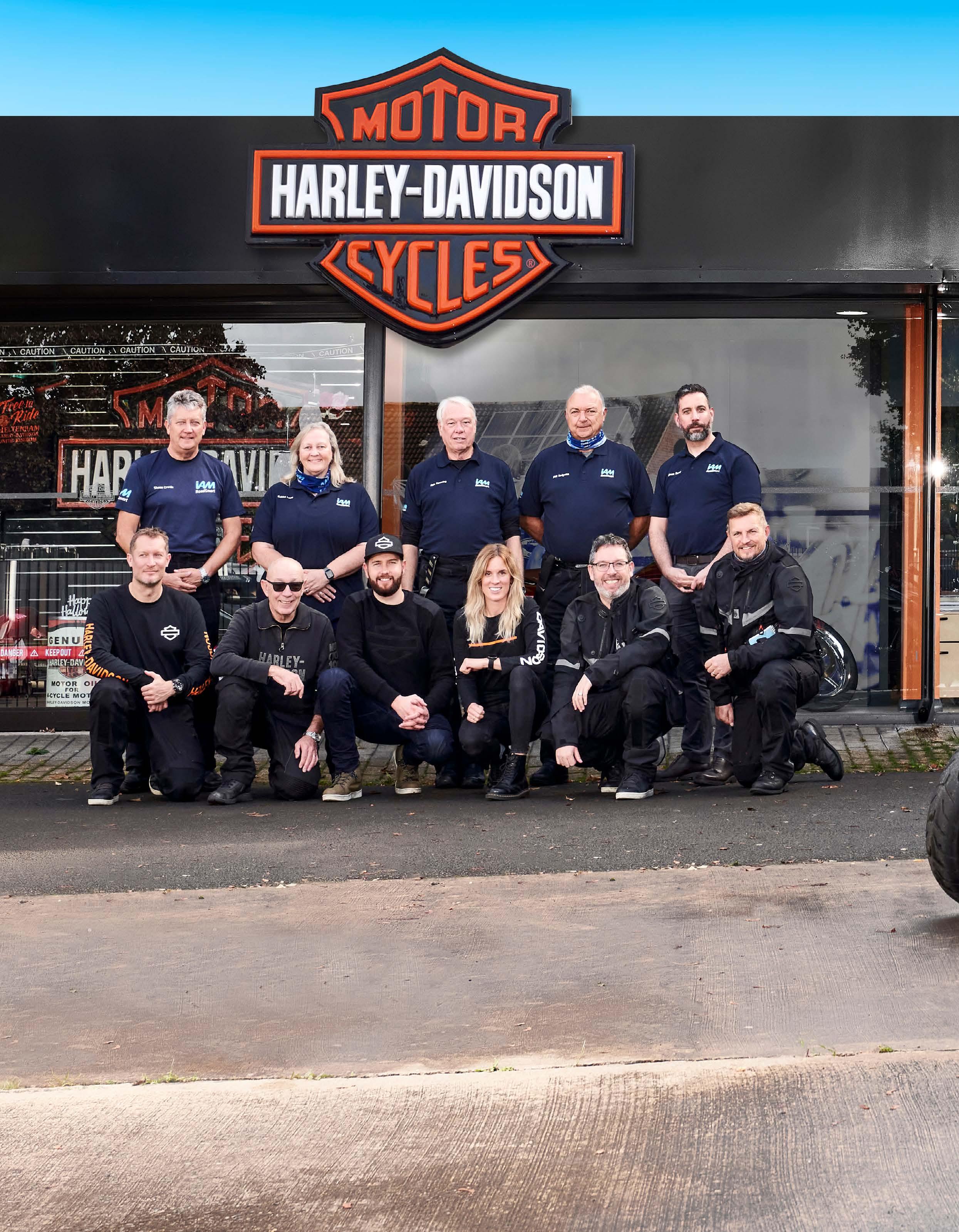
WORDS MATT RIGBY PHOTOGRAPHS
SAYERS 44 / / SPRING 2023
STEVE
The freedom that motorcycling allows is part of the ethos of Harley-Davidson, and it understands that to get the most enjoyment out of your bike, safety needs to be a priority. That’s why members of the iconic brand’s team have been working with IAM RoadSmart to hone their skills on the Advanced Rider Course.

/ SPRING 2023 / 45
The image of Harley-Davidson in the popular imagination is perhaps not the most natural t with the mindset of an IAM RoadSmart member. Due to hackneyed portrayals in the media, we assume this is the ride of Hell’s Angels chapters, the bike of choice for the dude with mirrored sunglasses, a handlebar moustache and little in the way of safety gear except for a stars-and-stripes bandana, and perhaps a leather waistcoat.
Such things are largely the work of ction, of course. Harley-Davidson owners and riders, like any real-world biker (especially those reading this article) are going to be rather more concerned with road safety than the bandana-clad rebels seen on TV and the movies.
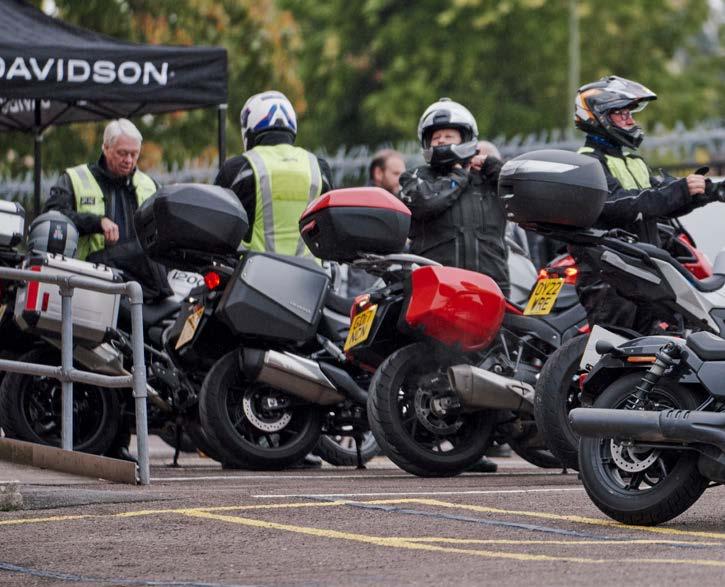
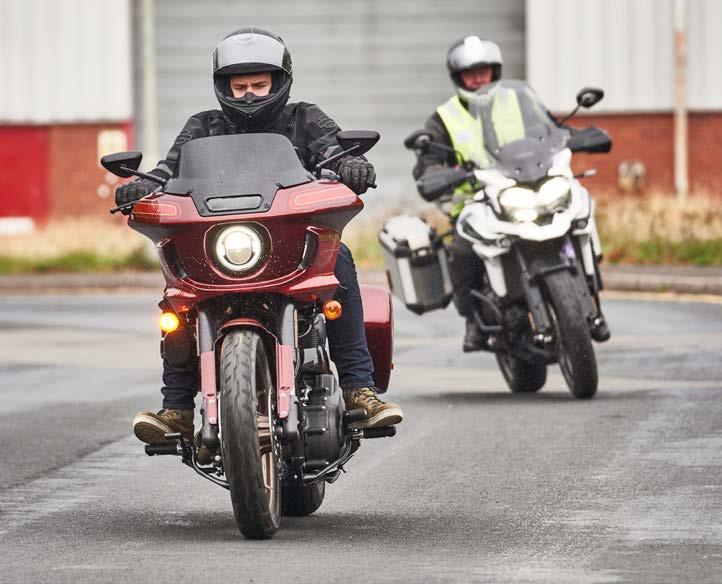
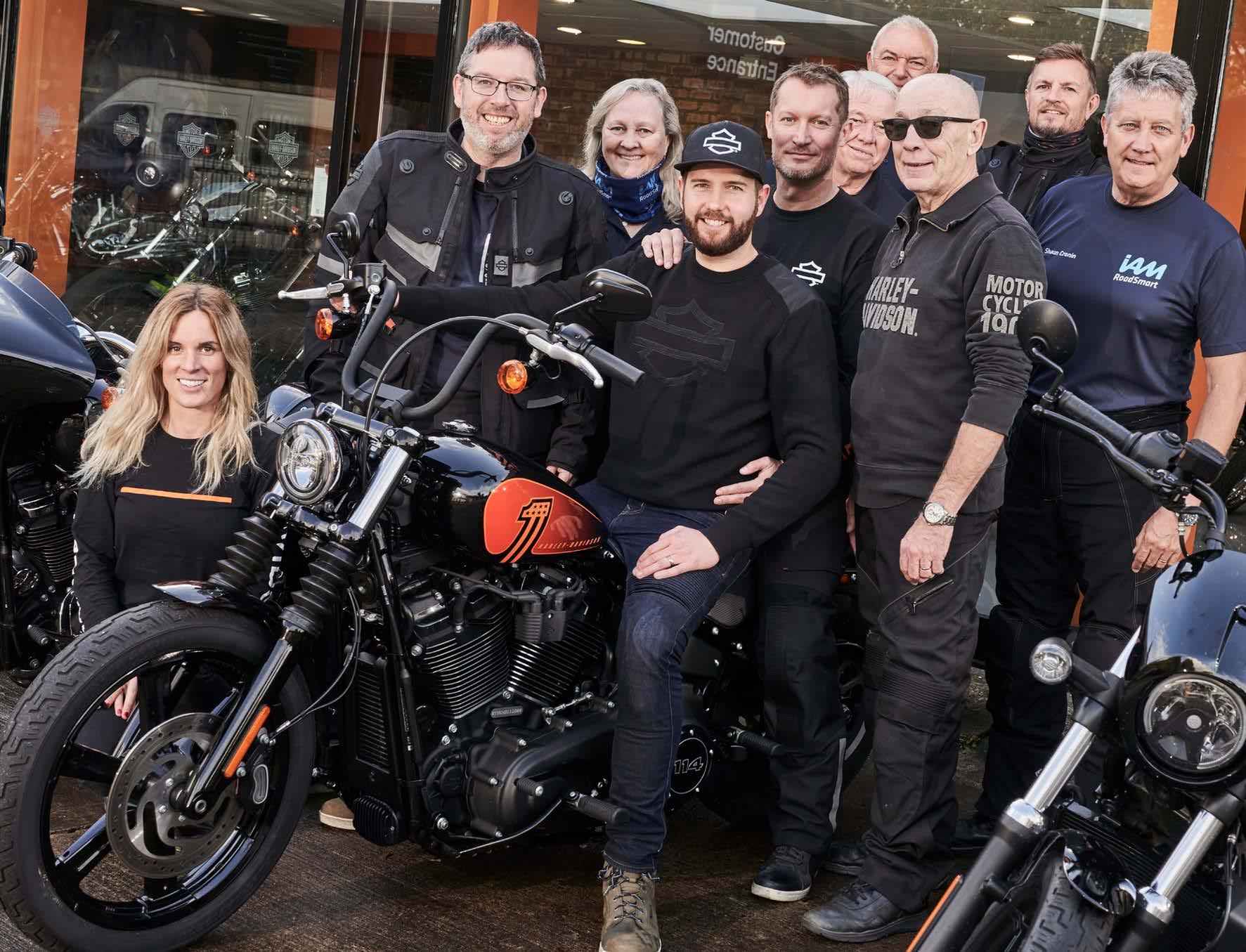
And that’s where IAM RoadSmart comes in. As Shaun Cronin, IAM RoadSmart’s Regional Service Delivery Team Manager for the south of England
says: “It’s not what you ride, it’s how you ride it. If it’s got two wheels and an engine, we can help you ride it better, safer, more skilfully. In fact, I’m always the one who wants to trade the word ‘safe’ for the word ‘skill’. And if you’re more skilful, you will actually enjoy your motorcycling much more.”
Which is how the senior management team for Harley-Davidson in the UK and Ireland have come to be taking on the Advanced Rider Course. Paul Lilly, Sales and Operations Director for HarleyDavidson for Europe, the Middle East and Africa, worked with Shaun and IAM RoadSmart when he was at Triumph to bring in some advanced rider training and now, at Harley, the plan is to do the same thing. He believes that, if his senior team are riding company motorcycles (in both senses of the word), then it’s well worth ensuring the company o ers education and training for it.
“Paul is an IAM member himself,” says Shaun, “so he knew that the Advanced Rider Course was something that he could sort of hang his hat on and say: ‘If we put you through one of those, we know
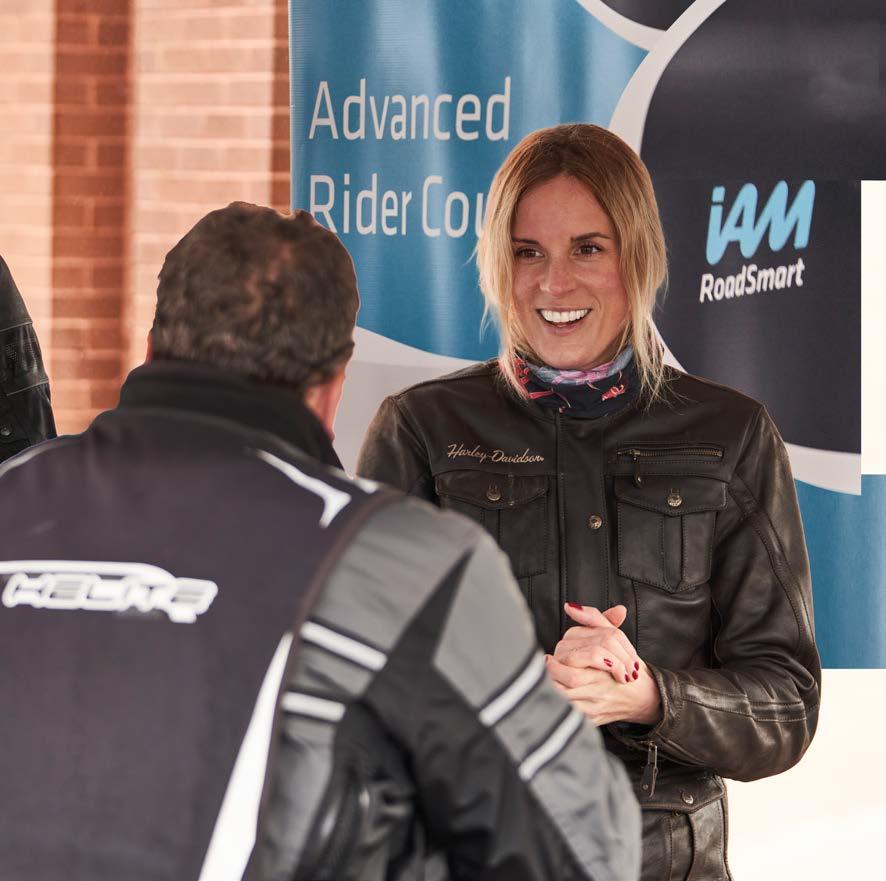
46 / / SPRING 2023
Above The HarleyDavdison team were keen to get the most out of their bikes
you’ve had some training, you’ve had an assessment, and we can be sure that you’re a safe prospect riding our company bikes.’ Especially since some of his team had no formal training beyond their DVSA test.”
ENJOY THE RIDE
But it’s more than just due diligence. is is about senior sta understanding their bikes better – whether it’s performance bikes like the Sportster, classic tourers or adventure bikes like the Pan America –and getting more from them.

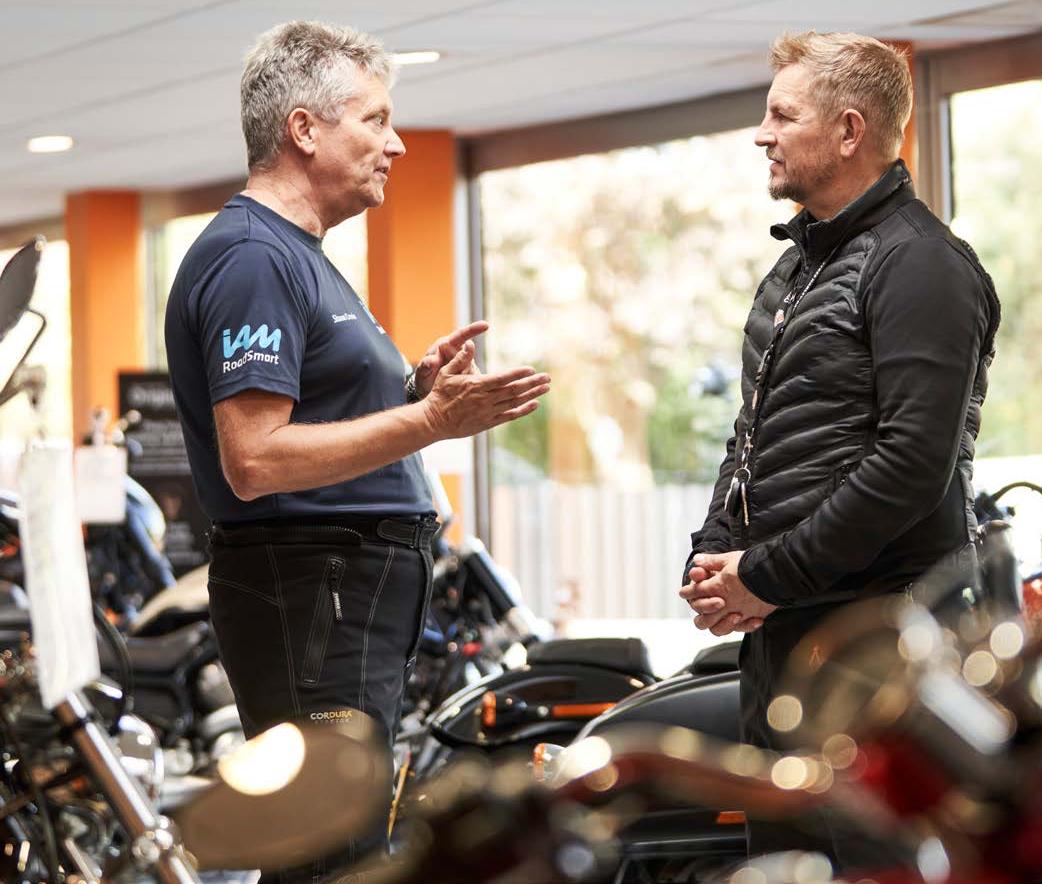
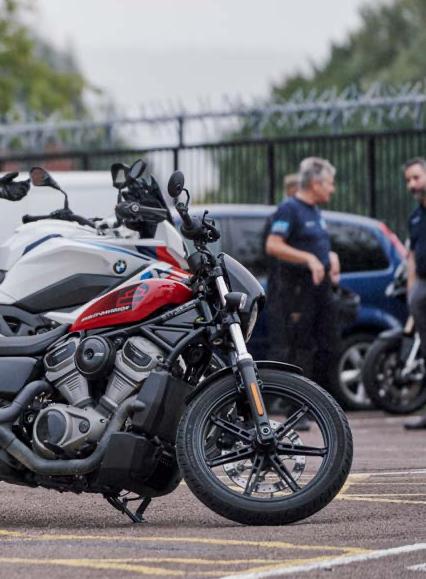

“One of the team came back a er his test, pleased as punch. I asked him how it went and he said: ‘ is course has made me enjoy my motorcycle so much more.’ He’s been a Harley rider and a Harley owner. He’s one of the team, works for the company. I really think that underscores the value of the Advanced Rider Course – if someone that immersed in the biking world can not only come out of it a safer, more educated rider, but a happier one, too, then we’ve done our job right.”
How Harley met IAM RoadSmart

“Myself and a colleague went along to one of the IAM RoadSmart bike Skills Days at Thruxton circuit in Hampshire,” says UK and Ireland marketing manager for HarleyDavidson Steve Kelly. “We both arrived on our personal Harleys and had a really good day, learning about the IPSGA system and getting a taste for it in a track environment.
“People were quite surprised to see us, because you don’t often see riders going around a track on Harleys. But we had really big smiles on our faces and were able to showcase that – just like any other motorcycle out there – Harley-Davidsons will perform on track.
“So we started looking at ways we could work with IAM RoadSmart and we thought: why not take a di erent approach to employee training?
“So for eight weeks we’ve all been able to all head over to our press fleet logistics and warehousing company, pick up some nice shiny, new Harley-Davidsons and go for a ride in and around Gloucester and out across Wales. More than that, we’ve embarked on the journey together. We’ve had a great opportunity to spend time together as a team, working on the training and the development of the IAM course and getting a bit closer to the product.
“But it’s really about education. Anyone and everyone, be it on a motorcycle or in a car, passes their test. And then with that magic pink card is assumed to be safe and competent for the rest of their lives. We wanted to go further.”
Steve saw the benefits that a Skills Day could bring to his team
Classic
new skills
“WANTING TO WORK WITH IAM ROADSMART, WE THOUGHT: WHY NOT TAKE A DIFFERENT APPROACH TO EMPLOYEE TRAINING?”
style,
Of course, this isn’t some special product for executives at bike companies –it’s the exact same Advanced Rider Course that’s available to anyone, a charitable product that you, your neighbour or that friend you met down the pub can sign up for (provided they have a full motorcycle licence rst, mind you).
“ e only di erence between these corporate courses,” says Shaun, “is timing. We make it a seven-week course with a
fortnight between training sessions to t in better with o ce hours. But other than that, it’s exactly the same course that everyone else does – which we think is brilliant, because it’s a recognised quali cation and raises your game as a rider.”
So, if you’re a Harley owner and an IAM RoadSmart member, you can rest assured that the people in charge of the brand are as interested in getting the most from their bike – and most importantly as safely – as you are.

COMING NEXT


Harley-Davidson has a thriving owners club with the Harley Owners Group (HOG), which has almost one million members globally, and 20,000 members in the UK. e plan is to o er HOG members a taste of IAM RoadSmart, with Harleyexclusive IAM RoadSmart Skills Days during 2023.

With thanks to e Cheltenham HarleyDavidson dealership, Andy Cochrane, Amy Sparrow, Peter Dean, Annemieke Steenbergen, Barry Richards, Matt Lee, Steve Kelly, David Macpherson

48 / / SPRING 2023 Classic style, new skills

Trustpilot correct as at 03/01/2023. Terms, conditions & acceptance criteria apply. Cornmarket Insurance Services Ltd is a wholly owned subsidiary of Cornmarket Group Financial Services Ltd. Cornmarket Group Financial Services Ltd is a member of the Irish Life Group Ltd. which is part of the Great-West Lifeco Group of companies. Cornmarket Insurance Services Ltd is authorised and regulated by the Financial Conduct Authority (FCA) registration number 308099. You may check this on the Financial Services Register by visiting the FCA’s website or by contacting the FCA on 0800 111 6768. Cornmarket Insurance Services, registered in Northern Ireland, company number NI030039. Registered Oce: First Floor, Boucher Plaza, 4 – 6 Boucher Road, Belfast, BT12 6HR. 18992 IAM Motorbike Advert 01-23 Insurance due within the next 30 days? Call 028 9044 5066 Car insurance Home insurance Motorbike insurance It’s simple, we believe advanced riders deserve better insurance. Whether you have multiple bikes, need Observer cover, Skills Day cover or are planning a ride in Europe, you can trust us to get cover that’s perfect for you. Specialist Motorbike Insurance for IAM RoadSmart members To ensure you don’t miss out on your chance to win a £100 Cornmarket Insurance voucher register your details at cornmarket.co.uk/iaminsure Trustpilot We reward skilled motorcyclists with tailored motorbike insurance
INSIDER


Edinburgh & District Group
One of the longest-running Groups celebrates its sapphire anniversary
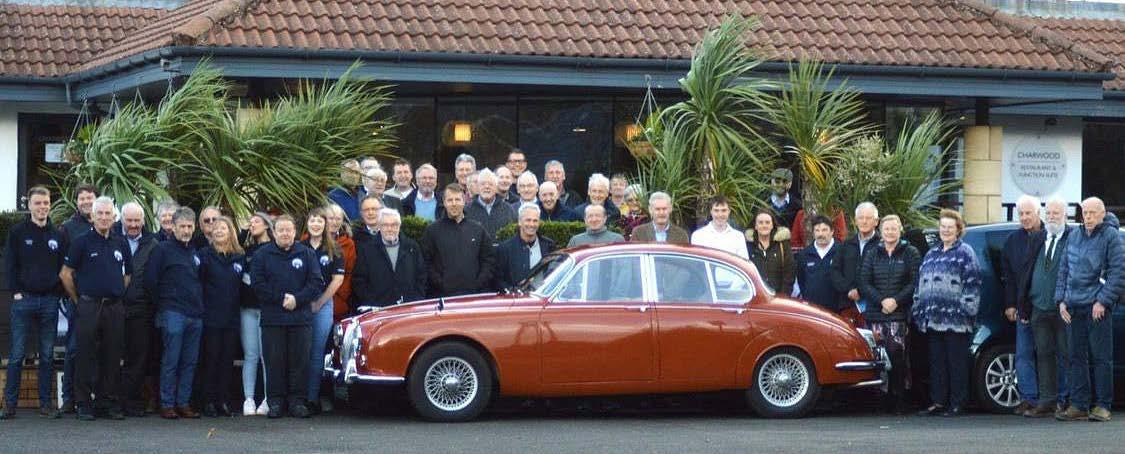
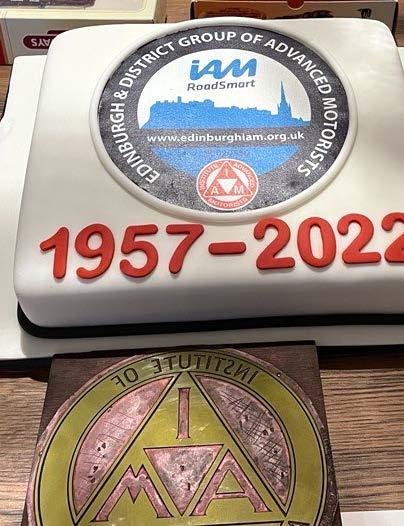

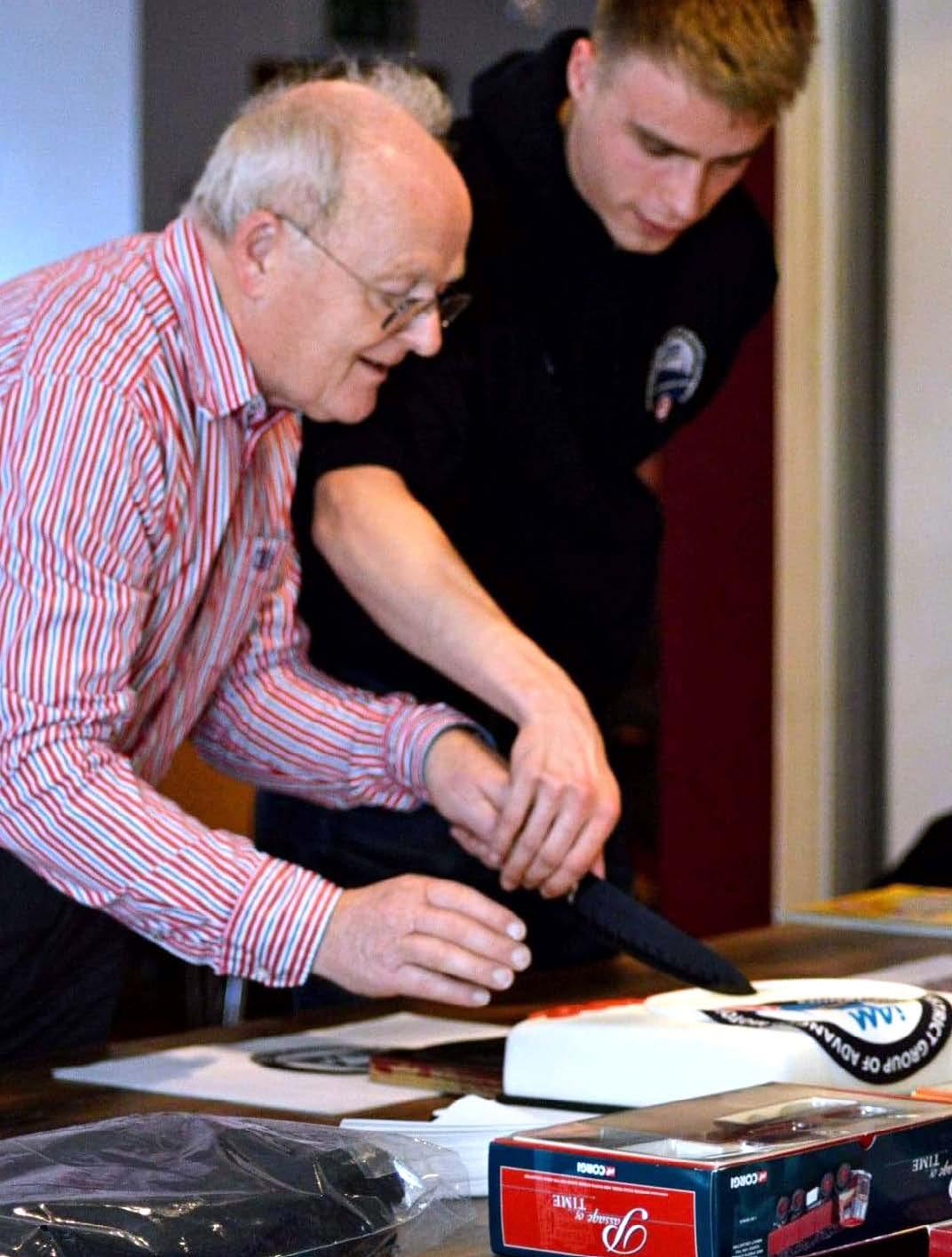 The very latest from IAM RoadSmart
50 / / SPRING 2023
THE EDINBURGH & DISTRICT GROUP formed as the East of Scotland Group on 26th November 1957, with six members and an annual fee of 10 shillings. It was one of the rst Regional Groups, helping to encourage other Groups to form.

By the time the Group changed their name to South East Scotland in 1965 there were 32 Groups in existence around the country. In the same year Jim Clark, the twotime World Championship
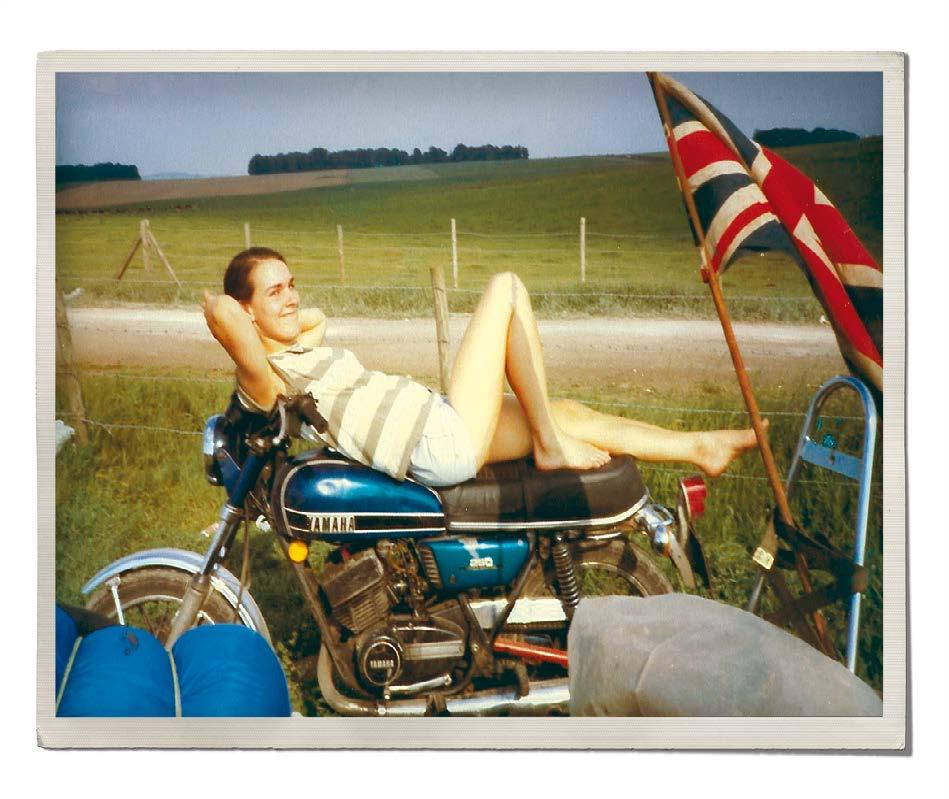

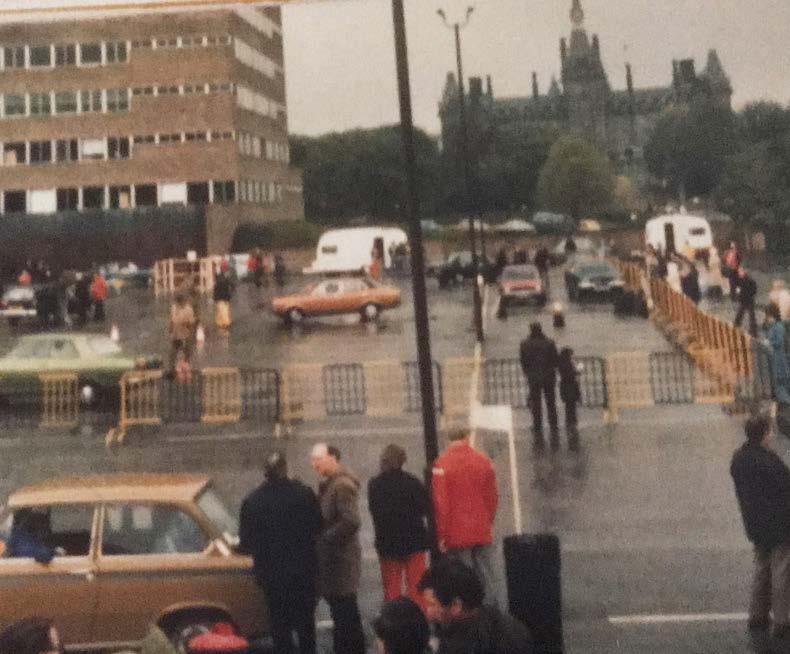
Formula One racing driver, was installed as the Group honorary president. His exploits are documented at an excellent museum in the Borders town of Duns, which is well worth a visit.

e Edinburgh & District Group commemorated their 65th anniversary on 26th November 2022 with a bu et lunch, which was very well attended by members and current Associates. e Group is going from strength to strength and look forward to reaching their 100th anniversary and beyond.
Calling all IAM RoadSmart members and Associates: if you have an event coming up that you would like to see featured here, email us at roadsmart@iam.org.uk
racing sports cars
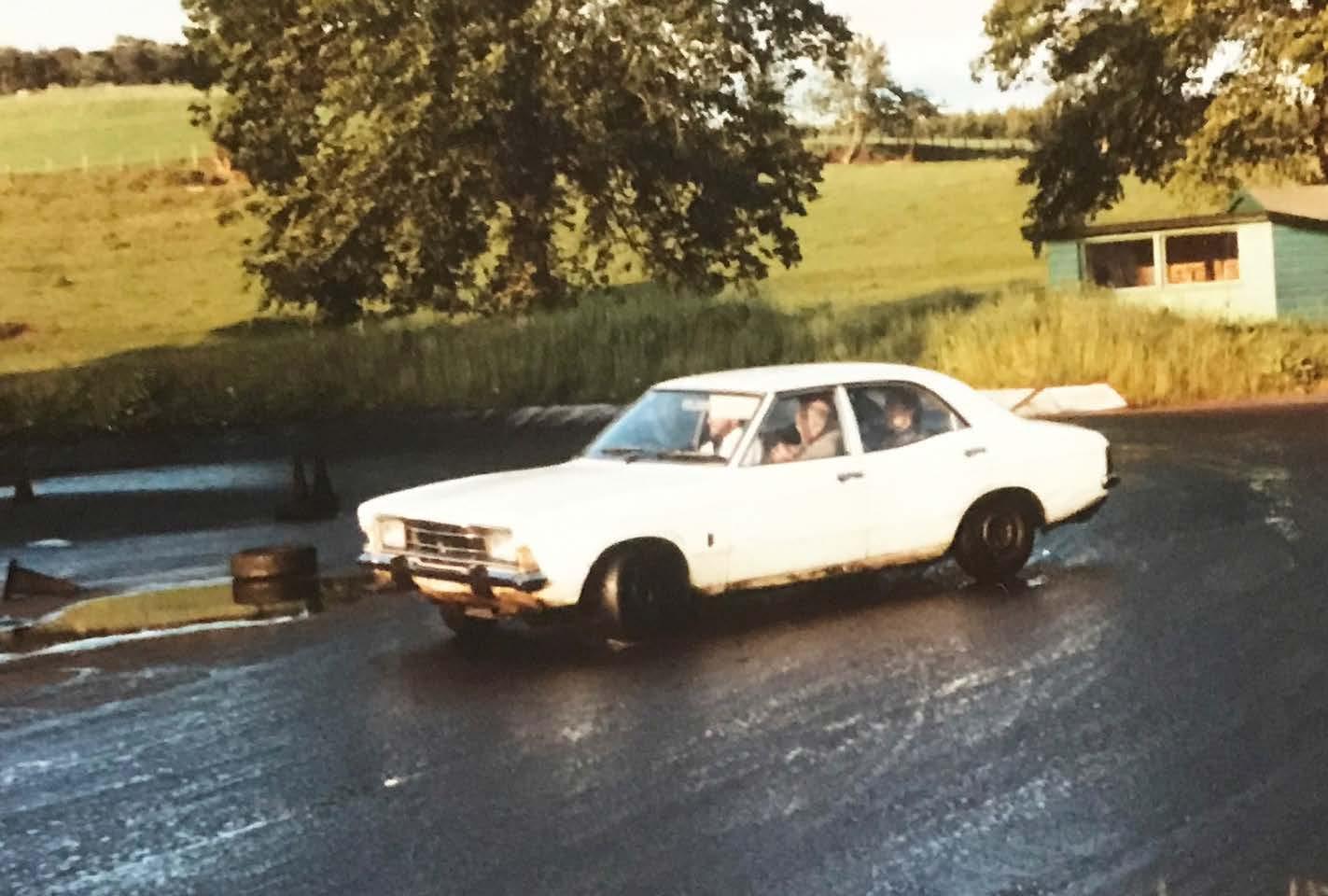
talent
Jim’s thrilling career
impressive national and international wins – he remains the only racing driver in history to win both the Formula One World Championships and Indy 500 in the same year. His untimely death in a Formula Two race at Hockenheim in 1968 was tragic, but did prove to be a catalyst for better driver safety in motorsport – which had positive consequences for road vehicles safety too.


/ SPRING 2023 / 51
JIM CLARK was a Scottish farmer’s son who drove a tractor as soon as his feet could reach the pedals. is led to a
for
and
of
WARMER INWINTER
“Thereis no doubt thatthe conservatory is much warmer than previously, and no, the roomisnot darker either!”

David Birch, Chichester
NO MOULD OR CONDENSATION
“This is thebestthingwe have doneinthis house. Usedto run with condensation and nowzero.”
Karen Thomas, Chippenham
COOLER IN SUMMER
“You could have fried anegg on thetableinthere in the summer, I now lookuponthe conservatory asanewroom. It is quiet,restfulandcosy.”
CarolDoyle, Surrey
REDUCES ENERGY BILLS
“I’ve alreadyturned the underfloor heating down. Lovely jobguys, thank you!”
Anne Bird, Bristol
QUIETER IN
WEATHER
Mr&Mrs Bailey-Webb, Warsash
10years we donothave toclose thedoor to theconservatorywhenit rains or
itdifficult toheartheTV.”
BAD
“Forthefirsttimein
find
C O N S E R V A T O R Y R O O F S Getapricefor your conservatory roof Enjoy your conservatory all year round with insulated roof panels greenspaceconservatories.co.uk 0800 08 03202 2 FREE PANELS quote ref ROAD0223 “What a difference a day makes and yes, that’s all ittook to install.”
Terms and Conditions apply. Green Space UK, Unit 8 BH24 1PD, Registered No. 8542786, as shown on FCA authorisation, trading as Green Space UK, is a credit broker and is authorised and regulated by the Financial Conduct Authority. Applies to orders of 8 panels or more. Valid until the end of April 23. Not to be used in conjunction with any other marketing offer 8k HAPPY CLIENTS CALL FREE ON
Mr&MrsBarber,Wells
Antony Kildare
Spring rolls around once again and with it, the world tends to look forward. And in this issue we’re looking forward, too, at the future plans for Euro NCAP’s vehicle safety programme, as well as a possible fuel of the future – hydrogen. Back in November, vehicle safety assessors Euro NCAP – which, via our membership of the FIA, IAM RoadSmart are a part of –revealed their roadmap to safer cars and roads over the next decade.
Called the Euro NCAP Vision 2030, this plan sets out Euro NCAP’s aims for creating safer vehicles over the coming years. It focuses on new testing and safety development that reflects the diversity of European society, whether in age, gender or ethnicity.
This will play a vital part in the safety and crash performance of new cars for the foreseeable future and for us at IAM RoadSmart the commitment to use a wider range of crash test dummies is the key new development. With an ageing population, it is more important than ever that safety systems are designed to protect all ages, genders, shapes and sizes in the event of a serious collision – whether that’s as a driver, a passenger or a pedestrian.
New passive safety systems (safety technology only used in the event of a crash, such as airbags or seatbelts) are constantly being developed and the Euro NCAP scoring system is helping to bring them to market as quickly as possible. With Vision 2030, one system we are particularly pleased to see is pedal confusion detection – systems which won’t let the driver apply excessive pressure to the accelerator if the autonomous braking system detects pedestrians
DID YOU KNOW?
Before crash test dummies, car companies used human cadavers, animals and even live volunteers. Then in 1949, Alderson Research Labs and Sierra Engineering in the USA created the first crash test dummy, Sierra Sam, to develop aircraft ejection seats, aviation helmets and pilot restraints.

or other objects very close by. This is an issue particularly associated with older drivers and can be quite dangerous in places such as busy car parks.
You can read about Euro NCAP’s future plans in our news piece on page 8.
Our Great Debate feature (page 12) is all about whether or not the hydrogen fuel cell will have a part to play in the future of sustainable road transport. There are certainly some advantages to the technology, particularly for the haulage industry, for whom battery-electric technology may not be a truly workable option. But what about for private motorists? Well, IAM RoadSmart always welcomes choice for motoring consumers, and the development of hydrogen technology offers the prospect of a viable alternative for drivers who may not see batteryelectric cars as the best option for them. After all, a hydrogen fuel-cell vehicle still uses an electric motor –so there are zero tailpipe emissions – and it sidesteps some of the drawbacks associated with batteries, which are slow to charge and can be heavy. However, for hydrogen fuel-cell cars to work as practical private transport, the vehicles themselves will have to be as safe as current models, meet exacting crash standards and deliver long-term viability for their owners.
The distribution system will also have to be 100% safe, the process to do so a simple one, and the cost to fill a vehicle transparent and easily comparable with other forms of propulsion. At the moment, none of that is a given.
As well as looking to the future, we’re also looking to the present to find out what you think about IAM RoadSmart and how we can make the organisation the best it can be. That’s why we’ve commissioned our biggest-ever membership survey – and you can see some of the results on page 55.

/ SPRING 2023 / 53 INSIDER
ILLUSTRATION DAVID MAHONEY
“ALL AGES, GENDERS, SHAPES AND SIZES NEED TO BE CONSIDERED WHEN DESIGNING SAFETY SYSTEMS – WHETHER IT’S FOR A DRIVER, PASSENGER OR PEDESTRIAN”
“Safety systems should be designed to protect all of us” says IAM RoadSmart’s CEO
VIEWPOINT
Power



is the easiest pressure washer you’ve ever used & it’s completely portable! Ready to use in an instant without the usual hassle of running a hose & plugging in a power cable. Do all the jobs you’d expect with this powerful pressure washer. Clean the caravan, motorhome, car, decking area or patio, wash off the outdoor furniture or the windows. Power Clean gives you controllable power in the easiest pressure washer ever. Use Power Clean wherever you want!




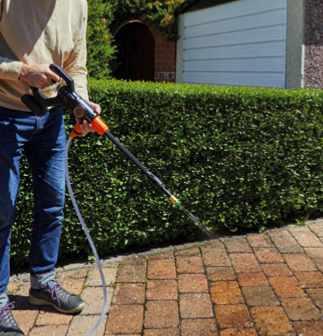
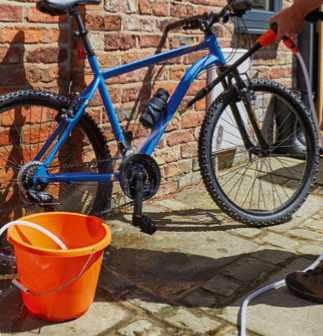
No tap - no power - no problem
Power Clean can use water from a tap as well as from any other source you choose - a bowl or bucket, a swimming pool or even a river. Power Clean has up to ten times the power of a regular garden hose and an impressive running-time of up to 60 minutes* from a single charge. Power Clean comes ready to use with a detachable 2.0Ah or 4.0Ah Li-ion rechargeable battery pack and all the handy accessories you’ll ever need. Now you really can use a pressure washer anywhere you want - even

Cordless High-Pressure Cleaning Power Clean comes complete with: 2.0Ah Li-ion rechargeable battery or *4.0Ah Li-ion rechargeable battery for increased power & longer run time. Battery charger, 2 Pressure Wands, Soap Gun, 6m hose & Filter, 2 Variable Spray Heads. Weighs only 1.6kg. P20 pressure up to 320psi. P40 Max pressure up to 650psi. 12 Month Warranty. Ideal for cars, motorhomes, caravans Cars, BBQ’s, bicycles, motorbikes Windows, decking areas, outdoor furniture NEW Cordless Pressure Washer Power Clean P20 2.0Ah Battery. Pressure up to 320psi £109.99 RRP £159.99 - SAVE £50 Power Clean P40 MAX 4.0Ah Battery. Pressure up to 650psi RRP £209.99 - SAVE £50 £159.99 Works from a Tap or a Bucket *** Don’t miss out - Save £50 - Exclusively for IAM Roadsmart Members only *** FREE NEXT DAY DELIVERY Use offer code 3& to receive this offer Call 0330 102 5578 Online: aguriworld.co.uk SAVE £50 Quote code: 3& SEE IT IN ACTION ONLINE Free next working day delivery available for orders placed before 2pm Mon-Fri subject to availability. For full terms and conditions please visit www.aguriworld.co.uk
portable pressure washing
Fully
Clean
LQ WKH PLGGOH
DHOG Save £50 Exclusively for IAM Roadsmart Members
RI
IAM ROADSMART NEWS
The latest updates, initiatives and information from IAM RoadSmart
ARE YOU A RIDER OR A DRIVER?


HOW LONG HAVE YOU BEEN A MEMBER OF IAM ROADSMART?

IAM RoadSmart: the survey

THIS YEAR, for the rst time, we’ve run a comprehensive membership satisfaction survey, as we wanted to nd out more about you, so we can focus our e orts on making IAM RoadSmart membership the best it can be. For everyone.
So what have we learned? Well, we know that many IAM RoadSmart
members stick around – more than a third of you have been part of the organisation for more than two decades. You’re also passionate about road safety and education: wanting to improve your driving skills was the most common reason for signing up to IAM RoadSmart and expanding your driving and riding
A warm welcome to new trustees
OUR TRUSTEES are vital to making IAM RoadSmart a success, volunteering their knowledge from key industries. And in 2023 we welcome two new trustees: Victoria Milford and Tom Kelman.
Victoria’s expertise lies in bene ts and, as founder of Reward Heads, has worked with brands such as Dixons Carphone and Autoglass.

knowledge is what you value most about your membership.

ere are some things we could be doing better, though: just over 50% of you would like to see better value on the existing bene ts and products that form part of the membership package. And if you haven’t renewed your membership it’s because you don’t see enough bene t in being a member.

“I was 17 when I passed my driving test and have had no ‘top up’ training since,” she says. “ at is the rst thing I am looking forward to personally improving through IAM RoadSmart.”
Tom, meanwhile, was our interim nance director and is a professional chartered accountant who has specialised in working with not-forpro t charitable organisations (such as IAM RoadSmart) since 2005.
Welcome both!

/ SPRING 2023 / 55 INSIDER
BOTH A D R I REV 59.97% OTHER 5.62%
YEARS % 40 30 35 25 20 15 10 5 21-50 11-20 6-10 2-5 50+ 1-2 1 LESS THAN
The top five road trips in the UK, brought to you by the RAC
From rugged mountains to picturesque beaches, the UK has an endless supply of stunning scenery that’s just calling out to be explored by car.
If you’re planning a road trip this year, the RAC has put together five superb routes that take in some of the UK’s best scenery and attractions. Want peace of mind while you’re out and about? Read on for a great offer on RAC breakdown cover, exclusively for IAM RoadSmart members.


5 YORKSHIRE, NORTH YORK MOORS

With dense forests, meandering streams and vast swathes of heather moorland, the North York Moors National Park makes for a spectacular road trip. Although the journey from the market town of Helmsley to the seaside
village of Staithes is short and sweet, stretch it out over two days if you fancy an overnight stay in a B&B. Pass mosscovered drystone walls and grazing sheep as you take the A170 towards Pickering and Thornton-le-Dale. Then take the A169 for a scenic journey up to the coast through Goathland and Grosmont.
4 WALES, THE DRAGON’S SPINE
One of the best ways to see Wales is by driving coast to coast. The A470 runs all the way from Cardiff in the south to Conwy in the north, taking in two national parks. Start in the Welsh capital, then head up through the South Wales
Scotland’s North Coast 500 is an epic route that’s a worthy number one on our list
Helmsley Castle, Yorkshire
Coalfield to the Brecon Beacons. As you reach the heartland of Wales, you’ll pass the gorgeous Llyn Clywedog reservoir and market town of Dolgellau, before heading over the majestic northern mountains of Snowdonia to Conwy.

3 PEAK DISTRICT, PEAKS AND PASSES
Next up on our list is this tour through one of the country’s most beloved national parks, the Peak District. Start in Glossop, east of Greater Manchester, and head into the Pennines along the famous Snake Pass, one of the UK’s great mountain passes, hitting a high point of 510m above sea level. From there, head further south towards the reservoirs around the popular Derwent Dam that offer great trekking opportunities. A short detour to the west will take you to the Blue John Cavern, an underground network of caves which offers guided tours – ideal if you feel like an alternative to hill walking on your way ever southwards.

2 NORTHERN IRELAND, CAUSEWAY COASTAL ROUTE

Hugging the Atlantic coast, this jaw-dropping route from Belfast to Derry is steeped in myth and legend. The route is actually made up of nine scenic drives, so you can break it down into smaller journeys and take your time enjoying the sights. The drive takes you to several of Northern Ireland’s main tourist attractions and landmarks – the Giant’s Causeway itself, Carrick-a-Rede Rope Bridge, Dunluce Castle, Dark Hedges and the Glens of Antrim.
1 SCOTLAND, NORTH COAST 500
Scotland’s answer to Route 66 boasts some of the most spectacular scenery in the UK, if not the world. It showcases the best of the Highlands, with ancient castles, windswept beaches and historic landmarks lurking around every corner. The official route starts and ends at Inverness Castle and passes through idyllic towns and villages such as Ullapool, Durness, John O’Groats and Dornoch. It’s advisable to book your accommodation in advance as your options are limited.
BREAKDOWN COVER FROM JUST £6 PER MONTH*
RAC is o ering IAM RoadSmart members an exclusive discount on its fantastic breakdown cover, starting from just £6 a month*, which covers you in any car, whether you’re the driver or passenger. RAC patrols fix four out of five breakdowns at the roadside, with repairs done in just 30 minutes on average. So you can get back on the road quickly, giving you complete peace of mind when you’re out and about. To redeem your o er, go to www.rac.co.uk/uk-join/iam or phone 0330 159 0463, quoting the unique IAM o er code: RCAFGEN-LOG.

TERMS AND CONDITIONS: *New, single personal based cover. £6 a month Roadside cover.
 The Giant’s Causeway in Northern Ireland
Llyn Clywedog Reservoir
The Giant’s Causeway in Northern Ireland
Llyn Clywedog Reservoir
YOU
RAC
BENEFITS
Derwent Dam, Peak District
ADVERTORIAL BROUGHT TO
BY
SUPPORT & SAVE WITH
Driving down the costs
Your membership of IAM RoadSmart gives you some exceptional benefits, including deals and discounts across a wide range of products and services. To take advantage of any of the offers on these pages, simply log in to www.iamroadsmart.com and click on ‘My benefits’.
Free app worth £195 with a Maeving RM1 motorcycle

Explore the stunning Norwegian coastline
A voyage along the Norwegian coastline rightly earns its place in the hall of fame of iconic traveller routes. Known as ‘the most beautiful voyage in the world’, this is your chance to sail past more than 1,000 fjords and 100 mountains and visit 34 ports of call along Norway’s stunning coast. Book your original coastal voyage now and enjoy 10% off this magical journey.

10%

Maeving is a British-made electric motorcycle with a removable battery that you can charge from any standard socket. Stylish, clean and efficient, it can be driven with a CBT licence and is the ideal way to get around the city with a range of up to 80 miles. Buy a Maeving RM1 from maeving.com and you’ll receive a free Maeving Track & Secure GPS app. This handy app can help you track your bike, review your recent trips and activate vehicle recovery in the case of theft, and is worth £195.

Save on 2023 holidays with Parkdean Resorts


From caravan holidays to lodge holidays with hot tubs, to glamping pods and safari tents, you’re bound to find the perfect holiday accommodation with Parkdean Resorts. With over 65 parks across the country, you can book online to save an extra 10% on spring, early summer and autumn dates in 2023, with 5% discount during school holidays and bank holidays.
To redeem all these offers log into www.iamroadsmart.com and click ‘My benefits’
£195
BENEFITS
SAVE
SAVE
SAVE
10%
UP TO
15% off Motohut’s range of car accessories
Time to get your car or bike spruced up? Choose from the extensive range of vehicle care products and auto accessories at Motohut and enjoy 15% off when you spend £45 or more. You’ll also benefit from free delivery. From dash cams to a splash of Carnauba Wax spray or a tub of Caravan Wash, you’ll find everything you need to keep your vehicle looking immaculate, both inside and out.
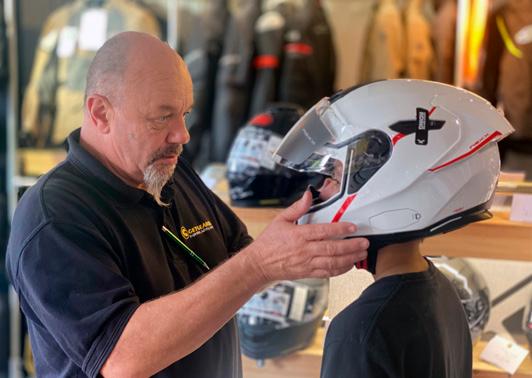

15% exclusive discount on motorcycle kit with GetGeared
With over 20 years’ experience, GetGeared is a trusted online retailer that you can rely on for quality motorcycle gear. Spend a minimum of £135 on its range of products from Europe and Asia’s leading brands, and you can get 15% off, as well as free shipping and finance options. This offer is valid in GetGeared’s Leatherhead store as well as online.
Enjoy discounts of up to 32% on brand-new cars with Motorfinity
Driving away a brand-new car might cost a lot less than you think through Motorfinity Corporate. You can access the best new car deals available coupled with a 5* service rated ‘excellent’ on Trustpilot. Brands on offer include Audi, Ford, Alfa Romeo, Nissan and Skoda. You can guarantee a bespoke 5* service to secure the best deal to suit your personal requirements, as well as a strict no admin fees policy.
RAC breakdown cover from just £6 a month*

RAC patrols fix four out of five cars at the roadside, with repairs done in just 30 minutes on average. So you can get back on the road quickly giving you complete peace of mind when you’re out and about. The RAC is offering IAM RoadSmart members breakdown cover from just £6 month*, which covers you in any car, whether you’re the driver or passenger.
*New, single personal based cover. £6 a month roadside cover.
To redeem all these offers log into www.iamroadsmart.com and click ‘My benefits’
SAVE
15%
FROM
SAVE UP TO
MOTOHUT AUTO ACCESSORIES
SAVE 15%
£6*
32%
HAVE YOUR SAY
SHARE YOUR THOUGHTS ON THE DRIVING AND RIDING ISSUES THAT MATTER
Touchscreens: out of touch
STAR LETTER
Motorway lane discipline
Having read Ask the Experts in the Autumn/Winter 2022 issue of RoadSmart, I was particularly interested in the questions relating to Rule 264 of e Highway Code, requiring drivers to keep to the le /nearside whenever possible. I am a retired police o cer serving 30+ years, 28 of which were as an advanced driver and motorcyclist on tra c duty, including roles in Group Tra c, Motorway Patrol and Accident Investigation, so I can speak with some experience. e standard of motorway driving has deteriorated massively over the years, however, one of the biggest issues is lane discipline. Many drivers ignore Rule 264, thinking ‘If I stay in lane two, three or four, I won’t have to keep weaving in and out.’ If you are travelling at 70mph and passing slower vehicles with continuing momentum, with no vehicles directly behind you, then there is an argument to stay in lane two or three, but when there is a clear distance between slower vehicles drivers must return to lane one. Vehicles o en travel in lanes two, three or four with no one on their nearside. is is an o ence: if there are other vehicles behind you, and even if the motorway is empty, you should travel in lane one for safety reasons.
One last word – e Highway Code is not law but it is used to prove an o ence, along with other evidence.
 Paul G Brooks
e thought of allowing Apple CarPlay access to your control systems and then displaying them along with phone systems sounds like an accident waiting to happen. We already knew about the dangers of mobile phones and it was obvious that touchscreens would only increase the problem. Having been a ying instructor on many di erent aircra types I can say that aviation has been only too aware of the problems of distraction and mental capacity for many years. However, aviation is strictly controlled and regulated, whereas the roads are not. Pass your driving test and you can drive with no further checks. With so many people living on their phones and car manufacturers trying to lure them into buying their products, things can only get worse. Adding the rush for autonomous vehicles into the mix produces a perfect storm.
 Colin Froude
Membership memories
Below In-car touchscreens are likely to distract, not assist
I will always remember 15th November 1971 as it was this day that I took my IAM test in Chelmsford, Essex, and also the day a er my 21st birthday. But why did I
60 / / SPRING 2023
WIN £100 Our Star Letter wins a £100 voucher to spend on IAM RoadSmart merchandise and courses
ALAMY Views expressed on the Have Your Say pages are those of individual correspondents and not IAM RoadSmart. IAM RoadSmart reserves the right to edit letters for length and clarity. GETTY
IN BRIEF
Emergency urgency
There is a dire need to educate drivers on how to act when approached by an emergency vehicle. I am staggered by the number of drivers who stop, resulting in the road being blocked. I saw two cars stop on a bend in opposing directions, resulting in an ambulance having its onward path obstructed. I would like to hear from emergency service drivers about this issue.
Andrew Napier
decide to take the test? Well, I passed my driving test when I was 18 and during the next few years drove my father’s Ford Pop, then I owned an A40 Farina and a 1200cc Triumph Herald.

I really enjoyed driving and clocked up many miles going around the roads of Essex. It was during my early years of driving that Essex Police were o ering ‘better driving’ courses in an e ort to increase road safety. I signed myself up and avidly absorbed the tips their experienced drivers o ered. e police driver’s manual Roadcra , provided as part of the course, was read from cover to cover. e highlight of the course, though, was an opportunity to use your own car around the skid pan at the police headquarters in Chelmsford; this was the incentive for me to take the course! At that time the IAM mantra was ‘skill with responsibility’, something that applies equally well today, but alas, not everyone on the road exhibits it nowadays.
Five years ago I decided to see if my standards had changed since the early ’70s and completed a Fellowship test, achieving a Pass. Two years ago I had a retest and successfully completed it. Perhaps I will try a Masters course next?
Alan Huntley
Share the tax burden
With the transition to electric vehicles, the government is faced with the challenge of replacing the substantial income it receives from fuel tax (currently over 50p per litre). Options considered have included pay-per-mile and road tolls, but both these
continue to focus taxation on primarily the rural and suburban populations who do not enjoy the option of the subsidised and convenient public transport systems available to urban residents.
e government now has the opportunity to come up with a way to level-up the tax burden currently imposed on motorists but that also bene ts the entire population, and to end the iniquitous system in which those who are obliged to use private transport subsidise those who are not.
Dr Jeremy Field
Self-drive; self-educate?
I was pleased to read CEO Antony Kildare’s comments in the Autumn/ Winter 2022 issue, regarding the likely forming of the Road Safety Investigation Branch which can positively impact the safety of our roads with the introduction of partly self-driving vehicles.
Be safe, be seen Cyclists’ lack of concern for their safety worries me; whilst most wear helmets, too many wear dark clothing. The Highway Code advises wearing reflective accessories, fitting white front and red rear lights etc, but most riders fail to do this. Why are they allowed to contravene the law that is for their own safety? Cyclists have every right to expect other road users to look out for them, yet they are not prepared to comply with a legal requirement to keep them safe.
 Lawrence Walton
Now recently retired from a 30-year airline pilot career, I am very familiar with the use of automation. I have seen systems come, go or evolve, along with the procedures for using such automated systems change as experience-based knowledge increased. To read that Mr Kildare hopes for expertise in human behaviour is reassuring, and I too would endorse this immeasurably important aspect. Within my old profession these so skills were equally as crucial as the more obvious skills required to be a pilot, and were trained and assessed every bit as much.
To this end, I do worry a little.
e introduction of more complicated technology is, I believe, bringing with it a need to ensure robust instruction for end users, possibly even regulated. Automated systems need user knowledge in at least a basic understanding of how they work, and how to recognise a misbehaviour or malfunction and when and how to intervene. I do have concerns for the future of our road use and the potential for road safety to su er initially. I truly hope the authorities get it right.
Chris Sharp
/ SPRING 2023 / 61
GET
IN TOUCH
“THE HIGHLIGHT OF THE COURSE WAS TO USE YOUR OWN CAR AROUND THE SKID PAN AT THE POLICE HEADQUARTERS”
INSIDER
RoadSmart Magazine, 1 Albany Place, Hyde Way, Welwyn Garden City, Hertfordshire AL7 3BT 0300 303 1134 roadsmart@iam.org.uk @IAMRoadSmart IAMRoadSmart
Left One member has happy memories driving around Essex in his Triumph Herald
ALAMY
100% COTTON
CORDUROY TROUSERS
£65 buy 2 for £120 SAVE £10
Strike the right cord in our plush corduroy trousers, available in 13 seasonal colours

A Gentleman’s Classic, our pleated front county cords fit in everywhere from the pub to the paddock. Expertly tailored in the finest quality thick, 8-wale corduroy. Smart, comfortable and very hard wearing – they are made to look great and retain their colour and shape, wash aer wash.
- 100% coon corduroy
- Single pleat with a French bearer fly front
- 2 buoned hip and 2 deep side pockets
- Hidden, expanding comfort waistband allows for 2" of flexibility
- No Quibble Money Back Guarantee**
Waist: 32 34 36 38 40 42 44 46 48 50 52"
Leg: 27 29 31 33"
Colours: Conker, Purple, Moss, Burnt Orange, Navy, To ee, Royal Blue, Emerald, Corn, Burgundy, Sand, Black, Red
Christian is the ‘King of Cords’ in my book. I have been a devotee for a number of years now.”
01273 493 393
LIMITED TIME READERS OFFER
only
Emerald
Conker Purple Moss
Burnt Orange Navy
To ee
Royal Blue
Emerald
Corn Burgundy
Sand Black Red
FREE DELIVERY*
£5 + Free Returns** use code
SAVE
36W7
“Peter
Order Corduroy Trousers MT08
for FREE P&P
Mr P Reeve
Use code 36W7
peterchristian.co.uk
PETER CHRISTIAN Mon-Fri 9am-12pm Sat-Sun 9am-5pm Go Online or Call for a Free Catalogue &h< Ě K Ě Ě Ő D Ě &h< Ě Đ Ő Đ Đ Ě Ő Đ Ő Ő Ě ĚĚ, > Ě � Z Ő E RATED EXCELLENT
Order by post – Cheques payable to Peter Christian. Quote 36W7 with your order and send to: Freepost
ABOUT YOU… IT’S ALL
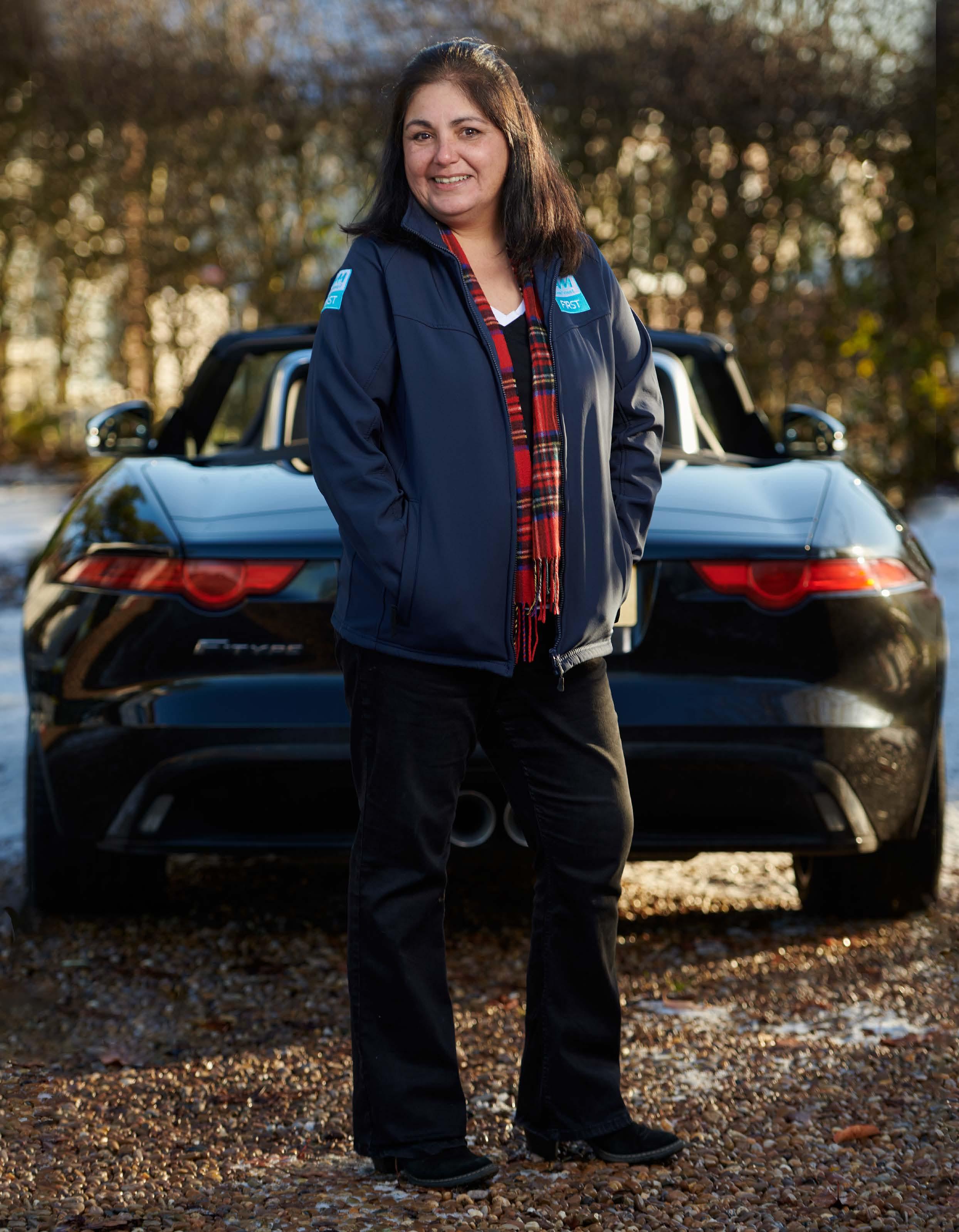
WORDS MATT MASTER PHOTOS MATT POVER & JOBY SESSIONS / SPRING 2023 / 63
Community Focus
Over the decades, the Institute of Advanced Motorists has welcomed a wide variety of members through its doors, providing education and training that continues to prove invaluable for years to come and in all walks of professional and personal life. Fiona Haig joined the IAM in the 1960s, keen to enhance her driving skills to complement a growing passion for long-distance road trips. Today, the retired special needs teacher and social worker describes herself as “an octogenarian who likes problem-solving”, and her recent return to the road makes it easy to see why.
Following a period of ill-health that threatened to prevent her from driving, Fiona felt it was her responsibility to ensure that she was still considered t enough to drive. Her neurologist at Salford Royal pointed her towards the Regional Driving Assessment Centre, part of the Driving Mobility charity established to assist people with disabilities or medical
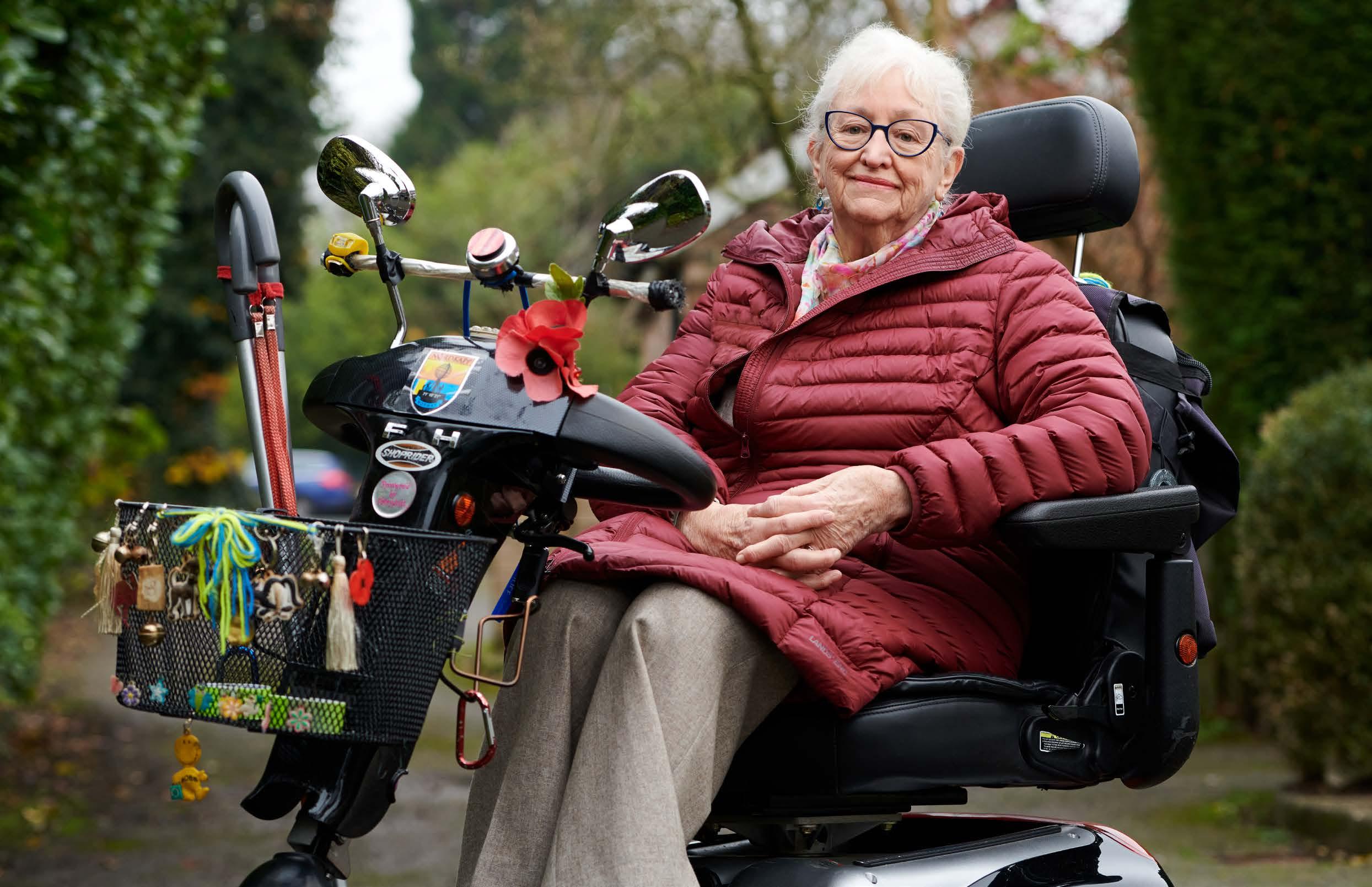
conditions who are looking to regain or maintain their ability to drive. Fiona took and passed a gruelling one-and-a-halfhour test that has helped her to stay behind the wheel and preserve an independence that is so precious to her. “I bit the bullet and put myself forward for the test,” she recalls. “And it knocked decades o me to know that I could manage it.”
Fiona also now uses a mobility scooter for more local excursions, enjoying the continued freedom that o ers and the demands it still makes of her nely honed sense for road safety. “I passed my advanced driving training test over 30 years ago. It was something to explore –a challenge – and a er that I became an Observer for a few years,” Fiona explains. “I’ve always driven for pleasure, enjoying that sense of freedom, and although I’m not able to drive the distances I used to now, I can still escape on the mobility scooter. You’re very vulnerable, but I remember what I was taught all those years ago – to look ahead, look for hazards: car doors opening, people walking out in front of you, dogs on extending leads! Using a scooter daily has sharpened my wits, and it’s a reassurance being able to think back to my advanced training. It’s so adaptable that it still has in uences on both my car and scooter driving.”
A couple of hundred miles south in Somerset, meanwhile, Andy Arnot runs a workshop specialising in the repair and
64 / / SPRING 2023
INSIDER
Fiona found that her advanced training skills can also be used on a mobility scooter
restoration of vintage cars and caravans. e 62-year-old former soldier and sometime motorcycle drag racer came to IAM RoadSmart six years ago with a wealth of motoring experience already under his belt.
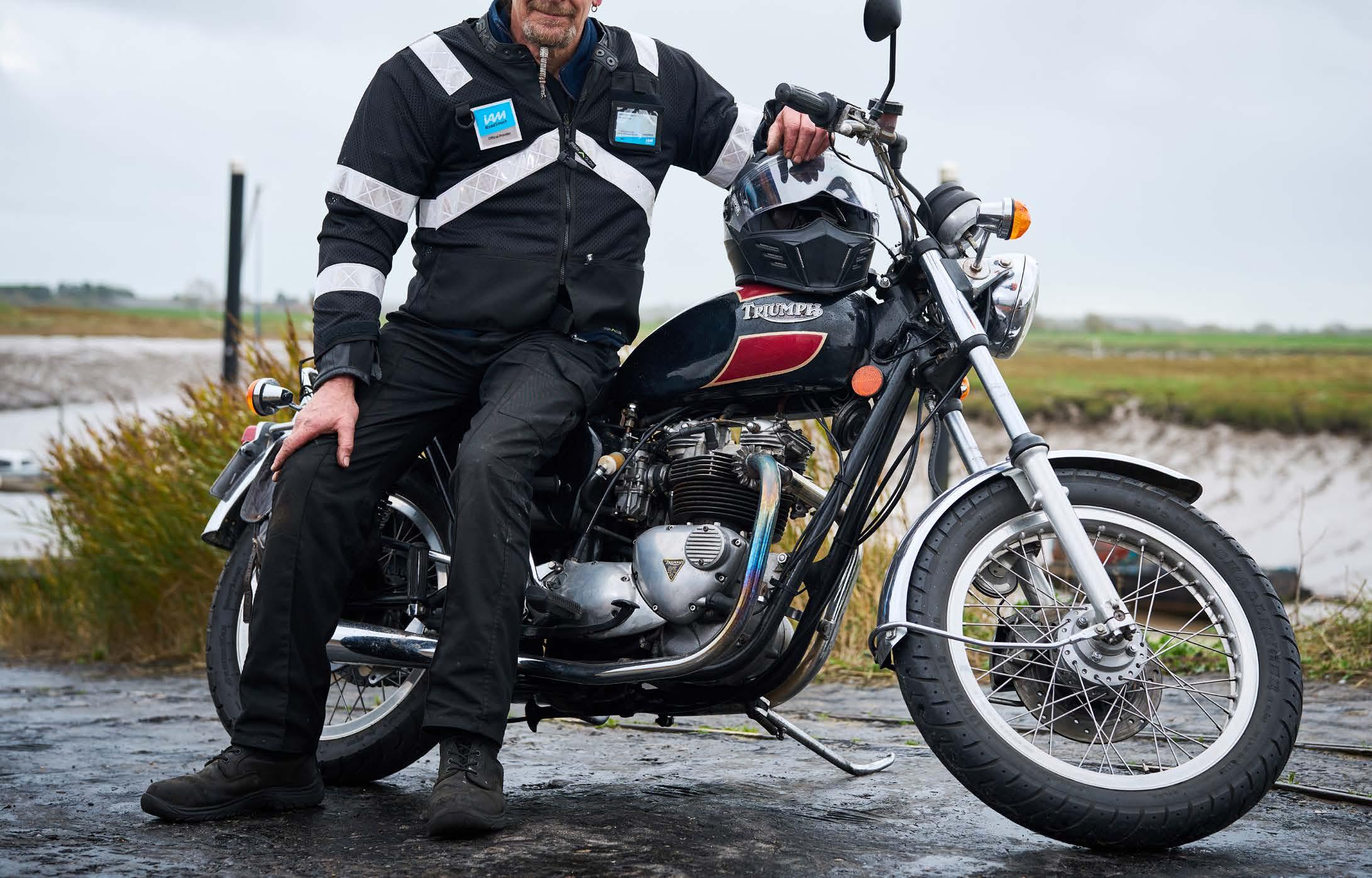
“I did nine years in the army in the eighties,” says Andy, “and while I was there I quali ed as a motorcycle dispatch rider and ambulance driver. I set myself a mission years ago to keep nding new challenges and skills updates and have done a succession of driving courses, predominantly on race tracks. But I’m
also a rep for the National Association for Bikers with Disability, and I kept running into IAM representatives at shows and events. Eventually I got taken out on a taster ride and was encouraged to join. at was in 2016, and since then I’ve become an Observer for the bike group and have just quali ed for my local blood bikes.”
Despite his wide-ranging experience on two wheels and four, and having been trained at the highest level by the MoD, Andy has found IAM membership invaluable to his driving and riding abilities today. “ e test gives you a more measured approach to road use,” he suggests, “separating the technical skill of driving from the mental skills. You ask yourself where you are going to be, why you’re going to be there and what you’re going to do about it. It’s all about forward planning.”
Andy will soon be upgrading from local to national Observer while continuing

his voluntary role with the regional blood bikes. “If you don’t keep pushing yourself you either stand still or go backwards,” he says. “And to be safe out there these days, you always have to up your game.”
Reem Ahmed would certainly agree, having felt compelled to take her IAM Advanced Driver test following an alarming incident on the M1 motorway that saw her car aquaplane twice in quick succession through deep standing water.
Already an experienced driver and car club member with two Toyota MR2s and a Jaguar F-Type to her name, Reem was nevertheless shocked by the event and determined to improve her ability to react correctly in future. She enrolled with the IAM shortly a erwards and passed the Advanced Driver test with a 100% score. “I was chu ed to bits,” she says, “and that gave me the con dence to become a regional, and then national Observer. I now take pleasure in bringing
/ AUTUMN/WINTER 2021 / 65 / SPRING 65
Community Focus
Andy has had plenty of driving and riding experience over the years, yet still finds his membership an asset
“IF YOU DON’T KEEP PUSHING YOURSELF YOU EITHER STAND STILL OR GO BACKWARDS. YOU HAVE TO UP YOUR GAME”
on other people’s driving skills and giving something back.”
With that new-found con dence, Reem recently undertook a 2,000-mile road trip around Europe with her son, amongst a group of over 20 other sports cars driving through nine di erent countries and in all weathers. “ e drive took us on some very scenic roads,” Reem recalls. “Some of the mountain passes were beautiful and we had a lot of fun in the tunnels… we were
able to play with our cars, particularly on the German autobahn when we were able to do some very high speeds.”
As someone who passed their test in the 1980s, Reem immediately saw the value in brushing up on her existing skills and ironing out any bad habits that may have crept in over the intervening decades. But the increased awareness and understanding o ered by the IAM course has also allowed her to take her passion for driving to the next level, exploring the potential of her cars in a safe and responsible manner. “ e Advanced Driver Course taught me to really observe the road,” she continues. “I believe I now see and acknowledge everything, whereas before I might have seen things, but not registered them. It also taught me how to corner better – another bonus on a trip that included a lot of winding mountain passes – and gave me the con dence to take my son with me.”
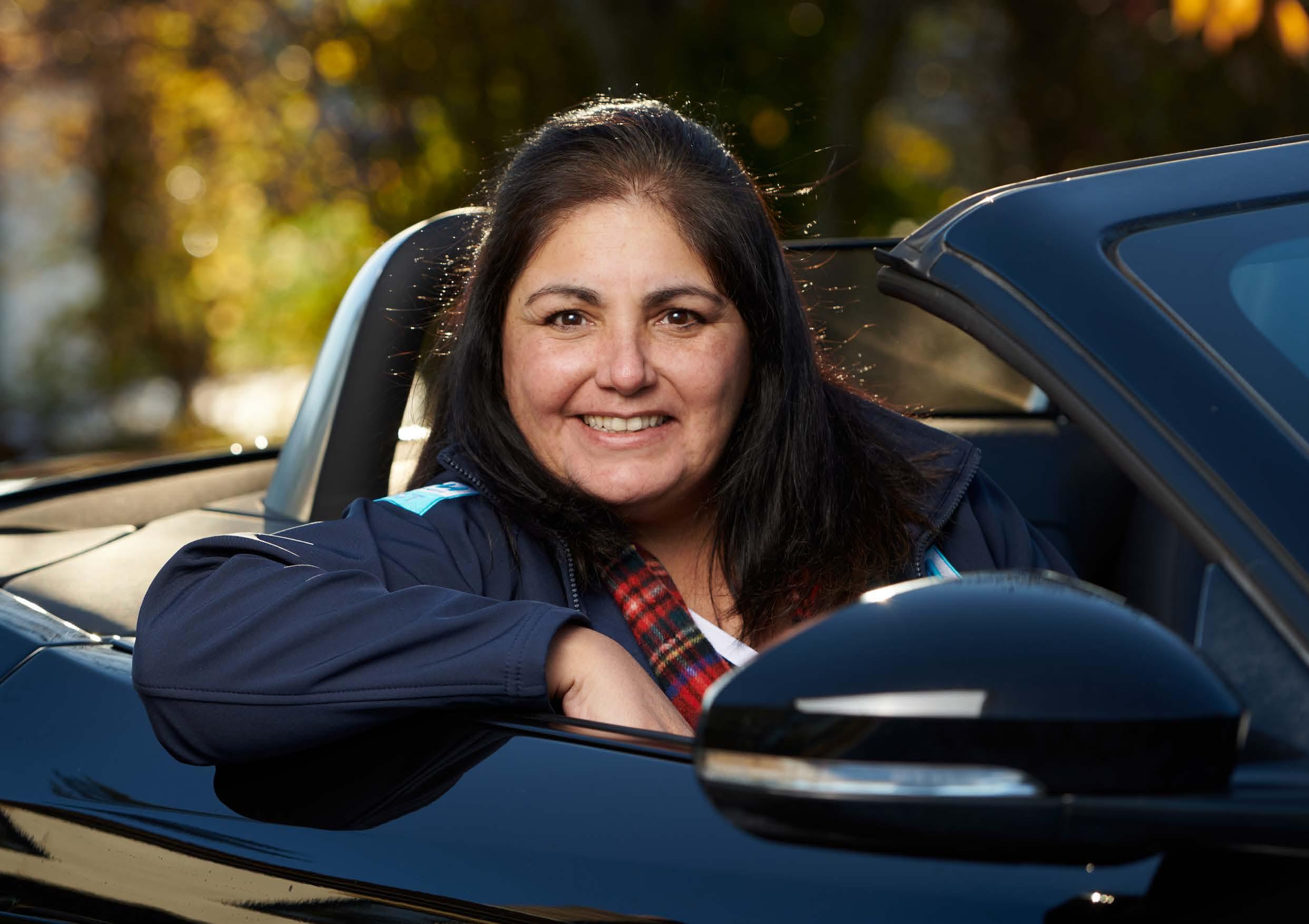
CELEBRATING OUR MEMBERS
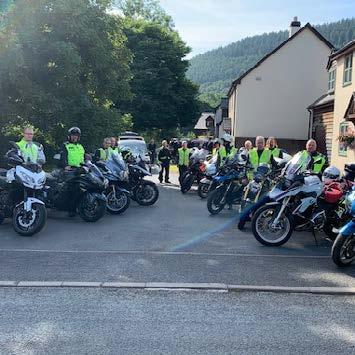
This issue, as part of our focus on community, we wanted to reflect on the legacy of four dedicated and much-missed Group members

Roger Jewell Sadly, Roger passed away in June 2022 and is sorely missed. He was a member for 50 years and on the committee of the Plymouth & District Advanced Motorists Group for 40 of those. Roger was a go-to for road safety concerns and appeared on radio and TV to clarify controversial issues. In 2013 he was presented with The Fred Welch Rosebowl for all his work for IAM RoadSmart. Renee Logan MBE Renee passed away last August. She was the Group Secretary for the North West Ulster Group for many years and a tireless supporter of the Group and advanced driving. She was awarded an MBE in 2012 for Services to Road Safety in Northern Ireland.
Norman Jarvis MBE JP

President of the Wirral Group, Norman sadly passed away in March 2021. In 2012 he was awarded an MBE for Services to Road Safety. The Group has planted a tree to commemorate Norman who worked so tirelessly for over 50 years to make our roads safer. In August last year, representatives of the Mid Wales, Worcester & Hereford and Shropshire IAM Groups paid respects to Chris Brown, with bikes ridden by 16 IAM Observers and Associates escorting the hearse and family car from New Radnor, Powys to Hereford Crematorium.
66 / / SPRING 2023
“AS A NATIONAL OBSERVER I NOW TAKE PLEASURE IN ADVANCING OTHER PEOPLE’S DRIVING SKILLS AND GIVING SOMETHING BACK”
INSIDER
Already a keen motorist, Reem loves the benefits that IAM RoadSmart courses can give drivers wanting to get more out of their vehicle
Wind the clock back almost 60 years to October 1965. Your nose is pressed against the cold glass of the local toy shop window to see the most desirable toy-model of the time – the car that belonged to the world’s most famous spy, the one and only James Bond!








A museum quality die-cast model
This was the world’s fastest seing diecast metal model - and sma wonder: 007’s DB5 was a marvel of miniature
toy engineering with its incredible features, including that ejector seat! Then, as now, Corgi have always prided themselves on their detailing and accuracy.

Re-issued for the FIRST TIME EVER, we are now able to oer you the ORIGINAL Corgi Toys Aston Martin DB5 model #261 that was created as it appeared in the 1964 box oce smash, Goldnger. Faithful in every working detail - this is probably Corgi’s most iconic model – much sought aer by coectors.


Keep it safe – an heirloom of the future








Your DB5, in its famous #261 box and Corgi-approved Certicate of Authenticity, makes for a canny investment. It’s yours today, along with an extra TWO fantastic FREE gis – worth £8.98 – a for less than twenty three Pounds. To learn more about the James Bond DB5 story and reserve your model and FREE gis, go to www.CorgiModelClub.com/ROAD007
Hurry while stocks last!
O S ! GO TO WWW.CORGIMODELCLUB.COM/ROAD007 OR CALL 08000 55 77 44 H O IMPOSSIBLE! A WORKING MODEL
U S E 53%
OF THE JAMES BOND ASTON MARTIN
Limited Edition Offer for IAM Roadsmart Readers • SAVE OVER £25 THE MOST FAMOUS CORGI TOY EVER MADE – NOW JUST £22.99 +P&P 007 CORGI 261 • JAMES BOND I SAVE 3 07 Order online to receive TWO fantastic FREE GIFTS worth £8.98 PLUS Pay just £22.99 +PP ALL WORTH £48.97 and related James Bond Indicia © 1962-2022 Danjaq, LLC and Metro-Goldwyn-Mayer Studios Inc. and related James Bond Trademarks are trademarks of Danjaq, LLC. 2022 © EON Productions Ltd and Danjaq, LLC. All Rights Reserved. Aston Martin, the Aston Martin Wings logo and the model name “DB5” are trademarks owned, licensed or used by Aston Martin Lagonda Limited. All rights reserved. When you take advantage of this discounted offer, you will be auto enrolled into the Corgi Model Club. After 30 days you will receive a new die-cast model [MXL MXW S[R GIVXMGEXI SJ EYXLIRXMGMX][LMGL GSWXWTPYW TT 7LSYPH ]SY [MWL XS TEYWI WOMT E QSHIP SV GERGIP ]SYV QIQFIVWLMT ]SY GER HS XLMW EX ER] XMQI F] GEPPMRK JVII SRSV IQEMPMRK IRUYMVMIW$GSVKMQSHIPGPYF GSQ 8LMW MW ER SFPMKEXMSR JVII SJJIV E NOW & SAVE OVER £25! B ALL WORTH EXCLUSIVE • RE-ISSUED FOR THE FIRST TIME • OFFICIALLY LICENSED FLASH! + TELESCOPIC OVER-RIDERS BULLET SCREEN + OPENING ROOF & EJECTOR SEAT + + RETRACTABLE MACHINE GUNS + REPLICA SPY INSTRUCTIONS + SPARE BADDIE FIGURE ASTON MARTIN DB5 Foow us on social media to see what others say. Strictly one order per household as stocks are very limited This whole package (worth £48.97) is yours for just £22 99 + £3 99 p&p - you save 53% Take up to 30 days to decide with our risk-FREE, no quibble returns promise FREE Corgi Model Club membership with discounted prices on Corgi models Limited re-issues of valuable museum quality die-cast metal models exclusive to the Corgi Model Club WHY YOU SHOULD BE A CORGI MODEL CLUB COLLECTOR aer coectors. w c a e Take up to 30 to decide with our NEWS OFFICIALLY LICENSED Limited edition re-issue of the original Goldfinger DB5 New 261 tooling exclusive to the Corgi Model Club FREE GIFT Rick Wilson, Editor of Diecast Collector Magazine about the Corgi Model Club. + + + + + “I absolutely love it !” FREE GIFT Includes two FREE gifts worth £8.98 TOTAL SAVING – £25.98 Normal model price £39.99 +P&P

Call 0203 811 3816 | Visit hurtigruten.co.uk | Contact your preferred travel agent Experience the Original Spirit of Norway Hurtigruten was founded in 1893 to be a lifeline for communities along the Norwegian coast and we’re just as much a part of the community today. We don’t just show you the region, we invite you to become a part of it with us. 10% Discount Simply quote HRG-IAM* Book now -day Classic Round Voyage Regular departures in 2023/24 Terms and conditions: *IAM RoadSmart members can save an additional 10% on any Hurtigruten cruise, please visit www.hurtigruten.co.uk/uk/partners/hrn-iam-roadsmart-discount and enter code HRG-IAM at checkout to redeem your discount. Image: © Trym Ivar Bergsmo.