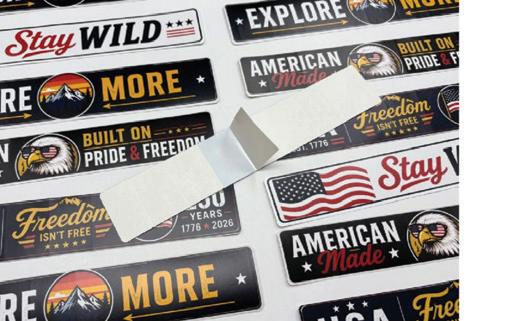
Improved adhesive and liner technology create a smoother film surface for
visual
Effortless Installation
Enjoy slideability, easy repositioning, and bubble-free application for faster installs and high-quality results.
PUBLISHER
Image Publications Pty Ltd
ACN 056 489 699
PO BOX 613, Brighton
South Australia 5048
T > +61 1300 001 393
E > info@imagemagazine.com.au
W> www.imagemagazine.com.au
EDITOR
Nige Cottingham
T > +61 417 773 135
E > content@imagemagazine.com.au
ADVERTISING
Janet Maitland (Publisher)
T > +61 1300 001 393
E > info@imagemagazine.com.au
A flawless vehicle wrap demands Precision, Technology and Technique. Avery Dennison reveals how its Supreme Wrapping Film plays a material role in all three
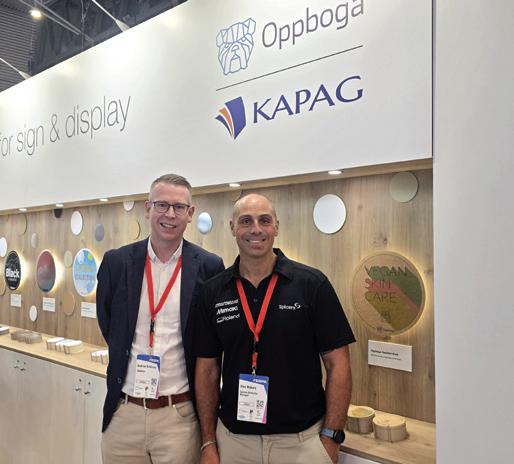
Spicers and Oppboga explain why it makes commercial sense to switch from PVC to a fibrebased alternative
Pozitive Sign & Graphics – selling, supporting and servicing Summa cutters in Australia since 1992
launches a Precut Lab and commences search for ‘the best PPF installer in the world’
Charles Watson – ‘Don’t over-complicate Workplace Investigations’
Vernon Kingman: ‘I’m delighted I didn’t retire at 45 as my 50s were my golden years’.
Charles Watson
Sue Hirst
Vernon Kingman
The opinions expressed in Image magazine are not necessarily the views of the publisher. Every effort has been made to ensure the accuracy of information contained in this magazine. No responsibility is accepted by the publisher for any omissions, inaccuracies, typographical errors or printers’ errors. Nor will responsibility be accepted for any changes to information after publication.
Visual Impact
challenges, so investing in another expo isn’t necessarily front-of-mind for many.
But I’ve just returned from FESPA Barcelona and, as this copy of Image will show, there is a lot happening in our industry at the moment and expos/conferences are still the most efficient way to find out what’s new and, equally, for companies to showcase what’s new and current.
Whilst the dominant themes at FESPA were all cloaked in what are fast-becoming over-subscribed acronyms….AI, DTF, DTO, LOL…overall, the key takeaways from could be categorised against three broad major technology directions:
• Automation and workflow integration to address labour shortages and improve margins
Versatility in production, with hybrid devices and multi-application capabilities
In all of this, whether you’re a supplier, a distributor or a PSP yourself, there is opportunity galore in where technology is moving and how fast it is taking us there. So sit back and enjoy our flavour of FESPA and I urge you all to start making your plans now to make the most out of Visual Impact, 2 to 4 September, Sydney Showgrounds, Sydney Olympic Park.
Best regards, Nige Cottingham Editor Image Publications
David Currie receives Lifetime Achievement award
In front of an audience of nearly 400 industry peers, David Currie, founder and chair of Currie Group, was honoured with a Lifetime Achievement award at the National Print Awards, organised by the Visual Media Association (VMA) and held in June at the Brisbane Intercontinental Hotel.
The citation for what was one of the Major Awards of the night stated: ‘Across more than five decades, Currie has employed generations of Australians, transformed the technological capability of the local industry and built one of the nation’s most successful family-owned print businesses. But perhaps more importantly, he has done so with resilience, generosity and an unwavering commitment to people, technology and industry. David Currie’s story is one of grit, instinct, loyalty and transformation: a story woven into the fabric of the Australian print and visual media industry. His impact on the industry itself cannot be overstated’. David Currie accepted the award with grace and humour, even joking about the fact Currie Group and HP were the sponsors of this particular award. The other Major Awards category winners were:
• Konica Minolta - Workplace Culture and Wellbeing Achievement
• Mark Rolls, IVE Group - Industry Employee of the Year
• Spicers Australia - Industry Supplier of the Year
• Katherine Puttock, Lane Communications - Industry Woman of the Year
• Angus Adcroft, MCC Labels and Laila Stevens, Eckersley Print Group - Emerging Talent of the Year
• Allain Poole and the Press Print team - Judges Award
• Press Print - Printer of the Year
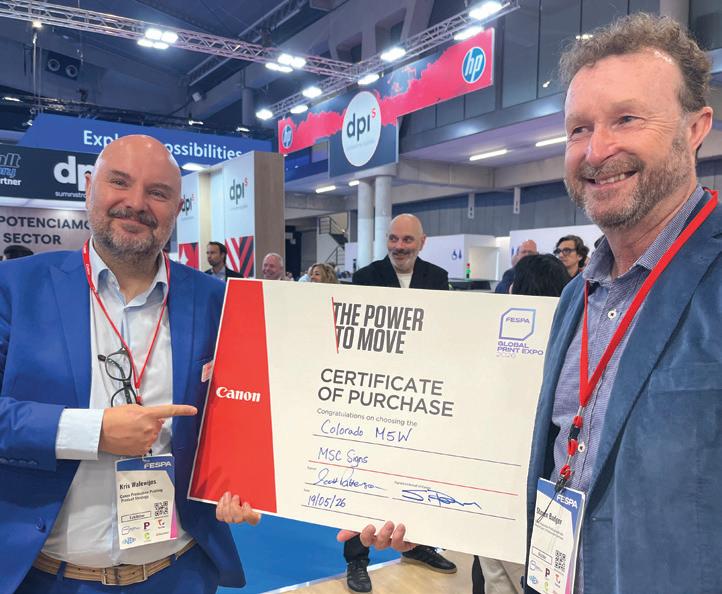
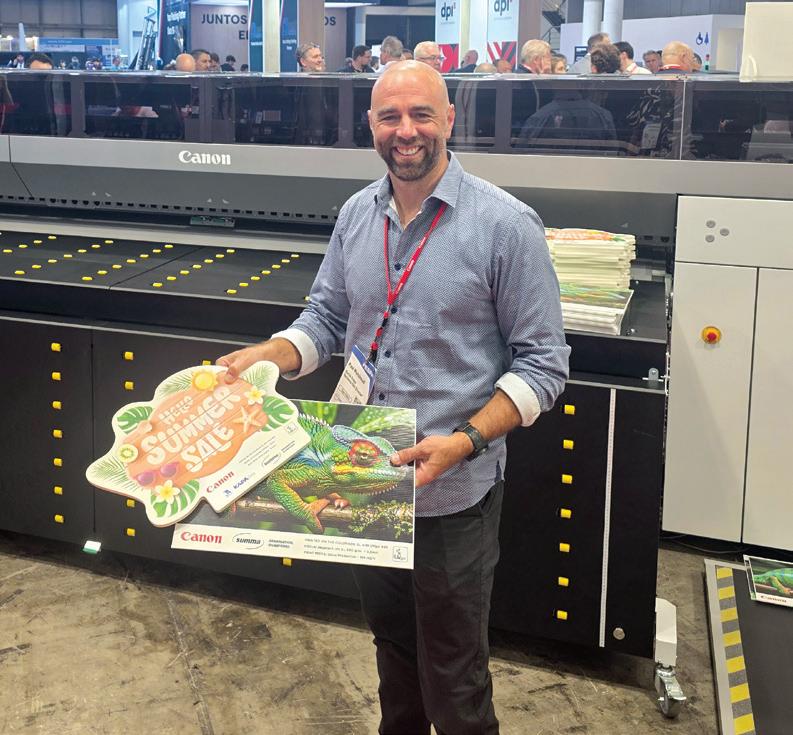
CMYKhub snaps up APAC”s first Canon Colorado XL Hybrid
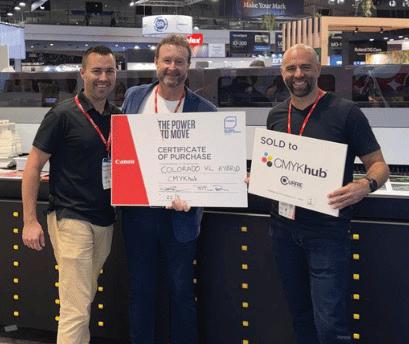
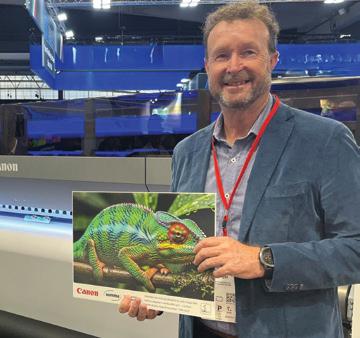
Purchased through Currie Group off the Canon stand at FESPA 2026, CMYKhub has become the first company in the Asia Pacific region to purchase one of the new Canon Colorado XLseries 3.4-metre hybrid UVgel printers.
Paul Whitehead Business Unit Manager – Sign and Display at Currie Group, says: “CMYKhub is already one of Australia’s most committed users of Canon’s UVgel technology, running six Colorado M5 1.6m printers across multiple sites nationwide. That depth of experience with the platform gave
the business a level of confidence in the XL-series hybrid. The trust CMYKhub has built not only in UVgel technology and Canon, but also in Currie Group’s local support, service and partnership approach, was central to the purchasing decision. What the XL-series brings to the table over the existing 1.6-metre Colorado is not simply scale, but capability. The machine handles both flexible roll media and rigid substrates, opening up a significantly broader application gamut for a business that, until now, has operated within the 1.6-metre format.”
General Formulations introduces Quick-Split Scored Liner
General Formulations has launched QuickSplit Scored Liner, a new product designed for speed, precision, and efficiency, and wellsuited to stickers, decals, window graphics, and point-of-purchase (POP) displays.
With its universal 1.25” spacing the liner easily ‘cracks’ for quick release and smooth, seamless application. It is compatible across multiple print platforms and ink technologies, making it wellsuited for short-run, high-volume environments and multi-platform workflows. The system
improves handling efficiency while supporting consistent, accurate installations. Matt Edwards, Vice President of Product Management at General Formulations, says: “The Quick-Split Scored Liner is part of our ongoing commitment to delivering pressure-sensitive solutions that improve workflow efficiency, application accuracy, and end-user ease of application across the graphics industry. With its universal scoring system and cross-platform compatibility, Quick-Split Scored Liner expands opportunities for new business growth.”
A new production facility in Germany for ORAFOL…
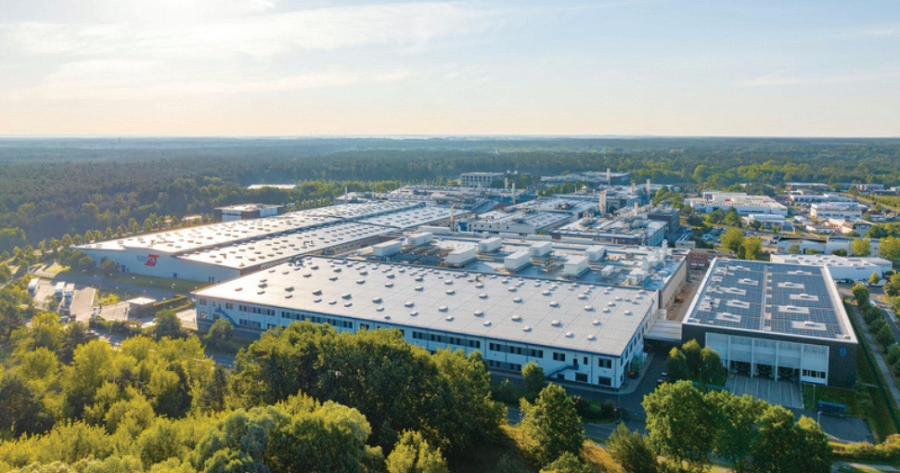
ORAFOL Group has commenced construction on Hall 14, a new production facility at its Oranienburg headquarters in Brandenburg, marking the next phase of a €235 million investment programme the company has committed to through 2030. The official ‘groundbreaking ceremony’, to signify that work on the new site has now commenced, took place on June 2nd in the presence of Brandenburg Minister-President Dr. Dietmar Woidke and Martina Klement, the State’s Minister for Economic Affairs, Energy, Climate Protection, and European Affairs.
The dignitaries present clearly a nod to the political significance attached to the project in a region where ORAFOL is one of the largest industrial employers. The new facility will cover approximately 4,835 m² of footprint, with a gross floor area of 7,595 m² and a gross volume of around 60,300 m³. More than 2,400 m² of that space is designated for production. Construction will make use of approximately 600 precast reinforced concrete elements. Dr. Holger Loclair, Chairman and CEO of ORAFOL Group, connected the new build to the company’s history at the site saying: “In 1995, we laid the first cornerstone here, back then under the motto: ‘A dream comes true.’ Today we can say: this dream continues. ORAFOL never waited for so-called thriving landscapes to emerge. We began building them ourselves step by step and hall by hall.”
in Italy
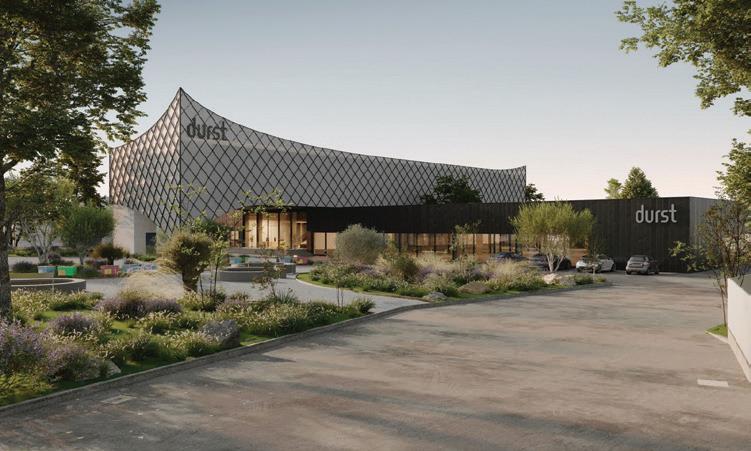
Durst Group has officially launched its €20m Durst Como project: the development of a new production and technology hub dedicated to digital textile printing, in the heart of Italy’s Como textile district. The project aims to create a highly specialised production centre in Lombardy, focused on the development of inkjet technologies, software, applied research, and advanced solutions for industrial digital textile printing. Durst Como stems from the
printing. The acquisition was initiated in 2023 and completed in 2025. Over the past 12 years, Durst Group has invested more than €50m in its textile business, with initiatives focused on developing international markets, enhancing laboratory infrastructure, and strengthening its sites in Brixen/Bressanone and Kufstein (AT). Christoph Gamper, CEO and Co-Owner of Durst Group says: “Como has been printing the world’s textiles for generations. We are not here to pass through. We are here to stay. Durst Como is a long-term commitment: European technology, built here, for the world.”
global baseline for Digital Out-of-Home advertising spend
A new study, commissioned by the World Out of Home Organisation (WOO), has delivered the first-ever independently aggregated insights into programmatic Digital Out-ofHome (pDOOH) advertising spend, revealing that the channel generated approximately USD$1.4bn in revenue globally in 2025; equivalent to 7% of total DOOH expenditure. In order to give the study the credibility it needed, it was conducted in collaboration with eleven leading Supply-Side Platforms (SSPs) from across the world. All data was submitted confidentially to Pricewaterhouse Coopers (PwC), who independently aggregated the data. Charles ParryOkeden, Global Lead - Audience & Data and VP, World Out of Home Organisation, says: “This is a landmark moment for the OOH industry. For the first time, we have an independently verified, globally consistent measure of programmatic DOOH spend - and what it reveals is both significant and encouraging. USD$1.339bn in 2025 confirms that pDOOH has well and truly arrived, but it also tells us that the vast majority of the opportunity still lies ahead. WOO’s role is to convene, to build standards, and to advocate with evidence. This study does all three.” By bringing together competing SSPs under a shared methodology, WOO has established a robust baseline that will be built upon in future editions to deliver increasingly granular and frequent data.
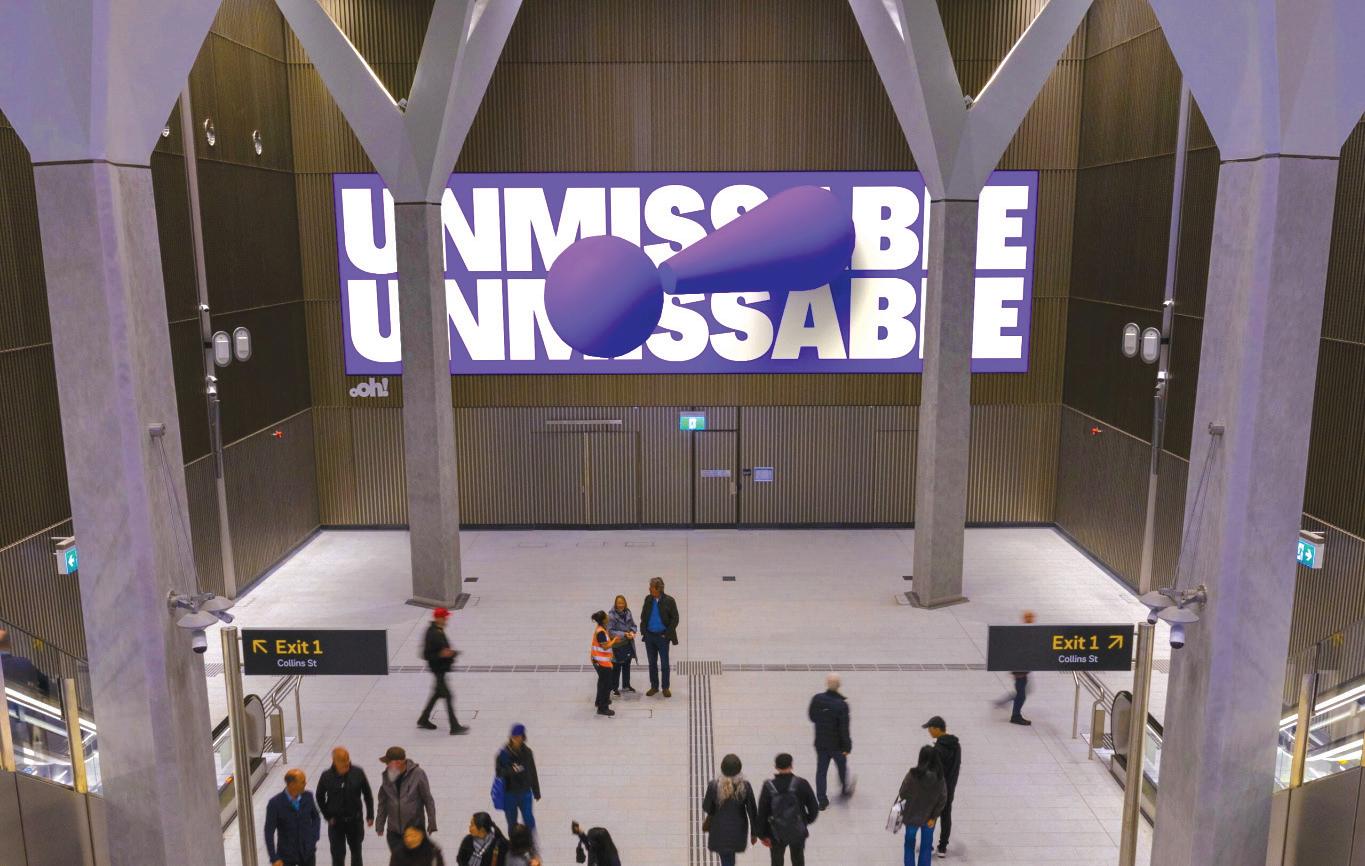
UNMISSABLE 16m, 3D-enabled digital screen launched by oOh!media
oOh!media has launched the largest digital screen on the Melbourne Metro Tunnel to-date, featuring a new large format, full motion digital asset at Town Hall Station. Measuring 16 metres in length and 4.5 metres in width, the landmark digital screen features scalable 3D and 3D Anamorphic capabilities to drive immersive storytelling. It offers brands a powerful platform to reach commuters with scale and clarity. Mark
Fairhurst, Chief Revenue Officer, oOh!media says: “The Metro Tunnel is quickly becoming one of Melbourne’s most valuable commuter environments, and this new site gives brands the scale and creative flexibility to truly stand out. Research from Analytic Partners shows creative can drive up to 41% of ROI, which is why we’re partnering closely with agencies and clients to push what’s possible in full motion and 3D, ensuring campaigns make the most of this high impact location.” Some of Australia’s
Australian creativity shines on global stage
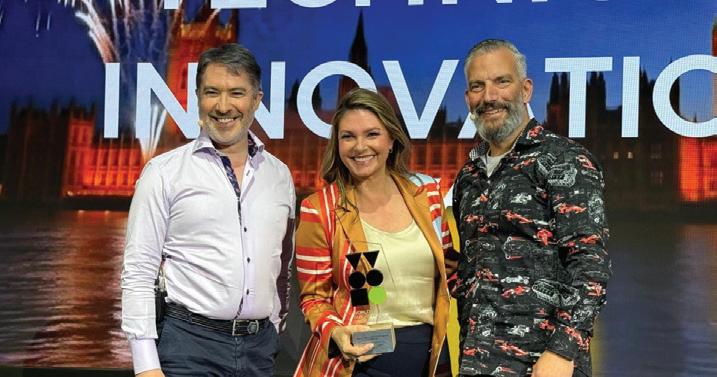
Australian campaigns dominated the 2026 World Out of Home Organisation (WOO) Awards in London, taking home three category wins and earning special mentions across the Creative and Technical Innovation categories,
while OMA Director and QMS CEO John O’Neill was awarded the 2026 WOO Leadership Award. The awards were presented during the WOO Global Congress, where leaders from more than 40 countries gathered to
leading brands, including NAB, AGL, and Woolworths Group, debuted across the 100% fully digital, state-of-the-art LED Metro Tunnel screens when it launched late last year. With both Sydney Metro and Melbourne Metro Tunnel now part of oOh!media’s portfolio, brands have a media first opportunity to dominate two of Australia’s largest CBDs simultaneously, allowing advertisers to reach millions of commuters daily across two transformative rail networks.
celebrate excellence and discuss the future of the Out-of-Home industry. All four Australian campaigns were recognised earlier this year at the OMA Creative Awards and have now been celebrated internationally for their craft, innovation and impact. OMA CEO Elizabeth McIntyre, attending the Congress in London, says: “It’s fantastic to see Australian work not just holding its own, but inspiring conversations among industry leaders from around the world.” About O’Neill’s individual achievement, McIntyre added: “John is a driving force in advocating the efficacy of Out of Home because he genuinely believes in what the channel can deliver for advertisers, agencies and communities. What sets him apart is the way he leads: he is commercially sharp, futurefocused and never loses sight of people. His impact is felt well beyond QMS, and this global recognition is a testament to the standard he sets for all of us.” Together, the campaign wins, and O’Neill’s leadership the OMA says the recognition underscores Australia’s continued influence on the global Out of Home industry.
Brother sees Mutoh as strong fit
Confirmation of the recent acquisition by Brother Industries of Mutoh Holdings was evident for all to see at FESPA Global Print Expo, with the exhibition stand signage proudly stating ‘Mutoh, a group company of Brother’.
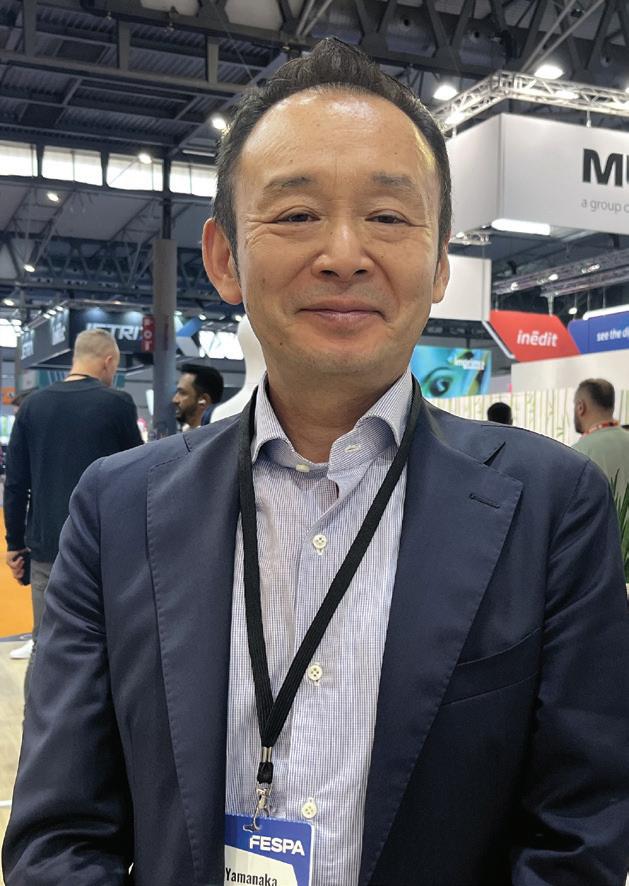
Image Magazine had the opportunity to talk to Koji Yamanaka, Executive Officer, Brother Printing & Automation Business, about its recent acquisition of the successful Japanese wideformat printer manufacturer. Yamanaka confirmed the move forms part of a broader corporate strategy to expand beyond Brother’s traditional strengths and into higher-growth industrial printing segments. He explains: “Industrial printing is a key future growth area for Brother and the acquisition of Mutoh provides Brother with a ready-made portfolio of wide-format technologies and applications that would have taken us years to develop independently.
Mutoh’s established presence across signage, graphics, textile decoration and industrial printing was obviously a major attraction and aligns particularly well with our plans for business regions globally. Outside of immediately enabling us to expand our product range and business in the short term, we also see significant opportunity in combining the significant R&D capabilities of the two companies to look at future products.” Yamanaka adds: “Ink technology was another key attraction. As industrial printing applications become increasingly specialised, access to broader chemistry and ink expertise is becoming critical and Brother simply would not have been able to catch up with where the industry is at, with regards to ink technology and related products, by itself. The fact that Mutoh is manufactured in Japan – a country that is widely recognised as being at the forefront of ink technology – is obviously another huge advantage for us.”
ORAFOL appoints new ANZ Technical Manager
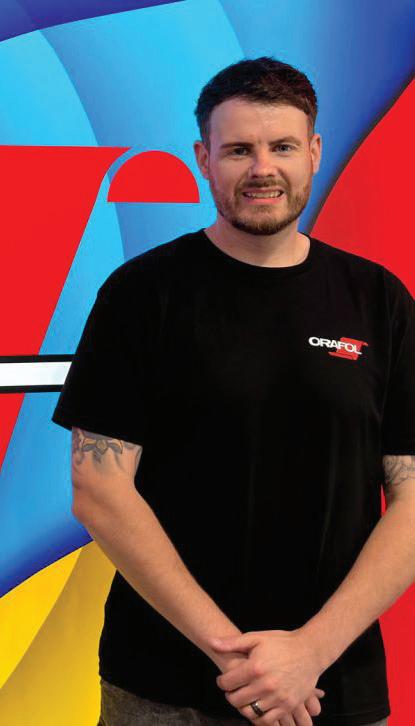
When companies talk about reaching out far and wide to secure the right talent, there are probably only a handful of Australian companies that might reach as far afield as Scotland.
But that is exactly where ORAFOL’s newlyrecruited ANZ Technical Manager hails from, and he arrived over this end of the world recently, after 15 years running his own successful wrapping business in Scotland. a specialist wrapping experience, predominantly in vehicle and high-end luxury applications and a proven track record, having owned and operated his own successful wrapping business in Scotland during this time. Pratt says: “Since 2013, I have been delivering high-quality automotive vinyl wrapping and vehicle customisation through PTW Automotive Styling, based in Scotland. As a one-person business, I have always taken particular pride in offering exceptional craftsmanship, attention to detail, and a personal touch that ensures every client’s vision is brought to life.” Pratt and PTW Automotive Styling specialise in premium vinyl wraps, use of Paint Protection Films (PPF) and bespoke designs, establishing a strong reputation for precision, creativity and customer satisfaction. He has relocated to Australia with his young family of four, and is positively buzzing about his new opportunity with the ORAFOL ANZ team and what he was quick to acknowledge as ‘its’ very knowledgable customer base’.
Epson remains at Height of Fashion
Under its long-term corporate vision ENGINEERED FUTURE 2035, Epson Australia has announced the continuation of its partnership with the Fashion Frontier Program 2026: a program which seeks to discover and support next-generation fashion designers.
Epson says it aims to drive technological advances, engineer the optimal future and deliver value to society. Through this partnership, the company says it will offer its technologies and expertise to the next generation of creators, supporting their creativity and addressing their challenges in manufacturing and design, and contributing to the realisation of this vision. Epson has also recently strengthened its commitment to social impact through its extended partnership with The Social Outfit, a Sydney-based social enterprise and fashion label that supports refugee and migrant women through employment, training, and education opportunities in the Australian fashion industry. The extended collaboration will raise awareness of The Social Outfit’s flagship First Things First fundraising campaign and spotlight the role technology can play in advancing ethical manufacturing, local production and meaningful employment pathways.
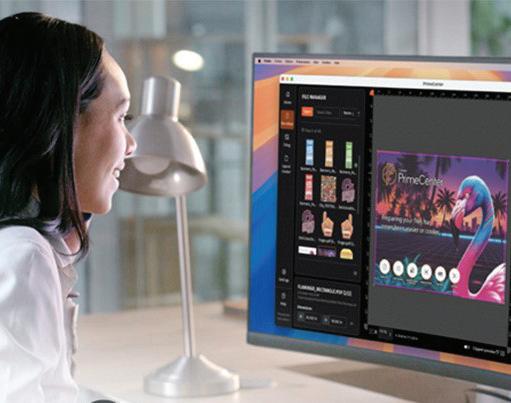
Caldera has released PrimeCenter 5, the latest version of its prepress job preparation and workflow software for wideformat and industrial print workflows.
Headlining the release is File Editor, a new built-in workspace designed to help print service providers inspect, modify, and validate files faster before creating layouts for production. For many print businesses, file preparation remains one of the biggest sources of delays, rework, and manual intervention. With File Editor, Caldera brings key prepress actions into a single environment, reducing the need to switch between tools and helping operators move jobs through production, ensuring greater consistency. Integrated directly into PrimeCenter, File Editor allows users to review critical file components, including dimensions and cutting paths, and to apply immediate corrections and confirm results in real time. Files can then be passed directly to PrimeCenter’s Layout Creator, where jobs are automatically nested into optimised layouts for printing and cutting. Files can also be exported from File Editor directly to PDF. Sebastien Hanssens, Vice President Marketing at Caldera says: “PrimeCenter 5 is built around what print teams tell us they need every day: a quicker, easier way to get files productionready while keeping full control. With File Editor, they can check, fix, and validate files in one place, then move straight into layout creation. That means less jumping between tools, less rework, and more time spent getting jobs out the door, whether the workflow is manual or automated.”
VMA to assist members following Fair Work Commission’s wage decision
The Annual Wage Review presented recently by the Fair Work Commission increasing minimum wage by 5.97% and a 4.75% pay boost for minimum award workers, threw up a number of ramifications that the Visual Media Association (VMA) was quick to offer guidance on for its members.
Charles Watson, GM - IR, Policy and Governance for the VMA, says: “With effect from the first full pay period commencing on or after 1 July 2026, the new adult National Minimum Wage for full-time employees working
a 38-hour week will be $1,004.90 per week, or $26.44 per hour. This represents an increase from the current National Minimum Wage of $948.00 per week, or $24.95 per hour. From an Awards perspective, the Commission has also determined to increase modern Award minimum wage rates by 4.75%, effective from the first full pay period commencing on or after 1st July 2026. The decision also included determinations whereby the lowest adult Award classification rates and entry-level minimum rates in Awards must meet certain minimum dollar values.” The Fair Work Commission
believes its ruling will benefit around 2.8 million workers on minimum and award-reliant wages, also pointing out that workers reliant on award wages are disproportionately female, more than two-thirds work part-time hours, more than half are casual employees and more than a third are low-paid. Watson adds: “Over the coming weeks we will work through the detailed Award determinations and provide members with updated minimum rates, compliance guidance and practical advice to assist with implementation before the 1st July commencement date.”
Avery Dennison Supreme Wrapping Film
Playing a material role in vehicle wrapping
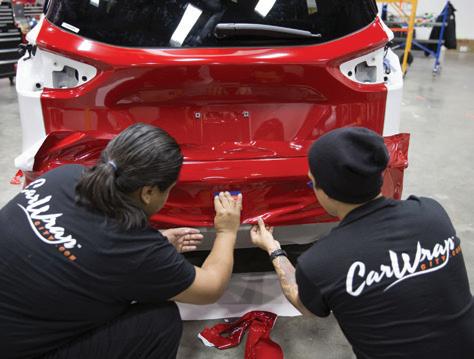
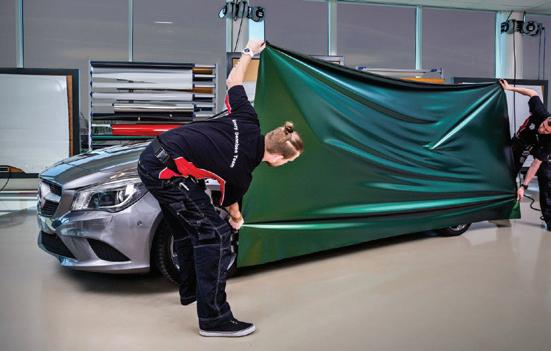
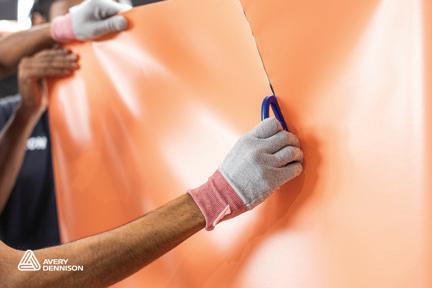
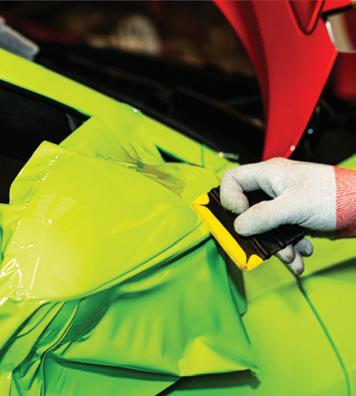
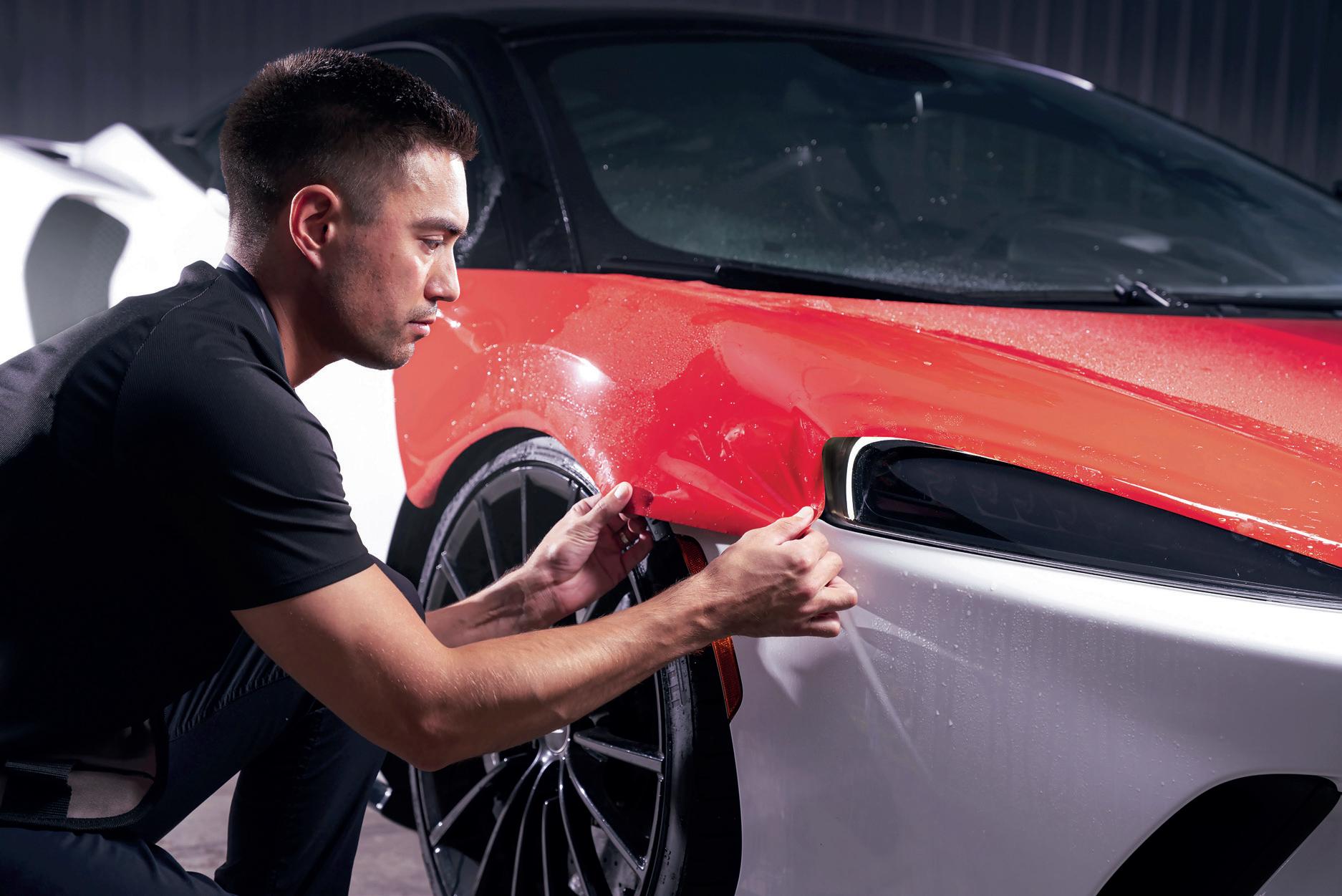
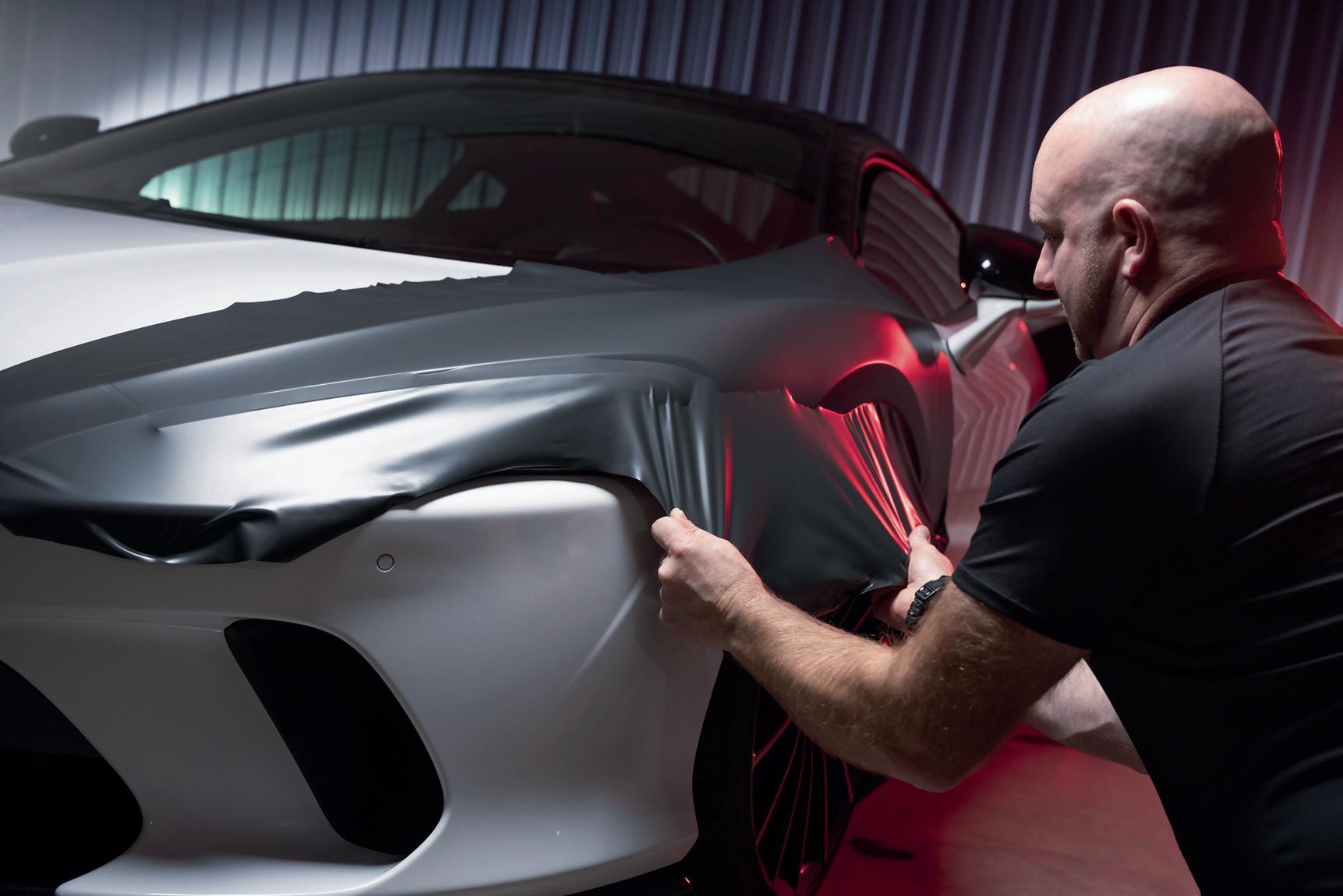
A flawless vehicle wrap requires materials that can meet both the speed requirements and the ambitions of a professional installer. When selecting a premium cast wrap film, professionals look for a specific balance of features: deep conformability for complex curves, re-positional slide-ability for maximum installation speed, and an advanced bubble-free application system.
Avery Dennison Supreme Wrapping Film consistently delivers on these fundamental needs. By providing a material that actively supports efficient installation, it allows
wrappers to focus entirely on the quality of their craft rather than wrestling with the vinyl.
PRECISION… Advanced engineering for
a flawless finish
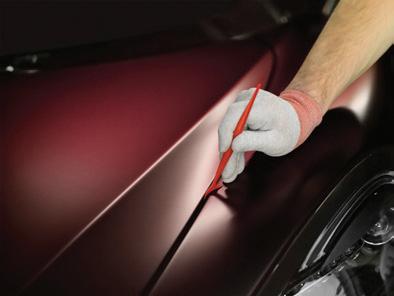
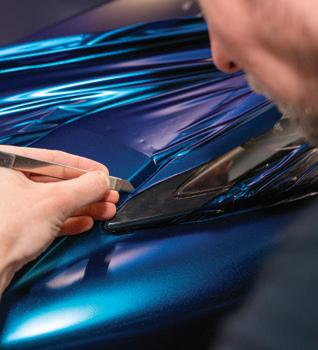
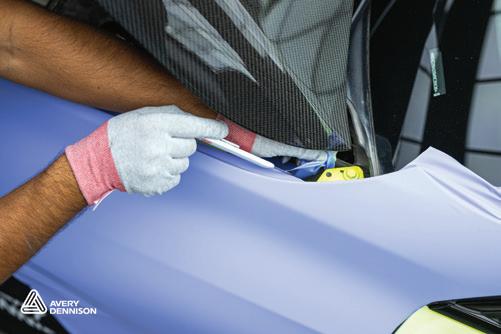
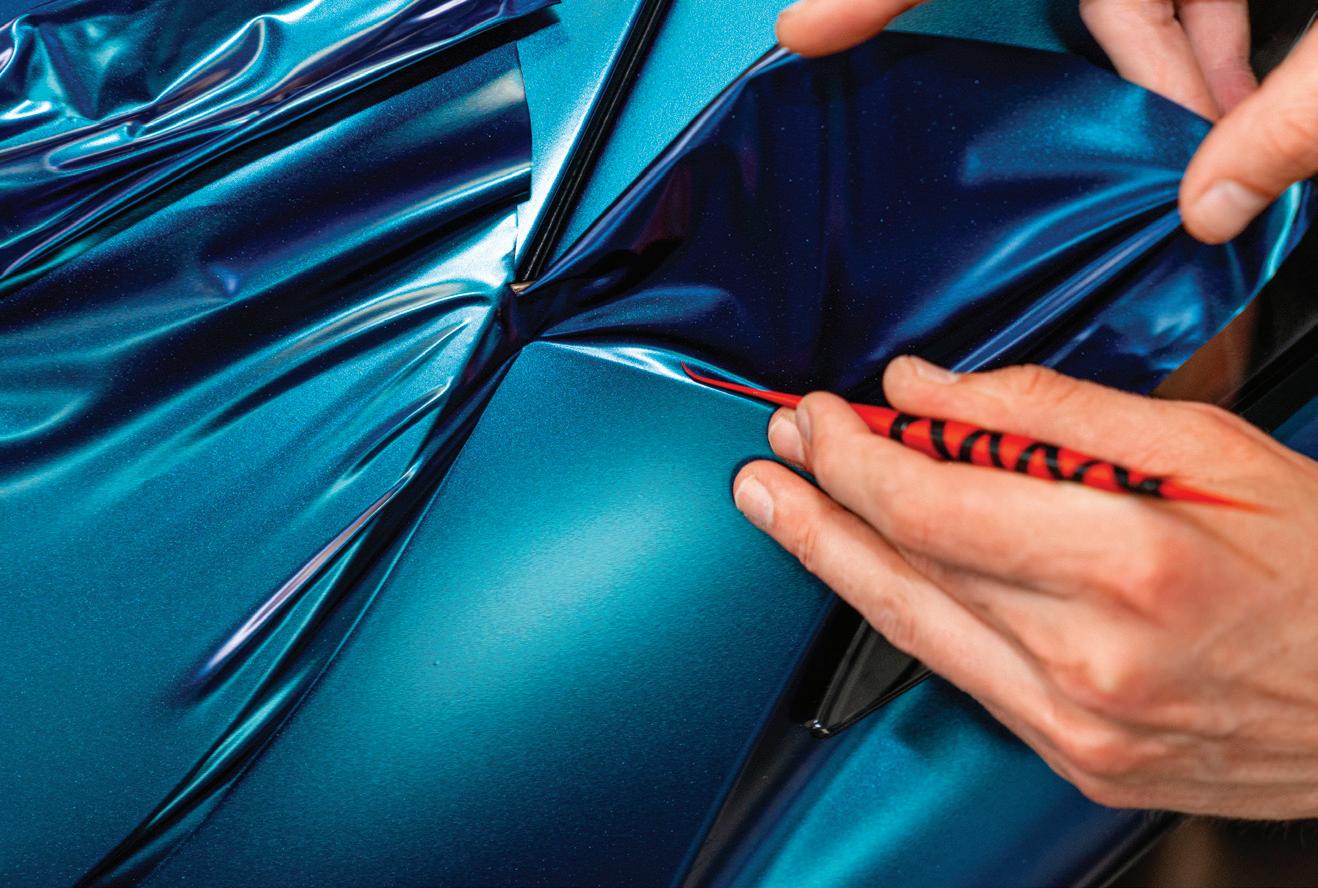
The pursuit of the perfect finish drives constant innovation within the industry. In step with this drive, a recent update to Avery Dennison’s adhesive and liner system serves as a significant engineering advancement for Avery Dennison Car Wraps, introducing a high-precision Easy Apply pattern that fundamentally alters how the film settles onto the vehicle surface. For the customer, this upgrade means a flawless, paint-like visual
appeal that elevates the prestige of the final result. Installers will see a remarkably smoother face surface after application.
TECHNOLOGY… Expanding the Palette with the Supercar Blondie Collection
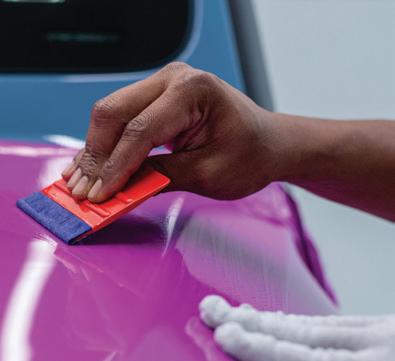
Advanced performance is one thing, but what really turns the heads and hearts of installers and customers alike is the power of the finish and the power of the colour. Avery Dennison Supreme Wrapping Film has always embraced a bold approach to colour, offering a broad palette of more than 120 shades. But the recent launch of the Supercar Blondie Collection - an exclusive collaboration
inspired by the passion and style of Supercar Blondie herself – is next level and exemplifies the commitment of Avery Dennison to satisfying the ambitions of our customers. This range introduces four new, head-turning shades: Gloss Metallic Cosmic Rose, Satin Sunset Ride, Matte Dreamline Blue, and Gloss Smooth Sage. These hues empower installers to deliver wraps that truly stand out and meet the aspirations of discerning
customers seeking the ultimate in visual impact.
AND TECHNIQUE… Maximising potential through Professional Training
But advanced technology can only reach its full potential in capable hands. Professional training remains a crucial investment for ambitious installers looking to expand their capabilities. Dedicated training programmes by Avery Dennison for
Improved adhesive and finer technology create a smoother film surface for outstanding visual appeal
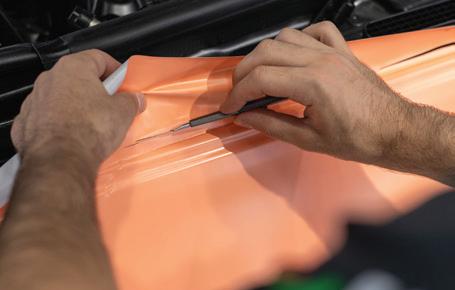
EFFORTLESS INSTALLATION
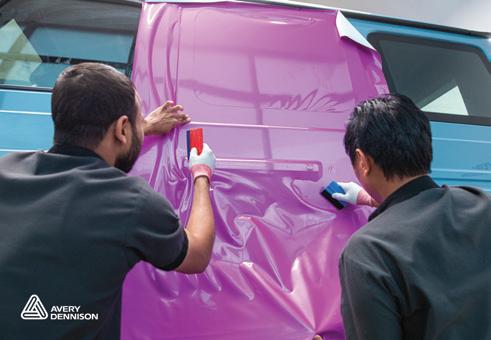
Supreme Wrapping Films provide hands-on experience and expert techniques designed to improve application speed and precision. By mastering these methods, wrappers gain the absolute confidence needed to handle complex installations efficiently. This targeted skill development directly reduces wrap turnaround times while ensuring you can consistently deliver the premium results customers expect.
Enjoy slide-ability, easy re-positioning and bubble-free application for faster installs and high-quality results
Command attention with this bold, standout colour collection
Print Across Every Application
How Ball & Doggett is building the infrastructure to support every corner of the print industry
For many print businesses, growth doesn’t look like doing more of the same; it looks like doing something different. A wideformat shop begins taking on textile work. A commercial printer adds industrial flatbed capability. A decorator expands into new substrate categories. The instinct to diversify is sound; the print industry rewards businesses that can say yes to more applications.
But diversification brings a question that doesn’t always get asked early enough: who is going to support all of it? Finding a single equipment partner capable of servicing wideformat, industrial and textile print requirements, with genuine depth across all three, has historically been harder than it should be. Businesses often find themselves managing relationships with multiple suppliers, navigating inconsistent service standards, and discovering gaps in local support only after a machine is installed and something goes wrong.
This is a pattern Ball & Doggett has been paying close attention to.
Over the past several years, the business has deliberately built out its equipment offering to span the full range of print applications, in response to what its customers are actually asking for. The result
is what the company describes as a complete print equipment ecosystem: wide-format, industrial, and textile solutions, available through a single partner and backed by a single national service infrastructure.
Rob Brussolo, General Manager Sign, Display & Digital at Ball & Doggett, says: “The conversations we’re having with customers have changed. It is no longer just about finding the right equipment: businesses want to know that whoever they buy from can properly support them. Not just at installation, but two years in, five years in. That’s what we’ve built with our national service team.”
The service dimension is not incidental to Ball & Doggett’s equipment proposition; it is central to it. With factory-trained technicians operating across all major states, the business is positioned to provide the kind of local, responsive support that Australian print operations depend on. In a country where distances are large and production timelines are unforgiving, the proximity of a service team matters in ways that are difficult to quantify until something goes wrong.
Customer feedback has made that reality plain. When print businesses evaluate new equipment, price and specification are rarely the only factors on the table. The availability of local support consistently emerges as a
deciding factor.
Brussolo continues: “We know from what customers tell us that local service and support can be the difference in an equipment decision. So every category we bring to market, we make sure the service capability is there to back it up.”
This commitment becomes particularly significant as businesses move into less familiar territory. Wide-format printing is well understood by most in the industry, but industrial print environments - with their higher volumes, specialist substrates and demanding production schedules - bring a different set of technical requirements. Textile solutions, meanwhile, represent one of the fastestgrowing segments in digital print, yet remain an area where specialist knowledge and reliable local support are still far from guaranteed.
Ball & Doggett’s position across all three categories means customers don’t need to compromise. Whether a business is establishing its first wide-format capability, scaling an existing industrial operation, or exploring textile printing for the first time, the intent is the same: to act as a genuine solutions partner rather than simply a point of supply. That means understanding the customer’s application before recommending equipment and remaining accountable for the outcome long after the sale is complete.
ORAFOL brings Architecture and Style
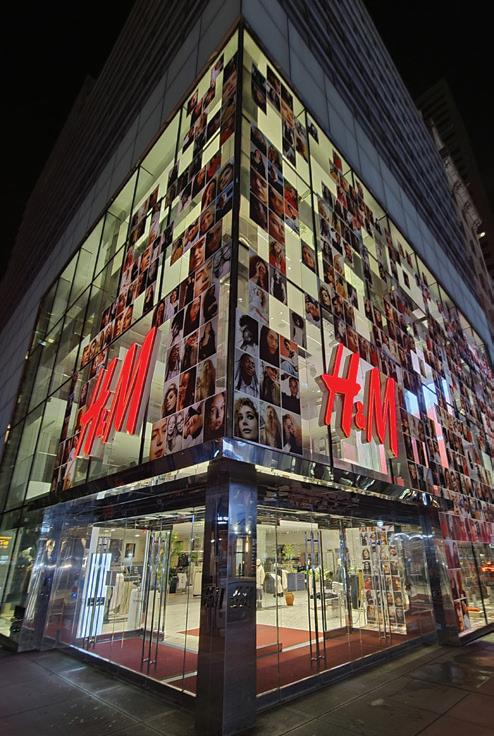
Whether it’s refreshing a retail store, branding a corporate lobby, outfitting a hotel suite or protecting high-traffic public areas, ORAFOL has long been at the forefront when it comes to providing the right architectural-grade products for the right purpose, offering an extensive portfolio of high-performance, self-adhesive film and laminate solutions engineered for excellence across glass, walls, floors and graphics/signage.
The ORAFOL Architectural Solutions range stands out for its ability to meet the broadest spectrum of needs, from eye-catching exterior signage and shop-front branding to sophisticated interior fit-outs in hotels, corporate offices, retail environments and small businesses. The products combine outstanding printability, conformability, and durability with innovative features such as RapidAir technology for bubble-free, effortless application on flat or slightly textured surfaces.
Alongside this, Cover Styl by ORAFOL Australia films deliver ultra-realistic depictions of natural materials – wood grains, stone, marble, and metal finishes – for walls, furniture, doors, and counters. These self-adhesive architectural films revolutionise fit-outs: purporting to be ‘up to 70% cheaper’ than traditional redecoration,
with no need for demolition, dust or lengthy downtime. Hotels, retail outlets and corporate offices can achieve a fresh, high-end look overnight, making Cover Styl by ORAFOL Australia the preferred choice for sustainable, economical refurbishments. This range also includes specially engineered 3D illusion films that create a striking illusion of depth and motion on perfectly flat surfaces, adding dynamic visual interest to feature walls and displays.
The upshot is that ORAFOL is definitely the smart choice for glass, walls, floors and graphics. Products such as ORACAL 352, 383, 551, 970RA, 8300 and 8500 deliver exceptional colour vibrancy, weather resistance and dimensional stability, and excel in exterior signage, exhibition displays and corporate branding.
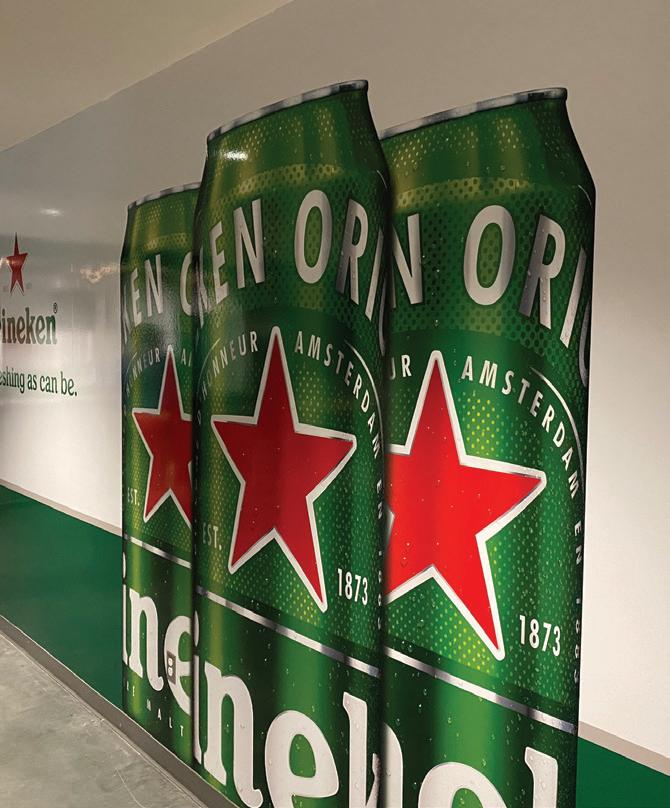
For interior walls, the ORAJET range –including 3165MHTRA, 3551, 3554M, 3954 and 3172XG, with ORAGUARD laminating films (210, 213, 215, 236) - are perfect for interior fit-outs in retail stores, hotels, corporate offices and exhibition spaces and designers can create custom murals, branded feature walls or subtle texture effects, knowing the finished surface will resist scratches, scuffs and fading.
ORAJET 3162 and 3169, ORACAL 1663, typically used again with ORAGUARD laminates (210, 213, 215, 236, 250AS, 255AS) are more
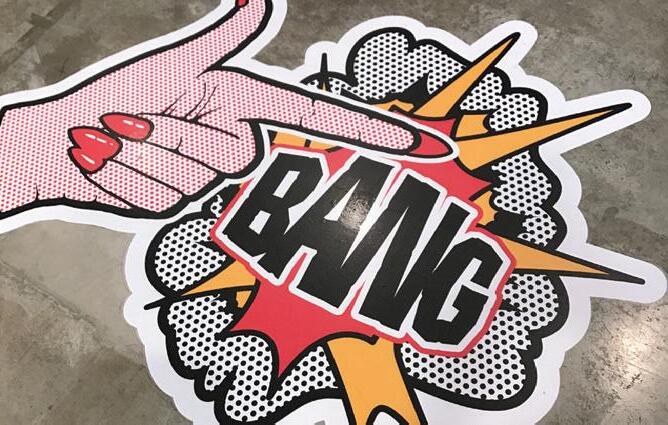
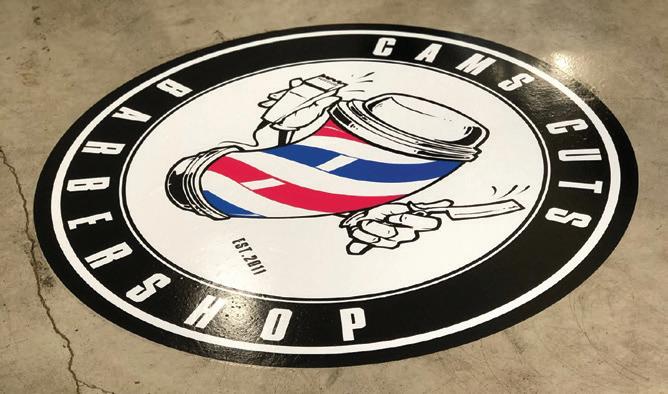
specifically engineered for the rigours of foot traffic, offering slip resistance where required and outstanding abrasion resistance on retail floors, in hotel lobbies, or exhibition halls and corporate corridors. They allow brands to create immersive pathways or temporary promotions, and the anti-slip variants ensure safety without compromising on aesthetics.
Finally, glass surfaces present unique opportunities for light play, privacy and branding and ORAFOL’s dedicated glass films –ORACAL 8800, ORACAL 8610, ORAJET 3676, the extensive ORACAL Decorative Window Films collection (W001, W002, W004, W014, W018, UV05, UV10, UV11, G002, WM20 and the DX series) plus ORAJET 3325F – deliver everything from elegant etched and frosted effects to UV-blocking privacy solutions and vibrant coloured graphics. These films are perfect for office partitions, retail shop fronts, hotel bathrooms and conference rooms, where they control light, enhance privacy and add sophisticated visual interest without the expense or permanence of etched or sandblasted glass.
This unique combination of premium quality, an extensive product range and real-world performance clearly sees ORAFOL as a preferred partner for architects, installers and specifiers across Australia and New Zealand.
Endless Possibilities
WALLS
GLASS
FLOORS GRAPHICS
Fibre First:
Why Australian printers are switching from PVC to Ace Board
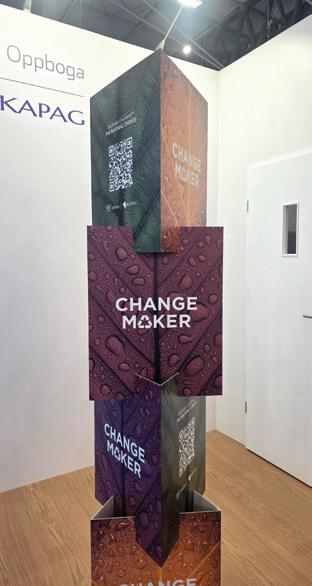
Long before sustainability became a boardroom priority, Spicers Australia has quietly championed a fibre-based alternative to PVC and polypropylene rigid sheet products. Now, with pressure mounting on businesses to improve their supply chains, that product is having its moment.
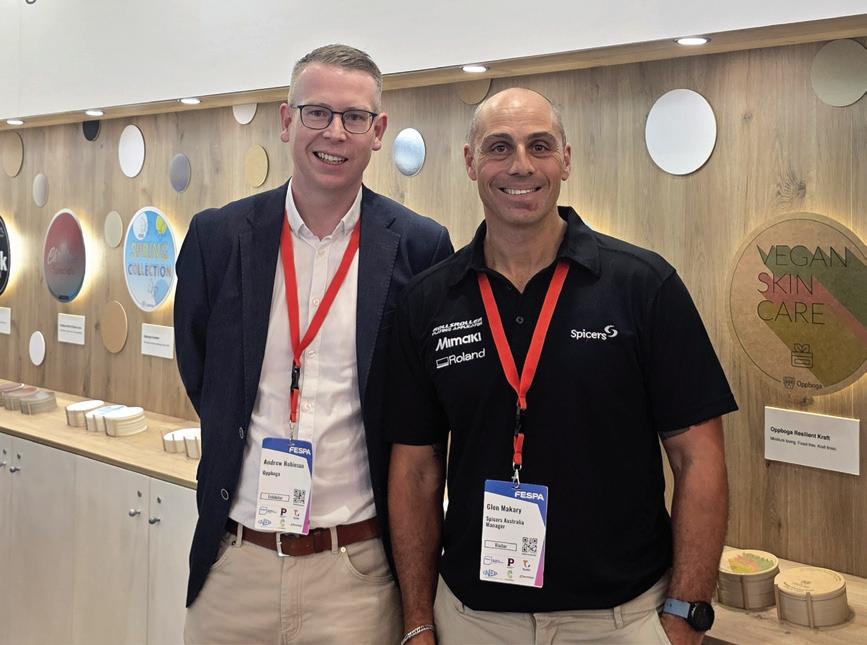
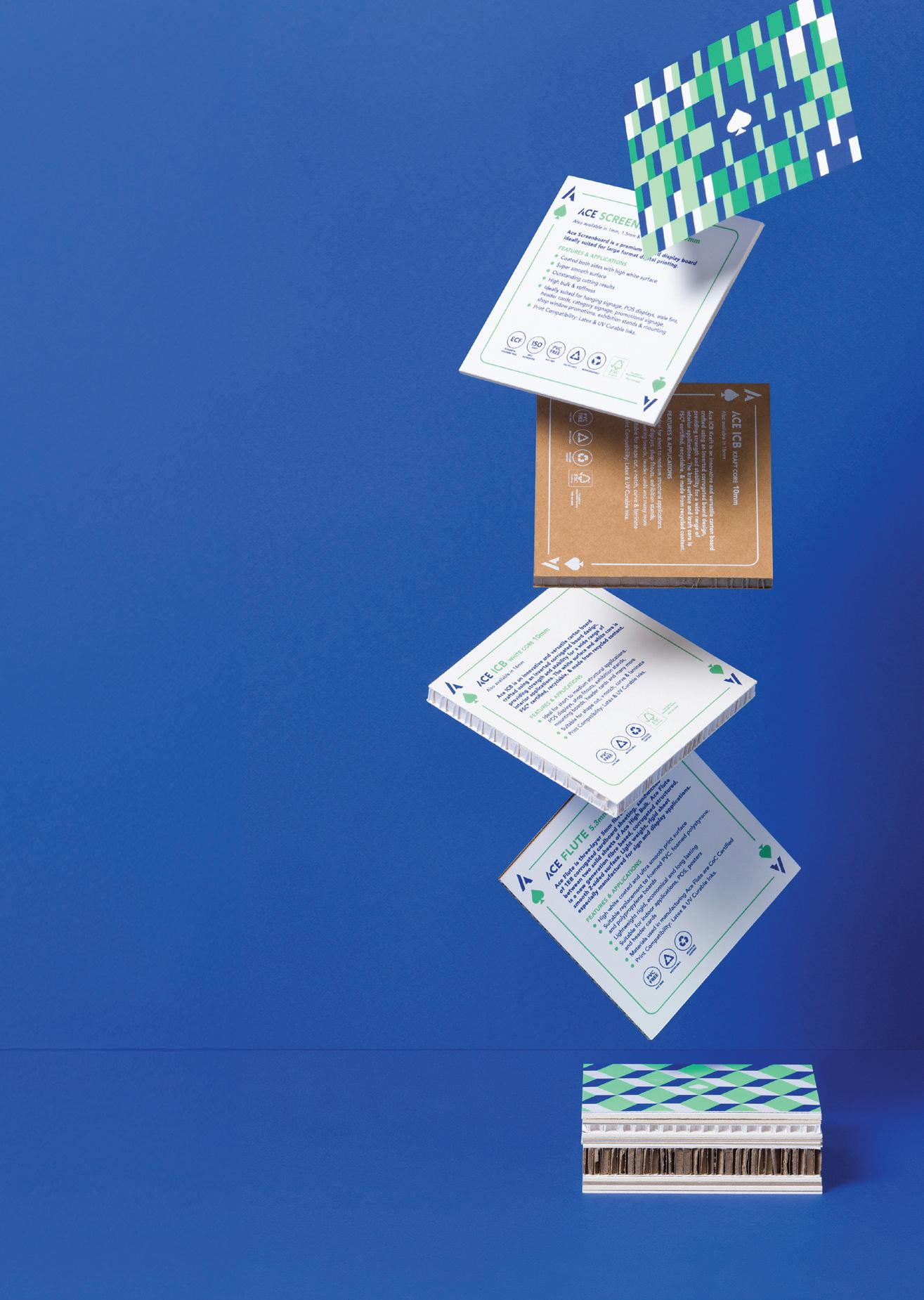
Ace Screenboard isn’t a new product; Spicers has distributed the fibre-based rigid sheet for over 20 years, originally through Dalton Paper. Available in thicknesses from 1-4mm, it’s positioned squarely as a like-forlike replacement for PVC and polypropylene products. The primary market has traditionally been retail point-of-sale - hanging signs, dump bins, and rigid displays - but that picture is shifting. Glen Makary, Key Account Manager at Spicers, says: “Our volumes would be double, if not triple, what they were in the past, and the range of applications keeps growing, not only point of sale, but horticulture, signage, events, exhibitions.”
The outdoor variant, Ace Outdoor, carries a wet-strength formulation rated for outdoor use up to eight weeks, with thicknesses from 0.9mm to 2.2mm, a specification that has opened up horticultural labelling as a fastgrowing category.
Swedish manufacturer Oppboga makes
Ace Screenboard, and it’s their production model that gives Spicers the confidence to move well beyond a generic ‘it’s recyclable’ pitch. Andrew Robinson, Managing Director of Oppboga explains: “It is a relatively simple process in terms of the components. We source fibre -based materials from Scandinavia, and manufacturing is in Sweden, so all raw materials come from Nordic countries and local forestry. We laminate using a water-based glue, and we only use electricity in our process, no coal, no gas, no other fossil fuels. That electricity is 100% renewable. The result is a product whose carbon footprint on the input side runs roughly 60 to 70% lower than that of the oil-based plastic sheet it replaces.”
The fibre itself comes from managed forestry operating under Sweden’s century-old Forestry Act, which mandates replanting at a ratio of roughly two to three trees for every one felled. Robinson explains: “The best way to save the forest is to maintain it, and part of that is using a piece of it to enable it to grow and be stronger. When you take out the weaker trees, the core goes to construction, making houses, and the scrap goes through the paper-making process. It’s a genuinely sustainable model.”
“It’s not just recyclable; it’s easy to recycle. Paper recycling streams have existed for
many, many years. It comes back to life as something else.”
That distinction carries real weight in the Australian context. In Europe, soft PVC can be incinerated at scale in waste-to-energy facilities, at least limiting landfill impacts. Australia doesn’t have that infrastructure, which means PVC rigid sheet typically ends up in the ground.
For print businesses whose major clients are beginning to scrutinise Scope 3 emissions across their supply chains, that’s an increasingly uncomfortable position to defend.
To assist in quantifying the environmental impact, Oppboga provides carbon data that Spicers’ account managers can use to demonstrate their impact. “So when we go to print companies, agencies and end users, we’re talking actual numbers,” explains Makary.
For Robinson, transparency is critical: “We put the cards on the table, explaining here’s your manufacturing process, here’s your shipping process, that’s your carbon footprint. Compare it to what you use today.”
For print and signage businesses fielding sustainability questions from their own clients, that kind of documented, auditable data is increasingly worth more than a certification sticker on a product spec sheet.
Xanita Engineered Fibreboard: A structurally sound choice
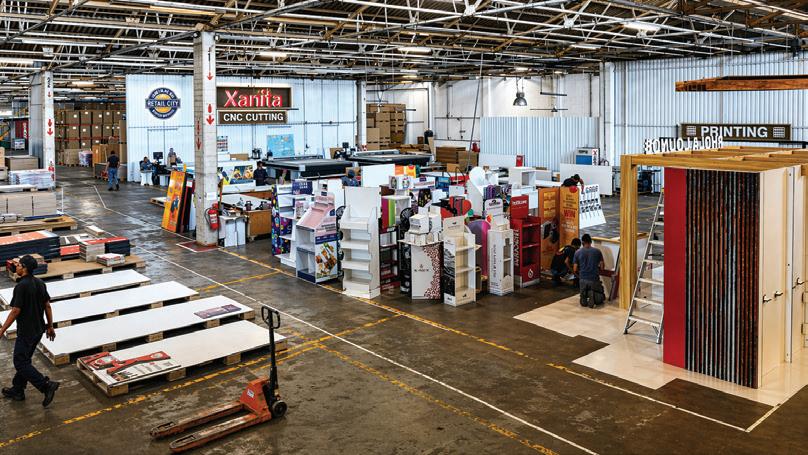
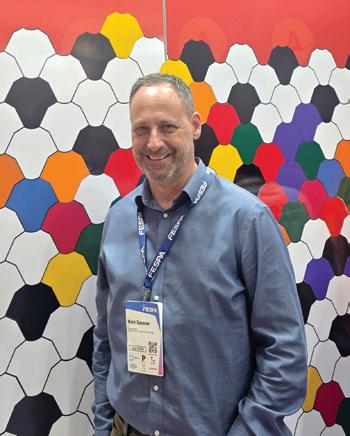
Mark Canavan, Graphic Art Mart Product & Vendor Relations Manage, notes: “When it comes to display and exhibition applications, traditional rigid substrates often force a compromise. Strong, durable materials such as MDF are heavy and difficult to handle, while lightweight options like corrugated and honeycomb boards lack the structural performance and durability required for demanding applications. Foamed core PVC offers strength and lightness, but falls short on sustainability, with limited end of life options.”
“By contrast, Xanita’s engineered fibreboard delivers structural performance, easy handling, and sustainability in a single substrate that can be used in place of these conventional rigid materials.”
Graphic Art Mart (GAMART) is the exclusive Australian distributor for South African-
based company Xanita, a world-leader in the production of engineered fibreboard and has recently launched two of Xanita’s most popular fibreboard solutions: Xanita Premium Print Board and Xanita Aspect Print Board, both of which are specially engineered fibreboards designed for:
• strength: load bearing capability with a high strength-to-weight ratio;
• processing: clean and efficient CNC routing;
• fabrication: can be slotted, tabbed and folded without need for metal frameworks;
• handling: flat-packable for easier shipping and handling;
• visual quality: consistent printing for professional finishes; and
• durability: closed-cell core and more moisture resistance than other fibreboard alternatives for extended performance
Xanita Premium Print Board is a lightweight, fibrebased composite Board with smooth, coated surfaces which are optimised
for direct digital printing, supporting Latex, Solvent and UV ink technologies, ensuring the consistency and quality required for premium finishes.
Constructed from a high crush strength recycled paper core, sandwiched between printable white liners on both sides, Xanita Premium Print Board has been engineered specifically to achieve the same sort of structural performance typically associated with more traditional rigid materials such as PVC and MDF, to deliver premium semipermanent displays and builds. An excellent strength-to-weight ratio makes the Board perfect for POS and 3D displays, exhibition stands, event branding, signage and lightweight in-store furnishings, delivering outstanding strength and rigidity while remaining significantly lighter than traditional rigid substrates and also making it well-suited for mounting self-adhesive media and lamination.
sustainable alternative to PVC or similar, one of the main advantages of the Xanita Premium Print Board Board is that it is very easy to process and fabricate…it can be CNC-routed, V-grooved, mitre-cut, folded, curved and shaped with a high degree of precision. Panels can be slotted and tabbed together without additional tools, adhesives or frameworks too, enabling fast, tool-free assembly, so installation and dismantling of stands and displays is both quicker and easier than those constructed from more conventional rigid substrates.”
Xanita Aspect Print Board is a lightweight, fibre-based composite board which delivers a cost-effective fibreboard solution. Designed for POS displays, short-term retail and campaign signage, it delivers great print performance and a strength-to-weight ratio superior to alternative lightweight rigid materials such as corrugated boards and
foamed core PVC boards.
The smooth white surfaces – with no dimpling - are optimised for direct digital printing, supporting Latex, Solvent and UV ink technologies, and are also suitable for mounting self-adhesive media and lamination. This ensures consistent printing as well as excellent mounting across a wide range of production workflows.
Xanita Aspect Print is easy to process and can be CNC-routed, laser cut, curved and shaped with precision. Its high strength-toweight ratio also makes it easy to handle and transport, making Xanita Aspect Print Board a strong choice for Event Branding, interior signage and other 2D applications.
Its paper-based composition also means that the Board is recyclable as normal paper and cardboard waste, making disposal after use hassle-free and more environmentally friendly.
James Beattie, CEO and Founder of Xanita,
who recently came out to visit the GAMART team in Sydney, also bringing across some of the company’s nproduct specialists to train the GAMART team up on the Xanita Board nuances, explains: “Xanita was founded on the belief that sustainability and innovation should go hand in hand. Our mission is to push the boundaries of design with smarter, more sustainable solutions - helping businesses reduce their impact without compromising on creativity or performance.”
“We’ve been around for nearly two decades now and during that time we definitely feel we have re-defined what is possible with engineered fibreboard. What started as a vision to replace traditional materials with a lightweight, fully re-pulpable alternative has grown into a global movement toward more sustainable design solutions and our mission is to keep questioning the status quo, which makes Graphic Art Mart an excellent fit as a local partner.”
A New Summa Era, giving Pozitive vibes
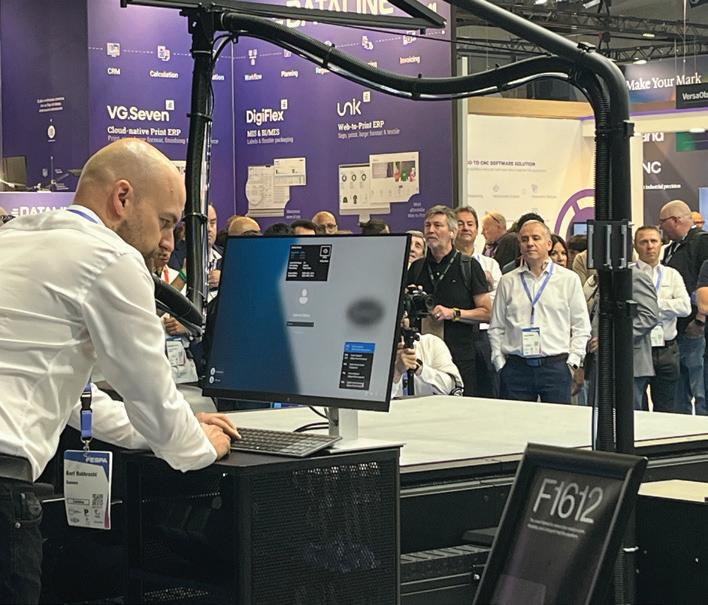
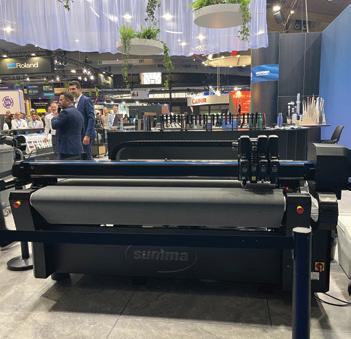
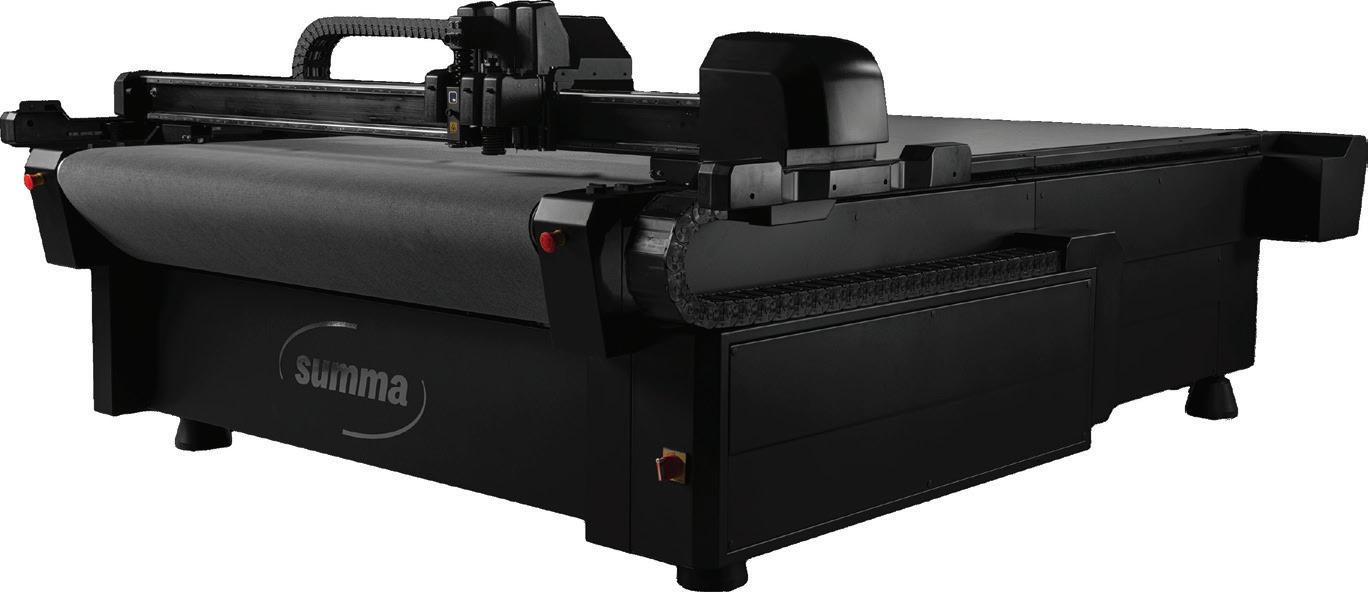
FESPA Barcelona saw the official launch of the new Summa F Series Vantage, nextgeneration flatbed cutter platform. Pozitive Sign & Graphics believes this product could not have come at a better time for the Australian sign, print and finishing industry. Jobs are shorter, deadlines are tighter, materials are more expensive and skilled operators are harder to find. In that kind of environment, a flatbed cutter cannot just be fast on paper; it needs to improve the whole workflow.
This is what the Summa F Series Vantage is all about: designed specifically to remove or reduce the small delays that slow production. The few minutes spent setting up a tool, the pause between jobs, the wrong file being loaded, the extra lift of a blade that does not need to happen. On their own, these things seem small, but across a full week of production, they quickly add up.
With the F Series Vantage, Summa is claiming productivity gains of up to 40% across the workflow. Its new motion control is faster and more efficient. The machine uses a smart homing sensor to find its zero point faster. Automatic Device Calibration (ADC) creates a detailed 3D profile of the blade, allowing for even more accurate calibration and alignment, increasing tool life and providing cleaner cuts. Blade recognition helps stop the wrong blade being used on the wrong material. The new media thickness sensor measures material height without touching it, using ultrasonic sensors to measure the media thickness in
a split second as the carriage moves across the surface, helping reduce unnecessary tool movement.
It is not just about making one part of the job faster. It is about making the whole process smoother.
The tooling side is just as important. The F Series Vantage has been designed for businesses that need flexibility, not a machine that only does one type of work well. The head can carry up to three modules at once, helping reduce tool changes on more complex jobs. The new Fast+ tangential module is built for speed on detailed work, while the Core+ module is the all-rounder for mixed production.
For businesses working with rigid materials, the new 3.7kW High Frequency Router Module is a big step forward, capable of running up to 60,000 RPM. That opens the door to more work with materials such as aluminium composite panel, acrylic, PVC, MDF, and other rigid substrates. For many sign and display businesses, this is where the opportunity gets interesting. It is not just about doing current work faster; it is about being able to say yes to more jobs.
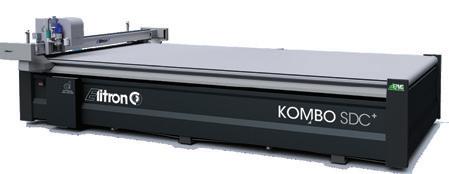
The Vantage range launches in two models. The F1612 is the compact workhorse, with a 1600x1200mm work zone suited to businesses that need serious capability without giving up too much floor space. The F1625 is the more versatile production table, with a 1600x2500mm work zone, 8 vacuum zones and the ability to handle 1220x2440mm rigid board workflows.
For Pozitive Sign & Graphicsselling, supporting and servicing Summa cutters in Australia since 1992 - this launch is especially significant. With more than three decades of experience working with the machines, the software, the tooling and the Australian businesses that rely on them every day, Pozitive recognises that choosing a Summa is not just about picking a model from a brochure: it is about understanding the customer’s workflow, materials, space, future plans and support needs. It is about installing the machine properly, providing complete training, and being there after the sale when support is needed.
The new Summa F Series Vantage, available in Australia later this year, has delivered a serious step forward in flatbed cutting. Pozitive is ready to help bring this next chapter to life.
MAKE THE MOST OF YOUR VISIT TO:
Competitions and demonstrations
Known as Australia’s leading event for suppliers, end users and decision makers in the visual communications sector. For more than 30 years, Visual Impact Expo has been the most valuable in-person event for the sign, graphics, digital print and visual communications sector, and the best source of intelligence, ideas and inspiration to help build business success.
Winners of the 2026 National Awards will be recognised at a Gala Presentation Dinner. Featuring well-known entertainer Dave O’Neil as the MC, guests can expect, celebrations, entertainment and a gourmet three-course meal.
DATE: 6pm – 10:30pm, Thursday 3 September
VENUE: Hall 2A, Sydney Showground, Sydney Olympic Park
TICKETS: $253 inc gst (or table of 10 for $2300) EASY SIGNS 2026 NATIONAL SIGN & GRAPHIC AWARDS DINNER
25+ speakers across 16 sessions
The inaugural Connect Conference will bring together independent local and international experts and thought-leaders to provide vital information and insights on economic conditions, industry trends, business leadership, renewables and recycling trends, and the big issues, which can impact the market and create new challenges and opportunities.
KEYNOTE SPEAKERS AND KEY PANELISTS:
Gillon McLachlan, CEO TabCorp in conversation with Matt Aitken, MD IVE Group
Keynote speaker Steve Vamos, Technology Leader & Author
Panel discussion featuring Megan Lilly, Deputy Commissioner, Jobs & Skills
Australia
Keynote speaker Dr Craig Emerson, Economist & former politician
Keynote speaker Dr David Cooke, ESG Industry leader & Author
The Dome & Hall 2A, Sydney Showground, Sydney Olympic Park
HEXIS PPF experience A “cut and dry” affair
The market for Paint Protection Films (PPF) continues to grow, with an increasing number of vehicle owners seeking longerterm protection against general wear and tear, surface damage from pollutants, and stone chips and scratches. As a manufacturer of PU and GPU films (i.e. polyurethane films prepared by a Green process), HEXIS labs have consistently been at the forefront of the development of PPF technology.
The Bodyfence X range is the latest development in the HEXIS clear film range, with improvements to self-healing - now in ambient temperatures, without the need for heat - and better hydrophobic performance and adhesion. With gloss, satin & matt finishes, along with BodyXFAST, BFWIDE & BodyfenceXTRM, HEXIS offers a complete range of clear films to protect and enhance the original manufacturer’s colours.
New developments in colour PPF technology are also on the rise, and HEXIS has recently added eight more colours to its CANDYFENCE
PPF colour range. HEXIS is also an early innovator in providing a colour-matching service (with a minimum of 300 lineal metres) and can match to PMS or any colour sample. This also adds to the gloss and matt black colours available.
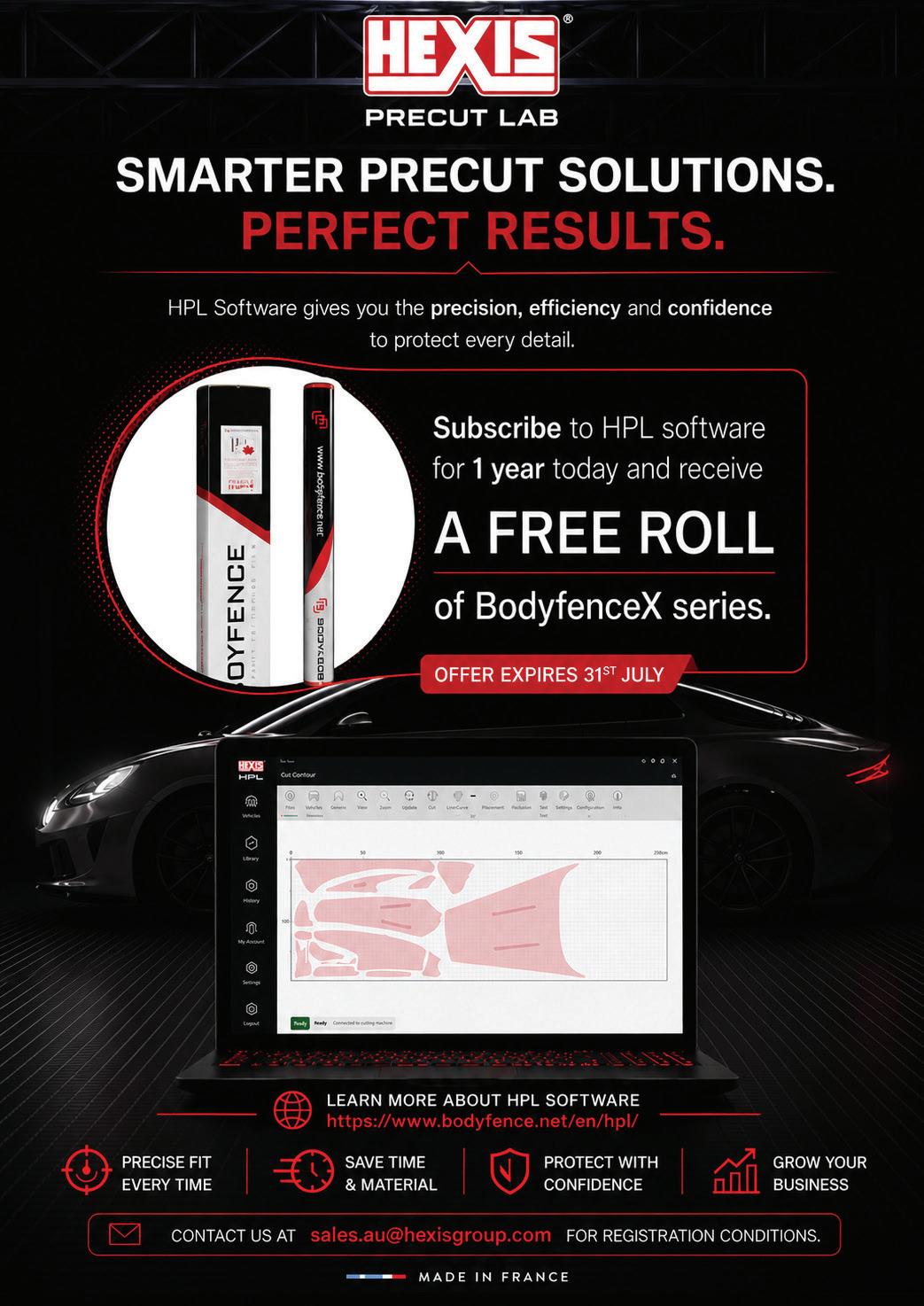
Along with developments in the films itself, HEXIS has recently enhanced its pre-cut software capability and is now able to offer an online Precut Lab program that houses close to 30,000 vehicle kits/patterns for over 120 listed car brands. Ian Parsonson, HEXIS Australia Managing Director, says: “The HPL essentially enables wrappers and installers to work out all the material they will need for a fully wrapped vehicle or just the edge cutting, and we’re confident that smart users of the software will be able to save up to 20% of the media by nesting the patterns really well.”
The HEXIS Precut Lab can be viewed online, is easy to navigate, and offers free trials and multiple subscription options. Parsonson adds: “It really is an Open Platform, with no restrictions on the type of product you’re using – it doesn’t even have to be HEXIS PPF.
But it is just a really good system for enabling our customers to optimise their PPF use, letting them bulk-install for bonnets or doors, or working out the exact material required for more challenging areas.”
And speaking of more challenging areas, another exciting venture launched recently by HEXIS is its search for the best PPF installer in the world.
A global HEXIS competition, which will see an all-expenses-paid trip to HEXIS France HQ for the top Aussie wrappers that Parsonson and HEXIS Australia uncover over the next few PPF installation ‘battle’ months.
The qualification phases of the competition are taking place in 8 European countries, as well as the USA, Australia, and the Middle East, with 30 participants in each area competing in demanding technical challenges, and 5 winners from each area ultimately selected to represent their country in the final in France.
Parsonson adds: “I’ve already witnessed some exceptional talent around the country, so it would be great to see an Aussie wrapper going out and winning this thing.”
Struddys Apparel ‘first
in world’
to say
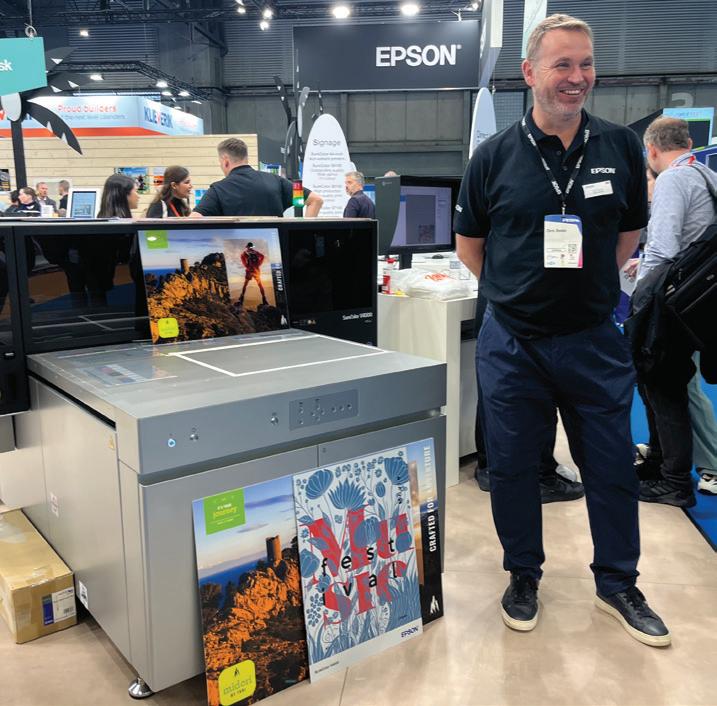
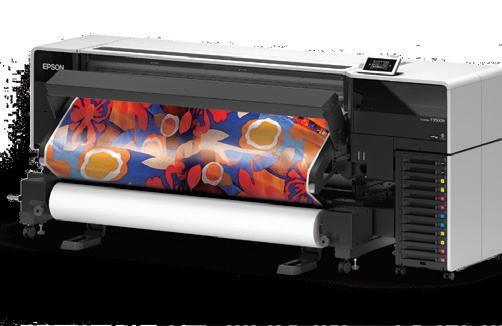
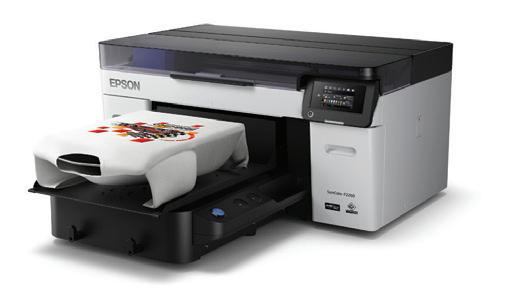
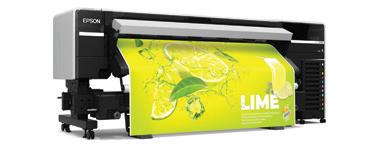
YES to new Epson SureColor F20060
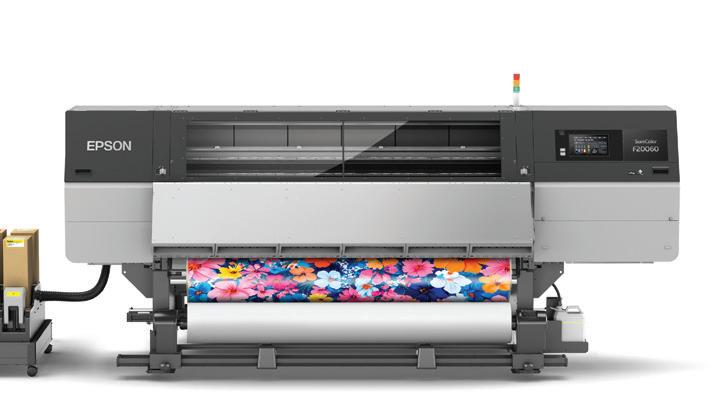
Against the claim that Epson’s new 76-inch industrial dye sublimation printer, designed for high-volume textile production environments, facilitates significantly increased productivity – both through an expanded printhead configuration and faster printing speeds of up to 300 m2 /h –Queensland sportswear and apparel printer Struddy’s Apparel is the first customer in the world to say YES to the new solution.
Shuhei Sato, Senior Product Manager, Professional Print Solutions at Epson Australia, says: “Textile manufacturers continue to demand higher productivity, consistent output quality and reliable day to day performance. The SureColor F20060 builds on the strengths of its predecessor, the F11060 platform, while delivering a clear productivity increase, with higher throughput that supports faster turnaround times in industrial production environments.”
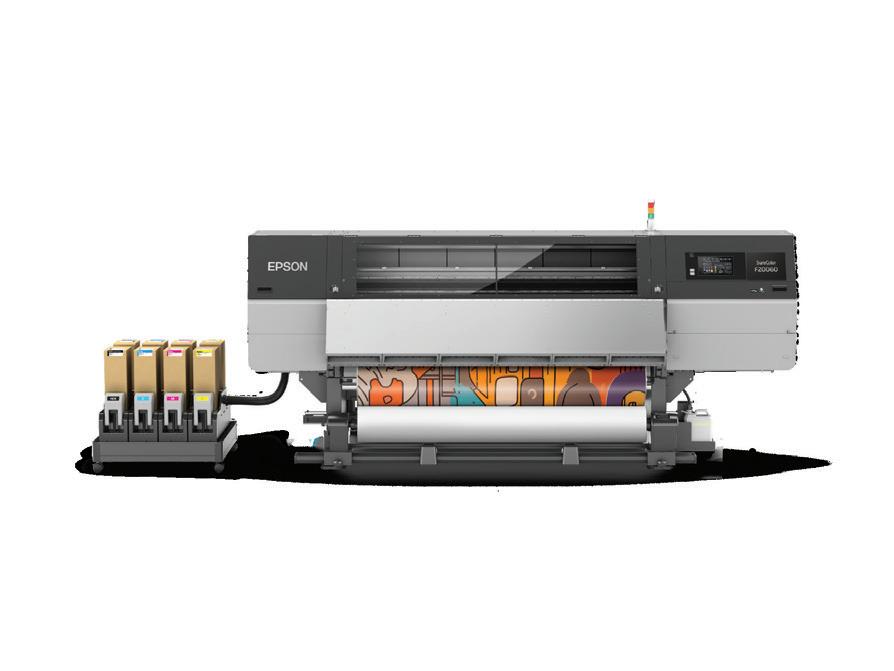
The SureColor F20060 features eight PrecisionCore MicroTFP printheads, enabling faster throughput without compromising image quality or stability. An optional Jumbo Roll system, supporting media rolls of up to 300 kg, also allows for extended, uninterrupted printing and reduced downtime due to fewer media changes. This makes the SureColor F20060 particularly suitable for high-volume manufacturing environments where continuous operation is critical.
To ensure consistent print quality at high production speeds, the printer incorporates Epson Precision Dot Technology, combining half tone processing, LUT optimisation and Micro Weave technology to deliver accurate colour reproduction, smooth gradations and reduced banding. Advanced media handling features support reliable, repeatable output, including easy media loading, Advanced Auto Tension Control (Ad-ATC) for stable media feeding, and an integrated dryer designed to minimise ink transfer and reduce wrinkling during operation.
A 9-inch LCD touch panel provides an intuitive user interface, while integrated auto adjustment technology, including an RGB camera system, helps maintain consistent print quality across different media types.
The SureColor F20060 runs on a bulk ink system with 10-litre or 3-litre ink boxes and hot-swap capability to minimise interruptions during long print runs. User-replaceable printheads further reduce maintenance time and improve operational efficiency.
Specialising in custom team wear, sportswear and branded garments, Struddys Apparel has steadily grown to become one of Australia’s leading vertically integrated apparel manufacturers. Its continued growth trajectory necessitated increased productivity, making the Epson SureColor F20060 dye sublimation platform a natural next step. A strong example
of organic growth through dye sublimation, Struddys Apparel started with a single 64inch printer (delivering approximately 20 m2 /hr) and later expanded to three units as customer demand increased. But the company quickly reached the practical limits of adding smaller-format devices, so it opted for a 76inch Epson SureColor F10060: a production platform capable of up to 255 m2 /hr or, more pertinently to Struddys, up to 100 m2 /hr in apparel production. Continued success as an Australian-made production facility has now seen Struddys add a second 76-inch platform with the new SureColor F20060, enabling them to support even faster turnaround times and accommodate continued growth. This additional shift has given Struddys Apparel a more effective production model: high-volume work can be concentrated on the largerformat platform. At the same time, its 64-inch printers remain ideal for short runs, custom programs and bespoke jobs.
Struddys’ journey from a single-printer operation to a scaled production – now with both its specialty output and high-volume work underpinned by Epson technology –reveals a strong template for how investment in the right technology at the right time can transform a company’s manufacturing capability; in this case, clearly positioning Struddys Apparel ahead of the curve in Australian apparel production.
M o re colo u r
M o re c h o i ce s
M o re “Y ES ”
l
Enjoy more v ibra nt a nd accurate colour with bet te r image qualit y a nd faste r production
spe e ds. Be nefit f rom flex ible me dia suppor t, ad va nce d manage me nt tools, and re duce d ope rational costs with up to 5 ye ars compre he nsive se r v ice cove r, including pr inthe ads Whether it is dye sublimation, DTG or DTFilm, Epson of fers superior solutions for your business
L e a r n m o r e a t ww w e p s on c o m a u / f a b r i c
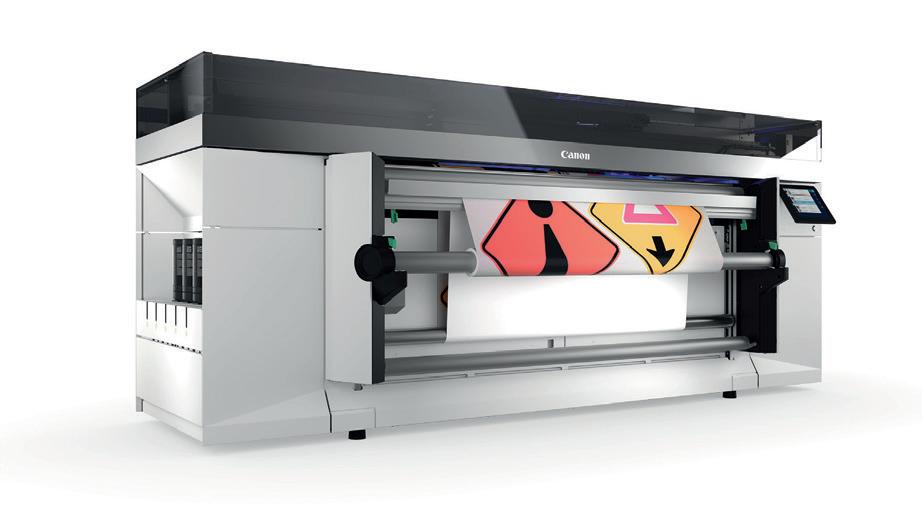
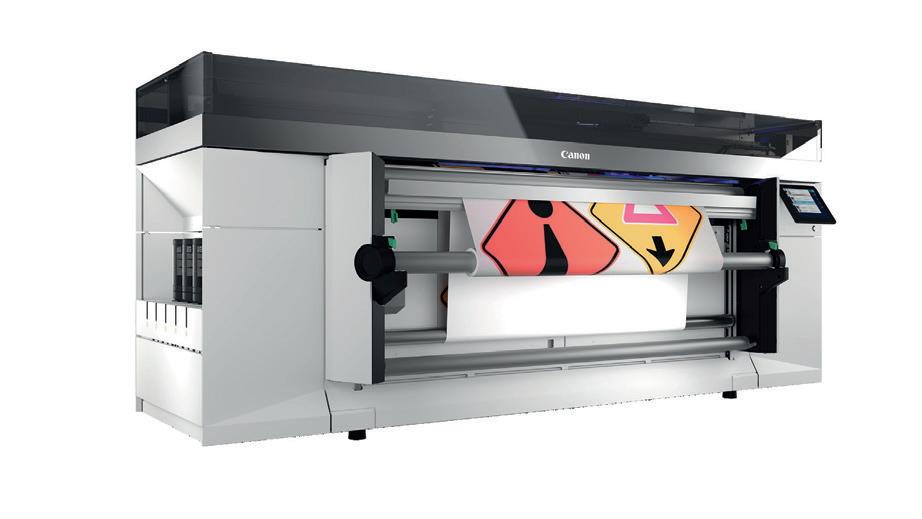
Canon Colorado M-Traffic Digital Print Solution
Heralding a new era in modern Traffic Sign production
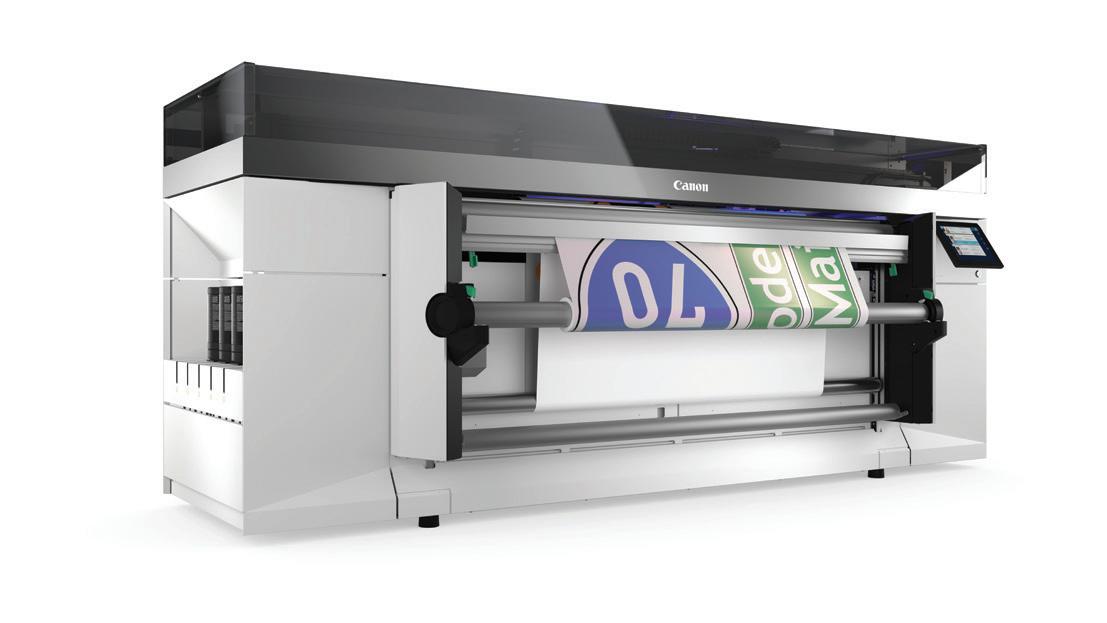
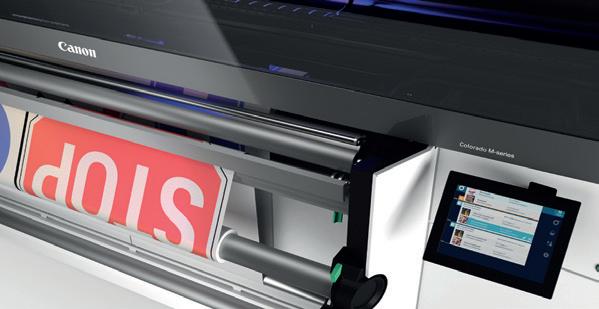
The Canon Colorado M-Traffic Digital Print Solution is officially here, delivering a new chapter for modern Traffic Sign production. This fully certified printing solution combines the power of 3M, Canon Production Printing, and SA international (SAi). It encompasses printers, ink, software, and reflective sheeting and overlay films – all backed by the trusted 3M™ Diamond Certified Manufacturer and MCS™ for Traffic warranty.
The Canon Colorado M-Traffic Digital Print Solution with SAi Flexi Complete 3M Authorised Traffic Edition software is fully qualified for use with 3M reflective sheeting and overlay films. It can produce seven regulated traffic colours in compliance with relevant regulations, making it a modern, cost-effective upgrade or complement to existing digital sign printing equipment globally.
Key features and benefits of the Canon Colorado M-Traffic Digital Print Solution include:
• versatile production - fast and efficient production of custom and standard, regulated and non-regulated roadside safety and tourism signage;
• regulatory compliance – the solution produces seven regulated traffic colours, helping ensure adherence to all relevant regulations;
• reliability - the Canon Colorado design helps ensure high uptime and consistent output from print to print and year after year;
• efficiency - user-friendly software helps maximise speed and accuracy for traffic signs of all types; and
• peace of mind - the 3M™ Diamond Certified Manufacturer warranty provides top-of-theline coverage for regulated, finished signs using the specific combination of 3M, Canon and SAi materials and equipment.
A World-Class solution
Over and above the key features and benefits, the fact that this solution is underpinned by a strategic collaboration between three world-leading giants in their respective fields speaks volumes about the opportunities it offers, from transportation safety and reflective sign sheeting to imaging, digital printing, and software. This includes:
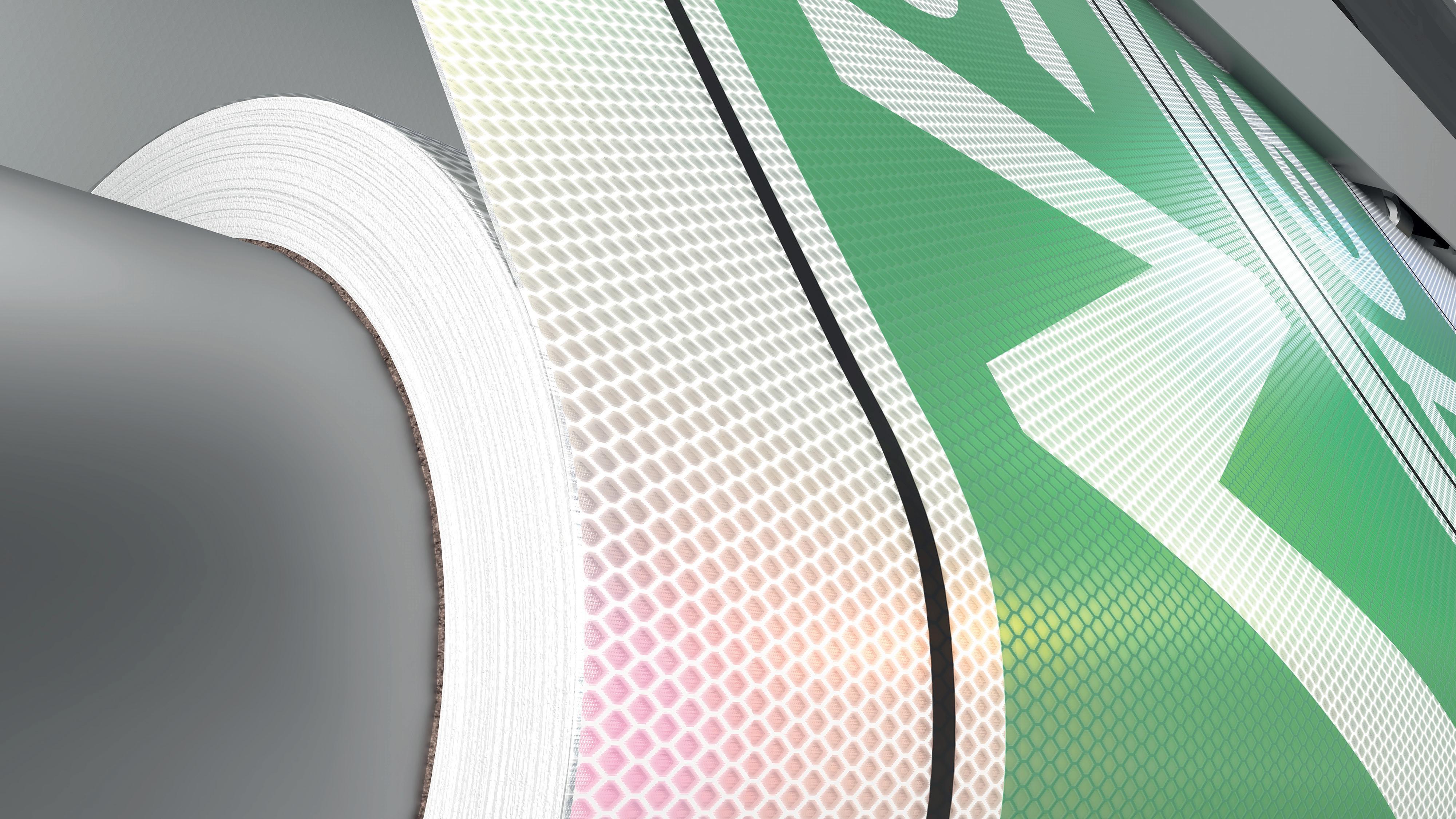
• 3M : whose full range of reflective sign sheeting and overlay film solutions includes 3M™ Diamond Grade™ Reflective Sign Sheeting, which meets the Class AS/NZS 1906.1 2017 standard for Class 1100 retroreflective sheeting. Also, the 3M Diamond Certified Manufacturer and MCS for Traffic warranty covers retro reflectivity retention and guaranteed traffic colours for up to 12 years from the date of manufacture.
• Canon Production Printing : widely recognised as a global leader in consumer and professional imaging, CPP is obviously at the core of this Canon Colorado M-Traffic Digital Print Solution collaboration. Built on the robust Colorado M-series platform, the M-Traffic features a 1.6m (64-inch) rollto-roll design powered by patented Canon UVgel technology, offering a wide colour gamut, odourless ink, and instant drying at low temperatures.
• SA international (SAi): the SAi Flexi Complete 3M Authorised Traffic Edition software is specifically designed for producing printregulated and non-regulated traffic signs. It includes the Flexi Production Manager, built on a robust 64-bit RIP with a straightforward interface for easier production even on traditionally difficult-to-print jobs. A suite of colour management tools allows quick colour replacement, mapping spot colours, ICC profiles, and more.
Together, 3M, CPP and SAi, through the Canon Colorado M-Traffic Digital Print Solution, are committed to delivering a new journe y in Traffic Safety Innovation, presenting groundbreaking solutions that help enhance road safety: combining technology, reliability and industry expertise to support the next generation of modern traffic sign production.
Versatile
Regulatory
Reliability:
Efficiency:
User-friendly Sai software helps maximise speed and accuracy for traffic signs of all types.
Versatility and AI dominant themes at FESPA 2026
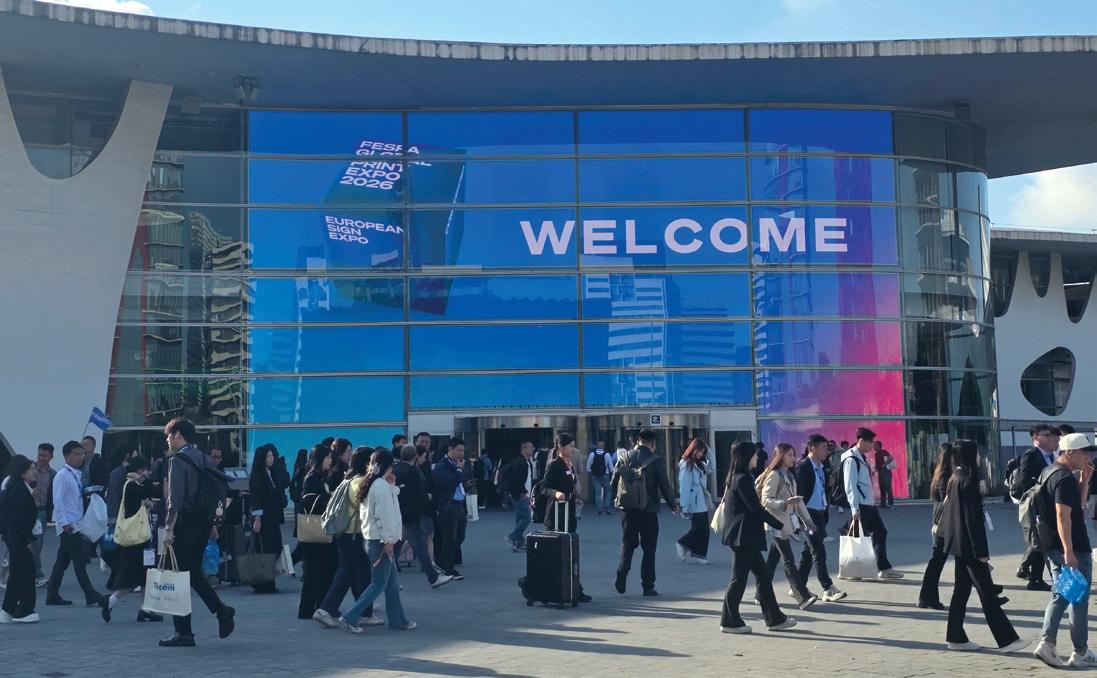
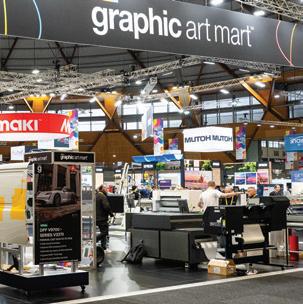
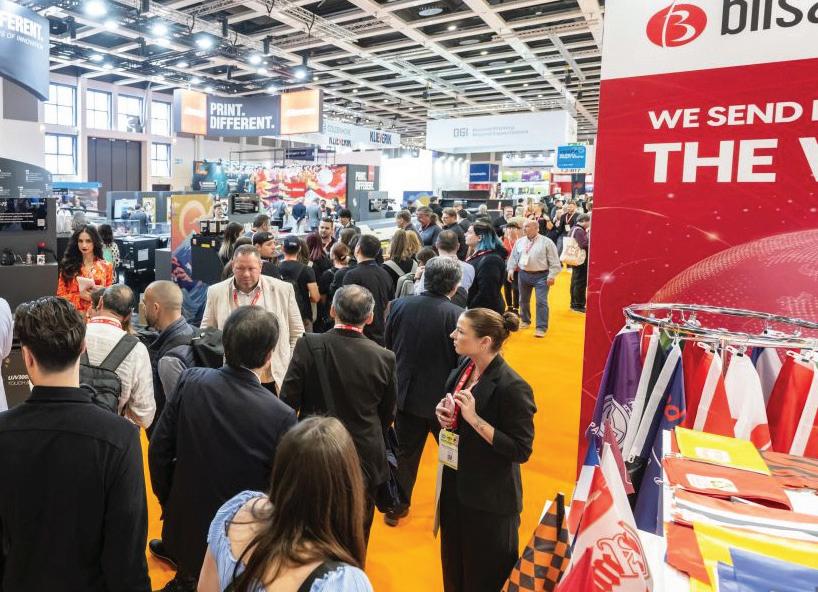
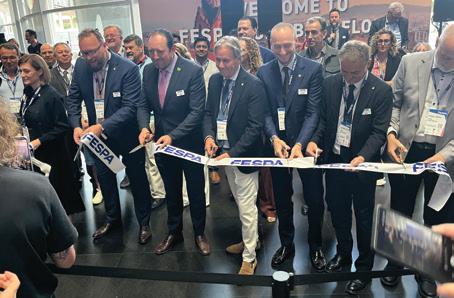
With over 15,000 international visitors turning out (10% up on last year), from 126 different countries, to view the wares of over 550 exhibitors and bringing a collective median visitor budget of €3.5 billion, there was more than enough to excite any Aussie and Kiwi PSPs making the trip to FESPA
Global Print Expo 2026 in Barcelona.
With five co-located events - European Sign Expo, Personalisation Experience, WrapFest , Corrugated and Textile – along with the various show conferences and wrap competitions, the event enjoyed a fluid hustle and bustle displaying dominant themes in the context of the versatility of today’s equipment and the
advances of AI and automation.
For signage, vehicle wrapping, industrial printing, and graphic arts businesses across Australia and New Zealand, the show offered a clear view of where investment should be directed: highly automated, flexible systems paired with advanced software and environmentally responsible consumables.
ON THE STANDS
Here is a sprinkling of the products and tech seeping out from some of the more prominent players.
AGFA
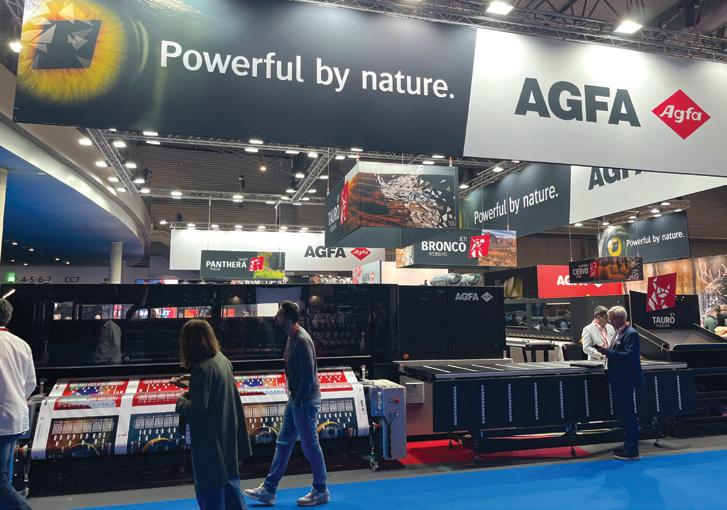
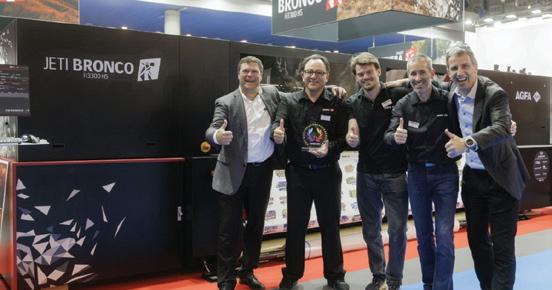
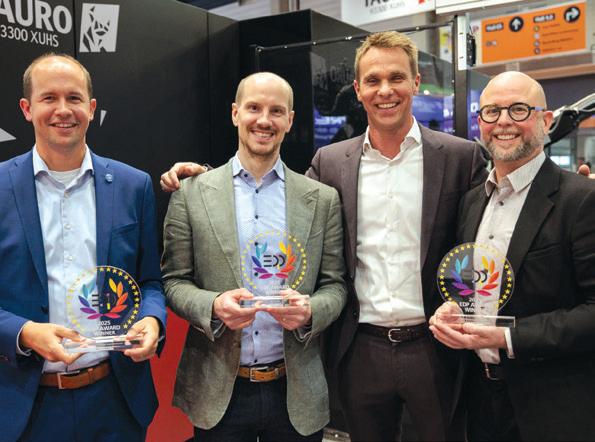
A mechanical Buckin’ Bronco was a feature of Day One on AGFA’s stand, to amplify the European debut of its new 3.3m Jeti Bronco H3300 HS hybrid wide format UV LED inkjet press designed for versatility and high productivity ‘to bridge the gap between our Anapuma Ciervo and Jeti Tauro range’. By Day Two, the rodeo gimmick itself had been closed down - after at least one visitor left with an LTI (Long Term Injury) and a consolation cowboy hat – but thankfully, the real workhorse, the Jeti Bronco itself, was still drawing the crowds without the need for horsing around, latterly receiving an EDP Award as the Best Flatbed/Hybrid 400 m²/h
printer at the show. Indeed, plenty of interest all round in Agfa’s ‘Powerful by Nature’ range of wide-format inkjet solutions which also included the fully automated Onset Panthera flatbed press, shown with its autoloader and unload robot alongside the Jeti Tauro H3300 UHS. Another show-first for AGFA was the latest release of Asanti workflow (v8), which includes more automation, smarter media handling, extended cutter support, improved colour rendering, and advanced job sorting and layout capabilities.
Durst
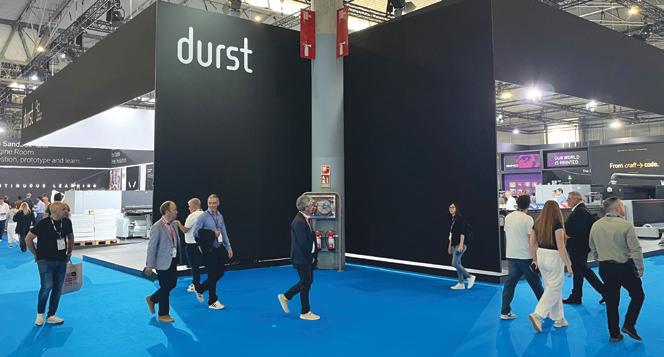
The Durst Group stand was as big and broad as the company’s continued ambition. The
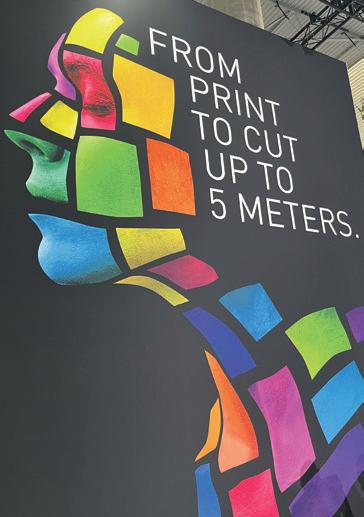
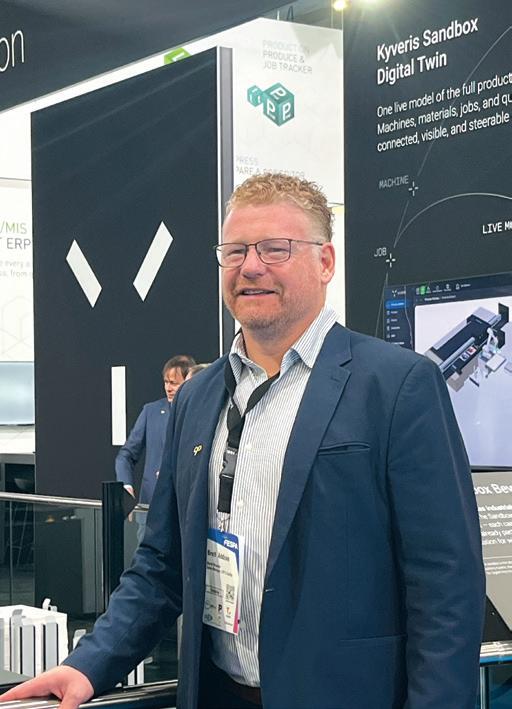
super-size 5m Hasler cutter and the robotic arms of Durst’s next generation Kyveris Sandbox protoype were the first things to grab you attention when walking onto Durst’s prime FESPA real estate. Front and centre was the new entry-level (for Durst that is) P5 350 CORE: a hybrid machine that can print boards up to 3.5m-wide, single rolls up to 3.47m or dual rolls up to 1.625m. Using 7pl Ricoh Gen5 printheads and offering up to 10 colour channels, and printing at peak speeds of up to 325sqm/ hr and production speeds up to around 170sqm, the P5 350 CORE is suitable for various applications, including flexible media and direct inline fixation. But whilst the CORE was the company’s primary show-stopper, ironically it is Kyveris that is at the ‘core’ of all Durst’s productionware. A new AI-powered production intelligence platform that unifies machines, software, data, and processes into a single, autonomous system for digital printing and additive manufacturing, Kyveris represents the next evolutionary step for Durst, transitioning the company from a focus on precision hardware to intelligent, datadriven production systems. It integrates files, machinery, software, and operational data into a continuously learning system that optimises performance, reduces waste, and enhances efficiency at scale.
EFI
For sign and display producers ready to take on higher-volume production-level printing, Electronics For Imaging put forward its new EFI VUTEk M3h X hybrid LED printer, capable of up to nine layers (including white ink) printing with LED curing, to help print providers reduce costs and differentiate their offerings, at an investment cost that EFI describes as ‘accessible and within reach for more sign and display providers’. The marketing catch-cry behind this new hybrid LED printer is an invitation for printers to ‘step up to a super-wide world of opportunities’ and there was plenty of other evidence on-hand to showcase this capability too. Alongside the M3h X, EFI’s new 3.4 metre VUTEk FabriVU 340 i8 eight-colour dye sublimation printer was also enjoying its first public showing, including inline fixation to demonstrate how it can meet the colour-fidelity demands of retail, event, and branded environments. Featuring eightcolour printing (CMYK + Orange + Blue + choice of two light inks – light cyan, light magenta, or light black) that reproduces a wider gamut, renders richer tones and smoother gradients, and accurately matches brand colours, the printer delivers up to 2,400dpi resolution and four-level greyscale printing with 4-18pL drop sizes for smooth transitions and crisp detail.
EPSON
No surprise that Epson’s significant FESPA offering included something for everyone, inviting print service providers, garment decoration and personalisation specialists, design studios, and sign makers alike to discover its latest solutions for textile printing and sublimation, DTF (direct-to-film) printing, direct-to-fabric printing, visual communication/ signage, and UV printing, as well as tools to increase workflow efficiency and improve colour management. New to the show - and to the Epson line-up - was the SureColor V4000 mid-range UV flatbed printer (addition to Epson’s V-Series UV printer lineup), which will also be released in Australia and New Zealand later this year. The SC-V4000 is perfectly designed for businesses operating in limited spaces, offering significant productivity gains while optimising space efficiency. It achieves enhanced image quality with sharp text reproduction, making it an ideal choice for printing high-quality personalised items such as fine art, photography and signage, thereby according to Epson ‘raising the bar in the UV flatbed market’. Epson also unveiled a new industrial dye sublimation printer at the show: the four-colour SureColor SC-F20000, Epson’s first dye-sub model equipped with eight PrecisionCore MicroTFP printheads, developed to deliver stable output through its printhead configuration. The 76.8-inch (1.95m) wide SCF20000 also supports long continuous printing
with large-capacity 10L ink and automatic ink switching (Hot Swap) to reduce operator intervention during busy periods. The machine can print up to approximately 306sqm/hr in fast settings, while improving minimum resolution to 600×600dpi. It uses Ultrachrome DS Ink and features double-side heating/drying designed to help minimise ink set-off and reduce wrinkling after printing.
HEXIS
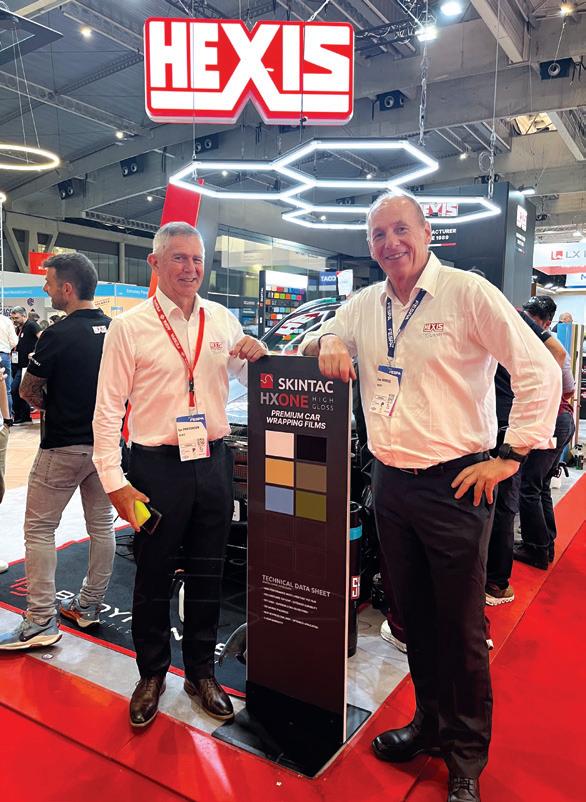
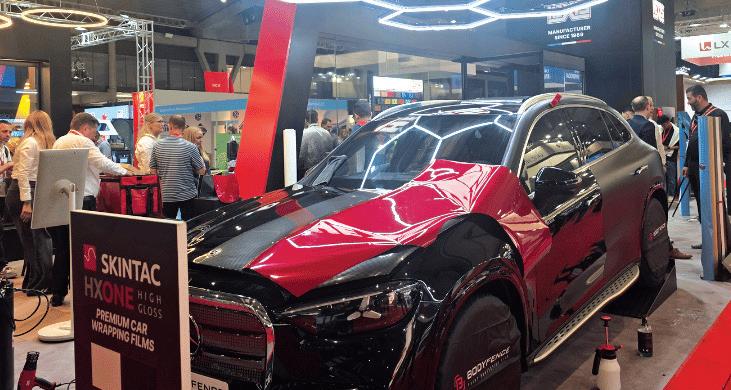
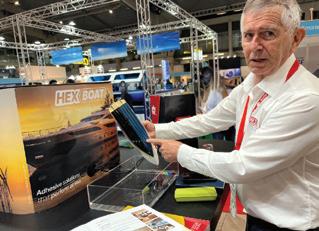
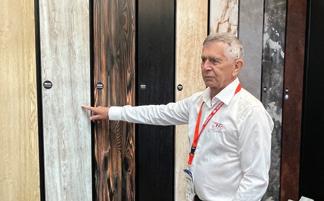
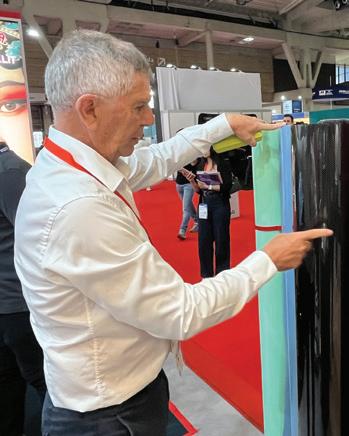
It would be fair to say that no other brand brought as much colour to FESPA as HEXIS, launching a range of new colours for its CandyFence 7.5mil carbon fibre Paint Protection Film (PPF) range, alongside its advanced Bodyfence range with X Technology – BodyfenceX and BodyXFAST. But more colour only reveals a small part of the French film manufacturer’s FESPA ambition, clearly keen to leave visitors with an understanding that it has films and wraps for almost every use, from robust outdoor options that might be used on a windfarm or similar, through to purpose-designed boat bottom protection films, that prevent barnacles from growing and push the timeline for changing out of the film from a one to two year cycle. Innovation was the name of the game, fronting with its better known brands, like the popular HEXpressions range for interior décor and SKINTAC for vehicle wrapping, including a
its ever-expanding range of vehicle wrapping films, FESPA also saw the launch of HEXIS’ newest pre-cutting software solution, the HEXIS Precut Lab (HPL), which offers a range of features that enhance productivity and streamline the workflow for installers. The HPL software allows users to quickly find and prepare precut templates from a vast database, covering thousands of patterns from various brands across multiple regions.
HP
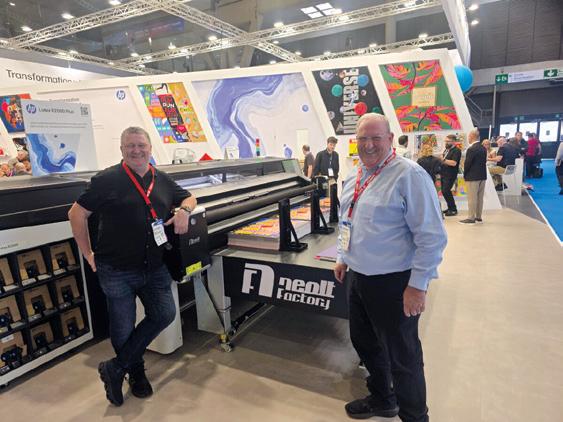
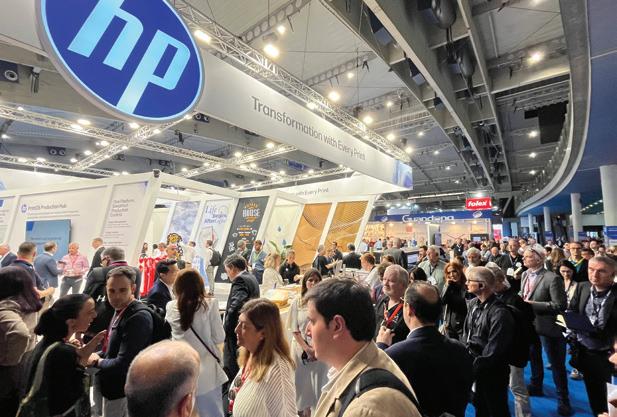
Staying true to its claim to deliver a Transformation with every Print, the HP FESPA stand offering was never going to disappoint. HP’s continued advancement of its HP Latex Technology goes from strength to strength and while its new, most productive Latex printer, the FS70 W, seems to be attracting plenty of interest, there is a reason that HP chose to ensure that its compact and versatile HP Latex R530 (still arguably presenting as the best fit for small to mid-size Australian PSPs) was quite literally the very first printer visitors to FESPA saw on the way in. But arguably the most
interesting HP development is in the new HP DesignJet Z6 and Z9 PostScript Printer Series which HP describes aptly as ‘the next step in the evolution of Large Format Printing’. Designed for small and mediumsized businesses, including photo studios, retailers, copy shops, education facilities, and architecture firms, the HP DesignJet Z9 Plus Edition Printer is ideal for colourcritical applications, including professional photography and high-end graphics. It also features an embedded spectrophotometer for consistent colour calibration and optional HP Gloss Enhancer for improved gloss uniformity and its productivity print modes can increase output by up to 90%. Amongst a host of other show innovations were updates to HP’s PrintOS Production Hub largeformat software, including a new ‘AI Upscale Image’ feature that uses AI to enhance lowresolution images during file preparation.
METAMARK
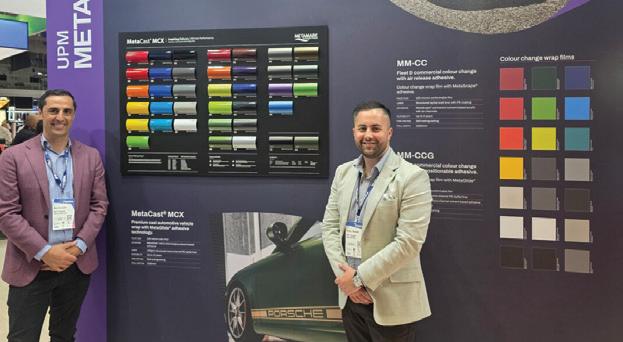
With the UPM Raflatac signage and graphics brand, Metamark, drawing in crowds through a gamified ‘timed wrap’ station, the company’s main focus was on the first public launch of its next generation MDC XR cast vinyl. Metamark is distributed exclusively in Australia by Ball & Doggett, who will be delighted to get their hands on the first batches of the new formulation of its MetaCast
MDC XR Cast Printable Vehicle Wrap Film with XR Adhesive System. The updated product refines the application characteristics of its current formulation while retaining the printability performance for which the range is established in the market. The principal change in the new formulation is a reduction in initial tack, resulting in greater slidability during application. This next generation of product is designed to allow a single installer to complete the application process without assistance. Interestingly, the product development process involved structured feedback from customer focus groups in Australia as well as Europe, reflecting the company’s intention to ensure the product performs to specification under the extreme variations in weather conditions seen in the Australian market.
MIMAKI
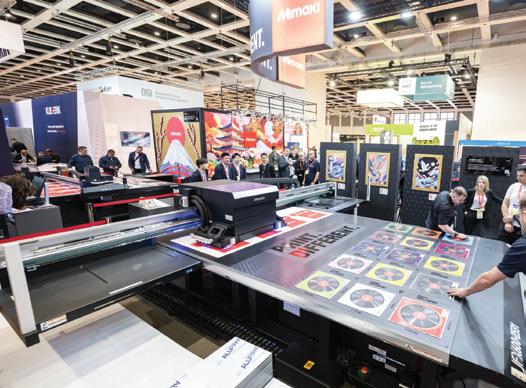
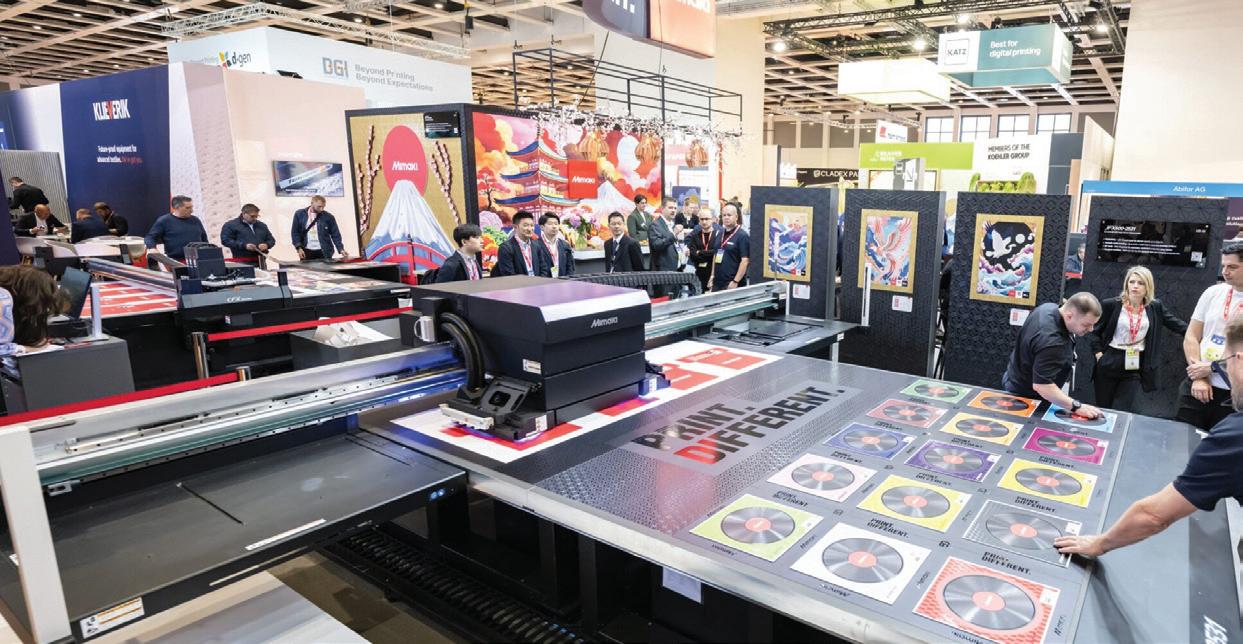
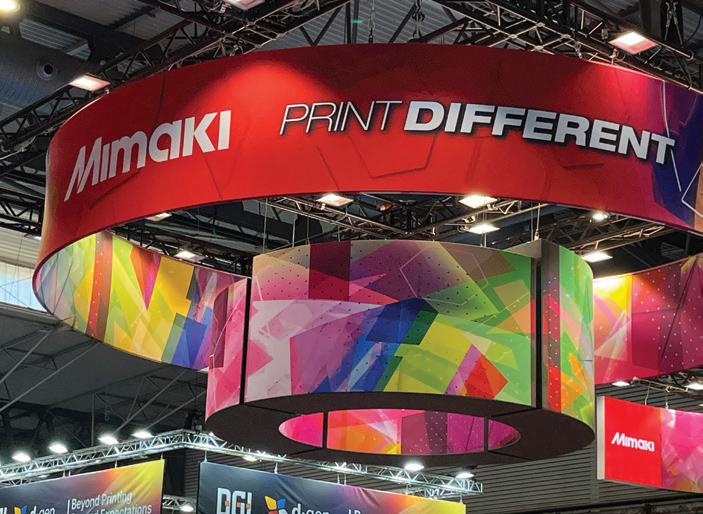
Against the theme ‘Print Different - Powering Possibilities’, Mimaki’s focus for FESPA was very much on demonstrating the highvalue application potential of its machines and how they can be used to explore and drive new business opportunities, featuring the accelerated progress of UV and DTF technology. Supporting this, Mimaki had a number of ‘experience areas’ spanning hybrid UV, sign graphics, textile, personalisation and high-volume production. Each area offering live printing, finished samples and workflow
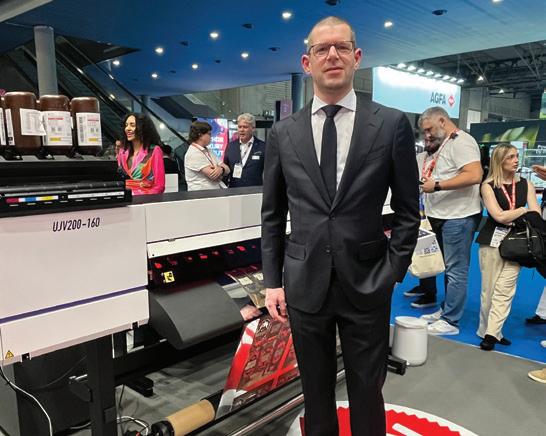
demonstrations to show how Mimaki solutions can support application diversification, production flexibility and business growth across different segments and materials, while reflecting the company’s commitment to innovating with purpose. A key focus was the continued expansion of UV printing into new application areas. Showcased for the first time at an international show, the recently launched UJ330H-160 hybrid UV printer demonstrated how one technology platform can support both roll-to-roll and rigid applications. Designed to help customers increase production versatility, without adding unnecessary complexity, the UJ330H-160 enables print businesses to explore applications and move seamlessly between signage, interior décor, display graphics, packaging and point-of-sale. Another show highlight for Mimaki was the UJV200 Series, also making its international tradeshow debut. Developed to make high-quality UV roll-to-roll printing more accessible, the UJV200 Series supports a wide range of sign and graphics applications, combining Mimaki image quality with the creative possibilities of UV printing, including white and clear ink effects. Mimaki also had a new DTF concept model on its FESPA stand, based on its current 330 platform and aimed at demonstrating how the company is continuing to evolve its DTF technology in line with the changing market needs.
ROLAND DG
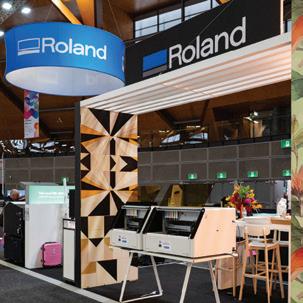
Visitors to Roland DG’s FESPA stand were treated to a preview of the company’s new industrial flatbed, cylindrical printing and durable ink technologies, all part of a planned strategic expansion into industrial digital printing. The new range includes the VersaObject IO-300, an industrial UV flatbed inkjet printer; the RC-300 series of cylindrical UV printers; and a newly developed Hard UV Ink engineered for enhanced durability in demanding industrial applications. The portfolio preview builds on Roland DG’s existing industrial capabilities, including the LSINC Peri Series, an industrial directtoobject solution already available and in use across production environments. By focusing on production flexibility, reduced set-up times and greater in-house control, Roland DG’s industrial solutions are positioned as enablers of mass customisation, decentralised production and more resilient supply chains, designed to complement and extend existing production environments by introducing digital workflows where flexibility and speed are critical.
SPICERS:
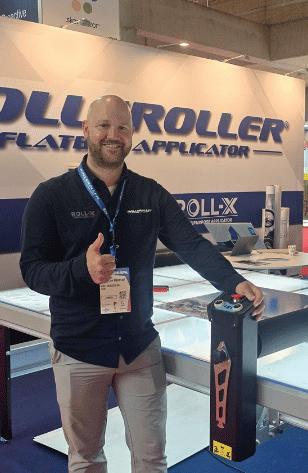
Swedish manufacturer Rolls Roller are amongst the many companies represented in Australia by Spicers. They launched the new Rolls Roller Slim at FESPA: a fixed-height flatbed application table targeting operators who want a lower-cost entry point into the brand’s product range. Available in four sizes - 1.6mx1.0m, 1.6mx1.47m, 1.7mx3.0m and 1.7mx 3.6m - The Slim uses the same welded steel chassis with belted steel frame found across the rest of the Rolls Roller product line. All configurations include a precision glide beam system as standard. Optional dimmable LED lighting and a range of accessories allow the specification to be upgraded after purchase. The machine ships on its side to reduce
the freight envelope and lower delivery costs. On-site installation is designed to be quick, with the unit ready for use shortly after unpacking.
SUMMA
Summa’s focus at FESPA was the unveiling of its new F Series Vantage range, targeted at signage and visual display customers looking to expand their applications into more rigid materials, such as aluminium. The Belgian manufacturer launched the two new F-series size options claiming ‘they mark the next evolution in flatbed cutting’: claims which were subsequently endorsed when the F1625 (160x250cm) was named as the best Wide Format digital cutting solution amongst the EDP Awards (see adjacent page). Summa says that both cutters in the new range have been designed to accelerate every stage of the workflow, stating that both tables will deliver 40% productivity gains thanks to the integration of a new 3.7kW high-frequency router, as well as several tangential cutting modules. Both the 1612 and 1625 models will be available in Australia later this year through Pozitive Sign & Graphics and Graphic Art Mart.
SwissQprint
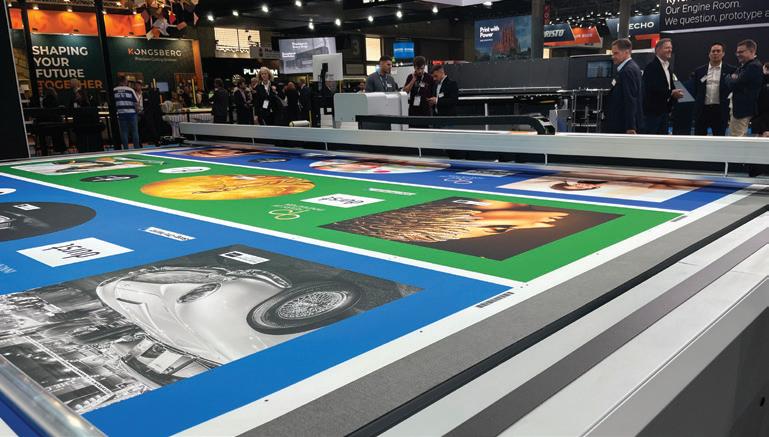
Pozitive Sign & Graphics also distributes SwissQprint products locally and the company’s flagship machines were showcased under the motto ‘Made for Winners – Loved by Thousands’. A high-end flatbed Kudu printer and SwissQprint’s dedicated roll-to-roll printer, the Karibu 2, were both running live on the stand, with the Kudu showing examples of the nuance in print quality, depending on which of the three speeds the printer is run at: noting that the quality is still very high even at the faster production speeds. The stand also featured an application gallery in the background, showing the wide creative range of the printers, with neon prints, colourchanging effects and tactile finishes all being highlighted.
That’s a Wrap!
As the dust settles on another successful global FESPA print expo – and with the Messe Munich in Germany (6th9th April 2027) already locked in for next year – FESPA has again reinforced its commitment to Sustainability, achieving ISO 20121:2024 for Sustainable Event Management and confirming its measurable year-on-year CO2e reductions between its 2024 and 2025 events.
Neil Felton, CEO of FESPA, says: “We are proud of the progress we have made, but we also recognise there is more to do. Our ambition is to continue leading by example while supporting members of our community as they navigate regulatory changes, and transition to more responsible print and production.”
EDP Award success
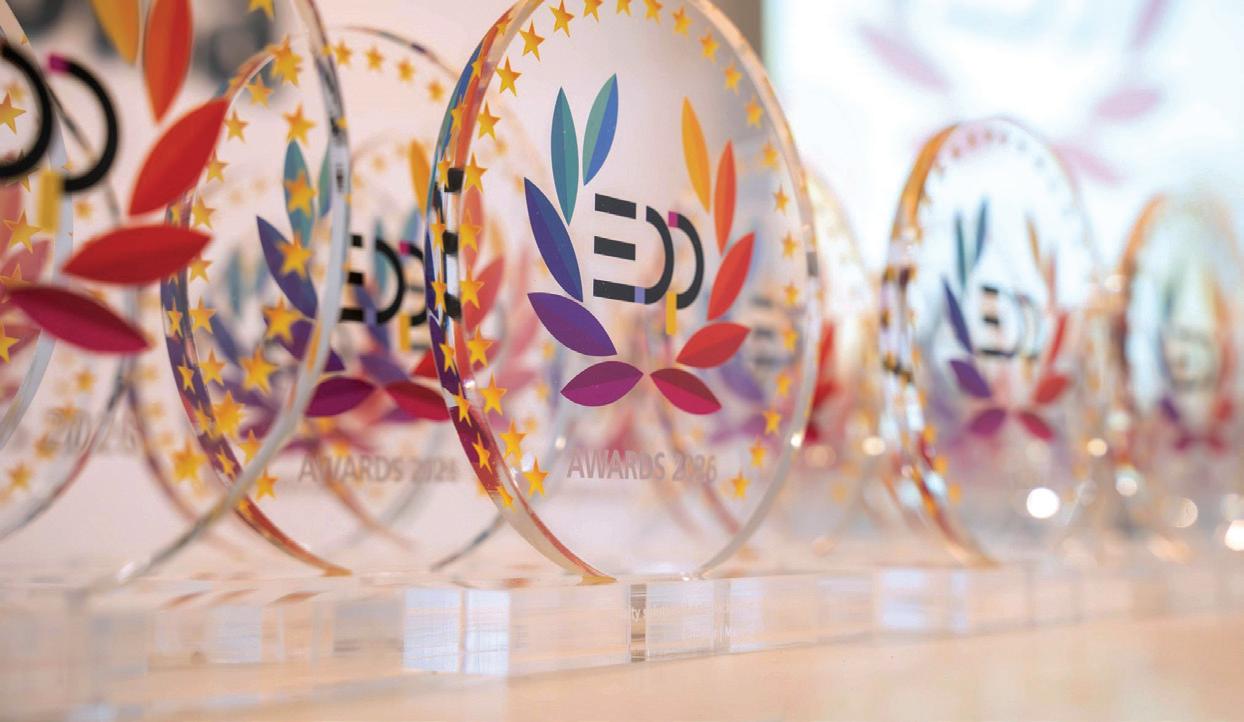
Agfa, Canon, Durst Group, EFI, Mimaki, Mutoh and Screen were amongst this year’s European Digital Printing Association (EDP) Award winners, announced at a special ceremony at the recent FESPA Global Print Expo in Barcelona. The awards recognise the best digital technologies in various categories of digital printing, publishing, and converting and are judged by a panel of independent experts from Europe’s 20 leading trade magazines, consisting of independent consultants, editors, engineers, and other graphic industry-related professionals, with judges specifically looking for ‘innovations that improve productivity, quality and usability, as well as reducing environmental impact and bringing down production costs’.
Durst Group scooped four of the prestigious awards, for its Durst P5 technology (used in CORE and SMP), Durst Entera LED Inks and Open Software Initiative. Christoph Gamper, Durst Group CEO and owner, says: “The Industry Achievement Award for the Open Software Initiative means a lot: OSI was a long journey: from a world of near-total vendor dependency toward an open software ecosystem where machines, workflows, and software can connect intelligently. That foundation became one of the building blocks for what is now evolving into Kyveris, our new AI-powered production intelligence platform that unifies machines, software, data, and processes into a single, autonomous system for digital printing and additive manufacturing.”
Mutoh’s XpertJet 1681SR Pro, a nextgeneration 64” (1,625mm) eco-solvent roll-toroll printer developed for professional sign & display production, was recognised as the ‘Best Roll-to-Roll Printer <170 cm’ in the category of Large/Wide Format Printing Systems. The printer was specifically recognised for its print quality, productivity and performance for sign and display work. Similar praise was also heaped on the entry-level EFI Pro 33r production roll-to-roll LED printer , which received and EDP award as the ‘Best Roll-toRoll Printer <350 cm’.
And at an event through which Mimaki chose to highlight its considerable depth in UV and DTF, it was also fitting that the team at Mimaki Europe were presented with 3 EDP Awards, including for the new Mimaki UJ330H-160 as Best Flatbed/Hybrid <50 m²/h awardrecognising its versatile roll and rigid UV printing in one compact system. The Mimaki UJF-7151 plusII e UV-LED flatbed printer and Mimaki TS330-1800 dye sublimation printer also received awards as Best Direct-to-Shape - Object Printing and Best Textile Roll-to-Roll Printer <150 m2/h respectively.
Danna Drion, General Manager Marketing and Product Management, Mimaki Europe “Winning three EDP Awards is significant recognition for the technical excellence of our innovations, but above all, we’re proud of what these technologies enable our customers to achieve. For example, by bringing roll and rigid UV printing together in one accessible system, the UJ330H-160 gives them more ways to say yes to new work.”
Another EDP award winner was the 3.3m Agfa
Jeti Bronco H3300 HS hybrid printer, named as the Best Flatbed/Hybrid 400 m²/h printer and recognised for its combination of high-speed productivity and hybrid versatility that enable print service providers to handle rigid and roll media applications on a single platform. Offering similar versatility, the new Canon Colorado XL-series 3.4m printer was awarded in the Best Flatbed/Hybrid 50-150 m²/h category, also bringing the proven advantages of Canon’s UVgel technology to the 3.2m graphics market, making it an ideal solution from signage and décor to point of sale and packaging, delivering application versatility across a comprehensive range of media, including banner, paper, vinyl and films to soft signage, heat-sensitive materials, foam board, fluted polypropylene, acrylic and aluminium composite boards and accommodating substrates up to 52mm thick for rigid applications.
Finishing strong in the race for an EDP Award were Summa with their new F1625 Vantage Series acknowledged as the best Wide Format digital cutting solution on show: the 160x250cm flat-bed cutting table, one of two new F-series size options from the Belgian manufacturer Summa, both claiming to deliver up to 40% productivity gains, thanks to the integration of a new 3.7kW high-frequency router, as well as several tangential cutting modules. The F-series, available locally through Positive Sign and Graphics and Graphic Art Mart, is specifcially targeted at signage and visual display customers looking to expand their applications into more rigid materials.
Canon ‘moves worlds’ at FESPA
Against the theme ‘Move Your World’, Canon’s stand at FESPA 2026 saw a stream of prints and tactile applications created on Canon’s portfolio of high-performance production technologies, including Arizona, Colorado, and imagePROGRAF printers, displayed in a visual and interactive sensory gallery on stand.
Canon’s focus for the event was on showing how its production technologies and customerled approach combine to create bold, highimpact prints that can transform spaces and connect with audiences. Steven Badger, Head of Sales and Professional Services, Canon Production Printing says: “Each part of our stand was deliberately designed to reflect core business priorities for decision makers - from new commercial opportunities to ways to futureproof their businesses.”
“Ultimately, Canon’s origins are as an imaging company and that was clearly
evidenced across all the technology and smarts we had on show.”
Exemplifying this, for the Colorado M-series the event was all about demonstrating its UVgel Factory capability: linked to a Fotoba jumbo roll JRL media feeder, output cutter and rewinding taping unit to demonstrate mass-customised, automated wallpaper production. “The momentum Canon creates for its customers is achieved through a rich ecosystem of trusted technology and media partners. Whether you’re a signage and graphics producer, or a packaging converter, we were able to show that Canon’s equipment, pitted with the right partner systems, is able to offer a wide array of impactful applications.”
“The software and integrated technologies that sits behind these systems plays an especially important role too, supporting our customers to deliver first-time-right prints and
simpler production, even across complex jobsfrom file preparation to printing the job, through to shipment.”
Supporting print demonstrations across all its on-stand printers was Canon’s PRISMA XL Suite of workflow solutions, demonstrating how an open, non-proprietary approach to workflow solutions can increase operational flexibility and profitability. Canon’s AI advancements were also on show, in particular through demonstrations on the company’s true flatbed Arizona range, where AI tools linked to Adobe products were being used to help simplify the process of creating elevated print, ‘essentially copying a desired effect like a tile or stained glass’.
Badger adds: “Because it’s a true flatbed, and the media is stuck down, you have the ability to repeatedly lay the same image, and the smarts behind it are that the printheads are slightly raising each time they pass, which creates the feeling of texture on a flat print.”
But whilst all this offered a colourful backdrop to the Canon stand, the real showstopper was still the new Colorado XL-series 3.4m printer, making its European event debut and showcasing how the proven advantages of Canon’s UVgel technology have now been extended to the 3.2m graphics market. The printer could permanently be seen printing banner, paper, vinyl and films through to soft signage, heat-sensitive materials, foam board, fluted polypropylene, acrylic and aluminium composite boards (up to 52mm thick), at print speeds of 70m² per hour in quality mode, 106m² per hour in production mode and up to 211m² per hour in express mode.
“The real advances here are in the printhead evolution,” explains Badger. “Whereas for our traditional Arizona 6100, our flagship flatbed printer, you need 6 printheads per colour – so 36 printheads for 6-colour work – now the new printers, like the Colorado XL, only need two printheads for 6-colour work, with a third if you’re adding white ink. It’s also using a tridrive belt, rather than a straight belt over two pins, so this helps with constant tensioning of the media, and if there is a minor misalignment, the system will slowly adjust the printheads to make sure that you get no banding and that you get that really accurate output.”
Celmac cements relationship with Neolt and HP
Recently locked in as the exclusive Australian distributor for the Neolt Factory Automatic Feeder & Stacker system - co-developed with HP specifically for use alongside the R Series printer range (R1000, R2000 and R530) - Celmac’s recently appointed GM Sales & Marketing, Phillip Rennell and NSW State Manager, Jonny Rumney, were on-hand at FESPA Global Print Expo 2026 to further cement the relationship.
Jeremy Brew, Sales Enablement - Greater Asia & India, Large Format Production for HP, enthused: “Aside from the fact that this feeder will handle multiple stacks, even up to long sheets, the real beauty of it is that you can load it up with your production for several hours, press go and walk away. This is exactly the sort of lights out, unattended operation that our customers are telling us they want, especially in the current labour market.”
The hardware is built around high-volume production demands. Both input and output tables handle stacks up to 40cm deep, with built-in height compensation keeping everything level as material feeds through. The loading system uses a vacuum suction cup unit with autonomous motion control, allowing precise and automated sheet feeding directly to the printer, reducing manual intervention and keeping jobs moving without interruption. The stacker system features pneumatic motorised rollers for smooth and safe panel ejection. The feeder and stacker units can each be configured to suit different panel dimensions, job layouts, and throughput requirements.
Ettore Briccoli Pontiggia, Owner and
International Sales Manager of Neolt Factory, affirms: “Neolt is delighted to now have Celmac as a distribution partner in the Australian market and we know they have both the technical expertise and the established customer relationships to support our sales opportunity in that area.”
Rennell adds: “We see a huge market for this system. We know there are already over 100 HP R2000 users across the country and we are confident the Neolt Factory Automatic Feeder and Stacker system is the missing ingredient in those customers being able to optimise the productivity of their printers.”
Rennell also confirmed plans to see the full operating system - the Neolt Automatic Feeder & Stacker with an HP R Series printer in full production, also integrated with an iEcho Graphics Cutter for a complete end-to-
end workflow solution - to be installed in all Celmac showrooms in Melbourne, Sydney, and Brisbane over the coming months ‘allowing customers to experience the workflow efficiencies first-hand’.
Established in Italy in 1941, four generations of family ownership have shaped Neolt Factory into an established name in cutting and finishing equipment for the printing and visual communication industries, with a portfolio that spans cutting, folding, lamination, welding, eyelet application, roll handling, and automated loading and unloading systems. Italian engineering paired with a globally connected partner network, is what allows Neolt Factory to bring innovative finishing solutions to print providers across markets that each have their own production requirements and workflow priorities.
Currie Group –
Let’s Be Brilliant Together
Borrowing EFI’s FESPA 2026 tagline - ‘let’s be brilliant together’ - Currie Group’s General Manager Commercial / Sign & Display, Paul Whitehead offers a brief insight into what ANZ customers can expect to see locally from Canon, Elitron and EFI.
Electronics For Imaging (EFI)
IM: Was there a general theme emanating through EFI’s FESPA offering?
PW: ‘EFI has a real focus on delivering technology that helps its customers grow and adapt in an increasingly dynamic market. From soft signage to super-wide production and high-end hybrid printing, EFI’s portfolio is designed to give print providers the flexibility and efficiency they need to stay competitive and profitable across every segment. For example, the new VUTEk FabriVU 340 i8 dye sublimation printer is an upgrade on the already very successful 340+ model, using 8 colours instead of 4, including a blue, orange and lights to give a much expanded colour gamut. It gives you much more punchy backlit graphics, better skin tones and a real lift in the colour quality: perfect for textile backlit, which is a rapidly expanding area in our market.’
IM: Were there any other new products on the stand?
PW: ‘EFI’s other new product for FESPA was the VUTEk M3h X printer, joining the M3h hybrid printer that is already available here. With another row of heads, the X provides up to 40% extra productivity, plus a protective clear option or an additional orange colour to expand the gamut. This is a really good mid-range hybrid printer for sign and display producers ready to take on higher-volume productionlevel printing: delivering high-quality imaging at high speeds and with true hybrid versatility for board and roll printing in one system, enabling new applications and revenue streams without any added equipment.’
Canon Production Printing
IM: Were there any other strong underlying themes at FESPA?
PW: ‘The Canon stand was a great demonstration too of how suppliers are increasingly building more versatility into their products, to help PSPs find those new revenue streams. Canon are the past masters of this and their real show-stopper was the new Colorado XL-series 3.4m hybrid printer.’
IM: Who is that targeted at?
PW: ‘This new model essentially extends the proven advantages of Canon’s UVgel technology to the 3m graphics market, and on the stand they were showing its versatility by running a range of material including fabric and, for the first time, with UVgel rigids such as foam board and coreflute.
IM: Were there other new technologies released in line with this new printer?
PW: ‘Yes, this powerful UVgel system also featured a TRIdrive which aligns misaligned media on the fly, Full Beam Curing for consistent imaging and the new Canon UVgel 850 printheads that have over 4,000 nozzles to enable a light print carriage. Of course technologies from the M-Series such as FLXfinish are also part of the system too.’
Elitron
IM: What about at the finishing end of things?
PW: ‘The lasting impression I took away from spending time with our colleagues on the Elitron stand at FESPA was that finishing no longer needs to be the bottleneck in our business. It was great to watch their Kombo TH/THC twin-carriage flatbed digital cutting solution with double independent beam, designed for those who need to cope with greater production workloads, demanding top cutting performances.The cameras and digital guides assist fast registration and then it can be linked to a full automated finishing and collection system.’
IM: What about Elitron options for the smaller PSPs?
PW: ‘The more compact, Elitron Spark is an entry level cutter with European robustness which can feature some clever technologies to enhance productivity. For example, with Stressless Working Technology, Elitron uses a high-resolution video projector mounted above the cutting table to project the cutting profile (virtual die) directly onto the substrate. Instead of physically positioning templates or guessing where to place offcuts, the operator sees the exact cutting shape projected onto the board. Overall, we see that suppliers are increasingly engineering their products for the applications that matter most to branddriven customers, with versatility built-in to make them perfectly suited to a wide range of premium applications.
We’re also increasingly seeing AI being considered or used in the optimisation of these systems, whether that’s to deliver insights through cloud-based graphics, or related to processed, ‘intelligent’ repeatability, applied to built-in automation features which essentially ‘learn as they go’.
At Currie Group we have an exceptional array of products and the technical know-how and service smarts to really help our customers optimise their businesses, whatever size they are. And our suppliers just keep making that easier for us.’
AI
Won’t Fix a Broken Business.
But a Great System Will.
BY JULIAN LOWE, SALES AND MARKETING MANAGER, M-POWER SOFTWARE
Everyone’s chasing AI. But the businesses that will get the most from it aren’t the ones moving fastest — they’re the ones that built the right foundation first.
A job goes out the door, looks fine on paper, and comes back three weeks later costing more than you made on it. Or your best estimator takes a week off, and half your pricing knowledge is suddenly inaccessible. These aren’t technology problems. They’re business structure problems — and no amount of AI will fix them.
The honest takeaway from our team’s roundtable: AI is not the answer to a disorganised business. The right system underneath it is.
“If you want AI to warn you that you’re about to drive off a cliff, it needs to be able to see the road first.”
AI isn’t new. It just got a face.
Machine learning has run quietly for thirty years. When Spotify suggests a song, or your bank flags a suspicious transaction, that’s machine learning — finding patterns in structured data to predict what comes next. For a manufacturer, it means training a model on your own numbers — quotes, job costs, margins, production history — so it learns what normal looks like and flags what isn’t.
Large language models work with words rather than numbers. They read a vague client email and turn it into something a system can process. But they’re the front door. Machine learning is the engine — and that engine only runs on structured, consistent, historical data, which most businesses in this industry don’t yet have.
The knowledge that walks out the door
Our industry runs on tribal knowledge: the estimator who can price a job faster than anyone can open a spreadsheet, the owner who carries the margin logic in their head. That expertise is valuable — but only while those people are in the building.
Ask yourself: if your best person left tomorrow, how much of your pricing logic, margin knowledge and production know-how would walk out with them?
If your quoting isn’t in a system, there’s no history to learn from. If job costing lives in inconsistent spreadsheets, there are no patterns to find. Feeding a mess into AI doesn’t produce intelligence — it produces a faster mess.
What you’re losing right now
Businesses that delay aren’t just missing a future gain; they’re falling behind every month. Think of it like property: buy in 1990 and you’d own an asset worth multiples of what you paid. Data compounds the same way — and unlike property, you can’t buy someone else’s history. You can only train a model on your own.
The risk is sharper than missed upside. If a
business’s knowledge lives in one head and that person isn’t there tomorrow, it slows or stops — not a technology risk, but a survival risk. And the gap is widening: as these tools get cheaper over the next three to five years, structured data becomes the line between businesses that can use them and those that can’t.
Where to start
AI won’t take your jobs — not in a lean operation of 5 to 25 people. It raises the ceiling on what your team can do — better visibility, more jobs processed, fewer errors. The goal isn’t to do the same work with fewer people; it’s to grow without overhead growing at the same rate. None of that is available without the groundwork. So before evaluating any AI tool, ask one question: how much of what we know about our business is actually in a system — quoting, job costing, production, customer history, all consistent and queryable? If the answer is “not much,” that’s where to start. It’s not glamorous. It’s the right one.
The businesses that get the most from AI will be the ones that built something worth learning from.
Julian Lowe is Sales and Marketing Manager at M-Power Software, a management information system built for print, signage, and manufacturing businesses. This article draws on a roundtable discussion with the M-Power team.
Awards set to be the highlight in an exciting ASGA year
In a year that has been packed with member opportunity – from the recent ISA alliance through to Golf Days around the States - the Australian Sign & Graphics Association (ASGA) is now priming itself for September’s 2026 Easy Signs National Sign & Graphics Awards. This year, the Association’s flagship biennial Awards event will take place on Thursday 3rd September, midway through the Visual Impact Expo at Sydney Showgrounds, Sydney Olympic Park.
Mick Harrold, ASGA President, affirms: “There’s no doubt, the Awards are the industry’s premier event. We have a fantastically diverse industry, and the breadth and brilliance of this year’s entries are truly impressive: a real testament to the capability of our national sign and graphics sector. From brushwork to interactive digital displays, and from pylon signs to soft signage and banners, you would struggle to find a more inspiring collection of work anywhere in the world.”
“There’s no question our judges have a long and difficult task ahead of them. But they bring
a wide range of expertise across all facets of the sector, and we are looking forward to seeing this year’s finalists, recognising their achievements and showcasing our industry on a national stage.”
Harrold confirms that ASGA have been working closely with the Visual Connections team to ensure the Gala Awards Presentation Dinner complements the Visual Impact Expo itself, saying: “This will unquestionably be the highlight event on this year’s industry calendar!”
“The Awards Dinner is always a fantastic chance to celebrate our dynamic and exciting sector and, holding it during Visual Impact makes it an even more valuable opportunity to connect, catch up and build the relationships which can add so much to all our experiences and careers.”
Aside from the Awards, ASGA has plenty of exciting plans for the new financial year, building on recent milestone announcements such as the new alliance with the world’s largest signage association, the International Sign Association (ISA), which gives its members reciprocal member rights, and the Association’s ever-expanding range of Member
benefits, which include an annual Employment guide, an extensive range of legal, HR and WH&S resources, online pricing calculators, support for apprenticeships, and the ongoing evolution of future training initiatives through MISA and BuildSkills.
Harrold continues: “This past year we’ve really started to see the fruits of five years of hard work and investment to build our Member Services, expand our support for industry businesses, and forge new and important partnerships to support the success of the sector.”
“We’ve recently kicked off our 2026 Golf Day program with a highly successful day in Sydney and unlocked access to more than 60 online courses through the ISA Alliance, filling an important gap in the market for easy-to-access, sector-specific upskilling opportunities.”
“The reality is that we have never provided higher levels of service or stronger support for our members…and we’re not done yet. We have plenty of exciting new projects and initiatives planned over the coming months, as we constantly look for new ways to deliver on our mandate to support our members’ success and to deliver real value to the industry as a whole.”
Workplace Investigations: Getting it right in a small business
Most small businesses do not have a dedicated HR department. When something goes wrong at work, the owner usually has to deal with it themselves…a complaint about bullying…an argument between coworkers…a misconduct or behaviour that has crossed a line. The problem is that many business owners have never conducted a workplace investigation before. They are trying to solve a problem while still running the business. This is where mistakes are often made.
Moving too fast
When a complaint is made, there is a natural urge to act. A common mistake is reaching a conclusion before all the facts are gathered. A manager may receive a complaint from a trusted employee and immediately assume the allegations are true. Unfortunately, assumptions can be expensive mistakes. Many an unfair dismissal or similar claim has been made not because the employer lacked a valid reason for taking the action, but because they failed to properly investigate the matter before deciding. A workplace investigation should focus on establishing facts, not confirming suspicions.
The pursuit of perfection
Many business owners mistakenly believe workplace investigations must resemble forensic or courtroom style proceedings. In reality, the process should be proportionate to the issues being investigated. An issue of repeated lateness to work may require a relatively straightforward fact-finding process, whereas allegations involving serious misconduct will require a more structured and detailed approach. The objective is not perfection, but rather fairness.
At a minimum, employers should:
• Clearly identify the allegations or concerns.
• Speak with the people involved.
• Give employees the opportunity to respond.
• Consider all available information before making any findings.
• Keep appropriate records of the process.
Small business challenges
Large organisations can bring in HR managers and external investigators. Small businesses rarely have that luxury. Often, employees in small businesses know each other and work side by side (some may have worked closely for years, be friends, or even family). This makes objectivity harder and can create a real or perceived bias. Employees are often quick to identify situations where they believe a decisionmaker has already chosen sides. Where possible, business owners should separate the role of the investigator from the role of decisionmaker. Obtaining external advice or having another manager assist with interviews can help to strengthen the integrity of the process.
Small problems rarely stay small
Another common mistake is failing to address issues early. Small businesses frequently adopt an informal approach to workplace concerns. Managers may hope that problems will resolve themselves or avoid difficult conversations. Unfortunately, unresolved issues often escalate. What begins as a disagreement between employees can develop into allegations of bullying, psychological injury claims, resignations or formal legal complaints. Early and appropriate intervention is often simpler and more effective than dealing with a major dispute months later.
Documentation matters
Small businesses are often built on trust:
people speak to each other, decisions are made and work gets done. But when a dispute or the need for an investigation arises, documentation becomes critical, requiring records of:
• Complaints received
• Interviews conducted
• Relevant documents reviewed
• Responses provided by employees
• Findings and outcomes.
Good documentation can make the difference between a business that can explain and defend its decision, and one that cannot.
Know your limits
Not every matter can be handled internally. Sometimes the allegations are serious and the consequences are too significant to get wrong. That is when external assistance should be considered. The cost of obtaining advice early is frequently far less than the cost of defending a claim after mistakes have been made.
Workplace investigations do not need to be complicated, however they need to be fair. For small businesses, the key is to focus on the fundamentals: gather the facts, listen to all sides, keep records and avoid rushing to judgement.
This article is of a general nature and guidance only and does not constitute legal advice.
Charles Watson GM – IR, Policy and Governance Visual Media Association
‘I’m retiring at 45!’
I am embarrassed to admit that these were the exact words I confidently declared to my investment consultant when I was in my early twenties. I was young, naïve, inexperienced and blissfully unaware of how life actually works. But I had read enough and heard enough stories to believe that if I invested wisely, I’d be able to walk away from work before turning 50.
My investment guy, with the patience of a saint, ran the numbers. If I saved xx amount every month, invested aggressively, and the markets behaved beautifully—no crashes, no downturns, no black swans—I would have around $450,000 by the time I reached 45. To put this into context: in 1978, the average Australian home cost around $20,000, so $450,000 seemed like unimaginable wealth. There was only one small flaw in the plan: I would need to save 95% of my salary, invest it in high-risk stocks, and pray daily that none of them would collapse.
In other words, it was a fantasy. Jump ahead a few decades and imagine a much older mearound my early 50s. I’m running a successful business. I’ve faced wins, losses, major breakthroughs, and a few outright disasters. I’ve learnt lessons the hard way, the costly way, and sometimes in a humiliating manner. But somewhere during that long, bumpy journey, something important happened: I became good at it. Really good.
By 50, many of the fears that can weigh someone down in their 20s, 30s and 40s had simply faded away. You’ve lived, failed, succeeded, and developed an instinct that only time can give. Major CapEx decisions that once kept me awake at night…I could now make confidently (and most turned out to be the right call).
Why? Because in your 50s, you are often in the golden era of your professional life. You’re mature..seasoned…sharper than you’ve ever been. You no longer guess: you know. And all
those decades of trial and error have quietly forged a level of confidence and competence your younger self couldn’t even comprehend.
So why on earth should someone retire right when they’re at their absolute peak? Why are we so obsessed with early retirement? I’m not judging anyone, because as I said, I used to think the same way. We’ve sold the dream of escaping work as early as possible, as though work is some form of suffering we must flee from. But the truth is, the older I became, the smarter I became. And I realised something important: working into your 50s, 60s, or even 70s isn’t a burden; it can actually be one of life’s greatest advantages. By your mid-50s, you’ve spent around 35 years in the workforce. That’s 35 years of learning, refining, adapting, failing, rising again, and building knowledge you could never have had at 25. You’ve learned to read people. You’ve learned to feel when a deal smells wrong. You’ve learned when to push forward and when to walk away.
In short, you now operate on instinct, and that instinct is usually right.
Why throw away your most capable years? Your most profitable years. The years you should be putting a small mountain of cash into your growing nest egg.
And let’s talk honestly about retirement. What will you actually do? If you retire at 55 or younger and the average life expectancy is around 85, you’ll spend 30 years - on what?
Holidays, home repairs, helping the kids, helping the grandkids? Replacing the hot water system – twice! - replacing the roof, replacing the car (several times). Retirement doesn’t magically become cheaper just because you’re older. In fact, for many people, it becomes more expensive. And if you’re even thinking of retiring with a mortgage, I hope you’ve received some exceptionally sound financial advice, because that’s a mountain you don’t want to
climb in retirement.
The secret isn’t retiring early: it’s planning wisely. I once asked a client and friend—a pharmacist still working in his mid-70s—why he hadn’t retired. He just smiled and said: “I love what I do. I only work three days a week, take three or four very expensive holidays overseas every year, and go home at night to tend my beehives. Why would I stop?”
And that was it. That was the answer I’d been missing. Working doesn’t have to feel like work when you enjoy what you do. And it certainly doesn’t have to be full-time. Instead of dreaming about ‘escaping’, we should be planning how to transition into a life that combines purpose, pleasure, and flexibility.
A better retirement plan - a good retirement per se - isn’t built on age; it’s built on financial planning, meaningful work, good health, a sense of purpose and a reason to get out of bed in the morning. What’s more, retirement should
VERNON KINGMAN is a highly respected and prominent figure in the signage industry. He is known for co-founding Kingman Visual in Perth with his wife, Dianne, in 1984. Starting from their garage, the business grew into one of Australia’s leading signage companies, known for major projects such as Perth’s Optus Stadium and the largest sky sign in Australia at St John of God Murdoch Hospital. In 2020, Vernon sold the company. He remains active in the industry as a consultant, continuing to influence and support other businesses in the field. You can contact Vernon at vernonjkingman@gmail.com.
be a gradual, considered shift: one that keeps you mentally active, socially connected, and financially secure.
The truth is, early retirement sounds glamorous when you’re young, but later in life you realise that a life with purpose is far richer than a life of permanent leisure.
I never retired at 45. Instead, I grew into my best years. My smartest, most capable, most confident years. And I’m grateful I didn’t walk away too early. So don’t rush to retire. Plan wisely. Work meaningfully. And build a lifeboth before and after retirement - that is rich, balanced, and deeply fulfilling.
And, in case you’re wondering…in our retirement, both Dianne and I have picked up our brushes and love creative art. Dianne, who isn’t a trained signwriter, took to it like a duck to water. So don’t lock in retirement too early, but plan for what retirement means to you. Chase your dreams. It works for me.
Why more sales won’t fix your business
For many years, we’ve worked with businesses across Australia and New Zealand, including a significant number in the signage, print and visual communications industries. During that time, we’ve noticed something interesting: most businesses don’t actually have a sales problem.
That statement often surprises owners and managers who are constantly focused on generating new work, winning larger contracts, increasing production volumes, or expanding their customer base. The instinctive response to financial pressure is usually to chase more sales.
Yet when we look beneath the surface, the real issues are often quite different.
In many cases, businesses are struggling with margin problems, pricing issues, excessive overheads, stock management challenges, slow-paying customers, poor financial visibility,
or inefficient systems and processes. These are operational and financial challenges that can quietly undermine profitability, regardless of how busy the business appears to be.
The signage industry is a perfect example. Many sign companies are experiencing strong demand. They have full production schedules, experienced installation teams, and a steady stream of quotes going out the door. On paper, business appears healthy. Yet despite being busy, many owners still feel constant financial pressure. The question is: if sales are strong, why isn’t profitability keeping pace?
The Margin Trap
One of the most common problems we encounter is margin erosion. Many businesses know their sales figures but have limited visibility over the profitability of individual jobs. They may win work based on competitive
pricing without fully understanding the true costs involved in delivering the project.
Materials, labour, subcontractors, freight, design revisions, site visits and installation complexities can all chip away at margins. A job that appears profitable when quoted can quickly become marginal - or even loss-making - once all costs are accounted for.
When this occurs repeatedly, increased sales volume simply creates more opportunities to lose money. In other words, a business can be growing while becoming less profitable.
Pricing Jobs is not the same as Winning Work
Another challenge is pricing confidence. In highly competitive markets, there can be a tendency to reduce prices in order to secure projects. While this may increase conversion rates, it often comes at the expense of
profitability. The reality is that every business has a minimum price point required to cover overheads, generate profit and support future growth. Consistently pricing below that level may keep production busy, but it rarely creates a sustainable business. Successful companies understand their numbers and price accordingly. They focus not only on winning work, but on winning profitable work.
Cash Flow is often the real issue
Many businesses that believe they need more sales are actually experiencing cash flow challenges. A company may complete significant volumes of work each month, but if customers are slow to pay, cash reserves can become stretched. Meanwhile, wages, rent, supplier invoices and tax obligations continue to fall due. This creates the illusion that the business needs more revenue, when the underlying issue may simply be poor debtor management or inadequate cash flow forecasting.
In the signage industry, where project values can be substantial and payment cycles can vary significantly, cash flow management is often more important than sales growth alone.
The hidden cost of inefficiency
Another area that frequently impacts profitability is operational efficiency. Many businesses rely on systems and processes that have evolved over time rather than being deliberately designed. Job information may be duplicated across multiple platforms. Staff may spend hours manually entering data,
chasing approvals or correcting errors. These inefficiencies create hidden costs that are rarely visible in standard financial reports.
As labour costs continue to rise, businesses that streamline workflows, automate repetitive tasks and improve communication between departments often achieve significant profitability gains without increasing sales at all.
The visibility problem
Finally, perhaps the biggest challenge facing many business owners is a lack of financial visibility. It is surprisingly common for owners to know they are busy but not know precisely which products, services, customers or projects generate the greatest profits. Without accurate and timely financial information, decisionmaking becomes reactive rather than strategic.
Questions such as:
• which jobs generate the highest margins?
• which customers are most profitable?
• are labour costs increasing faster than revenue?
• how much cash will be available in 90 days? These questions should all be easy to answer. Unfortunately, for many businesses they are not. Improved financial reporting and management information often uncover opportunities that were previously hidden, allowing owners to make informed decisions that improve profitability and cash flow.
Growth is not always the answer
One of the most important lessons we have learned is that growth itself is not a business
strategy. Growth can be positive, but only when supported by strong financial management, disciplined pricing, efficient operations and clear visibility of business performance. Without these foundations, increased sales can actually amplify existing problems. More work can create greater pressure on staff, larger cash flow demands, increased operational complexity and higher levels of stress for business owners.
The result is often a business that is bigger, busier and more complicated - but not necessarily more profitable.
Before investing heavily in marketing, hiring additional staff or pursuing aggressive growth targets, business owners should take the time to examine the underlying drivers of profitability. Understanding margins, reviewing pricing strategies, improving cash flow management, reducing inefficiencies and strengthening financial visibility can often deliver greater results than simply increasing sales.
For signage businesses operating in an increasingly competitive market, this shift in focus can be transformational, because the most successful businesses are not always the ones generating the highest revenue. More often, they are the businesses that understand their numbers, manage their resources effectively and maintain control of their financial performance.
Hence, sales alone won’t fix a business.
One product, two great features for your customerpersonalisation and protection
Wet or dry application
Combine the industry’s finest material with the best skills. Our expert trainers will show you exactly what you can achieve using Supreme Wrapping Film™.
Dry application cuts installation time by half compared to wet install PPF
Cap Sheet protects the film until you're ready to use it
Good initial tack
Stop wrestling with your vinyl. Discover advanced techniques to get the material to work for you, instead of you working for the wrap. Learn directly from the professionals, increase your installation speed, and deliver flawless finishes on every single vehicle. Book your training now.
Great cold stretching for easy install round corners and in deep recesses
Use with 3M™ Knifeless™ Tapes for clean lines without blades