❚
❚
❚
The Race To The Bottom Hyperbaric Oxygen Therapy Beyond The Buzz Industry News
September/October 2026 ❙ Volume 16 ❙ Issue 4
Sep/Oct 2026 Volume 16 Issue 4
❙
INTERNATIONAL JOURNAL OF AESTHETIC AND ANTI-AGEING MEDICINE
INTERNATIONAL JOURNAL OF AESTHETIC AND ANTI-AGEING MEDICINE
INNOVATIONS RESHAPING AESTHETICS
BUILDING BRIDGES
CHINA AND US AESTHETICS
CAMOUFLAGING STRETCH MARKS AND SCARS
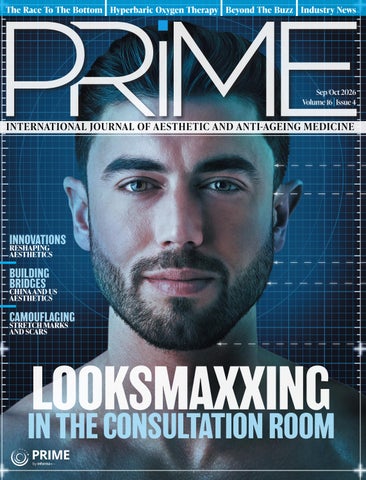
LOOKSMAXXING
prime-journal.com
IN THE CONSULTATION ROOM
APRIL 1-2-3
CANNES, FRANCE PALAIS DES FESTIVALS
SuperSMOOTH™ Natural-looking laser skin rejuvenation Combining the skin-tightening power of Fotona SMOOTH® with the resurfacing benefits of SupErficial™ cold peeling — all in one hybrid laser pulse sequence.
118066
Smoother. Tighter. More radiant. Naturally. www.fotona.com
WWW.AMWC-CONFERENCE.COM
EXPERTISE EVIDENCE EXCELLENCE ENGAGEMENT
Under the scientific supervision of the Aesthetic Multispecialty Society (AMS)
| EDITORIAL
A
S AESTHETIC MEDICINE CONTINUES TO EXPAND, THE CONVERSATIONS surrounding it are becoming broader and, in many cases, more complex. New technologies and treatment approaches continue to push the specialty forward, but practitioners are also navigating changing patient expectations, the influence of social media, and questions about where innovation should take us next. This issue explores several of these themes, from the rise of looksmaxxing to regenerative innovation, postoperative recovery, and the changing relationship between aesthetics and artificial intelligence. One of the most interesting cultural shifts we examine is looksmaxxing. What began largely as an online subculture focused on maximising physical appearance has increasingly entered the aesthetic consultation room. On page 16, Anna Dobbie explores the growing number of young male patients influenced by social media and algorithm-driven ideals of masculinity, and the challenges this creates for practitioners. As aesthetic treatments become more visible and accessible to younger men, clinicians have an important role in distinguishing achievable improvement from unrealistic expectations and ensuring that patient motivation, rather than an online ideal, remains central to treatment planning. Innovation is another major theme. Benoît Chardon examines eight breakthrough innovations highlighted at the AMWC 2026 Catalyst Stage, reflecting a broader shift from correcting visible signs of ageing to approaches focused on regeneration, preservation, and biological optimisation. That shift is also part of our broader look at what is shaping medical aesthetics now and what may come next. Rather than simply identifying the latest trend, leading physicians consider how changing patient priorities could determine which developments ultimately have staying power. We also explore the evolving role of hyperbaric oxygen therapy (HBOT). Traditionally associated with managing complications, HBOT is now being considered as a potential adjunct to routine postoperative recovery following elective aesthetic surgery. Nur Ozyilmaz, MD, examines its use in this wider context and the potential role it could play in supporting recovery. Finally, Steven H. Dayan, MD, takes the conversation beyond treatments altogether to consider the implications of artificial intelligence. As AI becomes increasingly capable of replicating aspects of human thought and creativity, his article asks a timely question: could the qualities machines find hardest to reproduce — our ability to sense, connect, and understand one another — become even more important? I hope you enjoy this issue and the perspectives it offers on the forces shaping the future of aesthetic medicine.
One of the most interesting cultural shifts we examine is looksmaxxing. Affiliated partners:
Balraj Juttla Editor, PRIME balraj.juttla@informa.com
❚
❚
❚
International Journal of Aesthetic and Anti-Ageing Medicine Informa Australia, Level 4/24 York St, Sydney, NSW, 2000, Australia ISSN 2159-8908 (print) ISSN 2159-8916 (online) Editor Balraj Juttla balraj.juttla@informa.com Art Director David ‘Spike’ McCormack Digital Marketing Manager Slim Hakimi slim.hakimi@informa.com
Cover image Stock.Adobe.com Retouching Linda Duong
The Race To The Bottom Hyperbaric Oxygen Therapy Beyond The Buzz Industry News
Sep/Oct 2026 Volume 16 Issue 4
❙
INTERNATIONAL JOURNAL OF AESTHETIC AND ANTI-AGEING MEDICINE
INNOVATIONS RESHAPING AESTHETICS
BUILDING BRIDGES
CHINA AND US AESTHETICS
CAMOUFLAGING STRETCH MARKS AND SCARS
LOOKSMAXXING
IN THE CONSULTATION ROOM
Production & Ads Department balraj.juttla@informa.com Please send your manuscripts and press releases to: balraj.juttla@informa.com All submitted manuscripts are evaluated on the basis of scientific quality, originality, appropriateness, contribution to the field and style. Manuscripts and accompanying files should be prepared in accordance with our Author Guidelines, which are available via www.prime-journal.com. All content © 2026 Informa UK Ltd. Images © Stock.adobe.com, unless otherwise stated
FIND US ON X, FACEBOOK & LINKEDIN Join PRIME’s editorial team for the latest updates in aesthetic and anti-ageing medicine, debates, and interaction with your peers and colleagues, conference information and special offers
Follow us
@PrimeJournal Search for
Prime Journal Search for
Prime Journal
SUBSCRIPTION RATES UK: £90 Europe: €180 Rest of world: US$180
prime-journal.com | September/October 2026 3
Now in for masterful communication and effortless conversions
More injectables, more energy based treatments, and, of course, VISIA Skin Analysis
The only system with instant capture delivering 3D with standard, cross‑polarized, and UV lighting modes. Includes video capture
www.canfieldsci.com VISIA is a registered trademark of Canfield Scientific, Inc.
DER | LOOKSMAXXING AND THE MALE PATIENT |
COVER STORY
September/October 2026
16
20
TWEEN ENHANCEMENT AND EXCESS: NEWS
erz Aesthetics announces FDA approval for new knee M indication for Ultherapy PRIME 8 Galderma receives European Union approval for Restylane Shaype 6
LOOKSMAXXING IN THE CONSULTATION ROOM OPINION
| CONTENTS
22 the AMWC 2026 Catalyst Stage that signal a shift from correcting the signs of ageing to regenerating, preserving and optimising biology 26 Beyond the buzz: what is shaping medical aesthetics now, and what is on the horizon Leading physicians reveal the forces reshaping medical aesthetics and why the future may depend less on chasing the next big thing than on understanding what patients really want
10 Why artificial intelligence may remind us what it means to be human CASE STUDY As artificial intelligence becomes increasingly capable of 30 Micropigmentation for camouflage of mature hypopigmented replicating human thought and creativity, Steven H. Dayan, maxxing moves online subculture toadvantage mainstream aesthetic stretch marks and post-surgical scars MD, from considers whether our greatest may lie not in practitionershow areweencountering new generation oftomale think, but in ouradeeply evolved ability sense,patients Oksana Gladka presents two clinical cases demonstrating how d by algorithm-driven Anna Dobbie examines the clinical connect withideals. and understand one another camouflage micropigmentation, using customised pigment cal challenges of balancing self-improvement with unrealistic blending and precise superficial implantation, can reduce the INDUSTRY INSIDER expectations visible contrast of mature hypopigmented stretch marks and post-surgical scars 12 Building Bridges in Aesthetic Medicine: China and the U.S.
ctober 2026 | prime-journal.com
As China and the U.S. continue to shape two of the world’s most dynamic aesthetic medicine markets, collaboration between their clinicians is creating opportunities to share knowledge, advance research and improve patient care 16 Between enhancement and excess: Looksmaxxing in the consultation room As looksmaxxing moves from online subculture to mainstream aesthetic medicine, practitioners are encountering a new generation of male patients influenced by algorithm-driven ideals. Anna Dobbie examines the clinical and ethical challenges of balancing self-improvement with unrealistic expectations 20 Hyperbaric oxygen therapy moving beyond complication management Nur Ozyilmaz, MD, explores the evolving role of hyperbaric oxygen therapy beyond complication management and its potential as an adjunct to routine postoperative recovery following elective aesthetic surgery 22 The 8 breakthrough innovations reshaping medical aesthetics Benoît Chardon explores eight breakthrough innovations from
PRACTICE MANAGEMENT 34 The race to the bottom: Discount culture, social media & the ethical gap we’re not talking about As aesthetics becomes increasingly shaped by social media, practitioners face growing pressure to balance visibility with ethics, clinical judgment, and long-term patient care
PRIME PROMOTION 38 Rethinking facial contouring: clinical experience with CELLBOOSTER® SHAPE 42 Sunscreen fusion aims to overcome hurdles of real-life application 44 Rethinking tear trough rejuvenation with Juvelook
EVENTS 46 A round-up of the major industry events around the world over the next 12 months
prime-journal.com | September/October 2026 5
NEWS |
NEWS
A round-up of news stories in the aesthetic and anti-ageing medicine industry
MERZ AESTHETICS ANNOUNCES FDA APPROVAL FOR NEW KNEE INDICATION FOR ULTHERAPY PRIME
ONLY FDA-CLEARED ULTRASOUND WITH REAL-TIME VISUALISATION FOR NON-SURGICAL SKIN LIFTING
M
erz Aesthetics, the world’s largest dedicated medical aesthetics business, announced that the US Food and Drug Administration (FDA) has cleared Ultherapy PRIME® to improve the appearance of skin laxity on the knees. With this clearance, the platform becomes the first and only energy-based aesthetic device indicated for this treatment area. This milestone marks a significant expansion of Ultherapy PRIME’s growing portfolio of cleared body indications. Built on the legacy of Ultherapy®, the world’s #1 energy-based aesthetic device, and powered by advanced microfocused ultrasound with vivid real-time visualisation (MFU-V), the platform now offers a comprehensive approach to addressing skin laxity with indications to LIFT the face, SMOOTH the décolleté, and FIRM and lift the skin on the abdomen, arms, and knees. ‘Being the first to bring FDA-cleared real-time visualisation to the knees represents a meaningful milestone,’ said Patrick Urban, President of Merz Aesthetics North America. ‘However, this launch is about more than a new indication; it’s about expanding the addressable market for noninvasive lifting and firming. Body aesthetics is no longer a secondary treatment category — there’s a stronger commercial demand and it’s becoming central to how providers build their practices. Merz Aesthetics is well-positioned to continue to lead that shift here in the US’ Ultherapy PRIME treats multiple skin depths, allowing practitioners to tailor treatment to each patient’s unique anatomy. By stimulating the body’s natural collagen and elastin production, it delivers a non-surgical lift with natural-looking, long-lasting results for the face and body. Designed with patient convenience in mind, it typically requires a single session with no downtime and is safe for all skin tones. ‘The new knees indication marks another
6
monumental moment for Ultherapy PRIME,’ said Dr Samantha Kerr, Chief Scientific Officer at Merz Aesthetics. ‘It underscores our commitment to advancing science-backed innovation and expanding non-invasive treatment possibilities for healthcare professionals and their patients.’ Ultherapy PRIME builds on the proven legacy of Ultherapy, recognised as the Gold Standard in non-invasive skin lifting, with more than 4 million treatments performed globally and 95% patient satisfaction at year one. ‘As patients become more informed about aesthetic treatment options, we’re seeing increasing interest in areas beyond the face and
September/October 2026 | prime-journal.com
neck,’ said Dr Jennifer Levine, double boardcertified facial plastic surgeon in New York City. ‘The knees are a common concern for patients who have skin laxity in this area as their skin loses collagen and elastin with age. The advancement of Ultherapy PRIME for the knees represents an important advancement and personalised approach to addressing these concerns and growing patient demand.’ As Ultherapy PRIME continues to redefine the future of non-surgical skin lifting, Merz Aesthetics will transition away from the legacy Ultherapy device, with full service and support concluding on September 30, 2027.
A EST H ET I C & A N T I - AG I N G M E D I C I N E WO R L D C O N G R ESS
Shaping Aesthetic Medicine with a Global Perspective.
Save the Dates:
February 13-15, 2027
Miami, Florida, USA JW Marriott Miami Turnberry Resort & Spa amwcamericas.com
SIGN UP FOR EMAIL UPDATES
SUPPORTED BY
NEWS |
GALDERMA RECEIVES EUROPEAN UNION APPROVAL FOR RESTYLANE SHAYPE THE FIRST-AND-ONLY BONE-MIMICKING HYALURONIC ACID INJECTABLE FOR FACIAL SHAPING
G
alderma announced that Restylane® Shaype™ has been approved in the EU under the Medical Device Regulation for temporary augmentation of the chin region. Engineered for deep injection to build and shape on bone, Restylane Shaype delivers a unique bone-mimicking effect, enabling immediate, natural-looking structural enhancement in the lower face without surgery. The lower face plays a pivotal role in overall facial balance, influencing proportions and profile. This region is an increasing area of concern for patients, with around one in four people expressing concerns related to lower face sagging and chin shape. When asked about their facial priorities, a third of people pointed out issues with their chin shape – a key contributor to facial definition and structural harmony. Genetic factors and age-related changes can lead to reduced chin definition and poor projection. Until now, achieving structure in this area has largely relied on surgical implants, with no minimally invasive injectable aesthetic alternatives available for patients. Powered by Galderma’s new NASHA HD™ technology, Restylane Shaype is the firmest HA injectable gel available among market leaders in the facial filler market, with the highest G’ (measure of firmness) of the Restylane range. As the first-and-only HA dermal filler specifically designed to allow aesthetic injectors to build and shape on the lower angles of the face, it provides greater projection with lower injection volumes. Underpinning the Restylane range is a minimally modified HA gel that closely resembles naturally occurring HA, requires less product than other HA gels, and can be readily reversed, offering both performance and reassurance. “Hyaluronic acid fillers remain the irreplaceable hero at the centre of modern aesthetic care, yet the ability to achieve structural support in the face without surgery has long been limited. In my clinical practice, I have seen how Restylane Shaype can address this gap, supported by pivotal data demonstrating durable improvements in lower
8
face structure and definition through 12 months, high patient satisfaction and strong willingness to repeat treatment. These findings mirror what I have been seeing in practice and highlight the value of a bone-mimicking HA injectable that enables predictable, natural-looking results aligned with individual patient anatomy and treatment goals,” said cosmetic dermatologist and study investigator Andrei Metelitsa, MD, FRCPC, DABD. In a pivotal 12-month study, 83% of people treated with Restylane Shaype showed improved structure and definition at three months (66% at 12 months), and 84% of patients would agree to be treated with Restylane Shaype again. Furthermore, up to 97% of patients would recommend treatment with Restylane Shaype to a friend. Restylane Shaype injections are administered with a new, next-generation syringe to enhance precision and control through its ergonomic design and optimised syringe-needle connection. To support consistent, individualised use of Restylane Shaype in clinical practice, Galderma has developed the Shayping Technique™. The technique combines Galderma’s Assessment, Anatomy, Range, and Treatment (AART™) methodology and the Facial Assessment Scale (FAS),
September/October 2026 | prime-journal.com
enabling healthcare professionals to systematically evaluate lower face anatomy and facial balance, helping to identify individual patient priorities and treatment goals. This assessment-led approach supports a broader understanding of lower face structure and is aligned with ongoing investigations of Restylane Shaype in areas such as the jawline. “The EU approval of Restylane Shaype represents an important regulatory milestone for Galderma and for injectable aesthetics more broadly. With approvals now spanning Europe, Canada, and Brazil, this first-and-only HA shaper is a valuable new addition to the overall aesthetic landscape, and to the Restylane portfolio, expanding clinicians’ ability to address structural concerns in ways that traditional HA fillers are not designed to. It reflects the strength of our clinical development capabilities and our commitment to delivering innovative, sciencebased solutions that respond to the increasing global demand for facial balancing,” said Baldo Scassellati Sforzolini, MD, PhD, global head of R&D at Galderma. The distinctive bone-mimicking effect of Restylane Shaype reinforces how the Restylane HA treatment range is well-placed to address evolving aesthetic needs across all life stages, including aesthetic changes associated with medication-driven weight loss and menopause, which can affect bone density, structural support, and skin health. With over 30 years of innovation and more than 77 million treatments administered worldwide, the Restylane portfolio offers a versatile range of HA gels that remain highly relevant in responding to today’s most significant aesthetic trends and needs. As patient expectations shift toward more effortless, always-on rejuvenation, Galderma’s ‘Wake Up To Restylane’ campaign positions Restylane as an everyday natural beauty ally for the face and other areas of the body, highlighting Galderma’s commitment to meeting emerging needs. Focused on the growing desire for natural, authentic results, the campaign underscores Restylane’s ability to deliver personalised results that go beyond volumising, helping people feel confident in their skin.
26-27-28
November, 2026 WWW.AMWC-SOUTHEASTASIA.COM
Organized in cooperation with the official DST Dermatological Society of Thailand
Under the scientific supervision of the Aesthetic Multispecialty Society (AMS)
BANGKOK, THAILAND THE ATHENEE HOTEL POST-CONGRESS COURSE RAJAVOTHI HOSPITAL
OPINION |
WHY ARTIFICIAL INTELLIGENCE MAY REMIND US WHAT IT MEANS TO BE HUMAN As artificial intelligence becomes increasingly capable of replicating human thought and creativity, Steven H. Dayan, MD, considers whether our greatest advantage may lie not in how we think, but in our deeply evolved ability to sense, connect with and understand one another
STEVEN H. DAYAN, MD, FACS, is a facial plastic surgeon, clinical researcher, and educator based in Chicago, IL. He is a New York Times bestselling author who has penned more than 200 peer-reviewed publications and 6 books. Dr Dayan lectures globally on the science of attraction, social perception, and the emerging field of neurocosmetics. Email: StevenDayan@mindfloss. com
T
HERE ARE MOMENTS IN HISTORY when humanity crosses a threshold from which there is no return. We rarely recognise them as they happen, but in retrospect they become unmistakable. Artificial intelligence feels like one of those moments. This is not simply another technological revolution. It is something altogether different. For the first time, we are creating something that does not merely amplify human ability but begins to replicate it. Artificial intelligence can already reason, write, generate art, create music, diagnose, discover drugs, and increasingly make decisions once reserved for human judgment. Before long, it will likely drive our cars, teach our children, assist our physicians and
10
September/October 2026 | prime-journal.com
perhaps even become our companions. It is difficult to imagine a corner of society that will remain untouched. Every transformative technology has changed how we live, but artificial intelligence may change what it means to be human. For someone who has spent a career studying beauty, attraction, and the neuroscience of first impressions, that possibility raises an unexpected question. If machines eventually become nearly indistinguishable from us in conversation, creativity, and even companionship, what will remain uniquely human? Most discussions surrounding artificial intelligence focus on whether it will replace us or become conscious. These profound existential questions have led me to approach AI from a different perspective, one that may reveal not its weakness, but its greatest limitation.
| OPINION How might AI remind us what makes us uniquely human?
Imagine, for a moment, a perfectly designed companion who is endlessly patient, physically attractive, emotionally available, and capable of learning every preference you have ever expressed. For many people, that may seem preferable, but it is not human. Humanity evolved under the selective pressures of living among other people and within an unforgiving environment. Our survival depended upon our ability to sense danger, recognise kinship, identify beauty, choose trustworthy companions, and perceive the countless subtleties of another individual long before we consciously understood them. Another person challenges us in ways no machine can. We misunderstand, disappoint, and forgive one another, and through that process develop empathy, resilience, and trust. Relationships have always demanded compromise and emotional work. Still, perhaps those demands are the very mechanisms through which evolution shaped us into social beings capable of thriving and ultimately becoming human. That possibility leads to an intriguing paradox. As artificial intelligence becomes increasingly capable of satisfying our intellectual needs and perhaps even simulating many of our emotional ones, it may simultaneously remind us that our most valuable human abilities have never been intellectual alone. For nearly three hundred thousand years, Homo sapiens survived not because we thought faster than every other species, but because we sensed one another and our environment more effectively. Long before technology helped us measure the invisible forces of nature, our ancestors relied on subtle environmental cues to navigate the world around them. Some evolutionary biologists have proposed that early humans may have possessed a greater sensitivity to the Earth’s magnetic fields than we appreciate today. And unquestionably, we have evolved to read faces, scents, and countless other biological and environmental signals that rarely entered conscious awareness. Primitive ancestors recognised danger before it struck, fear before it was spoken, and often sensed illness, confidence, and trustworthiness long before they had words to describe them. We often think of evolution as leaving our primitive past behind. Yet evolution rarely discards what still serves us; instead, it builds on it. Our advanced cerebral cortex, which allows reason, did not replace our ancient brains; it layered upon them. Beneath every
sophisticated thought lies a nervous system refined over aeons, quietly processing information before our conscious mind begins explaining what it thinks it knows. Perhaps one of the greatest misconceptions of modern life is that we think we are more advanced than we are. We are so confident we have reasoned our way to a conclusion when, in truth, we are often constructing a story around something our evolutionarily encoded biology already determined.
Sensing What We Cannot See
My investigations into neuro-aesthetics have led me to view beauty less as decoration and more as a method for communication. Without speaking, our faces and skin both signal and perceive information about health, emotion, hormonal balance, and countless other biological cues. Research increasingly suggests that humans exchange information through micro-expressions, skin temperature, volatile organic compounds and other subtle physiological signals, many of which are processed beneath conscious awareness. We often ‘feel’ one another long before we consciously think about one another.
Perhaps the final test of humanity will not be whether we can build machines that think like us, but whether we can still recognise one another when surrounded by machines that do. Several years ago, my laboratory explored what seemed like an impossible question. Could individuals who were legally blind detect beauty? It was a small pilot study that may have raised more questions than it answered, yet the findings were intriguing enough to make us pause. Participants without sight appeared capable of distinguishing beauty at rates greater than chance. The study opened the door to a larger question: How much of what we perceive about another human being is truly visual, and how much is sensed through pathways we are only beginning to understand? Other investigators have reported similar observations. Individuals without sight often detect danger, emotional states, and social intent through embodied senses that remain incompletely understood1,2. This is not evidence of a mystical sense. Rather, it reminds us that evolution has spent thousands of years refining ways for human beings to understand one another, and it would be naïve to assume it was
limited to the Aristotelian five senses we all know so well. Perhaps this is where the scientist in me gives way to the writer, where the researcher yields to the philosopher. Science has taught me to respect evidence, but it has also taught me that today’s speculation often becomes tomorrow’s experiment. I cannot help wondering whether our ancestors left us with perceptual abilities that modern life has simply stopped asking us to use. Surrounded by screens and now artificial intelligence, perhaps we have simply become less attentive to the quiet conversations our biology has been having all along.
Rediscovering the Human Advantage
As AI becomes increasingly proficient at what once defined being human, it may force us to rediscover qualities we have taken for granted, such as presence, empathy, and trust. It may also force us to rediscover the subconscious capacity to sense and influence emotions simply by sharing the same space with another. Perhaps the greatest irony of artificial intelligence is that, in pushing us toward an extraordinary technological future, it may also lead us back to our evolutionary past. Perhaps that is why beauty has always mattered more than we realise. Beauty is not merely an ideal physical; rather, it is how we communicate vitality and genetic fitness. Long before beauty inspired art and aesthetic medicine, it served a far more fundamental purpose, helping us to recognise friend, foe, kin, and mate. As we enter an age increasingly shaped by artificial intelligence, I find myself less focused on whether machines will replace us and more on whether we can learn to appreciate the very senses that have catapulted us to the top of the evolutionary chain. Our existential future will not reside in outthinking AI, but rather in our extraordinary ability to feel others and our environment with the sentience that has quietly been within us all along. Perhaps the final test of humanity will not be whether we can build machines that think like us, but whether we can still recognise one another when surrounded by machines that do.
References 1. Sarzedas J, Lima CF, Roberto MS, Scott SK, Pinheiro AP, Conde T. Blindness influences emotional authenticity perception in voices: Behavioral and ERP evidence. Cortex, 2024; 172: 254-270 2. Ferrari C, Arioli M, Atias D, Merabet LB, Cattaneo Z. Perception and discrimination of real-life emotional vocalizations in early blind individuals. Front Psychol. 2024 May 9;15:1386676. doi: 10.3389/fpsyg.2024.1386676. PMID: 38784630; PMCID: PMC11112099.
prime-journal.com | September/October 2026 11
INDUSTRY INSIDER | AESTHETIC MEDICINE IN CHINA |
BUILDING BRIDGES IN AESTHETIC MEDICINE CHINA AND THE U.S.
As China and the U.S. continue to shape two of the world’s most dynamic aesthetic medicine markets, collaboration between their clinicians is creating opportunities to share knowledge, advance research and improve patient care 12
September/October 2026 | prime-journal.com
| AESTHETIC MEDICINE IN CHINA | INDUSTRY INSIDER
T
WO WORLD POWERS KNOWN FOR residency core criteria curriculum. There are no in-service their differences have one thing in exams. So, while many are highly qualified, we don’t have common: Soaring medical aesthetics any way to particularly vet them,’ Dr Miller told PRIME. industries. ‘China’s bewildering medical education pathways,’ The U.S. aesthetic medicine market, valued published in The Lancet,3 described China’s medical at $49.28 billion in 2025, is anticipated to education system as one of the world’s most complex and grow to about $167.13 billion by 2035 (at a compound annual perplexing. While medical graduates in Europe and North growth rate (CAGR) of nearly 13% from 2026 to 2035), America hold the same degree and possess a uniform level according to market research by Nova One Advisor.1 While of clinical proficiency, China has multiple distinct medical the U.S. leads the global aesthetic medicine market, experts education pathways that can last from 3 to 8 years. agree that China’s industry is evolving and growing rapidly. ‘As a result, medical students in China can receive an China’s medical aesthetics industry is becoming entry-level medical degree at varying levels of graduation, established as a leading global market segment ‘at the allowing them to take the Chinese Medical Licensing confluence of healthcare, beauty, and technology,’ according Examination and become licensed practitioners,’ according to a report by the global advisory firm KPMG.2 The KPMG to the paper. report, entitled Redefining Beauty: Navigating China’s Dr Miller vouched for Dr Song, who became an ASPS Medical Aesthetics Upheaval, pointed to China’s estimated member. This led to an important friendship and long, 22.6% CAGR between 2023 and 2030, driven by rising consistent collaboration. Dr Miller is often invited to China disposable income, an ageing population, demand from to share surgical techniques. Drs Miller and Song have also younger consumers, social media influence, artificial worked together on joint meetings of the Chinese Society of intelligence (AI), and a boom in ‘light medical aesthetics.’ Plastic Surgeons (CSPS) and the ASPS. Dr Miller is an Min Yao, MD, PhD, a organiser for the next joint professor at Shanghai Jiaotong meeting in Shanghai, China, in China has seen rapid adoption November 2026. He’ll be University School of Medicine (SJUSM) and the academic of technologies aimed at skin quality presenting plastic surgery leader of the photoelectricity techniques — from stem cells improvement (e.g., texture, pores, specialty in plastic surgery at and regenerative medicine to pigmentation, laxity) and minimally surgical approaches. the Ninth People’s Hospital of SJUSM, told PRIME that invasive rejuvenation, while aesthetic medicine in China is a Overcoming cultural academic centres are placing dynamic, rapidly evolving field. norms increasing attention on ‘It is not only about cosmetic Chinese surgeons tend to be methodological rigour, including enhancement. Increasingly, it is highly skilled due to giant about medical safety, evidencesurgical volume and prospective registries, validated based practice, patient tremendous manual dexterity, scales, and longer follow-up. education, and long-term aided in part by ‘chopsticks wellness,’ she said. ‘China has and the Chinese alphabet,’ Min Yao, MD, PhD seen rapid adoption of according to Dr Miller. technologies aimed at skin Because it has always been a quality improvement (e.g., texture, pores, pigmentation, forbidden country with closed policies, China lacks access laxity) and minimally invasive rejuvenation, while academic to Western technological innovations available to aesthetic centres are placing increasing attention on methodological clinicians in the U.S. and throughout modern Asia. rigour, including prospective registries, validated scales, and ‘China has basically blocked out Western technology,’ longer follow-up.’ Dr Miller said. ‘If you go to South Korea, Taiwan, Japan, or Singapore, you see technology that you would commonly Bridge building see in an ICU at Johns Hopkins,’ Dr Miller said. ‘They still Cosmetic surgery did not exist in China until recently, said have glass IV bottles. The rooms were about 90 degrees, and Randy Miller, MD, a cosmetic and reconstructive plastic surgeons were sweating because they didn’t have technology surgeon practising in Miami, Florida. as we do in the U.S. to keep patients warm during surgery.’ ‘It’s a communist country. There’s no private healthcare, That’s changing. China is shepherding industry growth and plastic surgery hasn’t been part of the culture,’ Dr Miller with supportive policies that encourage innovation, said. according to the KPMG report, which predicts strong Dr Miller started on a journey to work alongside Chinese growth in laser and energy-based device technologies. plastic surgeons in 2005, when he met Jianxing Song, MD, Today, Dr Miller said China is a ‘communist-capitalist PhD. The European-trained surgeon asked Dr Miller to assist country.’ with Dr Song’s request to become a member of the ‘Chinese entrepreneurs are opening up these magnificent American Society of Plastic Surgeons (ASPS). plastic surgery hospitals,’ Dr Miller said. ‘I have worked at It was tricky, as there is no medical equivalence to many of these hospitals, and they have advertised me on Western medical education in China. billboards and television. They use social media heavily. They ‘There’s no board certification. There’s no defined use publicists. China has really grown its aesthetic industry.’
MIN YAO, MD, PHD, professor at Shanghai Jiaotong University School of Medicine (SJUSM) and academic leader of the photoelectricity specialty in plastic surgery at the Ninth People’s Hospital of SJUSM, Shanghai, China; RANDY MILLER, MD, is a cosmetic and reconstructive plastic surgeon in Miami, Florida, USA
prime-journal.com | September/October 2026 13
INDUSTRY INSIDER | AESTHETIC MEDICINE IN CHINA | Medical aesthetic industry comparisons between China and the U.S.
quality enhancement. ■ Pigment and photoageing management is in demand, often with laser-based strategies and careful patient counselling regarding expectations, recurrence risk, and post-treatment care. ‘Surgical demand remains meaningful, but many patients—especially first-time aesthetic patients—prefer procedures with lower perceived risk and downtime, which continues to fuel growth in minimally invasive modalities,’ Dr Yao said.
Like the U.S., China is seeing strong interest in minimally invasive and non-invasive treatments, regenerative concepts, skin rejuvenation, combination therapies, and overall wellness. Patients are interested not only in looking younger, but also in looking healthier, less tired, and more natural, explained Dr Yao, who has published 162 papers, including 72 in English, and holds 16 patents. The shift from having a single procedure to skin-quality and Surgical demand remains meaningful, but maintenance paradigms is notable, Dr AI in aesthetic medicine in many patients—especially first-time aesthetic Yao said. China ‘In China, this trend is frequently Like in the U.S., AI’s influence is patients—prefer procedures with lower perceived expressed through a strong preference increasing across aesthetic risk and downtime, which continues to fuel for brighter, more even skin tone medicine workflows. This includes growth in minimally invasive modalities. (“brightening/whitening”), making with imaging and assessment pigment control and tone uniformity standardisation. Min Yao, MD, PhD central themes in routine practice,’ she Chinese clinicians are also said. harnessing AI for decision support Combination therapy and protocols commonly and risk stratification, patient communication, integrate energy-based devices with education, and operational efficiency. They, injectables and topical/biologic adjuncts, too, have concerns about responsible AI aiming for synergistic effects while implementation, recognising the optimising downtime and safety, need for external validation, according to Dr Yao. careful management of bias and And while regenerative and generalisability, and strong biostimulatory concepts are privacy and data governance, gaining traction, there is according to Dr Yao. heightened demand for That’s especially high-quality evidence, she important in aesthetic shared. medicine, which involves Weight management highly sensitive data, she and metabolic health said. discussions (including The common ground GLP-1s) are on the rise, between these particularly in the countries is evident at context of body professional meetings, contouring and holistic including those hosted appearance management. by ASPS and Informa Clinical integration, Aesthetic, such as the however, often depends on upcoming AMWC China in local prescribing pathways, Chengdu from October 16th multidisciplinary collaboration, to 18th, 2026. and patient selection frameworks, Attendees share priorities in Dr Yao said. patient safety, natural-looking Like clinicians and researchers in outcomes, and the growing role of the U.S., those in China are paying more combination therapy and longitudinal attention to adverse-event prevention— care, Dr Yao said. especially post-inflammatory hyperpigmentation Differences often arise from population(PIH) following energy-based device treatments. specific clinical needs, including increased emphasis Dr Yao shared that aesthetic medicine demand in China is on pigmentary conditions and ‘skin quality’ in many Asian particularly strong for: cohorts. Other differences include practice environments, ■ Non-invasive and minimally invasive rejuvenation with regulatory pathways, and variations in treatment energy-based devices (laser/light, radiofrequency [RF], standardisation across settings. ultrasound), skin tightening, and treatments targeting International meetings are particularly valuable because texture and pores. they allow benchmarking of protocols and endpoints, and ■ Injectables, including neuromodulators and hyaluronic they accelerate convergence toward best practices grounded acid fillers, remain common, alongside growing interest in data, according to Dr Yao, who pointed to the recurring in approaches framed as collagen stimulation or tissue discussion on adverse events after energy-based device
14
September/October 2026 | prime-journal.com
| AESTHETIC MEDICINE IN CHINA | INDUSTRY INSIDER treatment — especially laser-associated PIH, which may vary across skin phototypes and peri-procedural practices, underscoring the value of cross-population evidence and protocol sharing.
Collaboration: ‘A beautiful thing’
Collaboration between the countries has happened regardless of other world events. The relationship has survived and thrived, resulting in ‘a special and beautiful thing,’ according to Dr Miller. Collaboration improves scientific validity and patient outcomes. According to Dr Yao, cross-country exchanges: ■ promote harmonised safety standards and complication management frameworks ■ enable multi-ethnic validation of devices, injectables, and algorithms (critical for generalisability) ■ facilitate consensus on outcome measures and clinically meaningful endpoints ■ encourage higher-quality, reproducible evidence through shared methodology and peer learning. ‘Given global patient mobility and the international nature of aesthetic innovation, this collaboration is increasingly essential,’ said Dr Yao, whose clinical and research interests include pigmentary disorders, scar management, wound repair/regeneration, and anti-ageing interventions.
Future opportunities
Dr Yao suggested promising opportunities for future collaborations between China and the U.S. include multicentre training and the external validation of AI models. ‘U.S.–China collaboration could enable larger, more diverse datasets for training and, critically, rigorous external validation across different skin phototypes, imaging environments, and clinical workflows. This would support more generalisable performance, better calibration, and improved fairness. Shared governance on privacy, deidentification, and reporting standards (e.g., transparent model documentation and failure mode analysis) would be essential,’ she said. Another opportunity is for protocol and parameter harmonisation for the same device across different populations. Even with identical platforms (e.g., specific laser/RF/ultrasound systems), optimal settings and treatment modes may differ by baseline pigmentation, phototype-related risk (such as PIH), and patient-defined aesthetic goals, Dr Yao said. ‘Collaborative studies could compare parameter ranges, pulse structures/modes, treatment intervals, and peri-/ post-procedural care, to generate evidence-based guidance,’ she added. There are no signs that the collaborations between China and the U.S. in medical aesthetics are slowing, and that’s important. When surgeons do surgery together and are doctors together, they don’t focus on politics or the world stage. ‘We talk about how to take the best care of our patients, and we trust each other,’ Dr Miller said. The aesthetic medicine bond between the countries
If we become friends through medicine, we will be able to take better care of our patients and make a better future for all of our children. Randy Miller, MD
endured even during the pandemic, when Dr Miller recalls having biweekly calls with ASPS members and Dr Song for several years without fail. Some 20 years ago, Dr Miller thought he would be doing the majority of teaching as an American going into the People’s Republic of China. Instead, he found that medicine is a two-way exchange of information. ‘If we become friends through medicine, we will be able to take better care of our patients and make a better future for all of our children,’ he said. Dr Miller refers to it as ‘bridges of medical friendship.’ Written by Lisette Hilton, contributing editor
References 1. Advisor NO. U.S. Aesthetic Medicine Market Size to Exceed USD 167.13 Bn by 2035 [Internet]. Novaoneadvisor.com. Nova One Advisor; 2026 Feb [cited 2026 Aug 13]. Available from: https://www. novaoneadvisor.com/report/ us-aesthetic-medicine-market 2. KPMG [Internet]. Redefining Beauty:
Navigating China’s Medical Aesthetics Upheaval. KPMG. 2025 [cited 2026 Aug 13]. Available from: https://kpmg.com/cn/en/ insights/2025/11/china-medicalaesthetics-industry.html 3. Shan D. China’s bewildering medical education pathways. The Lancet. 2023 Mar 1;401(10381):999–1000
prime-journal.com | September/October 2026 15
INDUSTRY INSIDER | LOOKSMAXXING AND THE MALE PATIENT |
COVER STORY
BETWEEN ENHANCEMENT AND EXCESS: LOOKSMAXXING IN THE CONSULTATION ROOM
As looksmaxxing moves from online subculture to mainstream aesthetic medicine, practitioners are encountering a new generation of male patients influenced by algorithm-driven ideals. Anna Dobbie examines the clinical and ethical challenges of balancing self-improvement with unrealistic expectations 16
September/October 2026 | prime-journal.com
| LOOKSMAXXING AND THE MALE PATIENT | INDUSTRY INSIDER The rise of the algorithmic male face
Male aesthetics is no longer a niche market. Over the past decade, treatments once mainly associated with female patients have become increasingly accepted among men, particularly younger groups. Social media has dramatically accelerated that shift. Platforms like TikTok and Instagram reward visual extremes. Dramatic before-and-after transformations, exaggerated facial structures, and highly curated appearances drive engagement. At the same time, filters, editing tools, and AI-enhanced imagery simultaneously ANNA DOBBIE is the editor of blur the distinction between achievable outcomes and consumer women's health magazine digital fantasy. Pause and patient safety platform Twiqk, and the former editor of All the practitioners interviewed for this article identified Aesthetic Medicine magazine. She social media as a major driver of changes in male aesthetic studied Biological Natural Sciences expectations. While previous generations may have at the University of Cambridge, and has more than 20 years of compared themselves to occasional celebrity images in experience in journalism magazines or films, young men today are exposed to a constant stream of artificially optimised faces and physiques. HE RISE OF ‘LOOKSMAXXING’ HAS Dr Edel Woods believes algorithms are promoting a introduced a new type of male patient to particularly narrow version of masculinity: ‘Algorithms aesthetic medicine: younger, highly tend to favour defined angles, extreme proportions and informed, deeply influenced by social uniformity of features which can of course cloud individual media, and often arriving with a perceptions of beauty and masculinity.’ remarkably specific vision of how This growing emphasis on facial optimisation reflects masculinity should look. broader cultural changes. Though discussions around Once confined to niche internet forums, looksmaxxing skincare, grooming, and cosmetic treatments become has moved firmly into the mainstream. The term broadly increasingly normalised among men, appearance is playing describes the pursuit of maximising physical attractiveness a more prominent role in shaping identity. However, the through interventions ranging from skincare, grooming, pursuit of self-improvement can become problematic when and fitness to injectables and surgery. While many aspects enhancement gives way to homogenisation. of the trend overlap with traditional self-improvement, its The influence of internet culture is clearly visible in the online evolution has produced a highly codified aesthetic language patients now bring into consultations, with ideal centred on sharp jawlines, hollowed cheeks, straight concepts once confined to anonymous online forums now noses, prominent brows, and deeply set eyes. entering mainstream aesthetic discussions. For aesthetic practitioners, Oculoplastic surgeon Prof the phenomenon grants both Daniel Ezra stresses the rising For many, as traditional an opportunity and a challenge. interest in hypermasculine Male patients are becoming markers of success feel further out of eyebrows and narrowing of the increasingly engaged with eye aperture, called ‘Hunter reach, the body becomes the only aesthetic medicine and are eyes’ within looksmaxxing domain where a young person feels more willing to invest in their communities: ‘The popularity they can exert absolute control. appearance. At the same time, demonstrates how online clinicians are reporting aesthetics have moved beyond Riccardo Frati, MD general appearance concerns growing numbers of younger men seeking treatments into highly specific anatomical shaped less by individual anatomy and more by ideals.’ algorithmically reinforced beauty standards. Features that were once rarely discussed outside The central question is how practitioners should respond specialist circles are now routinely analysed in social media when demand for aesthetic procedures is driven by ideals videos, web forums, and influencer content. Patients are that may be unrealistic, unhealthy or fundamentally at increasingly arriving not simply with a desire to look better, odds with a patient’s natural features. but with highly specific visual targets formed by digital Plastic surgeon Dr Riccardo Frati believes the trend subcultures. shows wider psychological pressures affecting young men: Kam Dogan of The PRP Lab believes social media has ‘The rise of looksmaxxing points to a deeper crisis of self- amplified unrealistic aesthetic expectations among esteem and body dysmorphia among young male patients. younger male demographics. ‘Unfortunately, social media For many, as traditional markers of success feel further out plays a very negative role in looksmaxxing,’ he adds. of reach, the body becomes the only domain where a ‘Unnatural-looking facial aesthetics, hairlines that scream young person feels they can exert absolute control.’ hair transplant from miles away – all fuelled by social
T
RICCARDO FRATI, MD, Plastic Surgeon, London, UK; EDEL WOODS, MD, Founder of ORA Skin Clinic, Dublin, Ireland; DANIEL EZRA, PHD, Specialist Ophthalmic and Oculoplastic Consultant, London, UK; KAM DOGAN, Founder, Director & Lead Practitioner, The PRP Lab, London, UK; PAUL TULLEY, MD, Consultant Plastic, Reconstructive, and Cosmetic Surgeon, London, UK
prime-journal.com | September/October 2026 17
INDUSTRY INSIDER | LOOKSMAXXING AND THE MALE PATIENT | Algorithms tend to favour defined angles, extreme proportions and uniformity of features which can of course cloud individual perceptions of beauty and masculinity. Edel Woods, MD
media and the algorithms that only make it worse.’ The consequences go beyond aesthetic medicine itself. Dr Frati warns that trend-driven attempts to achieve idealised physiques can encourage harmful behaviours, including extreme dieting and the use of unregulated substances such as peptides and anabolic steroids: ‘There is a psychological burden associated with constant monitoring and comparison of appearance.’
Jawline enhancement remains one of the most common examples. Dogan says some patients arrive seeking heavily sculpted lower faces inspired by celebrity aesthetics: ‘Jaw and chin fillers to give the “Brad Pitt” look – very chiselled and the “plastic fantastic” look, as I say. We are talking about 12–15ml in one go, a definite no for me.’ Plastic surgeon Dr Paul Tulley says other common requests include rhinoplasty, chin implants, high-definition liposuction, toxin, and filler for facial contouring, with a What male patients are actually requesting focus on the jawline and chin. Practitioners say most Collectively, these requests requests from younger male reflect the emergence of a Patients are increasingly patients remain relatively standardised masculine ideal: arriving not simply with a desire to conventional, with a focus on strong facial structure, low skin quality, hair restoration, body fat, visible musculature look better, but with highly specific and subtle facial refinement and minimal signs of ageing. visual targets formed by digital rather than dramatic The concern for many subcultures. transformation. practitioners is not the Dr Woods reports growing treatments themselves but the Daniel Ezra, PhD increasingly uniform vision of demand for treatments aimed at improving skin health, plus attractiveness driving the reducing visible signs of ageing. ‘We are seeing a clear rise demand. in young male patients presenting with a desire to look healthier, fresher, and more youthful, rather than The consultation challenge dramatically different,’ she adds. ‘There is an element of Perhaps the most considerable impact of looksmaxxing is wanting to optimise masculinity, but this is typically subtle not procedural but psychological, with many practitioners and grounded in proportion rather than exaggeration.’ describing spending more time discussing motivation, However, alongside these more conservative requests, expectations, and self-perception than treatment plans. practitioners are increasingly encountering patients seeking Younger male patients frequently arrive having conducted highly specific hypermasculine features that have been extensive online research, armed with terminology, trend popularised online. references and highly specific goals.
18
September/October 2026 | prime-journal.com
| LOOKSMAXXING AND THE MALE PATIENT | INDUSTRY INSIDER In some cases, this knowledge can be beneficial. In others, it may reflect unrealistic expectations formed by heavily edited imagery and online comparison. Common warning signs include celebrity reference photos, fixation on minor asymmetries, requests for trend-driven procedures, and resistance to professional advice. For Dr Woods, the language patients use often reveals more than the treatment they request: ‘A key marker is when the requested outcome does not match the patient’s underlying anatomy or would require disproportionate intervention to achieve.’ Similarly, Dr Tulley notes that some patients become preoccupied with clinically insignificant imperfections. ‘Often they are analysing very slight differences between the two sides of the face, minor asymmetries or tiny imperfections,’ he adds. ‘The reality is that nobody is perfectly symmetrical or proportionate.’ Increasingly, consultation skills have become as important as technical expertise. Practitioners must not only assess anatomy but also determine whether a patient’s goals are grounded in reality.
The ethics of saying no
The growth of looksmaxxing culture raises a wider ethical question for aesthetic medicine: Where does patient autonomy end and practitioner responsibility begin? The commercial pressures of the sector make this particularly challenging. Dramatic transformations often perform well online, generating visibility and attracting new patients, but refusal remains an essential part of ethical practice. For Mr Dogan, the decision is clear when patient expectations conflict with safety or natural outcomes: ‘Safety first: if the expectation is not only unrealistic, but unsafe to carry out, we simply say no and do not go ahead with any treatments.’ At the same time, practitioners caution against dismissing all appearance-related concerns as superficial or trend-driven. Prof Ezra argues that outcomes should ultimately be assessed according to patient wellbeing rather than the origin of the request: ‘Focus on what’s best for patients, with a natural look, while being safe and
effective; in the right patient, even changes like this can improve quality of life.’ While clinicians must identify unrealistic expectations and psychological vulnerabilities, they must also recognise that carefully selected treatments can improve confidence and wellbeing for appropriate patients. The difficulty lies in separating healthy self-improvement from the pursuit of impossible ideals.
Beyond trends
Looksmaxxing may be rooted in internet culture, but the challenges it presents are unlikely to disappear overnight. Social media will continue to shape aesthetic demand, and younger male patients will remain an increasingly important demographic for the sector. In many respects, growing interest in skincare, preventative treatments, and self-care represents a positive cultural shift. The concern emerges when algorithm-driven beauty standards replace individuality with conformity. Looking forward, male aesthetics may depend less on available treatments and more on the sector’s willingness to uphold ethical limits and realistic expectations in a culture that increasingly rewards visual perfection.
Often they are analysing very slight differences between the two sides of the face, minor asymmetries or tiny imperfections. The reality is that nobody is perfectly symmetrical or proportionate. Paul Tulley, MD
prime-journal.com | September/October 2026 19
INDUSTRY INSIDER | HYPERBARIC OXYGEN THERAPY |
HYPERBARIC OXYGEN THERAPY
MOVING BEYOND COMPLICATION MANAGEMENT Nur Ozyilmaz, MD, explores the evolving role of hyperbaric oxygen therapy beyond complication management and its potential as an adjunct to routine postoperative recovery following elective aesthetic surgery
A
NUR OZYILMAZ, MD, is a UK-trained physician and former NHS Consultant with over 25 years of experience. She began in emergency medicine before specialising in paediatrics and nephrology, later pursuing postgraduate studies in the US, where she developed a focus on Regenerative and Hyperbaric Oxygen Therapy. As Founder and Medical Director of NUMA, she delivers evidence-based hyperbaric care through rigorous assessment and personalised treatment, collaborating with leading London consultants to give patients access to medically supervised HBOT informed by clinical experience and scientific evidence.
20
S A PHYSICIAN TRAINED IN hyperbaric medicine, when I established my hyperbaric oxygen clinic, I was already familiar with the established role of hyperbaric oxygen therapy (HBOT) in indications such as compromised grafts and flaps, radiation-induced tissue injury, and other conditions where tissue healing has been compromised. What I had not anticipated was that an important part of my clinical practice would become supporting recovery following uncomplicated elective aesthetic surgery. One of the earliest patients we treated following elective aesthetic surgery had undergone a deep plane face and neck lift. There were no concerns regarding her recovery. Like many patients undergoing elective surgical procedures, she simply wanted to minimise downtime and return to work and normal life as quickly as possible. At the time, requests such as this were still relatively uncommon, as HBOT was more commonly associated with managing surgical complications than supporting routine postoperative recovery. Supporting her through what appeared to be a smoother, faster recovery and allowing her to return more comfortably to her professional and social life was immensely rewarding for both our team and her surgeon. Shortly afterwards, her operating surgeon visited our clinic, appreciating the difference that HBOT had made to his patient’s recovery and wishing to explore how we might work together to support future patients undergoing elective aesthetic surgery. That visit marked the beginning of an ongoing clinical collaboration and, over time, helped shape an
September/October 2026 | prime-journal.com
important part of our practice. As increasing numbers of plastic and reconstructive surgeons began referring patients for postoperative HBOT, we had the opportunity to work more closely together to support recovery and enhance the overall patient experience. That experience also prompted me to explore more closely the published evidence supporting the use of HBOT in elective aesthetic surgery. If the physiological mechanisms through which HBOT supports tissue repair are already well established, could those same mechanisms also benefit patients whose recovery is expected to be uncomplicated? As I explored the literature further, I realised that this concept was not entirely new. In the United States, some plastic surgeons had already incorporated HBOT into selected postoperative recovery pathways years before physician-led hyperbaric oxygen services became more accessible to patients in the UK. What was different in the UK was not the underlying science, but accessibility. Hyperbaric medicine has traditionally remained a highly specialised service, meaning many clinicians have had limited exposure to HBOT simply because opportunities to use it have been scarce. Most patients undergoing aesthetic surgery recover well with standard postoperative care, and HBOT should never be viewed as a substitute for excellent surgery or established postoperative management. The question, however, is not simply whether healing occurs. Increasingly, patients also want to minimise bruising and swelling, return to work and social activities sooner, and make the recovery period as comfortable as possible. The physiological rationale is compelling. Surgery
| HYPERBARIC OXYGEN THERAPY | INDUSTRY INSIDER
temporarily disrupts tissue oxygen delivery precisely when oxygen demand is increased. By significantly increasing the amount of oxygen dissolved within plasma, HBOT enhances oxygen delivery to healing tissues, helping to reduce postoperative oedema; modulate inflammation; and support angiogenesis, collagen synthesis, and stem cell mobilisation, thereby creating a more favourable biological environment for tissue repair and recovery.
interest in HBOT. It is becoming an increasingly recognised adjunct to the postoperative recovery pathways of plastic and reconstructive surgeons seeking to optimise patient recovery. As interest in HBOT continues to grow, maintaining appropriate clinical standards is essential. Hyperbaric oxygen therapy is a physician-prescribed medical treatment, and oxygen is a therapeutic drug. Its safety and effectiveness depend on An expanding role in careful patient selection, By significantly increasing the appropriate medical aesthetic surgery Although the evidence base specific supervision, and delivery amount of oxygen dissolved within to elective aesthetic surgery within a physician-led plasma, HBOT enhances oxygen continues to expand, published medical facility using delivery to healing tissues, helping to recognised treatment studies and recent systematic reviews suggest that HBOT may protocols prescribed reduce postoperative oedema; accelerate healing, reduce modulate inflammation; and support following individual postoperative complications, and clinical assessment. angiogenesis, collagen synthesis, and improve early patient satisfaction Hyperbaric oxygen stem cell mobilisation, thereby across a range of aesthetic therapy is not a procedures.1–5 Whilst larger creating a more favourable biological replacement for excellent prospective studies are still required, surgical technique or environment for tissue repair and the published evidence increasingly established postoperative recovery. supports its physiological rationale care. However, for and clinical application. carefully selected patients Since those early experiences, we have had the privilege wishing to optimise their recovery, the combination of of working alongside an increasing number of plastic and established physiology, growing clinical evidence, and reconstructive surgeons, supporting the postoperative increasing clinical experience suggests that HBOT has an recovery of several hundred patients following elective increasingly valuable role within modern aesthetic aesthetic procedures. Positive patient experiences, practice. increasing clinical confidence among referring surgeons, and an expanding evidence base have continued to drive
References 1. Hachmo Y, Hadanny A, Mendelovic S, et al. The effect of hyperbaric oxygen therapy on the pathophysiology of skin aging. Aging (Albany NY). 2021;13:24500–24510. 2. Neel OF, Mousa AH, Al-Terkawi RA, et al. Assessing the efficacy of hyperbaric oxygen therapy on facelift outcomes. Aesthet Surg J Open Forum. 2023;5. 3. Simman R, Bach K. Role of hyperbaric oxygen therapy in cosmetic and reconstructive surgery in ischemic soft tissue wounds. Eplasty. 2022;22. 4. Friedman T, Menashe S, Landau G, et al. Hyperbaric oxygen preconditioning can reduce postabdominoplasty complications. Plast Reconstr Surg Glob Open. 2019;7(10). 5. Mortada H, González JE, Husseiny YM, et al. Efficacy of hyperbaric oxygen therapy as an adjunct in aesthetic surgery: a systematic review and meta-analysis of postoperative outcomes and complications. Aesthet Plast Surg. 2025;49(9):2498–2512.
prime-journal.com | September/October 2026 21
INDUSTRY INSIDER | AMWC CATALYST 2026 | INNOVATION LAB 2027 |
THE 8 BREAKTHROUGH INNOVATIONS RESHAPING MEDICAL AESTHETICS
Benoît Chardon and Bertrand Chuberre explore eight breakthrough innovations from the AMWC 2026 Catalyst Stage, expanding into the AMWC Innovation Lab for 2027 22
September/October 2026 | prime-journal.com
| AMWC CATALYST 2026 | INNOVATION LAB 2027 | INDUSTRY INSIDER
W
HAT IF A LASER COULD WORK AT three depths in a single pass? What if a filler rebuilt tissue as it lifted it? Could a daily supplement lower your biological age? A device could rebuild the muscle beneath ageing skin? Could a biostimulator injectable be re-engineered at the scale of a single nanometer for topical application? At the AMWC 2026 Catalyst Stage in Monaco, each of these questions stopped being hypothetical. The eight innovations that follow answer one of these questions apiece, and together they trace a field moving from adding, filling, and correcting toward regenerating, preserving, and optimising biology.
without compromising the skin barrier. It reframes skincare as a daily longevity intervention. Clinical impact For the physician, a mechanism-based longevity adjunct that targets the biology of ageing skin, not only its signs, without the systemic exposure of oral rapamycin. Compared to retinoids, the differentiator is the pathway — TORC1mediated cellular reset rather than stimulation alone. The strategy gets smarter when cells are first reset to a healthy, efficient state, and then stimulated.
Evidence In published preclinical work2, aged fibroblasts showed roughly 60% higher basal TORC1; RLX-201 selectively The six AMWC Catalyst 2026 winners inhibited TORC1 while preserving TORC2 — a selectivity Longevity science: Treating ageing, not just its signs rapamycin lacks — and shifted fibroblast morphology and L’ORÉAL · VICHY — Oral collagen supplement biomarkers towards a younger phenotype. In a placebo(nutricosmetic longevity) controlled clinical study with Re-Q Pro-Longevity Face Presented by Frédéric Flament, Medical Advisor (France) — Serum, participants saw significant improvements in skin commercialised under the Vichy brand firmness and elasticity as early as week 2, and improvements in collagen and elastin fibril formation at 12 weeks. Why it matters Epigenetic profiling Oral collagen has long been The winners share a discipline demonstrated reversal of agedismissed as marketing — as much as a technology: each pairs related DNA hypermethylation simply digested into amino patterns, consistent with a an ambitious mechanism with a acids. L’Oréal Research, with reduction in the skin’s demand for evidence. Vichy, reframes it around a biological age. defined collagen amino-acid composition (the glycine:proline:hydroxyproline ratio that Skin renewal: At the genetic level signals collagen homeostasis) and, for the first time, SCITON— BBL HEROic broadband light measures outcomes not only in skin metrics but in biological photorejuvenation age. Presented by Dr Jenny Doyle, The Clinic at Holland Park (UK) Clinical impact An evidence-backed ingestible to complement in-clinic Why it matters procedures and extend results between visits, aimed at Sciton’s newest BroadBand Light platform — the pulsed-light whole-skin quality and systemic ageing rather than a single companion to HALO on the same system — floods the skin wrinkle. Against topicals, the value is a systemic, inside-out with filtered light up to 800 nm. It clears pigment and mechanism. vascular irregularity and restores even tone across nine smart filters, at up to four times the speed and three times Evidence the peak power of prior BBL. Its real distinction is that it In npj Aging (2025)1, the composition reduced biological age maps rejuvenation at the level of gene expression. by 1.4 years (p=0.04) at 6 months and improved skin features within 3 months, with supporting healthspan data in C. Evidence elegans and collagen effects in human fibroblasts. Four A Stanford pilot3 found that BroadBand Light shifted 1,293 randomised, placebo-controlled trials separately showed of 2,265 age-altered genes in human skin toward a youthful improvements in hydration, elasticity, and wrinkles within expression pattern, including known regulators of longevity, 12 weeks. with a blinded physician panel judging treated skin roughly 9 years younger. Paired with HALO TRIBRID, BBL HEROic RAPALOGIX — Topical TORC1-selective modulation turns a resurfacing appointment into a tone-and-longevity (RLX-201) protocol. Presented by Rahul Mehta, Co-Founder & CEO (USA) Why it matters Rapamycin is among biology’s most robust longevity molecules, but systemic use risks immunosuppression and oral ulcers. Rapalogix modified it: a topical TORC1-selective inhibitor (RLX-201) that locally downregulates the skin ageing pathway, resetting cellular self-repair mechanisms
Regenerative injectables: When biology replaces volume
NEAUVIA — Dual Core Technology (PEG-crosslinked HA + CaHA) Presented by Valentina Spada & Stéphane Mendras (Switzerland) Why it matters Most fillers do one job — occupy space. Neauvia’s Dual
BENOÎT CHARDON, is a global leader in medical aesthetics with a rare dual track record: categorycreating innovation and large-scale value creation; Paris, France
prime-journal.com | September/October 2026 23
INDUSTRY INSIDER | AMWC CATALYST 2026 | INNOVATION LAB 2027
|
Why it matters Exosomes are the most hyped, least standardised category in regenerative aesthetics — potent cell-to-cell messengers sold with inconsistent sourcing and potency. EMA’s BLŪPRIN is pitched not as another exosome but as a standard: traceable sourcing, defined safety, reproducible performance. In a field defined by variability, consistency is the innovation. Clinical impact The promise is provenance and batch-to-batch consistency — the properties that most determine whether an exosome product is safe and worth using. This innovation is defined by safety and a deep understanding of how exosomes work, which enhances both safety and efficacy.
Rapalogix, AMWC Catalyst Winner, 2026. Announced a $20M Series A three months after the event.
Evidence Unveiled at AMWC Monaco 2026, it focused on traceable sourcing and manufacturing consistency. As of 2026, exosomes are approved only for cosmetic/topical use, but the growing science and clinical data available for innovations like BLŪPRIN should enable FDA approval soon.
Skin health systems: The clinic-to-continuum model
HYDRAFACIAL — Vortex-Fusion Technology powered skin health platform Presented by Nidhi Bhola, VP International Marketing (UK)
L'Oréal, AMWC Catalyst Winner, 2026. Used the title in its Vichy launch campaign.
Core engineers two into one injection: a mechanical core of PEG-crosslinked hyaluronic acid (patented Smart Crosslinking, probiotic-origin HA) for immediate lift, and a biological core of calcium hydroxyapatite that drives progressive collagen synthesis. It corrects today and rebuilds over months. Clinical impact One product spans immediate contour and long-term tissue quality, reducing the need to layer volumisers and biostimulators. Compared to pure HA fillers, which fade as they metabolise, it adds a regenerative tail; compared to pure biostimulators, it provides immediate controllable lift. PEG crosslinking is positioned to improve stability and lower immunogenic risk. Evidence Peer-reviewed and post-market work on the PEG-HA/CaHA system documents immediate volumisation with progressive collagenogenesis and elasticity gains over two sessions, including studies in nasolabial folds and atrophic acne scars, with a biocompatible, biodegradable profile. Named AMWC Catalyst Winner 2026 and Best Injectable Dermal Filler at AMWC 2024.
Regenerative exosomes: Setting a new safety and efficacy standard EMA AESTHETICS — BLŪPRIN regeneration Presented by Nicole Simpson (USA)
24
exosome-based
September/October 2026 | prime-journal.com
Aesthetics is moving from adding, filling, and correcting toward regenerating, preserving, and optimising biology — and, increasingly, toward measuring ageing itself rather than only its appearance.
Why it matters Hydrafacial’s innovation is a category discipline: proprietary Vortex-Fusion Technology performs exfoliation, painless extraction, and serum infusion in one standardised pass, turning an operator-dependent facial into a reproducible protocol. Its 2026 HydraScalp with Keravive extends the engineering to scalp and hair — from single device to skinhealth ecosystem. Clinical impact A high-throughput, no-downtime entry treatment that standardises results across operators and builds lifetime value through repeat visits and pairings. Compared to traditional manual facials, the case is consistency and measurable outcomes; compared to energy devices, it offers zero-downtime accessibility. Evidence Controlled histology4 found that a series of six treatments produced a 102% increase in fibroblast density, 58% in epidermal thickness, and 51% greater antioxidant absorption (p < 0.01) compared with no significant change from manual application of antioxidant serum alone. A 30-participant study5 (HydraFillic with Pep9 Booster) showed significant gains in firmness, elasticity, and hydration, and a controlled acne study6 reduced Global Acne Severity Scores; the peerreviewed anchors are directionally robust but small (10–30 participants).
The jury’s special selections
Next generation biostimulation: The nanoscale rewrite
NANOSKINBIO — Biomimetic nano-hydroxyapatite (NSB) collagen bioactivator
| AMWC CATALYST 2026 | INNOVATION LAB 2027 | INDUSTRY INSIDER Why it matters Calcium hydroxyapatite is a workhorse collagen stimulator, but its microparticulate form sediments, aggregates, and engages tissue unevenly — the physical root of nodules and its exclusion from delicate zones like the under-eye. NanoSkinBio re-engineers it at roughly 35 nanometers, a biomimetic scale that stays uniformly dispersed, contacts fibroblasts evenly, and enables transdermal delivery after microneedling or laser. Clinical impact Uniform dispersion and the absence of aggregation point to a wider safety margin — potentially opening high-risk areas such as the peri-orbital region — and support both injectable and transdermal use. Against conventional micro-CaHA, the differentiator is dispersion behaviour and bioavailability, not a new active.
compared to 300–400 μs for conventional EMS/EMF— recruit both Type I and Type II fibres, engaging an estimated 50–60% of skeletal muscle during each session.
The through-line
Read together, these eight innovations describe a single shift. Aesthetics is moving from adding, filling, and correcting toward regenerating, preserving, and optimising biology — and, increasingly, toward measuring ageing itself rather than only its appearance. Lasers now work at three depths in one pass; fillers rebuild as they lift; supplements report biological age; devices treat the muscular scaffold; and foundational materials are being rewritten at the nanometer scale. The winners share a discipline as much as a technology: each pairs an ambitious mechanism with a demand for evidence. That is the standard the AMWC Catalyst Stage was created to raise, and the one the AMWC Innovation Lab will carry forward. Looking ahead, in 2027 the Catalyst Stage expands into the AMWC Innovation Lab in Cannes, judged by a Selection Committee of 100+ experts, with innovations presented on stage and displayed in the AMWC Innovation Village so every congress participant can take in the field's frontier at a single glance.
Looking ahead, in 2027 the Catalyst Stage expands into the AMWC Innovation Lab in Cannes.
Evidence An in vitro study submitted to the Journal of Cosmetic Dermatology (2026)7 using human fibroblasts (BJ-5ta) found biomimetic nano-HA sustained higher metabolic activity from day one with no cytotoxicity up to 5% (v/v), whereas microparticulate HA turned cytotoxic above 2.5% and sedimented into aggregates. Findings are in vitro and prepublication; the peri-orbital and transdermal advantages are mechanistic extrapolations the authors say require in vivo confirmation.
Muscle-first aesthetics: Energy meets neuromuscular control WONDER AESTHETICS — Independent neuromuscular stimulation platforms
RF
About the author: Chair of the AMWC Innovation Lab
Benoît Chardon is a global leader in medical aesthetics with a rare dual track record: category-creating innovation and large-scale value creation. Corporate value creation: Filorga (skincare): created the brand and led skincare development, acquired by ColgatePalmolive for $1.4bn. Galderma (fillers, biostimulators, and toxin): led global launch in aesthetics. CoolSculpting (cryolipolysis): led international marketing for the categorydefining body-contouring platform, acquired by Allergan for $2.5bn. Allurion (weight loss): scaled revenue as CCO from $3m to $65m, leading to a $0.5bn NYSE IPO. Fastox (toxin booster): Board Member, contributed to the acquisition by AbbVie. Innovation that changed the market: Restylane Skinboosters shifted injectables from volume to skin quality, creating a new treatment category. The Sculptra relaunch repositioned biostimulation as a long-term regenerative strategy.
+
Why it matters Wonder Axon incorporates radiofrequency (RF) and neuromuscular stimulation (NMS) for deep-muscle body contouring. Treating the muscular scaffold, not only the surface, addresses a driver of ageing and body-composition decline that skin-directed devices miss. Clinical impact A single platform spans facial firmness and body contouring and supports GLP-1 patients encountering lean-mass loss. Against RF-only tightening, standalone muscle stimulation technologies, or platforms that deliver both modalities concurrently, the differentiator is the independent optimisation of radiofrequency and neuromuscular stimulation treatments, the structured neuromuscular conditioning protocol incorporating active recovery cycles, the use of reusable electrodes to support improved treatment economics, and the breadth of muscle recruited per session. Evidence For Wonder Axon, a prospective cohort (N=60; ages 20–60; eight 25-minute sessions, six muscle groups) reported mean changes of +8.3% skeletal muscle, -9.1% fat mass, -6.7% BMI, and +7.2% basal metabolic rate (all significant), with no serious adverse events. Impulses reaching up to 1000 μs—
References 1. Dakhovnik A, Mantovani M, Knufinke M, et al. A collagen amino acid composition supplementation reduces biological age in humans and increases health and lifespan in vivo. npj Aging, 11, 91 (2025). https://doi. org/10.1038/s41514-025-00280-7 2. Randhawa M, Bojanowski K, Ferraro T, Huang Cao ZF, Day D, Mehta RC. RLX-201, a Novel mTORC1 Inhibitor With Potential to Promote Skin Longevity and Cellular Health. Dermatol Surg. 2025 Sep;51(9S):S33-S37. 3. Chang ALS, Bitter PH, Qu K, Lin M, Rapicavoli NA, Chang HY (2013). Rejuvenation of Gene Expression Pattern of Aged Human Skin
by Broadband Light Treatment: A Pilot Study. Journal of Investigative Dermatology, 133(2), 394–402 4. Freedman BM. Hydradermabrasion: an innovative modality for nonablative facial rejuvenation. J Cosmet Dermatol. 2008 Dec;7(4):275-80. doi: 10.1111/j.1473-2165.2008.00406.x. PMID: 19146604. 5. Based on Corneometer, Vapometer, Cutometer, and 3D imaging measurements of 30 participants before and 24 hours after a Hydrafacial Platinum treatment in a clinical study. Instant results are measured 30
minutes after treatment. Individual results may vary. 6. Storgard R, Mauricio-Lee J, Mauricio T, Zaiac M, Karnik J. Efficacy and Tolerability of HydraFacial Clarifying Treatment Series in the Treatment of Active Acne Vulgaris. J Clin Aesthet Dermatol. 2022 Dec;15(12):42-46. PMID: 36569524; PMCID: PMC9762628. 7. NanoSkinBio — Biomimetic Nano-Hydroxyapatite Promotes Enhanced Fibroblast Interaction, Journal of Cosmetic Dermatology, submission 2026 (pre-publication)
prime-journal.com | September/October 2026 25
INDUSTRY INSIDER | THE FUTURE OF MEDICAL AESTHETICS |
BEYOND THE BUZZ: WHAT IS SHAPING MEDICAL AESTHETICS NOW, AND WHAT IS ON THE HORIZON Leading physicians reveal the forces reshaping medical aesthetics and why the future may depend less on chasing the next big thing than on understanding what patients really want
E
VERY FEW YEARS, THE MEDICAL AESTHETICS INDUSTRY experiences a wave of excitement around a breakthrough technology, a trending procedure, or a new patient demographic. While headlines often focus on the 'next big thing,' successful practices know sustainable growth rarely comes from chasing trends. Instead, it comes from understanding how patient expectations are evolving — and adapting accordingly.
The rise of the informed patient
Today’s aesthetic patient is more informed, more selective, and more invested in long-term outcomes than ever before. They aren’t simply looking for a procedure; they’re seeking a trusted medical partner who can help them age well, look refreshed, and maintain natural results over time. The desire for a more subtle approach is evident across different patient populations and geographic markets. Dr Judith Hellman, dermatologist in New
26
September/October 2026 | prime-journal.com
WENDY LEWIS is Founder/ President of Wendy Lewis & Co Ltd, Global Aesthetics Consultancy since 1997, author of 13 books, and frequent presenter on the international stage. Her first textbook, Aesthetic Clinic Marketing in the Digital Age (CRC Press) debuted a second edition in 2024. email: wl@wendylewisco.com
| THE FUTURE OF MEDICAL AESTHETICS | INDUSTRY INSIDER York City and Delray Beach, Florida, says, 'We have a Platelet-rich plasma (PRP), exosomes, biostimulatory diverse clientele influenced by the lifestyle and climate of injectables, and collagen-stimulating technologies are both of our locations. Many of our patients are looking for gaining traction as patients increasingly seek gradual, a subtle, fresh look that isn’t overdone, with minimal to no natural-looking improvements in skin quality, vitality, and side effects, so they still look like themselves.' overall appearance. The demand is also extending beyond purely cosmetic Some physicians caution that the enthusiasm concerns, with patients seeking treatments for skin surrounding longevity and regenerative medicine is conditions and aesthetics. Hellman adds, 'In high demand moving faster than the science. Dr Michael Gold, a are treatments for melasma, acne and acne scars, as well as dermatologist in Nashville, Tennessee, says, 'The two buzz fillers and select devices. Patients in our two locations are topics are longevity and regenerative medicine. They are very well-educated and do their homework. We are no still in their infancy and definitely more hype than true longer surprised when patients arrive asking for a specific science. They are getting better with true clinical studies laser they have read about, or a friend told them about. We behind some of them.' At the same time, technology appreciate it when they are informed. Educated patients continues to move rapidly, particularly in energy-based tend to be more loyal and send their friends. It’s a win-win.' treatments. Gold points to developments coming out of That level of patient education, however, can also create Korea, saying, 'The Korean laser explosion, mainly with challenges when information comes from social media and monopolar RF, seemingly has better cooling and more other online sources. Dr Jason Pozner, a plastic surgeon in predictable results, such as TenTech, Asterasys, and others.' Boca Raton, Florida, says, 'It can be frustrating when Another development reshaping aesthetic consultations patients think they know more than we do. Aesthetic is the rapid adoption of GLP-1 medications. Weight loss patients do their homework and share notes. Aesthetic can create its own set of aesthetic concerns, particularly treatments, products, and devices are when facial volume and skin in high demand, and patients get their laxity change. 'The other buzz is We need to be a trusted about skin laxity. The key is intel from friends, influencers, Real Housewives, TikTok, Instagram, source to differentiate what is to treat early and appropriately, podcasts, YouTube and, of course, AI. and not to assume every patient trending from what is the Today’s patients have access to more needs everything,' Gold adds. information than ever before, real deal that is safe and longThe shift toward regenerative which can be a good thing sometimes; aesthetics is also changing how lasting. however, that information may be physicians approach ageing and Jason Pozner, MD tissue quality. Aris Sterodimas, incomplete, outdated, exaggerated, or just wrong.' MD, plastic and reconstructive Pozner also points to social media’s influence in shaping surgeon in Athens, Greece, says, 'Most surgeons are moving patient expectations. 'Patients often believe they know from simply replacing lost volume toward improving tissue exactly what they need and how it should be done, but that quality and stimulating biological repair. Collagen isn’t the same as having an expert explain it properly so biostimulators, polynucleotides, and other regenerative they can achieve the best results. Social media and the approaches are attracting substantial attention.' plethora of news in this category have made this challenge The focus on skin quality is also influencing what they even more complicated. Treatments can become the next consider an ideal aesthetic result. 'Patients increasingly big thing almost overnight, often with a lot of hype and too want healthier-looking, luminous, resilient skin rather than little science to support them rather than established a visibly treated face. This favours protocols combining consistency. Patients sometimes choose a treatment energy-based treatments, injectables, and regenerative because they follow an influencer or celebrity, and we often approaches rather than relying on a single product,' have to set them straight or fix the outcome.' Sterodimas adds. 'The aesthetic ideal is changing. Instead of The challenge is particularly pronounced in the rapidly frozen expressions or obvious augmentation, there is evolving field of regenerative aesthetics where patients can growing interest in small, strategically placed treatments encounter a wide range of information about emerging that preserve facial identity and expression.' treatments. 'The world of PRP, PRF, exosomes, growth factors, and other regenerative treatments can be confusing Where aesthetics meets wellness for patients. We often set aside extra time to educate new As the boundaries between aesthetics and overall health patients about what they may have seen on social media. continue to blur, physicians are taking a broader view of We need to be a trusted source to differentiate what is what it means to look and feel well. Vivian Bucay, a trending from what is the real deal that is safe and long- dermatologist in San Antonio, Texas, says, 'For over 30 lasting,' Dr Pozner adds. years, I have preached that health and beauty are not mutually exclusive. Prevention is easier than correction, From correction to regeneration and wellness is central to prevention.' As we look across the global aesthetics landscape, one of For Dr Bucay, the shift is toward treating the patient as a the biggest shifts is toward treatments that stimulate the whole rather than focusing on a single aesthetic concern. body’s own regenerative capabilities rather than simply 'We are experiencing the convergence of dermatology, replacing lost volume or mechanically tightening skin. aesthetics, wellness, and longevity,' she says. 'Patients
JUDITH HELLMAN, MD Dermatologist, New York City and Delray Beach, Florida; JASON POZNER, MD, Plastic Surgeon, Boca Raton, Florida; MICHAEL GOLD, MD, Dermatologist, Nashville, Tennessee; ARIS STERODIMAS, MD, Plastic and Reconstructive Surgeon, Athens, Greece
prime-journal.com | September/October 2026 27
INDUSTRY INSIDER | THE FUTURE OF MEDICAL AESTHETICS | want a long-term plan for skin, scalp, and hair health rather than a single modality, like injectables or energybased devices.' The rapid adoption of GLP-1 medications has accelerated this trend by introducing a new patient population into aesthetic practices. 'GLP-1s have forever changed the landscape of medicine and aesthetics; we now have to ask patients whether they are losing weight, plan to lose weight, or are on GLP-1s for maintenance,' she adds. The effects of weight loss extend beyond changes in skin and facial volume, with muscle preservation becoming an increasingly important part of the conversation. 'Maintaining muscle mass is important because of ageing and weight loss drugs,' Dr Bucay explains. 'Part of an integrative approach to skin laxity includes building or maintaining muscle mass with the help of HIFEM-based devices and also biostimulatory injectables, such as PLLA and CaHA, to increase collagen and improve skin laxity.' Wellness and aesthetics are also expanding to hair. Dr Bucay says, 'The hair market will eclipse the skin care market in the next decade.'
VIVIAN BUCAY, MD, Dermatologist, San Antonio, Texas; LUIS A. ZAPIACH, MD, Plastic Surgeon, Paramus, New Jersey; JANE YOO, MD, Dermatologist and Mohs Surgeon, New York City, New York; BRYAN FORLEY, MD, FACS, Plastic Surgeon, New York City, New York
28
actives — so treatment plans are built on biology rather than guesswork.' Together, these forces are transforming medical aesthetics from a reactive, appearance-focused specialty into a proactive, genomically-informed extension of preventive health.
Less downtime, earlier intervention
As patients increasingly seek treatments with less downtime and recovery, minimally invasive approaches are gaining momentum in facial rejuvenation. Bryan Forley, MD, FACS, a plastic surgeon in New York City, says, 'A desire for natural results with minimal downtime is the predominant goal expressed by patients seeking facial rejuvenation today. This often leads to less invasive approaches to treating facial ageing that Personalisation becomes the priority utilise energy-based skinThere is no longer a single roadmap for looking your best. tightening devices and Today's patients are increasingly asking physicians to volume replacement with tailor treatment around their individual anatomy, lifestyle, injectable fillers or fat grafts.' goals, and long-term aesthetic vision. According to Dr Luis Patients are also attracted to A. Zapiach, plastic surgeon at Art Plastic Surgery in New procedures that can provide Jersey, emphasis on individualised care is particularly meaningful results without the apparent in plastic surgery. 'Medical aesthetics is moving recovery associated with beyond the idea that more dramatic results are necessarily traditional surgery. 'Patients like better. We are seeing a growing demand for procedures the idea of scarless procedures that that are highly individualised, with an emphasis on can be done under local anaesthesia proportion, balance and natural-looking outcomes, and with minimal risk,' Dr Forley adds. breast augmentation is a good example of this evolution.' 'Advances in technology have enabled us As patients seek more individualised outcomes, to achieve outcomes that rival those of advances in surgical techniques and combination surgery with a similar benefit to self-esteem approaches are giving physicians additional ways to and self-confidence.' customise procedures. 'The next phase will be about giving Dr Forley points to the importance of choosing the patients more options to achieve those goals — from right treatment plan, noting, 'However, it is important to advances in implant design and placement to fat transfer make sure that the patient has realistic expectations that and combination techniques that allow us to customise coincide with what is achievable with a less invasive treatment for each patient’s anatomy,' says Dr Zapiach. approach. In some cases, a surgical approach will better These advances point to a broader shift in how aesthetic serve the patient’s goals and must be included in the surgery is being approached. 'The future of aesthetic possible treatment options presented to the patient.' surgery will be defined less by a particular trend and more Preventative aesthetics continues to grow, particularly by personalisation, precision, and the ability to create among younger patients who are entering practices earlier results that look and feel authentically individual,' he adds. and with different expectations than previous generations. Advances in genomics are Many patients in their late twenties taking personalisation a step The future of aesthetic and thirties are not seeking correction, further. According to Jane Yoo, MD, but rather maintenance: preserving surgery will be defined less by collagen, improving skin quality, and a dermatologist and Mohs surgeon a particular trend and more delaying the visible signs of ageing. in New York City, 'Genomics is influencing aesthetics, moving by personalisation, precision, dermatology away from one-sizePrecision, technology, and and the ability to create fits-all protocols toward regimens the role of AI results that look and feel informed by an individual’s Across facial plastic surgery, an earlier, genetic predispositions — how authentically individual. more proactive approach is also they metabolise collagen, respond changing what patients expect from Luis A. Zapiach, MD surgical procedures. Dr Anthony to UV damage, or process specific
September/October 2026 | prime-journal.com
| THE FUTURE OF MEDICAL AESTHETICS | INDUSTRY INSIDER Patients increasingly want healthierlooking, luminous, resilient skin rather than a visibly treated face. Aris Sterodimas, MD
Brissett, a facial plastic surgeon in Houston, Texas and president of the American Academy of Facial Plastic and Reconstructive Surgery, says, 'Across rhinoplasty, facial rejuvenation, and reconstruction, patients increasingly expect natural, harmonious results that preserve their individuality and avoid an “operated” appearance.' Technology adds another layer of precision to patient care. 'Virtual surgical planning is further transforming complex facial reconstruction by enabling surgeons to plan and execute procedures with an exceptional level of precision,' says Dr Brissett. While innovation continues at an impressive pace, physicians are becoming more selective about new technologies, weighing results, patient satisfaction, and return on investment. AI and digital tools may improve efficiency, but patients still prioritise physician expertise,
safety, trust, and outcomes. ‘AI in medical aesthetics is still at an earlier stage than the marketing suggests,' says Dr Yoo. ‘A tool that performs beautifully on curated training images or in a vendor’s pitch deck often hasn’t been validated on diverse skin tones, realworld lighting, or the messy variability of an actual practice. Separating what’s real from what’s aspirational means asking whether a tool has been appropriately validated and whether patient data is being handled under a compliant infrastructure.’ For Steven R. Cohen, MD, FACS, a plastic surgeon in San Diego, California, the intersection of technology and aesthetics may ultimately transform how we approach ageing. ‘I think the integration of longevity care with aesthetics will become routine. I see a day when AI and biological data reverse, to some extent, and/or slow the cellular, functional, and structural changes of ageing in all tissues subject to wear and tear. This is the future of aesthetic medicine.' As regenerative treatments continue to develop, understanding how tissues respond biologically may become just as important as understanding how they look externally. Cohen adds, ‘Addressing the biological age of tissues and understanding the cellular responses to these new regenerative treatments will be what we do, and outcomes will continue to improve.’ The future of medical aesthetics will belong to practices that know when to embrace what’s new and when experience and clinical judgment matter more. In an industry where trends can change overnight, the physicians who remain focused on thoughtful care, meaningful outcomes, and strong patient relationships will ultimately shape what comes next.
ANTHONY BRISSETT, MD, Facial Plastic Surgeon / President, American Academy of Facial Plastic and Reconstructive Surgery, Houston, Texas; STEVEN R. COHEN, MD, FACS, Plastic Surgeon, San Diego, California
prime-journal.com | September/October 2026 29
CASE STUDY | MICROPIGMENTATION |
MICROPIGMENTATION FOR CAMOUFLAGE OF MATURE HYPOPIGMENTED STRETCH MARKS AND POST-SURGICAL SCARS
Oksana Gladka presents two clinical cases demonstrating how camouflage micropigmentation, using customised pigment blending and precise superficial implantation, can reduce the visible contrast of mature hypopigmented stretch marks and post-surgical scars ABSTRACT Objective: To present clinical outcomes of camouflage micropigmentation for mature hypopigmented stretch marks and post-surgical scars, and to evaluate immediate and short-term results.
OKSANA GLADKA, is a Paramedical Tattoo Specialist, PMU Artist, Esthetician, and Owner, Gladka Glow & PMU Clinic, Newport Beach, California, USA
S
Methods: Two clinical cases were treated using advanced paramedical micropigmentation techniques with customised pigment blending and superficial implantation. Results: Both cases demonstrated immediate improvement, stable
TRETCH MARKS (STRIAE DISTENSAE) AND POST-SURGICAL SCARS ARE common aesthetic concerns that frequently present as hypopigmented lesions in their mature stage. This hypopigmentation creates a visible contrast with surrounding skin and often persists despite conventional treatments. Traditional modalities such as laser therapy, microneedling, and topical treatments primarily address texture and collagen remodelling, but they often fail to restore pigment balance. As a result, patients may continue to experience dissatisfaction due to a persistent visual contrast. Paramedical micropigmentation offers an alternative approach focused on optical correction. By introducing pigment into the superficial dermis, this technique aims to restore colour continuity while preserving natural skin appearance. Success depends on proper pigment selection, implantation depth, and technique.
Case 1: Mature hypopigmented stretch marks KEYWORDS Micropigmentation, scar camouflage, hypopigmentation, striae distensae
30
pigment retention, and natural blending without complications. Conclusion: Camouflage micropigmentation is a clinically valuable solution for restoring visual harmony in hypopigmented lesions.
A 34-year-old female presented with mature hypopigmented stretch marks on the lower back following pregnancy and weight fluctuation. The patient was Fitzpatrick skin type III, and the lesions were stable, pale, and non-inflammatory (Figure 1). The patient reported long-term dissatisfaction with the appearance of the affected
September/October 2026 | prime-journal.com
| MICROPIGMENTATION | CASE STUDY
This approach bridges the gap between aesthetic and reconstructive treatments, offering patients both visual improvement and psychological benefits.
prime-journal.com | September/October 2026 31
CASE STUDY | MICROPIGMENTATION |
B
A
C
Figure 1 (A) Before treatment. Mature hypopigmented stretch marks on the lower back. (B) Immediate post-procedure result showing initial pigment integration. (C) Healed result at follow-up demonstrating improved colour blending.
area, particularly when wearing fitted clothing or swimwear. No previous treatments provided noticeable improvement.
Methods: Case 1
A customised pigment blend was formulated using medical-grade pigments specifically designed for dermal implantation. These pigments are biocompatible and formulated to minimise colour shift over time. A digital micropigmentation device was used with 1RL and nano needle configurations to allow precise pigment placement. The technique involved superficial implantation within the upper dermis using controlled layering. A soft diffusion technique was applied rather than dense packing to replicate natural skin tone variation and avoid an artificial appearance.
Results: Case 1
A 50-year-old female presented after facelift surgery with hypopigmented scars in the preauricular and postauricular regions. The scars disrupted the natural hairline and were visible when hair was pulled back (Figure 2). The patient expressed concern regarding the visibility of the scars and their impact on overall facial aesthetics.
Methods: Case 2
After confirming complete healing and stability of the scar tissue, a customised pigment formulation was created to match surrounding skin. Micropigmentation was performed using nano and 1RL needles with a superficial implantation technique. A combination of soft shading and hair stroke simulation was applied. The hair stroke technique involved fine, directional pigment placement to mimic natural hair growth along scar borders and improve visual continuity.
Immediately after treatment, a visible reduction in contrast was observed, with improved colour integration between the treated striae and surrounding skin (Figure 1B). At 45-day follow-up, the treated area demonstrated stable pigment retention, further blending, and a softer visual appearance (Figure 1C). The patient reported increased confidence and satisfaction with the aesthetic result. No adverse effects such as infection, pigment migration, inflammation, or hypertrophic response were observed during the healing period.
Results: Case 2
Case 2: Post-facelift scar camouflage with hairline simulation
Pigment placement within the upper dermis is critical to achieving natural results and preventing complications
32
September/October 2026 | prime-journal.com
Immediate improvement in colour blending was observed, with the scars appearing less defined and more integrated into surrounding skin (Figure 2B). The addition of hair simulation reduced the linear appearance of the scars and restored a more natural hairline transition. The patient reported high satisfaction with the immediate results. Healing was uneventful, with no signs of inflammation, pigment irregularity, or adverse reaction.
Technique overview and skin interaction
| MICROPIGMENTATION | CASE STUDY A
B
Figure 2 (A) Before treatment. Hypopigmented facelift scars in the preauricular region. (B) Immediate post-procedure result with improved blending and hairline simulation.
such as migration or colour distortion. The technique requires precise control of depth, speed, and layering to ensure even distribution and long-term stability (Figure 3).
Discussion
Micropigmentation represents a shift toward optical correction in aesthetic dermatology. Rather than altering skin structure, it directly addresses colour imbalance. In both cases presented, the technique effectively reduced contrast and improved visual harmony. The addition of hair simulation to facial scars further enhances outcomes by integrating visual illusion principles. Limitations include variability in pigment retention and the potential need for maintenance sessions. Long-term studies are required to evaluate durability and optimise protocols.
Surface Layer (0.1-0.2mm) Epidermis
Pigment
Dermis Stretch Mark
Conclusion
Camouflage micropigmentation is an effective, safe, and minimally invasive approach for treating mature hypopigmented stretch marks and post-surgical scars. The technique allows for significant improvement in colour uniformity and overall aesthetic appearance without altering the underlying structure of the skin. The results from both cases demonstrate that with proper patient selection, advanced technique, and the use of medical-grade pigments, it is possible to achieve naturallooking and stable outcomes. The integration of specialised techniques such as hairline simulation further expands the application of micropigmentation in complex anatomical areas, particularly in facial procedures where even minor
Figure 3 Schematic illustration of skin layers and superficial pigment implantation within the upper dermis.
imperfections are highly visible. This approach bridges the gap between aesthetic and reconstructive treatments, offering patients both visual improvement and psychological benefits. Future studies with larger sample sizes and long-term follow-up are recommended to further validate the effectiveness and durability of this technique. Declaration of interest None Figure 1–3 © Oksana Gladka
prime-journal.com | September/October 2026 33
PRACTICE MANAGEMENT | ETHICS |
THE RACE TO THE BOTTOM DISCOUNT CULTURE, SOCIAL MEDIA & THE ETHICAL GAP WE’RE NOT TALKING ABOUT As aesthetics becomes increasingly shaped by social media, practitioners face growing pressure to balance visibility with ethics, clinical judgment, and long-term patient care
34
September/October 2026 | prime-journal.com
| ETHICS | PRACTICE MANAGEMENT
A
ESTHETICS HAS NEVER BEEN MORE visible, yet it has also never felt more diluted. All you have to do now is scroll through social media for a few minutes, and you will see flash sales, model calls, Black Friday toxin promotions and even countdown timers on treatments. Patients now arrive more influenced than ever. They come with screenshots, trending requests and a strong emotional attachment to what they believe they need. Increasingly, they lead the consultation and hold strong expectations over the outcome before a clinical assessment has even begun. I constantly see viral trends driving demand, forcing clinics to feel constant pressure to post, perform, stay visible, and remain relevant to the algorithm. Many clinics feel the need to appear busy, produce dramatic results and keep up with treatments that perform well online. Social media has created enormous opportunity for our industry, but it has also created a culture of performance rather than ethical decision-making. The unfortunate reality is that when medicine is delivered like retail transactions, ethics will slowly erode in the background. It is important to note that this is not because practitioners lack care or integrity, but because the environment is changing faster than the professional structures supporting it. Sadly, I often witness clinics validate their success by how many likes a post receives rather than the long-term positive outcomes achieved for patients. Having worked in aesthetics for over 15 years, I have seen countless trends come and go. What concerns me more, however, is how priorities within some parts of the industry have shifted. In some cases, the focus has shifted away from clinically appropriate practice towards competing on price or pursuing financial gain. Treatments that follow trends often disregard the need to address individual patient anatomy, which adds to the pressure as younger patients arrive requesting procedures they have seen online, often with little understanding of whether they are appropriate for their face, skin, or stage of ageing. The result is a growing gap between what patients are asking for and what is clinically appropriate.
When visibility drives clinical decisions
The real difficulty we are facing as an industry is when visibility and income become closely linked to social media presence. In this environment, the confidence to say ‘no’ can become harder to maintain, even when clinically it is the right decision. And this is where discount culture begins to compound the problem. Competing on price does far more than reduce a company’s profit margins; it changes both consumer and clinical behaviour. This can be felt through consultations feeling transactional rather than educational, protocols are replaced with packages, and patients start to see treatments as purchases rather than part of a long-term treatment plan. I worked with a clinic where the consultation room had a printed menu on the desk, not a treatment guide — a menu, with prices listed like a restaurant. The
practitioner was lovely, genuinely skilled, but the entire appointment was structured around what the patient wanted to buy rather than what they clinically needed. The patient left with three treatments booked that day, which the practitioner thought was a great consultation; however, there was no discussion of anatomy, no phased plan, and no conversation about whether any of it was appropriate for where they were in their ageing journey. Six months later, that patient was sitting in front of the clinic owner, confused about why her results didn’t look the way she had expected, and asking why nobody had ever explained the difference between what she wanted SARAH LOUISE is an Independent Nurse Prescriber, and what would actually work for her face. aesthetic business consultant, This leads to financial pressure, tighter profit margins, and entrepreneur with over 15 shorter appointments, and in-depth consultations often years’ experience across medical sacrificed. Clinics find themselves chasing volume to aesthetics, plastic surgery, and clinical leadership maintain revenue, leading to high patient acquisition but, unfortunately, very little retention, and constant marketing to replace patients who never return. The reality is standards begin to slowly bend under pressure on a macro scale. As a first-hand observer in the industry, one of the major challenges clinics face is the lack of structure and systems. Many operate reactively rather than proactively, operating without consistent systems behind the scenes. I have walked into clinics where the entire patient journey lived inside one person’s head. No documented consultation process, no follow-up protocol, no way for anyone else in the team to pick up where the last appointment left off. In clinics, I often work through my mentorship program, implementing systems to optimise basic practices such as rebooking and retention. In most clinics, the owners operate for years without any rebooking or retention systems. Every patient who leaves is essentially lost until they choose to come back on their own, and the owners have no visibility over who hasn’t returned or why. Once they have implemented the correct systems, we then educate them on the process of auditing and evaluating, and it’s there that we often discover they have lost contact The future of aesthetics with over 50 to 60 percent of their patient base. They don’t will not be defined by who fail because of their clinical discounts the deepest or posts skill; they fail because they have no scripts and no the loudest. It will be defined techniques to guide the by practitioners who continue patient back to them. This is to prioritise structure, critical where the Business Injection Program teaches them the thinking and patient entire process of stewardship. implementation, auditing, and evaluation. I have been in clinics countless times where there is no clear consultation framework, no defined treatment planning pathway, no retention strategy and no structured patient journey. Without these foundations and under these pressures, both patients and practitioners end up making decisions emotionally rather than clinically. This is something I am deeply passionate about addressing in my work with practitioners. I believe
prime-journal.com | September/October 2026 35
PRACTICE MANAGEMENT | ETHICS | strongly that structure protects ethics. When practitioners have clear consultation frameworks, defined protocols rather than packages and longterm treatment planning in place, the entire dynamic of the consultation changes. The practitioner leads with confidence, the patient feels guided rather than sold to, and decisions are based on anatomy, safety, and outcomes rather than urgency or pressure.
Structure protects ethics
A practitioner I have mentored started with a busy single-treatment clinic, heavily reliant on toxin, and deeply uncomfortable saying no to patients who arrived with unrealistic requests. She didn’t have a consultation framework in place, and she had a habit of agreeing with their desires because she had never been given the clinical confidence or the structure to do anything else. We built a consultation pathway for her and her future team: a defined assessment process, a set of questions exploring the patient’s emotional drivers alongside their aesthetic concerns, and a clear treatmentplanning structure that gave her something to anchor every appointment to. Within three months, she had declined two patients she would previously have treated, increased her average patient spend, and reported for the first time that she felt like a clinician in her consultations rather than a salesperson. The framework didn’t just improve her business; it gave her the autonomy to practice in line with her professional identity and future-proof her business. Let’s not forget aesthetics is still medicine! Our responsibility is to safeguard decisions that prioritise long-term patient wellbeing. That means slowing consultations down, truly understanding the concern behind the request, educating with expertise and evidence-based information, exploring emotional drivers, and assessing what is happening anatomically or within the skin. It also means guiding patients into safe, phased treatment plans rather than reacting to trends or delivering quick, single-session fixes designed for social media. Structure is not administrative; structure is ethical protection and practitioner confidence. When clinics operate with strong systems, practitioners are no longer led by the algorithm, the next promotion or the patient’s anxiety. They are able to lead with clinical clarity, education and professional authority.
36
September/October 2026 | prime-journal.com
A premium clinic maintains clear ethical boundaries, prioritising patient wellbeing, clinical judgement and professional responsibility above commercial pressure. It focuses on delivering thoughtful consultations, educating patients properly and developing longterm treatment strategies that respect individual anatomy and ageing processes.
This leads me to talk about why premium positioning is often misunderstood. Premium positioning is not about exclusivity or simply charging higher prices. It is about protecting standards and allowing practitioners the time to consult correctly, educate thoroughly and build long-term patient relationships rather than relying on promotional cycles and short-term sales. Many clinic owners believe a premium clinic is defined by what it charges; however, it is more complex than that. It is defined by what the business refuses to compromise on. A premium clinic maintains clear ethical boundaries, prioritising patient wellbeing, clinical judgement and professional responsibility above commercial pressure. It focuses on delivering thoughtful consultations, educating patients properly and developing long-term treatment strategies that respect individual anatomy and ageing processes. In this environment, pricing becomes a reflection of expertise and standards, rather than the primary driver of the business. And when this is done correctly, price starts to become irrelevant as you have provided value!
Choosing standards over noise
Social media will continue to grow and competition within aesthetics will inevitably increase. But as practitioners we must decide the direction we want this industry to move in. We need to ask ourselves: Are we building respected medical brands, or are we chasing short-term trends and quick cash flow? Are we leading patients responsibly, or is the algorithm leading us? The future of aesthetics will not be defined by who discounts the deepest or posts the loudest. It will be defined by practitioners who continue to prioritise structure, critical thinking and patient stewardship. This industry does not need louder marketing. It needs stronger standards. I have made it a personal mission to advocate for this through The Business Injection, my mentorship programs, and my work with practitioners across the industry. By helping clinics implement stronger consultation frameworks, clearer treatment planning and ethical business systems, we can restore confidence in clinical leadership and ensure that patient wellbeing remains at the centre of aesthetic practice.
21-22-23 OCTOBER 2026 Under the scientific supervision of the Aesthetic Multispecialty Society (AMS)
GRAND HYATT DUBAI UNITED ARAB EMIRATES REGISTER NOW
EXPERTISE EVIDENCE
EXCELLENCE ENGAGEMENT
WWW.AMWC-DUBAI.COM
PROMOTION
RETHINKING FACIAL CONTOURING: CLINICAL EXPERIENCE WITH CELLBOOSTER SHAPE In this article, Dr Raúl Banegas shares his clinical journey with CELLBOOSTER SHAPE, from the initial observation that led him to explore this injectable approach to his experience with layer-specific treatment strategies
RAUL BANEGAS, MD; Plastic Surgeon, Founder of Banegas Estética Médica Clinic, Buenos Aires, Argentina
A
FTER MORE THAN 30 years in plastic and aesthetic surgery, I believed I had explored nearly every available approach to facial rejuvenation. We have excellent tools to restore volume, improve skin quality, stimulate collagen, and reposition tissues. Yet one anatomical structure continued to challenge me: the superficial facial fat pads, particularly in the jowl area. While fillers, biostimulators, and energy-based devices each have their role, I still felt there was an unmet need for patients presenting with localised contour irregularities related to superficial adipose tissue. The turning point came during a trip to Verona, Italy, where I attended an advanced
38
training course on radiofrequency microneedling and body-contouring devices led by plastic surgeon Dr Pier Paolo Rovatti. During the course, I was impressed by the remarkable results achieved in the lower face and neck. Curious about treating the jowl area, I asked him a simple question: ‘What parameters do you use to safely treat this region, considering the proximity of the marginal mandibular branch of the facial nerve?’ He explained that, in some cases, he had increasingly preferred an alternative approach to minimise the risk of nerve injury in this anatomically sensitive area. He introduced me to an injectable called CELLBOOSTER® SHAPE, which had become part of his approach to treating this region. At that moment, I had never heard of the product. Naturally, my next question was: ‘What is it, and how does it work?’ That conversation marked the beginning of my journey with CELLBOOSTER SHAPE. As a surgeon, I was intrigued—not only by the clinical results Dr Rovatti showed me, but also by the possibility of addressing a long-standing therapeutic gap using a minimally invasive injectable approach. When I returned to Argentina, I decided to investigate the product, understand its scientific
September/October 2026 | prime-journal.com
rationale, and evaluate its performance in my own clinical practice. I wanted to figure out what made this product different.
Understanding the science behind CELLBOOSTER SHAPE
As surgeons, we are trained to question every new technology before integrating it into our daily practice. My first step was therefore to explore its composition and potential mechanism of action. CELLBOOSTER SHAPE combines hyaluronic acid (6 mg/ mL) with CHAC Technology, SUISSELLE’s patented formulation technology incorporating selected functional ingredients, vitamin C
and L-carnitine. By combining stabilised hyaluronic acid with these components within a specific matrix, CHAC Technology is designed to support their distribution and persistence within the targeted tissue and layer, enabling sustained interaction with the local tissue ecosystem. In the CELLBOOSTER SHAPE formula, L-carnitine immediately attracted my attention. Its role is often misunderstood. It is not a lipolytic agent, and it does not ‘burn’ or mechanically dissolve adipose tissue. Physiologically, its role is much more elegant. Acting as a natural transporter, L-carnitine facilitates the transport of long-chain fatty acids across the mitochondrial membrane, allowing their
Figure 1 L-carnitine facilitates the transport of long-chain fatty acids into mitochondria, where they enter normal cellular energy metabolism. Adapted from Virmani et al.
“Since my initial positive clinical observations, I have incorporated CELLBOOSTER SHAPE into the management of patients presenting with localised facial contour concerns, particularly those involving the nasolabial fat compartment, jowls, and submental region.”
subsequent metabolism via β-oxidation and energy production (ATP) (Figure 1). In other words, L-carnitine functions as a carrier, supporting normal cellular energy metabolism rather than directly inducing lipolysis. This distinction is important because it reflects the philosophy of CELLBOOSTER SHAPE. Rather than mechanically removing tissue, the objective is to support tissue remodelling while preserving normal tissue physiology.
From clinical observation to scientific evaluation
As my clinical experience with CELLBOOSTER SHAPE developed, I became increasingly interested in understanding the tissue response following treatment. Beyond the visible clinical improvements, an important question remained: How does the tissue respond after injection? In my daily practice, I observed that CELLBOOSTER SHAPE was generally well tolerated, with no significant inflammatory reactions observed clinically in the treated areas. These observations encouraged further investigation into the biological response associated with the product. My initial clinical observations raised important scientific questions regarding the interaction between the product and adipose tissue compartments, motivating further structured evaluation.
Figure 2 Clinical evolution of a 58 year-old patient treated with CELLBOOSTER SHAPE. (A) Baseline assessment, (B) 7 months after four treatment sessions — 1.5 mL/side, and (C) follow-up at 12 months without maintenance treatment. Poster presented at IMCAS World 2026. Courtesy of Dr. Raùl Banegas
To better characterise safety, tolerability, and clinical performance, clinical investigations are currently being conducted in accordance with appropriate scientific and regulatory standards. SUISSELLE is conducting a prospective clinical study to further evaluate CELLBOOSTER SHAPE in patients presenting with localised facial contour concerns. These ongoing investigations aim to provide a better understanding of the mechanisms involved and to support evidence-based integration of this innovative approach into aesthetic practice.
Clinical experience
Since my initial positive clinical observations, I have incorporated CELLBOOSTER SHAPE into the management of patients presenting with localised facial contour concerns, particularly those involving the nasolabial fat compartment, jowls, and submental region. These superficial fat compartments differ from many
NASOLABIAL REGION JOWL REGION
Figure 3 Localised adipose tissue accumulation involving the nasolabial fat compartment and jowl region may contribute to alterations in facial contour
other facial fat pads, which progressively atrophy during ageing. In contrast, they often remain stable—or even become relatively more prominent— thereby contributing to loss of jawline definition and disruption of facial harmony. Rather than approaching every patient with additional volume, I found it increasingly valuable to first evaluate whether localised adipose tissue accumulation itself was contributing to the aesthetic concern. Treatment planning therefore
became individualised according to: ■ facial anatomy ■ fat compartment distribution ■ tissue characteristics ■ overall facial balance. Across my clinical experience, I consistently observed progressive improvements including (Figure 2): ■ improved facial contour definition ■ smoother transitions between facial aesthetic units ■ enhanced jawline definition ■ improved lower facial
prime-journal.com | September/October 2026
39
PROMOTION
Figure 4 CELLBOOSTER SHAPE injection plane within the deeper subcutaneous (sWAT) layer
harmony ■ progressive clinical improvement following repeated sessions. Perhaps most importantly, patients appreciated the minimally invasive nature of the procedure, the limited downtime, and the progressive, natural-looking evolution of the results. A notable aspect of this present case was the persistence of clinical improvement over time, with maintained contour enhancement observed 12 months after the last treatment session, without additional maintenance treatment (Figure 2).
Injection technique
As with every injectable treatment, successful outcomes depend not only on product selection but also on precise anatomical understanding (Figure 3). Through experience, I realised that injection depth is critical. The superficial adipose tissue can be considered as two anatomical planes: dWAT (dermal white adipose tissue) and sWAT (subcutaneous white adipose tissue). While the superficial layer may be appropriate for other injectable indications, I found that CELLBOOSTER SHAPE performs optimally when delivered into the deeper
40
September/October 2026 | prime-journal.com
subcutaneous plane (sWAT), approximately 5 mm beneath the skin, remaining parallel to the cutaneous surface (Figure 4). Initially, I performed injections using a fine needle. One of my first clinical cases taught me another valuable lesson. Because I had injected only one localised area without subsequent massage, tissue remodelling appeared highly focal, while adjacent adipose compartments remained unchanged. From that experience onward, I systematically applied gentle manual massage immediately after treatment to promote more homogeneous product distribution throughout the targeted compartment. My current protocol to treat the nasolabial and jowls regions is straightforward: ■ Injection device: 30G x 13 mm needle or 27G x 40 mm cannula ■ Volume: 2–3 mL total (approximately 1.0–1.5 mL per side) ■ Injection plane: Deep subcutaneous (sWAT layer), approximately 5 mm beneath
the skin surface ■ Technique: Slow, controlled distribution following the targeted fat compartment ■ Final step: Gentle fingertip massage to ensure even product dispersion; ■ Treatment course: Typically 3–4 sessions every 10–15 days, followed by individualised maintenance based on clinical assessment. Although technically simple, respecting the anatomical plane and ensuring homogeneous product distribution have, in my experience, become two of the most important determinants of successful outcomes.
Looking ahead
Every innovation in aesthetic medicine begins with curiosity. For me, CELLBOOSTER SHAPE started with a conversation in Verona and evolved into a completely new way of looking at facial contouring. Rather than asking how to add more volume, I began asking whether restoring facial harmony sometimes requires first addressing localised adipose tissue distribution. This experience has reinforced the importance of combining careful anatomical assessment, minimally invasive techniques and scientific investigation. My experience suggests that CELLBOOSTER SHAPE represents a promising addition to the therapeutic options available for selected patients presenting with mild to moderate localised facial contour concerns. Find out more at: www.suisselle.com
“For me, CELLBOOSTER SHAPE started with a conversation in Verona and evolved into a completely new way of looking at facial contouring. Rather than asking how to add more volume, I began asking whether restoring facial harmony sometimes requires first addressing localised adipose tissue distribution.”
PROMOTION
SUNSCREEN FUSION AIMS TO OVERCOME HURDLES OF REAL-LIFE APPLICATION As sunscreen becomes an essential part of aesthetic and longevity care, Hyaestic is addressing one of photoprotection’s persistent challenges: creating high-level protection that patients will actually use
S
UNSCREEN REMAINS A mainstay of aesthetic and longevity practices. In topical form, it has the power to slow skin ageing, improve outcomes from common in-office treatments, and prevent cancer. But in order for sunscreen to work, patients have to use it. Many aesthetic practitioners admit that patient compliance challenges the efficacy of sunscreen in the real world. The global skincare brand Hyaestic recognises this and has developed Hyaestic Skin Fusion SF64 Sun And Pollution Protector SPF50+, guided by the vision of founder Vincent Dragon, OD, around the concept that sunscreen performance must be measured not only in laboratory conditions but also in real human behaviour.
Increased skin benefits
Consumers want more from their skincare products, and sunscreens are no exception. Growing concerns about skin cancer have fueled global demand for higher SPF values, and a greater understanding of other environmental impacts has led consumers to ask for more comprehensive protection that goes beyond traditional
42
UVA and UVB radiation. Hyaestic Skin Fusion SF64 Sun And Pollution Protector SPF50+ combines a complete 25% UV filter to deliver 360° fullspectrum protection, covering UVA, UVB, HEV (blue light from electronic devices), and IR (infrared radiation), alongside defence against urban pollution. The result of Hyaestic’s extensive research and development aimed at creating a super photoprotection product, Hyaestic Skin Fusion SF64 Sun And Pollution Protector SPF50+, features SPF 64, with persistent pigment darkening (PPD) and 24 UVA protection. This product incorporates vitamin F (which combines linoleic acid and alpha-linolenic acid), essential amino acids, and CoF™, a proprietary DNA ‘repair’ system that protects across the full-spectrum range, while accelerating cellular recovery from solar radiation damage — including inflammation, erythema, and DNA-level injury.
Protection that consumers want to apply
Rather than creating an overly dense ‘maximum protection at all costs’ formula, Hyaestic Skin Fusion SF64 Sun and Pollution Protector SPF50+ was
September/October 2026 | prime-journal.com
engineered to encourage correct daily use through texture optimisation and wearability. The topical’s lightweight Skin Fusion texture can be easily reapplied throughout the day and was specifically designed to support comfortable 2 mg/cm² application, better daily compliance, easier layering with skincare and makeup, reduced heaviness during reapplication, and more elegant wear throughout long workdays. The result? More reliable long-term protection than a heavier product people use incorrectly or stop using altogether. In reality, Hyaestic Skin Fusion SF64 addresses one of the biggest unsolved issues in sunscreen technology: the gap between theoretical protection and real-life application behaviour.
Better skin health and youngerlooking skin
Aesthetic, anti-ageing, and longevity providers around the world recognise the need for topical photoprotection that people will use. In a recent report on global sunscreen market drivers, Verified Market Research1 pointed to not only consumers’
increasing knowledge of skin health and rising skin cancer prevalence, but also lifestyle shifts, including trends toward more travel and outdoor activities. ‘Consequently, sun protection is no longer viewed as an occasional or niche requirement but has transitioned into an essential daily necessity for a broad demographic,’ according to the report.1 Beauty and fashion trends are also playing a pivotal role in ‘Catapulting sunscreens from a purely protective product to an integrated component of daily skincare and cosmetic routines. The pervasive influence of anti-ageing narratives and the relentless pursuit of youthful, radiant skin have seamlessly woven sun protection into the fabric of beauty regimens. This fusion of protection and beautification significantly expands the market’s reach,’ according to the market research firm.1 Find out more at: hyaestic.com
Reference 1. In-Depth Industry Outlook: Sunscreen Market Size & Forecast [Internet]. Verified Market Research. [cited 2026 Aug 10]. Available from: https://www. verifiedmarketresearch.com/product/sunscreenmarket/
Aesthetic Multispecialty Society
REPLAY AMWC MONACO ON THE AMS DIGITAL PLATFORM SUBSCRIBE TO AMS PREMIUM Yearly Membership
Scientific supervisor of leading aesthetic medicine events
www.multispecialtysociety.com
PROMOTION
RETHINKING TEAR TROUGH REJUVENATION WITH JUVELOOK Stephanie Young, MD, and Edmond Lau, MD, discuss the clinical evidence and practical considerations behind using hybrid PDLLA–HA for tear trough rejuvenation
solution? In this article, Dr Stephanie Young and Dr Edmond Lau share the scientific rationale, clinical evidence, and practical experience behind the use of hybrid PDLLA–HA (JUVELOOK, VAIM, South Korea) for tear trough rejuvenation.
Understanding tear trough ageing and clinical challenges
STEPHANIE YOUNG, MD, Oculoplastic Surgeon, Eagle Eye Centre, Singapore; EDMOND LAU, MD, General Practitioner, EC Clinic, Malaysia
T
HE TEAR TROUGH remains one of the most technically demanding areas in aesthetic medicine. While patients increasingly seek natural under-eye rejuvenation, clinicians continue to face the challenge of achieving predictable improvement without oedema, contour irregularities, or prolonged downtime. Could a regenerative approach offer a new
44
The tear trough is one of the most common yet challenging aesthetic concerns due to the delicate anatomy of the periorbital region. Age-related skin thinning, volume loss, ligament laxity, bone resorption, and fat protrusion contribute to a tired, hollow appearance, while the thin skin and complex vascular anatomy increase the risks of oedema, contour irregularities, and the Tyndall effect. Although collagen-stimulating biostimulators have traditionally been avoided due to concerns about nodules and granulomas, emerging regenerative technologies, such as hybrid PDLLA–HA, are challenging this conventional thinking.
Why JUVELOOK? A regenerative approach for tear trough rejuvenation JUVELOOK combines 20–40 μm PDLLA microspheres with non-crosslinked hyaluronic acid (HA), enabling smooth tissue
September/October 2026 | prime-journal.com
integration, immediate hydration, and structural support in the delicate tear trough region. Beyond its favourable physical characteristics, its bio-interactive mechanism stimulates collagen and elastin production, extracellular matrix remodelling, angiogenesis, and adipogenesis, providing a regenerative approach that improves skin quality and restores structural support rather than simply replacing lost volume.
I believe the best candidates for JUVELOOK tear trough treatment are patients seeking an effective in-clinic procedure to treat tear trough deformity, under-eye dark circles, or periorbital fine lines. That being said, I do feel most patients will benefit from periorbital JUVELOOK treatment, as the periorbital skin is among the thinnest in the body and one of the earliest areas to show signs of ageing.
Clinical evidence and treatment outcomes
Dr Edmond Lau The ideal candidates for JUVELOOK tear trough treatment are individuals with thin periorbital skin, mild tear trough deformity, and early signs of cutaneous ageing, rather than those with significant volume deficiency or advanced skin laxity. As JUVELOOK is a regenerative biostimulatory injectable, patients should be counselled that clinical improvement occurs progressively over several weeks to months as neocollagenesis and extracellular matrix remodelling take place. Consequently, individuals seeking immediate volumisation may be less suitable candidates, and failure to establish appropriate expectations may result in dissatisfaction. When administered to appropriately selected patients, JUVELOOK provides a gradual, natural-looking improvement of the tear trough. In addition to
A multicentre prospective cohort study involving 15 women with Hirmand Class I–III tear-trough deformities demonstrated progressive improvement following three monthly JUVELOOK treatments.1 Both investigator- and patient-reported GAIS scores improved, accompanied by significant improvements in lower eyelid skin elasticity, hydration, skin quality, and radiance (p<0.001). All patients were willing to repeat the treatment, while only mild transient swelling was observed, with no nodules, granulomas, or other serious treatment-related adverse events reported.1
What the experts say
Q1. Which patients are best suited for JUVELOOK tear trough treatment, and what feedback have you received? Dr Stephanie Young
“A multicentre prospective cohort study involving 15 women with Hirmand Class I–III tear-trough deformities demonstrated progressive improvement following three monthly JUVELOOK treatments.”
reducing fine lines and improving skin texture, it offers subtle volume enhancement and promotes overall skin rejuvenation, including improvements in pigmentation, luminosity, and elasticity. These regenerative effects contribute to high patient satisfaction by restoring the periorbital region without the overfilled appearance often associated with conventional volumising fillers.
Q2. What are your key safety pearls and practical tips for clinicians performing JUVELOOK treatment in the tear trough? Dr Stephanie Young I always believe in being conservative in the unforgiving periorbital region. Always err on the side of undercorrection rather than overcorrection. It is always easier to touch up than to correct an overfilled patient. Always use a cannula (27 or 25G) to inject JUVELOOK in the tear trough. Do not use a sharp needle or inject in boluses. Inject slowly and with low pressure to avoid large bolus injections at any point. Inject in the right planes. Dr Edmond Lau Meticulous injection technique is essential when performing JUVELOOK treatment in the tear trough area due to the delicate anatomy and thin periorbital skin. The product should be distributed evenly to minimise the risk of focal accumulation and contour irregularities. A cannula is generally preferred to facilitate smooth, uniform placement while reducing tissue trauma. JUVELOOK should be deposited within the subcutaneous plane, superficial to
the orbicularis oculi muscle. In patients with concomitant medial cheek volume deficiency, additional product may be placed within the medial sub-orbicularis oculi fat (SOOF) compartment using a cannula to provide structural support to the tear trough and optimise the overall aesthetic outcome. Only the 50 mg PDLLA-HA formulation (JUVELOOK) is recommended for treatment of the periorbital region because of its smaller particle size and more favourable safety profile in this anatomically sensitive area. To minimise the risk of adverse events, the injection volume should generally be limited to less than 1 mL per side per treatment session. Rather than administering excessive volumes during a single treatment, a staged approach with repeat sessions at 4–6-week intervals is recommended to achieve gradual and predictable clinical improvement. The use of the 200 mg PDLLA-HA formulation (LENISNA / JUVELOOK Volume), even when hyperdiluted, should be avoided in the tear trough. Its larger particle size is associated with an increased risk of product aggregation and palpable or visible nodule formation, making it unsuitable for this delicate anatomical region.
Looking ahead
As aesthetic medicine shifts from simple volume replacement toward true tissue regeneration, hybrid PDLLA-HA offers a promising new approach for one of the face’s most challenging treatment areas. With encouraging clinical evidence, a
Figure 1 Clinical outcomes following JUVELOOK treatment. (A) A patient with Hirmand Grade II tear trough deformity, (B) improved to Grade I after one treatment
Figure 2 Clinical improvement following JUVELOOK treatment. A Hirmand Grade III tear trough deformity with mild fat protrusion (A) improved to Grade II after three treatment sessions. (B) Another patient showed improvement in periorbital fine lines and wrinkles from before (C) to after (D) the injections
favourable safety profile, and growing expert experience, JUVELOOK may help redefine the future of tear trough rejuvenation. To learn more about treatment protocols and expert injection techniques, join the JUVELOOK International Academy (JULIA) for comprehensive clinical education and practical guidance. Find out more at: juvelook.com
Reference 1. Young SM, Lau EKH. Hybrid Biostimulator and Hyaluronic Acid Injectable for Tear Trough Rejuvenation. Aesthetic Plast Surg. 2026 May 7. doi: 10.1007/s00266-026-05817-z. Epub ahead of print. PMID: 42098500.
prime-journal.com | September/October 2026
45
EVENTS CALENDAR |
Events
Industry events in 2026/27 for the aesthetic and anti-ageing market
EUROPE 1–3 OCTOBER 2026
20-–22 MAY 2027
BAAPS 2026
EADV Sprint Symposium
London, UK
Dresden, Germany
baaps.org.uk/asm
eadv.org/symposium/
15–17 OCTOBER 2026
27–29 MAY 2027
Agorà International Congress of Aesthetic Medicine
Annual EURAPS meeting 2027
Milan, Italy
www.euraps.org/meetings/future-meetings
en.agoracongress.com/
12–13 MARCH 2027
ACE 2027 London, UK www.aestheticsconference.com/
1–3 APRIL 2027
AMWC 2027
46
Genova, Switzerland 11–12 JUNE 2027
The Aesthetic Show UK London, UK en.agoracongress.com/
29 JUNE – 1 JULY 2027
Annual Meeting of the British Association of Dermatologists
Cannes, France
Liverpool, UK
www.amwc-conference.com/
www.bad.org.uk/events
September/October 2026 | prime-journal.com
NORTH AMERICA
REST OF WORLD
15–18 OCTOBER 2026
21–23 OCTOBER 2026
Plastic Surgery: The Meeting Houston, TX
AMWC Dubai Dubai, UAE
www.plasticsurgerythemeeting.com
www.amwc-dubai.com
5–8 NOVEMBER 2026
26–28 NOVEMBER 2026
San Diego, CA
Bangkok, Thailand
www.asds.net
www.amwc-southeastasia.com
13–15 FEBRUARY 2027
30 APRIL – 2 MAY 2027
Miami, Florida
Taipei, Taiwan
www.amwcamericas.com/
www.amwc-korea.com
ASDS
AMWC Americas
AMWC SEA
AMWC Asia
APRIL 1-2-3
CANNES, FRANCE PALAIS DES FESTIVALS
SuperSMOOTH™ Natural-looking laser skin rejuvenation Combining the skin-tightening power of Fotona SMOOTH® with the resurfacing benefits of SupErficial™ cold peeling — all in one hybrid laser pulse sequence.
118066
Smoother. Tighter. More radiant. Naturally. www.fotona.com
WWW.AMWC-CONFERENCE.COM
EXPERTISE EVIDENCE EXCELLENCE ENGAGEMENT
Under the scientific supervision of the Aesthetic Multispecialty Society (AMS)
❚
❚
❚
The Race To The Bottom Hyperbaric Oxygen Therapy Beyond The Buzz Industry News
September/October 2026 ❙ Volume 16 ❙ Issue 4
Sep/Oct 2026 Volume 16 Issue 4
❙
INTERNATIONAL JOURNAL OF AESTHETIC AND ANTI-AGEING MEDICINE
INTERNATIONAL JOURNAL OF AESTHETIC AND ANTI-AGEING MEDICINE
INNOVATIONS RESHAPING AESTHETICS
BUILDING BRIDGES
CHINA AND US AESTHETICS
CAMOUFLAGING STRETCH MARKS AND SCARS
LOOKSMAXXING
prime-journal.com
IN THE CONSULTATION ROOM