To develop and provide services that enable children and families to realize their fullest potential.
WHAT WE DO
Camelot's Independent Living Services (ILS) program provides and young adults (atrisk, in foster care, unaccompanied homeless, runaway, pregnant, justice involved, LGBTQ+, or displays exceptional needs) with opportunities and encouragement that empowers them to achieve their personal goals. Our coaching style and techniques help youth and young adults get to where they want to be in life!
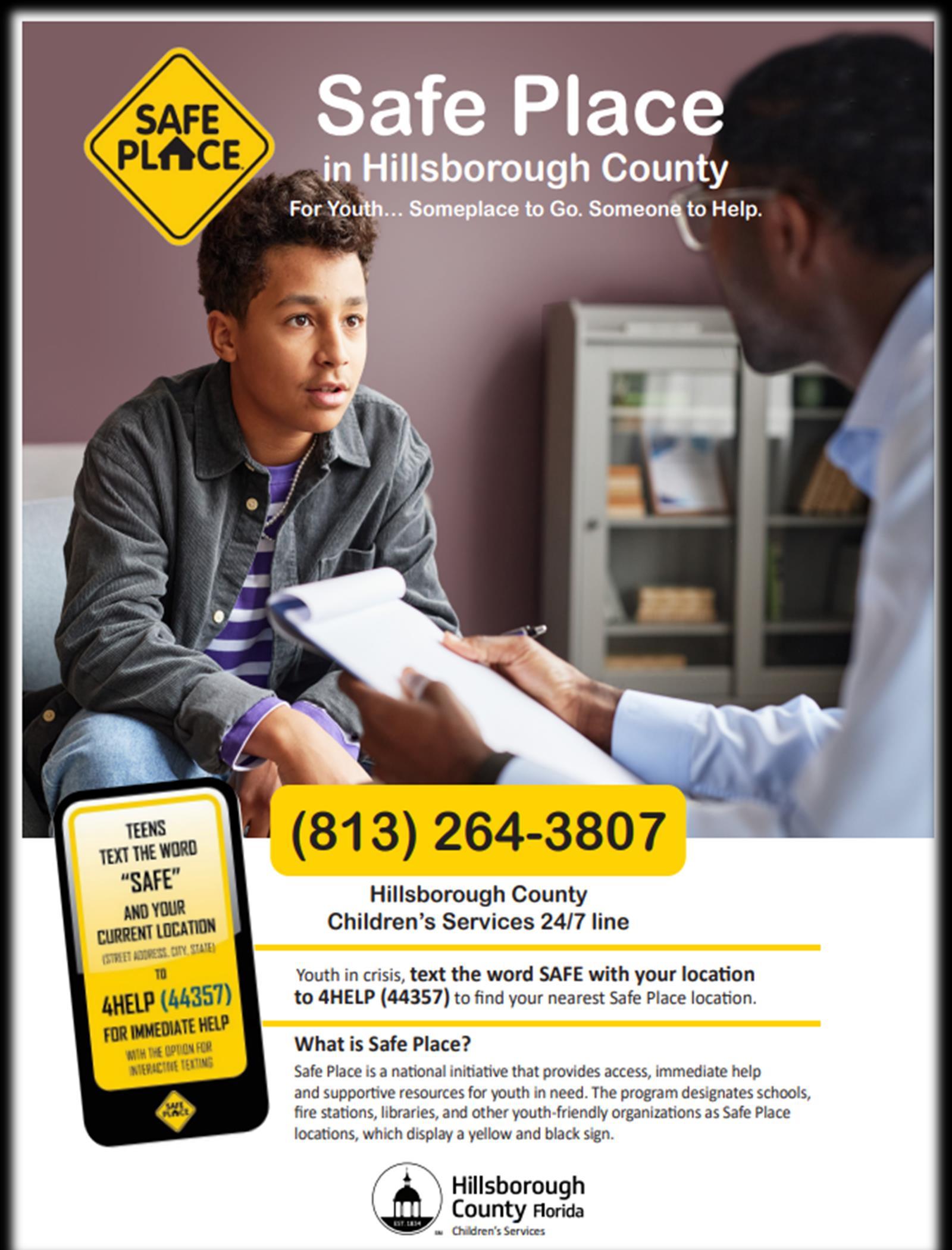
Hillsborough County offers nearly 200 'Safe Place' locations for youth in need
You may have seen the yellow and black signs throughout the County - but do you know what they mean?
Safe Place is a national initiative that has been locally managed by Hillsborough County Children's Services for over 30 years. It provides access to immediate help and supportive resources for youth in need.
Whether they've had a fight with their parents or are fleeing domestic abuse in the home, youth ages 10-17 can visit any of the dozens of Safe Place locations in Hillsborough, most of which are open 24/7, to get assistance. From fire stations to libraries, there are staff ready to help.
Kids and teens in crisis can text SAFE with their current location (address, city, state) to 4HELP (44357) and within seconds receive a message with the closest Safe Place site and the phone number to Children's Services.
How Safe Place works
Step One: A young person ages 10-17 enters a
Safe Place and asks for help.
Step Two: The employee at the Safe Place location finds a comfortable place for the youth to wait while the employee calls the licensed Safe Place agency, Hillsborough County Children's Services .
Step Three: Within 30 to 60 minutes, a qualified Safe Place volunteer or agency staff member will arrive to talk to the youth, and, if necessary, provide transportation to the Hillsborough County Children's Services campus.
Once at the campus, counselors meet with the youth and provide support. Children's Services staff makes sure the youth and their family receive the help and professional services they need.
How can you help?
Awareness is key. By learning more about Safe Place, you can share this resource with youth you think may need it. It will help keep them safe and get them the support they need. Article From Hillsborough County Florida
Florida Youth Experience Study – $ign Up
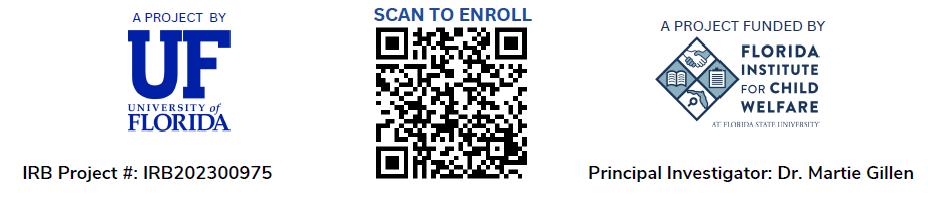
The Florida Youth Experiences Study (FL YES) is a 5-year longitudinal study designed to elevate youth voices as they transition from foster care to adulthood.
Participants may be 17 years old and in out-of-home care of DCF for at least 6 months OR they may be 18 years old and have been in out-of-home care of DCF for at least 6 months leading up to their 18th birthday.
Youth will participate in the study for 5 years, including 1 virtual interview each year (5 total) and 3 online quarterly engagement surveys each year (15 total).
Participants are compensated via e-gift card for every completed interview and quarterly engagement survey. Year 1 $50, Year 2 $60, Year 3 $70, Year 4 $80, and Year 5 $90 via e-gift card. Quarterly engagements are compensated at $10 via e-gift card.
The study is open for enrollment until December 31, 2024, or until we reach a maximum of 325 participants! Scan the QR code below or visit FICW.FSU.EDU/FLYES and click on the study enrollment link to sign up. Contact Selena Garrison at selenah@ufl.edu with any questions.
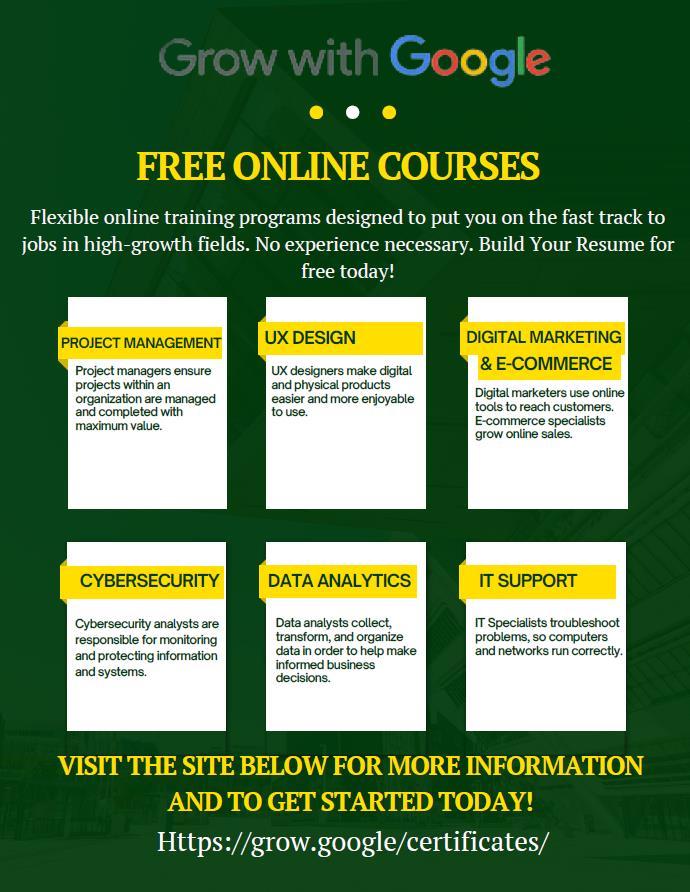
Free Online Courses To Help Everyone Succeed
Growing with Google is an initiative launched by Google to provide training, tools, and resources to help individuals and businesses grow their digital skills and online presence.
Here are some key aspects of Growing with Google:
1. Digital Skills Training: Growing with Google offers a wide range of free training courses and resources to help individuals acquire digital skills. These courses cover topics such as digital marketing, data analytics, coding, cloud computing, and more. The goal is to empower people with the knowledge they need to succeed in today's digital economy.
2. Job Skills and Career Development: The initiative includes programs focused on job skills training and career development. This includes resources for resume building, interview preparation, job search strategies, and career planning. Growing with Google aims to help individuals enhance their employability and advance their careers.
3. Small Business Support: Small businesses can benefit from Growing with Google through tools and resources to improve their online
presence, reach more customers, and grow their businesses. This includes training on digital marketing, e-commerce strategies, website optimization, and using Google's business tools effectively.
4. Community Impact: Growing with Google is committed to making a positive impact in communities by partnering with local organizations, schools, and nonprofits. This includes initiatives to bridge the digital divide, promote digital literacy, and provide technology access to underserved populations.
5. Global Reach: Growing with Google has a global reach, offering its resources and programs to individuals and businesses around the world. This enables people from diverse backgrounds and regions to benefit from digital skills training and opportunities for economic growth.
Overall, Growing with Google plays a significant role in empowering individuals, businesses, and communities through digital skills training, job opportunities, and support for economic development.
Article By Vital Guidance
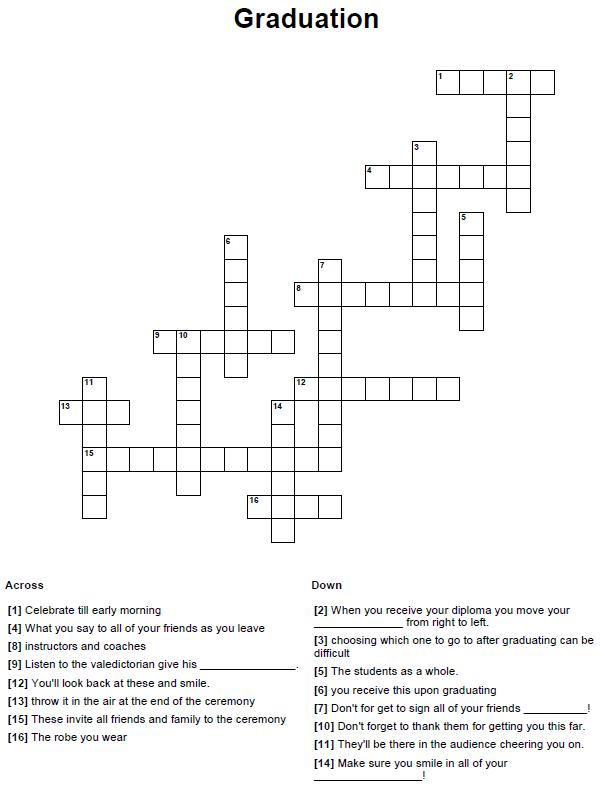
Graduating: A Key To Success
No matter what educational or professional level is next, graduating to it is always an accomplishment. It doesn’t matter if it’s expected of you, it is still a great accomplishment and graduating high school ranks at the top of those great expectations.
Why? Because it can be the key to success for several reasons:
Educational Foundation:
High school provides a foundational education that includes core subjects like math, science, language arts, and social studies. This knowledge is crucial for further education and career development.
Graduating high school opens doors to pursue higher education, such as attending college or university. This can lead to earning a bachelor's degree, master's degree, or even a doctorate in
a chosen field of study.
High school graduates can also opt for specialized training programs, such as vocational schools or technical institutes. These programs provide hands-on experience and skills specific to certain industries, such as healthcare, IT, automotive technology, and more.
Career Opportunities:
Many entry-level jobs and career paths require at least a high school diploma. Graduating increases your chances of finding employment and opens doors to various career opportunities.
Graduating high school and obtaining further education or training can also prepare individuals to start their own businesses or entrepreneurial ventures. Entrepreneurship
requires a combination of skills, knowledge, and determination, which can be developed through education and training.
Higher Income Potential:
On average, individuals with a high school diploma earn more than those without one. This is because a diploma is often a minimum requirement for many entry-level jobs that offer higher pay than positions requiring only a basic education. Graduating high school sets the stage for further education or specialized training so you can climb the career ladder and access roles with higher responsibilities and salaries.
Overall, high school teaches essential life skills such as time management, communication, critical thinking, and problem-solving. These skills are valuable in both personal and
professional settings. Graduating high school is a good indicator to employers that you have mastered these skills.
You can also use high school as a time for building social connections, friendships, and networks that can be beneficial in the future, both personally and professionally as letters of recommendations may be needed from teachers and life is easier when you have friends to speak with about your career experiences.
Therefore, enjoy your high school years and graduate, because graduating sets a solid foundation for a successful future by providing essential knowledge, skills, and opportunities for further growth and development.
After high school, there are several steps you can take to make informed career decisions and plan for your future:
1. Self-Assessment
Start by conducting a self-assessment to identify your interests, strengths, values, and goals. Consider what subjects or activities you enjoy, what skills you excel in, and what kind of work environment or career path aligns with your values and aspirations.
2. Explore Career Options
Research and explore different career options that align with your interests and skills. Use online resources, career assessments, informational interviews, and job shadowing opportunities to learn more about various industries, roles, and career paths.
3. Further Education
Consider whether you want to pursue further
education, such as attending college, university, vocational school, or specialized training programs. Research different programs, majors, and courses that align with your career goals and interests.
4. Gain Experience
Seek out internships, part-time jobs, volunteer opportunities, or apprenticeships to gain hands-on experience and explore different career fields. Practical experience can help you develop skills, build your resume, and clarify your career interests.
5. Networking
Build professional networks by connecting with peers, mentors, alumni, and professionals in your desired industry or field. Networking can provide valuable insights, advice, and potential job opportunities in the future.
6. Financial Planning
Consider the financial aspects of your career
decisions, including tuition costs, financial aid options, scholarships, student loans, and budgeting for living expenses. Develop a financial plan to support your education and career goals.
7. Set Goals and Create a Plan
Based on your self-assessment, career exploration, education options, experience, networking, and financial considerations, set short-term and long-term goals for your career. Create a strategic plan outlining the steps you need to take to achieve your goals.
8. Adapt and Evolve
Keep an open mind and be willing to adapt and
evolve as you progress in your career journey. Be proactive in seeking new opportunities, learning new skills, and adjusting your goals based on changing circumstances or interests. Keep in mind, it’s okay if your first job isn’t your career as many people change jobs and careers for various reasons until they find their dream job.
By following these steps and being proactive in your career planning, you can make informed decisions, set achievable goals, and work towards a fulfilling and successful career path after high school. What’s next is totally up to you as sky’s the limit.
Article By Vital Guidance
SUNDAY May 12, 2024
POST EDUCATIONAL
MUST have a High School or GED Diploma.
MUST be 18-22 years old (funding and services end on your 23rd birthday).
Vocational/Technical School
▪ MUST be enrolled and attending full-time and maintain a 2.0 GPA
Community College/University
▪ MUST be enrolled and attending at least a minimum of 9 credits a semester and maintain a 2.0 GPA
May receive Post Educational Services and SupportAward of $1,720 per month.
AYoungAdult is eligible if:
▪ Licensed Foster Care-they were living in licensed foster care on their 18th birthday and previously spent at least 6 months in Licensed Foster Care.
▪ Adoption-they were at least 16 years of age and was adopted from Licensed Foster Care after spending at least 6 months in Licensed Foster Care within 12 months immediately proceeding such adoption.
▪ Permanent Guardianship, Relative, or Non-Relative-they were placed with a court approved dependency guardian after spending at least 6 months in licensed foster care within 12 months immediately proceeding such placement.
EXTENDED
FOSTER CARE
MUST be 18-21 years old or 22 years old with a documented disability.
MUST be:
A. Enrolled and attending school full-time (secondary or post-secondary or vocational education) or
B. Working 80 hours per month or
C. Participating in a program or activity designed to promote or eliminate barriers to employment or
D. Unable to participate in activities listed above (A-C) due to a physical, intellectual, emotional, or psychiatric condition that limits participation.
MUST be living in licensed foster care on 18th birthday and have not achieved permanency.
May choose to leave Extended Foster Care and re-enter Extended Foster Care at any time, if meeting eligibility criteria.
Services Include:
▪ Case Management, Monthly Home Visits, and Court Hearings.
▪ Guidance and Supervision with Education, Health Care, Mental Health, SubstanceAbuse, and Counseling.
▪ Life Skills Trainings
▪ Assistance with Living Expenses, 31 Day Bus Pass, and a MonthlyAllowance.
MY DECISION TO LEAVE EXTENDED FOSTER CARE
If you choose to leave Extended Foster Care at age 18 or voluntarily leave once participating in Extended Foster Care, you may apply forAftercare Services.
Young Adults Applying:
▪ MUST be 18 years old but not 23 years of age and were in licensed foster care upon their 18th Birthday.
▪ May NOT be participating in Extended Foster Care or receiving financial assistance through Post Educational Services and Support.
▪ May choose to re-enter Extended Foster Care at any time, if meeting one of the eligibility criteria.
Aftercare Services include, but are not limited to, the following:
▪ Guidance and Supervision with Education, Health Care, Mental Health, Substance Abuse, Counseling, Mentoring, and Tutoring.
▪ Life Skills Trainings, Job and Career Skills Training, and Financial Literacy Training.
▪ Temporary financial assistance with emergency rent and utilities, basic living expenses and transportation.
Please note: The specific services to be provided shall be determined by an assessment of the young adult's needs and resources and may be provided by a community-based provider, designated subcontracted agency, or through referrals in the community.
YoungAdults may stay involved with the courts through Extended Foster Care until the age of 21 or until the age of 22 with a documented disability, unless:
▪ Ayoung adult chooses to leave Extended Foster Care upon turning 18 years of age.
▪ Ayoung adult does not meet the eligibility criteria to remain in Extended Foster Care or voluntarily chooses to leave Extended Foster Care.
▪ If a young adult choose to leave Extended Foster Care at the age of 18, he or she may petition the court at any time before his or her 18th birthday to request continued court jurisdiction for the purpose of determining whether appropriate services that were required to be provided to the young adult before reaching 18 years of age have been provided.
Extended Jurisdiction Based on Immigration Status:
If a petition for special immigrant juvenile status and an application for adjustment of status has been filed on behalf of a foster child and the petition and application have not been granted by the time the child reaches 18 years of age, the court may retain jurisdiction over the dependency case solely for the purpose of allowing the continued consideration of the petition and application by federal authorities. The court's jurisdiction terminates upon the final decision of the federal authorities or at age 22.
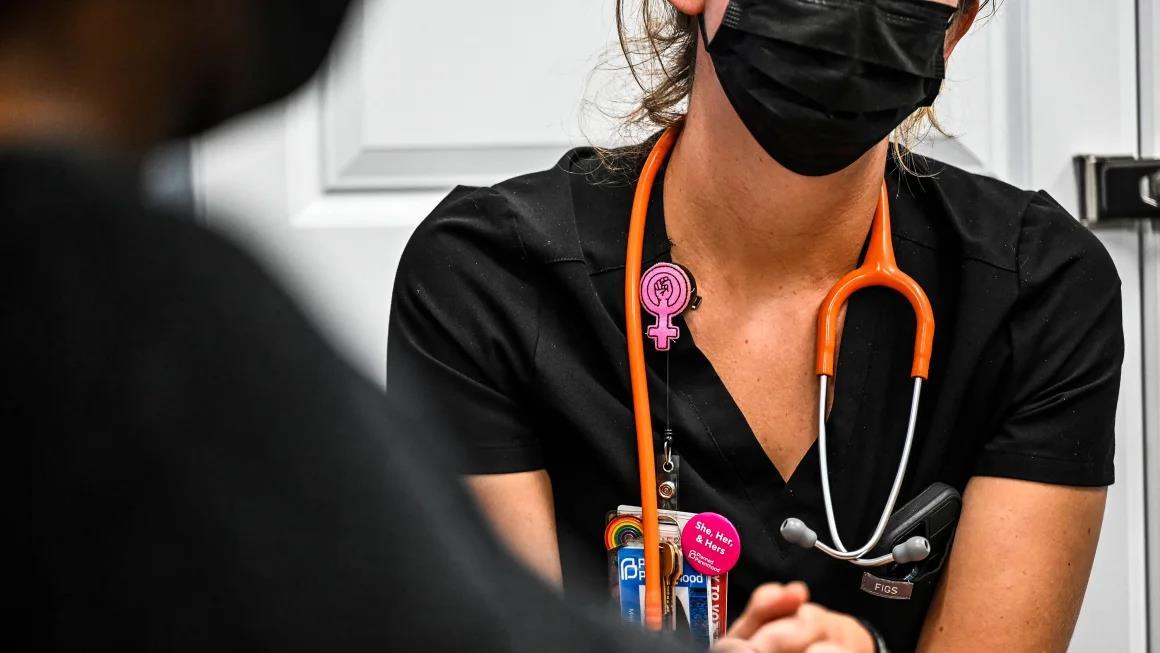
FYI - FL New Abortion Law Now In Affect
CNN A stricter abortion law is set to take effect in Florida on May 1st ..
Florida has become a key abortion access point amid widespread restrictions that have taken hold in the region in the two years since the US Supreme Court’s Dobbs decision overturned Roe v. Wade.
Last year, 1 of every 3 abortions in the South and about 1 in every 12 nationwide — happened in Florida, according to data from the Guttmacher Institute, a research and policy organization focused on sexual and reproductive health.
In 2023, there were about 7,000 abortions in Florida each month, and more than 9,000 people traveled from other states to get an abortion in Florida throughout the year, the data shows.
Many women don’t know that they’re pregnant six weeks after their last menstrual period, and other states that have enacted laws with this early gestation limit saw significant cuts to abortion care. In Texas, the number of abortions
provided within the formal health-care system dropped by about half after a six-week abortion ban took effect in 2021, and there were thousands more births than expected in the following year. In South Carolina, there was a 70% decrease in abortions just one month after the state enforced a six-week limit.
But tighter restrictions in Florida could have an even more significant effect than historical trends suggest because Florida has been absorbing patients from other states that already have stricter limits. So far this year, more than 1,300 people from other states have traveled to Florida for an abortion, according to data from the state health agency nearly a tenth of all abortions in the state so far in 2024.
Of the 16 states in the South, nine have banned abortion. Florida will join Georgia and South Carolina with a six-week ban. This leaves just three states in this US Census region — Delaware, Maryland and Virginia where abortion remains legal past the first trimester and North Carolina with a 12-week limit.
Keys To Independence Empowers Young Adults To
Obtain Driver’s License
What is Keys to Independence?
Where would you be if you didn’t have a driver’s license? We don’t know for sure, but chances are life would be more challenging when it comes to getting to work, shopping, or just visiting family and friends.
Therefore, at Keys To Independence, we believe that every teen deserves the opportunity to thrive, regardless of their living situation. Our program breaks down the barriers that prevent teens experiencing foster care or homelessness from obtaining their driver’s license. We provide the guidance, resources, and financial support needed to empower young adults to gain their independence and achieve success.
Do I qualify for the program?
To qualify for the program and the reimbursements for the costs associated with obtaining a learner's permit and driver's license:
1. Youth must be residing in out-of-home care (licensed care, relative or nonrelative placement) in the state of Florida.
2. Youth must be 15-21 years old.
3. Youth must have the approval of the appropriate caregiver, who will apply a reasonable and prudent parenting standard.
4. Youth Youth must meet DMV requirements for application of a
5. If requesting reimbursement for expenses related to auto insurance, youth must complete a comprehensive driver's education course.
What costs may be covered under the program?
• 4-hour traffic law & substance abuse course
• Learner's license fee
• Driver's license fee requirements for application of a Learner's, Intermediate or Full Privilege Learner's, Intermediate or Full Privilege License. Visit www.flhsmv.gov for more information.
• Testing fees (knowledge or skill re-tests)
• Comprehensive driver's education course
• Auto insurance
• Deductible (in the case of an accident)
• Other costs incidental to licensure (determined on an individual basis)
How do I get started?
To apply, youth and their caregivers can visit www.keystoindependencefl.org and complete the user-friendly online application.
Don’t wait any longer to embrace your independence. Call 321-441-2060 or click on the link above and begin your journey toward obtaining your driver’s license today!
The Department of Children and Families recognizes that the transition into adulthood can be tough for young people. For current and former foster youth, it can be even more difficult without an existing support system.
The Office of Continuing Care, part of Hope Florida - A Pathway to Prosperity, offers free one-onone help for young people who are about to or have recently transitioned out of foster care, aiming to make the leap into adulthood a positive experience.
If you are between the ages of 18 and 26 and you have (or will) age out of foster care in Florida (including extended foster care}, give us a call! The Office of Continuing Care, part of Hope Florida -A Pathway to Prosperity, provides the following services:
► Connects you to existing resources in your area to help you thrive as an independent young adult
► Guides you in accessing special services available to former foster youth
► Gives you a support system to help you with the next steps on your path to adulthood
When you call the Hope Line, you'll speak with a Care Navigator who will walk with you on the path to independence.