Illinois Baptist







Wants rule suspended for quicker action
Orlando | Earlier projections that the 2026 Southern Baptist Convention would be well attended now have substantive backing: There will likely be a vote on the definition of pastor and the role of women in church leadership.
The early predictions about an optimistic meeting will depend on the how the vote goes and how deftly the floor debate is handled.
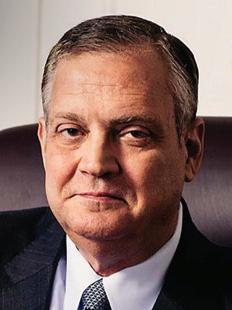
Al Mohler, Southern Baptist Theological Seminary President, announced May 18 that he will call for a suspension of the rules to allow for a vote on a constitutional amendment defining the role of pastor/elder/overseer as male-only, thereby confirming the role of women in SBC ministry. This is, in effect, revisiting the “Law Amendment” which failed to get two-thirds majority support in consecutive annual meetings.
Mohler says such action would clarify the SBC’s position and bring “unity and truth,” much as it did a decade ago with a constitutional amendment prohibiting LGBTQ affirmation by cooperating churches.
IllinoisBaptist.org IB

instagram.com/illinoisbaptist


facebook.com/illinoisBaptist IBSA.org
x.com/illinoisBaptist
youtube.com/@IllinoisBaptists

SEARCH: Convention Ballots Celebration Constitution Convention Crossover Debate Entities ExhibitHall Messengers Missionaries Orlando Pastors Preaching President Reports Resolutions Seminaries Sending TheMayor Voting Worship
The Illinois Baptist staff
Editor - Eric Reed
Contributing Editor - Lisa Misner
Graphics & Production Manager - Nic Cook
Administrative Assistant - Kayla Houchin
Team Leader - Ben Jones
The general telephone number for IBSA is (217) 786-2600. For questions about subscriptions, articles, or upcoming events, contact the Illinois Baptist at (217) 391-3127 or IllinoisBaptist@IBSA.org
The Illinois Baptist is seeking news from IBSA churches. E-mail us at IllinoisBaptist@IBSA.org to tell us about special events and new ministry staff.
POSTMASTER: The Illinois Baptist is owned and published every month by the Illinois Baptist State Association, 3085 Stevenson Drive, Springfield, Illinois 62703-4440. Subscriptions are free to Illinois Baptists. Subscribe online at IBSA.org.

An IMB missionary in British Columbia lost contact with a friend who had been learning about Jesus. Months later at an appointment for a health situation, she saw Tina across the room. Tina admitted feeling distant from God and missing the study group. The missionary told Tina how God had arranged their reunion. She asks for prayer for eternal impact on Tina’s life.
Eleven pastors have disappeared since 2024. Now Christian Solidarity Worldwide is calling for the next president to restore legal protections. “As voices of peace… religious leaders are obvious targets for the illegal armed and criminal groups that continue to spread fear throughout the country.”
The former president of the Association of Baptist Churches in Northern Ireland preached outside a hospital where abortions are performed. Clive Johnston, 78, denied harassing anyone. The grandfather of seven now faces heavy penalties.
“I gave my life to Jesus in early March, and my family members were not happy,” Kalegeya Faruku said. “They became very angry and started sending me threatening messages about taking my life.” His brothers maimed him, citing Muslim law. The pastor of a church Faruku was attending has taken him in.
IMB is training Chinese students to reach people in other Asian cultures. Dumpling is an acronym for the training program.
“Thank God, in the course of the street-witnessing encounters, someone would always stop to listen and sometimes pray a decision-making prayer,” IMB reported. In 2025, they shared the gospel 4,000 times with 313 prayers for salvation.
While 4-in-10 Australians are unaffiliated “nones,” there are exceptions. Samantha Raabe, 25, told ABC-TV she was overwhelmed by sadness. “And then all of a sudden, I felt this embrace that I’d never felt before... the Holy Spirit just wrapping a warm blanket around me and telling me I will never be alone again.” Now she’s attending a Christian church. Pray for Australian awakening.
IMB, Christian Post, Christian Institute, Morning Star News, ABC -TV
SCOTT FOSHIE
This month, thousands of messengers and guests from around the SBC will converge in Orlando for our annual time of celebration, prayer, and family decision making. There will be lively debates, nomination speeches, and votes on multiple issues. However, the part I look forward to the most about our family meetings is the fellowship, worship, exhortation from God’s Word, and the sending celebration for our new international missionaries.
We should never forget that gathering as a Baptist family on every level (local, state, and national) is a privilege God has blessed us with in America. It brings glory to God when we lay aside minor differences to unite around the Baptist Faith and Message and our shared Great Commission work.
At the convention, my eight years as your Illinois trustee on the SBC’s Ethics and Religious Liberty Commission will conclude. I’m humbled and hopeful as I begin service as your 12th IBSA Executive Director. Here are a few thoughts in my mind and heart as I reflect on what God has shown me through these experiences in denominational leadership and as I look forward to serving you in the coming years:
We need Spirit-led collaboration
On the ERLC board, I was a part of a brotherhood and sisterhood of trustees that God strengthened as we faced daunting challenges. We navigated multiple, sometimes fast-
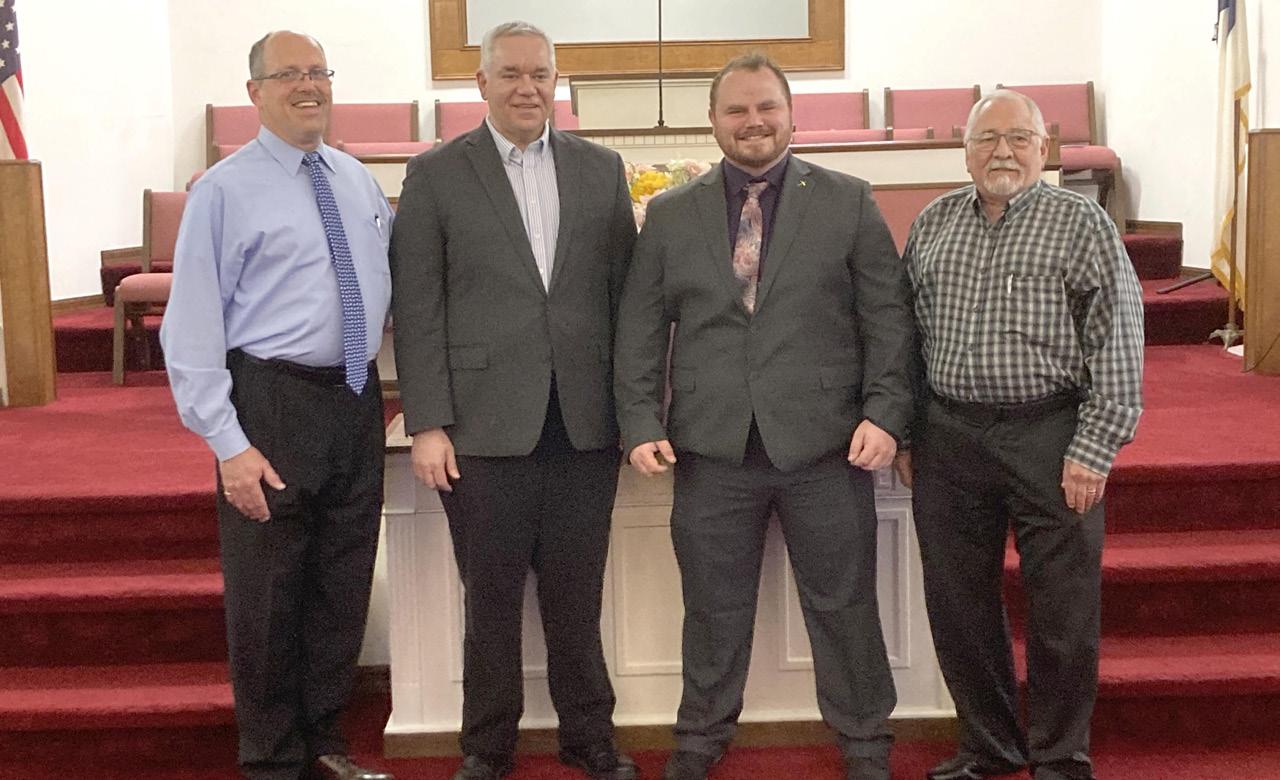
developing situations and crises that etched in our hearts a need to depend on God. The Lord led us to rewrite the ERLC’s governing documents to ensure our board served Southern Baptists well, as God navigated us out of crisis and positioned the ERLC for the future.
A hopeful new season at the ERLC begins with the unanimous election of Dr. Evan Lenow. None of this could have happened without focusing on healthy, honest assessment and collaboration. God also led us to cultivate deeper relationships with the pastors and churches we served. The ERLC is much stronger and trusted as a result.
Healthy relationships and collab-
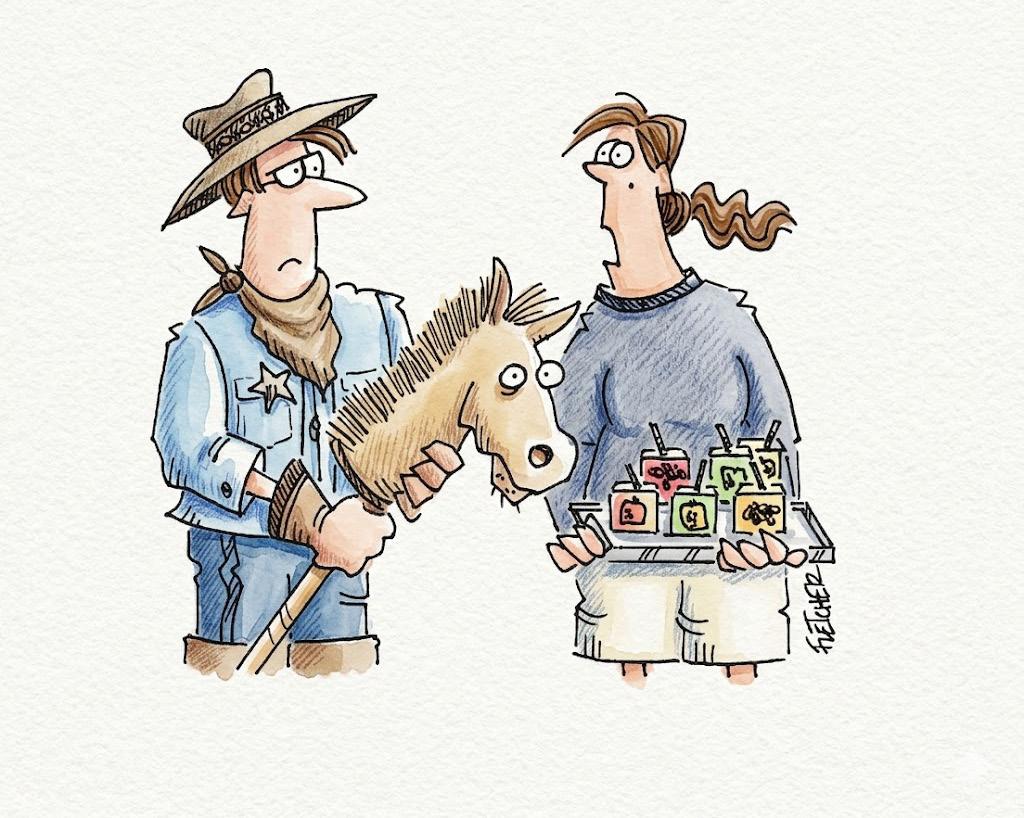
“Did your seminary have classes on VBS skits?”
oration are foundational if our Great Commission partnership is to thrive in a new generation. I encourage Illinois Baptists to invest in relationships at the local, state, and national levels to take advantage of shared Kingdom opportunities and to have a voice in shaping the future of our ministries.
Southern Baptists will decline in fruitfulness if we fail to invest in serving together for the sake of the gospel. Collaboration requires sacrificial time and effort, but the multiplied impact is well worth it!
Transparency fosters cooperation I have also learned through experience that transparency fosters trust,
Journey along with Scott as he meets with Illinois Baptists across the state.Follow at Facebook.com/ scott.foshie.1
and trust is the glue of our Great Commission partnership.
Entity trustees need proper transparency enshrined in their governing documents, so that the full board can be fully informed and engaged, particularly at milestone moments for the entity they hold in trust.
Pastors and churches need to have access to trustees and entity leaders so that they feel connected, and so that entities receive feedback and can understand the needs of the churches they serve.
That’s a lesson we learned at the ERLC, and a direction I encouraged the trustees to adopt. These concepts may seem like common sense, but they are essential to preserve our effectiveness and to keep honest people honest.
The trust earned through transparency encourages deeper investment by mission partners. I am encouraged to see that so far in 2026, Illinois Baptists’ partnership through the Cooperative Program is growing. I pray that healthy relationships, deep collaboration, and growing trust are factors in this encouraging trend. Know that your Illinois Baptist team is committed to listening to God, connecting deeply with you, and serving you well.
As we make disciples in Illinois and reach the nations together, we are committed to continuously earning your trust.
Contact Scott Foshie at IllinoisBaptist@IBSA.org.
Pastors and leaders, receive weekly video updates from Scott. Sign up for text updates at IBSA.org/subscribe FIND FOSHIE ONLINE

Total giving by IBSA churches as of 4/30/26 $1,799,983
2026 Budget Goal to date: $1,976,282
2026 Goal: $6 Million
Your church can give by using this QR code to digitally submit or mail your CP missions offering.

The question at the Illinois Baptist each spring is “What do you think will come up at the convention?”
Some things are obvious, because they’re on the agenda—such as the presidential election. Pastors Josh Powell and Willy Rice are in the ring. There have been no surprise announcements so far, unlike 2024 when we had six probable candidates at this point.
But it’s the things that aren’t on the agenda that draw greater speculation. With online debate about Al Mohler’s call to settle the issue of male-only pastor qualification once and for all, we’re wondering how that will come to the floor.
We’re also wondering about these items:
The (task) force be with you
During his two terms as SBC President, North Carolina Pastor Clint Pressley hasn’t appointed a task force or study group, while his immediate four predecessors each appointed at least one. But the task force could make a comeback.
Candidate and Florida pastor Willy Rice promises to appoint two task forces if elected—one on the use of
Fellow candidate and South Carolina pastor Josh Powell hasn’t proposed any study groups, instead focusing on strengthening faith in the Baptist Faith and Message (2000) and focus on the Great Commission.
ERLC’s reception
With attention again on women in pastoral roles, there’s not a lot of scuttle about the Ethics & Religious Liberty Commission. Interim ERLC
President Gary Hillingsworth, a respected pastor and state convention executive, has spent the better part of a year smoothing the waters and repairing relationships with pastors and SBC entity heads.
Incoming ERLC President Evan Lenow will come to the platform in Orlando with a clean slate and the public support of Al Mohler, Willy Rice, and others who had sought to defund the SBC’s public voice. Lenow also takes the post with a clearly defined, transparent relationship with his trustee board and published guardrails for his issues and stances.
Resolution style

With Illinois’ Andrew Walker leading the Resolutions Committee last year, and his heavy involvement prior to that, the slate of resolutions has been deep and wide. The list had complicated issues that produced floor debate (such as IVF two years ago). Last year, the list of eight included multiple contemporary moral issues and lengthy litanies of the “whereas’s.” While Southern Bap-
FROM THE FRONT: mohler urges amendment
Continued from page 1
“I believe the need for this is made abundantly clear,” Mohler said. “Frankly, that need has been building in recent years, and the Southern Baptist Convention has always risen to the occasion and met the need of this kind of challenge with a statement of conviction.”
Both candidates for SBC President and outgoing President Clint Pressley have endorsed Mohler’s position.
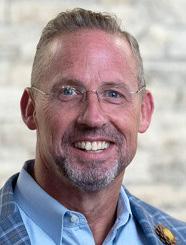
“Southern Baptists have been clear: ‘the office of pastor/elder/overseer is limited to men as qualified by Scripture,’” South Carolina pastor Josh Powell said in a re-post of Mohler’s announcement on X. “I have supported & continued to support any effort to make our Constitution equally clear.”
Florida pastor Willy Rice supported Mohler, but also continued his call for a task force to study the issue and bring recommendations.
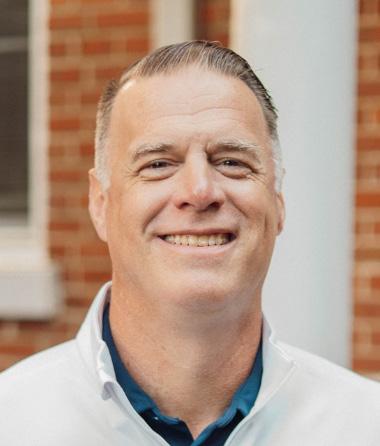
“Baptist people can, and should, do two things at once—two things that are not inconsistent at all,” Rice said in a video. “We should affirm the unique biblical office of pastor/elder/overseer and the qualifications given in Scripture for that office and… affirm the work of women in vocational ministry in ways that are not inconsistent with that

tists’ stance on the issues is not likely to change, will different leadership will produce resolutions with different length, complexity, or tone?
The list is posted around May 30.
Preaching vs. practical
In partnership with Lifeway and other sponsors, the Southern Baptist Pastors’ Conference (SBPC) will host a practical “Micro-Conference” during the Monday morning and afternoon sessions. According to founding pastor M.E. Dodd, the SBPC began in 1935 to “deal definitely with pastors’ problems, spiritual, missionary, evangelistic, doctrinal, (and) practical.” But in the years since, it has morphed into a “preaching conference,” with the sessions almost entirely filled by preaching and worship.
In an era where nearly all preaching is readily available on YouTube, will practical breakouts addressing worship, discipleship, student, and kids’ ministries be the bigger draw? IBSA has offered such breakouts for a decade. Let’s see if it catches on.
Home base conventions
Willy Rice released a video in April arguing upcoming annual meetings should be relocated from areas he considers outside the core Southern footprint where SBC churches are
understanding of pastoral office.”
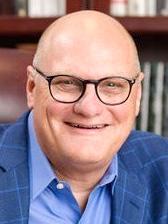
There are two prongs in this debate: the title or role of women as pastors, and also the pastoral function of some ministry roles that may not have the word “pastor” attached. In states where more women hold associate pastor roles, some have argued that a Law-style amendment would be the tip of the spear, eventually pushing women out of ministry. Rice wants to avoid that with his task force.
By Mohler’s definition, cooperating SBC churches would not “act to affirm, appoint or endorse a woman serving in the office or function of a pastor/ elder/overseer, such as preaching to the assembled congregation.”
The term pastor/elder/overseer is new to the Baptist Faith and Message. Equating pastor with elder and overseer occurred with a motion from
concentrated. He cited travel costs for messengers from smaller churches to attend Northern and West Coast conventions. Scheduled stops for the SBC are Indianapolis (2027), St. Louis (2028), San Antonio (2029), and Houston (2030).
Beyond that, extended proposals include St. Louis (2033, 2038), and New Orleans (2034). Rice questioned a possible return to Anaheim, California, site of the 2022 event. Meeting locations are determined by the SBC Executive Committee and approved by the messengers.
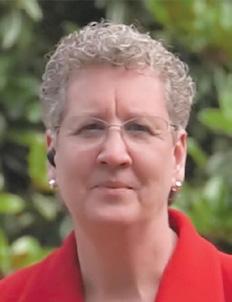
Farewell, Sandy
The Orlando convention will be Sandy Wisdom-Martin’s last platform appearance as Executive Director of Woman’s Missionary Union. The beloved Illinoisan has navigated a tremulous decade by saying often that the women’s auxiliary is about missions and “that’s all we do.” Wisdom-Martin announced her retirement, planned for the end of the year. With a lifetime of missions commitment, we hope she has words of wisdom for those who come after her—and for all of us in the SBC.
the floor in 2023 that did not go through the usual referral channels to amend governing documents. At the time, the question was raised whether the BF&M is a governing document.
Standing Rule 6 states that all motions to amend the SBC’s governing documents shall be automatically referred to the Executive Committee for review and reported back to the following convention. Suspending the rule essentially moves up debate by a year. If Mohler’s motion passes in Orlando, a second vote will be required in Indianapolis in 2027. That’s the same city where the New Orleans-approved Law Amendment in 2023 failed to get two-thirds approval in 2024.
The business portion of the SBC Annual Meeting takes place on June 9-10. Opportunities to present new motions are scheduled for 9:35 a.m. and 3:45 p.m. (EDT) on Tuesday, with the Committee on Order of Business delivering its report regarding those motions at 5:15 p.m. on Tuesday and 8:15 a.m. (EDT) Wednesday. Should Standing Rule 6 be suspended and Mohler’s amendment be received, debate would take place on Wednesday, either at 8:45 a.m. or 4 p.m (EDT).
with info from Baptist Press, Christian Post
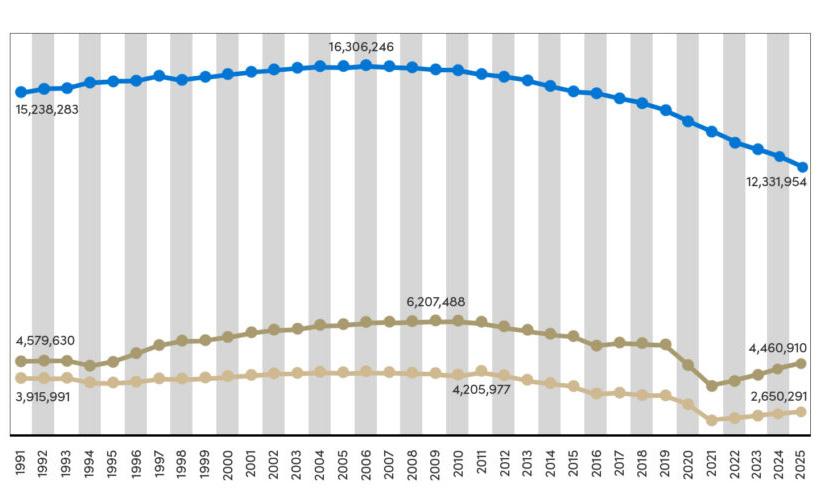
Southern Baptist churches saw sustained growth in attendance and baptisms, but the two-decade membership decline continued in 2025. National trends matched those reported by IBSA churches for last year.
Total SBC membership fell by more than 3% from 2024 to 2025, dipping to 12,331,954, according to the Annual Church Profile (ACP) compiled by Lifeway Research. This is the 19th consecutive year of membership decline, falling to levels last seen in 1973.
While fewer members belong to Southern Baptist congregations, more people are attending worship services and small groups and are being baptized.
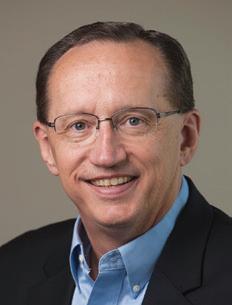
On average, nearly 4.5 million people attend a Southern Baptist church each week, while more than 2.6 million participate in a small group Bible study or Sunday School class. Both attendance figures are up more than 3% from the previous year, and up for the fourth consecutive year. Meanwhile, the number of baptisms increased by nearly 5% to well over a quarter of a million, marking five consecutive years of growth and surpassing preCovid levels.
“We are grateful Southern Baptists continue to show growth in key metrics like baptisms, worship attendance and Bible study participation,” said Jeff Iorg, President and CEO of the SBC Executive Committee. “Southern Baptist churches are focused on sharing the gospel and making disciples, the mission we cooperate to fulfill. While many other issues vie for our attention, pastors seem more determined than ever to focus on our core mission.”
In 2025, 263,075 people were baptized in an SBC church, up 4.96% from the previous year. This is the first time in the past 75 years the SBC has seen five consecutive years of increases in baptisms. The numbers have not only rebounded since the pandemic but have now surpassed levels from 2017.
“Every baptism represents a life transformed, someone who has found forgiveness and new life in Jesus Christ. That is what we celebrate today,” said Kevin Ezell, president of the North American Mission Board. “I am grateful for every pastor and every church that has made evangelism and discipleship a priority, and it is deeply encouraging to see baptisms increase for a fifth consecutive year.
Currently, Southern Baptists baptize one person per 47 members, an improvement on the 1:51 ratio in 2024.
Among the 41 state conventions, 31 reported more baptisms in 2025 than in 2024. In Illinois, baptisms for last year increased by 5.63%, after an 8.81% hike the year before.
The states with the highest percentage growth in baptisms compared to the previous year were all outside of the traditional Bible Belt, including Alaska (49.3%), Colorado (40.3%), Michigan (36.0%), Iowa (32.1%), and California (28.6%).
The SBC lost 268 churches last year, falling to 46,608 affiliated congregations. That number includes those that closed and those that still exist but are no longer affiliated with the SBC. By contrast, the number of church campuses for multisite congregations increased. In 2025, Southern Baptist churches operated 765 additional campuses, up from 746 the previous year.
Not all states gather numbers on Vacation Bible School, but churches in participating state conventions (including Illinois) saw VBS participation grow by more than 9% compared to 2024. In 2025, more than 1.66 million people were enrolled in VBS in reporting states.
The Annual Church Profile (ACP) is an annual statistical census of Southern Baptist congregations conducted cooperatively by local associations, state conventions, and Lifeway Christian Resources. More on the ACP report is available at LifewayResearch.com.
condensed from a Lifeway report by Aaron Earls
Chicago | For the third straight year, Illinois is the top destination in the nation for women travelling out of their own states for abortions. That report comes at the same time an Illinois organization paying for those travel costs reports having a $14 million budget to support the industry.
The Chicago Tribune reported 142,000 women traveled across state lines for abortions in 2025; of those, 32,000 came to Illinois. That’s one-in-four nationwide. The data was obtained from the Guttmacher Institute, a pro-abortion group formerly associated with Planned Parenthood.
Abortion advocates celebrated the designation as an honor, calling Illinois’ abortion access “the gold standard.” Megan Jeyifo, Executive Director of the Chicago Abortion Fund (CAF) which paid $10 million in travel expenses last year, said other states should “be like Illinois” in the April 26 article.
Kevin Carrothers strongly disagrees. The Executive Director of Baptist Children’s Home and Family Services (BCHFS), told the Illinois Baptist, “The growing reality of the culture of death in Illinois called abortion should grieve the church but also be a call to action,” he said.
“While defending the life of the unborn, we have the opportunity to care for women and families feeling the cultural pressure to terminate their preborn child,” Carrothers said. “By sharing practical support and offering hope in Jesus Christ, women can choose life.”
The ministries of BCHFS include Angels’ Cove Maternity Home and GraceHaven Pregnancy Resource Clinic, both based in Mt. Vernon, and Faith Adoption Services.
Jeyifo told the Tribune the state’s abortion access “would be impossible without collaboration between funders, clinics, and government agencies.”
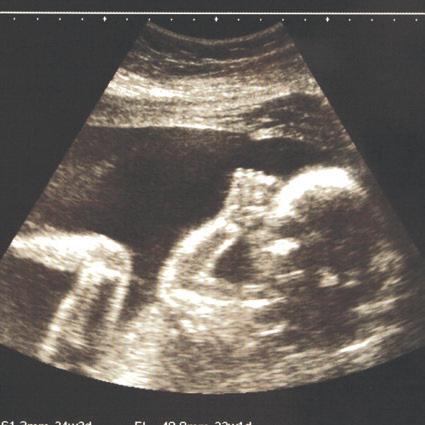
The organization’s reported annual operating budget is $14.3 million, the largest such fund in the nation, including monies from the City of Chicago, Cook County, and the State of Illinois along with fundraising efforts and private donations. The Chicago Abortion Fund reported receiving 20,000 requests for travel assistance in 2025, and more than 50,000 since 2022, when the U.S. Supreme Court overturned Roe v. Wade, allowing states that wanted to restrict or outlaw abortion. Illinois moved the opposite direction, enshrining abortion in its legal code.
Planned Parenthood of Illinois (PPI) opened a clinic in the opposite end of the state, in Carbondale in 2023, for women traveling from southern states. As of June 2025, PPI reported 90% of the women seen at the clinic for an abortion traveled from out-of-state.
Carrothers encouraged Illinois Baptist churches to take a stand and support life. “In a state receiving many women from surrounding states for abortion, the church stands as a sign of hope and compassion through prayer, counseling, and support for pregnancy resource clinics, adoption care, and maternity homes,” Carrothers said. “These are tangible ways to give testimony to the Lord who values life and offers new beginnings in Christ.”
─Lisa Misner
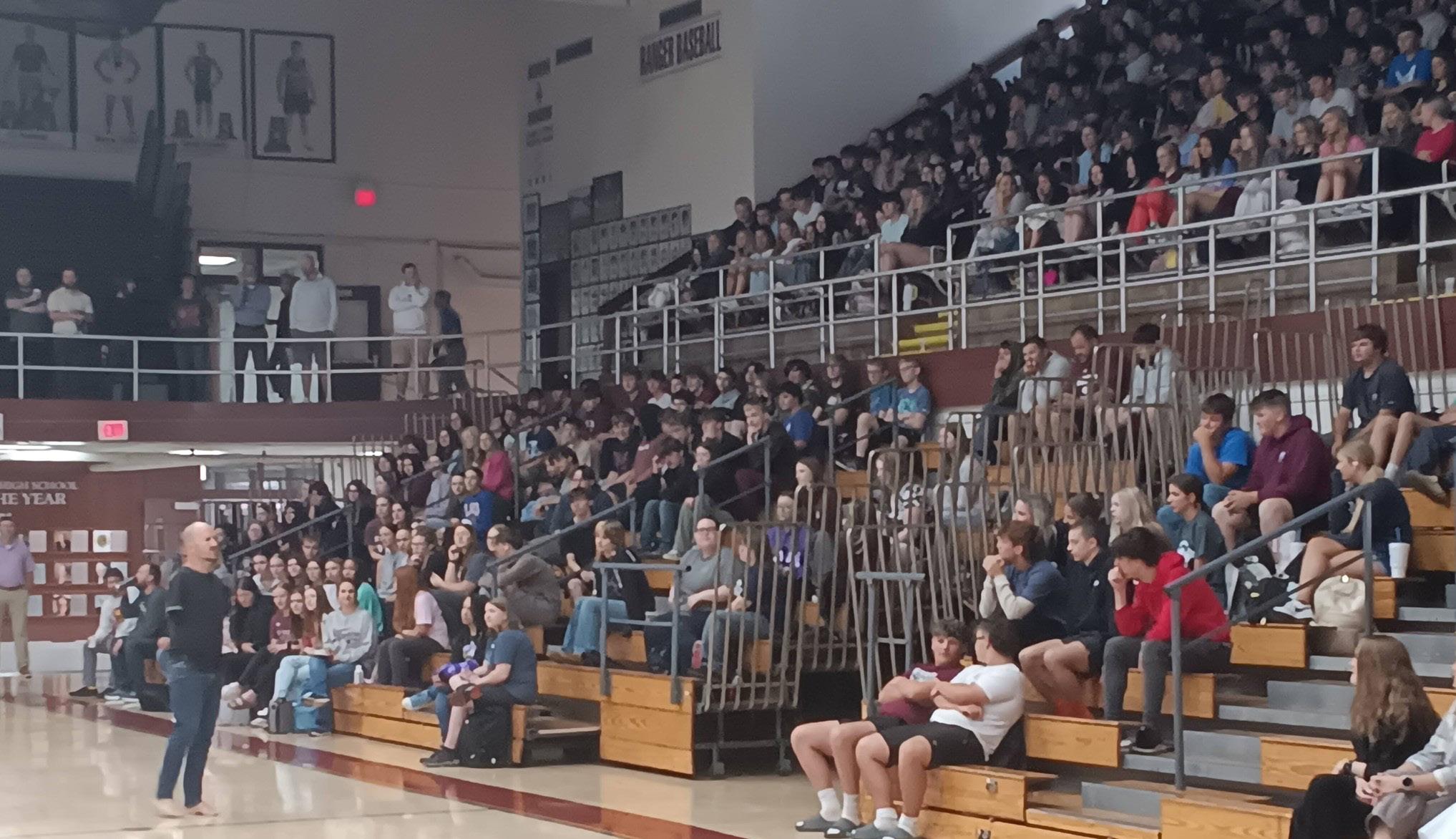
Mt. Vernon | “I’ve been in southern Illinois for threeand-a-half days, and I’ve never had a state’s weather try to kill me more,” joked Daniel Ritchie, vice president of the Southern Baptist Convention said during Spiritual Renewal Week at Logan Street Baptist Church. “Other than that, it’s been such an honor to serve alongside you guys, your churches, and in your community.”
In addition to speaking at Logan Street, Ritchie spoke at seven junior and senior high schools and one elementary school, sharing his story with approximately 2,000 people.
Every year Salem South Baptist Association’s evangelism team finds a speaker to go into area schools. “We think we need to be engaged with the schools and the students there,” said Bob Burton, Association Mission Strategist.
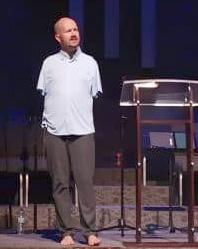
Ritchie quickly addressed the elephant in the room, not having arms. He told them it wasn’t because of a shark attack or anything like that— he was born without arms and without a heartbeat.
Due to that, he’s always had to face hard things head on. The hardest thing he physically had to learn to do was open doors. He encouraged students not to run away from hard things, but to embrace them, because that’s how you learn and grow.
Ritchie also shared that he’s faced his share of bullies, including back in school. However, he didn’t let that get the best of him. He found friends who would defend him, replaced hate with love, and is living his best life.
At the end of each assembly Ritchie took questions, letting students know nothing is off the table. “The students were so engaged and eager to ask questions,” Burton said. “We could have kept going at each school for a long time.”
“Being in these school assemblies these last couple days I get to share with them my story,” Ritchie explained. “I don’t get to share with them the life-changing gospel part, because then I get sued and the ACLU gets involved and that’s not great.
“But I was sharing this with the students: my struggle was never missing my two arms, God has been so kind in his creation with me. There are
some fringe benefits of being armless, because short-sleeved shirts are long-sleeved shirts. I don’t have to change my wardrobe from spring to winter.”
Students were invited to Logan Street to hear Ritchie’s full story, because while he’s now accepted who he is and can joke. That wasn’t always the case.
When he was in high school, Ritchie let his hardships define his life, which led to comparison, hatred, and blaming God for creating him differently. “If God really loved me, he would have given me two arms and 10 fingers,” Ritchie said of his attitude at the time.
In his sophomore year, Ritchie he was invited to a church youth group lock-in by a classmate. Unfortunately, it was dodgeball themed, so Ritchie didn’t have a good time. However, the youth pastor shared the gospel with him.

IBSA’s disciple development event for teens moves to Greenville University after a sojourn across the river at Hannibal-LaGrange University. The event is June 16-20. It features seven age-graded “schools” for campers, each focusing on a unique aspect of the Christian walk when they return home. The theme is “One Body, One Mission” from Ephesians 4:15-16. IBSA Lead-
ership Development Director Michael Awbrey encourages prayer for the students who attend Super Summer, as the intensive time of training may lead to key faith and ministry commitments. “Please pray that this camp might encourage teens to own their faith, grow in obedience, and join God in his work.”
That night Ritchie learned “my disability isn’t the biggest thing I have to overcome in my life; it’s my brokenness and my sin that distances me from the God who loves me.”
Ritchie was called into ministry, which he was confused about. He asked God how he, a recovering “people hater,” could step into that calling. However, he realized he was redeemed and recovered by God’s grace. Keeping it to himself would make him the most selfish person on the planet.
Now, Ritchie uses every opportunity to share his testimony. He is the married father of two, served as a youth pastor, is now a traveling evangelist, and was elected first vice-president of the SBC last June.
Ritchie knows he probably has more opportunities than most due to his disability, but that’s just how his story played out. He shared a surprising statistic that 75% of people in Southern Baptist churches haven’t shared their testimony with anyone in the last 12 months.
“How in the world can we say Jesus is King when we don’t talk about him? How in the world can we talk about the good news of the gospel if we just see it as the same old news?” Ritchie asked. “Some of us need to revisit the grace that Jesus has been for us and not only apply that comfort to our life, but then go tell about it, go and share about it, go live like he really is your great hope and comfort.
“That’s when Mt. Vernon begins to change,” he told the congregation at Logan Street, “when the church walks out into the community and starts acting and talking and serving and loving like Jesus really is King. It’s not going to happen when your pastors do it, it’s going to happen when his people do it.”
Burton is already making plans to bring a speaker to schools in Jefferson County next year. “We have a lot of good credibility with the schools,” he said, “and that’s not something we’re going to take for granted.”
─Kayla Houchin

It’s time for fresh eyes on Chicagoland
BY ERIC REED
oom out over Chicago and you will see not only one world class city, or one monolithic metro region with 10 million people sprawled across three states.
You will see its component parts: 77 neighborhoods and 200 suburban communities, each with its own food and flavor and ethnicity and team allegiances and politics and faith focus. You will also see that all the characteristics making Chicago culturally rich and fascinating are the same defining identities that make it challenging to live here—and share the gospel here.
From 30,000 feet, Chicagoland is an amazing patchwork of city blocks and smaller cities built on surveyors’ precise squares, ambling towns hugging rivers and waterways, some cornfields and a few remaining farms. And you will notice the train tracks and endless interstate asphalt ribbon that tie it all together.
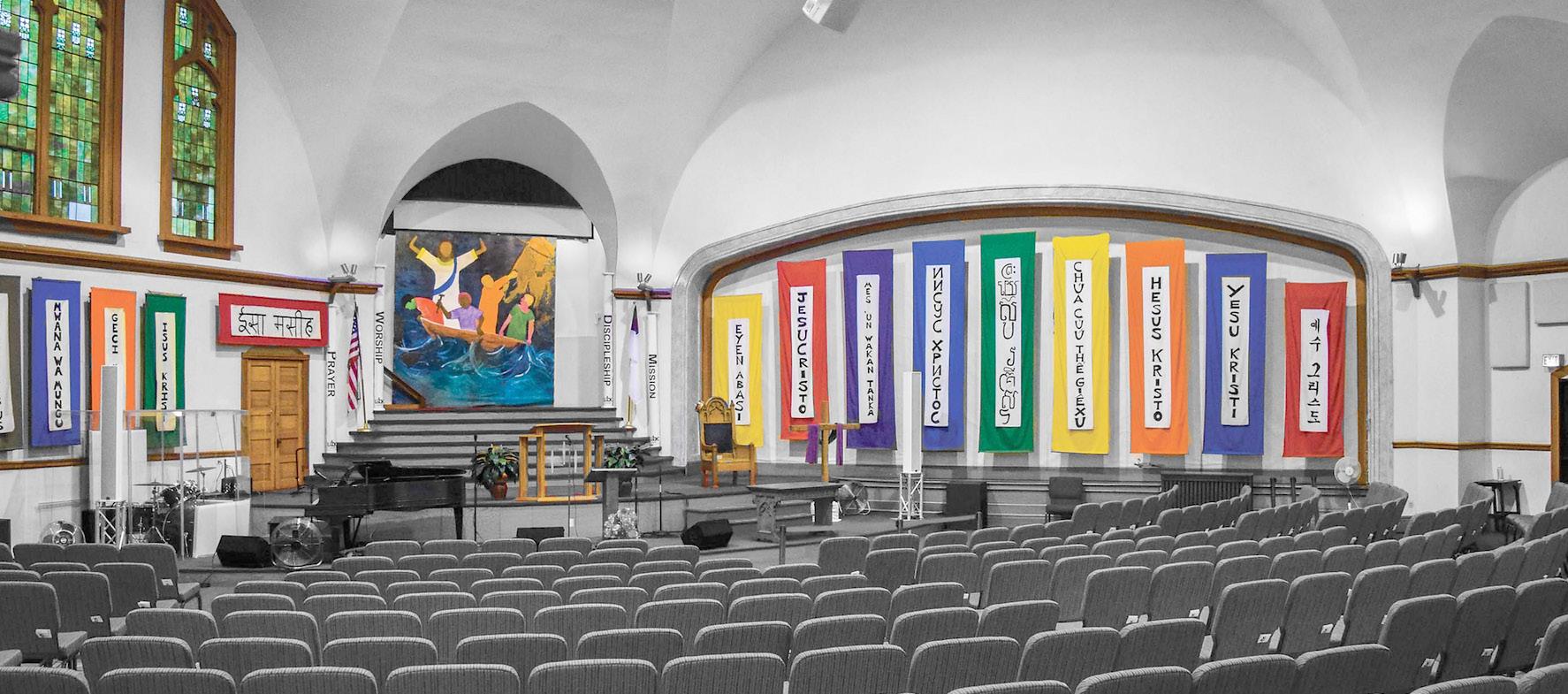
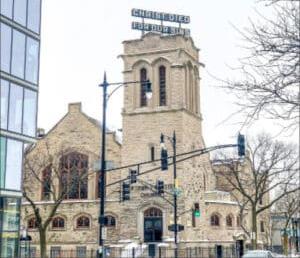
This amazing crazy quilt of peoples and their diversity is Illinois Baptists’ largest mission field. Before God, this behemoth is our gospel responsibility. Nowhere is this better illustrated than in the sanctuary of Uptown Baptist Church. The old stone building about four blocks off Lake Michigan with its P. 8

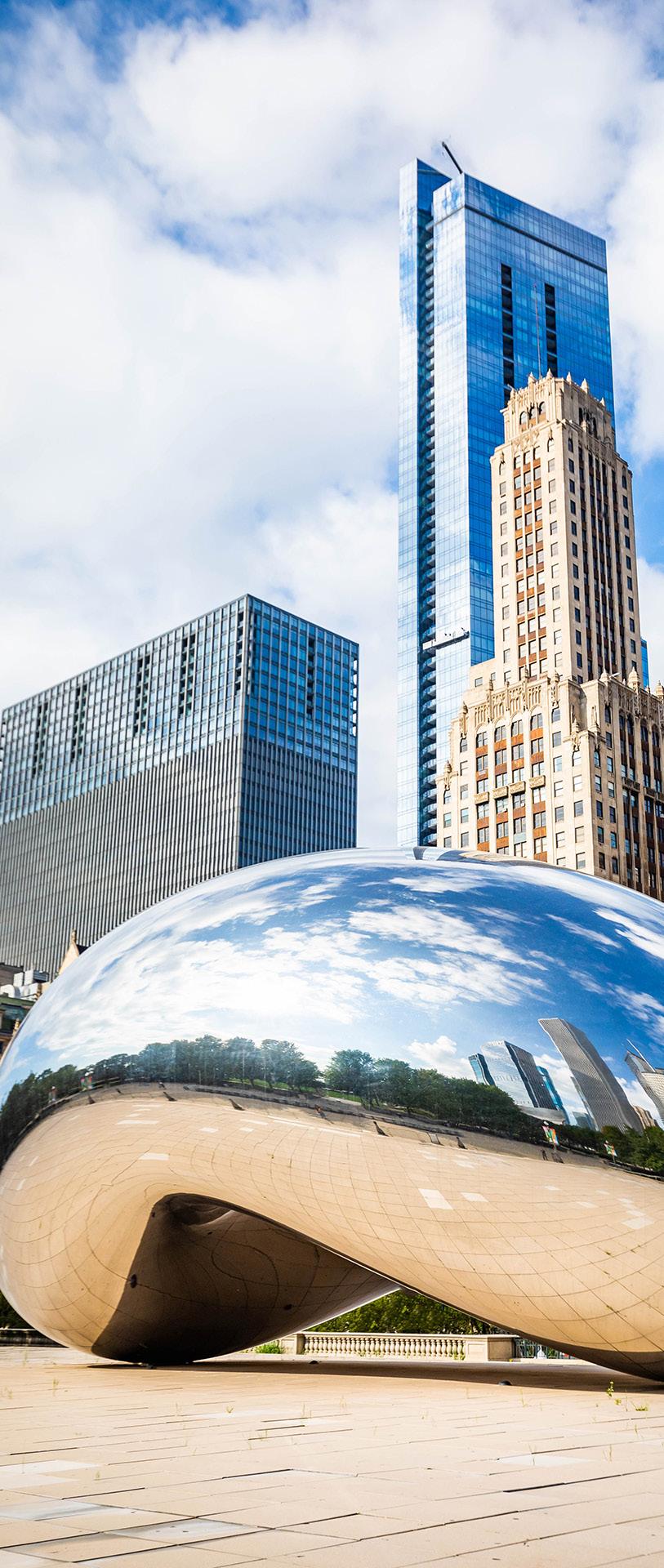
The Cloudgate sculpture at Chicago’s Grant Park is affectionately called “The Bean.” Kidney shaped, it towers over tourists who huddle beneath it, searching their wavy faces in its stainless surface.
We usually see The Bean up close—sky above, people below, as on page one. But this view of the spot where earth and sky meet by a great lake reveals a greater truth.
This Bean swims in a giant pot. With 10 million people.
Not just Chicago.
9.4 million people in the metro area.
The DMA is identified as Chicago-Naperville-Elgin.
Continued from P. 7
iconic rooftop sign declaring “Christ died for our sins” is a landmark in its community. For those who venture inside, the 120-year-old auditorium answers the question “Who?”
Who died? Who saves? And who does he save?
The walls where the congregation meets are covered in 23 colorful banners, bearing the name “Jesus Christ” in 23 languages, all spoken in Chicago. It is a well-spent hour trying to decipher the people groups represented. It is fascinating to discern the way their alphabets render the name by which everyone must be saved.
Except (at the time of this writing) they are all covered. It’s been 30 years since the banners were made and hung there to remind worshippers of the ethnicities and nationalities that come to Chicagoland and call it home. This panorama invokes the tongues and foods and faiths where their ancestors (or they themselves) originated.
The banners have been lovingly and painstakingly restored, waiting for their unveiling at the end of May. Then they will declare afresh, The world lives here. And the world needs Jesus, starting here.
footing here and much harder to keep it. Many begin in ministry with great excitement, huge dreams, and much fanfare, but few finish well.” Gray is still at it after two decades leading The Connection Church he planted on the Southside.
Gray faces all the problems that all pastors and planters meet in the city and its suburbs. The neighborhood segregation, the city’s Roman Catholic and Orthodox roots, incoming Asian people groups and Eastern mysticism, and rising Muslim populations make breaking though with the gospel a challenge. Add to that the politics, poverty, and widespread perceptions of crime and corruption, and the soil for planters proves improverished.
150 languages are spoken in the metro area, according to Acutrans.
Poverty
16.6% in the City
11.1% in the metro 11.6% statewide
“I’m finding as I spend time with pastors in Chicagoland that instead of coming out of the gate with a plan and a strategy for the region, it’s better to listen to them,” Scott Foshie said after another meeting with pastors. “What I have found is we have Illinois Baptist leaders sewing gospel seeds all over Chicagoland. That’s encouraging to me!
“We have the nations on our doorstep in Chicago,” he said, “and we can work together to reach them with the gospel.”
Foshie’s innate optimism encourages a fresh look at the mission field that looms over the work of all Illinois Baptists. But as IBSA’s new Executive Director says of himself, it also requires realism.

are served by 4 local associations: Chicagoland Baptists, Lake County, Fox Valley, and Three Rivers Baptist Associations.
Lostness surrounds us in Illinois. With at least 8-million people in a state of about 13-million who do not know Jesus as Savior, the need for spiritual awakening is obvious to anyone sensitive to it. Nowhere is that more evident than in Chicago and its surrounding counties.
Ten million people live in the metro area. One million are in bordering Wisconsin and Indiana, so of the remaining 9-million, at least 6-million are lost.
Like the shoe salesman assigned to a country where no one wore shoes, it’s either a lousy sales territory or a land of opportunity. Pastors leading the advance of the gospel here would say, it’s both.
“Chicago is tough ground,” Pastor Ron Gray said in an essay on longevity in ministry. “It is hard to get a
“I believe ministry is hard everywhere and the forces of darkness don’t want healthy churches anywhere. That is certainly true in Chicagoland,” said Nathan Carter, Executive Director of the local association serving Cook and Dupage counties. “One factor that exacerbates the challenges to ministry here is the cultural complexity.”
Carter planted Immanuel Baptist Church in downtown Chicago. It is far removed from the rural area where he grew up.
“The high school I went to in small-town Indiana just had a few options for finding your people. You were sorted into either the jocks, the preppies, or the nerds. In a high school in the city where my kids go, there are dozens of potential crowds to find yourself in,” said the father of five daughters. “There are so many different kinds of people to try to understand and reach here that it can be overwhelming.”
What’s true in schools is true for the church. Where there are 9-million people with multiple languages and ethnicities, and at least two-thirds of them lost, simply finding the right demographic niche for gospel work is initially daunting.
Carter also points to the high cost of living and lower incomes. “I’m not sure if any of this has really changed in the last 20 years, but I see it more clearly now,” he said.
“Economics are impacting planting,” Scott Nichols said. Nichols is NAMB’s SEND Cities Coordinator for Chicagoland. He is also pastor of Gospelife Church in Carol Stream, a church focused on planting and
Continued from P. 8
replanting. Co-vocational pastorates are the norm, and planters will be working multiple jobs. Just as it is for everyone else, making a living gets harder.
Part of the impact, Nichols says, is from ongoing waves of migration to the suburbs. As some areas of the city gentrify, ethnic groups move farther out. Suburbs become exurbs, and the far west boundary of the metro region extends 50 miles from Lake Michigan. Places that were once mostly white middle-class conclaves of commuters now have rapidly growing Latino, Asian, and Muslim populations.
The demographic distinctions between the City of Chicago with its 2.4-million people and the 7-million who live in the suburbs is shrinking. The City and the suburbs have long had an “us and them” mentality, but increasingly, it’s all Chicago now. (People living above I-80 will probably disagree.)
In these towns where mid-size evangelical churches of suburbanites were commonplace, congregations are faltering. “Re-planting churches is a must for SBC-world in Chicagoland,” Nichols said. “We don't need lots of new buildings. We need the buildings we have to move from museums that point to the past to barracks that equip believers to live out their faith in a confused culture.”
Like Nichols, Ryan Hall is a both a planter and a pastor who encourages planting. His congregation launched from Nichols’ church in 2011. “Churches planting churches” is the future, Hall said. “This is the best way to build a new, hopeful, vibrant future in Chicago.”
Hall’s Anchor Church in Palos recently assisted a new Hispanic church to launch in Berwyn. (See page 10.)
“Church planting is the predominant method of Kingdom expansion in the New Testament,” Hall said. “We need more churches engaging the city with the gospel.”
There are three sharp turning points in Southern Baptists’ history with Chicago. The first is the 1957 SBC Annual Meeting held in Chicago with its subsequent “Big Cities” focus. The second is the selection of Chicago as one of 32 SEND Cities in the U.S. by the North American Mission Board (NAMB), and the church planting emphasis that followed. And, possibly, the third is a new season of ministry partnership among churches, NAMB, and IBSA as Scott Foshie explores new direction as Illinois Baptists’ Executive Director.
The SBC came to Chicago twice soon after World War Two. Feeling a greater connection to the world with small town GI’s who had seen it all before coming home, and sensing a new calling to reach out to the rest of the United States, beyond its Bible Belt buckle stronghold, the Convention ventured to the Windy City in 1950 and again in 1957.
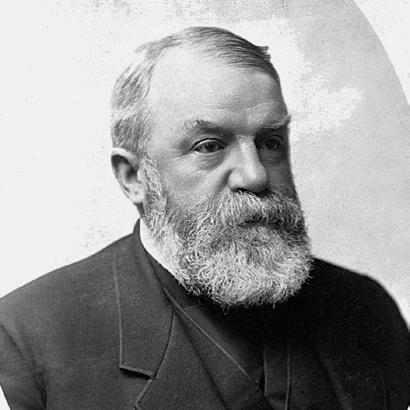
Before that, Southern Baptists had little notable presence in Chicago. Mainline churches dominated the religious waterfront, and a few notable independent churches held the evangelical stake. Dwight Moody’s congregation emerged as a landmark in the city after the Great Fire of 1871. Moody set about building a great church in the heart of the city and Bible institute for training ministers.
Carter agrees. “Church plants that are successful are usually the ones that launch out of a healthy church with a significant core team and financial resources from the beginning.”
For Pastor Bryan Price, who serves as IBSA’s regional consultant for Cook and Dupage counties, engaging the multiple denominational and church teams planting Southern Baptist churches in the area is a regular challenge.
“Territorialism may be an extreme word, but it takes a concerted effort to maintain lanes for the local association, state convention, and NAMB to work in,” Price said. “That may not be a problem in other areas of the country,” he said, but clearly defining “partnership” with many fully invested partners is a challenge in Chicago.
Admittedly, there has been a series of starts and restarts in the planting enterprise in the 15 years since NAMB identified Chicago as a SEND City and deployed a new strategy. Local pastors have questioned the commitment of all denominational entities, especially when there have been personnel changes and new strategies.
But “partner” is still a good word at IBSA. Price, himself a pastor at Love Fellowship in Romeoville, urges local churches to speak up in the partnership.
“The burden is on Chicago churches to be specific in how to help. The burden is on the state convention to listen well and develop new strategies wherever possible to meet specific requests,” he said.
Continued on P. 11
“Cities are the centers of influence. Water runs downhill, and the highest hills in America are the great cities. If we can stir them, we shall stir the whole country.”
─D. L. Moody
Wheaton College anchored evangelicalism in the western suburbs, with Billy Graham its most famous alumnus. Wheaton students would travel to a former southside garage to hear A.W. Tozer preach on the holiness of God.
Baptists in this period were relegated to a few northern denominations: American Baptists, Swedish Baptists (now North American), Conservative Baptists (now Converge), and General Association of Regular Baptists (GARB). Southern Baptists didn’t get the memo from Moody about the strategic value of cities, and stuck to their rural roots until mid-century.
IBSA Executive Director Noel Taylor turned Illinois Baptists’ attention northward after the war. He advocated moving operations from Carbondale to a central location, with an eye toward reaching Chicago. Debates and votes on Decatur and Champaign followed, until Springfield was approved, the current IBSA building erected, and staff relocated in 1971 under the leadership of James Smith.
Meanwhile, the national denomination identified the need to reach cities outside the Deep South with its Big Cities Focus. After the 1957 Convention, the Chicago Metropolitan Baptist Association (CMBA) was formed with staff largely funded by the Home Mission Board, which became NAMB in 1997.
The HMB started suburban churches in the 1960s, like invaders camped around a target. While these churches saw the City itself as
a mission field and supported the association, they were often more like the southern churches that their transplanted members came from, both in song style and potluck.
By the third generation, many had lost their base because it wasn’t indigenous. Not many survived past their 50th anniversaries. After about 2000, the suburban story became one of planting, then replanting.
In the city, CMBA grew as some indigenous churches were planted and other existing congregations were persuaded to join the ranks. Don Sharp planted Faith Tabernacle Baptist Church in 1964. As an African American, he took significant leadership roles on local, state, and national levels. Sharp continues to pastor today. Starting in 1972, Clarence Hopson built Broadview Missionary Baptist Church to its peak as the largest SBC church in metro Chicago. And Jim Queen started Uptown Baptist Church in 1976.
These are just a few of the early SBC churches that eventually totaled over 200 in the metro area. But handing leadership from one generation to the next—and keeping SBC churches in the SBC—has proven difficult.
In 2012 NAMB started the SEND Cities focus, sending church planters and resources to Chicagoland. They also defunded missionary staff positions in frontier associations nationwide, including Lake, Fox Valley, North Central, Quad Cities, and Sinnissippi Associations. The Chicago association operated on a volunteer basis for a decade afterward.
Depending on who you ask, SEND church planting has been successful in a lot of cities, but not as easy in Chicago. The planters who try and eventually return home after a few years say the soil is hard here. But some planters make it work.
Ron Gray returned to Chicago after graduating from New Orleans Seminary. He started The Connection Church in 2006. Indiana farm boy Nathan Carter graduated from Wheaton College and stayed to start Immanuel Baptist Church near the hospital and universities in 2004. Today, he is also the Executive Director of Chicagoland Baptists, the local association. And Scott Nichols led his congregation to move a little west to reach the suburbs, and today Gospelife Church is a multi-campus church. Scott is NAMB’s SEND Cities Coordinator, and Gospelife is leading planting outside Chicagoland, with a Washington replant in central Illinois.
There are success stories.

Separated by only ten miles, these new Latino churches serve vastly different communities
As the Latino population of Chicagoland has grown, making it the second largest ethnic group, the need for churches to reach them grows. And two Hispanic churches launched at Easter to spread the gospel in Chicago’s near suburbs.
Both Bill Ibarra and Ariel Heredia had hearts to plant Bible-believing churches. Chicago was the perfect fit for both men, because of the Hispanic population and the growing number of people walking away from Catholicism. Both pastors planted churches in towns not far apart in distance, but miles apart in need and strategy.
Fighting false religions
God called Ibarra home to the suburbs of Chicago in Berwyn. At only 3.9 square miles, Berwyn is home to more than 55,000 people, making it incredibly population dense. It’s also majority Hispanic, with 63% of the population, nearly doubling from 36% in 20 years.
Ibarra saw the need was great. “There are some churches here, but a lot of them aren’t Biblebelieving. Unfortunately, there’s a lot of prosperity
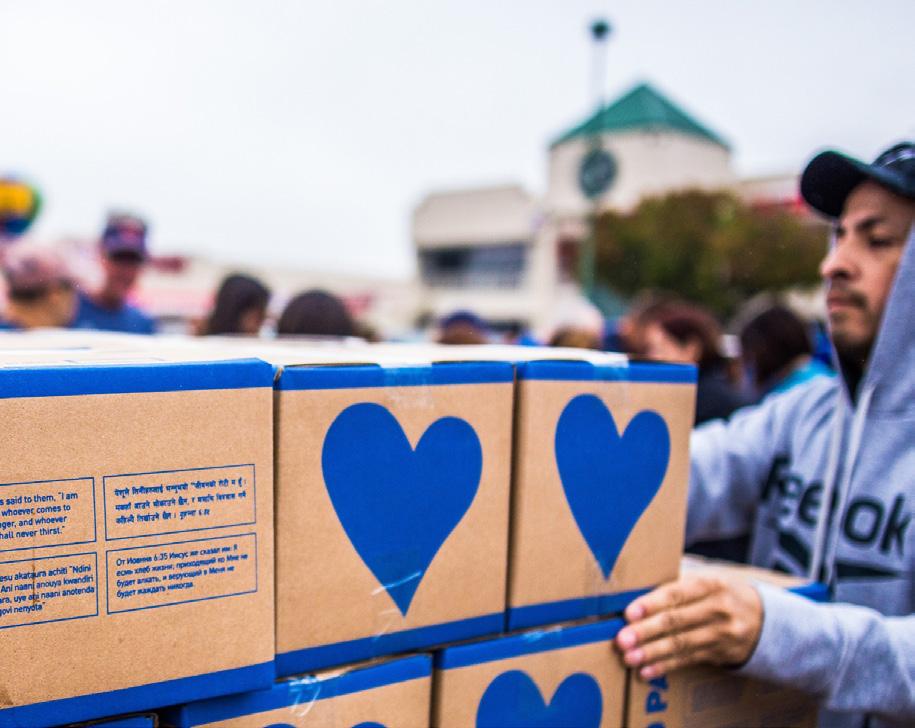
preaching, people trying to take advantage of the Latino people,” Ibarra said.
The first church facility Ibarra looked to rent seemed perfect. However, the pastor and elders would only sell the building, and Ibarra didn’t have the funds.
Months later Ibarra reached back out to see if the church would reconsider renting, and he received the bad news. The church was going to become a mosque.
“It’s now the largest Latino-led mosque in the Midwest,” he lamented. “They strategically came in to share with second- and third-generation Hispanics that are searching for truth.”
The National Muslim Council headquartered in Chicago says the Muslim population among Hispanics has grown by 30% since 1999, to 200,000.
“It just reaffirmed that this is where I’m supposed to be,” the determined Ibarra said.
The pastor faced another challenge. He found a new location and Anchor Church Berwyn was launched in September 2025, with Anchor Church Palos as its sponsor. More than 100 people attended the first service. The victory seemed short-lived, however, as Immigration and Custom Enforcement (ICE) began making sweeps in Berwyn that same month.
Attendance plummeted, but “we still had ser-
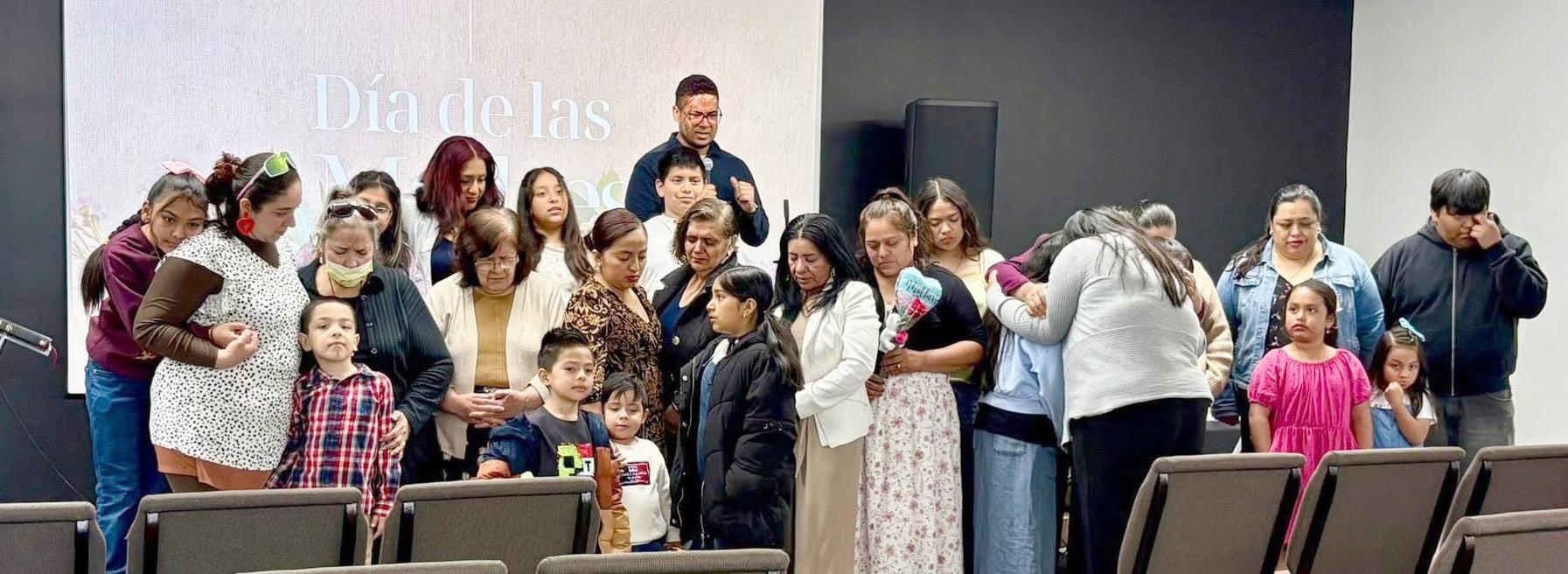
vices, even with just a few people.” The church used the opportunity to serve the community.
“Bill and his team found countless ways to love and serve the city, through prayer meetings, food distribution, and community service,” said Ryan Hall, Pastor of Ibarra’s sponsoring church. “By showing Christ's love to a community in crisis, he is building trust and credibility for his ministry.”
After several months Anchor Church Berwyn was ready for a relaunch. They chose Easter to share the greatest news ever told. It was also strategic because many people only attend church twice a year, Christmas and Easter.
While numbers were down compared to the initial launch, Ibarra is excited to serve his community.
The church is bilingual right now. Ibarra preaches in English and someone translates to Spanish. Worship and printed materials are in both Spanish and English. On their one-year anniversary in September, Ibarra hopes to add a second all-Spanish service.
“This community is diverse and big and centrally located in a suburb that feels like the city and is so condensed with people that it often gets overlooked,” he said. But God hasn’t overlooked Berwyn.
“I know God can do amazing things, because the harvest is plentiful.”
explained. “That’s true everywhere, especially in Chicago. That’s when I saw the need for Hispanic churches, specifically biblically healthy churches.”
Heredia served at Ashburn Baptist Church in Orland Park starting in 2022. Four years later, Pastor Tommy Thompson asked Heredia to plant a Hispanic church in the same community as the mother church, but God opened a door in Willow Springs about eight miles to the north.
“First Baptist Church of Willow Springs decided to close their doors,” he said. “They reached out to Ashburn Church to see if they wanted the building. We prayed about it for about two months and decided to plant the church there.”
Willow Springs is probably not what you think of when picturing a Chicago suburb. It’s one long road, has less than 6,000 people, and there’s farmland. But it’s also strategically located at the junction of I-55, I-294, and U.S. 45.
“It’s not a very Hispanic community,” Heredia said. It’s mostly European and other ethnicities, but there are other communities around Willow Springs that are Hispanic. When this option with the building came up, we saw the opportunity to serve the surrounding communities.”
Ashburn-Willow Springs launched on Easter with more than 60 people attending the service. Heredia said many are new believers or people coming back to their faith. “It’s exciting to see how much they want to learn and grow,” he said.
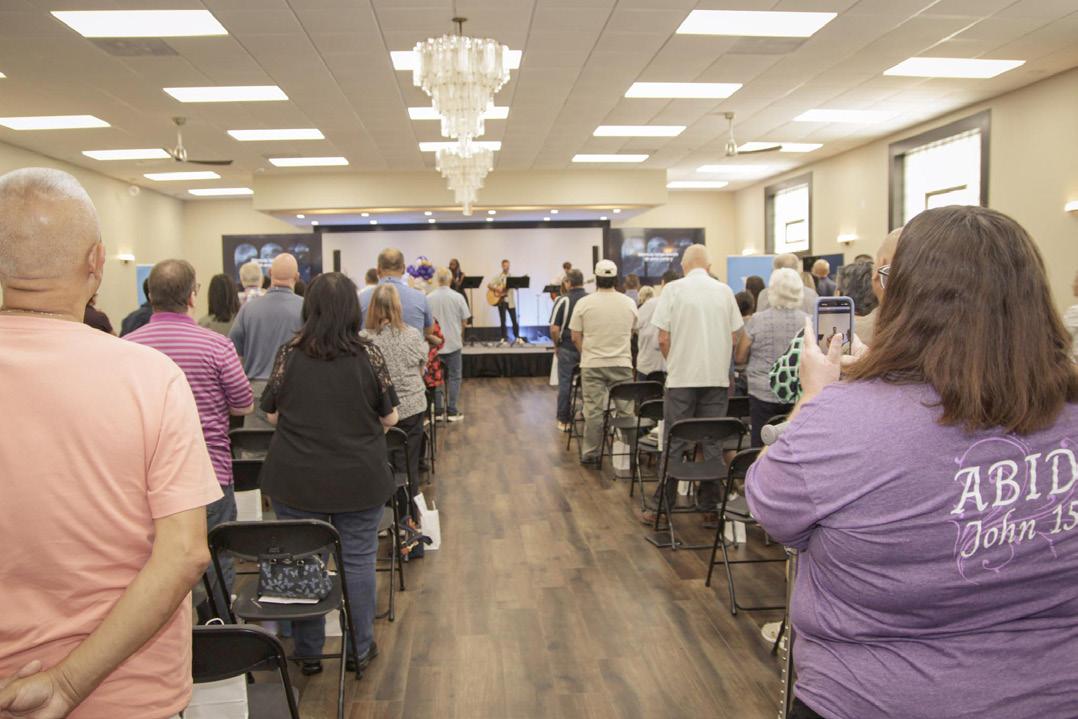
Ariel Heredia moved from the Dominican Republican to the U.S. nine years ago to attend school to become a pastor. While here he was looking for an opportunity to serve the Hispanic community. A door opened in Chicago.
“Something I noticed when I came to the U.S. was the large number of Hispanic people,” Heredia
“They pay attention to teachings or while discussing the Bible. Having a group like that is good for a church plant because they can assimilate the vision and spread it.”
Heredia hopes to challenge the newer believers with Bible studies, but he knows there will be difficulties.
“Many Hispanics work many hours, and it can be a hard for them to be involved in church,” he explained. “We have been doing a study before service, like a Sunday School, and about half the church attends. We also have a children’s ministry on Sunday during the sermon and that’s well attended.”
Right now, the church is only Spanish speaking, but the pastor is considering adding a Bible study and worship service in English to reach second-generation Latinos—but also others in the community.
“Our church is Hispanic but we’re open to whoever comes.”
─Kayla Houchin
Continued from P. 9
Overall, Price said of the multi-level planting partnerships, “we are much better than we used to be.”
Foshie’s fresh view
Now in his third official month as head of IBSA, Foshie has been hearing from many Illinois Baptists about the future direction of the state association. A good bit of that conversation has been about winning Chicagoans to Christ.
“I think there is a desire for more partnership—from national partners and state partners,” Foshie said. “There’s desire from southern and central Illinois churches, and even northern churches outside the city, to expand their Acts 1:8 missions into Chicago.”
Foshie was on hand for a potential church planters assessment in Chicago in May. NAMB brings together their SEND team and IBSA church planting catalysts with couples who have expressed interest in the city. The couples see the mission field, hear the stories, and have tests and interviews to measure their suitability for the planting challenge in northern Illinois.
Chicago is more than the news stories about crime and poverty. It’s gospel opportunity.
“Certainly there’s spiritual warfare there, but the brokenness we experience in our society today only increases the need—and the desire— to know Jesus,” Foshie said.
“It’s exciting to know that planters are exploring a call to Chicago.”
At this juncture, IBSA is seeking to further its partnership with NAMB. While many state conventions have shifted church planting leadership to NAMB through its SEND site strategy, IBSA is evaluating this strategy. And NAMB continues to invest in the city, recently purchasing the Chicagoland Baptist building for ongoing use as a SEND ministry center. The former school on Rockwell Street has served as an incubator for new churches and housing for mission teams. It’s a busy place, especially in the summer.
“We believe the ministry we have seen so far is just a drop in the bucket compared to what we believe God will do in Chicago,” Foshie said.
“If you live outside Chicago, you may forget that the city is hundreds of communities and cultures, all on
Mindy Cobb moved to Chicago with her husband, Lindsay, nearly 50 years ago to be a part of a church plant and hasn’t looked back. In Longevity, a collection of essays edited by Nathan Carter, Cobb shared she originally planned to give God one summer of her life, but he wanted the whole thing.
Out of college the Cobbs took their Missouri church’s youth group on a summer mission trip to Omaha. The group stayed busy with VBS, backyard Bible camp, and physical labor. “It was truly an amazing experience,” she said. “We had never seen kids from all different ethnic backgrounds come together to learn about Jesus, and we had never seen so many people hungry for Jesus.”
The couple wanted more. They reached out to Home Mission Board (now NAMB) to find out about additional mission opportunities. A week later they received a letter asking if they would consider going to Chicago.
Lindsay was ready to go; Mindy was hesitant. “I heard people get shot in Chicago,” she worried. “That didn’t sound too safe to me.”
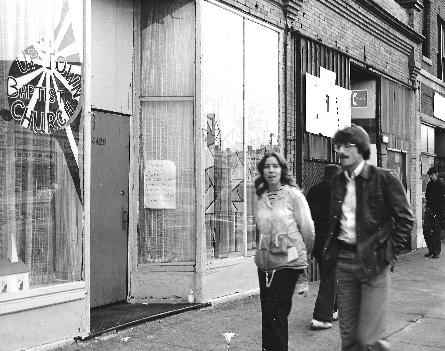
They planned a trip to Chicago and met Pastor Jim Queen. He spent time with them drawing his dreams on napkins. After attending church, which was in someone’s apartment, the Cobbs knew they were in the right place.
“We experienced the same thing we had experienced in Omaha: different ethnic groups all coming together to worship Jesus and nobody
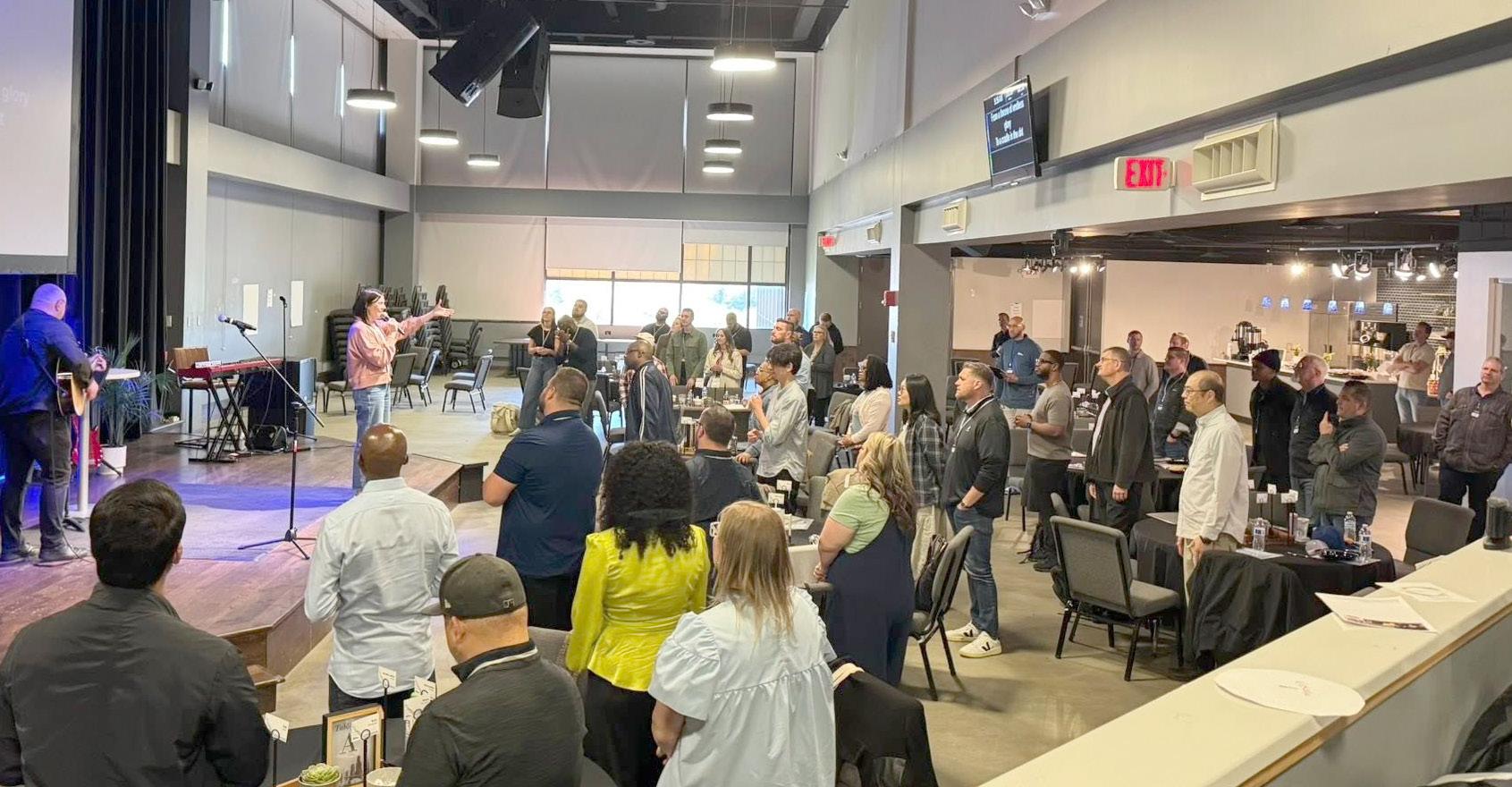
PARTNERS– NAMB brought prospective church planters to Chicago in May to assess their candidacy for service. Currently 40 church planters are at work in Illinois.
one great mission field,” Foshie said. “There’s a treasure trove of souls just waiting to hear the gospel.”
Two keys to success in Chicago: partnership with like-minded, missions-minded people and entities, and incarnational ministry that brings believers to the city to serve, and to live.
“I think that the continued disintegrating of the social fabric and emptiness of our increasingly digital lives has left a huge hunger for real, embodied community,” Nathan Carter said. “And so genuine, biblical community that gathers and practices
wanted to go home when the service was over,” she said. “People were hungry for Jesus, and they wanted to talk about him. After that first visit, I never again doubted our calling to Chicago.”
The Cobbs moved to Chicago on December 1, 1976. They were ready to help Queen start Uptown Baptist Church, which was now in a condemned storefront.
“Lindsay and I decided they definitely needed someone to work with the children, so that was our first task. Lindsay drove around picking up kids for Sunday School.”
Over the years, Lindsay served different ethnic groups in Chicago, learning their cultures and languages. He sponsored refugees and helped start language churches. Mindy had a heart for teaching women’s Sunday school and working with the women’s ministry at church.
The Uptown plant grew and eventually acquired a stately old church building at Sheridan and Wilson in the neighborhood for which it’s named. Twenty years later, the Cobbs’ work shifted to the Chicago Metro Baptist Association, and for Mindy it continues today.
Lindsay died in 2009, but Mindy stayed in the city. Going back to Missouri was hardly an option. “The transiency of the city is one of the things that has caused me much heartache. We pour our lives into people and they leave.”
While she understands the call of the mission field elsewhere, she says there’s a great need in
hospitality and fosters committed, in-person relationships are as needed as ever. People are rediscovering how much they need them.”
For Foshie, that looks like mission teams who come from downstate (see page 12), and potential planters who are drawn to the city.
“We need God to raise up planters and pastors from all over Illinois who will visit there and lead their churches to serve on mission in Chicago,” Foshie said, “but also to move there and plant their lives and their families’ lives there.”
Chicago that many overlook.
“Sometimes it is just hard to see them going back to places that already have witnesses and people of God living there,” she explained. “We need to pray to the Lord of the harvest to send more workers, especially young families that will grow their children up to love God and love the city.”
Carter’s work profiles nine people who planted their lives in the city, and decades later have stuck to it. One key to effective ministry is longevity. “You need to know whose you are and what he has called you to do,” Mindy said. “Do not be like me and offer him a summer of your life.”
How this downstate church loves their upstate opposite
Metropolis | Kinley Logeman had never been to Chicago before a summer youth mission trip several years back. While it’s in the same state, Metropolis is completely different from its far north neighbor, having less than 6,000 people and sitting on the southern border of Illinois.
It was a bit scary for the then 15-year-old because it was her first mission trip—and she was traveling to a big, new city without her parents.
“It was very, very eye opening,” Logeman said. “Going from small town to large city, there was a vast amount of city and culture. Getting the kid out of the small town, I was able to see it doesn’t seem like such a small world when you’re in Chicago.”
She returned to Chicago her sophomore year with her church, First Baptist Church of Metropolis. Associate Pastor Cliff Easter has brought a group of high school students to Chicago every year for the last 20 years because of his heart to serve the city.
“I love Chicago’s place in our youth group, in the church, and the mission that we share there,” Easter said.
Many of his students, like Logeman, have never seen the city before. Coming from a rural, downstate, predominantly white church, students learn a lot from Chicago’s many differences.
Through the years, the students have worked with church planters doing whatever they needed. Students take part in evangelism, block parties, backyard Bible studies, assist with VBS, and help with church restarts and revitalizations.
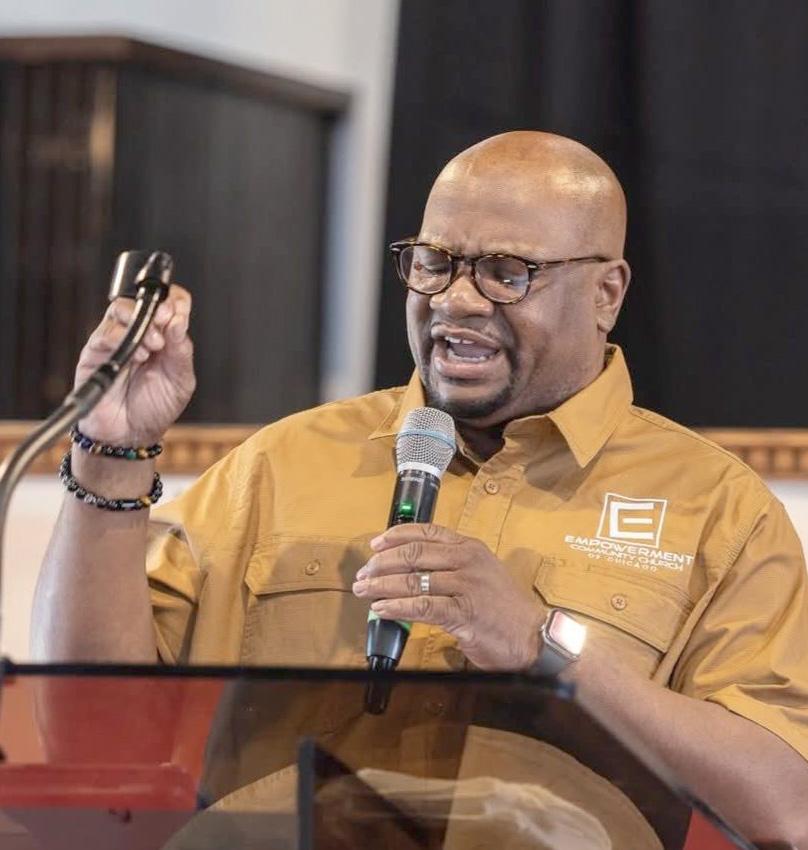
See past ‘the divide’ Last summer the students had the opportunity to serve alongside Pastor Maurice Gaiter at Empowerment Community Church of Chicago. Easter helped Gaiter baptize new believers and share the meaning of baptism during a special community
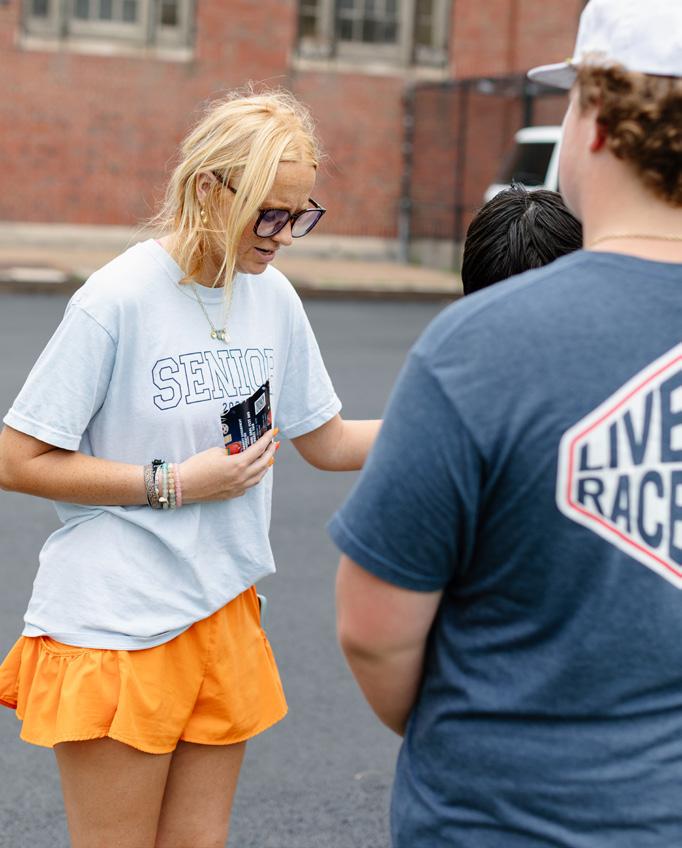
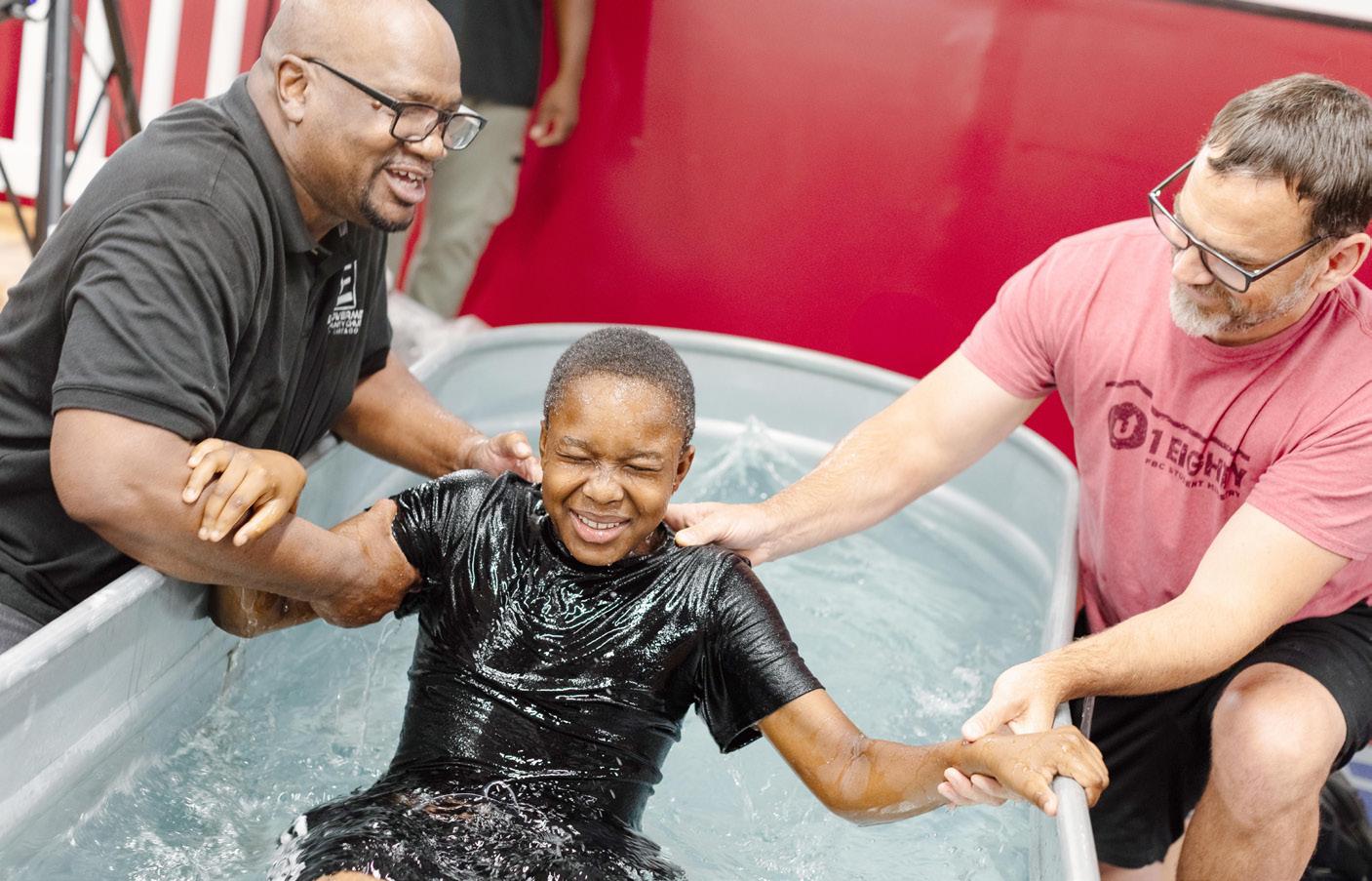
event. For Easter it was a highlight of the trip, as students see while we’re different, we all belong to the same God.
“To get to work with different churches that have diverse communities of people from all different walks of life and ethnic groups, it’s just a really cool opportunity for our kids to gain a whole new perspective on the world,” Easter said. “That’s what I’m after as a youth pastor; I want them to see past the divide.”
Easter said it’s not uncommon for people in downstate Illinois to dislike Chicago because of political and cultural differences. The pastor wants his students to see the incredible potential to reach lost people.
“I remember what it was like to be lost and have no one around me that knew the gospel and would never think to share it,” Easter said emotionally. “That’s what Chicago is like. Jesus commands us go. Why are we not going more?”
Logeman agreed.
“Here in Metropolis, we are in the Bible belt, all the kids are going to know something about Jesus,” she said. “In Chicago there are countless people in the street that have never stepped foot inside the church, never heard someone say, ‘Jesus loves you.’”
During one visit, the group set up a stand near the L-train station with a sign reading “How can we pray for you?” She doubted anyone would stop by. But they did. “It was amazing to see God working through my doubt, and to see people craving God who didn’t know how to receive him.”
FBC Metropolis has a goal to raise up students unafraid to live out Acts 1:8, taking the gospel from downstate Illinois to the ends of the earth.
“The calling of Christ is bigger than my town, my ethnic group, my comfort zone; we have to take it to
everyone. If a church is not trying to share actively, what exactly are we doing?” Easter said.
Serving starts at home and nearby. “It’s a trip we push toward our younger students,” Logeman said. “It’s a good opportunity to dip your feet in missions because it’s closer to home.” Of her first trip she remembered, “It was awesome to see how God can use me and doesn’t just use other people.”
Next, for the Metropolis church, missions crosses borders. For students like Logeman, Chicago is a foretaste of international missions. And many, like her, make a lasting commitment that includes service outside the States. Now 18, she has been on an international mission trip to Italy. She is going somewhere this summer that she can’t disclose for security reasons.
Next year she’ll major in nursing at Maryville University and plans to use the vocation for missions.
The impact of Chicago missions has been profound across the church, with the congregation championing the trip every year. “If we stopped doing these things I would have to answer for it, and rightfully so,” Easter said. Of the 80 students expected at Go Chicago 2026, 30 will likely be from FBC Metropolis. Last year Easter also brought students from four other churches in Union Baptist Association, which has also taken the city to heart.
Even for distant, different Chicago, the love of Christ is spreading from downstate to upstate. And back.
“It’s a great opportunity,” Logeman said. “I understand if you’re scared, but God will send you where you’re supposed to be. He’s going to protect you and use you in amazing ways.”
And for many, it’s just a beginning.
Kayla Houchin
Acts 1:8:
How we do it
Step 1: Start in our Jerusalem and Judea
Make disciples and serve our own community. Church activities like Bible studies and VBS help build up the next generation of disciples and reach those in the community who don’t know or are still figuring out Jesus. Church isn’t a spectator sport; members need to be serving in some way.
Step 2: Go to Samaria
Serve outside of our Jerusalem, but not too far away. NAMB created 32 Send Cities to push back lostness and focus on urban areas. Chicago is one of those cities. FBC Metropolis partners with IBSA for Go Chicago. One week every summer, students help church planters reach underreached people in the city.
Step 3: To the ends of the earth
Our missions team finds opportunities by working with IBSA, other associations, and missionaries for church members to join international mission trips, both long-term and short-term. We often focus on UUPGs (unengaged and unreached people groups).
Steps 4: Ask, Where do I fit?
Students spend a summer serving God where he calls them. Then they prayerfully consider spending two years as a NAMB Journeyman.
Church members ask, “What if we plan for missions like we plan for vacation? The time, money, and resources that go into planning a vacation are vast, but we can do that for missions.
Step 5: Bring it home
Consider the impact if a child grew up realizing the importance of missions: knowing their personal mission at school is just as important as their recent international mission trip.
Acts 1:8 comes full circle, starting and ending in Metropolis, our Jerusalem.
Richard Blackaby challenged the IBSA staff at our annual Spiritual Focus Day. “If glorifying God is the goal of life, how do I increase that each year?”
For all of us in ministry, especially those who set goals and count results and live by metrics, that’s a tough question. Can we always do more than we’re doing now?
He pointed to a biblical text often cited by his father, Henry Blackaby, co-author of the groundbreaking study, Experiencing God. In it, Jesus pointed to “much fruit.”
Blackaby and his sons, Daniel and Mike (below), have produced a sequel to Experiencing God, which they will unveil at the Southern Baptist Convention in Orlando.
The follow-up is shorter, to accommodate busy schedules, but it includes regular study sessions and teachings for group meetings.
“We’re always looking for a spiritual steroid to help us grow quickly, but spiritual maturity is a process in which we’re doing healthy things day in and day out,” Blackaby said.
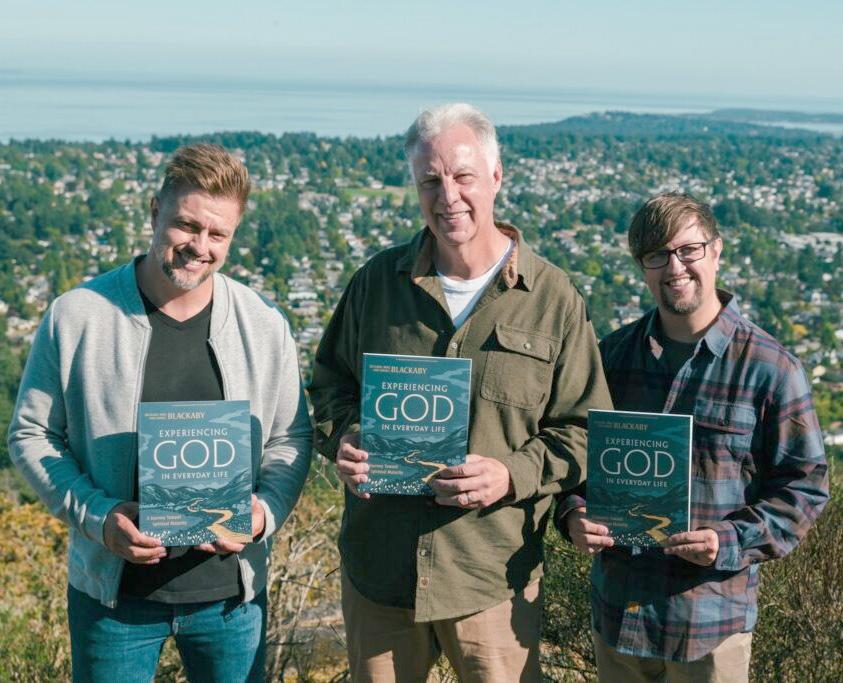
The original series included videos that made the elder Blackaby renown in SBC circles. More than 8-million copies in English have sold since 1990.
To the IBSA team, he issued Jesus’ challenge from John 15:8: “My Father is glorified by this: that you produce much fruit and prove to be my disciples.”
“God’s love for you is constant,” Blackaby said, “but his glory increases where fruit increases.” But fruit increases not only on effort.
“God has no patience for fruitless activity,” he told a room full of pastors who help pastors measure their churches’ productivity. The Father is the gardener in Jesus’ farewell discourse. God knows the fruit, the soil, the health of the branches, and the potential yield. He also knows which branches should be lopped off to make the others healthy. “Even Godly, fruitful ministry (and people) need pruning to be more fruitful,” Blackaby advised.
He left us wondering, What in my ministry and my life should be pruned to produce much fruit?
Eric Reed, with Ben Jones and Baptist Press
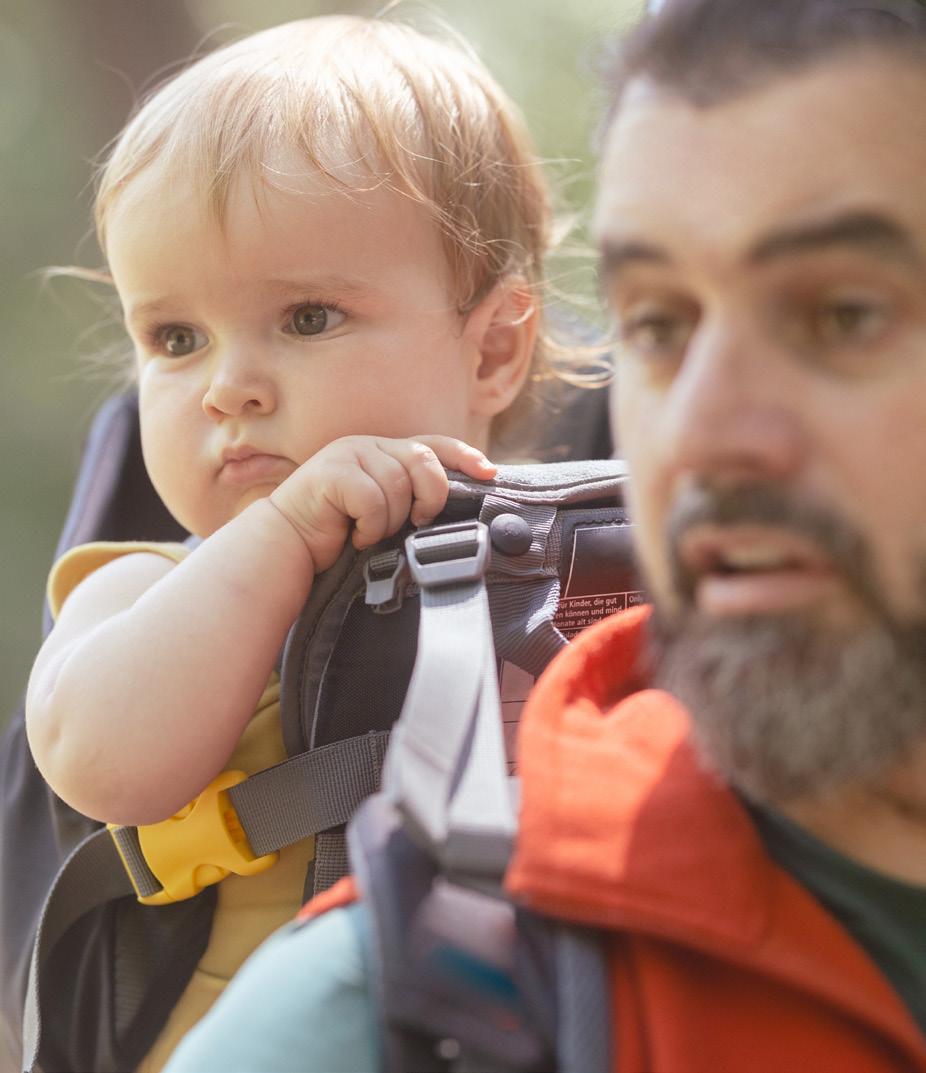
When the nurse buckles your firstborn child into the backseat and then just walks away, fatherhood crashes down pretty hard! Never before or since have I driven as slowly and carefully as I did with my wife and son counting on me from the backseat. Fatherhood was no longer hypothetical. Fathers are fathered. Whether through beautiful stories of parents who lovingly stayed together, or a childhood of broken relationships, future fathers are shaped by what they experience. If Christians want to see stronger fathers in our churches, families, and communities, we must stand ready to mentor these future fathers in all stages
Boys need something to live up to. Giving boys chores or an early job can teach responsibility, but not character. Boys need men to model biblical manhood, learning that life isn’t just showing up for work, but doing the work the right way. Booker T. Washington writes in Up From Slavery that many young black men suddenly freed from slavery, but with no father and often no last name, struggled in life. He found that young white men were “conscious that if he fails in life, he will disgrace the whole family record.” Washington chose his name hoping to associate himself with the honor of a great legacy from American history. Washington’s point goes far beyond race, expressing the need for examples that can inspire boys towards manhood. My home growing up had seasons of a single mom and various stepfathers, but there were always men outside my home I looked up to. I keep this in mind as I now work with students, considering our conversation today may be a silent chapter in their own story of growing as a man.
Biological father is not an endearing term, as fatherhood is best defined by intentionality and not mere paternity. Even an unintentional conception can become a moment of intentional legacy when a man makes the choice to be a father. Turning men into fathers requires a presence in many rooms. Present in the hospital room as a sign of responsibility for the life he helped to create. Investing time in the playroom to imagine, laugh, and create moments alongside his child. Gathering in the dining room to share a meal and encourage his child to share his day, and to learn the silent shifts under the surface when the child responds, “It was fine.” It’s in these various rooms that men truly become fathers, and display fatherhood to the next generation of boys.
Fathering adult children turns you into less of a parent and more of an influencer, allowing them to ask for the guidance we once forced upon them. That experience as a father grows men like Dave Hittenmiller into father figures.
Dave has led the Fatherhood Program at The Pregnancy Care Center of Rockford since 2025. The year prior to his arrival, the PCC served roughly 30 men. In his first year on the job, they served nearly six times that number.
The men, boyfriends, and husbands that come along for an ultrasound don’t just sit in the waiting room, but are invited into Dave’s office to talk, where he encourages them on what it means to be a father. The increase in numbers is more importantly an increase in stronger fathers.
“Our mentors are father-figures and many of our clients see us as a father they never had,” Dave said. “I’ve listened to so many stories of young men who are fatherless either physically or emotionally. We help them understand their role as a father, provider, protector, and encourager to both mother and baby. We share our own failures and how God helped us in our lives, while encouraging them to become followers of Jesus Christ.”
How many of these men will become a “Dave” to someone else? They can now pull aside an uncertain young man and tell him that fatherhood isn’t easy, but it’s worth it.
God has revealed the importance of fathers by revealing himself as such to us. May we invest in the work of fathering fathers wherever that opportunity presents itself.
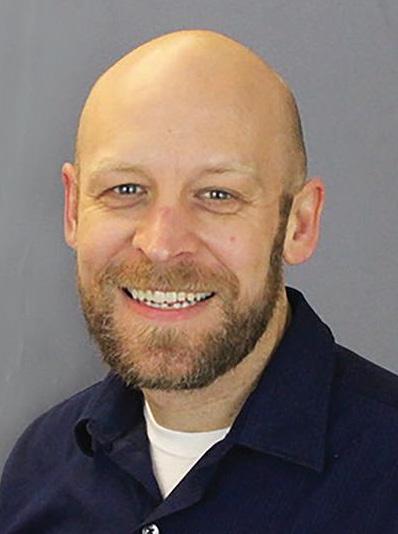
Heath Tibbetts is Head of Spiritual Life at Rockford Christian School. His wife, Nikki, is Executive Director of the Pregnancy Care Center of Rockford. Married 28 years, they have three adult children.
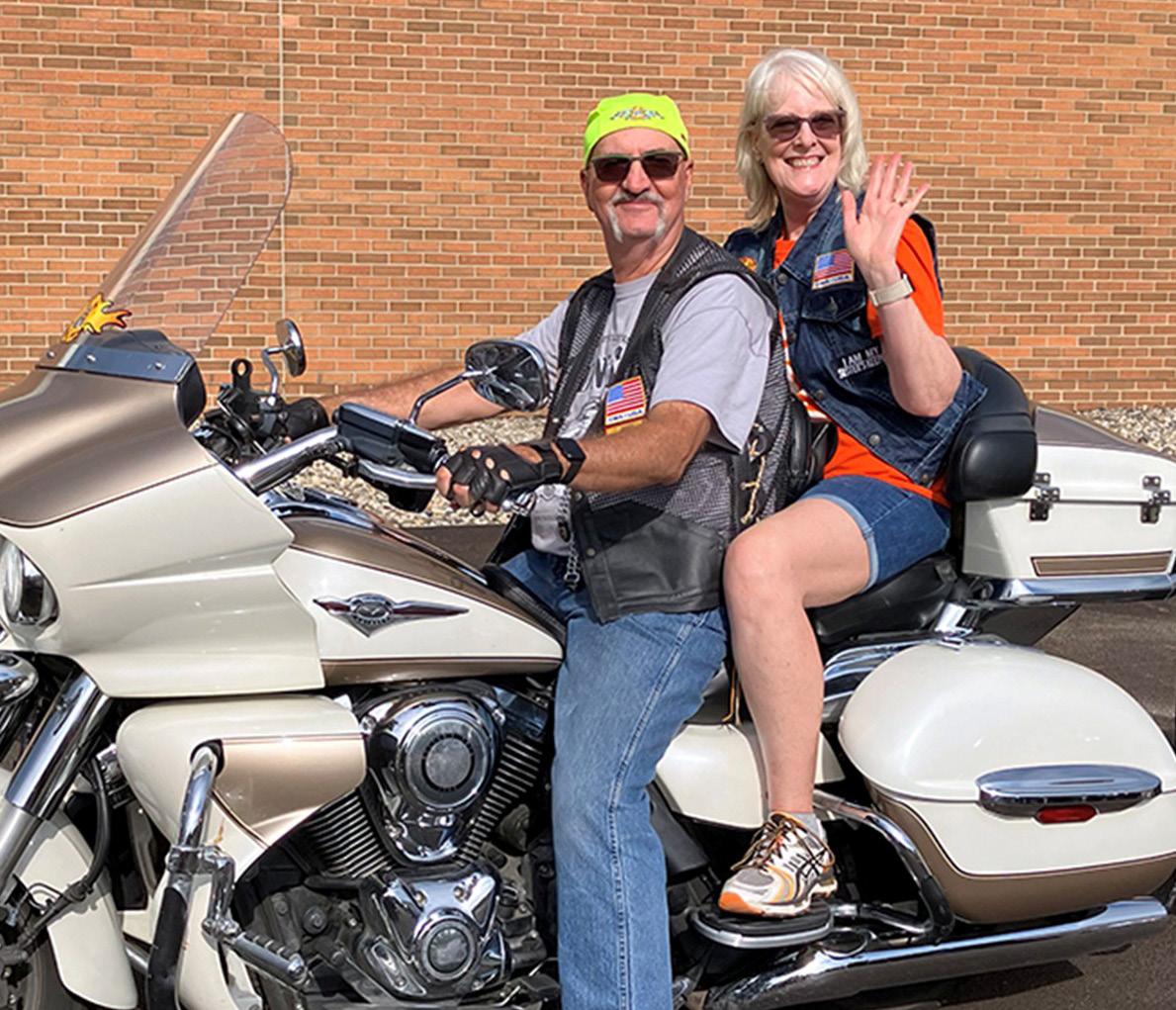
Springfield | Jeff Deasy and his wife, Kathy, are headed home to Tennessee following his retirement after 10 years as IBSA Administrative Director for Operations. He oversaw finances, human resources, and properties. The Deasys’ ministry began with pastoral leadership in worship in the Volunteer State. Then they spent 20 years with the International Mission Board in Brazil and Kenya.
Deasy’s specialty was logistics. He arranged for onboarding and travel for missionaries coming to those regions. The husband-and-wife team was also instrumental in planting new churches in those countries and raising up indigenous pastors.
Moving back to the U.S. in 2016 as part of IMB’s voluntary reduction
in force, the Deasys were active in many ministries at Chatham Baptist Church, while Jeff worked for IBSA. Kathy taught piano lessons and English language (ESL) classes. They remain active leaders in the Christian Motorcycle Association.
The couple was honored with a retirement dinner at the IBSA building, with representatives from various phases of their ministry sending videos from their mission fields and some traveling to Springfield to share well-wishes. The musical couple entertained with a fourhand piano duet of “The Hallelujah Chorus.”
In the next season, they will serve with a local church as God opens the door, and enjoy time with their children and grandchildren.
Springfield | With the planned retirement of Jeff Deasy as head of operations May 1, two IBSA team members were promoted January 1.
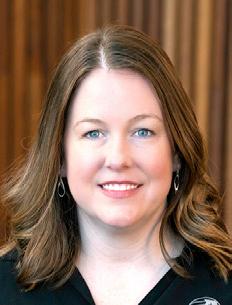
Ashley Parsons was named Administrative Director of Operations. She has served IBSA as accountant since 2017. Parsons holds a Bachelor of Science in Business Administration from Old Dominion University, and a Master of Science in Accounting from University of Connecticut. Her husband, Josh, has served as pastor of Western Oaks Baptist Church for 10 years. They are the parents of three sons.
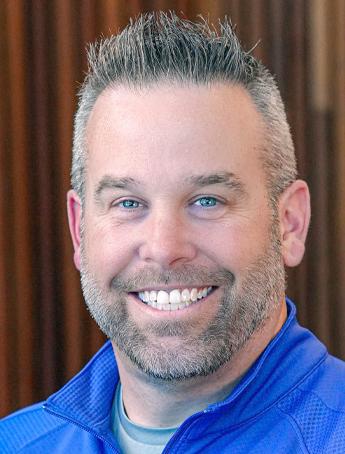
Drew Heironimus has served IBSA almost three decades in technology, navigating the increasingly complex
world of connectivity for churches and staff serving across Illinois. He joined the staff in July 1997 as information services specialist. He was promoted to Information Technology and Properties Director, with responsibility for facilities in Springfield, both IBSA camps, and the Baptist campus ministry building on the SIU campus in Carbondale. Heironimus holds an Associate’s degree in Business Administration with a minor in Computerized Business Systems, and a Bachelor’s in Business Administration from the University of Illinois. The Springfield native and his wife, Rachael, have two sons and a daughter.
June 7-10
SBC Annual Meeting
What: Four days of worship, preaching, missions, and SBC business. 200 gatherings during the week.
Where: Convention Center, Orlando Info: sbcannualmeeting.net/
June 16-20
Super Summer
What: Camp helps students grow to their fullest potential. “One Body. One Mission.” theme is based on Ephesians 4:15-16.
Where: Greenville College, Greenville
Cost: Students: $270
Adults: $170
Info: IBSA.org/supersummer Contact: TammyButler@IBSA.org

July 20-26
Go Chicago
What: Student missions in the Windy City. Where: Ashburn Baptist Church, Orland Park Who: Students ages 12-18
Info: Watch for more details coming soon!
July 31-August 1
Level Up Guy Camp
What: Retreat for dads, sons, granddads and mentors, bring your guys.
Where: Lake Sallateeska
Cost: $75 for men, 18 and under free
Contact: JacobKimbrough@IBSA.org
August 21-22
Priority: Hispanic Women
What: Leadership development conference
Where: Lake Geneva, Wis.
Email: CarmenHalsey-Menghini@IBSA.org
August 22
Tech Conference
What: Specialized training for pastors, tech/ worship leaders, volunteers.
Where: IBSA Building, Springfield Cost: $20
Email: CarmenHalsey-Menghini@IBSA.org
August 28-29
Disaster Relief Training
What: Courses vary but may include childcare and chaplaincy, flood recovery, chainsaw, and incident management.
Where: Lake Sallateeska Camp
Cost: Current members, free. New members or expired badges, $50.
Info: IBSA.org/events
Contact: JanetSheley@IBSA.org
Send NetworkiNg items to IllinoisBaptist@IBSA.org NetworkiNg
First Baptist Church of Zeigler is seeking a bivocational pastor. Will consider a retired pastor who wants to serve. Resumes should be sent to Pastor Search Committee, P.O. Box 4, Zeigler, IL 62999, or email zeiglerfirst@gmail. com.
Summit Ave. Baptist Church seeks a bivocational pastor, a seminary graduate who agrees with the Baptist Faith & Message (as amended in 2023). This is a loving congregation located on the west side of Decatur. Send resume to Chris Granda, gdprvd4me@yahoo.com.
Calvary Baptist Church of Effingham seeks a full-time pastor. Visit calvary baptisteffingham.org for more information. And send resume and sermon videos to the Pastor Search Committee at Calvarybaptisteff@gmail.com.

Patoka First Baptist Church is seeking full-time lead pastor for small mission minded congregation of 40-50 people. Salary, annuity, and housing provided. Resumes may be submitted to Patokabaptist@gmail.com
Creal Springs First Baptist Church seeks a bivocational pastor. Submit a resume to Natalie Hilliard, P.O. Box 47, Creal Springs IL 62922, or to hilliard natalie@yahoo.com
Bethel Baptist Church in Vandalia seeks a full-time lead pastor. This church, with an average attendance of 100-150, calues connetions. They seek a pastor who is led by the Spirit, relational, and able to preach and teach the living and active Word of God. Salary range is $50-70,000, based on experience and education. bethelbaptistsearch26@ gmail.com
Search more church openings at IBSA.org/pastor-search
ILLINOIS pulpit
In a recent trip to Haiti, I heard a Haitian pastor illustrate to his congregation the need for total commitment to Christ. A man wanted to sell his house for $2,000. Another man wanted to buy it, but because he was poor, he couldn’t afford the full price.
After much bargaining, the owner agreed to sell the house for half the original price with just one stipulation: he would retain ownership of one small nail protruding from just over the door.
After several years, the original owner wanted the house back, but the new owner was unwilling to sell. So, the first owner went out, found the carcass of a dead dog, and hung it from the single nail he still owned. Soon the house became unlivable, and the family was forced to sell the house to the owner of the nail.
The Haitian pastor’s conclusion: “If we leave the devil with even one small peg in our life, he will return to hang his rotting garbage on it, making it unfit for Christ’s habitation.”
In Paul’s letter to Timothy, we see the same scenario still being played out. In unreliable times, God had a man who was called to be a fully Committed person.
Paul, writing from prison as he anticipated his death, encouraged
Timothy, a young pastor, to persevere in his ministry, uphold sound doctrine, and train others to do the same. The letter emphasizes the importance of faithfulness, suffering for the sake of Christ, and the generational passing on of the faith.
Paul shows several characteristics of the Committed. First, they are always looking to help the cause.
Paul chose men who had a reputation for being committed. He compared their service to signing up for the Army.
“Share in suffering as a good soldier of Christ Jesus,” Paul wrote.
Good soldiers are willing to go into battle together. Even there, the Committed remain constant in the chaos.
Committed people are reliable. And they can be counted on to pass along the gospel. They entrust their teachings to those they’re training.
Paul told Timothy, “And the things you have heard me say in the presence of many witnesses entrust to reliable (Committed) people who will also be qualified to teach others.”
Some years ago, when I was learning to fly, my instructor told me to put the plane into a steep and extended dive. I was totally unprepared for what was about to happen.
After a brief time, the engine stalled, and the plane began to
plunge out-of-control. It appeared the instructor was not going to help me at all.
After a few seconds, which seemed like eternity, my mind began to function again. I quickly corrected the situation.
Immediately I turned to the instructor and began to vent my fearful frustrations on him.
He very calmly said to me, “There is no position you can get this airplane into that I cannot get you out of. But if you want to learn to fly, go up there and do it again.”
At that moment God seemed to be saying to me, “Remember this. As you serve me, there is no situation you can get yourself into that I cannot get you out of. If you trust me,
you will be all right.”
This is the ultimate reason, from our standpoint, why God fills our lives with troubles and perplexities of one sort and another—to ensure that we shall learn to hold him fast.
Not by shielding us from assault by the world, the flesh, and the devil, nor by protecting us from burdensome and frustrating circumstance. Not by shielding us from troubles created by our own temperament and psychology. But by exposing us to all these things, God overwhelms us with a sense of our own inadequacy, and drives us to cling to him more closely.
When we do, we are the Committed. We’re prepared to go wherever he sends us.
A missionary society wrote to David Livingstone in Africa and asked, “Have you found a good road to where you are? If so, we want to know how to send other men to join you.”
Livingstone wrote back, “If you have men who will come only if they know there is a good road, I don’t want them. I want men who will come if there is no road at all.”
Maurice Gaiter is pastor of Empowerment Community Church of Chicago.



In a world that often distorts what it means to be a man... true manhood is rooted in Christ, defined by purpose, service, responsibility, and spiritual strength.
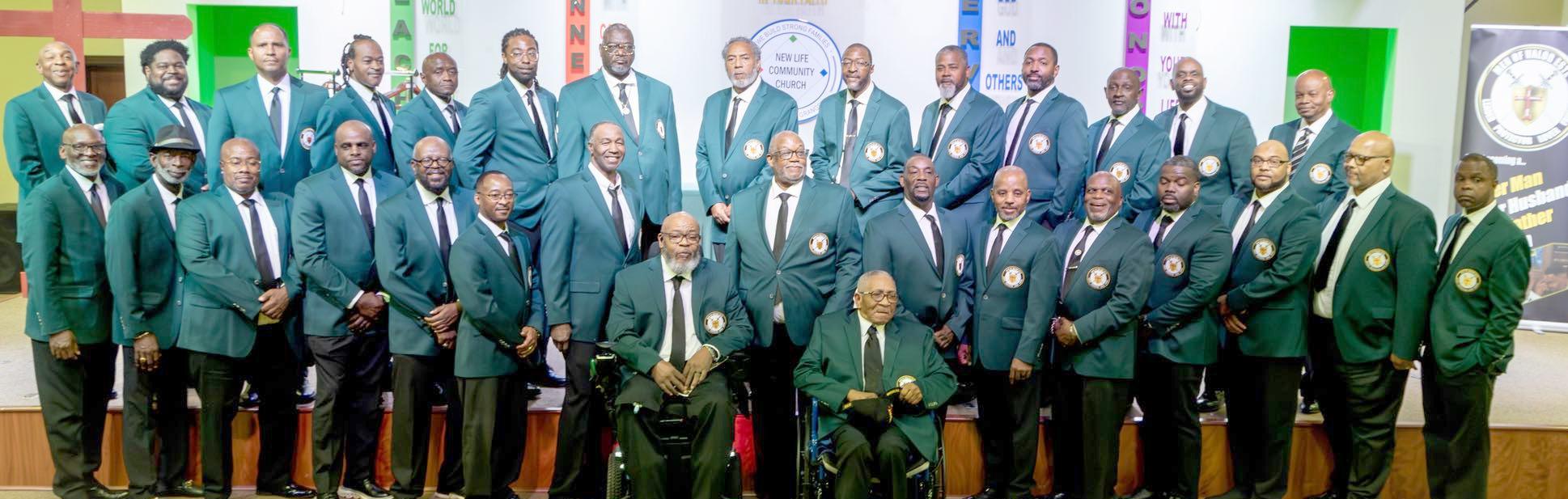
New Life Community Church honored 23 men who answered God’s call to something greater. Pastor Kendall Granger preached and presented each man a certificate.
“This wasn’t just a ceremony—it was a charge,” the church reported. “We need men who pray, who lead with integrity, who love sacrificially, and who serve with humility.”
For what great nation is there that has a god so near to it as the LORD our God is to us, whenever we call upon him?
Moses (Deut. 4:7)

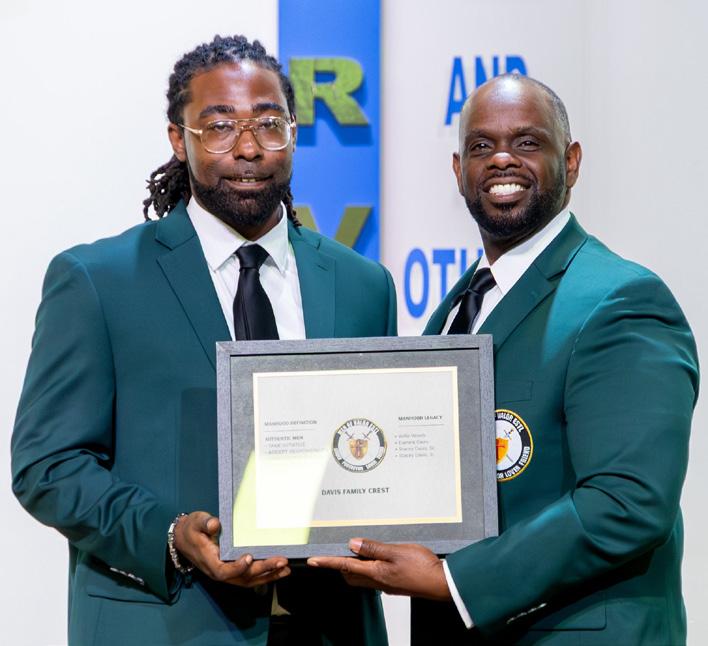


Net Community Church prepared its flag collection for Memorial Day by replacing some of the flags purchased eight years ago in memory of a church member. The VFW collected the worn flags for proper retirement.
Summer brings a series of community dinners near the Quad Cities. First Baptist Church of Orion teamed up with a dozen ministries to host meals on the third Saturday evening in warm weather months.
“We want people to come together, to break bread, connect with new people, enjoy fellowship, and freedom,” read door hangers posted all over the village of 1,754. The first dinner was well attended—and delicious, said pastor Jeremiah Bullock (grilling, above).
Good food opens mouths, hearts, and doors. “We had the best time slinging barbecue sandwiches today at the Saline County outreach,” McKinley Avenue Baptist Church posted in May. The event brought people together in the park. “We truly love our community!”