Steering an Industry Makeover
Jennifer Kolstad (M.ARCH. ’06) is redesigning the car-buying experience for one of America’s biggest auto companies

Staffing the Astronaut Help Desk ChatGPT for Nanomaterials Healthy Video Games
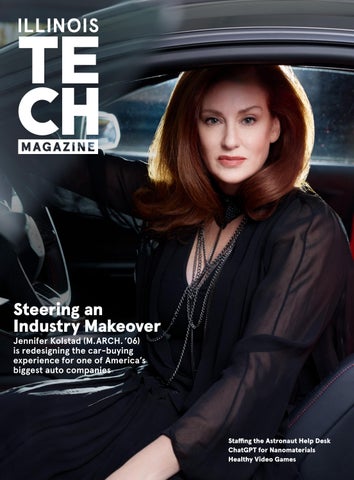
Jennifer Kolstad (M.ARCH. ’06) is redesigning the car-buying experience for one of America’s biggest auto companies
Staffing the Astronaut Help Desk ChatGPT for Nanomaterials Healthy Video Games
Greetings! As we celebrate another successful academic year at Illinois Tech, I am happy to share that our university continues to adapt to global changes in technology and industry in order to properly prepare the leaders of tomorrow.
I’m proud to say that our plans to be the first American university to open a degree-granting campus in India are progressing at an impressive pace. With the help of alumnus and Life Trustee Jamshyd N. Godrej (MAE ’72), we have signed a memorandum of understanding to open Illinois Tech Mumbai at the Godrej Business District in Vikhroli, Mumbai—an area known for its integrated residential, health care, educational, and commercial infrastructure, including 100-plus companies and
multinational employers. We remain on track to open our Mumbai campus in fall 2026, when we will offer undergraduate and graduate degrees in high-demand fields such as computer science, engineering, and business.
This strengthens our continuing efforts to broaden access for all learners to our highly relevant, tech-focused education and to reach them where they are. It also allows future students from across the globe to pursue a range of disciplines on the cutting edge of innovation.
The alumni we are highlighting in this issue reflect that range. From aerospace engineering and architecture to chemistry and cybersecurity, we continue to prepare graduates to be leaders across industries.
For years Sofia Ghouse (AE ’12) was an astronaut’s best friend, staffing a console at NASA’s Johnson Space Center in order to guide orbiting spacefarers through complex problems—and now she’s the top technical assistant for the center’s deputy director. As global design and brand director of Ford Motor Company, Jennifer Kolstad (M.ARCH. ’06) has been put in charge of revamping 300 million square feet of buildings. Andrey Ivankin (Ph.D. CHE ’10) co-founded a company that is capable of discovering the properties of millions of untested elemental compounds in a matter of years. Alex Damarijan (Ph.D. THUM ’22) builds games that actually improve the body and mind. And Thomas “TJ” Johnson (ITM ’12)—a frontrunner in applying cybersecurity compliance across numerous industries—has turned his attention to the health care sector as deputy chief information security officer at the University of Chicago Medical Center.
I am heartened that our alumni community remains both diverse and strong while navigating a world—and a technological landscape—that is continually changing. I look forward to reading about more successes to come.
Sincerely,
Raj Echambadi President
Vice President for Enrollment Management and Student Affairs
Mallik Sundharam
Associate Vice President for Marketing and Communications
Chelsea Kalberloh Jackson
Content Director
Andrew Wyder
Managing Editor
Tad Vezner
Editorial Contributors
Brianne Meyer
Kayla Molander
Simon Morrow
Art Direction and Design
Scott Benbrook
Photography
Jamie Ceaser
Tim Klein
Michael Reiter
Jennie Risher
Illinois Tech Magazine is published twice a year by the Office of Marketing and Communications. © 2026
Illinois Tech Magazine is printed on FSC®-certified recycled paper. Read it, share it, recycle it.
Send letters to Illinois Tech Magazine
Office of Marketing and Communications
10 West 35th Street, 13th Floor Chicago, IL 60616
or email illinoistechmagazine@illinoistech.edu
Send alumni news to alumni@illinoistech.edu
Illinois Institute of Technology, also known as Illinois Tech, is a private, technology-focused research university. Based in the global metropolis of Chicago, Illinois Tech is the only university of its kind in the city. It offers undergraduate and graduate degrees in engineering, science, architecture, business, design, human sciences, applied technology, and law.
One of 22 institutions that comprise the Association of Independent Technological Universities (AITU), Illinois Tech provides an exceptional education centered on active learning, and its graduates lead the state and much of the nation in economic prosperity. At Illinois Tech students are empowered to discover, create, and solve, and thus uniquely prepared to succeed in professions that require technological sophistication, an innovative mindset, and an entrepreneurial spirit.
Mission Statement
To provide distinctive and relevant education in an environment of scientific, technological, and professional knowledge creation and innovation
Armour College of Engineering
Chicago-Kent College of Law
College of Architecture
College of Computing
Institute of Design
Lewis College of Science and Letters
Stuart School of Business
ADA Statement
Illinois Institute of Technology provides qualified individuals with disabilities reasonable accommodations to participate in university activities, programs, and services. Such individuals with disabilities requiring an accommodation should call the activity, program, or service director. For further information about Illinois Tech’s resources, contact the Illinois Tech Center for Disability Resources at disabilities@iit.edu.

8
Thomas “TJ” Johnson (ITM ’12) is tackling cybersecurity compliance in an industry where it’s sorely needed: health care.
10
Alex Damarijan (Ph.D. THUM ’22) went from teaching in public school to building games that improve the body and mind.
12
Sofia Ghouse (AE ’12) started by talking astronauts in orbit through their technical problems. Now she’s the Johnson Space Center director’s top technical assistant.
14
The company that Andrey Ivankin (Ph.D. CHE ’10) co-founded helps businesses identify the perfect chemical compound for whatever they might need.
16
Jennifer Kolstad (M.ARCH. ’06) is leading the effort to “radically reimagine” Ford Motor Company’s 300 million square feet of buildings and more than 10,000 dealerships.

A recently published nonfiction book highlights the achievements of a former Illinois Tech professor who reportedly rescued thousands of Polish people during the Holocaust.
Josephine Janina Mehlberg, who was an associate professor of mathematics at Illinois Tech in the early 1960s, was the subject of a book titled The Counterfeit Countess: The Jewish
Woman Who Rescued Thousands of Poles During the Holocaust (Simon & Schuster 2024), written by historians Elizabeth B. White and Joanna Sliwa. Citing Mehlberg’s unpublished memoir and additional research, the authors state that Mehlberg, who was Jewish, rescued more than 10,000 Poles from Nazi concentration camps during World War II.
“Using the identity papers of a Polish aristocrat, she worked as a welfare official while also serving in the Polish resistance,” an online summary of the book states. “With guile, cajolery, and steely persistence, the ‘countess’ persuaded SS officials to release thousands of Poles from the Majdanek concentration camp. She won permission to deliver food and medicine— even decorated Christmas trees—for thousands more of the camp’s prisoners.”
According to Illinois Tech records, Mehlberg appeared in the university’s directory from 1961 to 1964 as an associate professor whose office was in room 216 of Chapin Hall, and there are photographs of her teaching. University records also indicate that she lived in the Chicago neighborhood of Hyde Park. Mehlberg may have also taught earlier, but no archived directories exist prior to 1961, and it is unclear when she joined the university. —Tad Vezner

Illinois Tech has consistently been ranked as one of the top universities in Illinois and in the United States for student access and success. Here are some of our most recent rankings from leading organizations and publications that track educational outcomes.


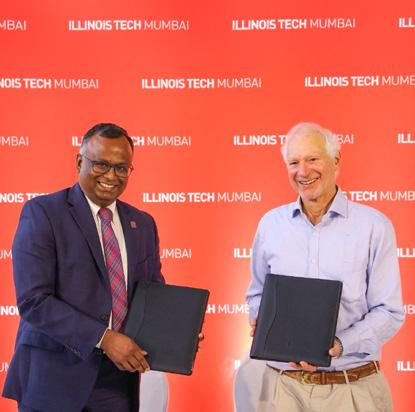

Illinois Tech has announced the location of its new Mumbai campus as the Godrej Business District in Vikhroli, Mumbai. Illinois Tech and Godrej & Boyce—the holding company of the Godrej Enterprises Group and one of India’s largest, oldest privately held conglomerates—signed a memorandum of understanding in February 2026 formalizing the partnership. The agreement was facilitated with Jamshyd N. Godrej (MAE ’72), chairman and managing director of Godrej & Boyce. The Godrej district contains the largest privately managed mangrove ecosystem in India, in addition to integrated residential, health care, educational, and commercial infrastructure. The campus is situated in the heart of India’s industrial center, with more than 100 companies in close proximity, allowing for potential partnerships that offer students real-world experiences and mentorship. Illinois Tech Mumbai will welcome its first cohort of students in fall 2026.
1. A rendering of the Illinois Tech Mumbai campus at the Godrej Business District in Vikhroli, Mumbai. 2. Jamshyd N. Godrej (MAE ’72), center, at the ribbon-cutting ceremony of the Illinois Tech Mumbai campus in February 2026. 3. Illinois Tech Vice President of Enrollment Management and Student Affairs Mallik Sundharam (left) and Jamshyd N. Godrej (MAE ’72) after signing the memorandum of understanding for the Illinois Tech Mumbai campus in February 2026. 4. Another rendering of the Illinois Tech Mumbai campus.

“The U.S. food supply is one of the safest food supplies in the world, so we should all feel good and safe about the food we are consuming on a regular basis.”
—Institute for Food Safety and Health Director Brian Schaneberg, on NBC 5 Chicago discussing recent food recalls in the United States

“Don’t put people in charge who can’t balance a checkbook now. Your death isn’t going to suddenly make them responsible. Love doesn’t balance a checkbook.”
—Assistant Clinical Professor of Law Deadra Woods Stokes in Chicago Crusader speaking about the need for Black homeowners to protect family property prior to a homeowner’s death

“As employers move to where talent is, it is natural for universities to follow. We launched the strategy ‘meet the learners where they are’ to serve employers and students where they are.”
—Vice President for Enrollment Management and Student Affairs Mallik Sundharam, speaking on The PIE about the establishment of Illinois Tech’s new Mumbai campus
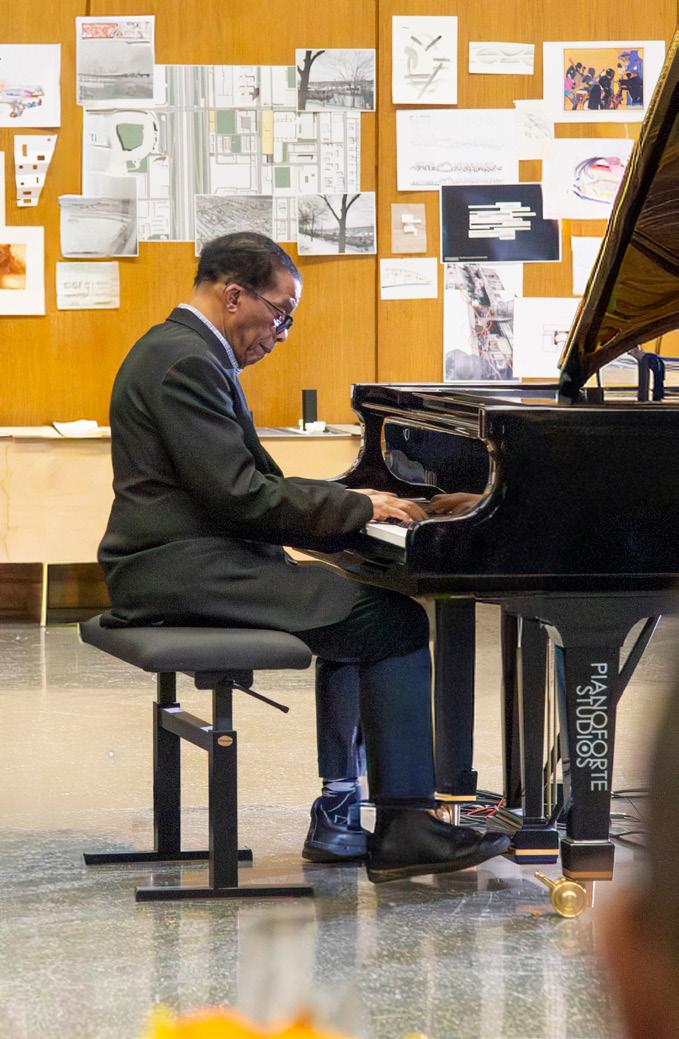
Jazz legend Herbie Hancock paused in front of a concert grand piano in the center of Illinois Tech’s S. R. Crown Hall long enough to mention he wasn’t going to play “any particular tune, I’m just gonna noodle around,” before sitting down for a 15-minute performance before a packed and silent audience.
That was enough to prompt guests—including Illinois Governor J. B. Pritzker, Chicago Mayor Brandon Johnson, and jazz singer Kurt Elling—to stand for applause at the peak of a fundraiser on March 11, 2026, to help bring International Jazz Day to Chicago.
In addition to a small group of invited guests, more than 100 College of Architecture students, faculty, and staff also witnessed the intimate concert. The event raised hundreds of thousands of dollars to support a month’s worth of Chicago events leading up to International Jazz Day, which took place April 30, 2026, culminating with a concert at Lyric Opera of Chicago. —Tad Vezner

After arriving at Illinois Tech in 2022, women’s track and field student-athlete Annika McKown (ME 3rd Year) sensed something was missing.
“I didn’t want to put my entire life on hold, but also thought my faith was important,” she says. So after her first year of school, McKown decided to commit to an 18-month religious mission, traveling to a dozen cities across central California.
“I talked to a lot of people—family, friends, God—and it felt right,” says McKown, who returned to Illinois Tech—and the track and field team—in winter 2025. “Coming back, it’s both new and familiar at the same time.”
A longtime member of the Church of Jesus Christ of Latter-day Saints, McKown left for the church’s San Jose, California-based mission in summer 2024.
McKown says her experience was a bit more transient than others: she was transferred to work out of 12 different central California locations over the course of her mission.
“Because I was capable of handling myself wherever I was at, they sent me to a lot of places to help,” she says. “And if [another missionary] was struggling with homesickness, I was good at picking them up a bit.”
McKown’s days were mostly spent in community service, helping people move or doing yard work. There were a few community-wide service projects such as city “dumpster days” and cleanups.
But she also spent a lot of time visiting residents who
were interested in pursuing their faith by reading and discussing scriptures with them.
McKown says the experience led to dramatic self-discovery as well.
“I feel there have been so many changes to me in the way I look at and interact with the world. And it happened so gradually,” she adds.
In a journal she kept during the mission, McKown wrote toward the end, “It has taught me that it is OK to be imperfect as long as I’m striving to do and be better.... [The people I’ve met] have inspired me to live life more boldly, more fearlessly, more urgently. They’ve emphasized the impact of faith and the belief that pulls us into action.”
As an Illinois Tech student-athlete, McKown competes in the pentathlon during the indoor track season and in the heptathlon during the outdoor seasons, as well as in the high jump. While she was able to run for about a half-hour every morning during the mission, “It was not true training structures,” she says. “Now that I’m back, I almost go back to the fundamentals.”
“She balances multiple practices, trains for several events, and stays on top of her academics with an unmatched work ethic,” Illinois Tech Track and Field Coach Tyler McQuality says. “Watching her come back and continue to beat her personal best after a year and a half away speaks volumes about her dedication and resilience.”—Tad Vezner

As more devices are designed to connect to the internet, network service providers must figure out how to handle the bandwidth of an exponentially growing number of devices. One possible solution is to use unmanned aerial vehicles (UAVs or drones) as base stations that can be easily deployed to a roof or lamppost to flexibly and dynamically change the network bandwidth nearby.
In a paper published in IEEE Transactions on Vehicular Technology, Illinois Tech Professor of Electrical and Computer Engineering Yu Cheng and his students explored the possibility. Currently, most network coverage happens through fixed base stations— towers that use a lot of power to provide coverage to a large surrounding area.
These towers are large investments that are fixed in place, only providing reliable coverage to users that are in their zone.
By deploying drones instead, network capabilities can adjust to demand, providing more reliable coverage and reducing wasted resources by increasing or decreasing available network coverage in a way that responds to demand at a given time.
The technology already exists to implement this idea; the main challenge comes in figuring out how to deploy the drones.
“How many UAVs should be deployed?” says Cheng. “If the number is too large, we unnecessarily waste energy, and if it’s too small, we won’t have enough spectrum to
support users, so we want to find the optimal number.”
Cheng’s method uses machine learning to jointly consider the number of drones deployed and where those drones would be deployed to, finding the solution that covers service needs in the most efficient way.
Cheng has combined two cutting-edge machine learning techniques to develop an algorithm that quickly finds the optimal solution. Since the computation can be done quickly, it would allow network providers to flexibly adjust coverage over the course of a week or even a day.
Oluwaseun T. Ajayi (M.S. ECE ’24, Ph.D. EE Candidate) and Suyang Wang (M.S. EE ’17, Ph.D. EE ’24) contributed to this research. —Simon Morrow
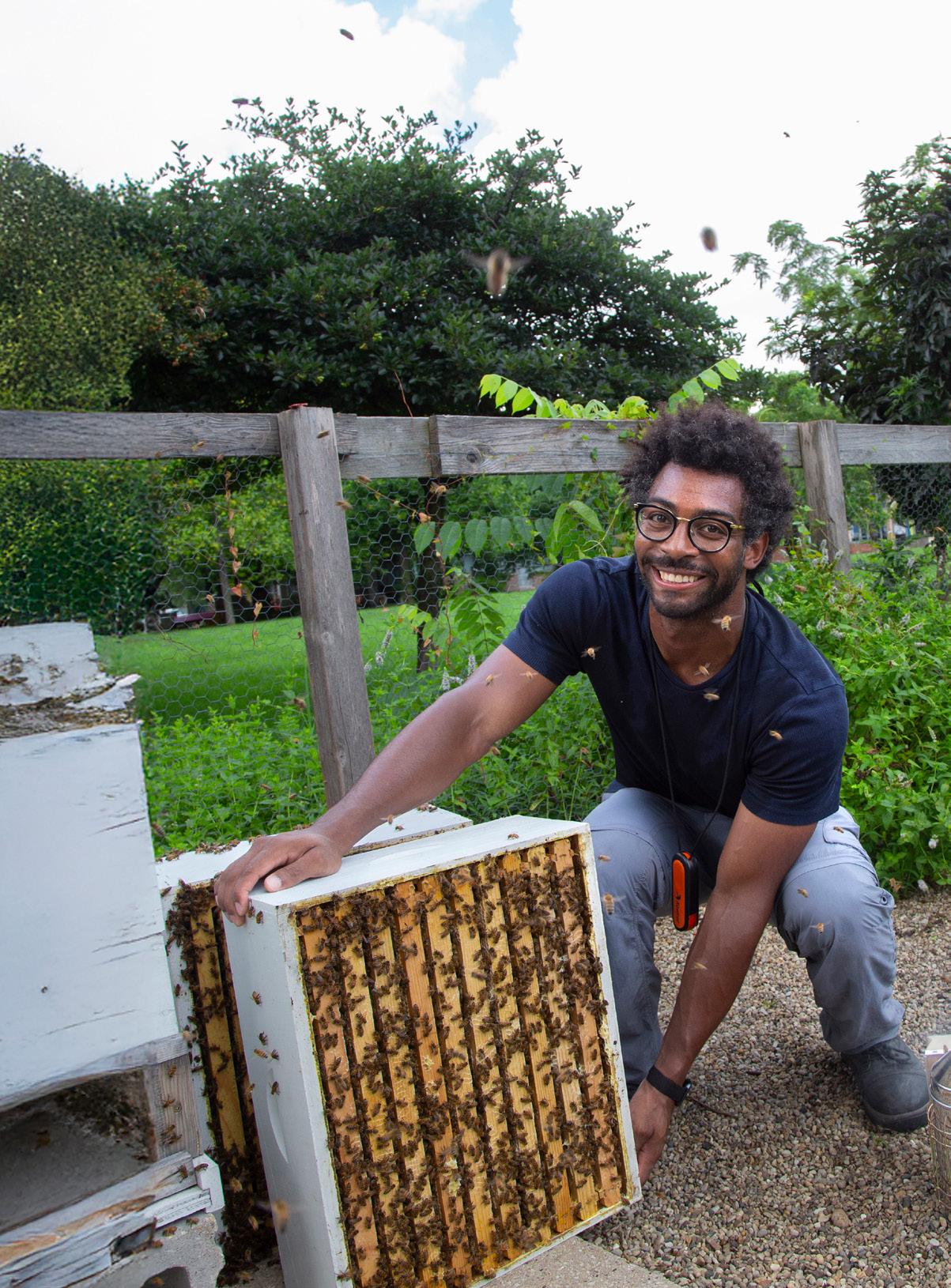
Students from elementary schools in and around Chicago’s Bronzeville neighborhood tasted and explored the crops at Illinois Tech’s UFarm community garden in 2025, while getting an in-person lesson on beehive ecology from a university faculty member in the process.
“The community garden began as a way to open it up so that residents would have access to the university and the university would have access to the community,” says Felena Bunn, a program specialists with Illinois Tech’s Office of Community Affairs and Outreach Programs.
Illinois Tech Assistant Professor of Biology Matthew Smith is utilizing UFarm for his research on bees, and he has helped educate the students about the bees and their impact, including showing the students the active beehives where the insects are actively making wax and honey-producing structures. “He had them catching bees and learning the importance of bees and our food systems,” Bunn says.
Smith’s research explores “what happens when something goes wrong or a particular contaminant that’s not supposed to be there is picked up by a bee and brought back to the hive, how that affects the dynamics of the hive. The health of the hive is one question I’m really interested in,” Smith says. “And then can the health of a hive tell us and inform us about the health of biodiversity as a whole?” —Tad Vezner
By Tad Vezner
by
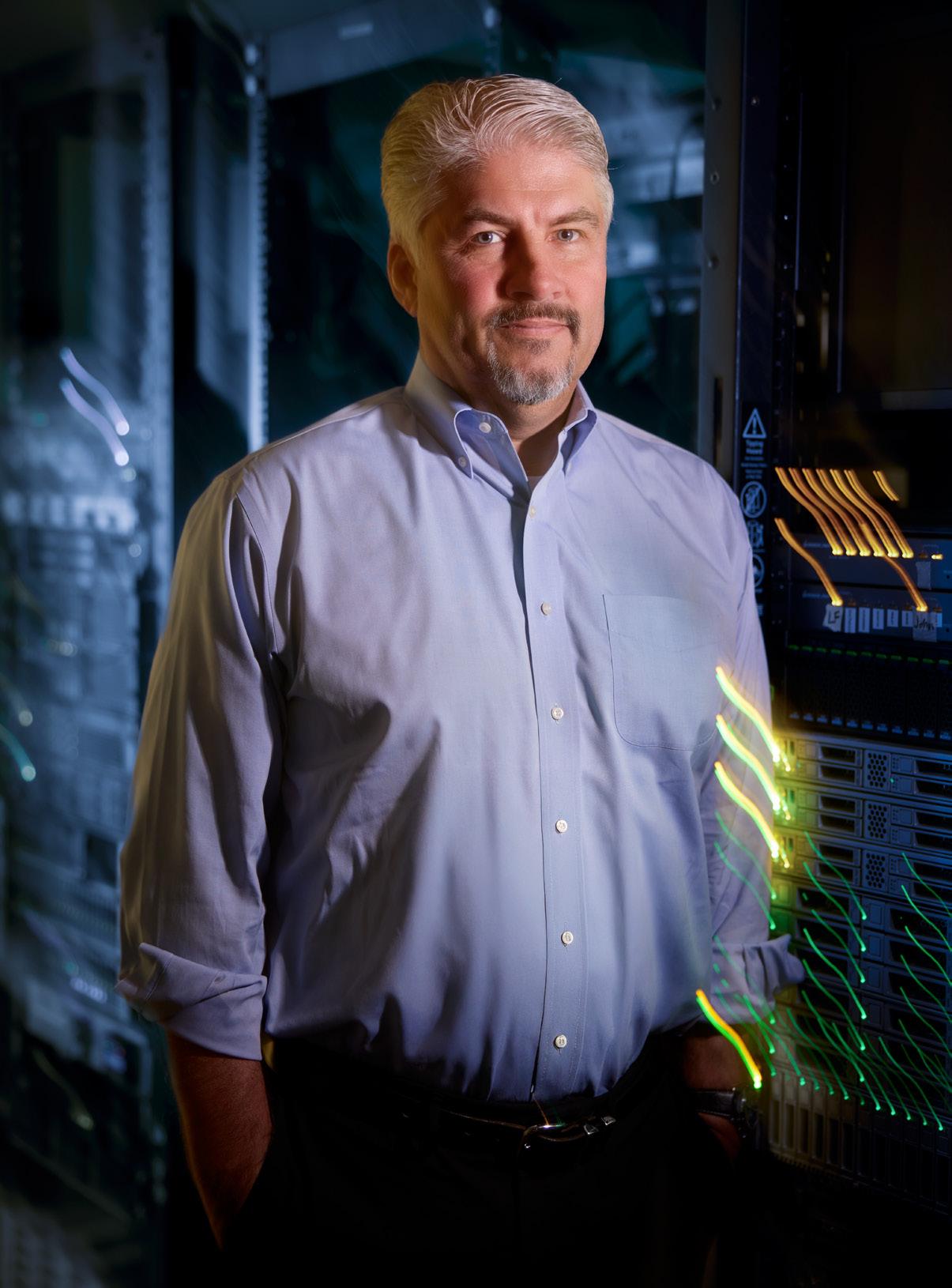
It’s hard to have more experience with computers than Thomas “TJ” Johnson (ITM ’12). His first job in the field dates back to 1990, when—as an entry-level systems support specialist for South Holland Bank in the Chicago suburbs—he wheeled the bank’s two hefty computers around on a cart, moving them from employee to employee before booting up a Lotus 1 2 3 spreadsheet program from a floppy disk. “I remember days when I was trying to make people use email, and I was met with massive disdain. ‘Why would I do this when I can walk over to her desk?’ they asked me,” Johnson says, before adding that he was guilty of a similar sentiment at times. “I was on the internet way back when it was all text. I thought it was a complete waste of time.”
Still, Johnson remained an early adopting techie, working his way up to become an information technology manager and later a vice president at the largest bank holding company in Illinois at the time. He became increasingly adept in cybersecurity, a practice he now oversees in an industry that many believe desperately needs it: health care.
“Compared to industries like finance, cybersecurity for health care is a greenfield industry. Compliance and regulations are relatively new, and they are not used to thinking about security first,” says Johnson, who is the deputy chief information security officer (CISO) at the University of Chicago Medical Center and its provider networks.
“HIPAA [the privacy law] is pretty new compared to banking regulations,” he adds. “I’m doing stuff [in compliance and regulation] at the medical center that I was doing 20 years ago at the bank...and the whole industry is like that.”
AFTER WORKING for two decades in the banking industry, including as vice president of information technology at the Chicago-based Metropolitan Bank Group, in 2012 Johnson was lured into consulting by firms that recognized the burgeoning need for cybersecurity specialists.
Aquiety and later Peters & Associates brought him on to build out their respective cybersecurity consulting programs to meet a growing demand.
“Companies at the time didn’t have a lot of cybersecurity in-house; it was mashed in with IT—the IT guys also built the firewall, managed antivirus software,” Johnson says. As a result, when companies—including Fortune 1000 companies and large banks—had to call in Johnson as a consultant, it was usually in reaction to a crisis.
“Nobody ever called me when they’re having a good day,” Johnson says. “I really cut my teeth on high-stress situations.”
“Nobody ever called me when they’re having a good day. I really cut my teeth on high-stress situations.”
—-Thomas “TJ” Johnson (ITM ’12)
Eric Dynowski, founder of Turing Group, a Chicago-based firm that advises clients on how to use public cloud storage, remembers when Johnson was referred to him to help an international client set up cybersecurity procedures.
“He was so good that after a couple engagements, we said ‘TJ, maybe you should work for us full-time.’ And he did,” Dynowski laughs.
Dynowski continues, “These compliance standards are huge—if you print them on paper, they would stack from the floor to the ceiling. Companies would say, ‘Oh my God, we can’t do this!’ But TJ is an approachable dude. He likes interacting with people—and he’s really good at breaking all that down and making it less threatening. TJ would disarm them and say, ‘Yes, we can tackle this.’”
As companies grow globally, Johnson says, his primary task is convincing them to adopt certified procedures such as biometric access to prove their compliance. More and more frequently, other companies won’t share or receive data with them unless they do.
Johnson recently turned his focus to health care, getting his job at UChicago Medicine in 2024. “I knew the newly appointed CISO there and she was building out a team. Because I did a lot of health care as a consultant, she thought that experience would help her accelerate her strategy.”
He remembers when, as a consultant in the 2010s, he was conducting a HIPAA compliance assessment with a Chicago-based medical center, and the head of operations told him, “I could give a crap about HIPAA. It’s a flash in the pan, it’s a fad.”
“That was 10 years ago. I think we’re past the days of kicking and screaming. Because of the attention some of these attacks are getting in the news cycle, everyone understands how serious it is now,” Johnson says. The 2024 cyberattack on the Ann and Robert H. Lurie Children’s Hospital of Chicago was a high-profile wake-up call for many in the local health care industry, Johnson notes.
“All of a sudden board members are asking questions, and that’s great,” he says.
Still, getting outside vendors to adopt the medical center’s more stringent compliance standards as the cost of doing business with it can often take some wrangling.
Ultimately, though, basic vigilance is essential for anyone responsible for private data.
“Question everything,” he says. “A lot of the attack vectors are still email-based. Now we are also seeing texts asking for specific information. Sometimes I wonder, ‘How do people fall for these?’ But it happens every single day.” l
By Tad Vezner
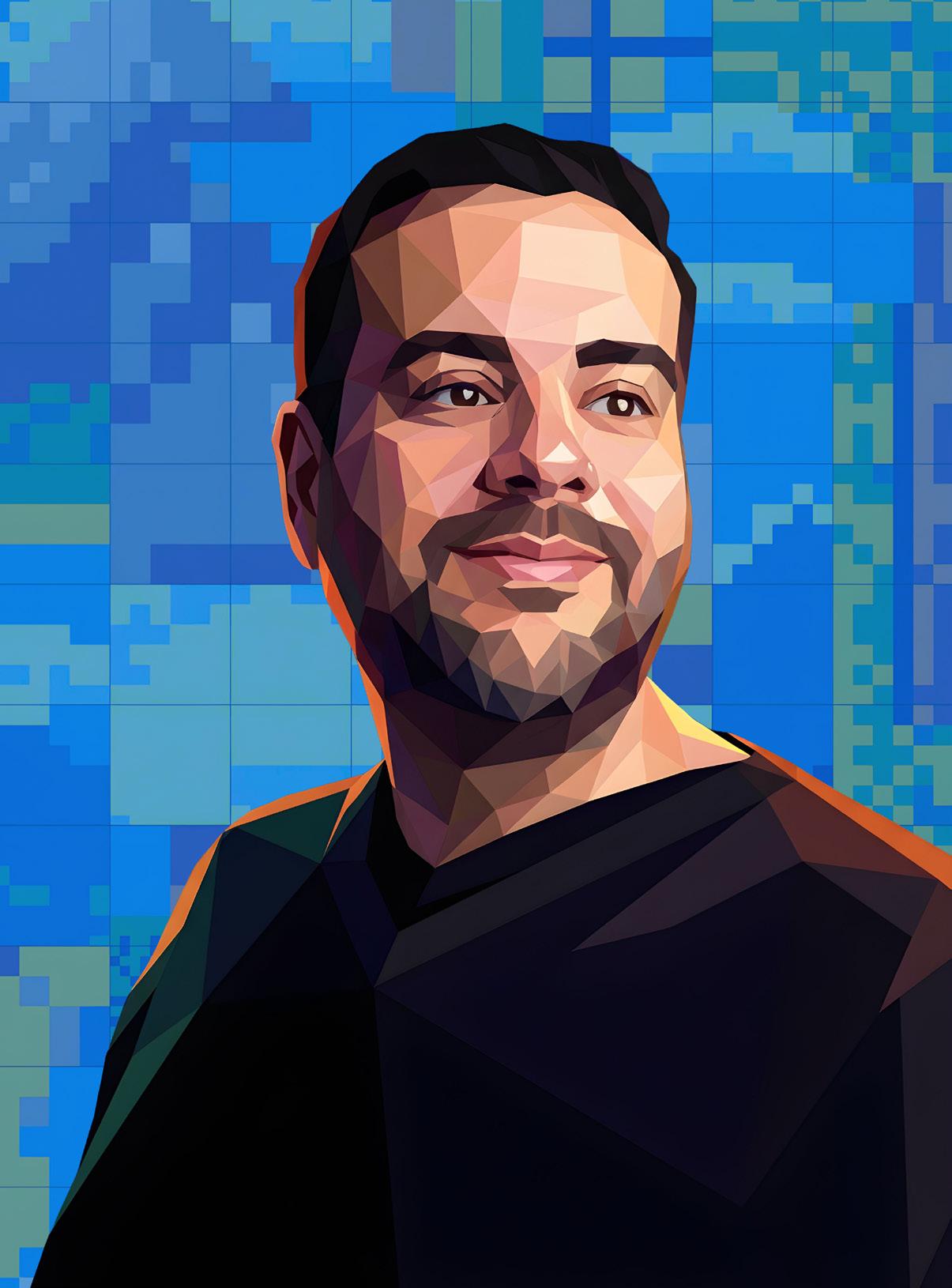
After years of teaching within the Chicago Public Schools system, Alex Damarijan (Ph.D. THUM ’22) had all but abandoned his dream of becoming a game designer.
“I gave up on getting a job at a game studio. I didn’t think I was good enough,” Damarijan says.
He went to school to study art, but after mass layoffs in the gaming industry around the turn of the millennium, Damarijan had earned a teaching degree as a fallback. He taught for CPS for seven years, eventually ending up at the Tarkington School of Excellence on Chicago’s South Side.
In the evenings, as a stress reliever, he digitally created fantastical art and 3D modeling, including an animated short film.
“It was all over the place. I had characters, objects, a waterfall scene with a head coming through the waterfall. I always loved children’s stories because I was teaching kids, too,” Damarijan says.
Then, while searching for a summer job, he attended an International Game Developers Association Chicago meetup and bumped into the art director at High Voltage Software, a Hoffman Estates, Illinois-based gaming company.
He asked to be considered as a temporary summer game tester.
“I thought I could tell the kids when I got back that I did something in the industry,” Damarijan says.
After a long conversation, the director told Damarijan to apply for an artist job instead.
“Because they did games for different companies, they liked my art because it was all over the place,” Damarijan laughs. “My ‘B.S. art degree’ ended up not being ‘B.S.’ when I was hired.”
In 2007, he was brought on as a contracted 3D artist at High Voltage, with the art director telling him, “I’m going to give you a chance, because I don’t know if you’re slow.”
He wasn’t slow.
“My first day I came in and there was free food: breakfast, lunch, dinner, and coffee. I was sitting at a computer, it was quiet, and I thought, ‘This is the dream.’ No screaming parents,” Damarijan says.
He put his head down and produced, grinding all summer. After that, “They told me they had one other guy that worked that hard, who came from jail,” he says.
After three months, Damarijan was hired full-time as a character designer, while also teaching part-time at the Illinois Institute of Art’s former Schaumburg, Illinois, campus. He also returned to art school with a passion, earning a master’s degree in animation from DePaul University, a Master of Fine Arts from the Savannah College of Art and Design, and finally his doctorate from Illinois Tech.
During his studies, he worked in game design, and eventually picked up a specialty after having dinner with a colleague of his sister, who was—like her—a pediatric ophthalmologist. The colleague was also a missionary who conducted free eye surgeries for children in Myanmar (formerly Burma).
“My ‘B.S. art degree’ ended up not being ‘B.S.’ when I was hired.”
—Alex Damarijan (Ph.D. THUM ’22)
The man told him about an idea for a Nintendo game that did vision screenings: kids would play the game and the computer would garner enough information to develop a prescription, in addition to serving as a test for color blindness.
Damarijan told him it was something he could work on, and—as part of his Illinois Tech dissertation—he created PDI Check, a tool now used in multiple countries.
“A lot of these things you need kids to pay attention to for a long time, and if it’s boring, they’re not going to do it. They have to play these games for 30 minutes, and they have to be fun enough to hold [their attention],” Damarijan says.
He found that he liked developing games that focus on physical therapy, education, or addressing disabili-
ties. And he discovered that many companies shared that interest.
After PDI Check was produced and Damarijan spoke at a gaming conference about how games could help patients adhere to medical protocols, Vivid Vision offered him a job as a technical artist to help develop an educational memory game called Barnyard Bounce
“I think he likes the idea of helping people and doing something with technology that goes beyond gaming, that has a positive impact on someone’s life,” says Aaron Molina, a senior developer who worked at High Voltage with Damarijan. “He’s very family oriented and has strong relationships with his friends and co-workers. It’s something you don’t necessarily see all the time. Some people just want to go in and do their job.”
Damarijan has since gone on to help in the development of many of these types of games, including a physical therapy game called Dog Fetch for Kruma Labs. Players in the virtual reality game would repetitively throw a ball to a digital dog, who would return it.
“If somebody dislocates their shoulder, they have to do range-of-motion exercises, so you put those exercises into the game. Usually [without the game] they shrug it off, but the thing about anything good for us, you have to do it with repetition and time. Some of these older people get bored or lonely, [but] they really did like the dog,” Damarijan says. “I really do think it helps them adhere to what they’re supposed to do.”
Recently, Damarijan worked for Netflix for three years before the company closed its game studio and is now pitching a new game to Netflix. Throughout his industry career, he has taught game development courses at multiple universities and currently runs the master’s program in game development at the University of Illinois at Urbana-Champaign.
While the United States gaming industry is currently going through a bit of a down cycle, Damarijan sees opportunities in independent and small developer titles. If given the chance again, “I probably would’ve still [chosen to pursue] educational games. That one-chance thing with my sister’s doctor is what set me down that path, but it’s incredibly important and rewarding.”

ofia Ghouse (AE ’12) had to fix a toilet, and fast.
The problem wasn’t that simple, though: the toilet was 250 miles above Earth, aboard the International Space Station, and was the sole commode for six astronauts.
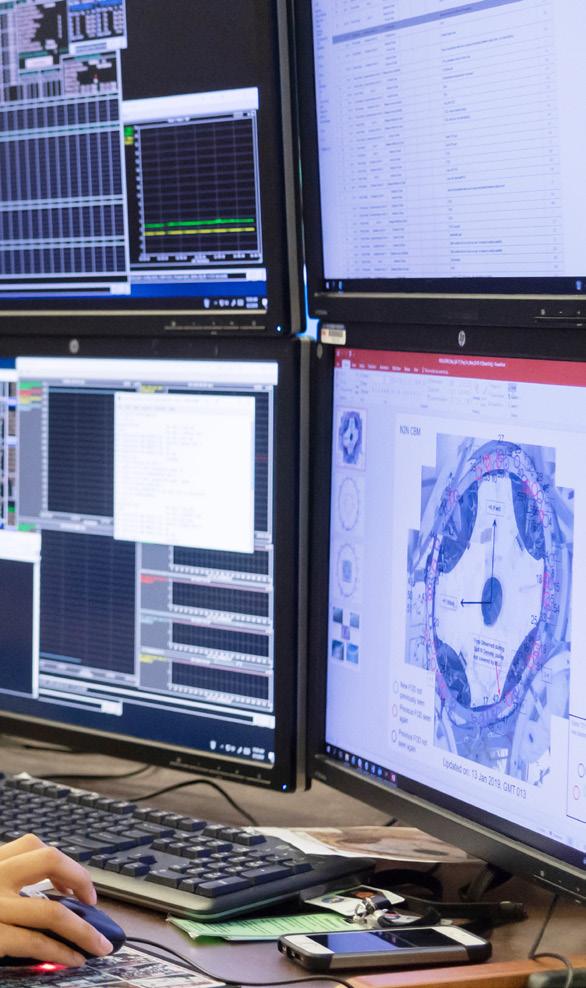
As an operation support officer, Ghouse manned a massive console at NASA’s Johnson Space Center and needed every inch of it to research maintenance options and communicate them to tired astronauts nearing the end of their shifts.
“Every day of a new shift, you don’t know what sort of problems you’re going to get,” Ghouse says. “There are days on the console where you may have less activity and the day is a bit more quiet, and all of a sudden something may require immediate attention.”
After pouring over the toilet’s specs, Ghouse was able to identify a new pump configuration that required replacing its cap, and soon everything was flowing smoothly again.
“Working through conflict at the end of the day is a stressful time. Astronauts’ 12-hour workdays are dynamic,
so the last thing you want to do is put them in discomfort as they’re going into the evening. The skills of thinking critically, problem solving, communicating effectively, and giving correct instruction are a non-trivial act,” Ghouse says.
Over the years, Ghouse has learned to excel at those non-trivial acts, advancing from nearly three years of training to become a “backroom controller,” managing mission tasks such as in-flight maintenance and inventory control. She trained another two years to be certified to tackle higherpriority tasks in the center’s flight control room and then become a training group lead for “intra-vehicular activity,” meaning any activity of astronauts aboard a spacecraft.
In May 2025, Ghouse’s expertise was recognized when she accepted a detail as technical assistant for NASA’s Johnson Space Center Deputy Director Steve Koerner.
“Sofia has been an incredible asset to NASA. Her contributions to human spaceflight go beyond her technical expertise. She is a true leader, a collaborative team member, and someone who consistently drives mission success,” says Koerner. “Her ability to guide, support, and champion those around her has been instrumental to the Center Director’s Office.”
By Tad Vezner
Ghouse has overseen the certification of numerous flight controllers and instructors, and was recognized in a recent NASA statement for “her efforts in mentoring, strategic planning, and innovation leadership.”
During her detail assignment, which focuses on administrative leadership, “It’s a real inflection point in my career, how the agency works and how the center works to better support my teams in the future,” Ghouse says. “The thing I enjoy the most about being a team lead is being able to measure, mentor, and develop others, and cultivating a healthy culture of a team.”
Growing up in northeast Ohio as the daughter of Pakistani immigrants, Ghouse bought a telescope at the age of 12 and sought out quiet areas to stargaze while her father worked evening shifts. She won her middle school’s bottle rocket competition, shooting a firework farther than anyone else in her class.
“Intuition and testing,” Ghouse says when asked how she won. Before coming to NASA, Ghouse was at a renewable energy startup working on a technology that converted kinetic energy into electrical energy in third-world countries.
“There was an energy of possibilities, that whatever you
build and contribute is directly impacting the success of the organization,” she says. She also had to wear multiple hats, garnering business acumen and the desire to pitch on tasks she wasn’t trained for.
It was that culture of time-sensitive adaptability and flexibility, Ghouse says, that gave her a leg up at her next job.
In 2014 Ghouse saw a posting for a NASA contractor to work at its Johnson Space Center in Houston—the main source of support for those sent to the International Space Station, among other missions.
The posting was for an operations support officer who would be responsible for assisting astronauts across a wide range of support functions. These included basic habitability, ensuring astronauts could comfortably eat, sleep, and drink while on station, as well as maintenance tasks to keep the more than 25-year-old station running efficiently. She also supported station docking and supply transfers, and even assisted astronauts with their astrophotography.
“Every day of a new shift, you don’t know what sort of problems you’re going to get. There are days on the console where you may have less activity and the day is a bit more quiet, and all of a sudden something may require immediate attention.”
—-Sofia Ghouse (AE ’12)
If that sounds like a lot to train for, it is.
The old astronaut axiom, “plan, train, and fly,” applies to flight controllers as well, Ghouse says. The roughly two years that astronauts spend training and practicing for each individual mission are often spent in conjunction with flight controllers, who must understand missions fully themselves to troubleshoot in times of potential crisis.
When asked what people who only knew about flight controllers from Hollywood movies might not know about their job, Ghouse says, “The planning and prep that goes into a mission. Mission control is just the tip of the spear.”
“If you’re watching a football game, you say, ‘That’s what you do.’ But it’s not all of what you do: there’s years of team building and practicing. It’s the same thing in mission control,” she says.
Ghouse currently serves as the Intravehicular Operations Exploration Group lead, where she supports vehicle development, crew and flight controller training, and mission operations for the Artemis campaign. Ghouse is also a member of the planning team for the Artemis II mission, a 10-day journey around the Moon designed to test the systems and hardware required to establish a sustained human presence on the lunar surface.
“Now, as a leader, exploring the different realms I can dabble in helps fuel my curiosity,” Ghouse says. l
By Tad Vezner
by
If you try to list all the potential combinations of all the elements on the periodic table, you’ll have a list that’s practically infinite. To date, humanity has only characterized about a million of them.
“What is the chance that every process out there is using the optimal material?” asks Andrey Ivankin (Ph.D. CHE ’10). “If you ask me, very little.”
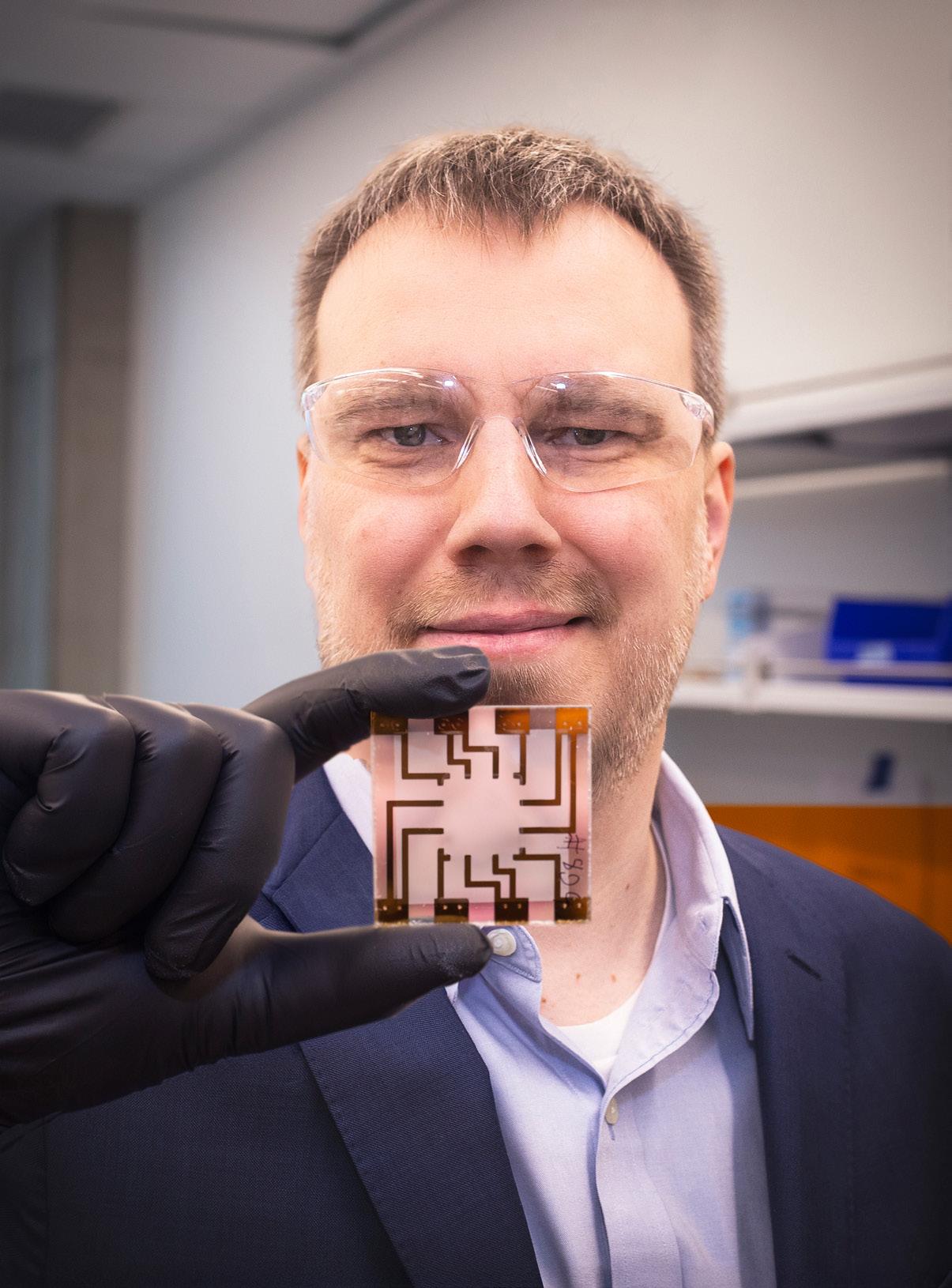
That’s where the potential of Mattiq—the company Ivankin co-founded in 2020 with Northwestern University Professor Chad Mirkin—comes in. The two chemists have developed a highly technical machine that fabricates millions of tiny nanoparticles—elemental compounds as small as a billionth of a meter in length—all at once atop a tiny two-square-inch plate. Then, with the assistance of machine learning, the machine tests their properties and uses that data to predict the properties of billions more.
Ivankin hopes to record all those properties and build a database that scientists and industry leaders could use to choose the perfect compound for their nascent technologies. Mattiq has already garnered commercial interest: Germanybased Heraeus Precious Metals used its technology to identify more effective catalysts for its industrial processes.
“If you have artificial intelligence working in the loop [as new materials are created] and learning about those individual materials’ properties, you don’t even have to synthesize and screen the new materials, because the AI learns about the physics of the [created] materials and uses it to predict new ones,” Ivankin says.
Currently, AI models such as Google’s DeepMind use simulations based on simplified quantum chemistry to predict qualities of theoretical materials. However, “We know those assumptions don’t work very well,” Ivankin says.
By actually creating those new materials and then using AI to measure their real properties, “there will be no assumptions, just empirical, ground truth,” Ivankin adds.
Companies could then figure out which materials they’d like to try in their industrial processes.
Ivankin notes that initial predictions, when catalyzing elements in the trial-and-error phase of chemistry, are only correct 5 percent of the time, so even if they got to 10 percent success, “you just doubled your productivity,” he says.
“The worst thing you can do is pick [a material for a product] at small scale and spend tens of millions to bring it to market, then find out if you’d just added 5 percent of another element it behaves two times better,” Ivankin adds.
The son of two scientists from Siberia, Russia, Ivankin received his bachelor’s degree in chemical physics from Novosibirsk State University before coming to Illinois Tech. He spent some time researching how to improve antibiotics at Argonne National Laboratory before researching DNA sequencing at Northeastern University. In 2015 Mirkin hired Ivankin to join him at Northwestern University, and the two started their first business together.
“The data factory, once built, can produce experimental datasets faster than anyone else in the world.”
All materials have a plethora of properties that make them valuable—or not—for research or industrial use. Are they a good catalyst? For what? Are they stable? Do they reflect light? Do they lose utility at high temperatures? Are they magnetized? Easily corroded? To date, researchers have documented only about 300,000 of these “material properties.”
Andrey Ivankin (Ph.D. CHE ’10)
Ivankin says Mattiq’s technology could double that amount in just a couple of years.
“The data factory, once built, can produce experimental datasets faster than anyone else in the world,” Ivankin says, going on to explain that, “AI has transformed almost every aspect of our lives—but not materials discovery. That’s because AI needs reliable data to learn from, which is lacking in materials science. The data factory aims to solve for it.”
Adds Mirkin, who is also the founder and director of Northwestern’s International Institute for Nanotechnology, “Right now, everyone uses trial and error to test one material at a time. Now [at Mattiq] we can test millions at a time. We can synthesize literally millions of materials in a single afternoon—all different. And we can screen them and look at their prosperities en masse.
“Andrey was the technical mastermind who built this great capability.”
“In addition to being a superb intellect, Andrey is an incredibly high-quality person. He leads by example and has an incredible work ethic,” says Mirkin. “We go after very aggressive goals and projects, and he’s someone who consistently over-delivers.”
The two—along with Mirkin’s son, Ben Mirkin—initially founded TERA-print, which manufactures universal nanoprinting tools that allow for advanced fabrication. While 3D printers have a level of precision of 25 micros (each 1/1000 of a millimeter), nanoprinters can achieve precision 250 times smaller, allowing for detailing and control of individual cells. The company’s TERA-Fab series tools are now used in eight countries.
When the COVID-19 pandemic hit in 2020, Ivankin says, the two had the time to look for a new challenge that built on the tools developed by TERA-print—so they founded Mattiq.
Ivankin believes Mattiq “fits with the times” when many critical manufacturing materials, such as rare earth elements, are often produced in countries that may not have positive relationships with the United States.
“One idea is to secure supply chains from elsewhere. The other is to identify other compounds that behave similarly. We can help with the latter,” Ivankin says.
And the cumulative database of compounds will make each search a bit easier for those in industry.
“Once you have that, you have the gift that keeps on giving,” Mirkin says. l

By Tad Vezner
The first gig Jennifer Kolstad (M.ARCH. ’06) landed after graduating was a tad more trying than your typical entry-level job. l “There were bombs flying overhead,” Kolstad says of her time flying into the country of Jordan to work for its king. While Jordan attempted to broker peace between Lebanon and Israel, Kolstad—as a senior designer at Skidmore, Owings, & Merrill—was part of a team that consulted with CIA agents and Jordanian generals to build a fortified underground security center with near-impenetrable access points. l It was the first of Kolstad’s Middle East projects—and not her most impressive. That would likely be when she led design for the team that brought Formula One racing to the United Arab Emirates. l When the Yas Hotel opened in Abu Dhabi in 2010, it had been seismically designed to withstand the vibrations of the racetrack that passed through it, just in time for the country’s inaugural F1 race. “When I moved there, it was dirt, and then suddenly it was that ,” Kolstad says of the massive tourism and raceway project, which also included six other hotels, a marina, and the F1 circuit. Kolstad, who has gone through phases of what she calls “radical experimentation,” has taken chances and opportunities that other designers could only dream of. Now, as the global design and brand director and the head of retail design at Ford Motor Company, she’s in charge of “rebuilding the experiential brand” of everything that’s not an automobile. That includes revamping 300 million square feet of buildings globally, as well as a network of more than 10,000 dealers. “None of it had been looked at holistically in decades, [maybe] ever. You couldn’t visit two offices in the world and understand they were both Ford,” Kolstad says of the challenge. l In effect, the designer who helped put a racetrack through a hotel and ran a glass slide from the 70th floor of a Los Angeles office building is now responsible for redesigning the experience of buying a car for one of the world’s oldest and most iconic car companies. l colleagues say she’s up for it. l “Jennifer is a force. She doesn’t see the silos, doesn’t see the boundaries,” says Upali Nanda, global sector director of innovation, partner, and executive vice president for HKS Architects & Designers. “She is one of the most talented designers I know. She understands that if you’re designing for people, you need to understand people with the same level of rigor that you understand materials.”

BACK WHEN she was ducking bombs for the king of Jordan, Kolstad had an epiphany about ambition. In the Middle East, while working for sovereign landowners such as ALDAR and TDIC, you learned to build fast and big, she says—and you toss out your job description. You adapt to what is needed. In the United States, on the other hand, jobs are more compartmentalized: project managers don’t get into design, and vice versa.
She brought that thinking back to North America when she worked for Gensler, one of the largest global design and architectural firms in the world, to build its hospitality practice. One of the projects she led was the renovation of the U.S. Bank Tower in Los Angeles, which included an observation deck and a free-hung glass slide that allowed visitors to slide from the 70th floor to the 69th floor on the outside of the building.
“Do you know how hard it was to find a structural engineer to sign off on that?” Kolstad laughs. “We were just doing crazy stuff; it’s like I brought Abu Dhabi back with me.”
She later became the global director of interior architecture for HKS, where she helped design the yet-to-be-built Kuwait Children’s Hospital, in Kuwait City, Kuwait, a structure four football fields long that would be the Middle East’s first tertiary hospital. The design includes
whale-shaped rooms with turtle-shaped furniture to set children at ease.
“To innovate health care, you don’t design a hospital as a hospital. You bring knowledge from other areas: civic design, higher education, hospitality. You never innovate a category from within a category,” she says.
Ford Motor Company came calling in 2019. Together, Kolstad and Ford created
“You never innovate a category from within a category.”
—Jennifer Kolstad (M.ARCH. ’06)
a new role for her, allowing Kolstad to oversee the company’s more than 300 million square feet of building space. She became the first design leader to build a strategy for Ford’s experiential brand.
A primary initial task: to dissect the current dealership experience.
“If the priority is to repair trust and reconstruct human-to-human relationships, instead of focusing on selling cars, inevitably the design solution is radically different,” Kolstad says.
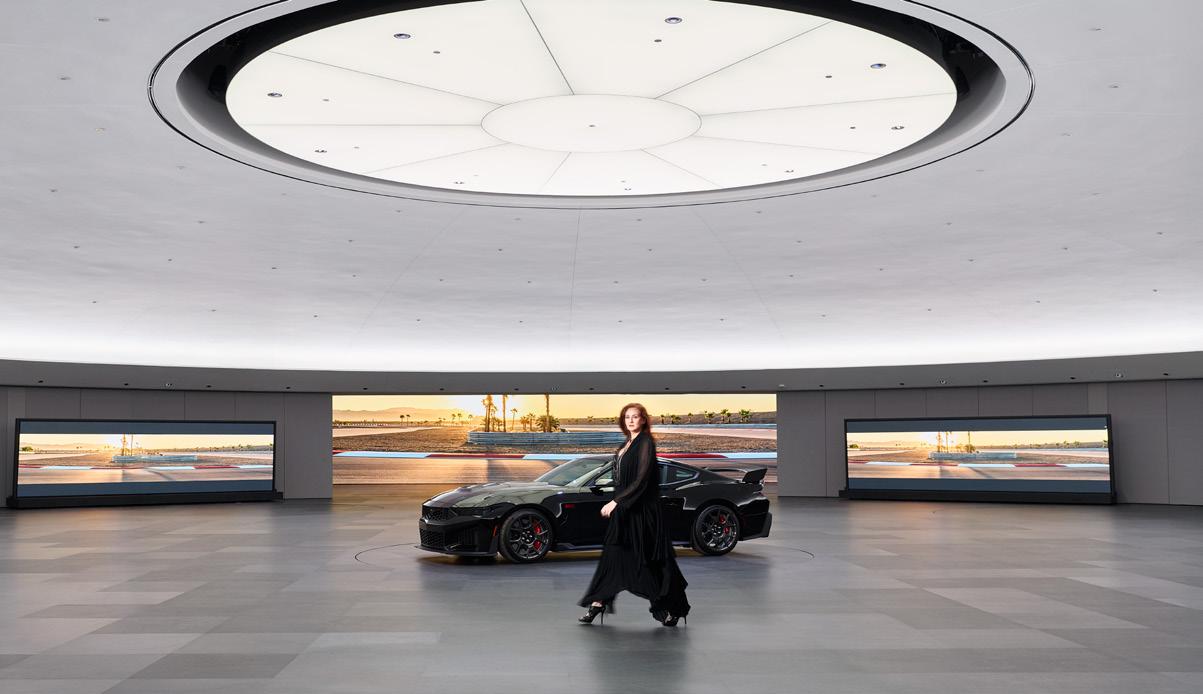
Kolstad drew upon her experience in hospitality and health care to redesign dealership spaces, using science and data to strengthen specific human interactions. The new dealerships are more like hotel lobbies, with soft seating
and cafes to support relationships. She removed enclosed offices, allowing customers to decide where they want to be.
With the opening of the first U.S. pilot, “Within six weeks, sales associates were adapting to a new way of working. Customers were also using the spectrum of choices and experiences provided, and our dealer is already recording banner sales,” Kolstad says.
On top of all that, Kolstad was in charge of leading the design of Ford’s new global headquarters, which opened in November 2025.
The iconic 2.1 million square-foot building includes a space-age concrete showroom that would take Darth Vader’s breath away, Kolstad jokes.
“We lead design with human science: neurology, behavioral psychology. To bring a neurologist into a room with architects is a big departure from a typical team model. But you figure out how to dance together for these very large projects, and the impact is notable,” says Kolstad.
It’s that type of mindset that makes Kolstad so effective.
“I think it was the fact that she got human science into the business of design,” says Nanda. “She invested in understanding ‘why,’ and then lets people understand the ‘so what.’” l
DENNIS VAIL (CHE ’60), Beaumont, Texas, published his second collection of poetry, Of Time and So Forth, with Atmosphere Press. During his time at Illinois Tech, Vail was a copy editor and associate editor of Tech News.
PAUL WEAVER (MATH ’65), Dayton, Ohio, recently celebrated the arrival of his second great-grandchild.
RAM RAMANUJAM (M.S. GE ’77, PH.D. ’81), Santa Cruz, Calif., was selected by the National Institute of Technology Tiruchirappalli (NITT) as a recipient of the Special Distinguished Alumni Award. The award recognizes outstanding contributions and achievements in service to society and to NITT.
JERRY STANKO (EE ’82), Glen Ellyn, Ill., retired after 41 years of engineering and management in nuclear power production and electronic warfare systems. His career began with the United States Department of Energy and ended with the Northrop Grumman Corporation.
TIM CAVANAGH (LAW ’87), Chicago, obtained a $104 million verdict, the largest verdict or settlement in Illinois history for a road construction case, on October 9, 2025.
VINCE IMHOFF (LAW ’89), Santa Monica, Calif., was recently recognized at LegalShield’s 2025
International Convention in Baltimore. Imhoff is managing director at Imhoff & Associates and also at Madden & Associates.
KENNETH JOHNSON (ARCH ’93), Philadelphia, has been recognized with the World Design Award and the Global Architecture and Design Award. Johnson says that his design philosophy was built within the walls of S. R. Crown Hall and that the awards are a testament to the global impact of an architecture education at Illinois Tech.

Talk to your financial adviser and together we’ll take the next step in solidifying your planned gift today.
Illinois Tech is committed to working with you to create a gift plan that meets your philanthropic and financial goals. Our team of planned giving experts can work with your financial adviser to structure a legacy gift that:
Preserves your financial security and liquidity. Maximizes tax benefits. Aligns with your financial and estate plans. Provides flexibility and offers a stream of income.
Reflects your values and passions.
AFTER BEING HIT by a car at the age of seven, Kevin Yamada (MDes ’22) lost his leg below the knee.
Continuous trips between the hospital and home forced Yamada to grow up in a different environment than his friends. He yearned to not only express himself, but “I wanted to express that I was 100 percent OK,” Yamada says.
Within six months, he was able to run. He embraced the sport and ran track and field for his high school in the small city of Isehara, Japan. In 2004, before graduating, he became Japan’s national high school record holder for the 100-meter dash in the T44 category, created for para-athletes with lower limb impairments. His time was 12.64 seconds.
All that might help explain why Yamada, as a young man in his 20s, left a lucrative job at the largest general trading conglomerate in Japan to become a designer.
“I felt there was a missing piece of my business. I felt there was no human touch,” Yamada says.
Yes, he had been a project manager for Mitsui & Co.’s giant Indonesian power station and had managed business development for the entire Oceania region, but “I did not know much about the users there, the residents living there. We designed the equipment and sold to them, but I did not know about the users. It was so strange for me.”
Yamada wanted end-point users to be able to express themselves. And, in turn, to help companies serve them better.
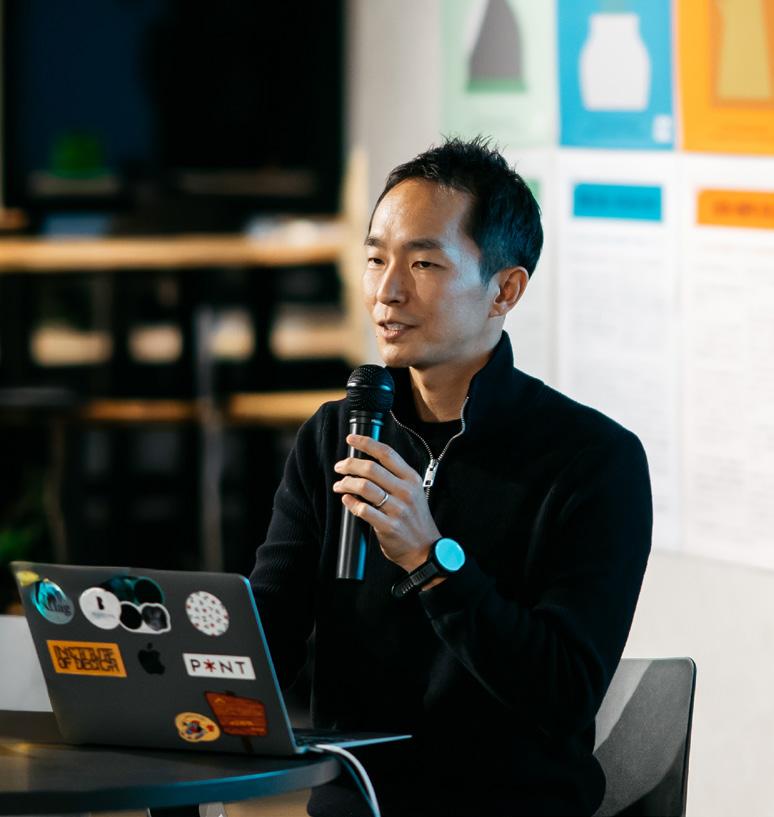
Kevin Yamada (MDes ’22)
“I felt there was a missing piece of my business. I felt there was no human touch.”
—Kevin Yamada (MDes ’22)
After quitting his job and taking his five-year-old son to Chicago as he pursued a degree from the Institute of Design, Yamada got a job at BIOTOPE, a Tokyo-based strategic design firm. It seemed like a natural fit: a book by the company’s founder, Kunitake Saso (MDM ’13), had inspired him to pursue design in the first place.
Now, as the company’s managing partner and strategic designer—one who grew up within Japan’s extremely results-oriented business culture— Yamada feels a bit like a missionary bridging two worlds.
On the one hand, designers—of which there are not many in Japan, Yamada says—need to be more conscious of their clients’ immediate financial returns.
“At BIOTOPE, we have two kinds of clients,” he says. “Those interested in strategic design—short-sighted—who
want outcomes as early as possible to increase business efficiency. The other is long-term sighted, interested in social issues. The big majority of our income is coming from the first side.”
But on the other hand, large Japanese corporations often suffer from what Yamada calls “slow culture... where they become big corporations but cannot make big innovations. They become so big, they forget about the missions they should pursue.”
Yamada recently wrote and released his own nonfiction book, Design the System, Move the Whole: A Strategic Designer’s Practical Wisdom Beyond Partial Optimization, a #1 best seller in its category on Amazon, general industrial manufacturing.
But his long-term goal is to open a systemic design school in Japan, to grow what he calls “a very small community of 20 to 30 people to 1,000.
“If there are 1,000 systemic designers, every week they will build new systemic dynamics maps, one after another, and social issues will be dug into at a very deep level,” Yamada says.
—Tad Vezner
LOU STORINO (CHE ’94, M.S. ENVE ’97), Chicago, was named a fellow by the Water Environment Federation and was recognized at the WEFTEC conference on September 29, 2025.
JEN ASHLEY (LAW ’99), Libertyville, Ill., was recognized by Best Lawyers as the 2026 Lawyer of the Year for product liability law—plaintiffs. Ashley was also named among the Lawdragon 500 leading plaintiff consumer lawyers for 2025.
REZA MOSTOFI ASHTIANI
(M.A.S. CHE ’99, PH.D. ’02), Naperville, Ill., was selected as the recipient of the AlChE Particle Technology Forum Service Award by the PFT’s executive committee. Mostofi Ashtiani is a fellow at Honeywell/ UOP and an adjunct professor at Illinois Tech.
BEATA SPUHLER (LAW ’99), Oak Park, Ill., joined the firm Faegre Drinker as customs and international trade counsel.
TERENCE SMITH (LAW ’00), Flossmoor, Ill., joined Amundsen Davis as a partner in the Labor and Employment Service Group in Chicago.
GINA ARQUILLA DEBONI (LAW ’02), Glenview, Ill., was re-elected as trustee for the Village of Glenview, Illinois, for a second term on April 1, 2025. Arquilla DeBoni is managing and senior partner at the firm Romanucci & Blandin.
HANS HUGENTOBLER (MDES ’02), Zurich, published a book, Notes on Organizational Transformation—A Personal Journey: A Design Management and Leadership Perspective The book addresses topics on organization, management, leadership, and transformation under the specific premises of designoriented thinking.
ANNA STRANGE (LAW’04), Morgantown, W.Va., joined Steptoe & Johnson PLLC as of counsel in September 2025.
KATIE POTHIER (ME ’05), Duluth, Ga., was welcomed into the 2025 class of the Society of Fire Protection Engineers fellows.
PUNEET LEEKHA (LAW’06), Bloomington, Ill., was installed as CEO of Chestnut Health Systems on October 6, 2025. Leekha had previously served as Chestnut’s chief operating officer and general counsel.
ELENA SAVONA (M.A.S. ARCE ’07), Chicago, founded ES Consulting in 2025, a firm dedicated to helping organizations advance energy and sustainability initiatives. Savona was recognized as one of Crain’s Chicago Business’s Notable Leaders in Sustainability in 2024 and 2025.
DAN OH (AE, ME ’08), Lake Zurich, Ill., set a new personal record of 2 hours, 38:04 minutes at the Chicago Marathon. As a student, Oh set school records for the Scarlet
Hawks in cross country and track and field; in 2024, Oh was inducted into the Illinois Tech Athletics Hall of Fame.
MIKE DUNN (CS ’10, M.P.A.’11), Beavercreek, Ohio, helped develop a new cybersecurity merit badge for Scouting America to help youth in the program develop skills in current and future technology.
MIKE GUSTAFSON (LAW’10), Chicago, has been appointed as the leader of the Chicago office of Faeger Drinker as of January 1, 2025.
COURTNEY L. NICHOLS (LAW ’11), Clarkston, Mich., was elected to the Board of Directors of ALFA International. Nichols was elected to a three-year term at the conclusion of the 2025 ALFAIAttorney Business Meeting in Madrid.
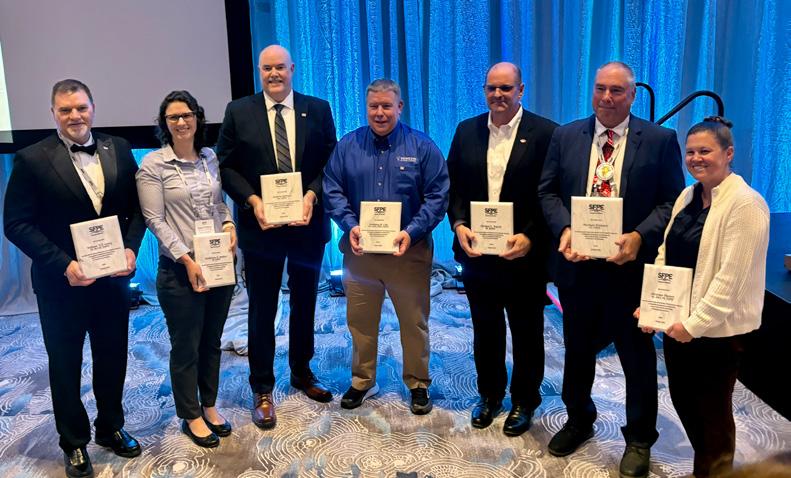
LUKE HALLER (LAW ’12), Chicago, has been elevated to partner at Winston & Strawn LLP. Haller advises clients on complex commercial real estate transactions.
MATTHEW DILLINGER (LAW ’13), Austin, Texas, joined the firm Ogletree Deakins as senior counsel within its Immigration Practice Group. Dillinger advises corporate clients on all aspects of employment-based immigration law.
ROB KOHEN (LAW ’14), Chicago, was named to the 2026 edition of Best Lawyers: Ones to Watch
in the areas of medical malpractice law— plaintiffs, personal injury litigation—plaintiffs, and product liability litigation—plaintiffs.
AMANDA WESTHOLDER (CHE ’14), Joliet, Ill., started the Silk Stem Collective in 2019, a nationwide business for artificial wedding flower rentals. Westholder was recently awarded an Amber Grant to pursue the business full time.
MEGAN POOL (ARCH ’15), Byron Center, Mich., was promoted to senior associate at Huntsman Architectural Group.
Alumni Service Award
George Chunkau Mui (CS ’76, M.S. ’81)
Collens Merit Award
Edward M. Polich (ARCH ’79)
International Award of Merit
Ed Smith (CHE ’67)
The John J. Schommer Honor I Award
Neal F. Simeon (ME ’38)
Lifetime Achievement Award
Edward “Ed” L. Kaplan (ME ’65, Hon. Ph.D. ENG ’23)
Claudette Soto (ARCH ’02, M.A.S. STE ’06)
Outstanding Young Alumni Award
Akash Dave (M.A.S. ITM ’12)
Bryce Hensley (LAW ’17)
Annabell Ren (ARCH ’14)
Professional Achievement Award
Myetie Hamilton (M.P.A. ’04)
Chi Hwan Lee (ME ’07)
Learn more at iit.edu/alumniawards
BILL WHITNER (LAW’17), Wilmette, Ill., was promoted to partner at Carmen D. Caruso Law Firm. Whitner is a member of the Federal Trial Bar in the Northern District of Illinois, the Illinois State Bar Association, the Federal Bar Association, and the American Bar Association’s Forum on Franchising and its Section of Labor and Employment.
MICHAEL SCHOSTOK (LAW ’19), Madison, Wisc., was named to the 2026 edition of Best Lawyers: Ones to Watch in the areas of medical malpractice law—plaintiffs and personal injury litigation—plaintiffs.
REBECCA SPIRA (LAW ’19), Portland, Ore., joined Foster Garvey as an associate. Her practice spans employment, commercial, toxic tort, general liability insurance, and product liability litigation.
AYUSH JHA (M.A.S. CS ’20), Chicago, was honored as an IEEE Outstanding Young Professional. Jha is a senior software engineer at Oracle America, Inc.
JONATHAN MCGEHEE (LAW ’23), Moline, Ill., joined the Chicago intellectual property firm Marshall, Gerstein & Borun LLP as an associate in its trademarks and copyright practices.
DAVID DURÁN (LAW ’24), Albuquerque, N.M., and MARISA A. GELABERT (LAW ’24), Chicago, were named to the 2026 edition of Best Lawyers: Ones to Watch in the areas of
medical malpractice law— plaintiffs and personal injury litigation—plaintiffs.
LAUREN BACKHAUS (LAW’25), Mount Prospect, Ill., joined Reinhart’s Milwaukee office as an intellectual property attorney, where she guides clients through the development and enforcement of their intellectual property assets.
DANIELA DULWORTH (LAW ’25), Chicago, joined Marshall, Gerstein & Borun LLP as an associate in its intellectual property litigation practice.
TAYLOR WALTERS (LAW ’25), Chicago, joined Nyhan, Bambrick, Kinzie & Lowry, P.C. as an associate.
PRISHITHA LOKAREDDY (CS ’26), Chicago, published her debut poetry collection, Tapestry of Silence (Bookleaf Publishing), which features 21 poems exploring themes of silence, resilience, love, and self-discovery. The book was published in December 2024 and has also been submitted to the International Impact Book Awards.
We want to hear from you.
Send us your class note by scanning or visiting illinoistechconnect.iit.edu/ page/submit-your-class-note
Submissions may be edited for style and brevity.
“IF YOU LACK CIVILITY and you lack professionalism, that becomes your reputation,” says Jill Webb (LAW ’96).
“I say this all the time when talking about trial work or my opponents, and this applies to many of us regardless of our practice areas: We may be adversaries, but we are not enemies.”
Webb believes treating your opponent and judges with respect is important now more than ever.
“Threats, harassment, and even violence against the courts, judges, and politicians are encouraged on social media. We have to stop that cycle and lead, by setting better examples, even if we disagree with the other person,” she says.
“We may be adversaries, but we are not enemies.”
—Jill Webb (LAW ’96)
The founder of a personal injury law firm, the Law Office of Jill M. Webb, Webb is heavily involved in the American Board of Trial Advocates, an invitation-only national organization of civil trial lawyers who have tried a minimum number of civil jury trials to verdict and exhibit high levels of civility and professionalism. ABOTA is dedicated to preserving the right to a jury trial, to protecting the independence of the judiciary, and to promoting professionalism and civility. Webb served as the Illinois chapter president in 2023–24 and as national secretary in 2024–25.
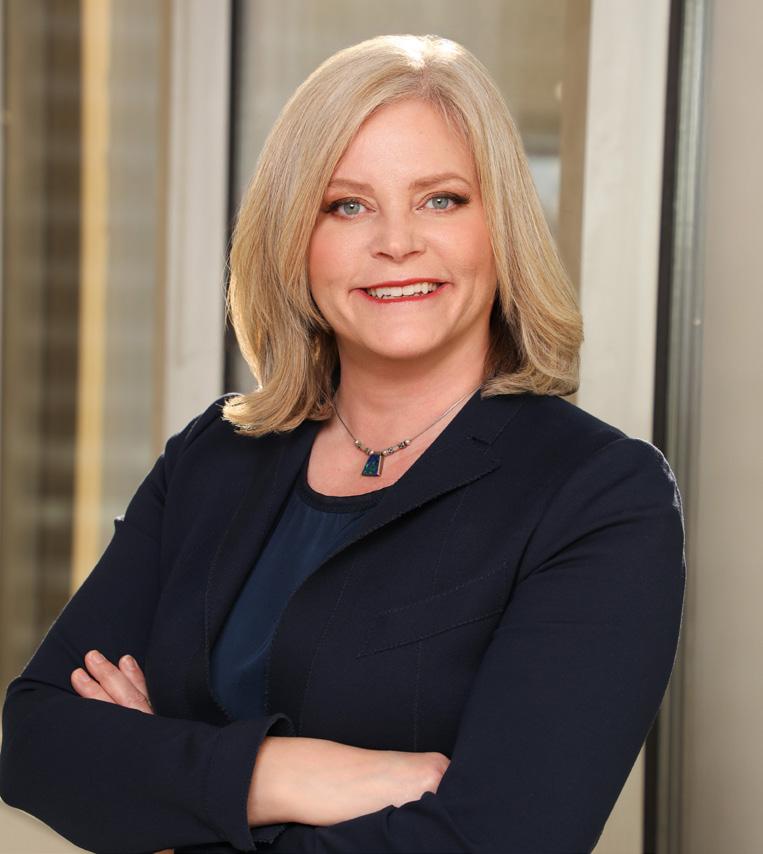
Webb is currently the president of the Society of Trial Lawyers, another invitation-only group of civil trial lawyers, based in Chicago and dedicated to fostering loyalty and fraternity among trial attorneys and with the judiciary. She previously served as treasurer, secretary, and vice president of the society.
She was the first female plaintiff-side attorney to serve as president of either organization.
“How am I the only plaintiff’s lawyer who’s a woman who can be president of both of these invitation-only organizations?” she asks. “There just haven’t been a lot of women who were plaintiff’s personal injury lawyers who have done it their whole career, that run their firms, who are juggling cases, legal organizations, a family, all of these things. But there’s definitely a next generation of women who are killing it, stepping up, which is fantastic.”
Growing up in a small town in Kansas, Webb didn’t have a mentor to guide her through the law school process. Now, she gets special joy from
serving in that role. She mentors high school students in the public schools who are thinking about careers in the law and provides opportunities to Chicago-Kent College of Law students.
“I’m always hiring law students to work for me, and I’m always looking for somebody who didn’t have all the opportunities in the world,” she says. Webb especially likes to hire Chicago-Kent students who need part-time work for six months while they prepare to re-take the bar exam, the legal accreditation test. “It gives them such a boost of confidence when you don’t judge them because they didn’t pass the bar the first time,” says Webb. She says her motto is: “You only need one or two people to see value in you for you to then believe in yourself.”
Webb has secured more than $250 million in verdicts and settlements for her clients, but that hasn’t stopped her from treating everyone with respect.
Kayla Molander
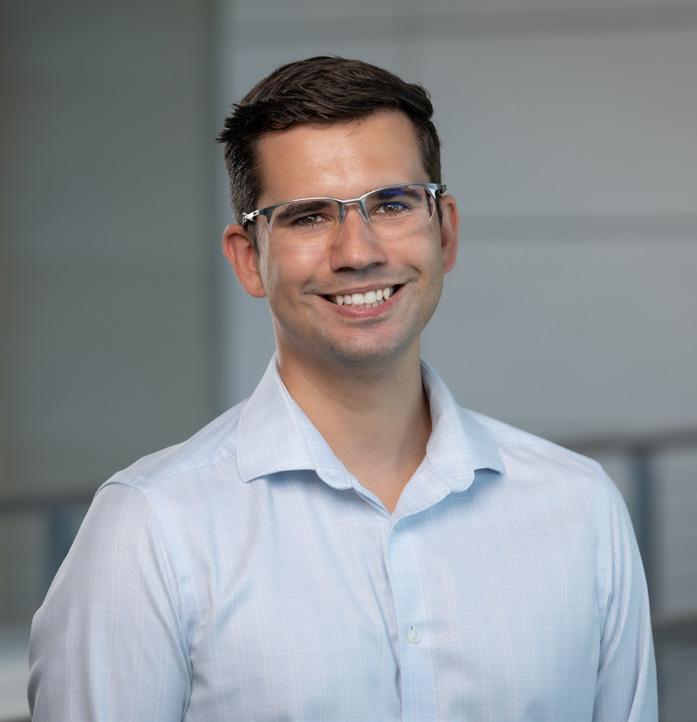
Nathan Majernik (AMAT, PHYS ’13)
For Nathan Majernik (AMAT, PHYS ’13), a single moment early in his Illinois Tech experience became the catalyst for everything that followed. Now, more than a decade later, he is honoring that formative chapter with a significant philanthropic commitment—one designed to create the same life - changing opportunity for today’s students.
In November 2025, Majernik established the Carlo Segre Physics Research Award, which will support one undergraduate physics student each summer, enabling them to devote their time fully to meaningful research without financial constraint.
The inspiration for this award traces back to Majernik’s first year at Illinois Tech, when his original summer plans unexpectedly fell through. Seeking guidance, he turned
to his academic adviser, and that conversation ultimately introduced him to Duchossois Leadership Professor Carlo Segre. Shortly after, Segre took Majernik under his wing and invited him to participate in a summer research project.
“It’s only now, looking back, that I realize what a leap of faith that was,” Majernik reflects. “I am grateful that Professor Segre took a chance on me and was so gracious with his time and knowledge.”
That leap of faith grew into a deep and enduring mentorship. Throughout his undergraduate years, Majernik worked alongside graduate students, collaborated across disciplines, and returned for consecutive summers of research under Segre’s guidance— experiences that fundamentally shaped his academic trajectory.
Those hands- on learning opportunities prepared Majernik for his graduate and postdoctoral research at UCLA and later for positions at SLAC National Accelerator Laboratory, which is operated by Stanford University for the United States Department of Energy. In 2025, after transitioning into industry for the first time, Majernik found himself in a position to give back in the intentional, lasting way that he had long envisioned.
“The idea of making a gift like this has always been in the back of my mind,” says Majernik. “Now that I have the means to do so, I’m incredibly happy to help students chart their own path to success.”
A loyal supporter of his alma mater, Majernik has consistently participated in Illinois Tech’s Giving Day since graduating. But this new commitment represents something deeper—the desire to create a focused impact in the same space where his own journey began.
“We are incredibly grateful for Nathan’s generosity,” says Sean Campbell, vice president for advancement at Illinois Tech. “His gift reflects a deep appreciation for the mentorship he received and a powerful commitment to expanding opportunity for future generations of Illinois Tech students.”
Looking ahead, Majernik hopes the Carlo Segre Physics Research Award will give students not only early exposure to research, but also the freedom to explore: the freedom to ask questions, pursue ideas, and discover where their curiosity may lead.
“I know from firsthand experience how valuable a summer research experience can be, and I hope this award gives other students a leg up as they pursue their own dreams and aspirations,” says Majernik.
Through his generous support, Majernik is honoring a mentor who played a critical role in his personal success and helping to ensure that future Illinois Tech students have the chance to build a path shaped by discovery and possibility.
His commitment celebrates the unique power of an Illinois Tech education and reflects a full- circle moment—giving back to the very experience that shaped his life.
—Brianne Meyer
Hoel
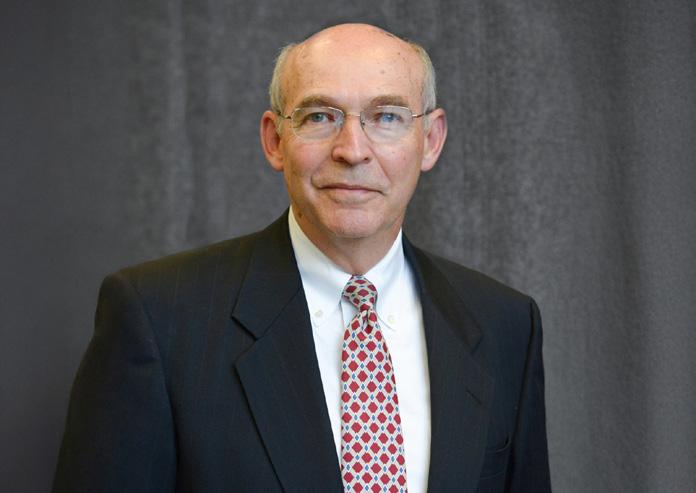
Illinois Tech has been part of my life for a long time— first as a student, then as an alumnus, a trustee, and most recently as chair of the Alumni Association Board of Directors. Each unique role has reinforced one truth: this university is powered by people who believe in the power and promise of an Illinois Tech education. As my term as chair comes to a close, I’ve been reflecting on what it means to leave something behind that truly matters. Serving alongside dedicated volunteers and meeting students who are eager to learn, innovate, and lead has been incredibly meaningful to me. Leadership, I’ve learned, is not defined by a title or term, but by a lifelong commitment to making a difference.
That is why my wife, Nancy, and I have chosen to make a seven-figure estate gift to support future generations of Scarlet Hawks through scholarships. We hope to build on the university’s founding purpose to make college a reality for students from all
walks of life by reducing the financial burden associated with an undergraduate degree. I see this gift as a continuation of my journey with Illinois Tech, a way to honor what this institution has given me and to invest in the future of students who will follow in our footsteps. It’s about legacy, yes, but, more importantly, it’s about opportunity.
I encourage others to consider making a gift—or, when the time is right, an estate commitment of their own—to help ensure that future students can benefit from the same life-changing opportunities that Illinois Tech has provided to so many of us.
I look forward to supporting Illinois Tech in new ways and cheering on the incredible students who will shape what comes next.
With pride and gratitude,
Bob Hoel (BE ’70)
Trustee, Board of Trustees Chair, Alumni Association Board of Directors
rhoel@illinoistech.edu
“This extraordinary gift embodies the very best of the Illinois Tech spirit. I am deeply grateful for Bob and Nancy’s unwavering dedication to championing our students. This transformative act of generosity will empower learners for decades to come and stands as a remarkable testament to their service to our university.”
—Illinois Tech President Raj Echambadi
“Bob is a powerful leadership example of what world‑class alumni philanthropy looks like— not only supporting the annual fund but also stepping up to invest in major campaigns over the years and ultimately solidifying their legacy with an estate gift. Their generosity will open doors for students to dream bigger and reach higher, and I hope it inspires others to invest in our students’ continued success.”
More than $480 million has been raised to date as part of Power the Difference: Our Campaign for Illinois Tech. Join Bob and Nancy in being a difference maker! Contact us at iit.edu/giving or 312.567.5000 to make your gift.
C. Jotin Khisty
Emeritus Professor of Civil Engineering C. Jotin Khisty, who brought decades of experience in the construction industry into Illinois Tech classrooms as an internationally renowned expert in transportation, died on December 10, 2025. Khisty joined the university in 1990 as a professor in the Department of Civil, Architectural, and Environmental Engineering, and he retired in 2002. A civil engineer by trade, Khisty began his career in 1948 in India, where he designed and planned large construction projects. In 1969 he arrived in the United States, where he planned and designed transportation urban infrastructure systems in the Midwest for a decade before joining academia as a professor of civil engineering at Washington State University. After 15 years at Washington State, he joined Illinois Tech, where he developed programs in transportation engineering and urban infrastructure planning. Khisty served on the international advisory boards of two journals and was the senior author of three books on transportation systems.
Patrick Corrigan
Distinguished Professor of Psychology Patrick Corrigan, the director of the Center for Health Equity, Education, and Research (CHEER) and core faculty member in the Division of Counseling and Rehabilitation Science, died on January 11, 2026. Corrigan joined the university in 2005 as a professor in the Department of Psychology. Corrigan taught for four decades and became an internationally eminent scholar in psychiatric disability, stigma, recovery, and mental health equity. One of the most highly cited scholars in the world, Corrigan authored more than 500 peer-reviewed publications, which have more than 100,000 citations. His research fundamentally shaped how stigma is conceptualized, measured, and reduced within mental health, health care, criminal justice, and community settings, and helped to establish the Chicago Health Disparities Center. The author of more than 20 books, including The Stigma Effect, Corrigan was also part of the team that developed the Honest, Open, Proud series of anti-stigma programs. The 2022 recipient of the American Psychological Association Award for Distinguished Contribution to Psychology, Corrigan received many honors and awards that included the President’s Medal from the Royal College of Psychiatrists, the Alexander Gralnick Research Investigator Prize from the American Psychological Foundation, and multiple humanitarian, innovation, and international research honors.
John A. Betti (ME ’52)
John A. Betti, an automotive industry engineer who rose to become Ford Motor Company’s executive vice president and later worked at the Pentagon overseeing half of the United States’ defense budget, died on August 14, 2025. Born to Italian immigrants in Ottawa, Illinois, Betti began his career in 1952 with Chrysler’s Institute of Engineering, where he earned a master’s degree in automotive engineering while working full-time and teaching engineering courses at night at two universities. He left Chrysler in 1962 to take an advanced engineering position at Ford Motor Company. He rose quickly through numerous positions in engineering, management, and company leadership, including serving as the company’s executive vice president and a member of its Board of Directors. He stepped down from Ford to accept an appointment
by U.S. President George H. W. Bush to serve as secretary of defense/acquisition and national armaments director. At the Pentagon, Betti was responsible for a $150 billion budget and 585,000 people. He also implemented fundamental changes to streamline the research and acquisition functions by eliminating bureaucracy to reduce cost and improve quality and efficiency. Many of his initiatives were later adopted as standard practice.
Philip Norman Hablutzel
Philip Norman Hablutzel, who founded and directed the graduate program in financial services law at Chicago-Kent College of Law, died on January 6, 2026. He was known for teaching some of the college’s most difficult courses, including Banking Law, Business Torts, Not-for-Profit Law, Securities Regulation, and Trust Law. Hablutzel retired from full-time teaching to emeritus status in 2016. For more than 35 years, he was the faculty sponsor for Chicago-Kent’s Annual Conference on Not-For-Profit Organizations and for eight years also led a team from Chicago-Kent that competed in the Willem Vis International Commercial Arbitration Moot Competition in Vienna. Hablutzel also served as director of the Institute of Illinois Business Law, the successor to the Illinois Secretary of State’s Corporation Acts Advisory Committee, beginning in 2006 when it moved to Chicago-Kent. Hablutzel helped draft both model United States laws and several laws for Illinois and worked on numerous legislative task forces to revise or adopt state laws. His best-known work was as a reporter to the Illinois Secretary of State’s Advisory Subcommittee on Not-For-Profit Law, which rewrote the Illinois Not-for-Profit Corporation Act, 1984–1987.
Theodore Brown (CHEM ’50)
Theodore “Ted” Brown, who authored the world’s definitive text on general chemistry and led research in various areas of the field, died March 24, 2026, at the age of 97. While teaching general chemistry at the University of Illinois at Urbana-Champaign—where he began teaching in 1956, later becoming dean of the graduate school, vice chancellor of research, and a professor emeritus—Brown authored General Chemistry in 1963. The book was revised numerous times to include multiple co-authors, and today, Chemistry: The Central Science is in its 15th edition and is cumulatively the top-selling general-chemistry textbook of all time. In the 1980s, Brown generated a proposal for the Beckman Institute for Advanced Science and Technology, an interdisciplinary research institute that opened at Illinois in 1989 with the help of a $40 million gift from Illinois alumnus Arnold Beckman and his spouse, Mabel. Brown served as the Institute’s founding director until he retired in 1993. At Illinois Tech, due to his generous giving, Brown was a member of the Philip Danforth Armour Society and the Frank W. Gunsaulus Society. He created two funds, including the Theodore L. Brown Endowment for Chemistry, which provided critical upgrades to the department’s laboratories and facilities, and the Theodore L. Brown Chemistry Fellowship, which supports graduate students. Brown was also honored with an Illinois Tech Alumni Award in 2021 for his contributions to the field; he also received Illinois Tech’s Professional Achievement Award in 1992.
Alumni
Jacob Shore (ME ’46)
Donald “Bud” Cecconi (ARCH ’49)
Theodore Brown (CHEM ‘50)
Pritindra Chowdhuri (M.S. EE ’51)
Dolores De Lew (Home Economics ’51)
Myron Petrakis (ME ’51)
John Betti (ME ’52)
George Paul (ME ’53)
Charles Lind (ME ’55)
Robert Williams (ME ’55)
W. Ronald “Ron” Johnson (FPE ’56)
Alexander Leondis (M.S. ME ’56)
Marvin Pope (CE ’56, M.S. ’57)
David Hall (EE ’57)
William Oswald (EE ’57)
William Reilly (ME ’57)
Robert Schlaf (CE ’57)
Richard Stiebel (EE ’57)
Russell Bergner (IE ’58)
Clare Hirata (M.S. Bacteriology ’58)
Ronald Schaffner (FPE ’58)
Charles Soules (EE ’58)
Alfred Deichstetter (ME ’59)
Bruce Murray (FPE ’59, M.A.S. BA ’62)
Harold Wheaton (MET ’59)
Earl Anker (ME ’60)
Patrick Conroy (CE ’60)
Anthony Gorski (PHYS ’60)
William Kates (CHE ’60, M.S. ’68)
John Kenny (DSGN ’60)
Robert Mundt (DSGN ’60)
Hans Noe (ARCH ’60)
Thomas Pavlak (CE ’60)
Richard Sulken (CE ’60)
Robert Zbylut (PHYS ’60)
W. Douglas Stout (M.S. DSGN ’61)
Milton Zohn (EE ’61, M.S. ’64)
Richard Curtis (ME ’62)
James Alling (LAW ’63)
Richard Kraus (EE ’63)
Nicholas Lycakis (EE ’63)
Hayden Aronson (PHSY ’64)
Jon Hardt (M.S. Mathematics for Teachers ’64)
Steven Stroh (LAW ’64)
Walter Wattman (EE ’64)
Stephen Williams (MATH ’64)
Enrico Caruso (ME ’65)
Stephen Duncan (BE ’65)
Daniel Isacson (MET ’65, BE ’71)
John Lewandowski (EE ’65)
Helene Gong (CHEM ’66)
Andrew Kotulic (IE ’66, M.A.S. BA ’73)
Edward Linsenmeyer (PHYS ’66)
Martin Magera (EE ’66)
Henricus Vroegh (BE ’66, M.B.A. ’68)
Emil Baciu (MATH ’67)
Robert Bieschke (EE ’67)
Jeffrey Danek (L.L.B. LAW ’67)
David Hoffmann (M.S. PSYC ’67)
Forrest Leeson (ME ’67)
James Michalik (EE ’67)
Frank Phelps (LAW ’67)
John Volpi (PHYS ’67)
William Aylward (M.S. Sociology for Teachers ’68)
Roland Sinclair (M.S. PHOT ’68)
Stephen Lloyd (PHYS ’69)
Arthur Ostrowski (CHE ’69)
James Cotton (EE ’70)
Alessandro De Gregori (M.S. DSGN ’70)
Raffaello La Mantia (M.S. DSGN ’70)
Edmund McGlynn (BE ’70)
Vern Noren (PSYC ’70)
Glenn Eisen (BE ’71)
William Erklin (M.S. DSGN ’71)
Gerhard Kelter (LAW ’71)
Roger Lucas (Ph.D. BIOL ’71)
James McNeany (MET ’71)
Ronald Wilkinson (MAE ’71)
Gerald Hunter (LAW ’72)
George Kimura (EE ’73)
Irene Slagle (Ph.D. CHEM ’73)
Klaus-Dieter Bloecks (MGT ’74)
Eric Schott (CS ’74)
Terry Horner (PHYS ’75, M.A.S. BA ’76)
Robert Adams (LAW ’76)
James Sporleder (LAW ’76)
Lee Bieschke (CE ’78)
Arturo Gonzalez (MGT ’78)
Carol Johnson (LAW ’78)
Gordon Mielke (EE ’78)
David Lourie (CE ’79, M.S. ’81)
Richard Dencer (CE ’80)
Brian Flagg (CS ’80)
Marion Szczech (LAW ’80)
Leodeous Clark (MATH ’81)
Loyd Kelly (ECON ’81)
Christopher Kruk (ARCH ’83)
Patrick Martin (LAW ’83)
Ken Tecklenburg (Ph.D. PSYC ’83)
Sharran Greenberg (LAW ’84)
Lisa Ruble Murphy (LAW ’84)
William Blameuser (LAW ’87)
David Melin (BA ’87)
Barbara Ceurvorst (M.A.S. BA ’88)
Theodore Russell (LAW ’88)
Gerardo Reyes (LAW ’89)
Timothy Seeber (EE ’89)
Geralyn “Geri” McMahon (LAW ’90)
Susan Moy (M.B.A. IM ’92)
Lisa Schneider Fabes (LAW ’96)
John Lanoue (LAW ’01)
Ted Koshiol (LAW ’09)
Aesha Jackson (EE ’19)
Patrick Corrigan
Philip Hablutzel
C. Jotin Khisty
Friends
Elizabeth Batch
Mary Jane Byerwalter
Angelo Ciambrone
Monique Clarine
Matthew Cusack
Karen Duel
Craig Dukerschein
Norm Finkel
Thomas Gibson
Melvyn Klein
Michelle Lusson
Hattula Moholy-Nagy
Lillian Petrick
Betsey Puth
Jeanne Serpico
Luane Williams
Louis “Lou” Yecies
Wenchen Wang is an industry assistant professor of business economics at Illinois Tech’s Stuart School of Business. Her data-based research focuses on how institutional policies can affect things such as employee satisfaction and job quality. She has also researched how labor market institutions, such as occupational licensing and unions, affect things such as wages, hours worked, and employment quality.
Q:
You recently co-authored a report in which you asked thousands of Illinois employees ‘What makes a good job?’ So, what makes a good job?
The 2024 report, done with the University of Illinois at Urbana-Champaign’s School of Labor and Employment Relations, asked how employed people in Illinois evaluate jobs, in terms of quality. They ranked specific “dimensions” such as benefits, job security, outlook, hours and scheduling, social interpersonal relationships, and empowerment. They were asked to rate each dimension and also to rank their job’s quality overall, on a 10-point scale. My co-authors and I used statistical analysis to find the association between dimensions and workers’ self-rated job quality.
The strongest associations come from subjective dimensions of job quality. “Job security” received the highest association with job quality, followed by “meaningfulness” and “belonging,” which means whether you feel that you have a sense of belonging to a work environment. Those were both close to each other. The fourth one was the objective dimension of pay.
Was there anything about those results that surprised you?
That pay did not come first. I also thought job autonomy [being able to work independently] would be higher. Employers should think a lot about how they can nurture their workers; from the policy side, the government needs to try to ensure that there’s a sense of belonging. But security makes sense—having a job, regardless of all the other factors.
Q:
Do you think you would have found the same results, say, 20 years ago?
Twenty years ago, pay might have been higher. Especially after the COVID-19 pandemic, people are now more focused on work schedule and flexible work arrangements. Although those factors scored pretty low in the study, we did find some descriptive analysis that was interesting: Workers who work remotely did report higher job quality. People who report that they have more control over their schedule also report higher job quality.
Were there any apparent contradictions in the study?
We also asked participants to rank eight aspects of their current jobs and which was most important to them, with categories such as pay, security, and paid time off. When they ranked those [according to] what was most important, pay came first and job security was second. Our explanation for that was that when they answered the first questions [about potential job quality] they have the pay in mind as a set thing that they already have. But once they had that salary, they wanted more of the other things.

Q:
What was the significance of the study pertaining to business-related academic research?
It was the first survey in the United States, to my knowledge, that tried to quantitatively measure both objective and subjective factors that measure employment quality. I’m also going to use that data to write a new paper on occupational licenses and how they affect job quality. The current literature does not look at the association between licensing and anything else directly [beyond] pay and employment rates. I’ve found that having an occupational license is associated with higher security, more meaningful work, and more useful work.
College of Architecture students present projects to Chicago industry professionals for a design build project in Brazil. Students in a studio overseen by Associate Professor Frank Flury (standing, right) traveled to Brazil in May to build their chosen project.
Michael Paul Galvin Tower
Illinois Tech Connect is the virtual home where Scarlet Hawks connect—no matter where they’ve landed. The platform features online networking, community groups, an alumni directory, and participation opportunities such as mentorship, career services engagement, events, and more.
If you’re looking to build your professional network or keep in touch with the campus community, visit illinoistechconnect.iit.edu.