

Chicago-Kent MAGAZINE
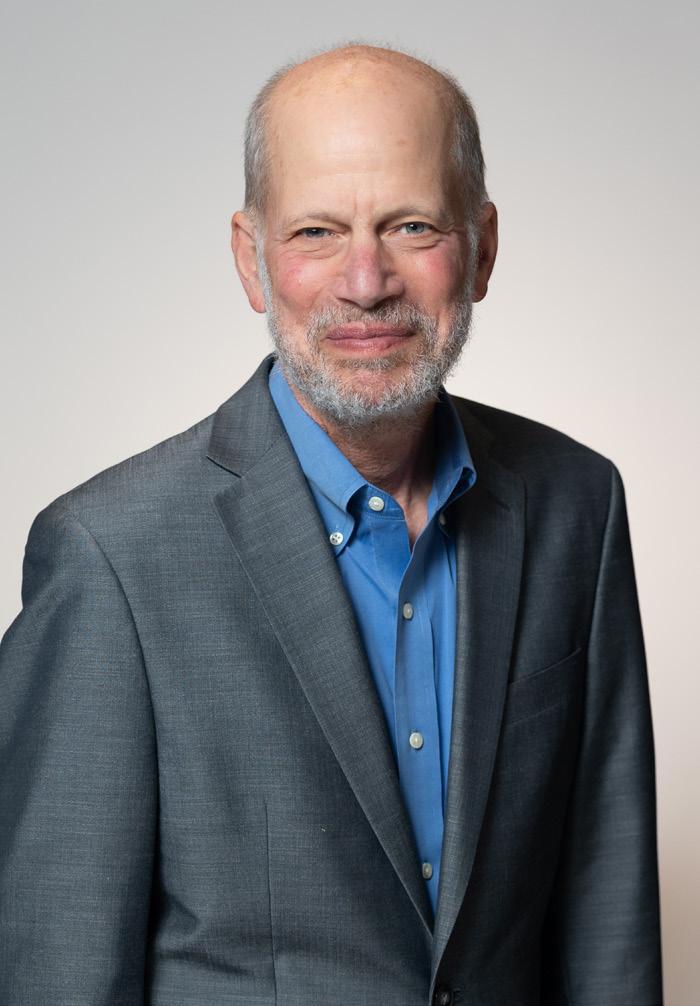
Letter From The Dean
Dear Alumni,
I am happy to report that Chicago-Kent College of Law remains strong. Faculty research is winning awards, students are gaining hands-on experiences all over the country, and our student trial advocacy teams continue to dominate.
In this issue of Chicago-Kent Magazine, we are paying tribute to one of Chicago-Kent’s strongest and longest-standing programs: labor and employment law. Emeritus Professor Martin H. Malin founded the Institute for Law and the Workplace in 1996, building it into an intellectual home for the labor and employment law community in Chicago and beyond. Malin directed the Institute until he assumed emeritus status in 2021. Professor Jason Bent took over leadership of the Institute in fall 2025.
But Chicago-Kent has always prioritized the needs of workers. When Judge Thomas Moran and Judge Joseph Bailey founded the Chicago College of Law, which merged with Kent College of Law in 1900, they did so based on the idea that people of all backgrounds, including the children of the working class, deserved equal
access to legal education. Courses were originally held at night to accommodate the schedules of working men and women. Chicago-Kent’s part-time program continues to this day, and it is ranked #17 in the country, according to U.S. News & World Report (2026).
Today, the Institute that Malin founded bears his name, and it has grown into a national center for research, training, dialogue, and reflection on the law governing the workplace. It has earned a national reputation as a leader in the field, and a hub of scholarly engagement that brings together representatives from labor groups and management. The Institute hosts multiple conferences and lectures each year, regularly offers student writing competitions, and provides a variety of scholarships for students in the Labor and Employment Law program, where students can earn a specialized J.D. certificate. Thousands of alumni work in the labor and employment field across the country.
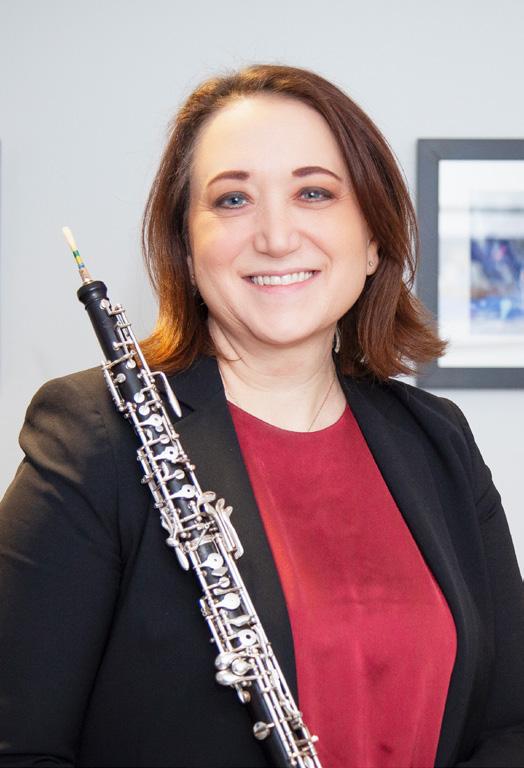
In this issue, you’ll read about four of those alumni. Joseph V. Healy ’05 worked as a construction laborer before going to law school and now serves as secretarytreasurer of the Chicago Laborers’ District Council, representing more than 20,000 laborers, most of whom are construction workers. Kristen E. Prinz ’06 specializes in labor issues affecting the C-Suite, and she’s become such an ace negotiator that she’s publishing a book to help others. Daniel O. Canales ’08 represents companies, guiding and advising them on how best to protect one of their greatest assets: their employees. Lastly, Naomi Bensdorf Frisch ’18 didn’t give up on her first career as an orchestral oboist to become a union lawyer—she does both, even representing many of her musician friends.
Chicago-Kent has grown significantly since those first few evening courses were held in judges’ chambers. But I’m sure that if Moran and Bailey were here today, they would be proud of the Labor and Employment Law program that ChicagoKent has today. I know I am.
Thank you for your continued support.
Sincerely,
Harold J. Krent
Interim Dean, Chicago-Kent College of Law
Chicago-Kent Magazine
Interim Dean
HAROLD J. KRENT
Associate Vice President for Major and Planned Gifts
SUSAN M. LEWERS
Associate Vice President, Constituent Engagement
JOSEPH VOLIN
Produced by the Illinois Tech Office of Marketing and Communications
Associate Vice President, Marketing and Communications
CHELSEA KALBERLOH JACKSON
Content Director ANDREW WYDER
Editor KAYLA MOLANDER
Senior Graphic Designer SCOTT BENBROOK
Photography
JAMIE CEASER
MICHAEL REITER
Chicago-Kent Magazine is published by Chicago-Kent College of Law, Illinois Tech, for its alumni and friends.
Address correspondence to: Chicago-Kent Magazine 565 West Adams Street, Chicago, Illinois 60661
Copyright 2026
Chicago-Kent College of Law Illinois Tech
4
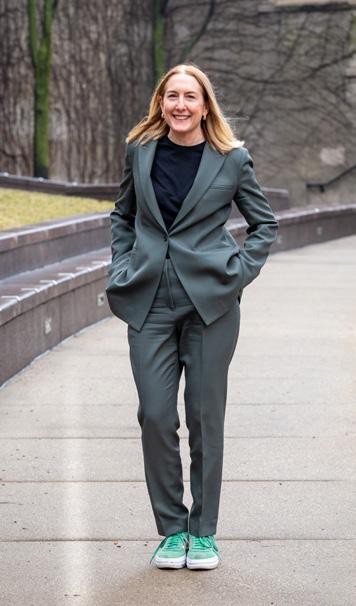
Executive Suite
Kristen E. Prinz ’06 specializes in negotiating on behalf of the C-suite, and she is now publishing a book that highlights her expertise.
5
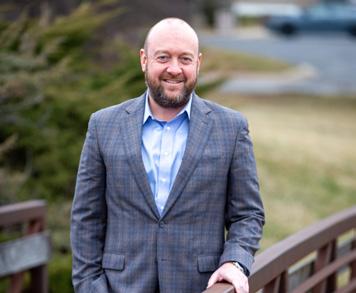
Constructing Solutions
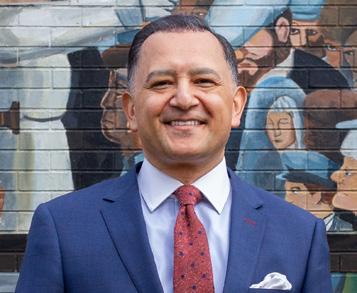
As secretary-treasurer of the Chicago Laborers’ District Council, Joseph V. Healy ’05 is a tireless advocate for tens of thousands of people working to keep Chicago running smoothly.
6
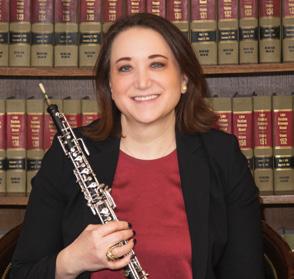
The Right Note
After a career in classical music turned into a labor negotiation, Naomi Bensdorf Frisch ’18 turned her day job into her night job—and now represents the musicians with whom she plays.
7
The Greatest Asset
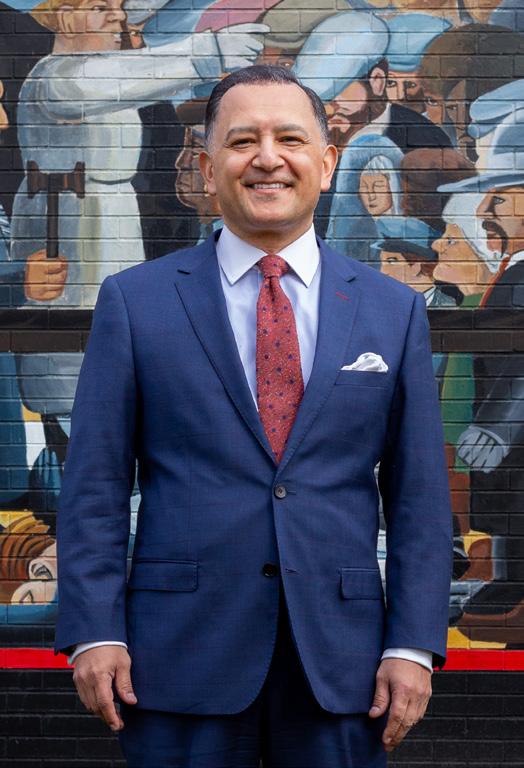
Daniel O. Canales ’08 knows that employees make a company, so he advises companies how to do right by their workers while also protecting themselves.
Student News
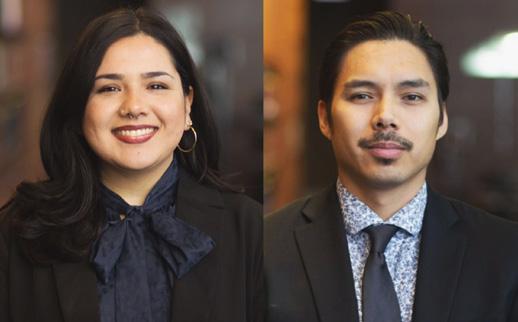
Five Chicago-Kent College of Law students traveled to Albuquerque, New Mexico, in May 2025 to assist the New Mexico Immigrant Law Center in representing people who were detained by United States Immigration and Customs Enforcement. While the trip was previously an annual event for the Immigration Law Society, this was the first group of students to make the trip since 2019.
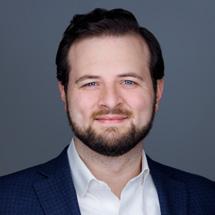
The 2026 class of Honors Scholars developed lesson plans to help middle school and high school teachers educate their students about the law. The students made the lesson plans publicly available to teachers through Chicago-Kent’s Constitutional Democracy Project, an endeavor that offers high-quality, nonpartisan, hands-on civics education programs and teaching materials that are focused on the United States Constitution, law, and policy for middle school and high school students.

The Chicago-Kent College of Law Trial Advocacy Team dominated the National Trial Competition’s Midwest Regional January 31–February 1, 2026, for the third year in a row. It is also the fourth year out of the last five that Chicago-Kent students captured the regional title. The victorious team, Ivylisse Ramirez ’27 and Isabella Courts ’27, were coached by Teaching Professor David A. Erickson, Warren Fasone ’18, and Natalie Adeeyo ’16. Courts was named Best Advocate in the finals.
Faculty News
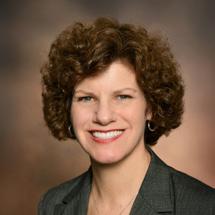
Jean M. Wenger, director of the Chicago-Kent College of Law Library and a teaching professor, was named a life fellow of the American Bar Foundation The American Bar Foundation fellows are a global honorary society of attorneys, judges, law faculty, and legal scholars whose public and private careers have demonstrated outstanding dedication to the highest principles of the legal profession. American Bar Foundation fellows are admitted by invitation only, and membership is limited to 1 percent of licensed attorneys.
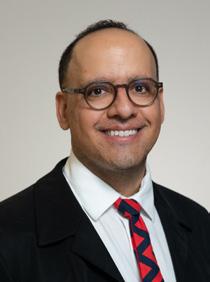
Chicago-Kent College of Law Assistant Professor of Law Pedro Gerson is the inaugural winner of the Mother Cabrini Mercy Prize, a prize “given for excellence in immigration scholarship and advocacy,” according to the prize’s website. An immigrant to the United States from Italy, Saint Frances Xavier Cabrini was recognized as the patron saint of immigrants by the Vatican in 1950. Gerson’s winning paper, “Decriminalizing Migrant Smuggling,” will be published in the Georgetown Immigration Law Journal
Law School News
Dee Runaas, project director of Chicago-Kent College of Law’s Constitutional Democracy Project, received the Darlene Ruscitti Civic Champion Award from the Democracy Schools Network, a partnership of 90 Illinois schools that have made a commitment to providing civics education to their students. The award recognizes individuals who demonstrate outstanding commitment to expanding the scope and reach of civic learning in Illinois.
Isabella Courts ’27 [left] and Ivylisse Ramirez ’27
Jean M. Wenger
Pedro Gerson
Gaby Treviño-Gutiérrez ’26 [left] and Micah Villanueva ’26 represent Chicago-Kent’s Immigration Law Society
Cody Clark ’26
Dee Runaas
The Law of the Workplace

One-third of human lives are spent at work. No matter the job or the industry, the relationship between employers and workers can be complicated. But at the end of the day, their fates are intertwined—people need jobs, and no company can thrive without workers. When companies and workers need someone to step in and hash out their differences, Chicago-Kent College of Law labor and employment law alumni are abundant and well-prepared to fight for their clients to ensure everyone can reach their goals.
The Human Side of the Deal
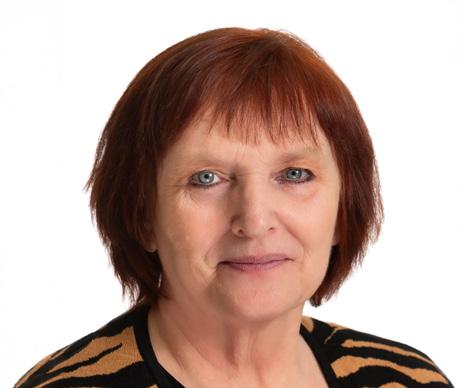
“I LOVE HOW WEIRD and complicated humans are,” says Kristen
E. Prinz ’06
At the firm she founded, The Prinz Law Firm, much of her work is focused on executive employment, where she gets to delve into some of the most complicated careers that exist.
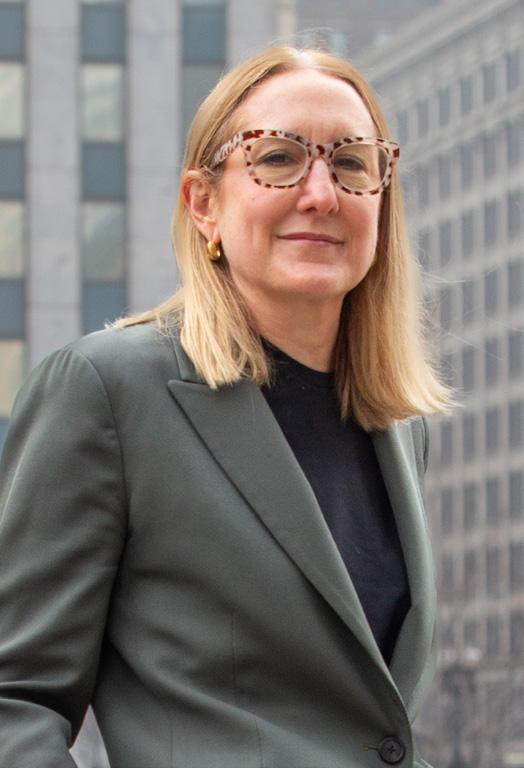
“When I was growing up, I didn’t realize the breadth of what’s possible and what people could do with their careers,” she says. “Now I get to not just see that, but also really dig in and be a part of that for people.”
Prinz’s own story is filled with false starts and career growth. Before she became an attorney, Prinz dipped her toes in a few different pools.
“I worked in marketing after college and then I worked for a startup in Seattle, like a dot-com in the early dot-com days,” she says.
When the dot-com bubble burst, her employer went belly up, and Prinz headed back to her hometown of Chicago for a fresh start.
She was working in the marketing department at a local law firm when she decided, on a whim, to take the LSAT, which was two weeks later.
“I told my husband, my boyfriend at the time, that I would take the LSAT. He asked why,” she says. “I told him I thought I’d be good at it.”
It turns out she was right. Her score was high, and it got her admitted to Chicago-Kent College of Law’s evening program.
“I didn’t think I really even wanted to practice law,” she says. “I had a good job. I was working full time.”
And she also had something to prove. She wanted to be good at being an attorney, too, so she dove into law school headfirst and excelled.
Despite working full-time, Prinz made time to serve as president of the Evening Law Student Society to represent students like her and make them feel welcome on campus.
There, she met Sara Sirotzky (FIN ’01), a former managing director at Marsh Risk, an insurance broking, risk management, and business advisory firm.
The two women hit it off and have stayed friends. In particular, they share a love of networking. Sirotzky has sponsored Prinz’s membership bids into multiple local organizations, and the two frequently run into each other at events.
“I opened the door for Kristen, but she would have done it herself,” says Sirotzky. “She’s a born leader who’s bright and assertive and determined to be successful.”
Prinz is currently a member of the Illinois chapter of the Smithsonian American Women’s History
If you want to make changes in the world, you really need to be connected to your community, and it’s easy to get involved.”
—Kristen E. Prinz ’06
Museum’s Making History Network, a board member at the single mother support nonprofit New Moms, and a board member at the National Sleep Foundation. That’s in addition to roles at local groups, including the Chicago Network, the Economic Club of Chicago, and the Executives’ Club of Chicago.
“If you want to make changes in the world, you really need to be connected to your community, and it’s easy to get involved,” she says. “You’ll have a more varied and interesting career if you get out there and meet people, talk to people, and really show interest.”
After law school, Prinz took a job at Bellows and Bellows, where she stayed for nearly three years before leaving to start The Prinz Law Firm.
“I didn’t want to do general practice,” she says. “I just felt like I can’t be good at being everything to everyone. You have to be something specific.”
Employment law was where she found her niche, and how she narrowed her focus.
“[Employment] is a lot about identity, and I think the bigger your career is, the more that is true,” she says. “Seeing yourself as successful is pretty critical.”
Much of her work involves negotiating, a skill she has down to a science.
Her book on the subject, New Rules of Negotiation: Get What Matters, will be published this fall by John Murray Press.
“Negotiation is just relationships and our life,” she says. “How are we interacting with the people that we care about? Those are all negotiations.”
But she cautions that negotiations are not shortterm transactional affairs that are focused solely on financial matters.
“Being cruel and transactional is very effective in the short term, but the long-term impact is very costly,” she says. “[You need to think about] what’s most important to people, and how do we get to a point where we’re really thinking more about relational negotiations.” ●
Representing the People Who Build Chicago
AS A CHICAGO resident, Joseph V. Healy ’05 sees his fair share of construction-related traffic jams.
But as secretary-treasurer of the Chicago Laborers’ District Council, or LiUNA, he likes to think that he experiences that traffic a little differently than the average Chicago driver.
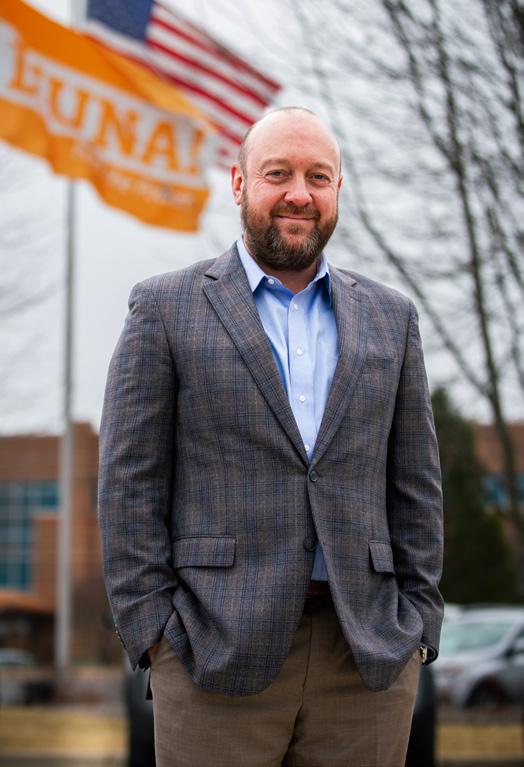
“Most people see a traffic jam because of construction as a big pain in the neck,” he says. “I see our members out there working and making things better for everyone.”
In his role, Healy represents more than 20,000 laborers, most of whom work in construction, but some of whom work in the clerical and industrial industries.
These are the people who keep the services that most of us rely on, and that many of us take for granted, running as they should.
“Our members perform work that directly benefits the residents of the area,” says Healy. “Take lead service lines, for instance: there are more than 400,000 of them in the city of Chicago, and laborers will be replacing each one over the next 20 or 30 years. That work helps every family right when it happens.”
Healy came into his job with more in-depth knowledge of the construction industry than most lawyers. His father was a laborer, and he encouraged his son to work in the industry over summer breaks from college.
“He thought it would deter me from a career as a construction laborer because I would see how hard the job was,” Healy says, noting that his father was probably right. “That job also let me see how much I thought I could help the people doing this work; work that was so physically difficult but was so important to everyone that’s not working in construction.”
He continues, “The jobs that I worked on were always union jobs. We were always compensated fairly and justly, but that compensation was always under attack by big business and big money who wanted us paid less and did not think that the protections on the job were important.”
With a passion for labor and employment law, Chicago-Kent College of Law was the natural choice for Healy.
He graduated with the Labor and Employment certificate, then darted off to Springfield, Illinois, to work in the technical review unit of the Illinois House of Representatives’ Office of the Speaker.
“It’s a group of lawyers that reviews new bills that are filed in Springfield during the legislative session,” Healy says. “They make sure that the bill is going to
Most people see a traffic jam because of construction as a big pain in the neck. I see our members out there working and making things better for everyone.”
—Joseph V. Healy ’05
do what it’s intended to do and then help explain to legislators what the bill would do so they can make an informed decision on whether to support it or not.”
Healy then returned to Chicago and joined personal injury firm Horwitz, Horwitz & Associates for nearly three years before starting his own firm, the Law Offices of Joseph V. Healy, where he mostly practiced personal injury law.
But having his own firm also allowed him to act as legal counsel for Laborers Local 1092, a LiUNA local that largely represents laborers in the City of Chicago’s Department of Water Management. Healy still serves as 1092’s business manager.
“In both personal injury and labor and employment, you’re standing up for people who can’t always stand up for themselves,” says Healy. “The difference in my mind is that personal injury was kind of a microeconomic issue. You were helping one person who really needed the help, and you were doing very important work.
“Moving to the labor side turned it into kind of a macroeconomic mission where you could help thousands of people with one contract.”
In his work in the labor movement, Healy works frequently with Bob Reiter ’03, president of the Chicago Federation of Labor.
“Having a partner in Joe Healy makes me a better leader,” Reiter says. “He’s had a great deal of experience directly representing members. Nothing is abstract to him. When he’s in a room working on these big-picture issues that affect workers, Joe has a good sense of how it’s landing with members as they sit at the kitchen table with their families.”
Reiter isn’t the only Chicago-Kent alum who Healy interacts with regularly.
Healy says that Chicago-Kent’s Martin H. Malin Institute for Law and the Workplace helps prepare many law students for meaningful careers in labor law in Chicago and beyond.
“Chicago-Kent was a great place for me,” says Healy. “It was a place I needed to be, and I know it’s helped a lot of my colleagues and a lot of people who do great things for workers. There are a bunch of people I went to Chicago-Kent with who are now in the labor movement and helping people every day.”
As he gears up for his next contract negotiation, which will affect more than 20,000 laborers working for private contractors in the Chicago area, Healy expects a few headaches. But he knows that keeping workers safe and fairly compensated is always worth it.
“It can be frustrating,” Healy says, “but I am usually happy each night with the work I put in that day.” ●
The Music of Justice
NAOMI BENSDORF FRISCH ’18
was a young musician, working her first real job as a concert oboist in an orchestra, when her conductor was told to cut costs.
“He decided to fire the four oldest people in the back of the violin section,” she says.
The orchestra voted to unionize, and they’ve been enjoying worker protections ever since. That was when Frisch began to explore the benefits of collective bargaining.
“The idea that employees are free to contract and to demand a good wage for their services is really a fallacy,” says Frisch. “The only way that they can do that is by banding together.”
“Unions provide power to workers that they wouldn’t otherwise have,” Frisch says. “Unions are solidarity. Unions are safety. Unions are family.”
Before attending Chicago-Kent College of Law, Frisch built a career as a professional oboe player.
“Like many young people who got a degree in the arts, I cobbled together a living as a young artist starting out,” says Frisch, who earned bachelor’s and master’s degrees in music. “But by 2012, I had a young child and my husband had a health scare, and I looked at my life and realized I didn’t want to be scraping together 20 different jobs for the next 30 years. It’s not sustainable.”
After 10 years of unionizing with various orchestras and collective bargaining on behalf of her colleagues, Frisch knew exactly what her next step was: going to law school in order to be able to collectively bargain contracts.
She enrolled at Chicago-Kent, earning her J.D. along with certificates in labor and employment law and alternative dispute resolution. During law school, she was a law clerk for two years at Asher, Gittler & D’Alba, Ltd., which was a formative experience in learning important union-side labor law skills.
After graduating in 2018, she spent a year at Noelle Brennan and Associates and two years at the CTM Legal Group before re-joining Asher, Gittler & D’Alba, Ltd., as an attorney this time, where she then became a shareholder in January 2026.
She represents employees and unions. Many of her clients are musicians, but she represents workers in many fields, including several police unions.
“It can be challenging sometimes being an advocate for police unions in today’s world because they can be misjudged,” she says. “But I feel privileged to be able to represent them because police officers have one of the hardest jobs. It can just be a very thankless situation, but we all deserve to be treated well at work.”
Although she’s made it far in the legal world, Frisch never forgets her roots.
She still plays oboe in the Illinois Philharmonic
Unions provide power to workers that they wouldn’t otherwise have. Unions are solidarity. Unions are safety. Unions are family.”
—Naomi Bensdorf Frisch ’18
Orchestra and serves as legal counsel to the Chicago Federation of Musicians, AFM Local 10-208, where some of her favorite work is guiding its Fair Employment Practices Committee. She also serves as legal counsel to the Regional Orchestra Players Association (ROPA), a national group advocating for collective bargaining and worker protections for orchestras nationwide.
At AFM Local 10-208, Frisch has been working closely with Karen Suarez Flint, the group’s secretary-treasurer, to highlight workers’ rights issues in orchestras throughout America.
“There are a lot of locals, especially in the South and in right-to-work states, that don’t have worker protections,” says Suarez Flint.
But unlike other lawyers, Frisch understands the unique struggles that musicians face.
“When you see music programs getting cut and you see people walking away from music, Naomi and I, we have a mutual belief in justice, and we both become equally infuriated when musicians are harmed so they leave the profession,” Suarez Flint says. “We have to do better. We have to acknowledge mistakes. The world is better with music and art. We have to preserve that human artistry while still protecting the people that create the art.”
Frisch and Suarez Flint have developed a presentation for unionized musicians on workplace safety, which was successfully received at a recent ROPA conference, and which they hope to continue to bring to more workers around the country.
But there is still so much work to do.
Frisch remembers being taught in law school that the music industry has the best hiring practices because of the standard of “blind auditions,” a thought that caused Frisch to laugh out loud.
“It’s true, blind auditions are standard, but there are so many ways that people get around that, and preferential hiring still very much exists,” she says. “There’s a big push right now in the orchestral community to rethink the way that we do our auditions and make sure that they are actually fair and unbiased.”
And musicians can be sure that Frisch will be there to stand up for fair and unbiased auditions and anything else that they need.
“There are days when I wake up and think, ‘What did I get myself into?’” she says. “Because this job is stressful, it’s long hours and emotions can run very high when people lose their jobs.
“But then I remember that this work is important, and employees don’t always have someone to stand up for them. Helping employees to be safer and have fair treatment at work keeps me motivated, and I couldn’t imagine doing anything different.”●
The Human Side of Business Laws
“HUMAN CAPITAL is important, right?” says Daniel O. Canales ’08. “You are your employees.”
Canales is a shareholder at Greenberg Traurig, LLP, where he helps companies navigate a variety of business and legal issues, largely labor and employment related.
But in college he had very different aspirations.
“I went to Northwestern University for undergrad thinking that I wanted to be an art teacher,” he says.
But an internship in a corporate human resources department sparked a new interest, so he switched his major, graduated, and landed a job in HR consulting at Deloitte.
“I viewed that as sort of being a teacher for a company,” he says. “Then I realized that the law was butting up against everything I was doing.”
Four years into his professional career, he enrolled at Chicago-Kent College of Law, eventually earning the labor and employment law certificate.
“Every law school is going to have an employment law course and labor law course, but Chicago-Kent put it in a complete package,” Canales says, “and it wasn’t lost on me that there was a nice bit of theory, a nice bit of real skills involved, and practical internships through Chicago-Kent that all really paid dividends.”
He spent one summer at the Illinois Educational Labor Relations Board, a state agency that protects educational employees’ right to organize and bargain collectively.
However, because his education at Chicago-Kent exposed him to so many different sides of labor and employment law, and with his experience in corporate HR and consulting, he knew that he wanted to represent employers.
“[Professor of Law Emeritus] Martin Malin and [Clinical Professor of Law Emeritus] Richard Gonzalez never took the position that relations between employers and employees had to be contentious,” says Canales. “They really provided [all] sides of the coin, so to speak: the employer, the employee, and the union.”
Now, Canales still takes that collaborative approach to his work.
“Even in the labor union environment, there’s a misconception that there’s always tension,” he says. “Sure, you have to bargain over a contract, but we’re trying to find solutions and work together to get it done. I don’t view that as necessarily contentious.”
After law school, he joined Ogletree Deakins, which focuses exclusively on labor and employment law, the only type of law that Canales wanted to practice at the time.
“Every workforce is different,” he says. “A unique aspect of employment law is that every company
Every law school is going to have an employment law course and labor law course, but Chicago-Kent put it in a complete package”
—Daniel O. Canales ’08
has employees, which means we service every single industry. Every industry provides something unique; a tech company out in Silicon Valley is going to have different issues than say, a manufacturer in Pittsburgh.”
While at Ogletree Deakins, Canales stayed in touch with law school friend Andy Hettinga ’08, vice president and associate counsel for labor and employment at Dover Corporation.
Since joining Dover 10 years ago, Hettinga has continued to retain Canales as counsel on a host of different matters.
“Dan’s an exceptional lawyer,” says Hettinga. “He’s aggressive, very intelligent, creative in his thinking, but, most importantly for me, he’s practical in the sense that he always has a focus, to some degree, on the reality of our business.”
Hettinga continues, “Dan has gotten his head around the idea that the super conservative, safest approach may not always work for every business. He tries to find a solution that makes sense—keeps you in compliance but makes sense.”
Canales spent 12 years at Ogletree Deakins, eventually becoming a shareholder.
During his time there, he saw how the relationship between employees and employers is shifting with the evolution of technology.
“We helped out some of the new gig economy employers,” says Canales. “That was at the forefront of challenging what it meant to be an employee versus an independent contractor.”
In 2019 Canales decided that he was ready for his next challenge, so he left Ogletree Deakins for Duane Morris, a general practice firm where he worked for nearly seven years.
“I wanted to service my clients not just in labor and employment, but also corporate law, tax, [intellectual property], and all areas,” he says. “I needed a broader platform to serve my clients holistically.”
In 2023 Canales finally fulfilled his dream of being a teacher when he began teaching an employment law course as an adjunct professor at Northwestern University’s Pritzker School of Law, where students are still talking about that gig economy work that Canales tackled 10 years ago.
“That’s a lively class: [we discuss] what it means to be an employee and what the new generation of employees is expecting from their employers,” he recalls. “It’s fun. It keeps me fresh, engaged, and challenges me.”
These days, Canales splits his time between labor and employment work and his multidisciplinary practice
He’s even picked up some international clients, which is teaching him about labor laws and employee relations in other cultures.
“Other countries are probably more employee-friendly in some ways,” says Canales.
“We may demand more of our employees here in the United States. There are trade-offs, right?”●
Class Notes
1980s
Tim Cavanagh ’87, Chicago, obtained a $104 million verdict on October 9, 2025, the largest verdict or settlement in Illinois history for a road construction case.
Vince Imhoff ’89, Santa Monica, Calif., was recently recognized at LegalShield’s 2025 International Convention in Baltimore. Imhoff is managing director at Imhoff & Associates, as well as at Madden & Associates.
1990s
Jen Ashley ’99, Libertyville, Ill., was recognized by Best Lawyers as the 2026 Lawyer of the Year for Product Liability Law—Plaintiffs. Ashley was also named among the Lawdragon 500 Leading Plaintiff Consumer Lawyers for 2025.
Beata Spuhler ’99, Oak Park, Ill., joined Faegre Drinker as customs and international trade counsel.
2000s
Terence Smith ’00, Flossmoor, Ill., joined Amundsen Davis as a partner in the Labor and Employment Service Group in Chicago.
Gina Arquilla DeBoni ’02, Glenview, Ill., was re-elected as a trustee for the Village of Glenview, Illinois, for a second term on April 1, 2025. DeBoni is managing and senior partner at Romanucci & Blandin.
Anna Strange ’04, Morgantown, W.Va., joined Steptoe & Johnson PLLC as of counsel in September 2025.
Puneet Leekha ’06, Bloomington, Ill., was installed as CEO of Chestnut Health Systems on October 6, 2025. Leekha has served as Chestnut’s chief operating officer and general counsel since 2015.
2010s
Mike Gustafson ’10, Chicago, was appointed as the Chicago office leader at Faeger Drinker on January 1, 2025.
Courtney L. Nichols ’11, Clarkston, Mich., was elected to the Board of Directors of ALFA International. Nichols was elected to a three-year term at the conclusion of the 2025 ALFAI Attorney Business Meeting in Madrid.
Luke Haller ’12, Chicago, was elevated to partner at Winston & Strawn LLP. Haller advises clients on complex commercial real estate transactions.
Matthew Dillinger ’13, Austin, Texas, joined the firm Ogletree Deakins as senior counsel within the Immigration Practice Group. Dillinger advises corporate clients on all aspects of employment-based immigration law.
Rob Kohen ’14, Chicago, was named to the 2026 edition of Best Lawyers: Ones to Watch in the areas of Medical Malpractice Law— Plaintiffs, Personal Injury Litigation— Plaintiffs, and Product Liability Litigation—Plaintiffs.
Bill Whitner ’17, Wilmette, Ill., was promoted to partner at Carmen D. Caruso Law Firm. Whitner is a member of the Federal Trial Bar in the Northern District of Illinois, the Illinois State Bar Association, the Federal Bar Association, and the American Bar Association’s Forum on Franchising and Section of Labor and Employment.
Michael Schostok ’19, Madison, Wis., was named to the 2026 edition of Best Lawyers: Ones to Watch in the areas of Medical Malpractice Law—Plaintiffs and Personal Injury Litigation—Plaintiffs.
Rebecca Spira ’19, Portland, Ore., joined Foster Garvey as an associate. Her practice spans employment, commercial, toxic tort, general liability insurance, and products liability litigation.
2020s
Jonathan McGehee ’23, Moline, Ill., joined the Chicago intellectual property firm Marshall Gerstein as an associate in its Trademarks and Copyright Practice.
David Durán ’24, Albuquerque, N.M., and Marisa A. Gelabert ’24, Chicago, were named to the 2026 edition of Best Lawyers: Ones to Watch in the areas of Medical Malpractice Law—Plaintiffs and Personal Injury Litigation—Plaintiffs.
Lauren Backhaus ’25, Mount Prospect, Ill., joined Reinhart’s Milwaukee office as an intellectual property attorney, where she guides clients through the development and enforcement of their intellectual property assets.
Daniela Dulworth ’25, Chicago, joined Marshall Gerstein as an associate in its Intellectual Property Litigation practice.
Taylor Walters ’25, Chicago, joined Nyhan, Bambrick, Kinzie & Lowry, P.C. as an associate.
James Alling ’63
Steven Stroh ’64
Jeffrey Danek ’67
Frank Phelps ’67
Gerhard Kelter ’71
Gerald Hunter ’72
Robert Adams ’76
James Sporleder ’76
Carol Johnson ’78
Marion Szczech ’80
Patrick Martin ’83
Sharran Greenberg ’84
Lisa Ruble Murphy ’84
William Blameuser ’87
Theodore Russell ’88
Gerardo Reyes ’89
Geralyn “Geri” McMahon ’90
Lisa Schneider Fabes ’96
John Lanoue ’01
Ted Koshiol ’09
Faculty and Staff
Philip Hablutzel
Power the Difference

As the leading law school in the country that is affiliated with a technology university, Chicago-Kent College of Law understands the complex ways that tech, law, business, and our world are inextricably linked. That’s why we equip every student with the timeless skills that they need to meet the demands of legal practice today, tomorrow, and far into the future. Starting today, your investment in Chicago-Kent is part of Power the Difference: Our Campaign for Illinois Tech. Thanks to your contribution, students will be immersed in the engaging, hands-on experiences that are crucial to successful careers. Ultimately, your investment will help graduates step into a courtroom, boardroom, or any other room and make an immediate impact.
To learn more and to make a gift, please visit kentlaw.iit.edu/law/giving