VOLUME
30 NUMBER
2 SPRING
1994
, I. House Hosts Council of World
_
Members' XVIII Meeting n its 70th anniversary year, International House was the host to 40 alumni who came
| from around the world to partici-
dor Ibrahim Gambari,
Permanent Representative of Nigeria to the U. N.., attended the address as a
| pate in the XVIII Council of World newly-appointed member of | Members meeting, held April 28 to the World Council. He has y i _ figieed fo speak at the Honse__ is
_
SLU
Established in 1966 by Trustee
Bill Frohlich, the Council of World Members is a distinguished body of 130 alumni representing all regions of the globe. It promotes the goals of International House worldwide, provides an invaluable link with the House's alumni communities, and assists the House in maintaining relations with potential residents, friends and supporters. The Council holds meetings every 18 months on an alternating basis between New York City and sites around the world. The last meeting was in August, 1992, in Prague, the Czech Republic, where Council members voted to establish the McLaine Central/East European Leadership Program to “increase the number of House residents from those areas.
7
~ Friday's events included — Council gatherings withWomen's International Leadership Program participants and the Columbia University International Students Office staff; a keynote address by President Don Cuneo on the state of the House, with particular focus on scholarships and leadership training programs; and a session on establishing successful alumni group activities. After a hard day of workshops, Council members danced the night away at the annual Alumni Ball, hosted by the New
Regional Forum" and "Nation Building and Sustainable Development." Residents from Singapore, Vietnam and Indonesia joined the group. For the past 10 years, residents from Southeast Asia have averaged only two percent of the total I. House community. Saturday's activities continued with a tour of gallery exhibits at the Asia Society, dinner at a Thai restaurant, and a night on Broadway at "Beauty and the Beast."
the United Nations since 1991, and is one of 15 representatives who officiate as President of the U.N.
Security Council on a rotating basis. I. House alumnus Ambassa-
L.W. Frohlich Charitable Trust Pledges $250,000 To Create Fitness Center hanks to the efforts of I. House Trustee Kathleen Burns Buddenhagen and the generosity of the L.W. Frohlich International House will have one more way in which to enjoy the House--the addition of a physical fitness center. The Frohlich Trust has pledged $250,000 to the House to be used for conversion of the I. House North recreation room into a fitness room complete with exercise and weight equipment, and for underwriting a substantial portion of the renovations to the gymnasium, completed last December. The fitness center will be situated on the deck of I. House North, and will increase opportunities for residential contact. The center will also help residents maintain a high level of physical and mental fitness and help attract new residents to the House.
spoke on the "ASEAN
...con't page 2
|
celebration at the Candlelight Supper, four days after they voted for the first time.
York Area Alumni (NYAAC)
This year, the meeting began on April 28 with the John J. McCloy Memorial Lecture given by Ambassador Jean-Bernard
United Nations. Ambassador _Mérimée has represented France at
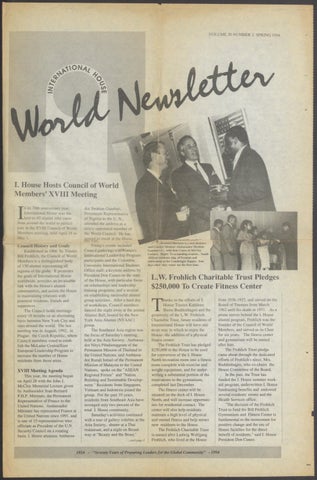
Gambari (r.) with Don Cuneo at McCloy Lecture. Right: To a standing ovation , South African residents sing of freedom and
group. The Southeast Asia region was the focus of Saturday's meeting, held at the Asia Society. Ambassador Nitya Pibulsonggram of the Permanent Mission of Thailand to the United Nations, and Ambassador Razali Ismail of the Permanent Mission of Malaysia to the United Nations,
Representative of France to the
/
; "Bern Aérimée (c.) and alumnus and Council Member Ambassador Ibrahim
Charitable Trust, future residents of
XVIII Meeting Agenda
P.H.P. Mérimée, the Permanent
A ~
The Frohlich Charitable Trust is named after Ludwig Wolfgang Frohlich, who lived at the House
from 1936-1937, and served on the Board of Trustees from March 1962 until his death in 1971. Asa
prime mover behind the I. House alumni program, Frohlich was the founder of the Council of World Members, and served as its Chair
for six years. The fitness center and gymnasium will be named after him.
The Frohlich Trust pledge came about through the dedicated efforts of Frohlich's niece, Mrs. Buddenhagen, who co-chairs the House Committee of the Board.
In the past, the Trust has funded the I. House summer work-
aid program, underwritten I. House fundraising benefits and endowed several residents’ rooms and the Health Services office. "The decision of the Frohlich Trust to fund the Bill Frohlich
Gymnasium and Fitness Center is fundamental to the momentum for
positive change and the use of House facitilies for the direct benefit of residents," said I. House President Don Cuneo.
one PRO
OU
Or ee
*
ee
ee
OG
wae4
gh
seo +O «s
ee)de ‘one
weeh
World Council Meeting
Message From the President Observations
On
..from page |
The
First
Kight
At Sunday's closing session, Council Members resolved to
Months
launch initiatives to increase the
number of residents from Southeast Asia, while reconfirming their
ay Ist marked my first eight months as President of International House. It has been a busy and exciting period, marked by the learning process which accompanies all transitions, and a
i
seth commitment to strengthen
Looking
significant adjustment for the residents and staff as well as my family and myself.
. back on this initial phase, there are a number of experiences which have been especially memorable Positive, consistent interaction with the residents is essential to our success as
initiatives in Africa, Latin America and the Middle East. Invitations to join the Council have been sent to prominent alumni in Namibia, the Central African Republic, Nigeria, Bahrain and Venezuela.
a community and I
have a broken recent precedent by attending all of the Residents' Council meetings. Being accessible to
accelerthe residents and available for their questions has helped create an atmosphere of trust, and has ( ated the communication process.
=
Often at these meetings, which are open to all residents, I am called upon to explain a particular
light policy. At these times, it is a source of great satisfaction to observe recognition and understanding we how of s the inquisitive faces, as clarity and transparency of purpose are such critical component | work,
Later on Sunday, the Council held a very moving reception with South African House residents
One of the many aspects of the House was again brought home to me this winter, at a small reception
where Don Cuneo and Council
we hosted for former New York Mayor David Dinkins, the February Sunday Supper speaker. The
members joined in their celebration
reception was attended by a group of South African residents who are participants in an exchange
program supported by Mayor Dinkins when it was established three years ago. The interaction between the residents and their celebrated benefactor was delightful to observe.
of the South African elections. Council members then joined all
Mayor (who has subsequently joined the I. House Board) was able to gauge the impact of the initiative i through his informal contact with this lively group.
Supper. By holding the XVIII Council
held its 18th conference here at I. House, beginning April 28th. I greatly enjoyed welcoming the council members and fellow alumni back to I. House, and hearing reports of alumni activity throughout the
members hoped to reinforce the message that the I. House experi-
world.
residents leave. . Through alumni ; on World ome anita
current residents in reliving special memories at the Candlelight
Through their association with I. House, the South Africans were given a marvelous and rare opportunity to exchange views with a prominent figure who had a hand in their coming to New York; the former
Meeting at I. House, Council
There have been many memorable occasions, with more to come. The Council of World Members
Ltoe Aka Hk have te hd Orie
re-
At the conference we discussed progress on the three foundations of the alumni program:
cruitment of high quality residents to live at I. House; development and fundraising (the generous bequest of alumna Jean Dobrzensky is highlighted on page eight ); and enhanced networking among
areas, and alumni throughout the world. I received valuable input from the World Council on these vital look forward to reporting back in the next issue of the World Newsletter.
former residents can remain in contact with the House and ensure
C
that the I. House experience contin-
Me
Donald L. Cuneo
®
Hoc
w»Ad
;
: of the ‘At thee take mmeéting
Board of Trustees, President Don Cuneo discussed the concept of fully
limited
;
providing a carefully limited and
|
residents and alumni, and its ability to soln wider funding
| residency, with no requirement of | a'key position’ for the third year.
young men and women with an international commitment.
l significant support might. ie be eas pe sin pci
ious . 2 us s have been contentio ‘: Ee Exception
HELP US FIND THESE
4 and time-consuming to determine mee seed be nenge, OF third
OUTSTANDING PROSPECTS
a uni What ‘aeovaca See | : y a global communit
tl gee
teas
year residency to a ‘key position’
aeans. We
paper mayer mone
must be cautious in developing
emphasis at I.House for its resi-
dents, leading to a certificate for those who participate. Cuneo asked an ad hoc committee of the
|
ACh nn adenine cat leademhia?
sail Mk
a e
The committee is comprised of | # New Resident Policy Insti Trustees Paul D. Carter, Vreni A. d for 1994-95 nstituteeN, Acaket William G.
"| 2¢2demic year by staying for the
spring and summer. Meant tobe simple and straightforward with
said, "if the concept looks viable,
Phir Commolintina Gameaeal
promote consistency and get the
Me
ttiskie
—
coma wide cross-section of our :
Rae, (PURISe, At
Sein
inclpding Most-ampar;
eet,
,
no exceptions, the policy will
we will seek additional input from ed
ae
Lear
CAGCHNC.
president out of the ‘exception business.’ As a transitional
:
oR
and based upon personal observa-
matte
ns ogee
— [i TE
phone:
(212) 316-8900
:
abeiiedei aa
p%izk
PP! 6 CANCERS SOF YeN
..
of Trustees he stated, "We have at
circumstances so that the Admis-
the House a wide variety of programs that cover many inter-
ously, the Holisé ‘has sfftine ‘A si , ae ai aes? jj year residency with the require-
sions Committee can respond appropriately. "
ee ae dies a d'key
Announced in February, the
to-day living experience here
position’ for a third year. Excep-
new policy gives those who do
: comstinite our atgenient that we
tions granted for resi-dencies
move on up to seven months to
Phone:
Secure alternative housing.
Years spent at |. House:
,
:
ests, which together with the day-
SR
st
the pian of —s
beyond three years had increased
eaders
for a global community’.
significantly in recent times.
‘|
:
-
‘
sage th the Boar tie a em ““Previ- _|
In his President's mes-
::
Address:
strate an exceptional hardship as have been invited to explain their
eae residency.
‘
geaepueeta eeibeetoeetas: a4 ng Sansa ca
the policies regarding length of
tantly, additional resident input." In Cuneo's report to the Board
.
Name of candidate:
ene:
ee
tions, President Cuneo has restated
500 Riverside Drive New York, NY 10027-3916 wr ig
status, they can complete the
‘|
Sharwell. "At a later point," Cuneo
International House
If residents complete their third year at the end of the fall -erester, and maintain proper
Board to help analyze this concept.
Hommes, and Dr.
ae |
Fill out
gi ina . eed 10: Ont Out.
4
ekilte?
cal crbike caittieas eatie
ee
ee
a ae Ne
;
tosbtai
tiised texidenka
prem recerennns | Sr SE ee
6
Those
We have all met them.
simple, consistent three-year
i:
prestige, its relationships with its
practical leadership training
«
|
:
“THAT STUDENT HAS
"The new policy utilizes a
J think the House's program, its
Training Committee
‘di
,
1. HOUSE POTENTIAL!"
,
Leadership
i endad
:
,
:
7]
®
e
New Initiatives Mark Beginning of I. House's 70th Year @,4°
|
ues to be accessible to future | generations.
Phone:
Program of Studies:
My name:
Address:
‘
:
_*e
Former by Janet I-Chin Tu
eee
Mayor David
Dinkins Emphasizes Diversity in Sunday Supper Speech
ayors of New York City rarely get a chance to show their warm,
gracious sides. But former Mayor David Dinkins got just such an opportunity during International House’s February 6 Sunday Supper. In a speech emphasizing the importance of multi-cultural education in America, the 106th Mayor of New York City came across as a generous human being, deeply committed to improving this city and the country.
_ generated friction.
concept of multi-cultural education, who, he said, equate learning more about other cultures with learning less about American and Western culture. Teaching about other cultures should not take away from teaching
about America, Dinkins said. Teaching African-American history, for example, would entail emphasizing both the Afri-
Dinkins ascended the stage amidst a standing ovation from I. House residents. He told his audience, with obvious affection, how I. House President Don Cuneo’s two children had been entertaining him during supper. “I love children,” he said. “Children and very old people. Because children are our future. And older people suggest that I’ve got some more time.” Dinkins does indeed have more time in which to help shape a future that he envisions. That vision is one of increased understanding and joyful co-existence among diverse people--a vision I. House is uniquely qualified to help achieve. “I believe deeply in promoting understanding among diverse people,” he said. “It is our city’s only hope and as the people sitting in this room know, the world’s only hope.” The U.S must increase its understanding of other cultures, Dinkins urged.
America can alleviate this kind of friction, Dinkins
- argued, by having more multi-cultural education. He chided critics of the
can and the American sides. “Instead of being threatened by other people’s differences,” Dinkins said, “we need to understand
that if our brothers and sisters thrive, then we too will thrive. It is a new cultural reality that is not simply black and white but a glittering rainbow of the most extraordinary diversity.” He emphasized the importance of universities as purveyors of multicultural education. Dinkins concluded his speech with a quote from Dr. Martin Luther King, Jr.: “‘We must learn to live together as brothers or we will perish together as fools,’” he said. “With the help of institutions such as International House, surely more people will choose brotherhood over hatred.” Dinkin’s speech was well received by residents. "I'm glad he was personal," said resident Shobhna Goyal. "Because we can read about the
This is imperative, he said,
because the U.S. is becoming increasingly diverse. In the 1980’s, Dinkins asserted, the minority population increased throughout the U.S. Seven percent of the Of the six U.S. population is now foreign-born. million documented immigrants who entered the U.S.
David Dinkins' vision of diversity is well received by Harlem Tutorial Fellow John Grzywack and tutee
in the 1980’s, one million came to New
The city's minority
political stuff in the newspapers."
Michael Lawson.
York City.
population is now 56.3 percent of the total population.
While Dinkins said that this type of demographic renewal was good for the country, bringing in new ideas, fresh minds and skilled hands, it has also
"Before I saw him, there were these caricatures in the news," said resident Aaron Pitluck. "I thought he was just another politician. But I was struck by his humanness. He was an inspiring _ speaker." Dinkins will continue to inspire others in his new positions as a Professor in the Practice of Public Affairs at Columbia University’s | | School of International and Public Affairs, and as a member of Interna-
_ tional House’s Board of Trustees.
I. House Part of South African Interns' Professional Development Experience by Ruth Madison
n post-apartheid South Africa,
hoped. At the request of General Foods, she will give a presentation to company employees on South African geography, history and ethnic groups. Kevin Engel’s internship is with Con Edison at its Astoria,
the training of black South Africans is crucial to its future. New York City, as a mecca of business and banking, is a natural training ground for young professionals. Joining the two is the
Professional Development Program (PDP), which brings South African professionals to the city for intern-
Queens plant. He was chosen for the PDP in order to enhance his career and gain exposure to
ships with American corporations.
For the third straight year, International House has been selected to house the interns during their stay in New York. The PDP was founded in 1991, largely due to the efforts of former NYC Mayor David Dinkins. The program aims to strengthen the leadership and decision-making skills of Black South Africans. The interns are chosen by their companies in various us business professions to participate in the
six-month program. The intern-
ships are supplemented by seminars and other professional ex-
changes held at the City University of New York’s Baruch College. This year, the 14 interns are working at corporations such as
Citibank, Con Edison, IBM and General Foods, among others. Three of the participants took time
effective management techniques. He would like to improve the’ efficiency of Escom, South
Africa’s electric company, where
\]
South African P DP interns meet with David Dinkins and (front row | . tor.) Alumna Trustee Vreni Hommes, Trustee H.R. Rottenberg, Don Cuneo, Bonnie Cuneo, and Lane and Kristen Cuneo.
out of their busy schedules to talk
about the program, their goals, and their impressions of New York City and I. House.
:
—
:
The PDP brings New York
ee
Gall
a
managerial skills. In South Africa, she works with the Premier Group, a large conglomerate comprised of numerous divisions including food distribution, pharmaceuticals,
City corporations together .
pete ak interning at
with South African
professionals.
General Foods,
learning how different employeerelated programs are devised and implemented in the corporate structure, and enhancing her
and retail
entertainment. Gallant is
currently human resources manager in the
pharmaceutical division. Gallant was surprised that most Americans do not follow the events in South Africa as closely as she had
he is a line manager. At Escom, he said, it takes 40 workers to operate six machines, while at Con Edison, it only takes six individuals to operate the
same number of machines. Pumla Rasmeni, who is
currently interning at Prudential Securities, is the only female manager of the African Bank, the only Black-run bank in South
Africa. As the sole candidate from the African Bank chosen to participate in the PDP, she realizes that this is a golden opportunity for her professional growth and for her to learn the skills her country needs. ..con't page 6
V Ds
er te:
McLaine Central/East European Leadership Program Launched
ane :
|
|
Board
of
;
.
ouse
ee Frustees
5
Board of
by Janet I-Chin Tu
ast fall, International House welcomed 37 students from
nity the diversity of cultures and
former Soviet-bloc nations to participate in the inaugural year of the McLaine Central/East
which many think of as a monolithic East European culture.
European Leadership Program. The program reflects the longstanding goal of International House to promote dialogue among potential leaders in a multi-cultural : environment. ig
- Program Goals “The goals of this program are
threefold,” said President Don x. Cuneo. “We want to promote dialogues both among the McLaine
societies in this region of the world
‘‘When several members first arrived, they were taken aback by
Michael Vargas, Director of Programs and Resident Services. : emphasize that their cultures
are very different, and with the Soviet cover taken off, they’re
struggling to make their politics — and economics more reflective of
between them and their fellow I. - House residents. This is a vital _| aspect of cross-cultural understand-
divided into many smaller states,"
velop specific leadership skills which they will take back to their countries.”
Toward that end, the program intends to provide training in
public speaking, cross-cultural mediation, and negotiation. The Canadian Government has reserved
$48,000 in additional funds to the program for specific leadership training, pending final approval.
ten representatives from those states and really see how culturally — different they are." A number of prominent individuals have visited the House as part of the McLaine Program, including Marshall Shulman, Director Emeritus of the Harriman Institute at Columbia University; Dr. Galina Starovoitava, advisor to President Yeltsin;
| Matlock, Jr., former U.S.
and take part in discussion groups and lectures. The discussion | groups provide opportunities to | talk about Central and East European issues, both with the McLaine
scholars and other House residents. The McLaine Program members |
Affairs. "It's another thing to meet
residents a limited amount of scholarship assistance, ranging from $300 to $1000 per academic term, to be applied toward resident
Program members also gain leadership experience as they plan
also wanted the opportunity to
| impress upon the I. House commu-
The Mural Ro residents been re-opened t o ree:
igh on an experiment until the y, il da ht until midnig
paar
School of International and Public
and Jack F.
Discussions and Lectures
active, longtime an active a the Zinkann, an Council member, Succe®*” as InternaCasper late Walther from Germany tional Trustee
Program Fellow and visiting scholar at Columbia University's
The program provides some
membership fees at I. House.
Ka
om Re= Murai Ro l Basis Opens on Tria om has
agreed Dr. Robert Cutler, McLaine .
Ambassador to Russia (1987-91). “The lectures and discussion groups are a great
Thea Petschek lervolino
countries. Third, we want the members of the program to de-
w York. work in Ne alumna In addition,
House in 1988. That program, also funded by a grant from the Rockefeller Brothers Fund, focused on fostering discussion among I.
by using money set aside in the
House residents from Western and
The American Experience
former Soviet-bloc countries on East/West political and educational issues. While the program was successful, the evolving political
Some McLaine participants professed amazement at America and the House’s diversity. “Tt’s
and economic situations in these countries called for changes to be made
can exchange opinions and outlooks,” Szezepaniak said.
Program participant Gabriella
relevant.
tional exchange of opinions.
Recruitment
The 37 students from Central/ Eastern Europe living in the House this year are up from 12 last year. Vargas’ goal is to bring the number
oil
very unique that people come from so many different countries and
to keep the program
“There are some differences between Tudy and the late Alan McLaine this McLaine Program and the old opportunity for those of us from East/West one,” said Vargas. Eastern and Central Europe and “The main difference is that the Russia to meet and discuss similar McLaine program has an outreach concerns, and to learn and share component, to recruit people from that area who don’t already live in what we know,” said Rafael Szczepaniak of Poland. _ the House.”
The McLaine Program is an evolution of the East/West Program which was launched at I.
McLaine Program for outreach scholarships.
Morvay, from the Slovak Republic, hopes to contribute to an interna-
Emphasis on
Background
Asia Society
of the partial funding 00 project, | mated $375,0 duled to take which 1s sche ne through place from Ju use North August. I. Ho be able to 4 residents will r apartments remain in thei ocess. during, the pr
their individual cultural histories.” | {> "It's one thing to know from reading that the former USSR is
women who will play an important role in the future of their home
M 4 Secretary ol also elected s al three individu Board. All fee
|
“They
members themselves, and also
ing. Second, we want to foster a network among these men and
Laughlin, :
Joseph T. Mc
the notion that people of the region — might be seen as similar,” said
“Member's St
ing I. moisture seep or ing 4 gra House 1s seek ae
ard other new Bo ge n e businessma members ar e p Langone, Kenneth G. an me Depot, founded Ho iG Sterling ah & an rm ea Sh :
, up to 50 or 60 in the next few years
eh
Internationa Takeshi Nai
this col apparent during tter air an winter, with bi Low
« on Marchse14. e
a te is currently ee $ be University at Columbia ic nal and Publ of Internatio
McLaine Program participants.
dy
Don Cuneo : ry pans (Foregroun nk ouncil
being requested for the . 1e ot. { replacing assive proje’ ae Opies -O ar ye s lu the 30-p fh. The i a I, House,' North. ing plac Fe 5 cagaity-of ‘ been nee” windows has :
rffour speaker, was one of individuals electec i:outststa te nding5 Trust-
McLaine Fellow Gabriella Morvay from the Slovak Republic and Tudy McLaine at a reception for
* ae
‘tive bids aig5 are
February 6t
ein ses at its me
I, House
Competitive
a
Former New York City id N. Dinkins, ayor Dav n Sunday Supperes Mayo
to the > |, House
in
Windows in
She
is pursuing a Master’s in Teaching English to Speakers of Other Languages at Columbia University. She believes that East European countries need highly-qualified professional language teachers. “T think teaching and learning foreign languages is essential for the future of our countries,” she said. “If we don’t speak foreign languages it will be harder to integrate into the European Community and to do business with | other countries.” | Olga Krassikova and Gazmend Hysa of Albania appreciate the
opportunity to learn how Americans do business. con't page 6 —
ae
we
a. ee ee
bi
*
meeting, Ambassador Jean
ard Mérimeée was the : hn J. J. McCloy Speaker fourth John
all areas as yOu ‘ag to : xeSie ating a tree own home, and ation byyour would
ci
J
COM A:sia at the rakeshi re NaganoF at theSoutheast Viember's session 0” Asia Society.
-
e full
1
:
nity.” Ei.
: oe rth Anniversary “MEmORSREA! ne: =
|
3]
=
‘gsals Istomin Isto
f Arts — ship in the ¢omin, President © Marta Istomin,
eSto a 0¢ig se: spoke
a Sere nedy
es for the Pern,
a
s in Washingto
forming Art DX..;
ton
D.C. attends
‘kc *he Left: Enjoying reception. ption, srimée Erika Meérimé 11, Council Members
and
‘rector of
Gener
ile
usicale noi M ead FF rancais Rencontres d'Evian.
A native of
in Europe
|
an
Ap
|
oe
s
ye
| |
=e
New Edition of "Cit
|
f the World"
"Citizens of the Ls
Mirector of the John F.
Ken
Challenges
¢ CounPresident his term as ‘ons Security Cou ier f March : a cil at the end o
I. House
=.
.
rt Member Robe Far left: Council »'-~: Washington
ae
on
previously been
mp
al Ho use.
sonship to the uN. We edhe: ended eee. ey April 28. Me
School of Music,
an
Chadwick fro
3
Marta Casals
in Leader Fourth h Speaker 5p :
es
ac
Mérimée spoke on Post Col ;
Ve to our commu-
peters: use O t
7080 on Celebrates ational oa louse < =
,
Bemar
rts to restor
.
Laas.
a
.
|
,
Council of Wor
refur .jents to "show
ternational Trustee and Shee Geet d 7
on
apPe -eyrnished. Cuneo hasconsider-
Ecamee Co-chair James Baroy
|
urth érimee Fo Bernard M Speaker 3 XVill ‘ckingsdr of f idthe Members Kick
they
once
use
general
|
2
s
n the Edmonds Jans to re-ope r for om and Foye o R ) a t o are ‘ aled
Don Cuneo,
oreghean dl. tor.) ee
Ambassador jean
and well-kept, President
d d fellow Boar ting the ribbon-cut in ff “neo and sta low: Be m. gy d vate ‘ e ny of the reno Trusteae
\
violinist and cellist.
: mmer. If the Mural > Room su + ee , are resprespecte faenishings Cuneo and its furnishings “ ustee Kathleen Buddenhagen n members joi
traij ned assa [stomin was:
Rico
<7
70 disting now inclu des
50 alumni of . House, UP from
|
‘a the old editst]ion. Reques sts for
|
n be made in fall 1994
|
. aoe ‘o the Alumni Affairs Office
||
Puert
!| \
st iB Ball, Alumni
me to Maurtis Dolmans ¢aAbove: Belgium. wah from we Trustee
a1: How 3 Istomin an ra og pr s" rt emann at "A ae Lind
meres Council meeting
McLaine Fellow Rafael Szczepaniak Bridges East and West by Jenet I-Chin Tu
&
nternational House resident Rafael Szczepaniak’s soft, lilting voice
unknown to most Polish people, other than notions of Marco Polo and Com-
makes his 80-miles-a-minute words easy to listen to. He is talking
munism,” he said. The long journey to China began inauspiciously. He had to fly from Poland to Romania to Pakistan before finally reaching China, several days late. There he discovered that the Polish Foreign Ministry had not yet sent money to him, and that he had been assigned a room on the 13th floor of a
about his background in his native Poland and in China, and how he came to live at International House and take part in the McLaine Central/East European Leadership Program. He speaks English faster and with a more sophisticated vocabulary than most native English speakers. “Tt’s the 'Zuza syndrome’,” he explains laughingly when this is
- pointed out to him. “My mother, Zuza, always did a lot, and always did things like this, this, this,” he says, snapping his
!
student dormitory. For this young man who believes in a host of East European superstitions and Chinese folklore, this was hardly a good sign. In spite of that shaky start, Szczepaniak soon ad-
fingers quickly three times. “I guess I got that from my mother. From my father I got the talkativeness." It’s a good thing he inherited his parents’ genes. Szczepaniak needs quite a bit of the ‘Zuza syndrome’ in order to accomplish all that he does. At age 24, this McLaine Program Fellow has already packed in a lifetime’s worth of experiences and achievement. In addition to helping plan and implement the McLaine Program activities, he is also pursuing, on a full-tuition Dean’s Fellowship, a Master’s in International Affairs with a concentration in interna-
justed to his new life. He spent the first year at the
tional business from Columbia University.
the Polish Section of Beijing Radio International. He also worked at the Polish Embassy in China, and occasionally had small parts in Chinese television commercials and
Beijing Language Institute learning Chinese. One year later, he was taking courses on philosophy, international
trade law, and other subjects in Chinese at the Foreign Affairs College in Beijing. Szczepaniak was one of only four non-Chinese students at China's most prestigious institute of international relations.
During his five years in China, Szczepaniak worked in addition to going to school. He used his fluency in six languages (Polish, English, Chinese, Russian, French, and
Latin) to work as a translator, language teacher, tour guide for Beijing's foreign visitors, and radio programmer for
He is
also working part-time at the America-China Society, a division of Kissinger Associates, founded
Rafael Szczepaniak traveling in China
movies.
by former Secretary of State (and former I. House
Chairman) Henry Kissinger. Szezepaniak’s international odyssey started in 1988, when, as a high school senior in Poland, he was one of 30 students selected for a highly competitive scholarship to study abroad. Even at 17, he knew he wanted to leave Poland for a while, because “it was the beginning of a big change. I don’t regret that decision. Poland’s rapid change now | makes it hard on the people who live there. There’s so much unemploy| ment and inflation. It is undergoing a transition period right now.” China, however, was not on Szczepaniak’s list of countries to goto : at first. “I was so surprised to learn I was to go to China. China is very :
He wrote several articles on China for the Polish press, organized an exhibit of Polish modern art, prepared a speech on human rights in Eastern Europe when former U.S. President Jimmy Carter visited the Foreign Affairs College, and researched joint-venture high schools in Beijing. “T am really happy that my maturation has taken place in such an interesting country,” Szczepaniak says. “Being outside your homeland enriches one’s knowledge, broadens the point of view, and brings useful experiences." Szczepaniak’s journey from China to America began a year and a half | ago when he applied to 22 schools in the U.S. On New Year’s Eve, a friend | of Szczepaniak’s who worked in Beijing’s Forbidden City let him and two -
...con't page 6
Soa hi
Oe
a
te
RRS TOK i
8
4G:
International House Alumni Groups Actively Organizing Around The World and French Alumni to Start Local Groups
» Canadian Alumni Group Off to Strong Start But Needs to Find "Lost" Alumni
GENEVA: During a visit to Geneva, Howard Cook tracked down 20 alumni. by going through the phone book. I. House friend Charlotte MacJannet held»
World Council Member the Honorable Justice Mark R. MacGuigan (1958-60) visited President Cuneo and the staff on March 30th. He asked the
Howard
Cook
Gathers
Swiss
a reception in her home for them on March 11. The 11 alumni who gathered together lived at I. House between from 1932 to 1992, and enjoyed meeting | each other. They want to meet again and form a Geneva alumni group. A tentative meeting is set for late June in Talloires on Lake Annecy , and will be organized by new World Council Member from Geneva, Alain Nicollier. Alumni living in the Geneva area should contact Nicollier at 12, rue des: Granges. Alumni in the Zurich area should contact Markus and Martina Schmitz Hugelshofer if they wish to meet I. House alumni in the Zurich area.
Office of Alumni Affairs to assist the Canadian group with their alumni lists. Thus, Marian Sylla, Director of Alumni Affairs, appeals to alumni from Canada and around the world to contact her with their current addresses. Sylla told MacGuigan that she constantly receives calls from alumni from the 1930's to the 1990's seeking the addresses of their friends. Some send a letter with just the name on the envelope in hopes that Alumni Affairs will be able to add the address. It's an impossible task if alumni don't let us know where y
they are.
Paris: Cook met with French
Richard
C.
International
member
Meade _
Trustee
and
John
Crawford on March 17th. They expressed consternation that so many alumni are "lost" because they do not give current addresses to the I. House Alumni Office. The group is committed to forming a French alumni group, and is eager °
to explore setting up a 1901 tax-exempt organization. It has scheduled another | meeting for May 17th. Interested alumni should contact Servane Bonnnet, Rogers & Wells, fax 42675081, or Pierre Servan-Schreiber, Sullivan &”
Answering the Trustee challenge, Freunde des I. House e.v. donated $12,000 for resident scholarships. Freunde’s new address is c/o Clemens Kuechler, Eppsteiner Strasse 40, D-60323 Frankfurt am Main, Tel: (069) 724 02 42. Freunde members Hans Boettcher, Klaus Moessle, Clemens
Kuechler and Birgit Schulte attended the World Council meeting.
—
= Freunde des I. House e.v. donates $12,000 to House
~
Cromwell, fax (1) 44506017, tel: 44506060.
donation
Ottawa
to be
used
for the
McLaine Fund, you should so note in an accompanying letter.
«» Marian
Sylla,
Director of Alumni Affairs, Meets with Istanbul Alumni While vacationing in Istanbul last December Marian Sylla attended a reception at Bosphorus University and ran into three "lost" alumni: Doctors Taha Parla, Suna Kili, and Binaaz Toprak. All had very fond memories of I. House. Through the help of Turkish friends, Sylla also found "lost" alumnus,
elder statesman Dr. Kasim Gulek, an I. House alum from the 1920's. "I fondly recall those years which formed part of my official and private life," he said. World Council Member Isabel Horulu graciously hosted Sylla at a luncheon on the campus of Roberts College, and the two discussed ways of revitalizing the Turkish alumni effort. They agreed an effort would be made
to find other I. House alumni on the faculties of various universities in Turkey by placing brief articles in appropriate university publications. Mrs. Horulu
added that she looks forward to hosting an alumni gathering the next time a
senior staff member or Trustee of I. House visits Istanbul.
McLaine Program ...
South African Interns...
Rafael Szczepaniak...
.. from page 5
.. from page 3
.. from page §
“My courses in arts administra-
Living at I. House
Rasmeni said that living at 500
tion at Columbia are very practi-
Although the three had some
cal,” said Krassikova: “In my country, we lack this kind of
Riverside Drive made her feel like
gripes about living at International
a student again. She found it strange to be visiting friends around the House late at night, just
practical experience, because arts programs were run solely by the state. Now we have to learn how to turn art into business.” _ Hysa hopes to use his Master’s
in Tourism and Travel Management from New York University to help develop the nascent travel industry in Albania, and to train
professionals in the field. “Albania has tremendous tourist potential which is still
waiting for investment,” he stated. “We have 300 kilometers of coastline with unexplored beaches, and beautiful mountains, lakes and
rivers. But we still lack infrastructure for tourists.” For Tudy McLaine, the launch-
ing of this program has a special, personal meaning. “Alan was a
House (mainly the small room size, having to share bathrooms, and the quality and price of the cafeteria
food), their overall attitude toward the House is very positive. The exposure to other cultures has been extremely important to Gallant. She was unaware of the importance placed on cultural
exchanges at the House. She has vowed that upon returning home, she will inform the next group of interns to bring traditional clothing and other items from South Africa, in order to share their culture with
I. House residents. Engel remarked that although he doesn’t know many native New Yorkers personally, he believed
like a school kid, as she characterized it. She had to explain to her
husband back home that if she is not in her room when he calls late at night, she is probably visiting other students or studying. “Everything here at I. House starts at 10 p.m.!” she exclaimed. “Back home we would be sleeping at this time!”
All the PDP participants were excited about meeting with former New York City Mayor David Dinkins here at the House. It was during Dinkins’ meeting with African National Congress President Nelson Mandela in South Africa a few years ago that both expressed a wish to forge closer links between Africans and African-Americans. The PDP program is a tangible manifestation of that
wonderful, real human being,” said
that most were not that friendly. He attributed this to the culture more than to the people them-
Tudy. “He genuinely cared about people and believed strongly in the
selves, saying that “people here seem extremely busy and are
need to encourage a maximum of exchange to achieve a greater
always looking for ways to escape
wish.
mutual understanding between peoples of the former Soviet bloc and the West. He would be so pleased to know this program was named after him."
from the city.” He does not see
International House, though, in the same light. “Safe,” “warm,” and “full of helpful people” were some of the terms he chose to describe the House.
is an inspiration, role model and source of pride. “Thanks to David Dinkins, I have this opportunity of a lifetime,” Rasmeni said. “For that, | am eternally grateful."
- with reporting by Beatriz Vieira
K1P
If you wish your
For the PDP interns, Dinkins
other friends in for the night.
Among the ancient buildings of China's former imperial palace grounds, Szczepaniak raised his
champagne glass and made his wish:
to get into a school in
America. times.
His wish came true--22
All the schools he applied
to accepted him. He chose to come to Columbia because of the opportunity to combine business and international affairs courses, and to live in New York City, Szezepaniak is now trying to decide between a career in business or diplomacy. He would like to eventually join the Polish Foreign Ministry, the United
Nations, or an American business company. He plans on starting a Ph.D program in his 30’s.
But
for now, he is remaining flexible. "You need to have a general idea of what you want to do," he says. "But you also need to be flexible and learn skills that can be used in different contexts," Szczepaniak looks forward to a summer internship in Beijing
with the World Bank and to returning to International House next fall.
ae!
non-resident
Street,
1A4; Canada.
Oe.&
former
O'Connor
The Alumni Affairs Office constantly receives calls from alumni seeking the addresses of their friends. It's an impossible task if alumni don't let us know where they are.
Fly
alumnus Pierre Servan-Schreiber,
Ogilvie, Renault; Suite 1600, 45 a
eke
World Council Members Servane Bonnet and Jean-Marie Hervé,
The address of the Canadian Friends of I. House is: c/o Ian Fraser;
ee
Emeritus
Sore
= President
eee
ee th
Oe
ee
6 00. CRO
HO
EE
eae)
EO TE mi
ee
ee ee
9S
Se
te
a
sew “ee
o>
ee aa
a4
8
in Memoriam Walther Casper
Jean Dobrzensky
Robert Spire
he Board of Trustees, residents, staff and alumni of International House expressed great sorrow at the passing of alumnus Walther Casper, International Trustee of the House since 1976. For five decades his devotion, leadership and counsel to this institution and its mission
he International House community lost a true friend when World Council Member at her summer house in Balboa, California. Through many years of involvement with International House, Mrs. Dobrzensky is re-
were given selflessly.
membered as a loyal friend, a counselor, and a
he International House Board of Trustees, staff, alumni and residents were greatly saddened by the death of alumnus Robert Spire. For decades, Mr. Spire dedicated his life to public service, both in his services to International House and other civic organizations, and in his professional life as an attorney. Mr. Spire lived at I. House in 1952 while studying at the Juilliard School of Music. He joined the Council of World Members last year. Mr. Spire combined a life-long love of
A resident of the House from 1936-37, Mr.
Casper was a founding member of the House's alumni organization, the Council of World Members, and served continuously on the
Council since its inception in 1966. Following his hosting of the Council's June 1986 meeting in Berlin, Mr. Casper was instrumental in establishing a formal alumni chapter in Germany, Freunde des International Haus, e.v.
Elected to the Board in 1976, he succeeded in securing significant support for International
Jean Sullivan Dobrzensky died on September 23
leader. Her memory will remain with future generations of I. House residents through her gift of proceeds from the sale of her Newport
Beach, CA property, estimated at $1 million. The funds will go to the establishment of an outreach aid scholarship endowment. Mrs. Dobrzensky lived at the New York I.
School of Music. He has been a practicing
University. She once recalled that this experi-
law firm of Ellick, Spire & Jones.
House in Germany throughout his 17 years of
service, most notably during the House's capital
know and understand each other.
campaign.
Mrs. Dobrzensky went to Berkeley and
One of the leading international personalities of.the minerals and energy business community, Mr. Casper developed the exploration, mining, and trading of metal smelting ore for the
joined the I. House Berkeley staff, serving as Residence and Membership Director, Program Director, and Assistant Director from 1946 to 1956. She served on the boards of International
Metallgesellschaft AG in Frankfurt.
House Berkeley from 1978 to 1990, and many
served on the company's Board of Management since 1956. Mr. Casper was the recipient of the Officer's Cross of the Order of Merit of the German Federal Republic, the Commander's Cross of the Order of Merit of the German Federal Republic, and the Knight Grand Com-
attended Harvard Law School. In 1952, he also studied piano and pipe organ at the Juilliard
House from 1943-45 while completing her Masters degree in sociology at Columbia ence profoundly affected her life, deepening her desire to help people from different countries
He has
music and legal service. From 1949-52, he
other community boards of directors. In.1960 she married Stacy Dobrzensky, an Oakland attorney who shared her commitment to community involvement, travel and fostering
attorney in Omaha, Nebraska since 1952 in the received his certificate as a Certified Public Accountant. Mr. Spire has served as the president of the Omaha Bar Association, a member
of the Board of Directors of the Legal Aid Society of Omaha and the Nebraska State Advisory Council for the National Legal Ser-
vices Corporation.
serving on the University of Omaha Board of Regents, the executive committee of the Coordinating Council for Public Higher Education in Nebraska, a trustee of the University of Nebraska Foundation and instructor at various
the International House community, and made a tremendous impact on the lives of residents and all who knew and worked with him.
financial
1920's
music teacher. She livesiin Oyster Bay, New York.
World Council Member has retired and lives in Basel, Switzerland.
Ilse Mertens (1948) is an anthropologist and lives in White Plains, New York.
Allan Evans (1953-54) is a professor of Classics at the University of British Columbia. He was elected a Fellow of the Royal Society of Canada in 1992, and
Walther Casper was a dedicated believer in
need.
Nebraska colleges. In his civic affairs, he served on numerous Boards of Directors, including the Urban League of Nebraska.
Mr. Spire's commitment to public service will be sorely missed.
Esperanza Abellera-Sabulao (1927-30)
is president of Central Mindanao Colleges in Kidapawan, Cotabato, The Philippines.
1930's George D. Strayer (1931-32) is a retired
university professor living in Seattle, Washington.
Anna Bell Washburn (1948-50) is
President of Pet Adoption & Welfare Service, Inc. (P.A.W.S.) headquartered on Martha’s Vineyard. She maintains a second home with her husband in Manhattan.
1950's
Helen B. Goetsch (1934-35) celebrated her 91st birthday recently, and is living at the Milwaukee Protestant Home.
Bengt Julin (1936-37) currently lives in Stockholm, Sweden. Mrs. Wai Chee C, Yee (1938-39) is a
retired librarian living in Honolulu, Hawaii. Maharaj K. Mehta (1938-44) is a selfemployed consulting engineer in Bombay, India. Anne P. Dennis (1939-40) is retired and lives in Weldon, California.
1940's Ruth Nomura (1940) currently lives in Honolulu, Hawaii.
Sidney Stark, Jr. (1950-51) is an excutive
at SOS technologies in Pittsburgh, Pennsylvania. Ruth Harwood (1950-52) is a retired
Associate Professor of Anthropology Emeritus of L.1.U.
She lives in Manhattan.
Dr. Shashi Chand Jain (1950-52) is Chairman and Managing Director of DCW, Ltd. in Bombay. Seiya Miyazaki (1951) is working as an advisor at Nikon Corporation. Janet C. Russell (1951-52) is retired and living in Spokane, Washington.
Geraldine French Jennings (1951-53) is a retired public school teacher and currently lives in Whitewater, Wisconsin.
Ruth Pennell Garrett (1942-45) is a retired musician and lives in Clarinda, Iowa.
Isaac Chocron (1952-53), a well-known
J. K. M. Richmond (1945-49) is a dentist in
writer and playwirght, is currently General Director of Campania Nacioal De Rear in
private practice in Georgetown, Guyana.
Caracas, Venezuela.
Mrs. Ellen M. Minet (1947-48) is a retired
Arnold Stalder (1952-54) Former I.House
His legal career culminated
in his appointment as Attorney General for the State of Nebraska in 1987. Mr. Spire was dedicated to education,
international understanding. They traveled to Africa, Indonesia, Antarctica, Tibet and China. Stacy passed away in December 1992. Mrs. Dobrzensky's generous bequest will make the I. House experience more accessible for people from all countries, srerseicss of
mander of the Order of Merit.
In 1955, he
published Herodotus, Explorer of the Past:
Three Essays, the same year. Shirley B, Nute (1953-54) is a music teacher in the Glendale School District in California.
Joyce Grund Anglemyer (1954-56) lives in Hawaii and is Director of Music at her Church and performs organ recitals. She owns two Frozen Yogurt Stores & Cafes. Raphael Feinstein (1954-59) is currently | performing at the Metropolitan Opera.
Mahaguruji Dr. Prof. Pandit Bhek Pati Sinha (1957-60) has been
appointed Life Governor of Manchester College of Oxford University in England. Andrew Kemeny (1957-61) is a Director at AT&T.
Sidney J. Railson (1958-60) is a
Product Manager at DuPont and lives in Wilmington, Delaware. Toru Sato (1959-60) lives in Tokyo and is CEO of Plutus Corporation.
1960's | Anne Marfey (1960-61) directs a Day
Ashford D. Wood (1956-58) is a Senior
Care Center and is an Adjunct Lecturer at SUNY Albany. She is a writer specializing in children’s books.
Managing Director at Seetter Securities, Inc., an investment banking firm in California.
Marguerite Davis (1960-61) is a retired social worker and lives in Salt
Lake City, Utah. General William A. Knowlton (1956) is a
Senior Fellow, Capstone, at the National Defense University.
Dale S. Collinson (1960-63) practices
law at Willkie Farr & Gallagher in New York.
Dorothy Schneider (1956-57) has endowed
an annual essay contest at the University of Missouri, Saint Louis, on the subject
"United Nations Day World Holiday."
Dr. James L. Davis (1960-64, 196772) is Director of Education at the Center for Video Education in Yonkers, New York.
John Caros (1956-60) is an educational administrator at the New York City Board _of Education.
is Ambassador to the Permanent
Jiro Tsuji (1957-58) is a professor in the
current President of the Security _
Department of Applied Chemistry at _ Okayama University of Science in _ Okayama, Japan.
Prof. Ibrahim A. Gambari (1968-71) Mission of Nigeria to the U. N. and
Council.
hae
eat &
be &
$s
ee,
‘Nancy McClurg Merle (1962) is a real
“wife live in Tokyo.
_ estate broker at Merle Realty & Develop~~ ment Co. Andre Eydt (1962-63) is a research scientist at Lonza, Inc. and lives in Annandale, New Jersey.
Dr. Gloria Florez (1963-65) is the Spanish Coordinator at the U.N. Lloyd J. Graybar (1964-65) is a professor
of history at Eastern Kentucky University. He lives in Richmond, KY. Donald V. Mehus (1964-66) is a journalist for Norway Times and lives in New
York. Dr. Robert J. Gottschall (1964-66) is Chief of Metallurgy and Ceramics at the U.S. Department of Energy. He recently completed his fifth photo-journey in the Himalayas. Cyrus Abbe (1965-66) is a financial Consultant at Smith Barney Shearson, living in Manhattan. Mary E. Fowler (1965-67) is Associate Deputy Assistant Secretary, Technical and Financial Assistance, for the U.S. Department of Energy. Masaru Kawasaki (1966) is a professor at Tokoha Gakuen Junior College in Japan. Evandro F. Braz (1966-67) is a Management Consultant and partner at Coopers & Lybrand.
Gordon Tyau (1966-67) is an Associate Professor of Architecture at the University of Hawaii.
Buy Bourdin (1967-68) is Managing Director of Boissy Strategic Mgt. S.A. in Luxembourg. Sachio Kohjima (1967-69) is President of
‘diysuejoyos juwinje UBWIED p6-E661 & 10) apUNesy Aq
pe}de]as ‘OoSeIa/A O1Peq PU 01810 BIPNe|D s}uepisas URIAIOg s}eew ‘uoNeloosse jUINJe UBLUJAr) ou} “A‘e asnoy | sap apuneasy JO JUEpIseig ‘ejSSeoW SNe]y JoqQuisy [OUND PLOM
A
Bank of Tokyo Trust Company. He and his
Bien Kiat Tan (1979-81) is vice-presi-
Clara Lopez-Beltran (1983-86) is a
_
dent of A. T. Kearney, Inc. and lives in
Director of Pupil Services for the South-
Singapore with his wife, alumna Agnes Tulio.
professor at the University of San Andres in La Paz, Bolivia.
Royce Mallory (1968-69) retired as
western Central School District and lives in Lakewood, New York.
Madhu Alagiri (1984-85) is a practicing surgeon in urology at Temple University Hospital in Pennsylvania.
1980's
1970's Donald G. Deibert (1970-71) lives in
Michigan and is U.S. Area Controller for Dow Corning Corporation.
Timothy O’Leary (1981-82) is an
Maurits Dolmans (1984-86) is a partner at
editorial writer and columnist for the Dallas Morning News.
Cleary, Gottlieb in Brussels. His wife,
Eileen Macholl (1981-82) is Administrative Director of the World Music Institute
Hagop Bohajelian (1971-72) is Director of H. G. Bohajelian & Sons in Larnaca, Cyprus.
in Manhattan.
Nicolaas Van Rhede Van Der Kloot
Diane Rizzuto Suhler (1971-73) is a research associate at the University of Missouri in Columbia, Missouri.
(1982-83) is a partner at Cooper & Lybrand and lives in New Jersey with his wife, alumna Angeline Lee (1982-83).
Chris Parsons-Mark (1973-74) is a physical therapist at Penobscot Bay Medical Center in Rockport, Maine.
Meeta Vyas (1982-84) is General Manager of G.E. Applicances in Louisville, Kentucky.
Erika Howard is a painter and has a gallery exhibit in Brussels this spring. Both are World Council Members. R. Scott Whitmont (1984-86) World Council Member, at-large, is leaving Hong Kong and returning home to Australia after living abroad for 10 years. Tin Kin Lee (1985-86) is a lawyer and partner at McDermott & Trayner. He lives in southern California. Elisabeth P. Pollaert (1985-87) is an attorney practicing law in Manhattan.
Cheng Wen S. Chen (1974) is Manager of
Koji Takeuchi (1983) is a lawyer and
Taiwan Container Terminal Co. Lid, in Taipei.
partner at Sakura Kyodo Law Offices in Tokyo.
George Bose (1986-88) is studying law at Brooklyn Law School.
G. K.B. Chowdary (1976-77) is Manag-
Bakary Traore (1983) lives in Abidjan,
ing Director of Vasant Chemicals Pvt. Ltd. in Hyderbad, India.
Ivory Coast where he is Human Resources Manger for the Ivory Coast National Insurance Fund.
John Peck (1989-90) is in a Ph.D. program at the University of Wisconsin.
Barbara
P. Wanner
(1976-78) is a Senior
|
Alison Osius (1983-84) is a senior editor at Climbing Magazine and lives in
Political Analyst at the Japan Economic Institute in Washington, D.C.
Annette Kittredge (1989-92) is living in Paris and completing her doctoral dissertation.
1990's
Colorado. Laurie Lieberman (1976-78) is a social worker for the New York City Board of
Stephen S. Greenfeld (1983-84) is an assistant professor (adjunct) at Marymount Manhattan College.
Education.
Mark Kagan (1978-80) is a consultant and journalist living in Washington, D.C.
Marianne Ferrara Kempisty (1983-84) is a Program Administrator at the Educa-
Anders Kuikka (1979-80) is the Swedish Trade Commissioner to North America on behalf of the Swedish Trade Council and the Swedish Government. He lives in Chicago, Illinois.
5|
OG v2)
es)
tional Testing Service.
Willibrord F. M. Van Nierop (1983-84) is a World Council Member of I.House and a corporate lawyer for Credit Lyonnais
Bank in the Hague.
Prof. Kenji Kobayashi (1992) teaches at Rikkyo University in Japan.
@s2
aa os
Gee!
<e S
=
”
-
e)
Zo
re) x
Priscilla B. Hayner (1991-92) is a Program Officer at the Joyce MertzGilmore Foundation in Manhattan.
oils!
mies s
Qa|
Douglas London (1991-92) is currently working in Guatemala with the International Eye Foundation.
Moree
@S
YOU
MEAN
ARE
Ze. a Sao
ere. a an
fe)
=
te
EO
‘
ha
te
On
~
—N
=
— 2,
| want to be a part of |. House's 70th Anniversary celebration and help today's residents through the annual fund! My gift of
$ is enclosed. | understand that if this gift is received by July 10th, it will be doubled by matching gifts from members of | House's Board of Trustees.
Ee o Z
ae... SU
Cut and Send to:
ee
2S
US
New York, New York
Zoegr
oF One >. Cy aes
pes
Ox
HS
70th Anniversary Challenge Office of Alumni Affairs International House 500 Riverside Drive 10027
iy International House World Newsletter Vol. 30 No. 2 Spring 1994 A Newsletter for Alumni and Friends Marian Sylla, Editor-in-Chief, Janet I-Chin Tu, Editor; Ruth Madison, Feature Writer; Tamara Fitzpatrick, John Wells, Photographers. As a nonprofit organization, a copy of our last annual financial report is available from the Department of State Office of
Charities Registration, Albany, NY 12231, or from the President's Office, International House, 500 Riverside Drive, New
_