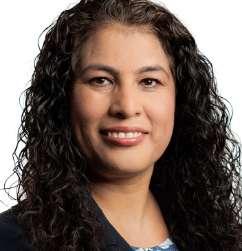
Next-Level Initiators— Nine join the 2026-2027 Initiators Fellowship as the program expands its rural reach.
Pg. 12
COMMUNITY
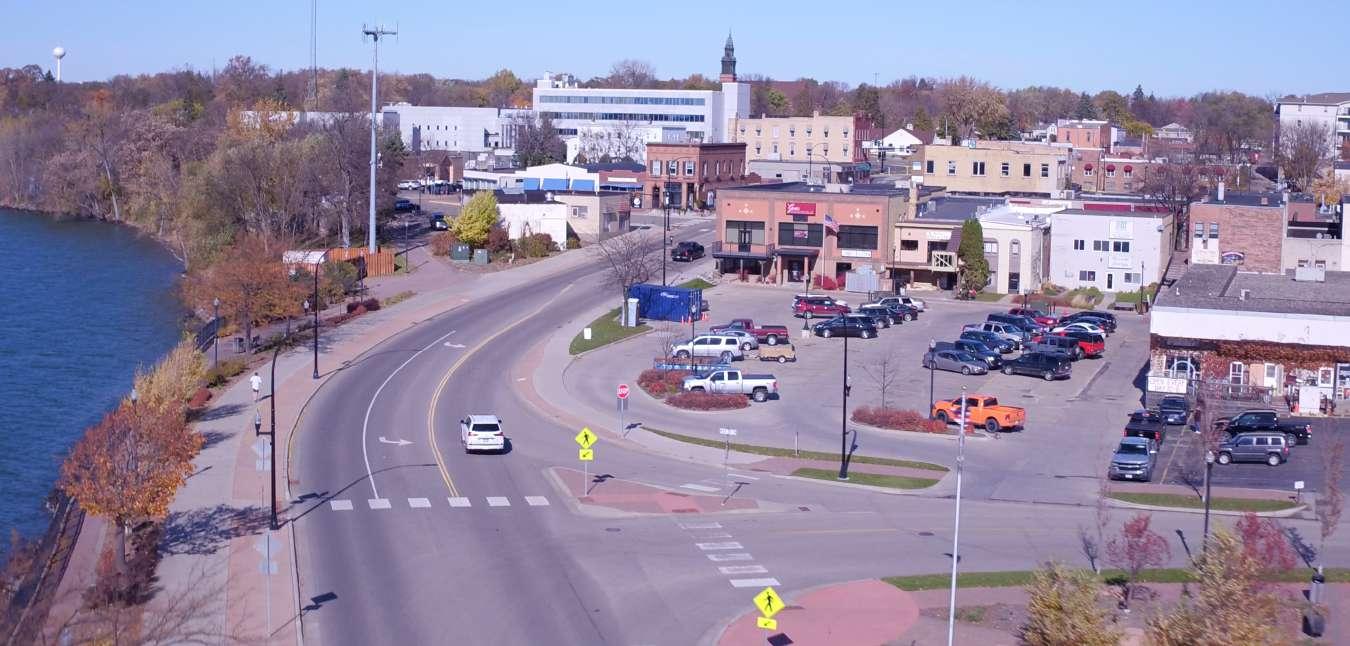
A Hope, a Prayer—and a Plan— As weather becomes more extreme, local communities plan for longterm stability.
Pg. 8
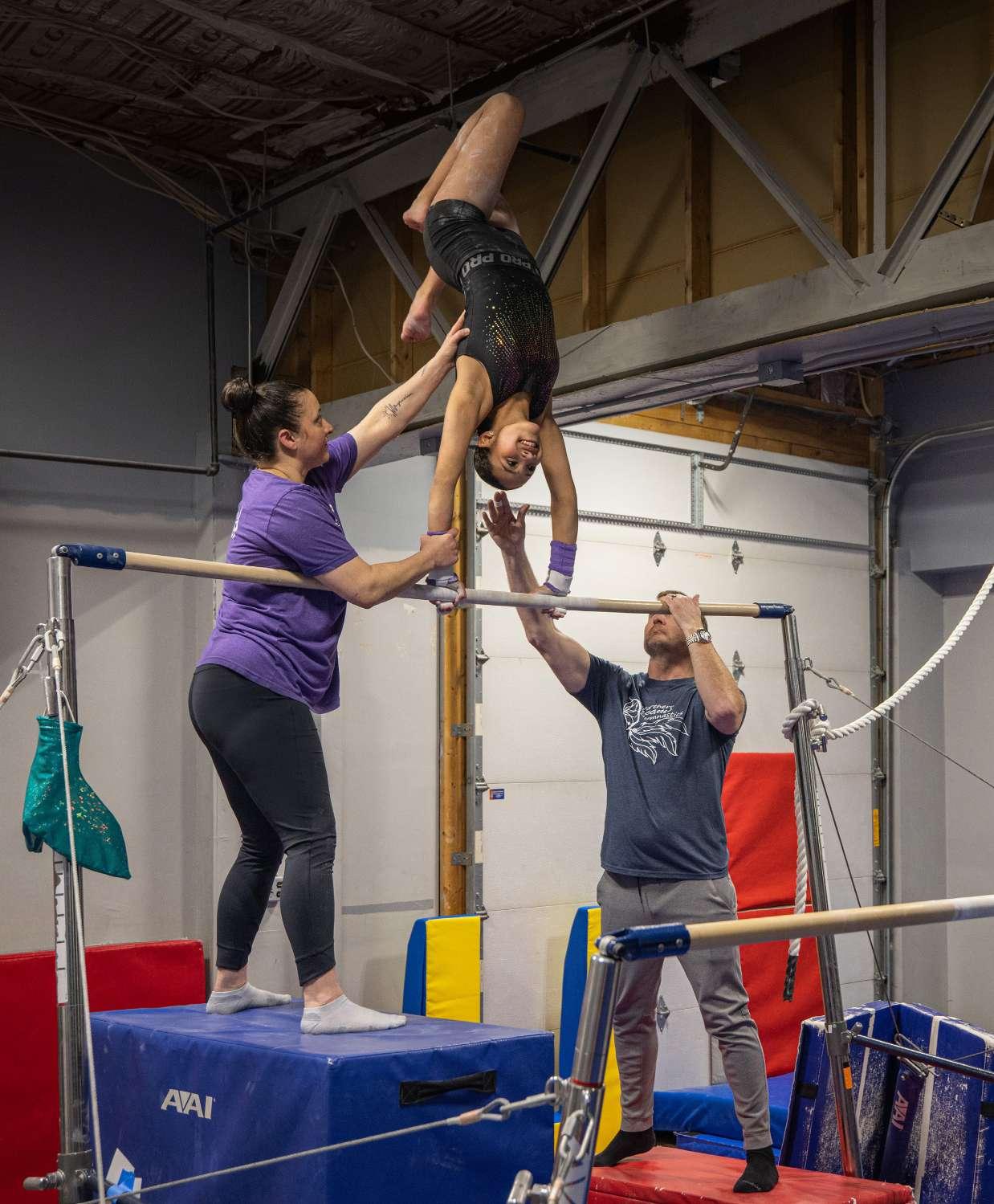
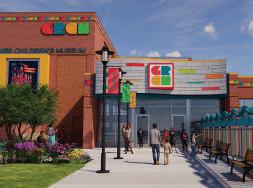
ROOM TO RISE
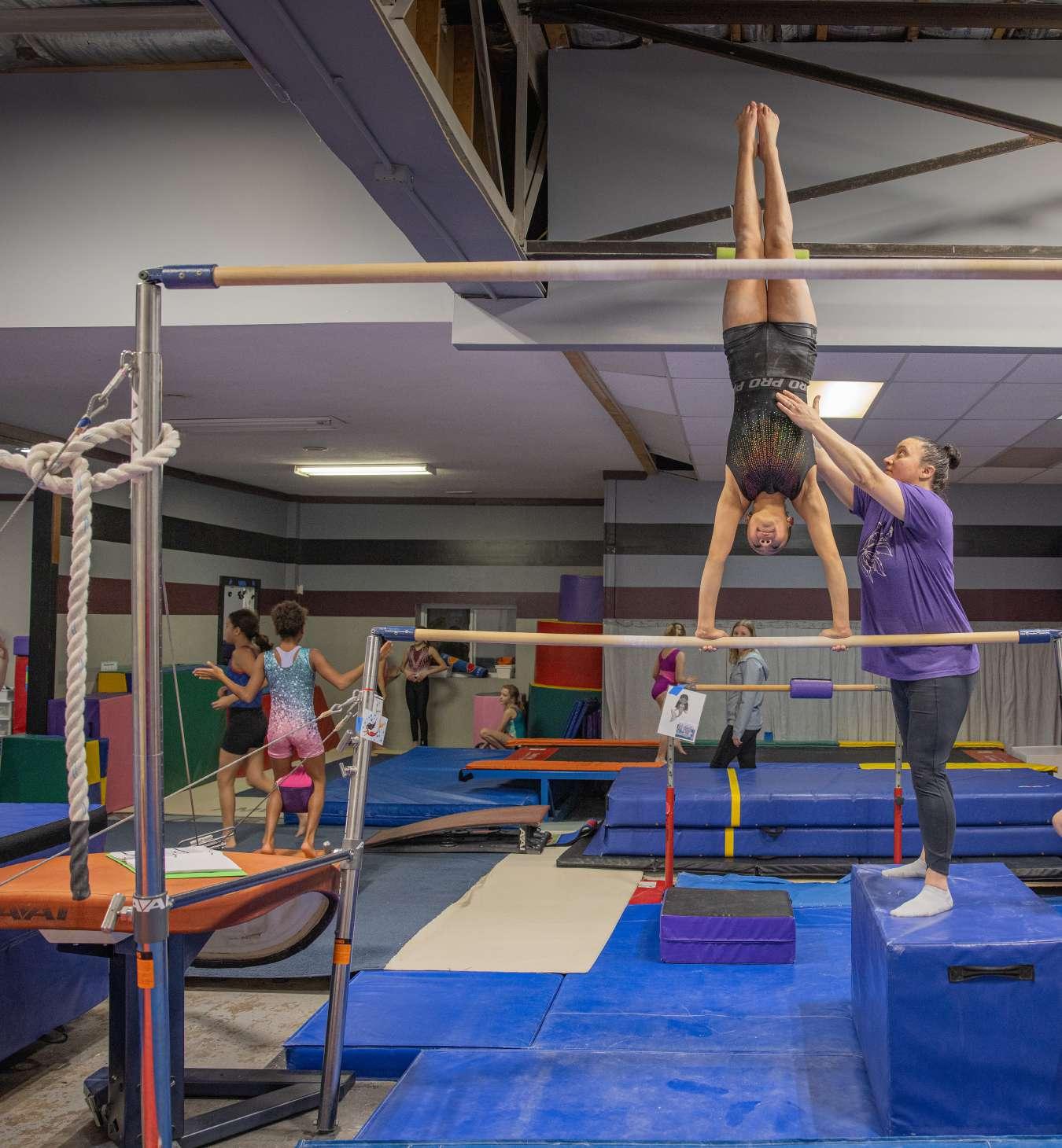
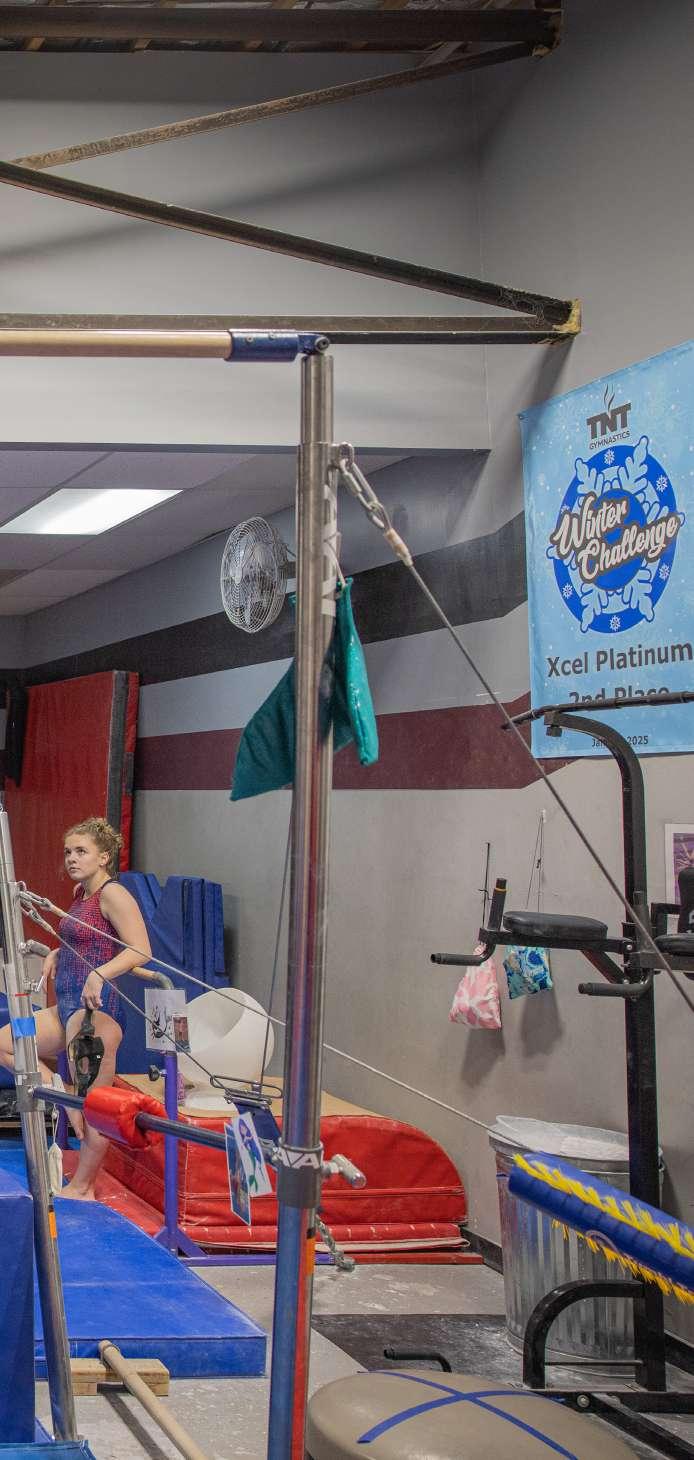
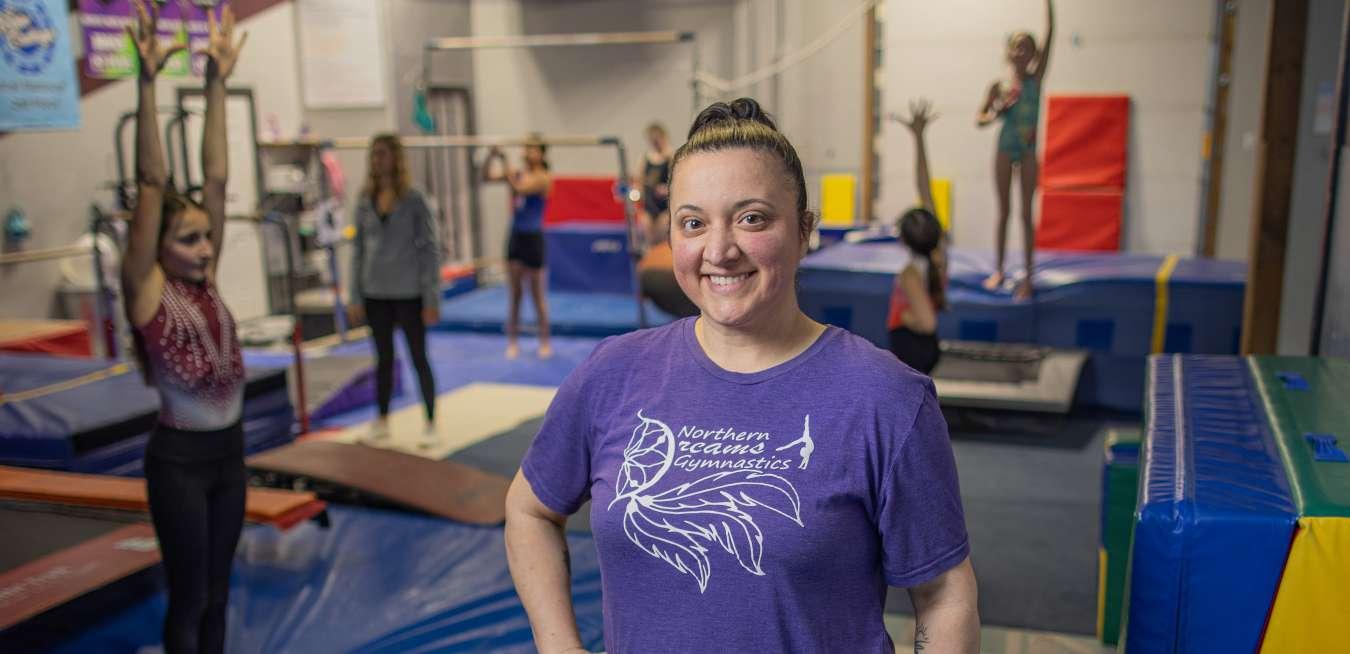
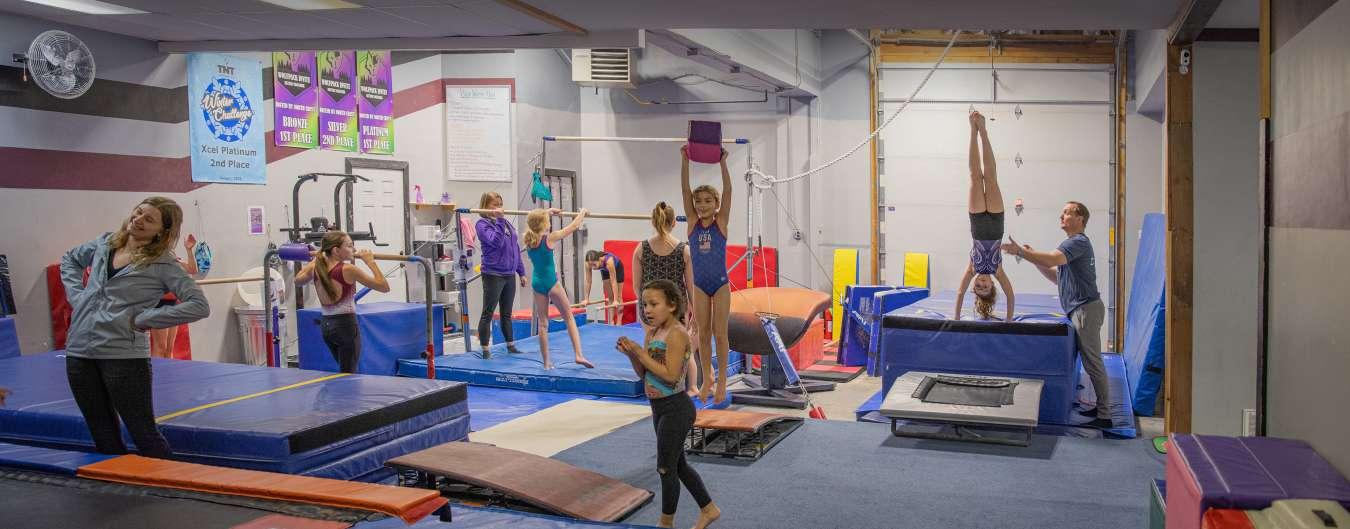
Chance meeting helps Cass Lake’s gymnastics dream team grow.
Pg. 40
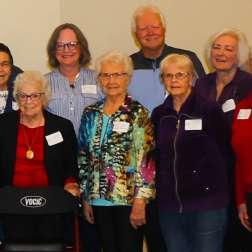
YEARS 40
How four decades of partnerships turned local ideas into lasting community change.
Pg. 28
Your Good Ideas
Scan the code or visit ifound.org/about/40th-year to
Foley | Braham | Big Lake | Nisswa
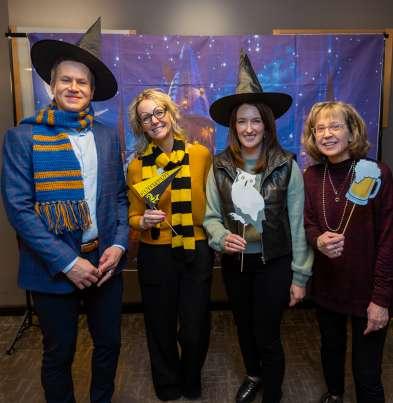
Join us for a regional networking event celebrating the people and ideas that have shaped our communities for 40 years! Enjoy heavy appetizers, meaningful connections and a short program celebrating community impact.
May 13, Foley: Northern Hollow Winery June 10, Braham: Braham Event Center Sept. 22, Big Lake: Lupulin Brewing Company Oct. 1, Nisswa: Nature Link Resort
Braham Big Lake Nisswa
PLAN TO CELEBRATE YOUR LIFE
THE BEST GIFT FOR YOUR FAMILY
Pre-arranging your celebration of life is more than a practical decision — it’s a meaningful gift to your loved ones.
• Unlimited Options Provide Deep Meaning Ease emotional stress and decision-making during a difficult time.
• Pre-Funding Relieves the Burden Financial planning today means fewer worries tomorrow.
• Your Wishes Are Respected Ensure your life is honored exactly as you envision.
Take the First Step Toward Peace of Mind Scan to Begin Your Pre-Planning Journey
Williams Dingmann Family Funeral Homes continue a long tradition of independent, family-owned, locations. Our five generations of experience ensures your complete satisfaction.
Doug R. Dingmann
Deb Dingmann
12 Next-Level Initiators
Nine join the 2026-2027 Initiators Fellowship as the program expands its rural reach.
28 The Power of Local Leadership
The Initiative Foundation at 40: Partnerships turn local ideas into lasting community change. 38 Our Legacy, Our Future
A forward-looking framework that honors the past and invests in people, places and ideas.
Room to Rise
Community partnerships help Cass Lake gymnasts reach new heights.
6 Initiatives: Regional Highlights
Get the latest highlights from Central Minnesota’s 14 counties and two Native nations.
8 Community: A Hope, a Prayer—and a Plan
As weather patterns shift, communities plan for long-term stability.
50 Home made: Coffee, Music and Community
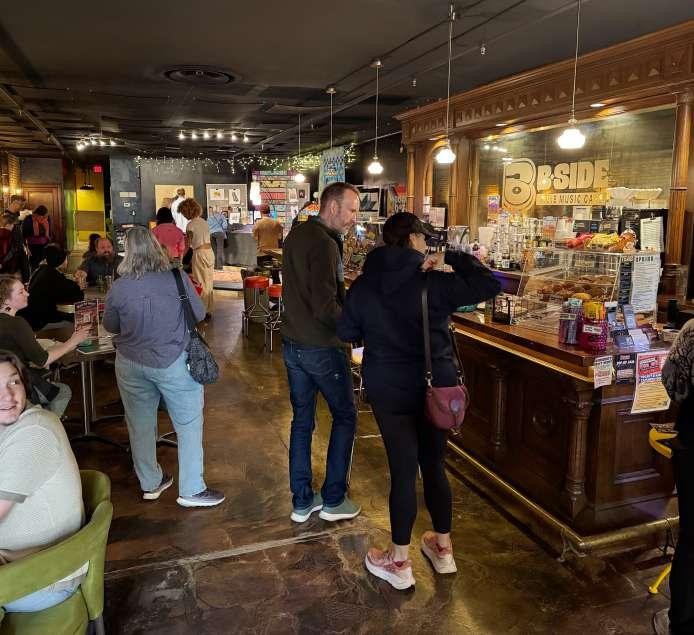
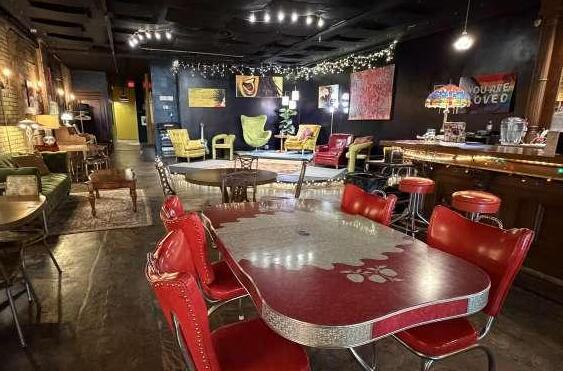
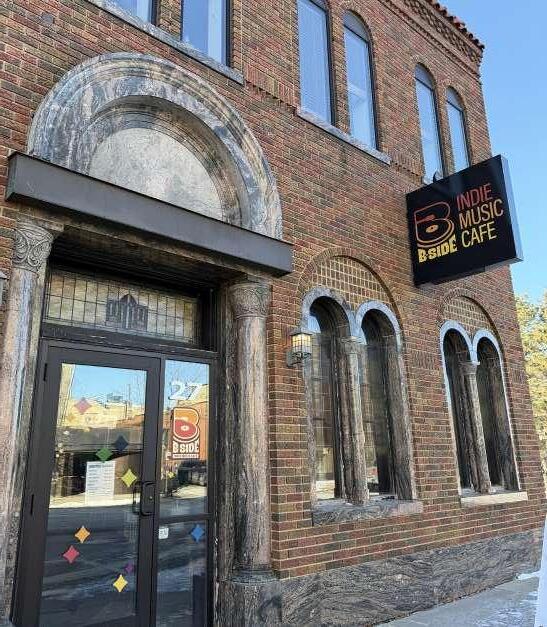
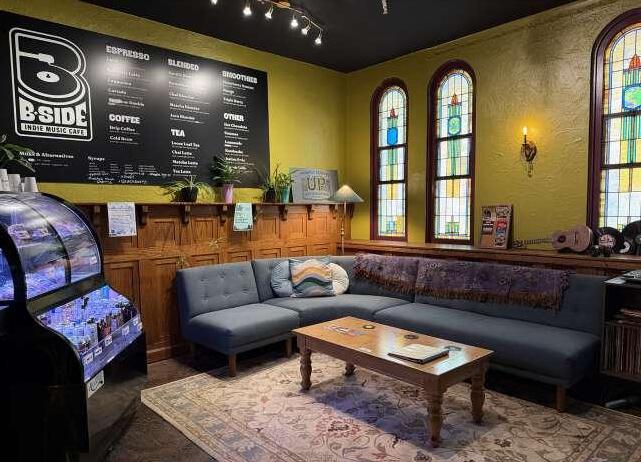
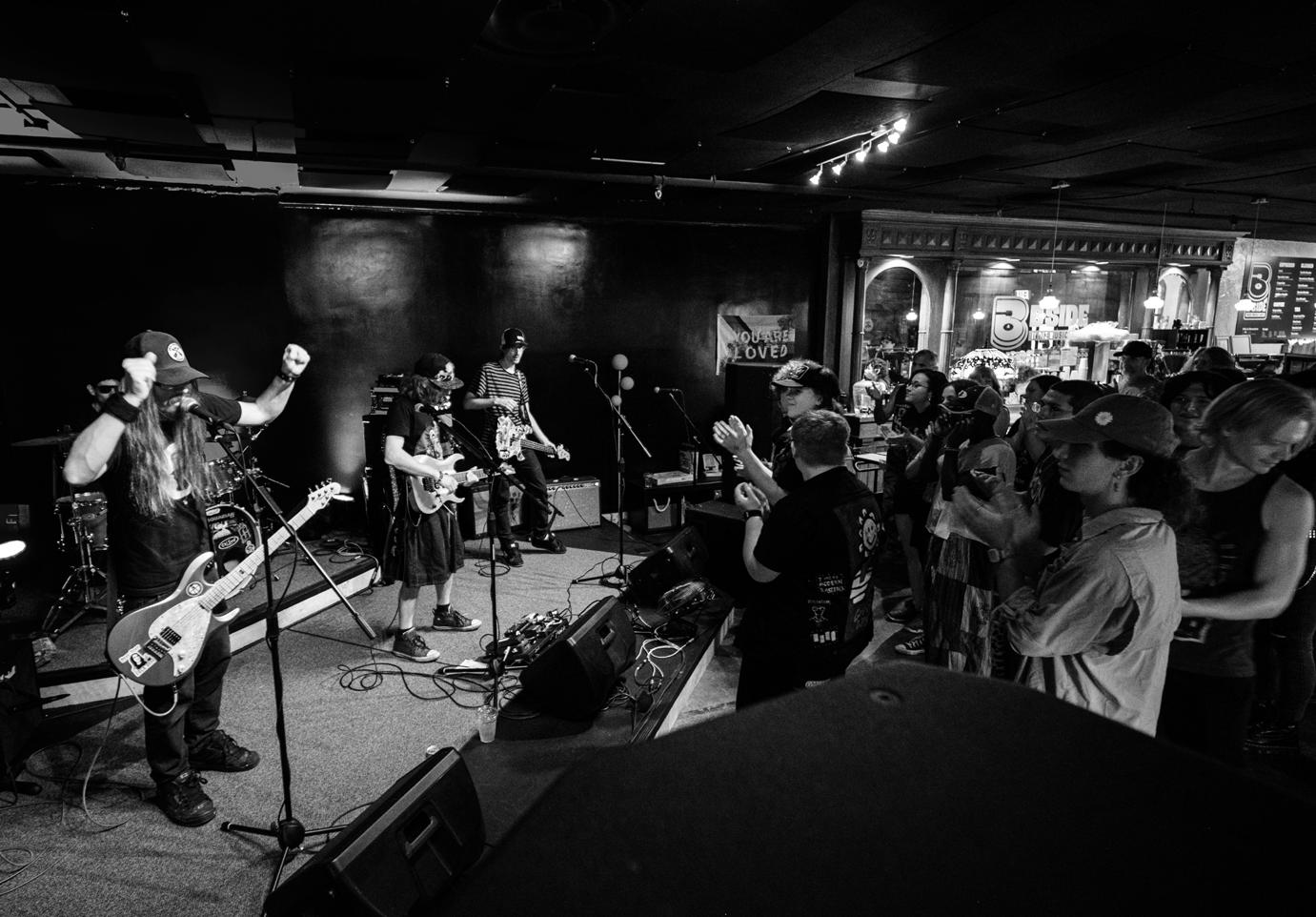
B-Side Indie Music Café creates a welcoming all-ages community stage.
Dear Friends,
As I read the stories in this edition of IQ Magazine, I’m reminded of a simple truth we see across our region: when neighbors, leaders and local organizations come together, small actions spark big change. From Northern Dreams Gymnastics in Cass Lake—where coaches, families and partners turned a cramped former car dealership into a hub of confidence and community—to the nine social entrepreneurs joining the Initiators Fellowship, these pages shine with local investments in people, places and possibilities.
You’ll see common threads throughout this issue: resilience in the face of changing weather and infrastructure stress; creativity that turns underused spaces into community anchors; and the quiet power of local generosity—donors, volunteers and locally created Partner Funds keeping resources rooted here at home. Stories about communities planning for extreme weather, businesses expanding with flexible lending, and new “third spaces” for artists and musicians all point to one idea: local solutions, grounded in local relationships, produce lasting results.
Those stories also connect directly to the Initiative Foundation’s 2026–2028 strategic framework. When we support loans, business coaching and workforce investments, we grow thriving economies. When we help towns make improvements, plan for the future and create gathering places, we build vibrant communities. Our work to grow donor-advised funds and to encourage local philanthropy helps foster a shared culture of generosity. And by showing up in towns—listening, convening and elevating local voices—we expand community presence and storytelling.
As we mark our 40th year, this issue is more than a look back. It’s a map of what’s ahead. The examples here—of grit, collaboration and bold imagination—remind us why we exist: to meet people where they are, combine capital and coaching, and help communities shape their own futures. Thank you for reading, for partnering, and for believing in the people and places that make Central Minnesota home.
VOLUME 43, SPRING 2026
Initiative Foundation
President | Brian Voerding
Marketing & Communications Director | Bob McClintick
Email IQ@ifound.org to subscribe or to make subscription inquiries.
Brian Voerding PRESIDENT
405 First Street SE Little Falls, MN 56345 (320) 632-9255 | ifound.org
IQ Magazine unlocks the power of Minnesota leaders to understand and take action on regional issues.
The 2003 premiere edition of IQ Magazine focused on service across generations—a mission-driven value that continues to this day.
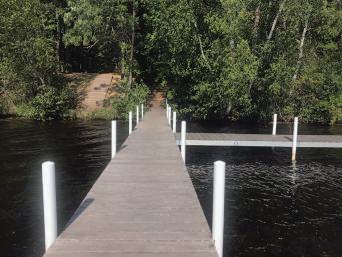
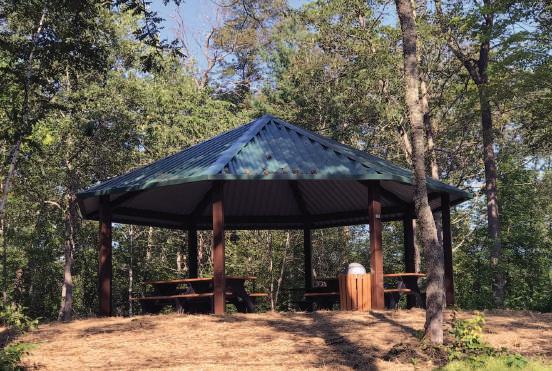
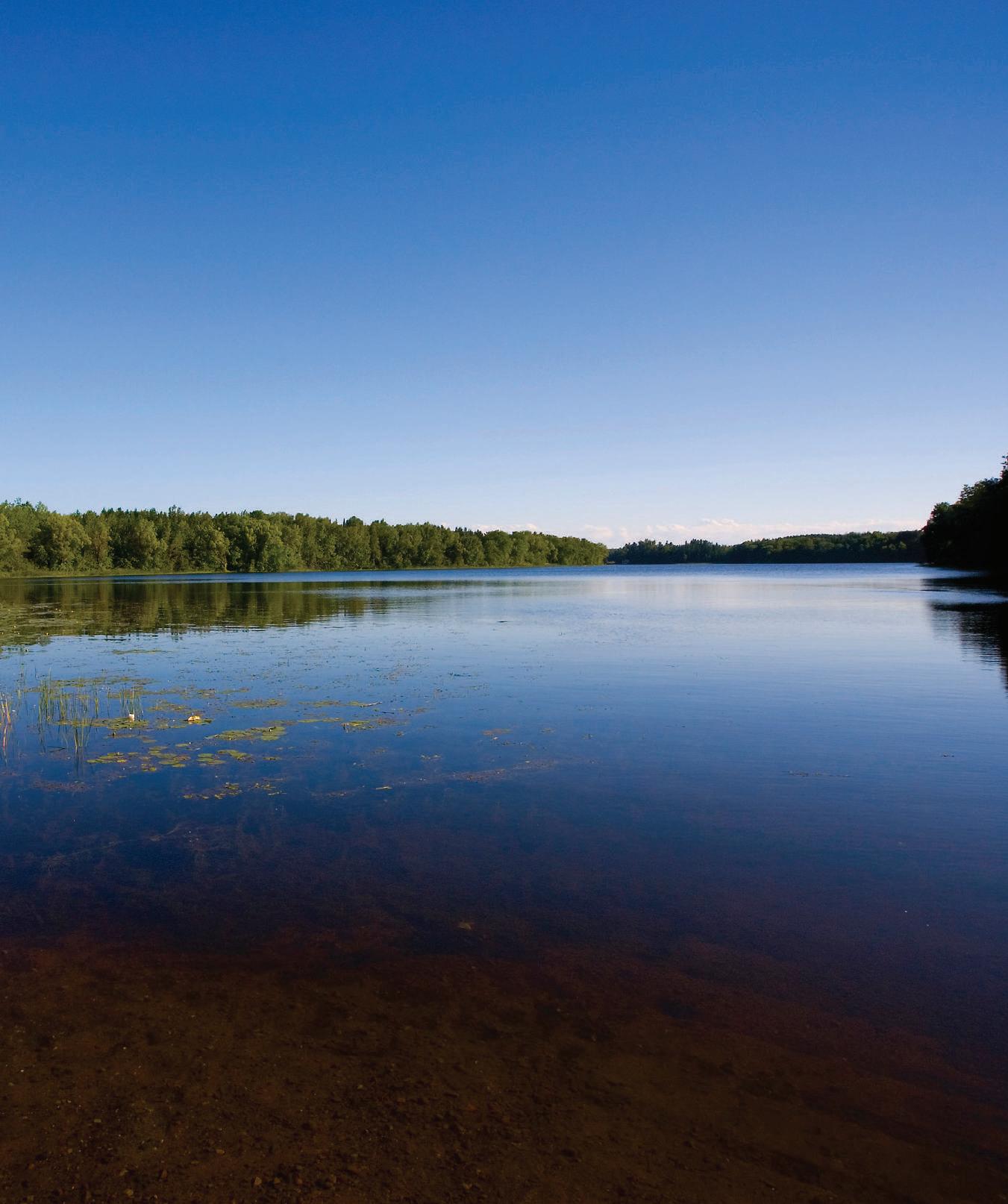
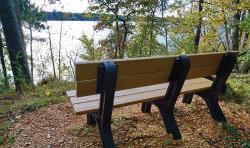
Leave a Legacy for Future Generations Donate to the Nisswa Lake Park
The First Docks
New Gazebo
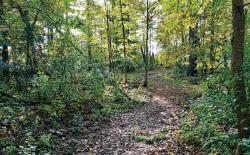
New Walking Trails to Lake Views
Regional Investment Highlights
WESTERN
MORRISON COUNTY | Royalton: Care Closet Boosts Student Success
When students lack basic needs, it’s hard to focus on learning. Royalton Schools’ Care Closet program helps ensure students have food to carry them through weekends and during summer breaks. As food prices rise, demand for the program continues to grow, with dozens of weekend food bags distributed each month. A grant from the Royalton Education Foundation, an Initiative Foundation Partner Fund, is helping keep the shelves stocked so students don’t have to miss a meal.
TODD COUNTY | Right on Track: Grant Helps Keep Polar Xpress Rolling
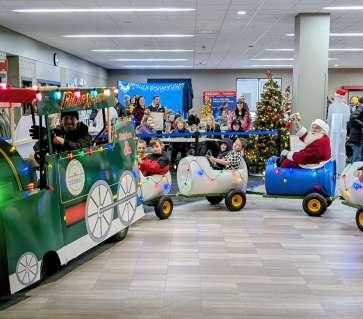
All aboard! Nearly 2,000 people—some from as far as 75 miles away—gathered in Staples in midDecember for the annual Polar Xpress event, a free, family-friendly celebration of the community’s railroad history. An Initiative Foundation’s Joy and Connection grant helped the Staples Historical Society expand the event, which featured local vendors with unique holiday gifts, hands-on ornament-making, face painting, cookie decorating, and, of course, trains of all sizes.
WADENA COUNTY | Wadena Dance Company Takes Stage in Renovated Studio
Moment in Time Dance Company in Wadena is stepping into a new chapter. After years of renting its downtown space, the owners purchased the building and completed renovations in summer 2025. The project expands dance classes, especially for young adults, and creates space for two additional businesses. A loan from the Initiative Foundation and Mid Minnesota Federal Credit Union helped make it possible, supporting the studio’s mission to build dancers on and off the stage.
NORTHERN
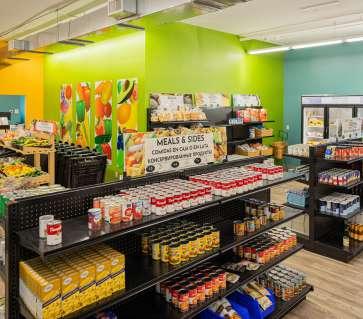
CASS COUNTY | Food Security Grants: Stocking Shelves, Supporting Neighbors
Food shelves across Cass County stocked more food in 2025 as the Initiative Foundation expanded support for food access. Nine local food shelves, including Cass Lake, Outing and Longville, received grants to meet rising demand. Funding was awarded in two rounds: $100,000 to Central Minnesota food shelves in summer 2025 and $310,000 in winter 2025 through partnerships with Sourcewell and a philanthropic partner to strengthen local food systems.
CROW WING COUNTY | Youth Center Grows Capacity Through Care, Connection
Research shows that one caring adult can change a young person’s path. An Initiative Foundation grant is helping the Cuyuna Range Youth Center in Crosby strengthen its financial footing through training in donor engagement, fundraising, storytelling and sustainable revenue strategies. The center serves youth across Crow Wing County as a leadership and personal development space where students help shape the programming, build community, share a warm meal and connect with supportive adults.
MILLE LACS COUNTY | Mille Lacs Plans Place to Pause at Fairgrounds
County fairs are full of excitement—but the crowds, noise and activity can be overwhelming for some visitors. To provide a quiet place to pause and recharge, the Mille Lacs County Agricultural Society will create a tranquility garden at the Mille Lacs County Fairgrounds in Princeton, with support from the Initiative Foundation’s 2025 Joy and Connection grant round. The space will feature shaded seating, accessible pathways, native plants and wind chimes.
TODD: Polar Xpress attendees in Staples enjoyed rides, a display of scale-model trains, crafts and cookie decorating during the annual December event.
CASS: Initiative Foundation grants are helping food shelves across Cass County keep shelves stocked as demand rises.
“Our mayor thought what we were doing was so good, he actually grabbed onto it and created a Commission on Engagement and Collaboration ... with a budget.”
– Dr. Suzanne Begin Braham Thriving Communities program cohort leader
BENTON COUNTY | Phases Helps Families Stretch Through the Holiday
Phases Family Support helps families navigate difficult seasons by providing essentials such as food, clothing and household items. The Foley-based nonprofit supports about 200 children through a weekend food program serving families in Foley Public Schools. During the holidays, Phases partnered with Nick & Drew’s Discount Foods to provide 100 grocery gift certificates to participating families. The effort was supported by a Good Neighbor Grant from the McKnight Foundation, distributed by the Initiative Foundation.
SHERBURNE COUNTY | Counties Launch Regional Economic Development District
Sherburne County has joined Benton and Stearns counties in launching a renewed 7W Economic Development District, a regional effort to strengthen access to state and federal investment for economic development projects. The Initiative Foundation is hosting the district, providing administrative and project management support. Over the coming year, participating counties will set shared priorities, pursue funding opportunities and work toward certification by the U.S. Economic Development Administration to support long-term growth.
STEARNS COUNTY | Network Expands Recovery Work By Building Its Capacity
As Recovery Community Network expanded its recovery support from Stearns County into Wright County, leaders saw the need to strengthen the organization’s operations. Supported by an Initiative Foundation grant, the St. Cloud-based organization improved its outreach, fundraising and financial systems to better serve people in recovery. That capacity-building investment helped position the organization to secure a Minnesota Department of Human Services grant, expanding access to recovery support and strengthening long-term sustainability in the region.
WRIGHT COUNTY | Buffalo Area Launches New Community Foundation
The Initiative Foundation has welcomed the Buffalo Area Community Foundation as a new Partner Fund focused on growing local philanthropy and supporting schools, local governments and nonprofit organizations serving the Buffalo area. Guided by local leaders, the fund will provide long-term support for community priorities and projects that strengthen quality of life. The Initiative Foundation also recently added education-focused Partner Funds in Cass Lake-Bena and Sebeka, reflecting broader efforts across communities regionwide.
CHISAGO COUNTY | New Salon Brings Fresh Style to Chisago City
The Mane Alchemist opened a new chapter in Chisago City in late 2025. With support from an Initiative Foundation loan, owner Tamara Bowman renovated a leased space with six stylist stations and two treatment rooms. The expansion creates room for independent stylists, broadens services for clients and supports job growth. The salon emphasizes creativity, professionalism and community connection.
ISANTI COUNTY | Community Conversations Shape Braham’s Future
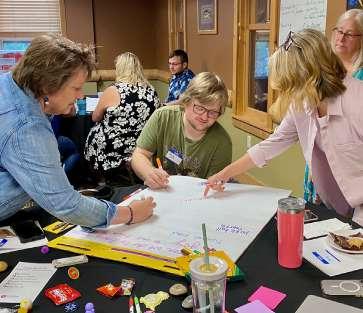
Residents in Braham are taking shared steps toward a stronger hometown after completing the Initiative Foundation’s relaunched Thriving Communities program. The effort brought neighbors together through community conversations, trainings on child safety and mental health, seasonal festivals and early planning for a future parks project. Braham was part of a cohort that included Motley, Sebeka, Staples and Taylors Falls. The program helps local leaders build momentum around ideas shaped by community members. Learn more at ifound.org/community-building/thriving-communities.
KANABEC COUNTY | Grant Promotes More Books, Stronger Starts for Children
More than 400 children and families in Central Minnesota will receive four books each year through an expanded early literacy effort led by Lakes and Pines Community Action Council. Supported by a grant from the Otto Bremer Trust’s Community Responsive Fund, distributed by the Initiative Foundation, the project will increase book giveaways for Head Start children—promoting kindergarten readiness, family engagement and lifelong learning.
PINE COUNTY | People, Projects, Place: County Invests in Its Economic Future
Pine County is strengthening its future by investing in training for its economic development coordinator to advance local priorities. The added skills support work on broadband expansion, new child care slots and housing efforts, including a renovated homeless shelter and a new Local Housing Trust Fund. Support was provided by a Compeer Financial Rural Vitality Grant, distributed by the Initiative Foundation, to help advance people-centered projects with lasting value for residents countywide.
SOUTHERN EASTERN
WRIGHT: The Initiative Foundation recently added the Buffalo Area Community Foundation to its growing family of about 140 Partner Funds.
ISANTI: Braham residents explored ideas to strengthen their community during an August 2025 Thriving Communities training session.
A Hope, a Prayer—and a Plan
As weather patterns become more extreme, Central Minnesota communities implement plans for long-term stability
By Ava Kian | Illustration by Chris McAllister
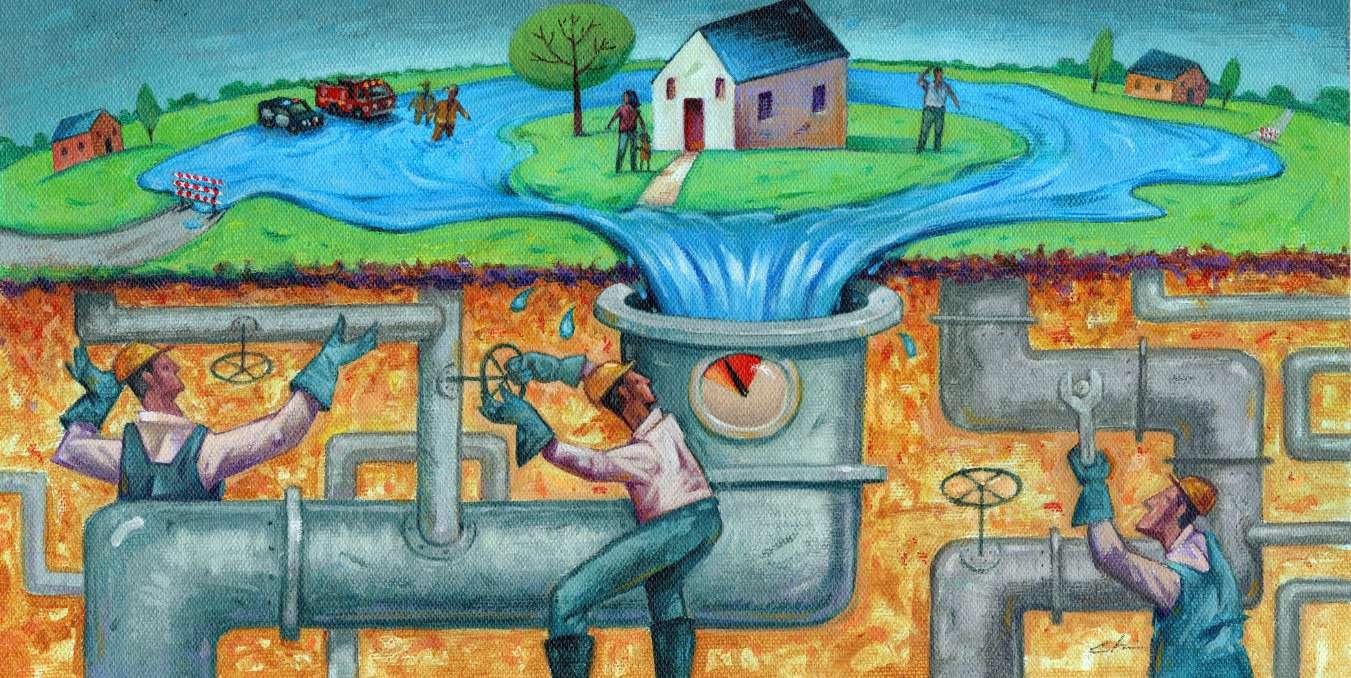
Shifting weather patterns have left many Minnesota cities grappling with extreme conditions that are stretching the capacity of public systems. In Sartell, local officials are responding to repeated bouts of intense flooding that have caused costly damage.
In recent years, heavy rain events have grown stronger across the region, creating mounting challenges for the city, said Anna Gruber, Sartell’s city administrator. And projections from the University of Minnesota Climate Adaptation Partnership indicate the trend is likely to continue.
“When I say flooding events, I mean property damage, both public and private … homes, basements, main levels of some homes, streets for sure,” Gruber said. “It has had a massive impact, particularly on the west side.”
Those heavier downpours are testing existing infrastructure, said Heidi Roop, director of the University of Minnesota Climate Adaptation Partnership. University data indicate Sartell can expect
more intense spring and summer rainstorms, along with warmer, drier falls and winters.
“What we do see already across Minnesota, including in the Sartell region, is that there are more intense precipitation events happening across the state, so more rain is falling in a single storm,” Roop said. The region also is experiencing wetter periods followed by sharper dry spells. In addition, winter and spring precipitation totals are projected to rise—not only in overall averages, but in the frequency of powerful storms.
As a result, storms delivering more than two inches of rain— enough to put significant strain on infrastructure—are expected to become more common.
The Cost of Changing Weather
Flooding strains more than streets and basements. It stretches city budgets and personnel. During major storms, Sartell deploys firefighters, emergency responders and police officers to manage road closures, pump water and protect property, said Rob Voshell, the city’s
finance and operations director. Repeated events are accelerating infrastructure wear and increasing long-term maintenance costs.
Communities across Minnesota are facing similar pressures, said Elizabeth Mboutchom, the Initiative Foundation’s clean energy and community resiliency program officer.
“The ground cannot absorb that much water that fast, and when it runs into the storm systems, they’re not really designed to handle that much water at one time,” she said.
In response, the Initiative Foundation is helping communities move from reaction to preparation. The Foundation is supporting the development of resilience hubs—trusted community spaces that can serve residents year-round and provide critical support during severe weather. It has also launched a grant program to help local governments assess risk, strengthen infrastructure and plan proactively for more volatile conditions.
“What we’re hearing across communities is the impact of extreme weather—flooding, drought,” Mboutchom said. “The question is how we help them not just respond, but upgrade infrastructure so they’re better prepared and not hit as hard.”
Data from the University of Minnesota’s Climate Adaptation Partnership is guiding that work, providing cities with clearer insight into the specific risks they face and the investments they’ll need to address them.
Solutions in Sartell
Rather than wait for the next storm, Sartell chose to act.
With support from the Initiative Foundation, the city conducted a detailed system analysis that pinpointed vulnerabilities—including a bottleneck in a key stretch of wastewater pipe that struggled to handle intense downpours.
“It’s those events where there’s a lot of rain over a short period of time—that’s when the stress on the system is greatest,” Roop said. The city is now working to upsize portions of its sewer infrastructure to better accommodate the volume of water moving across the landscape during heavy storms.
The analysis revealed another costly issue: During major rain events, clean stormwater infiltrates the sanitary sewer system. That water doesn’t need treatment—but the city still pays for it.
“We discharge all of our sewage to the city of St. Cloud, their wastewater treatment facility, and they bill us per the volume that we send to them,” Voshell said. “So if we’re sending through clean water that doesn’t need to be treated, that’s just more costly for the city and our taxpayers.”
From 2021 through 2023, that unnecessary treatment cost Sartell roughly $40,000 per year in disposal fees, said April Ryan, a principal engineer for the city.
Long-Term Thinking
After identifying weaknesses in its sewer system, Sartell moved quickly to fix them.
City engineers targeted areas prone to flooding, upsized undersized pipes, adjusted watershed infrastructure, added waterquality treatment systems and made roadway adjustments. The goal was straightforward: reduce stormwater infiltration and ease pressure on the sanitary sewer system during heavy rains.
The results are already measurable. Ryan said that during the most recent intense rain events, the city no longer saw the same spikes in flow data—a sign the upgrades are working and costs are coming down.
“It’s significantly reducing the cost of what we’re having to pay for our sanitary sewer because of these flood mitigation efforts,” Gruber said. “Now that we’re on the tail end of it, it’s showing that this is worth the investment.”
The work isn’t over. A $15,000 grant from the Initiative Foundation will allow the city to expand its analysis to other parts of the system, identifying additional areas where clean water may be entering sanitary lines and overloading infrastructure.
Sartell is one of seven communities to receive Initiative Foundation support to strengthen local resilience and prepare for more frequent, severe weather. Additional grants are available in 2026, extending that work across the region.
“It really pays to prepare and make upfront investments like the ones that Sartell is making,” Roop said. “You avoid a lot of costs and damage by planning proactively.”
For Sartell, the lesson is clear: Planning ahead costs less than cleaning up after the storm.
The Initiative Foundation’s Community Resilience Program combines planning, business support and clean-energy solutions to help towns anticipate risks, reduce infrastructure strain and build year-round support systems like resilience hubs—trusted local spaces that offer resources before, during and after emergencies.
SCAN THE QR CODE or visit ifound.org/community-building/community-resilience to learn how Central Minnesotans are planning smarter and building stronger together.
How business gets done.
For over a century, Deluxe has been powering the connections that move business forward. From finding solutions to your biggest challenges to providing expert solutions to help you pay easier, get paid faster and grow profitably, we help you get business done.
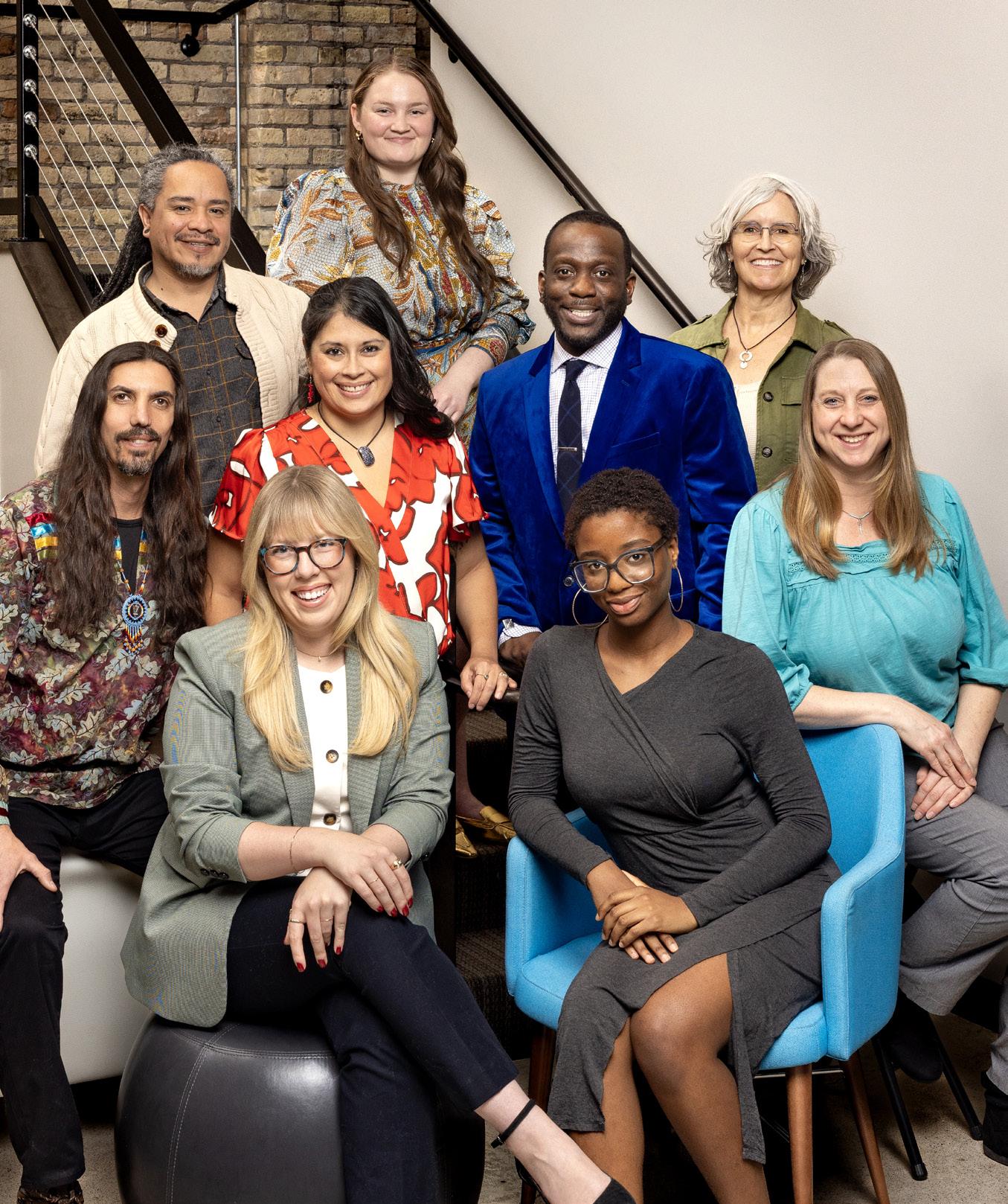
A FELLOWSHIP OF NINE: Meet the 2026-2027 Initiators Fellows, launching a mix of business and nonprofit social enterprise ventures designed to generate revenue while strengthening rural communities across Greater Minnesota.
Next-Level Initiators
By Jon Spayde and Diane Richard
by Paul Middlestaedt
Nine
social entrepreneurs join the 2026-2027 Initiators Fellowship as the program expands its reach across Greater Minnesota
A communications company sharing environmental success stories through podcasts and live events. A counsulting firm helping small-town workplaces and schools navigate conflict and political division. A start-up that equips off-reservation Native youth with job skills and vocational direction. An app connecting innovative Christian music to support listeners’ wellbeing.
These are among the nine ventures launched by members of the 2026-2027 Initiators Fellowship cohort. Over the next two years, the Fellows will receive support to build their social enterprise ventures—a mix of businesses and nonprofits designed to generate their own revenue while advancing social good.
The program is rooted in a simple but powerful belief: Innovators can thrive and make a difference in Greater Minnesota. With new support from the Bush Foundation, that vision is gaining momentum. A multi-year grant will enable the Initiators Fellowship to expand beyond its two-year cohort model and build a statewide network to support rural social entrepreneurs.
Initiators Fellowship Co-director Christine Metzo said the program fills a unique niche.
“I’ve scoured every piece of literature I could find on social enterprise,” she said. “You’ll see a lot of programs that are either global in scope or very metro-based. We are the only program that supports this kind of social entrepreneurship for a rural and smaller-city setting.”
Each Fellow receives a $30,000 annual stipend for two years, along
with leadership development, business education, mentorship and hands-on guidance from the Initiative Foundation and its partners.
“It’s an investment in a person, their personal learning and leadership journey, and their social enterprise development,” Metzo said.
The Fellowship began with a regional vision. Rick Bauerly, founder and CEO of St. Cloud-based Granite Partners, was inspired by Echoing Green, a New York organization that supports social entrepreneurs worldwide. He believed a similar model could be adapted to serve Greater Minnesota.
With support from Granite Partners, the Initiative Foundation launched the first cohort in 2017. What began with four Fellows in Central Minnesota has since expanded across the regions served by the Northwest, West Central and Southwest Minnesota Initiative Foundations. The current cohort also includes northeastern Minnesota through a partnership with Duluth-based Northspan.
Recruitment is intentionally broad, beginning with an open call for applications. From roughly 120 submissions, nine Fellows were selected through a rigorous, multi-stage review process.
Metzo notes that even those not selected for the final cohort benefit from the experience.
“I tell people the application is more than a form—it’s a chance to really pressure-test and refine your idea,” she said. “Even people who aren’t selected have told me the process helped them get clearer and stronger. That’s a win in my book.”
From small towns across Greater Minnesota, the Fellows are proving that bold ideas can take root in the non-metropolitan areas of the state. Here’s a look at the 2026-2027 cohort and their social enterprise ventures.
Photography
Hallie Pond
In the Company of Changemakers
PINE RIVER
INITIATIVE FOUNDATION REGION
You won’t find a New York–style bagel shop on Pine River’s main drag. But you will find songbirds along the riverbanks—something Hallie Pond values just as much.
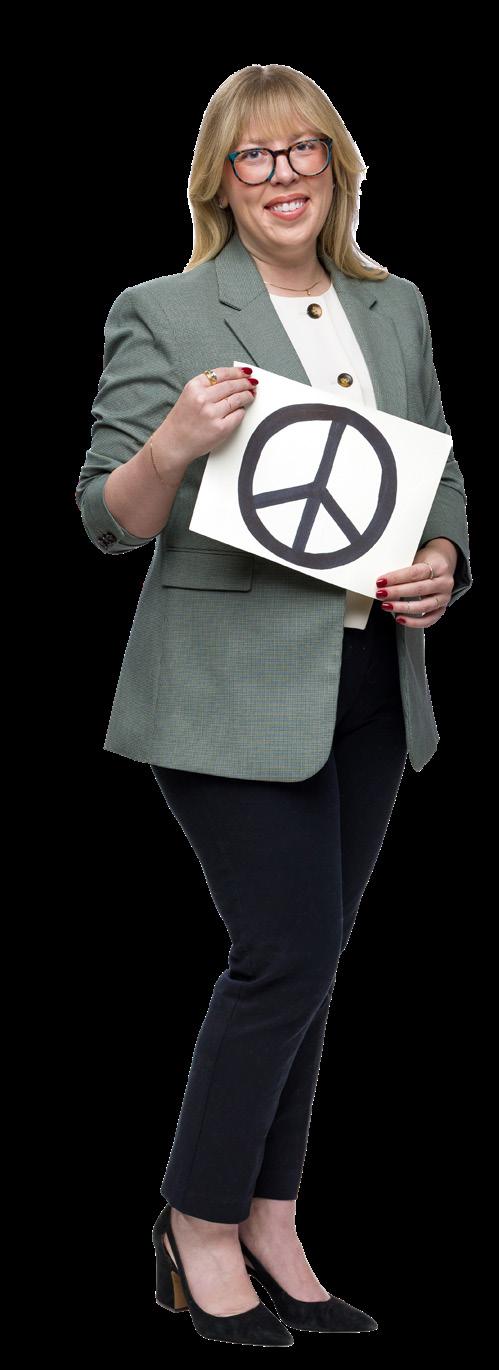
After spending time in Senegal, the San Francisco Bay Area and New York City, where she earned a master’s degree in organizational psychology from Columbia University, Pond has returned home. Now, as a member of the 2026-2027 Initiators Fellowship cohort, she’s building Truespace Consulting, a Pine River–based business that helps workplaces and schools build conflict resilience.
Following her grandmother’s advice— “Don’t get a big head and stay focused on what the community needs, listen with love, be patient and stay curious”—Pond is grounding global experience in small-town relationships.
“Curiosity is one of the most powerful tools we can cultivate to build bridges,” she said.
Conflict, Pond says, is neutral. In Minnesota, where many pride themselves on avoiding confrontation, that can be hard to accept. But unaddressed tension doesn’t disappear—it festers.
“In every organization I’ve ever been in, conflict was not handled well,” she said. Even trends like “radical candor,” meant to encourage honesty, sometimes gave people permission to be direct to the point of cruelty.
Handled well, she argues, conflict becomes an asset. “Conflict is a conduit for innovation, growth and building trust,” Pond said. When addressed successfully, teams find a sense of relief and catapult their growth in a productive direction.
When she enters a workplace where employees hesitate to speak up, Pond begins by setting shared norms—confidentiality and gentle prompts for people to contribute more or less—“with the hope of creating a psychologically brave space.”
From there, she facilitates conversations so the wisdom of the group can emerge. “My job isn’t to give anybody the answers, but to hold that container and bring structure to that conversation.”
Pond launched Truespace Consulting in 2019 and now plans to grow it across the fivecounty area surrounding Pine River. Revenue from workplace engagements helps fund youth programming. Through the Initiators Fellowship, she is developing a roadmap for that next phase.
“To be in the company of changemakers, it’s just fun,” Pond said. “To be alongside others who are compassionate, driven souls working to make positive social change, it’s giving me a lot of energy.”
By Diane Richard, IQ Magazine contributing writer.
SUPPORT FOR RURAL SOCIAL ENTREPRENEURS
Founded in 2017 with early and ongoing leadership and financial investment from Granite Partners, the Initiators Fellowship supports rural social entrepreneurs with capital, coaching and statewide connections that help ideas grow into lasting community impact. As the program expands across Greater Minnesota, applicants are engaged through learning opportunities, peer connections and convenings, creating a supportive network for rural social entrepreneurs. Major support comes from the Bush Foundation, our Minnesota Initiative Foundation partners and Duluth-based Northspan.
Lilly Goyah
The Perfect Praiseworthy Tunes
BIG LAKE
INITIATIVE FOUNDATION REGION
Music wasn’t just background noise for Lilly Goyah. It was a lifeline.
During a painful season of depression, when she experienced suicidal ideation, one song in particular reached her in a way nothing else could. Gospel artist Kirk Franklin’s “My World Needs You”—a tender, prayer-like piece—gave words to feelings she struggled to name.
“At that point, I wasn’t that aware of him,” she said. “But it was a song that went deep.” Unlike much of the upbeat Christian music she’d heard before, this one met her in its heaviness. “So much Christian music is so upbeat—but this song met me where I was.”
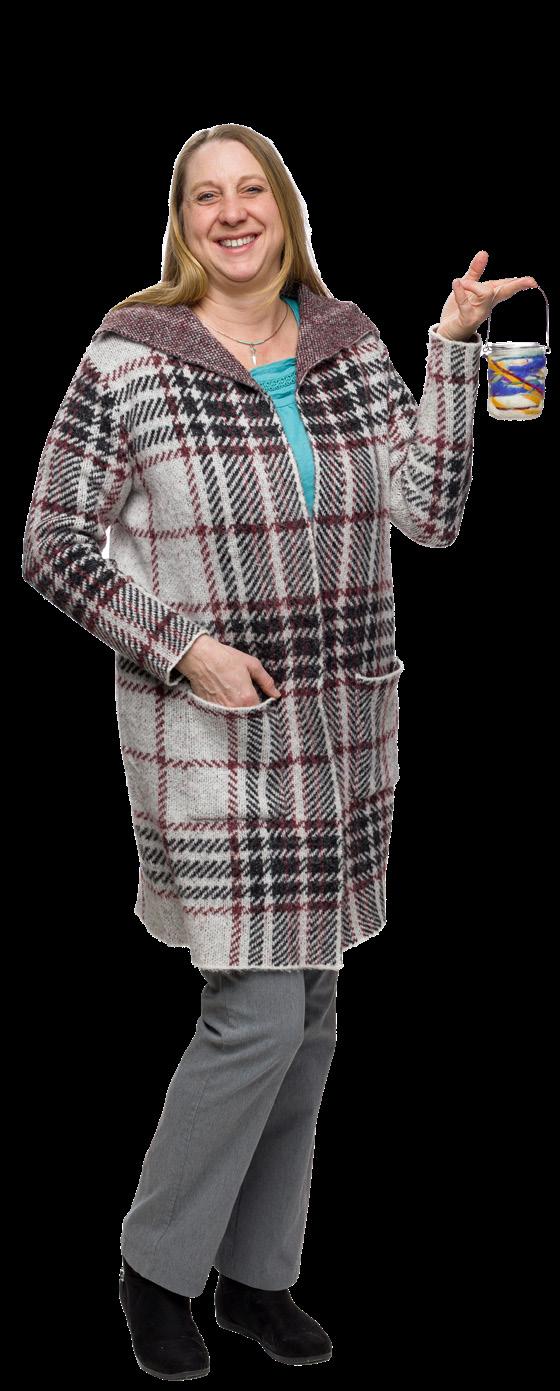
Now, the second-generation Liberian American is working to create that same kind of connection for others. Through her Initiators Fellowship social enterprise work, Goyah is developing ANP Streaming (ANP stands for A New Psalm), an app that pairs diverse Christian music from around the world with listeners’ moods and spiritual needs—helping people find songs that speak to exactly where they are.
“I want it to be a platform where people can tell the app how they’re feeling, and it learns what type of songs they like to listen to, depending on the mood they’re in. It will continue to curate a playlist based on their emotions,” she said. A journaling feature will allow listeners to track their responses.
Goyah started ANP Streaming during her senior year at the College of Saint Benedict in St. Joseph. The college’s Enterprise Scholars Program teaches students about the nuts and bolts of business development and takes them overseas for further study. Goyah’s class went to Vietnam, which was the perfect place for her: Instead of working with expensive U.S. tech firms that often outsource to Vietnam, she was able to bypass intermediaries and establish direct connections with Vietnamese app developers.
She’ll use the Fellowship to further develop the app, which she calls the relatively easy part, and also to market it.
“Marketing is the live-or-die for a digital product,” she said. “How well you present your brand, how much people feel like they can be a part of it.”
Marketing and mission go together for Goyah: “I want to be able to see ANP’s impact on diverse people who are proud of their Christian faith coming together, expressing themselves, and creating a space where they feel their stories are heard.”
For Goyah, the goal is simple: to make sure someone else hears the right song at the right time—and know they are not alone.
By Jon Spayde, IQ Magazine contributing writer
I want to be able to see ANP’s impact on diverse people who are proud of their Christian faith coming together, expressing themselves, and creating a space where they feel their stories are heard.”
Dacia Dauner
A ‘Micro School’ in Nature BEMIDJI
NORTHWEST MINNESOTA FOUNDATION REGION
tep inside a classroom at Apple Blossom Village in Bemidji and you won’t find rows of desks or glowing screens. Instead, sunlight pours through a skylight into a round yurt, where children gather on wool rugs and the walls curve without corners.
That’s because class here takes place inside domed structures modeled after traditional Mongolian homes. And for founder Dacia Dauner, Apple Blossom’s yurt is one of the healthiest places to learn and grow.
Her favorite place? Nature—in all its wild unpredictability.
“If we want to raise good stewards who care about the Earth, we need to start when they’re little,” Dauner said. In nature, “they build resilience, perseverance. They learn it’s OK to be uncomfortable sometimes. It shapes their brains.”
Drawing on more than 20 years in early childhood and Waldorf education, Dauner and her staff offer family classes, summer camps and mobile forest retreats. The programs promote health, foster stewardship and inspire joy and wonder in the natural world.
Dauner’s introduction to yurts came through the Indigenous Environmental Network (IEN), a Bemidji-based alliance of grassroots Indigenous leaders. The organization shared its yurt with her class, sparking a partnership that continues today. IEN now teaches Apple Blossom students traditional Indigenous and Anishinaabe ways of caring for the earth and one another.
That relationship reflects the school’s broader philosophy. Rooted in Waldorfinspired, nature-based learning, Apple Blossom students spend as much time outdoors as possible.
“Their learning is very play-based with the rhythm of the day,” she said. “We take every indoor activity and do it outside. If it’s painting day, we’re painting outside. If it’s baking day, we’re rolling dough at the picnic tables.”
Dauner describes Apple Blossom Village as a micro school for kindergarten through fourth-grade students, 45 percent of whom are students of color. In the Northwoods, that means packing extra layers. “We’re outside every single day—even in the middle of winter,” she said. “We bundle head to toe.”
Two global events converged to lay the seed for Apple Blossom Village: the COVID19 pandemic and the omnipresence of digital distractions. The pandemic “made it clear in my mind that being outdoors was the healthiest place to be,” Dauner said. And the rise of screen time, she said, has deprived young people of physical play.
“To bring back the magic of childhood and play face to face, that’s what I want to get the word out about,” she said. “The physical movement, they need that so much. Of course, academics too, but they need the freedom to explore and even get bored. Which doesn’t happen much these days.” That, she added, is when the magic happens.
By Diane Richard, IQ Magazine contributing writer
“If we want to raise good stewards who care about the Earth, we need to start when they’re little.”
Joshua Jones
A New Deal for Native Youth RED LAKE
NORTHWEST MINNESOTA FOUNDATION REGION
oshua Jones’s resume reads like a road map of restless energy—motocross racer, touring drummer, ranch hand, factory worker. Today, the Red Lake Nation tribal member has found his calling: helping Native youth find steady footing in their own lives.
Though he now lives in Bemidji, about 35 miles south of Red Lake Nation (Miskwaagamiiwi-Zaagaiganing), Jones considers the reservation home. As an enrolled tribal member and hydrologist for the tribe’s Department of Natural Resources, he monitors water quality and works to protect the land and lakes that shaped him.
“It really feels like I’ve had many different lives,” Jones said.
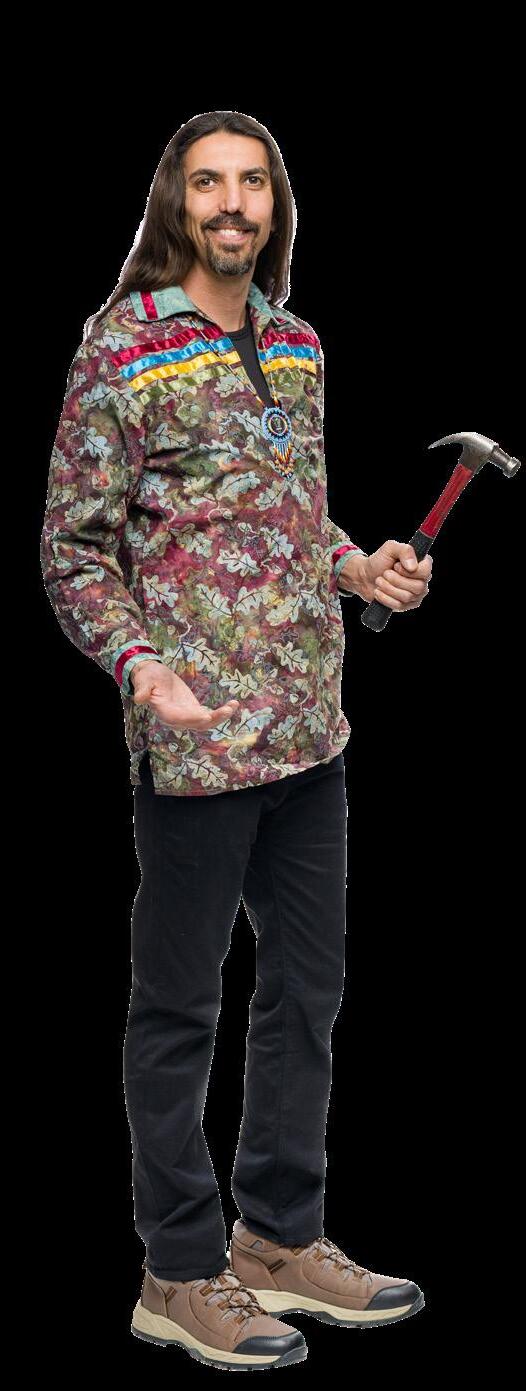
That winding path—from dirt bikes to environmental science—now fuels his vision as an Initiators Fellow. Jones is developing a modern-day version of the Civilian Conservation Corps to create paid work opportunities and mentorship for Red Lake youth.
Jones’s goal is to solicit work for Native youth, ranging from construction and landscaping to food service and security— anything that can serve as an appropriate first step on the job ladder—and then provide ongoing support.
“I’ll tell a customer, ‘Well, I’ve got a crew. We can help,’” he said. “Strengthening community relationships is more important to me than anything, and having a bunch of Red Lake kids in the Bemidji community doing good things, that’s powerful.”
For Jones, the goal is visibility as much as employment—creating opportunities for Native youth to contribute, earn and be seen in a positive light.
Many of those young people, he said, are caught between two worlds. Living off-reservation in Bemidji, they may not have regular access to Red Lake’s Youth Council programs—whether it’s due to
transportation barriers or they don’t meet tribal enrollment requirements. At the same time, steady job opportunities can be limited on the reservation itself.
Jones understands that tension firsthand. After years of searching for direction, he found focus while studying hydrology at Bemidji State University, where he ultimately secured a master’s degree. The experience shaped how he thinks about opportunity—how steady work, mentorship and purpose can help young people find their footing sooner than he did.
When Red Lake’s Family and Children’s Services unit, known as Uplifting Our Relatives (Ombimindwaa Gidinawemaaganinaadog), began building a lakefront recreation area, Jones stepped in—and brought local youth with him. What started as a single project quickly became something more. He saw how paid, handson work paired with Ojibwe cultural learning could build confidence and pride.
More projects followed. In his role at the tribal DNR, Jones continued to hire and mentor young people, weaving together conservation work, cultural knowledge, and job skills. The Initiators Fellowship now gives him the platform to expand that model—reaching more youth and building a structured pathway to help them discover their strengths.
“Putting some money in their pockets is great,” Jones said. “Experiences are great. But I also think about the many stages of my life and how it would have helped me to have had somebody there who kind of kept the ship afloat, kept me pointed in a general direction.”
And there’s something else that’s just as important, he added: “There’s the value of just knowing that, at the end of the day, somebody cares about you.”
By Jon Spayde, IQ Magazine contributing writer
A Grounding in Grit
DETROIT LAKES
WEST CENTRAL INITIATIVE REGION
When Erika Gilsdorf talks about climate leadership, she doesn’t start with policy. She starts with grit.
The Detroit Lakes-based videographer is expanding her storytelling toolkit, moving from film into podcasting to spotlight local environmental voices. Through her social enterprise, she aims to build climate leadership and resilient communities across Minnesota by sharing stories that connect people to the places they call home.
Her new venture, The Global Grit Experience Podcast, will focus on everyday Minnesotans who care for land, water and wildlife—from prairie restorations to backyard pollinator plots.
She defines environmental advocacy broadly. “A farmer is a climate activist when they’re protecting the land,” she said. “Hunters are climate activists when they invest in Ducks Unlimited, which protects wetlands.”
The podcast comes at what she sees as a pivotal moment.
“It’s really frustrating when new legislation can come in and, with a stroke of a pen, erase the work of a generation,” she said. “In this time, we’ve just moved the clocks back on decades of progress. It’s up to people to say, ‘We want consistency. Hey, Minnesota, we value our clean water and our farmland. We’re not going to allow this.’ I think it’s extremely timely right now.”
Through interviews with community members improving the environment in ways big and small, Gilsdorf hopes listeners will see themselves in the work.
“It takes grit, which means perseverance, passion,” she said. “Grit can be in anything. It can be in speaking up for the first time, or for the hundredth time. It can be in planting a pollinator garden that’s a two-by-two plot. Grit is an experience that makes you feel good.”
The idea sharpened during a work trip to Ireland, when a video subject told her, “I’m working on my corner. I hope you’re working on yours.” The phrase stuck.
“It starts local,” she said. “Even locally, county boards will go against environmental priorities. It takes grit to get local people to prioritize environmental health.”
For Gilsdorf, grit is the antidote to complacency. “We slowly start to accept things: Why is there an algae bloom? Why is it smoky all summer?” she said. “It takes grit” to counter complacency—to say, “I’m going to get involved.”
She points to the Indigenous philosophy of the seven-generations principle, which calls on people to consider how today’s decisions will affect descendants far into the future. “When you plant a tree, you’re not going to reap the benefits and sit in the shade. It’s for the next generation. You persevere because it matters.”
In western Minnesota, she believes those small acts—tending a field, restoring a wetland, planting a tree—add up. One corner at a time.
By Diane Richard, IQ Magazine contributing writer
“ When you plant a tree, you’re not going to reap the benefits and sit in the shade. It’s for the next generation. You persevere because it matters.”
Built for the Work That Strengthens Our Communities
From helping local businesses grow and nonprofits thrive to reinvesting time, talent, and resources back into Central Minnesota, Falcon National Bank is proud to support the economy, community, and generosity that make our region strong.
Explore Falcon’s 2025 Annual Report
Megan Gilsdorf
A ‘Third Space’ for Artists DETROIT LAKES
WEST CENTRAL INITIATIVE REGION
Megan Gilsdorf grew up under the counter at Norby’s Department Store—sorting hangers, designing window displays and learning how a small-town business shapes a community.
Now she’s launching a social enterprise in Detroit Lakes: a “third space” offering studio access, mentorship, a gallery, coffeehouse and marketplace.
“I’ve got that small-business itch,” she said. “I really have a passion for entrepreneurship and a passion to work hard for community.”
Now in the ideation phase, Gilsdorf still has numerous decisions to make: She needs to name the business, choose a location, build it out and find funders. “[The Initiators Fellowship] is the turning point for me to have the resources and mentorship to figure out how the heck to start something like this,” she said. “It’s mind-blowing.”
Her idea for a creative incubator took root when Gilsdorf and a friend commiserated over missing the innovative sparks that sizzled when they were college students.
“We really mourned the loss of the creative college environment, with endless classes and people coming together,” said Gilsdorf, who spent a couple of years in corporate life after earning a fashion degree from Arizona State University. “It’s so inspiring and collaborative, that cross-collaboration. We discovered we missed this, so maybe others will be [missing
And what better place to build a creative rural hub than in Detroit Lakes?
The west-central Minnesota community has already shown it can think big. The arrival of Danish artist Thomas Dambo’s towering wooden trolls—built with the help of hundreds of local volunteers—transformed parks and trails into destinations and helped land the city on Time magazine’s list of Top 25 places to visit. The sculptures sparked tourism, yes, but they also reflected something deeper: a willingness to invest in public spaces, back local entrepreneurs and treat creativity as economic strategy.
“You can do anything you want in a small town,” she said. “It’s easier here. There’s a lot of creative energy … but nowhere to come together and connect.”
Gilsdorf imagines repurposing an existing space—a warehouse or maybe an old gas station—where artists can gather, experiment and grow. She envisions a place “for people to belong, try new things, mess up along the way,” and a space bold enough to challenge the idea that art is merely a hobby.
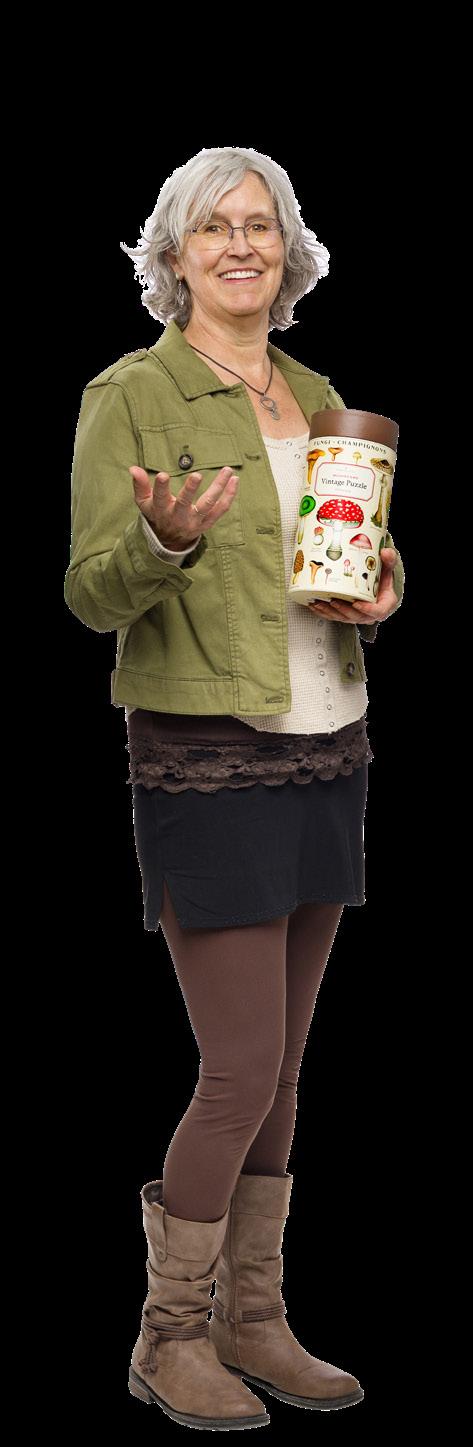
Borrowing from the “slow food” movement—Gilsdorf calls it “slow art”—she wants to create a space where creative work can be nurtured with time, mentorship and community support. “It’s for the professional artist, the casual artist and the art curious,” she said. “We’re here to give you the tools and know-how. We have a space for you.”
By Diane Richard, IQ Magazine contributing writer
“ You can do anything you want in a small town. It’s easier here. There’s a lot of creative energy … but nowhere to come together and connect.”
AGRICULTURE MANUFACTURING COMMERCIAL
> Cuyuna Brewing Company in Crosby is partnering on a loan for a remodeling project.
Congratulations to these recent loan partners
The Sanctuary, Crosby Cuyuna Brewing Company, Crosby Central Minnesota Youth Soccer Association, St. Cloud
The Sandstone School Project, Sandstone Advanced Interconnect Technologies, St. Cloud
• Insane Mane, Inc., Chisago City
• Louis Industries, Inc., Paynesville
• ANP Streaming, Big Lake*
• Danique BATB, St. Cloud
• Brenda's Place, St. Cloud*
• Seal Dwyer Counseling, St. Cloud
• Ohana Chiropractic and Wellness, Isanti*
• Moment in Time Dance Company, Wadena
• 706 WSG, St. Cloud
• Mohr's Furnace & Duct Cleaning, Inc., Princeton
• Lighthouse Chiropractic Health Center, Elk River
• Besorah Brand, St. Cloud*
• City Center Market, Cambridge
• Northern Dreams Gymnastics, Cass Lake*
To learn more about the Initiative Foundation’s lending program, visit ifound.org and select “Business Services” in the navigation.
Terrell Grier
Soundtrack for Success
DULUTH
NORTHEAST MINNESOTA, NORTHSPAN
n the music Terrell Grier creates, he found what the streets, the courts and even prison could not give him: a second chance.
Grier grew up in a hard-knock area of Detroit and moved to Duluth more than two decades ago. But stability didn’t come easily. After serving four years in prison, Grier committed to turning his life around. He became a devoted father of three and rebuilt his life with renewed hope.
Then came a setback that shook him to his core. Following his wife’s death, the court removed his children from his custody—a loss that sent him into years of despair.
“I went to a really dark place for maybe five years,” he said. “And then I pulled myself out of that place and decided to use music to escape what I was going through, and to create a sustainable foundation for myself.”
Music became both refuge and direction. Grier created the persona Casino Cuz’O and began uploading videos to YouTube. Two of his songs landed in films. With his confidence returning, he leaned into entrepreneurship, launching a Cuz’O-branded clothing line, a mobile auto-detailing service, and a sneakerrestoration company called Mind Body Sole.
His next chapter began when the Duluth-based Kako Foundation, a nonprofit focused on music education, invited Grier to collaborate on a local music project. The experience reignited something deep within and prompted Grier to launch World of Music, a program that blends music education with youth development.
“I wanted to help youth use music to improve their lives, and not just in a monetary way, but in an internal way,” Grier said. “Musical creativity had been a gateway for me to heal, to reflect on life, and to express myself. And I noticed that with screens so dominant, a lot of the youth don’t
use their creativity anymore.”
Today, Grier is working to give young people the same outlet that once helped him find his footing—and his future.
In schools, churches and community centers, Grier gathers groups of students and helps each contribute a few bars to a shared song. The approach allows quieter youth to participate without pressure while gradually building confidence.
“I’ve seen them go from being timid and not wanting to be a part of something to being excited about taking part,” he said.
Afterward, Grier completes the track in a local studio so students can hear a polished version of something they helped create. For many, it’s the first time they’ve seen an idea turn into something tangible.
Through the Initiators Fellowship, Grier plans to expand World of Music in new directions. He envisions a permanent recording studio along with a mobile unit that brings programming directly to neighborhoods and schools. In addition to songwriting and performance, he plans to teach the business side of music, including registering musical works with organizations such as the American Society of Composers, Authors and Publishers (ASCAP) and building sustainable careers.
“I’m not looking for everyone to go directly into music,” he said, “but for them to be able to feel their own creative spark, to start their own journey, and to be able to heal from whatever they’re going through.”
For Grier, the work is deeply personal— rooted in his own journey and the second chance he continues to build.
By Jon Spayde, IQ Magazine contributing writer
John Salgado Maldonado
A Space for Wellness WILLMAR
SOUTHWEST INITIATIVE FOUNDATION REGION
lthough the world feels smaller than ever, some things still get lost in translation—especially everyday expressions.
“I knew English well, but I found out that people use expressions,” said John Salgado Maldonado, who moved from Chile to Willmar in 2017. “I was walking by and somebody said, ‘Hey, you’re the new guy.’ He said we should ‘touch base sometime.’ I was very confused. Touching base? I felt really uncomfortable.”
Phrases like that—common sayings or idioms that don’t translate word for word—can leave newcomers feeling off balance. For Maldonado, that early confusion became motivation.
“When you’re from other places, I had to try to learn,” he said. “That’s something I continue. That’s part of my life here.”
Over time, he stopped trying to blend in and began sharing more of himself.
“Standing out has pros and cons,” he said. “At the beginning, I tried to fit. I was not showing my cultural differences. I was interacting from the things I had in common. But [later] I was doing more things from my culture.”
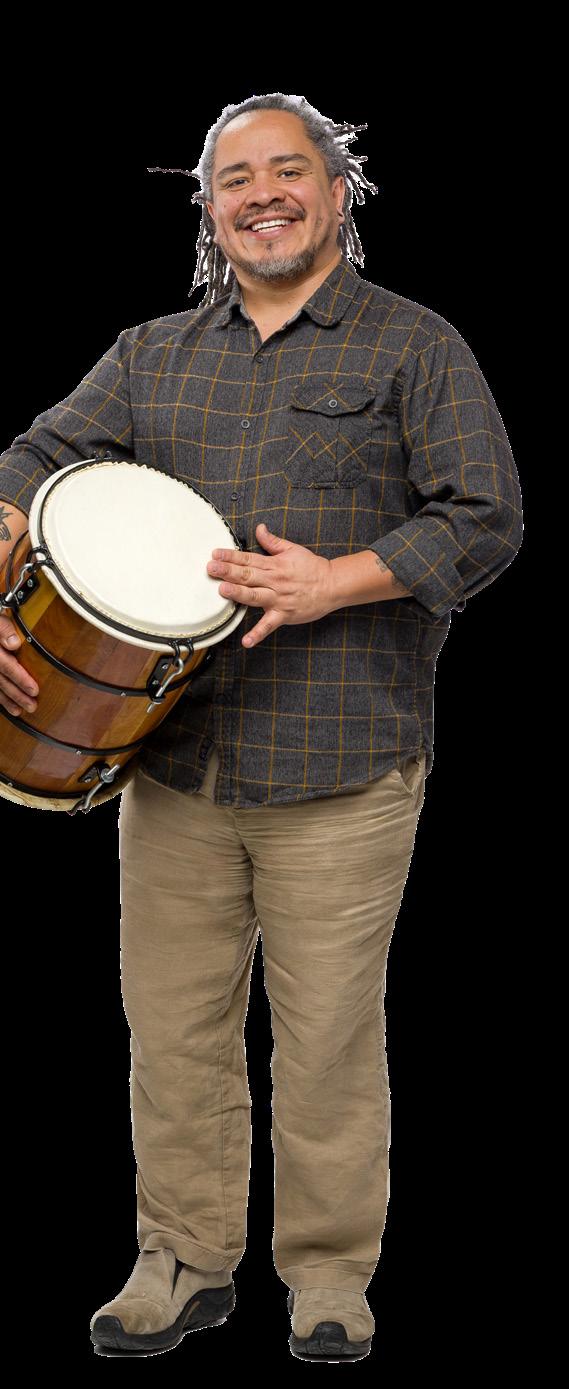
That meant teaching Latin dance classes and leading a drum circle that draws people of all backgrounds.
“When you join the drum circle, [Minnesotans] have fear they will do it wrong. They’re shy,” he said. “People start looking at what I’m doing, then I invite them to play. We start making sounds, like improv. We communicate through rhythms. For me, it’s really magical.”
In many ways, his story mirrors Willmar’s. Once a nearly all-white community, the city was 40 percent nonwhite in 2023, according to the American Community Survey. Turkeyprocessing plants, taco shops and Somali markets reflect a changing rural Minnesota.
Maldonado arrived through what he calls a classic Minnesota love story. “I met a woman, and she was from here,” he said. “After a few years, she really wanted to come back here. I said, ‘OK, I’ll take the journey.’”
Today, he is a father of three and a community impact specialist at Woodland Centers, a regional mental health nonprofit.
His social enterprise builds inclusive, connected rural communities through artsbased, wellness-centered and culturally rooted experiences. Grounded in his journey to reclaim and honor his Afro-Latin identity, the work addresses racism and exclusion while fostering healing and collective care. He supports local artists and promotes healthier, more inclusive communities across Greater Minnesota.
His planned wellness center will draw on Indigenous practices, including sound healing and craniosacral massage. He also plans to host arts workshops for local and marginalized artists.
The next step is to find a location and secure funding. “We will need to have sustainability, that’s a big one,” he said.
Like a drum circle, he believes connection takes patience. “By the end, everyone is sharing this good time and sharing rhythms,” he said. “That’s the magic of the drum circle. Everyone is connected, and everyone has a voice.”
By Diane Richard, IQ Magazine contributing writer
Marcella Prokop
Building Community Connection
BEAVER CREEK
SOUTHWEST INITIATIVE FOUNDATION REGION
Agathering of neighbors in a cidertasting room sounds like a nice way to pass a summer afternoon.
But to Marcella Prokop of Beaver Creek, it’s so much more—it’s an antidote to isolation.
“One of the things we know to be true across Minnesota, even in communities where there’s a lot of social cohesion, is loneliness is a huge social concern,” Prokop said. “Sometimes it’s because of weather, geography. Some of it is … people don’t feel they belong.”
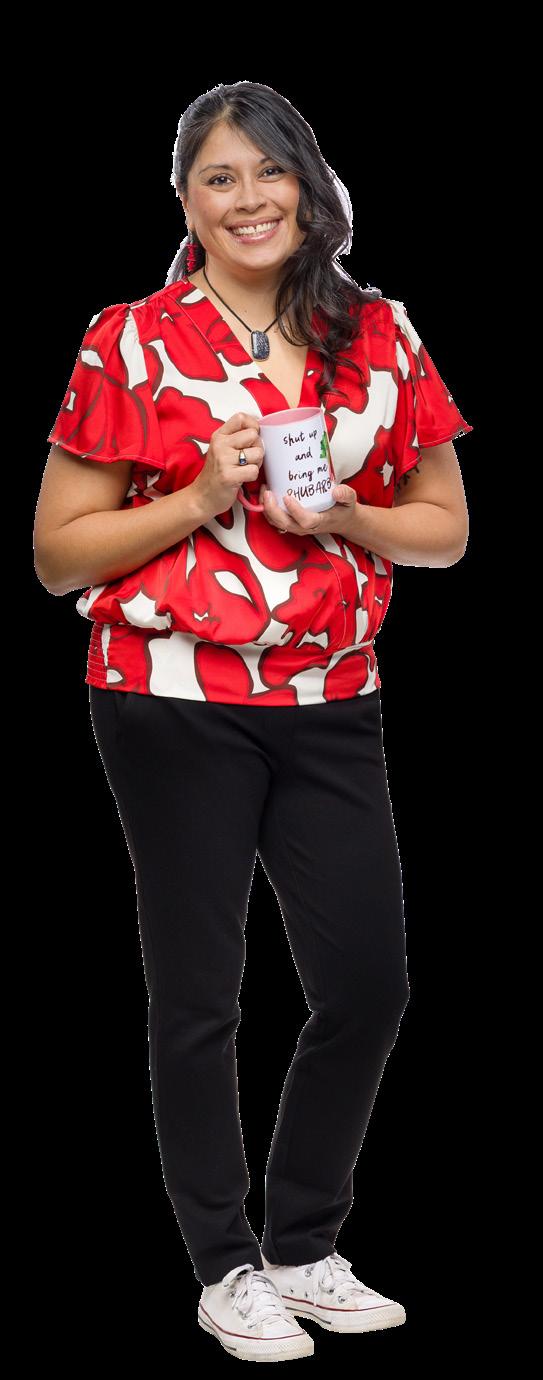
During the summer of 2025, Prokop hosted a rhubarb recipe contest at the Cidery at Blackshire. The Beaver Creek cidery in southwest Minnesota, owned by her partner Sean, became the testing ground for an idea that would blossom into a social enterprise. The contest drew 30 entries—cookies, pies and savory surprises—and more than 80 residents. A local restaurateur judged. Locals performed an Ole and Lena-style skit.
“It was a super-fun afternoon where people could come together around this weed that’s all around Minnesota,” she said.
Watching neighbors linger and laugh, Prokop realized the event tapped into something deeper. She left convinced Beaver Creek needed more free, welcoming gatherings designed simply to spark connection.
Raised on a Nebraska farm by a Colombian mother, Prokop recalls childhood isolation. “We were the only brown, Spanishspeaking people in my rural community,” she said. “As I got older, I saw education as the way out.”
After graduating from college, she landed a job at NBC News in Washington, D.C.,
planning a fast-paced journalism career. Instead, a stroke stopped her two days after her 22nd birthday.
“I thought I was going to be this big-shot journalist,” she said. “I got knocked down fast.” The stroke left Prokop with a visual field deficit and a stark realization: “I learned that I’m not invincible.”
As she recovered, Prokop returned to writing, which had long helped her make sense of the world. She earned a master’s degree in creative writing, taught for 12 years and now serves as director of Access and Workforce Opportunity at Southeast Technical College, helping people “figure out how to upskill or what career path to begin.”
Her work connects her deeply to the community. “I work with underserved populations of all backgrounds and make sure they have the resources they need to persist,” she said. That can mean helping students stay in college when cars won’t start, finances fray or other obstacles erupt. “We need to support that whole life, not just their academic life.”
Creativity anchors Prokop’s culturally sustaining social enterprise—not as entertainment, but as connection.
“I’ve always believed in the power of storytelling, art and connection,” she said. “Because of my background in writing, we will have writing workshops, but also book clubs, canning workshops and pickling parties.”
In a place where winter lingers, Prokop believes shared tables and small rituals can draw neighbors closer. What began with rhubarb could become a lasting antidote to loneliness.
By Diane Richard, IQ Magazine contributing writer
A Special Thanks to Our Annual COMMUNITY BUILDERS CIRCLE Members.
Your Region. Your Initiative. Your Foundation.
BUSINESSES
$10,000+
• BankVista
• Citizens State Bank of Waverly
• Connexus Energy
• East Central Energy
• Falcon National Bank
• Frandsen Bank & Trust
• Granite Partners Foundation of Minnesota, Inc.
• Harvest Bank
• Mid Minnesota Federal Credit Union
• Pine Country Bank
• Sentry Banks
• Sherburne State Banks
• Sourcewell
• Stearns Bank, NA
• U.S. Bank Foundation
• Wadena State Bank
• Western Bank
$5,000+
• Anderson Brothers Construction Company
• Compeer Financial
• Consolidated Telecommunications Company
• Old National Bank
• Schlagel, Inc.
• St. Cloud Hospital / CentraCare Health System
• Stearns Electric Association
$2,000+
• American Heritage National Bank
• American National Bank of Minnesota
• Central McGowan
• CliftonLarsonAllen, LLP, Northern Minnesota
• Clow
• Crow Wing Power
• Farmers & Merchants State Bank Charitable Fund of the Central Minnesota Community Foundation
• First National Bank of Milaca
• IPEX, Inc.
• Long Prairie Packing Company
• McDowall Company
• Microbiologics, Inc.
• New Lift Thrift Store
• Rotochopper
$1,000+
• Buffalo Hospital on behalf of Allina Health System
• Brenny Transportation
• Cambridge Medical Center on behalf of Allina Health System
• First Bank & Trust
• First National Bank North
• First Western Bank & Trust
• Hanneken Insurance Agency
• Hunt Utilities Group, LLC
• Kensington Bank
• Little Falls Area Chamber of Commerce and Tourism
• LINDAR Corporation
• Midwest Security and Fire
• National Bank of Commerce
• NOR-SON Builders
• NOR-SON Construction
• Park Industries, Inc.
• Pequot Tool & MFG., Inc.
• Schlenner Wenner & Co.
• The Bank of Elk River
• Todd-Wadena Electric Cooperative
• West Central Telephone Association
• WiDSETH
INDIVIDUALS
$2,000+
• Nancy and Thomas Adams Family Charitable Fund
• John E. Babcock
• Rick and Helga Bauerly Foundation
• Don Hickman & Sandra Kaplan
• John & Bonnie Schlagel
• Dorothy J. Simpson
• Dianne Tuff and Murdoch Johnson
• Brian Voerding & Mollee Sheehan Voerding
• Bob and Carrie Willis
$1,000+
• Julie and David Anderholm
• Dick and Mimi Bitzan Family Fund of Central Minnesota Community Foundation
• Michael & Kathleen Burton
• Hara and Russ Charlier
• David & Kim Ellingson
• Kathy & Neal Gaalswyk
• Teri & Tom Hoggarth
• Jo & Larry Korf
• Mateo Mackbee
• Robert & Susan Olson
• Robert Shadduck Family Fund of the Minneapolis Foundation
• Kimberly & Denise Slipy
• Rita & Everett Sobania
• Charlotte Stephens
• Kristi Westbrock & Mike Bjerkness
The generosity of Community Builders Circle members unlocks the power of local leadership, nonprofits, small businesses and emerging entrepreneurs. Thank you for your annual contributions that help to make Central Minnesota an exceptional place to live, work and raise a family. Join the Community Builders Circle today. To make a pledge and join the Community Builders Circle, contact Carl Newbanks (cnewbanks@ifound.org; 320-631-2042) or Britt Poser (bposer@ifound.org; 320-631-2007), or visit ifound.org/give to give online.
(877) 632-9255 | ifound.org 405 First Street SE, Little Falls, MN 56345
THE POWER OF LOCAL LEADERSHIP
From small-town business owners to regional planners and volunteers, Central Minnesotans have spent four decades working with the Initiative Foundation to strengthen their communities—with partnership and investment helping turn local ideas into lasting change.
By Laura Billings Coleman
THE 1980s FARM CRISIS: Farmers demonstrating at the Minnesota State Capitol, 1985. Photo by Dona Sieden courtesy of the Minnesota Historical Society.
LISTENING CLOSELY TO THE NEEDS OF RURAL MINNESOTA HAS BEEN A FEATURE OF THE INITIATIVE FOUNDATION
SINCE ITS FOUNDING 40 YEARS AGO
As executive director of Chisago County HRA/EDA, Nancy Hoffman is often on the road, meeting with people in the communities she serves and making connections to help build the area’s housing options and business opportunities. But when COVID-19 hit in March 2020, all that forward motion came to a hard stop as she and her small team turned their attention to helping local businesses survive a long season of uncertainty.
Working long hours from home, and attending endless webinars about state and federal emergency funding, Hoffman helped distribute more than $3.3 million in relief funds to 274 businesses, the vast majority of them mom-and-pop shops in the Chisago County area with no other
safety nets for surviving the sudden loss of cash flow and customers.
“I remember how different it felt from the way I used to spend my days, and the loneliness and concern we felt for the community,” she remembered.
Yet in spite of that isolation, Hoffman knew she was not alone, thanks in part to the support of the Initiative Foundation. Working alongside leaders like Hoffman, the Foundation infused more than $26.5 million into the region through grants to local businesses, while pausing loan payments and sponsoring programs about online marketing and other strategies to help small businesses pivot through the pandemic.
During those early months, Hoffman recalled an informal economic triage system that developed between her team and Initiative Foundation staff as they worked to deliver relief to the region. “We wanted to reach as many people as we possibly could,” she said, noting that businesses that didn’t qualify for funding through her office often found help through
the Initiative Foundation, and vice versa.
The Initiative Foundation, in turn, relied on Hoffman’s deep connections and knowledge of the region to help target community lending and other investments. “She’s a champion, connector and builder across the eastern part of our region and has been aligned with us in so many different ways over the years that we really trusted her perspective,” said Initiative Foundation President Brian Voerding. “If Nancy told us she believed in someone, that carried a lot of weight.”
As the pandemic receded and recovery began, the Initiative Foundation continued its support for the region. Using private matching funds, it multiplied $4.5 million from the state’s Minnesota Main Street Economic Revitalization program into $14 million in project investments around the region. Today, those funds are helping communities solve problems and celebrate the survival of small businesses, from building a new Brainerd Family YMCA childcare center to renovating and
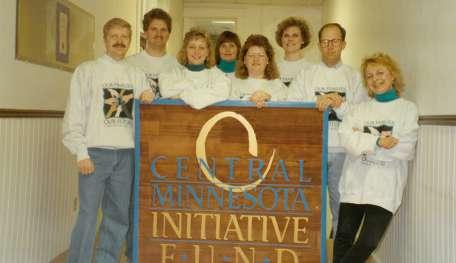
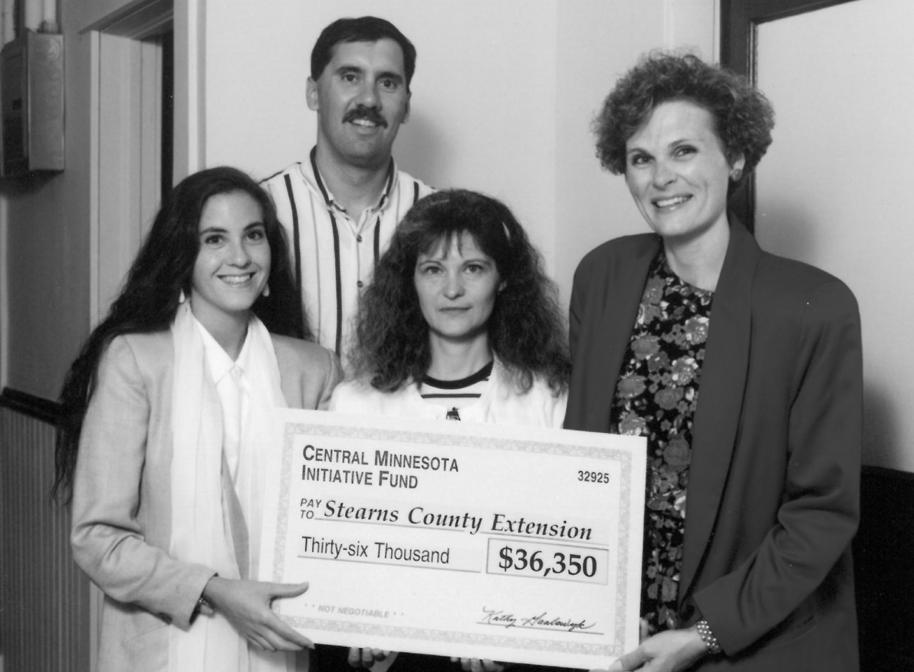
EARLY DAYS: (Top) Staff members pose for a photo while wearing matching sweatshirts to support a Central Minnesota Initiative Fund conference for children, youth and families. (Above) Staff celebrate an early grant to Stearns County Extension.
Philanthropy + Lending
In Chisago County, which saw a 4 percent surge in population after the pandemic, Initiative Foundation funding recently helped Hoffman’s team create a new strategic plan for economic growth— as well as a new housing study to drive future decision-making. Hoffman said she appreciates that the Initiative Foundation doesn’t take a one-size-fits-all approach to revitalizing small towns, relying instead on ideas from the communities they serve. “They’ve been our partners in nearly everything, and an incredible resource and support,” she said. “They listen, and then they work hard to help make things happen.”
Listening closely to the needs of rural Minnesota has been a feature of the Initiative Foundation since its founding 40 years ago. Created in the wake of the 1980s farm crisis, the Initiative Foundation grew from a series of listening sessions conducted throughout the state by leaders from the McKnight Foundation, one of the state’s largest charitable organizations. As Greater Minnesota struggled with the loss of family farms, manufacturing and mining jobs, high unemployment, and a slow recovery from the recession, the Minneapolis-based foundation was eager to explore how philanthropy and charitable giving could bring relief to rural areas.
“Philanthropy didn’t have that much of a formal presence in Greater Minnesota,
so there was just a lot we didn’t know,” recalled Kathy Gaalswyk, who served as the Initiative Foundation’s founding president from 1986 to her retirement in 2016. Created as a constellation of six regional entities, the Minnesota Initiative Foundations — the Initiative Foundation, serving Central Minnesota, Northwest Minnesota Foundation, West Central Initiative, the Northland Foundation, Southwest Initiative Foundation and Southern Minnesota Initiative Foundation – effectively doubled charitable giving in outstate areas in its first year alone.
But months of meetings with farmers, miners, business owners, and civic leaders also revealed that rural communities needed new ways of infusing capital into local economies. While charitable
INVESTING IN YOUR GOOD IDEAS
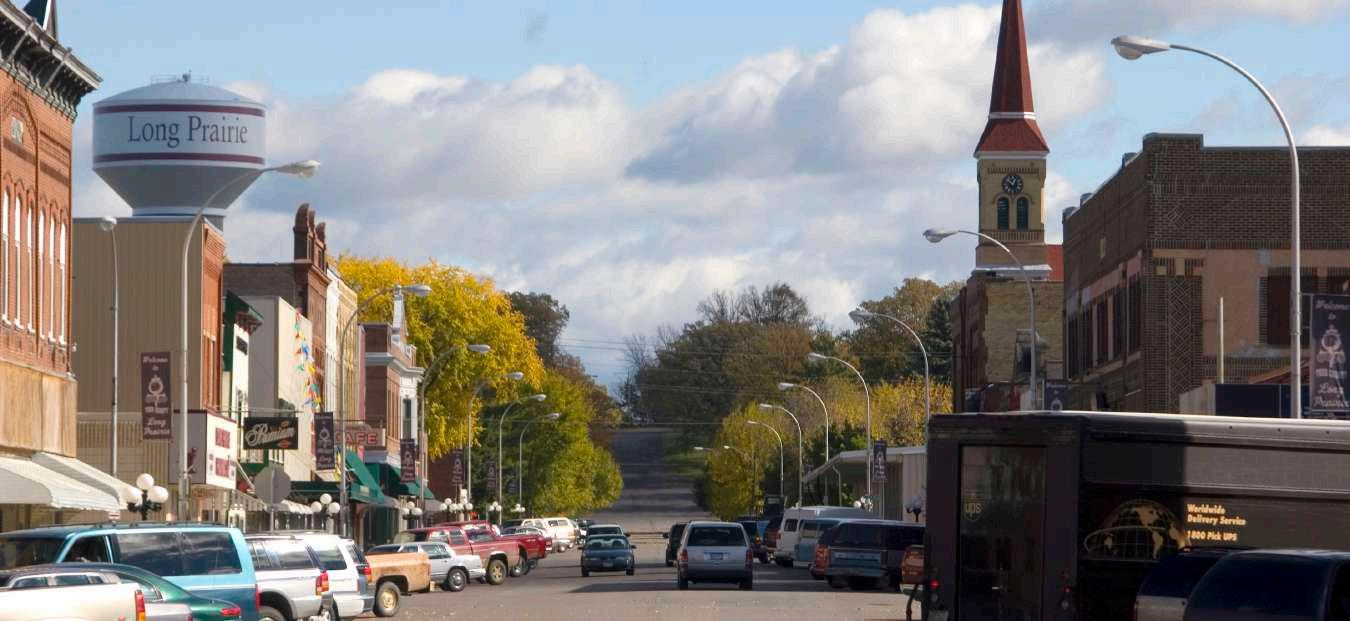
DOWNTOWN LONG PRAIRIE: Along Central Avenue, entrepreneurs and local partners are renovating historic buildings, opening new businesses and bringing new life to once-vacant storefronts. Many of these new investments have been led by immigrant entrepreneurs who are helping shape the town’s economic future.
expanding Long Prairie’s Dairy Queen and drive-in movie theater.
institutions are traditionally prohibited from engaging in community lending, McKnight made a case to the IRS, arguing that lending to businesses in stagnant rural economies with high poverty and unemployment rates qualified as a charitable activity. The federal government agreed and authorized the six foundations to add business lending to their roster of community services. It’s believed to be an only-in-Minnesota approach that’s become a national model for rural revitalization.
“It’s easy to look back and celebrate the Initiative Foundation model created across the state, and the tremendous impact of four decades of grassroots philanthropy. But the truth is that when we began, we literally had no idea how it would turn out, or if we would even exist after a couple of years of initial funding,” Gaalswyk said. “What we did know was that people in Greater Minnesota mattered, that they were the key ingredient to success, and that we needed to set up a framework for those local voices to be heard, to create, and to move to action to build stronger communities and businesses for the sake of children and families.”
With its focus on Central Minnesota, the Initiative Foundation’s investments and programs have mirrored many of the decades-long demographic shifts and economic trends in the region, from encouraging communities to plan for the massive generational leadership succession with the retirement of the Baby Boomers, to promoting broadband coverage to connect small towns to digital opportunities.
Through programs such as the Enterprise Academy and the Initiators Fellowship, the Foundation sought to
identify and develop the skills of nextgeneration leaders. For small towns with big dreams, support from the Foundation’s Thriving Communities program has helped towns with fewer than 5,000 residents make plans and solve problems. A flexible portfolio of programs has also allowed the Foundation to respond to the area’s most urgent needs, from community funds to support Wadena’s recovery after a devastating 2010 tornado, to providing strategic investments and technical support to help rural communities find sustainable solutions to the region’s child-care shortage.
“This unique structure has allowed the Initiative Foundation to do a hundred things at once — being a community foundation, a lender, a grantmaker, a coalition builder, a wealth holder and recirculator,” said Voerding, noting that the Foundation’s deep connections across Central Minnesota proved critical during the pandemic. “There was no time of greater, more concentrated investment and moving of dollars into Central Minnesota than there was during the first two years of COVID.”
As for the McKnight Foundation’s role, President Tonya Allen said the relationship has evolved from McKnight being a primary funder to a trusted partner. Forty years later, she notes, the creation of the so-called “Minnesota Initiative Foundation model” remains one of McKnight’s “most successful long-term investments in placebased, locally led philanthropy.”
“The Minnesota Initiative Foundations have shown us repeatedly that rural Minnesotans have the talent, networks, aspirations and entrepreneurial spirit needed to thrive—especially when they have access to the flexible tools and decision-
making authority needed to lead,” she said. Since 1986, the McKnight Foundation has invested hundreds of millions across the Minnesota Initiative Foundations, and today they are all financially stable. It’s evidence “of the strength, independence and sustainability that locally driven solutions can achieve,” Allen said.
Everyone at the Table
Allen said one of the best examples of the Initiative Foundation’s impact can be seen in Becker, which has been working to diversify its economy for the last decade following Xcel Energy’s decision to decommission the coal-fired Sherburne County Generating Station. Back in 2014, this announcement from the town’s top employer—representing 77 percent of the local tax base—was devastating, recalled Dan Weber, assistant Sherburne County administrator. But with a 10-year timeframe for making an energy transition, the community took advantage of all the resources available through the Initiative Foundation.
“The Foundation filled two important roles, as a community facilitator and as a financial development organization,” said Weber, who has since become a trustee of the Initiative Foundation. “In the early days, instead of having a lot of separate meetings, they were able to bring all the stakeholders to the table and have those hard conversations about what a drastic change this was going to be for the community and the region,” he said.
With the help of Don Hickman, the Foundation’s former vice president for community and workforce development, who retired in 2025, the coalition found
funding opportunities that helped them form a plan for the region. For instance, a $2,500 grant from the Foundation paid for a consultant who helped the community secure a $1 million rail grant, while three $200,000 grants from the McKnight Foundation helped the community leverage more than $27 million in state bonding to improve infrastructure needed to attract new business. New employers that have since bought into Becker’s future include Northern Metals Recycling, which relocated from Minneapolis, and Microsoft, which purchased 300 acres of land from Xcel Energy for a planned data center.
“Fast forward more than a decade, and Becker is now home to one of the largest solar farms in the country and one of the greenest industrial parks in America,” Allen said. “They’re showing the world how communities that powered our last energy system can be at the center of our thriving clean energy future. And in true Minnesota fashion, these community leaders didn’t stop there; they partnered to establish a State Energy Transition Office to help other communities like theirs facing similar challenges.”
Becker’s not the only Central Minnesota community where a small investment from the Initiative Foundation has yielded an exponential return. Two decades ago, the Initiative Foundation provided a $2,500 grant to the Crosby-Ironton community for a feasibility study to explore the potential of expanding abandoned mine pits into a mountain-biking destination. The plan seemed a bit pie-in-the-sky to all but the most fervent mountain biking enthusiasts.
“This was before trails were cool, and I would say at the time, there wasn’t much hope that it would ever work,” said Aaron Hautala, former president of the Cuyuna Lakes Mountain Bike Crew, which went on to champion the project. While the first 25 miles of trail helped to attract about 20,000 visitors a year, raising about $2 million annually, “it wasn’t enough to truly change the economics of the place,” he said. But when a subsequent study found that adding about 50 more miles of single-track trails could bring in twice as many visitors and $21 million in potential economic impact, Iron Rangers started paying attention.
“I’d be lying if I said the entire community was behind us— they weren’t,” he said. “That’s why the most important thing we learned from the Initiative Foundation is that you can’t do things all by yourself—you really have to get out of your silo and build relationships with everyone if you want something to work.”
Through years of community meetings and listening sessions, some facilitated by the Foundation, “we saw that once people could see the vision we had, and once they understood that there were steps to get to that vision, people united and ignited at the same time,” Hautala said. “I’ve never seen, before or since, a movement like that in my life, where you could feel the energy. It made people want to be part of it.”
For the Next Generation
Today, the community surrounding the Cuyuna Country State Recreation Area (CCSRA) has been transformed with bike shops, a brewery, boutique cabins and lofts, and visitor tallies that far exceed the best-case scenarios predicted two decades ago. While early champions hoped for about 50,000 annual visitors, the CCSRA during the pandemic attracted more than half a million visitors. Crosby-Ironton’s economic transition from mining to tourism has
REBUILDING TOGETHER: Former Wadena City Council Member Don Niles, pictured with founding Initiative Foundation President Kathy Gaalswyk, helped lead Wadena 2.0—an effort to create a shared vision for recovery after the 2010 tornado.
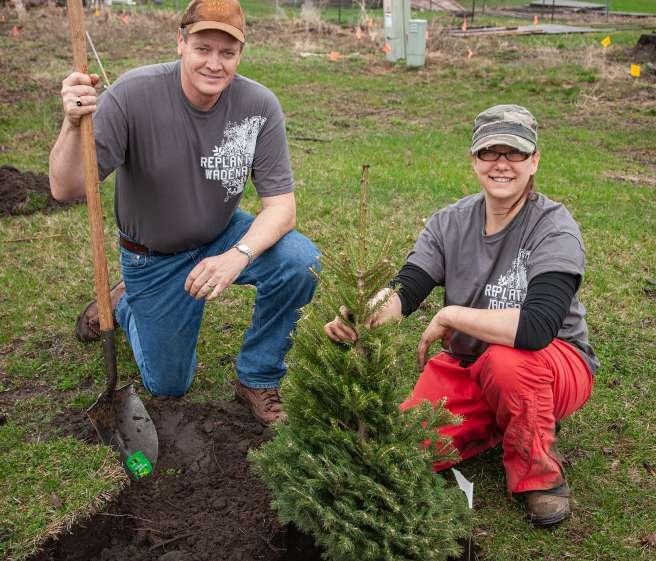
SETTING NEW ROOTS: After a devastating 2010 tornado roared through Wadena—an EF4 with winds as high as 200 mph—the Initiative Foundation helped raise $70,000 to replant 10,000 shade trees destroyed in the storm.
Photo by John Linn
Photo by John Linn
brought some growing pains to the region, with a rise in short-term rentals and real concerns about how to keep housing affordable.
That’s where programs like the Foundation’s Thriving Communities come in, providing coaching, resources, planning grants, and implementation funding for communities seeking new ways to manage growth, attract new business, and sustain smalltown life. Relaunched in summer 2025, the program has pulled together a cohort of leaders from five communities–Braham, Motley, Sebeka, Staples, and Taylors Falls.
Providing coaching and resources to communities across the region has been a consistent part of the Initiative Foundation’s work for 40 years. But Dan Weber said stable leadership has also been an important strength of the organization, even despite generational leadership transitions. Over four decades, the Foundation has had just three presidents: Kathy Gaalswyk, who served from 1986 to 2016; Matt Varilek, who now serves as commissioner of the Minnesota Department of Employment and Economic Development; and Brian Voerding, a Wright County native who took on the president’s role in 2023.
“That kind of steady leadership is something to care about, because when you build trust with an organization, and a new leader comes in, you want to keep building on that trust,” Weber said. ‘All three of those leaders truly believed in what they were doing. It wasn’t a job to them. It was something that they believed in their heart. And anytime you have that kind of passion in a leadership position, it seeps down to the rest of the organization.”
Voerding says the Foundation’s four decades of partnership across Central Minnesota have built a track record of trust that he and his staff don’t take lightly. “We don’t have any politics, we don’t have any ideologies, we don’t have any baggage, but we do have a lot of trust in this region, which often makes the Initiative Foundation the right partner for investing in small towns, and supporting the capacity of people to be leaders in their communities,” he said.
“I continue to be so moved by just how powerful it is to have a presence here, and to really believe in people, uninterrupted,” he said. “In those early meetings that shaped the Initiative Foundation, there was a shared understanding: if you believe in people and support the work, great things are possible.”
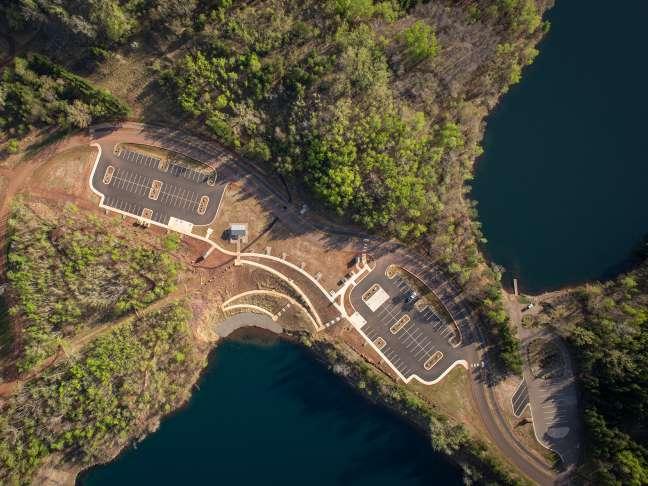
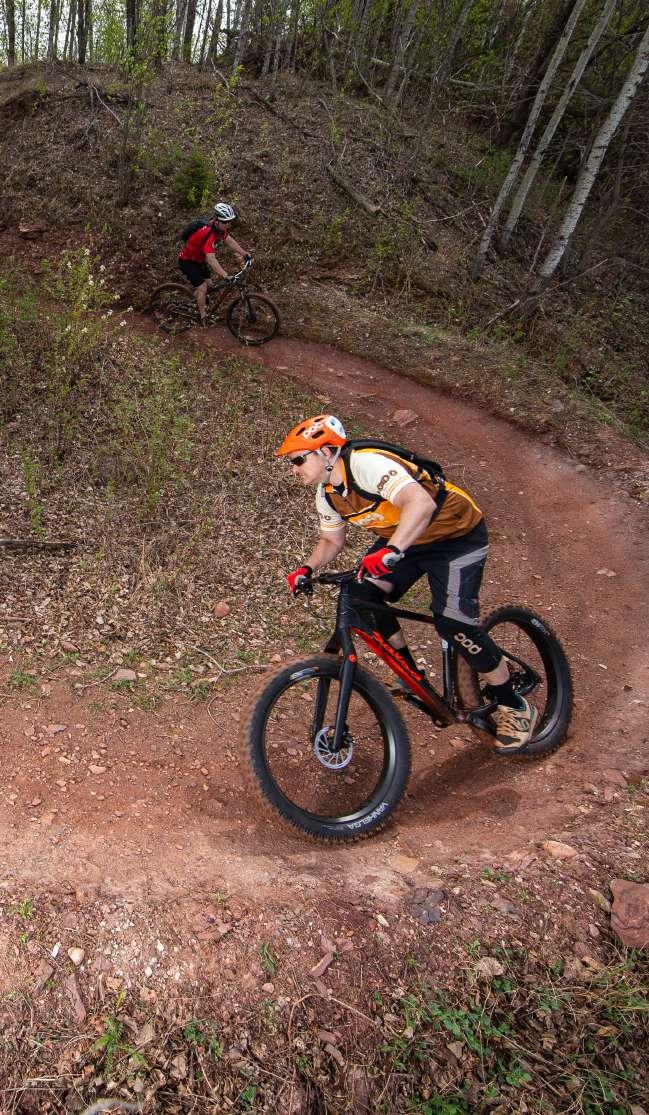
PEDAL POWER: Two decades ago, a modest grant to the Crosby-Ironton community helped turn nearby abandoned mining pits into a mountain-biking destination. (Top) The parking lot at the Cuyuna Country State Recreation Area
Rooted in Place.
Focused on What’s Next.
As the Initiative Foundation marks its 40th anniversary, its 2026–2028 Strategic Framework honors the past while preparing Central Minnesota for the future. Founded in 1986 on the belief that regional prosperity drives Minnesota’s success, the Foundation recommits to core work that including loans, grants and investments in people and places.
The framework urges meeting emerging needs, building community capacity and leading with courage, curiosity and humility. It emphasizes listening, strengthening the Foundation as a rural development hub, circulating local wealth and championing bold entrepreneurs. Through trusted partnerships and shared risk, durable, inclusive change grows alongside resilient communities across the region.
OUR MISSION
We invest in the people and places of Central Minnesota to build thriving economies, vibrant communities, and a shared culture of generosity.
OUR VISION
Together, Central Minnesota residents imagine bold solutions and shape communities where everyone can prosper, participate and belong.
Our values guide how we show up, partner and lead across the region.
5 Priorities for the Next Chapter
Over the next three years, our work centers on five interconnected priorities designed to expand opportunity and deepen impact across the region.
Grow Thriving Economies
Central Minnesota thrives with a strong, inclusive economy that expands opportunity. We provide training and access to capital to help locally owned businesses launch, grow and create quality jobs.
Foster a Shared Culture of Generosity
Generosity fuels lasting impact when investments stay rooted locally. We steward donor relationships and expand giving to support immediate needs while building long‑term resources for Central Minnesota.
Build Vibrant Communities
Strong communities grow through shared leadership, relationships, and local resources. We strengthen rural vitality by expanding access to training, funding and programs that help communities adapt and flourish.
Expand Community Presence, Storytelling
Connection and shared stories inspire action across the region. We convene, celebrate and advocate to elevate community voices and connect people and resources for greater impact.
Pursue Organizational Excellence
Lasting impact depends on a strong, resilient organization behind the work. We invest in people, systems and stewardship to deliver effective, transparent results and sustain our mission.
Since 1986, Central Minnesota residents have imagined bold solutions and built lasting change together. This next chapter is not simply a strategic framework. It is an invitation to partner, lead and shape communities where everyone can prosper and belong. The future is ours to build together.
Scan the code to learn more about our 2026-2028 strategic framework.
ROOM
RISE
Community partnerships help Cass Lake gymnasts reach new heights
ERIN REYES: “I wanted to have positive, affordable gymnastics for kids—a safe space for them to come and really improve their talents.”
By Suzy Frisch | Photography by John Linn
When advanced gymnasts at Northern Dreams Gymnastics
in Cass Lake practice on the balance beam, coaches remove ceiling tiles to create tumbling space. During bar routines, athletes maneuver carefully near a support beam positioned too close for comfort.
It’s not an ideal setup. But inside a former car dealership on the Leech Lake Reservation, more than 80 young gymnasts are learning discipline, confidence and strength—and earning medals at state and regional meets.
The gym’s growth reflects the determination of its athletes and the vision of owner Erin Reyes. A former gymnast and nurse, Reyes opened Northern Dreams in 2017 to give local kids access to a sport that builds more than athletic skill.
“I wanted to have positive, affordable gymnastics for kids—a safe space for them to come and really improve their talents,” Reyes said. “We’re a small community. There are school sports, but not much else to do unless you go outside the community, and that can be really expensive. We’re trying to keep the costs lower for families around here.”
Cass Lake, with a population of about 700, offered few options for a gymnastics facility. The former car dealership was the only viable rental space. Reyes purchased used equipment and gathered donations to get started. Enrollment quickly grew from a dozen students to more than 80, supported by 11 coaches.
Success brought a new challenge: space. As Northern Dreams reached capacity, Reyes began exploring financing options for a larger, safer facility. Traditional lending options proved difficult.
Then, on a hot summer day in 2024, while a handful of gymnasts were outside selling sodas and pickles to raise money
for their gym, several visitors from the Initiative Foundation stopped for a cold drink and started to ask questions. The gymnasts’ enthusiasm and love of their sport made an impression on Tim Swanson, business finance manager at the Initiative Foundation.
“Watching them be so excited about what they do and who they are, and this was their place—they were so proud of being in gymnastics and of being a member of this organization,” Swanson said.
When the Initiative Foundation team went inside and met Reyes, their good impression deepened. They learned about her business and how it had grown to capacity. They saw the gym’s real needs for a new facility and learned about Reyes’ goal to expand.
“I remember driving back to Brainerd and talking to my boss, telling him their story, and he said, ‘There’s got to be a way,’” Swanson said.
It wasn’t long before Swanson and the Initiative Foundation had assembled a mix of partners to help move the $600,000 project forward.
“This is a real win for the community,” Swanson said. “Our role is to step in where traditional financing may fall short. We’re here to meet people where they are and invest in the potential we see. Northern Dreams isn’t just a gym—it’s a community space and a place to build confidence, opportunity and pride for young people in Cass Lake. That’s exactly the kind of project we’re eager to support.”
“This is a real win for the community.”
Financial Backing
Reyes worked with local Small Business Development Center consultant Pam Thomsen to assemble and refine financial projections. At the same time, the Initiative Foundation brought together its partners, including the Cass County Economic Development Corporation in Walker and Midwest Minnesota Community Development Corporation (MMCDC) in Detroit Lakes. Northern Dreams also secured a grant through the Minnesota Department of Employment and Economic Development’s Minnesota Main Street Economic Revitalization Program.
Mike Paulus, executive director of the Cass County Economic Development Corporation, said Cass Lake has faced economic challenges for years but holds strong growth potential, making Northern Dreams’ expansion an investment worth supporting. “We stuck our nose in and offered assistance because we want to make sure these types of investments come to fruition,” he said, “because that is who we are and that is what we do.”
Partners also looked beyond the gym’s walls to its broader economic ripple effect.
“This investment is coming into a community that has struggled with additional investment,” said Nicole Kirchner, vice president of business development at MMCDC. “Putting more effort and focus on the gym might spur some additional things happening in the community and on Main Street.”
Main Street Mission
In recent years, Cass Lake has been working to spark new economic momentum. Jerry “Jake” Smith, who began his second
stint as mayor in 2025, said he and the City Council have focused on clearing blighted buildings to make room for new opportunities.
“We want to open up space for new businesses to settle and provide jobs,” Smith said. “There are only a few places to work in Cass Lake, and a lot of our problems with poverty are due to a lack of gainful employment.”
That groundwork is beginning to pay off. Cass Lake is welcoming a new Subway, a coffee shop, a laundromat and Northern Dreams’ expanded facility—signs of steady reinvestment in the community. The new Northern Dreams building is believed to be the first from-the-ground-up construction project in downtown Cass Lake in some 20 years.
“It will have a positive impact on its students,” Smith said. “There is not a lot for the youth to do in the area, and this is something positive. They teach a lot of things like discipline and working toward goals, and I think that’s good for the community.”
While new businesses signal economic progress, residents say Northern Dreams’ impact runs deeper than storefronts and statistics. For families, it’s personal.
Brian Stoebner, a teacher and coach at Cass Lake-Bena High School, has a front-row seat on how Northern Dreams has positively affected his daughter, Serena, other gymnasts, and the broader community. Serena was 15 years old when Northern Dreams first opened. She ultimately joined its competition team and has soared under Reyes’ direction, he said.
“Erin has been by her side from the get-go, and I’m always amazed that she has been able to make anything work in the converted space that they have for a gym,” Stoebner said. “It’s
SPRINGING FORWARD: With support from the Initiative Foundation and partners, and capital she brought to the table herself, Erin Reyes secured $600,000 to build a new Northern Dreams space.
amazing the confidence it’s given her, and Erin has played a key piece in that.”
Team Makes Its Mark
In 2025, Northern Dreams’ smallbut-determined team delivered outsized results. The gym’s top three athletes— Stoebner, Mariah Johnson and Kaitlyn Crane—claimed first- and second-place finishes in their age groups at the USAA Midwest Regional Meet in Madison, Wis., competing against teams from seven states with rosters of 15 or more gymnasts. The team also placed seventh out of more than 40 programs at the Minnesota state championships and earned a first-place overall finish at the Dream Catcher Invitational in Santa Fe, N.M., underscoring how Cass Lake’s athletes continue to excel on big stages.
Future Potential
The timing of the new gym couldn’t be better. For Serena Stoebner, it supports her goal of competing in college. For her father, it represents possibility—a space designed to match the athletes’ ambition.
Brian Stoebner looks forward to seeing what Reyes and her gymnasts can accomplish in a facility with a full-sized floor and dedicated vault, beam and bar areas. He believes Reyes will continue strengthening both the program and the culture that sets it apart.
“The sense of team has become better and better,” he said. “There is a strong sense of family in that building.”
That sense of belonging is exactly what Reyes set out to create. From the beginning, Northern Dreams has been
about more than routines and medals. It’s about building confidence, setting goals and giving young people a place where they feel supported.
Construction is underway after an early April groundbreaking, with plans to open by summer—a milestone years in the making.
“The things the girls can do are mindblowing, really,” Reyes said. “My mind can’t even comprehend what they are going to be able to accomplish when we move. It will benefit them so much to have a space to be able to do the things they need to do and train the way they need to train.”
The expanded facility will allow Northern Dreams to grow alongside its athletes. Reyes plans to add more recreational classes, including sessions for adults, invest in equipment to strengthen the boys’ program and introduce offerings such as dance. She also plans to open a small cafe that serves take-out lunch three days a week, creating space for families and community members to gather, watch practice and connect.
“It’s been a dream of mine for a long time to have my own gym,” Reyes said. “To have it be so close to coming to fruition—I’m so grateful to everyone who has helped in the process. The families who come here for gymnastics have been so supportive, and my family, the coaches and the community have been amazing. This is my dream come true.”
For Cass Lake, the new building represents more than additional square footage. It is a place where young people will continue to test their limits, families will gather, and a small-town investment will keep building momentum—one routine, one class and one confident athlete at a time.
CONFIDENCE-BUILDER: Brian Stoebner has enjoyed watching his daughter, Serena, grow and excel under the guidance of Erin Reyes.
When you start a donoradvised fund with the Initiative Foundation, you gain more than a charitable giving vehicle—you partner with a trusted team committed to helping you make a lasting difference.
Guided by integrity and philanthropic expertise, we work alongside you to shape a giving strategy that reflects your values and achieves your goals.
Connect with our philanthropy team to explore the possibilities
Scan the code or visit ifound.org/ways-togive/start-a-fund/
In the Region
3
1) Staff and friends brought a 1990s vibe to the Brainerd Chamber Celebration of Excellence in November 2025. The evening was filled with awards, great food and plenty of time to connect with the community. Always a highlight to celebrate alongside so many inspiring local leaders!
2) Initiative Foundation staff visited African Pinkylicious Salon owner Gladys Winkelman along with Rep. Bernie Perryman and Darielle Dannen of Flaherty & Hood, P.A. The September 2025 visit highlighted the impact of Minnesota Main Street Economic Revitalization Program investments in Central Minnesota.
3) Matt Varilek, former Initiative Foundation president and current commissioner for the Minnesota Department of Employment and Economic Development, joined Initiative Foundation staff Amy Trombley and Donniel Robinson during the Economic Development Association of Minnesota’s Day at the Capitol—an event focused on advocacy, education and building relationships with state leaders.
6) Zach Tabatt, vice president for economic opportunity, shares how the Foundation supports Central Minnesota manufacturers during a December 2025 Enterprise Minnesota State of Manufacturing event in Brainerd. The Foundation is a longtime co-host, reflecting its commitment to manufacturing as a driver of economic stability, innovation and growth. 1 2 4 5 6
4) Staff members Michele Miller, Doug Adams and Zach Tabatt met with Rep. Michelle Fischbach in Washington, D.C., in November 2025 to share how Community Development Financial Institutions help fuel small businesses and local economic growth.
5) Brian Voerding, Amy Trombley, Brenda Gugglberger and Britt Poser brought a touch of magic to the Little Falls Chamber of Commerce’s annual meeting this March, embracing a Harry Potter theme for an evening of fun and fellowship. It was a memorable night—and a wonderful way to support the Chamber in our hometown.
Coffee, music and community
St. Cloud, Minn.
By Lisa Meyers McClintick
Musician Elliott Hammer remembers the first time he saw downtown St. Cloud’s B‑Side Indie Music Café, where an intimate stage sits among an eclectic collection of vintage tables as colorful as the glowing stained‑glass windows near the front door.
“It’s probably the most welcoming atmosphere you could ever walk into,” said Hammer, a regular at weekly open mic nights at the venue, located at 27th Avenue North. “It just makes you happy to walk into the place.”
A barista serves steaming mugs of coffee or iced Italian sodas, and there’s a piano, two acoustic guitars and a ukelele for anyone feeling musically inspired. “I’ll go in there with a friend or two and sit down with a guitar and write a song,” Hammer said. “You can’t do that anywhere else.”
Opening the B-Side, a sober all-ages venue for nurturing up-and-coming musicians, has been a longtime goal of Project 37, part of The Independent Music Collaborative of Central Minnesota (IMCCM), said Angela Ringsmuth, a piano teacher, musician and chair of IMCCM’s board of directors.
The grassroots nonprofit, formed in 2016, launched its annual Common Roots Festival to showcase local talent. Six years later, it added twice-monthly performances at various community venues and began planning for a permanent home.
By late 2024, the organization had raised $75,000 to purchase Oblivion Coffee Bar & Mercantile and create a home for the B-Side. Rockhouse Productions contributed $10,000; an anonymous donor gave $15,000; and the remaining funds came from more than 300 donors, plus a music event and silent auction that raised $3,000.
“That was what gave us the heart to do this,” said Mike Lardy, a musician, member of the IMCCM board and owner of Bravo Burrito. When B-Side had its grand opening, people were lined up out the door.
• Music anchors B-Side’s events calendar—with songwriting workshops, monthly open jam sessions and concerts that feature up-and-coming musicians in a variety of genres from punk to indie and folk. “We sold out our last show on the coldest night of the year,” Lardy said in late January.
• Wednesday open mic nights are so popular, they may expand the two-hour event to accommodate more musicians, said Ringsmuth, who estimated 800 performers played on their stage in the cafe’s first six months.
• B-Side also aims to be a cozy ‘third space,” an all-ages hangout for people away from home and work or school. Patrons go to study or work, catch up with friends, or meet colleagues.
• Non-music events have included board-game nights, winter farmers’ markets, in-depth discussion topics such as death and dying, tattoo fundraisers, and standup comedians.
• The building includes an upstairs classroom space for future workshops. The Wirth Center for the Performing Arts is planning to relocate next door to B-Side from its location near St. Mary’s Cathedral on First St. South. Together, they complement St. Cloud’s other music performance venues such as Paramount Center for the Arts, Pioneer Place on Fifth, and the Red Carpet Nightclub.
To further support the project, the Initiative Foundation put together a $350,000 loan package to support downtown St. Cloud economic development. The building includes eight upstairs offices, which can be rented to offset expenses.
“The project aligns closely with our mission to build community assets and create spaces where people can connect across differences,” said Zach Tabatt, vice president for economic opportunity at the Initiative Foundation. “Because it’s owned by a nonprofit, traditional financing can be challenging, and that’s where our experience in nontraditional lending comes in.”
In addition to the coffee bar and pastries from Backwards Bread Company, Ringsmuth said organizers hope to open a small kitchen at B-Side later in 2026 to offer simple meals for patrons. Fundraisers, such as this spring’s Battle of the Bands at the Paramount Center for the Arts, support the organization’s broader goals and advance its core mission of launching musicians.
Hammer and fellow Borrowed Time musicians won 2025’s Battle of the Bands. It helped them to make a recording, boost their credibility and book performances in the Twin Cities, he said. He also plays in the band PSA and credits Project 37’s concerts, workshops, jam sessions, and open-mic nights with helping him and others develop their talents.
“Every time I go there, I feel like I learn something new,” he said. “Project 37 has completely altered what I thought I could do as a musician.”
THINK YOU KNOW?
Send your best guess to IQ@ifound.org by May 31, 2026.
Three winners will be chosen, at random, to receive a $25 credit to apply toward their favorite Initiative Foundation Partner Fund.
HINT: This fur-trading post on a river the Ojibwe called Ginebig-ziibi served as a winter station where traders exchanged goods with Ojibwe hunters and trappers.
Congratulations to those who correctly identified Bruno the dog from Longville in the fall 2025 edition. Readers Natasha Barber and Becky Strahl were the lucky winners of the “Where’s IQ” contest.
GROWING COMPANIES ENHANCING COMMUNITIES
Granite Partners is a private investment and long-term holding company founded in 2002 in St. Cloud, Minnesota, with a mission to grow companies and create value for all stakeholders. We advance a culture of trust, innovation, and excellence as essential to 100-year sustainability, and we aspire to world-class wellbeing for everyone in the Granite community.