Independent
Learning. Transparency. Accountability.
Issue n.16
2026
MAGAZINE
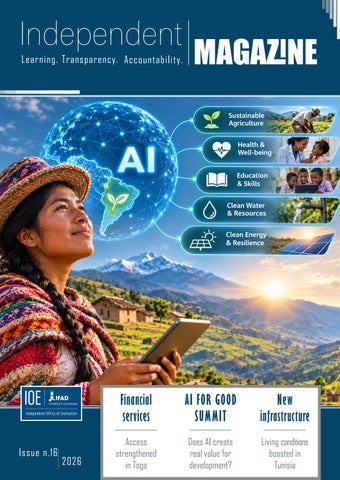
Financial services
AI FOR GOOD SUMMIT
New infrastructure
Access strengthened in Togo
Does AI create real value for development?
Living conditions boosted in Tunisia
1
Independent Office of Evaluation International Fund for Agricultural Development 2
Independent MAGAZINE Issue n.16 | 2026 3
In my ow n wo rds
Profile
I
t is with great pleasure that we welcome you to edition 16 of Independent Magazine, IOE’s flagship outreach product. We are delighted to share that the 2026 external peer review (EPR) has reaffirmed the independence, credibility and utility of our work, and we thank all who contributed. It is a reDr Indran A. Naidoo assuring result, reflecting that the support of IFAD’s Executive Director Board, which approves IOE’s work plan and strategy, has been Independent Office of Evaluation effective and successful. The major coverage increase has created reflective opportunities for course correction, with a 2000 per cent increase in portfolio coverage and a 300 per cent increase in country coverage. These are significant changes, as the portfolio is now fully evaluated every three years, generating a rich evaluative database for telling and responding to the IFAD story. Drawing from the third EPR, we discuss the question of credibility. The format of the EPR tests the credibility of units around the classic and interacting principles of independence and utility. We scored very well, with a good and protected policy, a strong Evaluation Advisory Panel and participation in peer networks, to name a few. Having credibility means being a relevant historian, looking at the past with the authority and power to draw lessons and evaluative information, and to equip decision makers with evidence to prevent a repeat of past failures. Doing so means saving funds, being efficient, adjusting to be effective and always remaining relevant. A big indicator of credibility is when an office is invited to share its practice with international evaluation guilds. We delivered a first IOE-IFAD course at the International Program for Development Evaluation Training (IPDET) and now have authorship of multiple books in the esteemed International Research Group for Policy and Programme Evaluation (INTEVAL) series. Credibility also helps us to tackle pressing issues, which is what we do in this edition of Independent Magazine. One such question is weather AI creates real value for development, which is something that we discussed during the AI For Good Summit. Other important areas that we
4
focus upon in this edition is how best to conduct rigorous evaluations in fragile and conflict-affected situations; why the pacing of SDG progress is insufficient; and how to evaluate the performance of large international organizations. This edition also affords us the possibility to present the findings of some of our most recent country strategy and programme evaluations, which we have presented and discussed with a broad range of stakeholders during highly engaging national workshops. These have included events in Togo, Tunisia and Peru. We also share highlights of our most recent project performance evaluation in Cambodia. Looking ahead, preparations are already underway for the first IOE Evaluation Week, which will shift beyond describing only the impact of evaluation work. The event will go back in time and bring in the authors, thinkers and luminaries. It will look at what this means today in the polycrisis and the seismic role AI is playing, and it will consider methods not only in light of established standards of credibility, but also with an eye to the future. I return to my point about relevant historians – linked to the past but throwing a jewel into the future and pulling us in so that we are more future-oriented, more predictive and more scenario-focused. Rest assured that we will be using our space to have conversations without censorship as a form of genuine empowerment. We trust that this edition will continue to engage and inspire its readers.
Dr Indran A. Naidoo Director Independent Office of Evaluation of IFAD
@pixabay/antonytrivet 5
Editorial Board
E D I T O R
Profile Writing Graphic design Publishing
D r Alexander Voccia Profile
C O P Y E D I T O R T E A M
Laure Vidaud Profile Proofreading Revisioning Shaun Ryan Profile
Nene Etim
Independent Magazine brings to the forefront of the global development dialogue the major efforts undertaken by the Independent Office of Evaluation of IFAD, while seeking to advance the organization’s vision of vibrant, inclusive and sustainable rural economies, where people live free from poverty and hunger. To present the richness of rural life, and detail facets of local community lifestyle, Independent Magazine also zooms in on cultural activities and landmark occurrences in countries featured by IOE’s evaluations.
@Unsplash/stephan louis 6
CO N T E N T S to financial services 0 6 Access strengthened in Togo
with flexibility without 2 4 Evaluating compromosing rigour
10
Evaluation in fragile and conflict-affected situations
models and market 2 6 Institutional engagement in Cambodia
12
Construction of infrastructure in Tunisia
28
SDGs: progress is real but pace is insufficient
14
Evaluative judgement remains a human responsability
30
Evaluating performance of international organizations
16
Social and productive capacities strengthened in Peru
32
AI is a normal part of evaluation and policy work
18
Does AI create real value for development assistance?
34
IOE retreat: chartering the way forward
7
8
9
Access to financial services strengthens the role of farmer organizations in Togo Profile
I
FAD-financed operations in Togo have achieved significant results in the areas of sustainable improvement of family farming systems and their resilience, with greater access to financial services helping to strengthen the role of farmers’ organizations. The support provided helped to improve agricultural productivity and output, incomes, and the sustainability and resilience of family farms, through the promotion of sustainable and climate-smart practices for agricultural intensification. The programme has strengthened producer organizations, and improved rural communities’ access to financial services through credit, financial education and risk-sharing mechanisms. These and other findings emerged from the Togo Country Strategy and Programme Evaluation (CSPE) carried out by the Independent Office of Evaluation of IFAD (IOE), which was discussed during a virtual national workshop, on 7 October 2026.
10
Dr Kouessi Maximin Kodjo Chief of Section Lead author, Togo CSPE
“Investments, particularly in terms of production inputs, access to agricultural finance, promoting rural micro-enterprises and strengthening the role of farmers’ organizations have, in the targeted areas, contributed to increasing agricultural production, improving food security and rising rural incomes”, stated Dr Indran A. Naidoo, IOE Director, in his opening statement. Co-organized by the Government of Togo and IOE, in collaboration with IFAD’s West and Central Africa Division, the on-line virtual workshop brought together a wealth of high-level attendees, including Augustin Komi, General Secretary, Ministry of Agriculture, Fisheries, Animal Resources and Food Sovereignty of Togo. Over 150 participants joined the event, representing the Government of Togo, development partners, civil society organizations, private sector partners, and IFAD senior management and staff.
During the workshop, participants discussed the main findings, recommendations and issues emerging from the CSPE. The meeting also provided an opportunity to focus on the opportunities and challenges of the partnership between IFAD and the Government in the near future, and to discuss strategic priorities for IFAD’s upcoming programme. Presenting the key findings of the evaluation, Dr Kouessi Maximin Kodjo, IOE Chief of Section and lead author of the CSPE, highlighted that the partnership between IFAD and the Government has remained strong, at both the strategic and operational levels. The programme has also maintained sustained collaboration with producers’ organizations, as well as with civil society organizations. Evidence suggests that the programme has promoted a number of technical, organizational and institutional innovations, most of which are adaptations of practices already in place elsewhere. The main technical innovations concerned integrated soil fertility management, the use of bio-inputs, improved varieties adapted to climate variability, and resilient agricultural practices, all of which contributed to improving the productivity and resilience of production systems. The programme also supported organizational innovations aimed at strengthening producer organizations and integrating them into markets. Discussions also bought to the forefront the positive impact that the programme has 11
had on rural poverty, especially in terms of improving the incomes of rural households, through increased agricultural production, the diversification of economic activities and the emergence of rural micro-enterprises, and improved household food security, through the reduction of lean periods and better food availability. There are also indications that the programme has contributed to improving social capital, notably through the structuring of producer organizations, the development of the technical and organizational capacities of rural stakeholders, and the emergence of stronger local institutions. Ongoing challenges were also discussed. For instance, neither of the two completed projects had drawn up a formal exit strategy. Beneficiaries’ ownership of infrastructure and equipment remained uneven, with numerous cases of equipment and storage facilities that were non-functional, under-utilized or abandoned. The capacities of producer organizations were generally weak, and several of them remain heavily dependent on external support. Public technical services continued to provide some support in line with their statutory remit after the projects ended, but with limited resources, which reduced their capacity for monitoring. Furthermore, economic sustainability is undermined by difficulties in accessing markets, irregular production volumes, management constraints within farmers’ organizations, equipment maintenance costs and low levels of ownership of investments. 12
Furthermore, little progress has been made in integrating small-scale producers into value chains and ensuring sustainable market access. Supply chains remain insufficiently structured, with aggregation and intermediation functions, performed by producers’ organizations, still weak. Private partnerships remain limited by low volumes traded and the insufficient capacity of producer organizations to meet market requirements. Also, interventions aimed at transforming social norms preventing gender equality have remained in their infancy, as have those targeting youth and people with disabilities. Against this backdrop, for the future, the evaluation recommends to explicitly include, amongst the strategic priorities of the next cuntry strategic opportunities programme (COSOP), the strengthening of smallholders’ multidimensional resilience, in order to initiate rural transformation; to set out appropriate strategic guidelines in the next COSOP for the roll-out of non-loan activities, in order to boost the programme’s effectiveness, including to strengthen the programme-based approach; to increase support for value chains to create promising, structured and functional sectors that promote smallholders’ access to markets; and to continue and step up efforts to diversify economic opportunities for women and young people, and to bring about a shift in the norms that exacerbate gender inequalities in Togo.
Despite an average economic growth rate of 5.5 per cent over the last ten years, poverty remains high in Togo, affecting 45.5 per cent of the population nationwide and 58.8 per cent in rural areas. Agriculture remains the main economic sector, contributing 21 per cent of GDP, employing nearly 40 per cent of the labour force and generating 35 per cent of export earnings. The agricultural sector is dominated by small family farms and continues to face low levels of productivity, limited access to finance and markets, and high vulnerability to climate change. The increase in droughts, floods and coastal erosion is exacerbating the risks to food security and the livelihoods of rural populations.
Togo CSPE (unedited)
Togo CSPE infographic
Togo CSPE presentation
13
EVALUATION IS NECESSARY IN FRAGILE Profile
Hansdeep Khaira Senior Evaluation Officer
C
onflict, fragility, and protracted crises are no longer exceptional contexts but increasingly define where development and humanitarian programmes operate. As a result, evaluation is not a luxury in fragile and conflict-affected situations (FCAS). It is a safeguard for relevance, equity, and dono-harm practice. Hansdeep
14
Profile
Khaira and Enala Mumba, Senior Evaluation Officer and Evaluation Officer, respectively, at the Independent Office of Evaluation of IFAD (IOE) offered a deep dive into the ramifications of these realities over the course of a two-day workshop hosted by the International Program for Development Evaluation Training (IPDET), on 16-17 July 2026. A mixture of evaluators, evaluation commissioners and professionals working in development, humanitarian assistance, peacebuilding, and related fields attended the two-day training. The purpose of the training was to strengthen participants’ knowledge
Enala Mumba Evaluation Officer
and skills in evaluating interventions in conflict-affected and fragile settings. To this end, the workshop introduced practical approaches to evaluating programmes in fragile and conflict settings. In particular, it combined core concepts of conflict sensitivity with applied examples from development and humanitarian contexts, including situ-
E AND CONFLICT-AFFECTED SITUATIONS ations where humanitarian, development, and peace objectives intersect. The trainers explained how conflict, fragility and protracted crisis are growing in frequency, intensity, and geographic reach, posing some of the most significant challenges to development and humanitarian assistance today. This is shaping not only outcomes but also how interventions must be designed, implemented, and evaluated. In such contexts of conflict and fragility, programmes operate in environments shaped by political tensions, insecurity, rapidly changing conditions, and overlapping objectives. These dynamics affect how evaluations can be designed, implemented, and used, and require evaluators to adapt standard approaches and assumptions. Timely evidence-based decision-making remains crucial
in conflict-affected and fragile settings, but is often constrained by limited access, data gaps, ethical concerns, displacement/people on the move and political sensitivities. Evaluations that are not sufficiently adapted to these realities risk producing incomplete or misleading findings or unintentionally causing harm. To tackle these issues, participants explored how conflict dynamics influence evaluation design choices, methods, stakeholder engagement, and the use of findings, for development and resilience programmes operating in fragile and conflict-affected contexts in both rural and urban settings. The workshop used a mix of short lectures, case studies, group work, and facilitated discussion. Participants worked with applied examples to practice framing evaluation questions, adapting theories of change, selecting appropriate methods under conditions
of uncertainty and constraint and ensuring accountability to affected populations in the evaluation process. Through this approach, the training provided participants with a solid understanding of the key concepts related to conflict, fragility, and conflict sensitivity and their implications for evaluation; helped ensure that participants will be able to assess how conflict and fragility dynamics affect evaluation design, methods, and use; will know how to adapt evaluation questions, theories of change, and data collection approaches in constrained environments; will be better prepared to identify and manage ethical, political, and safety-related risks; and will be able to apply conflict-sensitive thinking across different sectors and contexts.
15
Construction of infrastructure boosts living conditions and local economy in Tunisia Profile
“I
FAD’s programme in Tunisia has contributed to the construction of several useful infrastructures for communities, improving access to water, opening up isolated rural areas and boosting the local economy. Initiatives to rehabilitate pastoral land have contributed to the regeneration of natural resources while giving the agricultural development groups an increased role for the management of these lands”. Dr Indran A. Naidoo, Director of the Independent Office of Evaluation of IFAD (IOE), made these points in his opening statement during the virtual national workshop that addressed the findings of the evaluation of IFAD’s country strategy and programme (CSPE) in the Republic of Tunisia, on 28 September 2026. Co-organized by the Government of Tunisia and IOE, in collaboration with IFAD’s Near East, North Africa, and Europe Division, the on-line virtual workshop brought together a wealth of high-level attendees,
16
Dr Genny Bonomi Senior Evaluation Officer Lead author, Tunisia CSPE
including Ms. Hejer Chalouati, Director General of Multilateral Cooperation, Ministry of Economy and Planning. Over 70 participants joined the event, representing the Government of Tunisia, development partners, civil society organizations, and IFAD senior management and staff. During the workshop, participants discussed the main findings, recommendations and issues emerging from the CSPE. The meeting also provided an opportunity to focus on the opportunities and challenges of the partnership between IFAD and the Government in the near future, and discuss strategic priorities for IFAD’s upcoming programme. Genny Bonomi, IOE Senior
Evaluation Officer and lead author of the CSPE, highlighted that against the backdrop of an unfavourable national and international economic climate, IFAD and the Government have developed a strong partnership that has made it possible to identify relevant areas of intervention and actions to address the challenges facing the rural sector. Several intervention approaches were employed, which were adapted to the local contexts and the needs of targeted populations. However, approaches implemented shifted over time without a clear transition strategy based on lessons learned from experience. Among the contributions of the programme has been the promotion of participatory mechanisms for the management of collective pastoral land, which has informed the national debate on this topic. The programme has also helped bring key issues such as family farming to the forefront. The programme made also significant investments in the construction and rehabilitation of rural infrastructure and in supporting participants in developing economic activities with a strong focus on women and youth. Ongoing
challenges
were
also discussed. The support provided to help participants connect to markets was not sufficiently structured to produce lasting effects, and the programme did not include measures to facilitate entrepreneurs’ access to appropriate financial products, which constituted a major obstacle to business development. Furthermore, delays in project implementation significantly compromised the achievement of results, particularly with regard to processing units. The integration of a gender perspective into IFAD’s strategy and programme has gradually strengthened, but progress regarding women’s leadership remains limited. Sustainability has been uneven across interventions. While all projects included exit strategies, implementing them often proved difficult due to the lack of state funding allocated for this purpose, unclear roles and responsibilities, and insufficient sustainability mechanisms. Projects incorporated the dimension of climate resil-
ience through several actions, although these actions often remained focused on ad hoc technical solutions rather than being part of a systemic approach. Another matter of concern is the fact that the governorate-based approach, while contributing to ownership at local level, has limited the visibility of projects among central government agencies and other stakeholders. Against this backdrop, the CSPE recommends adopting a systemic approach based on building climate resilience. It also advised to develop a programmatic approach with a national framework and decentralized implementation, and strengthen synergies with other stakeholders; to consolidate the approach to promoting integrated and inclusive value chains by building on previous experiences and fostering the effective involvement of the private sector; and to adopt an integrated and
transformational approach to strengthen the economic empowerment of rural women and the inclusive transformation of production systems. Over the past 15 years, several shocks have weakened the country’s economy, namely the transition following the 2011 revolution, the COVID-19 pandemic, the war in Ukraine, and successive droughts that have severely affected the agricultural sector. Unemployment and inflation remain high. Tunisia is a lower-middle-income country with a relatively high level of human development. However, significant disparities persist between the interior and the coast, leading to migration from the poorest regions to urban and coastal areas.
Tunisia CSPE (unedited) 17
EVALUATIVE JUDGEMENT REMAINS A DEEPLY HUMAN RESPONSIBILITY
“A
I can support interpretation of evidence, but evaluative judgement remains a deeply human responsibility. Interpretation remains a professional and institutional responsibility. Evaluators possess an understanding of context, institutions, culture, political economy, inequality and implementation realities. These cannot be reduced to any automated pattern recognition. No computer can provide answers to these elements”. Dr Indran A. Naidoo, Director of the Independent Office of Evaluation of IFAD (IOE) highlighted these principles in his presentation during the Caribbean Evaluation Space 2026, on 2 September 2026. The Caribbean Evaluation Space 2026 was held on 1-2 September 2026. It brought together evaluators, policymakers, development practitioners, academics, civil society leaders, and regional partners to explore innovative approaches to evaluation and strengthen evidence-based decision-making across the Caribbean. The conference provided a dynamic platform for thought leadership, knowledge exchange, and practical learning, with a focus on advancing evaluation capacity and fostering collaboration across sectors. Dr Nai-
18
doo and Dr Kouessi Maximin Kodjo, IOE Chief of Section, delivered remarks during the event. On the second day of the event, Dr Naidoo was among the panellists of the session titled ‘AI, Data, and Power: Shaping the Future of Evaluation in the Caribbean’. This plenary explored how artificial intelligence is reshaping data and evaluation systems and what this means for the Caribbean. Moving beyond tools and applications, it examined AI as a strategic and governance issue, raising questions about data, power, ethics, and inclusion. In this context it considered how the Caribbean can harness AI to strengthen evaluation practice while ensuring that its use remains context-sensitive, equitable, and aligned with regional priorities. In his intervention, Dr Naidoo underscored that AI can widen access to evidence because we are now using a more diverse range of evidence, but it must not create new forms of exclusion. That is fundamental. Evaluators need to consider the connectivity and digital access issues, language, informed consent, issues of confidentiality and if all relevant groups are represented.
He also noted that when it comes to communicating and using evidence, AI allows us to search quicker and in a more targeted way, to prepare a range of summaries for different audiences, to customize information to translate very complex material into simple outcomes and findings, and to provide a bridge between the information and the interpretation. Moreover, while AI can support interpretation, evaluative judgement remains a deeply human responsibility. This means that AI It may identify that an issue frequently appears, but AI cannot independently decide why the issue has appeared. AI cannot provide meaning to that, it is unable to unpack the context. Moderated by Roxanne Beckles White, Monitoring and Evaluation Specialist, the session also featured interventions by Lloyd Waller,
Director, Sir Arthur Lewis Institute for Social and Economic Studies, UWI Mona Campus; Craig Ramlal, Executive Director, Artificial Intelligence Innovation Centre, UWI St. Augustine Campus; and Jozef Vaessen, Chief Evaluation Officer and Senior Advisor, World Bank Independent Evaluation Group. Specific issues addressed included how is AI reshaping data and evaluation systems and who stands to benefit; what are the biggest opportunities and risks of AI for Caribbean countries and institutions; how AI can be used to strengthen evaluation in data-constrained and small-state contexts; how we ensure AI systems are ethical, inclusive, and reflective of Caribbean realities; and what governance, capacity, and partnership choices must the region make now.
19
Organizational, productive and social capacities strengthened in Peru Profile
I
FAD’s programmes in Peru have made a significant contribution to territorial development by strengthening organizational, productive and social capacities. Over several decades, the Fund maintained a clear strategic focus on reducing rural poverty, strengthening small producers’ organizations and promoting the sustainable management of natural resources. This thematic continuity enabled IFAD to build experience, institutional credibility and strong relationships with public institutions and territorial stakeholders. These findings emerged from the Country Strategy and Programme Evaluation of Peru carried out by the Independent Office of Evaluation of IFAD (IOE), which were discussed during a national workshop on 15 July 2026. Evidence suggests that IFAD’s programmes remained consistently aligned with national priorities for rural development, particularly in the areas of family farming, productive inclusion, producer organiza-
20
Steven Jonckheere Senior Evaluation Officer Lead author, Peru CSPE
tions and territorial development, while preserving IFAD’s distinctive focus on smallscale producers and underserved rural areas. “IFAD has been a long-standing partner of Peru. The Fund’s portfolio has contributed to important results in producer organization strengthening, business plans, rural finance, natural resource management, women’s participation and local capacities”, noted Dr Indran A. Naidoo, IOE Director. Co-organized by the Government of Peru and IOE, in collaboration with IFAD’s Latin America and the Caribbean Division, the virtual workshop brought together a wealth of high-level attendees, includ-
ing Orlando Hernán Chirinos Trujillo, Vice Minister for the Development of Family Agriculture and Agricultural Infrastructure and Irrigation. Over 45 participants joined the event, representing the Government of Peru, development partners and knowledge and innovation actors, civil society organizations, IOE and IFAD senior management and staff amongst others. During the workshop, Valeria Galletti Jesi, IOE Evaluation Officer, presented the main findings, recommendations and issues emerging from the CSPE. The meeting also provided an opportunity to focus on the opportunities and challenges of the partnership between IFAD and the Government in the near future and discuss strategic priorities for IFAD’s upcoming programme. The portfolio under evaluation included four loan-financed projects and two Country Strategic Opportunities Programmes (COSOPs) covering the period 2017-2024. This amounted to US$182.4 million, excluding financing for the MERCAGRO project, unavailable at the time of the evaluation. Of these, US$72.5 million were financed by IFAD, with the remainder financed by the Government of Peru and national counterpart contributions. The evaluation also re-
viewed IFAD-financed grants, reimbursable technical assistance and other non-lending activities. During the evaluation period, IFAD’s Country Strategic Opportunities Programmes (COSOPs) for Peru shared the overarching objective of reducing rural poverty and improving the resilience, economic conditions and well-being of small-scale producers, while differing in their strategic emphasis. During the event, participants discussed how, through business and investment plans, competitive grant mechanisms, locally based technical assistance, producer organizations, Village Savings and Credit Unions (UNICA) and Revolving Funds (FORES), the projects strengthened community organizations, increased incomes and productive capacities, and promoted the participation of women and young people. Moreover, available evidence indicates improvements in household incomes, productive assets, organizational strengthening and access to financial services. The portfolio also promoted innovative approaches, including Local Resource Allocation Committees (CLAR), local talent methodologies, UNICA, FORES, and digital tools for rural service delivery. These innovations strengthened local capacities, improved access to financial services and increased the participation of women and young people. Other positive findings included the fact that the portfolio incorporated conservation and climate adaptation prac-
tices, while the project Avanzar Rural strengthened the integration of environmental considerations into productive interventions. Discussions also brought to the forefront ongoing challenges, as the programme’s transformational potential was constrained by structural limitations within the broader institutional and sectoral environment. For instance, market integration remained concentrated primarily at the local level, while geographical dispersion, organizational heterogeneity, weak institutional coordination and the need for more continuous technical support reduced effectiveness, particularly in Amazonian Indigenous communities, remote territories and among groups facing greater barriers to access. Furthermore, nutrition-related and institutional outcomes were less consistently achieved, while the depth of impact remained constrained by structural factors, including insufficient access to con-
tinuous technical assistance, dynamic markets, formal financial services and stronger territorial institutions. Finally, the expansion of innovations was limited by insufficient documentation and knowledge sharing, while the durability of results will depend largely on strengthening institutional and territorial capacities. Looking ahead, it is recommended that IFAD refine the scope and strategic focus of the portfolio by concentrating resources on areas where IFAD offers a clear and scalable comparative advantage. The Fund should also strengthen the sustainability of programme results through stronger territorial coordination and a clear post-project consolidation strategy, and consolidate an integrated programmatic approach that brings together loans, technical assistance, climate finance and policy dialogue under a common strategic framework. IFAD should ensure a more strategic management of the project cycle and institutional context, while strengthening contribution to knowledge generation, innovation, and policy dialogue, thereby enabling broader and more sustainable scaling up.
Peru CSPE (unedited)
Peru infographic
21
22
23
“T
o understand if AI creates real value, we must look beyond technical performance and ask ourselves: ‘does it improve outcomes for people or operational effectiveness?’ This requires us to compare against realistic non-AI or conventional alternatives, as well as to consider cost-effectiveness and value for money over time”. Dr Indran A. Naidoo, Director of the Independent Office of Evaluation of IFAD (IOE) raised these points during a session at the AI for Good Global Summit, on 8 July 2026. The Summit was held in Geneva, from the 7th to the 10th of July 2026, and was organized by ITU in partnership with over 50 United Nations (UN) Sister Agencies and co-convened with the Government of Switzerland. On the second day of the global gathering, Dr Naidoo was among the speakers of the session titled ‘Scaling AI That Works: Evidence, Partnerships and Financing for Sustainable Development, Humanitarian Action and Resilience’. The high-level dialogue brought together senior leaders from UN agencies, international financial institutions (IFIs) and intergovernmental organizations to examine how AI can move from successful pilots to sustainable impact. The IOE Director was joined by fellow panellists Aruna Francesca Maria Gujral, Director-General, ICCROM; Dr Vincent Martin, Director, Office of Innovation, FAO; Magan Naidoo, Chief Data Officer, WFP; and Dr Claire Zanuso, Head of Innovation, Agence Française de Développement.
24
Drawing on operational experience across agriculture, food systems, humanitarian response, cultural heritage protection and resilience, the discussion explored how institutions can work together to scale AI responsibly while ensuring it remains ethical, inclusive and accountable. The session built on the momentum of the India AI Impact Summit by bringing a global in-
stitutional perspective on how AI innovations can be responsibly scaled to address development, humanitarian and resilience challenges. In his interventions Dr Naidoo explained that IOE uses AI to expand analytical coverage, increase efficiency, and strengthen traceability within evaluator-led, question-driven workflows. Human validation and ethical oversight remain central, as evaluators are accountable for conclusions. Furthermore, when evaluating AI initiatives, IOE focuses on value, safeguards, and sustainable scale. This is how independent evaluation can help the system move from dialogue to impact. The session further discussed scaling AI from pilot projects to sustainable impact; building the evidence base for responsible AI adoption; governance, ethics and trust in AI-enabled decision-making; financing innovation and creating enabling digital ecosystems; AI for agriculture, food security, humanitarian response, resilience and cultural heritage; and institutional partnerships for delivering AI as a global public good. Prior to this session, Dr Naidoo served as the master of ceremonies during the official opening session of the UN AI Hub Stage at the Summit, on 7 July 2026. The session explored critical themes ranging from information integrity and humanitarian protection to mental health, ethics, and the role of legislative leadership in shaping the future of AI. In his introductory statement, the IOE Director emphasized the importance of the gathering noting that it would provide valuable insights into “some of the most pressing issues at the intersection of artificial intelligence, trust, ethics, governance, humanitarian action, and mental health. As AI continues to transform our societies, these discussions are becoming increasingly important—not just for technologists, but for policymakers, humanitarian organizations, educators, and citizens around the world”. Dr Naidoo also noted that especially in humanitarian settings, access to accurate and trustworthy information can make a profound difference in people’s lives. As AI-generated content becomes more sophisticated, ensuring information integrity has never been more critical. Trust remains the foundation upon which responsible AI adoption must be
25
built. That is why it is paramount to explore how governments, international organizations, technology companies, and researchers can work together to protect vulnerable communities from misinformation and strengthen trust in digital information ecosystems. Finally, on 10 July 2026, Dr Naidoo moderated the session titled ‘Scaling AI for food systems: standards and international cooperation’. The session explored how global standards, frameworks, guidelines and international collaboration can support the scaling of AI-driven food systems while strengthening food safety, transparency, resilience, and food security. It focused on interoperability, trusted data ecosystems, responsible AI and the importance of coordinated action among governments, industry, standards bodies, academia, and international organizations to build inclusive and resilient food futures. “Powerful AI does not begin and end with powerful models. It also depends on the systems beneath
26
them: the quality of our data, the ability of different systems to communicate, the meaning and context behind the information we use, and the people who turn technology into practical solutions”, Dr Naidoo highlighted in his opening remarks. During the course of its four days, the Summit showcased many practical examples of AI applications delivering measurable results in agriculture, food systems, humanitarian operations, resilience and cultural heritage protection. It also examined the evidence, governance arrangements and enabling conditions required to move from successful AI pilots to sustainable implementation at scale; explored financing approaches, institutional partnerships and digital ecosystems that can accelerate responsible AI adoption; and ultimately strengthen collaboration among UN agencies, intergovernmental organizations, development finance institutions, governments and innovation partners to advance AI for public good.
FURTHER READING
Dr Indran A. Naidoo (IOE Director), Steven Jonckheere (Senior Evaluation Officer), Anoop Sharma (Evaluation Officer) and Hannah den Boer (Evaluation Analyst) have authored a chapter in the book titled ‘From Algorithms to Evidence: Using GenAI in Evaluation Practice’, a new Open Access volume published by Routledge and edited by Kerry Bruce, Valentine Joseph Gandhi and Steffen Bohni Nielsen. Titled ‘Generative AI for protocol‑driven structured interview analysis in evaluations’, the chapter illustrates a deductive, protocol‑driven approach where GenAI organizes evidence against a predetermined analytical framework. The book brings together 34 chapters examining how generative AI is being used across the evaluation lifecycle, from evaluation design and inception to data collection, analysis, evaluative judgement, reporting and the communication and use of findings.
Open access on-line
One of the central messages running through the book is that GenAI does not automatically transform information into credible evidence. Its responsible use requires methodological rigour, transparency, critical scrutiny and continued human judgement. As AI becomes increasingly integrated into evaluation and monitoring practice, evaluators will need not only technical literacy but also the ability to question, validate and take responsibility for AI-supported processes and outputs.
27
Evaluating in fragile and conflictaffected settings requires flexibility without compromising rigour Profile
E
valuating in fragile and conflict-affected settings requires flexibility without compromising rigour. Methods may need to adapt as access, security and context change, but adaptations must be purposeful, ethical and transparent. Failing to adapt is a much greater threat to the credibility, and sometimes to the ethics, of an evaluation. Di-
28
Diane Abi Khalil Senior Evaluation Officer
ane Abi Khalil, Senior Evaluation Officer at the Independent Office of Evaluation of IFAD
(IOE), highlighted the importance of this approach during a webinar, on 7 October 2026. Titled ‘From evaluation to action: navigating constraints and uptake of evaluations in fragile and conflict-affected settings’, the webinar was hosted by EvalforEarth and brough together a host of evaluation experts, commissioners, practitioners and policy makers. The event featured a lively panel discussion, during which Ms Abi Khalil was joined by Anupam Anand, Program Manager at the Independent Evaluation Office of Global Environment Facility; Adeyinka Timothy, Evaluation
Manager at the United Nations World Food Programme; Mohammed Ziaulhaq Lamea, CEO at Malan Ideal Impact; and Domagoj Vrbos, Senior Manager for Operations and Events at the International Academy of Environmental Sciences. The event moved from the premise that as humanitarian needs intensify amid increasingly complex crises and shrinking resources, the demand for credible, timely, and useful evidence has become even more important. At the same time, conducting evaluations in resource-constrained, fragile and conflict-affected settings continues to present distinct operational, ethical, and methodological challenges. Against this backdrop, evaluators and commissioners face limited access, security risks, data scarcity, political sensitivities, and constrained budgets.
Through a facilitated discussion, speakers reflected on the key challenges they had encountered and the strategies they had used to address them. These included designing evaluations under severe resource and time limitations; adapting methodologies to contexts with restricted access or unreliable data; managing risks related to staff safety and ethical considerations; and navigating power dynamics between international and local actors. Particular attention was given to how organizations worked to ensure that evaluations remained useful and actionable despite these constraints. In this context, Ms Abi Khalil emphasized that evaluative credibility depends on recognising bias, triangulating genuinely independent evidence, scaling conclusions to what the evidence can support, and protecting participants above all else based on the “Do No
Harm” principle. Evaluation should also move beyond collection data: local actors must help shape, interpret and benefit from the learning generated. When constraints make credible judgement impossible, a lighter learning exercise may be more useful than forcing a formal evaluation. The core principle is that that methods can flex, but integrity, independence and safety cannot. By the end of the webinar, participants had gained a clearer understanding of practical strategies for commissioning and conducting evaluations in constrained environments, as well as a deeper appreciation of the contextual factors that influenced evaluation quality and use. They also had the opportunity to reflect on their own experiences, learn from others, and exchange ideas on what worked, what did not, and why.
Watch the live event
29
IFAD pilots institutional models and market engagement mechanisms in Cambodia Profile
T
he Accelerating Inclusive Markets for Smallholders (AIMS) project, co-financed by IFAD in Cambodia, piloted institutional models and market engagement mechanisms that have since gained traction among government agencies and development partners. The recent project performance evaluation carried out by the Independent Office of Evaluation of IFAD (IOE), helped to shed light on these and other results achieved by the Fund on the ground. Originally scheduled to end in 2024, the project was extended until 2027 with additional financing, therefore the evaluation covered the period from approval until end-2024. The AIMS project aimed to enhance the prosperity of Cambodian smallholder farmers through more profitable linkages to agribusinesses and markets. Its development objective is to increase returns
30
Mikal Khan Evaluation Officer Lead author, Cambodia PPE
from agriculture value chains for smallholders, including poorer households and youth, through efficient public sector investment. Total project disbursement was US$64.3 million with financing from IFAD and domestic sources. The project was well aligned with Cambodia’s national priorities for agricultural commercialization, private sector development and rural transformation. It’s introduction of multi stakeholder platforms (MSPs) and contract farming arrangements helped establish structured interfaces between farmers, input suppliers, buyers and service providers, fostering trust, transparen-
cy, and predictability in rural markets, thus strengthening and promoting inclusive value chain participation. These models have since been adopted by the government and development partners, underscoring the project’s strategic relevance and innovation. The project was broadly successful in achieving its core objectives, particularly in reaching targeted beneficiaries, increasing agricultural productivity, raising household incomes, and ensuring strong participation by women and poor households As a result of project interventions, households experienced a short-term increase in farming income, with 76 per cent of households reporting at least a 30 per cent increase in net farming income. Vegetable and rice value chains showed the highest gains. While AIMS generated these contributions to beneficiary income, most of these benefits are unlikely to be sustained in the long term. This is in part because the project fell short of fostering the business-oriented skills and behaviours among farmers and a sustainable institutional environment envisioned in its design. AIMS did not achieve a shift towards a fully market-oriented and
business-minded producer organizations, with sustainable access to business services. In the same vein, the effectiveness of the financing instruments used proved limited in practice. Most notably, the use of blended financing mechanisms, such as matching grants. Another fundamental design drawback was the decision to pursue national deploy-
ACCESS HERE
ment from the outset, rather than adopting a phased or pilot-based approach. The project’s immediate nationwide rollout across 18 provinces and complex institutional arrangements overstretched capacities.
Looking ahead, the evaluation recommends that future projects ensure inclusive and long-term stakeholder engagement in 4Ps in project design. It also suggests adopting a phased implementation approach, to match institutional readiness and build learning, with an early emphasis on M&E and building capacities for project management; as well as gradually institutionalize and sustain MSPs as farmer-led platforms with facilitative public support; and being highly selective and cautious in the use of blended finance instruments which should have clear exit strategies. In the last generation, Cambodia has displayed a remarkable post-conflict journey: from a devastated post-conflict economy in 1993 estimated to a lower-middle-income country in 2018. IFAD has accompanied Cambodia’s development journey since the late 1990s; its country program moving from recovery and food security to building institutions to now focusing on markets and supporting Cambodia in its quest to reach upper upper-middle-income country status.
31
SDGs: progress is real, but pace is insufficient
A
ccording to the UN Sustainable Development Goals (SDGs) Report 2026, based on the 139 SDG targets for which trend data are available, 36 percent are either on track or making moderate progress towards 2030; 49 percent are making only marginal progress, insufficient to achieve the targets by 2030; 15 percent have regressed below their 2015 baseline. This means that progress is real but is not happening fast enough. Dr Indran A. Naidoo, Director of the Independent Office of Evaluation of IFAD (IOE), presented this picture during a special guest lecture to the students of the University of KwaZulu-Natal in Durban, South Africa, entitled ‘From Global Commitments to Local Results: Evaluating Progress towards the SDGs’, on 21 August 2026. The lecture focused on the SDGs, as well as the role of IFAD and IOE in contributing to their achievement and assessing progress towards them. This lecture followed one delivered by Dr Naidoo in 2023, during which he provided insights into the evolution of evaluation over recent years. Dr Sadhana Manik, Associate Professor in the Department of Geography Education, convened the event which brought together over 160 students on-line. In his presentation, Dr. Naidoo explained that there are several factors that are inhibiting the progress of the SDGs, and which partially explain why
32
these targets are falling short. These reasons include that the SDGs are politically binding, not legally binding; that the SDGs require enormous investment; and that crises and shocks keep resetting the baseline. In addition, while the SDGs are interconnected, implementation often is not: governments and development institutions often operate through sectoral programmes and budgets. Furthermore, although the international SDG indicator framework exists, countries face incomplete indicator coverage, lack of disaggregated data, weak administrative data and limited statistical capacity. The IOE Director further elaborated by focusing on the development of the National Evaluation Capacity (NEC) series, from 2015 onwards, which looked at what governments could do to more effectively measure the attainment of the SDGs. The NEC strived to give agency to governments vis-à-vis accountability and learning in the context of the SDGs, through a process of country-led shared experiences. The global poly-crisis has since slowed down SGD progress, noted Dr Naidoo, who zoomed into specific work that was done during the COVID-19 pandemic, including the Socio-Economic Response Plans, which offered a quick assessment of the impact of COVID-19. The lively questions and answers session that followed the presentation addressed issues such as the factors that hindered the localization of the SDGs. In this regard, Dr Naidoo explained that while policies were in place, their implementation had not reached people on the ground, resulting in persistent high levels of inequalities. The talk well-reflected the vision of the School of Education, which aims to provide an education that is accessible and relevant to the full range of learners, appropriate to both national and global contexts, that is of high quality and that contributes to lifelong learning in a South Africa characterized by social justice and sustainable economic development.
33
Profile
Hannah den Boer Evaluation Analyst
A
I is becoming a normal part of evaluation and policy work. The approach taken by the Independent Office of Evaluation of IFAD (IOE) is very telling in this regard. IOE recognizes that the benefits of AI are significant, while it introduces new risks and trade-offs. Human judgment remains indispensable, as responsible AI requires both governance and culture adjustments. Hannah den Boer, Evaluation Analyst at IOE, presented IOE’s approach to AI during a webinar titled ‘AI in Public Decision Making and Impact Evaluation’, on 6 October 2026. The European taskforce of the Society for Benefit Cost Analysis (SBCA) and the Toulouse School of Economics jointly
34
organized the webinar, which was catered to academics and policy makers. Associate Prof. D. Arroyos Calvera from the University of Birmingham coordinated the event, which also featured P. A. McLaughlin, Research Fellow from the University of Stanford, as a speaker alongside Ms den Boer. In her presentation, Ms den Boer drew from IOE’s work with AI to focus on the careful balance of opportunities and risks when integrating large language models (LLMs) into evaluative work, and how one individually can integrate certain principles to guide decisions in interaction with LLMs. This included a discussion around common challenges, the identification and potential mitigation of risks, and any trade-offs. More in detail, Ms den Boer explained that IOE uses AI for analysis support, including coding qualitative data, identifying patterns and themes, and extracting and organizing information. The office also uses AI for content development, through tasks such as drafting, editing, translation, and presentation preparation.
These tasks notwithstanding, responsible use of AI remains at the core of IOE’s approach. Mechanisms developed to ensure said use feature the respect of ethical principles, risk management and fostering an enabling environment. With regard to ethical principles, IOE adheres to the UNEG Ethical Principles for Harnessing AI in United Nations Evaluations, a framework that includes the five principles transparency and accountability, fairness and inclusivity, data protection and privacy, validity and reliability, and human rights-based AI implementation. With regard to fostering an enabling environment, efforts include AI trainings, including in prompting techniques; knowledge sharing through communities of practice and peer learning sessions; governance through the establishment of a dedicated AI unit
and partnerships with ICT; and leadership support through strategic direction and encouragement to innovate responsibly. Stemming from this approach, the main opportunities afforded by AI currently include expanded evidence based, speed and iteration; while the most common risks are confirmation bias and loss of familiarity with the data. In short, the challenge is to harness the benefits while preserving the strengths of rigorous human inquiry. The Society for Benefit-Cost Analysis (SBCA) works to improve the theory and practice of benefit-cost analysis and support evidence-based policy decisions. SBCA members include scholars and practitioners from around the world, from government, academia, nonprofits and private industry.
35
EVALUATING PERFORMANCE OF IN CONJUNCTION WITH NA
“T
36
he Independent Office of Evaluation of IFAD (IOE) evaluates both IFAD and government performance. This puts us in a unique and influential position because evaluations influence funding. For this reason, credibility is non-negotiable. The efficiency of IFAD is largely based on government performance, because the Fund operates in partnership with governments who implement the programmes on the ground”, explained Dr Indran A. Naidoo, IOE Director, in his keynote address during the Food & Sustainability Certificate
IFAD experts working at the forefront of rural development. IOE has been a partner with the program for the past few years and commended the organizers on how well it has evolved.
Programme on-site experience on 1 July 2026. Developed by the European Institute of Innovation for Sustainability (EIIS) in collaboration with the International Fund for Agricultural Development (IFAD), the certificate programme on-site experience took place at IFAD headquarters, in Rome. Drawing on key themes explored throughout the programme, including food systems transformation, sustainable agriculture, nutrition, resilience and evidence-based decision-making, the on-site experience offered participants the opportunity to engage directly with
trition. Ms Di Nucci spoke about IFAD’s strategic perspective in the broader context of the current global development situation, while Ms Mottet and Ms Ekesa-Onyango offered technical insights into sustainable production and the future of food systems, and nutrition as a cornerstone of sustainable food systems, respectively.
The event featured a rich line-up of speakers from IFAD, as Dr Naidoo was joined by IOE Deputy Director, Mona Fetouh; Constanza Di Nucci, Deputy, Chief Corporate Strategy & Effectiveness Officer; Mottet, Anne, Lead Global Technical Specialist, Livestock; and Beatrice. Ekesa-Onyango, Lead Technical Specialist, Nu-
In his presentation, Dr Naidoo, explained that IOE is taken very seriously, because it is not under the influence of IFAD or of any individual government. This is key for credibility as
NTERNATIONAL ORGANIZATIONS IN ATIONAL GOVERNMENTS evaluation makes important judgment. Results in development take long, often up to ten years or longer. This means that it is necessary to evaluate after some time has passed to see changes from initial baselines, and to evaluate sooner or have higher than realistic expectations, is not reasonable, the Director explained. In this context, IOE works diligently to produce specific and well-targeted recommendations that capture this complex time horizon.
“Of the recommendations from IOE reports published in 2025, 87% have been fully implemented or are ongoing. Furthermore, 100% of recommendations are agreed, and of those, 90% are fully agreed. This shows the relevance of the recommendations and the positive working relationship between IOE and IFAD Management”, Dr Naidoo noted. Ms Fetouh provided further evidence of how these recommendations are crafted and how they are helping to shape IFAD opera-
tions on the ground. IOE’s Deputy Director spoke about the challenges to introduce climate-smart agriculture techniques when the pace of climate-induced changes outpaces the introduction of the techniques themselves. “As evaluators, we can help highlight some of these context challenges that then can help inform IFAD in terms of how they can be addressed”, Ms Fetouh explained. Through these and other related strategic re-
flections, evidence-based insights and operational perspectives, the event successfully explored how sustainable food systems can contribute to improved livelihoods, food security and resilience for rural communities. Participants gained a deeper understanding of how IFAD translates global challenges into practical solutions and investments that support rural people around the world.
37
IOE FAMILY
38
IOE retreat: cementing team spirit and chartering the way forward
O
n 29 September – 1 October 2026, IOE held its annual retreat. The event afforded team members a valuable opportunity to reflect on the 2026 work programme, by focusing on what worked well and what should be improved and how, including increase in CSPE coverage and its related benefits, challenges and way forward. The staff-led retreat also looked closely at ways to promote work-life balance, strengthen collaboration and understanding between professional and administrative staff, as well as strengthen rapport and trust among colleagues across the division.
39
Independent Office of Evaluation International Fund for Agricultural Development Via Paolo di Dono, 44 - 00142 Rome, Italy Tel: +39 06 54591 E-mail: evaluation@ifad.org www.ioe.ifad.org www.twitter.com/IFADeval www.youtube.com/IFADevaluation
40