Colton residents gathered at Municipal Park on Saturday, July 11, to celebrate the city’s 139th birthday with live entertainment, family activities, community resources and a nighttime drone show. Coordinated by the city’s Community
Services Department, the celebration featured a Red Hot Chili Peppers tribute band, food vendors, carnival-style games, recreation class demonstrations, a magician and an adaptive sensory play area.
San Bernardino Valley College encouraged attendees to complete its three-question Affordable College Survey, which will
help shape efforts to make higher education more attainable across the region during the next decade.
“We’re out here encouraging participation in our Affordable College Survey as we plan for the future, and those who take it get a free T-shirt,” SBVC President Dr.
Village Brings Families Back for One Last Round of Fun During Closing Weekend
Colton Birthday, cont. next pg.
PHOTO MANNY SANDOVAL
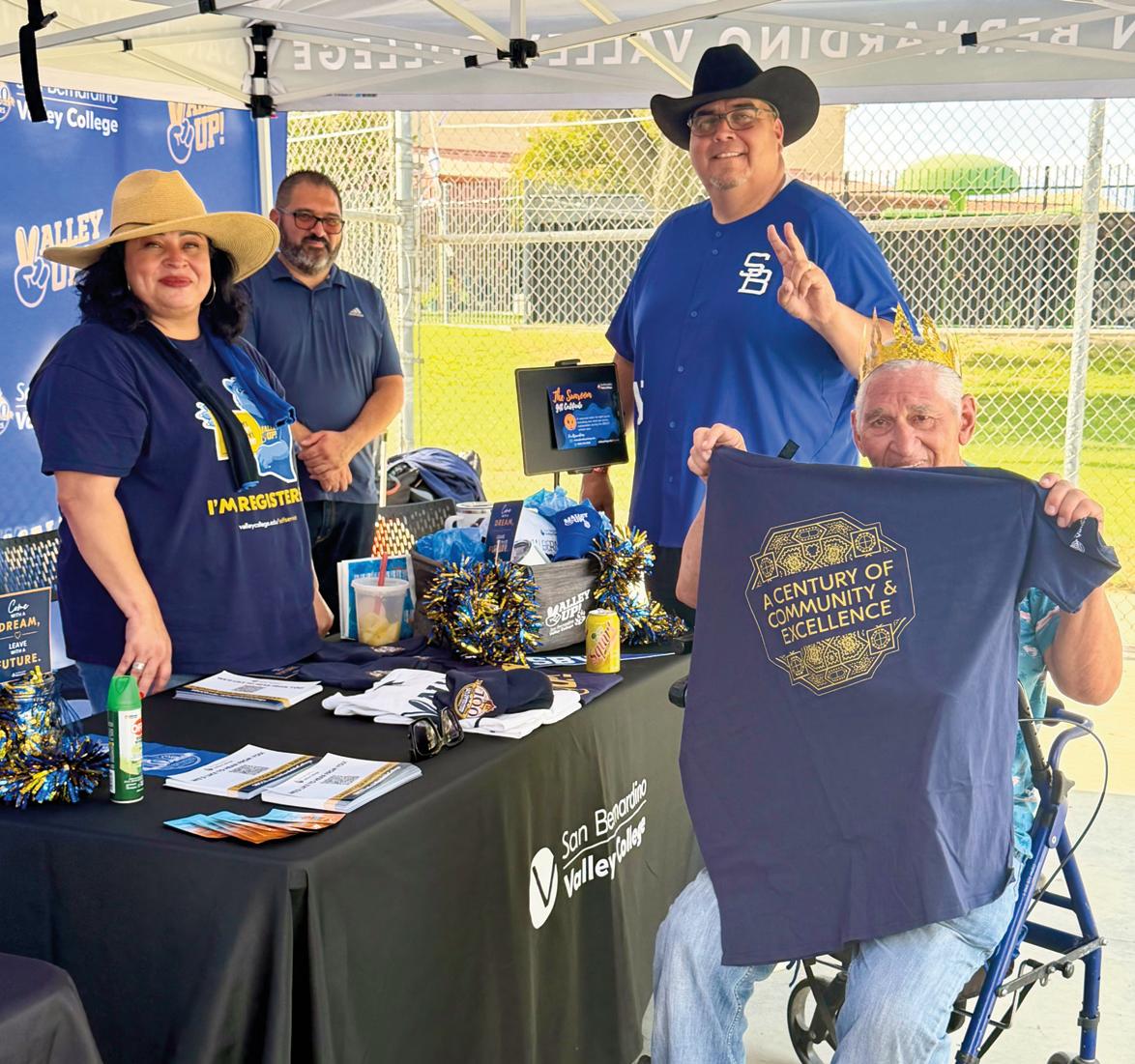
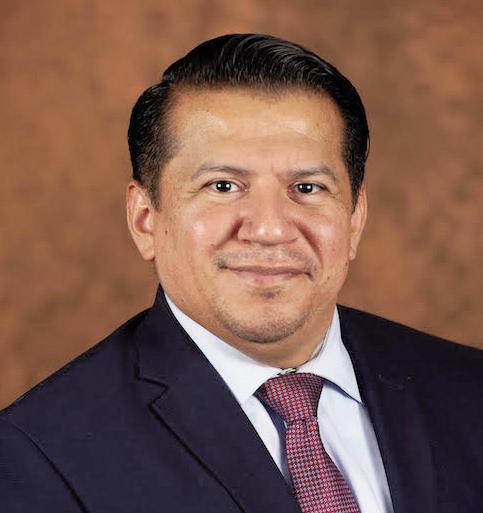
San Bernardino Valley College President Dr. Gilbert Contreras, back right, stands beside an attendee who displays the “Century of Community Excellence” T-shirt he received after completing the college’s Affordable College Survey during Colton’s 139th Birthday.
PHOTO DENISE BERVER
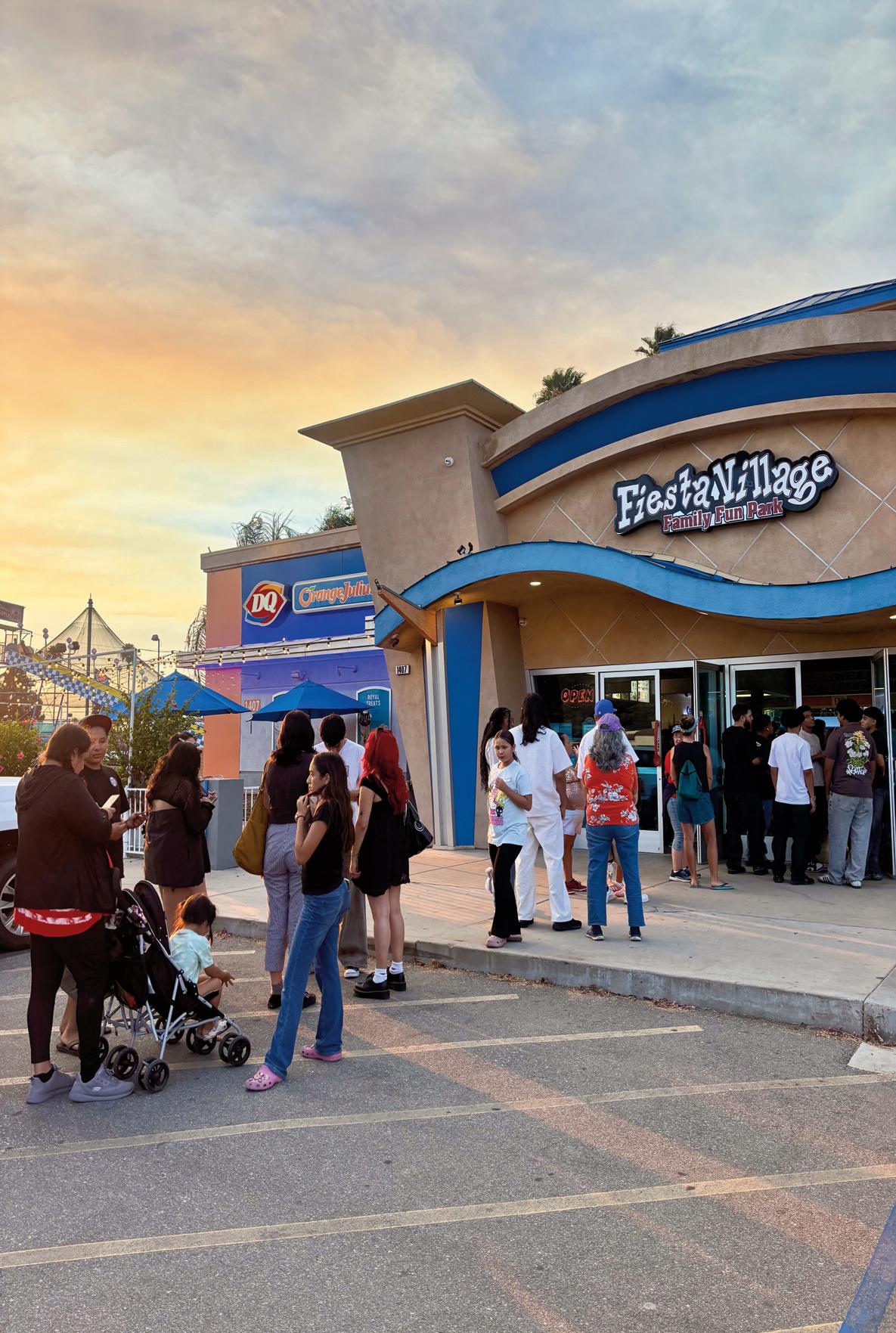
Families gather outside Fiesta Village’s main entrance on Friday, July 10, as visitors arrive to experience the longtime Colton attraction before its permanent closure on July 11th, 2026.
PHOTO MANNY SANDOVAL
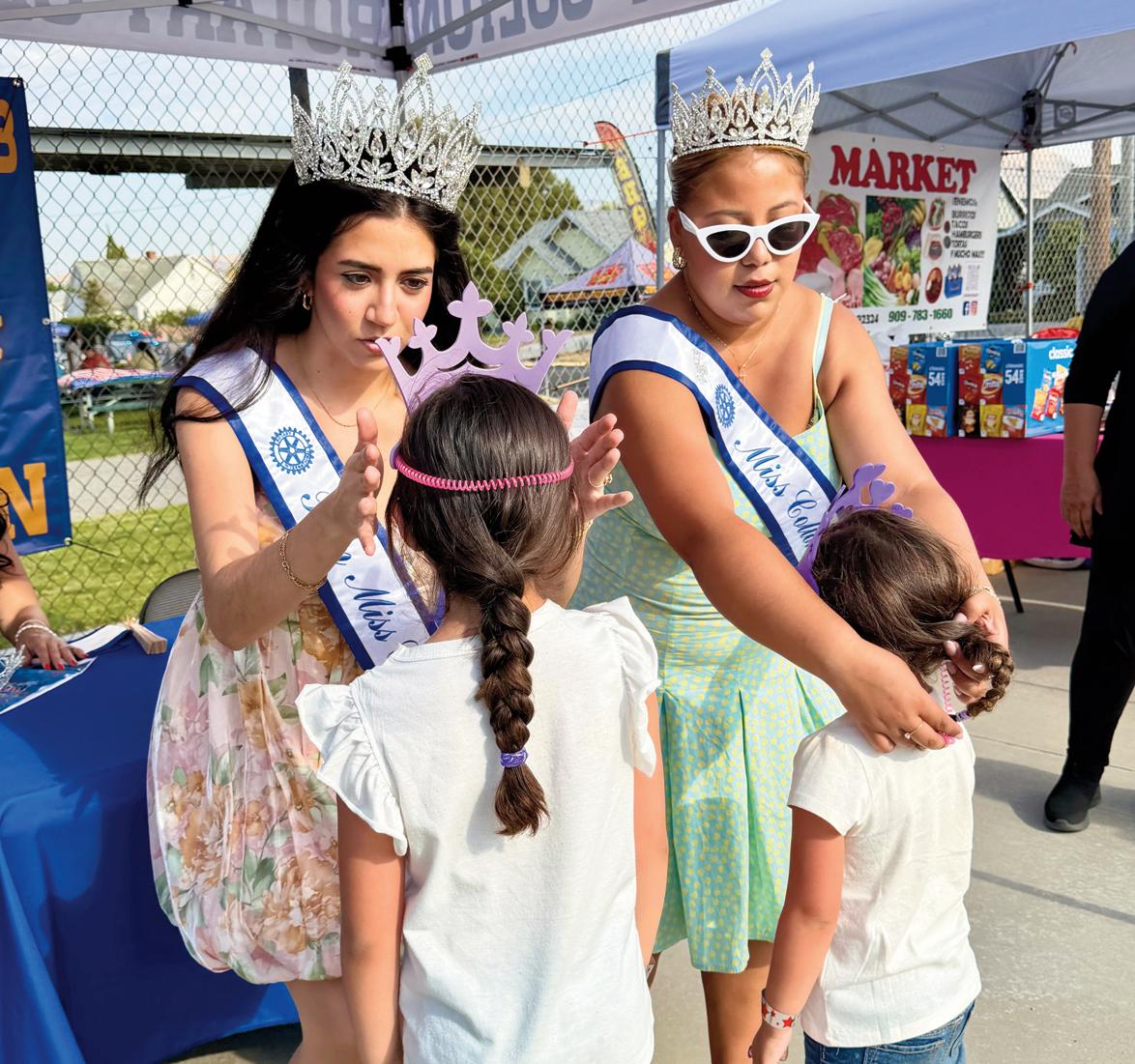
Miss Colton pageant winners from 2025 place foam crowns on two young residents, one day ahead of the annual Teen and Miss Colton Pageant on July 12.
PHOTO DENISE BERVER Guests race down the Sluggers Super Slide as Fiesta Village’s rides remained active during one of the park’s final evenings of operation.
PHOTO DENISE BERVER
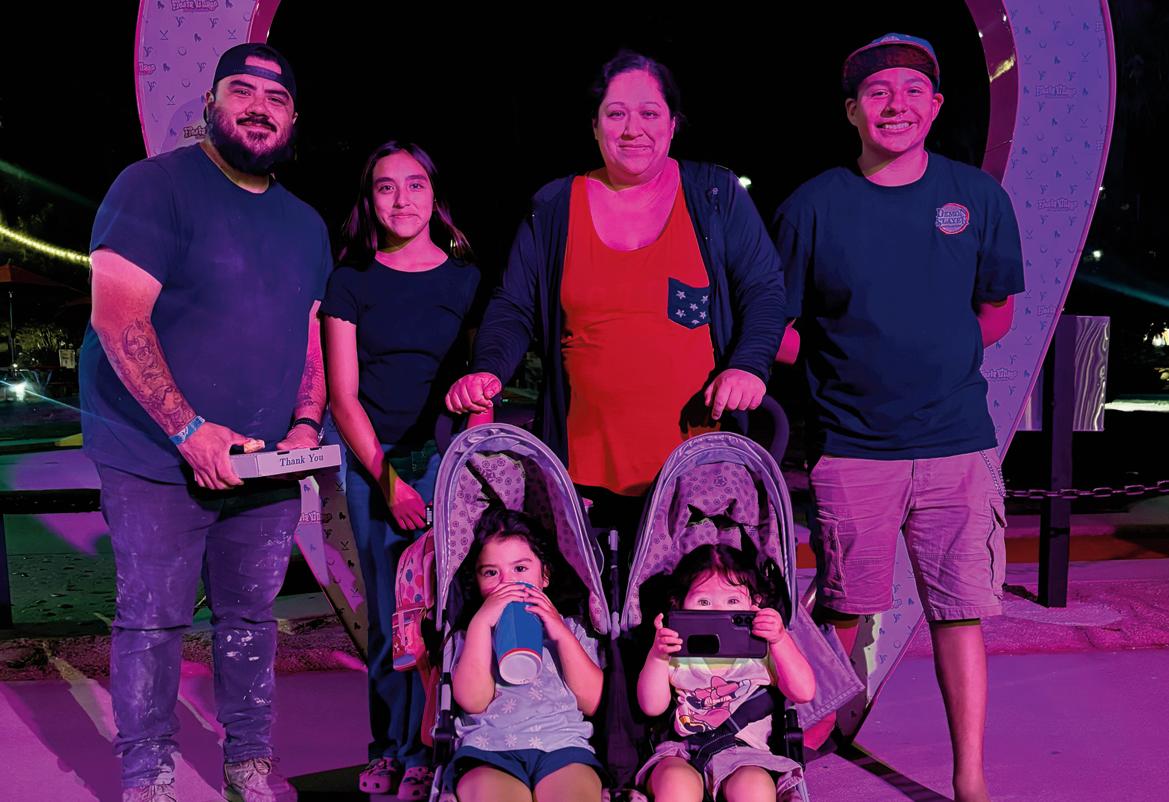
A family captures a final photo beneath Fiesta Village’s heart-shaped photo display before saying goodbye to the amusement park.
Colton Birthday (cont.)
- Gilbert Contreras told IECN.
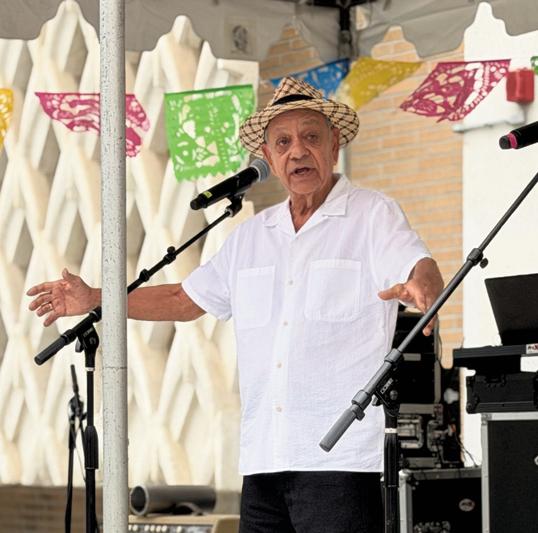
During IECN’s visit to the booth, an older attendee smiled as he received his shirt and carefully checked that it would fit. Participants could choose between
“Century of Community Excellence” and “Valley Up” designs. The survey remains available at sbccd.edu/AffordableCollege.
IECN also connected with Colton Police Chief Anthony Vega, Councilman John Echevarria and members of the Rotary Club of Colton as they engaged residents.
This year’s celebration moved from Colton High School because of construction. The city replaced fireworks with a drone show after determining that local public spaces could not safely accommodate the required fireworks fallout zone.
San Bernardino Wellness Campus Opens 140 Modular Units, Expands Homeless Services for Men
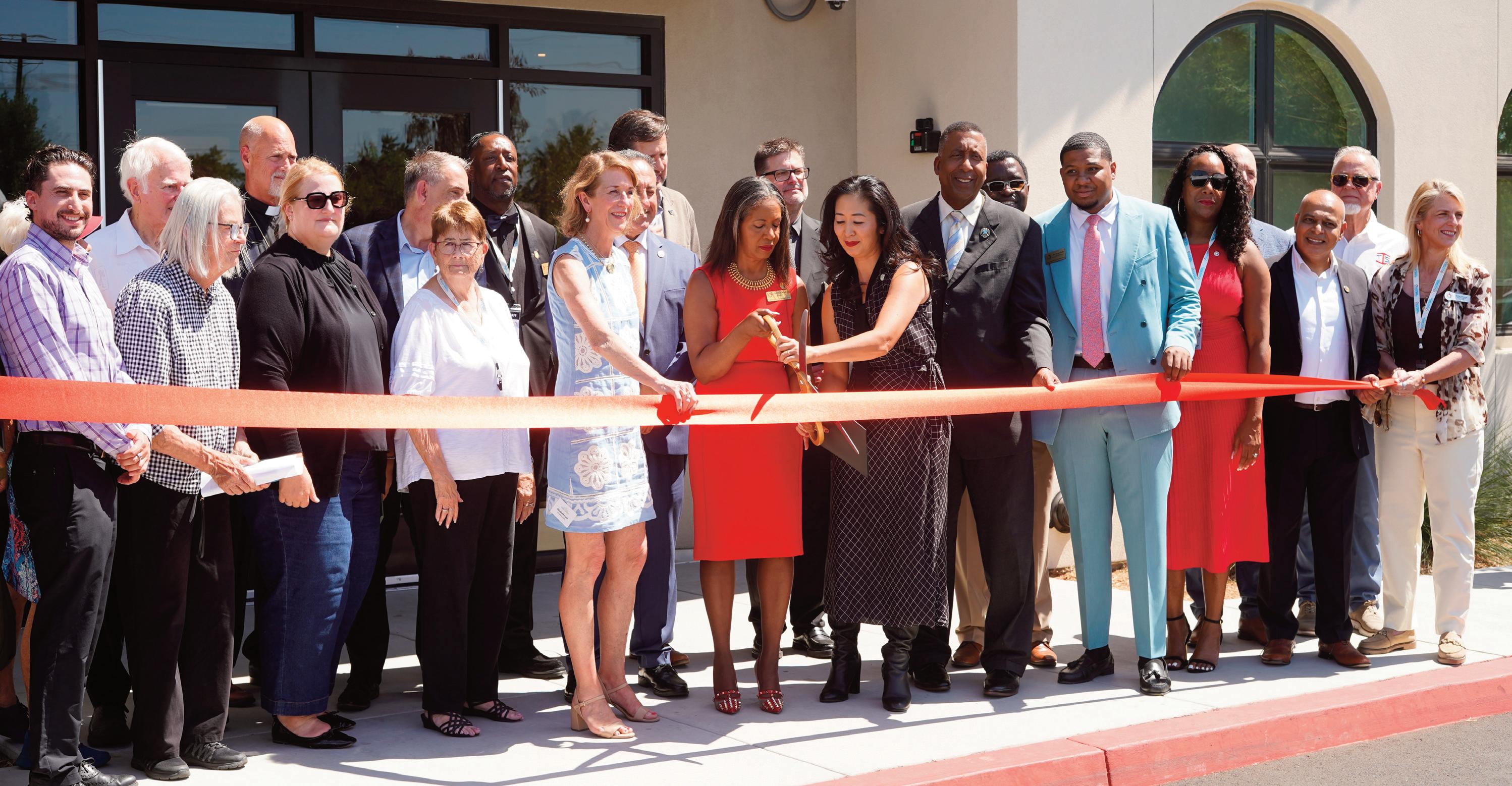
Lutheran Social Services of Southern California President and CEO Dr. LaSharnda Beckwith and San Bernardino Mayor Helen Tran cut the ribbon
elected officials, community leaders and project partners celebrate the opening of the San Bernardino Community Wellness Campus.
By Manny Sandoval
Lutheran Social Services of Southern California formally opened its San Bernardino Community Wellness Campus on July 14, unveiling 140 interim housing units and an integrated network of services intended to help men move from homelessness toward employment, stability and permanent housing.
The $34.9 million campus at 1354 N. G St. was developed over nearly 2.5 years through a partnership involving the city of San Bernardino, DignityMoves, San Bernardino County and Lutheran Social Services. Funding came through California’s Homekey program, making it one of the state’s larger Homekey projects.
The new modular units expand upon a 70-bed emergency men’s shelter that Lutheran Social Services has operated at the site since 2016. Together, the two programs provide 210 beds, with the interim units structured as a four- to six-month program expected to serve about 280 people annually.
Kim Johnson, the first resident to move into the campus on May 21, spoke during the press conference and thanked Lutheran Social Services and the public and private partners that made the project possible.
The campus combines housing with on-site case management, housing navigation, behavioral health and psychiatric services, trauma-informed care, employment assistance, a computer lab, an intake center and access to food and other essential resources. The model is designed to reduce the fragmentation residents often encounter when services are spread across multiple agencies and locations.
San Bernardino County contributed $1.48 million in housing intervention funding, according to Derek Armstrong, a county deputy executive officer.
“What success looks like is stabilizing people and helping them begin that continuum of care,” Armstrong said. “The goal is to help them get back on their feet, become gainfully employed and receive the wraparound services they need.”
Armstrong said the campus is not intended to become permanent housing for participants, but rather an entry point into recovery and long-term stability.
“It is meant to begin the process of healing, help residents move forward and make space for the next people
who need those services,” he said.
The county and its partners plan to track resident outcomes through case-management data and the Homeless Management Information System. Armstrong said officials want to understand whether residents remain stable one, five and 10 years after leaving the campus.
He said sustaining facilities like the wellness campus can be challenging because operating funds typically come from a combination of local government, state behavioral health programs, federal assistance and philanthropic contributions.
“All of those sources have to come together for projects like this to succeed,” Armstrong said.
A large commercial kitchen is among the campus’ central features. It is expected to support the preparation and service of more than 200,000 meals annually while also anchoring emergency food distribution for approximately 250 families each month.
The kitchen will also serve as a workforce training site. Lutheran Social Services plans to train at least 100 culinary participants annually, with each earning a California Food Handler Card and gaining hands-on experience in a commercial kitchen. The organization projects that at least 25% of participants will secure permanent employment and another 30% will obtain temporary work.
Jennifer Seeger, deputy director of state financial assistance, said Homekey was created to rapidly expand housing while pairing it with services that address the circumstances contributing to homelessness.
“Housing is fundamental to everything else,” Seeger said. “Affordable homes are fundamental to health, education, economic opportunity and long-term well-being.”
Since Homekey launched in 2020, Seeger said the state has funded 259 projects and created more than 15,850 housing units expected to serve approximately 170,000 people over the life of those projects.
She said the San Bernardino campus is among Homekey investments in the county that have created a combined 497 interim and permanent supportive housing units.
“The 140 interim units will allow residents to stop worrying about where they will live tomorrow, next week or
next month,” Seeger said. “Instead, they can focus on the safety, services and stability needed to move into permanent housing.”
Kevin Terry, CEO of Tovey Shultz, said the project carried personal meaning because he grew up near G Street and had experienced instability earlier in his own life.
“As a builder, we rarely get to work on projects with such a direct purpose,” Terry said. “I have slept in my car. I made bad decisions when I was young, and the consequences were difficult.”
He described the campus as a place where people can be restored and regain direction.
“The prodigal sons are coming home,” Terry said.
Bishop David Nagler, a former director of the Central City Lutheran Mission shelter, credited Lutheran Social Services President and CEO LaSharnda Beckwith, the organization’s board, staff, donors and partners for carrying the project from concept to completion.
“I walked in and felt instant emotion,” Nagler said. “In my wildest dreams, I did not imagine this. What I saw was the continuation of a belief that people matter and that their care must be prioritized.”
San Bernardino County Fifth District Supervisor Joe Baca Jr. and Mayor Helen Tran attended the ceremony. Representatives for state Sen. Eloise Gómez Reyes and Assemblymember James Ramos were also present. No other members of the San Bernardino City Council attended the public opening.
Lutheran Social Services, founded in 1944, operates across six Southern California counties. The organization has also opened confidential transitional housing for women and children fleeing domestic violence, adding 10 to 15 beds across two secure San Bernardino locations.
Armstrong said the wellness campus is part of a broader countywide effort that includes housing and navigation projects in San Bernardino, Redlands, Fontana, Muscoy and the High Desert.
“There is need everywhere,” he said, “and we are trying to fill the gaps wherever we can.”
PHOTO MANNY SANDOVAL
as
California Budget Adds 13
Judgeships, $100 Million for Court Facilities Amid Inland Empire Shortage Community News
The Inland Empire Caucus recognized the inclusion of funding in the 2026-27 State Budget to begin expanding judicial capacity in California's most under-resourced courts, including the Inland Empire.
The budget provides $44 million annually, to support the phased implementation of 13 new superior court judgeships and $100 million for related court facilities authorized by Chapter 482, Statutes of 2023.
The funding follows years of bipartisan advocacy by the Inland Empire legislative delegation, local governments, the Judicial Council, and regional court leaders to address a shortage of judges that has contributed to higher caseloads and longer wait times for residents seeking access to the courts.
Earlier this year, the Inland Empire Caucus led a bipartisan budget request urging the Legislature to fund judgeships identified by the Judicial Council as the state's highest priorities, with San Bernardino and Riverside Counties ranking among those with the greatest need.
"For decades, the Inland Empire has struggled with a shortage of judges despite being one
of California's fastest-growing regions," said Assemblymember Juan Carrillo, Chair of the Inland Empire Legislative Caucus. "This budget represents real progress toward bringing our courts closer to the level of service our residents deserve. It reflects years of work by legislators from both parties, our local court leadership, counties, and many others who refused to let this issue fall off the radar."
"Our communities deserve a court system that is there when people need it most. I'm proud of the efforts of our caucus and our regional partners to keep this issue front and center and advocate for the resources our growing region needs. This funding is an important step toward improving access to justice for families across the Inland Empire." said, Assemblymember Greg Wallis, Vice Chair of the Inland Empire Legislative Caucus.
The Inland Empire serves nearly five million residents but continues to face some of the highest judicial workloads in California. The Judicial Council's workload assessment identified San Bernardino and Riverside Counties among the state's highest priorities for additional judgeships based on documented need.
"This funding will help improve access to justice for resi-
dents throughout our region," said San Bernardino County Board of Supervisors Chairman Dawn Rowe. "As our communities have grown, the demands on our courts have grown with them. It was a privilege to advocate for this investment alongside our Inland Empire Legislative Delegation in Sacramento, and I'm grateful for their partnership and leadership in securing this funding for our region."
"For years, San Bernardino County has faced one of the most significant judicial officer shortages in California, placing substantial demands on our courts and communities," said Presiding Judge Rod Cortez. "The funding provided in this year's budget is a meaningful investment that will expand access to justice, improve court services, and reinforce public trust. We are grateful to the Governor and Legislature for recognizing these needs and for their continued support of the judicial branch and the residents of San Bernardino County."
While this funding does not fully address California's judicial shortage, it represents an important investment in improving court access for Inland Empire residents and provides the first funding to begin implementing judgeships authorized by the Legislature in 2023.
San Bernardino County Property Values Reach $376.9 Billion as Assessment Roll Grows
Community News
Assessor-Recorder-County Clerk Josie Gonzales has officially signed and delivered the 2026 annual assessment roll to Deputy Chief Property Tax Division Franciliza Zyss of the Auditor-Controller/Treasurer/Tax Collector’s Office. The 2026 San Bernardino County assessment roll encompasses 905,255 parcels with a total assessed value of $376.9 billion.
“San Bernardino County continues to demonstrate strong and steady growth,” said Gonzales. “Through our National Association of Counties award-winning program, From Confusion to Clarity: Revolutionizing Property Tax Outreach, my office is committed to connecting property owners with valuable property tax-saving programs and the information they need to access them.”
The annual assessment roll reflects the total gross assessed value of locally assessed real, business, and personal property as of the Jan. 1 lien date.
State law requires county assessors to identify, inventory and assess all taxable property while applying all eligible exemptions and exclusions.
The Assessor-Recorder-County Clerk’s Office submitted the 2026 assessment roll to the Auditor-Controller/Treasurer/Tax Collector in accordance with the deadline established by the State Board of Equalization.
2026 San Bernardino County assessment roll highlights:
Total assessed value: $376,926,409,190 Homeowner’s Exemption: 219,368 homeowners received the exemption, resulting in more than $15.3 million in property tax savings.
Disabled Veteran’s Exemption: 7,628 disabled veterans qualified, receiving over $13 million in property tax savings.
Welfare institutions: 2,758 institutions (schools, churches, museums, and non-profits) received over $58.6 million in tax relief.
Community Assistance: This year, the Assessor’s Office identified communities whose property values were negatively impacted by the December Storms of 2025 and applied appropriate reductions.
City highlights:
Ontario: Highest assessed value at $49 billion.
Rancho Cucamonga: Second highest assessed value at $40 billion.
Fontana: Third highest assessed value at $36 billion.
Growth:
High Desert: The unincorporated areas of the High Desert experienced an 8.5% increase, adding $1 billion in assessed value from 2025.
Incorporated cities: Total value of $320 billion, a 4.2% increase.
Unincorporated areas: Total value of $56 billion, a 5.4% increase.
In accordance with Proposition 13, real property is assessed based on the lower of its current market value or its adjusted base-year value. The adjusted base-year value may increase by no more than 2% annually unless ownership changes or new construction occurs.
Residents can learn more by visiting arc.sbcounty.gov/property-tax-savings/.
Assessed values are not intended to predict future market trends. Property owners may learn more about property assessments by visiting arc.sbcounty.gov or by calling 877-885-7654 for assistance.
Why Well-Child Visits Matter Before the Start of School
By Rhonda L. Randall, D.O., Chief Medical Officer at UnitedHealthcare, Employer & Individual
As families prepare for the upcoming school year, many are focused on school supplies, schedules and getting back into routines. But one of the most important back-to-school steps happens before the first day of class: scheduling a well-child visit.
Because many pediatric and family practice schedules often fill quickly throughout the summer, now is an ideal time for parents to make appointments. These preventive visits help ensure children and adolescents are ready for the year ahead, not only academically, but physically, emotionally and developmentally.
What is a well-child visit?
Well-child visits are annual preventive appointments with a pediatrician or family medicine provider. Sometimes referred to as physicals, these visits help track a child’s overall health and development, including:
· Growth and developmental milestones
· Immunizations and preventive screenings
· Vision and hearing checks
· Emotional and behavioral health
Beyond these clinical measures, well-child visits also give parents a chance to complete school or sports forms and raise any concerns before the school year begins. More importantly, they create dedicated time for families and providers to discuss a child’s overall wellbeing, connecting physical health with emotional wellness and any developmental concerns that may affect success in school and at home.
Mental health is part of overall health
The broader view of a checkup may be especially important when it comes to mental health. A child’s emotional wellbeing may be closely linked to their physical health.
According to the US Centers for Disease Control and Prevention (CDC), approximately 1 in 5 children ages 3 to 17 in the US has a diagnosable mental, emotional or behavioral disorder. Mental health needs can look different depending on age and stage of development.
Young children may experience separation anxiety or behavioral outbursts. School-age children may struggle with focus, stress or social challenges.
Teens may show changes in mood, sleep or engagement. While many of these changes
are a normal part of growing up, they can also signal when additional support may be needed.
The good news is that early conversations with a pediatrician can make a difference.
A well-child visit is a natural time to check in and help children understand that it’s okay to talk about how they’re feeling. These conversations may also help normalize emotional health as an essential part of routine care.
To help support these conversations and preventive care visits, families are encouraged to review their health plan benefits and available resources as many plans include behavioral health support and programs like Child & Family Behavioral Coaching, which may help families navigate everyday emotional and behavioral challenges.
The importance of dental & vision care
Don’t forget to take advantage of vision and dental benefits to help make sure kiddos are ready to learn.
Vision benefits may include annual eye exams that can detect changes in eyesight that may affect learning in the classroom.
More than 600,000 children and teens in the U.S. suffer from some form of vision loss. School-based screenings are valuable but may not detect more complex issues. Annual comprehensive eye exams are recommended throughout the school years.
Dental benefits may include routine cleanings and exams that help catch concerns before they become more serious.
Tooth decay, or cavities, is one of the most common chronic diseases among children and may contribute to missed days at school. Help monitor teeth and gum health with dental exams twice a year. Ensure your children are brushing for 2 minutes twice a day and flossing daily.
Don’t forget a healthy diet
Proper nutrition is essential when it comes to supporting your child’s physical and emotional health, plus their growth and development. That includes meals with a variety of vegetables, whole fruits, grains, dairy and proteins. It’s best to avoid foods high in added sugars, saturated fats and sodium.
Scheduling a well-child visit is a simple but important step that gives families the opportunity to address concerns support a child’s overall wellbeing throughout the year.
40 Years of Gaming, Sovereignty and Community Investment
Community News
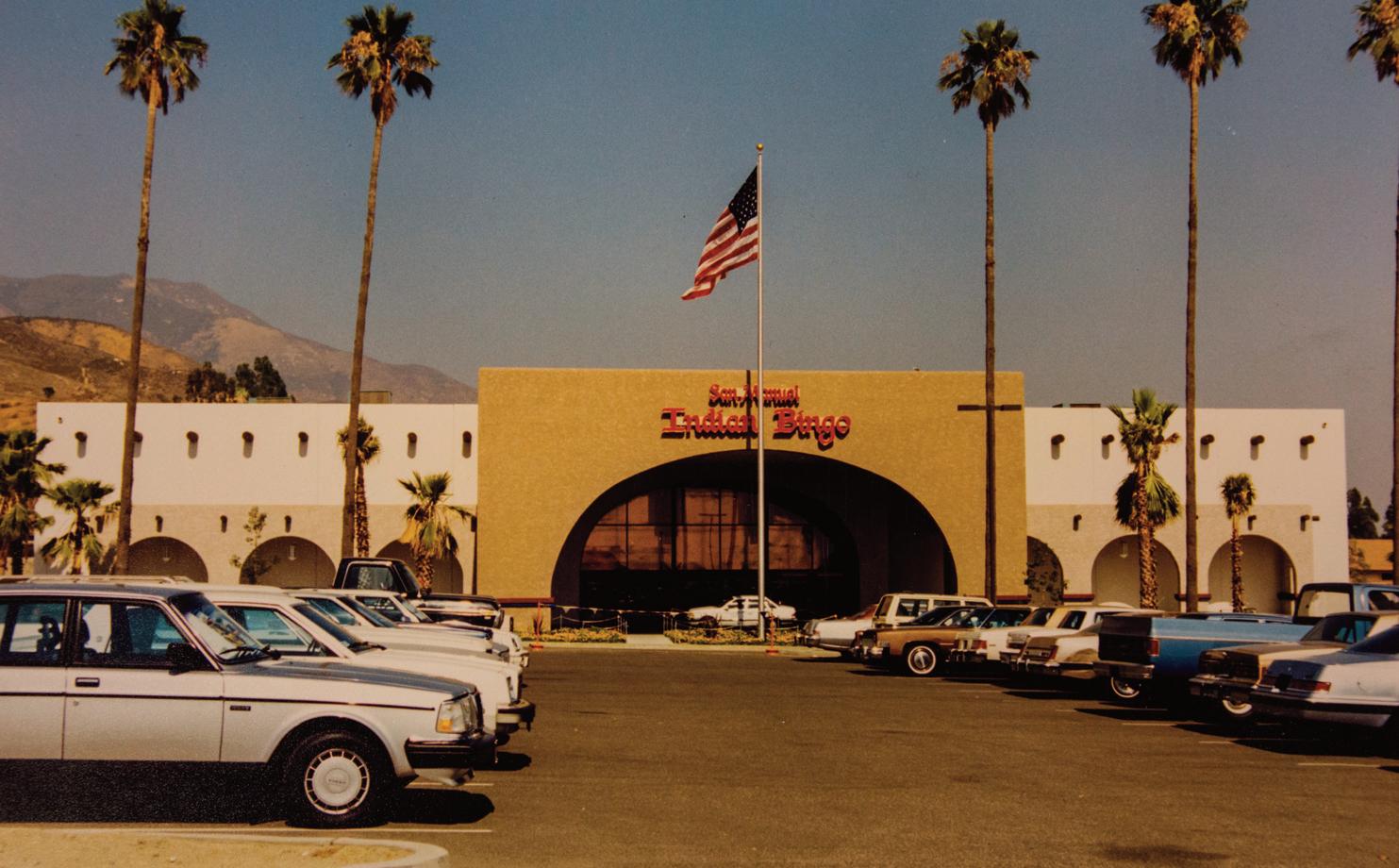
Yuhaaviatam of San Manuel Nation, which reclaimed its ancestral name in 2025 to restore its pre-colonial identity, is marking 40 years of Tribal government gaming leadership; a journey rooted in exercise of sovereignty, resilience and community stewardship.
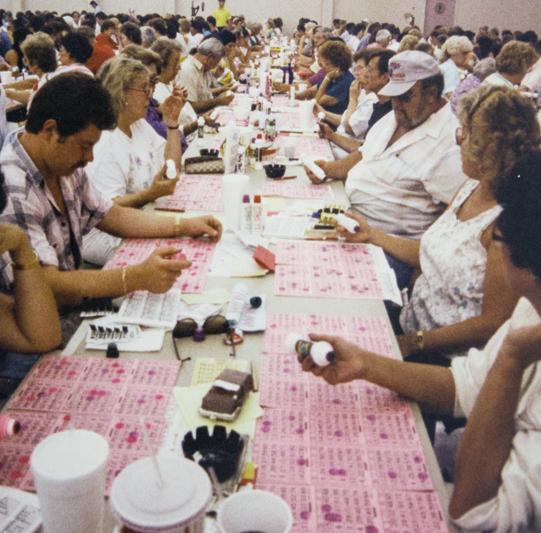
What began in 1986 as a bingo hall has enabled the Nation to evolve from tribal government gaming with Yaamava' Resort & Casino in Highland to include commercial gaming with Palms Casino Resort in Las Vegas in its portfolio. The Nation is the first and only Native American tribe to wholly own and operate a casino in America's gaming capital.
Over four decades, the Nation has demonstrated how Tribal government gaming can serve as a powerful vehicle for self-determination, economic growth and long-term community investment.
“Gaming has always been about more than economic opportunity. When regulated with integrity and the rule of law while being grounded in Tribal values, it becomes a disciplined and accountable model for economic growth —one that strengthens Tribal governance, supports community well-being and creates positive impacts across the region,” said Lynn Val-
buena, Chairwoman of Yuhaaviatam of San Manuel Nation. “As we reflect on 40 years, we are proud of the model we’ve built.”
Tribal government gaming was recognized as an inherent exercise of Tribal sovereignty and a pathway for sovereign Tribal nations to strengthen self-determination and economic self-sufficiency. What distinguishes the Tribal model is its structure and integrity: generation of tribal government revenues through highly regulated and accountable enterprises enabling the Nation to invest in Tribal governance, essential services, cultural preservation and community well-being.
For Yuhaaviatam of San Manuel Nation, government gaming has provided the foundation for investments in government services, infrastructure, education, healthcare and long-term economic sustainability. Over the past four decades, the Nation has demonstrated how Tribal enterprises can create a secure future for future generations while generating shared value and growth throughout the broader region.
A Legacy of Responsible Gaming Leadership
Yuhaaviatam of San Manuel Nation has helped define what responsible gaming looks like in practice. Through partnerships with organizations such as the California Council on Problem Gambling, and
collaborations with leading institutions including University of California, Los Angeles and University of Nevada, Las Vegas, the Tribe has invested in research, education, and next-generation safeguards.
At its properties, responsible gaming is embedded into daily operations through trained staff, real-time compliance monitoring, player protections and established intervention protocols within a highly regulated, brick-and-mortar environment designed to prioritize accountability and consumer safeguards.
An Economic Engine for the Inland Empire and Beyond
Today, the Tribe's gaming and government operations generate more than $3.2 billion in annual economic impact, support nearly 8,000 team members and contribute more than $627 million in annual wages and benefits, while reinvesting hundreds of millions into education, healthcare, housing and public safety across Tribal and non-Tribal communities.
A Commitment to Giving Back
Through its San Manuel Cares initiative, the Tribe has invested more than $450 million in philanthropic efforts since the early 2000s, supporting a wide range of community organizations focused on education, healthcare, housing, public safety and cultural preservation. This includes meaningful investments in Native-led initiatives
and partnerships with tribes and Native nonprofits across California and the nation, alongside support for local nonprofits serving the Inland Empire and beyond. From expanding access to healthcare and funding workforce training programs to strengthening communities and preserving culture, the Tribe’s impact reflects a commitment to shared progress and collective well-being.
“Our success is measured not only by what we build, but by who and what we invest in,” said Johnny Hernandez, Jr., Vice Chairman of Yuhaaviatam of San Manuel Nation. “We are committed to ensuring our growth continues to create lasting benefits for our Tribe and for the communities across our ancestral territory that we are proud to support.”
Looking Ahead
As Yuhaaviatam of San Manuel Nation looks to the future, it remains focused on advancing a model of tribal government gaming that balances innovation with responsibility, economic growth with community investment, and sovereignty with partnership.
This 40-year milestone reflects a legacy built on Tribal values and reaffirms that, when guided by integrity, gaming can serve as a catalyst for lasting, positive change across generations.
New Best Western Plus Expands Rialto’s Hospitality Capacity Along Route 66
By IECN Staff
Anewly constructed
Best Western Plus has opened along historic Route 66, adding hotel capacity near Rialto’s growing logistics, healthcare and commercial sectors.
The Best Western Plus Rialto, located at 841 W. Foothill Blvd., recently celebrated its grand opening and is now serving business and leisure travelers visiting the city and surrounding Inland Empire communities.
The opening comes as Rialto continues to experience commercial and industrial development, including growth tied to logistics, distribution, manufac-
turing, healthcare and infrastructure projects.
Hotel representatives said the property is positioned to accommodate corporate travelers, construction crews, healthcare workers, sports teams and families visiting the region.
The hotel is also within driving distance of Ontario International Airport, Ontario Mills, Yaamava’ Resort & Casino, Glen Helen Regional Park and other regional destinations.
“Having the opportunity to welcome guests to one of Southern California’s fastestgrowing communities is something our entire team takes pride in,” General Manager Nicholas Gaskin said. “We look
forward to becoming a lodging option for people visiting Rialto and the greater Inland Empire.”
The property includes guest rooms, complimentary breakfast, Wi-Fi, a fitness center and business amenities.
Hotel officials said they also plan to establish partnerships with local employers, healthcare providers, educational institutions, sports organizations and community groups seeking lodging accommodations for employees, visitors and events.
The development expands Rialto’s hospitality inventory along Foothill Boulevard, a major commercial corridor that follows the historic Route 66 alignment through the city.
PHOTO YUHAAVIATAM
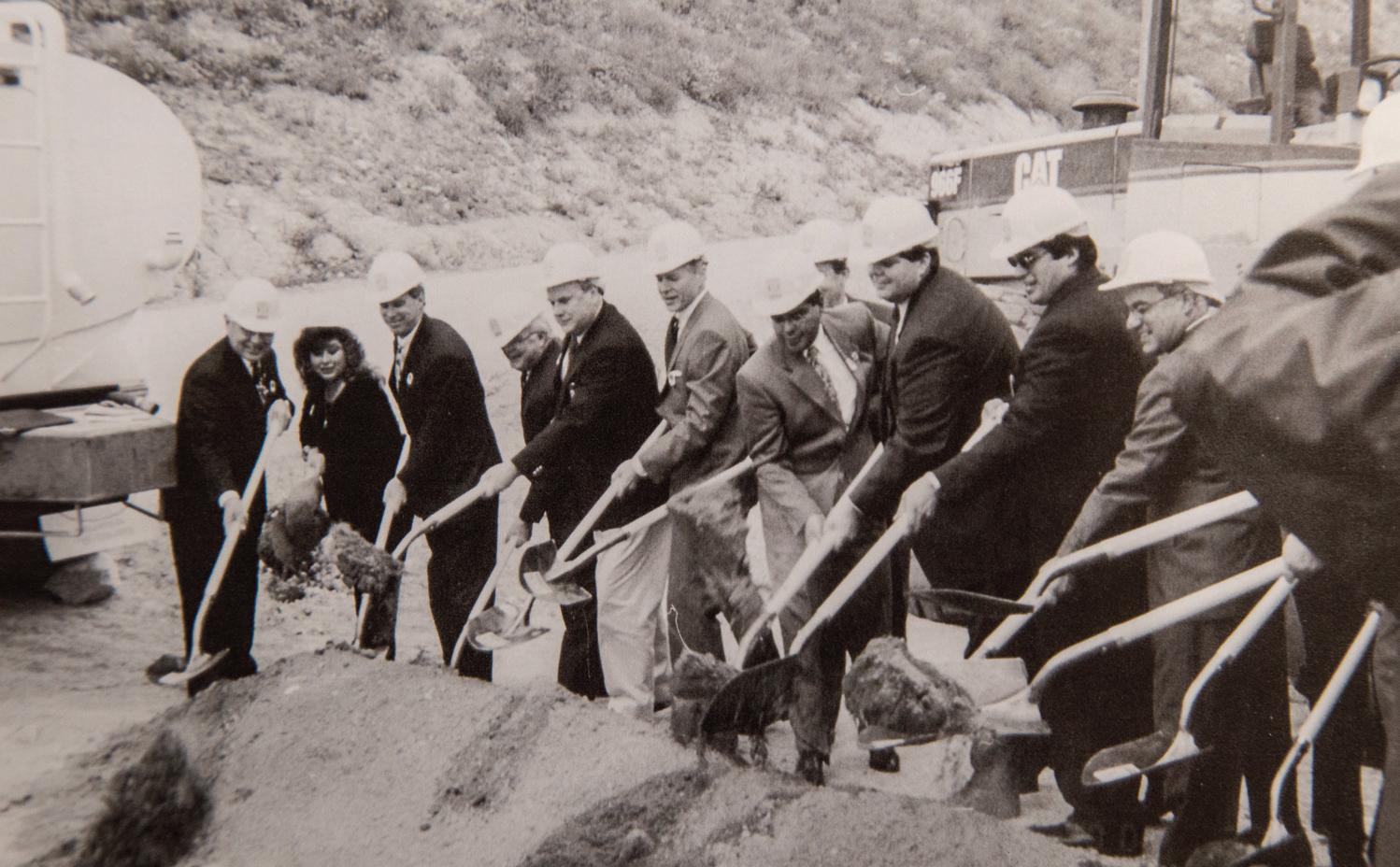
Tribal leaders, elected officials and community partners participate in the groundbreaking ceremony for San Manuel Indian Bingo, a project that laid the foundation for what would become four decades of gaming leadership by the Yuhaaviatam of San Manuel Nation.
PHOTO BEST WESTERN
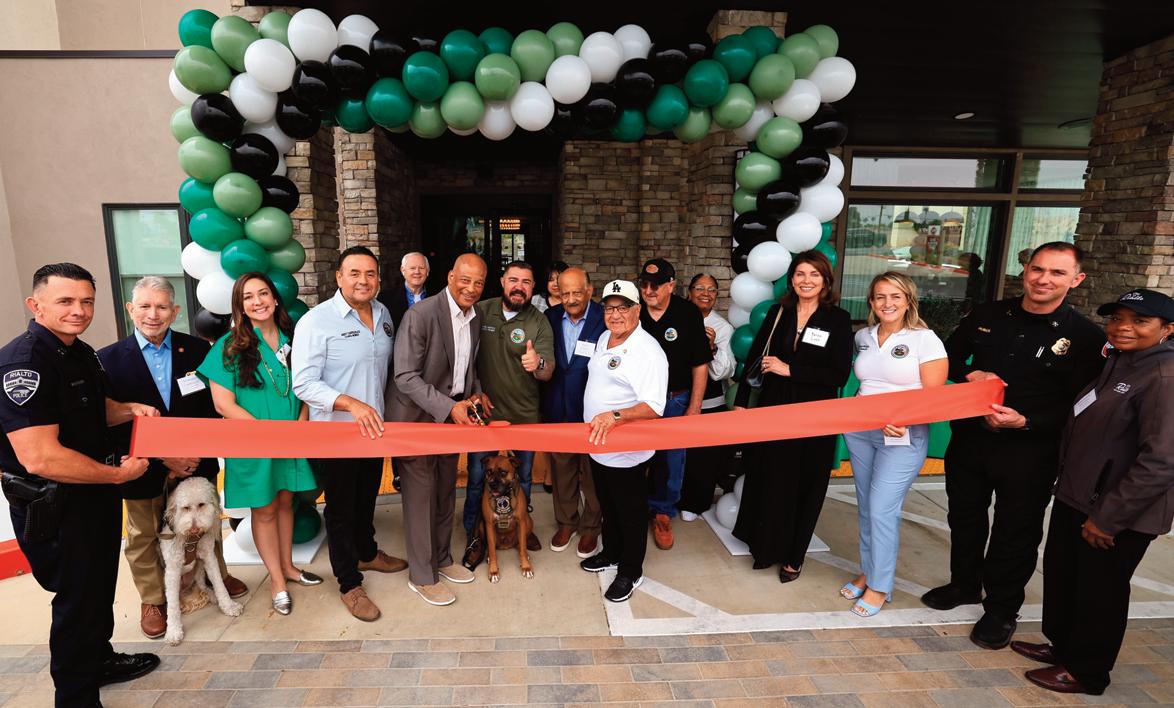
Rialto Mayor Joe Baca Sr., Councilmembers Andy Carrizales, Ed Montoya and Ed Scott, City Clerk Barbara McGee and Best Western leaders mark the grand opening of the new Best Western Plus Rialto with a ceremonial ribbon cutting.
PHOTO YUHAAVIATAM
The original San Manuel Indian Bingo hall opened in 1986 in Highland, launching the Yuhaaviatam of San Manuel Nation's gaming enterprise that has since grown into a multibillion-dollar operation with properties in California and Las Vegas.
By IECN Staff
The San Bernardino Symphony Association has received two statewide honors recognizing its expanding youth music program and the decades-long leadership of board member emeritus Dean McVay.
The Association of California Symphony Orchestras named the San Bernardino organization the recipient of its 2026 Community Impact Award, while McVay was selected for the association’s 2026 Most Valuable Player Award. Both honors will be presented during ACSO’s annual conference, scheduled for Aug. 6-8 in Santa Rosa.
The Community Impact Award recognizes an orchestra that responds to local needs, expands access and inclusion, and develops meaningful community relationships through its programs, partnerships and performances.
The San Bernardino Symphony was selected for its Youth Orchestras Program, which provides advanced music education and performance opportunities to students in grades six through 12 across the Inland Empire and Coachella Valley.
Originally launched in 2021 as a youth winds ensemble, the program expanded into a full youth symphony in 2024. After enrollment exceeded available rehearsal space, the organization established the San Bernardino Symphony Overture Orchestra in 2025 for younger middle school musicians.
The program now serves more than 100 students through professional-level rehearsals, performances, mentorship from professional musicians and partnerships with local educational institutions.
“This program has exceeded even my own expectations,” Music Director and Conductor Anthony Parnther said. “It is leveling the playing field in a way few arts organizations ever achieve.”
More than 80% of participating students come from minority backgrounds and are considered at risk because of economic circumstances, according to the association. The program offers tuition assistance and merit-based scholarships to reduce financial barriers.
Rehearsals and performances at San Bernardino Valley College are also intended to introduce students to a college
environment. More than 90% of graduating seniors from last year’s program enrolled in college or planned to enroll, the association reported.
“With the Community Impact Award, ACSO seeks to recognize the work that orchestras are doing to serve their communities both inside and outside the concert hall,” ACSO Executive Director Sarah Weber said. “By combining artistic excellence, equitable access, cultural relevance and long-term educational pathways for young people, the San Bernardino Symphony Association has created a model for how orchestras can strengthen community, expand opportunity and meaningfully shape the next generation.”
ACSO’s Most Valuable Player Award, established in 1996, recognizes individuals and volunteer organizations that contribute to the success and long-term sustainability of orchestras and classical music organizations across California and the western United States.
McVay joined the San Bernardino Symphony’s board in 2004 and has served in several leadership roles, including board president from 2017 to 2022. His early work on the marketing committee helped strengthen the orchestra’s local presence,
and he received the organization’s Golden Baton Award in 2015.
He also led the two-year international conductor search that brought Parnther to the San Bernardino Symphony, helping usher in a period that included the organization’s first sold-out concerts and increased season subscriptions.
“While most orchestras are guided by a board of directors, few can boast a leader as dedicated as Dean McVay,” Executive Director Anne Viricel said. “Known throughout the community for both his steadfast leadership and joyful presence, Dean remains a beloved figure among patrons, musicians and board members alike.”
The board unanimously named McVay an emeritus member in 2023. He also belongs to the Continuo Society and has included the symphony in his long-term financial planning.
“During good times and challenging times alike, orchestras rely on volunteers to keep the music playing,” Weber said. “Dean exemplifies the deep commitment, vision and generosity that make volunteers indispensable to our field.”
City of San Bernardino Appoints Luis Portillo as New Economic Development Director
Community News
The City of San Bernardino has announced Luis Portillo has been appointed as its new Economic Development Director. Portillo began his service with the City on July 6, 2026.
With over 20 years of experience in economic development, regional partnerships, public policy and corporate affairs, Portillo’s background includes leadership roles with regional economic partnership organizations, state government and the private sector, with a focus on strengthening business climates, building public-private partnerships and advancing long-term economic competitiveness.
“Luis brings a record of collaboration, strategic leadership and economic development experience that will be valuable as
San Bernardino continues to build on its momentum,” said City Manager Eric Levitt. “His understanding of the Inland Empire, relationships with regional partners and track record of helping businesses will support the City’s efforts to create jobs, attract investment and revitalize key areas of San Bernardino.”
Portillo most recently served as President and Chief Executive Officer of the San Gabriel Valley Economic Partnership (SGVEP), where he oversaw regional strategy and stakeholder engagement across 31 cities. At SGVEP, Portillo launched the San Gabriel Valley Business City Connect program, which brought together city leaders, businesses and developers to explore development opportunities and strengthen regional collaboration.
Portillo has also served as the Director of
Public Policy for the Inland Empire Economic Partnership, where he worked with legislators on state and federal proposals affecting Inland Empire businesses. He helped establish the Inland Empire Chamber Alliance, bringing together over 20 chambers of commerce from San Bernardino and Riverside counties to advance advocacy, business retention and economic development priorities in the region.
Other professional experience includes service as Senior Legislative Analyst for Corporate Public Affairs at Edison International; Director of the Governor’s Office of Constituent Affairs; and Assistant Deputy Director of the California Department of Consumer Affairs’ Division of Legislative and Policy Review. He holds two degrees in Business Administration from California State University, San Bernardino.
“I am honored to join the City of San Bernardino and contribute to a community with such tremendous assets and opportunity,” Portillo said. “San Bernardino is positioned for growth, with its transportation infrastructure, workforce, and major redevelopment opportunities. I look forward to working with the Mayor and City Council, City leadership, businesses, developers, residents and regional partners to advance investment, job creation and the local economy.”
The City is also advancing major development and revitalization efforts, including the redevelopment of the 42-acre Carousel Mall site in downtown San Bernardino, the Arden-Guthrie commercial site near Highland Avenue and the 210 Freeway, and the implementation of the City’s soon to be adopted 2050 General Plan.
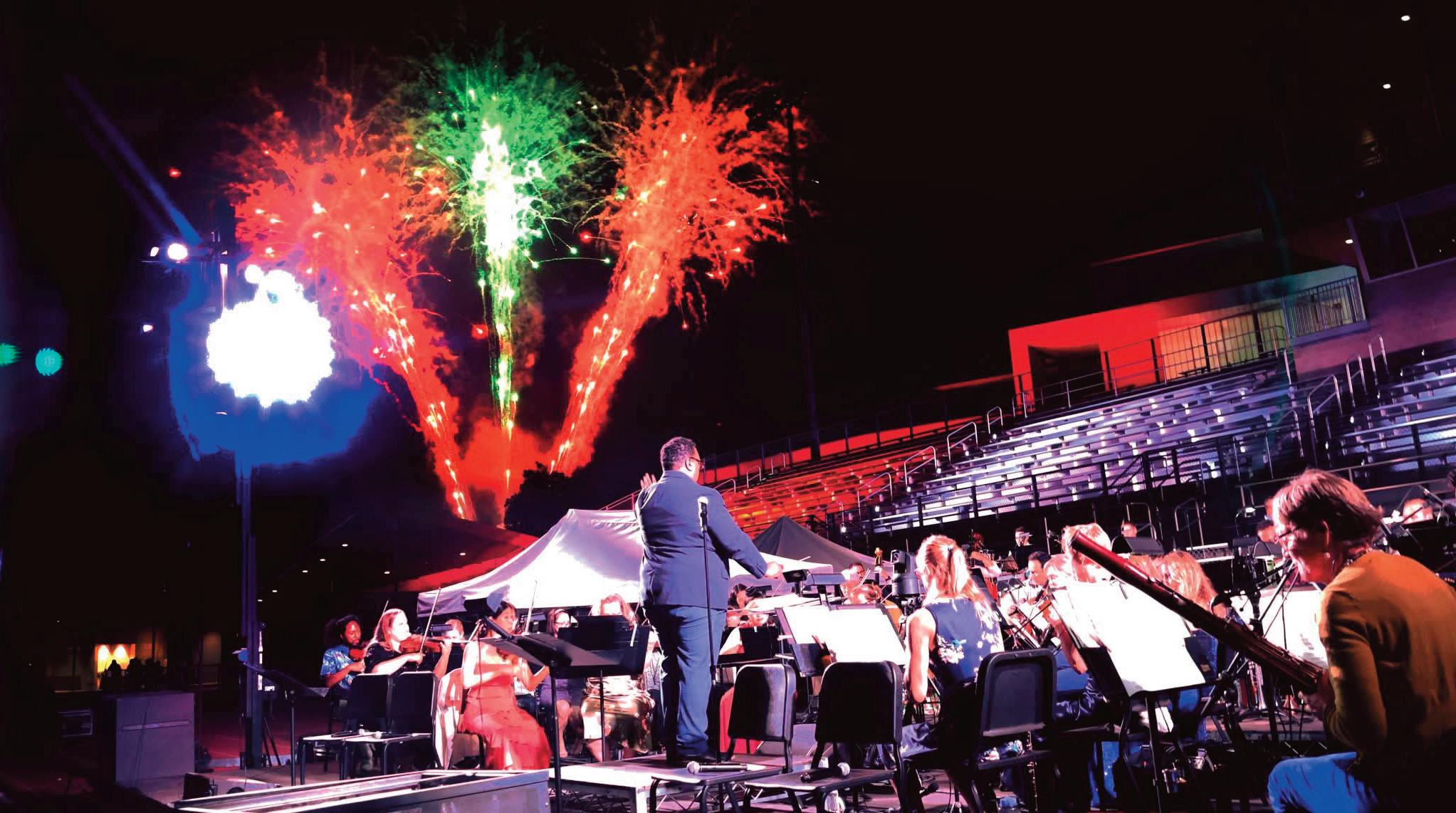
PHOTO SB SYMPHONY
San Bernardino Symphony Music Director and Conductor Anthony Parnther leads the orchestra as fireworks illuminate the sky during its Fourth of July celebration.
Cheech Marin Marks 80th Birthday, Celebrates Riverside’s Transformation Into an Arts Destination
By Manny Sandoval
Cheech Marin celebrated his 80th birthday July 12 at The Cheech Marin Center for Chicano Art & Culture, where visitors gathered for free museum admission, live music, dance performances and a community celebration honoring his legacy.
The event highlighted Marin’s career across comedy, film, television and the arts, while underscoring his decades-long work to elevate Chicano artists and make their work accessible to broader audiences.
The celebration took place during Free Summer Sundays, which offers free admission every Sunday throughout the summer at both The Cheech and the Riverside Art Museum. Beyond the seasonal program, both museums participate in Museums for All. Visitors presenting an EBT, SNAP or WIC card with photo identification can receive $1 admission for up to four people per card, covering both museums.
For Marin, the center is more than a home for his collection. It is a place where visitors can see Chicano culture represented in an arts institution.
“I’ve always been opening doors to the Chicano identity,” Marin said. “It feels great. It’s such a thrill to have one concentrated place where people can come and see their culture represented. It’s the first one, and that means a lot to me.”
Marin said Riverside’s role in creating the center made the project especially meaningful.
“That it’s here in the city of Riverside is really special because I’m in business with them and we’re partners,” Marin said. “That never happens.”
The idea for The Cheech grew from an exhibition of
works on paper from Marin’s collection that came to Riverside after years of traveling to museums across the country.
“It was a huge hit here — the biggest attendance they ever had,” Marin said.
At the same time, Riverside was preparing to move its downtown library and needed a new use for the former building. Marin said then-City Manager John Russo proposed turning it into a permanent home for the collection.
“Because they came to me — really, that is the answer,” Marin said when asked why Riverside became the center’s home. “One thing led to another, everybody was very surprised, they went forward, and here we are.”
Riverside Councilman Philip Falcone said the partnership has helped bring Chicano art to audiences around the world. “We’re so happy we have this great gem and partnership with the Riverside Art Museum and Cheech Marin to bring access to Chicano art to the entire world,” Falcone said. “Today, we celebrate the icon of this institution and look forward to many more years together celebrating culture and art.”
Marin’s commitment to accessible arts experiences began during childhood. He recalled being about 9 when his cousins assigned each child a topic to study and share. Marin was assigned art.
After moving with his family from South Central Los Angeles to the San Fernando Valley, he began visiting the library every Saturday. Librarians noticed his interest and prepared books about artists and movements, including Rembrandt and the Impressionists.
“They told me the most important thing about viewing art is that you have to see paintings in person,” Marin said. “You have to see them in person to get the whole thing.
So, you have to go to museums.”
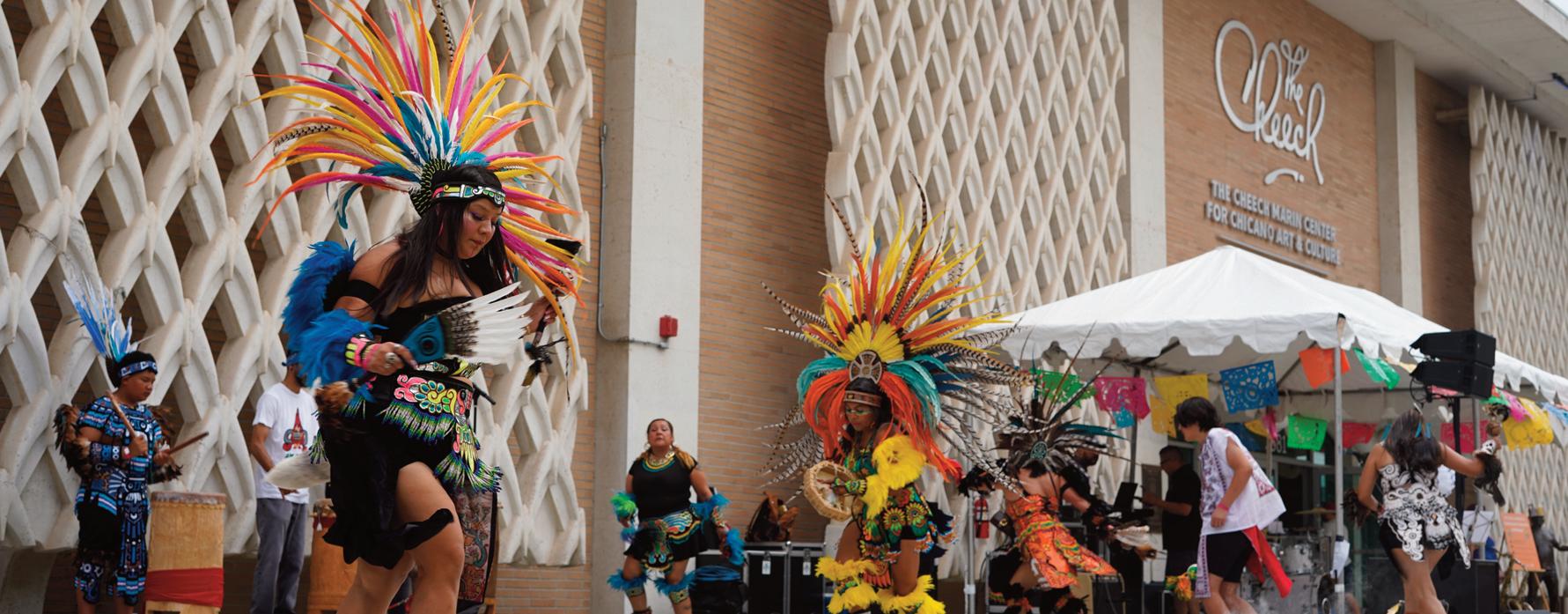
The birthday program opened with an Aztec dance performance by Xiuh Arte Azteca Chichimeca, followed by welcoming remarks and Ballet Folklórico. The afternoon included a DJ set by Angel Baby, host of the Art Laboe Connection, and live music from the Cherry Bomb Revival Band.
Marin joined visitors for a piñata activity before the celebration concluded with a community fandango open to musicians and dancers.
Asked what comes next after turning 80, Marin responded with his trademark humor.
“Eighty-one, hopefully,” he laughed. “You never know.” He then reflected on seeing families experience the center together.
“This has been the most rewarding experience of my life,” Marin said. “When I see people come in and the joy they experience with their families and great-grandchildren, it’s overwhelming. It keeps happening, and we want to keep moving forward.”
Marin recalled telling city leaders during early discussions that Riverside could become a major arts destination.
“A couple of weeks ago, I went in front of the same City Council and said, ‘Remember when I told you Riverside could be the next big art town? We’re now a big arts town,’” Marin said.
He described The Cheech as a lasting expression of gratitude.
“It is my gift back to the community that has supported me since I was 5 years old,” Marin said.
Learn more about The Cheech and RAM here: riversideartmuseum.org.
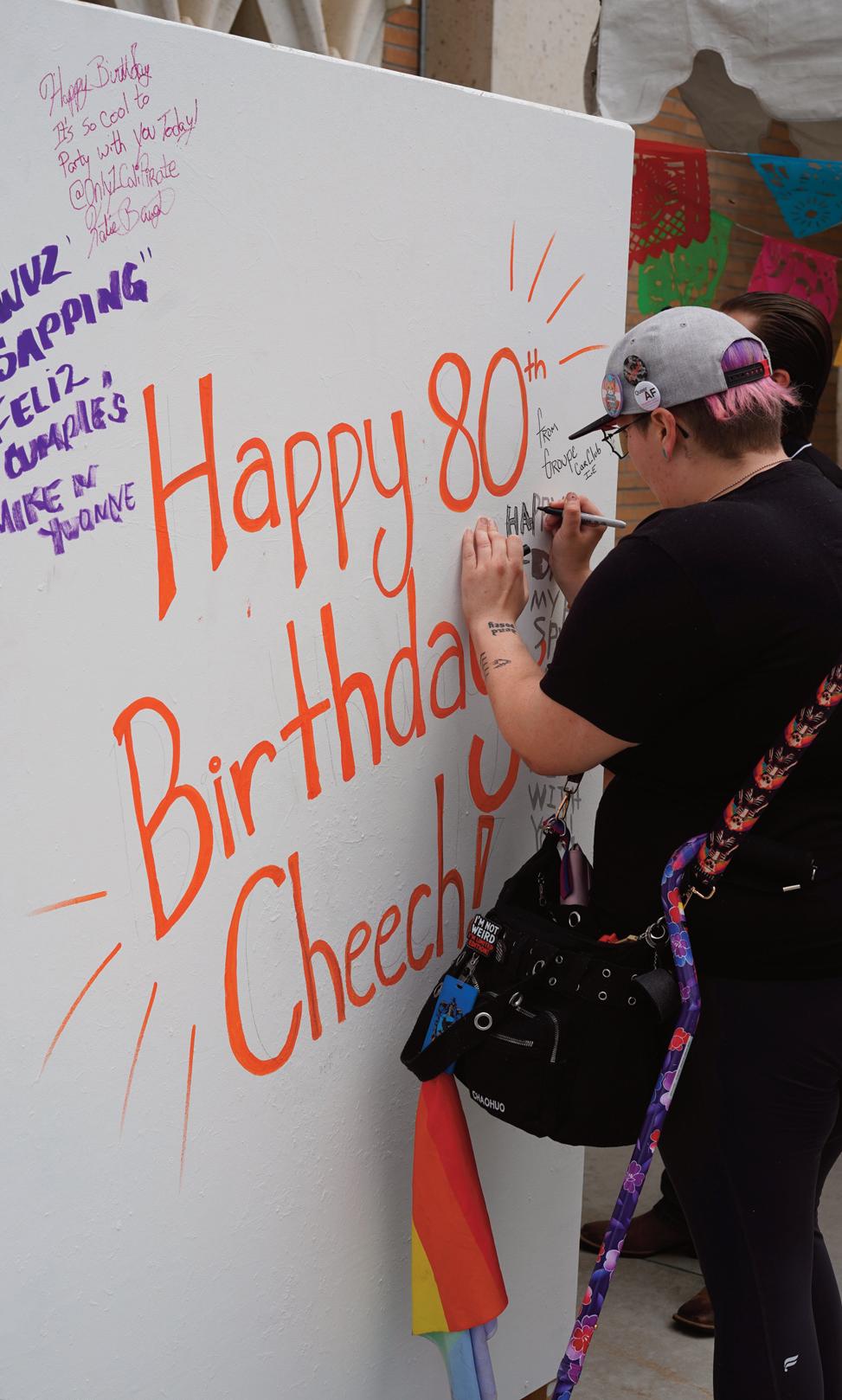
PHOTO MANNY SANDOVAL
A visitor adds a birthday message for Cheech Marin to a community tribute wall during his 80th birthday celebration.
PHOTO MANNY SANDOVAL
Members of Xiuh Arte Azteca Chichimeca perform outside The Cheech Marin Center for Chicano Art & Culture during Cheech Marin’s 80th birthday celebration July 12 in downtown Riverside.
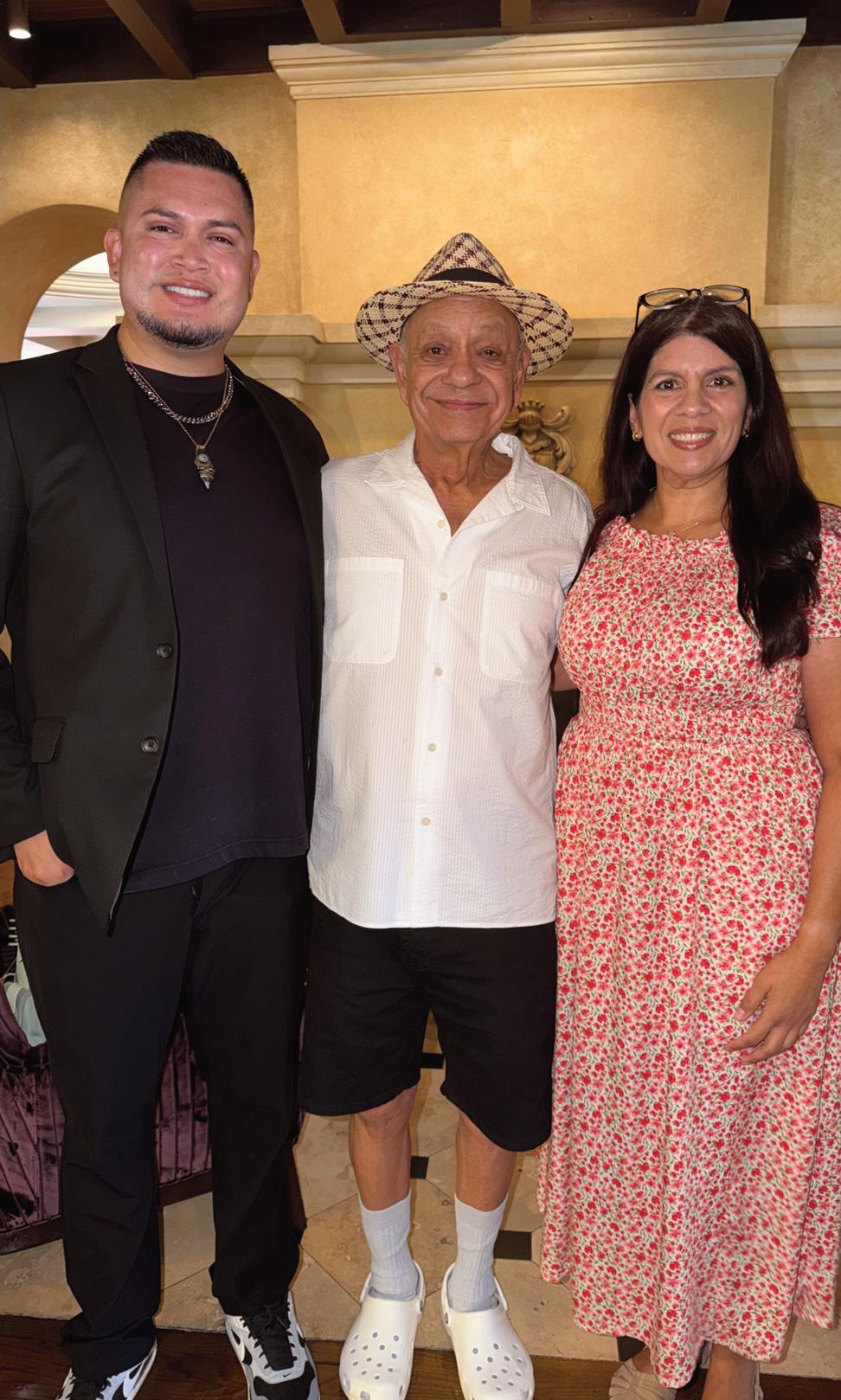
PHOTO YVETTE SHEARER
From left, IECN co-publisher Manny Sandoval, legendary entertainer and Chicano art advocate Cheech Marin, and IECN co-publisher Denise Berver gather at the Mission Inn following an exclusive interview marking Marin’s 80th birthday.
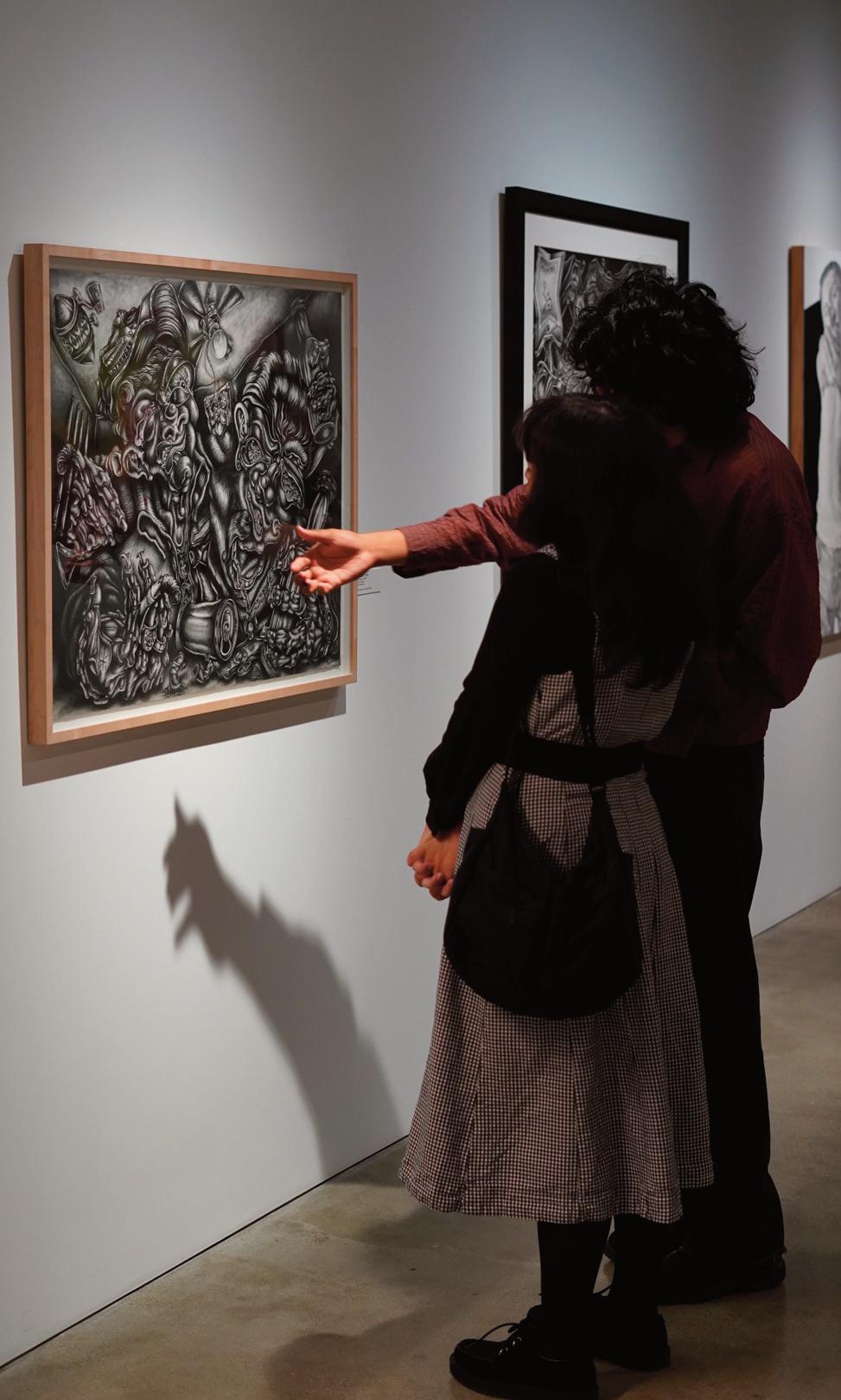
PHOTO MANNY SANDOVAL Visitors explore artwork inside The Cheech following Cheech Marin’s opening remarks, taking advantage of free admission offered every Sunday throughout the summer.